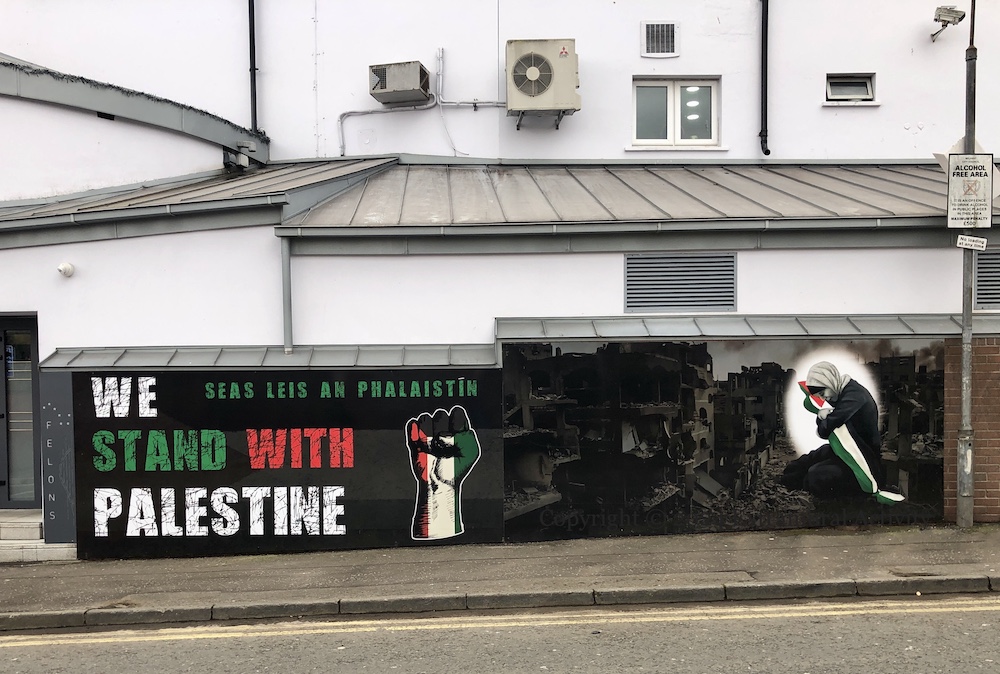
“Since 1948”. This is an interesting board in a comic-book/graphic-novel or movie-poster style with a montage of striking imagery and patterning crammed together, revealed by pseudo-tears, and overlaid lettering in multiple fonts and colours.
The imagery and references are threatening: included are air-jacker Leila Khaled and a rioter with a catapult (who completes the slogan “from the river to the sea … Palestine will be free!”; the lower part of the face of the main figure (and of the face in the bottom-right corner) is covered; we also see “Rebel With[out] A Cause” the 1955 film. in the top left “Struggle Continues – Since 1948” in the style of a fashion emblem, and in the bottom right, “1948” in the style of a mid-century house-number font or perhaps the 1984 film version (with John Hurt and Richard Burton) of Orwell’s 1984.
The other piece – a large bird in the colours of Palestine – is a poster by Videndomen (PPA).
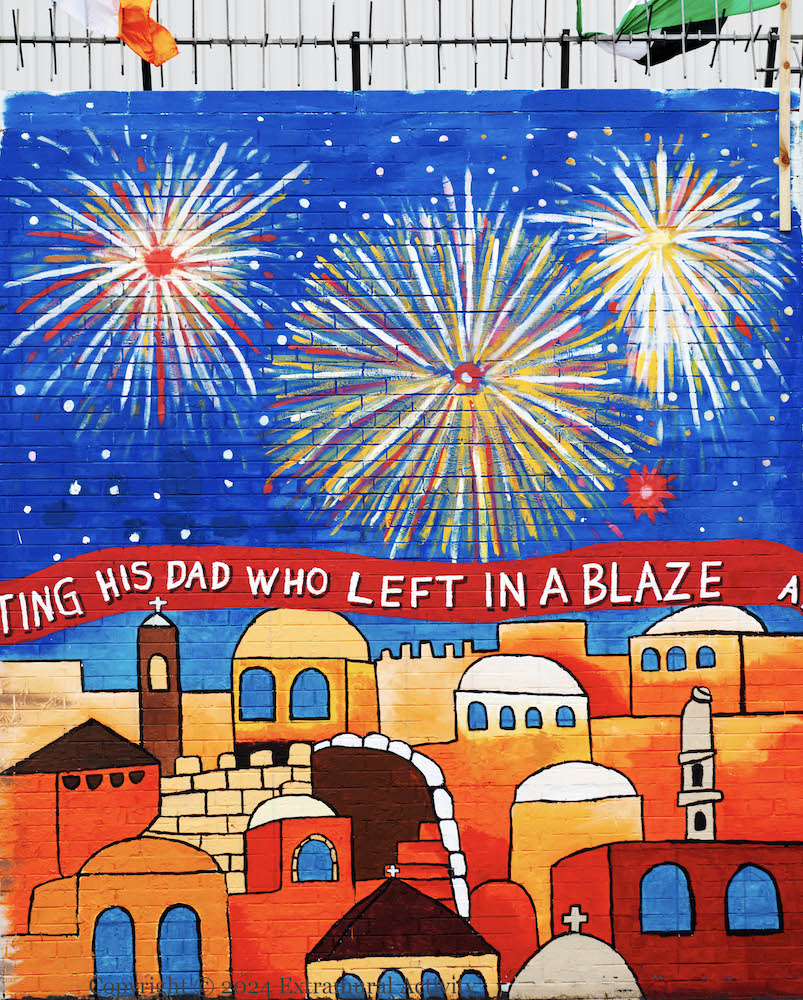
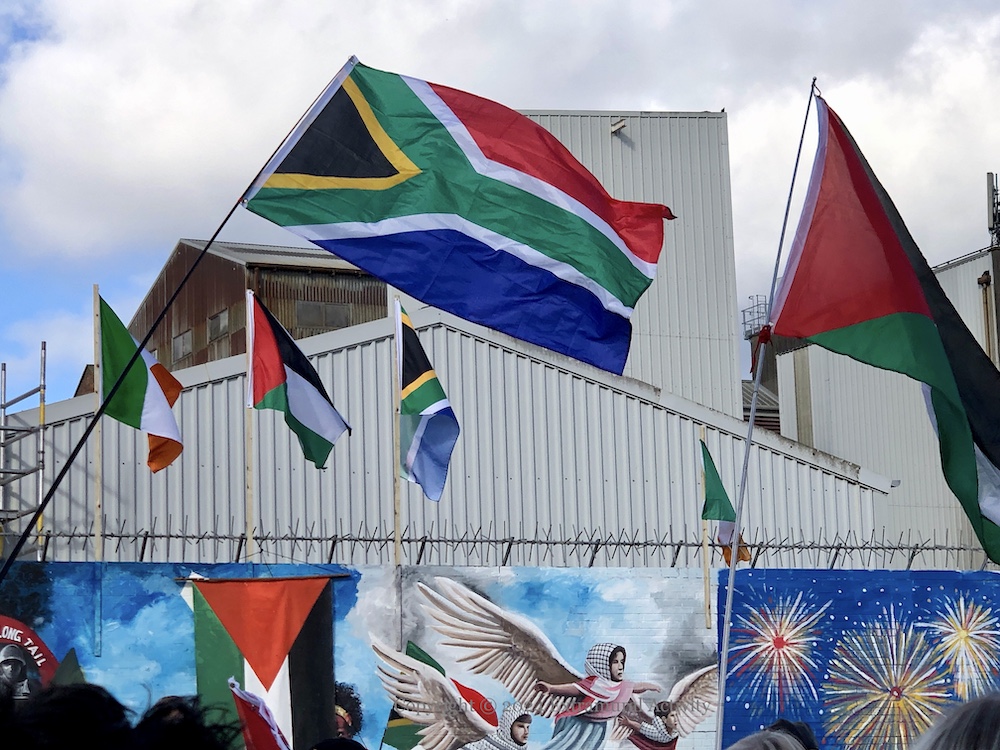
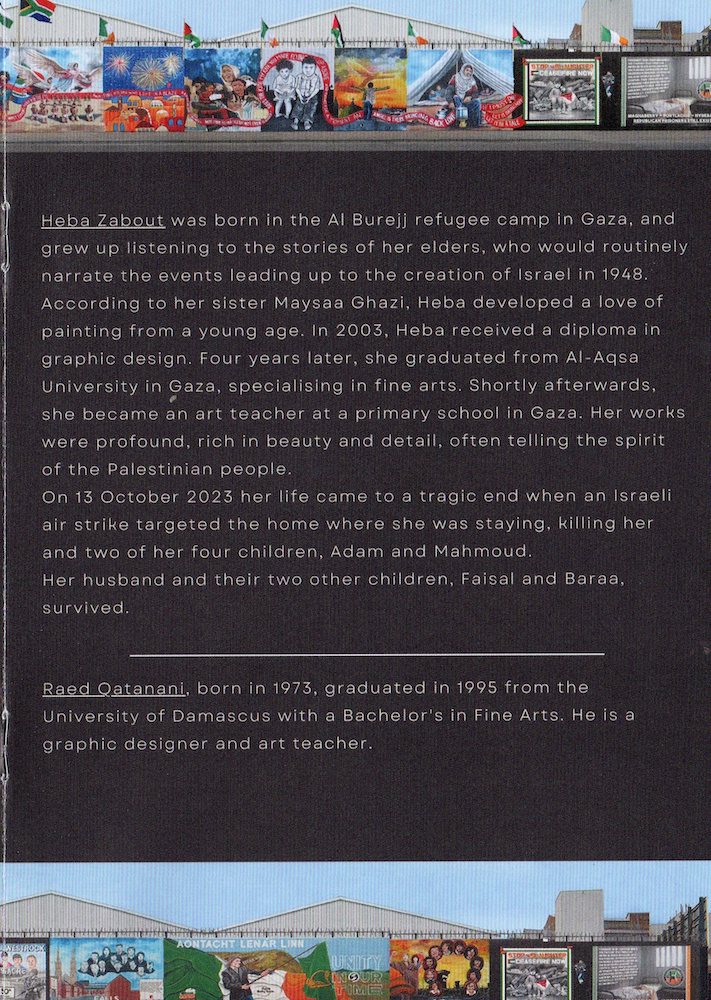
Heba Zagout (ig) was a Palestinian artist and teacher who painted Palestinian women and scenes from everyday life, including one from 2022 of holiday fireworks over a Bethlehem skyline that includes both churches and mosques. (You can see the original acrylic on the Painting For Palestine facebook page). The painting has now been reproduced as a mural on the International Wall in CNR west Belfast. She and two of her children, Adam and Mahmoud, were killed in October in an Israeli air strike on Gaza. (Middle East Eye | Guardian)
The next mural (to the right) can be seen in Broken Family.
The image above is from February 7th. January 29th:
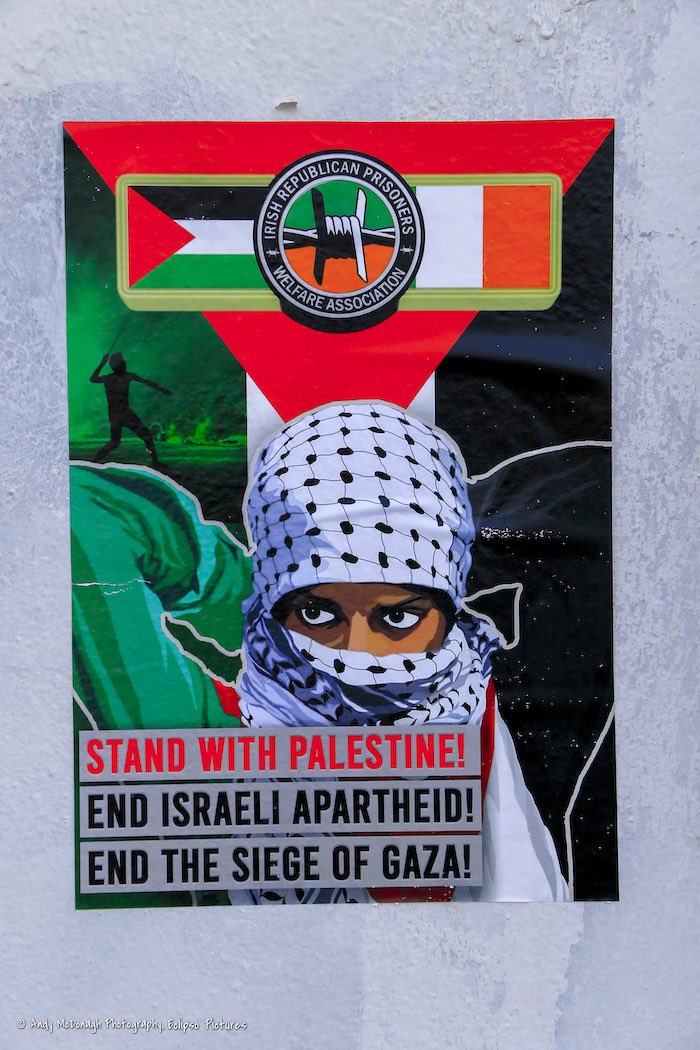
The inverted red triangle has become a symbol of support for Palestine and Hamas, apparently because of its use in Hamas videos to indicate Israeli targets being blown up (Middle East Monitor | Al Jazeera video), as though a kind of cross-hairs.
In this Derry art, the red triangle has been given a Banksy-style presentation as the balloon of a child (reminiscent of Girl With Balloon in London and, given the context, Flying Balloon Girl in the West Bank) walking beneath the Lecky Road underpass.
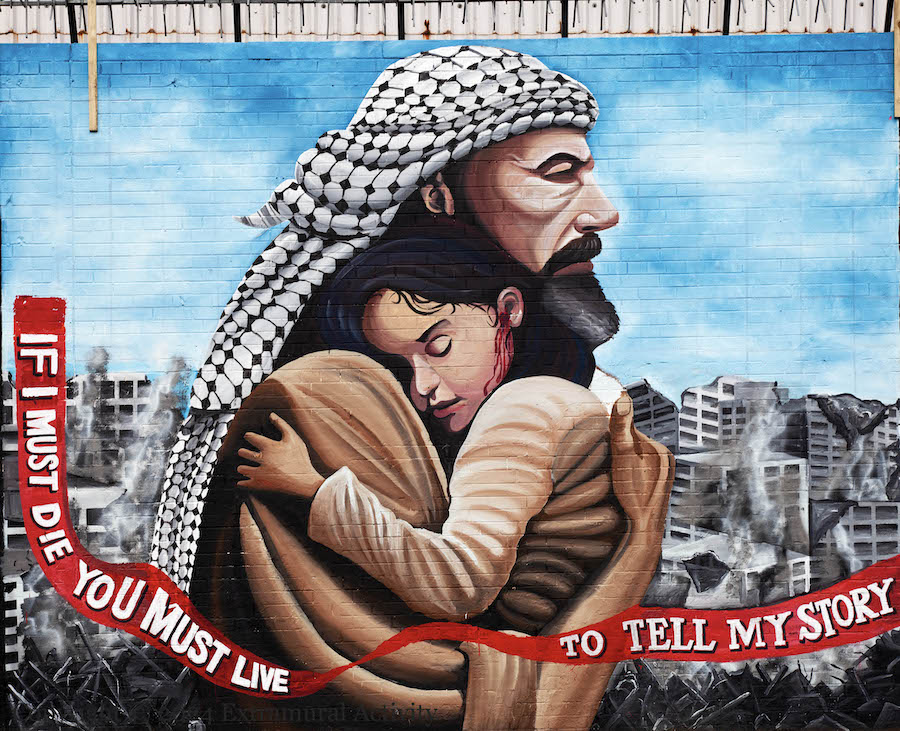
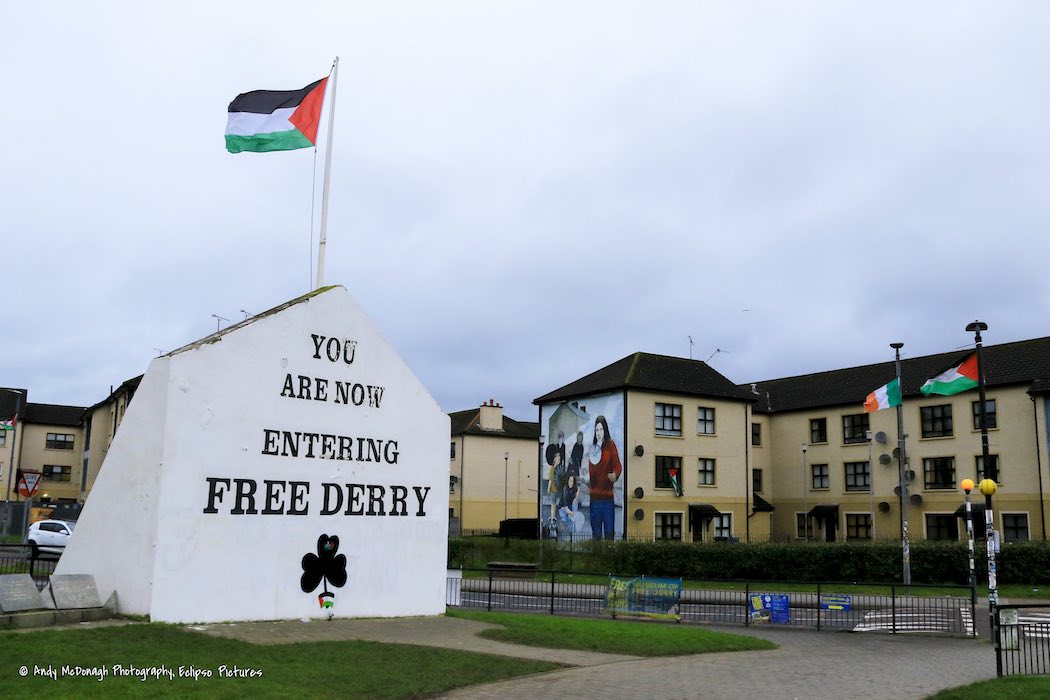
“If I must die/Let it bring hope.” The annual march in remembrance of the victims of Bloody Sunday, 1972, was this year dedicated to the victims of the on-going attack by Israel on the Gaza Strip (Irish News). For the occasion, Free Derry Corner was papered over (by Adam “Spicebag” Doyle – RN | Irish Times) with words from a poem (Xitter) of Palestinian writer Refaat Alareer, who was killed by Israeli forces on December 7th (Al Jazeera | WP).
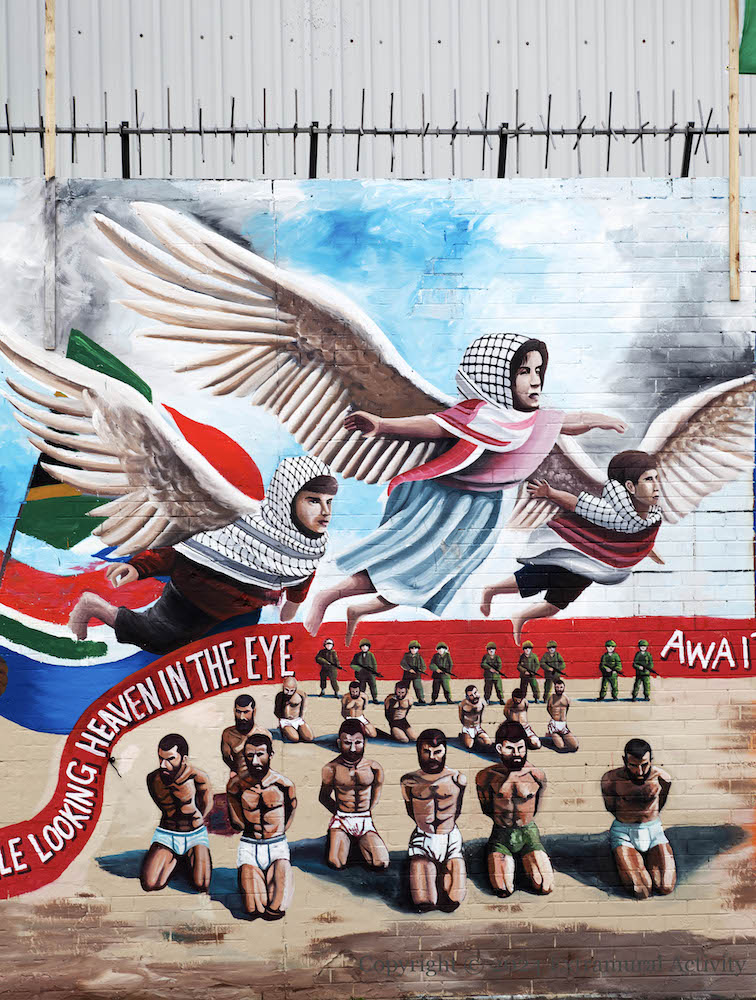
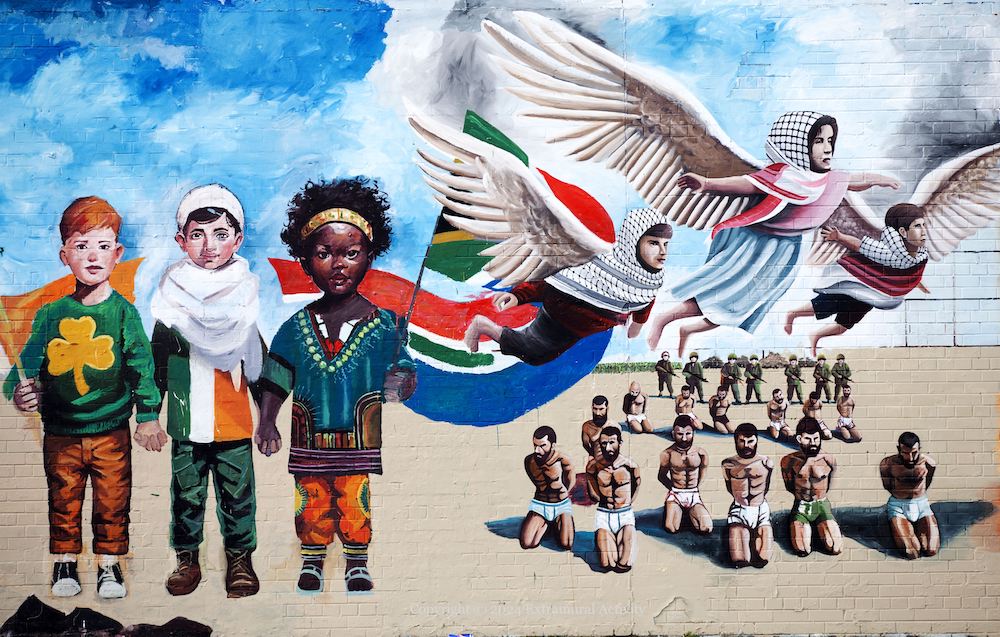
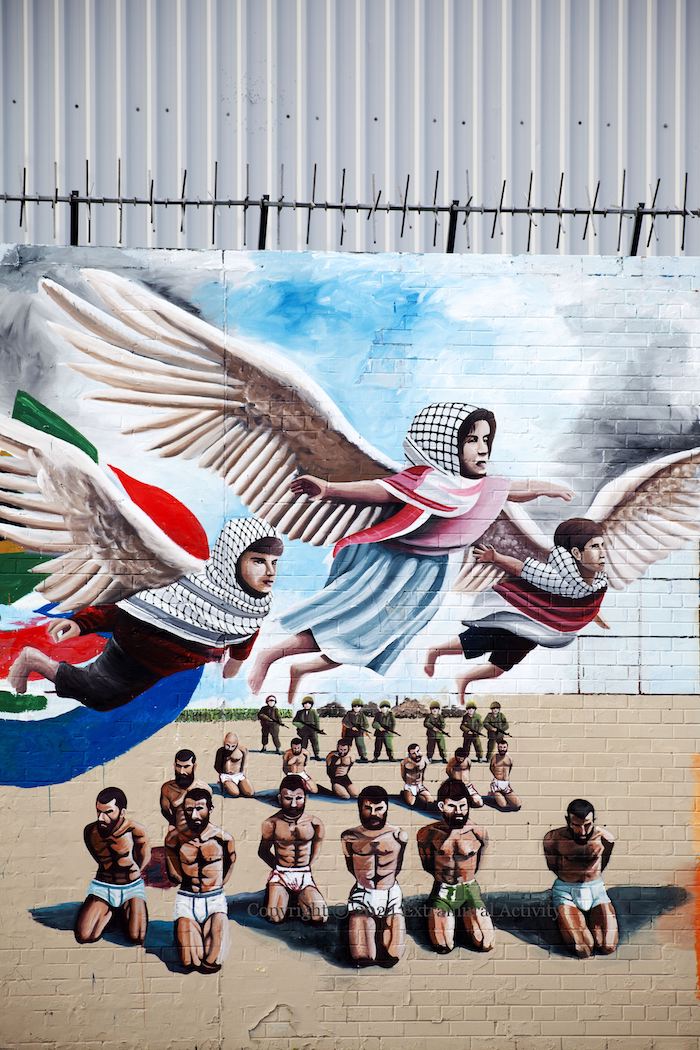
Since the October 7th attack by Hamas and the subsequent Israeli invasion of Gaza, the number of Palestinian prisoners held by Israel has gone up from about 5,000 to about 9,000, including about 3,500 prisoners held under what is called “administrative detention” or what would be known here as “internment without trial”. (Figures for the last fifteen years are available at HaMoked and at B’Tselem.) Prisoners recently released from Israeli detention have described the beatings and degrading treatment they received (Amnesty | Reuters | Haaretz).
During the peace process of the mid-1990s, a green ribbon was used as a symbol of republican political prisoners, whose release was one of the major goals in a peace settlement – see this large example from Shantallow, Derry, from 1998. It is still used post-Agreement by physical-force republicans, e.g. End Brit Brutality and Maghaberry Concentration Camp.
The board is on the Meenan Square construction site in the Bogside, Derry. For the INLA board in the background of the wide shot, see Serious Trouble.
“Fight the rich, feed the poor – Éıstıgí” (also “Free Gaza”) along Lecky Road in Derry’s Bogside.
Éıstıgí, or “listen, yous-uns” in Derry/Doıre, is the youth organisation associated with Soaradh (web); it promotes a socialist (and republican) ideology.
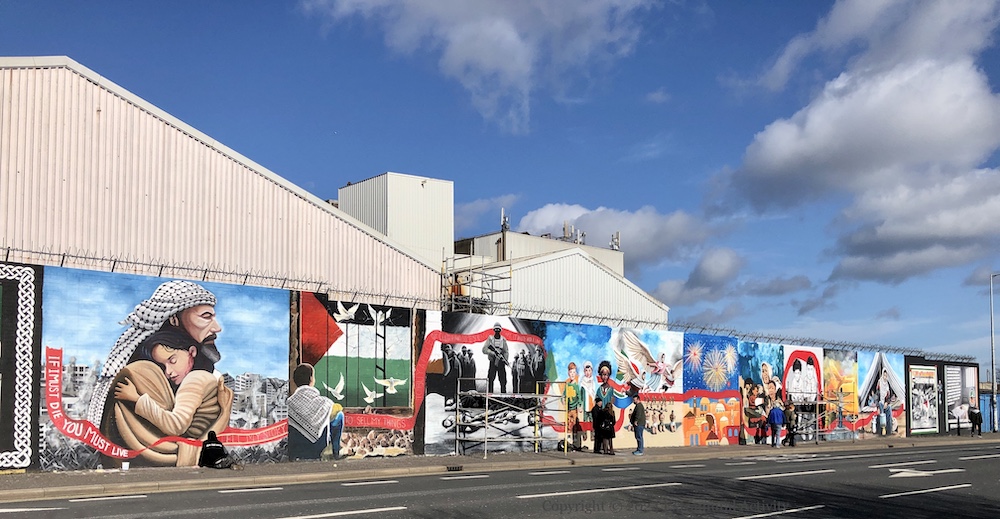
Here is a completed mural from the Painting For Palestine project (Fb) on the International Wall, Divis Street, Belfast, showing a man holding an injured child against a backdrop of razed buildings in Gaza. It is now 125 days since Israel began its war on Gaza in response to the Hamas attacks on October 7th and images of parents carrying their dead and injured children, and of the devastation of Gaza’s buildings, are now all too common – here is an Al Jazeera gallery from December.
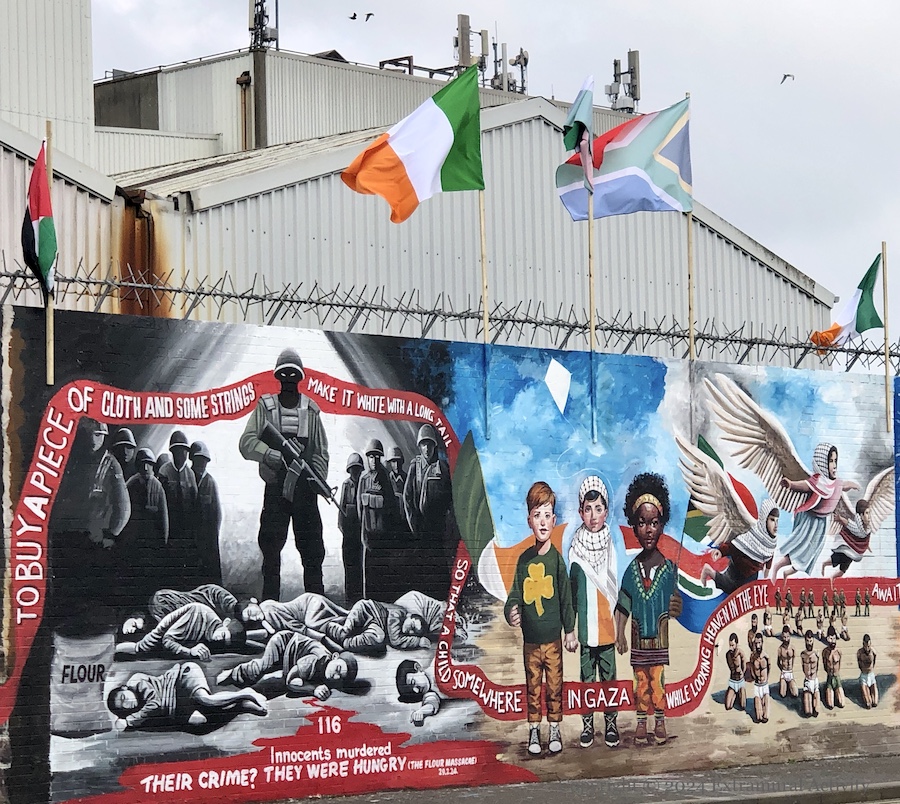
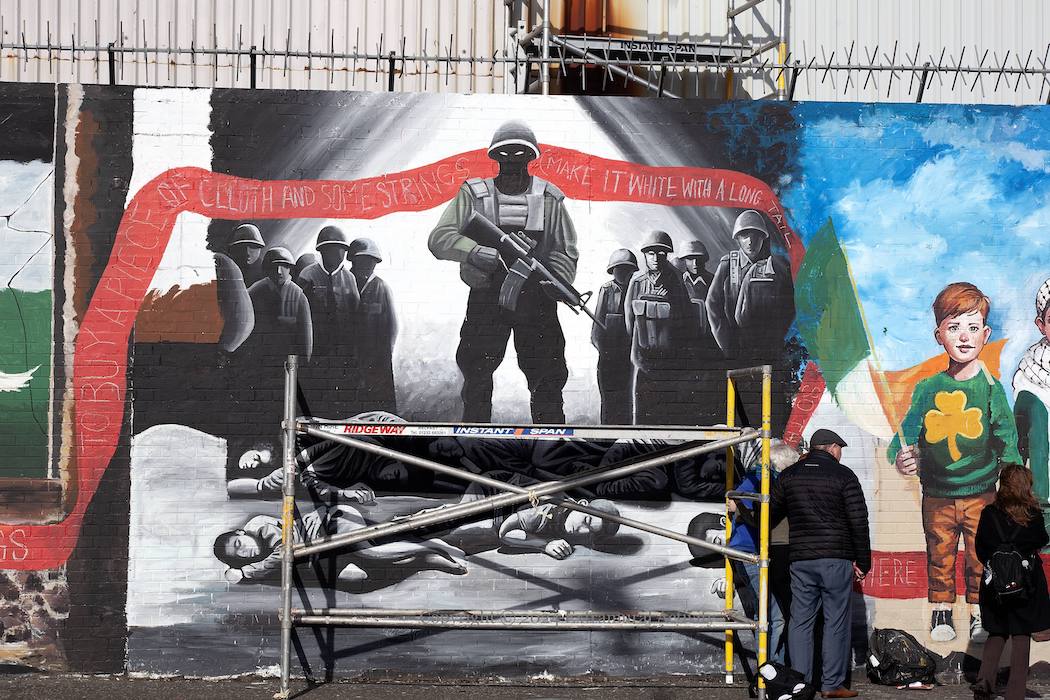
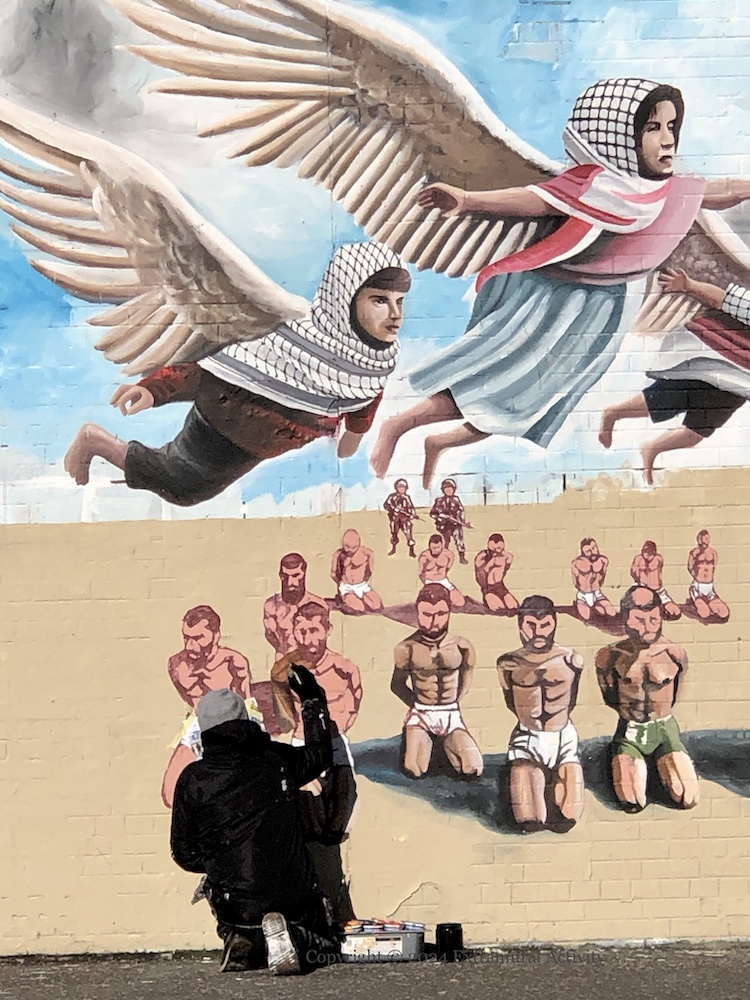
This entry chronicles (in reverse order/from latest to earliest) the painting of one of Saïd Hassan’s (ig) contributions to the Painting For Palestine (Fb) project that is currently transforming the International Wall on Divis Street in west Belfast. The piece appears to be inspired by the mass grave in Khan Younis (in the Gaza Strip) in which more than 100 corpses were buried in November (Al Jazeera video | Reuters gallery).
Hassan’s instagram post of his original artwork cites a few lines from Palestinian author Ghassan Kanafani (WP): “Let’s plant them as our martyrs in the womb of this soil thickened with bleeding … there is always room in the ground for another martyr.”
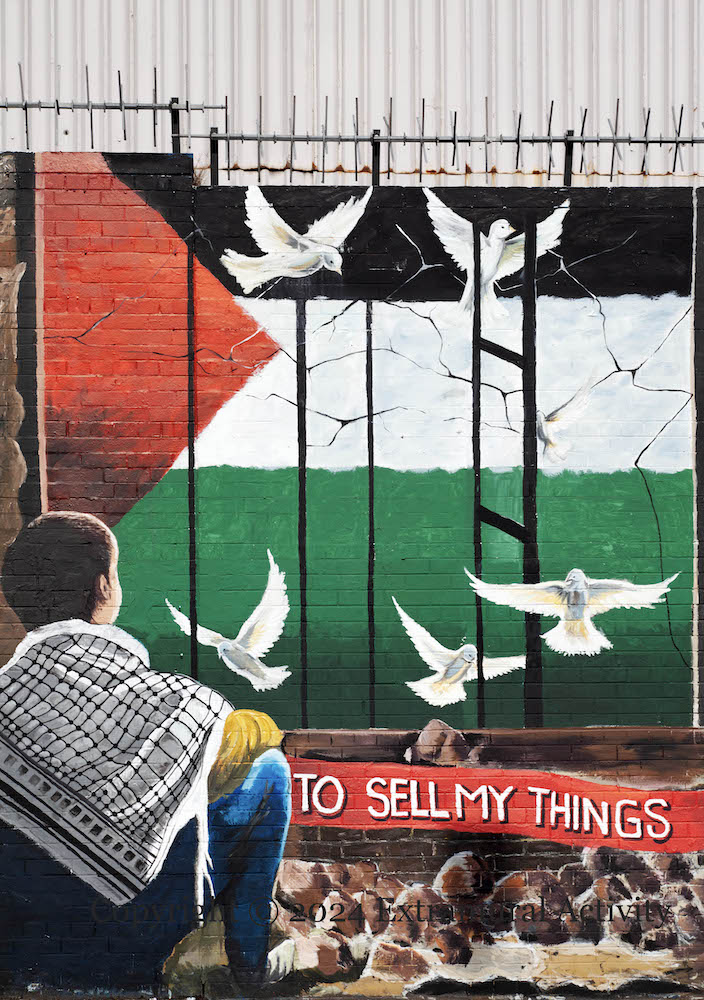
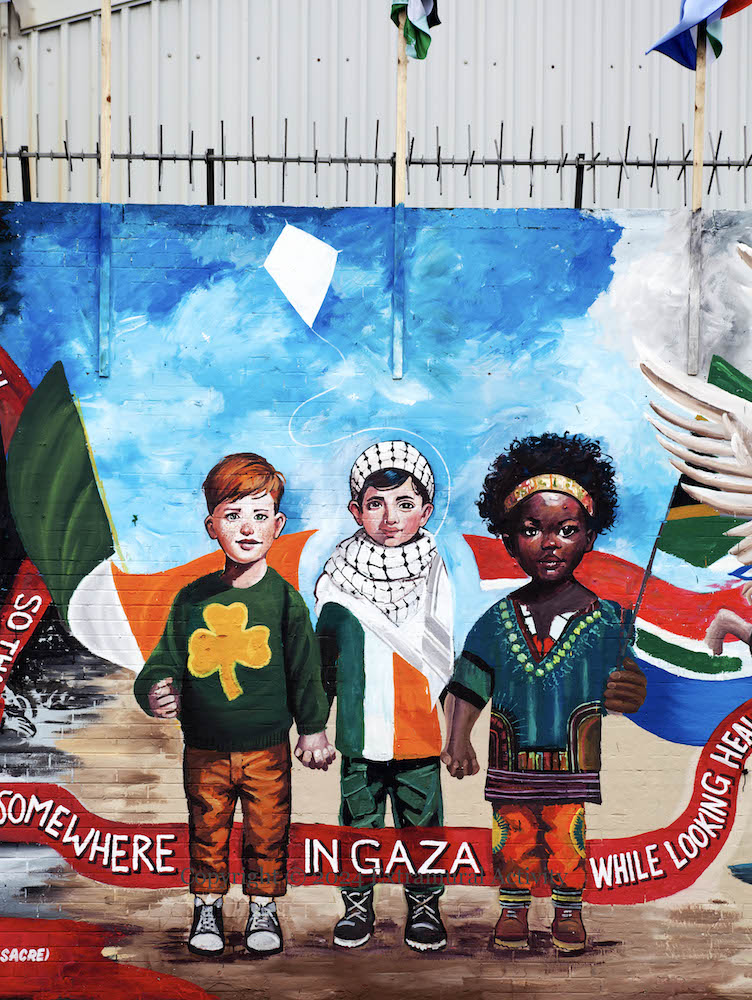
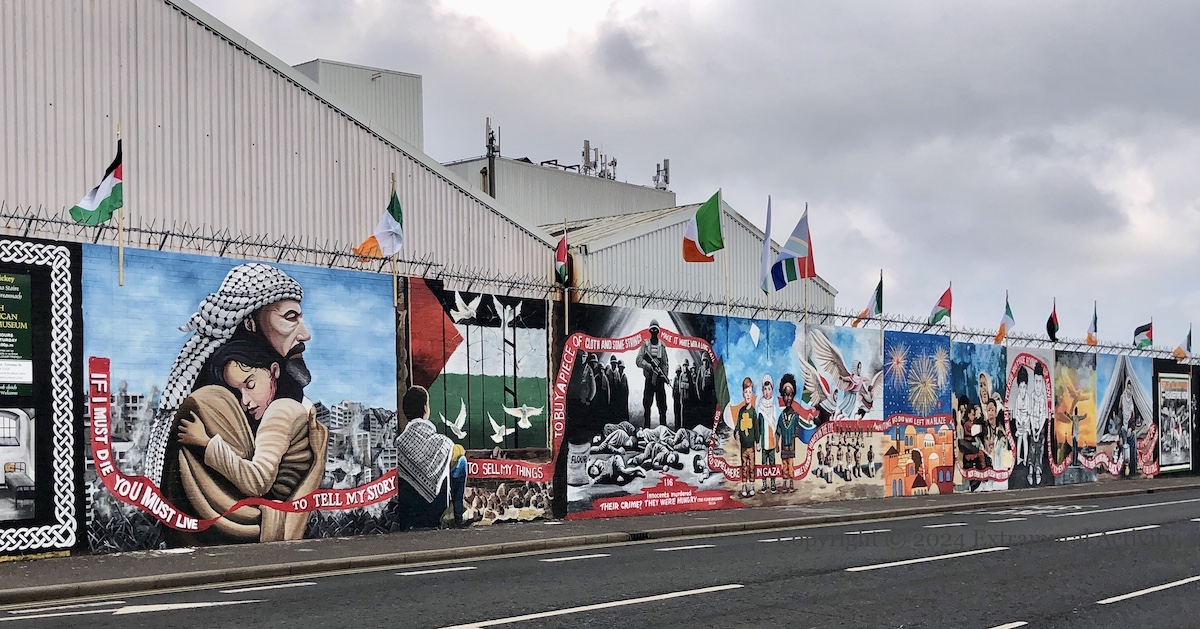
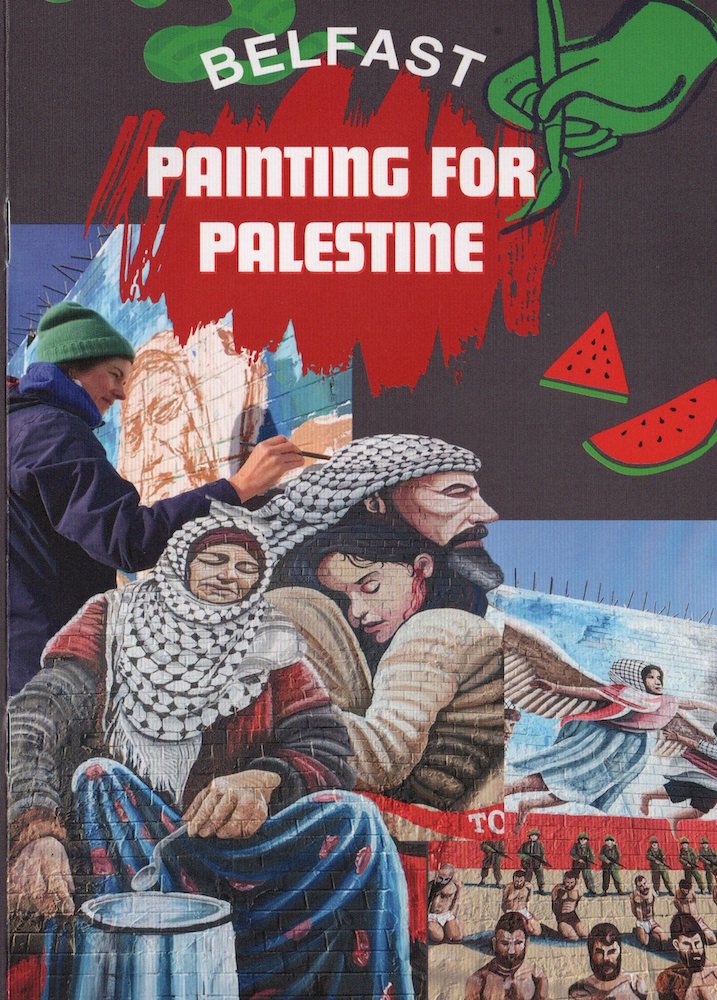
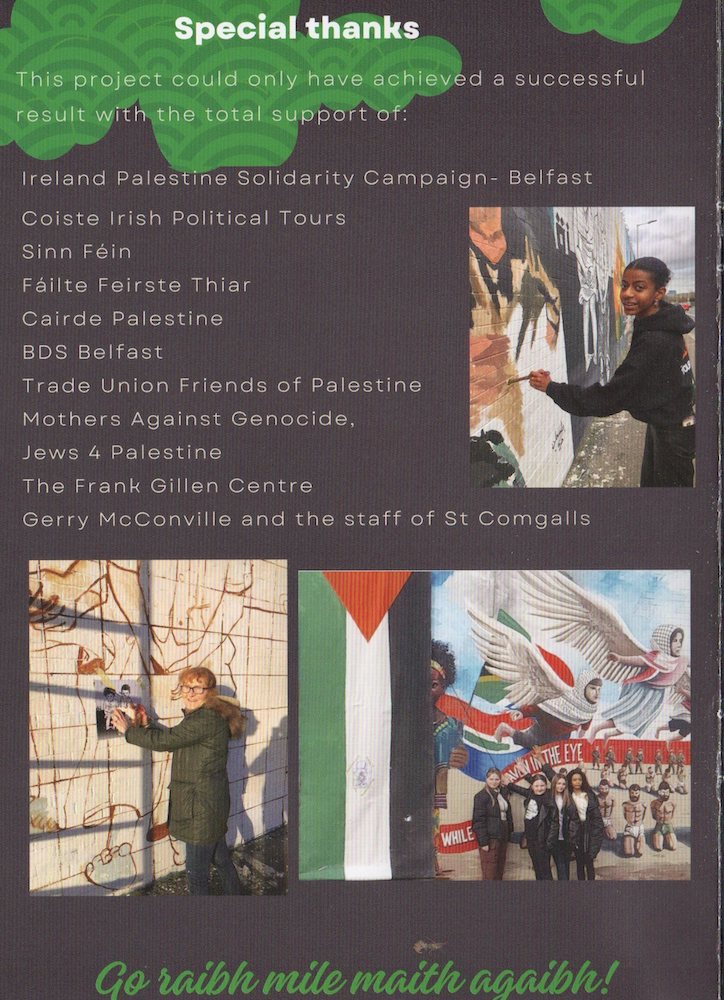
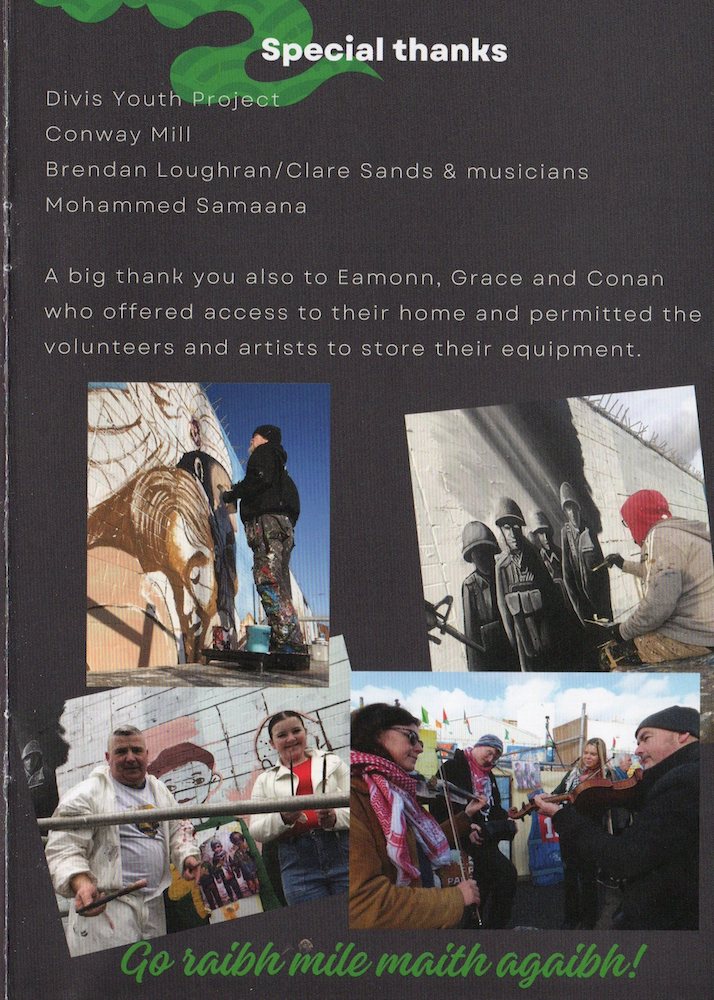
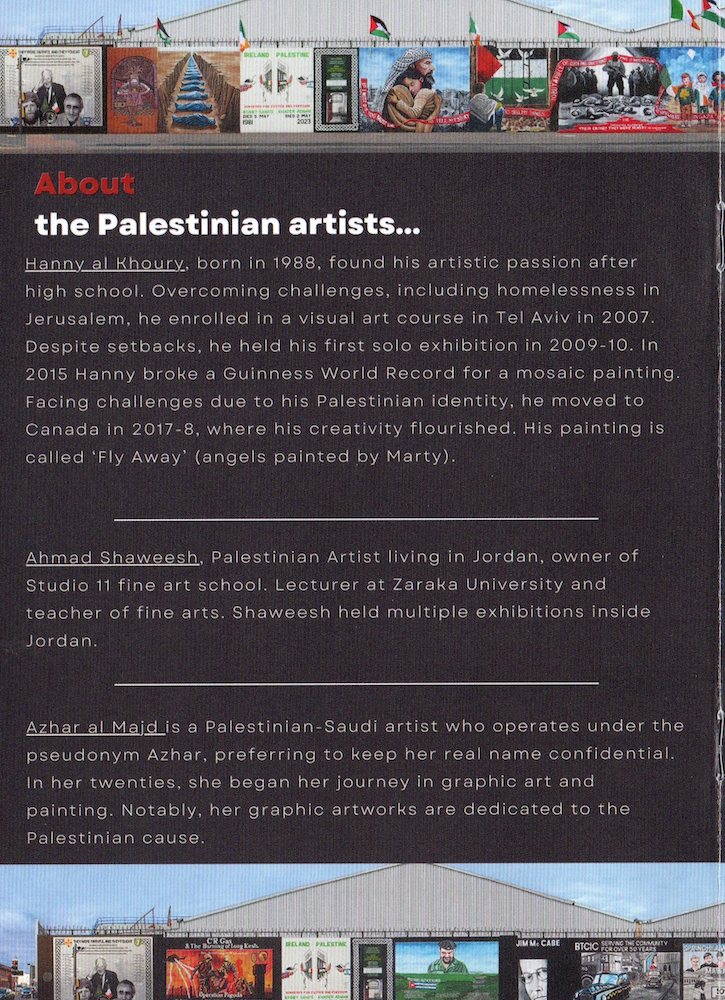
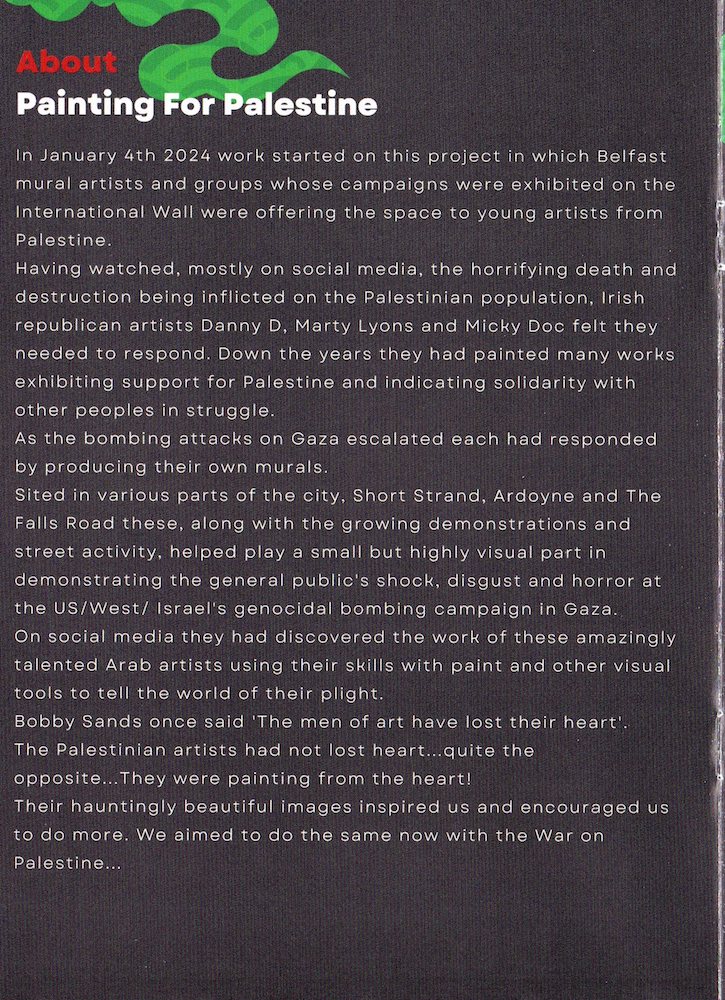
In January 2024, in response to the prolonged Israeli attack on Gaza, many murals on the “International Wall” on Divis Street were painted out and work began on reproductions of artworks by artists from Palestine and elsewhere in the region. The project was called Painting For Palestine and a Facebook page and GoFundMe page were launched.
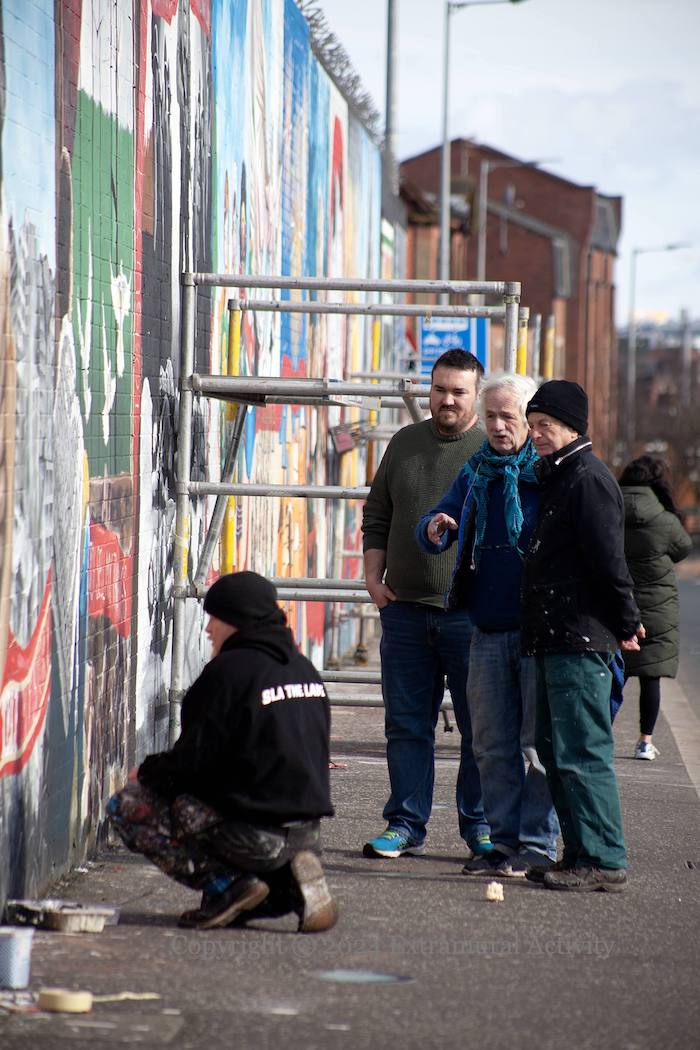
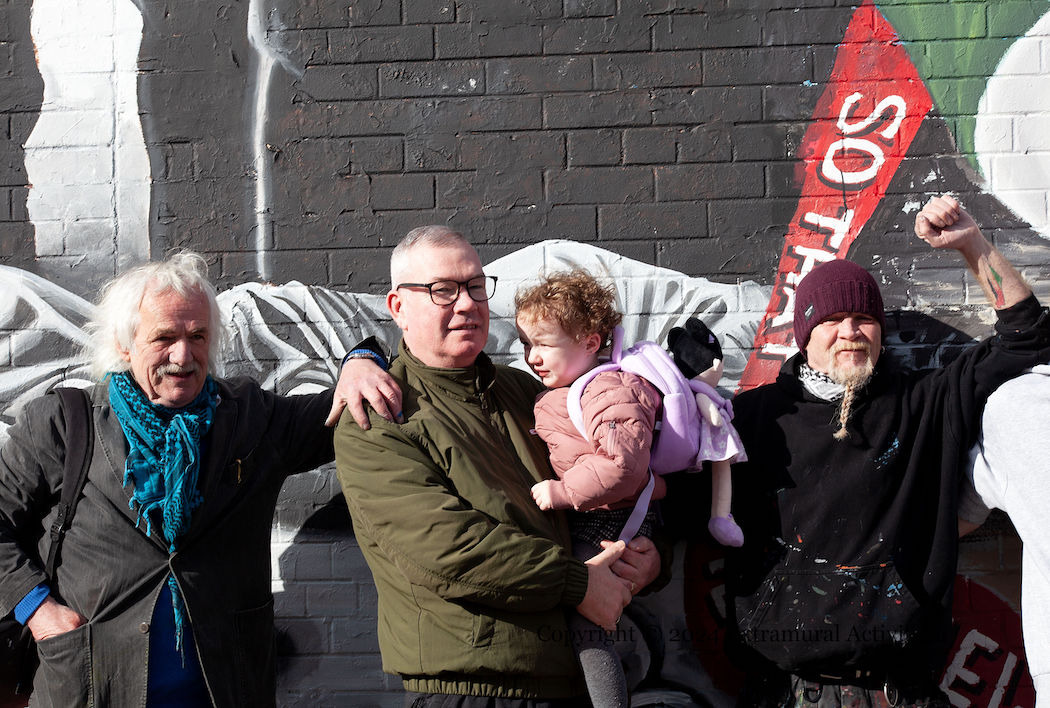
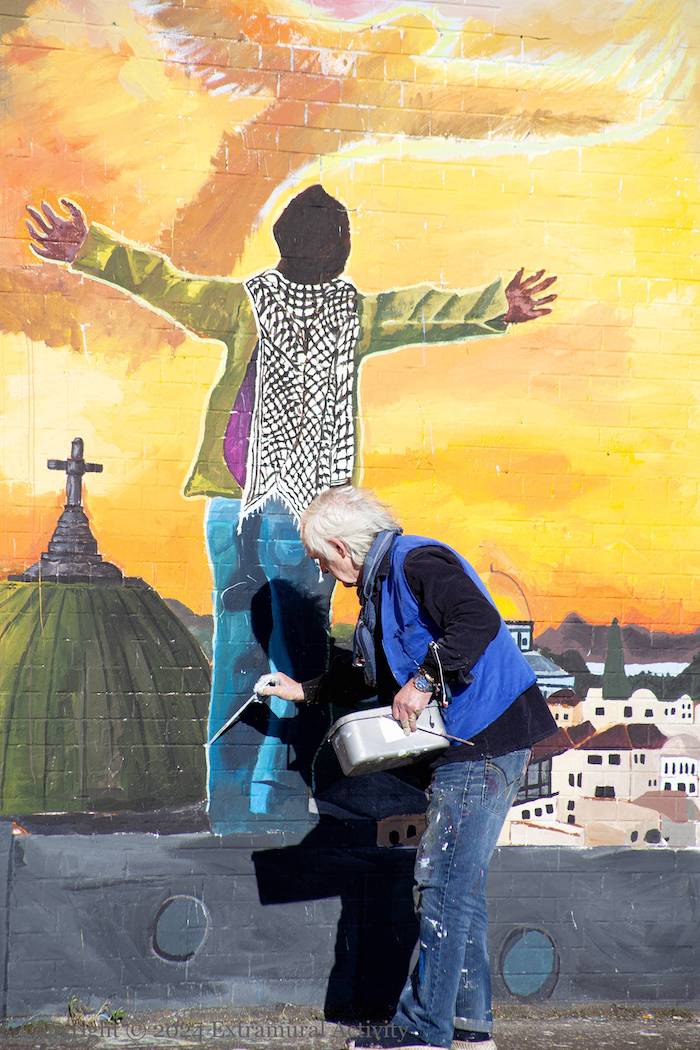
According to Bill Rolston (Fb) (who can be seen in the second image, below), there was a plan last Autumn that Palestinian artists would create their own “international wall” and include murals designed by CNR artists. The Hamas attack on October 7 and the subsequent Israeli invasion on Gaza – now ongoing for 108 days – put paid to that project, and instead art by Palestinian painters is being painted in Belfast in support of Palestine. (Here is an NVTv segment on the project.)
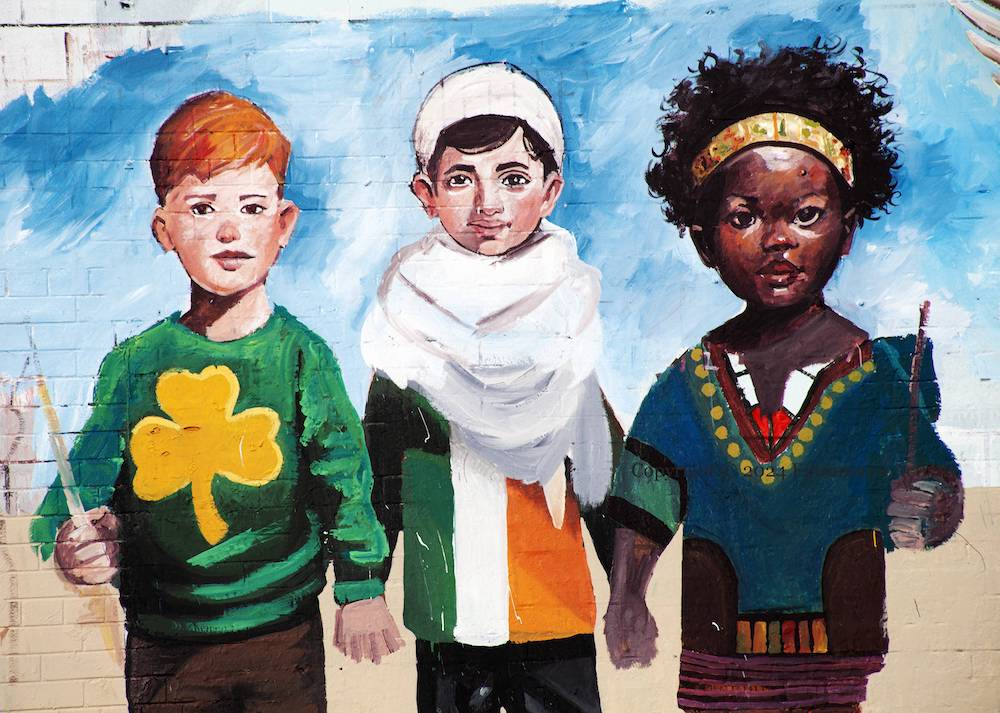
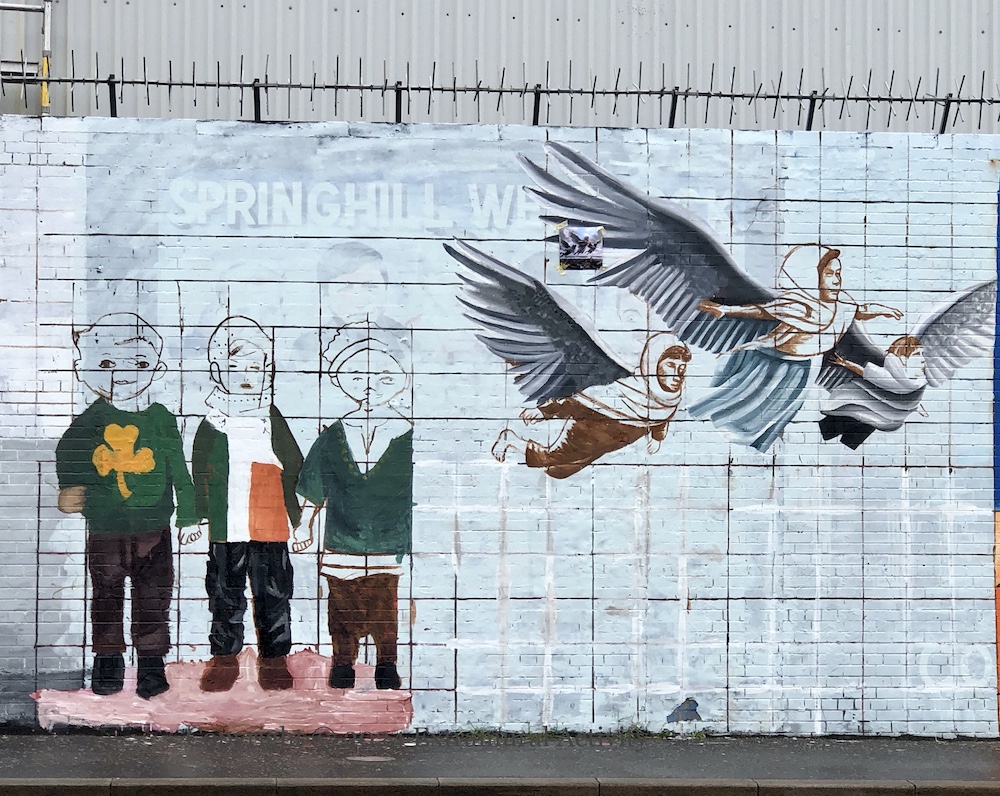
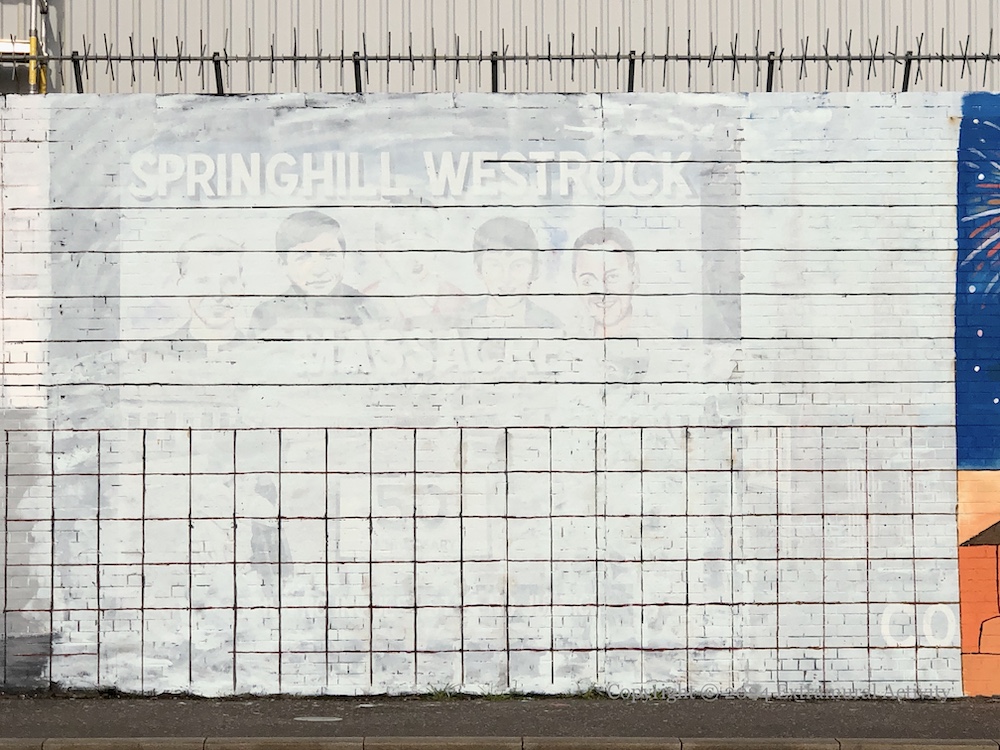
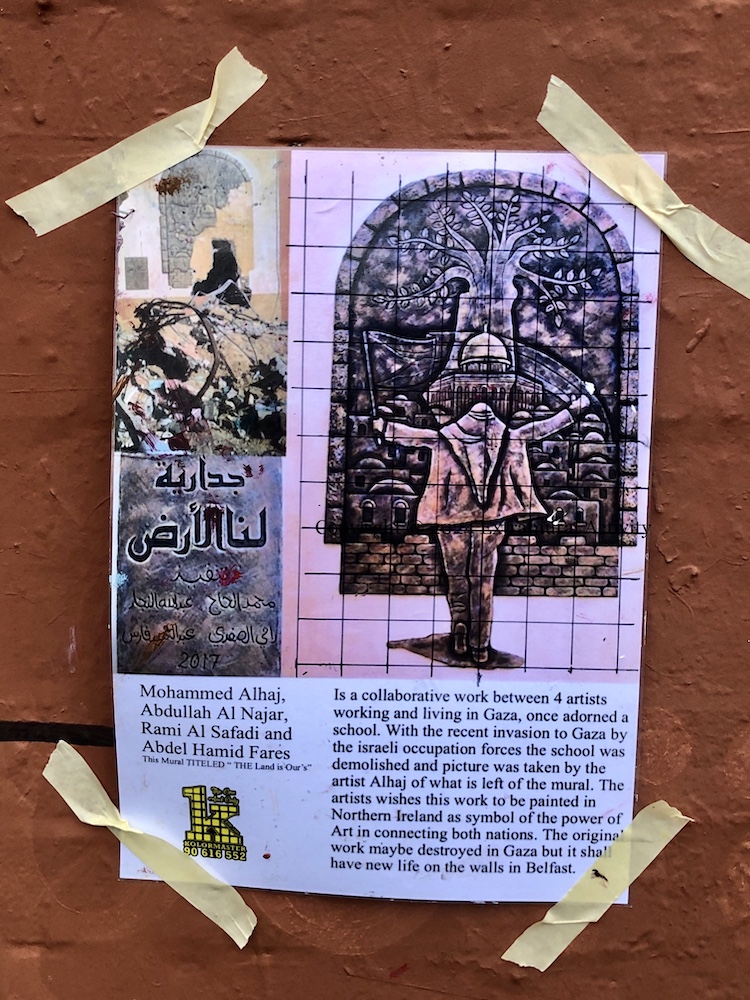
The first (left-most) panel will reproduce a mural called ‘The Land Is Ours’ by Mohammed Alhaj, Abdullah Al Najar, Rami Al Safadi, and Abdel Hamid Fares that once stood in a Gaza school; the second, next to the first, is currently blank (see the image above).
Bill Rolston working on The Land Is Ours:
The source image for The Land Is Ours:
The grid and cartoon for a mural from digital artist Saïd Hassan (web):
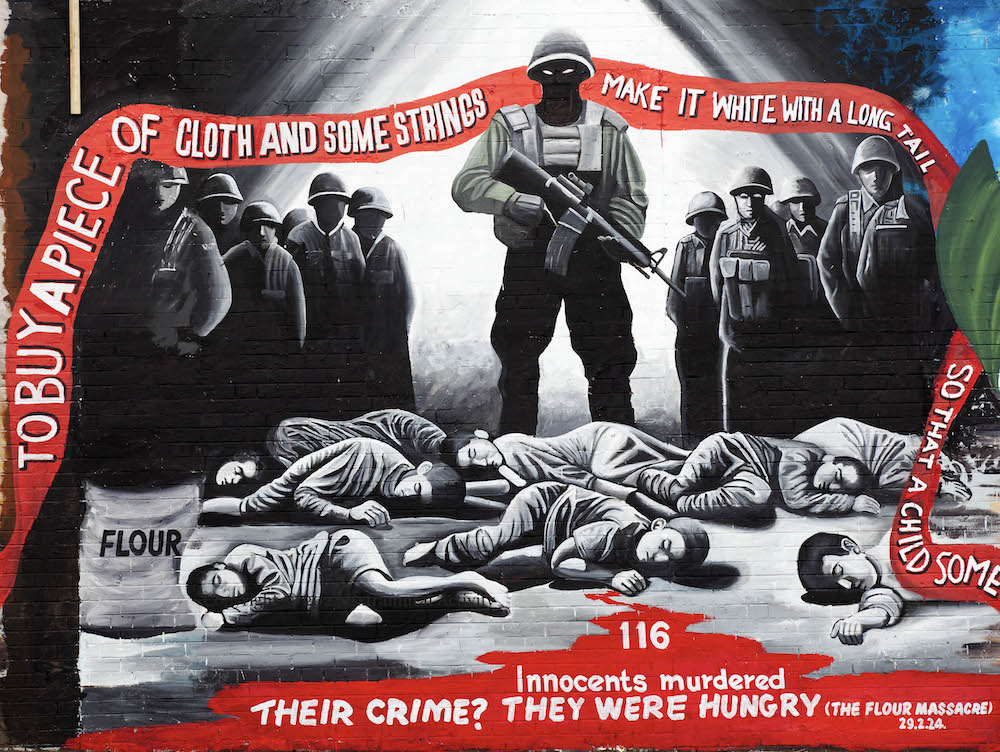
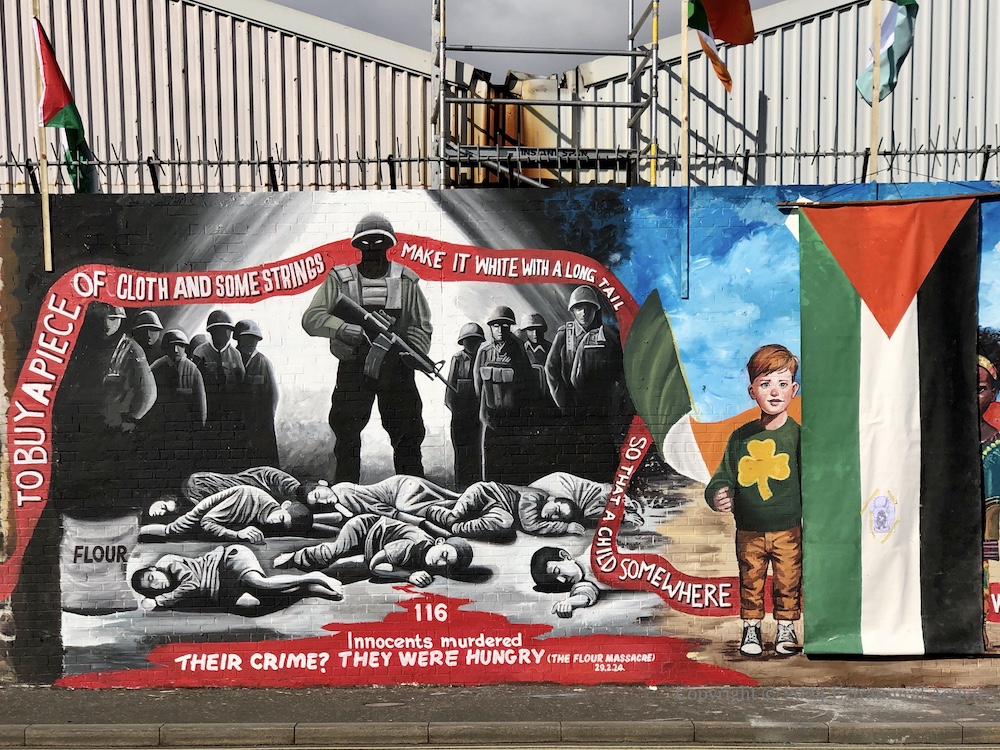
Another image by digital artist Saïd Hassan, showing soldiers standing over dead children:
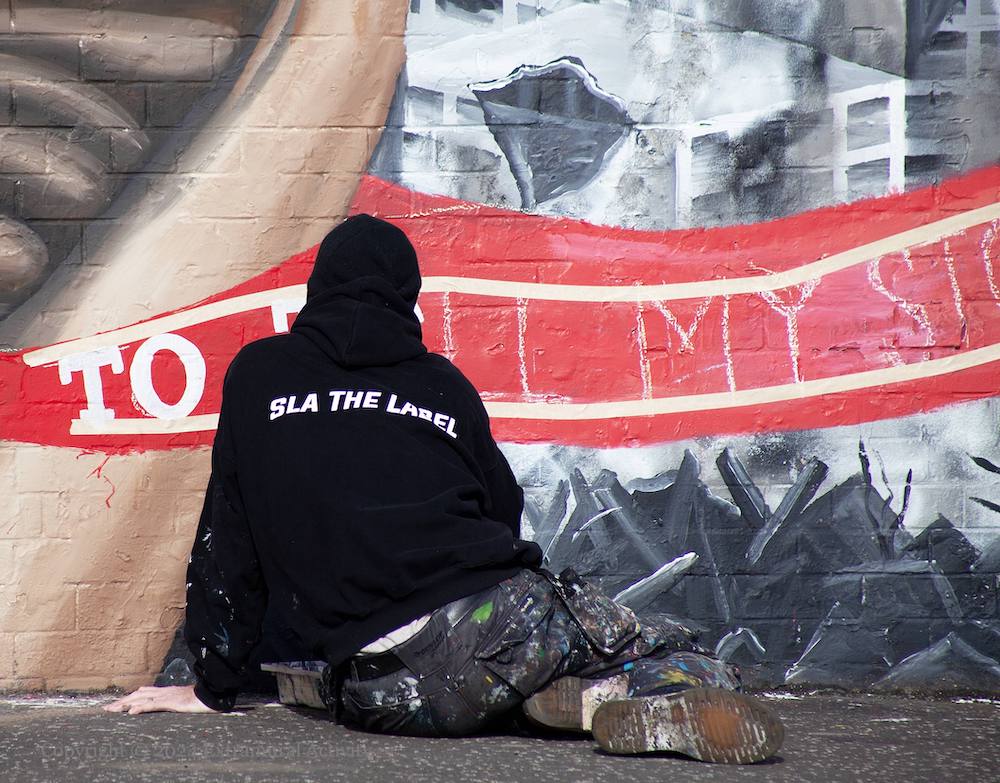
Marty Lyons at work on the mural:
A wide shot with the left-hand side of the wall in the foreground:
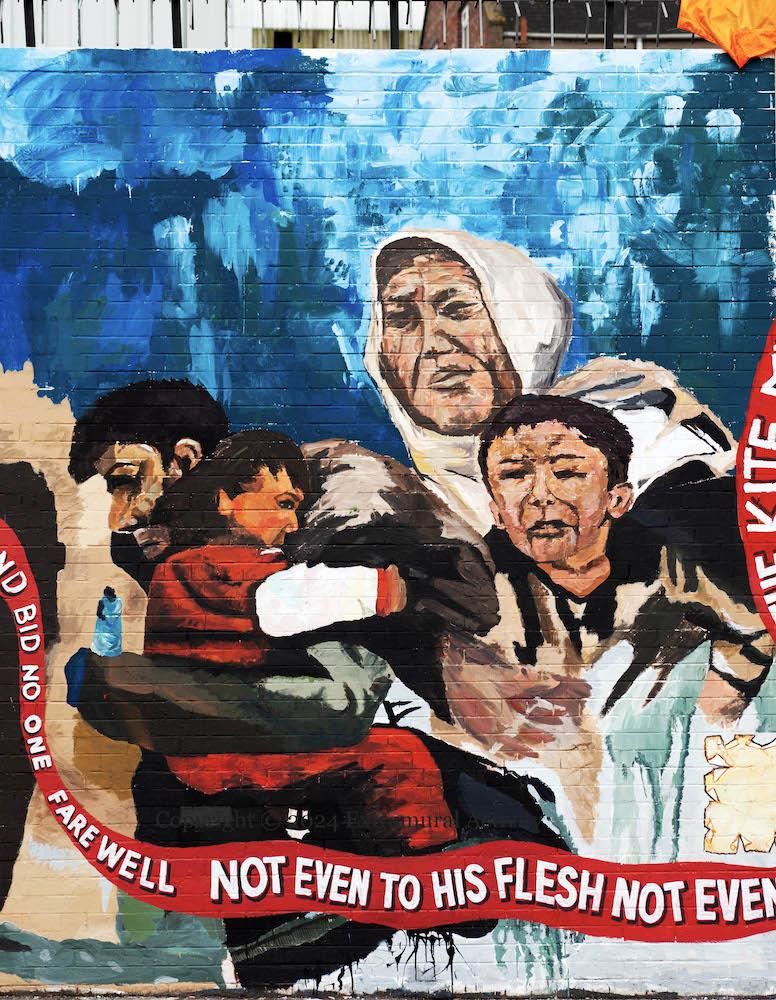
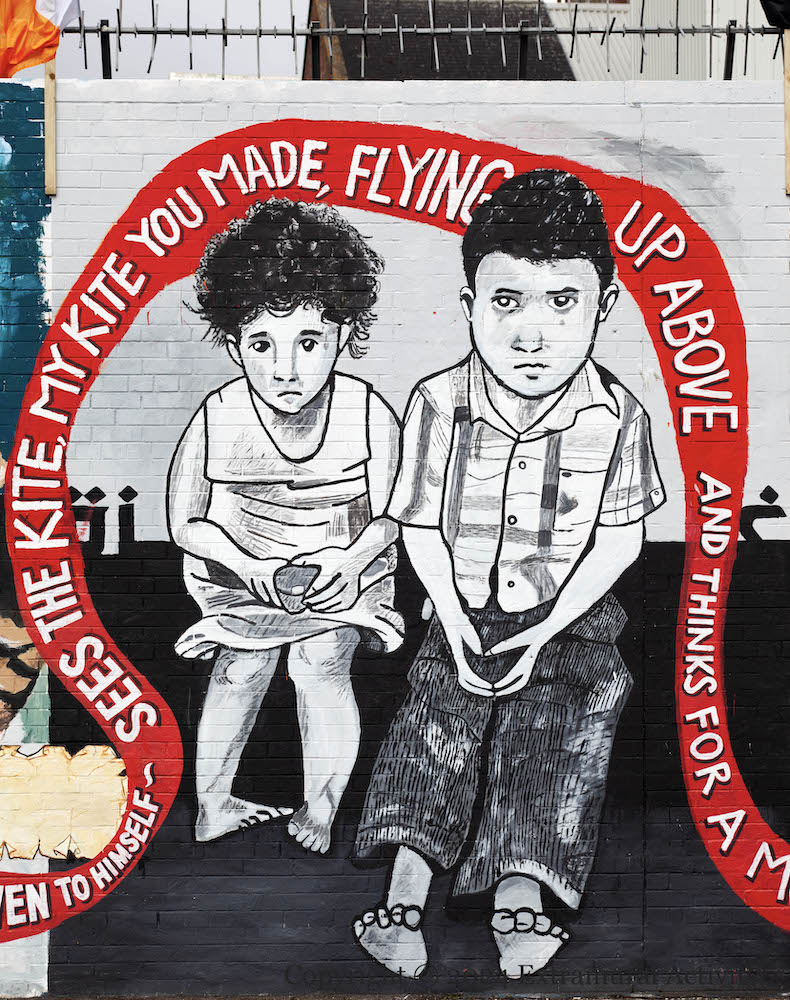
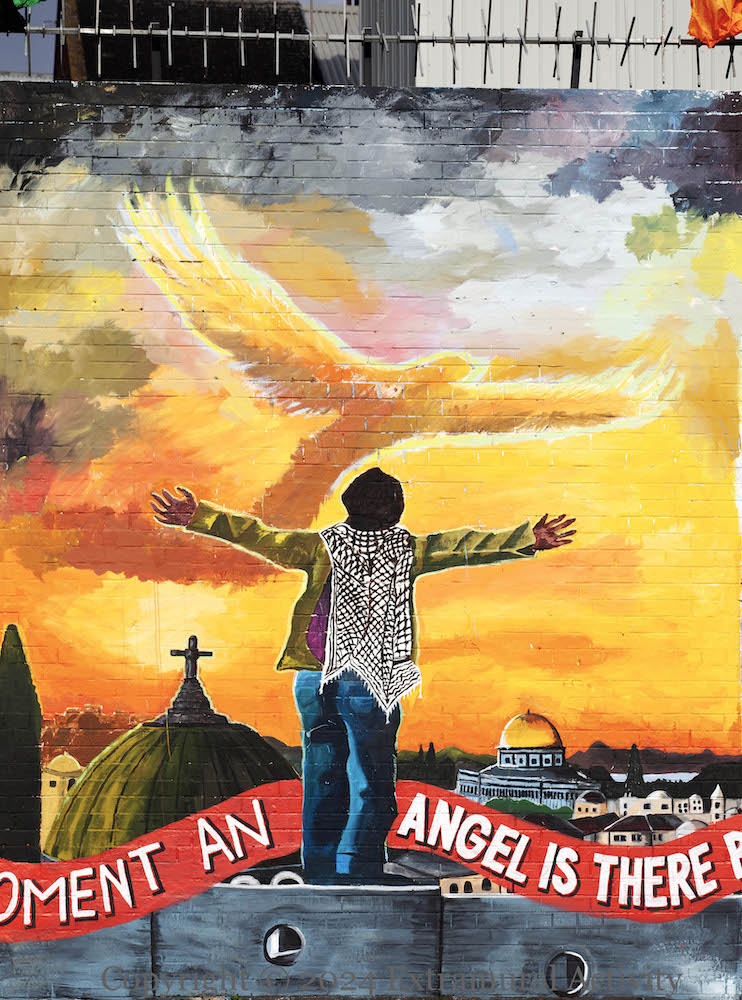
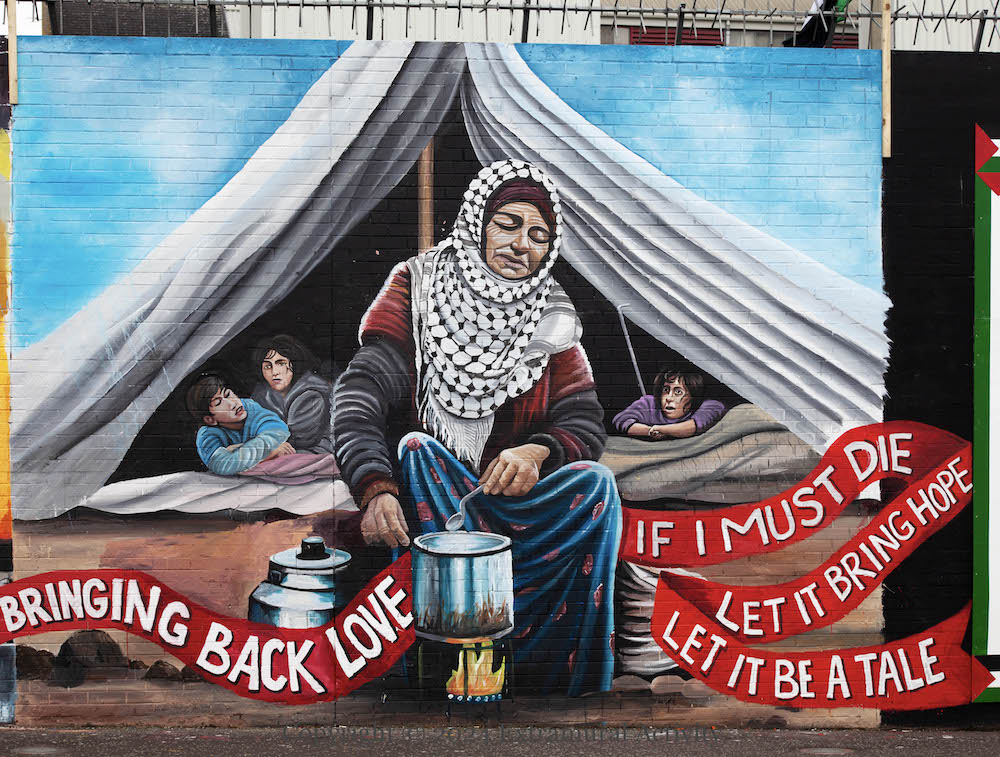
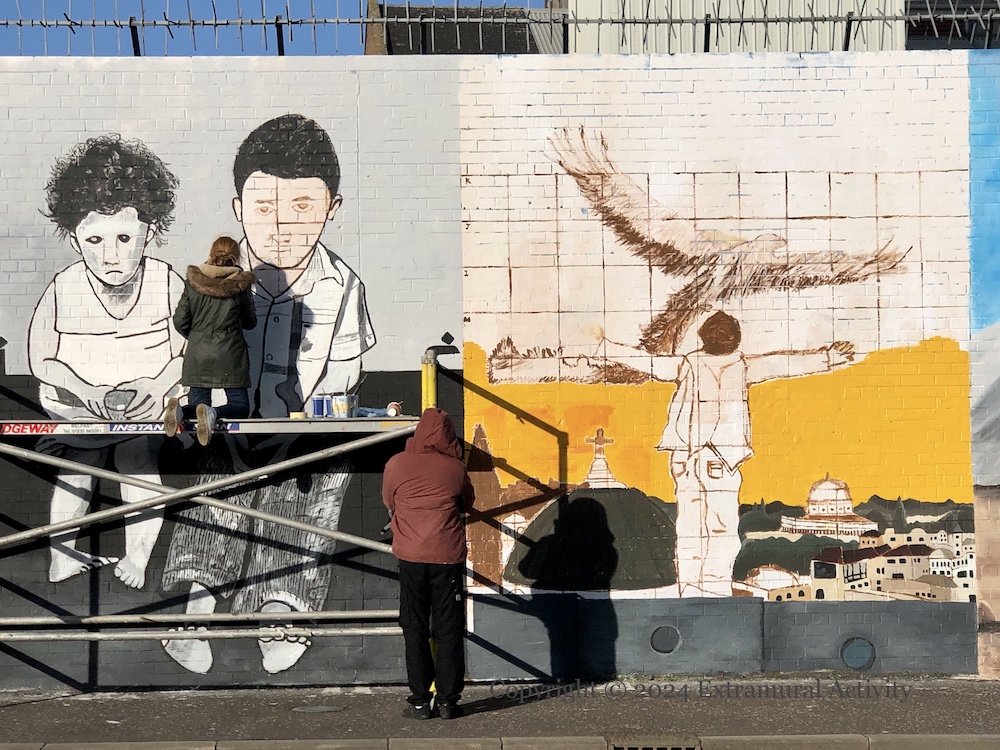
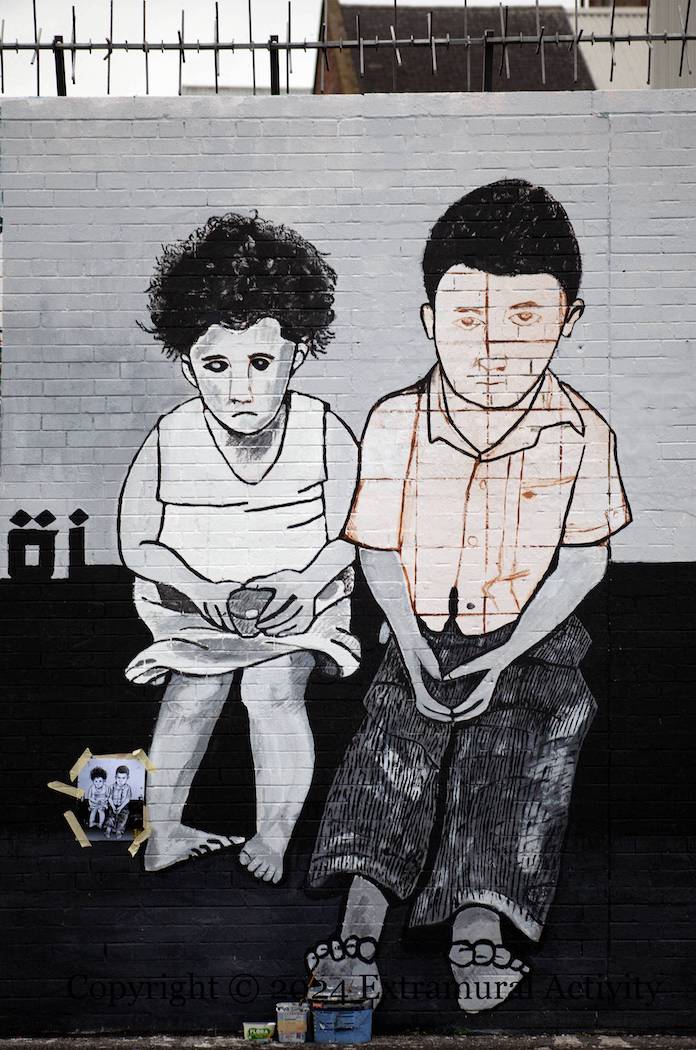
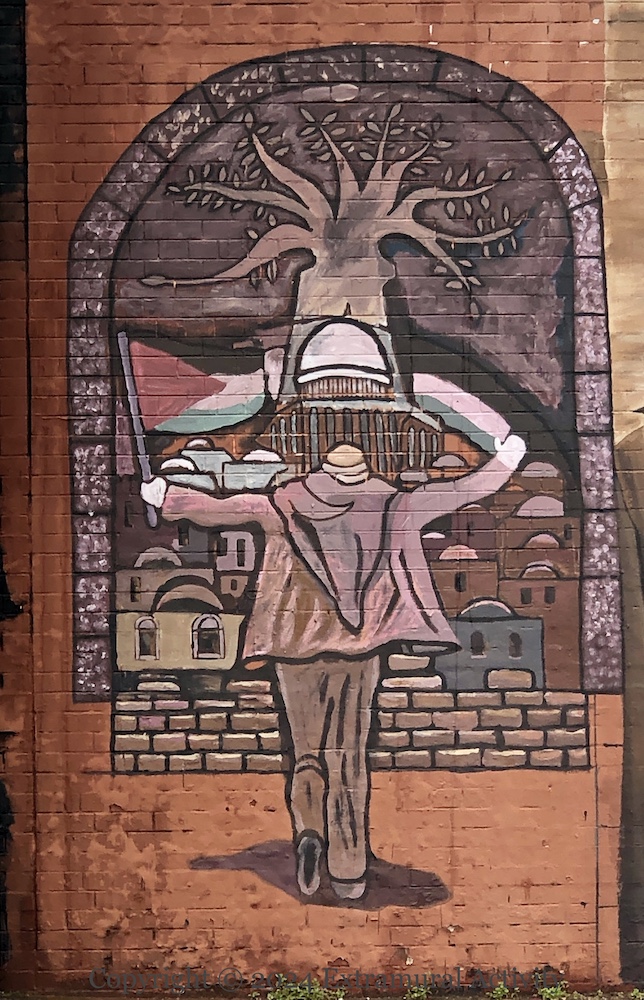
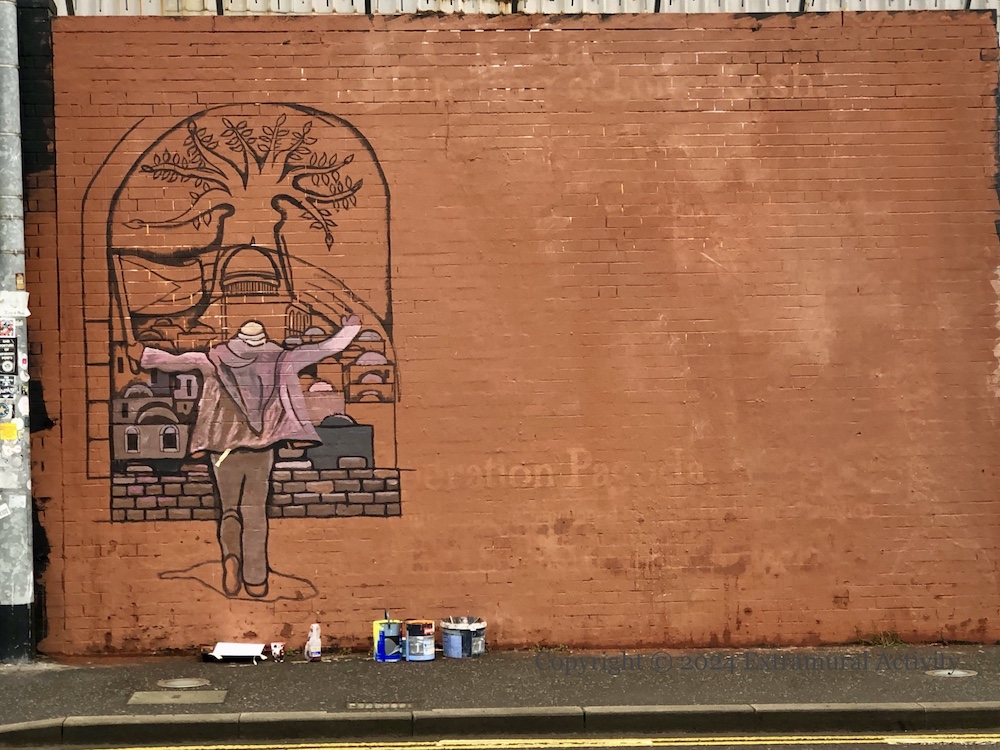
Four murals are being painted over what were previously Lenár Linn and Hunger Strikers (1916). The originals for these were designed by Ahmad Shaweesh (ig), Raed Qatanani (ig), ? [please get in touch], and Saïd Hassan (web).
Shaweesh’s piece is a deliberately unfinished image of a group of people, perhaps a family, in distress.
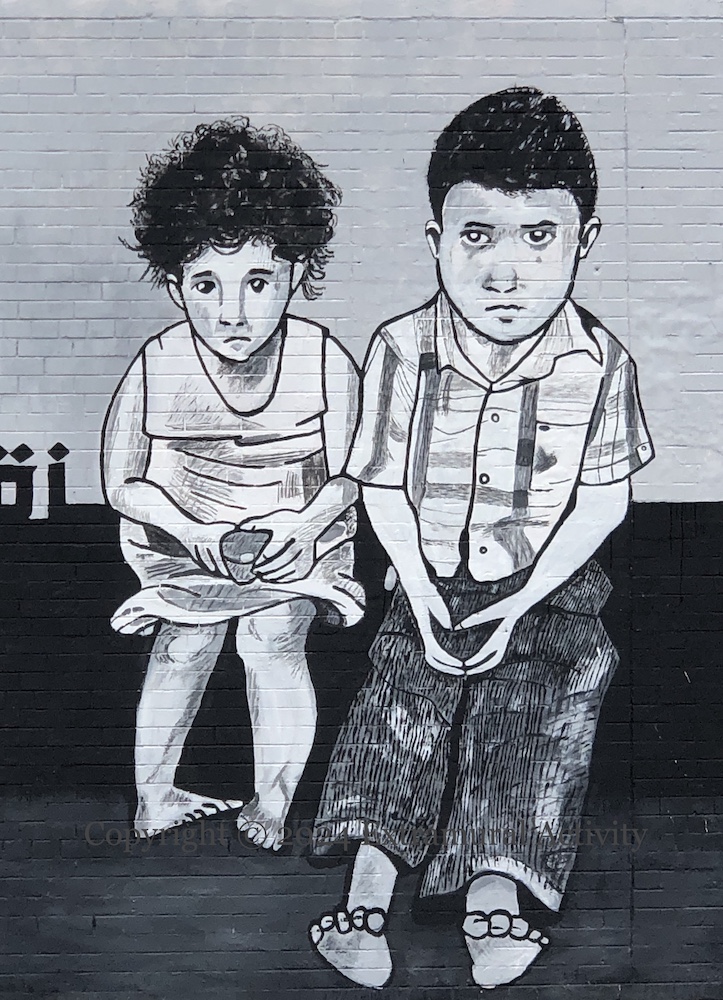
Qatanani’s image is a portrait of Soso and Omar Ashour as they sat in a Gaza hospital during the first week of the Israeli invasion.
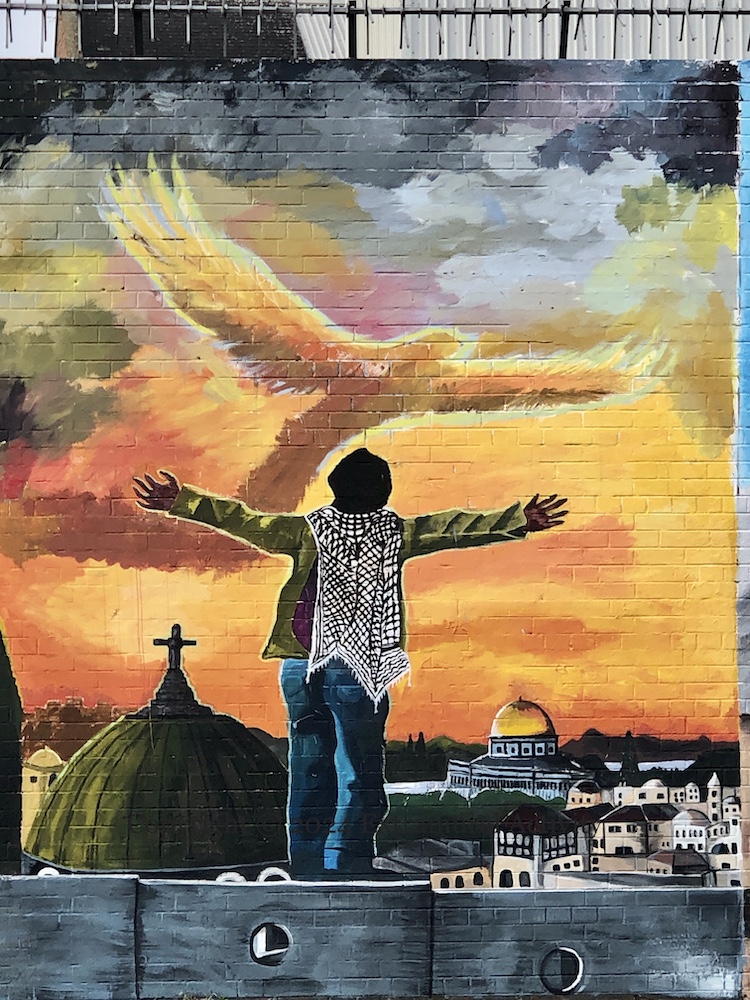
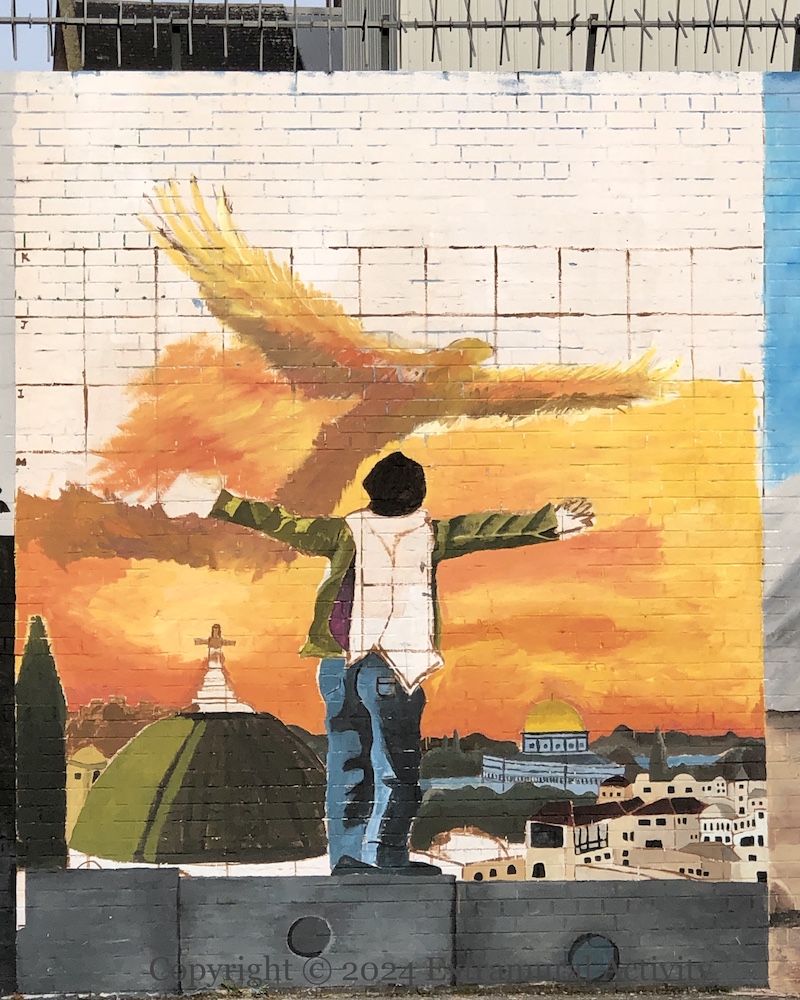
The original artist of this figure with a phoenix is unknown.
The last of these four murals is by Hassan and shows a woman cooking over an open fire in front of a tent in a refugee camp.
January 17th:
January 20th:
Wide shot of the four pieces on the right-hand side: