The fortieth anniversary edition of the Derry Halloween festival begins on October 28th, with the main parade and fireworks display at 7:00 and 8:15 on Saturday the 31st. (A full list of events can be found in the Derry Halloween programme (pdf).)
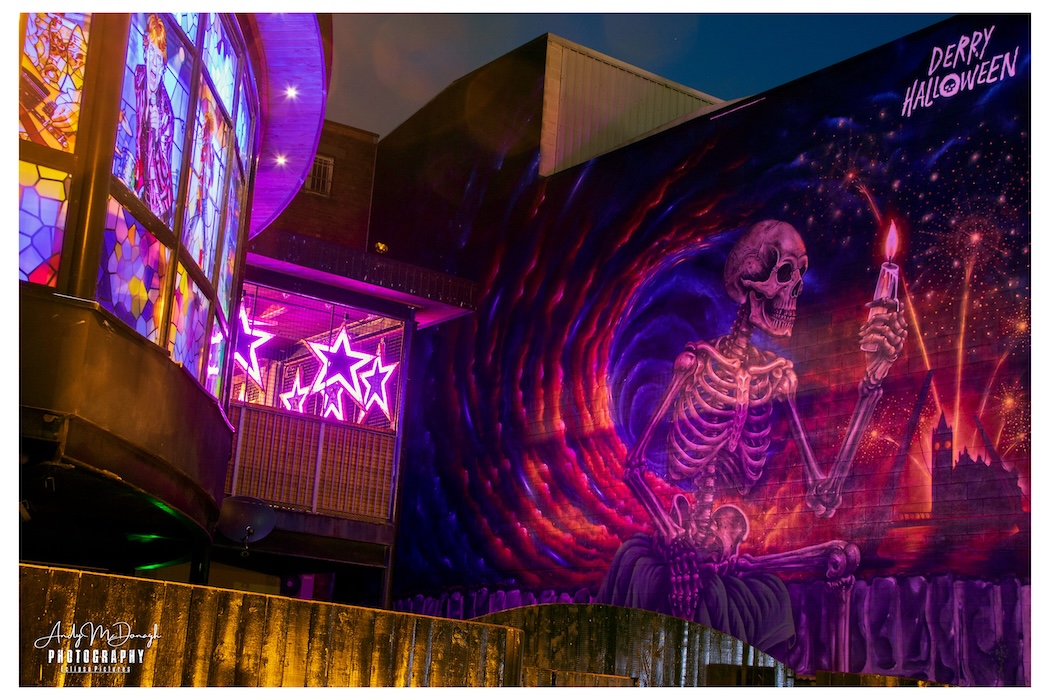
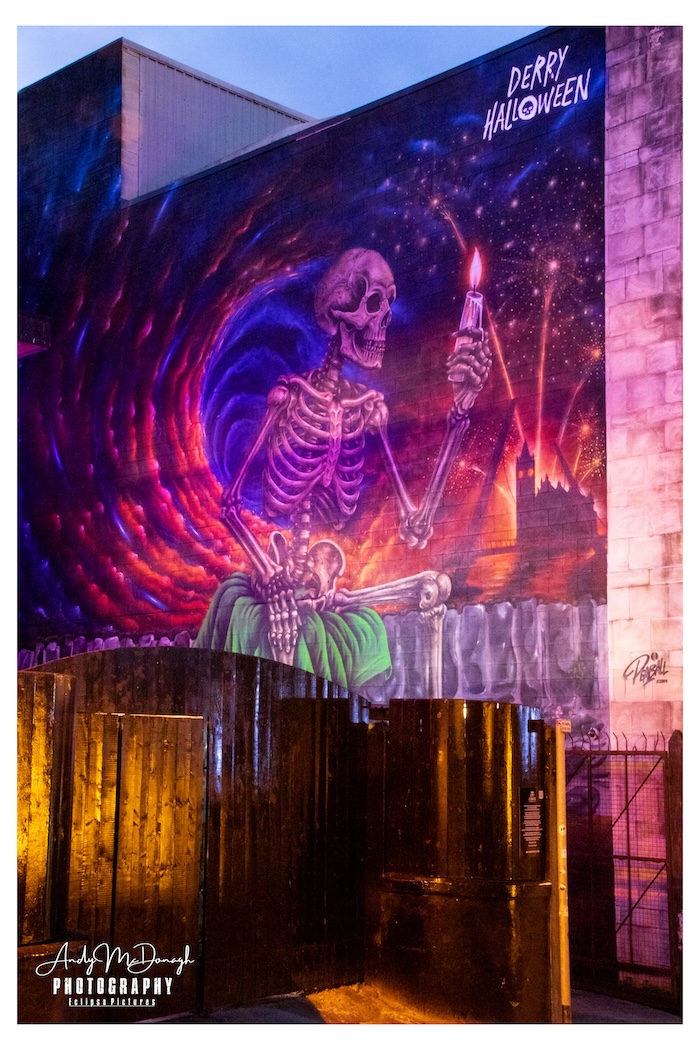
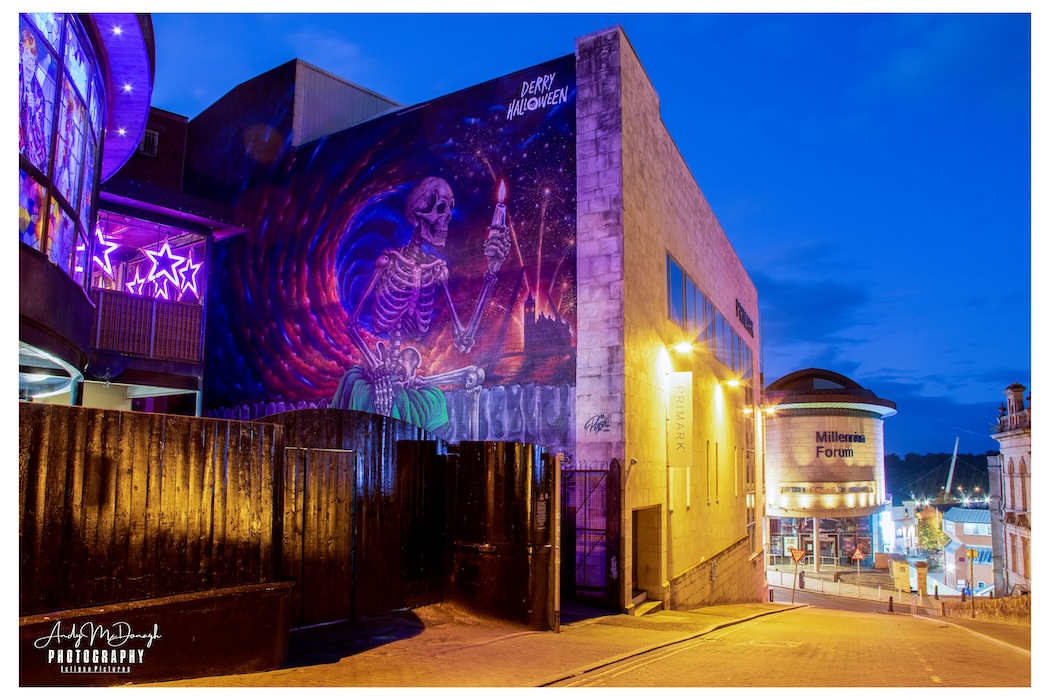
For the occasion artists from Peaball (web) have painted a Halloween version of the Londonderry skeleton sitting on its mossy rock, on a wall next to the Bentley Bar, whose lights match the colour palette of the piece. According to the promo video (youtube) the skeleton is called “Walter”.
Thank you visiting the Seosamh Mac Coılle Collection. (See the About page for more information about the collection.) Use the search tools in the side-bar on the right to access images from specific dates or categories, or simply keep scrolling.
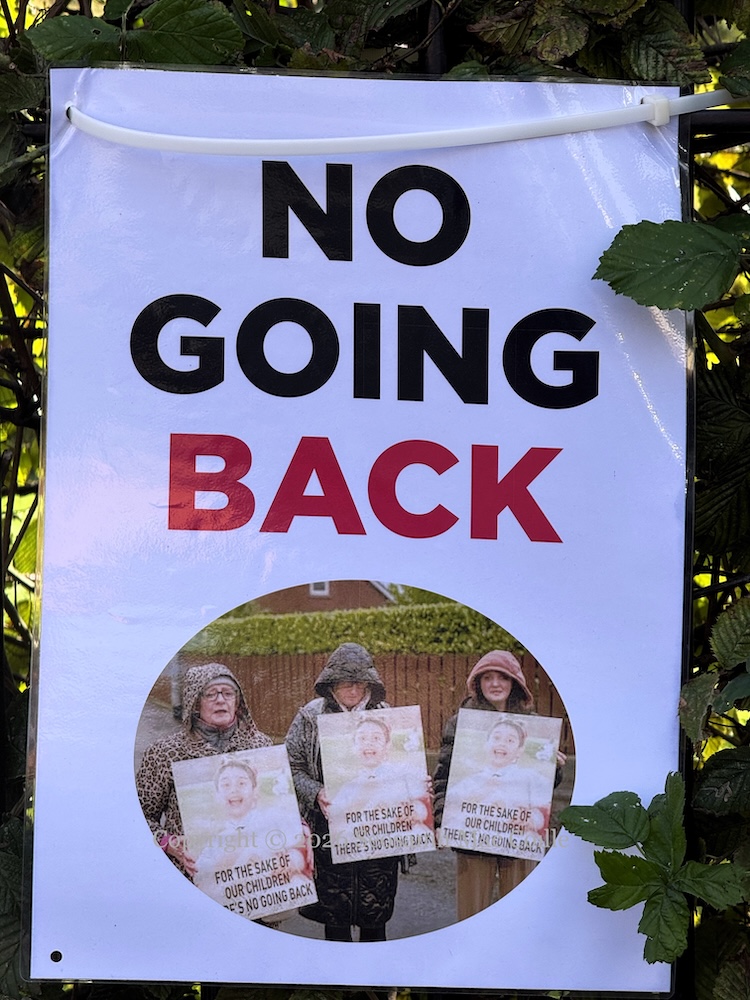
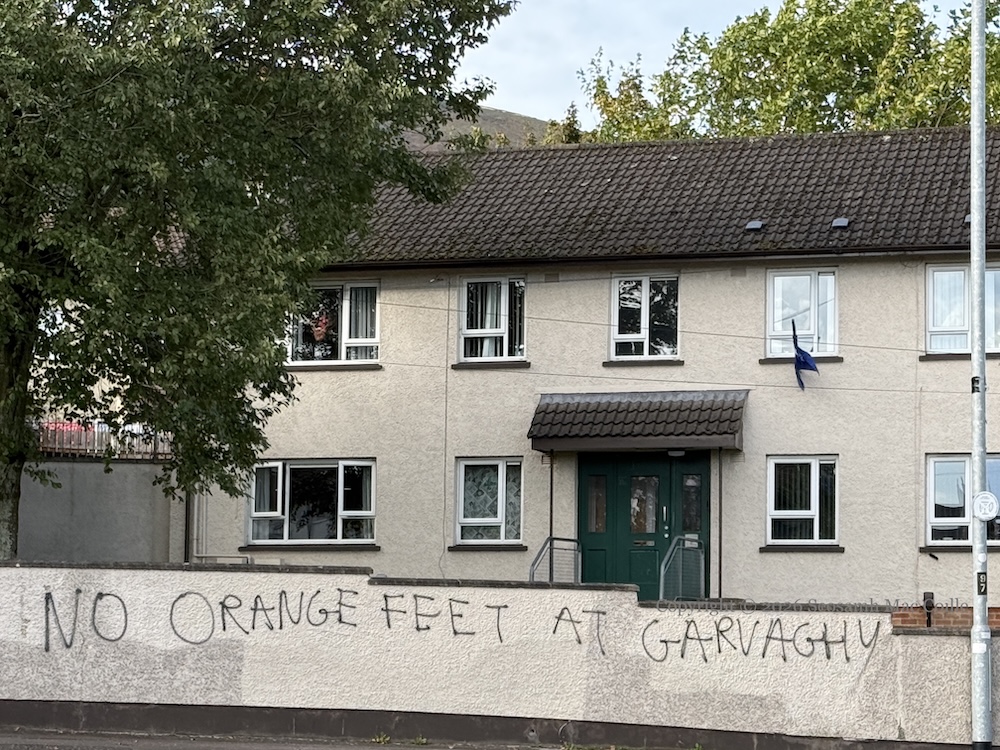
“For the sake if our children there’s no going back.” Twelve year-old Portadown boy Darren Murray died during the Drumcree protests of 1996 when he was knocked down in 1996, running away from a group of youths (Irish Times). Murray’s death, and the death of the Quinn brothers, have been brought back to mind by the recent standoff at Drumcree church (see No Orange Feet At Garvaghy), which perhaps ended on Friday (October 9th) when NI Secretary Chris Bryant banned the Orange Order from marching past the Garvaghy estate (Guardian | Irish Times); the Orange Order is appealing the decision (Independent).
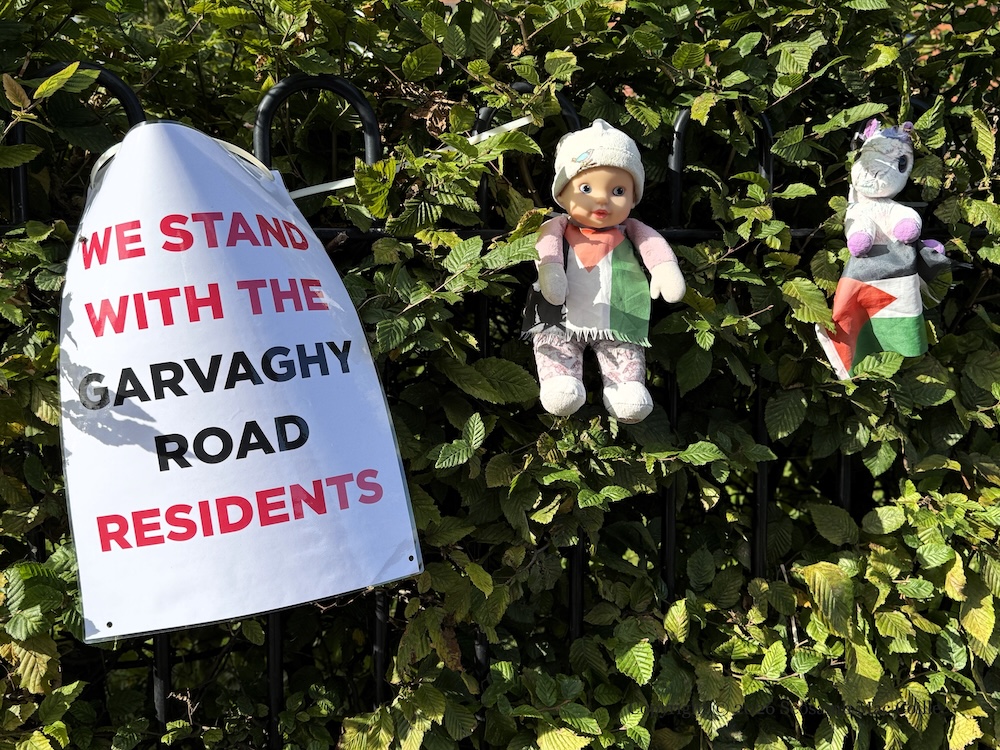
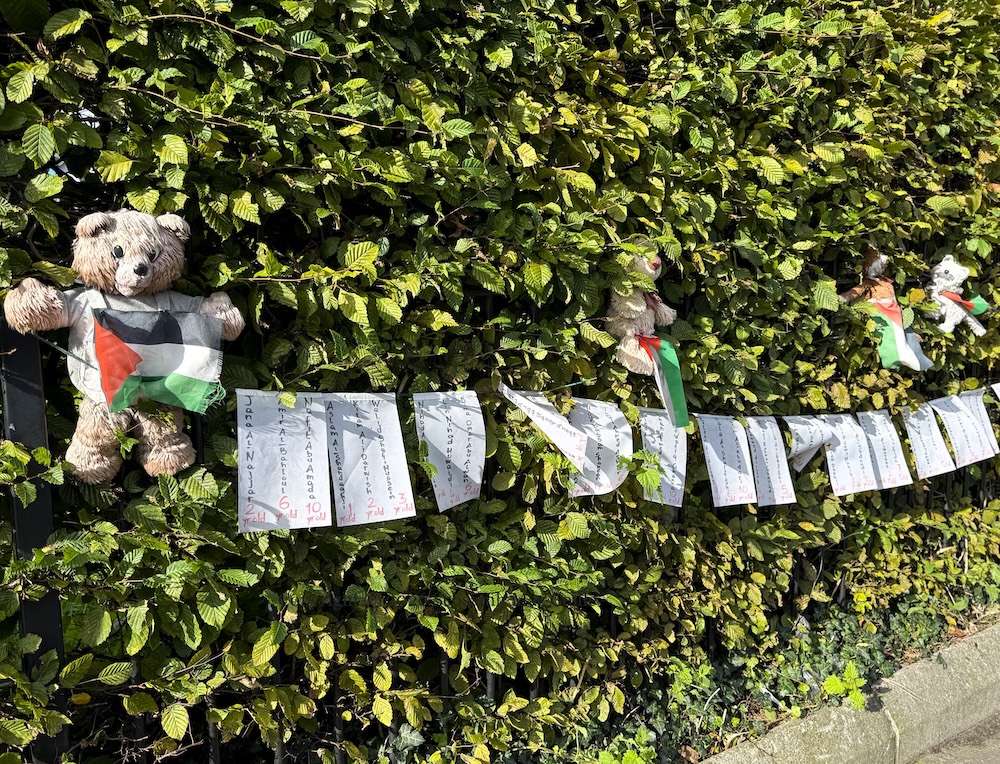
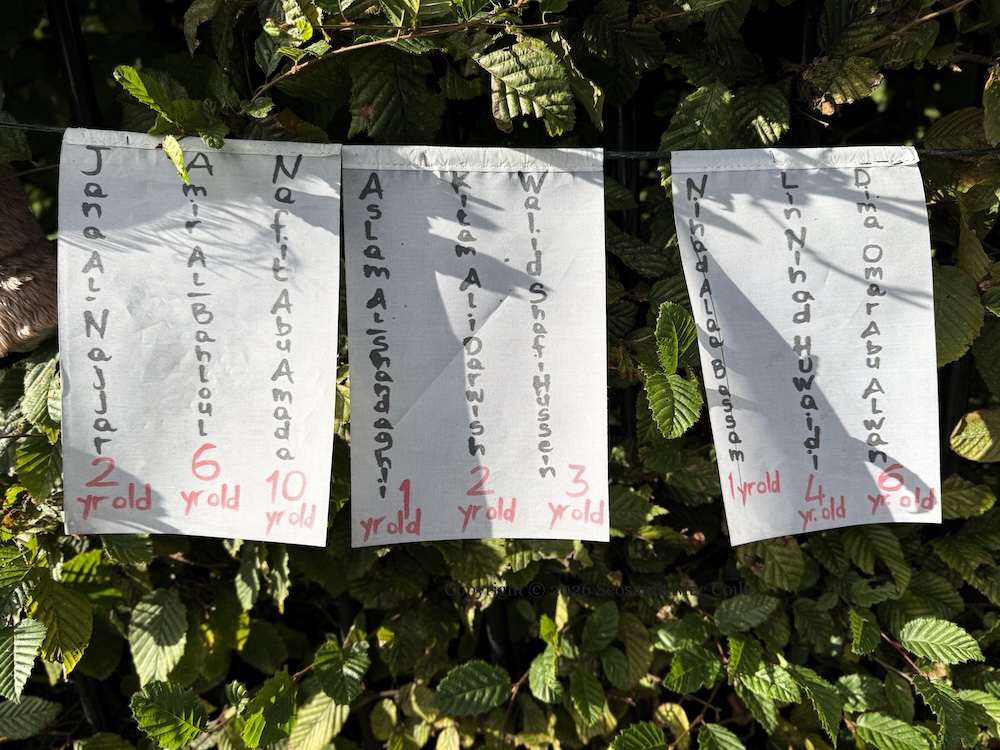
“We stand with the Garvaghy Road residents.” These posters of solidarity with the residents of Garvaghy (and posters and dolls in solidarity with Gazan children) are on the hedge on the Glen Road side of Groves-Reilly Corner, site of the former Andersonstown RUC barracks.
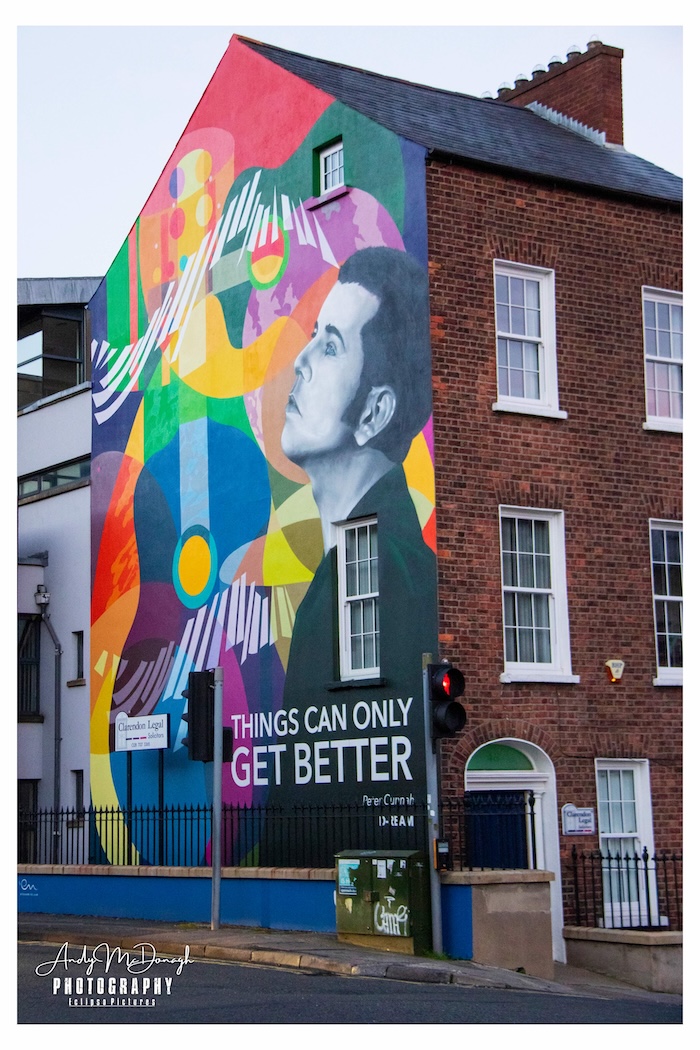
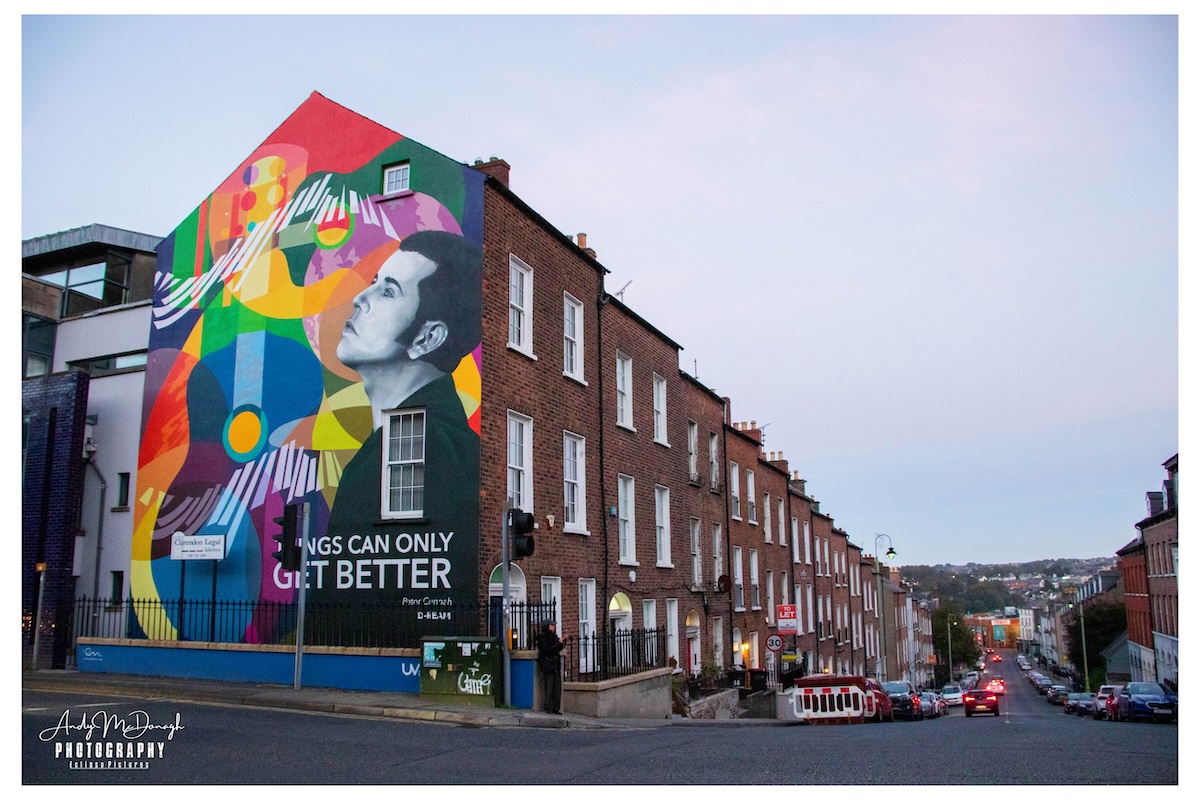
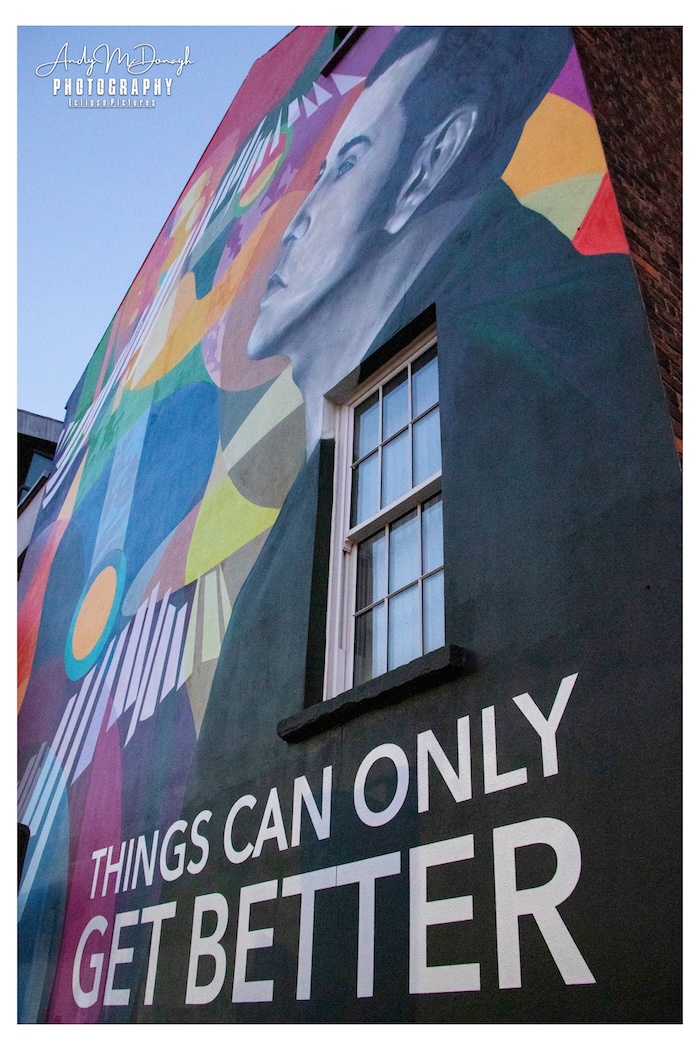
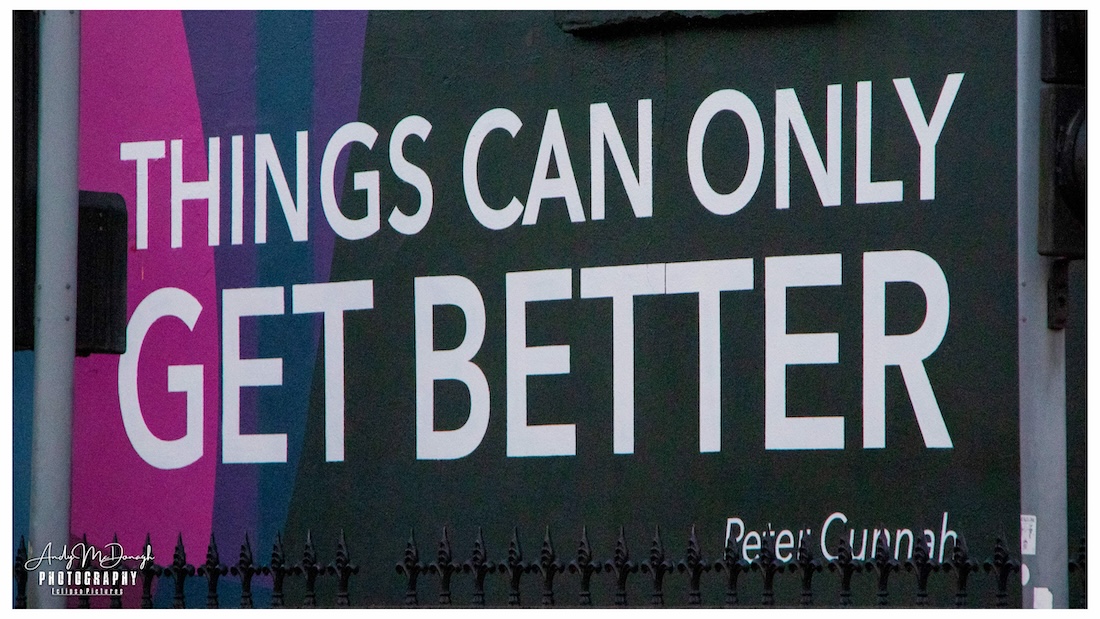
Peter Cunnah was the singer in D:Ream, which had a number-one hit in 1994 with “Things Can Only Get Better” (youtube). Cunnah was born in Belfast but adopted by parents in Derry (BBC).
This new mural was painted (by Karl Porter of UV Arts (web)) at the junction of Northland and Clarendon streets (in the Clarendon Conservation Area (pdf)), next to Cunnah’s home at 46 Clarendon Street, where he formed his first band, Tie The Boy (Derry Journal).
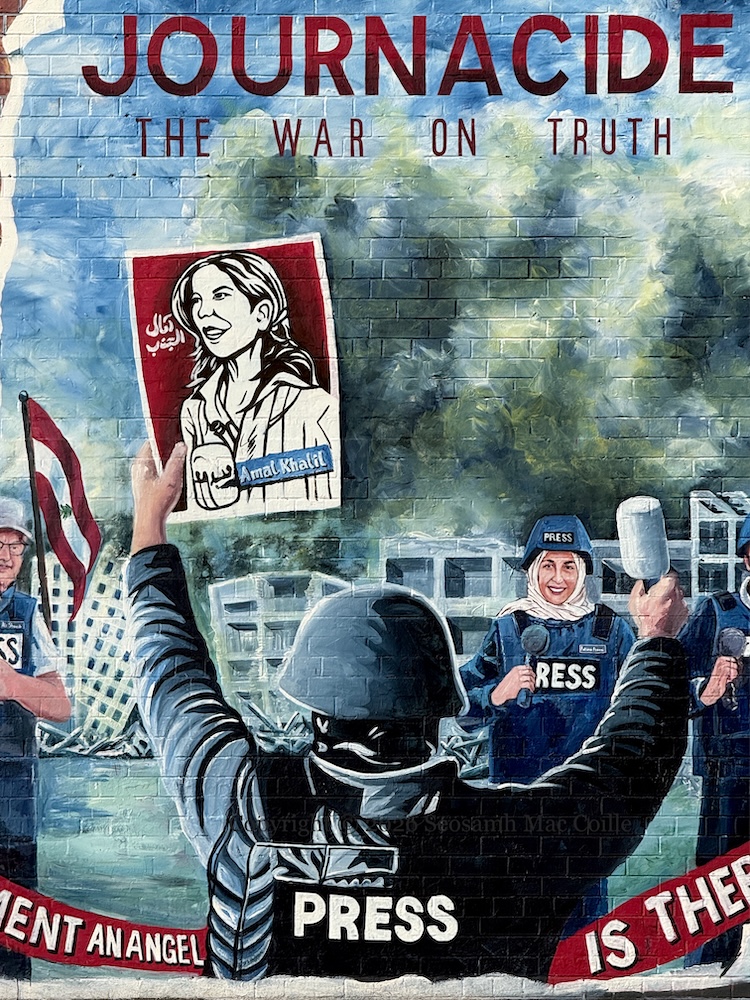
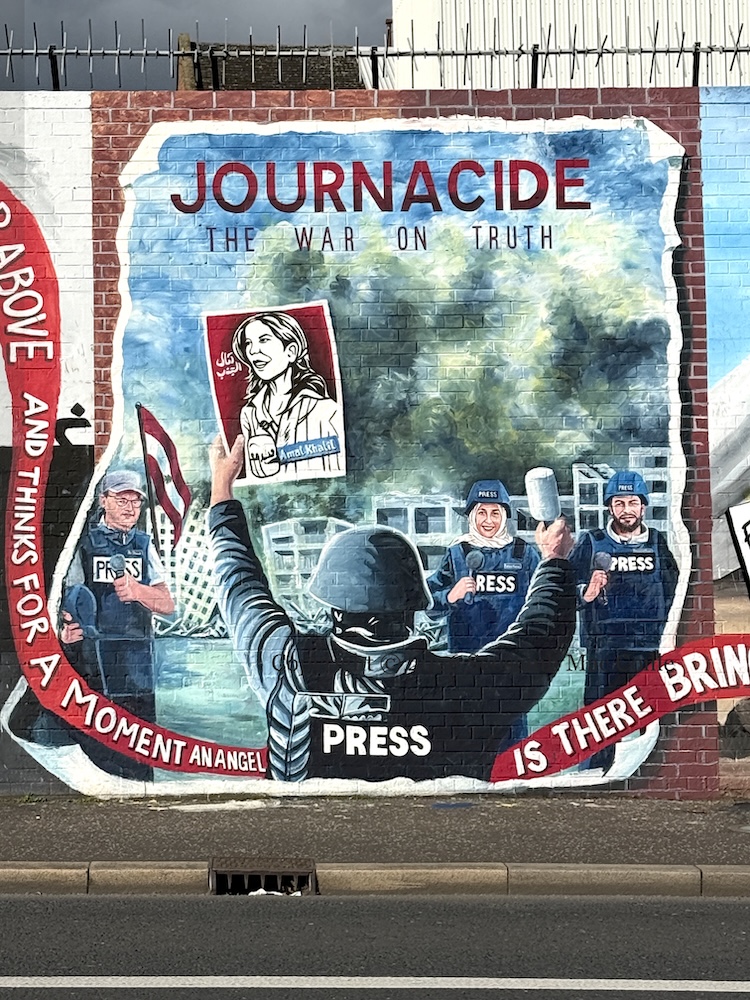
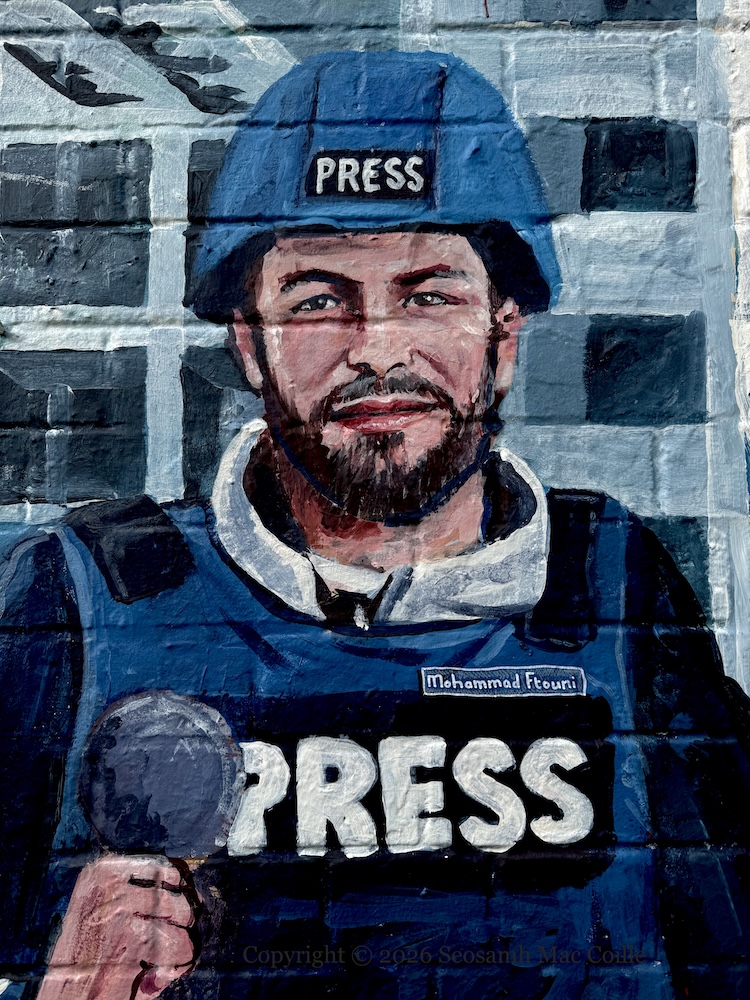
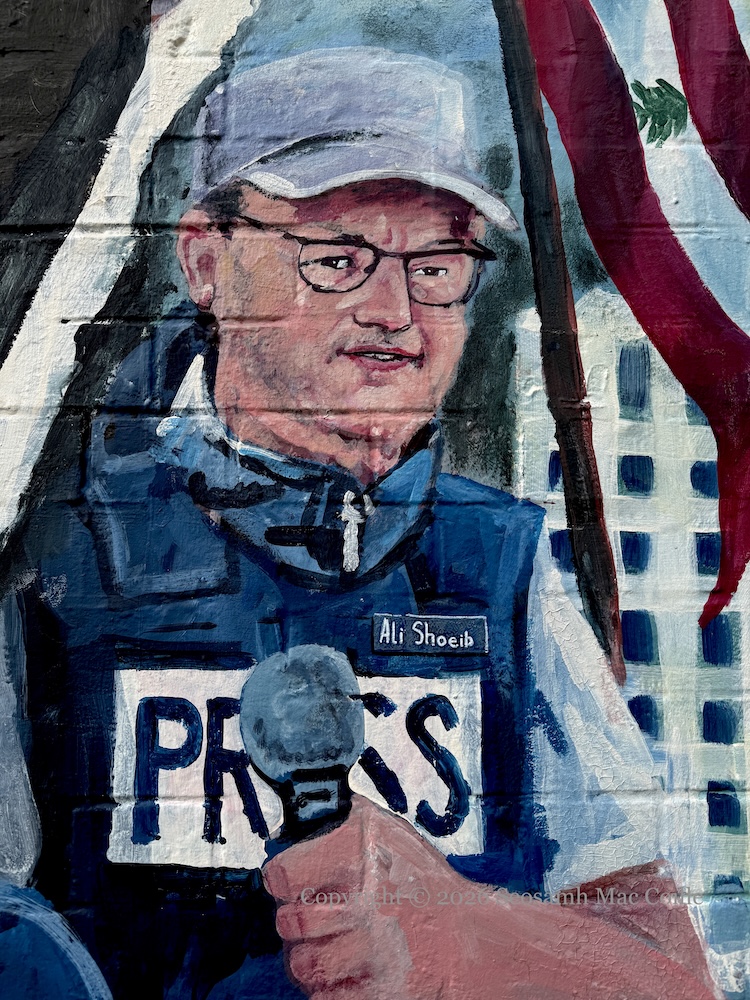
Since the Hamas attacks of October 7th, 2023, IDF forces have killed roughly 260 media workers in Gaza and 28 in Lebanon. The International Federation Of Journalists in 2025 declared Gaza to be the deadliest place for journalists (Al Jazeera); the Guardian calls it “journalism’s graveyard”.
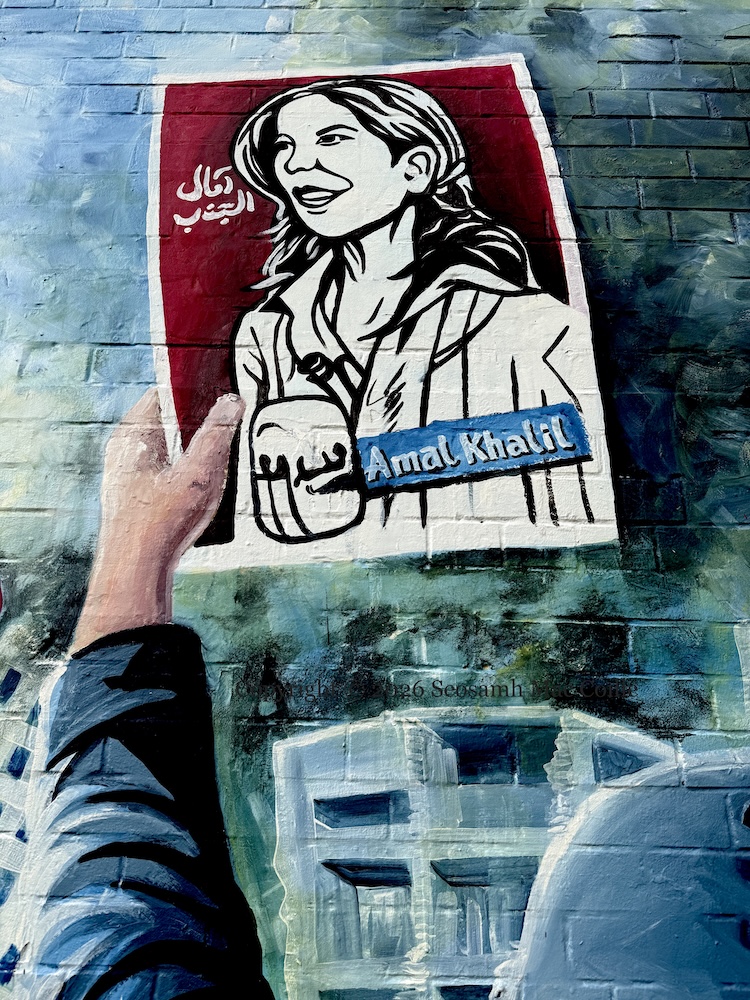
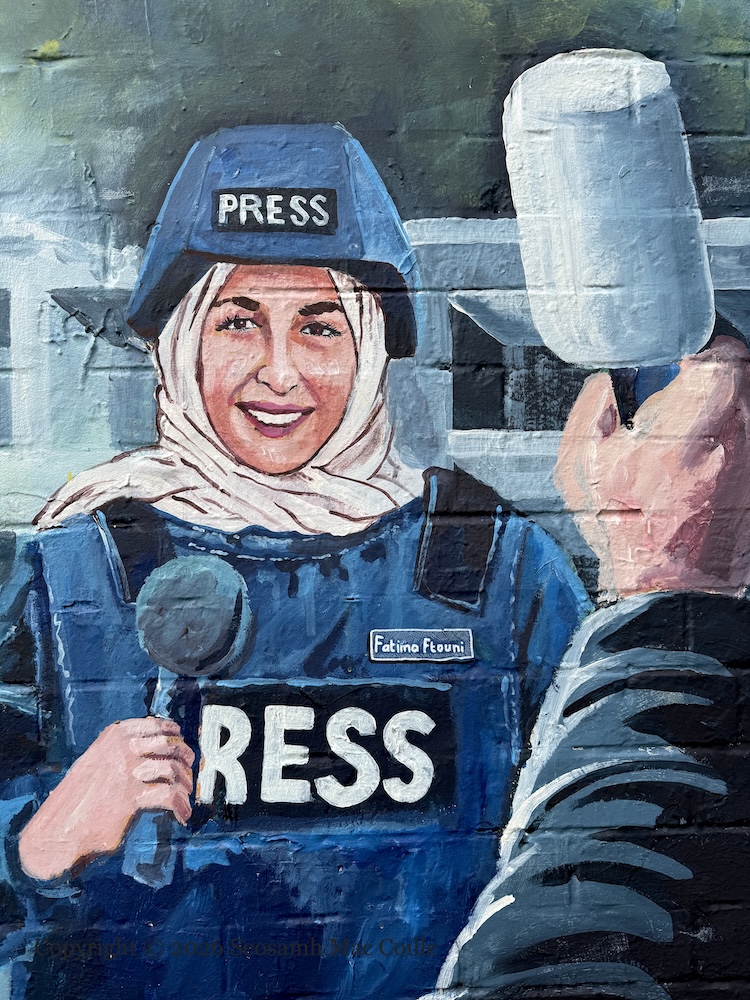
Seán Murray’s documentary “Journacide: The War On Truth” premiered in Belfast in June as part of Docs Ireland (pdf). It profiles four journalists killed this year (2026) in Lebanon: Amal Khalil (killed in al-Tayri on April 22nd (RSF)), and Ali Shoeib, Fatima Ftouni, and her brother Mohamed Ftouni (killed in Jezzine on March 28, 2026 (PBS))
A decision to ban Orangemen from marching down Garvaghy Road in Portadown in July was quashed at the end of August because the Parades’ Commission failed to follow proper procedure (BBC). Another application was made to march down the road, past the Catholic estate, and this was granted, with restrictions, for September 27th, re-igniting a dispute that has been largely dormant since 1988.
Since the 27th, there has been a stand-off between (on the one hand) Orangemen from Portadown and elsewhere in Northern Ireland and (on the other) local residents supported by leaders from the CNR community – Gerry Adams, Michell O’Neill, Mary Lou McDonald – and celebrities such as Kneecap (BBC) and Damien Dempsey. There have also been a variety of court orders and appeals. The Appeals’ Court’s session yesterday (October 5th) focused on the Commission’s use of a PSNI statement assessing the impact a parade would have (RTÉ); the court reserved judgment (BBC).
This graffiti in on the Springfield Road, west Belfast.
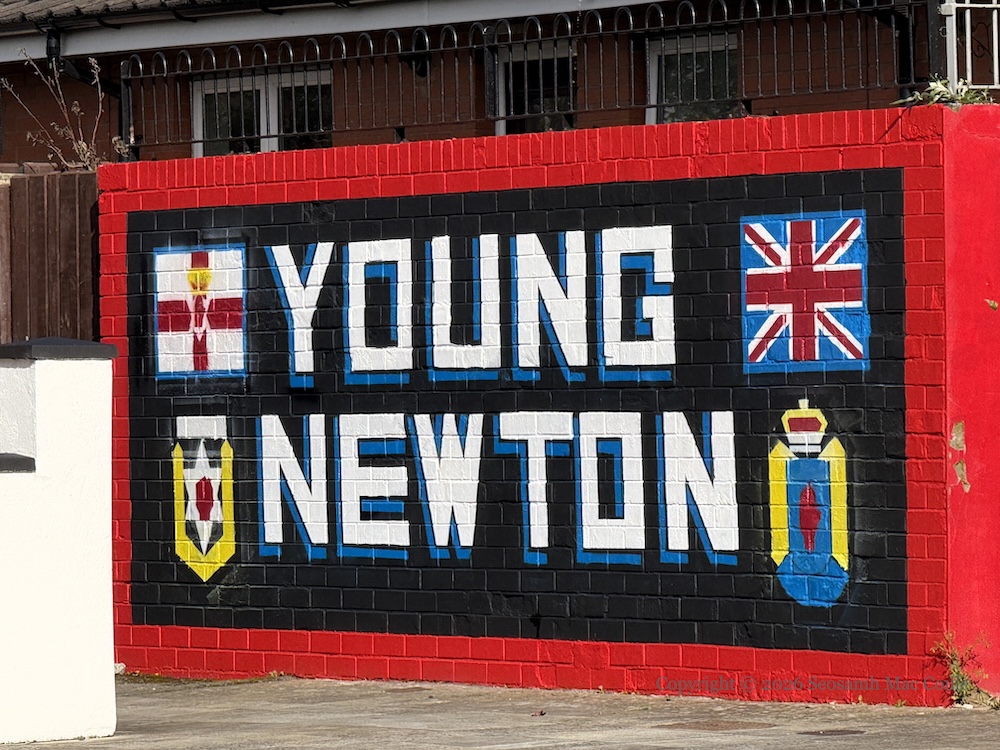
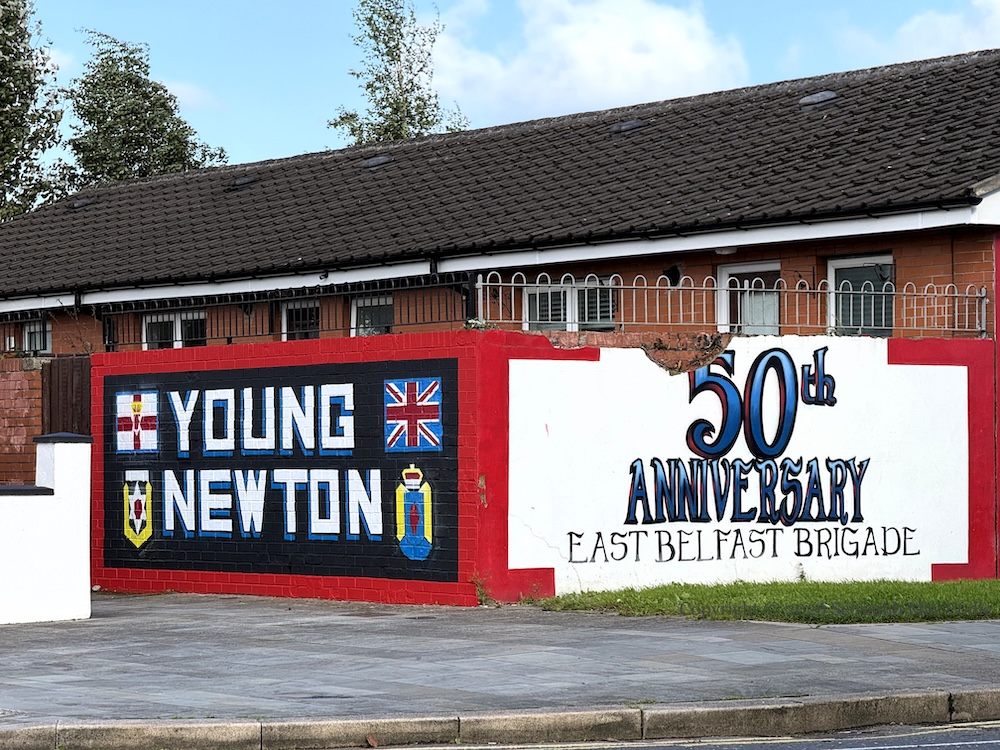
This Young Newton (the UYM in east Belfast) mural is an extension to the left-hand end of the fiftieth anniversary repainting of “Freedom Corner” and next to the Young Newton memorial garden. The group has had a presence on the area’s walls since 1997. See also 2005 | 2009 | 2009 at the other end of Freedom Corner. (Also 1999 in Bangor.)
The details on the UFF and UDA emblem were later filled in – see the Paddy Duffy Collection.
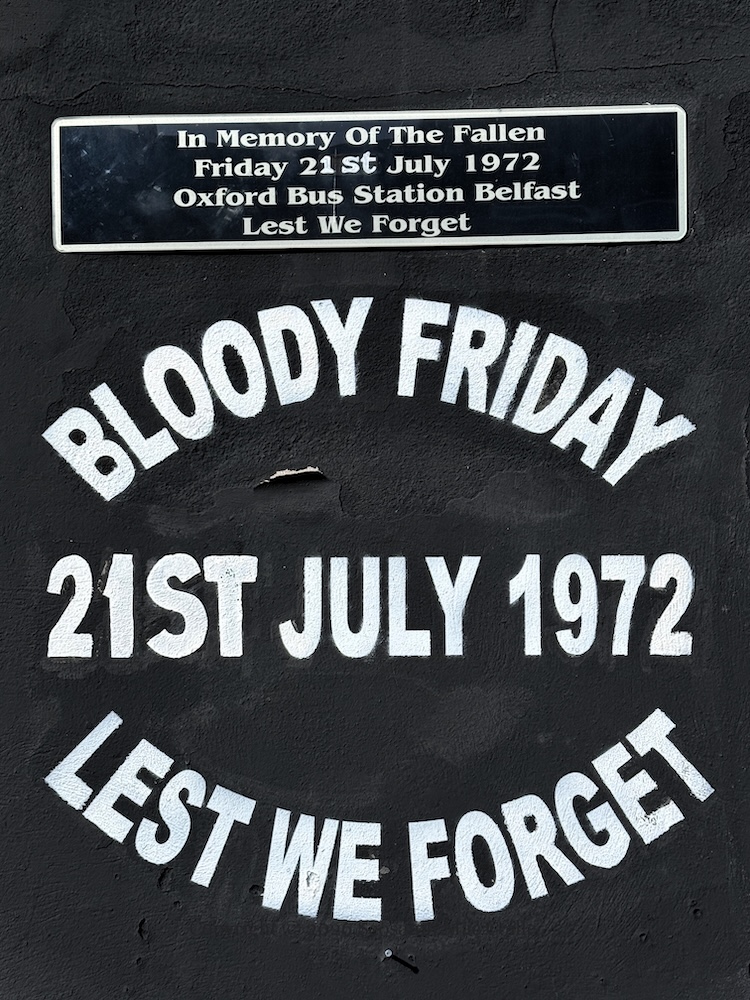
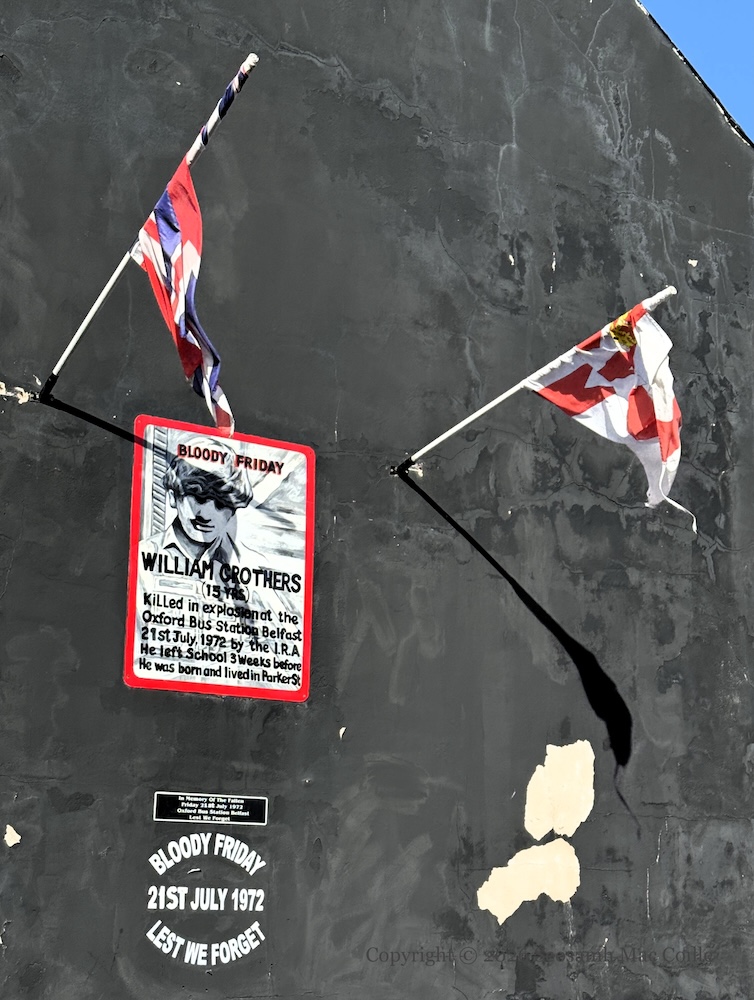
“Bloody Friday, 21st July 1972, lest we forget.” This lettering replaces the (painted) wreath recorded in 2022 below the portrait of William Crothers, who was one of the six people who died in an IRA bomb at Oxford Street bus station in Belfast city centre, one of nineteen bombs to go off on what became known as “Bloody Friday”.
“In memory of the fallen Friday 21st July 1972 Oxford [Street] Bus Station Belfast. Lest we forget”
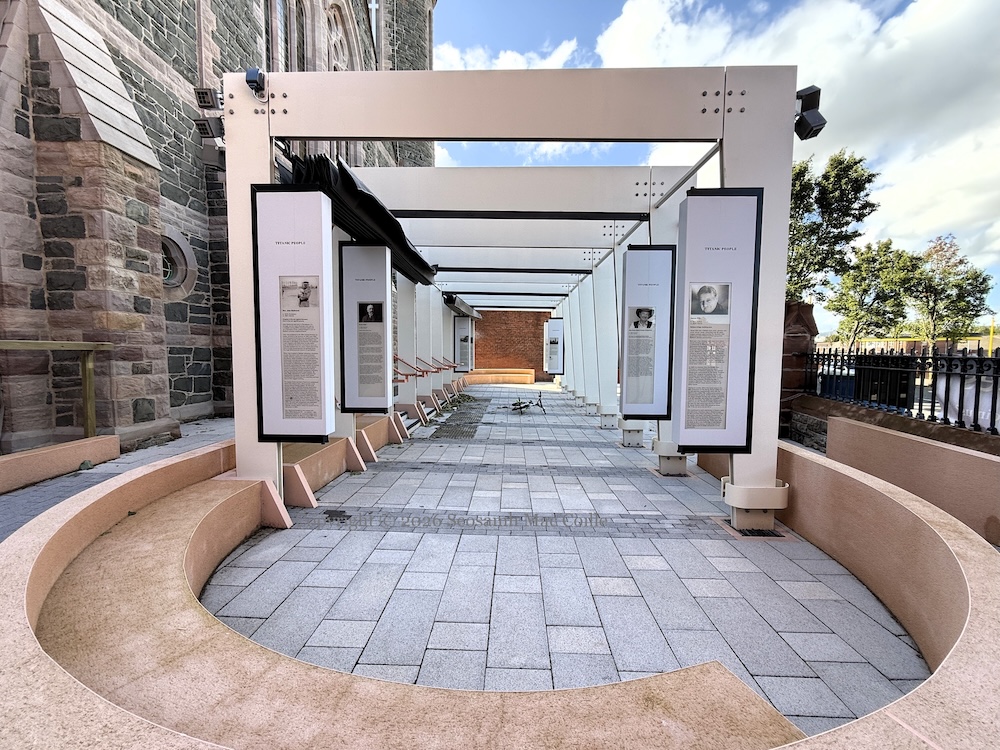
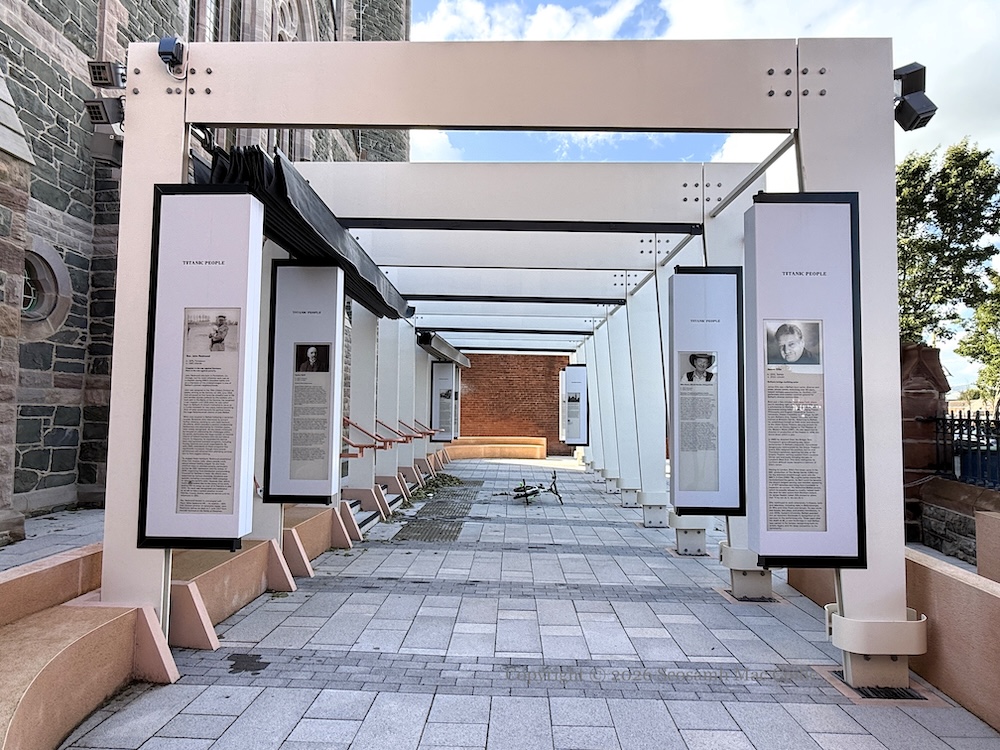
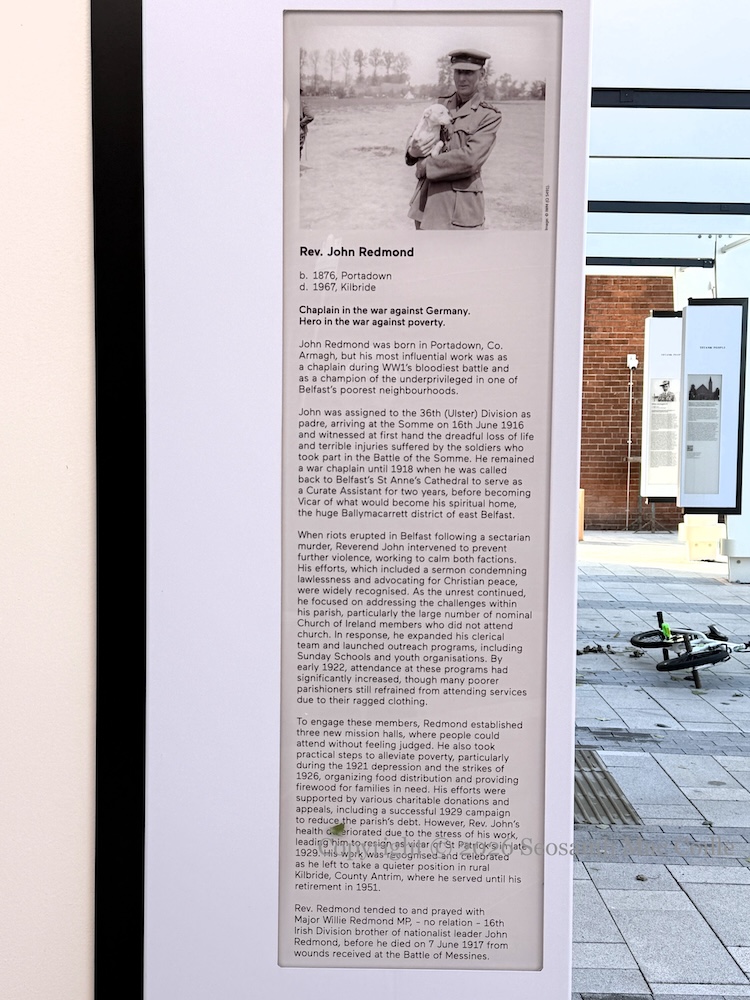
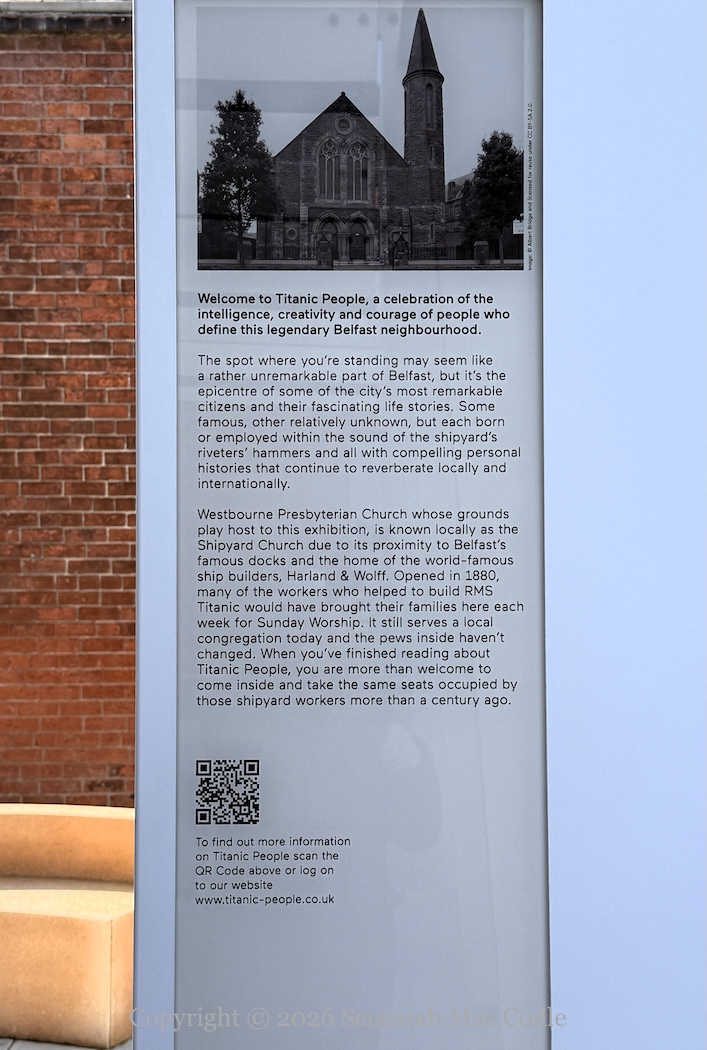
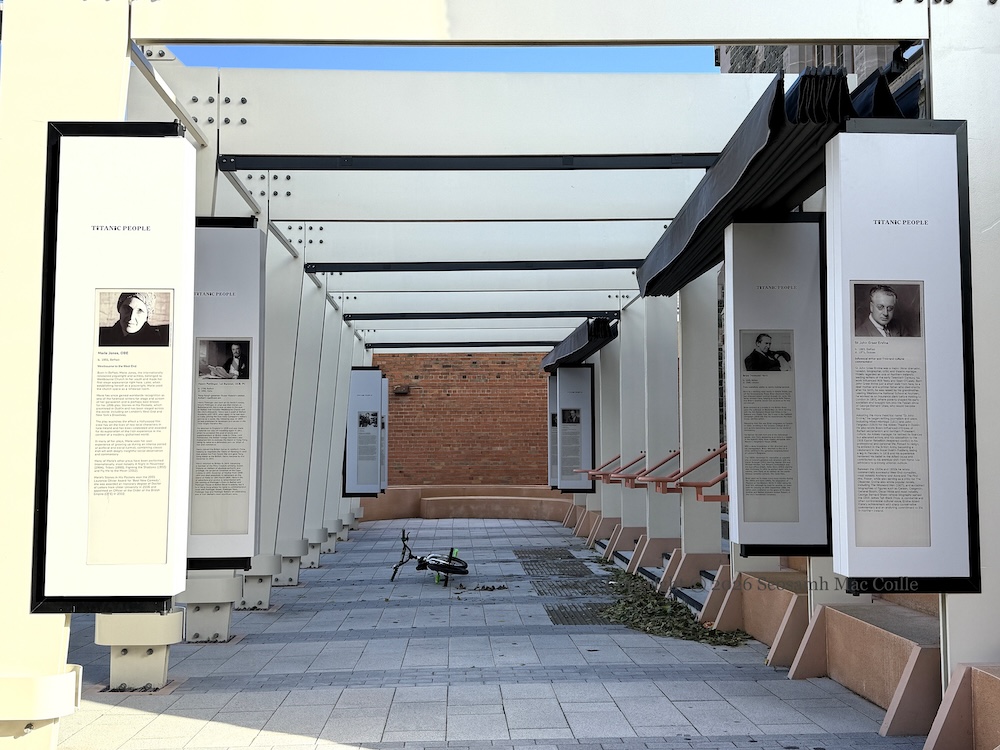
“Welcome to Titanic People, a celebration of the intelligence, creativity and courage of people who define this legendary Belfast neighbourhood. The spot where you’re standing may seem like a rather unremarkable part of Belfast, but it’s the epicentre of some of the city’s most remarkable citizens and their fascinating life stories. Some famous, other relatively unknown, but each born or employed within the sound of the shipyards’ riveters’ hammers and all with compelling personal histories that continue to reverberate locally and internationally. Westbourne Presbyterian Church whose grounds play host to this exhibition, is known locally as the Shipyard Church due to its proximity to Belfast’s famous docks and the home of the world-famous ship builders, Harland & Wolff. Opened in 1880, many of the workers who helped to build RMS Titanic would have brought their families here each week for Sunday Worship. It still serves a local congregation today and the pews inside haven’t changed. When you’ve finished reading about Titanic People, you are more than welcome to come inside and take the same seats occupied by those shipyard workers more than a century ago.”
At the front entrance to Westbourne Presbyterian, on the Newtownards Road, next to the new WWII memorial. See also The Yardmen on the other side of the Newtownards Road.
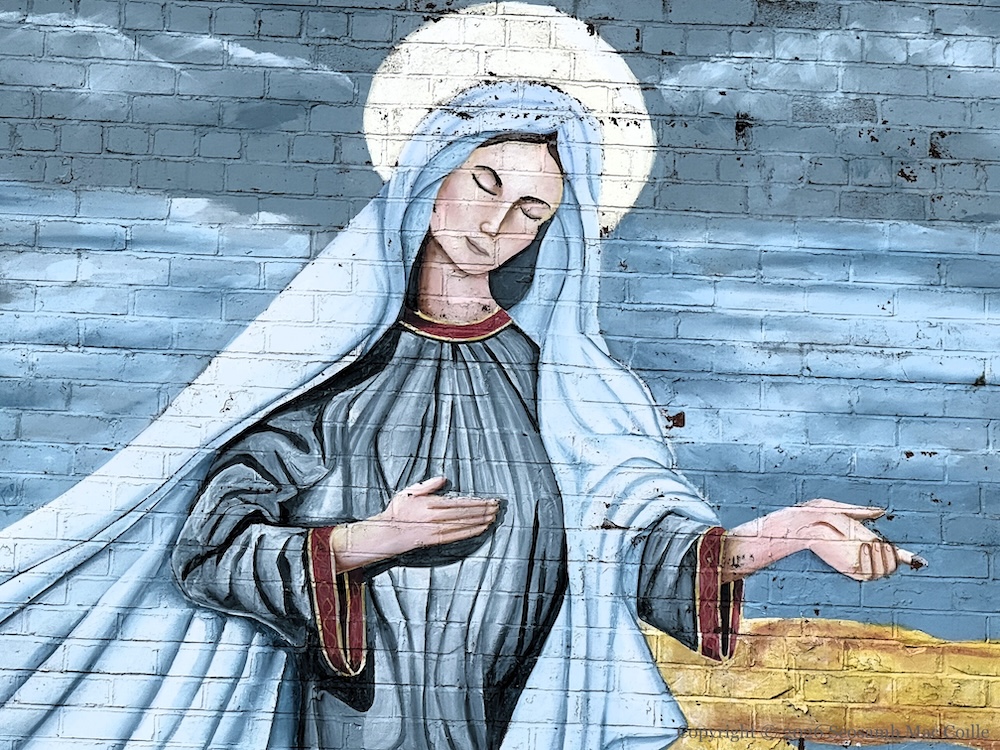
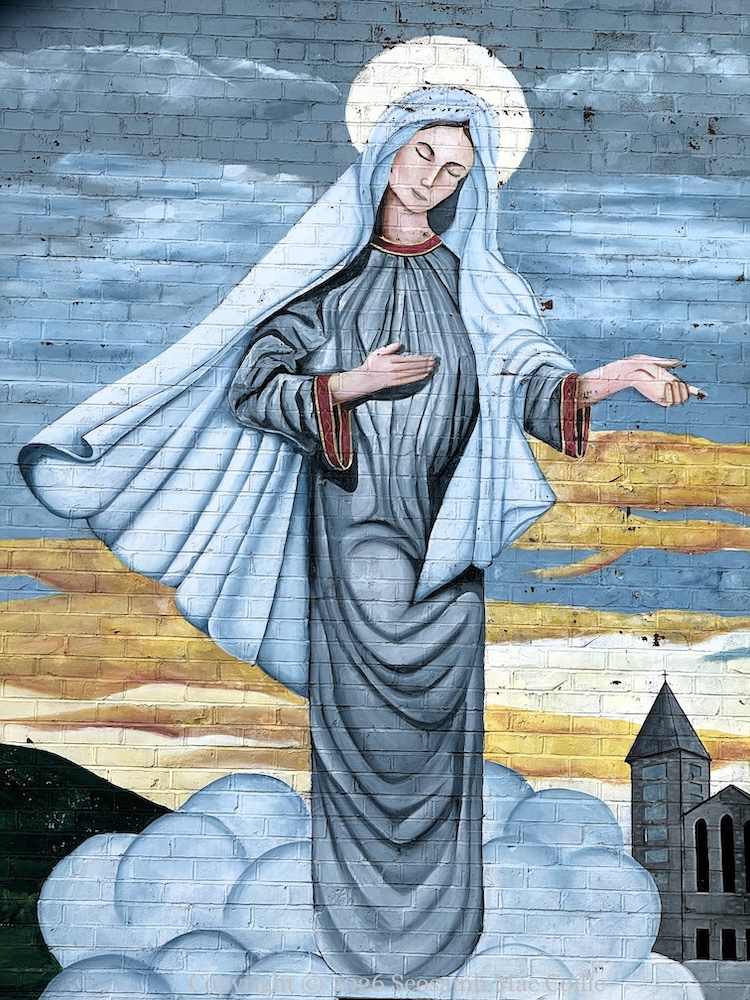
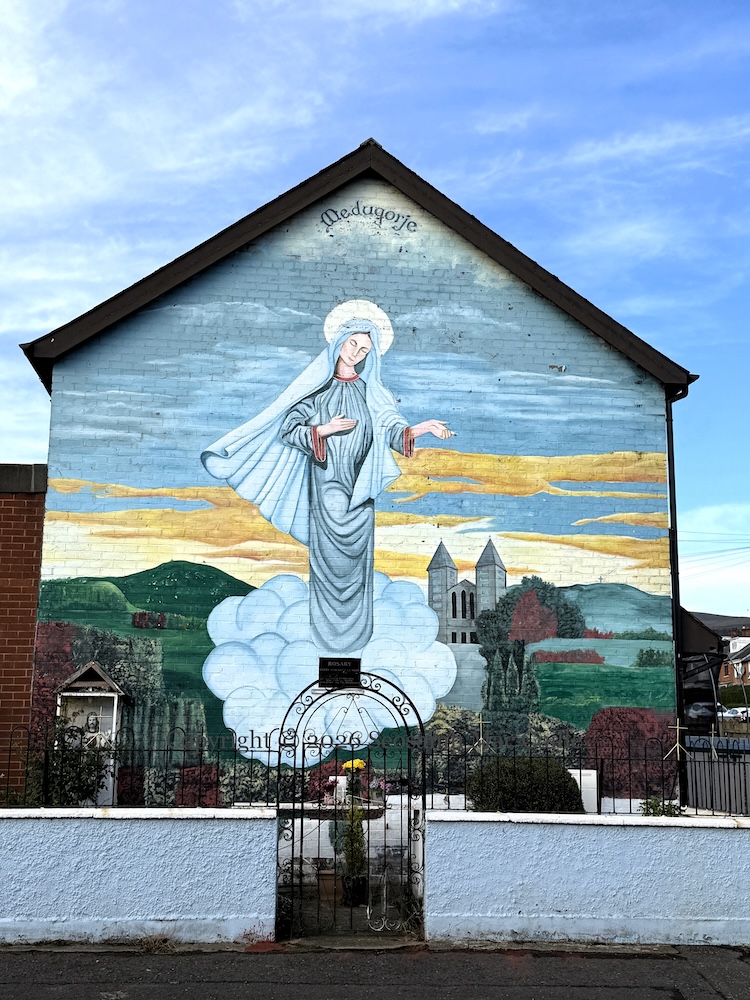
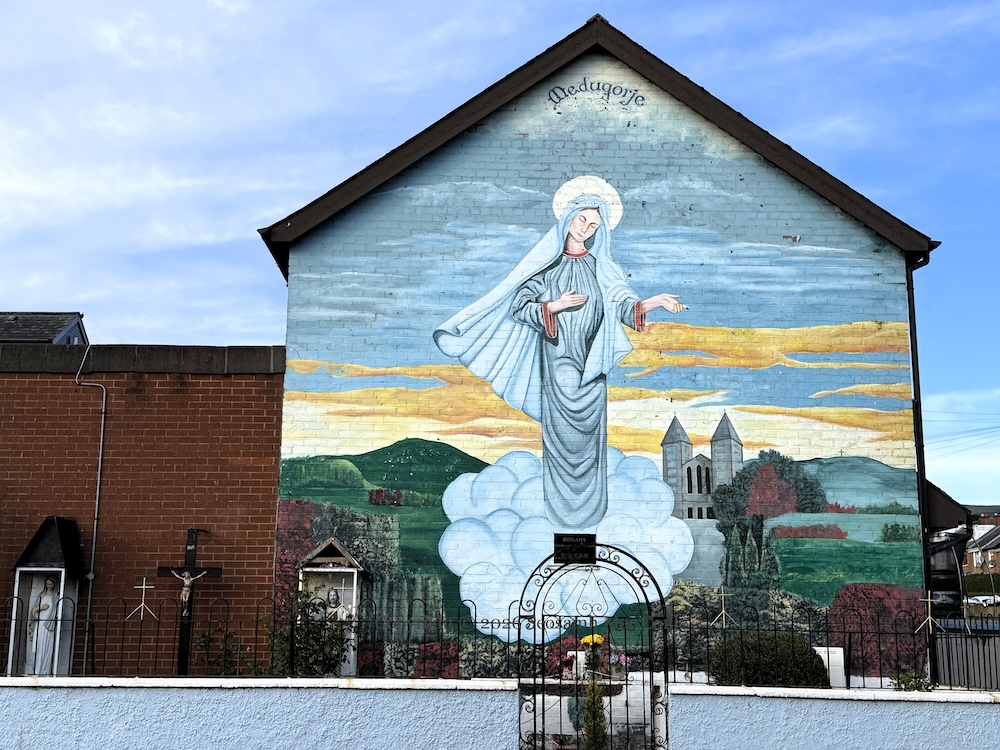
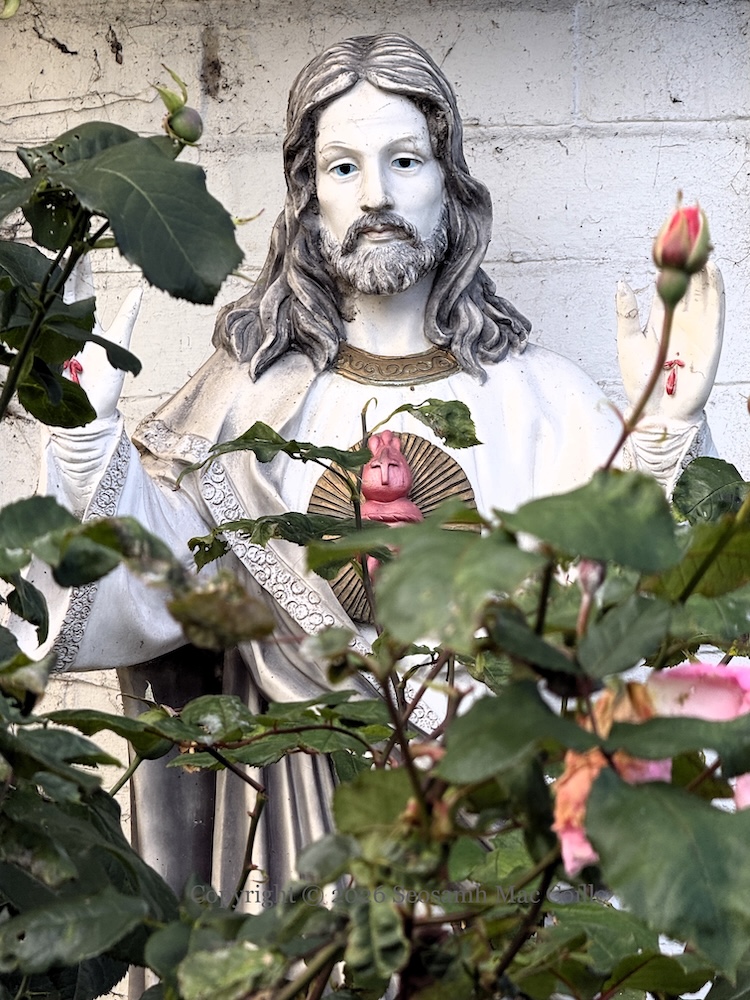
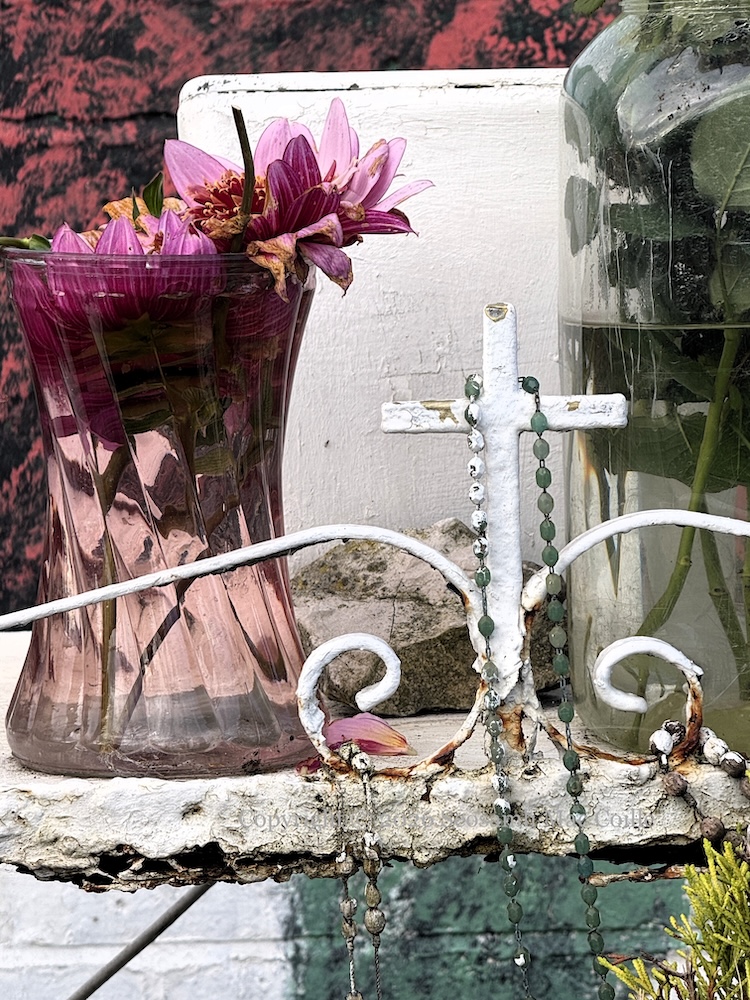
The Medjugorje [here, Medugorje] mural on Berwick Road in Ard Eoın/Ardoyne is an old mural first painted c. 1993 and repainted perhaps four times, in 2004, 2012, and – shown here – 2020.
The mural shows an apparition of “Our Lady Of Medjugorje, The Queen Of Peace” and St. James Church in the countryside “between the mountains” in (what is now) Herzegovina. The town became famous after two apparitions in 1981 and since then has been a destination for pilgrims (WP).
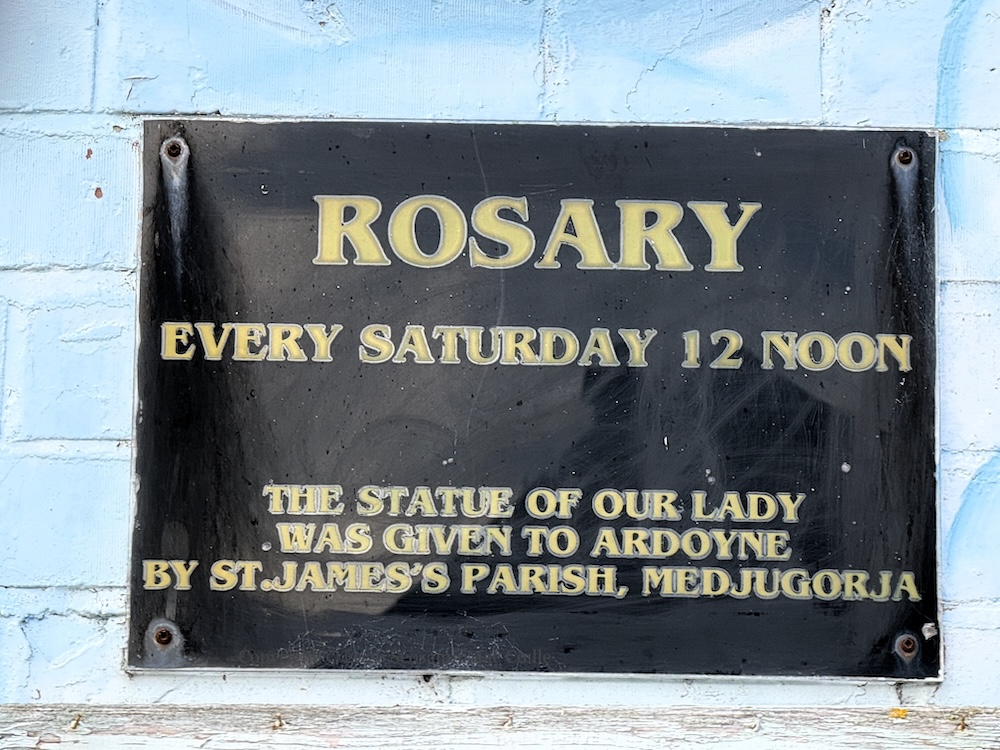
“Rosary every Saturday 12 noon. The statue of our lady was given to Ardoyne by St James’s parish, Medjugorja.”