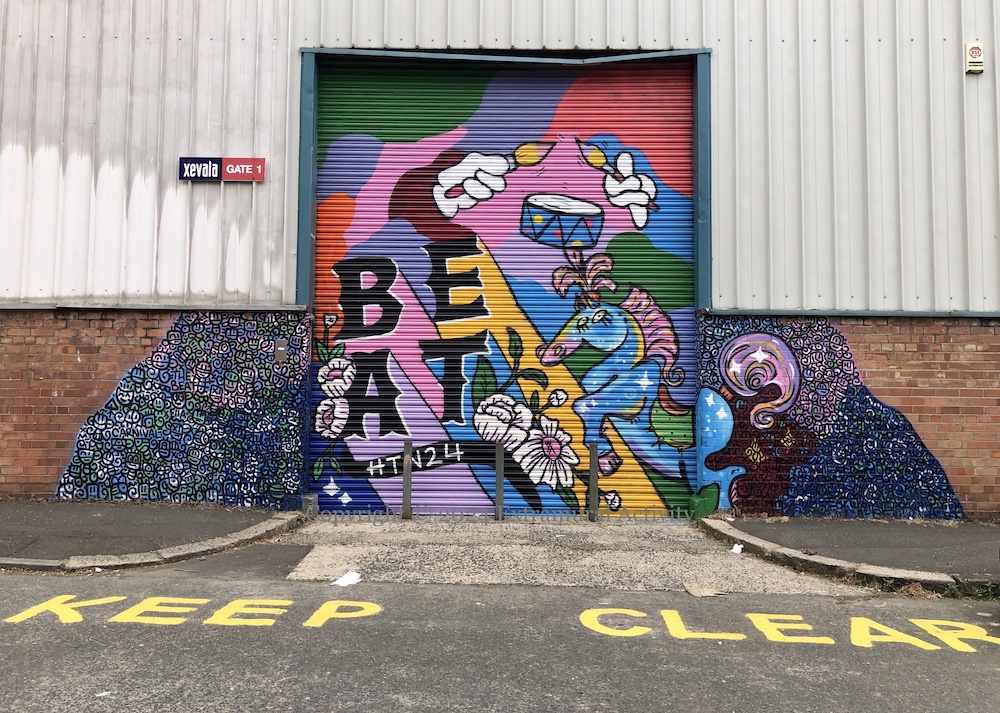
Beat Carnival Belfast (ig | web) puts on celebrations all over town and teaches skills from its base in Millfield/Brown’s Square. Artists Danni Simpson (ig), Codo (ig), Ana Fish (ig), and FGB (ig) worked together to spray this piece on the Gardiner Street door.
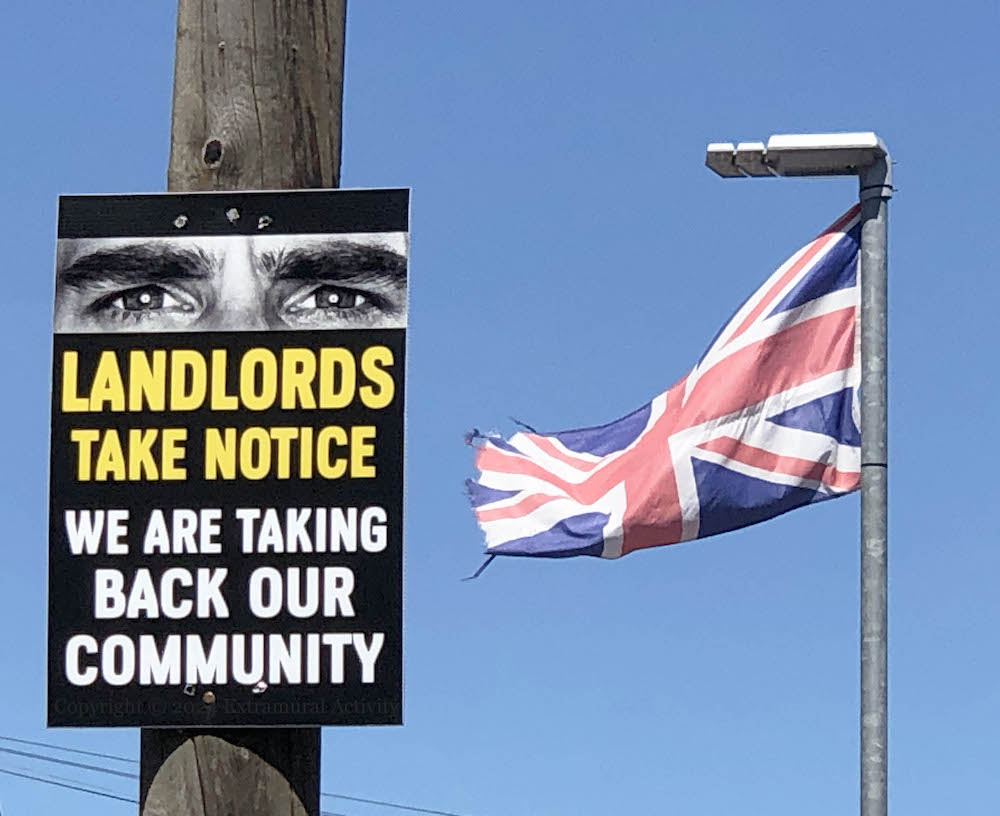
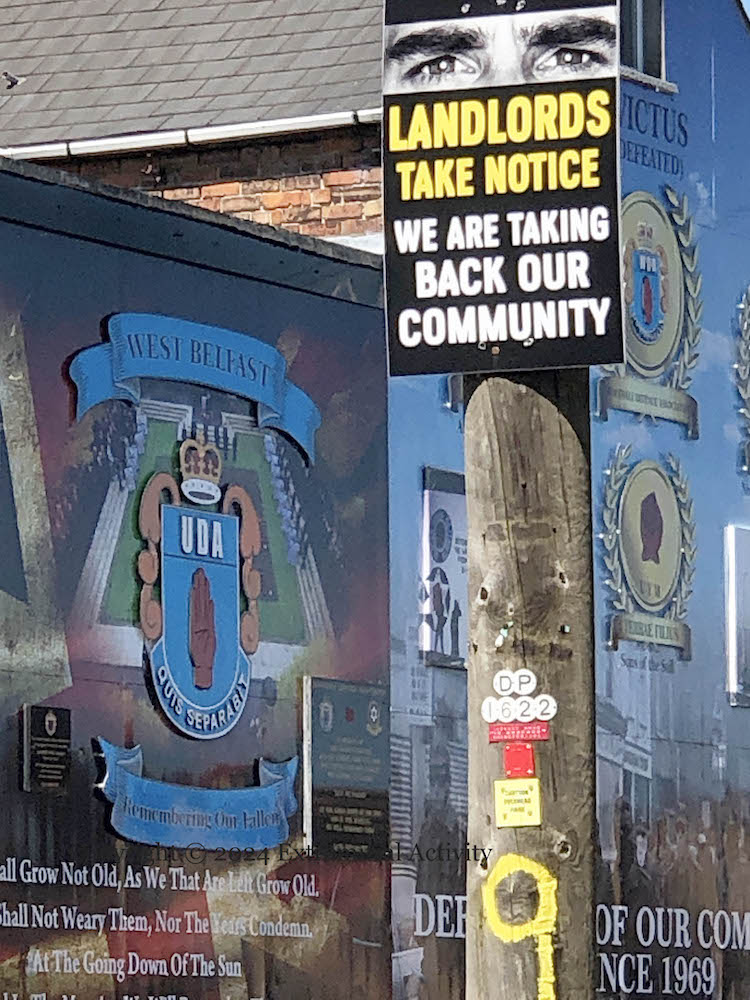
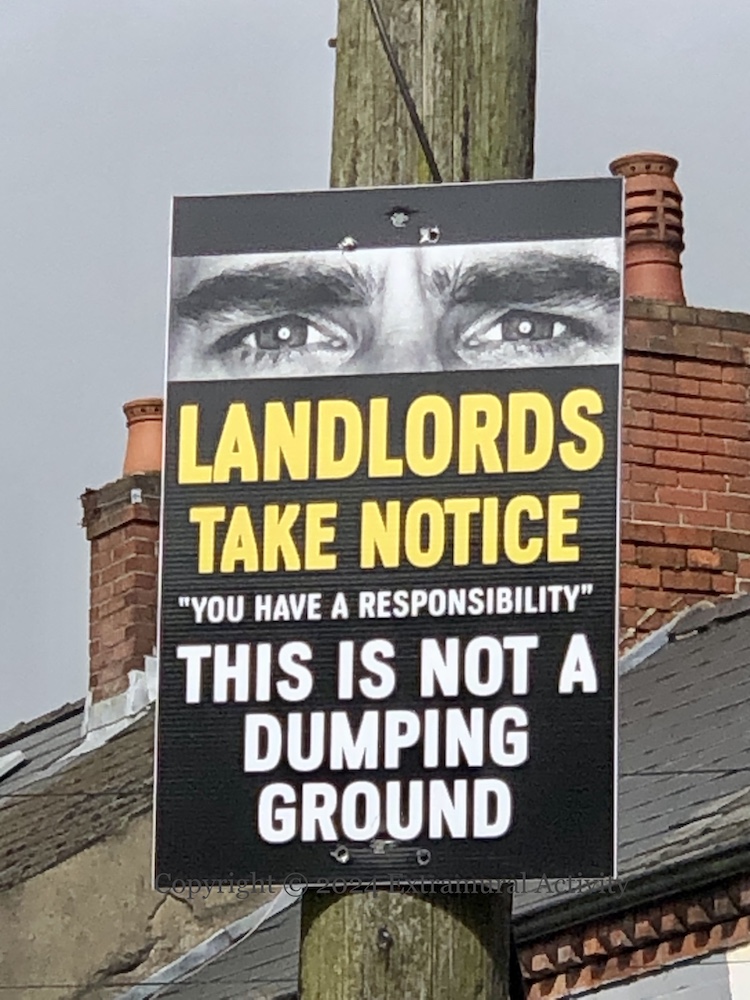
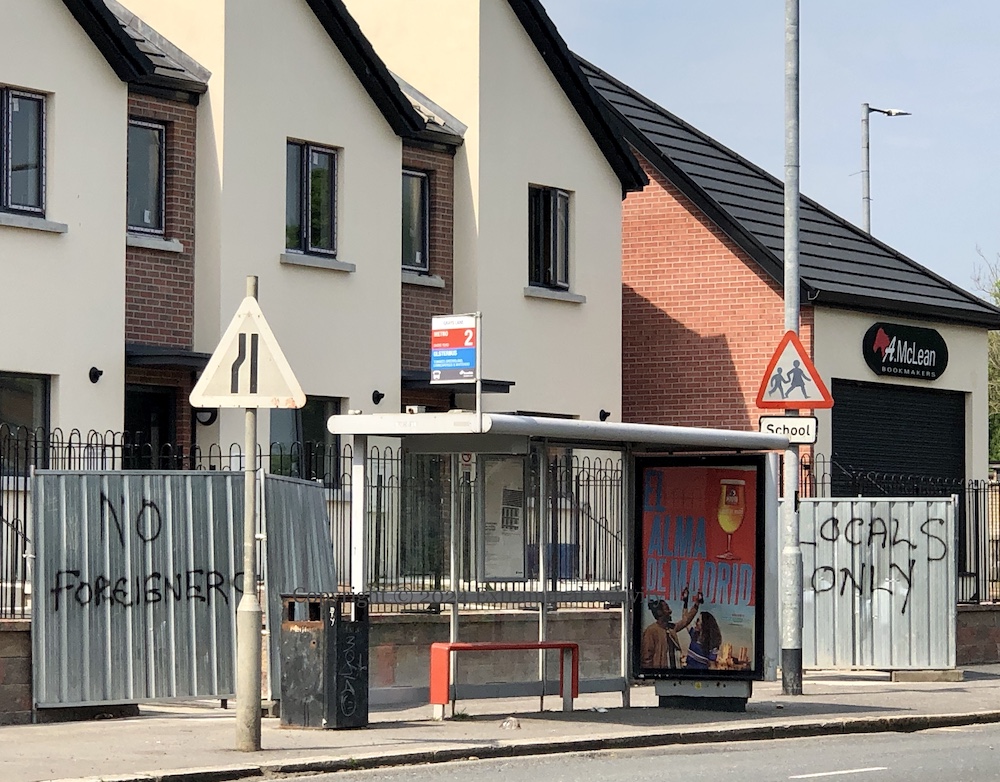
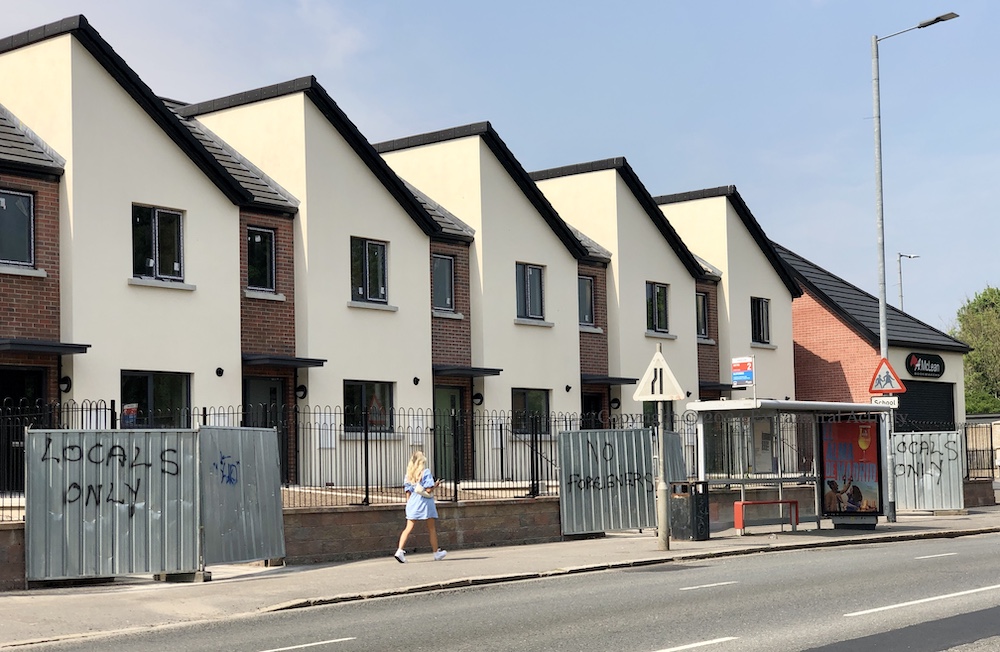
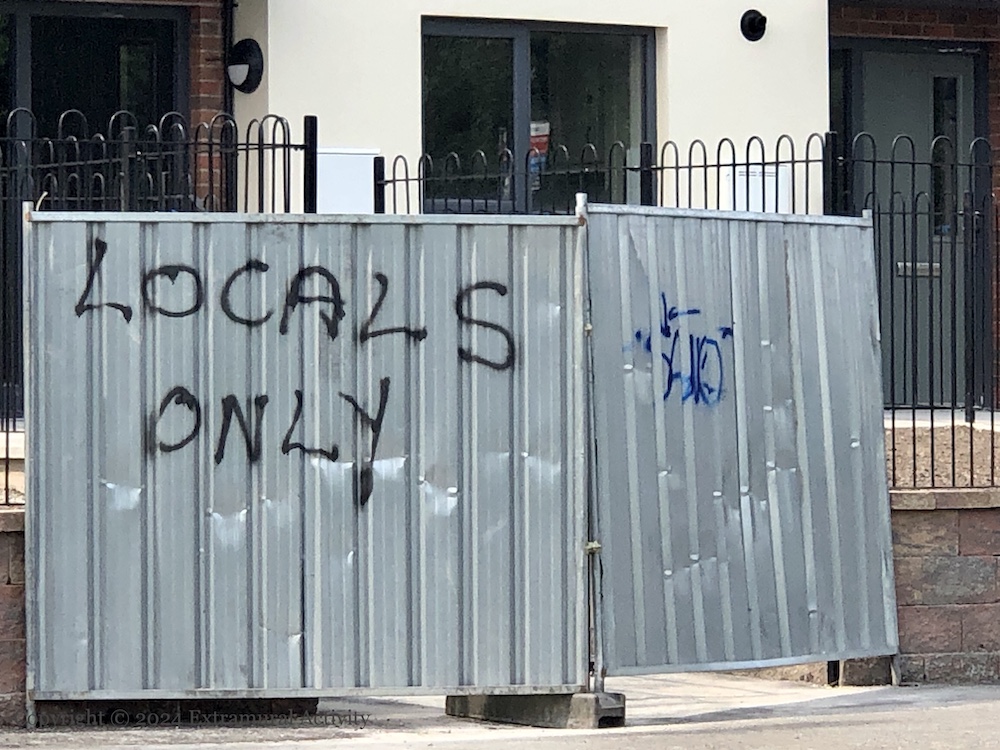
These Shankill placards read “Landlords take notice: “You have a responsibility” This is not a dumping ground.” and “Landlords take notice: We are taking back our community.” Their wording is not as explicit as the tarps and posters that have been seen in other areas which read, “NIHE & Private Landlords take note: [Belvoir | Suffolk | Finaghy | Newtownards] will no longer accept the re-housing of illegal immigrants or the excrement of other communities!” (BBC Belvoir | BBC Suffolk | (BelTel Newtownards) and “We have had enough of undesirables and immigrants being placed into our community. The time has come for locals only.” (BBC Finaghy). The “excrement” language has been condemned by politicians from both sides, as it (probably) refers to homeless people and those suffering intimidation who apply for Housing Executive housing (here is the points system). See also: similar placards in Rathcoole (Belfast Live).
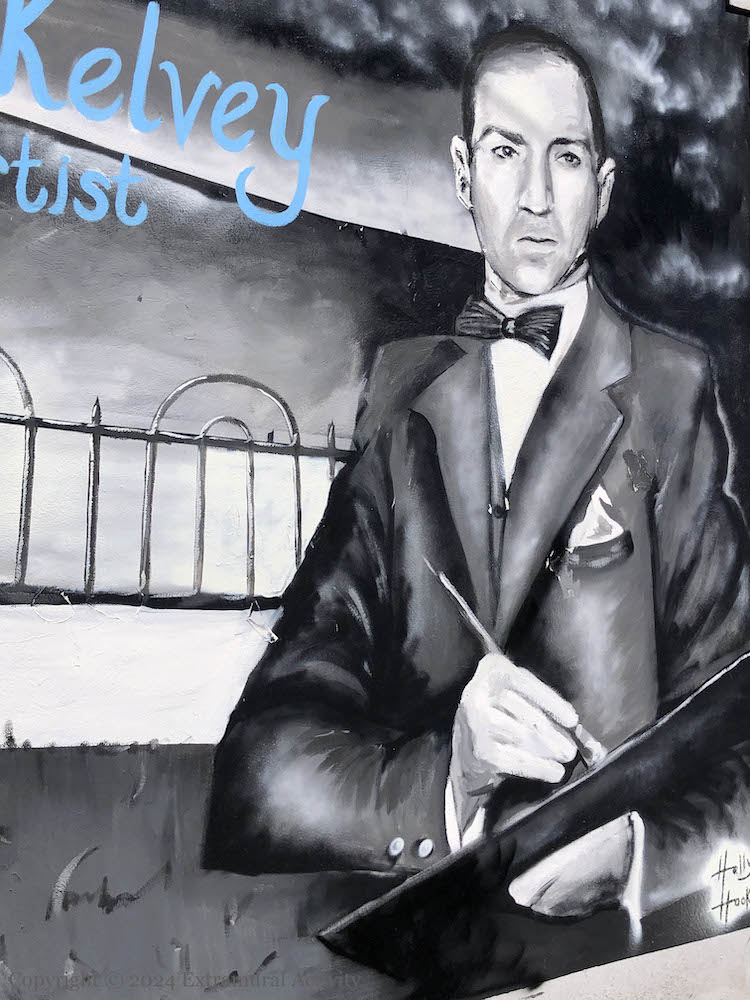
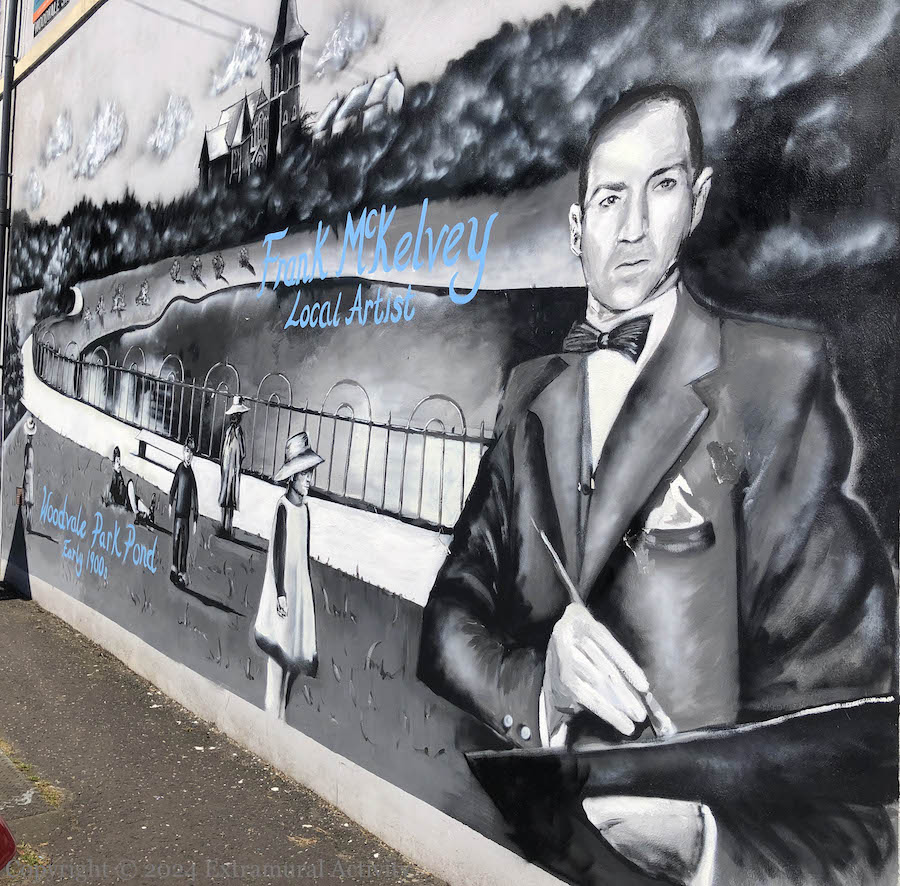
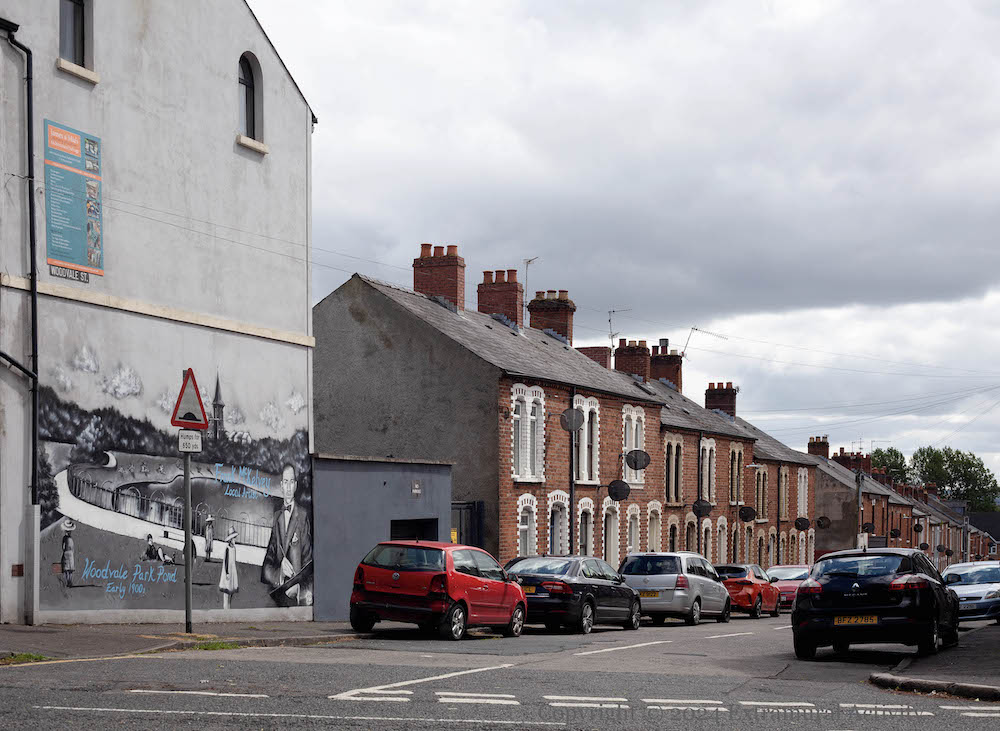
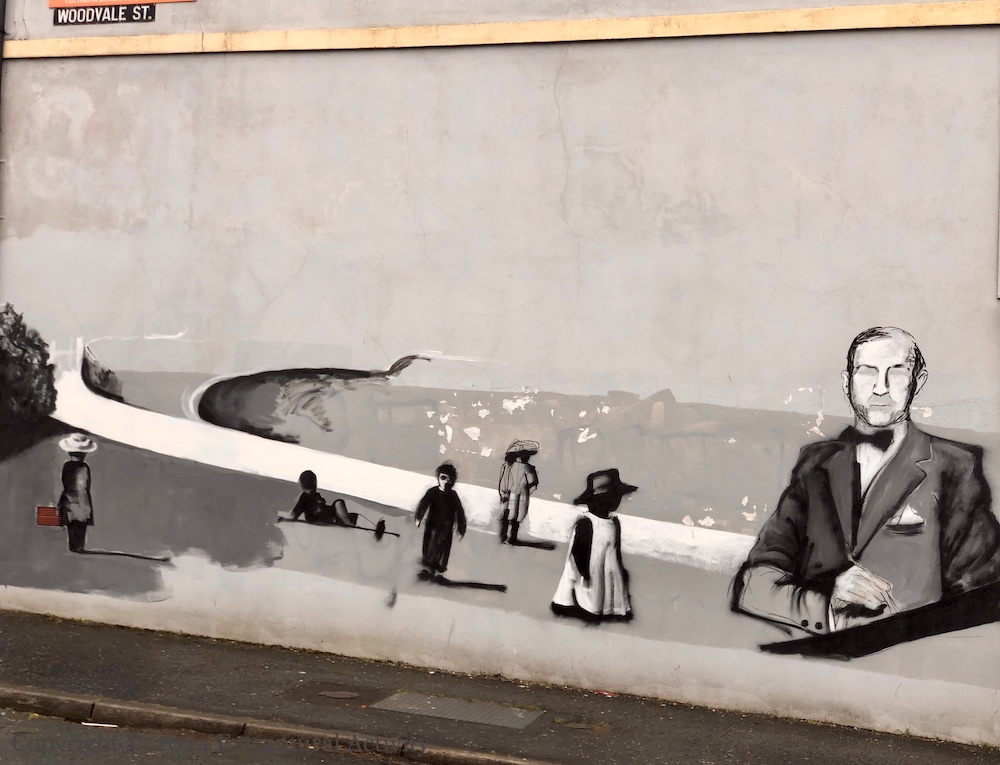
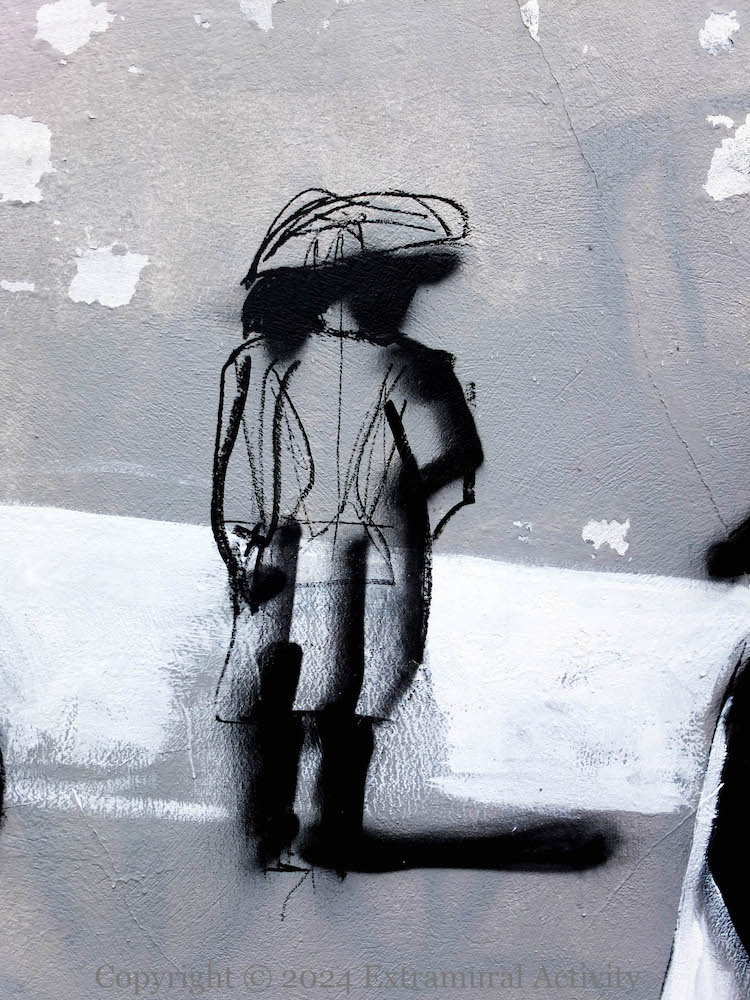
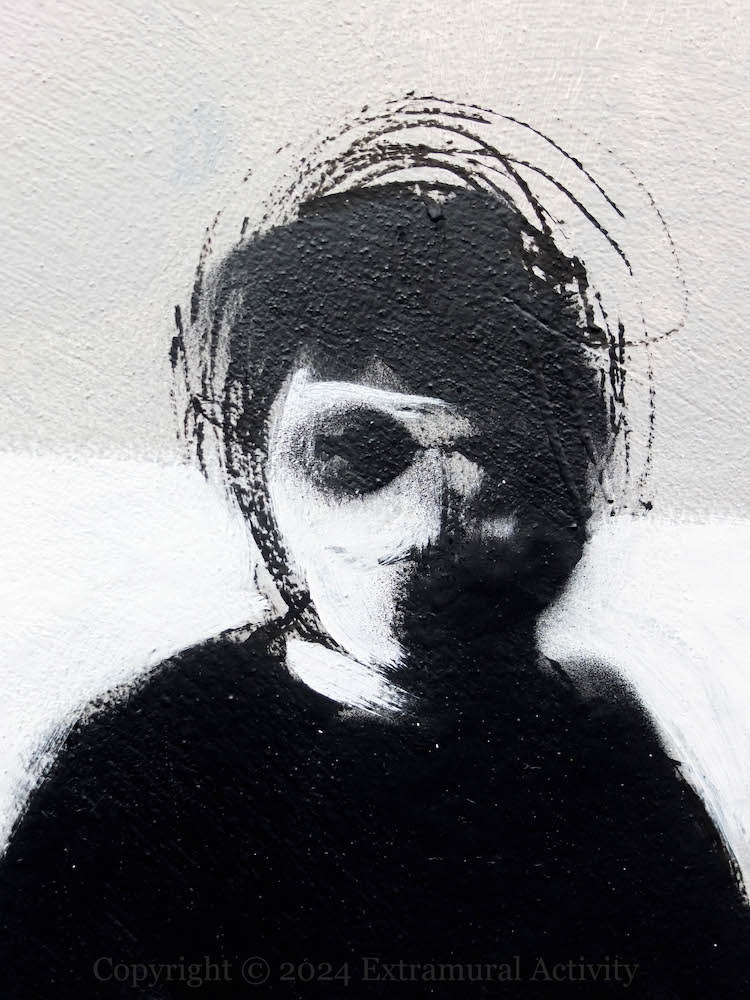
Francis “Frank” McKelvey grew up at 56 Woodvale Road (based on Lennon Wylie and the blue plaque on the wall at this address – Street View). That would put him a stone’s throw from Woodvale Park, which provides the backdrop for this new mural at the end of Woodvale Street. The photograph reproduced, of “Woodvale park pond”, can be seen on the Old Shankill Fb page. The pond was filled in after the second World War (City Council). McKelvey’s ‘A Summer’s Day‘ is perhaps of Woodvale Park pond. He died in 1974 (Ulster History Circle).
By Holly Hooks (ig) in Woodvale Street, west Belfast.
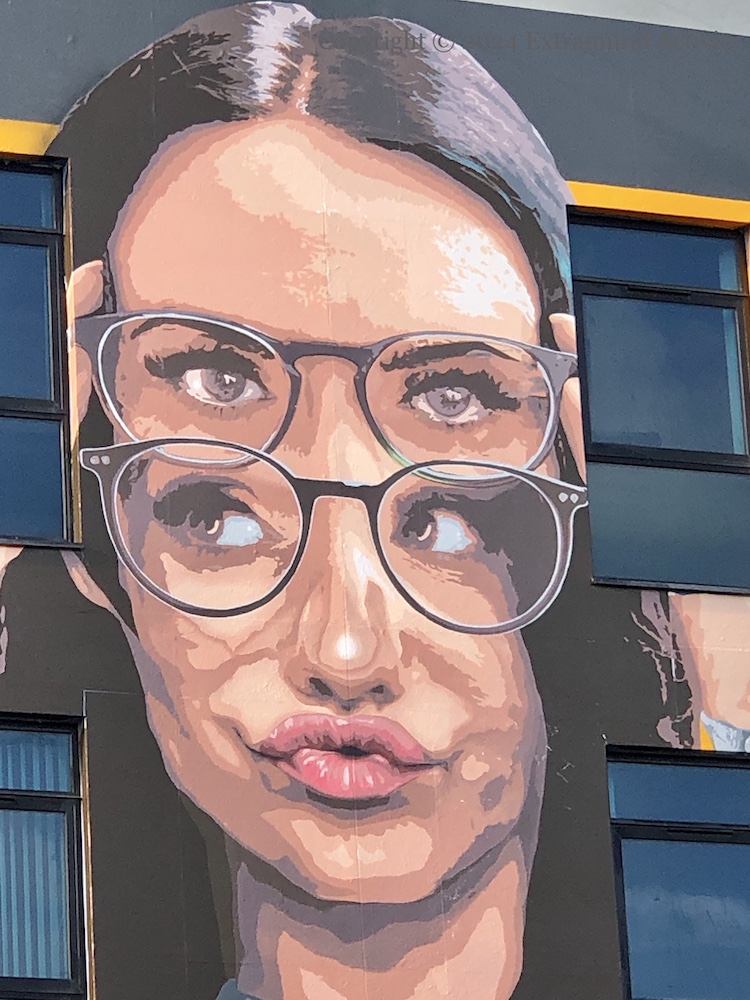
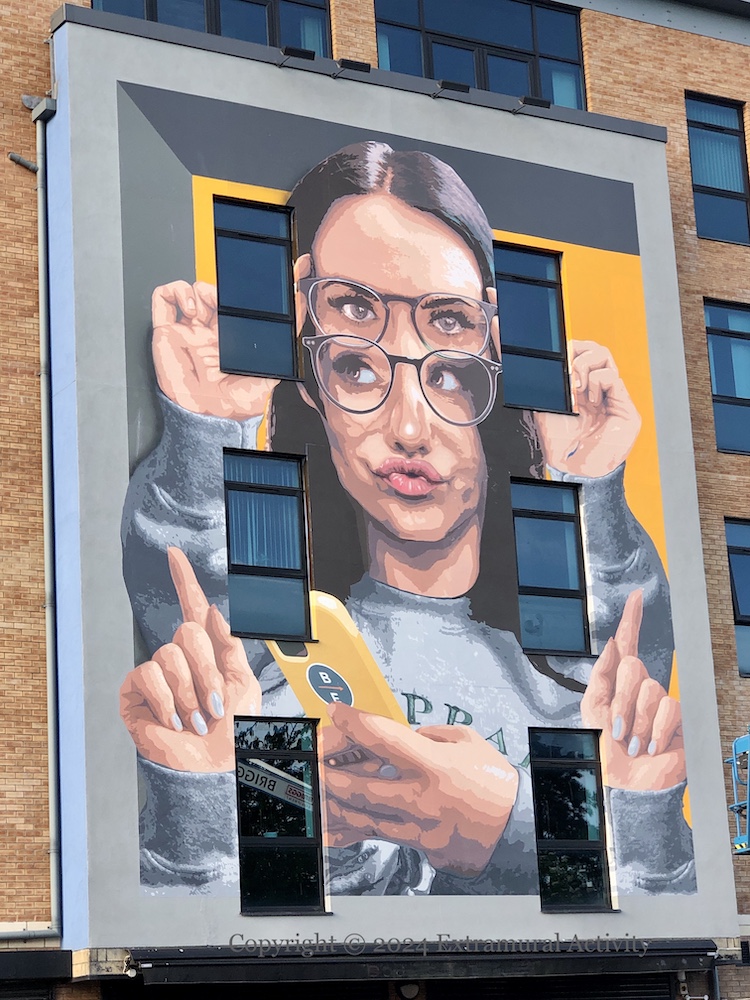
This piece is on the same office-building as the ‘Be Your Best’ piece featured previously (in Auld Cobblers) at the city-side entrance to east Belfast, at the junction of Middlepath Street and Newtownards Road. Both are by Dee Craig/Belfast Mural Arts (Fb) as part of East Belfast Enterprise’s (web | ig) ‘Connecting Communities Through Art’ initiative. The two works were officially launched together on April 20th (pics on EBE’s Instagram). The two in-progress shots (last below) are from April 16th.
According to this Community NI article, the work has been installed using “a jigsaw-like technique using super strength glue to give it a lifespan of up to 25 years before requiring maintenance”.
Interpretations of the new piece are encouraged; feel free to comment or e-mail.
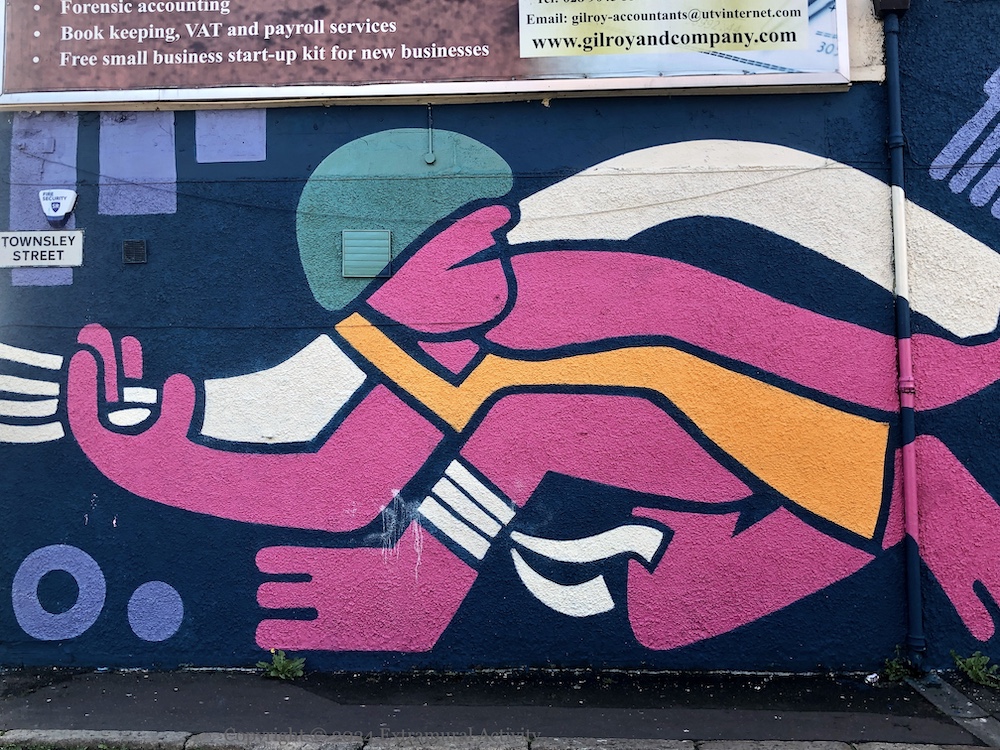
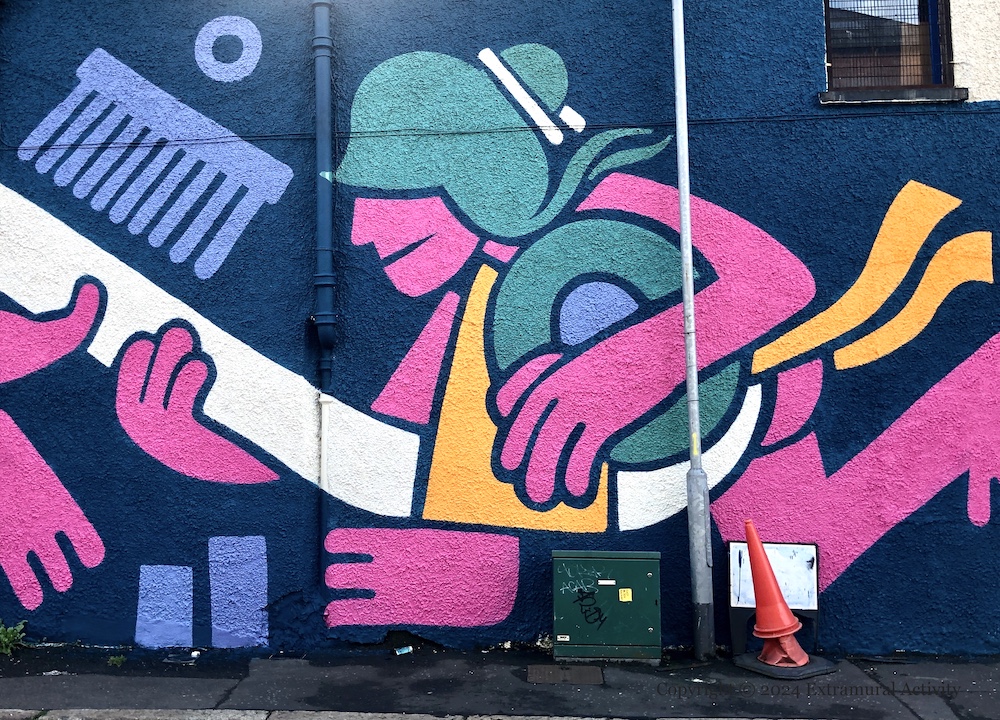
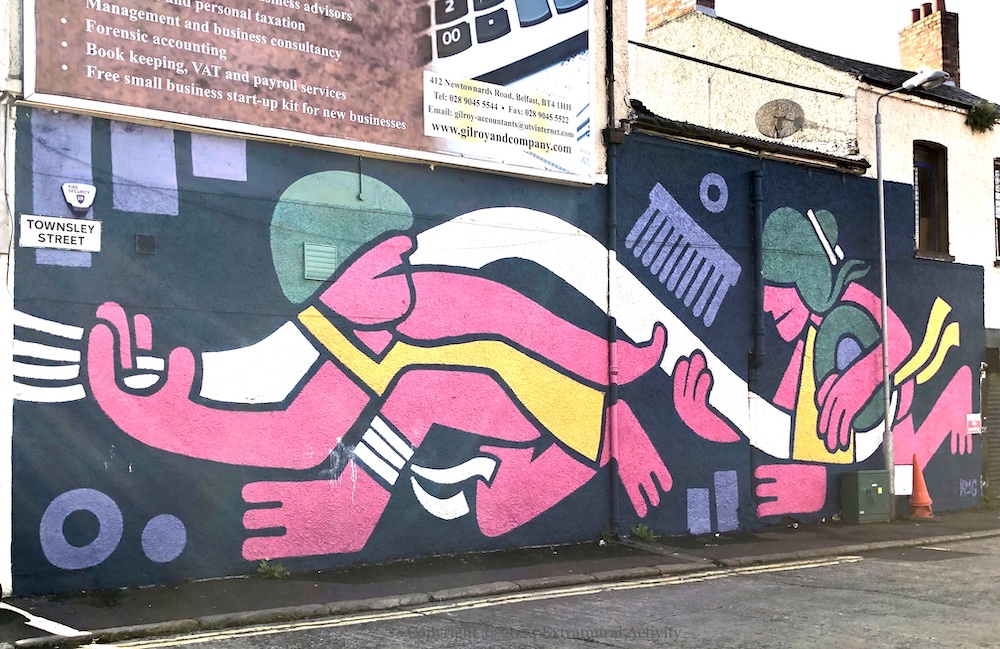
The inspiration for this new piece of street art by KMG (ig) was the Strand Spinning Mill (formerly the Jaffe Spinning Mill) which closed in 1983 and is now the Portview Trade Centre. During WWI the mill made munitions and during WWII viscose rayon. The film Lint And Linen (youtube) covers both pre-industrial and mechanical linen-production (though mostly focused on yarn from line fibres rather than from tow, which was the Strand mill’s claim to fame (Duffy Rafferty)); the painting appears to present a more primitive and imaginary age in which fibres could be spun using the human hand.
For photographs of the old mill on the Trade Centre, see previously the image of A Block in Strand Spinning Mill.
“Spinning memories” is the name of a planned collection of stories for an archive at Portview (Portview Stories).
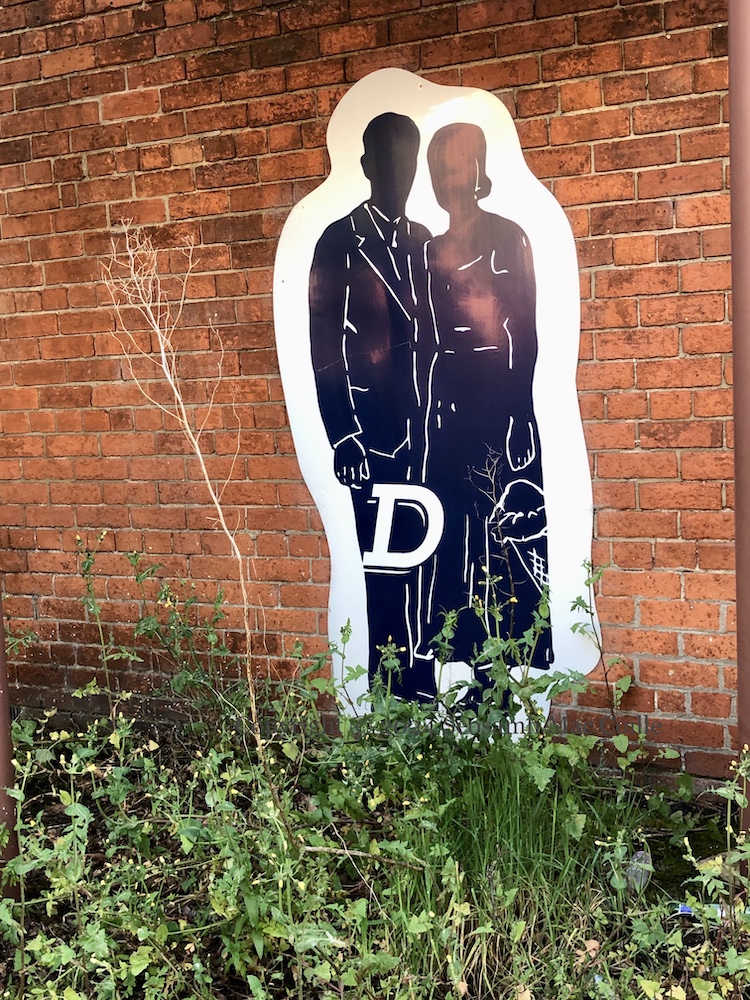
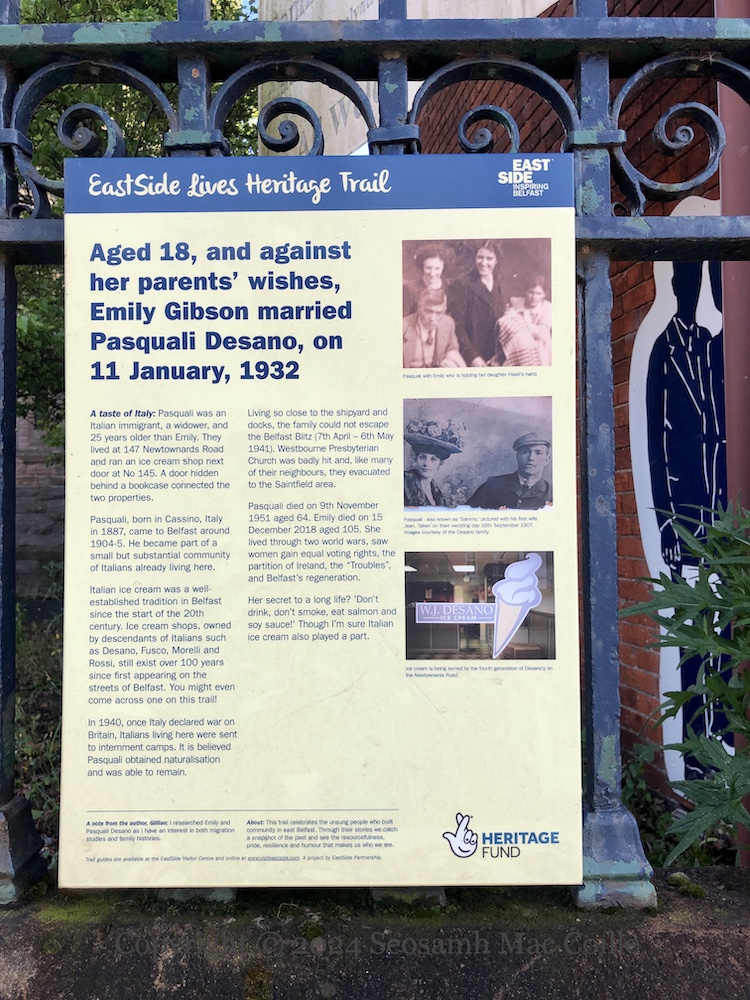
“Aged 18, and against her parents’ wishes, Emily Gibson married Pasquali Desano, on 11 January, 1932. A taste of Italy: Pasquali was an Italian immigrant, a widower, and 25 years older than Emily. They lived at 147 Newtownards Road and ran an ice cream shop next door at No 145. A door hidden behind a bookcase connected the two properties. Pasquali, born in Cassino, Italy in 1887, came to Belfast around 1904-5. He became part of a small but substantial community of Italians already living here. Italian ice cream was a well-established tradition in Belfast since the start of the 20th century. Ice cream shops, owned by descendants of Italians such as Desano, Fusco, Morelli and Rossi, still exist over 100 years since first appearing on the streets of Belfast. You might even come across one on this trail. In 1940, once Italy declared war on Britain, Italians living here were sent to internment camps. It is believed that Pasquali obtained naturalisation and was able to remain. Living so close to the shipyard and docks, the family could not escape the Belfast Blitz (7th April – 6th May 1941). Wesbourne Presbyterian Church was badly hit and, like many of their neighbours, they evacuated to the Saintfield area. Pasquali died on 9th November 1951, aged 64. Emily died on 15 DEcember 2018 aged 105. She lived through two world wars, saw women gain equal voting rights, the partition of Ireland, the ‘Troubles’, and Belfast’s regeneration. Her secret to a long life? ‘Don’t drink, don’t smoke, eat salmon and soy sauce!’ Though I’m sure the Italian ice cream also played a part.”
The info sign is on the railings of Westbourne Presbyterian; the graphic is on a courtyard wall.
 Seosamh Mac Coille Collection