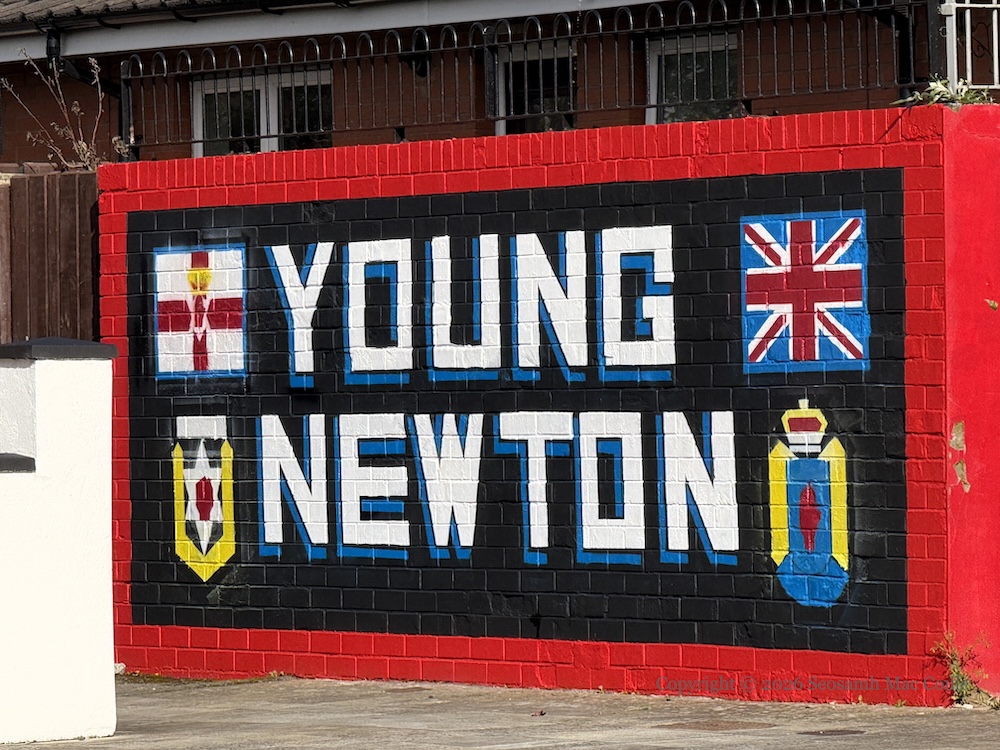
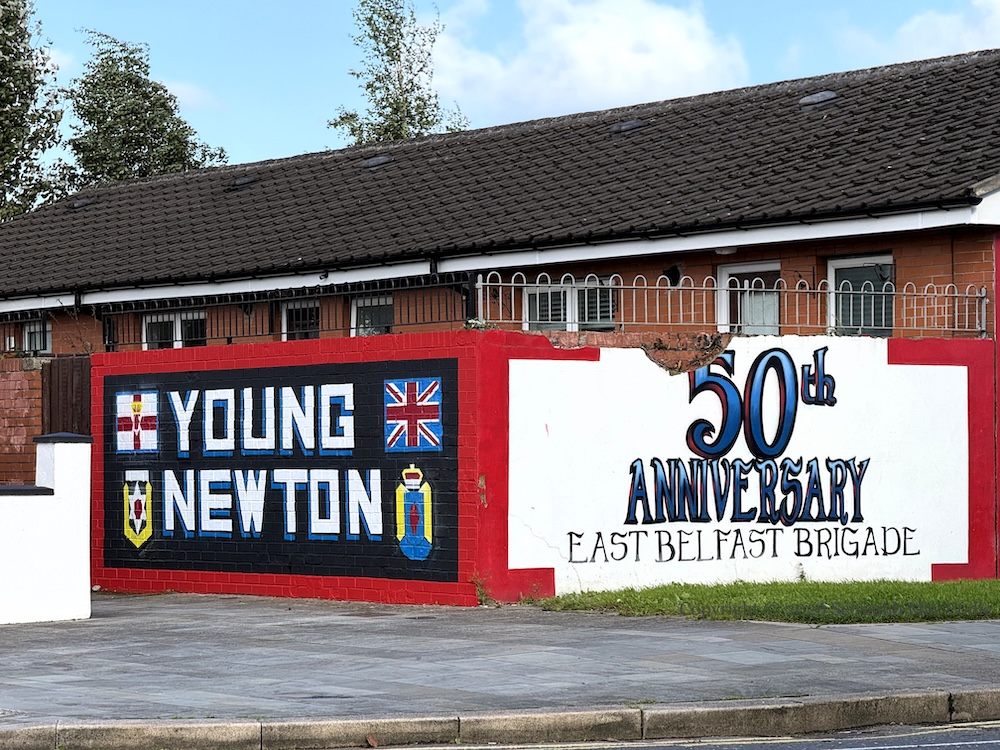
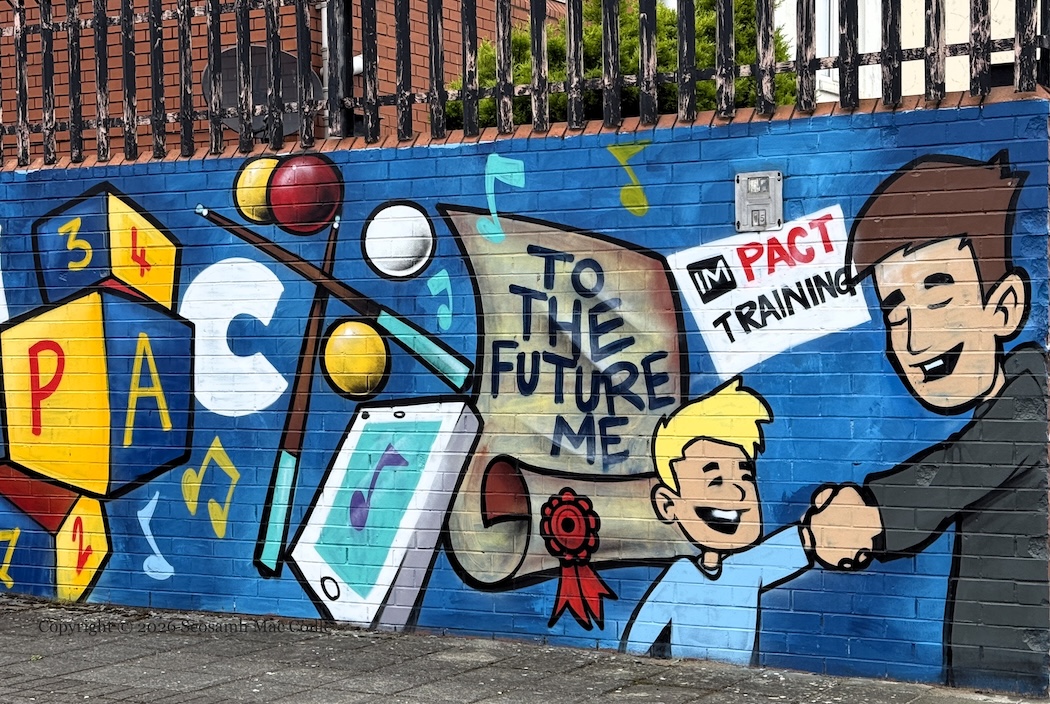
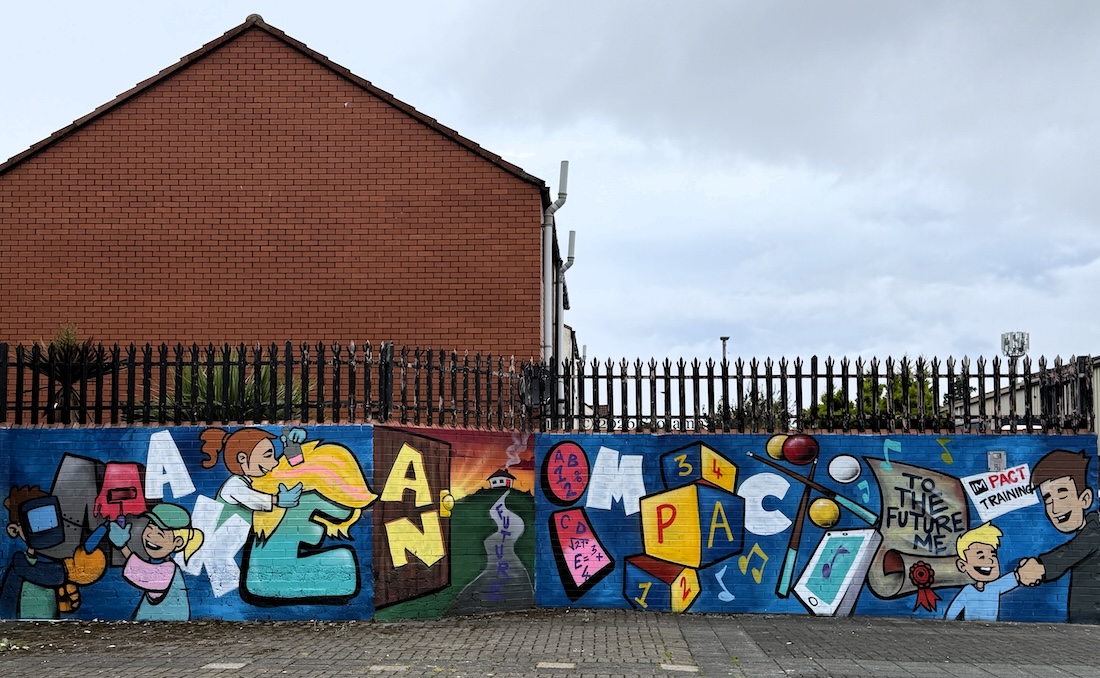
This Young Newton (the UYM in east Belfast) mural is an extension to the left-hand end of the fiftieth anniversary repainting of “Freedom Corner” and next to the Young Newton memorial garden. The group has had a presence on the area’s walls since 1997. See also 2005 | 2009 | 2009 at the other end of Freedom Corner. (Also 1999 in Bangor.)
The details on the UFF and UDA emblem were later filled in – see the Paddy Duffy Collection.
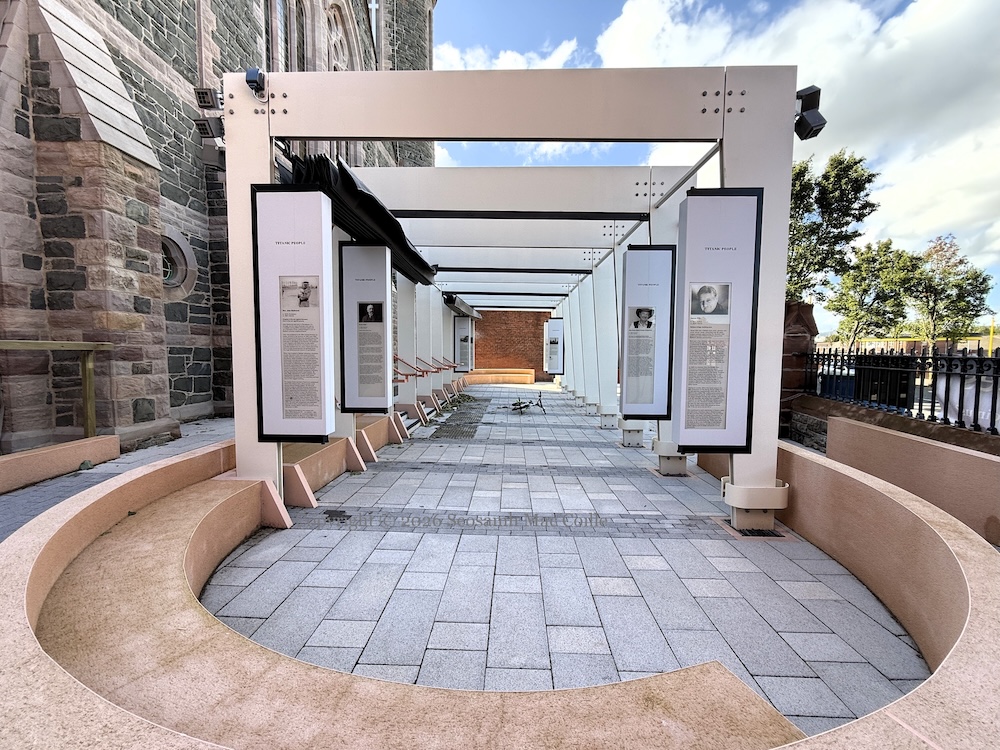
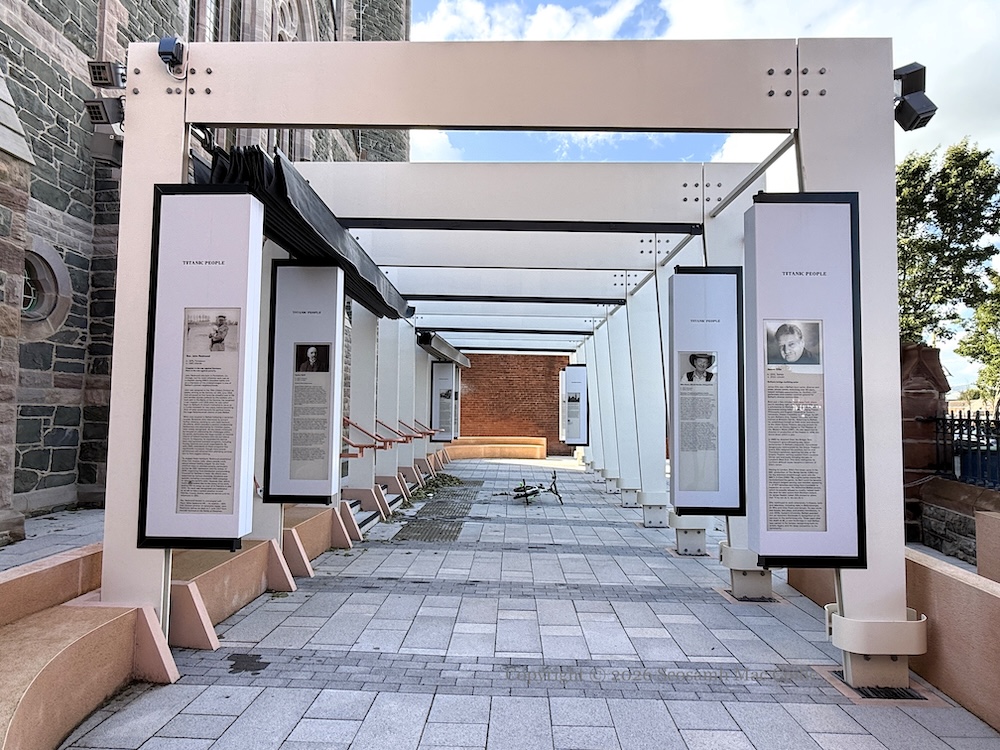
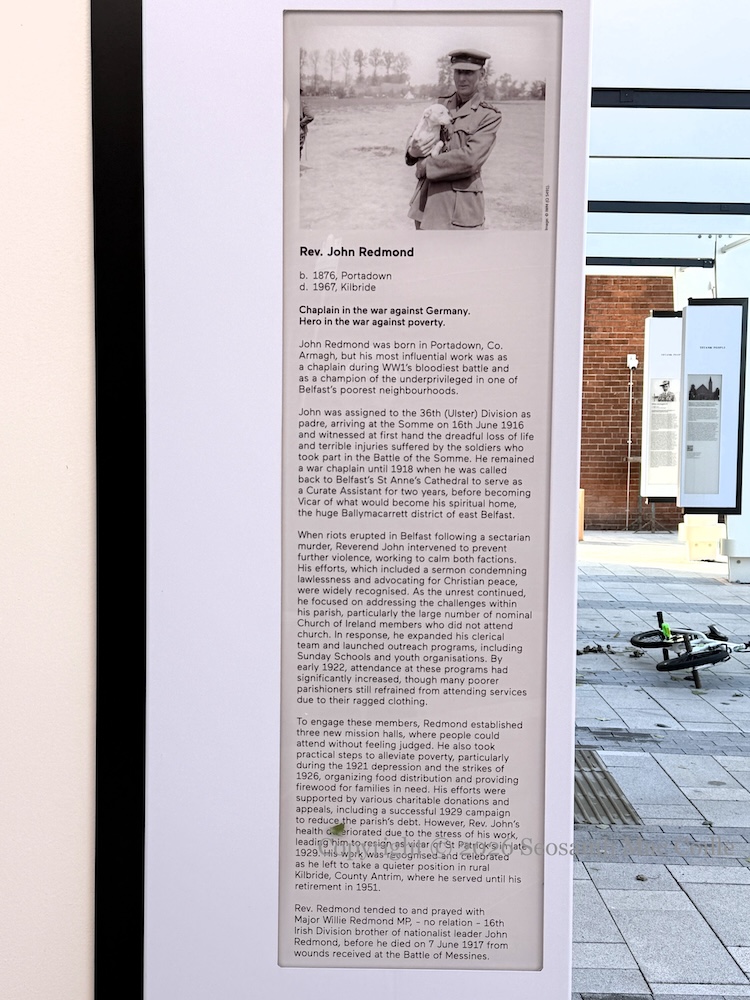
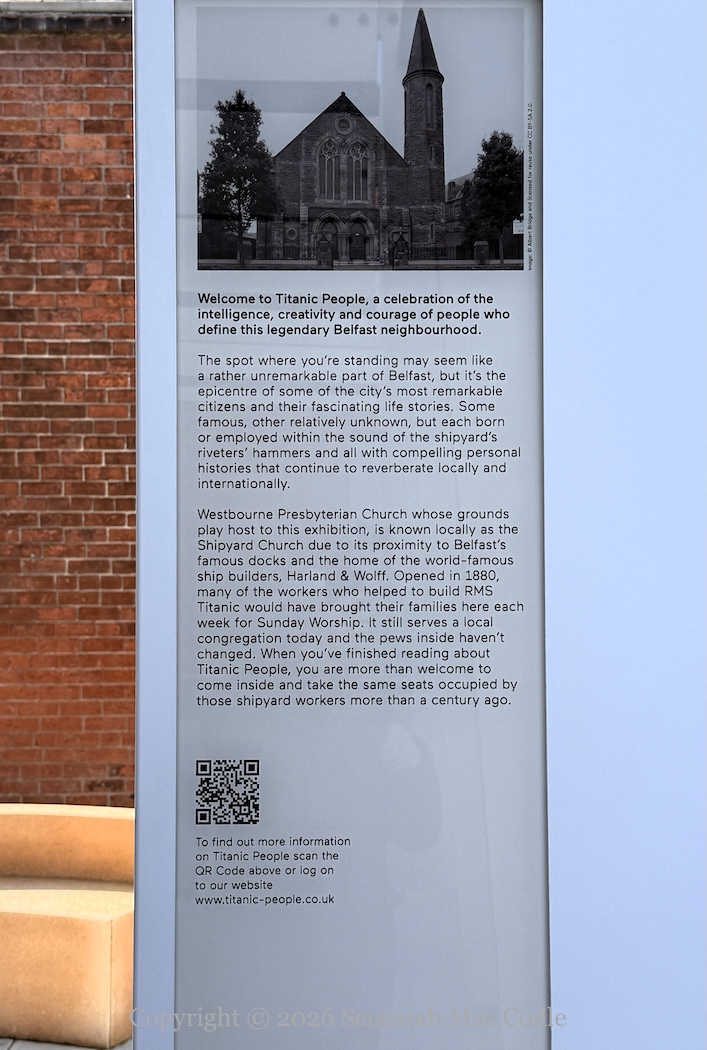
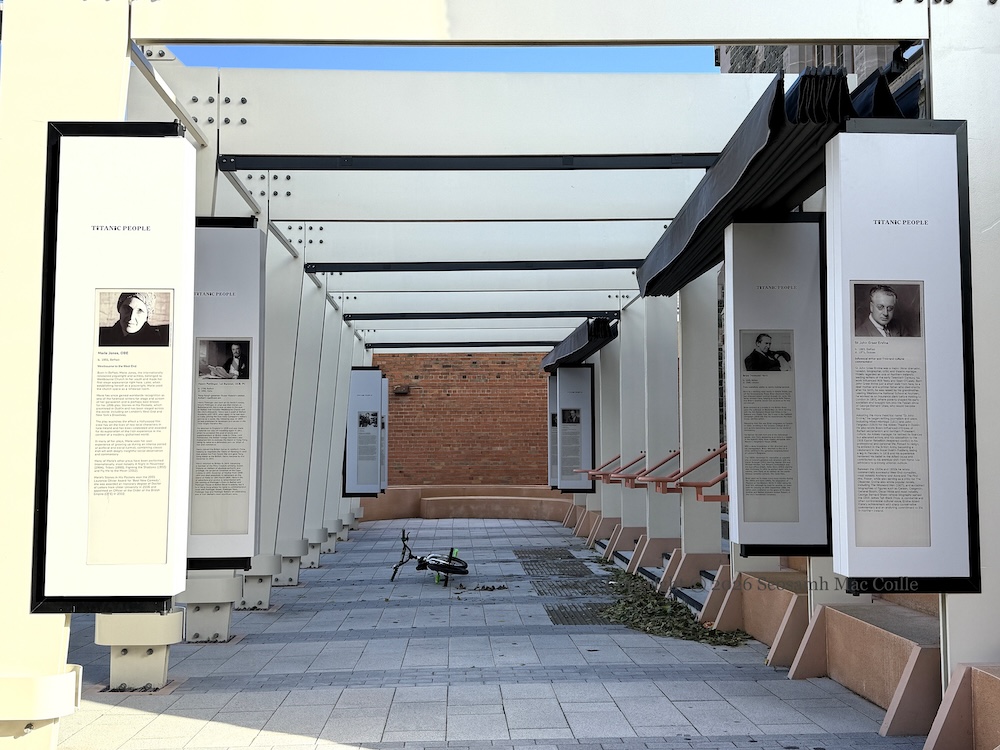
“Welcome to Titanic People, a celebration of the intelligence, creativity and courage of people who define this legendary Belfast neighbourhood. The spot where you’re standing may seem like a rather unremarkable part of Belfast, but it’s the epicentre of some of the city’s most remarkable citizens and their fascinating life stories. Some famous, other relatively unknown, but each born or employed within the sound of the shipyards’ riveters’ hammers and all with compelling personal histories that continue to reverberate locally and internationally. Westbourne Presbyterian Church whose grounds play host to this exhibition, is known locally as the Shipyard Church due to its proximity to Belfast’s famous docks and the home of the world-famous ship builders, Harland & Wolff. Opened in 1880, many of the workers who helped to build RMS Titanic would have brought their families here each week for Sunday Worship. It still serves a local congregation today and the pews inside haven’t changed. When you’ve finished reading about Titanic People, you are more than welcome to come inside and take the same seats occupied by those shipyard workers more than a century ago.”
At the front entrance to Westbourne Presbyterian, on the Newtownards Road, next to the new WWII memorial. See also The Yardmen on the other side of the Newtownards Road.
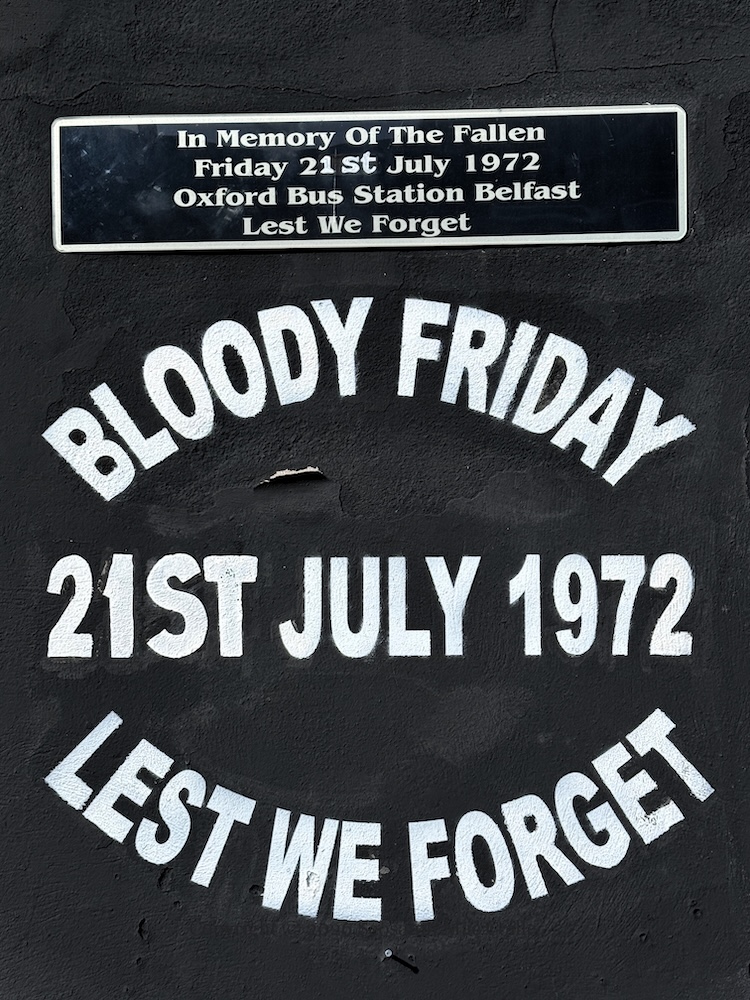
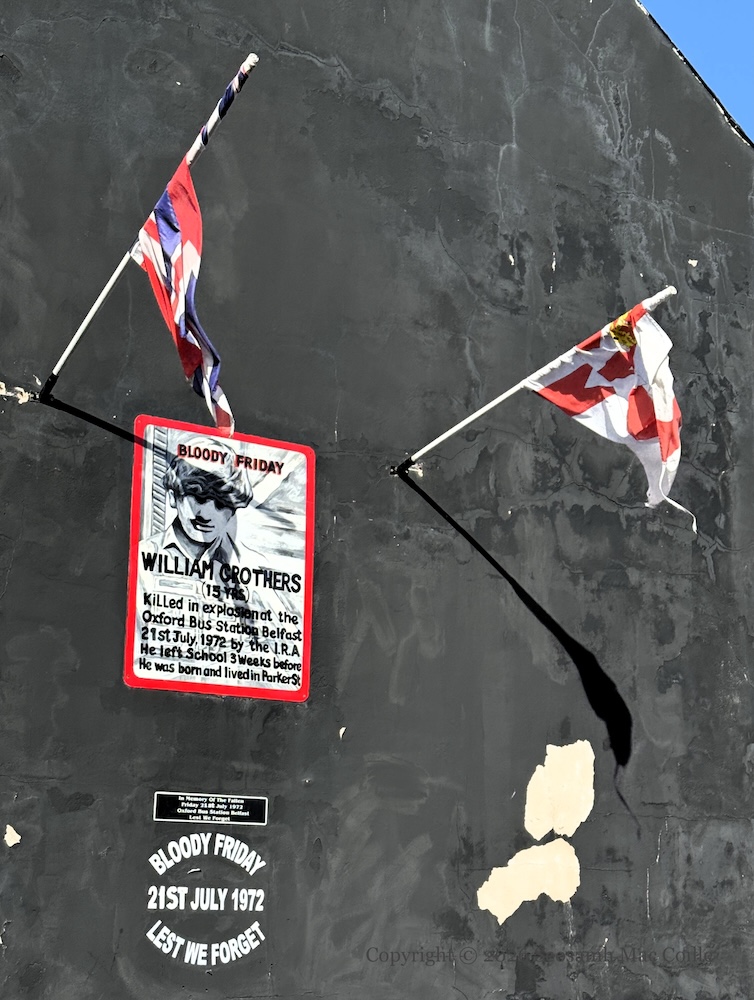
“Bloody Friday, 21st July 1972, lest we forget.” This lettering replaces the (painted) wreath recorded in 2022 below the portrait of William Crothers, who was one of the six people who died in an IRA bomb at Oxford Street bus station in Belfast city centre, one of nineteen bombs to go off on what became known as “Bloody Friday”.
“In memory of the fallen Friday 21st July 1972 Oxford [Street] Bus Station Belfast. Lest we forget”
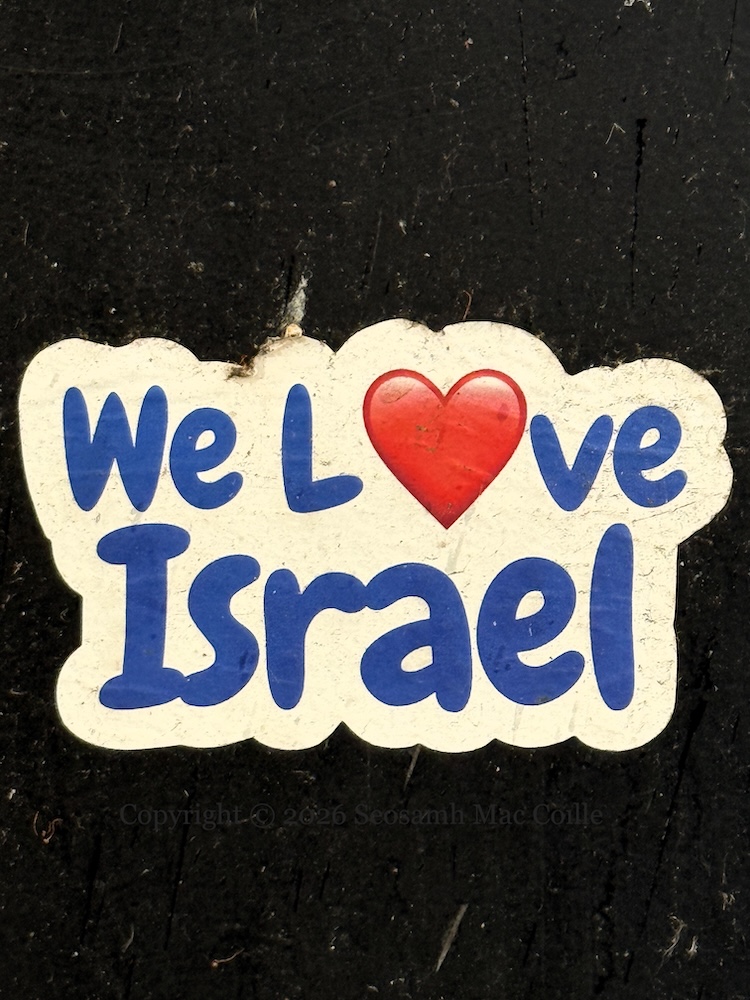
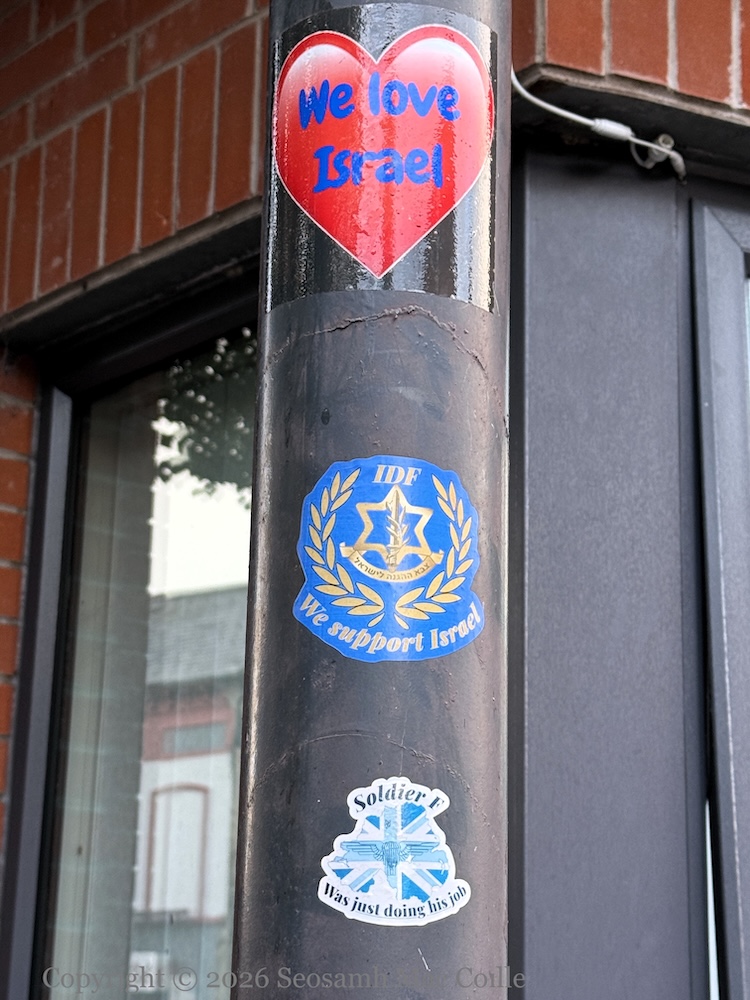
These stickers are on Sandy Row in south Belfast. For background, see Ulster & Israel | This Is Our Israel | אי כניעה – the general theme of these earlier entries is to present Israel as an analogy for Northern Ireland, as colonising populations that must defend themselves – with violence if necessary – from native resistance. The IDF sticker second on the pole (in the image below) is in keeping with this interpretation. The hearts with simple assertions of “we love Israel”, with hearts, suggests a level of identity that does not require justification or interpretation.
There is also – though not present here – a religious angle; see The Lion Of Judah.
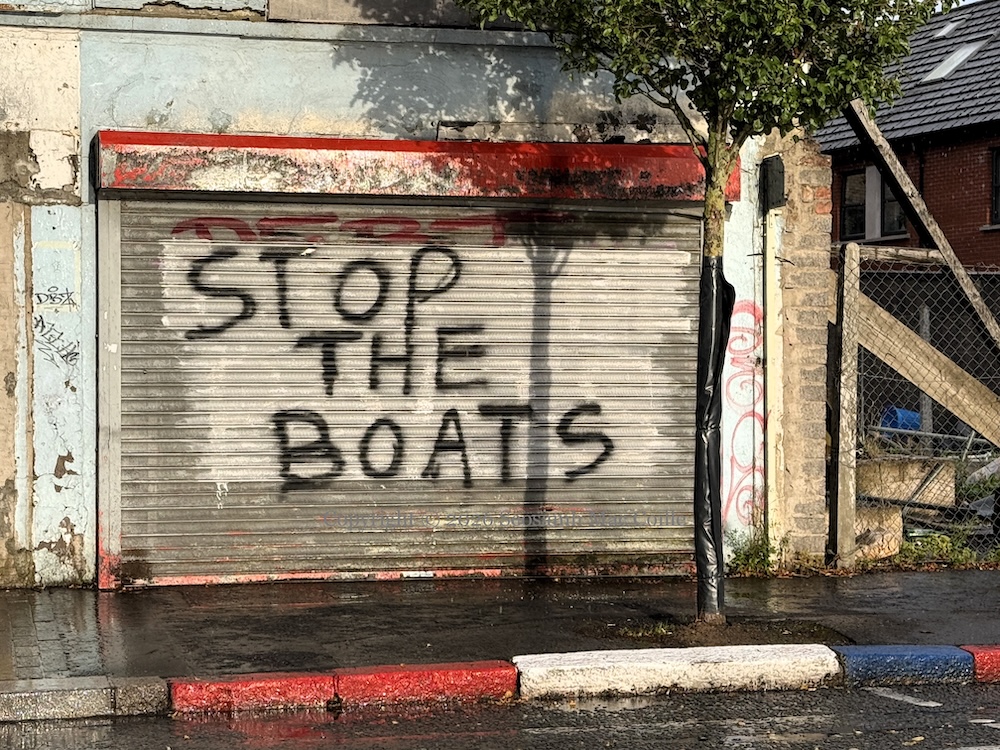
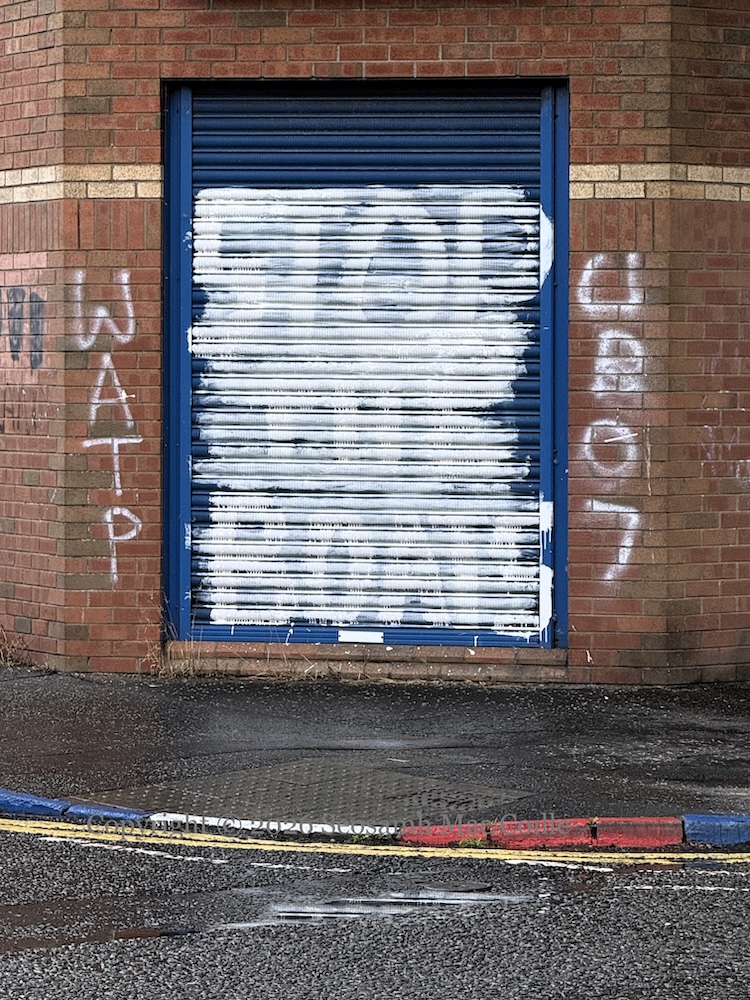
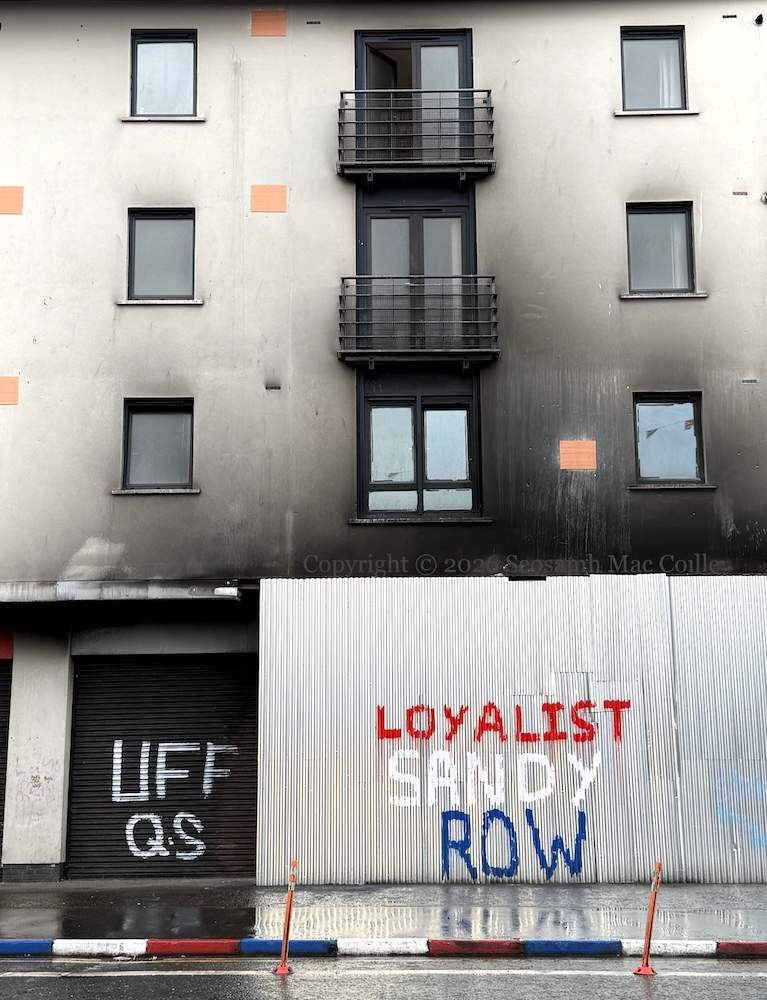
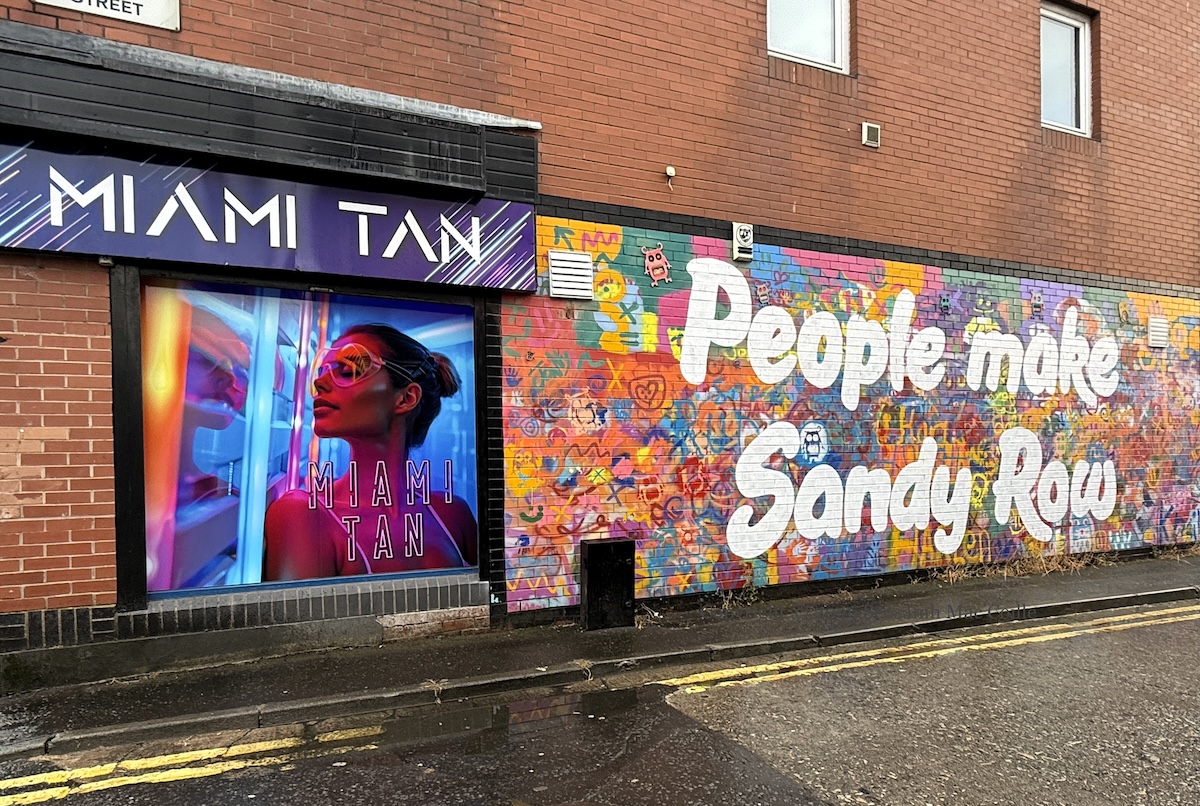
Here are two pieces of “stop the boats” graffiti from Sandy Row in south Belfast, part of on-going protests against immigration that have been going since 2023 and which resulted in rioting in June – see McMaster Street Remembers.
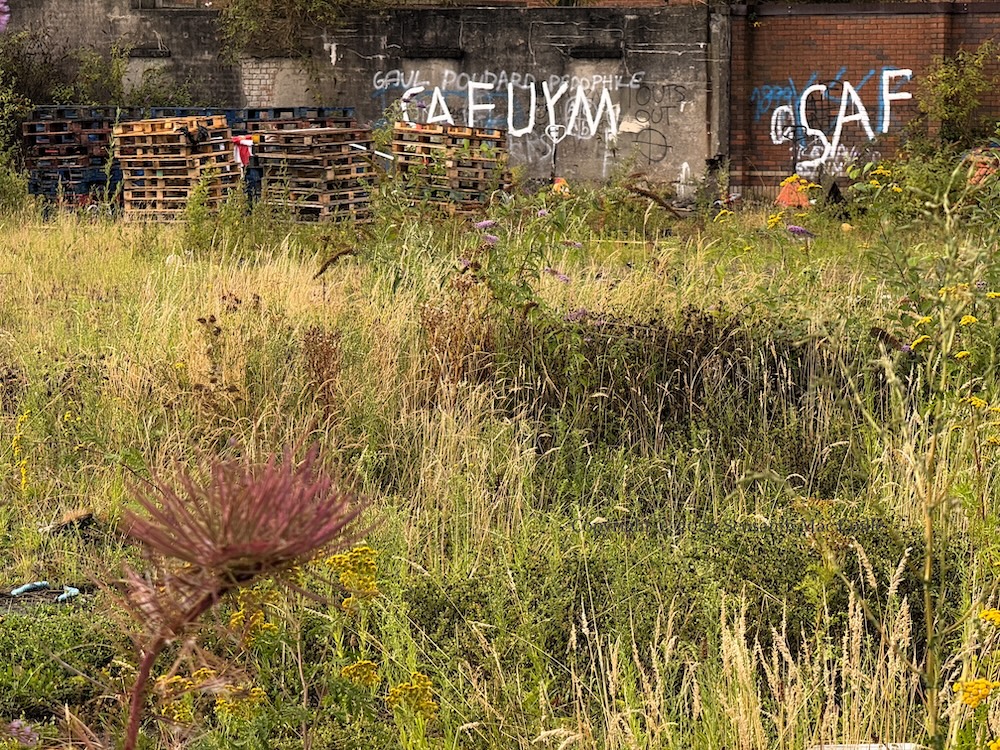
The graffiti in the final image reads “SAF UYM”. When placed next to “UYM” (“Ulster Young Militants”, the youth division of the UDA), the “S” in “SAF” is likely “Sandy Row” and not “Sudanese” (as in “Sudanese Armed Forces”, which have been engaged in a war with the Rapid Support Forces since 2023, destabilising the country and driving emigration to Europe (Sudanist)). The recent riots were sparked by a knife attack by a Somali emigrant on an east Belfast local. The damage seen in the third image is to the apartments next to the Sham Supermarket, which was attacked in the June riots and is seen here boarded up with corrugated metal panels (BBC).
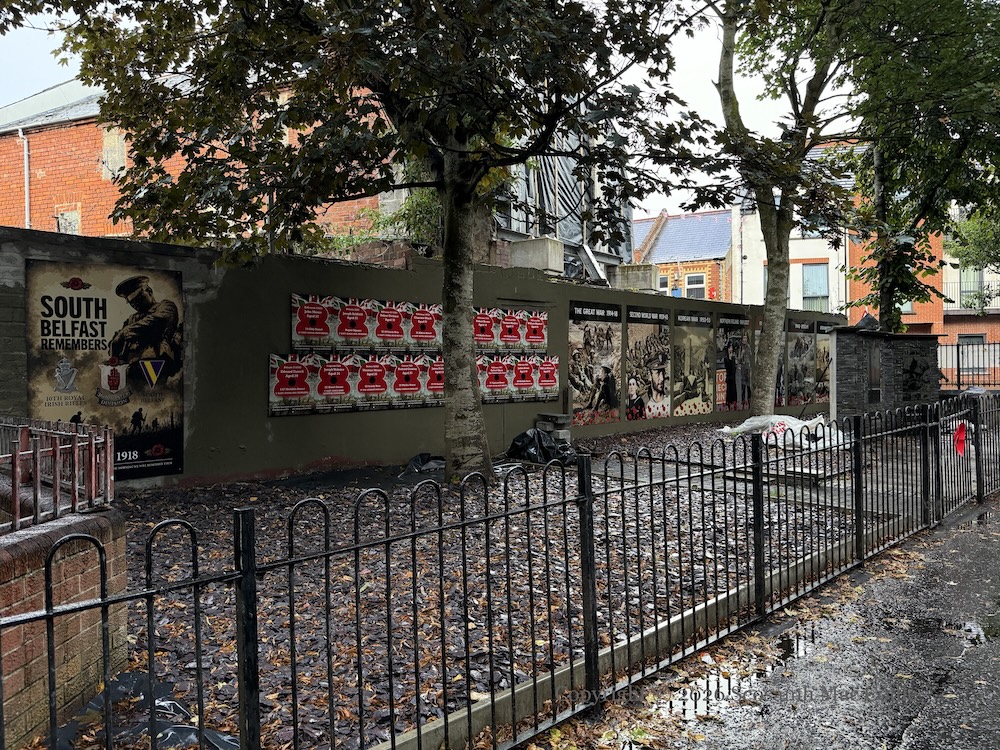
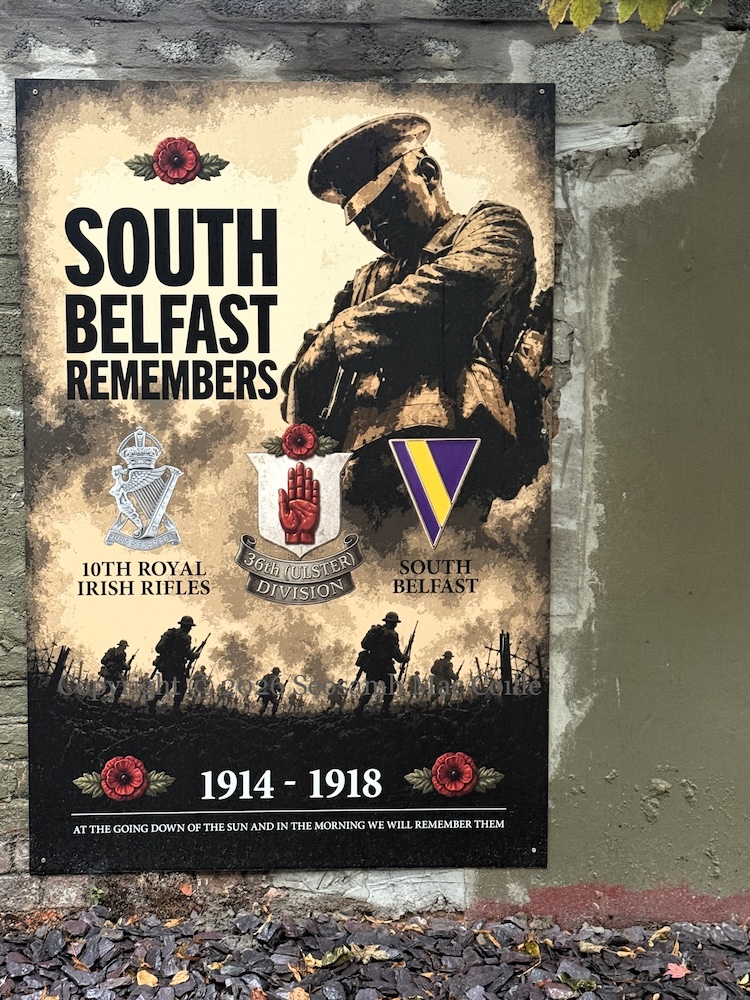
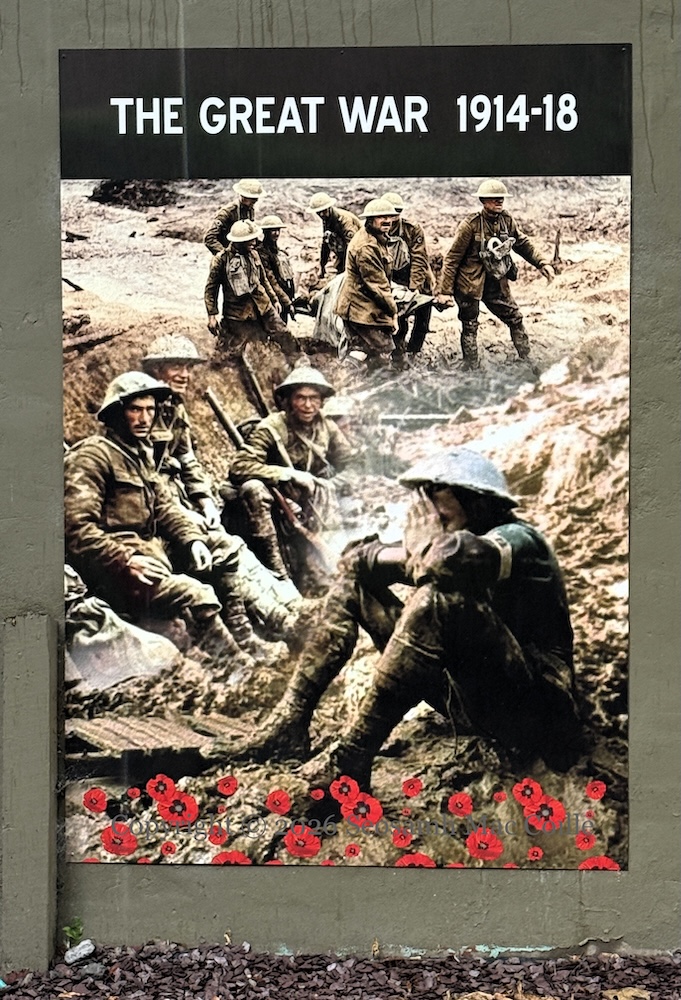
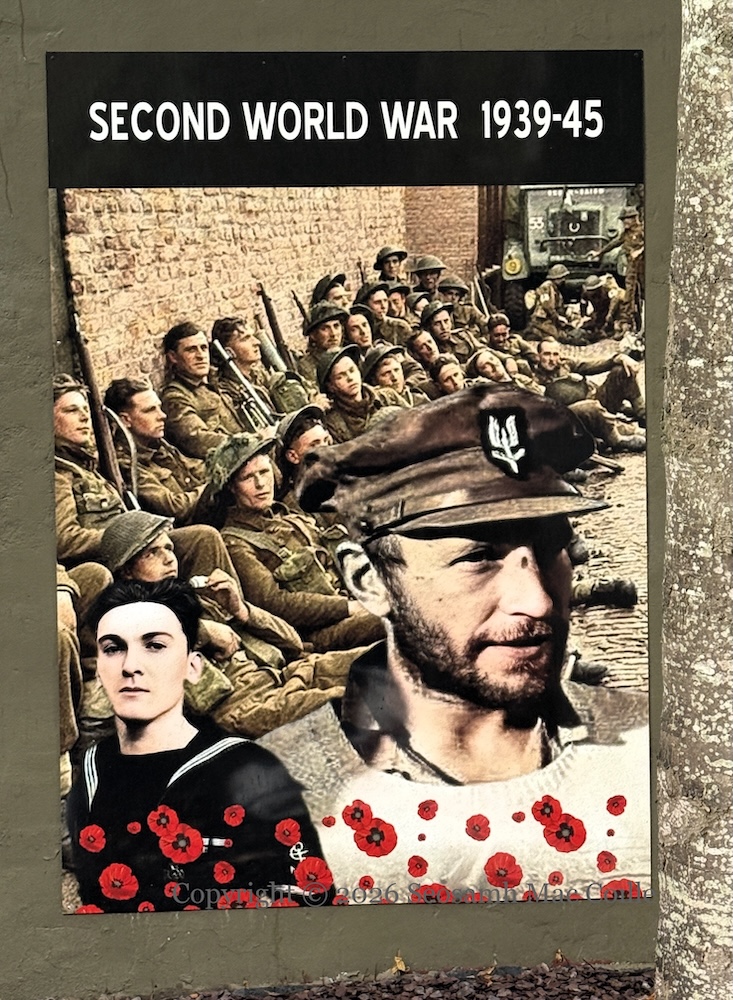
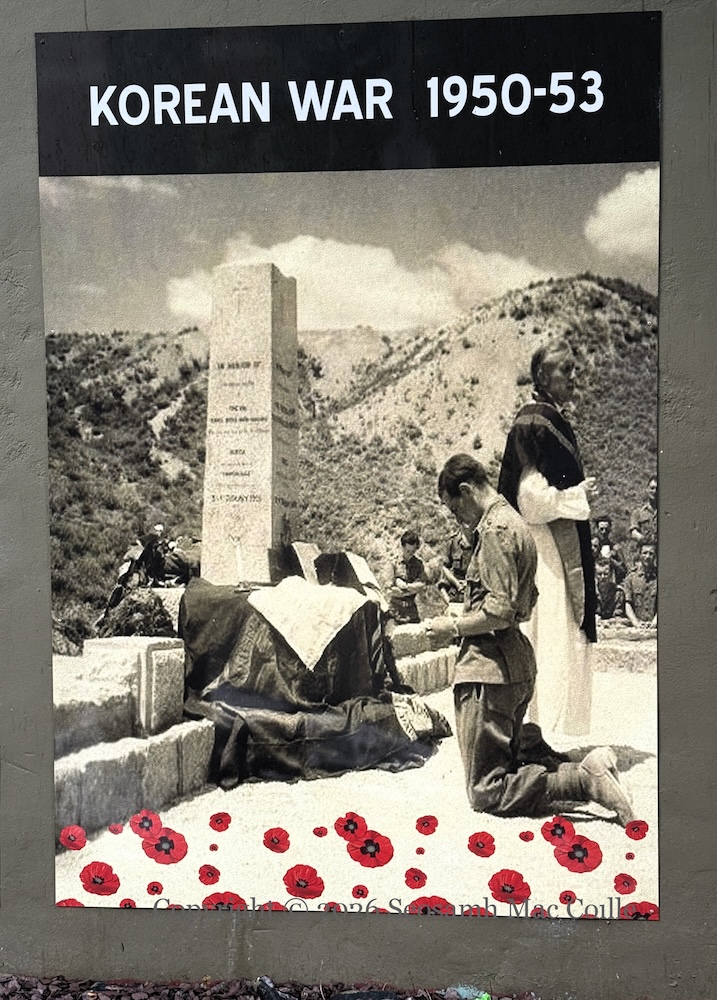
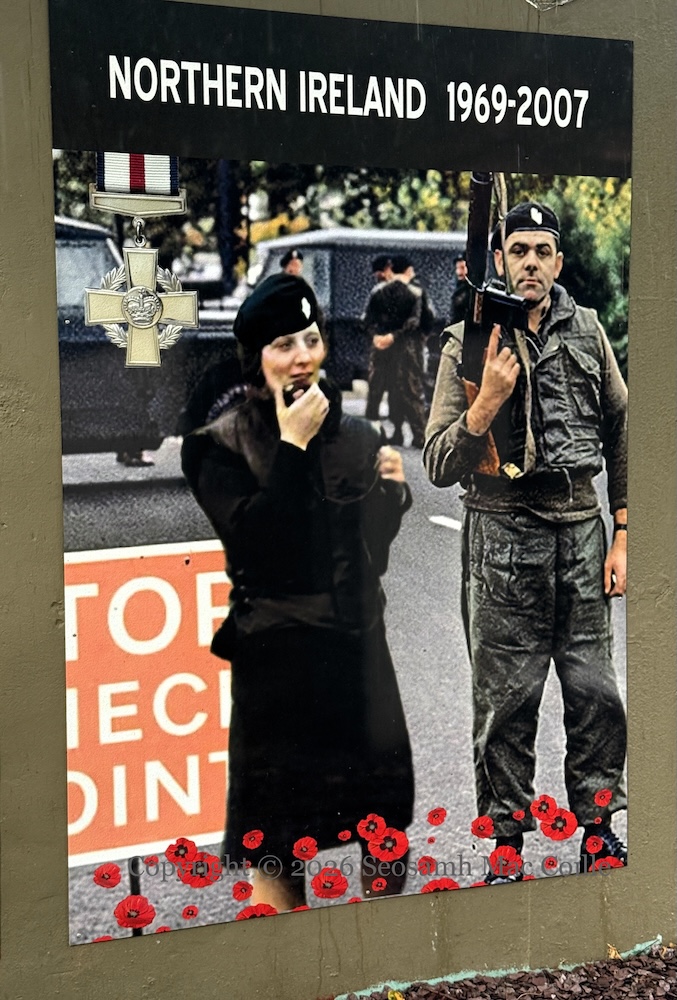
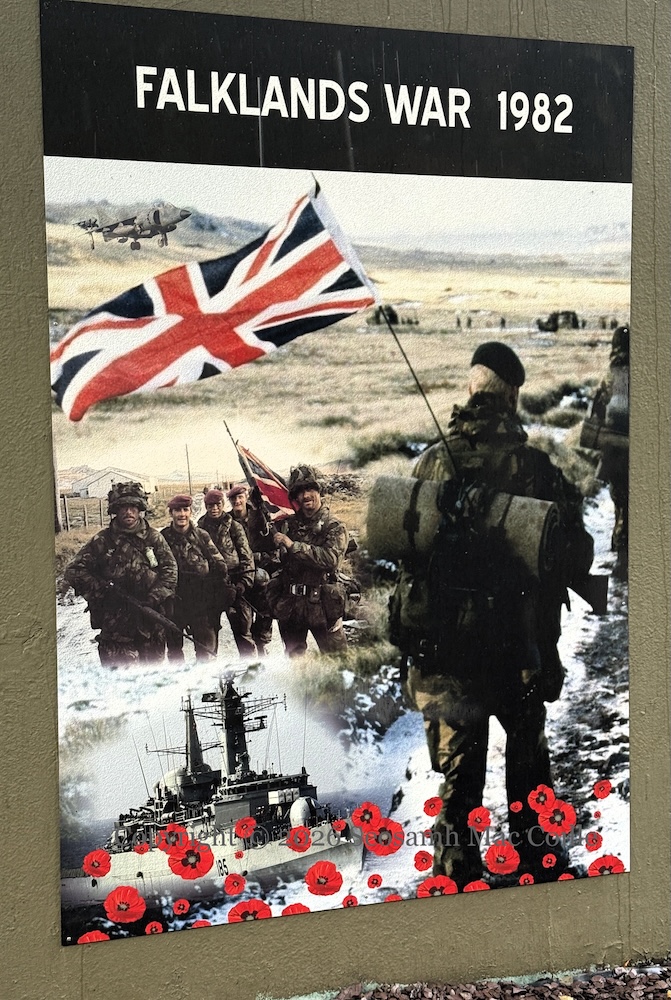
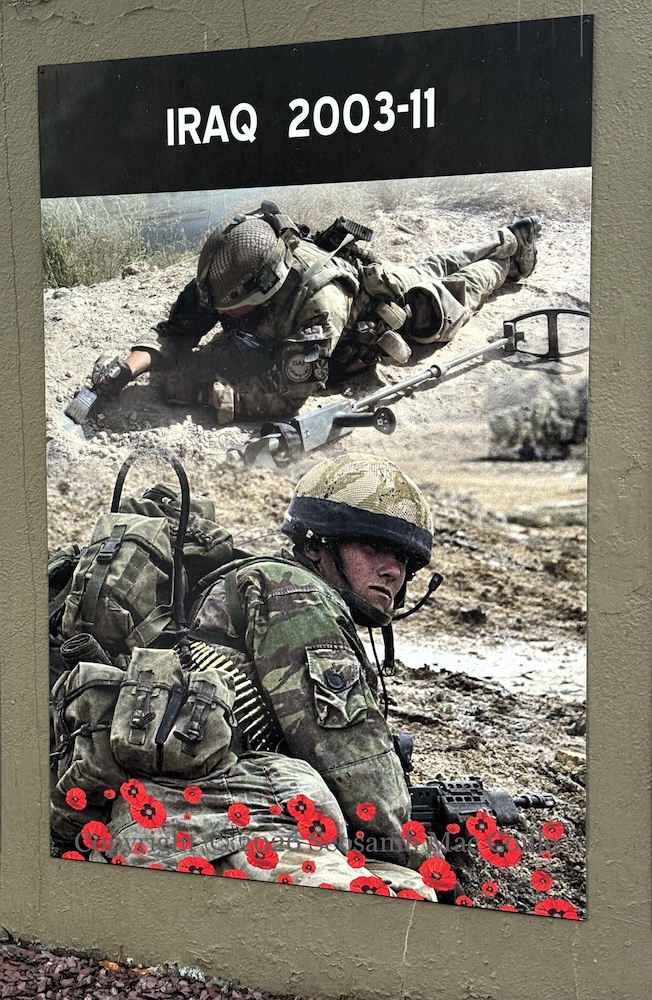
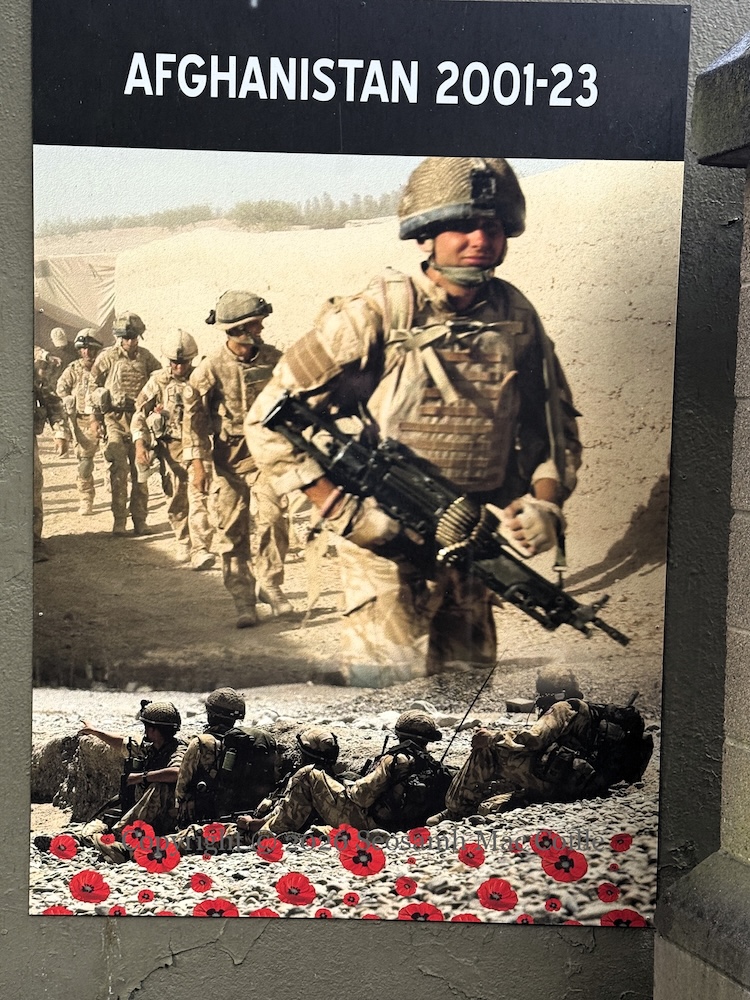
“South Belfast remembers [the] 10th Royal Irish Rifles, South Belfast, [and the] 36th (Ulster) Division.” Printed panels illustrating the engagements of the British Army in the twentieth and twenty-first centuries have been added to the three stones (seen in Continuing Conflicts) that marked the World Wars and “continuing conflicts”.
The conflicts depicted are the Great War 1914-1918, Second World War 1939-1945 (with individual photos of James Magennis and Blair Mayne, Korean War 1950-1953, Northern Ireland 1969-2007, Falklands War 1982 (the photo on the right is of troops “yomping”), Iraq 2003-2011, Afghanistan 2001-2023.
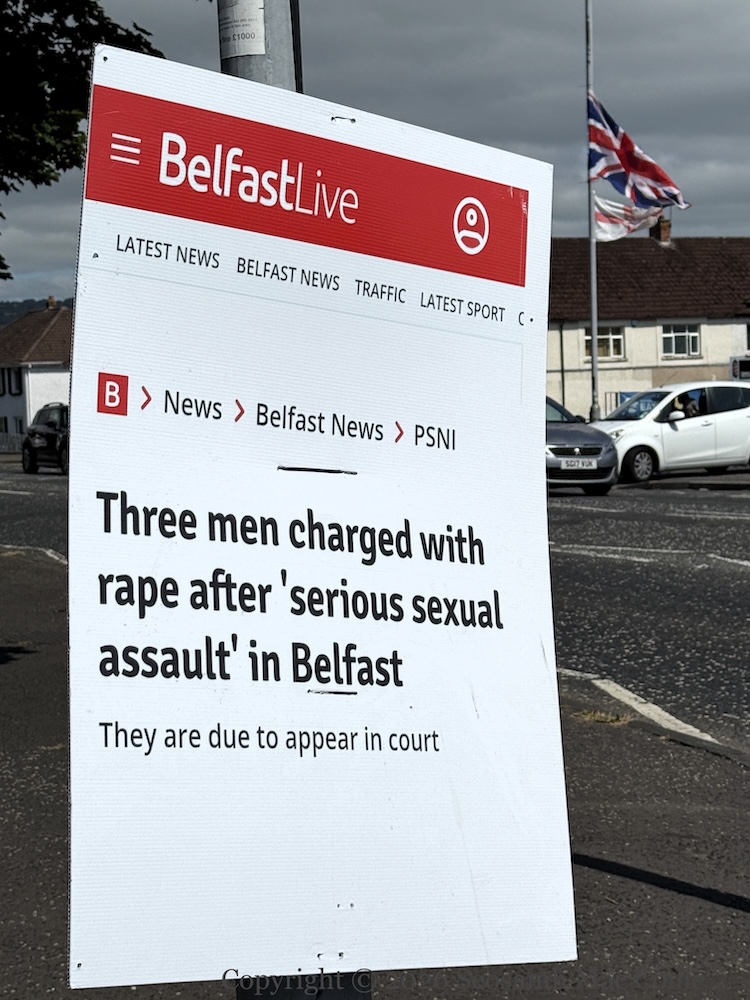
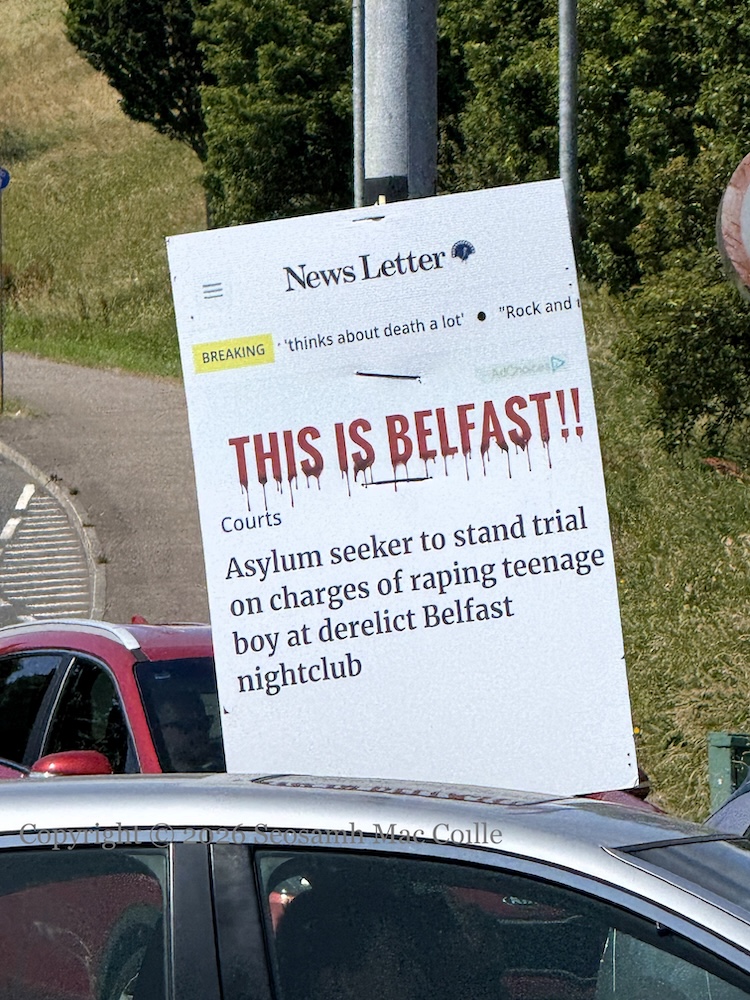
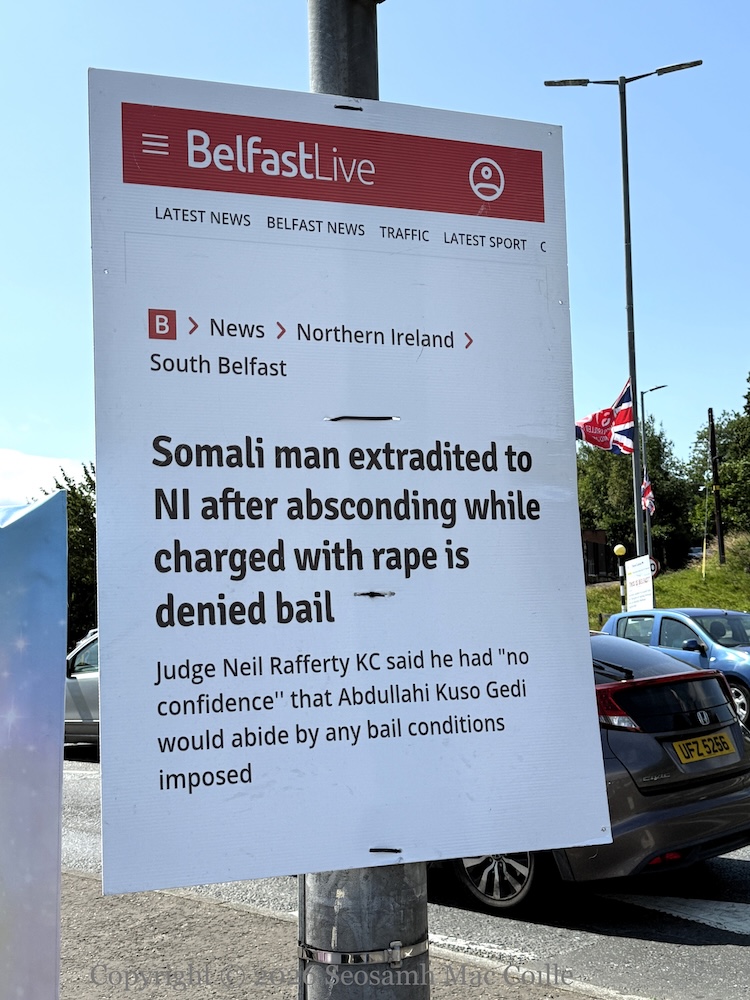
These headlines from two Belfast newspapers were enlarged and attached to poles in Newtownabbey, between Rathcoole and Rathfern, in order to reinforce the anti-immigrant narrative that was the foundation of the riots in June – see McMaster Street Remembers.
There are two from Belfast Live and one from the News Letter: “Three men charged with rape after ‘serious sexual assault’ in Belfast” (from Feb 25th, 2026), “Asylum seeker to stand trial on charges of raping teenage boy at derelict Belfast nightclub” (from Feb 14th, 2026), “Somali man extradited to NI after absconding while charged with rape is denied bail” (from Feb 24th, 2026).
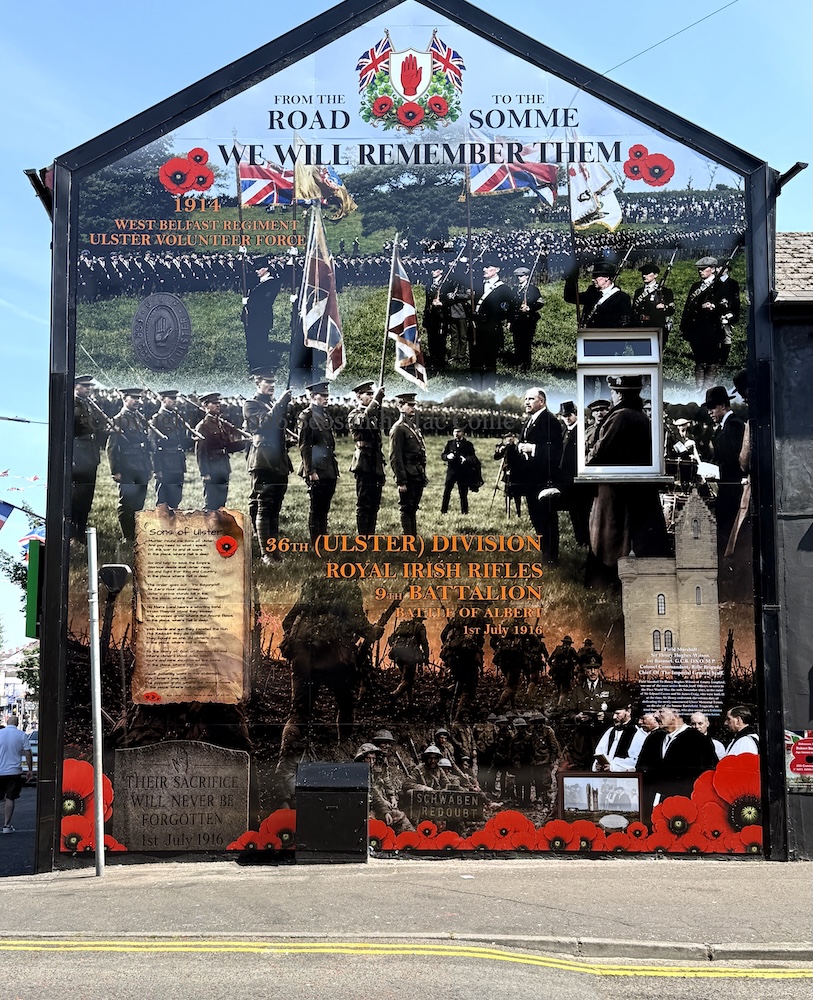
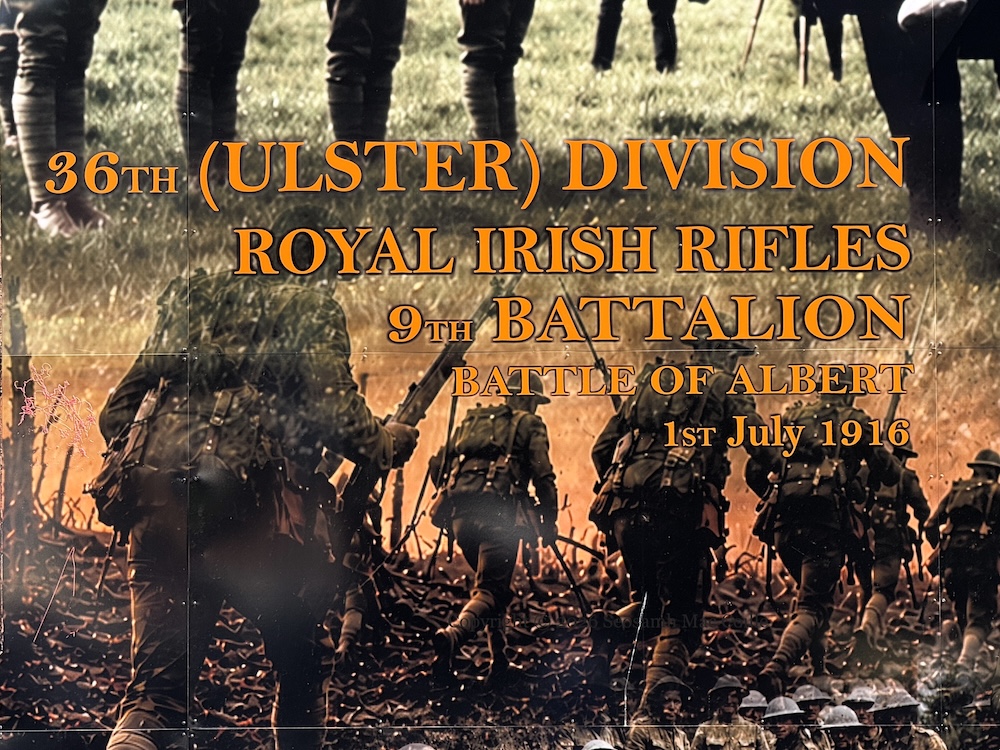
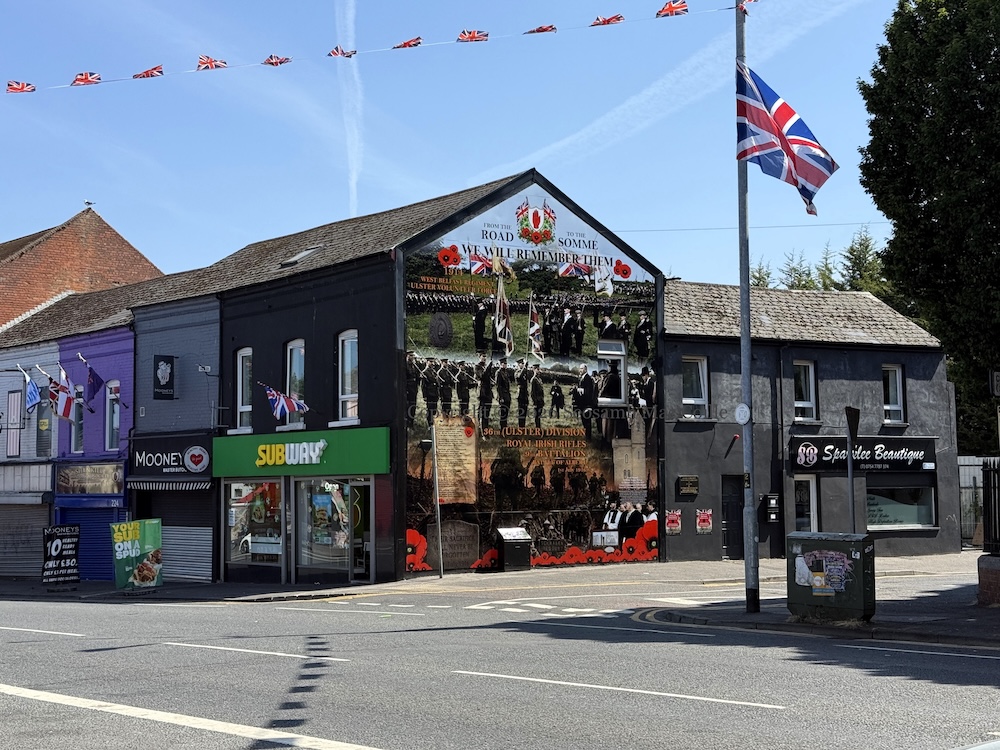
“1914 West Belfast regiment, Ulster Volunteer Force – 36th (Ulster) division, Royal Irish Rifles.” Men from the West Belfast Ulster Volunteers – which included the Shankill and Woodvale areas – joined the 9th battalion of the Royal Irish Rifles, which became part of the 107th brigade of the 36th division.
The main part of this new gable-sized board places two colourised photographs on top of each other. The first (upper) photo shows shows the first and second battalions of the West Down regiment being presented with their colours in May, 1914 (CyberProd). The second (lower) photo shows the first and second battalions of the West Belfast regiment receiving the Kings colours in May, 1914 (CyberProd).
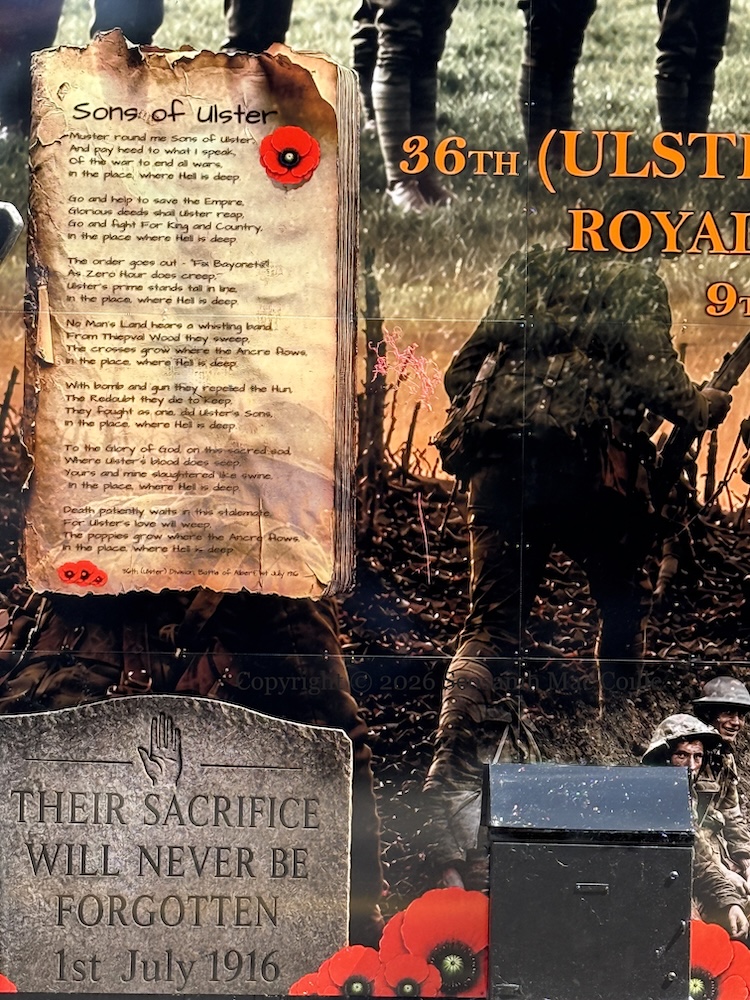
In the bottom left corner is a poem called “Sons of Ulster” written on a scroll: “Muster round me Sons of Ulster,/And pay heed to what I speak,/Of the war to end all wars,/In the place where hell is deep.//Go and help to save the Empire,/Glorious deeds shall Ulster reap./Go and fight for King and Country,/In the place where hell is deep.//The order goes out – “Fix Bayonets!”/As Zero Hour does creep,/Ulster’s prime stands tall in line,/In the place where hell is deep.//No-Man’s Land hears a whistling band,/From Thiepval Wood they sweep./The crosses grow where the Ancre flows,/In the place where hell is deep.//With bomb and gun they repelled the Hun,/The Redoubt they die to keep./They fought as one did Ulster’s Sons,/In the place where hell is deep.//To the Glory of God on this sacred sod,/Where Ulster’s Blood does seep,/Yours and mine slaughtered like swine,/In the place where hell is deep.//Death patiently waits in this stalemate,/For Ulster’s love will weep,/The poppies grow where the Ancre flows,/In the place where hell is deep.”
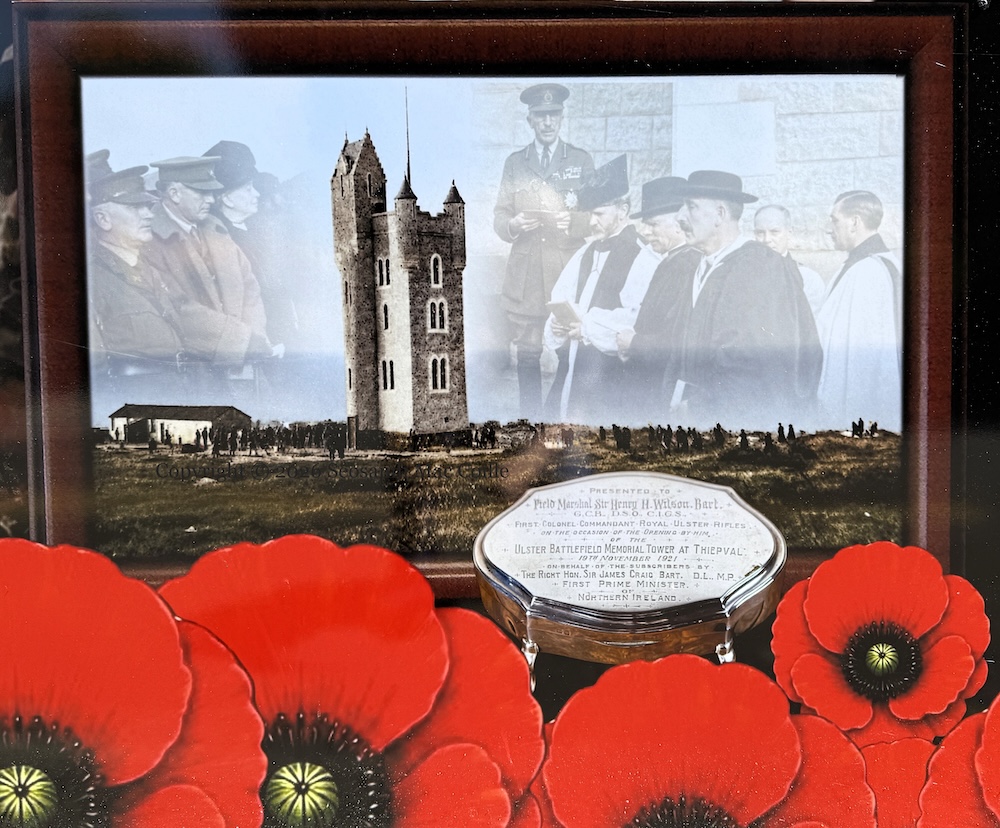
In the bottom right, the Ulster Tower is dedicated: “‘Field Marshall Sir Henry Hughes Wilson, 1st Baronet, GCB, DSO, MP, Colonel Commandant, Rifle Brigade, Chief Of The Imperial General Staff. Field Marshall Sir Henry Hughes Wilson of County Longford, was one of the most senior British Staff Officers to serve int he First World War. On 18th November 1921, in the stead of Sir Edward Carson and Sir James Craig, who were both ill at the time, Sir Henry undertook the solemn duty of dedicating the newly constructed Ulster Memorial Tower, on the site of the Somme battlefield. Tragically, on 22nd June 1922, Sir Henry, who also served as a Unionist politician, was assassinated outside his London home.”
Conway Street, Shankill, west Belfast, replacing Ulster Tower.