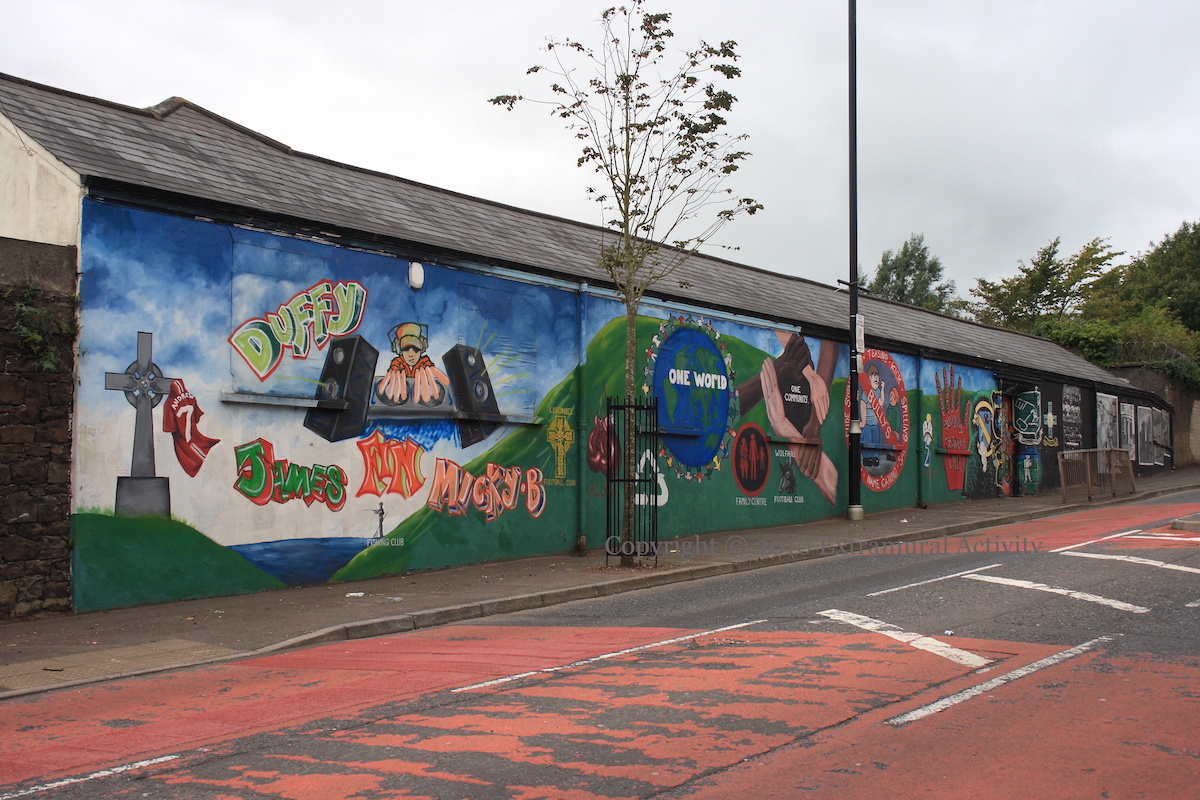
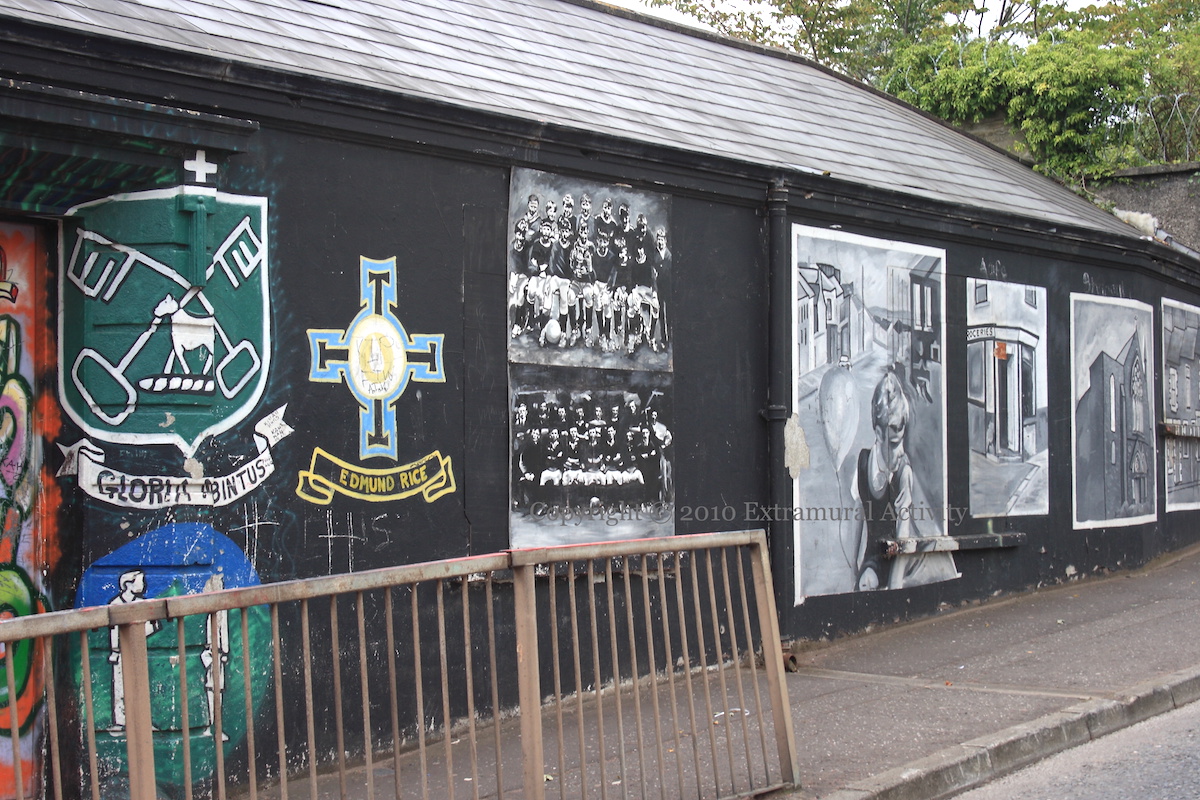
The new mural at Mountainhill Youth Club follows the same format as its predecessor, with the left side being social messages directed at kids and the right being “the village [i.e. Ligoniel] in older times”.
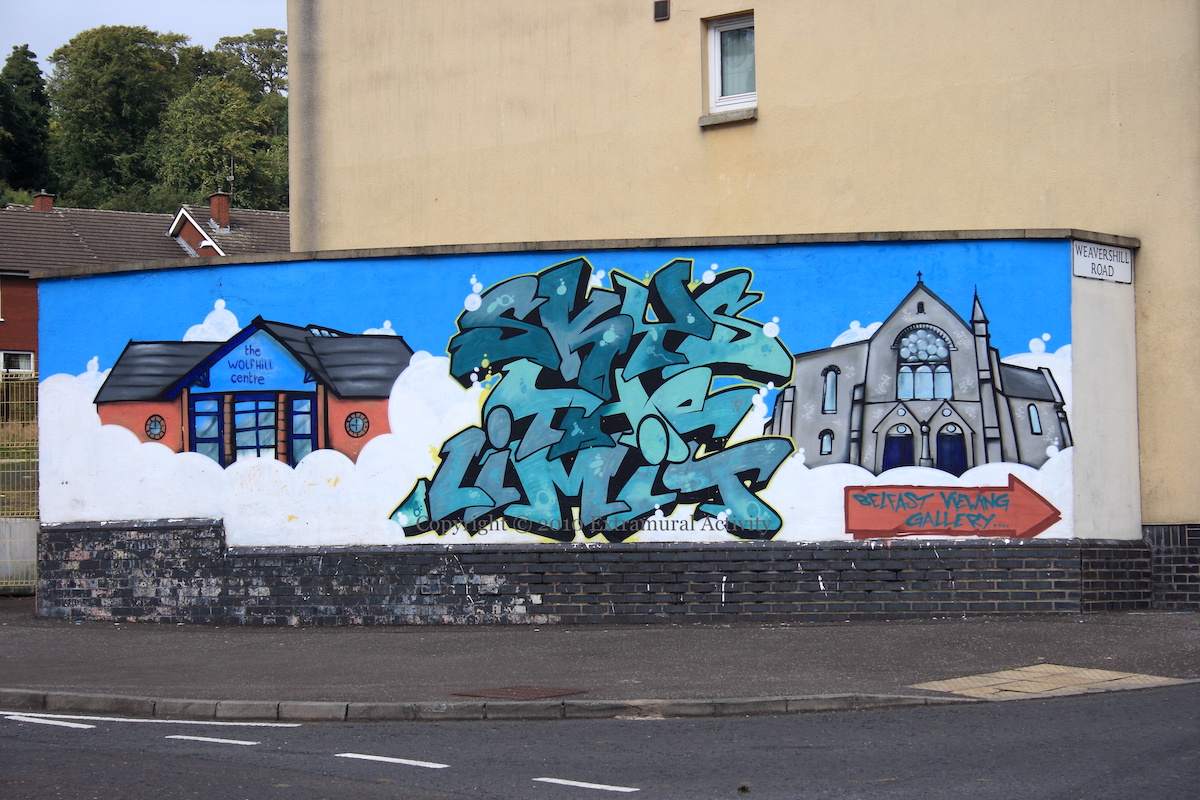
Wolfhill is so named because the last wolf in Ireland was supposedly shot there in 1692 (Belfast Hills); this distinction is also claimed by Camlough. The Wolfhill Centre, which is across the Ligoniel Road from this mural, is home to the Ligoniel Improvement Association. On the right of the mural is St Vincent de Paul’s church, which is a little further down the road.
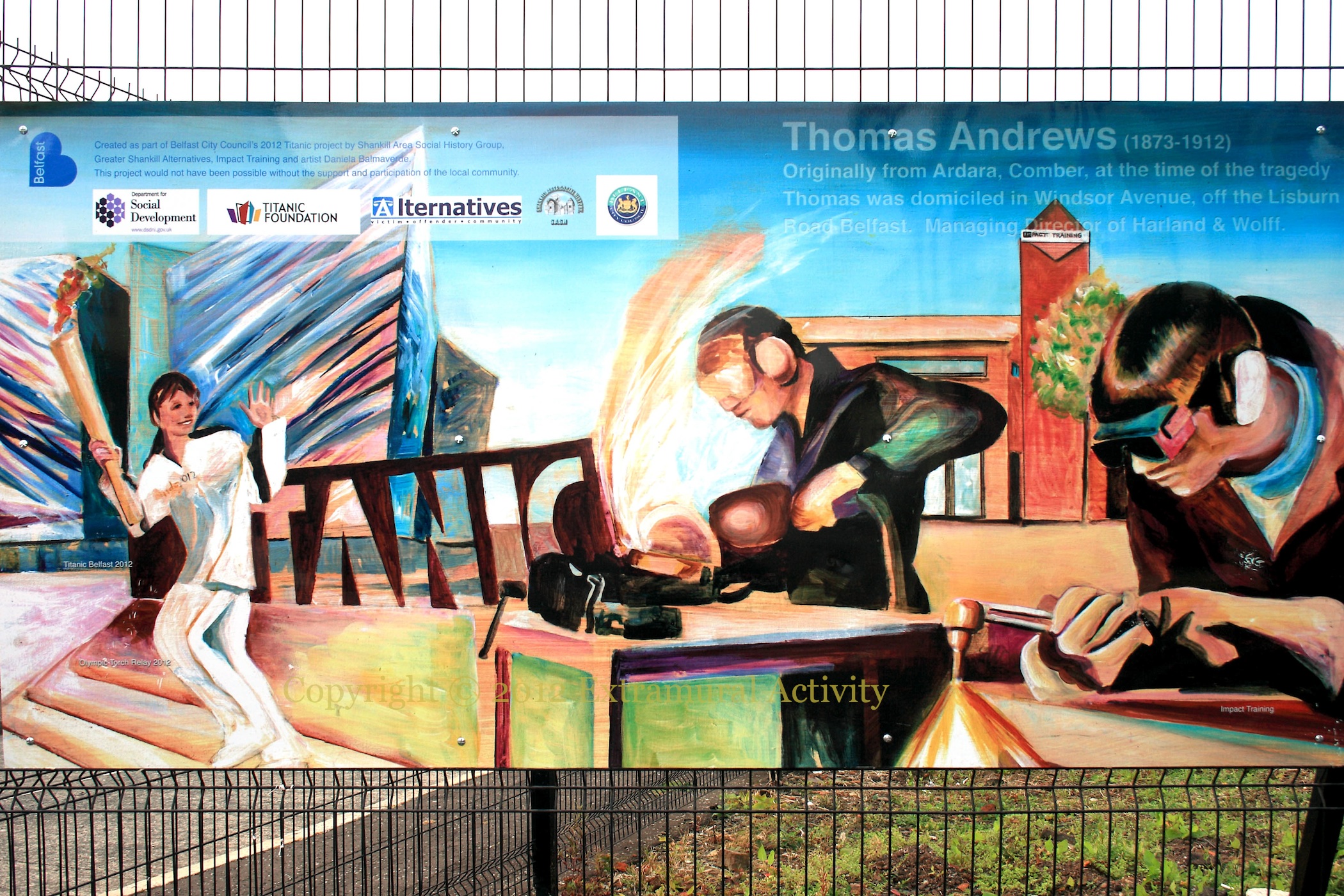
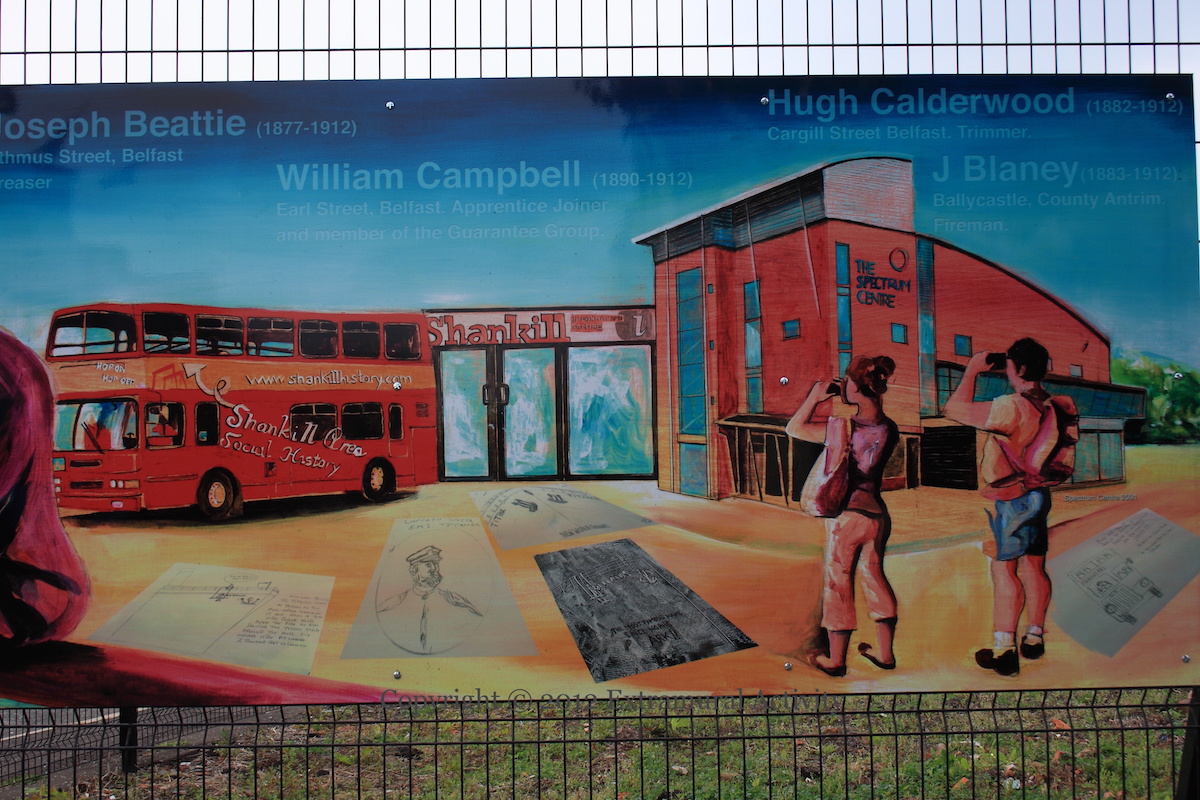
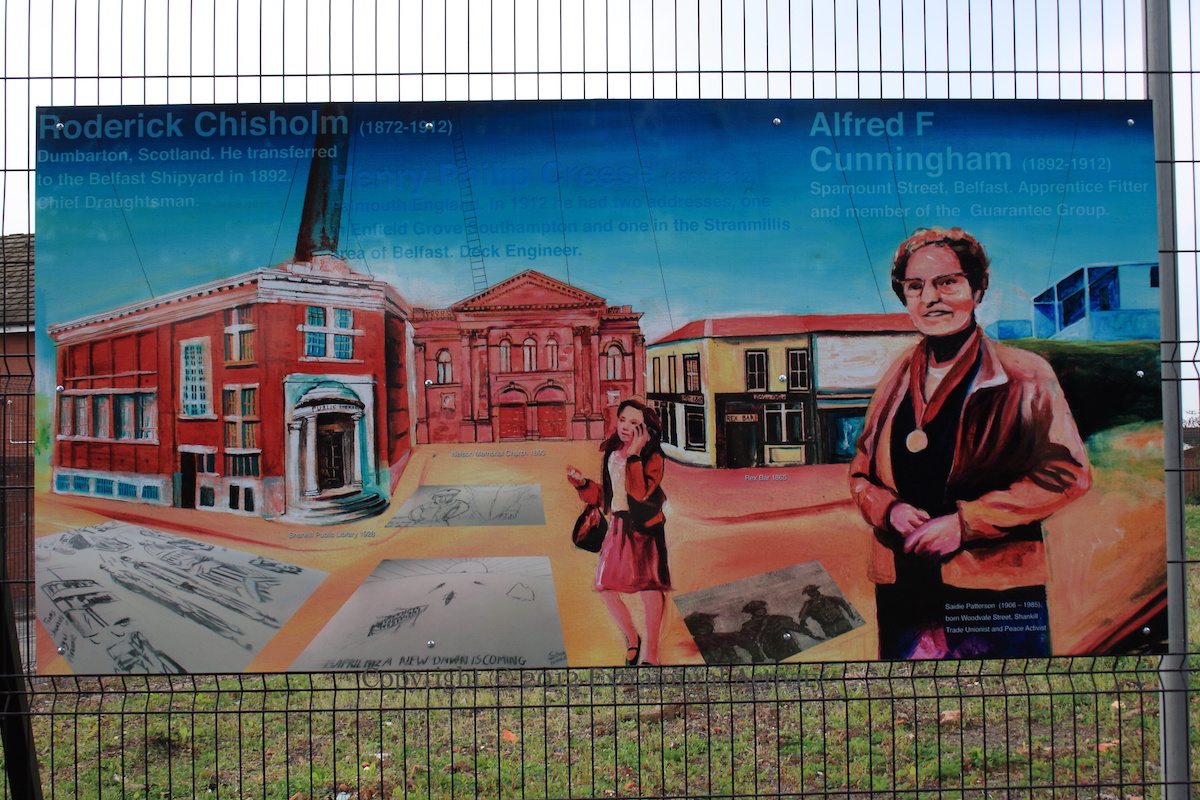
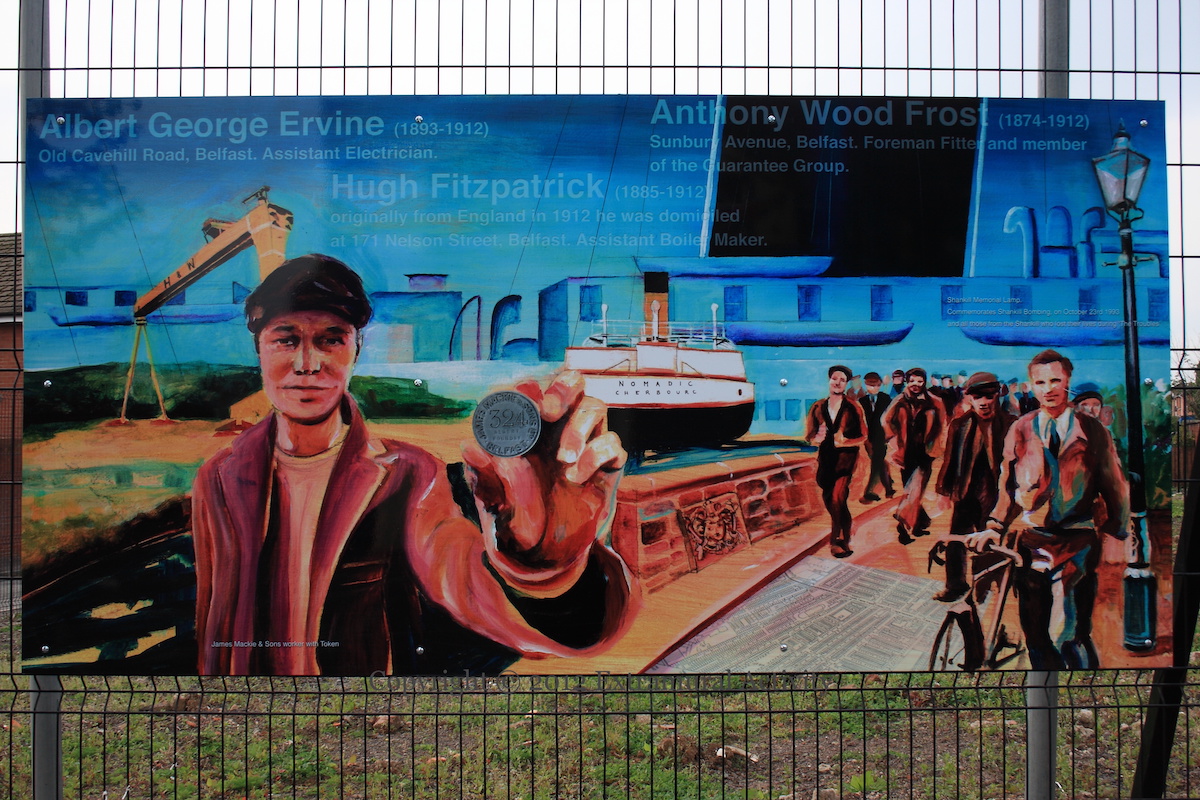
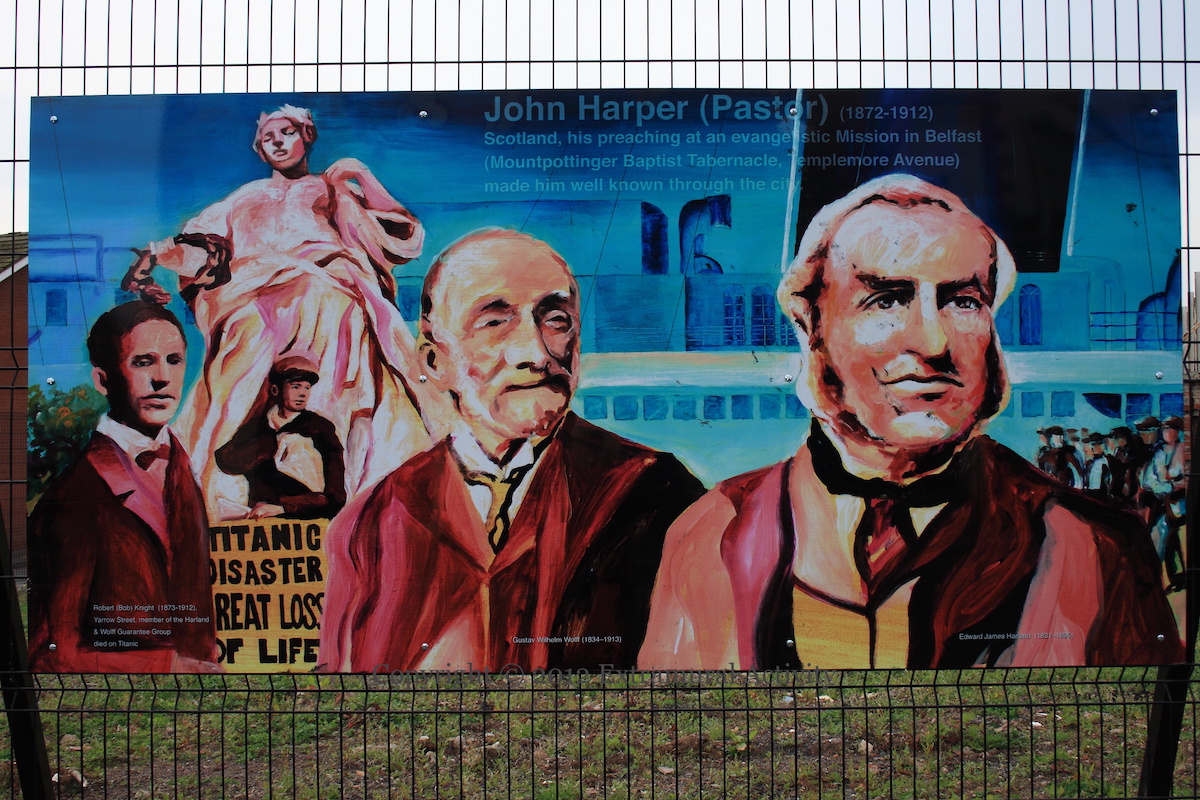
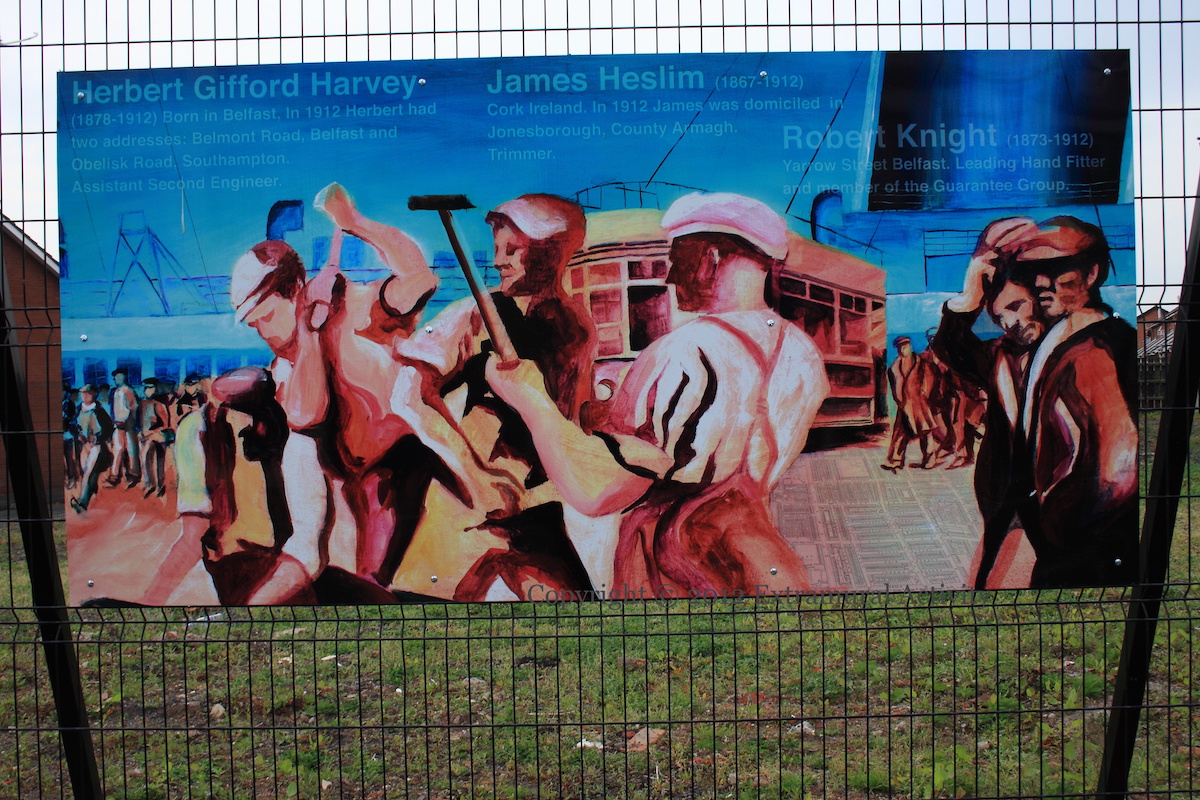
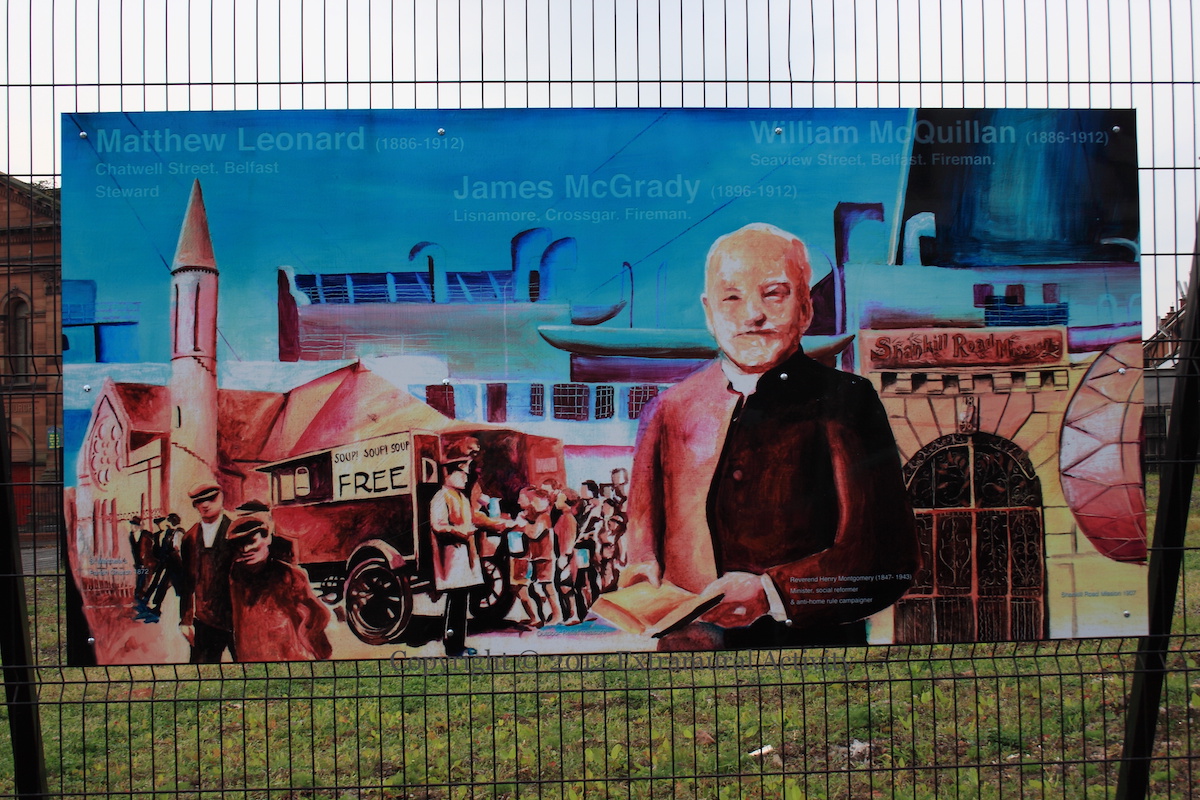
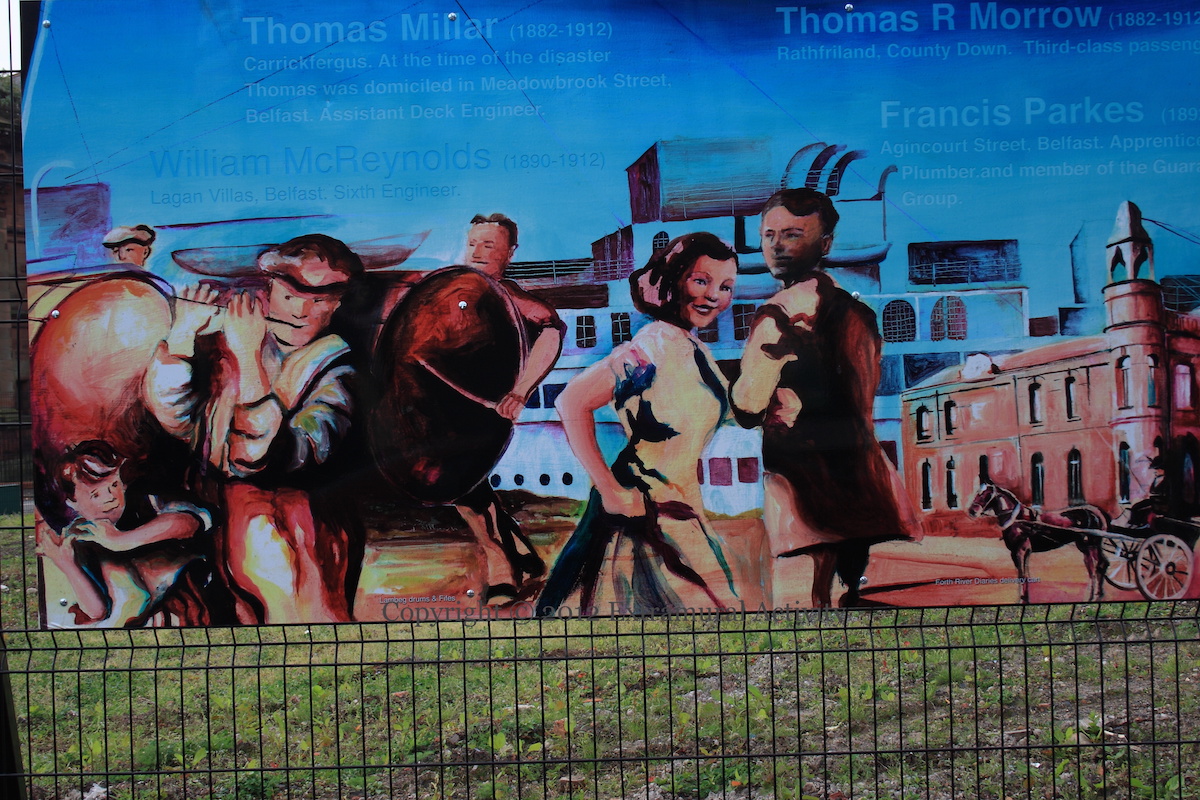
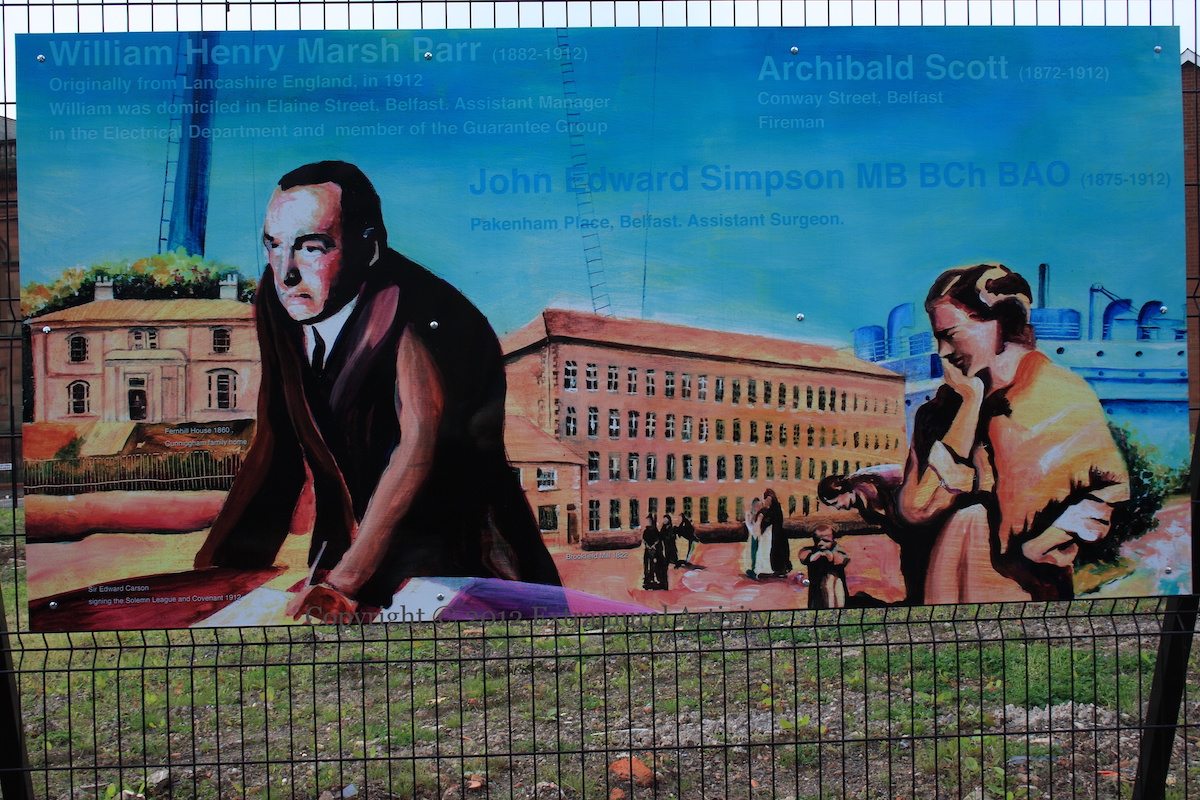
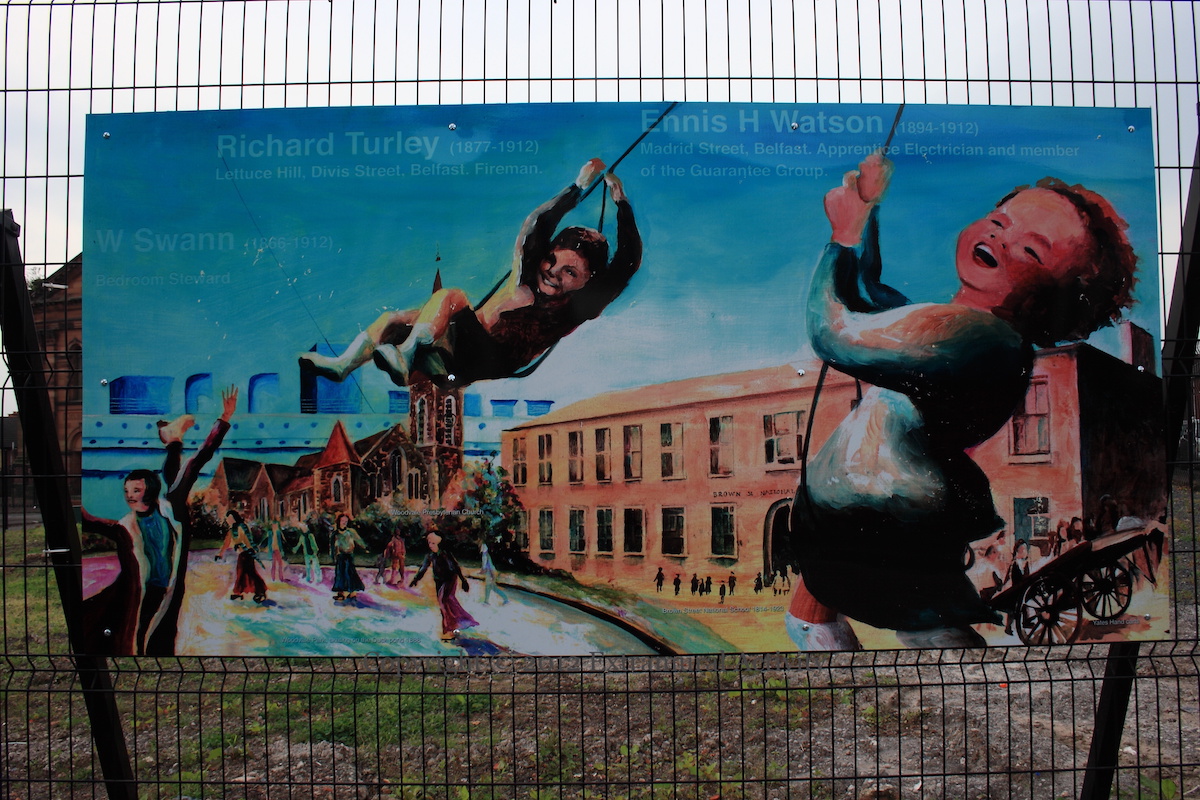
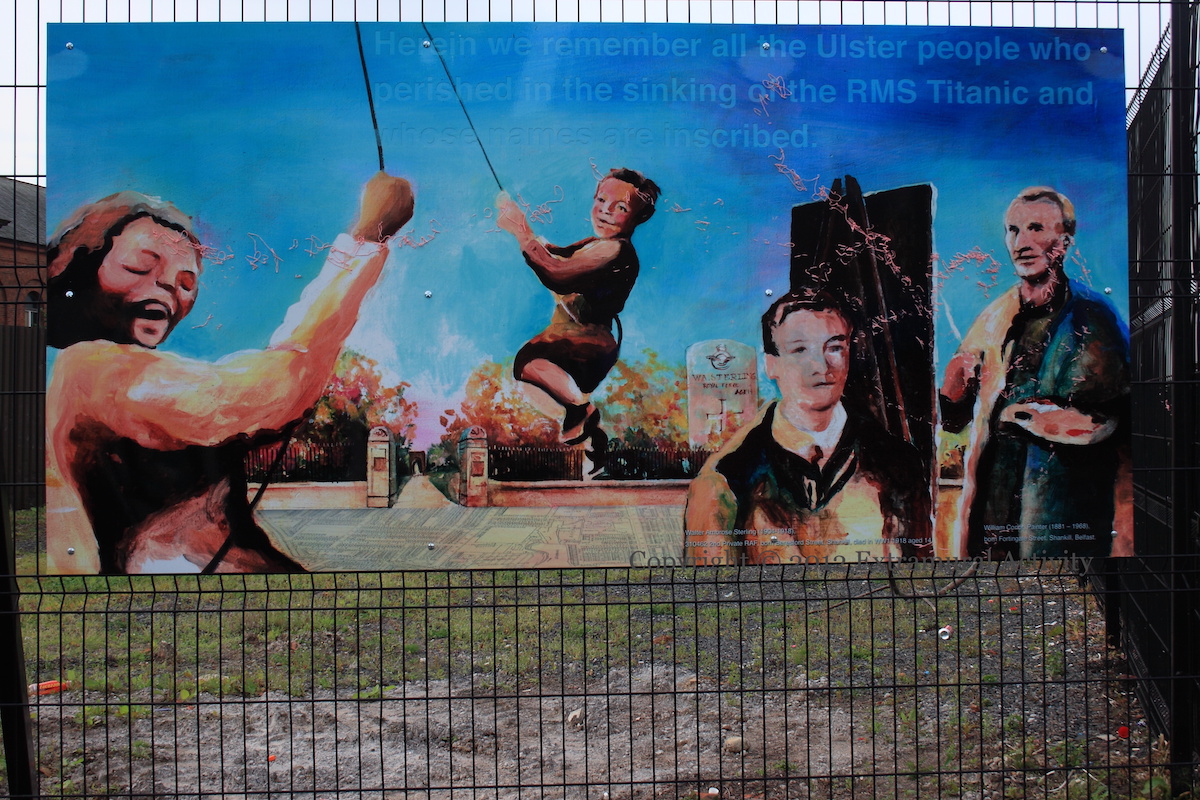
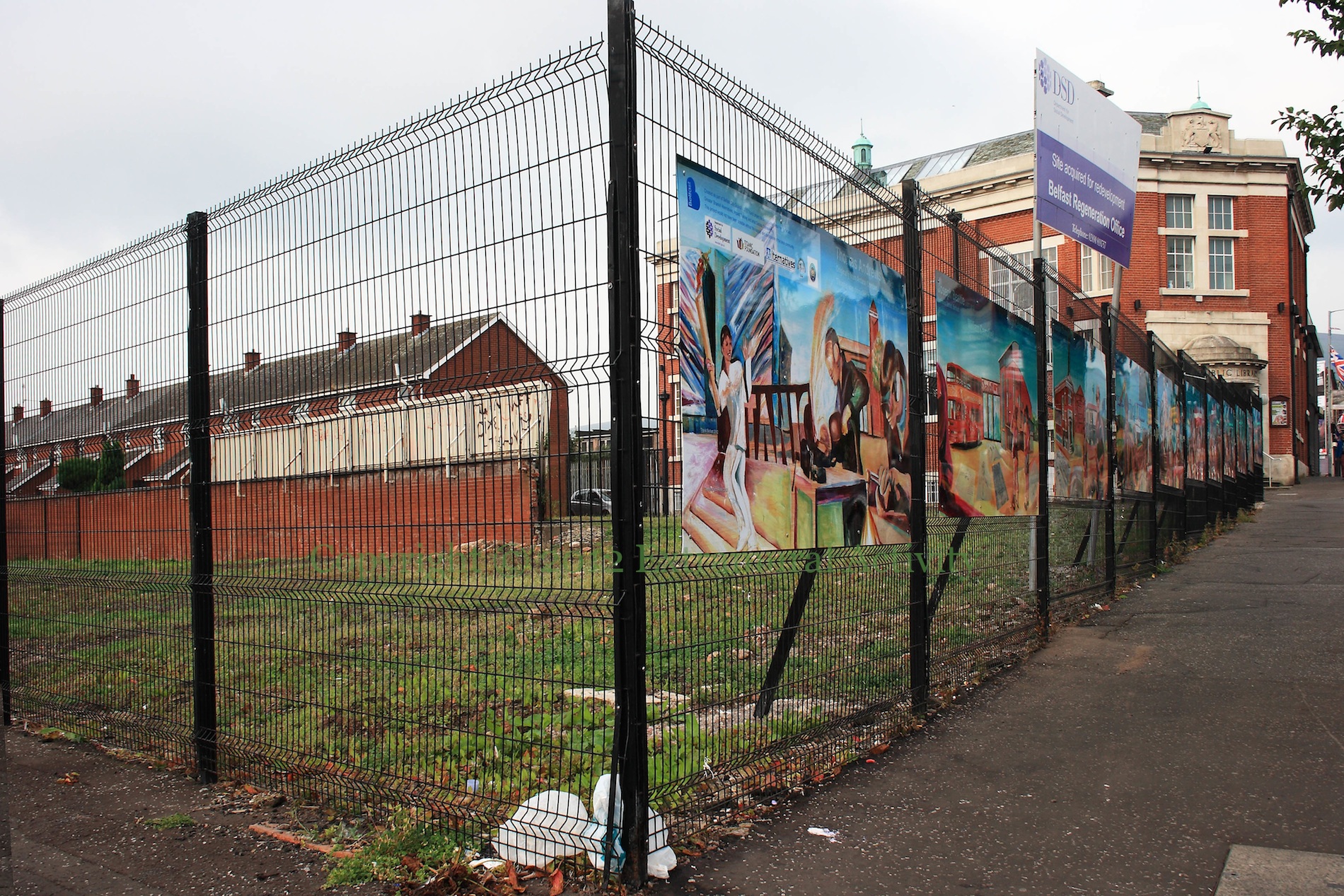
Here, in sequence, are eleven boards in a series celebrating workers and industrialists in Belfast, arrayed along a regeneration plot (a.k.a. waste ground) on the front of the main Shankill Rd, sponsored by many bodies. For more information, see Daniela Balmaverde’s page on the project.
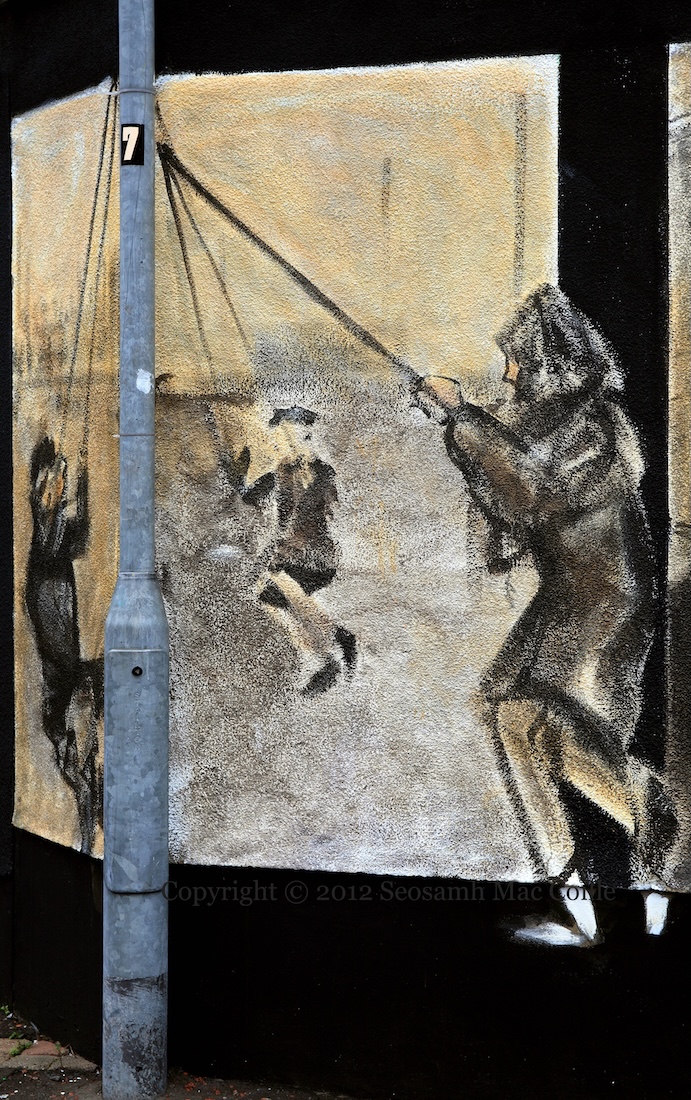
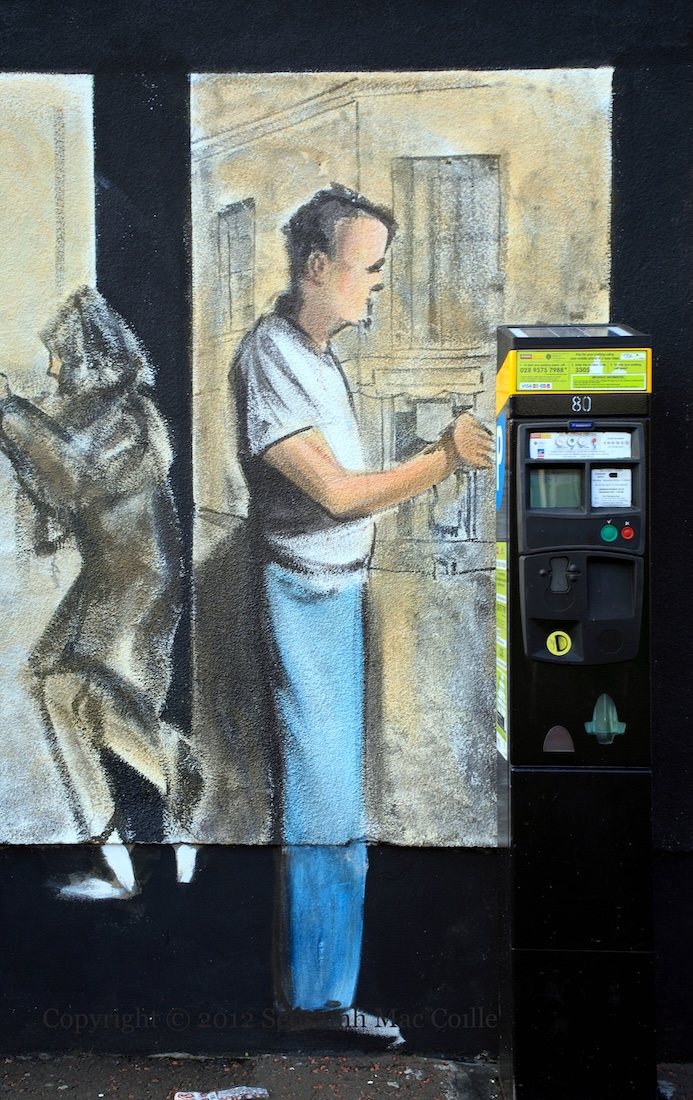
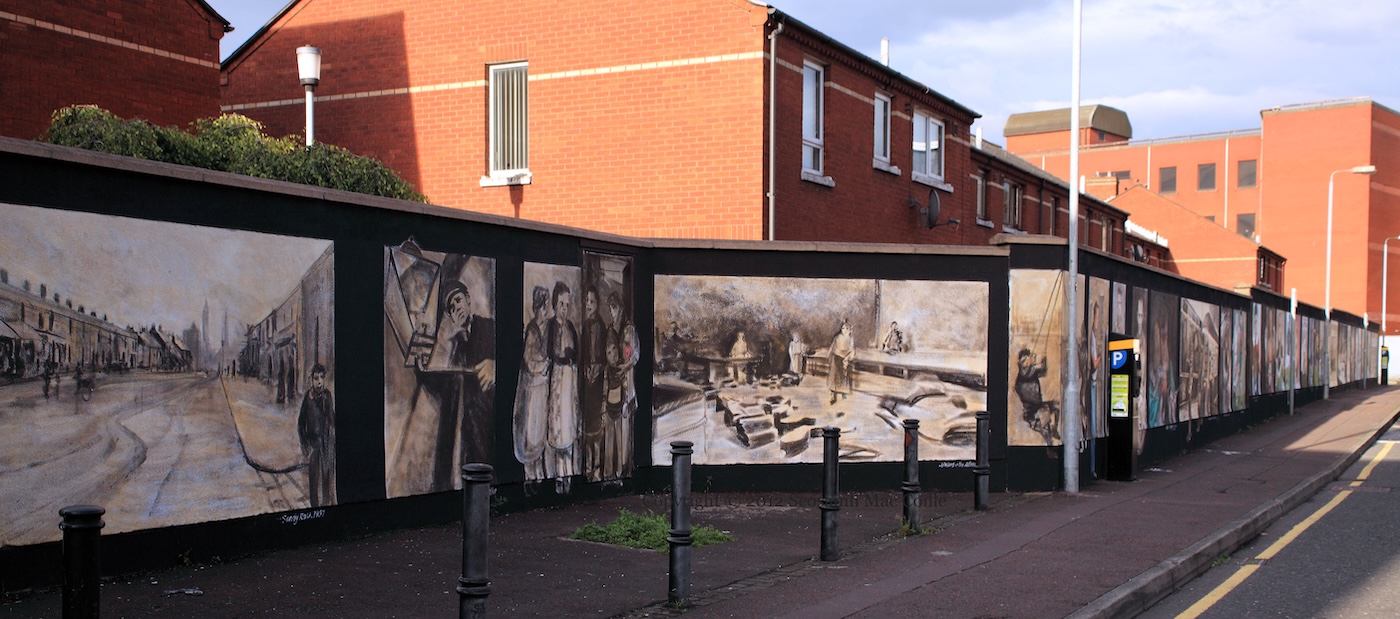
These are just a few of the panels that are part of the long, long, mural in Stroud Street by Ed Reynolds (steadyhanded.com), “assisted by William McKee Strong, June 2012” – McKee appears as the man putting money into the parking-ticket machine, which is real, as is the street-light pole incorporated in the mural above. (There are a few seconds of footage of children swinging on a light pole at the 1:25 mark of this youtube video.)
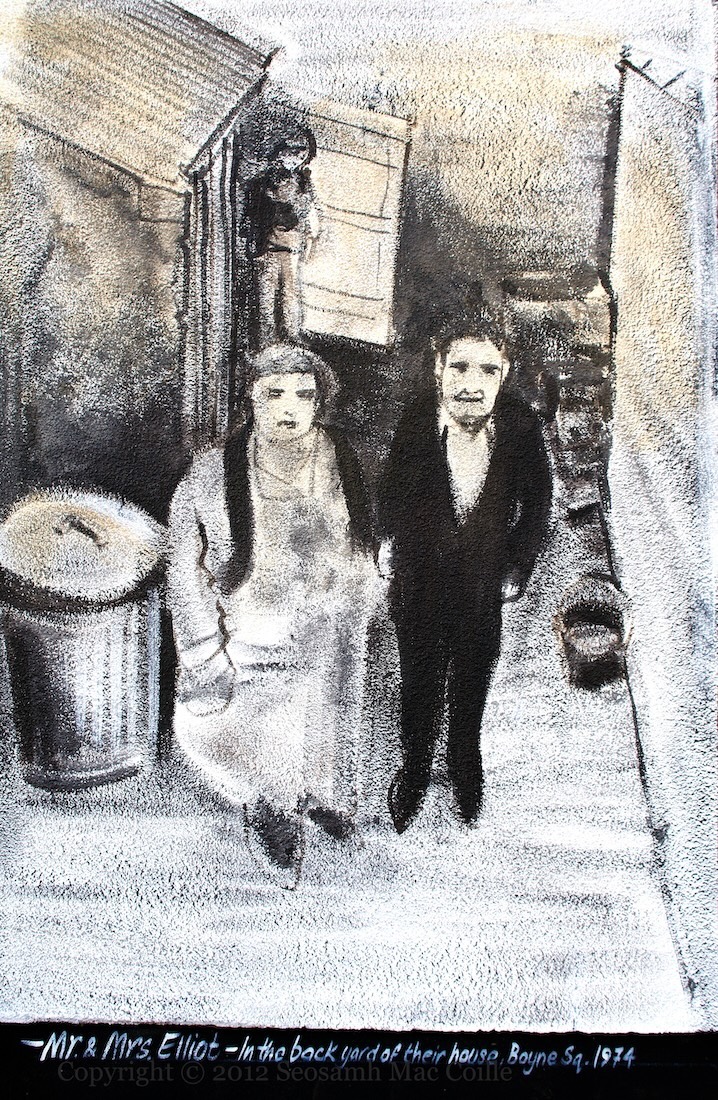
The third image is based on a photograph by the celebrated Belfast photographer Bill Kirk whose exhibit ‘Sandy Row 1974’ was at the Red Barn Gallery September-October 2011. At 6:50 in this youtube video one can see the original photograph of the Elliots.
Commissioned by the Belfast City Council, in consultation with the Sandy Row Community Forum and the Residents’ Association. The Tele had a write-up of the work: The Singing Butcher.
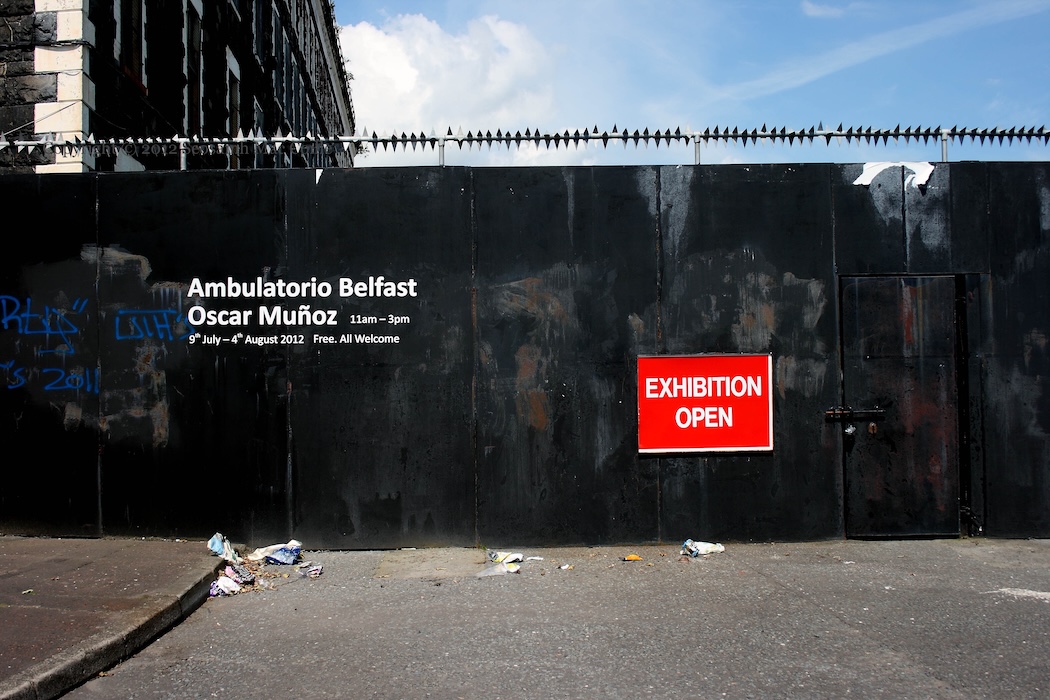
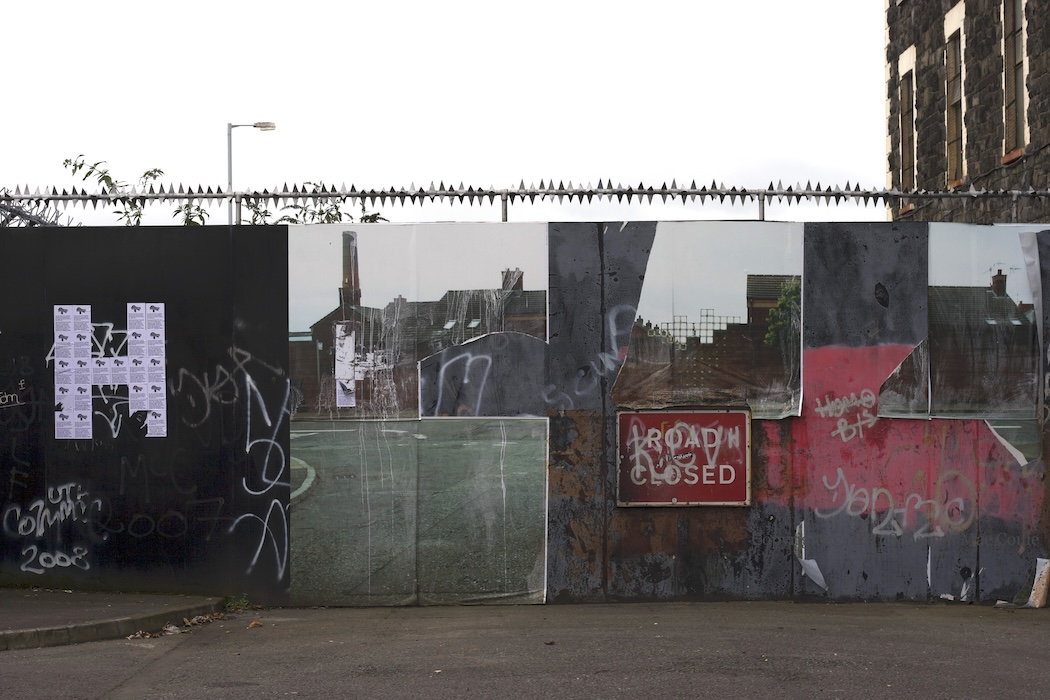
The big red sign usually says “Road Closed” but has been changed for the exhibition. On this day, however, the exhibition (which is a large satellite-image map of the area, on the ground) was not, in fact, open. The Flax St/Crumlin Road interface, Ardoyne, the day after the 2012 riot.
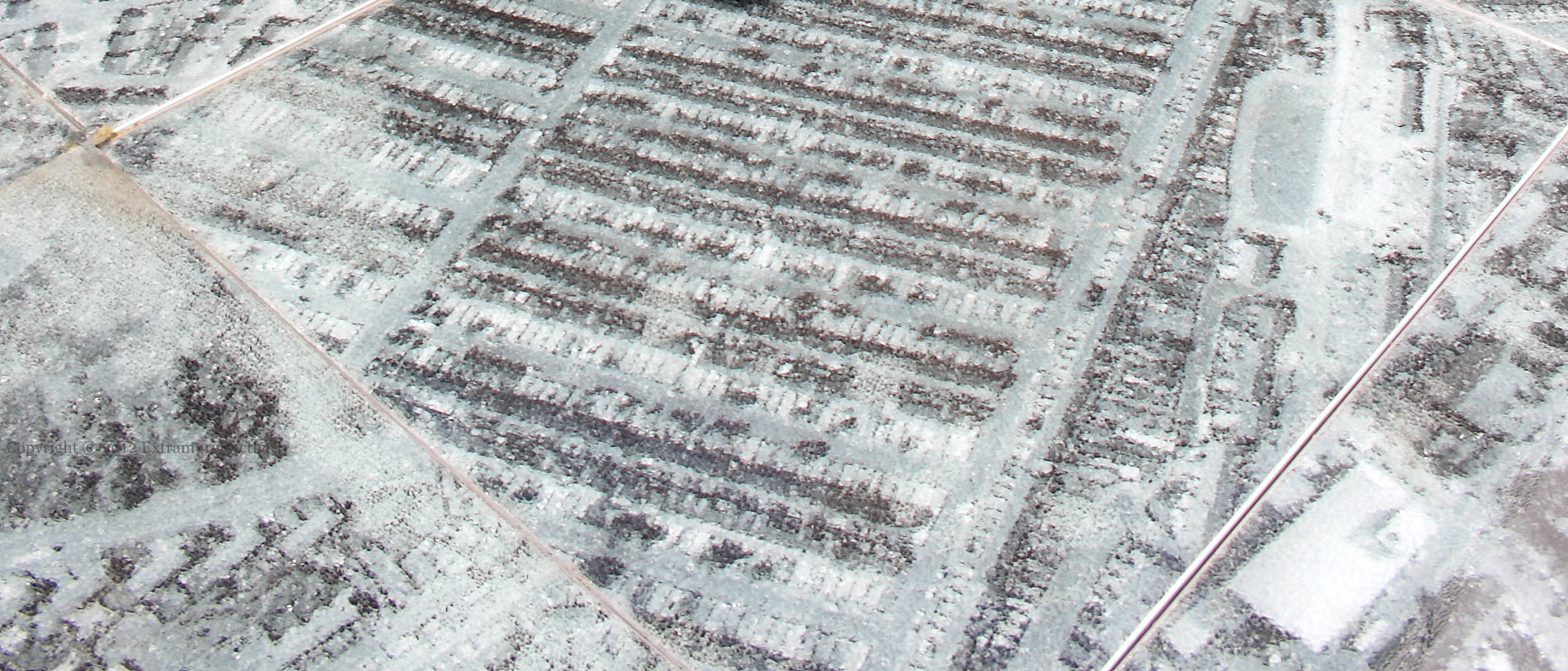
Below, taken later, a detail of the exhibition … a very small portion
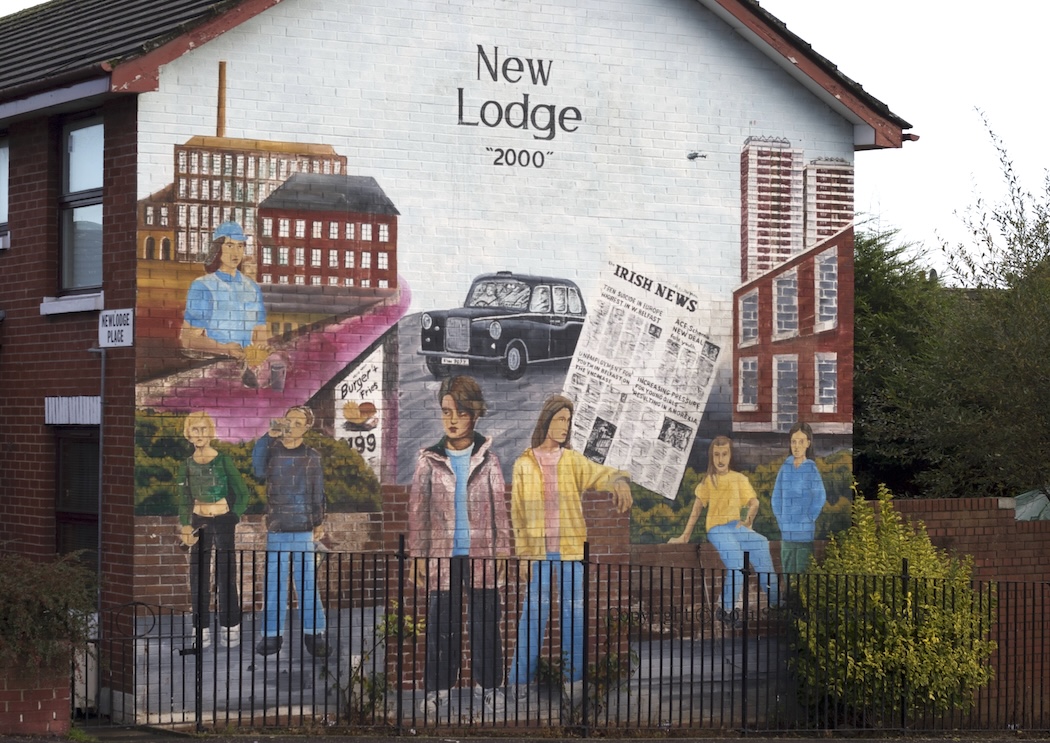
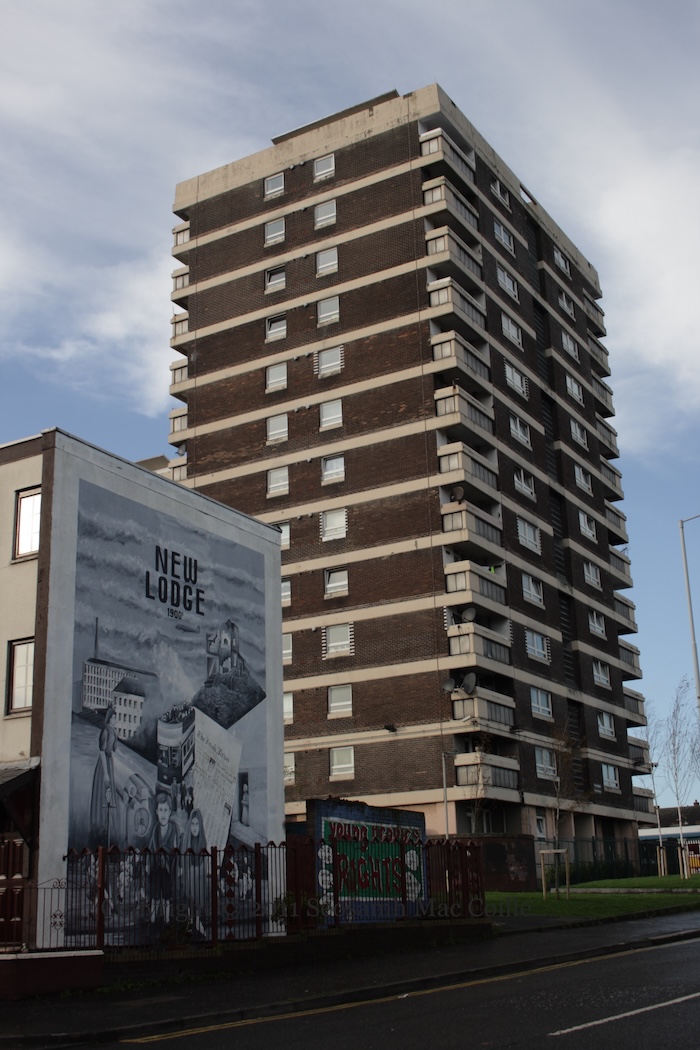
This is a companion piece to New Lodge 1900s. Life is now lived in colour, but suffers from underemployment, alcoholism, and suicide. The German bomber has been replaced by a British Army helicopter.
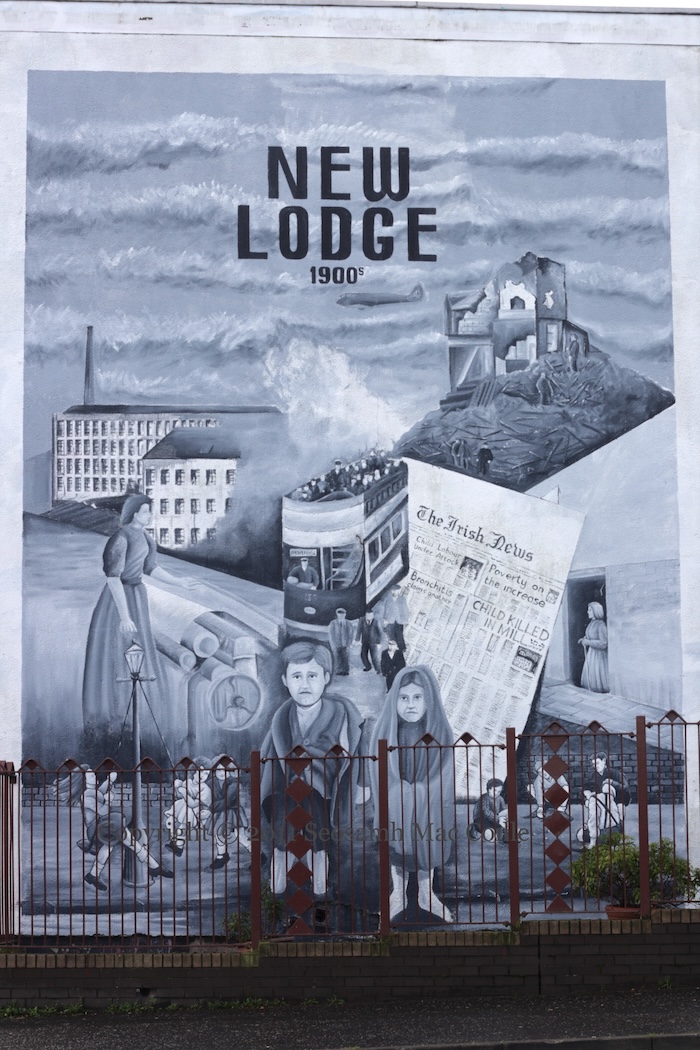
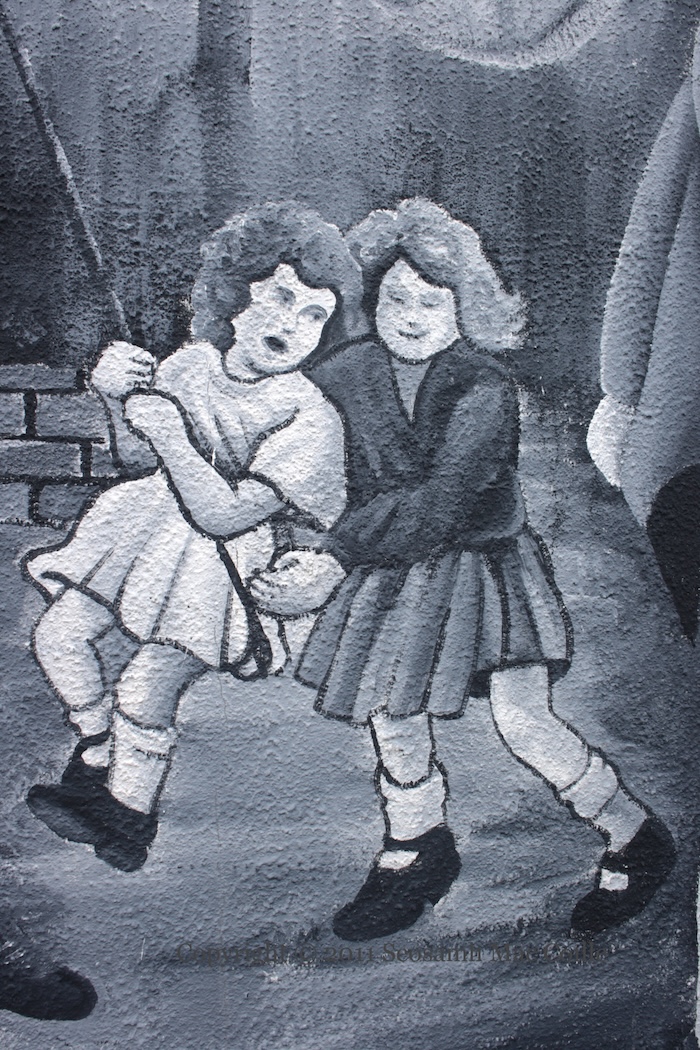
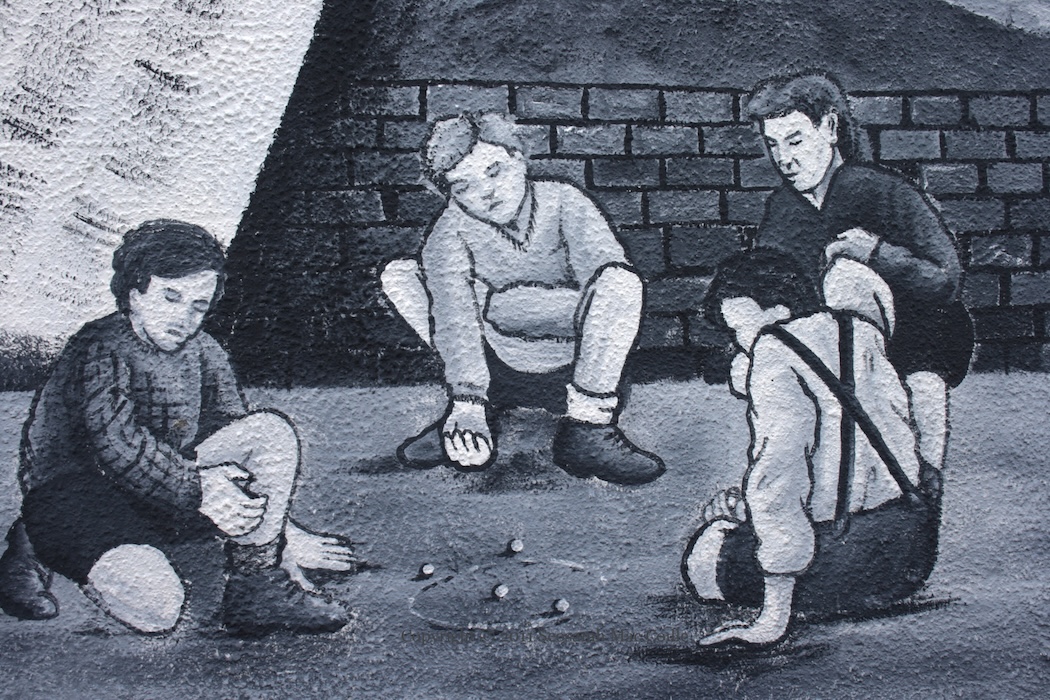
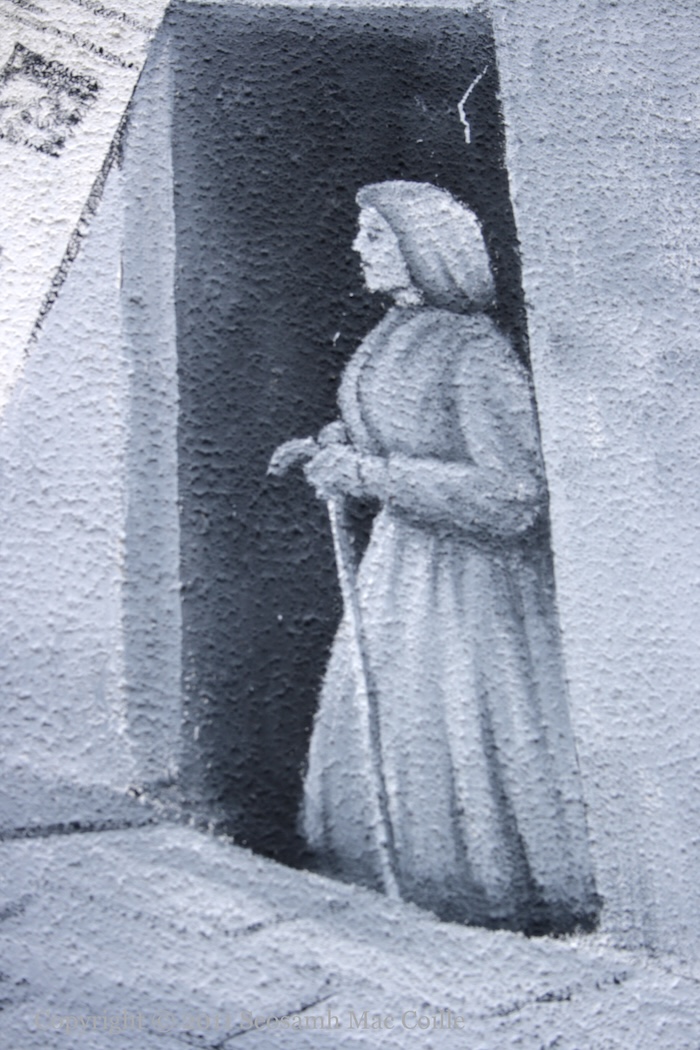
The trials of life in the 1900s are depicted in this New Lodge mural. People work and die in the mills. The Germans drop bombs. Children go barefoot. The black-and-white colouring adds to the depression. The ‘New Lodge 2000‘ mural further down the road is in full colour, though life is still beset with problems.
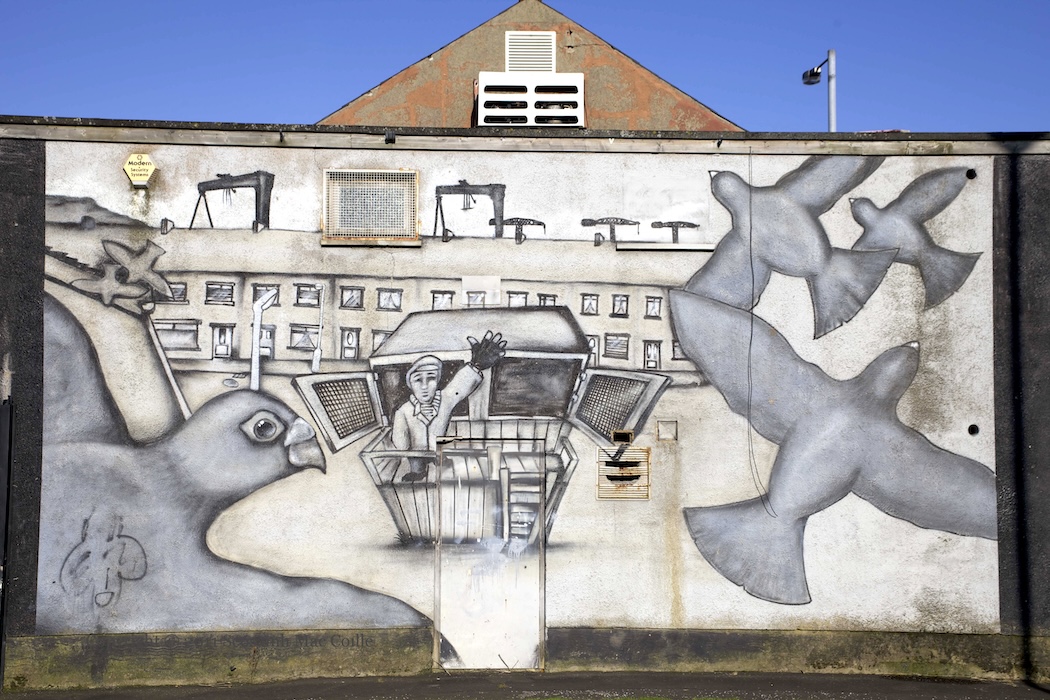
This mural is along the walkway between Tamar and Severn streets in east Belfast. The East End Homing Pigeon club was (is?) at 51 Severn Street (Belfast Forum).
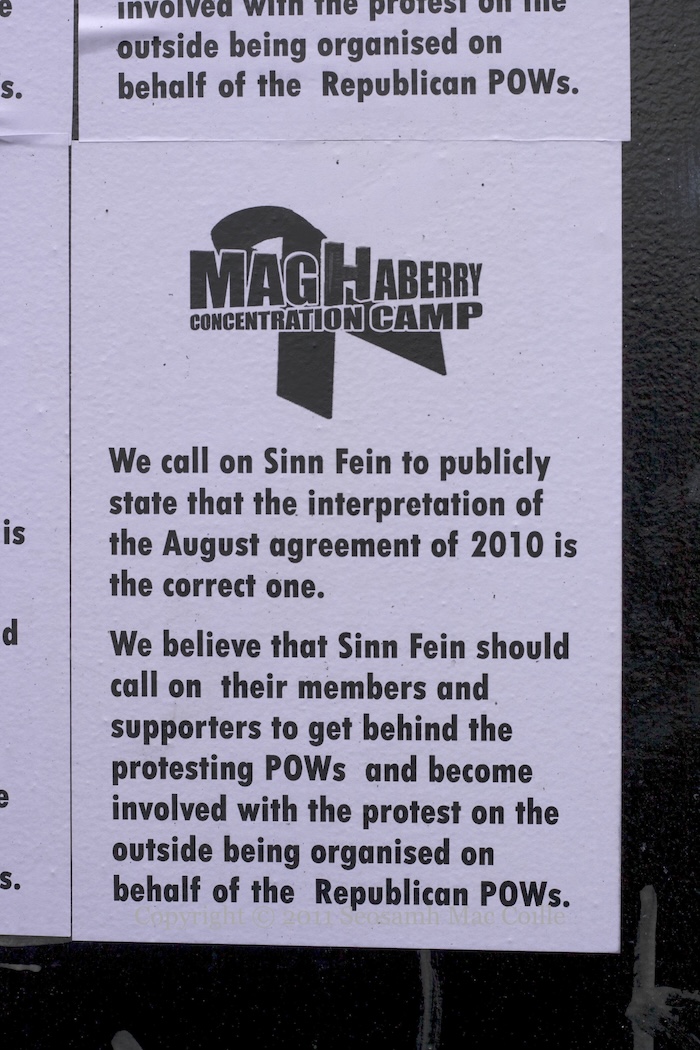
In the summer of 2011, both sides of the Flax St/Crumlin Rd interface were pasted with images of the view from the other side, a city scene on the Flax St side as though looking into Woodvale, a hilly scene on the Crumlin Rd as though looking up Flax Street. You can see the Crumlin Road side on Street View. What remains of the other side can be seen in the image above, along with IRPWA posters (see below) concerning “Maghaberry Concentration Camp”, calling “on Sinn Fein [sic] to publicly state that the interpretation of the August agreement of 2010 is the correct one … [and to] … call on their members and supporters to get behind the protesting POWs.”
Both the type of “MagHaberry” and the arrangement of the posters make the connection to the H Blocks of the 1970s and 80s.
 Seosamh Mac Coille Collection