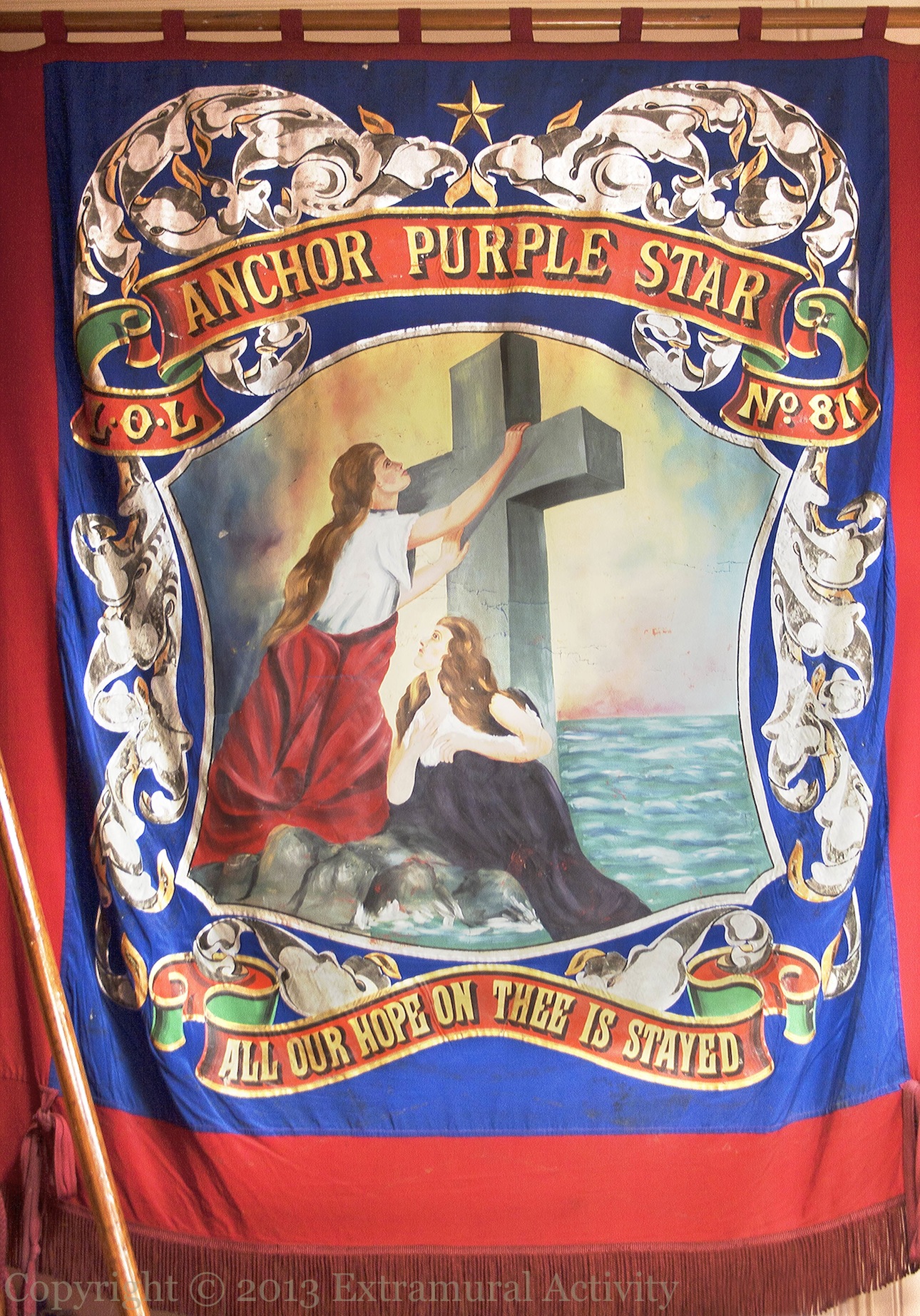
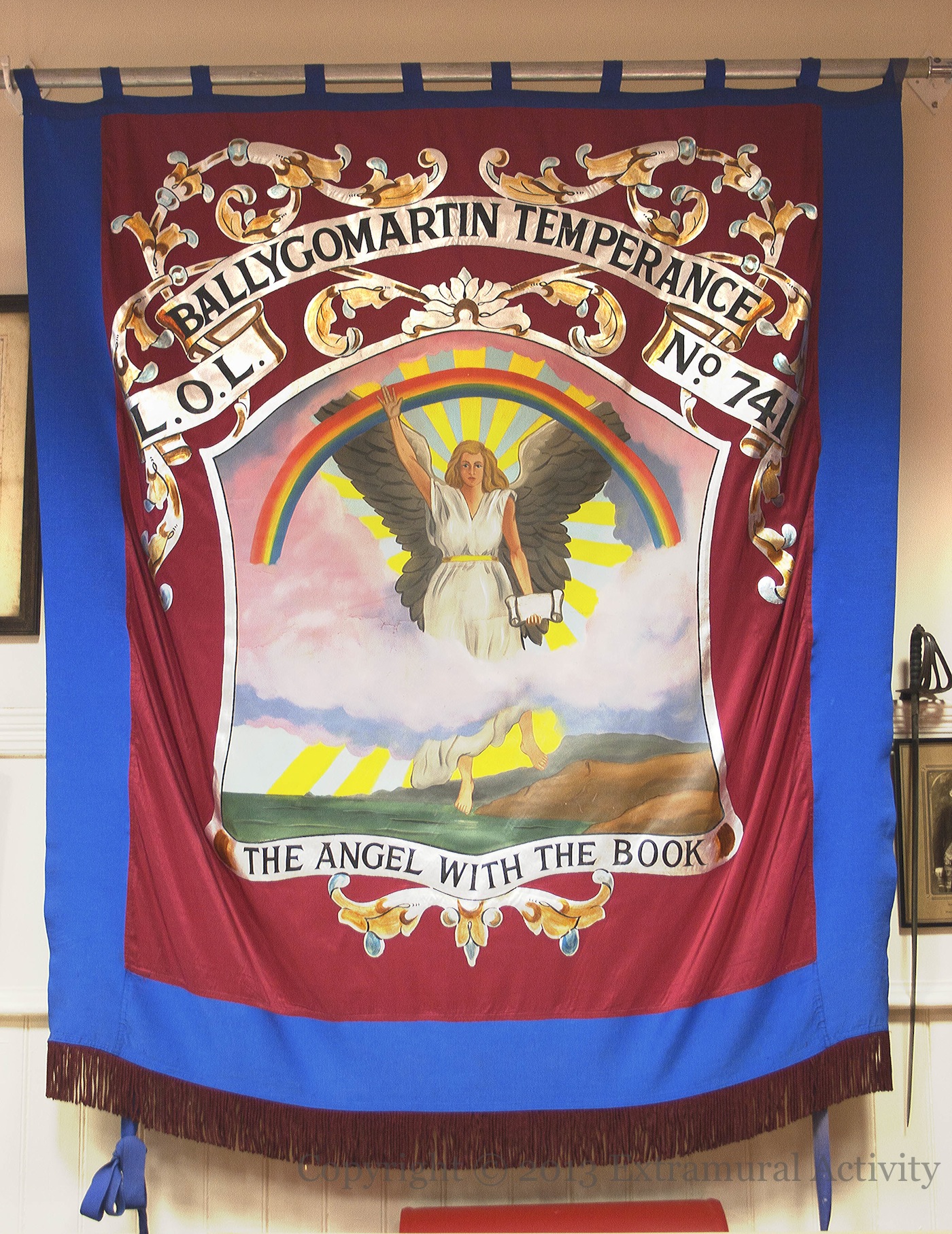
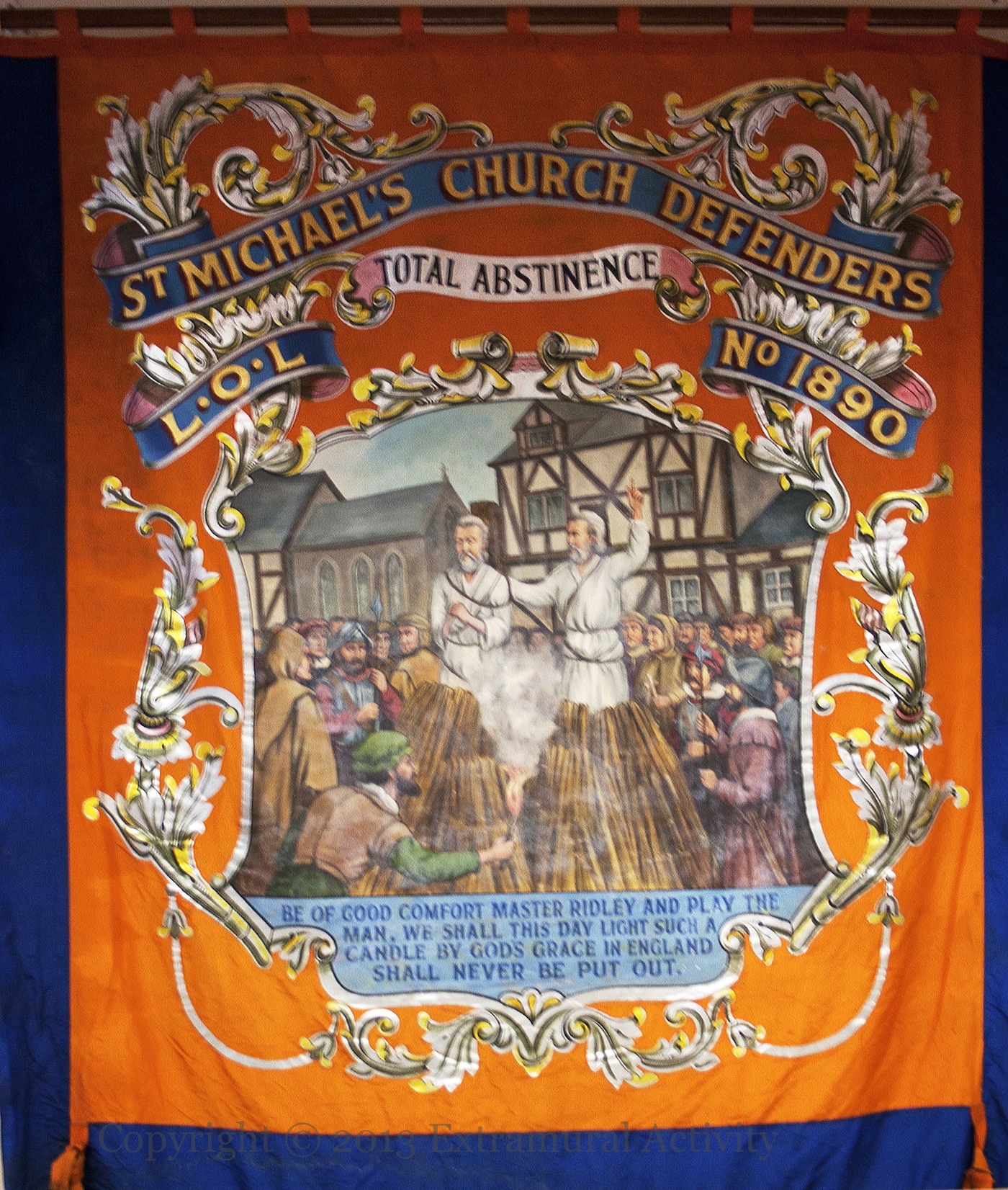
Last weekend (September 14th and 15th) saw many buildings typically closed to the public open up for European Heritage Open Days. Among those was the Orange hall on Clifton Street. Military and religious themes were prevalent throughout.
The first, above is of ‘the angel with the book’, a reference to Revelation 10: “And I saw another mighty angel come down from heaven, clothed with a cloud: and a rainbow was upon his head, and his face was as it were the sun, and his feet as pillars of fire: and he had in his hand a little book open: and he set his right foot upon the sea, and his left foot on the earth.” (King James trans.)
The second, below, shows Hugh Latimer and Nicholas Ridley being burnt at the stake in 1555. “Be of good comfort, Master Ridley and play the man. We shall this day light such a candle by God’s grace in England [as I trust] shall never be put out.” (WP)
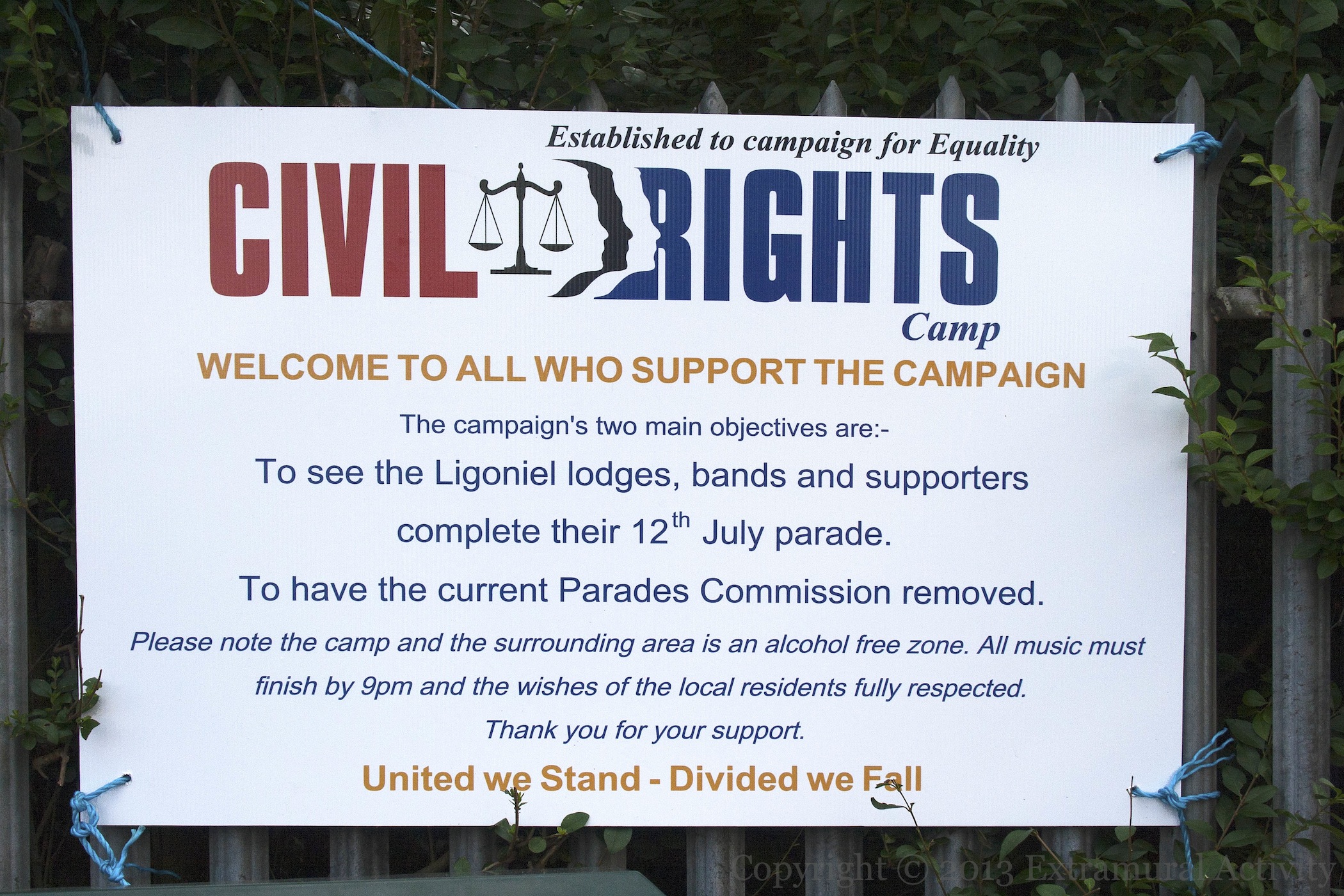
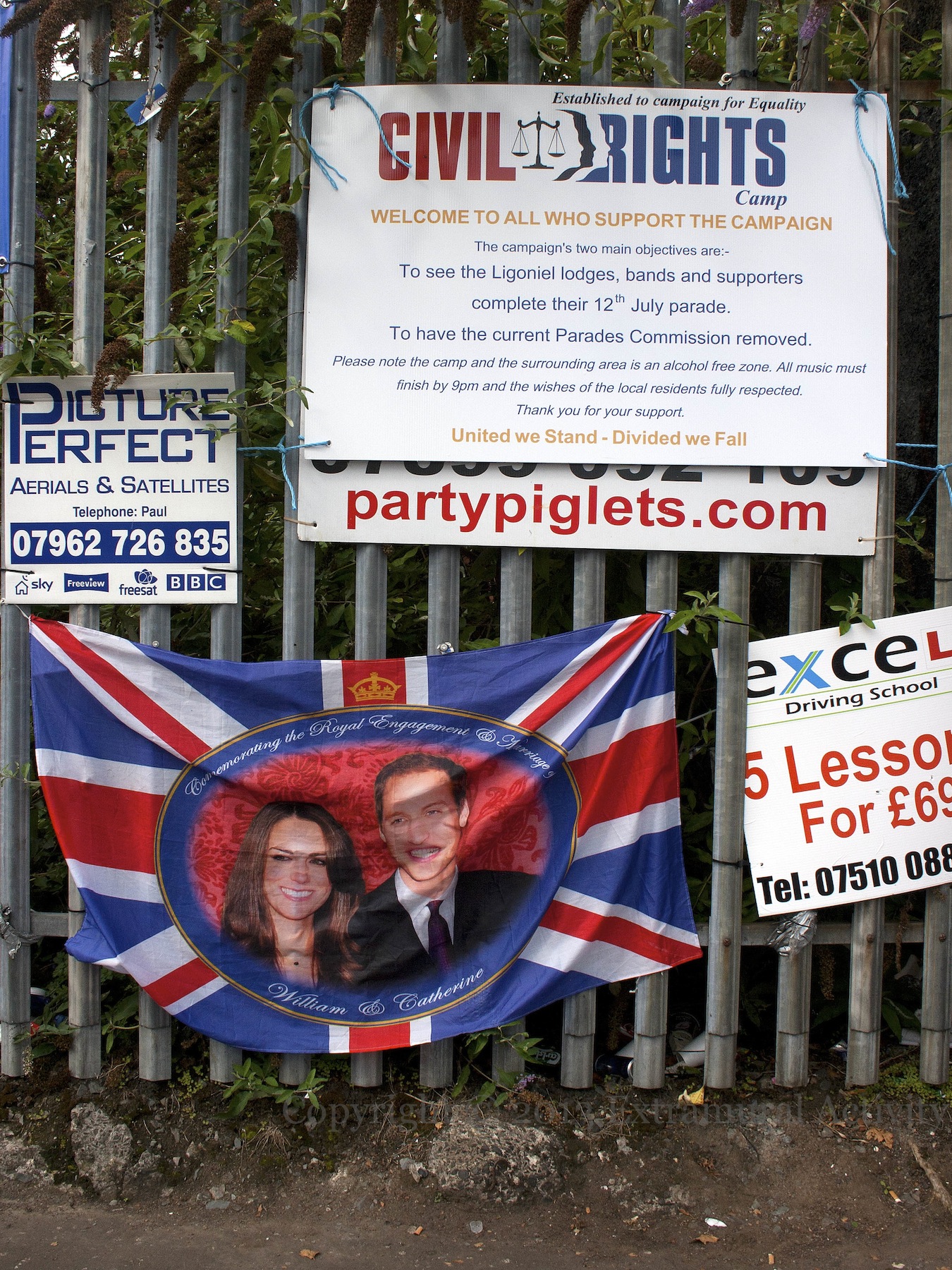
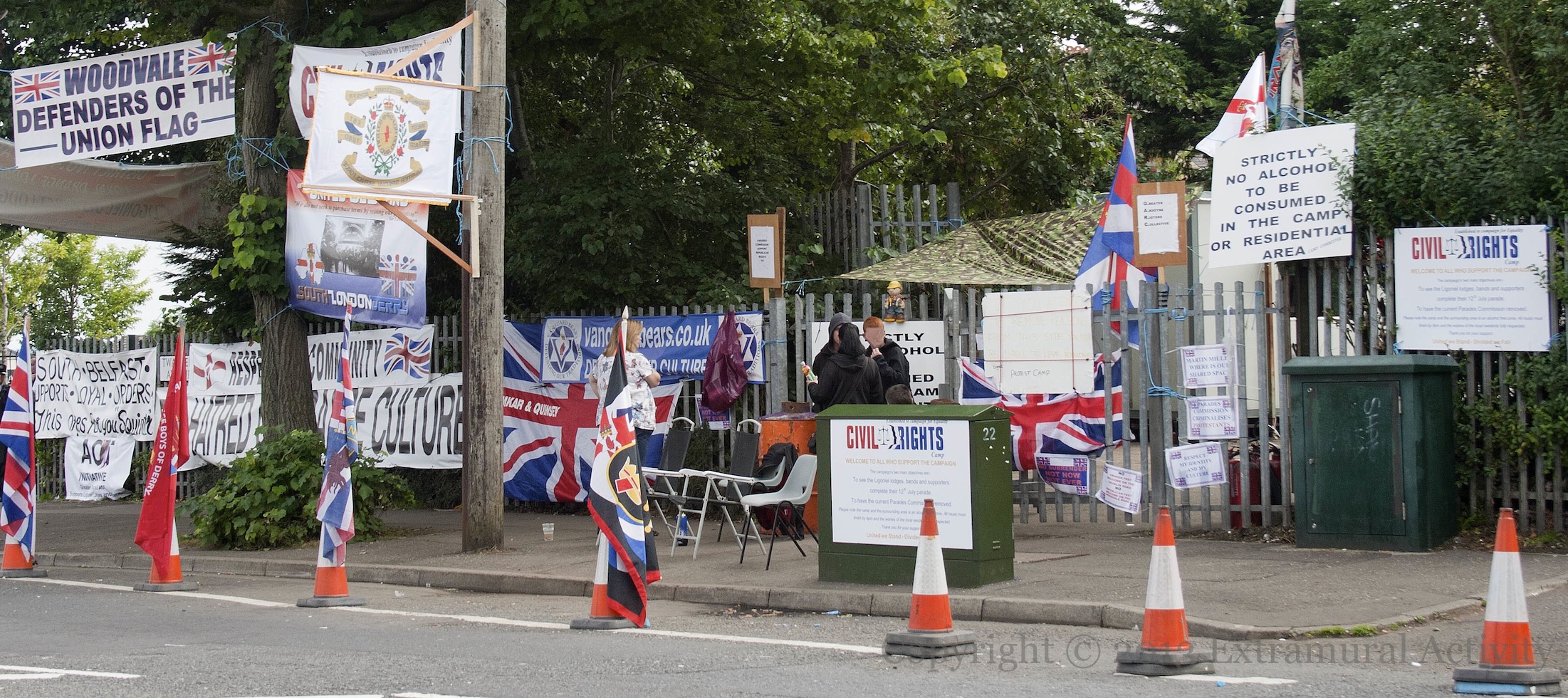
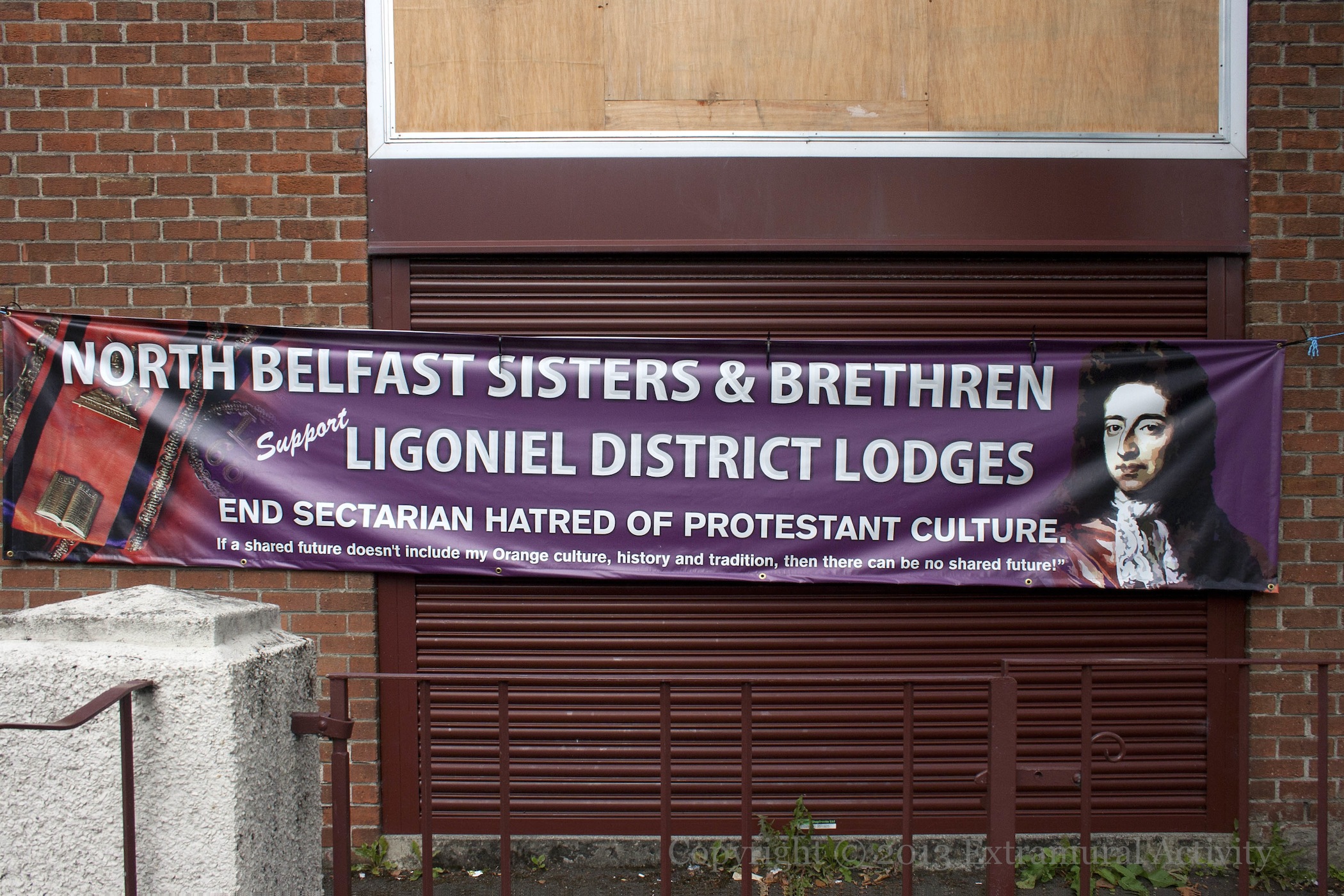
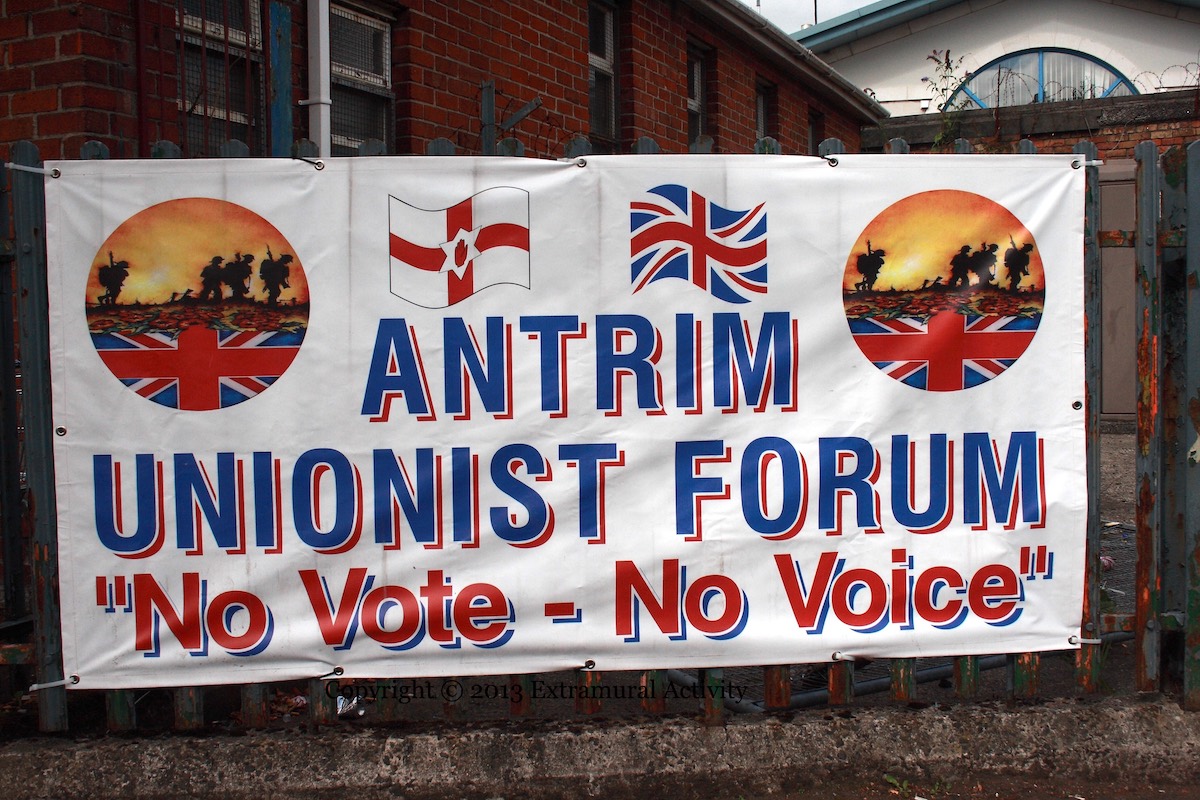
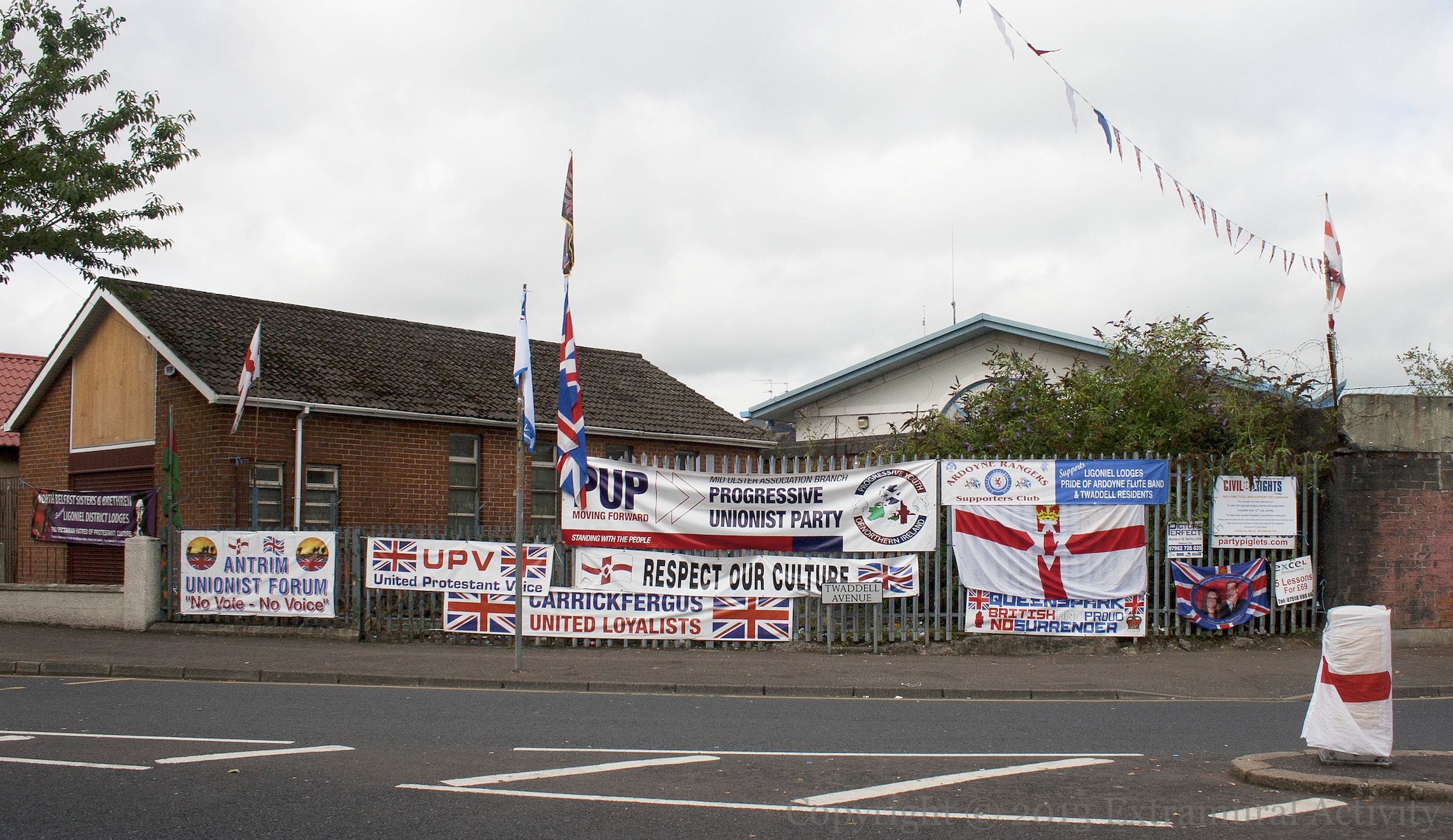
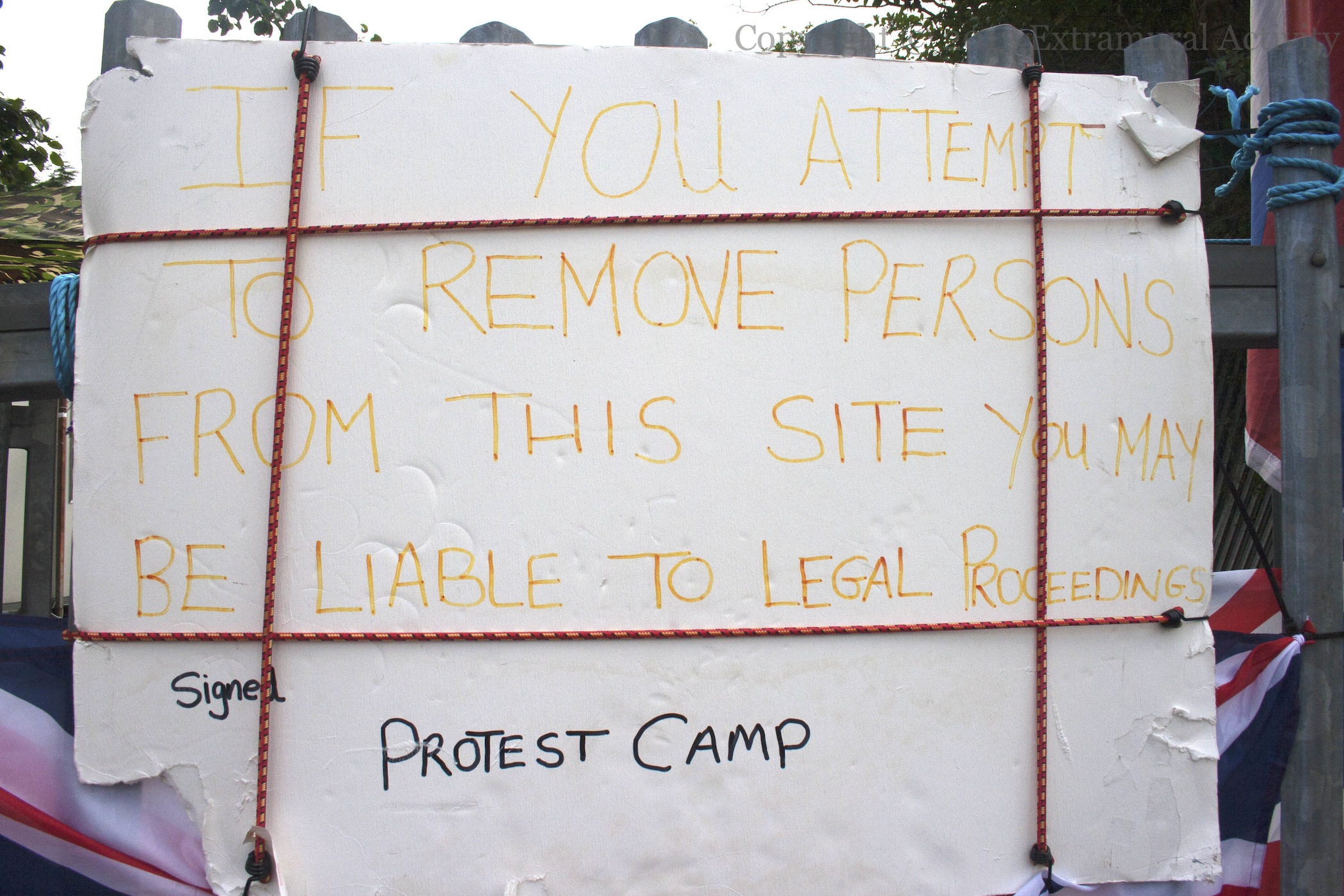
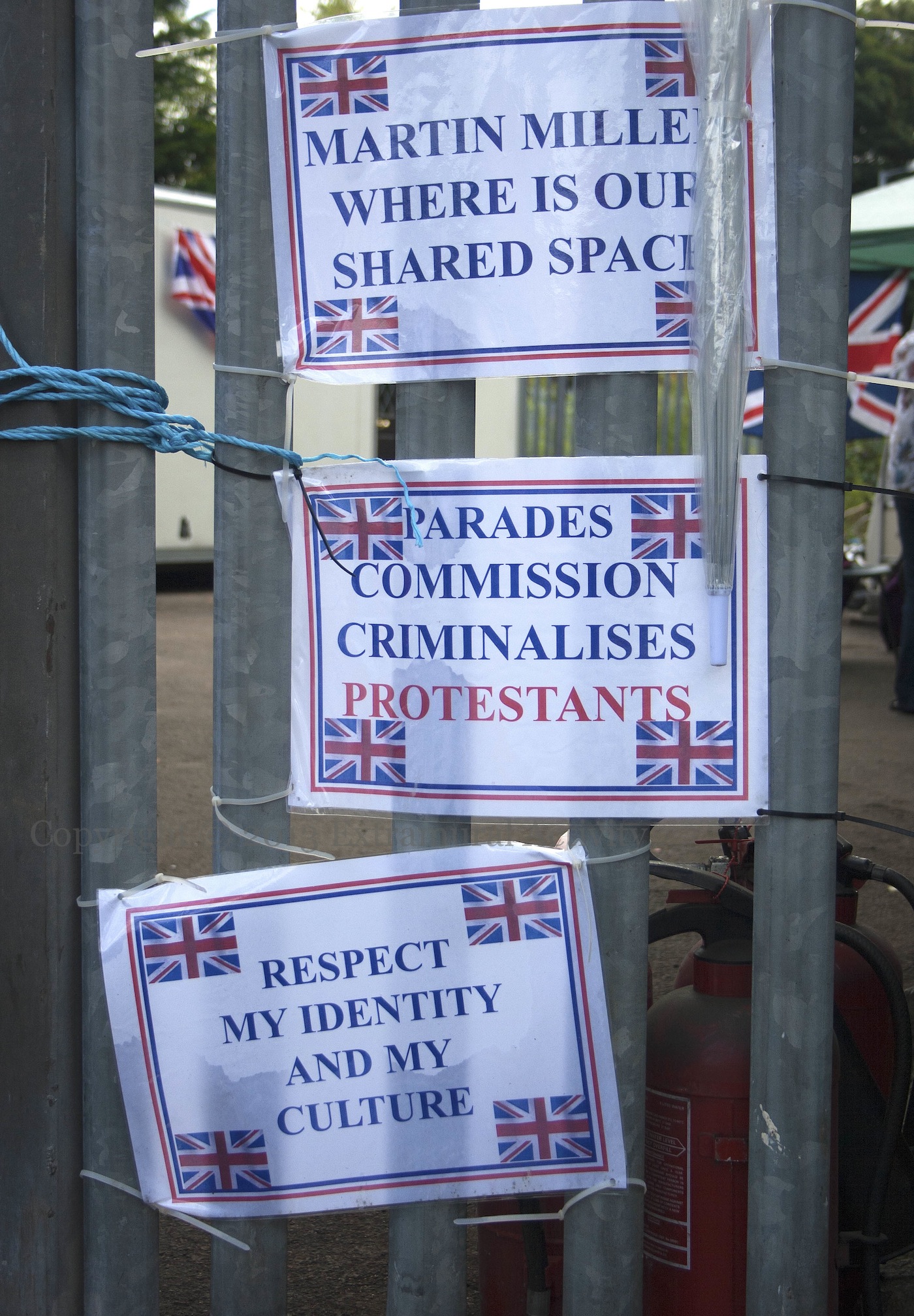
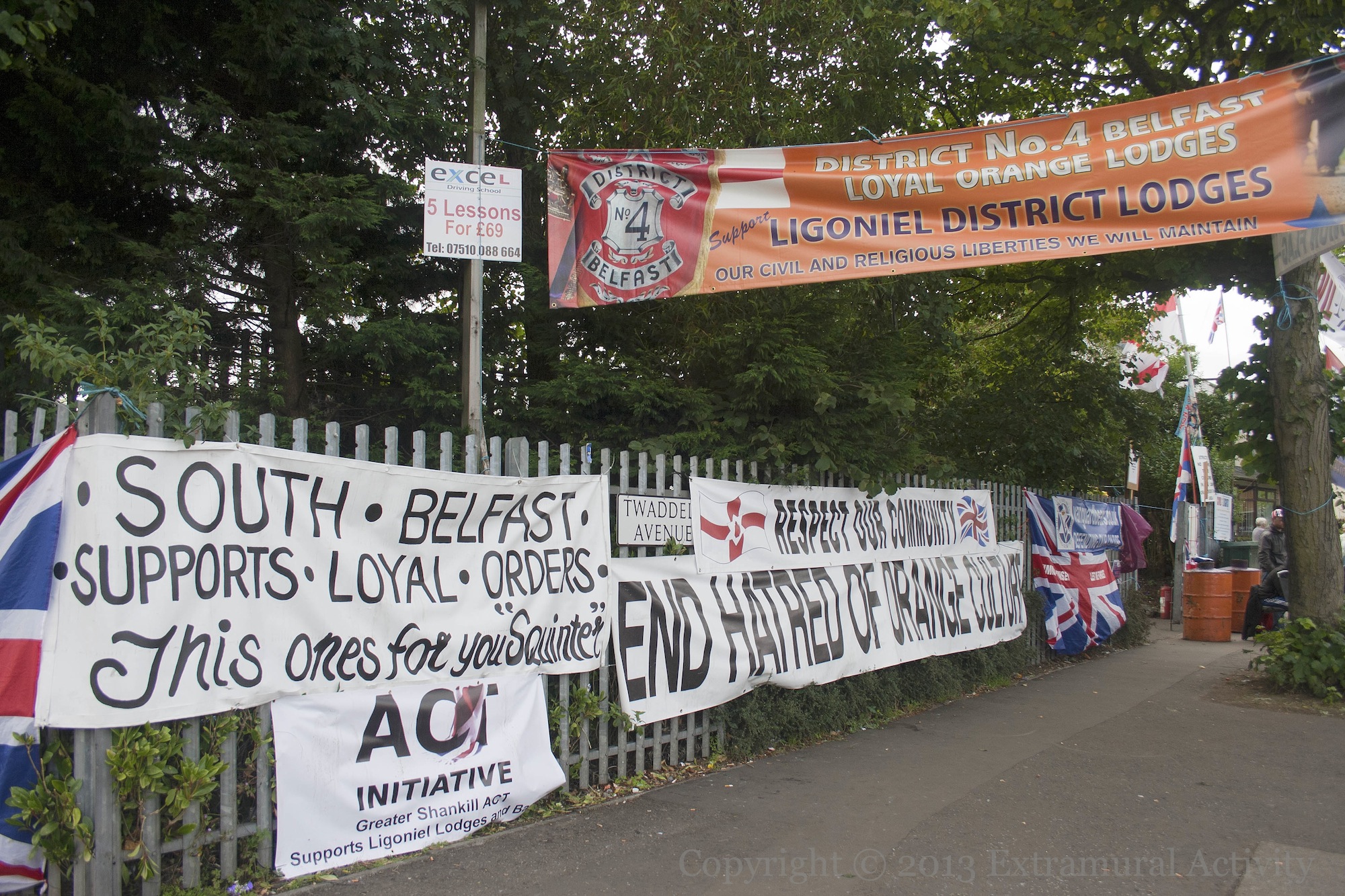
The language of “civil rights” and “equality” is being used at the Twaddell site, as can be seen in the placard shown here there are three copies of this sign: the second image, below, is of one on the north side of the street (visible in the previous set of Twaddell pictures) and the third image shows an additional copy on the electrical box on the south side of the street.
“Established to campaign for Equality. Civil Rights. Welcome to all who support the campaign. The two main objectives are to see the Ligoniel lodges, bands and supporters complete their 12th july parade; to have the current parades commission removed. Please note the camp and the surrounding area is an alcohol free zone. All music must finish by 9 p.m. and the wishes of the local residents fully respected. Thank you for your support. United we stand – divided we fall.”
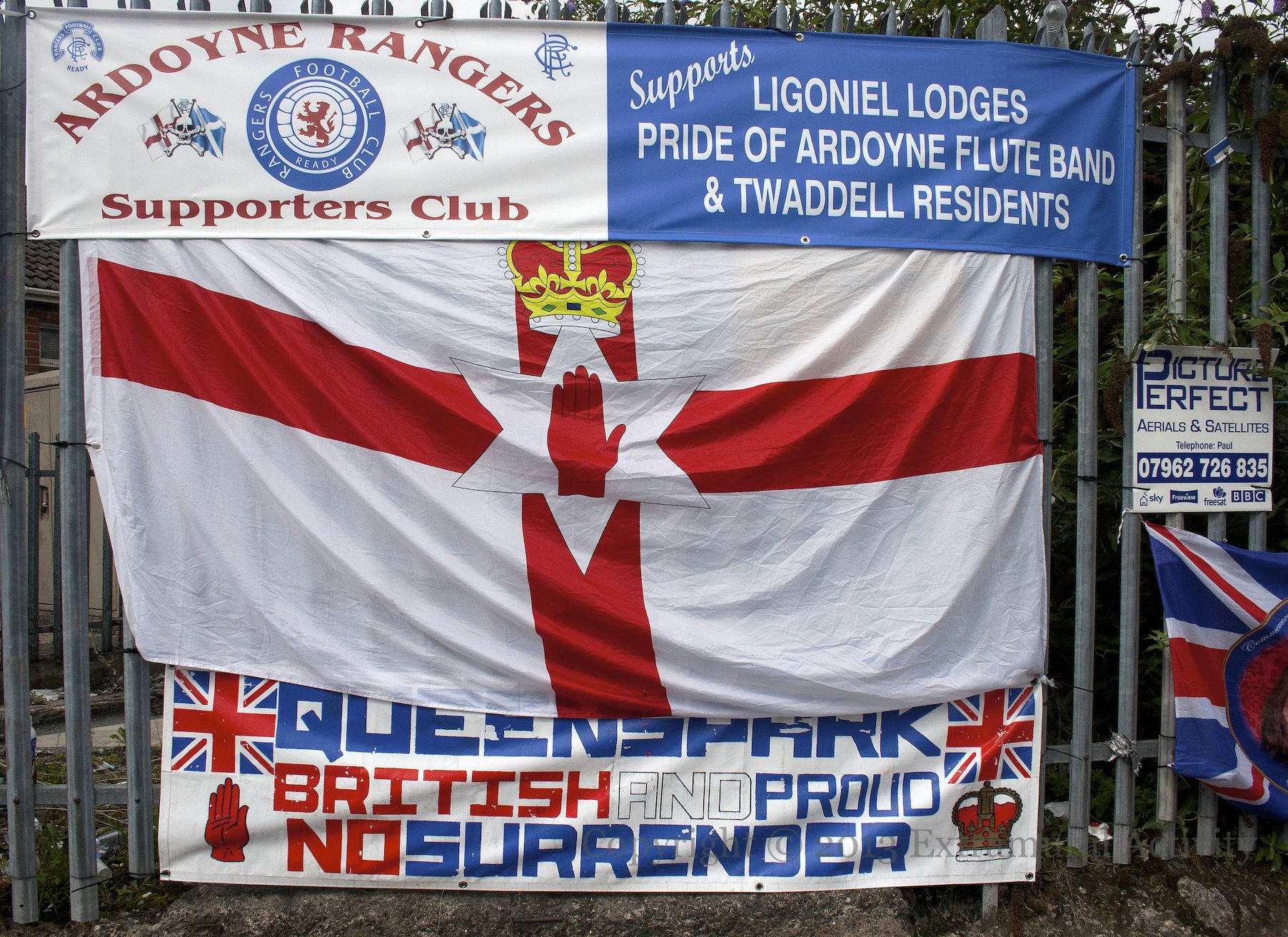
Three images from the protest camp at the top of Twaddell Avenue, at the southern border of Ardoyne. The protest is in response to a parades commission ruling that, on July 12th, Orange marches could only go past the Ardoyne shops in the morning but not return via the same route.
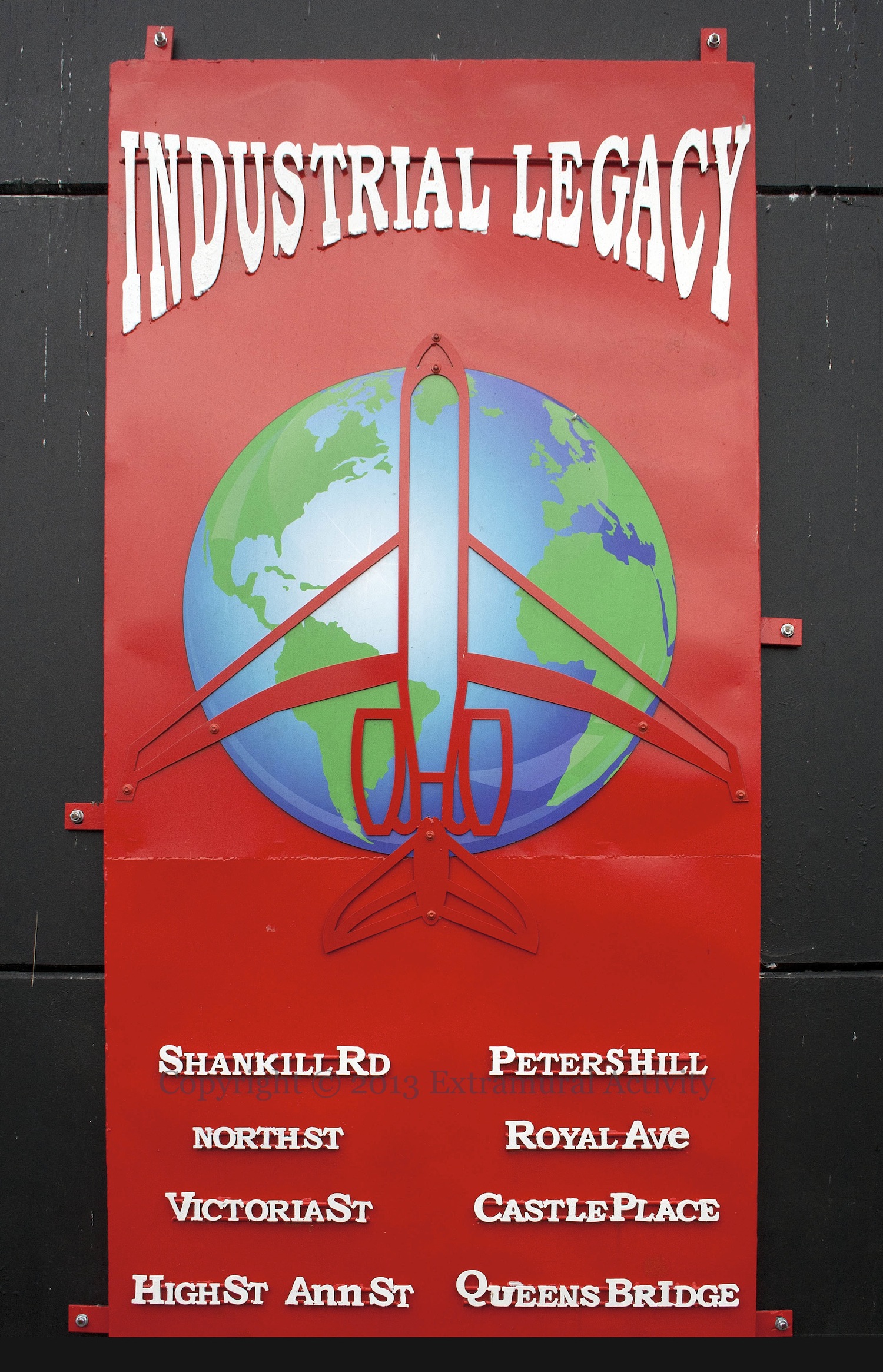
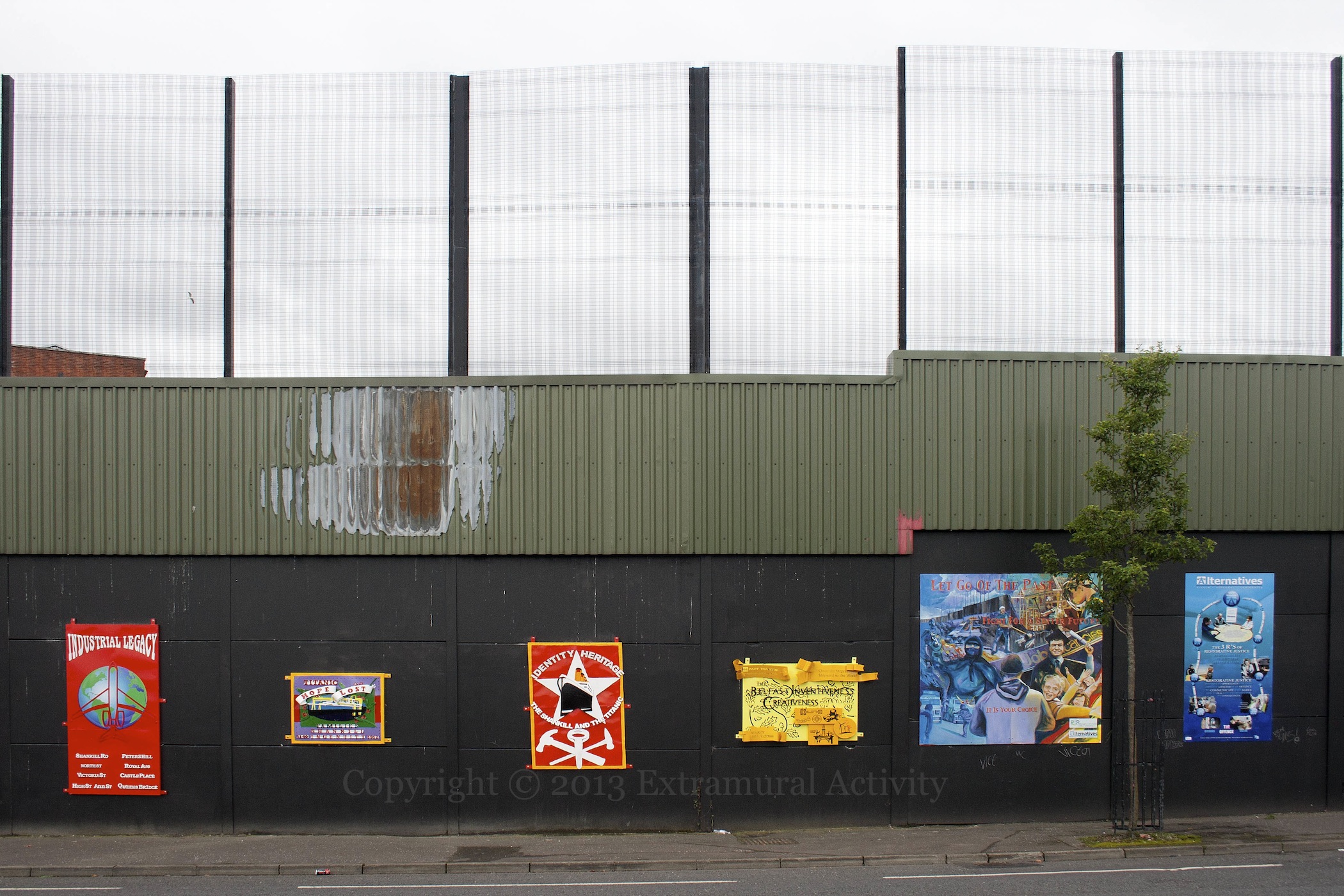
A fourth and final metal-work piece from the Cupar Way “peace” line shows an aeroplane in outline over a globe and gives a list of various Belfast streets which were formerly industrial centres: Shankill Rd., North St., Victoria St., High St., Ann St., Peters Hill, Royal Ave., Castle Place, Queens Bridge. A wide shot of all (one | two | three) four pieces (as well as Let Go Of The Past and 3 R’s) can be found below.
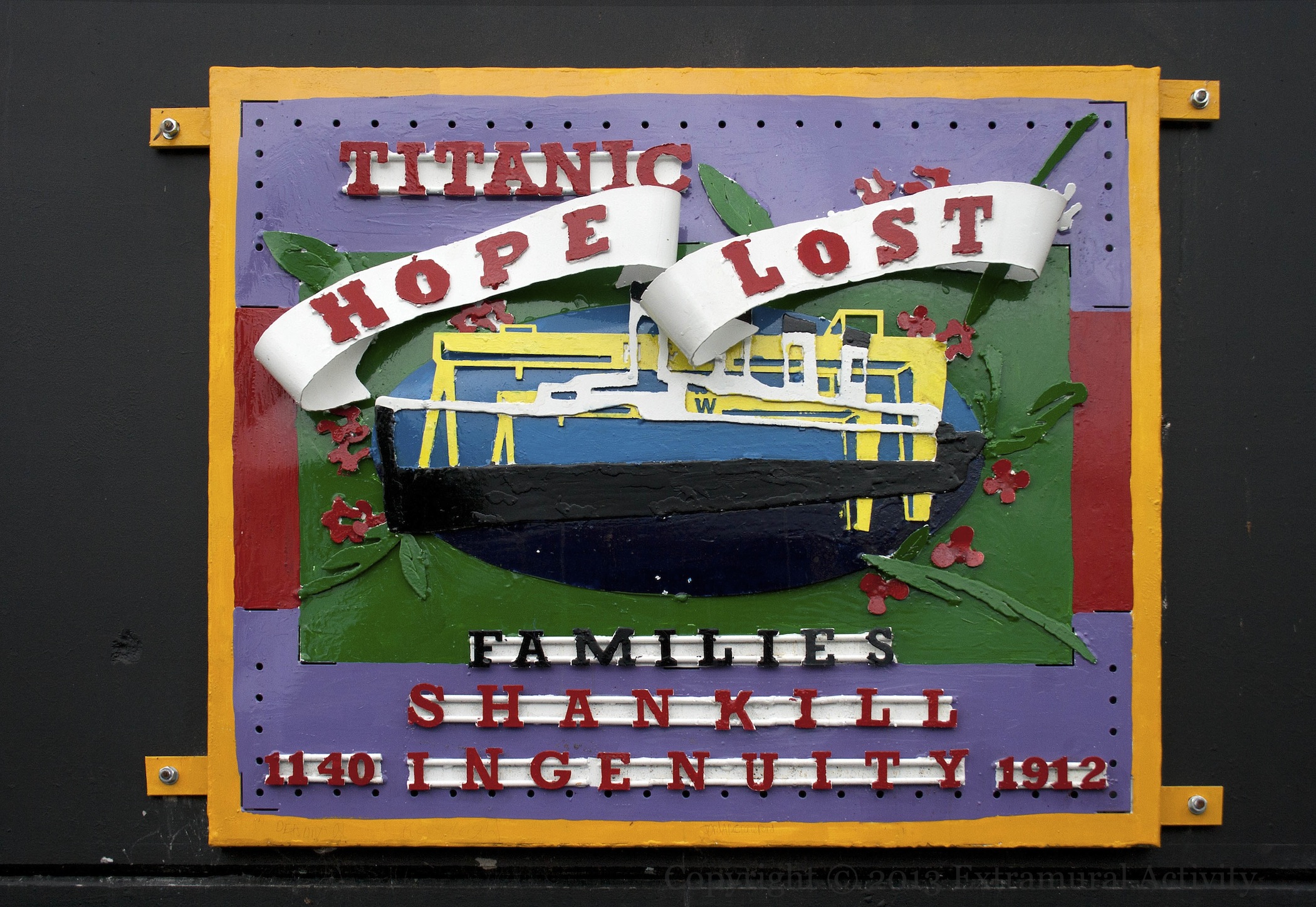
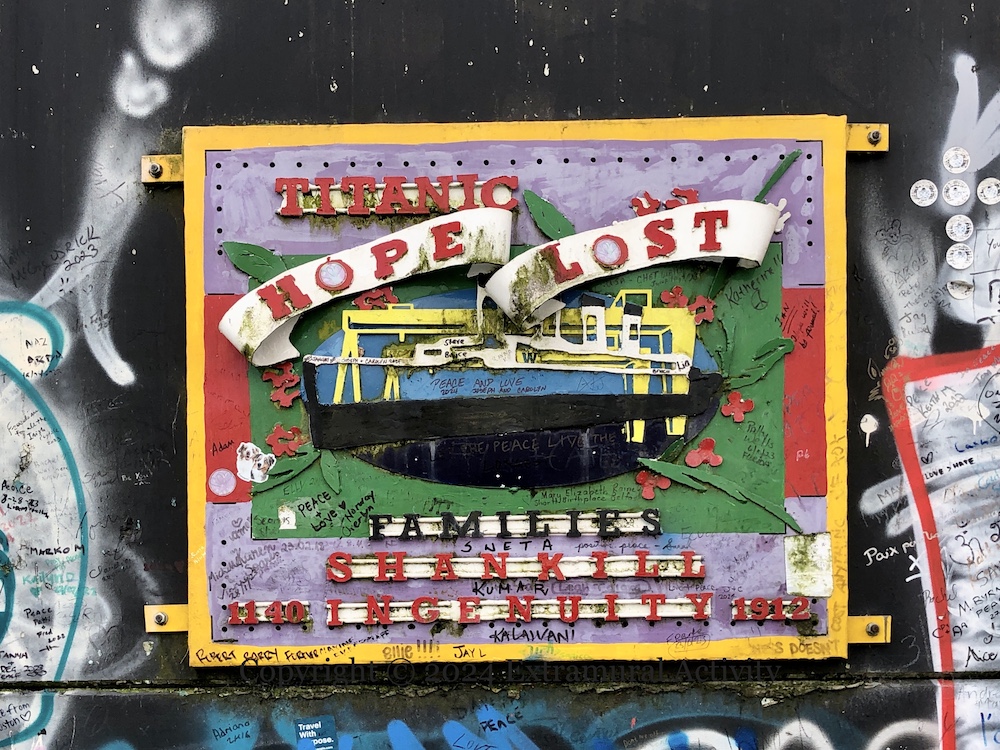
Above is a colourful metal-worked piece bolted to the “peace” line on Cupar Way, celebrating “Shankill Ingenuity” while commemorating the lives lost on Titanic.
“1140” p.m. local time, April 14th, 1912, was when the ship hit an iceberg and began sinking. At about 2:20 a.m., in the early hours of the 15th, it went under.
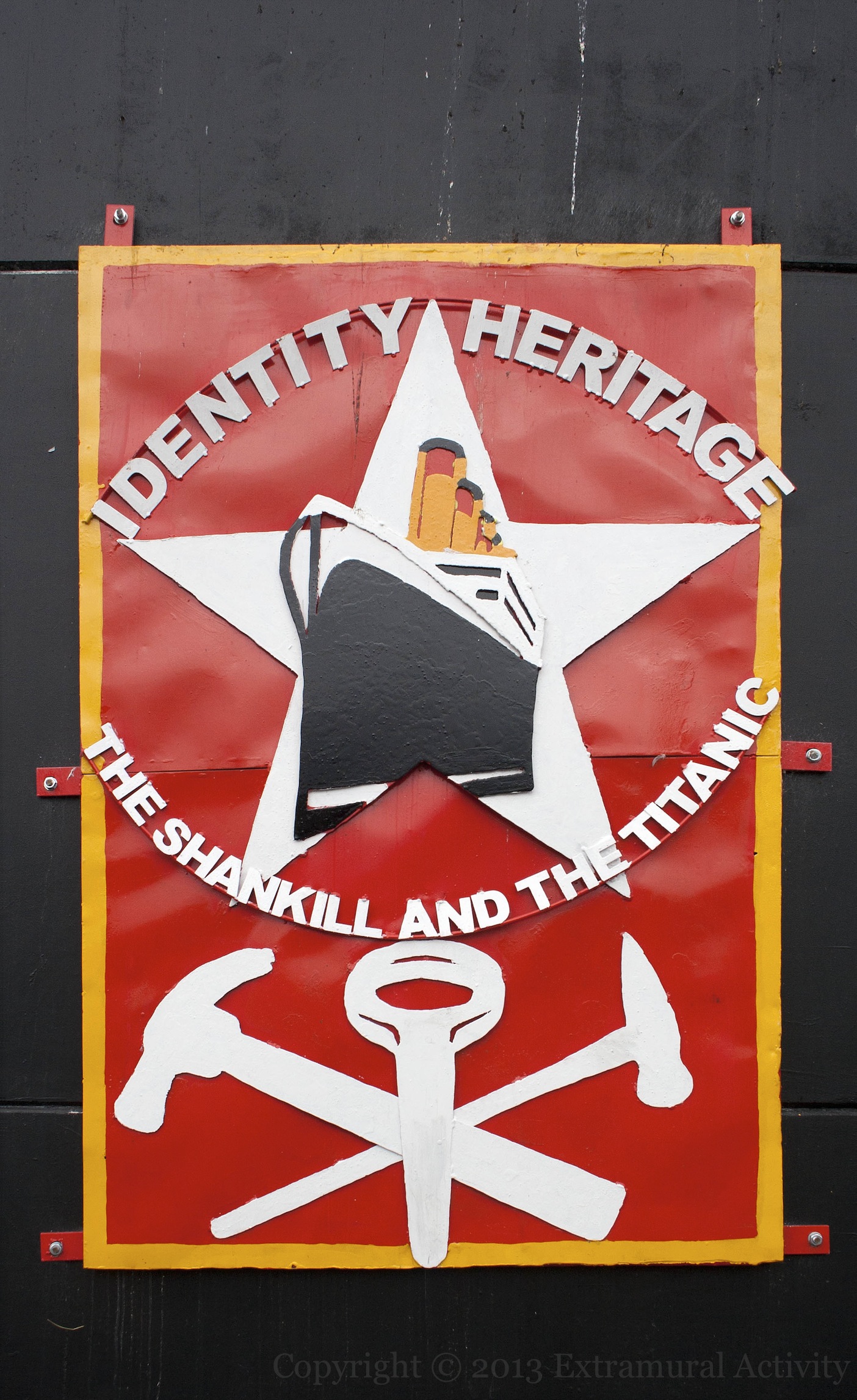
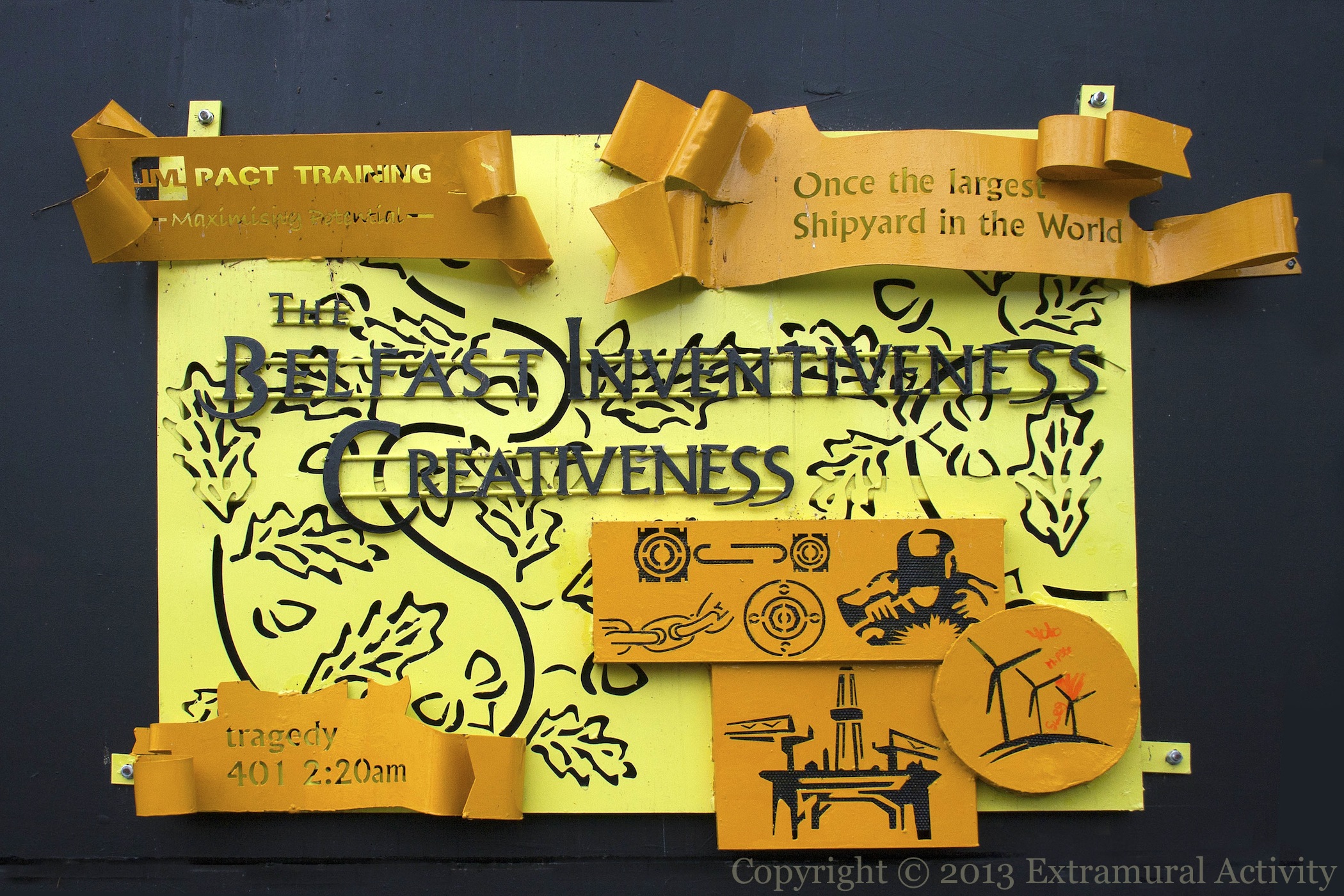
Titanic was hull number “401” at Harland & Wolff, and, after hitting an iceberg at 11:40 p.m. on April 14th, 1912, sank at 2:20 a.m. (WP). Above is another (see also Hope Lost, Identity) metal-work piece on the Cupar Way “peace” line, with images of a boat dock, solderers, and wind turbines.
 Seosamh Mac Coille Collection