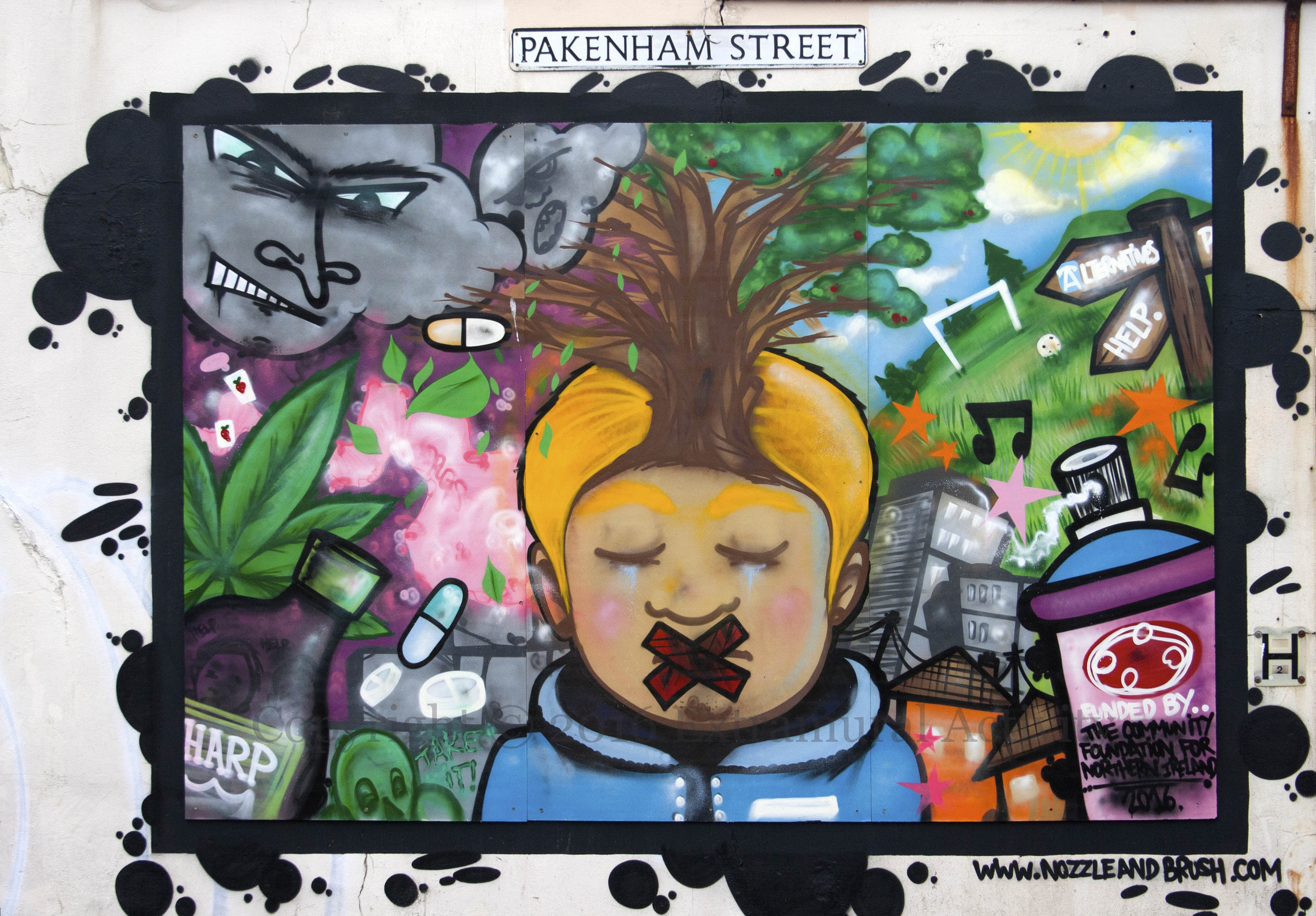
Two worlds spring from the mind of the youth in the centre of this new mural by Nozzle & Brush (web | Fb) in south Belfast just off Donegall Pass: on the left, the darkness of drugs, drink, and demons; on the right, the light of sport, music, and spray-painting.
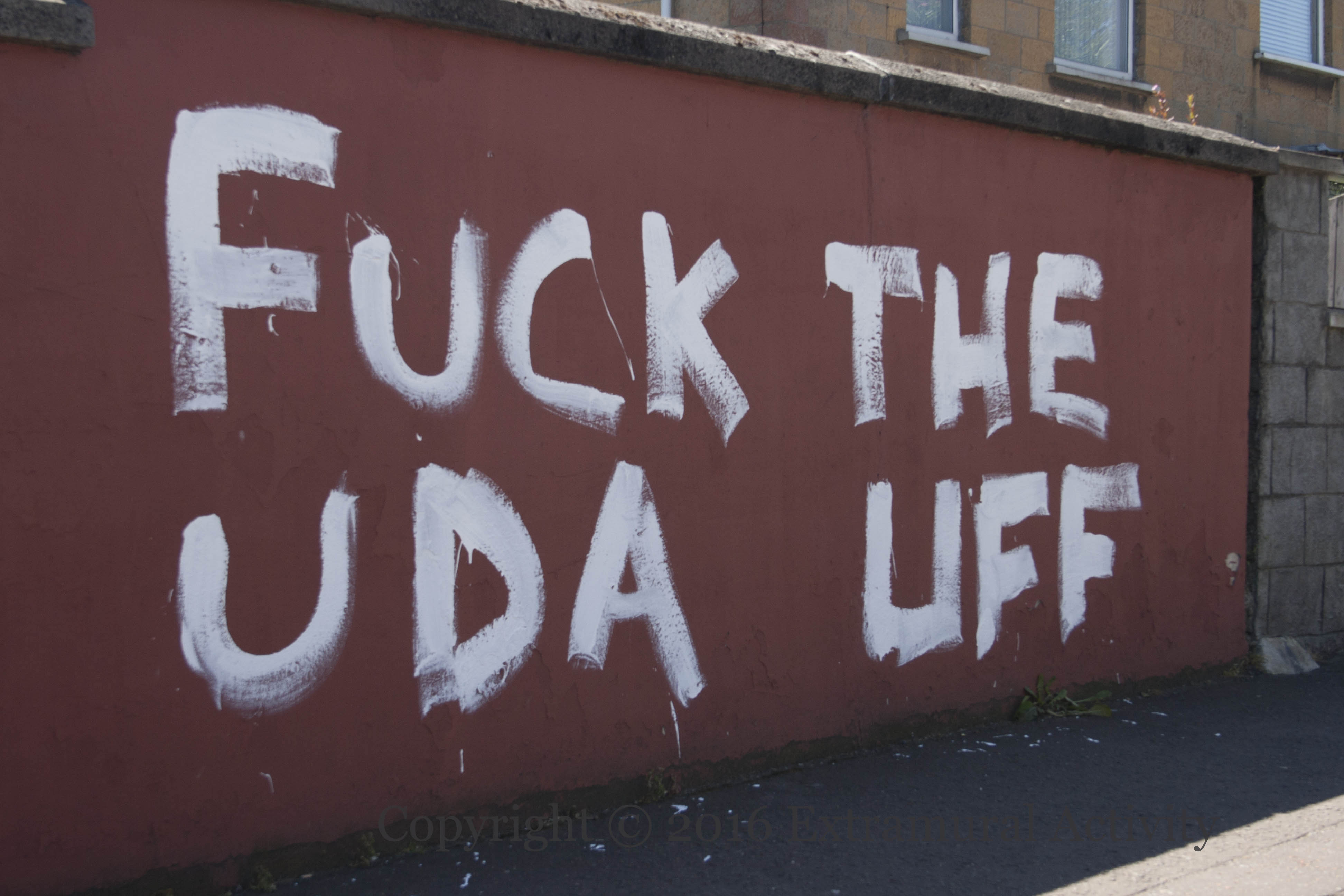
Loyalist paramilitary flags went up in the Skegoneill area of north Belfast last week and drew the response above. The area is mixed (Catholic, Protestant) and the adjacent Glandore area is Catholic.
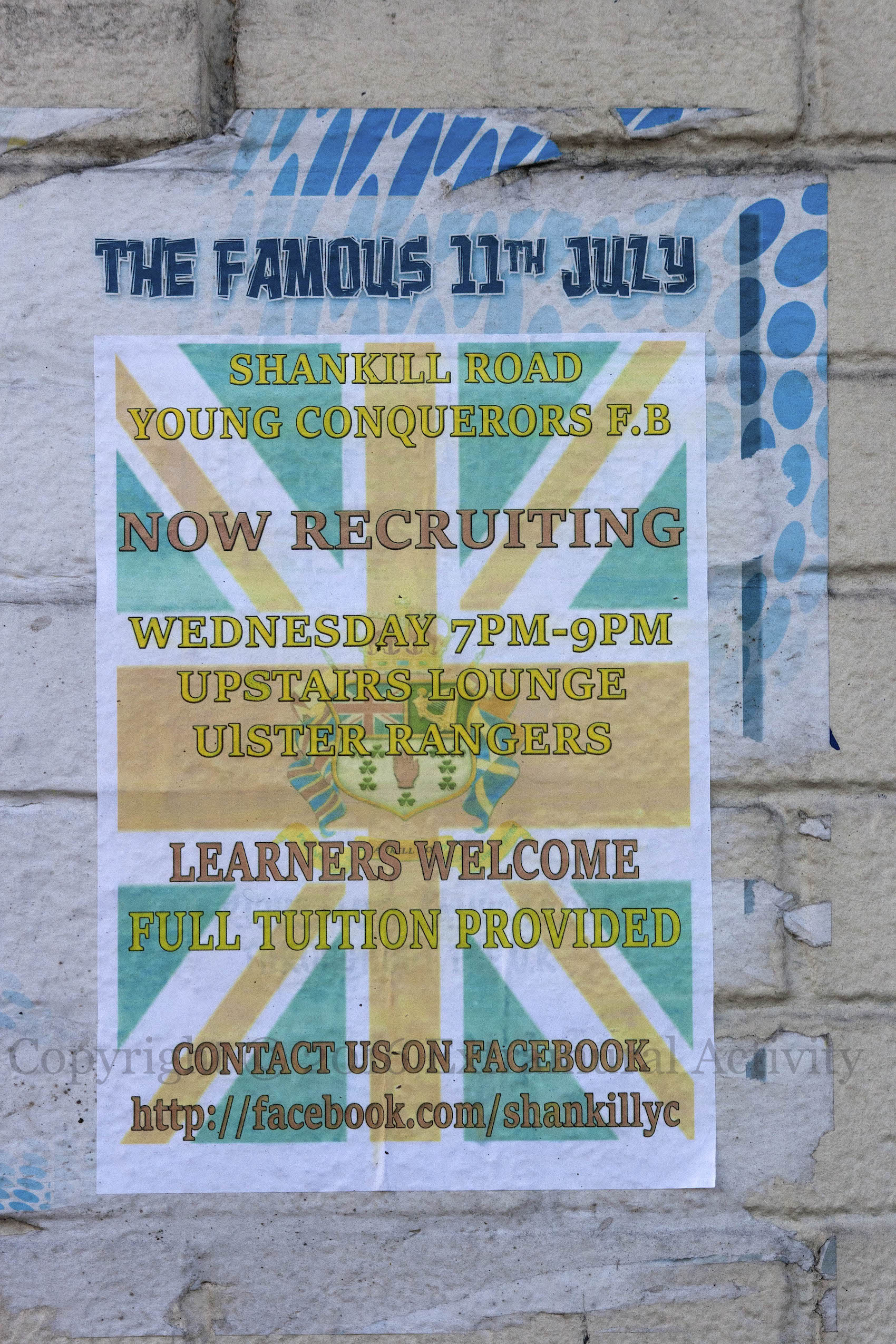
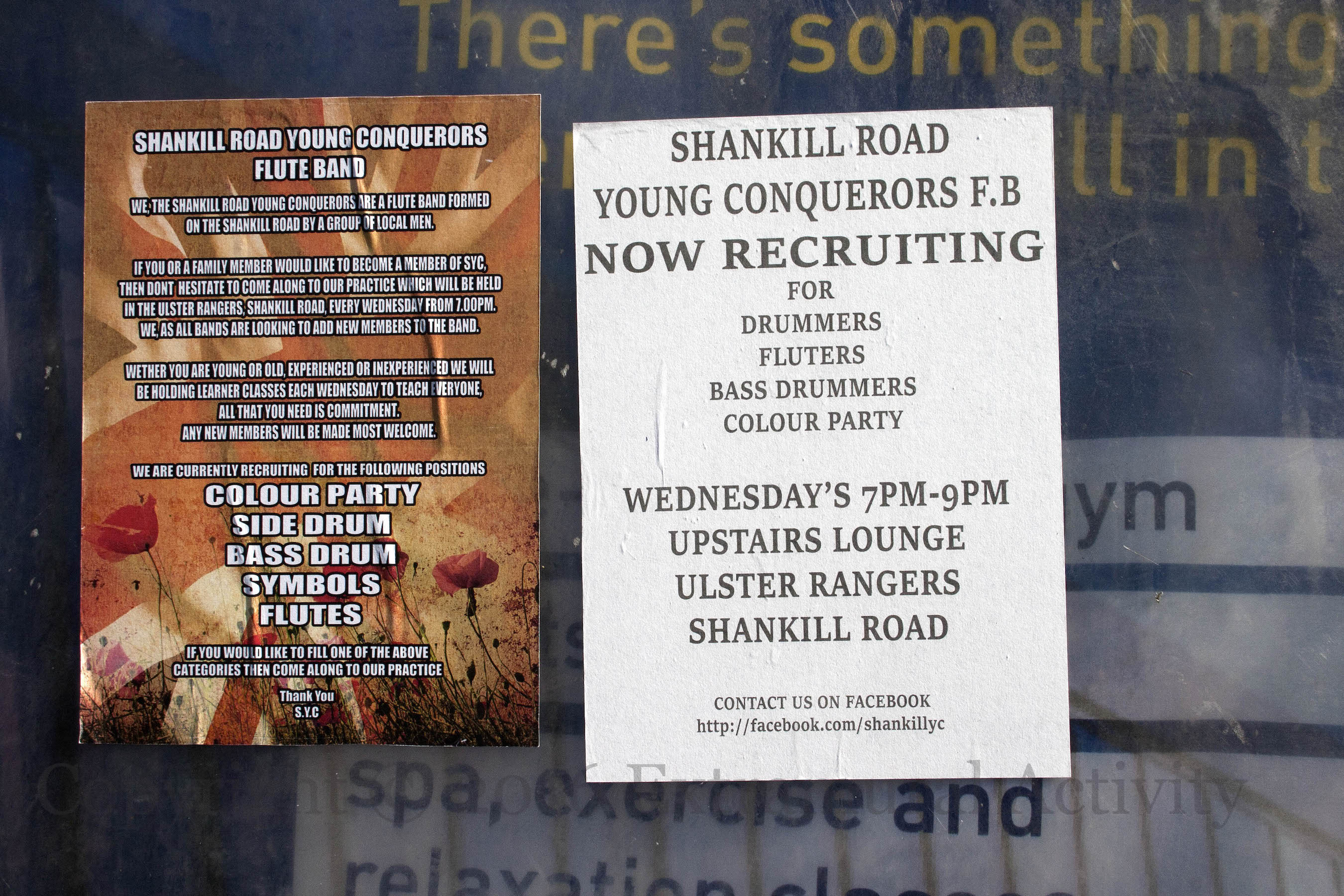
In preparation for the upcoming marching season, the Young Conquerors Flute Band (Fb) is looking for new members to fill to roles of “drummers, fluters, bass drummers, colour party”. Three posters on the Shankill Road.
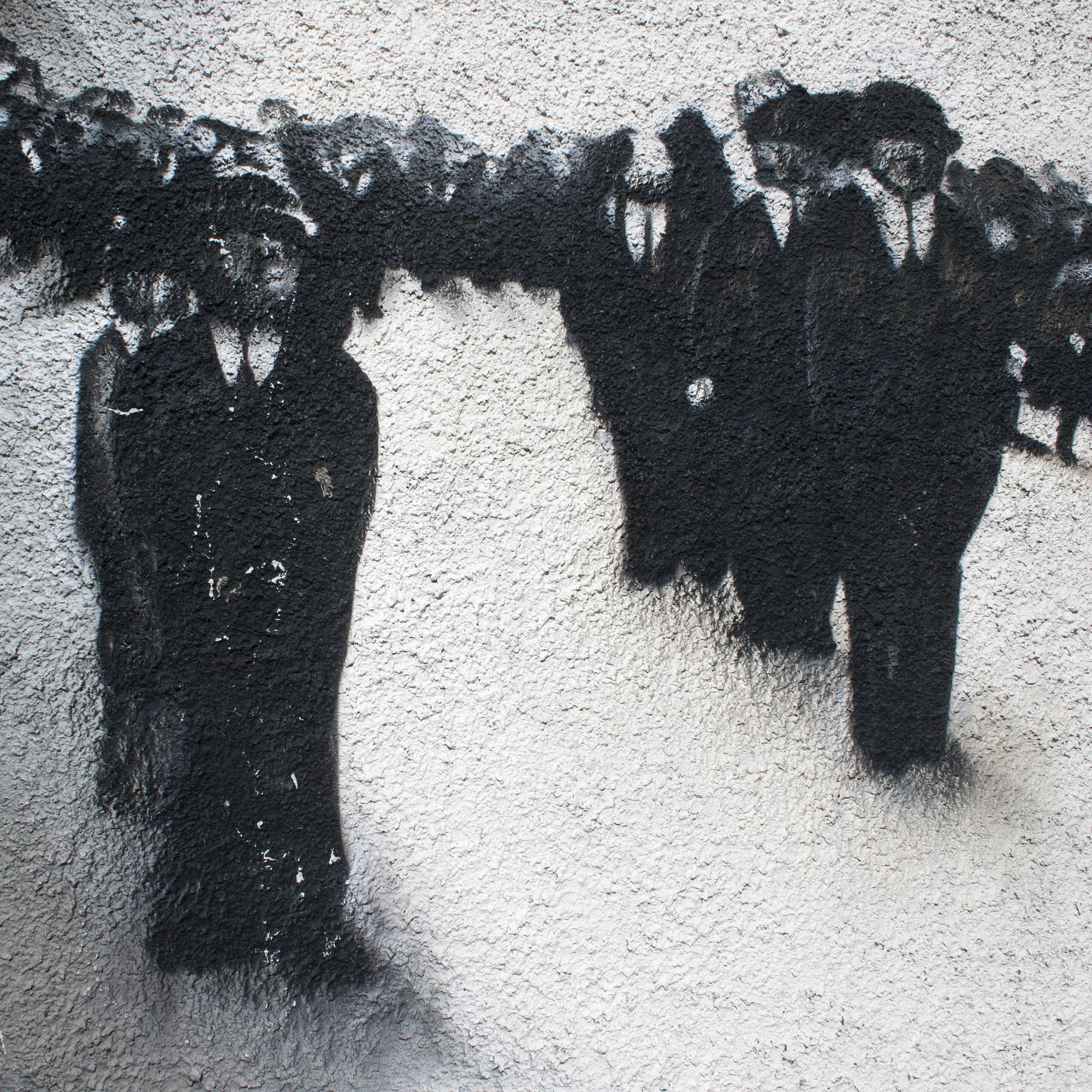
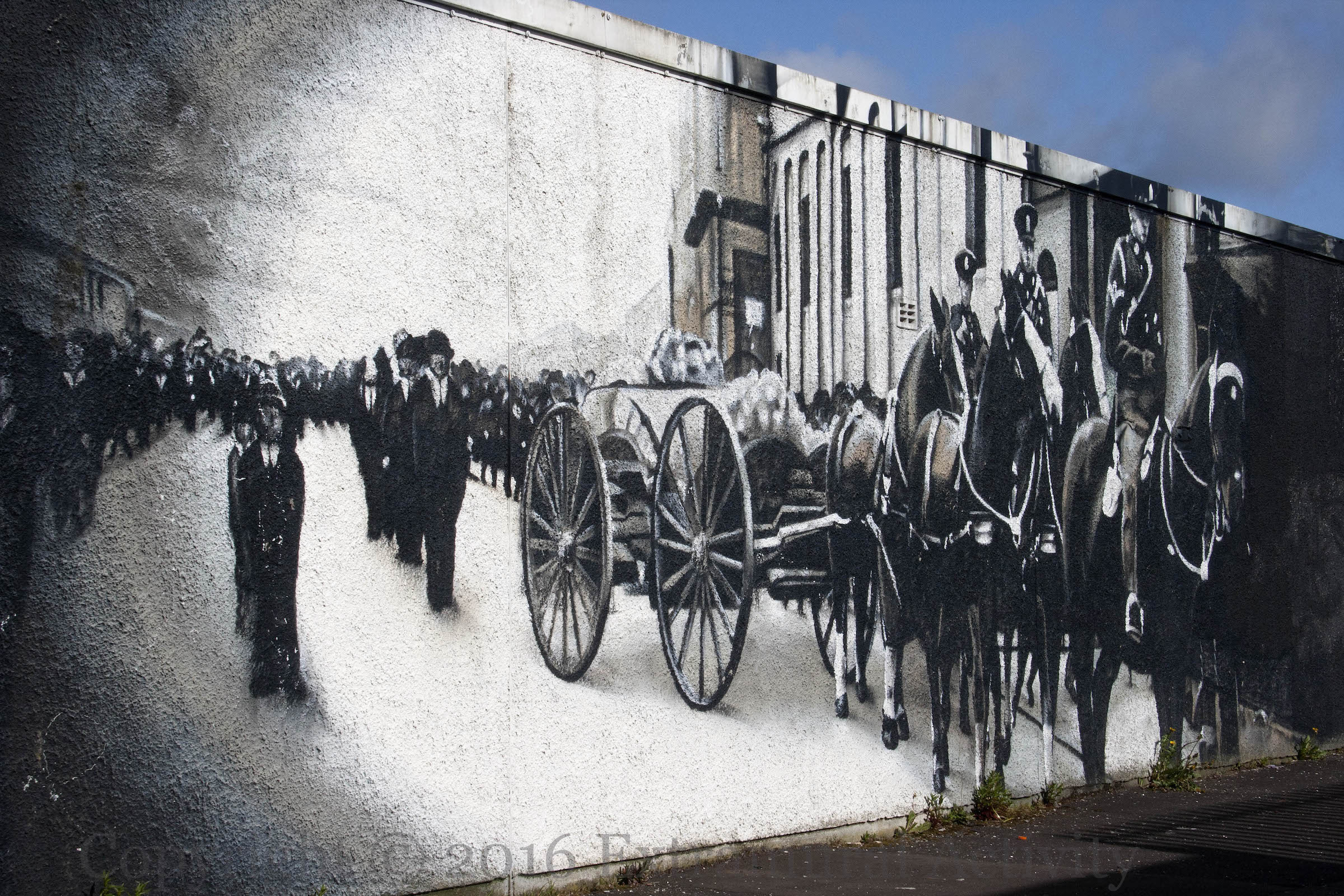
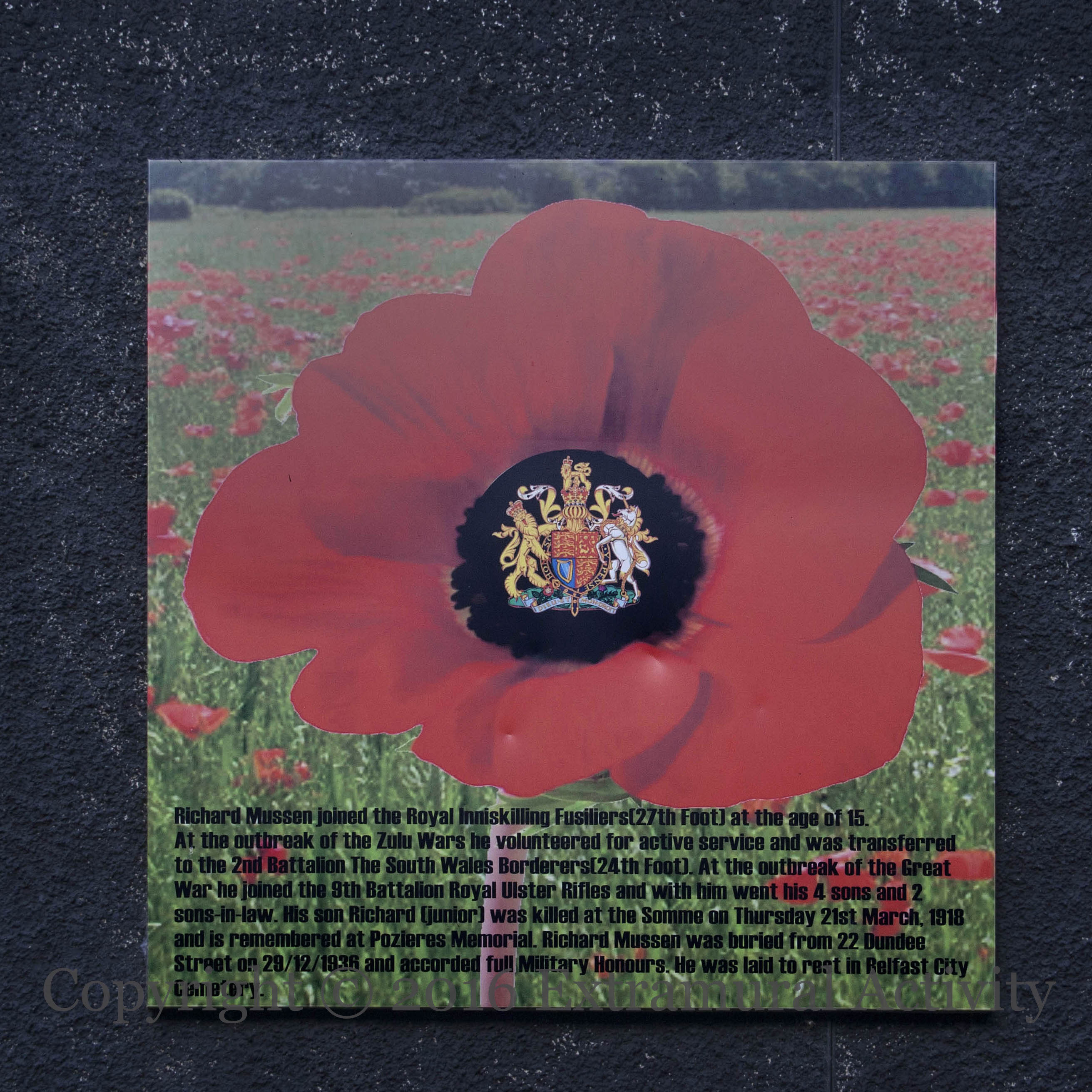
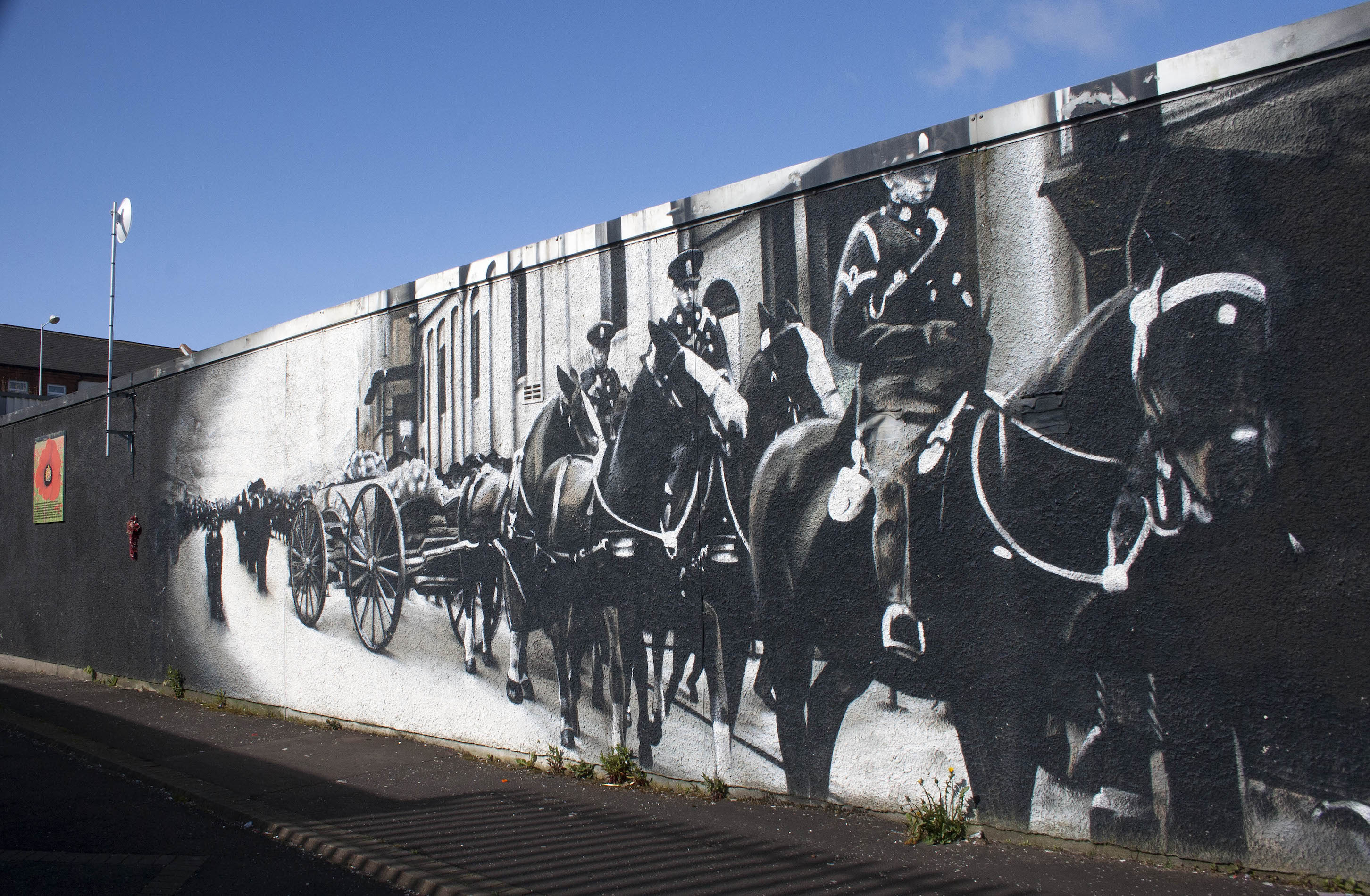
“Richard Mussen joined the Royal Inniskilling Fusiliers (27th foot) at the age of 15. At the outbreak of the Zulu wars he volunteered for active service and was transferred to the Second Battalion The South Wales Borderers (24th foot). At the outbreak of the Great War he joined the 9th Battalion Royal Ulster Rifles and with him went his 4 sons and 2 sons-in-law. His son Richard (junior) was killed at the Somme on Thursday 21st March, 1918 and is remembered at Pozieres Memorial. Richard Mussen was buried from 22 Dundee Street [which was just above Agnes Street] on 29/12/1936 and was accorded full Military Honours. He was laid to rest in Belfast City Cemetery.” (From the plaque shown in image #3, below.)
Here is a short NVTv documentary about Mussen, including (at 12m25s) the image on which the mural shown here is based. The mural was done with spray paint by artist Sam Bates a.k.a. SMUG. It was unveiled on June 24th, 2011.
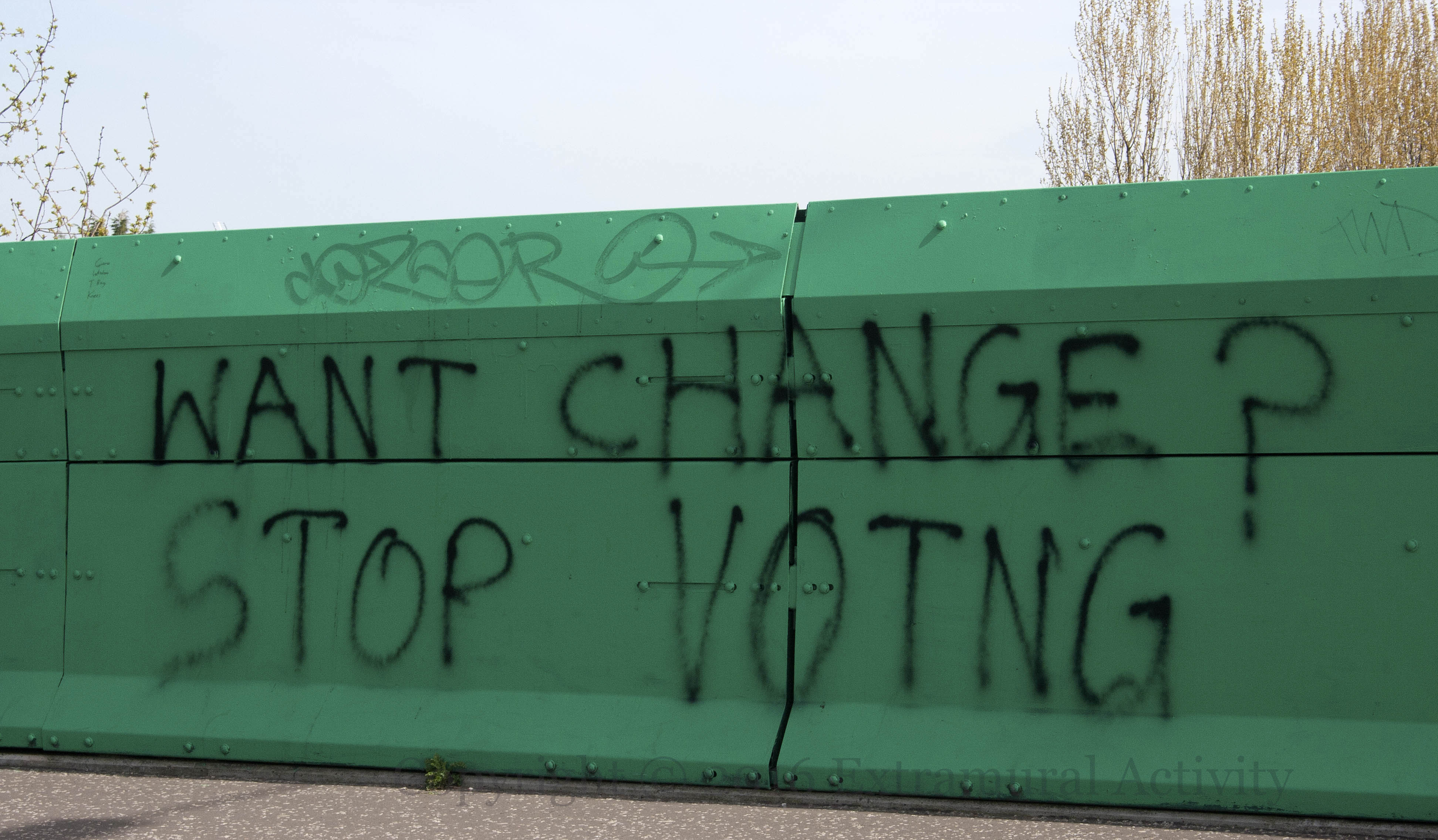
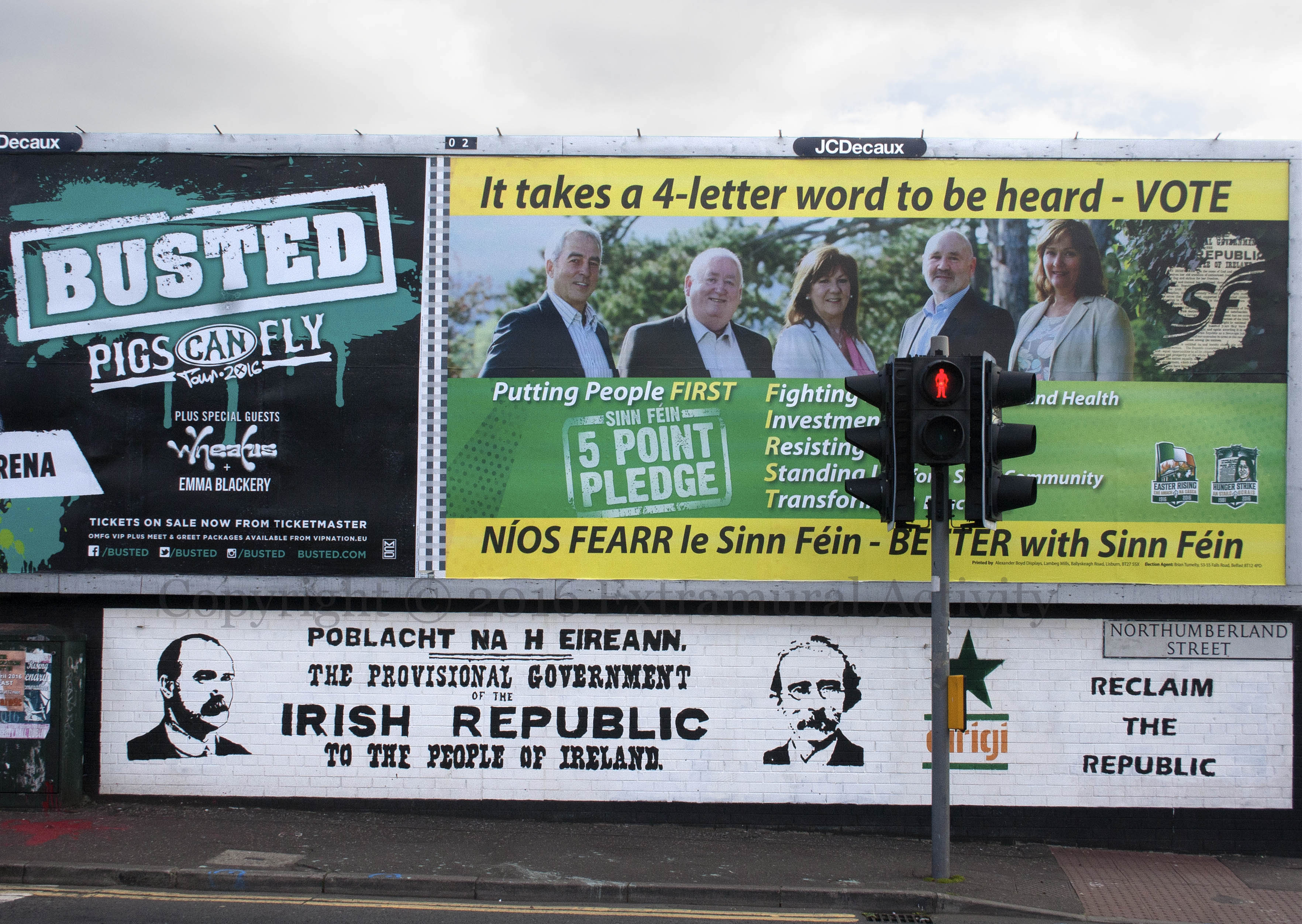
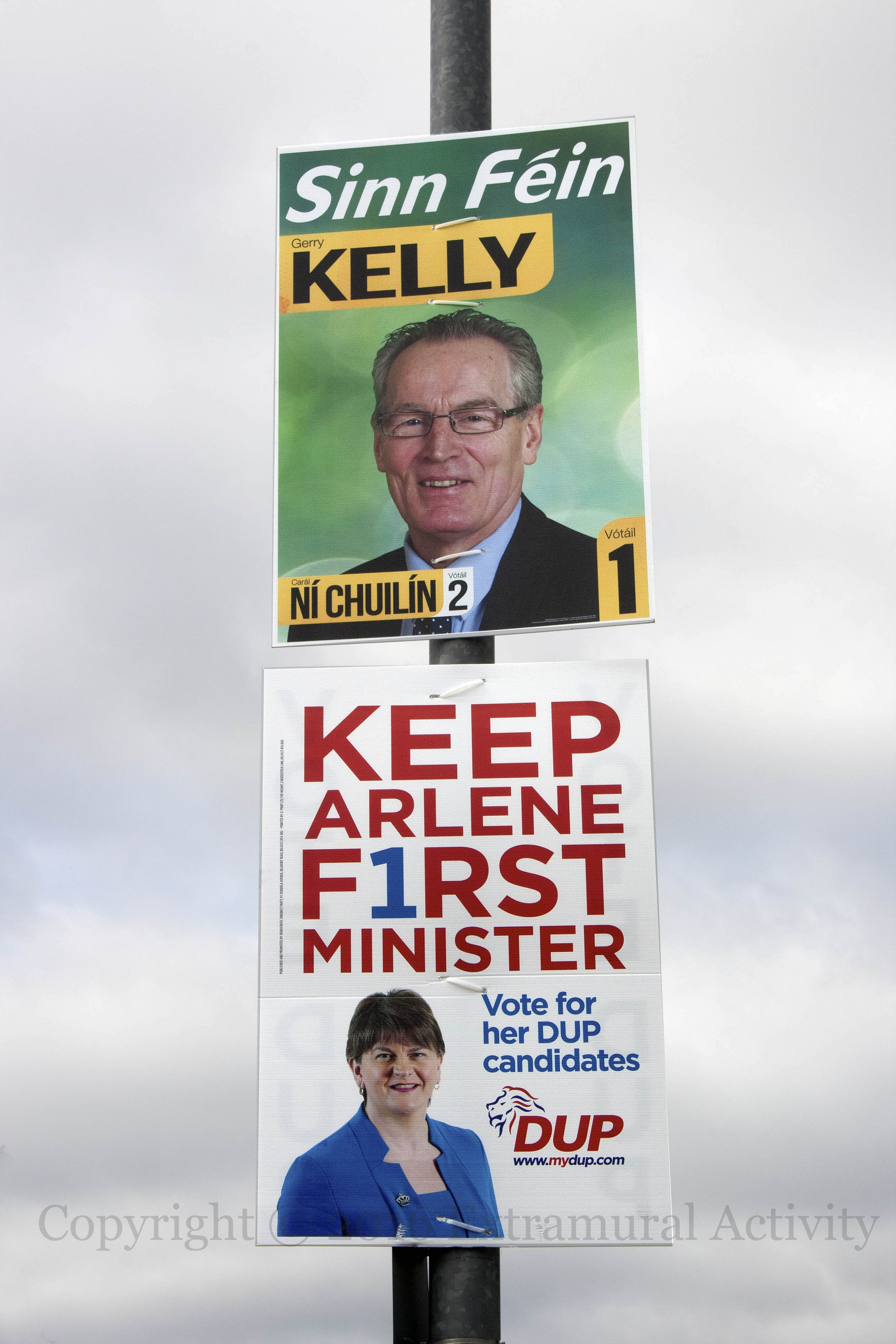
Three more images from the recent electoral season. Political parties were putting up hoardings and posters everywhere, such as Sınn Féın’s “Vote” ad (next to one for the rock-band Busted on their ‘Pigs Can Fly’ tour) and the DUP’s use of the spectre of a nationalist first minister as a reason to “keep” Arlene Foster and colleagues. Above, however, the watch-word is “stop”: “Want change? Stop vot[i]ng”.
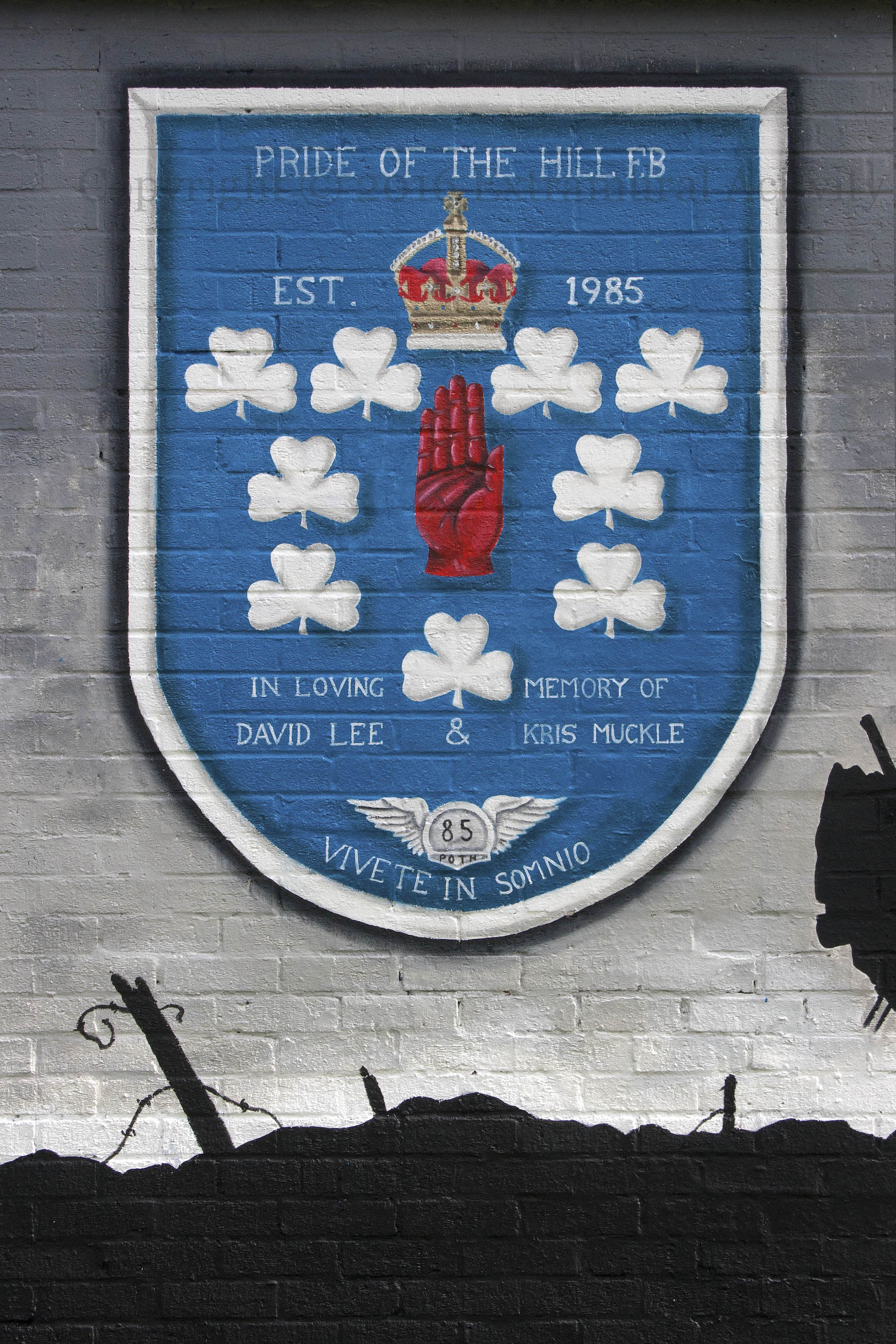
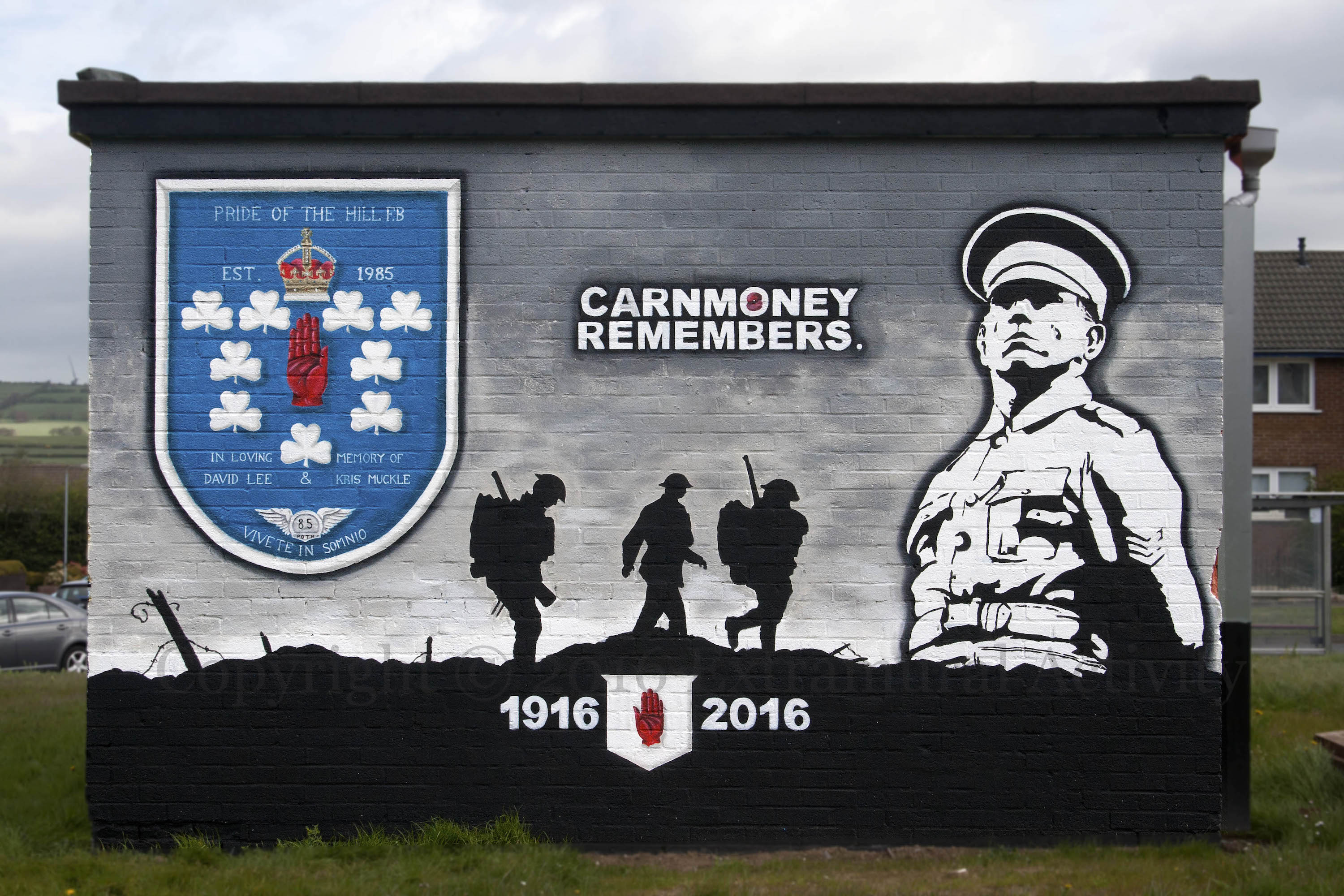
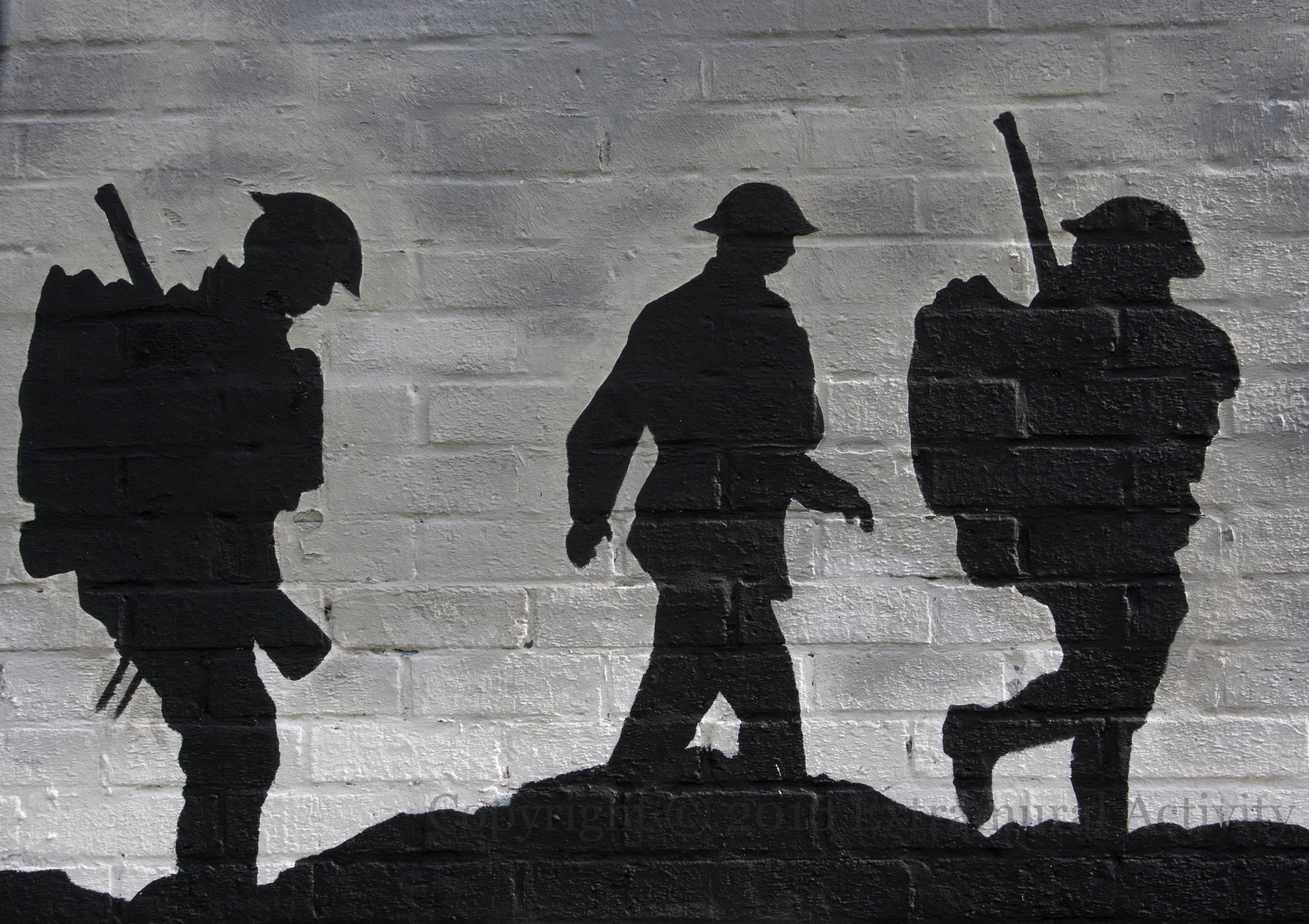
This is a new Somme centenary mural in Carnmoney/Ballyduff, in memorial of the First World War and 1916 in particular. It also serves as a memorial to members of the Pride of the Hill flute band, David Lee and Kris Muckle. (It’s not clear what “Vivete in somnio” means – neither “vivete” nor “somnio” are Latin; “vivete” is Italian but “somnio” is not. Get in touch/leave a comment if you know what is intended.)
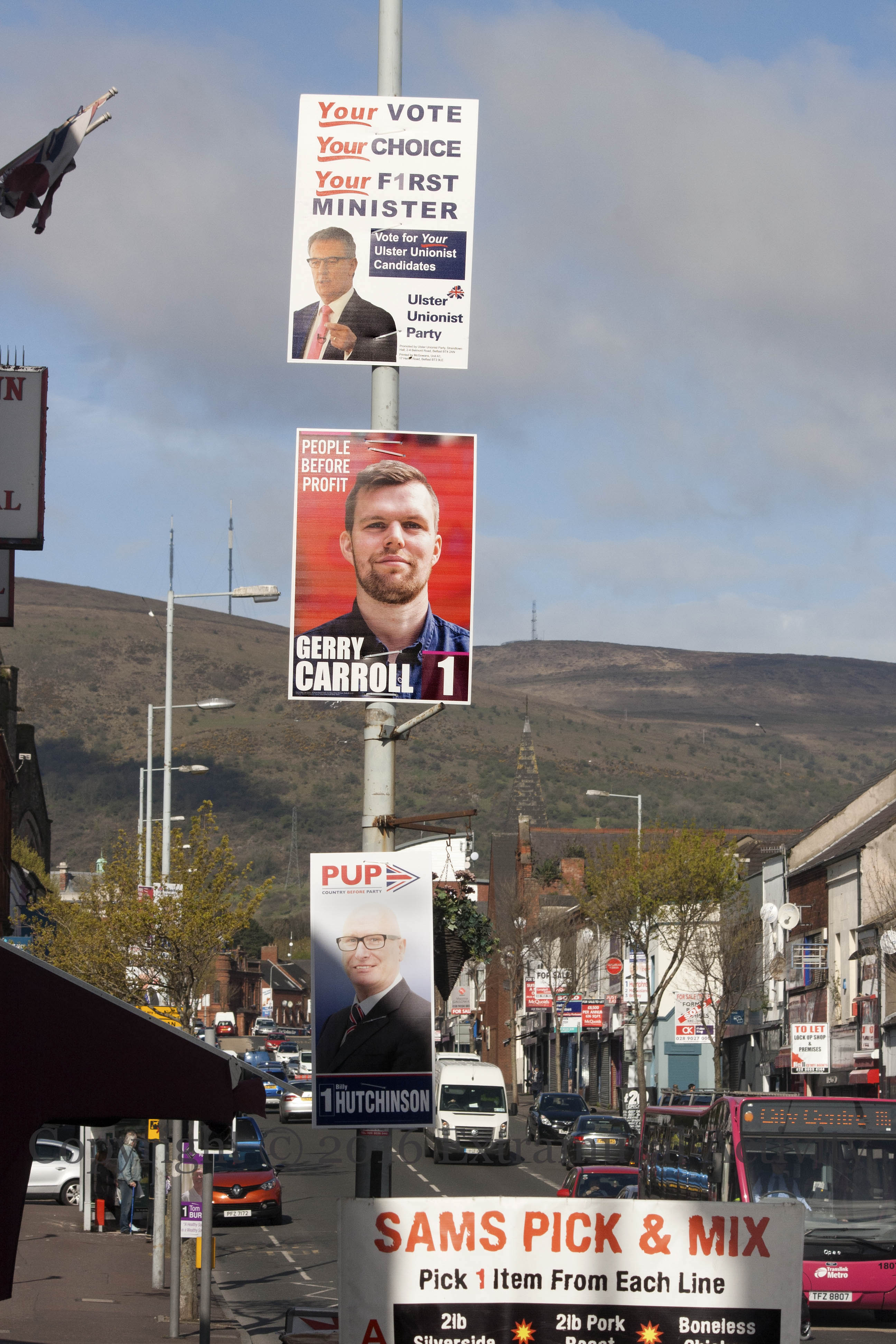
Voters went to the polls today in elections for the Northern Ireland Assembly. The ‘People Before’ candidate (and a current Belfast city councillor), Gerry Carroll, hopes to pick up some transfers from strategic voters on the Shankill.
Also from the current election season: Slippery Road.
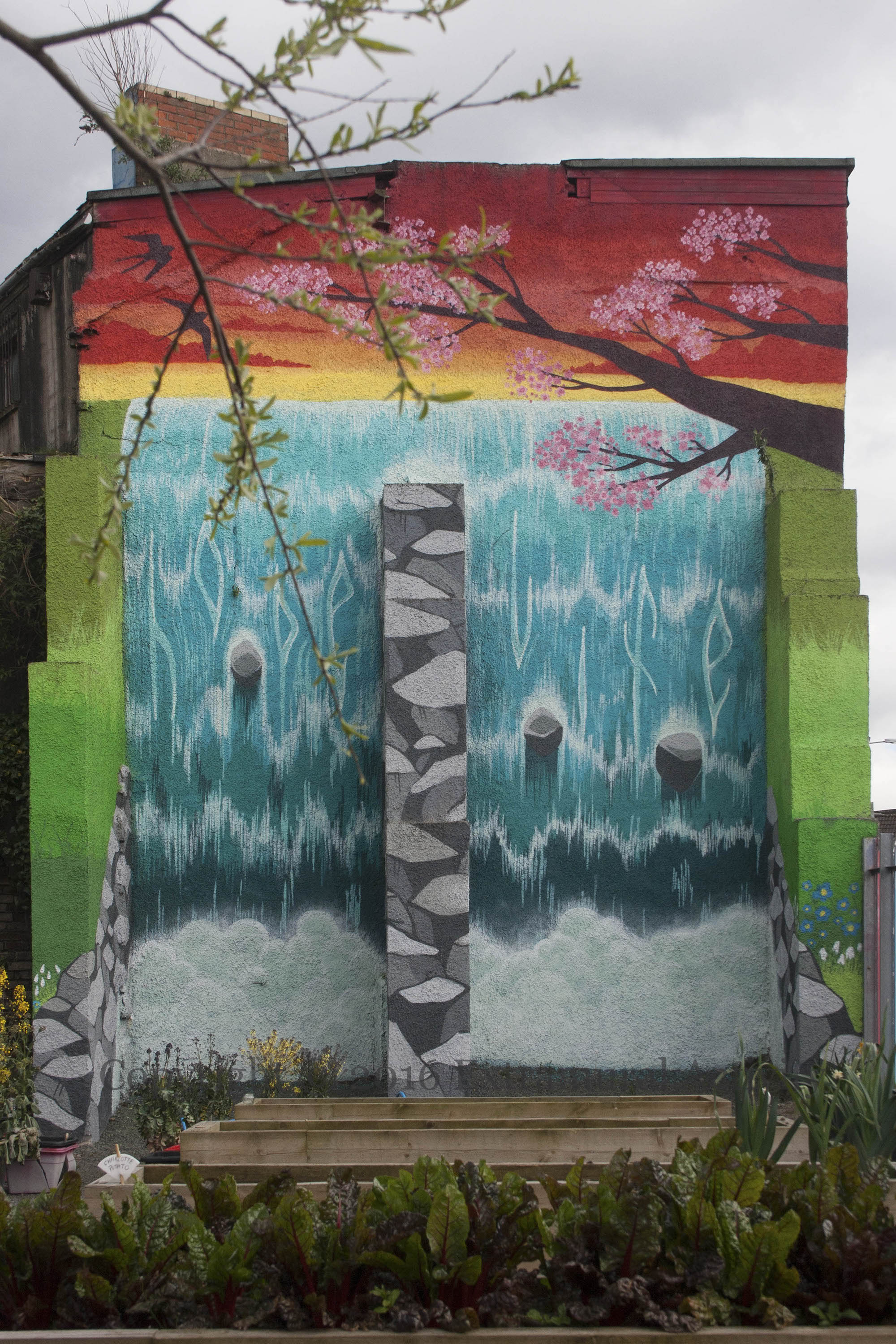
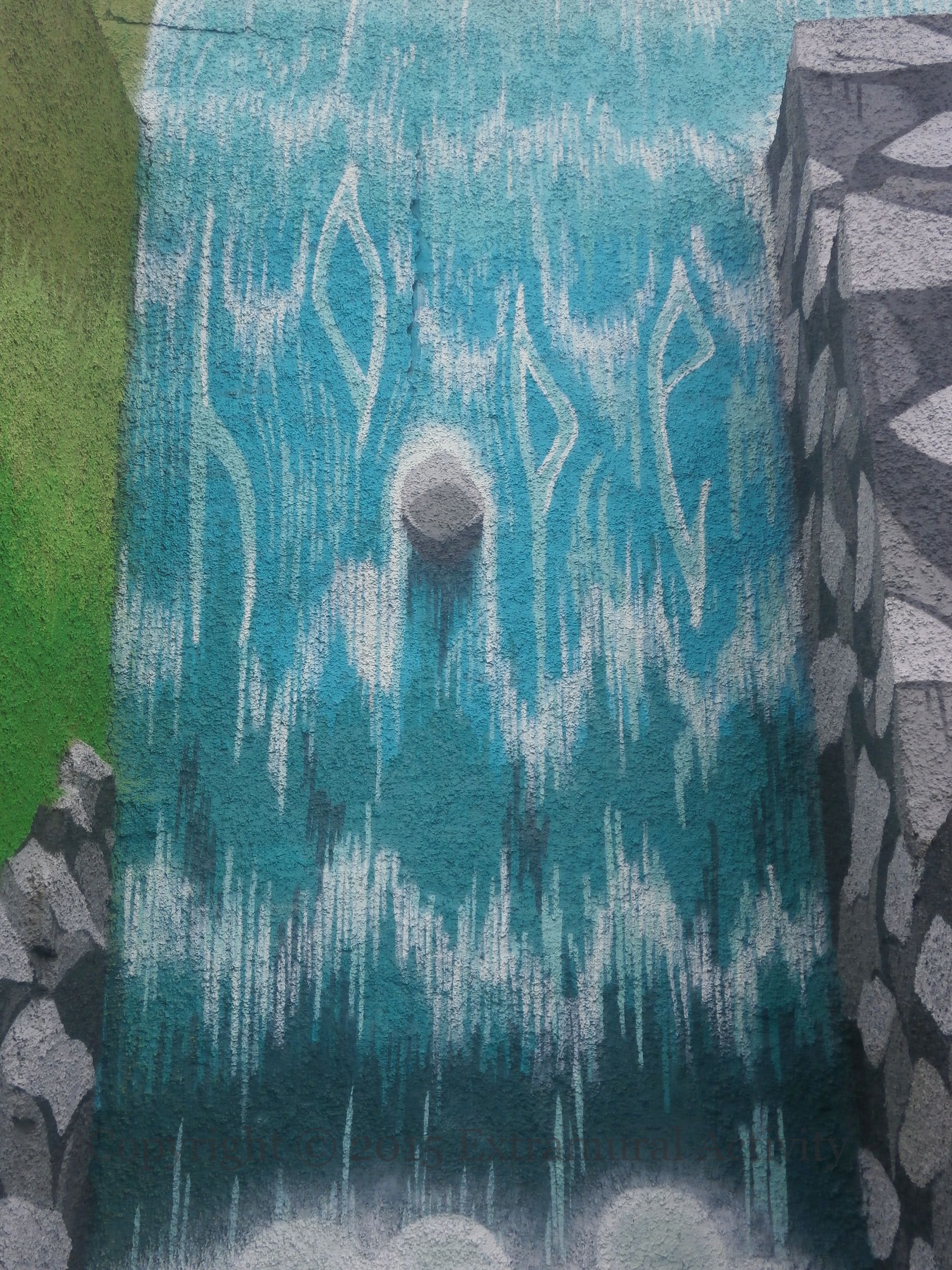
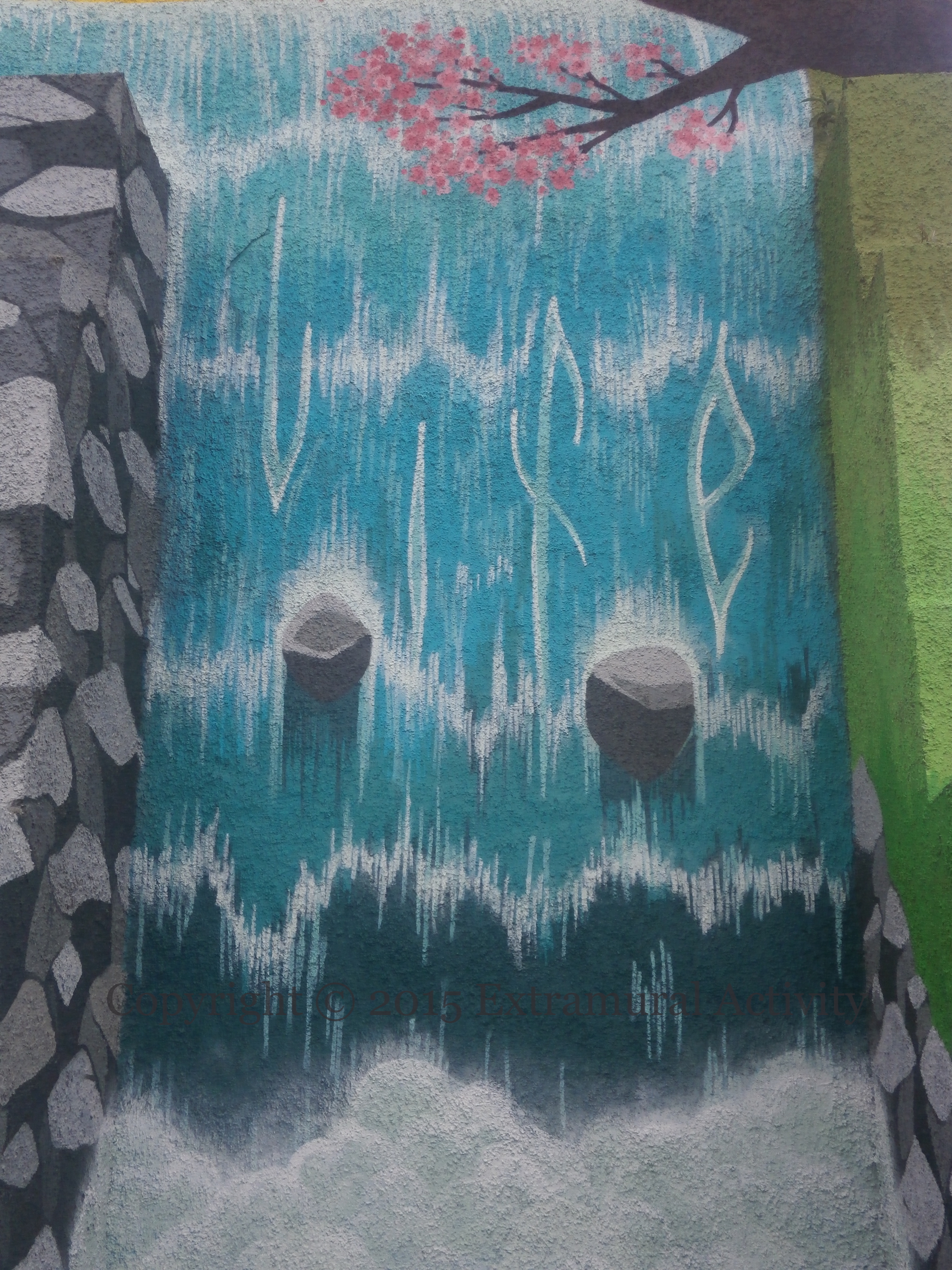
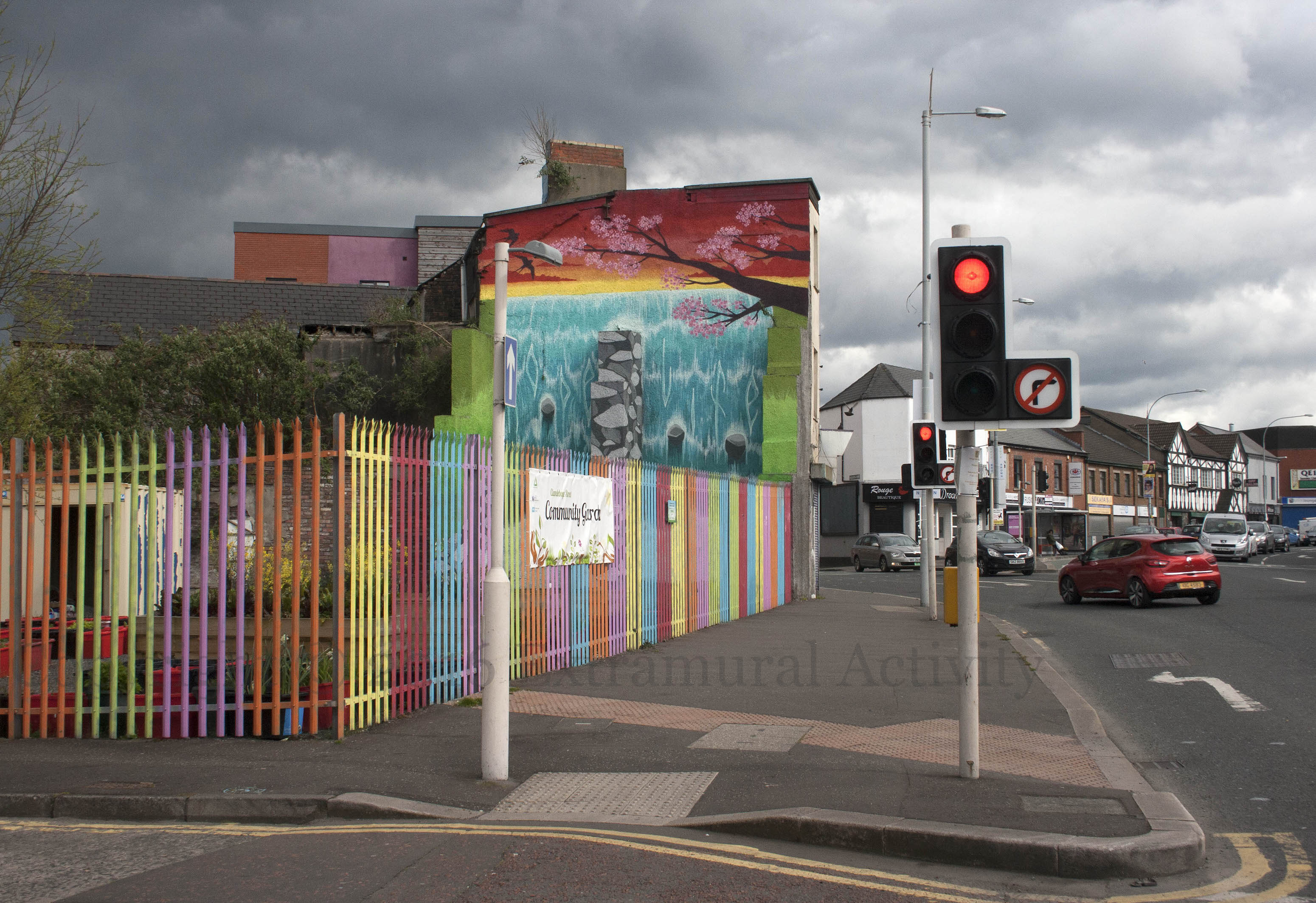
As can be seen above and in the two detail shots, below, the words “hope” and “life” are painted into the two sides of the waterfall that runs down the gable wall in the Clandeboye Street community garden in east Belfast beneath swallows and cherry trees. Painted by Friz (Web | Fb | Tw) in 2015. The final shot shows the similar palette of colours in the railings along the Newtownards Road.
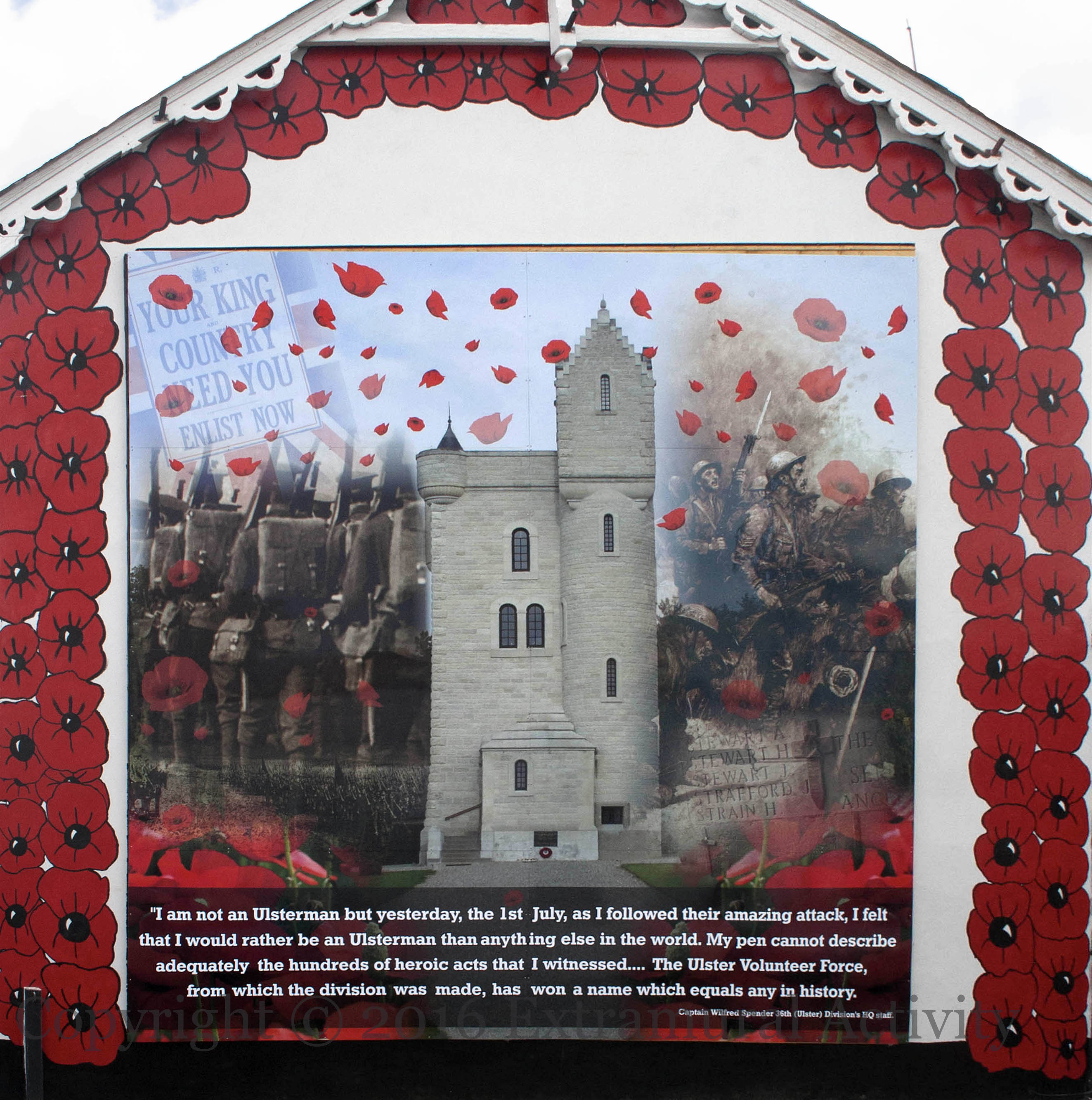
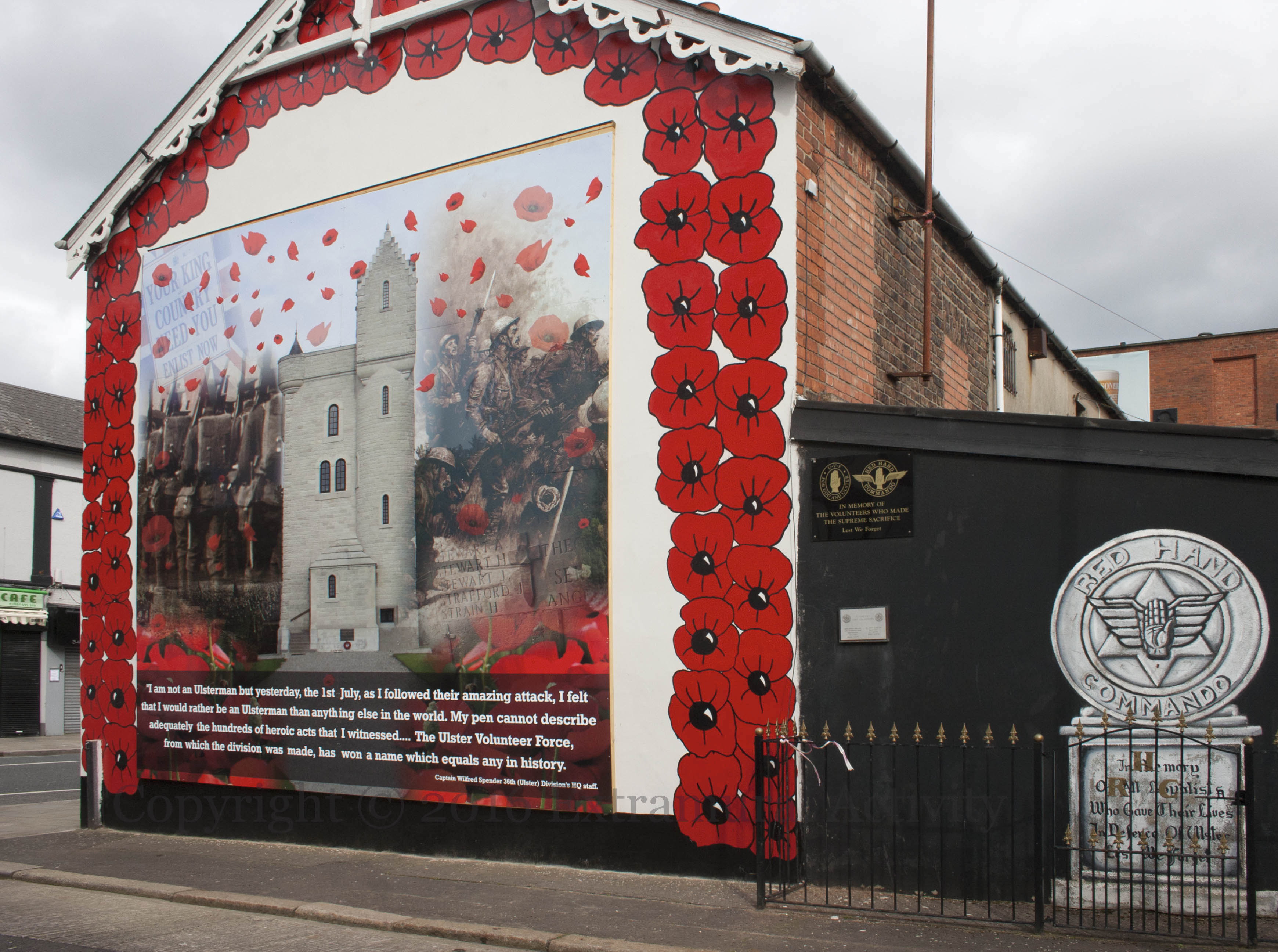
The main part of a Red Hand Commando mural was replaced recently with a board commemorating the action and deaths of the British Army’s 36th (Ulster) Division in World War I’s Battle Of The Somme, of which Captain Wilfrid Spender wrote, “I am not an Ulsterman but yesterday, the 1st July, as I followed their amazing attack, I felt that I would rather be an Ulsterman than anything else in the world. My pen cannot describe adequately the hundreds of heroic acts that I witnessed … The Ulster Volunteer Force, from which the division was made, has won a name which equals any in history.”
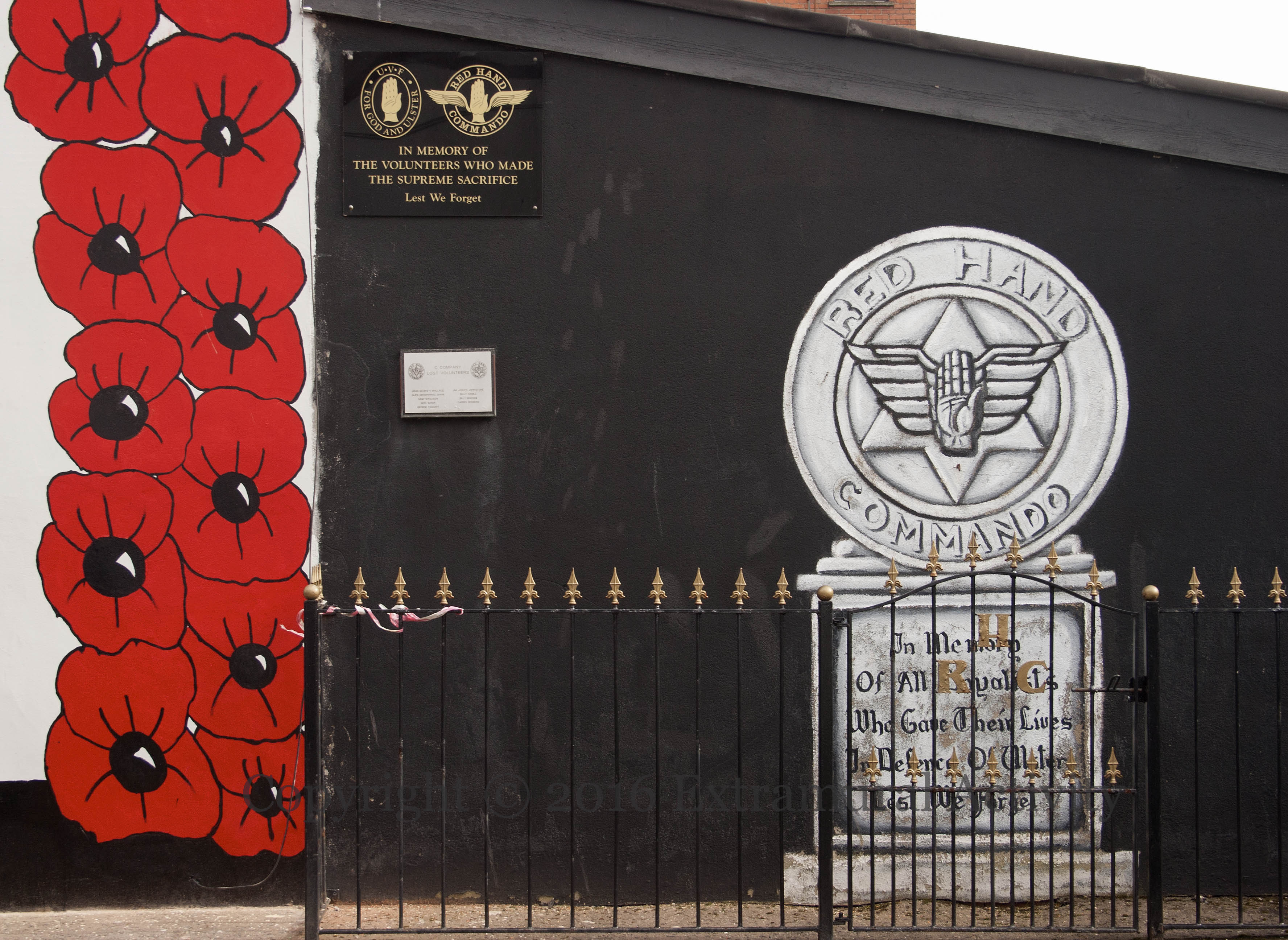
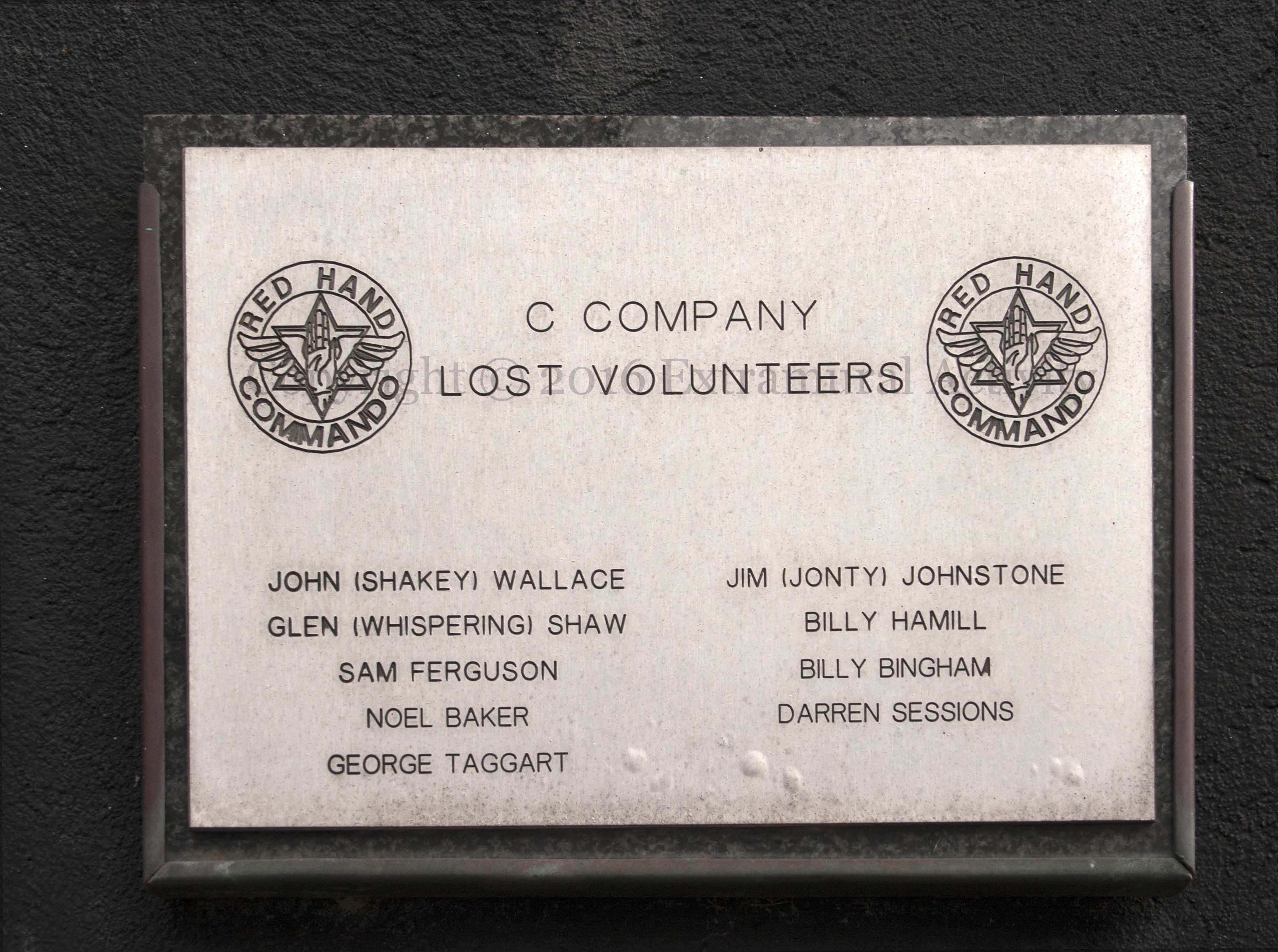
As shown in the three additional images, part of the old mural (and its plaques) remains on the right, “In memory of all loyalists who gave their lives in defence of Ulster – Lest we forget.”
For images of the launch (on 2016-03-08) see Belfast Live.
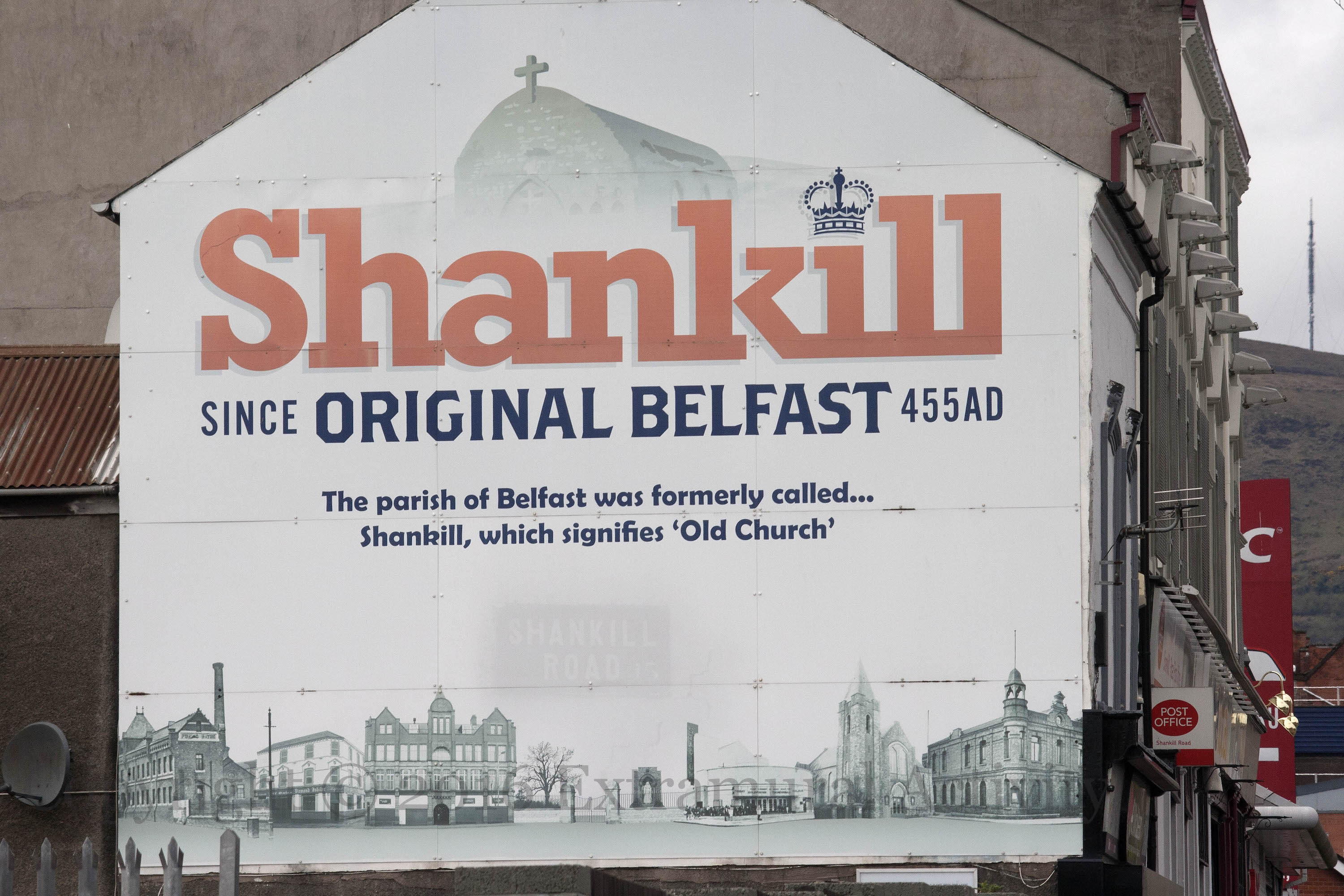
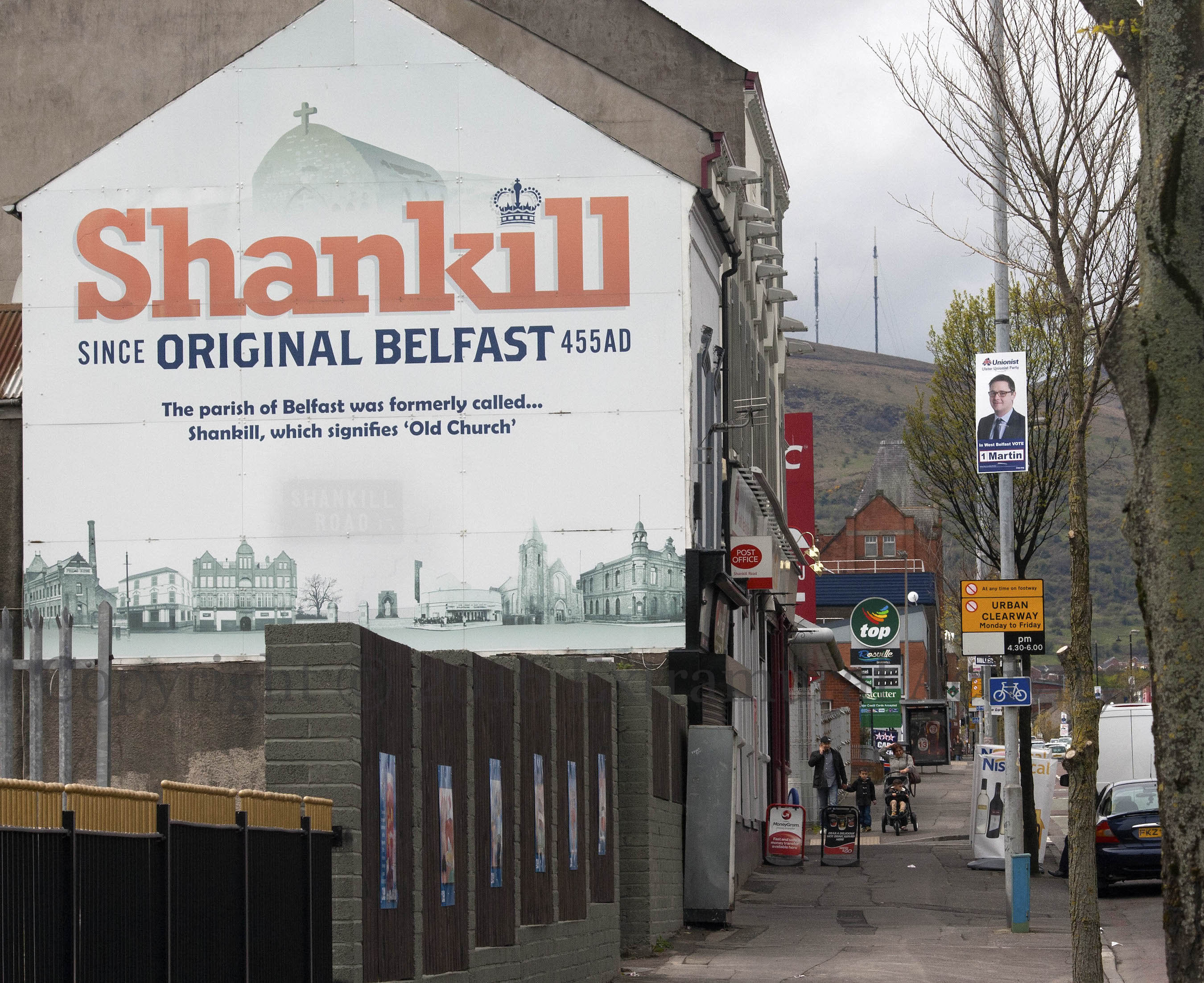
“Since 455 AD” is the claim of this historical board at the bottom of the modern Shankill Road, 455 being the date of a church of St. Patrick (which was taken over by the Church of Ireland in the plantation and eventually became St. Matthew’s). Whether this makes it older than Belfast depends on how one determines that a place was occupied. The were settlements in the area during the Bronze Age, though the village of Belfast (at the junction of the Lagan and the Farset) might date only to the 600s. For Belfast, see Tours In Ulster (at archive.org) and the WP page on the History of Belfast. Shankill: Newsletter | WP | PlacenamesNI