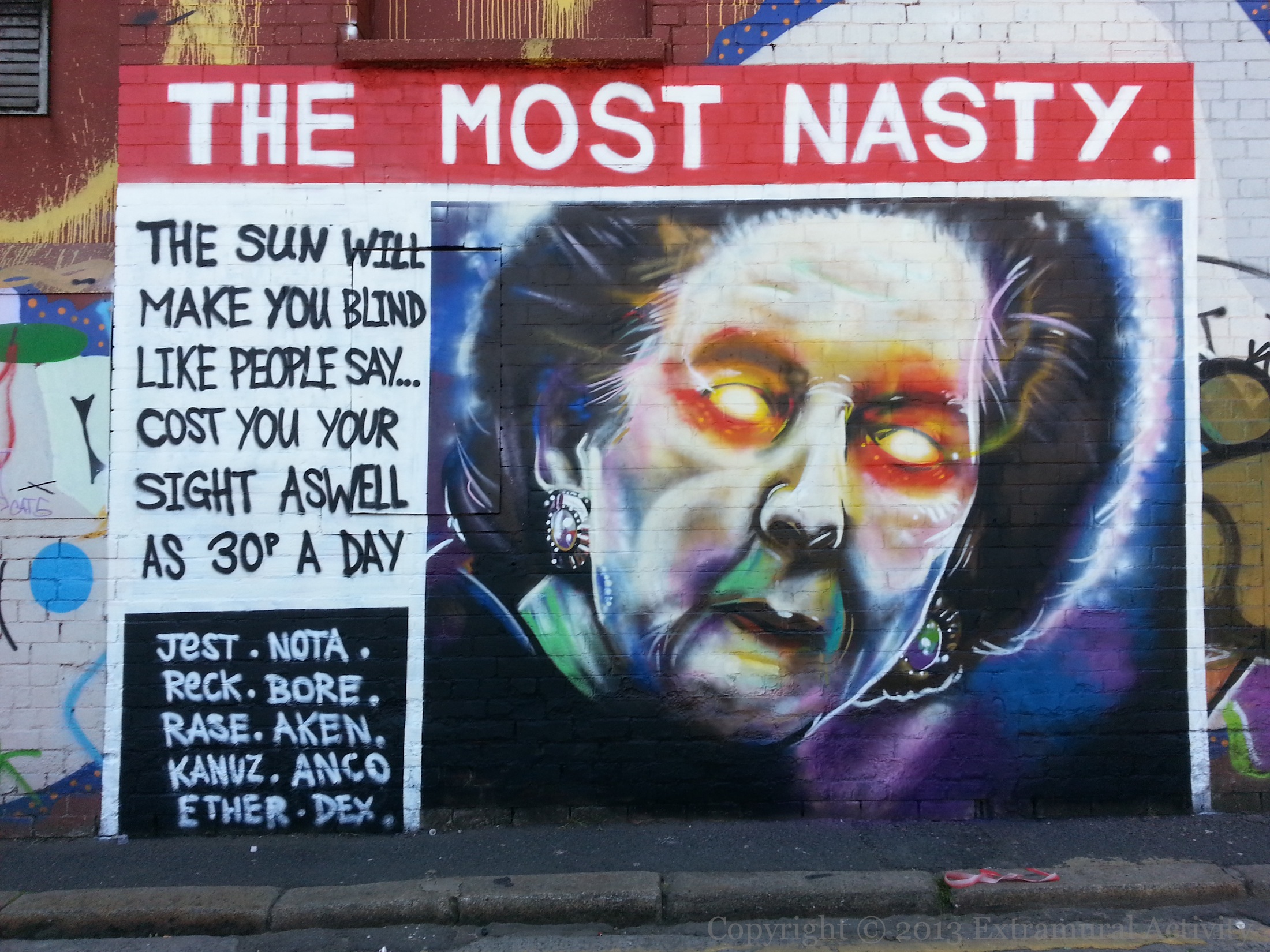
Members of local graffit artist crew TMN (whose names are listed in the lower left) have collaborated on this new anti-capitalist mural in College Court in the city centre, attacking The Sun (newspaper) and the recently deceased former Prime Minister, Margaret Thatcher, who is shown here with glowing eyes: “The Sun will make you blind life people say … cost you your sight as well as 30p a day.”
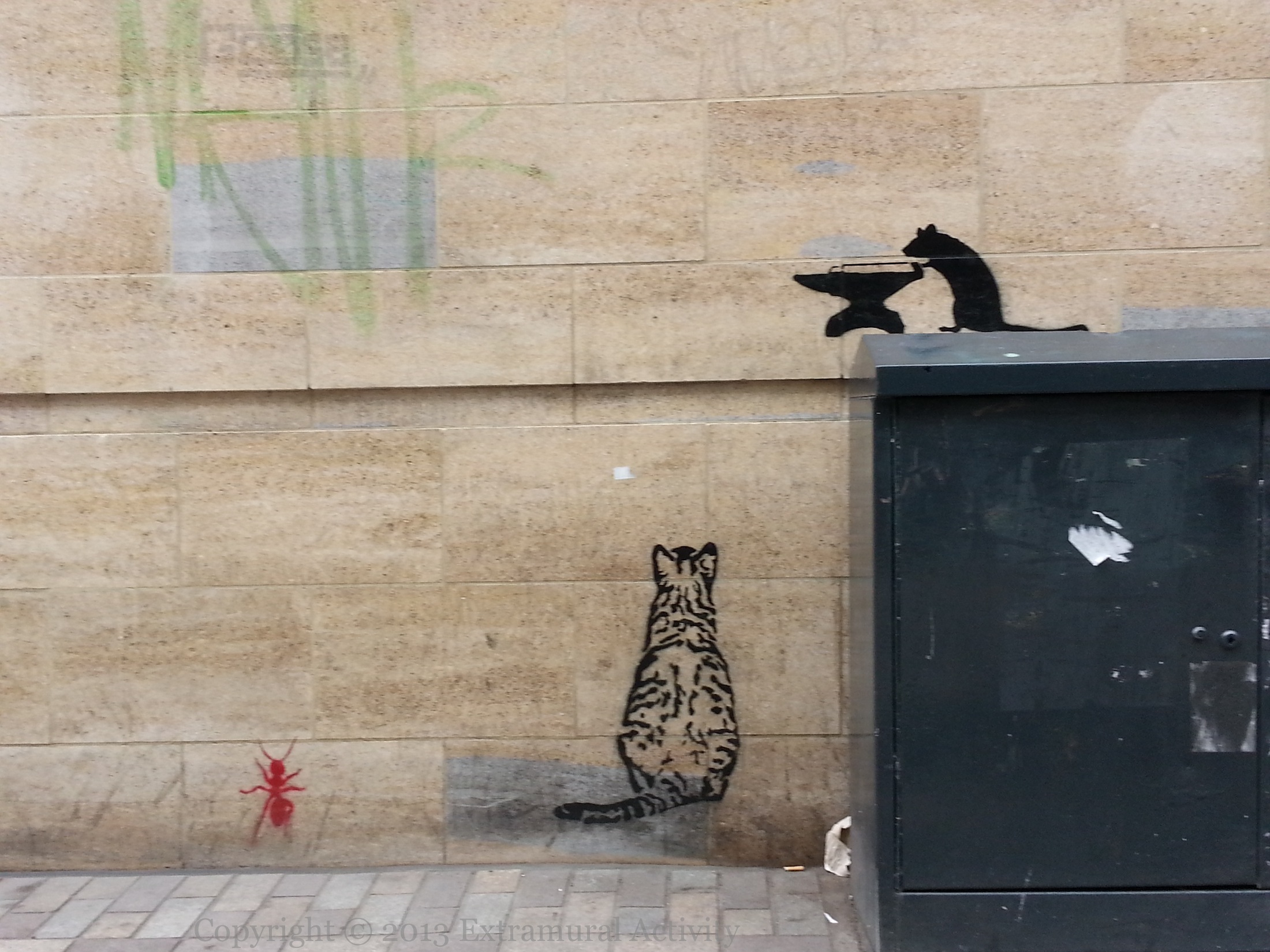
A cunning mouse is about to drop an anvil on an unsuspecting cat from the top of the electrical box at the south (city hall) end of Fountain Street in Belfast city centre. Red Ant looks on.
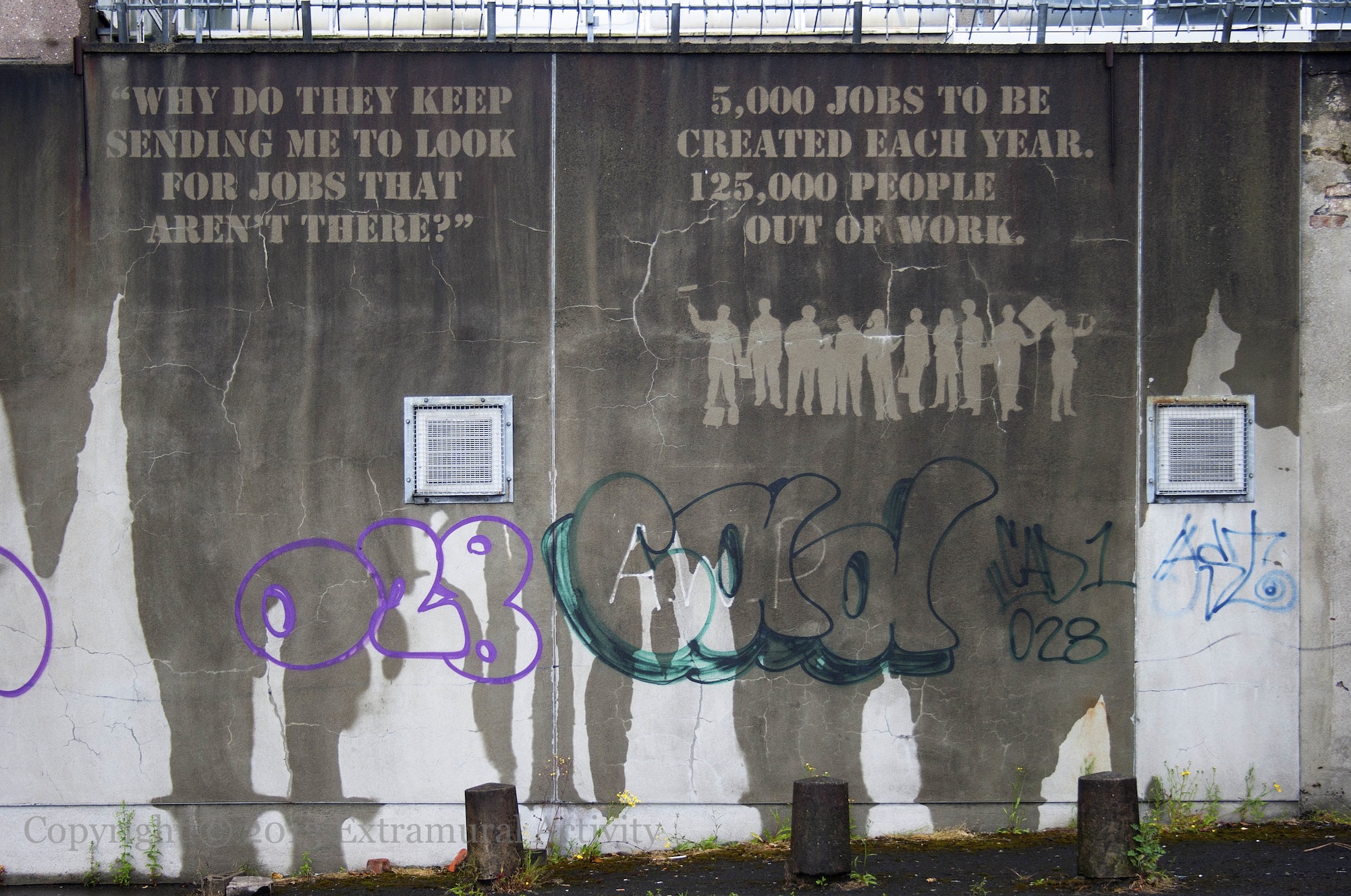
These stencils on the back of the dole office, visible from Great Patrick St, are lamenting the lack of jobs. “Why do they keep sending me to look for jobs that aren’t there?” “5,000 jobs to be created each year. 125,000 people out of work.”
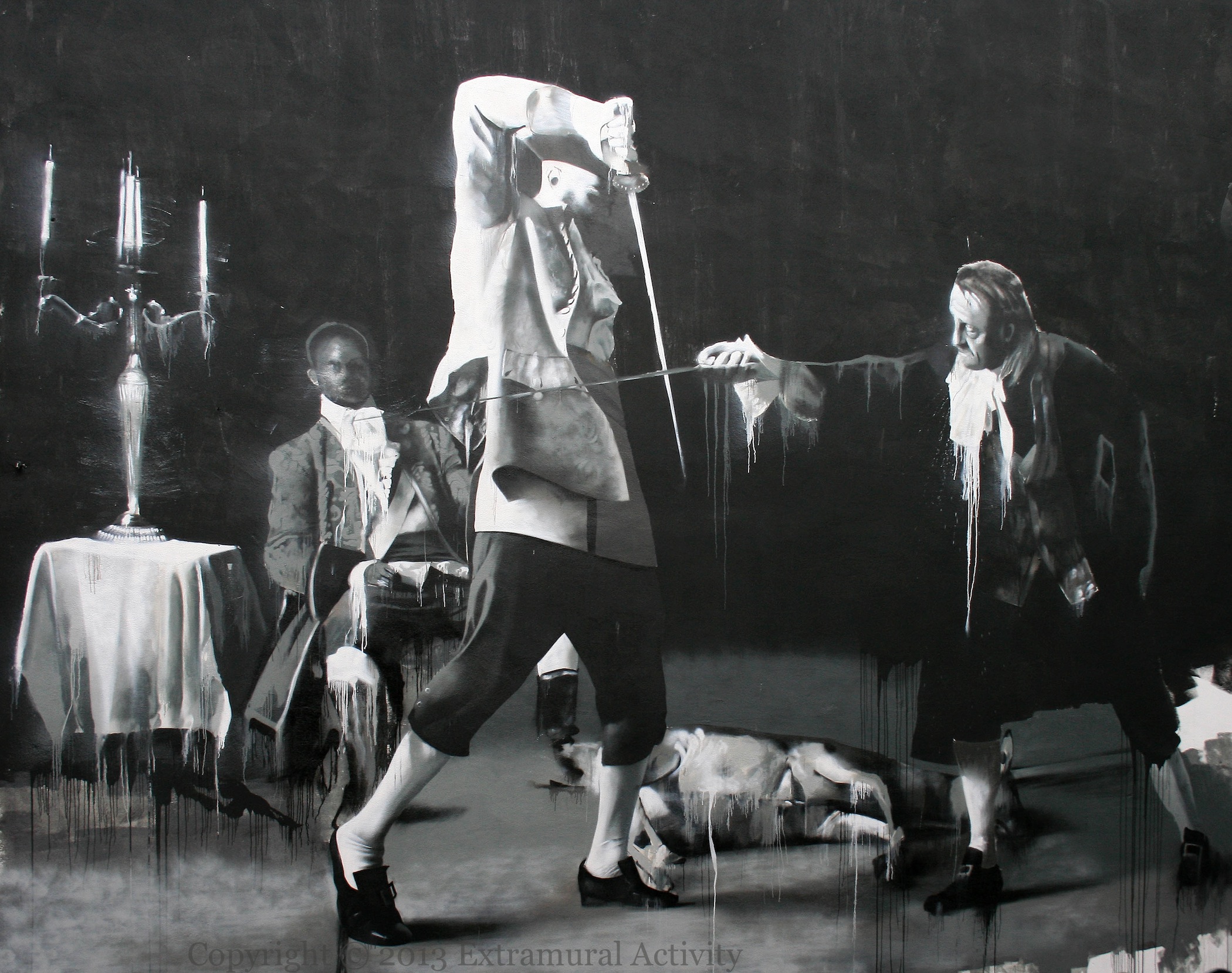
This is a 2012 mural by Cork artist Conor Harrington (whose blog is called ConorSaysBoom) in Hill Street (below the Duke Of York). Two men fence while a third watches on; nature in the form of a deer lies dead on the floor.
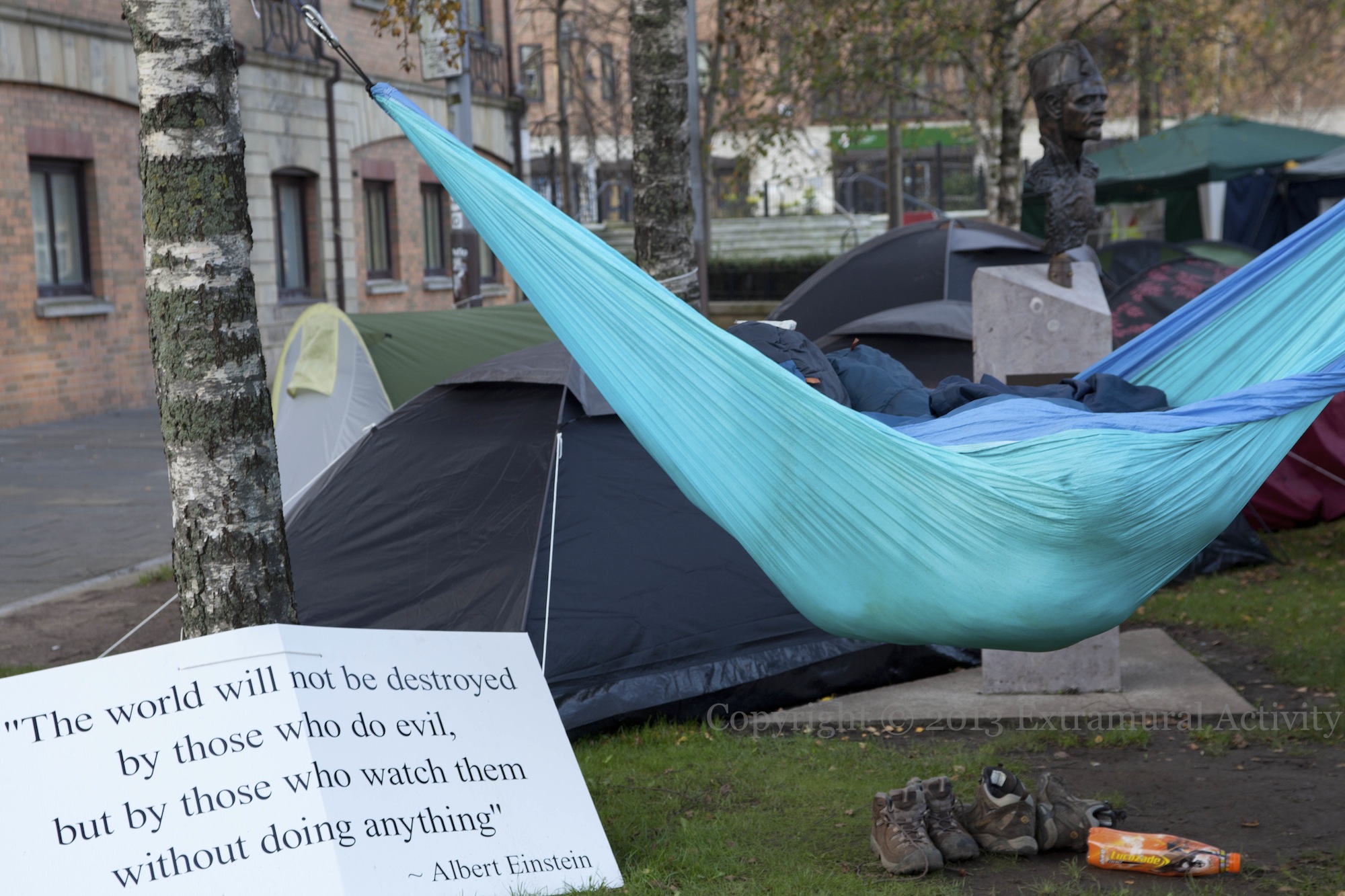
Writer’s Square in central Belfast is still being ‘Occupy’ed. This image was taken during the week of the G8 summit. The quote attributed to Albert Einstein reads, “The world will not be destroyed by those who do evil, but by those who watch them without doing anything.”
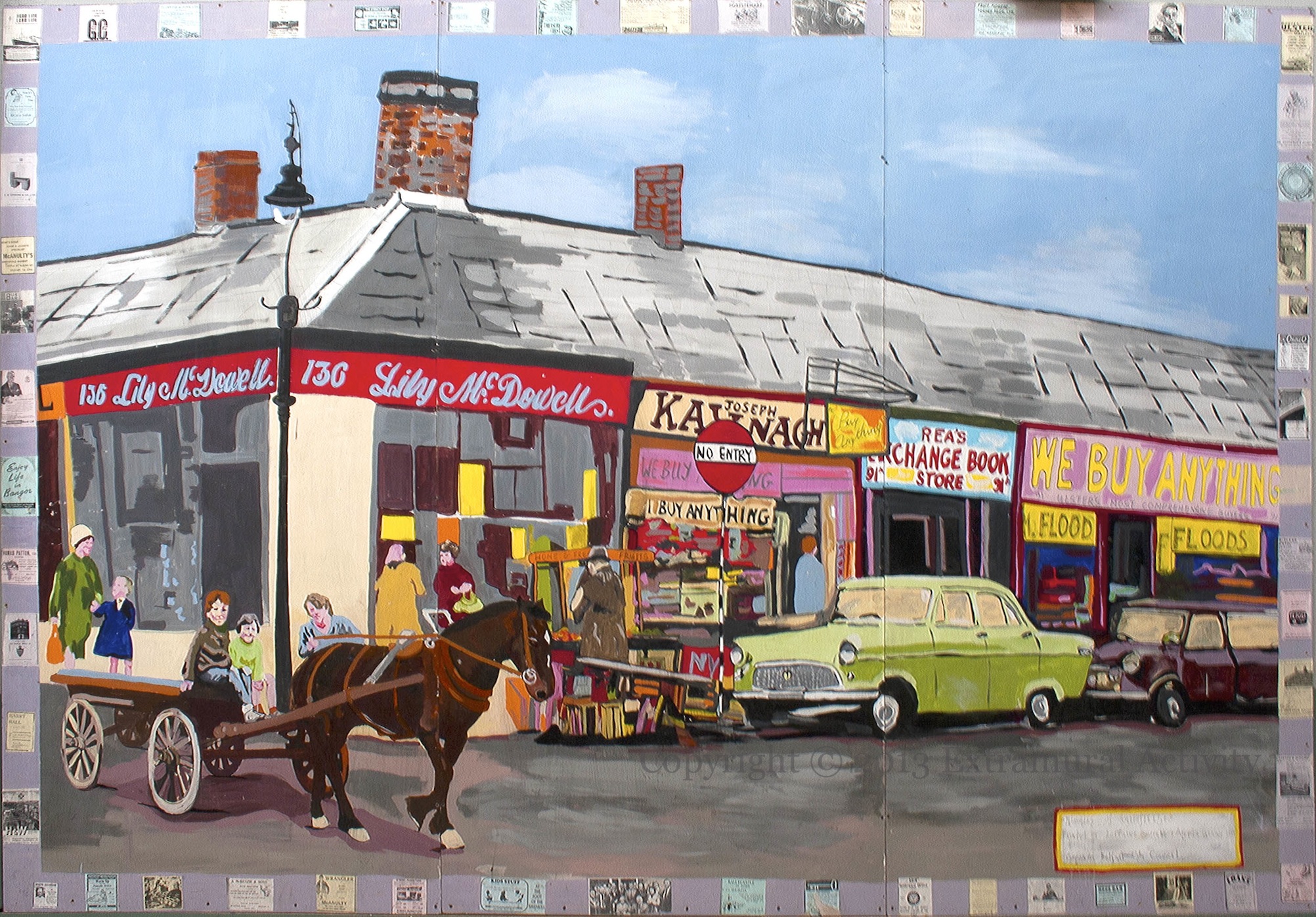
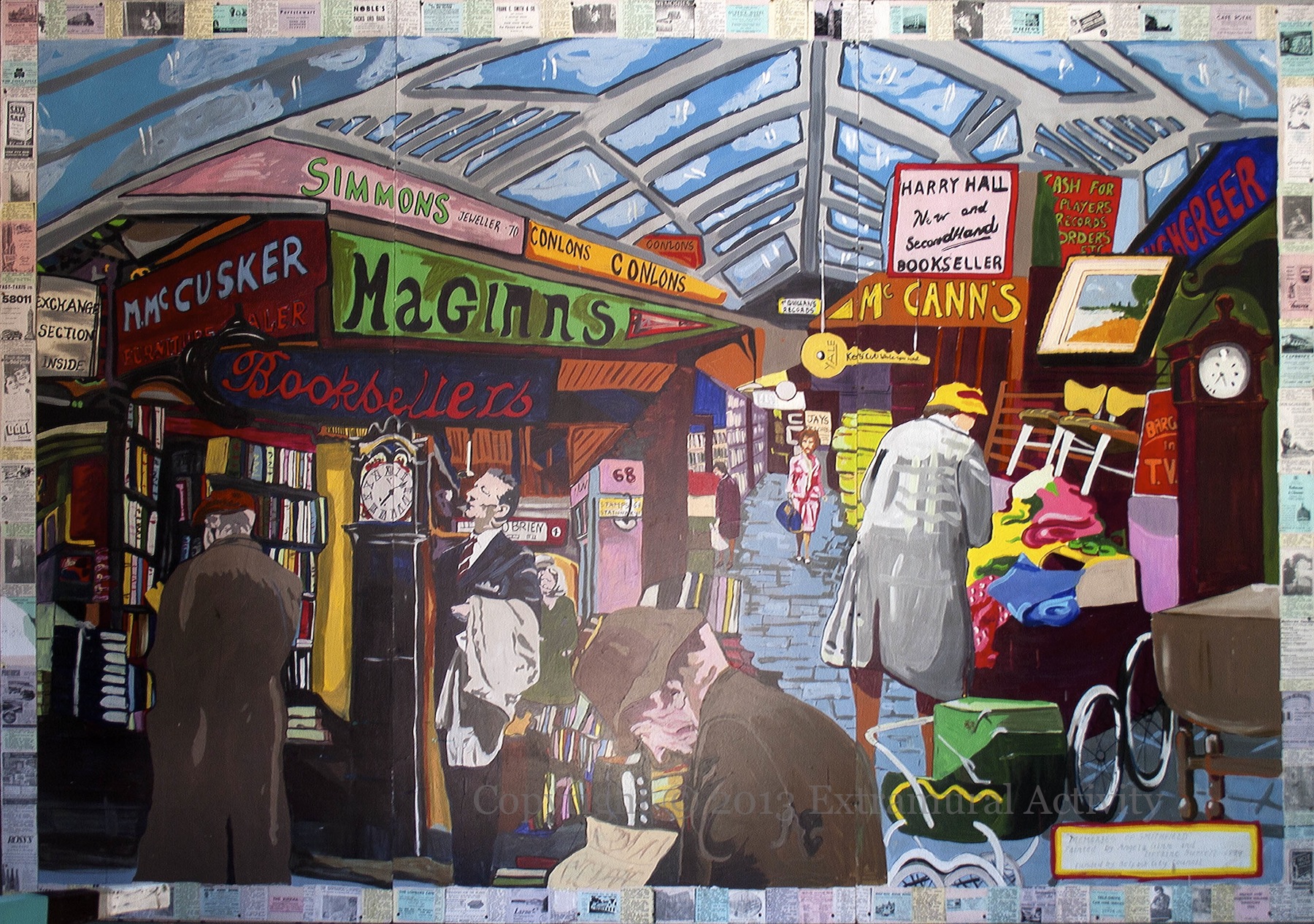
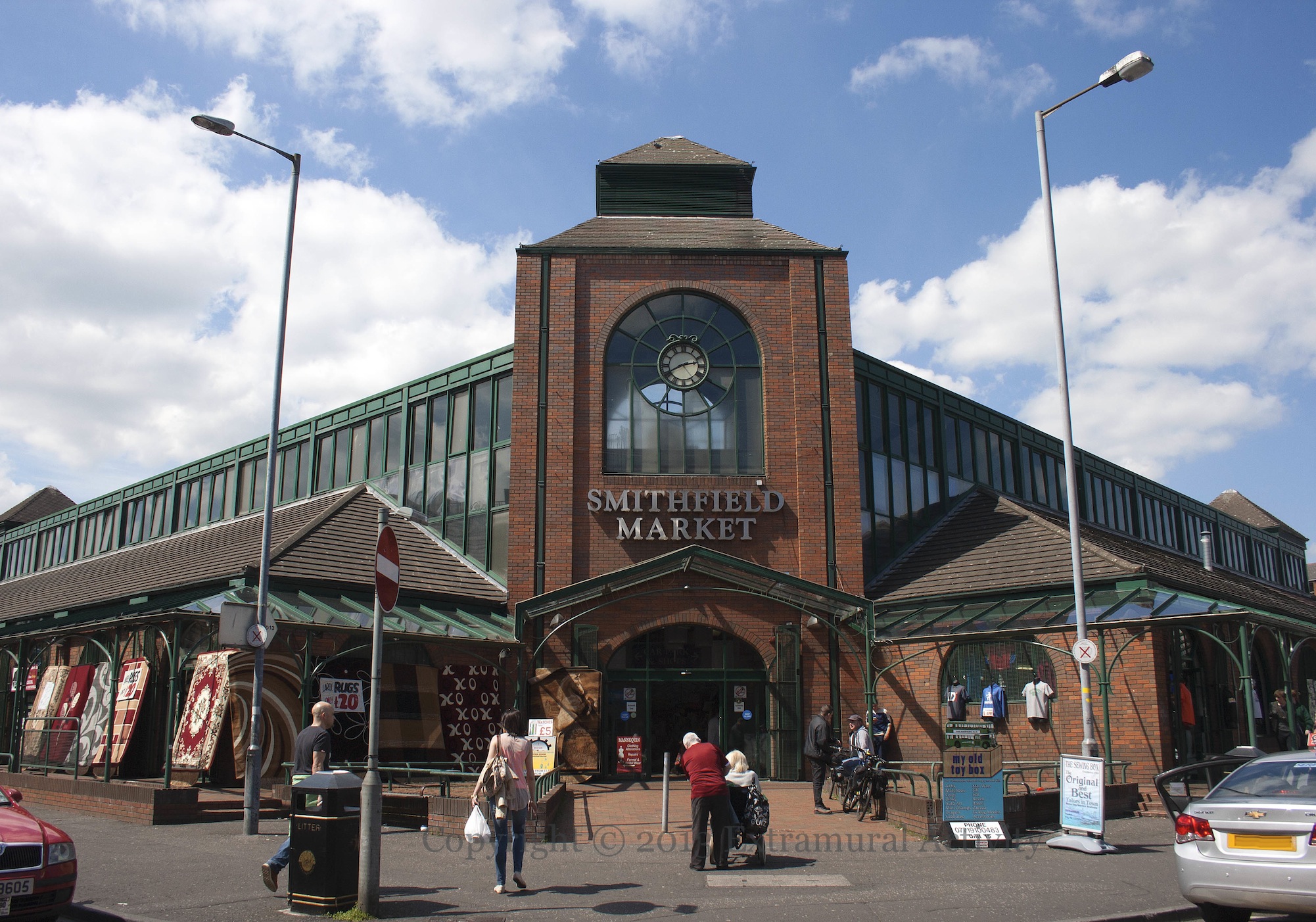
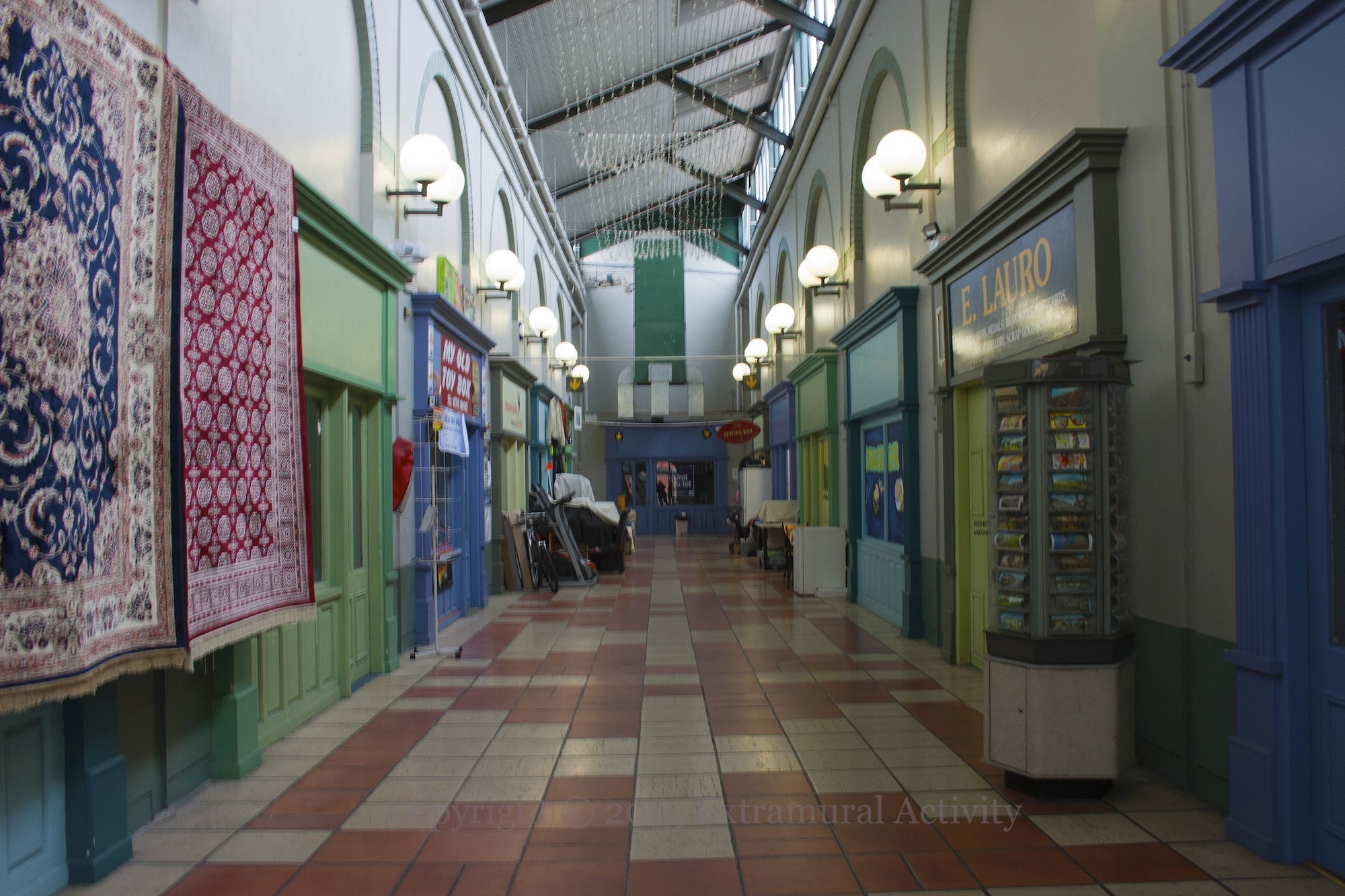
The two murals featured here, depicting Smithfield in the ‘good old days’ — before it was fire-bombed in 1974 (gallery of 10 images at the Tele) – are inside the modern Smithfield, rebuilt in 1986, depicted in the third and fourth images. Update 2013-11: The two ‘Memories of Smithfield’ paintings are by Angela Ginn and Lorraine Burrell, 1999; funded by Belfast City Council.
The external shot is taken from the rear of Castlecourt. The foreign multinationals in it appear to be flourishing, while many units are vacant inside Smithfield.
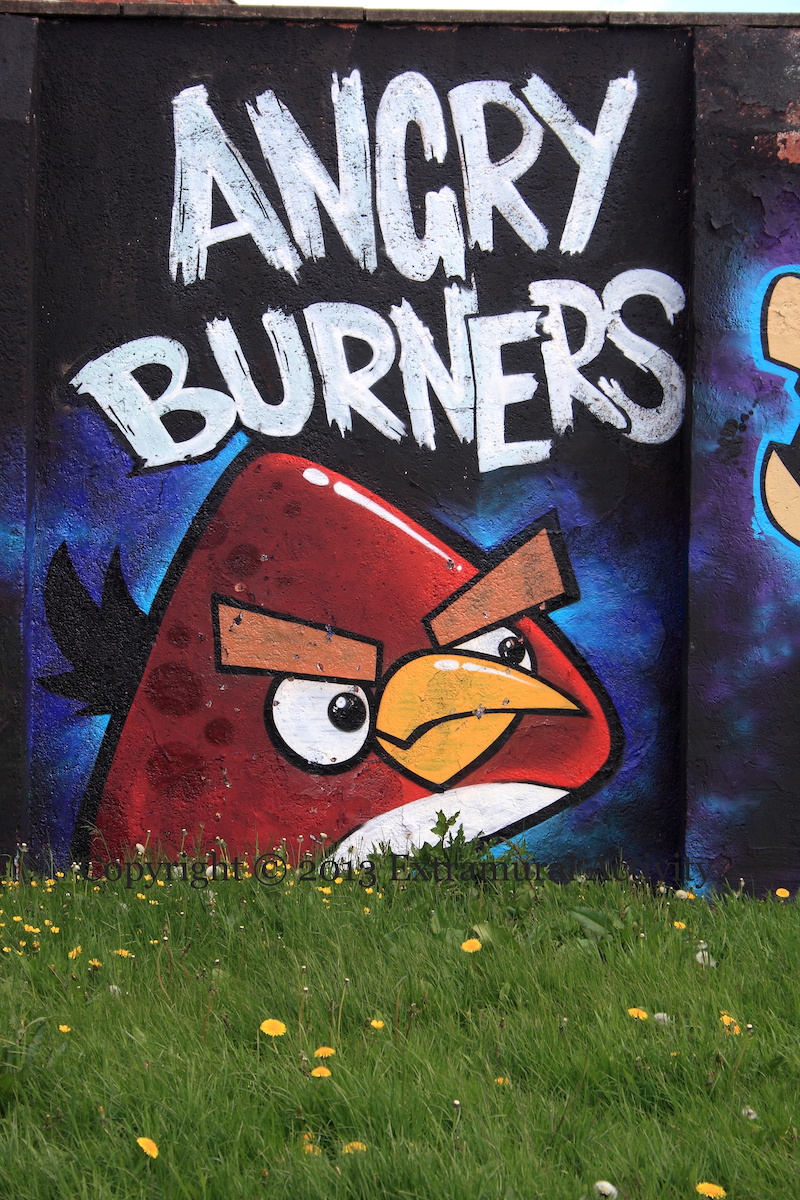
The Angry Birds puzzle game (on mobile devices and on Facebook) is a smash hit for Finnish game developers Rovio (WP) and is now a part of popular culture, including this take-off on the Comber Walkway – angry burners.
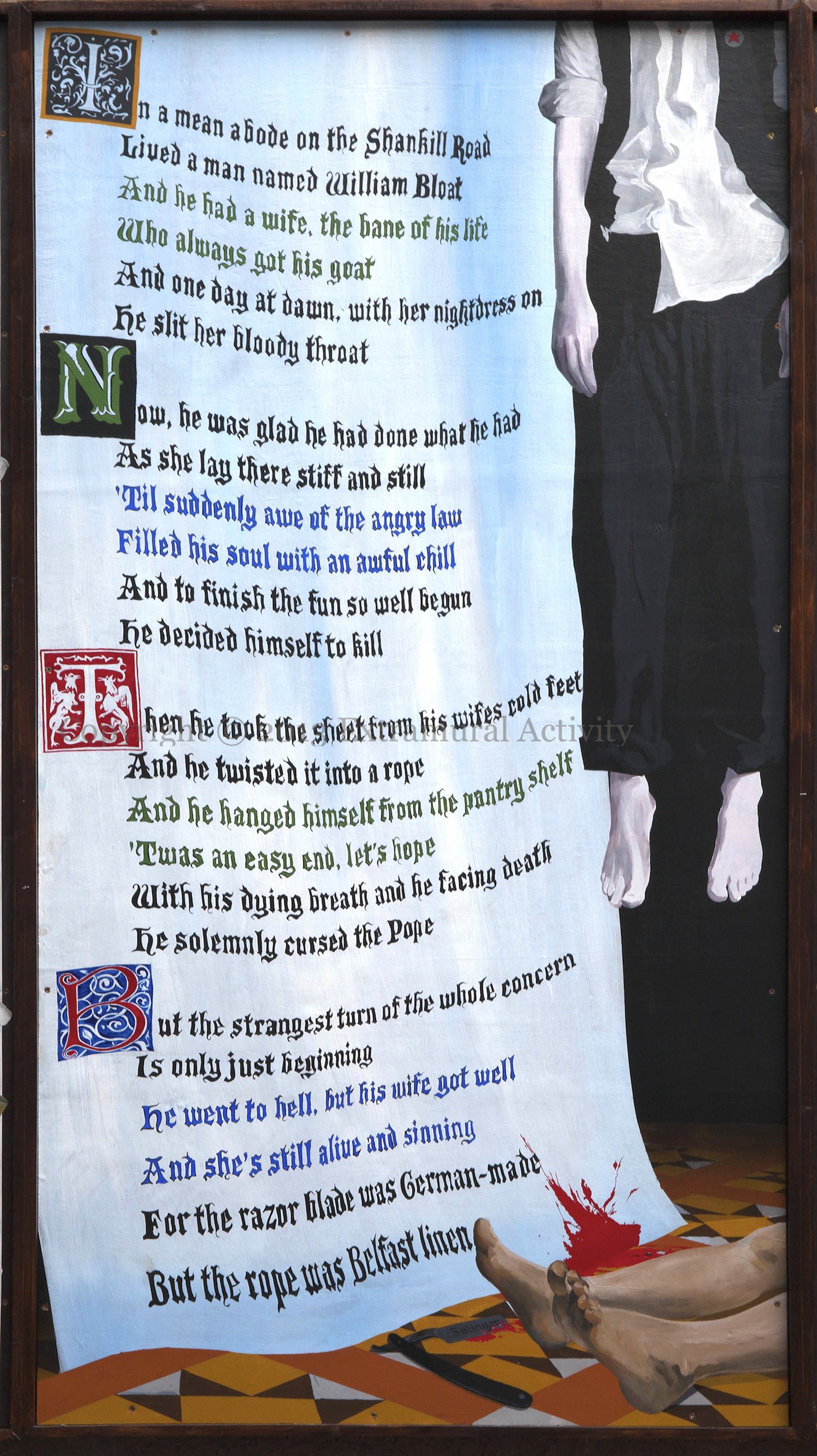
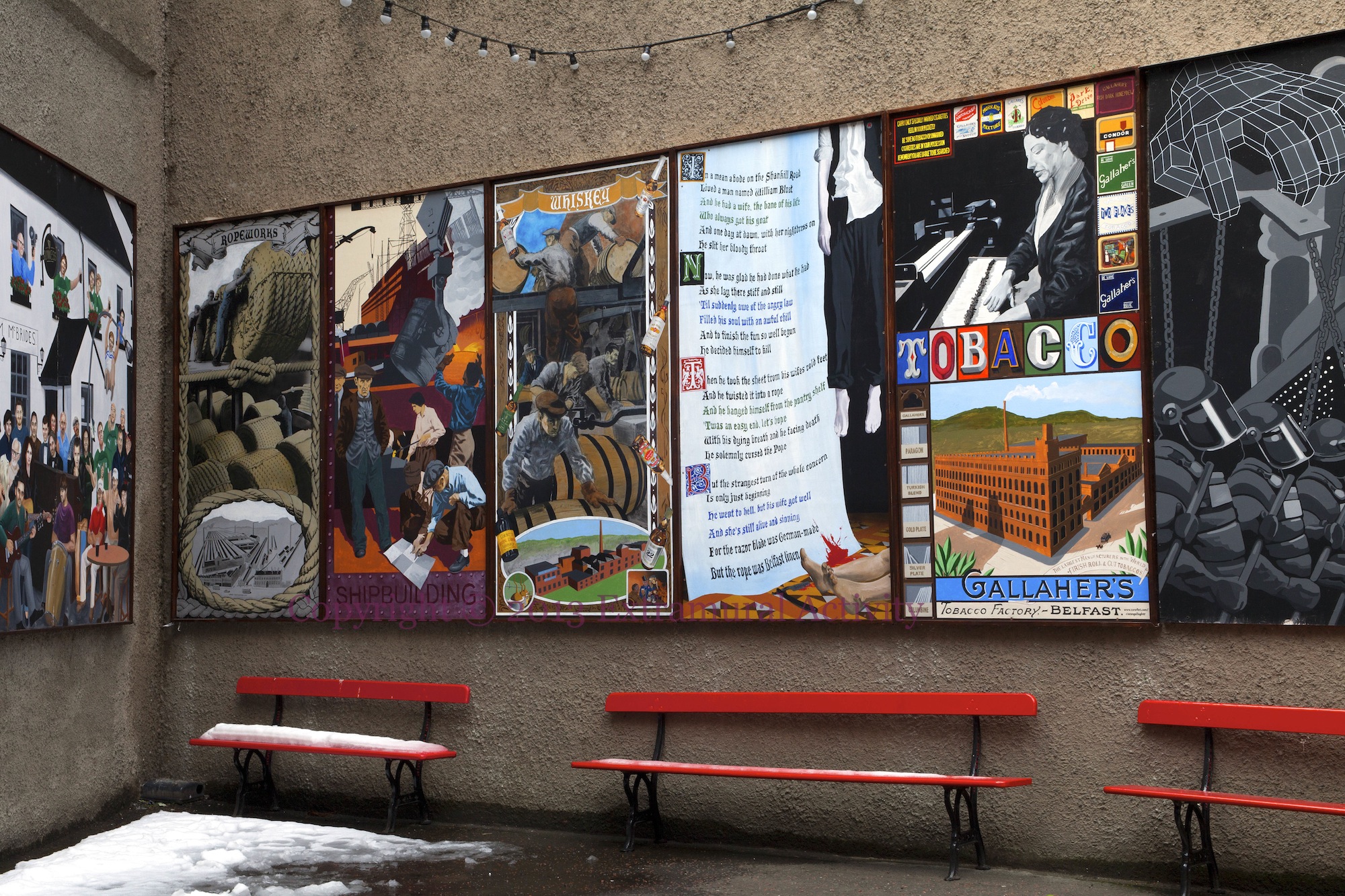
Here is a close-up of the fourth panel of the five-panel piece in the Dark Horse recorded separately. The four other panels represent the production of rope, ships, whiskey, and tobacco products. The “William Bloat” panel presumably stands for the linen industry, as the star of the tale is the bed sheet that is fashioned into a noose. The words to the song, including an extra verse not shown on the board, can be found below, along with a Tommy Makem performance of the song (from 1973!) in which the blade is Japanese-made.
William Bloat – Raymond Calvert (1926)
In a mean abode on the Shankill Road Lived a man named William Bloat; He had a wife, the bane of his life, Who always got his goat. And one day at dawn, with her nightdress on He slit her bloody throat.
[With a razor gash he settled her hash Never was crime so slick But the drip drip drip on the pillowslip Of her lifeblood made him sick. And the knee-deep gore on the bedroom floor Grew clotted and cold and thick.]
Now, he was glad he had done what he had As she lay there stiff and still ‘Til suddenly awe of the angry law Filled his soul with an icy chill. And to finish the fun so well begun He decided himself to kill.
Then he took the sheet from his wife’s cold feet And he twisted it into a rope And he hanged himself from the pantry shelf, ‘Twas an easy end, let’s hope. With his dying breath and he facing death He solemnly cursed the Pope.
But the strangest turn to the whole concern Is only just beginning. He went to Hell but his wife got well And she’s still alive and sinning, For the razor blade was German made But the rope was Belfast linen.
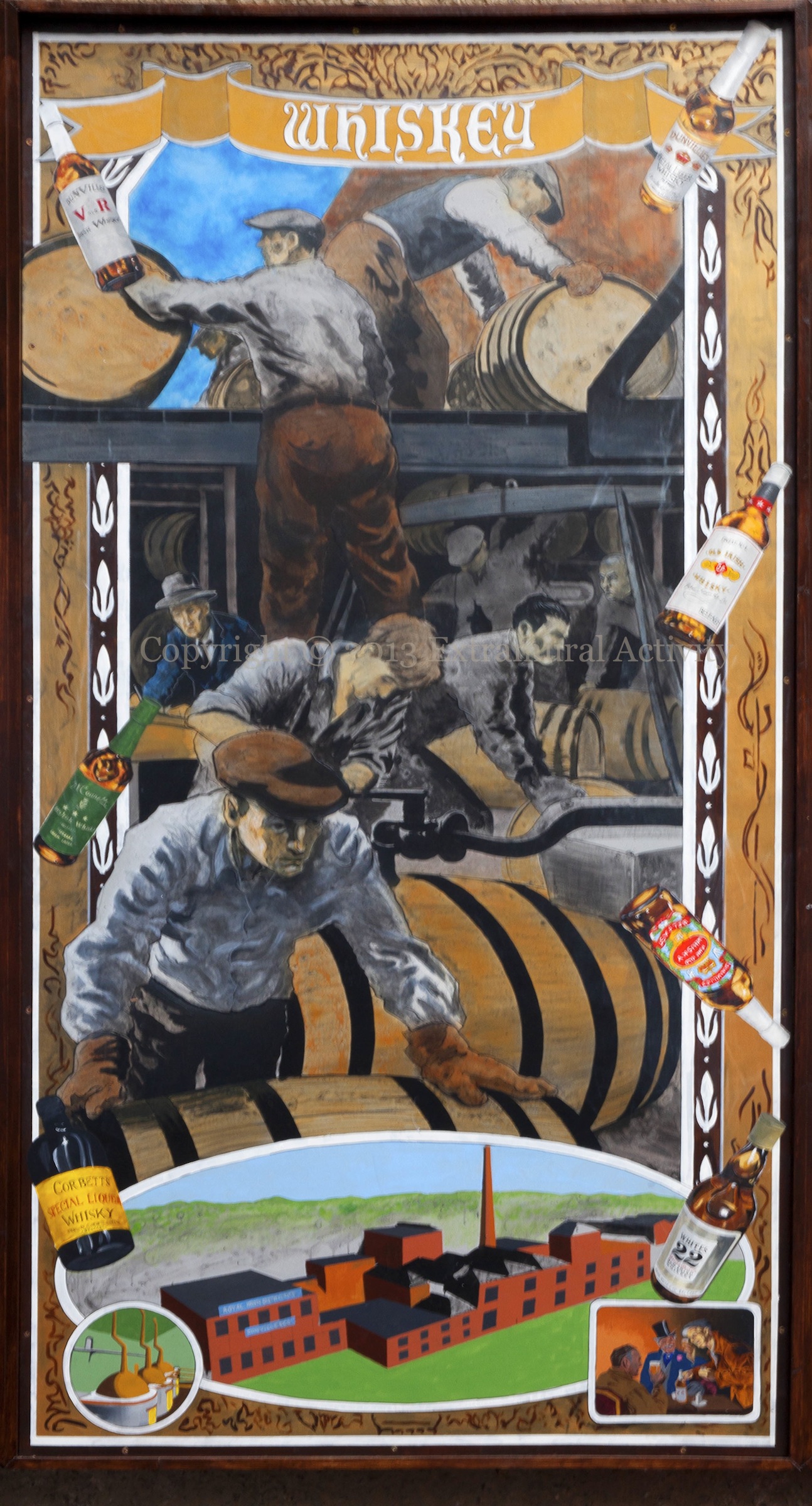
Whiskey, the middle of five panels (see below) in another piece from the courtyard of the Dark Horse pub in the city centre portraying four Northern Irish industries of/in the past – rope, ships, whiskey – the words to the song William Bloat – and tobacco products.
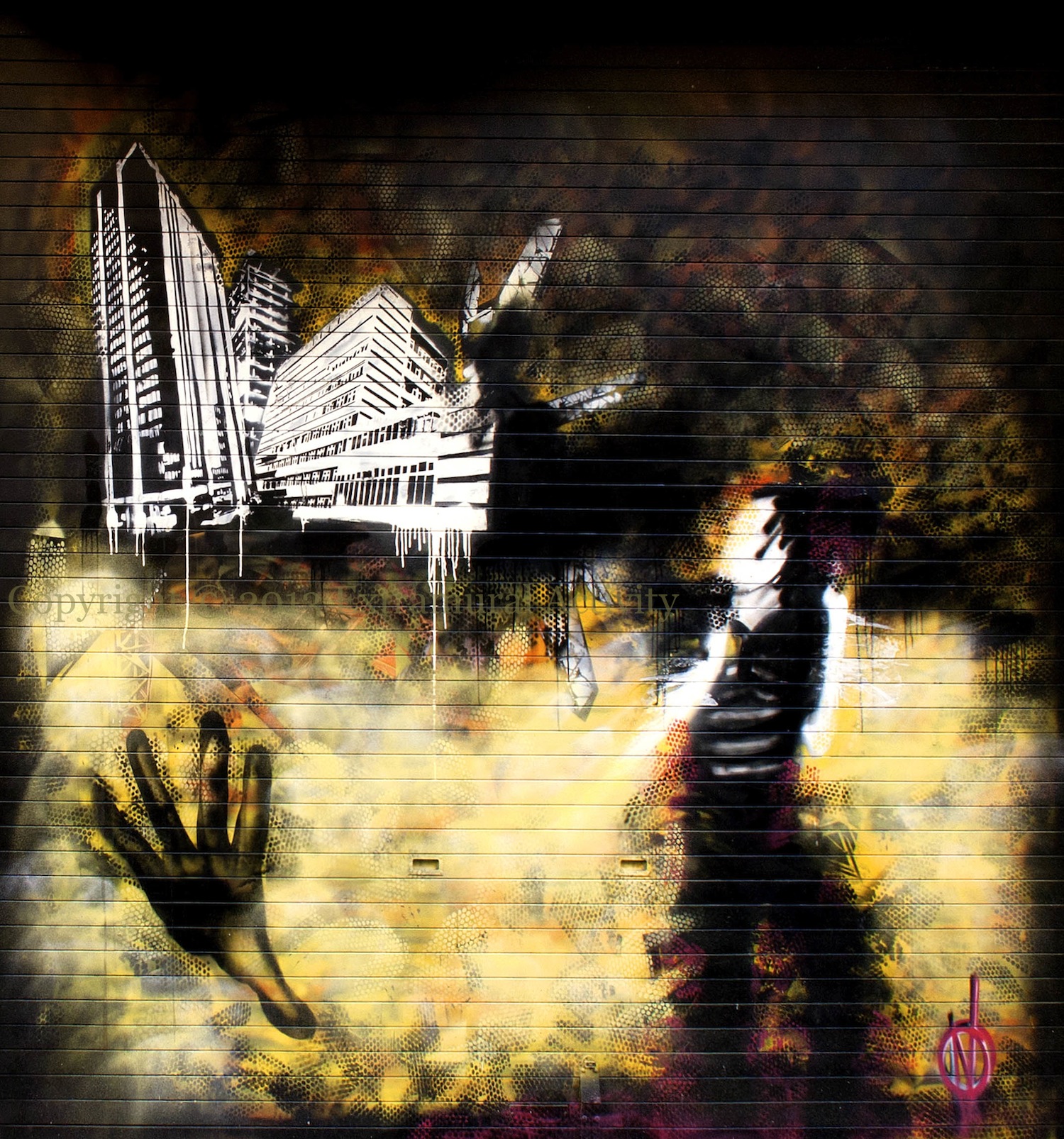
This piece in North Street, in the city centre, combines realistic buildings with honeycomb patterning run together with cloud-like spray-paint, threatening to envelope the impressionistic figure in the foreground. The surface is the shutter of a shop front. By emic/This Means Nothing for CNB 2012. (The hand in the bottom left can also be found around the corner in Garfield Street.)