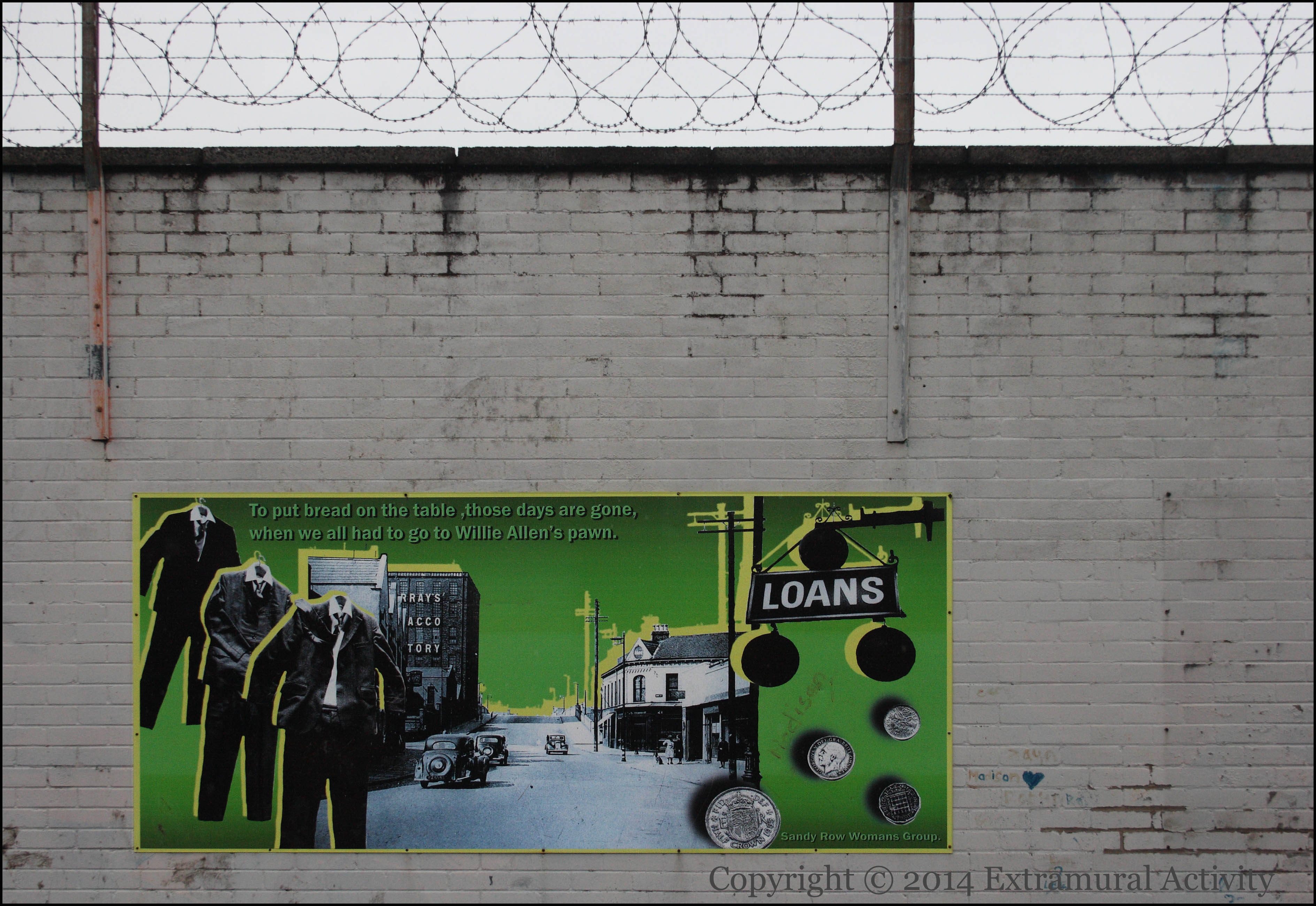
“To put bread on the table, those days are gone, when we all had to to Willie Allen’s pawn.
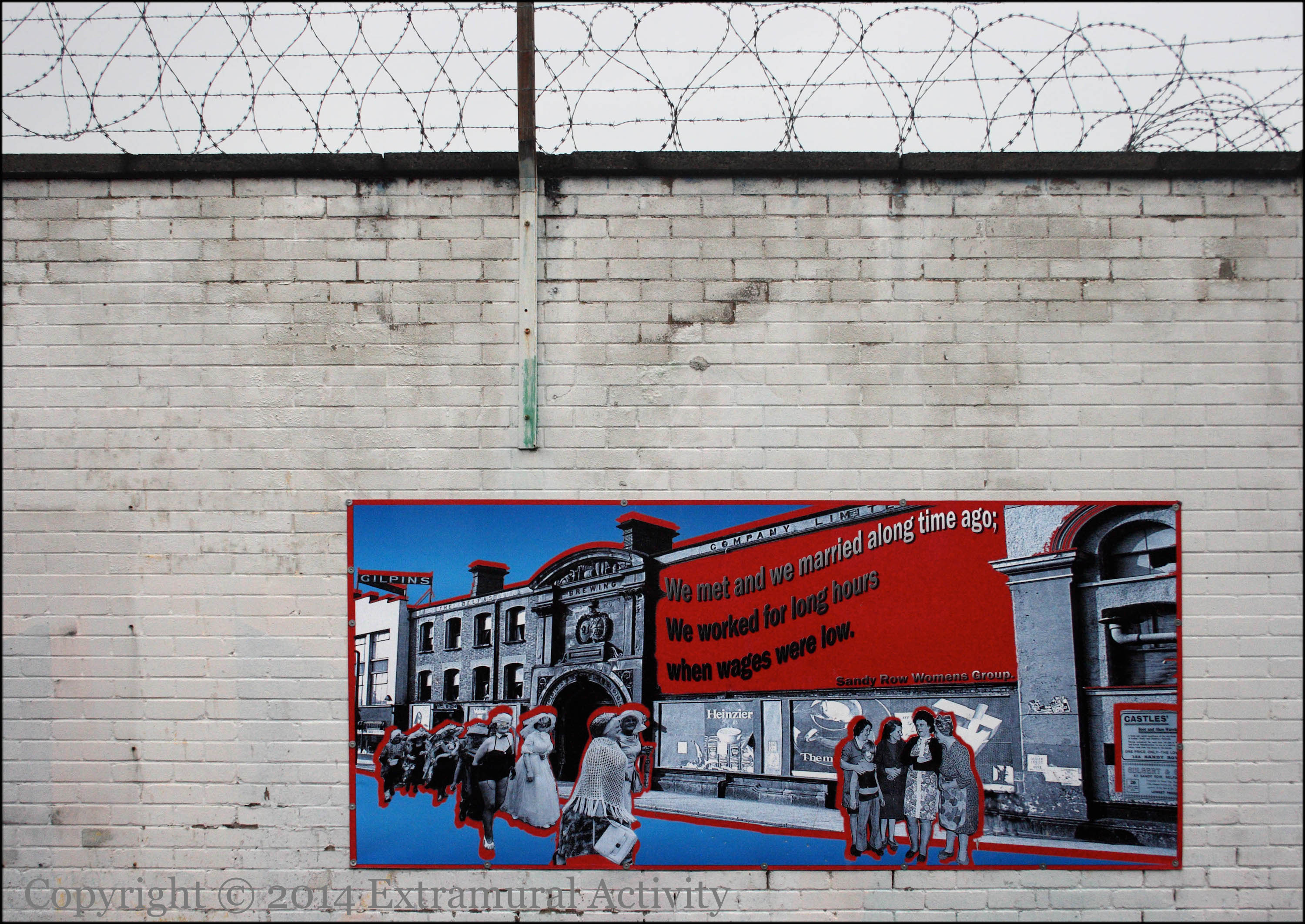
We met and we married along time ago; we worked for long hours when wages were low.”
Above and below are boards 3 and 4 of the ‘Sandy Row memories’ at the end of Blythe Street, showing Murray’s Tobacco Factory (in Linfield Road/Sandy Row, which closed in 2005 before being refurbished and opening in 2012 as Murray’s Exchange) and the old Belfast & Ulster Brewing building (unchanged image here), home to the south Belfast Ulster Volunteers (Sandy Row History) and most recently (until 2007) the home of Gilpin’s Furniture.
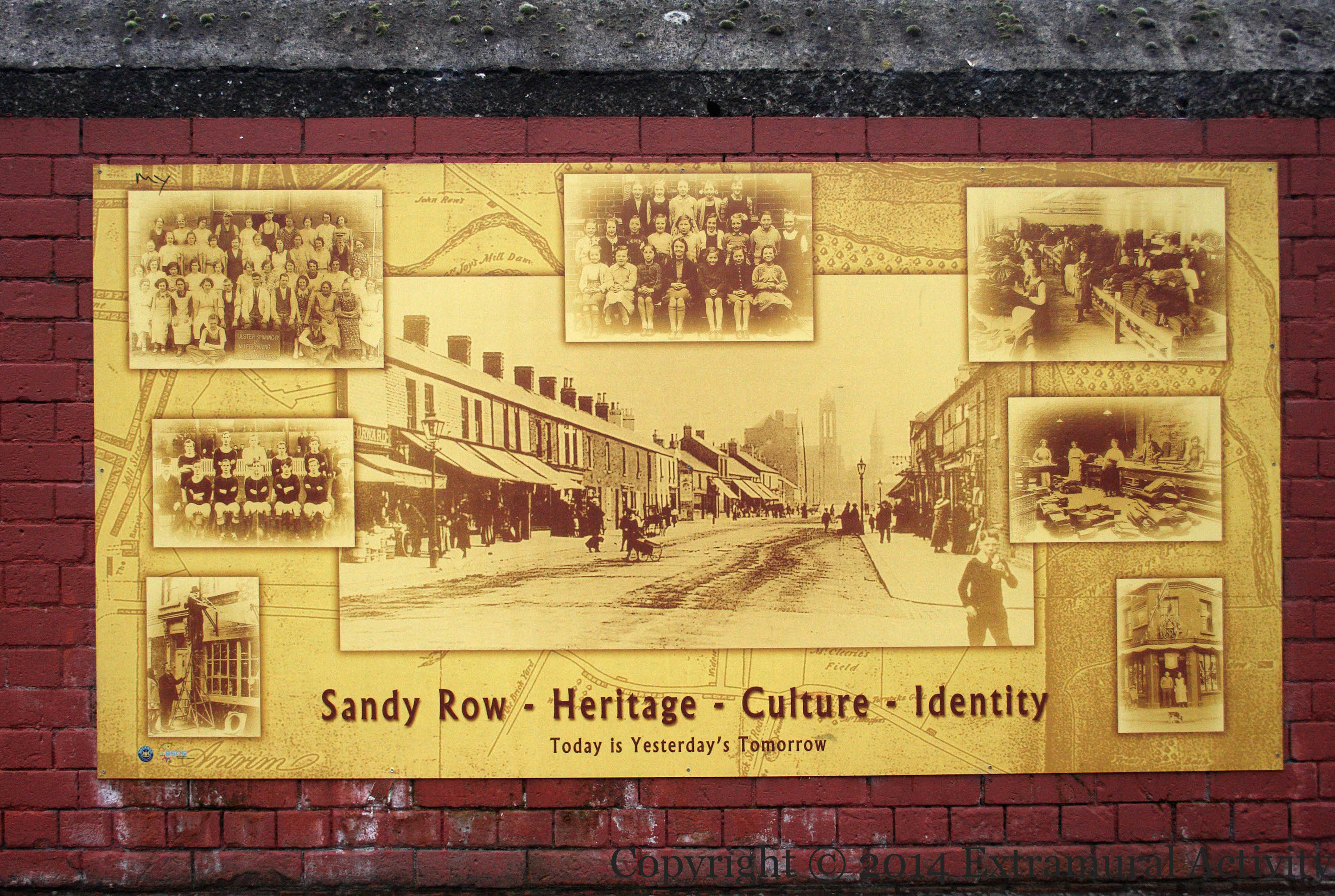
“Today is yesterday’s tomorrow”. Vintage images of Sandy Row, including the Ulster Spinning Company and the Royal Bar, make up this “Heritage – Culture – Identity” board on Donegall Road. The central image is part of this photo montage.
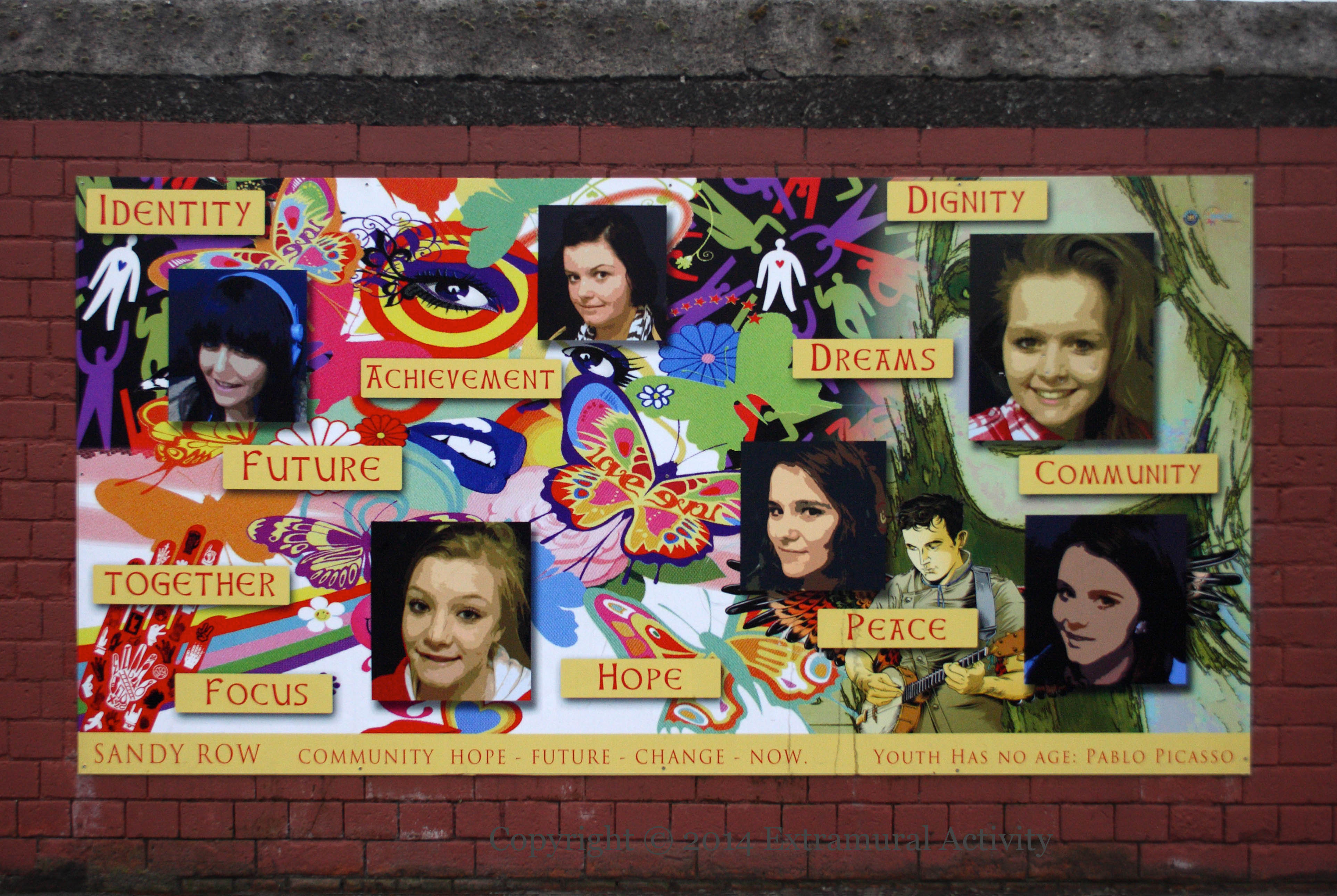
“Youth has no age – Pablo Picasso”. Above is one of the panels on Donegall Road, just above the City Hospital railway stop, celebrating the Sandy Row community.
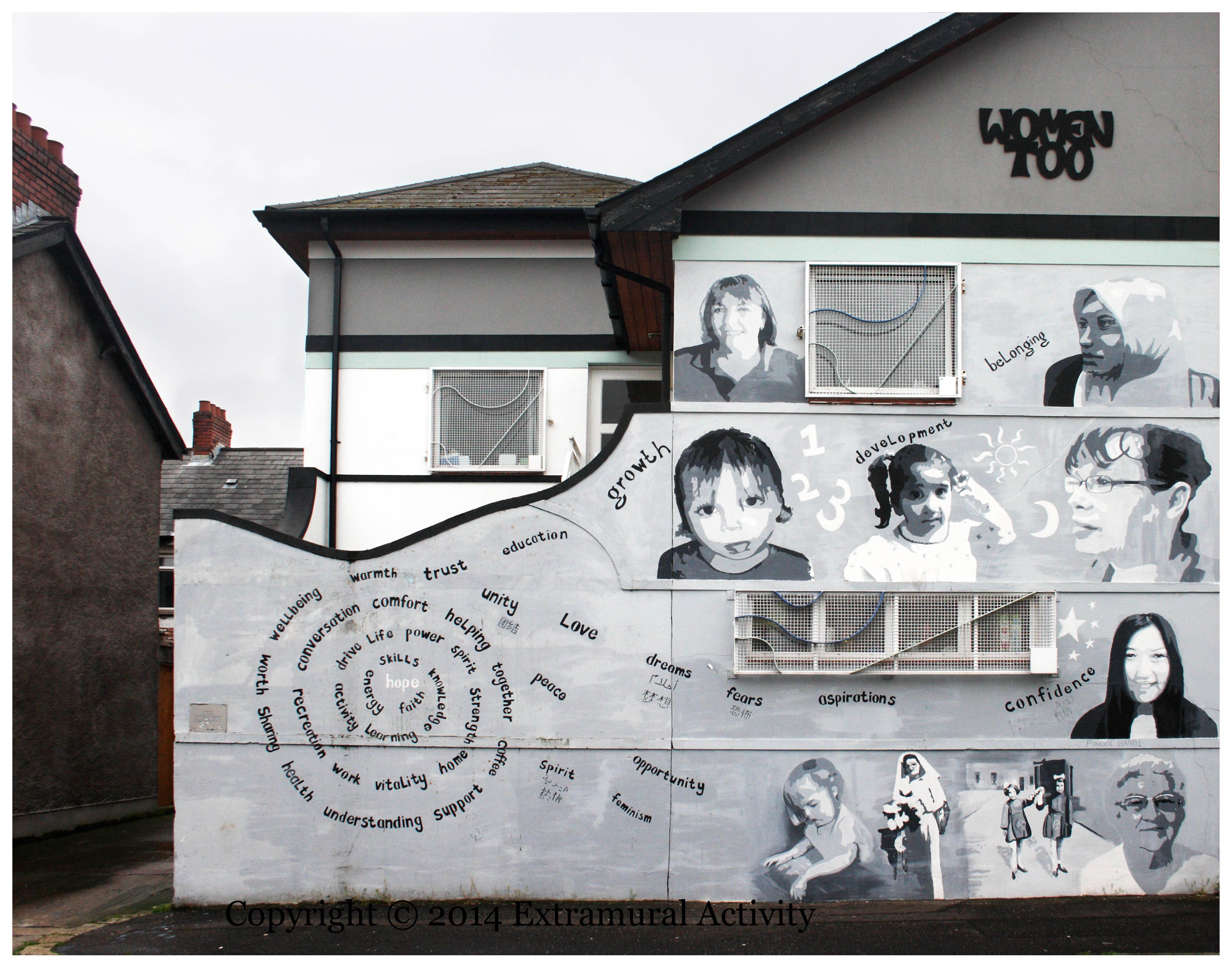
The Windsor Women’s Centre in the Village area of south Belfast has been providing support services for women and families since 1990. This black and white but multicultural mural on the Kilburn Street side of the building by Joanne Vance includes images of women who use the centre.
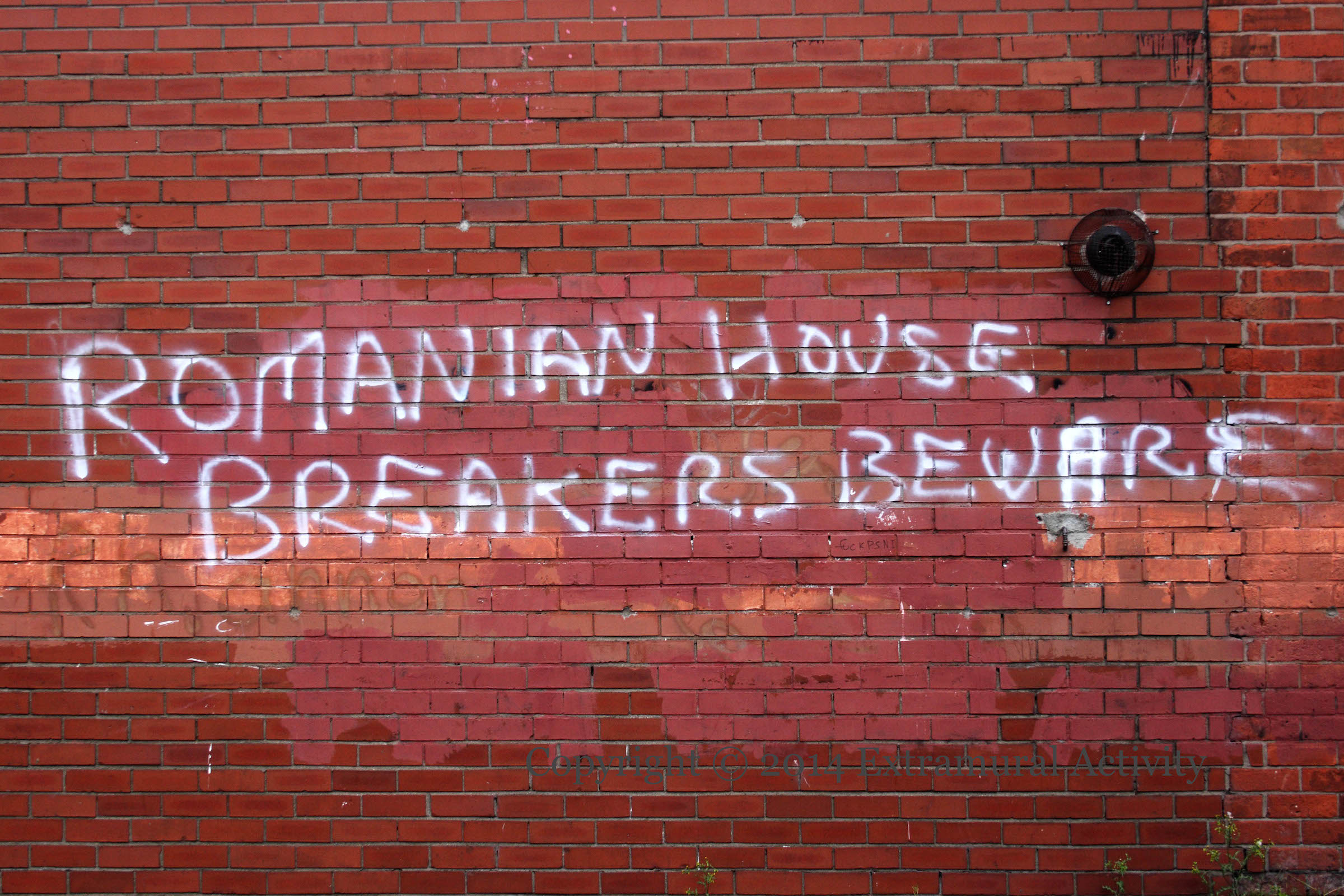
Graffiti in The Village area (south Belfast). The precise reason for the graffiti is unknown (leave a comment/e-mail if you know). Romanians were in the first wave of European immigration to Northern Ireland and came under attack especially in 2009. More recently, a Romanian had faeces thrown at him last week (BelTel) and attacks against immigrants, Poles in particular, have been on the rise in recent months. The latest is this attack (Tele) on a family in Templemore Avenue and an attack by a gang of fifteen people (Guardian). Last week saw “Locals only/Get out!” graffiti in east Belfast (U.tv – includes video| The Journal) and south Belfast (NewsLetter). Last year, “No blacks” graffiti was directed at two Nigerians, also in east Belfast (BBC). The Polish envoy has expressed his concerns to the PSNI (Guardian | IrishNews).
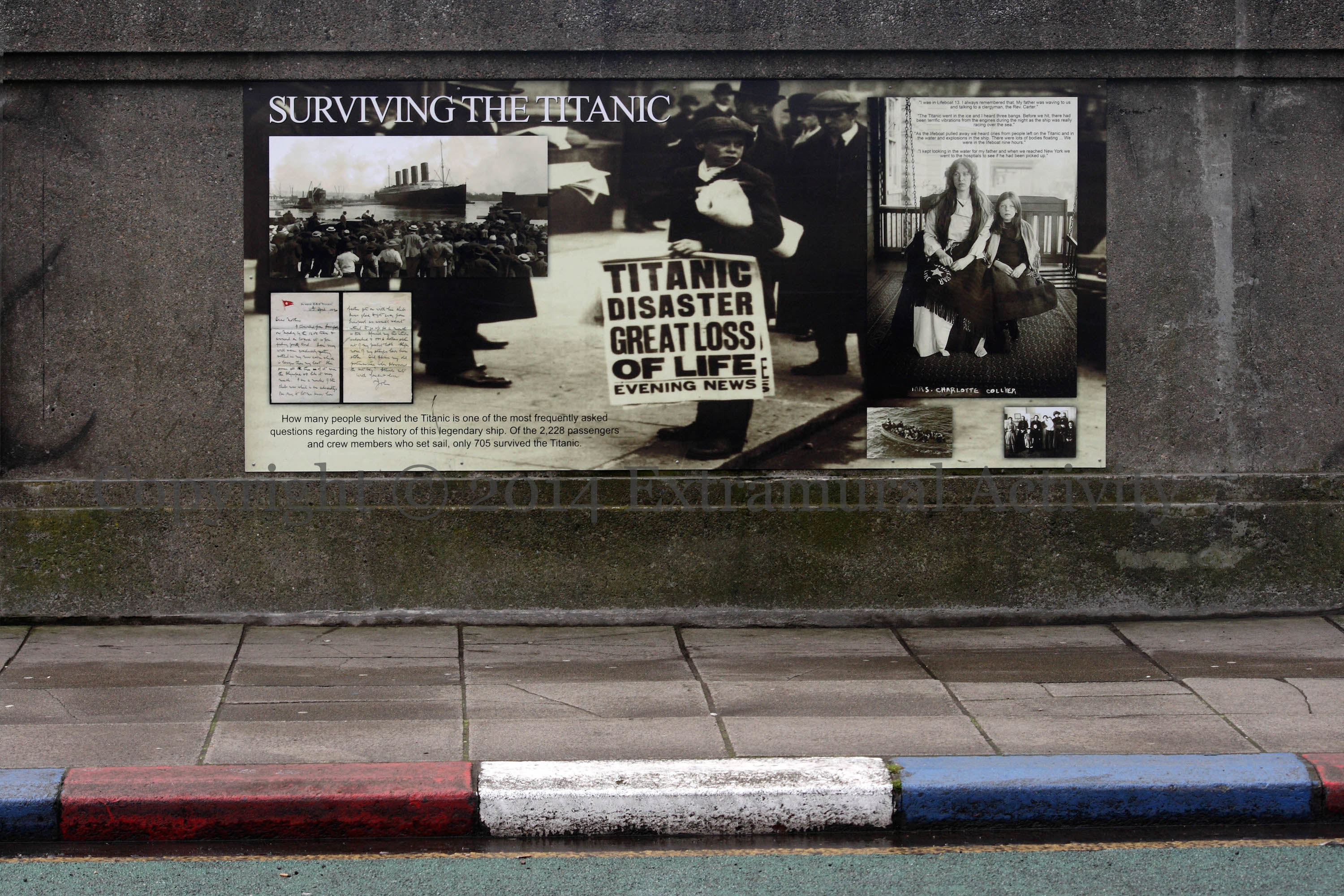
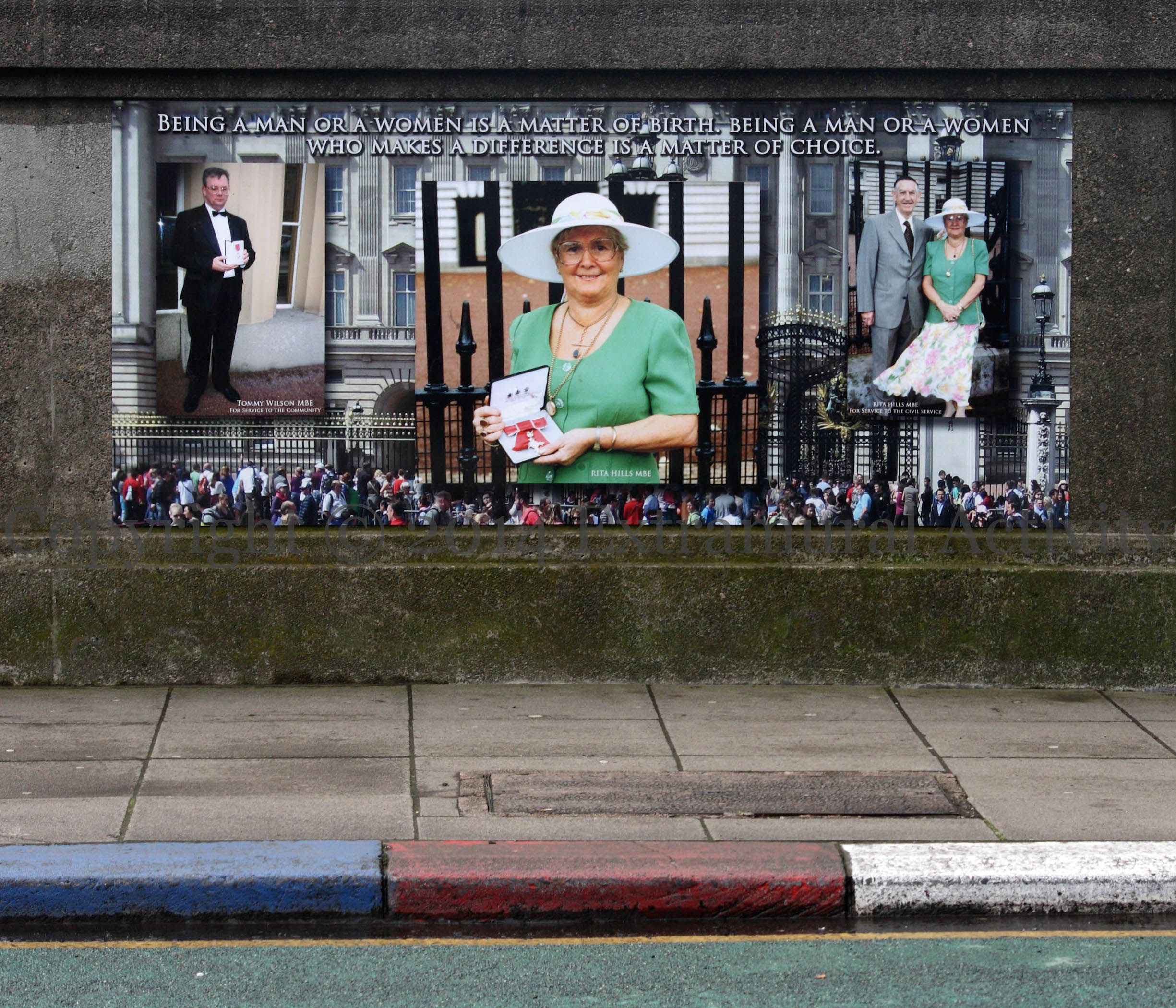
Here are two final images from the south side of the Donegall Road bridge over the Victoria Street line, one about Titanic and the other about locals awarded the MBE.
“I was in Lifeboat 13. I always remember that. My father was waving to us and talking to a clergyman, the Rev. Carter. The Titanic went in the ice and I heard three bangs. Before we hit, there had been terrific vibrations from the engines during the night as the ship was really racing over the sea. As the lifeboat pulled away we heard cries from the people left on the Titanic and in the water and explosions in the ship. There were lots of bodies floating … We were in the lifeboat nine hours. I kept looking in the water for my father and when we reached New York we went to the hospitals to see if he had been picked up.” Mrs. Charlotte Collier
How many people survived the Titanic is one of the most frequently asked questions regarding the history of this legendary ship. Of the 2,228 passengers and crew members who set sail, only 705 survived the Titanic.
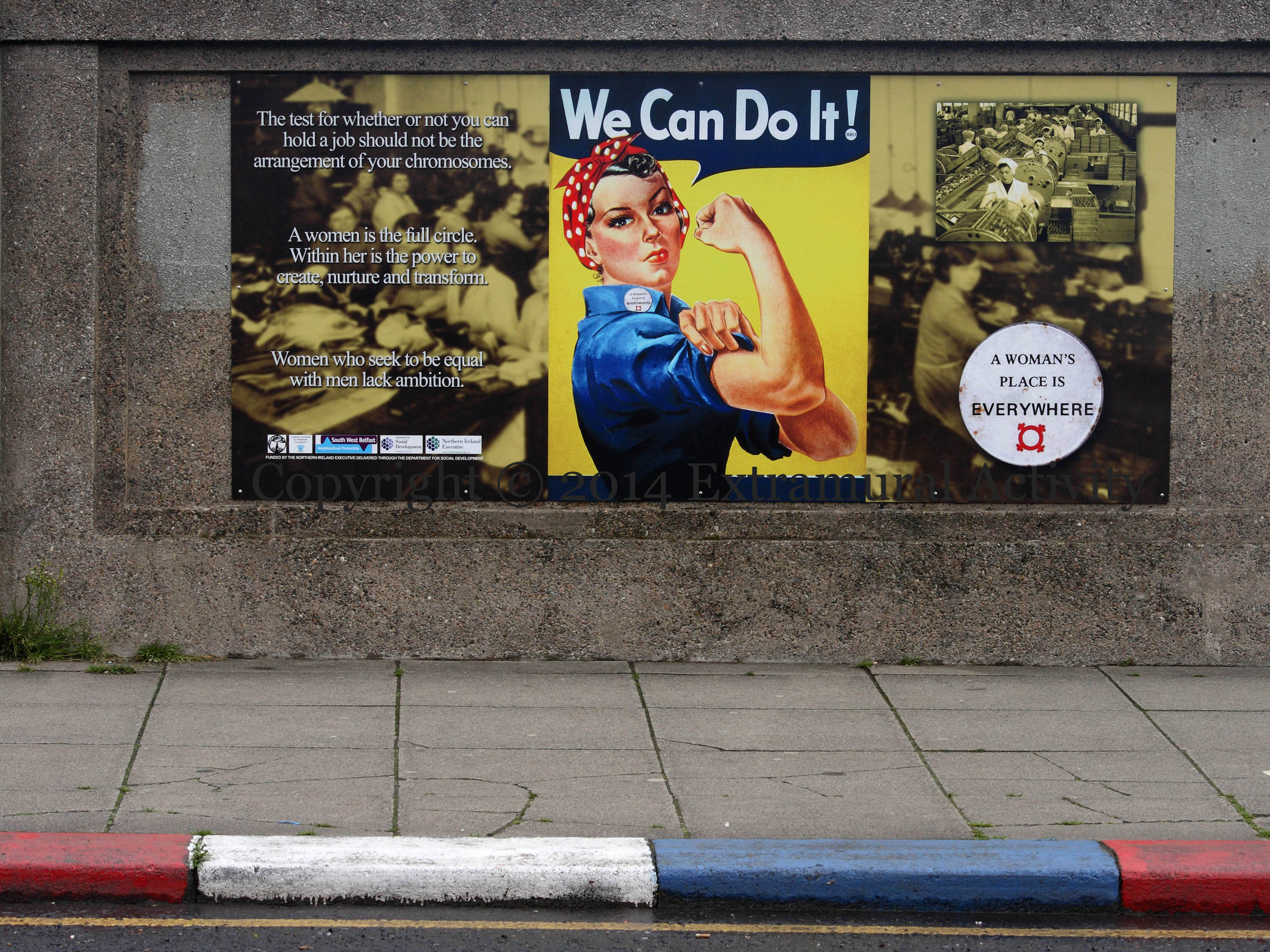
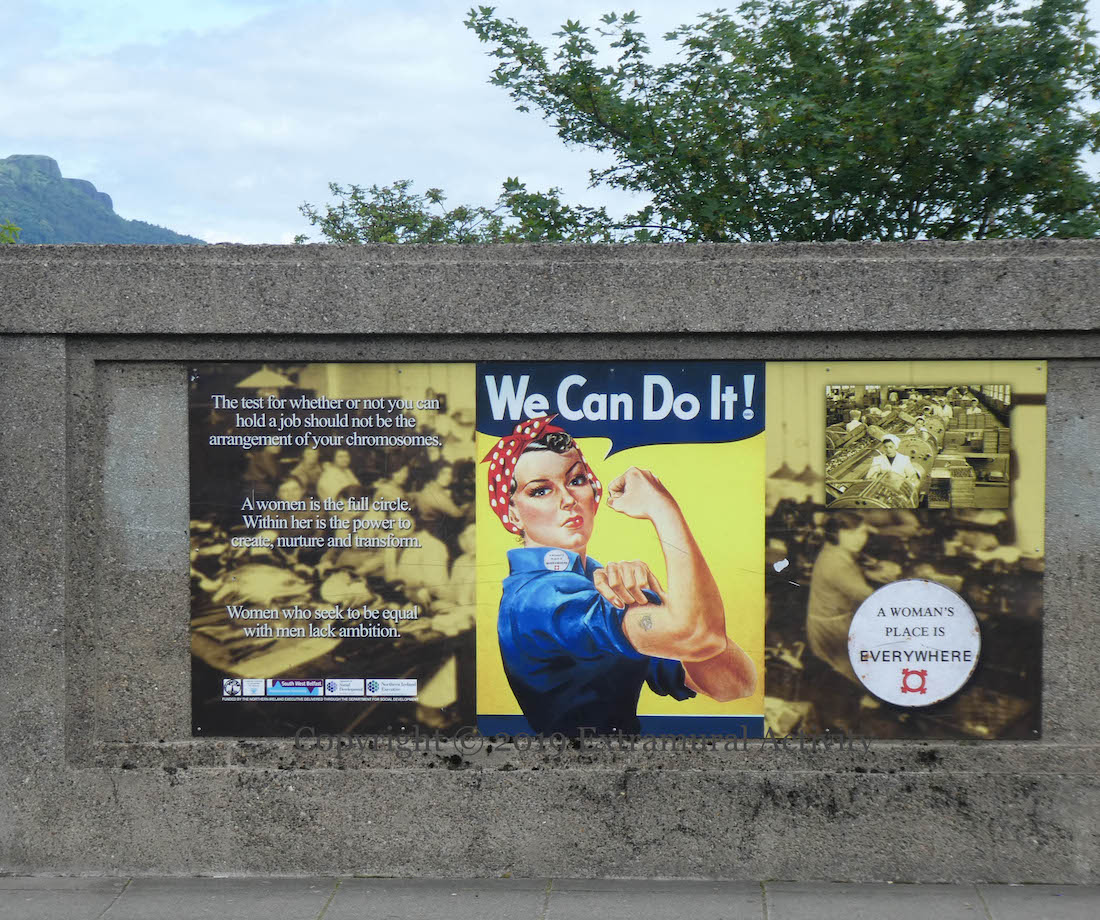
“The test for whether or not you can hold a job should not be the arrangement of your chromosomes. A women is the full circle. Within her is the power to create, nurture and transform. Women who seek to be equal with men lack ambition.” This past Saturday (2015-03-08) was International Women’s Day. The board above (on one of the Donegall Road bridges) features the Westinghouse ‘We Can Do It!’ poster (often mistaken for Rosie The Riveter) (WP) though here with a women’s liberation badge on her collar (shown in large size on the right). She is between images of women at work. See also: The Home Front.
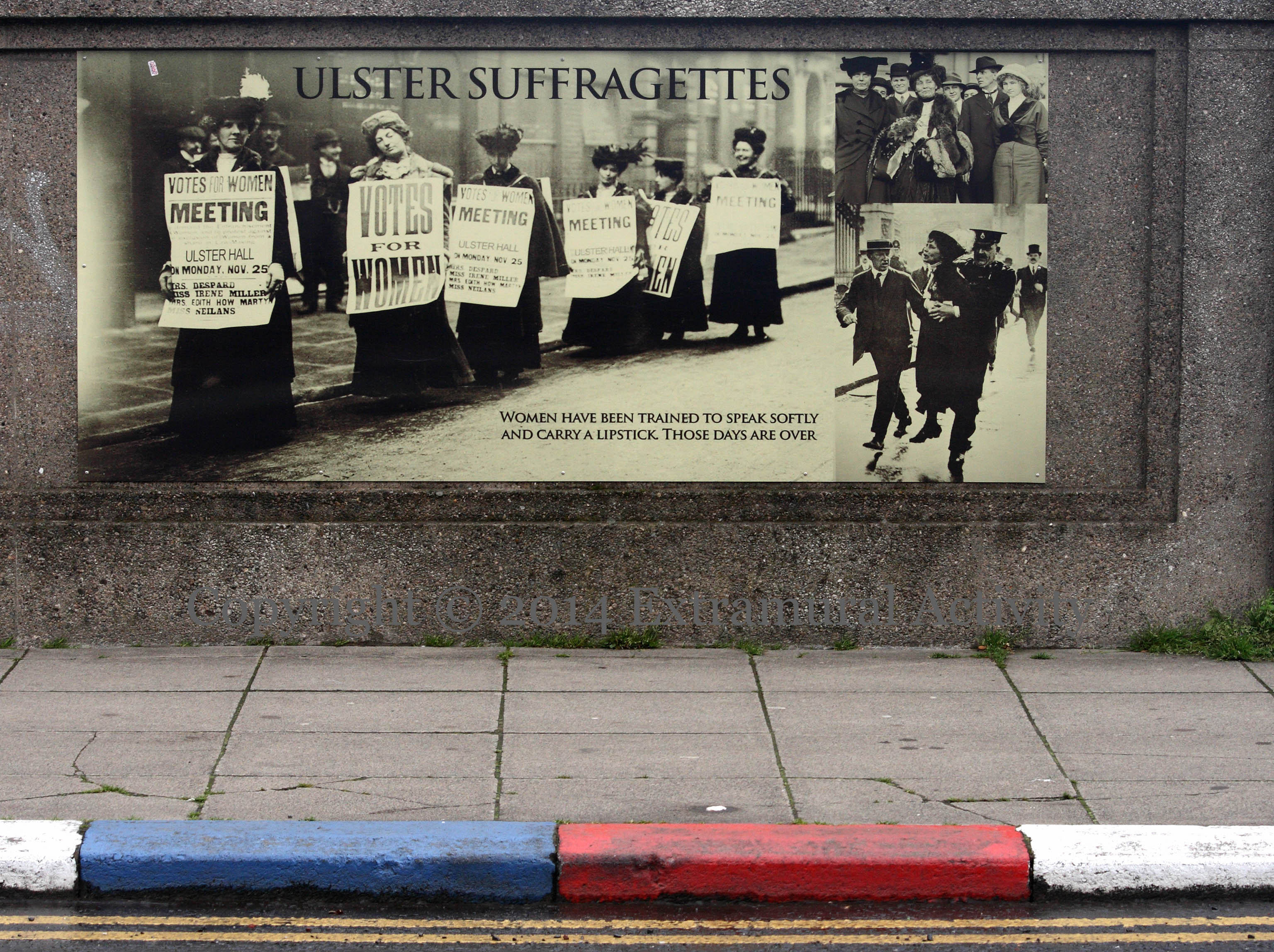
“Women have been trained to speak softly and carry a lipstick. Those days are over.” (Bella Abzug).
Above is a board on the Donegall Road bridge showing women drumming up an audience for a suffragette meeting in the Ulster Hall in November 1912. The image in the bottom right is of Emmeline Pankhurst being arrested in London in 1914; the top image is of Pankhurst on tour in the US in 1913 (LoC; see Pieces Of History for a description of the tour; she gave a speech entitled ‘Freedom Or Death’). Pankhurst spoke in Belfast at the 1912 meeting, though the speakers advertised on the placards are “Mrs Charlotte Despard, Miss Irene Miller, Mrs Edith How-Martyn, Miss Alison Neilans“.
The first suffrage group in Ireland was the North Of Ireland Women’s Suffrage Society, founded in Belfast in 1872 by Isabella Tod.
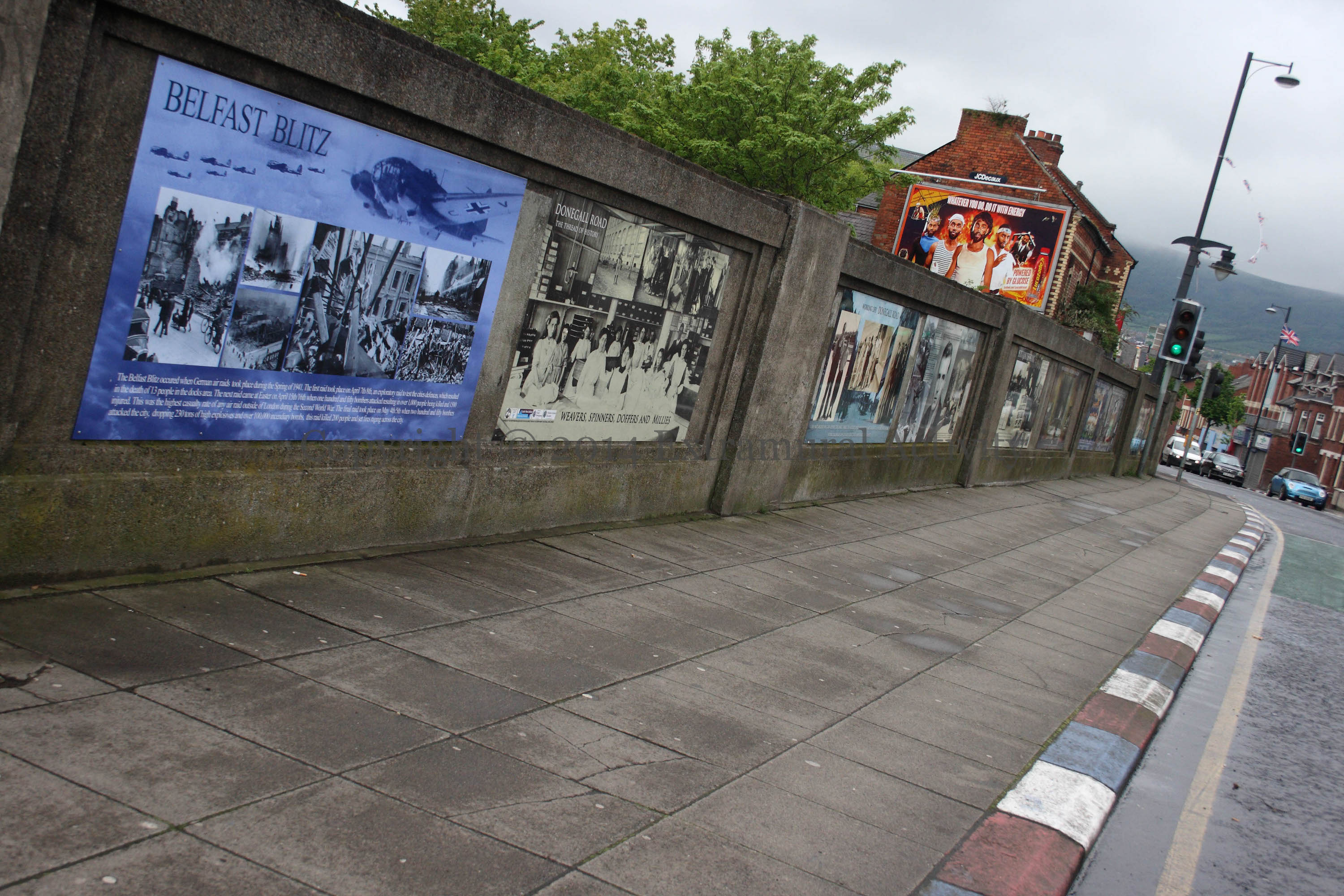
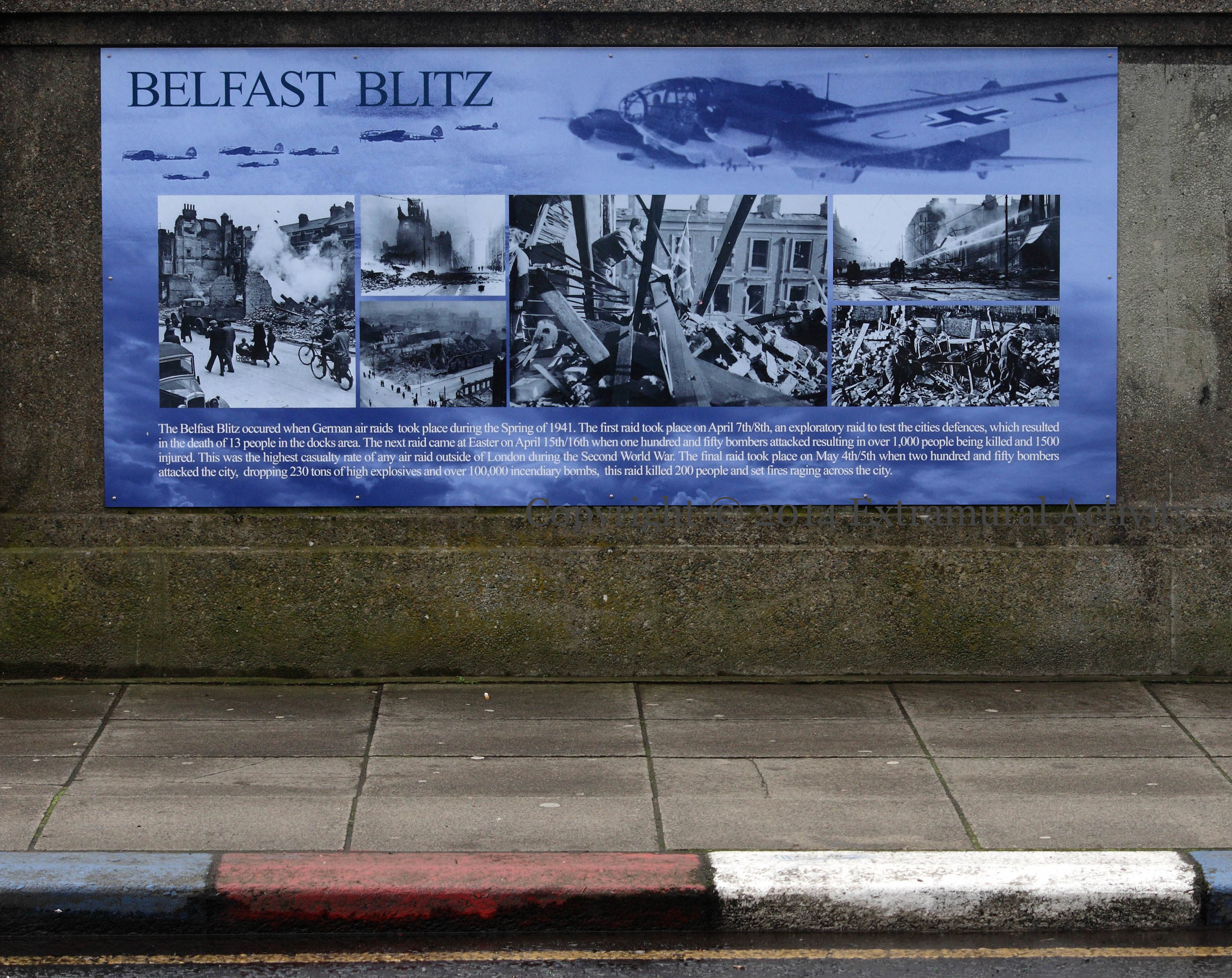
“The Belfast blitz occur[r]ed when German air raids took place during the spring of 1941. The first raid took place on April 7th/8th, an exploratory raid to test the cities [sic] defences, which resulted in the death of 13 people in the docks area. The next raid came at Easter on April 15th/16th when one hundred and fifty bombers attacked resulting in over 1,000 people being killed and 1,500 injured. This was the highest casualty rate of any air raid outside of London during the Second World War. The final raid took place on May 4th/5th when two hundred and fifty bombers attacked the city, dropping 230 tons of high explosives and over 100,000 incendiary bombs, this raid killed 200 people and set fires raging across the city.”
 Seosamh Mac Coille Collection