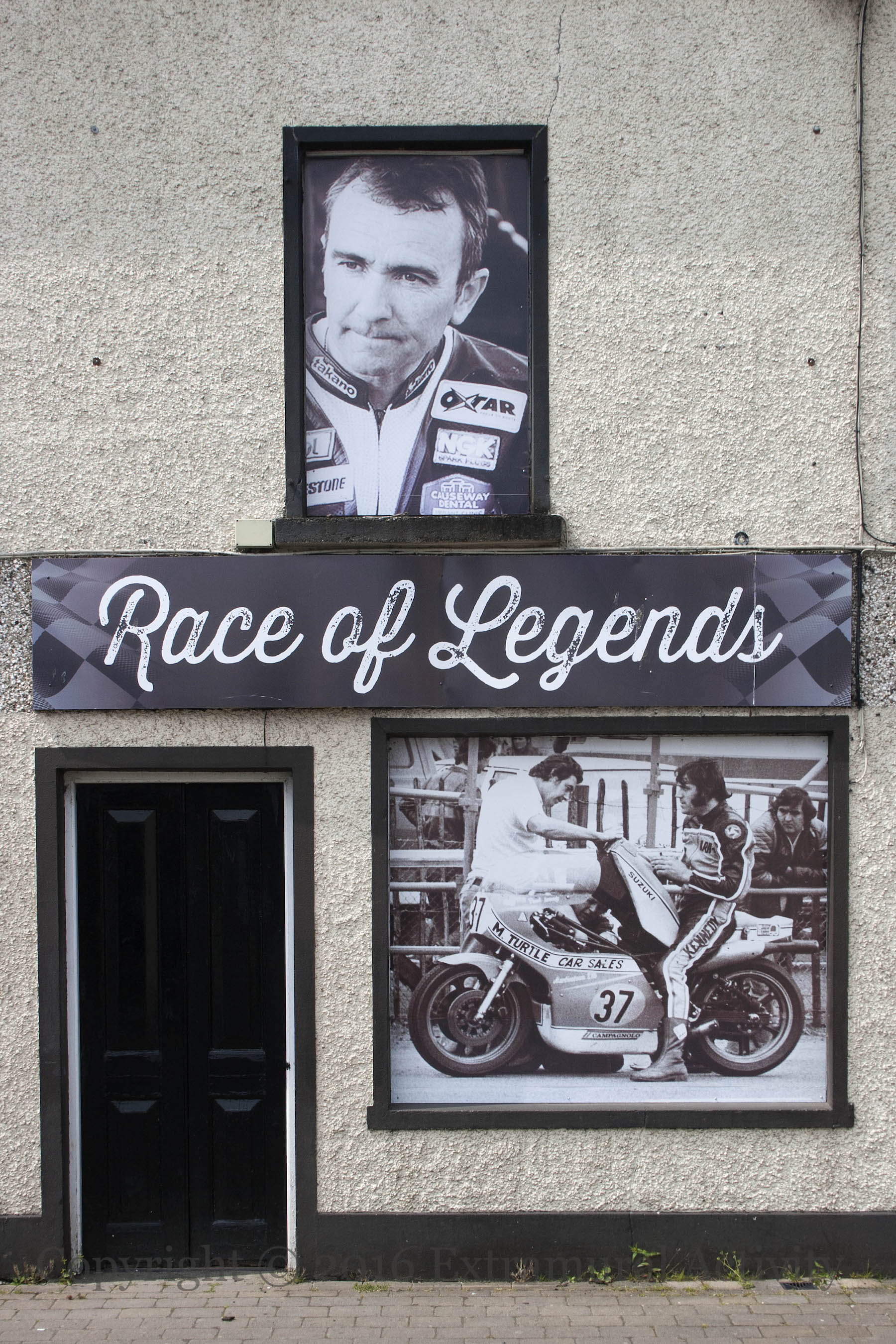
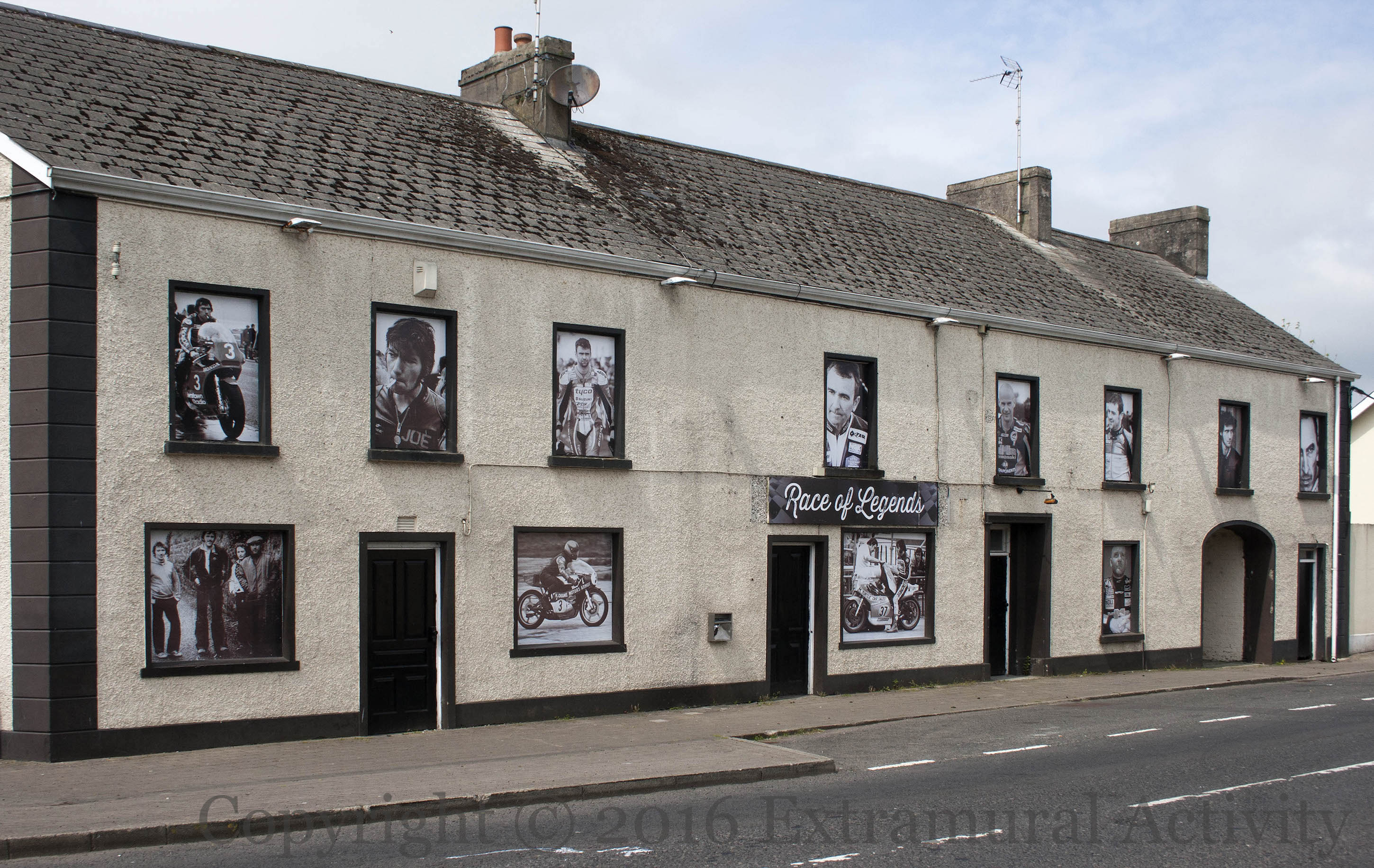
The town of Armoy, County Antrim, hosts an annual motorcycling road race, the Race Of Legends. The windows of the (closed) Victory Bar is filled with images of motorcyclists. Robert Dunlop is shown above and brother Joey is two windows to the left. Both brothers died as a result of racing accidents. Sons William and Michael are also featured.
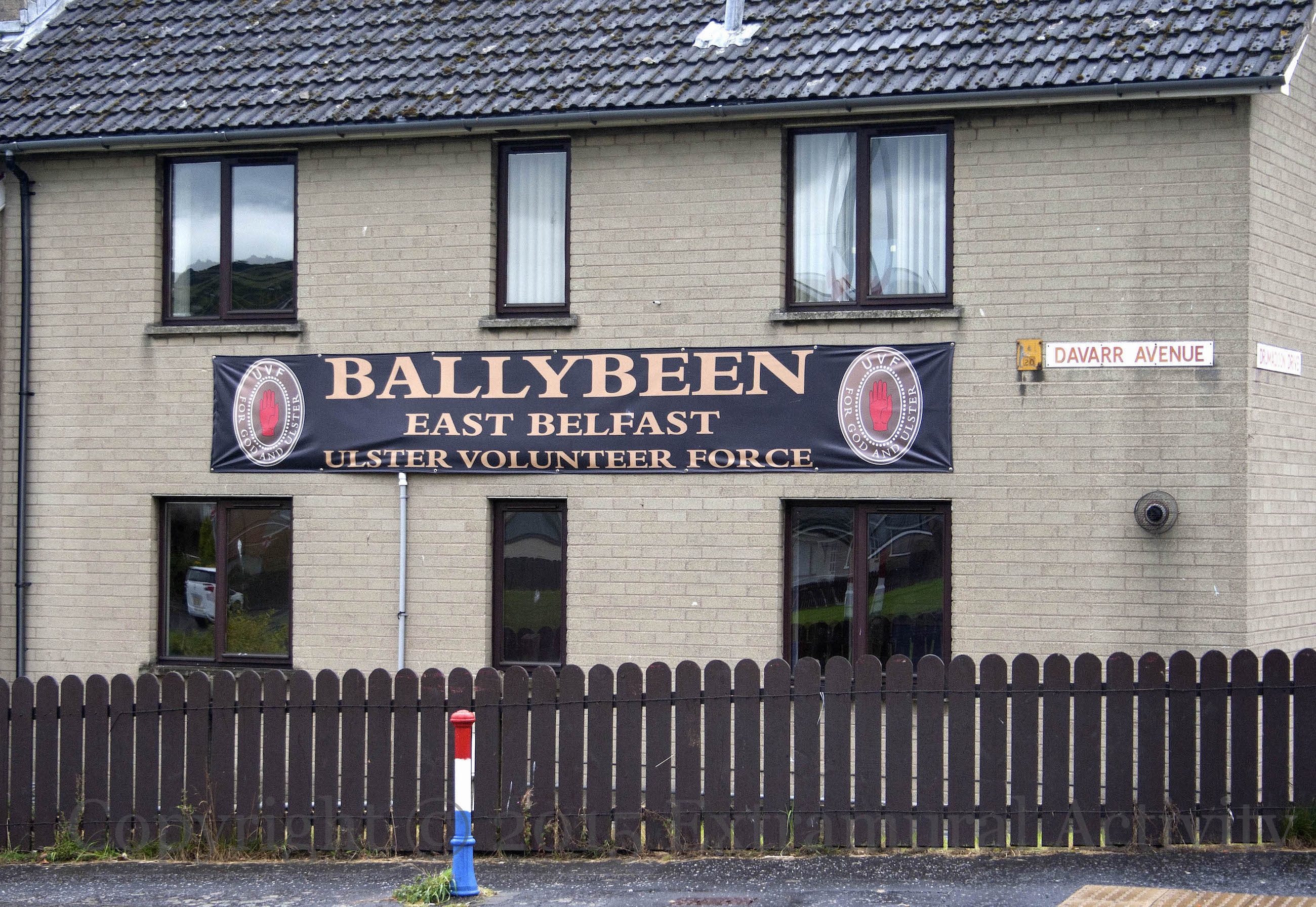
Next to the bonfire site at the southern (Drumadoon Drive) entrance to Ballybeen, the banner on the building above proclaims the area’s paramilitary allegiance: East Belfast Ulster Volunteer Force.
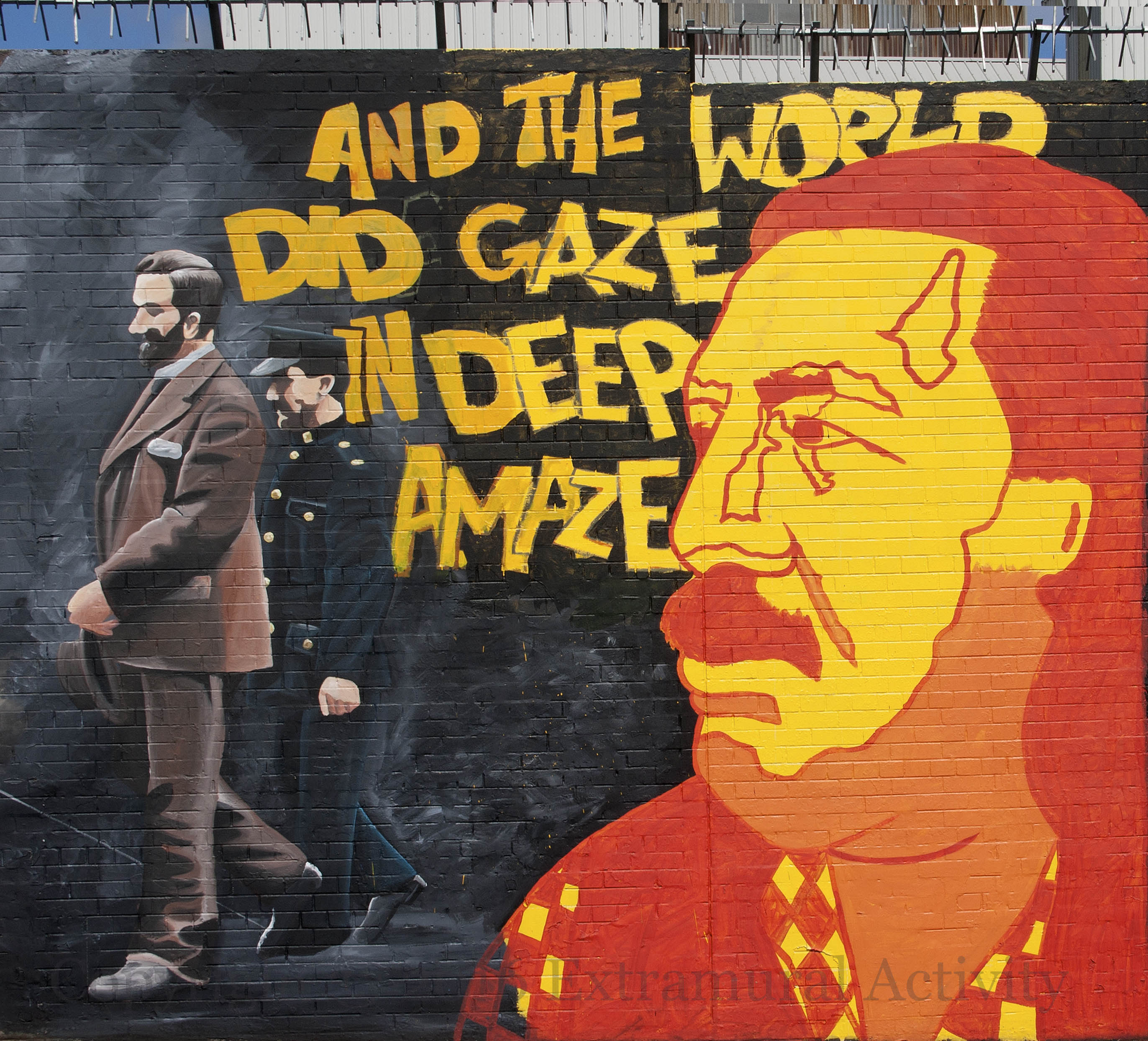
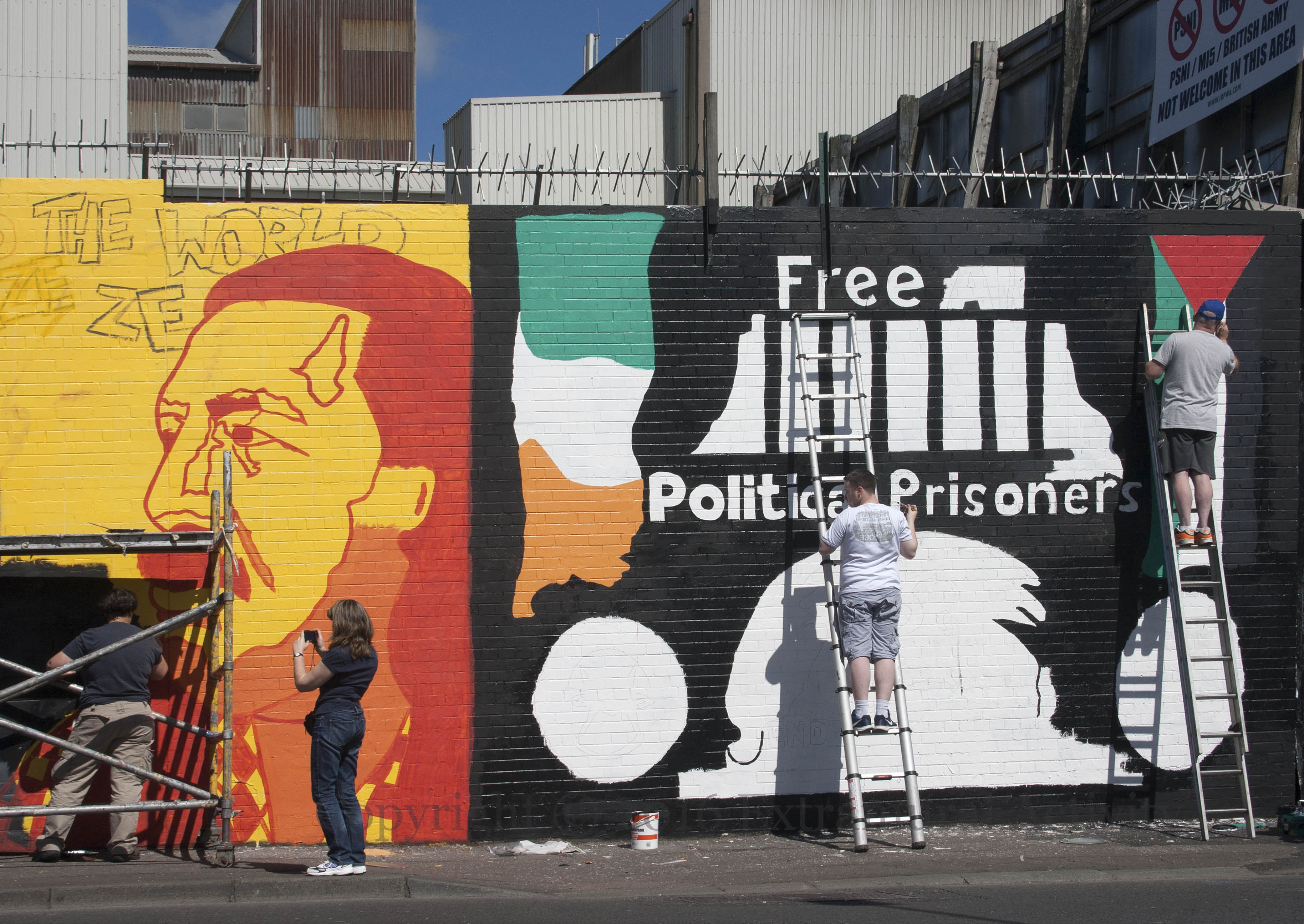
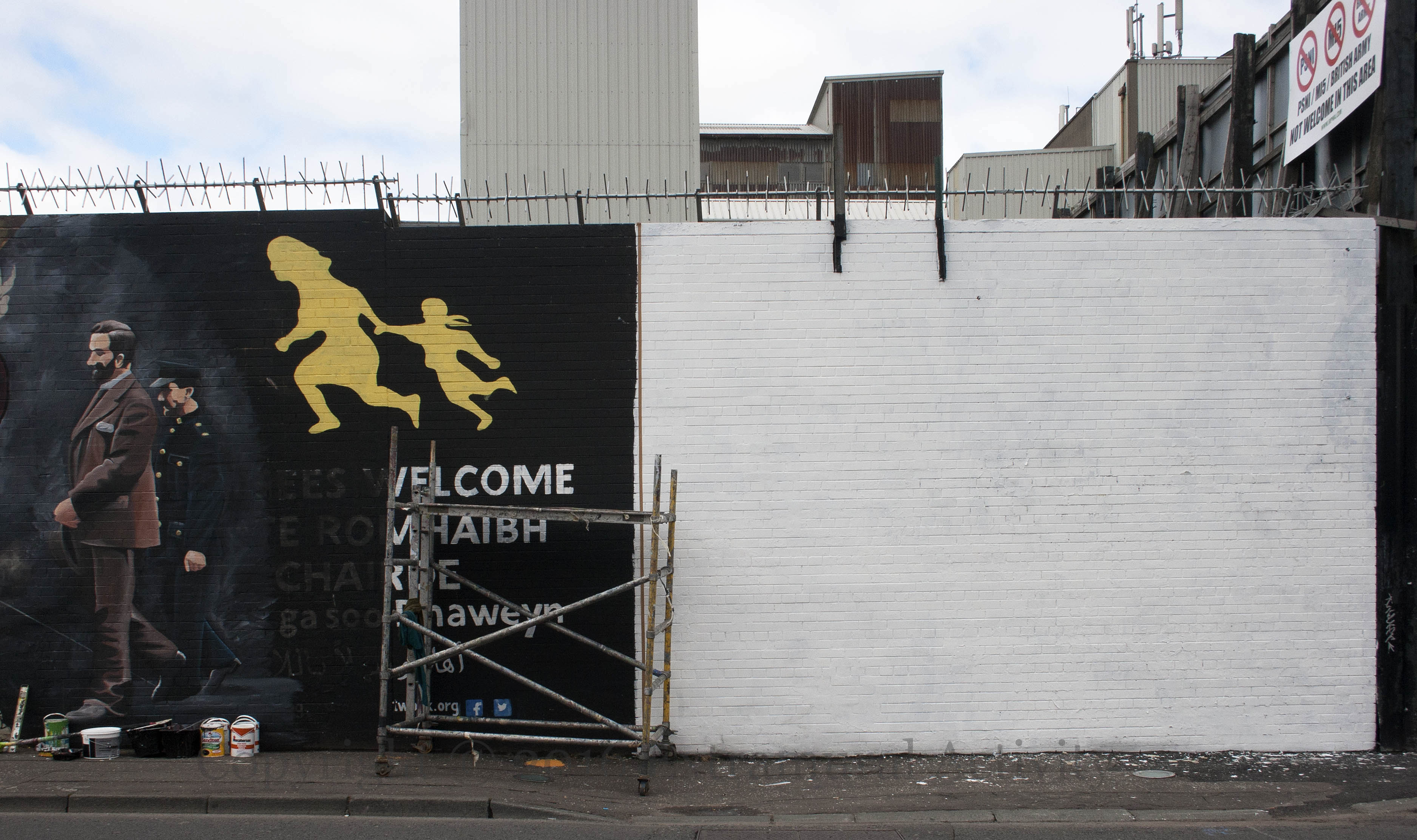
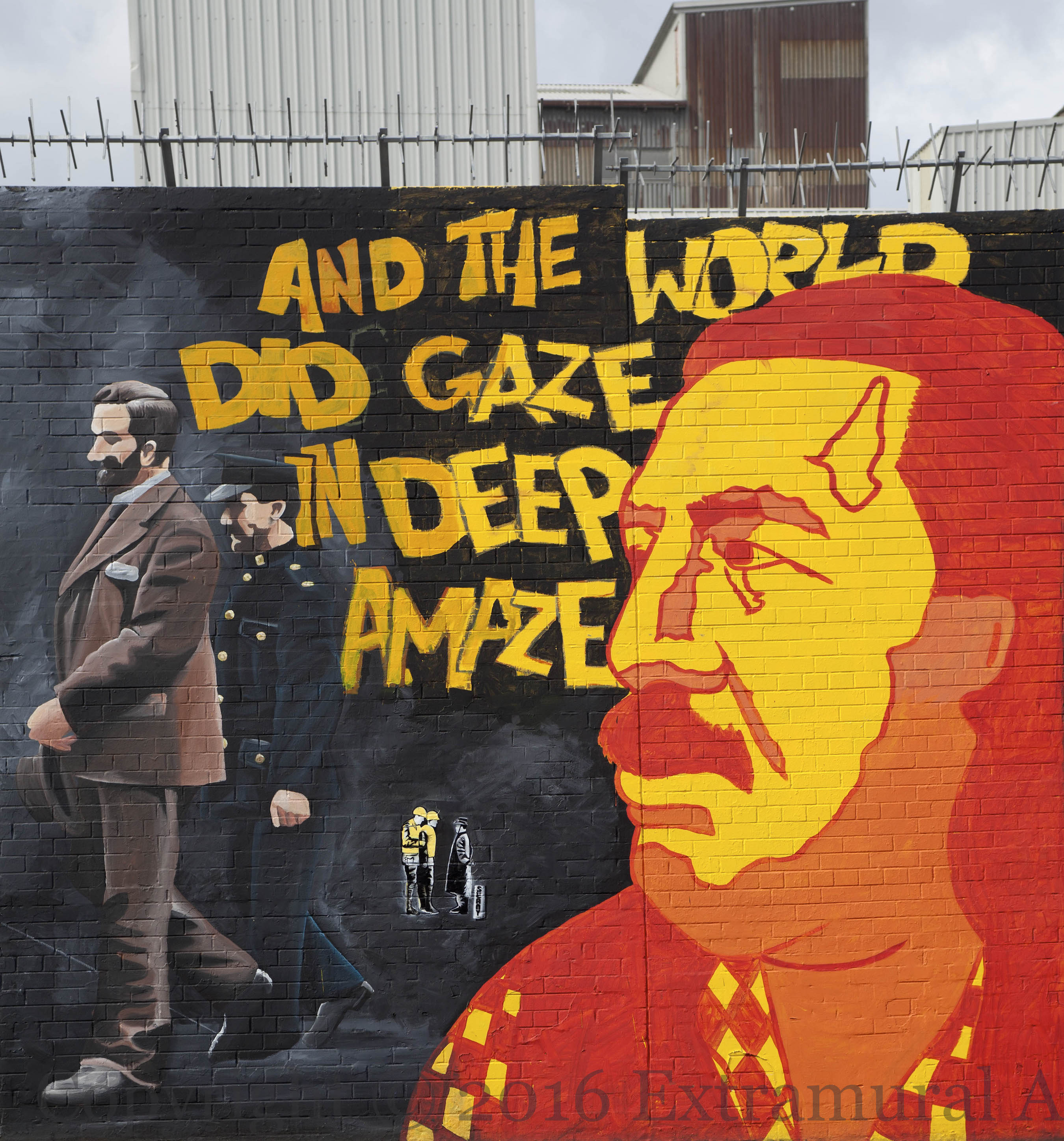
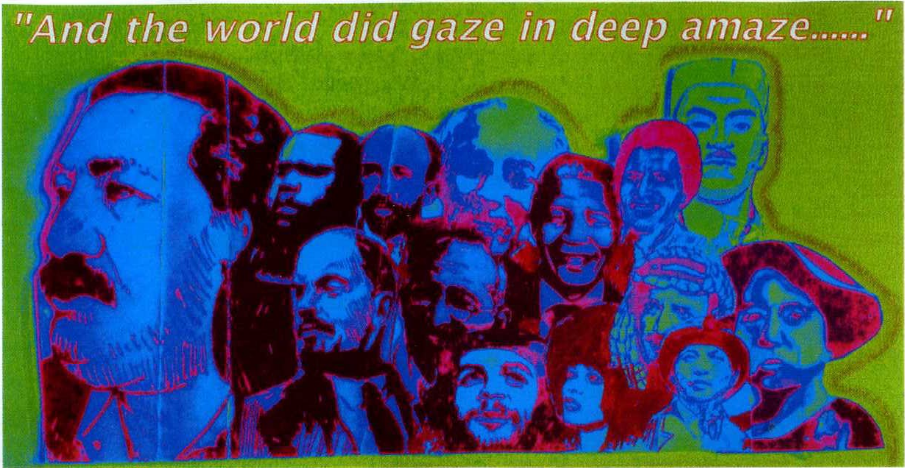
Towards the end of July, the IRPWA began painting a POW mural for the right end of the wall, space that the historical painters hoped to use for a gallery of international figures inspired by Irish resistance — Leonard Peltier, Marcus Garvey, V.I. Lenin,W.E.B. DuBois, Mahatma Gandhi, Ho Chi Minh, Che Guevara, Nelson Mandela, Angela Davis, Muammar Gaddafi, Yassar Arafat, General Giap, and Sukhdev Thapar (see the final image, below) — under the title “And the world did gaze with deep amaze” (a line from the song The Foggy Dew).
This would have provided a book-end to the mural similar to the gallery of early nationalist figures at the left-hand end. The IRPWA whitewashed the end of the wall (see the third image, below) and commenced work on a POW mural (leading to two sets of painters working at the wall in late July (second image)). In the end, only Leonard Peltier was painted, in the same style as Wolfe Tone. And later, Seany McVeigh’s Pearse Surrenders To The Developers was added (see the fourth image).
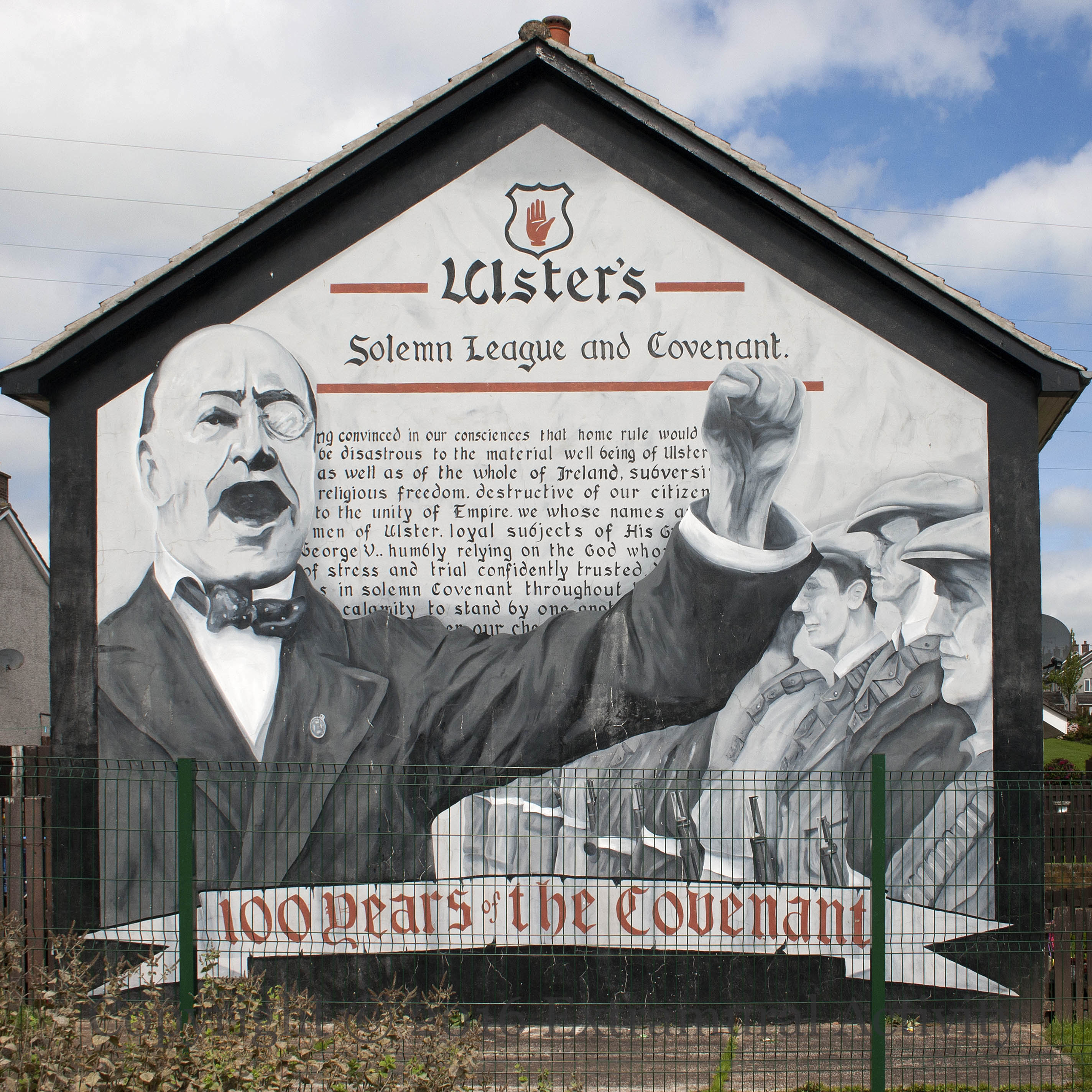
The covenant was signed in September 1912 (as captured in another famous image from Belfast’s City Hall — see Betting Office). The mural above uses the text of the Covenant as a backdrop to a composite of Edward Carson speaking and a row of Ulster Volunteers, formed in January 1913 (see the similar mural First World War).
Alain Miossec/Murals Irlande Du Nord has a post comparing this painted version with the previous plastic version, which is almost identical, apart from Stormont as a backdrop rather than the text of the Covenant.
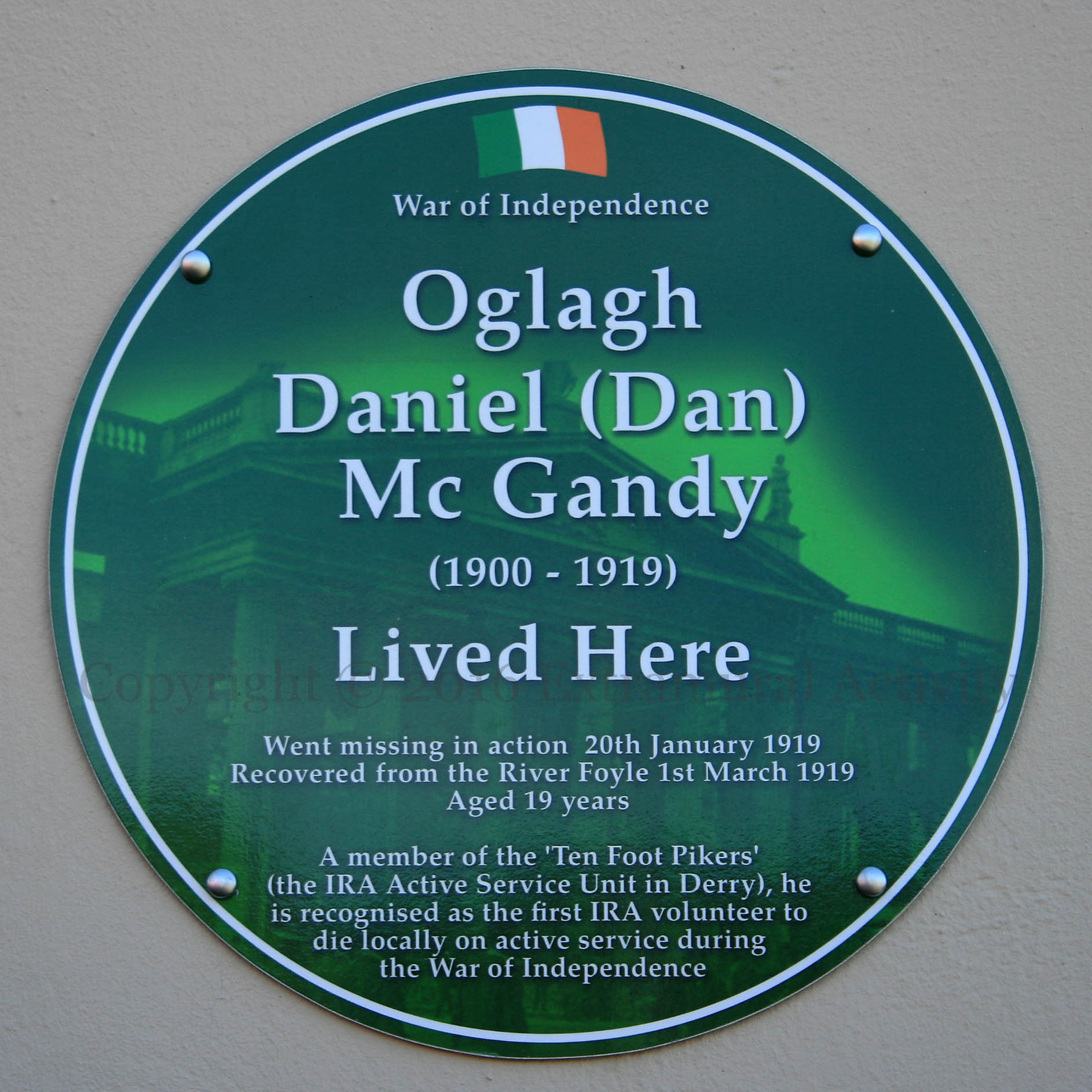
The first few pages of Commandant Michael Sheer’s testimony to the Bureau of Military History describe the activities of the elite squad called the “Ten Foot Pikers”, including how postal officer Dan McGandy stole election ballots sent by mail during the general election of 1918. As described in the plaque above, McGandy went missing in January 1919 and was found in the Foyle six weeks later. This article suggests that he fell in after a struggle with British soldiers who had intercepted him while stealing grenades; this Derry Now article suggests he was thrown in by the soldiers, who then arranged his things to make it appear a suicide.
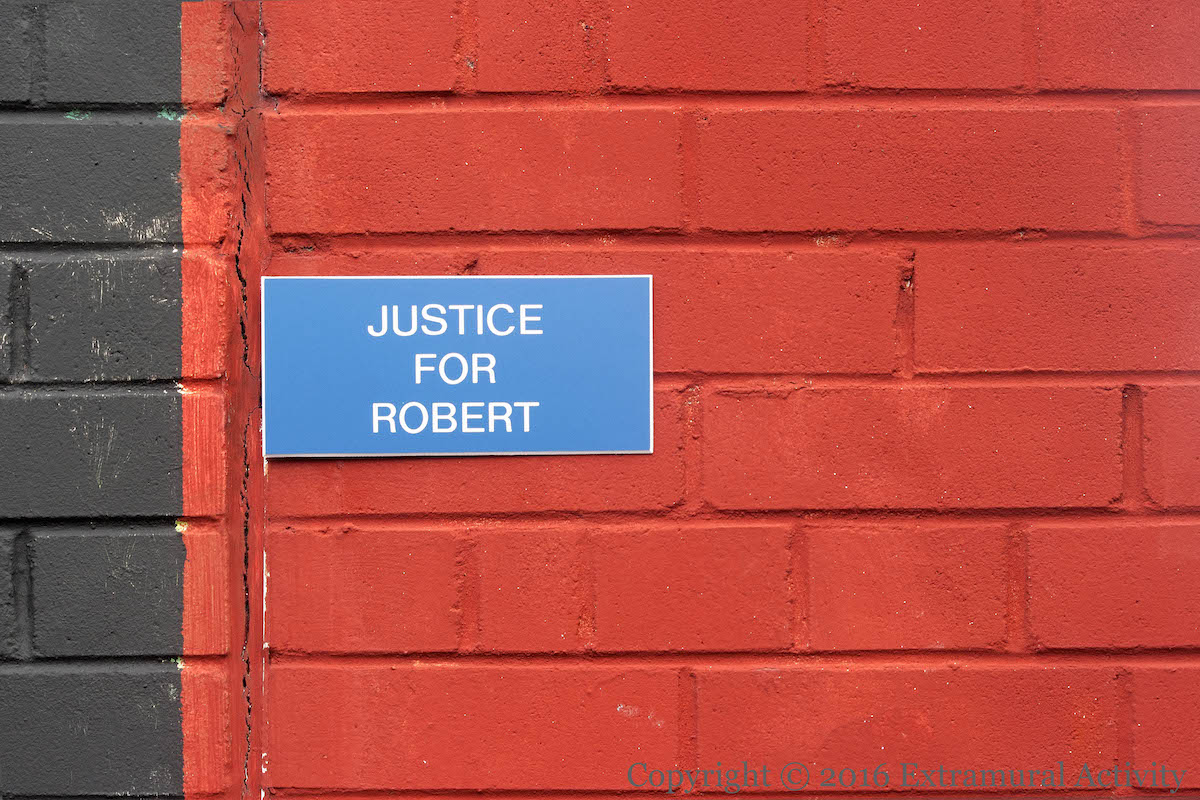
This small plaque is on Northumberland Way, on the ‘Dignity’ panel of the Amnesty mural and to the right of La Historia Es Nuestra. It is presumably a reference to the killing of Robert McCartney (WP) though by the time of this photograph, Jock Davison – whom the family believed had given the order for Robert’s stabbing – had already been shot dead (Bel Tel).
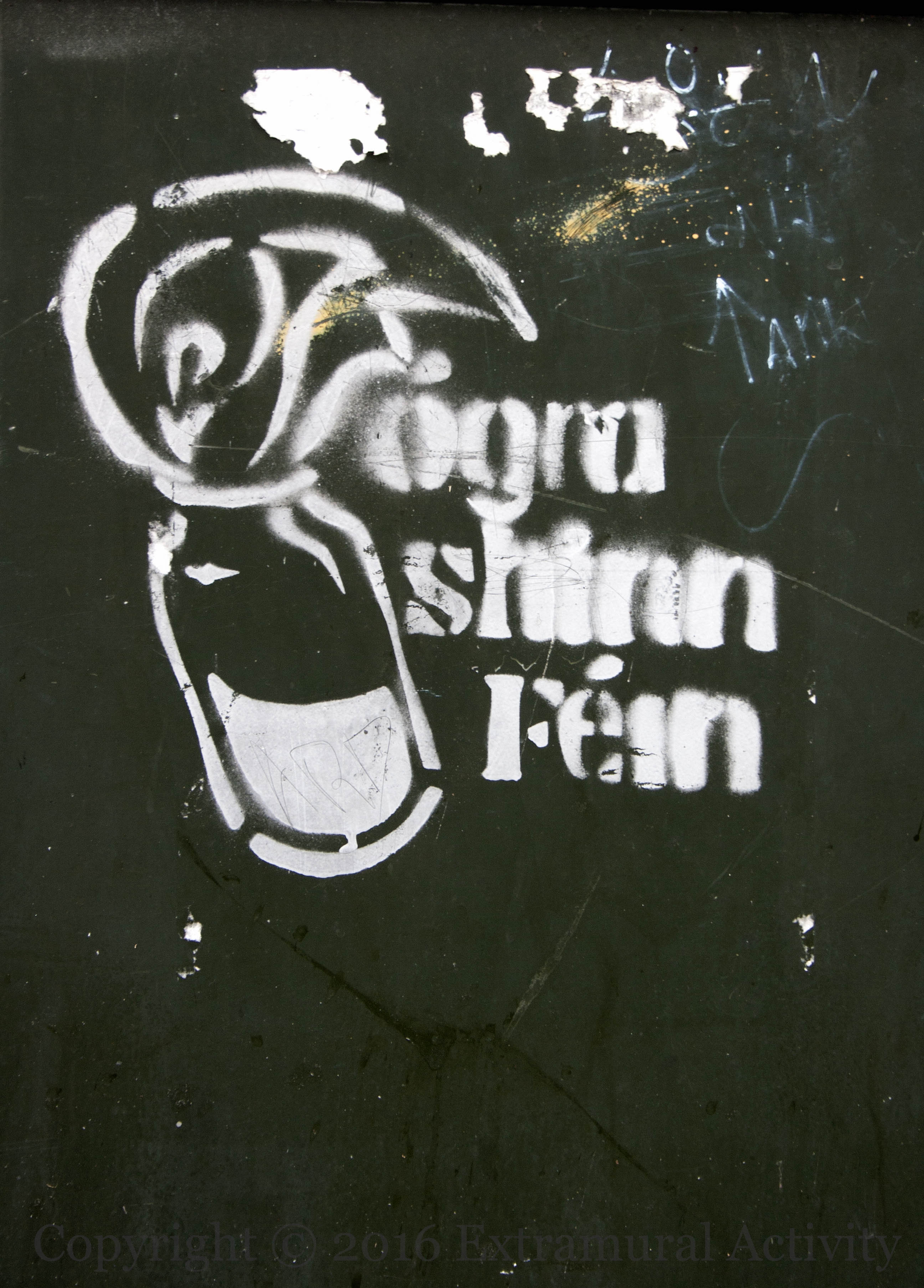
A vintage Ógra Shınn Féın stencil still visible in north Belfast. On the removal of the petrol bomb from the modern Sınn Féın Youth logo, see Slugger O’Toole.
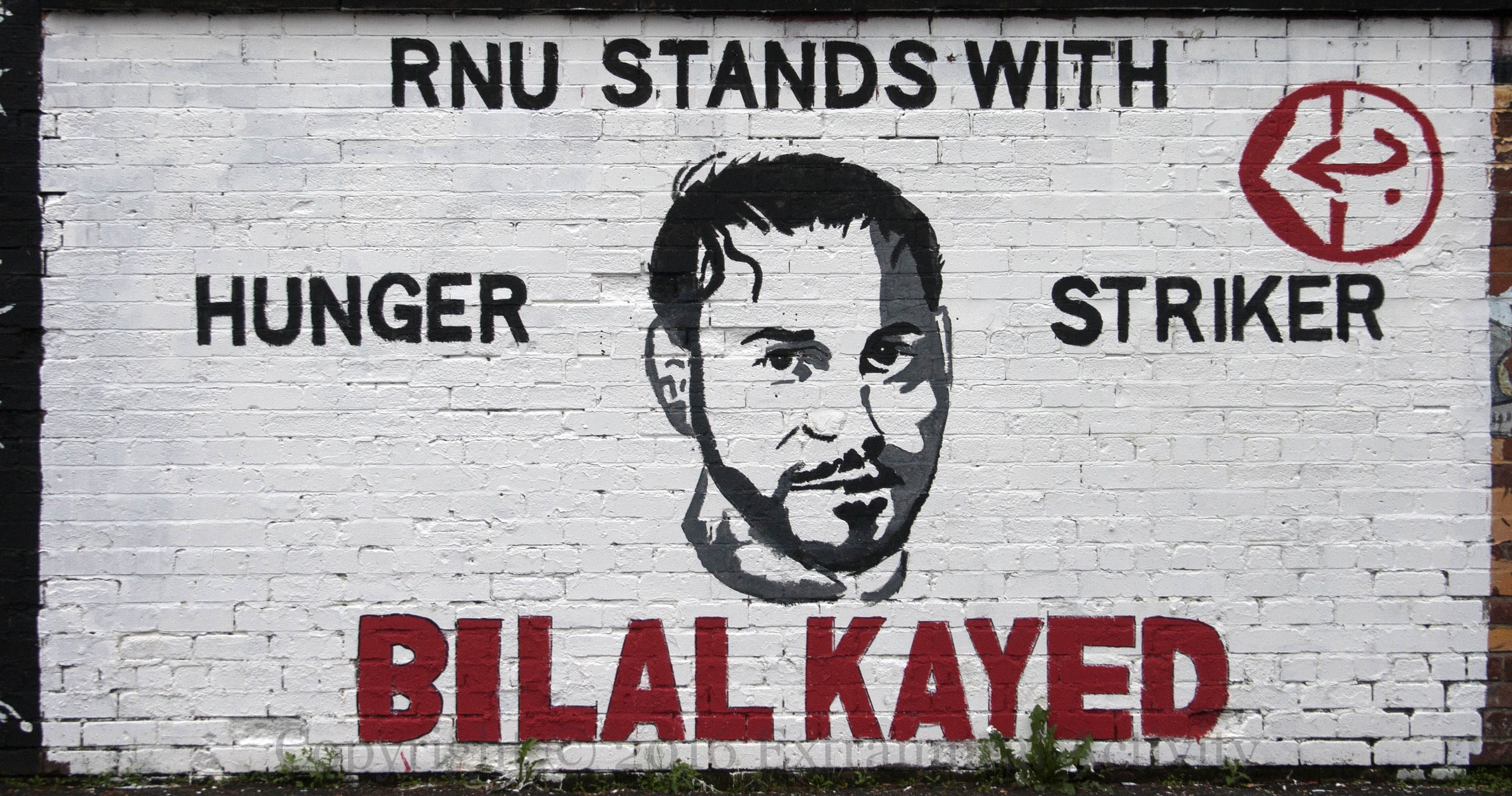
“RNU stands with hunger striker Bilal Kayed”. For more information on this Palestinian prisoner who recently ended his hunger strike, see Administrative Detention. Update: released 2016-12-12.
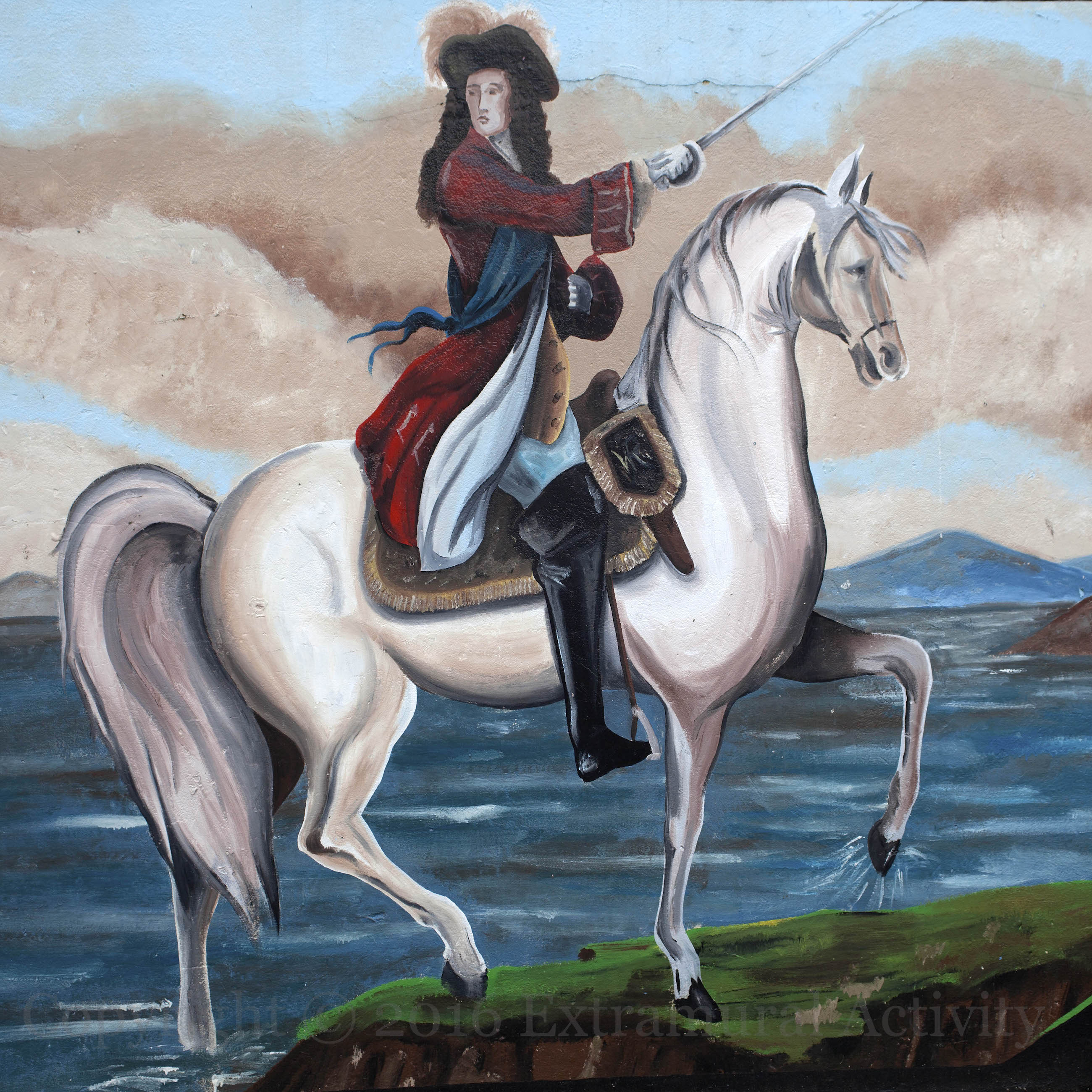
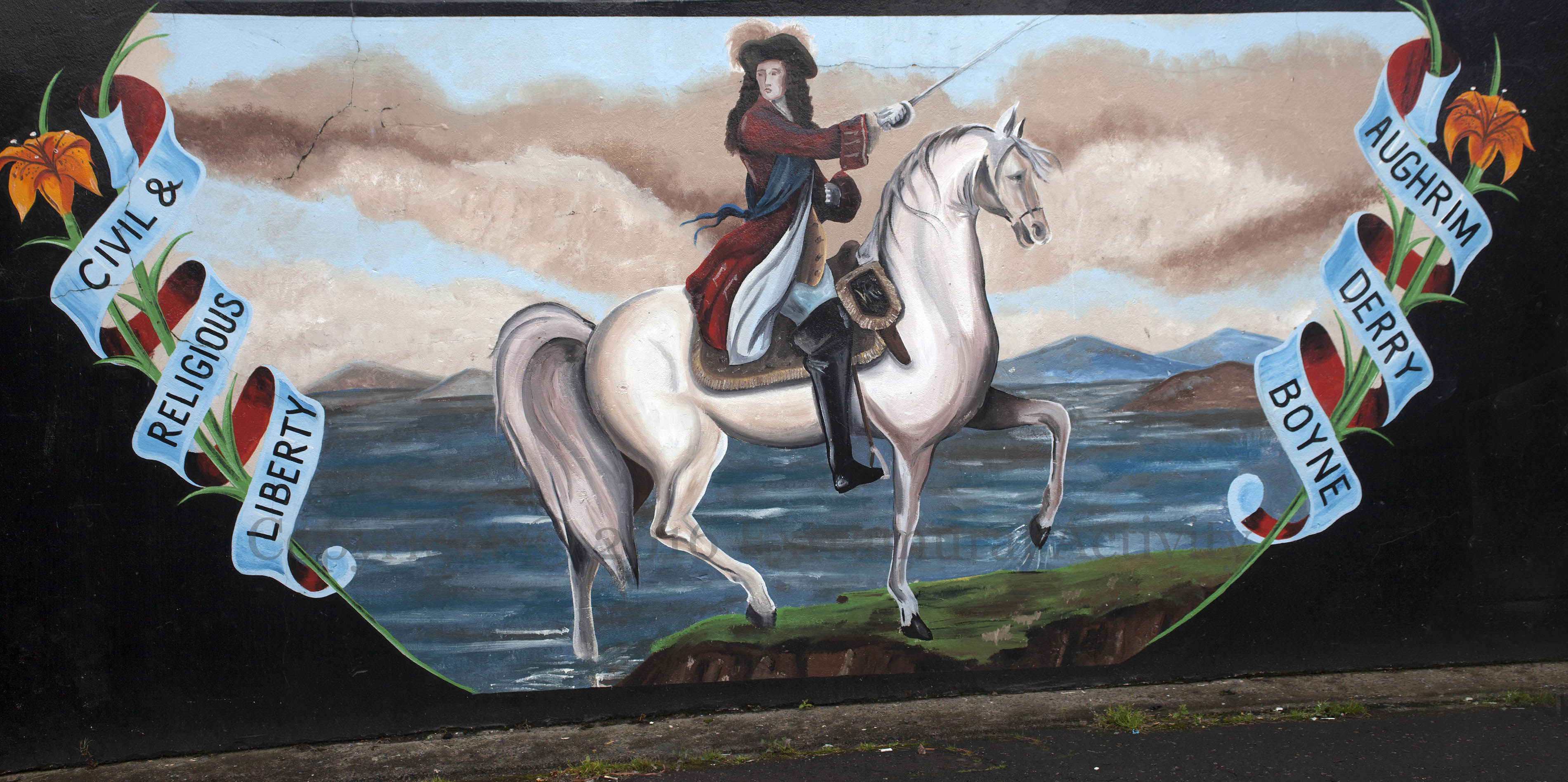
William III of England, commonly known as William of Orange, led his troops to victory on July 1st, 1690 at the Battle of the Boyne against the forces of James II, the deposed English monarch and the father of his wife. The Williamite campaign began with successful resistance against the Siege of Derry in 1689 and James’s final defeat came a year later on July 12th, at Aughrim.
 Seosamh Mac Coille Collection