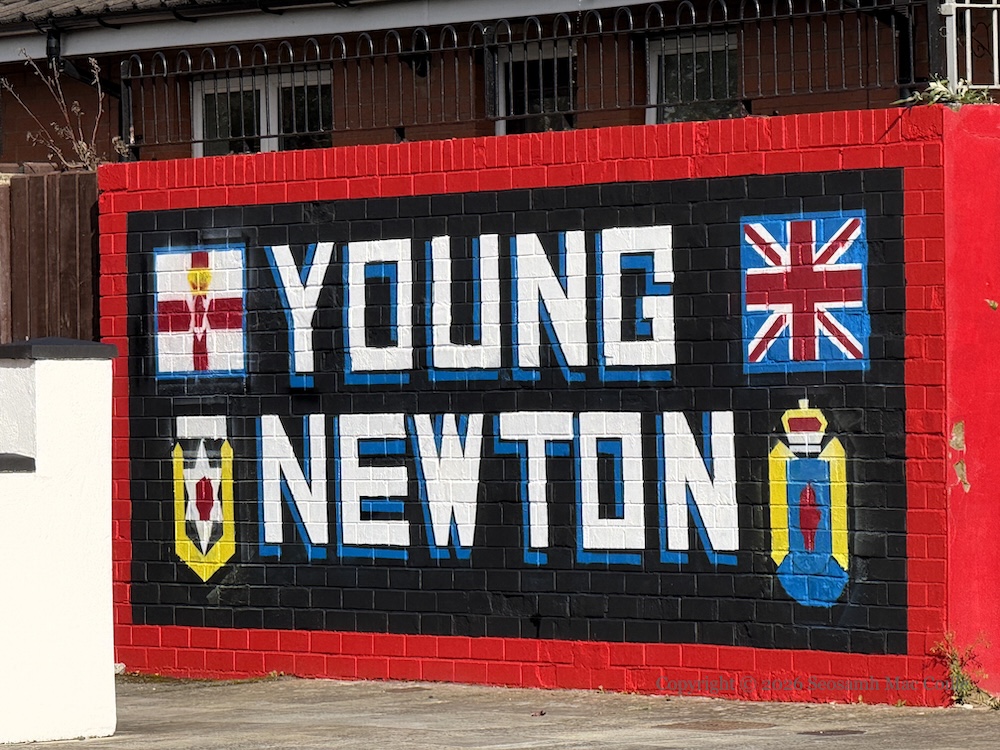
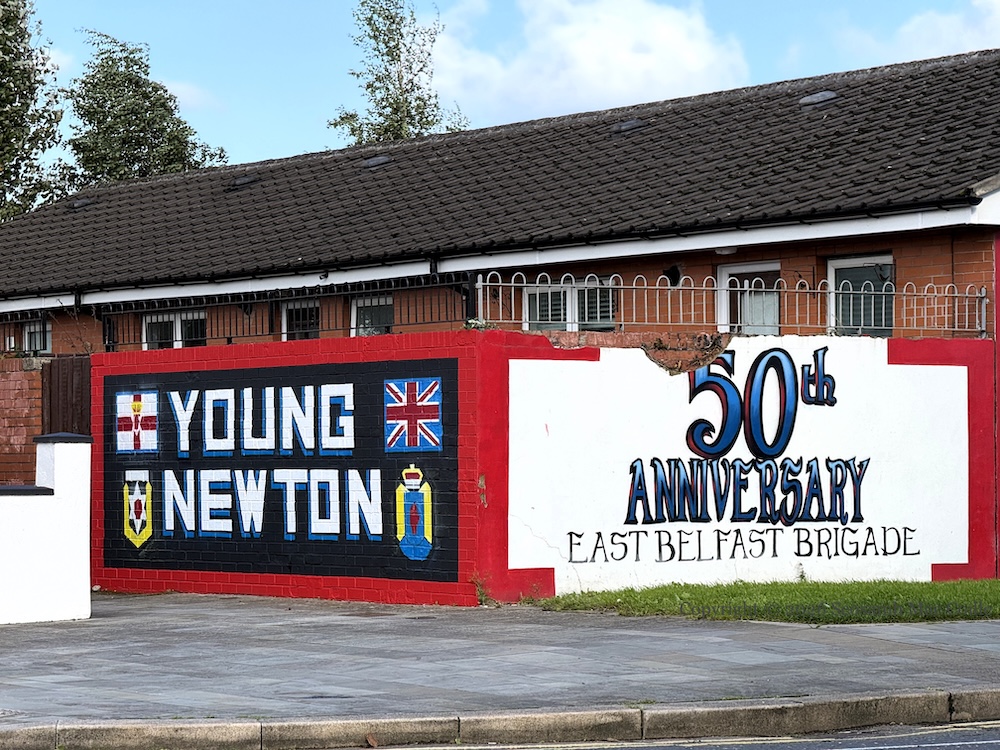
This Young Newton (the UYM in east Belfast) mural is an extension to the left-hand end of the fiftieth anniversary repainting of “Freedom Corner” and next to the Young Newton memorial garden. The group has had a presence on the area’s walls since 1997. See also 2005 | 2009 | 2009 at the other end of Freedom Corner. (Also 1999 in Bangor.)
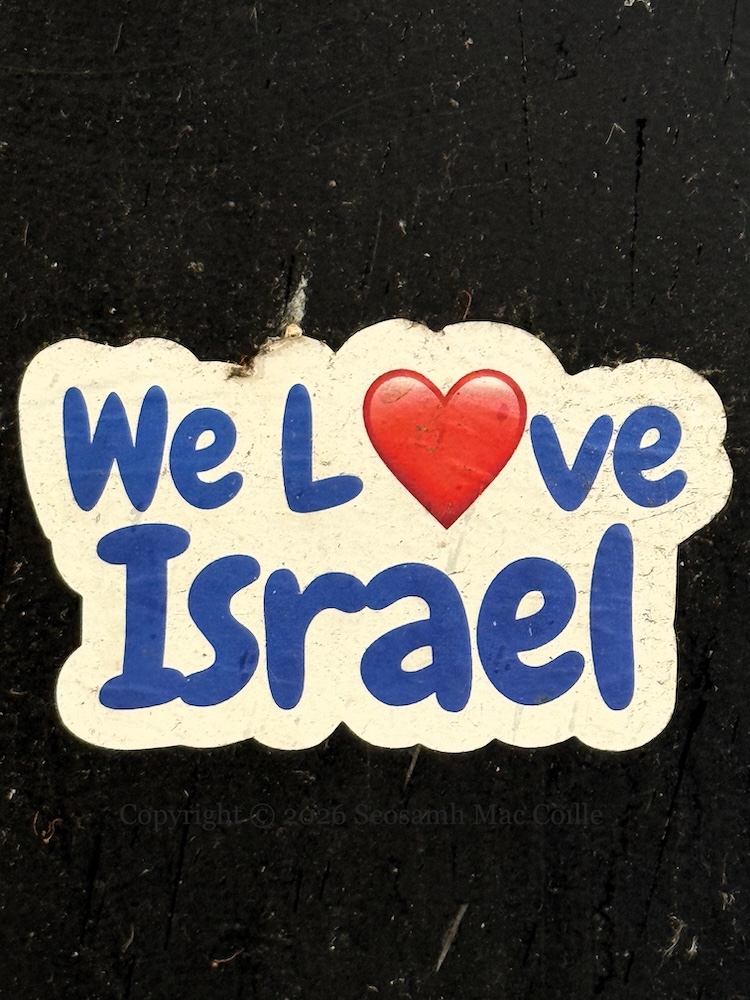
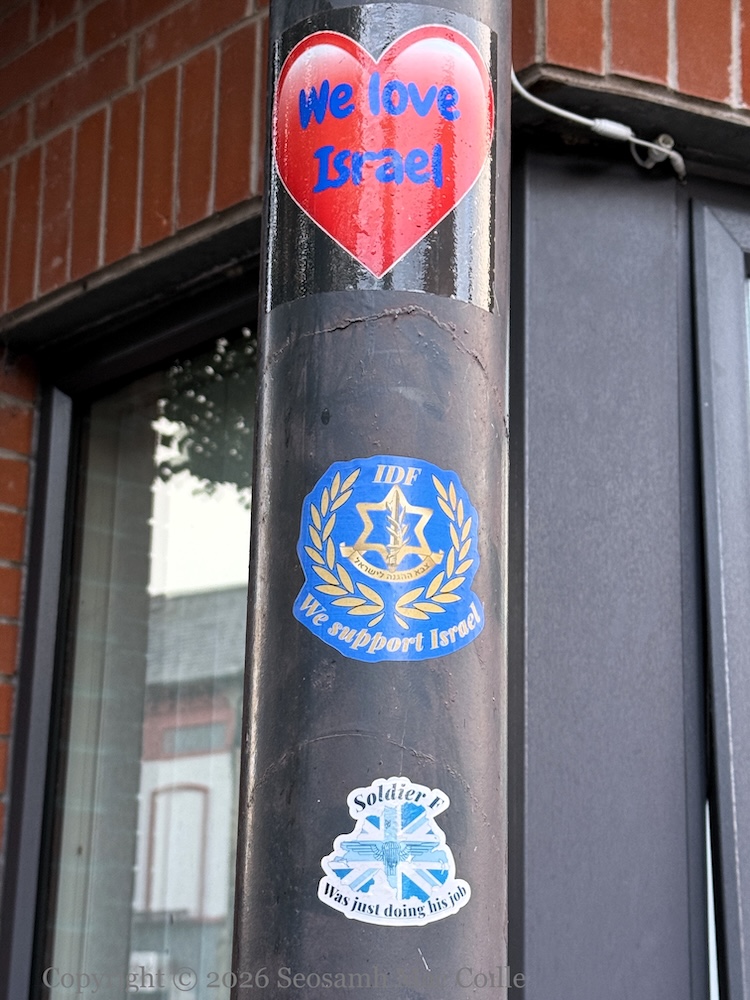
These stickers are on Sandy Row in south Belfast. For background, see Ulster & Israel | This Is Our Israel | אי כניעה – the general theme of these earlier entries is to present Israel as an analogy for Northern Ireland, as colonising populations that must defend themselves – with violence if necessary – from native resistance. The IDF sticker second on the pole (in the image below) is in keeping with this interpretation. The hearts with simple assertions of “we love Israel”, with hearts, suggests a level of identity that does not require justification or interpretation.
There is also – though not present here – a religious angle; see The Lion Of Judah.
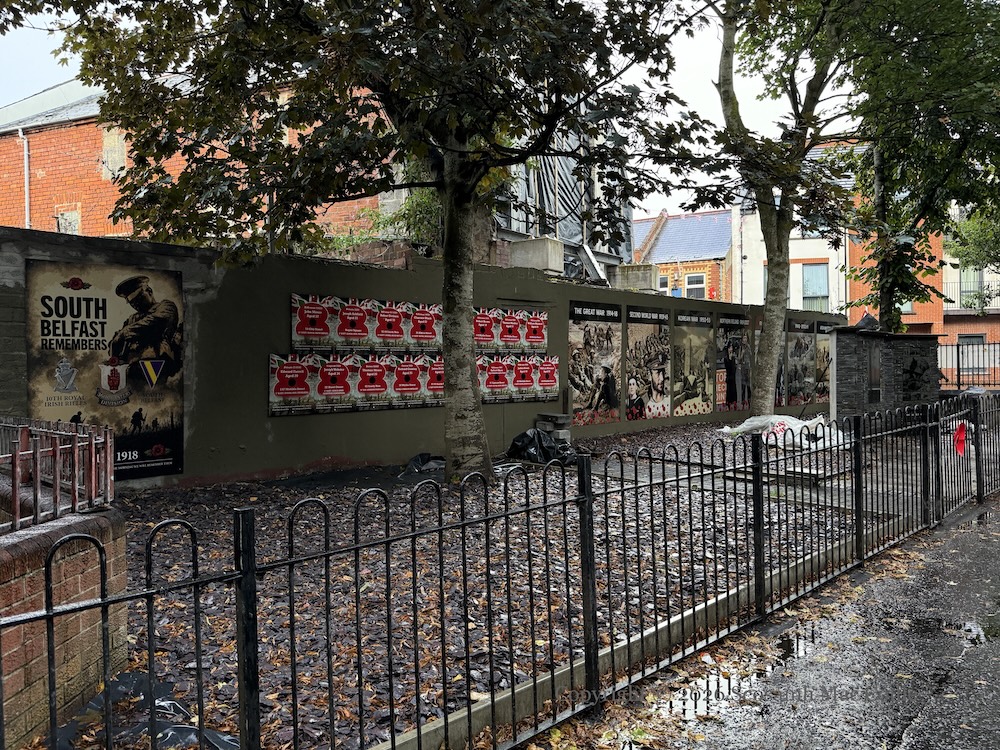
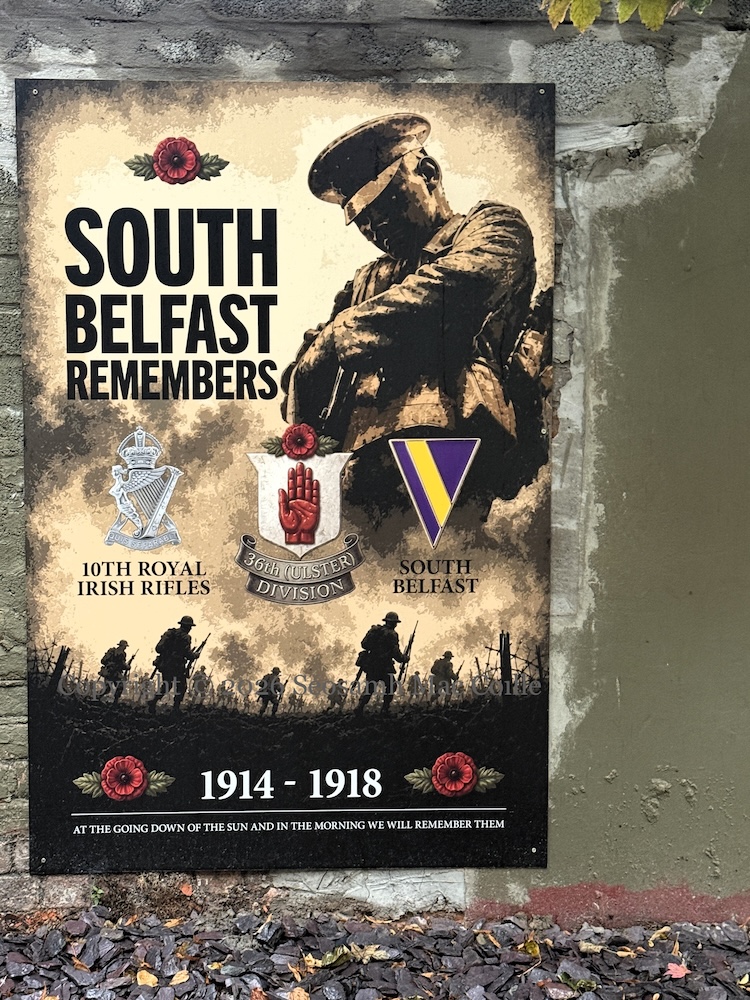
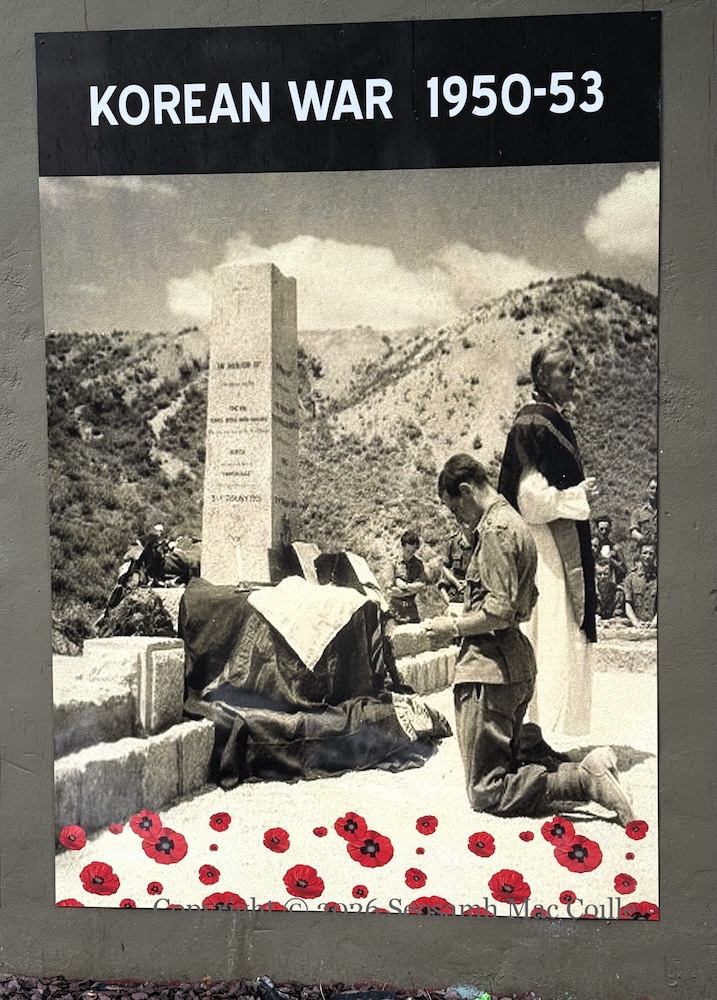
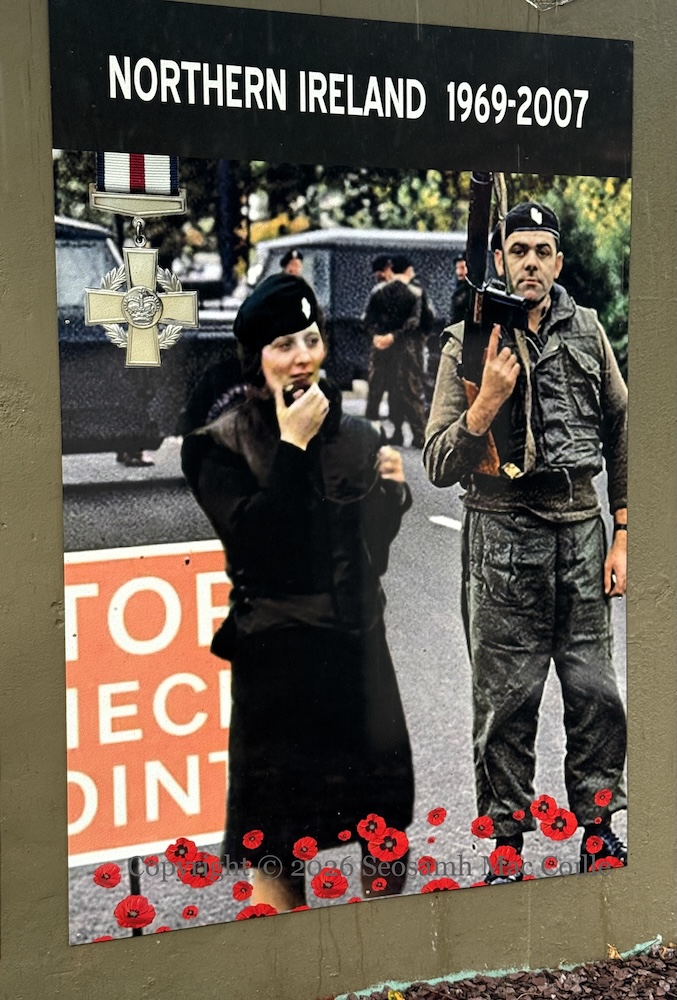
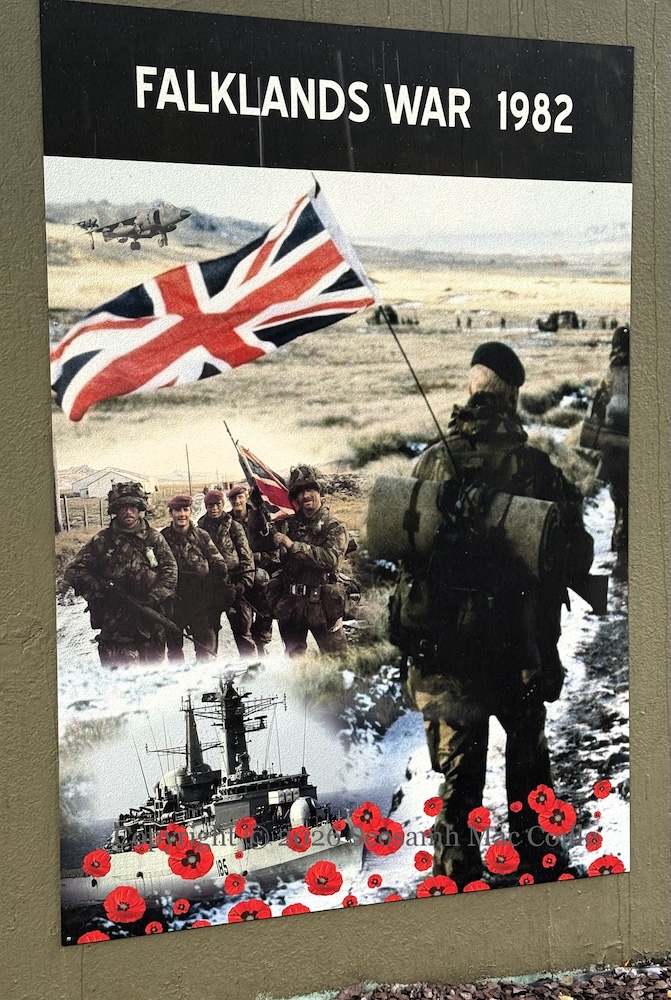
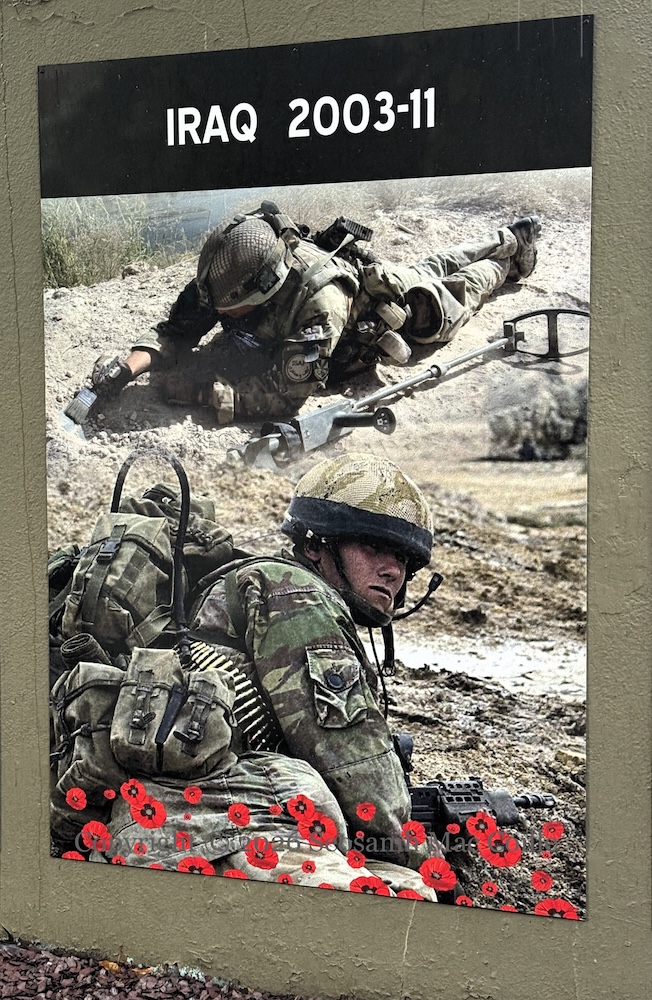
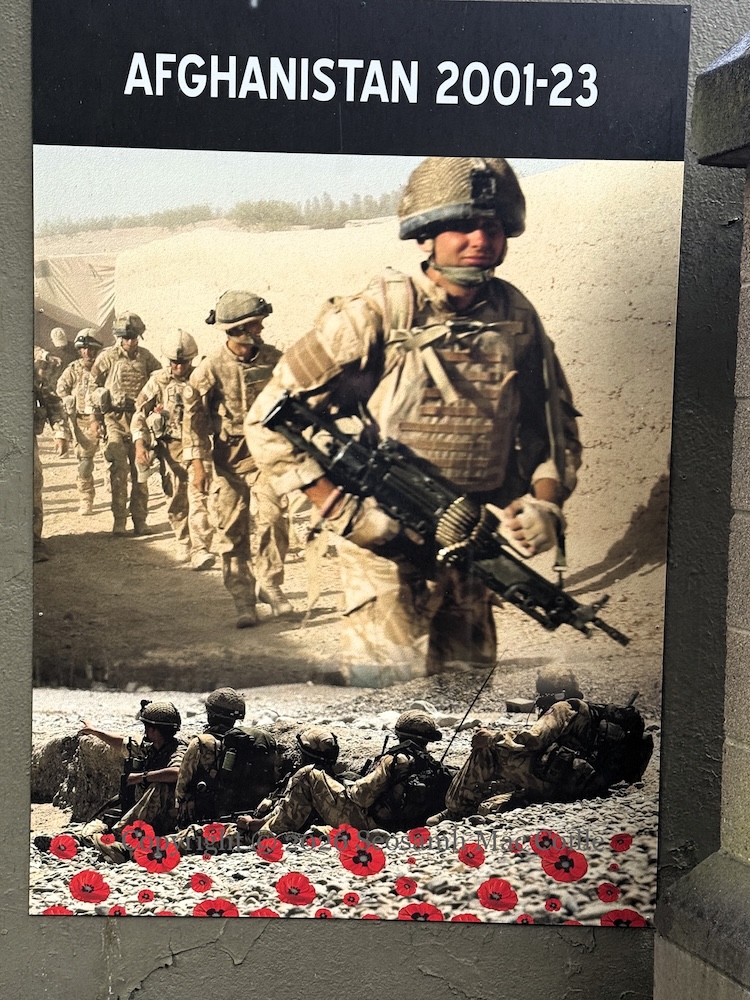
“South Belfast remembers [the] 10th Royal Irish Rifles, South Belfast, [and the] 36th (Ulster) Division.” Printed panels illustrating the engagements of the British Army in the twentieth and twenty-first centuries have been added to the three stones (seen in Continuing Conflicts) that marked the World Wars and “continuing conflicts”.
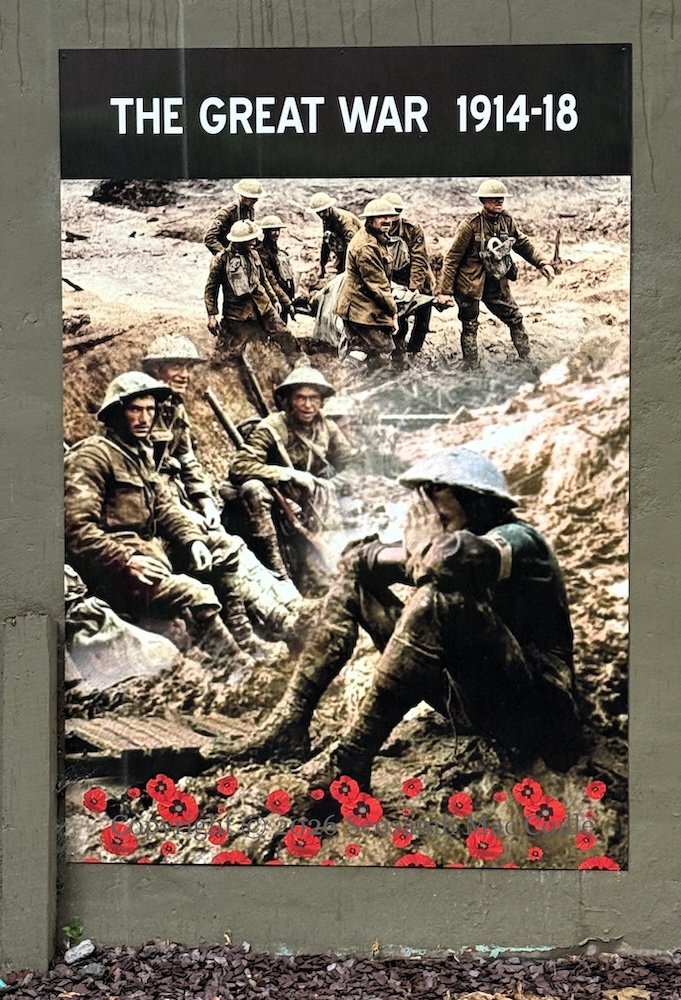
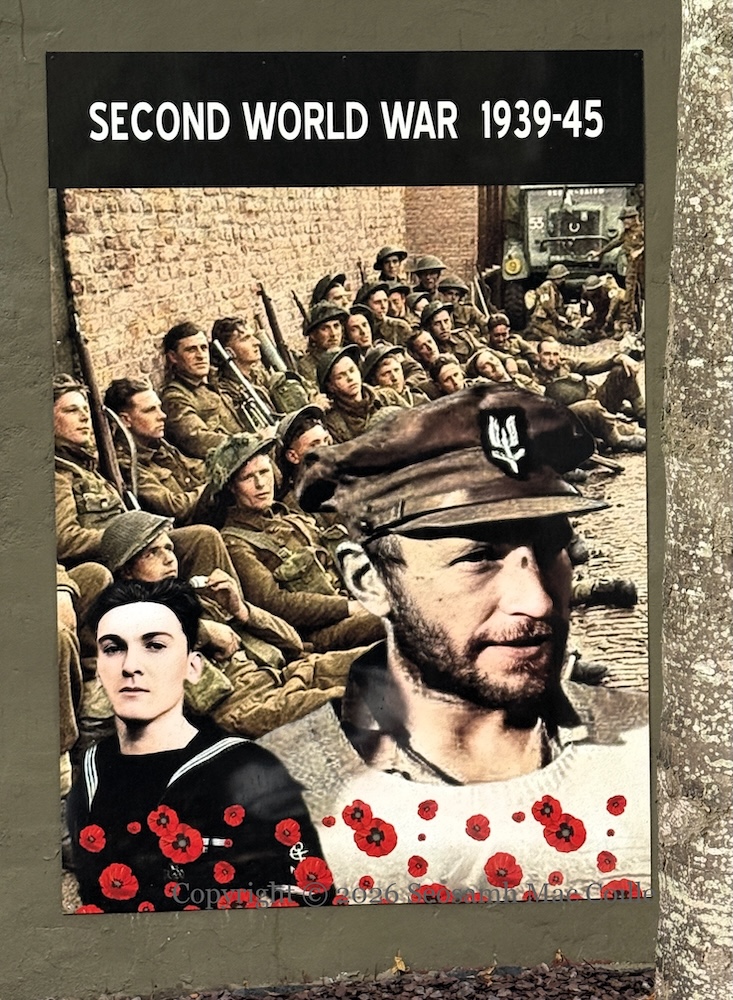
The conflicts depicted are the Great War 1914-1918, Second World War 1939-1945 (with individual photos of James Magennis and Blair Mayne, Korean War 1950-1953, Northern Ireland 1969-2007, Falklands War 1982 (the photo on the right is of troops “yomping”), Iraq 2003-2011, Afghanistan 2001-2023.
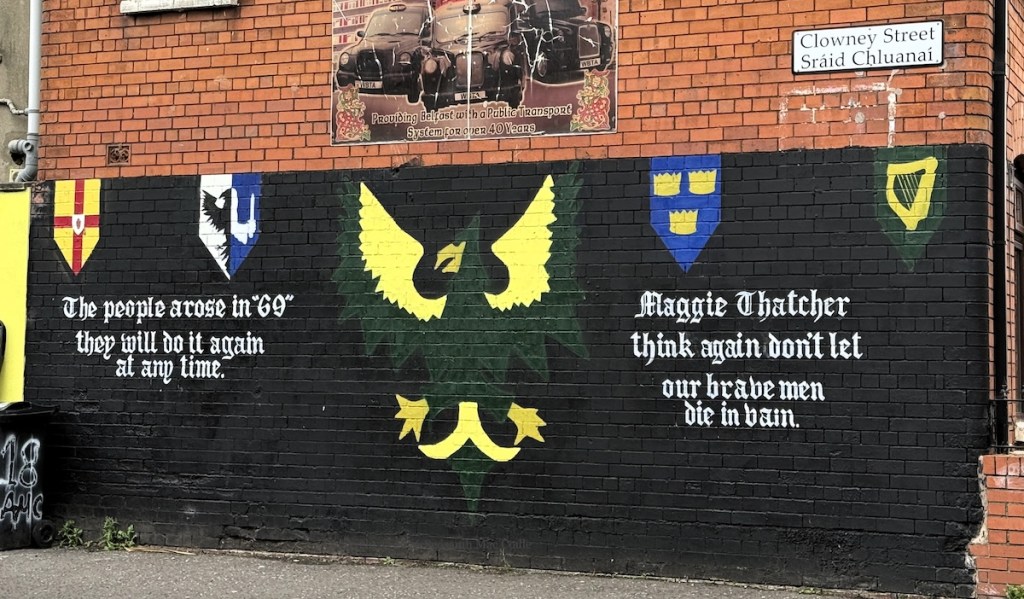
The phoenix in Clowney Street was first painted in 1981 and has been repainted periodically in the same form. (For a brief history, see The Oldest Murals.) In this update, the only noticeable changes are the quotation-marks around “69” and the golden feet on the phoenix.
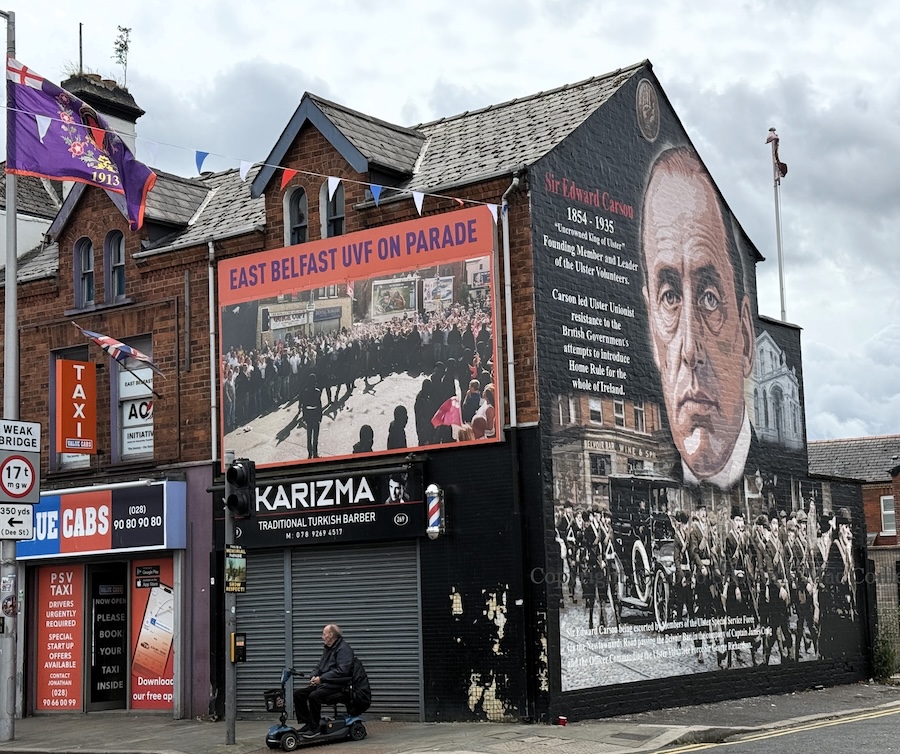
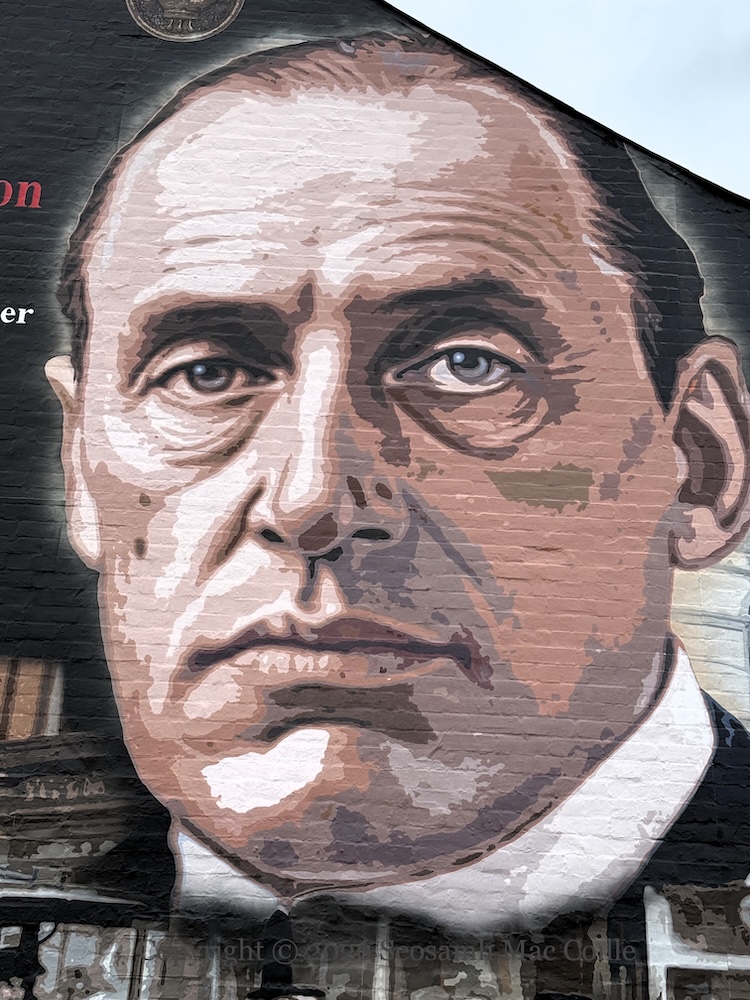
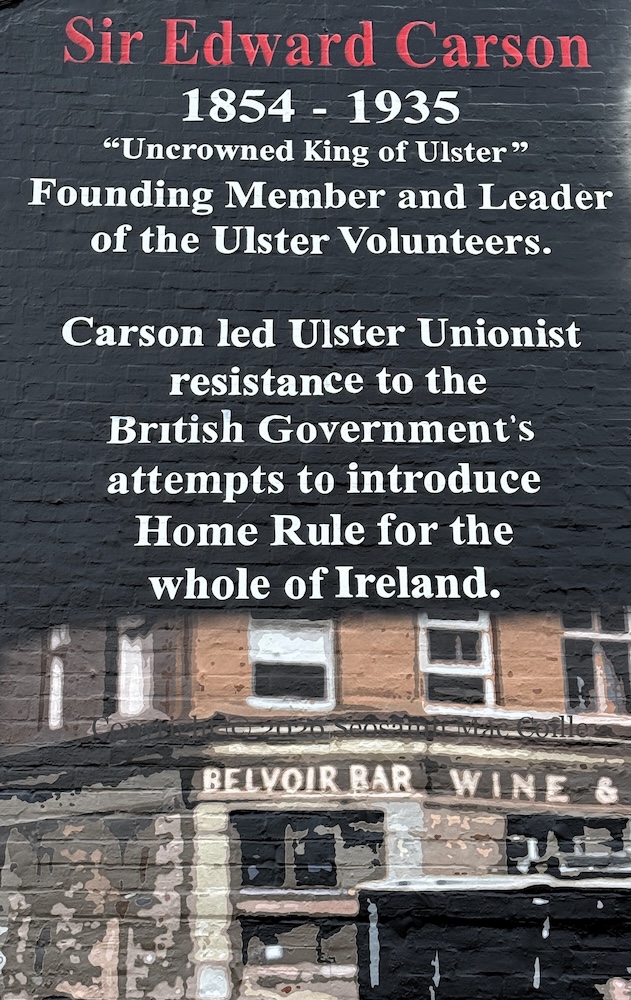
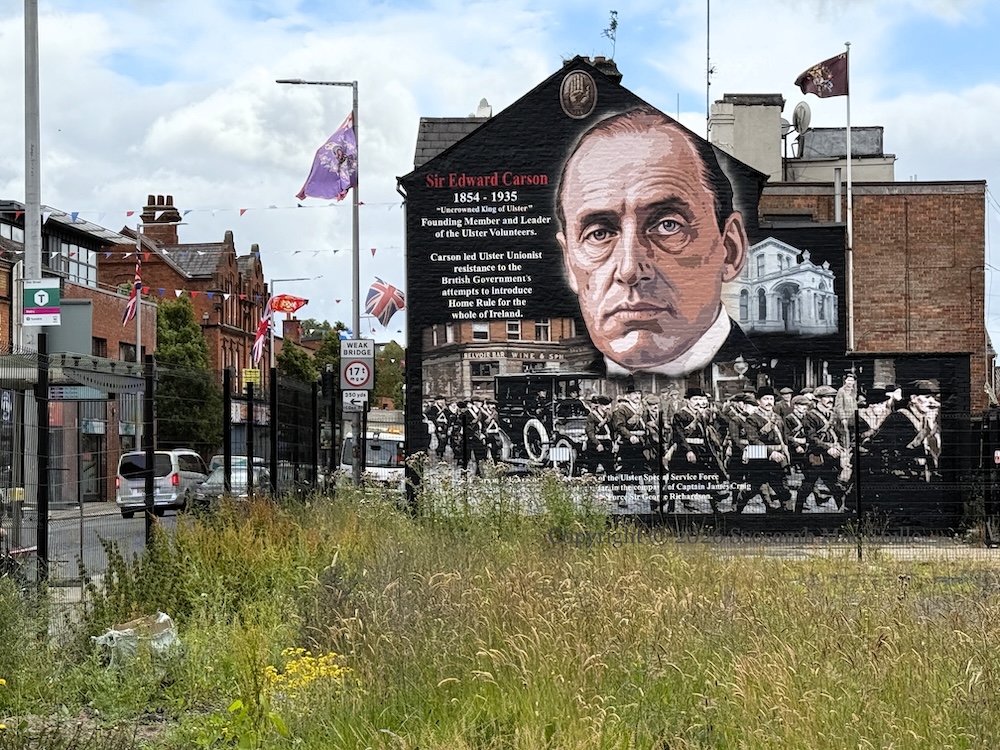
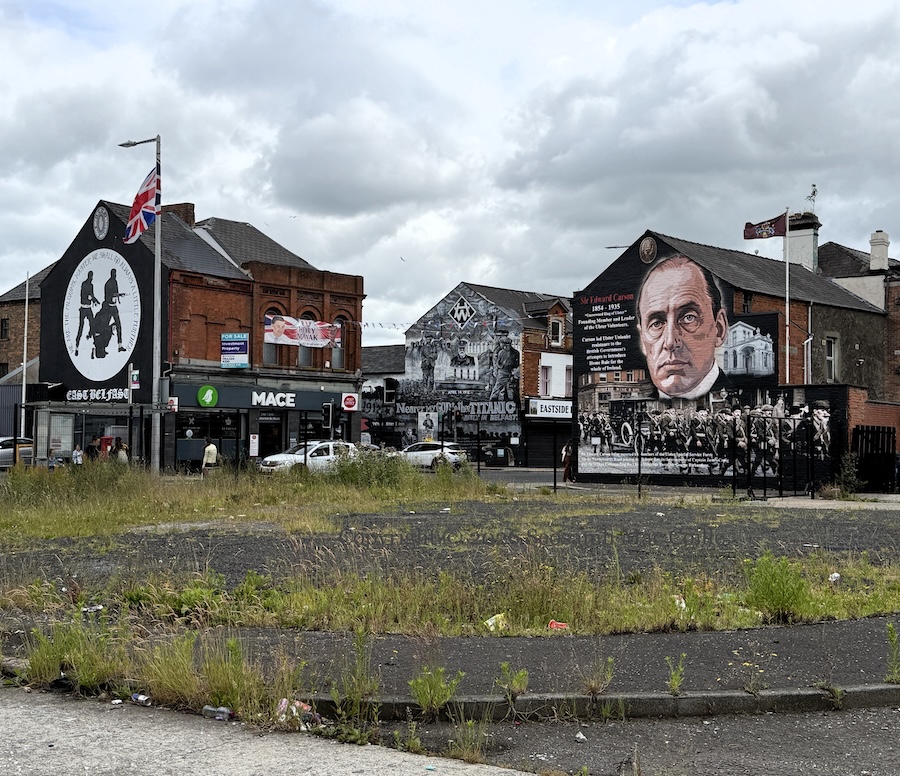
Text above: “Sir Edward Carson 1854 – 1935 “Uncrowned King of Ulster” Founding member and leader of the Ulster Volunteers. Carson led Ulster Unionist resistance to the British Government’s attempts to introduce Home Rule for the whole of Ireland.”
The epithet “uncrowned King” seems to be generally used of Carson and not attributable to any one source. Here is a September 1912 newspaper article that calls Carson the “uncrowned King of the North” and relays criticisms of a Carson reception in Portadown as “a parody upon a royal reception” and “an insult to the King”. A May 1914 review of (the book) The Reign Of Edward Carson refers to “King Carson”. (Here is a postcard depicting Carson as a king upon a throne – Postcards Ireland. And a cartoon showing “The Ulster King-At-Arms“.)
The phrase is an echo of and response to the phrase “uncrowned king of Ireland”, which was used of both O’Connell and Parnell. Here is an 1847 article describing both O’Connell and the Napoleonic Governor-General of Algeria (WP) as “uncrowned monarch[s]”. According to WP, the epithet was first applied to Parnell in 1880, because he was so popular during a tour of the United States and Canada. At the end of James Joyce’s story ‘Ivy Day In The Committee Room’ a character recites a poem about Parnell, beginning “He is dead. Our uncrowned king is dead” (archive.com).
The wording “the British government’s attempts to introduce Home Rule” is more forthright than we are used to. Typically the resistance is simply to “Home Rule”. This wording makes clear that the Ulster Volunteers were a private militia preparing for the possibility of fighting the regular British Army and Navy. By being so explicit, this wording suggests that we are currently living through a time in which loyalists consider the “British government” to be insufficiently British, just as was the case in 1912.
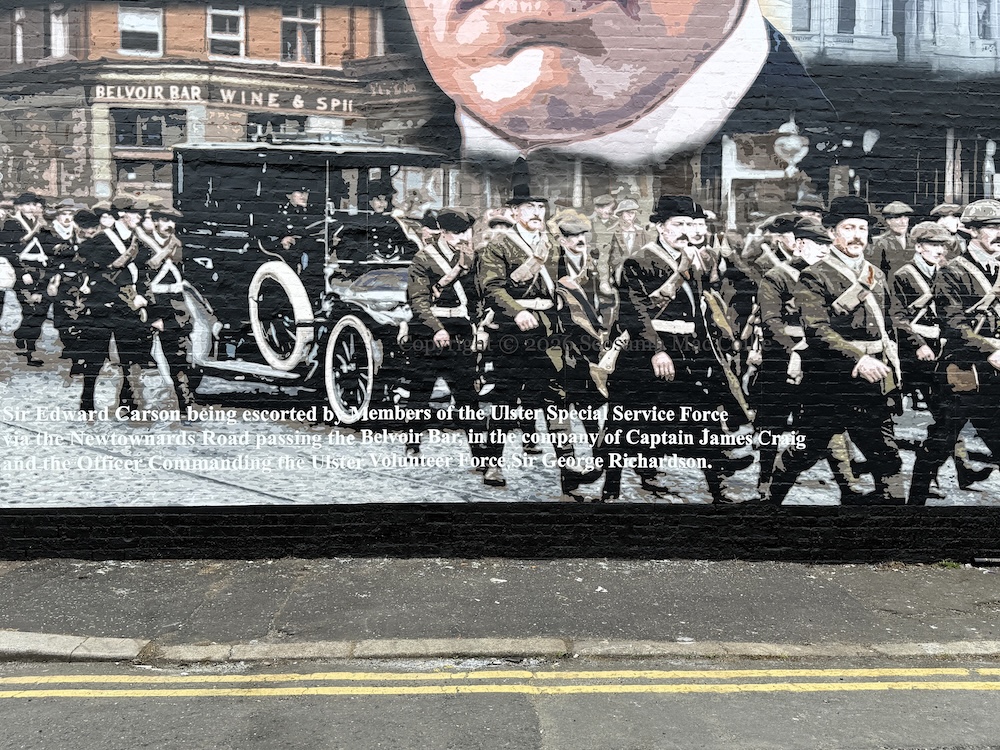
Text below: “Sir Edward Carson being escorted by members of the Ulster Special Service Force on the Newtownards Road passing the Belvoir Bar in the company of Captain James Craig and the Officer Commanding of the Ulster Volunteer Force Sir George Richardson.”
According to a Regimental Band Fb post, “Sir Edward Carson was speaking at the Reform Club in Royal Avenue. There was an opinion that the British Government were going to try and arrest him so he was escorted to the safety of Craigavon House [shown on the right of the mural]. This photo was taken on the 20th March, 1914.” This October 1913 article, in addition to calling Carson “Ulster’s Uncrowned King”, notes that he travelled with a detective and carried a revolver.
By Dee Craig (Fb), presumably, replacing his hooded gunmen mural The Right To Defend Yourself, on the Newtownards Road at (the former) Bright Street.
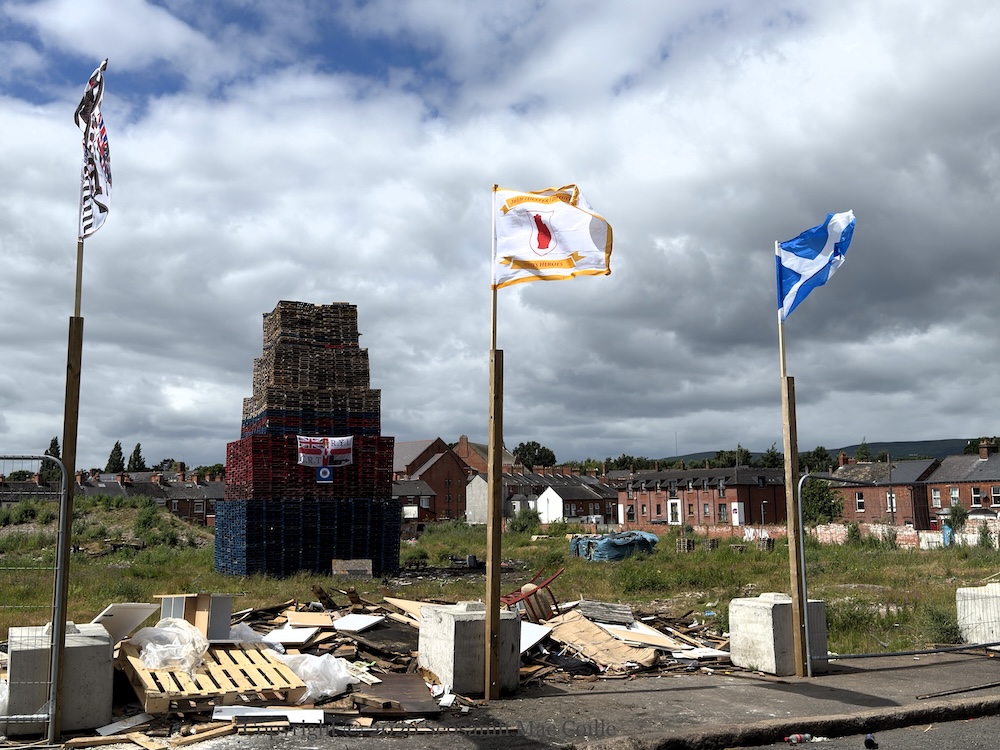
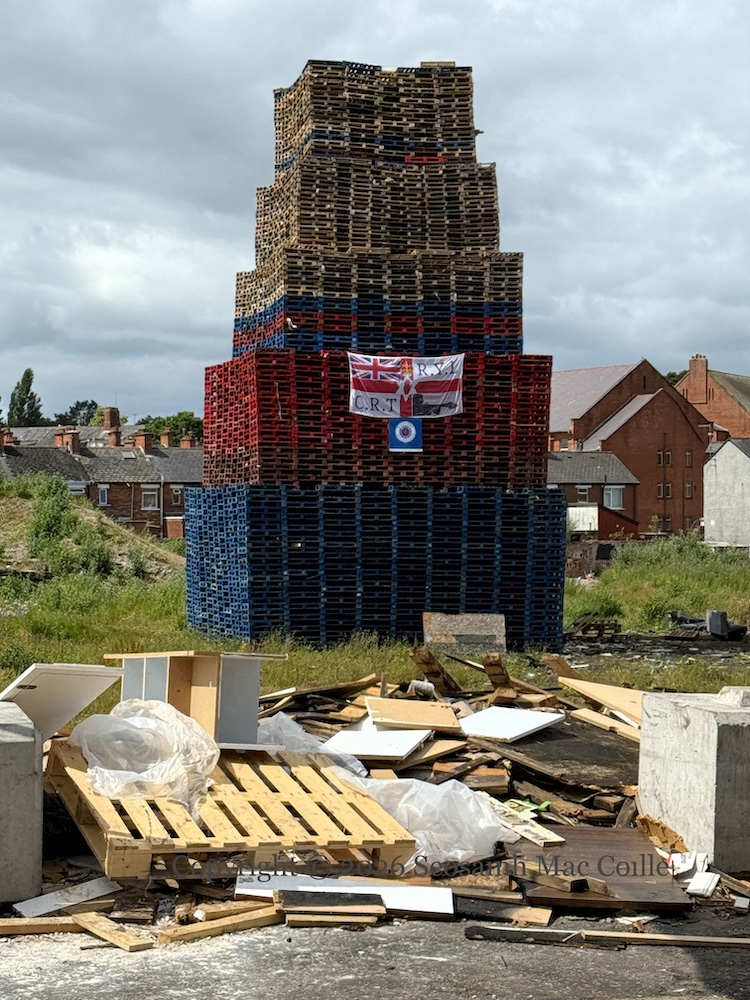
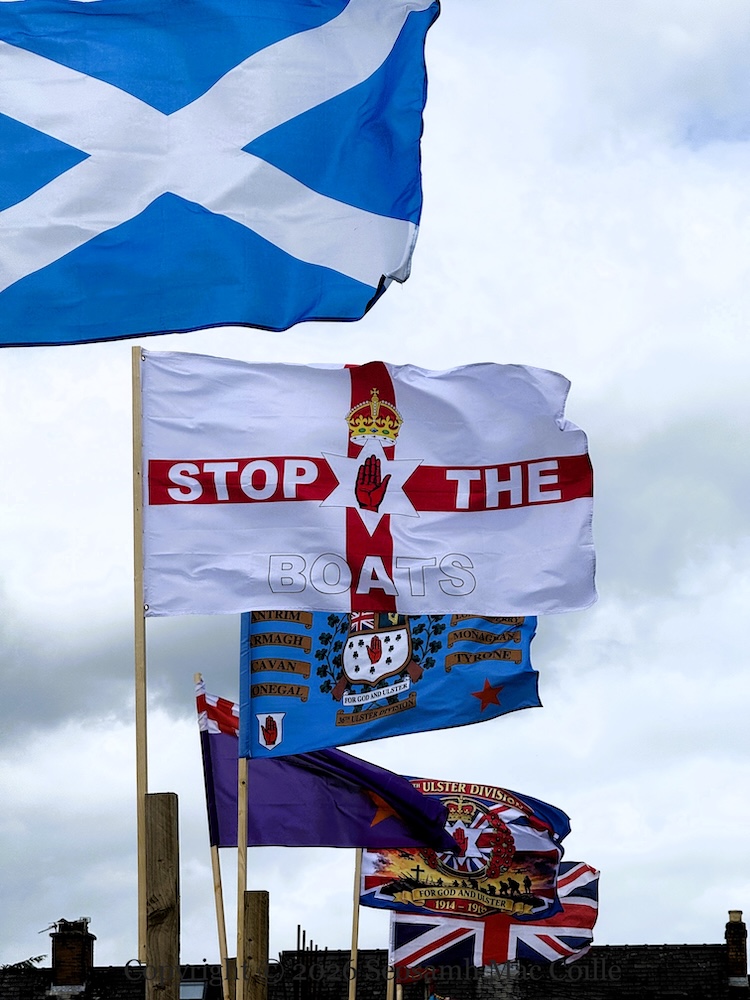
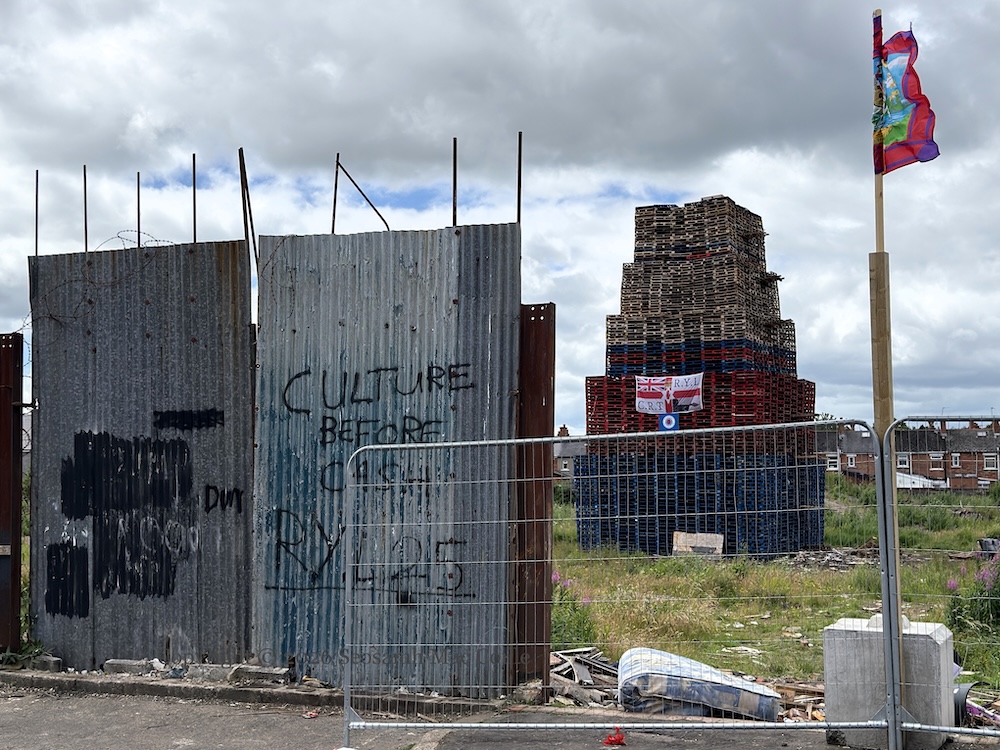
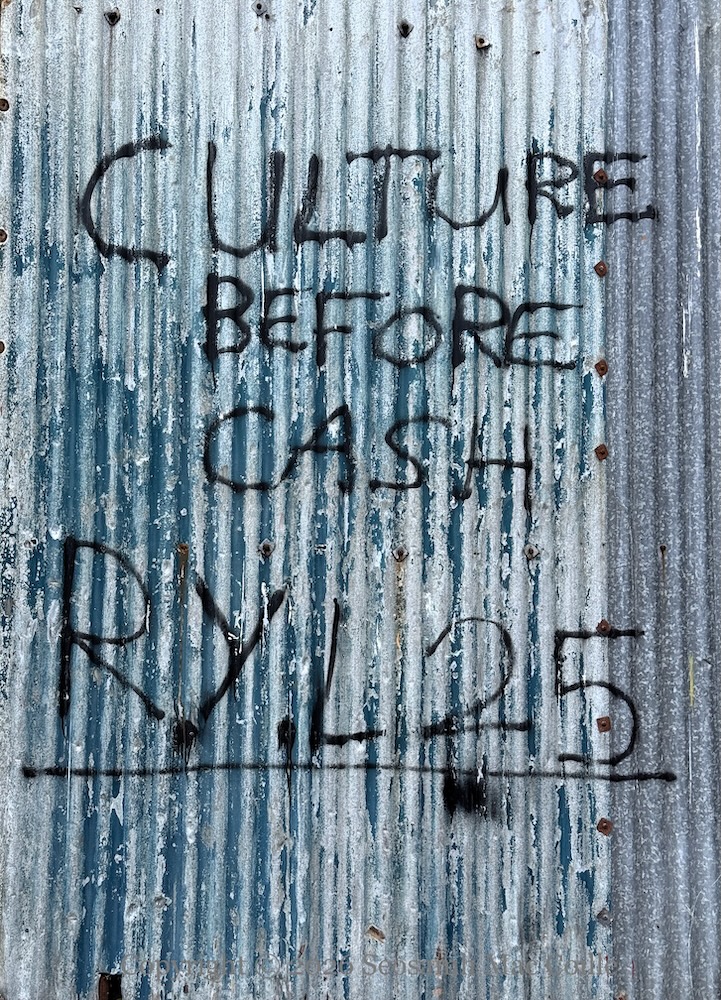
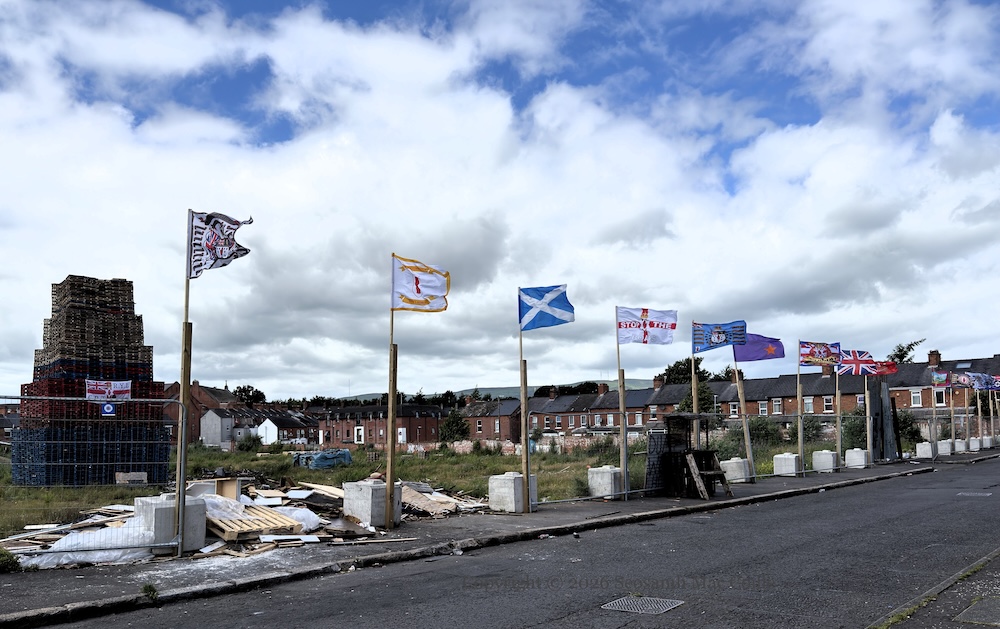
Bonfires will be lit across Northern Ireland on “Eleventh Night” (July 11th) and builders will be working until then in order to build the pyres high. The one shown here is in the Ravenhill Road area of east Belfast, constructed out of shipping palettes (see Commonwealth Handling Equipment). As an alternative, Belfast City Council will fund the construction of much smaller beacons. (The programme was previously called the “Bonfire Management” programme and is now the “Bonfire And Cultural Expression” programme.) The Ravenhill builders, both this year and last, consider this a sell-out. (See previously, Culture Before Cash (2014) | Real Loyalists Will Never Be Bought).
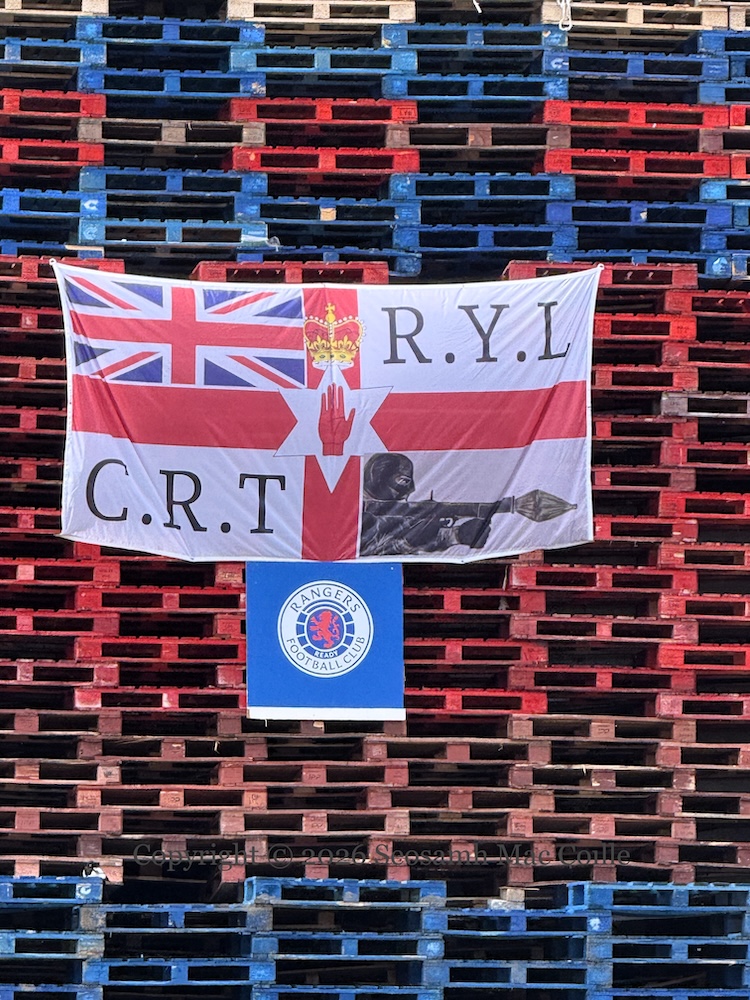
The flag on the bonfire shows a hooded volunteer with an RPG (taken from an old mural in the Shankill), with the lettering “RYL” (“Ravenhill Young Loyalists”) and “CRT” (“Clonduff Rocket Team”).
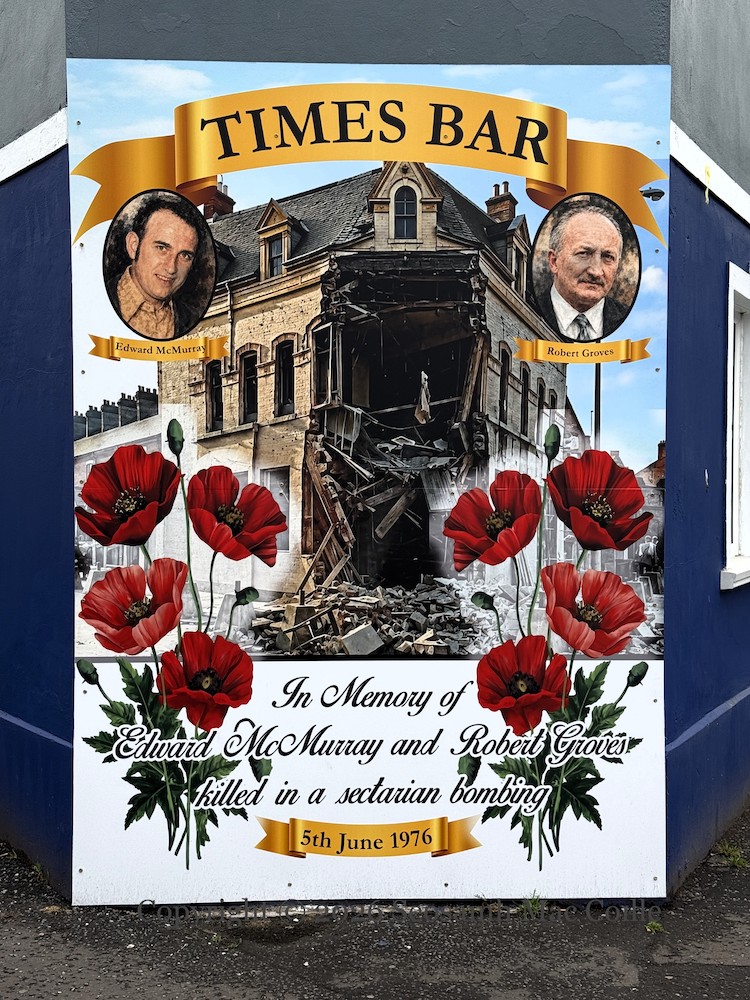
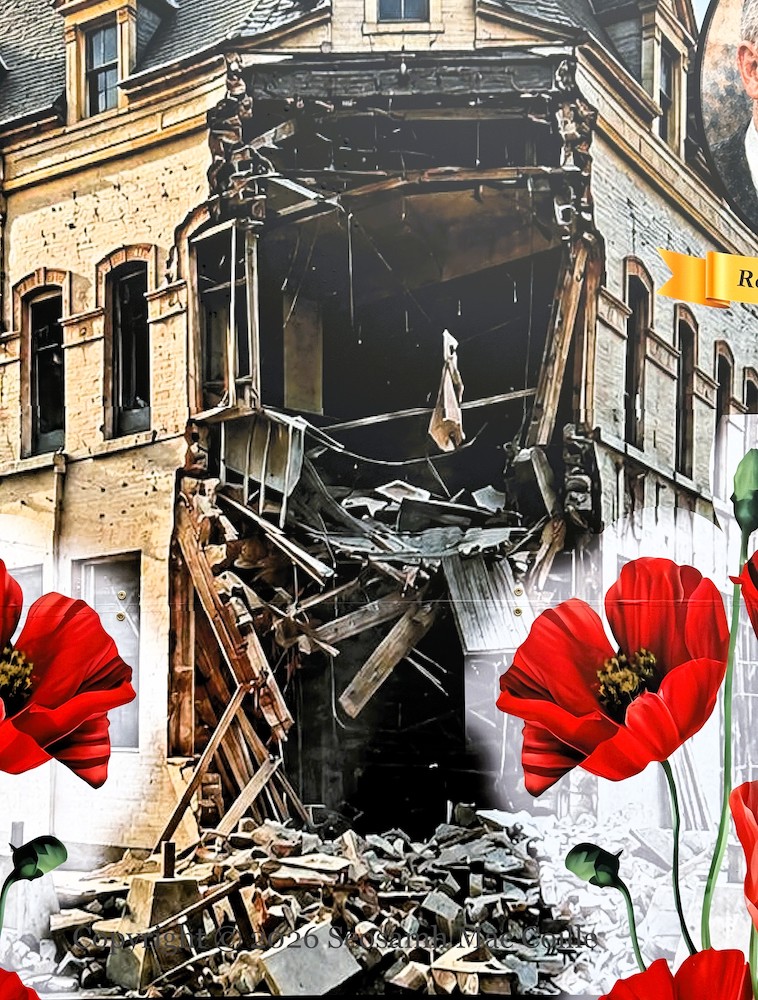
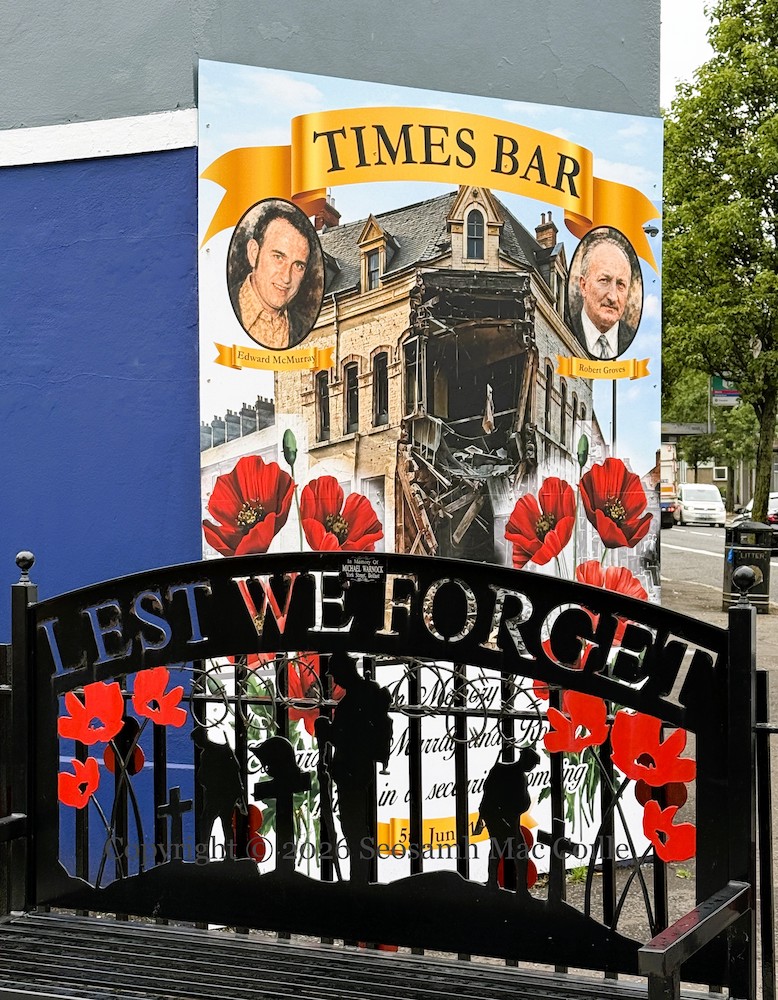
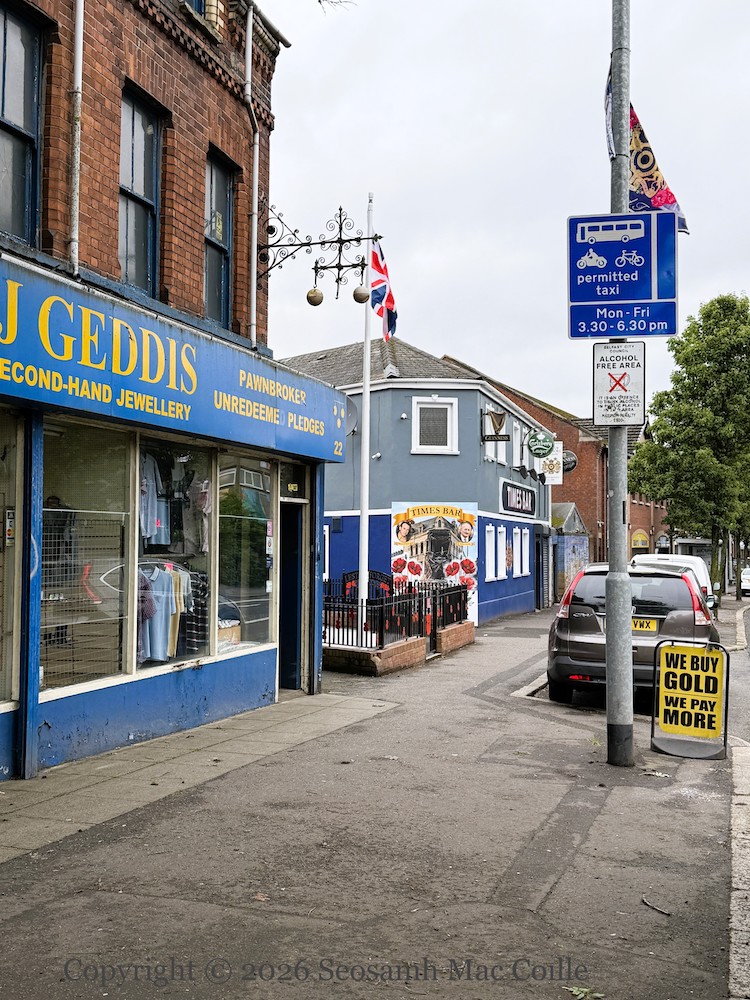
A memorial service was held at the Times Bar on Friday June 5th (News Letter) to mark the fiftieth anniversary of the attack on the Times Bar in 1976, in which Edward McMurray and Robert Groves were killed by a republican bomb. (An image of the bombed bar can be found on Xitter.)
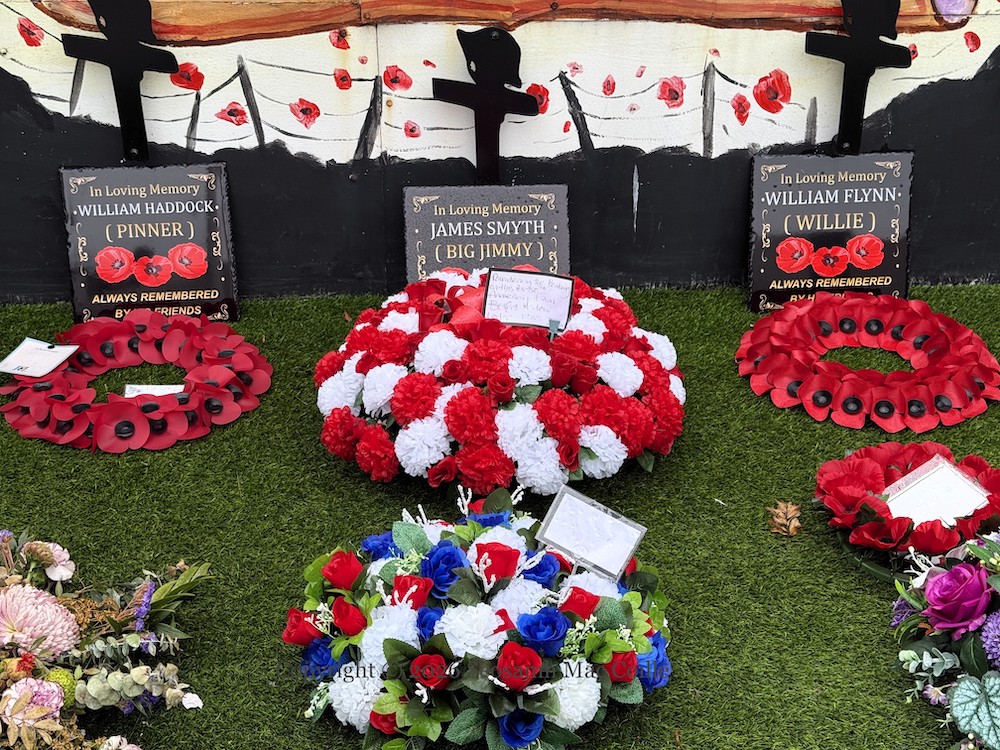
Three plaques were added to the memorial garden where the service took place, to William Haddock, James Smyth, and William Flynn. (Compare to 2019.)
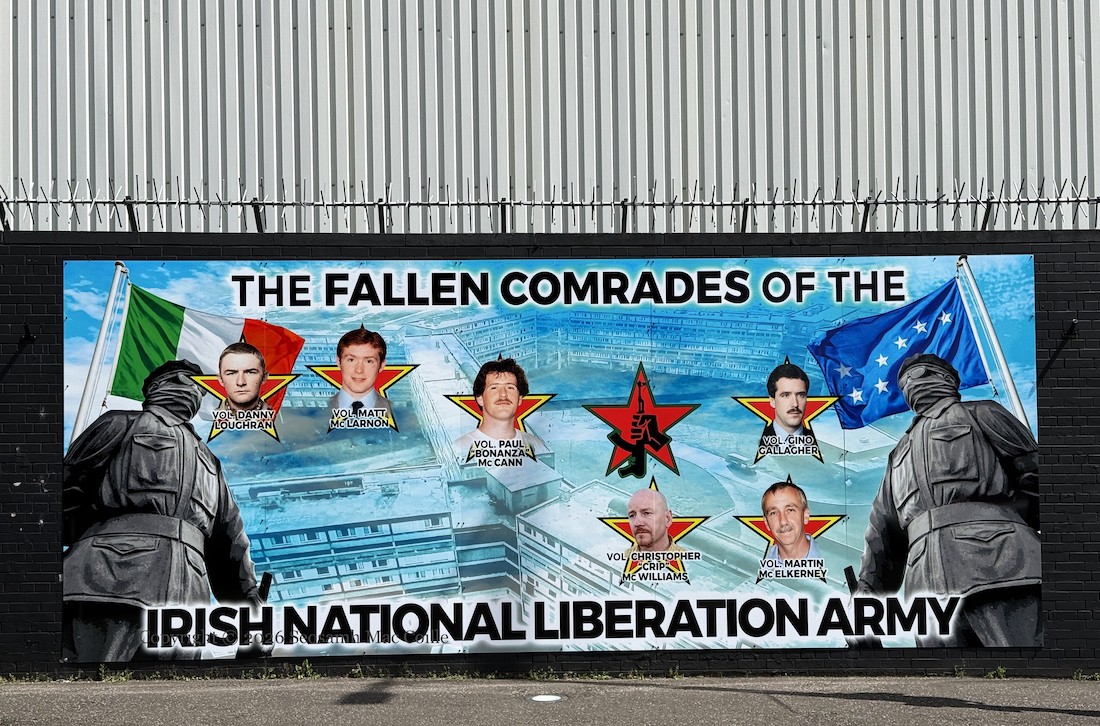
Christopher “Crip” McWilliams has been added this new version of the INLA memorial on Northumberland Street (Visual History). McWilliams was a long-time member of the IPLO and was present at the Lenadoon shout-out with the RUC in Lenadoon in which Bonanza McCann died. He joined the INLA while in prison for the 1991 killing of a snooker-hall manager (Independent) and in 1987 was the gunman in a team of three that killed the LVF’s Billy Wright in the H-Blocks (IRSN | Cory Report (pdf) | MacLean Report (pdf)).
The info board in the final image was originally mounted in 2014 to accompany the version painted on a board which featured Loughran, McLarnon, McCann, and Gallagher, and updated in 2019 for the printed version which added McElkerney.
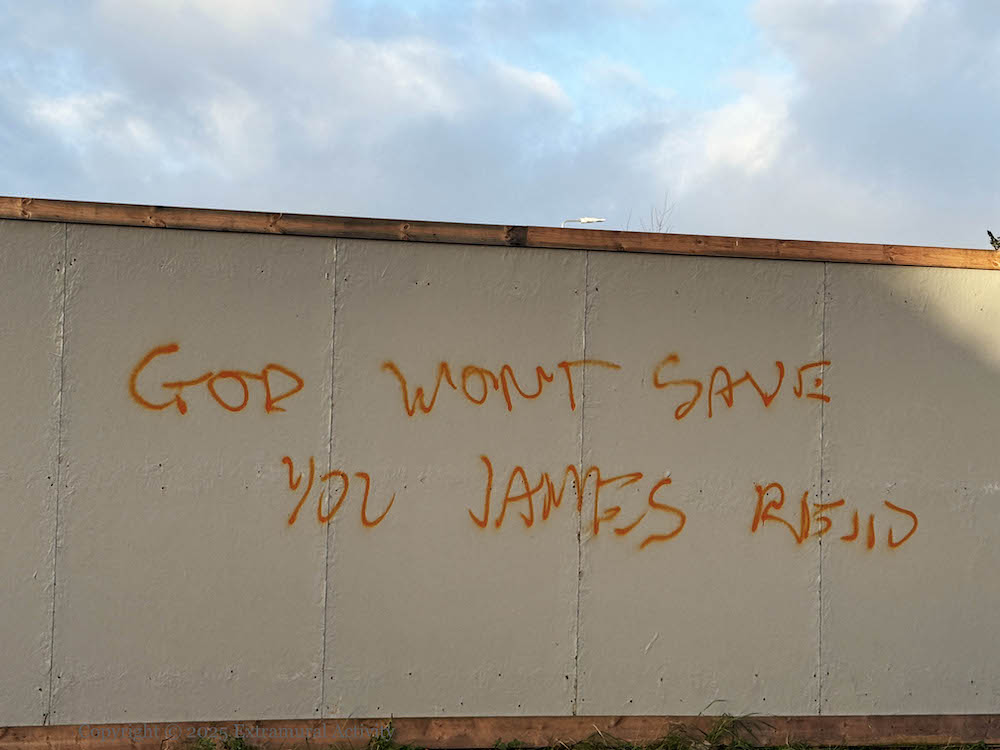
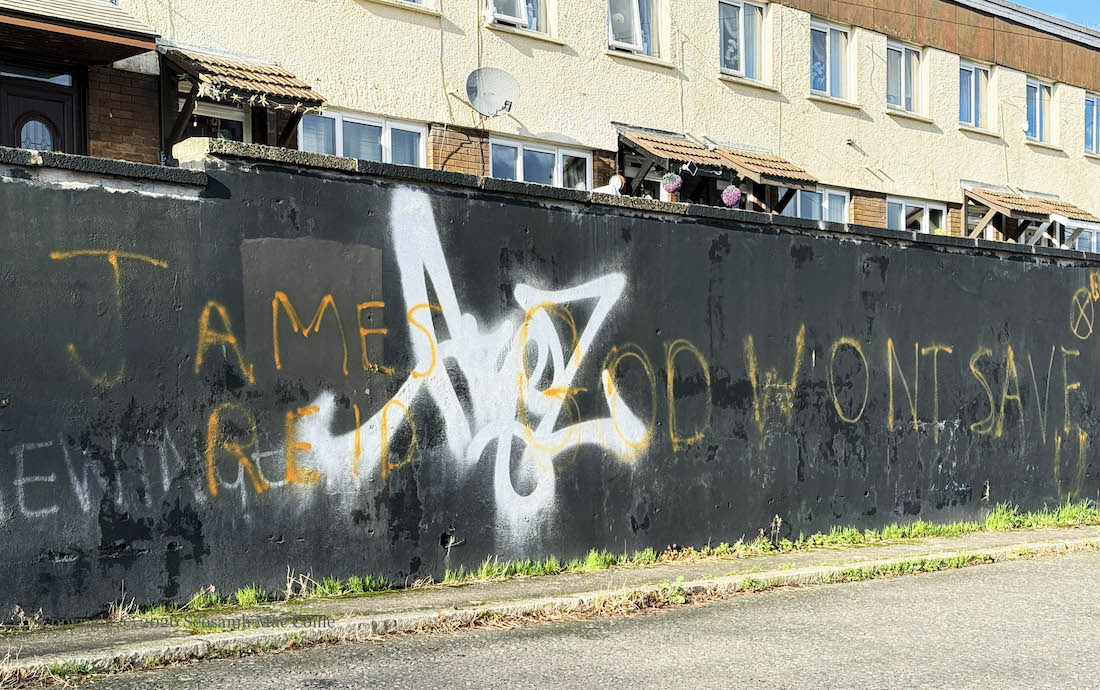
The UVF’s James Reid was arrested in 2022 (Crime World) and is currently awaiting trial on charges of blackmail and cocaine possession and distribution. His attempt to have the charges thrown out was rejected at the start of February (BelTel).
These graffiti are on North Boundary Street (in the lower Shankill, west Belfast) and the Ballysillan Road (north Belfast).
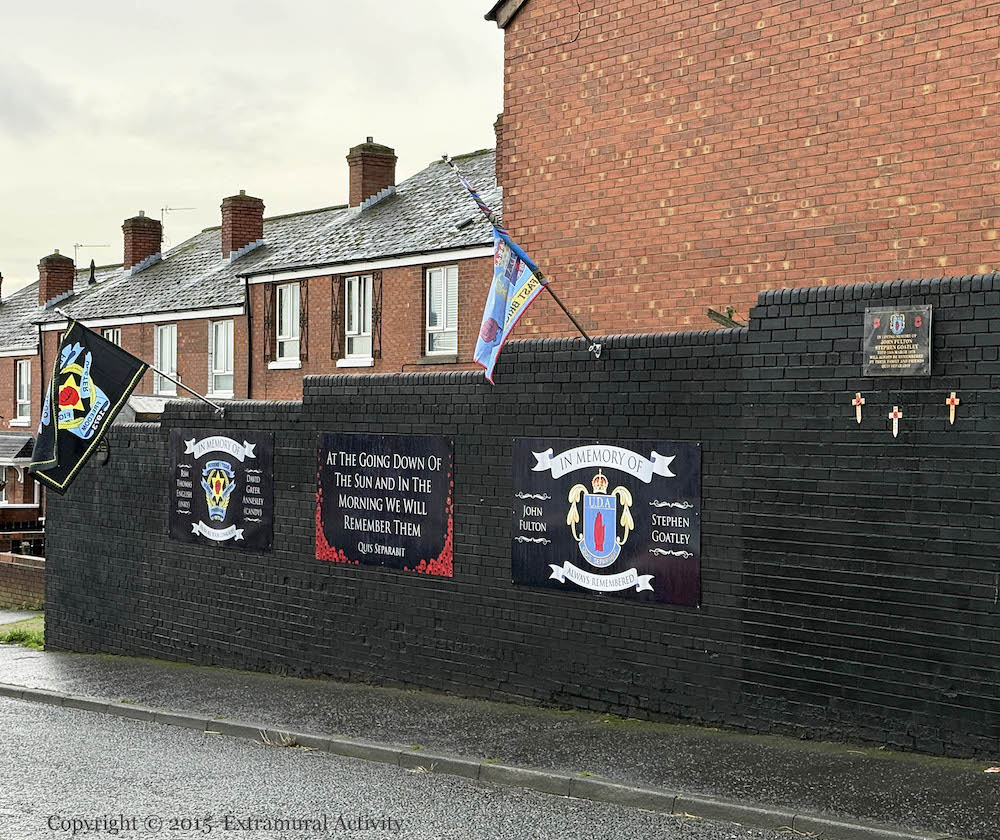
“In loving memory of John Fulton [and] Stephen Goatley, died 15th March 1975. Will always be remembered by their family and friends. Quis separabit.” UDA members John Fulton and were Stephen Goatley were killed together in the Alexandra Bar on York Road (close to the Mervue Street location of this memorial) in revenge for the stabbing of the UVF’s Joe Shaw in the North Star Bar by the UVF as part of the UDA-UVF feud in 1975.
The two men named on the other board were also killed in a feud between the UDA and UVF, in 2000 – see Inky & Candy. “In loving memory Thomas (Inky) English & David (Candy) Greer Annesley. Together in the same old way/would be our dearest wish today./Silent memories true and tender/just to show we still remember.”
Mervue Street, Tiger’s Bay, north Belfast. The small plaque was previously seen in 2017.