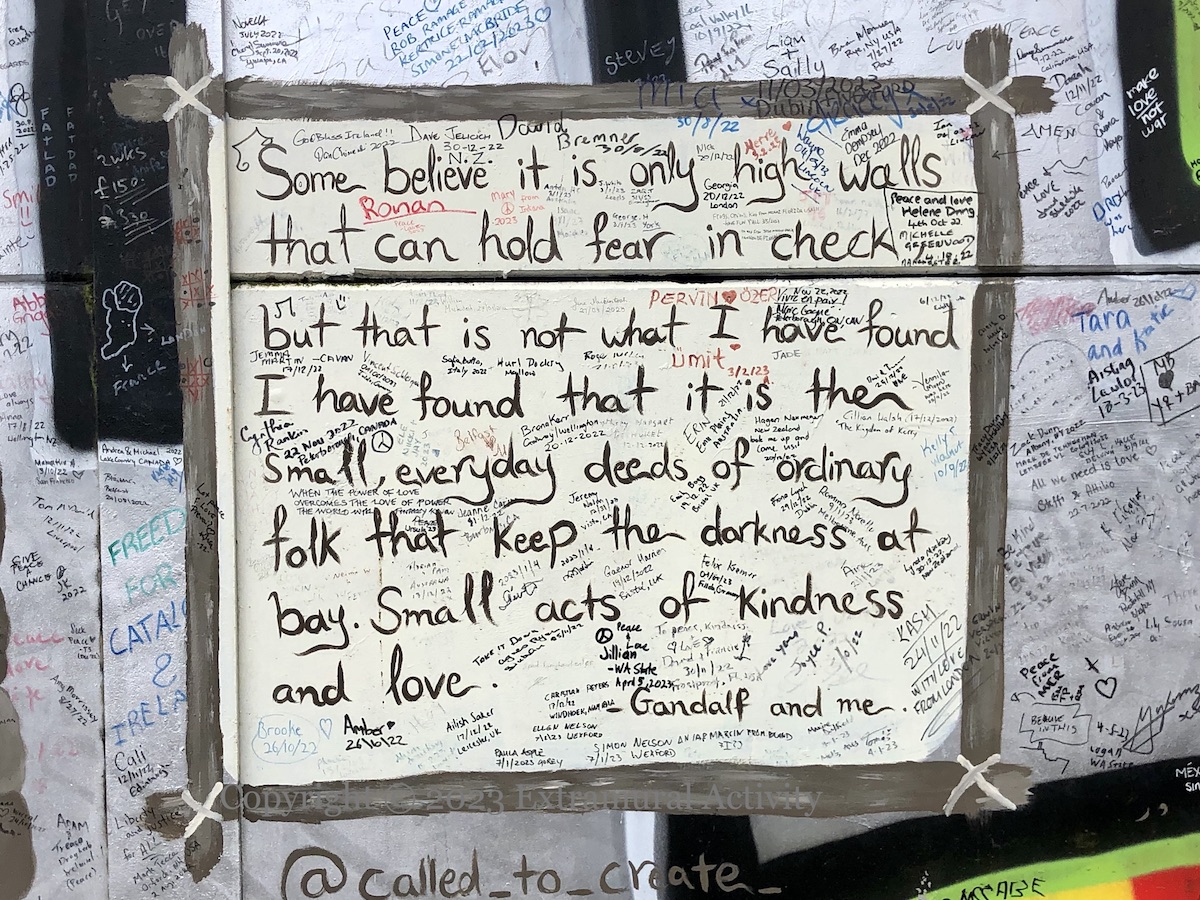
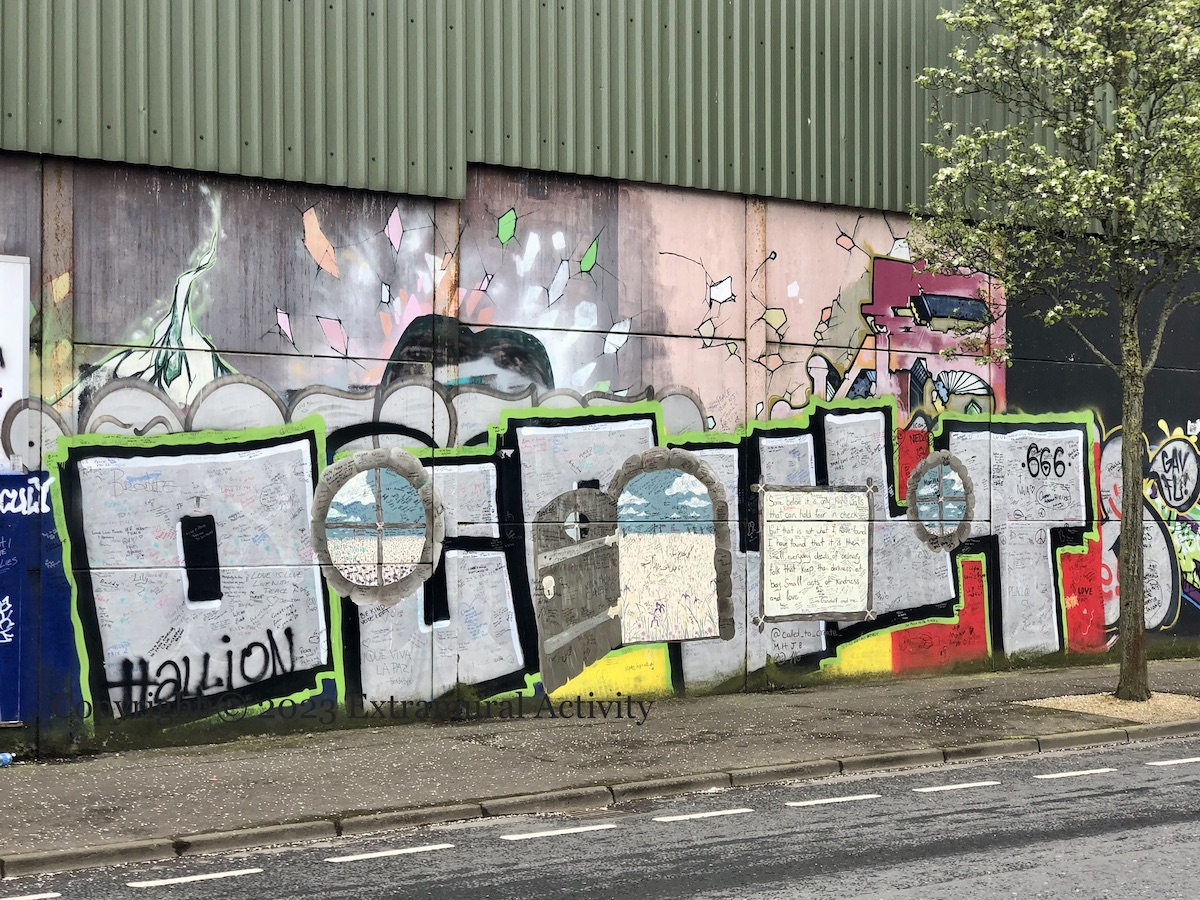
“Some believe it is only high walls that can hold fear in check but that is not what I have found. I have found that it is the small, everyday deeds of ordinary folk that keep the darkness at bay, small acts of kindness and love – Gandalf and me [called_to_create_ (ig)].” The quote is from the movie of ‘The Hobbit – An Unexpected Journey’ (youtube) and not any Tolkein book. Whatever the truth of the quotation, residents generally want the so-called “peace” walls to remain: 2023 BelTel (about Derry) | 2019 Irish Times | 2015 BBC.
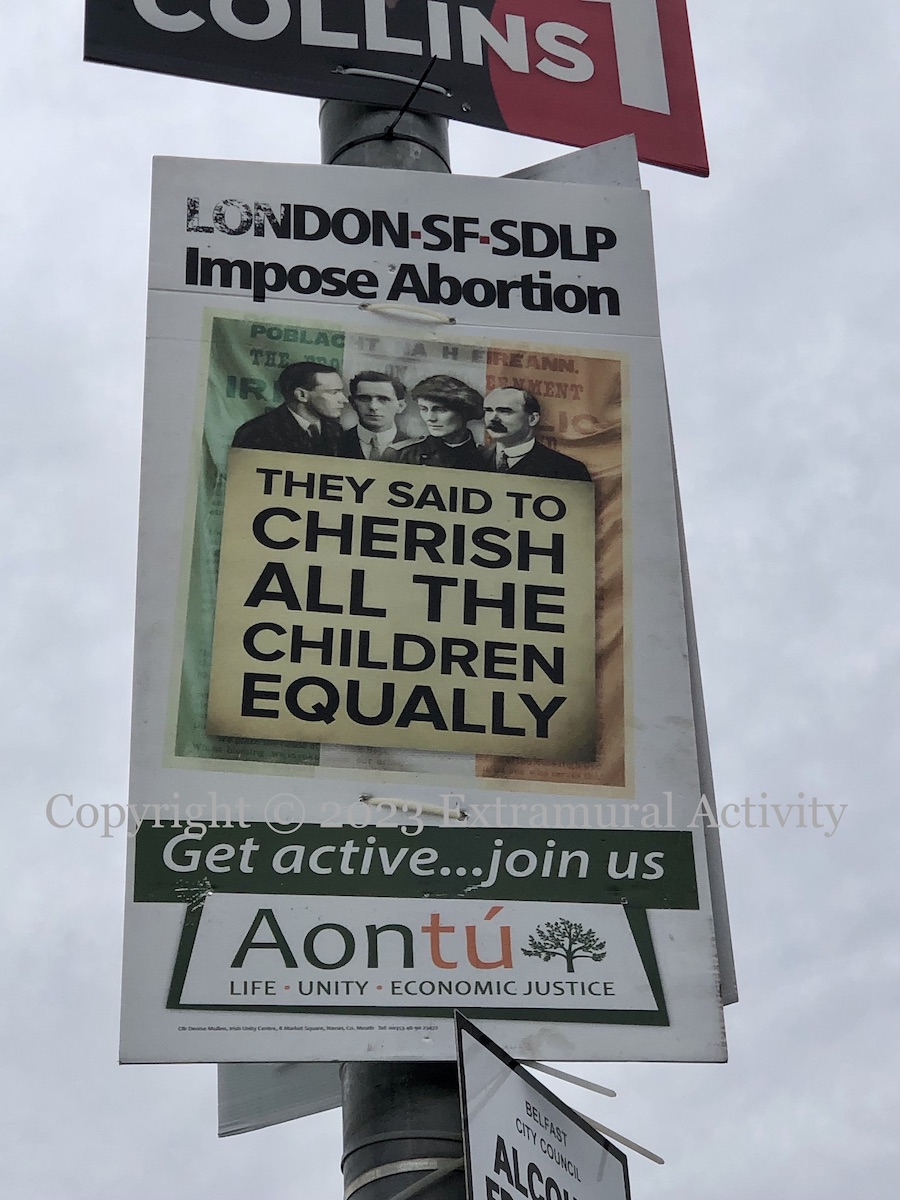
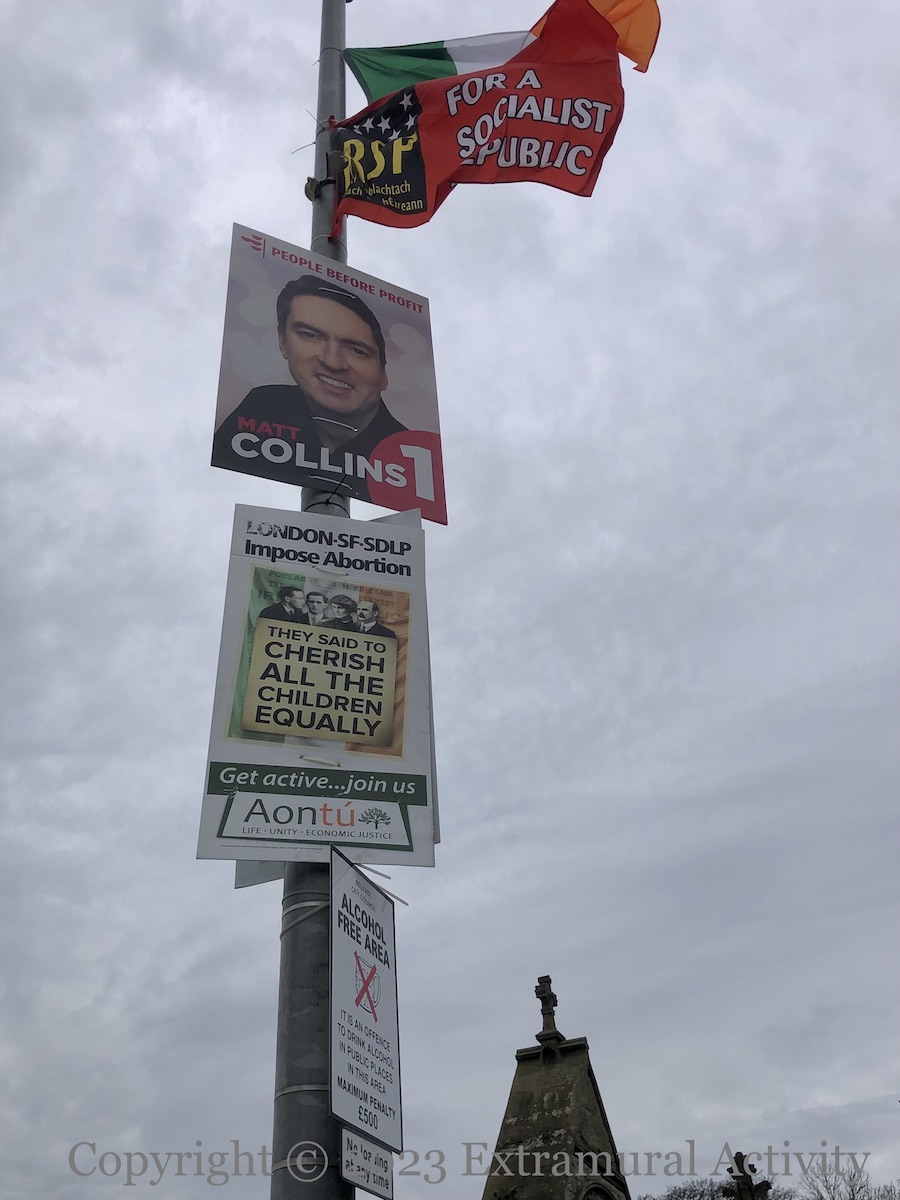
On the heels of the RNU’s use of the Proclamation’s “cherish all the children of the nation equally” (Who Is The Terrorist?) here is a use by anti-abortion party Aontú (web), which separates them from the other nationalist parties: “London–SF–SDLP impose abortion. They said to cherish all the children equally. Get active … join us. Aontú – life, unity, economic justice.”
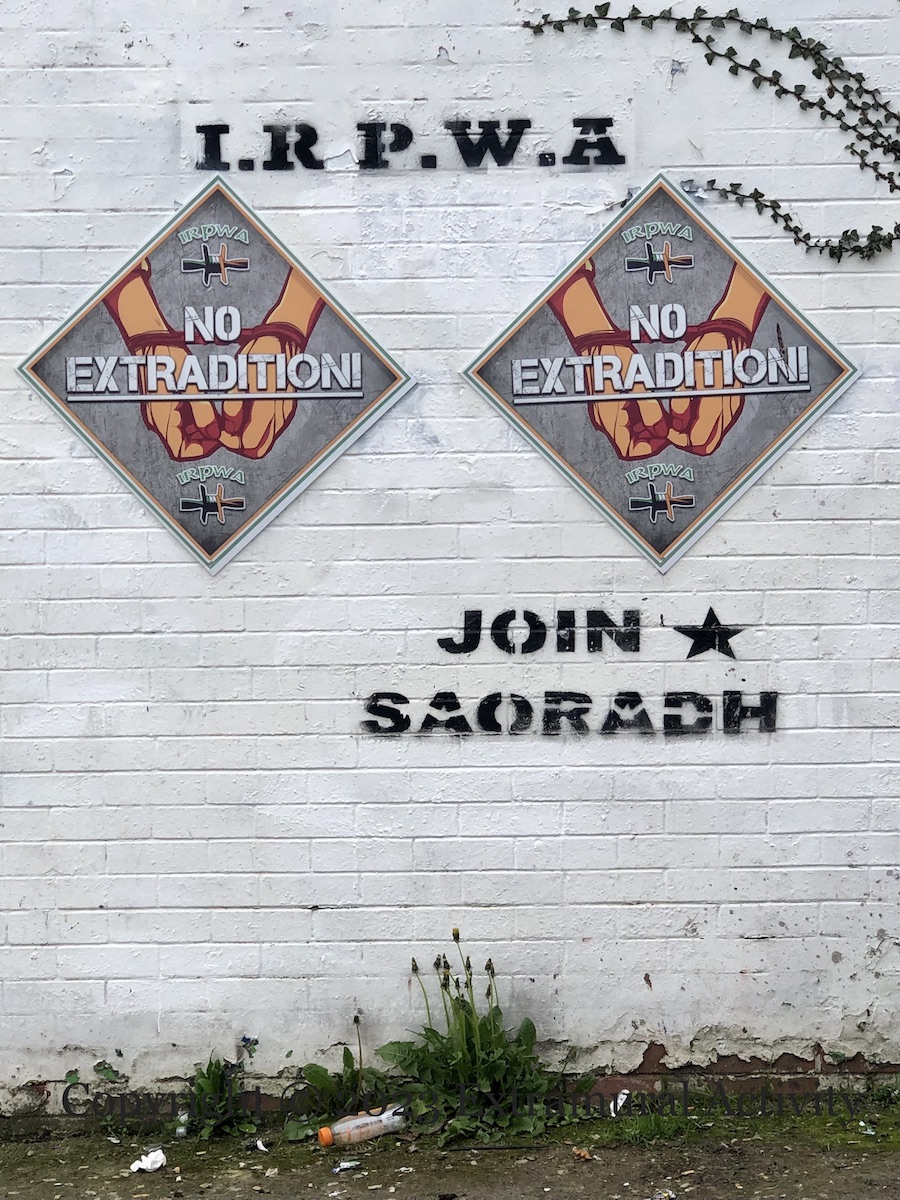
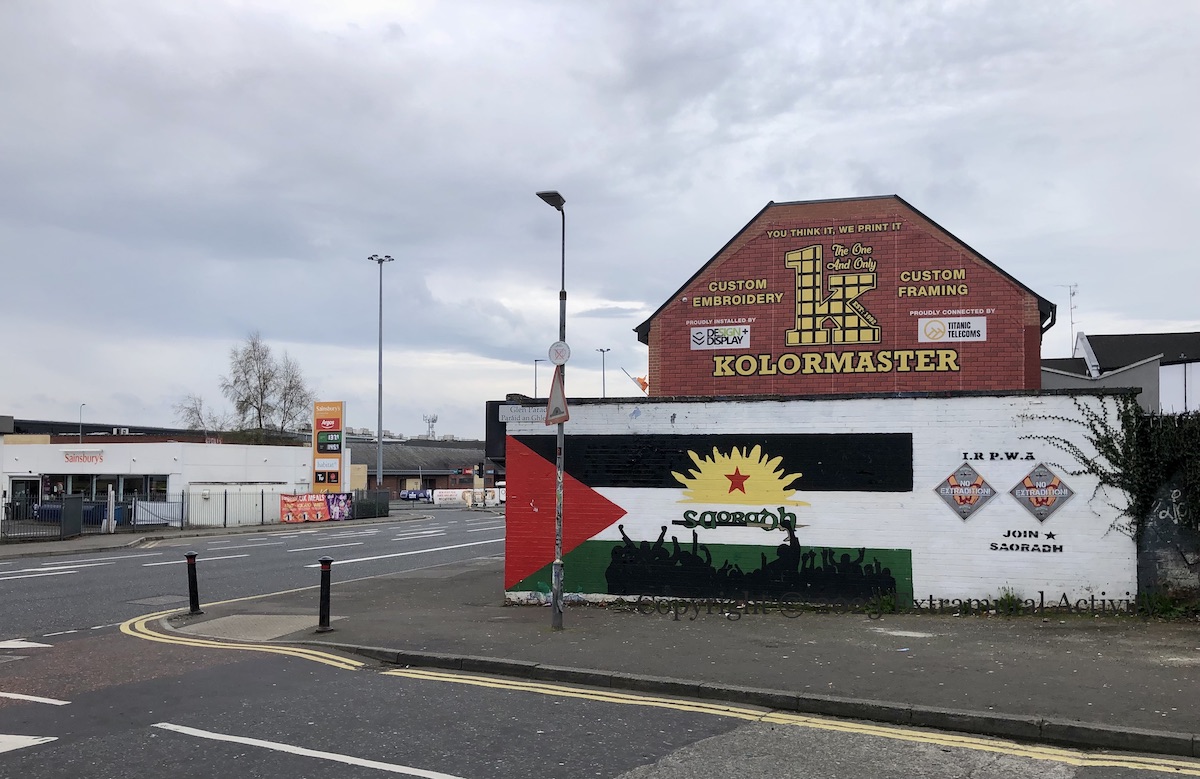
There has been graffiti art of the side wall of what was Vogue Hair & Beauty and is currently the Kurdish barbers since 2008 (see Visual History 11) but in 2018 the wall was claimed by Saoradh (web) with a mural depicting the Palestinian flag (see From The River To The Sea – it has recently been repainted) and a changing message to the right-hand side – currently a pair of IRPWA “No extradition’ boards.
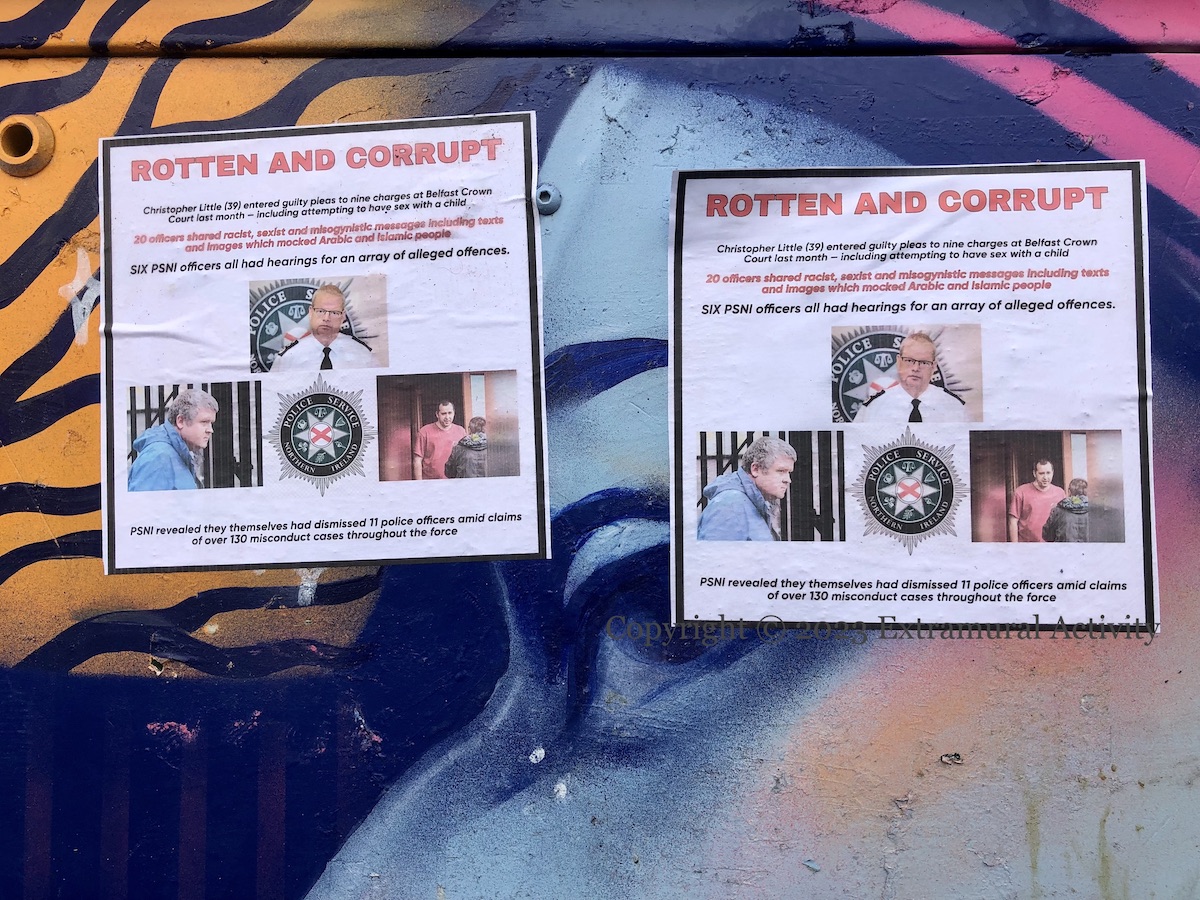
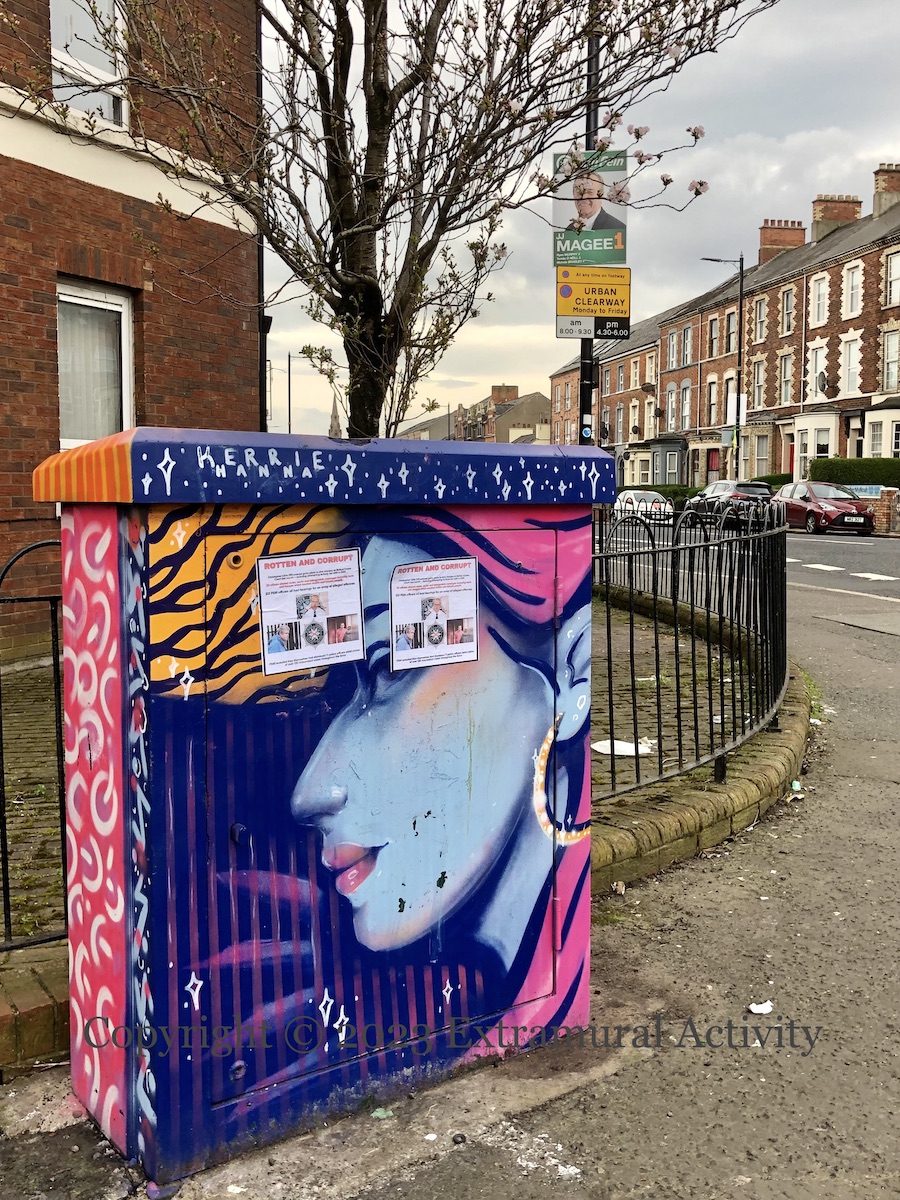
“Rotten And Corrupt: Christopher Little (39) entered guilty pleas to nine charges at Belfast Crown Court last month – including attempting to have sex with a child. [Irish Times] 20 officers shared racist, sexist and misogynistic messages including texts and images which mocked Arabic and Islamic people. [Spotlight programme] Six PSNI officers all had hearings for an array of alleged offences. PSNI revealed they themselves had dismissed 11 police officers amid claims of over 130 misconduct cases throughout the force. [Belfast Live]”
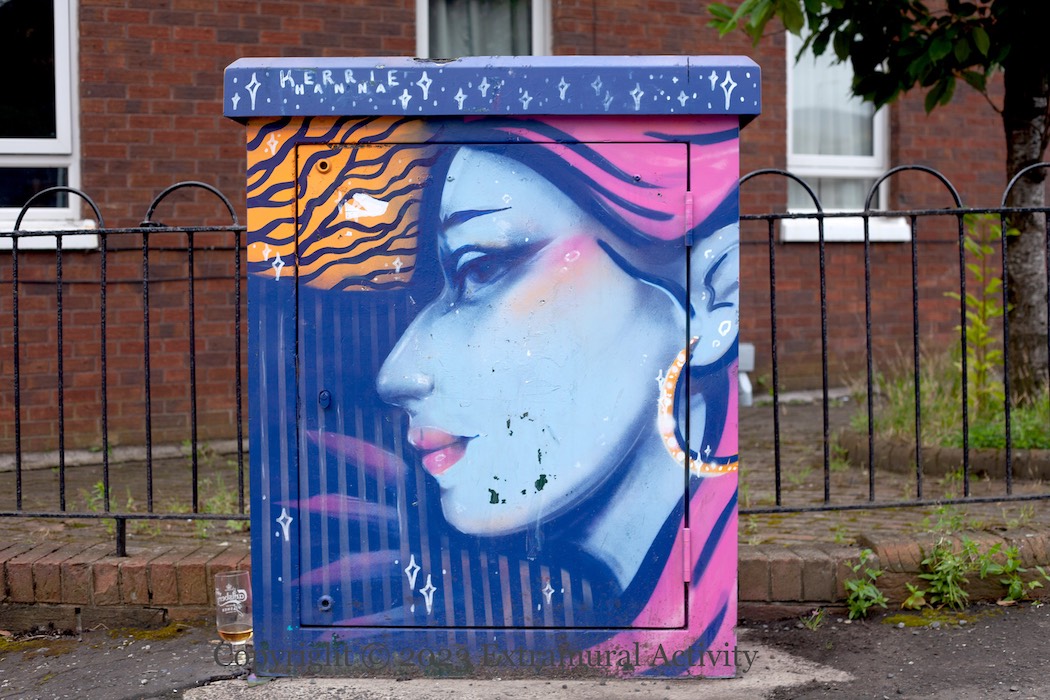
It’s not clear who is behind these flyers in north Belfast; the harpist on the electical box is by Kerrie Hanna (ig).
New Lodge Road, Belfast.
Update: the posters have been removed (by the end of July, 2023).
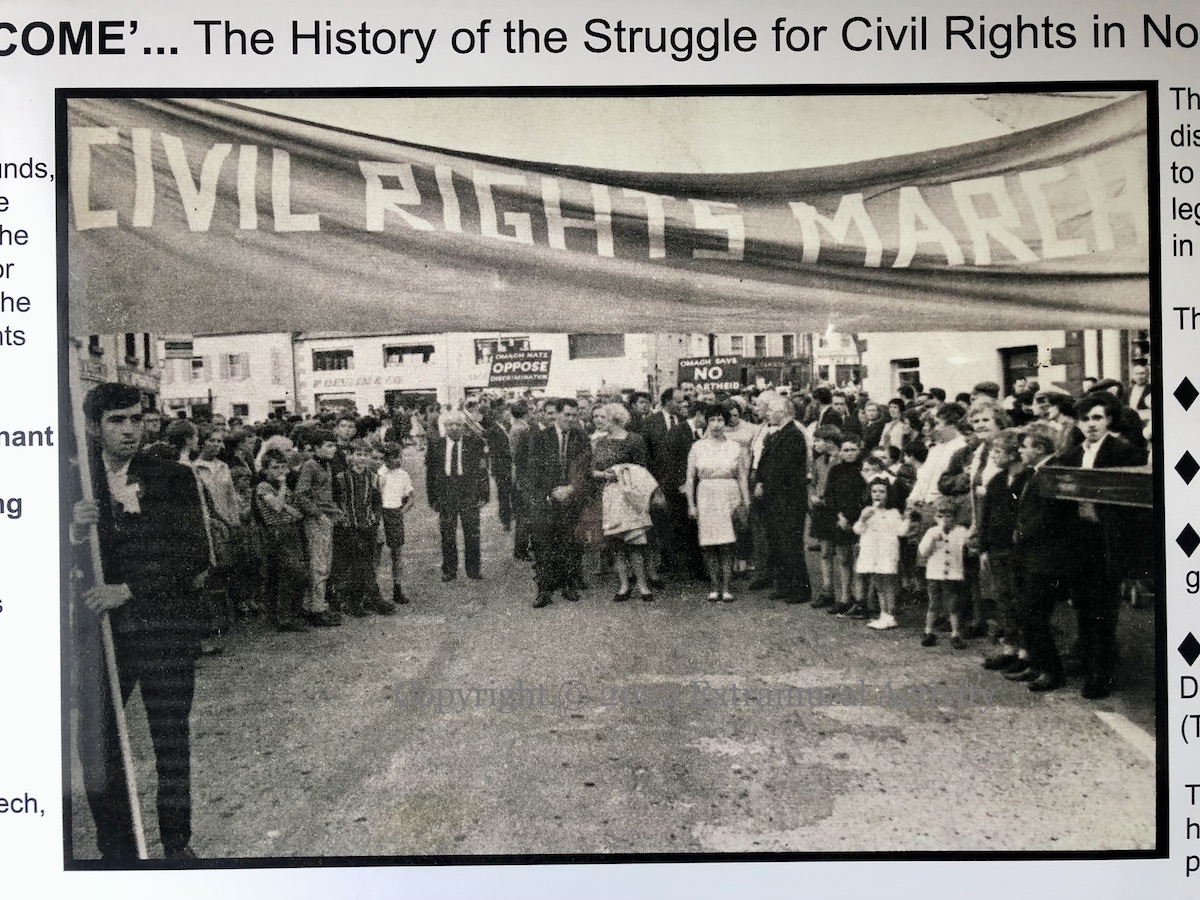
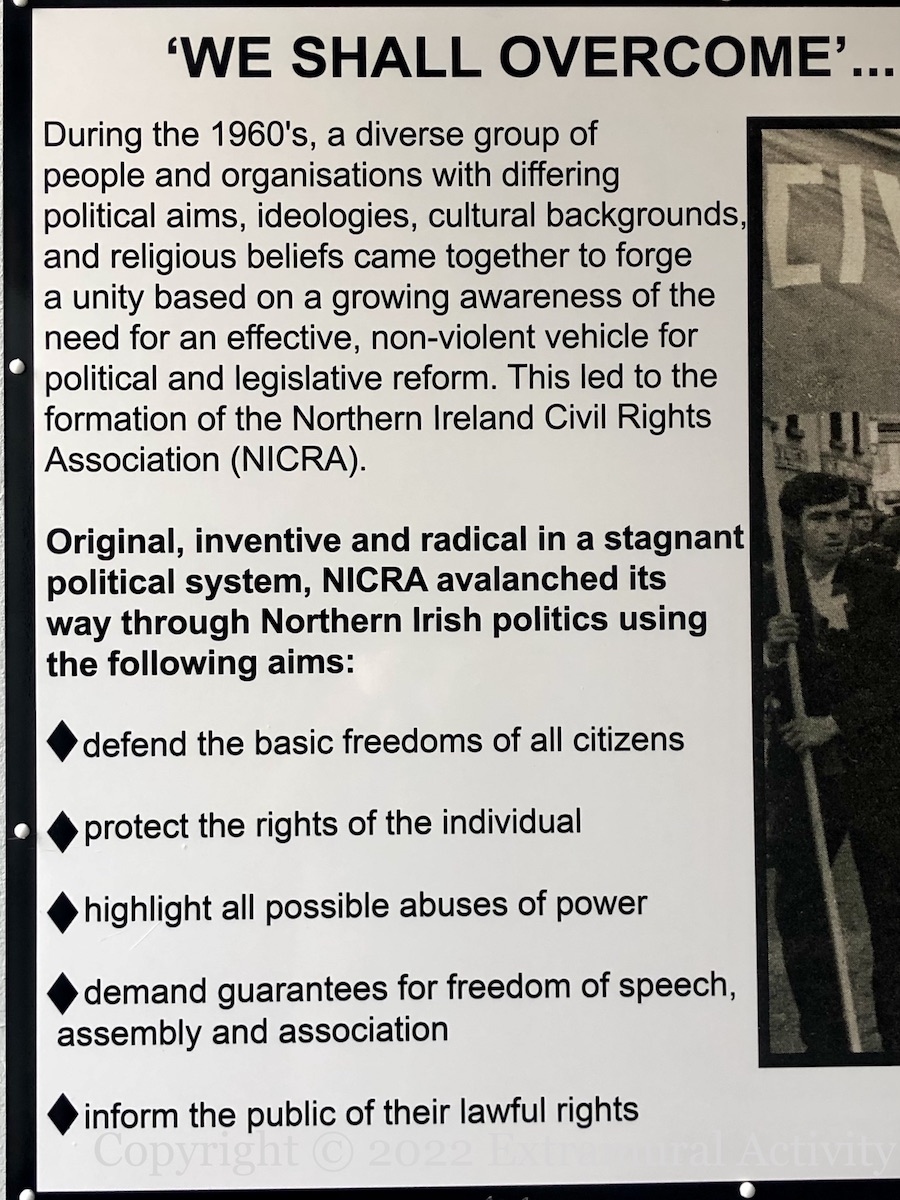
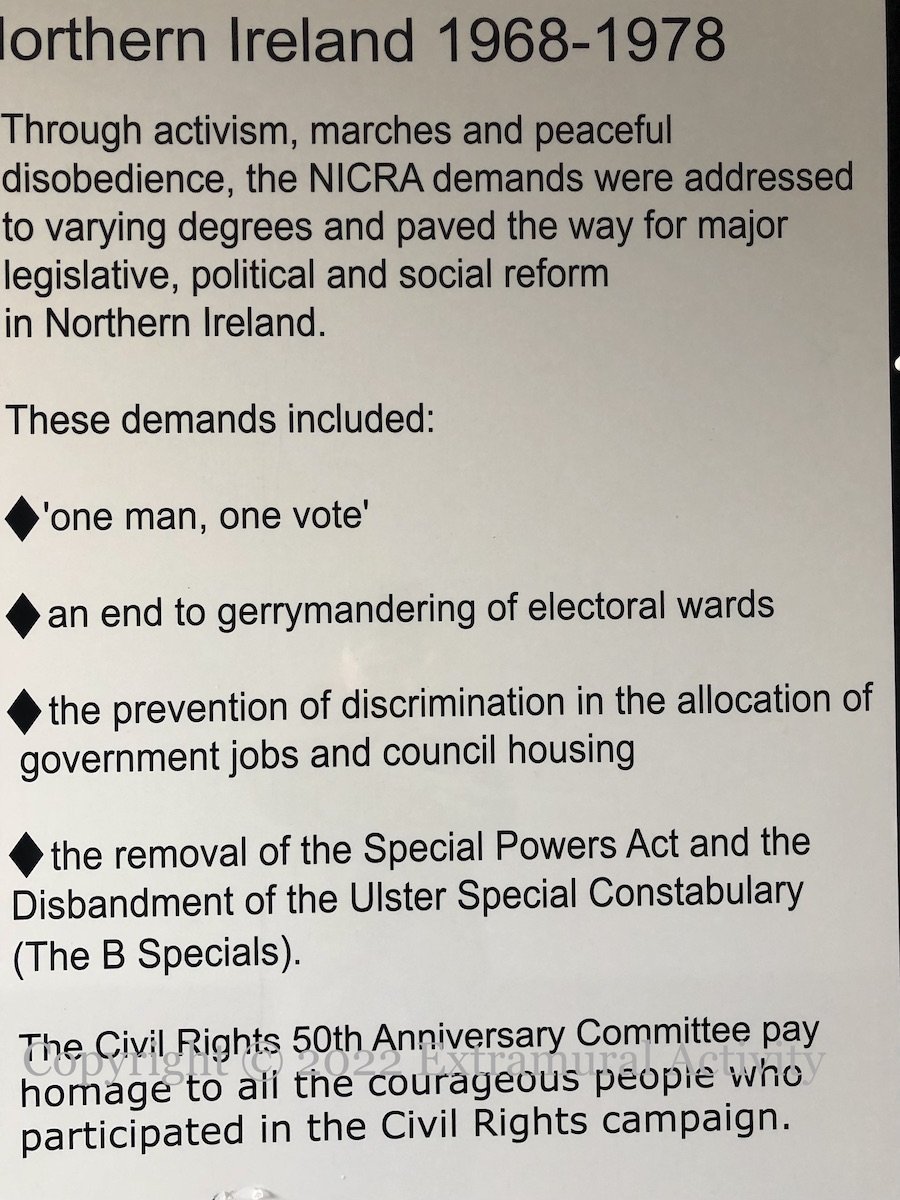
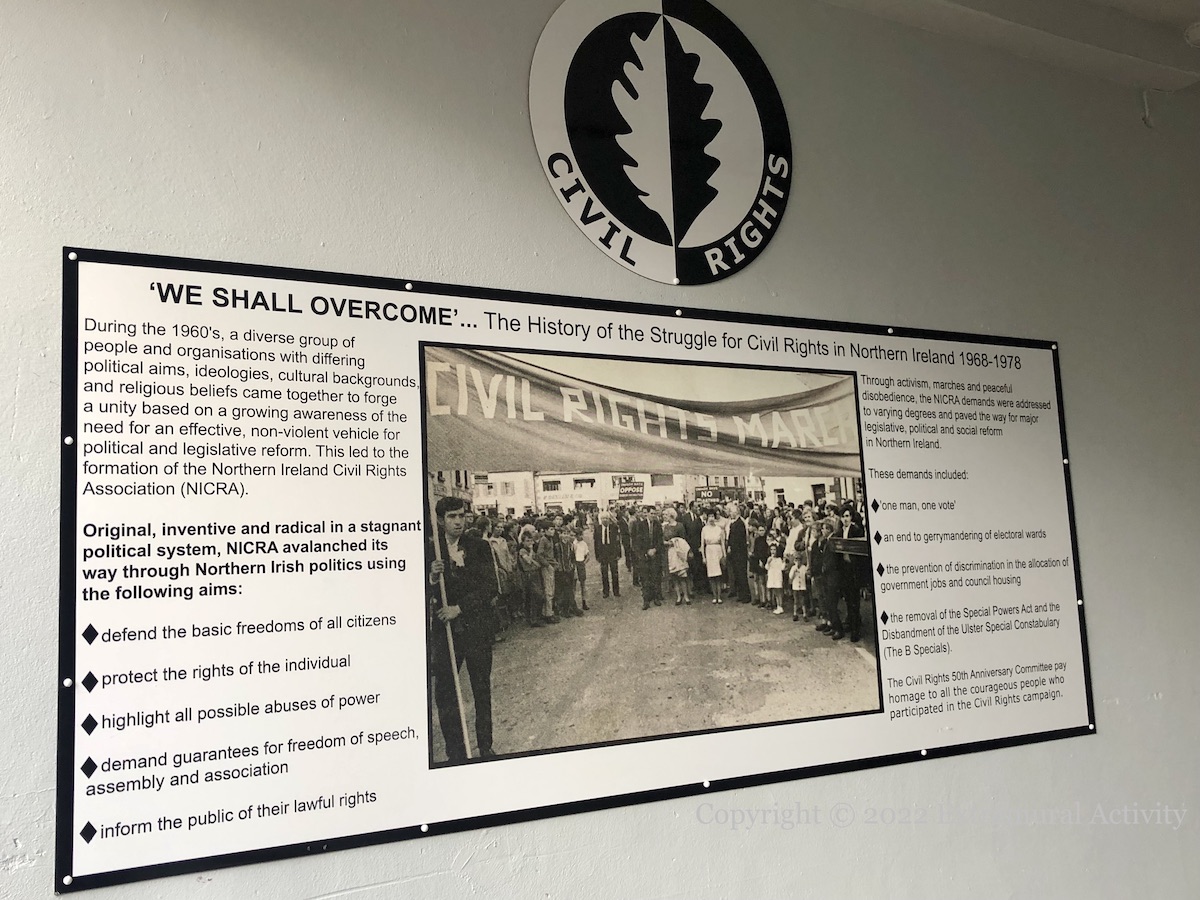
“The Civil Rights 50th Anniversary Committee pay homage to all the courageous people who participated in the Civil Rights campaign” with a commemorative board in the alley of Donegall Street Place, in front of the Jim Larkin statue and ICTU mural. The photograph shows the start of the march from Coalisland to Dungannon on March 24th, 1968. The participants are identified on the CAIN page about NICRA. (See also the remarks from vice-chair Dympna McGlade at Slugger.)
“We shall overcome – the history of the struggle for civil rights in Northern Ireland 1968-1978. During the 1960’s, a diverse group of people and organisations with differing political aims, ideologies, cultural backgrounds, and religious beliefs came together to forge a unity based on a growing awareness of the need for an effective, non-violent vehicle for political and legislative reform. This led to the formation of the Northern Ireland Civil Rights Association (NICRA). Original, inventive and radical in a stagnant political system, NICRA avalanched its way through Northern Ireland politics using the following aims: defend the basic freedoms of all citizens; protect the rights of the individual; highlight all possible abuses of power; demand guarantees for freedom of speech, assembly and association; inform the public of their lawful rights. Through activism, marches and peaceful disobedience, the NICRA demands were addressed to varying degrees and paved the way for major legislative, political and social reform in Northern Ireland. These demands included: ‘one man, one vote’; an end to gerrymandering of electoral wards; the prevention of discrimination in the allocation of government jobs and council housing; the removal of the Special Powers Act and the Disbandment of the Ulster Special Constabulary (The B Specials).”
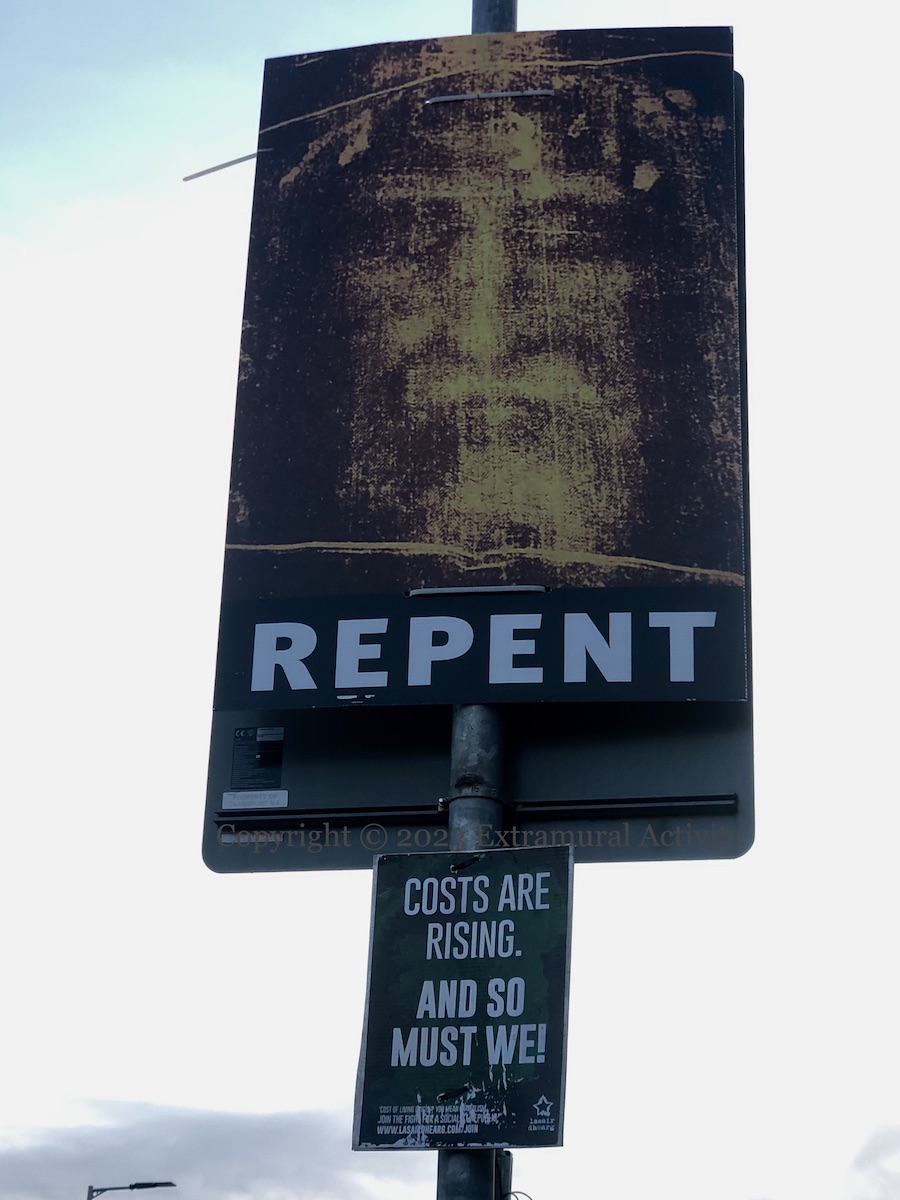
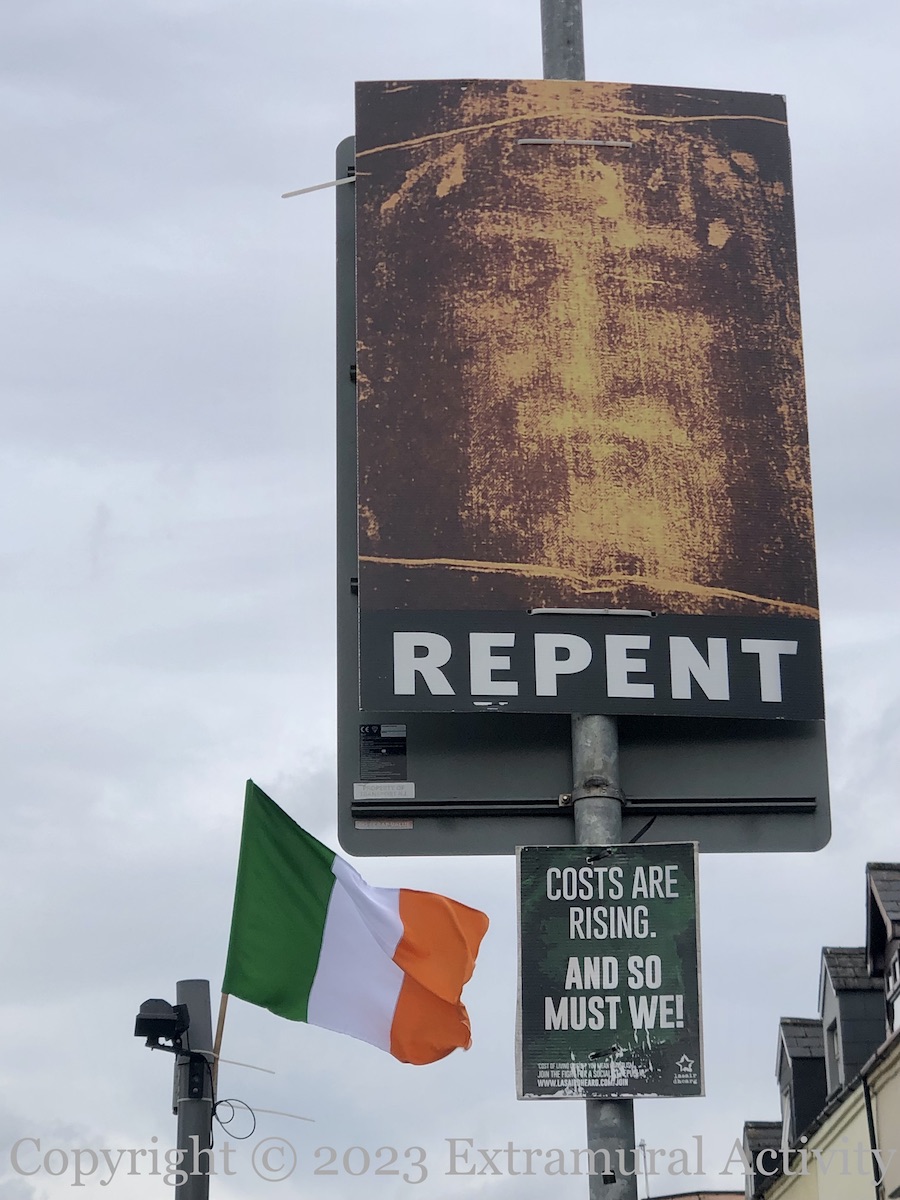
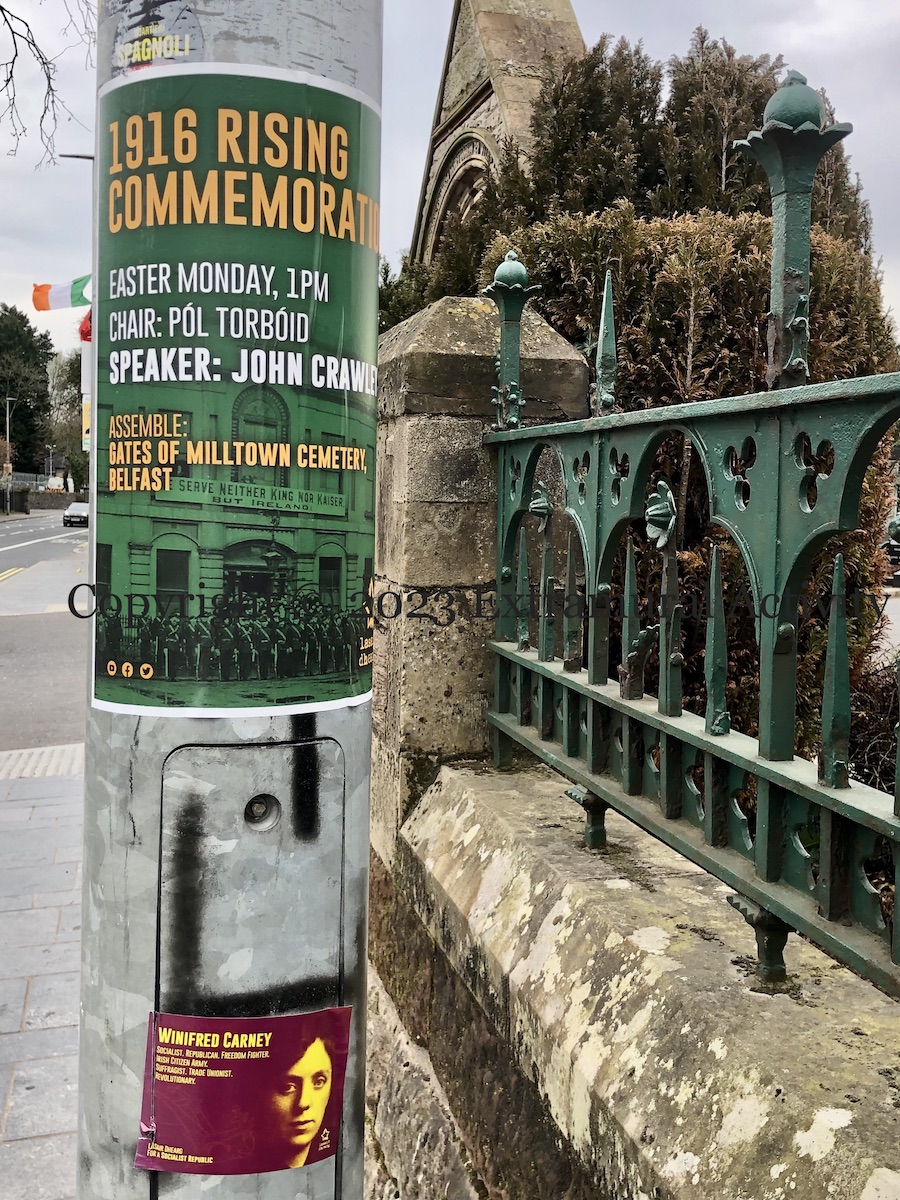
CNR west Belfast, but not that rising. Rather these two placards on the Falls Road encourage reactions to risings of the Christian kind – we should “repent” our sins even as they forgiven; the shroud of Turin dates to roughly 1300 but is a symbol of Jesus of Nazareth in the tomb between crucifixion and resurrection – and of the inflationary kind – Lasaır Dhearg (web) declares “Costs are rising. And so must we!”
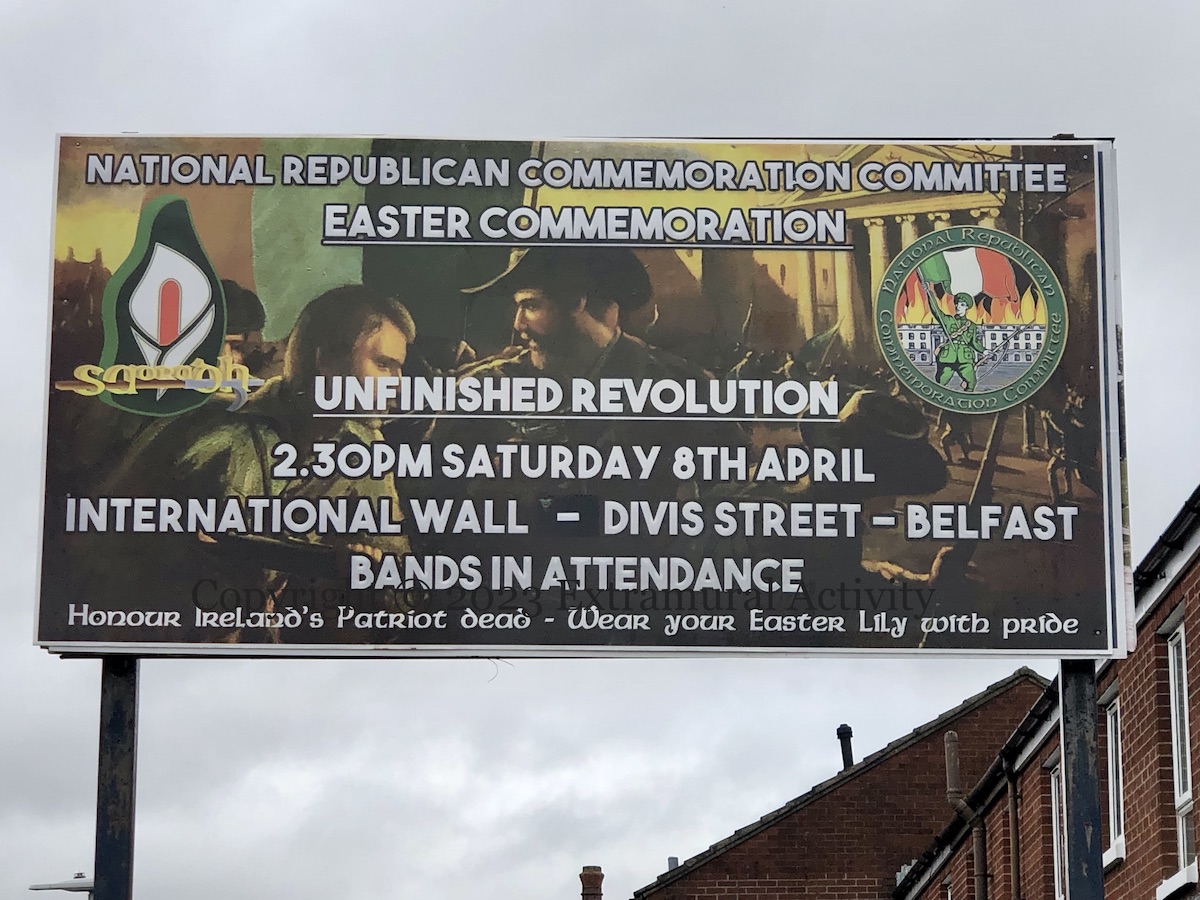
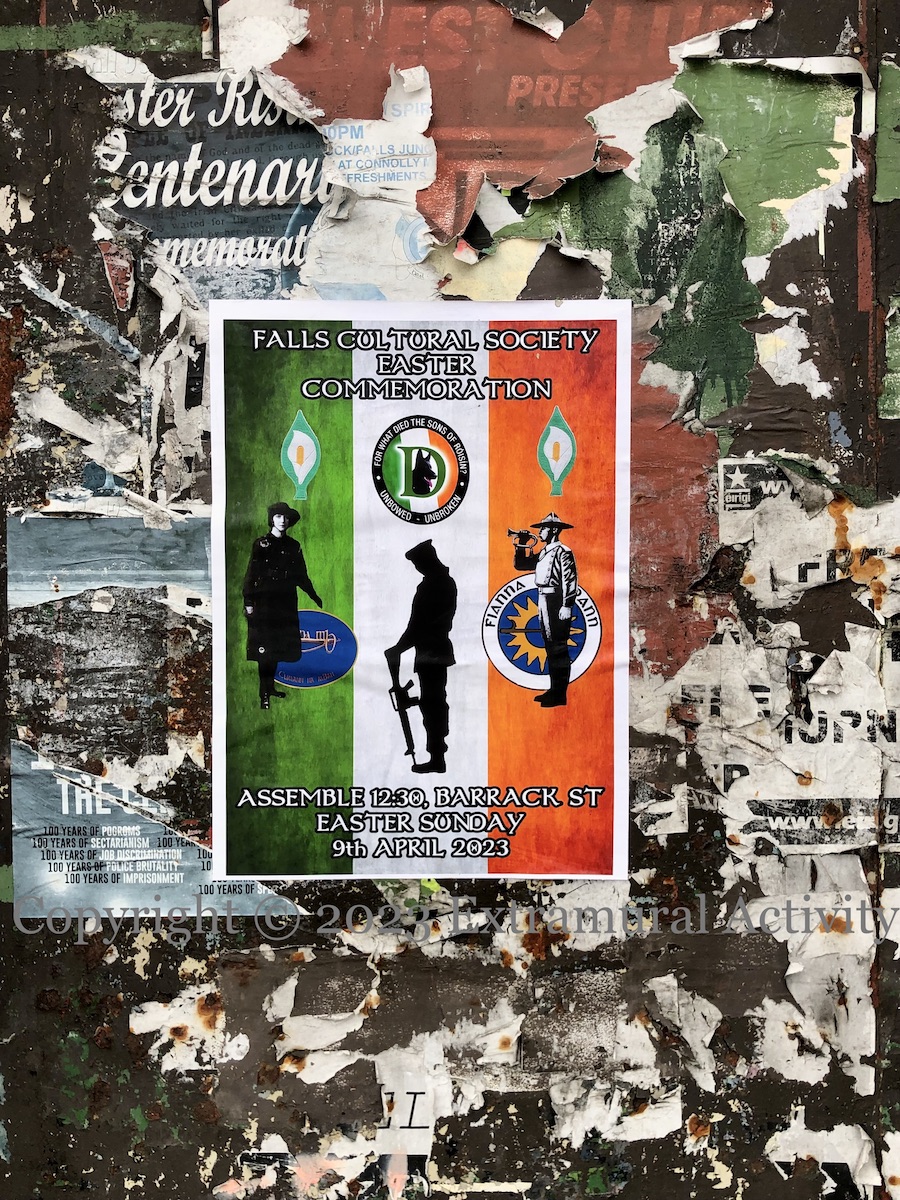
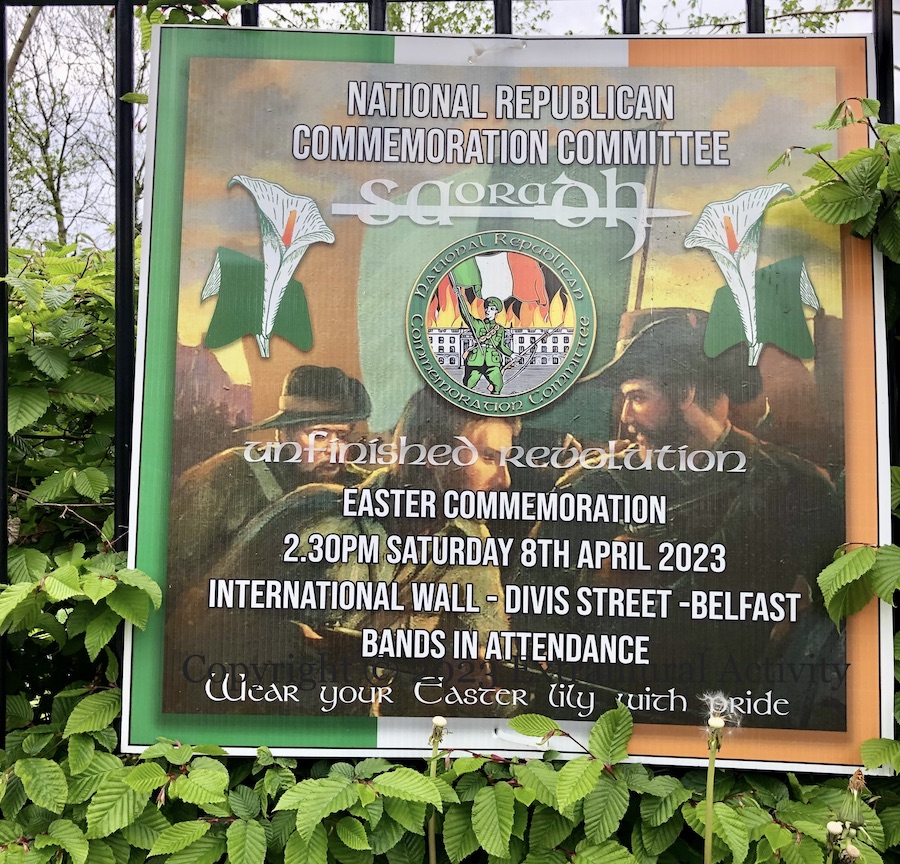
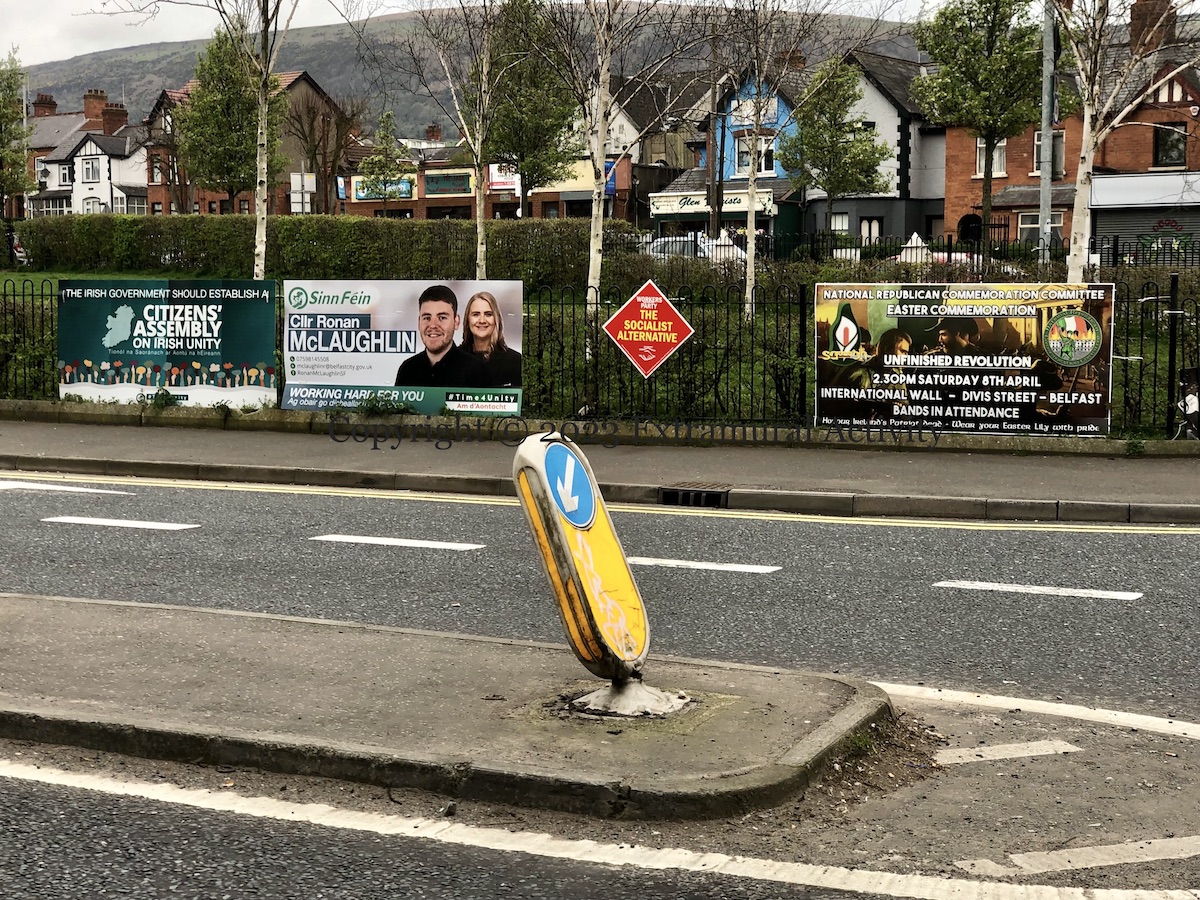
There are dozens of Easter Rising commemorations happening this weekend – see Belfast Media for a full calendar. Above is a board for Saoradh’s (web) Easter parade on Saturday 8th. Below is the Falls/D Company gathering.
“National Republican Commemoration Committee Easter commemoration. Unfinished revolution. 2.30 pm Saturday 8th April. International wall, Divis Street, Belfast. Bands in attendance. Honour Ireland’s patriot dead, wear your Easter lily with pride.”
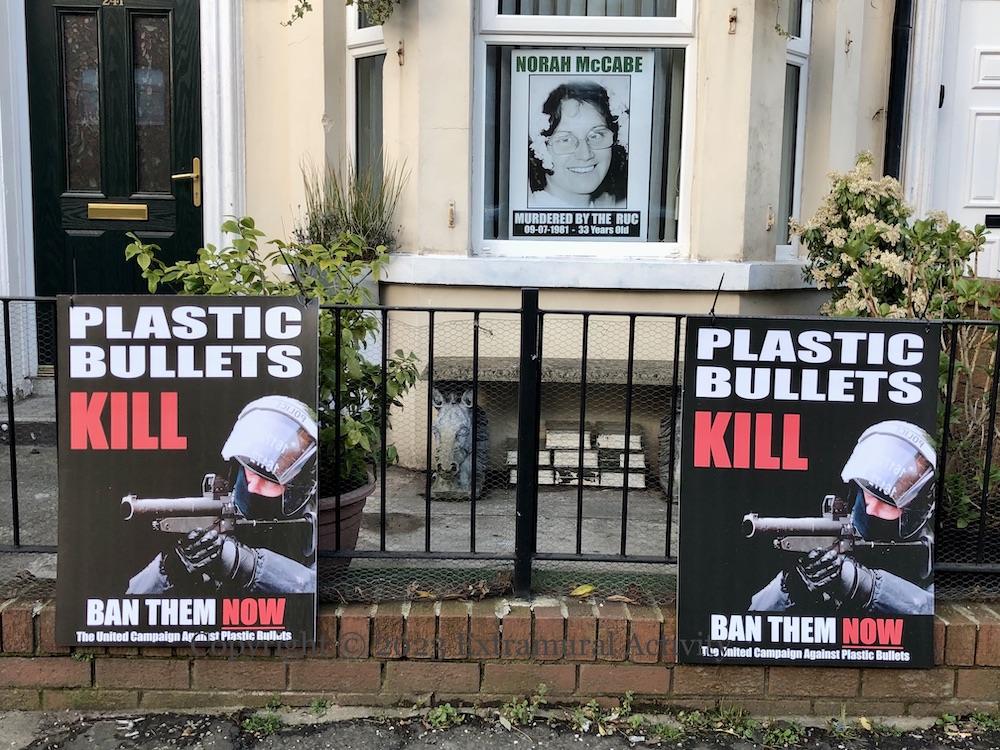
Norah McCabe died on July 9th, 1981, a day after being struck in the back of the head by a plastic bullet. The RUC claimed that they fired at a petrol bomber but footage from a Canadian TV crew on the Falls Road showed this to be false (Belfast Media).
Her husband Jim was involved in the “United Campaign Against Plastic Bullets” (web) founded in 1985 by Groves & Reilly. He died in January (2023) (and mural in his memory was added to Divis Street – see Jim McCabe).
There is a plaque and a memorial to McCabe at the spot where she was struck in the old Linden Street. These posters are at the family home on the Springfield Road.
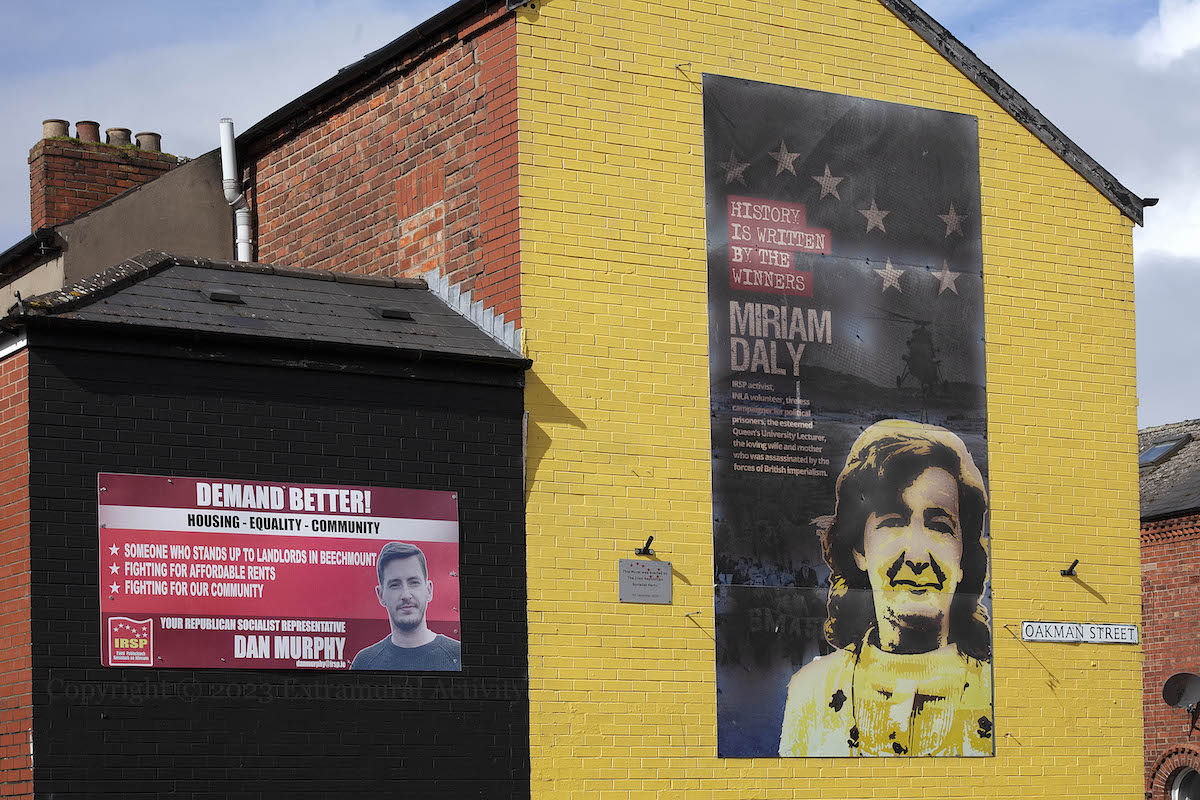
An IRSP (web) electoral board joins the Miriam Daly tribute at the end of Oakman Street (see previously History Is Written By The Winners). Dan Murphy took 2.5% of the first-preference votes in the 2022 Assembly elections (WP) on a platform focusing on housing: “Demand better! Housing – Equality – Community. Someone who stands up to landlords in Beechmount (e.g.), fighting for affordable rents, fighting for our community.”
The IRSP first painted on this Oakman Street gable in 1996, with the original Daly mural. Before that, in 1986, there was an IRA anti-touting message (see M00413).
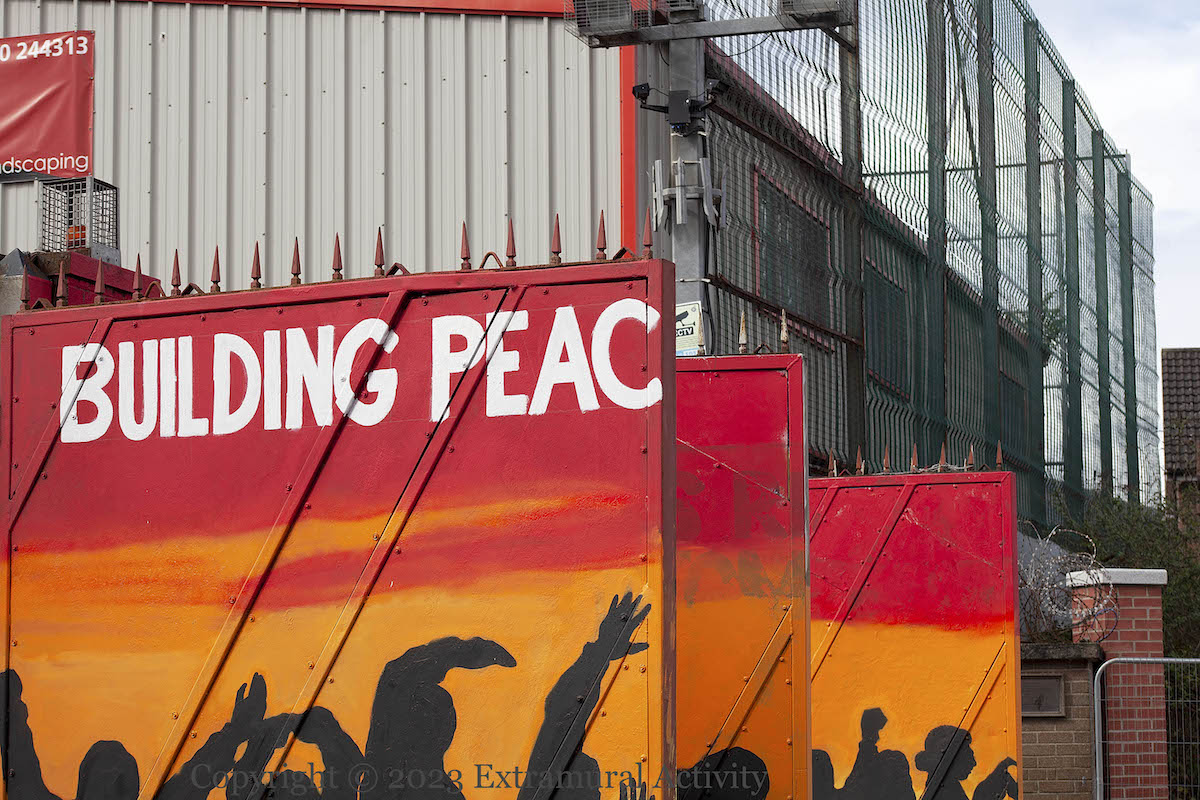
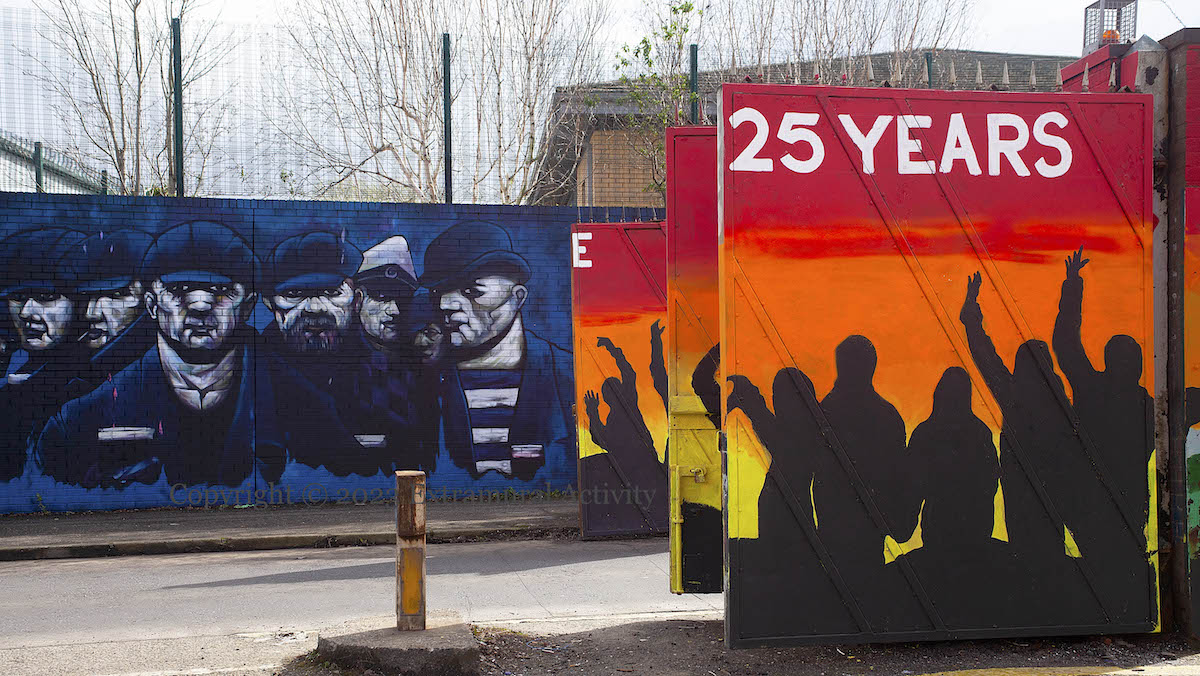
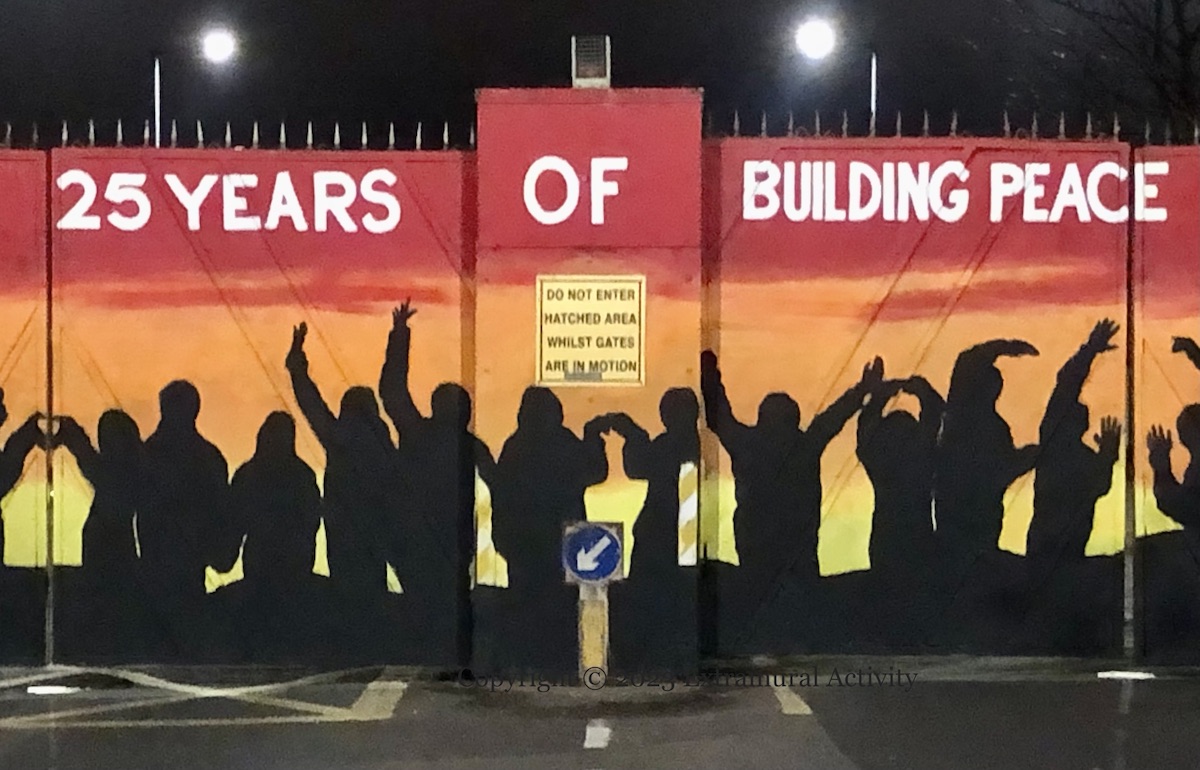
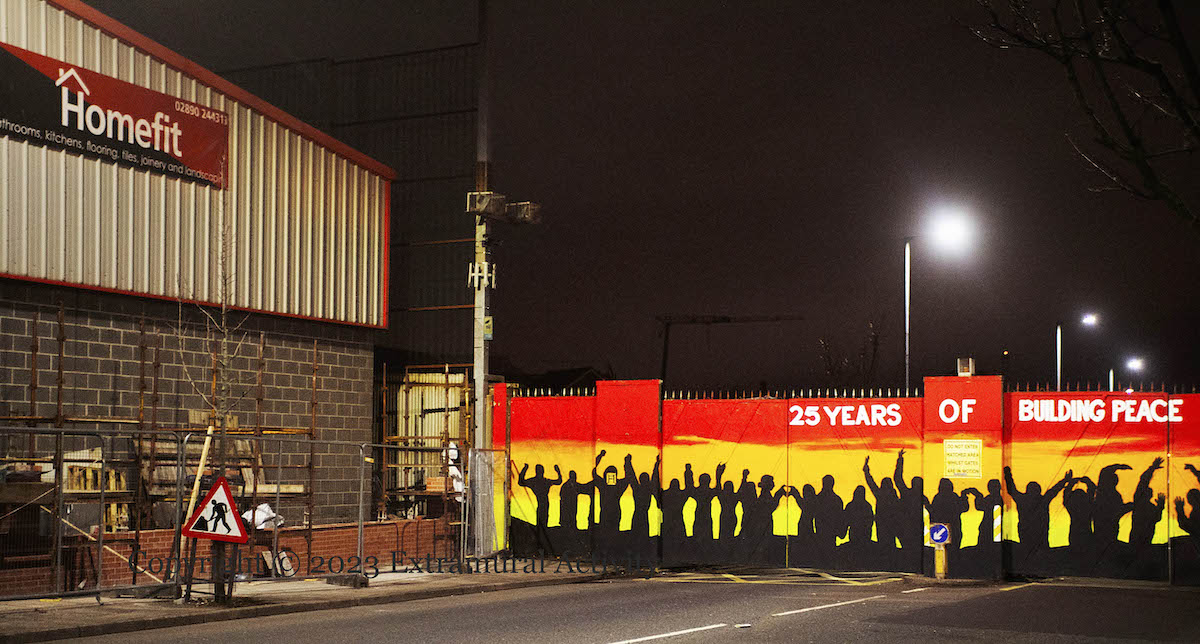
The gates on Lanark Way are part of the west Belfast “peace” wall. On this site we always put the word in scare-quotes to signify that it has a different meaning than it typically does. Without them, “peace wall” might suggest a place where people can go for a few moments of quiet reflection.
Rather, the wall – and the gates and the cages that surround many buildings on either side of the wall (see above) – is a divider meant to keep the peace by separating warring factions. Indeed the reason for the re-painting of the gates is not just the up-coming 25th anniversary of the Belfast or “Good Friday” Agreement (on April 10th) but the fact that they were damaged in the 2021 rioting (BBC). (This Irish News article surveys 150 years of violence at the site.)
The new art on the gates is inspired by the cover of the booklet sent to every household in advance of the May vote to ratify the Agreement (available at CAIN), which was similar in various ways to the television ad shown at the time (Ads On The Frontline). It showed a family of four in silhouette against a red-and-orange sunset; given the rioting associated with Lanark Way, on the gates this sunset could be mistaken for flames, and the rejoicing silhouetted figures for gesticulating and petrol-bomb-throwing rioters. For the previous art on the gates, see the Visual History page on the west Belfast “peace” line. (For the mural in the background, see Sailortown Dockers.)
 Seosamh Mac Coille Collection