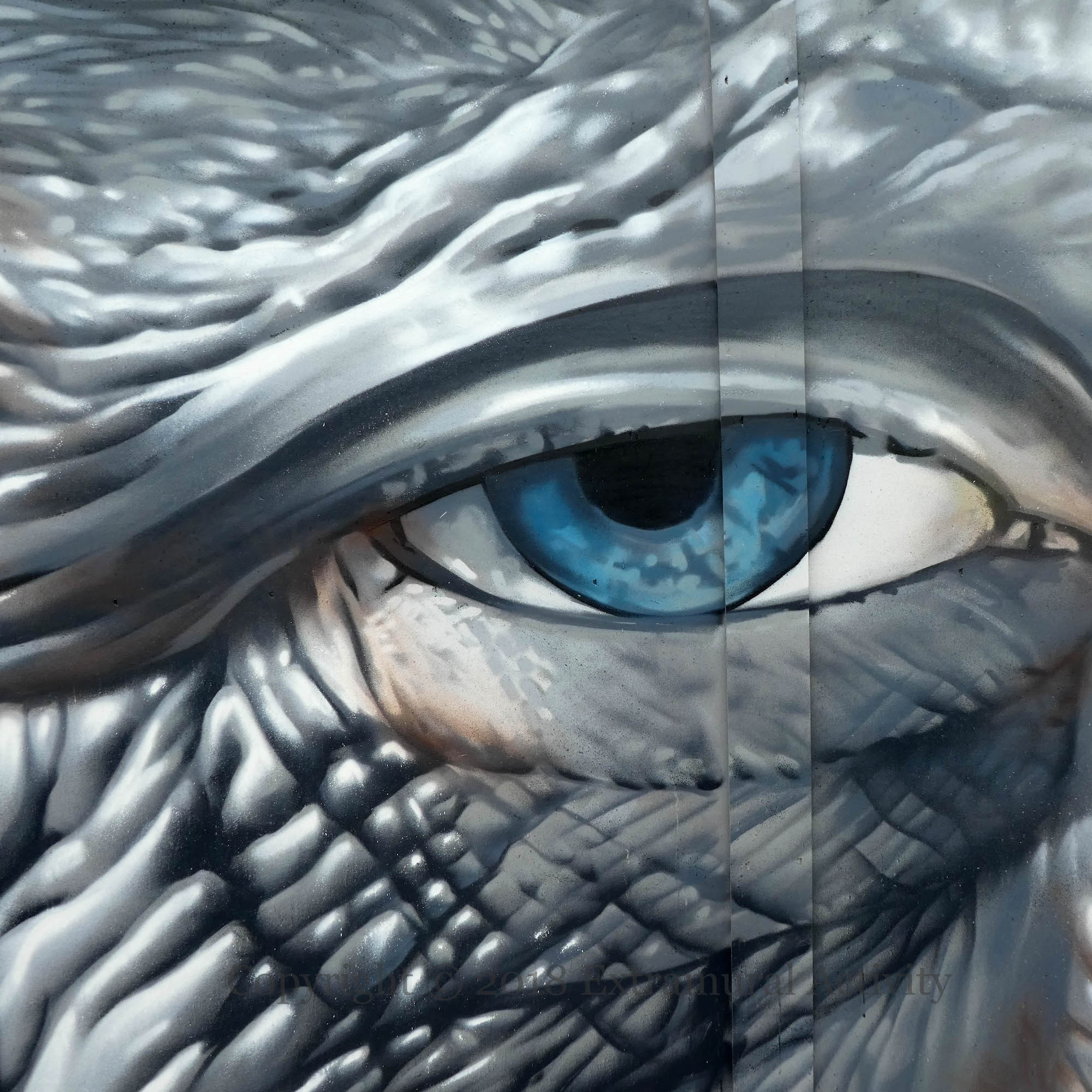
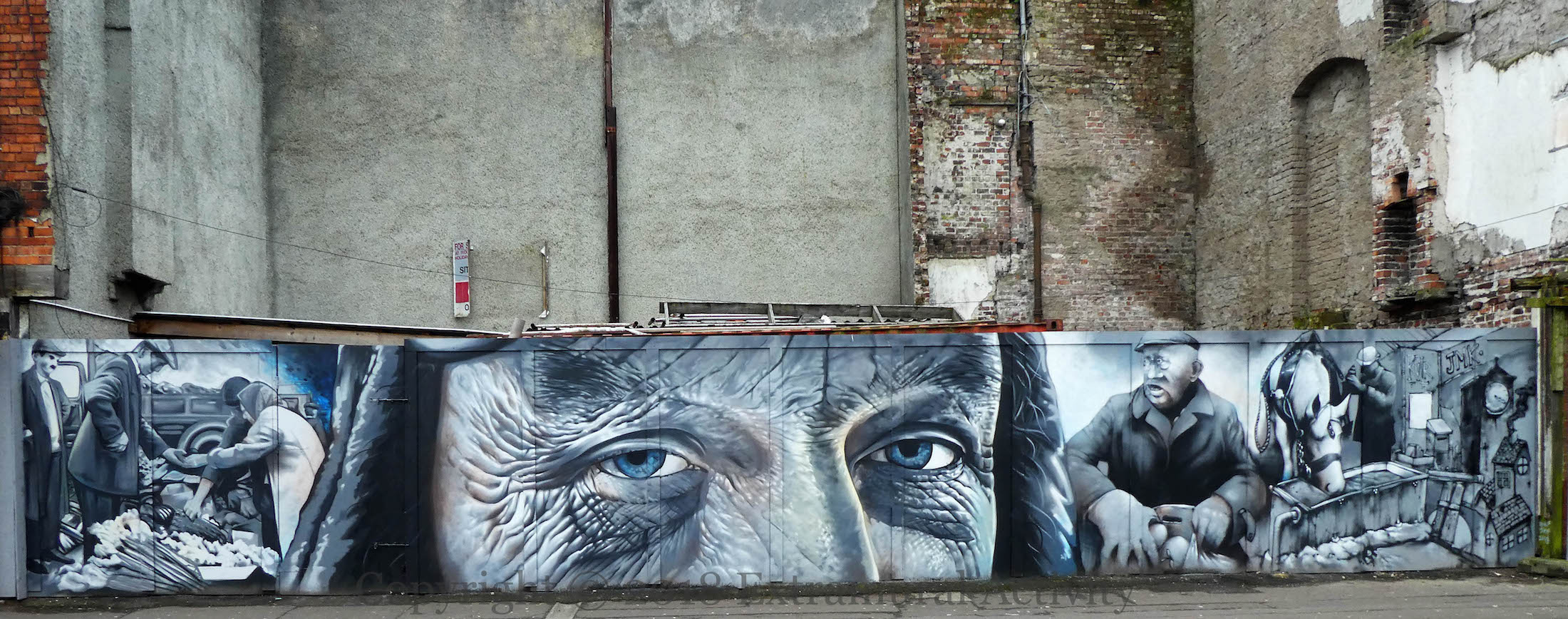
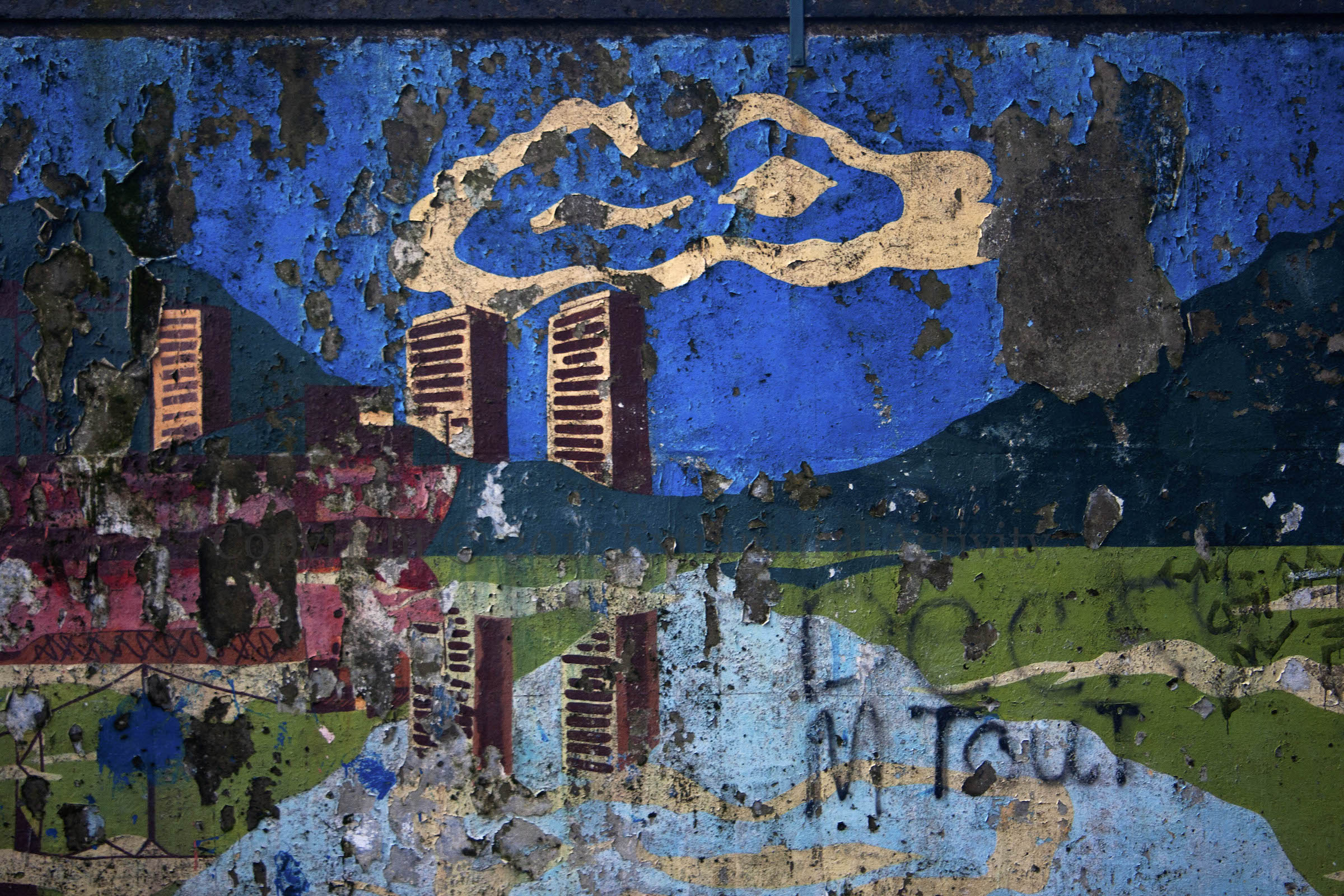
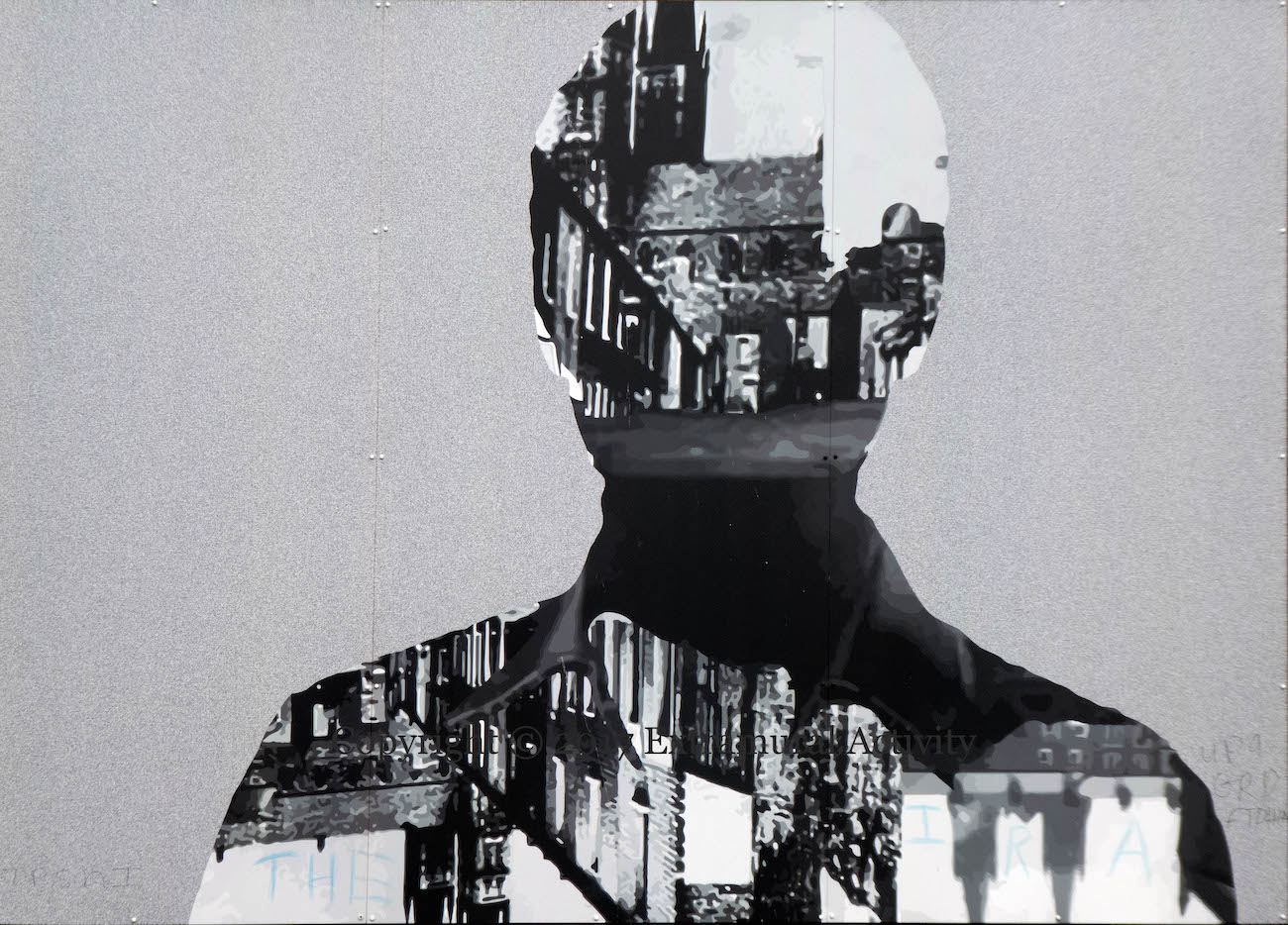
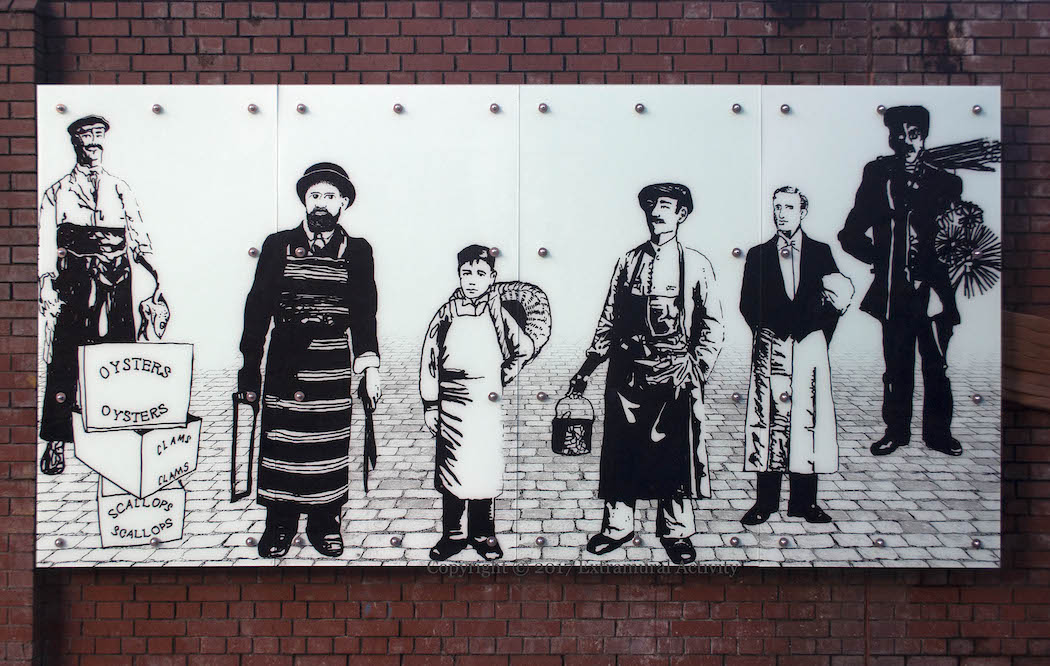
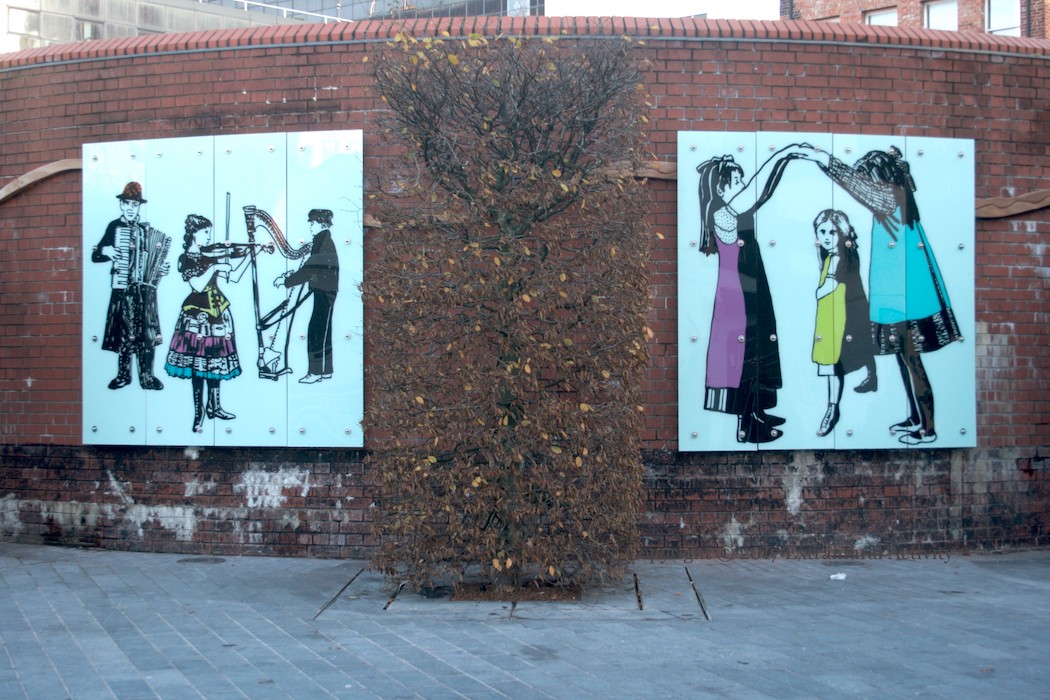
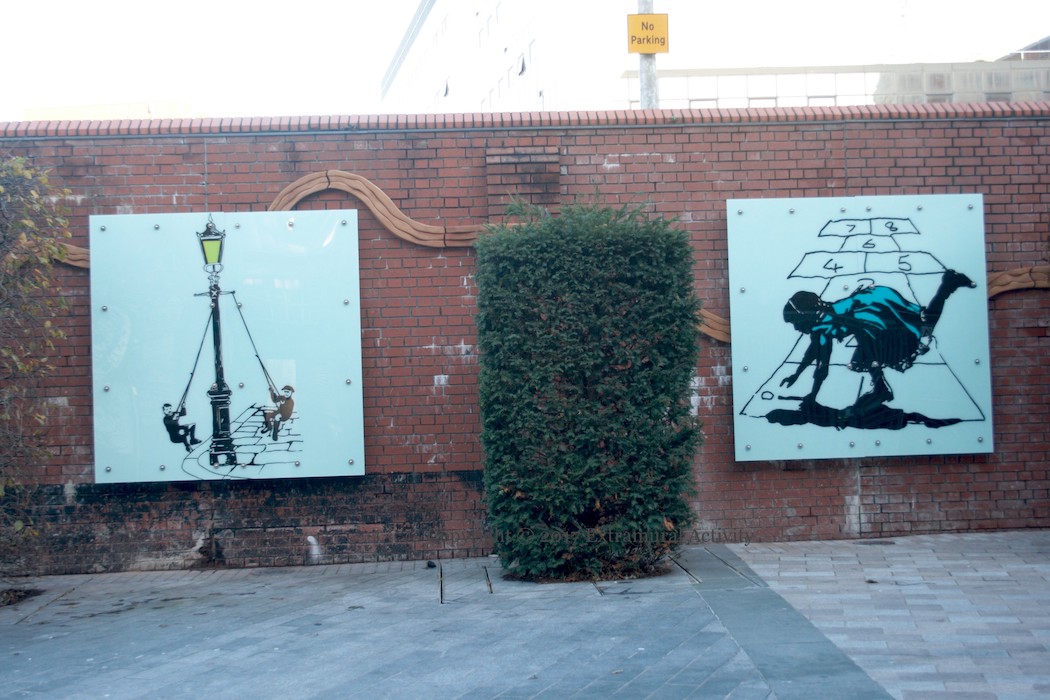
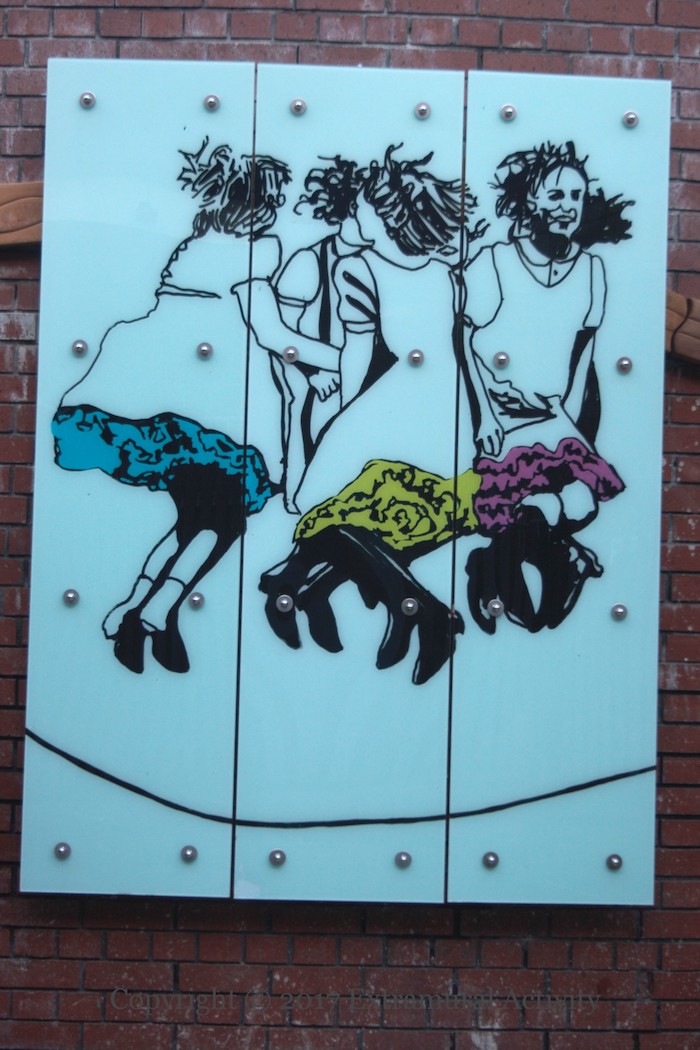
Here are two images – one close-up, one wide shot – of the new mural in Gresham Street by KVLR and JMK of the old Smithfield Market. The market was fire-bombed in 1974 (gallery of 10 images at the Tele), quickly rebuilt with wood, and replaced permanently in 1986.
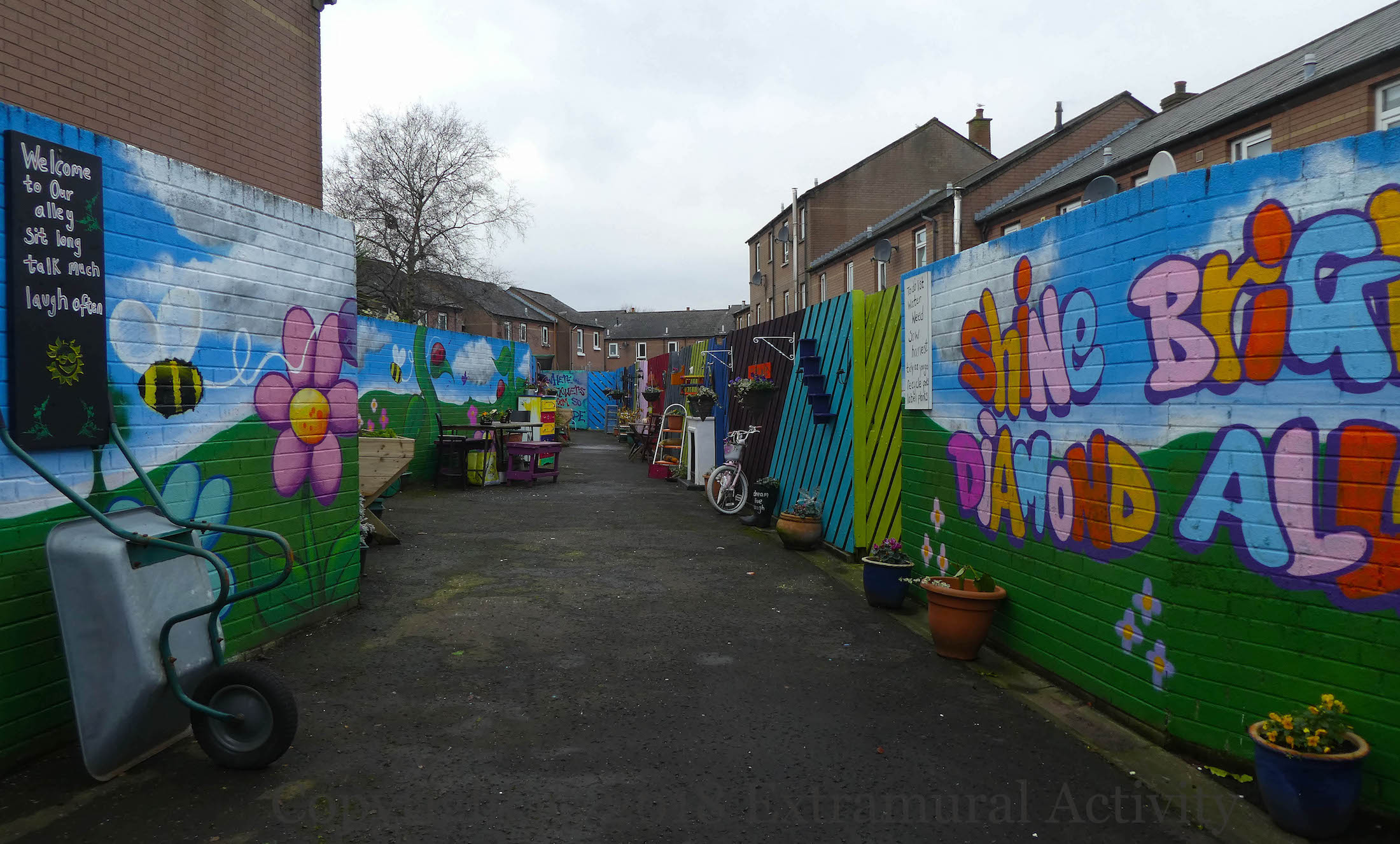
Diamond Alley is a disused alleyway off Lord Street in east Belfast, that has been rejuvenated with paint and plants, many placed in/on objects such as a wine rack, a chest of drawers, and a pair of jeans. The alley was funded by the Urban Villages Initiative and implemented by CharterNI/Diamond Project and East Belfast Mission/Hosford House, and launched on November 1st, last year (2017). The project was profiled on NVTv. (See also Always Keep A Diamond In Your Mind.)
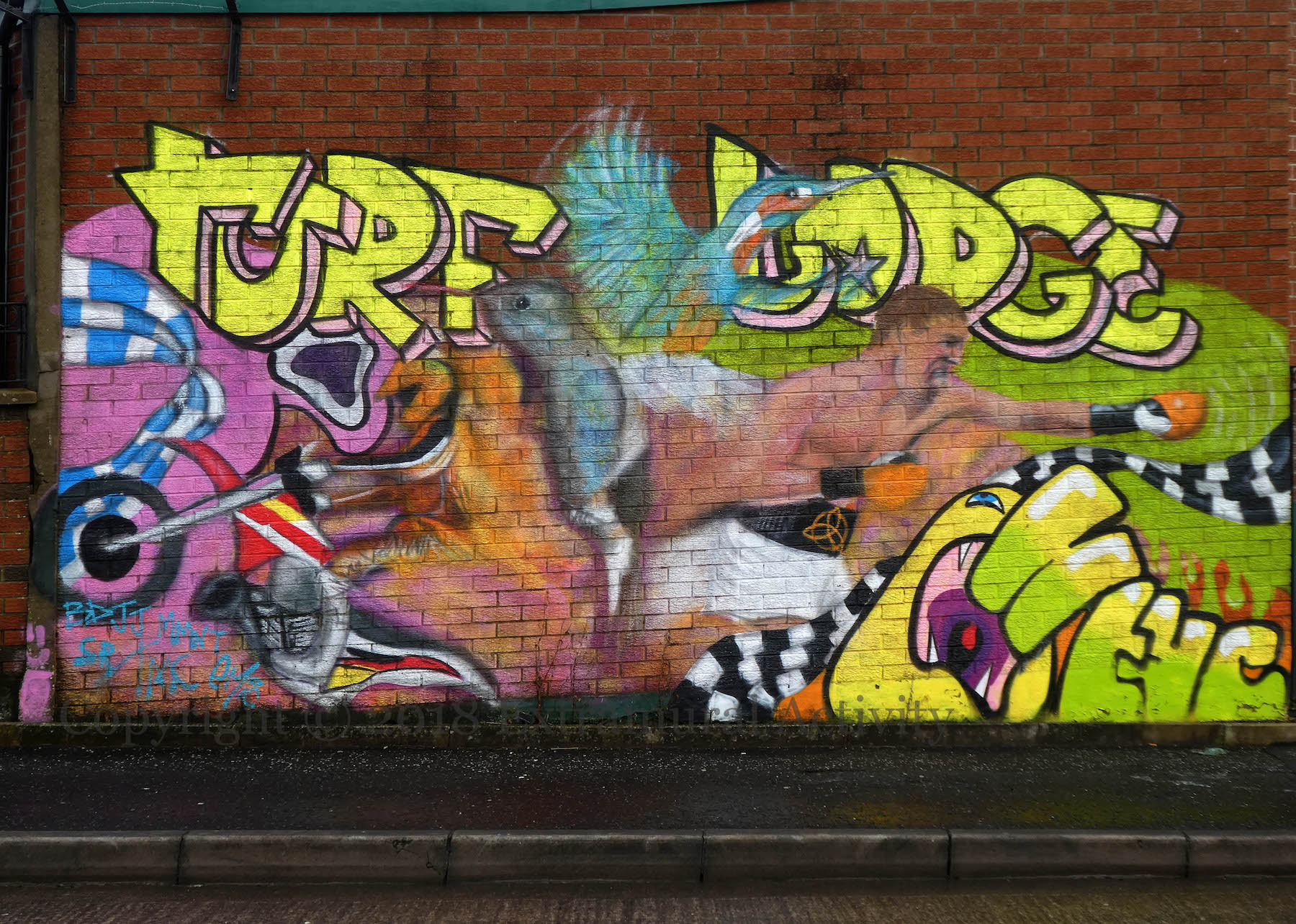
Here is another piece from the side of the Turf Lodge Tenants’ Association & Social Club (Fb), in a similar style to Choice. The boxer is a nod to Holy Trinity boxing club across the street.
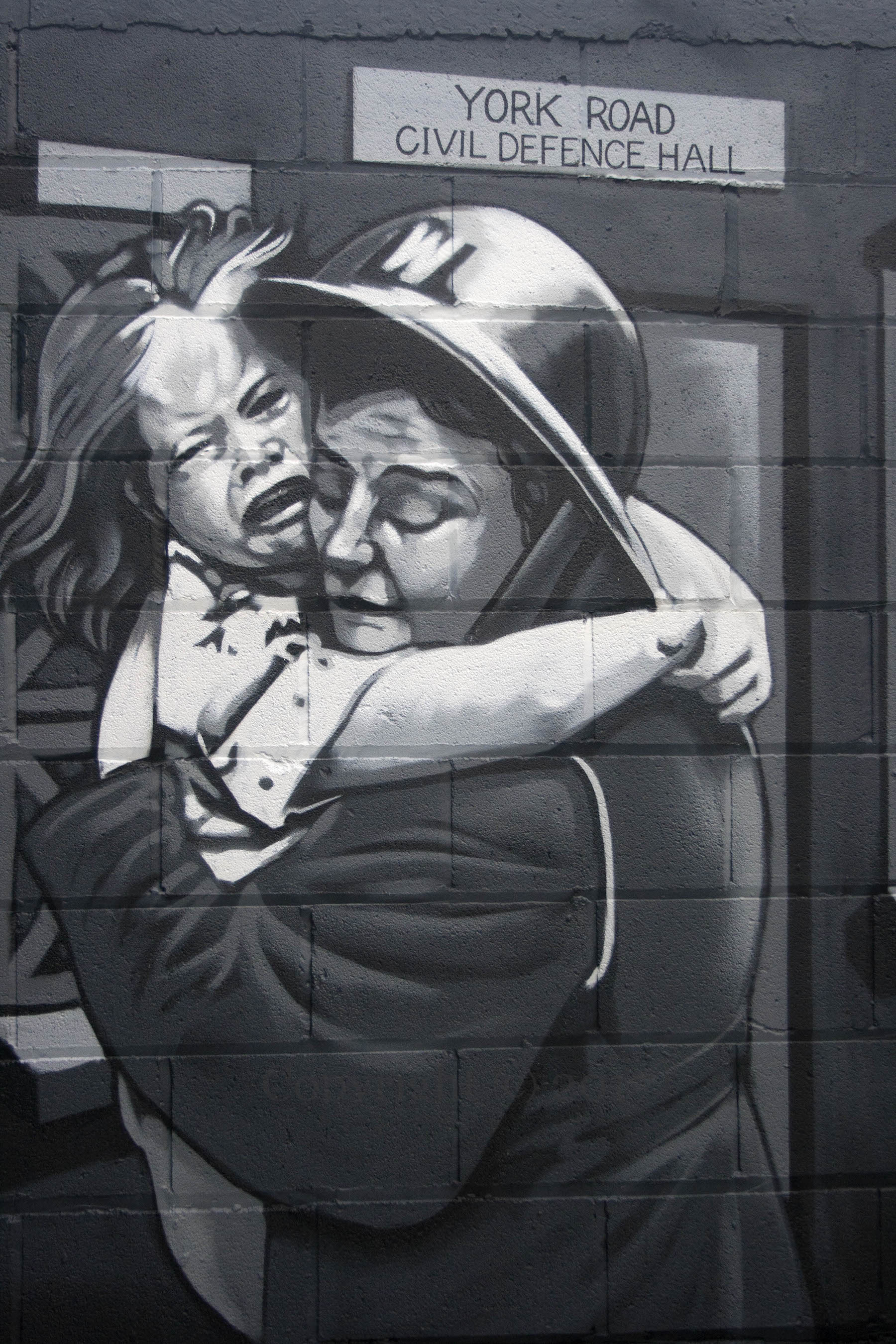
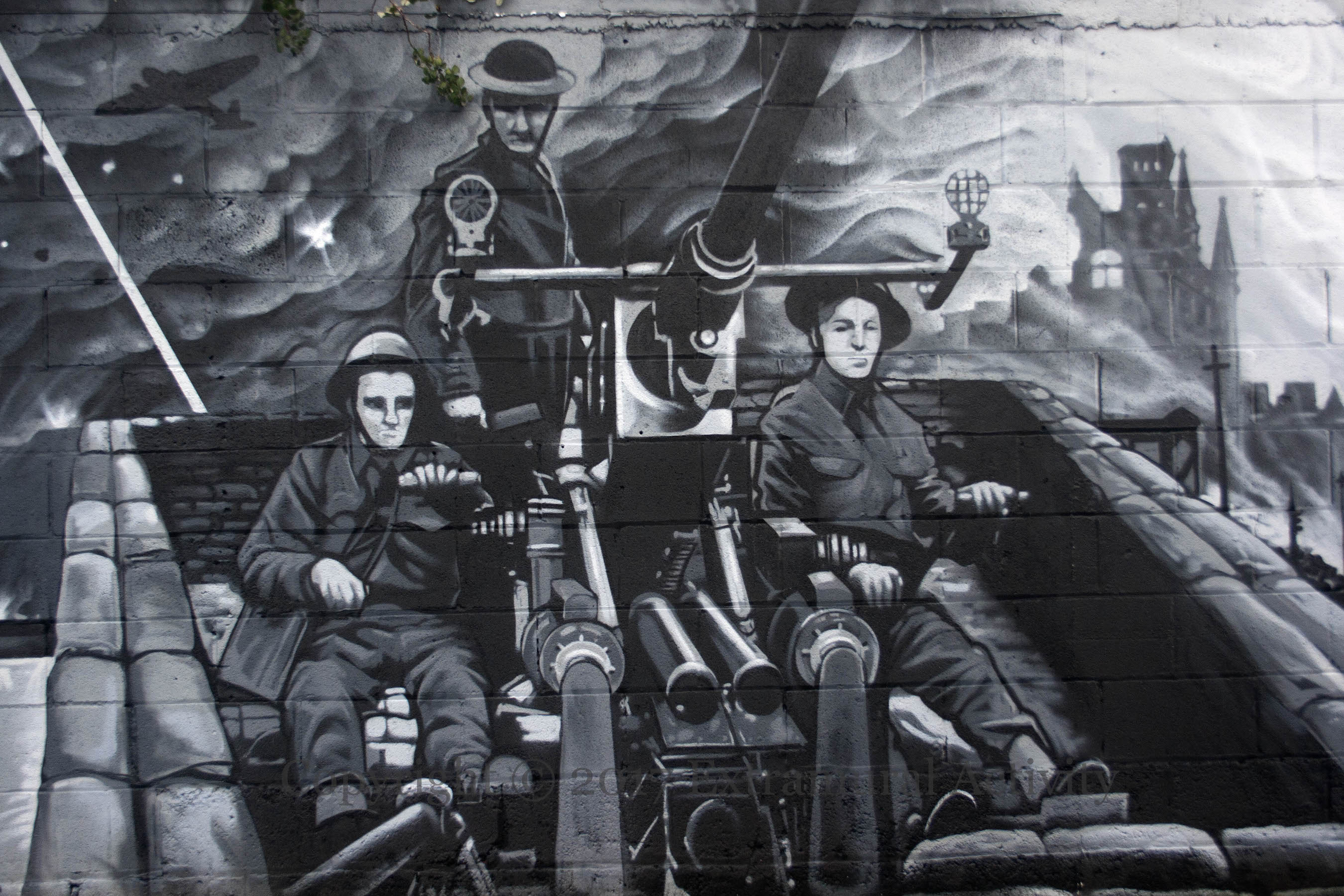
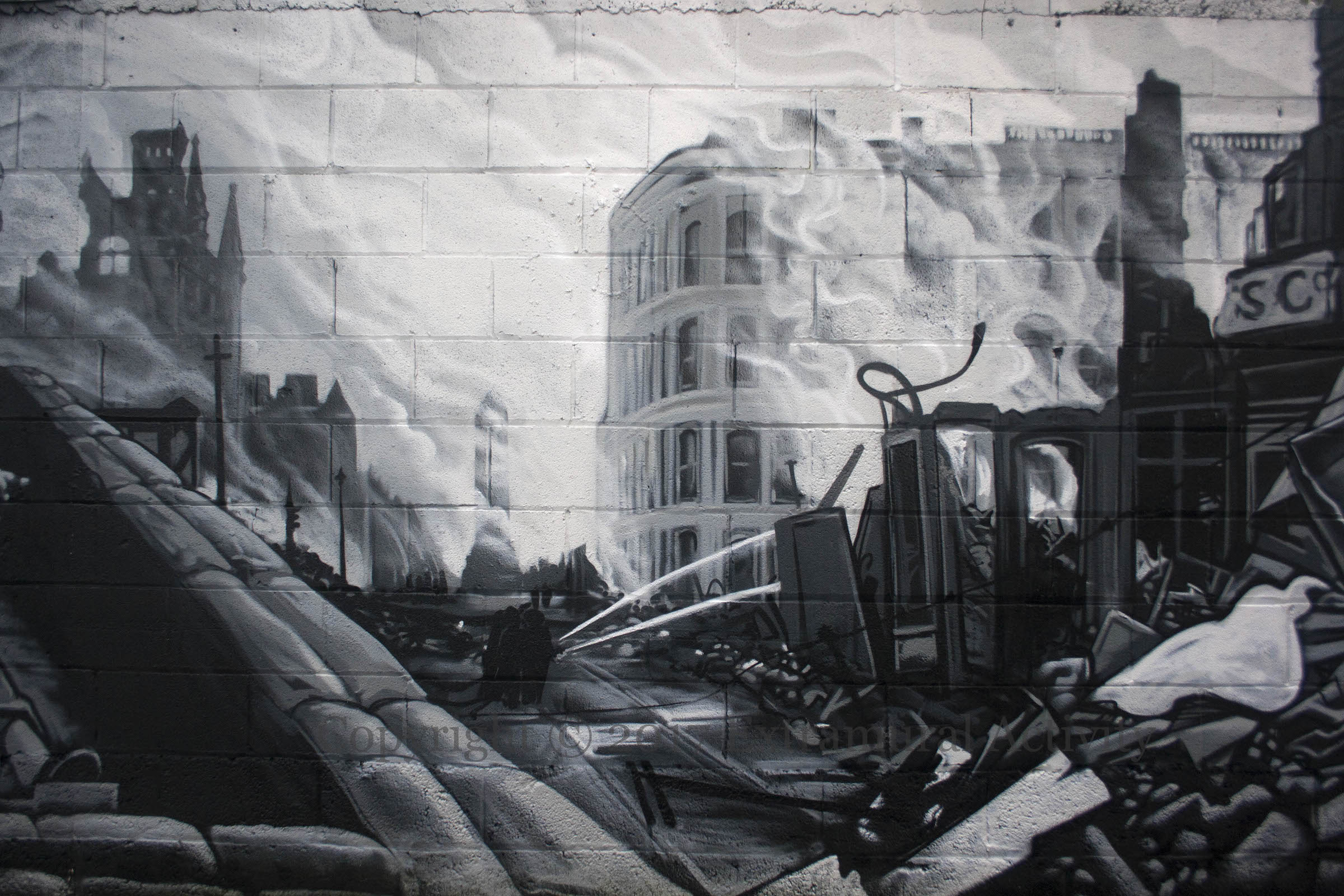
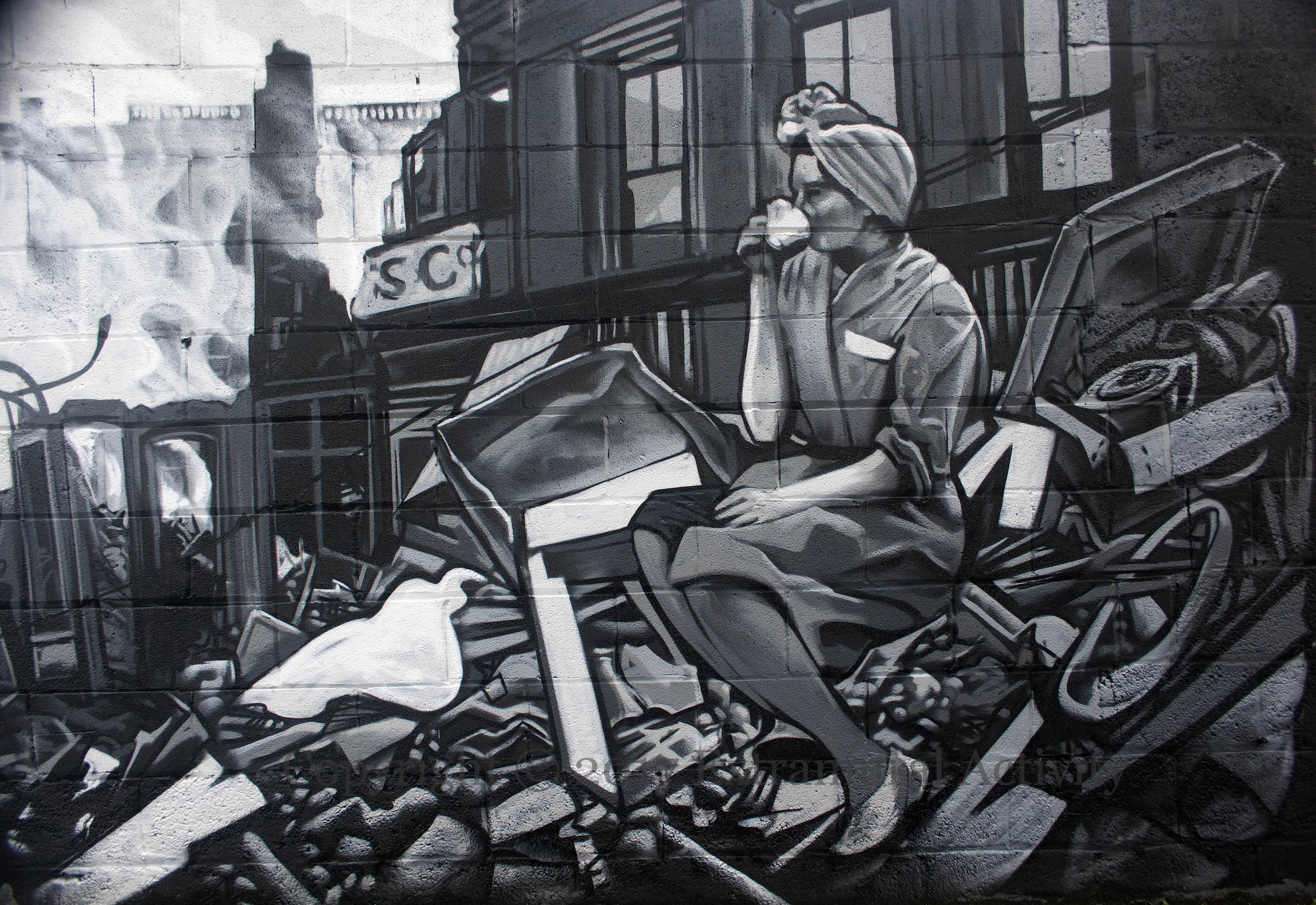
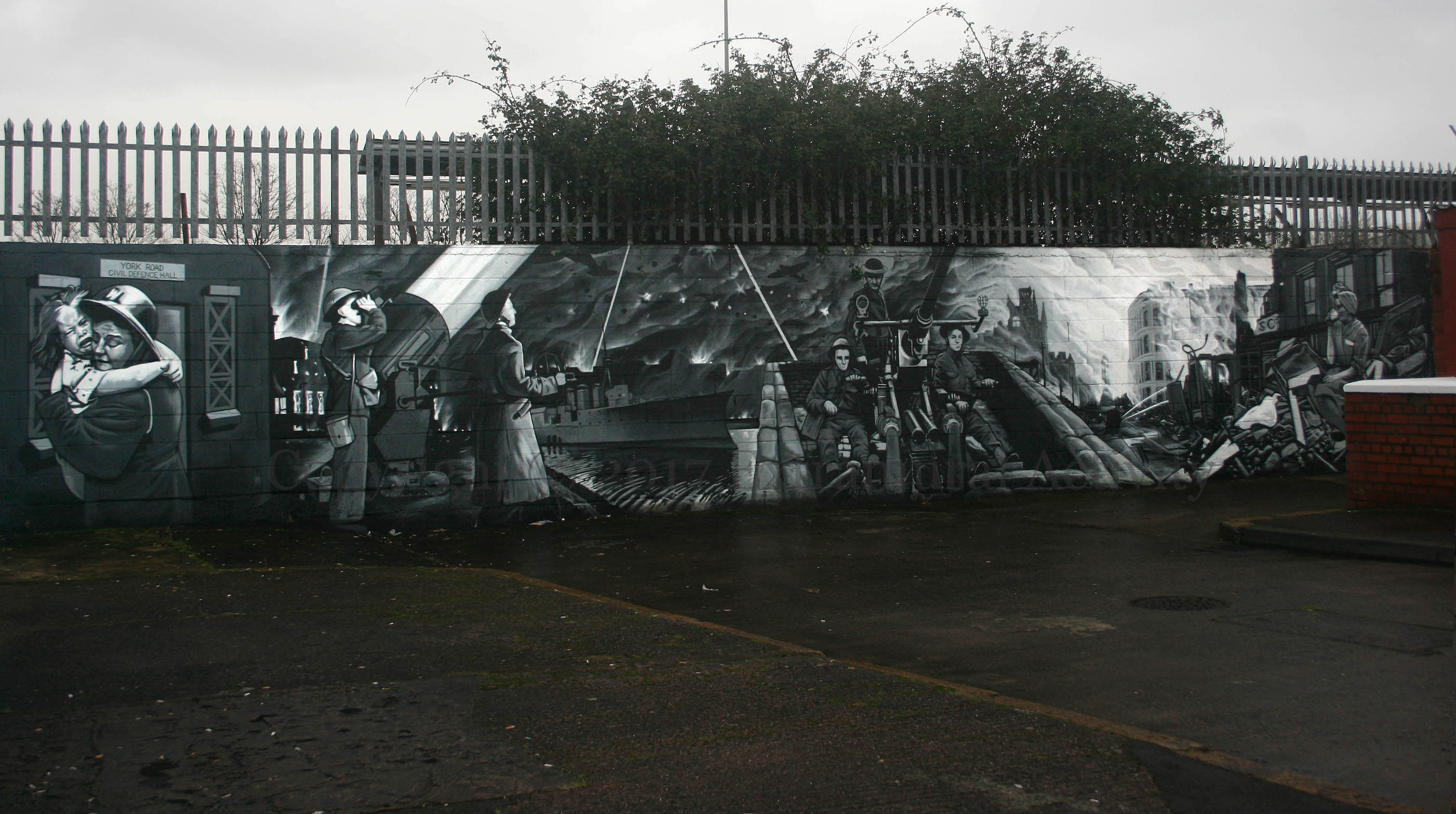
As mentioned in an entry about Dalaradia, the HUBB community centre (web | Fb) in north Belfast has, since 2010, been based in what used to be a World War II Civil Defence air-raid shelter, which it cleaned and renovated (Tele). The original hall is depicted in this mural on the side of the HUBB. Belfast was bombed by the Germans four times in April and May of 1941.
In 1940, Belfast was protected by thirty-eight anti-aircraft guns. The German Luftwaffe flew a reconnaissance flight over Belfast on November 30th, 1940 and a test mission of eight planes on April 7th, 1941 concluded that Belfast’s defences were, “inferior in quality, scanty and insufficient” (Elaine Hogg/Glenravel History). 150 bombers would blitz Belfast the following week, on Easter Tuesday, April 15th, and the seven guns that had been in operation ceased firing, believing, falsely, that RAF planes were also in the sky (WP).
In the blitz of Easter Tuesday, 1941, more than 900 people died, 1,500 were injured, and half the houses in Belfast were damaged (WP). According to Elaine Hogg’s research in the ‘Darker Side Of Belfast’ series, 100,000 people left the city in the remainder of the month, due to shock, fear, and the squalid conditions and unruly behaviour that followed the bombing.
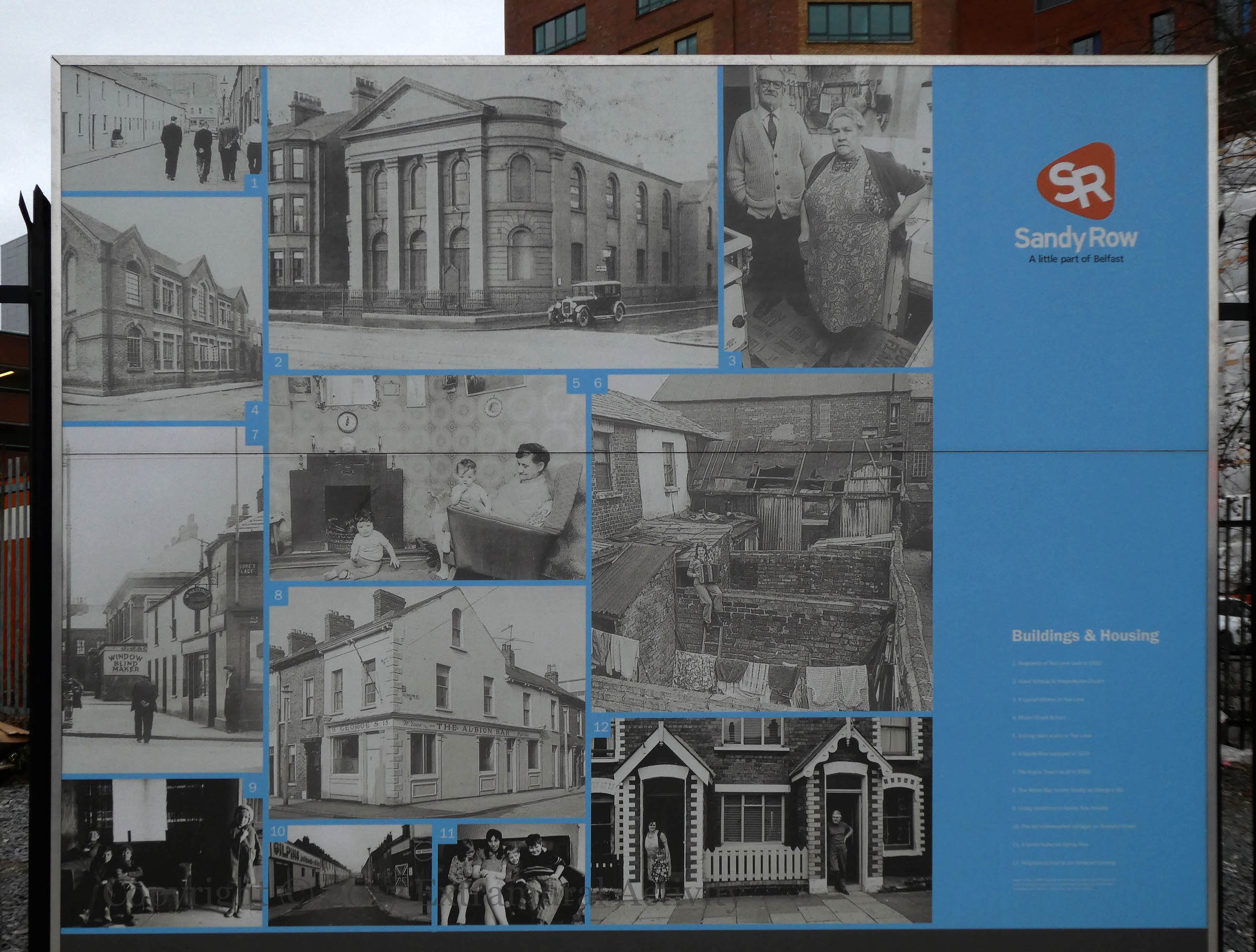
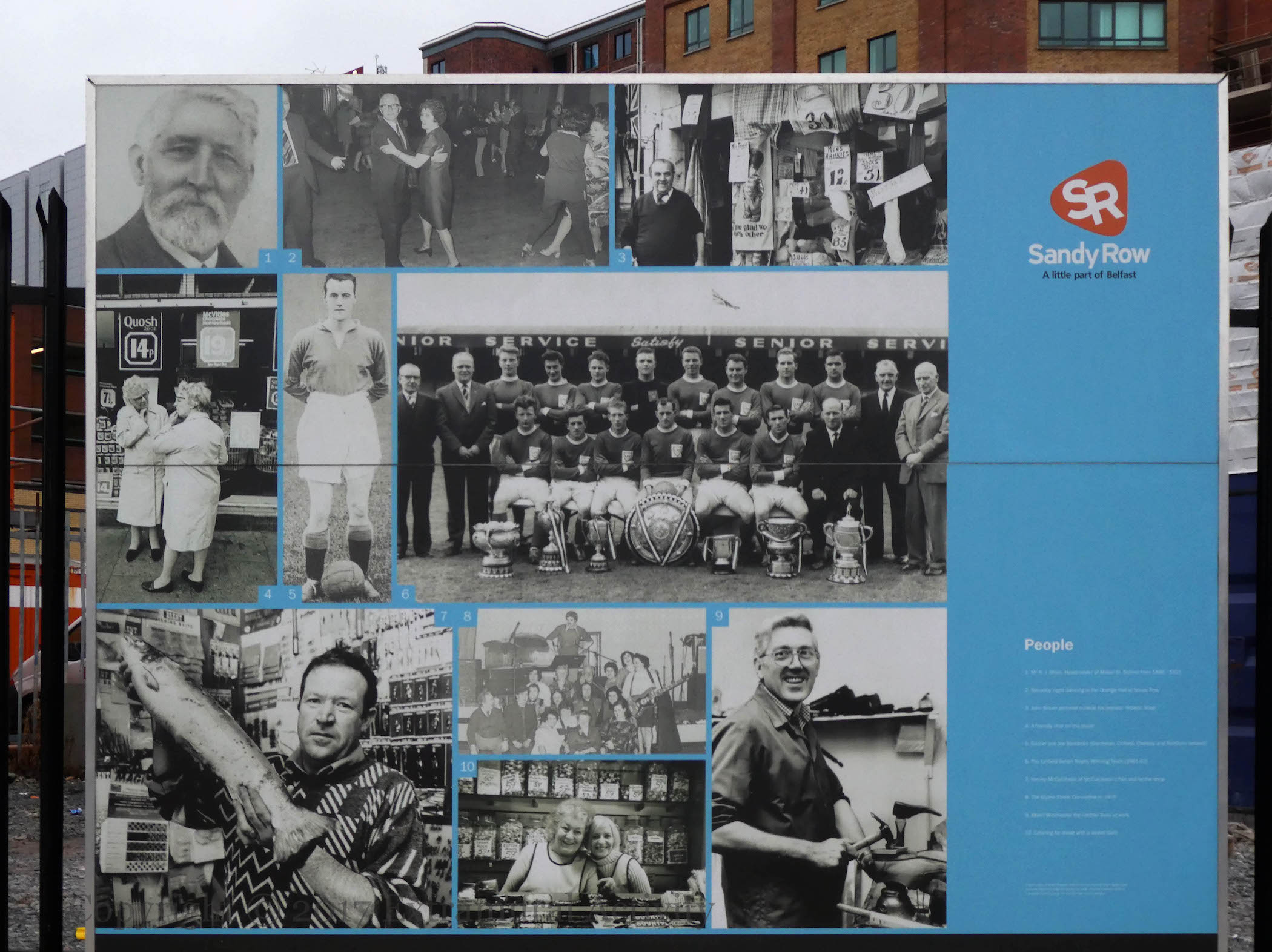
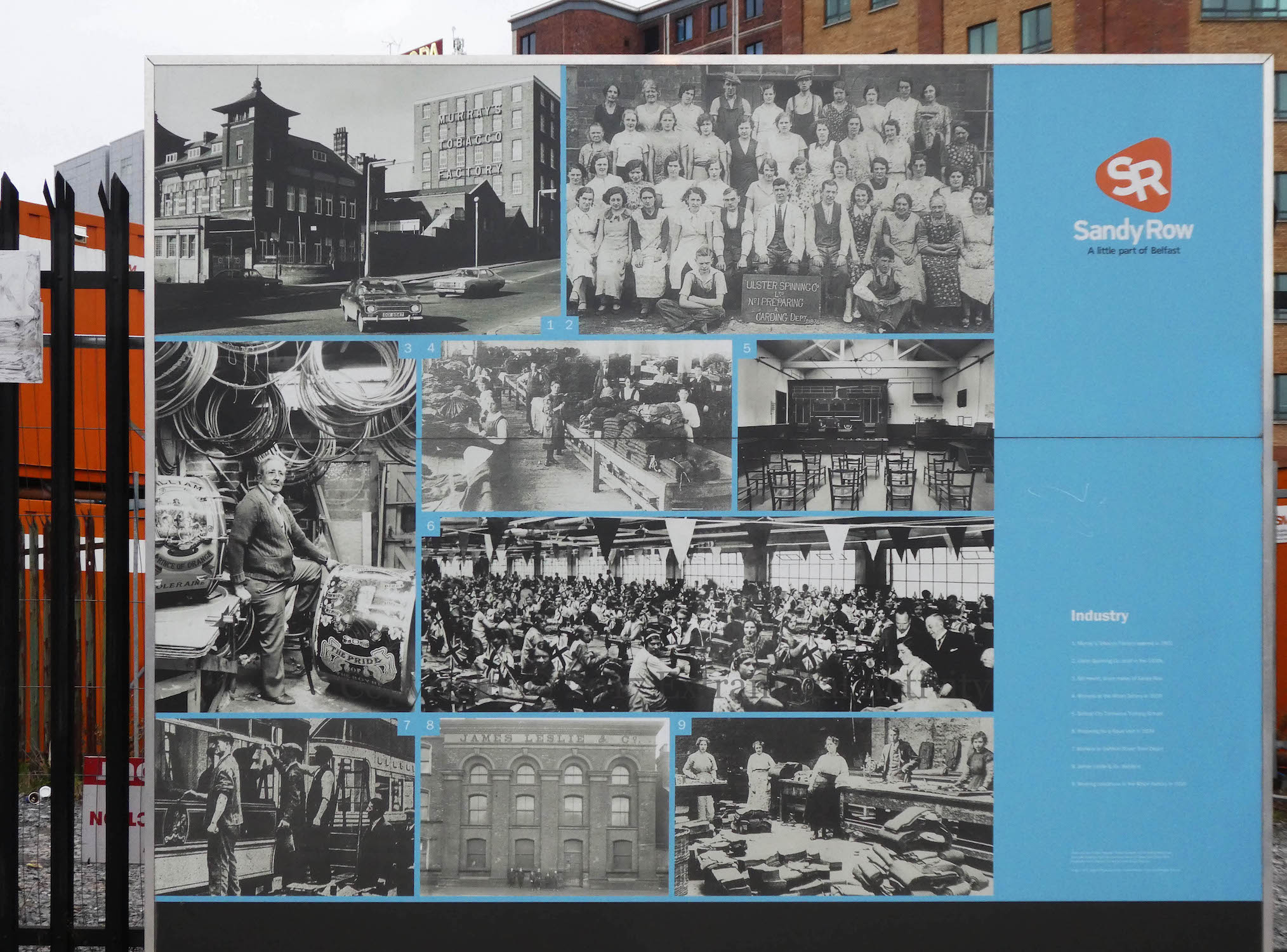
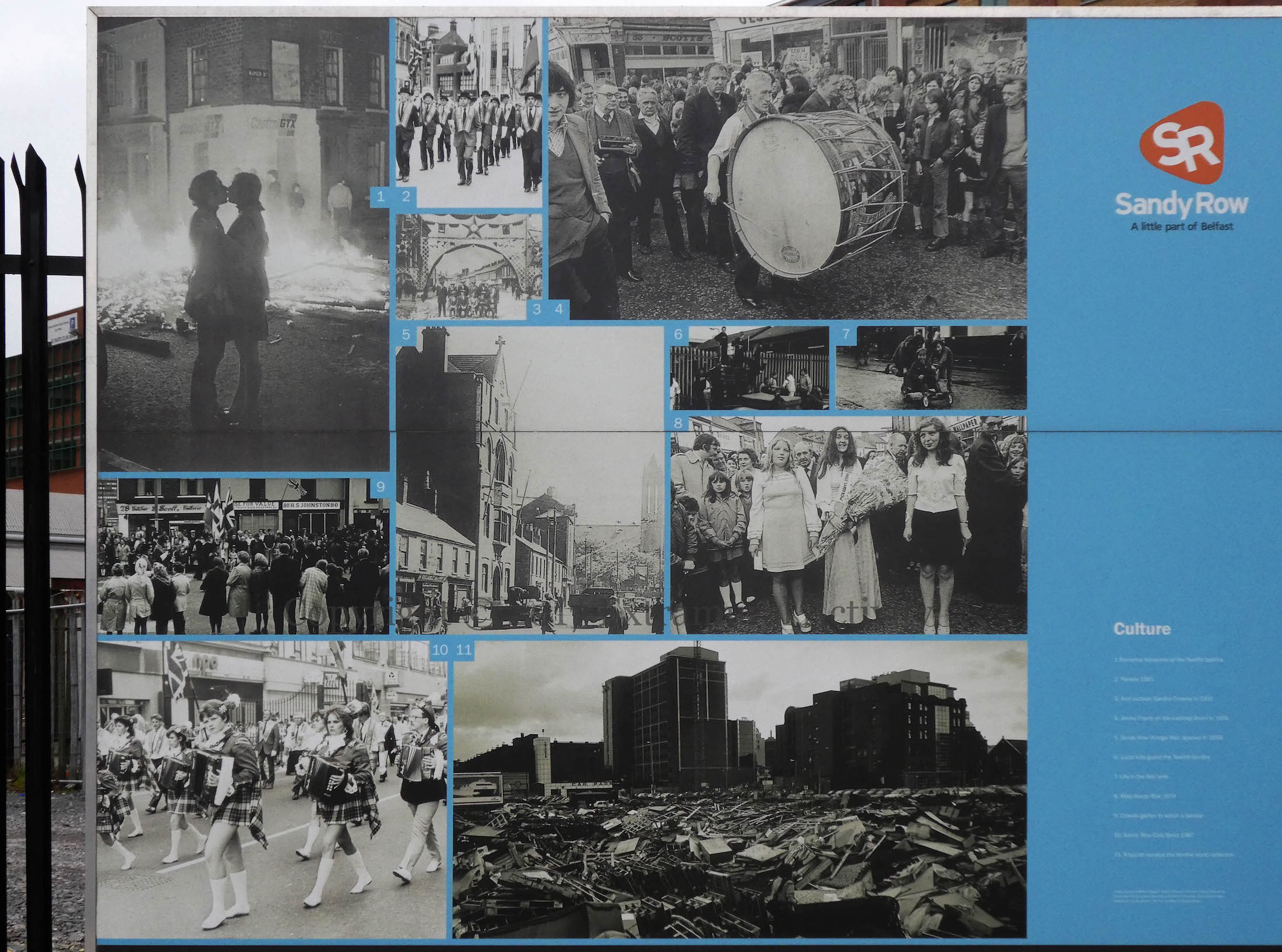
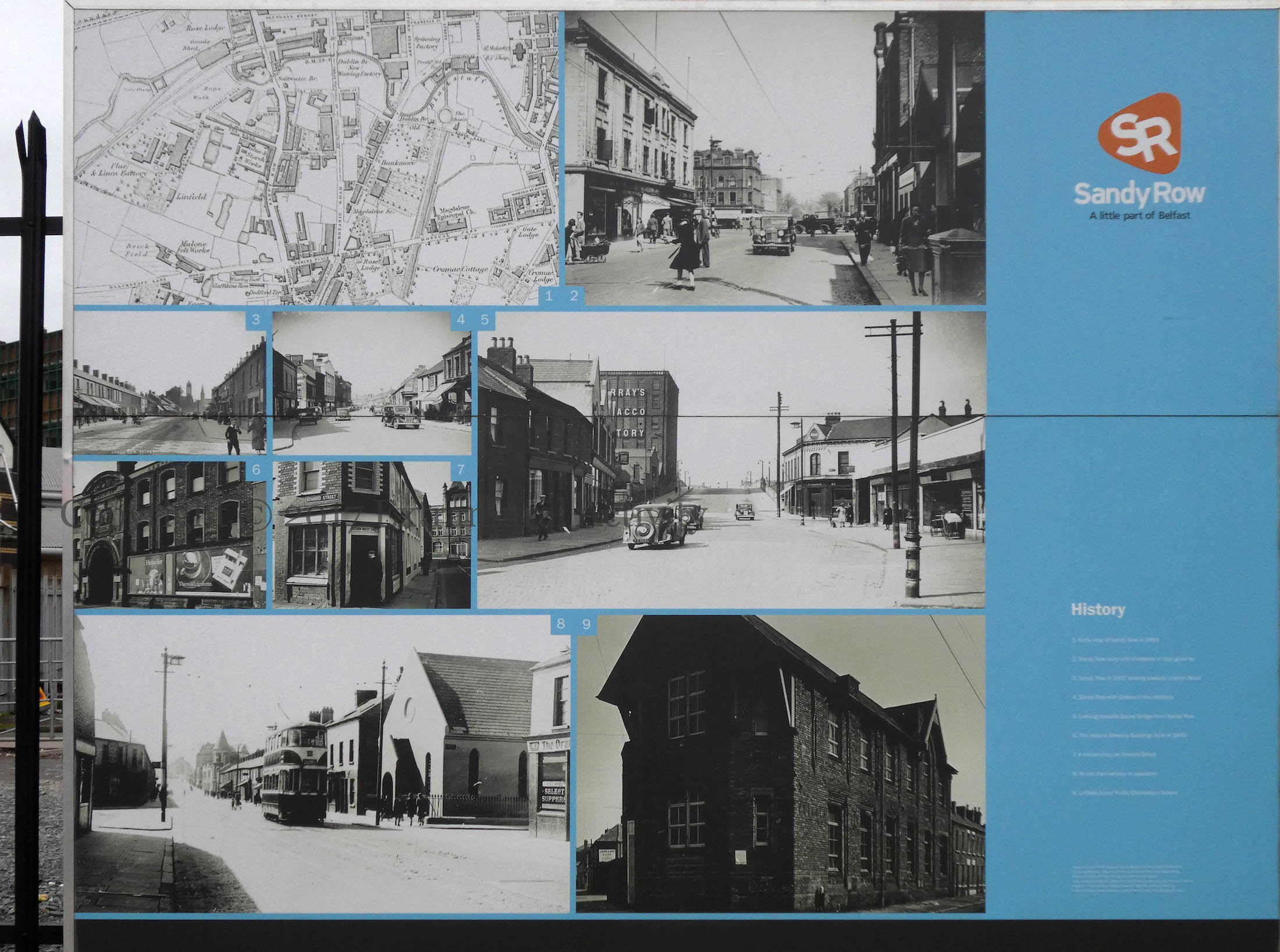
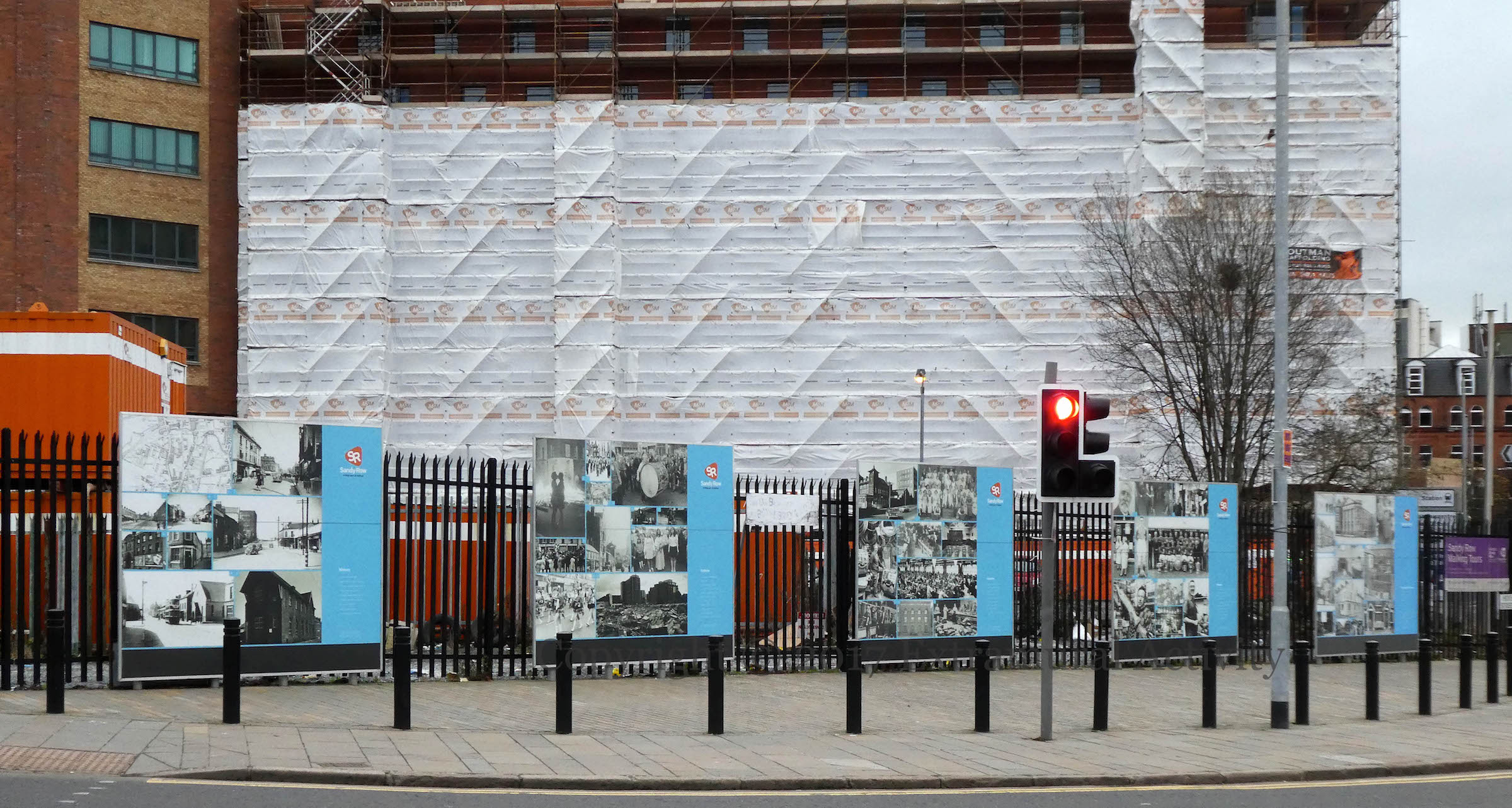
Sandy Row is “steeped in 400 years of tradition”, according to Historic Sandy Row (and sister site Sandy Row Community Forum which has developed a “growth strategy” for the area). Some of that history is presented at the junction with Hope Street, one each for Buildings & Housing, People, Industry, Culture, and History.
Unfortunately, there’s no on-line information about the community/local scenes mural painted behind Teach Fhınn/Finn House in the New Lodge, which goes back to at least 2008. (Some panels were recorded in 2011.) If you have any information, please get in touch.
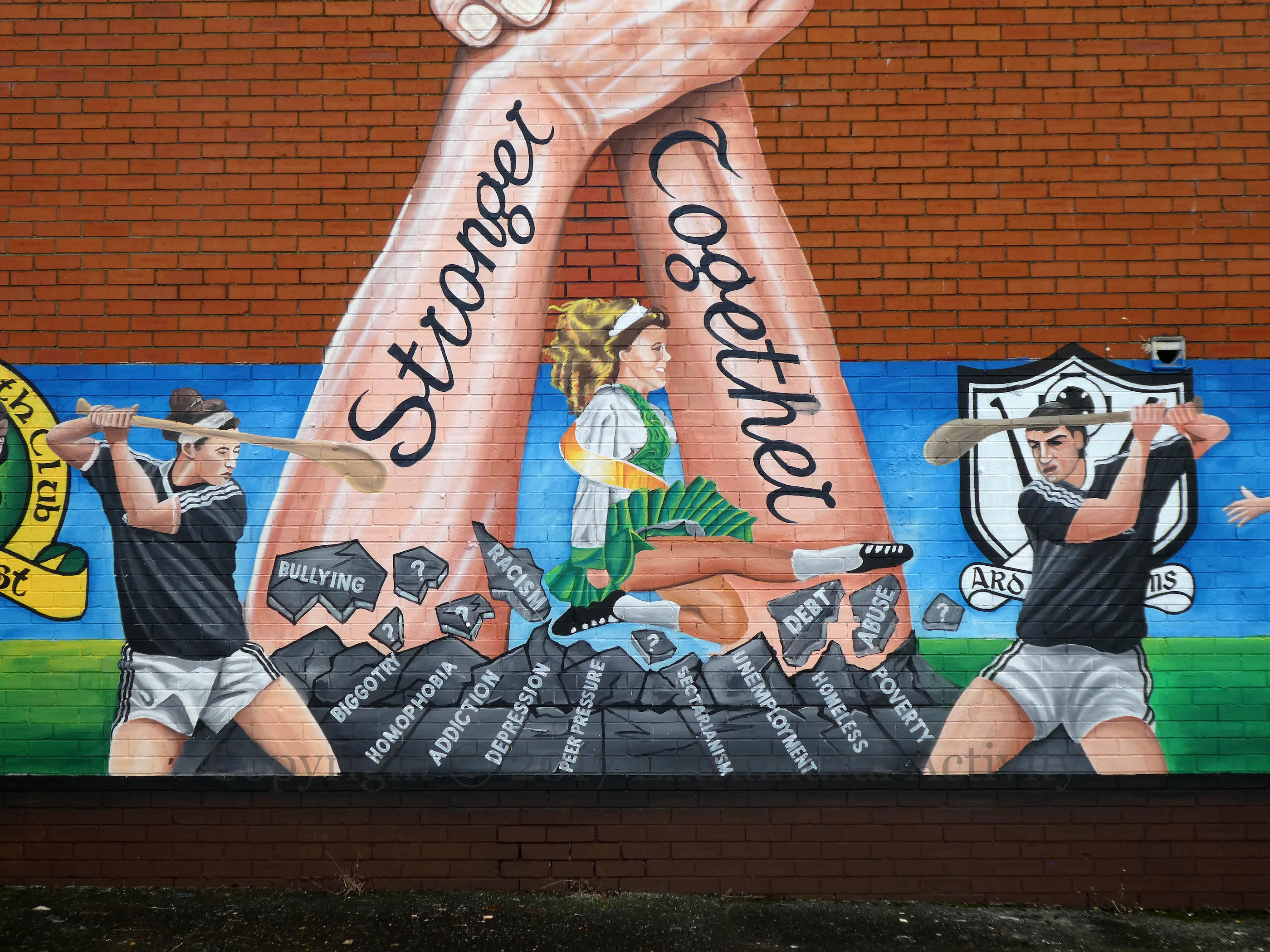
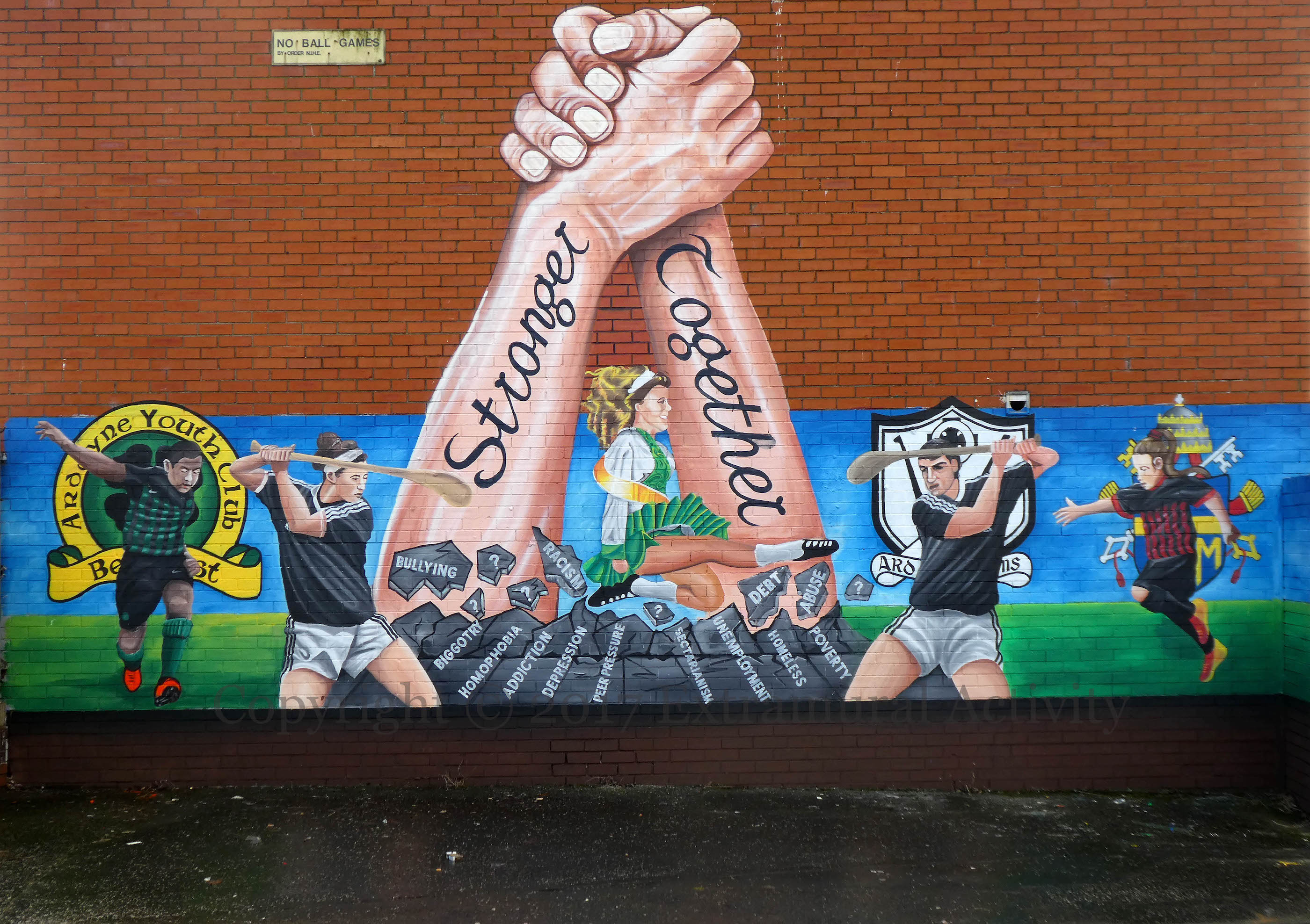
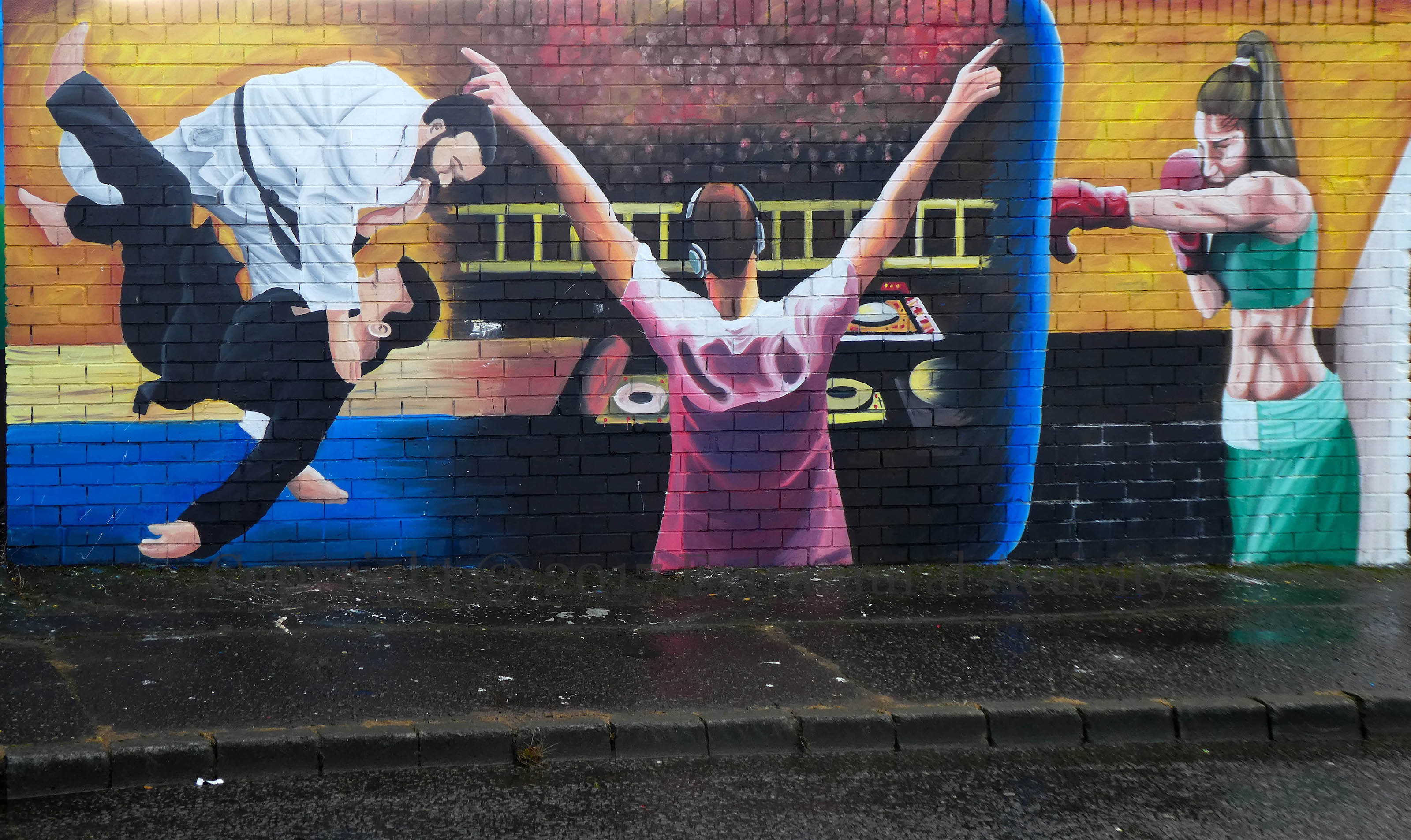
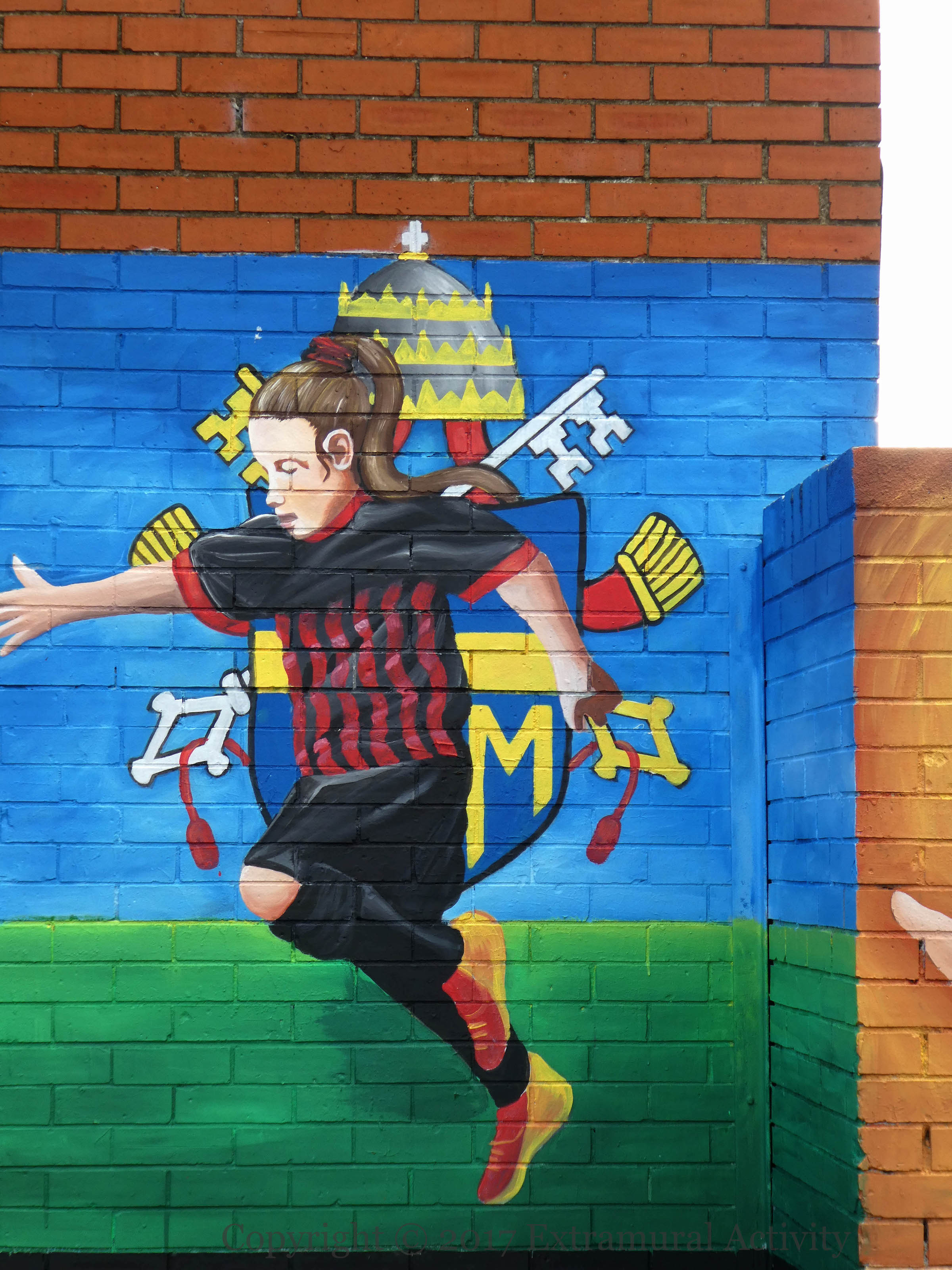
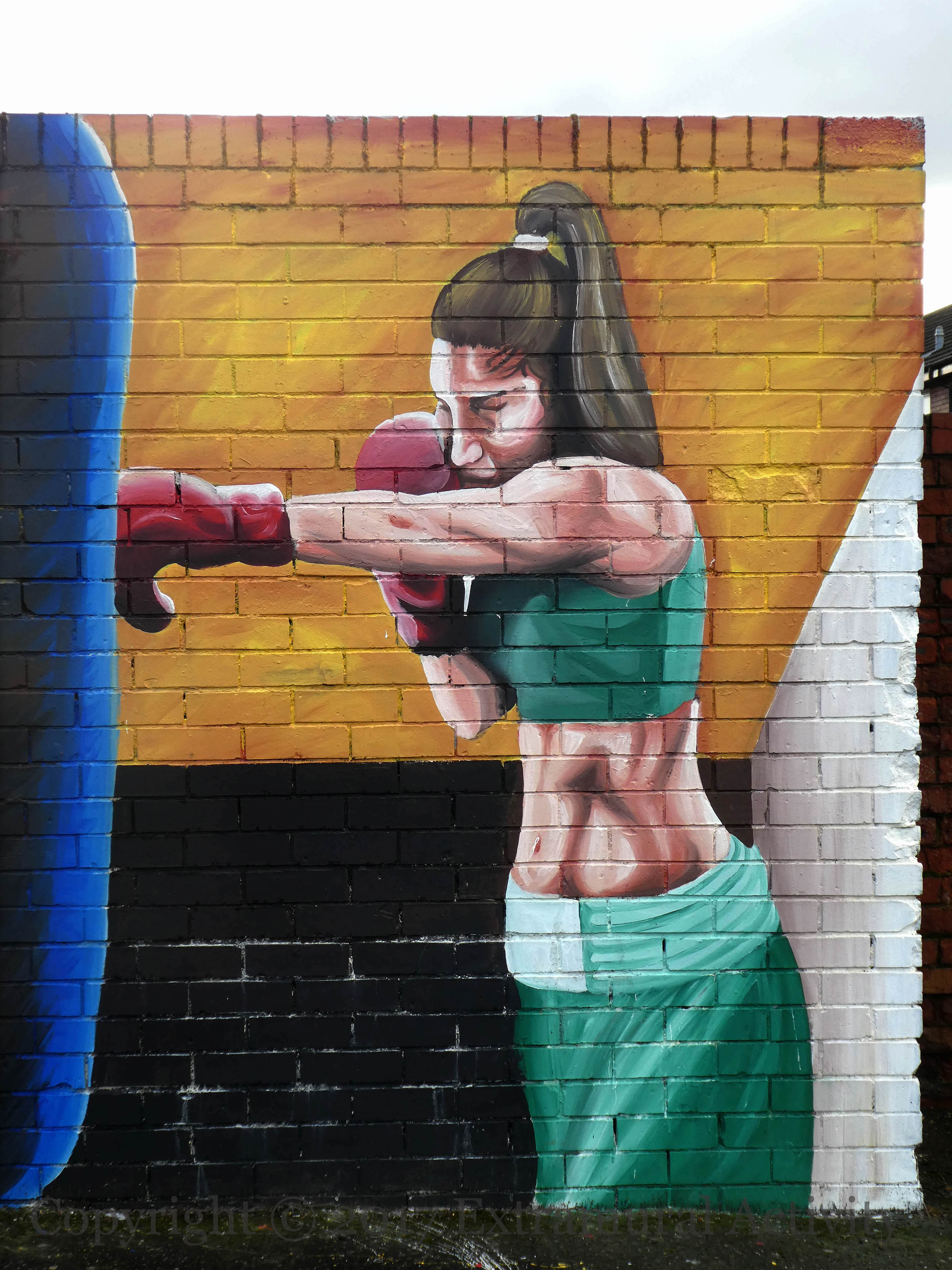
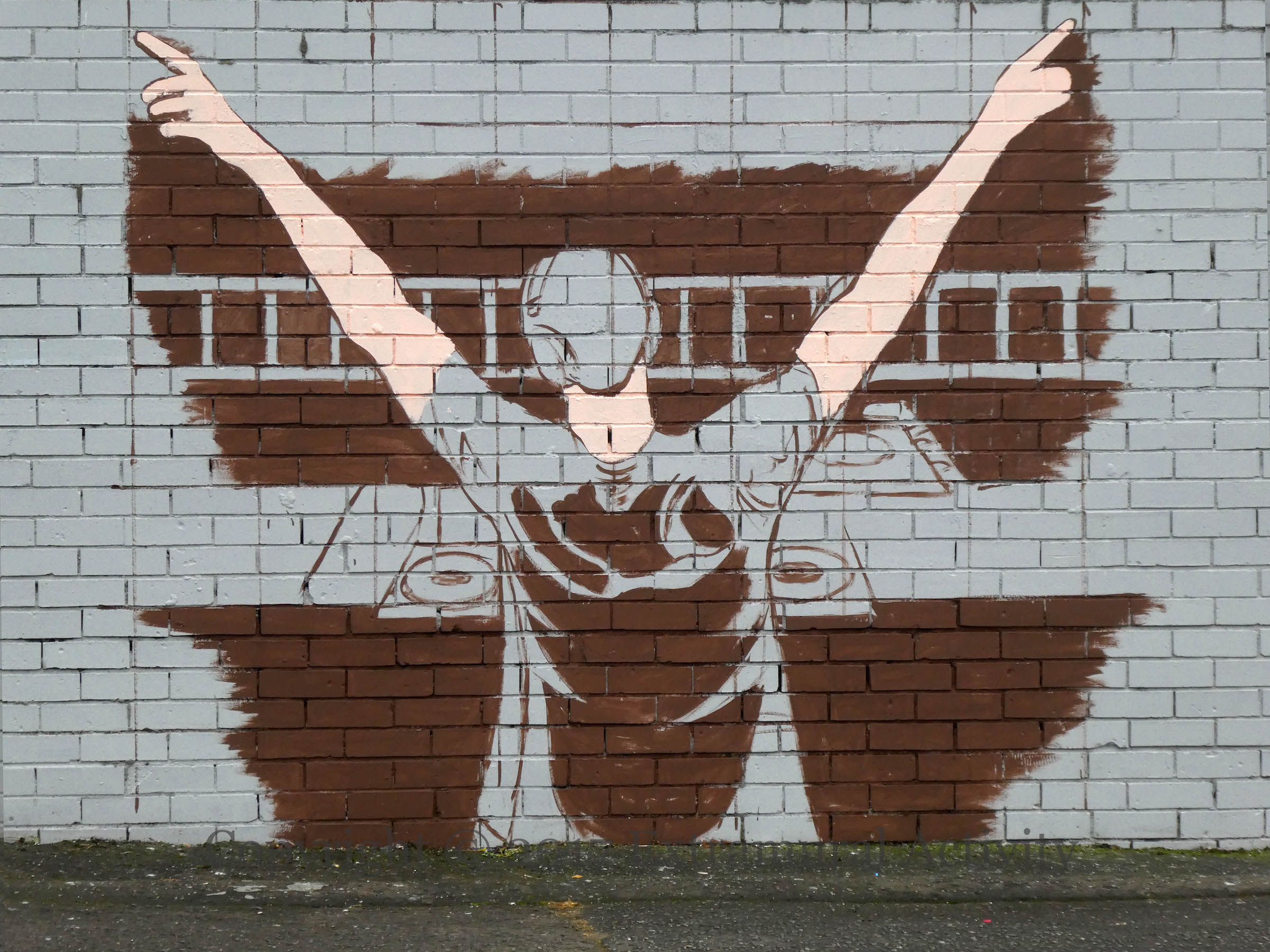
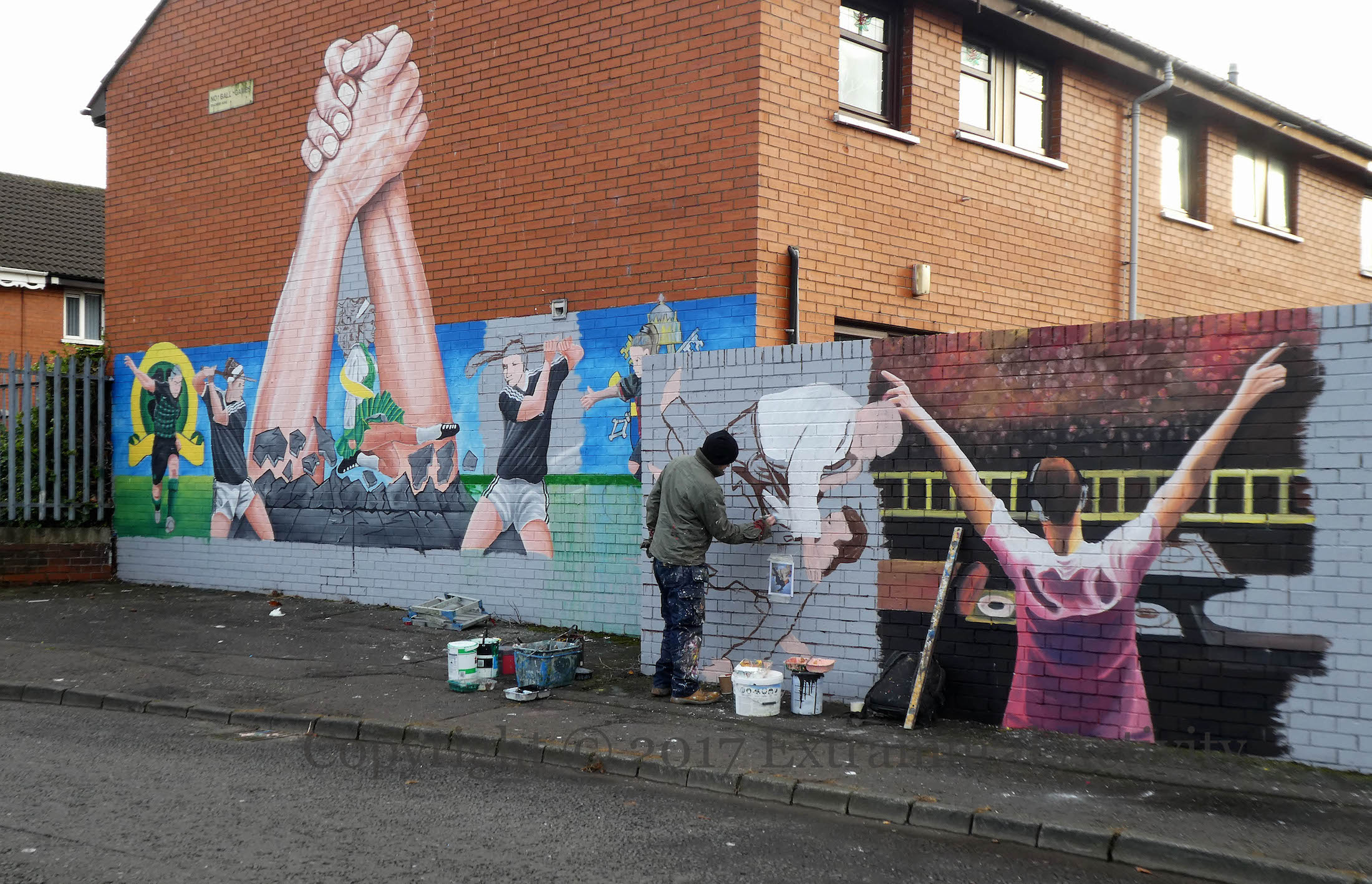
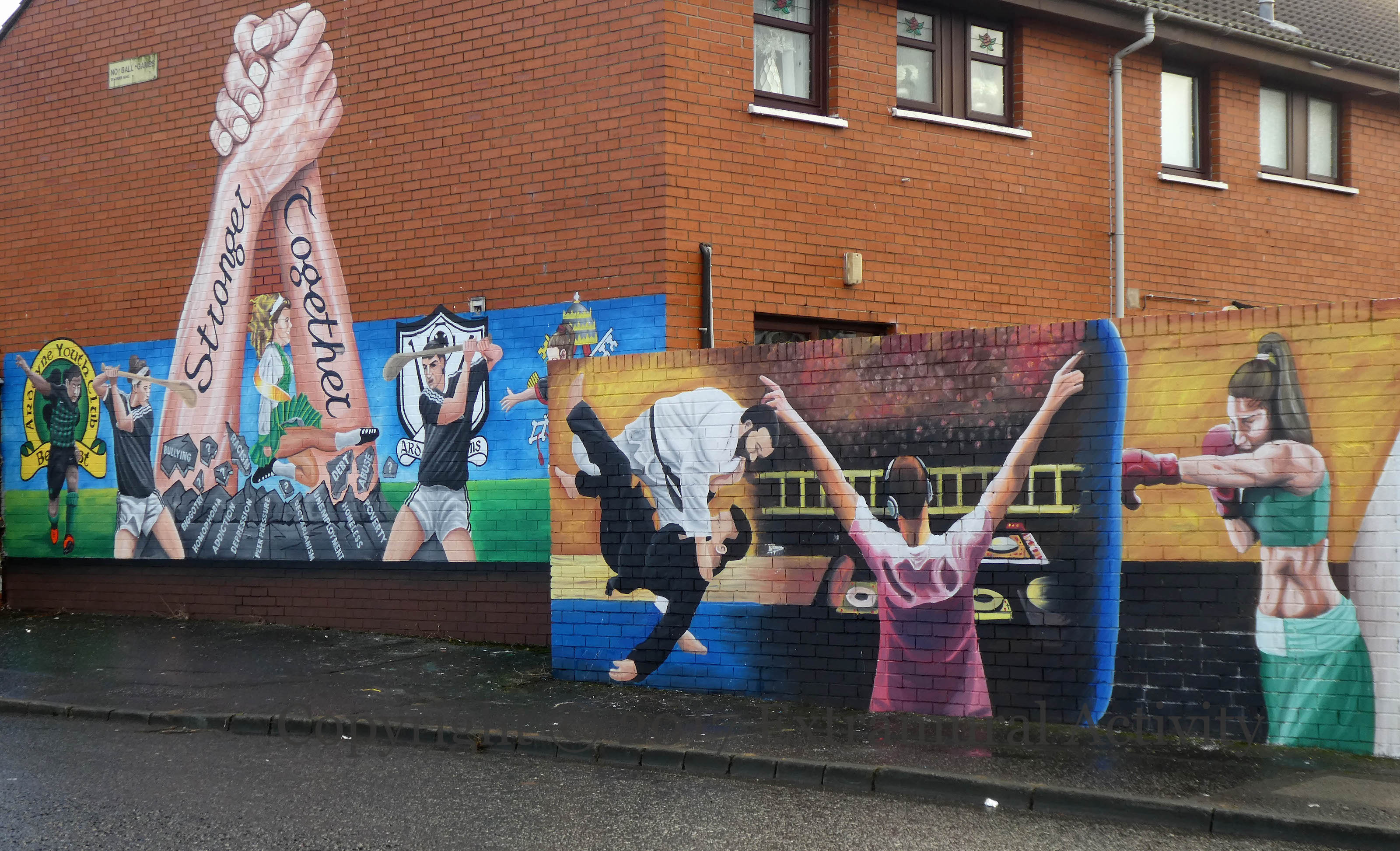
Here are eight images of the new Ardoyne mural featuring (from left to right in the image below) Ardoyne Youth Club, Ard Eoın Kickhams, and the John Paul II Youth Club as alternatives to bullying, racism, homophobia, addiction and other social ills. In addition to Irish dancing, soccer, and Gaelic games, there are also images of young people practicing martial arts, DJing, and boxing.
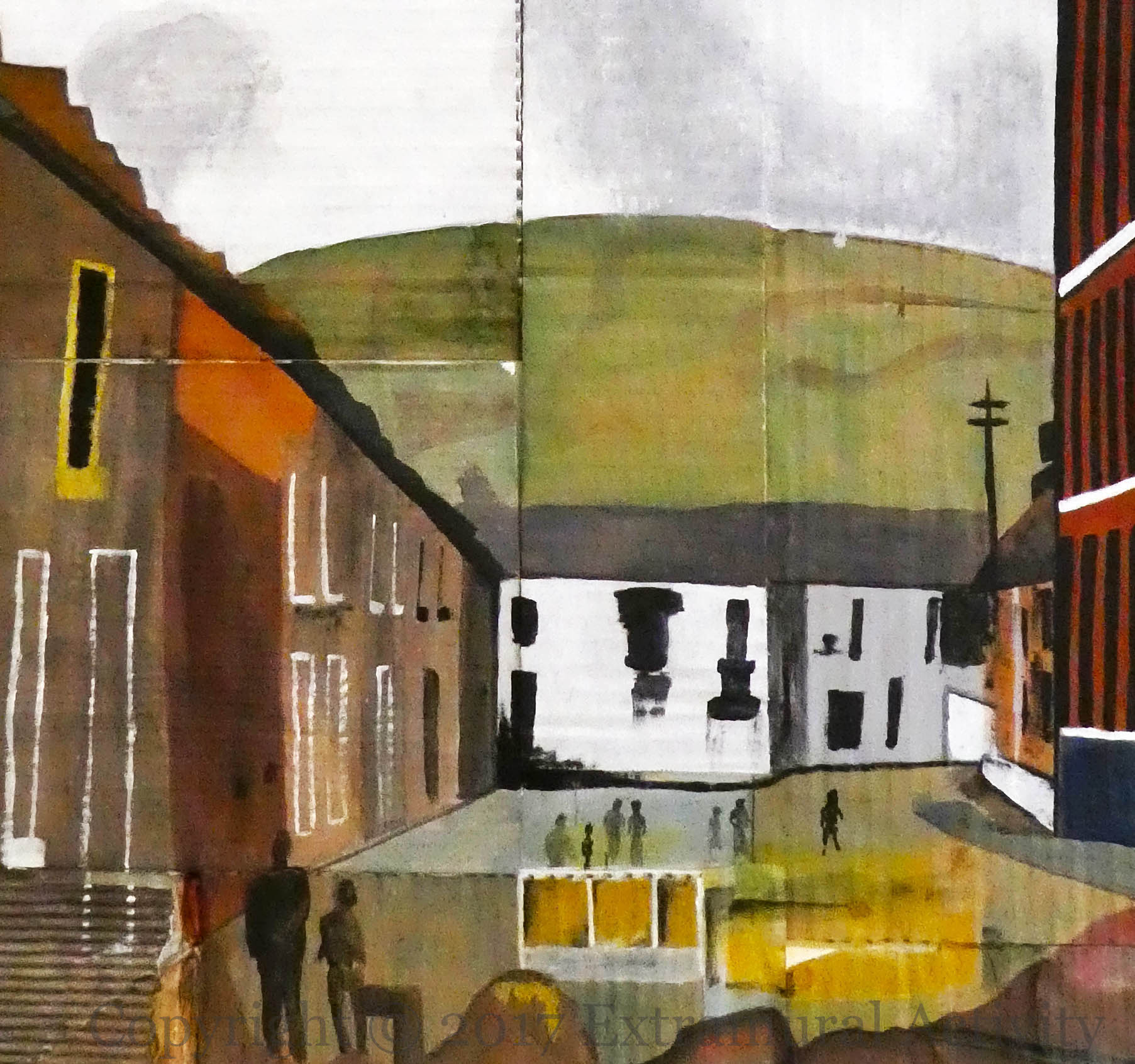
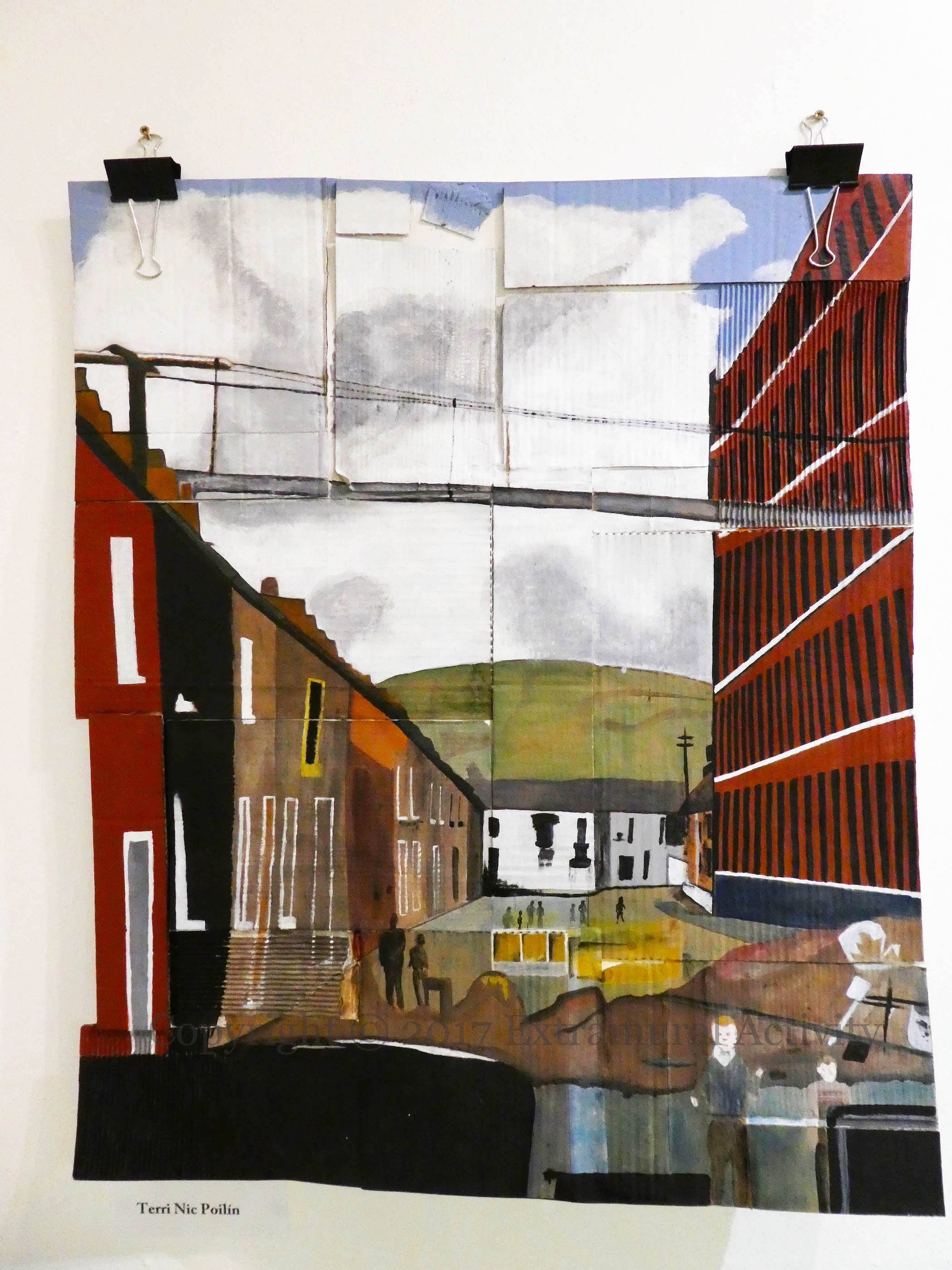
Year 10 GCSE student Terri Nıc Poılín imagines what the view would be like if the “peace wall” were removed, using cardboard as a canvas. The piece was part of the Coláıste Feirste art show in An Chultúrlann.
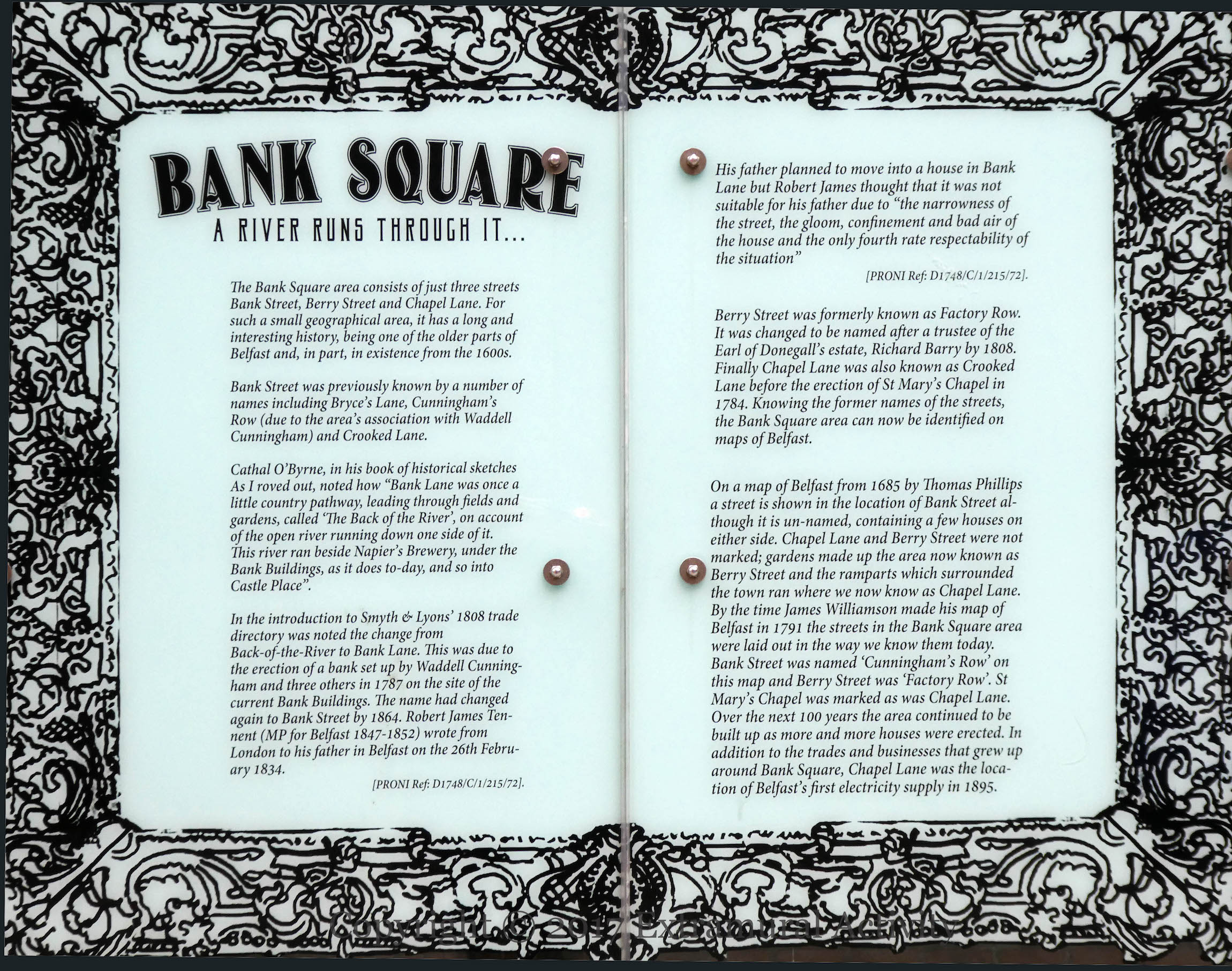
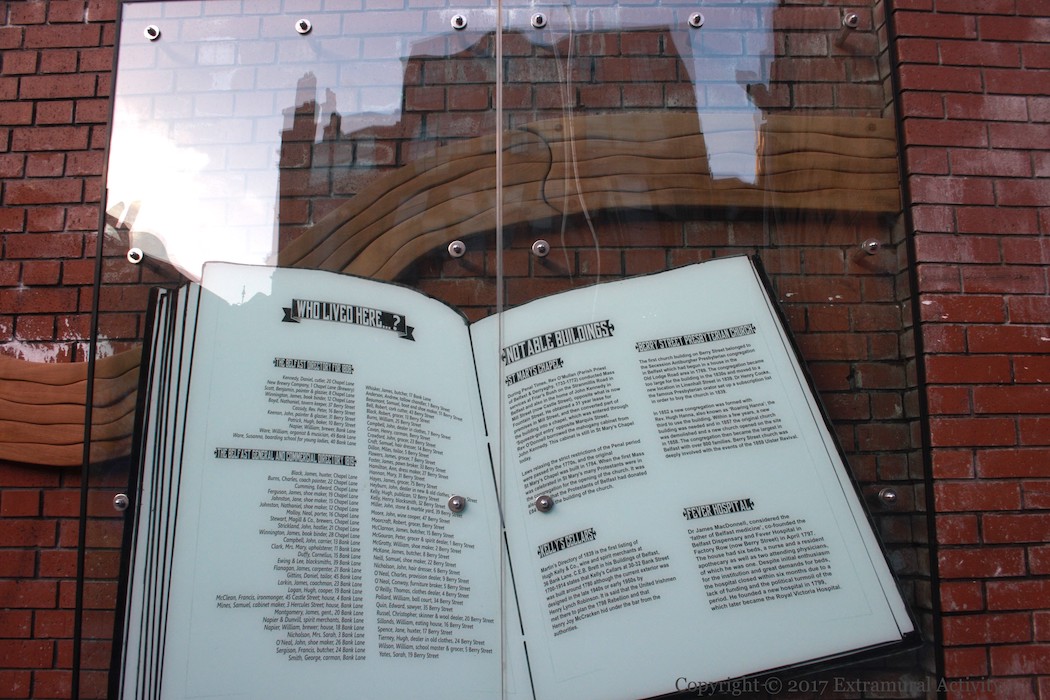
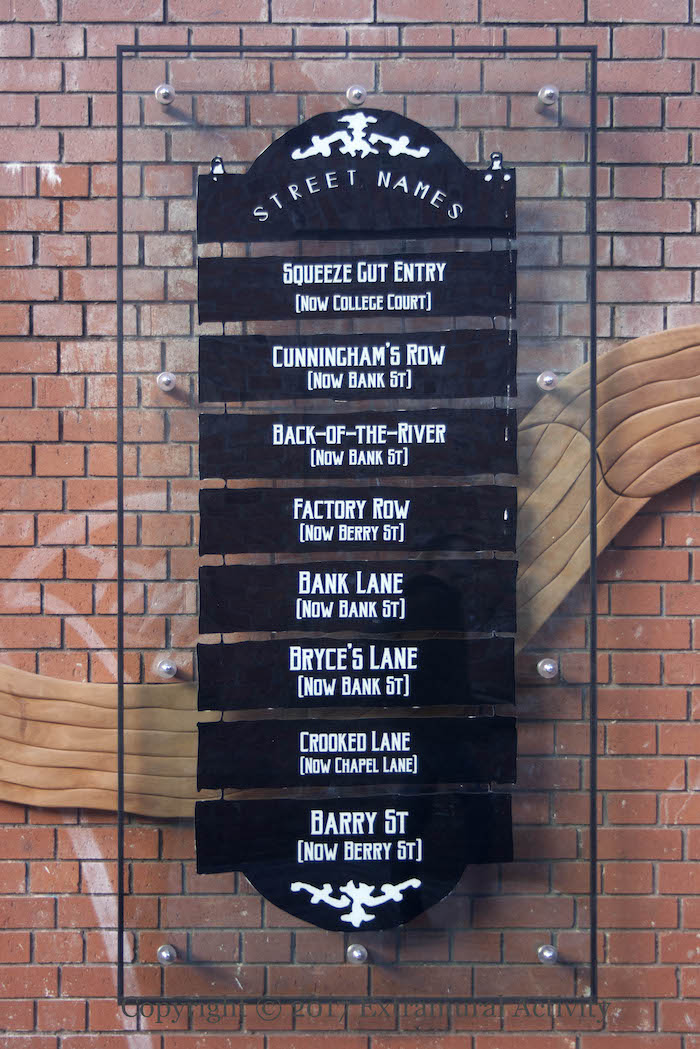
The river in question is the Farset, which in the late 1700s was still open in what was then the Back-Of-The-River area and is now Bank Square. It was all covered over by 1804.
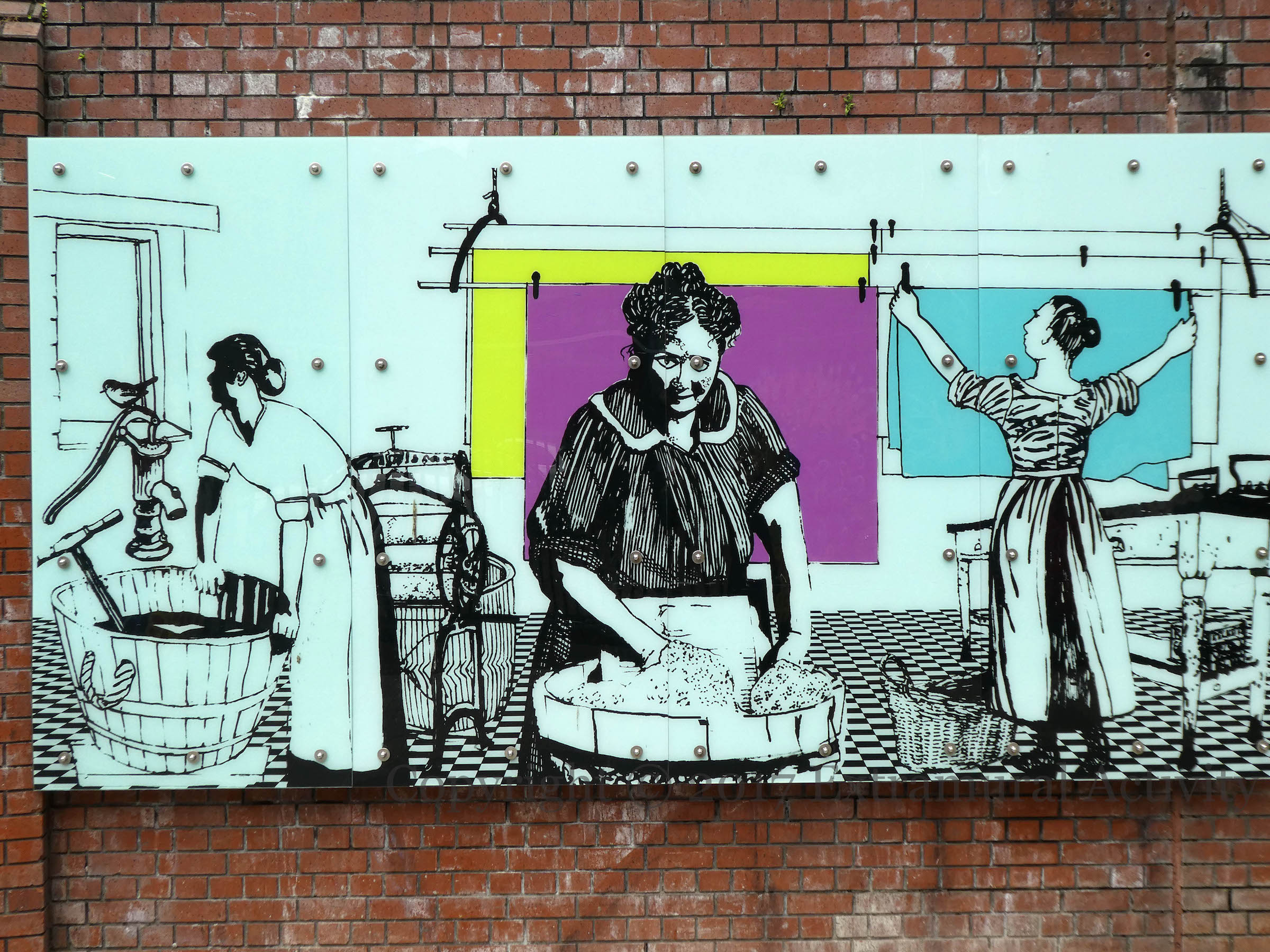
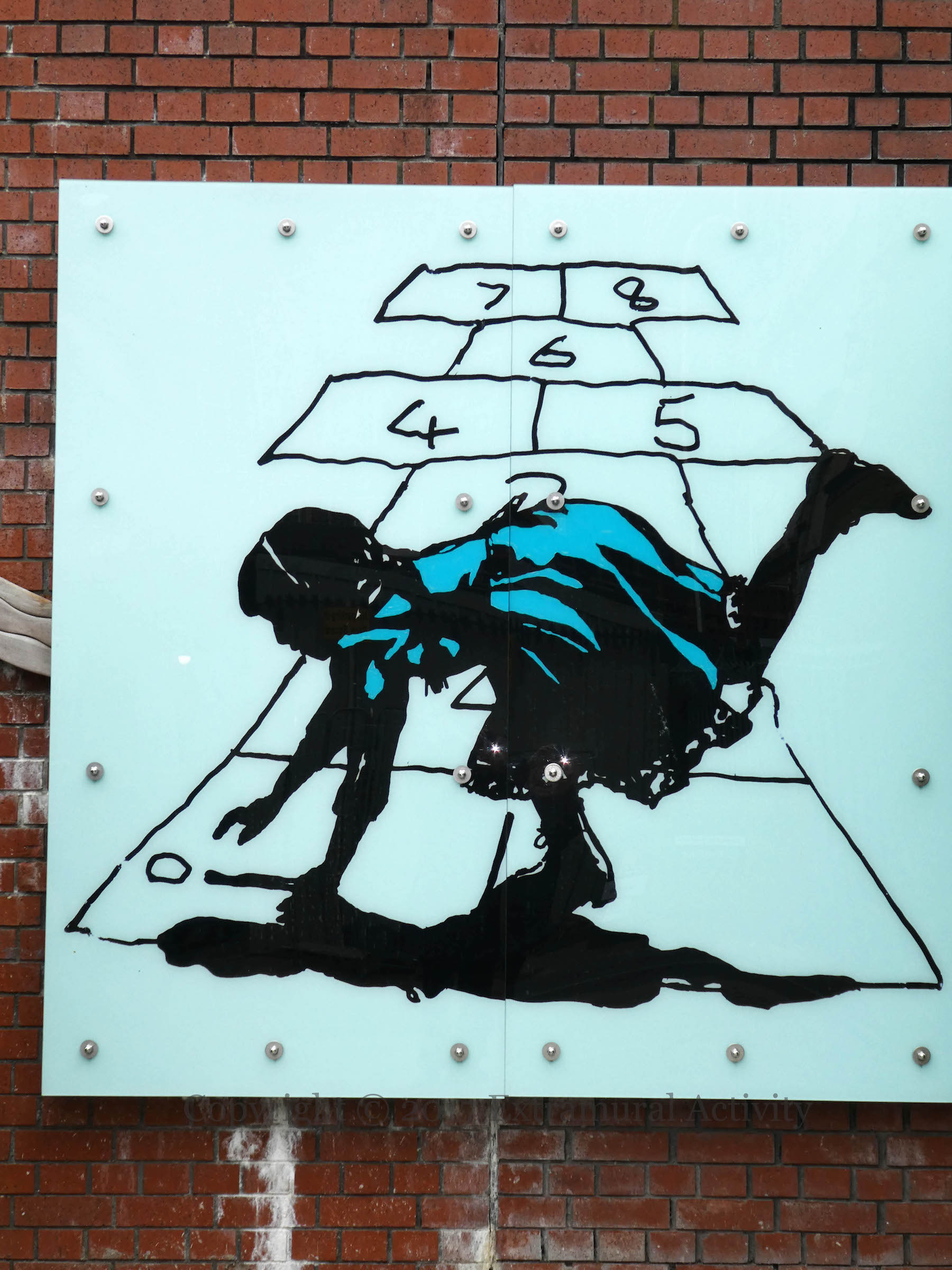
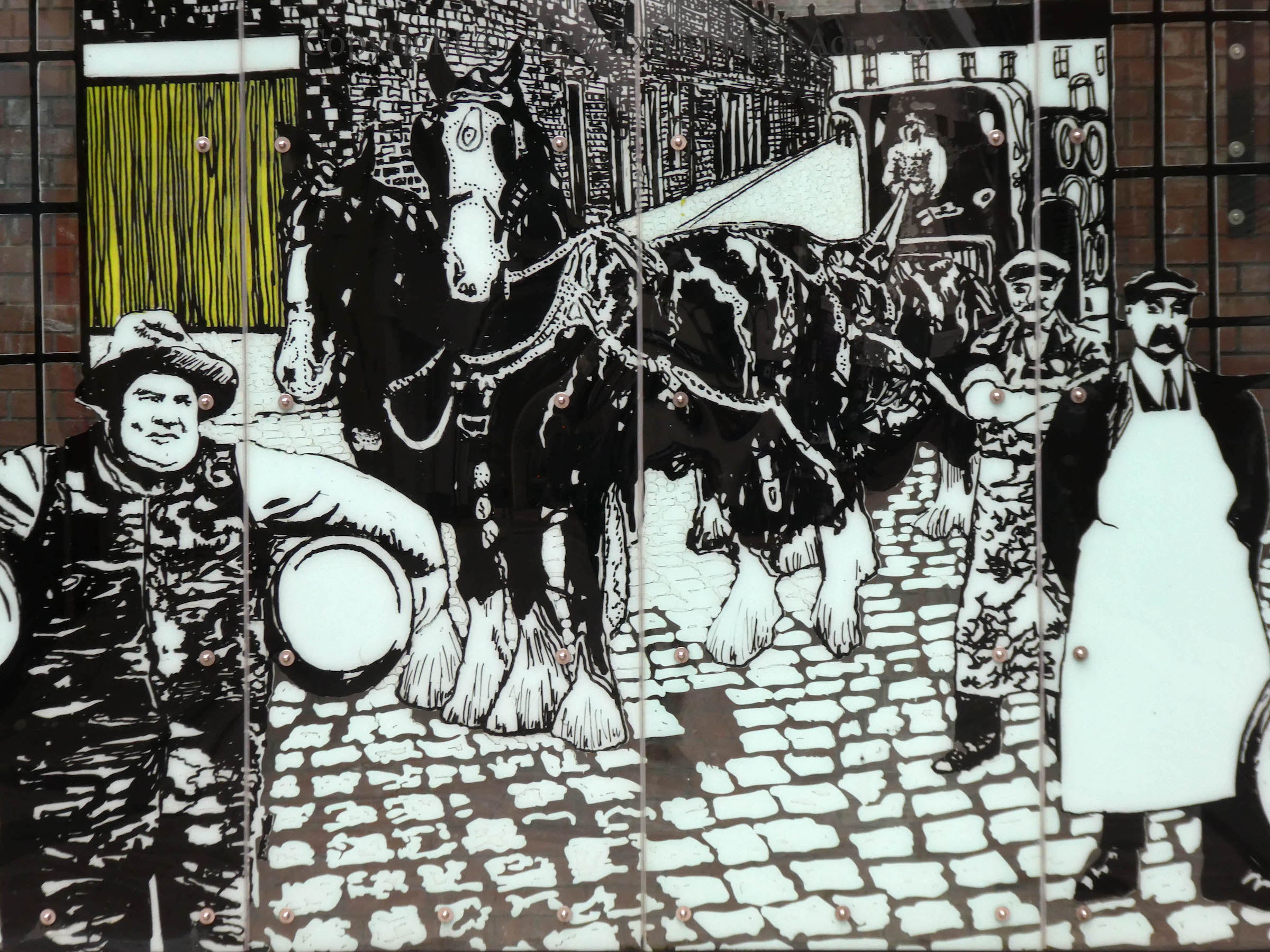
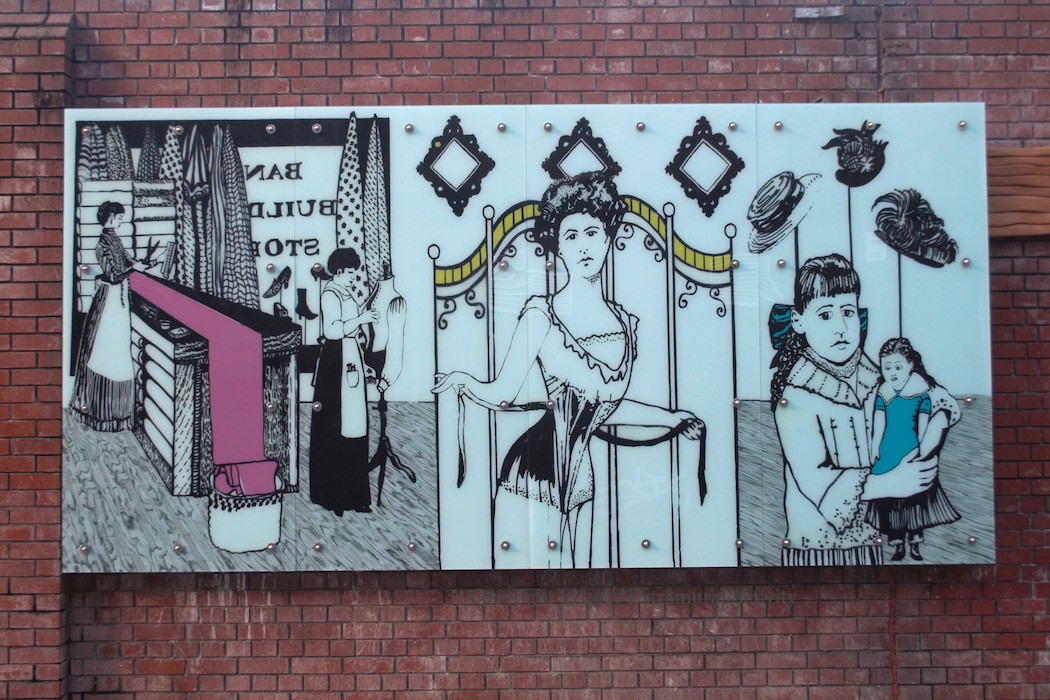
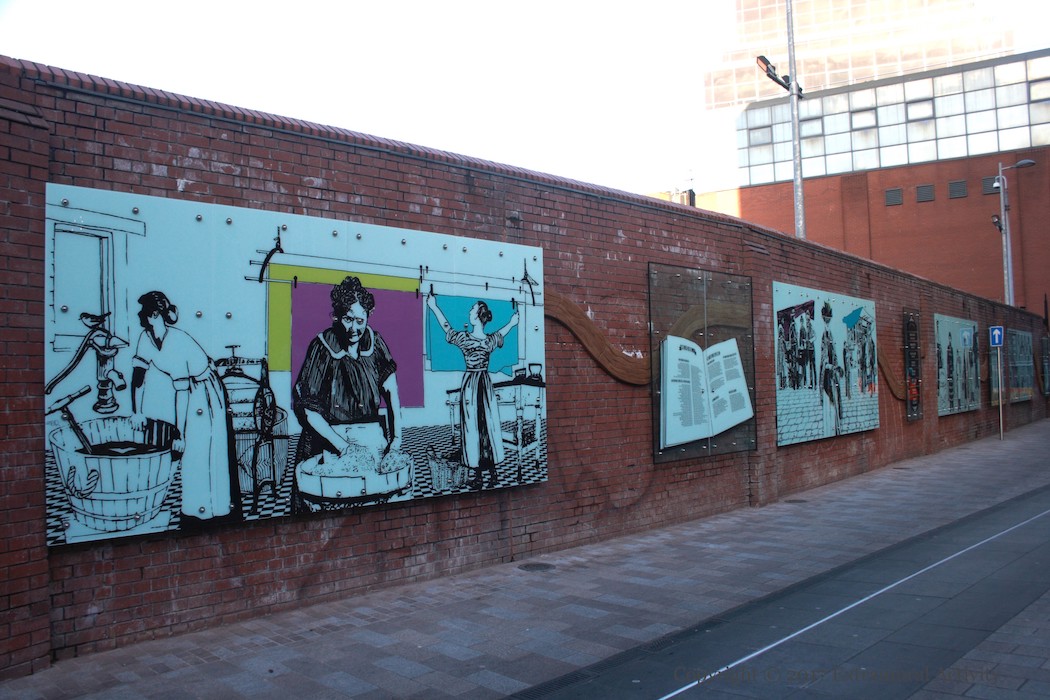
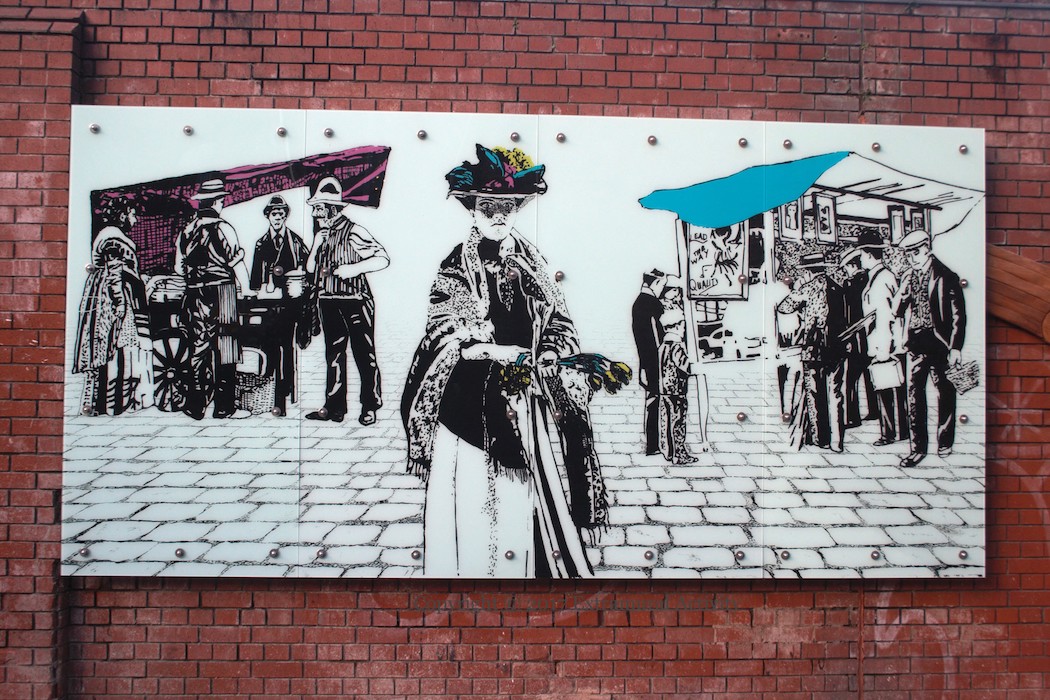
The 2015 installation of ‘life in the old days’ panels is by Annemarie Mullan, Stephen Mackey, and King Street Arts, presenting street scenes inspired by “information from the 1898 census” (CultureNI | Love Belfast).