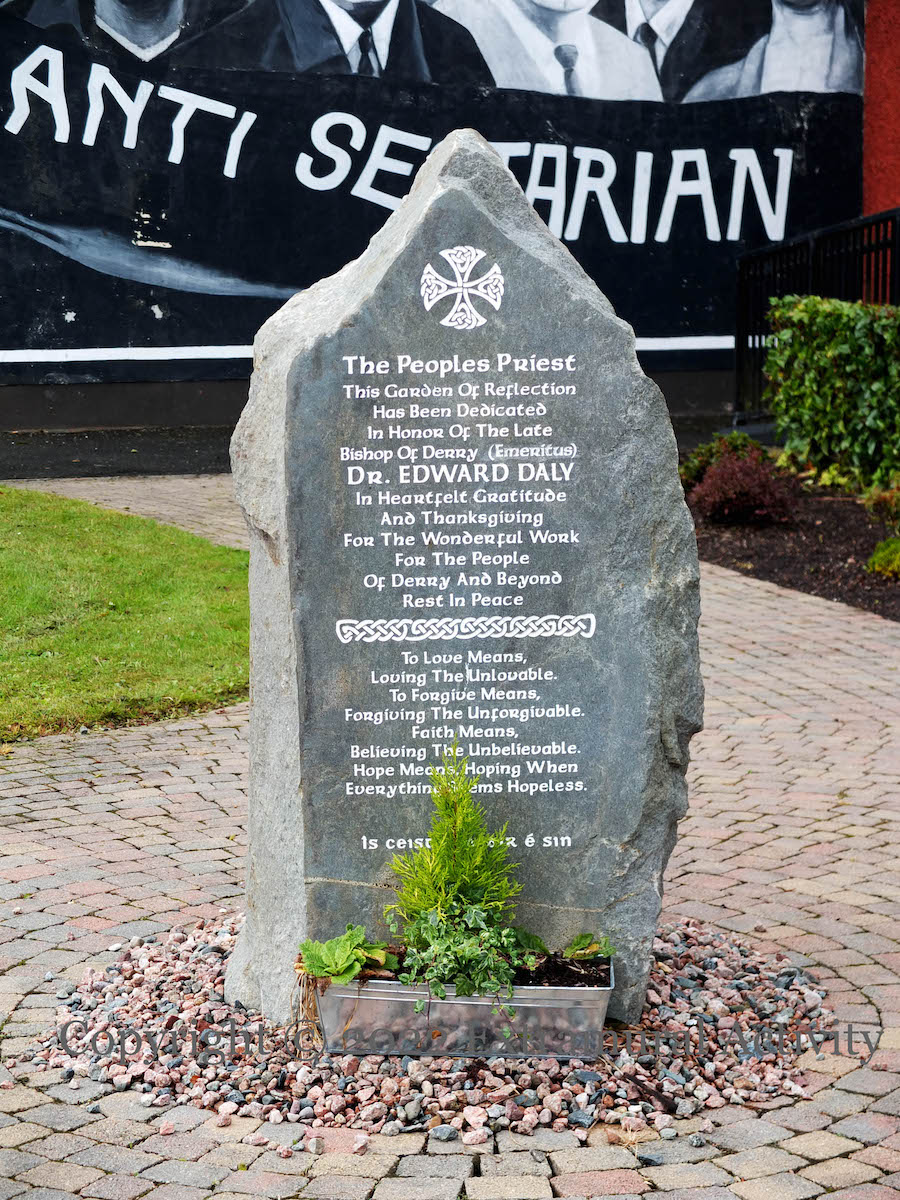
Is Ceıst Deacaır É Sın

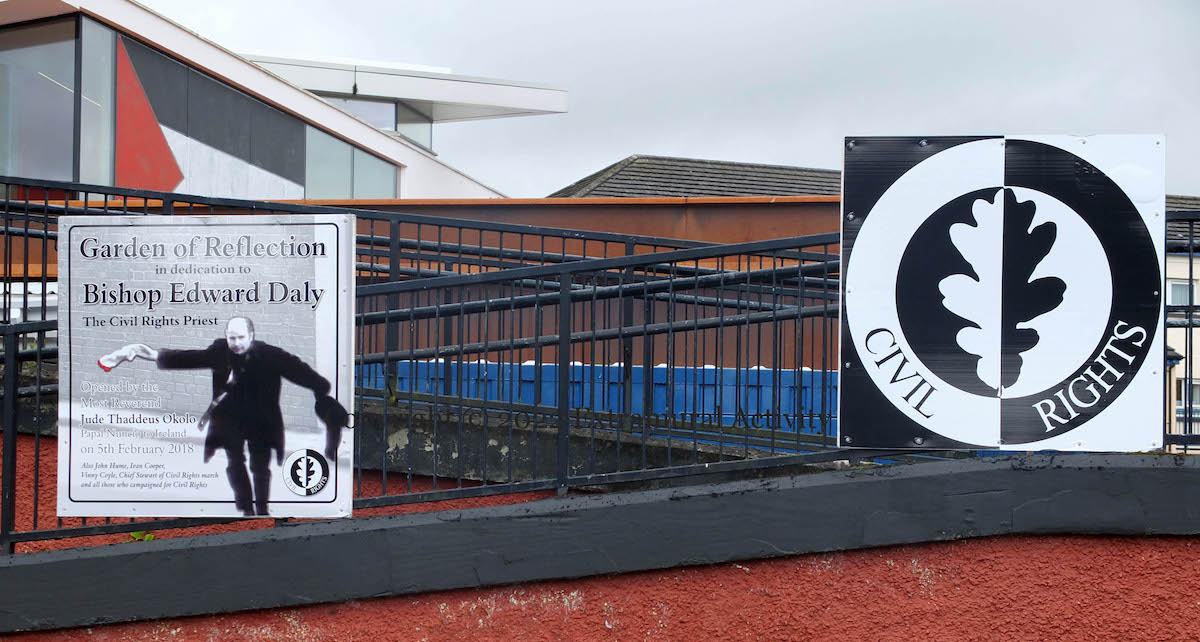
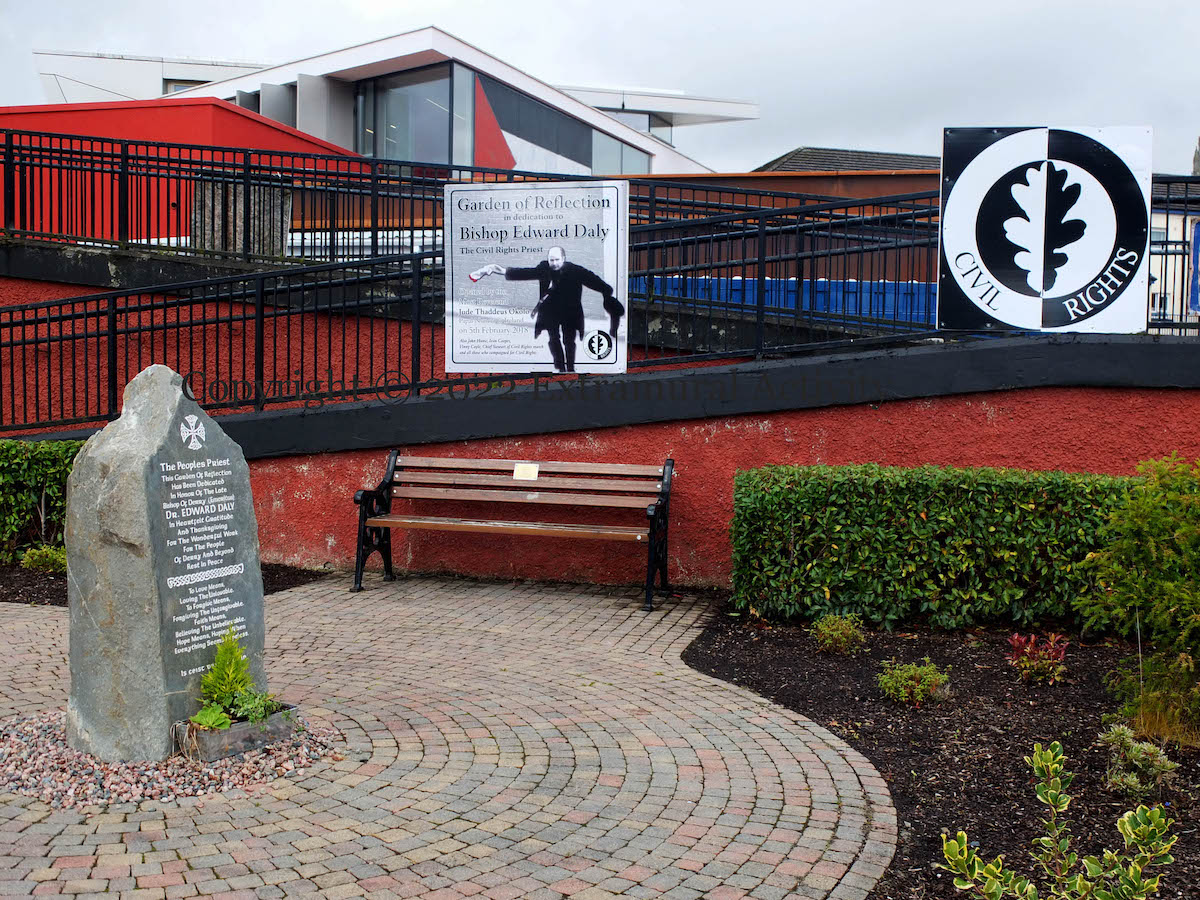
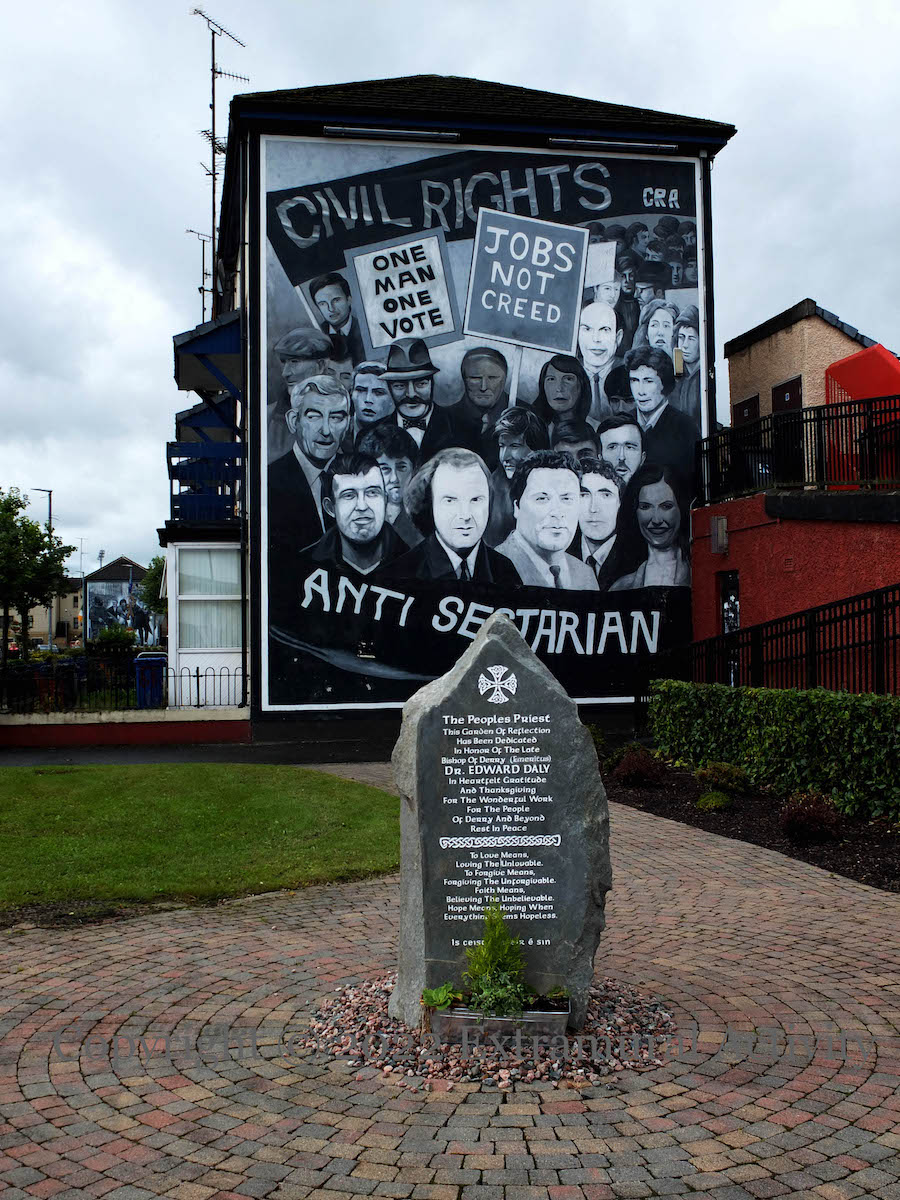
Edward Daly is most famous for waving a white handkerchief on Bloody Sunday, as a dying Jackie Duddy was carried away, but his devotion to the city of Derry spans decades: was a curate and then bishop in Derry from 1962 until 1993 (WP). ‘That’s a difficult question’ was his favourite saying (Derry Journal). The stone was erected after his death in 2016 (see The People’s Priest) and has now been incorporated into a garden of reflection.

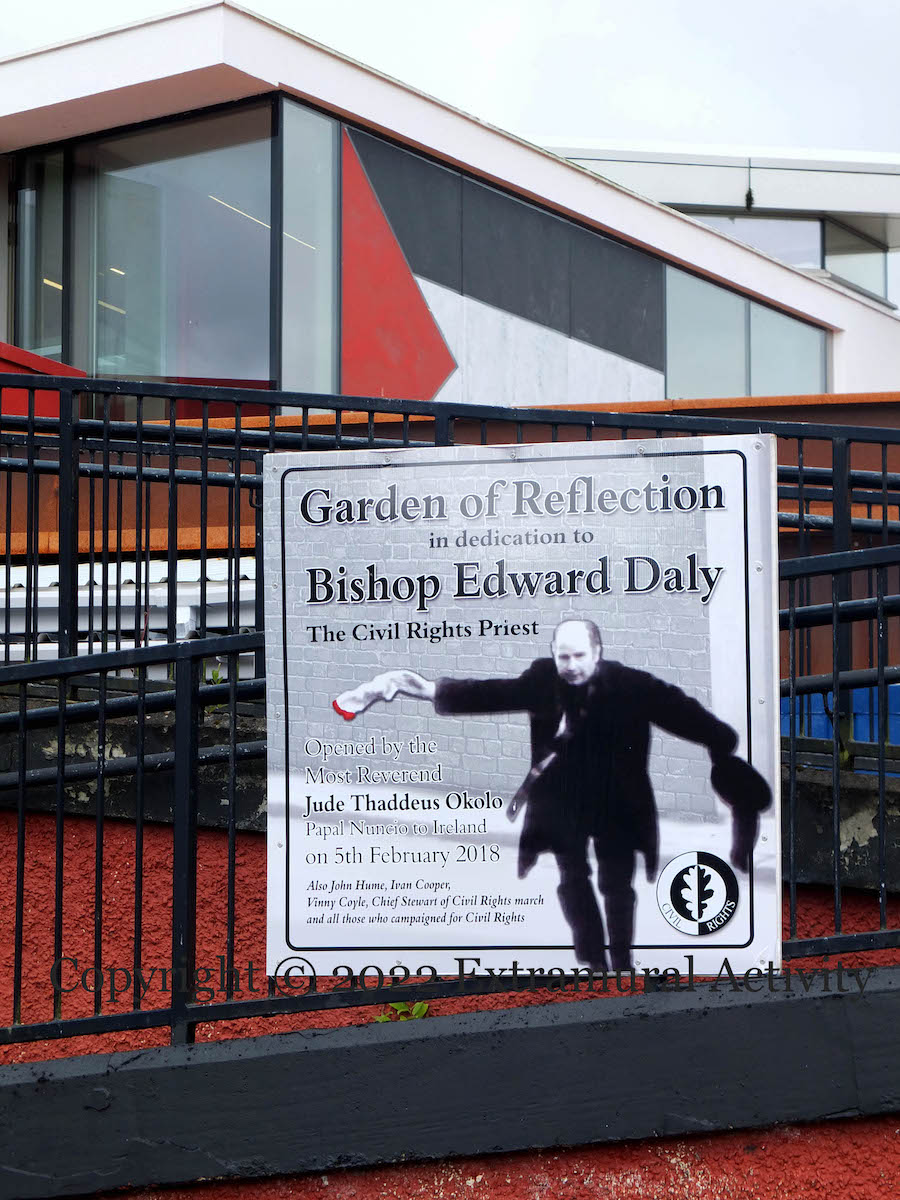
“This garden of reflection has been dedicated in honour of the late Bishop of Derry (Emeritus) Dr Edward Daly in heartfelt gratitude and thanksgiving for the wonderful work for the people of Derry and beyond. Rest in peace. ‘To love means loving the unlovable; to forgive means forgiving the unforgivable; faith means believing the unbelievable; hope means hoping when everything seems hopeless.’ Is ceıst deacaır é sın [that is a difficult question]” “Opened by the Most Reverend Jude Thaddeus Okolo, papal nuncio to Ireland, on 5th February 2018. Also John Hume, Ivan Cooper, Vinny Coyle, Chief Stewart [sic] of Civil Rights march and all those who campaigned for Civil Rights.”

For the mural, see Civil Rights.
Click image to enlarge
Copyright © 2022 Seosamh Mac Coılle
X10960 X10963 X10962 X10961 X10959 Rossville St
Bond’s Field

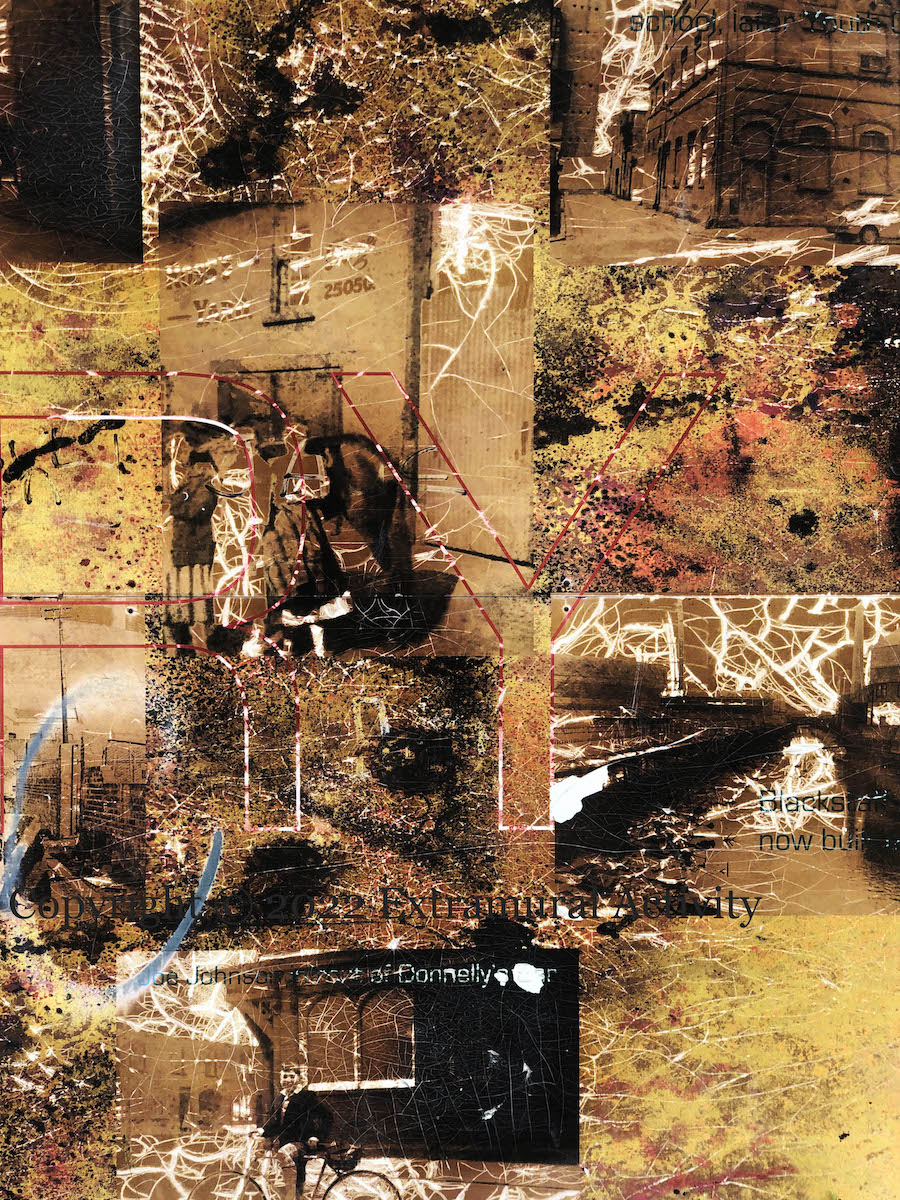
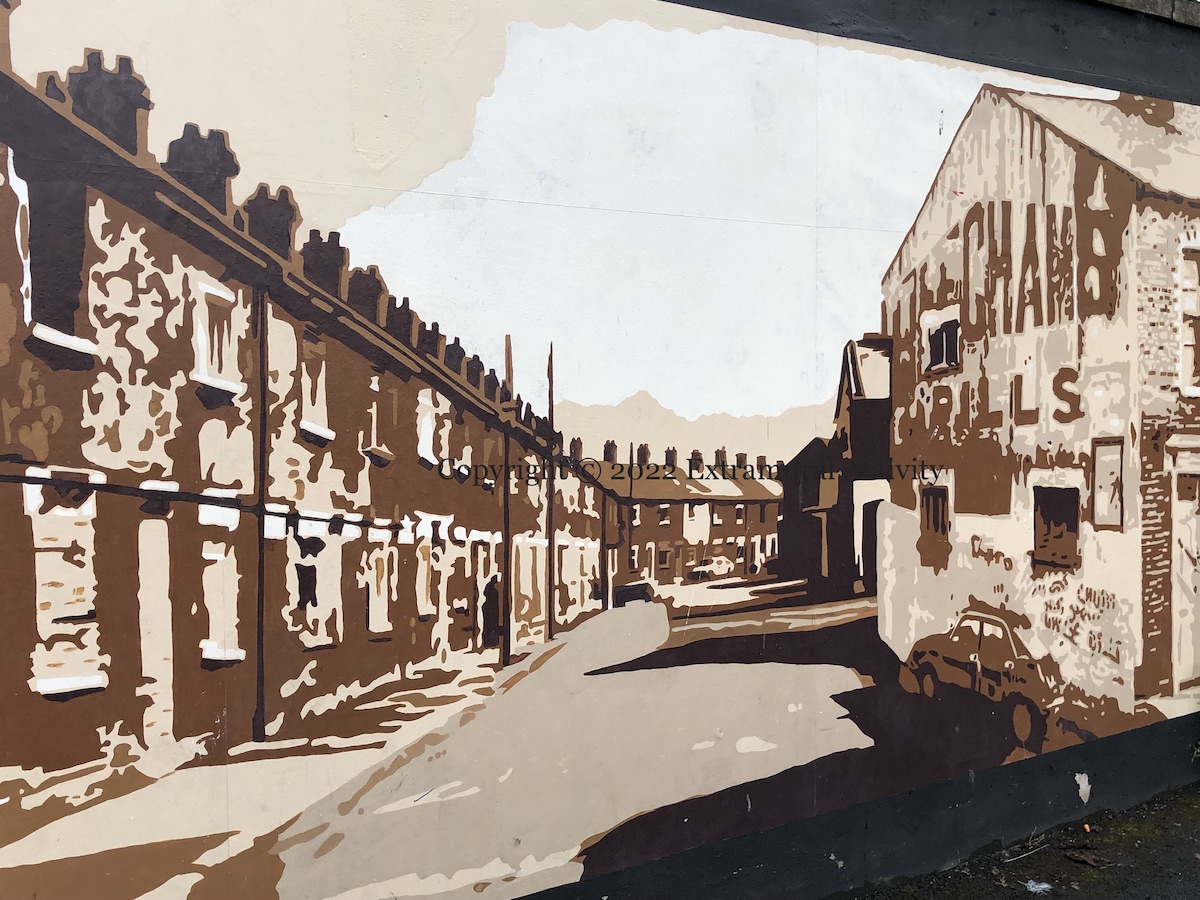
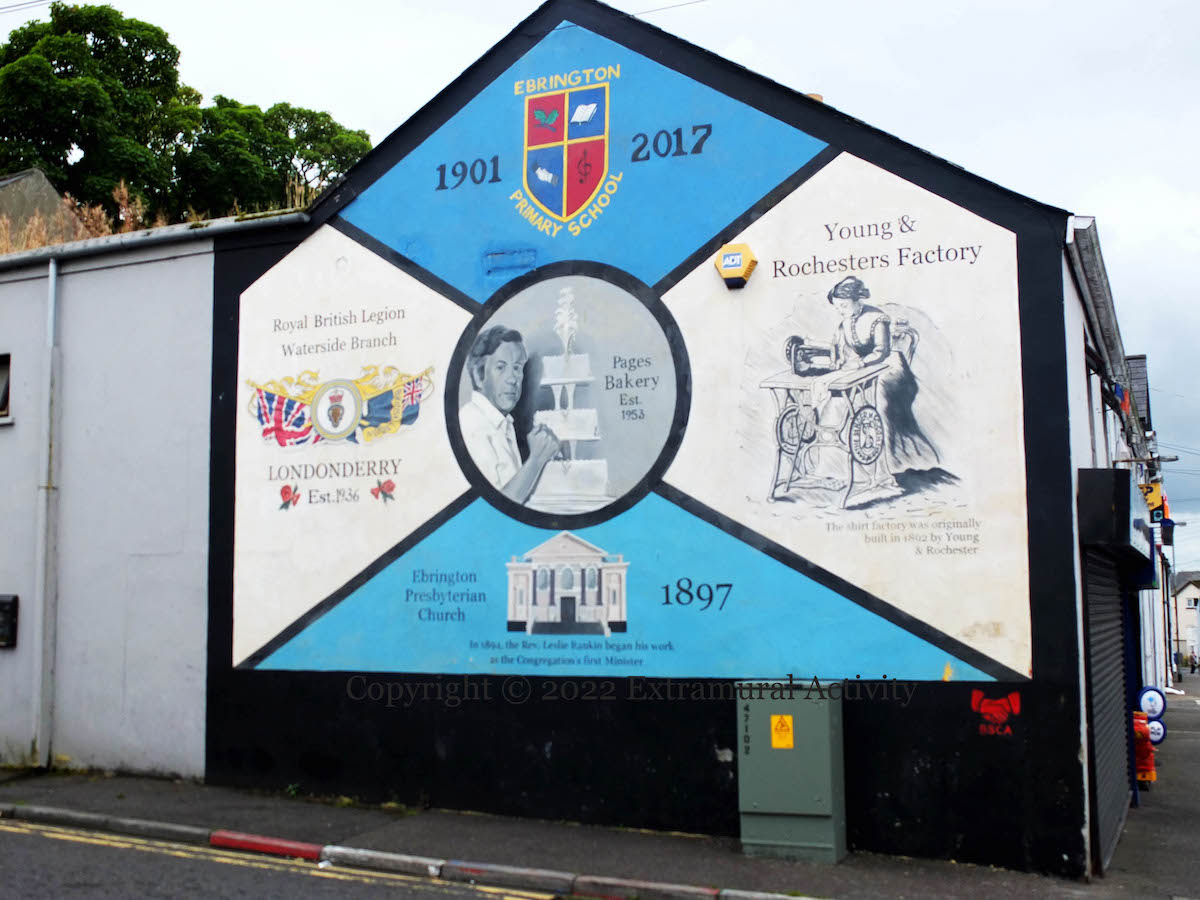
Although only Bond’s Place now retains the apostrophe, all of the “Bond” placenames in the Waterside (Bond’s Place, Bonds/Bond’s Street and Bonds/Bond’s Hill) are named after the Bond family, one of whom – William – was a United Irishman (Derry Journal). Bond’s Field is the site of the former Ebrington factory – home to Young & Rochesters shirt factory (Smart Tour) – and now part of the Ebrington complex (Scrivener). Four other Ebrington institutions are included in this Ebrington Street mural: Ebrington Primary school (web) which was originally at the end of Roulston Avenue, Ebrington Presbyterian (web), the Waterside branch of the Royal British Legion (Fb), and (in the centre) Pages bakery, which is now the Ebrington Bake House (Fb).

Click image to enlarge
Copyright © 2022 Seosamh Mac Coılle
X11045

Shared History

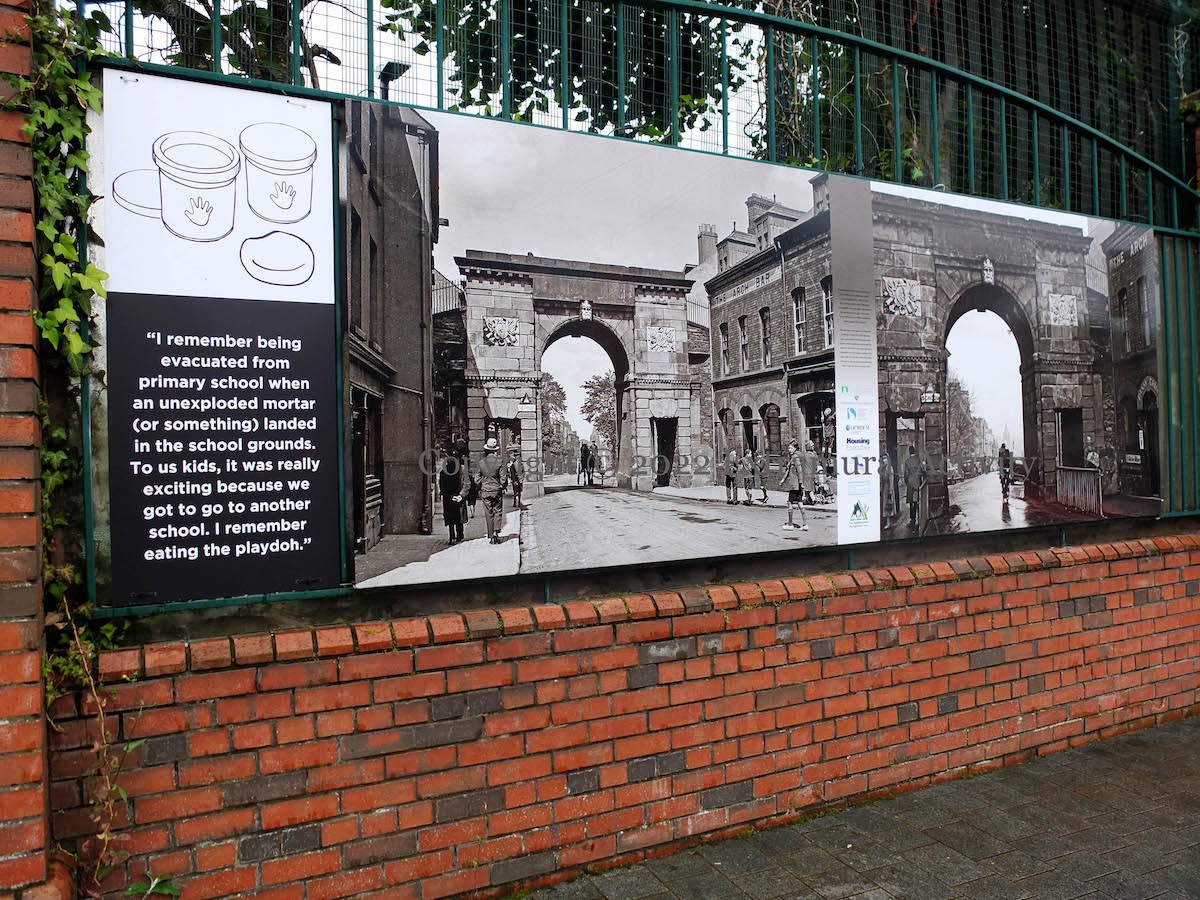
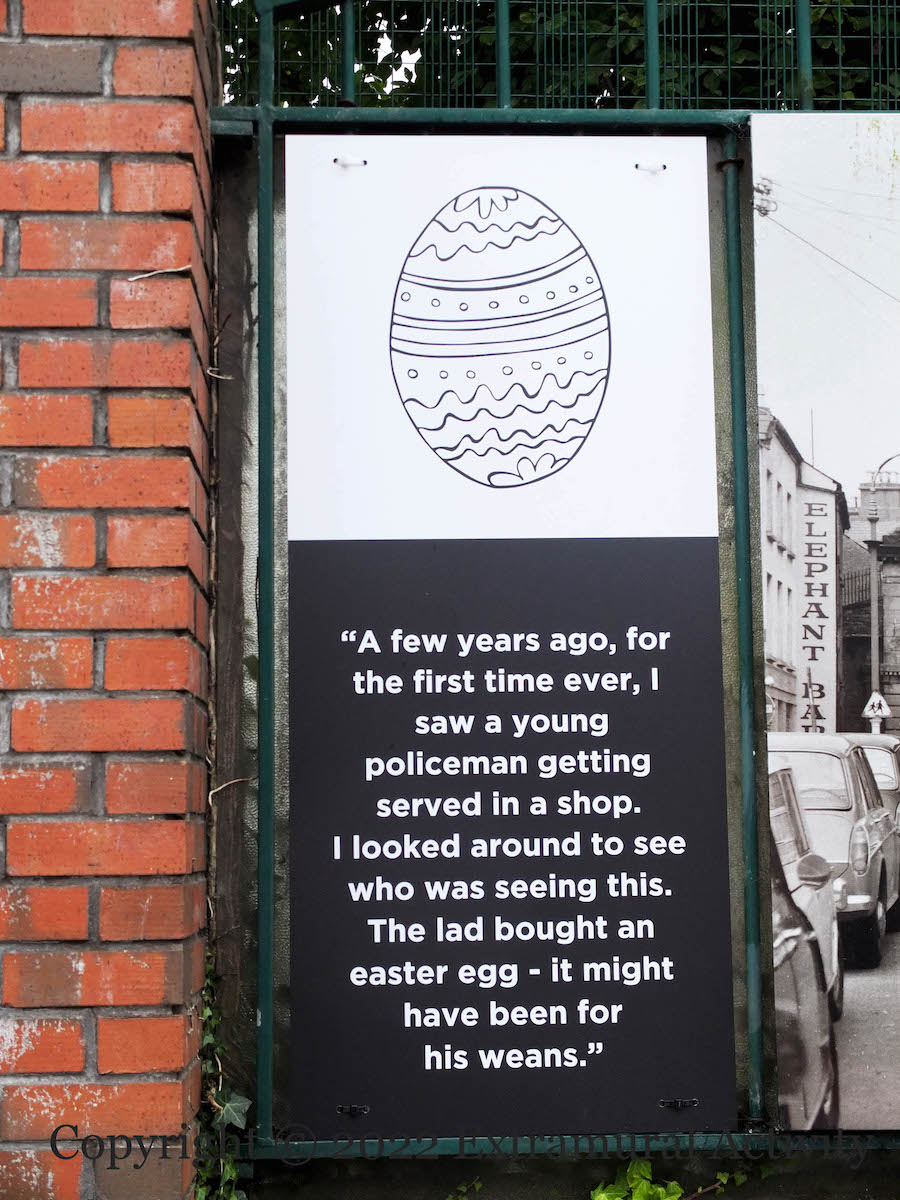
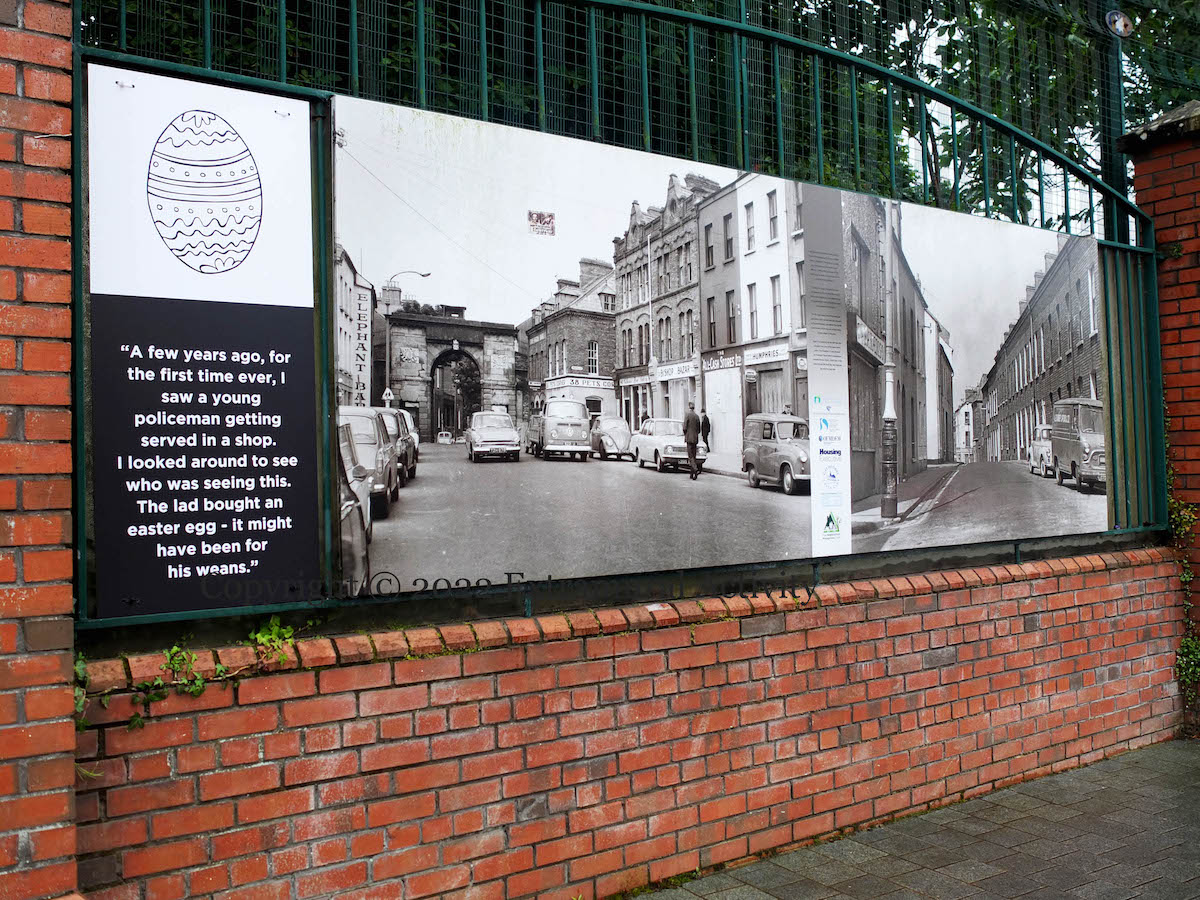
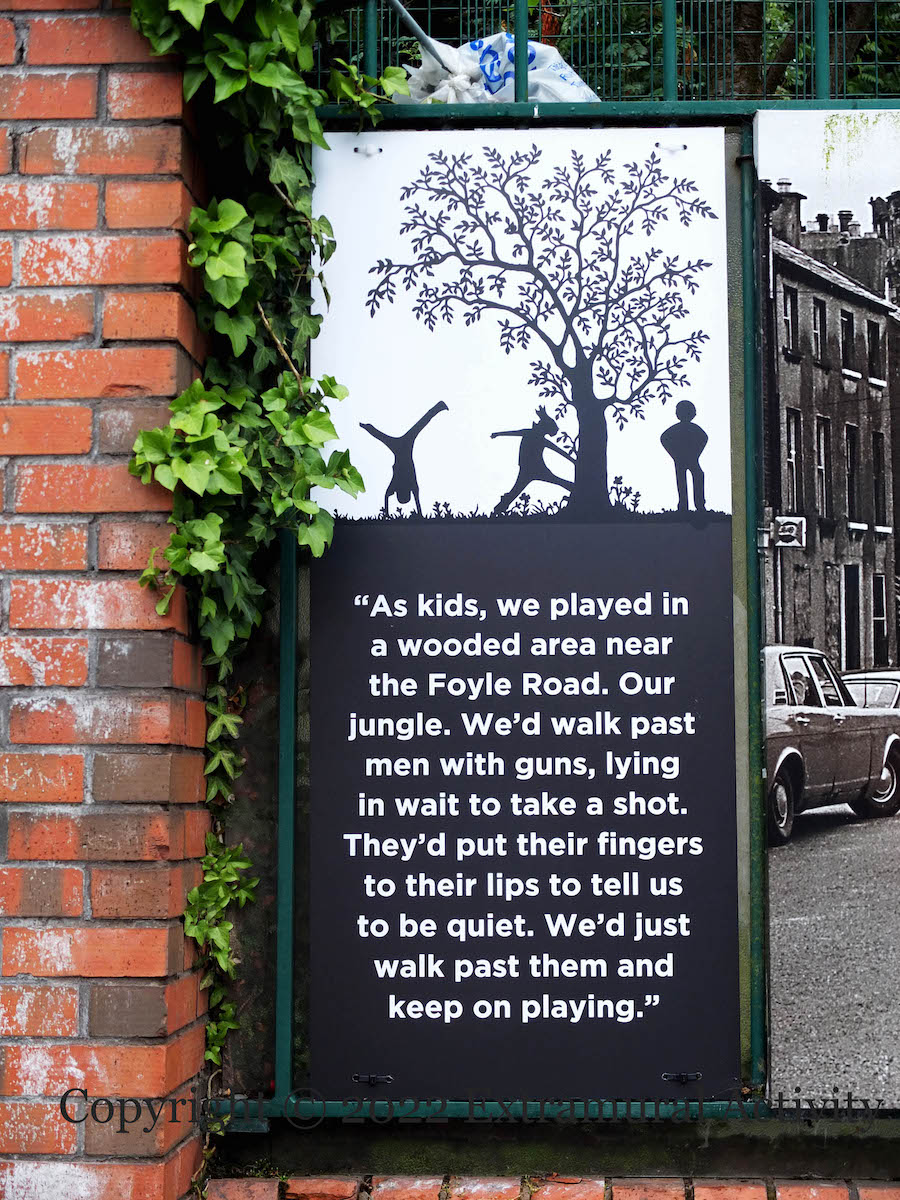
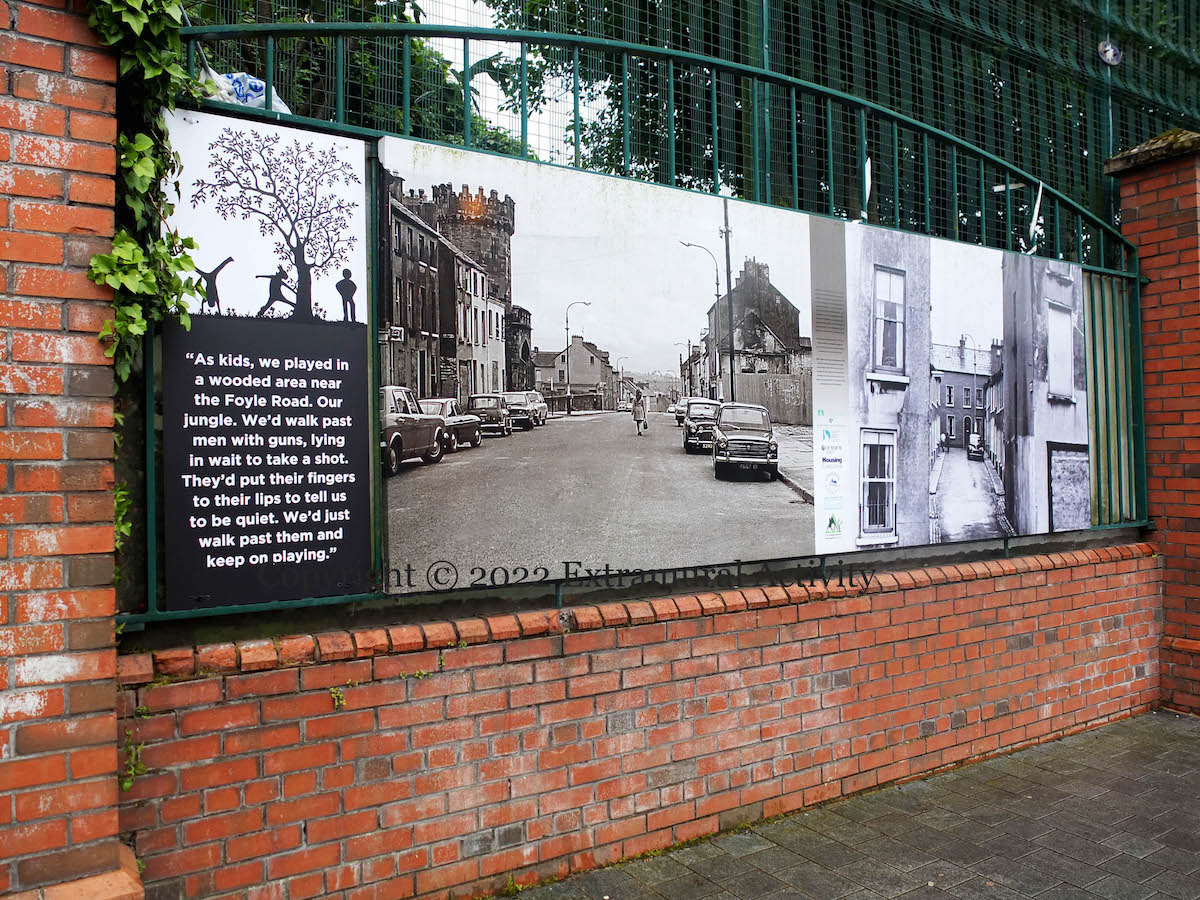
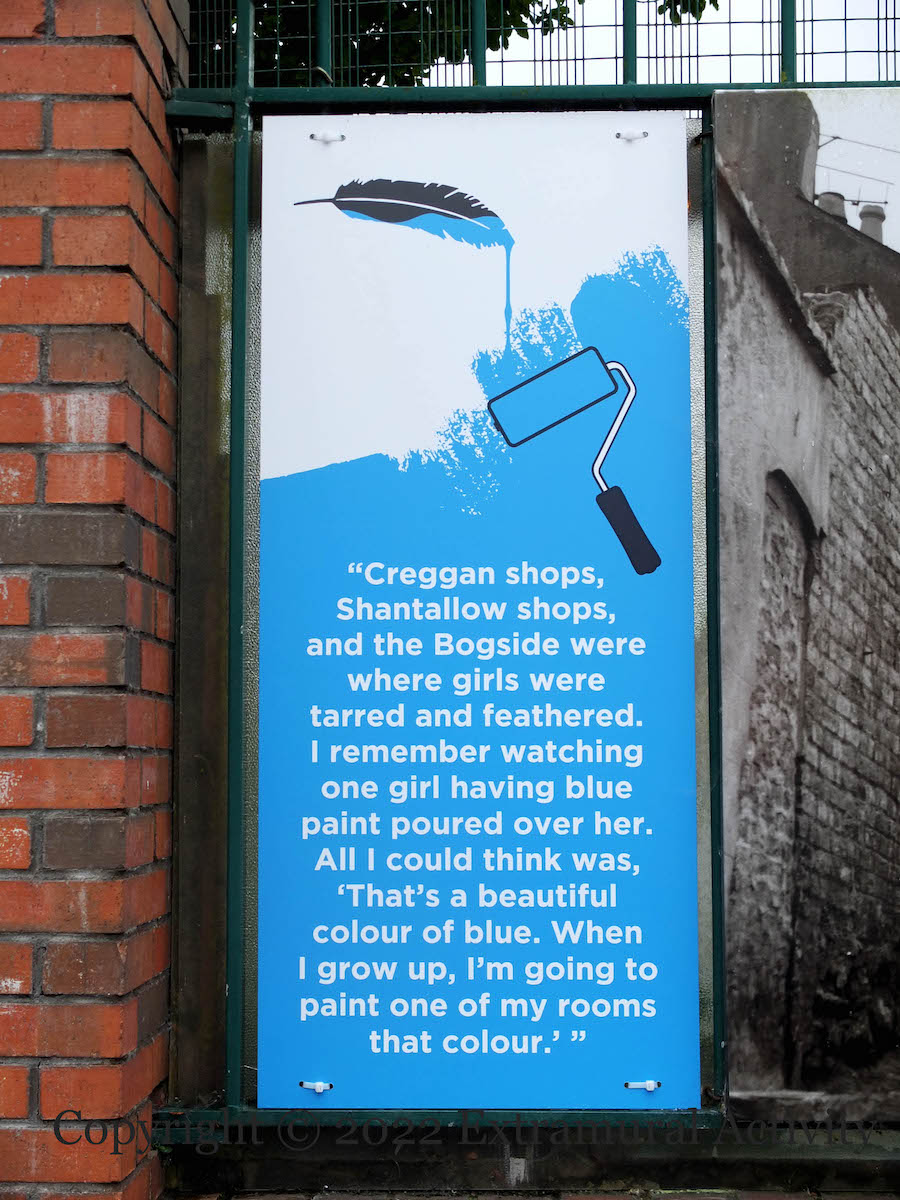
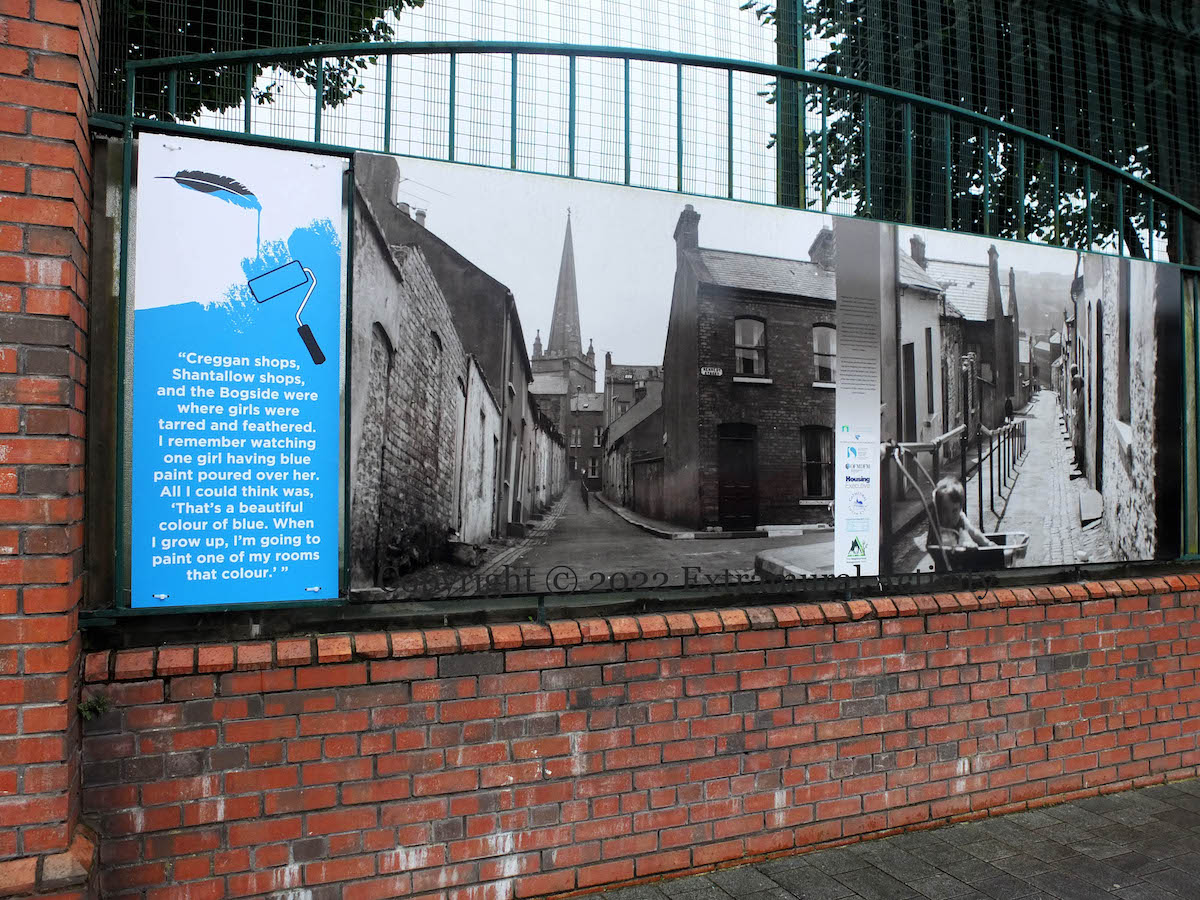
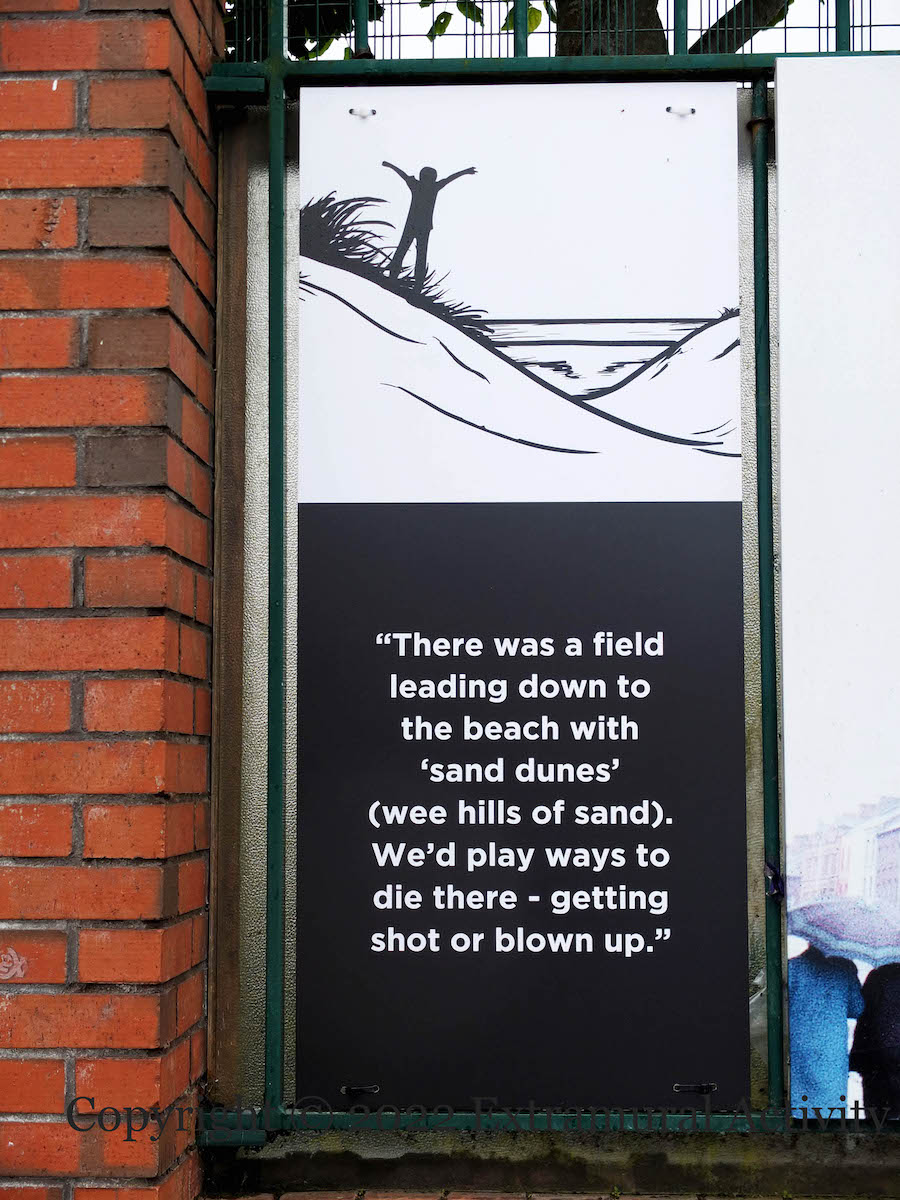
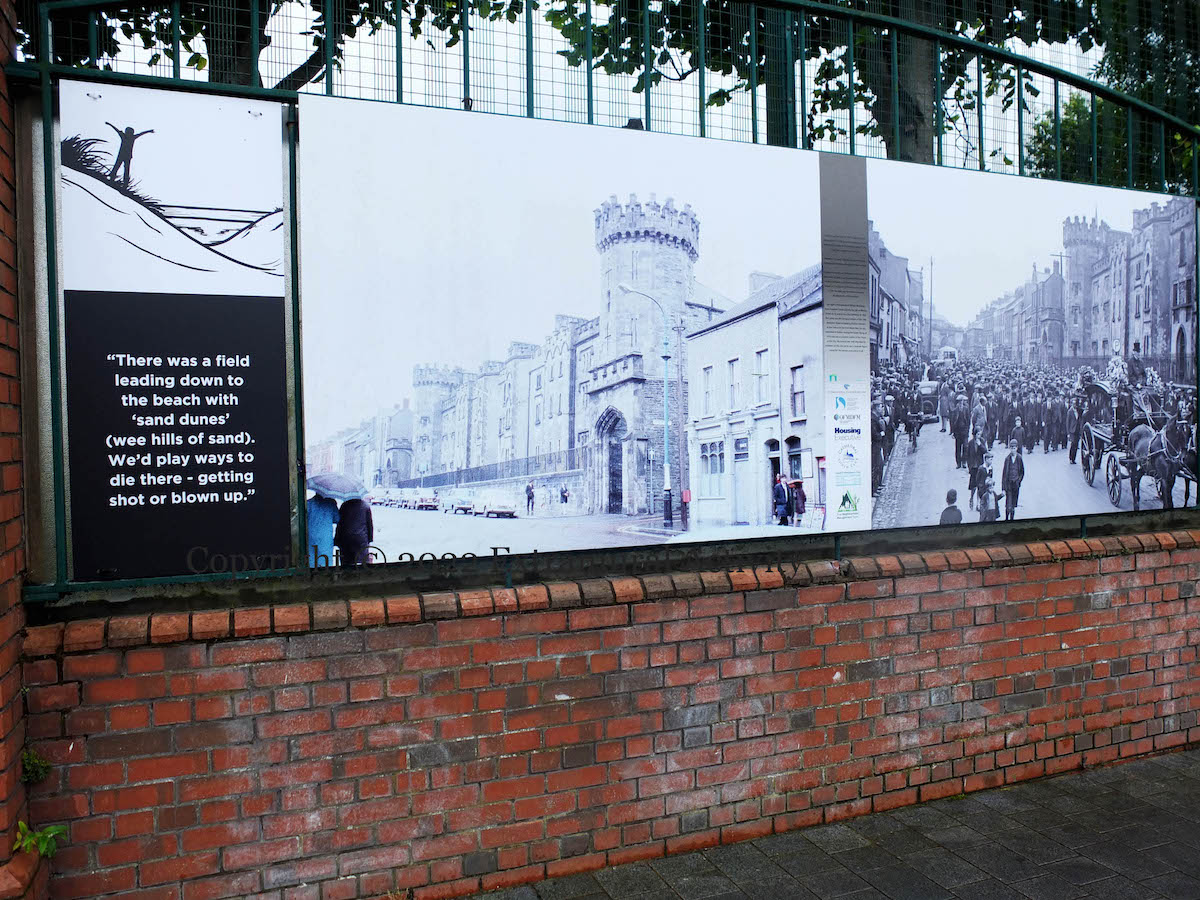
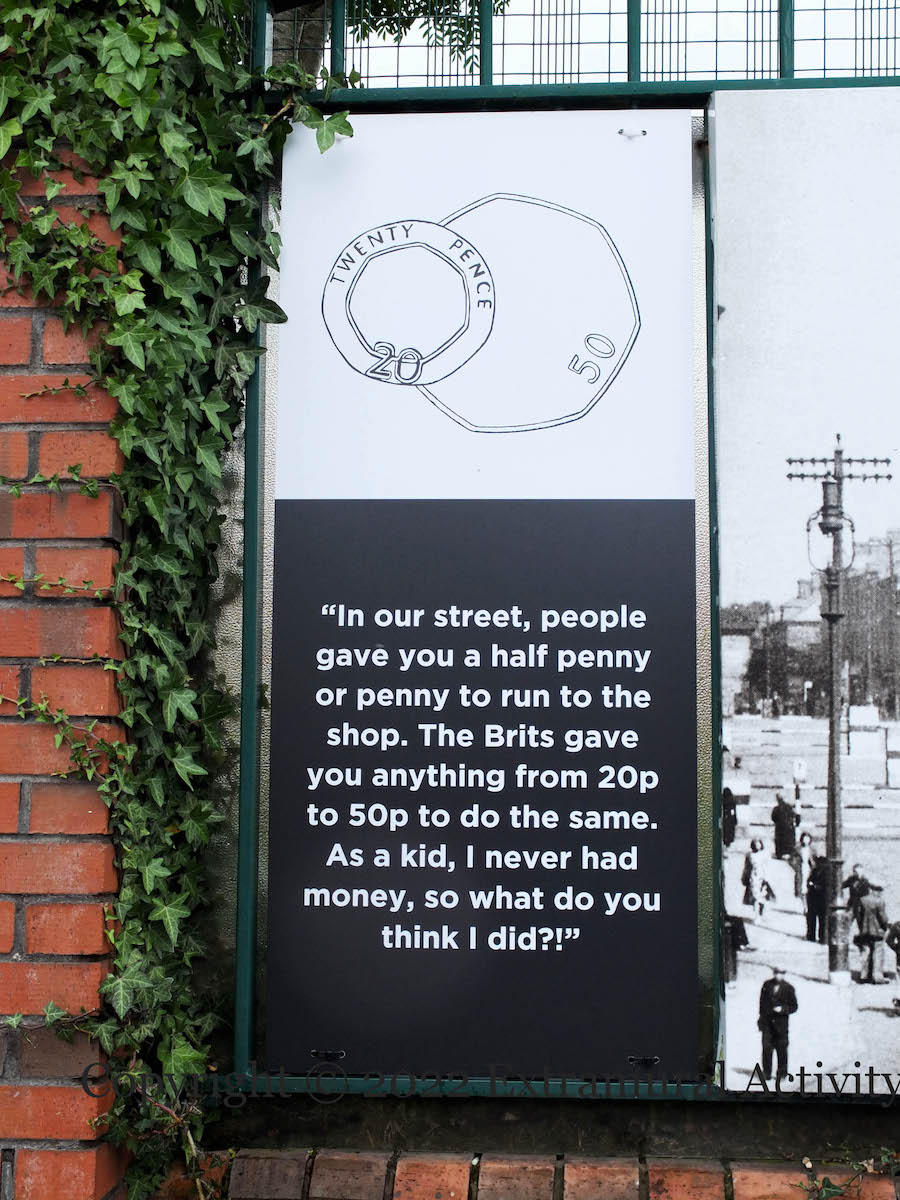
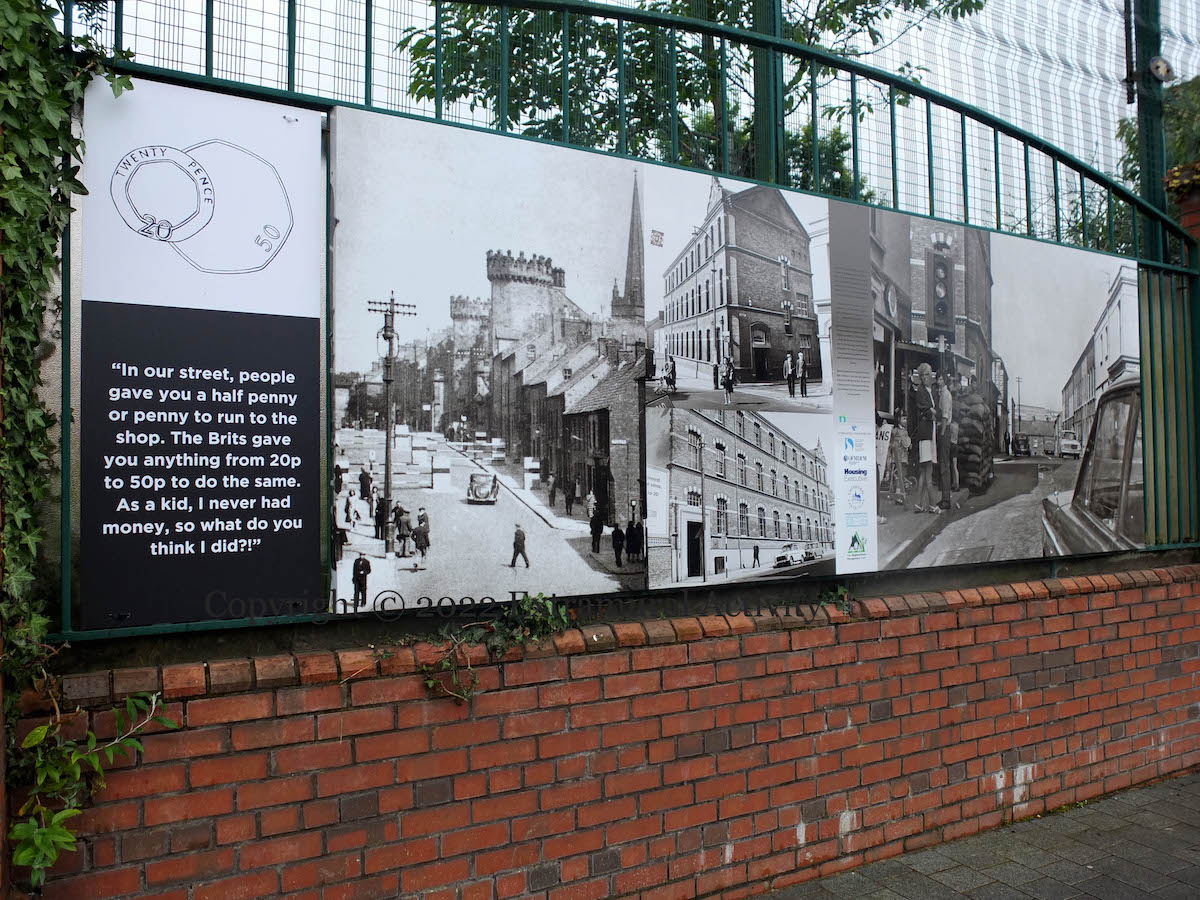
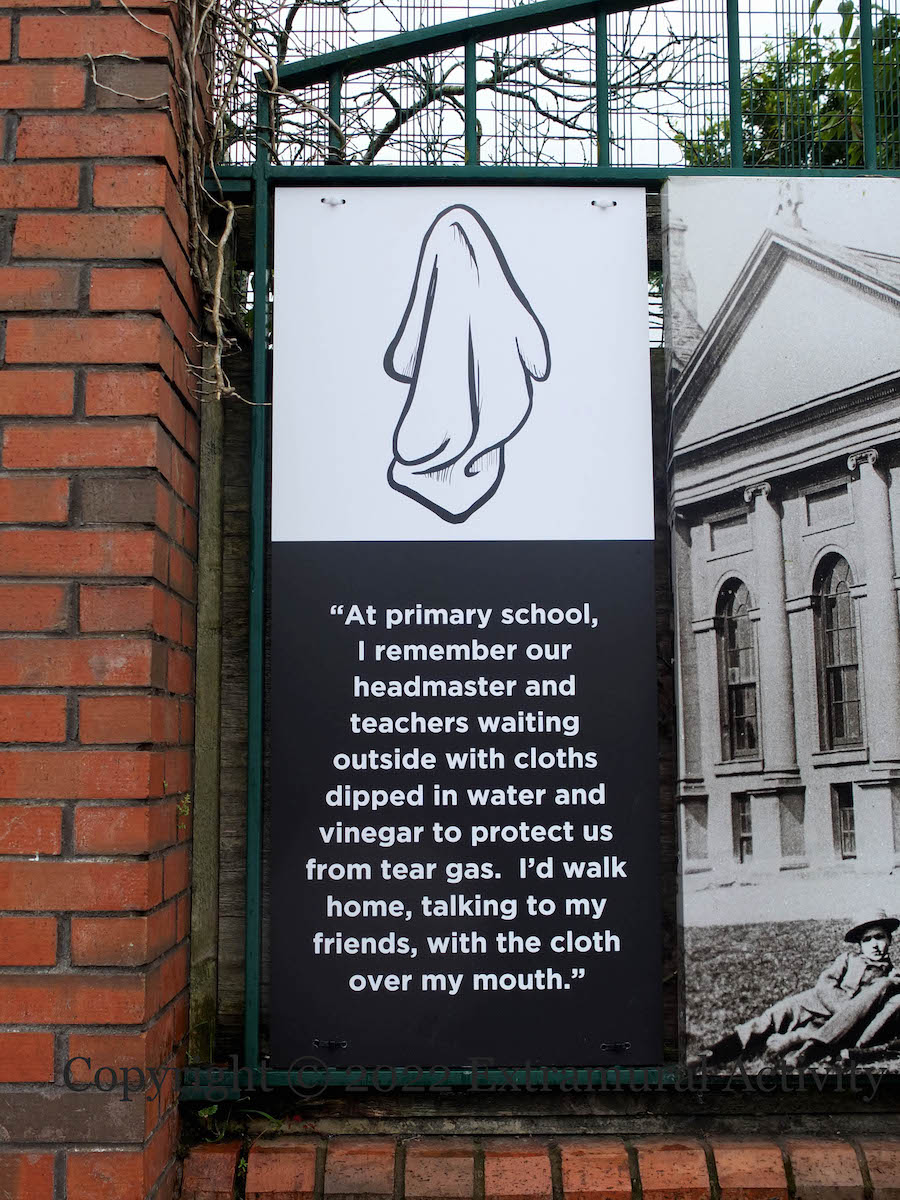
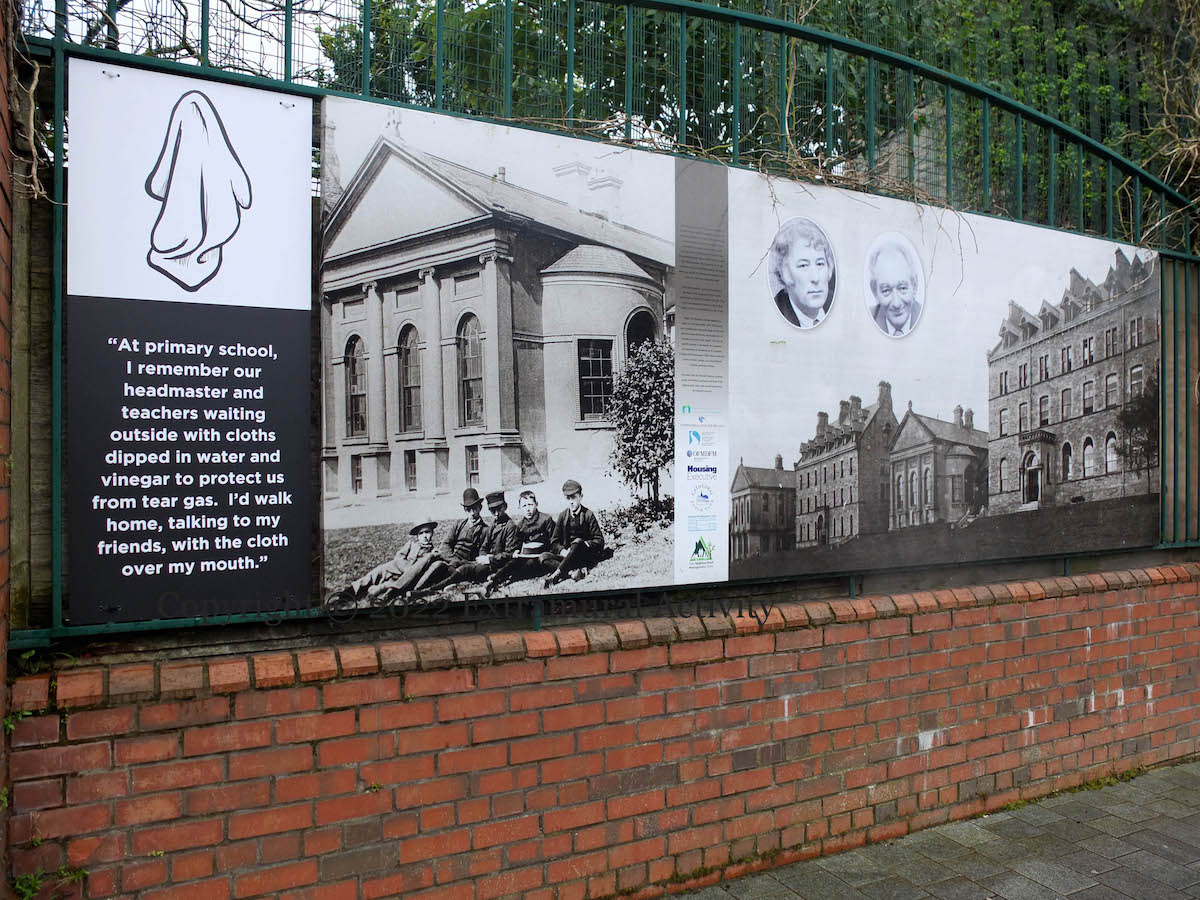
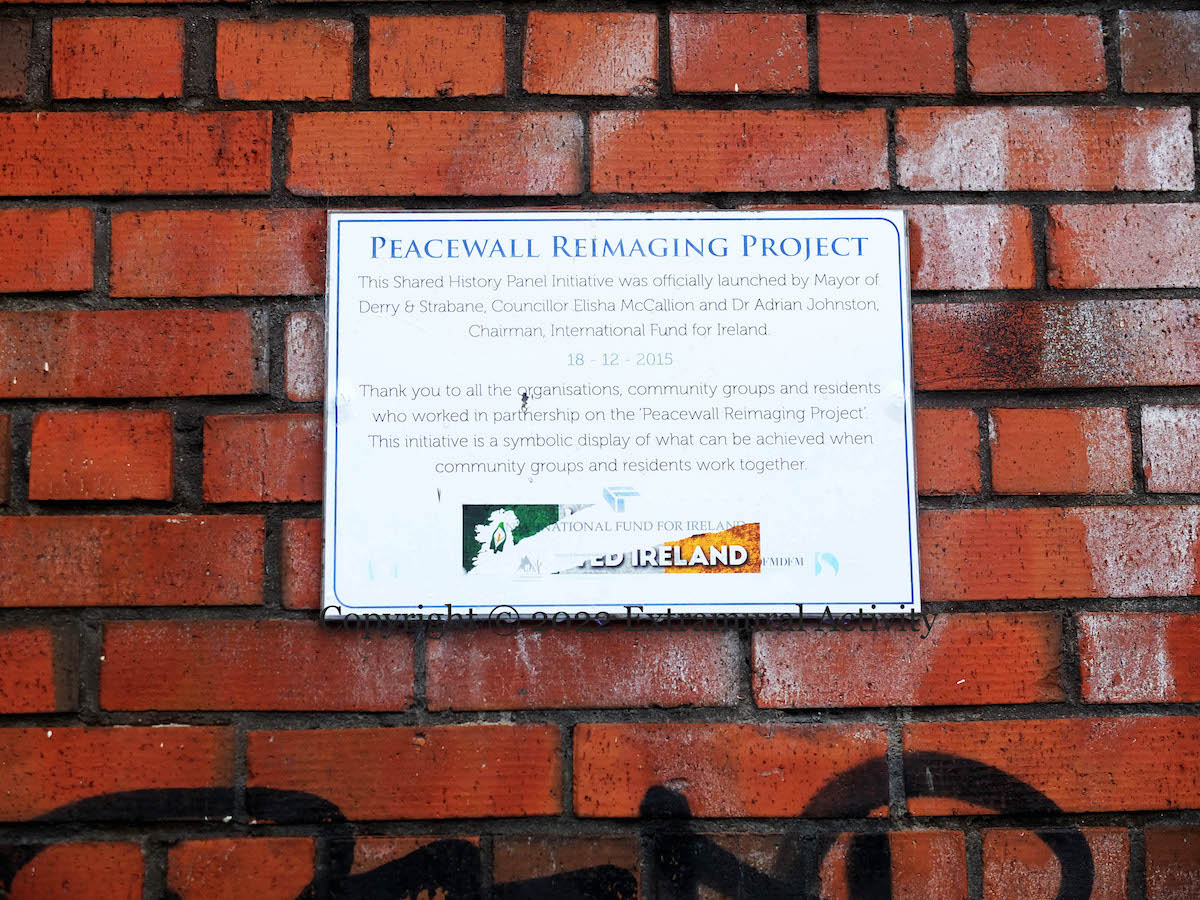
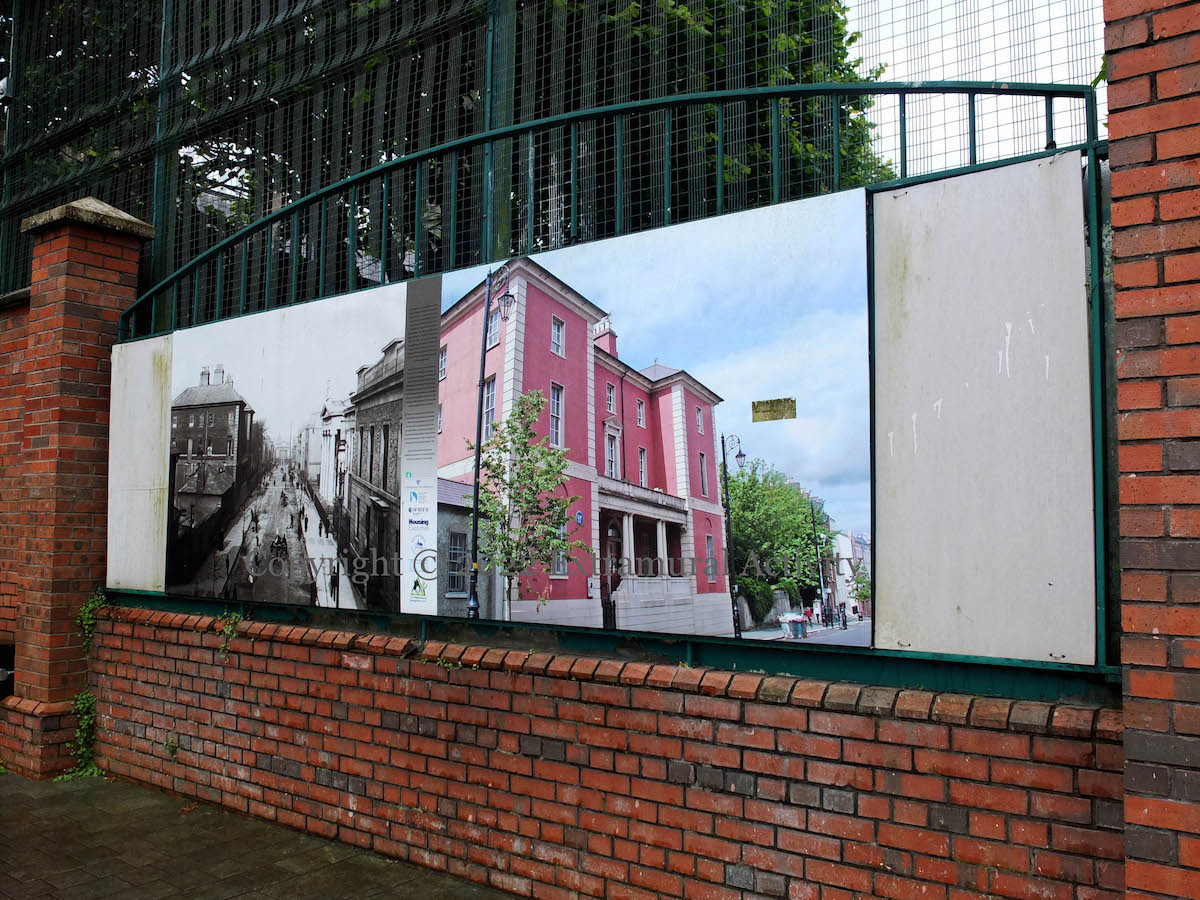
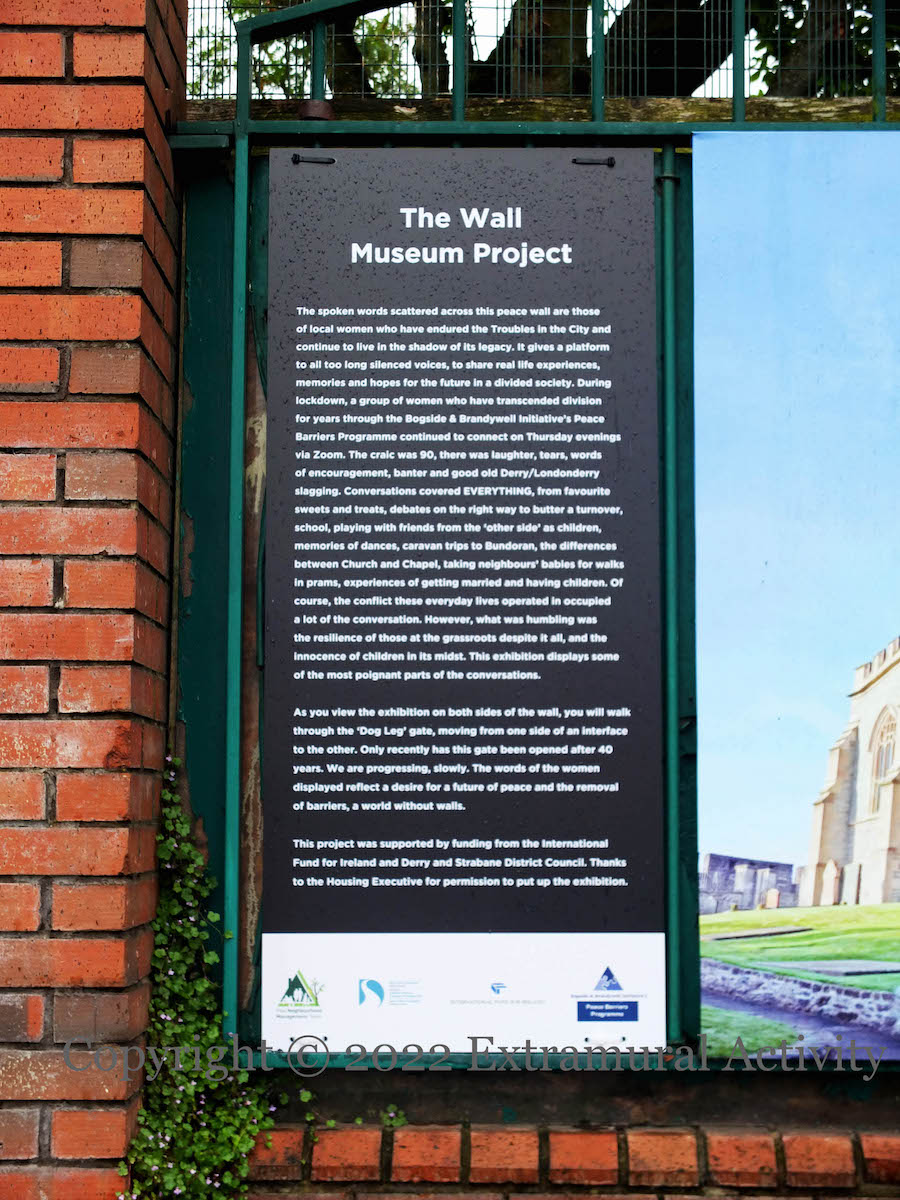
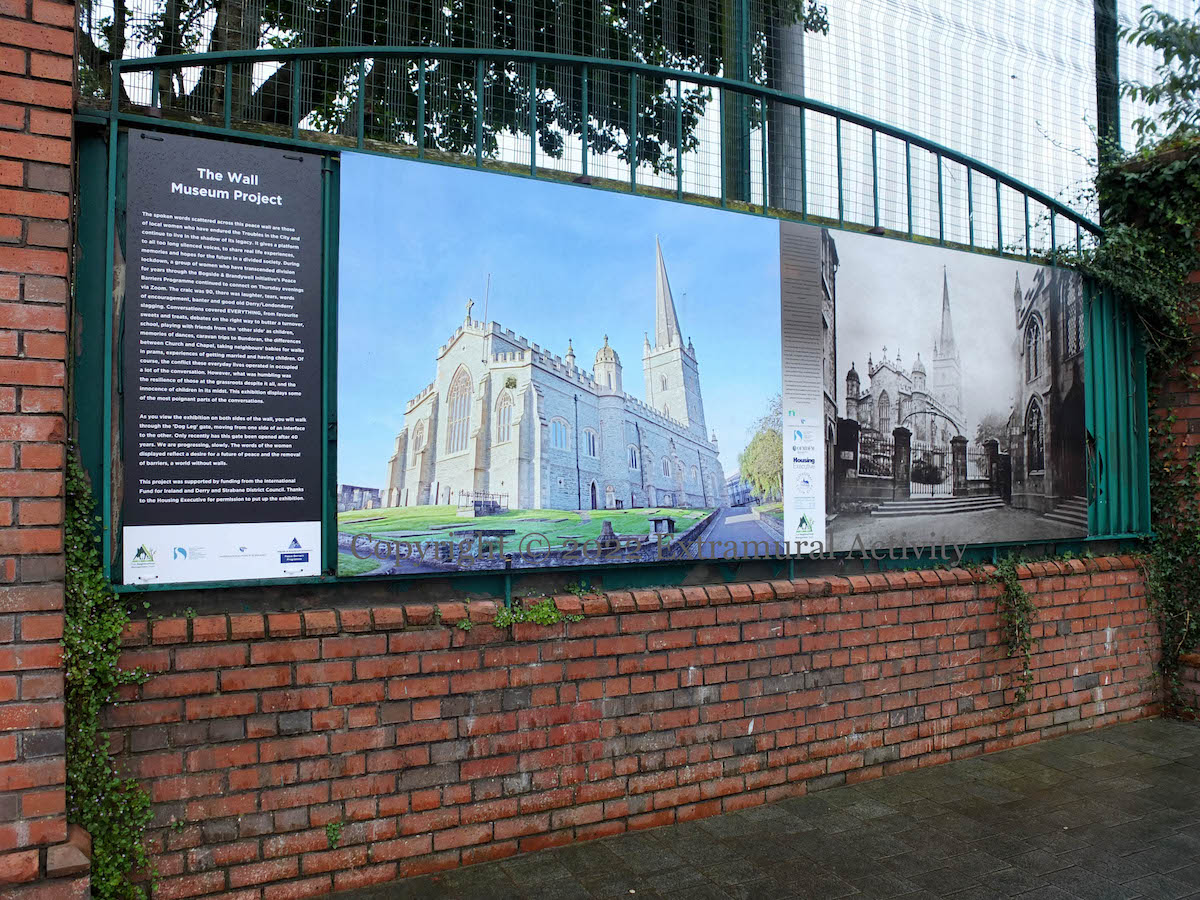
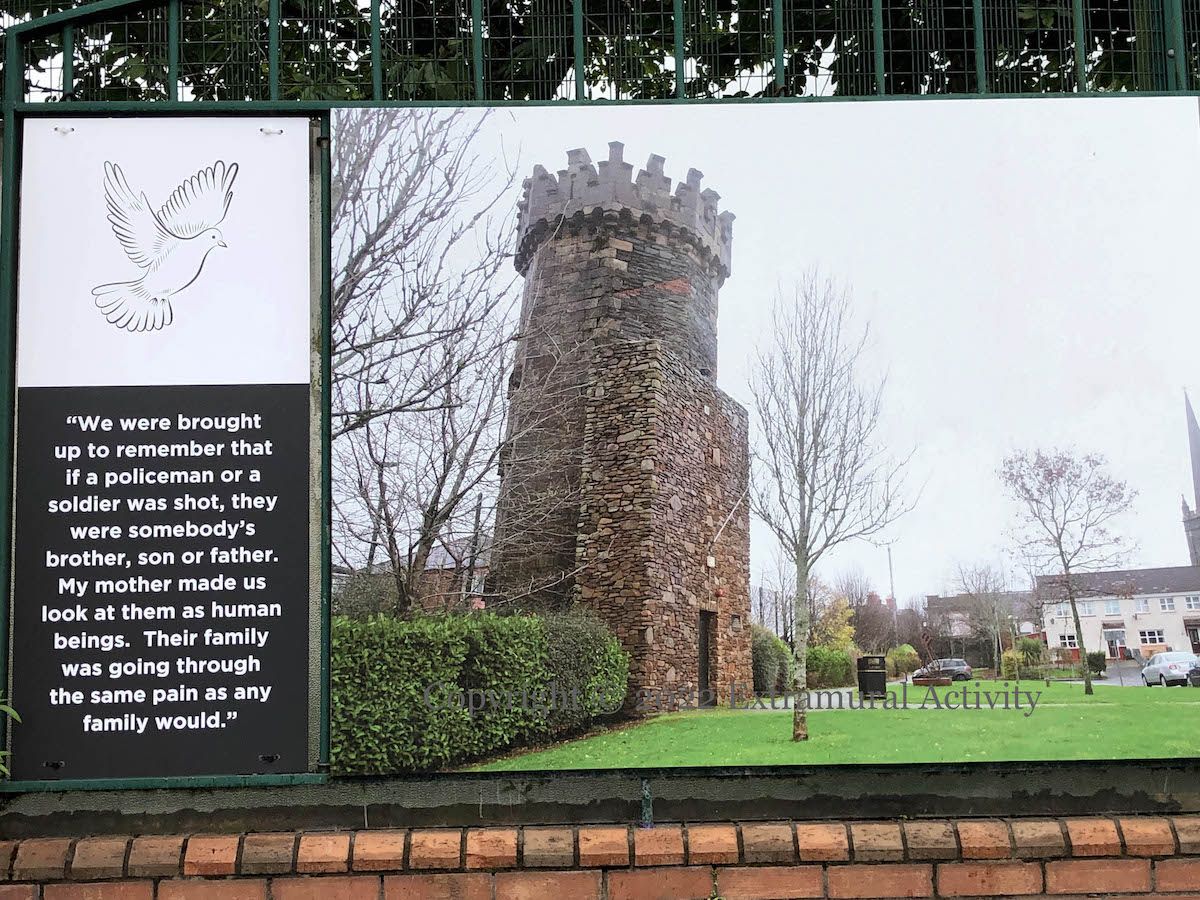
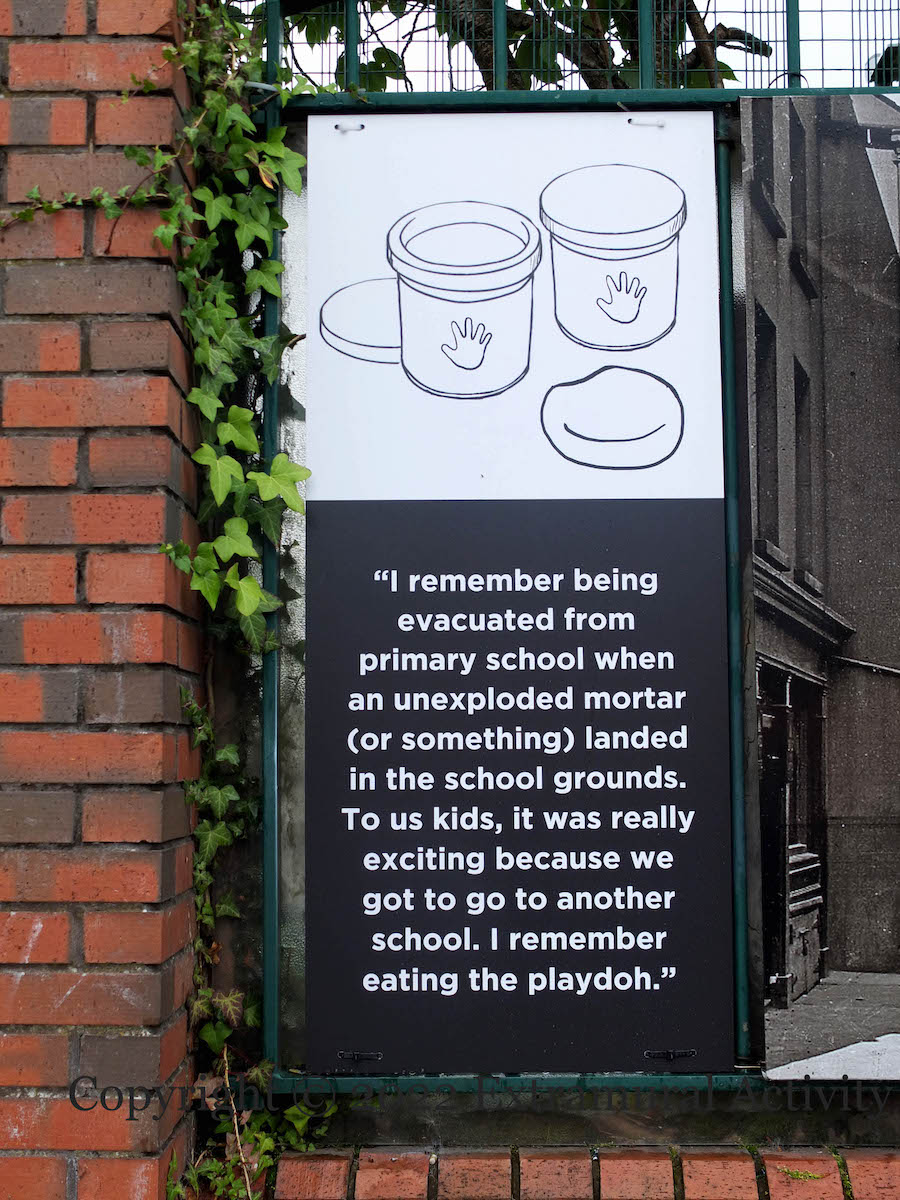
New panels of quotes and information – apparently under the title the ‘Wall History Project’ – have been added to the previous row of vintage images of the area (the “Peacewall Reimaging Project” (image below) | Derry Journal), telling personal stories of life during the Troubles including positive interactions with British soldiers and RUC officers.

The “peace” wall in question runs along the top of the Fountain in Londonderry along Bishop Street WIthout. (The street was also “settled’ by the construction of a senior citizens’ home, Alexander House.)

“The spoken words scattered across this peace wall are those of local women who have endured the Troubles in the City and continue to live in the shadow of its legacy. It gives a platform to all too long silenced voices, to share real real life experiences, memories and hopes for the future in a divided society. During lockdown, a group of women who have transcended division for years through the Bogside & Brandywell Initiative’s Peace Barriers Programme continued to connect on Thursday evenings via Zoom. The craic was 90, there was laughter, tears, words of encouragement, banter and good old Derry/Londonderry slagging.”

An image in Bishop’s Gate, seen in The Past Is A Foreign Country, is perhaps part of the original installation.

Click image to enlarge
Copyright © 2022 Seosamh Mac Coılle
“This Shared History Panel Initiative was officially launched by Mayor of Derry & Strabane, Councillor Elisha McCallion and Dr Adrian Johnston, Chairman, International Fund for Ireland, 12-12-2015. … This initiative is a symbolic display of what can be achieved when community groups and residents work together.”

Cool

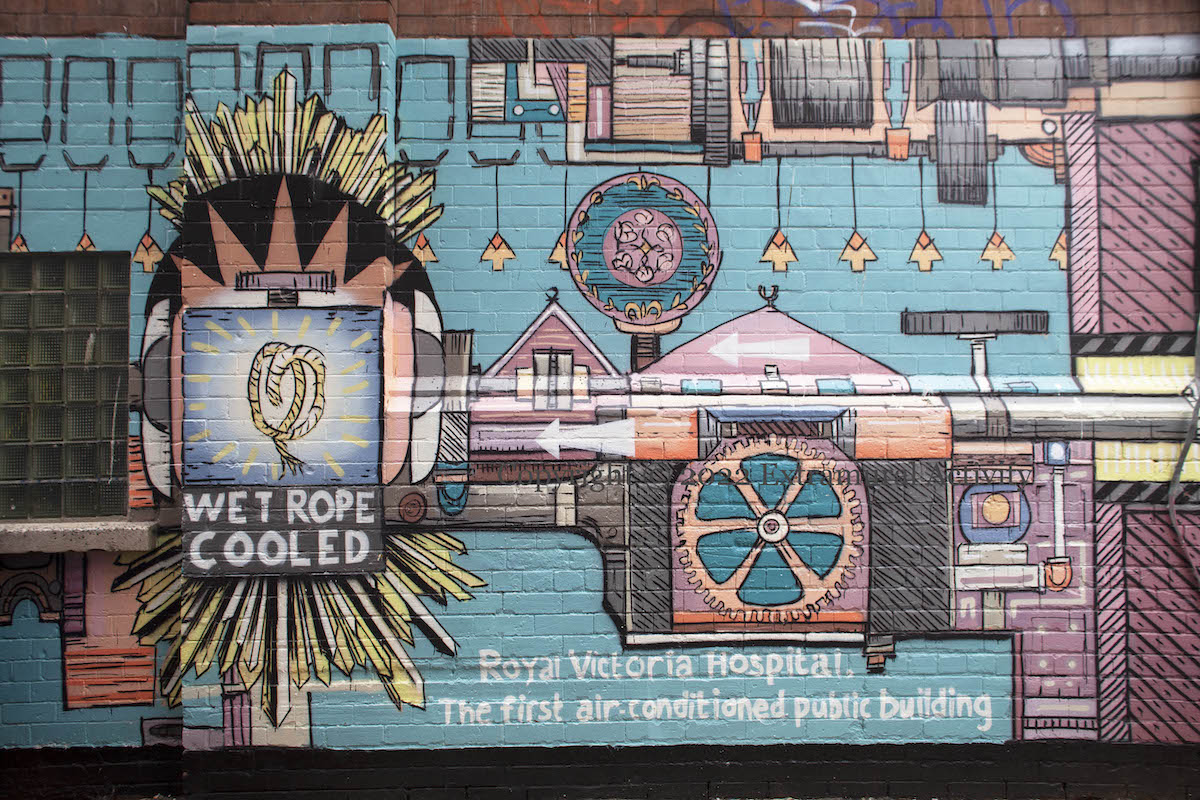
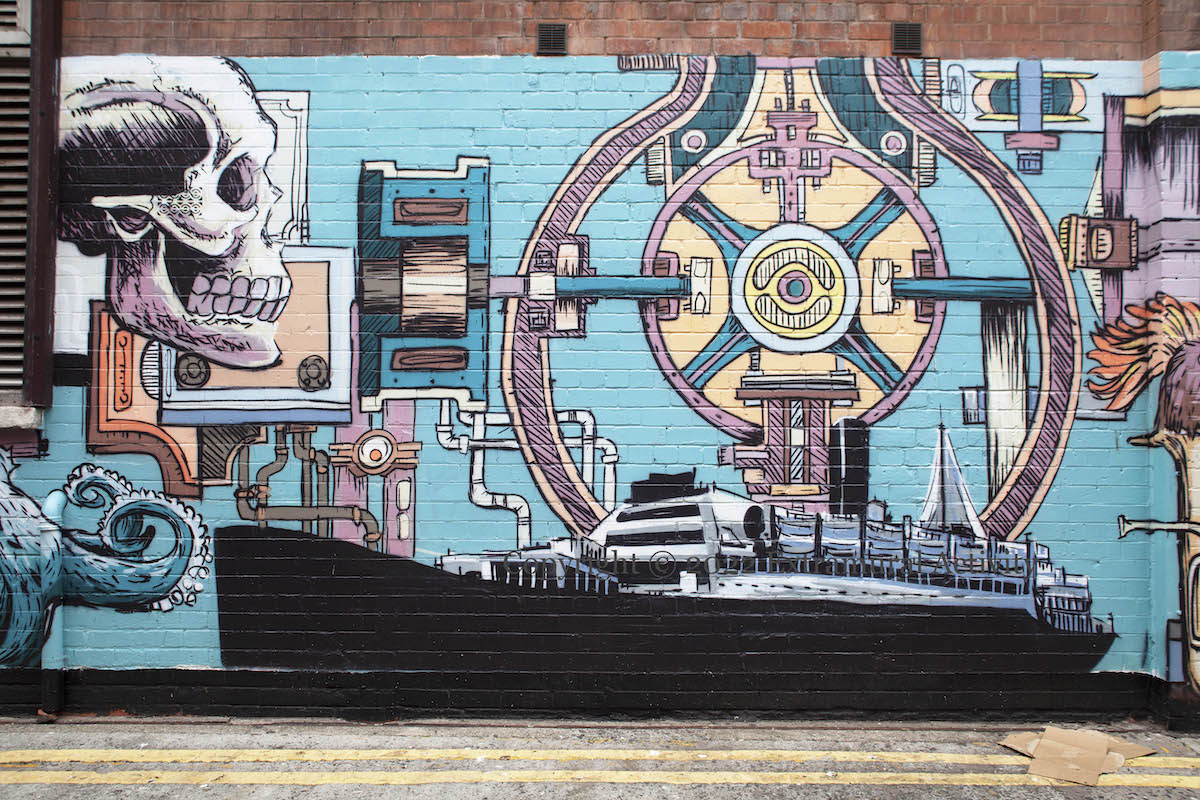
The Royal Victoria Hospital was the first public building in the world to have air conditioning, developed by Sirocco Works. Fans drew in outside air and passed it over mats of wetted coir (Cooling Post | images at HEVAC-Heritage). The qualifier “public” is necessary perhaps because Carrier invented the general process for a printing factory in New York (ASME) in 1902 and the New York Stock Exchange installed a system in 1902 (6sqft)

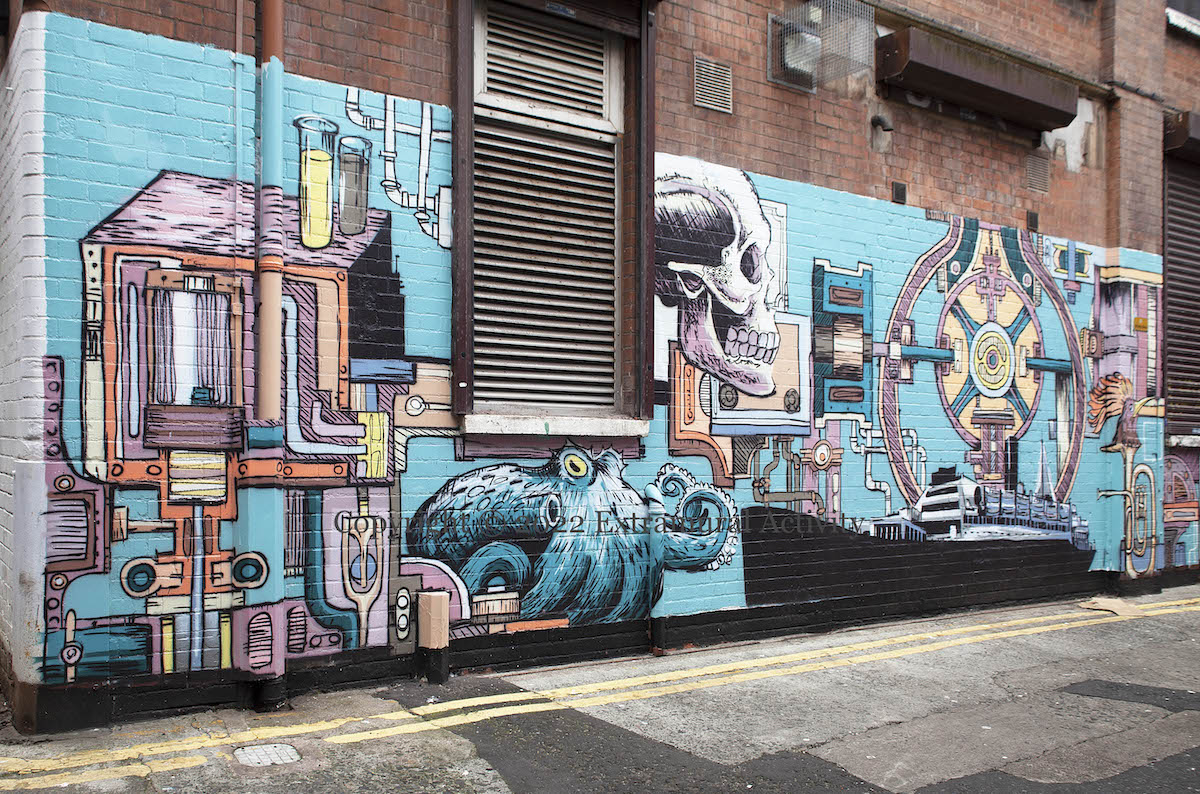
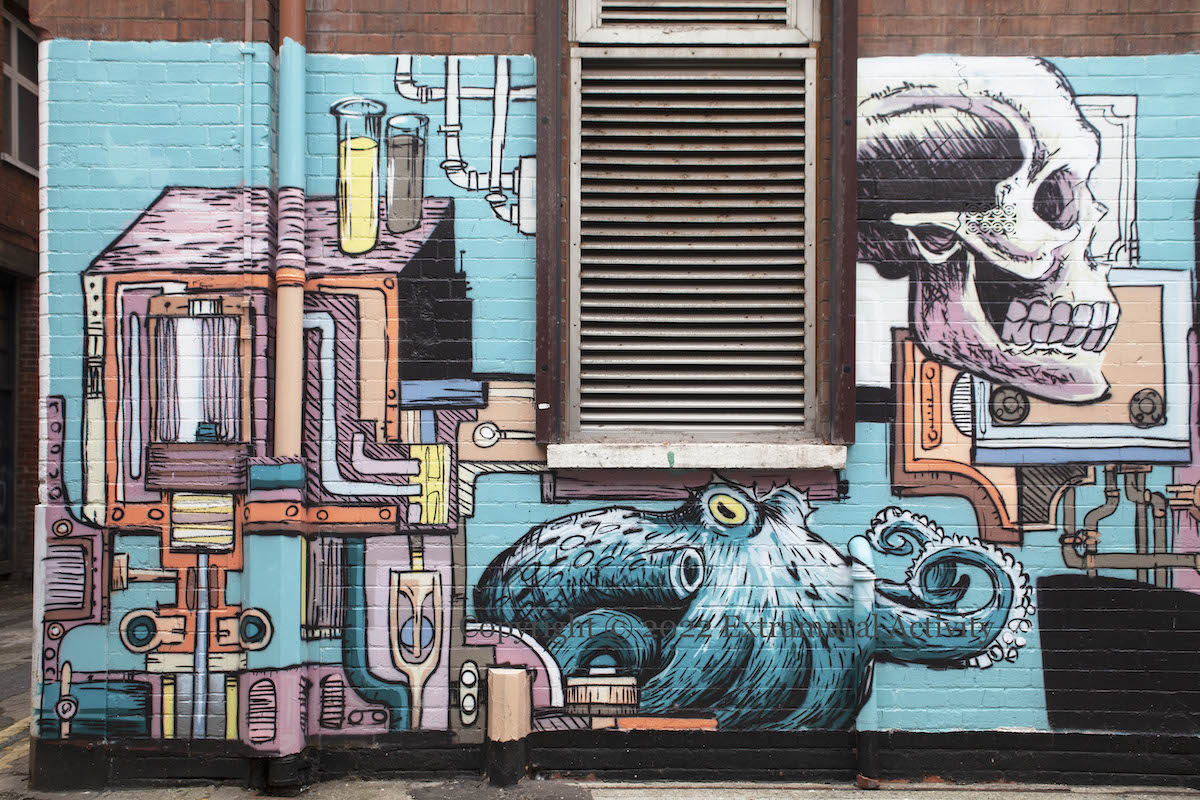
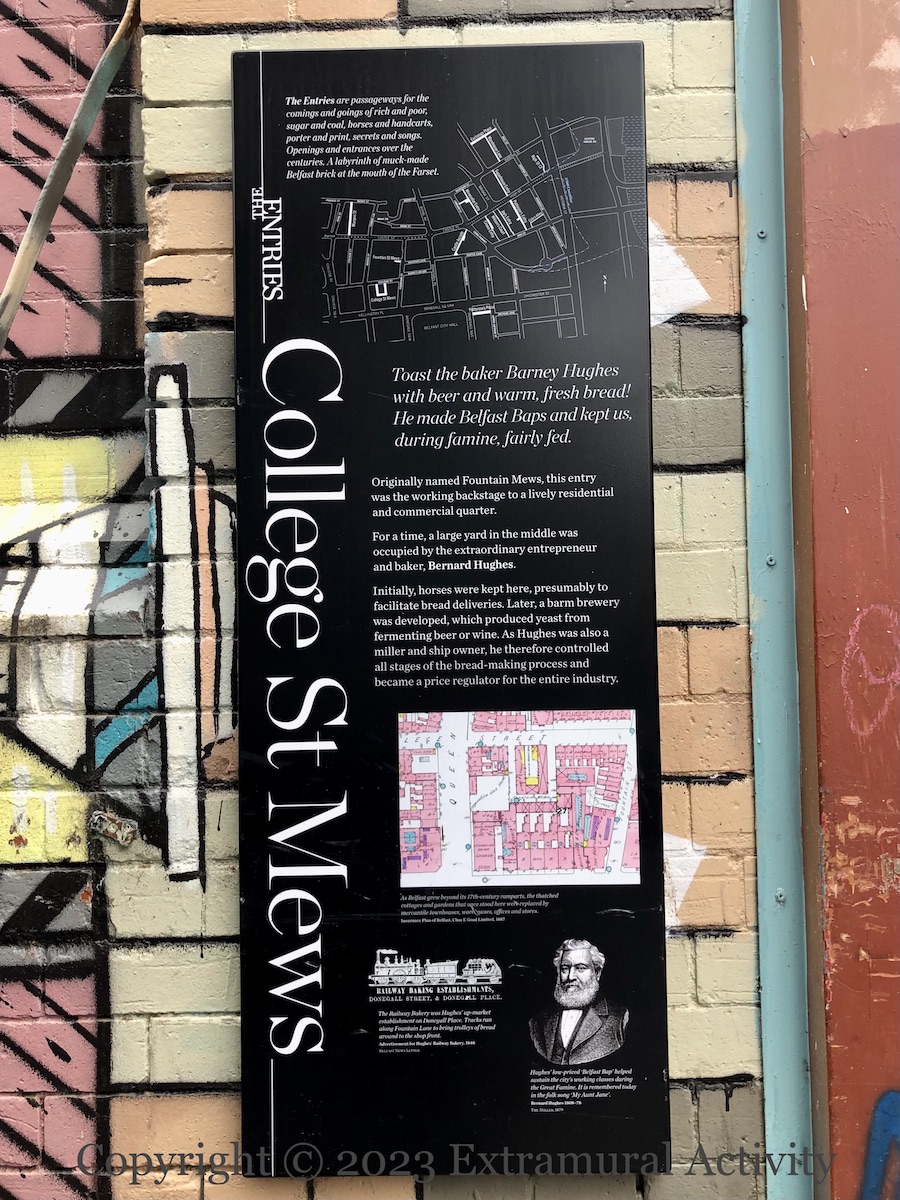
The image above is only one of many panels in College Street Mews by Ed Hicks (ig) on the general theme of Belfast and its industry.

Click image to enlarge
Copyright © 2023 Seosamh Mac Coılle
X10717 [X10716] X10715 X10714 X10713 X12137

The Oasis

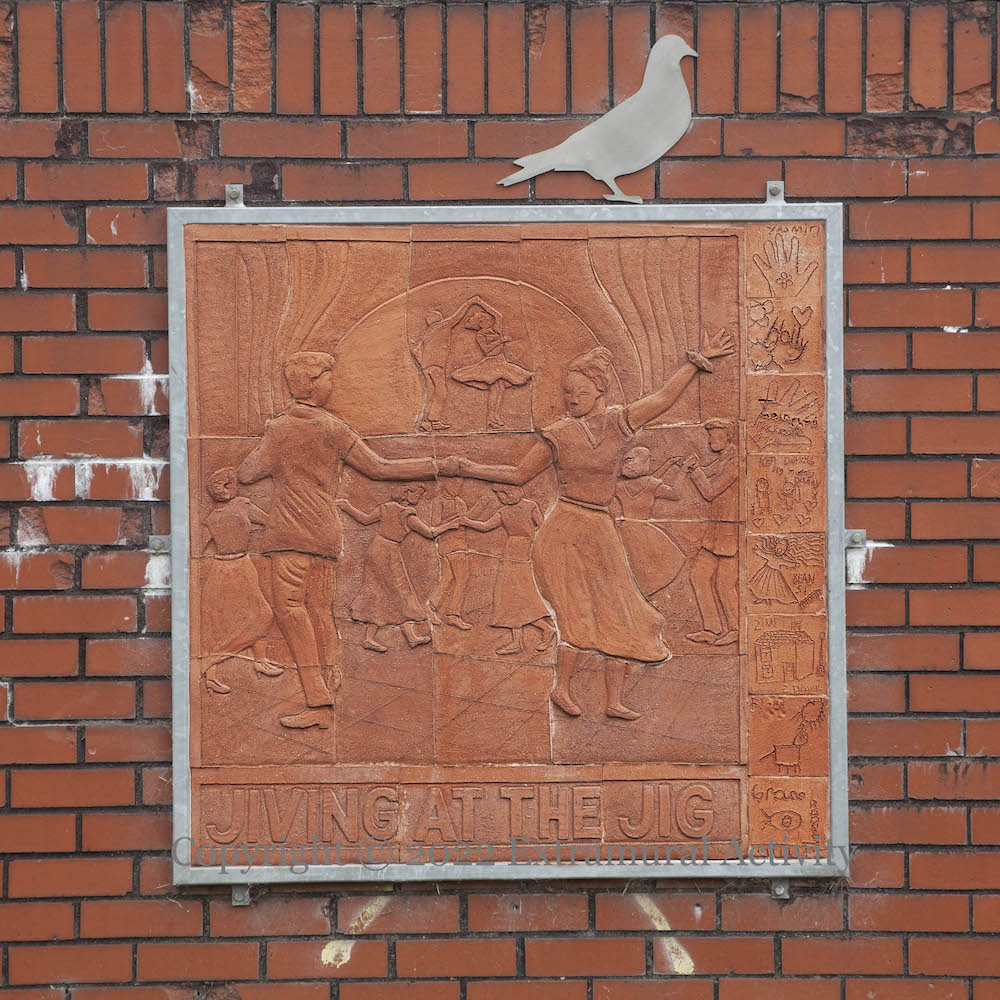
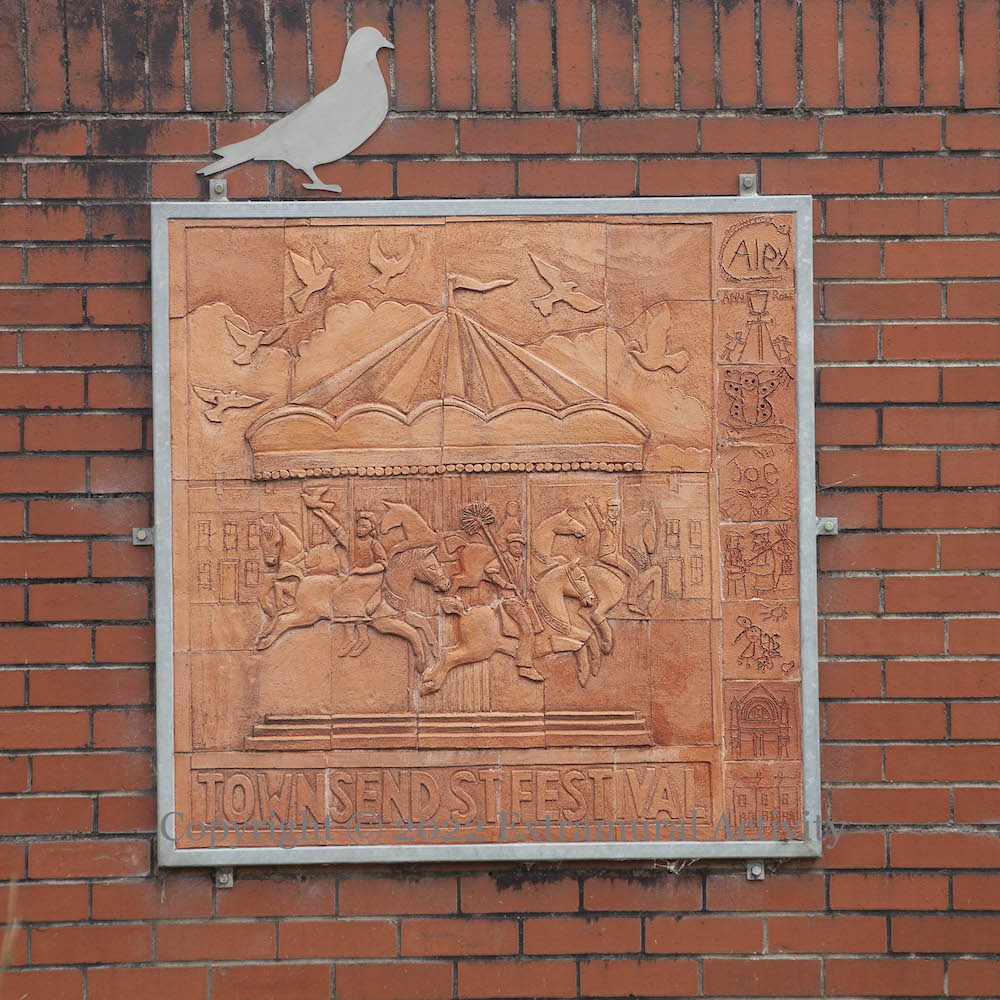
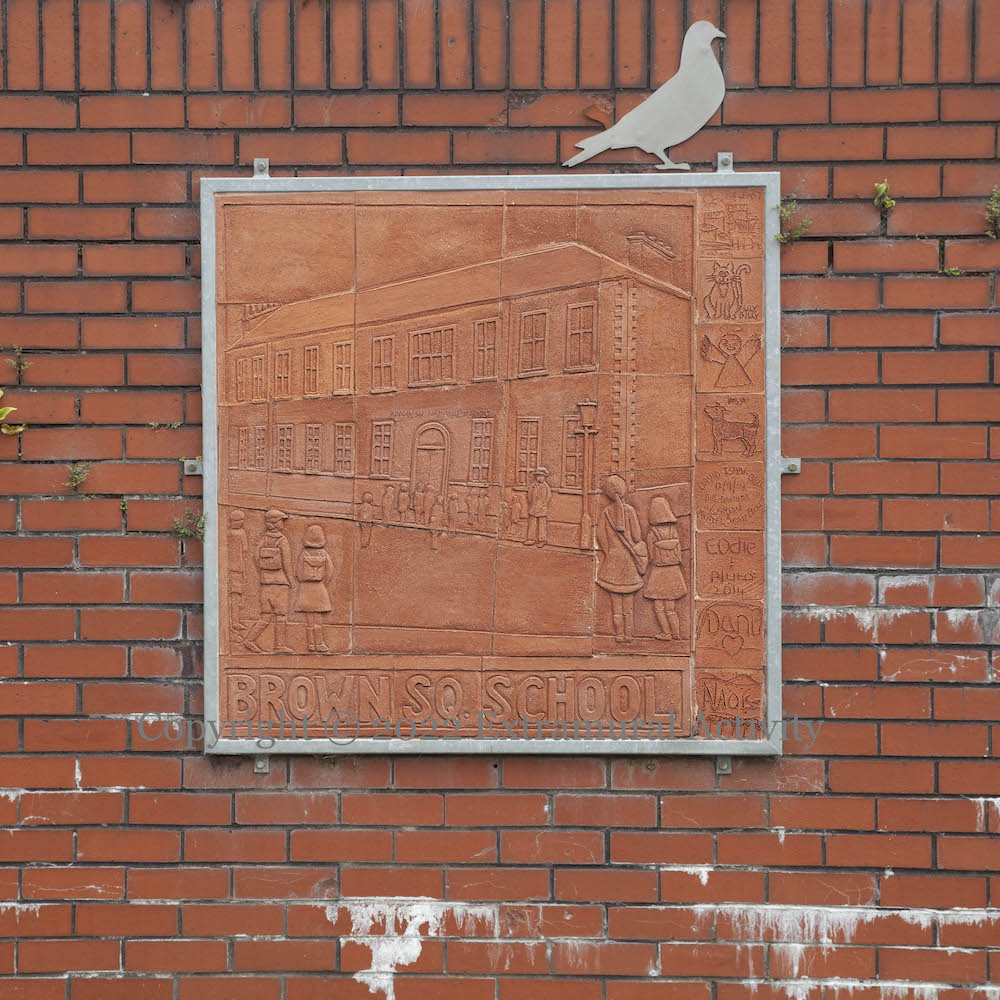
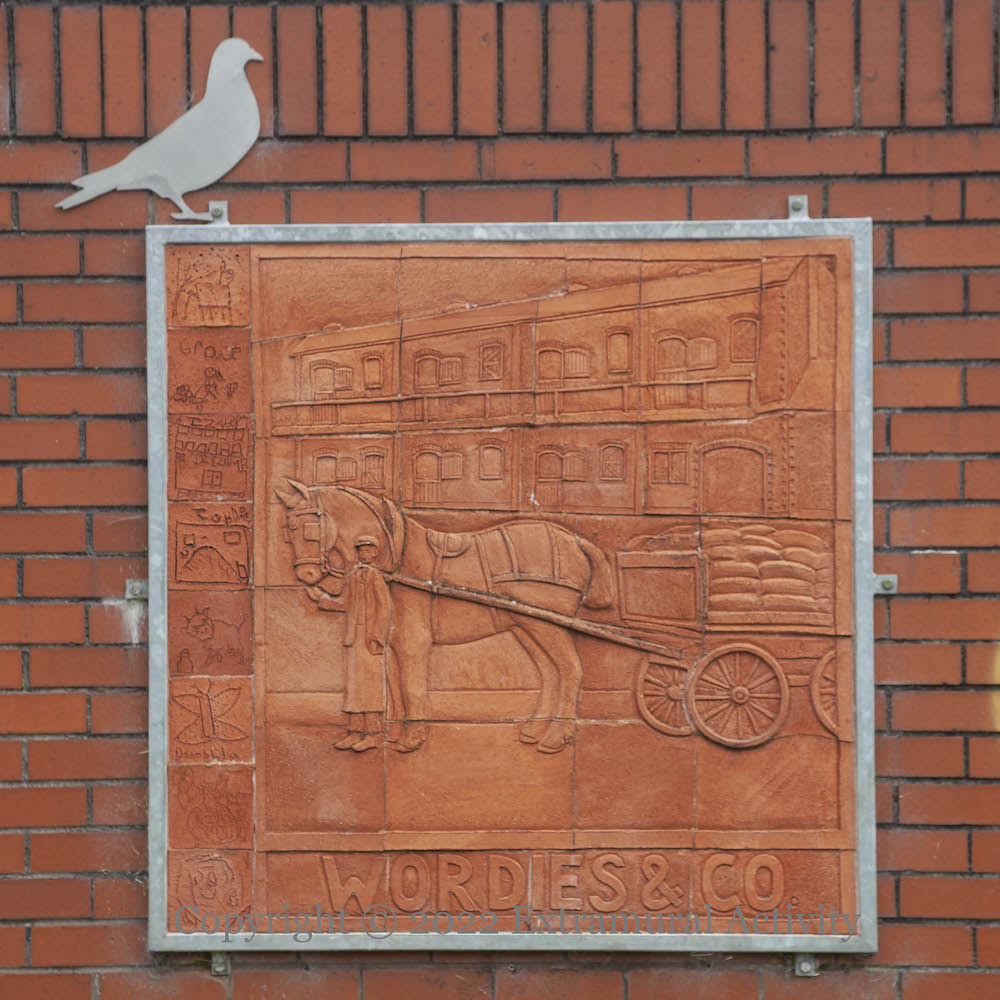
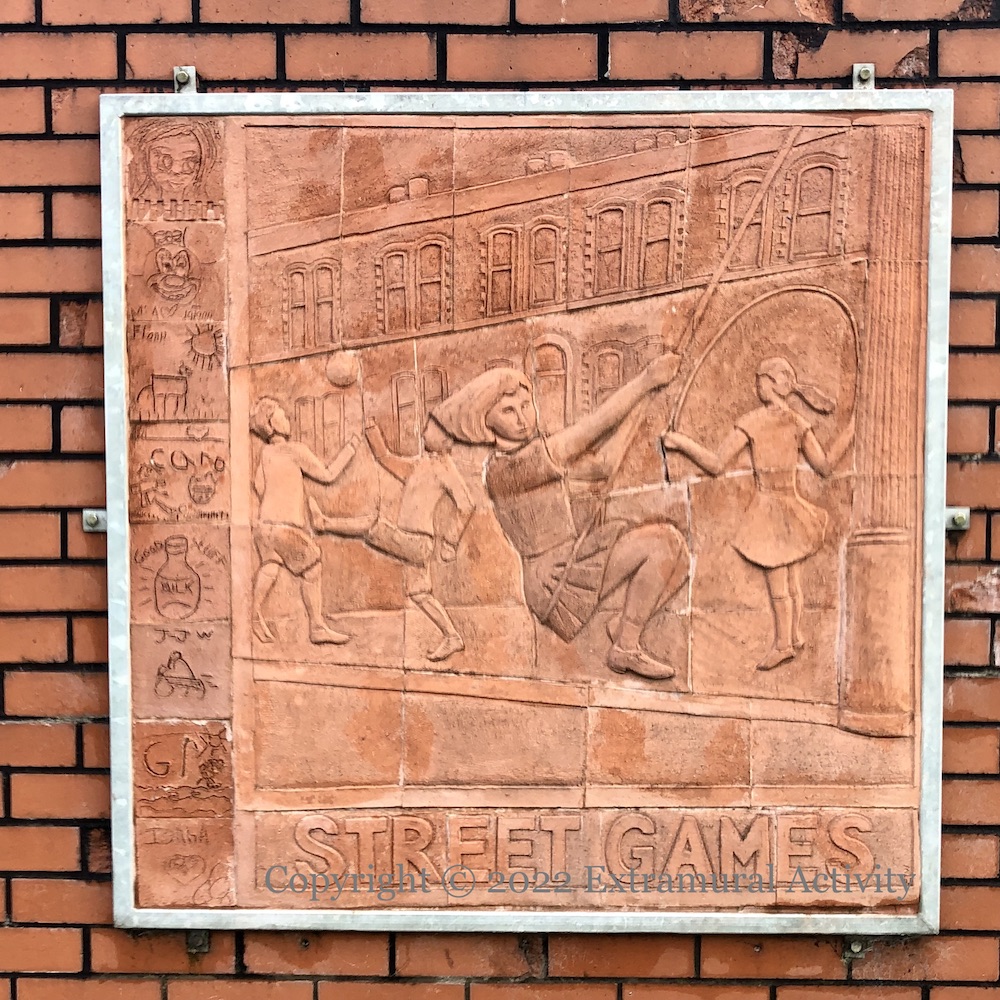
According to a history of Brown’s Square, the area was known as “the oasis” during WWII on account of its 3 dance-halls and 22 pubs (Religion, Riots And Rebels). As with so much publicly-funded art (though we cannot find any provenance for this art) it depicts Belfast in the “good old days” – that is, before the Troubles, which produced the so-called “peace line” dividing west Belfast.

In this case of Brown’s Square, the area was further desolated in anticipation of a planned ring road (formally to be known as the Belfast Urban Motorway). the plan produced only the subterranean “Westlink” that cut Brown’s Square in half. The images in today’s post are in Townsend Street, (these are from below the security gates; there are others above it). Before the construction of the Westlink, which opened in 1981, Townsend Street was considered the western border, and part of Brown’s Square. John Gilbert’s photographs at the Belfast Archive Project show the area in the mid-seventies, when much of it had been abandoned but prior to construction.

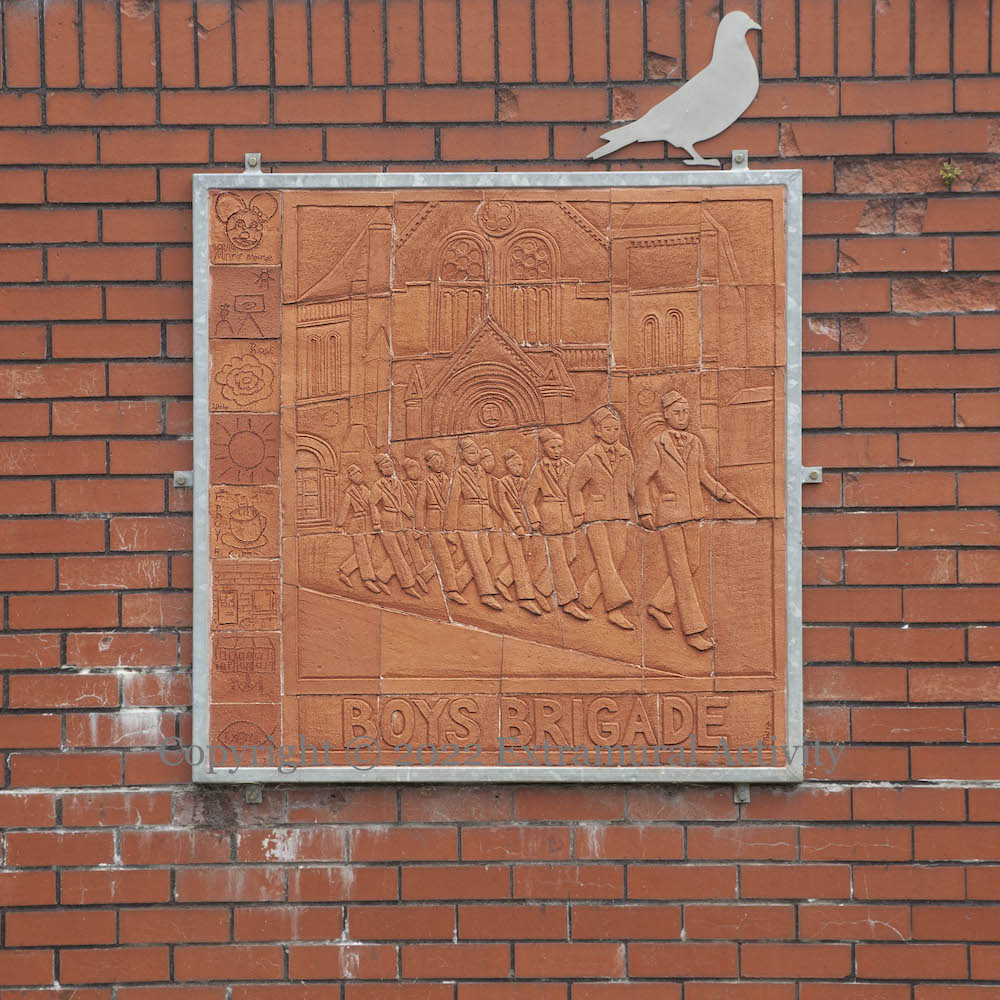
The Boys Brigade are shown parading in front of Townsend Presbyterian which held its last service in September and is being handed over to the Ulster Orchestra (Belfast Media) (see previously On The Other Side for stained glass windows inside the church). The Brown’s Square school was at the junction of Brown’s Square (the street) and Melbourne Street.

Click image to enlarge
Copyright © 2022 Seosamh Mac Coılle
X10706 X10705 X10707 X10708 X10704

The Factory Girls

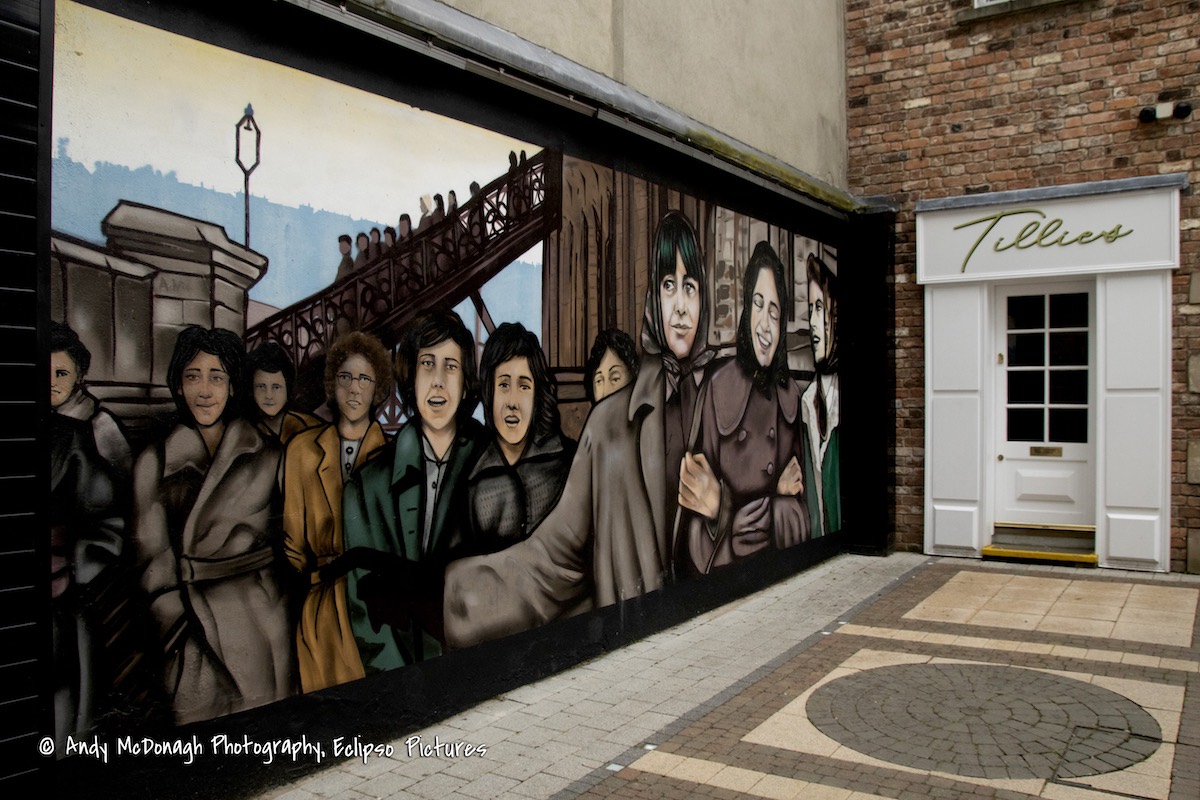
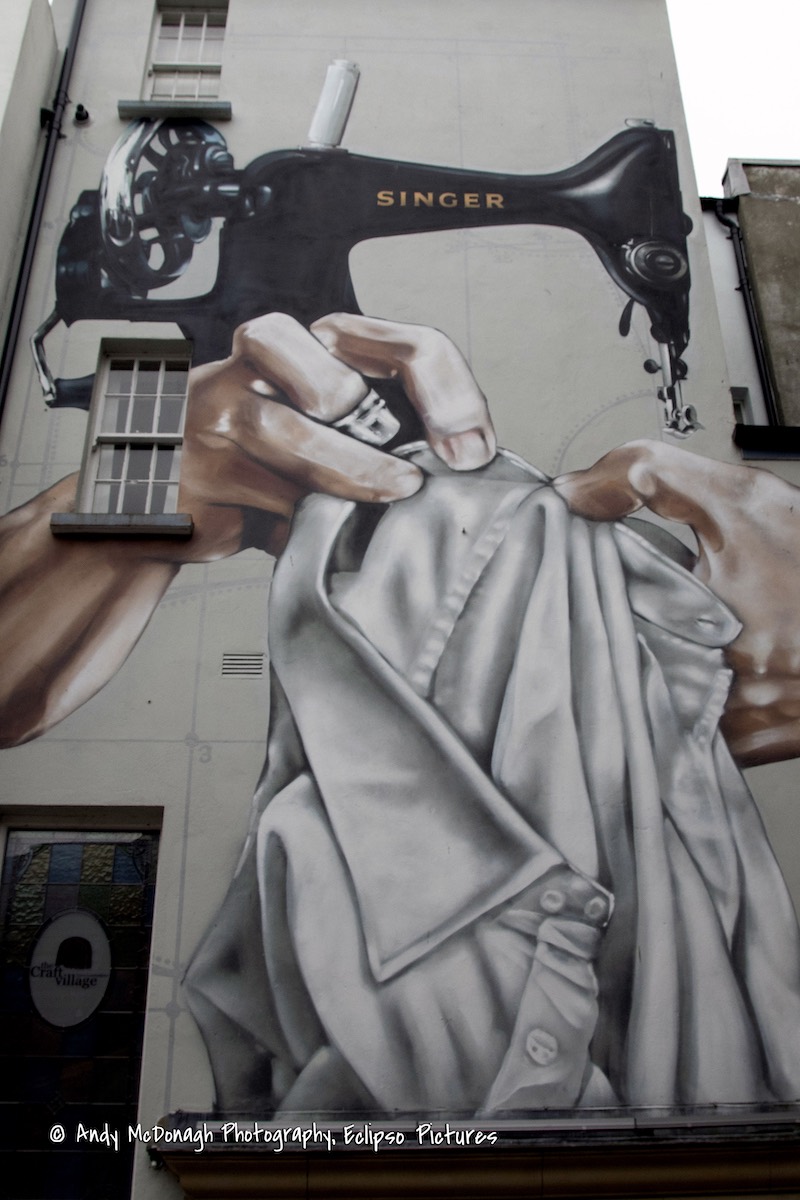
Tillie & Henderson’s shirt factory opened in 1856 at the junction of Abercorn Road and Foyle Road, Derry (next to the ‘Hands Across The Divide’ statue) and survived until 2003 when it was demolished after a fire (BBC); an apartment block is currently planned for the site (Derry Journal | BBC). It was the largest such factory in the world and one of 44 shirt factories in the city in 1900, all of which employed women, many starting in their teens.

Derry Of The Past has a gallery of historical images.

The murals are in the courtyard of the Craft Village in Shipquay Street; they were designed by Joe Campbell and painted by UVArts (web).

(BBC | BBC | DEPOT | BelTel)

See also: Derry Women Make Communities

Click image to enlarge
Copyright © 2022 Andy McDonagh/Eclipso Pictures (ig | Fb)
X10465 [X10462] X10463 [X10464]

The Industrial Revolution

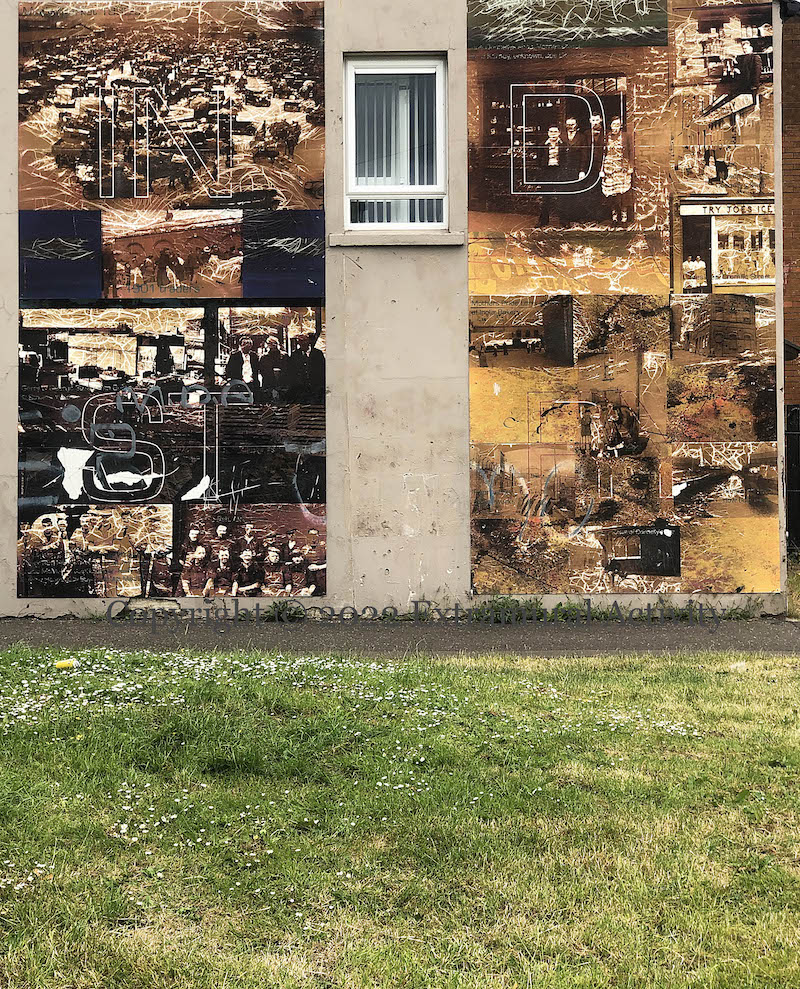
Artist Raymond Henshaw produced a series of Markets-related boards in 2008-2009 with support from the Arts Council and despite being printed on laminates they are not indestructible; there is crazing – as well as human-caused damage – on some of them, the worst of which is the ‘Industry’ board in Upper Stanfield Street.

There were six boards in total: Portraits | Social | Social History | Sport & Culture | Bars | Industry

Click image to enlarge
Copyright © 2022 Seosamh Mac Coılle
X10389 X10388

Children In Crossfire

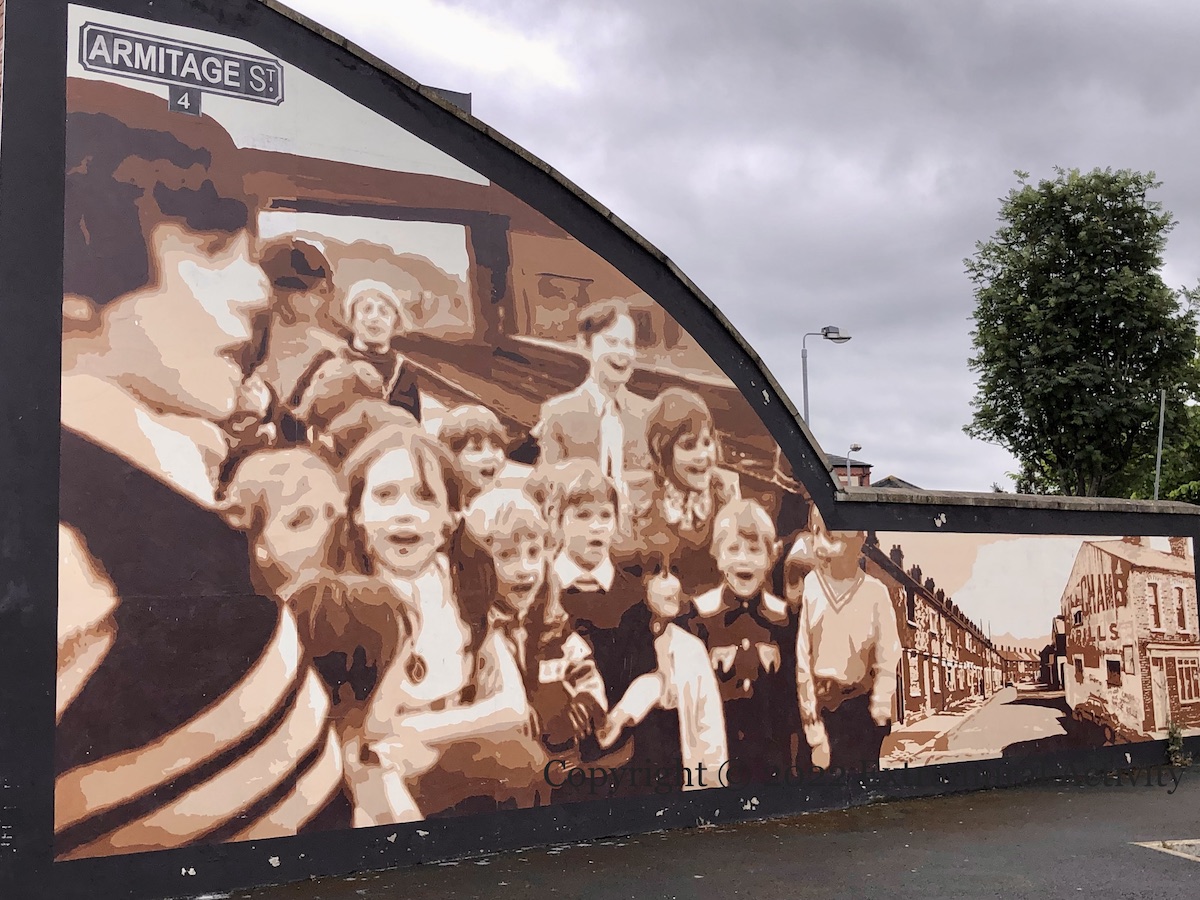
Michael Blakstad’s Children In Crossfire is a justly famous documentary portraying the lives of children in Creggan (Derry) and various areas of Belfast, such as Ballymurphy & Springmartin, Divis, and the area around Gawn St in east Belfast. The documentary is on youtube and an image from it (c. 28m 13s) is depicted in this mural (Connswater Chronicle) at the foot of the Dee Street overpass into what is now the “Titanic Quarter”.

The panel to the right shows the original Armitage Street; the area has been redeveloped and the street was built over with a cluster of houses named Armitage Close.

By Dee Craig with support from the Housing Executive, City Council, and Connswater Homes.

Click image to enlarge
Copyright © 2022 Seosamh Mac Coılle
X10317 X10318

James McClean

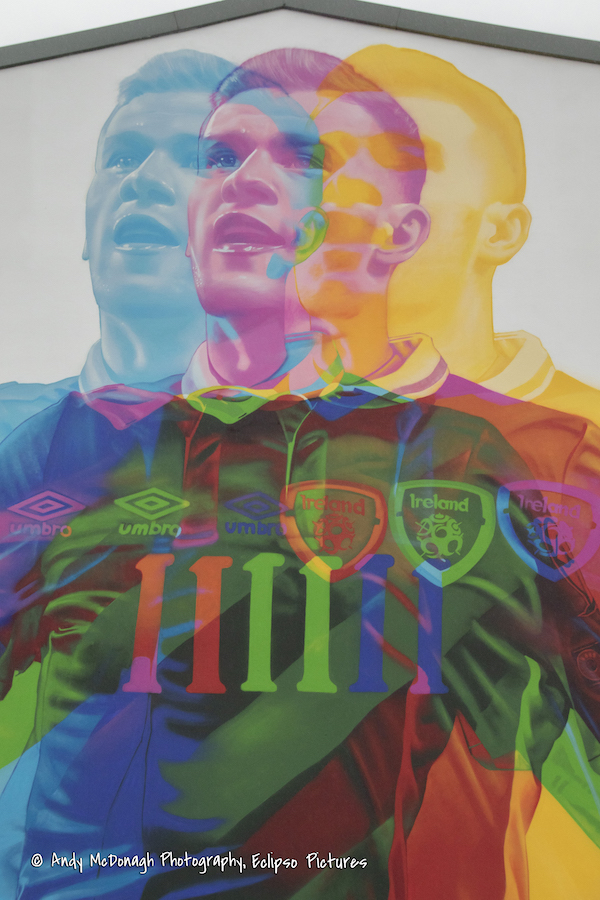
Soccer player James McClean grew up in Creggan and – while playing for a succession of English clubs – has been criticised for refusing to wear a poppy (while at Sunderland) and turning his back on the St George’s Cross as ‘God Save The Queen’ played (while at West Bromwich Albion). He also has a tattoo of Free Derry Corner flying a Tricolour on his thigh (Irish Times).
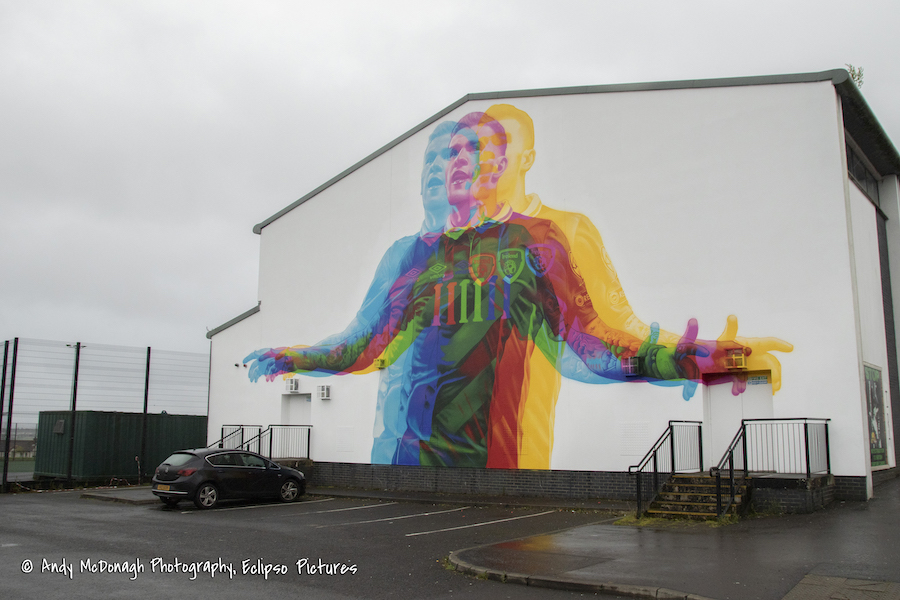
In the mural (by Dublin artist Aches (ig)) McClean is pictured here in an Ireland strip – McClean has 7 caps for the Northern Ireland under-21 squad but plays senior soccer for Ireland (WP).

Click image to enlarge
Copyright © 2022 Andy McDonagh/Eclipso Pictures (ig | Fb)
[X10287] X10288 X10289

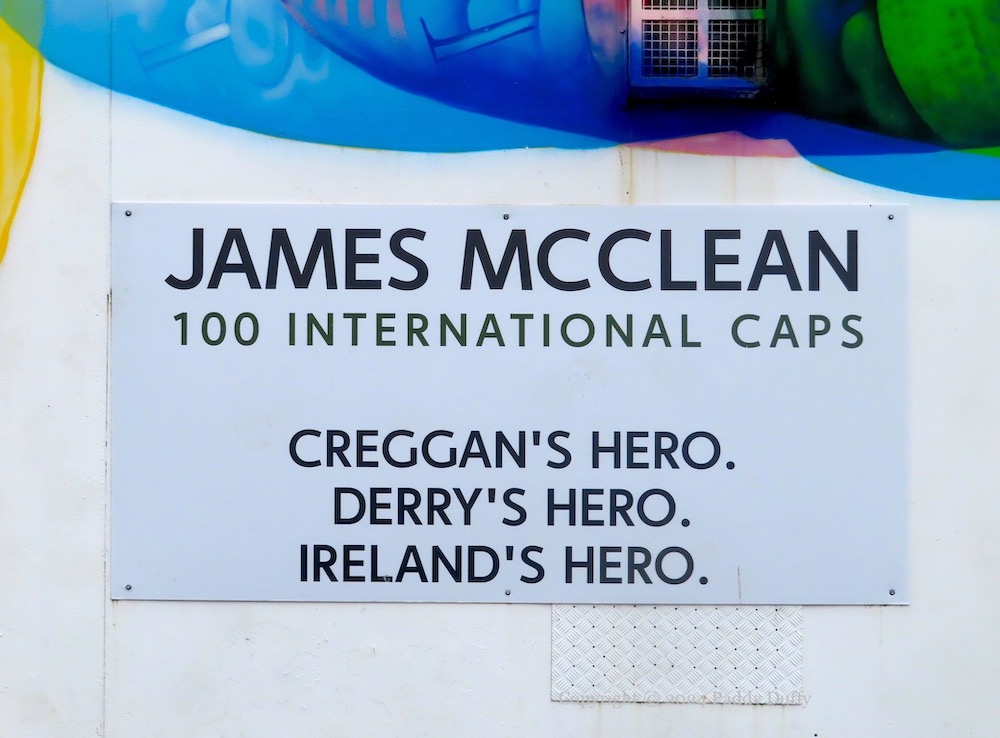
Update: A plaque was added for McClean’s 100th Irish (soccer) cap: “James McClean – 100 international caps. Creggan’s hero. Derry’ hero. Ireland’s hero.”

Click image to enlarge
courtesy of Paddy Duffy
T04209

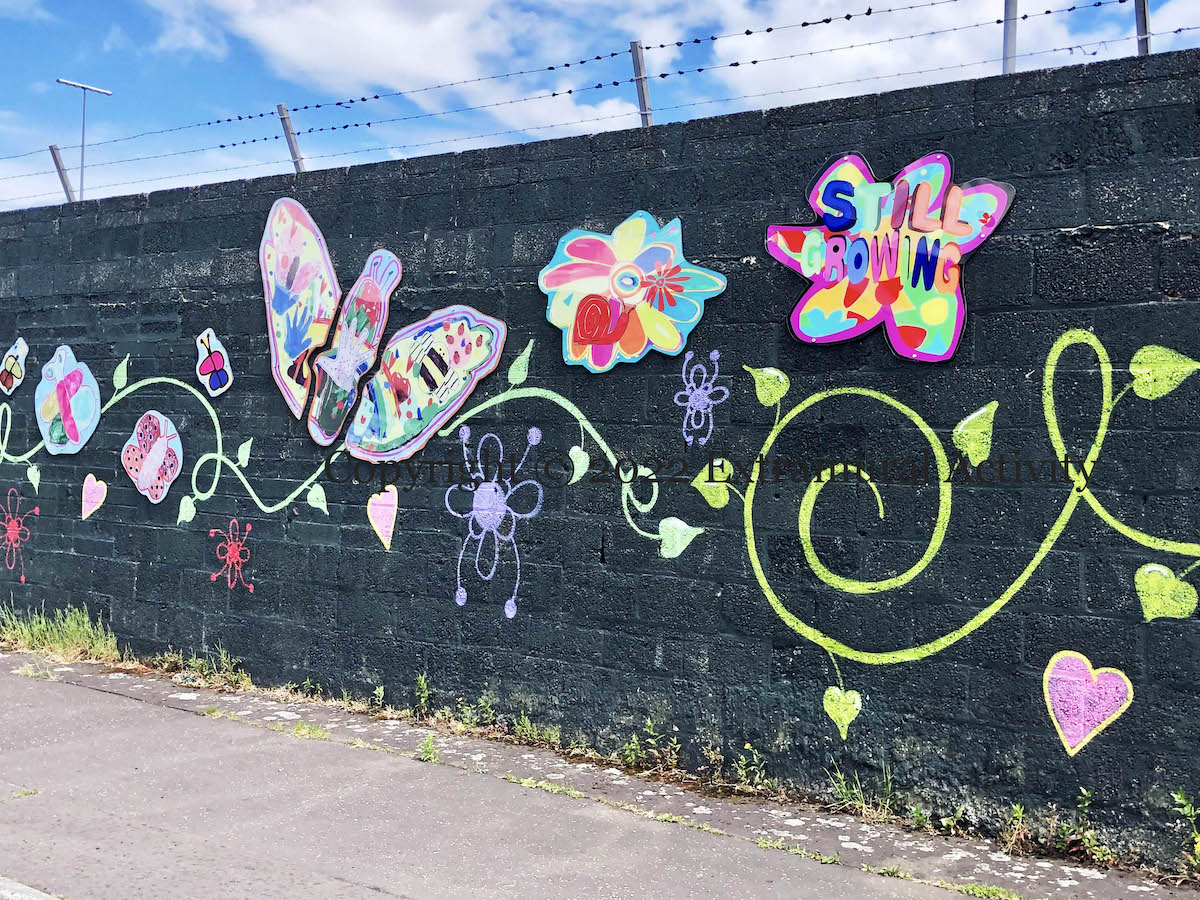
Remember Your Neighbourhood

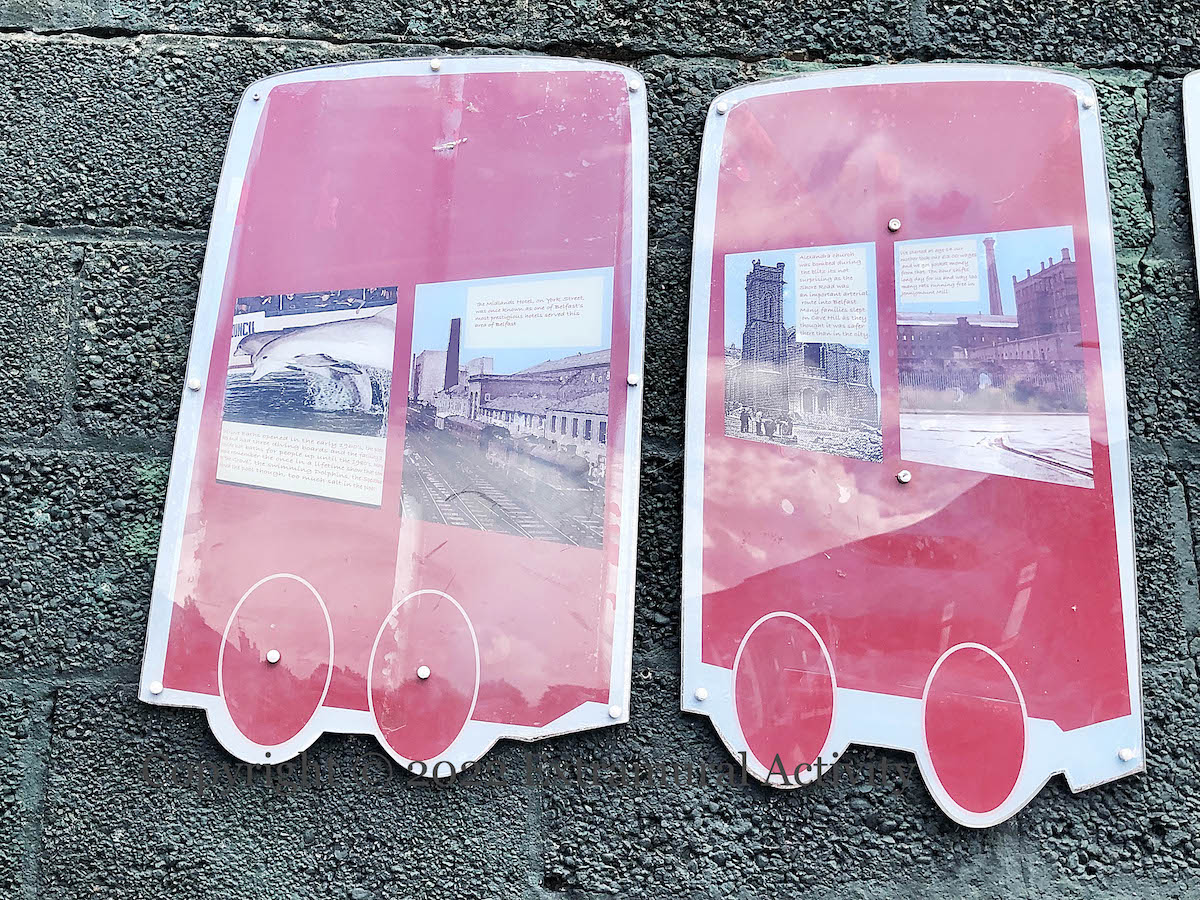
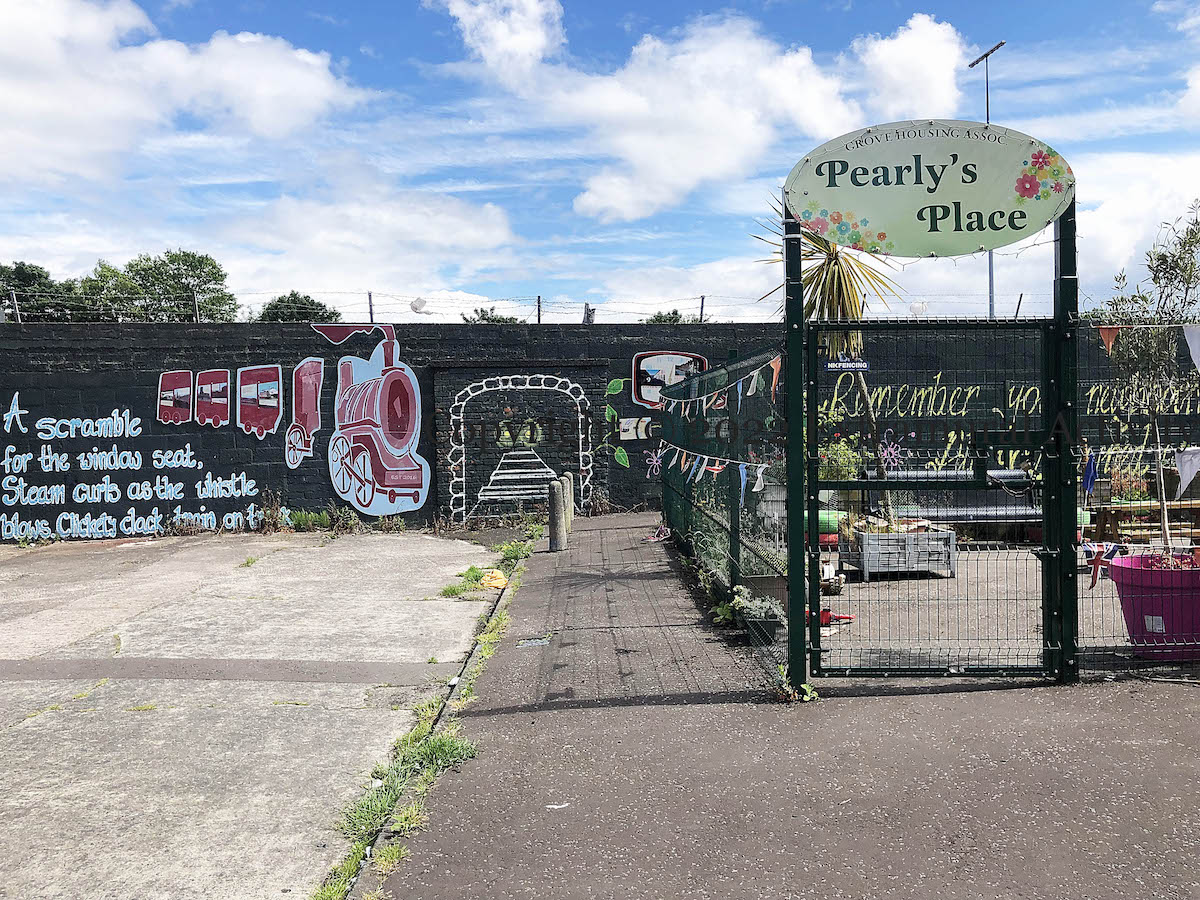
“A scramble for the window seat/Steam curls as the whistle blows/Clickety clack train on track.//Remember your neighbourhood in the late afternoon sun/The district was a different place then/All you owned was a box full of toys and a smile on your face.”

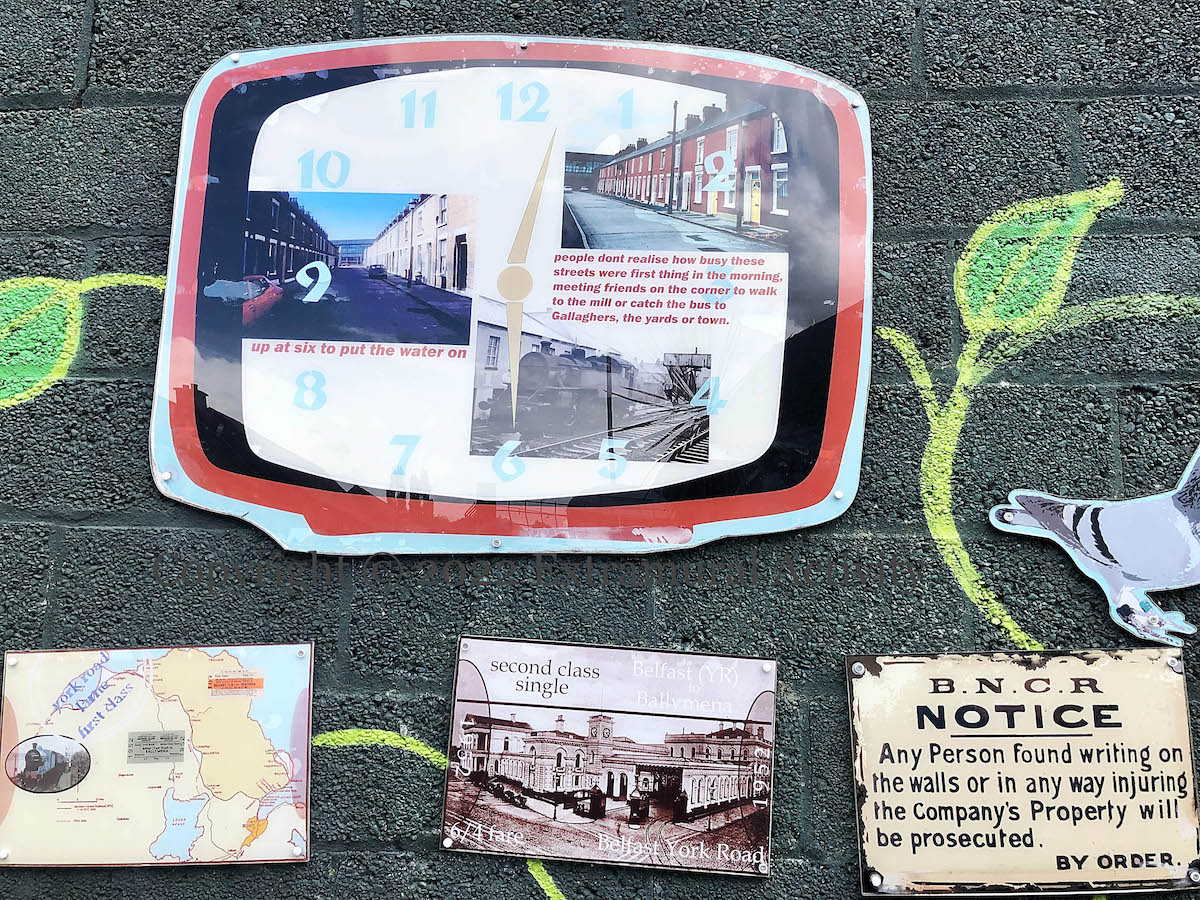
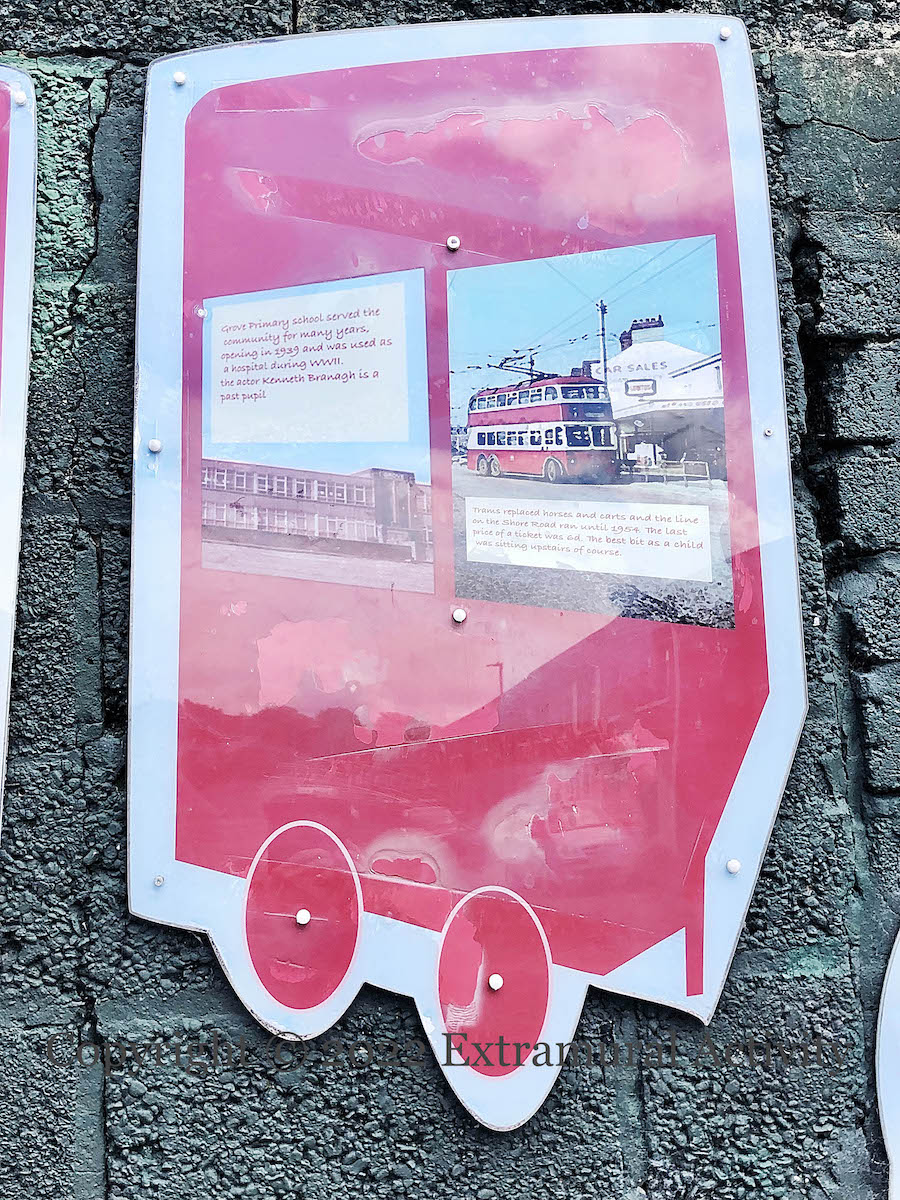
The York Road railway station was a few minutes’ walk below Ritchie Street – site of this mural and community garden – until it closed in 1992. The original line was to Ballymena and then Coleraine and London-/Derry, with service to Carrick and Larne added later. It was badly damaged in WWII and its final demise came with the opening of Belfast Central in 1976 (WP). It was replaced with Yorkgate in 1992 which no longer serves as a terminus (WP), but the line still runs along behind the end of the streets along York Road and the Grove area of the Shore Road.

Ritchie Street, Belfast

Previously in Ritchie St: Union Flag

Click image to enlarge
Copyright © 2022 Seosamh Mac Coılle
X10145 X10146 X10147 X10148 X10144 [X10149] [X10150]