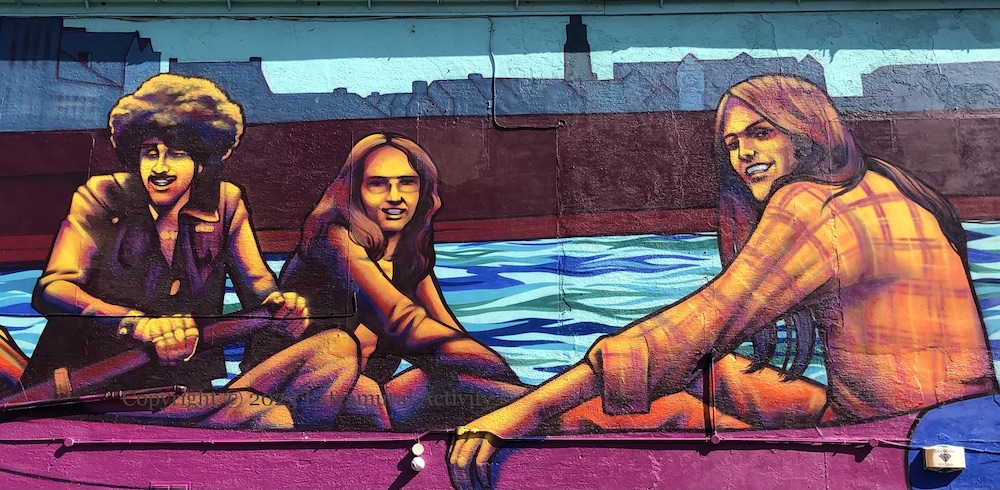
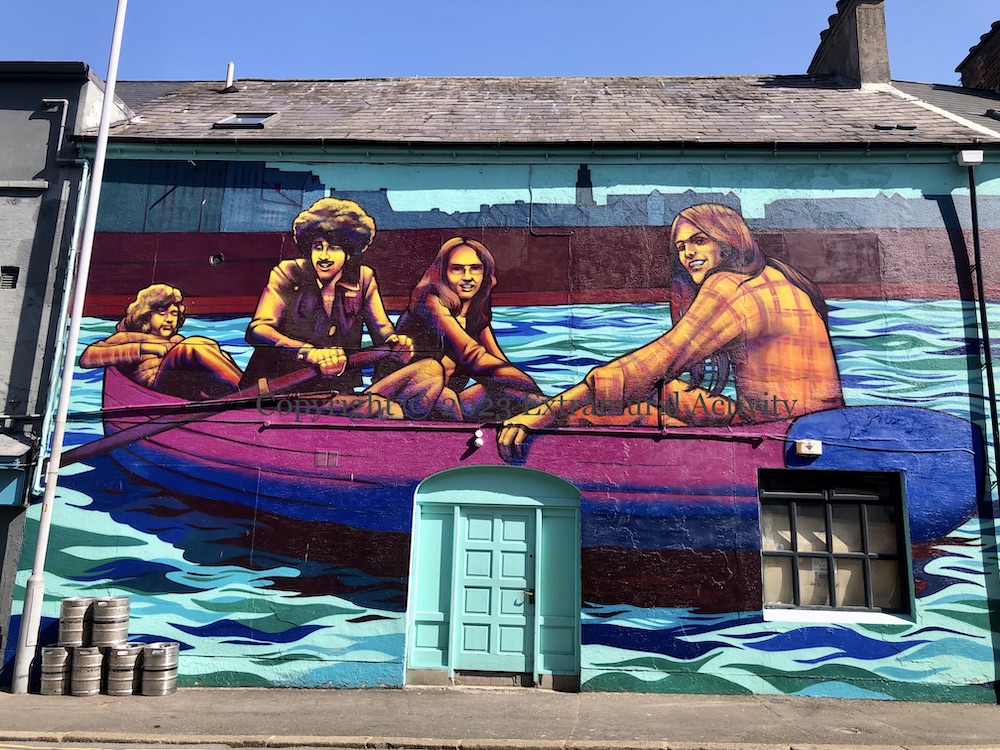
Before rock band Thin Lizzy played the King’s Club at the Queen’s Court hotel in Bangor on July 27th, 1974 (Thin Lizzy Guide), they took to the water in order to take in the town. They were photographed in the act by Dublin photographer Liam Quigley (Indo profile), and the picture (see it at Thin Lizzy Guide) was turned into a mural by Friz (ig) in Crosby Street, Bangor, last year.
Original guitarist Eric Bell (who was also a member of Them) is featured in a mural of famous faces in east Belfast – see Inspiring Belfast.
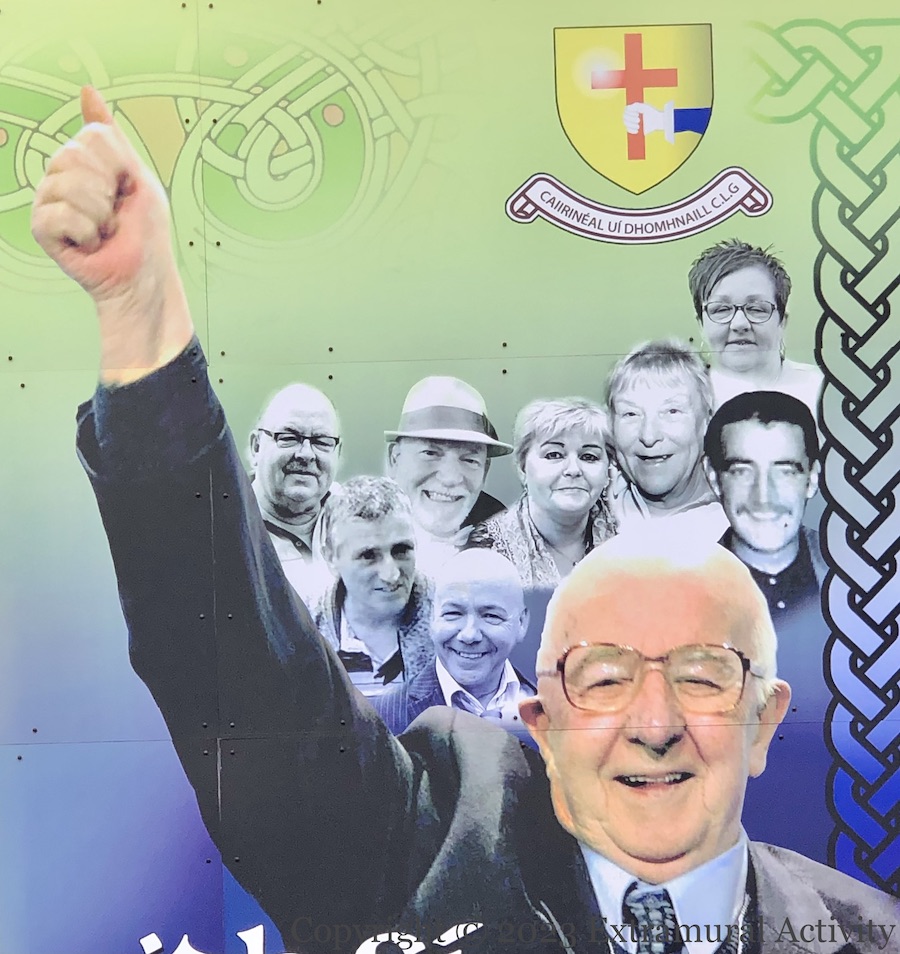
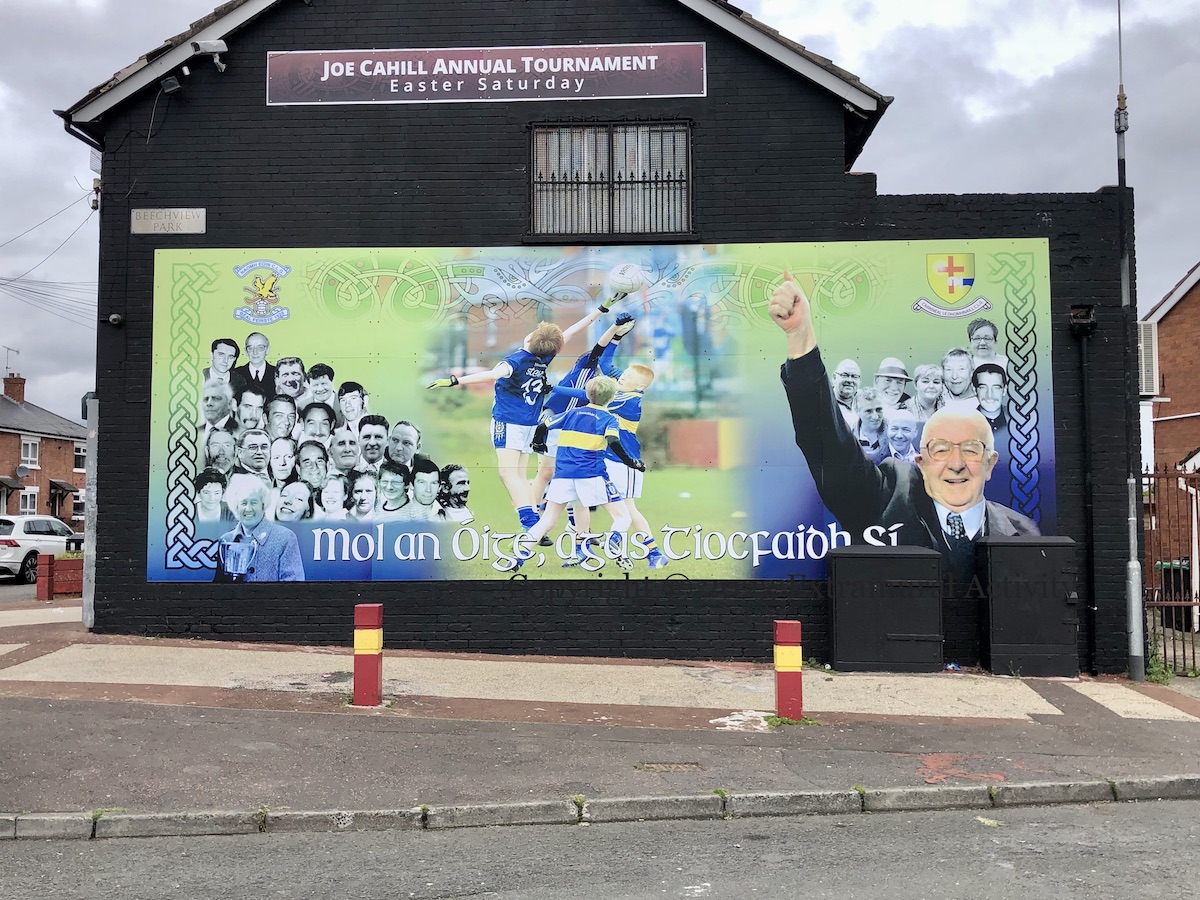
“Mol an óıge agus tıocfaıdh sí [encourage youth and it will flourish, or less literally, youth responds to praise].” The emblems in the corners are of two local GAA clubs “Naomh Eoın” and “Caıırınéal [Caırdınéal] Uí Dhomhnaıll” – the “Joe Cahill Annual Tournament” was held at Easter at their two pitches.
Joe Cahill joined the Fianna in 1937 and was involved in the republican movement from then until his death in 2004, including being in Tom Williams’s company in 1942, and was later a founder member and Chief of Staff of the Provisional IRA.
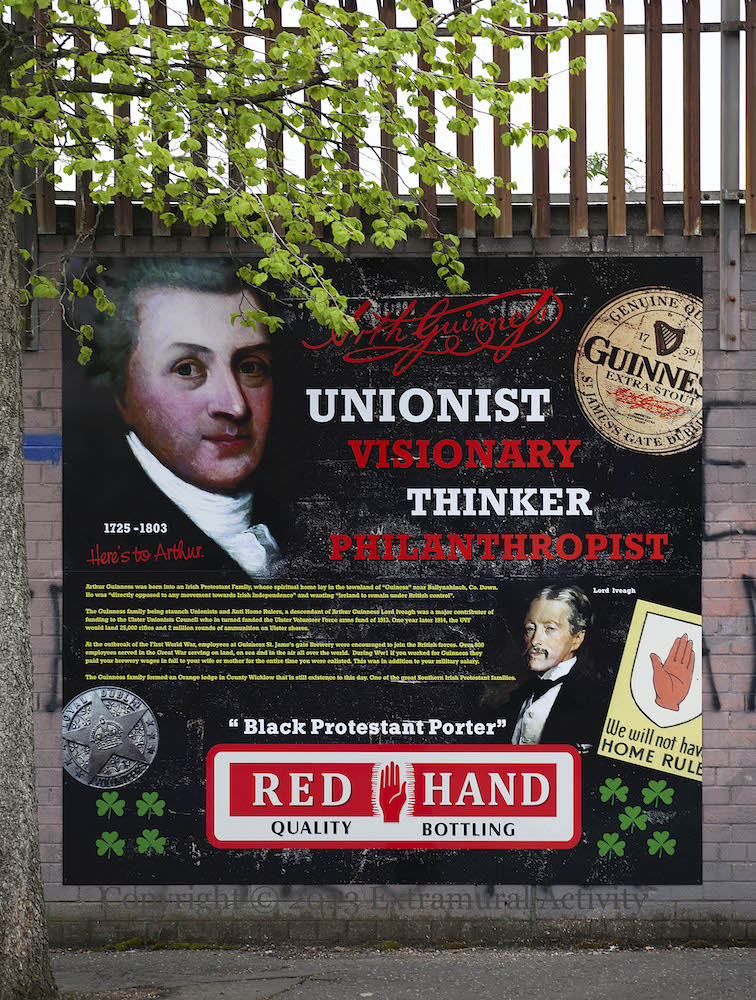
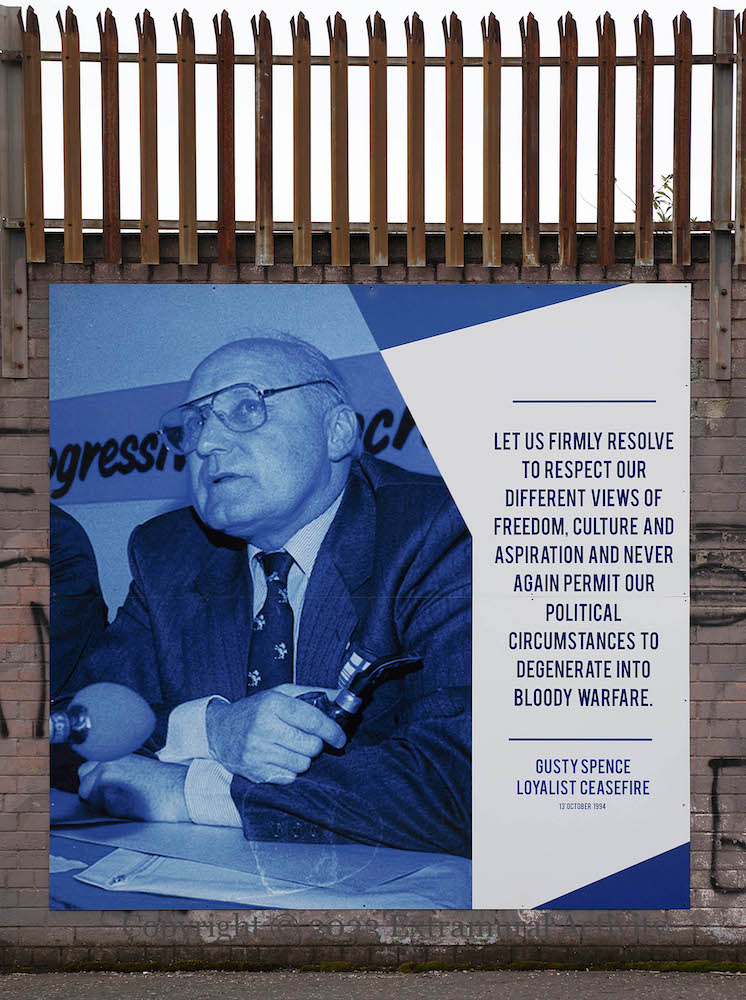
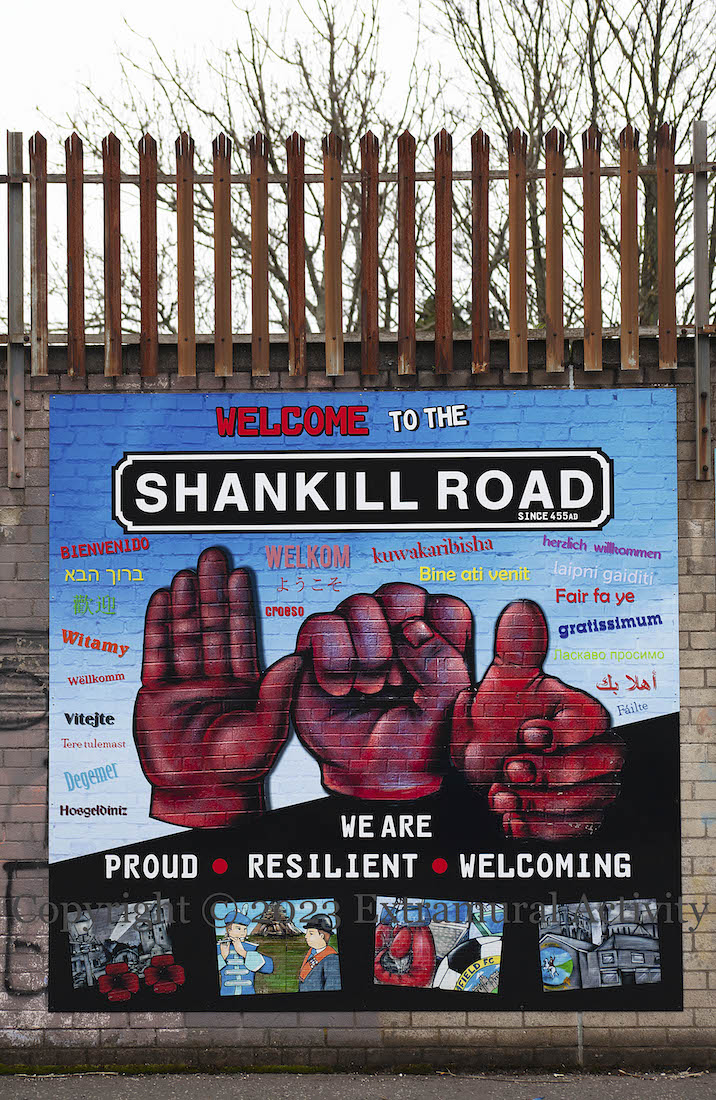
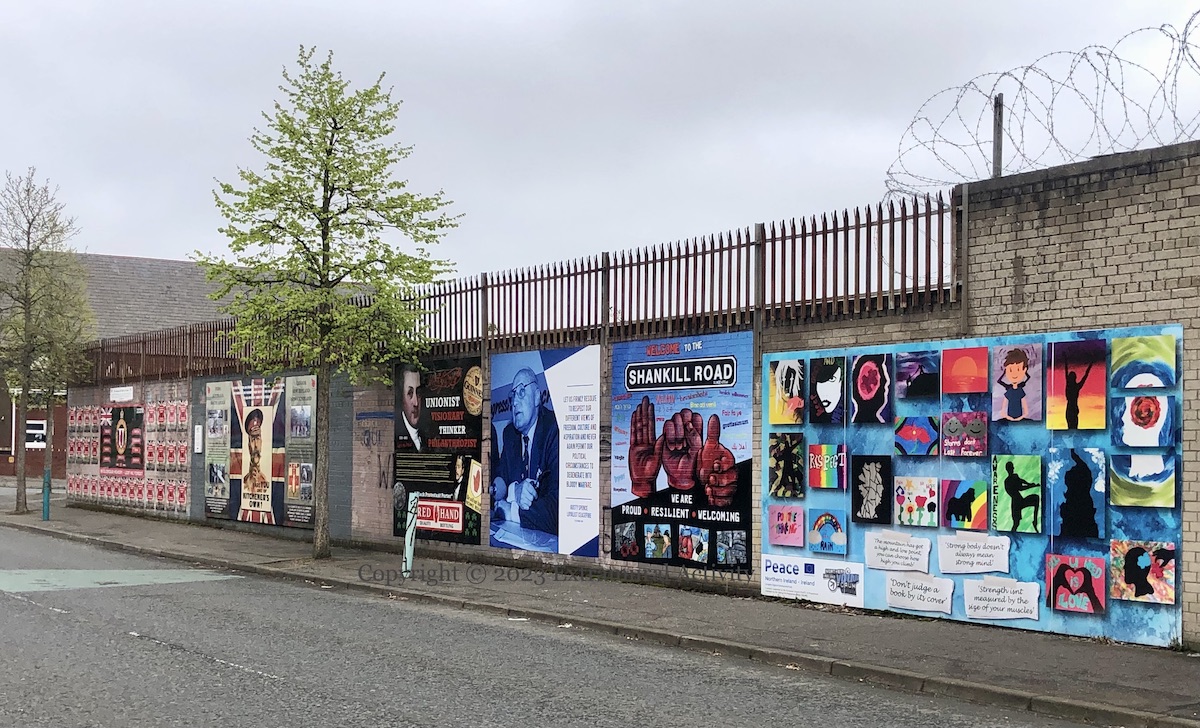
Here are three new pieces above the security gates on Northumberland Street, covering over the “Deserted! Well, We Can Stand Alone” graffiti in the last remaining spot on the wall without a mural. From left to right:
Arthur Guinness: “Black Protestant Porter” as a description of Guinness stems from Arthur Guinness’s opposition to the 1798 rebellion (Indo). The Union Star (newspaper in Belfast – A Planet Of Light And Heat) called Guinness a spy and advised that “United Irishmen will be cautious of dealing with any publican who sells his drink.” (An Phoblacht).
Gusty Spence, a former commander of the UVF, read out the ceasefire statement of the “Combined Loyalist Military Command” (UVF, RHC, and UDA): “Let us firmly resolve to respect our different views of freedom, culture and aspiration and never again permit our political circumstances to degenerate into bloody warfare – Gusty Spence, loyalist ceasefire [statement in full], 13 October, 1994.”
“Welcome To The Shankill Road – we are proud, resilient, welcoming”: The original ‘three hands’ was on Northumberland Street, just above this spot – see Proud, Defiant, Welcoming – which was then reproduced in reduced form in Gardiner Street – see Welcome To The Shankill Road.
This is the most conciliatory statement ever made by loyalism and the decision to put it on Northumberland Street, especially in the context of the internationally famous and associated-with-Ireland Guinness and the “welcome” mural, suggests that the trio is directed at tourists rather than locals.
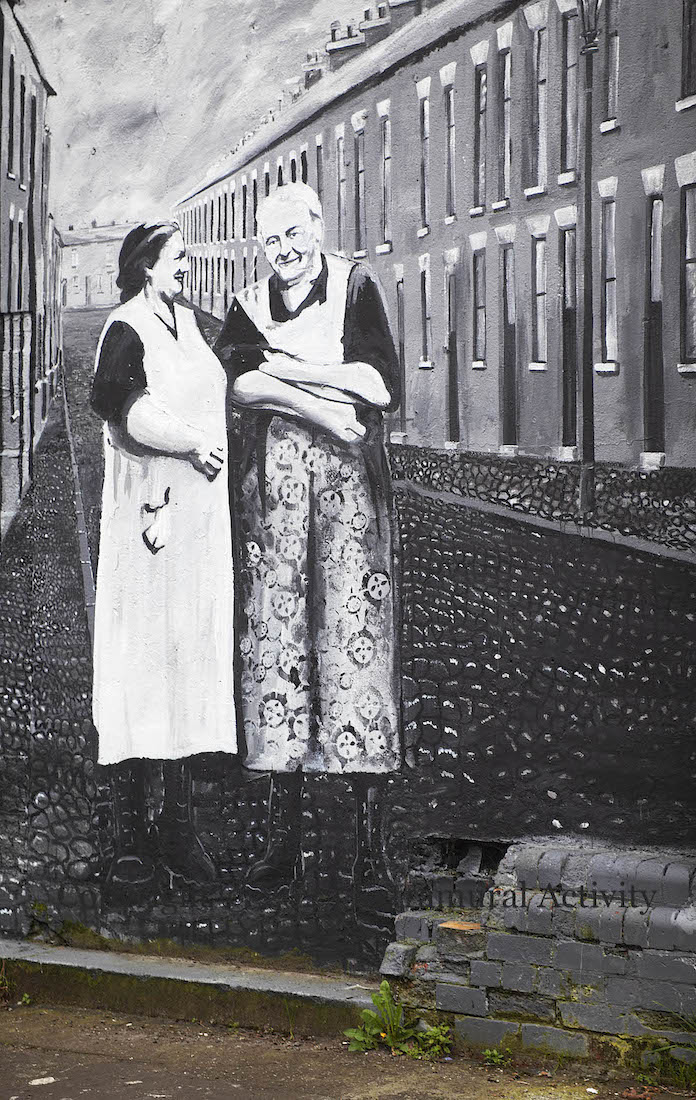
There is now a board in Stanhope Street of “Carrick Hill in the old days”, of two women talking in the street, to complement the four printed boards.
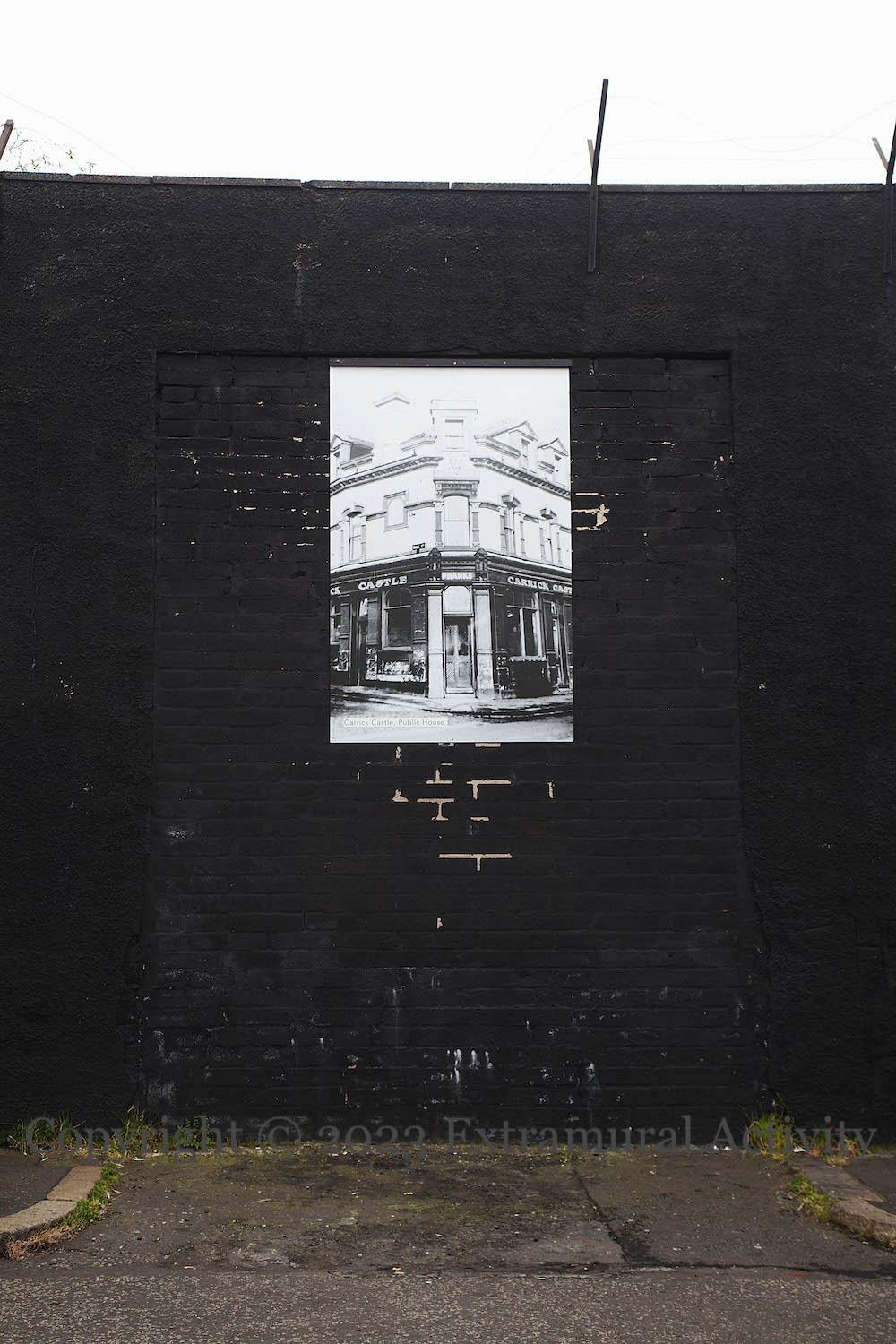
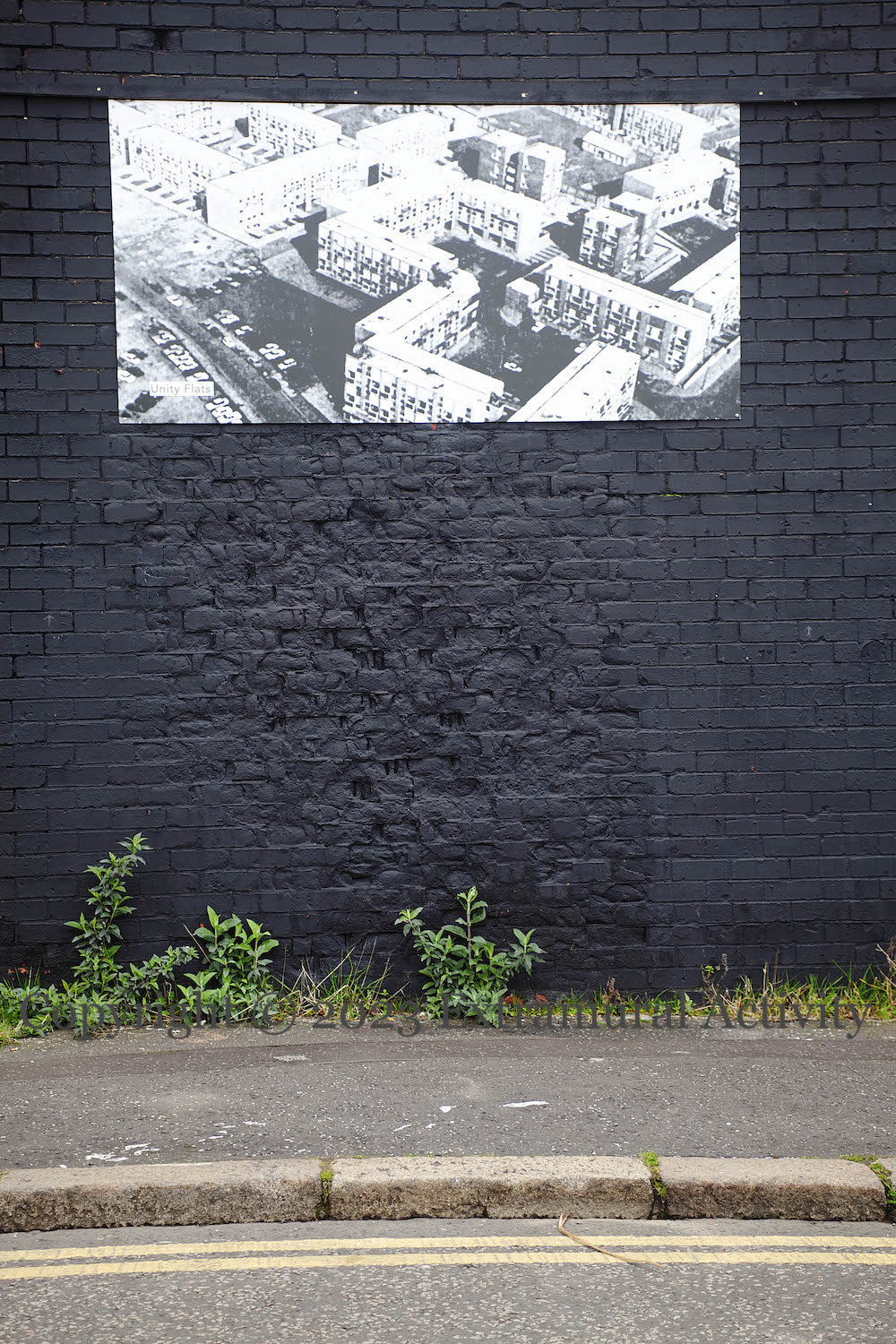
Below are two of the fifteen boards around the corner in Regent Street, showing the Carrick Castle public house and the old Unity flats.
Other boards in the collection (not shown) show street games, street parties, and Alton United football club, a team founded in 1921 that played in the Falls League and won the 1923 Free State Cup Final (Bohs Sporting Life).
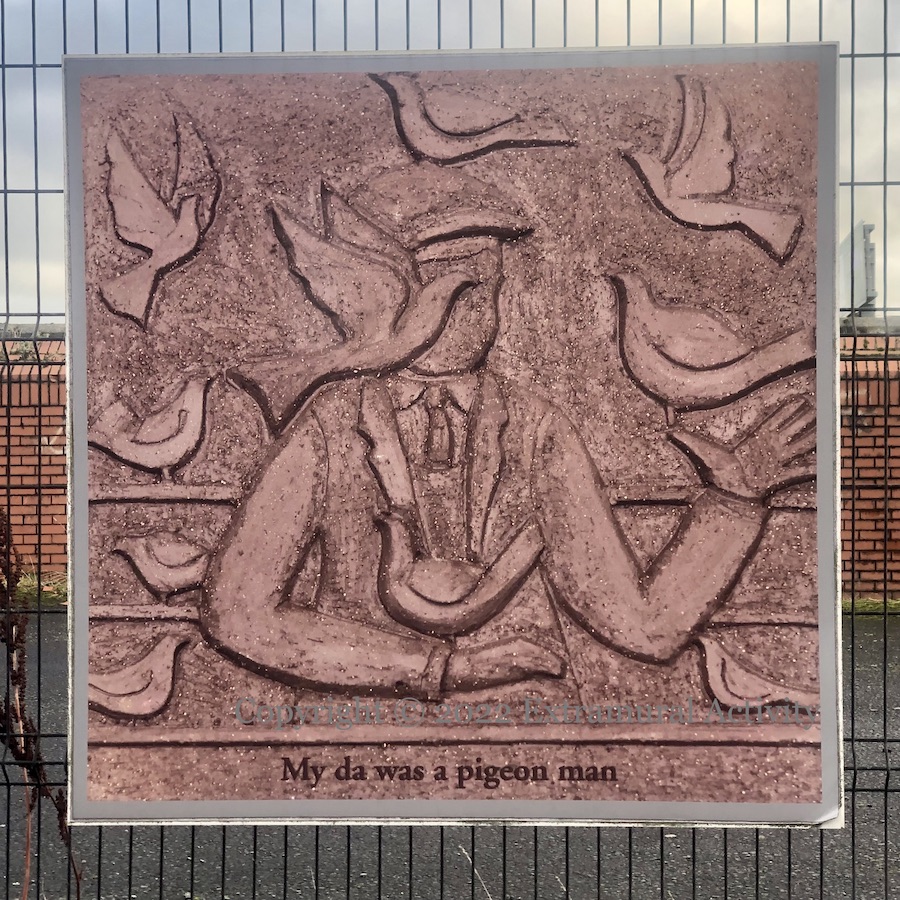
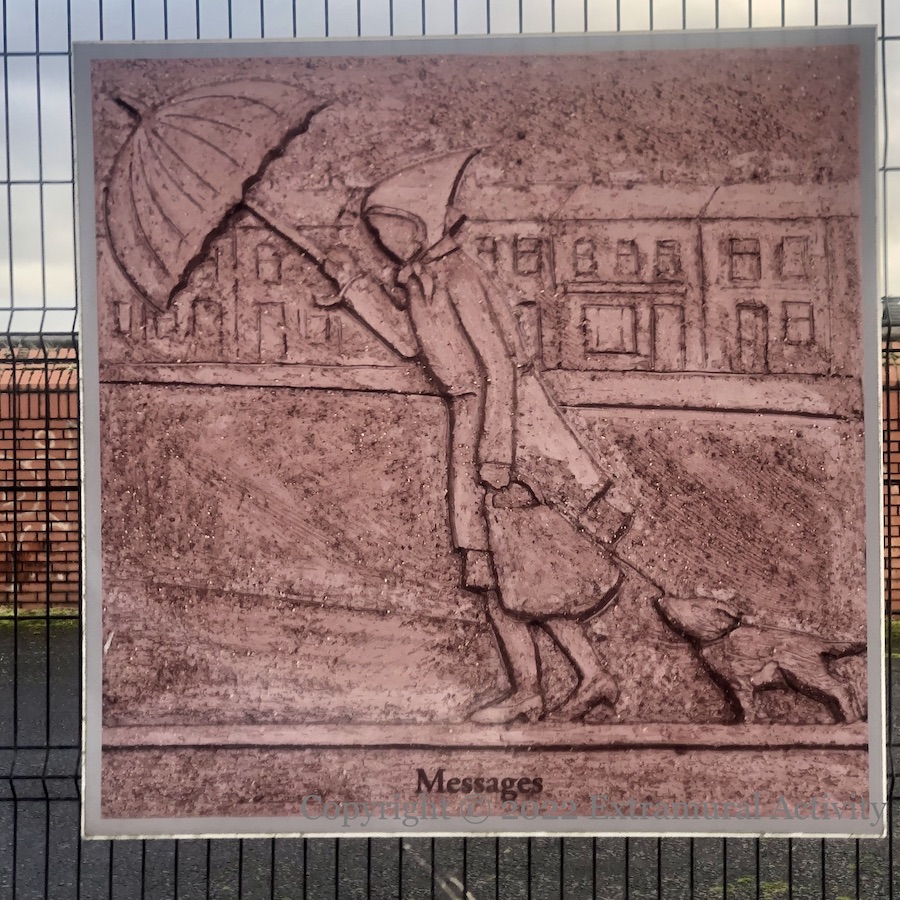
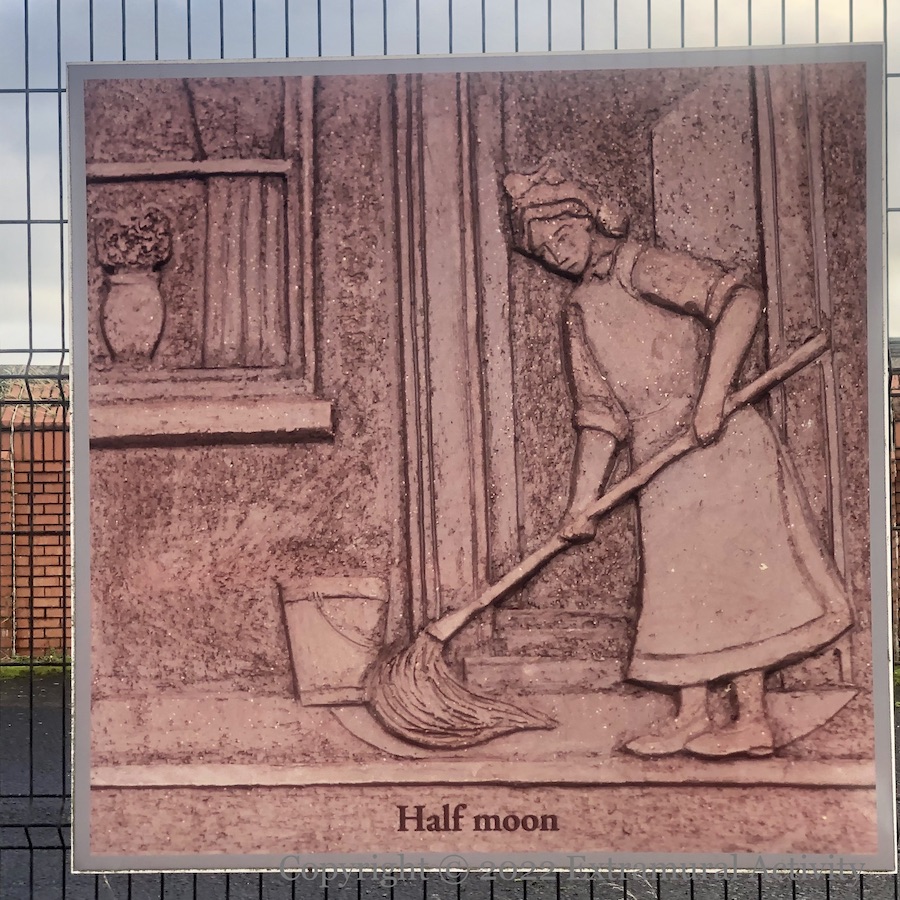
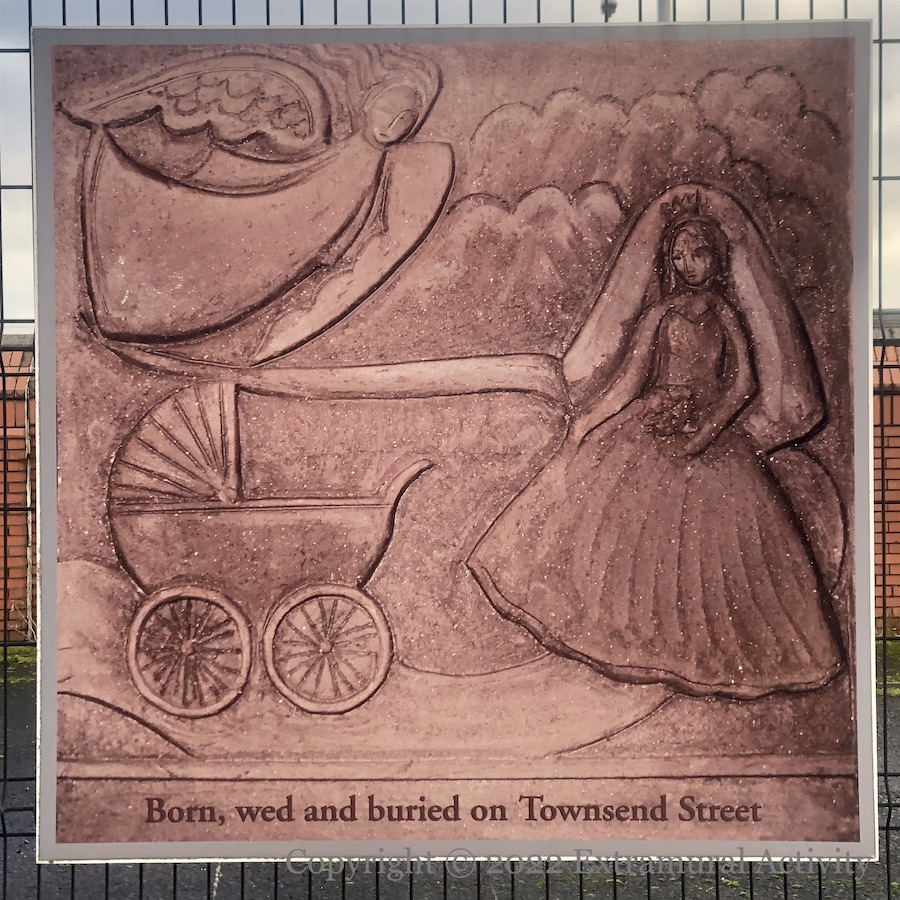
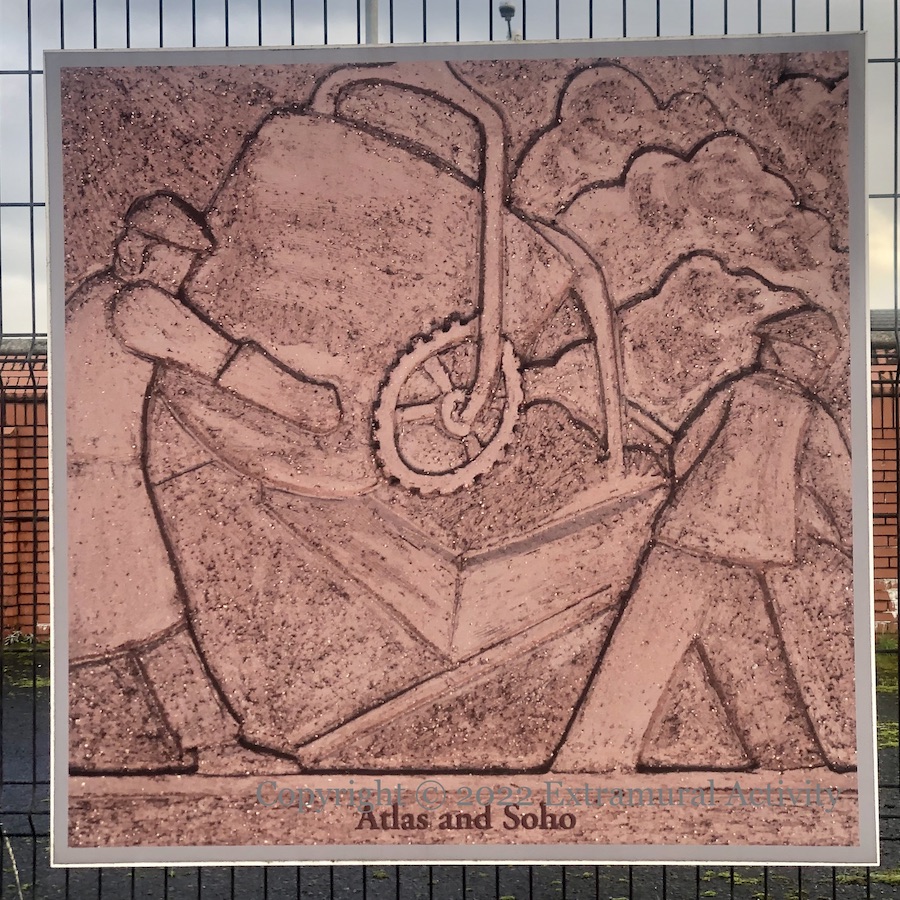
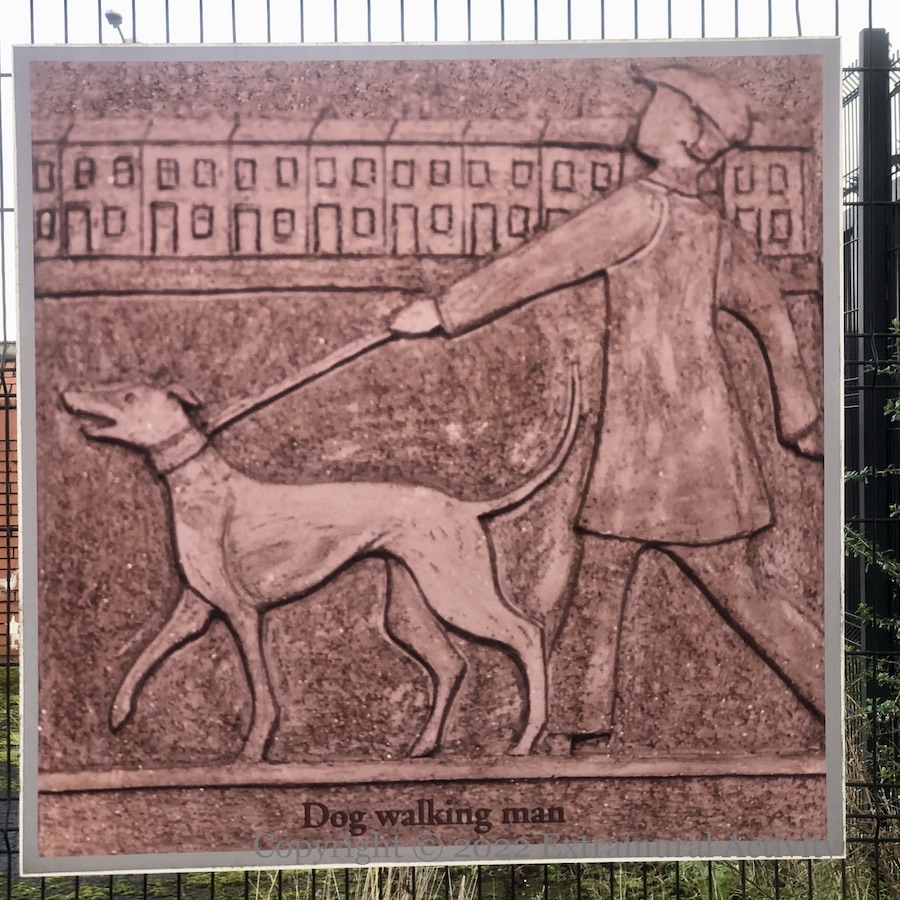
Here are six pieces on the fence above the Townsend Street gates in the west Belfast “peace” line (seen previously Da War Is Not Over Yet and Mickey Marley’s Roundabout) depicting life in years gone by in the Townsend Street/Brown’s Square area. The six are (from left to right on the street/top to bottom on this page):
Messages – “Doing” or “running” “messages” means grocery shopping.
Half Moon – the “half moon” was the semi-circular area on the pavement outside a terraced house that would become shiny with repeated washing. Here are some descriptions and memories from Belfast Forum.
Born, Wed And Buried On Townsend St
Atlas & Soho: The Soho iron foundry in Townsend Street was owned and managed by Robert Shipboy McAdam and his brother James (Ricorso | Grace’s); the Atlas foundry was at 73 Townsend Street and owned by Victor C Taylor (Lennon Wylie).
Dog Walking Man
These appear to be prints or photographs on boards, rather than stone casts as on the CNR side of the gates: see The Oasis.
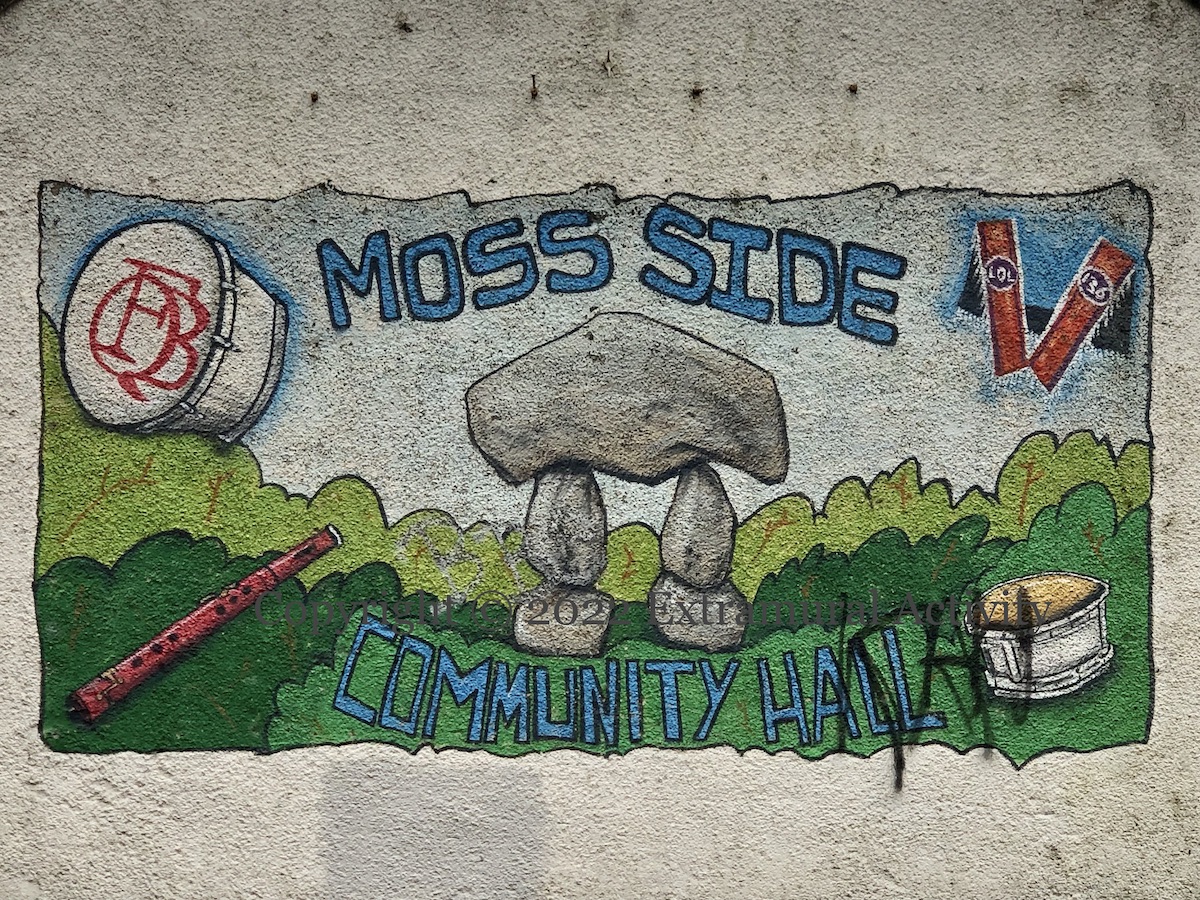
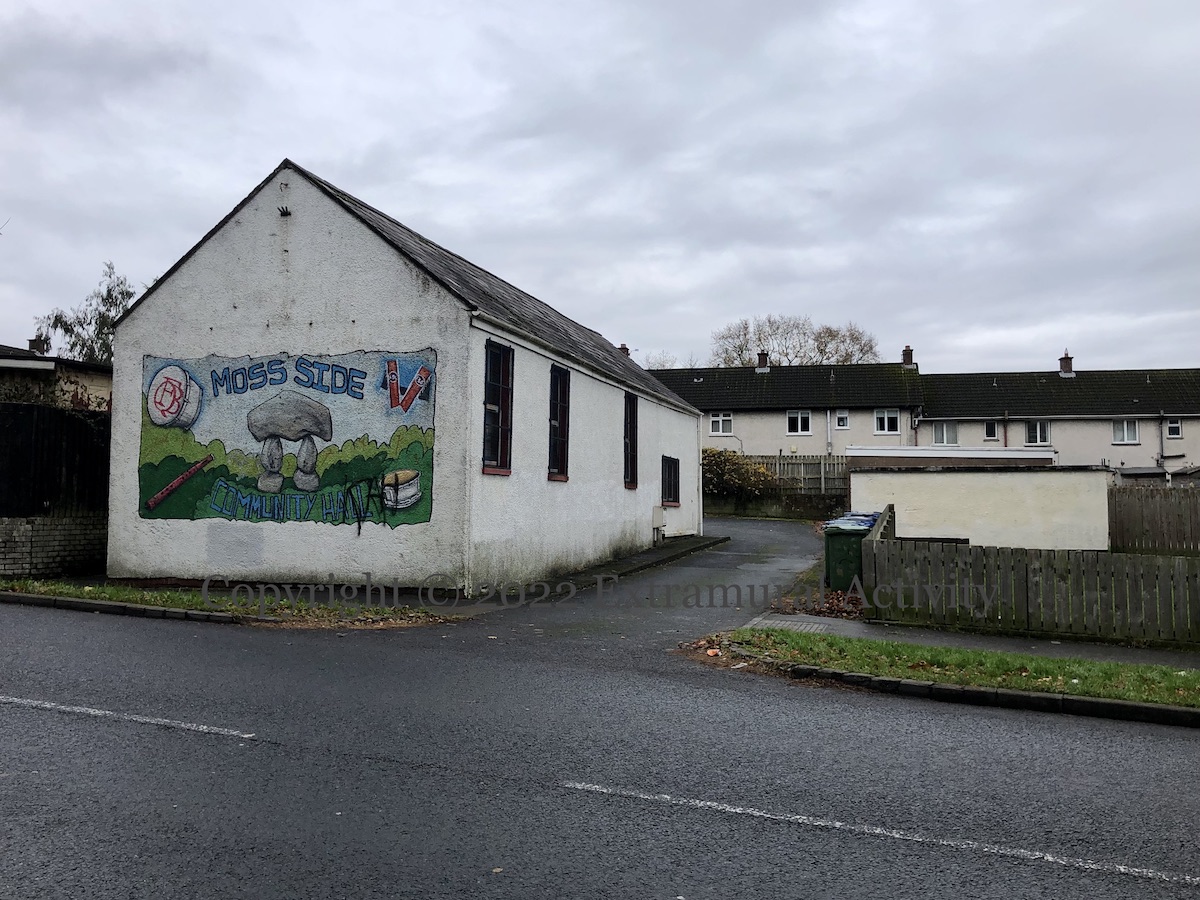
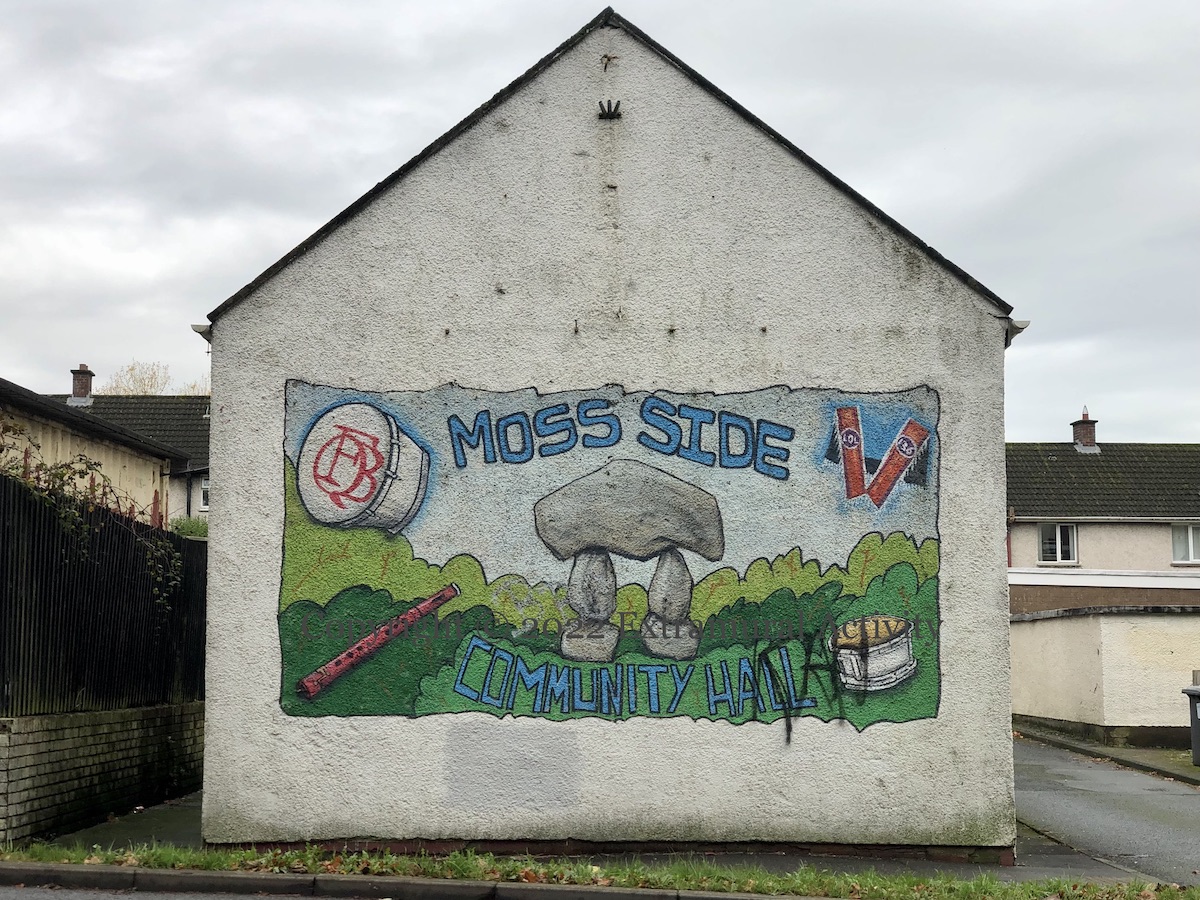
“Moss side” is probably Scots, with “moss” meaning “marsh” or “(peat) bog” (DSL) and this mural is appropriately on Ballybog Road (in Dunmurry), “bog(ach)” in Irish meaning “soft (ground)..
In the mural, “QFB” is Queensway Flute Band – they used to have a mural in Seymour Hill – and “LOL 136” is a lodge in the Derriaghy District (Fb). It’s not clear if there is a specific referent for the dolmen in the centre. The mural is at least 12 years old and it is not clear what functions the hall currently serves; it previously (2017) was home to a men’s shed and in 2018 a Youth Hub opened in the building next to the hall (NIWorld).
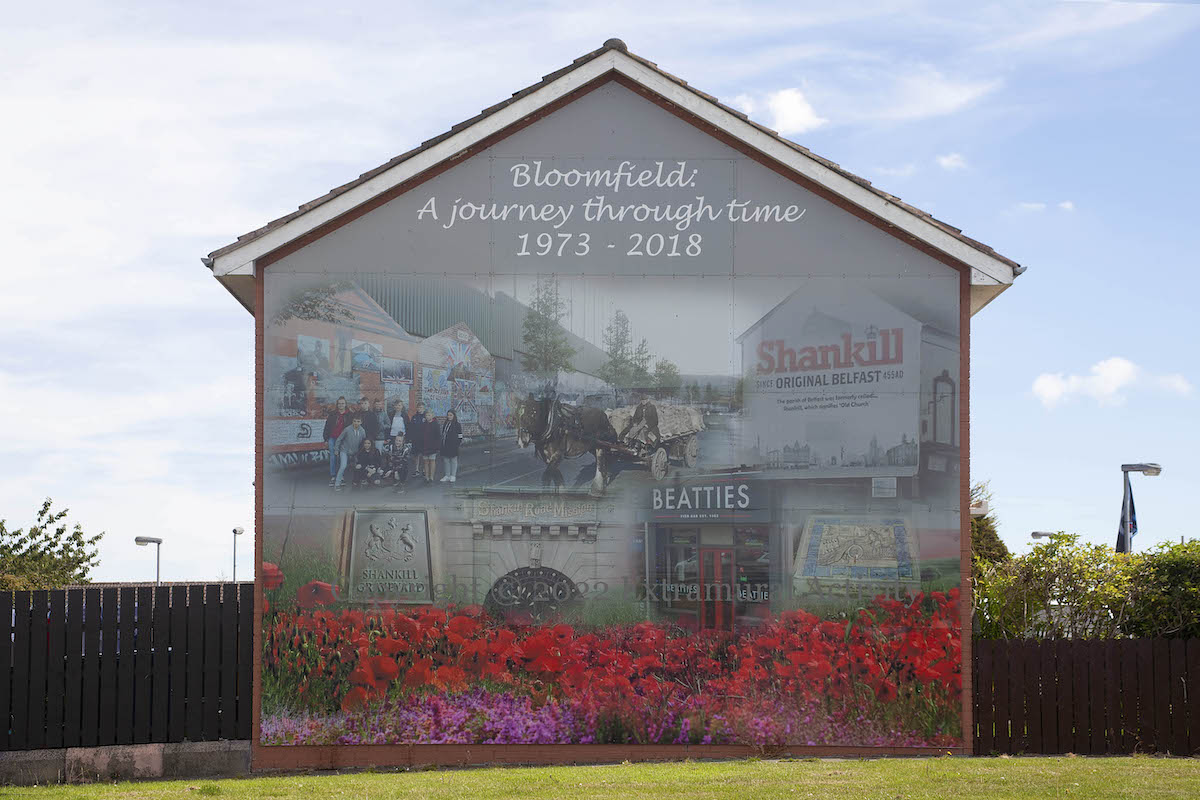
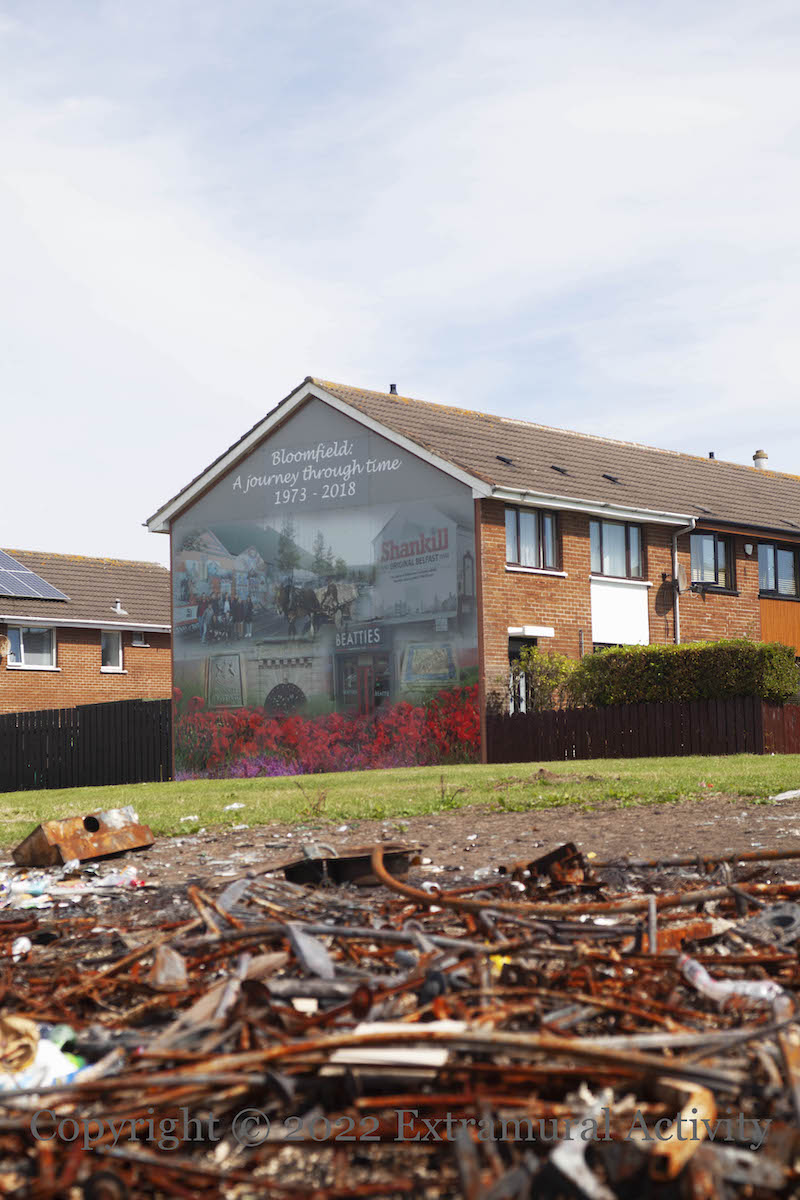
The title says “Bloomfield [Bangor] 1973-2018” but the images are all of the Shankill in Belfast: (top, from left) the Changing Faces installation on the Cupar Way “peace” line, coal being delivered by horse and cart, the Original Belfast mural, (bottom, from left) the Shankill Graveyard, the Shankill Road Mission, Beatties fish and chip shop, and the Shankill Graveyard mosaic. 1973 is presumably the year of the construction of the contemporary houses in Bloomfield; there were aluminium bungalows in Bloomfield Road in 1951 (Lennon Wylie | flickr).
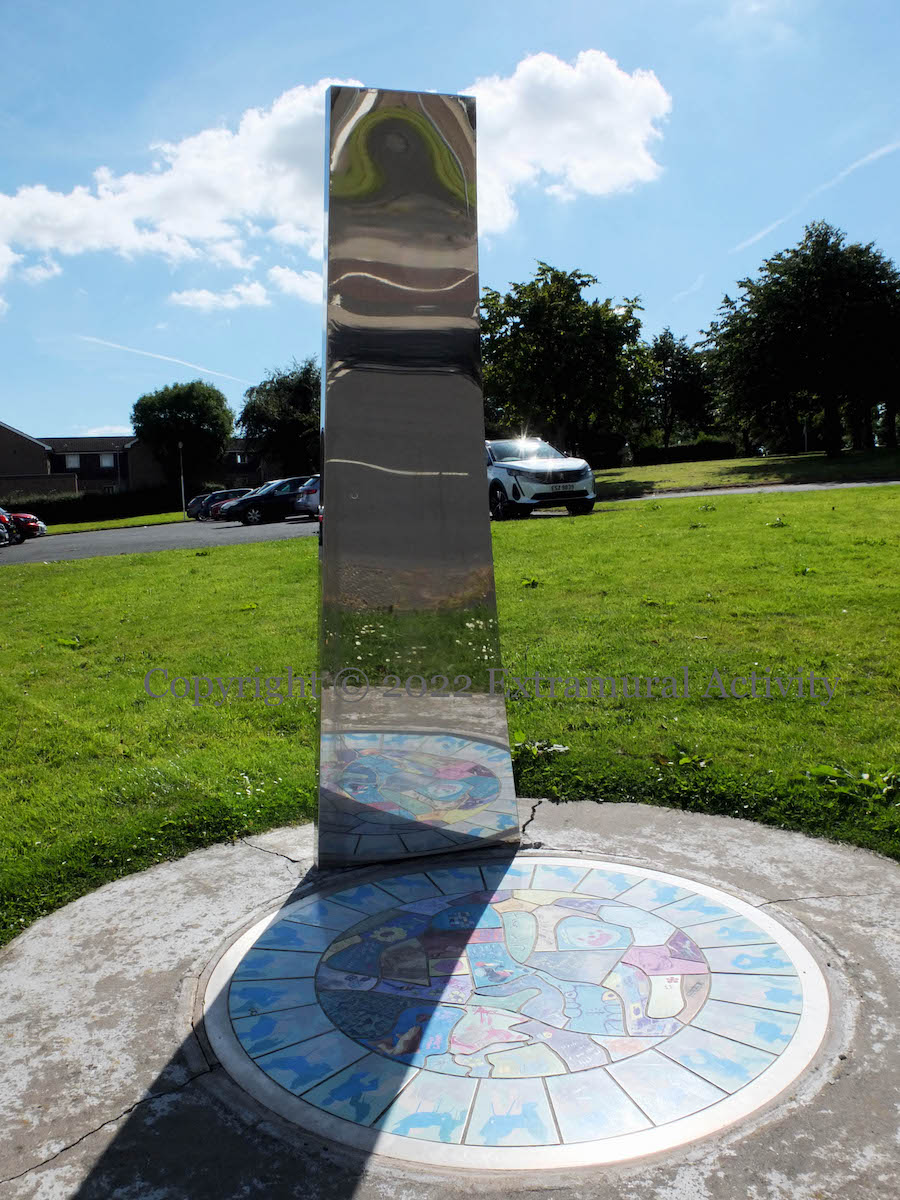
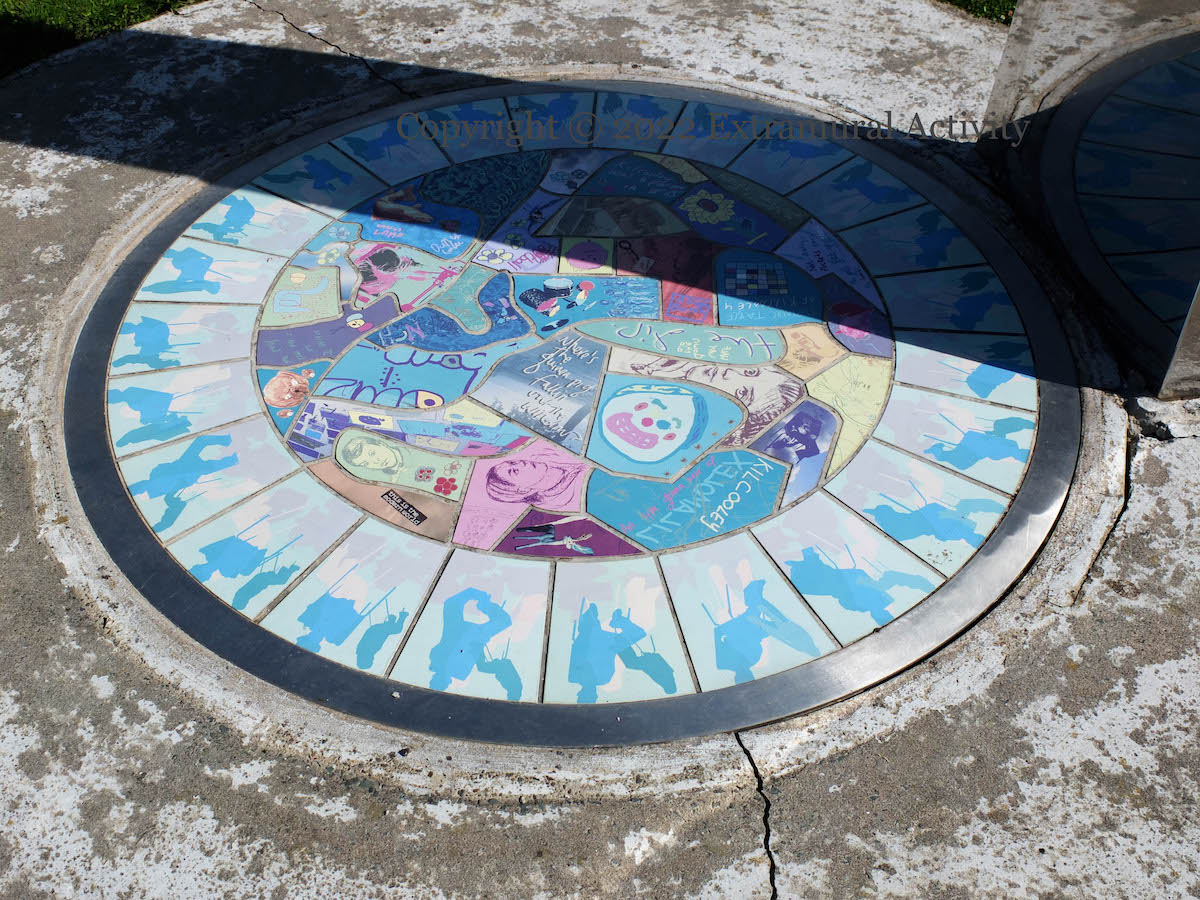
An arch of a different kind in the Kilcooley estate: a reflective steel arc overlooking a circular mosaic.
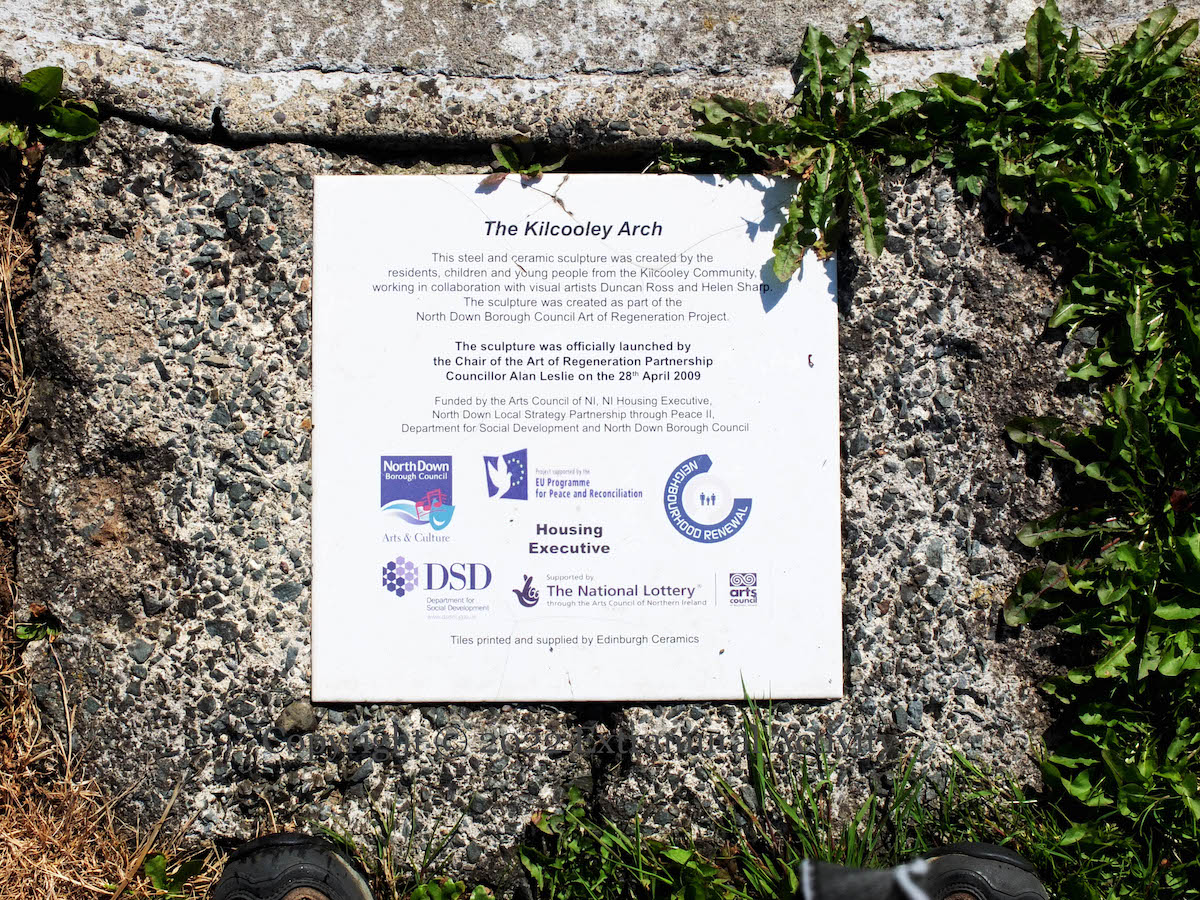
“This steel and ceramic sculpture was created by the residents, children and young people from the Kilcooley Community, working in collaboration with visual artists Duncan Ross and Helen Sharp. The sculpture was created as part of the North Down Borough Council Art of Regeneration Project. The sculpture was officially launched by the Chair of the Art of Regeneration Partnership Councillor Alan Leslie on the 28th April 2009. Funded by the Art Council of NI, NI Housing Executive, North Down Local Strategy Partnership through Peace II, Department for Social Development and North Down Borough Council. Tiles printed and supplied by Edinburgh Ceramics.”
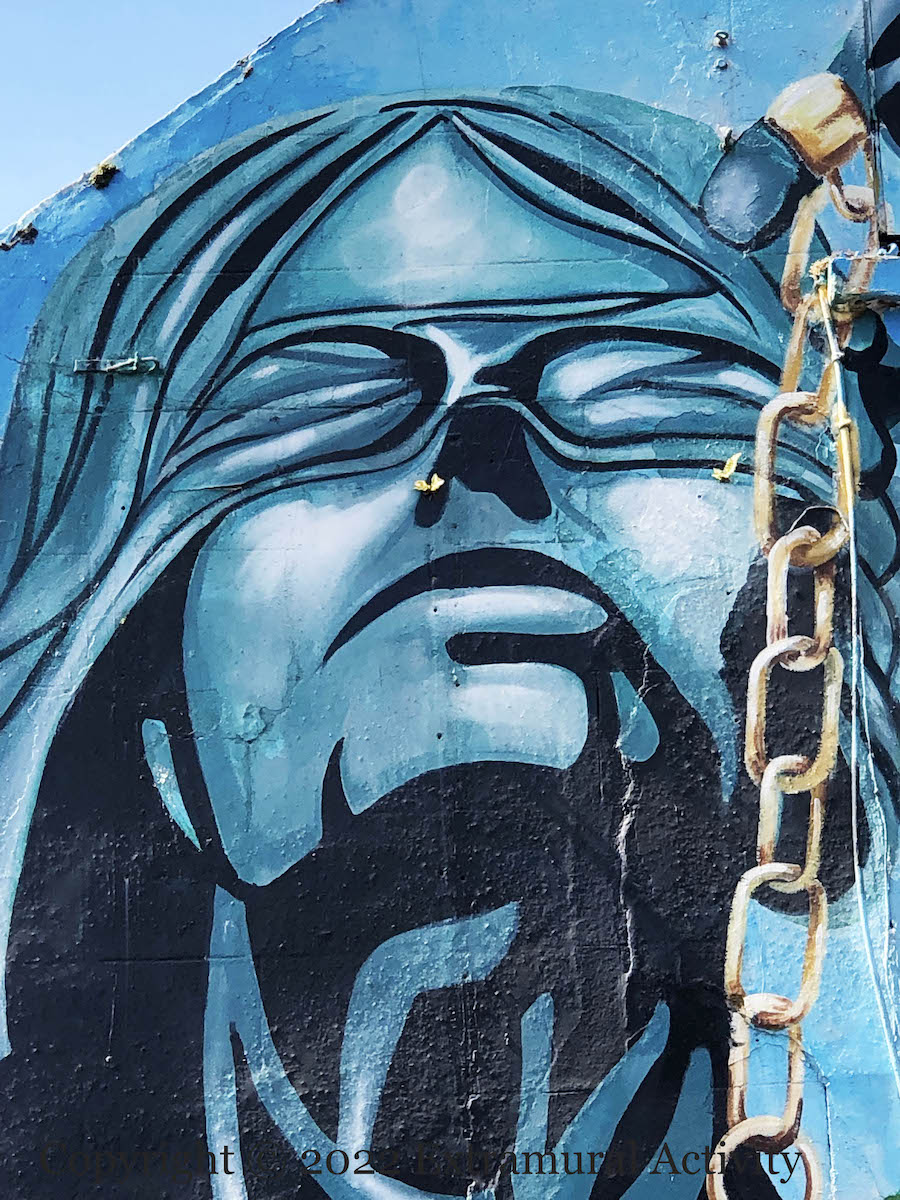
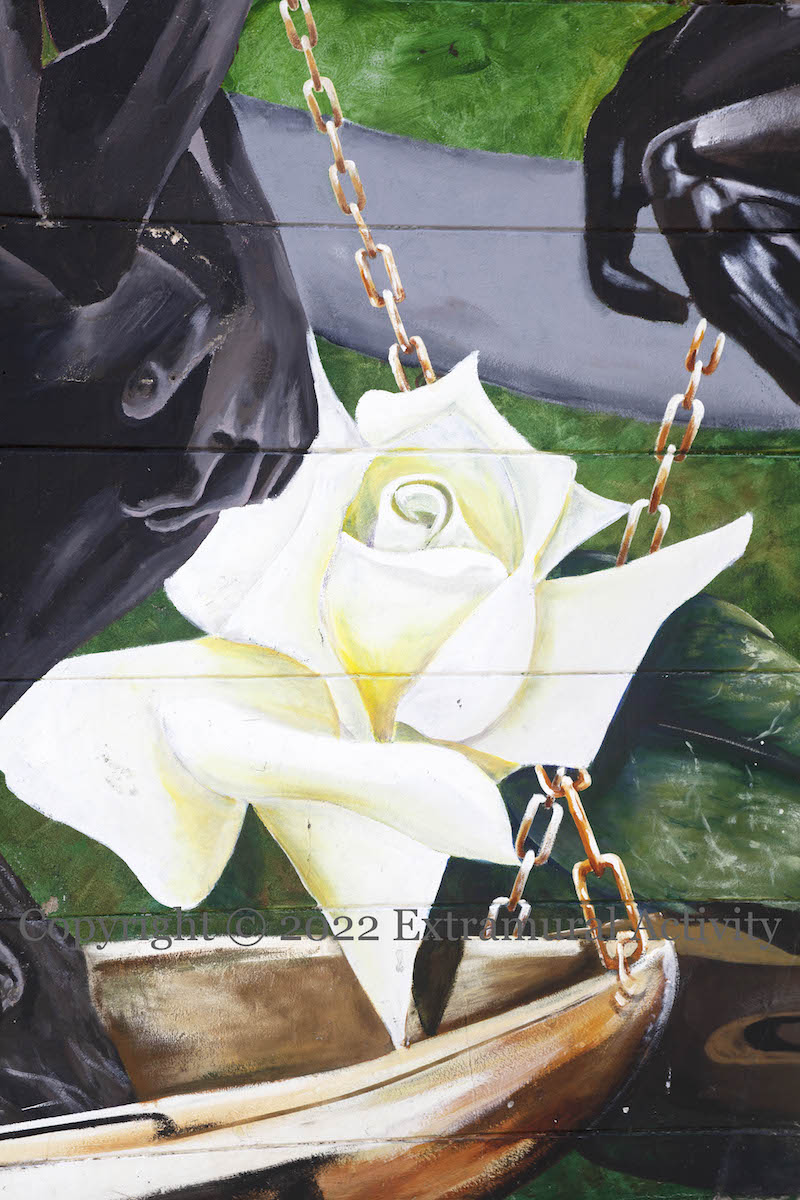
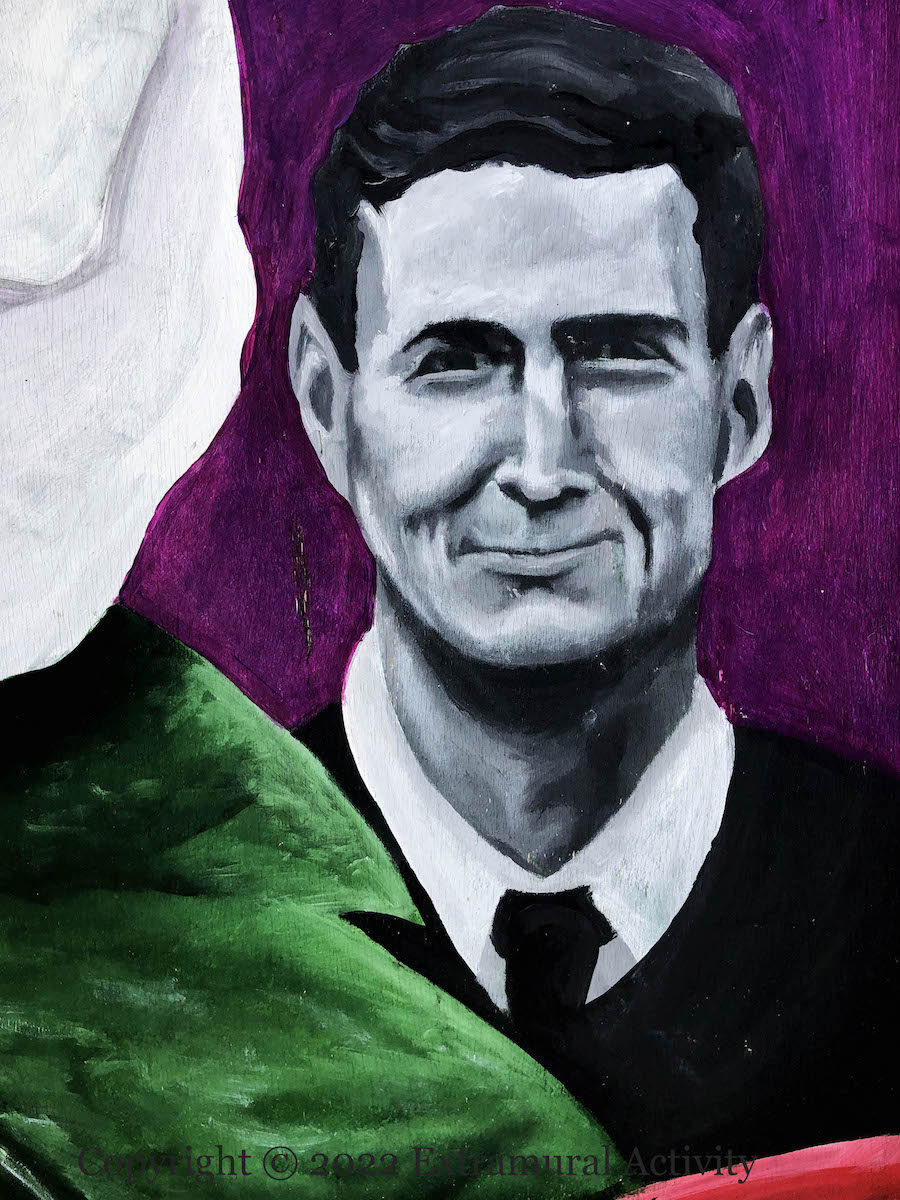
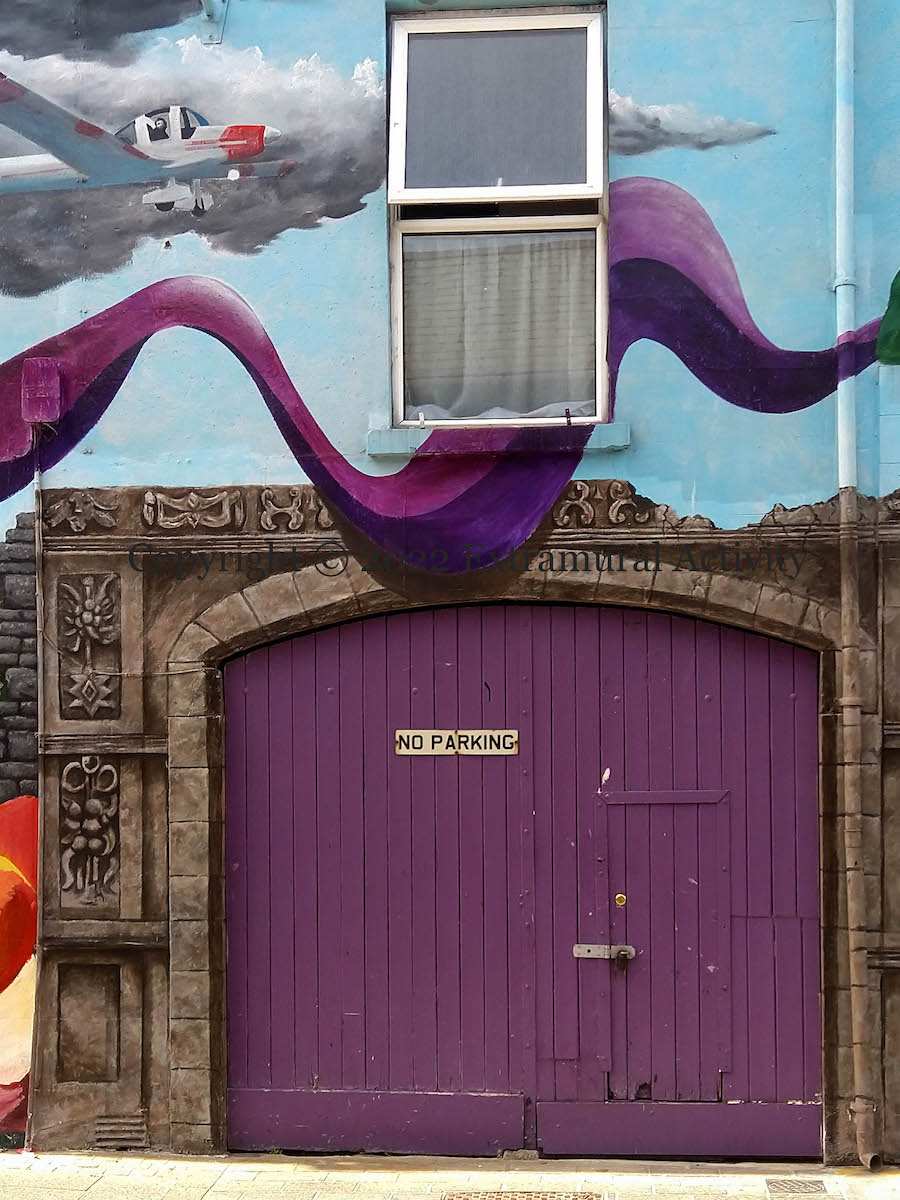
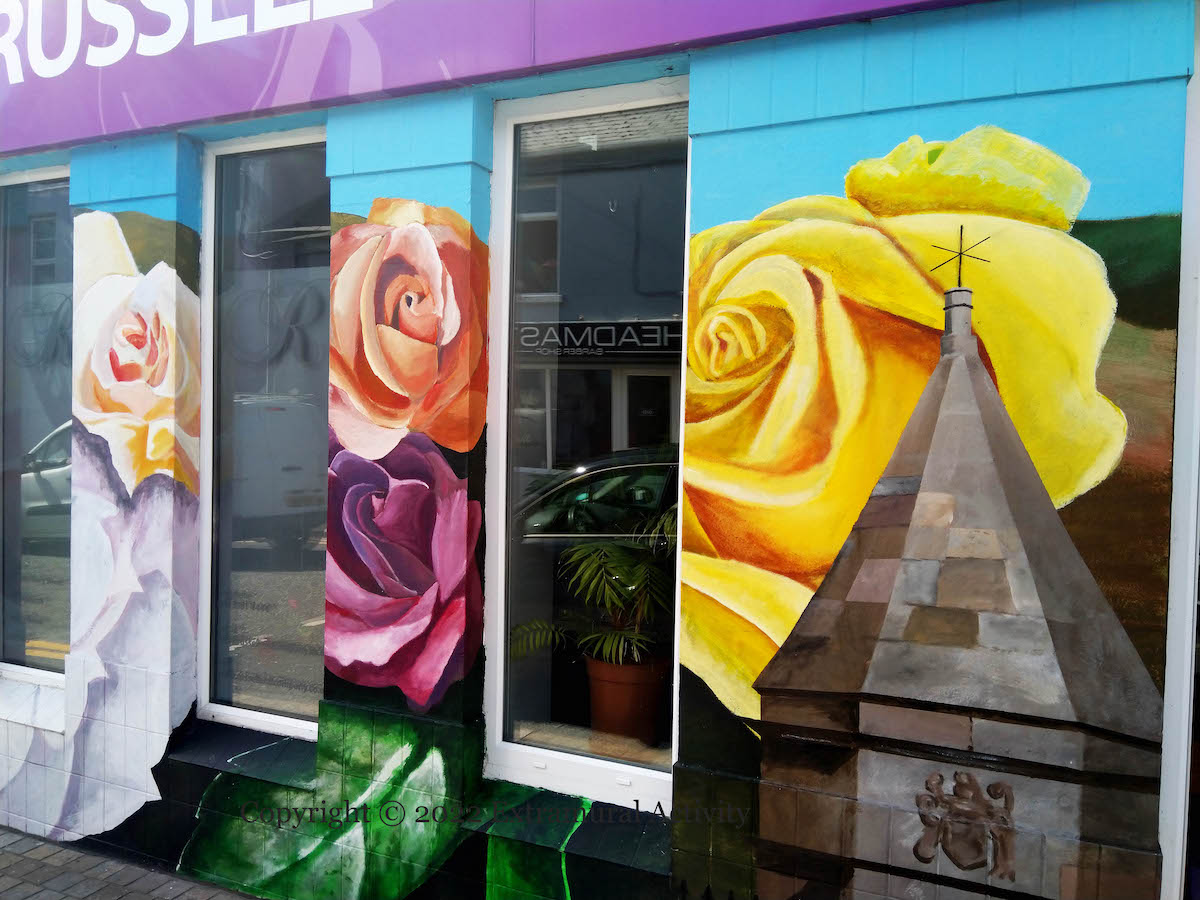
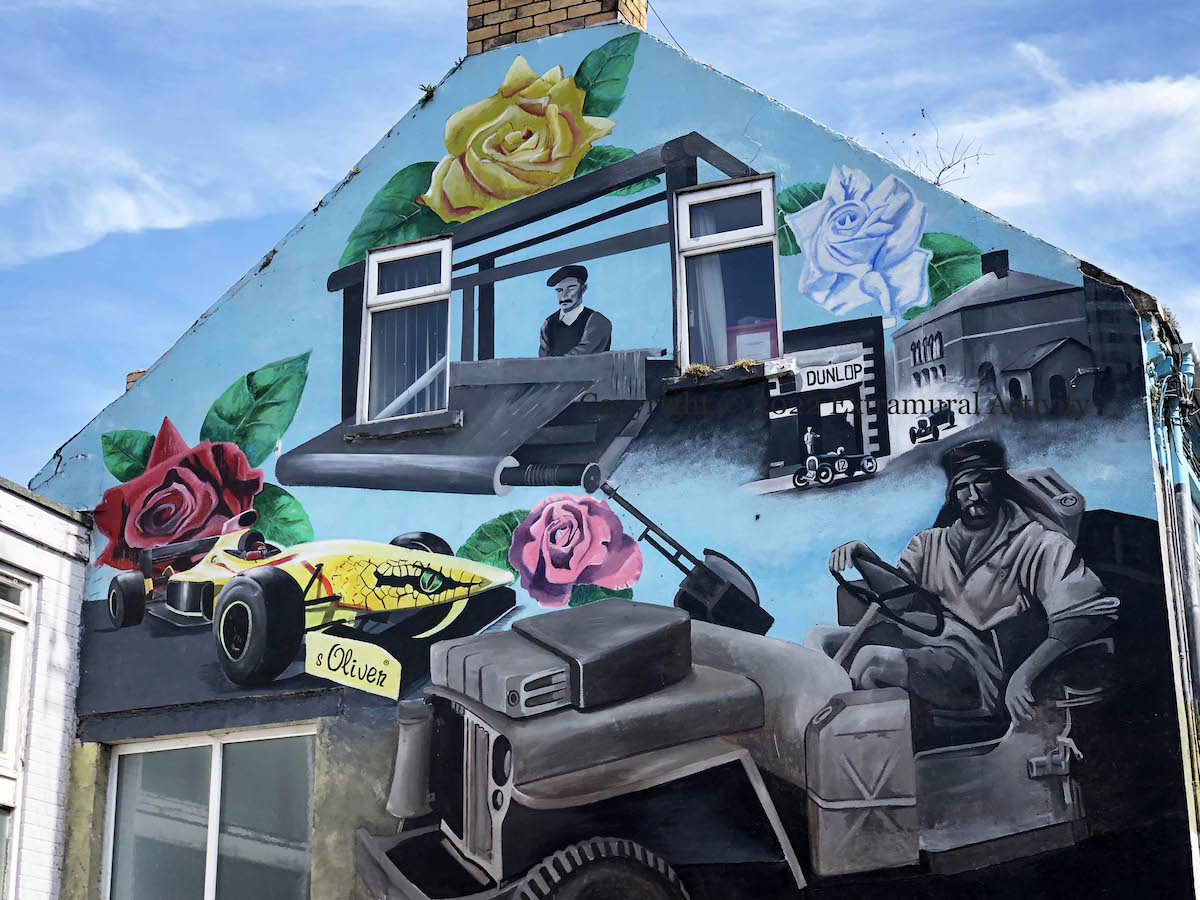
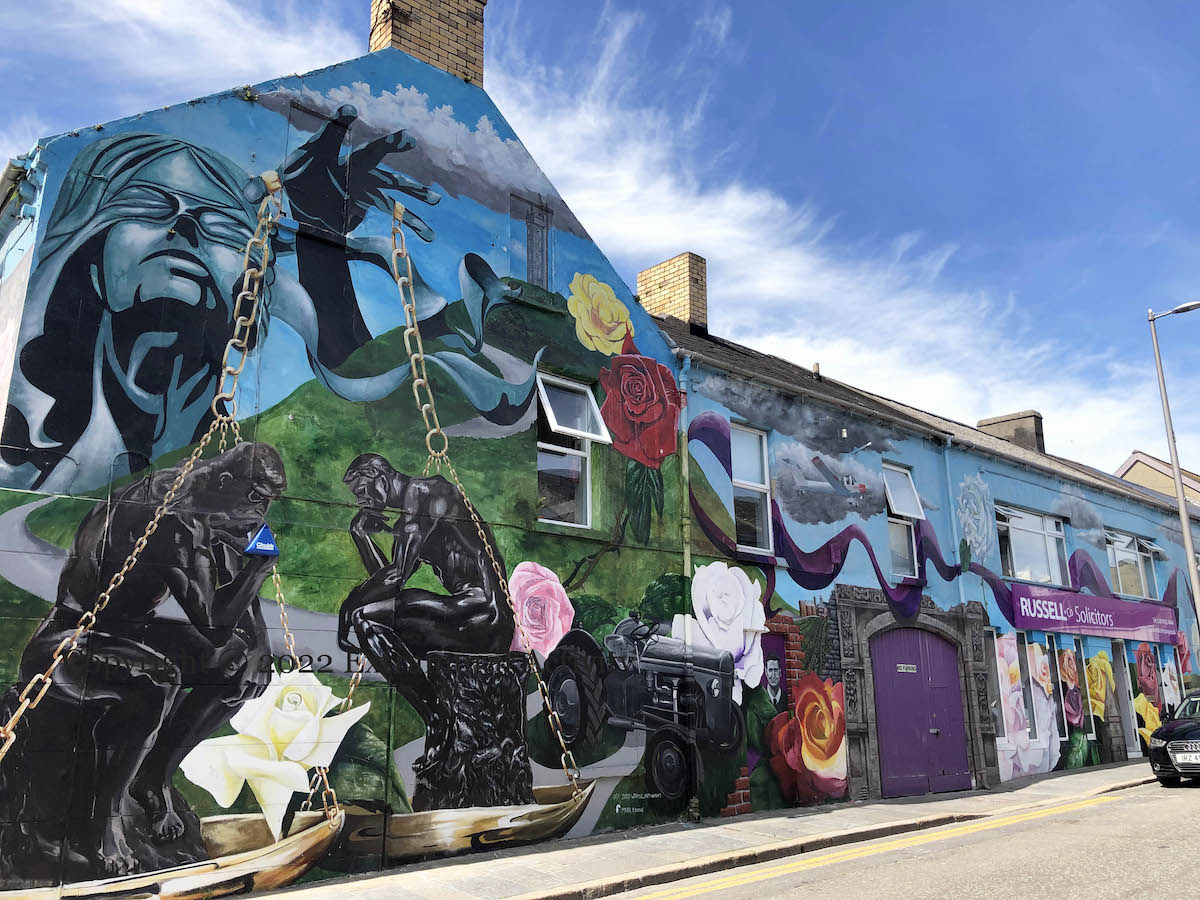
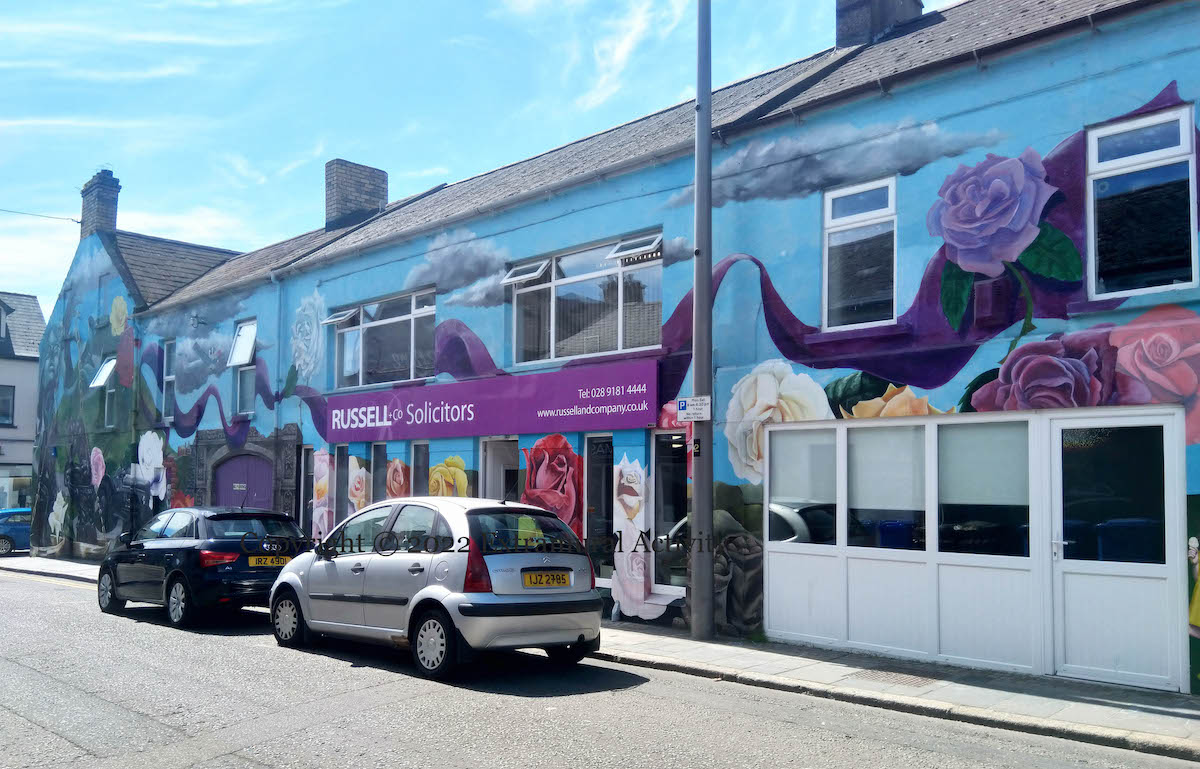
The giant mural around the offices of Russell & Co solicitors in Newtownards combines legal imagery with famous north Down sites and people.
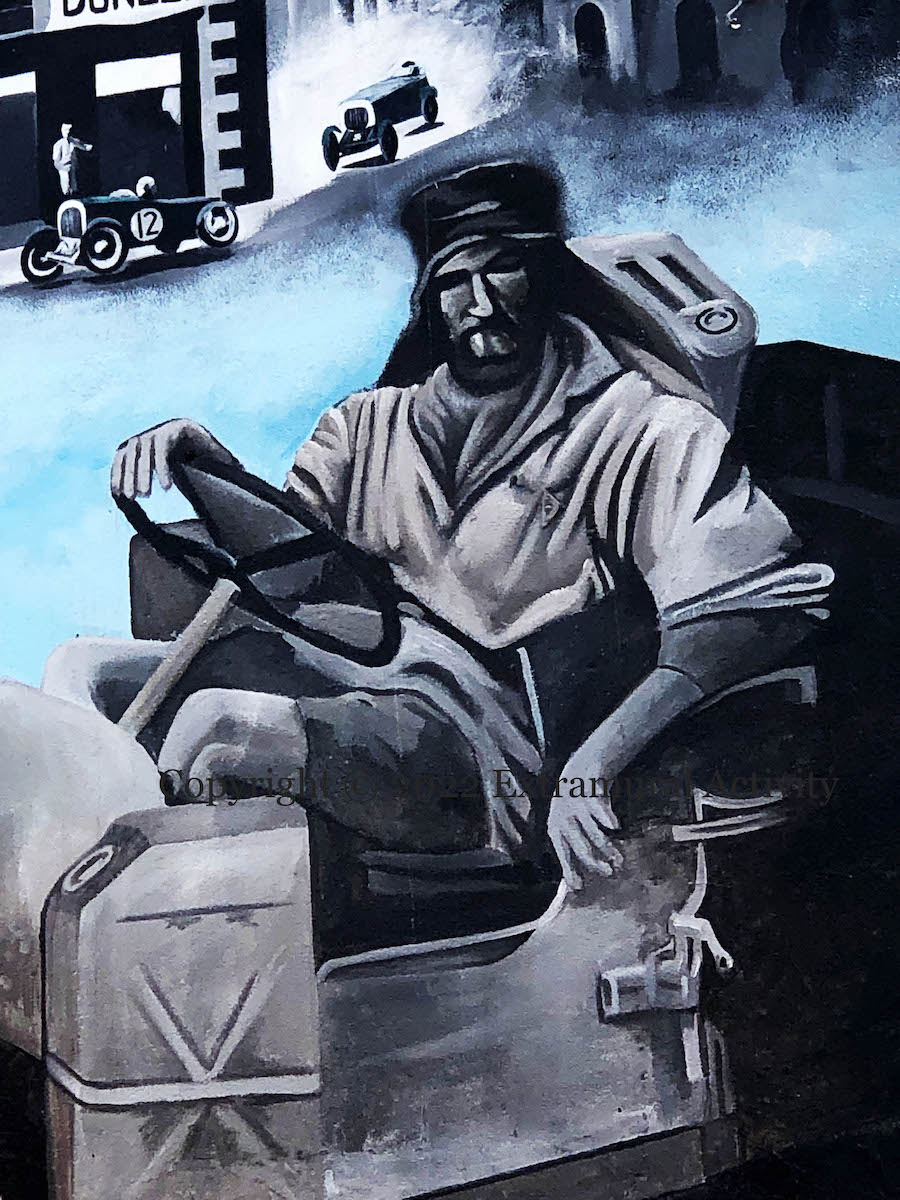
There are two main parts, in High Street and in Lower Mary Street. In High Street, we see Blair “Paddy” Mayne; the Jordan ‘Hissing Sid’ Formula 1 race-car (Eddie Irvine, who is from Newtownards, drove for Jordan until 1996); a weaver working a loom (the image is from Waringstown, but is perhaps meant to represent local mills such as Walker’s or Ards & Webb); an image of the Ards TT.
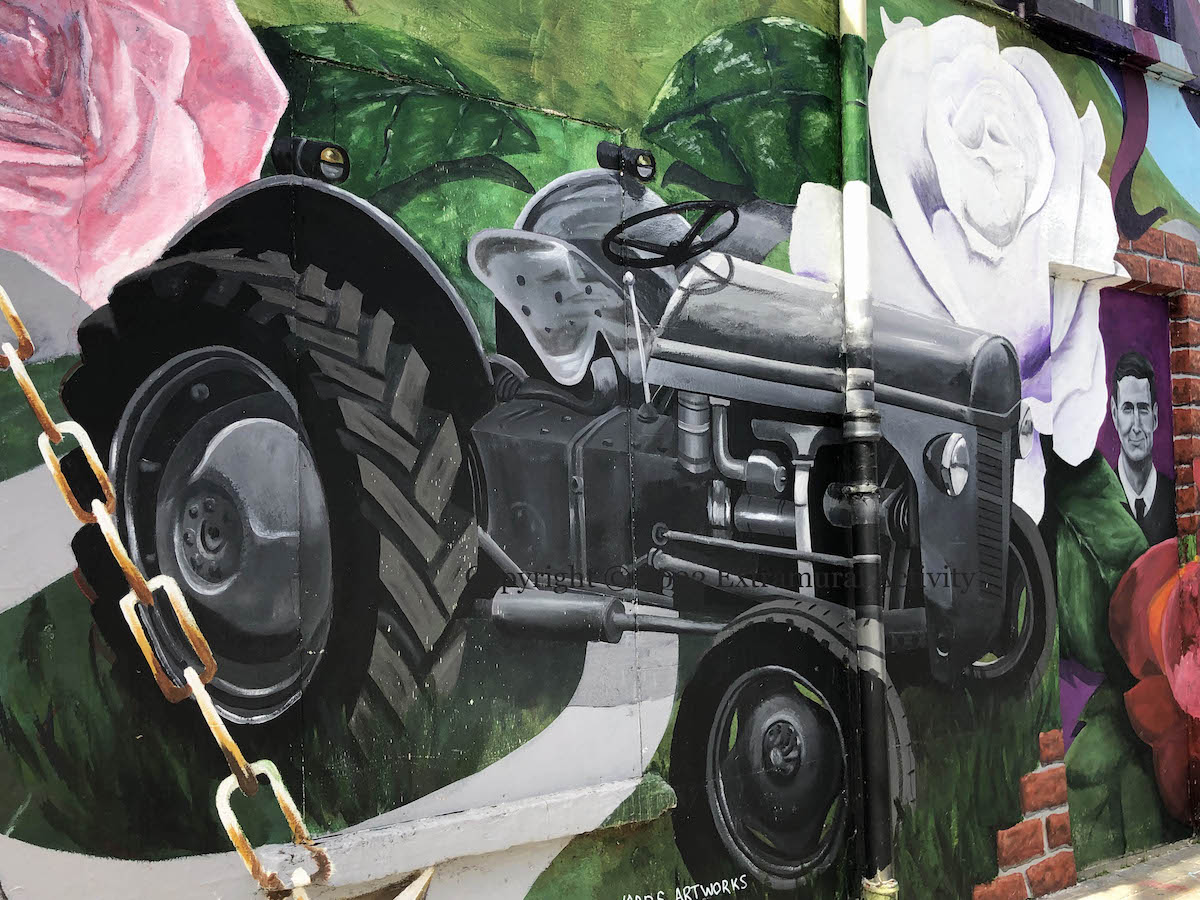
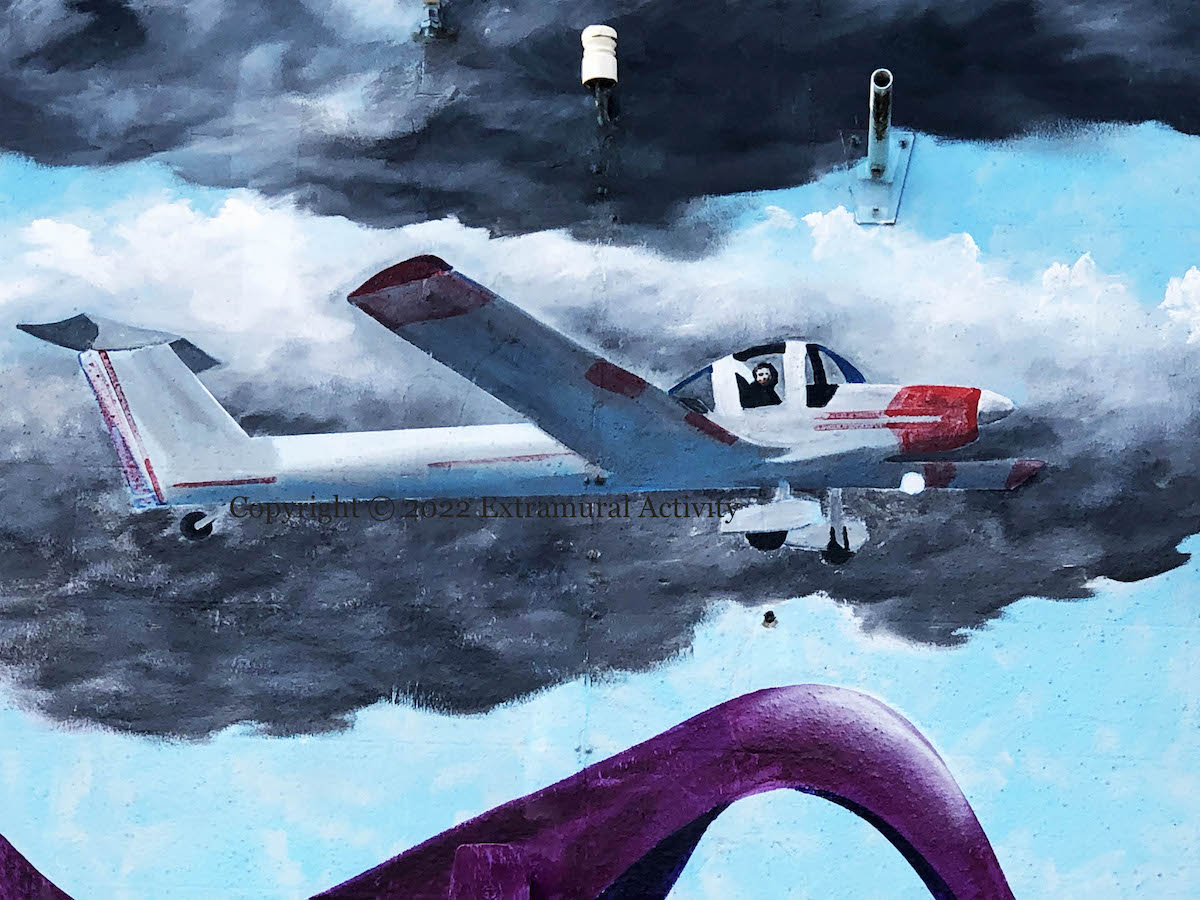
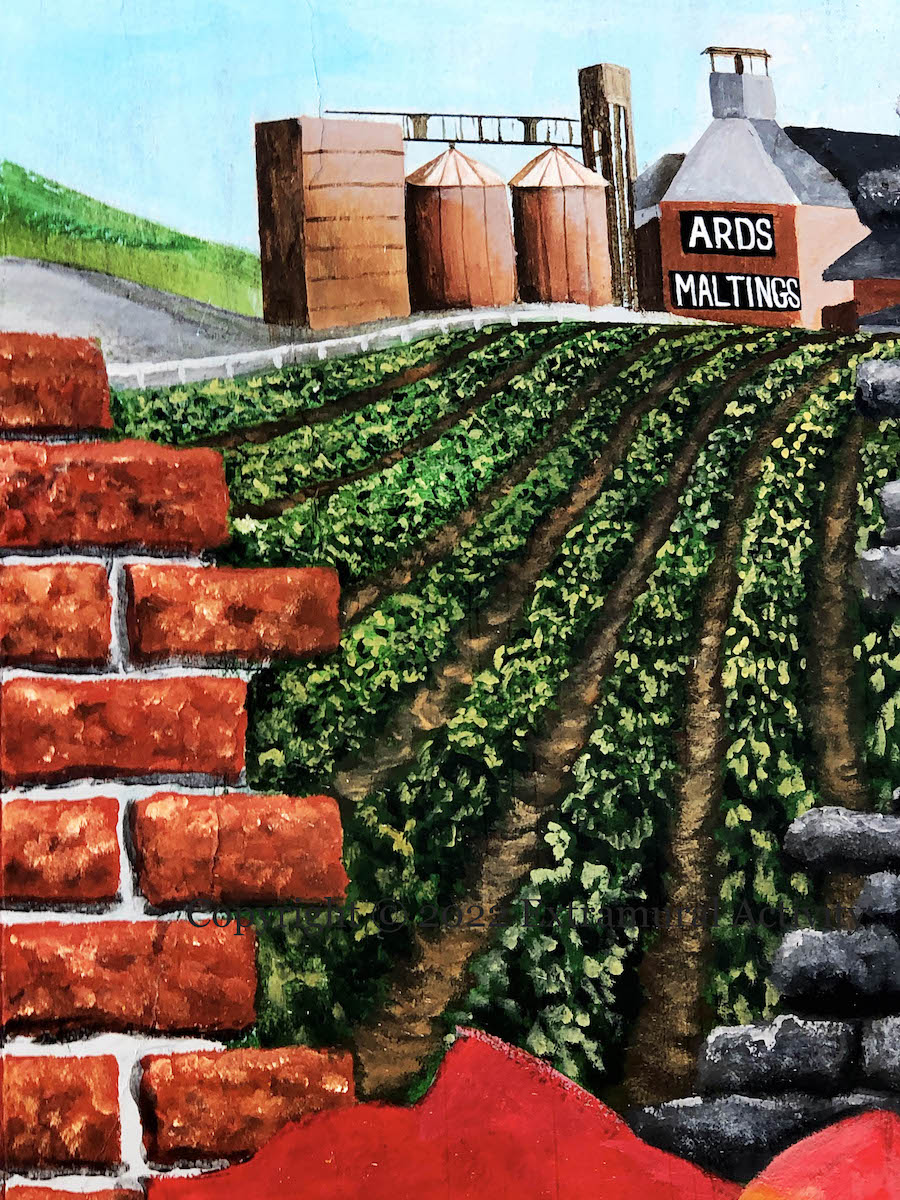
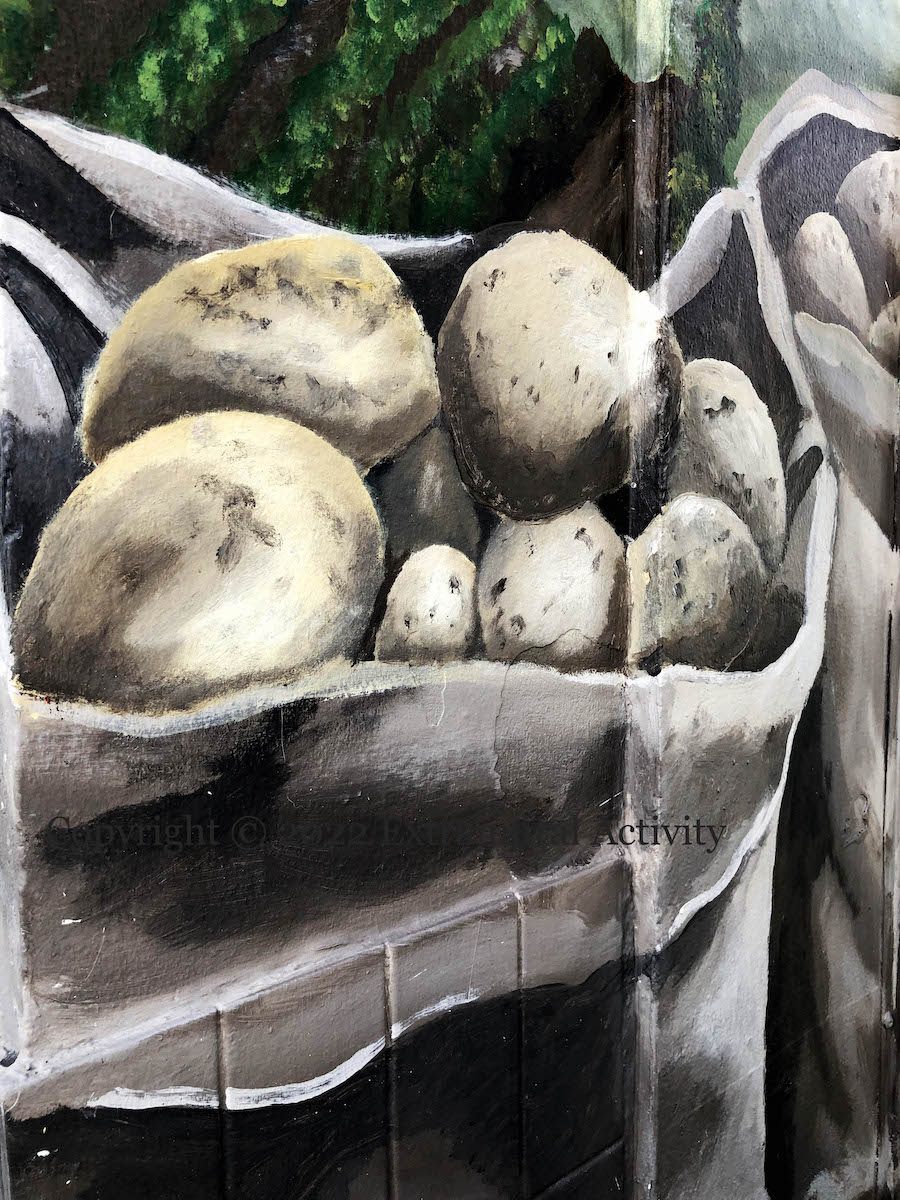
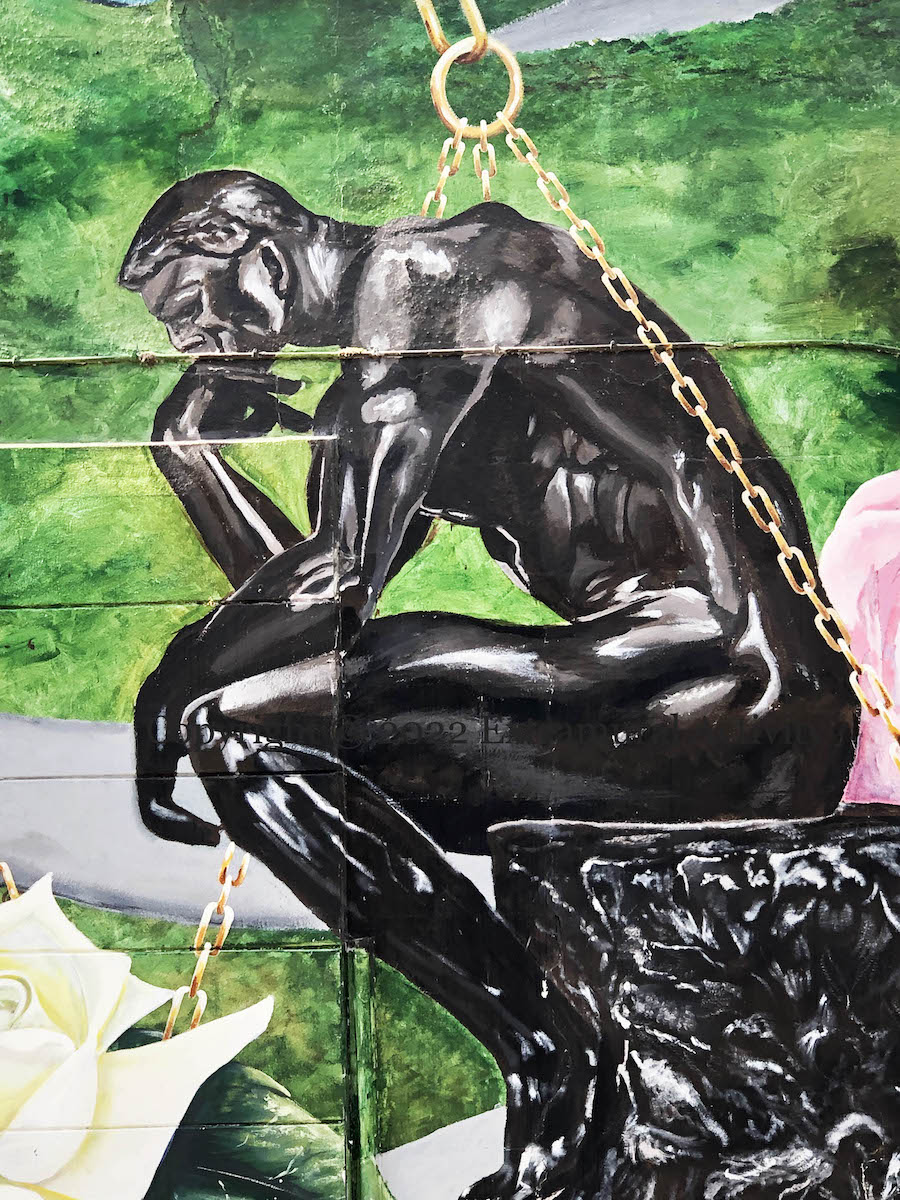
In Lower Mary Street, from behind Scrabo Hill, Lady Justice weighs scales each containing Rodin’s statue The Thinker. We also see a modern agricultural tractor, as designed by Harry Ferguson; a portrait of James Russell who founded the solicitors’ firm in 1948; a Cessna light aircraft, presumably at Newtownarrds airport, the first purpose-built airport on the island (Ulster Flying Club); the former Ards Maltings; a sack of Comber Earlies.
Acting as a joining motif on both sides of the building are roses from Dickson Nurseries.
The mural was painted by Mark Ervine. The partially-completed mural was featured in the Financial Times all the way back in November 2018; it was eventually finished in 2021 and given an anti-graffiti coating this (2022) summer.
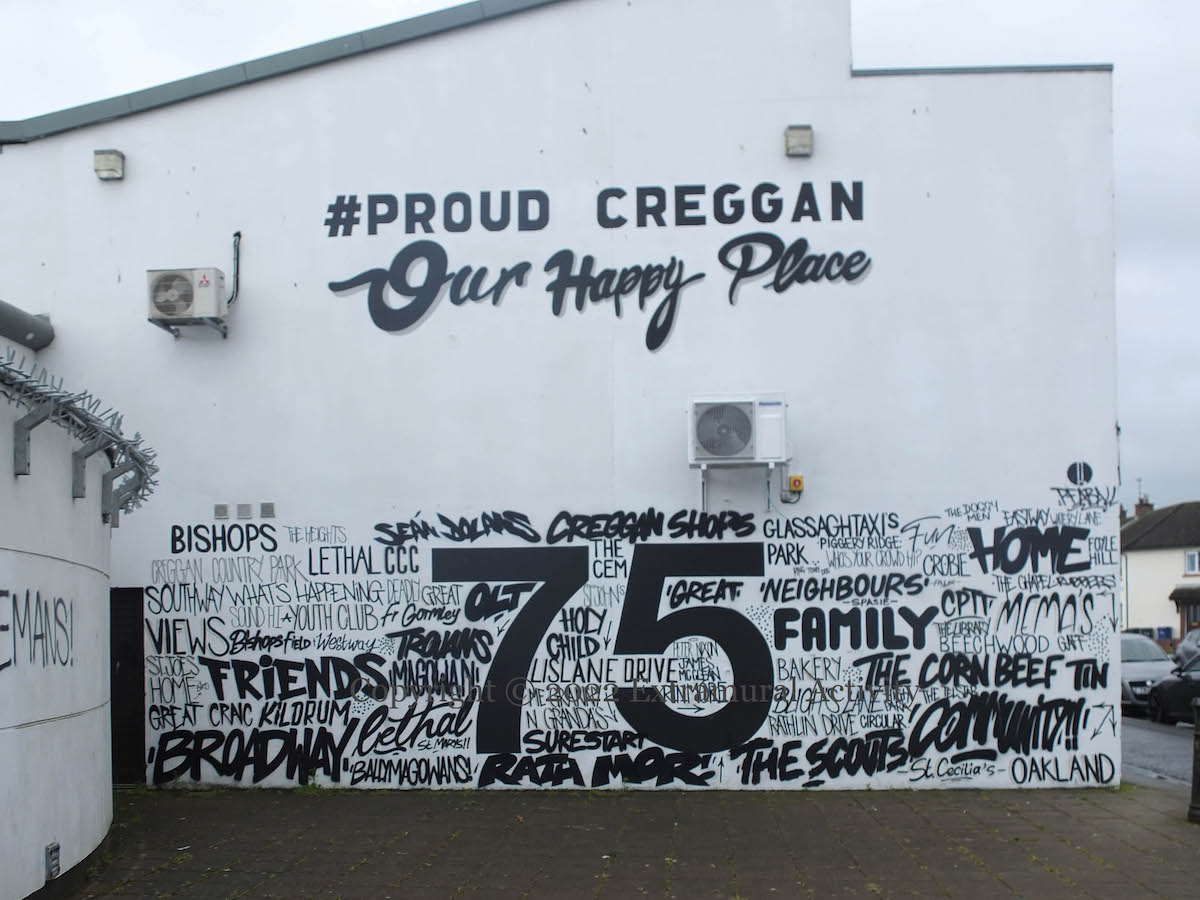
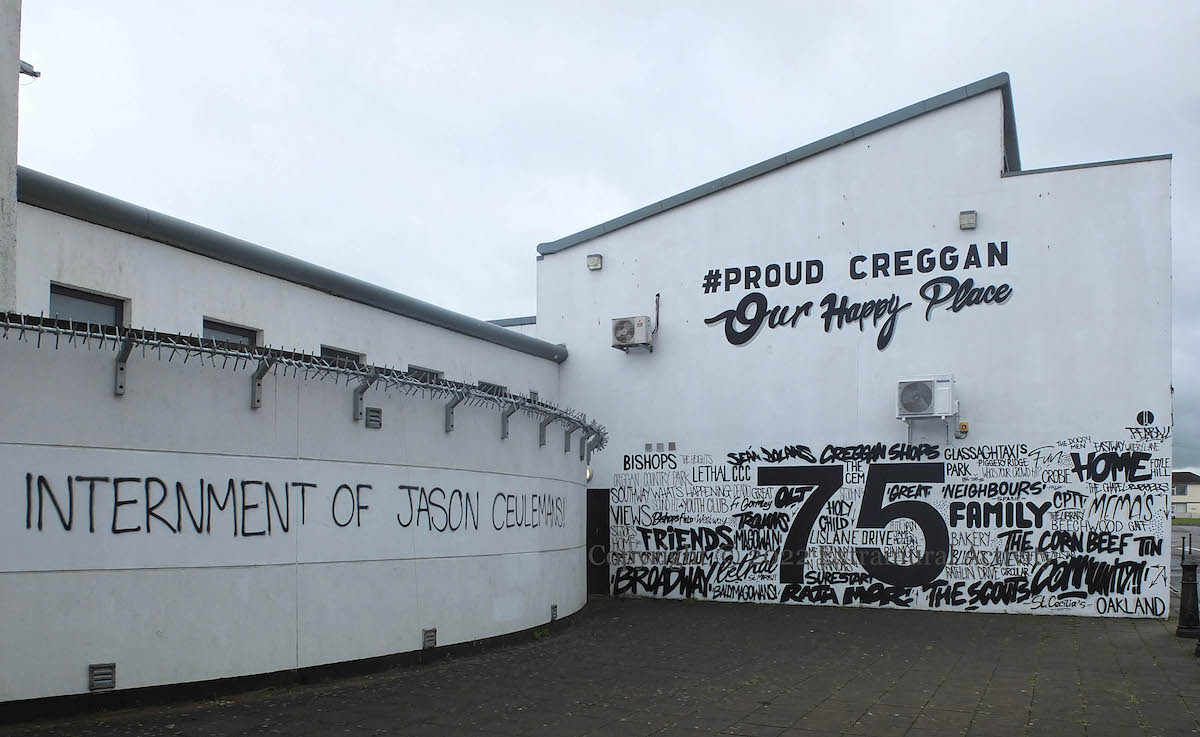
Construction of Creggan estate was begun in 1947, to house a burgeoning Bogside population while keeping them all in the South ward. At its height, there were 15,000 residents in the area. (McGuinness & Downey | An Phoblacht)
It celebrated its 75th anniversary this year (2022) with a parade, a stage play called A Green Hill Far Away, and a new mural by Peaball (ig) and Vents (ig) along with children from local schools (Derry Journal).
 Seosamh Mac Coille Collection