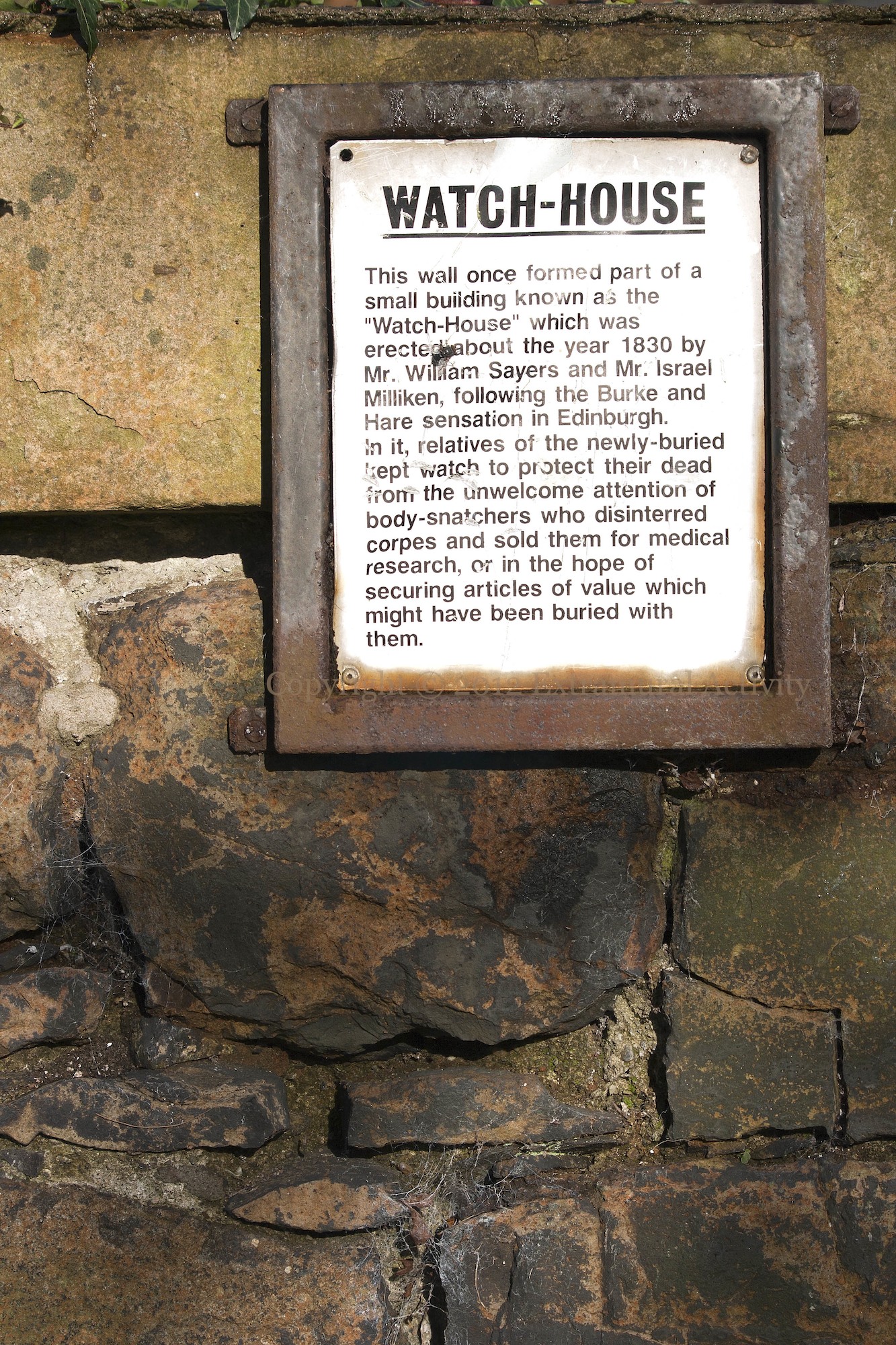
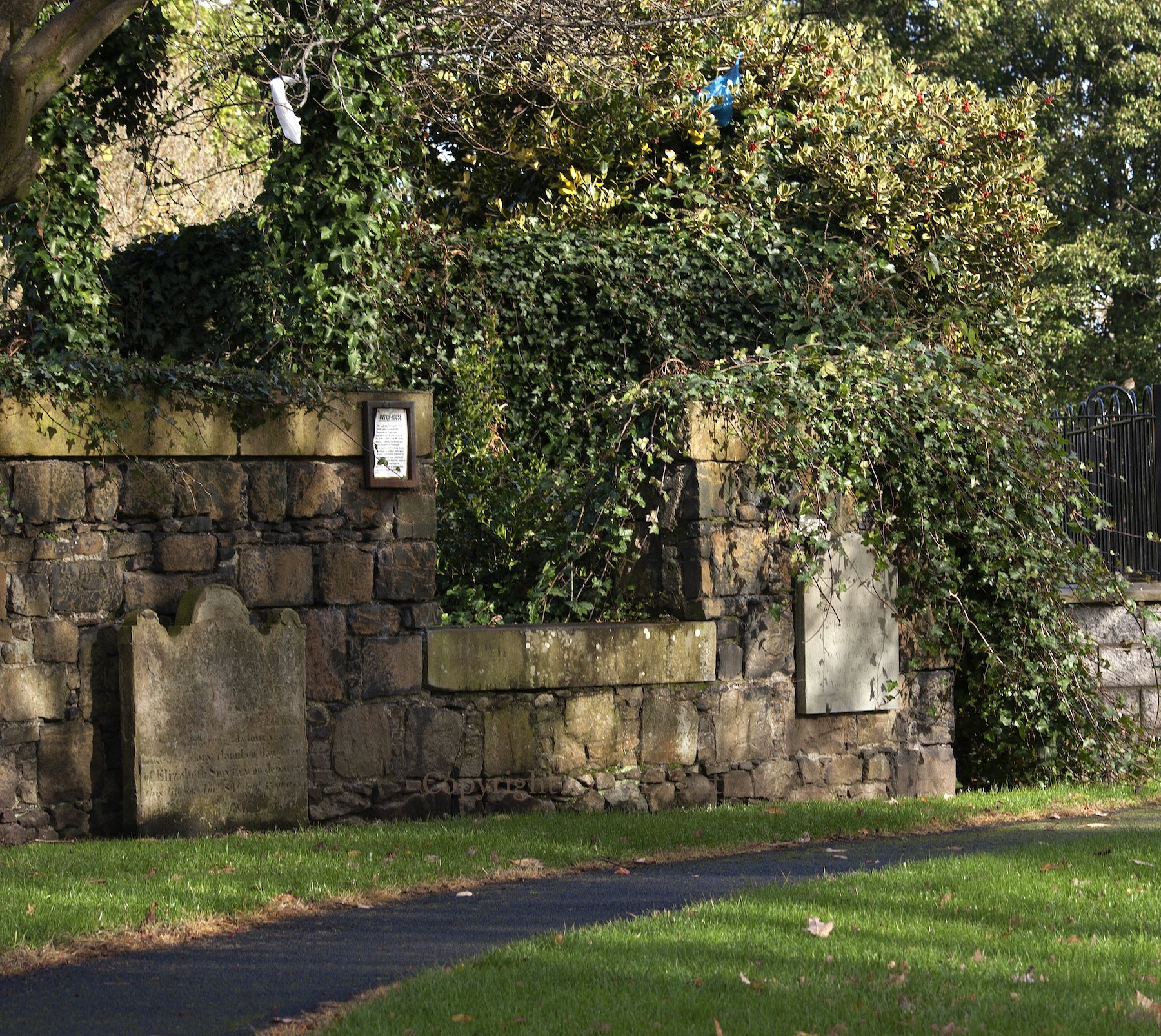
A plaque in the old Shankill graveyard. “Watch-House: This wall once formed part of a small building known as the “Watch-House” which was erected about the year 1830 by Mr. William Sayers and Mr. Israel Milliken, following the Burke and Hare sensation in Edinburgh. In it, relatives of the newly-buried kept watch to protect their dead from the unwelcome attention of body-snatchers who disinterred corpes [corpses] and sold them for medical research, or in the hope of securing articles of value which might have been buried with them.”
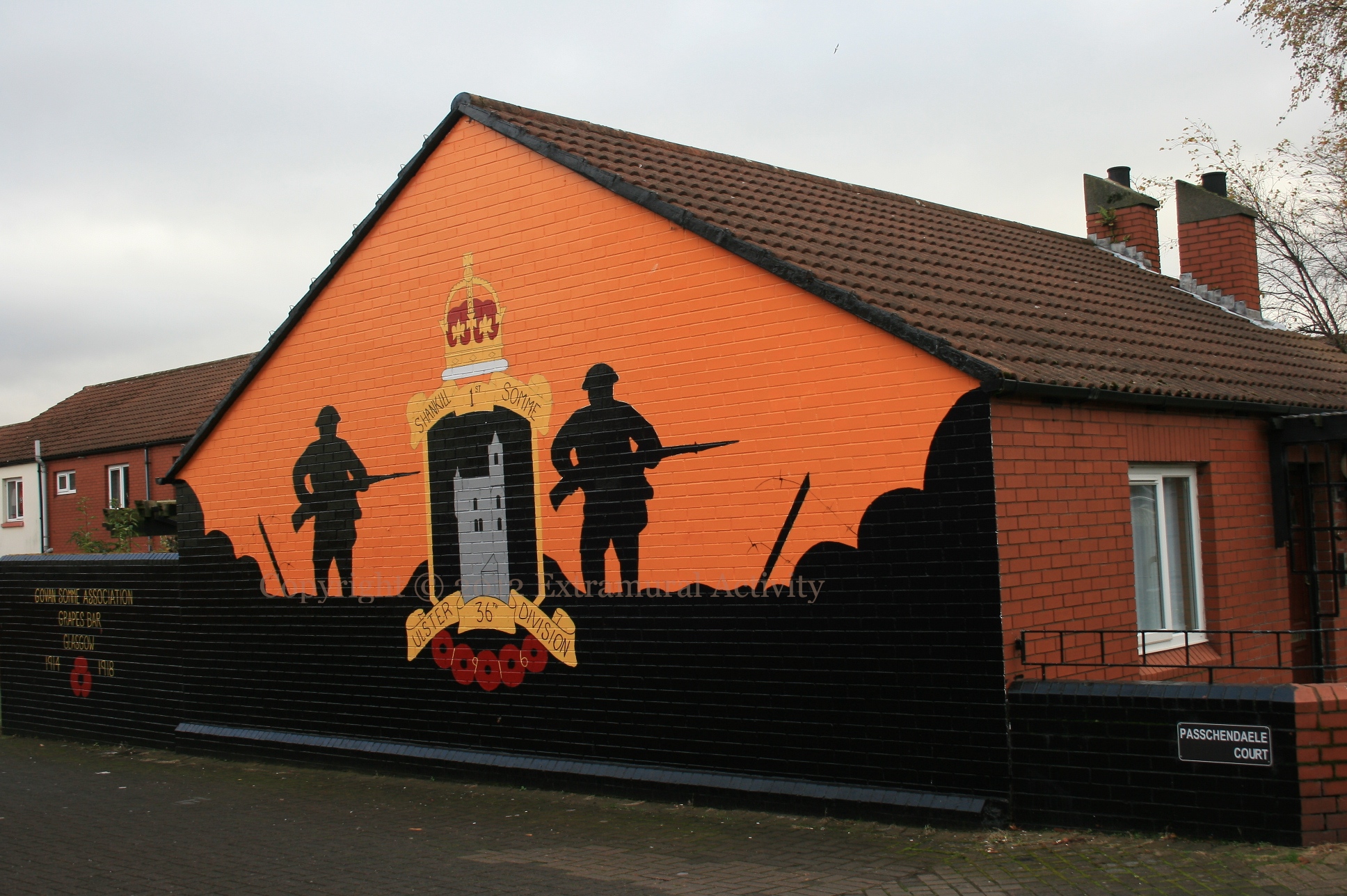
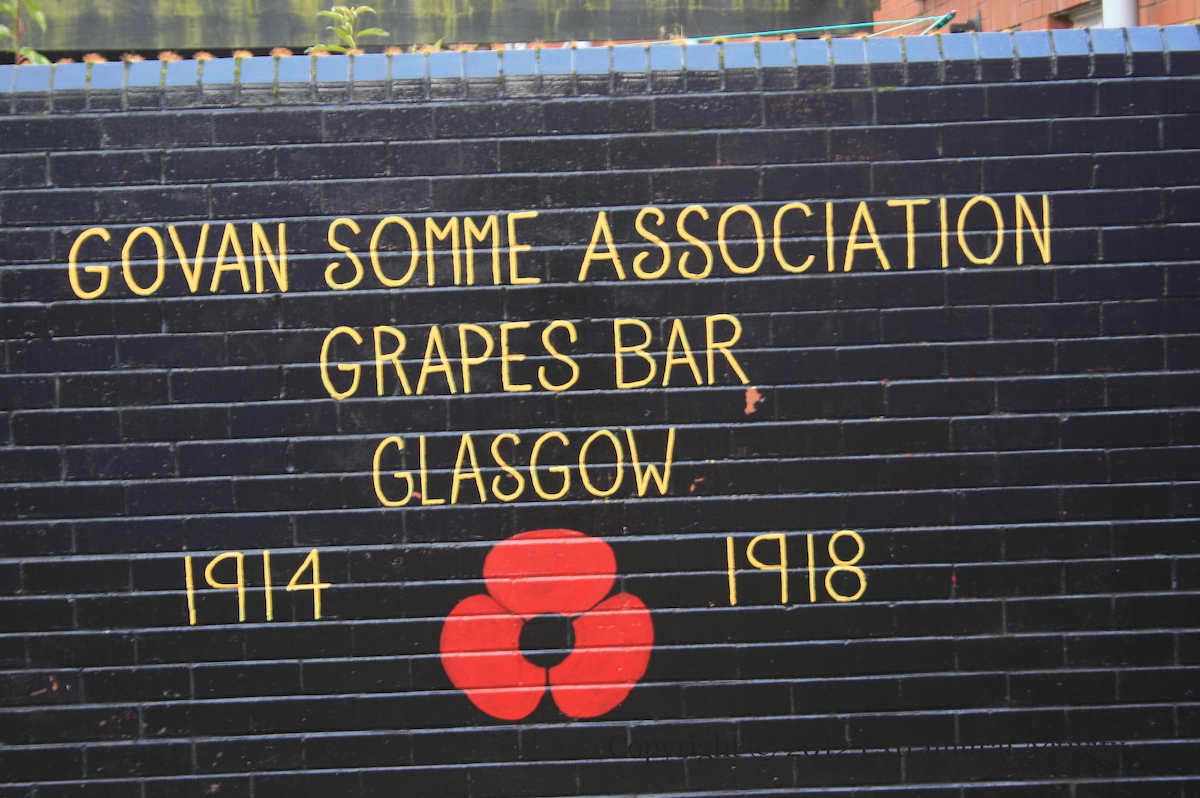
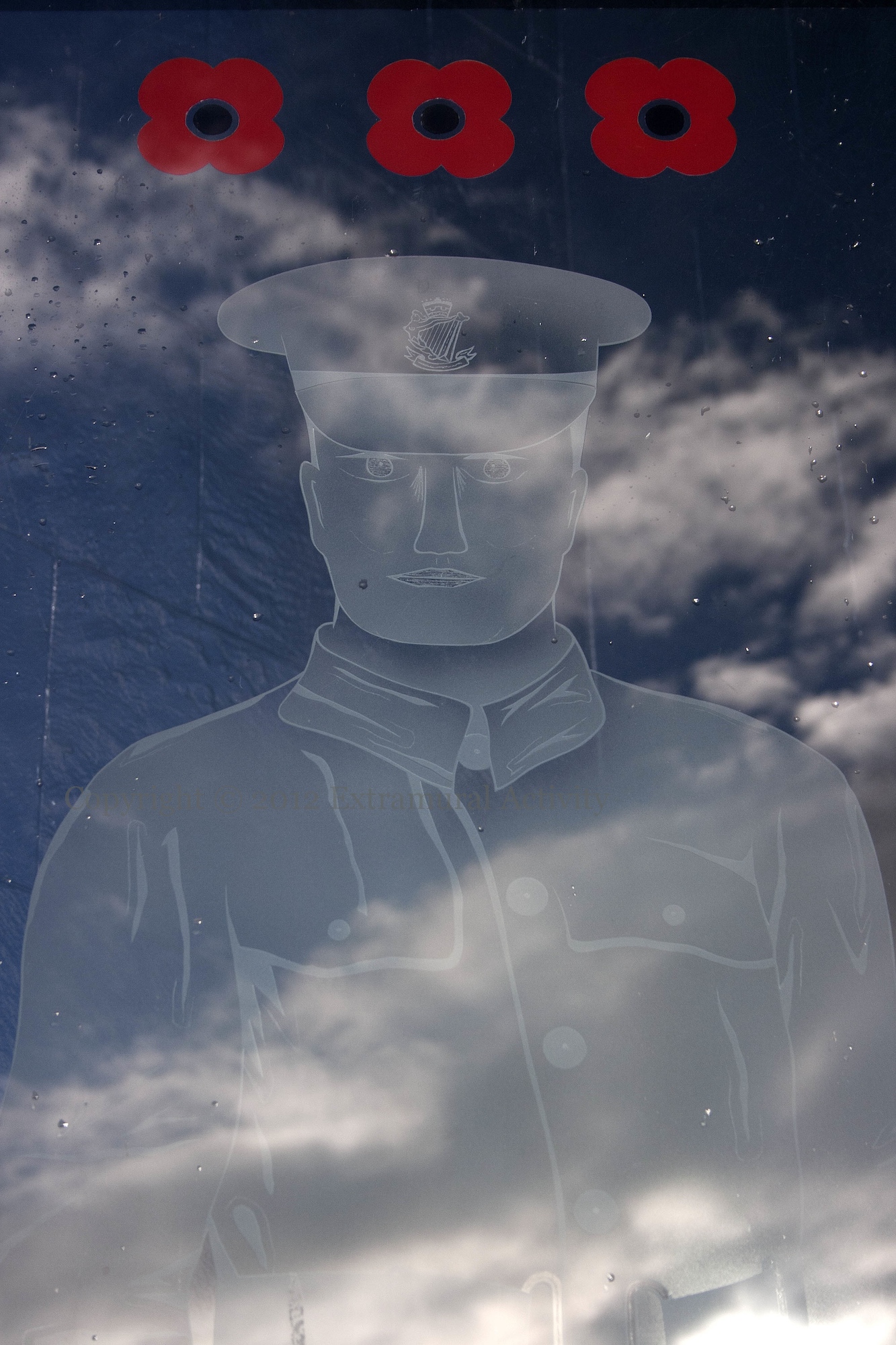
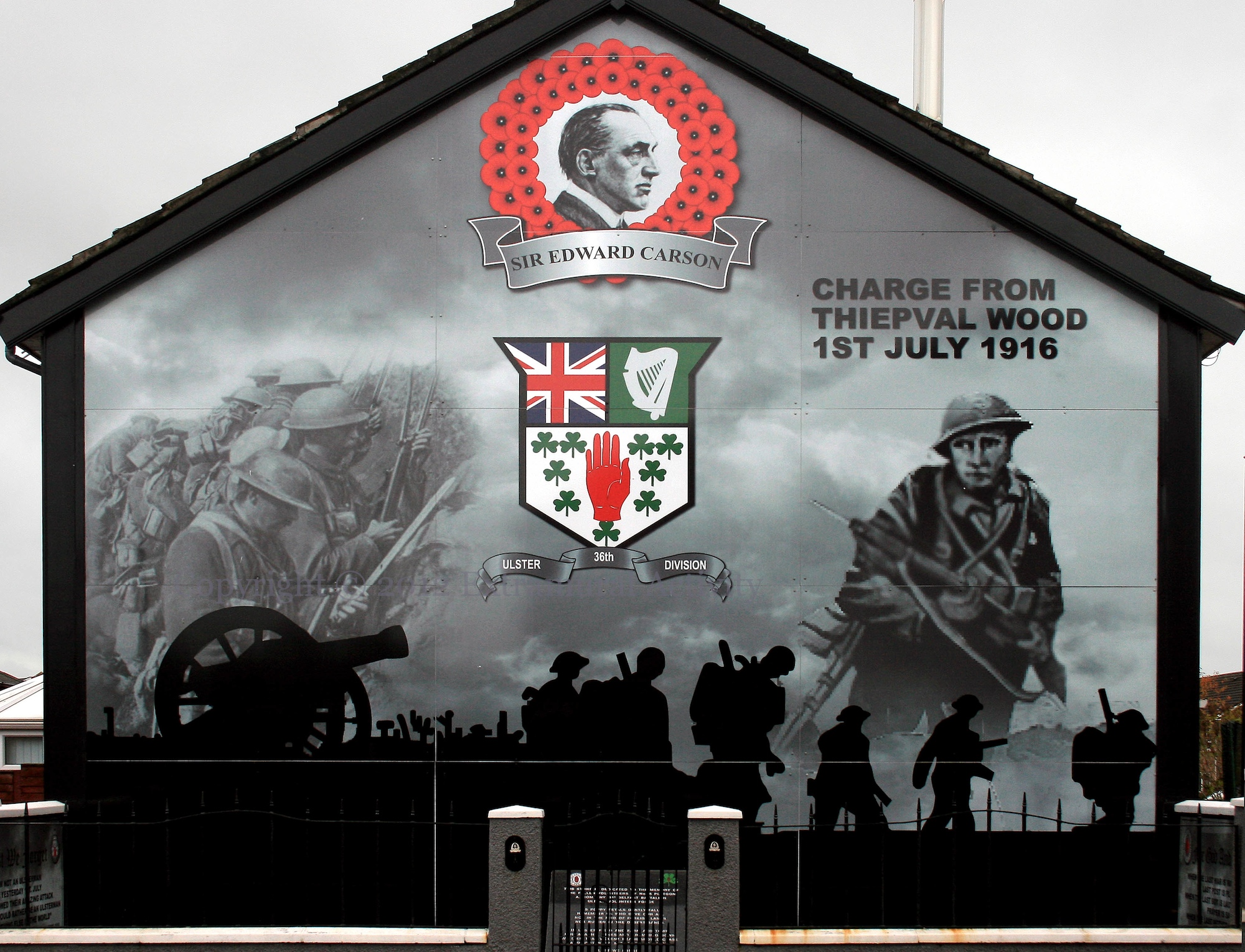
A mural commemorating the Battle of the Somme on the locally-named “Passchendaele Court” (a.k.a. Conway Walk, off Conway St.). See also Thiepval Street. Replaces the Tombo Kinner mural. With support from the Govan Somme Association, Grapes Bar, Glasgow.
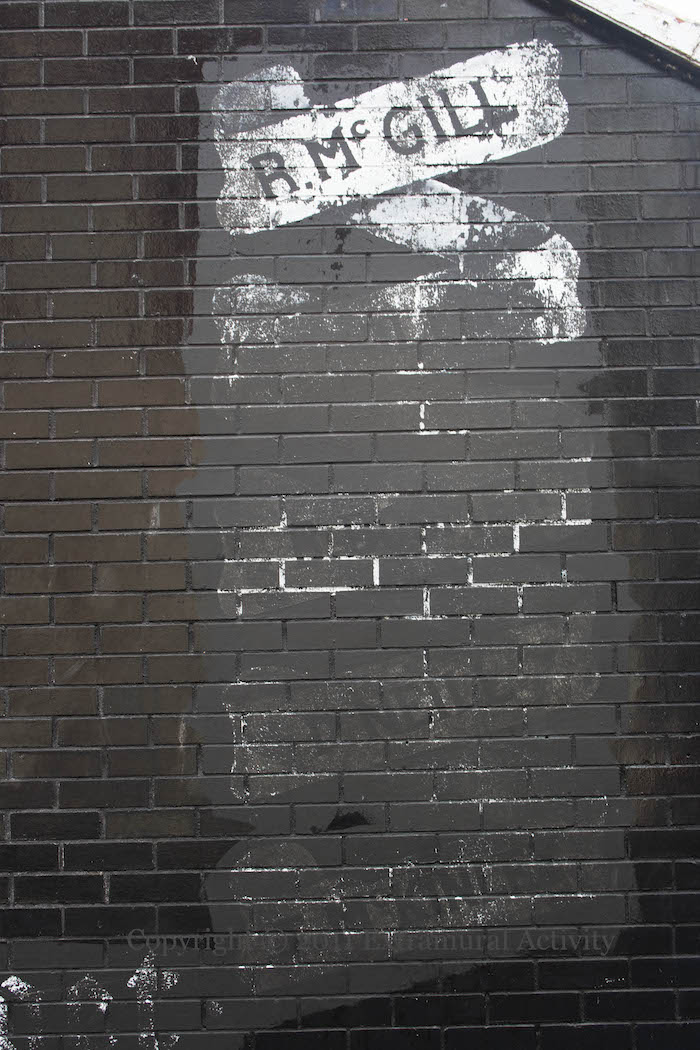
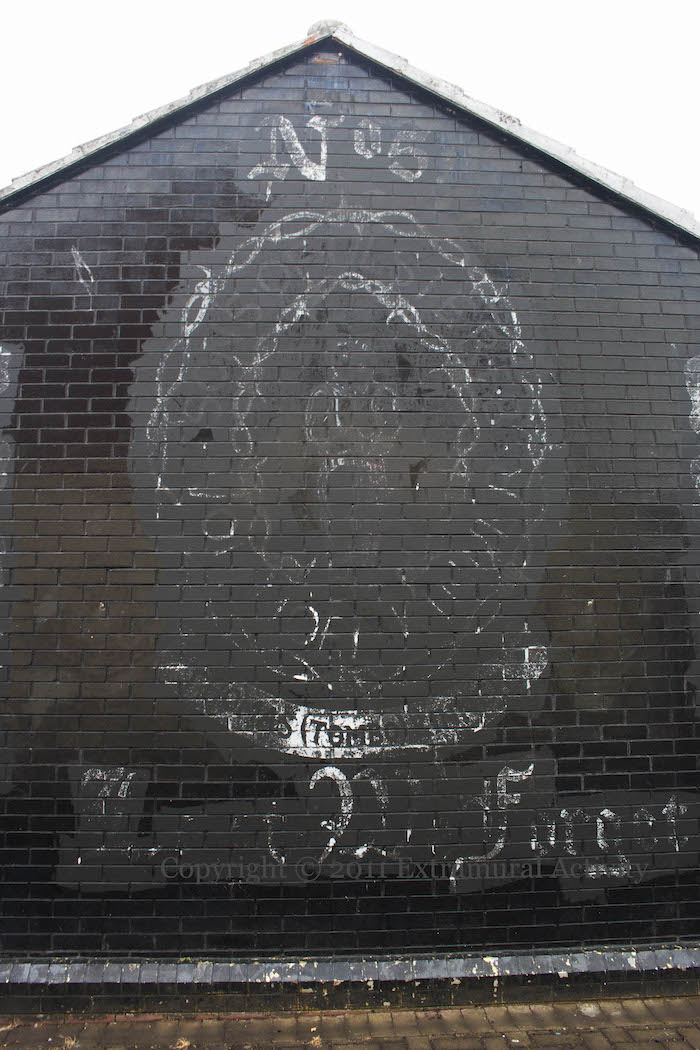
The images below of the previous mural blacked out are from September, 2011. For the mural in its prime, see M05506.
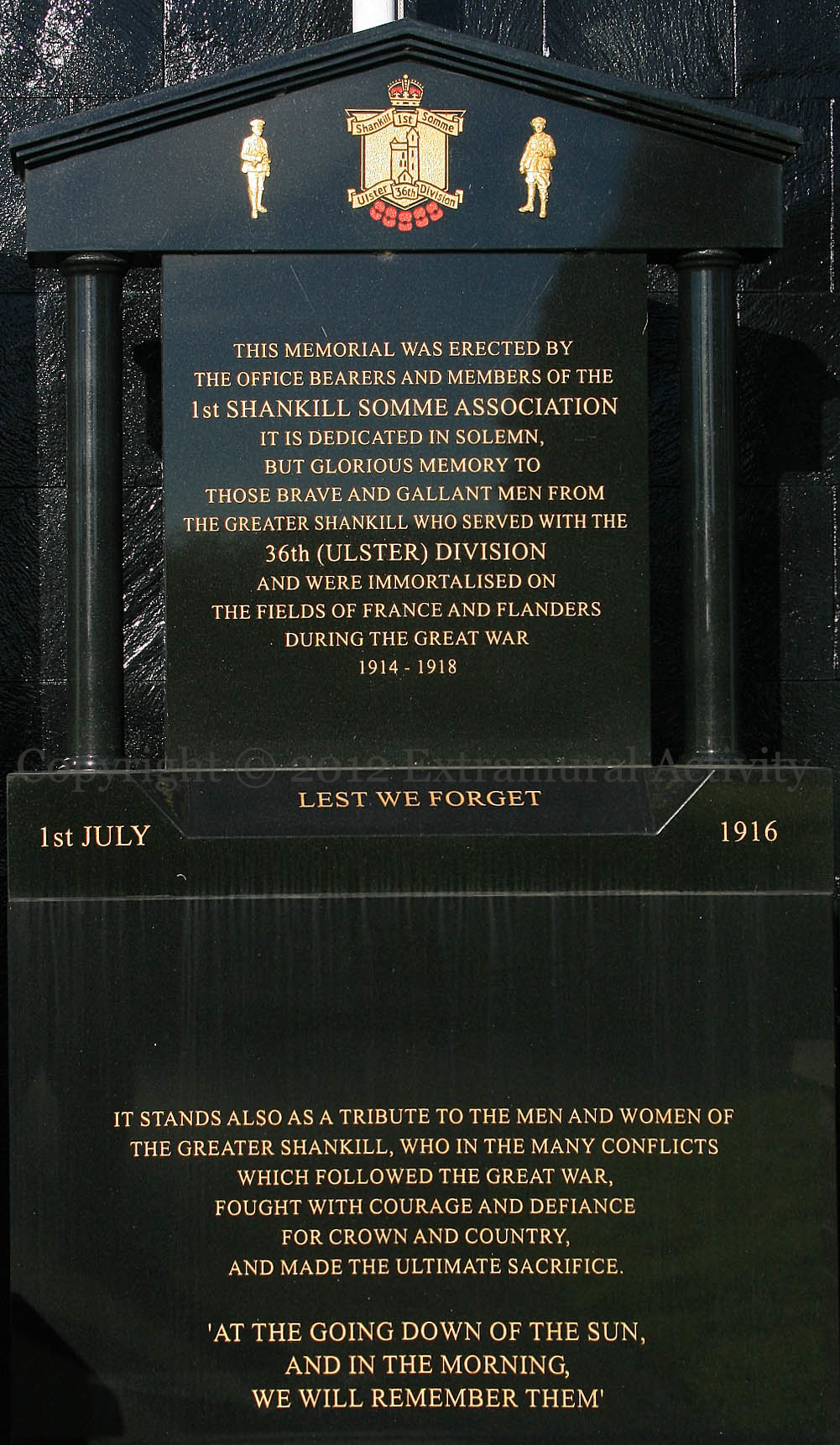
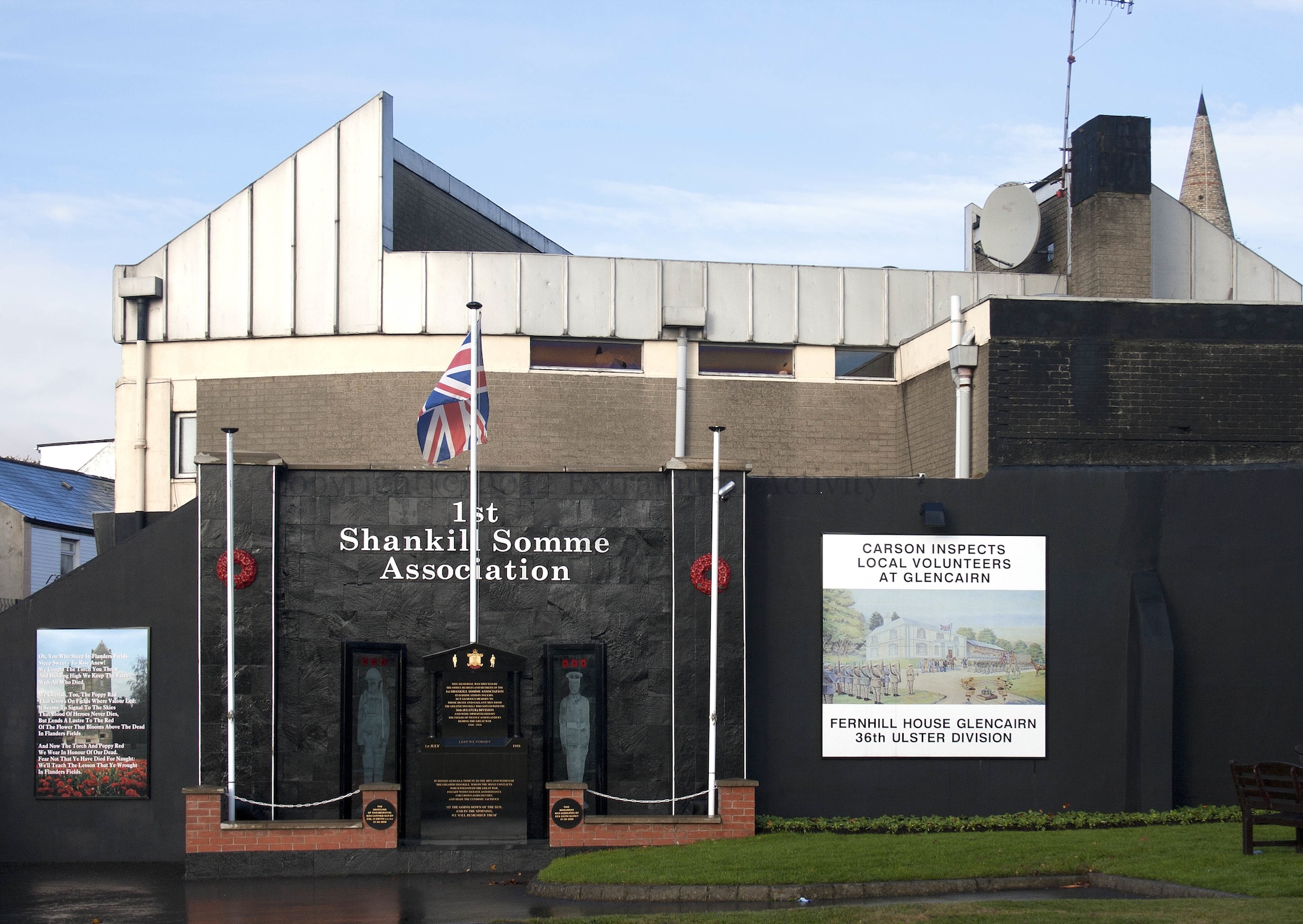
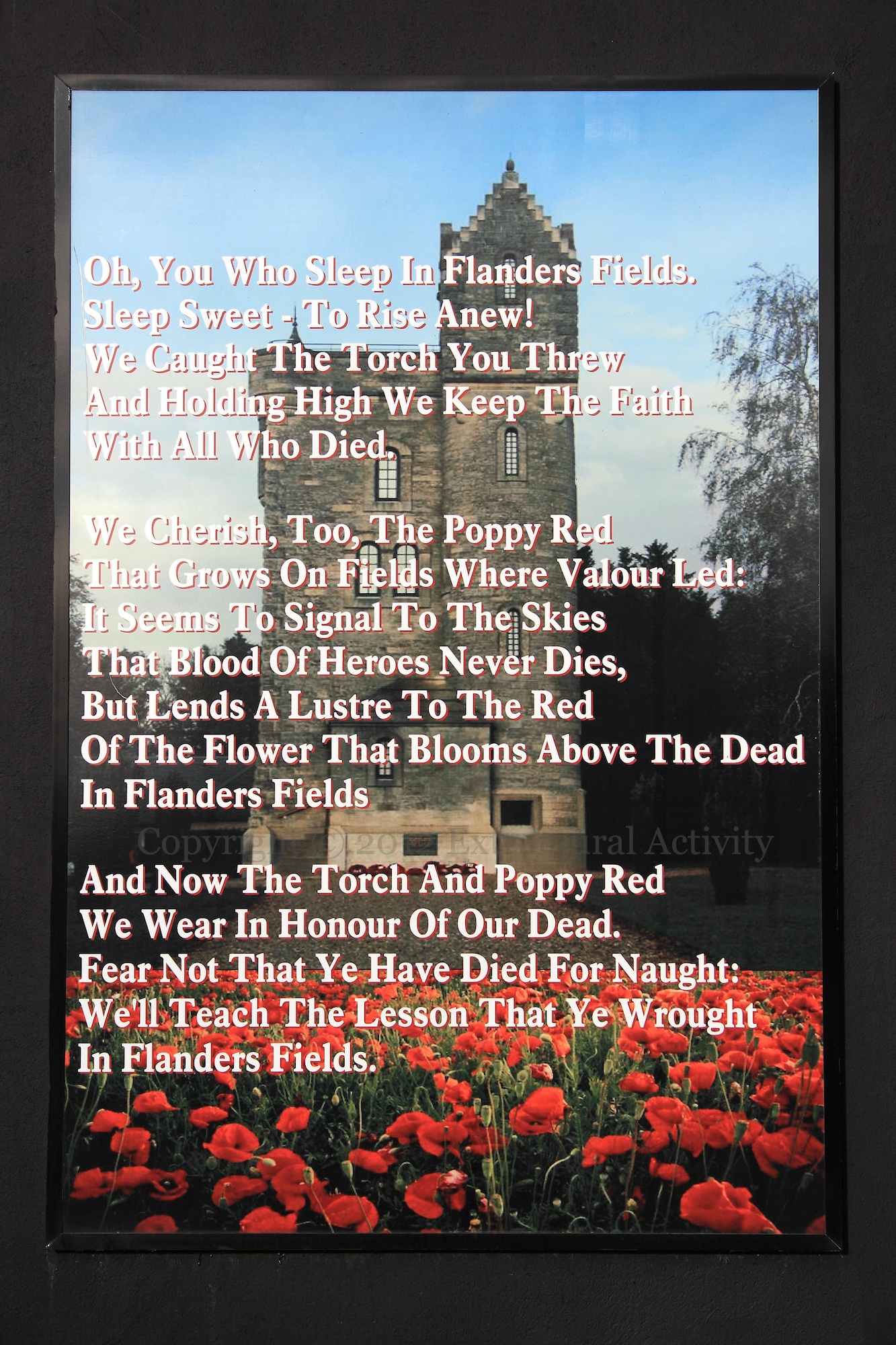
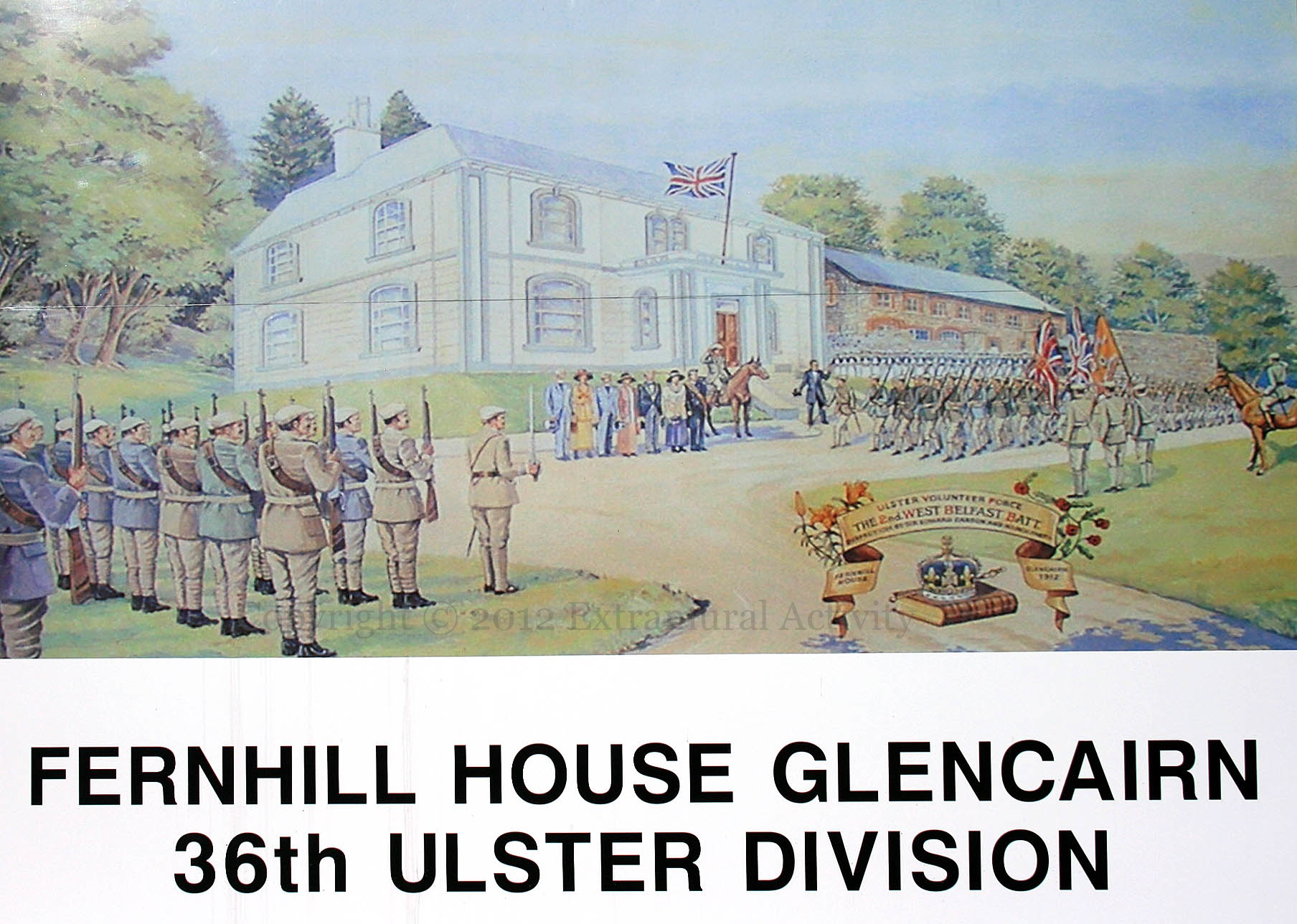
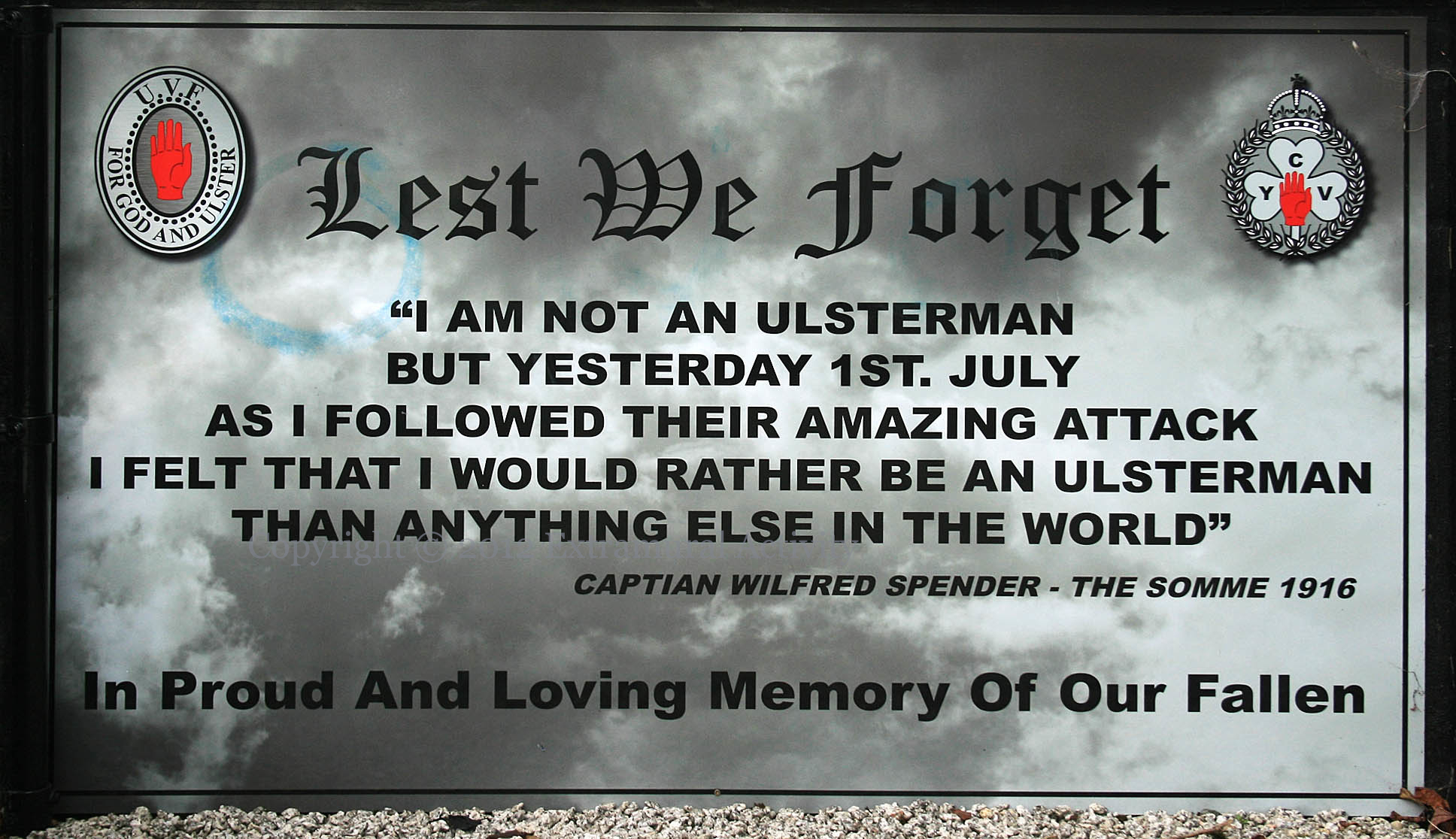
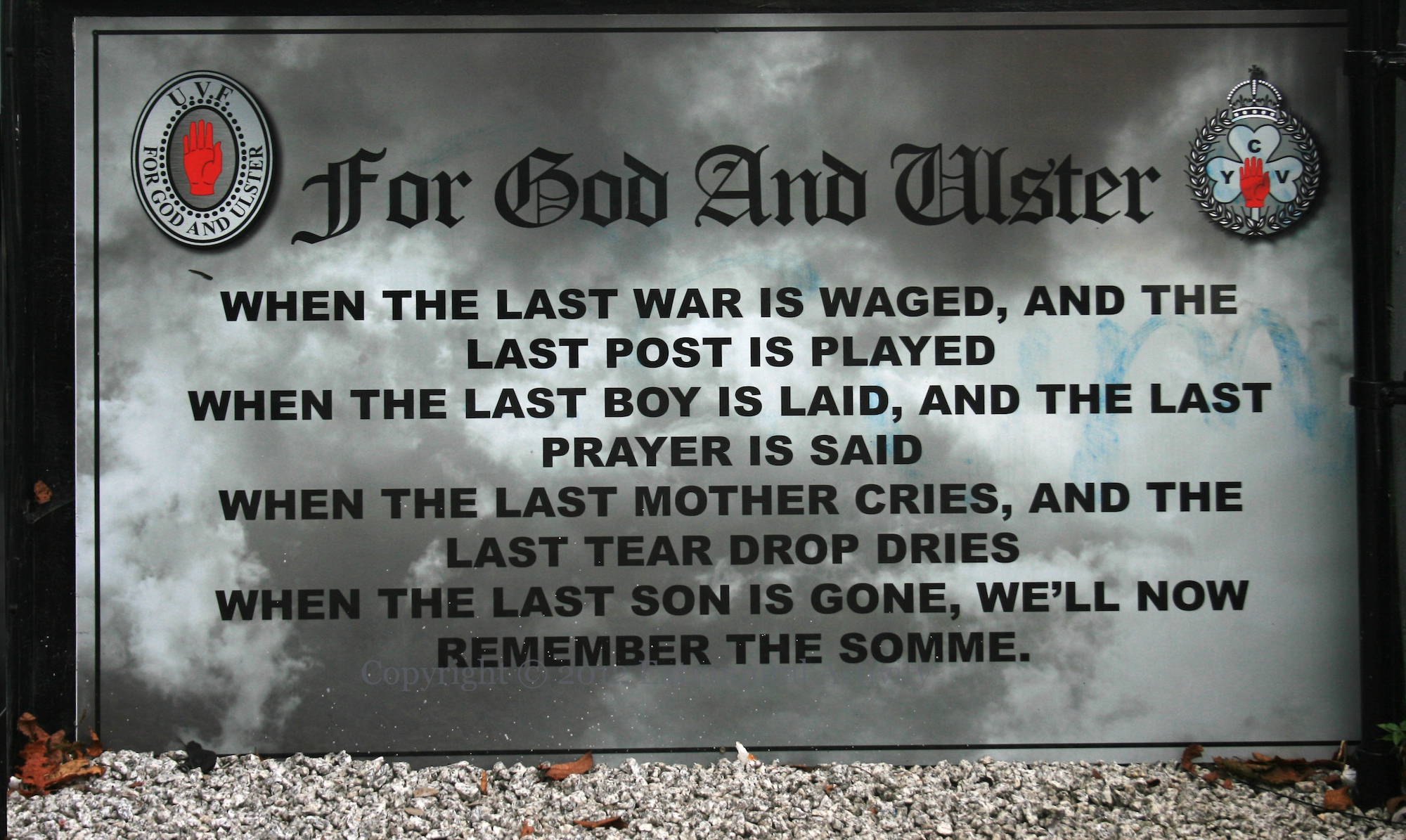
All of these images are of different parts of the Somme memorial next to the Shankill graveyard. There is an opening in the graveyard boundary wall which leads into the Somme memorial garden. The Mountainview Tavern, which featured several times during the troubles, can be seen behind the memorial, as well as the spire of St. Matthew’s Church.
oh you who sleep in flanders fields sleep sweet to rise anew we caught the torch you threw and holding high we keep the faith with all who died, we cherish too the poppy red that grows on fields were valour led, it seems to signal to the skies that blood of heroes never dies but lends a lustre to the red of the flower that blooms above the dead in flanders fields, and now the torch and poppy red we wear in honour of our dead fear not that ye have died for naught we’ll teach the lesson that ye wrought in flanders fields carson inspects local volunteers at fernhill house glencairn 36th ulster division, ulster volunteer force, the 2nd west belfast battalion
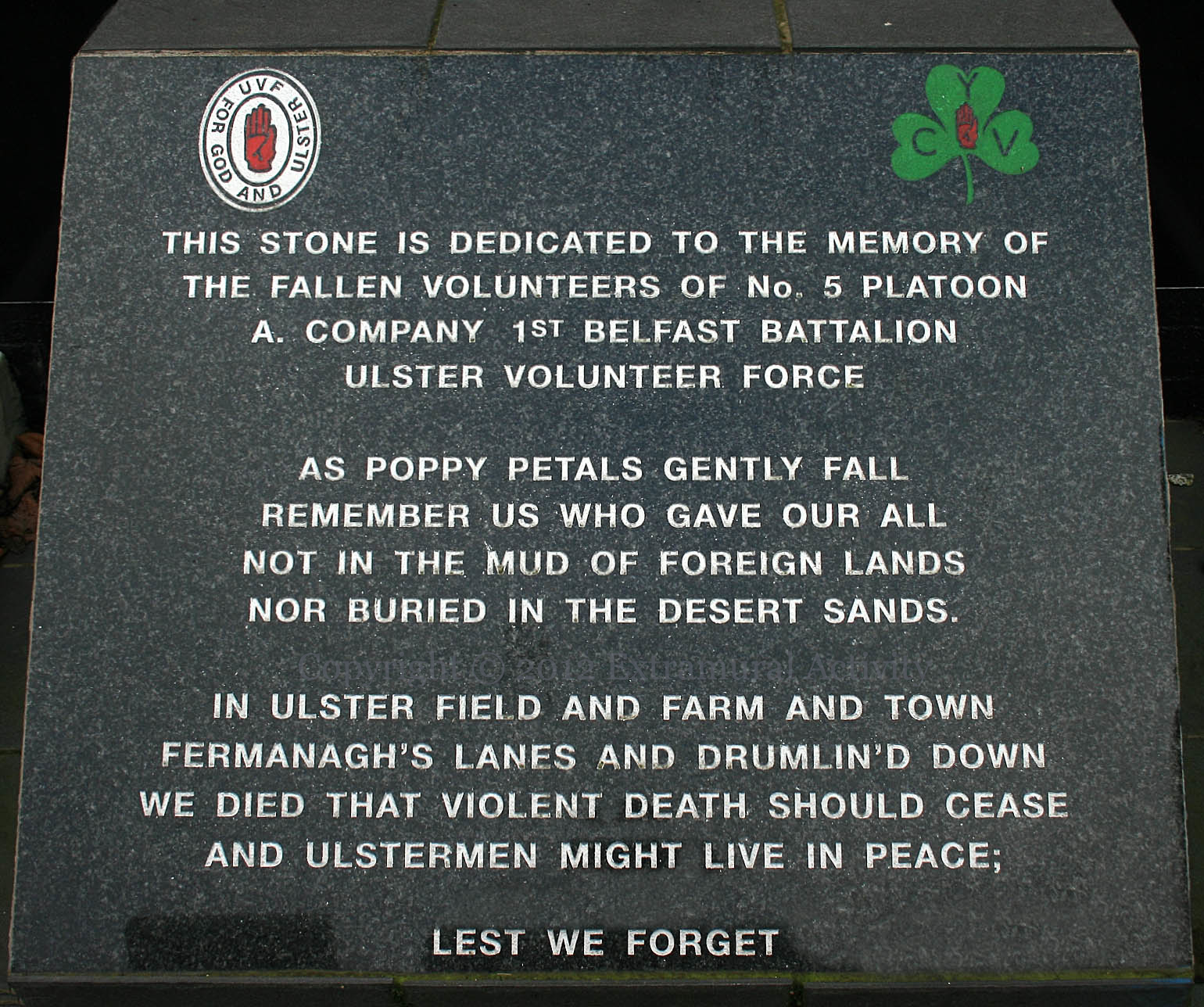
The nameplate on the lower corner of Northland Street now reads “Thiepval Street” and the Thiepval board above adorns the end wall (replacing an earlier mural to UVF A Company 5th platoon; the stone shown below, although not present in 2006, perhaps belongs to the era of the previous mural). On the other side of Conway Street is/was North Howard Walk where a plate now reads “Passchendaele Court“. It’s not clear whether the names have been changed officially or not. The names are unofficial (as of November 15th, 2012). In the New Lodge earlier this year (April-May, 2012), Fishers Court became McGurk’s Way (U.tv | BBC-NI).
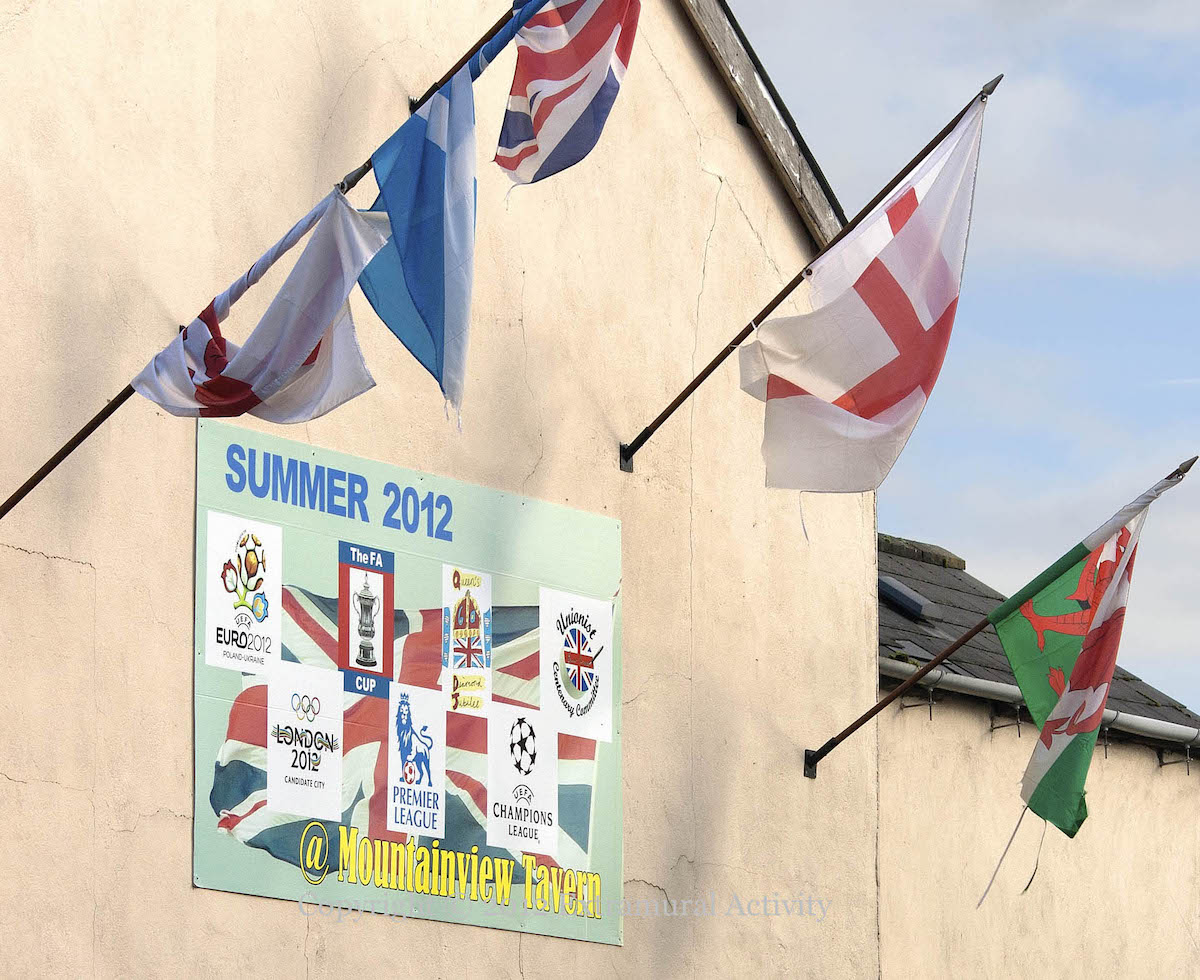
Summer 2012 saw a number of major events, including Euro2012, the Olympics, Queen Elizabeth’s Diamond Jubilee, and planning by the Unionist Centenary Committee – all featured on a promotional board over the Cambrai Street courtyard of the Mountainview Tavern.
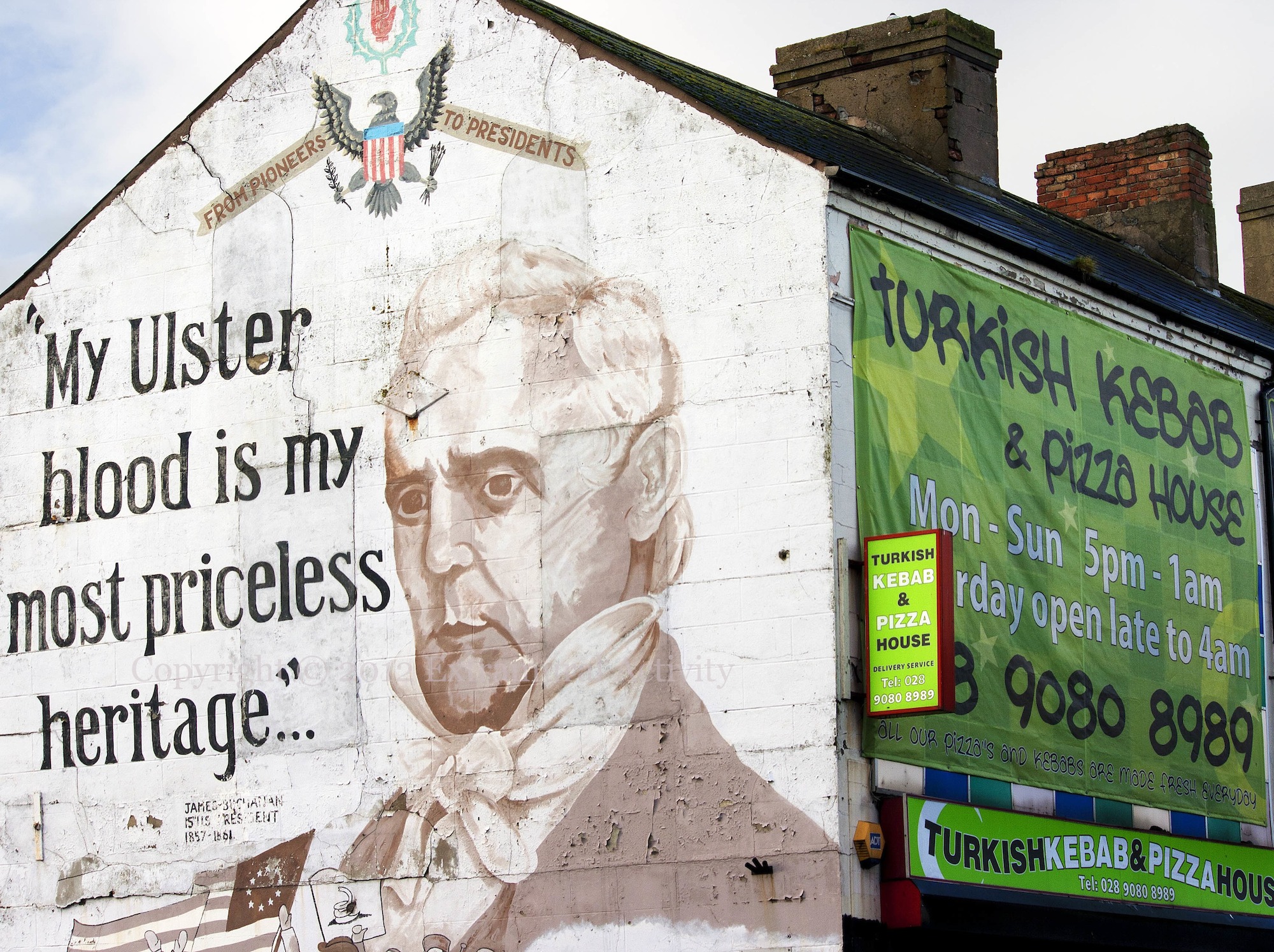
An Ulster-Scots-American president and a Turkish-Northern-Irish kebab shop. On Ainsworth St. and Shankill Rd. Here is a straight-on shot of the mural from 2004.
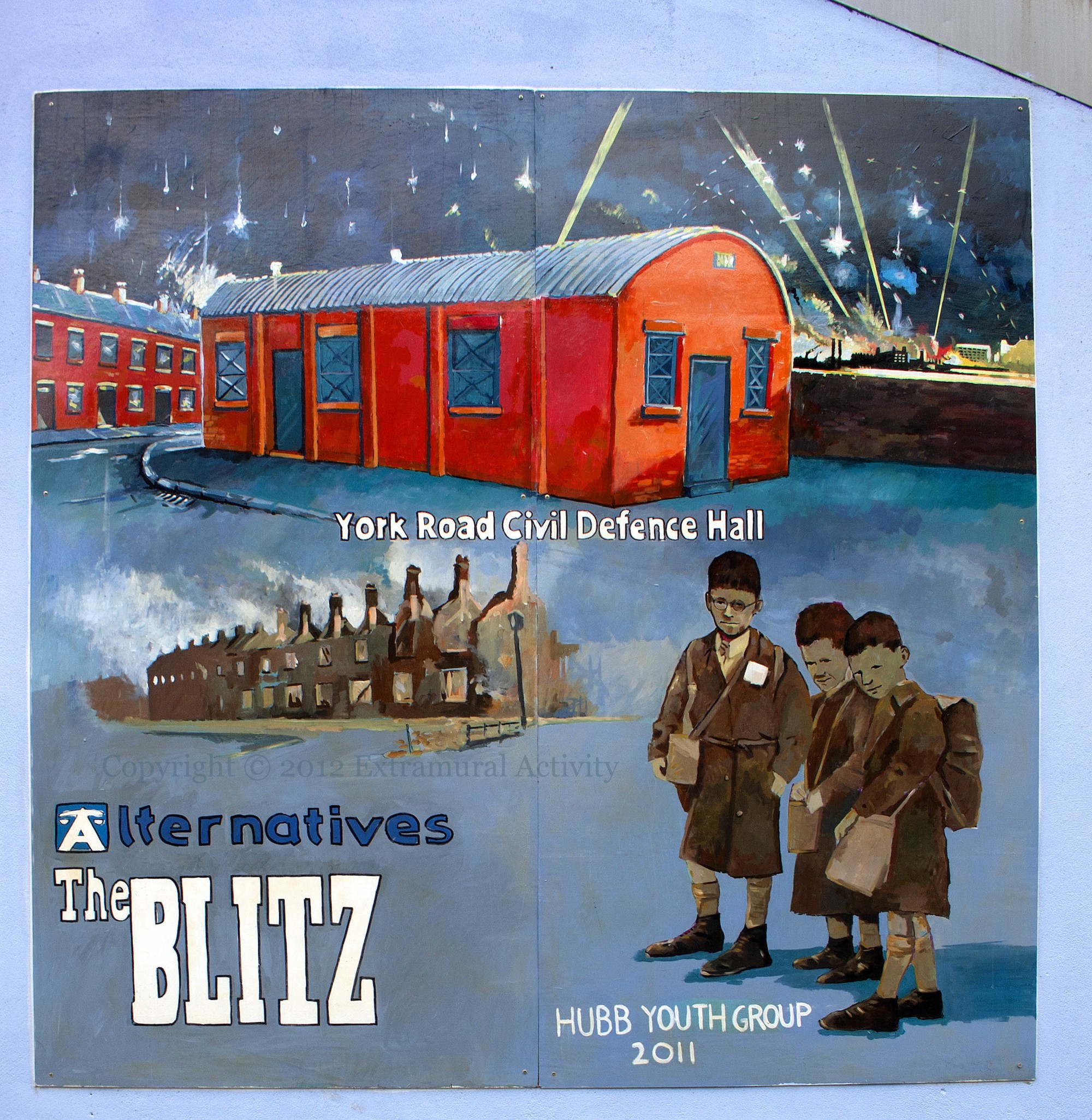
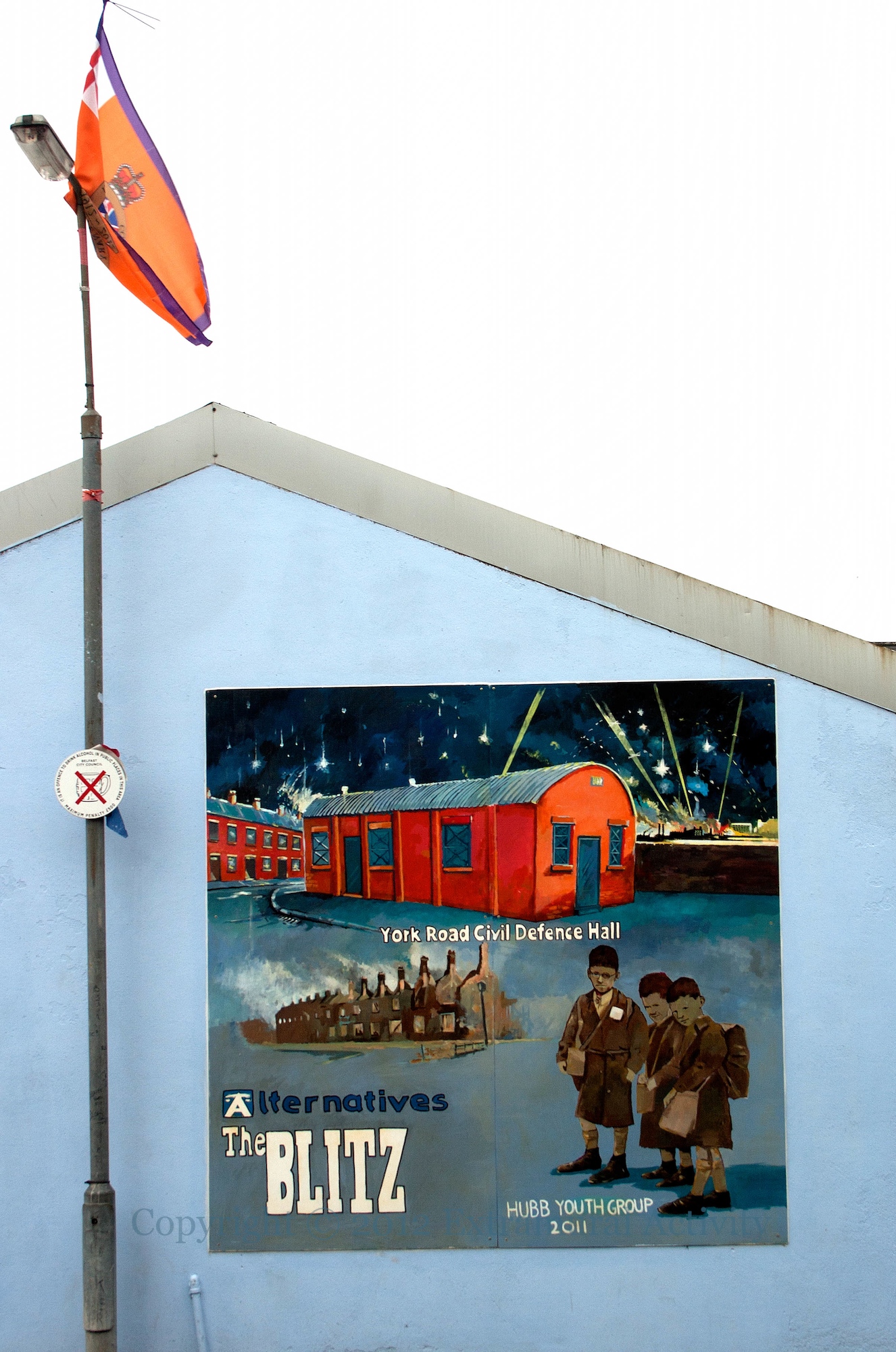
This board is on the end of the Hubb Community Resources Centre and Bowling Club in St. Vincent Street; across the street is Crusaders football ground.
From the Tele: “The building was once the home for local Civil Defence during World War II’s ‘Blitz’. This building is now the one of the last remaining Civil Defence structures in Northern Ireland and has also played home to the local Senior Bowls Club for many years.” The mural also shows bombed-out homes and children going off to the countryside. Here is a short documentary about the 1941 Belfast Blitz (youtube).
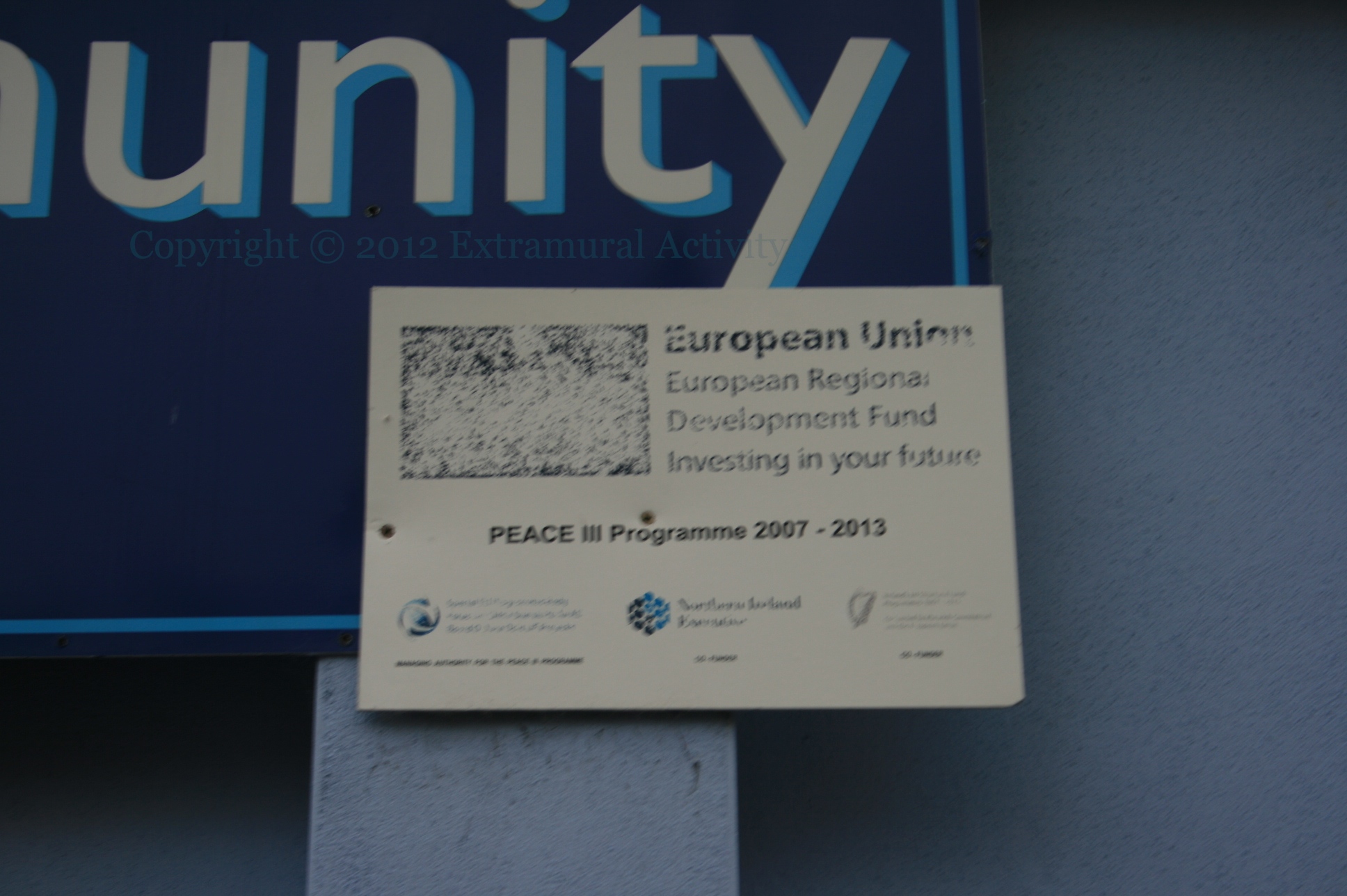
The wide shot immediately below explains one meaning of the word “Alternatives”. The Hubb has cross-border financial support — note the (Irish Republic) Dept. of Foreign Affairs sponsorship in the information plaque.
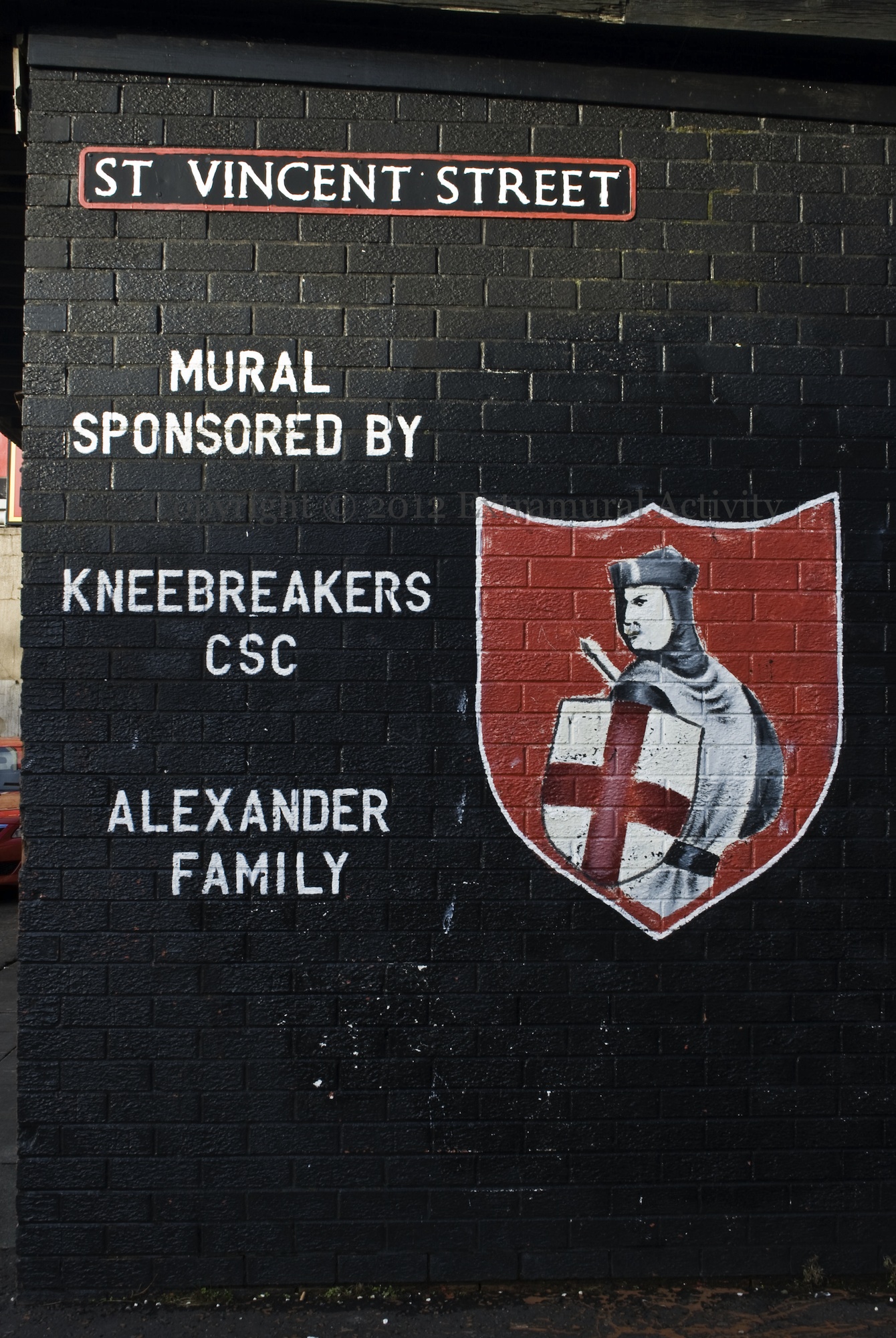
(Part of) A crusader mural from the wall of Crusaders football ground, in St Vincent Street (site of the titanic mural and blitz board from last week). Crusaders are known as ‘The Hatchet Men’ within the soccer world.
This image replaced a hooded gunman image. This space rises to a height of about 6 feet – so when you were driving out along Shore Road the gun appeared aimed at about driver head height – quite intimidating!
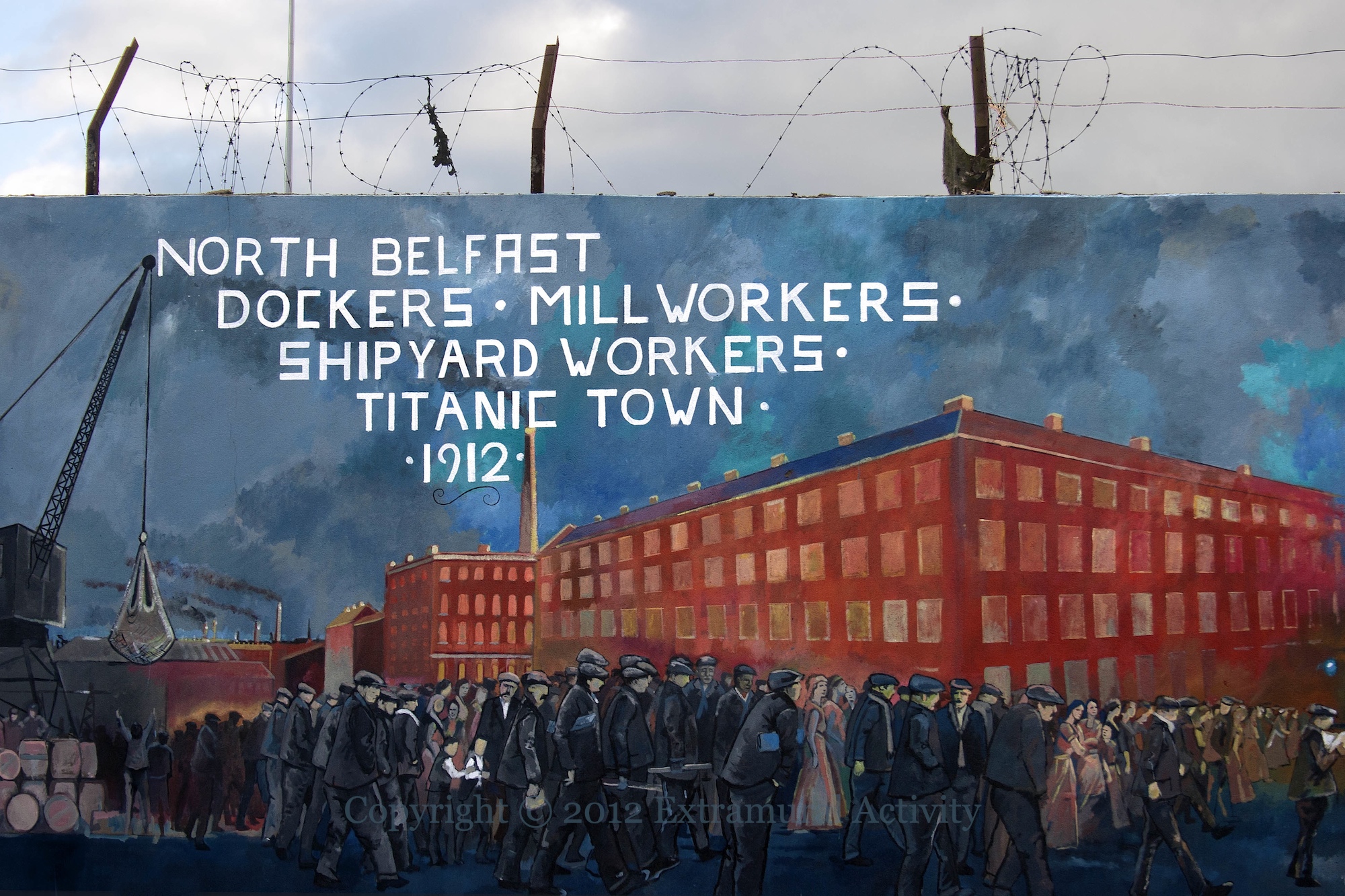
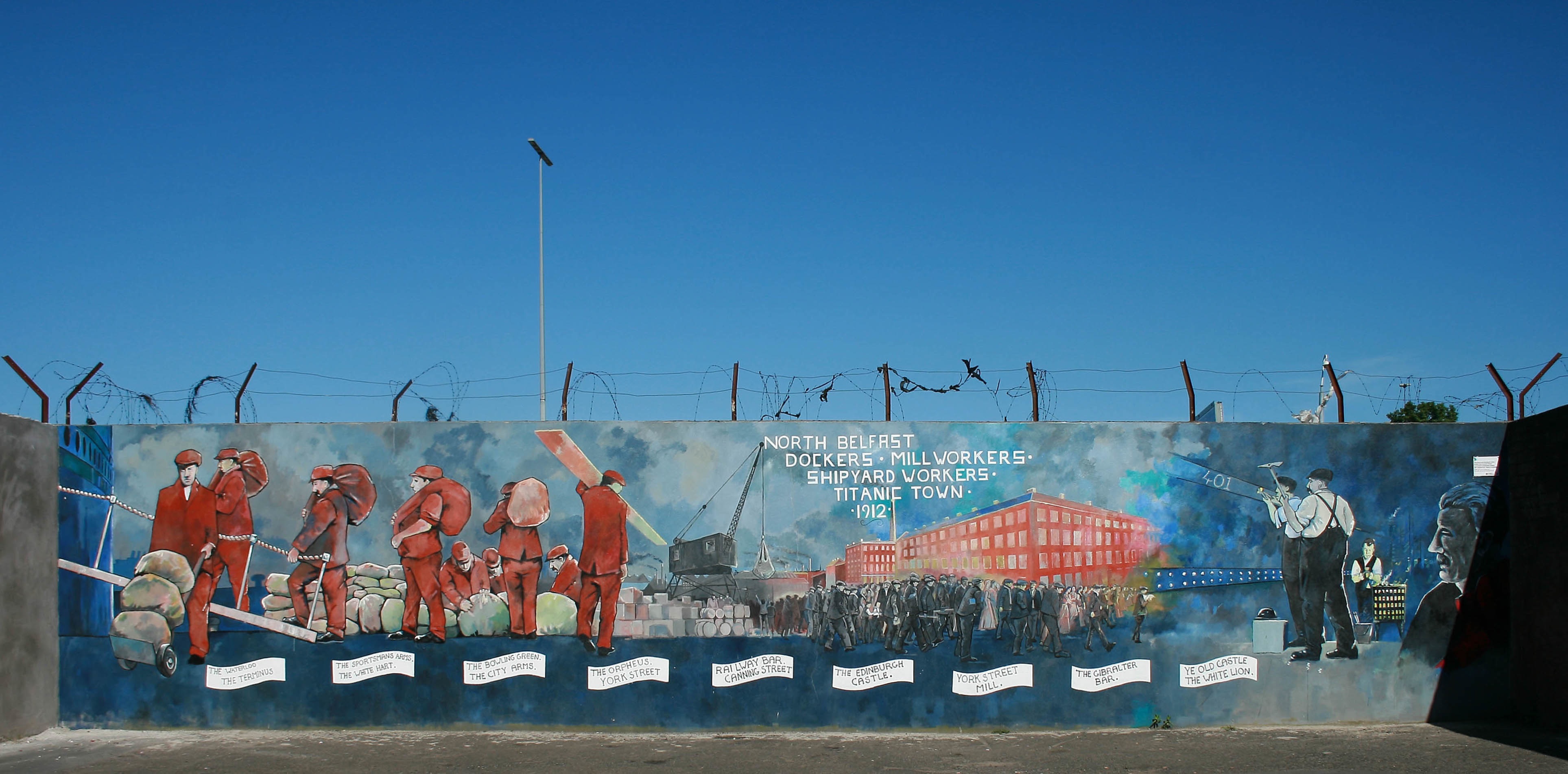
The mural features “North Belfast dockers, millworkers, shipyard workers [from] Titanic town 1912”.
Along the bottom are the names of various Belfast pubs and other businesses: The Waterloo, The Terminus, The Sportsman’s Arms, The White Hart, The Bowling Green, The City Arms, The Orpheus – York Street, Railway Bar – Canning Street [image from 1970], The Edinburgh Castle [the boat of the Union-Castle line, launched 1910, built at H&W?], York Street Mill, The Gibralter [sic] Bar [whose then-owner was killed in 1972], Ye Old Castle [a bar (and restaurant?) bombed in 1971], The White Lion. Please leave a comment if you can add any information about these place-names.
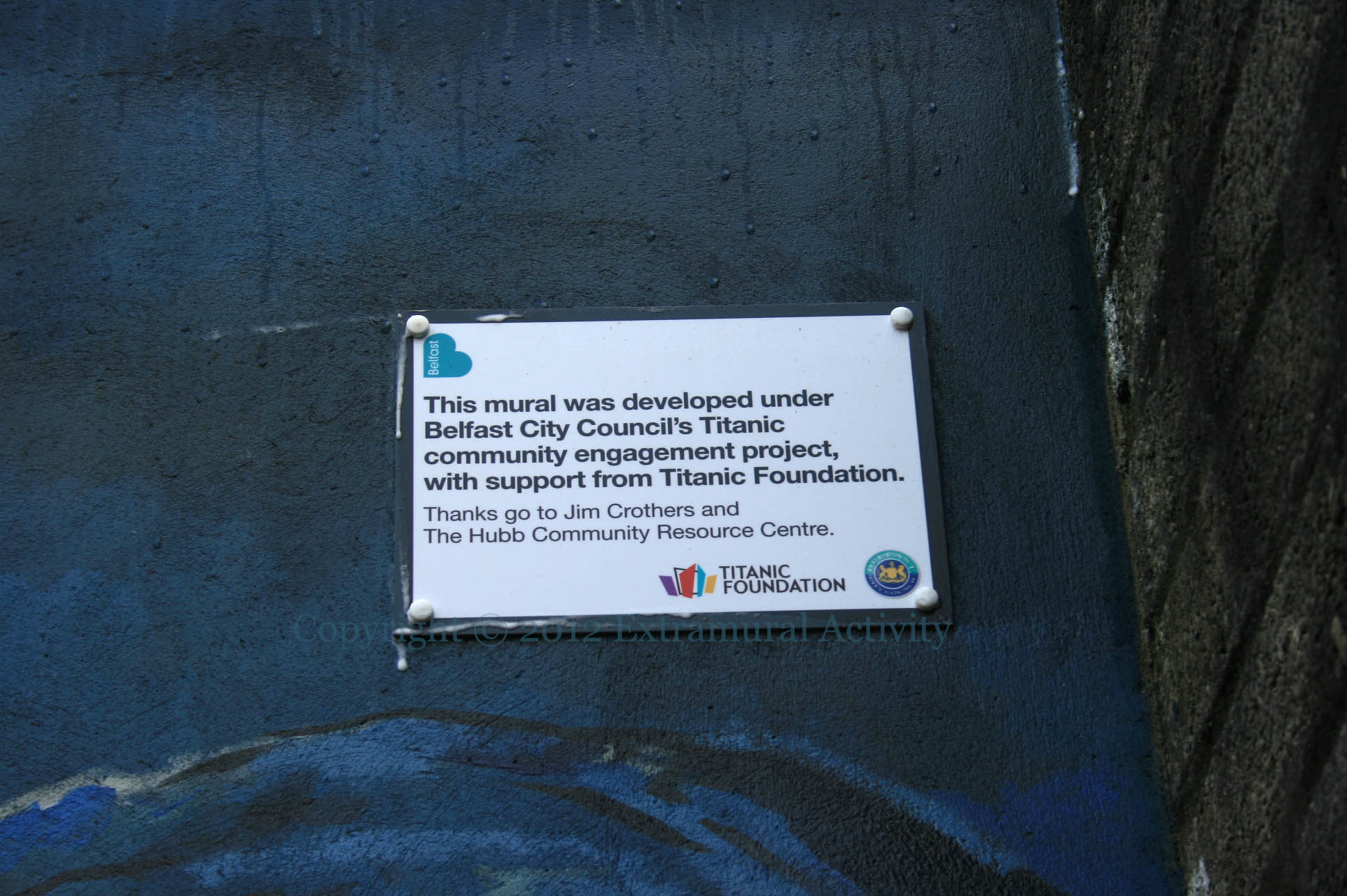
A close-up of the info plaque at the top right can be found below. The piece was painted by Jim Russell from Glasgow.
The Public Records Office of Northern Ireland (PRONI)’s collection of photographs of Belfast, 1912-1914 (some actually from 1911 and 1915) contains various shots of the area.
There are always cars parked in front of the mural, which is at the blind end of St. Vincent Street, next to Crusaders’ football ground. But finally we have captured it entire, automobile-free, in an extra-large (3854 pixels wide) image.
 Seosamh Mac Coille Collection