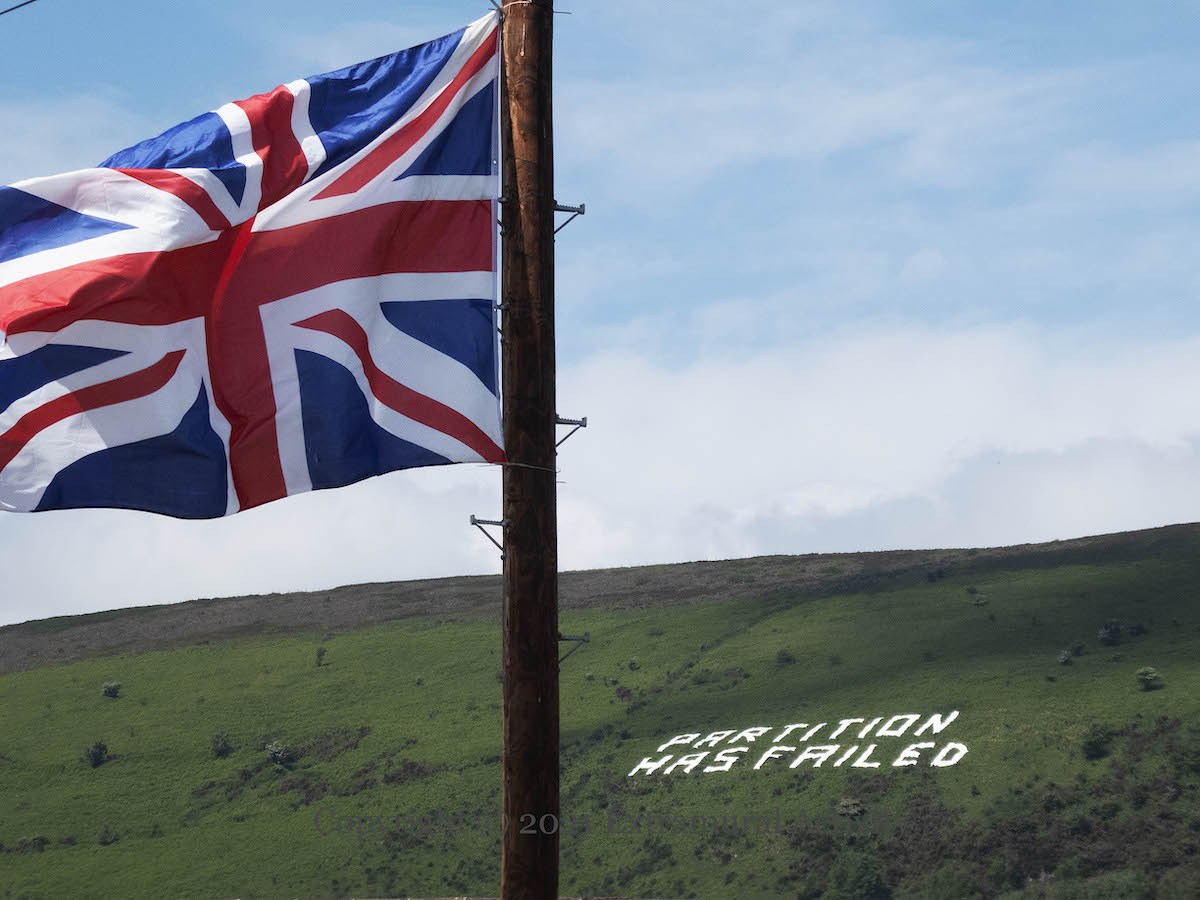
On June 22nd, 1921, the parliament of Northern Ireland was opened by George V at Belfast’s City Hall. In his address to the assembled dignitaries, he said “I have … come in person, as the head of the Empire, to inaugurate this parliament on Irish soil. I inaugurate it with deep felt hope and I feel assured that you will do your utmost to make it an instrument of happiness and good government for all parts of the community which you represent. This is a great and critical occasion in the history of the Six Counties … I pray that My coming to Ireland to-day may prove to be the first step towards an end of strife amongst [Ireland’s] people, whatever their race or creed.” “Partition has failed” to answer his prayer.
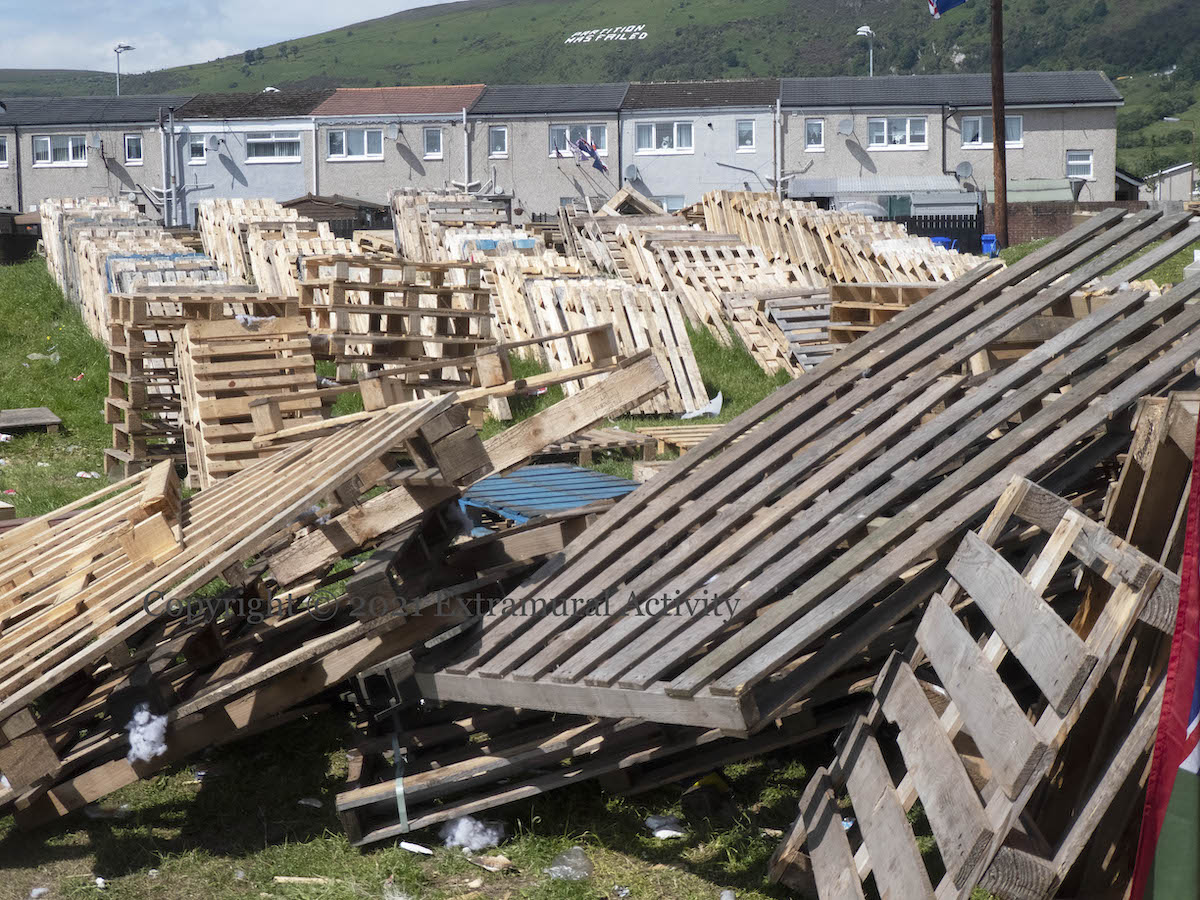
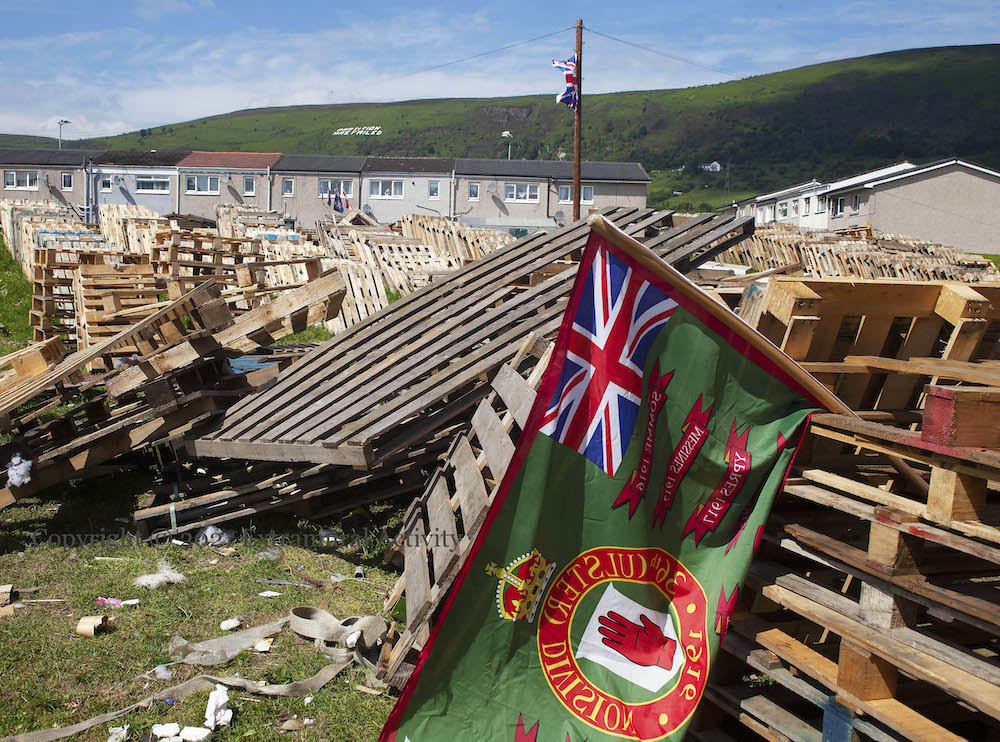
Above: the latest message on Slıabh Dubh; below: the mountain from the bonfire pallets collected on the Highfield estate.
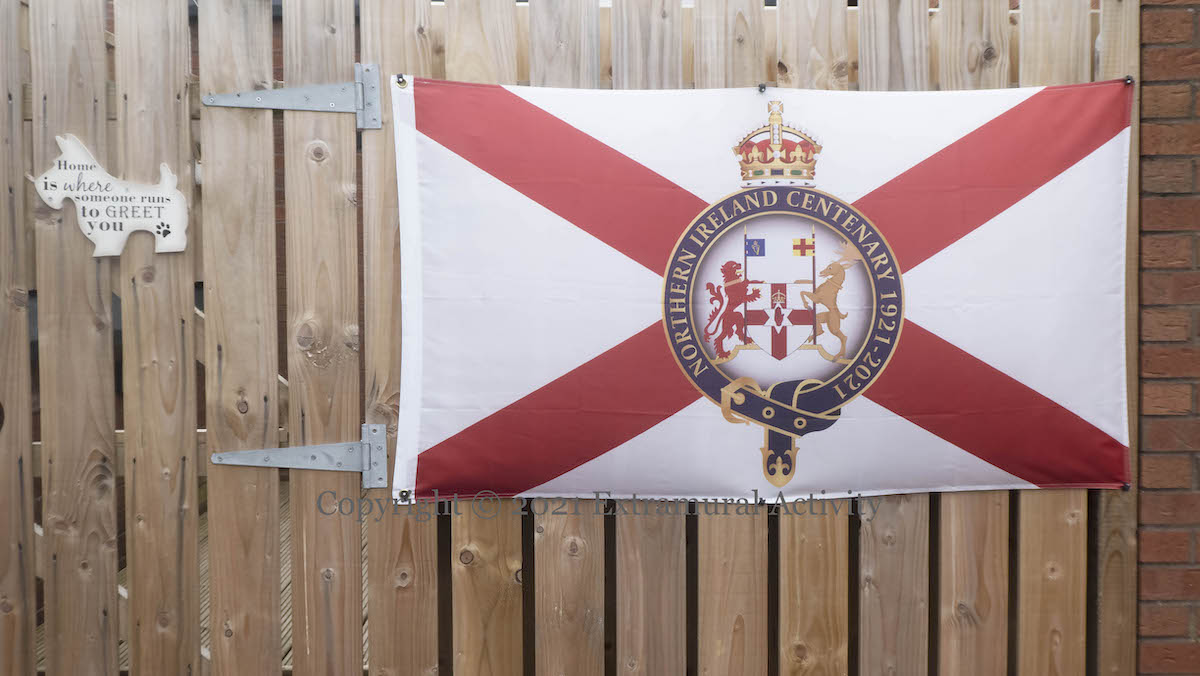
The lion (England) and the unicorn (Scotland) … and the Scottie dog … heraldic supporters of the United Kingdom’s and Northern Ireland’s coat of arms, in this the centenary year of the state. “Home is where someone runs to greet you.”
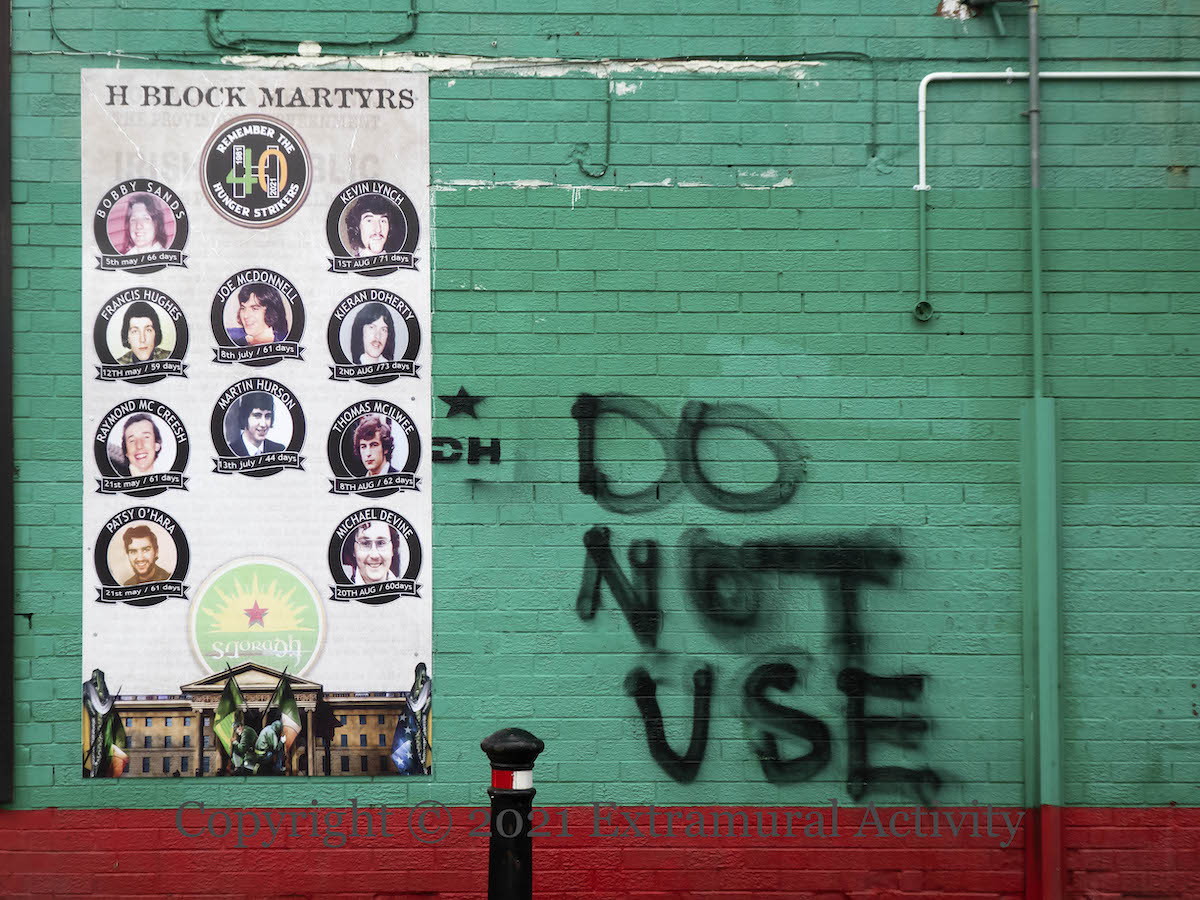
The “Do not use” sign – from last year – is Saoaradh (web) reserving a wall in Braemar St (on the Falls Road) that has never (to our knowledge) been used by anyone else. As the image above shows, the space is now being used – in part – by a hunger strike 40th anniversary board.
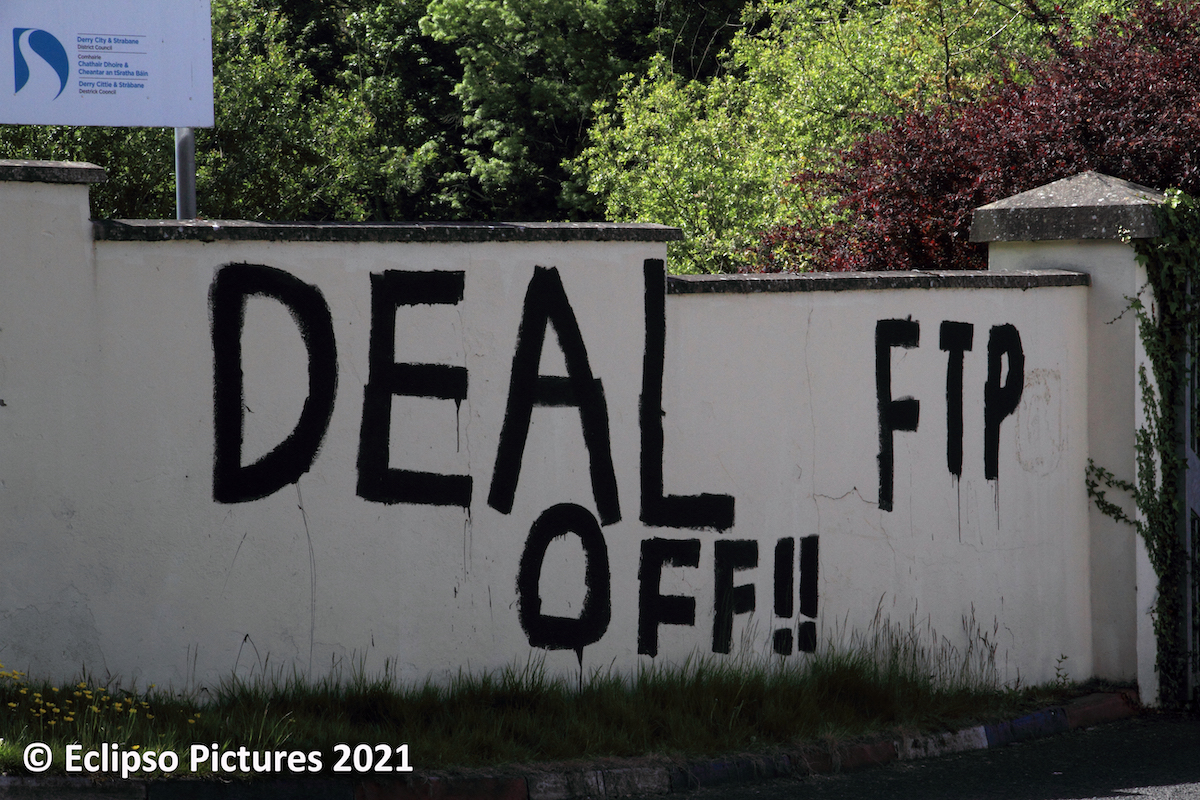
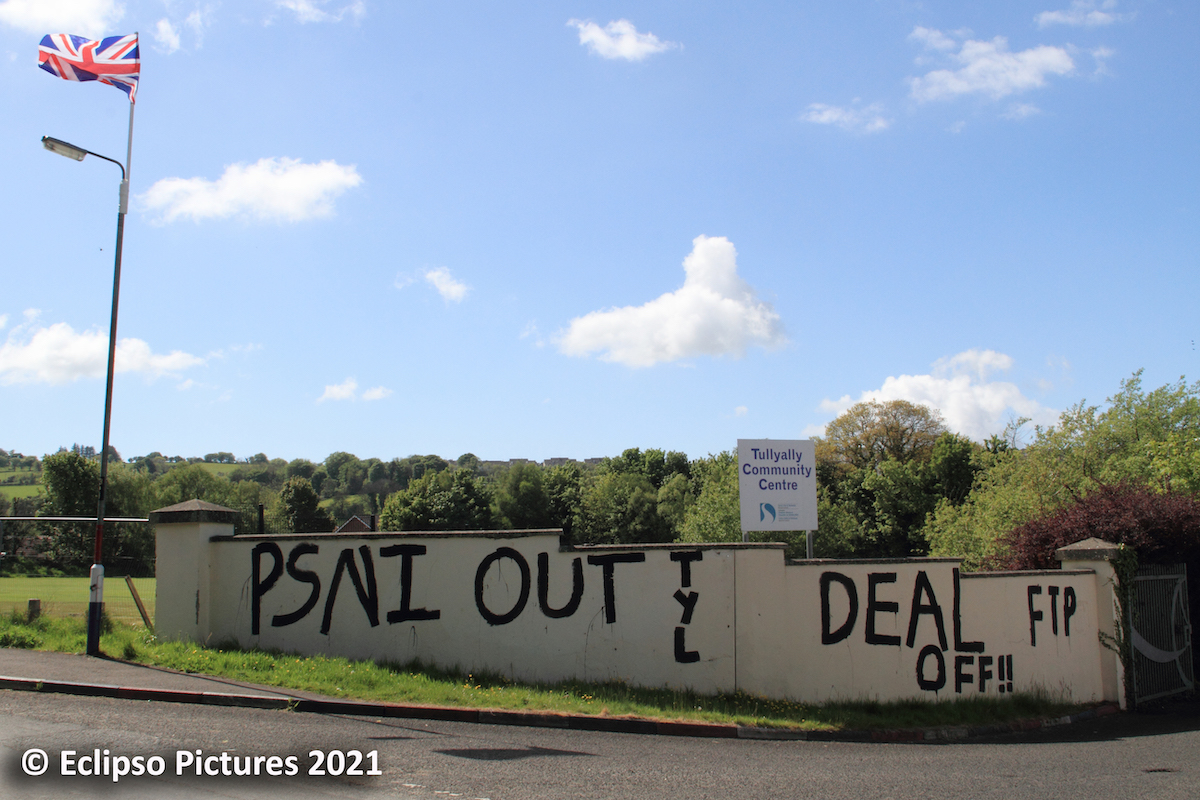
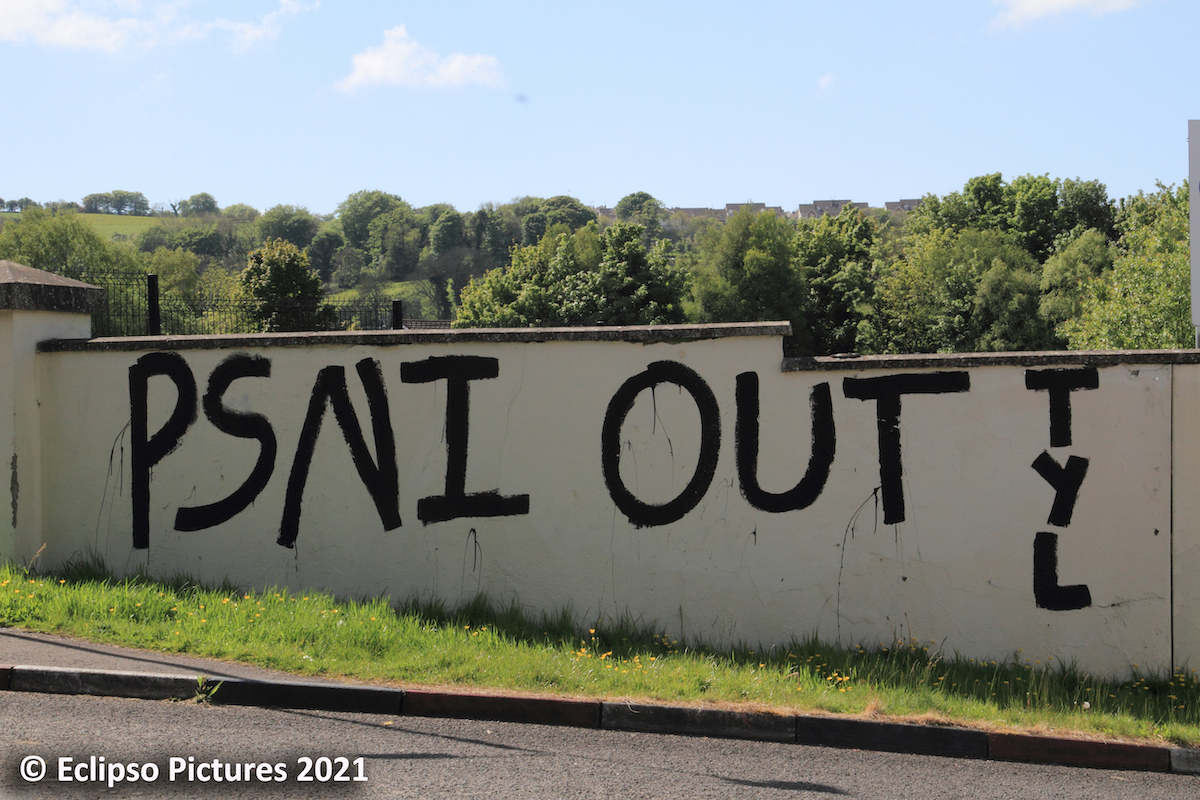
Commentary from Tullyally Young Loyalists, who on their Fb page call for the collapse of Stormont and an end to the Belfast/Good Friday Agreement: “PSNI Out”, the “Deal [is] off!!” “FTP” is typically “eff the Provos” but here “P” might be “police”.
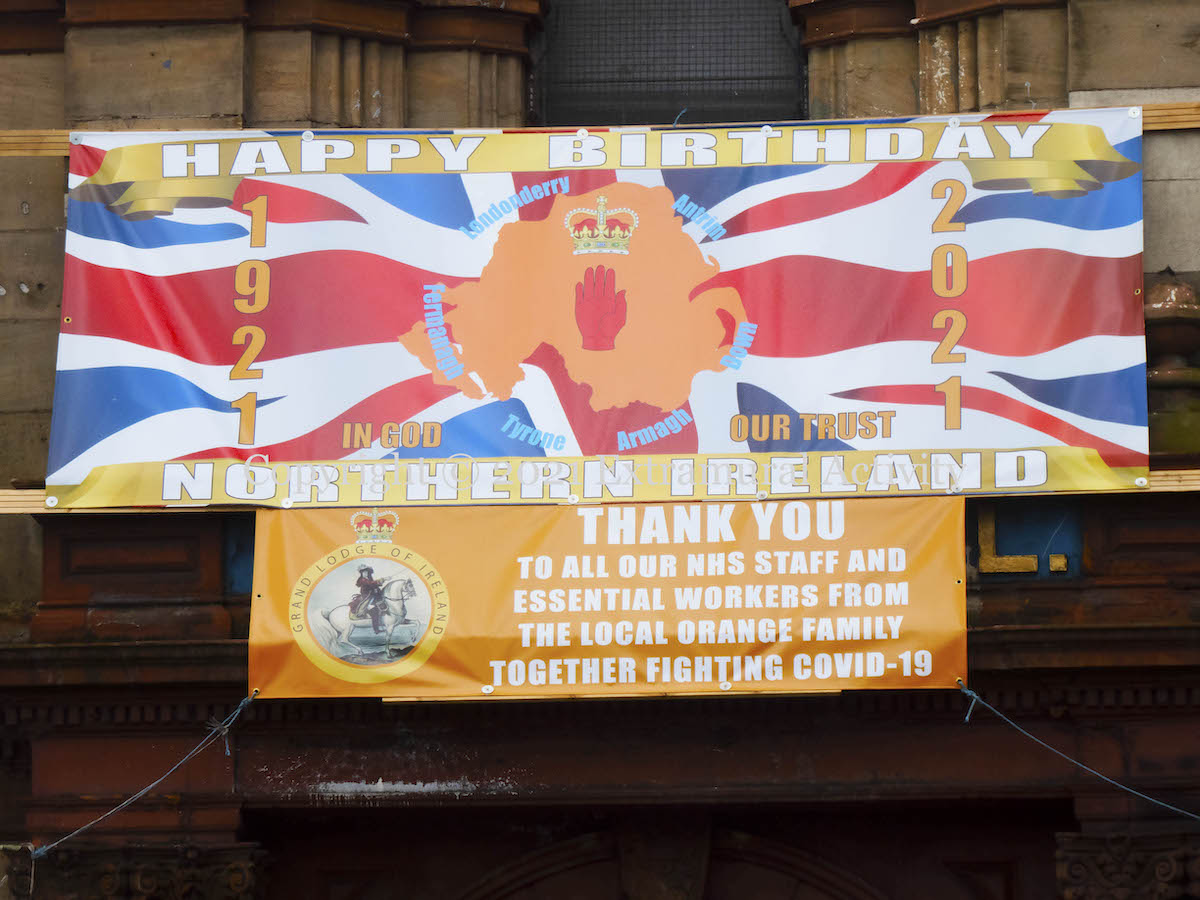
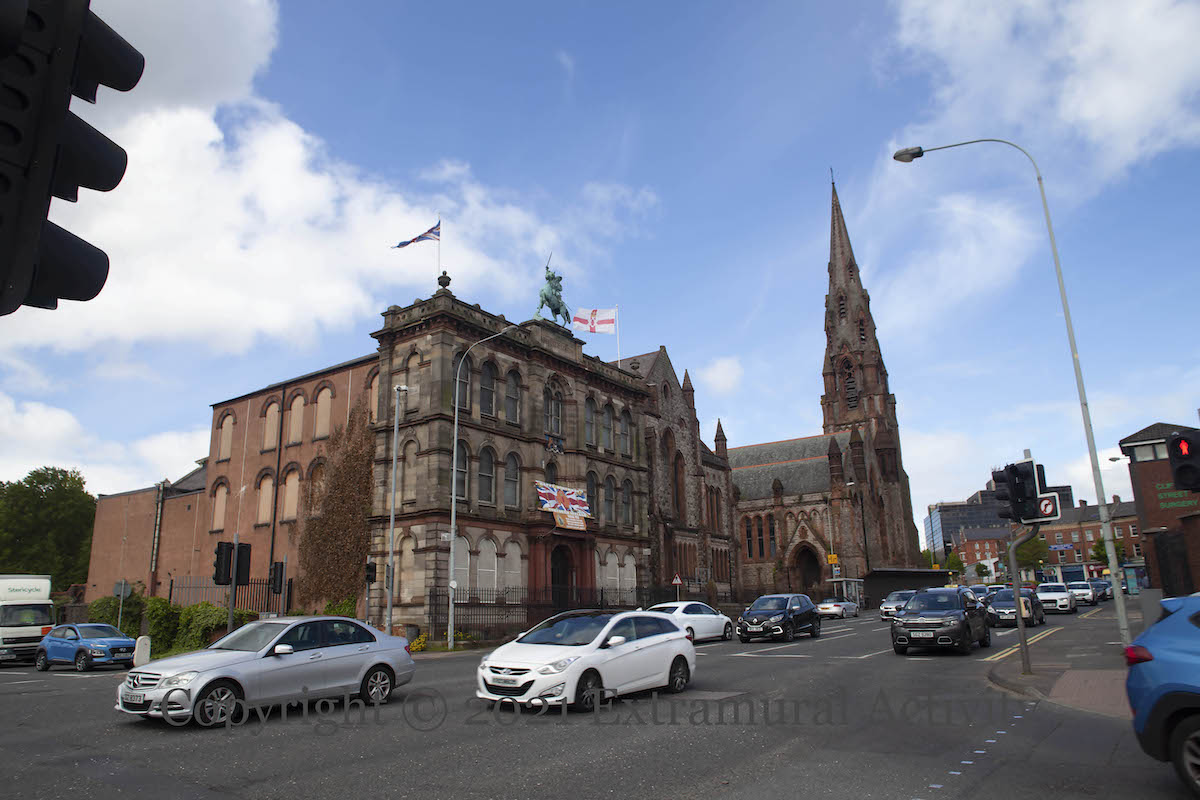
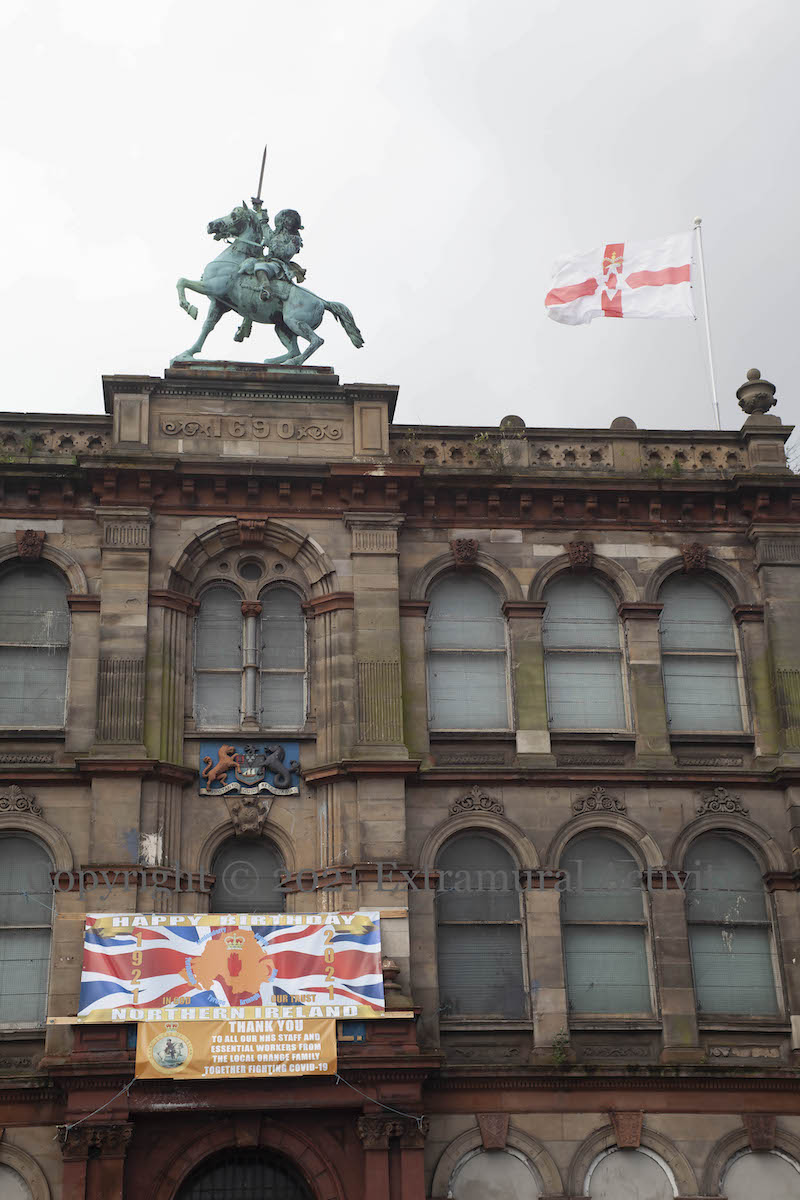
Both Clifton Street Orange Hall and the statue of King William pre-date the creation of Northern Ireland in 1921. The building opened in 1885 (ArchSeek | Belfast Media gives 1886) and the statue was unveiled before a crowd of 50,000 on November 11th, 1889 ((Melbourne) Advocate | (Sydney) Protestant Standard).
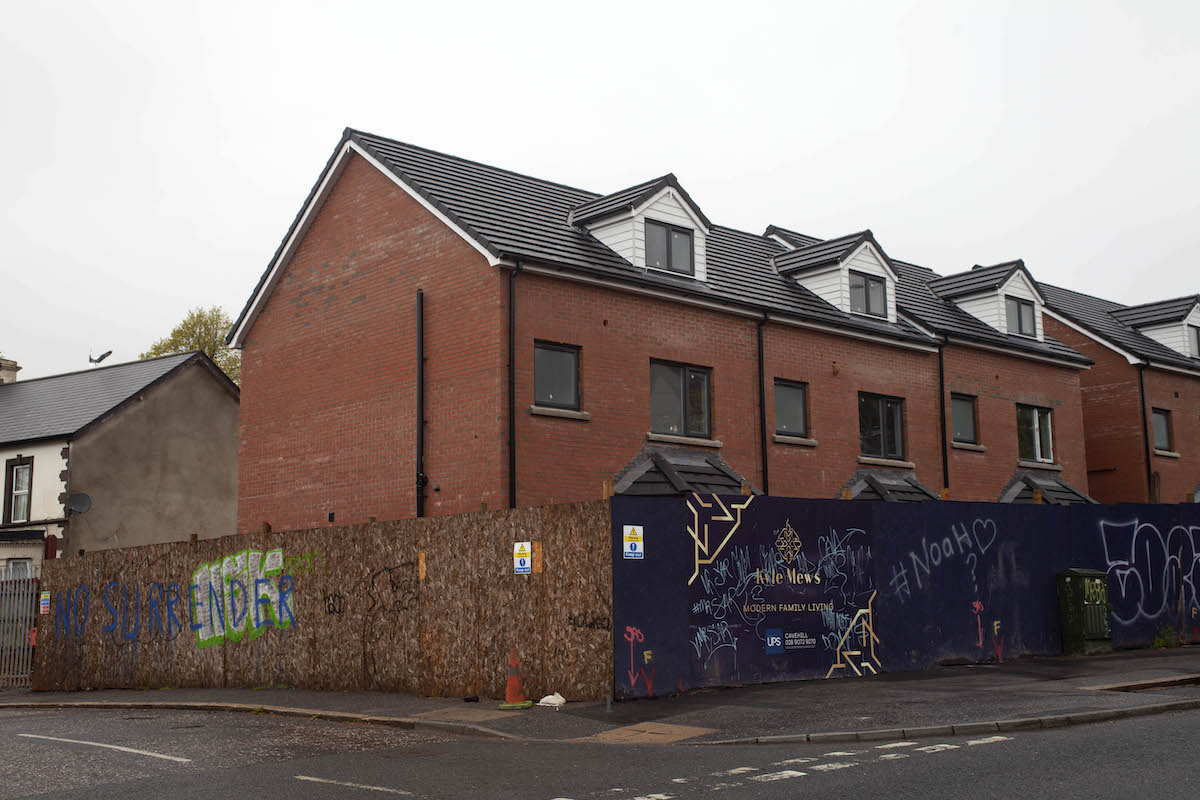
The first four units of these 3 bedroom semi-detached houses on the Cavehill Road, collectively called “Kyle Mews“, will be available in mid October, by which time the construction wall with its “No surrender” graffiti from the neighbouring Westlands should be gone.
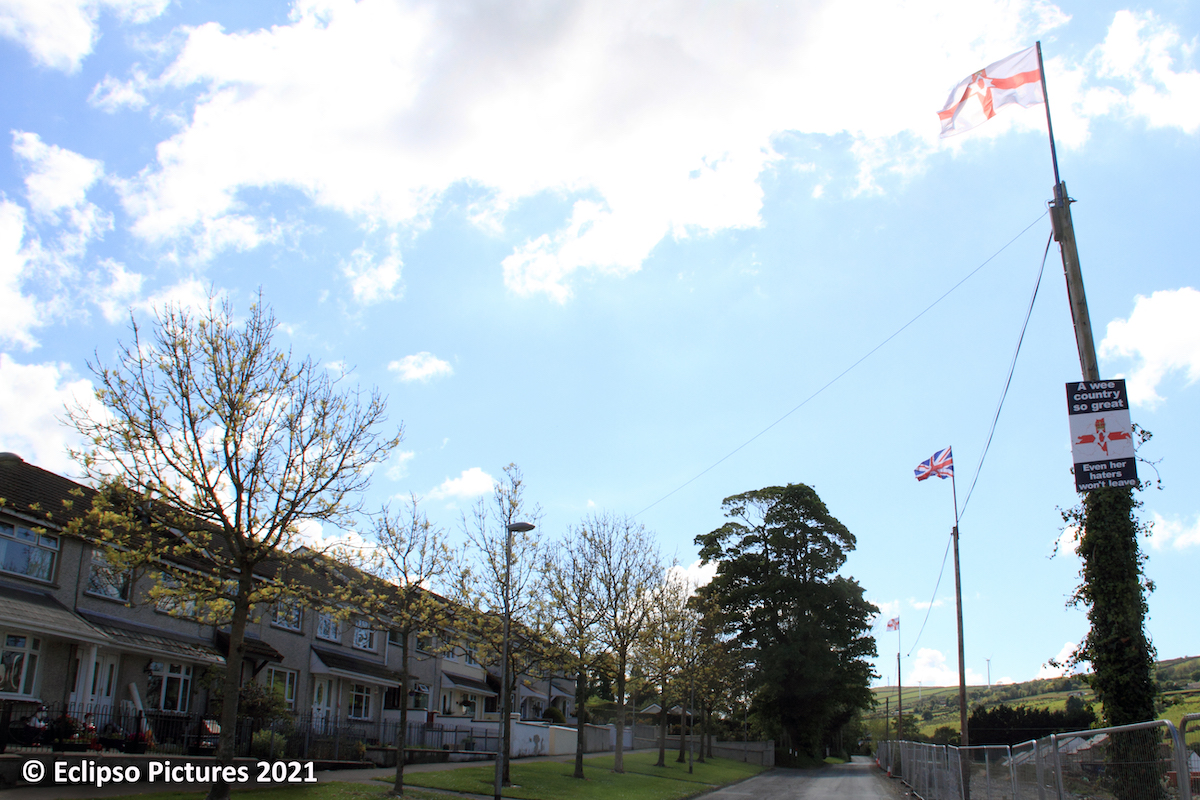
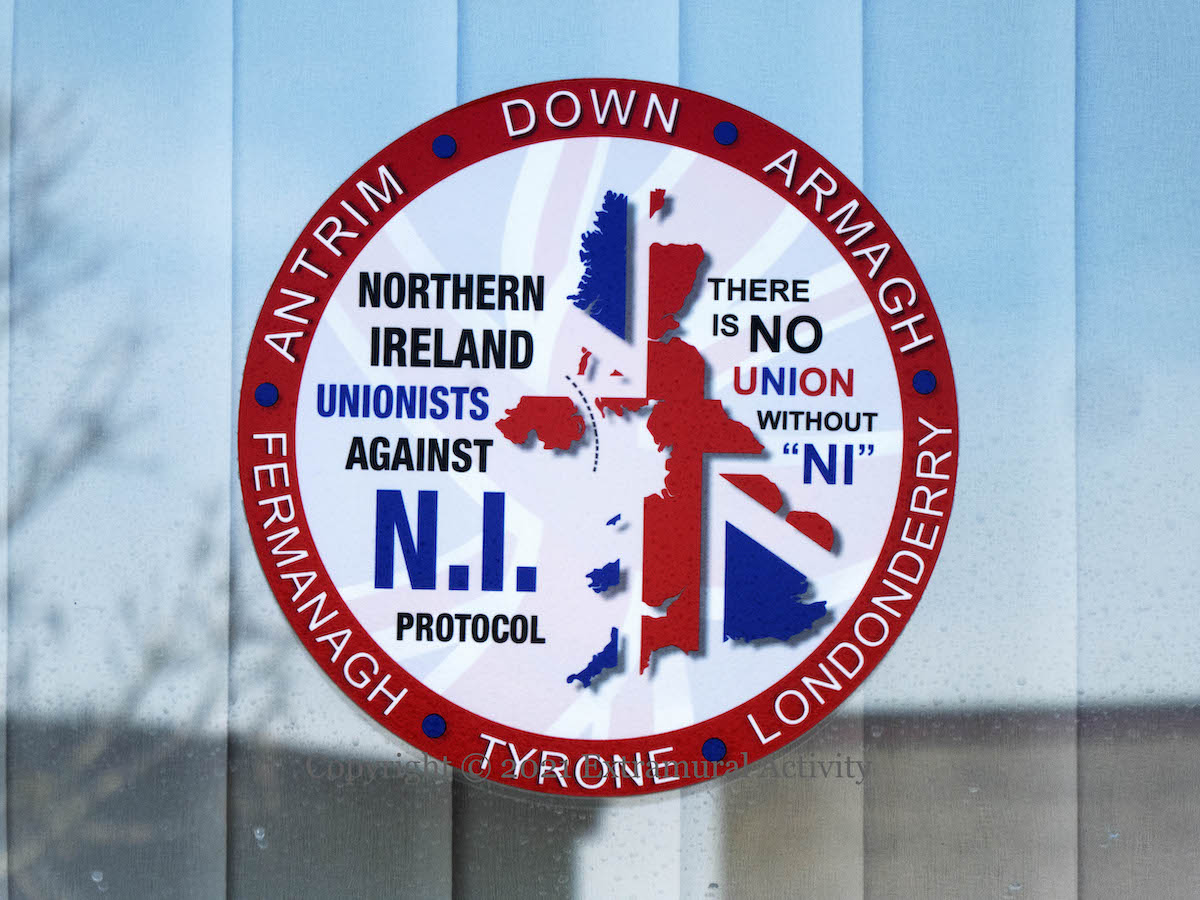
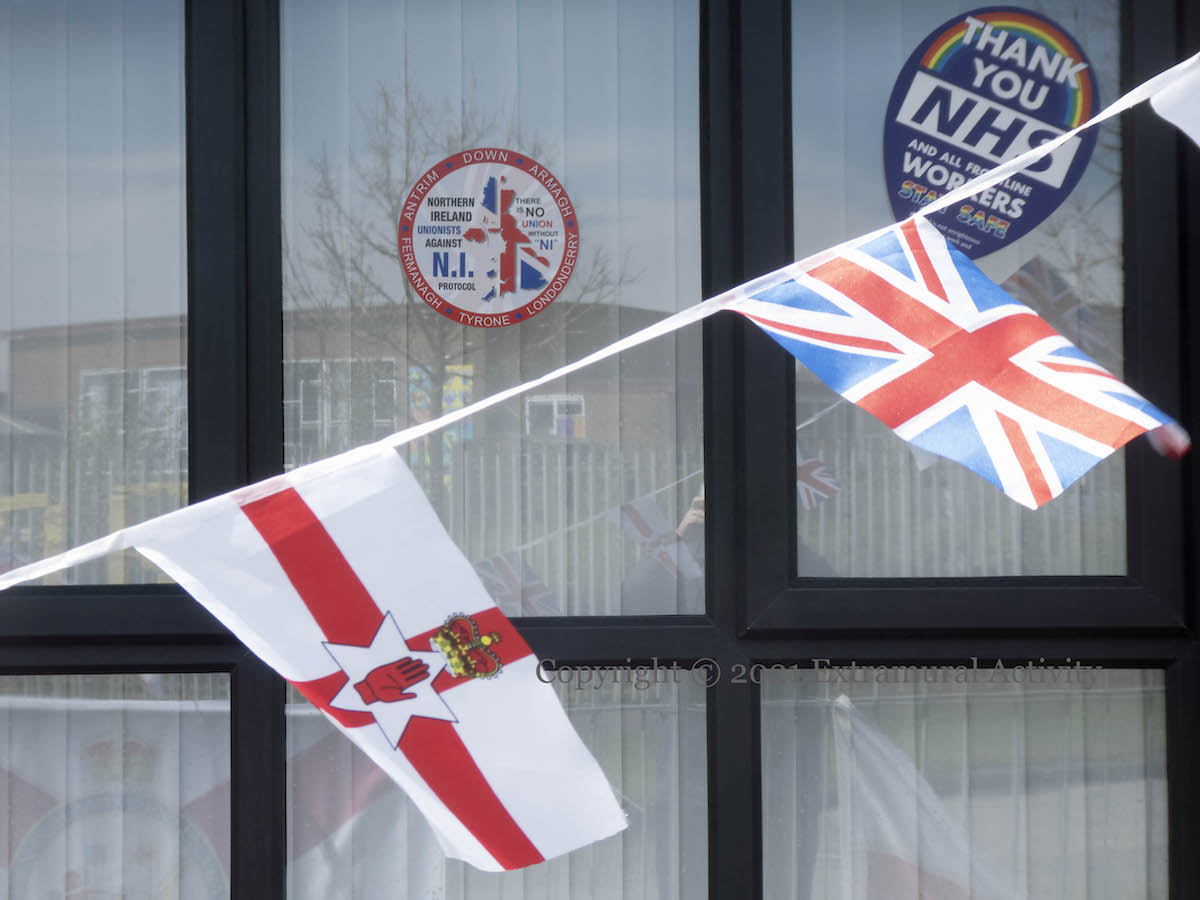
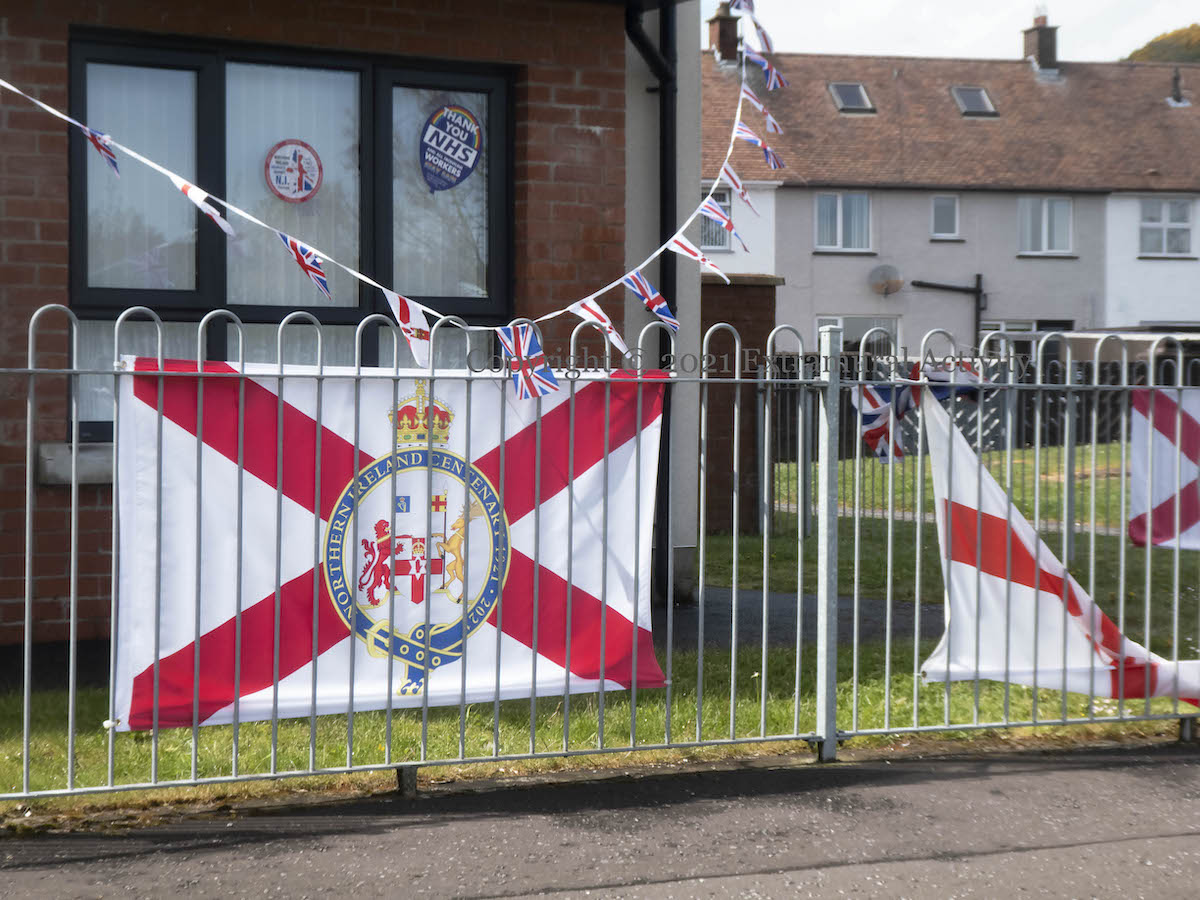
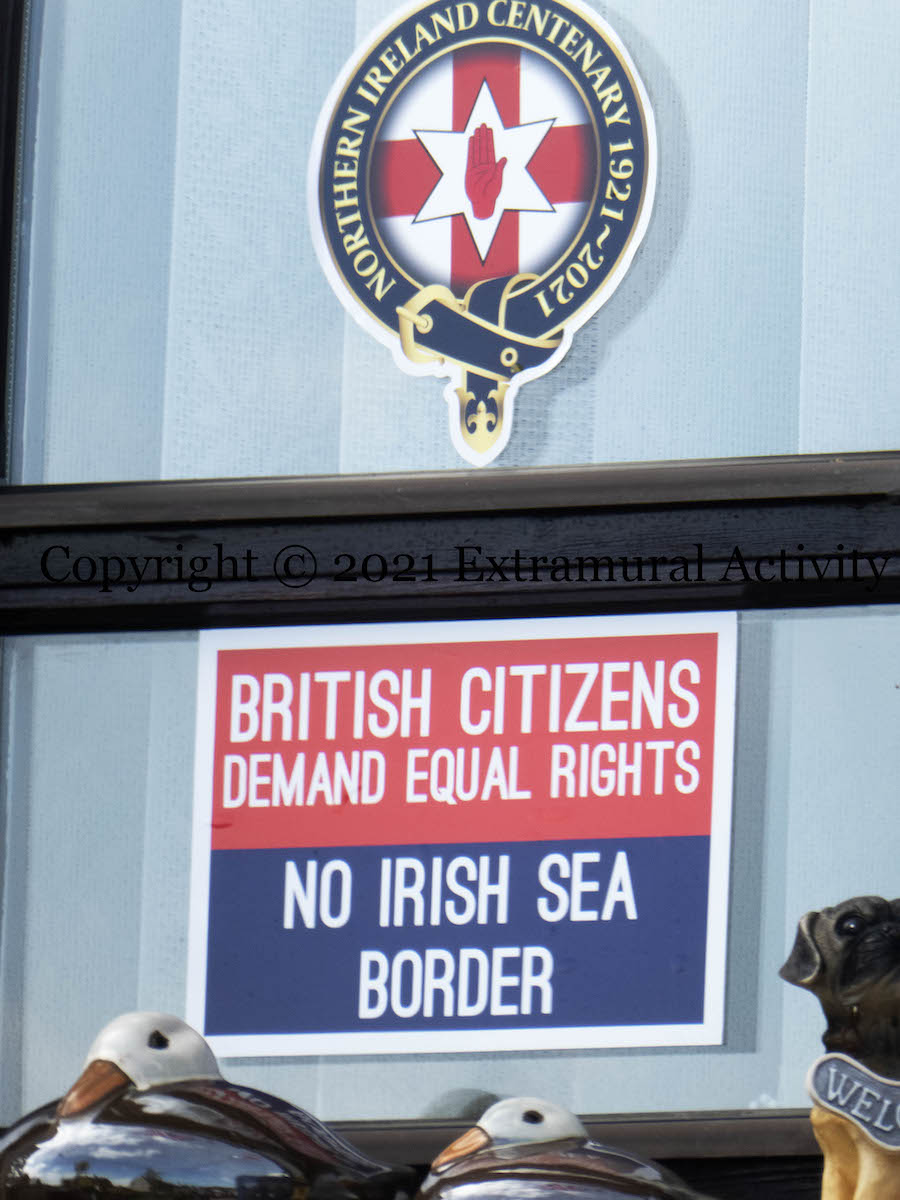
Celebrations of the centenary of the creation of Northern Ireland have been dampened by the fall-out from Brexit and the NI Protocol, the on-going coronavirus restrictions (and the leadership races in both the DUP and UUP). This Rathcoole house a flag to mark the centenary (the coat of arms of NI on a St Patrick’s Saltire) and stickers decrying the Protocol (“Northern Ireland unionists against NI Protocol”) and thanking the NHS.
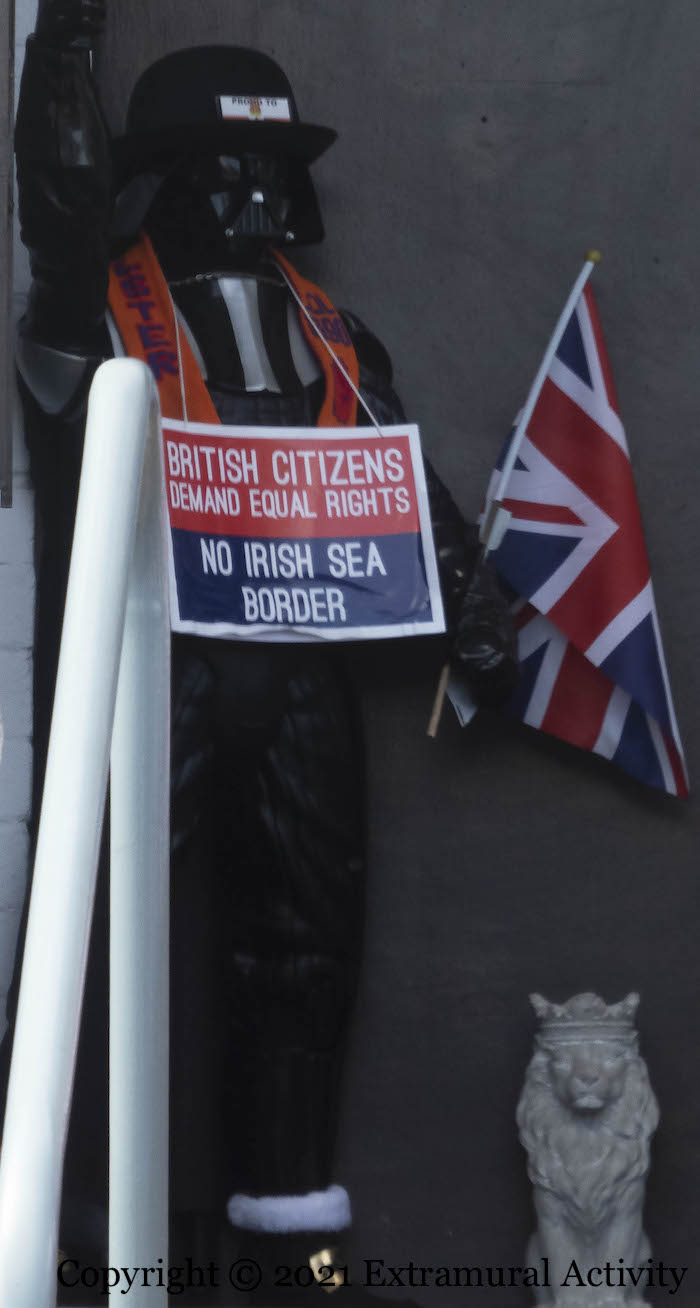
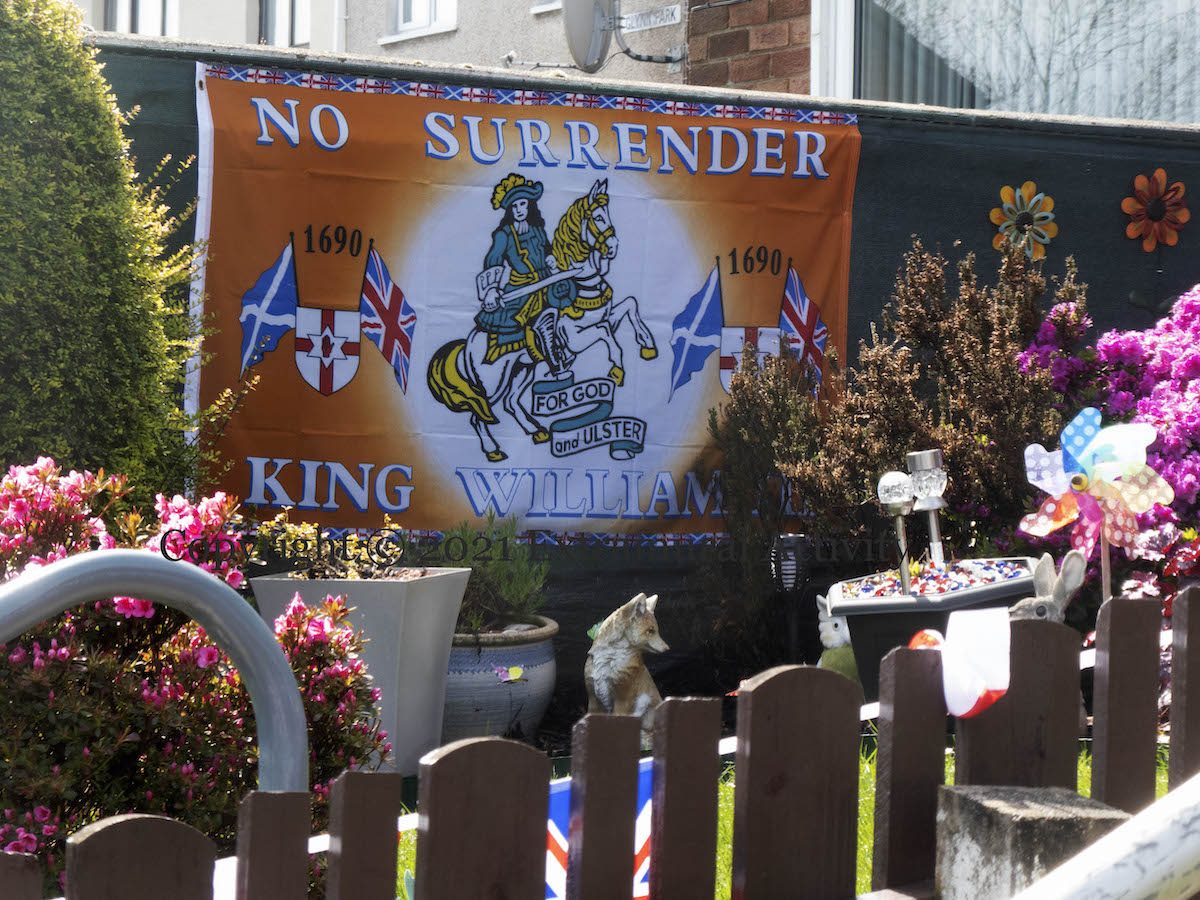
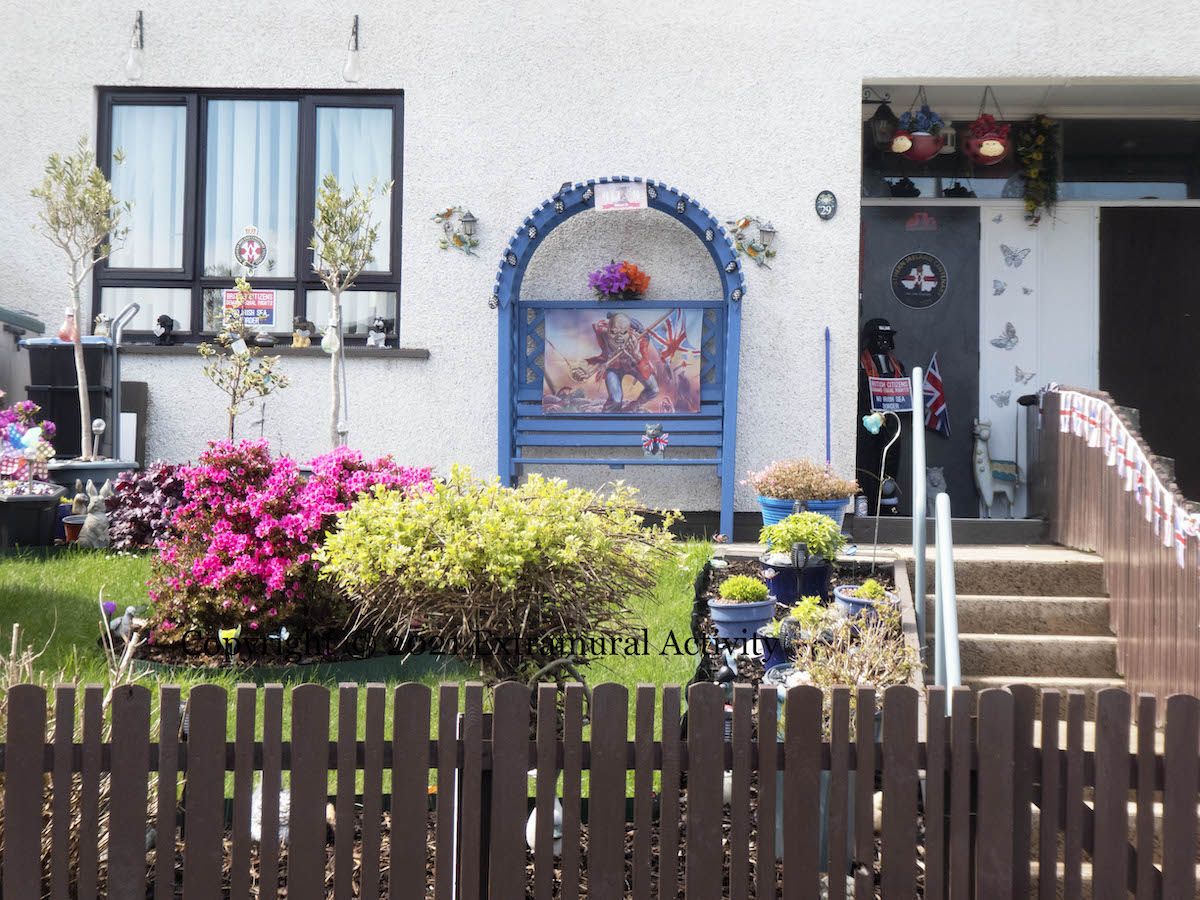
Darth Vader in a bowler and collarette on a Rathcoole porch demanding “equal rights” for “British citizens” and protesting the NI Protocol (“No Irish Sea border”), which is result of Brexit. Lord Vader is accompanied by more traditional icons of loyalism: King William III and Eddie The Trooper (who has his own Visual History page).