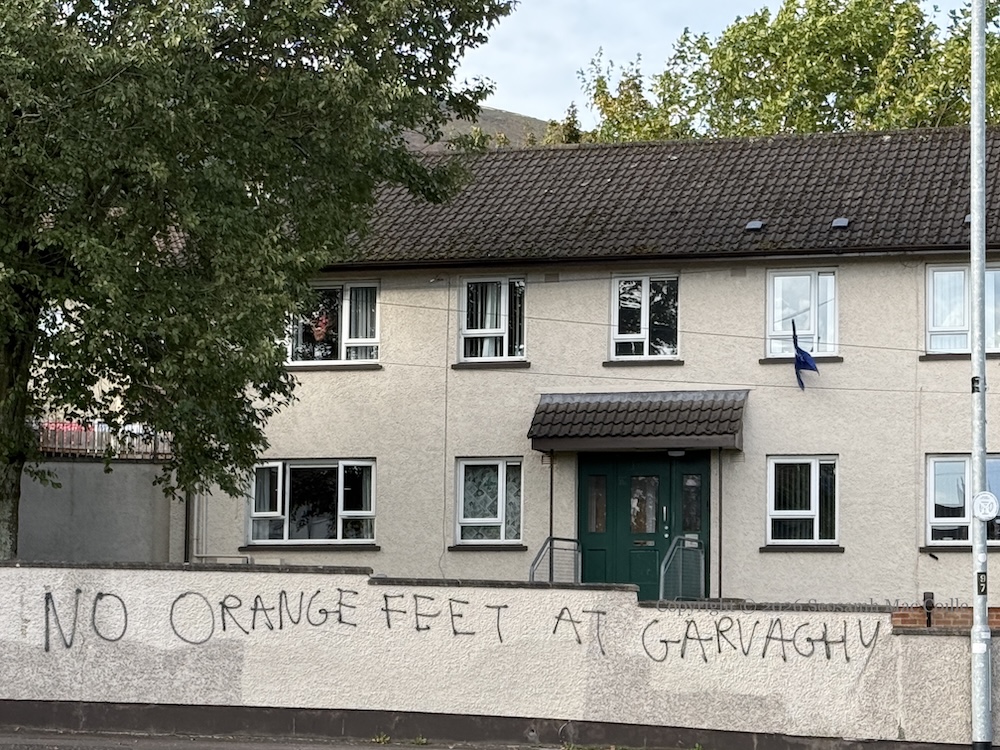
A decision to ban Orangemen from marching down Garvaghy Road in Portadown in July was quashed at the end of August because the Parades’ Commission failed to follow proper procedure (BBC). Another application was made to march down the road, past the Catholic estate, and this was granted, with restrictions, for September 27th, re-igniting a dispute that has been largely dormant since 1988.
Since the 27th, there has been a stand-off between (on the one hand) Orangemen from Portadown and elsewhere in Northern Ireland and (on the other) local residents supported by leaders from the CNR community – Gerry Adams, Michell O’Neill, Mary Lou McDonald – and celebrities such as Kneecap (BBC) and Damien Dempsey. There have also been a variety of court orders and appeals. The Appeals’ Court’s session yesterday (October 5th) focused on the Commission’s use of a PSNI statement assessing the impact a parade would have (RTÉ); the court reserved judgment (BBC).
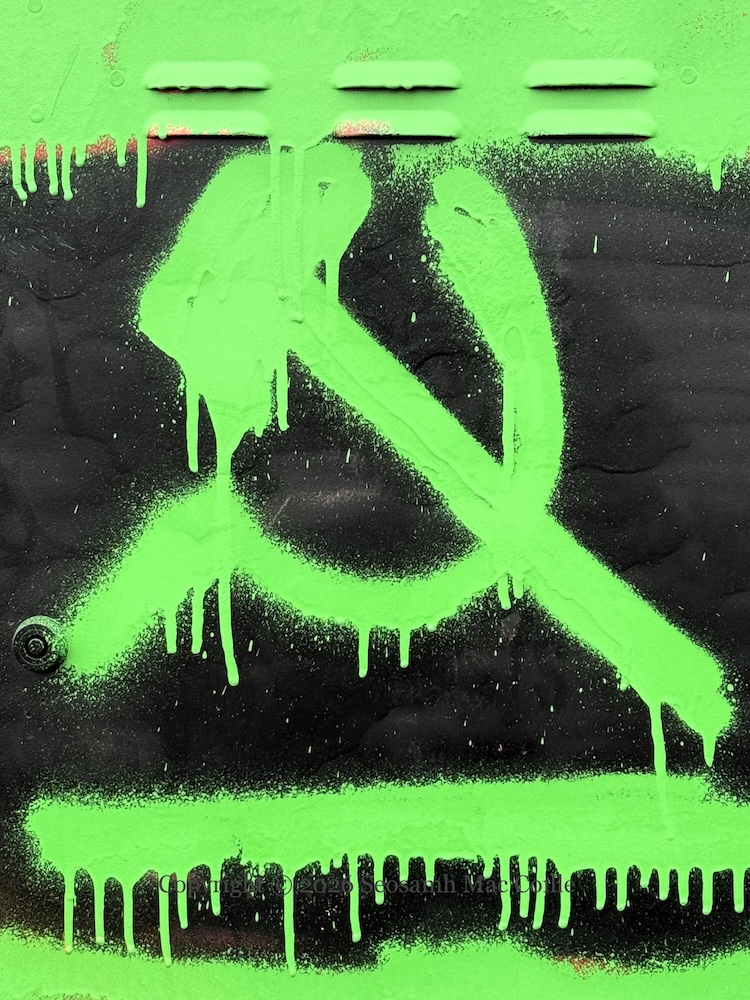
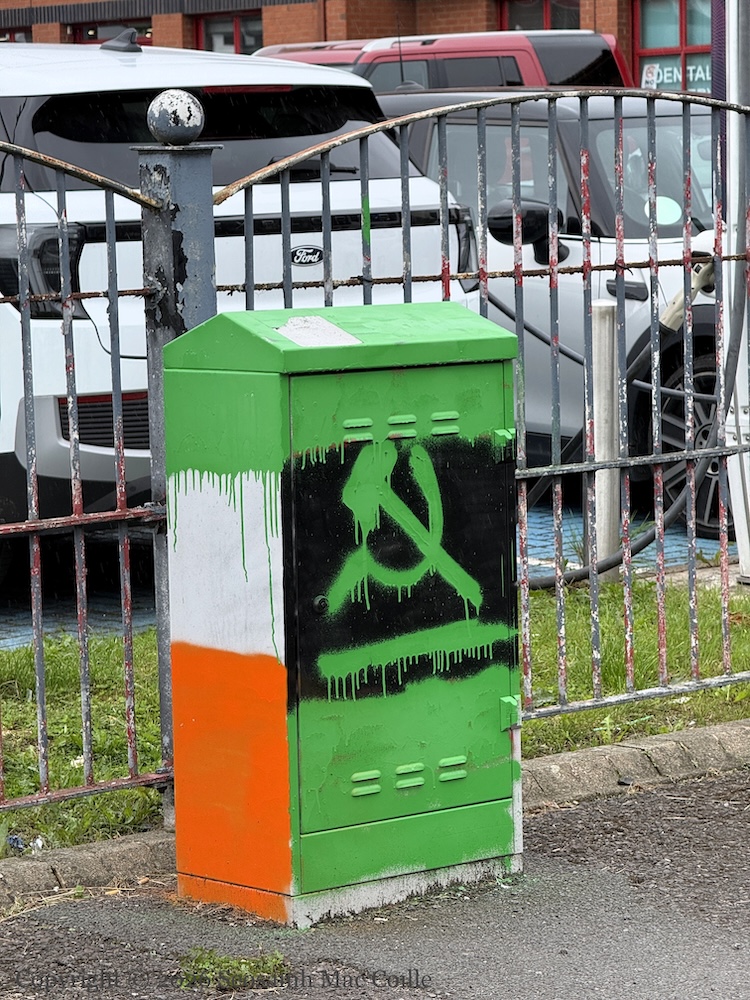
This graffiti in on the Springfield Road, west Belfast.
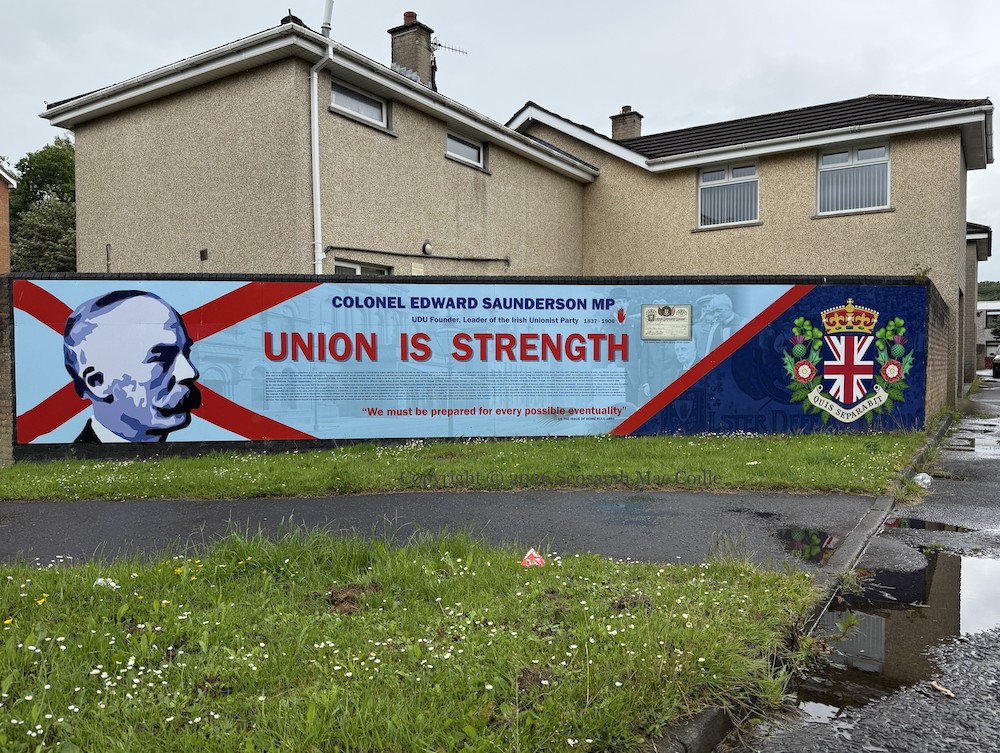
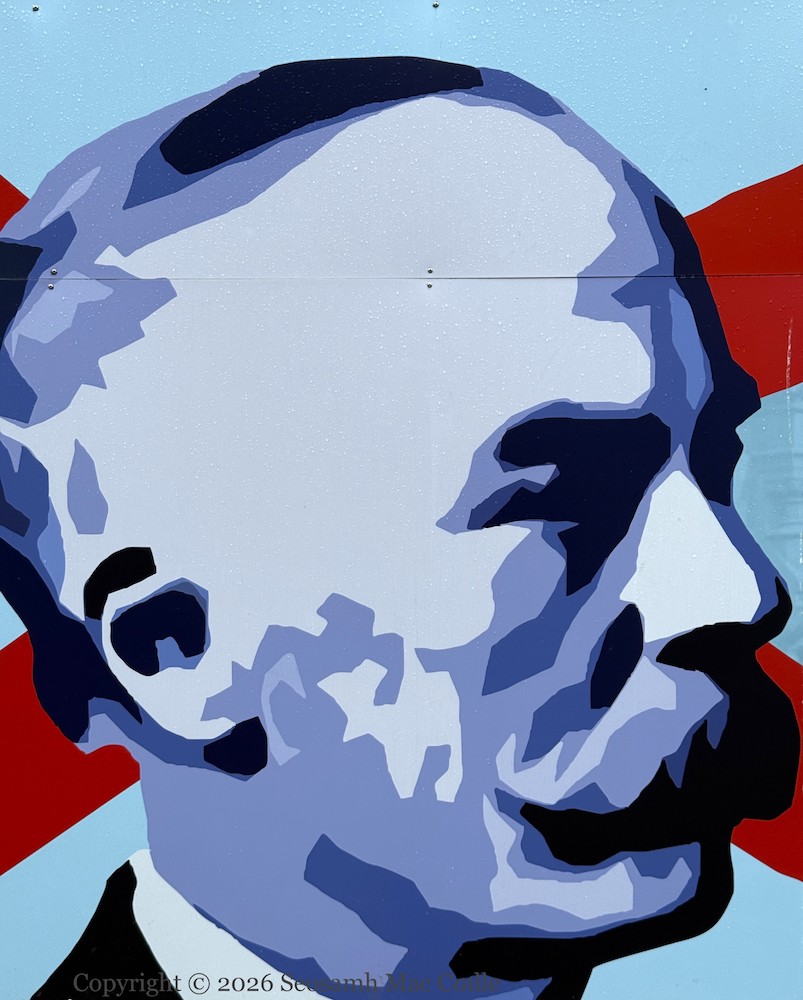
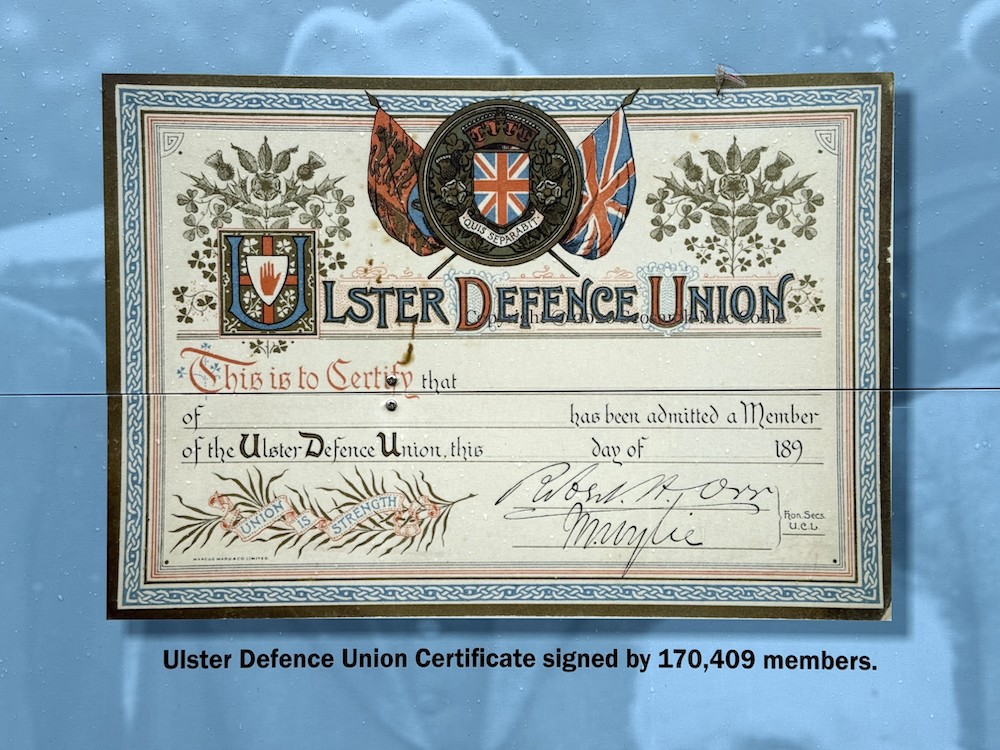
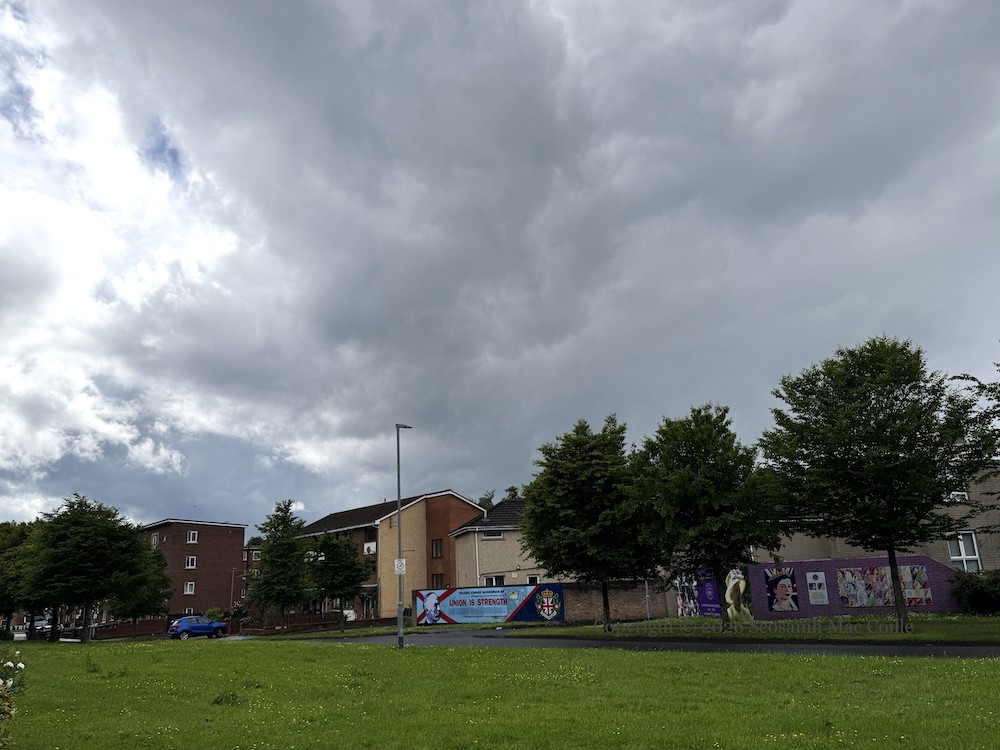
“Colonel Edward Saunderson MP, UDU founder, leader of the Irish Unionist Party. 1837-1906. Union is strength. ‘We must be prepared for every possible eventuality’ – on the issue of Home Rule 1893.”
The dates given are the span of Saunderson’s life, not his political career, which began in 1865 as MP for his home county of Cavan.
The bill under consideration in 1893 was the second Home Rule bill, which the UDU was formed to resist. The UDU initially met in Belfast in March; the manifesto of the meeting can be read on page 5 of the [Sydney] Freeman’s for 1893-04-29.
On June 8th, 1893, the Westminster government asked the police for a report on the Union, fearing its goal was armed resistance to Home Rule, and considering declaring it an illegal organisation ([Sydney] Daily Telegraph, 1893-06-10 page 5).
In September, the bill was passed in the Commons but defeated in the Lords. An account of the October meeting quotes Saunderson saying that the organisation should maintain itself by “if the necessity arose” “proving – not by words, but by deeds – that they meant what they said.” (Gympie Times & Mary River Mining Gazette, 1893-12-07 page 3).
Saunderson at the time was (also) leader of the Irish Unionist Alliance (here called the “Irish Unionist Party”) and he went on to be the first leader of the Ulster Unionist Party, from 1905 to 1906 (WP), when he died of pneumonia (WP).
The Ulster Defence Union is employed as an origin-story by the Troubles-era UDA as the UDU formed an ‘Ulster Defence Association’ – see UDU-UFF-UDA and UDU-WDA-UDA-UFF – and the name is used by the post-Agreement UDA – see Daffodil Days.
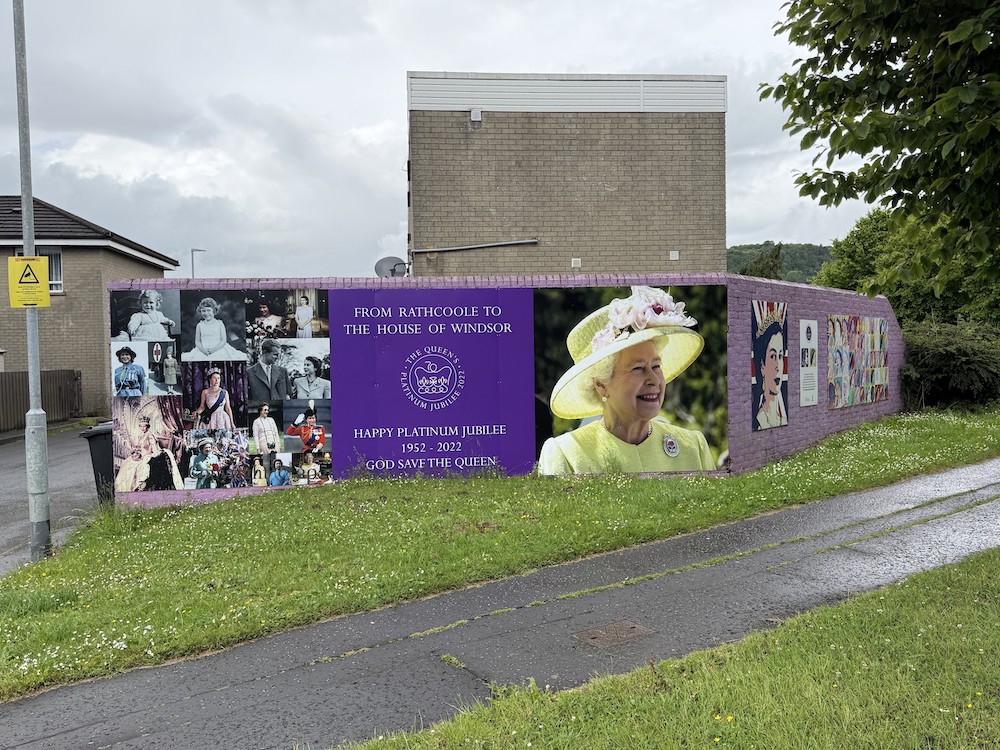
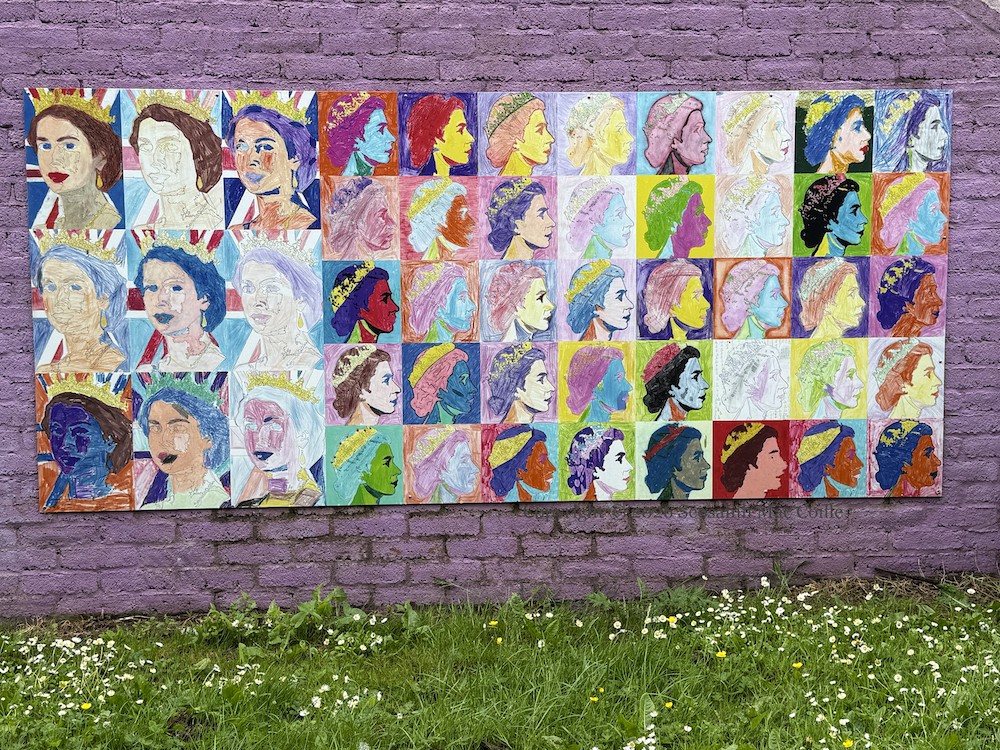
Next to Saunderson are boards mounted to celebrate the seventieth (platinum) jubilee of Queen Elizabeth in June 2022. Similar paintings were produced by schoolchildren in west Belfast – see The People’s Monarch.
“This artwork was designed and created by pupils from Abbots Cross Primary School in partnership with the local children from Rathcoole Community Hub to commemorate the platinum jubilee of Her Majesty Queen Elizabeth II.”
“From Rathcoole to the house of Windsor – happy platinum jubilee 1952-2022. God save the Queen.”
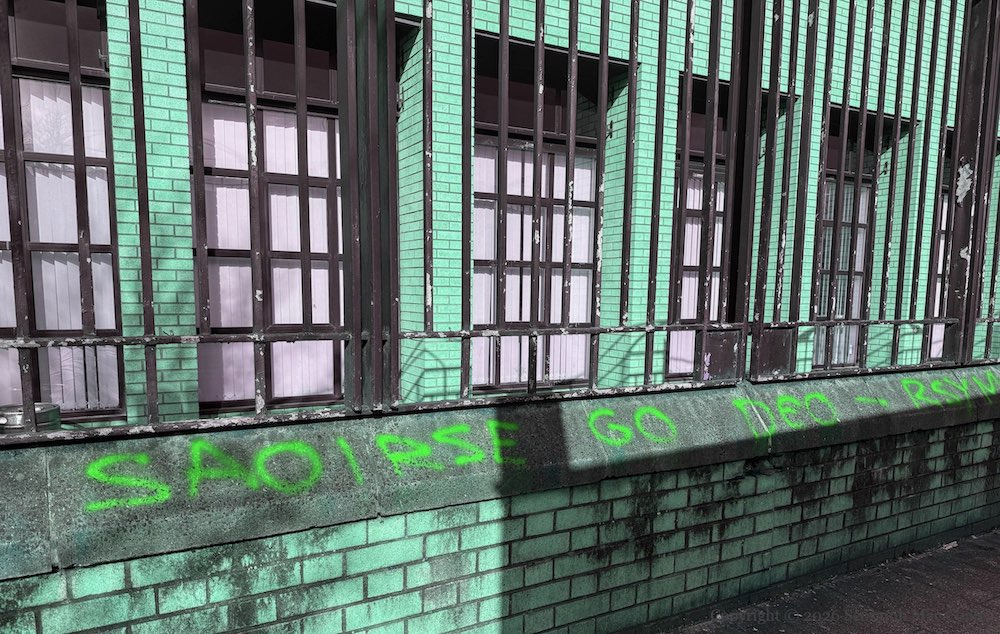
“Saoırse go deo – RSYM” [Freedom forever – Republican Socialist Youth Movement (Fb)] – graffiti below the windows of Clonard House (where the West Belfast Partnership is) on the Falls Road.
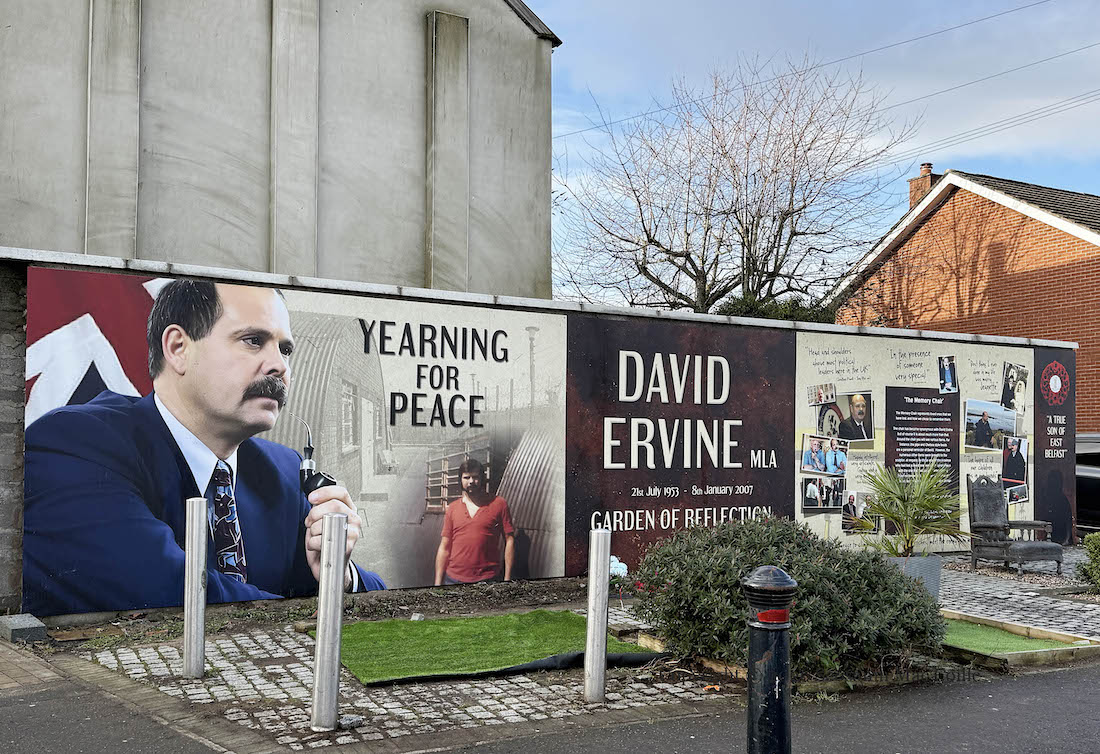
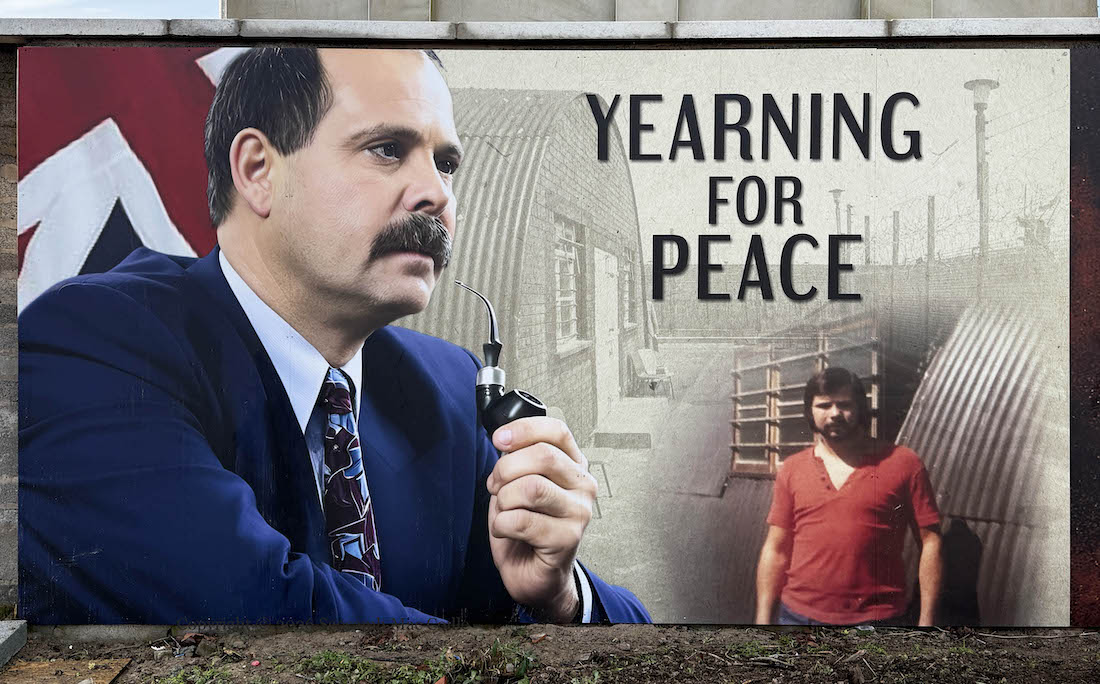
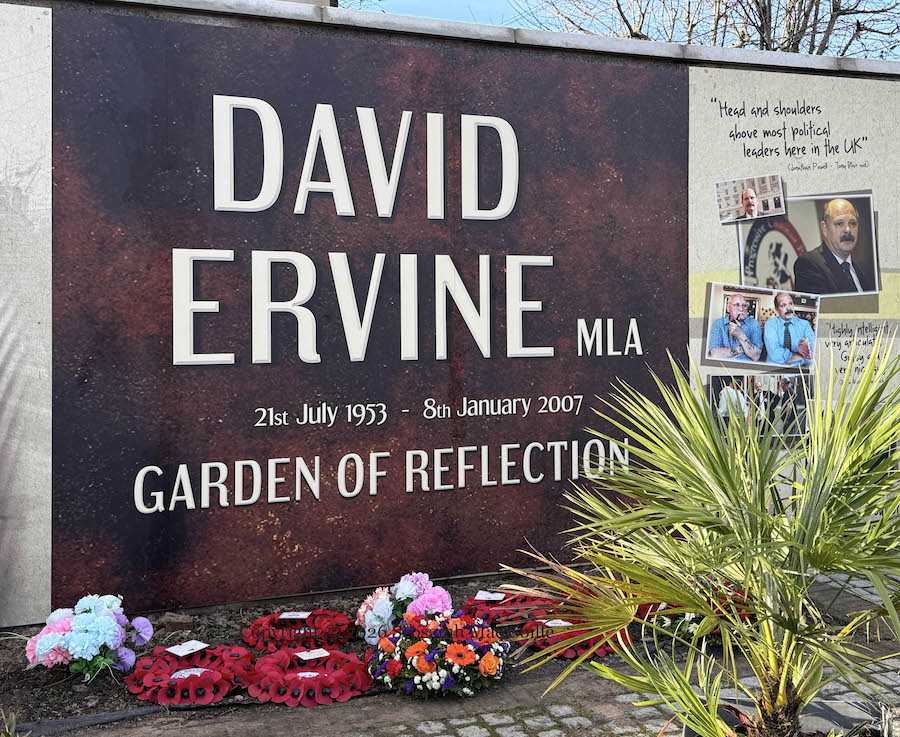
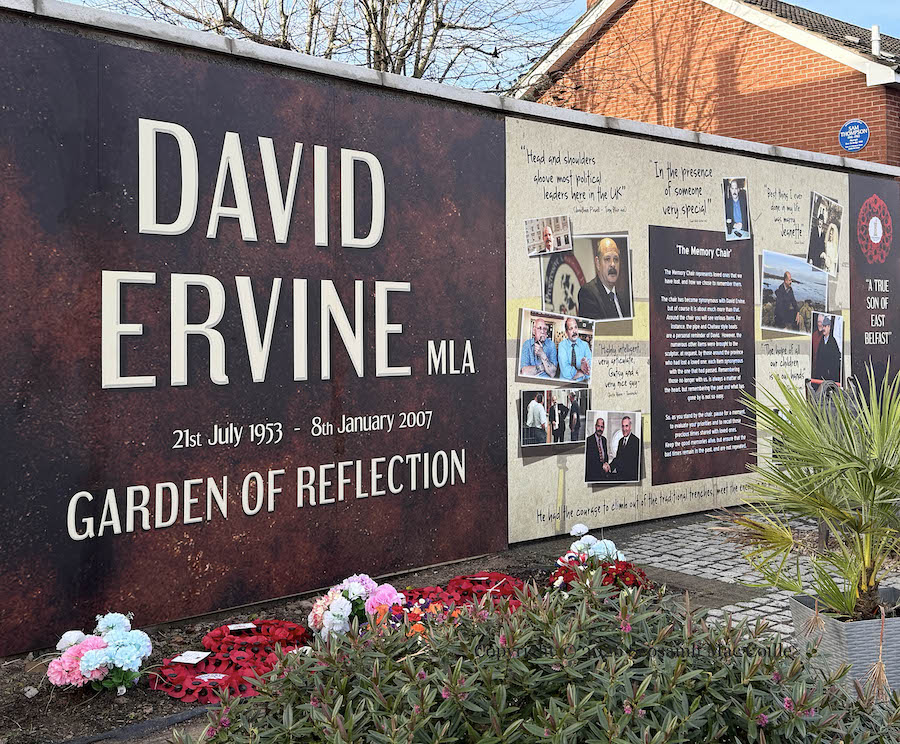
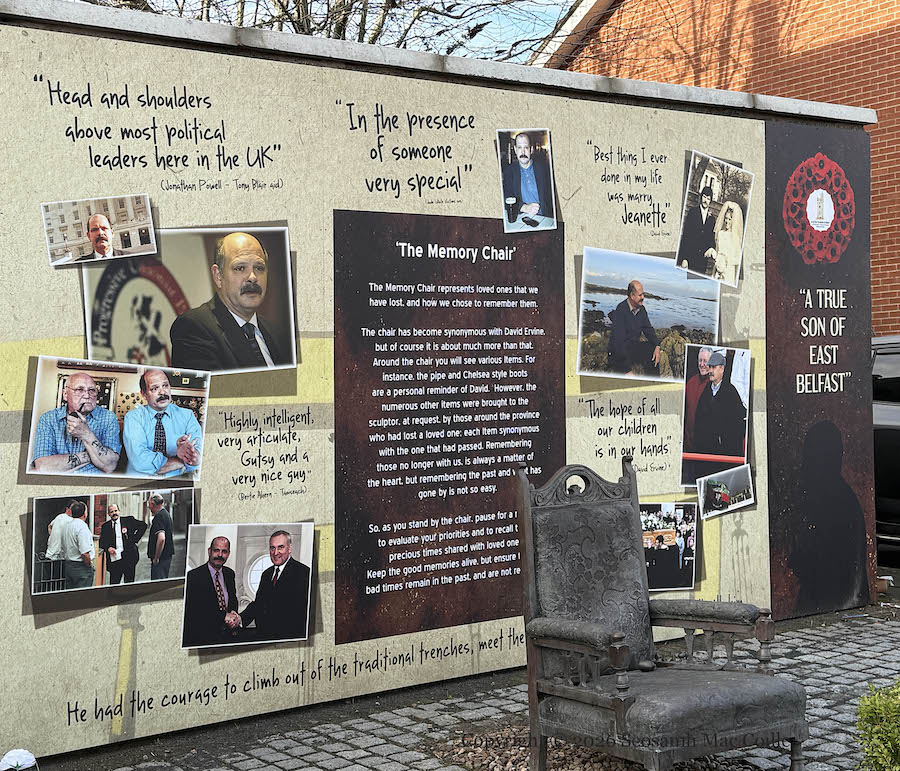
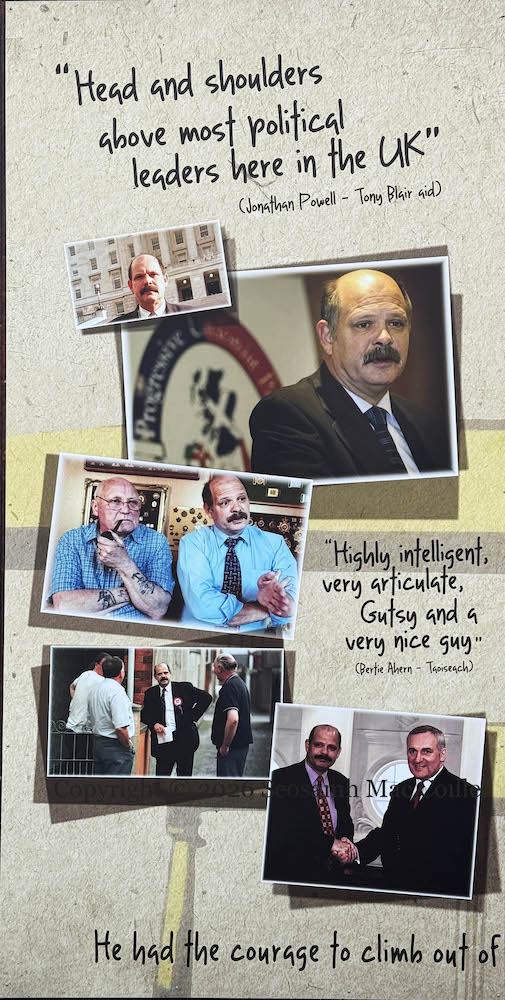
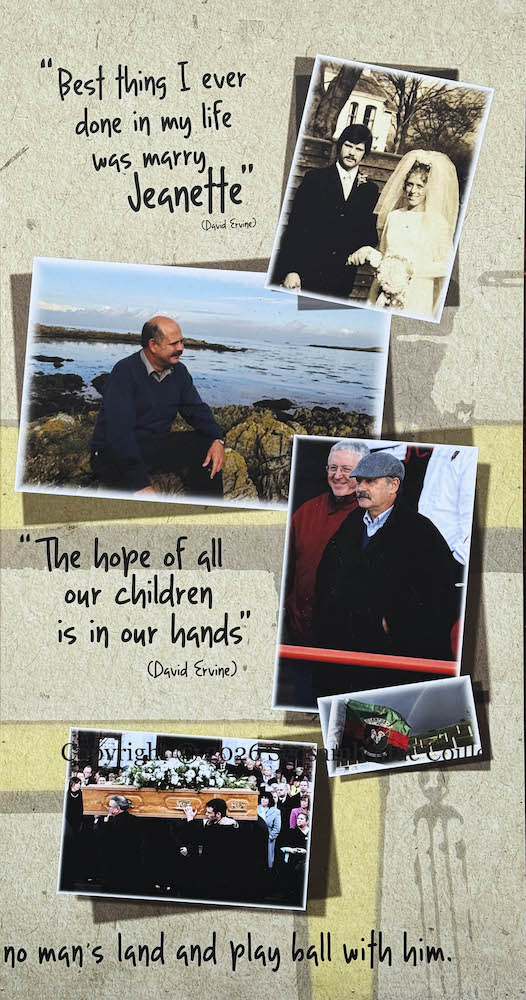
On the anniversary of David Ervine’s death, January 8th, a new board was launched in his memory, with images of Ervine “yearning for peace” in the cages of Long Kesh, where he met Gusty Spence (the pair can be seen together in the middle of the first column of photographs).
After his release, Ervine turned to politics, running unsuccessfully as a PUP candidate for Pottinger in the Belfast City Council elections of 1985 (WP); he would eventually be successful in 1997. In 1998 he was returned by Belfast East in the Assembly election (ARK). He helped bring about the loyalist ceasefire in 1994 – which was read aloud by Spence (youtube) – and was pro-Agreement in 1998 (DIB | Guardian | Slugger).
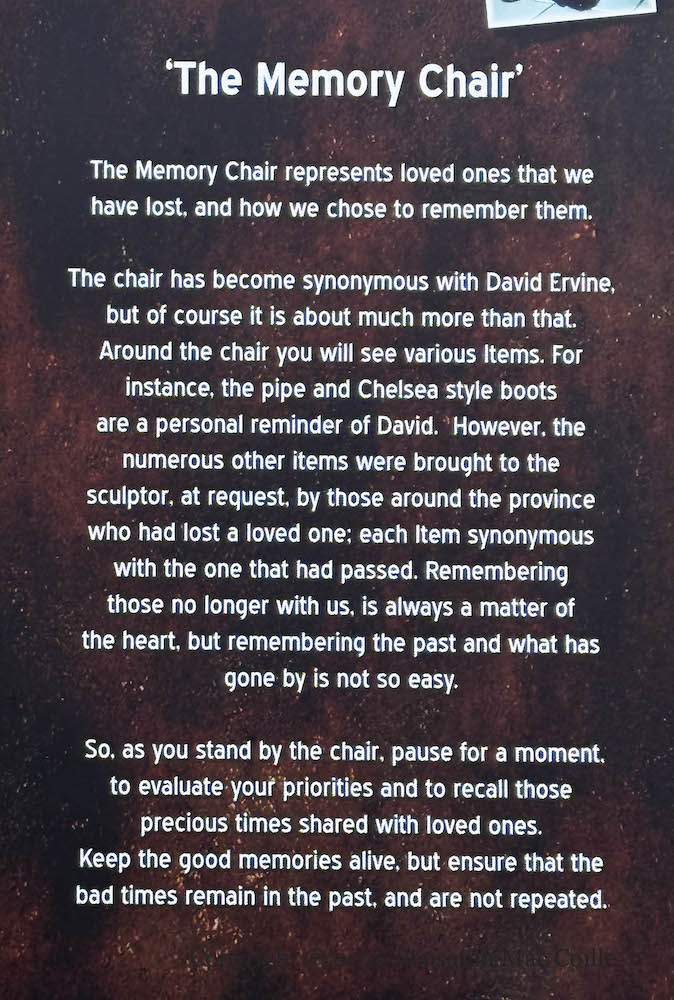
The information about the Memory Chair sculpture makes mention of Ervine’s boots but it seems they have not survived the mothballing of the sculpture which was last seen on site – boots included – in 2014.
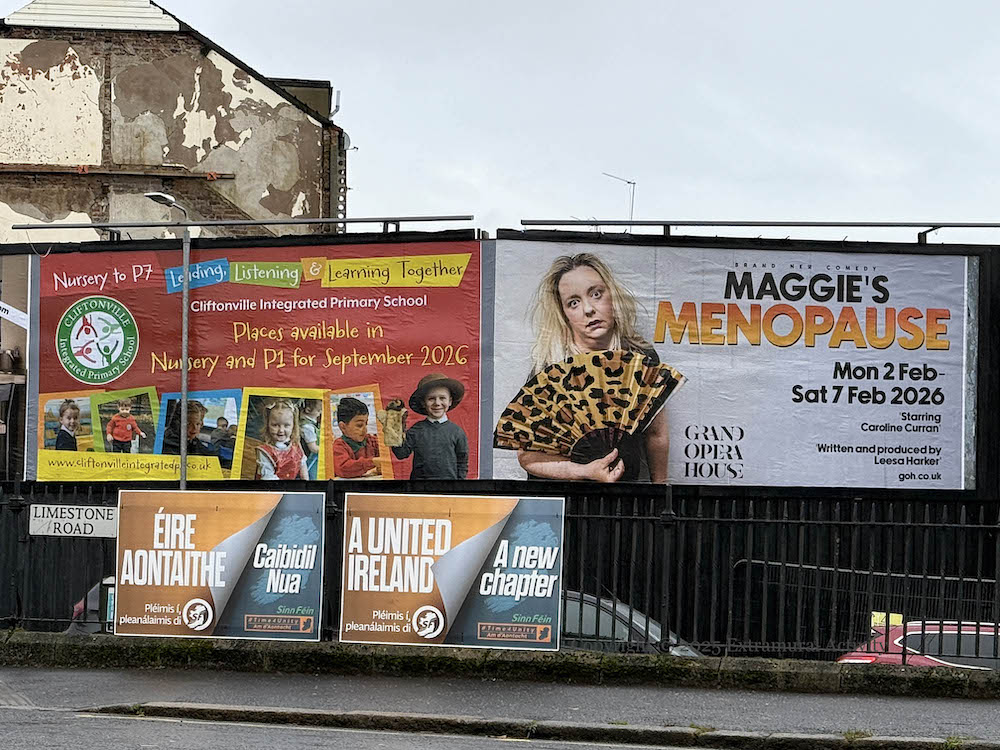
Here are three pieces together at the top of the Limestone Road in north Belfast, each one looking ahead to a notable transition:
Above left: Cliftonville Integrated primary (web) has nursery and P1 students space for September 2026
Above right: the play ‘Maggie’s Menopause’ (web) plays in the Opera House in February 2026
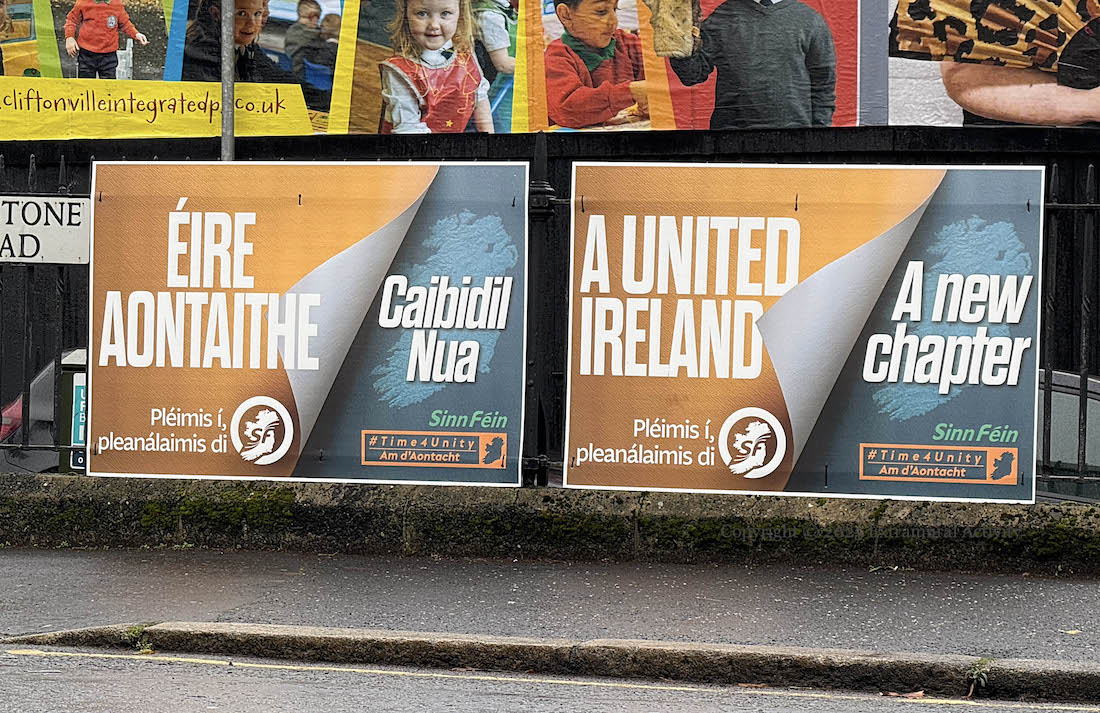
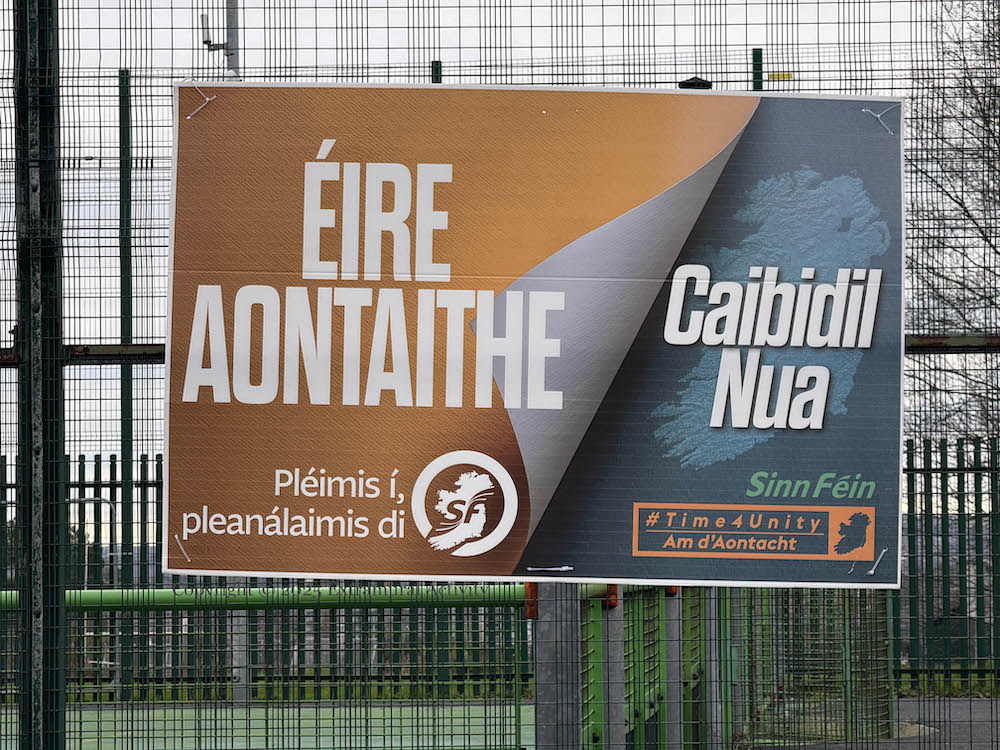
On the railings in the foreground: Sınn Féın (web) placards suggesting “a united Ireland”/”Éıre aontaıthe” as “a new chapter”/”caıbıdıl nua” for Ireland – date undetermined.
The close-up of the placard is from the Whiterock Road.
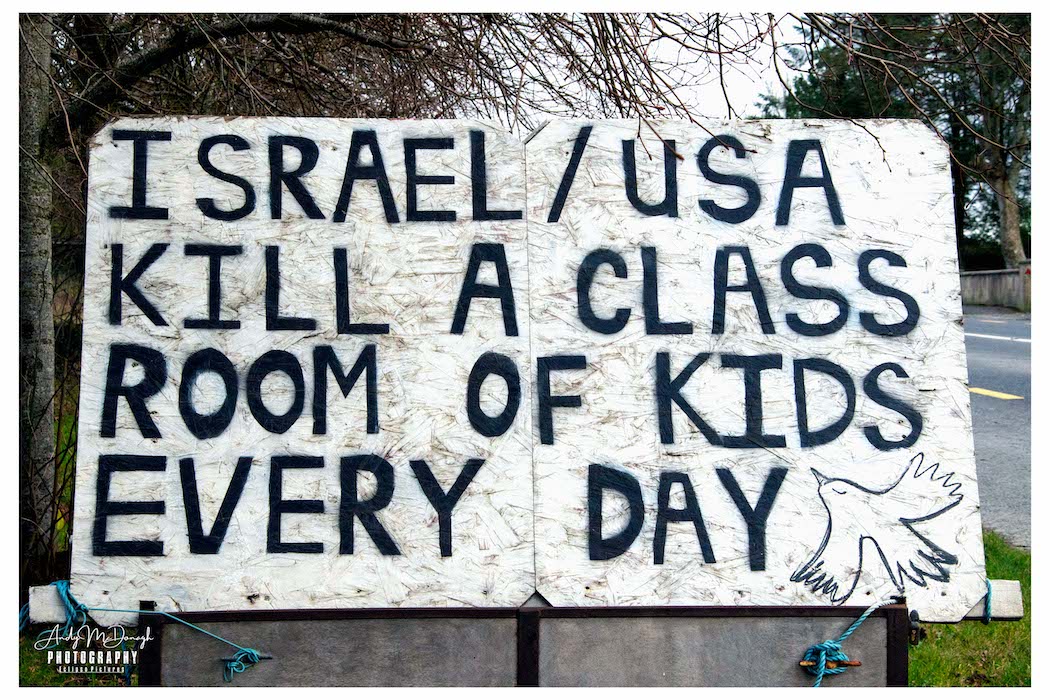
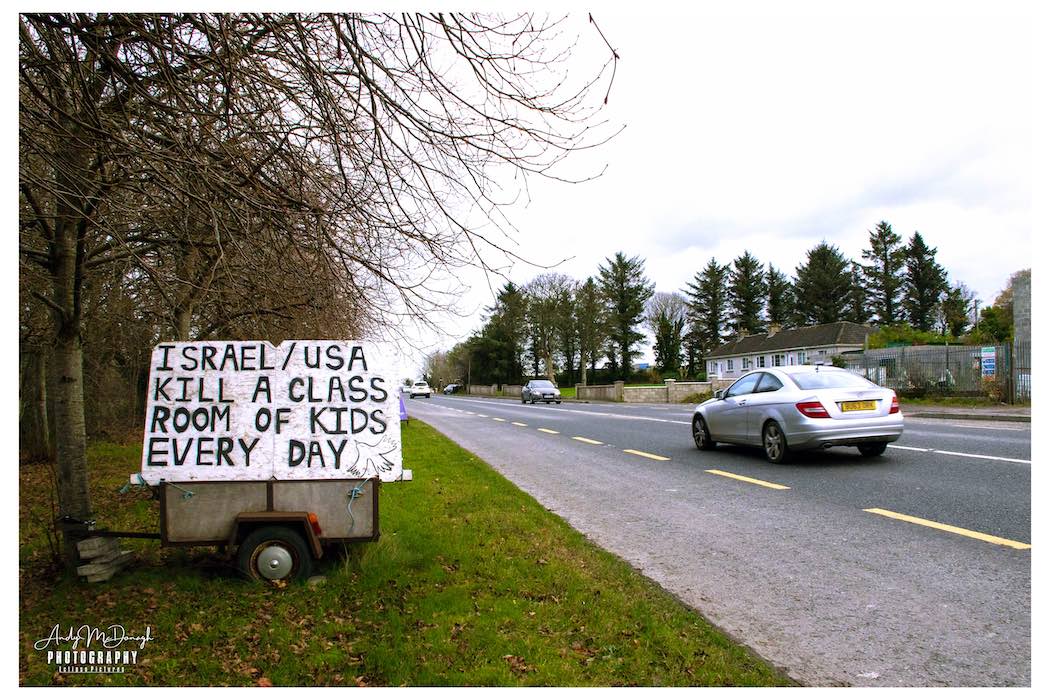
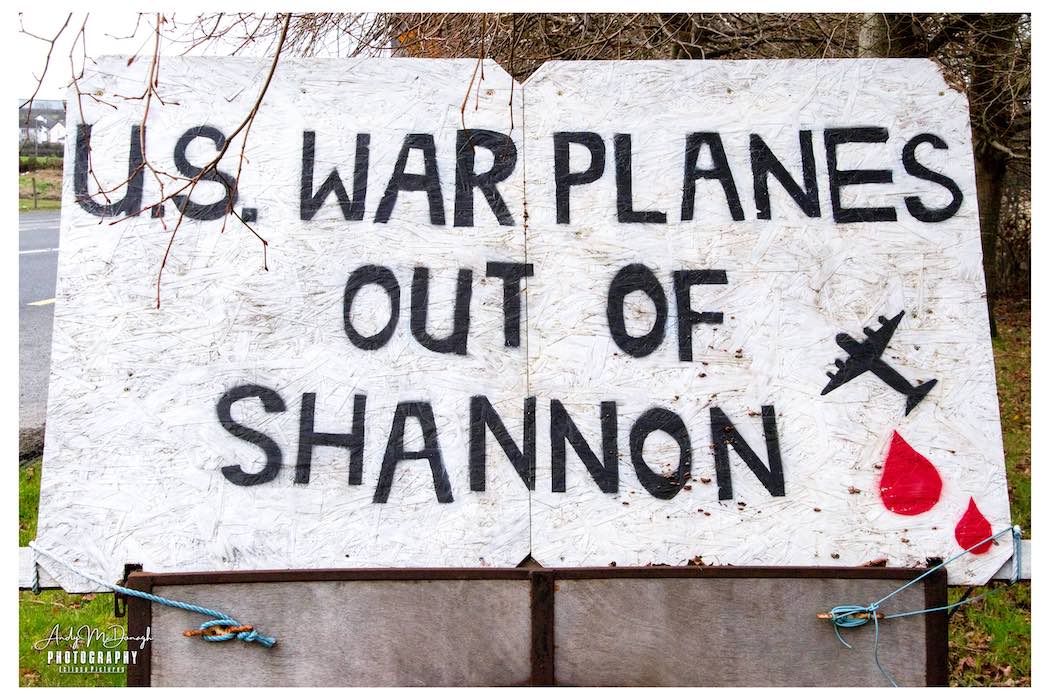
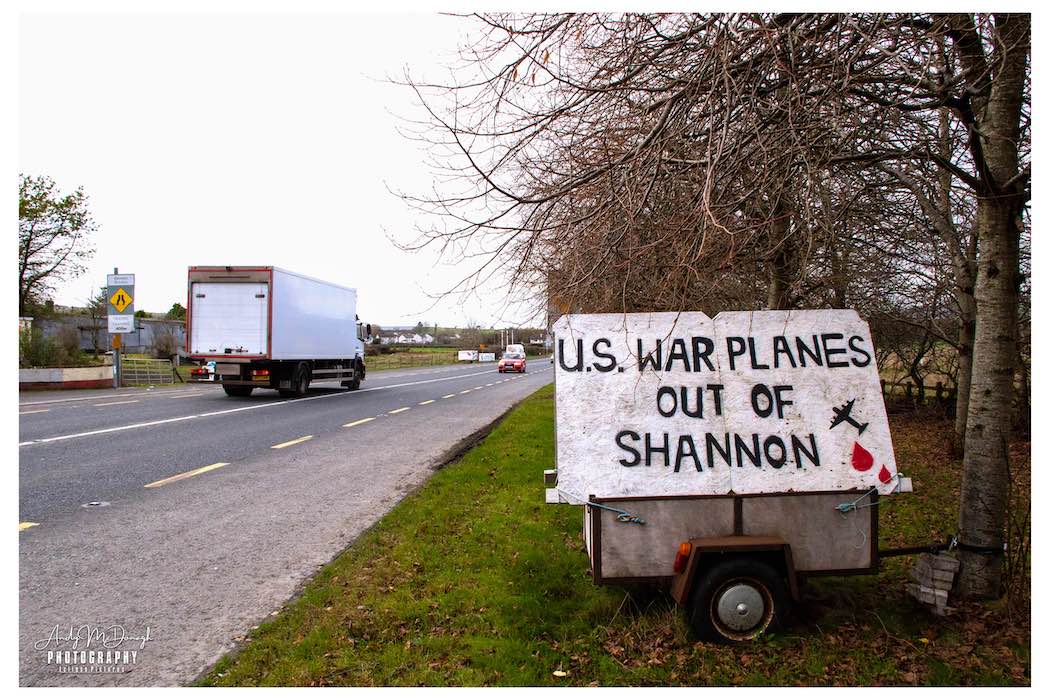
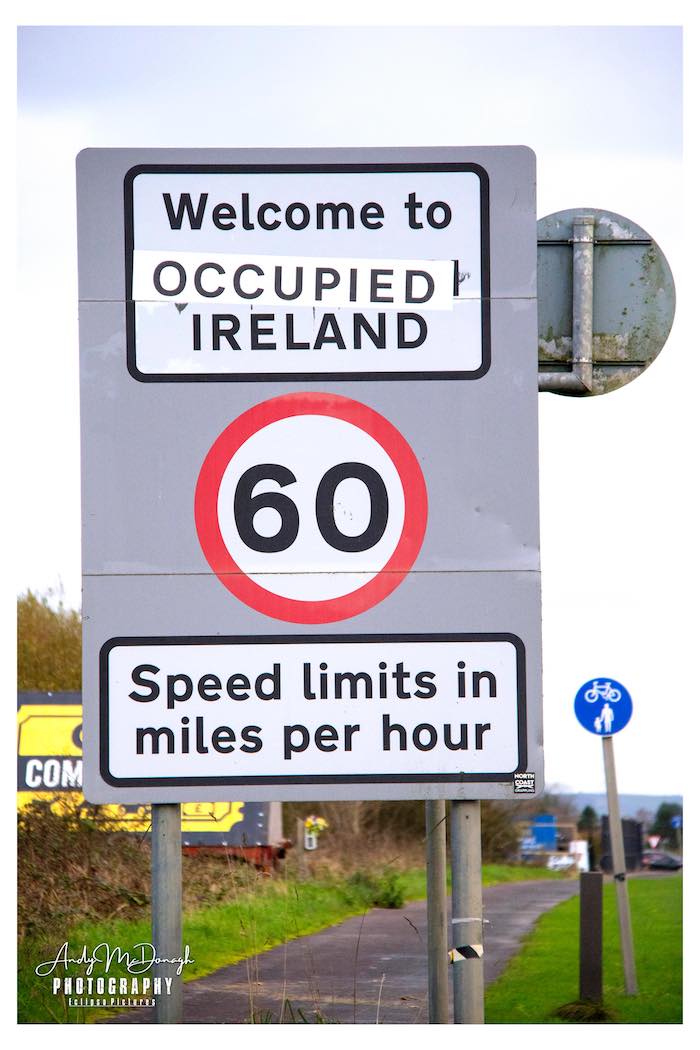
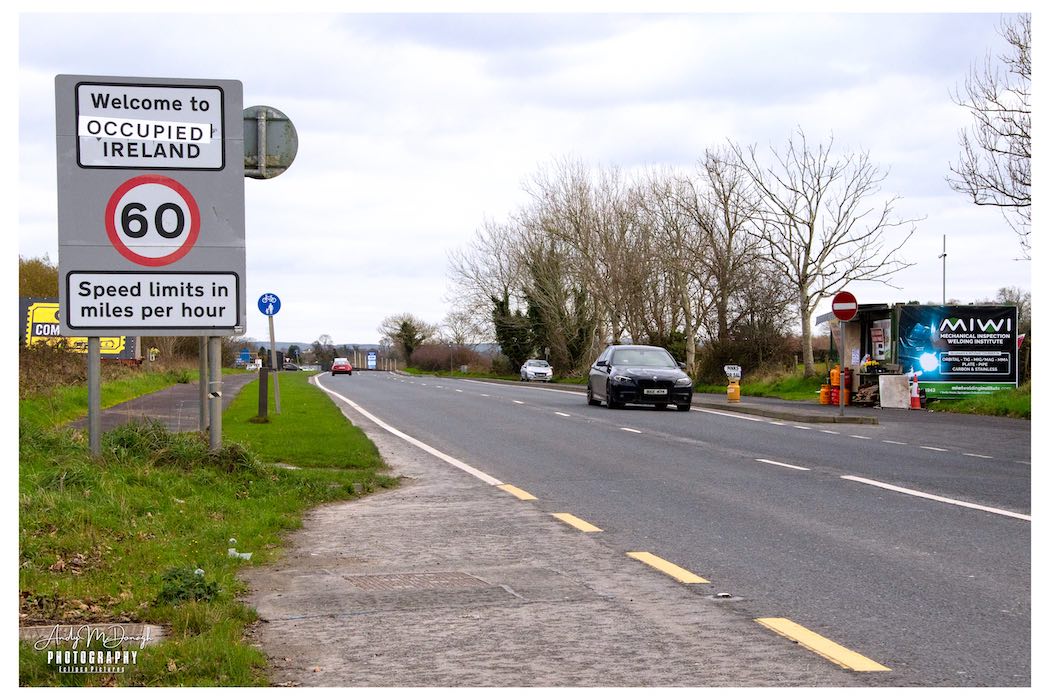
Here are three pairs of photos – courtesy of Andy McDonagh/Eclipso Pics – from the Buncrana Road between Coshquin and Bridge End, at the border between Northern Ireland and the Republic.
On the Republic side of the border, two boards are propped up on small trailers. The first reads “Israel/USA kill a classroom of kids every day” with a small drawing of a dove. Prior to the current (nominal) ceasefire, Palestinian children were killed at a rate of one every hour (Save The Children).
The second reads ,”US warplanes out of Shannon” illustrated by a bomber-plane and drops of blood. “Shannon Watch” is a web-site dedicated to tracking miltary activity at Shannon airport. According to RTÉ, 978 US planes used Shannon in the three years of 2022-2023-2024. The government maintains that such visits are not a violation of Ireland’s policy of military neutrality (WP).
From the road-sign just on the Northern Ireland side, “Welcome to NorthernOccupied Ireland”.
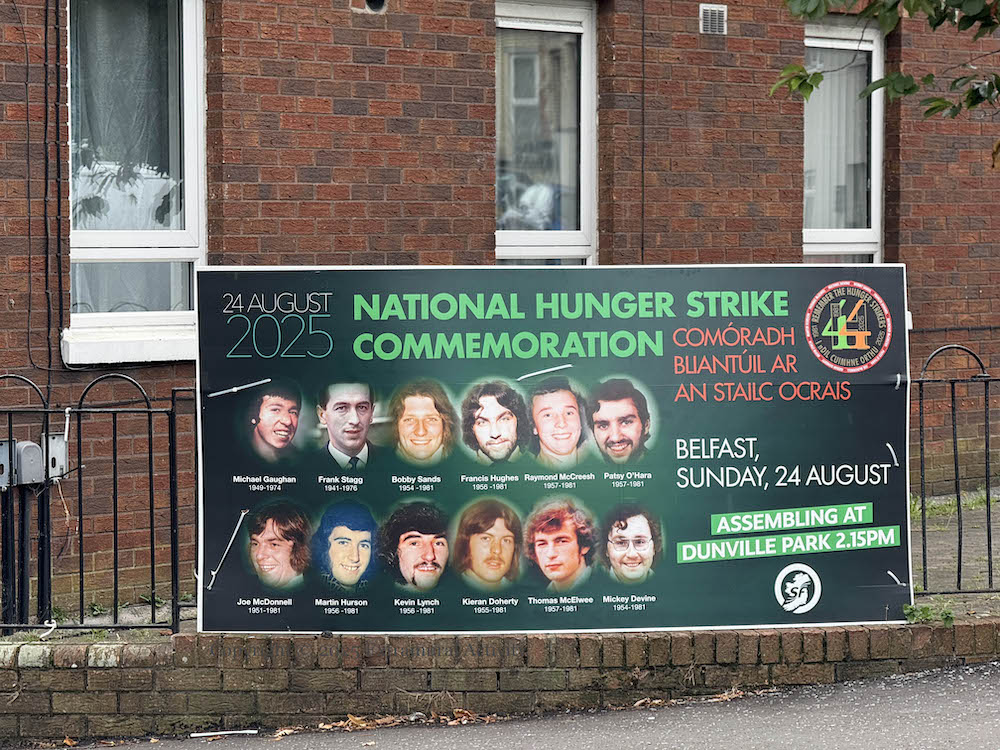
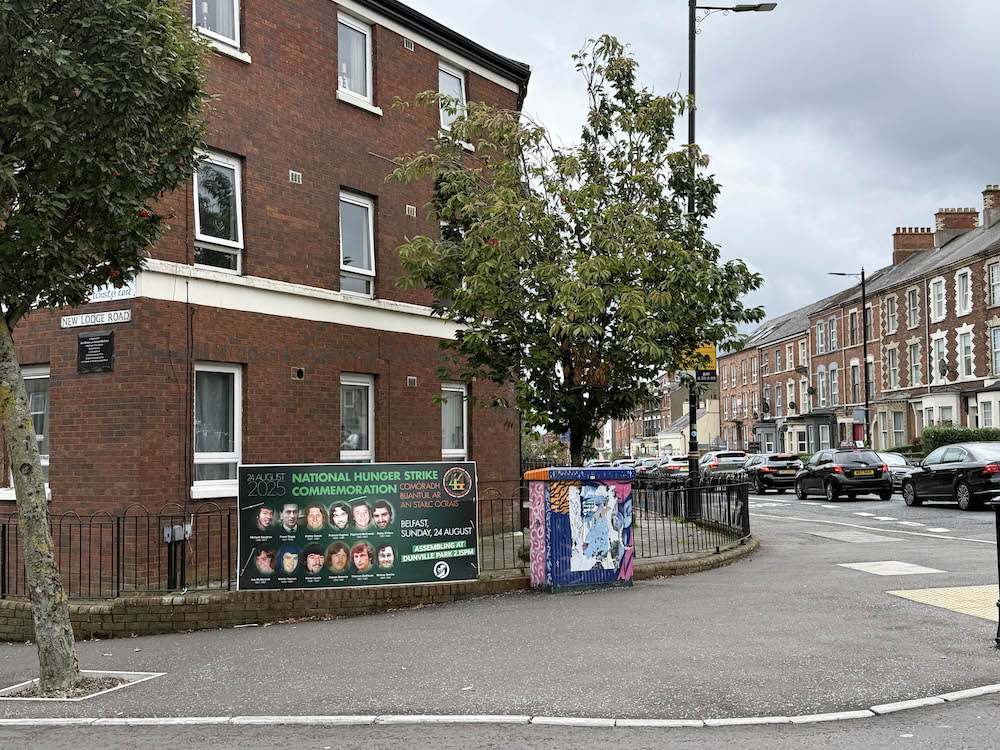
Michael Devine was the last of the 1981 hunger-strikers to die, on August 20th, 1981, and although the strike was not called off until October 3rd, his death now marks the end of the strike for commemorative purposes. The 44th annual national commemoration of the strike will take place this year on the 24th, “assembling at Dunville Park” in west Belfast.
Antrim Rd/New Lodge Rd, north Belfast. For the street art on the electrical box, see Rotten And Corrupt.
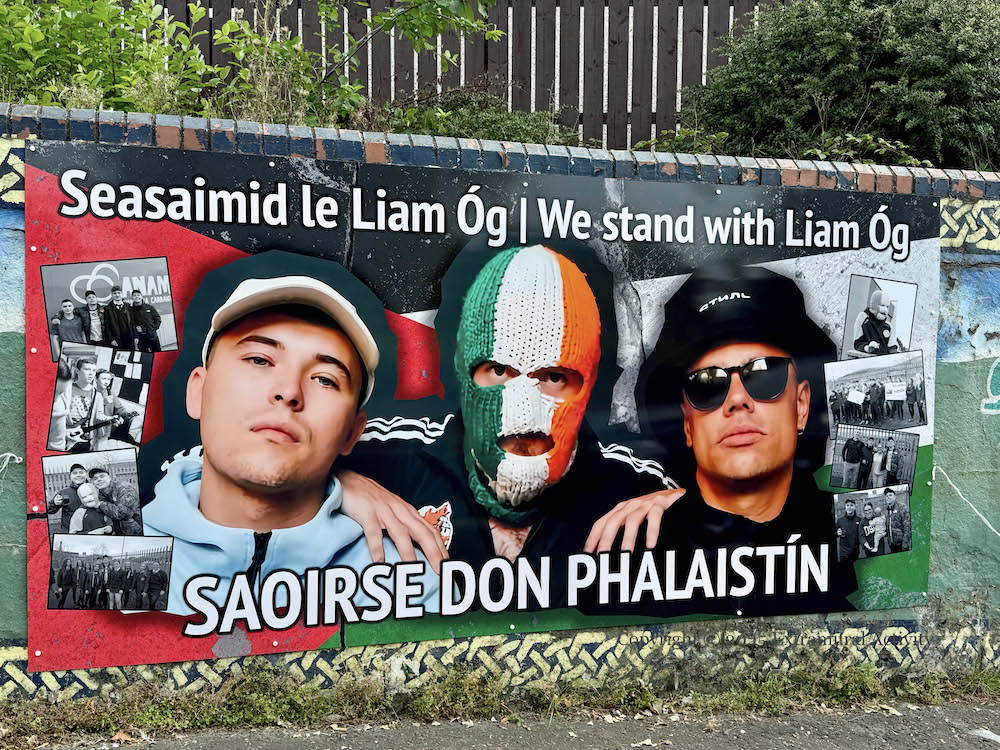
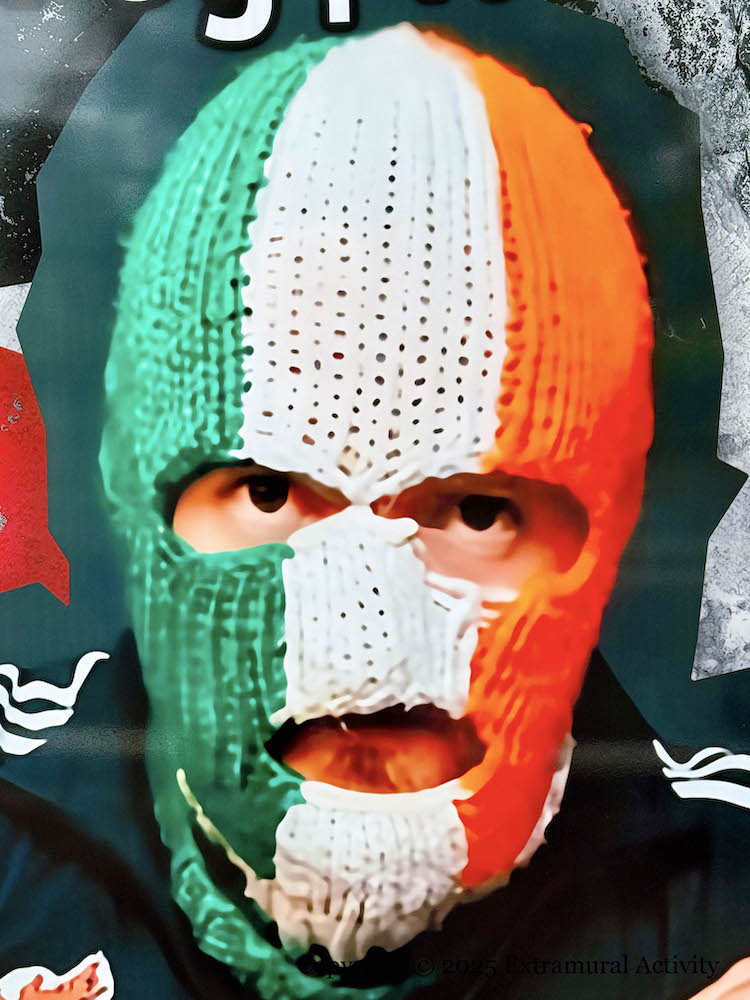
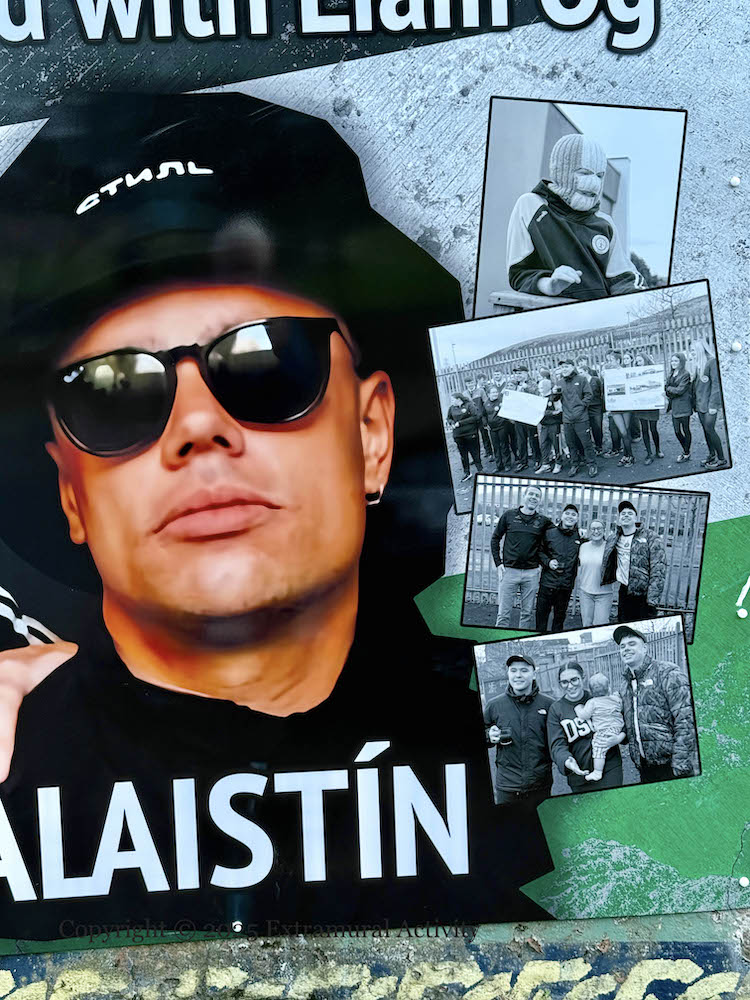
“We stand with Lıam Óg”, that is Lıam Óg Ó hAnnaıdh (on the left of the image above), a.k.a. Mo Chara, a member of the rap group Kneecap who appeared in court (in London) on Wednesday August 20th on “terrorism” charges and was bailed for a further month while the judge rules on a technical issue about whether the trial can go forward (BBC). (See previously The Magic Within and Seasaımıd Le Kneecap.)
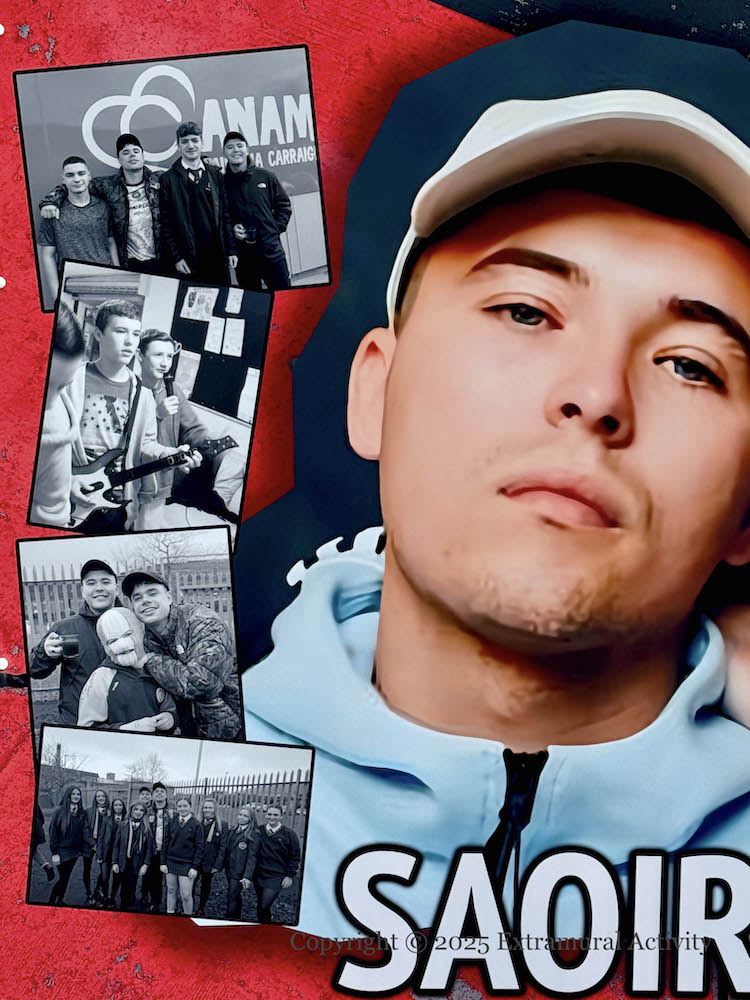
The night before (the 19th) this board featuring images of the band-members and the band in its early days was unveiled on the Whiterock Road. (Video of the launch can be found on the Glór Na Móna instagram account.)
In the background is a Palestinian flag and “Saoırse don Phalaıstín” [Freedom for Palestine] is written along the bottom.