“Peace” Building

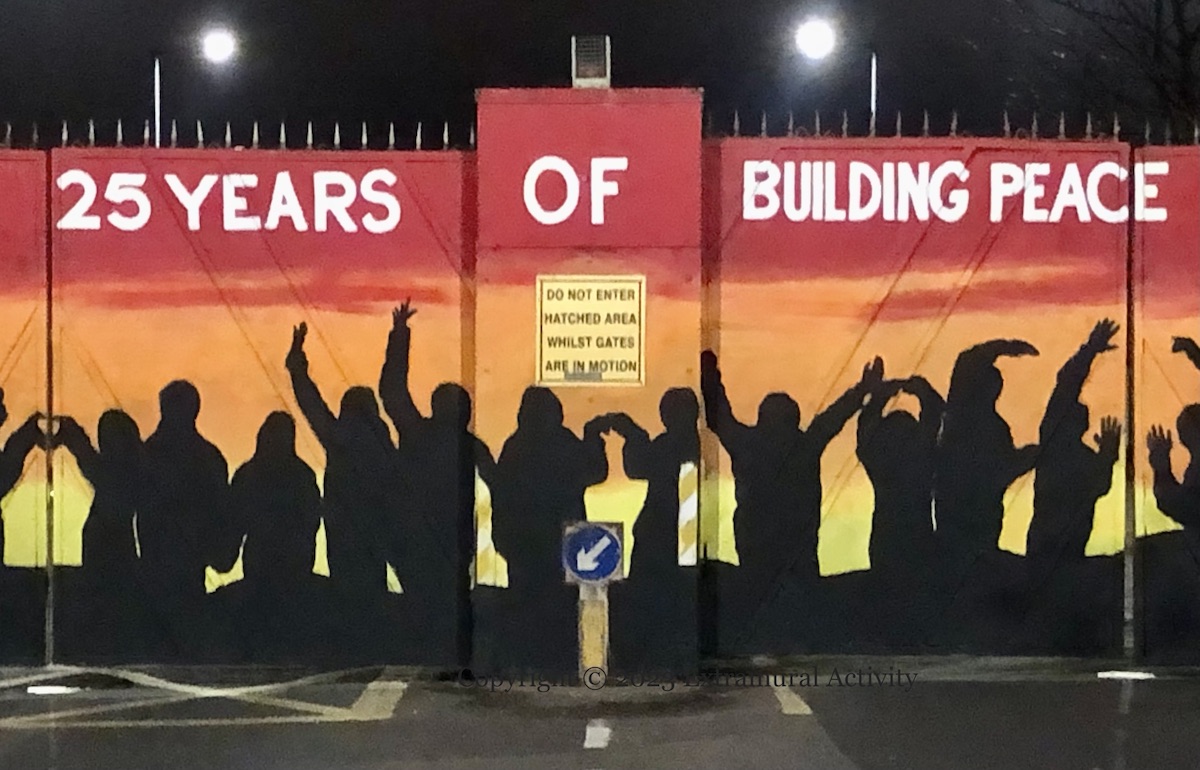
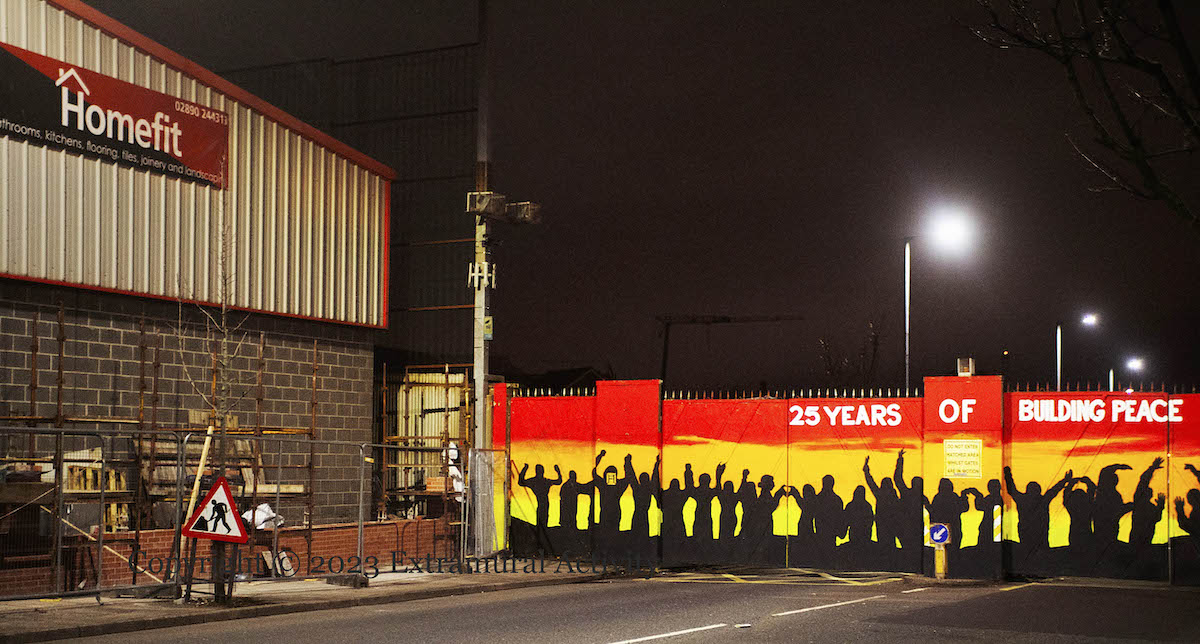
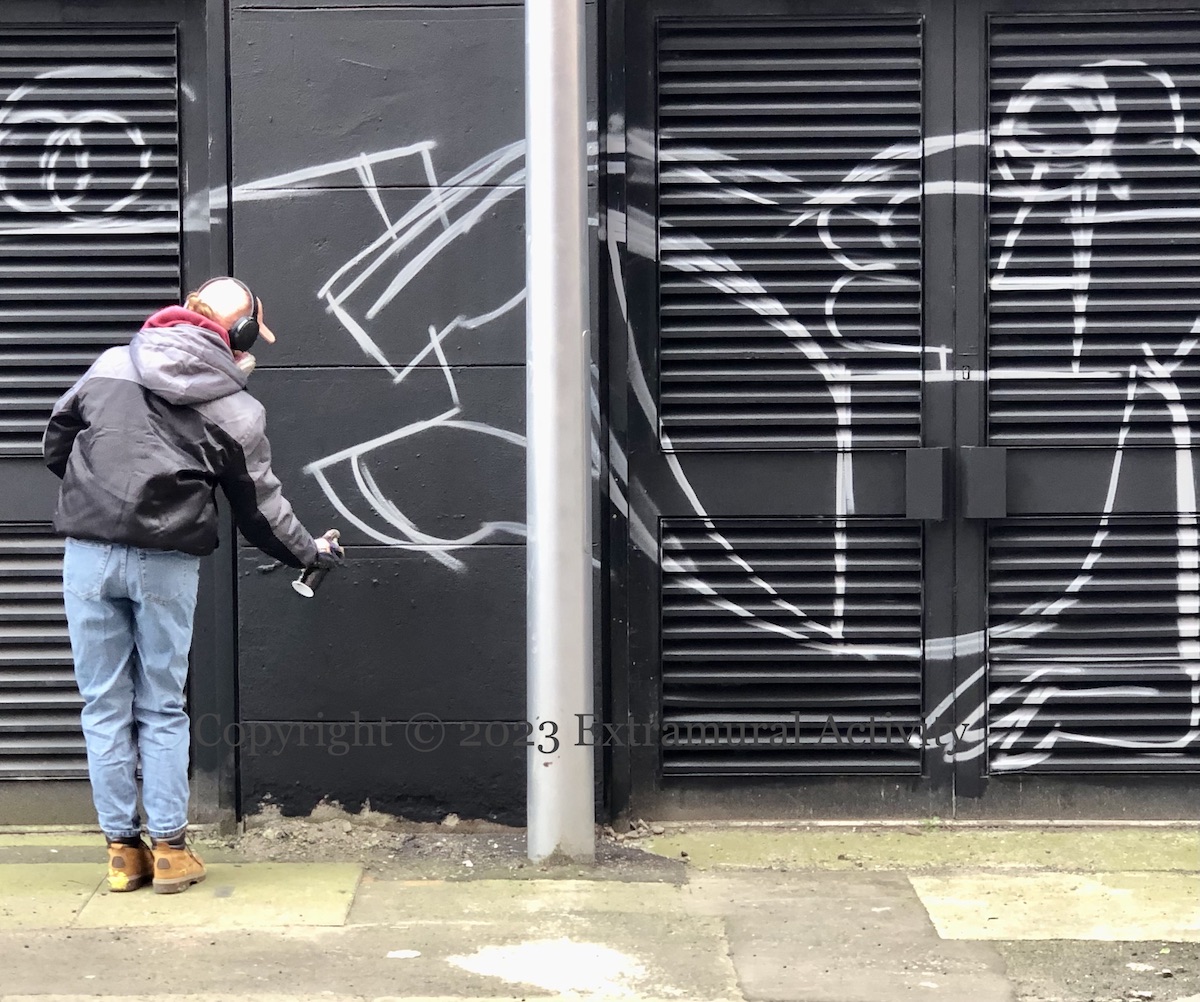
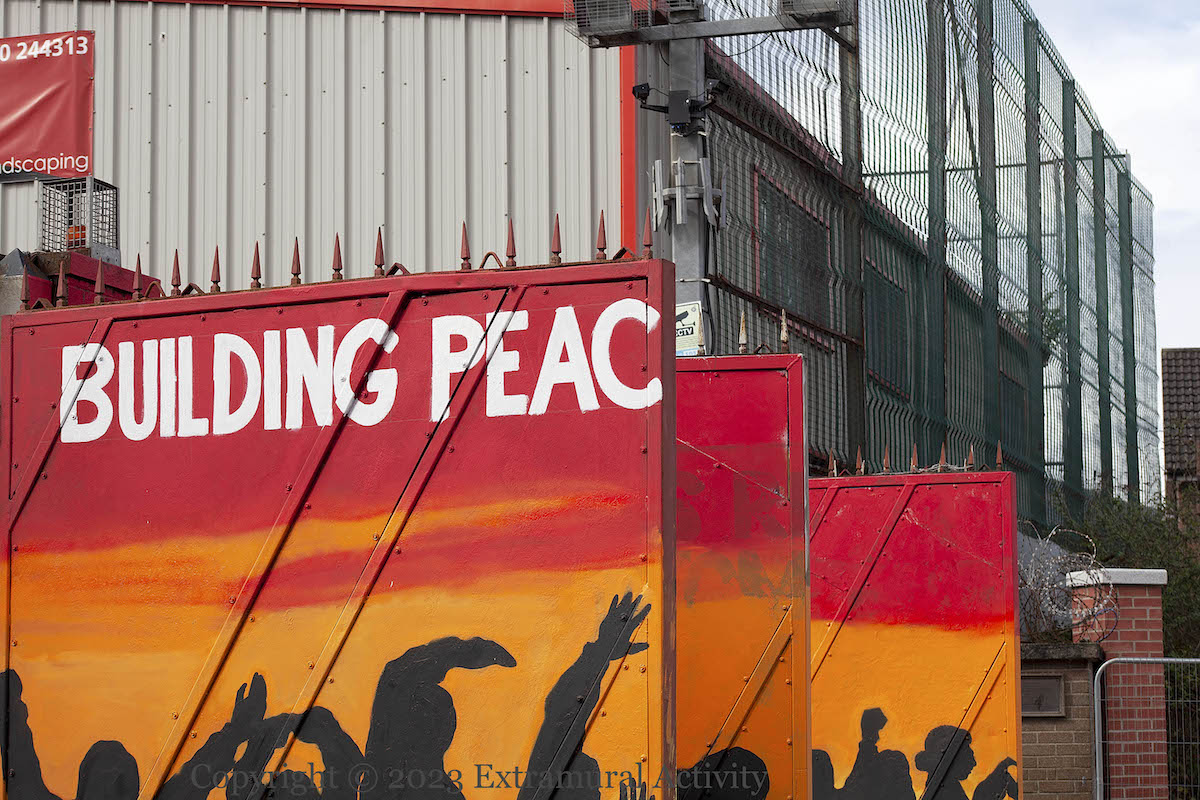
The gates on Lanark Way are part of the west Belfast “peace” wall. On this site we always put the word in scare-quotes to signify that it has a different meaning than it typically does. Without them, “peace wall” might suggest a place where people can go for a few moments of quiet reflection.

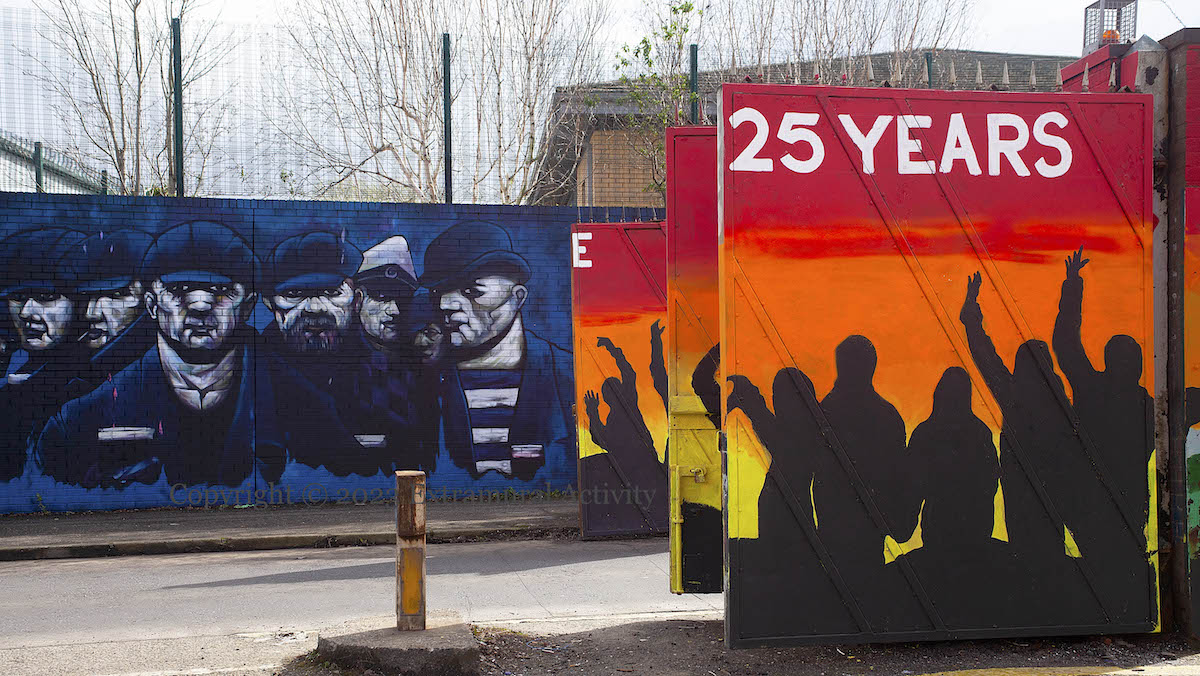
Rather, the wall – and the gates and the cages that surround many buildings on either side of the wall (see above) – is a divider meant to keep the peace by separating warring factions. Indeed the reason for the re-painting of the gates is not just the up-coming 25th anniversary of the Belfast or “Good Friday” Agreement (on April 10th) but the fact that they were damaged in the 2021 rioting (BBC). (This Irish News article surveys 150 years of violence at the site.)

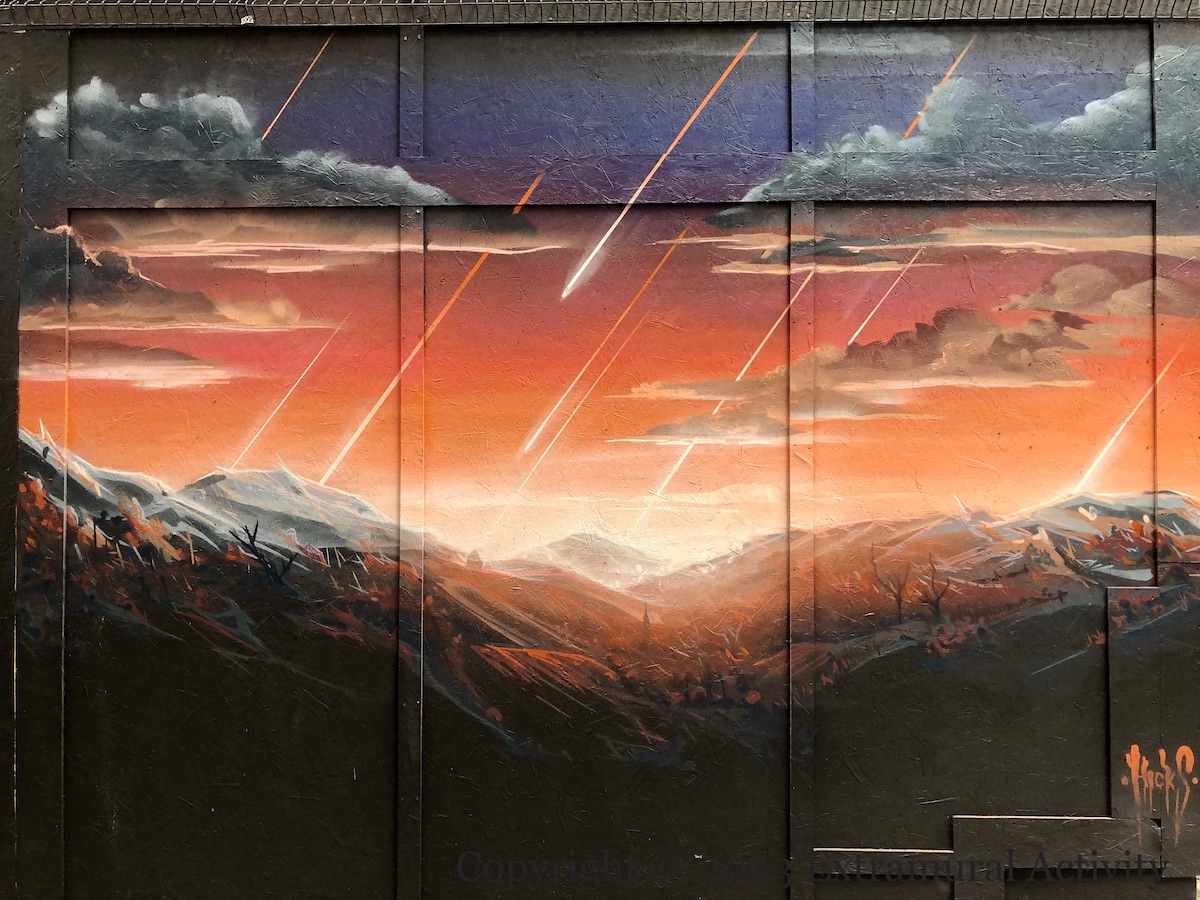
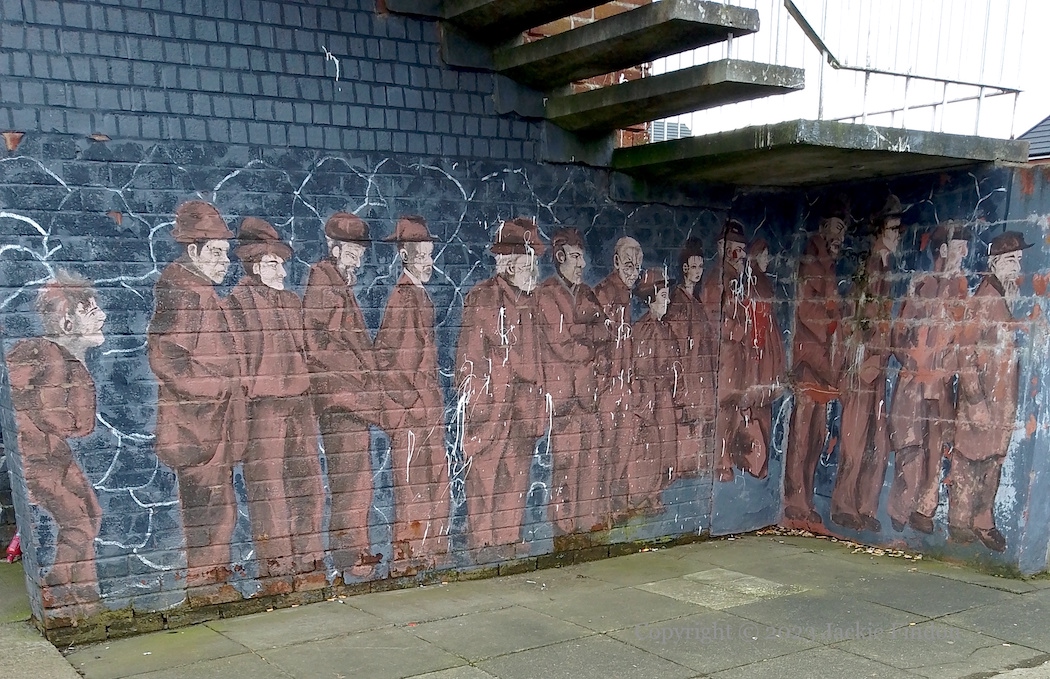
The new art on the gates is inspired by the cover of the booklet sent to every household in advance of the May vote to ratify the Agreement (available at CAIN), which was similar in various ways to the television ad shown at the time (Ads On The Frontline). It showed a family of four in silhouette against a red-and-orange sunset; given the rioting associated with Lanark Way, on the gates this sunset could be mistaken for flames, and the rejoicing silhouetted figures for gesticulating and petrol-bomb-throwing rioters. For the previous art on the gates, see the Visual History page on the west Belfast “peace” line. (For the mural in the background, see Sailortown Dockers.)

For all your “peace” line needs, see the Belfast Interface Project.
Click image to enlarge
Copyright © 2023 Seosamh Mac Coılle
X12166 X12167 X12178 X12184 [X12177]
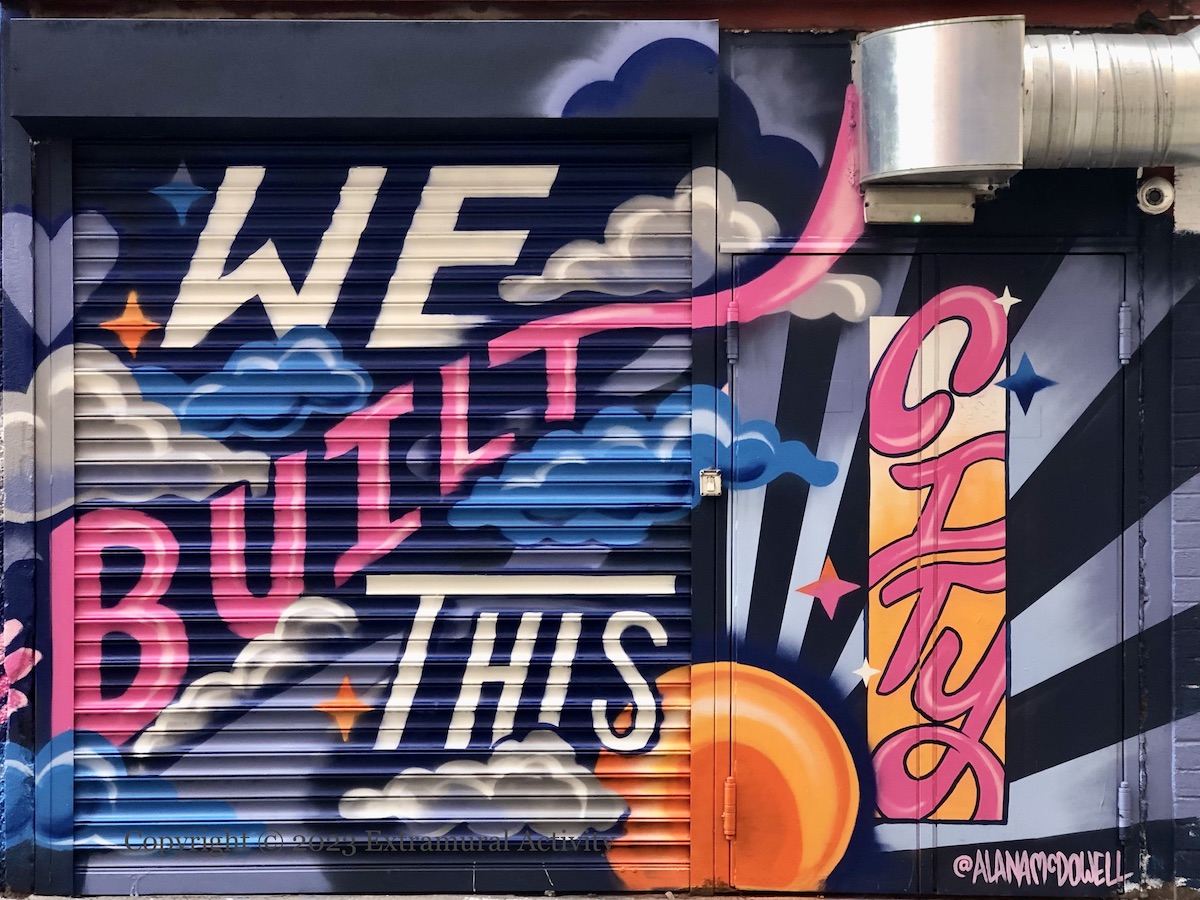
We Built This

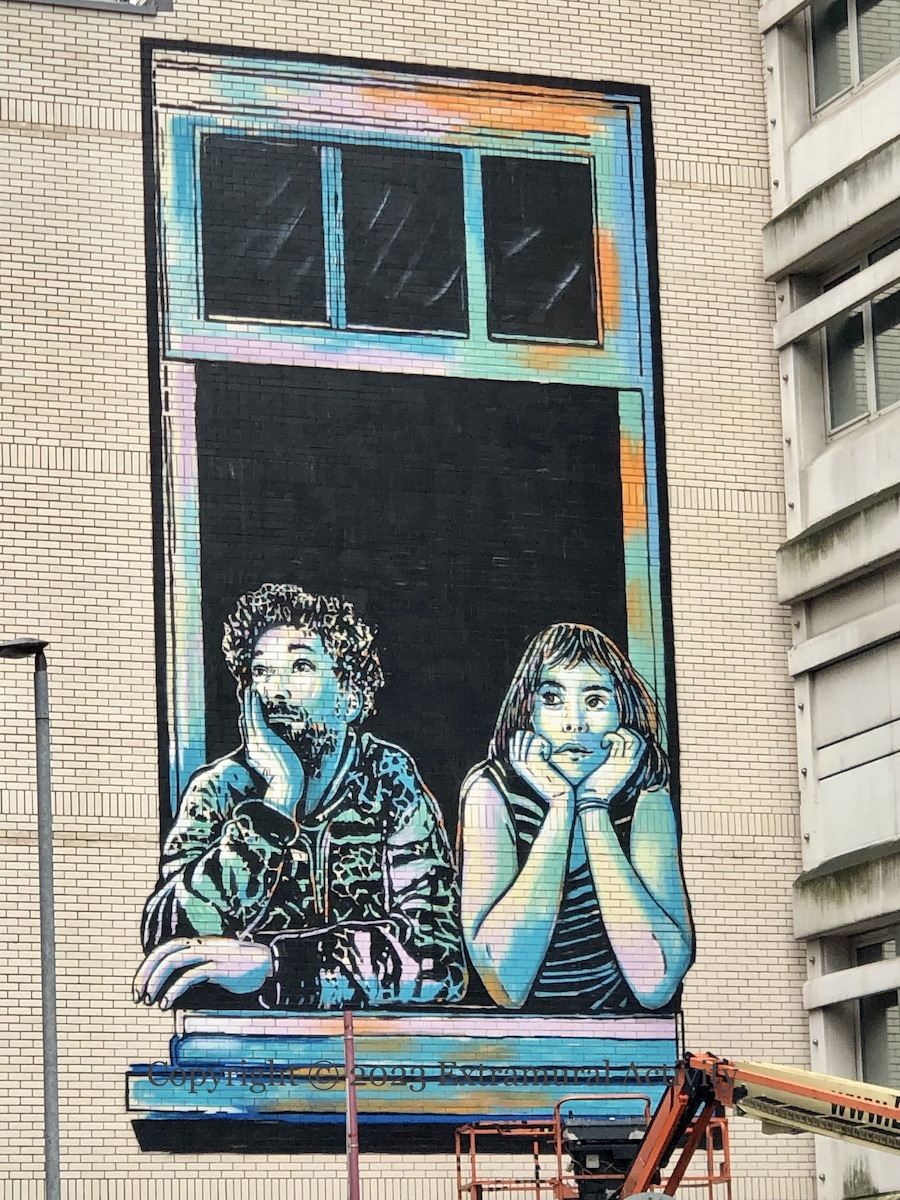
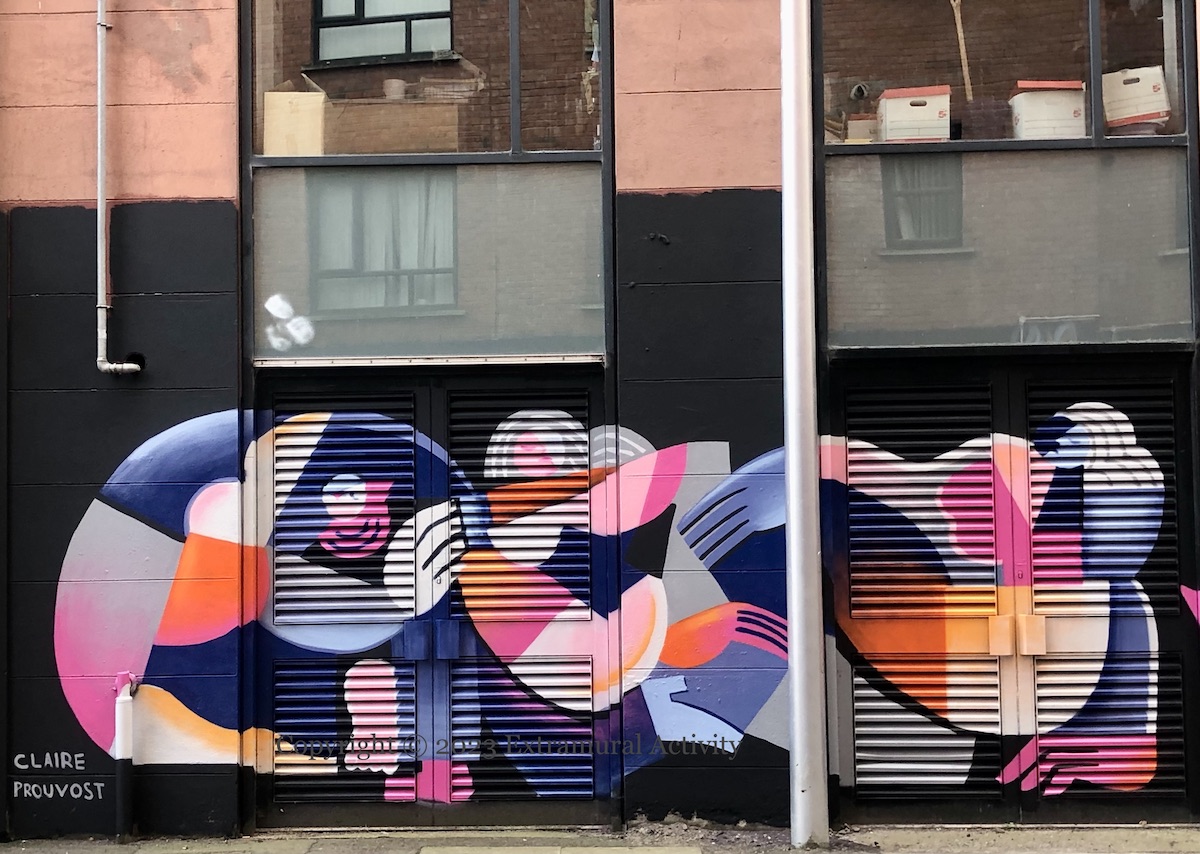
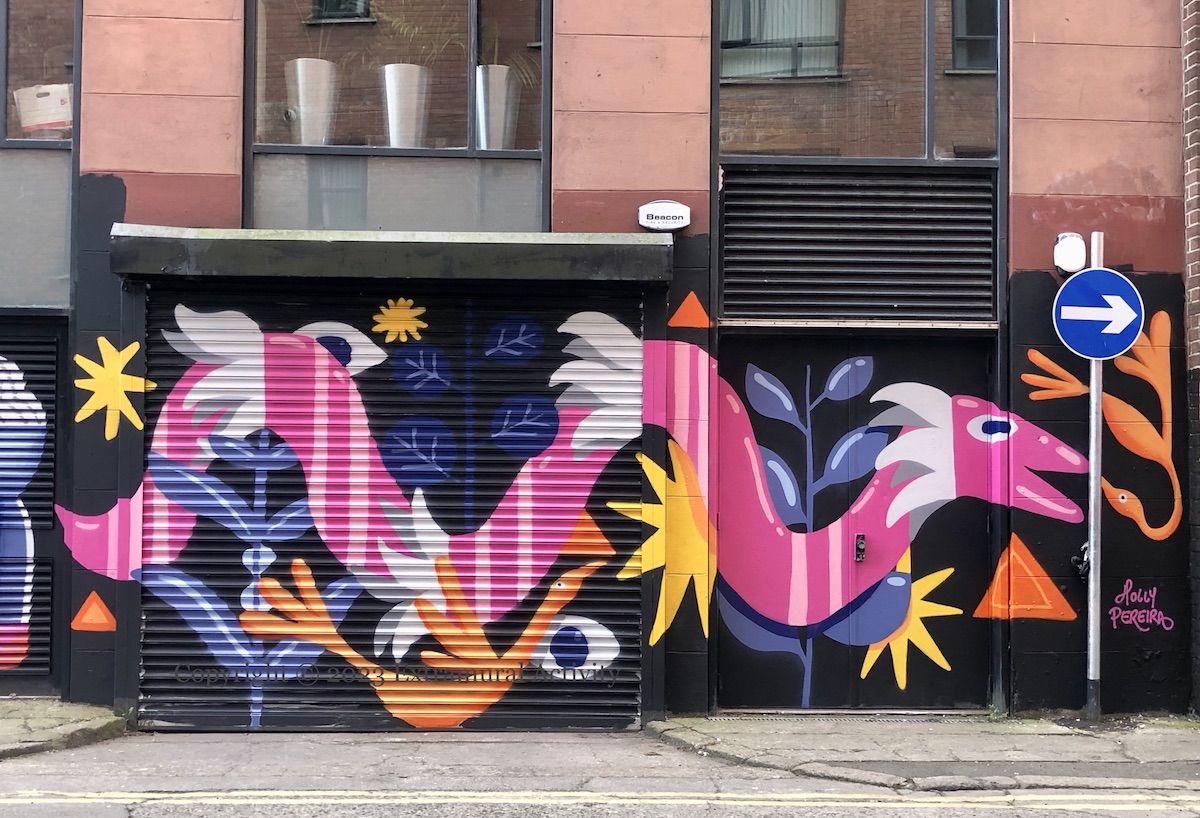
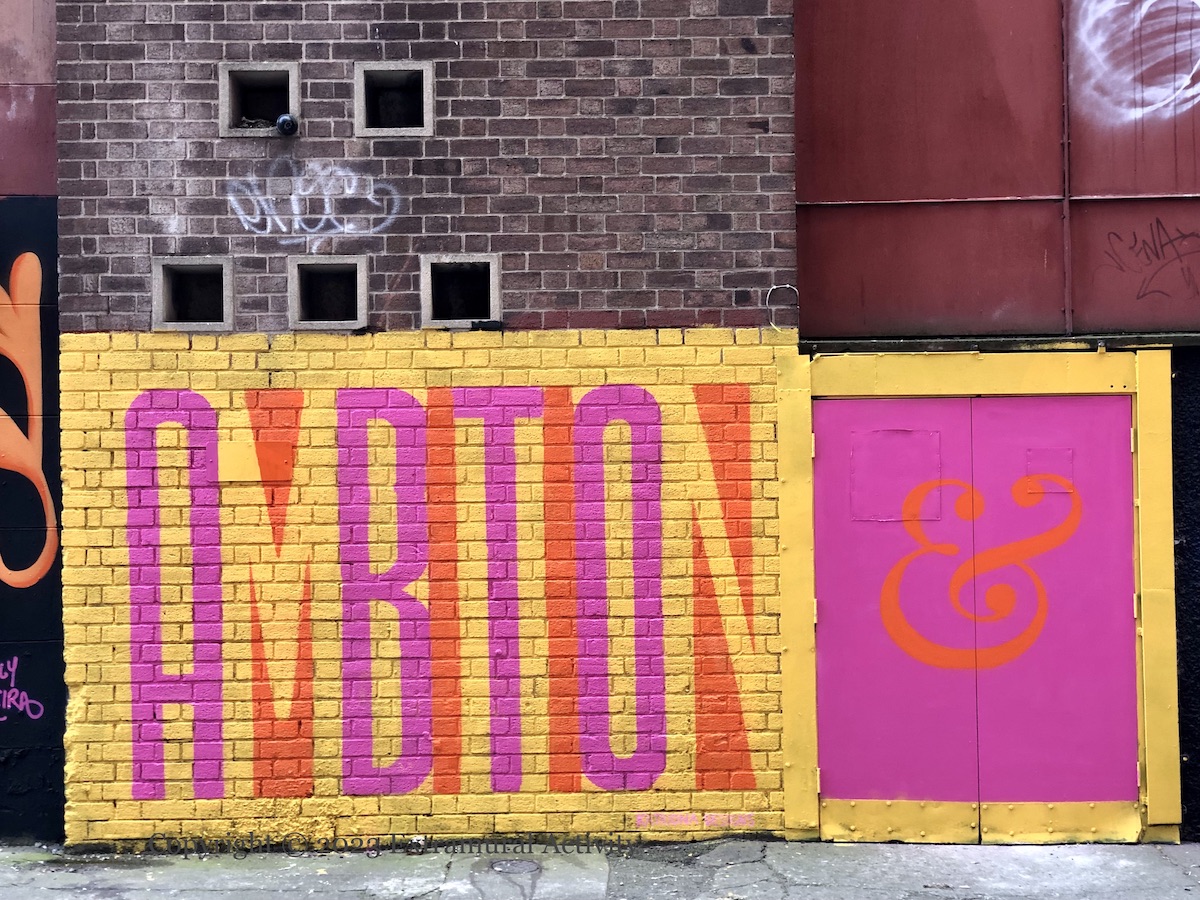
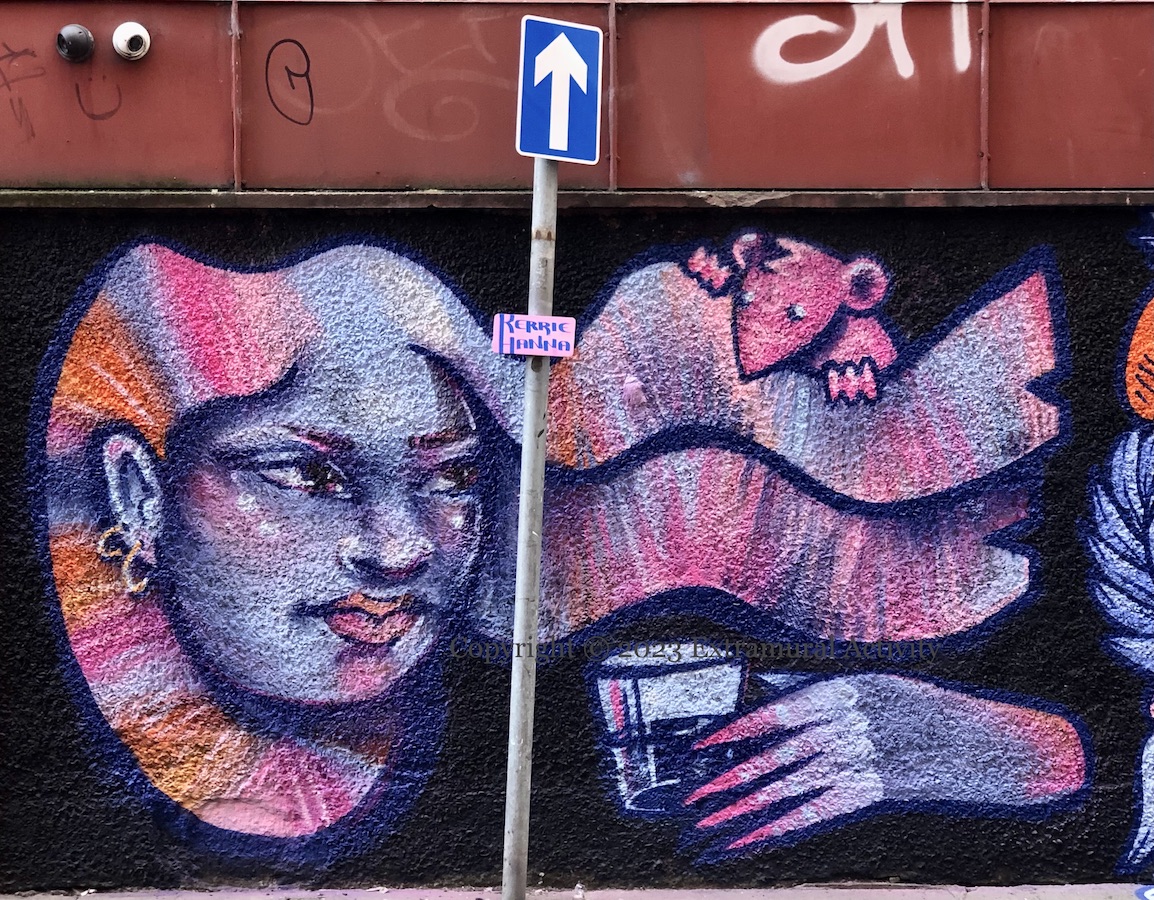
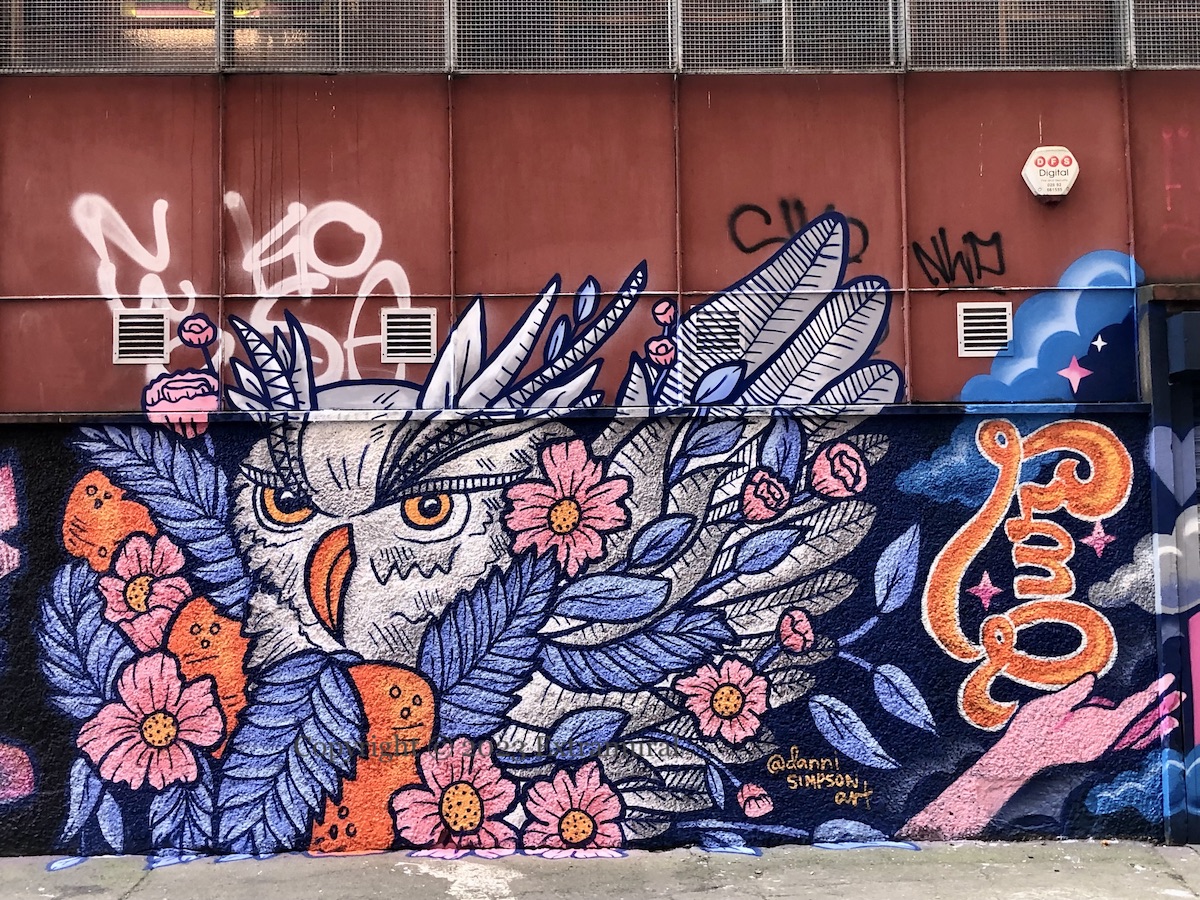
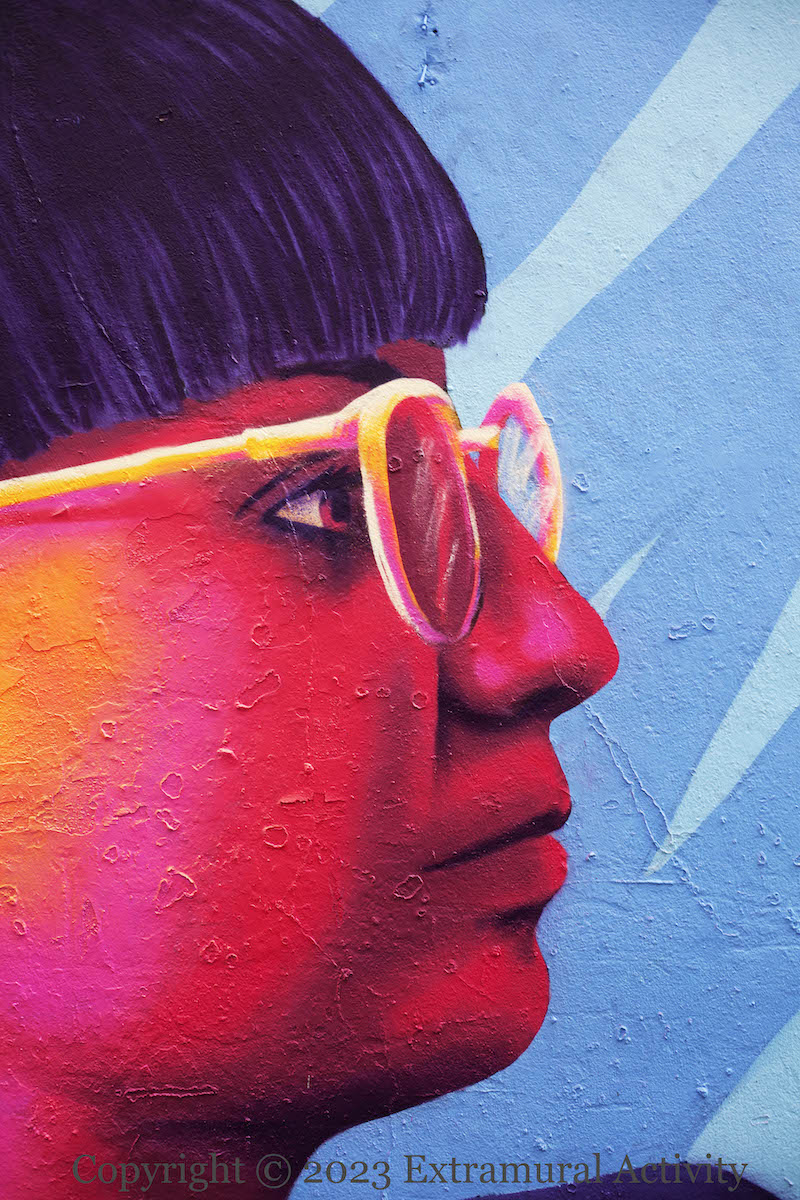
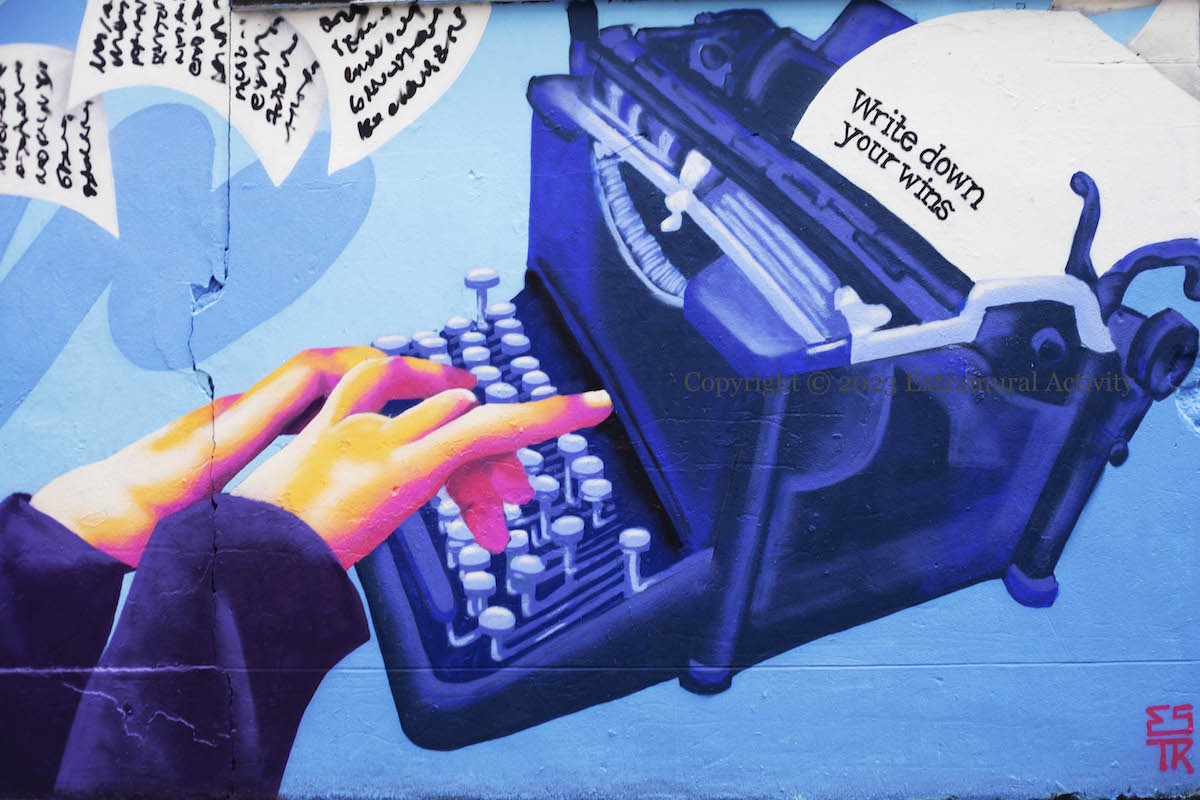
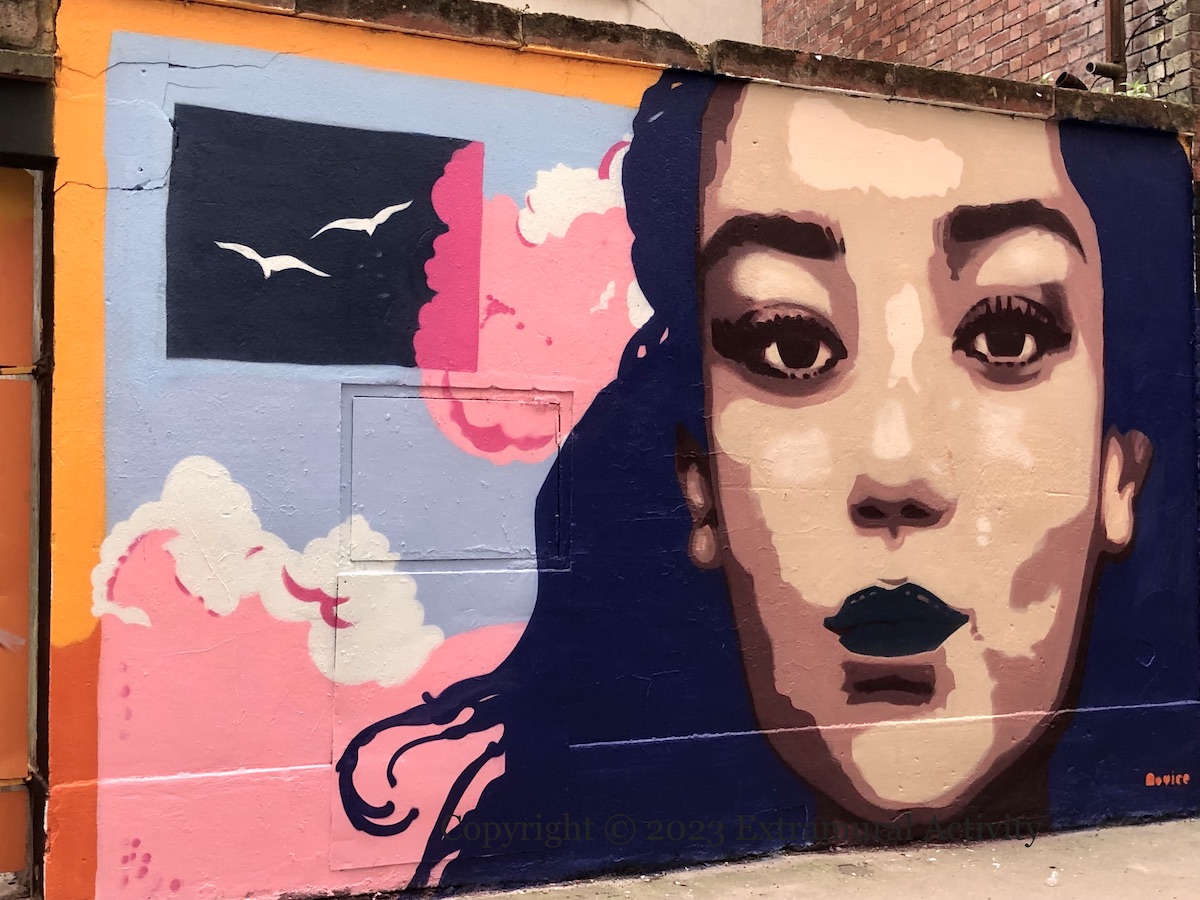
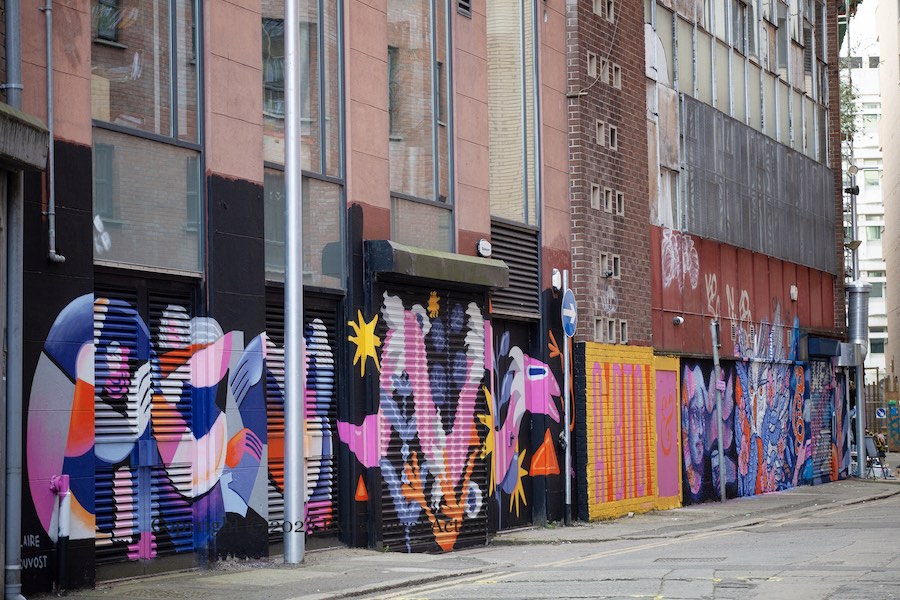
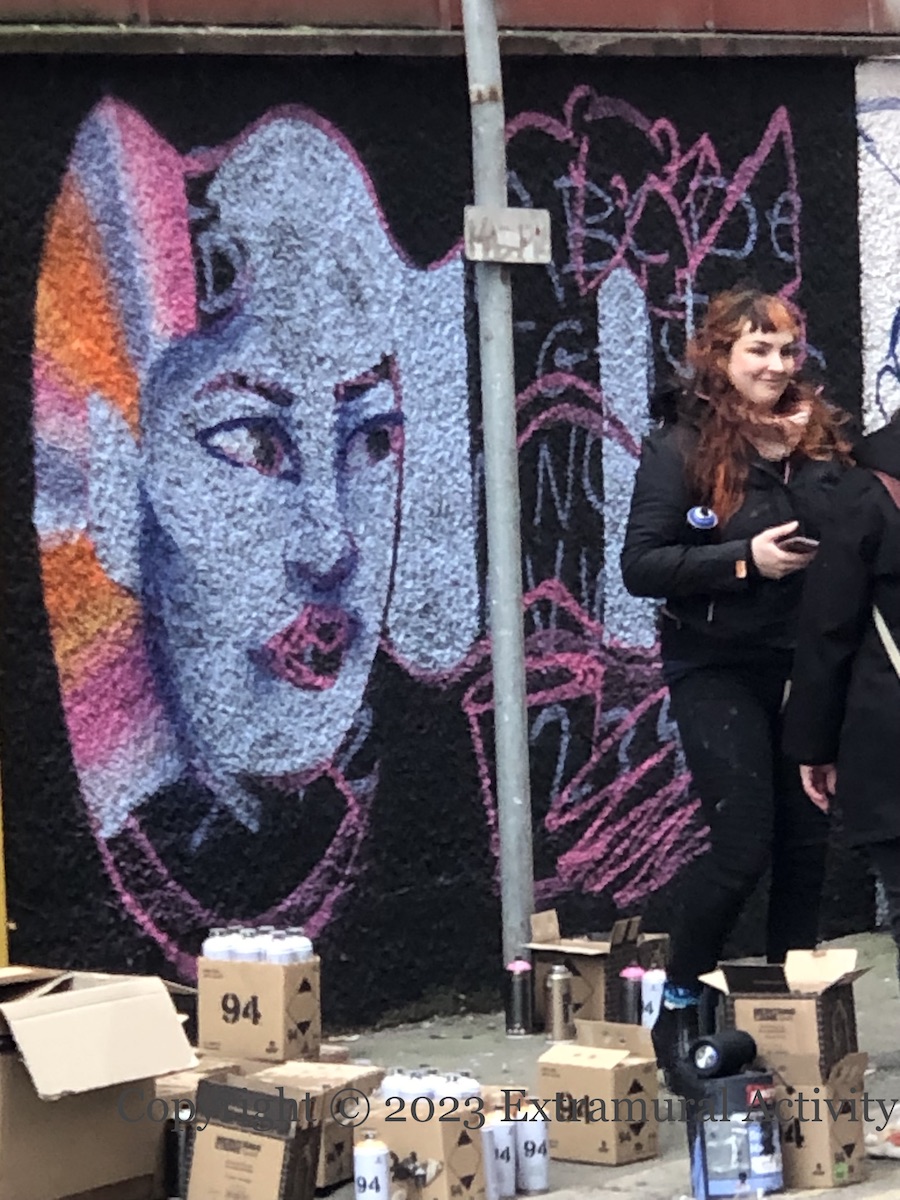
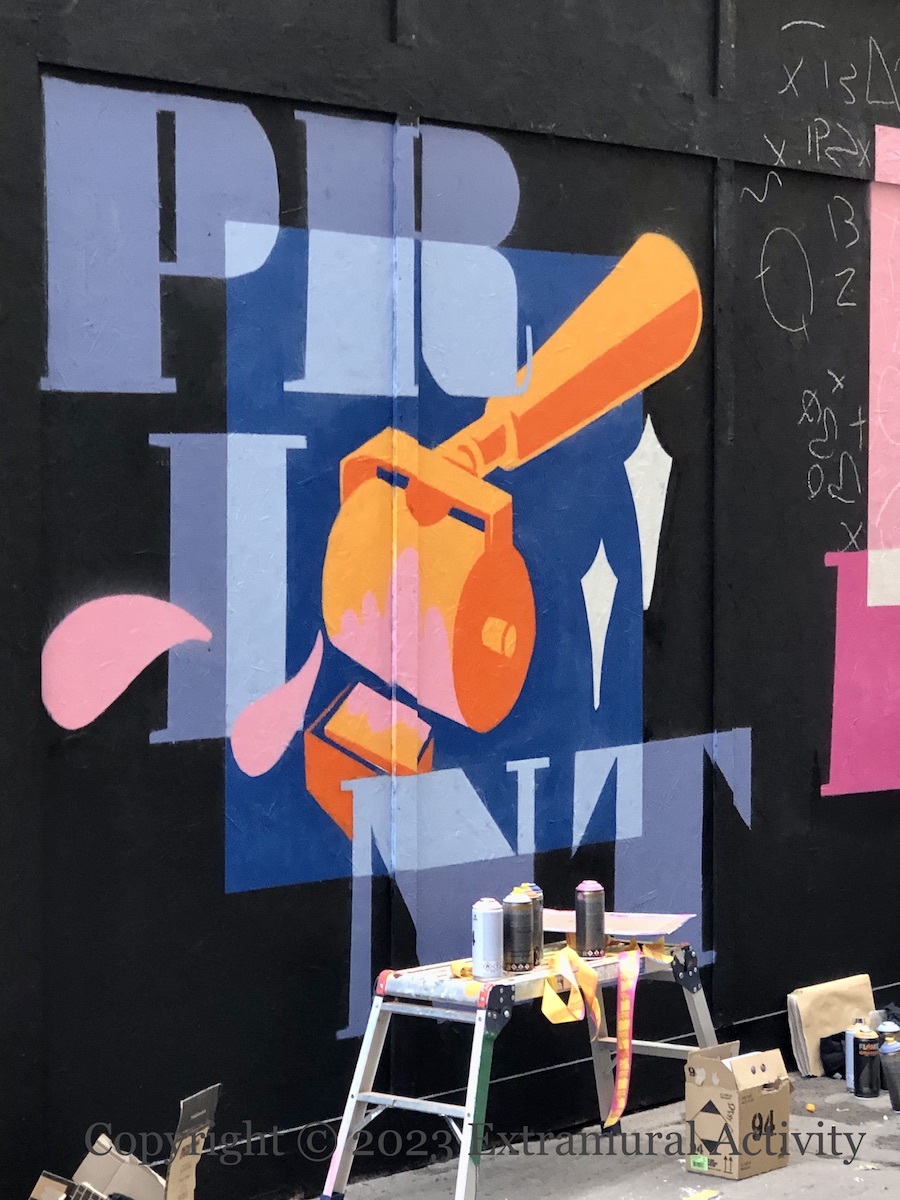
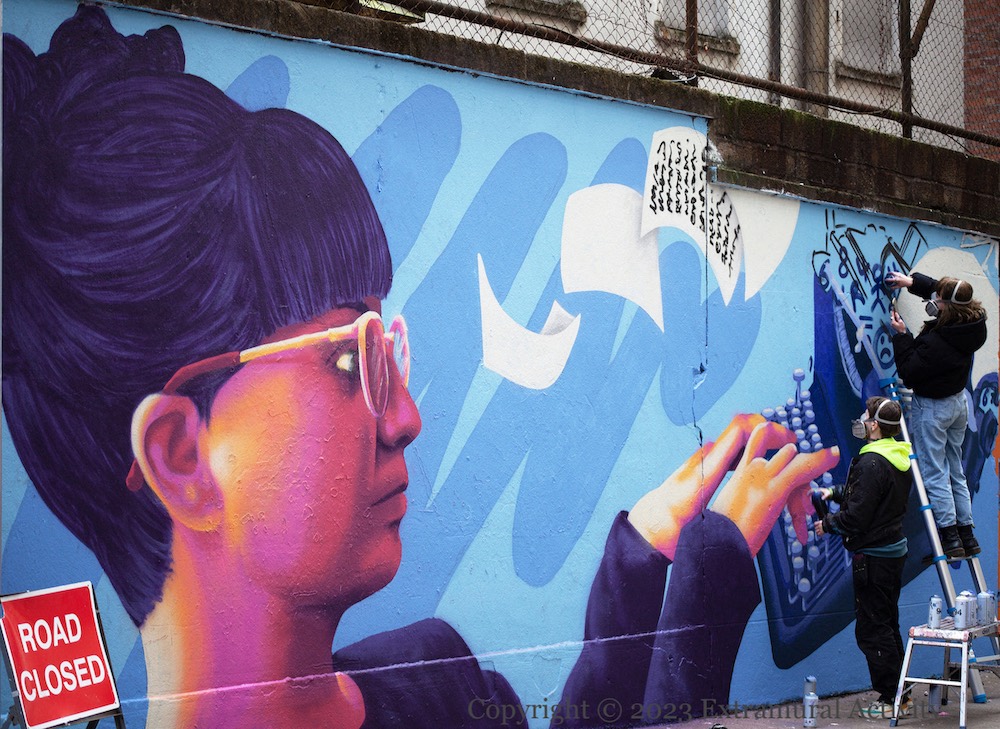
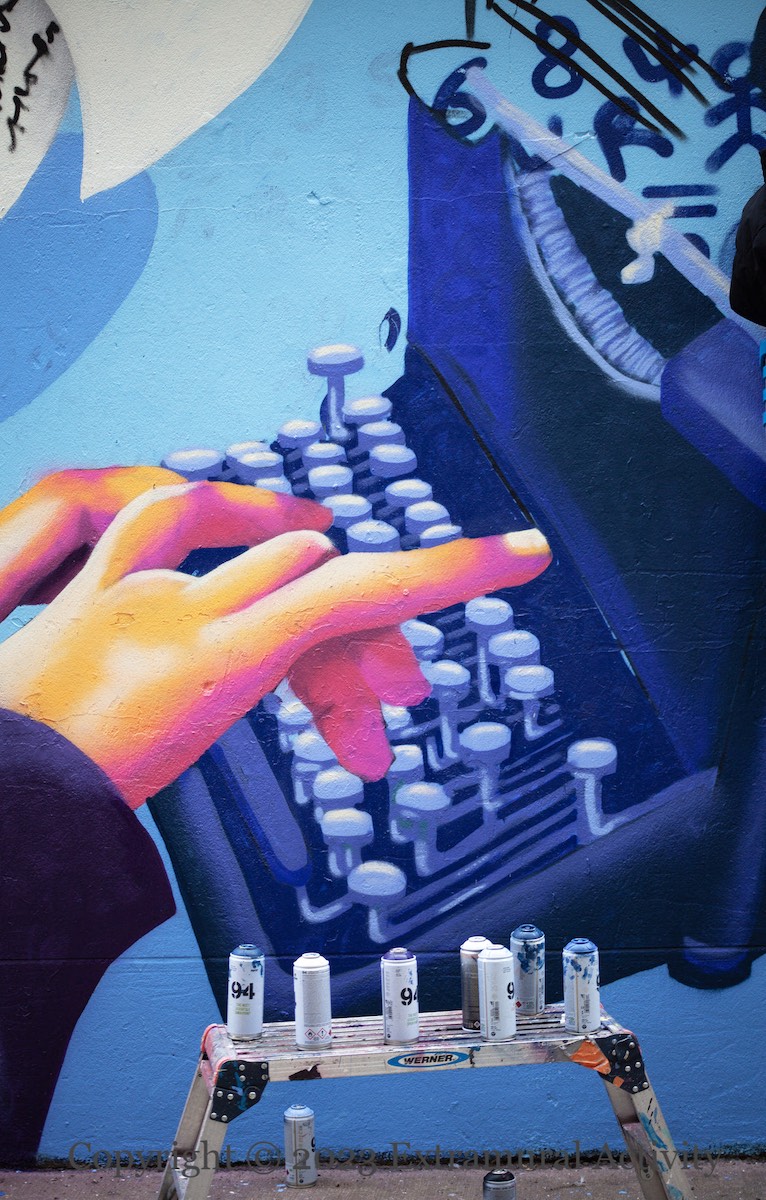
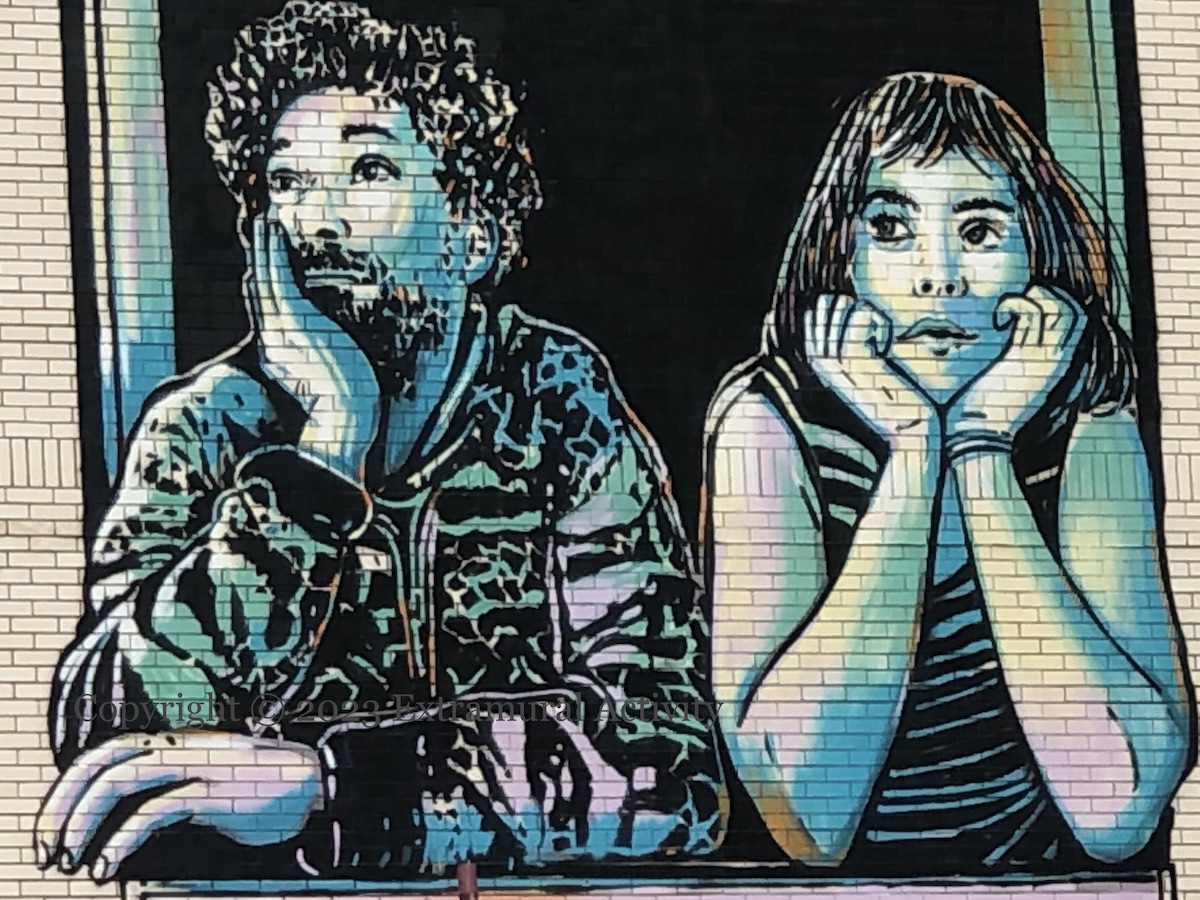
Here is a gallery of completed pieces produced for International Women’s Day 2023 in College Court. The new street art is part of a larger revitalisation project (Belfast City Council).

The works shown are (from Castle Street to College Street) by Claire Prouvost, Holly Pereira, Katriona, Kerri Hanna, Danni Simpson, Alana McDowell, ESTR; Laura Nelson, Novice Jess, Friz, (guest artist Hicks who was in town to repair and extend his piece in College Street Mews (see Cool) – it was damaged by a dumpster fire) and, on the other side of the street, HM Constance [Update: 2023-04 a purple cow was painted on one of the HMC shutters – see the image in the Paddy Duffy collection].

For in-progress shots, see Women’s Work.

“My piece relates to the history of college court and the coming together of committee in 1807 to raise public subscriptions in co-educational, non denominational education.” (tw)

“This piece took inspiration about the history of College Court, which used to be called Water Street, as it was the first place running water pipes were installed in Belfast.” (ig)

[typist]

[Women’s Work – see Women’s Work]

[PRINT / WORKS – see the image in the Paddy Duffy collection]

Click image to enlarge
Copyright © 2023 Seosamh Mac Coılle
X12099 X12100 [X12115] X12101 X12102 X12103 [X12116] X12104 [X12117]
X12217 X12216
X12107 [X12215]
X12108 [X12124] T02291 X12111 X12112 X12114 Department For Communities, Future City Centre Programme, A Bolder Vision for Belfast

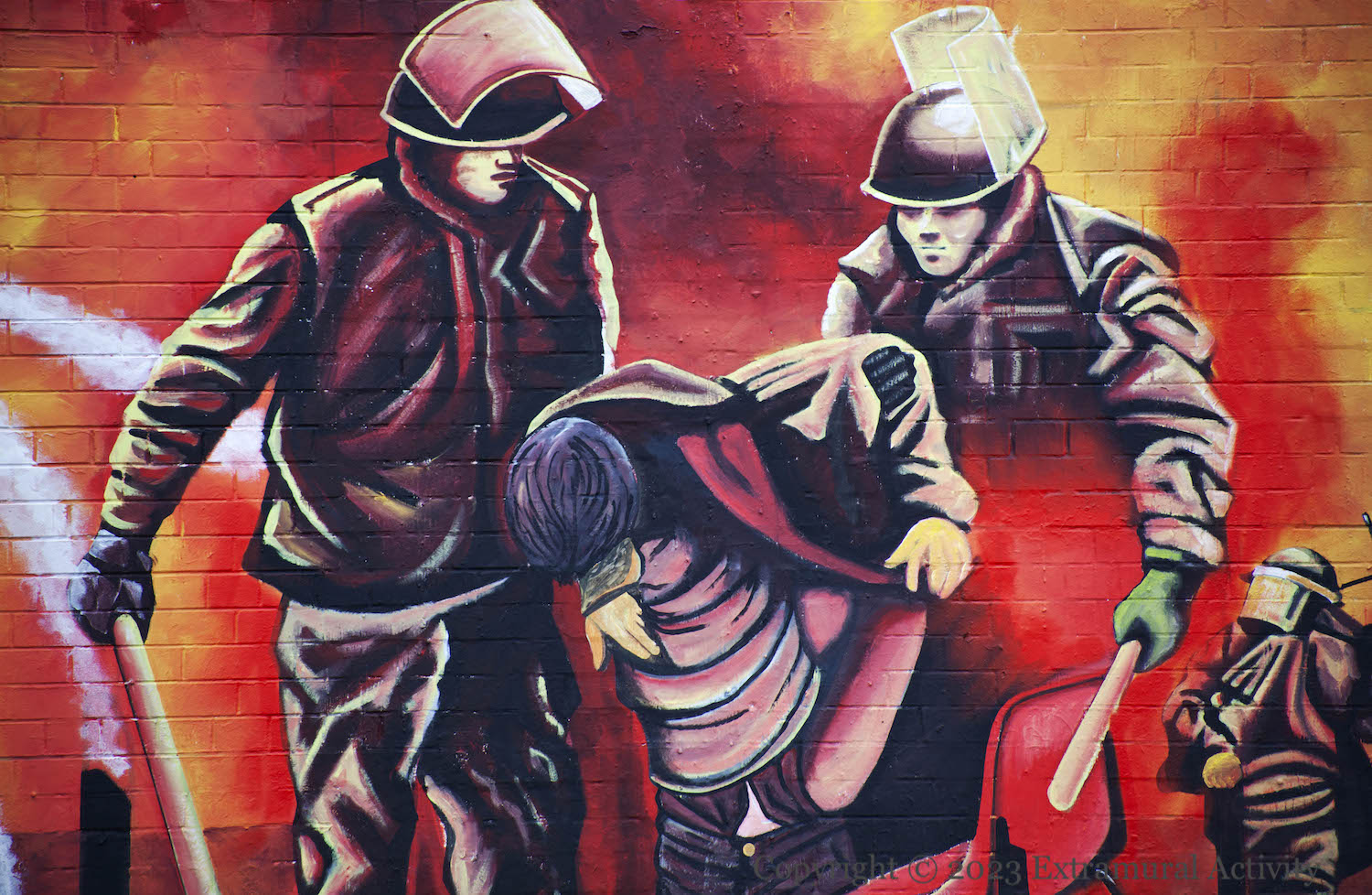
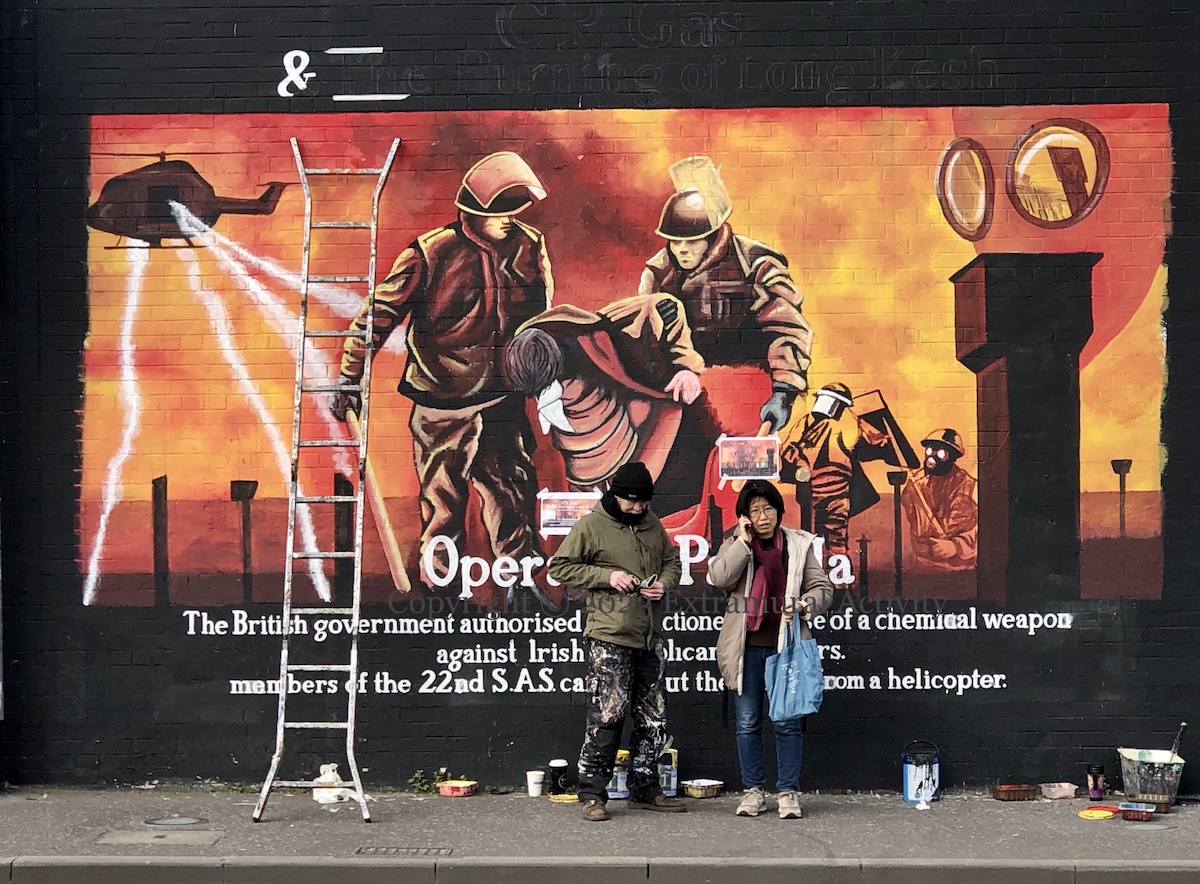
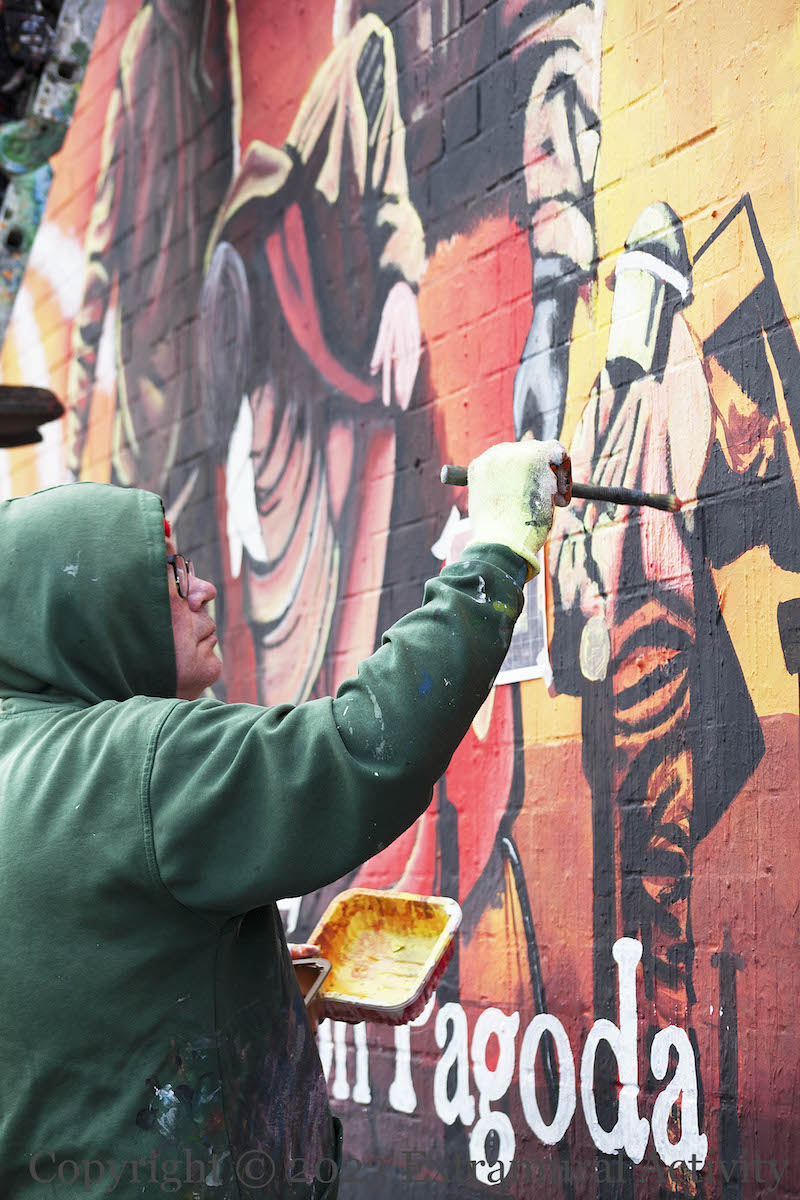
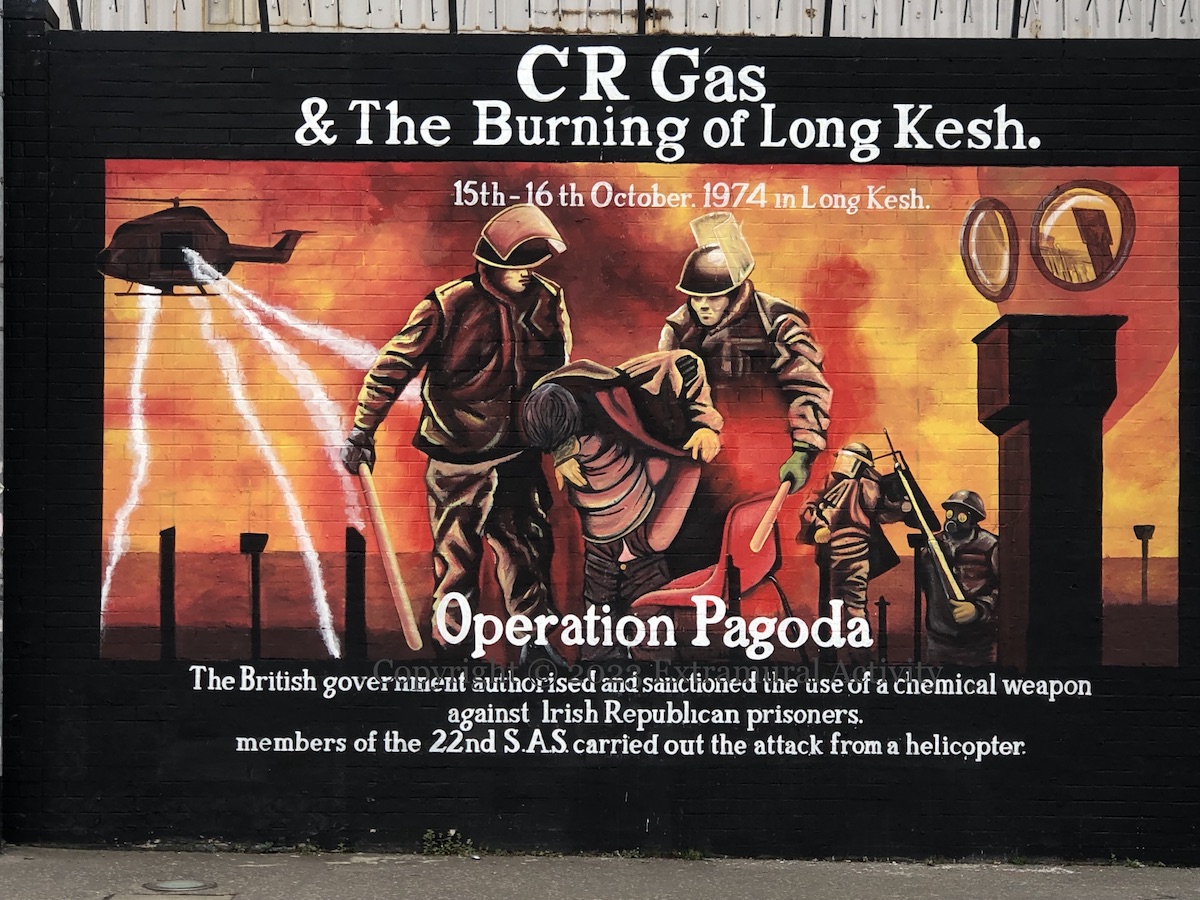
Operation Pagoda

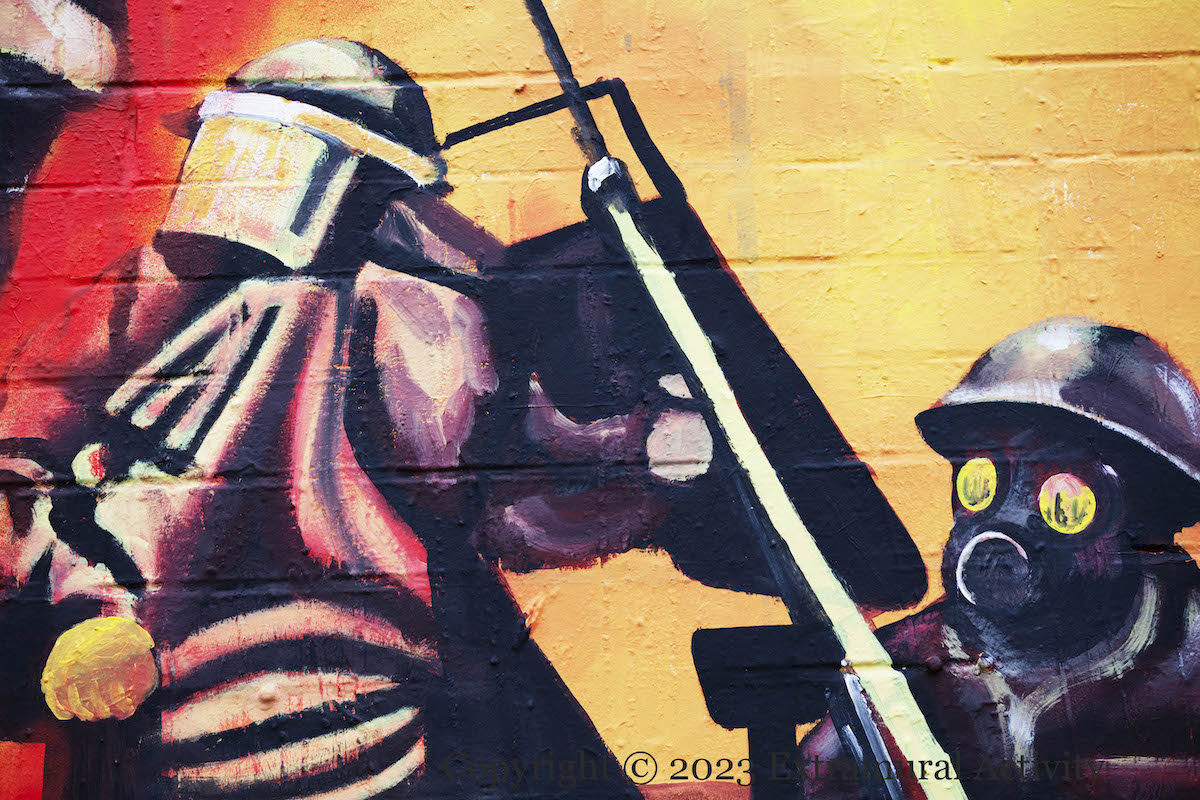
“CR Gas & The Burning Of Long Kesh, 15th-16th October, 1974 in Long Kesh. Operation Pagoda – the British government authorised and sanctioned the use of a chemical weapon against Irish Republican prisoners. Members of the 22nd S.A.S. carried out the attack from a helicopter.”

Operation Pagoda was the name of the SAS’s counter-terrorism programme (WP). Its role in the ‘Battle Of Long Kesh’ in October 1974 and its alleged use of CR (dibenzoxazepine) powder – the successor to CS powder (and before that, CN or “tear” gas) (New Scientist) – remains a classified matter. CR had been authorised for use in 1973 (Guardian).

The original photograph of the central scene (IWM HU 7025, included in this article from An Phoblacht) was in black-and-white and was reproduced as such in the three previous versions of this mural 2021 Chemical Warfare In Ireland, 2018 The Battle Of Long Kesh, 2014 The Maze Ablaze. This new version adds burning reds and oranges. It replaces the No Profit On Pandemic mural.

Click image to enlarge
Copyright © 2023 Seosamh Mac Coılle
X12126 [X12127] [X12128] X12071 X12072 [X12082] X12083 [T02283] X12182 [X12183]

Women’s Work

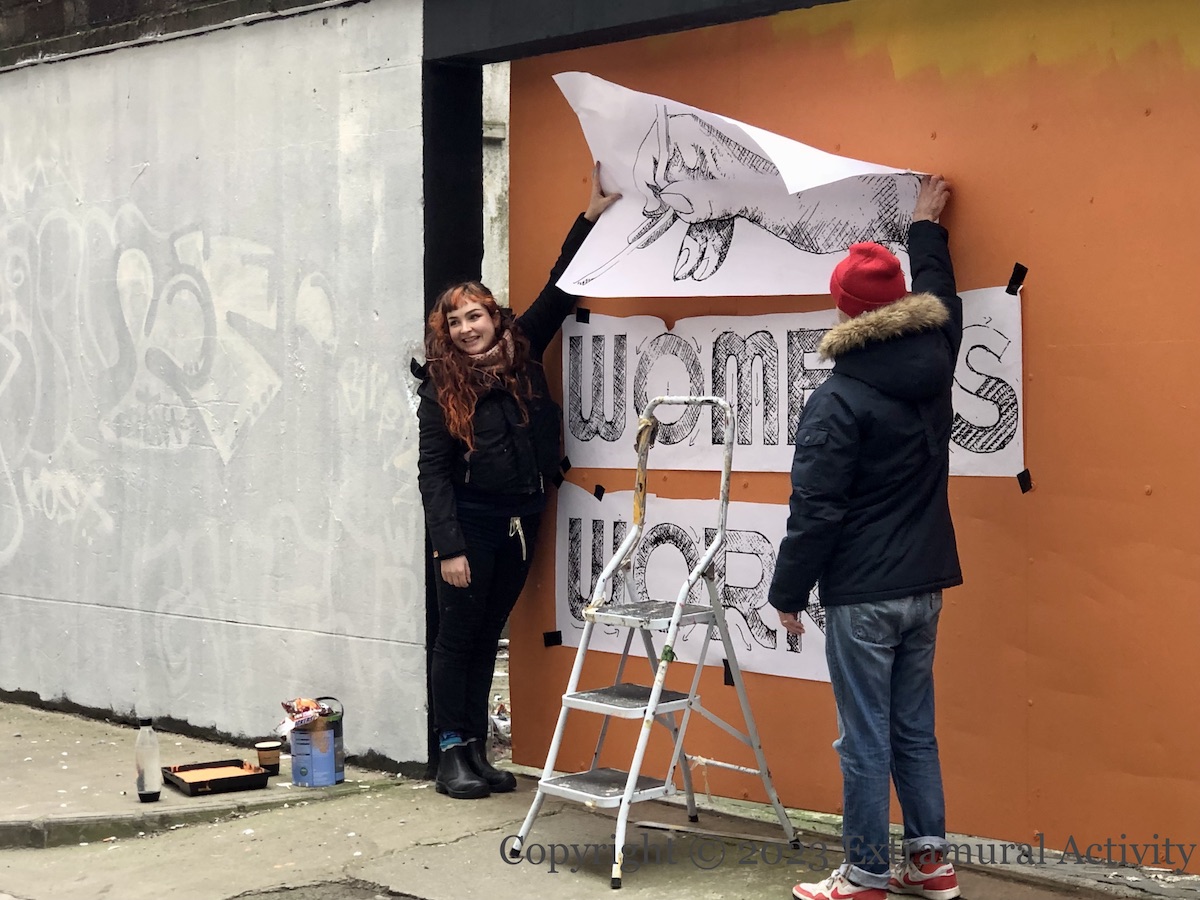
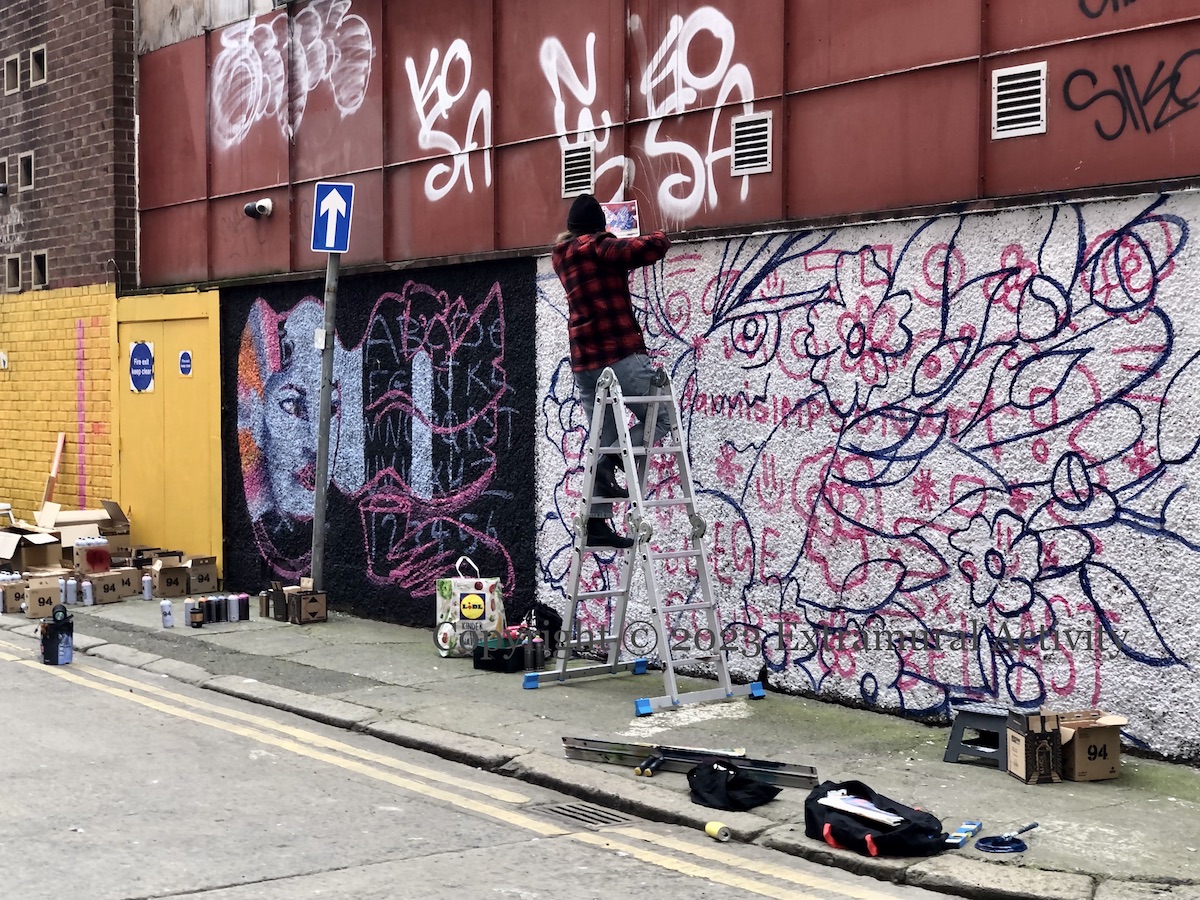
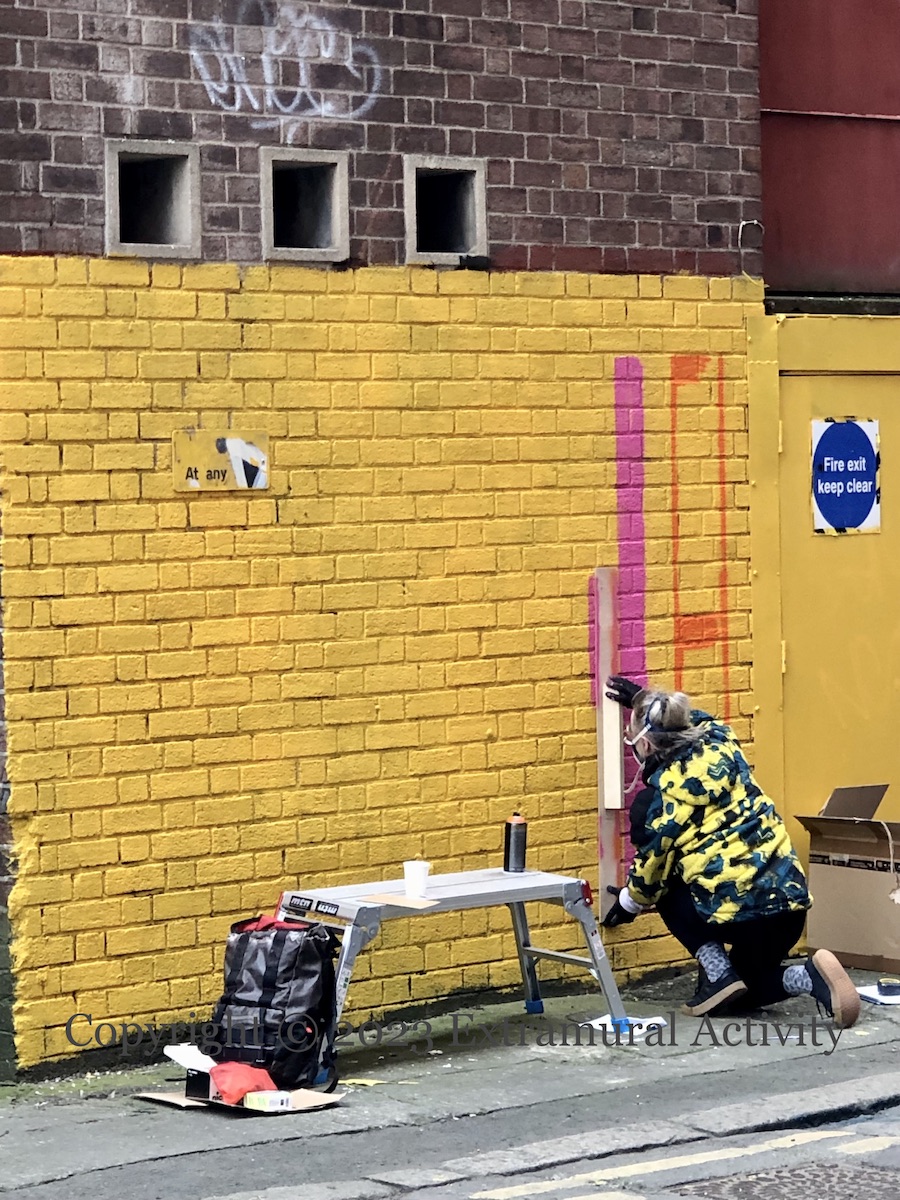
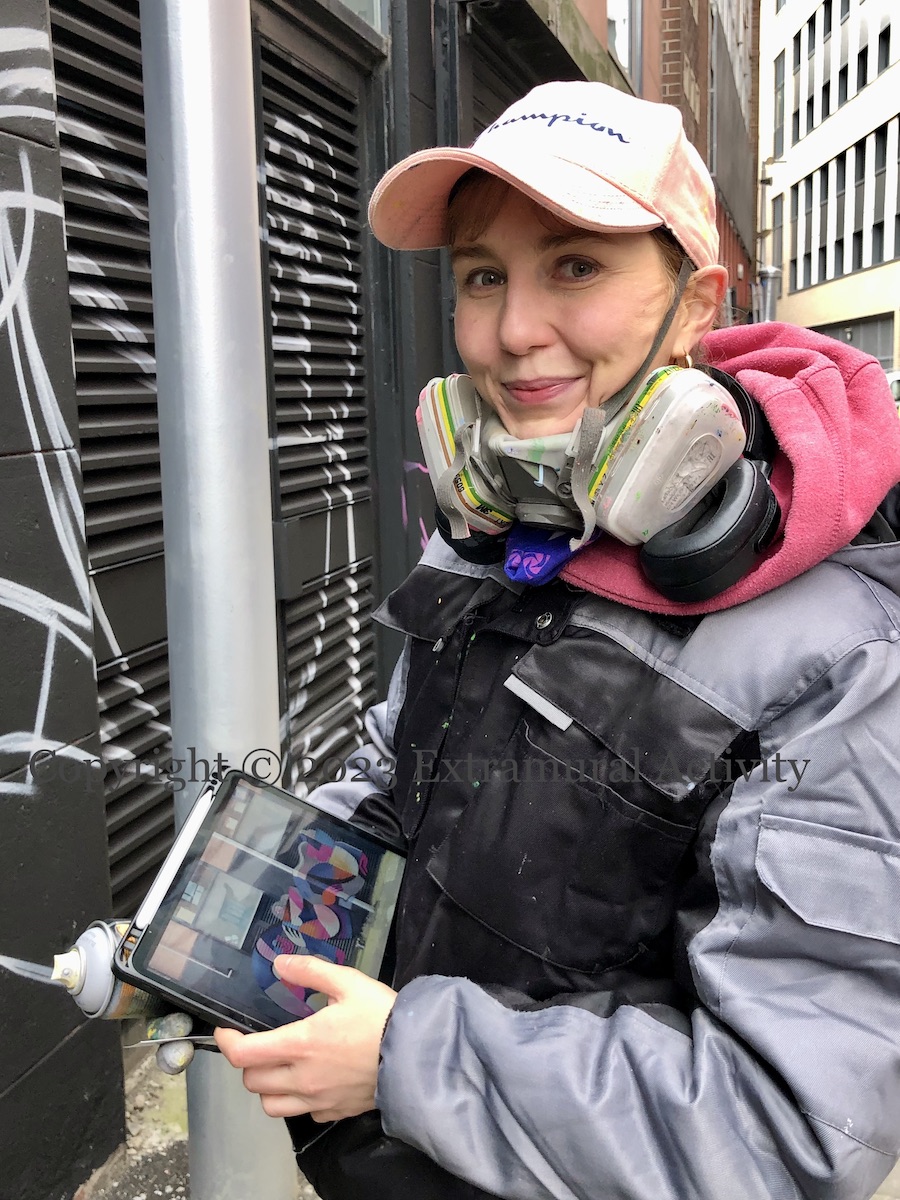
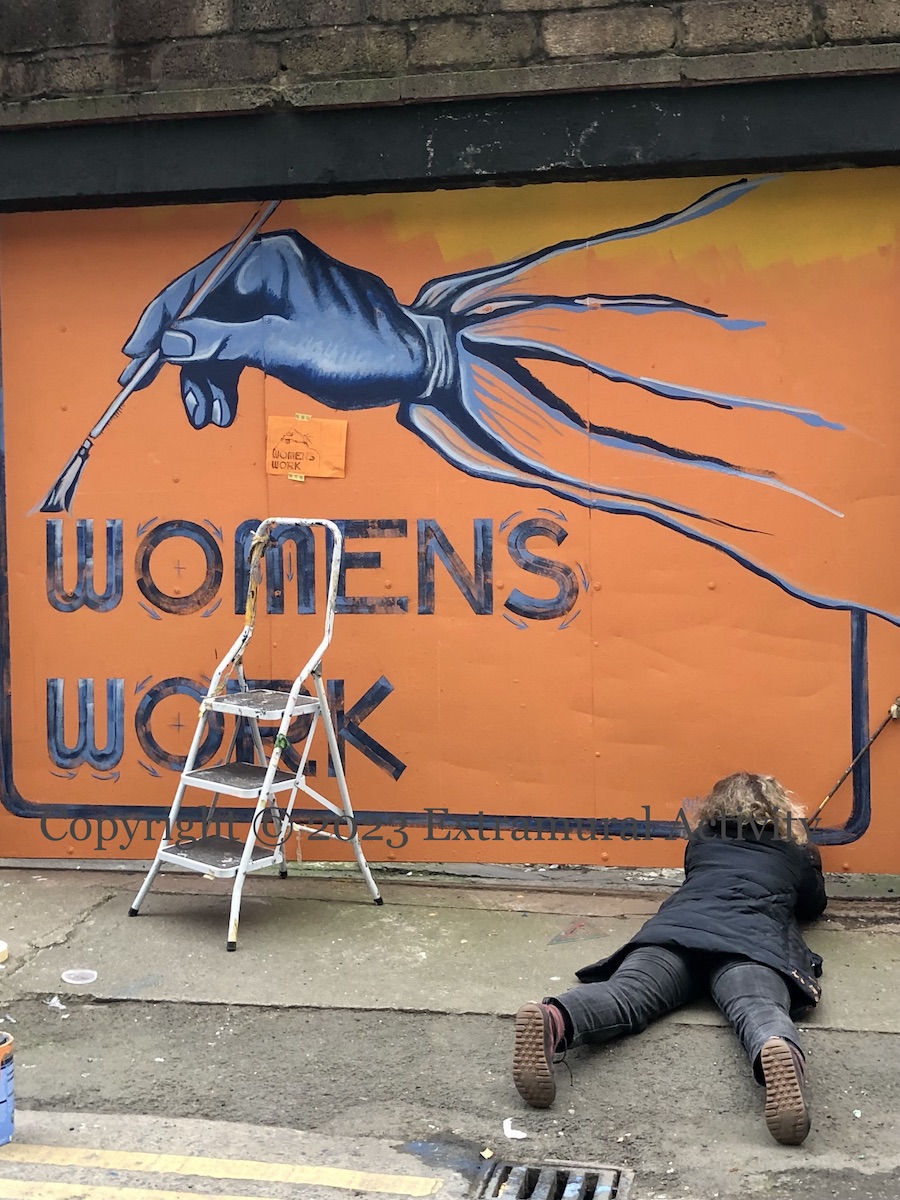
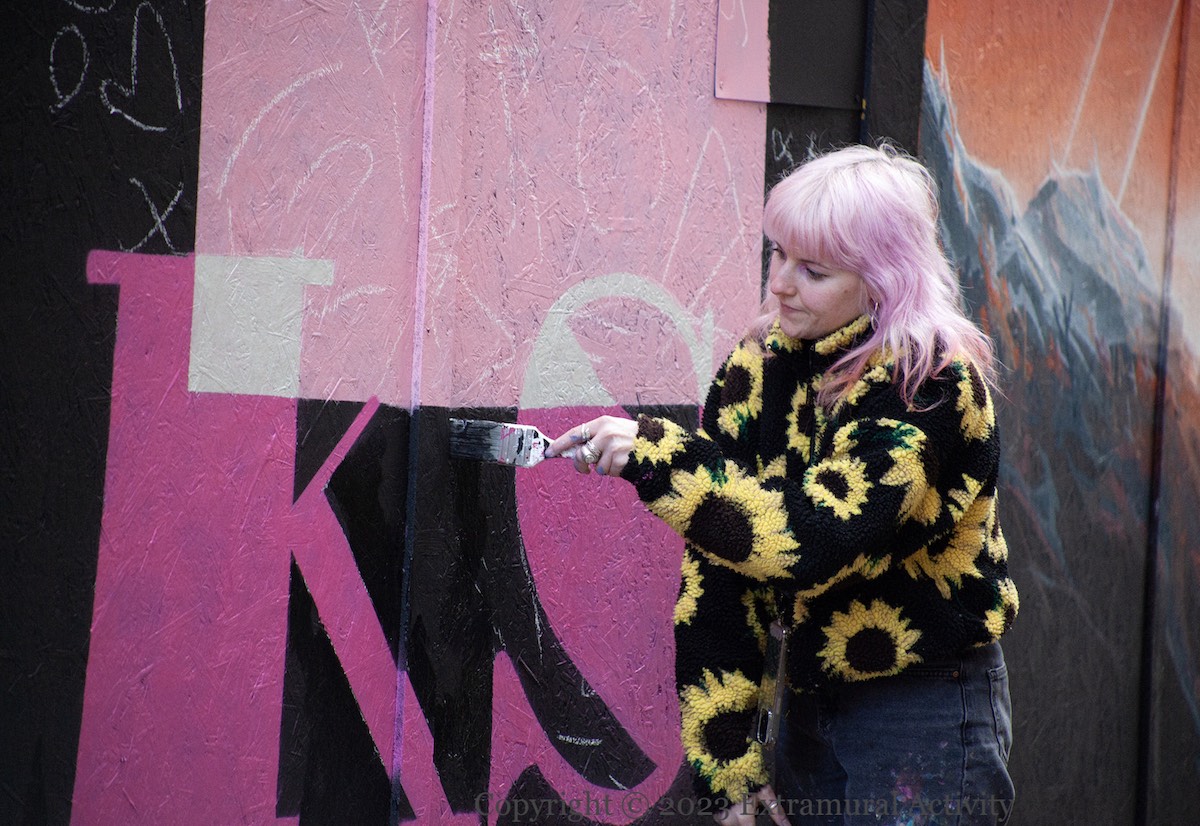
Here is a gallery of “in-progress” images of the street art being painted by female artists for International Women’s Day, all along College Court. (Most of) The completed pieces can be seen in We Built This.

The jam is organised by @DaisyChainInc. The artists at work are @artist.zippy | @dannisimpsonart | @holly.pereira | @thisisfriz | @kerriehanna | @katrionadesigns | @suzusignco | @claire.prouvost | @alanamcdowell | @novicejess | @moirafowley | @HMConstance | @emmaleneblake

Click image to enlarge
Copyright © 2023 Seosamh Mac Coılle
X12088 X12089 X12091 X12092 X12093 [X12090] X12094 X12106 [X12105] X12109 X12119 X12120 [X12118] [X12121] X12123 [X12110] [X12122]

Old Carrick Hill

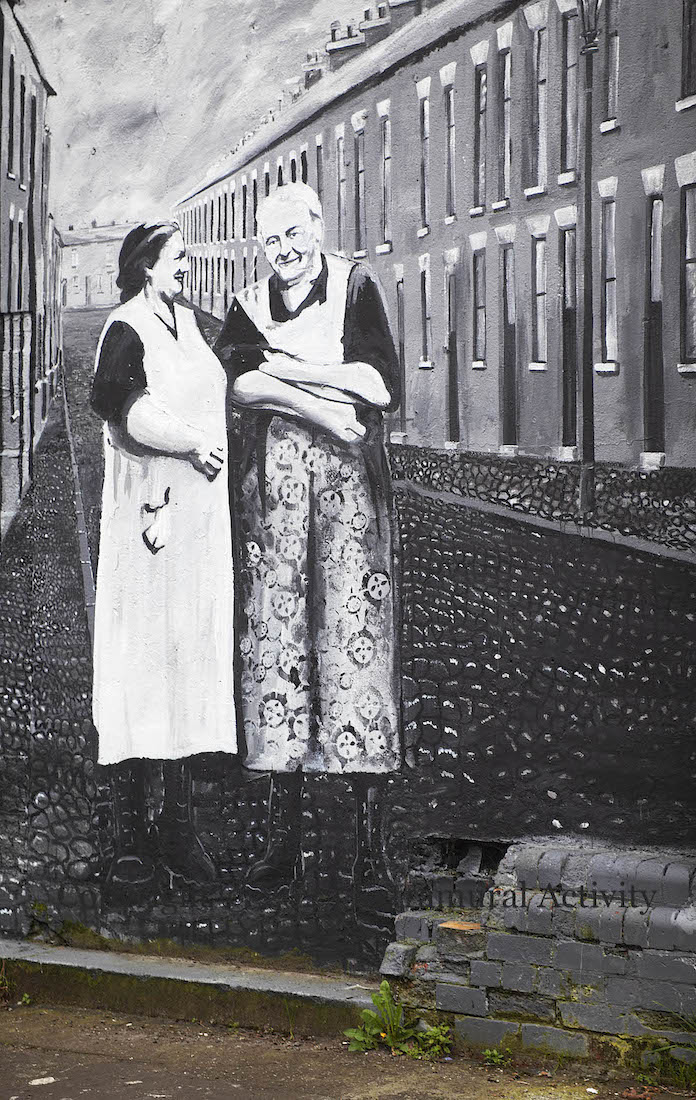
There is now a board in Stanhope Street of “Carrick Hill in the old days”, of two women talking in the street, to complement the four printed boards.

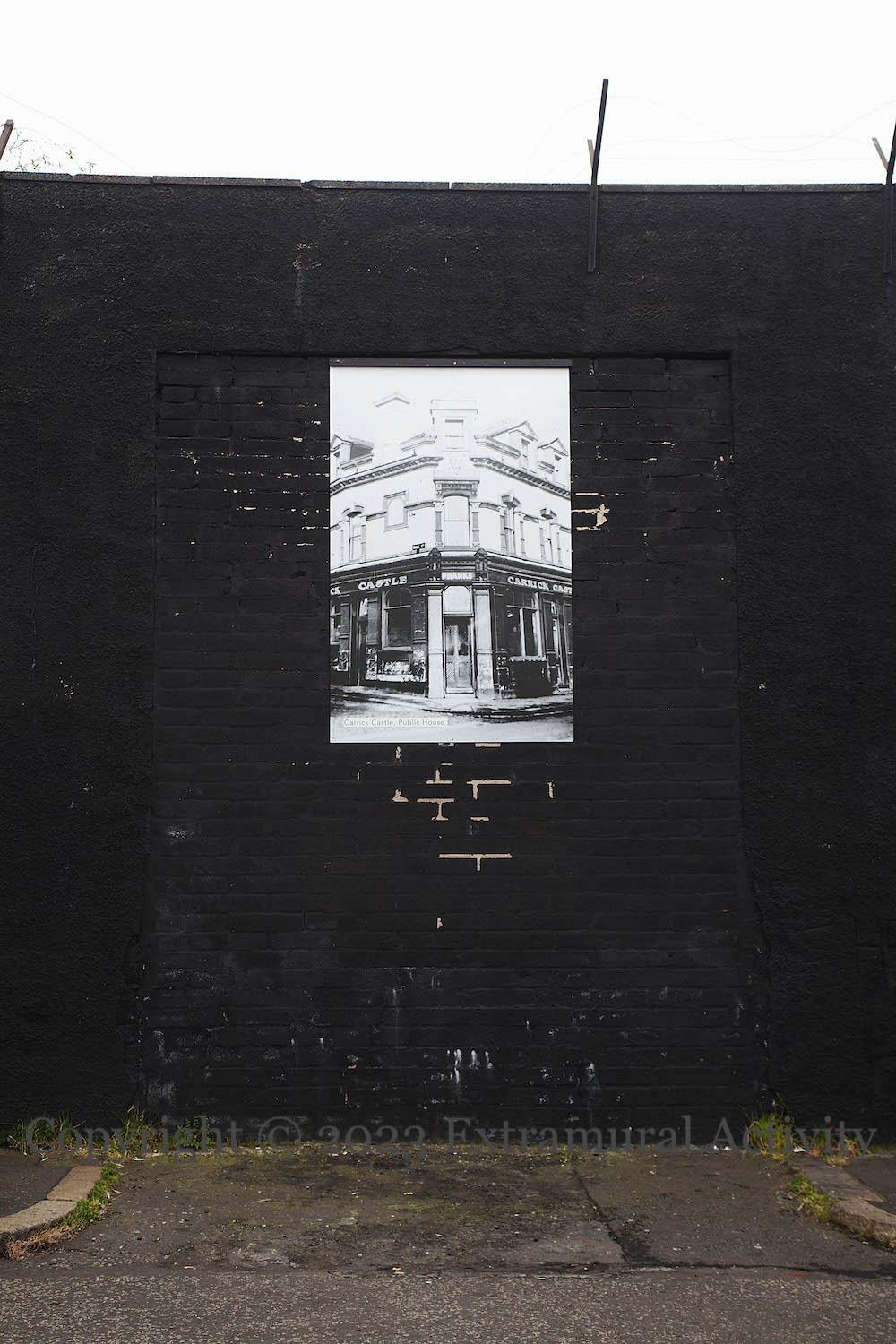
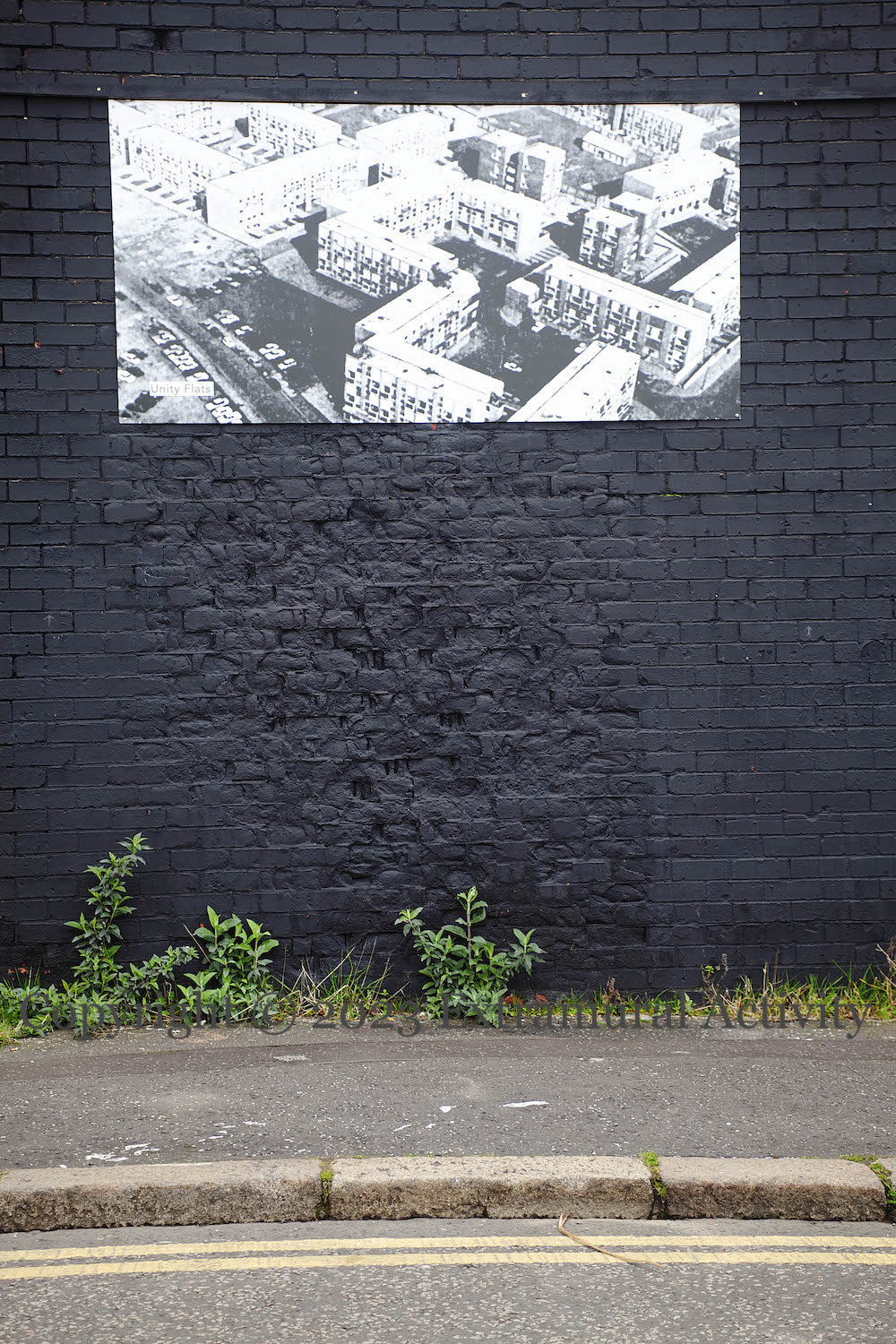
Below are two of the fifteen boards around the corner in Regent Street, showing the Carrick Castle public house and the old Unity flats.

Other boards in the collection (not shown) show street games, street parties, and Alton United football club, a team founded in 1921 that played in the Falls League and won the 1923 Free State Cup Final (Bohs Sporting Life).

(All of the fifteen boards in Regent Street can be seen in the Paddy Duffy collection.)

Stanhope Street and Regent Street, Carrick Hill, west Belfast.

Click image to enlarge
Copyright © 2023 Seosamh Mac Coılle
X12134 X12133 X12132

Derry Remembers

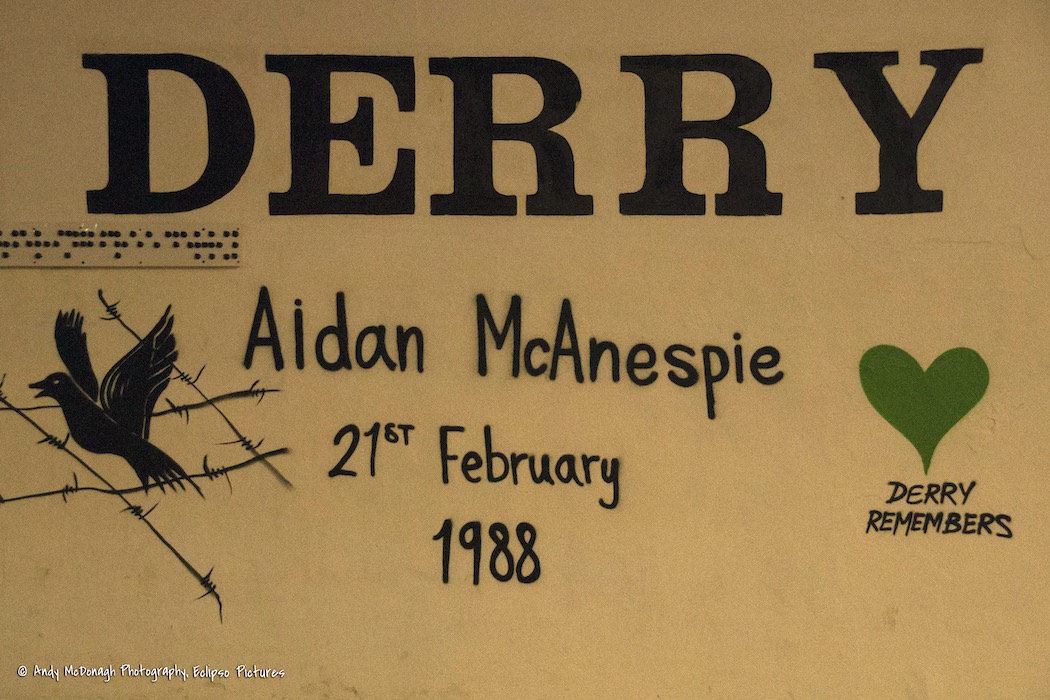
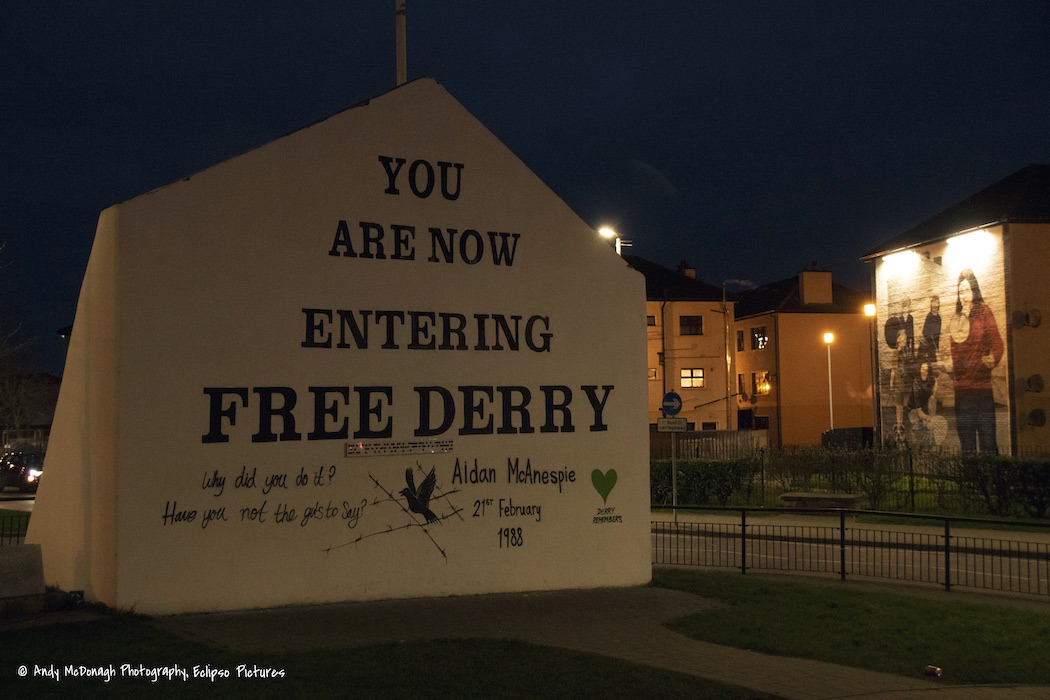
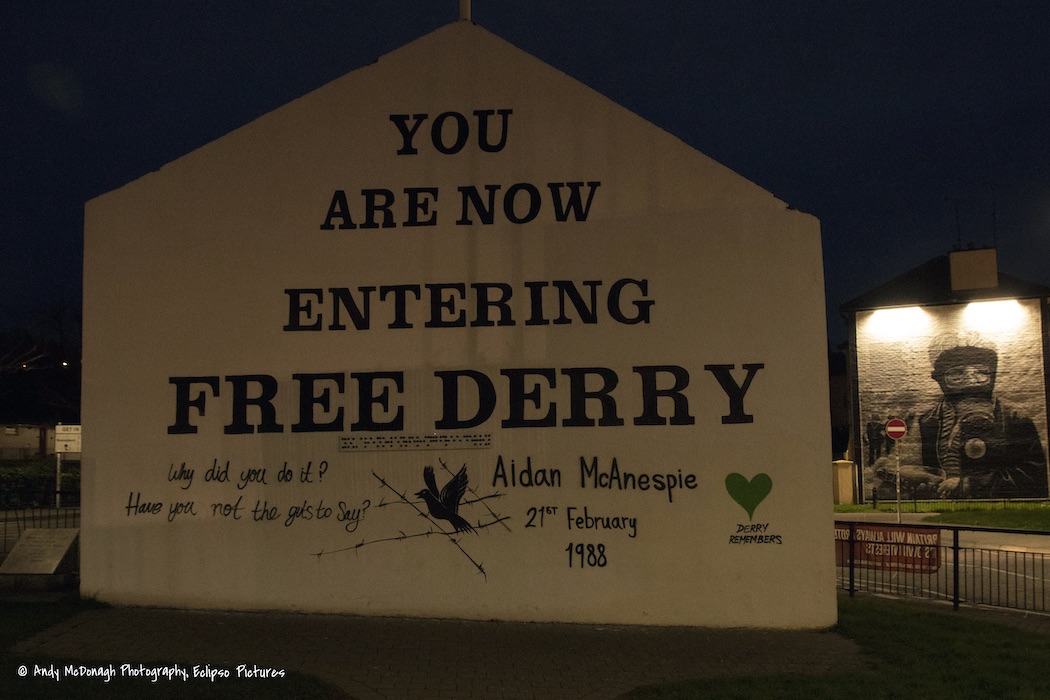
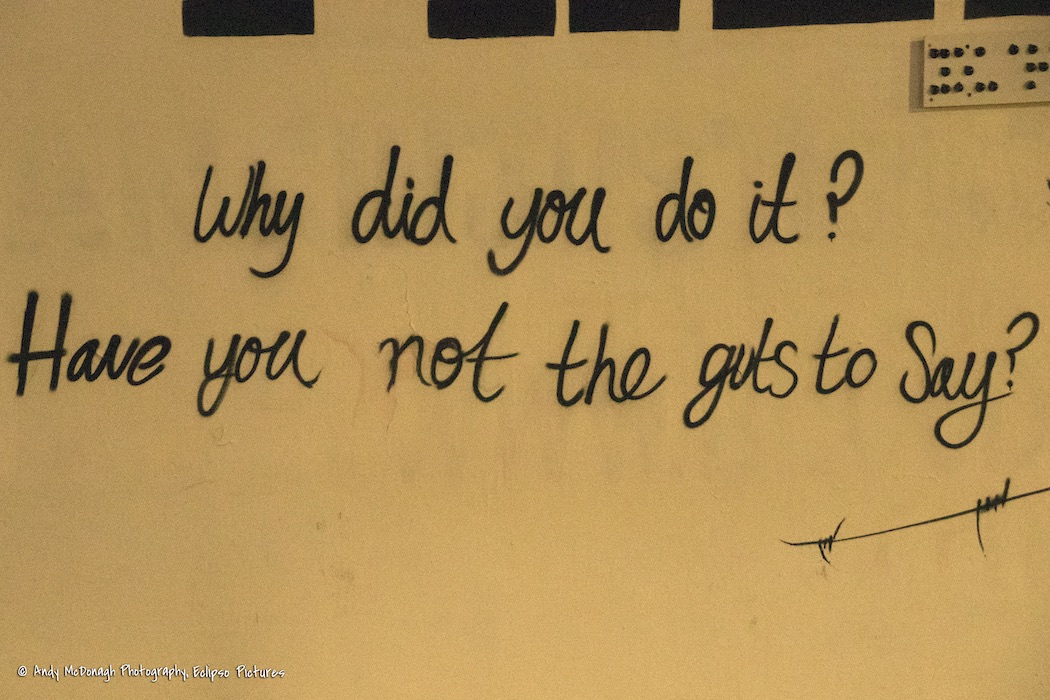
“Why did you do it? Have you not the guts to say?” The question is for David Holden, who in 1988 was an 18-year-old Grenadier Guardsman, manning a checkpoint in Aughnacloy, Co. Tyrone. On February 21st, Holden shot Aidan McAnespie as he was walking to the nearby GAA club. Holden was convicted of manslaughter by gross negligence (BBC | Belfast Live) and was sentenced in February to three years, suspended for three years. The family expressed disappointment, saying that Holden did give a clear account of what happened nor express remorse (Sky News | Journal). Holden has now decided to appeal his conviction (BBC | RTÉ).

The lark in barbed wire is used here not as a symbol of political prisoners but of the struggle for justice in the UK system. (See the Visual History page on the lark and the dove.)

Also visible is the recently-added Braille translation of “You are now entering Free Derry”.

Click image to enlarge
Copyright © 2023 Andy McDonagh/Eclipso Pictures (ig | Fb)
X12142 X12139 X12140 X12141

Time For The Truth

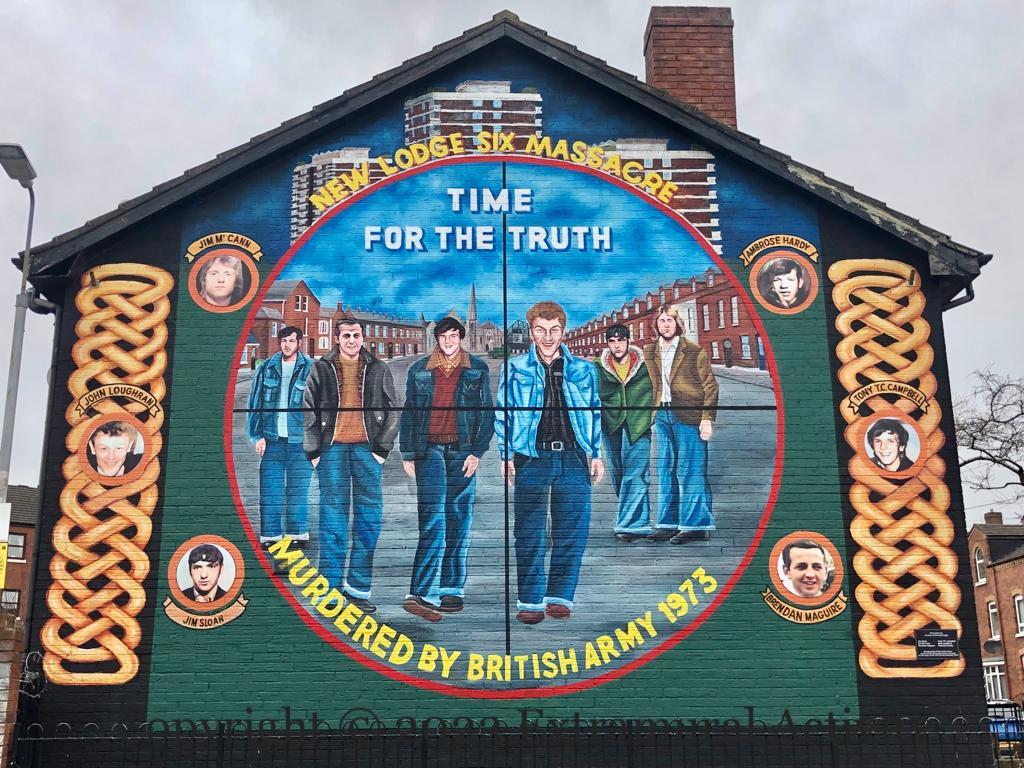
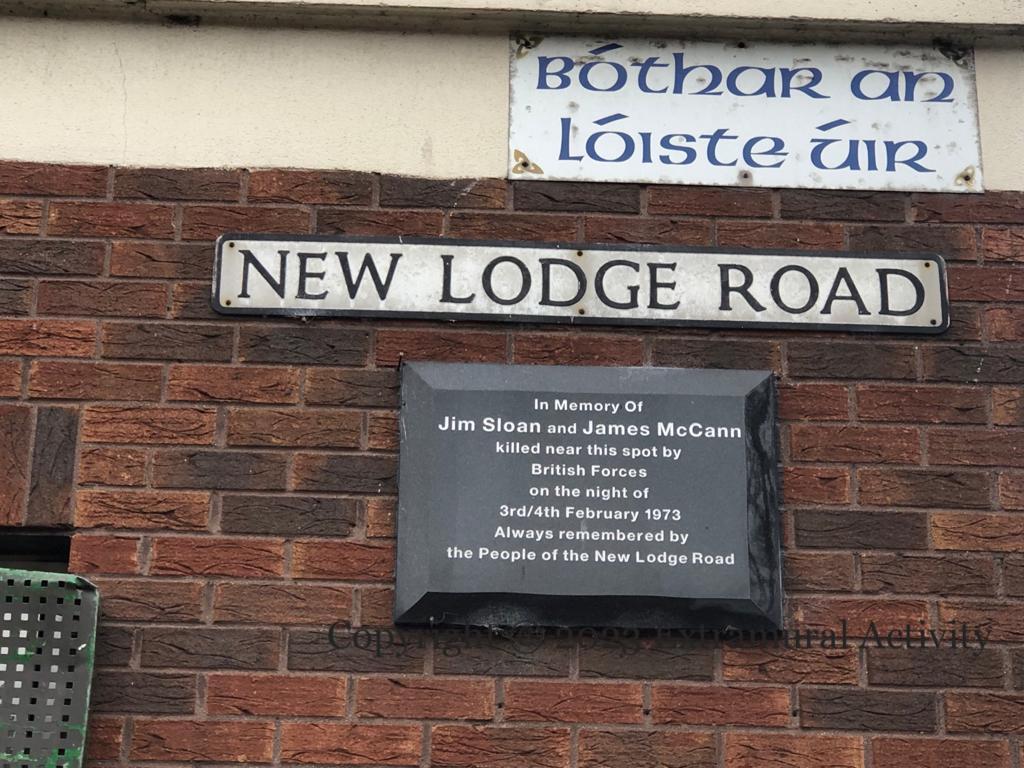
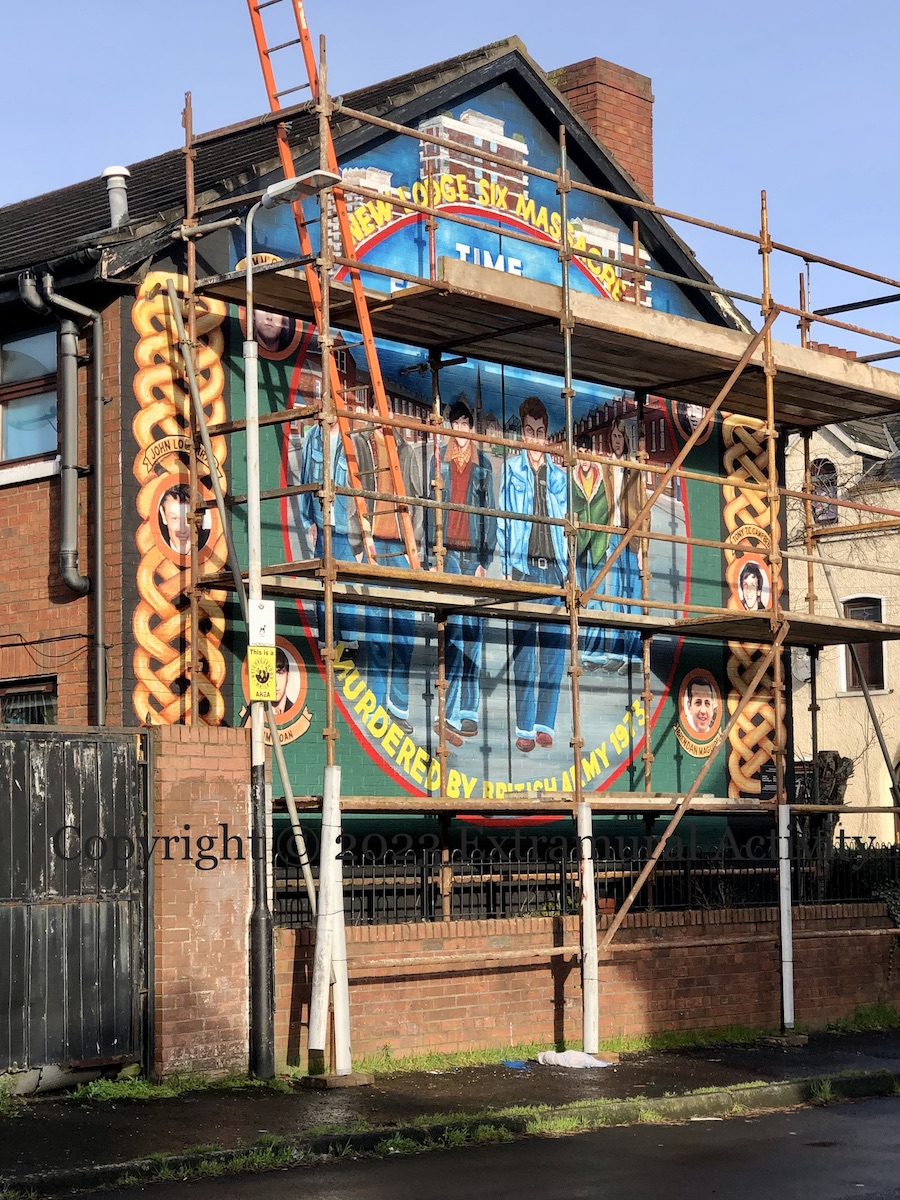
A candle-lit vigil (youtube | iTV) took place last Friday (February 3rd) to commemorate the 50th anniversary of the “New Lodge Six Massacre”. Shortly before midnight on the night of February 3rd-4th, 1973, Jim Sloan and James McCann were killed by the UDA outside a bar – or so the authorities alleged; the plaque shown below near the spot where they were shot reads “killed by British Forces”; full details of what is currently known about the killings can be found at Paper Trail.

Four more – Tony ‘TC’ Campbell, Ambrose Hardy, Brendan Maguire, John Loughran – were among those who came to the area of the initial shootings and were killed by British Army snipers from their positions on top of the flats, using night-vision sights.

The memorial mural in Donore Court was repainted for the event. From left to right, it shows Hardy, Maguire, Campbell, Loughran, Sloan, and McCann walking down New Lodge Road with (what was) Duncairn Presbyterian and (what was) the RUC station on the Antrim Road behind them. The previous (2011) version of the mural showed a body being carried whereas this new one shows them smiling as they walk, though still in the sights of a sniper’s rifle. Other changes were made: the six portraits in the medallions are now photographs rather than paintings; the background is green rather than pink.

Click image to enlarge
Copyright © 2023 Seosamh Mac Coılle
X12001 [X12000] [X12002]
X11995
X11982 [X11981]

From The Top Down

In a 2020 reflection on the tenth anniversary of the Saville report, Eamonn McCann wrote: “Saville pointed the finger of blame at 10 rank and file soldiers and one allegedly undisciplined officer. The top brass and the politicians were, without exception, given a clean bill of health.” (Hot Press)

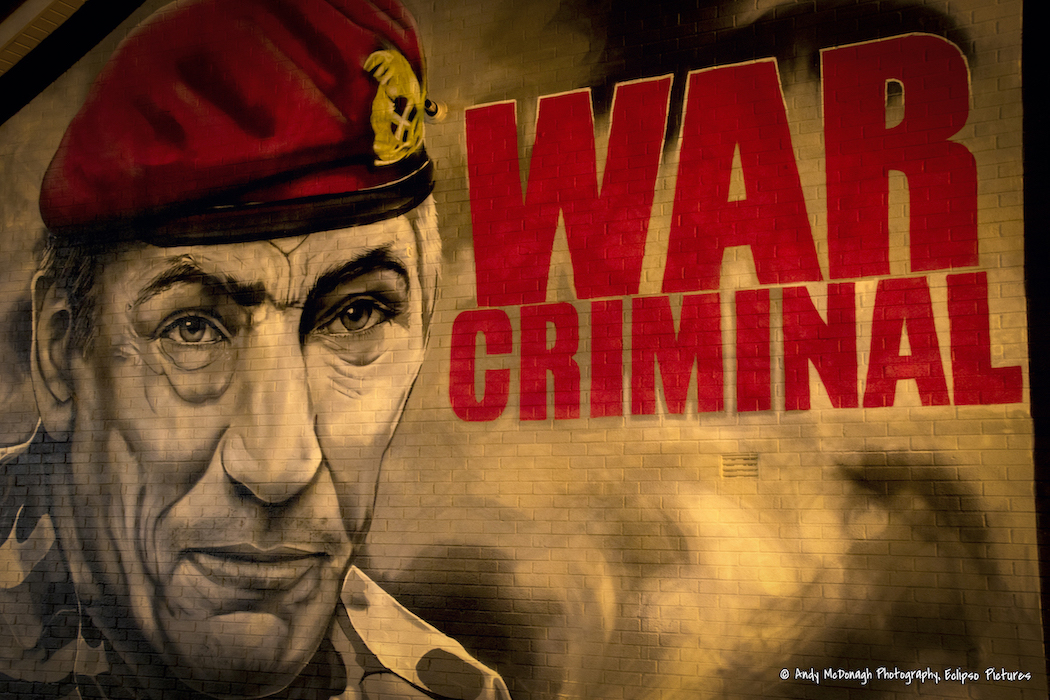
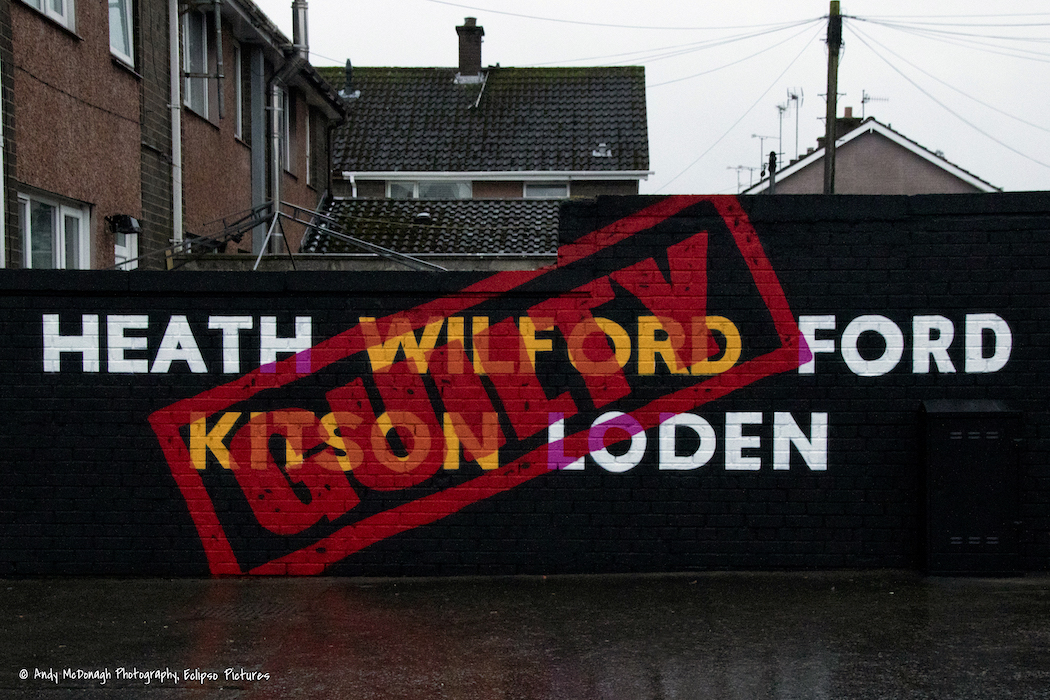
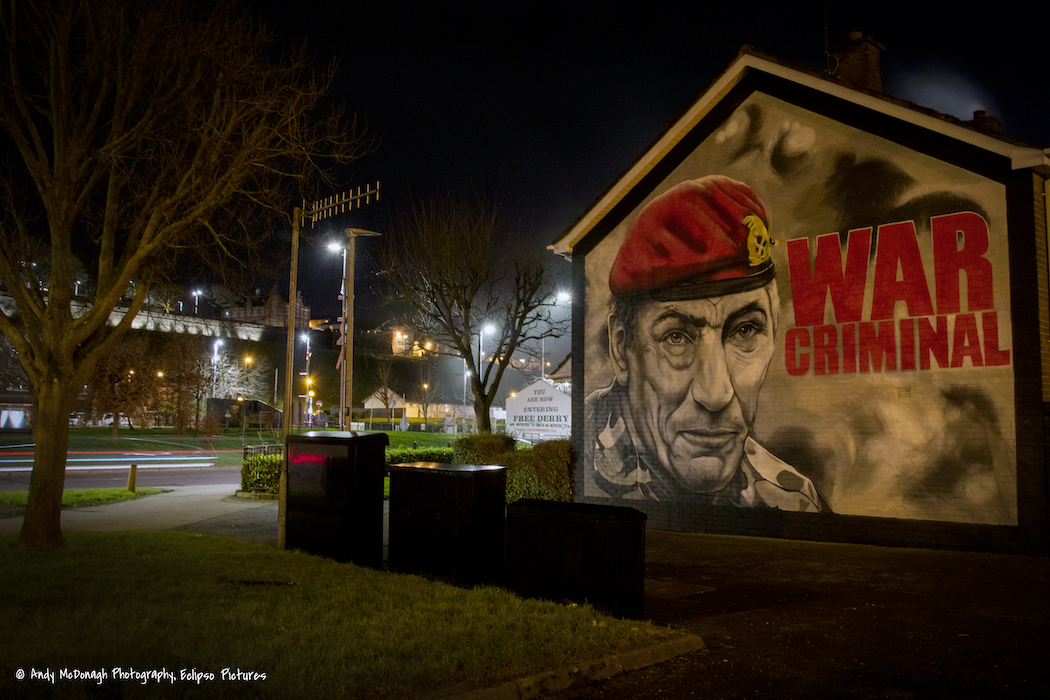
On the side wall to the new Bloody Sunday mural in Derry, the chain of command is found guilty war crimes in Northern Ireland on January 30th, 1972 – Bloody Sunday: “Guilty; Heath, Wilford, Ford, Kitson, Loden”. From the top down, the five people mentioned are:

Ted Heath, UK Prime Minister, 1970-1974

Frank Kitson, “counterinsurgency theorist” and commander of troops in Belfast 1970-1972 (History Ireland)

Robert Ford, commander of land forces 1971-1973, who wanted to block the march and make arrests in Creggan, and who wrote a January 7th memo suggesting that gaining control of Derry would require the shooting of “young hooligans” in Derry (The Irish Story).

Derek Wilford, commander of the 1st Parachute regiment on Bloody Sunday, who gave the order for soldiers to make arrests

Ted Loden, commander of ‘Support Company’, the soldiers that went into the Bogside.

The main panel shows General Sir Michael Jackson, second-in-command on Bloody Sunday and who acted as spokesperson for the event and provided the inaccurate account of the killings that was used by the media and the Widgery Report of April 1972 (see An Phoblacht and previously Jail Jackson for his connection to the Ballymurphy Massacre).

Update: By February 14th, the mural had been painted out – see final image, below.

Fahan Street, Bogside, Derry

Click image to enlarge
Copyright © 2023 Andy McDonagh/Eclipso Pictures (ig | Fb)
X11976 X11978 X11977
Final image Copyright © 2023 Paddy Duffy T02156 Ray Bonner