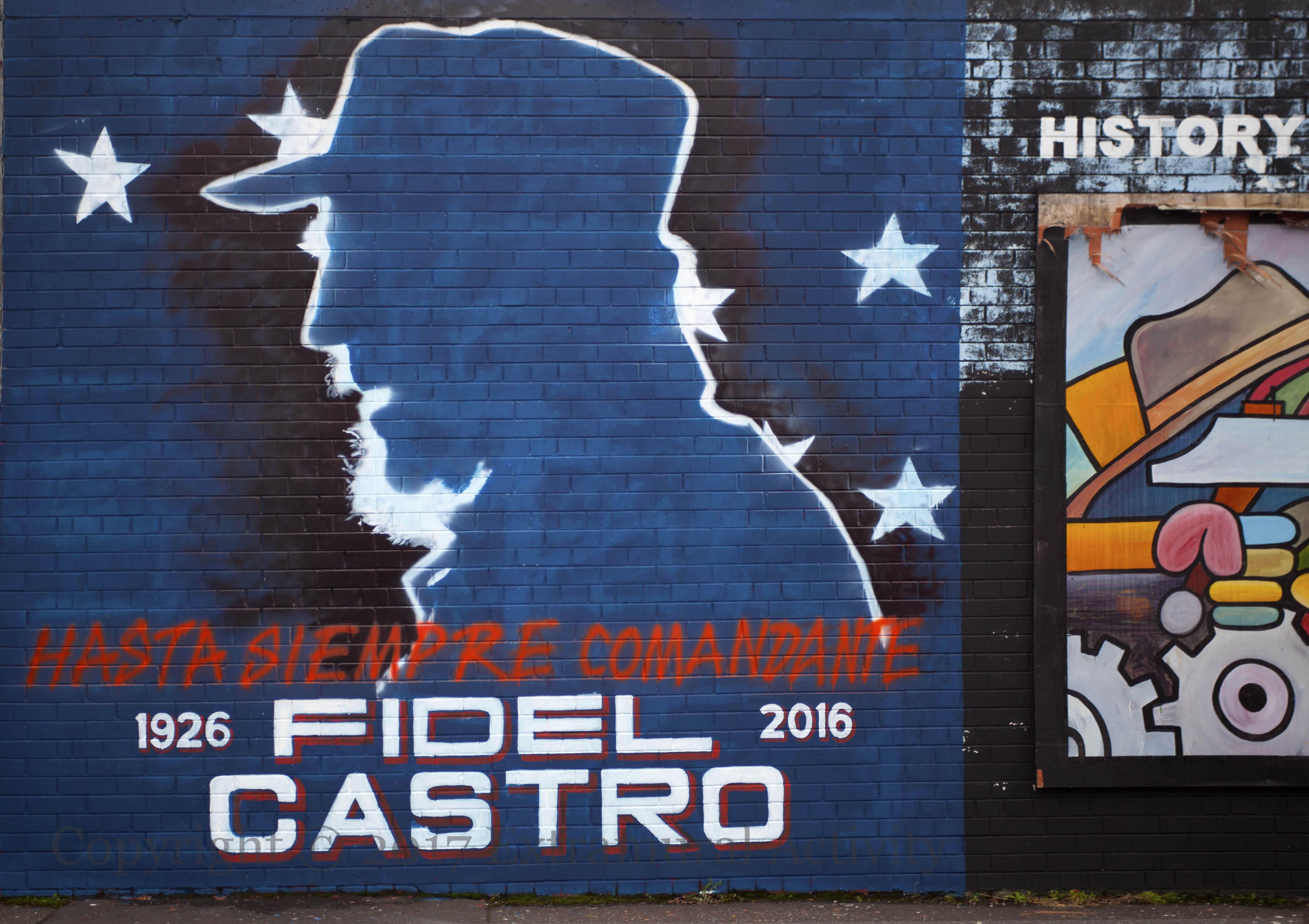
“Hasta siempre, Comandante” is a 1956 song celebrating the life of Che Guevara, with Fidel Castro appearing in the final verse to join the Cuban people in saying “Hasta siempre, Comandante” to Che as he departs Cuba for the Simba Rebellion in Congo. The slogan is here applied to Fidel himself on the occasion of his death in November 2016 at the age of 90.
Here is French singer Nathalie Cardone’s version on the song, which reached #2 in France and #1 in Belgium in 1997:
The Castro mural is next to one for fellow Marxist Salvadore Allende of Chile: see La Historia Es Nuestra.
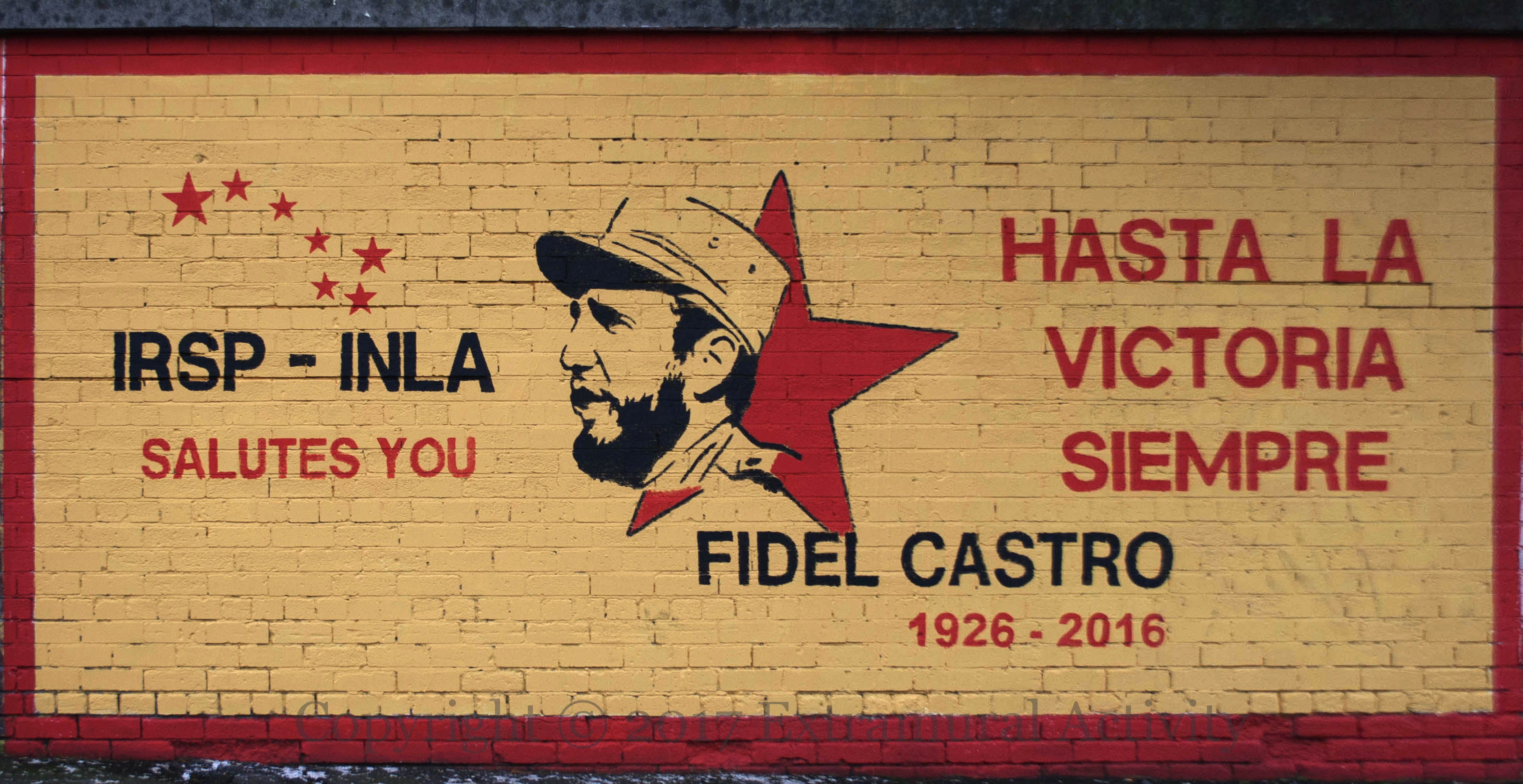
“¡Hasta la victoria siempre!” (“Ever onward to victory!”) was a saying of Che Guevara’s. It is used in this mural as a valediction to Che comrade and long-time Cuban leader Fidel Castro, who died at the end of November (2016). The portrait of Castro is perhaps this Korda image of Castro entering Havana after the deposition of Batista in 1959.
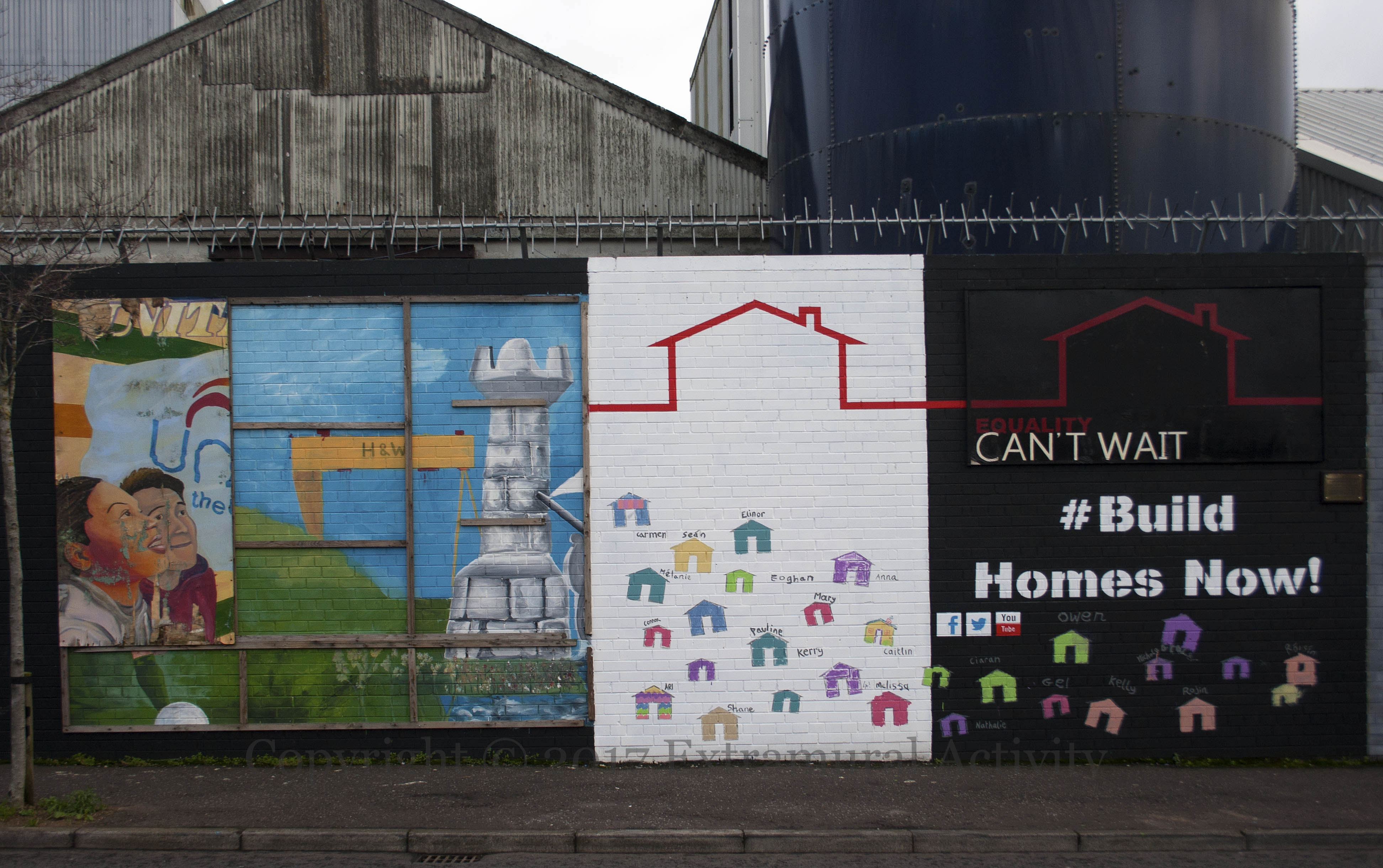
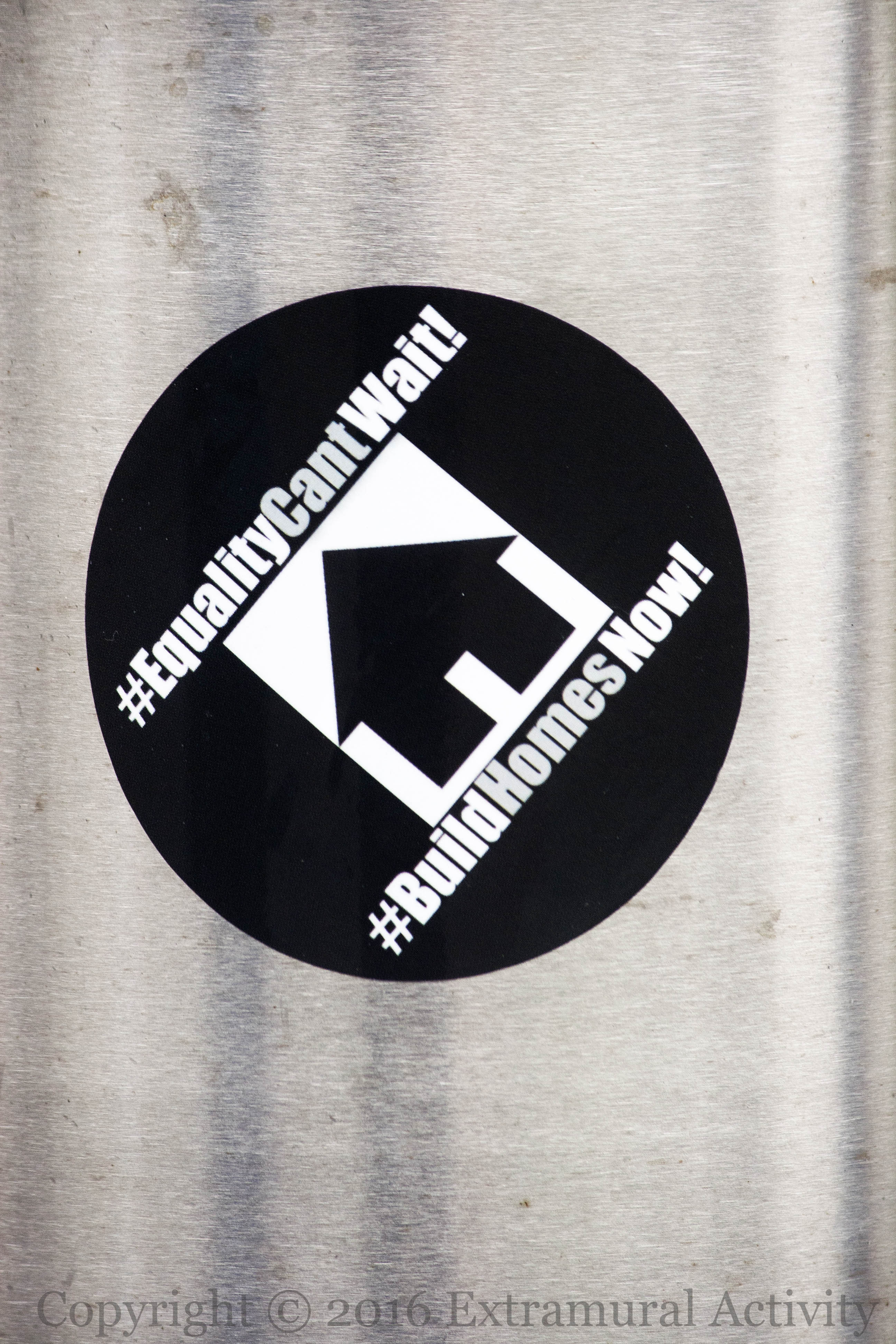
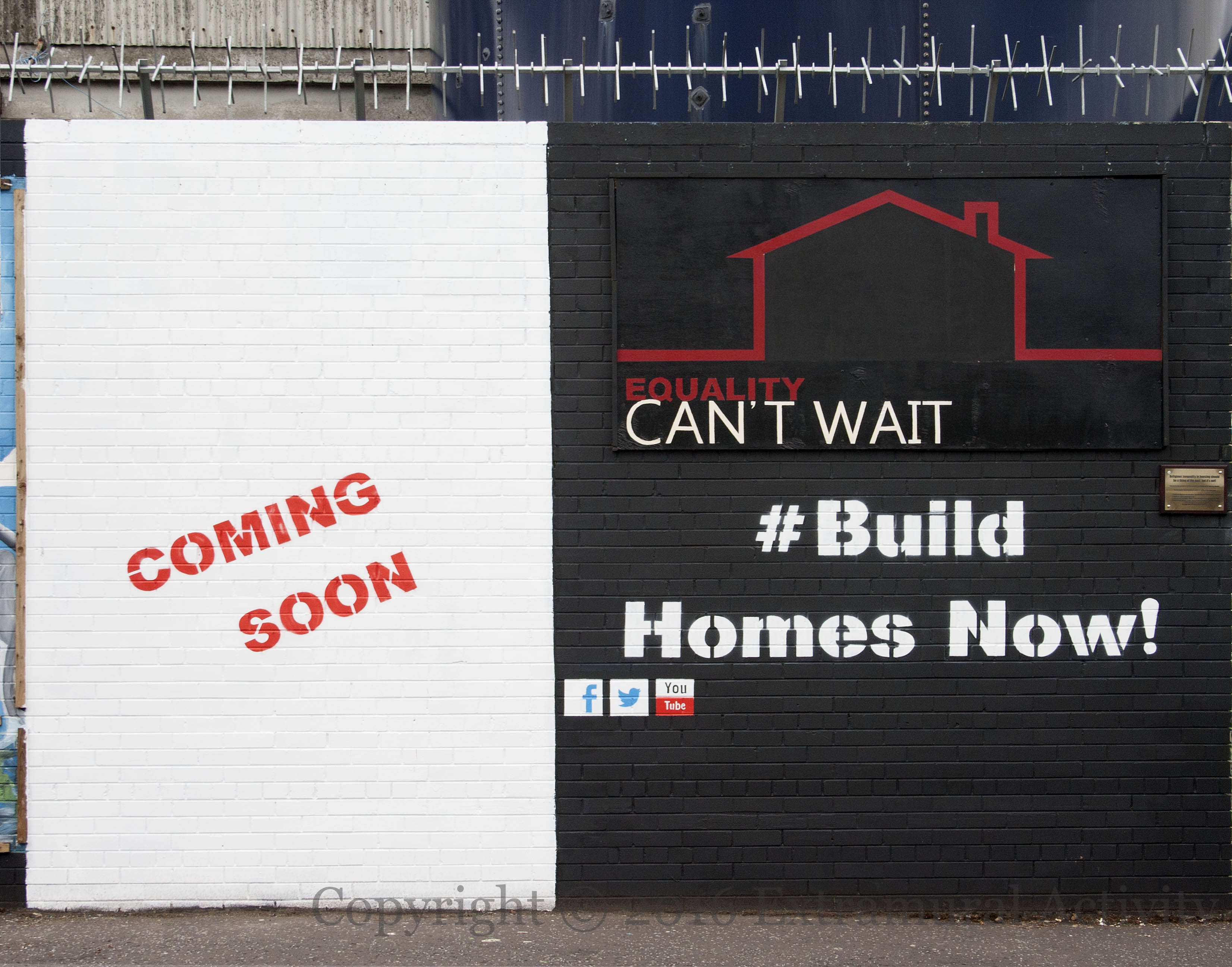
Children’s drawings of houses complete a mural for the Equality Can’t Wait/Build Homes Now (Fb | web) mural that has remained unfinished for a long time on Northumberland Street – the intermediate stage in the last image below, beneath a lamppost sticker for the campaign.
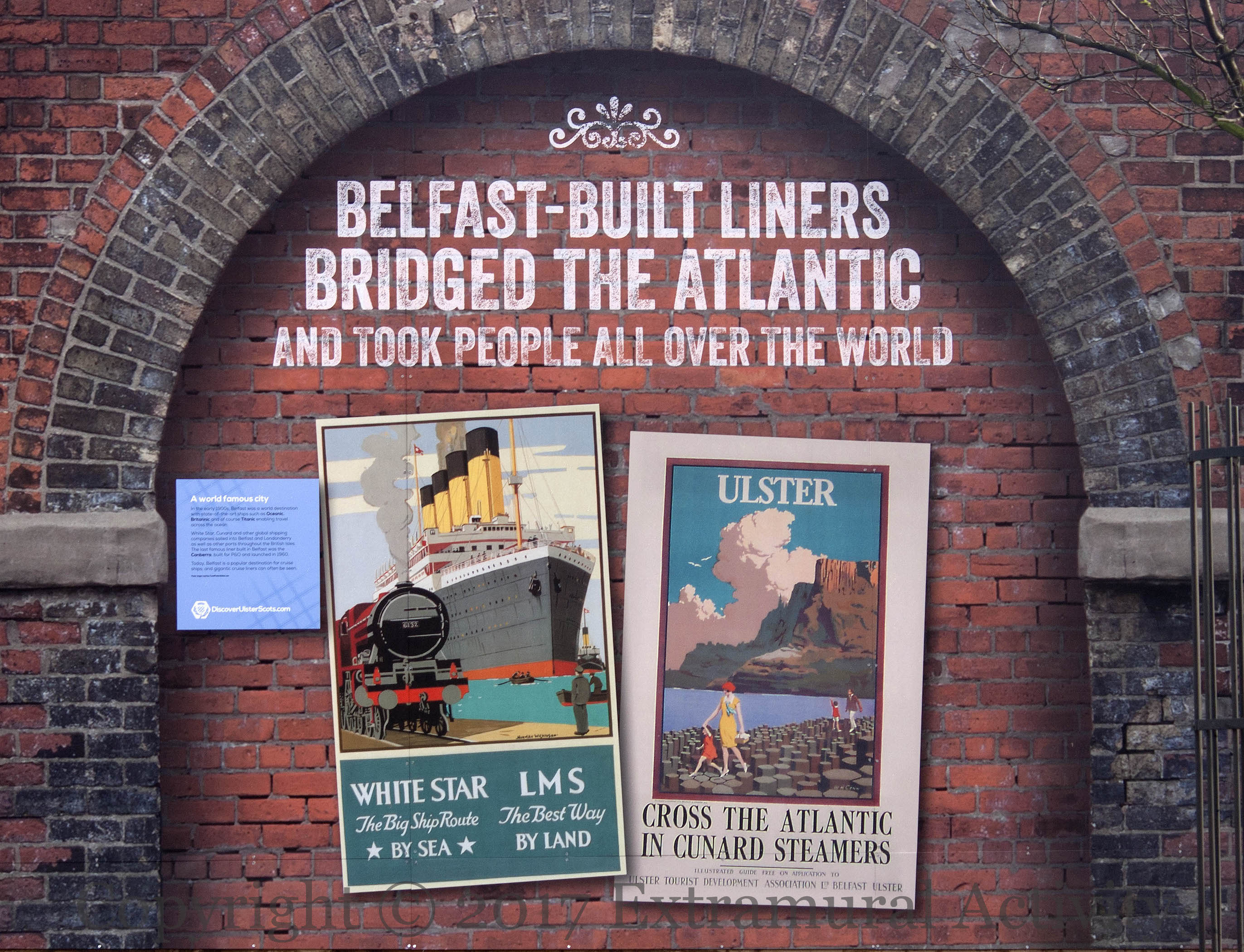
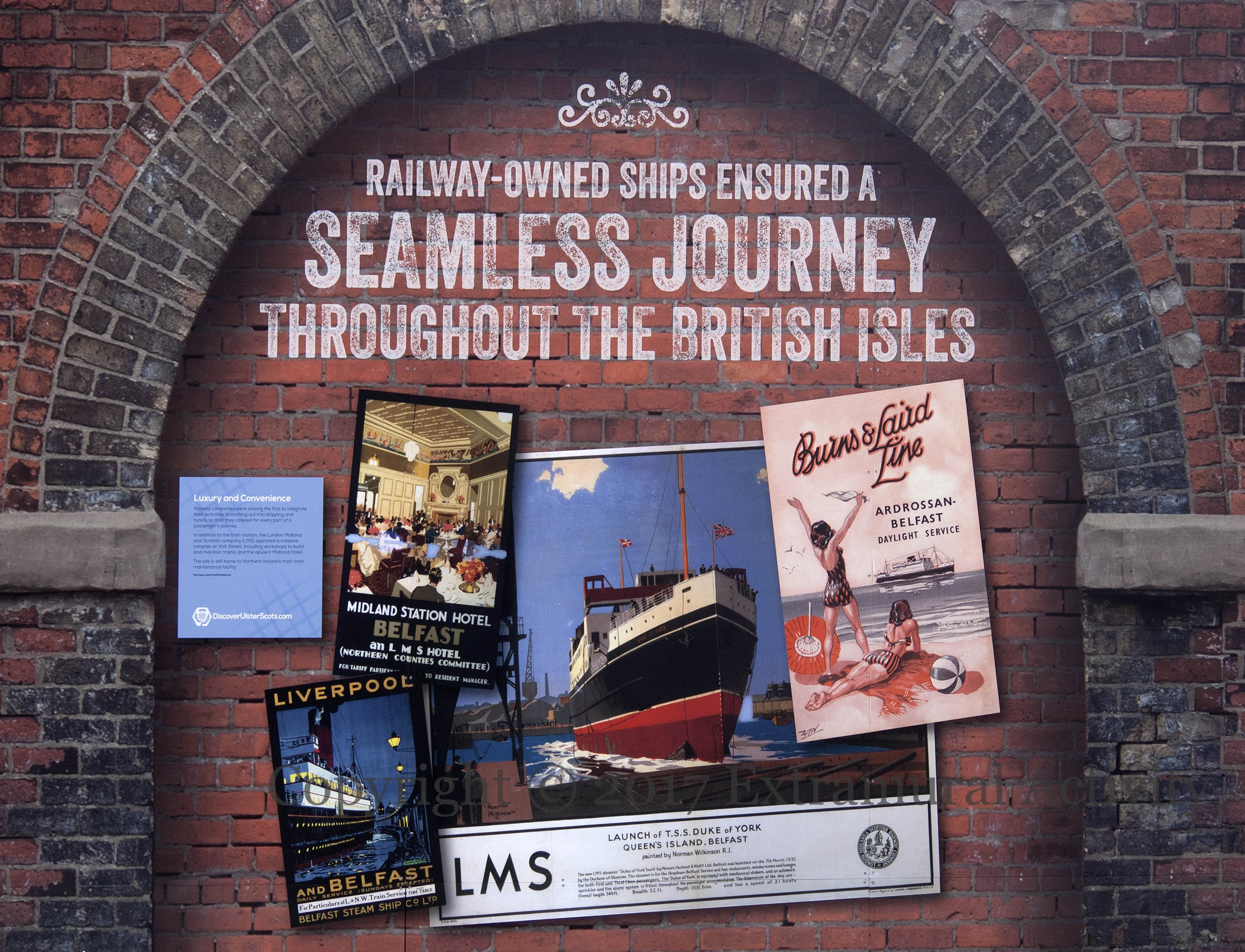
In addition to the famous trans-Atlantic ships (image above), Belfast was part of the travel network in the UK and Ireland (image below). Before there was British Railways, there were the Big 4: the Southern, Great Western, London and Northeastern, and London, Midland, and Scottish (LMS) railways. The latter included the railways in the Northern Counties. In addition to railways, the company owned canals, ships (including the Princess Victoria which sank on the Larne-Stranraer route), and hotels. “Belfast-built liners bridged the Atlantic and took people all over the world.” “Railway-owned ships ensured a seamless journey throughout the British Isles.”
Previously:The history of Shipbuilding in Belfast.
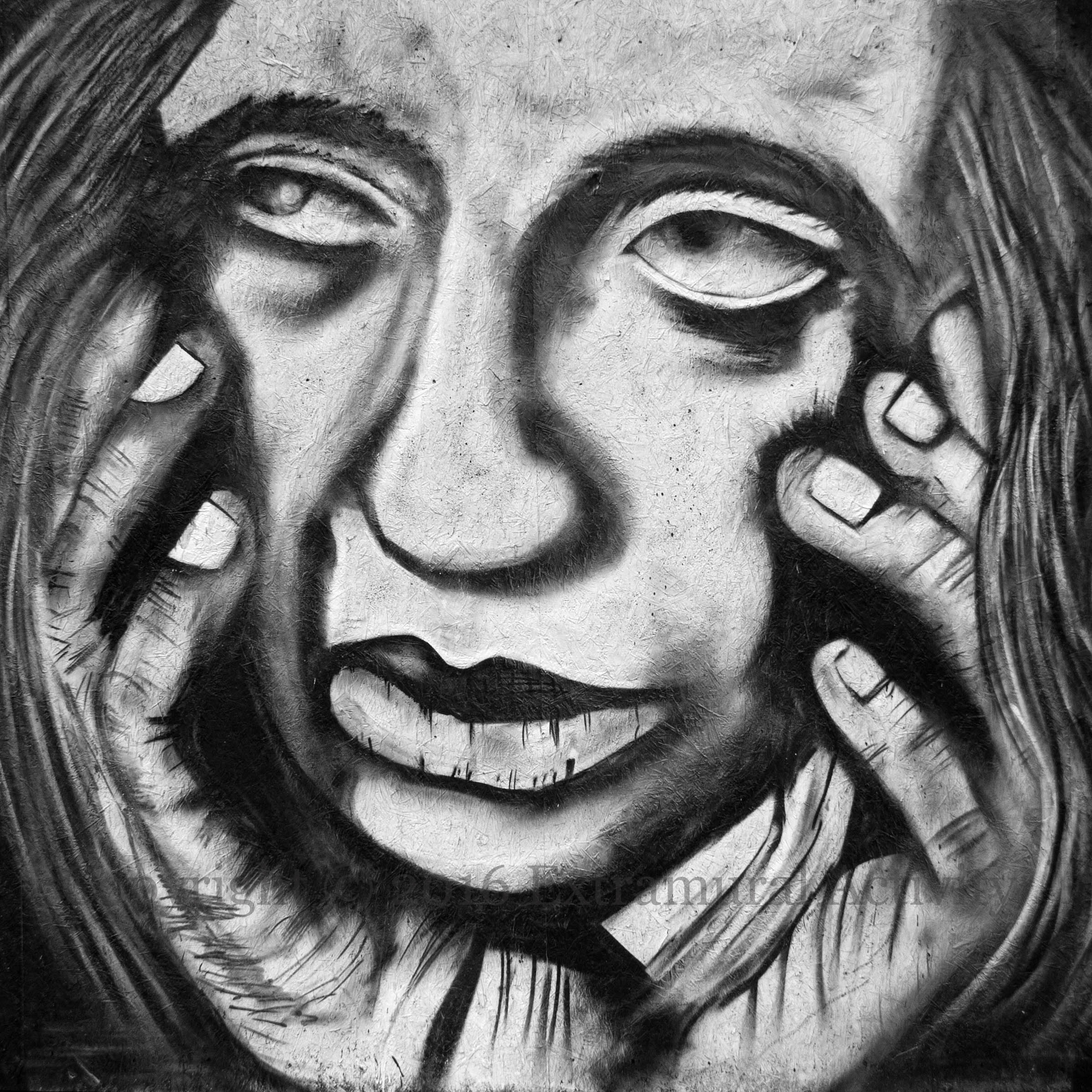
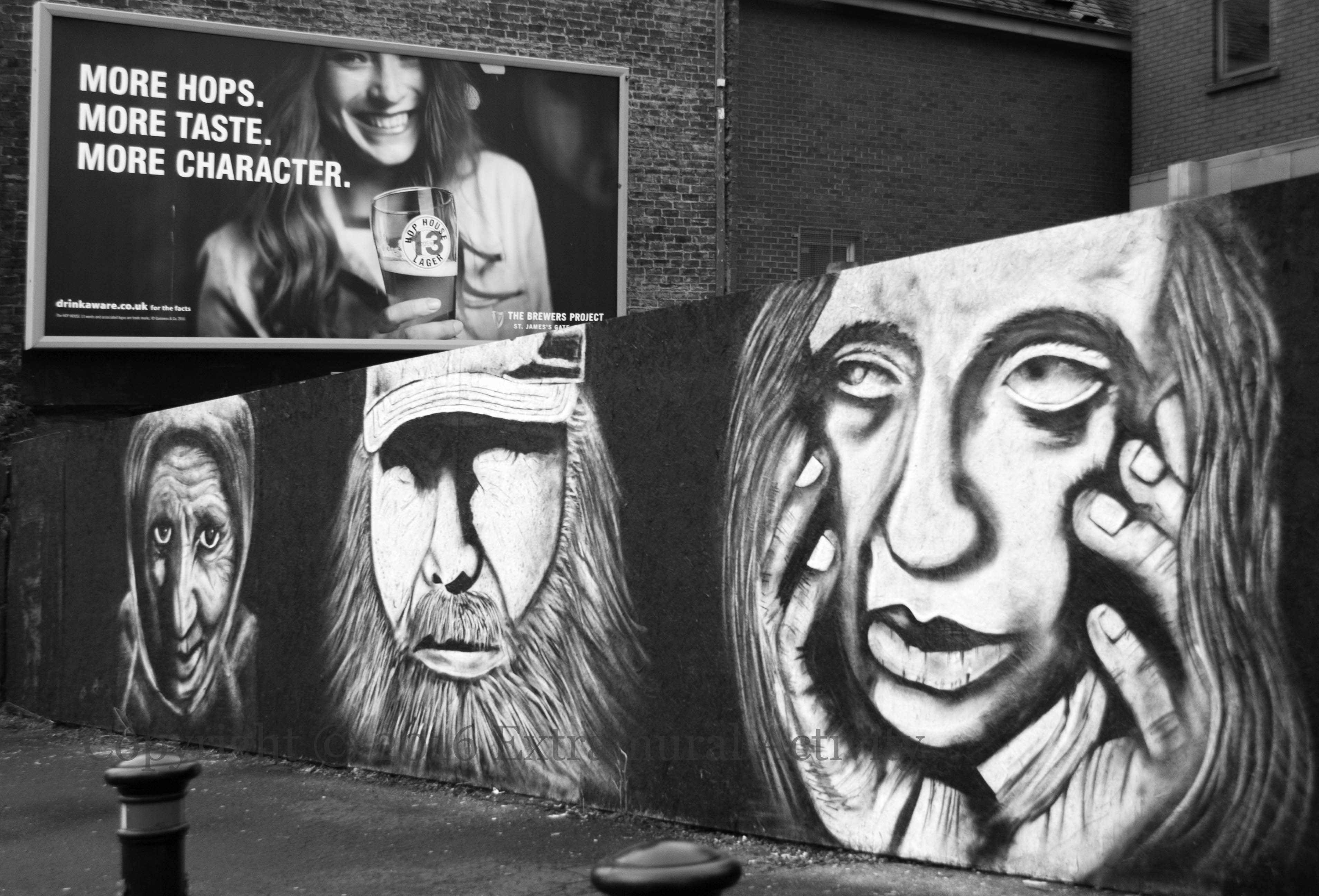
Artist Glen Molloy (Fb) has painted a series of three faces, inspired by seeing some homeless people being given abuse on the street and “painted to highlight how badly people living on the streets of Belfast can be treated by the general public”. Here is audio of Glen on U105 talking about the project.
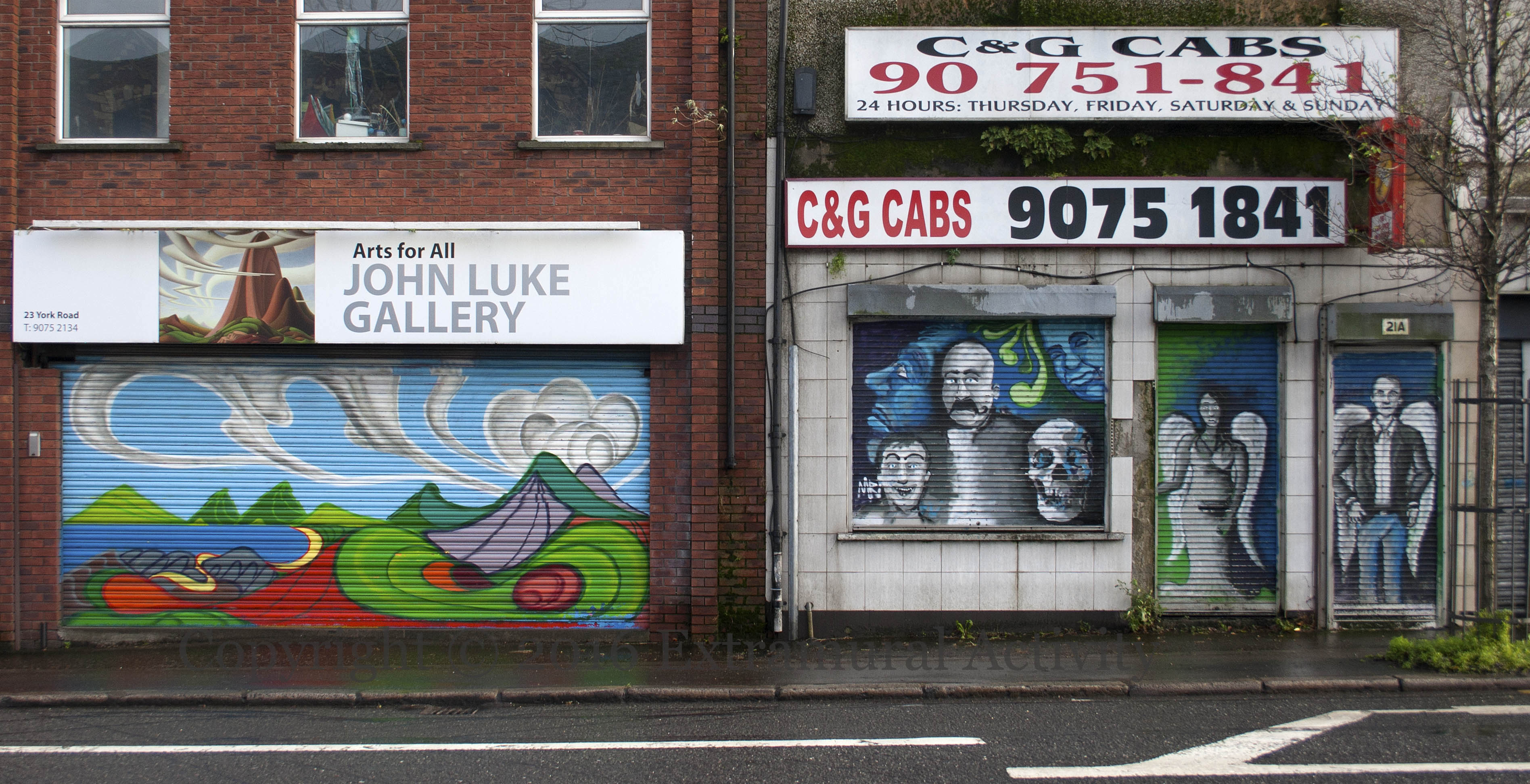
In addition to many paintings in a distinctive style, Belfast artist John Luke’s (one | two) work included a few murals, most famously an image of Belfast’s Charter painted in the City Hall. He lends his name to the gallery in north Belfast’s Arts For All centre which is now fronted by a mural in his style.
For the undead in the windows of the taxi office, see Haunted.
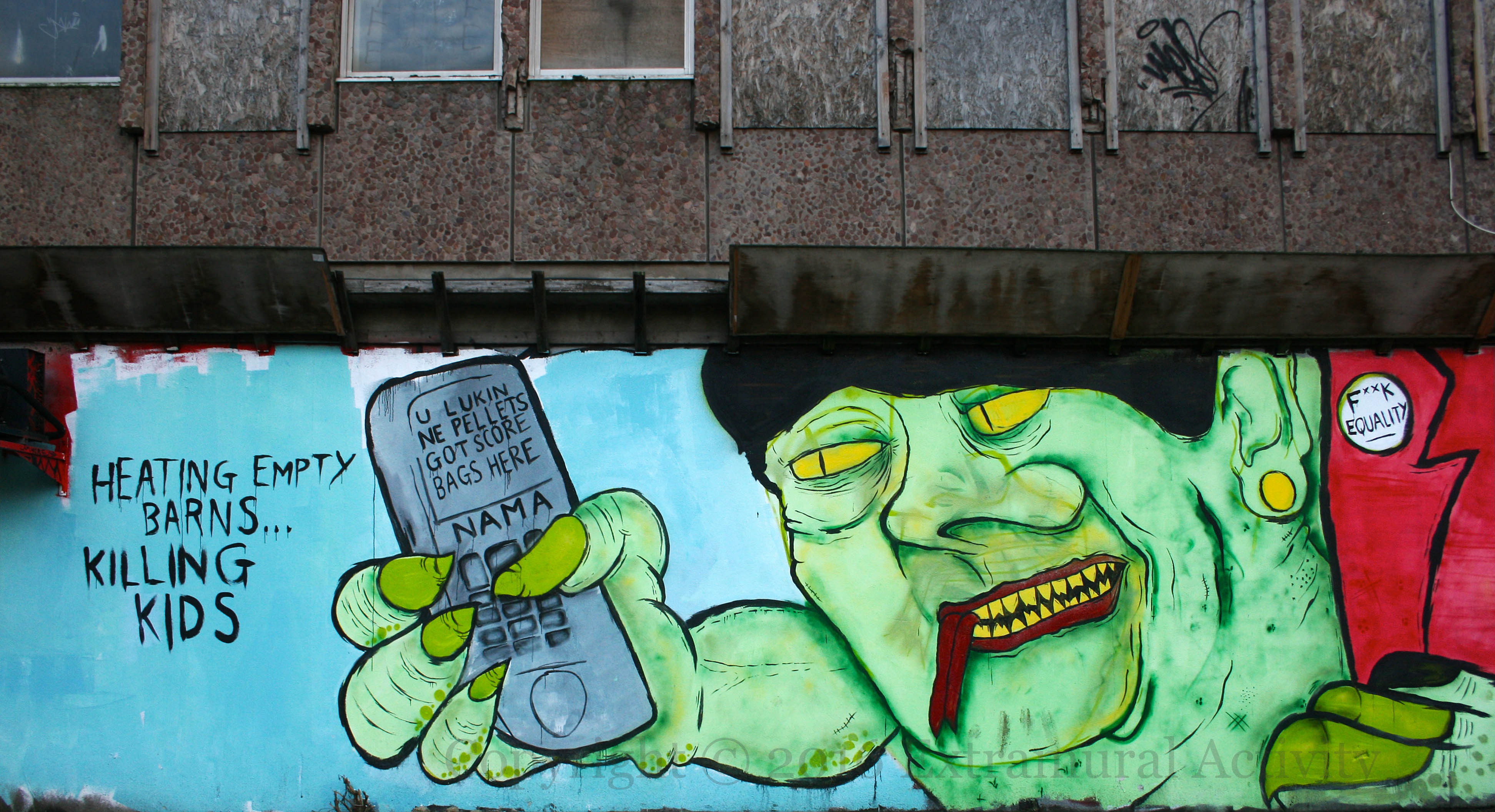
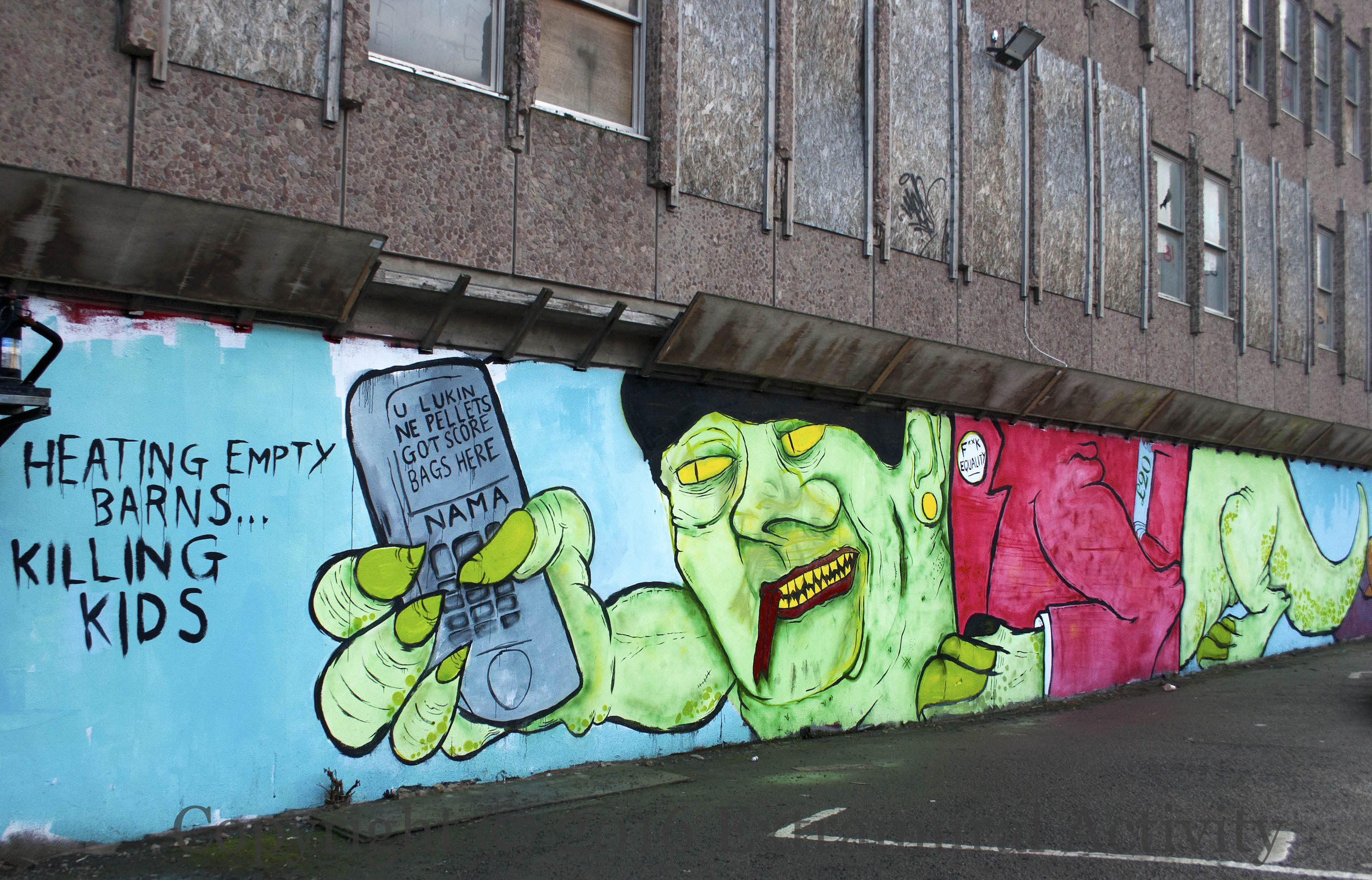
More commentary on the Renewable Heat Incentive scheme (see also Flaming Hot Tottie): Arlene Foster is depicted as a dragon, flogging wood pellets on her (burner!) mobile: “U lukin NE pellets – got score bags here”. Her jacket pocket is stuffed with twenties and she wears a “F**k Equality” badge on her lapel (see the wide shot, below). “killing kids” is perhaps a reference to the closure of a children’s ward at the Ulster Hospital because of short-staffing (BBC-NI).
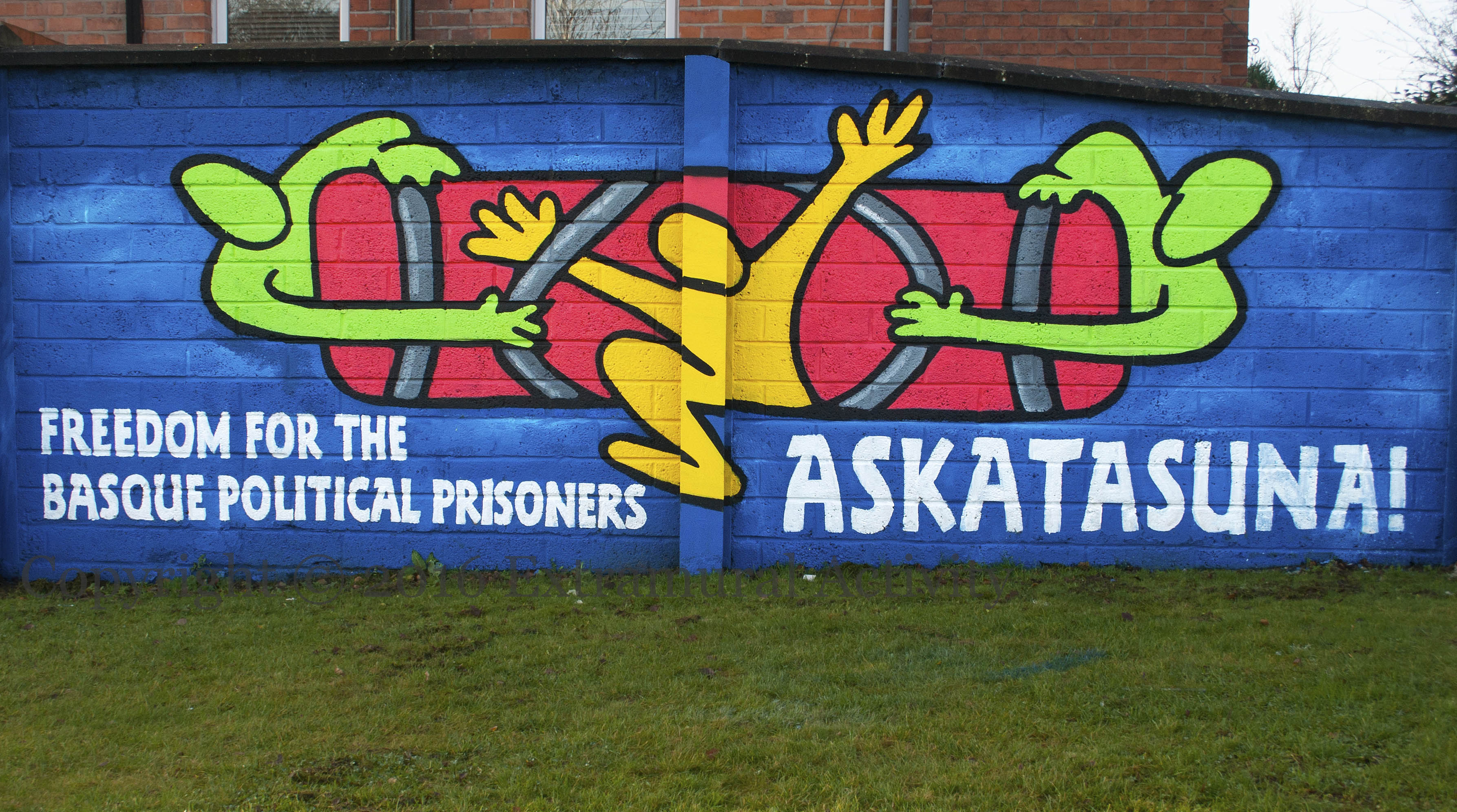
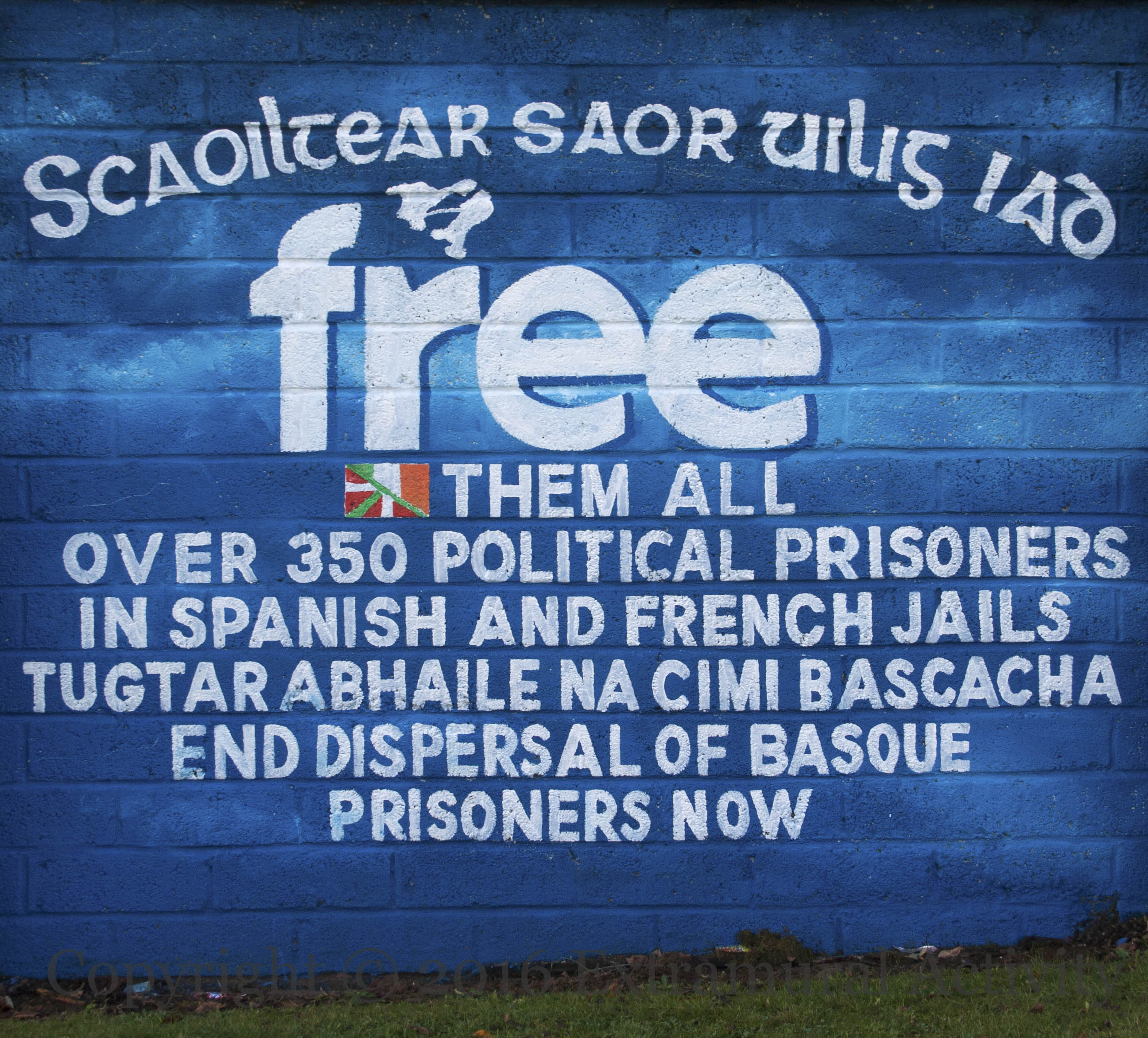
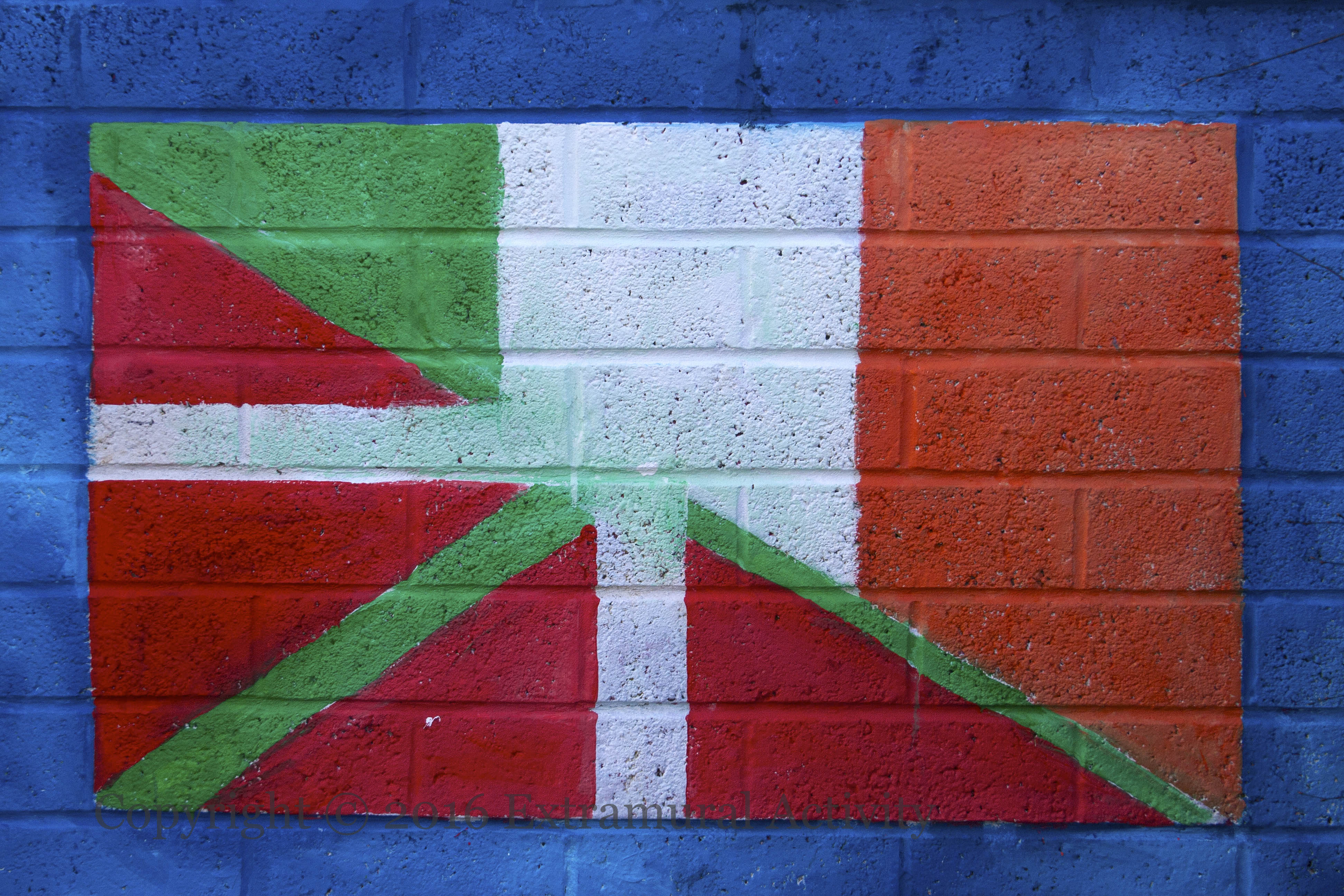
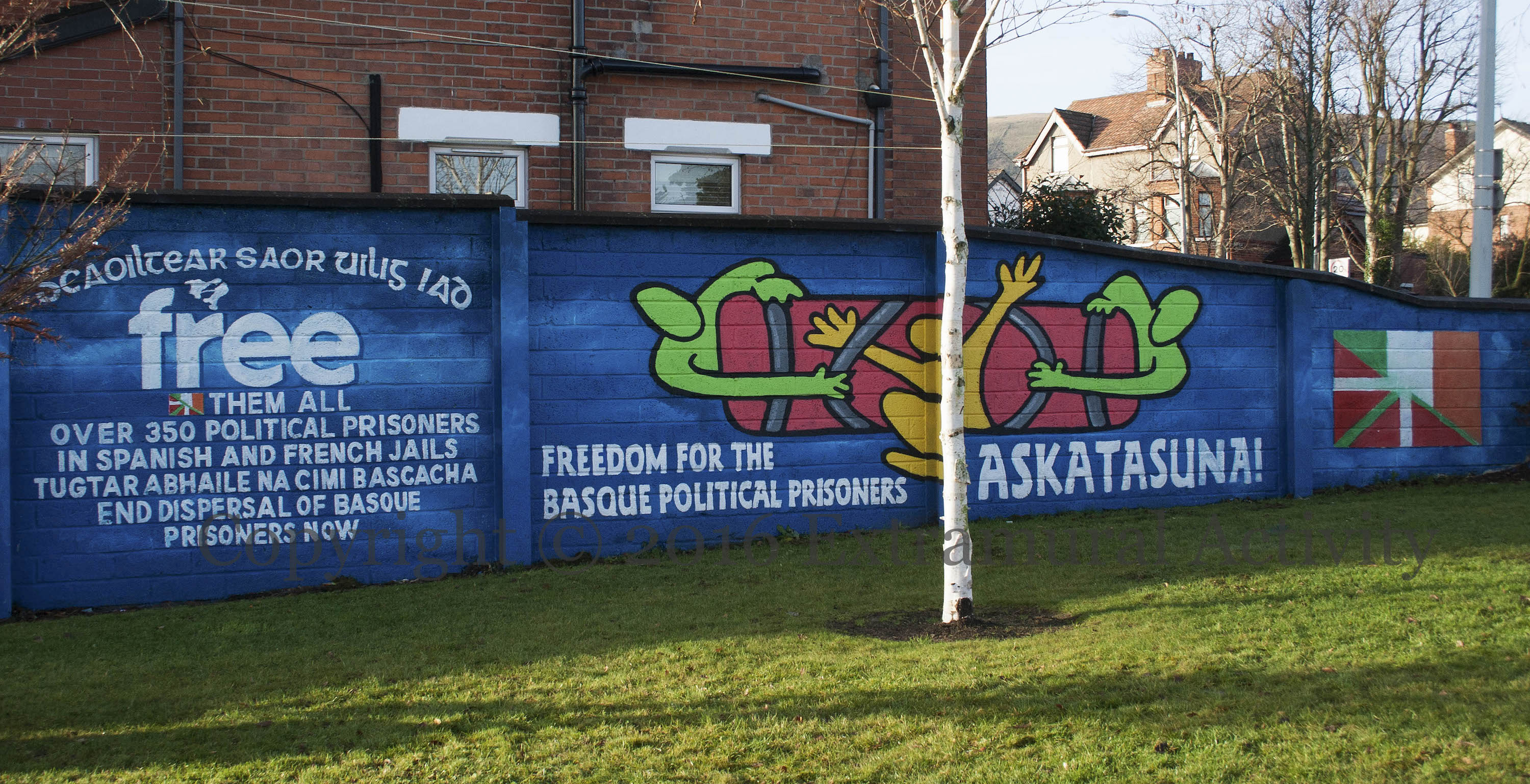
The solidarity mural for the outlawed Basque Askatasuna (Freedom) party at the junction of the Falls and Glen Road has been repainted and extended with the Irish and Basque flags on one side and various calls for justice on the other: “Scaoıltear saor uılıg ıad – Free them all”, “Over 350 political prisoners in Spanish and French jails.” “Tugtar abhaıle na cımı Bascacha”, “End dispersal of Basque prisoners now”.
 Seosamh Mac Coille Collection