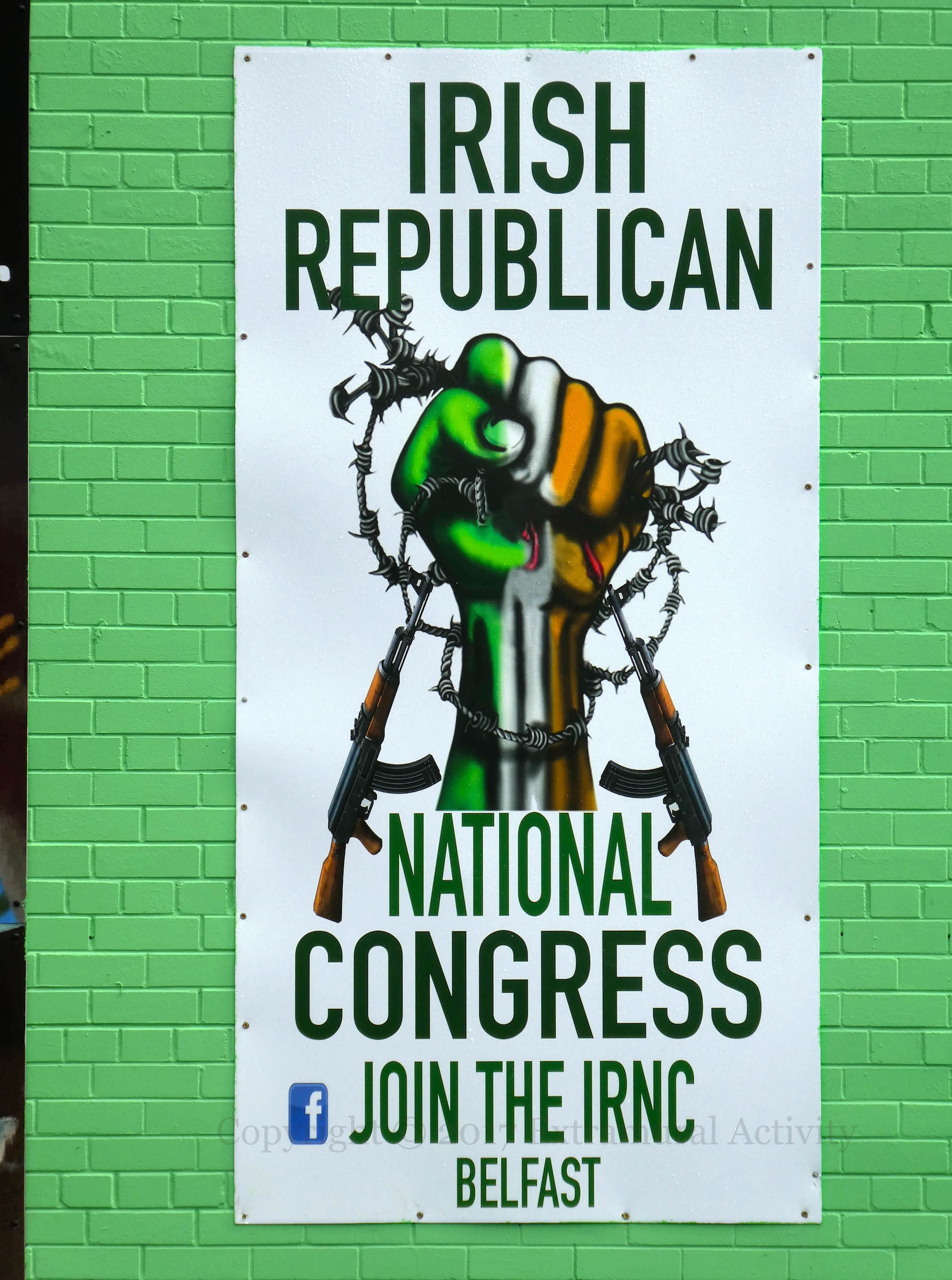
Here is another Irish Republican National Congress (Fb | web) board. Where the first (in Beechmount) featured a Maid Of Erin harp, this one features assault rifles and some nasty barbed wire.
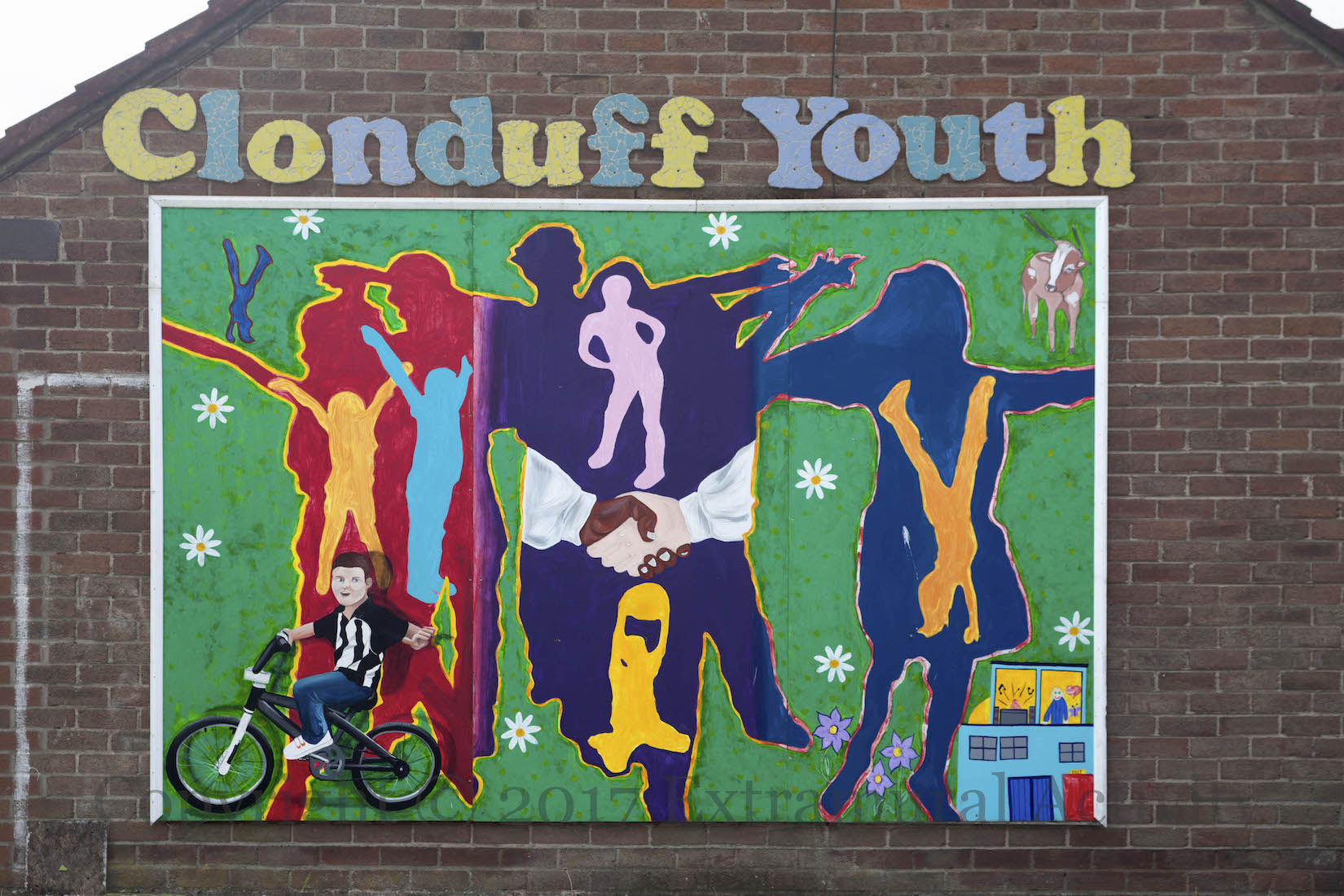
Nozzle & Brush worked with the young people of Clonduff Youth in a project to change the image of the estate. In years past, this wall was “UVF reserved”.
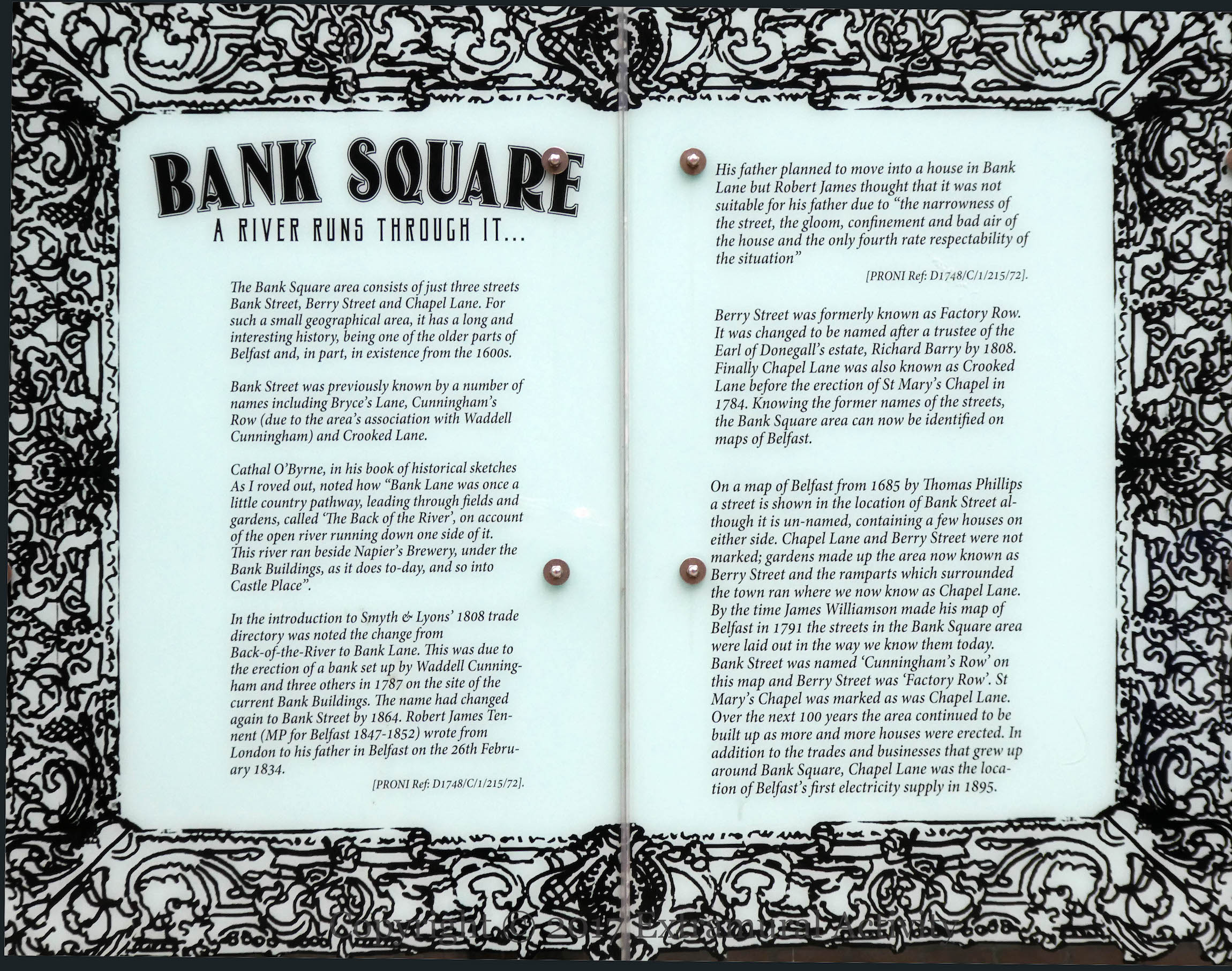
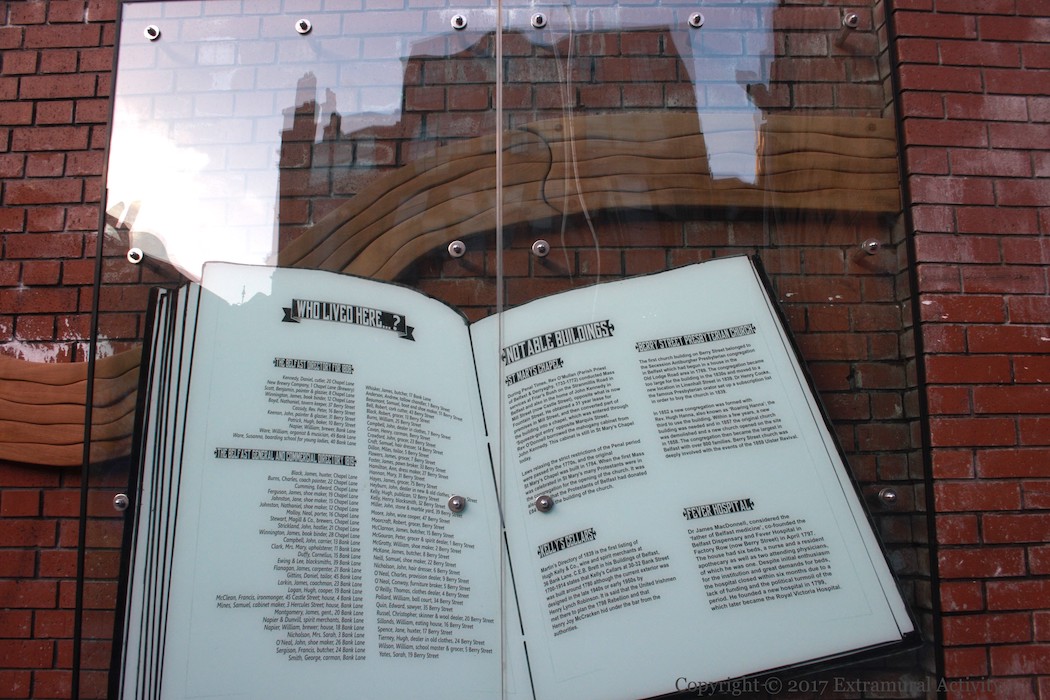
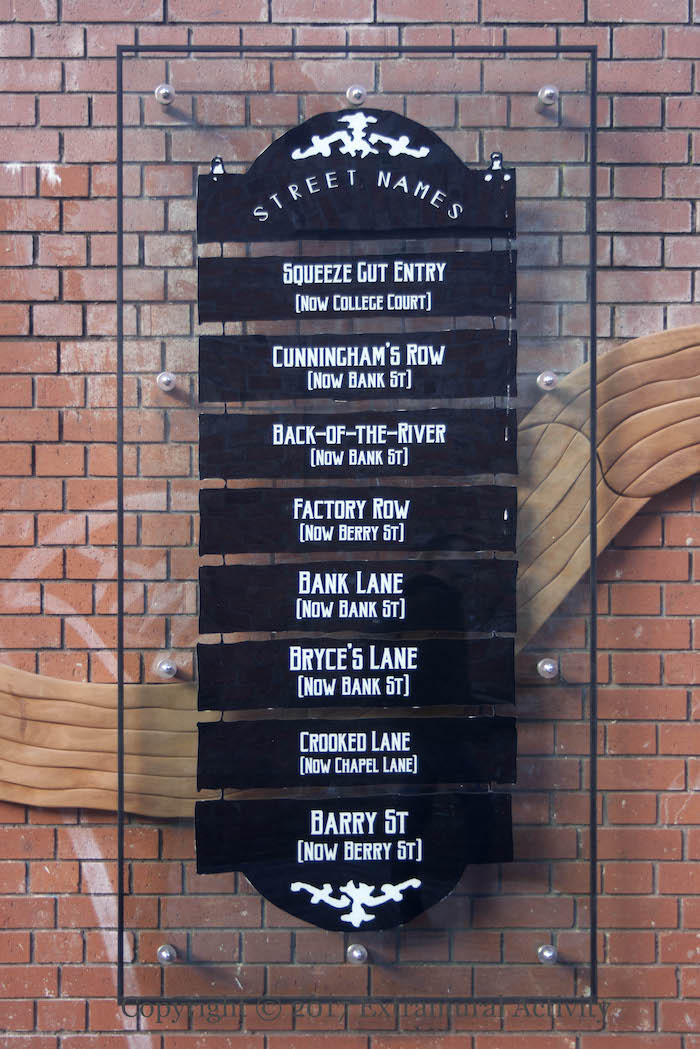
The river in question is the Farset, which in the late 1700s was still open in what was then the Back-Of-The-River area and is now Bank Square. It was all covered over by 1804.
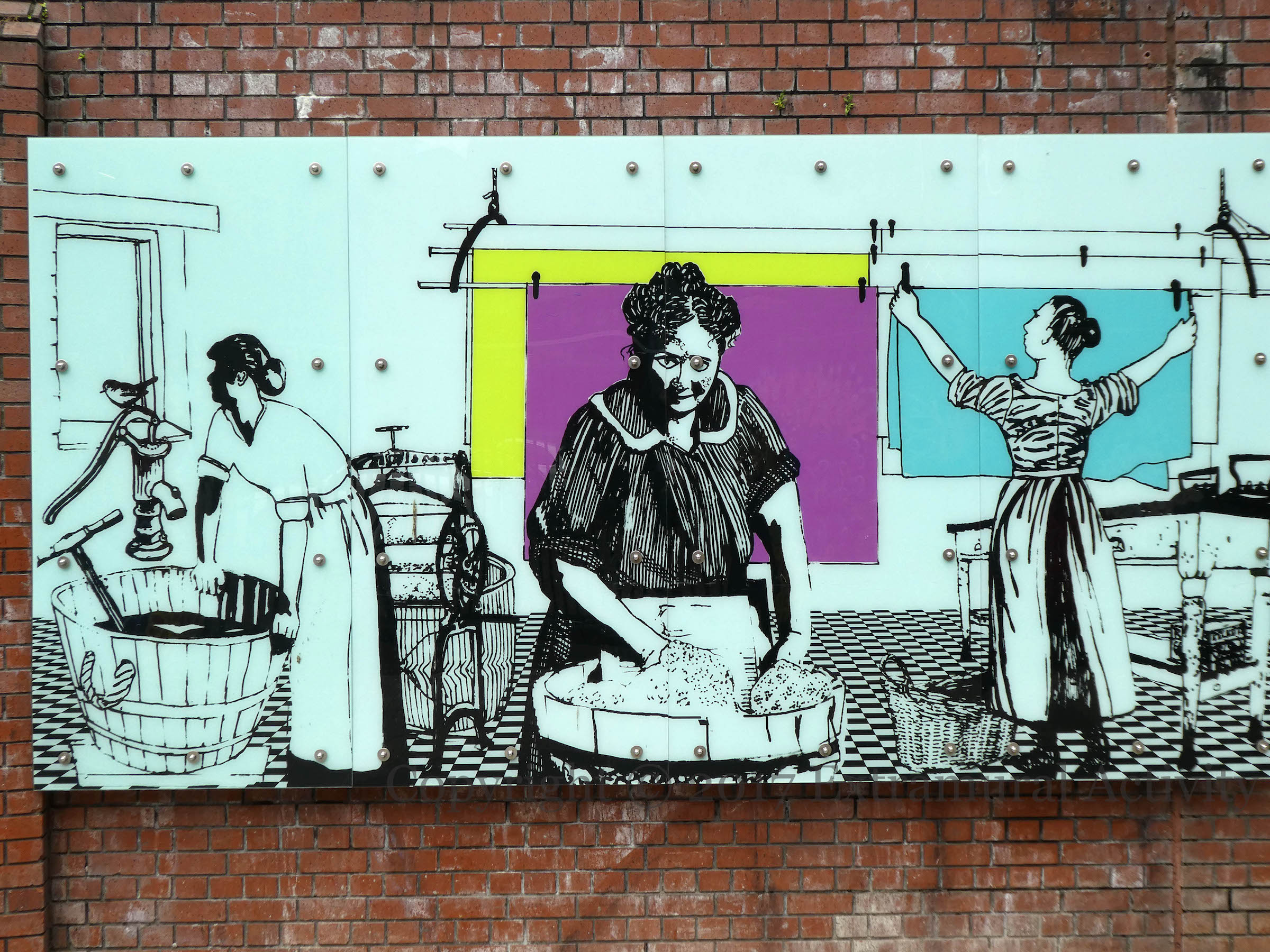
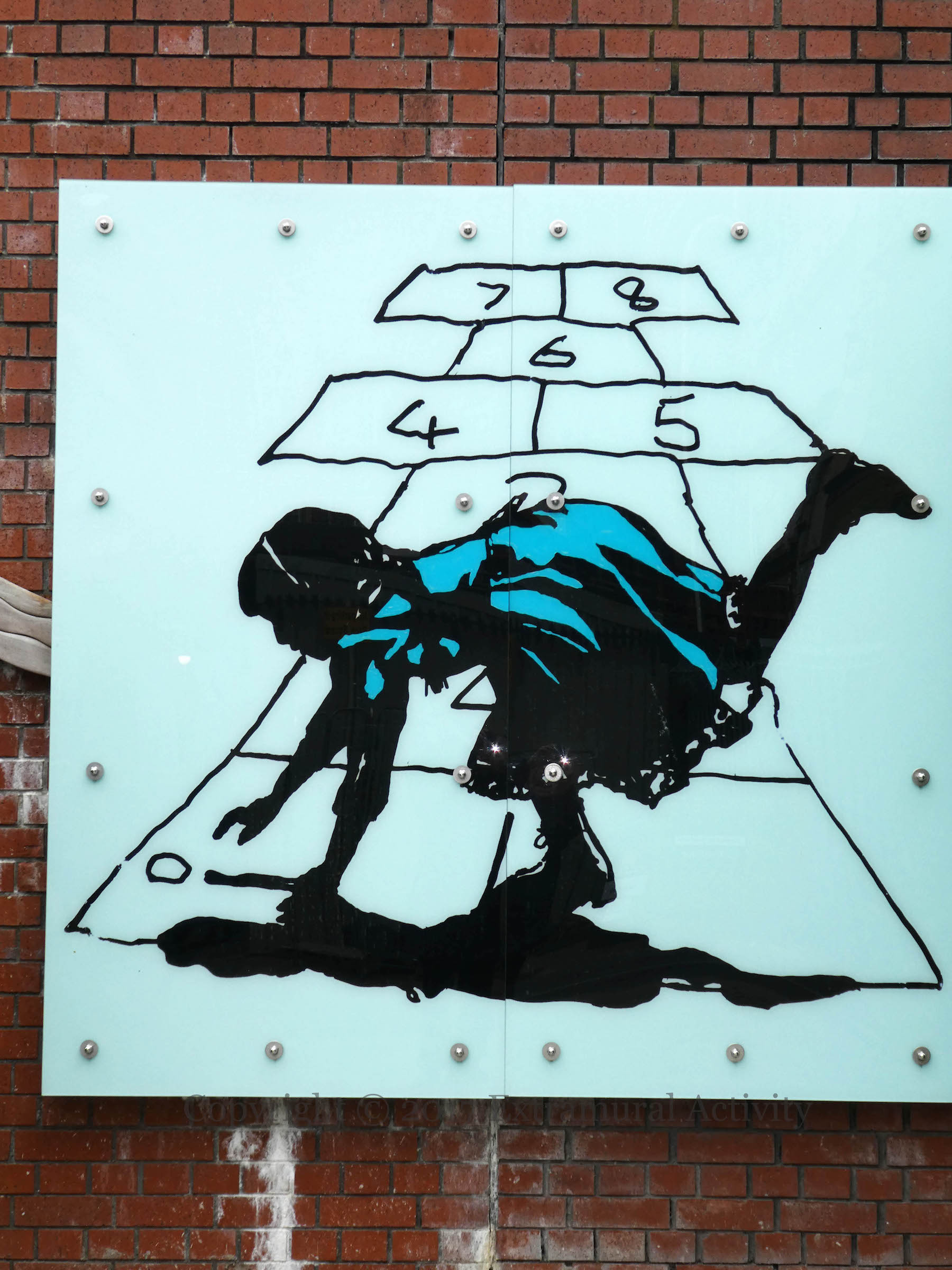
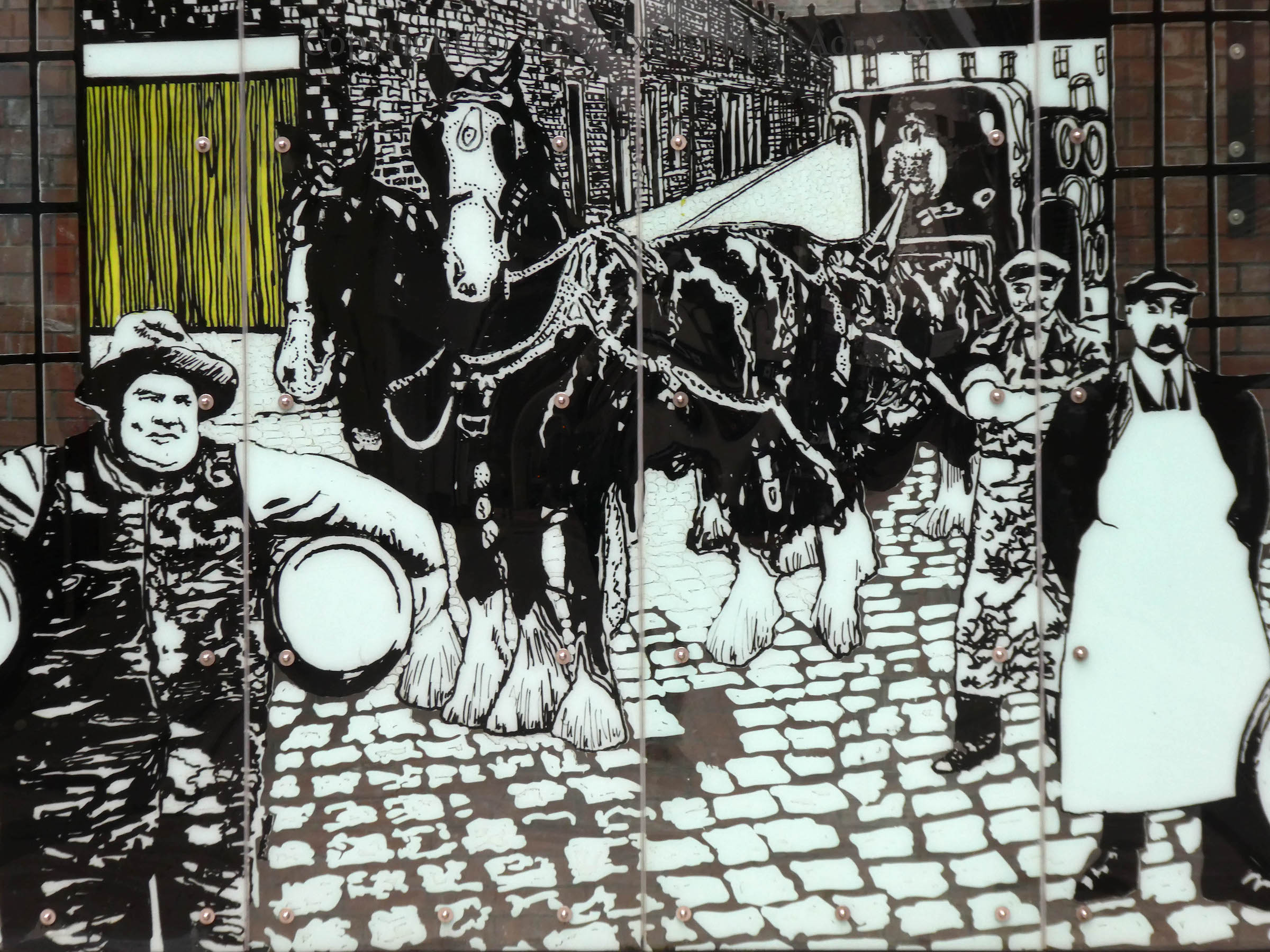
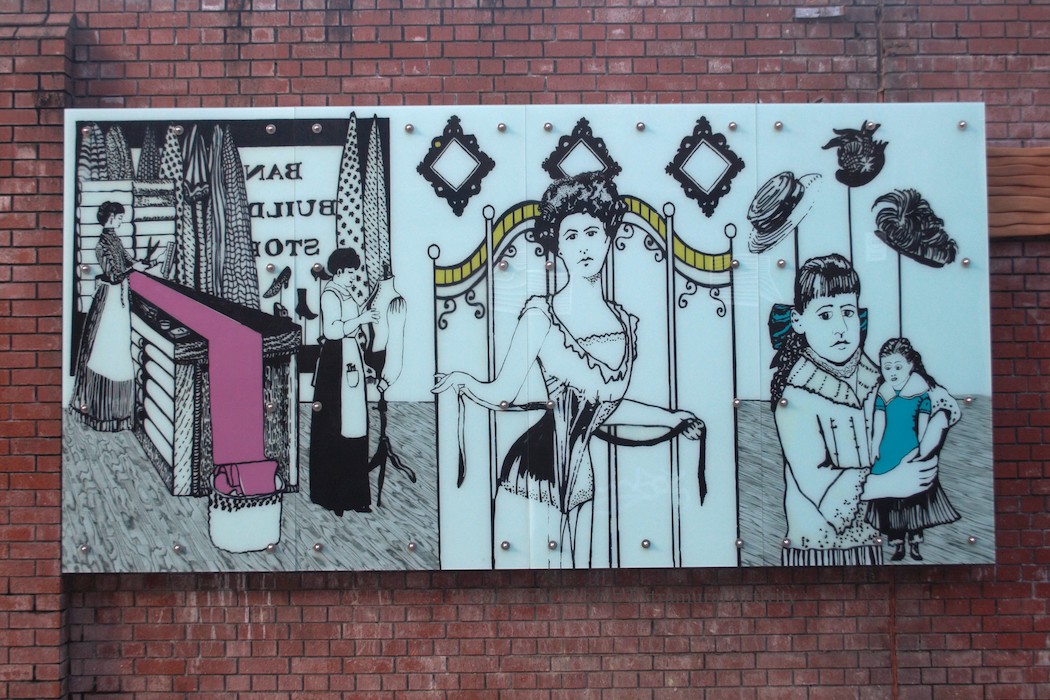
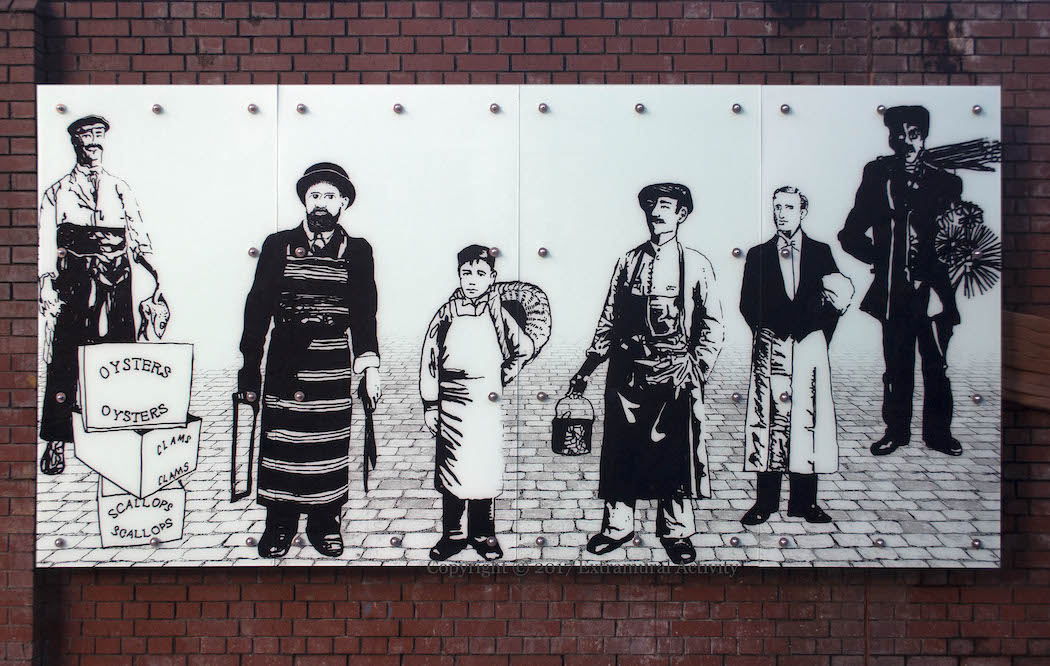
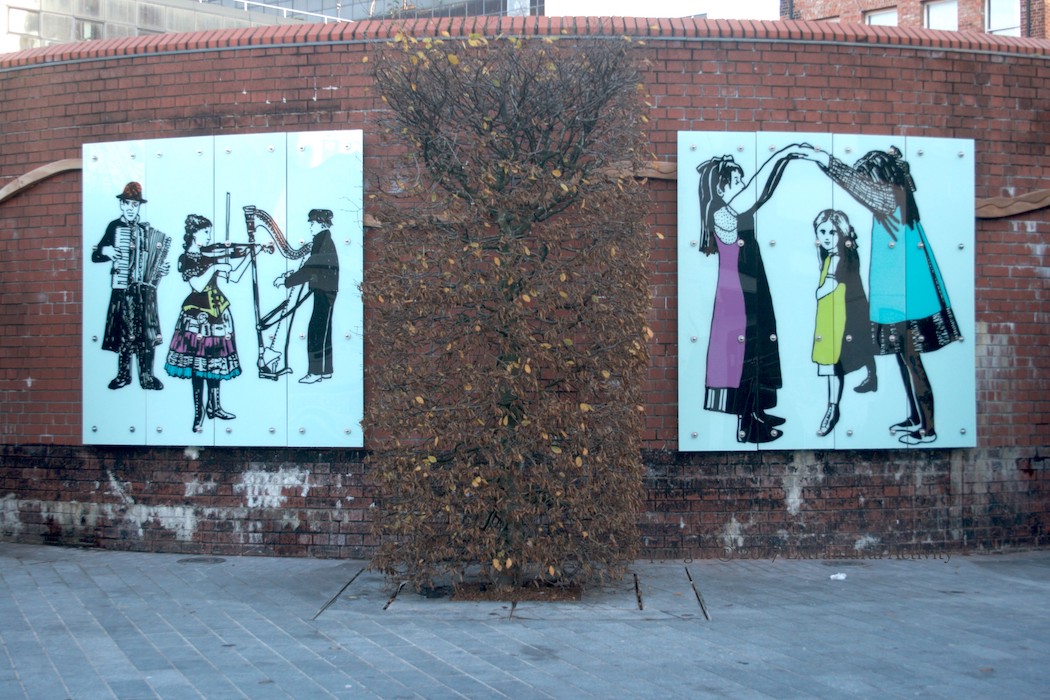
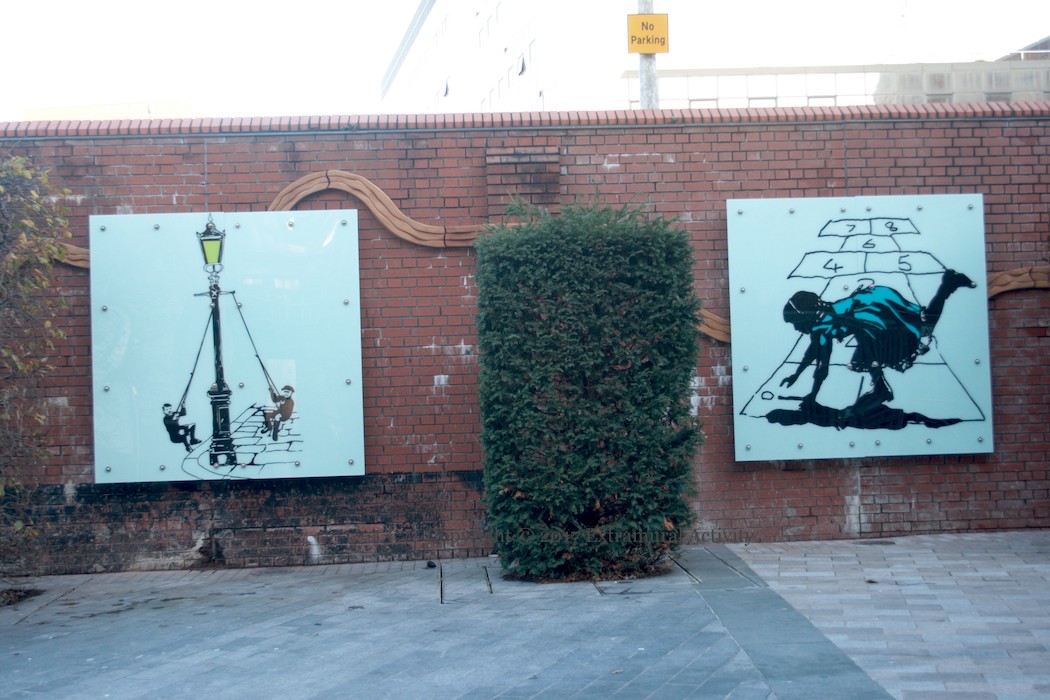
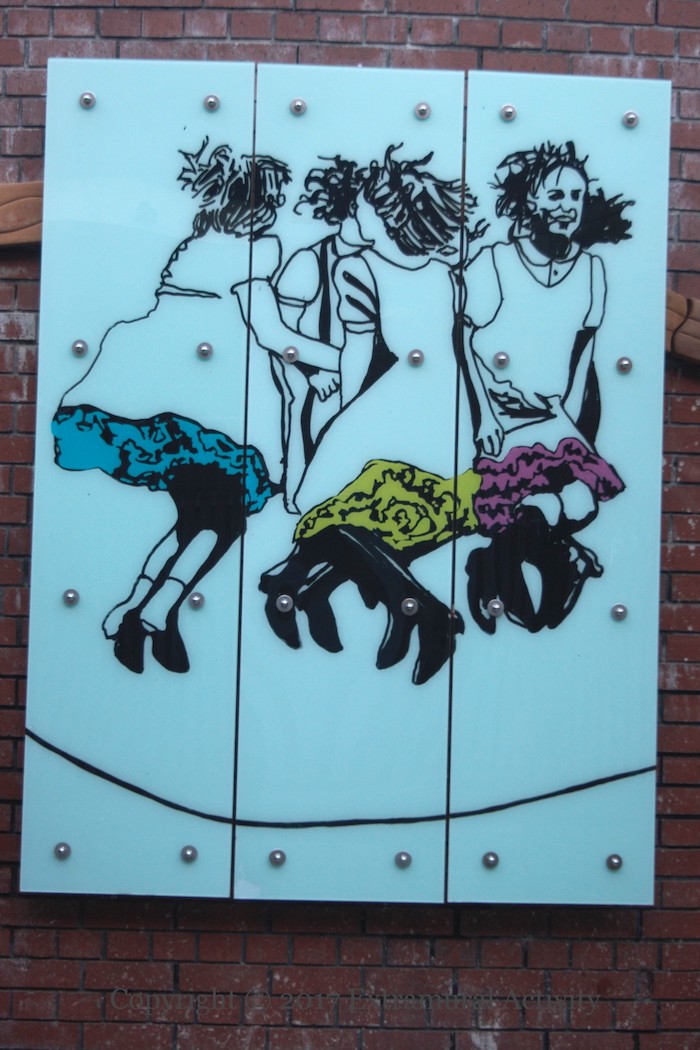
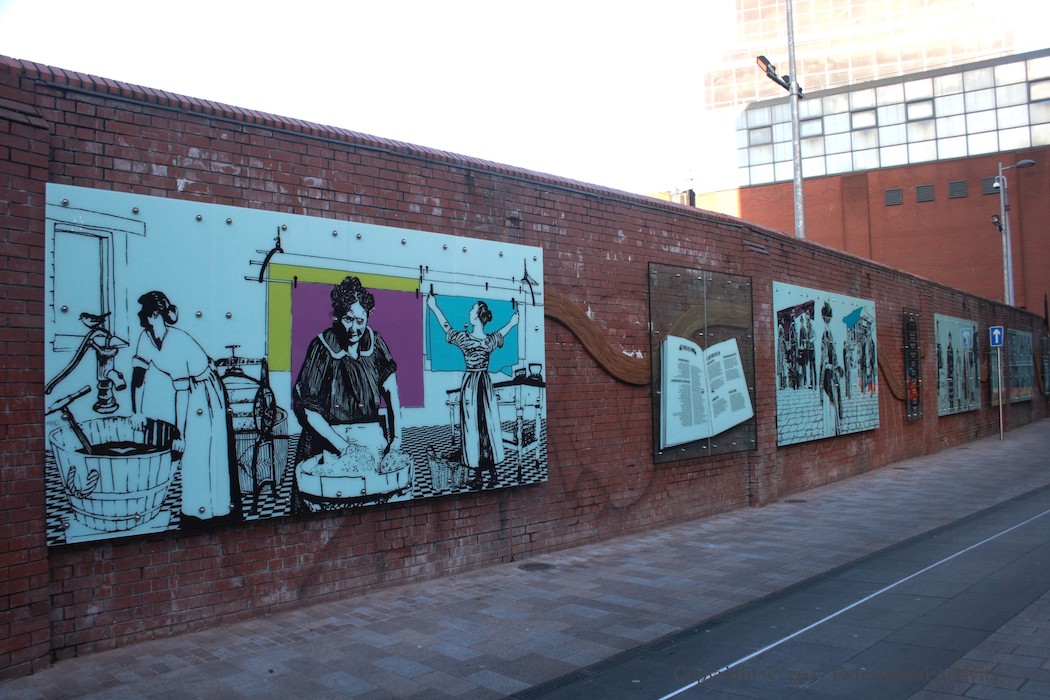
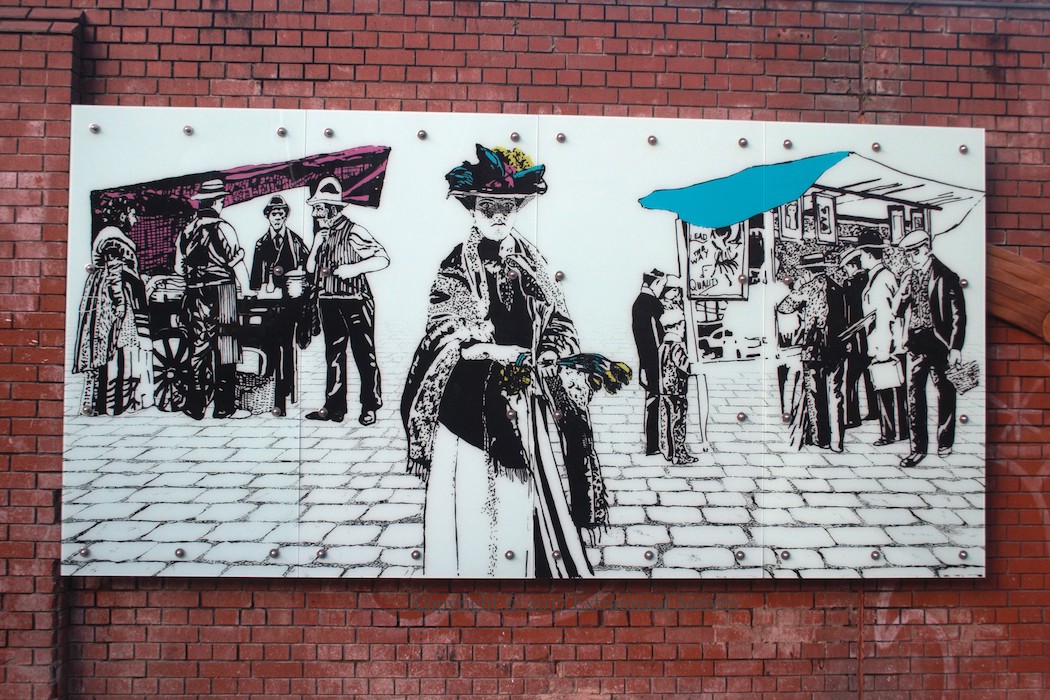
The 2015 installation of ‘life in the old days’ panels is by Annemarie Mullan, Stephen Mackey, and King Street Arts, presenting street scenes inspired by “information from the 1898 census” (CultureNI | Love Belfast).
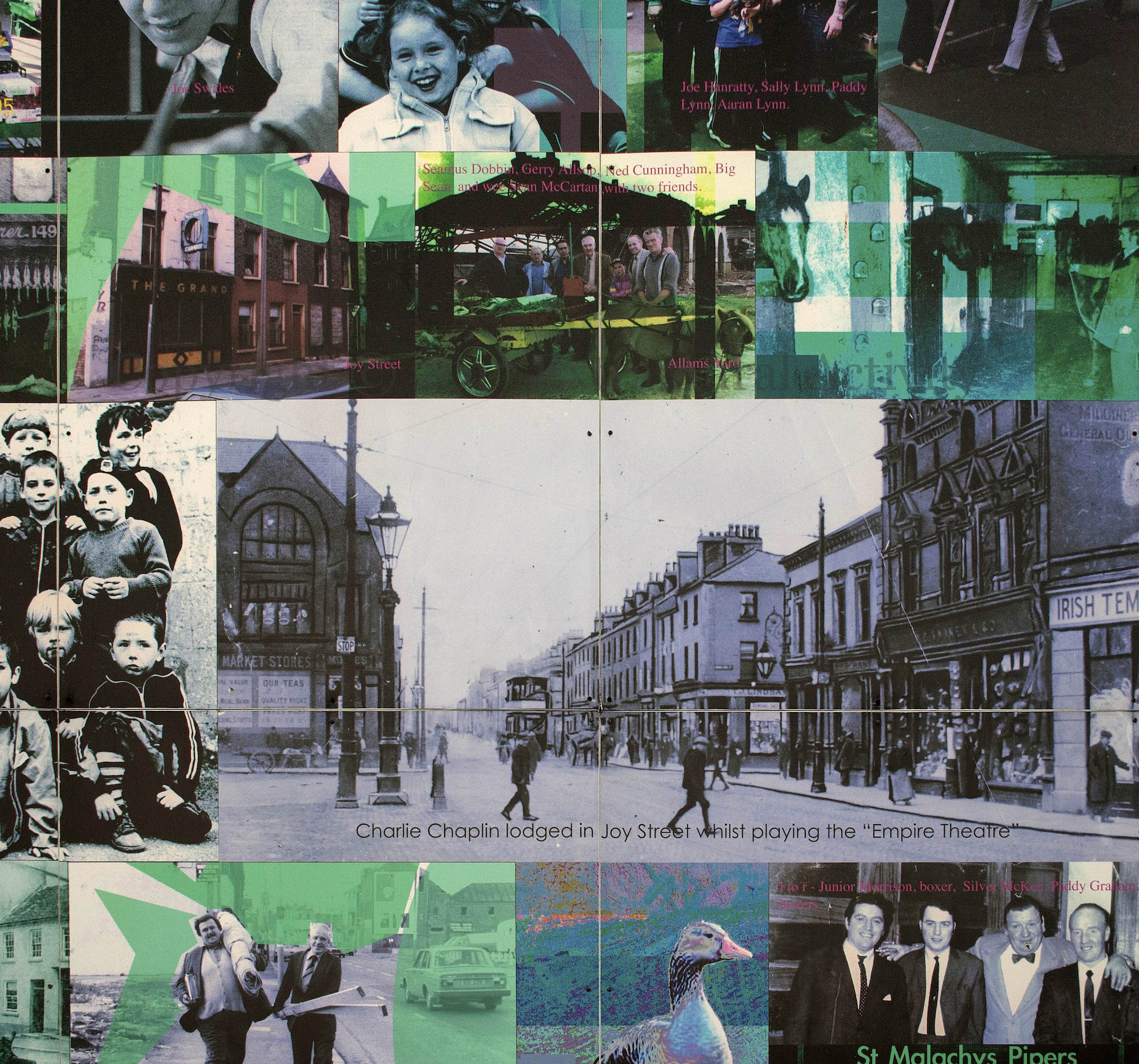
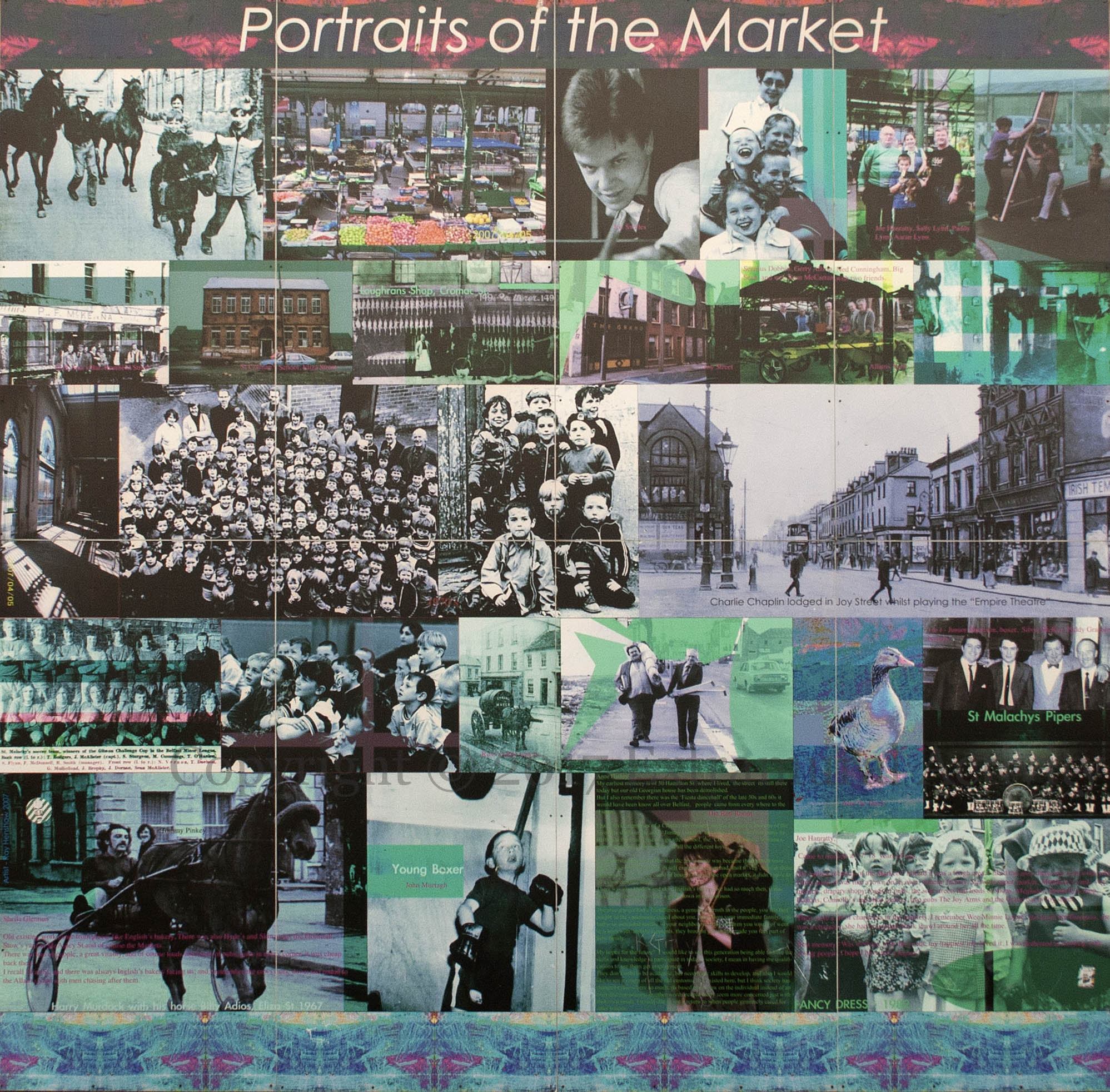
Artist Raymond Henshaw undertook a series of six collages of photographs of the Markets area of south Belfast (in 2008): Social, Bars, Industry, Social History, Sport & Culture, and – shown in today’s post – Portraits of locals, such as snooker player “Joe Swales” (Joe Swail) and familiar buildings, such as Loughran’s Shop. The boards were part of the 2008 re-imaging campaign and sponsored by the Arts Council.
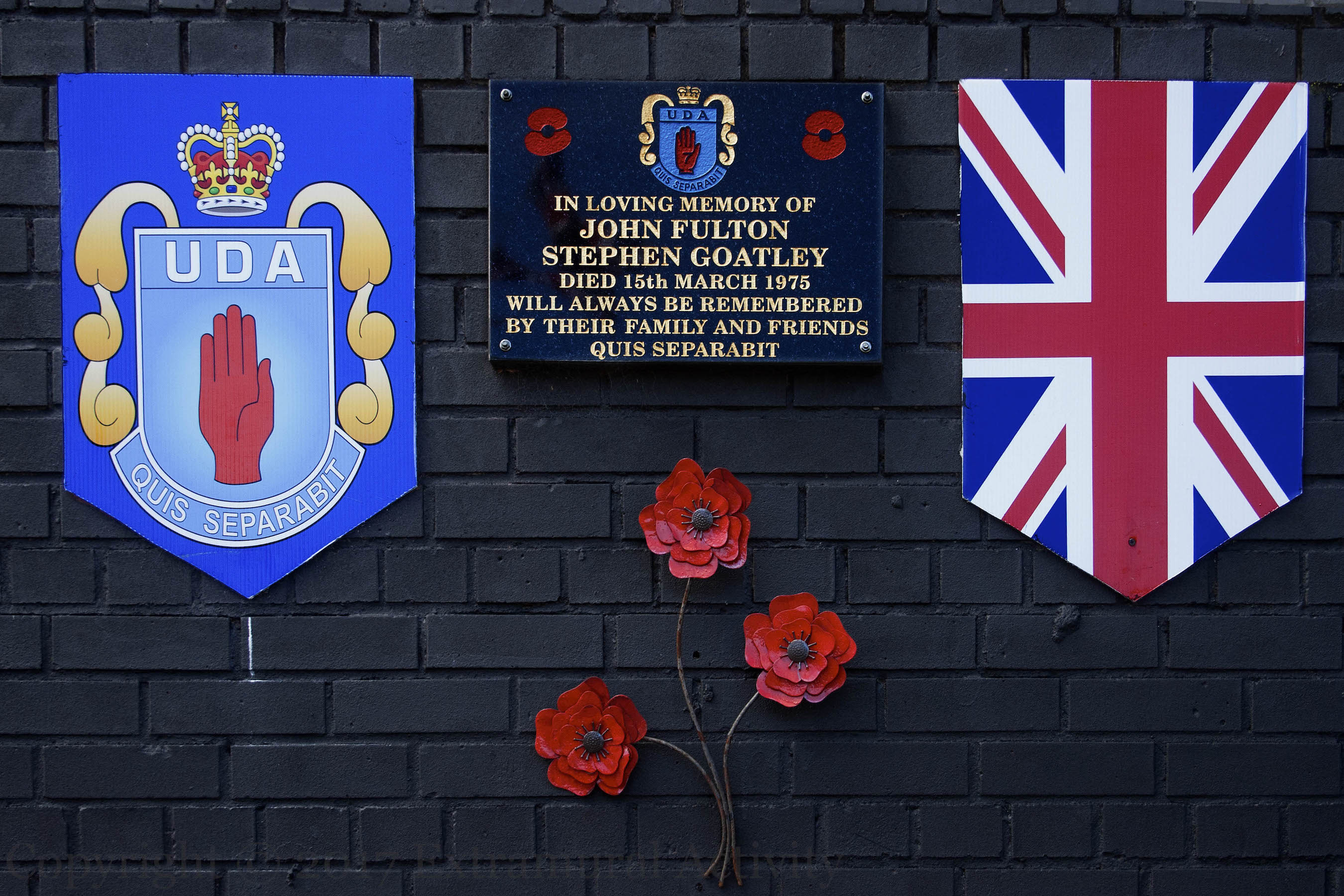
UDA members John Fulton and were Stephen Goatley were killed together in the Alexandra Bar on York Road (close to the Mervue Street location of this memorial) by the UVF as part of a UDA-UVF feud in 1975. The poppy is more often associated with the Ulster Volunteers (of WWI) and the UVF.
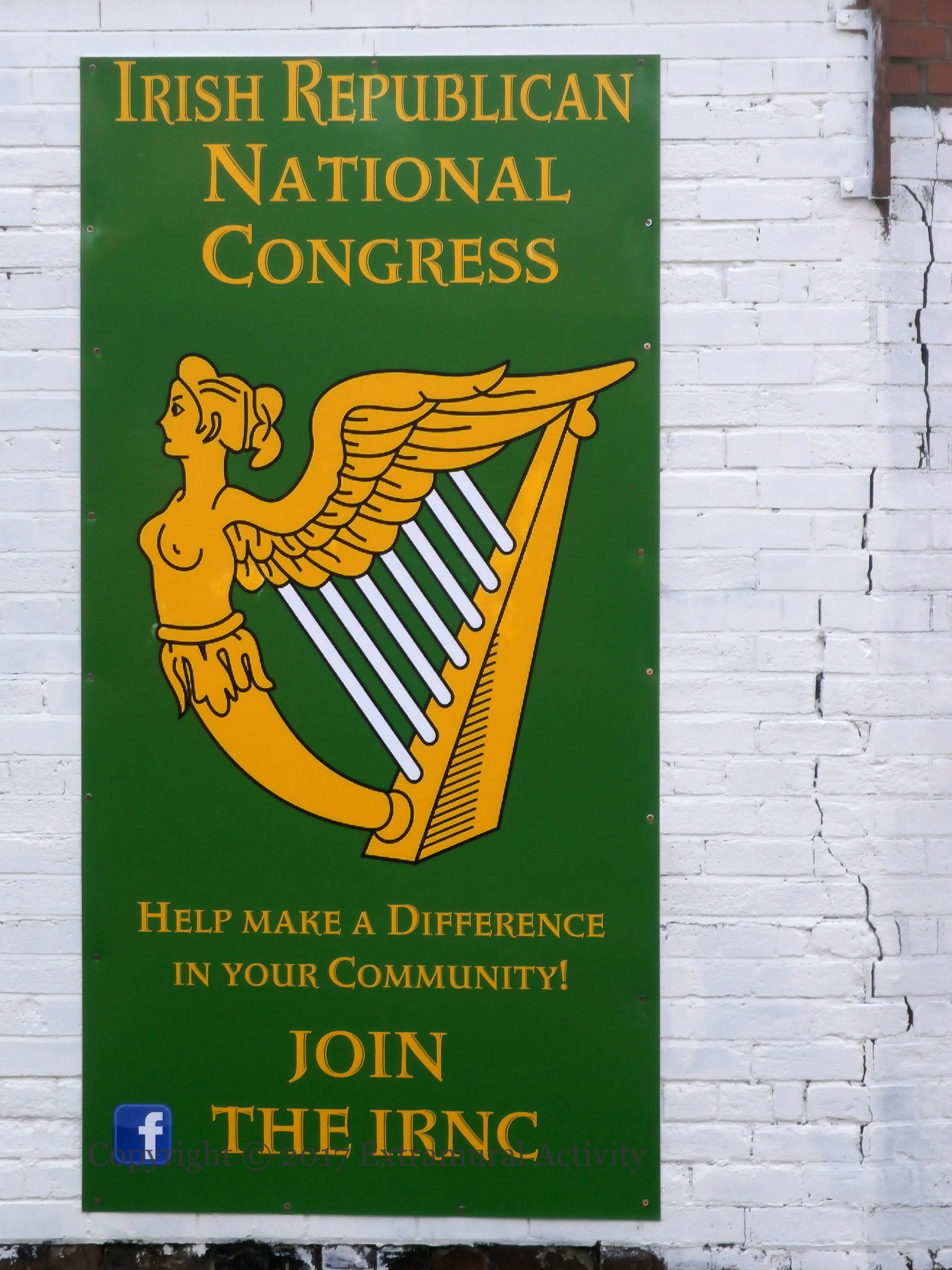
The harp as a symbol of Ireland dates back to the 1500’s, with the ‘winged maiden’ version current by the late 1700s. The United Irishmen replaced the crown typically added above it (used, for example, by the Royal Irish Rifles) with a cap of freedom (for another image see the 2000 Bobby Sands mural). The Irish Republican National Congress (web) is a 2014 group with the goal of a united Ireland.
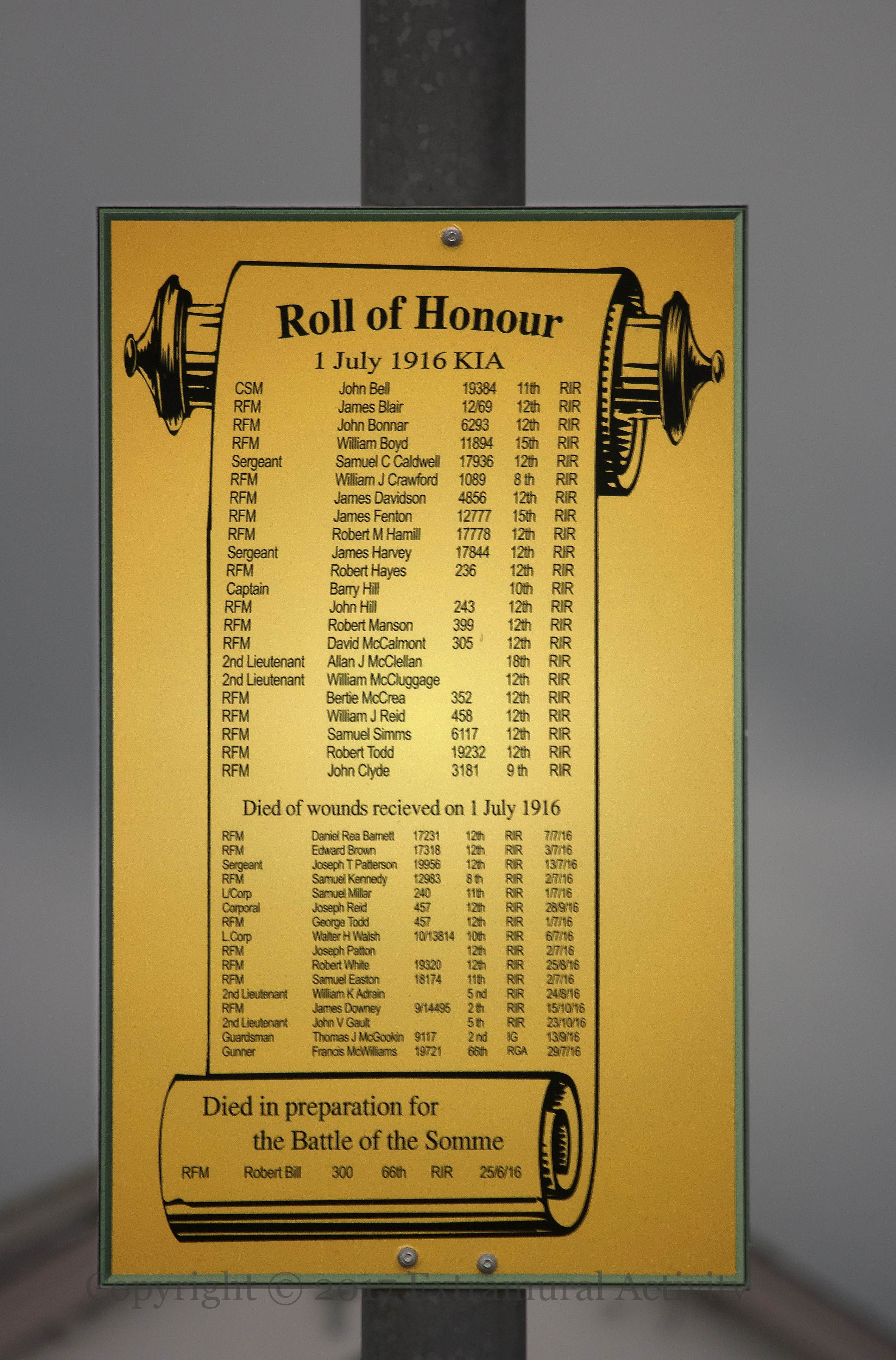
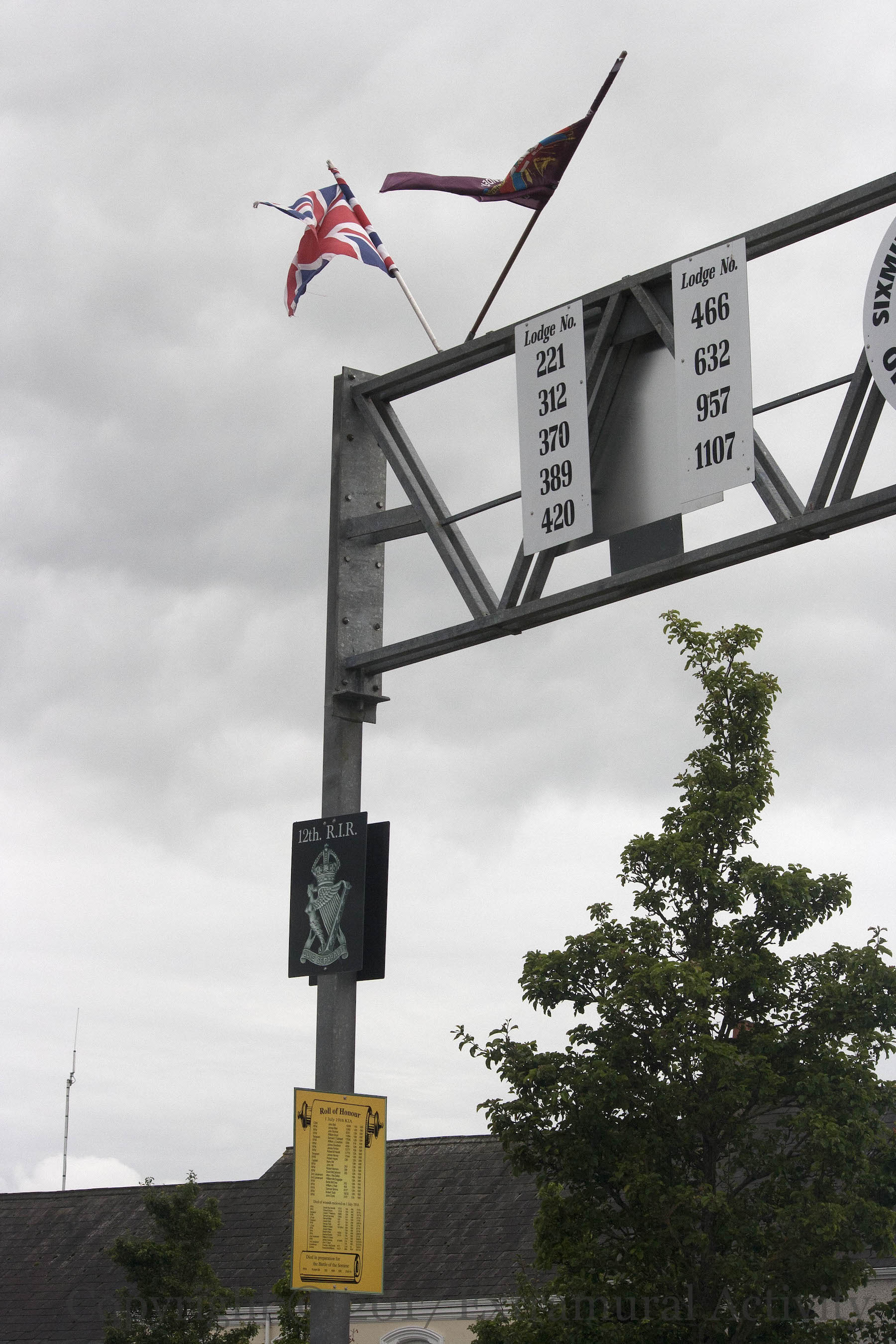
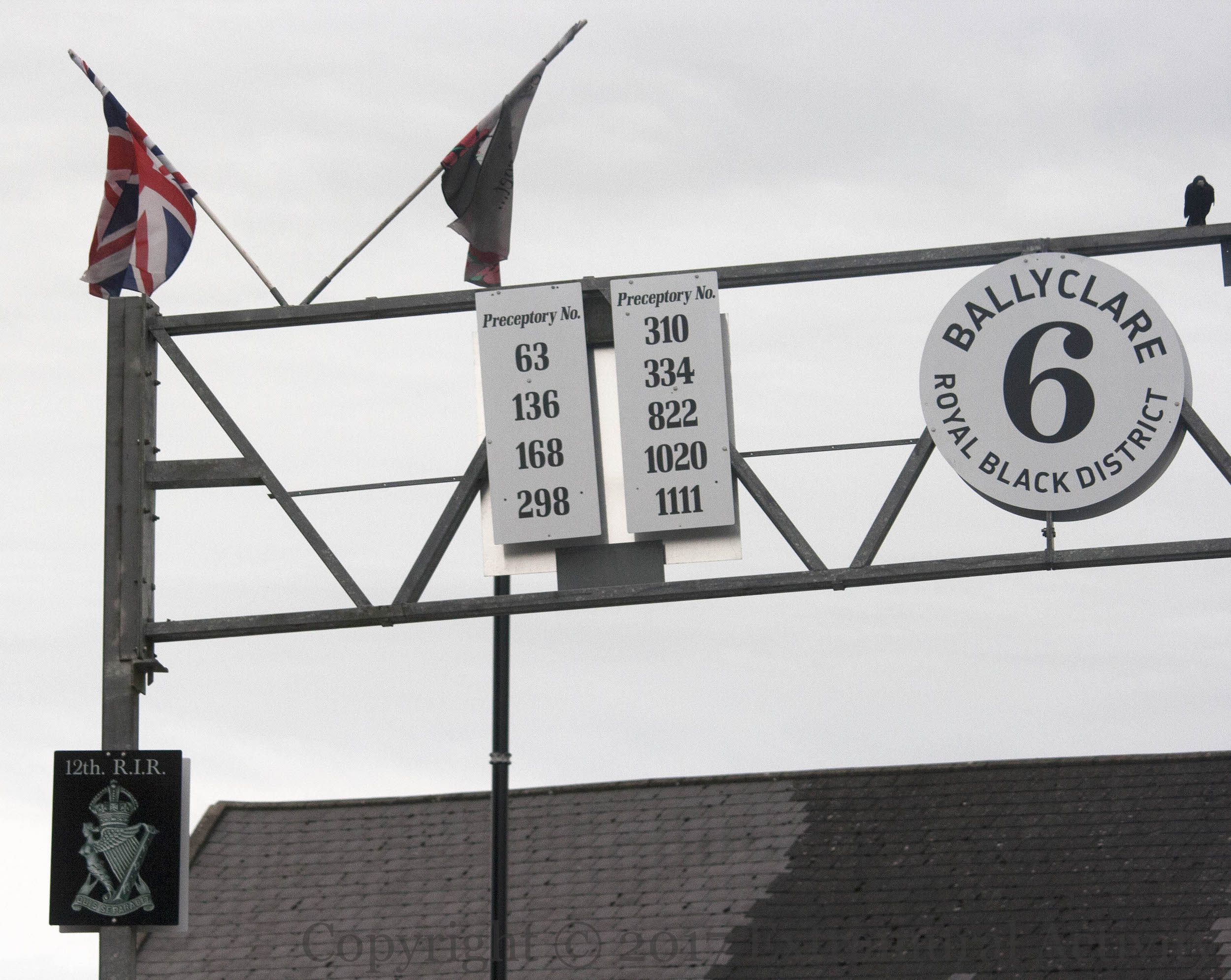
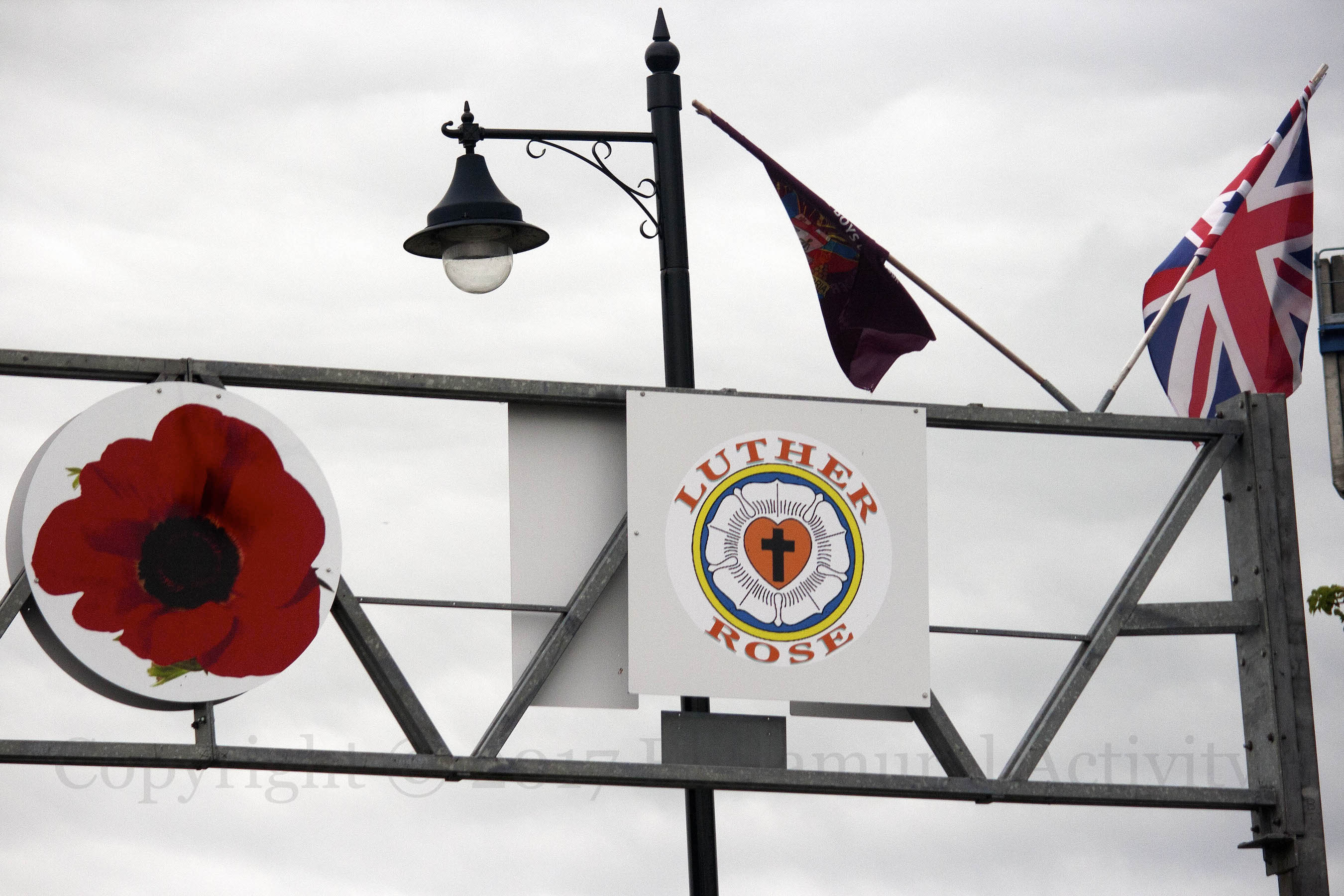
The 12th battalion of the Royal Irish Rifles was drawn from central Antrim towns such as Ballymena and Ballyclare. There is a web site and a Facebook page dedicated to the battalion. For more pictures of the Ballymena arch, see Cross And Crown.
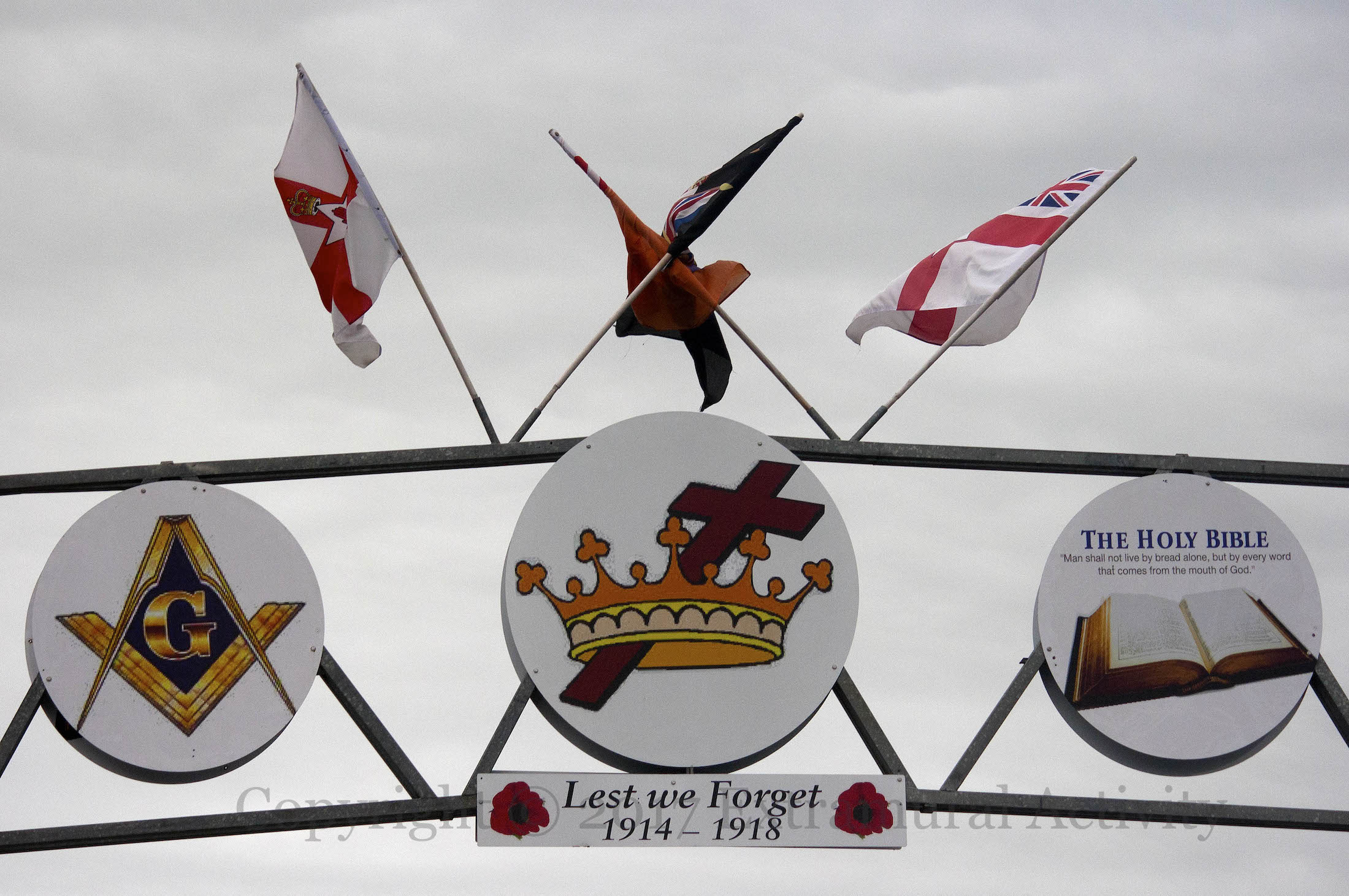
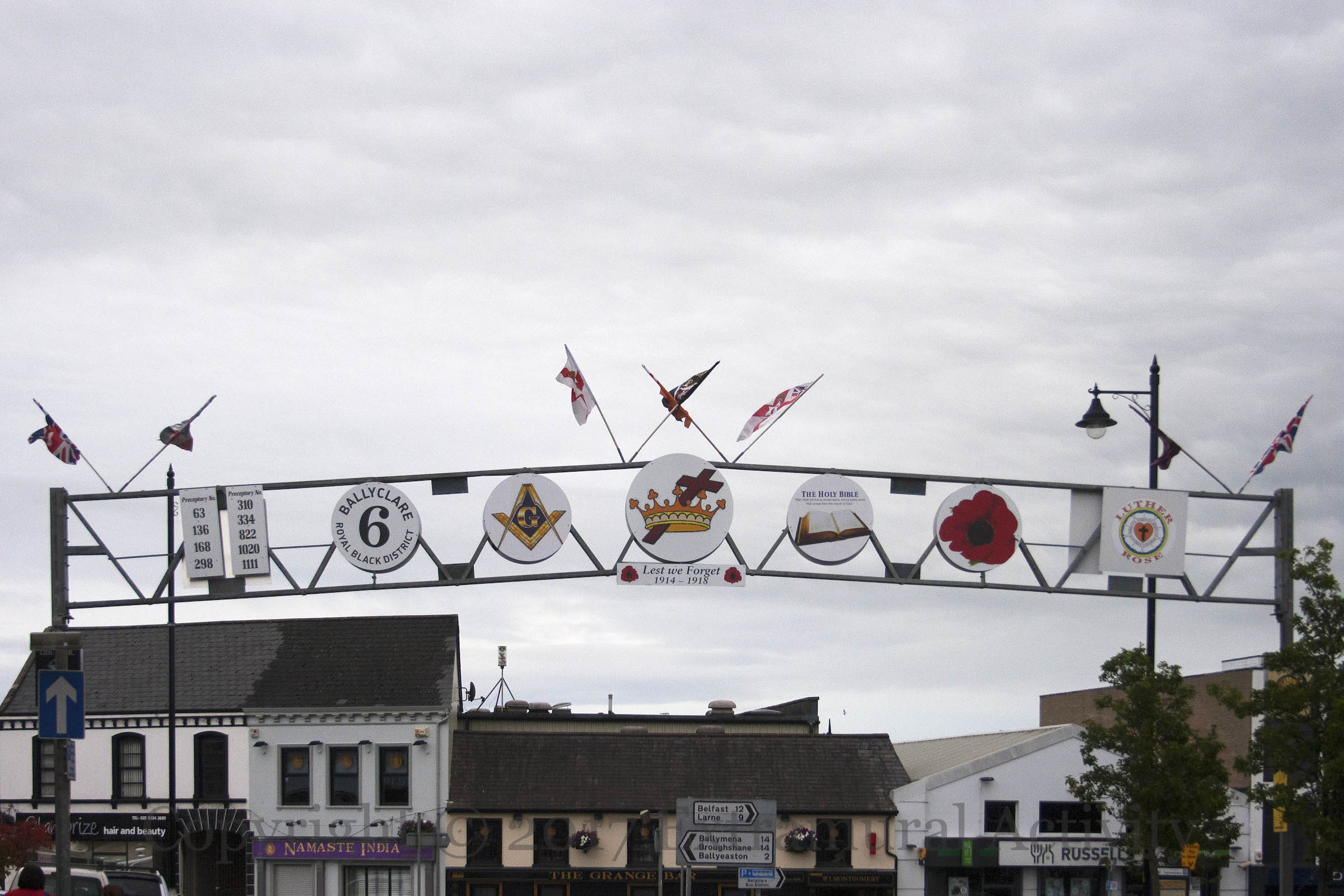
The ‘cross and crown’ is the emblem of the Royal Black Institution, an institution two years younger than the Orange Order; a list of local preceptories in District 6 (Ballyclare) is given in the first image below. To the left (in the image above) is the Square And Compasses, the symbol of the Freemasons. This is a newer arch than seen previously in 2009.
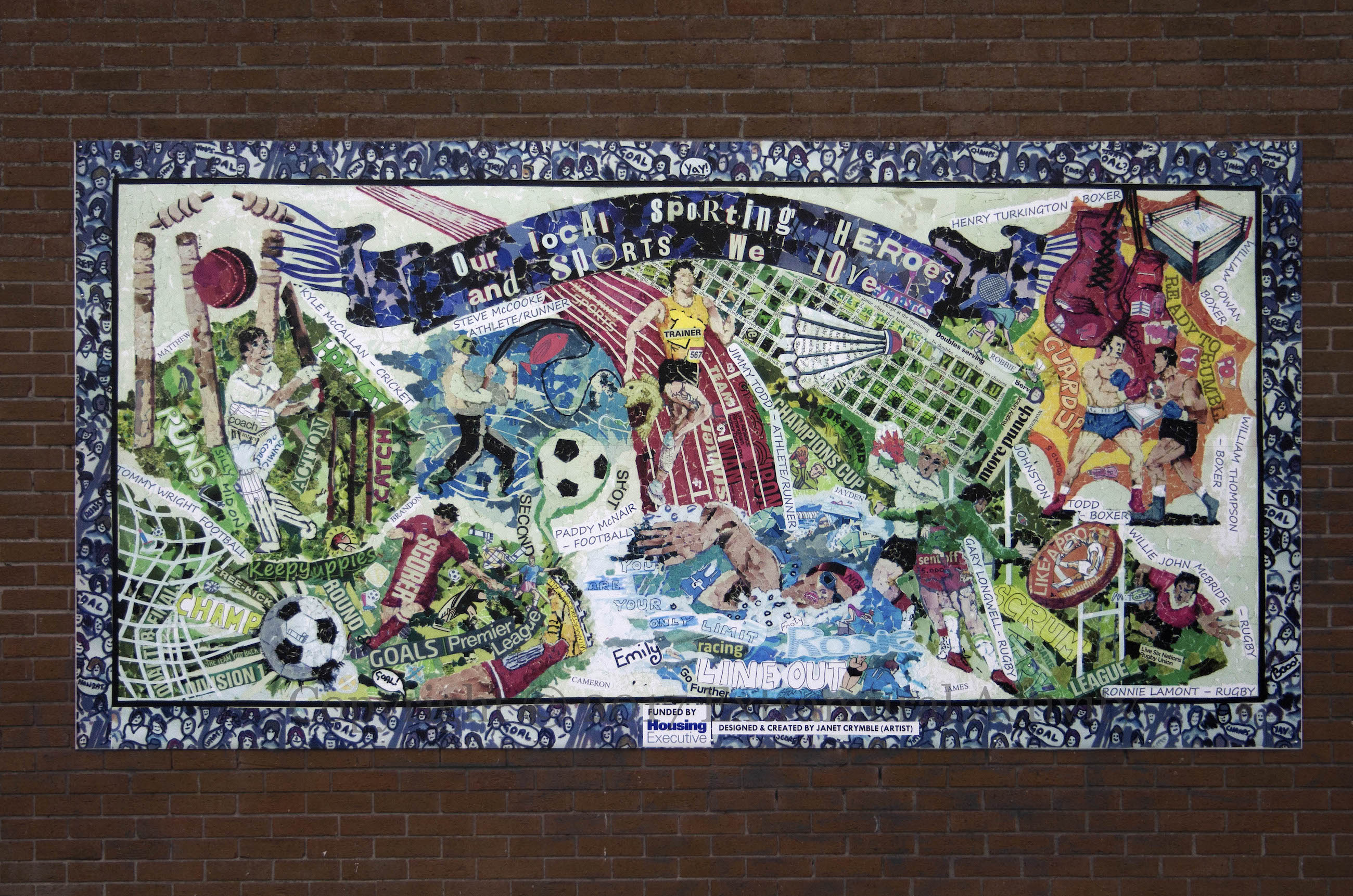
Whitehead artist Janet Crymble “designed & created this new collage in Ballyclare, featuring south Antrim sporting heroes past and present: Kyle McCallan, Steve McCooke, Paddy McNair, Jimmy Todd, Gary Longwell, Ronnie Lamont, Henry Turkington, William Cowan, William Thompson, Johnston Todd, Willie John McBride. John Reid from the NIHE – which sponsored the mural – has an image from the launch of local children posing with the piece.
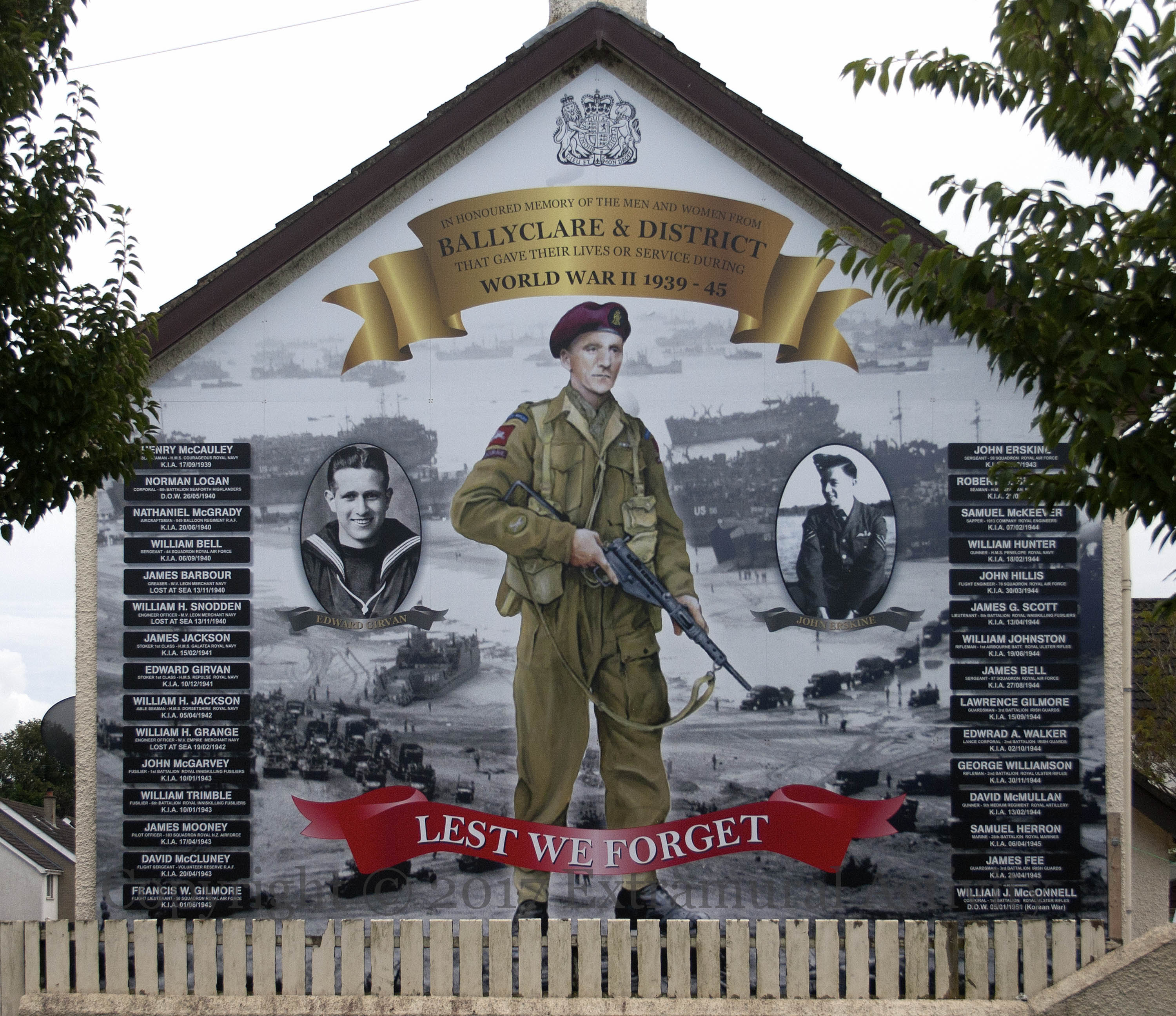
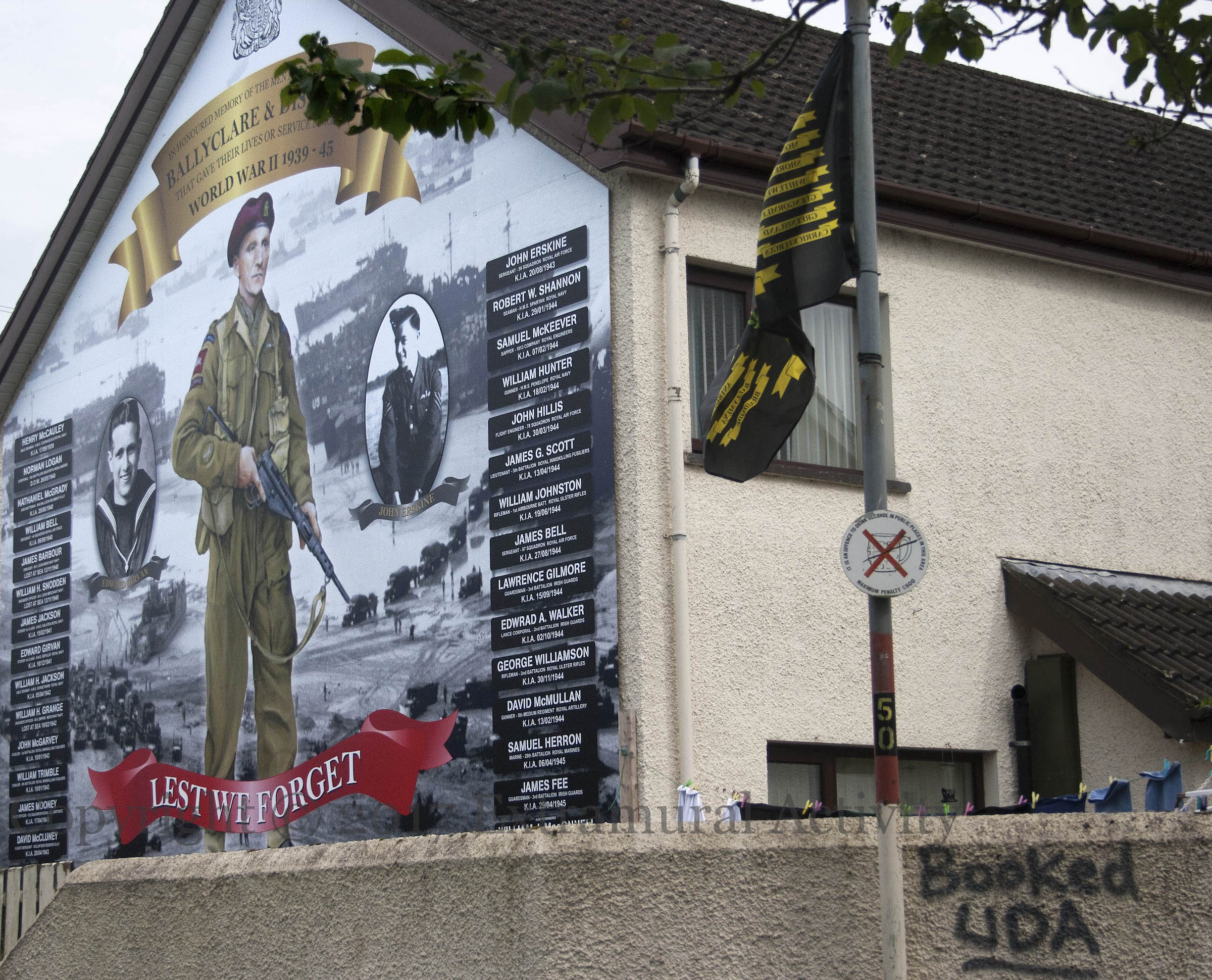
On 20 August 1943, second pilot Sergeant John Erskine and the Liberator crew of seven others failed to return from a convoy patrol of the west of Ireland (59 Squadron). Erksine and 28 others from WWII (and one from the Korean War) are commemorated in a new mural in Erskine Park, Ballyclare. It’s not known if the street name is connected to Sergeant John.
The left-hand portrait is of Edward Girvan, from Ballynure, who was killed on the H.M.S. Repulse, when it was attacked by Japanese aircraft and struck by torpedo bombs in the South China Sea on December 10th, 1941 (WP).
The soldier in the centre of the mural wears the emblem of the Royal Ulster Rifles, Parachute Regiment on his cap. William Johnston 7018189 and George Williamson 7022501 are listed (on the right) as riflemen in airborne battalions of the RUR, but this appears to be a reproduction of an original painting of an RUR major.
 Seosamh Mac Coille Collection