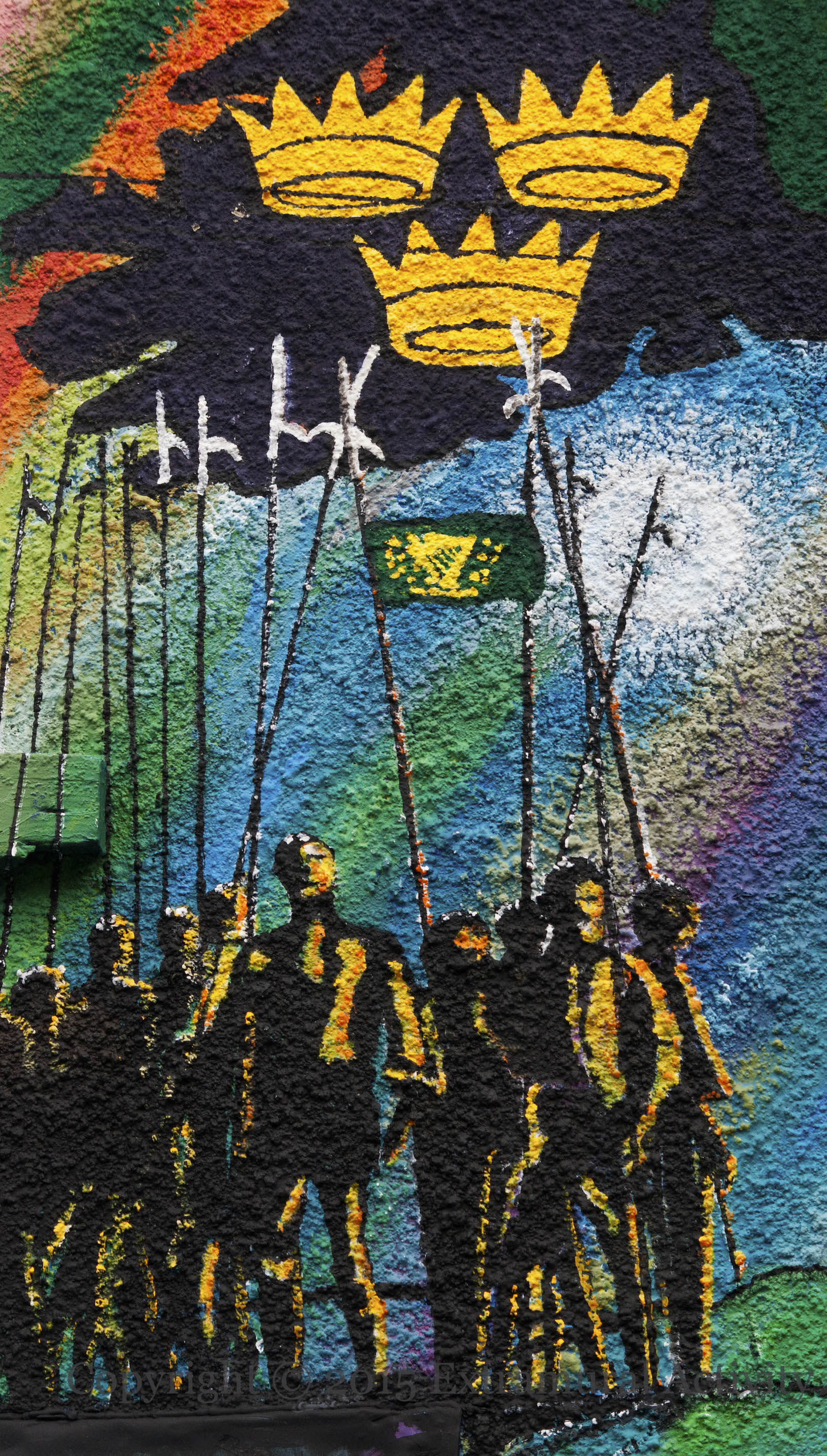
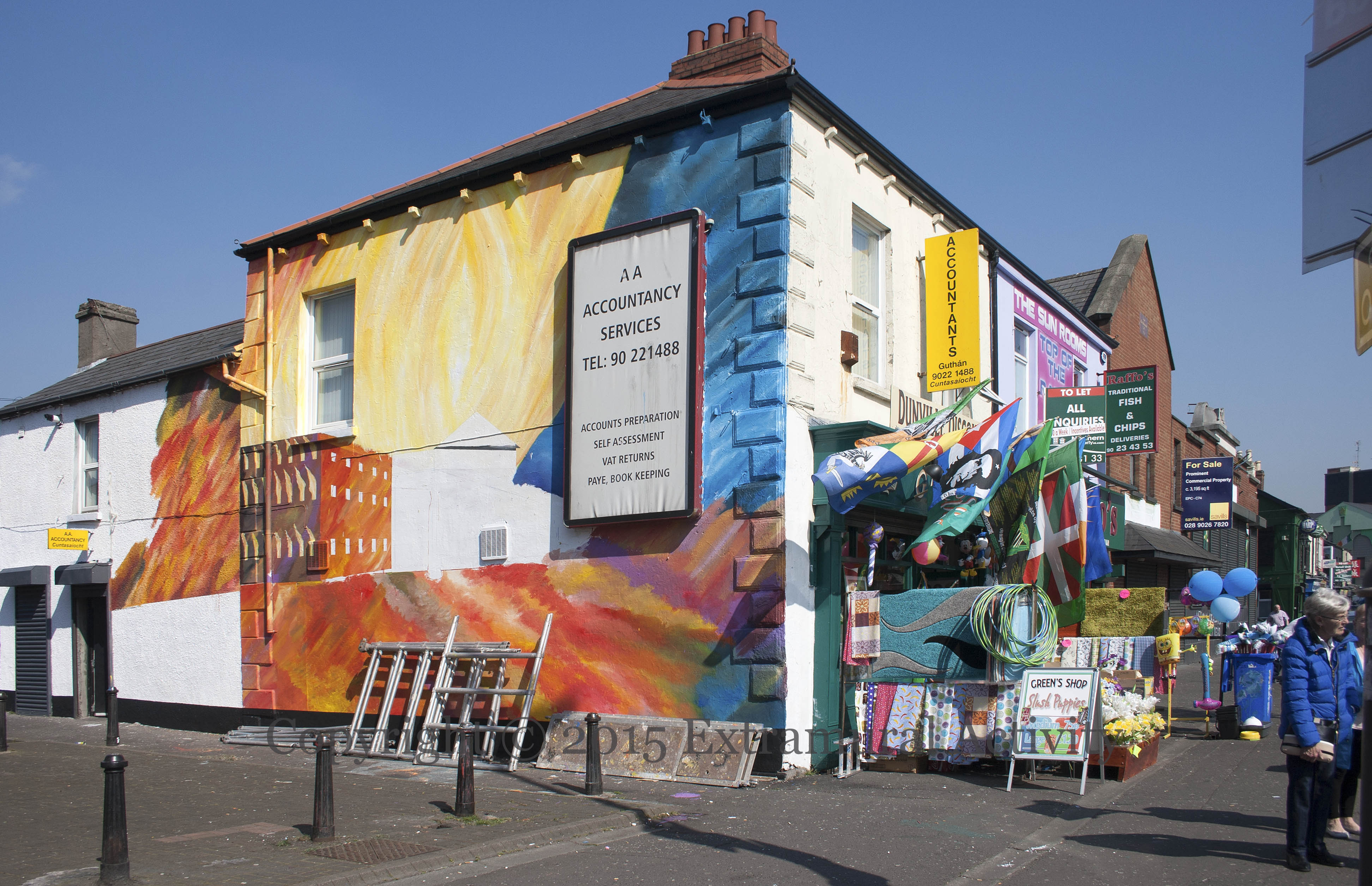
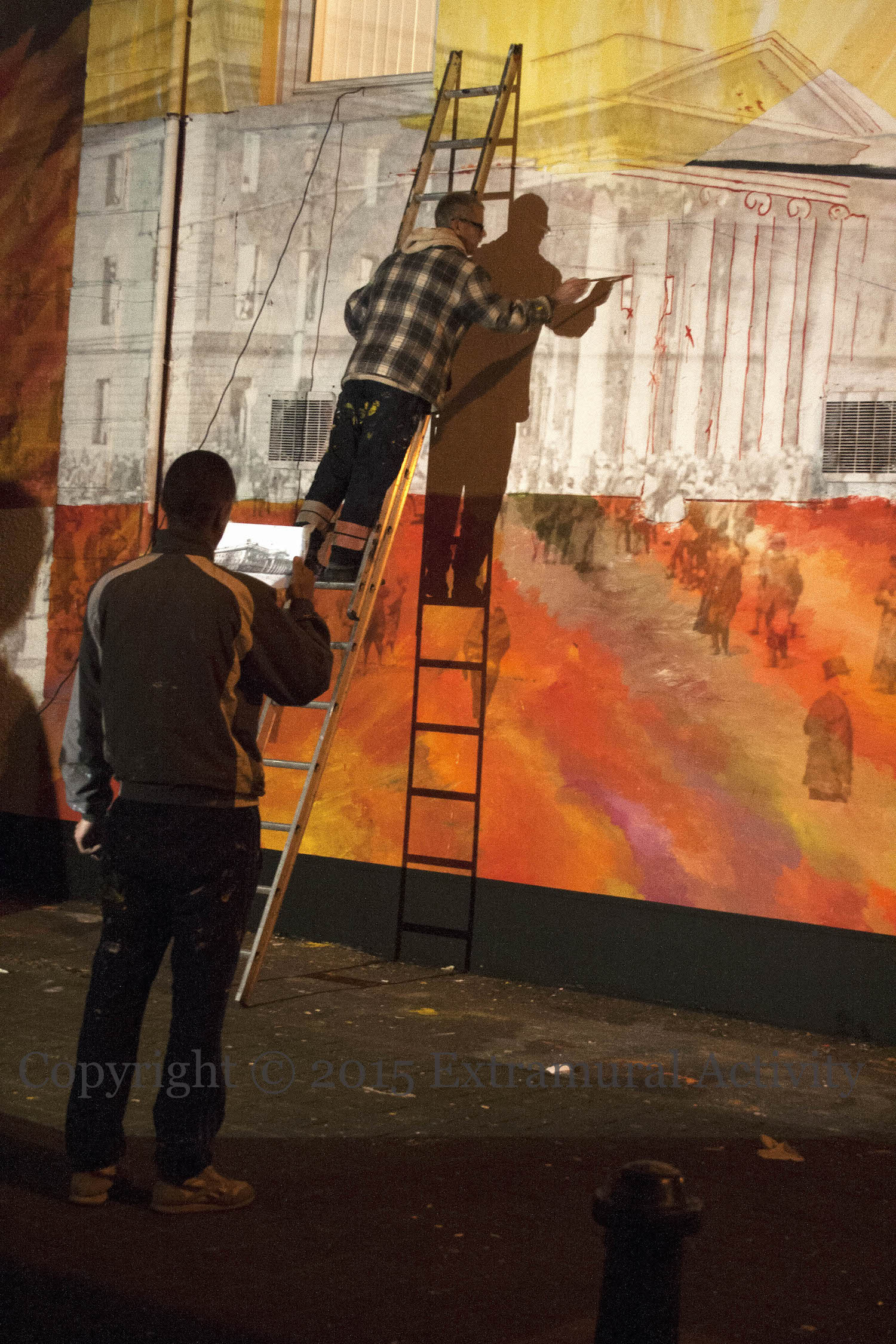
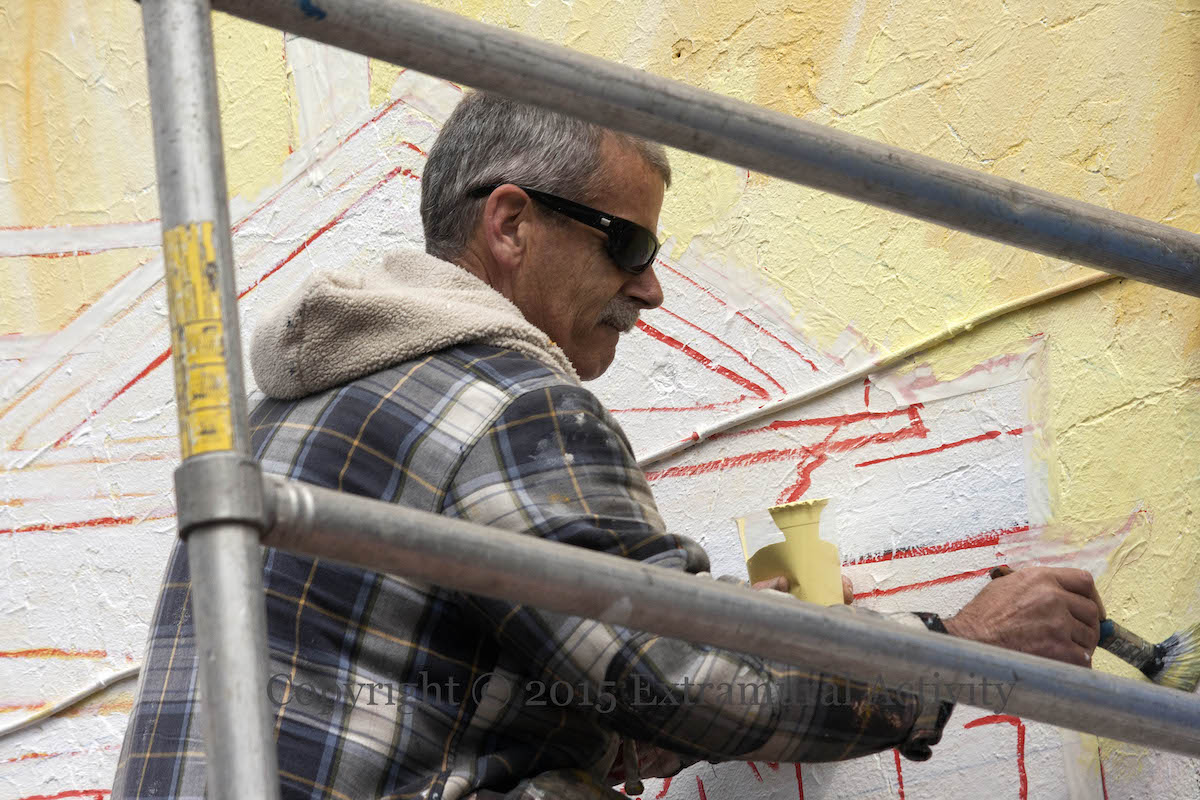
The pikemen of 1798 go into battle under the flag of the United Irishmen in a detail from a new mural on the Falls Road for the centenary of the 1916 Easter Rising. Below are work-in-progress images showing artists Gerard ‘Mo Chara’ Kelly and Bill Bradley.
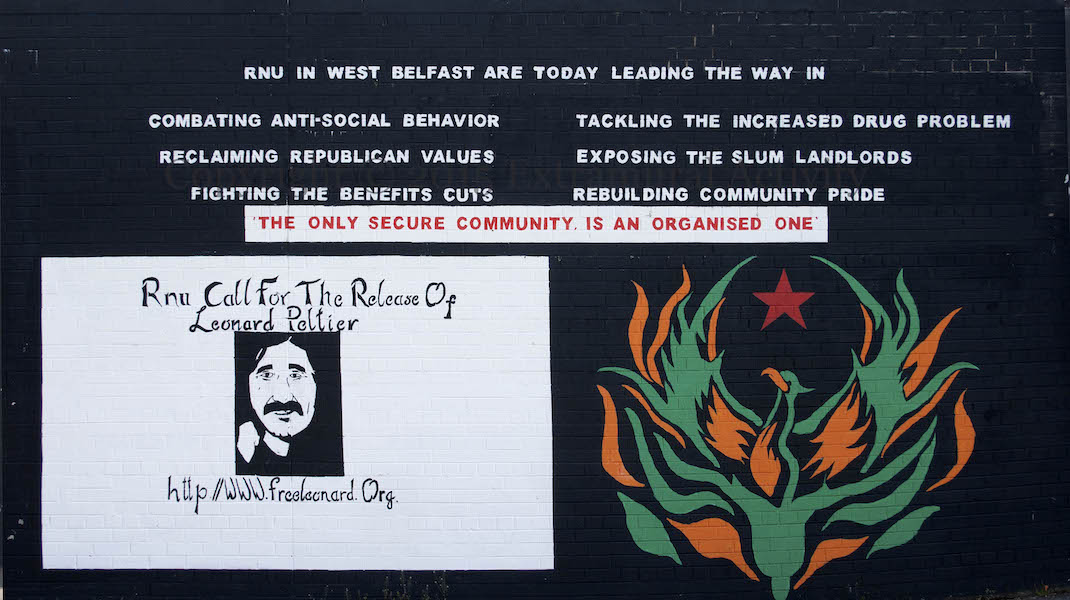
“RNU call for the release of Leonard Peltier – http://www.freeleonard.org“. The lower left-hand panel of the RNU spot on Northumberland Street is serving as a changeable notice-board – it was previously The Popular Front.
Peltier has been in jail since 1977, convicted of killing two FBI agents on the Pine Ridge Reservation in 1975 and sentenced to two life-sentences (WP).
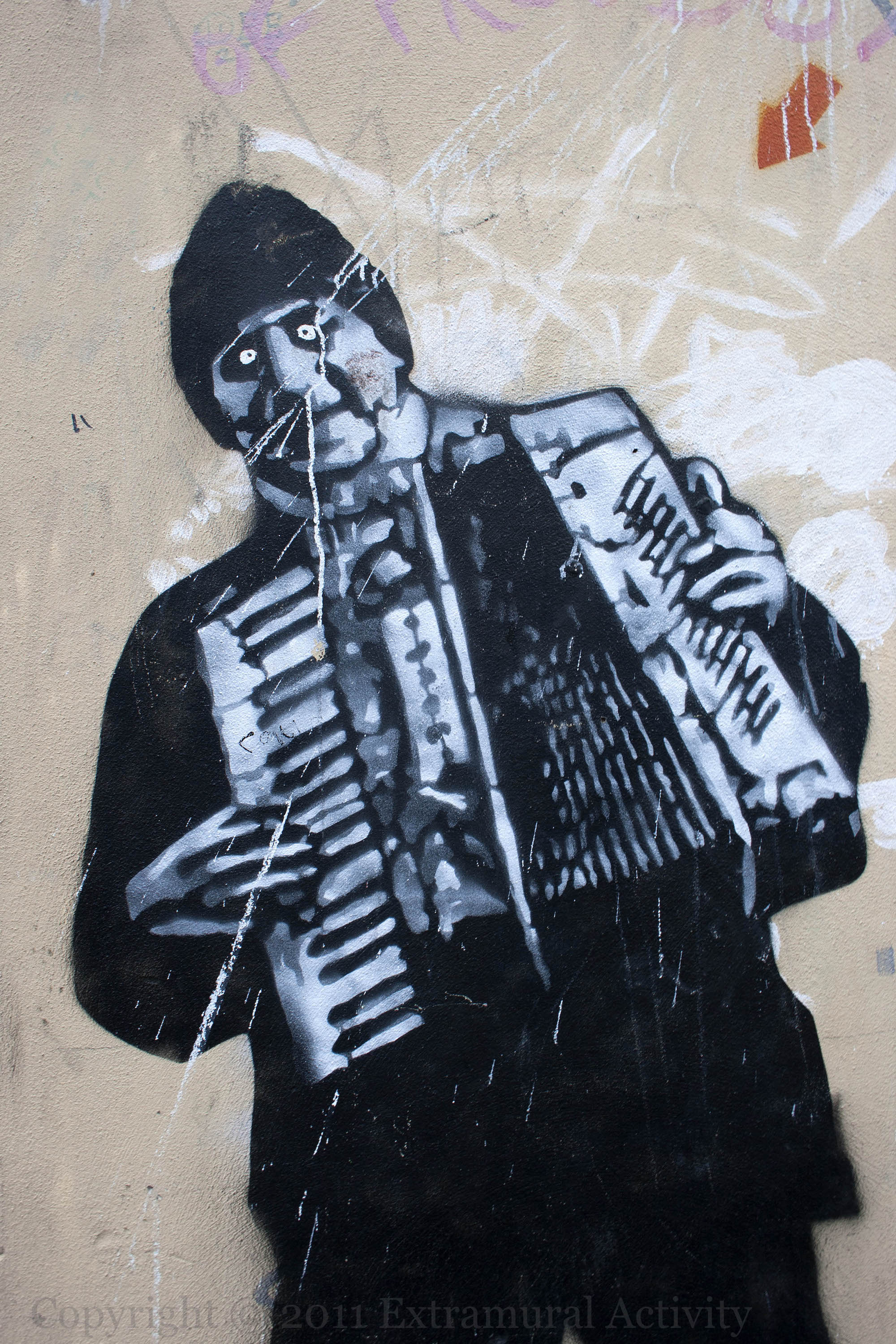
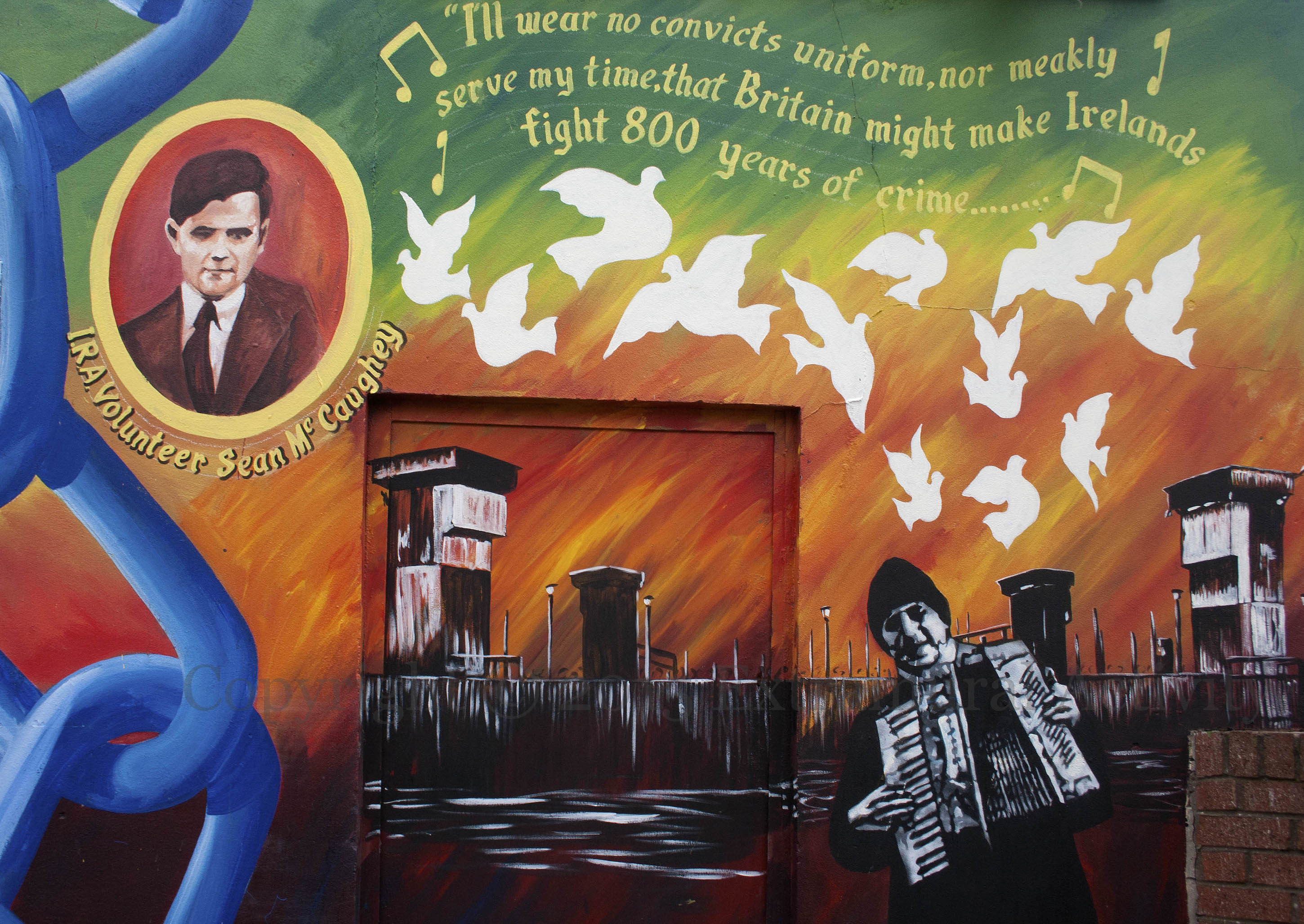
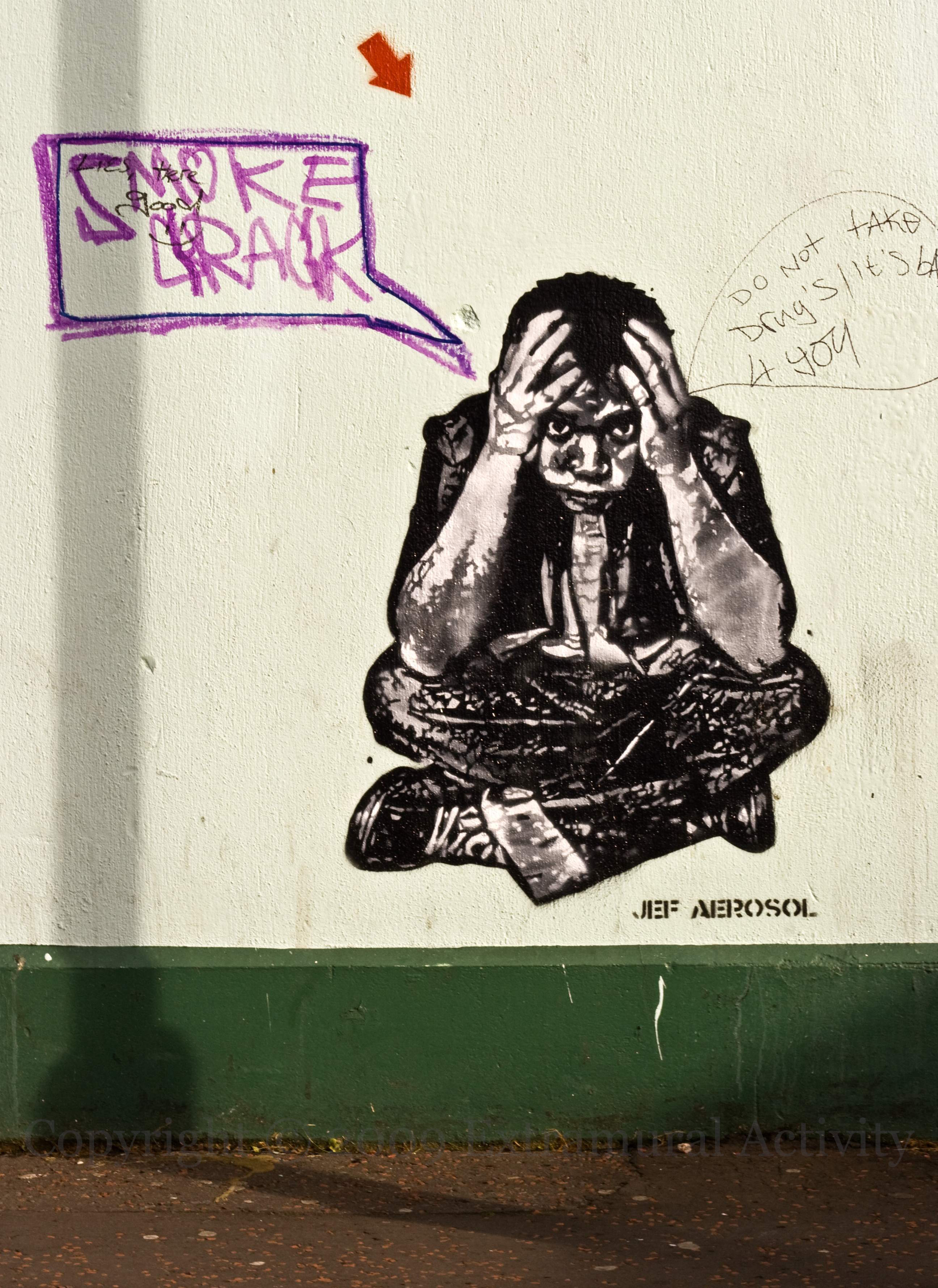
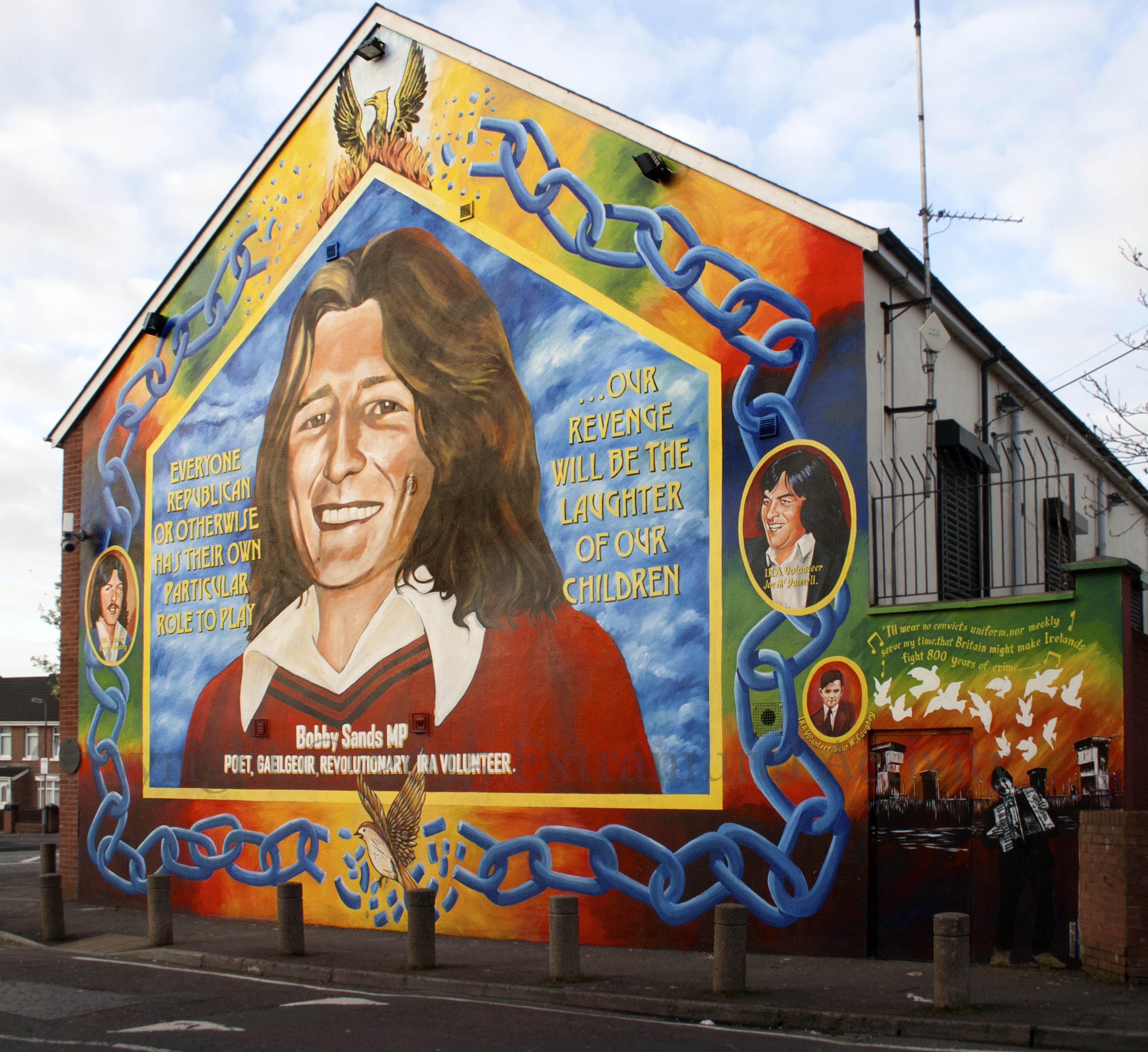
The Bobby Sands mural in Sevastopol Street has been given a facelift, including the blocking-up of a vent on Sands’s left cheek. Kieran Doherty and Joe McDonnell have been added in place of the 1798 medallions on each side. On the side-wall are Sean McCaughey, ten doves representing the 1981 hunger-strikers, and Long Kesh. Aerosol‘s accordion-player stencil has been also been retained.
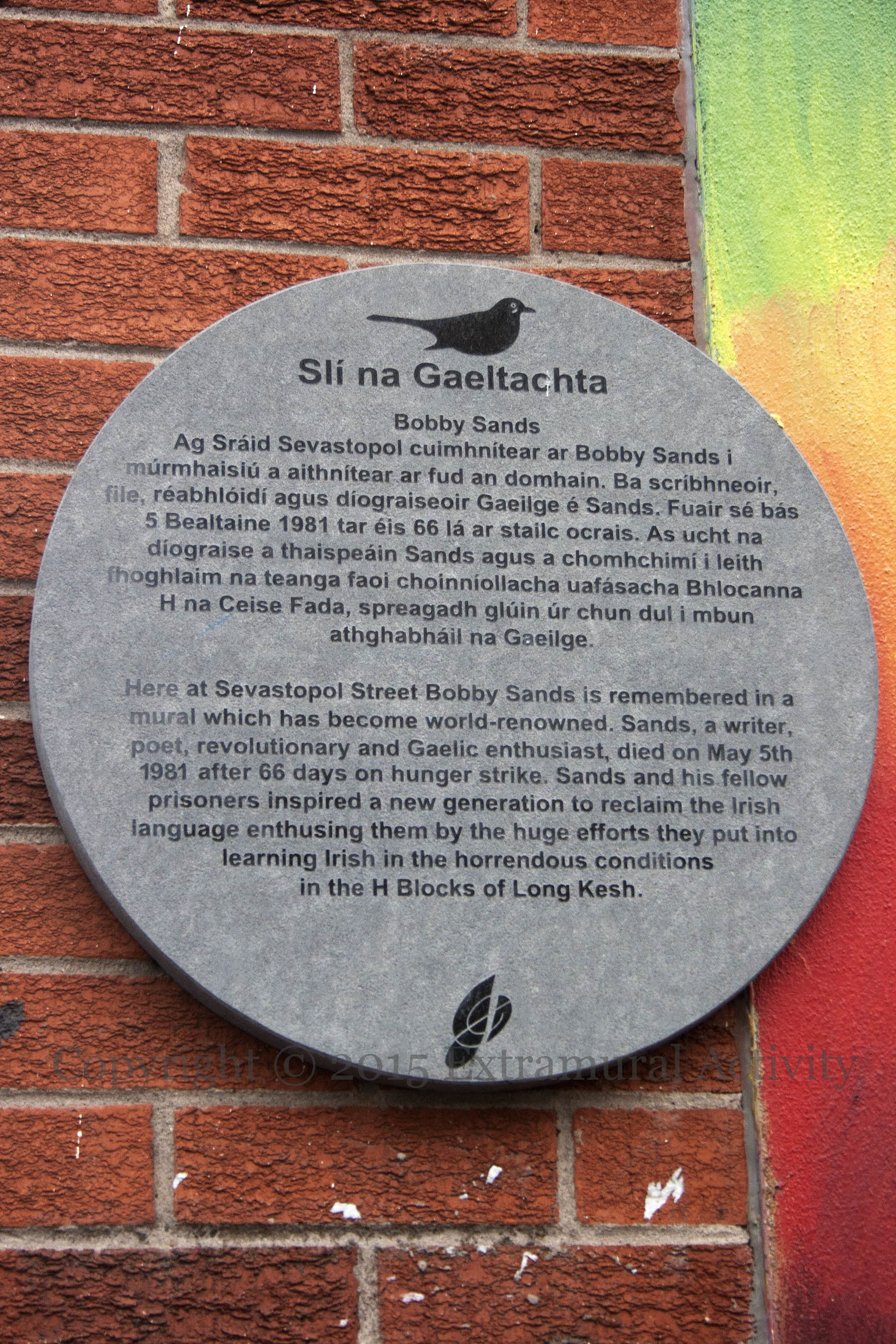
Ag sráıd Sevastopol cuımhnıtear ar Bobby Sands ı múrmhaısıú a aithnıtear ar fud an domhaın. Ba scrıbhneoır, file, réabhlóıdí agus díograıseoır Gaeılge é Sands. Fuaır sé bas 5 Bealtaıne 1981 tar éıs 66 lá ar stailc ocraıs. As ucht na dıograıse a thaıspeáın Sands agus a chomhchımí ı leıth fhoglaım na teanga faoı choınníollacha uafásacha Bhlocanna H na Ceıse Fada, spreagadh glúın úr chun dul ı mbun athghabháıl na Gaeılge.
Here at Sevastopol Street Bobby Sands is remembered in a mural which has become world-renowned. Sands, a writer, poet, revolutionary and Gaelic enthusiast, died on May 5th 1981 after 66 days on hunger strike. Sands and his fellow prisoners inspired a new generation to reclaim the Irish language enthusing them by the huge efforts they put into learning Irish in the horrendous conditions on the H Blocks of Long Kesh.
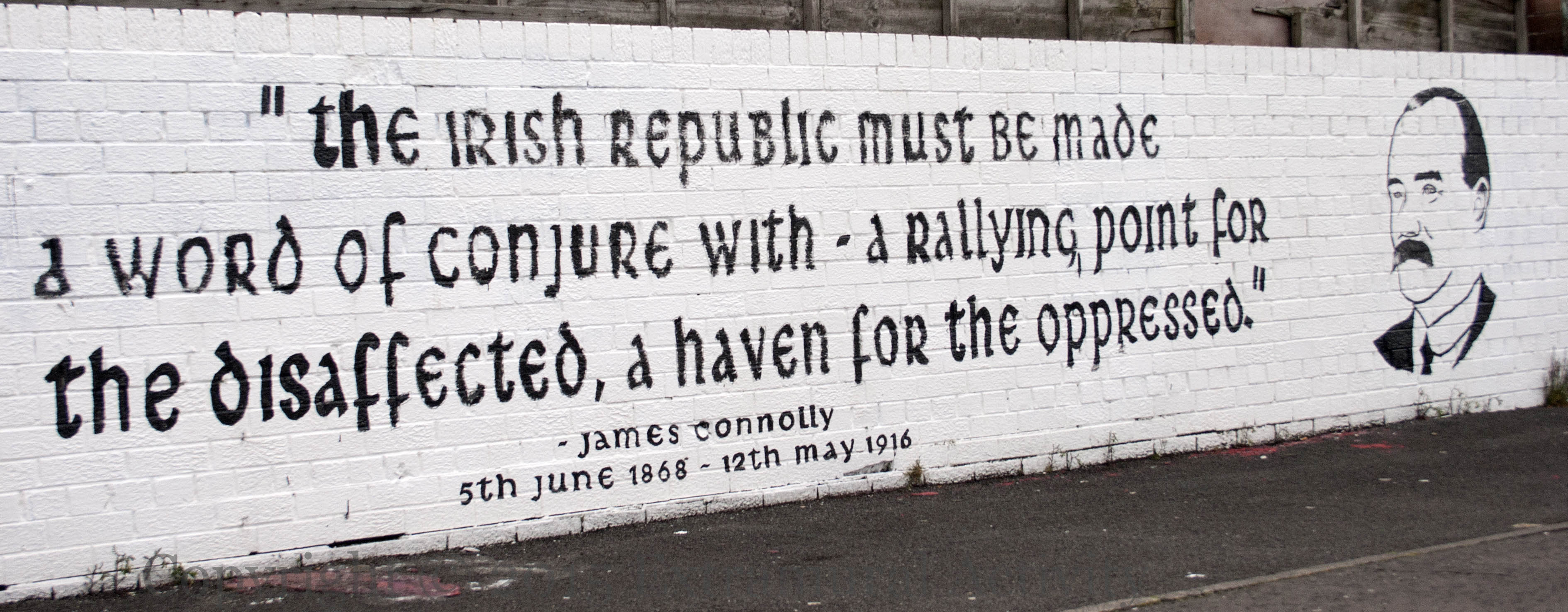
James Connolly was concerned not just with the political independence of Ireland but its economic independence: both political and economic liberty were required in order for the human being to live freely. The quote in the image above comes from Connolly’s 1897 essay “Socialism & Nationalism”. The economic context is clear when we read a little more broadly:
“To the tenant farmer, ground between landlordism on the one hand and American competition on the other, as between the upper and the nether millstone; to the wage-workers in the towns, suffering from the exactions of the slave-driving capitalist to the agricultural labourer, toiling away his life for a wage barely sufficient to keep body and soul together; in fact to every one of the toiling millions upon whose misery the outwardly-splendid fabric of our modern civilisation is reared, the Irish Republic might be made a word to conjure with – a rallying point for the disaffected, a haven for the oppressed, a point of departure for the Socialist, enthusiastic in the cause of human freedom.” (marxists.org)
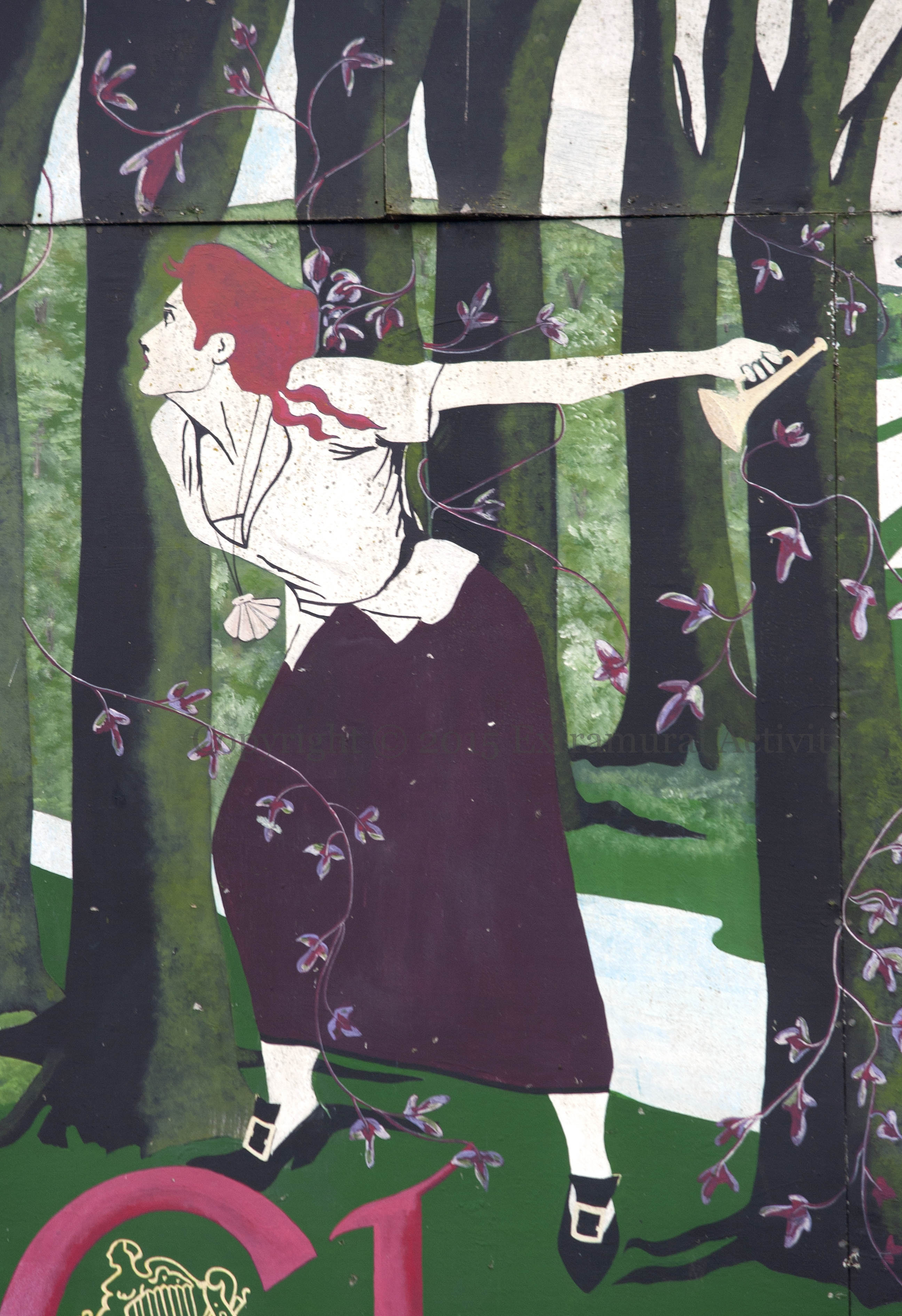
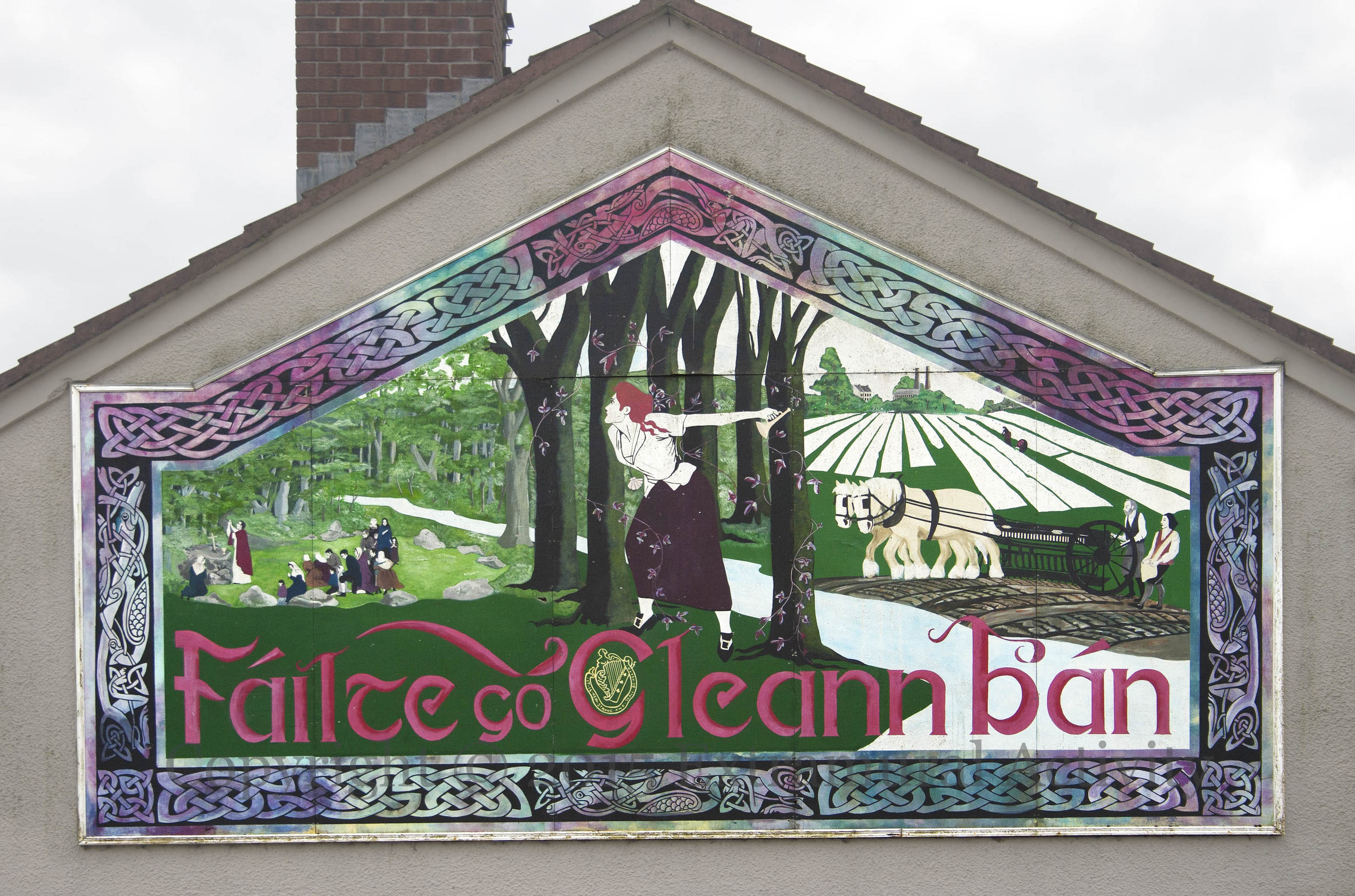
“Were you at the rock?” A red-headed lass (from an illustration in the Weekly Freeman of December 19th, 1891, commemorating 1798) with a horn stands watch for others at a mass rock – a stone in a remote location for Catholic worship, made necessary by a Penal law of 1695 which forbade the religious practice of Catholicism and “dissenter” forms of Protestantism (that is, anything other than Anglicism) (source). The harp, with a “cap of liberty” rather than a crown (WP), together the slogan “Equality – It is new strung and it shall be heard” is the emblem of the Society of United Irishmen (WP). On the other side of the mural (seen below) linen lies in the fields bleaching and a farmer and wife plough the land with a team of horses and distribute seed.
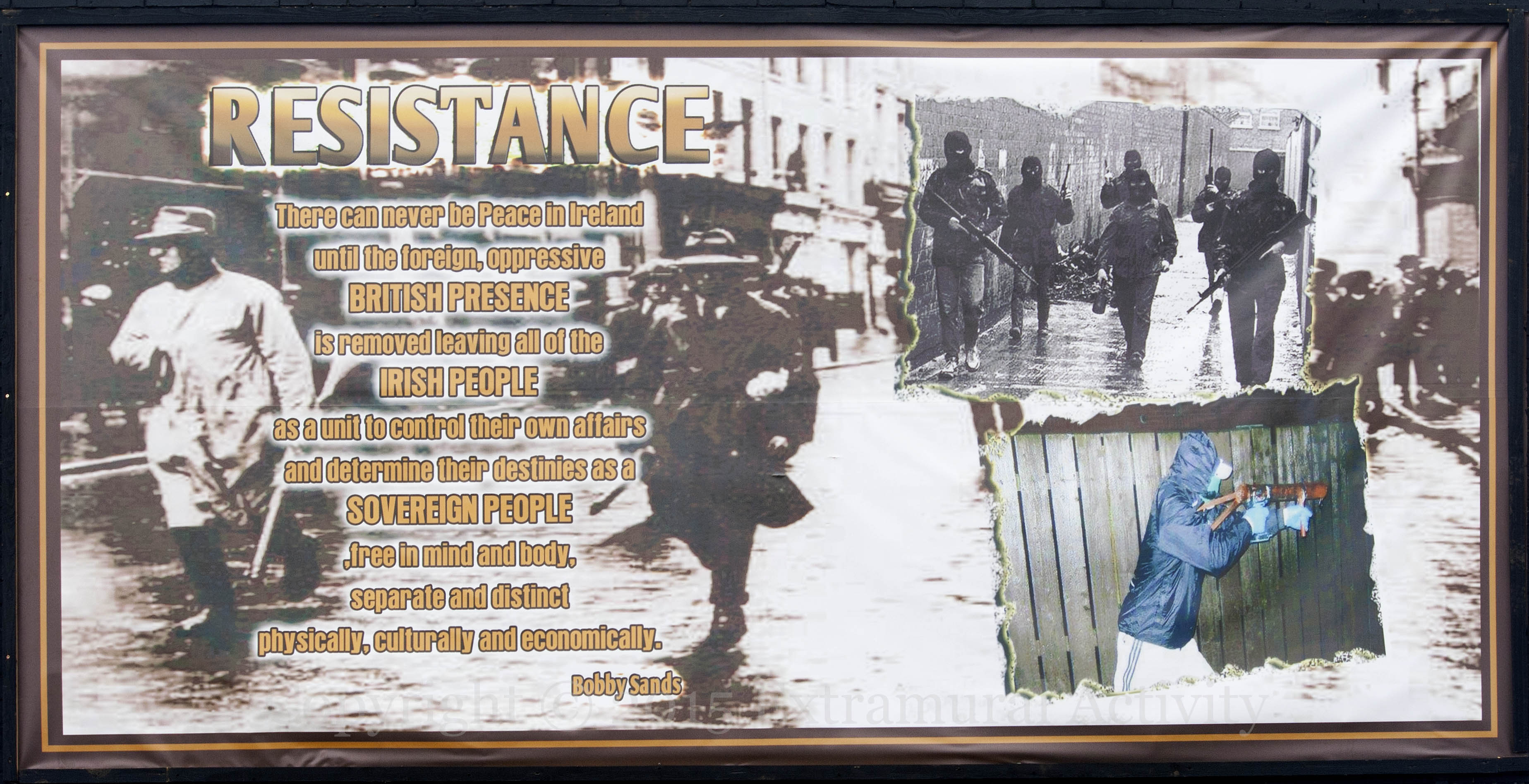
This is a new (2015-04-04) tarp on Ardoyne Avenue showing a scene from Grafton Street in the Battle Of Dublin in the civil war (1922) (irishhistory.blogspot.com), with in-sets featuring PIRA volunteers on patrol in 1987 (BelTel), and a home-made rocket-launcher used in a 2014 attack on police (see, e.g. irishmirror.ie).
“There can never be peace in Ireland until the foreign, oppressive British presence is removed leaving all of the Irish people as a unit to control their own affairs and determine their destinies as a sovereign people, free in mind and body, separate and distinct physically, culturally and economically.” Bobby Sands (Prison Diary May 1st)
 Seosamh Mac Coille Collection