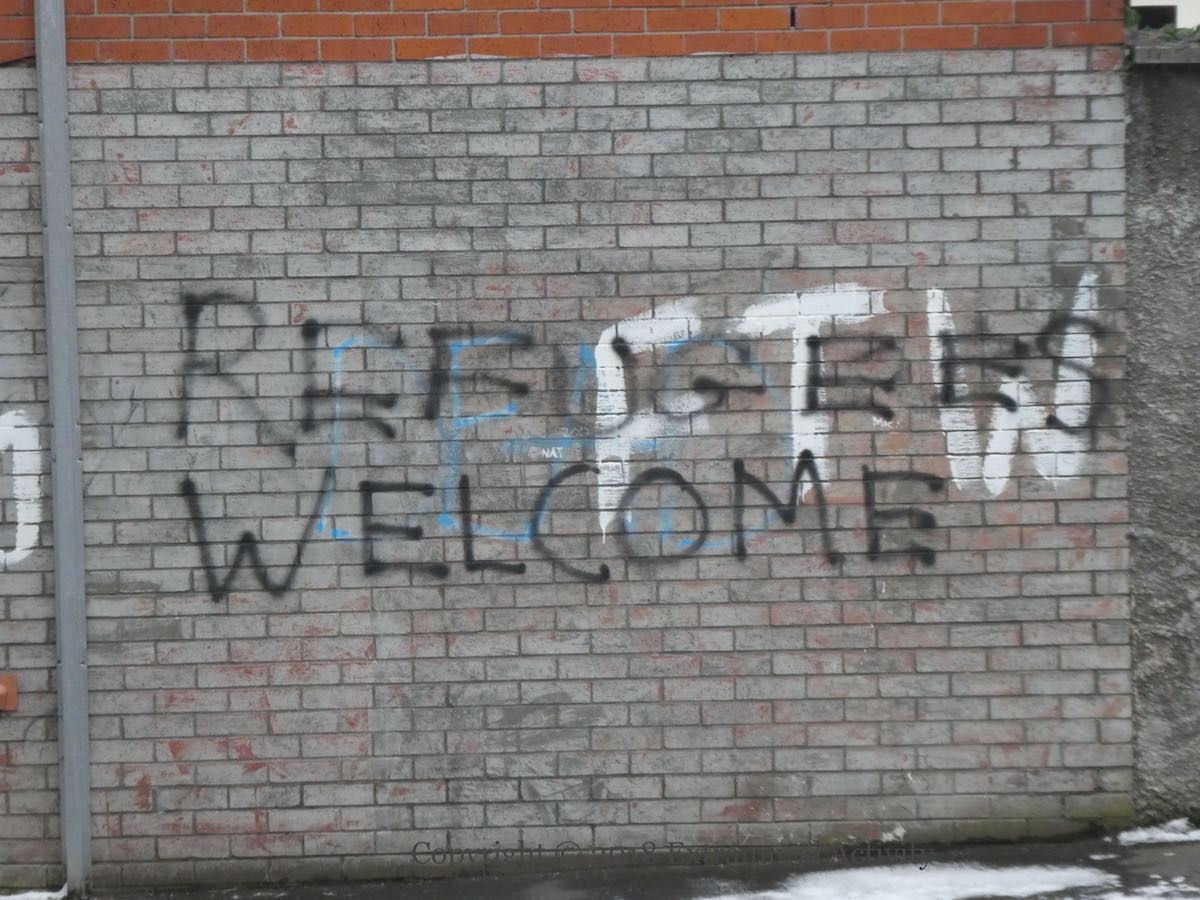
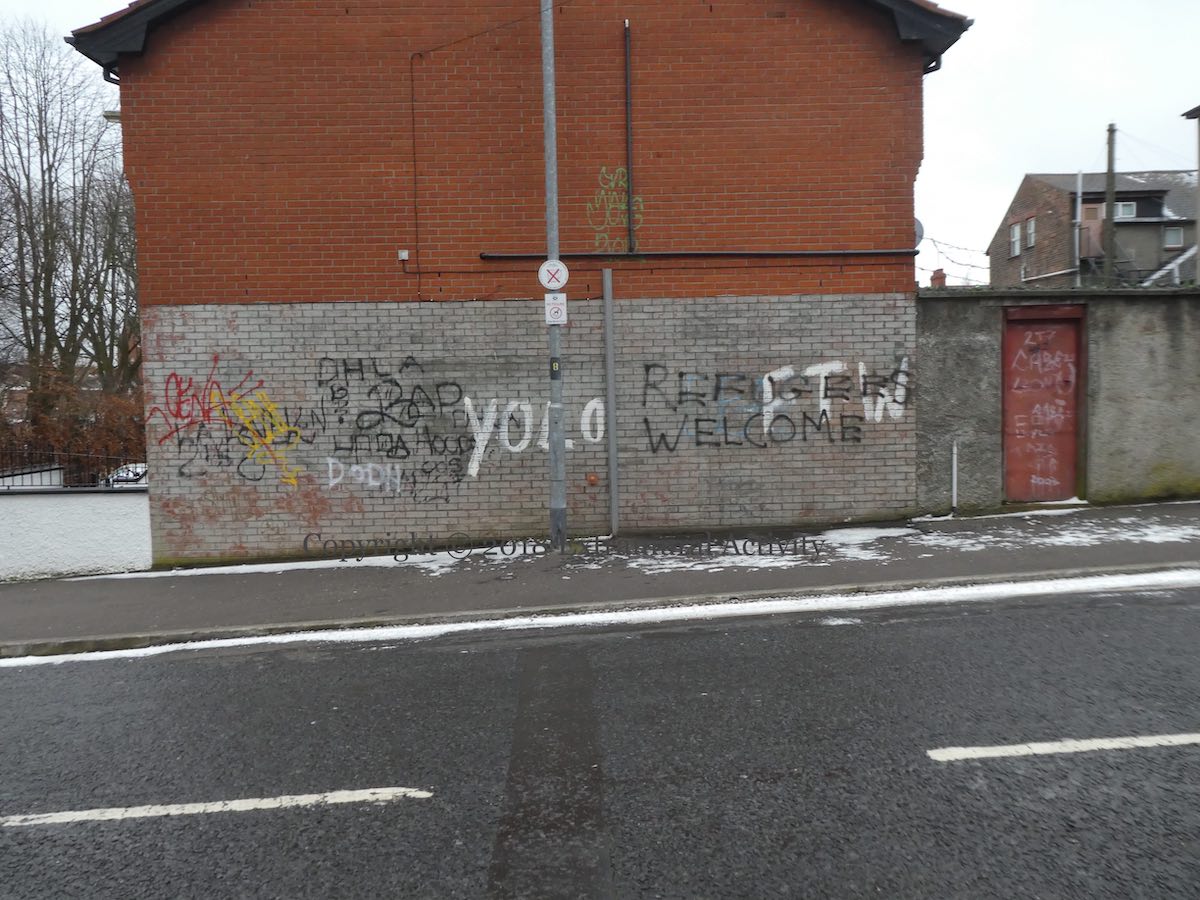
This graffiti is at the park end of Cliftonville Avenue.
An earlier piece of graffiti, “DHLA”, has stood for “Divis Hoods Liberation Army” but we’re a long way from Divis.
Click image to enlarge
Copyright © 2018 Seosamh Mac Coılle
X05997 X05996
This graffiti is at the park end of Cliftonville Avenue.
An earlier piece of graffiti, “DHLA”, has stood for “Divis Hoods Liberation Army” but we’re a long way from Divis.
Click image to enlarge
Copyright © 2018 Seosamh Mac Coılle
X05997 X05996
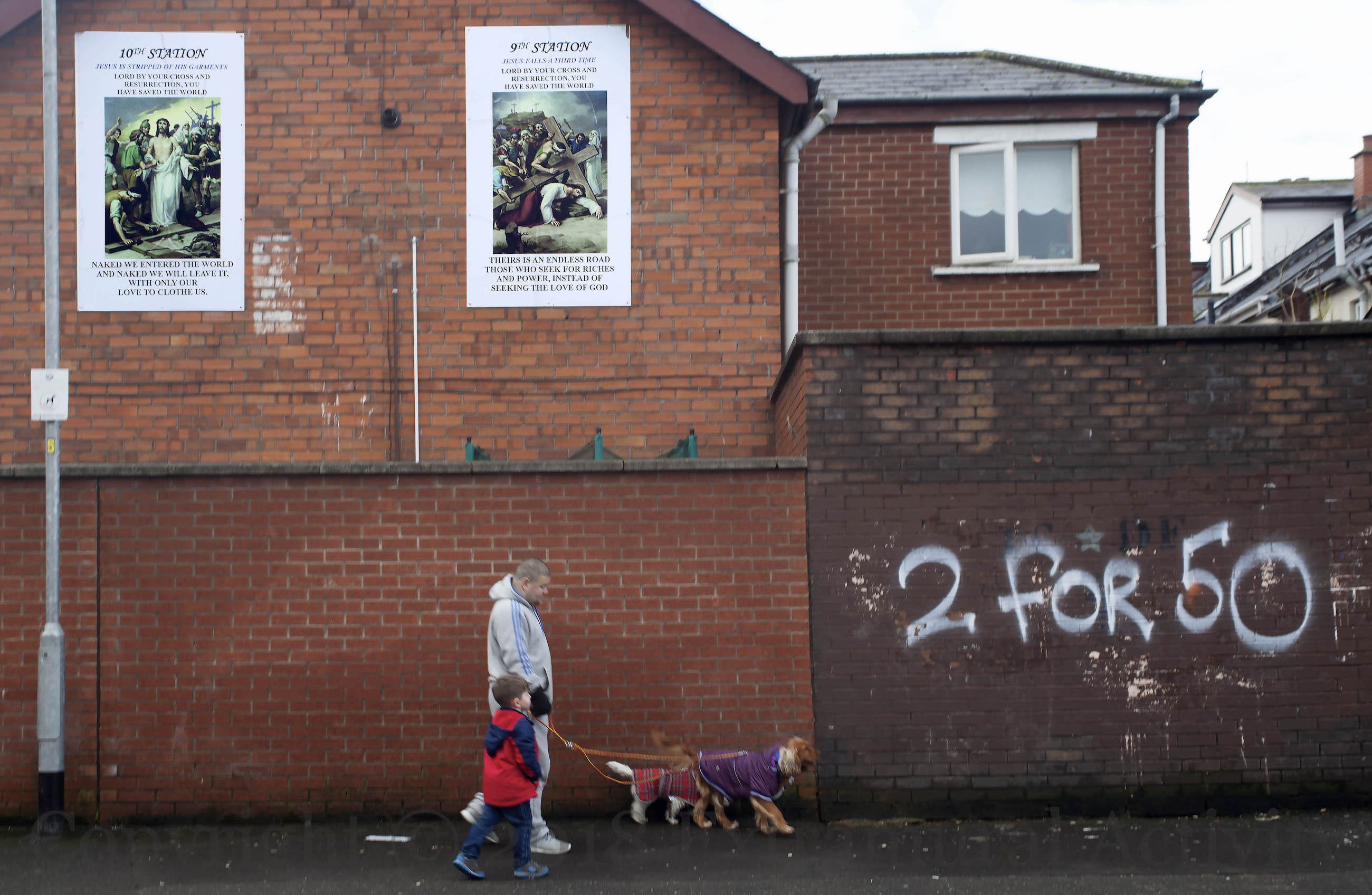
In addition to half a dozen murals, including one of Medjugorje (original | repaint), Berwick Road/Paráıd An Ardghleanna in Ardoyne contains a set of ‘Stations Of The Cross’, the 14 steps recounting Jesus Of Nazareth’s last day. Other stations can be seen in U’ll Do Nottin | Changing The Stations.
Click image to enlarge
Copyright © 2018 Seosamh Mac Coılle
X04798
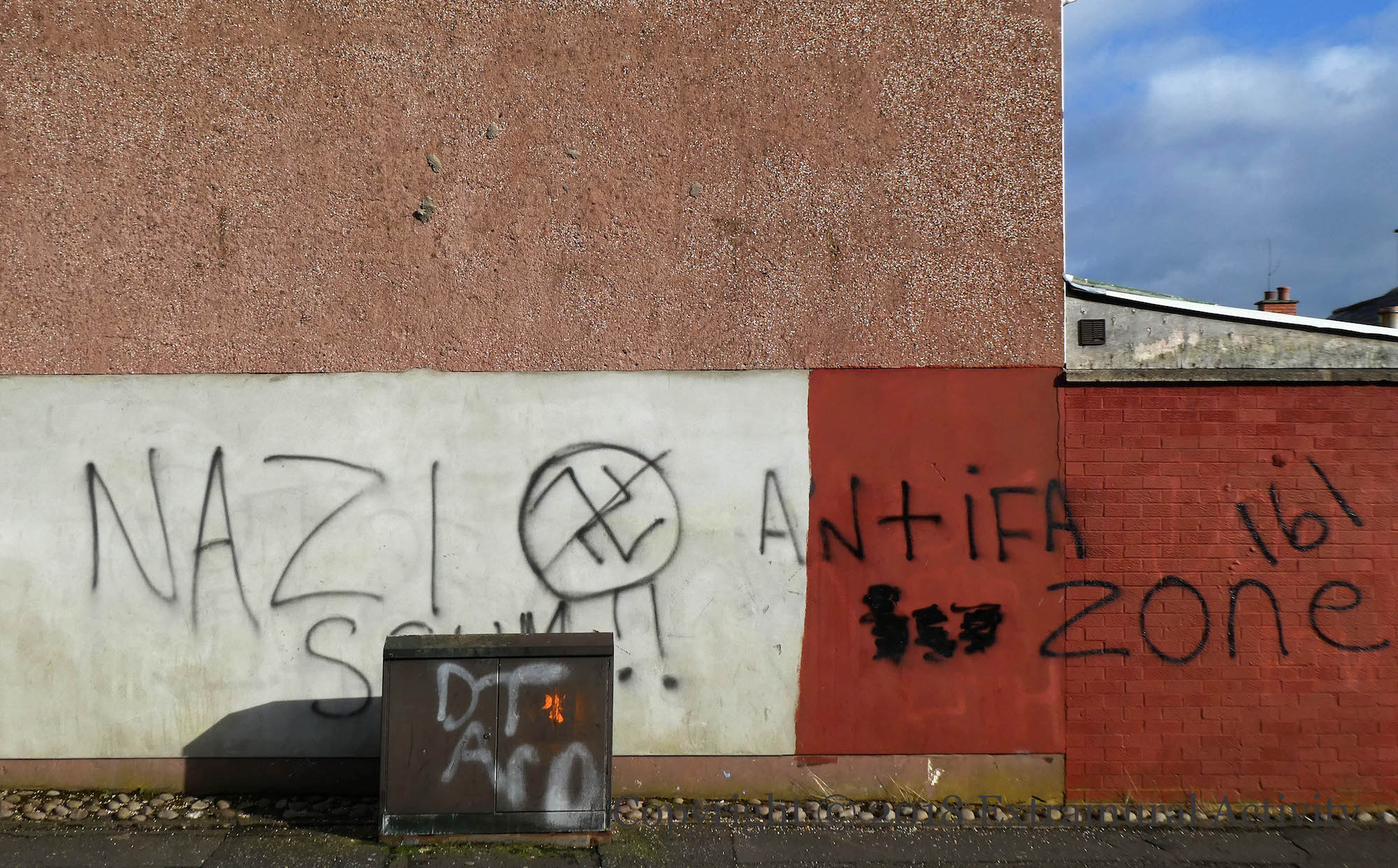
“Nazi scum” and “Antifa zone 161” on Berwick Avenue in Ardoyne, provoked by a proposed Britain First rally in December, 2017 (Belfast Live). The Britain First leaders who were arrested for speeches at an August rally are due to go on trial in April (BelTel). Deputy leader Jayda Fransen was also arrested in December for comments made in a video shot at the Cupar Way “peace” line (Telegraph).
Click image to enlarge
Copyright © 2018 Seosamh Mac Coılle
X04794
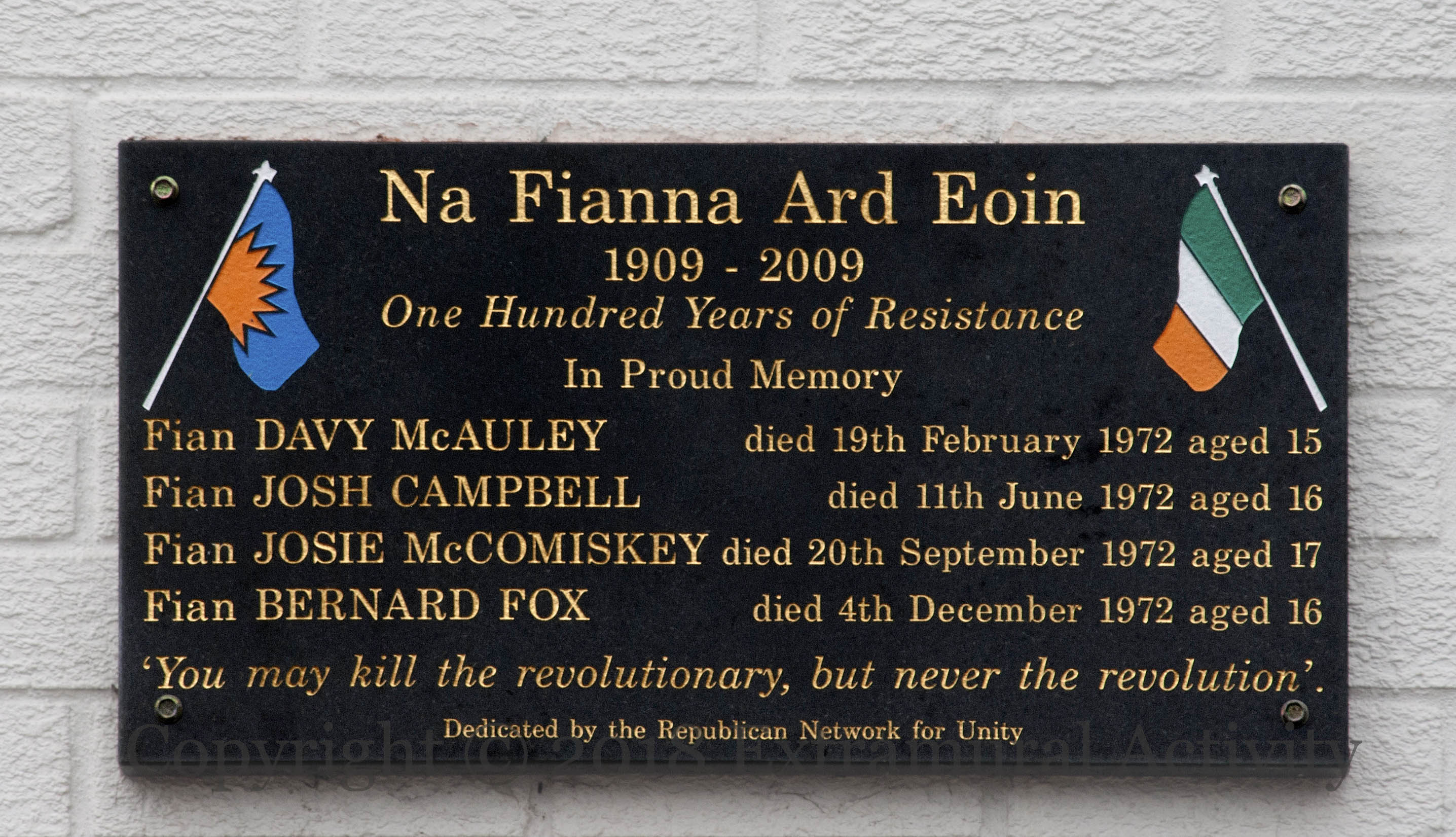
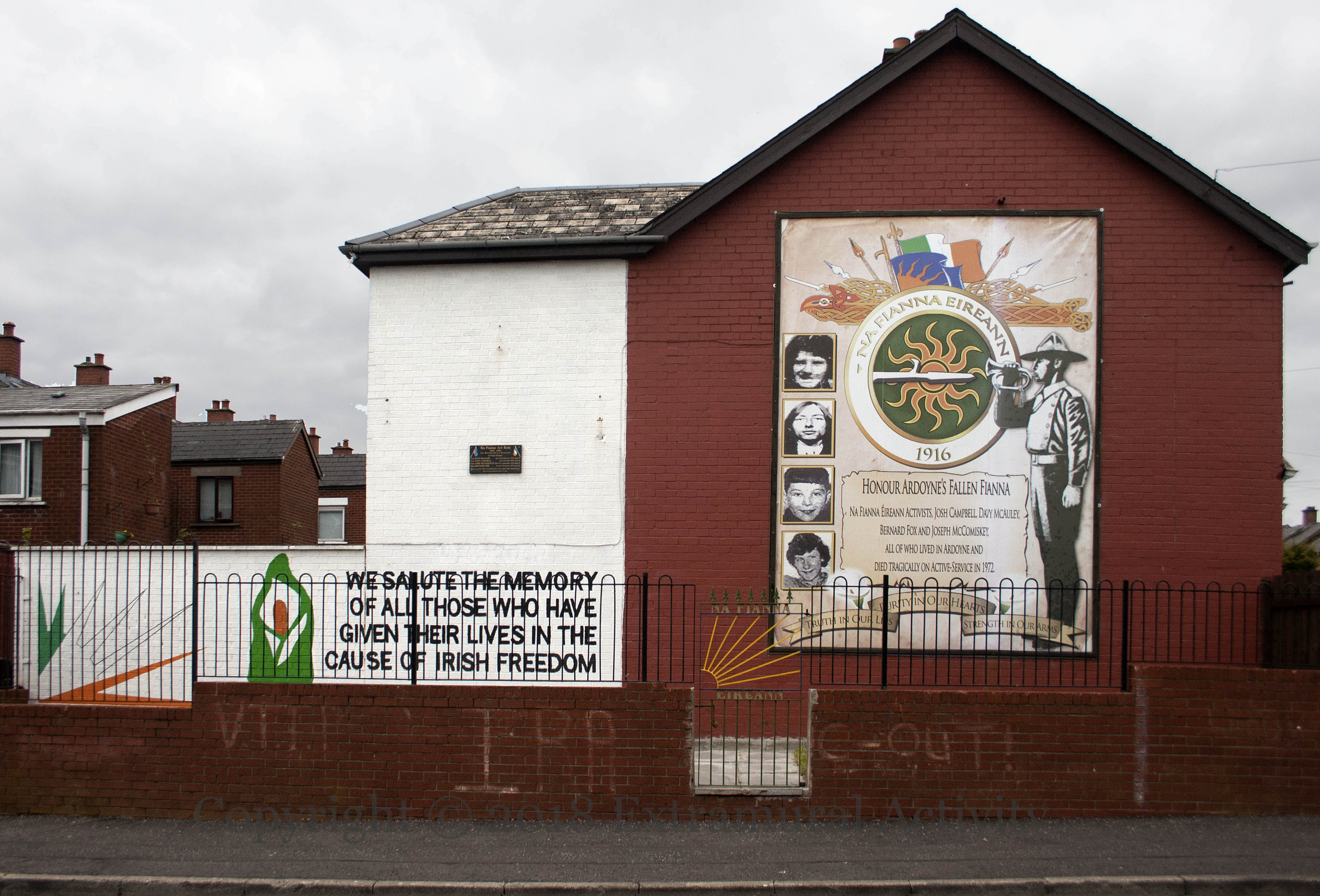
Above is the plaque on Berwick Road/Paráıd An Ardghleanna to four teenaged members of Na Fıanna Éıreann who died in 1972 – Davy McAuley, Josh [Joseph] Campbell, Josie McComiskey and Bernard Fox – all four from Ardoyne/Ard Eoın. McAuley died of a gunshot wound, perhaps at a Louth training camp (Nelson McCausland). Campbell was shot in Eksdale Street in a gun battle with the British Army; McComiskey was shot in Flax Street in a gun battle with the British Army; Fox was shot by British Army in Brompton Street. For the tarp, see Purity In Our Hearts; for the 2016 lily, see In The Cause Of Irish Freedom.
Click image to enlarge
Copyright © 2018 Seosamh Mac Coılle
X04791 X04790
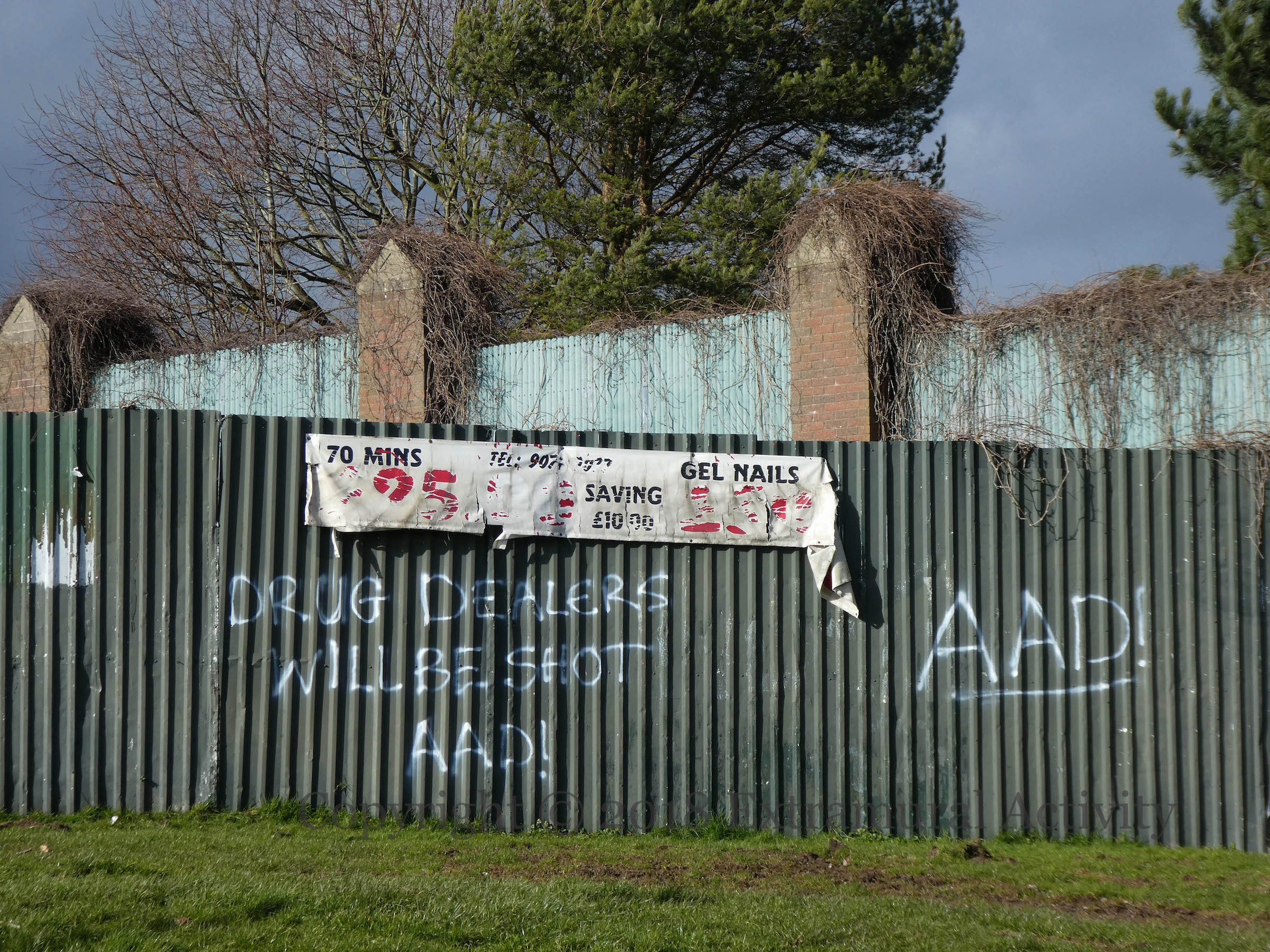
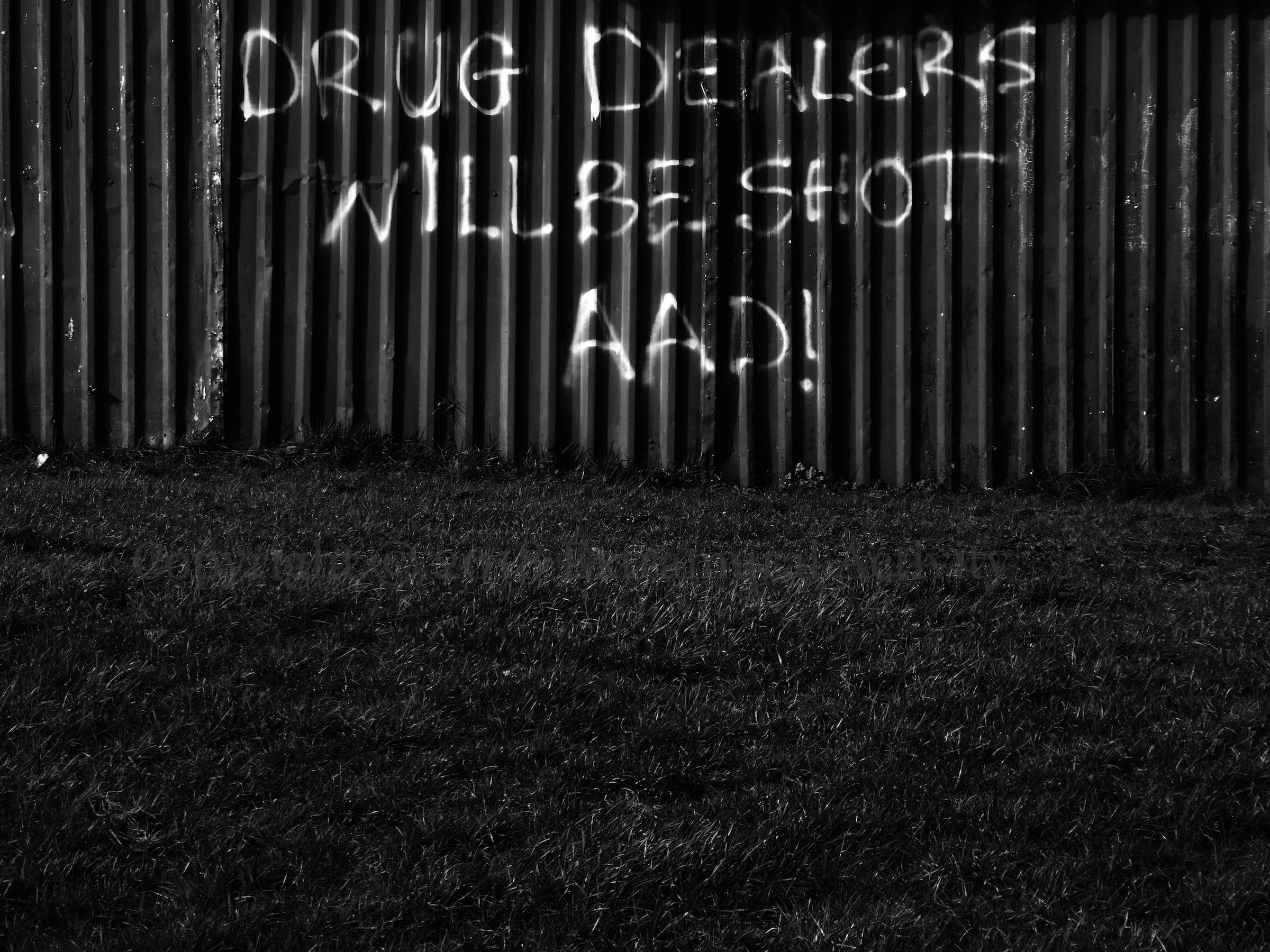
Action Against Drugs (AAD) is a republican paramilitary organisation (the “son of DAAD”, says The Guardian) that killed two people in 2017 that it accused of dealing drugs and ordered three others to leave Ireland (Irish News | Republican News). Allegations of corruption have been made against similar organisations (Belfast Media).
Nearby: A war of words over drug dealing: U’ll Do Nottin!
Click image to enlarge
Copyright © 2018 Seosamh Mac Coılle
X04787 X04789 Alliance Ave
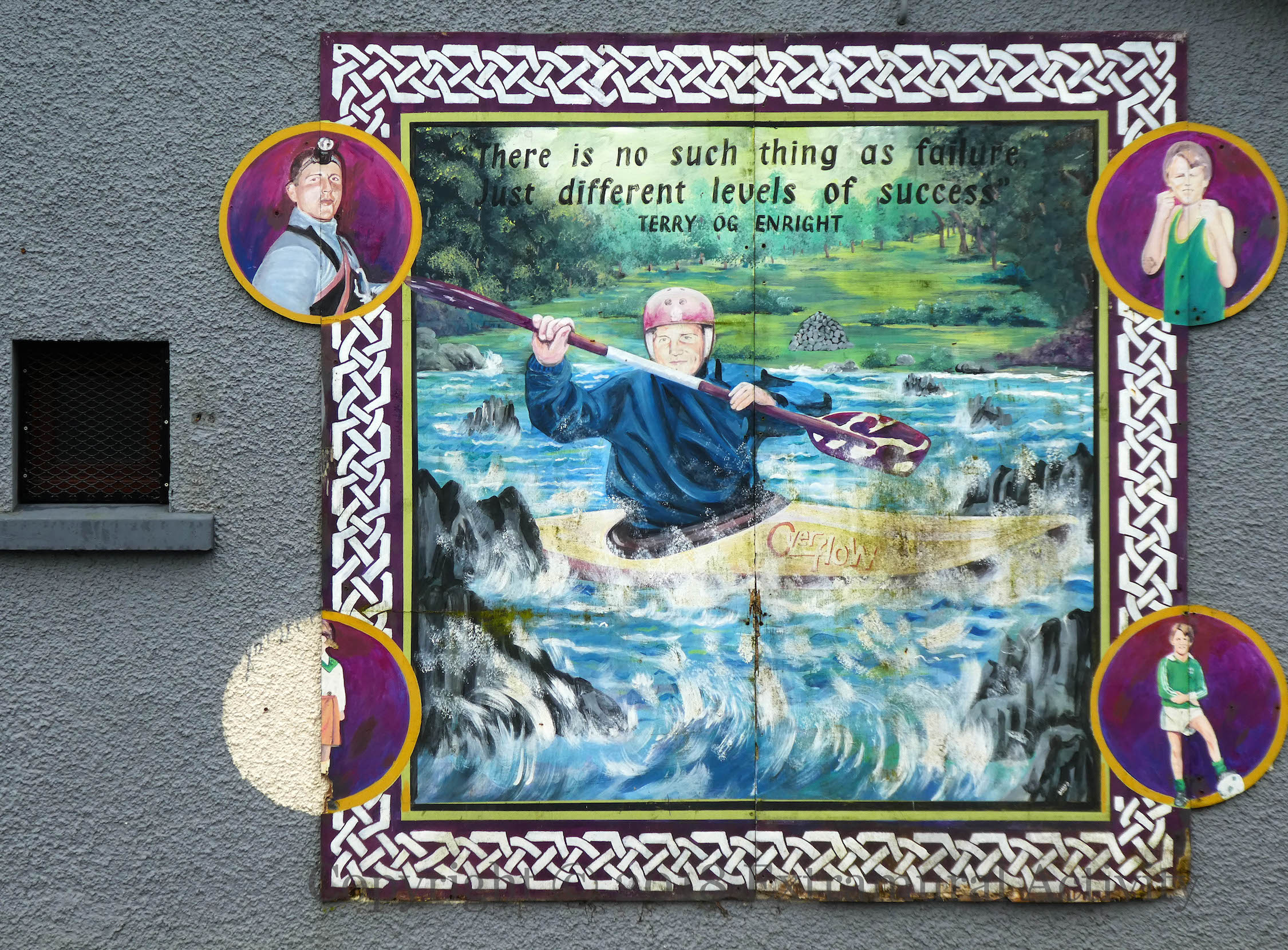
“There is no such thing as failure, just different levels of success – Terry Óg Enright.” The Terry Enright Foundation was set up in April 2002 in tribute to the cross-community and youth worker who was killed in a sectarian attack in 1998 (see Páırc Mhıc Ionnrachtaıgh). Its emblem is a kayaker, as the Foundation includes the opportunity for Level I and II certificates in kayaking in its Youth Leadership programme.
Click image to enlarge
Copyright © 2018 Seosamh Mac Coılle
X04807
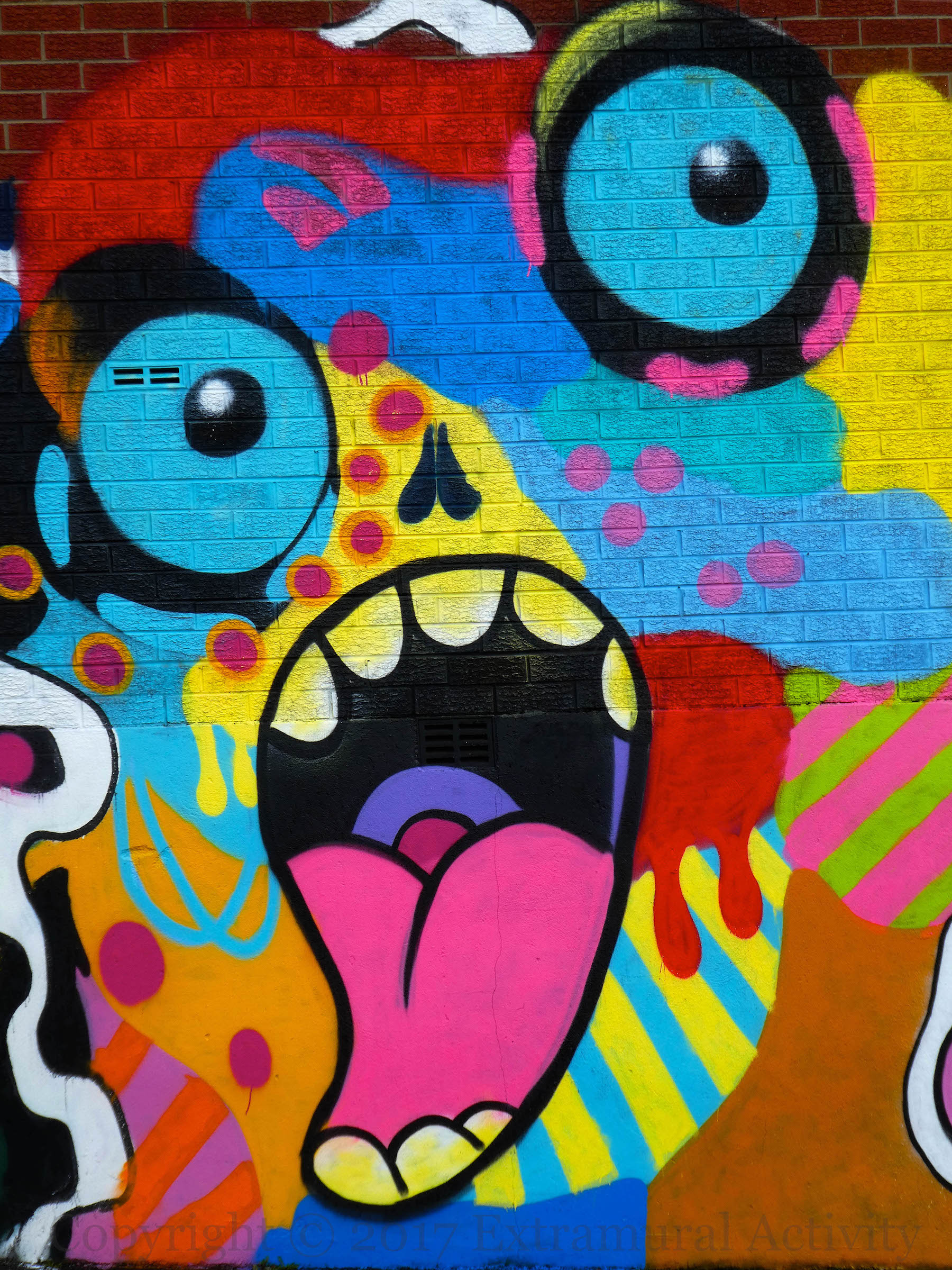
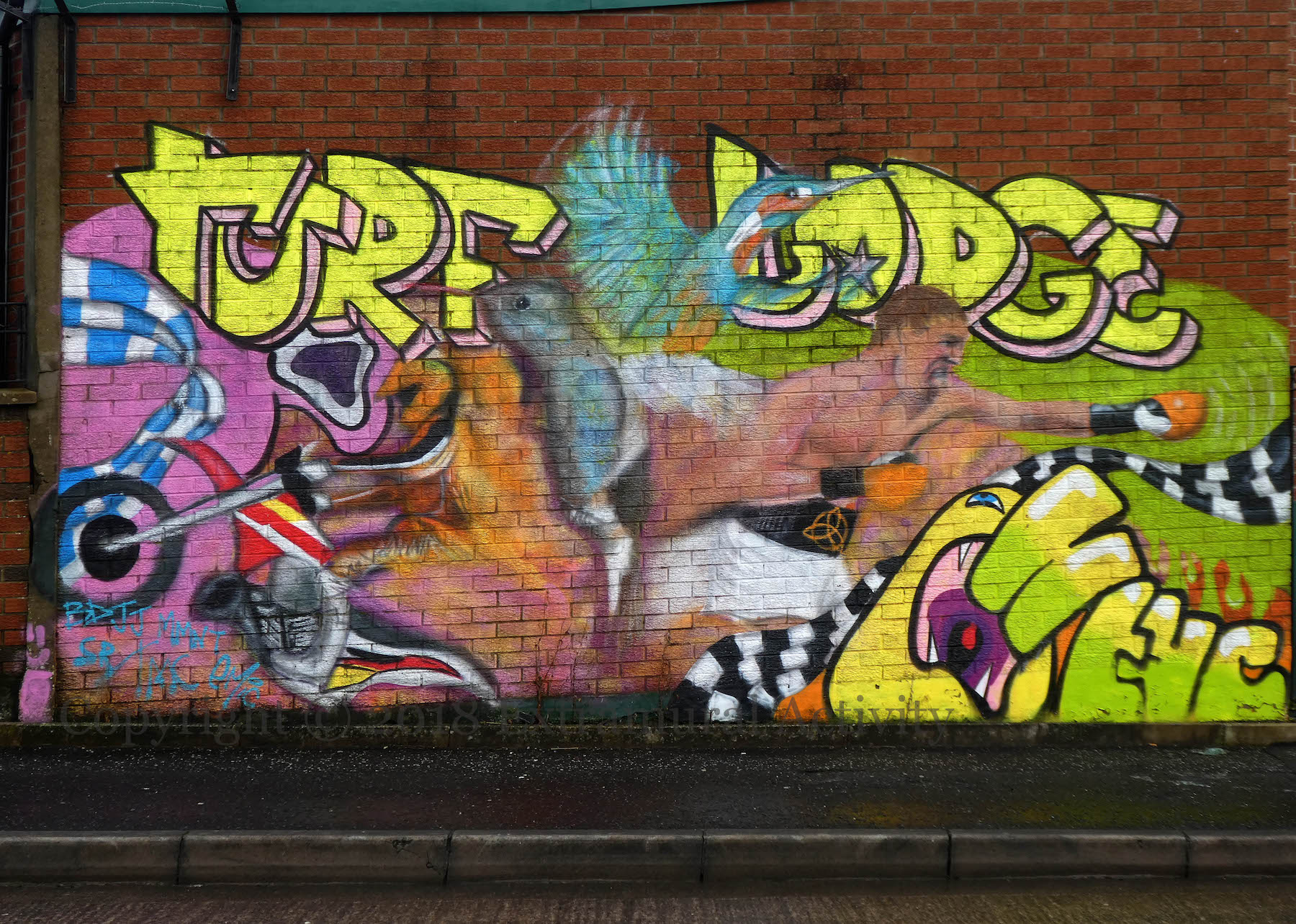
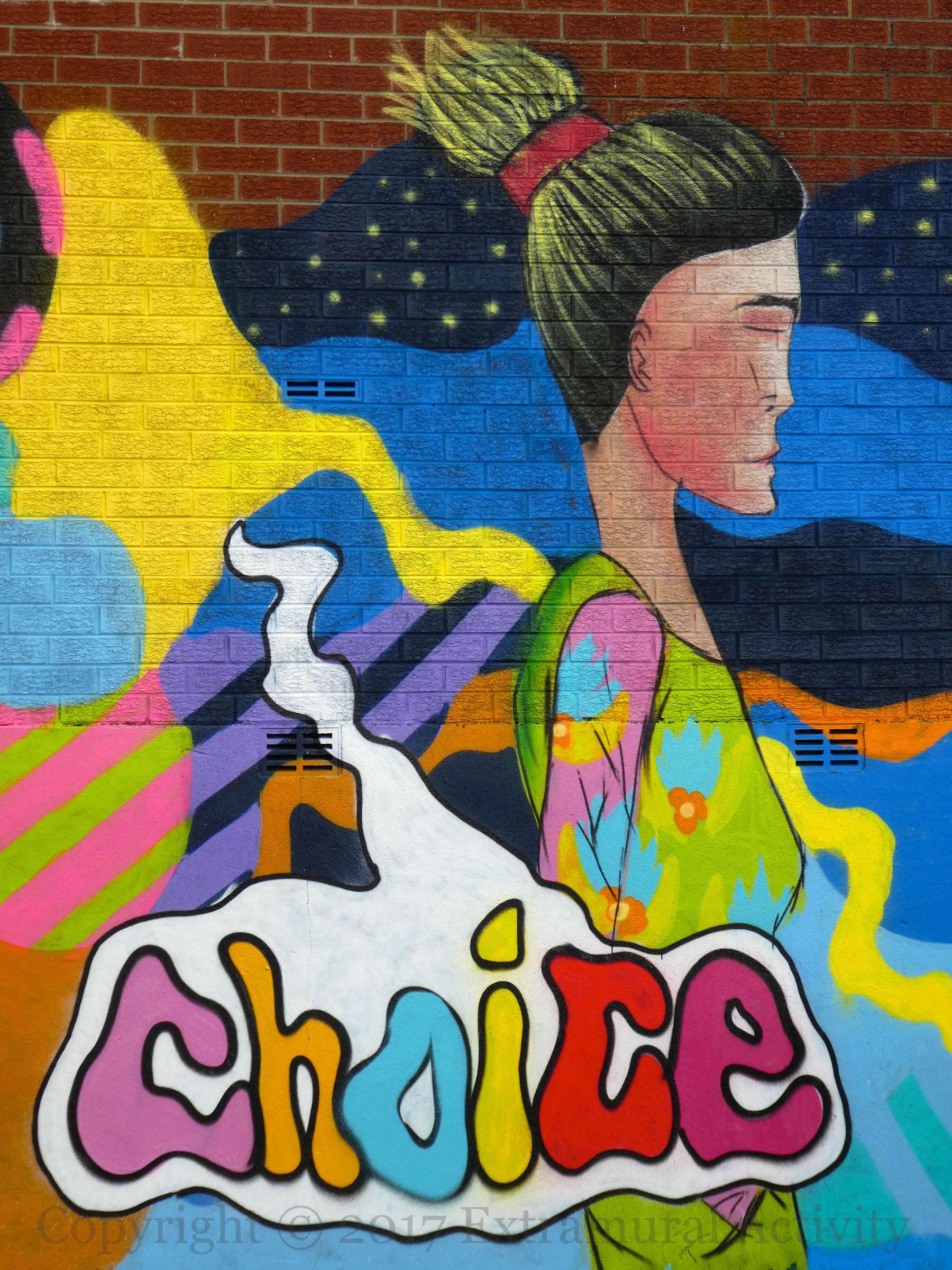
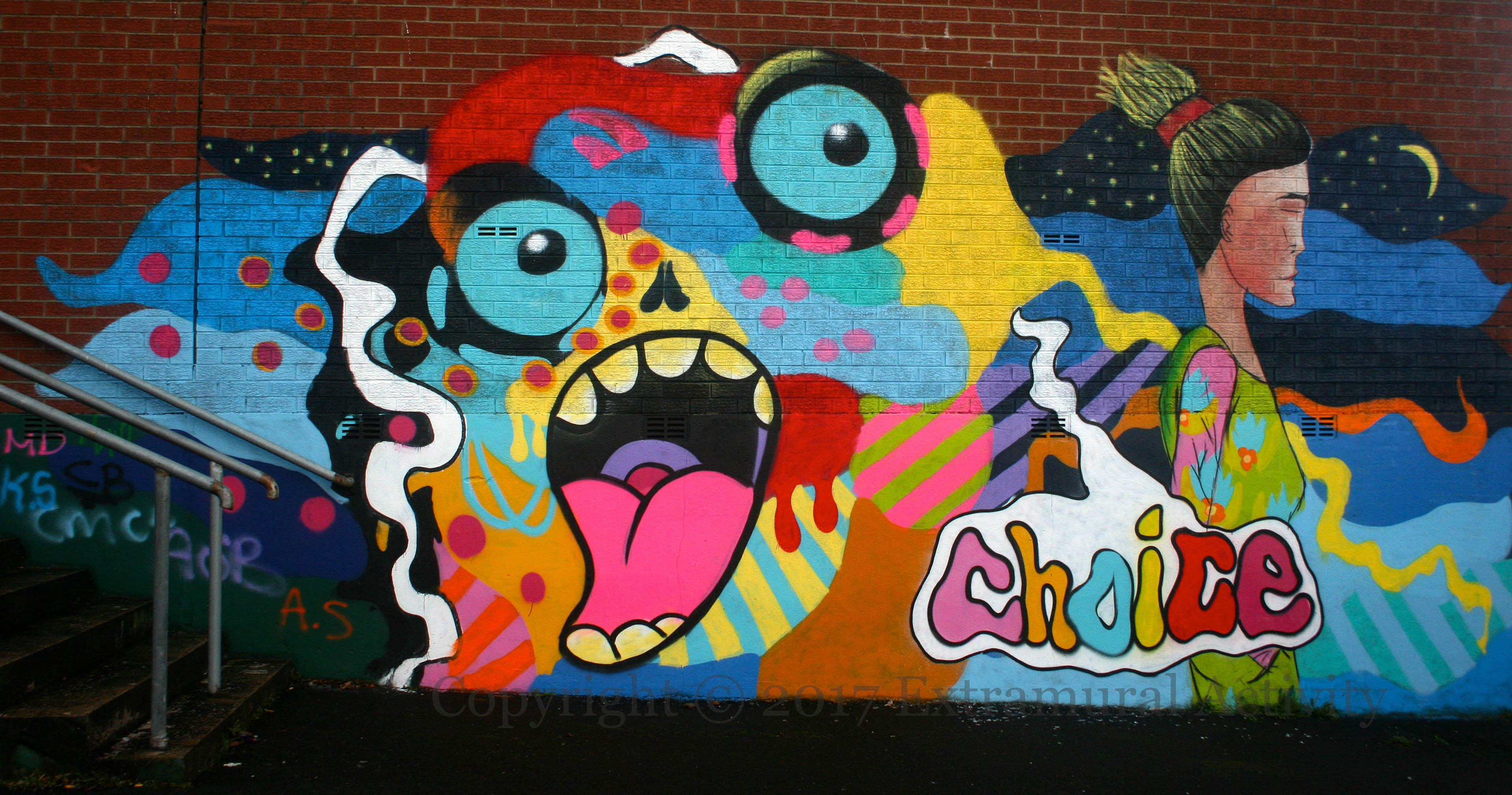
This striking art – perhaps an anti-drugs message? – is on the outside wall of the Turf Lodge Tenants’ Association & Social Club (Fb) – or simply “The Green Hut” – which served as a community centre during the Troubles. For a history, see the middle part of the NVTv programme The Edge Of The World.
Click image to enlarge
Copyright © 2018 Seosamh Mac Coılle
X04774 X04775 X04773
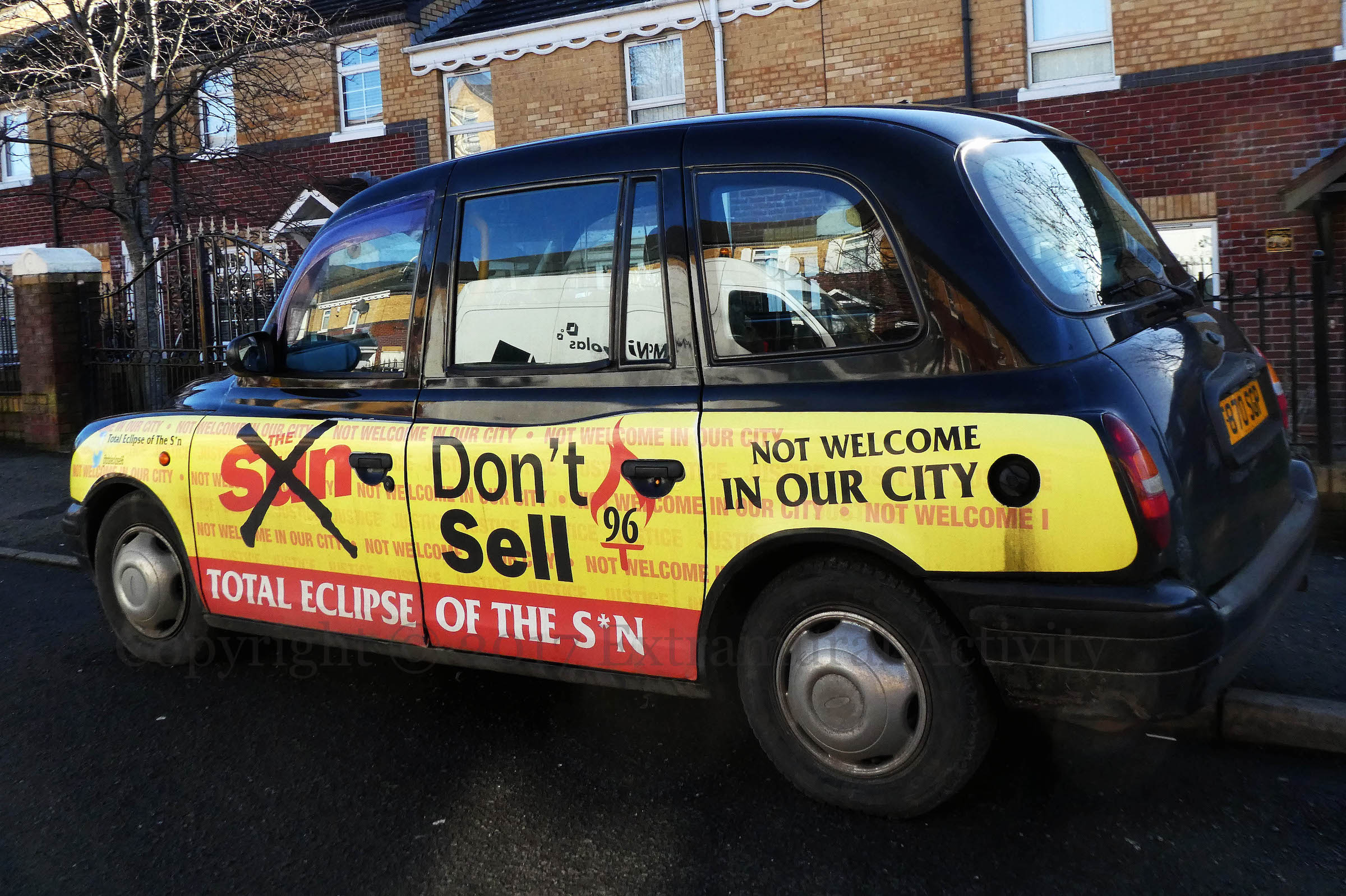
“96” is the number of deaths in the 1989 Hillsborough Disaster, in which Liverpool fans were crushed to death in Sheffield Wednesday’s stadium. In the days afterward, the Sun newspaper printed allegations that drunken fans attacked and urinated on rescue workers. The newspaper apologised in 2004 but hostility towards the paper persists, with some – as in this image – refusing even to spell it in full. The taxi was spotted in Beechmount. For more on the 2016 inquest, see Hold Your Head Up High.
Click image to enlarge
Copyright © 2017 Seosamh Mac Coılle
X04772
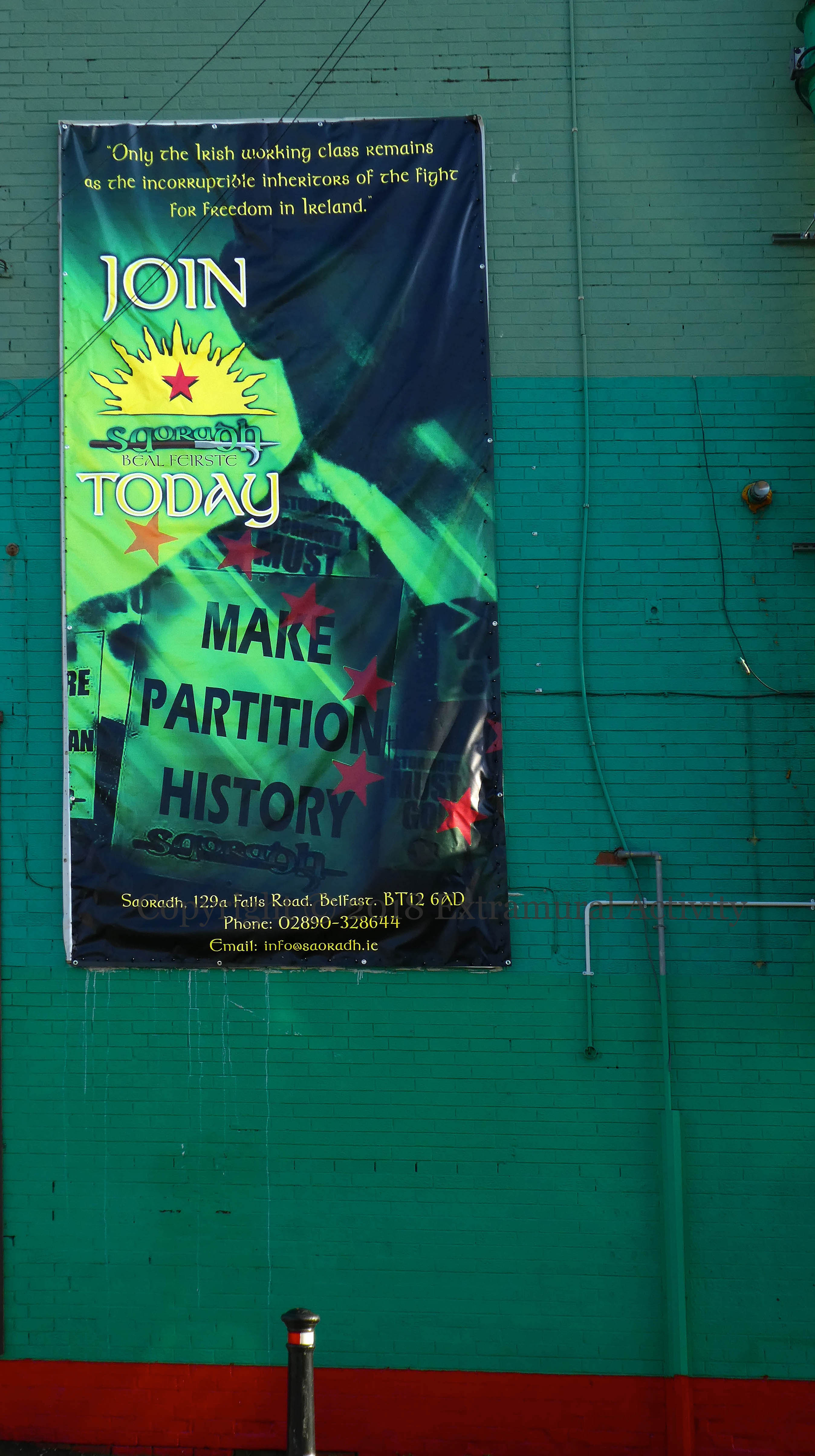
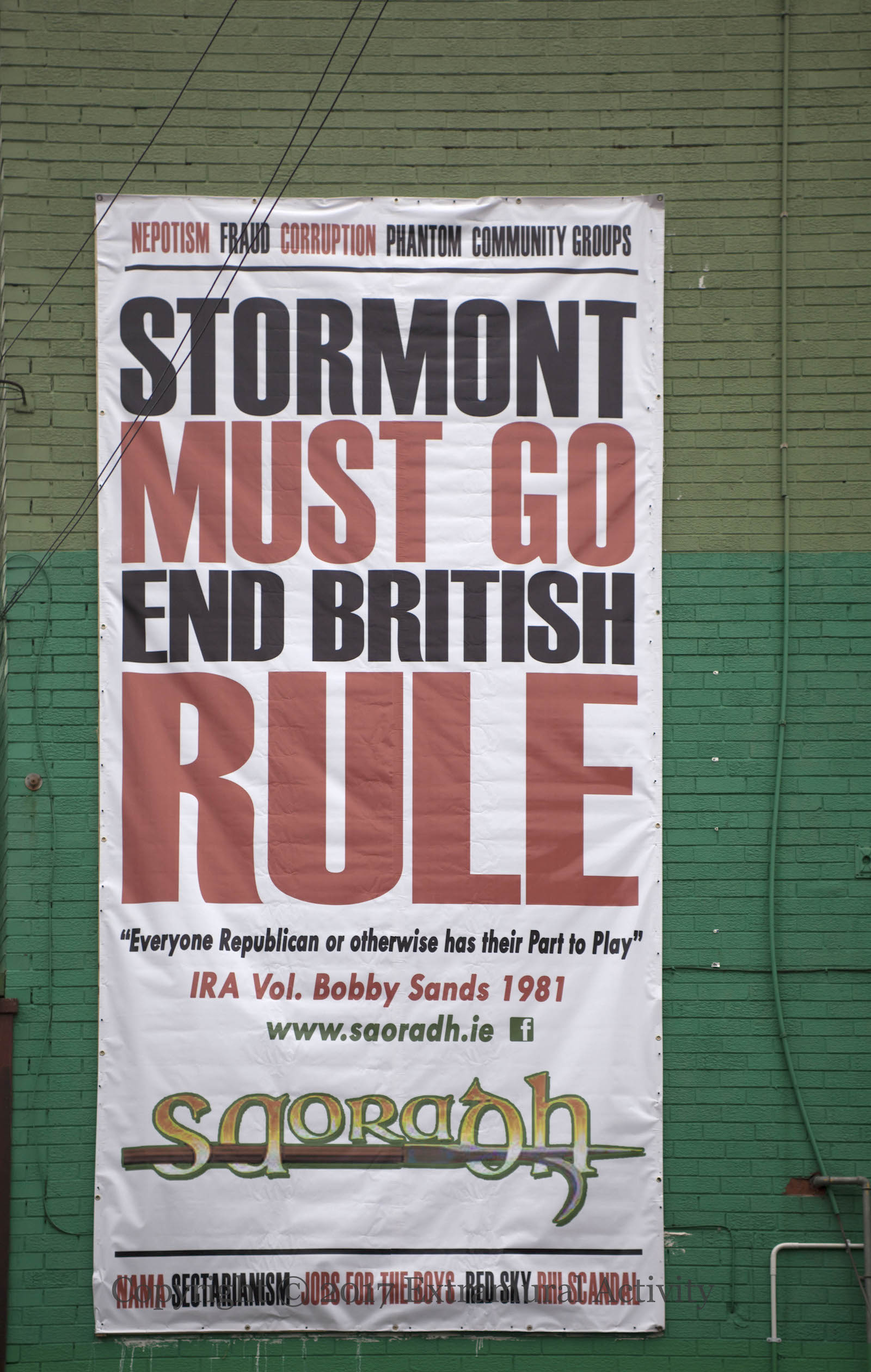
The Thames Street wall of Salvezza’s pizzeria doesn’t allow for full murals because of a giant flue, but Saoradh (web | Fb) are making the most of the space with long vertical tarps. The quote on the tarp above (new for 2018) is from James Connolly, from his foreword to Labour In Irish History: “Only the Irish working class remains as the incorruptible inheritors of the fight for freedom in Ireland.”
The tarp that hung for most of 2017 is included below.
Click image to enlarge
Copyright © 2017 Seosamh Mac Coılle
X04768 X04505