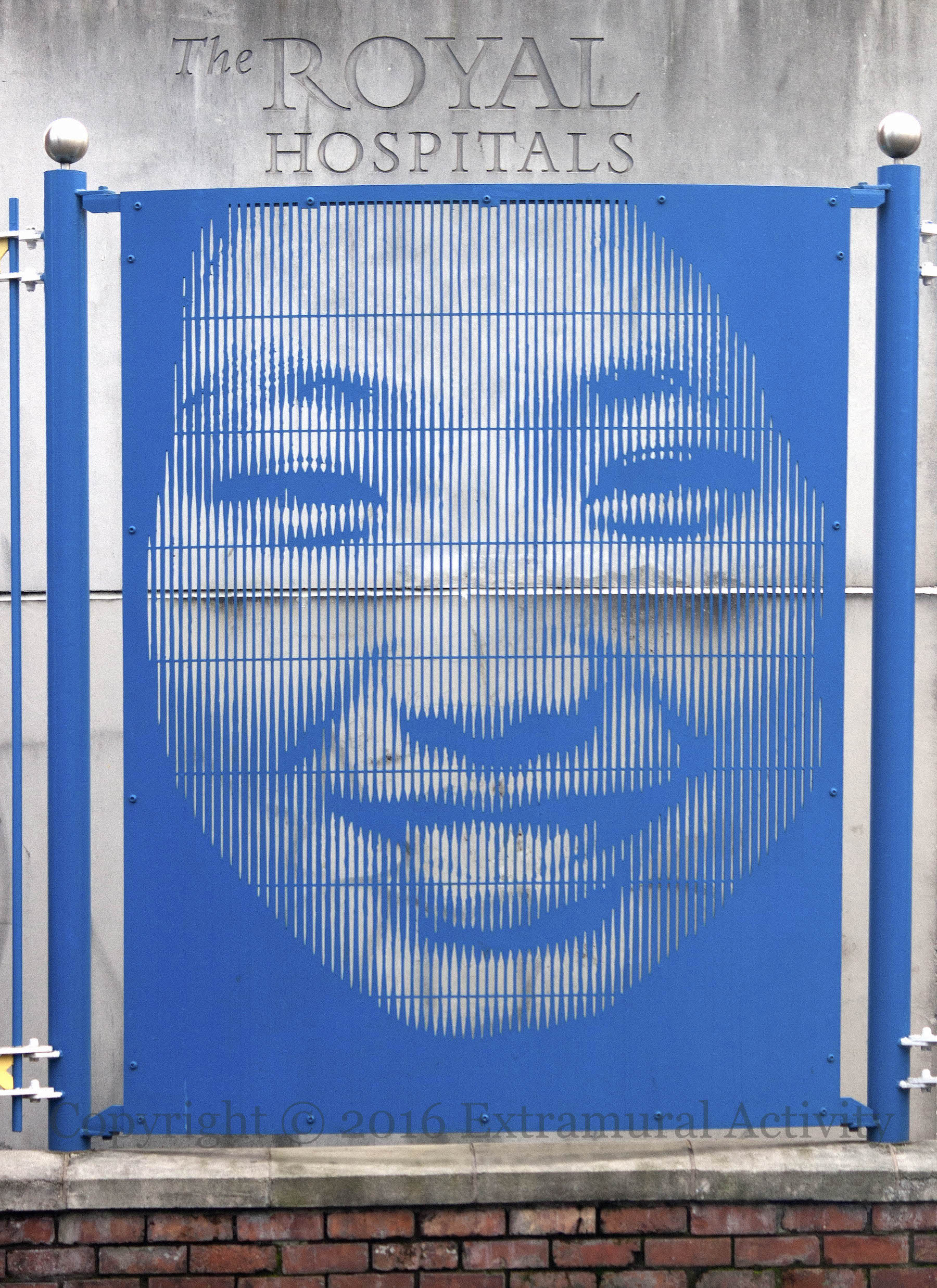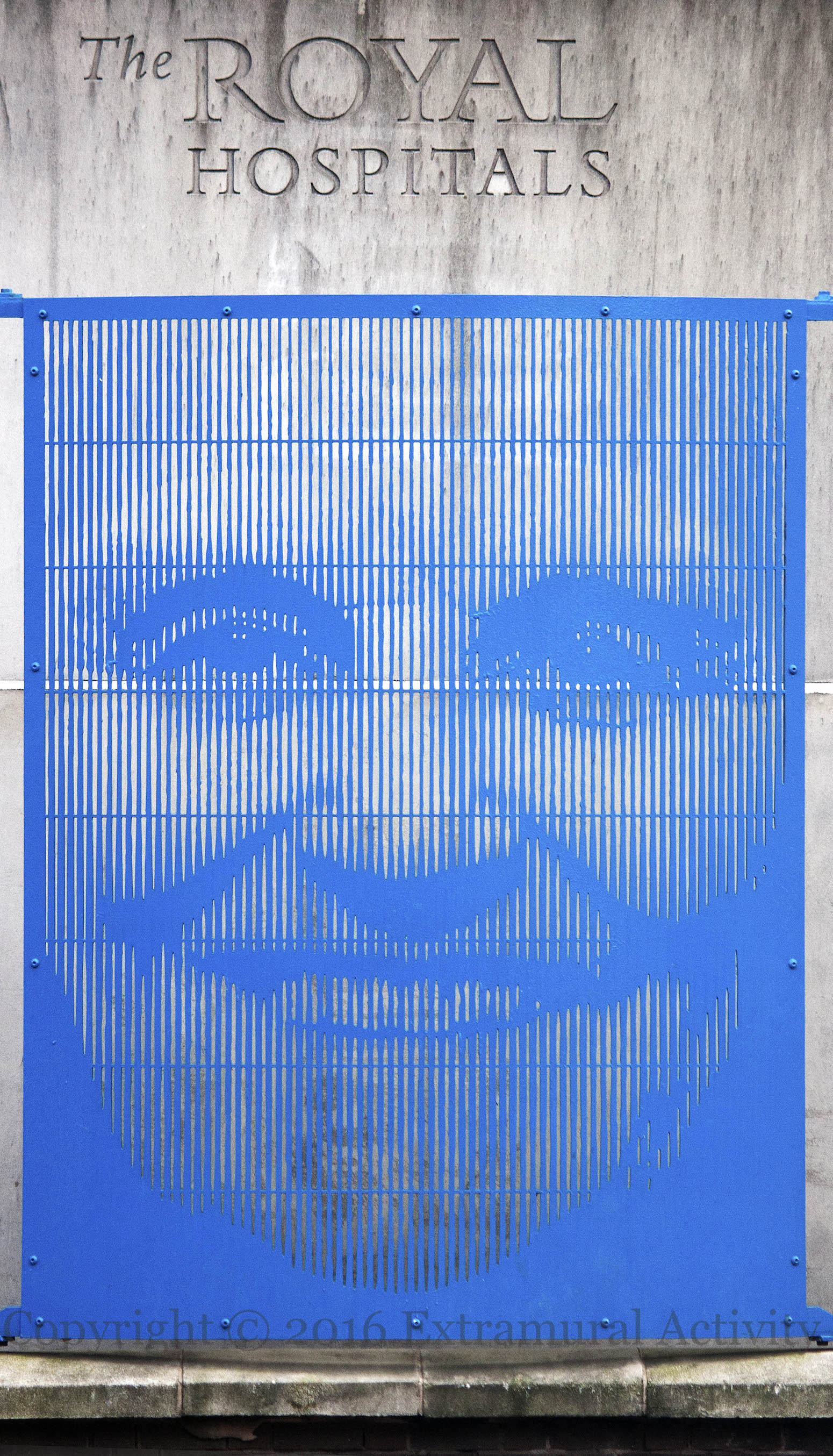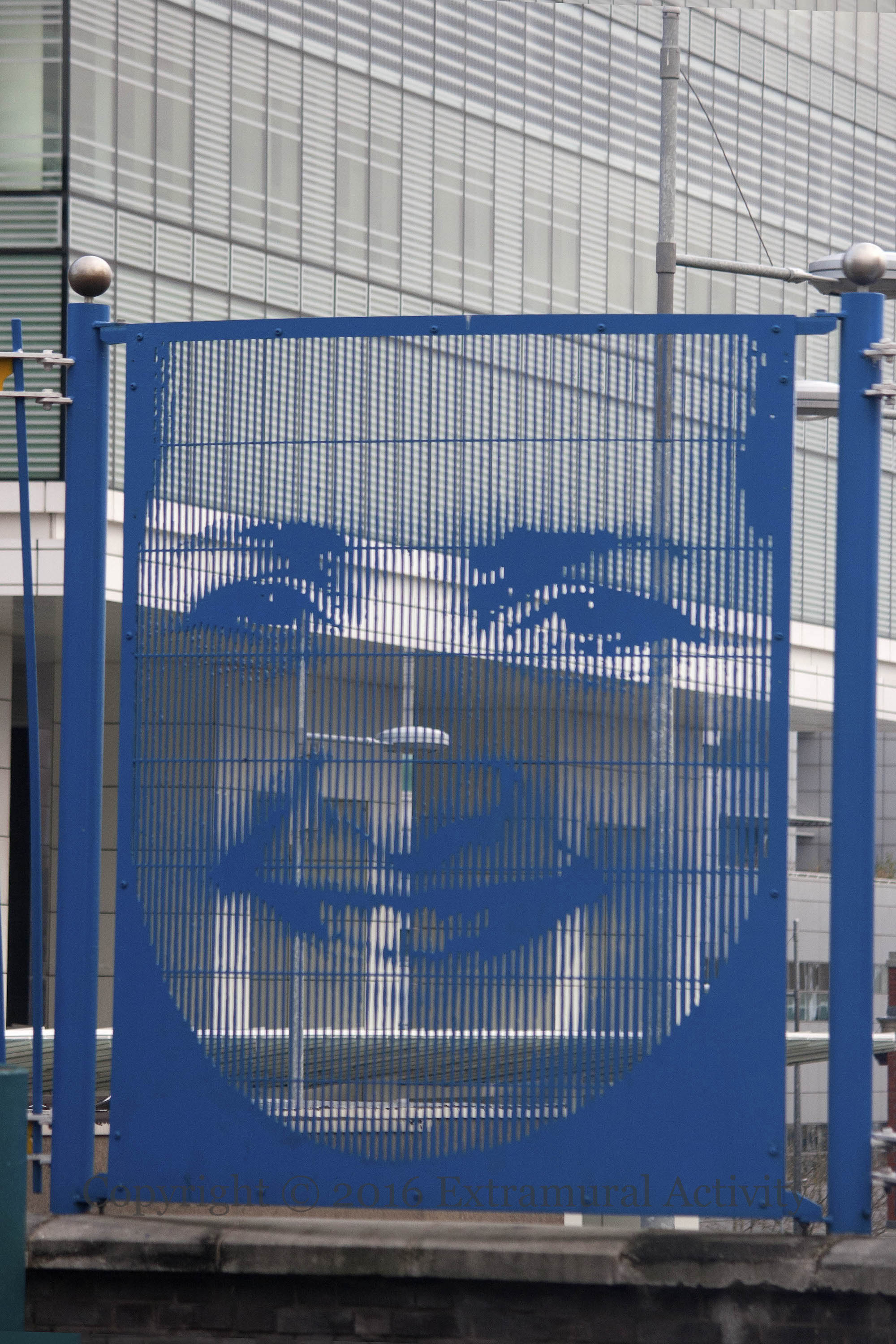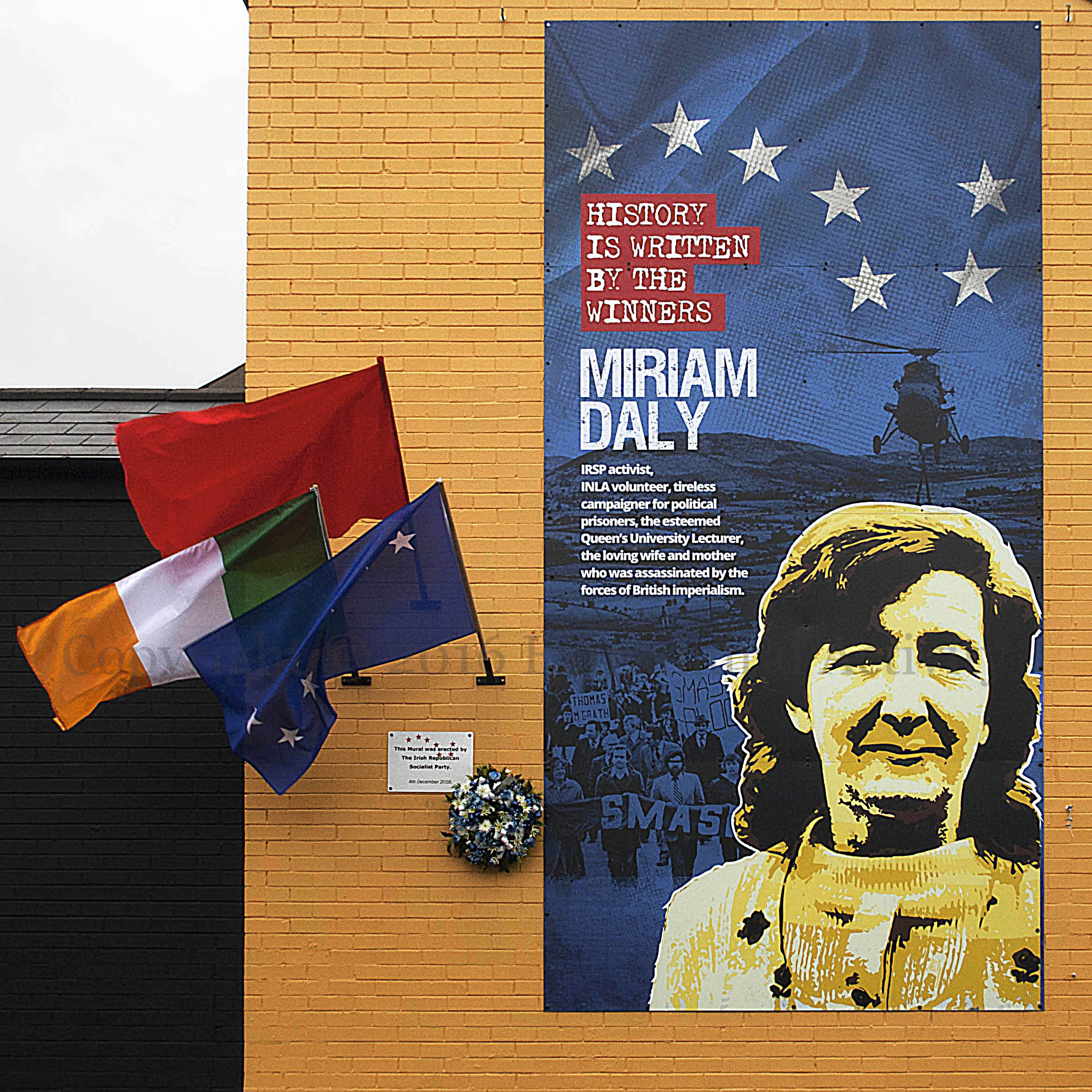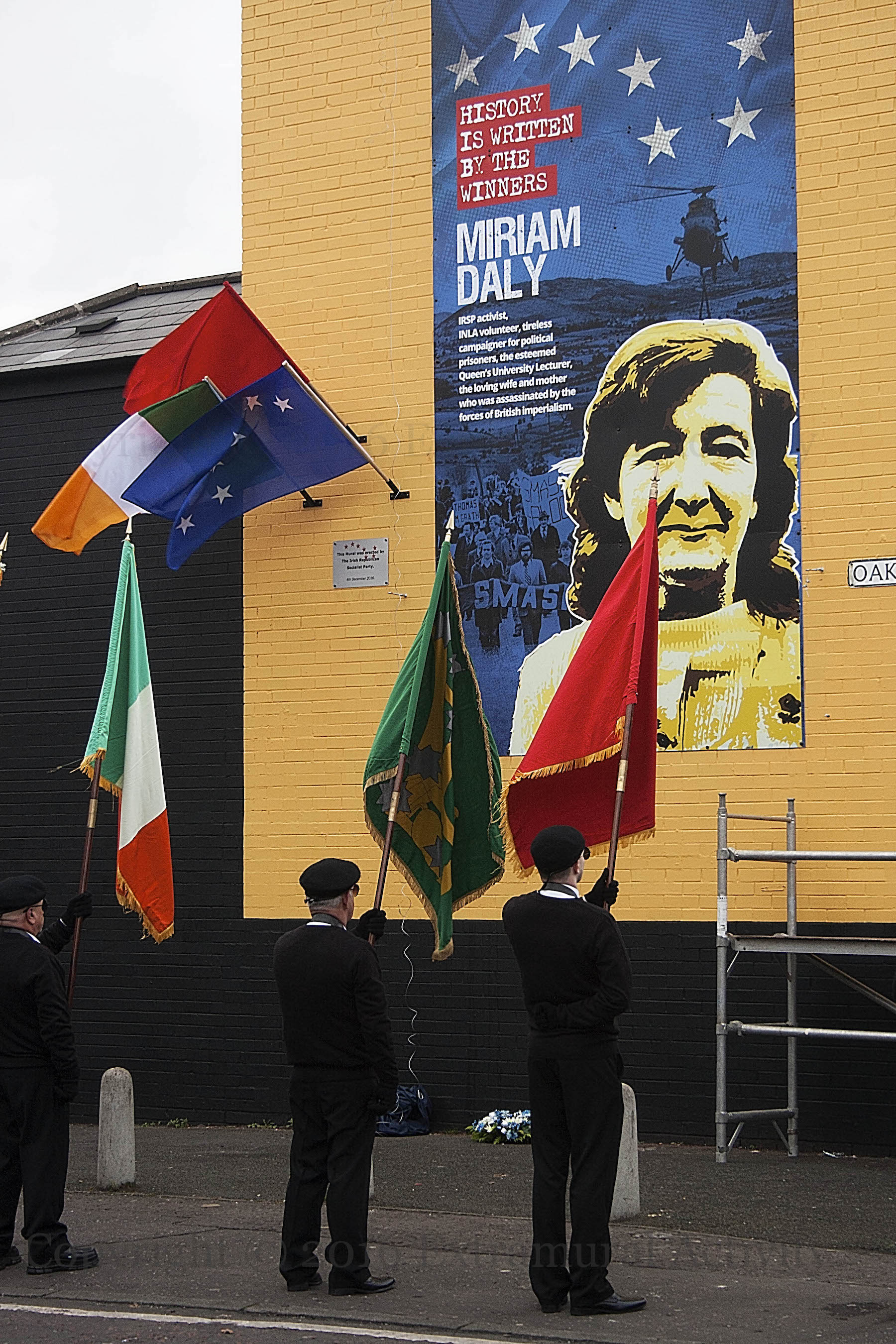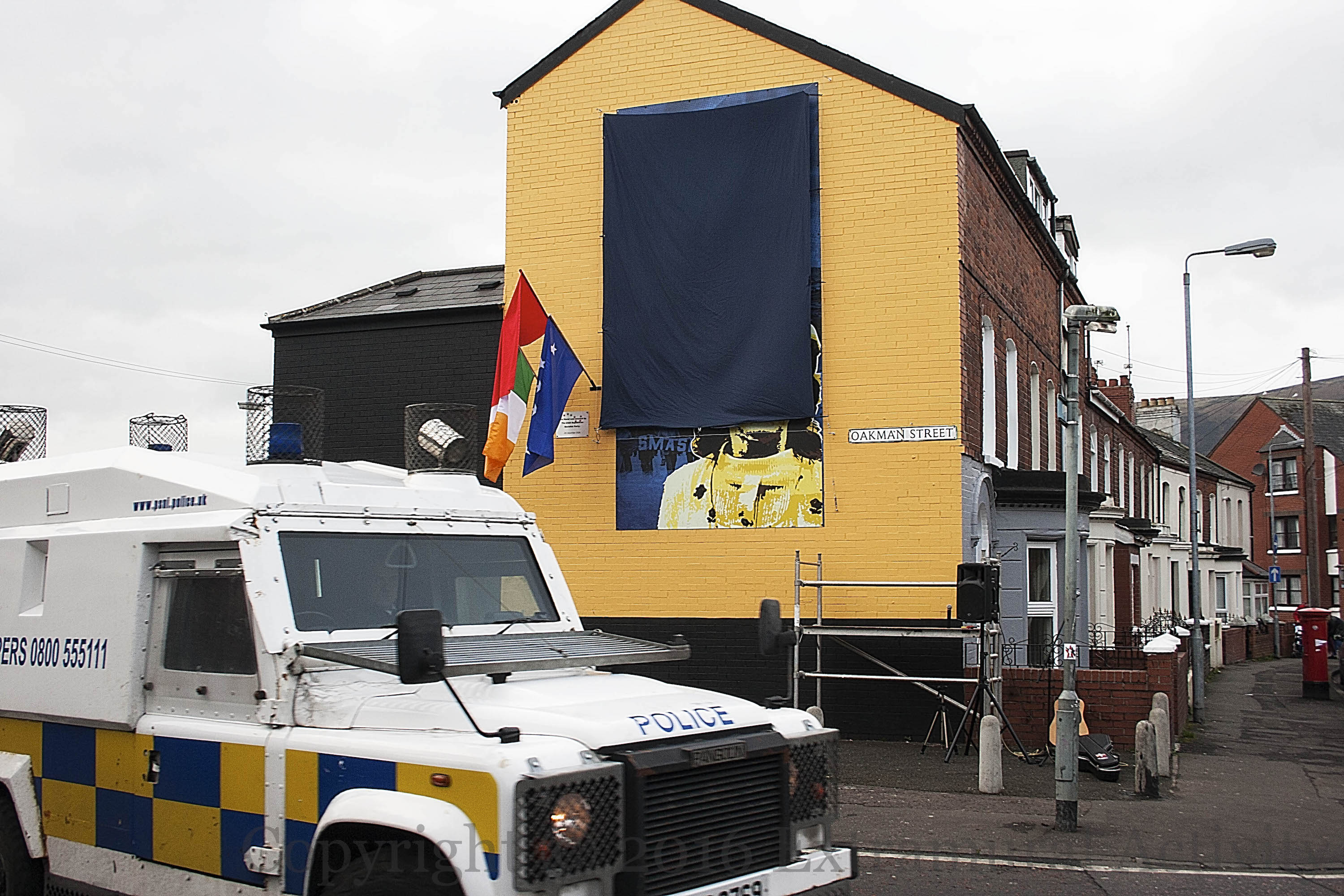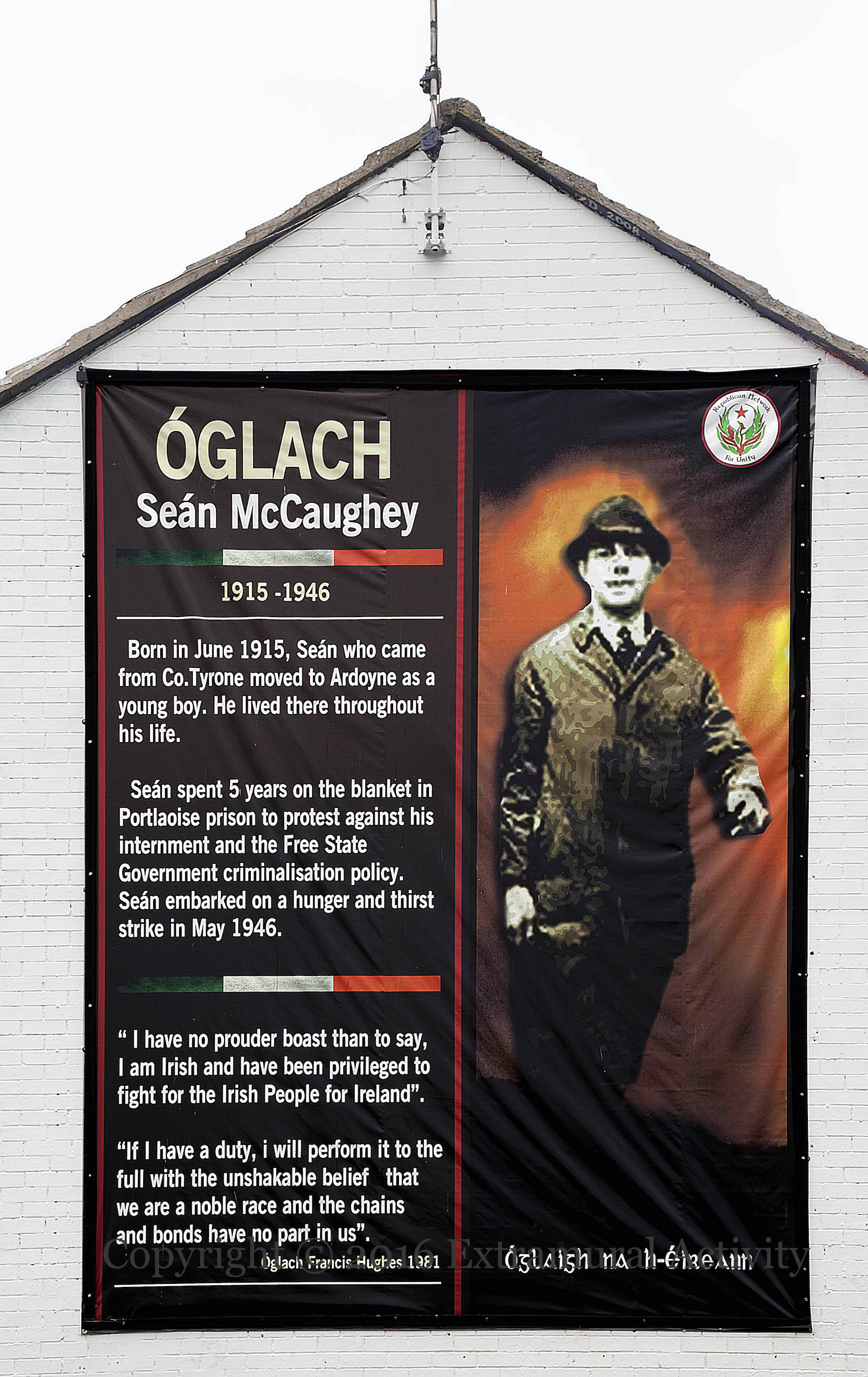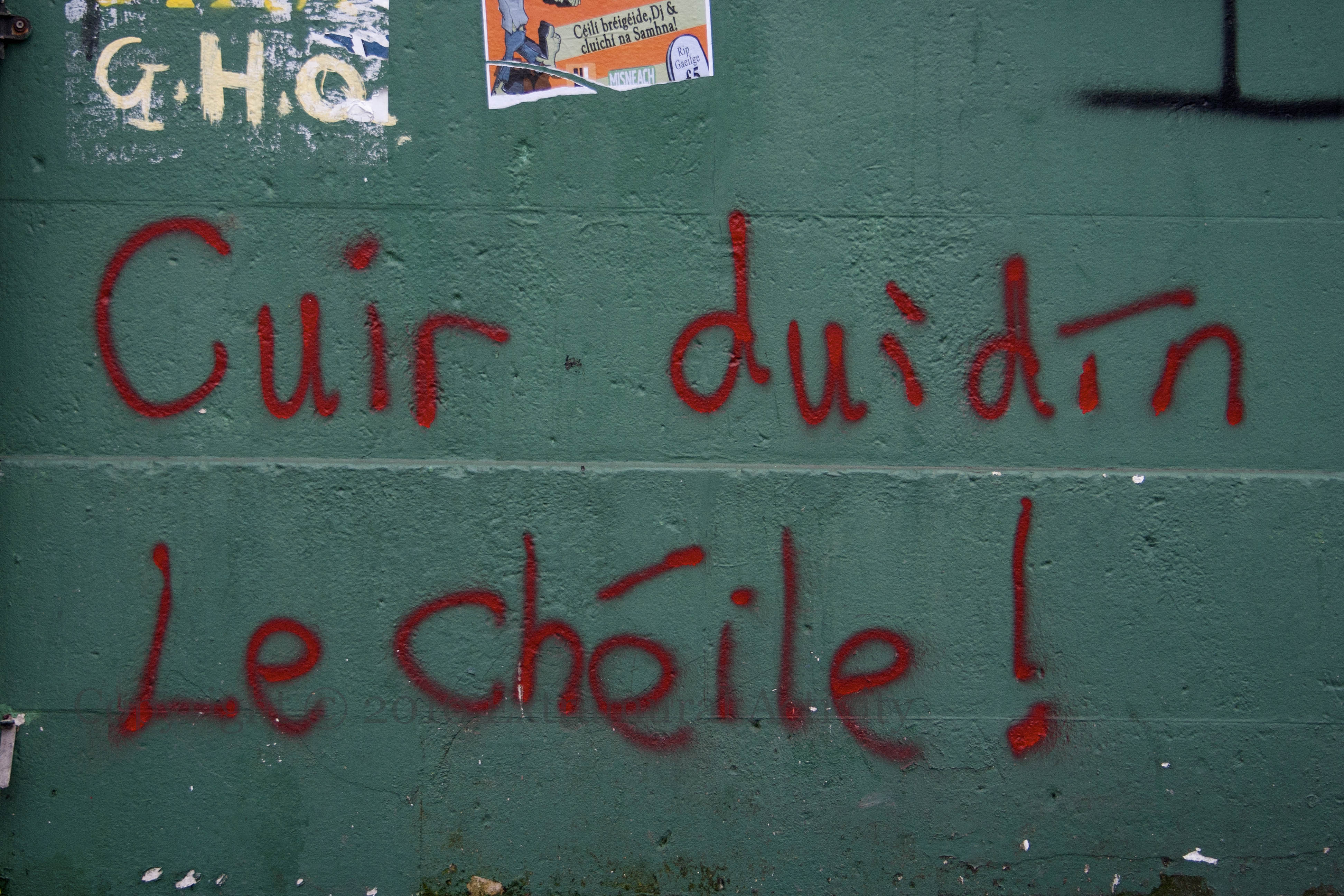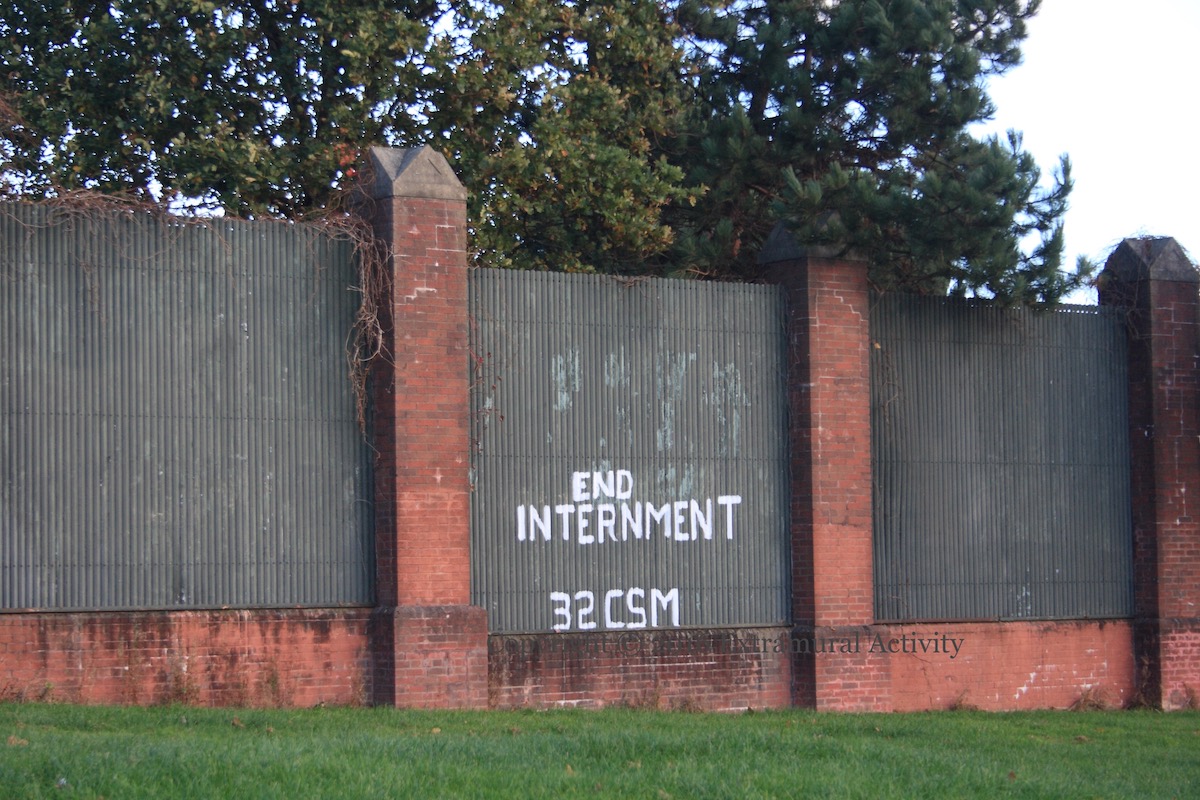
The Martin Meehan tarp in Ardoyne Avenue has been removed and the wall whitewashed. At the moment, all there is to be seen is the plaque shown above – Show Me The Man, Martin Meehan 1945 – 2007 – and a Cogús board – “End strip searching in Maghaberry now”.
Sınn Féın representatives Paul Maskey (above), Gerry Adams, and Martin McGuinness are photoshopped into these beverage-themed, Irish-language puns outside the ‘Falls Rolls’ bakery: Ár tae will come, Tıocfaıgh [sic] ár látte, and Mocha-ra.
“Come on, you boys in green!” Here’s a mural from the summer, when Ireland (and Northern Ireland) took part in the European soccer championships. The Euro 2016 trophy is at the centre of an Irish Tricolour.
Since 1982 (and perhaps earlier) Beechmount Avenue in west Belfast has been known as “RPG Avenue”, after the rocket-propelled grenade launchers used by the IRA. The tarpaulins shown in the first two images (from a recent dedication at the memorial garden across the street) here recall the 80s, with images of armed volunteers and of the support for the blanket men and hunger strikers from “Beechmount/Iveagh H Block-Armagh Committee”.
The first (above) was previously used in 2001 – see J1054. The final image, taken in June of this year, shows that the street still retains its unofficial name and also gives the names of various volunteers from A Coy, 2nd Battalion, including Pat McGeown, a hunger striker whose family intervened when he lapsed into a coma, and who was elected to Belfast City Council in 1993 and died in 1996 of a heart attack.
Another selection of distressed posters, torn to reveal … more posters. The electrical box in the third image was included in last year’s collection: We Had Our Distresses.
Lıú Lúnasa is an Irish language festival, held this year on 24-28 August. The mural above shows rocks taken from the wall separating Palestine and Israel being used to build a gaelscoıl (an Irish-language school). The mural was painted by Jımí Mac Fhlannchadha.
Towards the end of July, the IRPWA began painting a POW mural for the right end of the wall, space that the historical painters hoped to use for a gallery of international figures inspired by Irish resistance — Leonard Peltier, Marcus Garvey, V.I. Lenin,W.E.B. DuBois, Mahatma Gandhi, Ho Chi Minh, Che Guevara, Nelson Mandela, Angela Davis, Muammar Gaddafi, Yassar Arafat, General Giap, and Sukhdev Thapar (see the final image, below) — under the title “And the world did gaze with deep amaze” (a line from the song The Foggy Dew).
This would have provided a book-end to the mural similar to the gallery of early nationalist figures at the left-hand end. The IRPWA whitewashed the end of the wall (see the third image, below) and commenced work on a POW mural (leading to two sets of painters working at the wall in late July (second image)). In the end, only Leonard Peltier was painted, in the same style as Wolfe Tone. And later, Seany McVeigh’s Pearse Surrenders To The Developers was added (see the fourth image).
The first few pages of Commandant Michael Sheer’s testimony to the Bureau of Military History describe the activities of the elite squad called the “Ten Foot Pikers”, including how postal officer Dan McGandy stole election ballots sent by mail during the general election of 1918. As described in the plaque above, McGandy went missing in January 1919 and was found in the Foyle six weeks later. This article suggests that he fell in after a struggle with British soldiers who had intercepted him while stealing grenades; this Derry Now article suggests he was thrown in by the soldiers, who then arranged his things to make it appear a suicide.
This small plaque is on Northumberland Way, on the ‘Dignity’ panel of the Amnesty mural and to the right of La Historia Es Nuestra. It is presumably a reference to the killing of Robert McCartney (WP) though by the time of this photograph, Jock Davison – whom the family believed had given the order for Robert’s stabbing – had already been shot dead (Bel Tel).