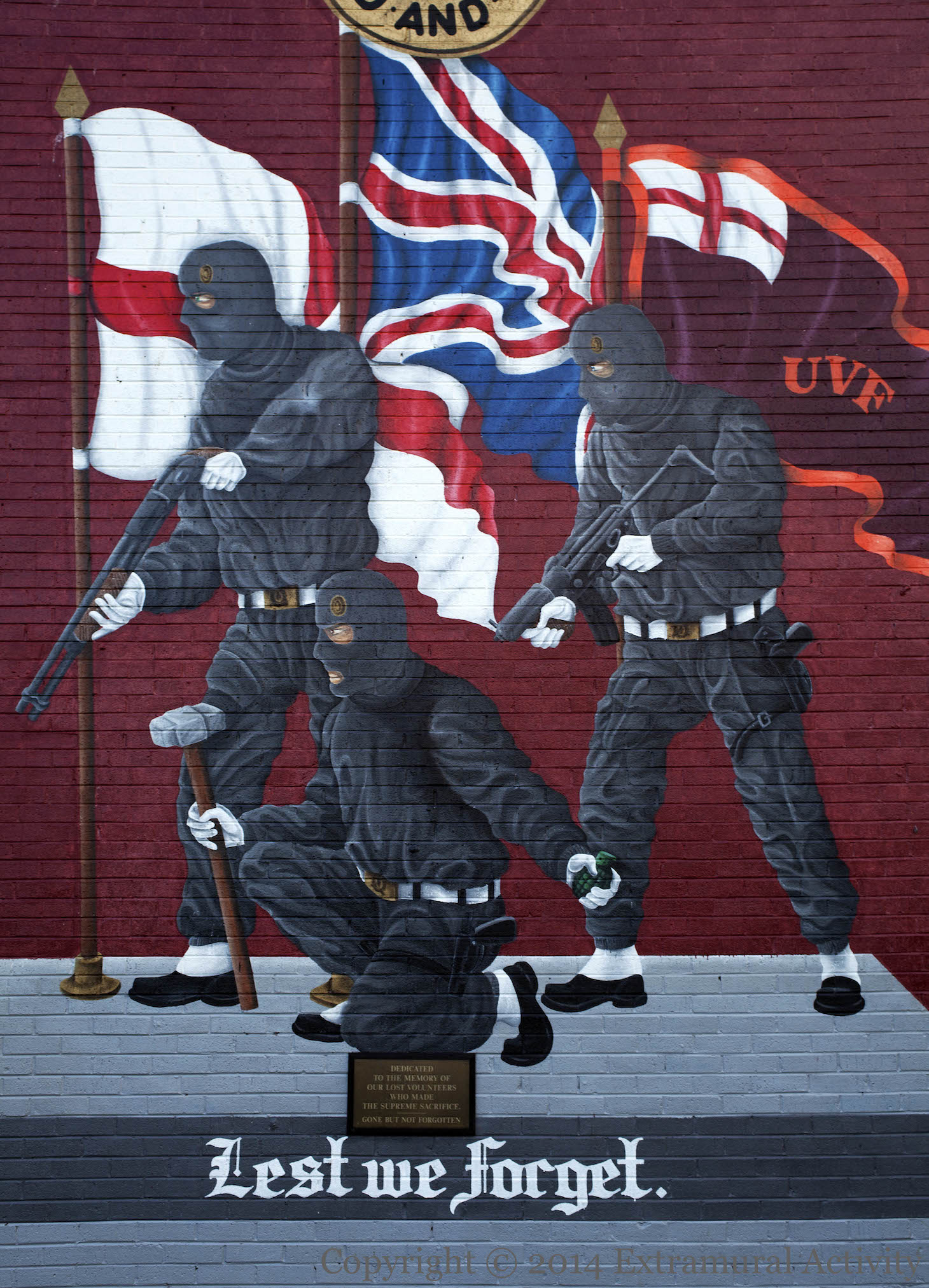
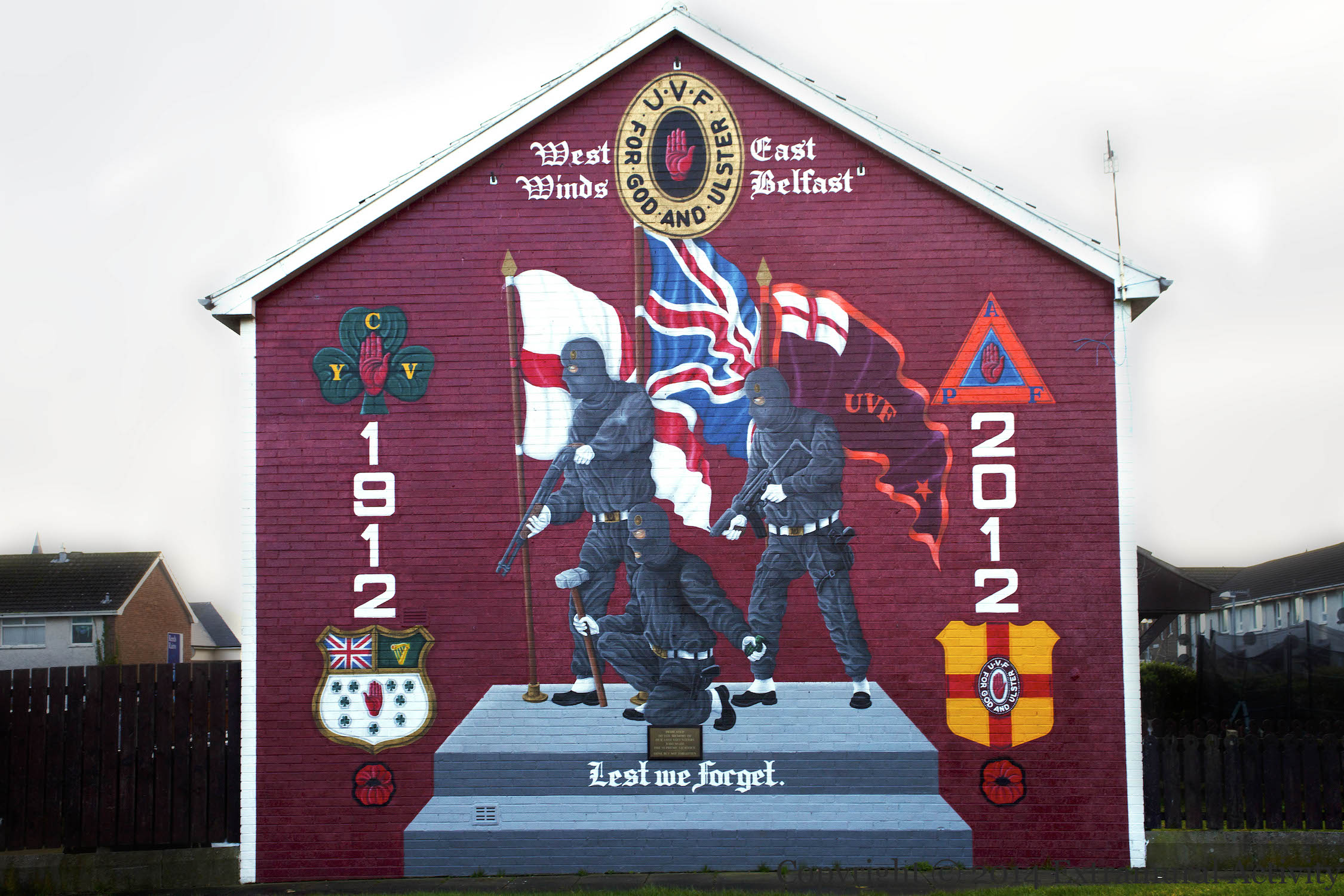
Armed masked men, shotgun, automatic weapon, sledgehammer, hand grenade and two pistols, with the flags of Northern Ireland, the UK and the UVF in the background. The plaque reads, “Dedicated to the memory of our lost volunteers who made the supreme sacrifice. Gone but not forgotten”. “Lest we forget” at the bottom. The full mural (below) shows (clockwise from top left) YCV, PAF (Protestant Action Force), UVF (on an Ulster shield), and 36th (Ulster) Division insignia.
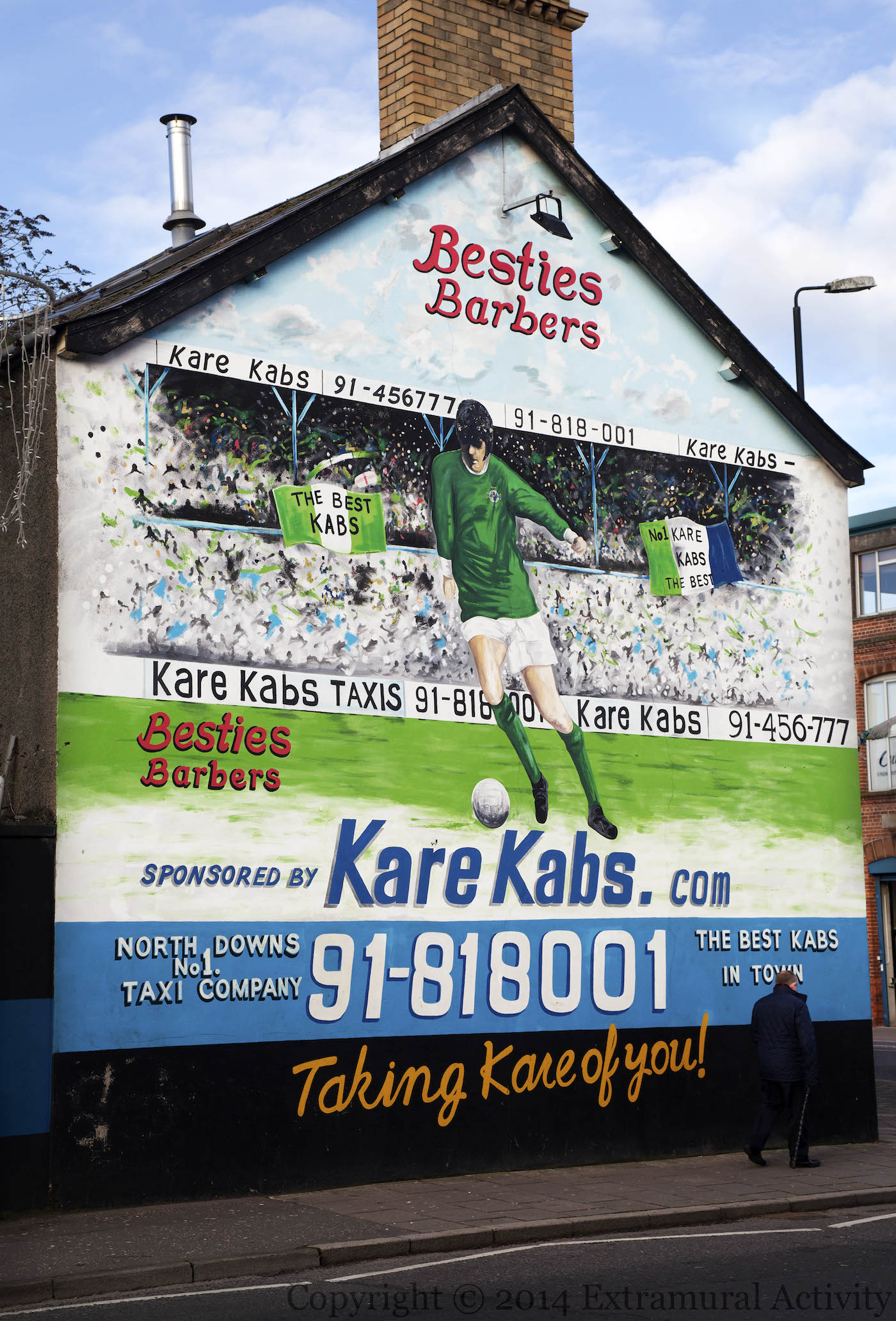
Besties Barbers stands in the centre of Newtownards and the mural above is on the side wall (in Gibson Lane). It features footballer George Best in Northern Ireland strip and sponsorship by local taxi company, Kare Kabs. The interior of the shop is decorated with more Northern Ireland football heroes.
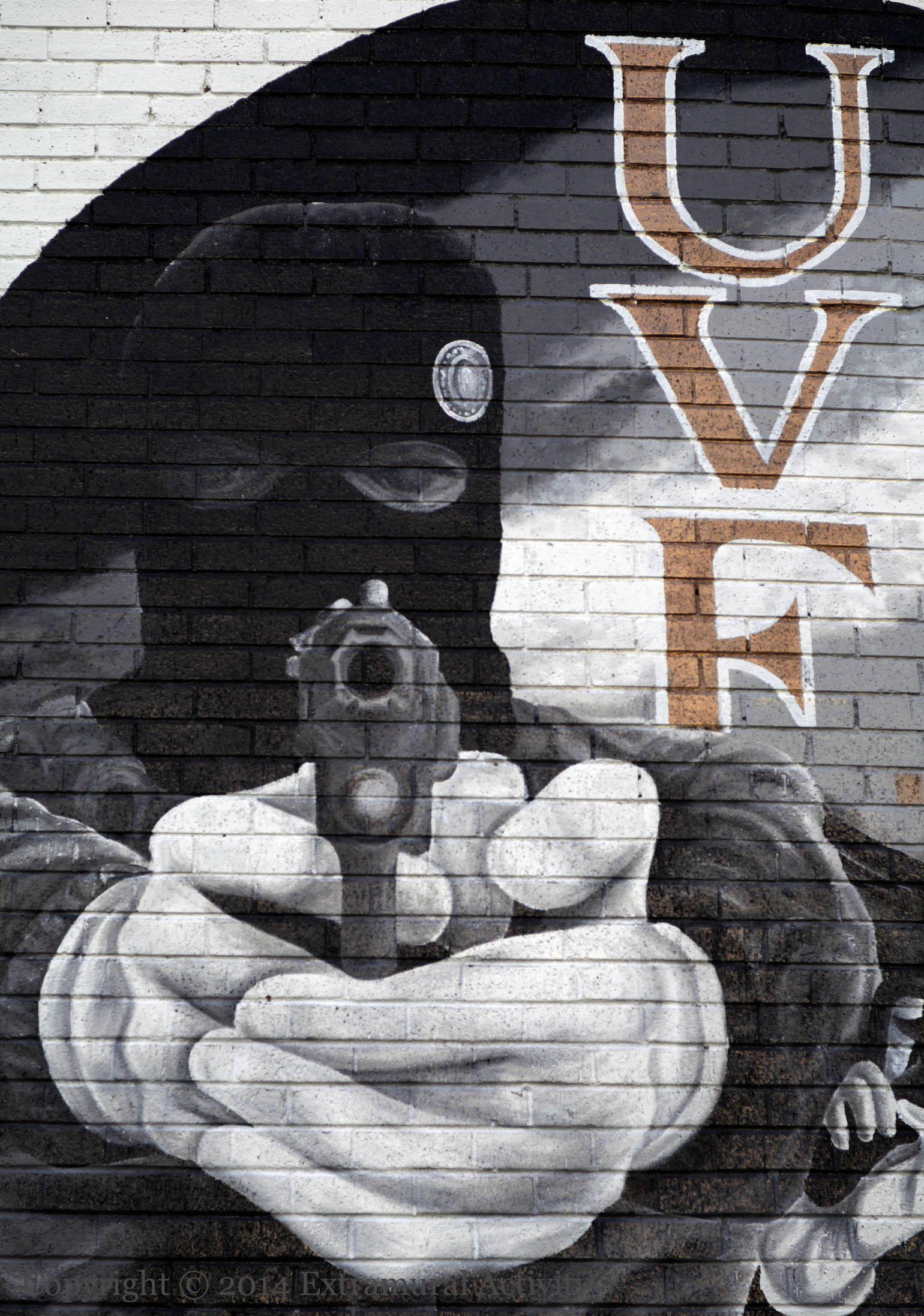
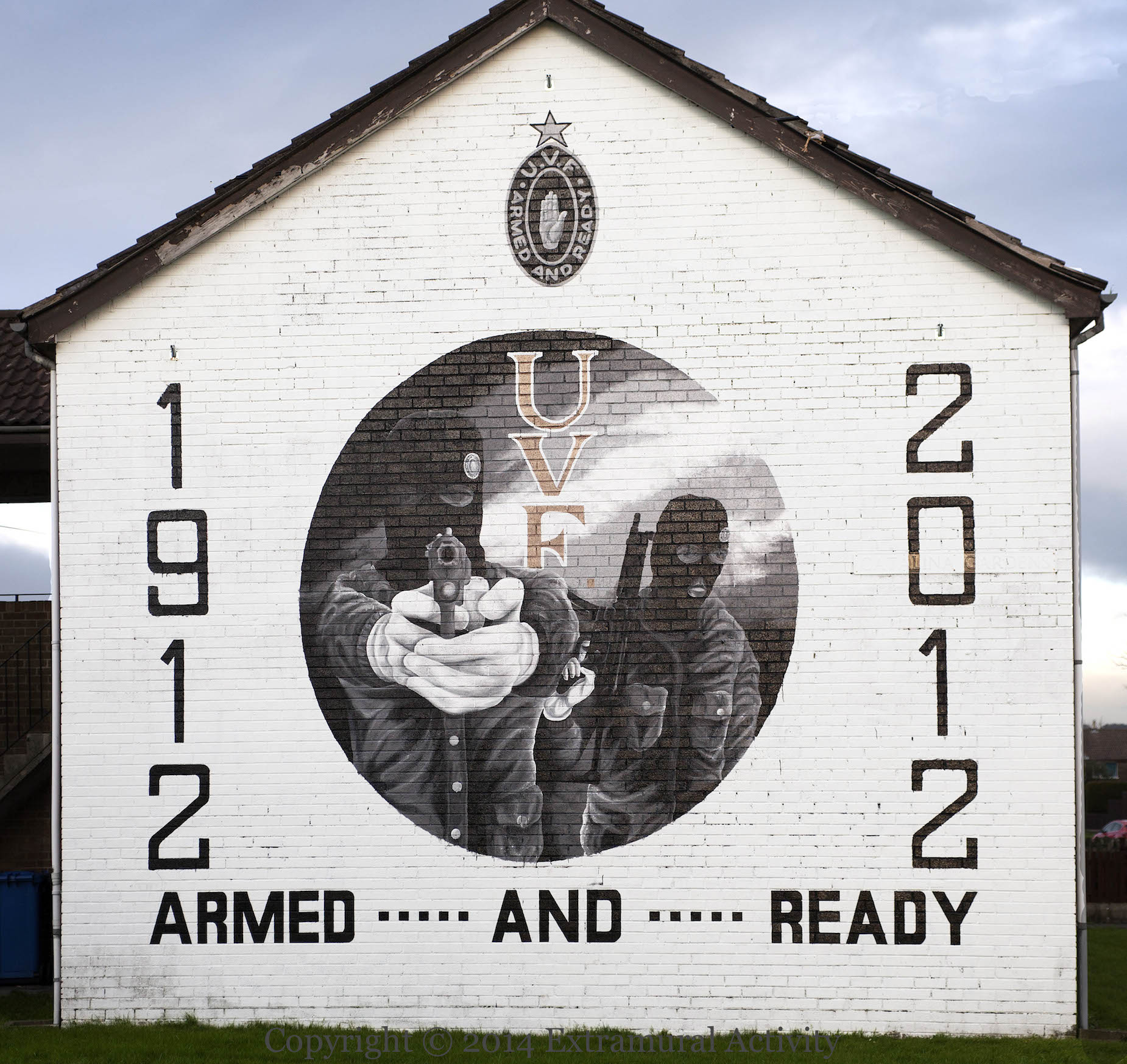
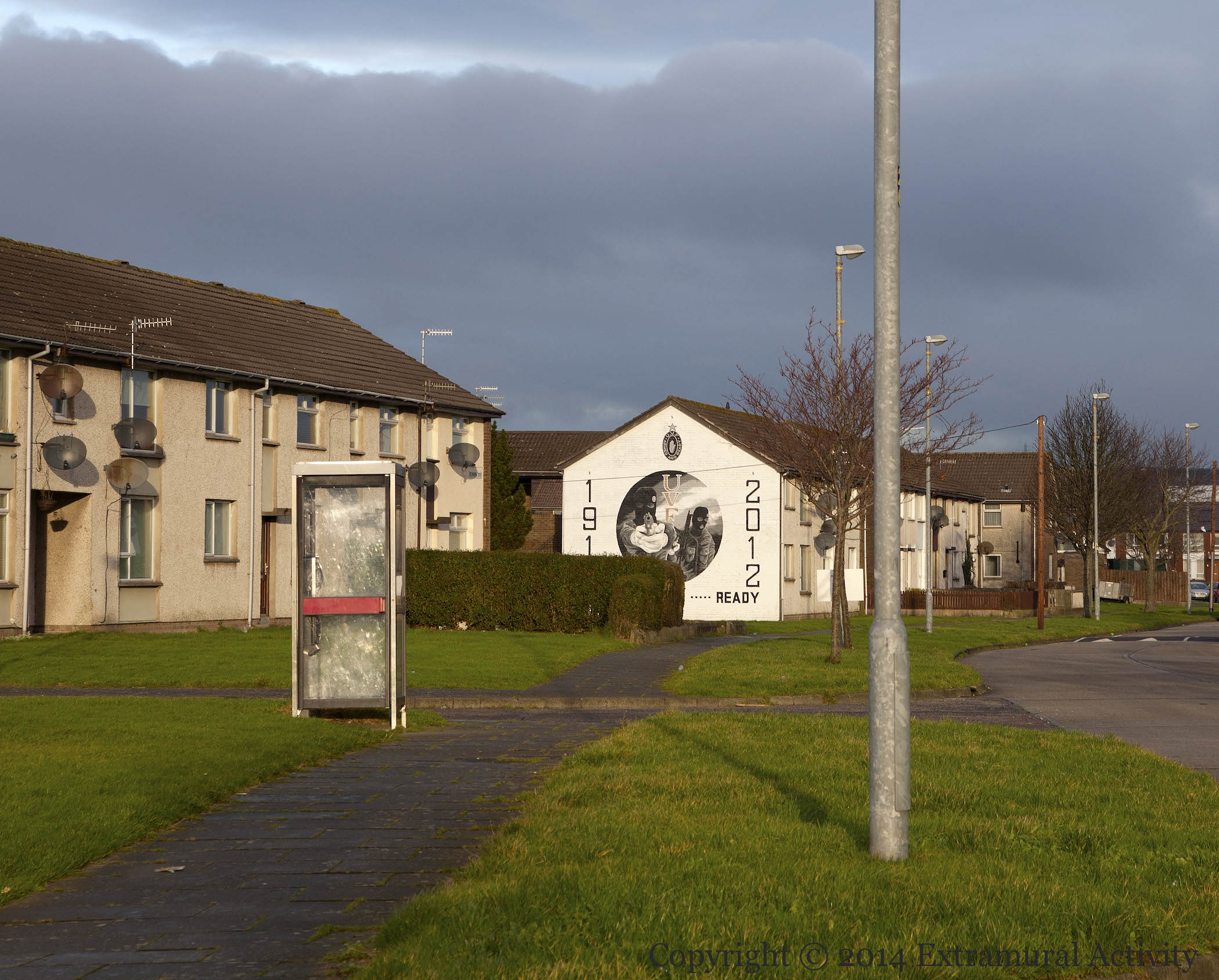
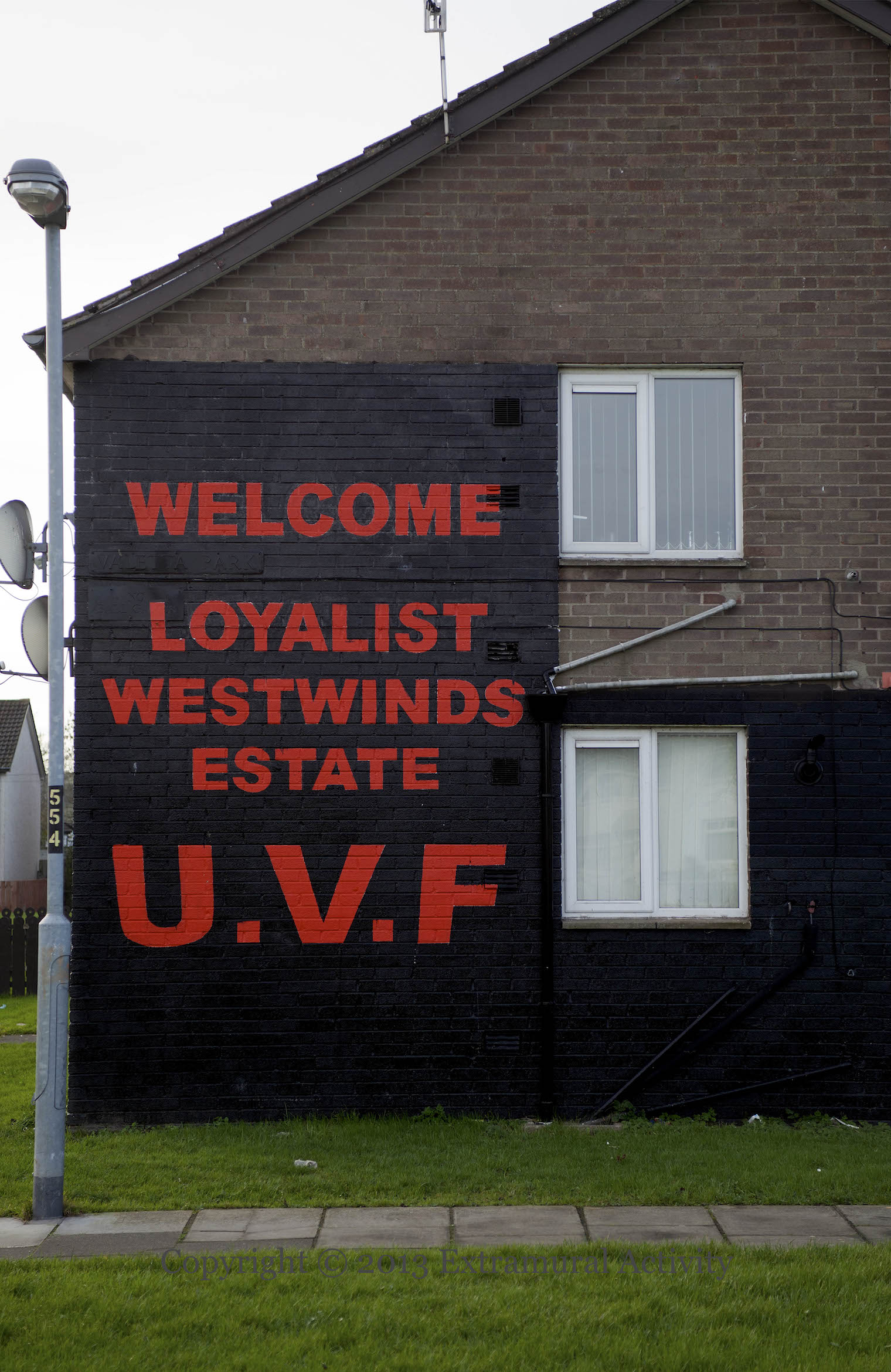
Another UVF mural in the Westwinds estate (Newtownards) in which the traditional motto of “For God and Ulster” has been replaced by “Armed And Ready”. As can be seen in the shot of the whole just below, there are two masked figures, both armed, and one points his weapon directly at the viewer and at pedestrians walking up the footpath, as can be seen in the final shot.
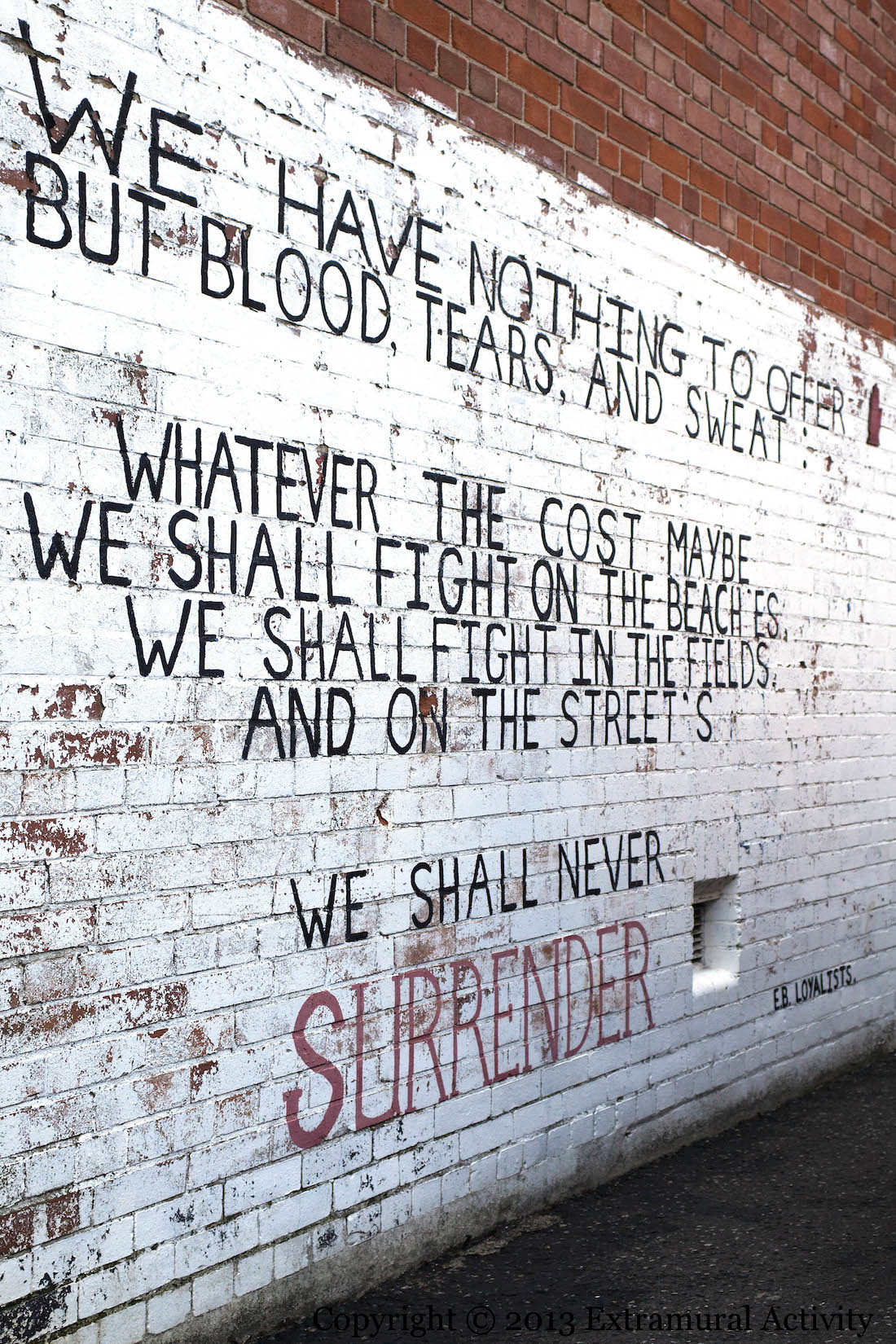
A message from “E.B. [east Belfast] Loyalists” in Castlereagh Parade, combining two speeches of Winston Churchill’s: “We have nothing to offer but blood, tears, and sweat” and “Whatever the cost maybe, we shall fight on the beach’es [sic], we shall fight in the fields and on the street’s [sic]. We shall never surrender.”
1940-05-13: “I would say to the House, as I said to those who have joined the government: I have nothing to offer but blood, toil, tears and sweat. We have before us an ordeal of the most grievous kind. We have before us many, many long months of struggle and of suffering. You ask: What is our policy? I will say: It is to wage war, by sea, land and air, with all our might and with all the strength that God can give us, to wage war against a monstrous tyranny, never surpassed in the dark and lamentable catalogue of human crime.”
1940-06-04: “We shall defend our island whatever the cost may be. We shall fight on the beaches. We shall fight on the landing grounds. We shall fight in the fields and in the streets. We shall fight in the hills. We shall never surrender. “
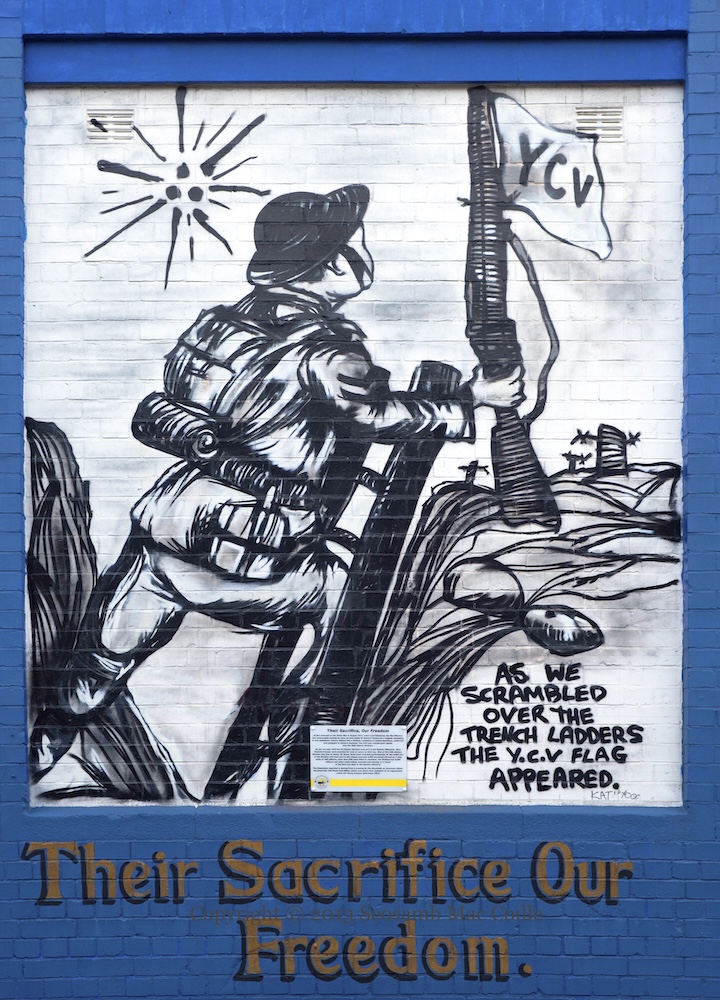
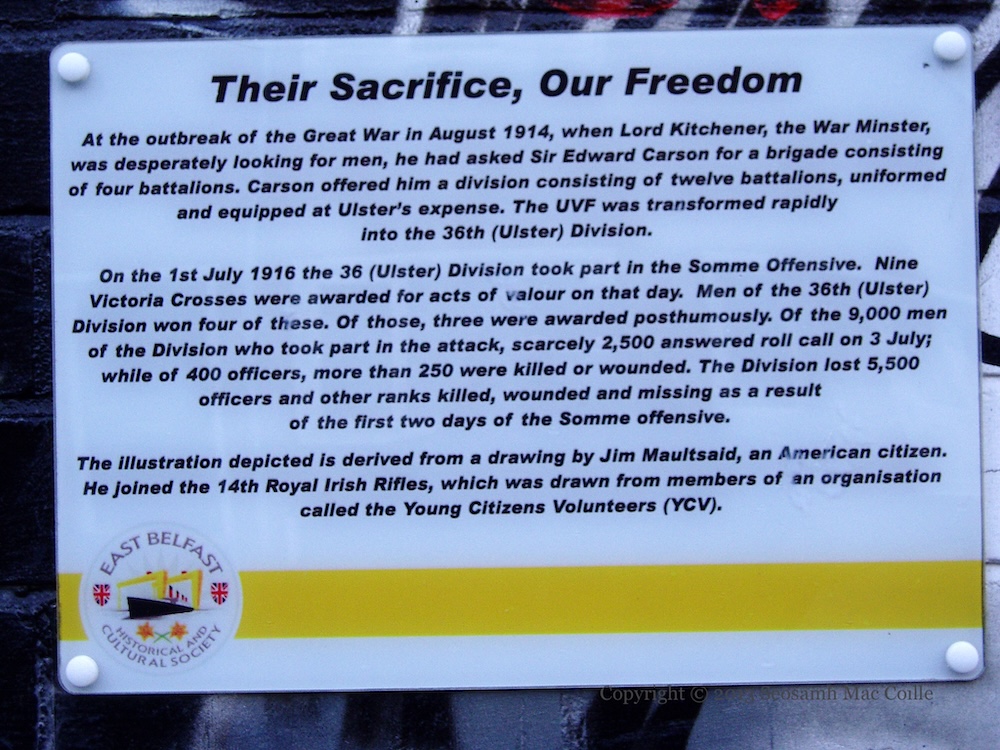
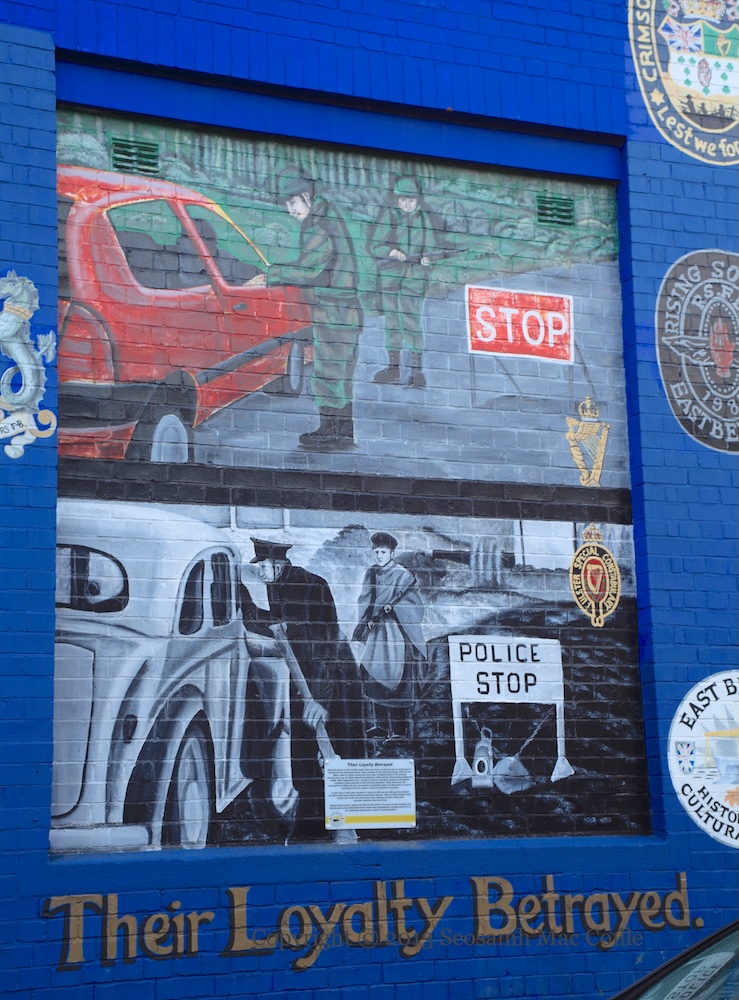
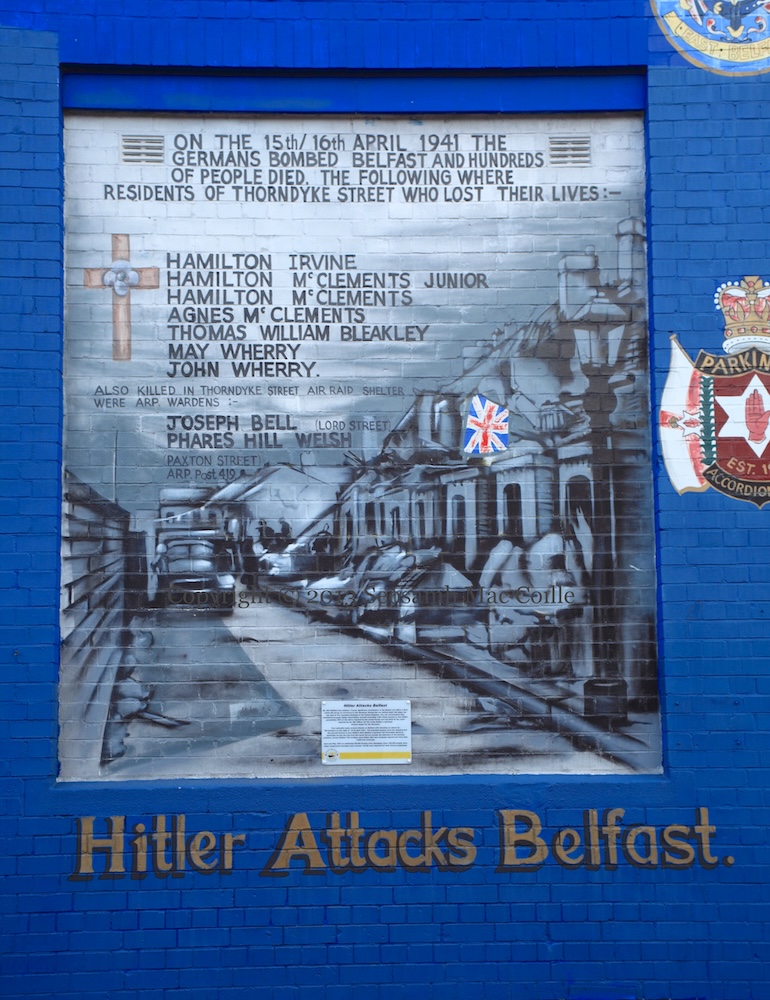
Information plaques were added (in 2007?) to the 14 panels in Thorndyke Street originally launched in 2004. They were originally off to the side of each panel (see e.g. the entry for this panel in Peter Moloney’s Collection), but have now been placed at the bottom of each panel on top of the illustration – three examples are given in this entry.
The paintings themselves do not appear to have changed, though there is one small change to the Jim Maultsaid WWI panel (compared to 2004) – Maultsaid’s name has been painted out.
The plaque for the Maultsaid panel reads: At the outbreak of the Great War in August 1914, when Lord Kitchener, the War Minister, was desperately looking for men, he had asked Sir Edward Carson for a brigade consisting of four battalions. Carson offered him a division consisting of twelve battalions, uniformed and equipped at Ulster’s expense. The UVF was transformed rapidly into the 36th (Ulster) Division. On the 1st July 1916 the 26 (Ulster) Division took part in the Somme Offensive. Nine Victoria Crosses were awarded for acts of valour on that day. Men of the 36th (Ulster) Division won four of these. Of those, three were awarded posthumously. Of the 9,000 men of the Division who took part in the attack, scarcely 2,500 answered roll call on 3 July; while of 400 officers, more than 250 were killed or wounded. The Division lost 5,500 officers and other ranks killed, wounded and missing as a result of the first two days of the Somme offensive. The illustration depicted is derived from a drawing by Jim Maultsaid, an American citizen. He joined the 14th Royal Irish Rifles, which was drawn from members of an organisation called the Young Citizen Volunteers (YCV). – East Belfast Historical And Cultural Society”
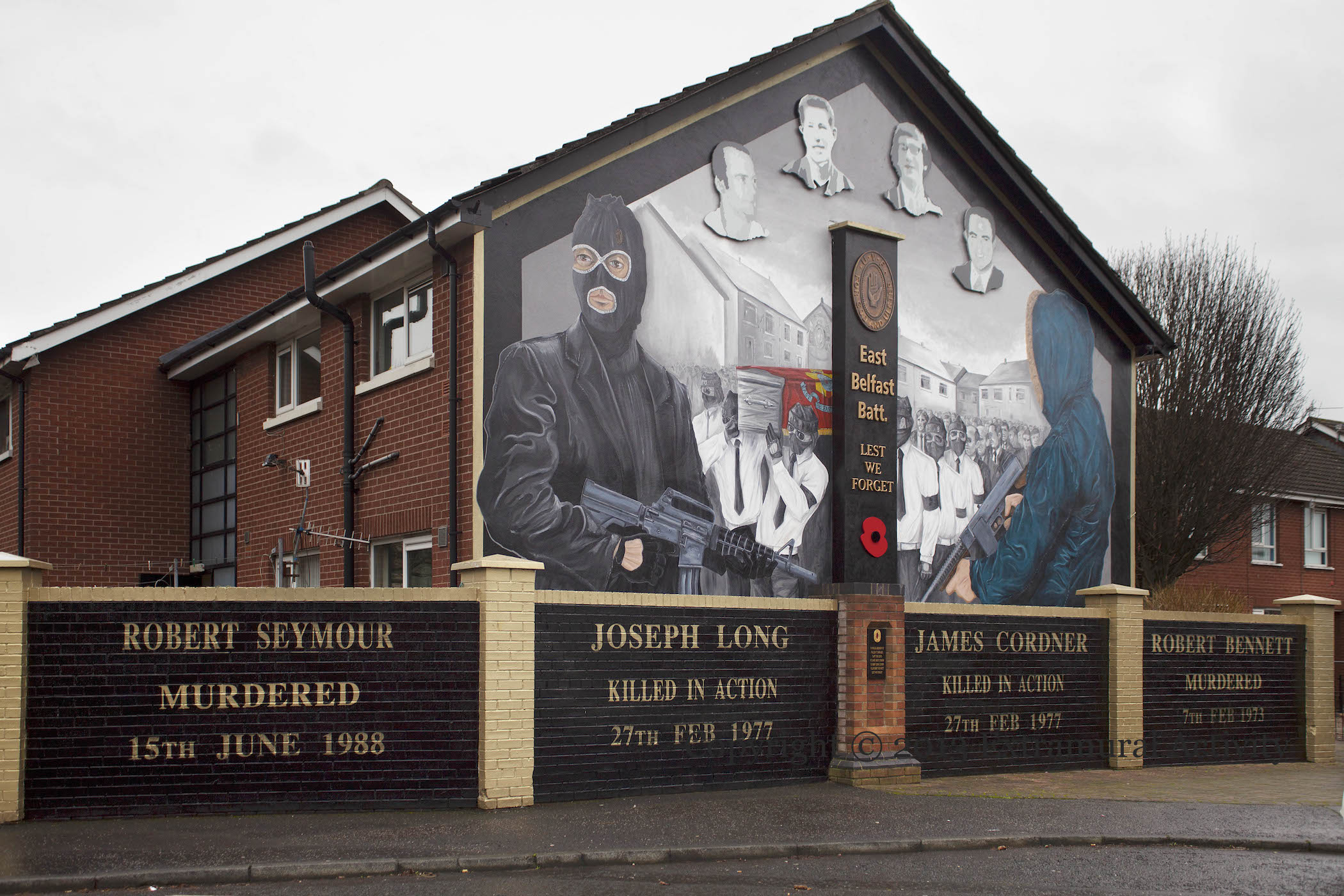
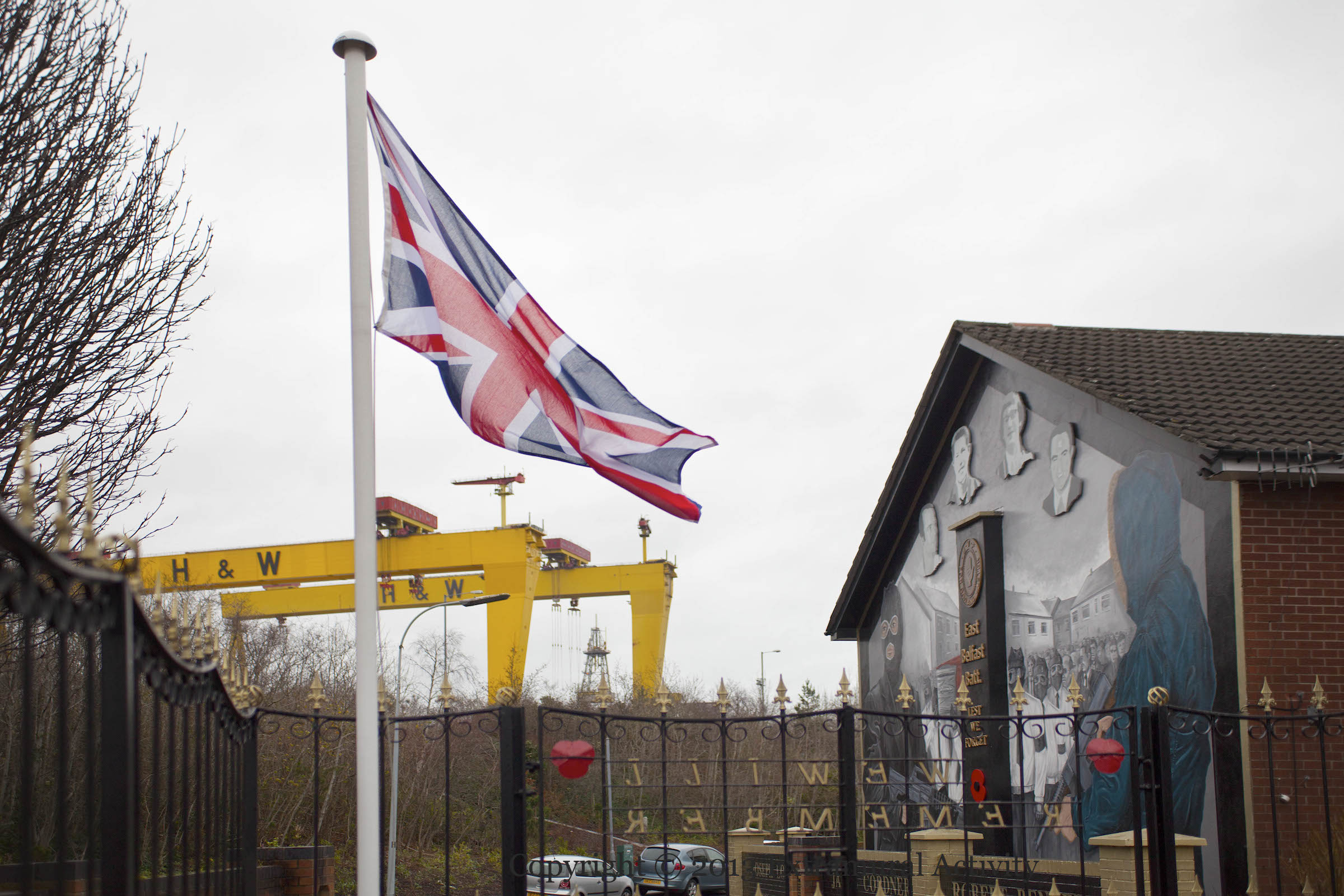
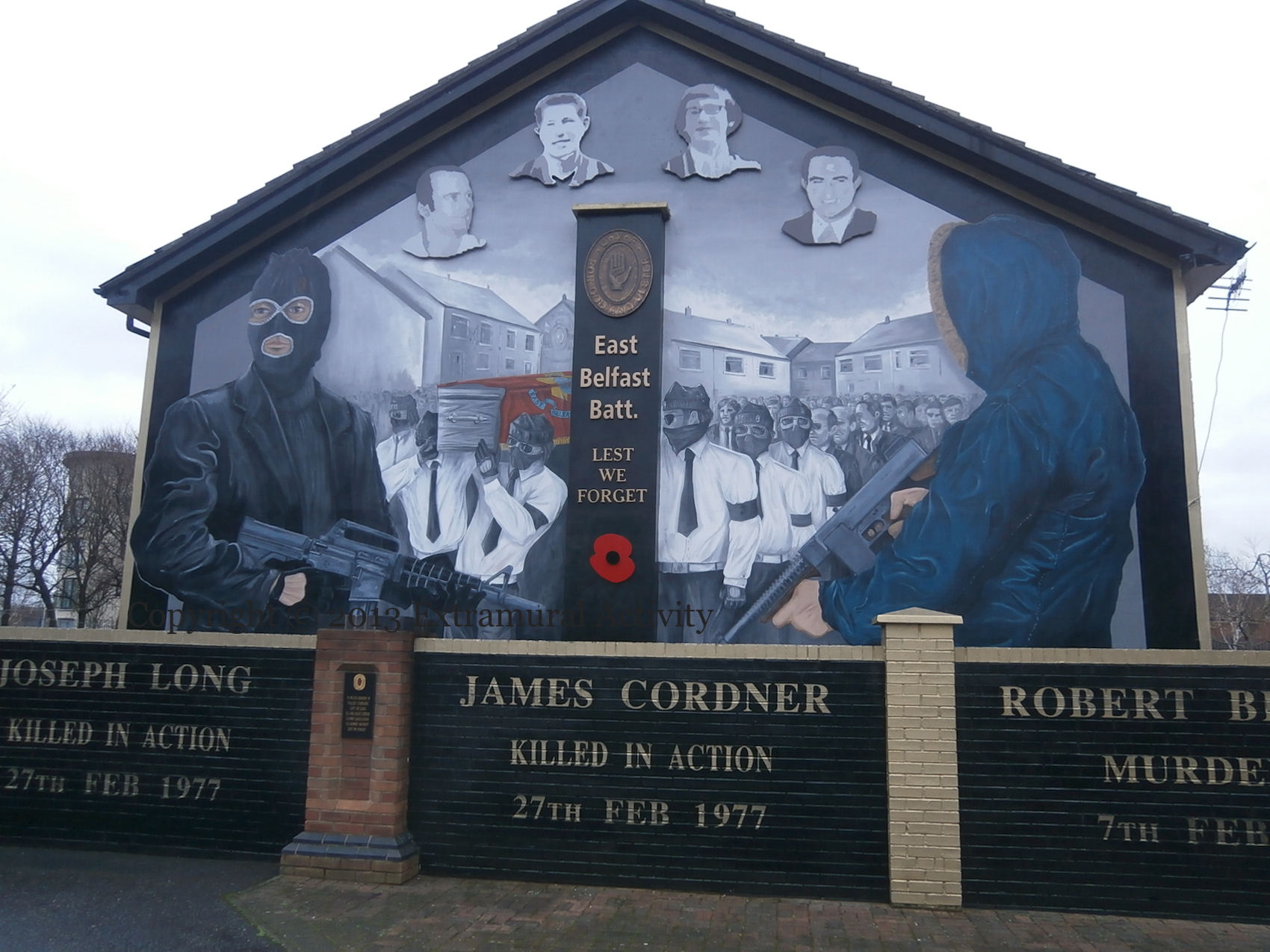
Here are four shots of a late 2011 UVF mural, with memorial wall, on Ballymacarrett Road in east Belfast. The four members named are Robert Seymour, shot dead by the PIRA; James Cordner and Joseph Long, who were killed in a premature explosion, and Robert Bennett, killed by the British Army during a riot. These same four are commemorated in the controversial 2013 mural featured in Years Of Sacrifice.
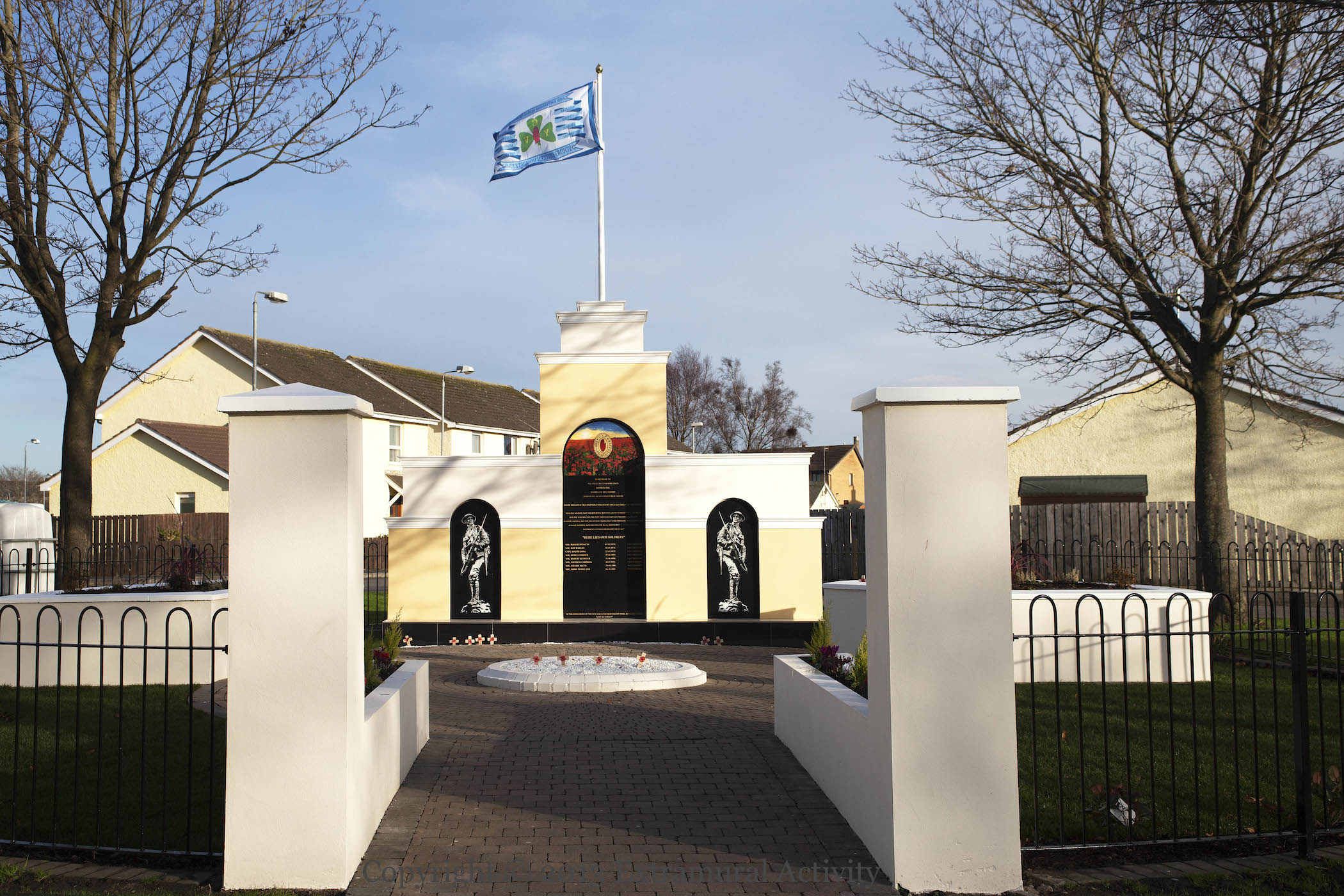
The nearby memorial (through the railings of which the third image, below, was taken) was constructed in 2003.
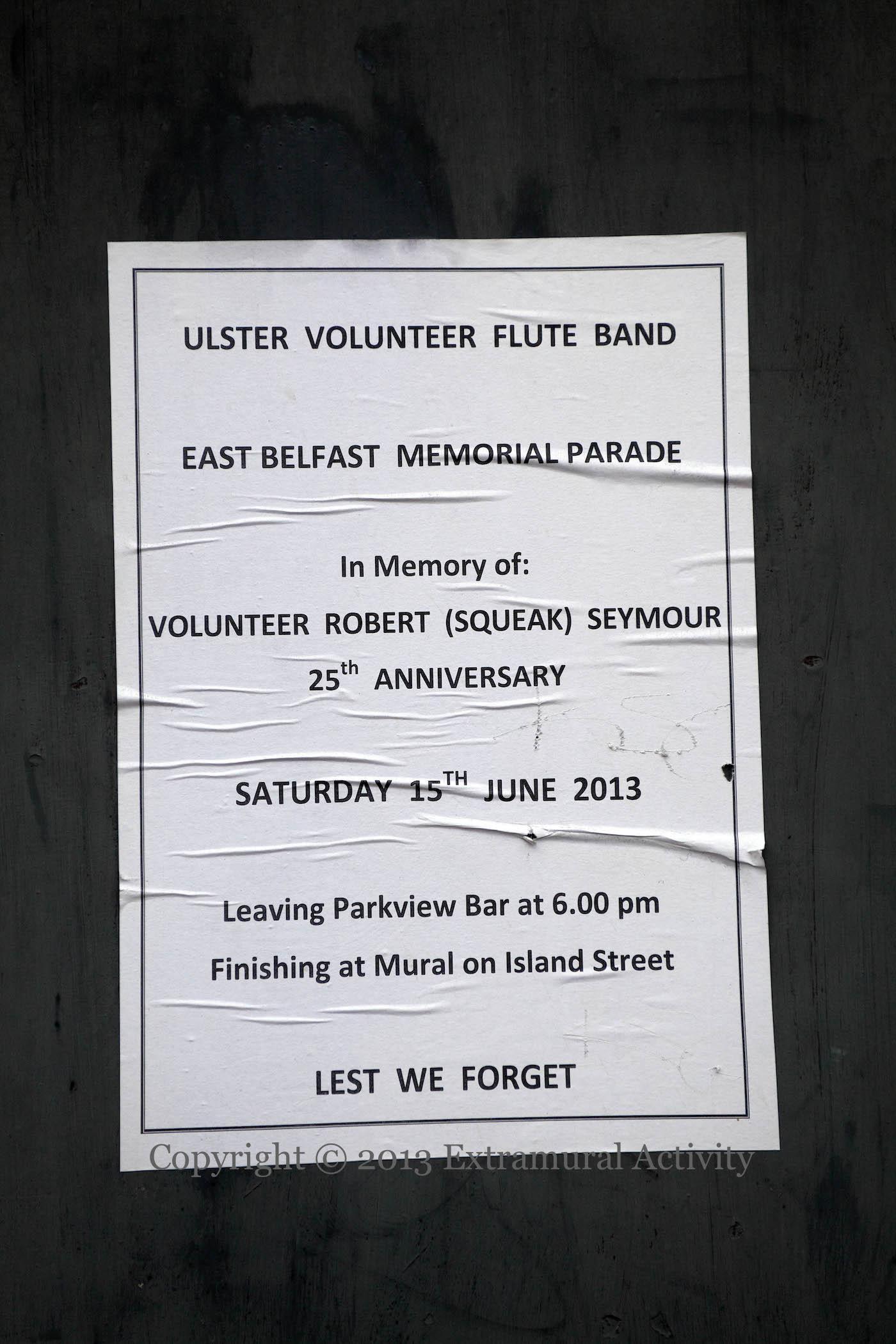
2013 saw the 25th anniversary of Seymour’s death; the final image, below, is of a flyer announcing a commemorative parade.
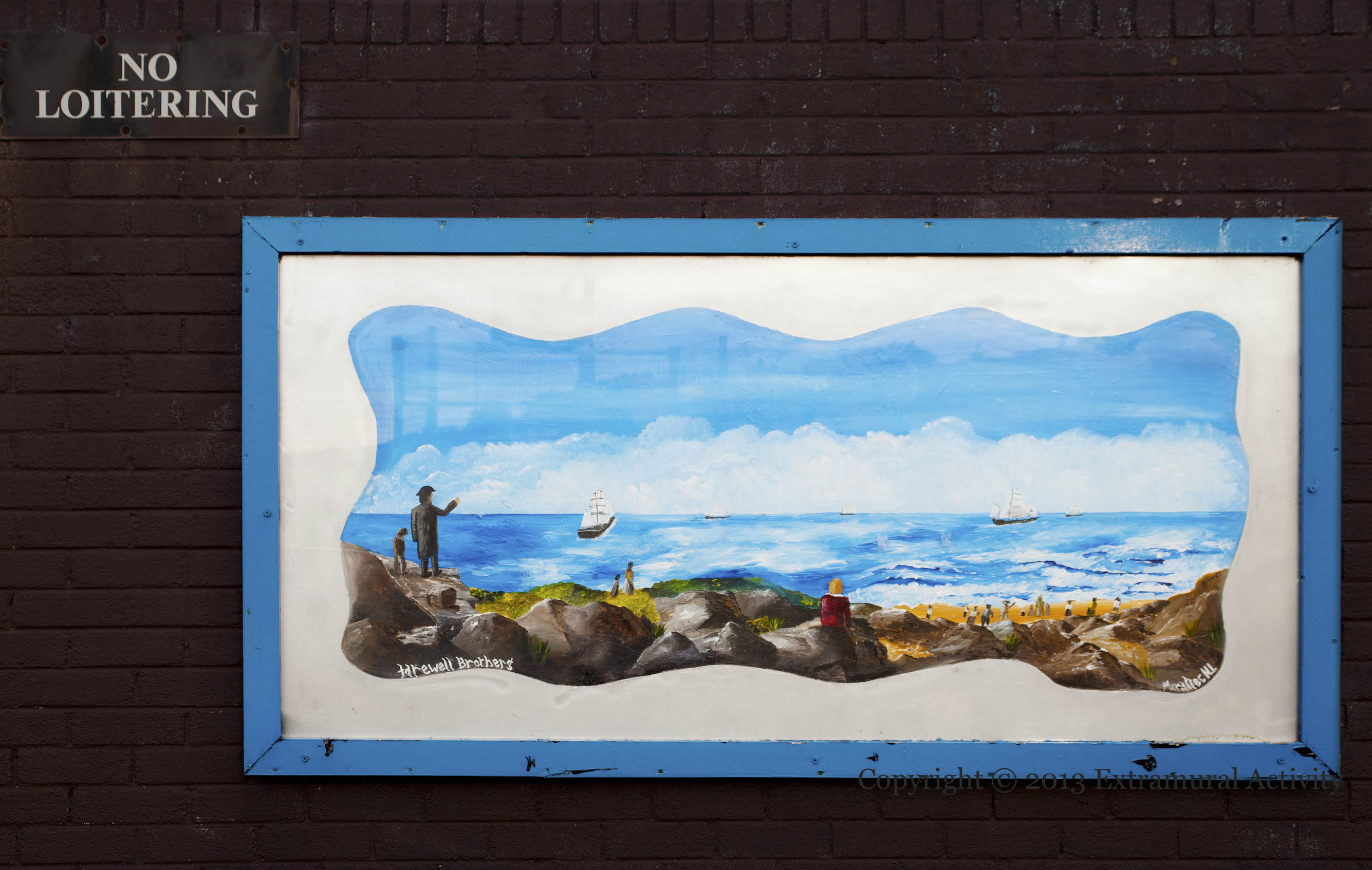
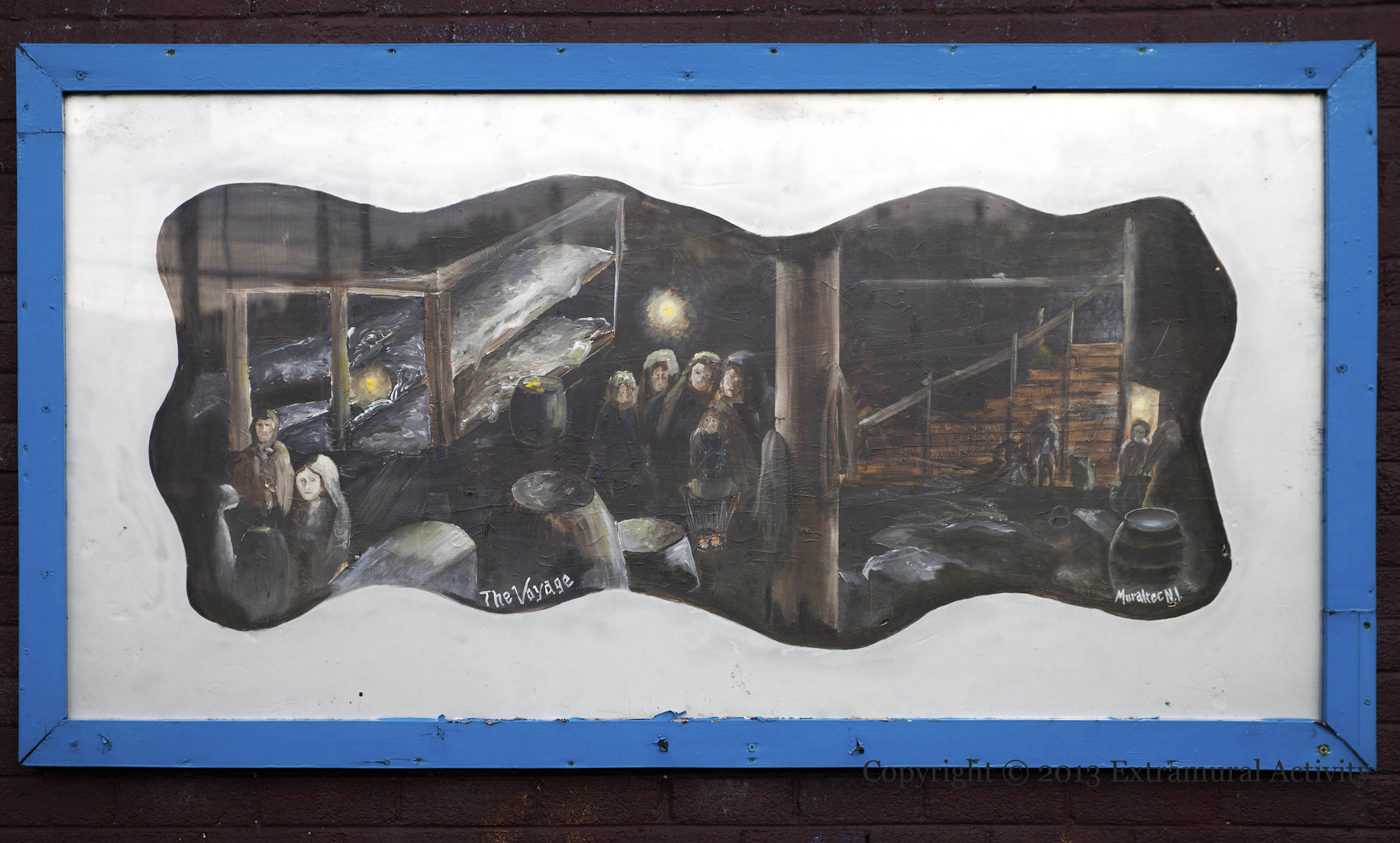
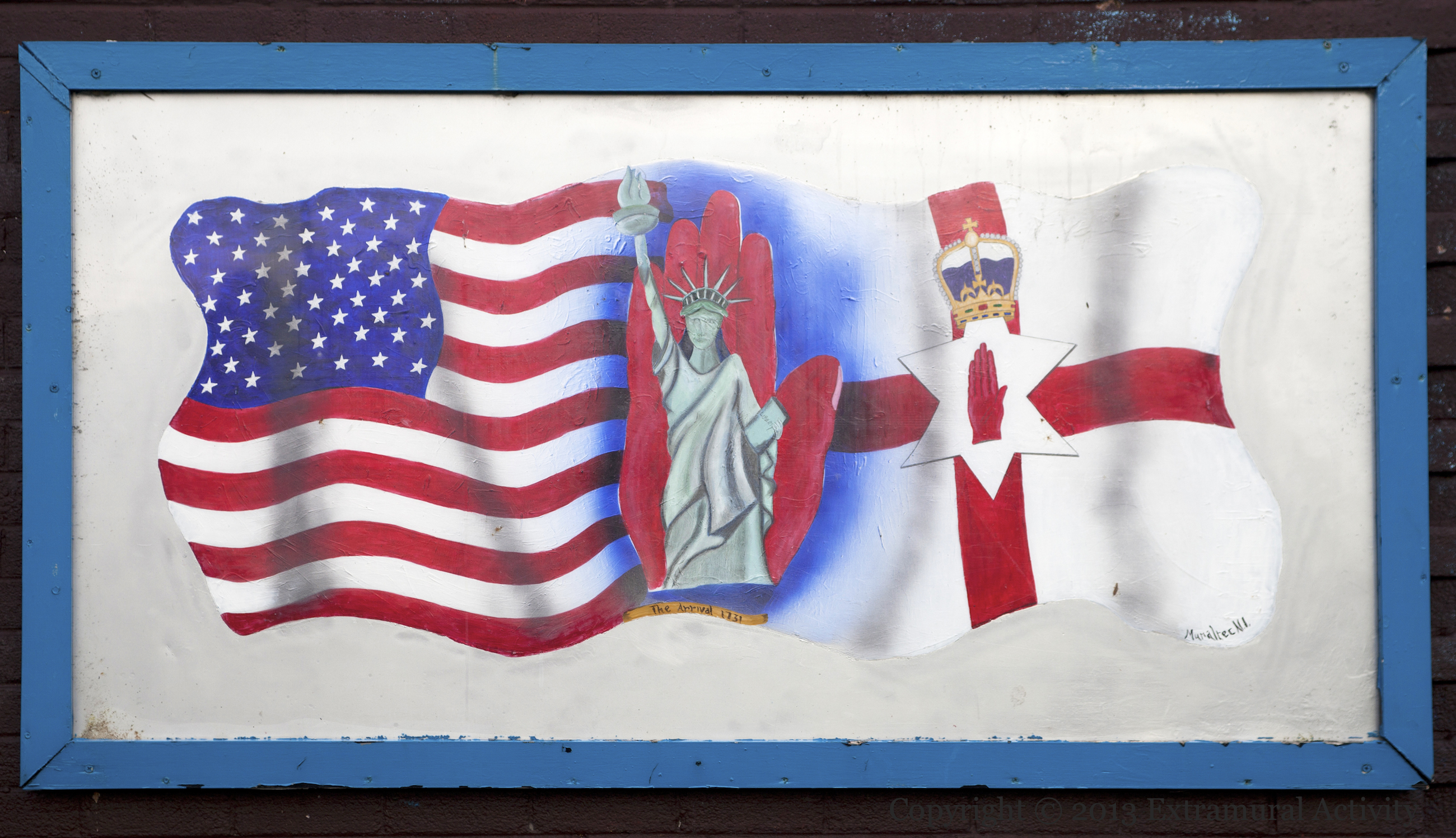
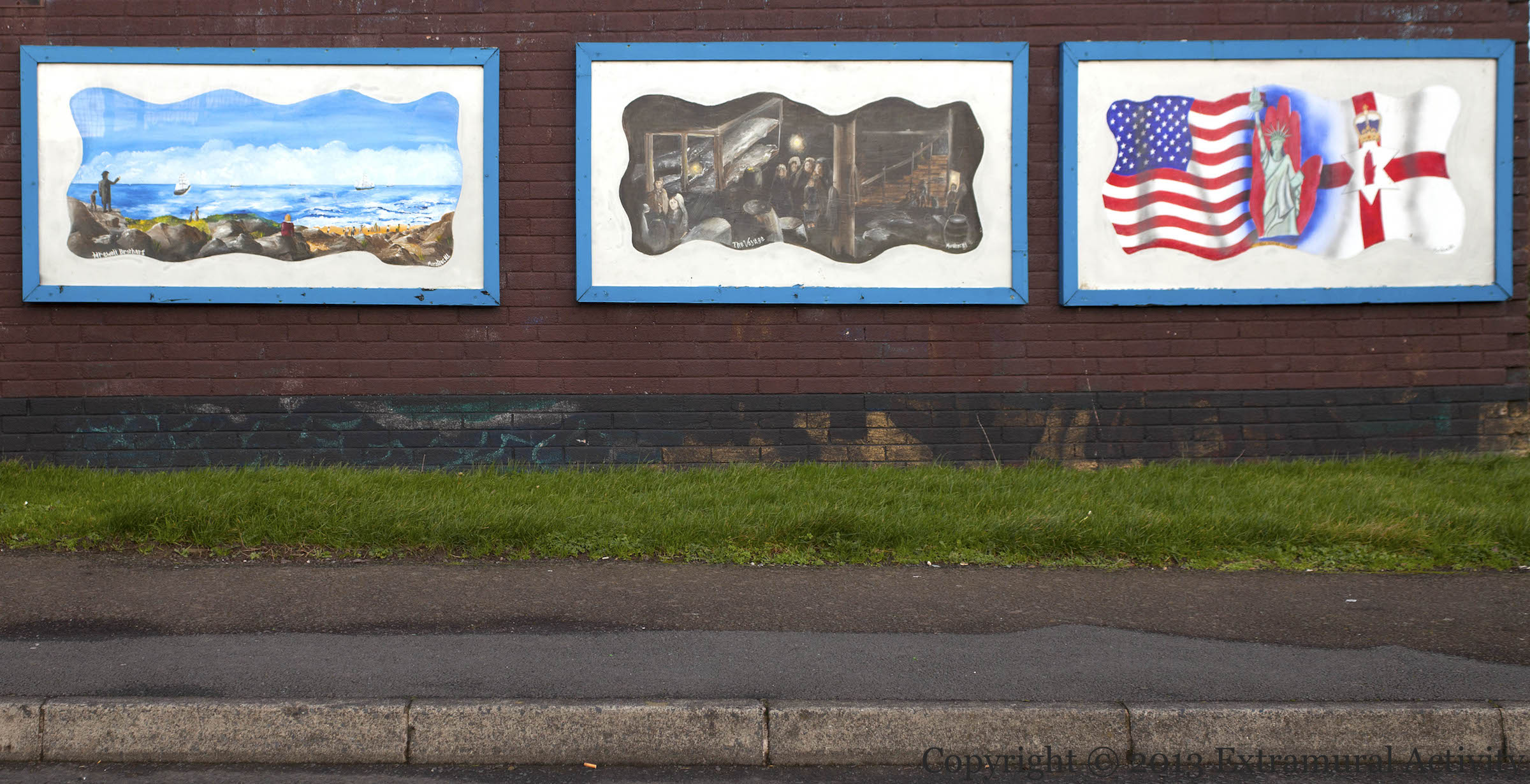
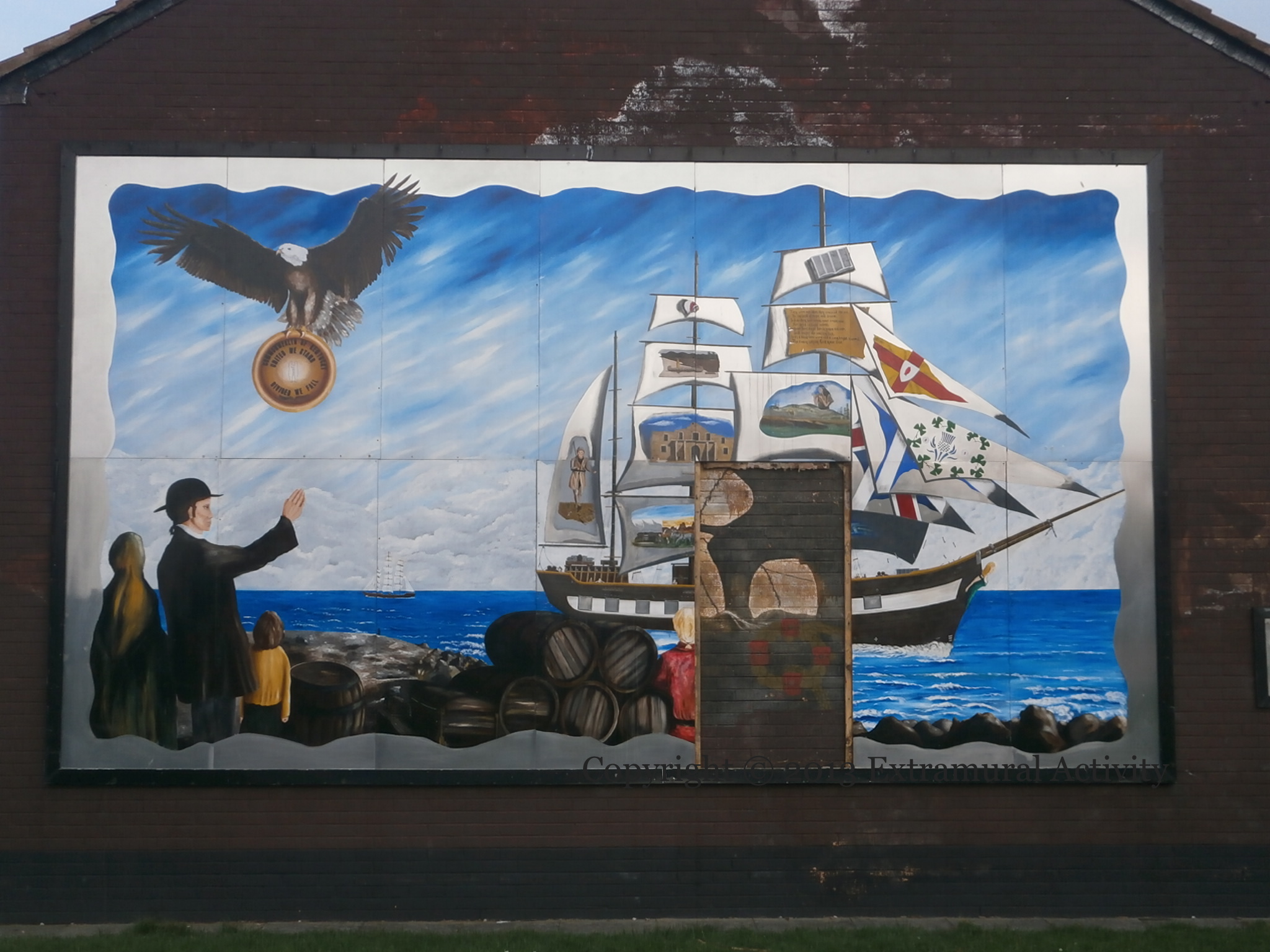
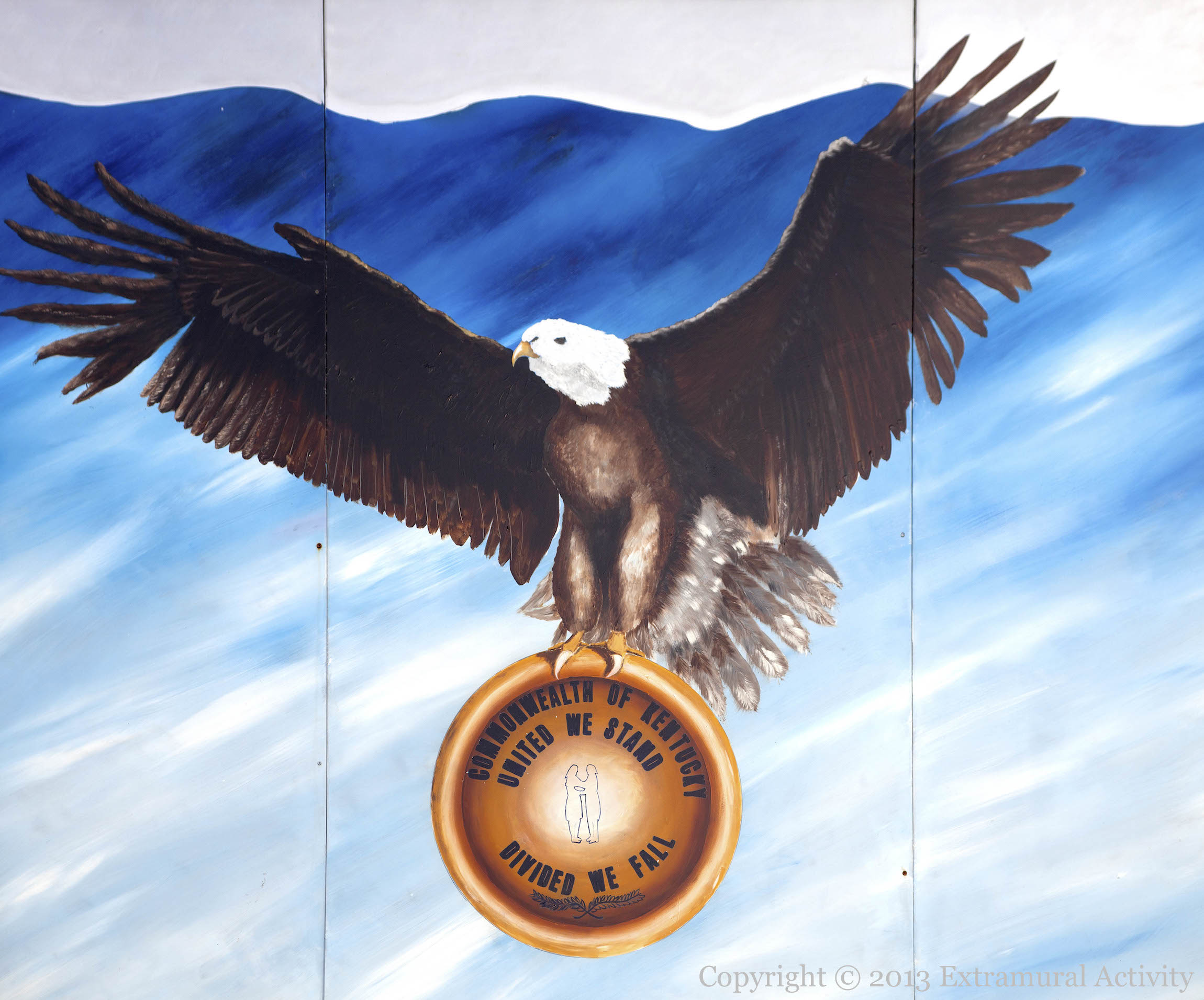
Three panels in Newtownards about the Scotch-Irish (or: Ulster Scots) emigration to the United States in the middle of the eighteenth century. Each of the three shows a stage of the experience: ‘Farewell Brothers’ shows family left behind looking out over the sea at the receding ships; ‘The Voyage’ shows sleeping conditions on-board; ‘The Arrival 1731’ shows the flags of the United States and Northern Ireland, with the statue of liberty superimposed upon a red hand.
The three panels are next to a larger, now damaged, board also portraying emigration to the States, shown in the final images below.
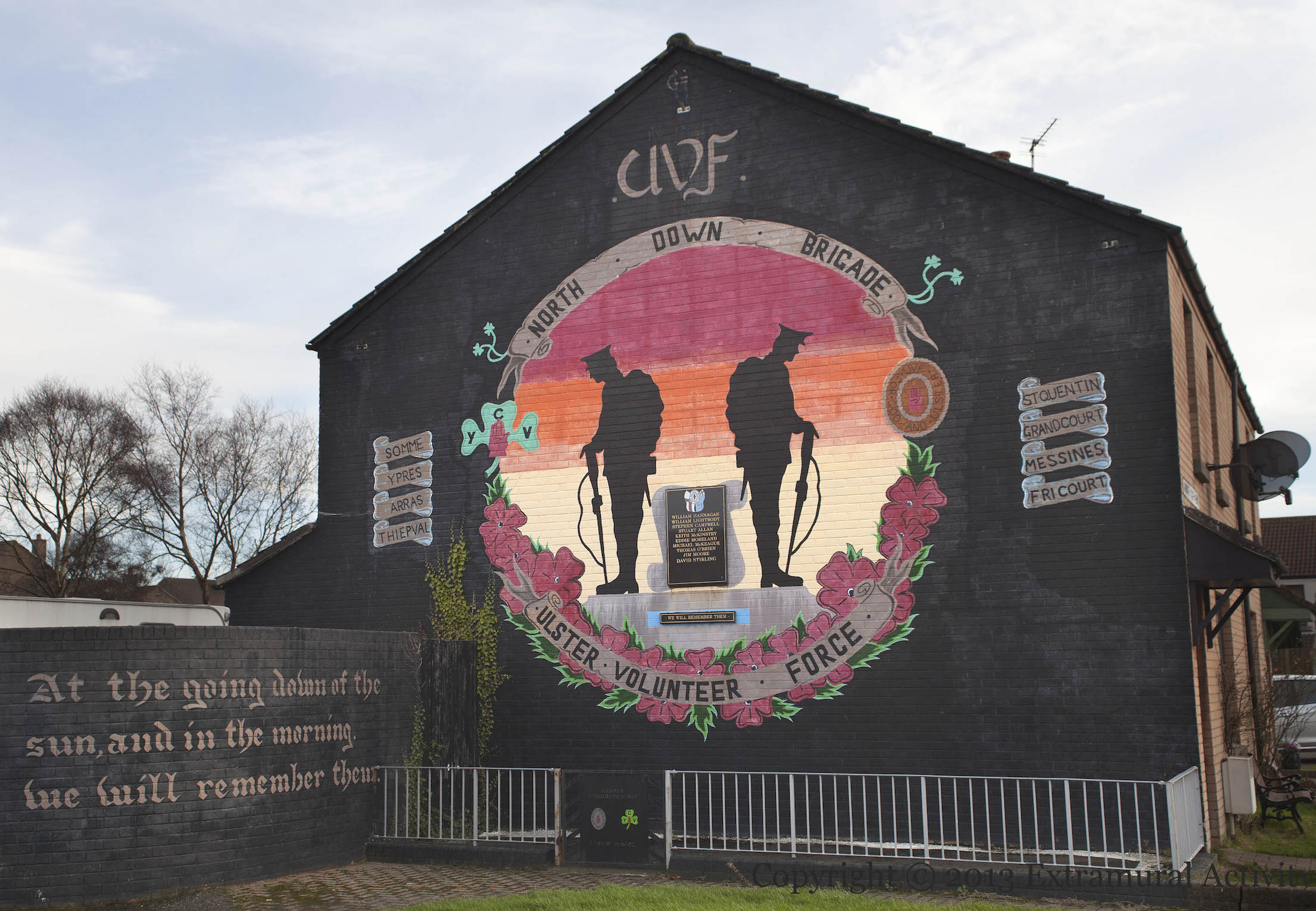
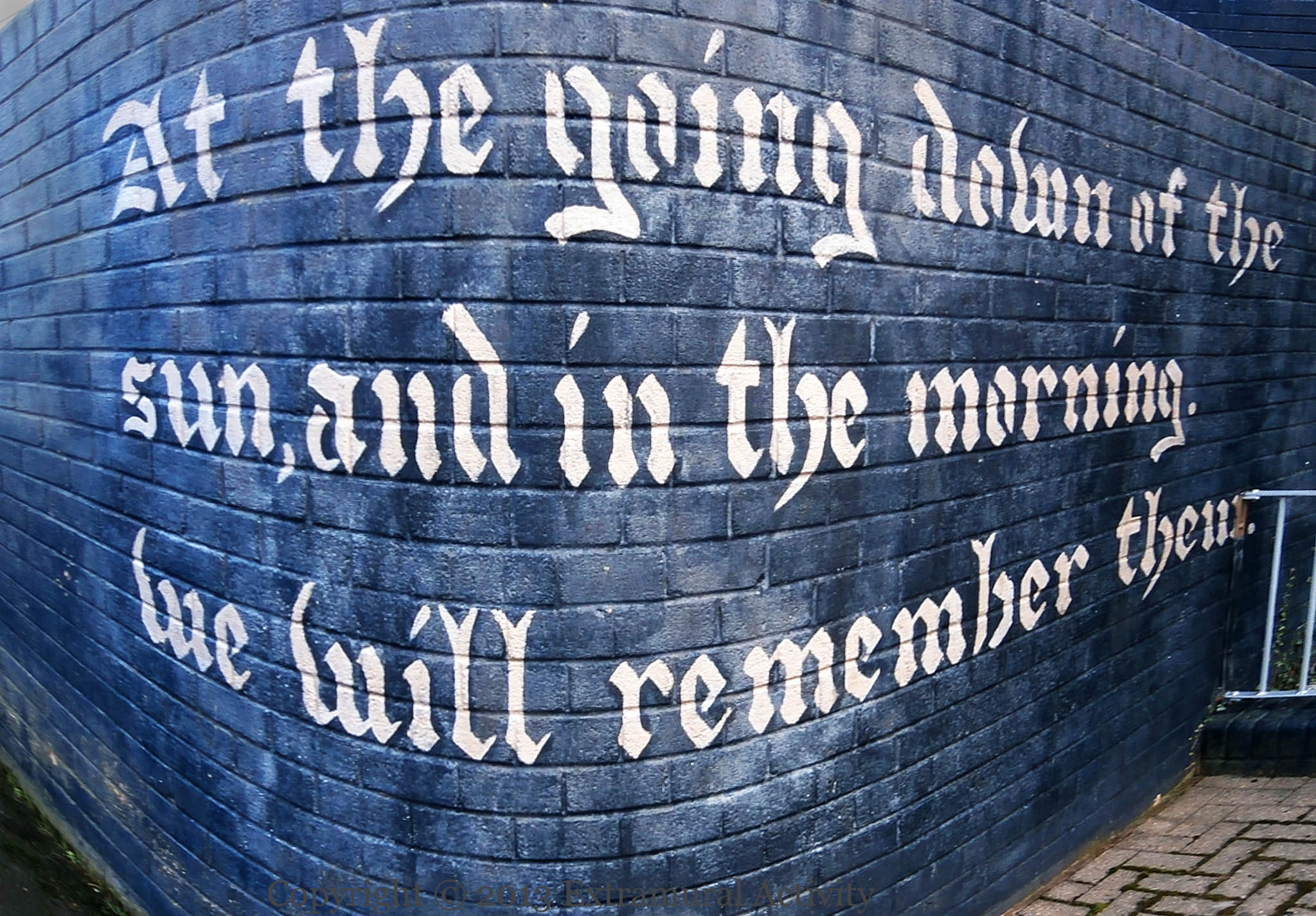
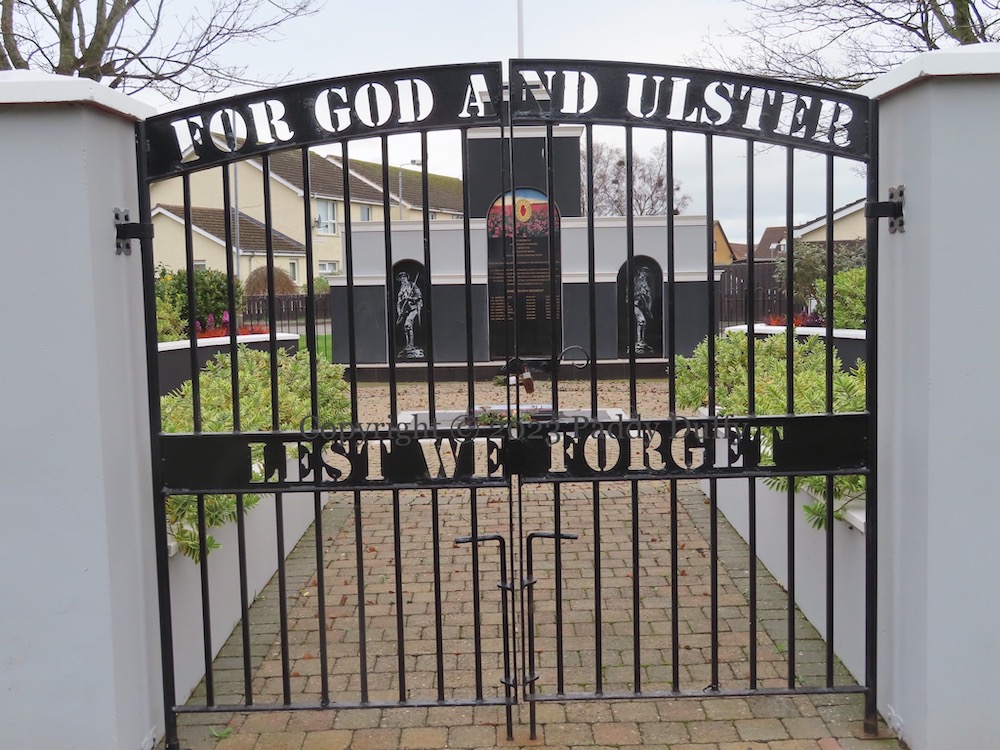
Mural in Newtownards to the Ulster Volunteer Force and Young Citizen Volunteers of the first world war shows two soldiers bent in reflection against an orange and red background, suggesting sunrise/sunset. “At the going down of the sun and in the morning, we will remember them.”
Close-ups of the wall to the left (featuring lines from Binyon’s For The Fallen) and the plaque in the middle can be found below.
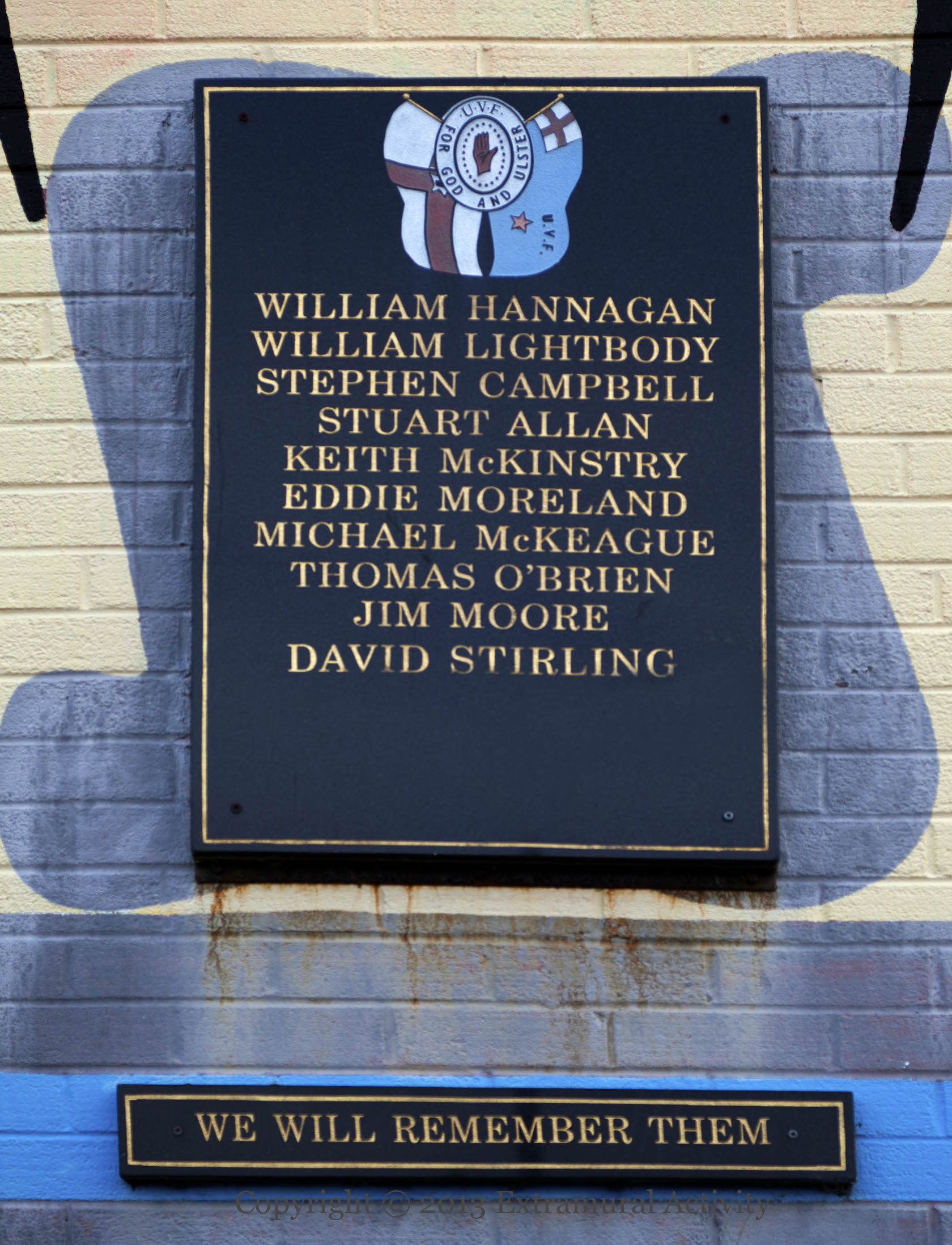
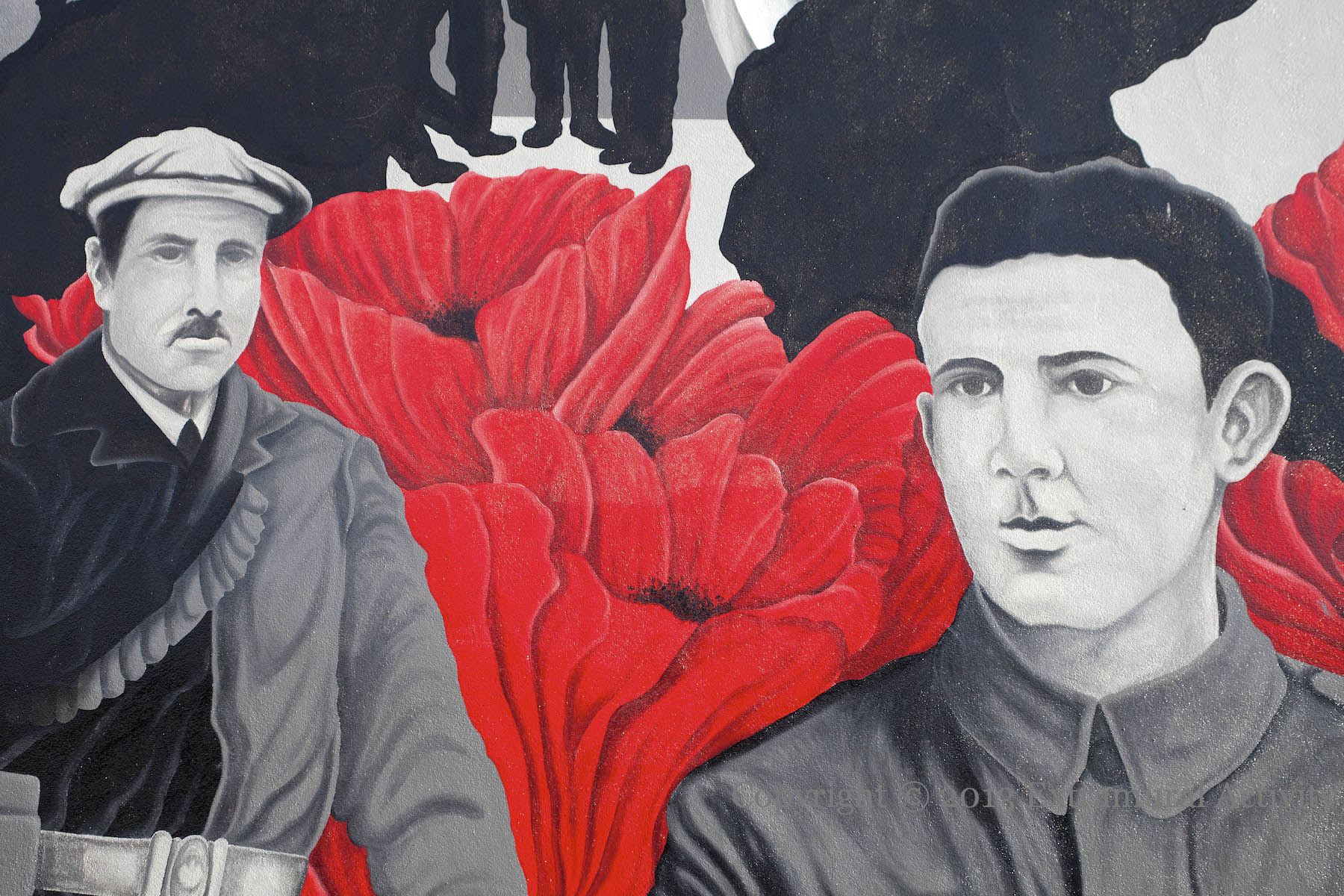
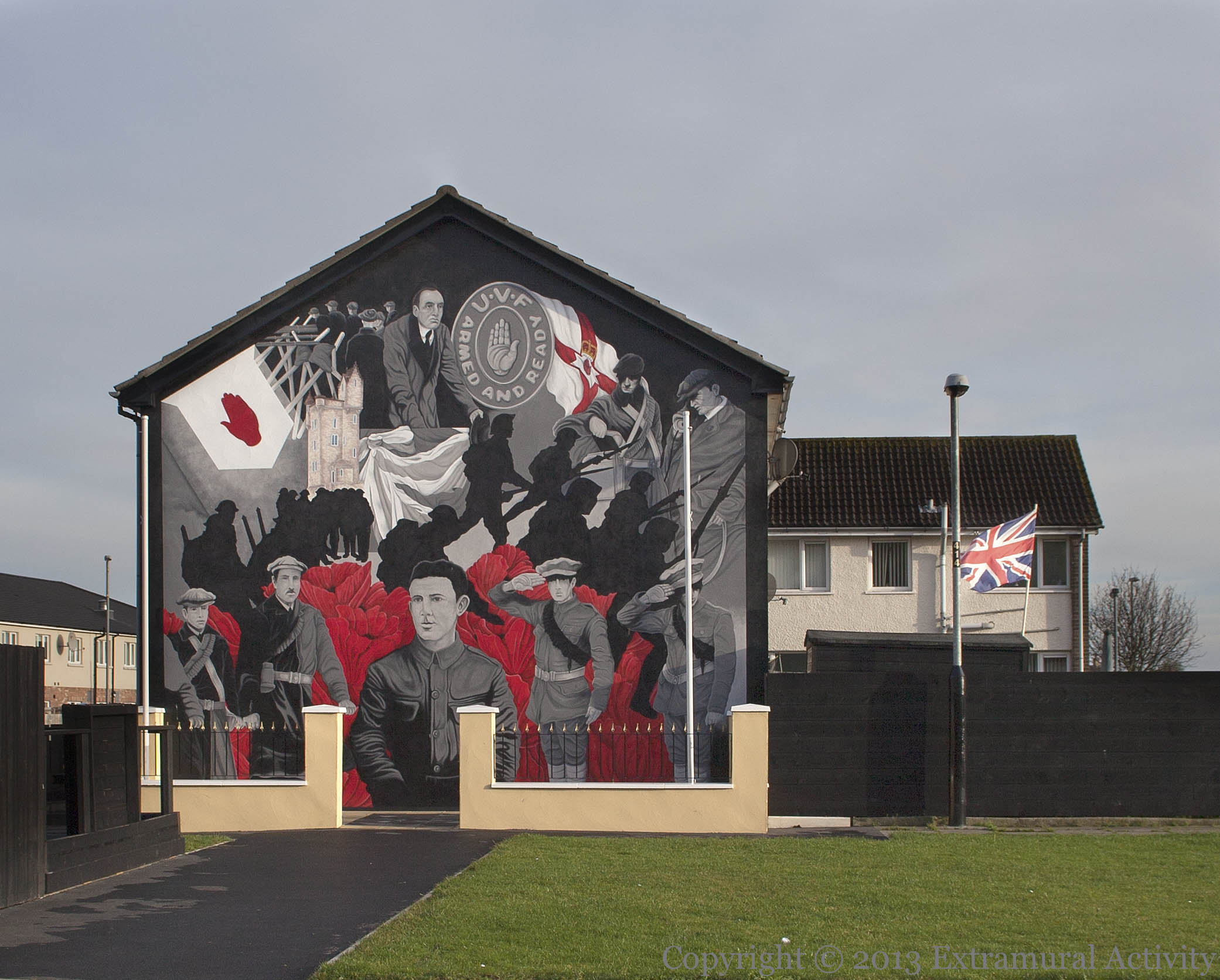
Above is a detail (wide shot below) of a new (June, 2013) mural in Newtonards’s Westwinds estate presenting a familiar UVF theme, that the Ulster Volunteers are an independent body, armed and ready to fight against whatever enemy is present, whether it be London’s decision to grant Home Rule (see Carson in the apex of the building and the figures in militia-style clothing) or the Germans in WWI (as represented by the uniformed figures and Thiepval tower) or any threat to Northern Ireland as a political entity (the Northern Irish flag flies in the top right).
 Seosamh Mac Coille Collection