Play

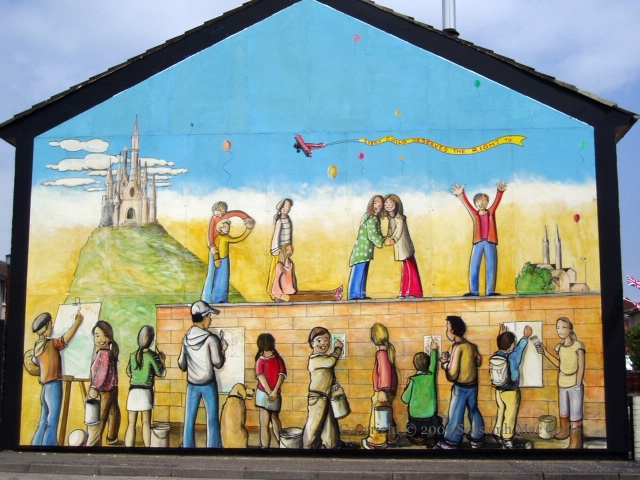
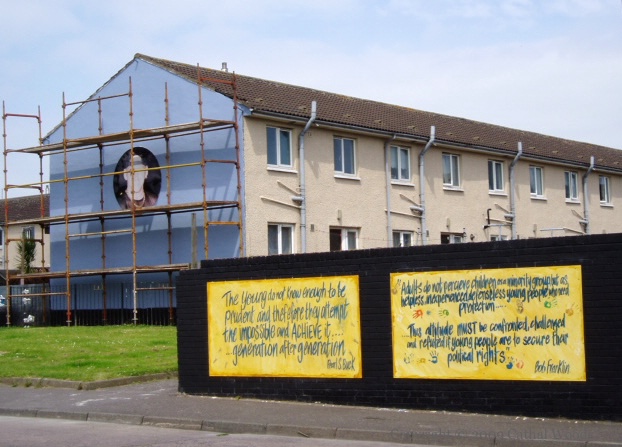
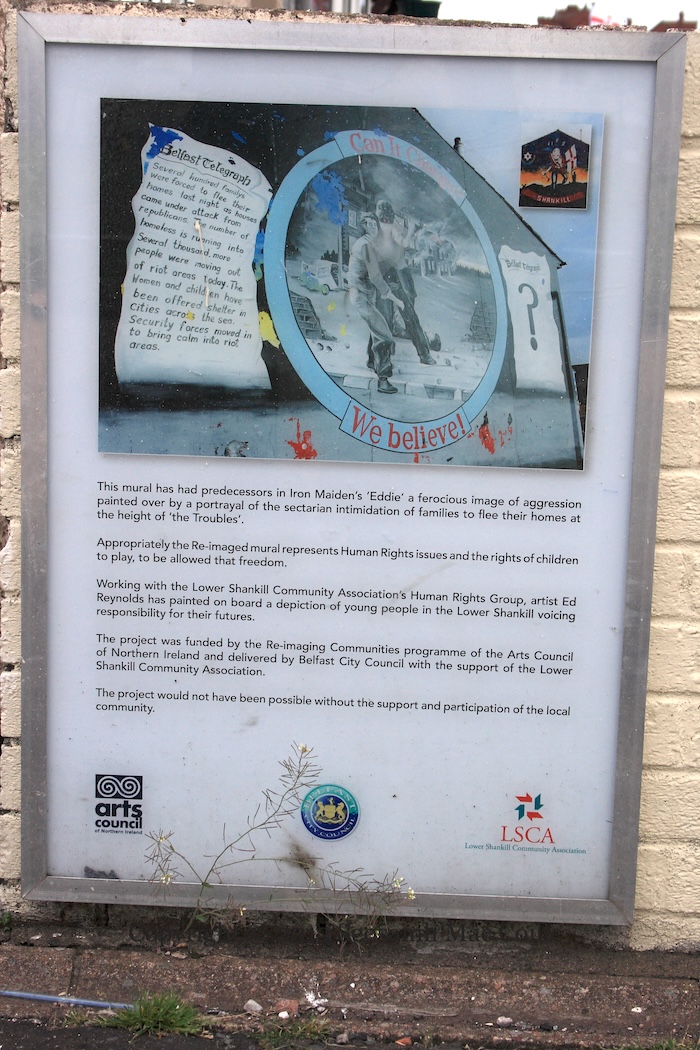
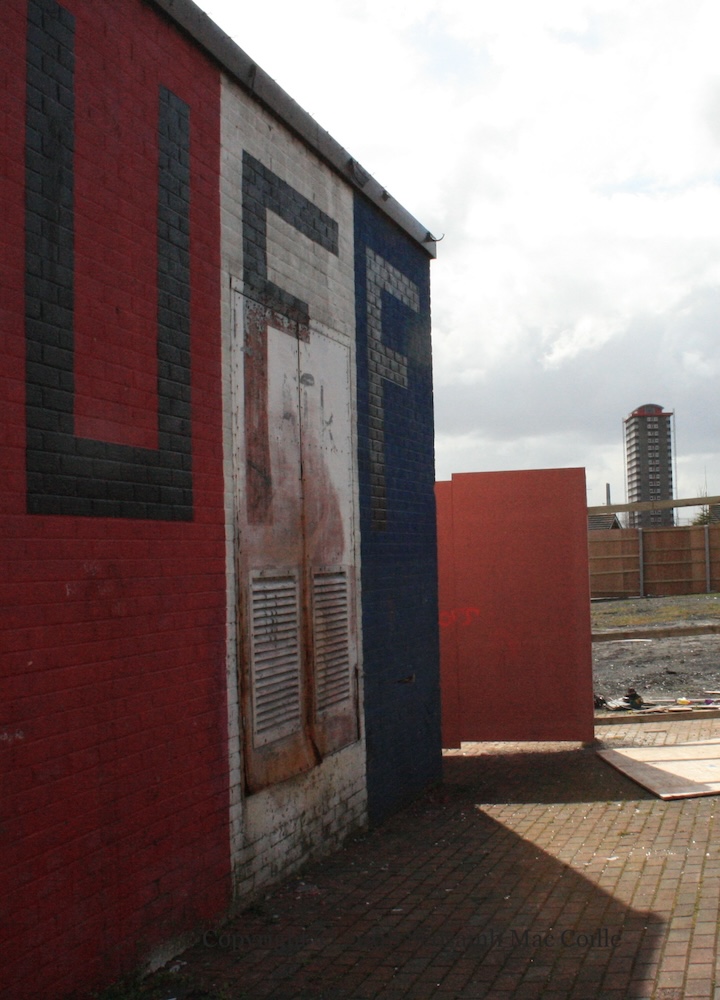
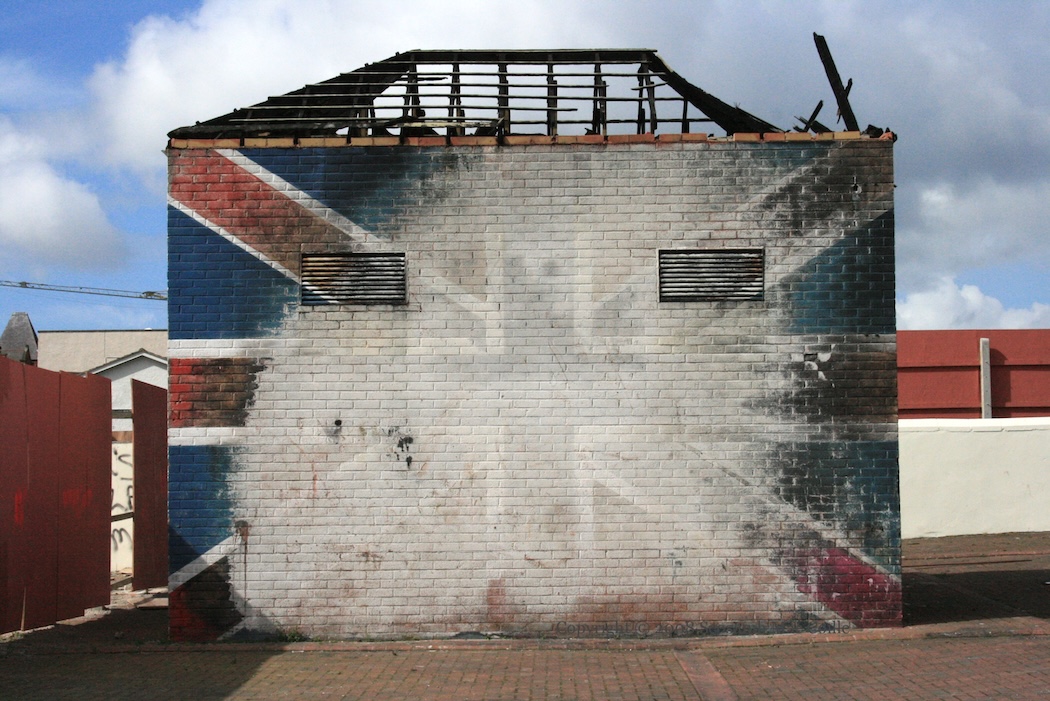
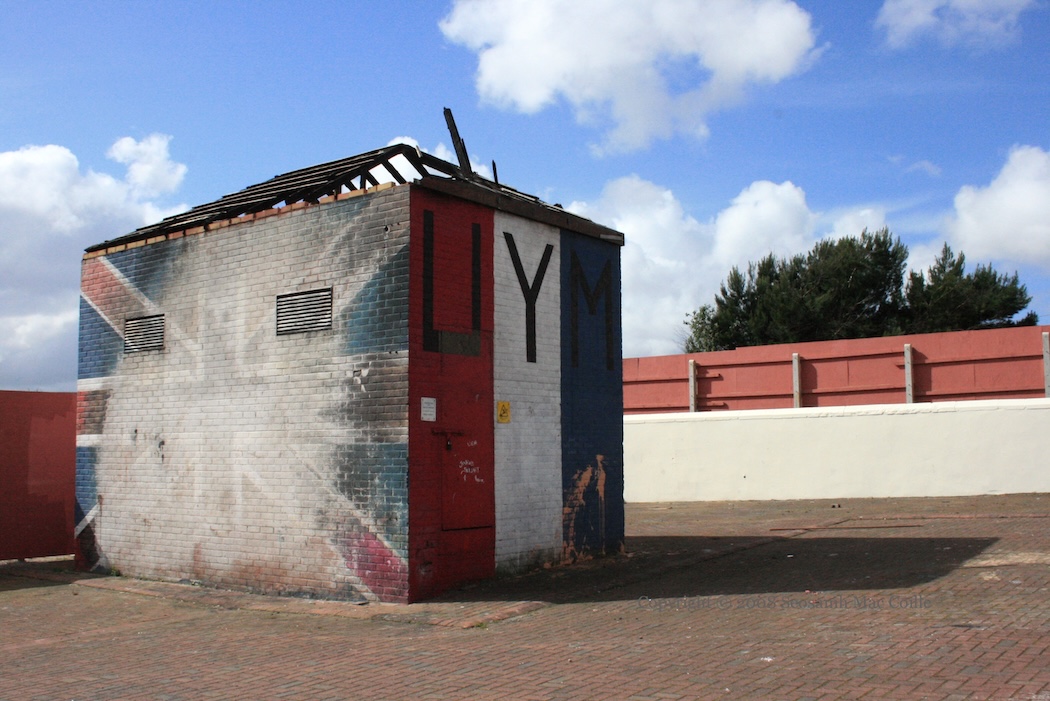
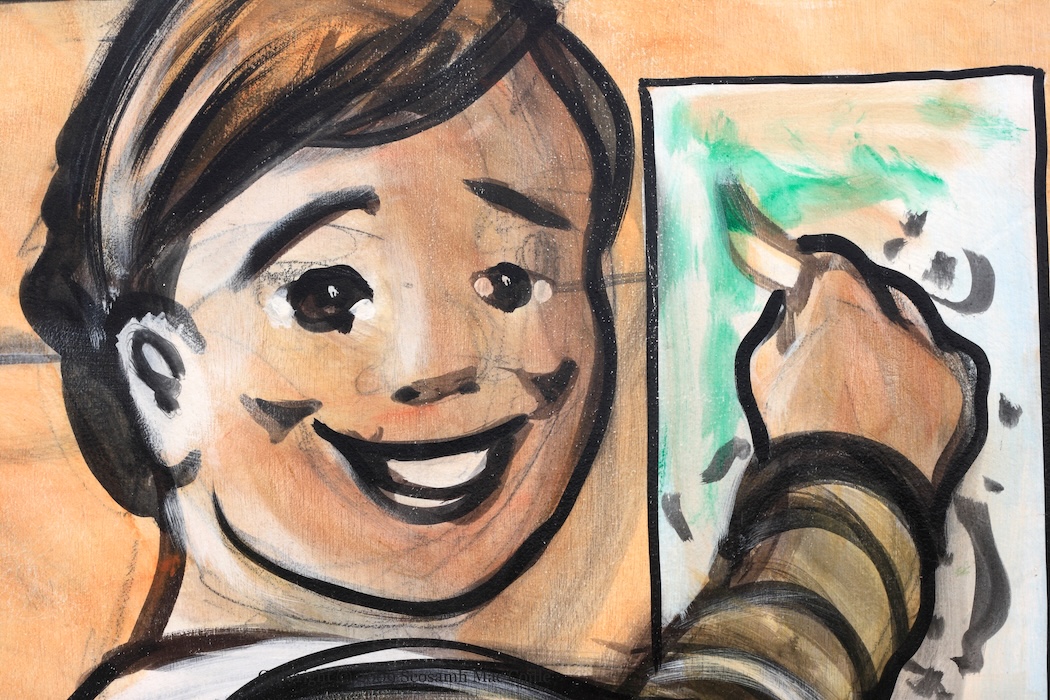
New ‘Play’ mural on Hopewell Crescent, painted by Ed Reynolds (steadyhanded.com), replacing the Can It Change? mural.

Two panels of text on the left-hand side-wall read “‘The young do not know enough to be prudent and therefore they attempt the impossible and achieve it … generation after generation’ – Pearl S Buck” and “‘Adults do not perceive children as a minority group but as helpless, inexperienced, defenseless young people who need protection … This attitude must be confronted, challenged and refuted if young people are to secure their political rights’ – Bob Franklin”

lower Shankill estate, west Belfast

Copyright © 2009
X05031 X00308 Seosamh Mac Coılle
X00321 Cathal Woods
Copyright © 2013
X01569 Seosamh Mac Coılle

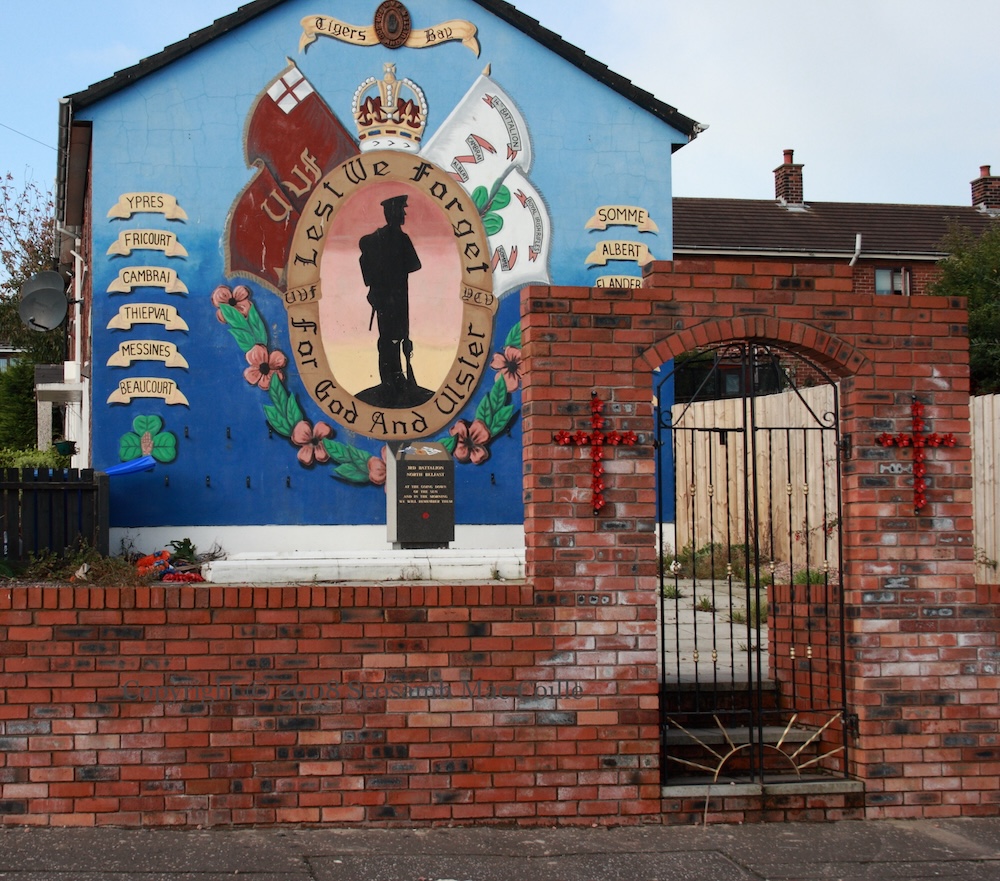
UVF 3rd Battalion North Belfast

The UVF memorial garden in Mount Vernon gets a new wall, with poppy crosses on either side of the gate (see the previous wall). On the mural, the battles that the 36th (Ulster) Division took part in are listed on either side of the silhouetted soldier: Ypres, Fricourt, Cambrai, Thiepval, Messines, Beaucourt, Somme, Albert, Flanders, St Quentin, Bailleul, Courtrai. Although the mural is in Mount Vernon, the scroll at the top says “Tiger’s Bay”. The memorial stone is to the “3rd battalion, north Belfast”. A plaque would later replace the poppy cross to the left of the gate.

Click image to enlarge
Copyright © 2008 Seosamh Mac Coılle
X05030

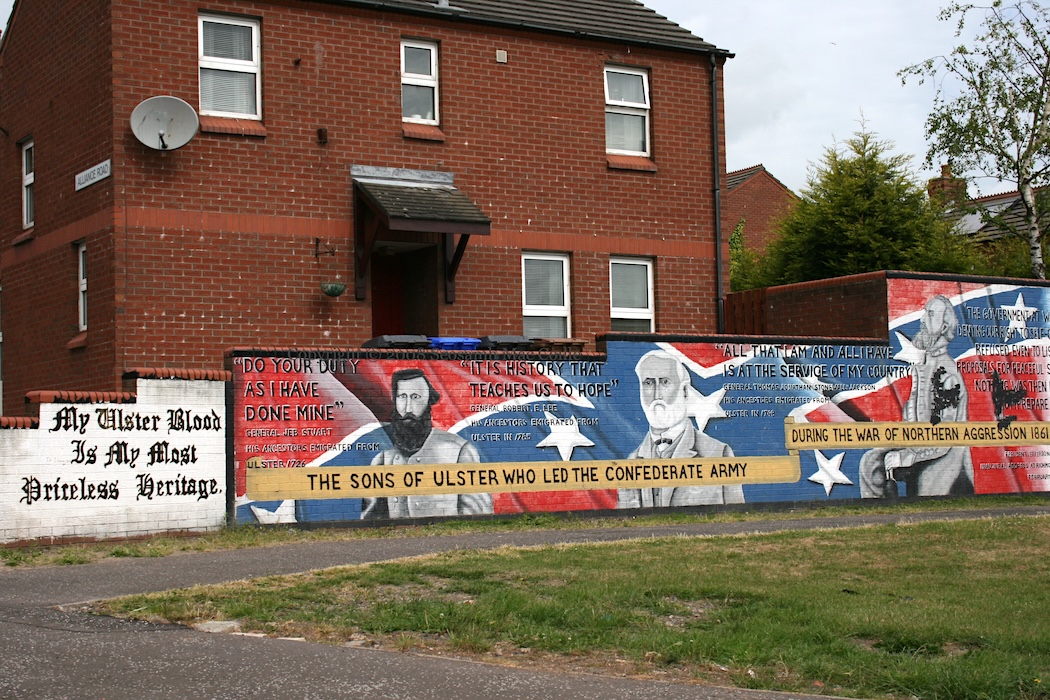
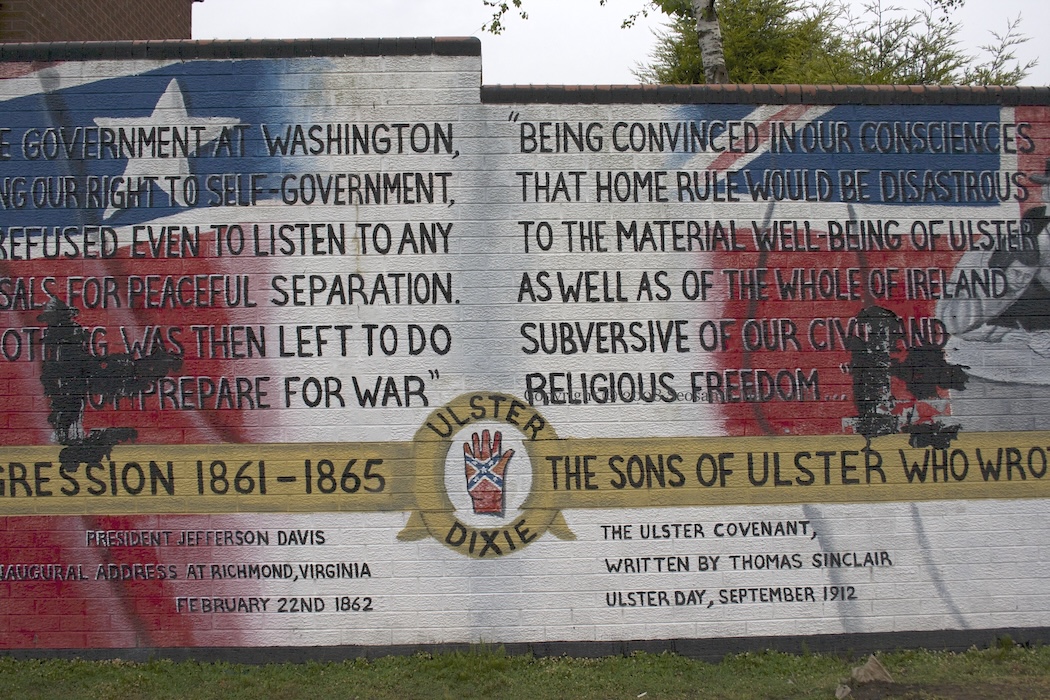
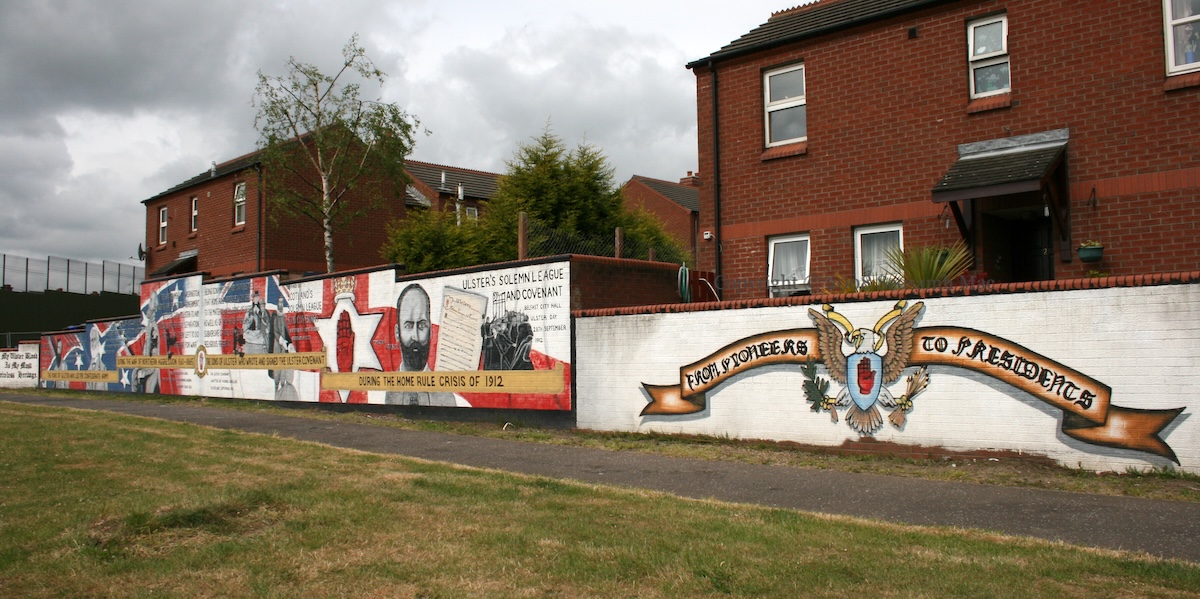
The War Of Northern Aggression

The confederate attempt to secede from the United States is here put in parallel with loyalist resistance to Home Rule. The Visual History page on Ulster-Scots Murals contains an attempt to understand the logic of this mural.

Various “sons of Ulster who led the confederate army” “during the War of Northern Aggression” [a.k.a. the Civil War] are quoted in the mural:

  • “Do your duty as I have done mine – General [James Ewell Brown] Jeb Stuart”
  • “It is history that teaches us to hope – General Robert E Lee”
  • “All that I am and all that I have is at the service of my country – General Thomas Jonathan Stonewall Jackson”
  • “The government at Washington denying our right to self-government, refused even to listen to any proposals for peaceful separation. Nothing was then left to do but prepare for war – President Jefferson Davis, inaugural address at Richmond, Virginia, February 22nd 1862”.
  • “My Ulster blood is my most priceless heritage” on the left-most panel is from James Buchanan.

The sons of Ulster who wrote and signed the Ulster Covenant during the Home Rule crisis of 1912 are described in this quote:

“Being convinced in our consciences that Home Rule would be disastrous to the material well-being of Ulster as well as the whole of Ireland, subversive of our civil and religious freedom … – The Ulster Covenant, written by Thomas Sinclair, Ulster Day, September 1912 inspired by Scotland’s Solemn League and Covenant, Greyfriar’s Churchyard, Edinburgh 1638.”

The right-most panel reads, “From pioneers to Presidents”. Murals under this theme – including two of Buchanan – were painted in 1999 (Belfast | Londonderry). This mural dates back to 2005 and perhaps earlier, part of a second wave of Ulster Scots murals that included Davy Crockett in Ballymena (2002), a gallery of famous famous faces in Newtownards (2005), and Andrew Jackson in the Shankill (c. 2007). See Visual History 08.

See also: the Confederate flag flying in Cluan Place | a confederate battle flag in Ballymacarett.

Click image to enlarge
Copyright © 2008 Seosamh Mac Coılle
X00257 X00258 X00259
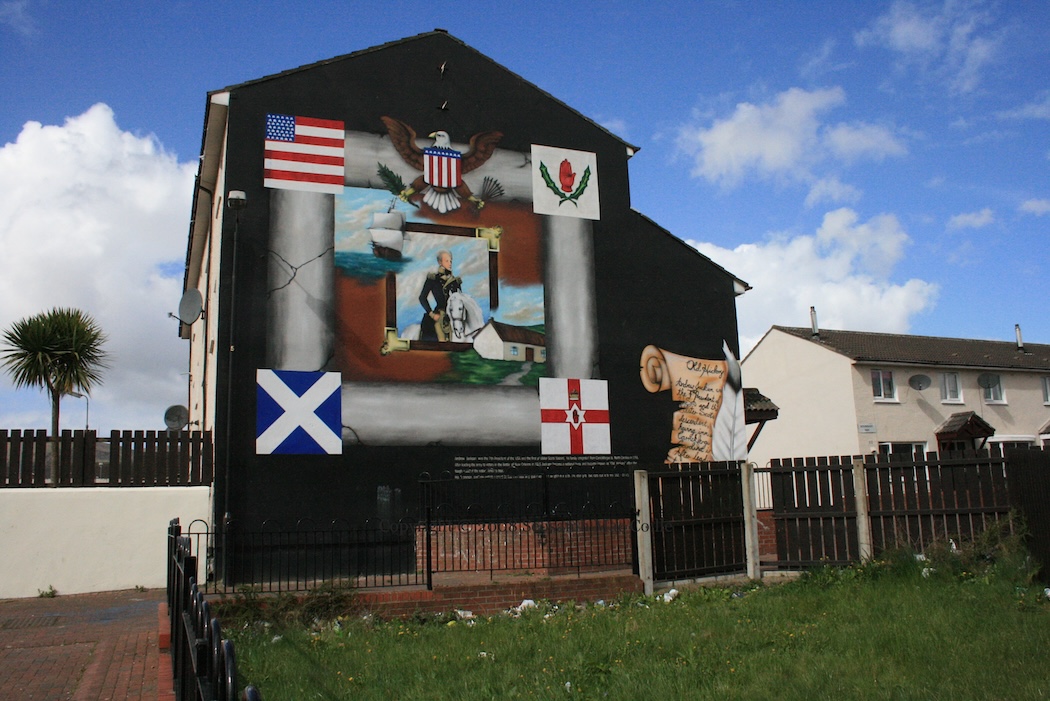
Andrew Jackson

“Andrew Jackson was the 7th President of the USA and the first of Ulster-Scots descent, his family emigrated from Carrickfergus to North Carolina in 1765. After leading the army to victory in the Battle Of New Orleans in 1815 Jackson became a national hero and became known as “Old Hickory” after the tough wood of the native American tree. His “common man” credentials earned Jackson a massive popular vote and swept him into the Presidency for two consecutive terms (1829-1837).” He also hated the British, owned slaves, and signed the Indian Removal Act of 1830, which led to the infamous “Trail of Tears” (Irish Times).

See also the Visual History page on Ulster-Scots murals.

Click image to enlarge
Copyright © 2008 Seosamh Mac Coılle
X00285

William Bucky McCullough

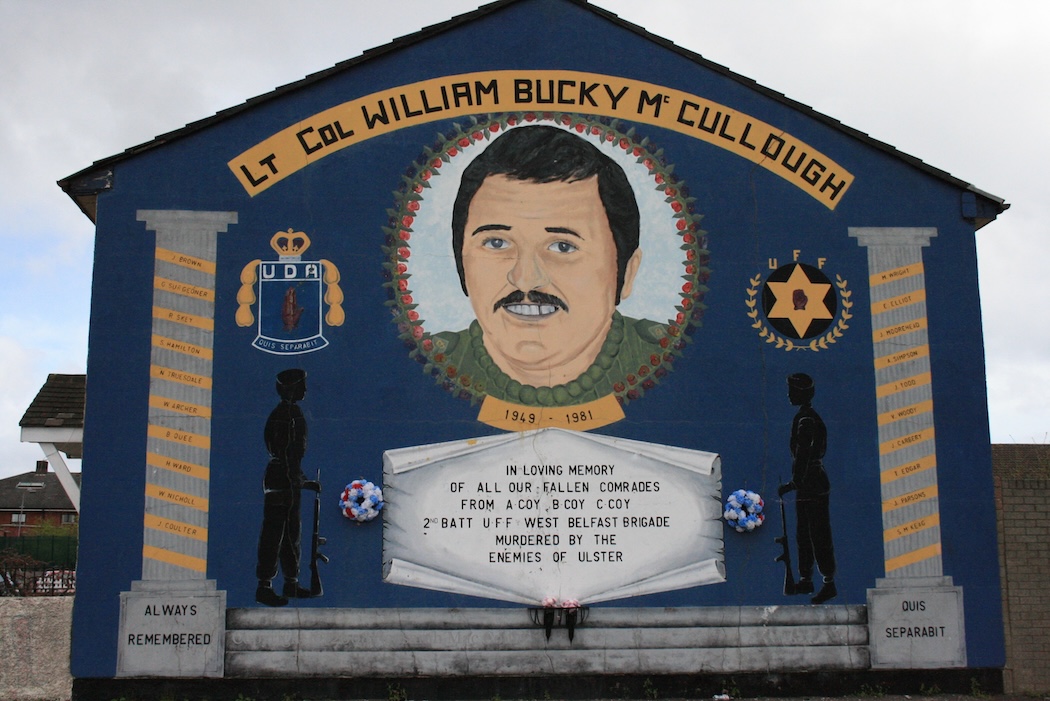
“In loving memory of all our fallen comrades from A Coy, B Coy, C Coy, 2nd Batt UFF West Belfast Brigade. Murdered by the enemies of Ulster.” UDA Lieutenant-Colonel McCullough was killed by the INLA on October 16th, 1981, outside his home in Denmark Street (out of frame to the right), on information supplied by fellow UDA member James Craig, who feared that McCullough would expose his embezzling of UDA funds.

Click image to enlarge
Copyright © 2008 Seosamh Mac Coılle
X00241