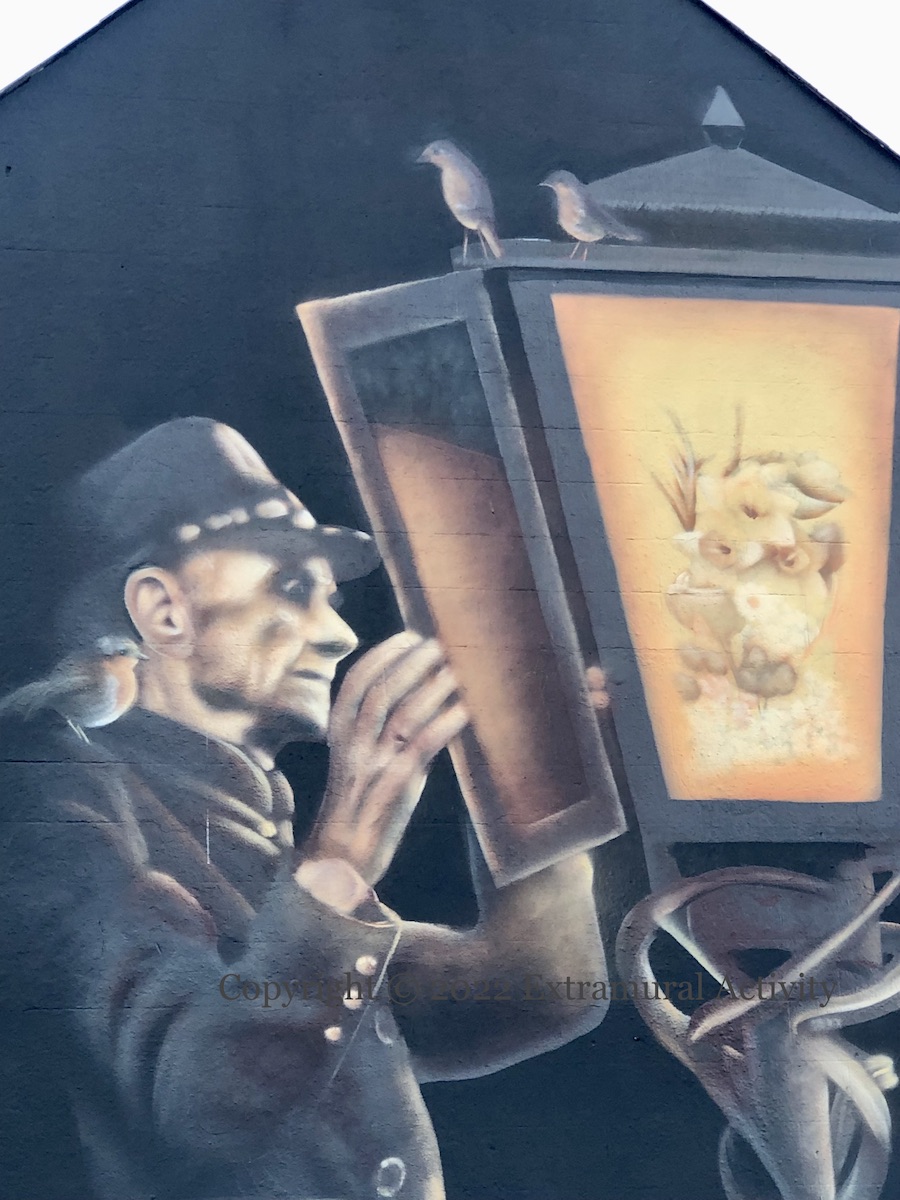
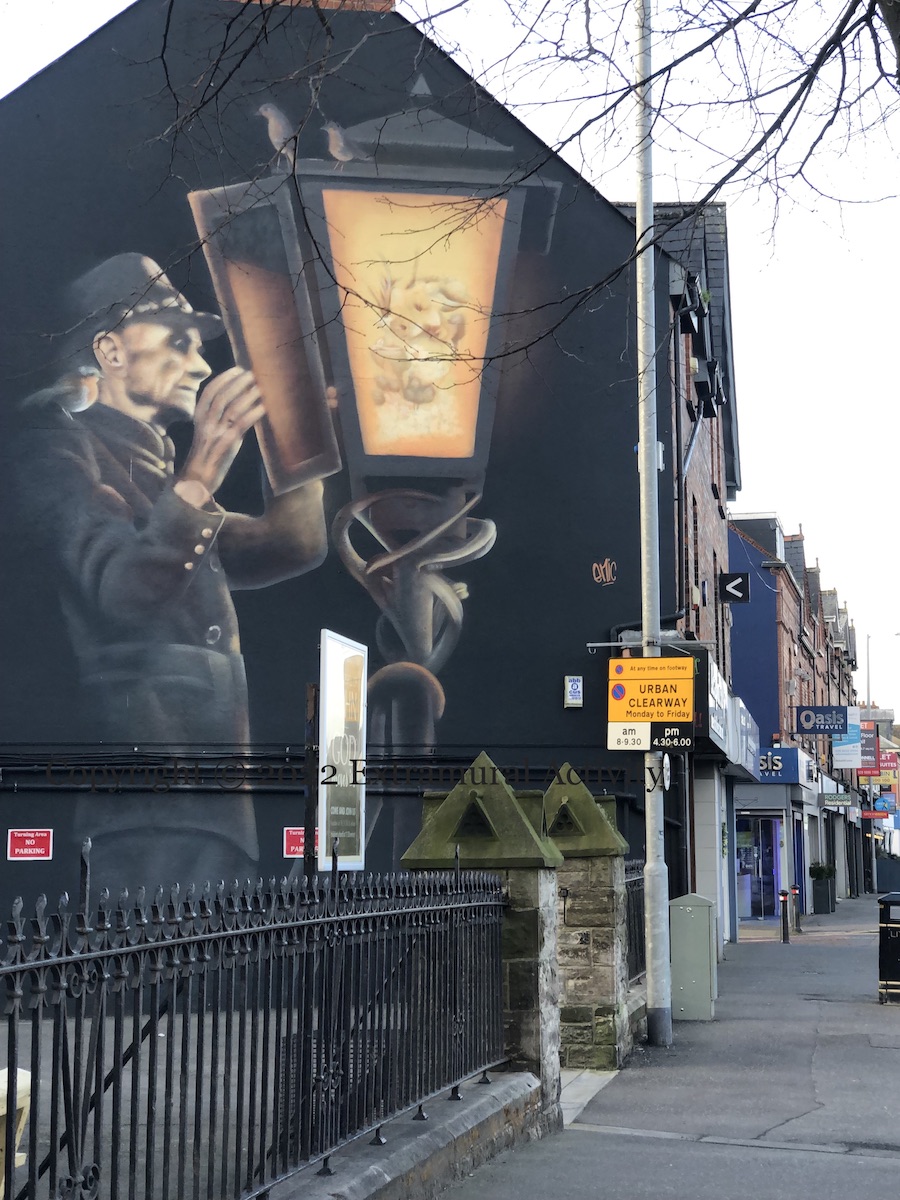
Episode 38 of the BBC’s “Year ’21” podcast considered the life (and diary) of a lamplighter in east Belfast who witnessed the violence that gripped the city in 1920-1922. The tribute on Newtowanards Road is by emic (web) with support from Daisy Chain (tw) and EastSide Partnership (tw).
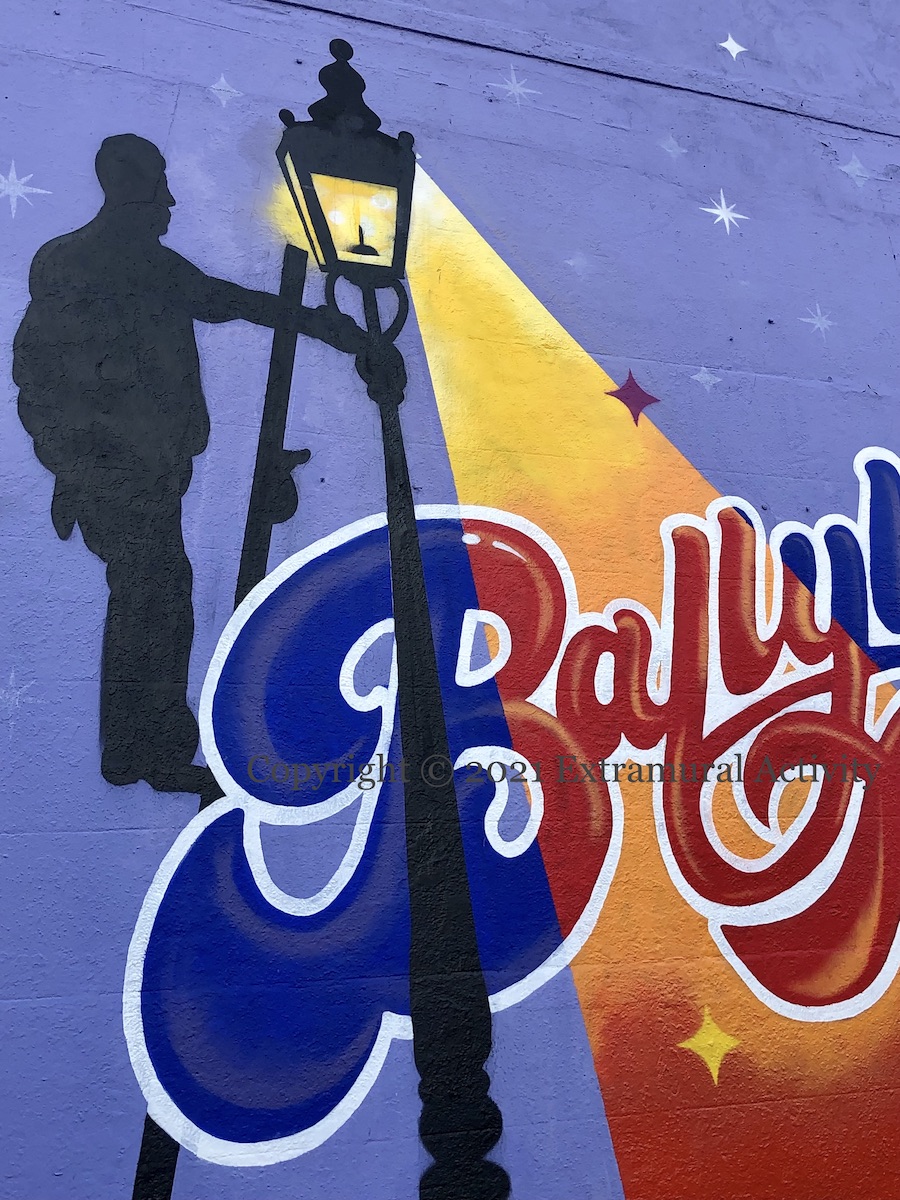
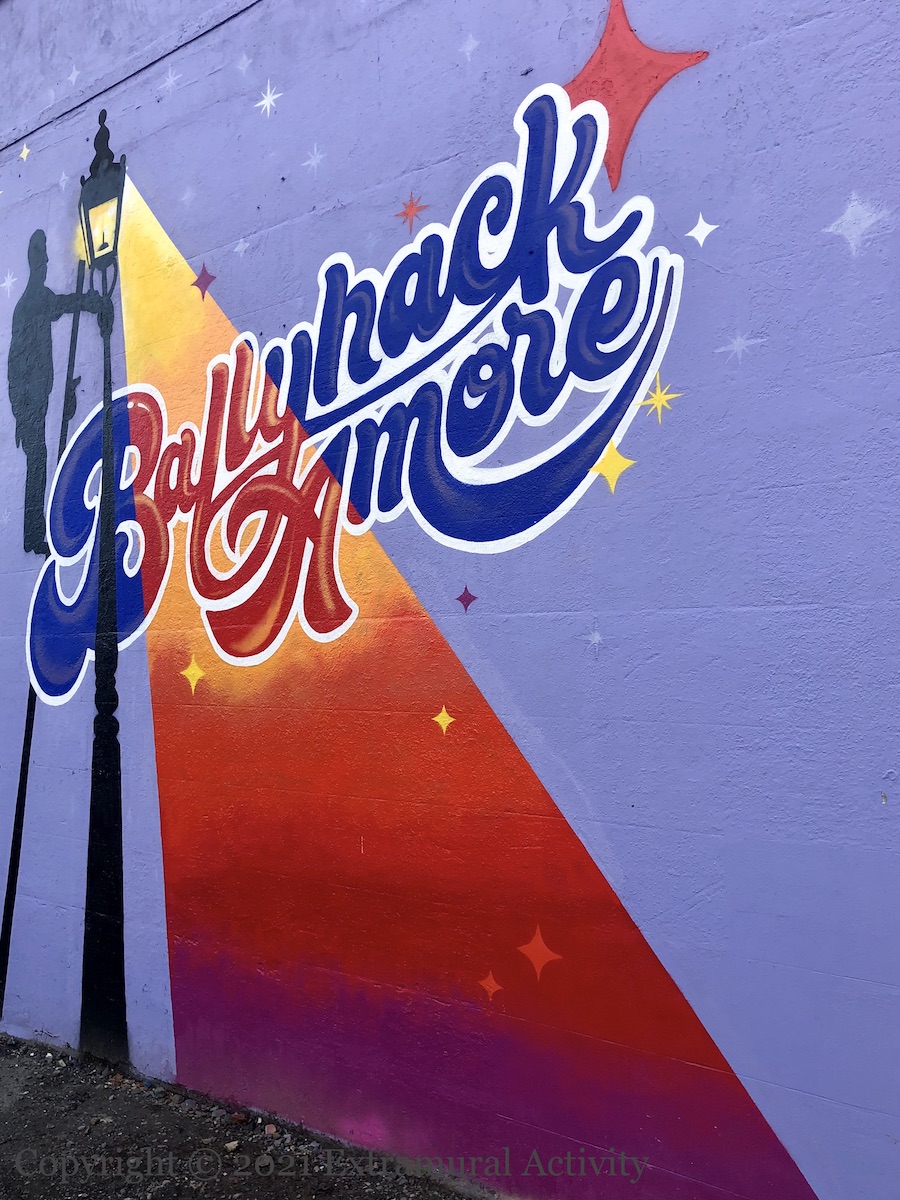
Another mural on Upper Newtownards Road on the lamplighter theme: Ballyhack-Amore by Alana McDowell (ig | web). The name “Ballyhackamore” comes not from Italian but from Irish: Baile an Chacamair, town of the mud flat (PlaceNamesNI).
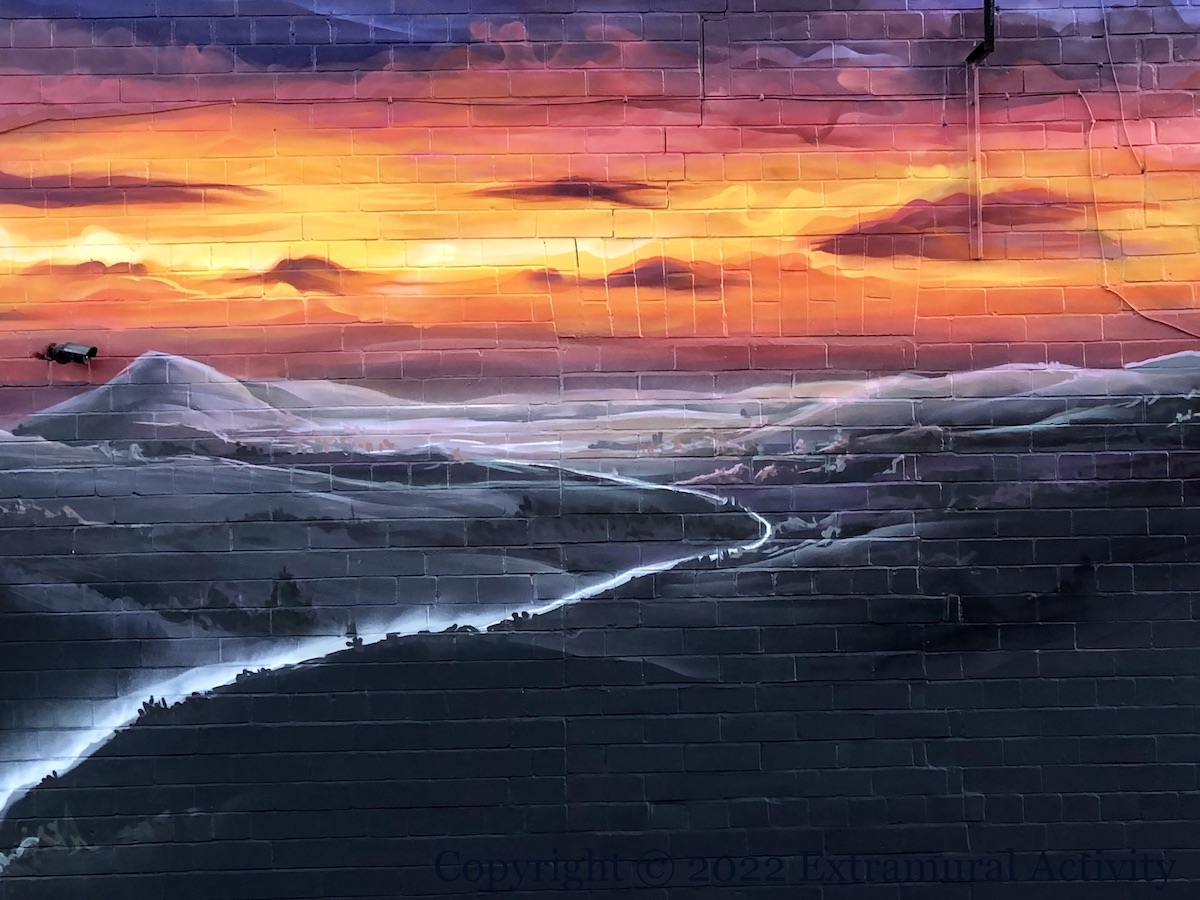
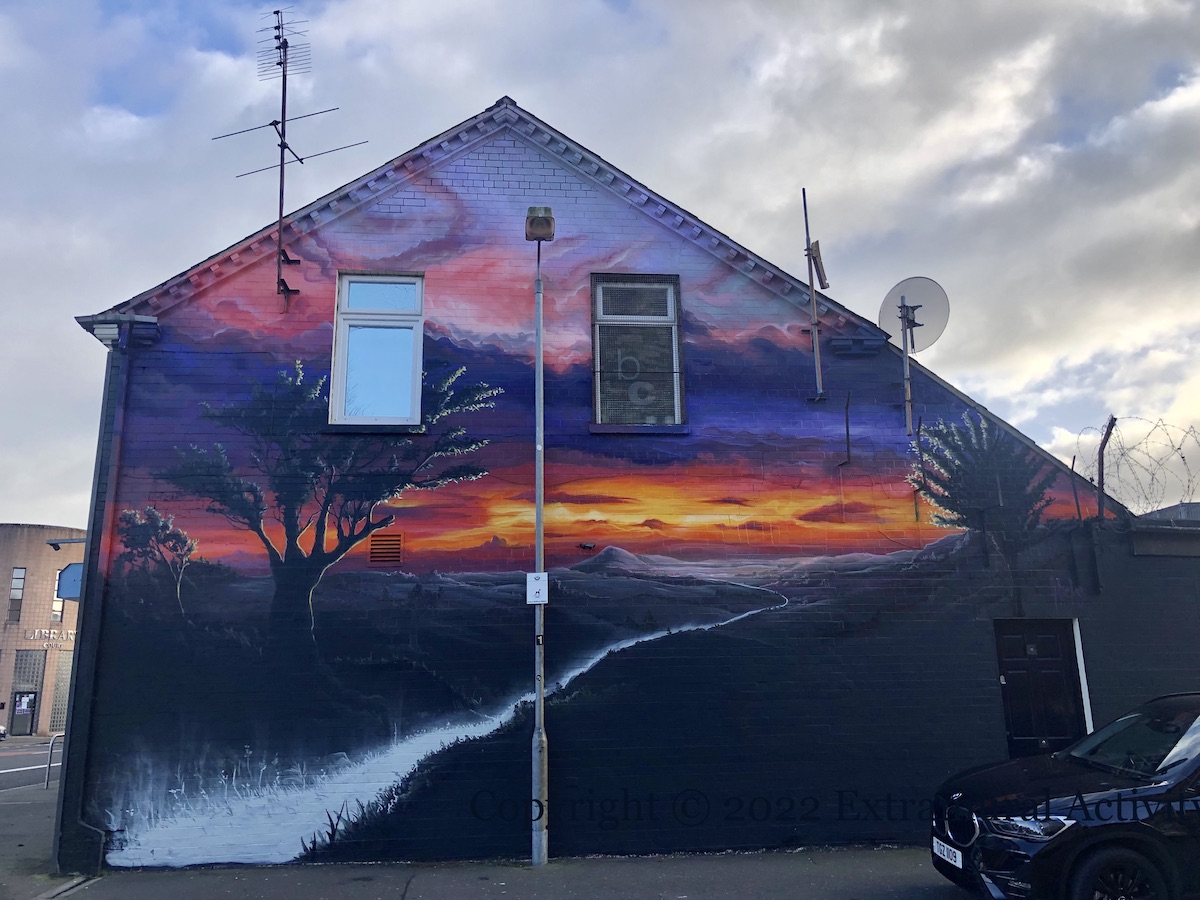
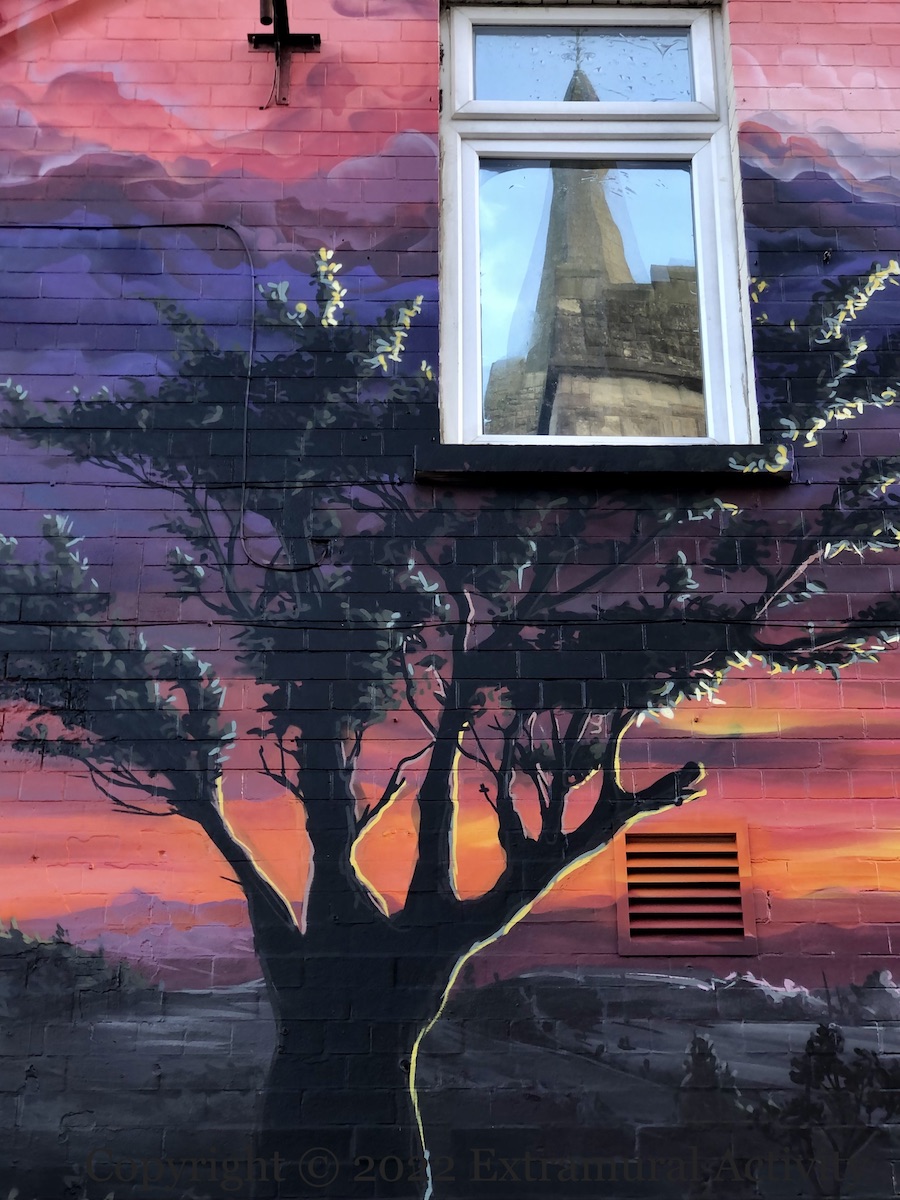
The Ballyhackamore mural by Ed Hicks (ig) – painted along with murals by emic and Alana McDowell – is on the eastern side of Eastleigh Crescent, so that when looking at it the viewer is looking away from the city and towards the … hills – perhaps Scrabo country park.
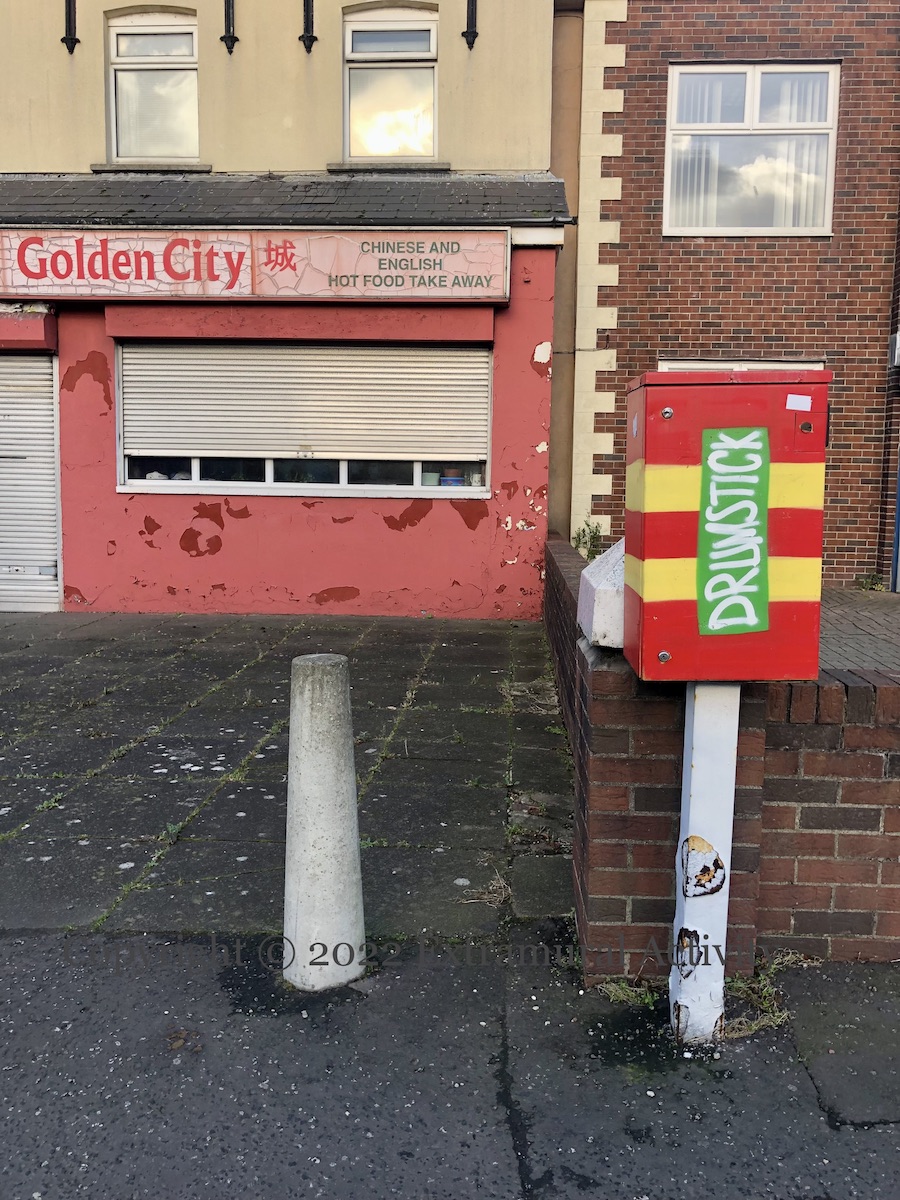
This signal box on the Holywood Road, Belfast, has been repainted by FGB (ig) to look like a Drumstick – not the musician’s tool or the chicken leg but the chewy lolly. The Drumstick dates back to 1957 (swizzels.com). Swizzels makes not just Drumsticks but also Refreshers, Double Lollies, Love Hearts, Double Dips, Lipsticks, and Whistles.
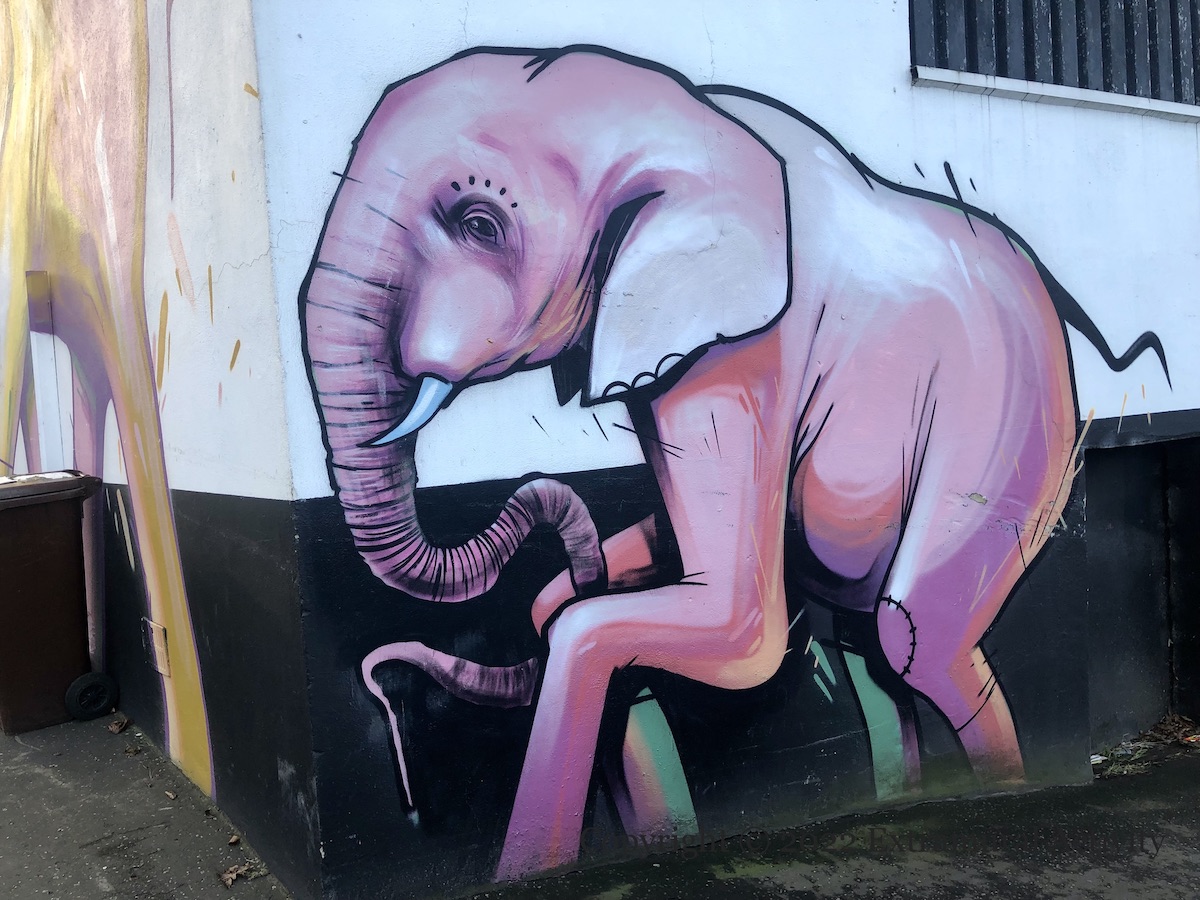
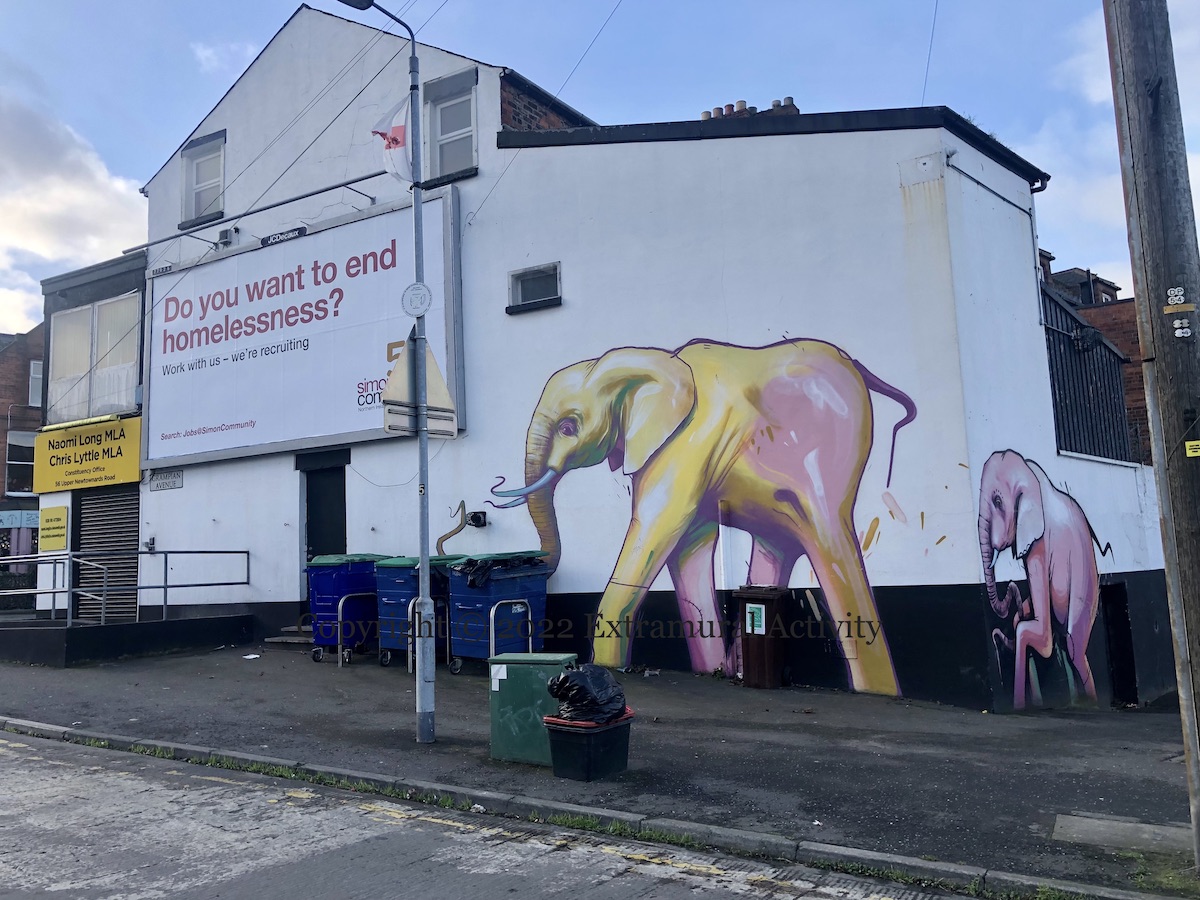
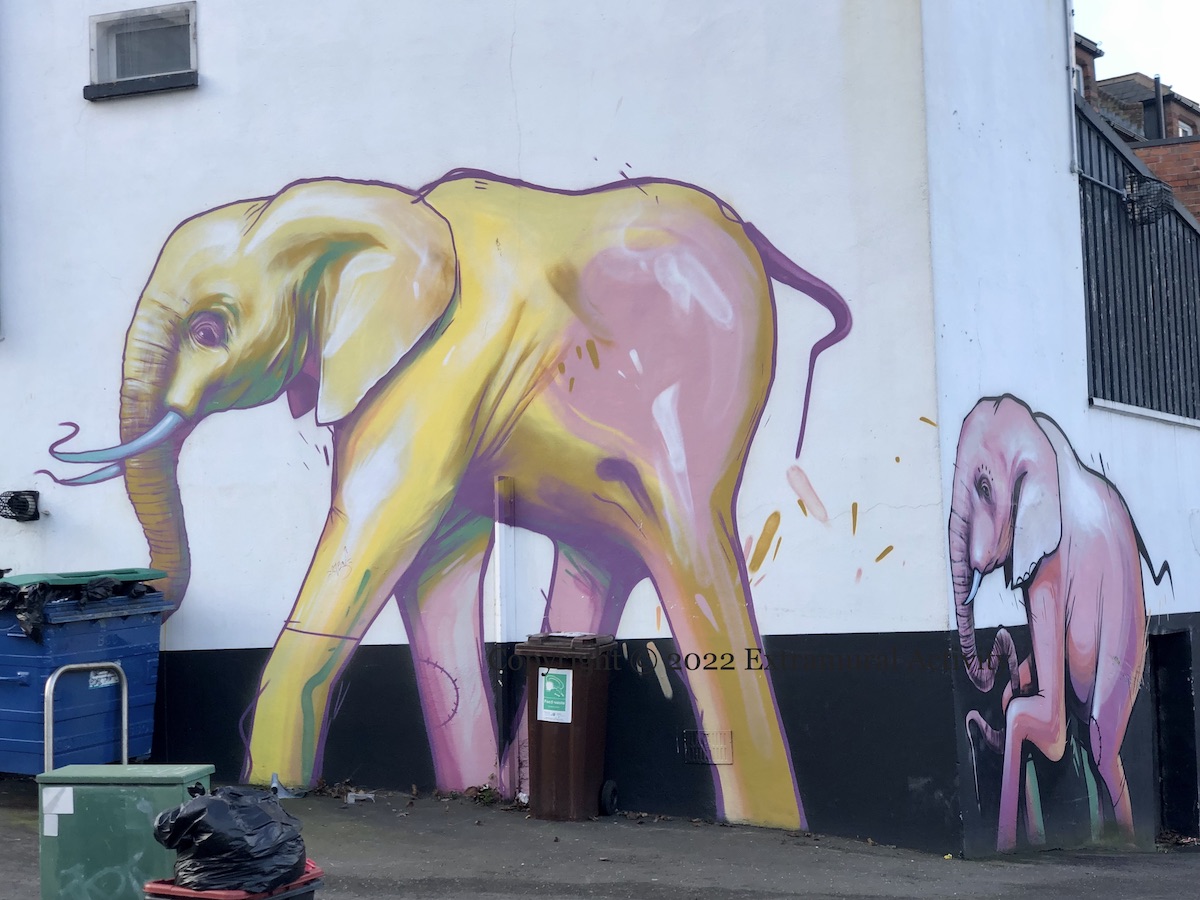
Elephants walk in single file and young elephants often hold the tail of an adult. This pair by South African artist Falko One (ig | Fb) is on the exterior wall of the Alliance Party’s east Belfast constituency office. (Chris Lyttle is no longer in the office – he took up a job with the IFA in July – BelTel).
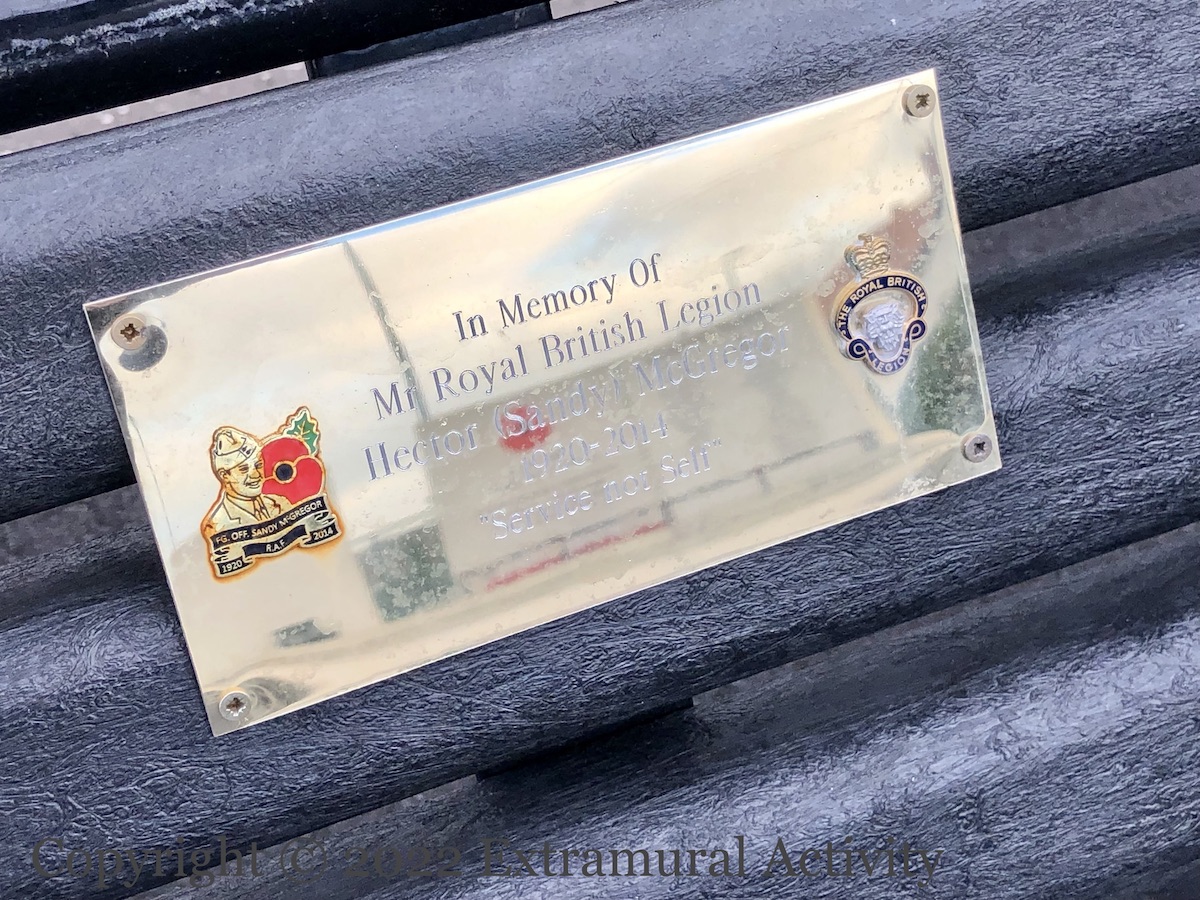
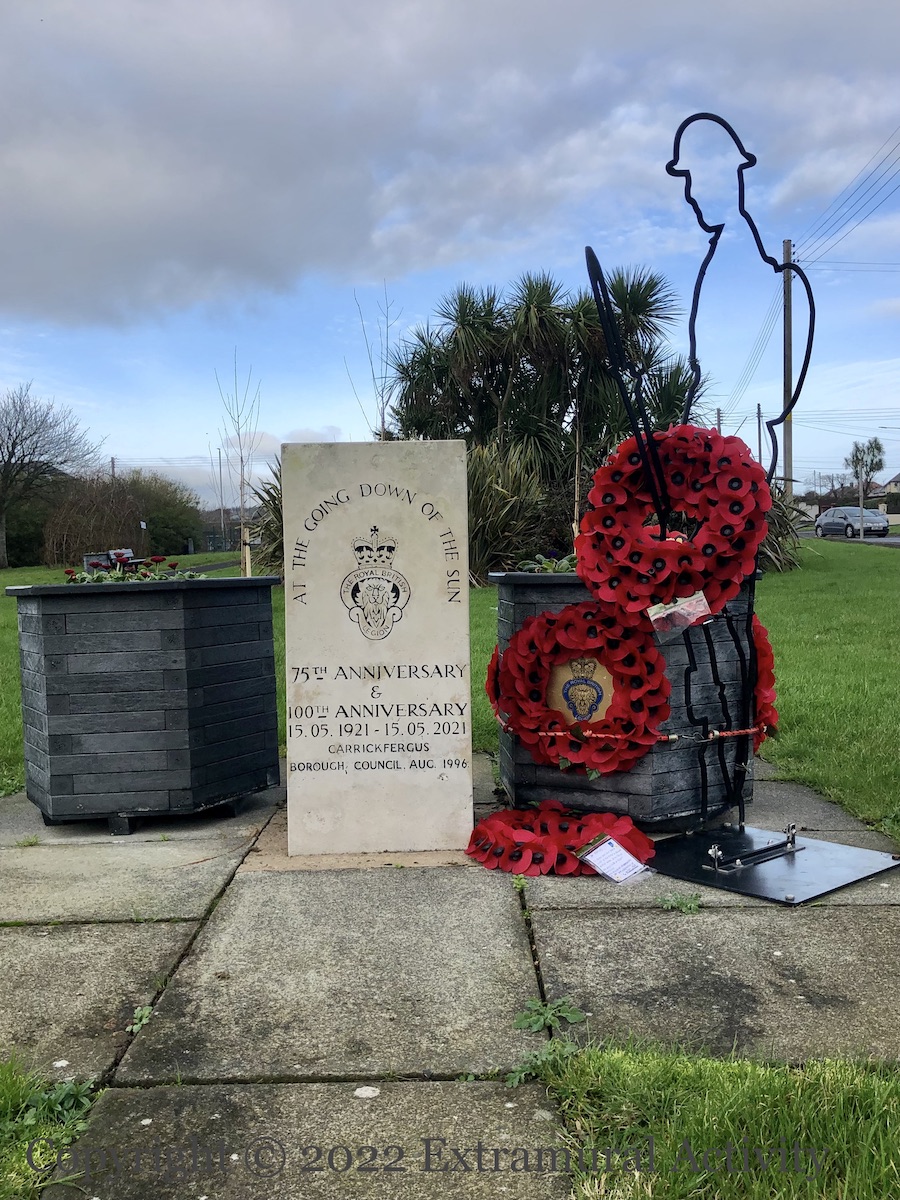
“At the going down of the sun.” The smaller of the two World War memorials in Whitehead was updated last year for the 100th anniversary of the Royal British Legion. The stone (shown last, below) was originally dedicated in 1996, for the 75th anniversary. The plate on the bench reads: “In memory of Mr Royal British Legion, Hector (Sandy) McGregor, 1920-2014. ‘Service not self'”
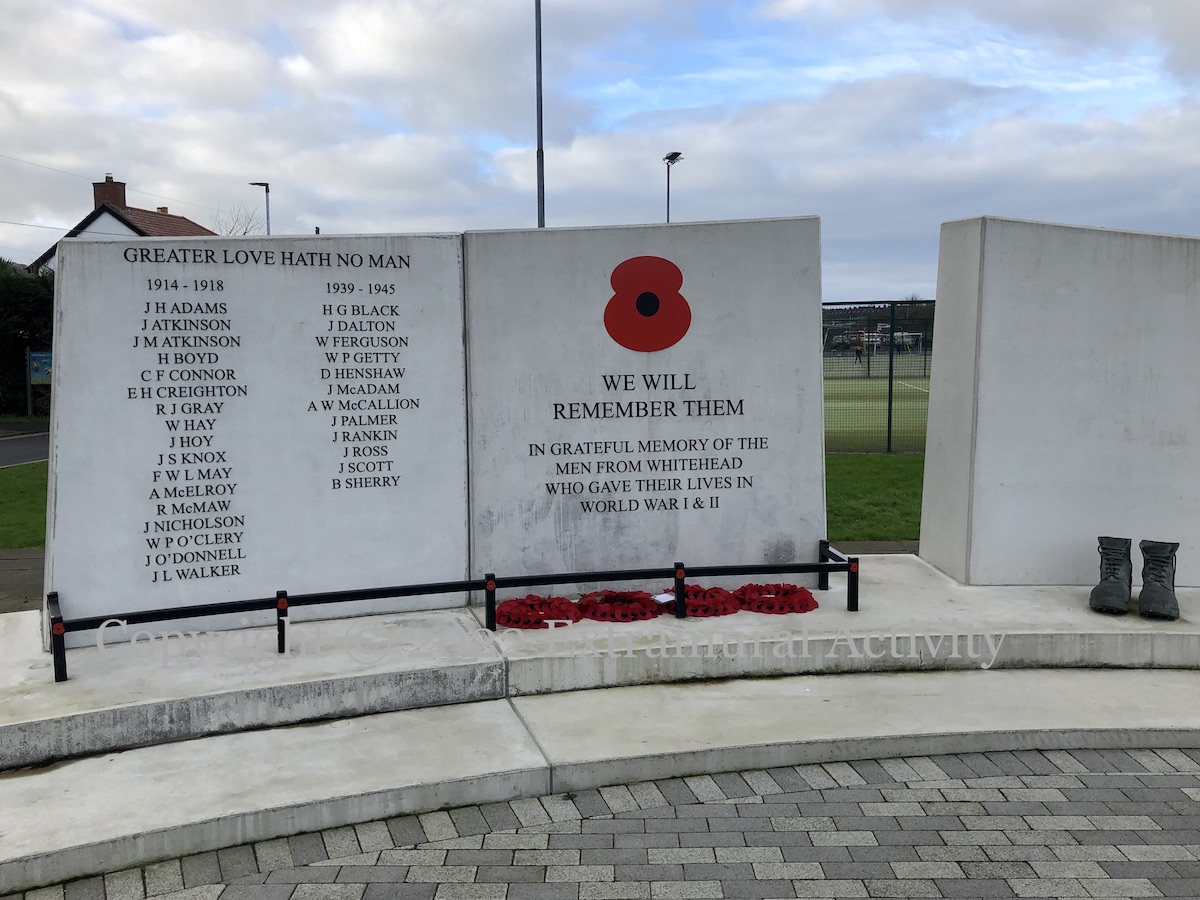
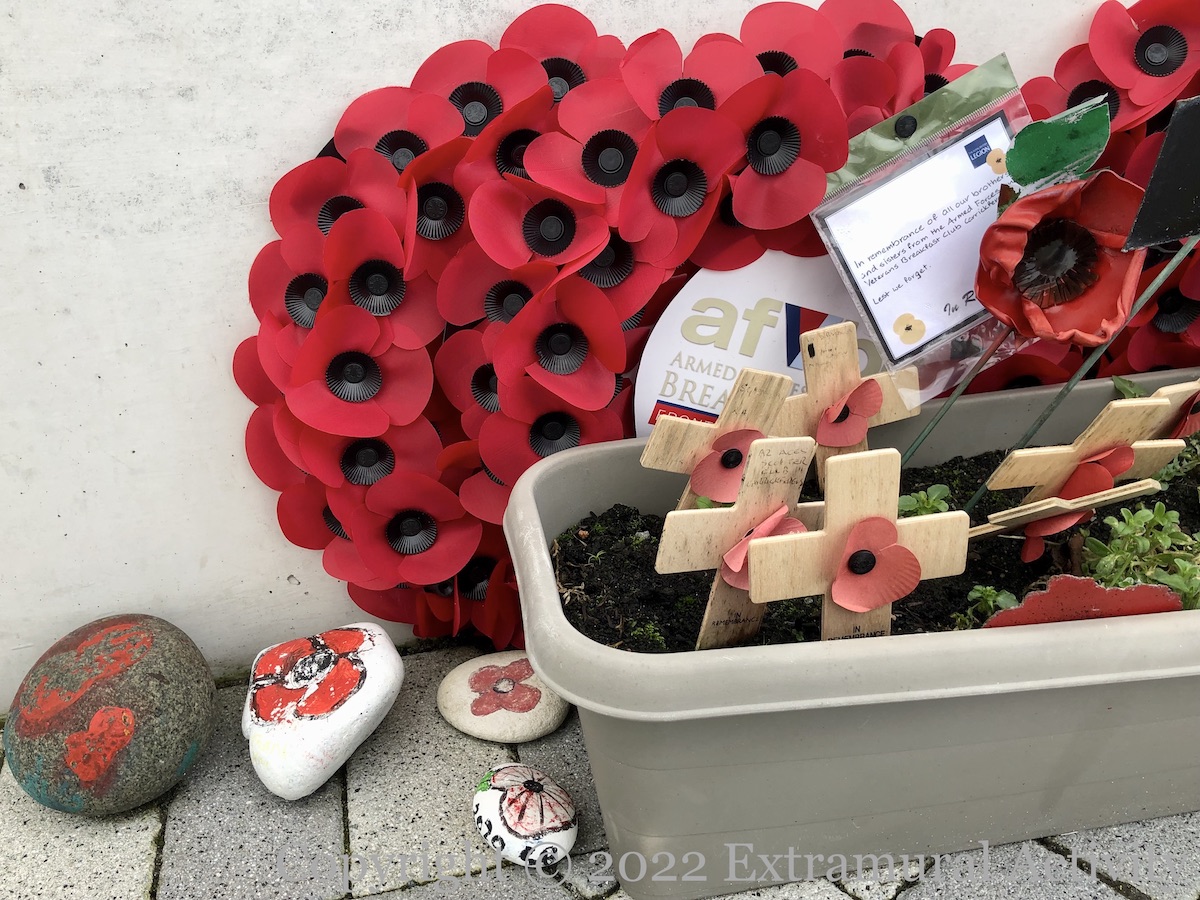
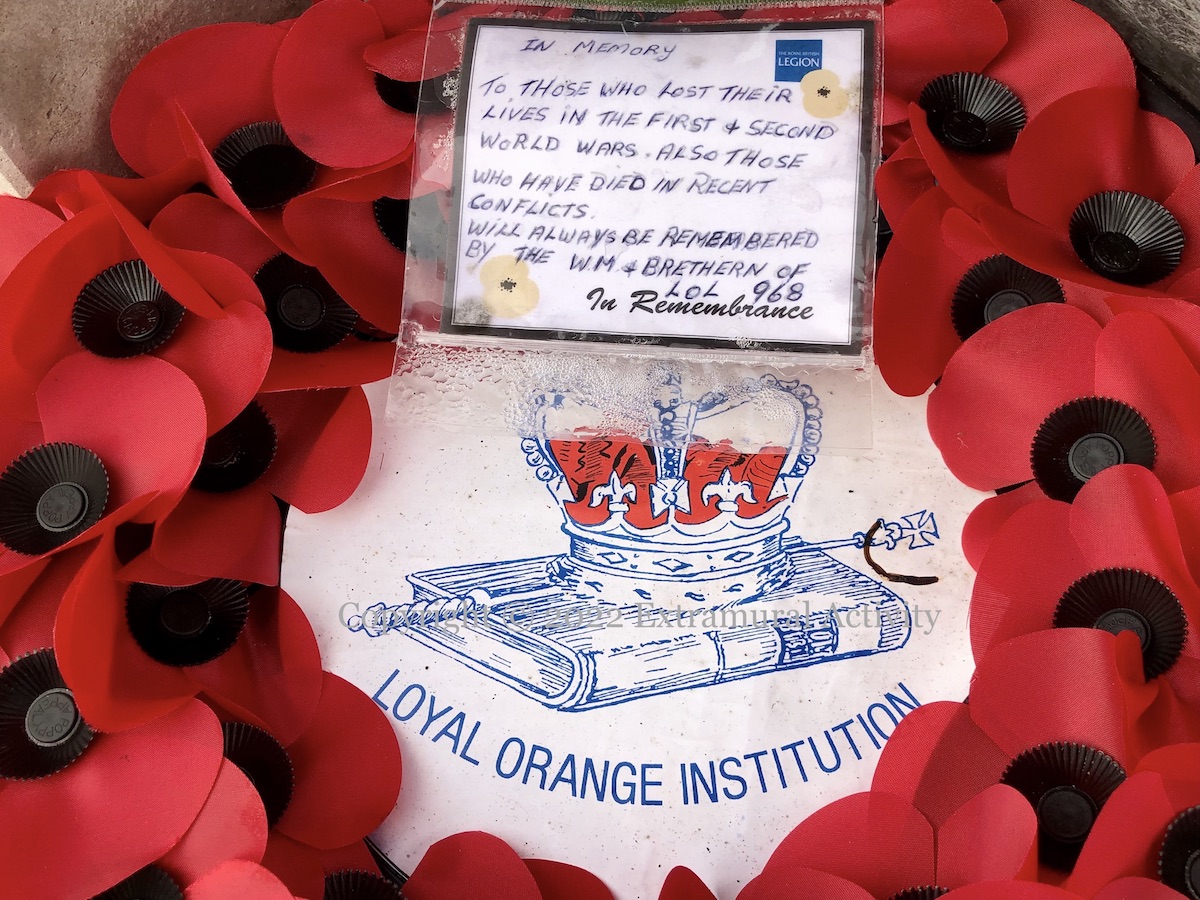
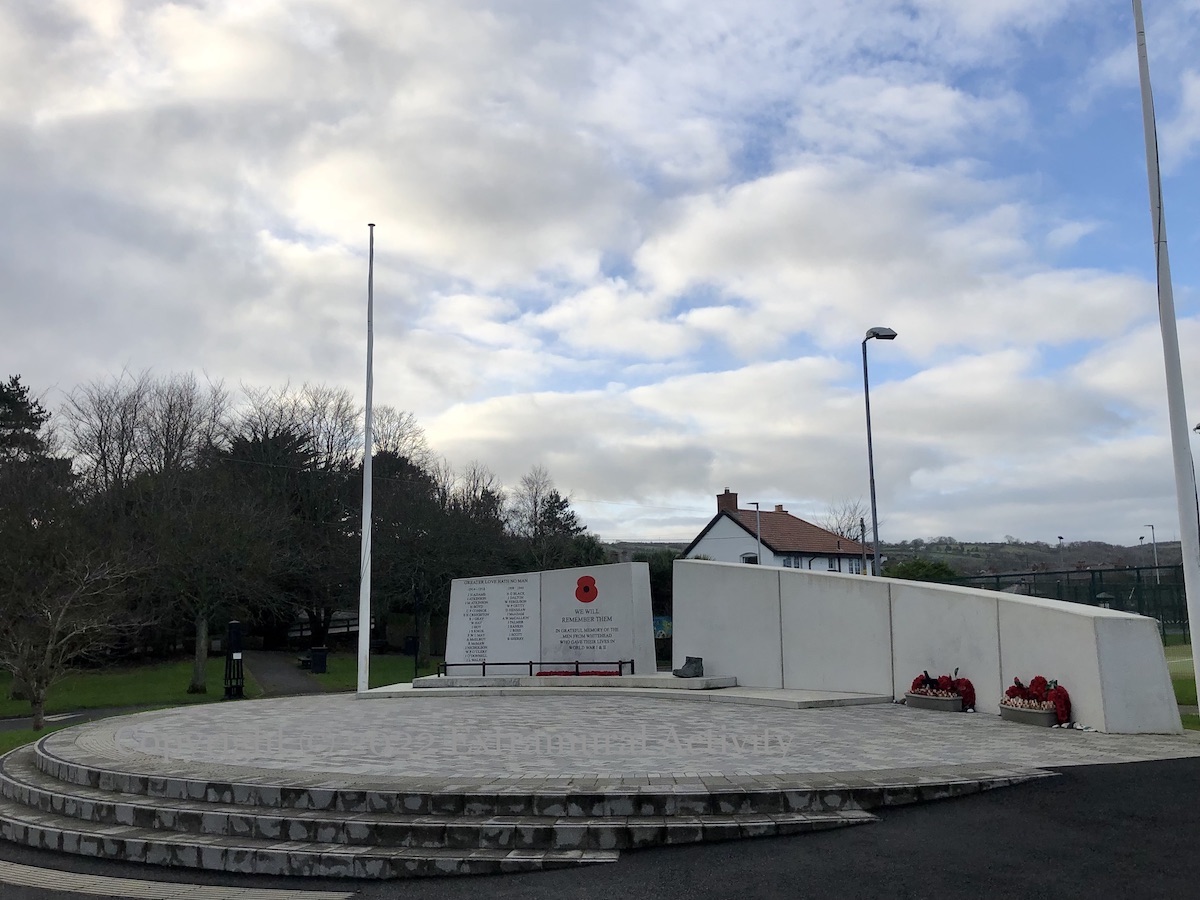
The larger memorial (shown above) was dedicated in 2019 (Mid & East Antrim) and replaced a smaller memorial which also had the names of the locals who were killed in the world wars. “Greater love hath no man – We will remember them. In grateful memory of the men from Whitehead who gave their lives in World War I & II.” With a wreath from LOL 968.
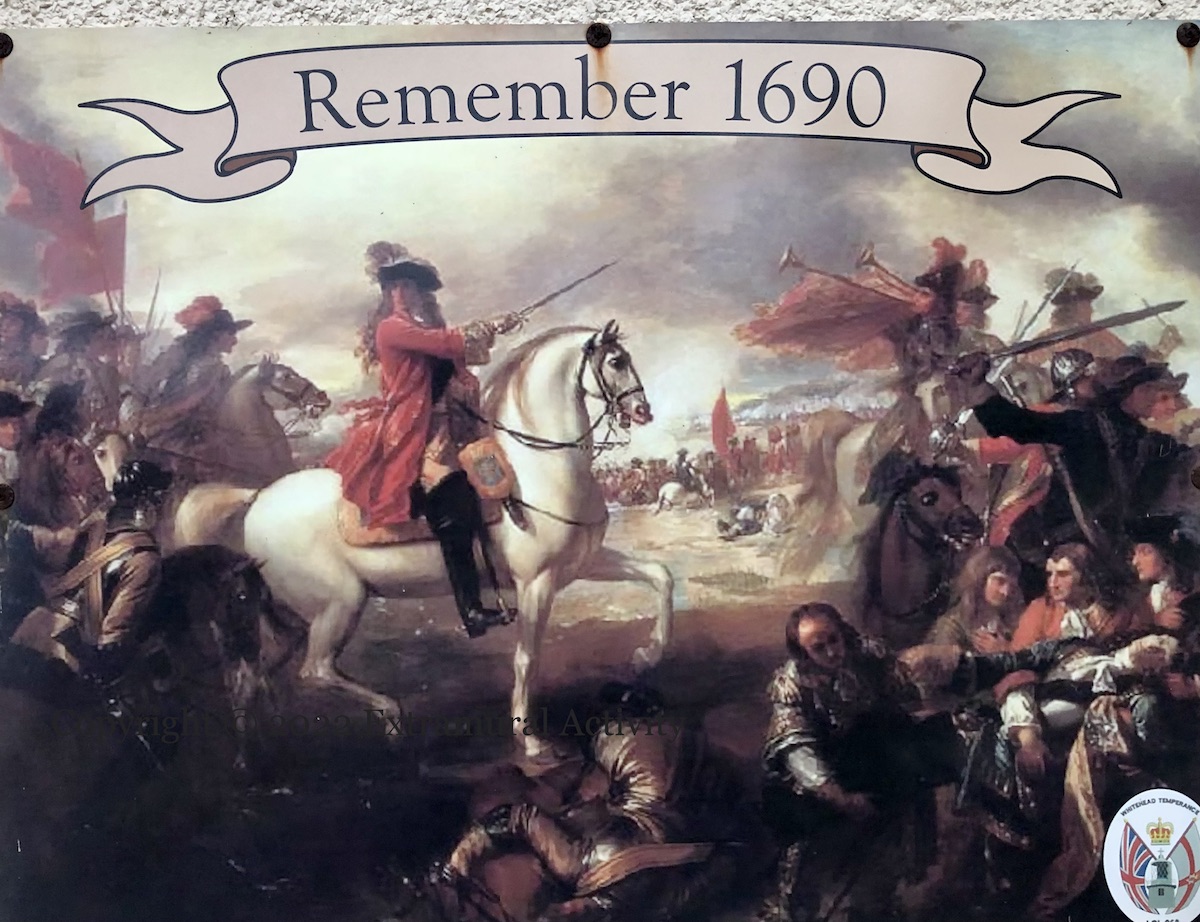
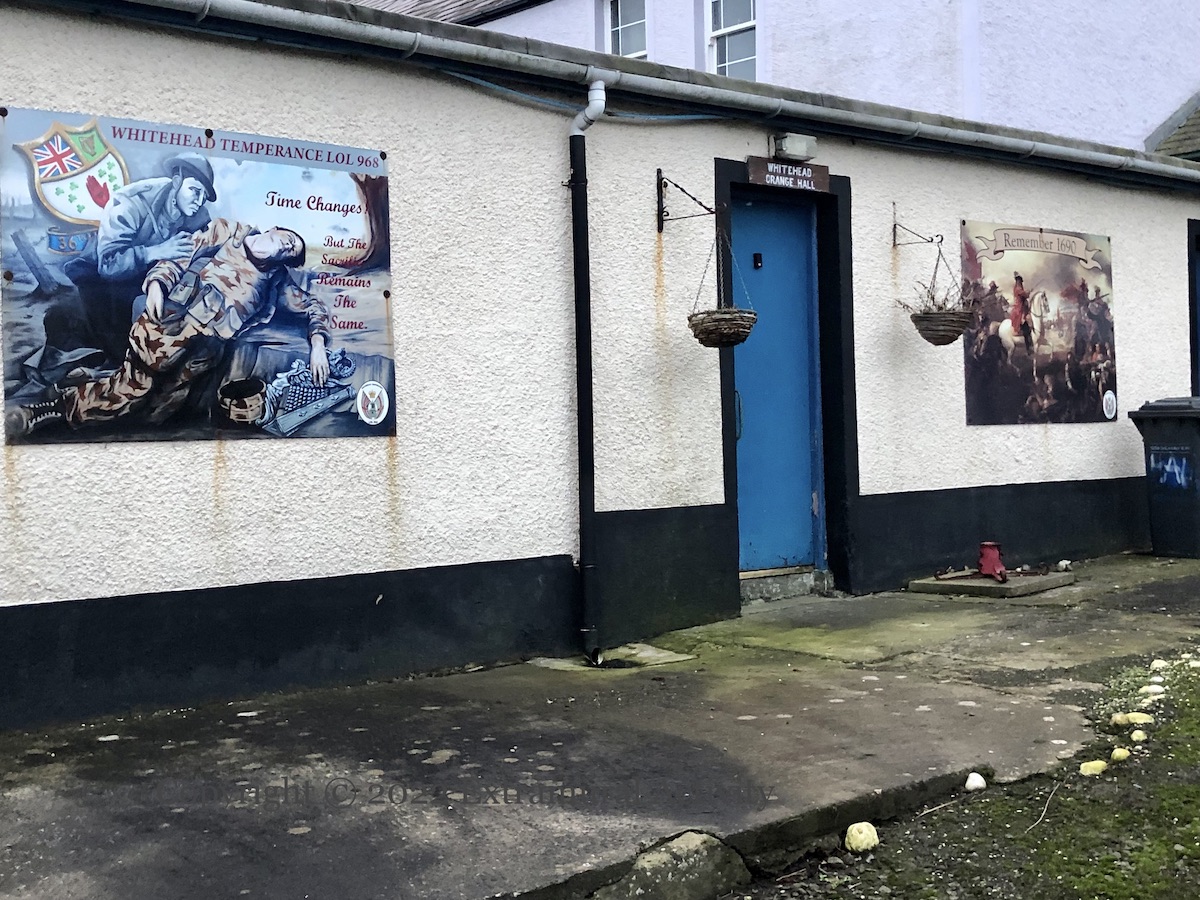
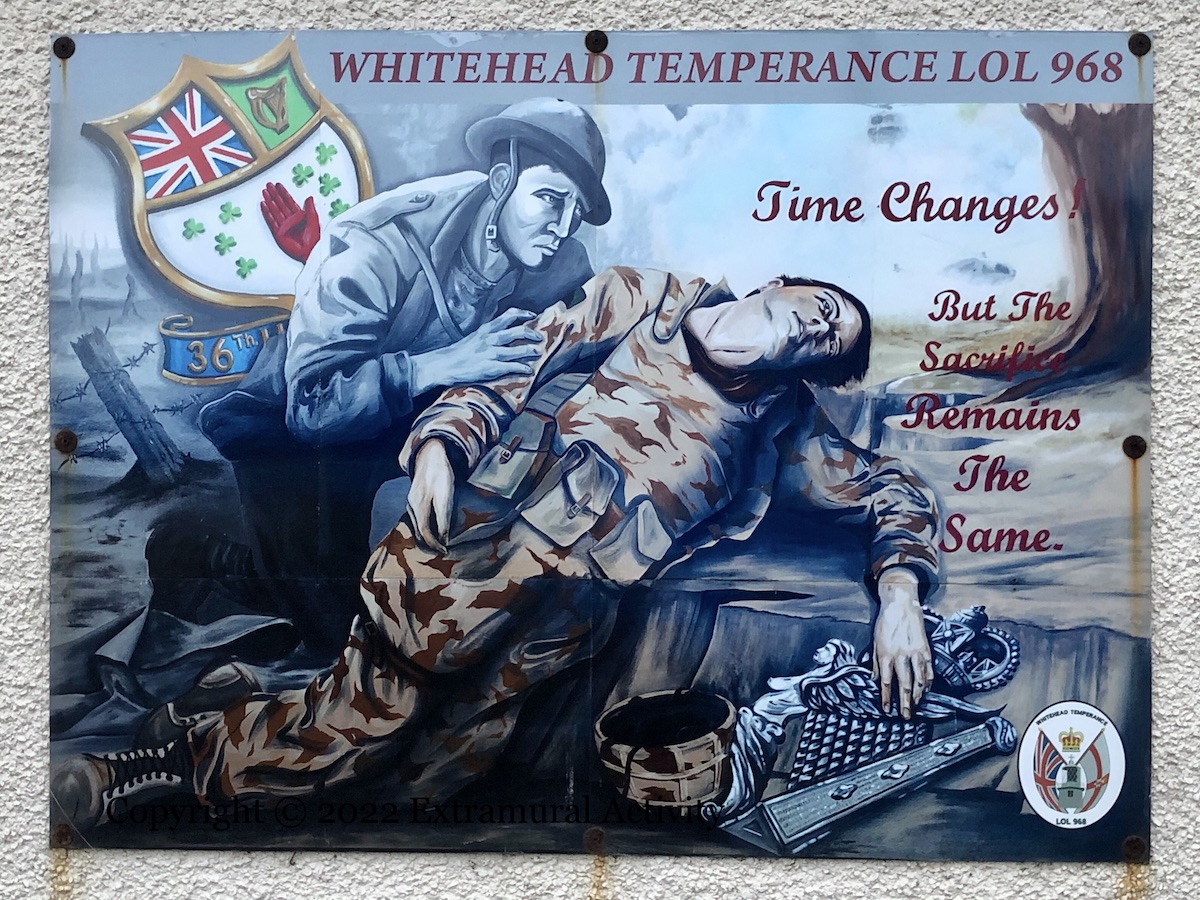
Benjamin West painted The Battle Of The Boyne in 1778 and his composition – with William moving from left to right on a white horse and Marshal Schomberg dying in the bottom-right corner – has become the standard representation in loyalist culture, perhaps due to versions of it appearing on the covers of songbooks for the Orange Order and the Apprentice Boys soon after (Belinda Loftus 1982 Images In Conflict). It appears here on the wall of Whitehead Orange Hall, along with a board connecting service by Irish soldiers in British forces in WWI and Afghanistan (see previously: Time Changes in east Belfast).
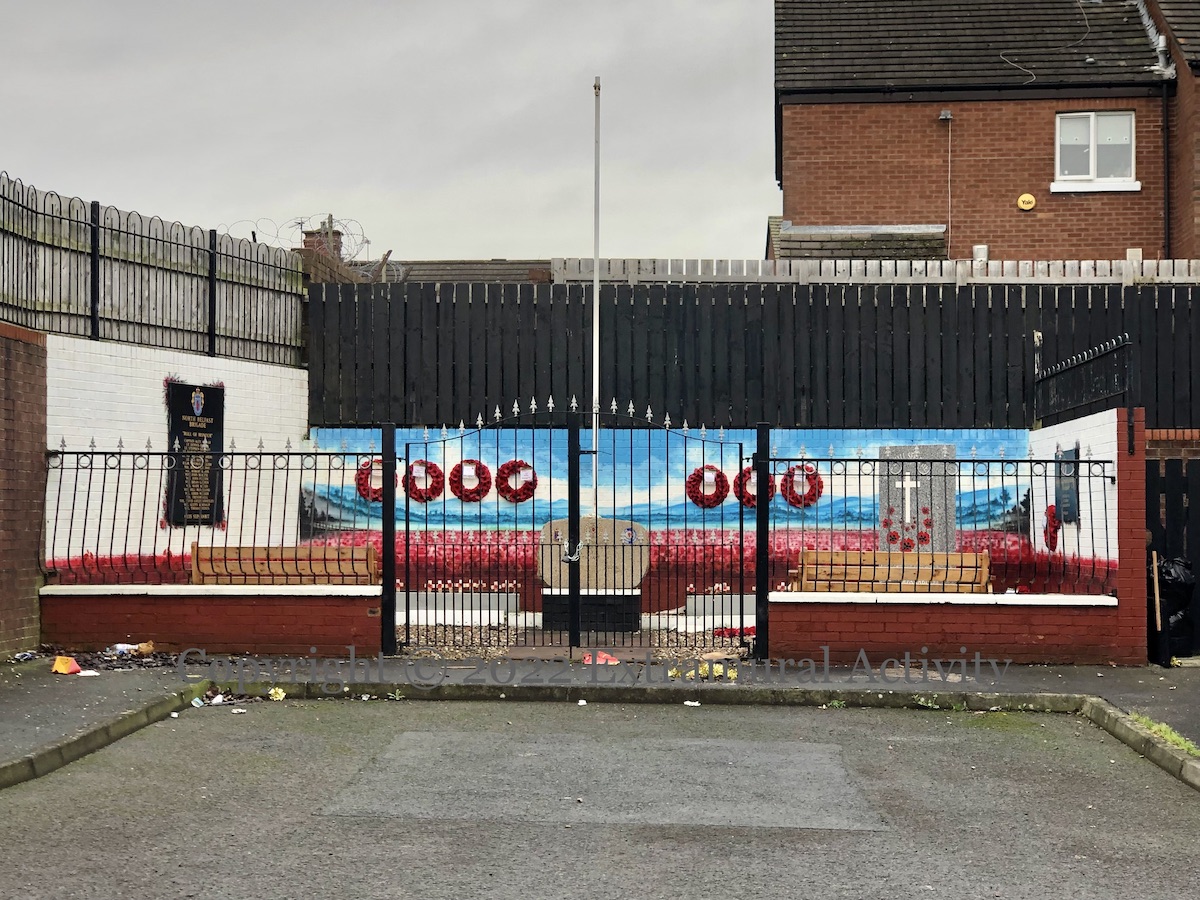
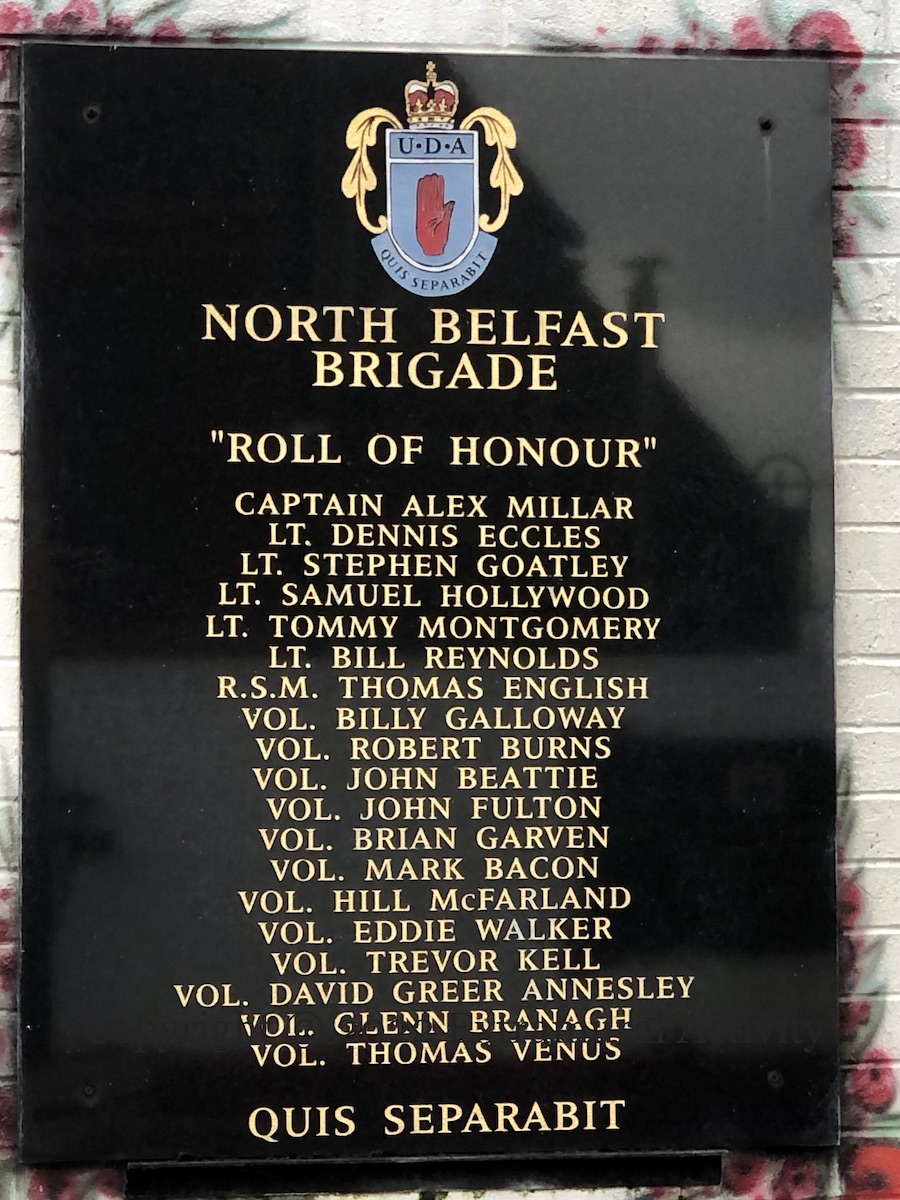
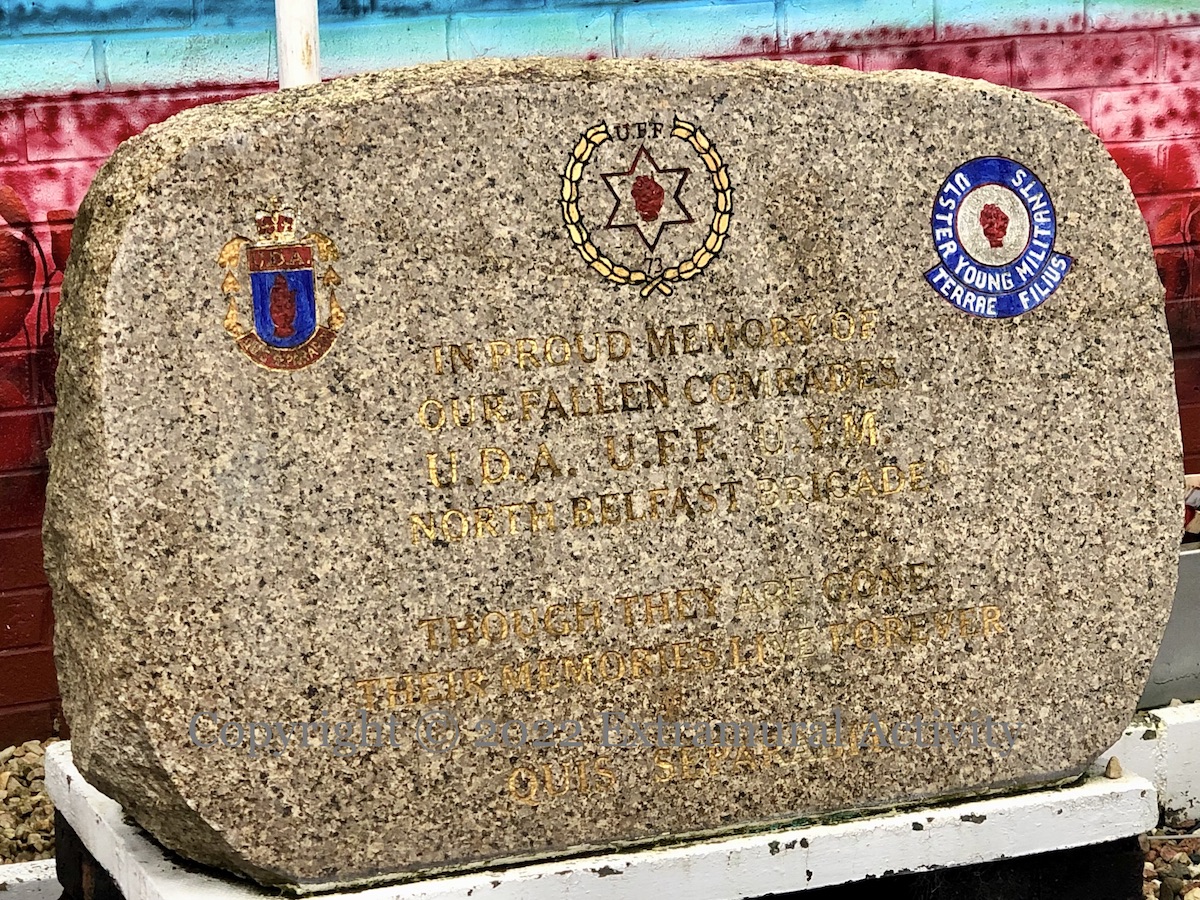
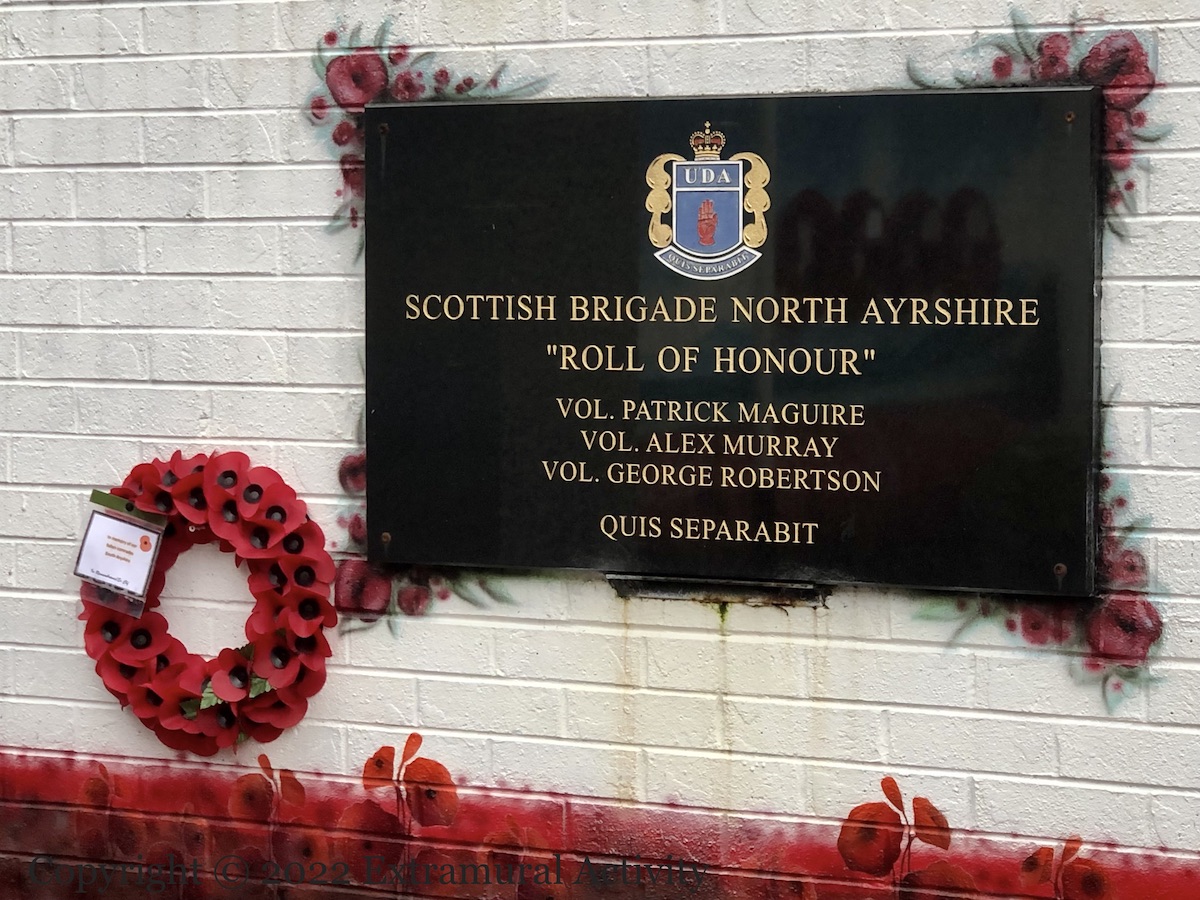
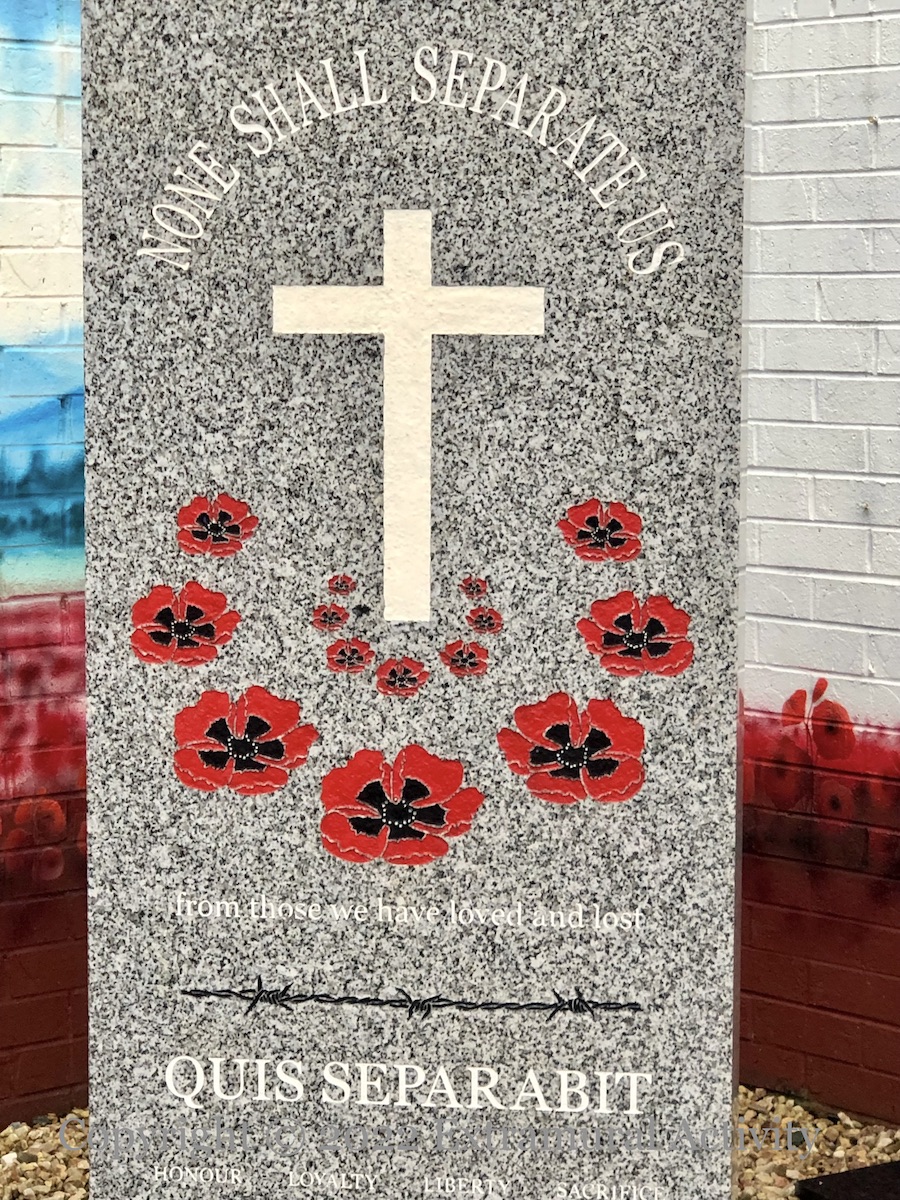
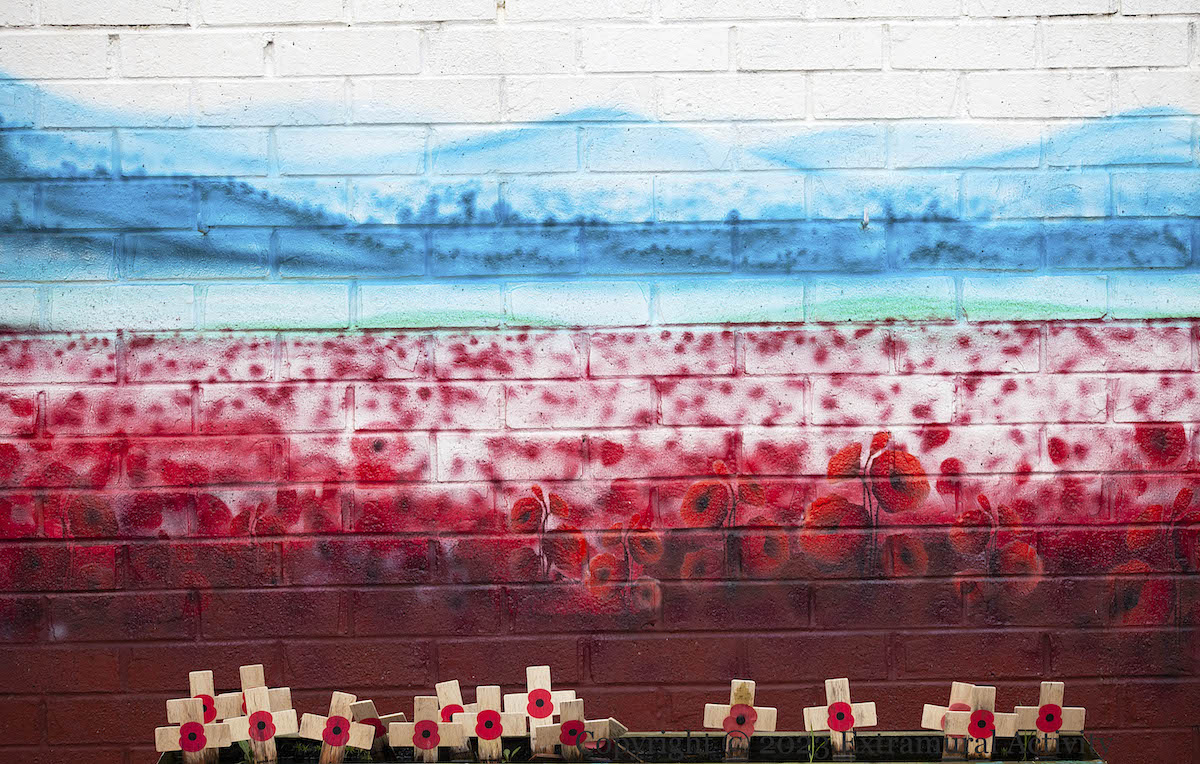
A new backdrop – of a field of poppies beneath a blue sky– has been added to the UFF memorial garden in Tigers Bay. The four stones/plaques in the garden are shown below in the order that they were added to the garden, starting with two to the North Belfast Brigade that were present in 2008 (see M04397). The third was a roll of honour of the “Scottish Brigade North Ayrshire”. The fourth is generically to “those we have loved and lost” but contains a strand of barbed wire, symbol of POWs.
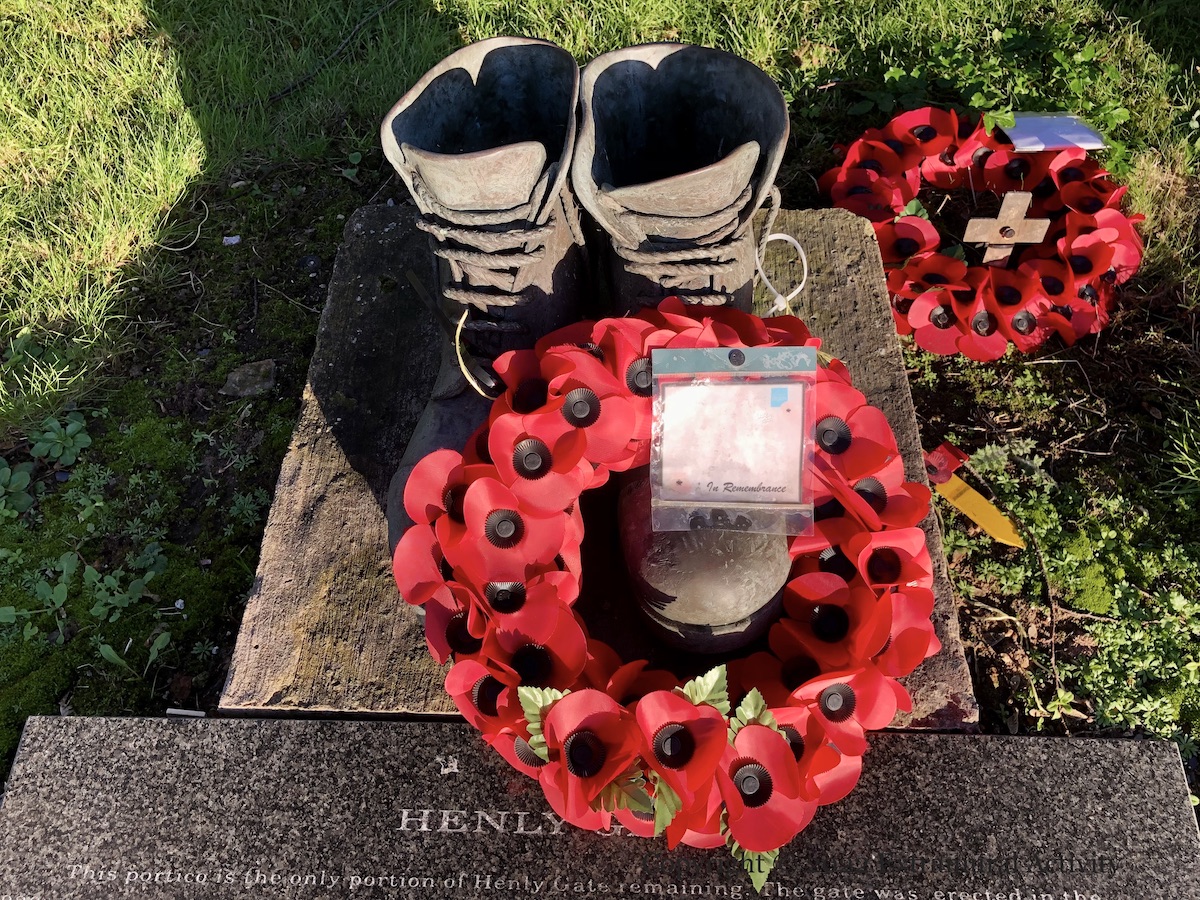
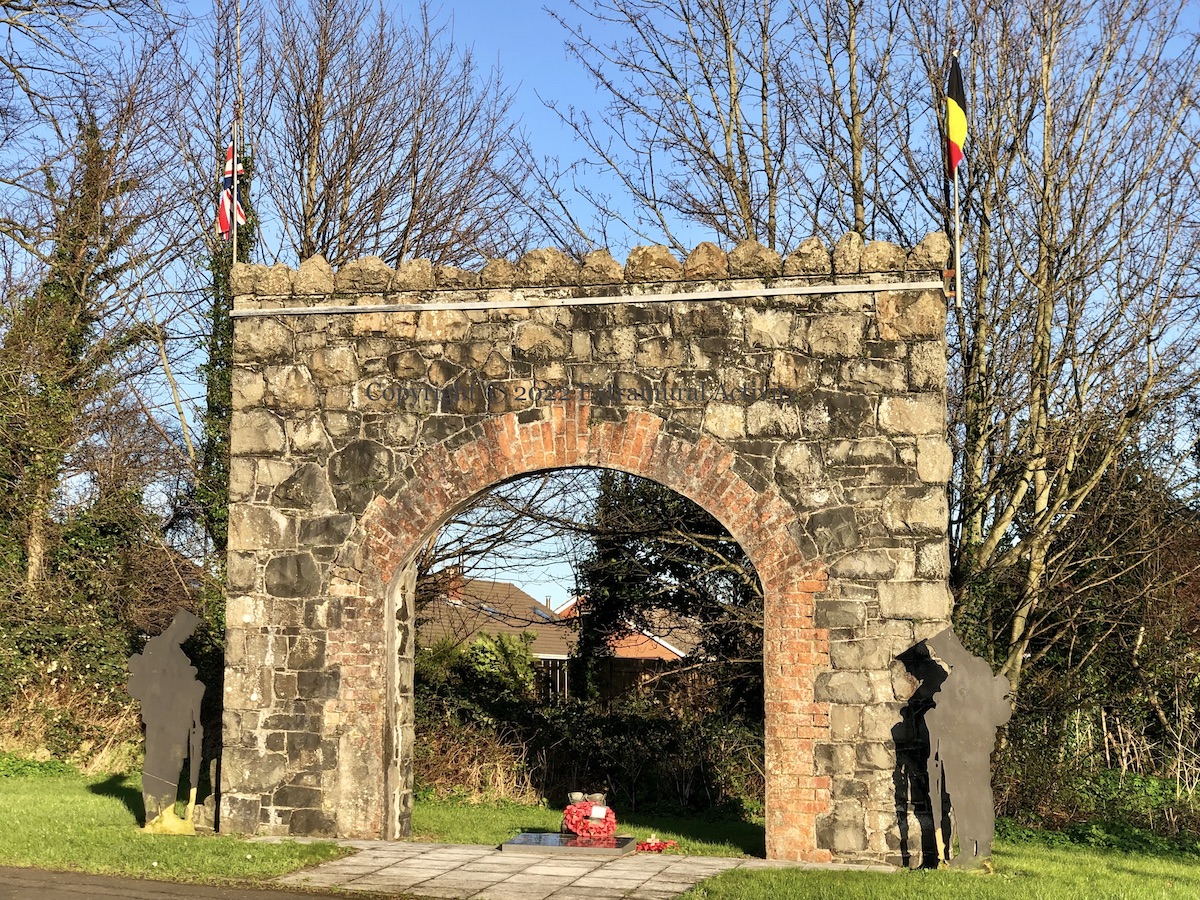
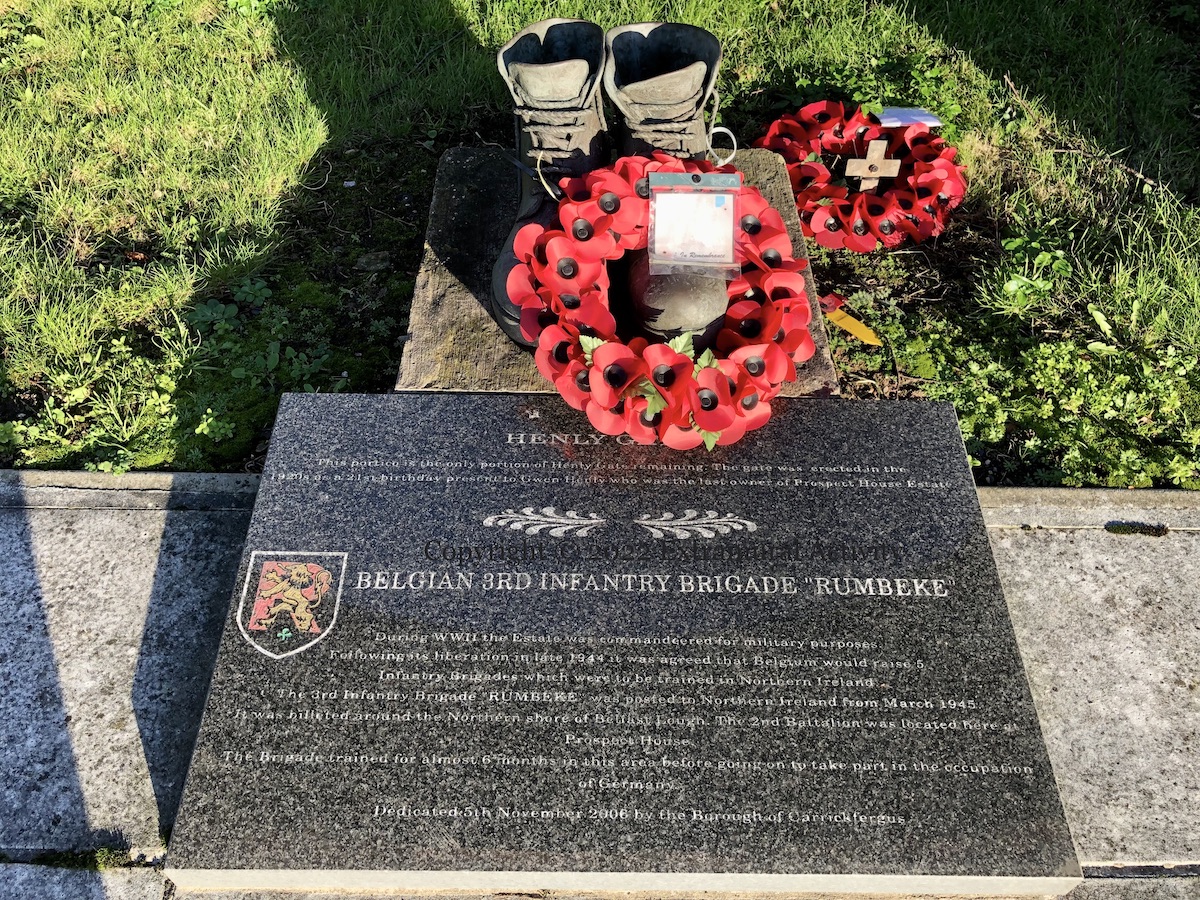
Five Belgian brigades trained in Northern Ireland towards the end of WWII, as the Belgian Army rebuilt itself after the liberation of Belgium in 1944 (WarTimeNI). The 3rd or ‘Rumbeke’ brigade was raised in March 1945 and trained in six south-east Antrim towns, including Carrickfergus, where they were stationed at Henly House. After training, it took part in the occupation of Germany for about six months (BE Brigades). The boots and plaque are beneath the arch of what was once Prospect House.
The text on the plaque reads in full: “Henly Gate. This portico is the only portion of the Henly Gate remaining. The gate was erected in the 1920s as a 21st birthday present to Gwen Henly who was the last owner of Prospect House Estate. Belgian 3rd Infantry Brigade “Rumbeke”. During WWII the Estate was commandeered for military purposes. Following the liberation in late 1944 it was agreed that Belgium would raise 5 Infantry Brigades which were to be trained in Northern Ireland. The 3rd Infantry Brigade “Rumbeke” was posted to Northern Ireland from March 1945. It was billeted around the Northern shore of Belfast Lough. The 2nd Battalion was located here at Prospect House. The Brigade trained for almost 6 months in this area before going on to take part in the occupation of Germany. Dedicated 5th November 2006 by the Borough of Carrickfergus.”
At the junction of Woodburn Road and Prospect Road, Carrickfergus.
 Seosamh Mac Coille Collection