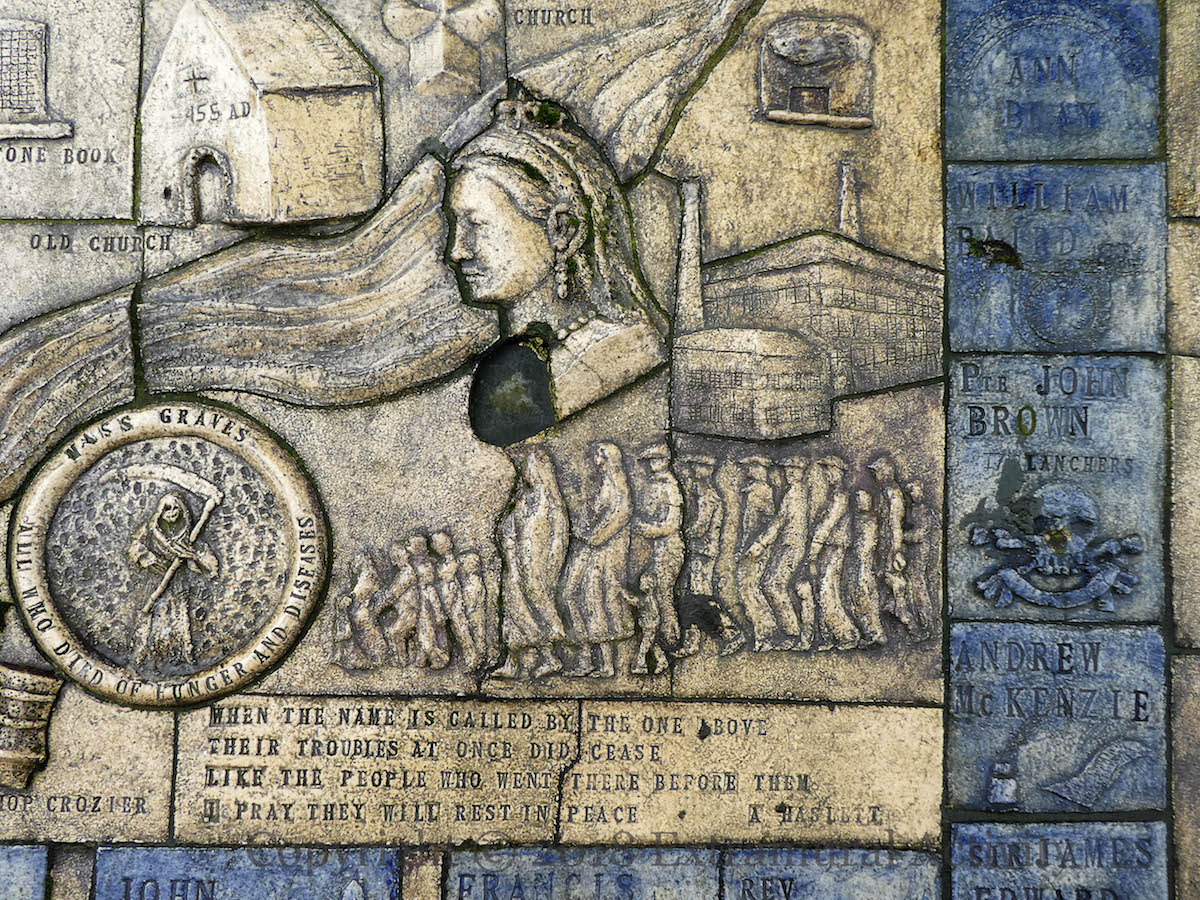
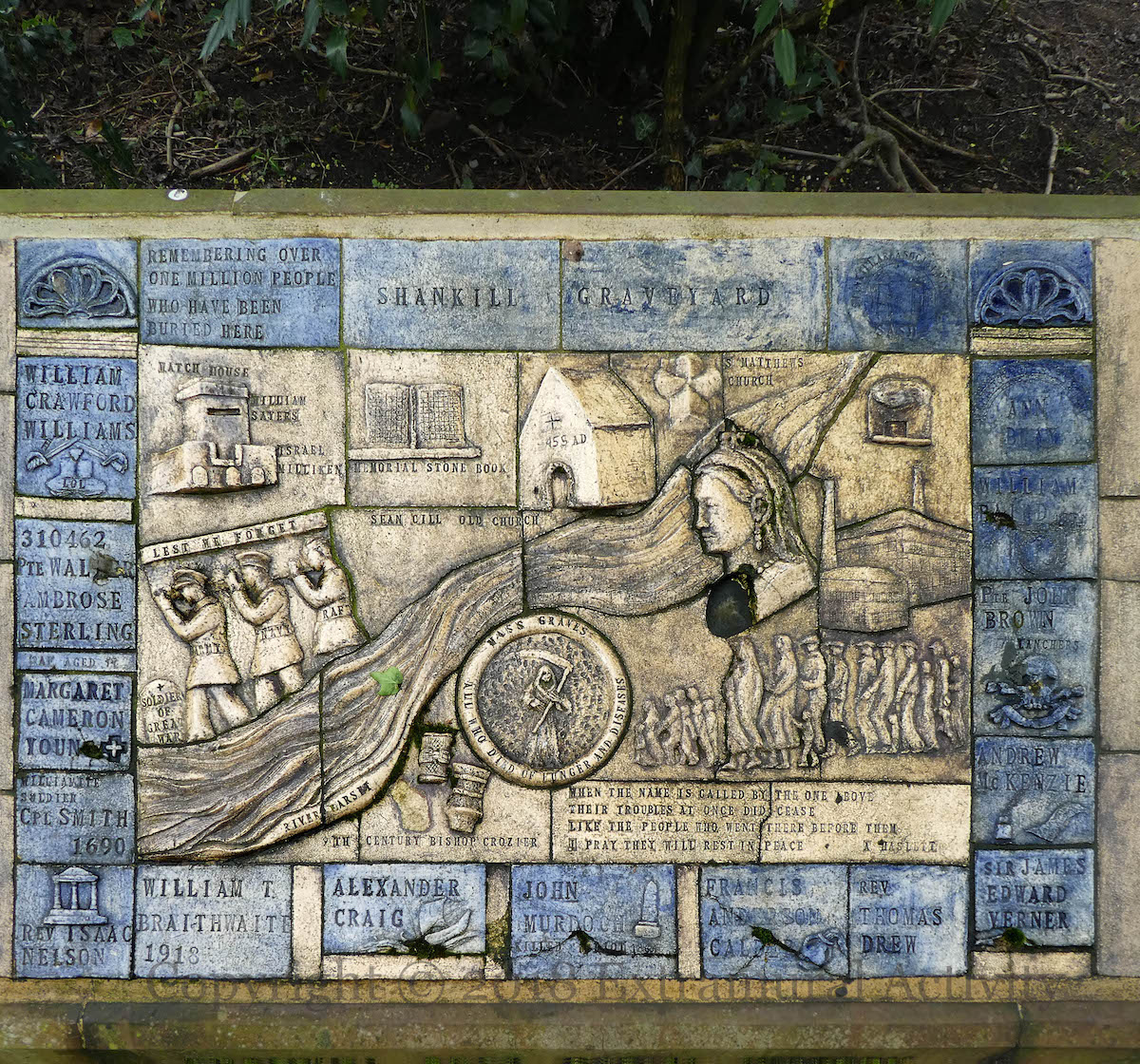
“When the name is called by the one above/Their troubles at once did cease/Like the people who went there before them/I prey they will rest in peace.” The words of Shankill man Albert Haslett are used on a Daniella Balmaverde mosaic commemorating the dead buried in Shankill graveyard. The full poem can be found at Belfast Experience, which claims that the number of burials is about half a million. NVTv has a interview program with Haslett, who died in January of last year (2017) – photos and remembrance at Shankill Area Social History group.
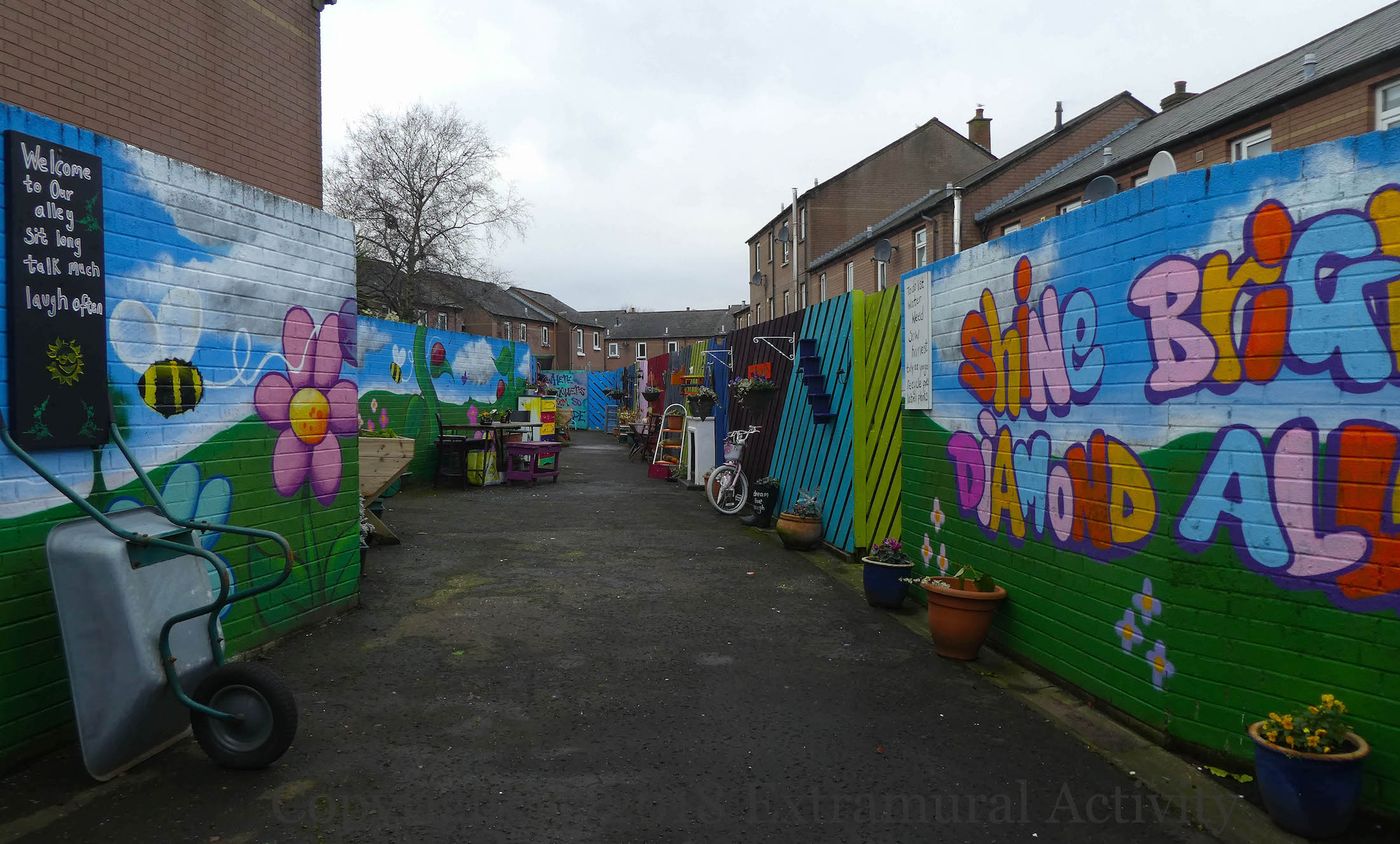
Diamond Alley is a disused alleyway off Lord Street in east Belfast, that has been rejuvenated with paint and plants, many placed in/on objects such as a wine rack, a chest of drawers, and a pair of jeans. The alley was funded by the Urban Villages Initiative and implemented by CharterNI/Diamond Project and East Belfast Mission/Hosford House, and launched on November 1st, last year (2017). The project was profiled on NVTv. (See also Always Keep A Diamond In Your Mind.)
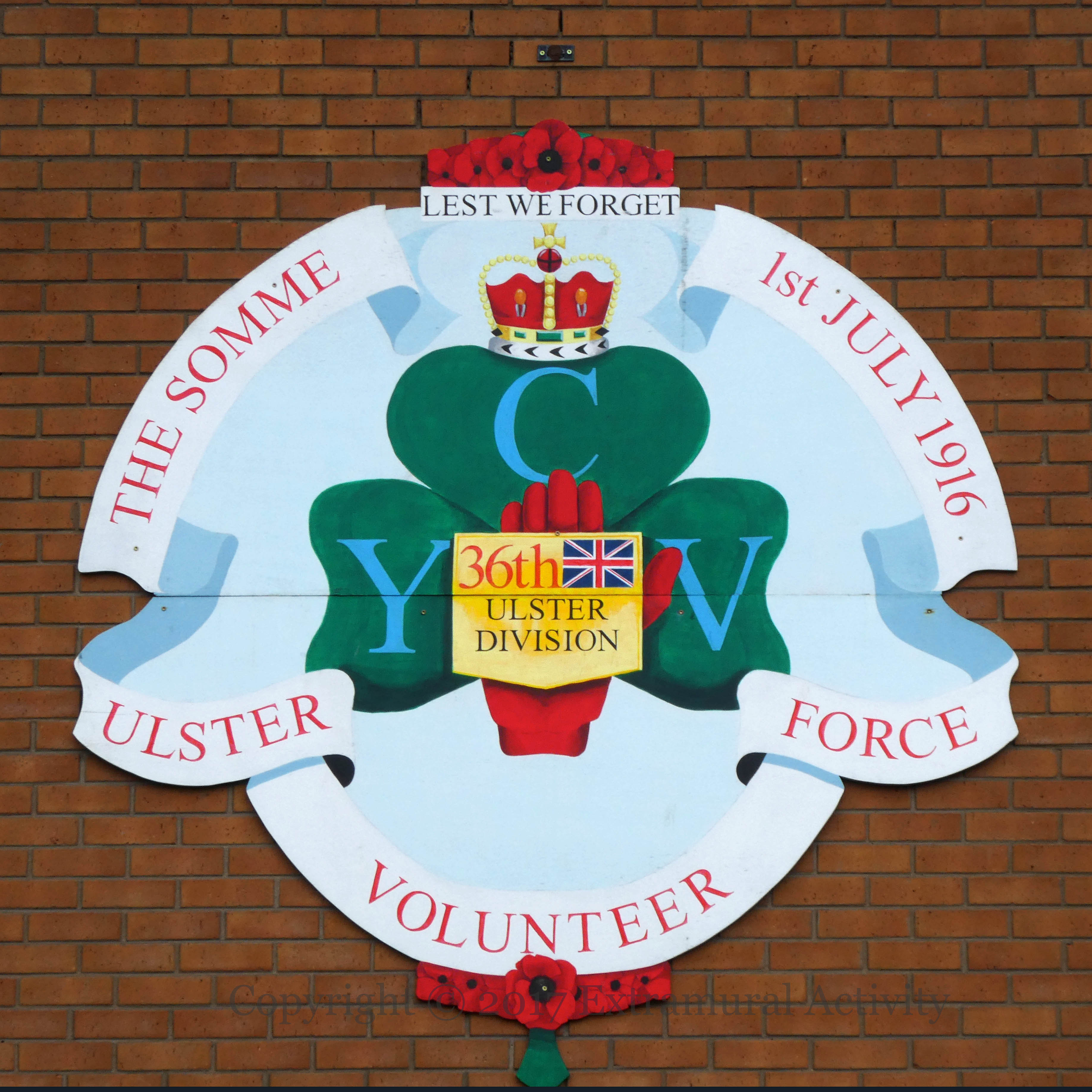
The Young Citizen Volunteers began as a civic organisation and domestic reserve force in 1912 but by the time of the first World War had become a battalion of the Ulster Volunteers and went to the Western Front as the fourteenth battalion of the Royal Irish Rifles, part of the 36th (Ulster) Division, landing at Boulogne in October, 1915. The force was mainly Protestant but History Hub Ulster has a page on the 42 Ulster Catholics who served in the 14th (YCV) RIR.
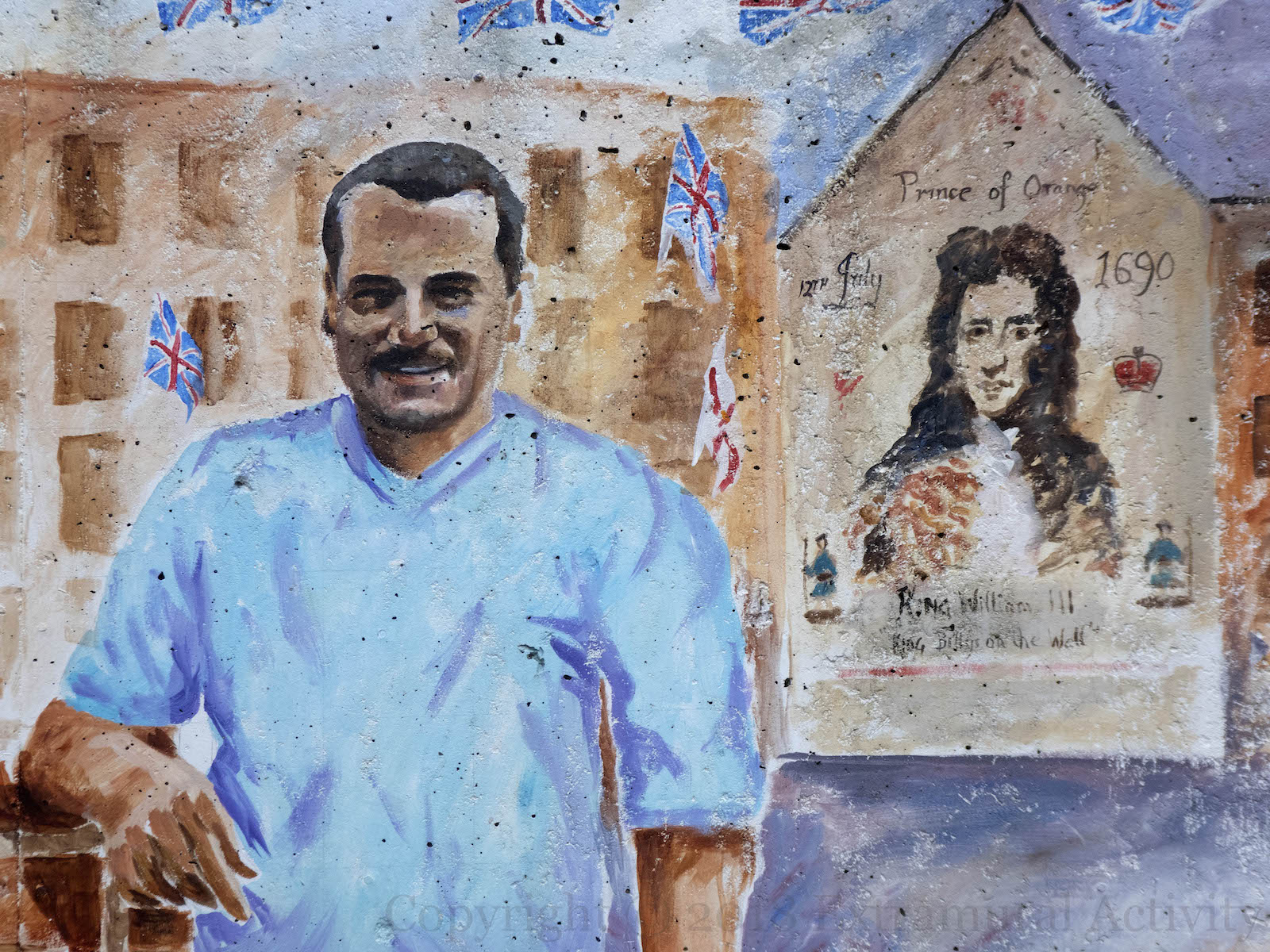
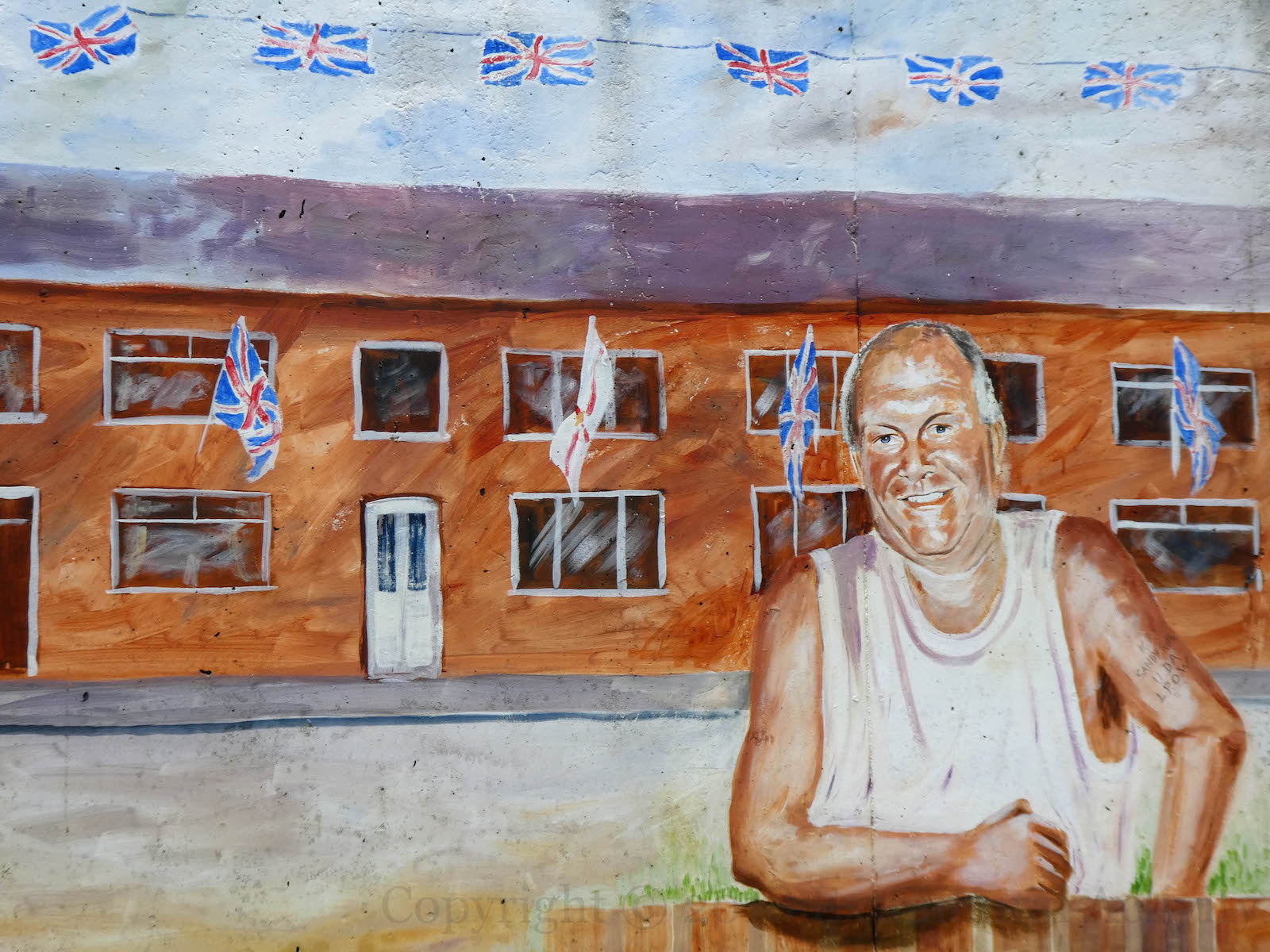
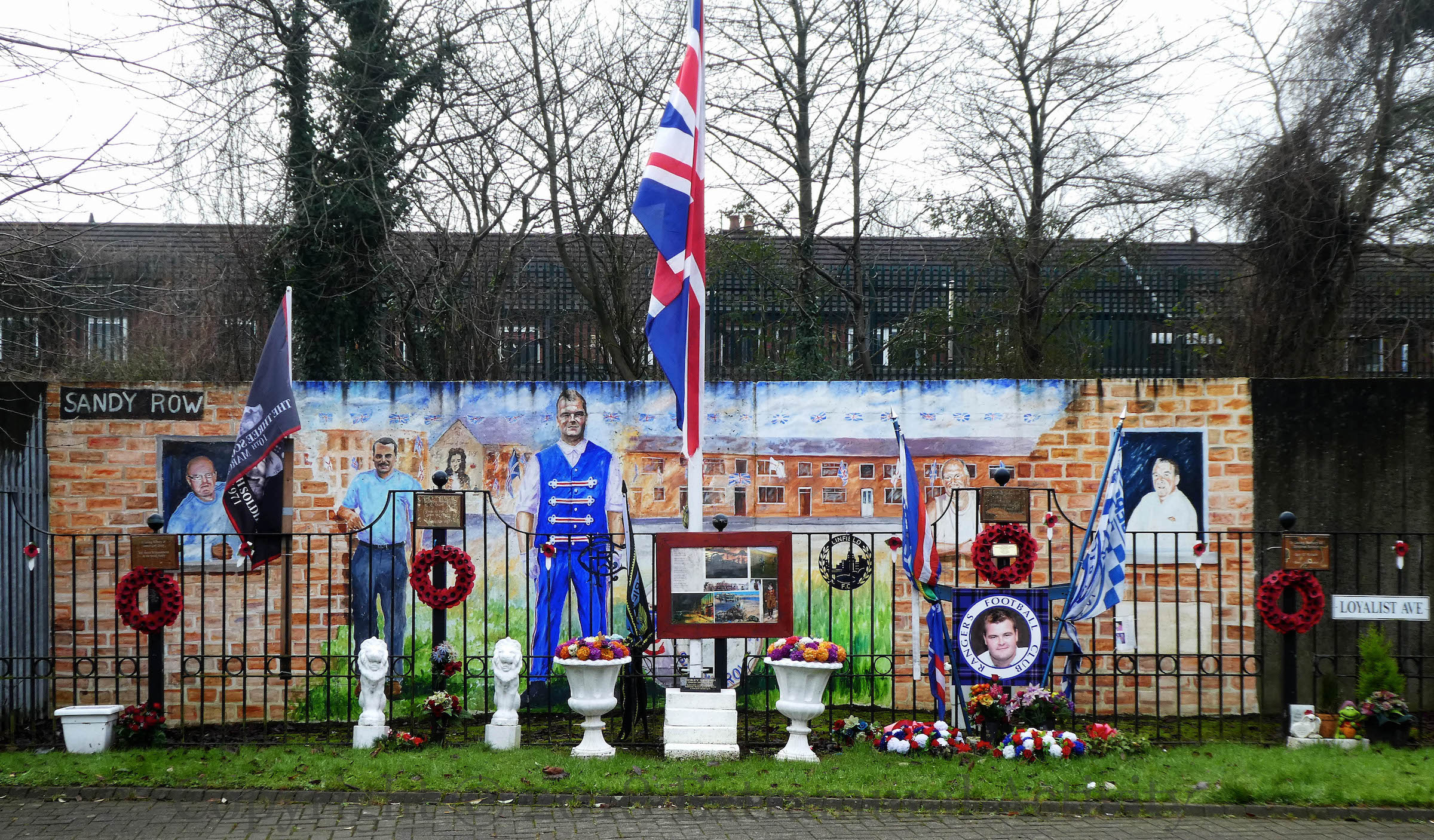
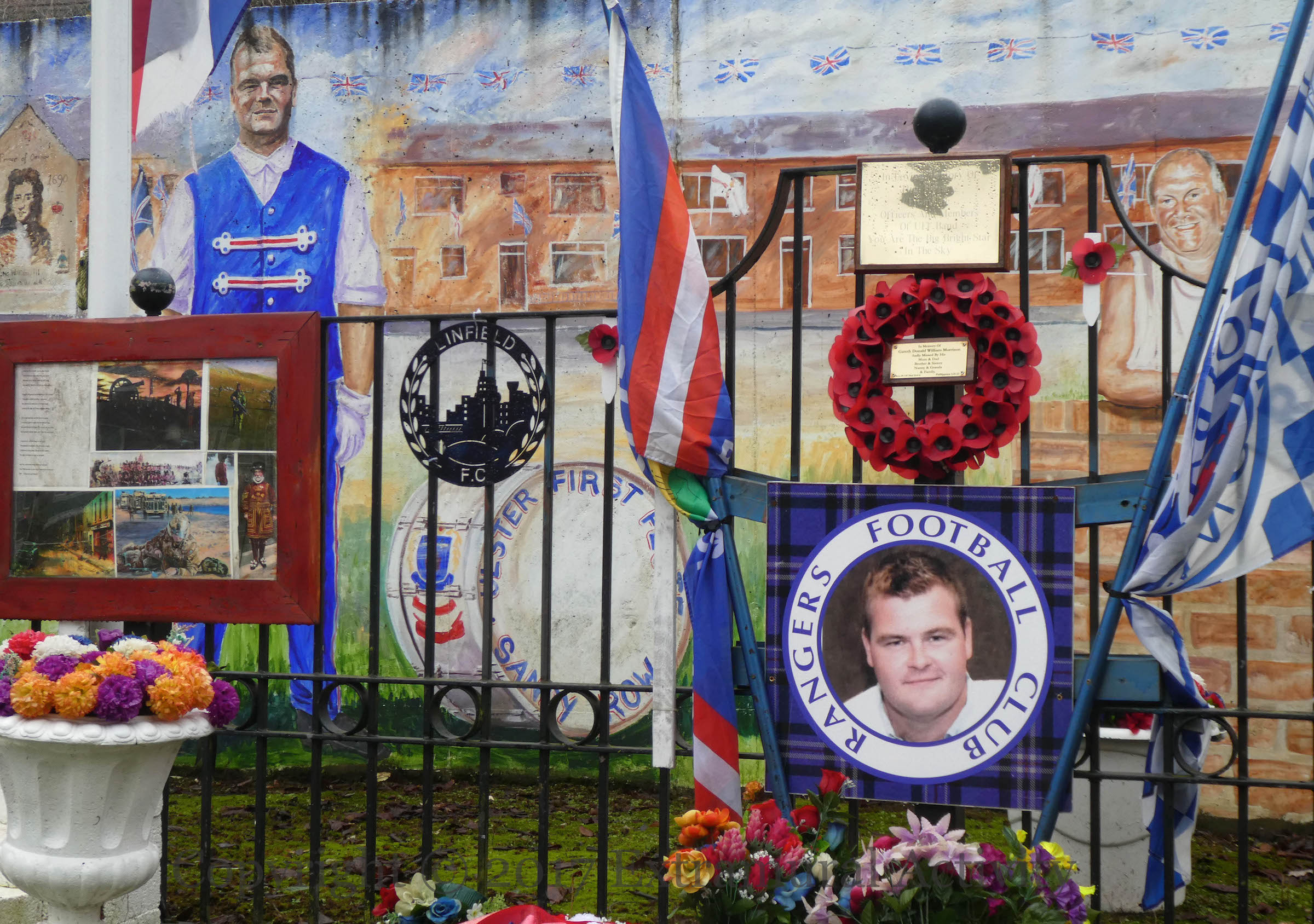
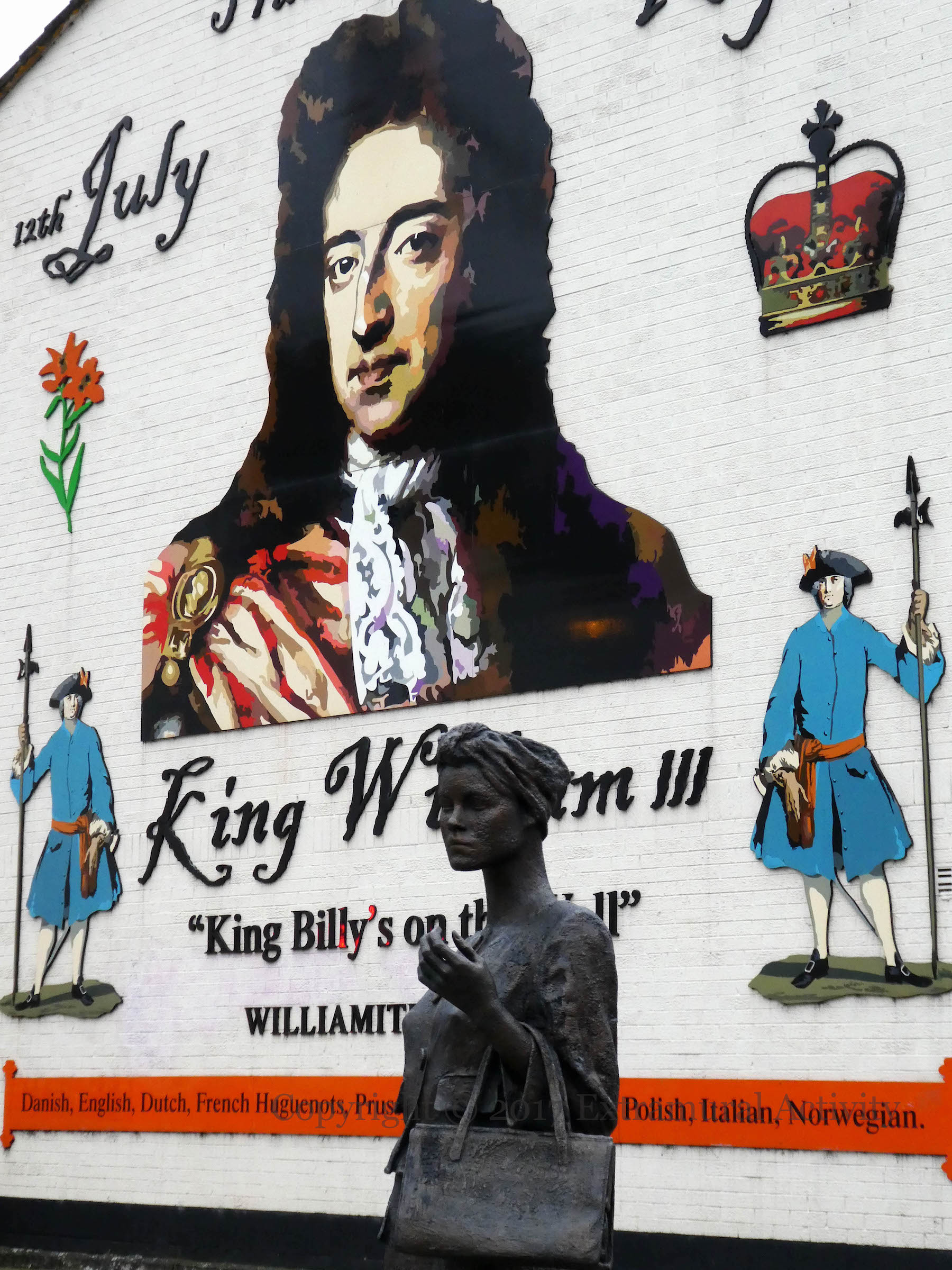
Here are two portraits from the “Loyalist Avenue” mural and memorial garden hear Sandy Row. If you know anything about the people depicted, please leave a comment. The central figure (in the wide shot) is Gareth Morrison (see Big Henry). For the King William mural, see British And Proud.
Gareth “Big Henry” Morrison was a drummer in the Ulster First Flute band in Sandy Row and a Rangers supporter. He died at age 26 on June 23rd, 2013 from a dose of PMA (BelTel), one of eight such deaths in Northern Ireland and seven in western Scotland. (1997 image of a UFFB mural in Linfield Road.)
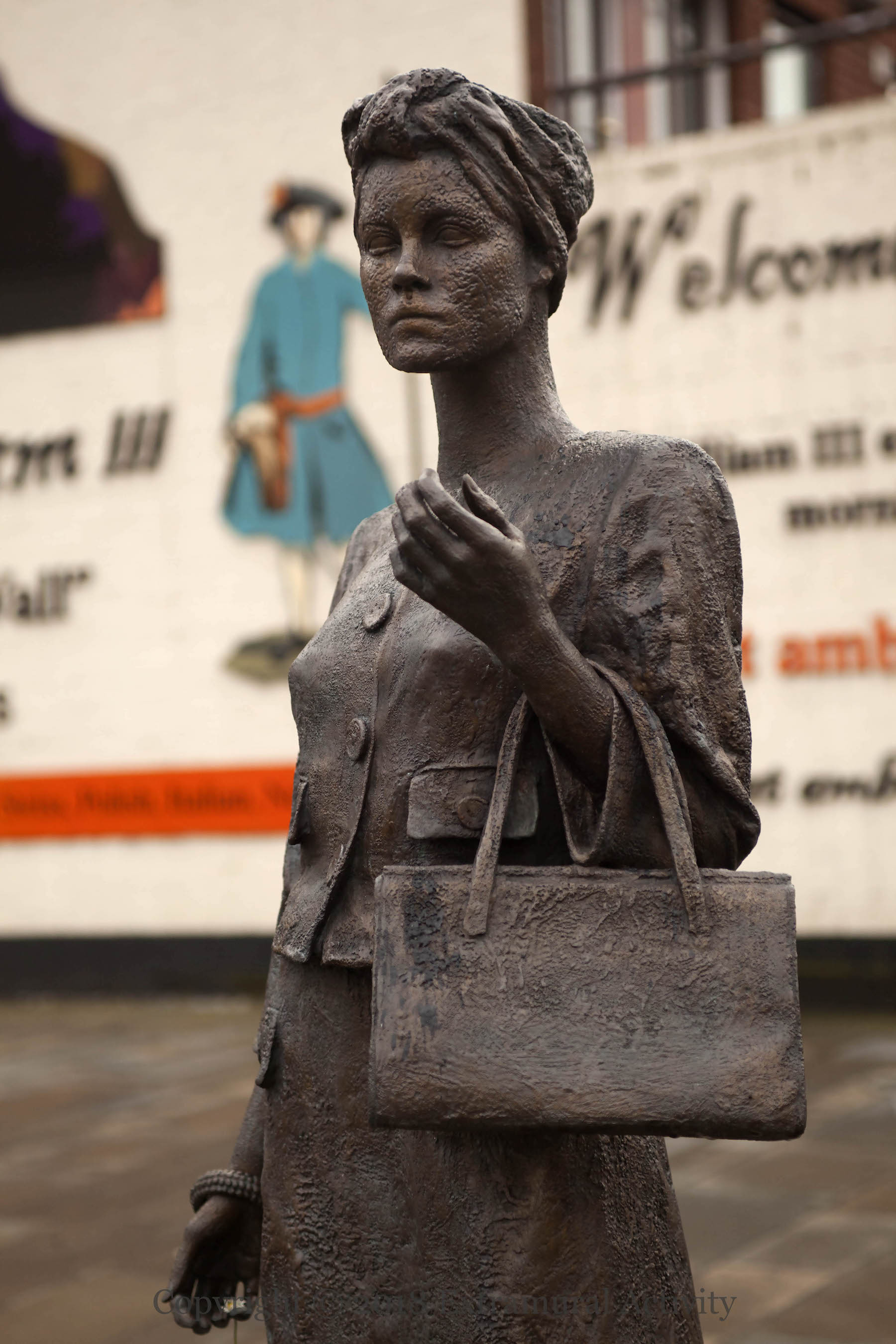
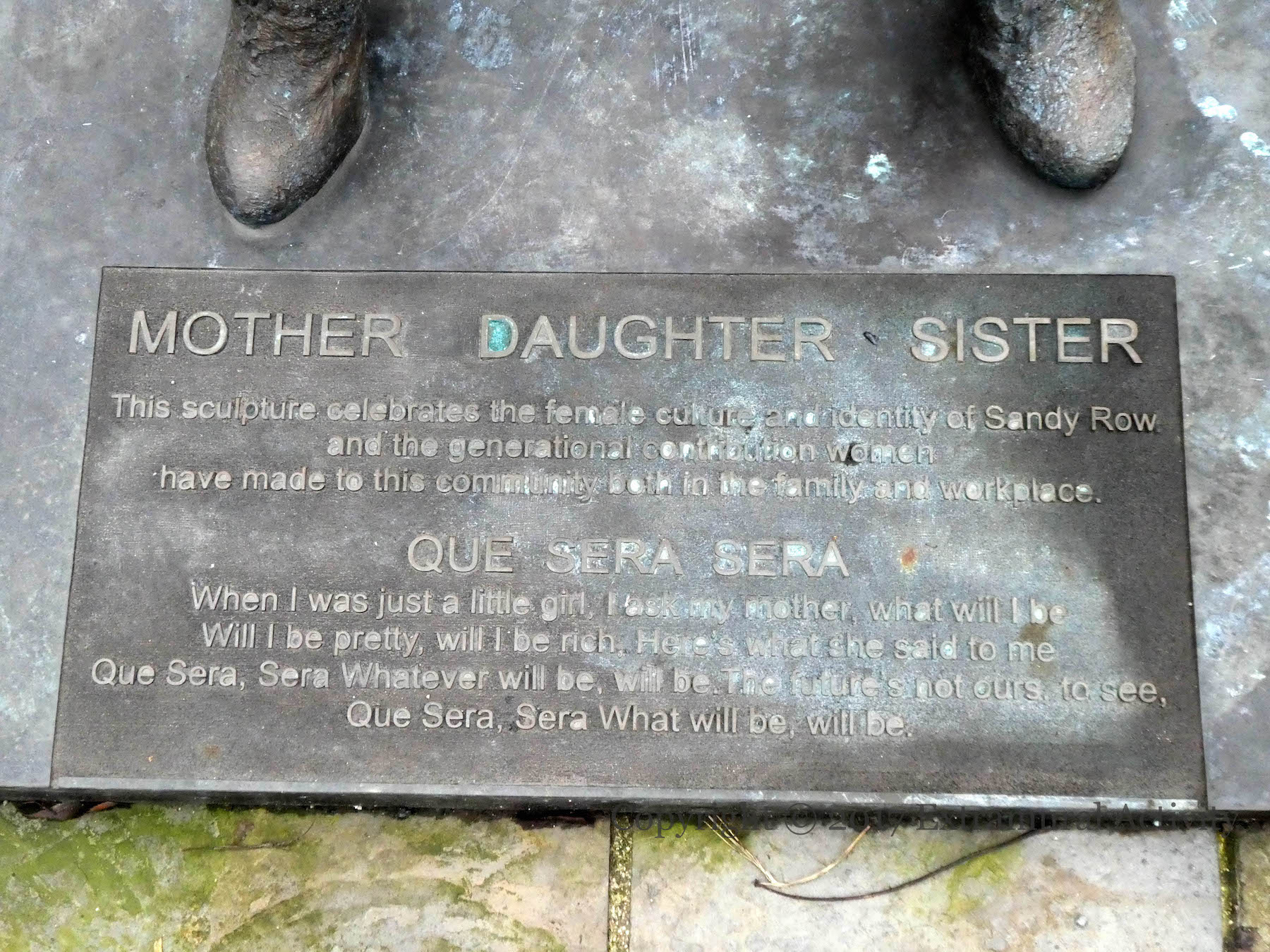
Ross Wilson’s statue ‘Mother – Daughter – Sister’ was launched in 2015 (Art Council NI), two years after his King William mural which towers over it (see final image). “This sculpture celebrates the female cultural identity of Sandy Row and the generational contribution women have made to this community both in the family and workplace.” With a verse from the Doris Day song ‘Que Sera Sera’ from Hitchcock’s The Man Who Knew Too Much.
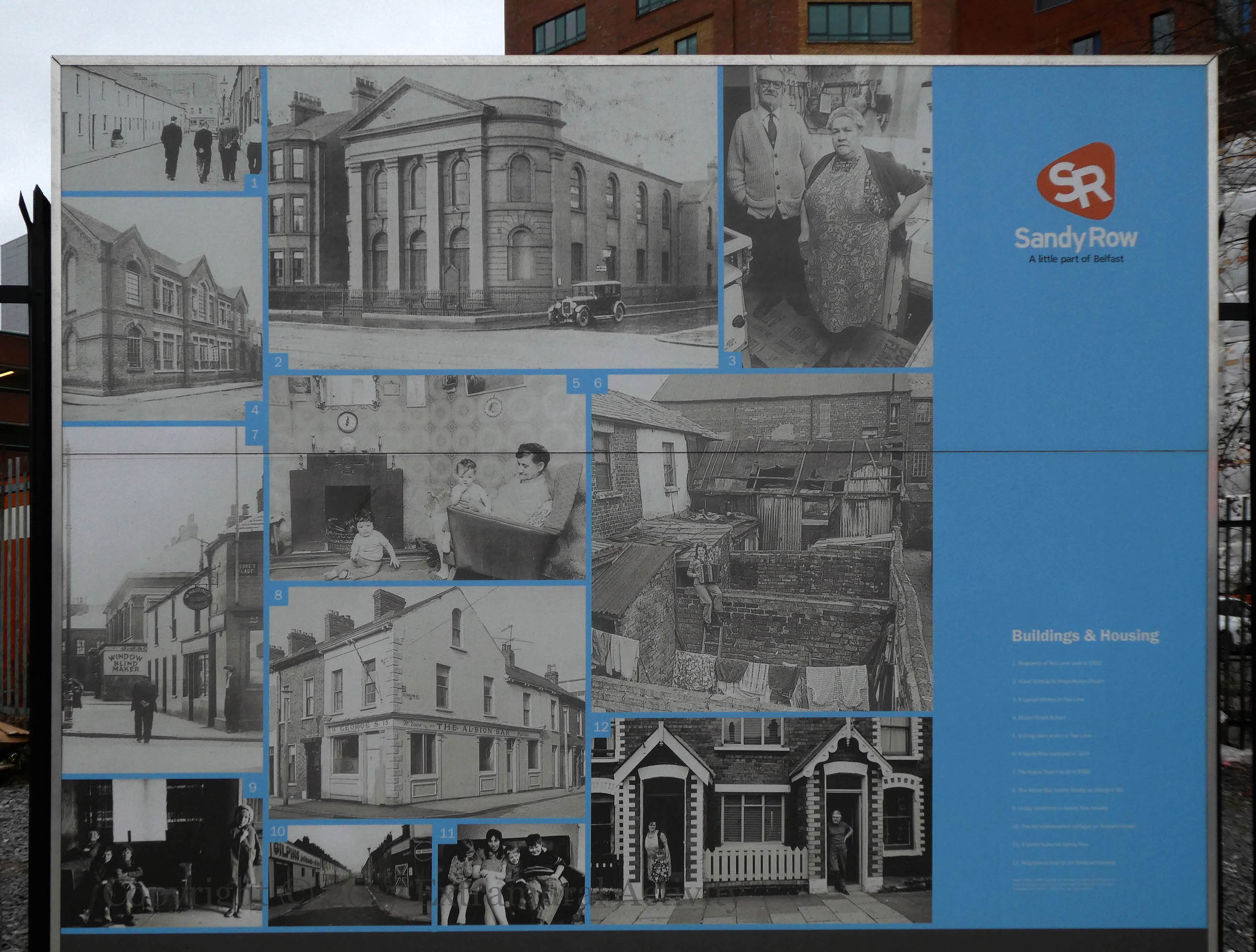
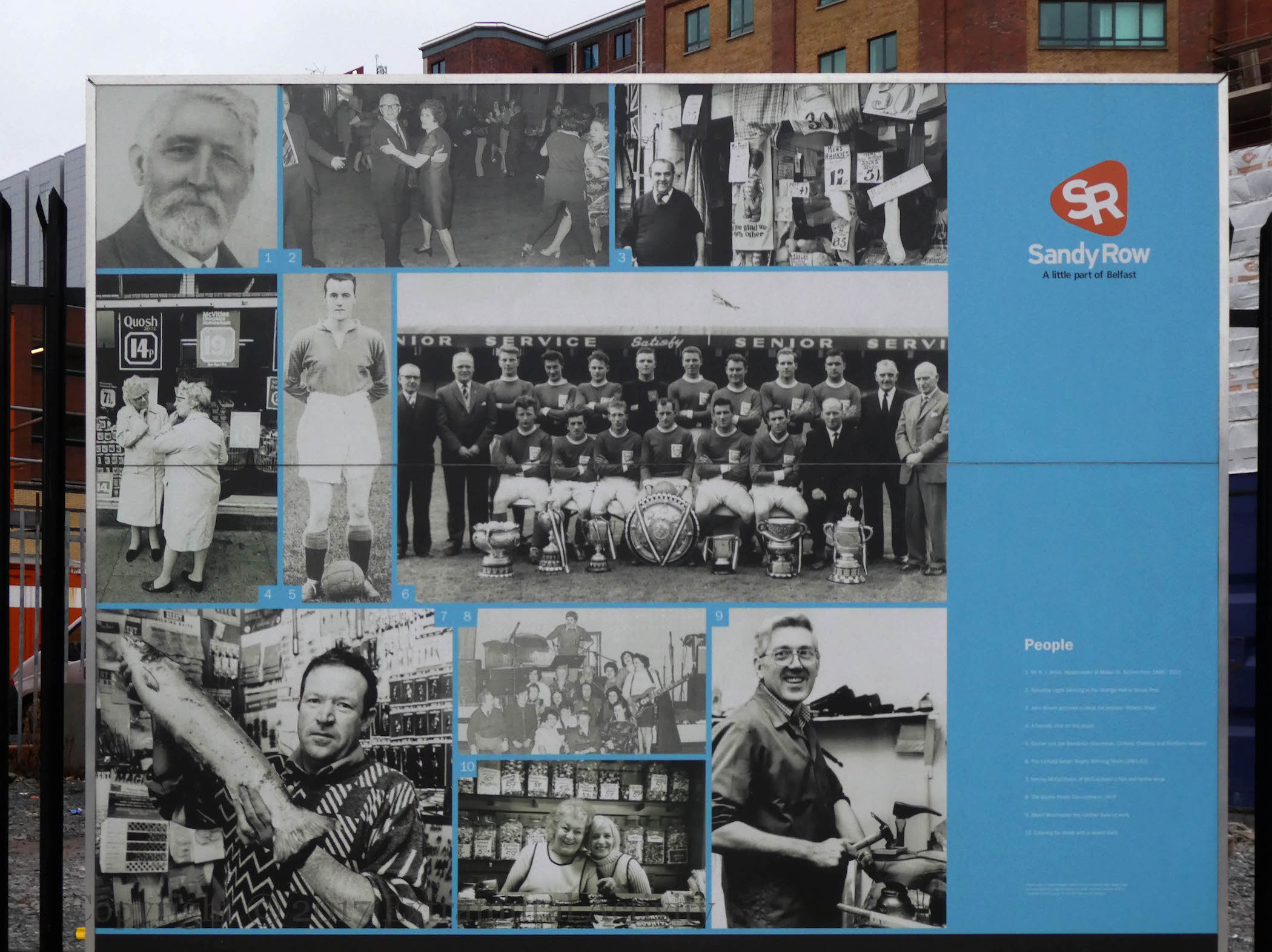
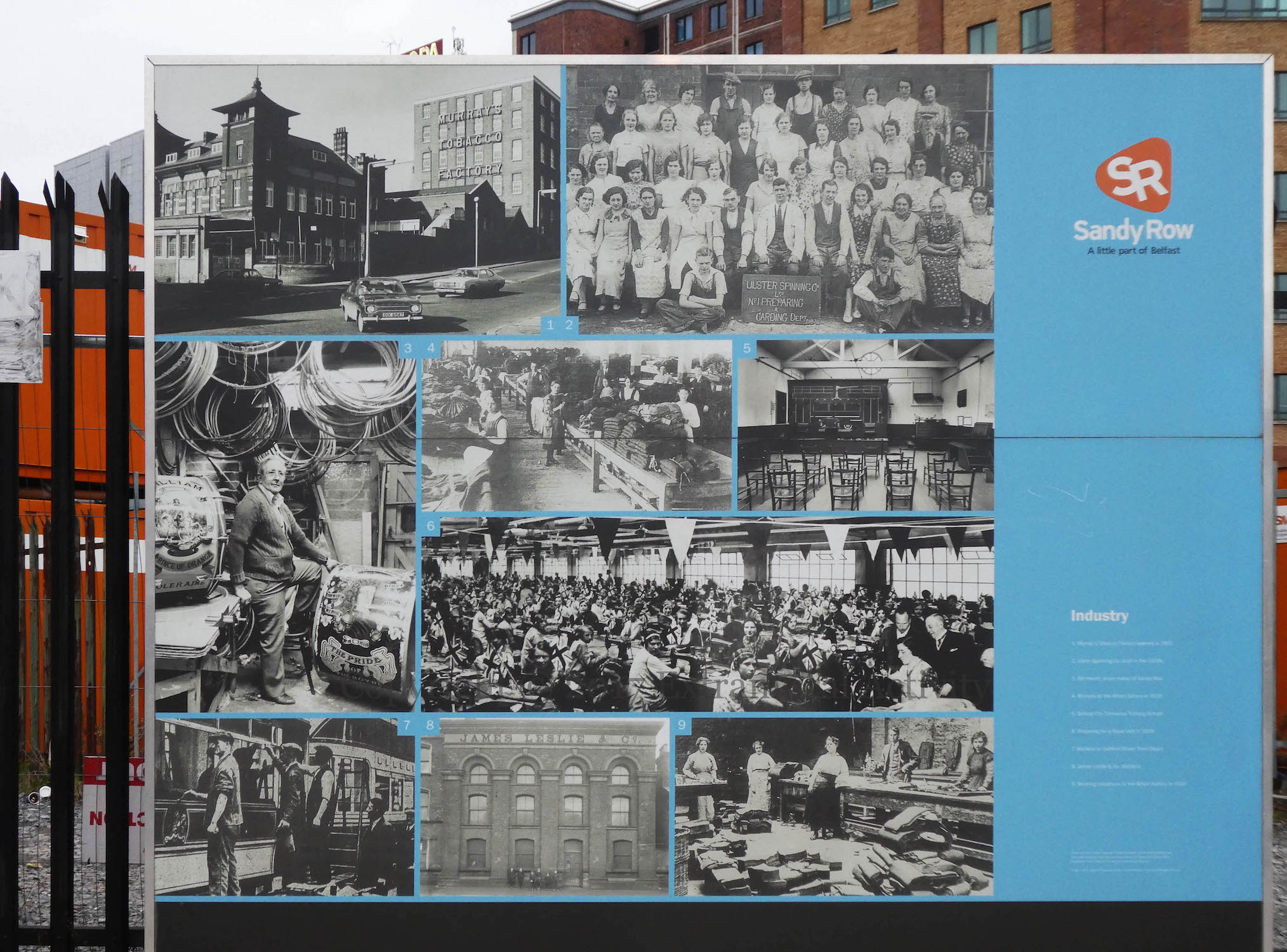
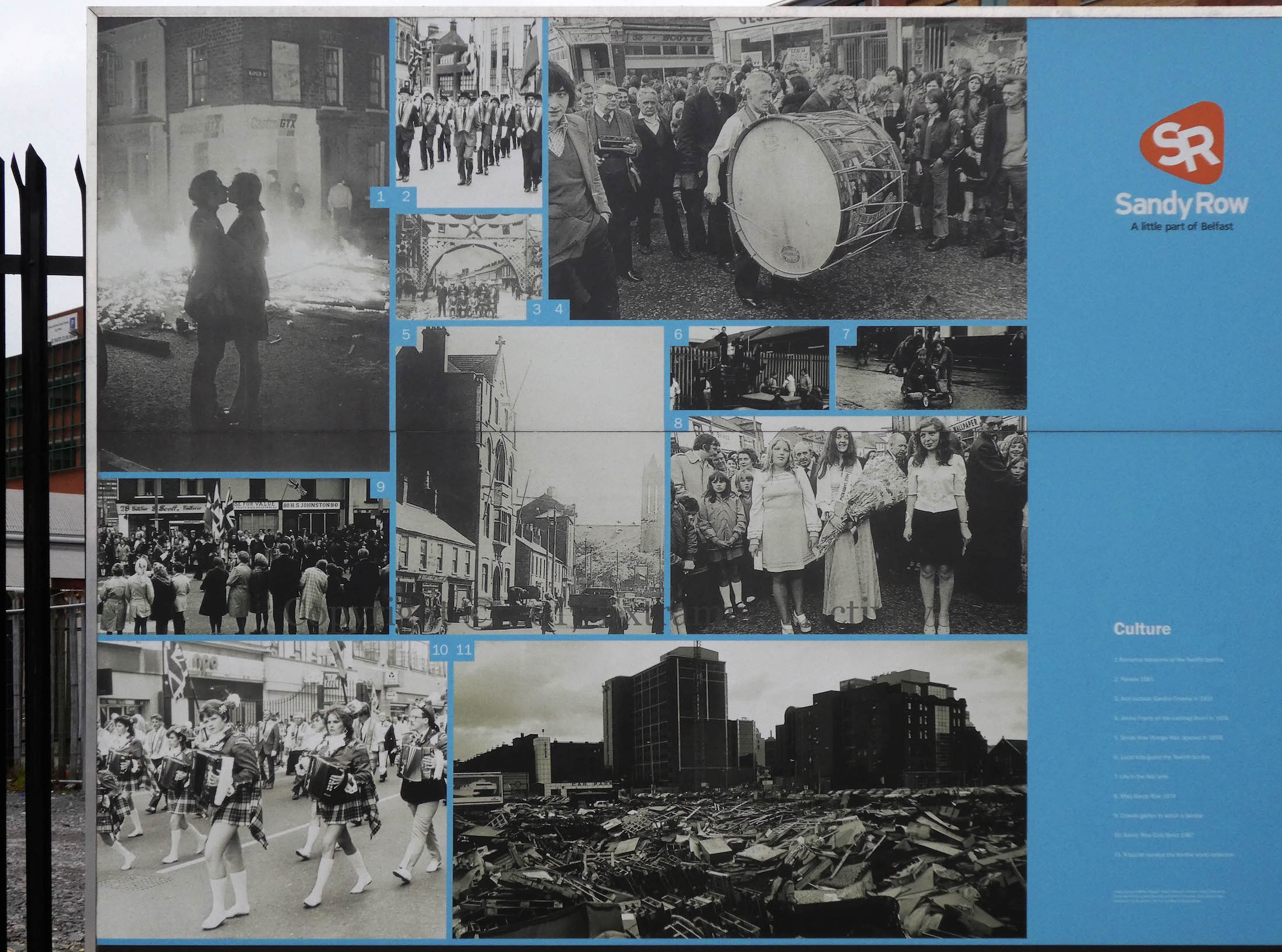
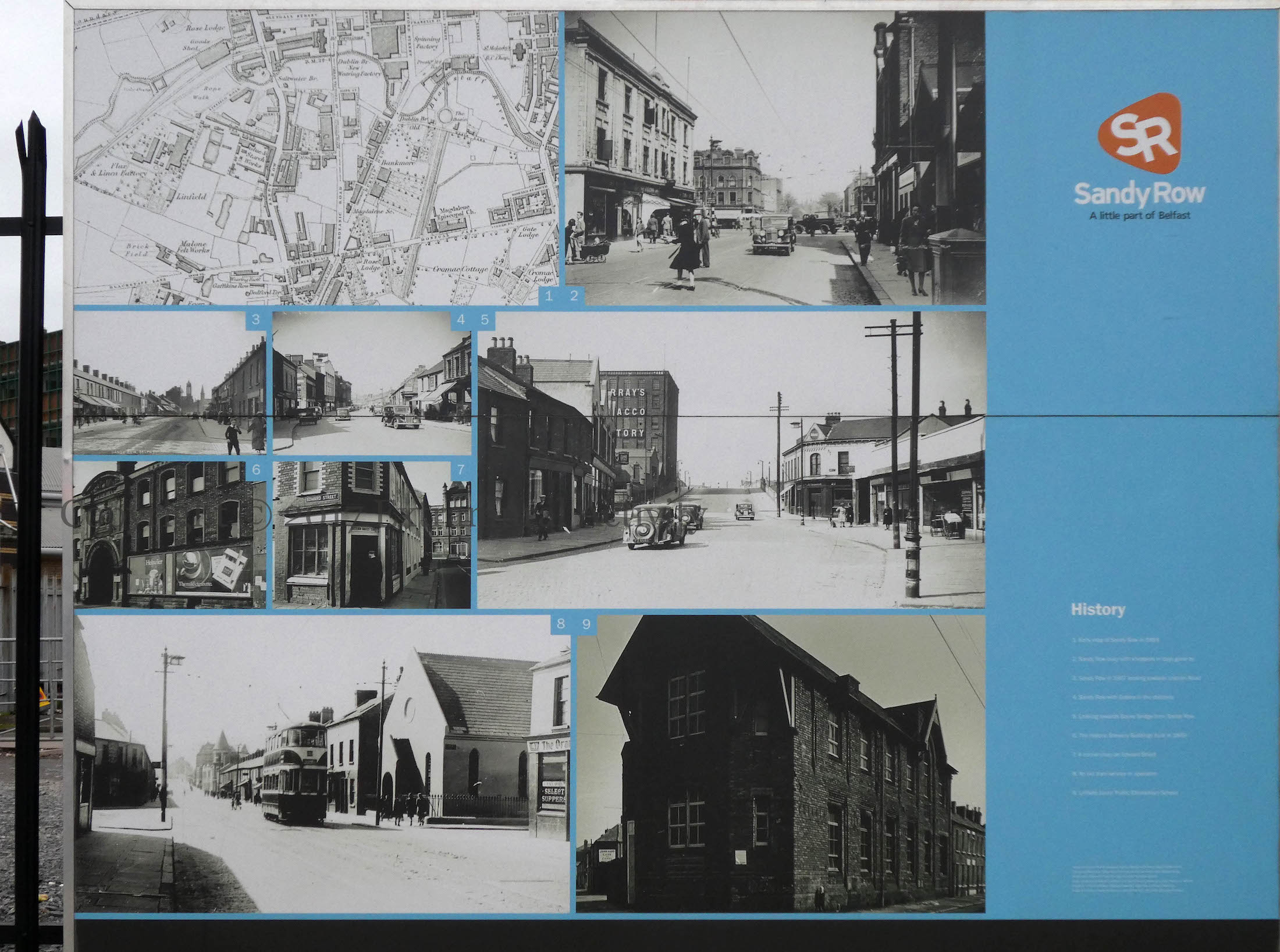
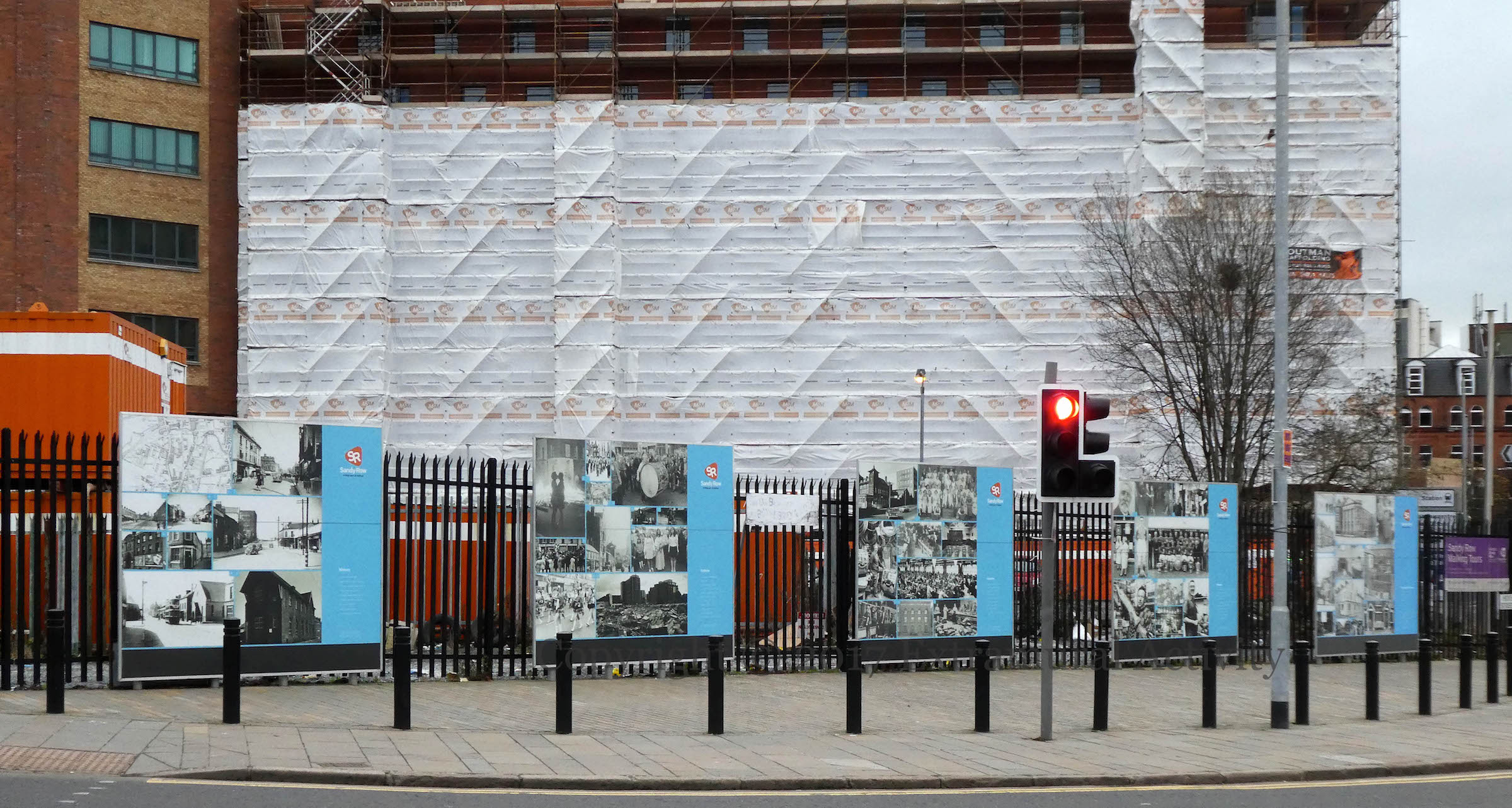
Sandy Row is “steeped in 400 years of tradition”, according to Historic Sandy Row (and sister site Sandy Row Community Forum which has developed a “growth strategy” for the area). Some of that history is presented at the junction with Hope Street, one each for Buildings & Housing, People, Industry, Culture, and History.
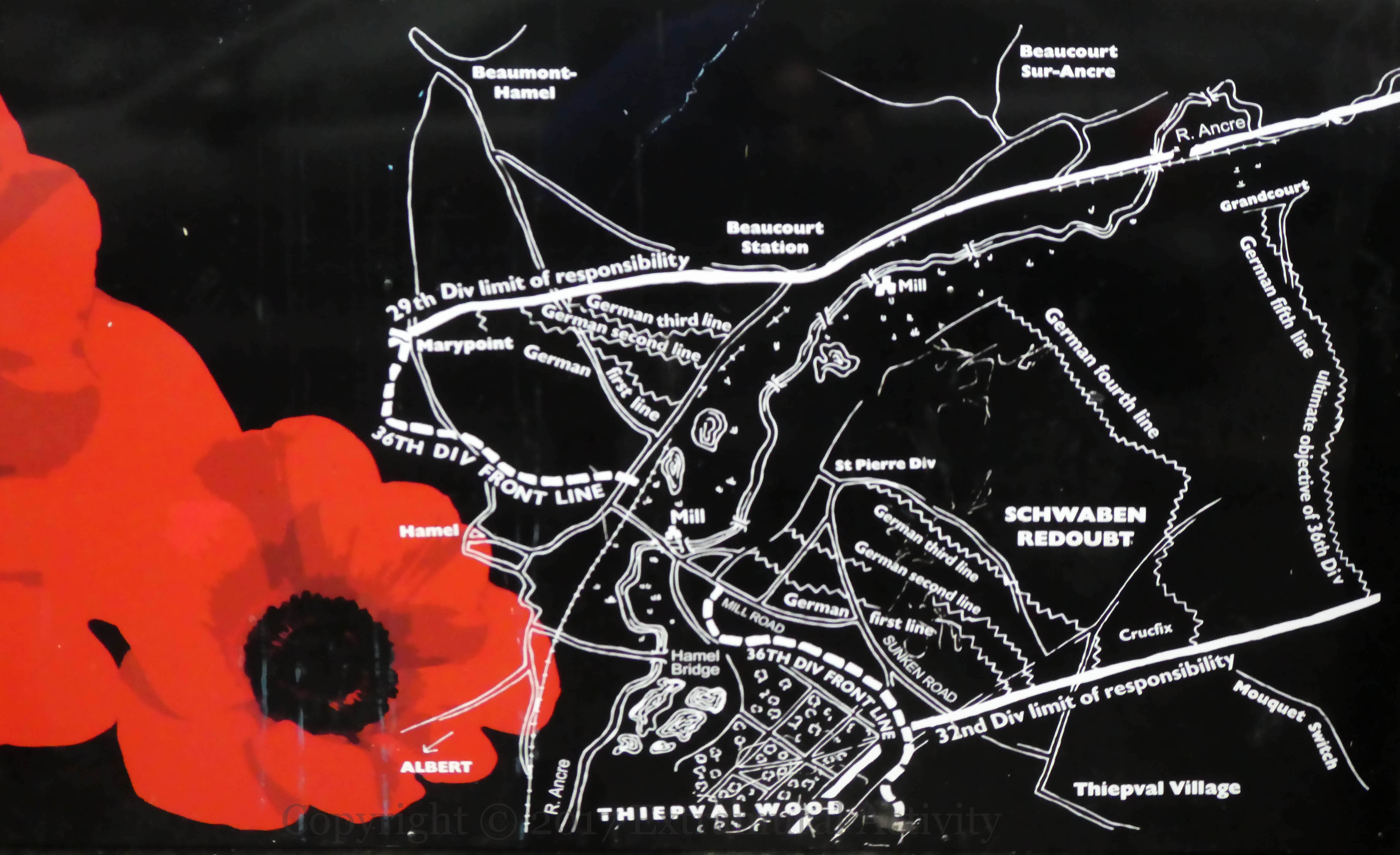
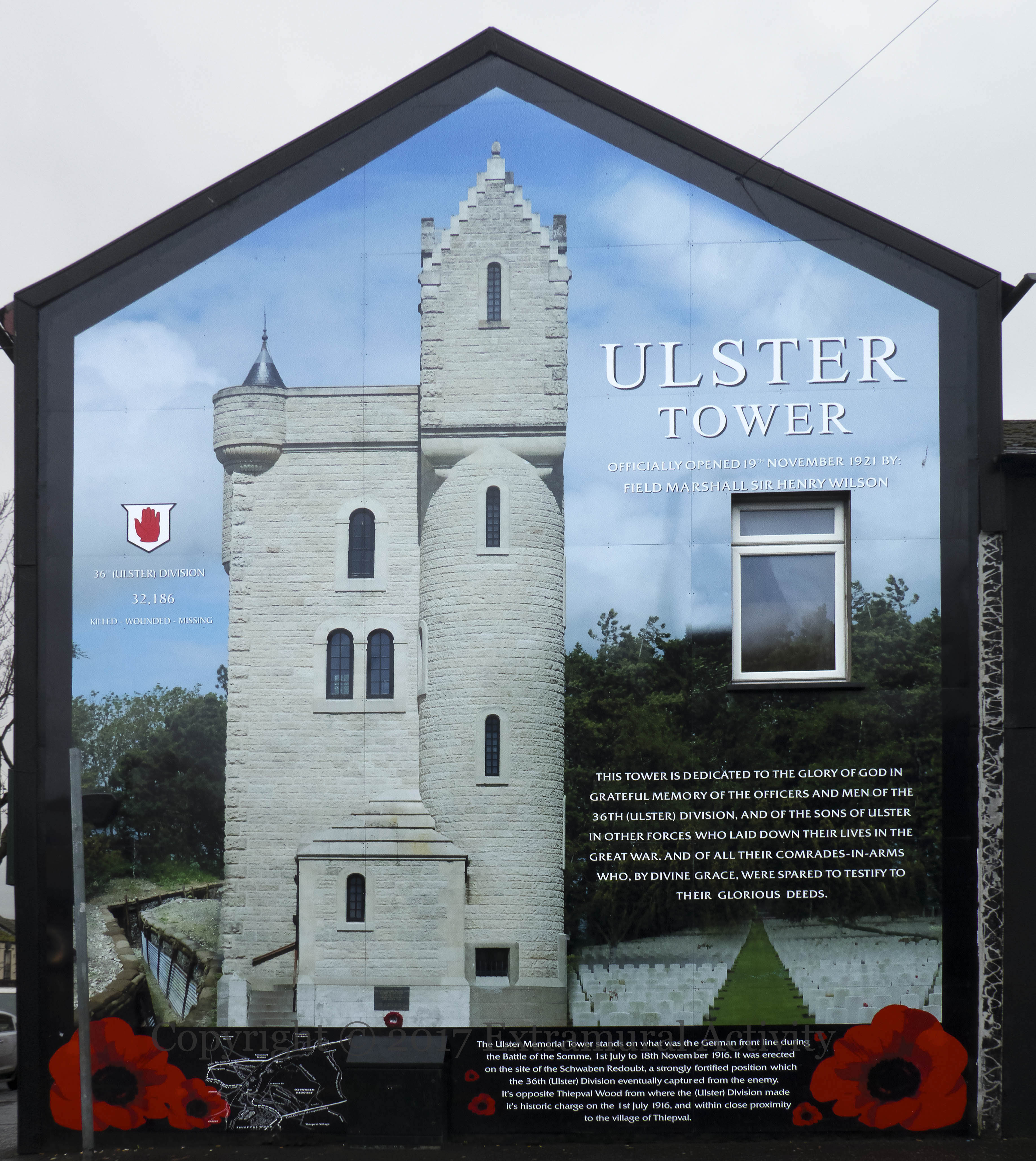
The map in the lower left corner of this WWI commemorative mural shows the defensive lines of both the Allies and the Central Powers. As the inscription on the mural describes, the Ulster Tower is situated close to the Schwaben Redoubt, the primary objective of the 36th Division on the first day of battle.
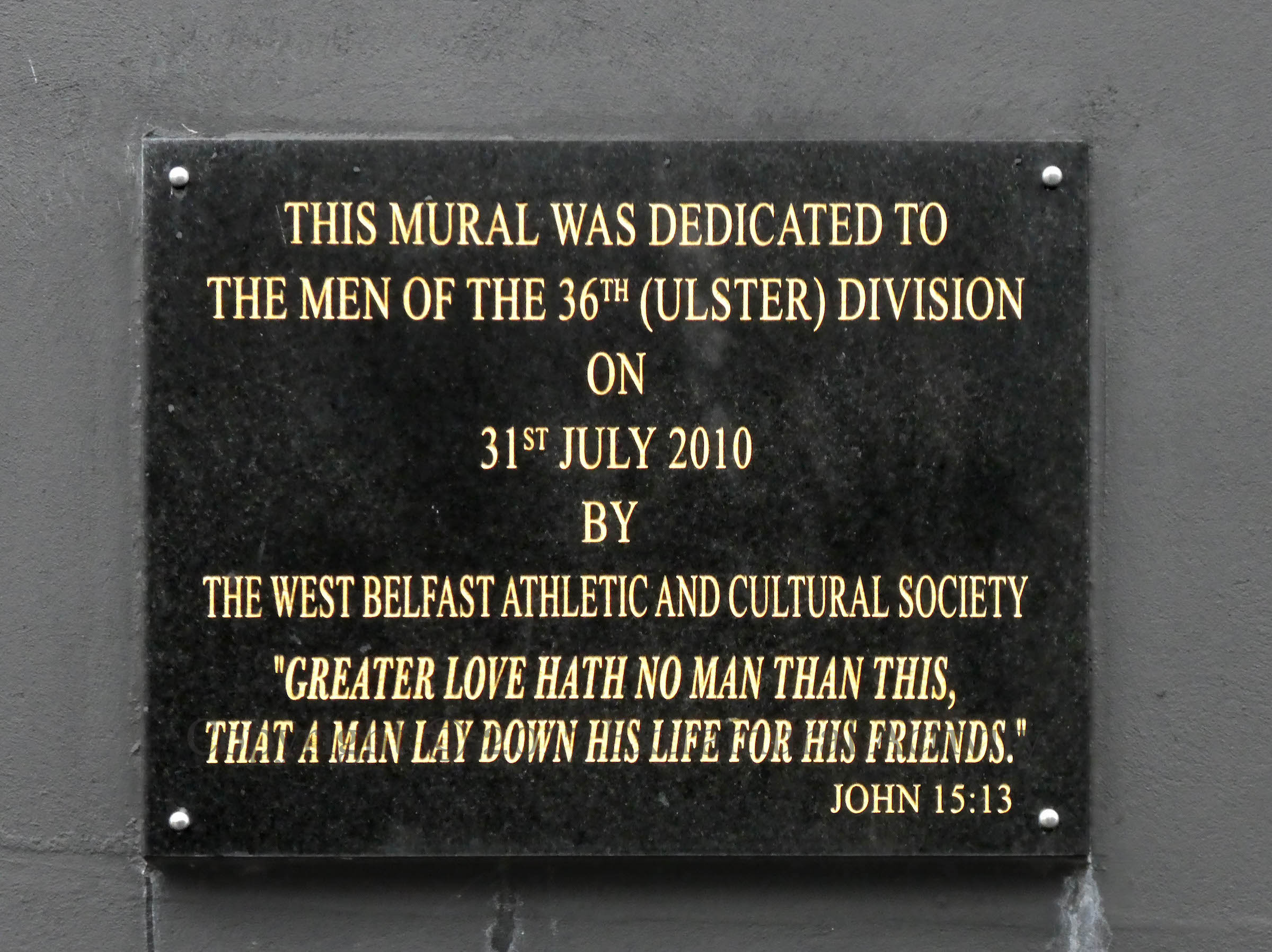
“Ulster Tower, officially opened 19th November, 1921, by Field Marshall Sir Henry Wilson.” “This Tower is dedicated to the glory of God in grateful memory of the officers and men of the 36th (Ulster) division, and of the sons of Ulster in other forces who laid down their lives in the Great War, and of all their comrades-in-arms who, by divine grace, were spared to testify to their glorious deeds.” “The Ulster Tower stands on what was the German front line during the Battle Of The Somme, 1st July to 18th November 1916. It was erected on the site of the Schwaben Redoubt, a strongly fortified position which the 36th (Ulster) Division eventually captured. It’s opposite Thiepval Wood from where the (Ulster) Division made it’s [sic] historic charge on 1st July 1916, and within close proximity to the village of Thiepval.” “32,186 killed, wounded, missing.” “Greater love hath no man than this that a man lay down his life for his friends.”
 Seosamh Mac Coille Collection