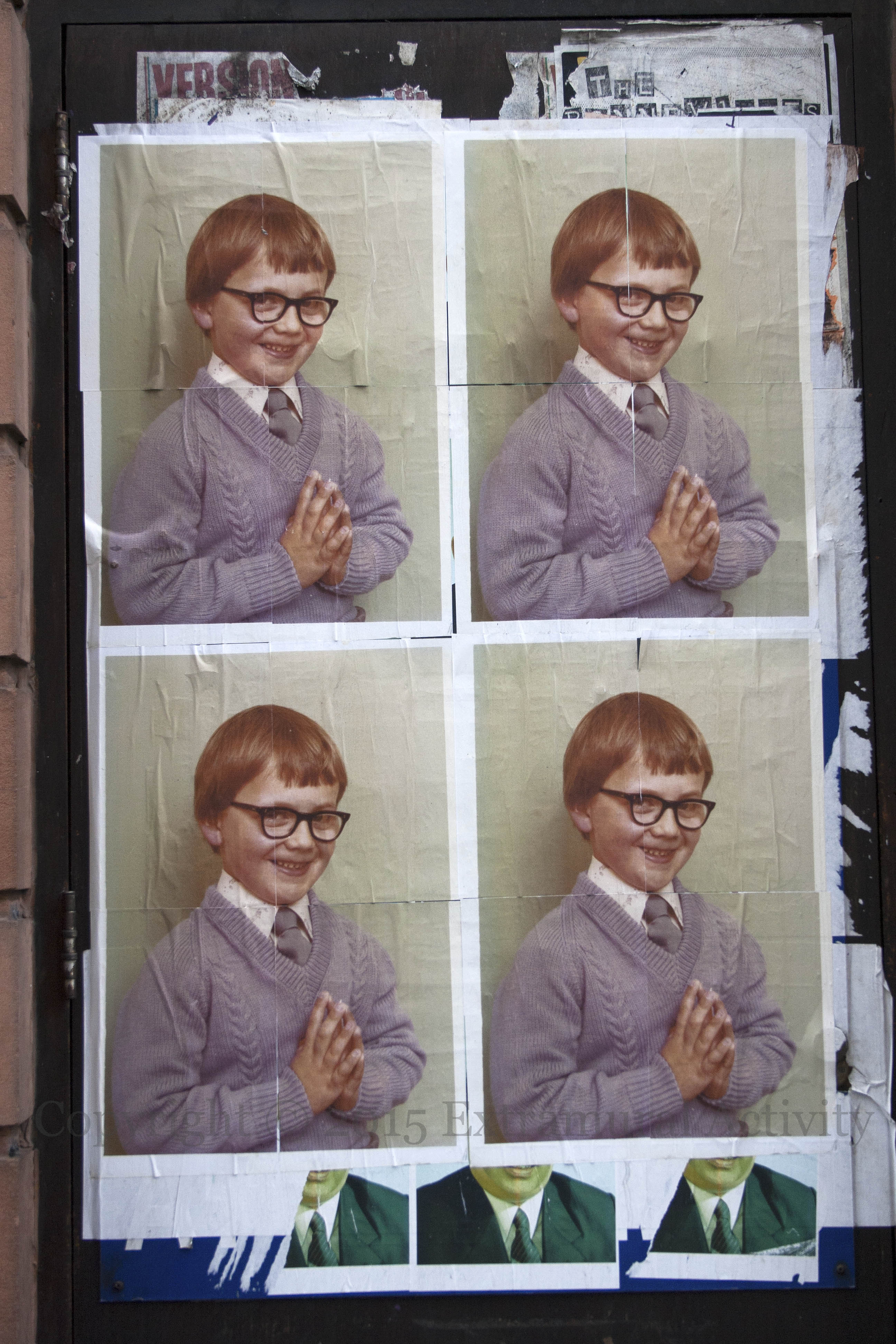
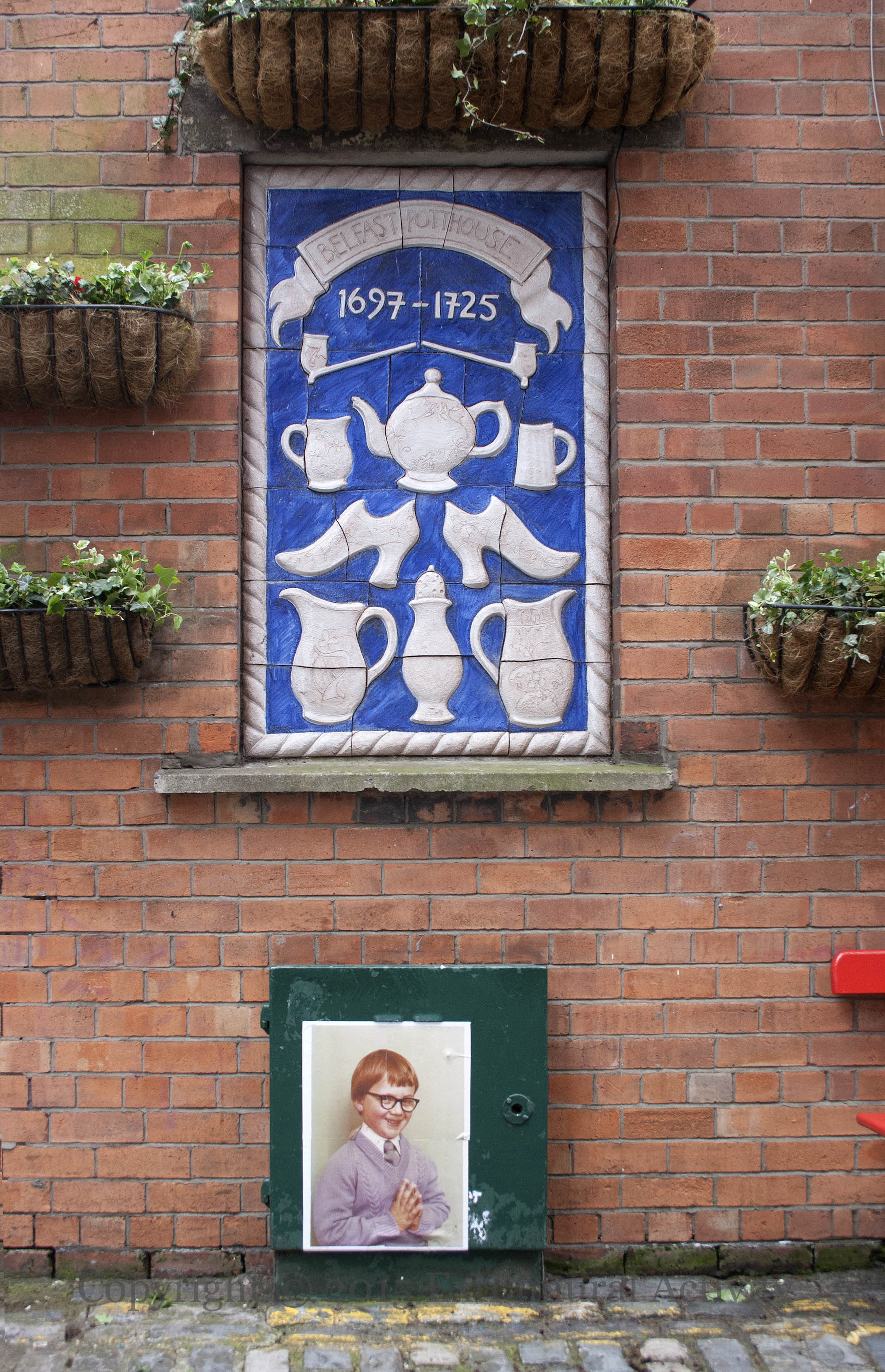
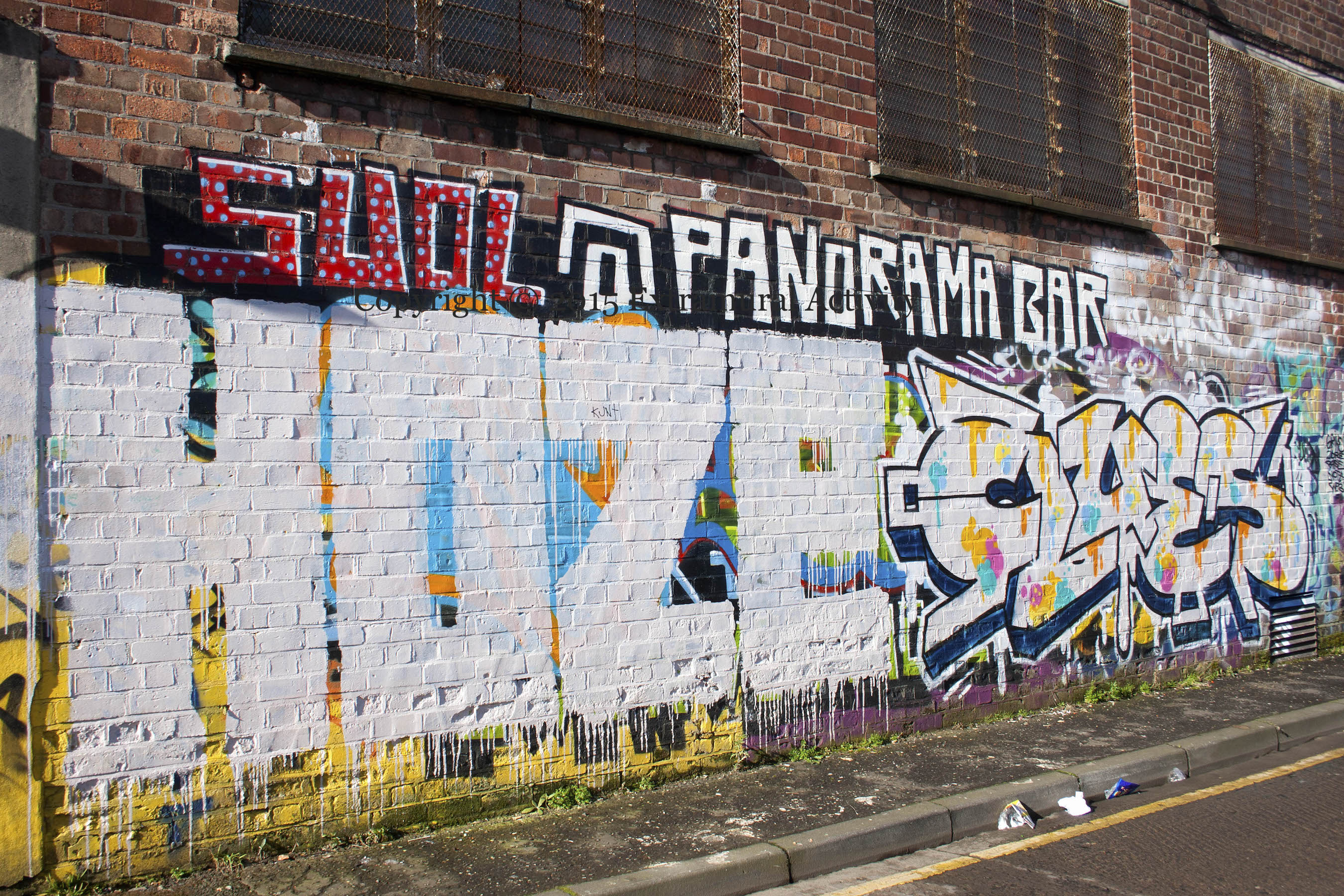
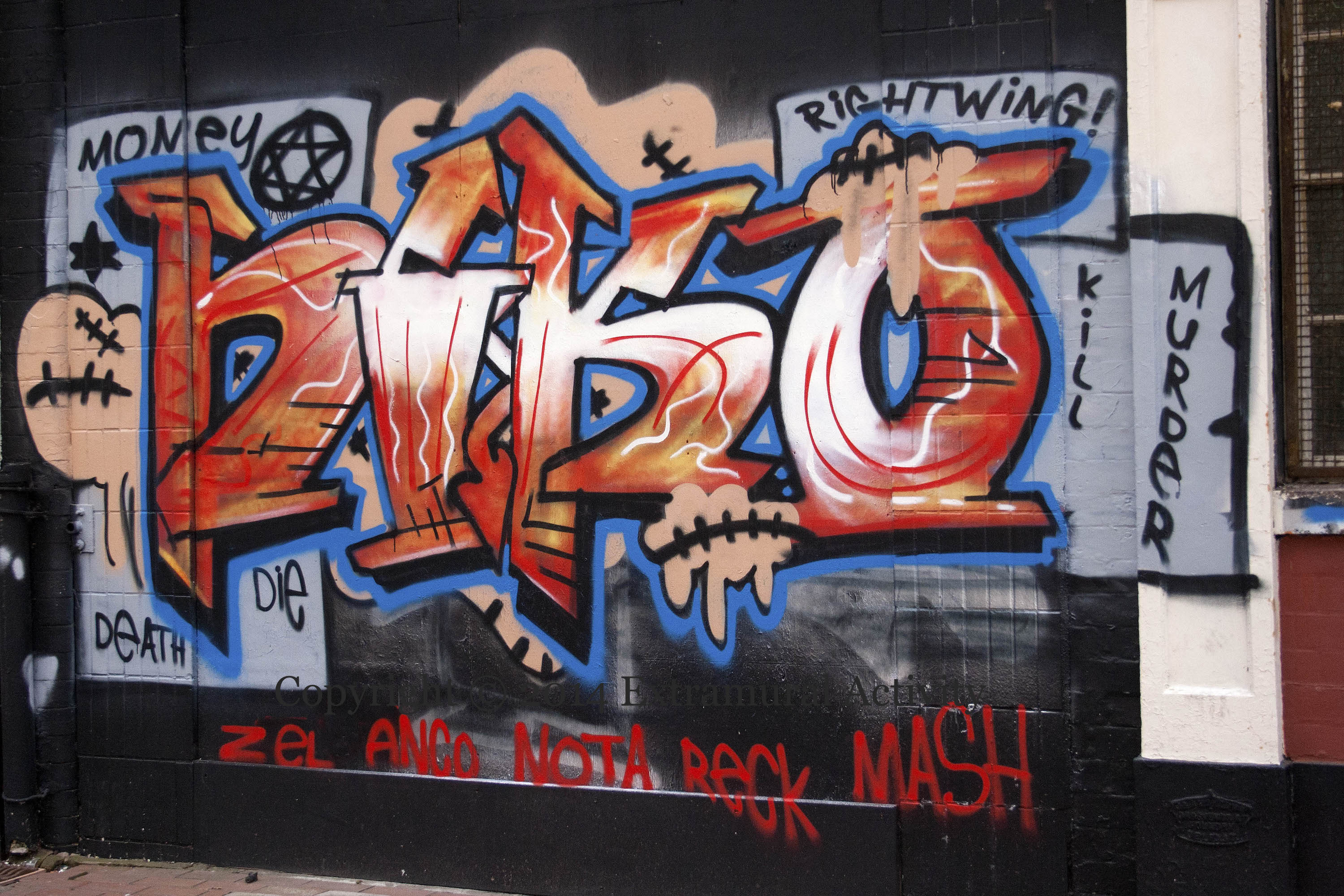
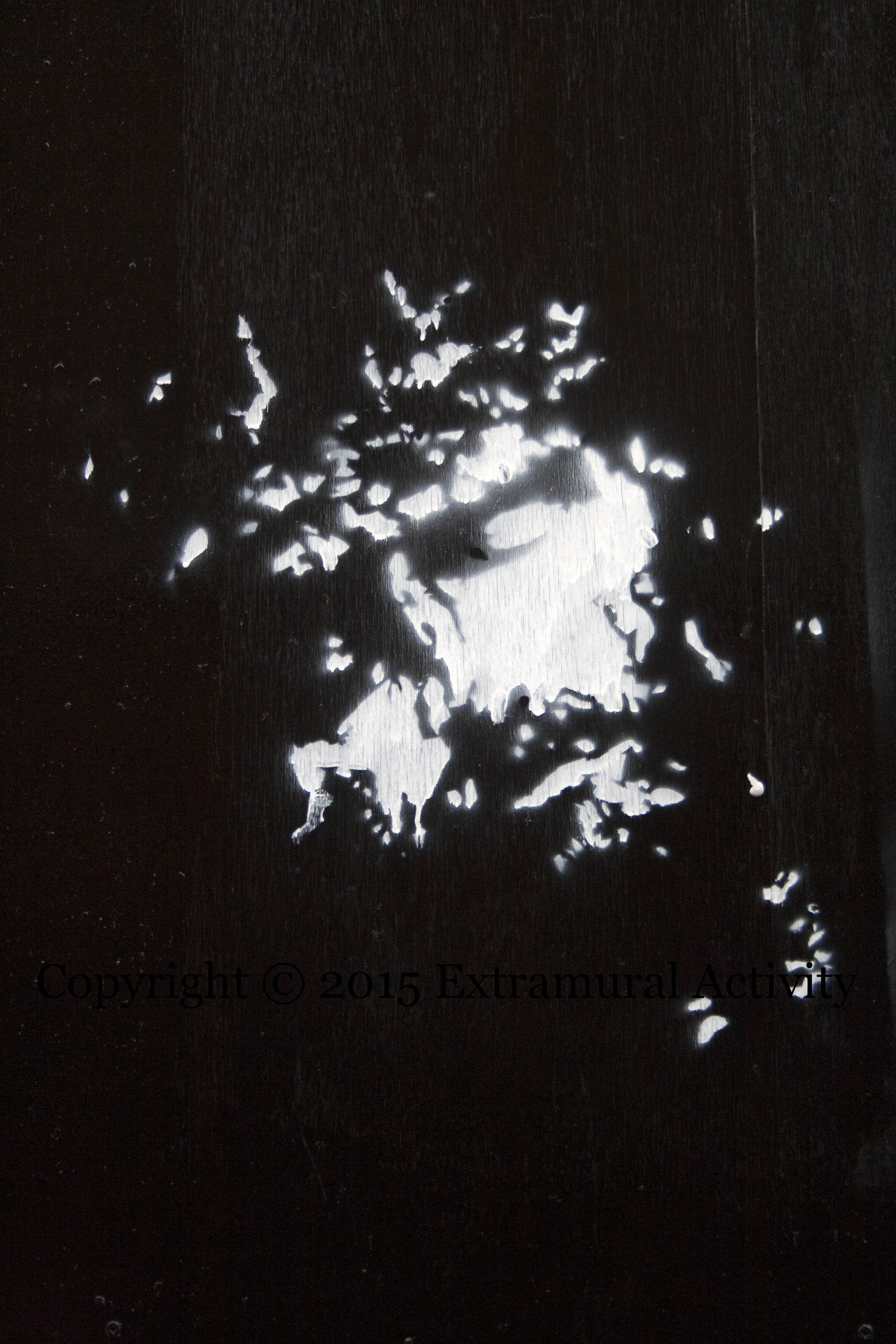
Who could resist this beaming smile and lilac knitwear? Communion portrait as street art, taking the place of Ian Jong-Un in Hill Street and (below) beneath the Potthouse plaque in Commercial Court.
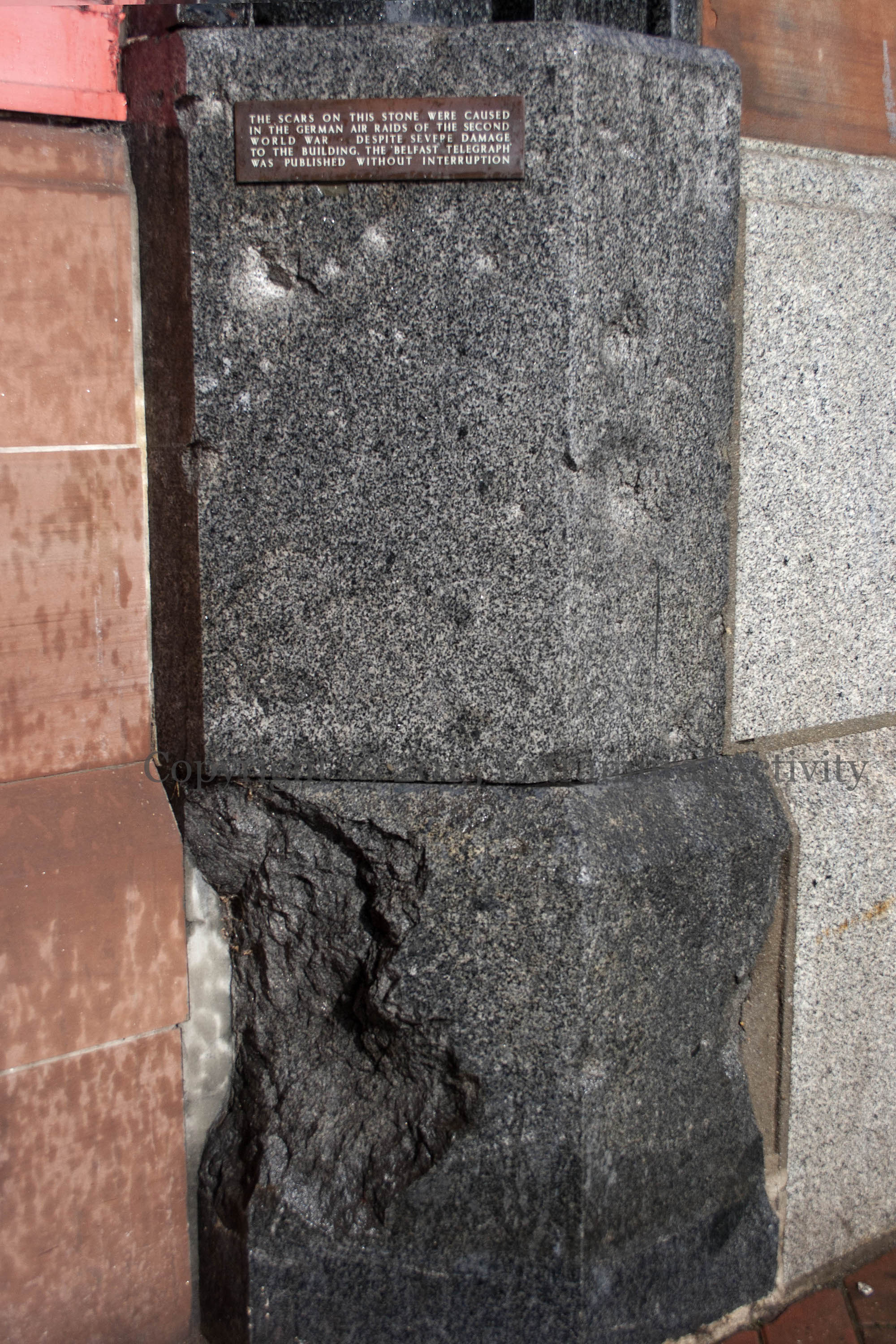
“The scars on this stone were caused in the German air raids of the second world war. Despite severe damage to the building, the Belfast Telegraph was published without interruption.” The masonry above forms part of what was the old front door of the offices, at the corner of Royal Avenue and Library Street.
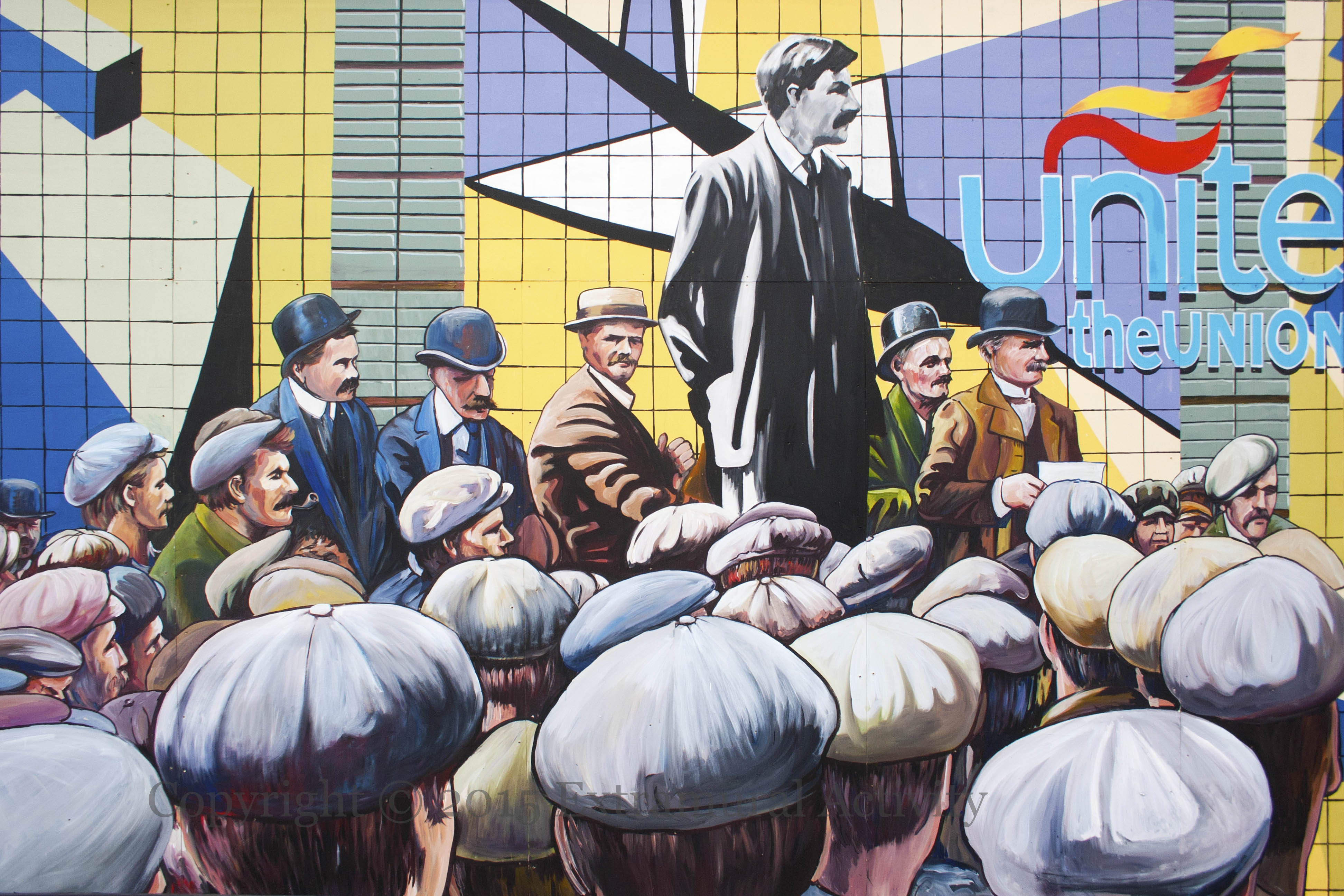
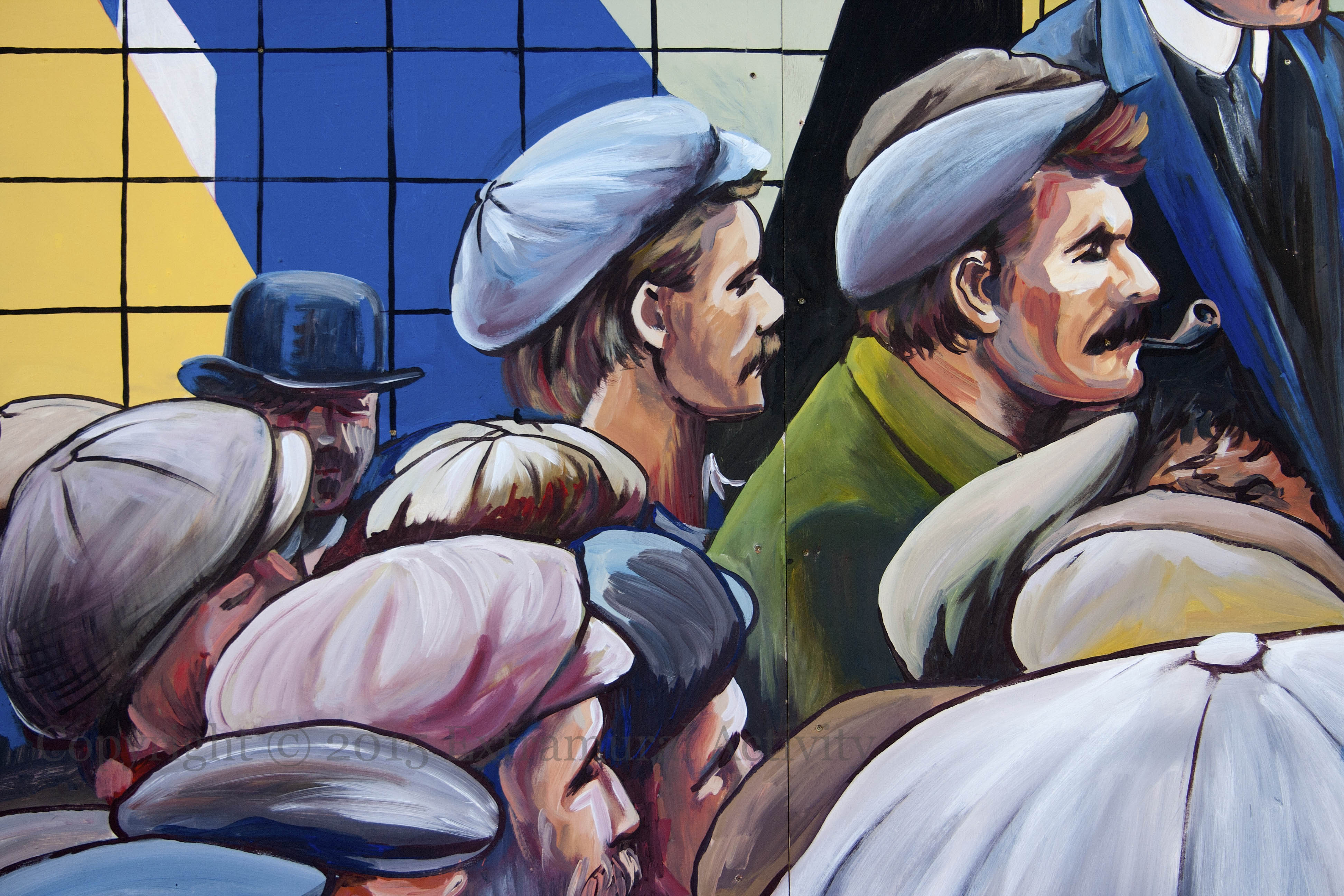
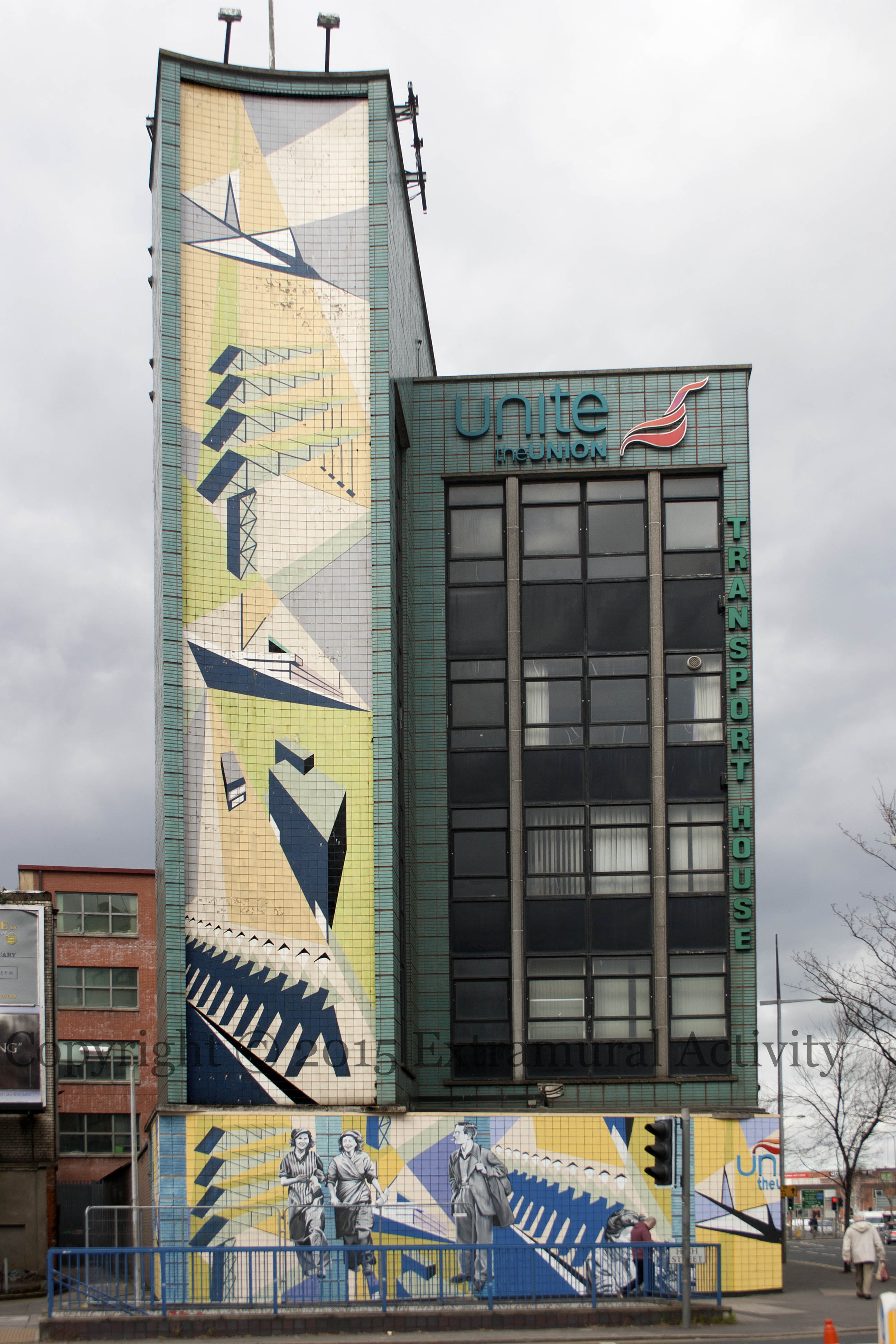
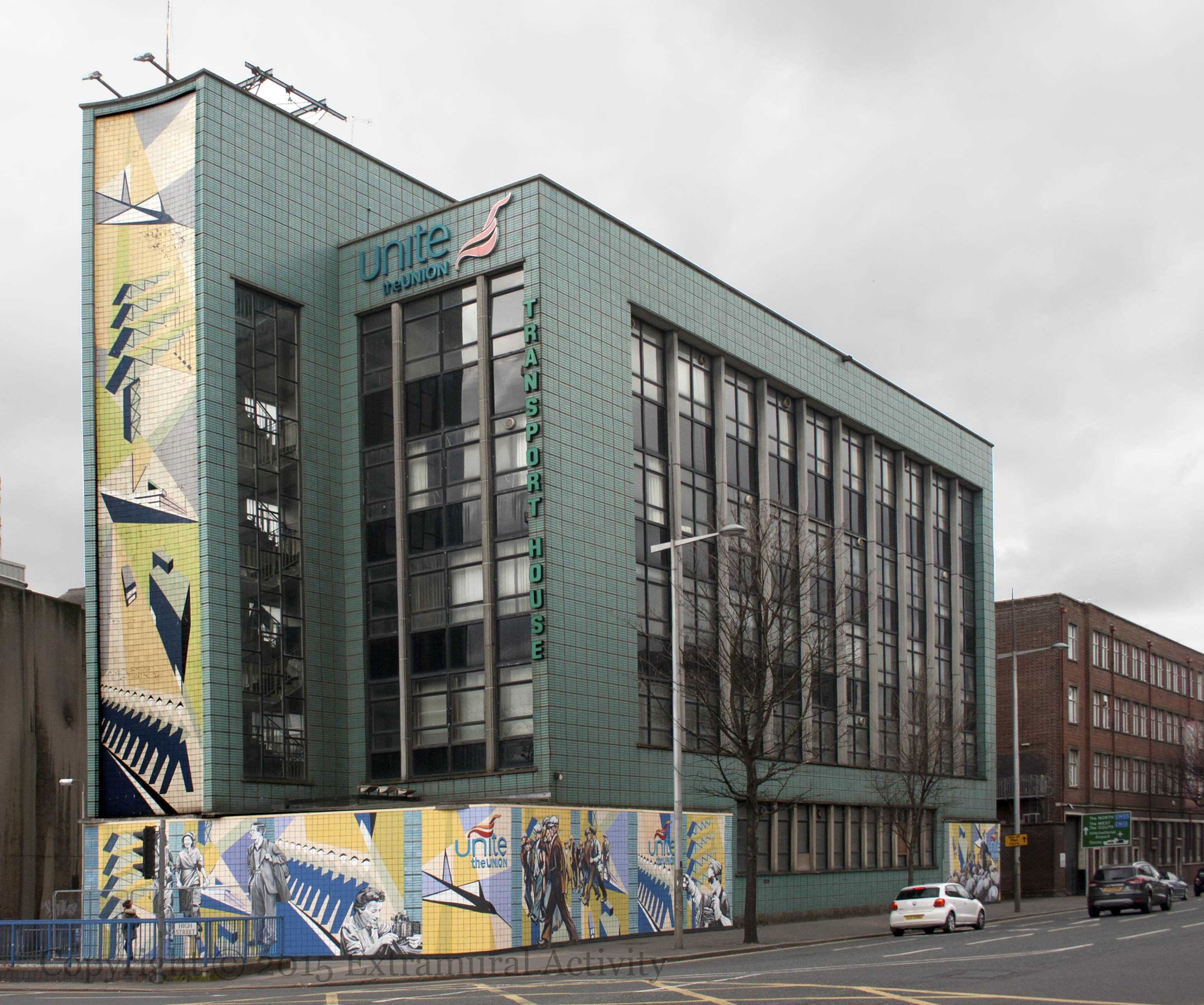
Big Jim Larkin spoke from the steps of the Custom House – a stone’s throw away from this new mural at Transport House in the city centre – in the early months of 1907, speaking on behalf of the dockers and other unskilled labourers, recruiting them to the National Union of Dock Workers, and ultimately organizing various strikes as part of what is now known as the ‘Belfast Lockout’, which stretched from April 26th to August 28th. Larkin was expelled from the NUDL and went on to form the Irish Transport & General Workers Union in 1909 and organize the Dublin Lockout in 1913. The rest of his history is equally dramatic, including arrest and imprisonment for ‘criminal anarchism’ in the US in 1919. (WP)
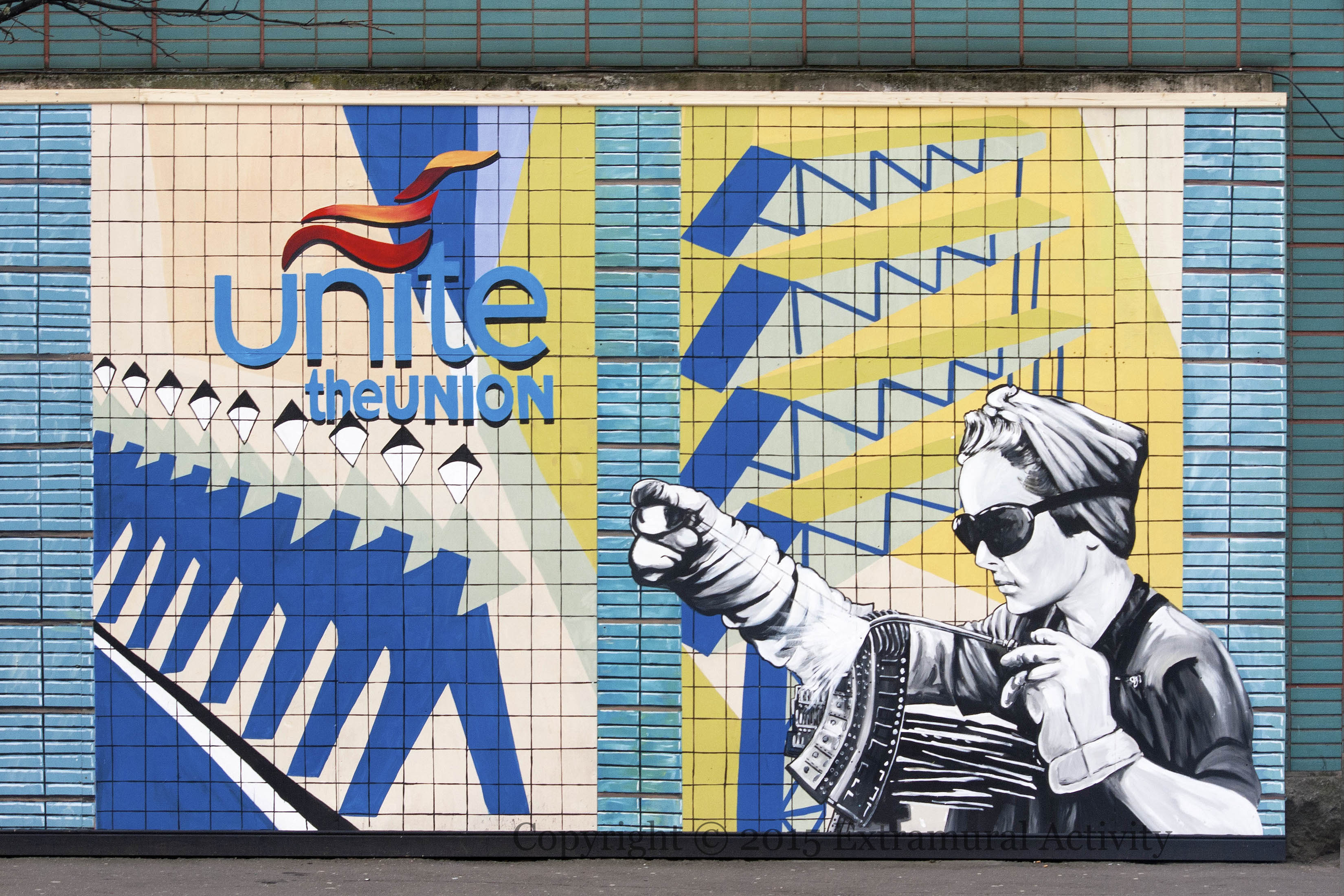
Here are more images from the new ‘Unite – the union’ mural at Transport House. A separate entry features Jim Larkin, who, after the Belfast lockout, founded the Irish Transport & General Workers Union in 1909. The separate (Amalgamated) Transport & General Workers Union (headquartered in London) was formed in 1922. (Larkin’s old union NUDL, renamed the National Union of Dock, Riverside and General Workers in Great Britain and Ireland, joined soon after in the same year.) In 2007, the T&G merged with Amicus to form the current Unite – The Union. The TGWU’s base in Belfast was Transport House, a 1959 building by architect J.J. Brennan in the International style (C20) and a B1 listed building (wikimedia). As can be seen from the image of a female welder above, the new mural features the green tile squares of the building itself, as well as the string of workers in the large mosaic on the front.
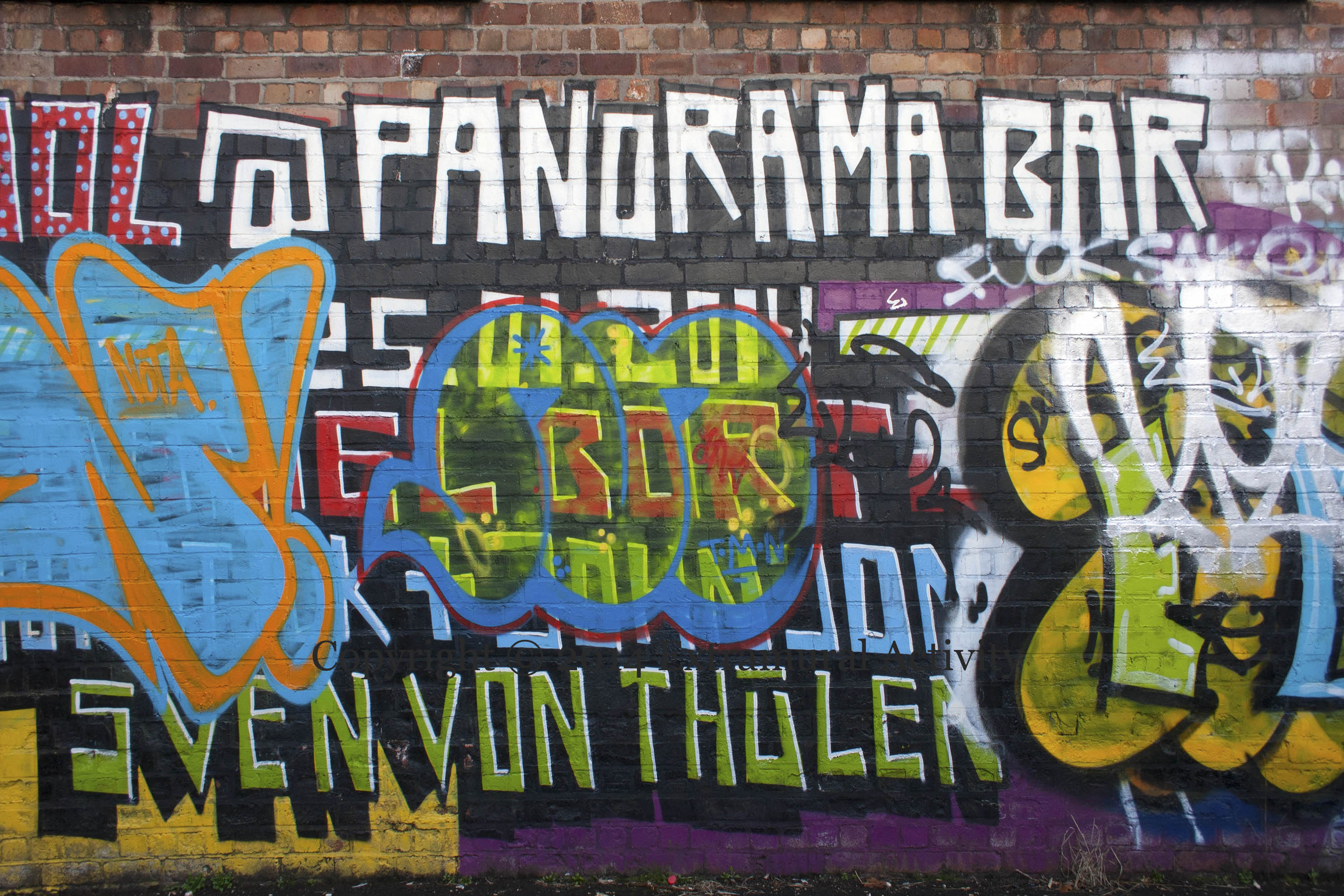
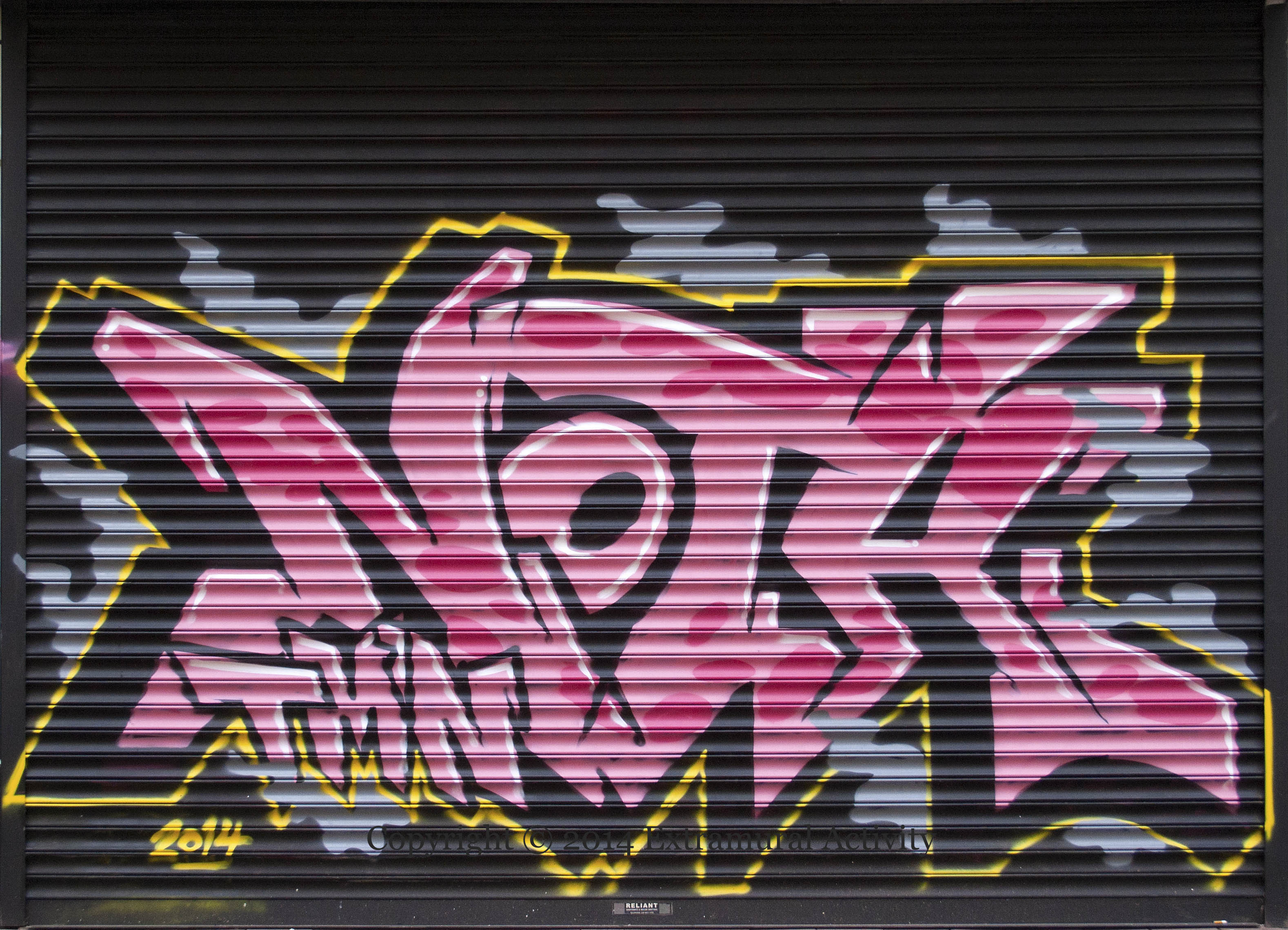
Here is another set of tags (after the selection from the Cupar Way “peace” line in Sign Here), this time from the city centre, specifically Unity Walk and Garfield Street.
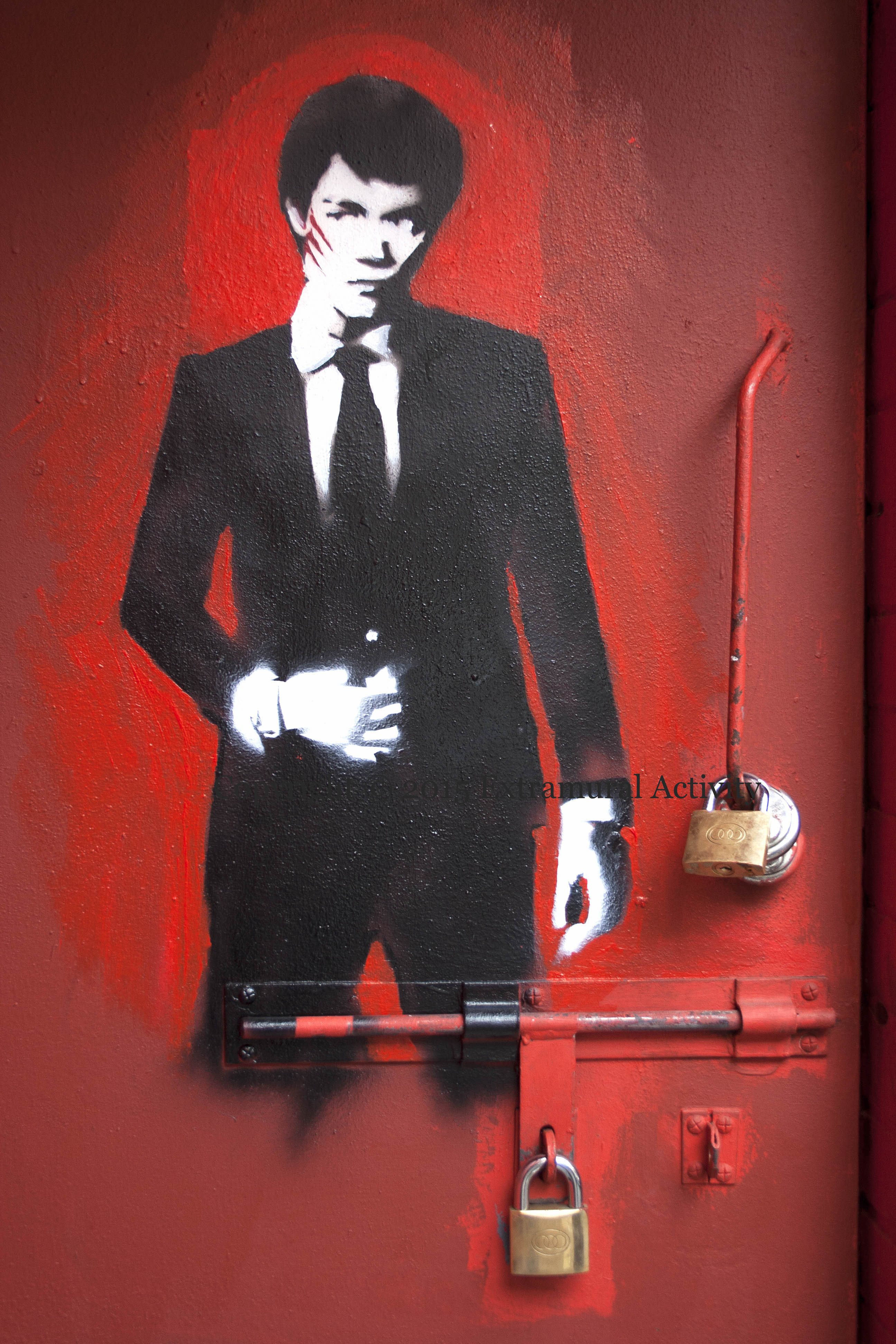
Patrick Devlin mashes-up the scratched-up Mr. Lee (from Bruce Lee’s final movie, Enter The Dragon, 1973) with the jacket-and-tie style of early Quentin Tarantino (Reservoir Dogs and Pulp Fiction). On the door of the Red Barn Gallery.
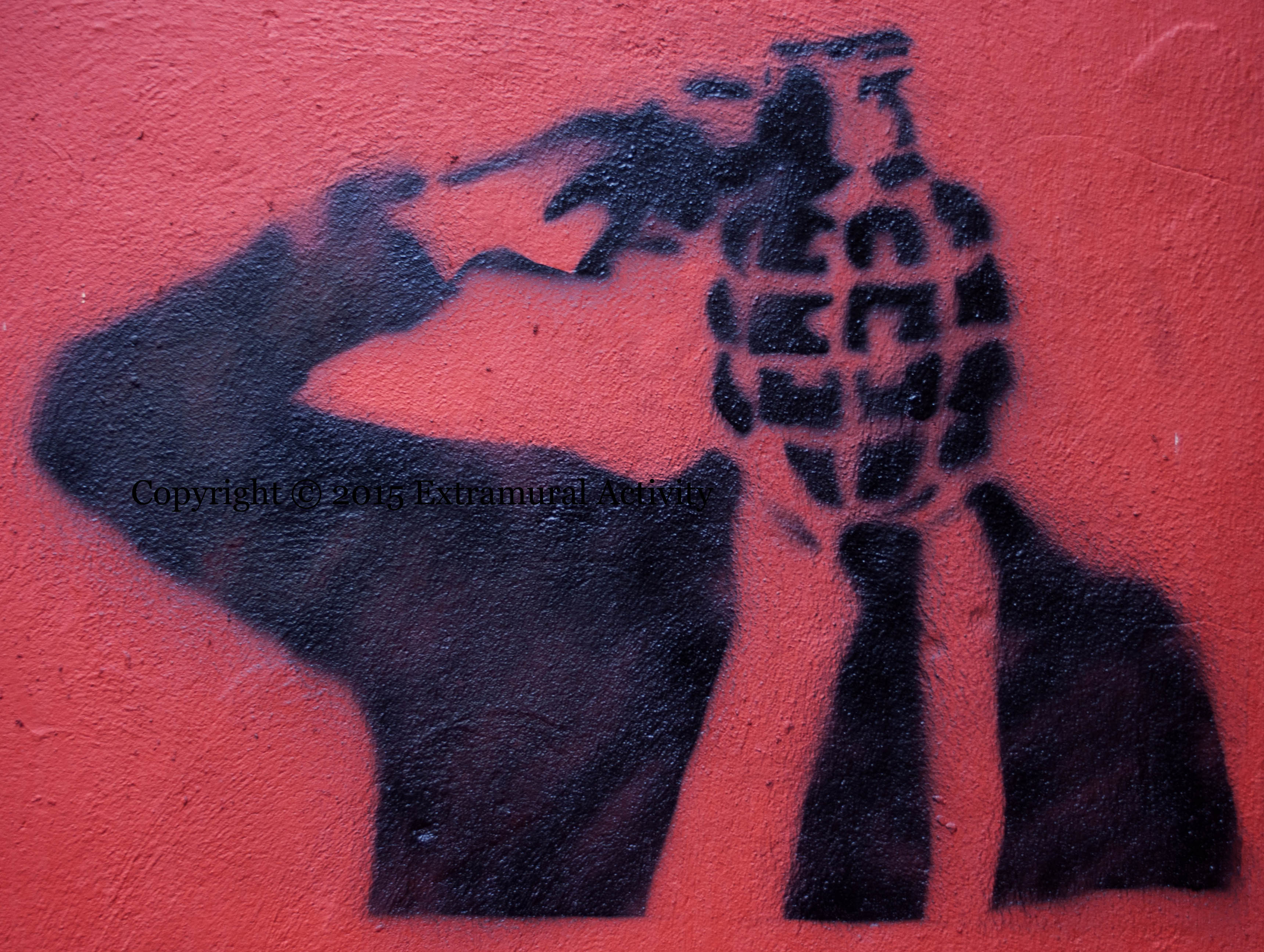
Stencil street-art from Patrick Devlin outside the Red Barn Gallery in the city centre: a man in suit and tie is about to pull the pin on the grenade that is his head.
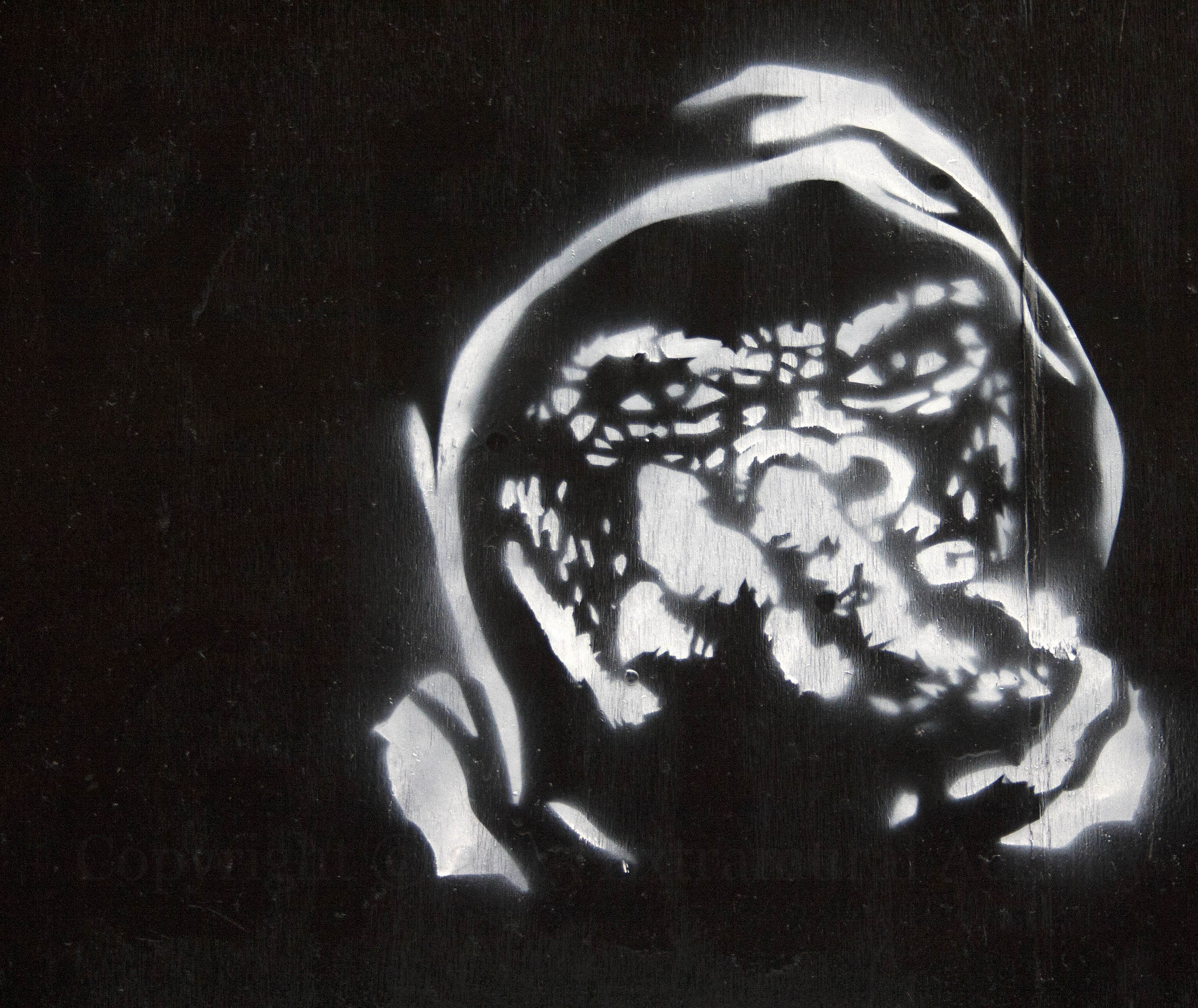
Above is another Patrick Devlin stencil at the Red Barn Gallery. Extensive research has failed to reveal who/what the stencil is based on – some sort of nose-picking gorilla-monster in a cowl. Leave a comment or send an e-mail if you have an idea.
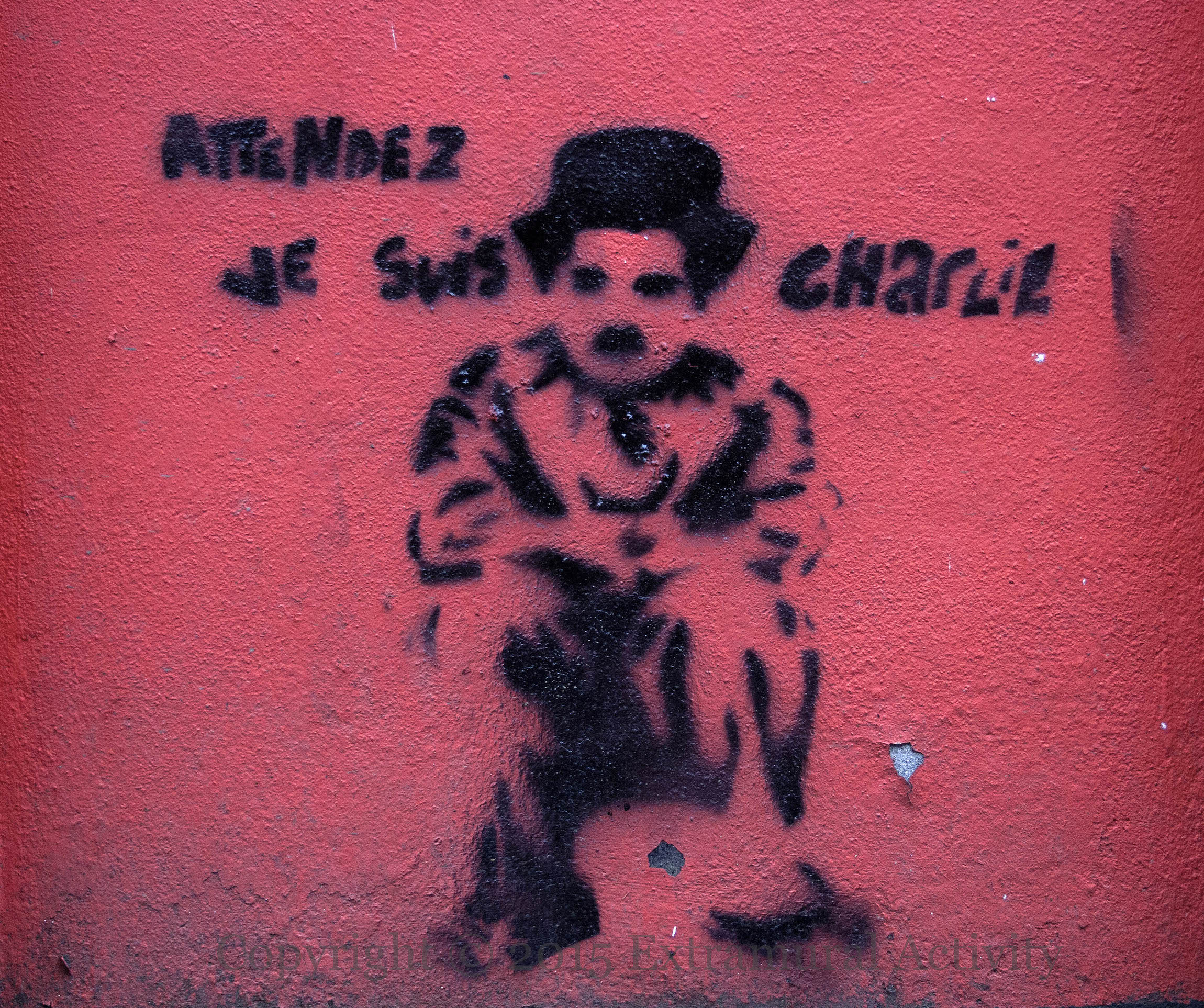
Charlie Hedbo, the satirical Parisian weekly which became internationally known after a gun attack in January in which 12 were killed, is named after Charlie Brown (from Charles Schultz’s Peanuts) but the Charlie Chaplin above (as seen in The Kid) uses French to try to claim the name for himself. Chaplin and his family settled in French-speaking Switzerland after he was denied entry to the US as part of Joseph McCarthy’s witch-hunt of artists with alleged communist sympathies (WP). Stencil by Patrick Devlin in the city centre.