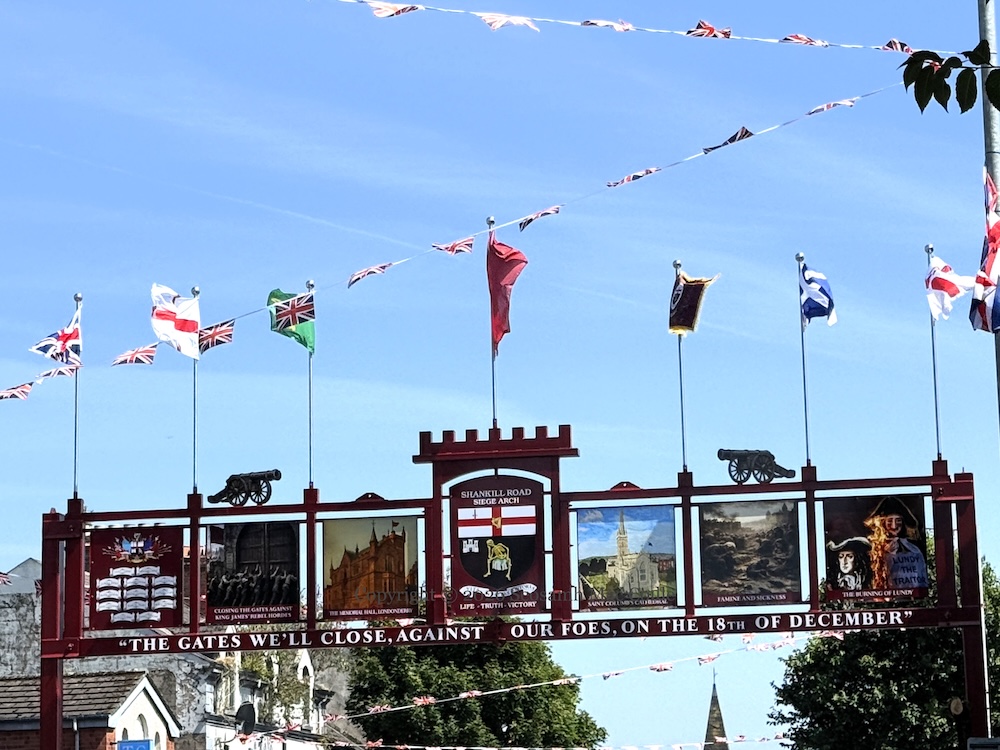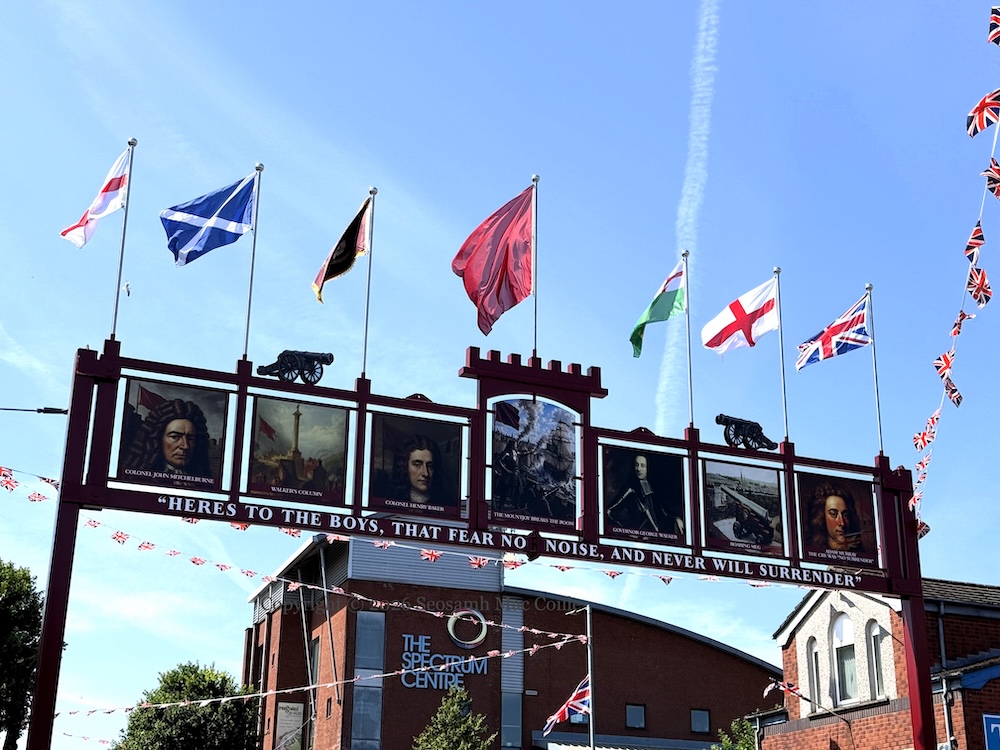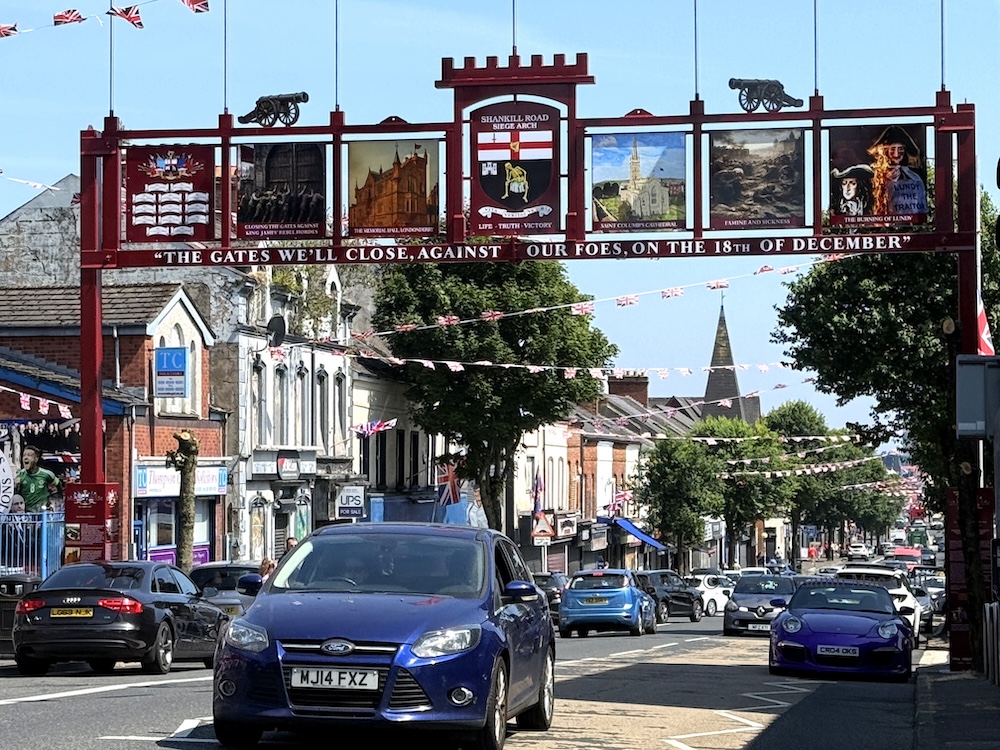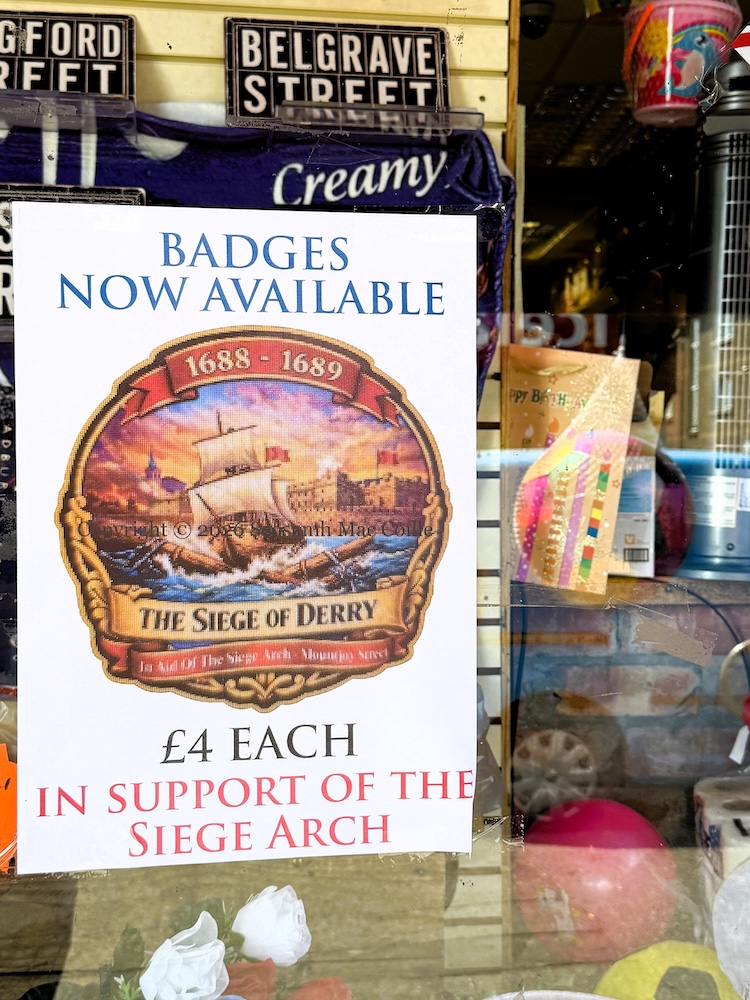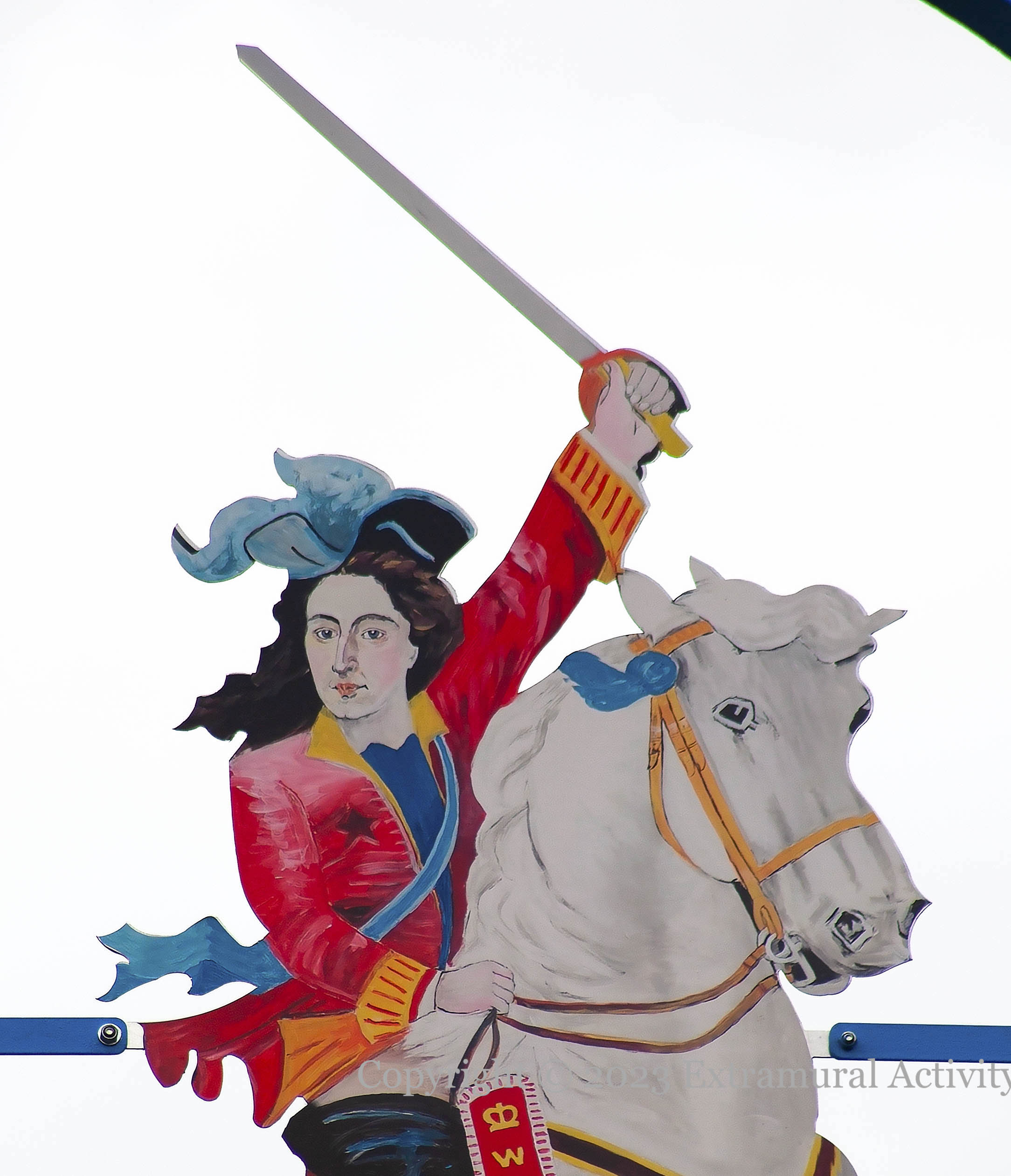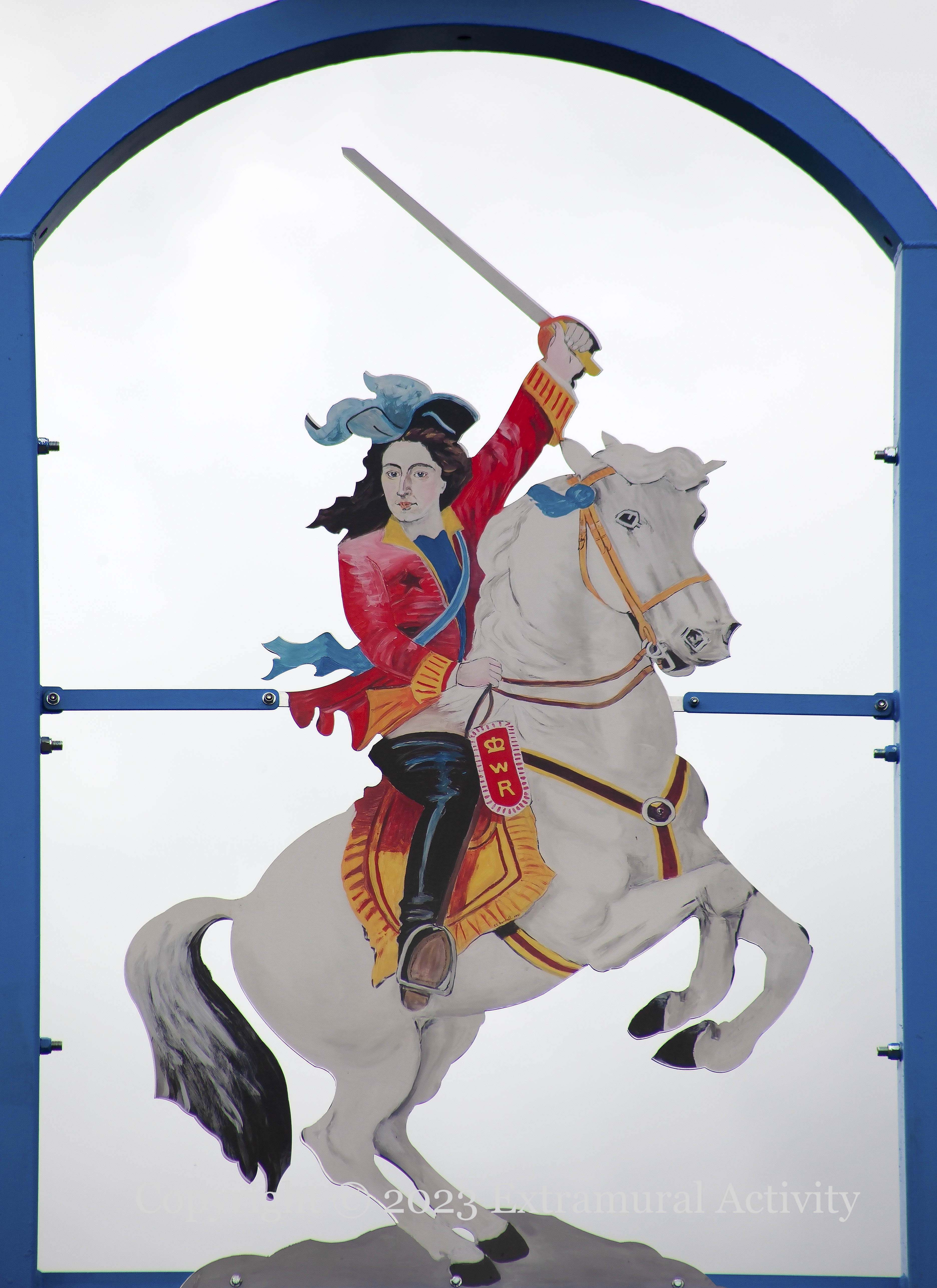
The line “The gates we’ll close against our foes on the 18th of December” comes from the song ‘The Crimson Banner’ (lyrics | youtube).
The panels on either side depict … “Closing the gates against King James’ rebel hordes”, “the Memorial Hall, Londonderry”, Saint Columb’s Cathedral”, “famine and sickness”, “the burning of Lundy” … and … “Colonel John Mitchelburne”, “Walker’s column”, “Colonel Henry Baker”, “the Mountjoy breaks the boom”, “Governor George Walker”, “Roaring Meg”, “Ada Murray – the cry was “No surrender””
Shankill Road at Mountjoy Street, upper Shankill, west Belfast
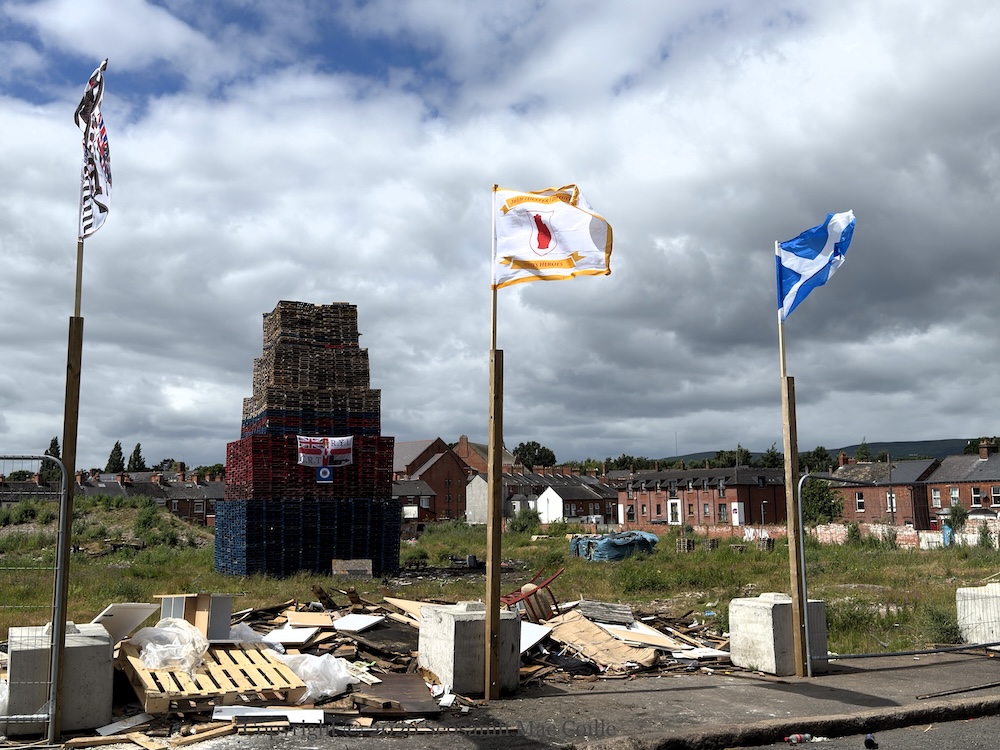
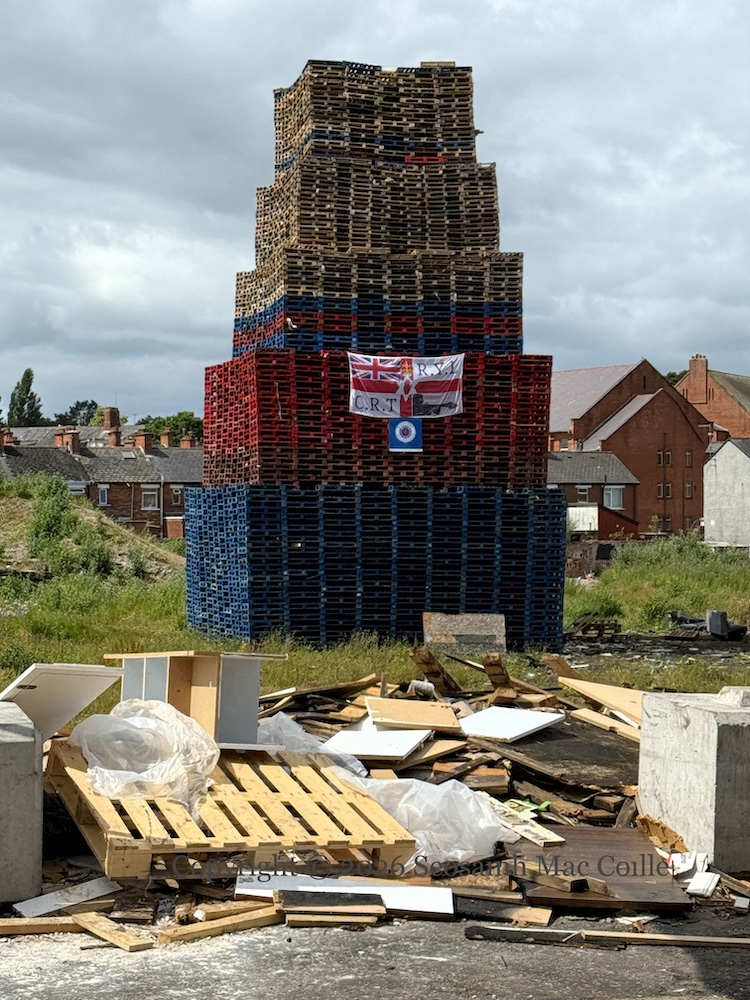
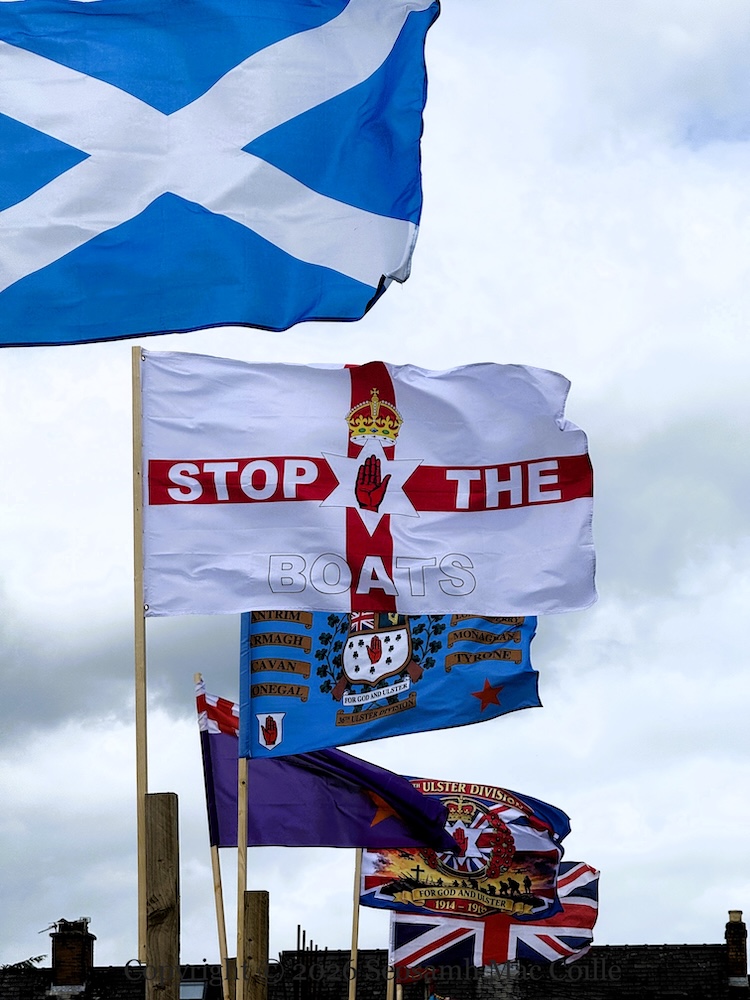
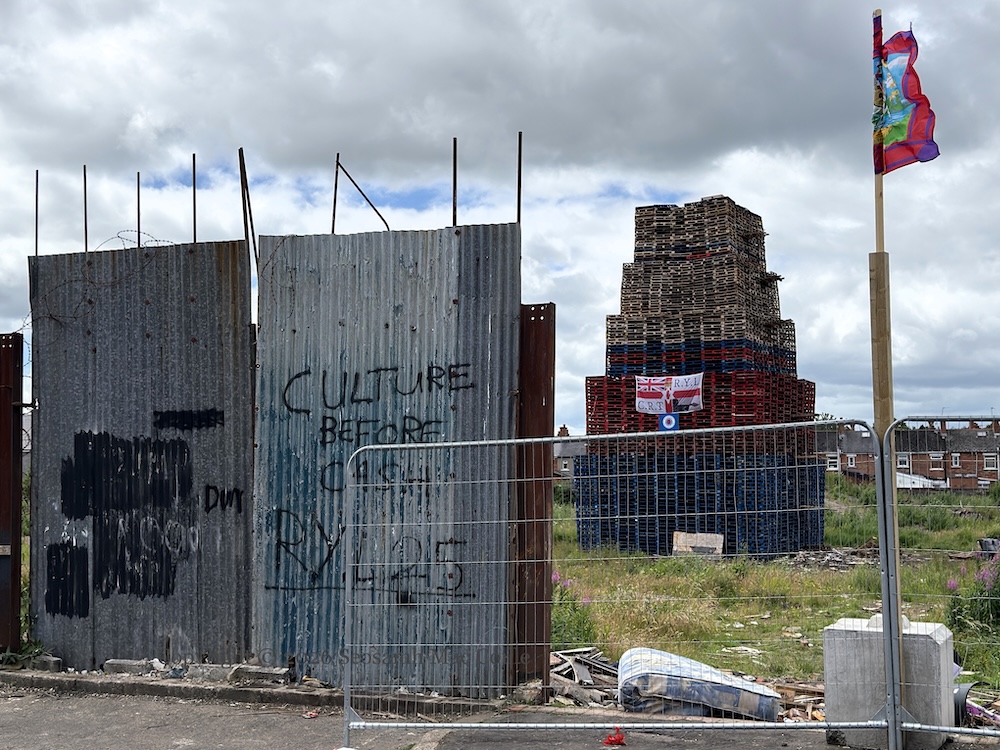
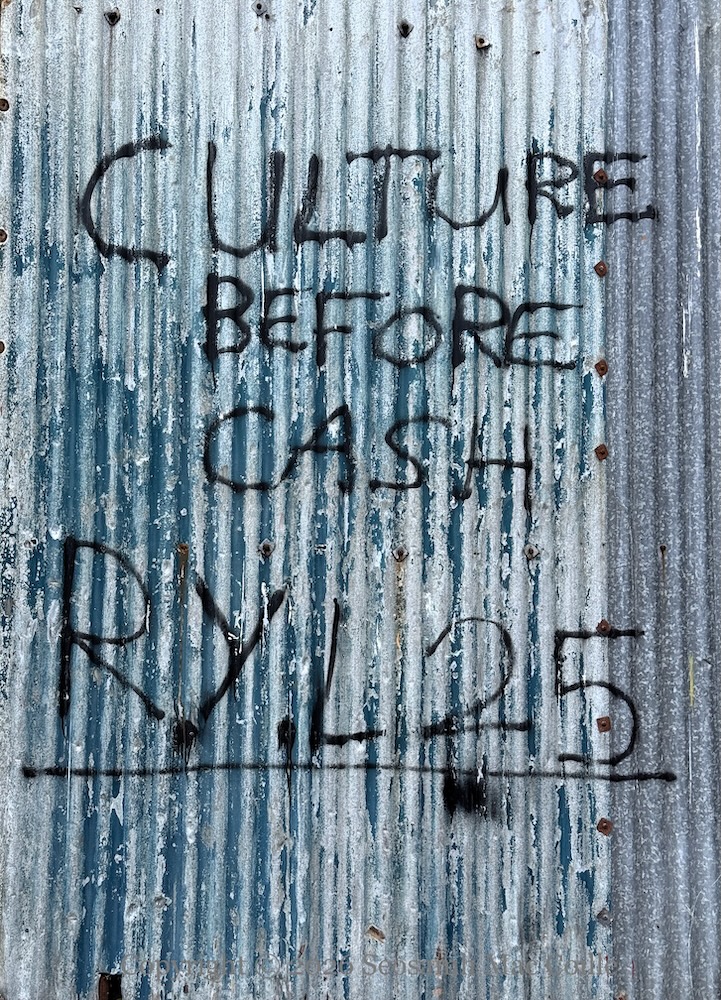
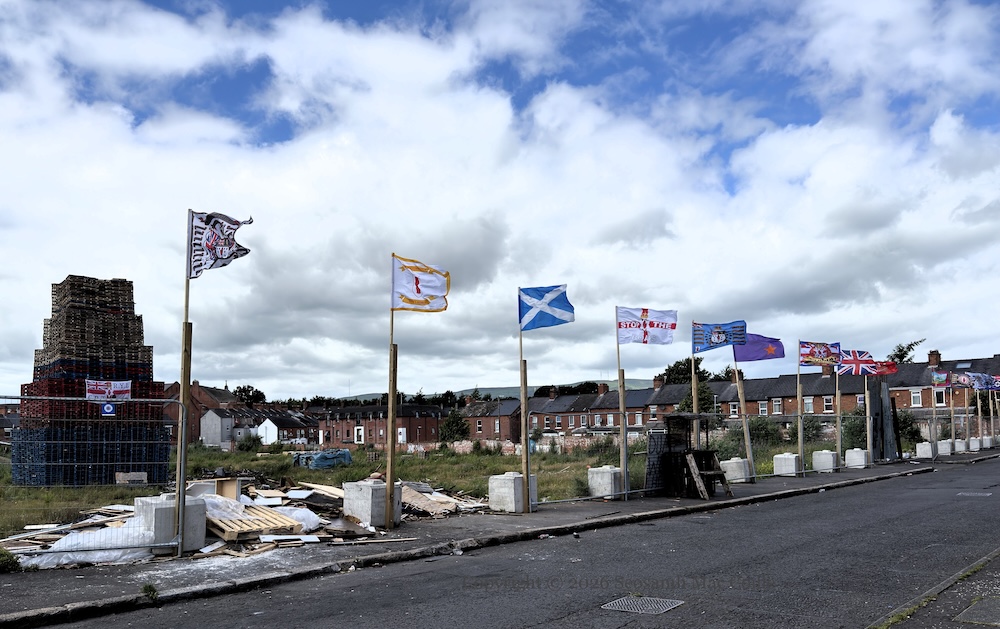
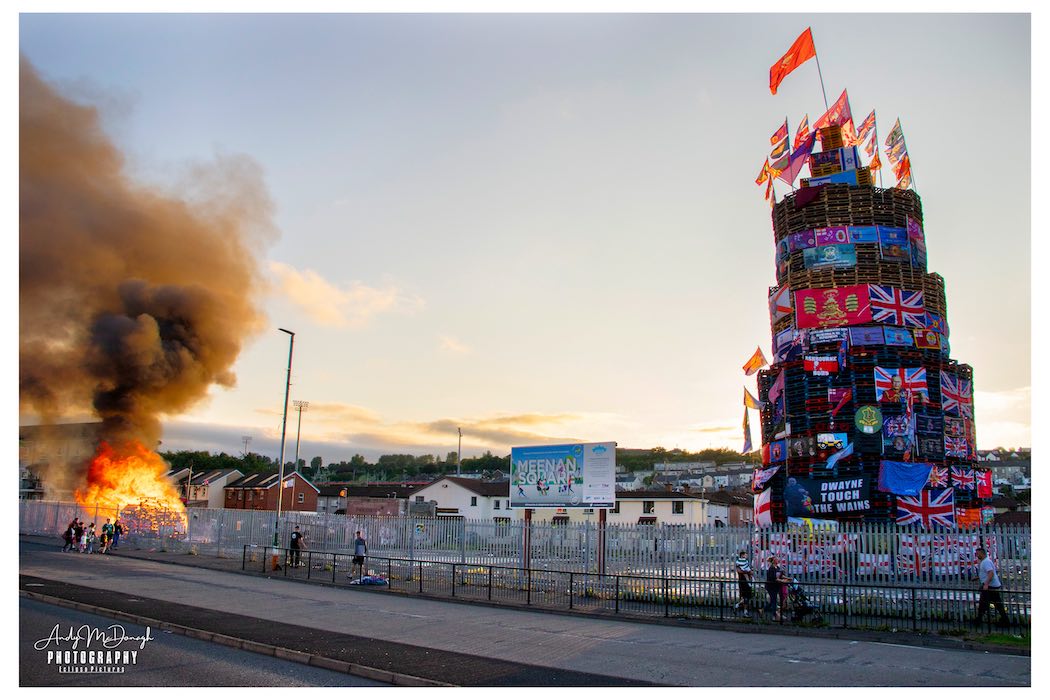
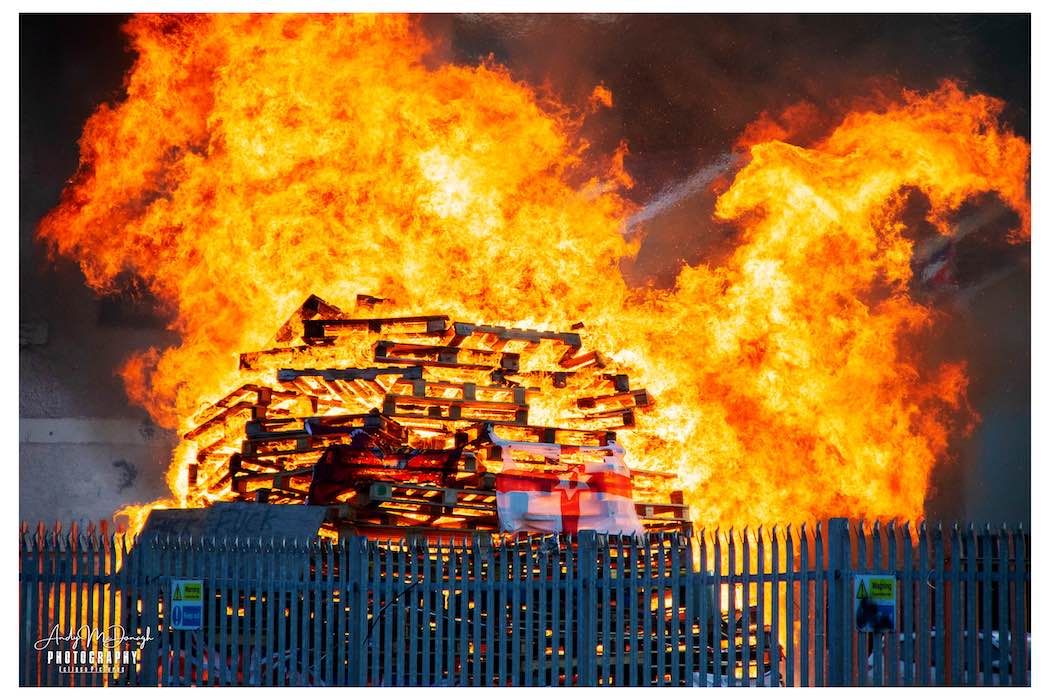
Bonfires will be lit across Northern Ireland on “Eleventh Night” (July 11th) and builders will be working until then in order to build the pyres high. The one shown here is in the Ravenhill Road area of east Belfast, constructed out of shipping palettes (see Commonwealth Handling Equipment). As an alternative, Belfast City Council will fund the construction of much smaller beacons. (The programme was previously called the “Bonfire Management” programme and is now the “Bonfire And Cultural Expression” programme.) The Ravenhill builders, both this year and last, consider this a sell-out. (See previously, Culture Before Cash (2014) | Real Loyalists Will Never Be Bought).
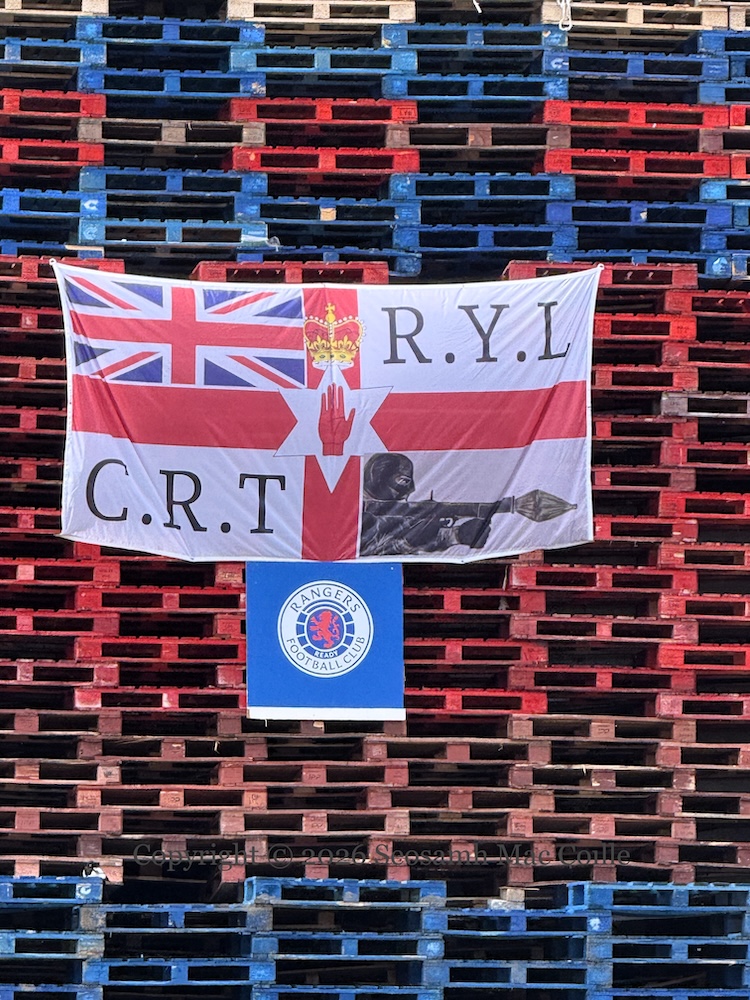
The flag on the bonfire shows a hooded volunteer with an RPG (taken from an old mural in the Shankill), with the lettering “RYL” (“Ravenhill Young Loyalists”) and “CRT” (“Clonduff Rocket Team”).
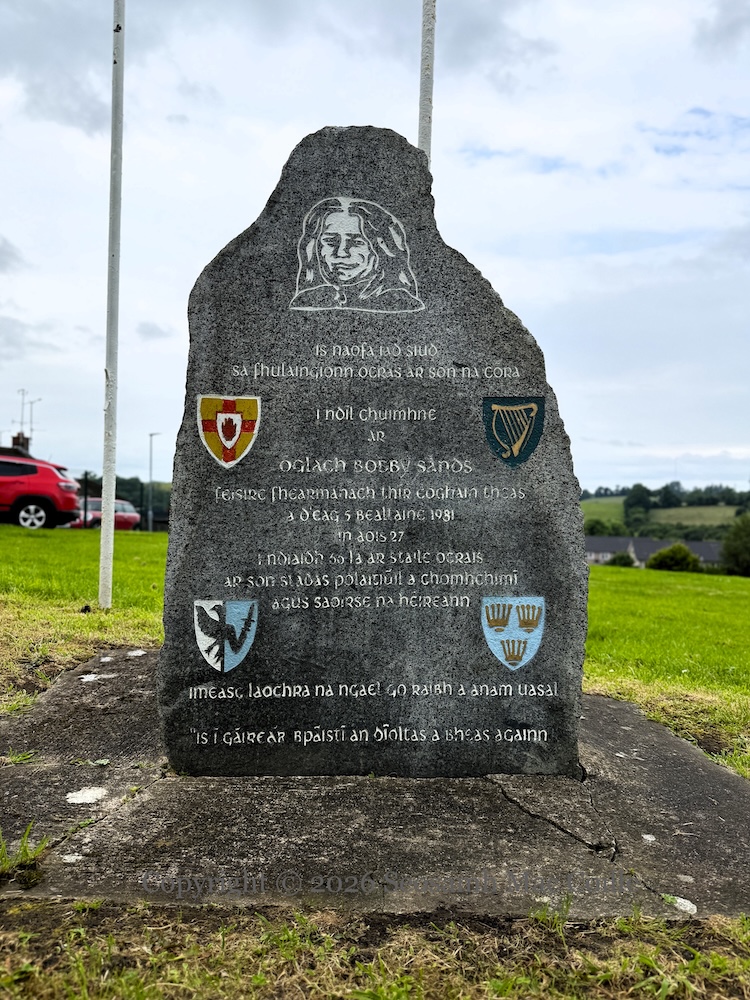
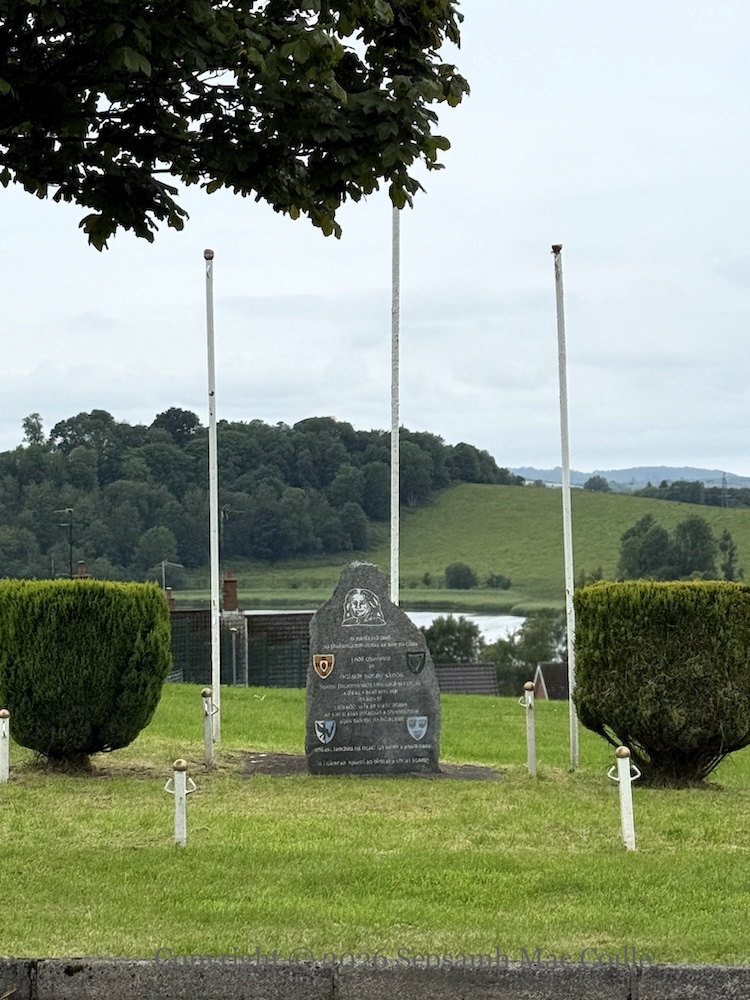
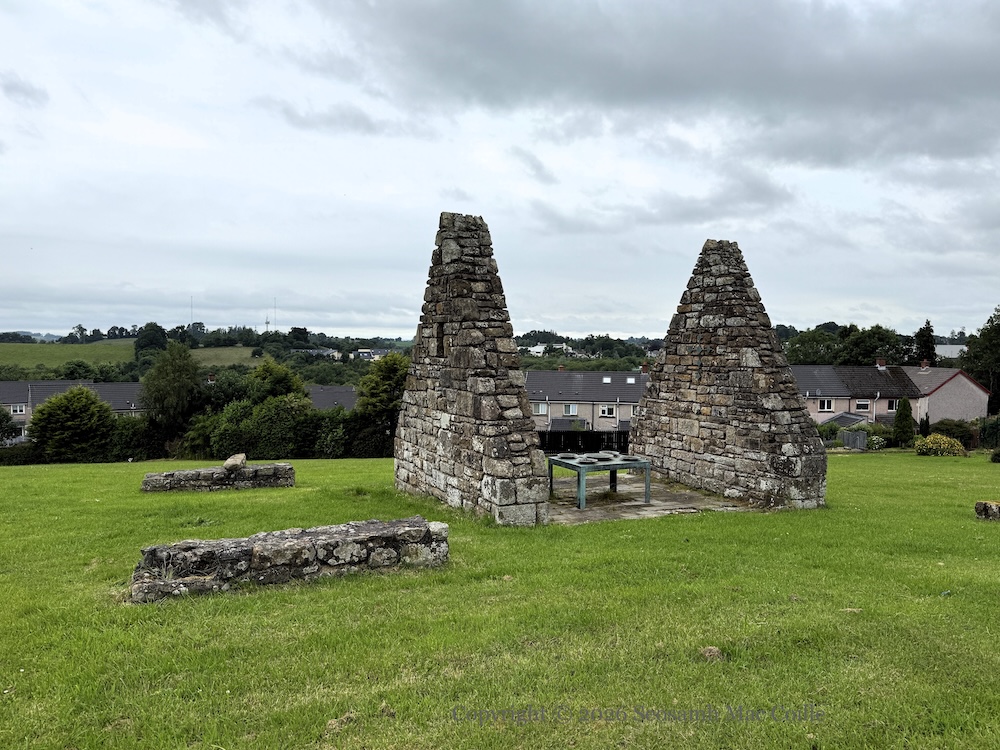
There are two monuments in Cornagrade, Enniskillen, commemorating hunger: An Staılc Ocraıs of 1981 and An tOcras Mór of 1845-1849.
Above and immediately below: a memorial stone to Bobby Sands in Erne Drive. The inscription on the stone reads, “‘Is naofa ıad sıud sa fhulaıngíonn ocras ar son na córa.’ [= Holy are those who suffer hunger for the sake of justice/”Blessed are those who hunger for justice”] I ndíl [ndıl] chuımnhe ar Óglach Bobby Sands, feısıre [= M.P.] Fhearmanach-Thír Eoghaın Theas, a d’éag 5 Bealtaıne 1981 ın aoıs 27 ı ndıaıdh 66 lá ar staıle [staılc] ocraıs ar son stádas polaıtıúıl a chomhchımí agus saoırse na hÉıreann. I measc laochra na nGael go raıbh a anam uasal. ‘Is í gáıre ár bpáıstí an díoltas a bheas agaınn’”
For an alternative translation of Sands’s quote “Our revenge will be the laughter of our children”, see The Spirit Of Freedom in the Peter Moloney Collection.
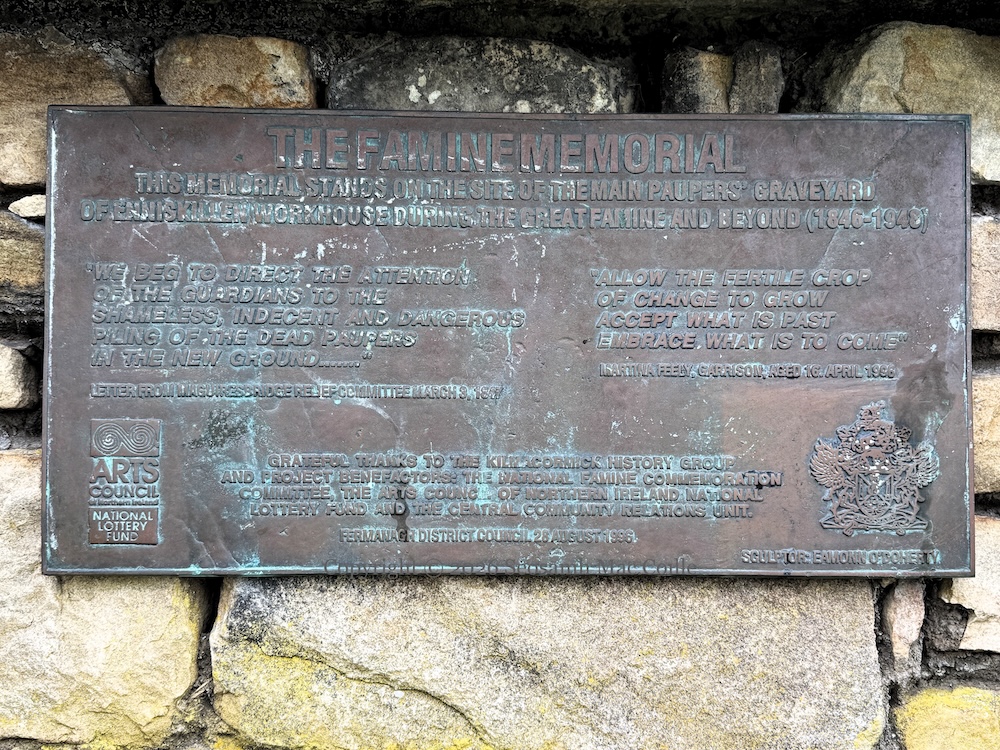
Below: the “Pauper’s Graveyard” by Éamonn O’Doherty – a table with five empty plates stands between the gable walls of a stone cottage. The plaque reads, “The Famine Memorial: this memorial stands on the site of the main pauper’s graveyard of Enniskillen workhouse during the Great Famine and beyond (1846-1948). “We beg to to direct the attention of the guardians to the shameless, indecent and dangerous piling of the dead paupers in the new ground …” – Letter from Maguiresbridge Relief Committee March 3, 1847. “Allow the fertile crop of change to grow, accept what is past, embrace what is to come” – Martina Feely, Garrison, aged 16, April 1996. Grateful thanks to the Kilmacormick History Group and project benefactors: the National Famine Commemoration Committee, the Arts Council Of Northern Ireland National Lottery Fund and the Central Community Relations Unit. Fermanagh District Council, 28 August, 1996.”
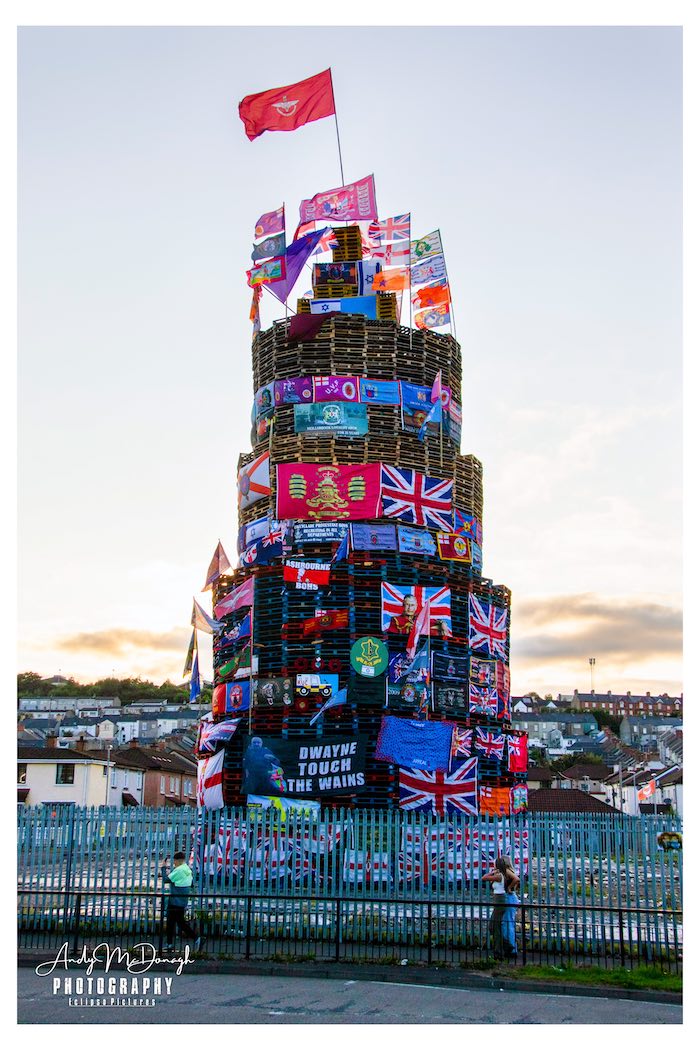
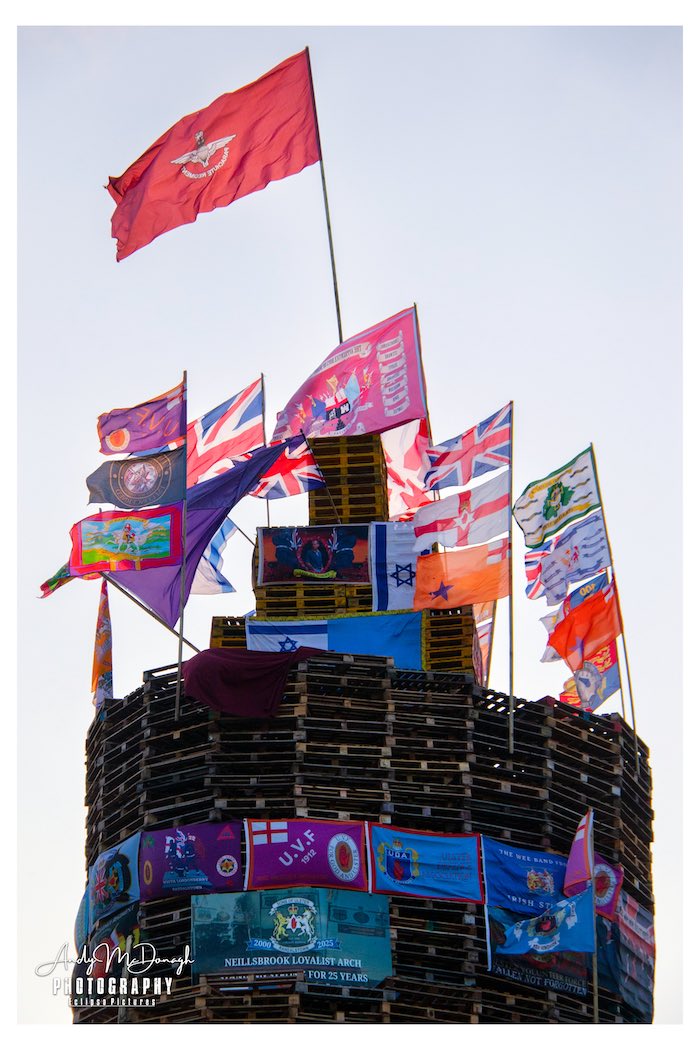
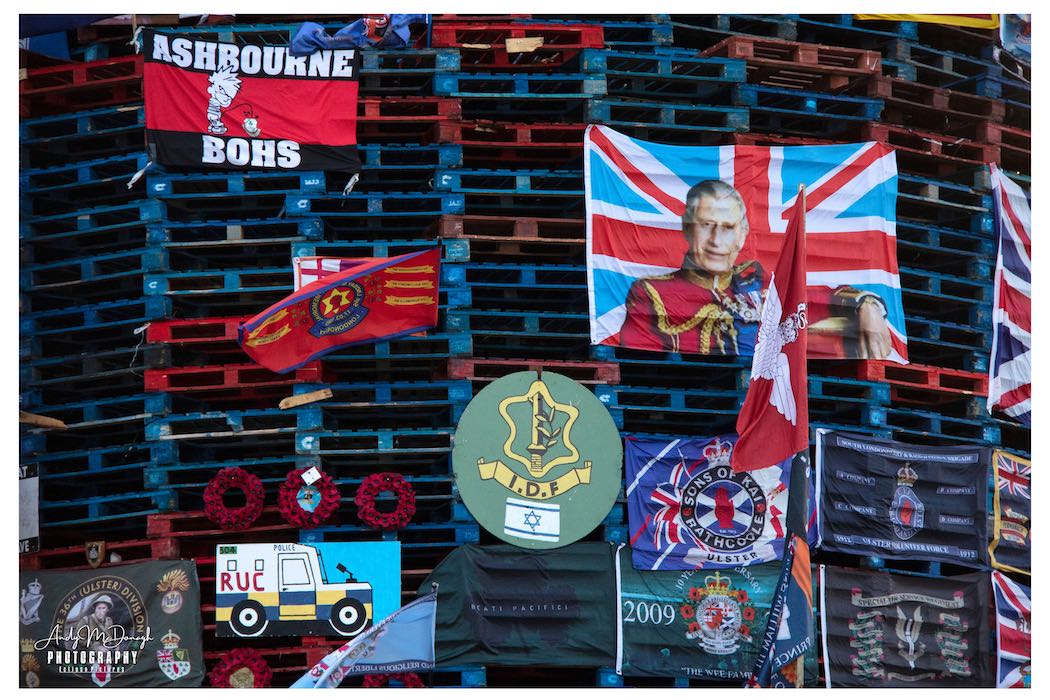
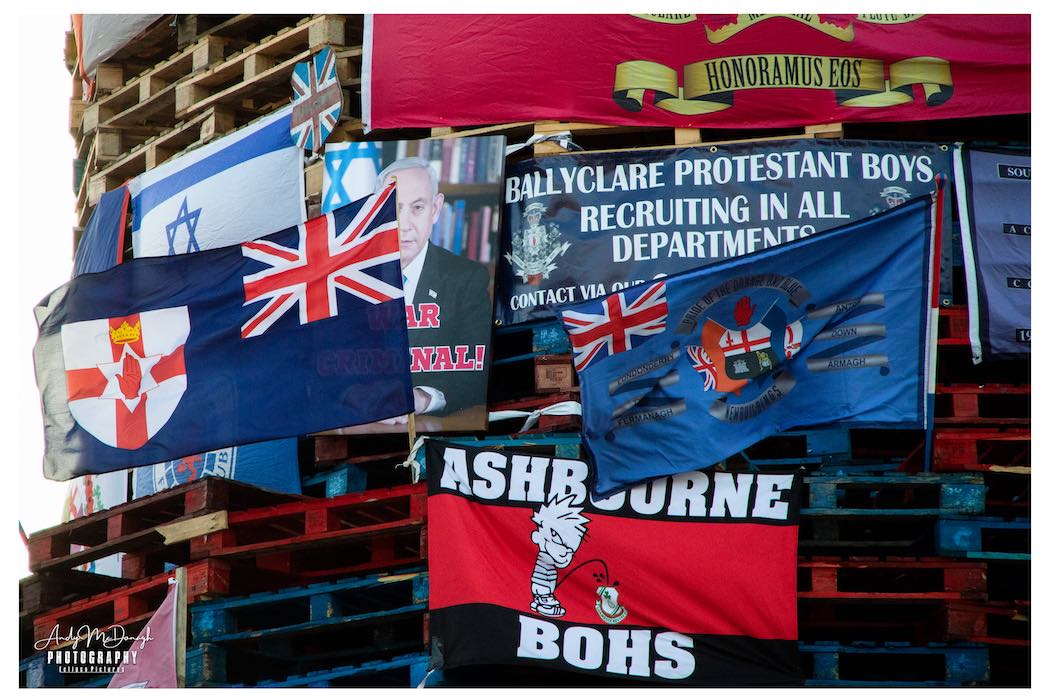
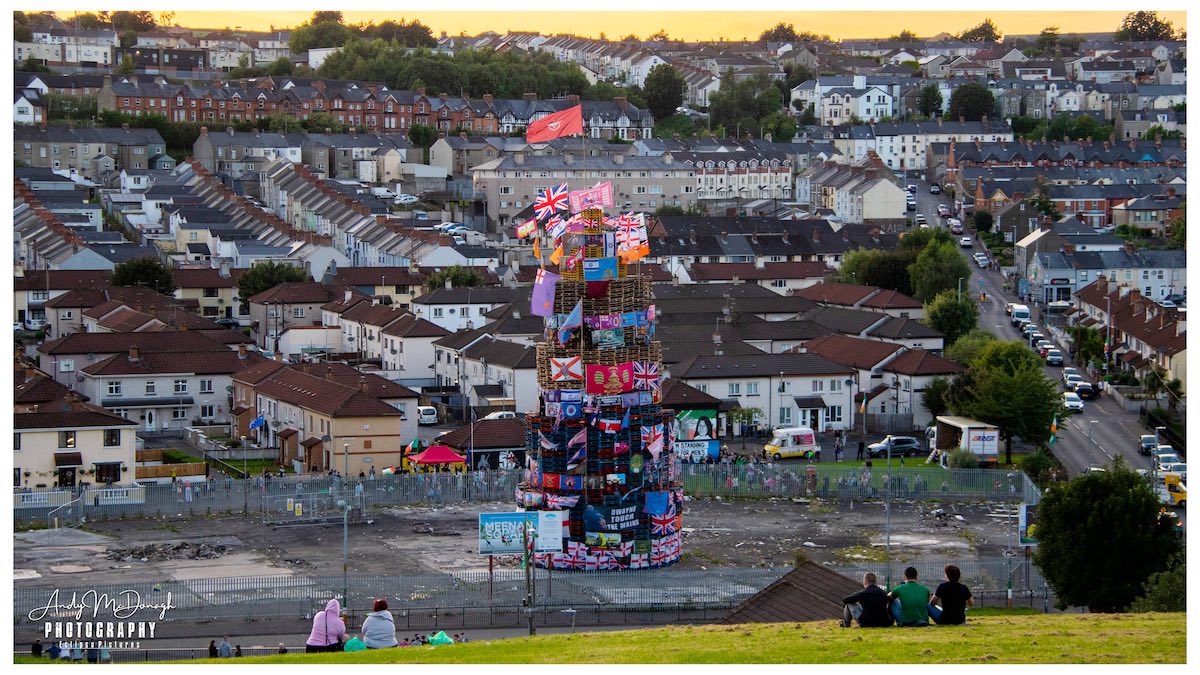
This year’s internment bonfire in Derry’s Bogside was swathed in flags prior to being set alight. The flags of the UK, Northern Ireland, and Israel can be seen in numbers, as well as flags of the SAS, Paras, IDF, UVF, LVF, UDA, ABOD, various flute bands, King Billy, King Charles, “deport, not support”, and … Bohemians FC, in connection with rioting at a match in July (BBC | BBC).
While it was being built, one person fell from the bonfire and broke a bone (BelTel), and it carried a message of support for Gaza (Derry Journal). The Creggan bonfire caused controversy for a board that named as targets police officer John Caldwell and Tullyally youth Kyle Bonnes who died (in 2010) in the river Faughan while fleeing police (BBC | Ombudsman).
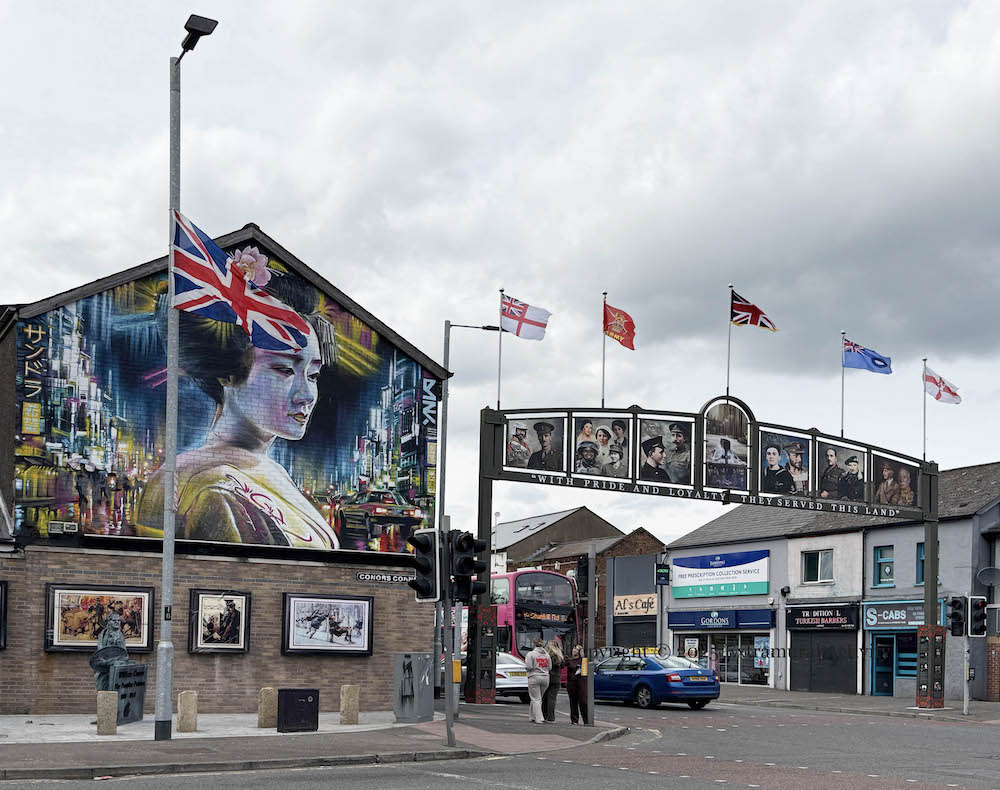
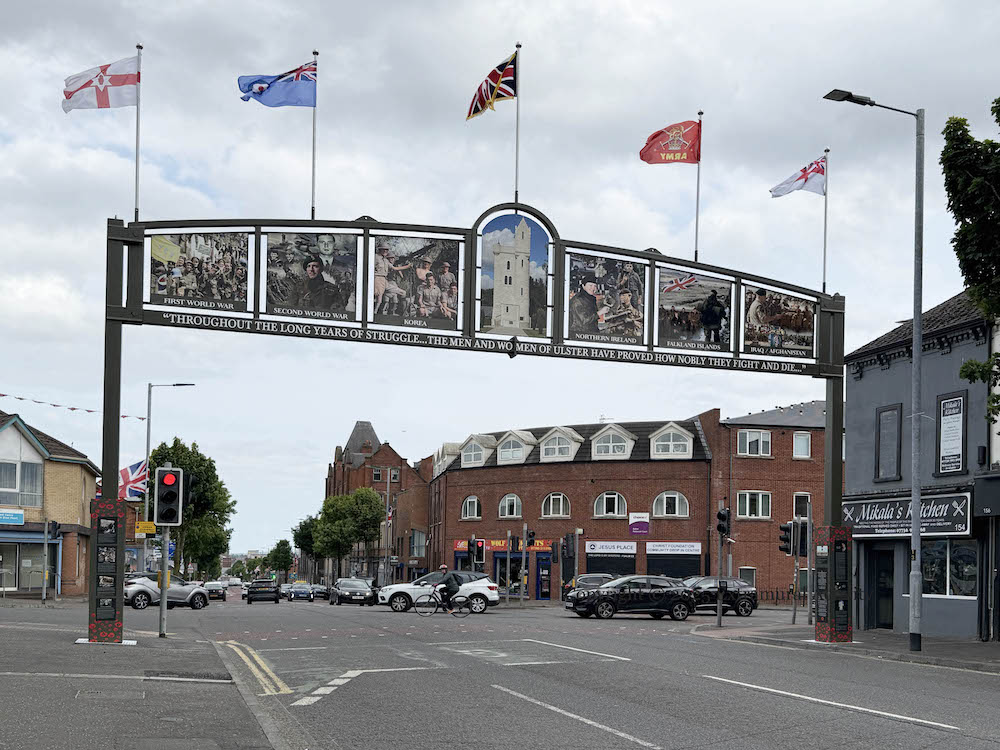
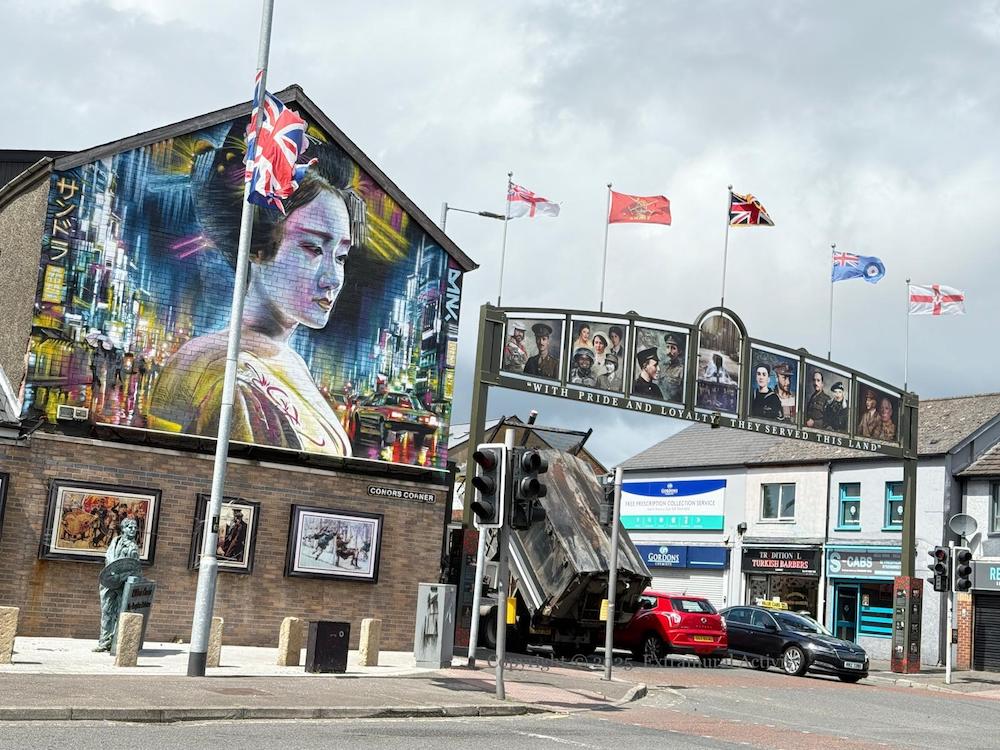
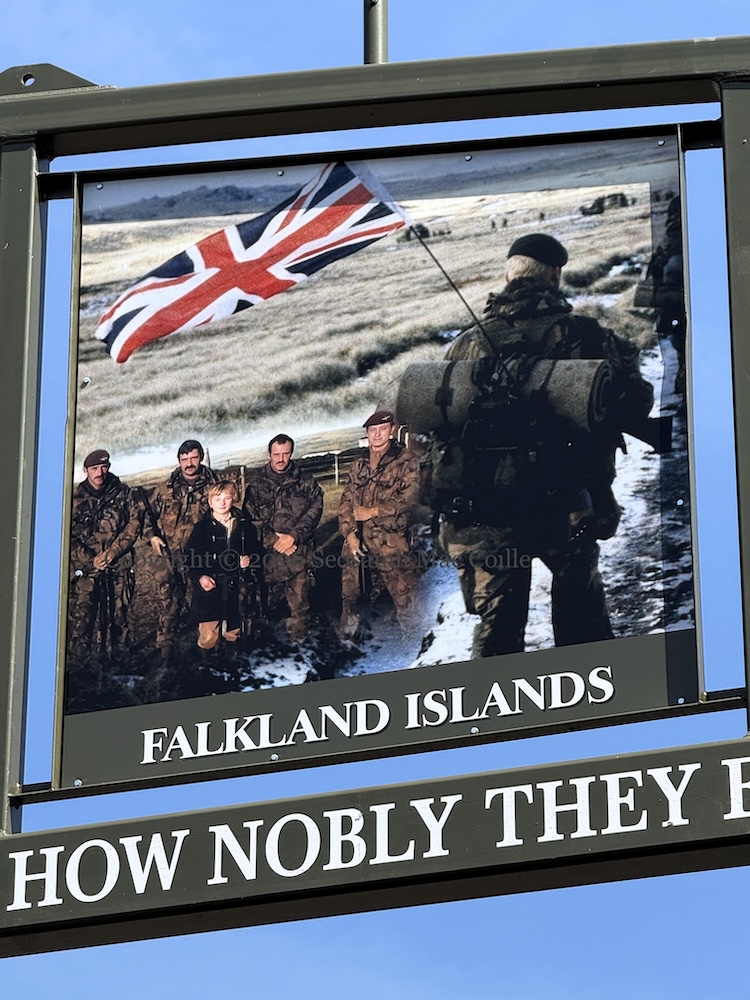
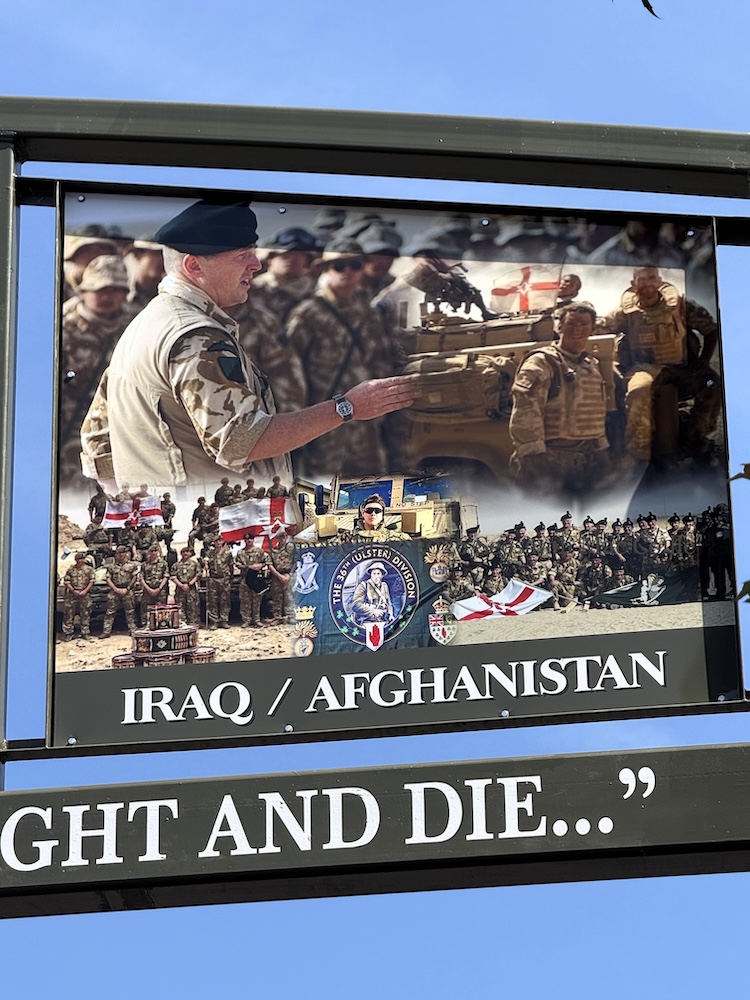
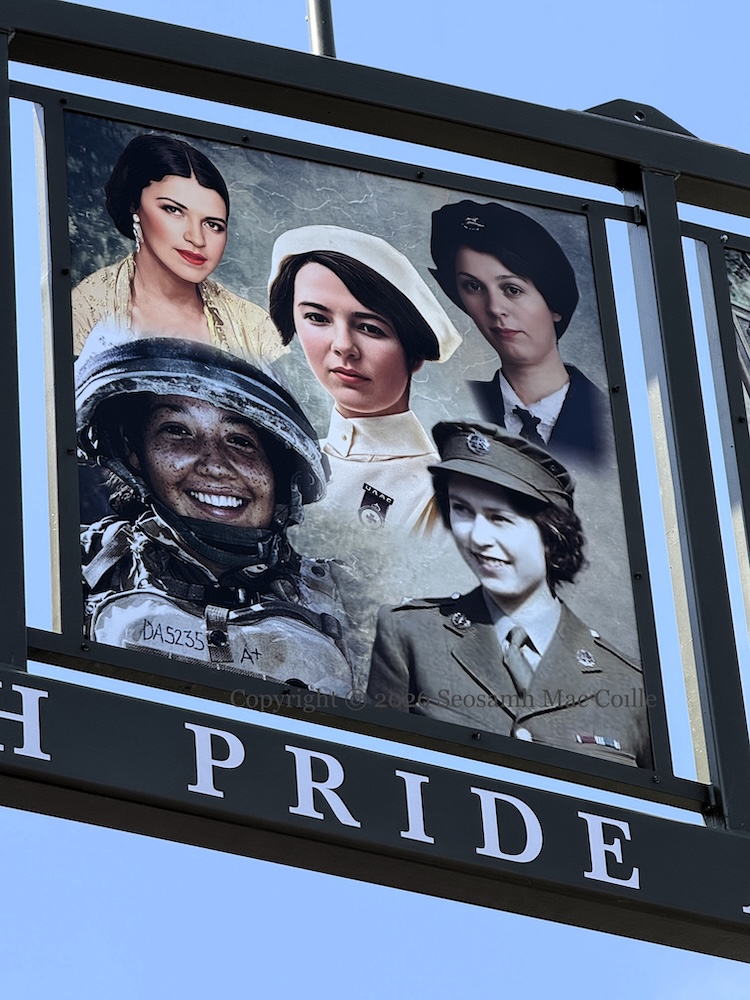
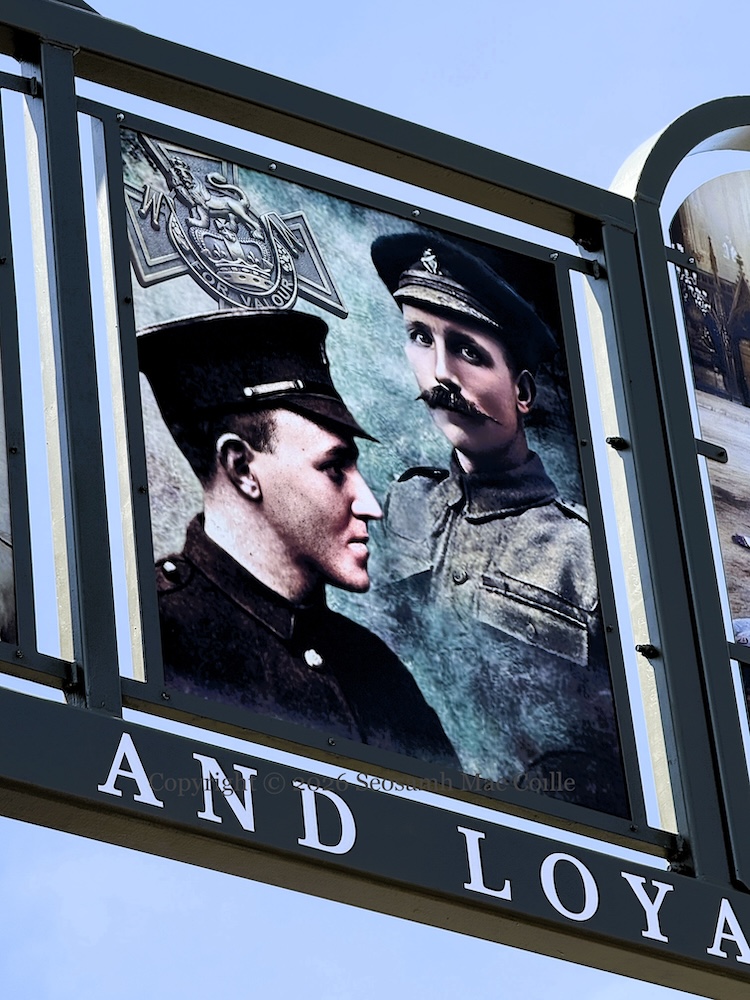
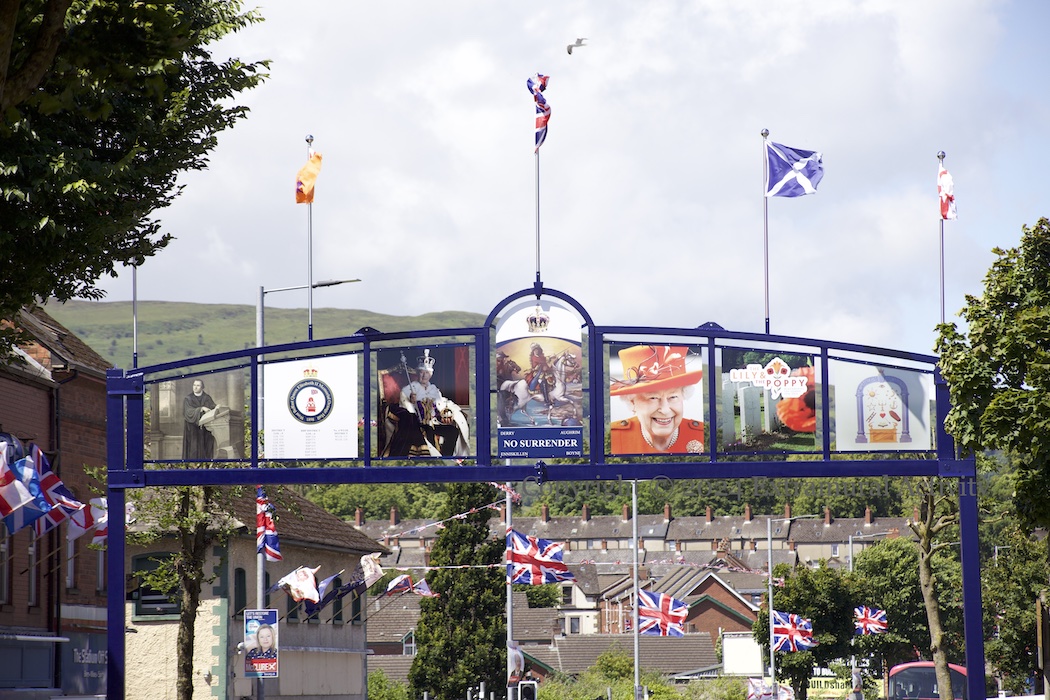
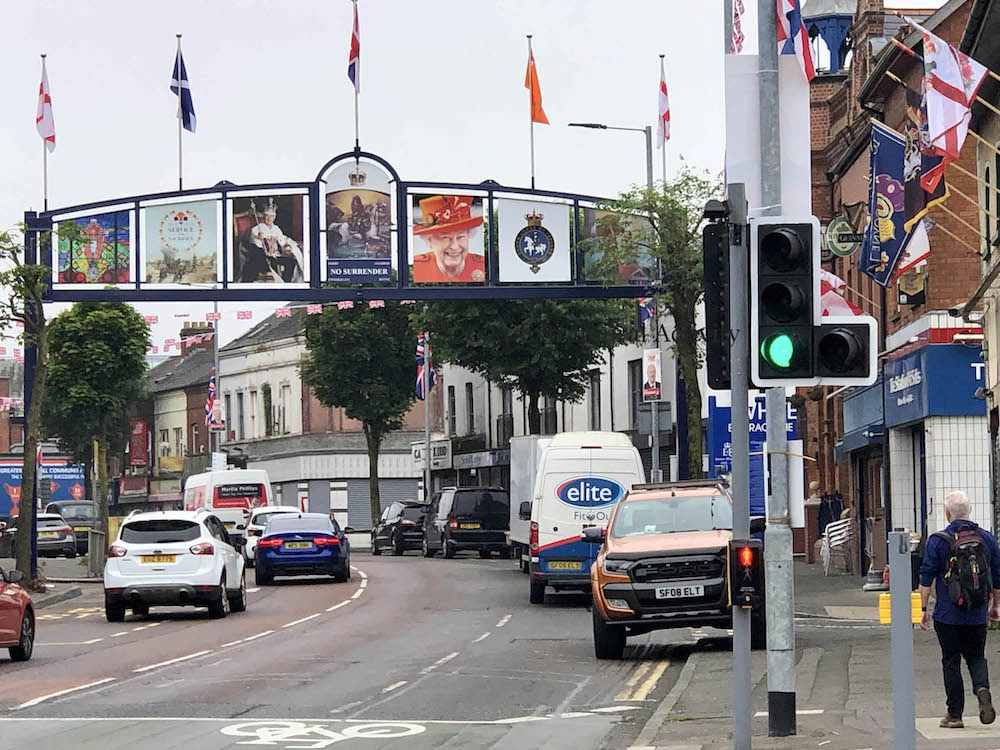
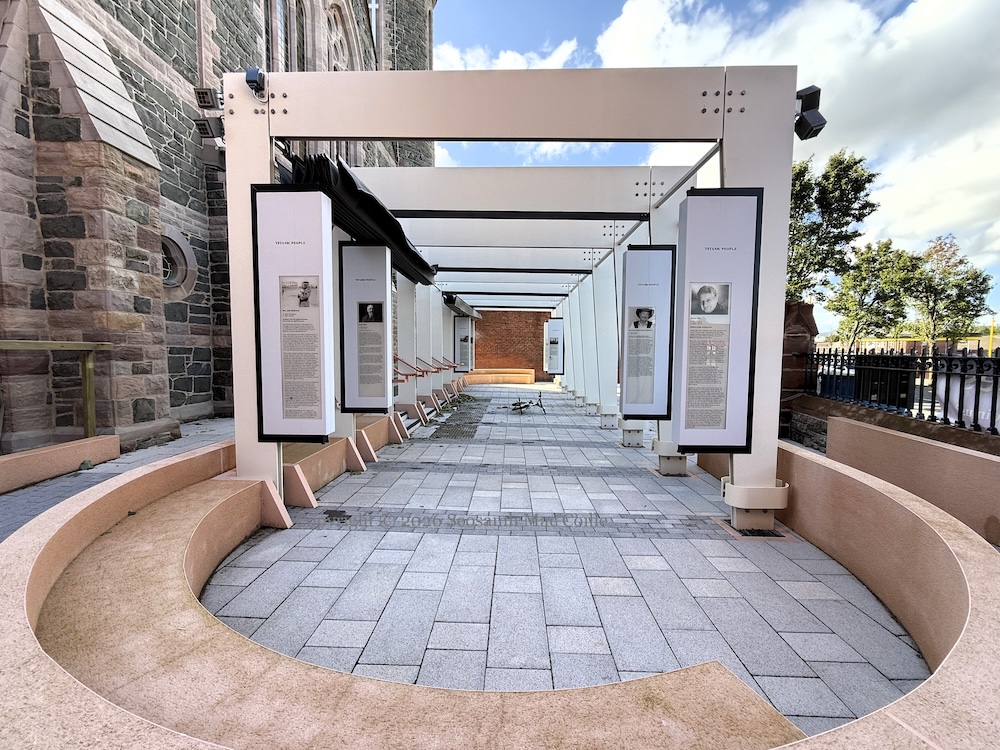
“The ‘Ulster Military Memorial Arch’ was funded by the generosity of the local business community, local residents, and our friends from Scotland. The arch was designed entirely by the people of the Greater Shankill, and erected to coincide with the 80th anniversary of VE Day 8th May 1945 – 8th May 2025. Our servicemen and women are proudly remembered.” For images of the VE Day launch, see the BelTel.
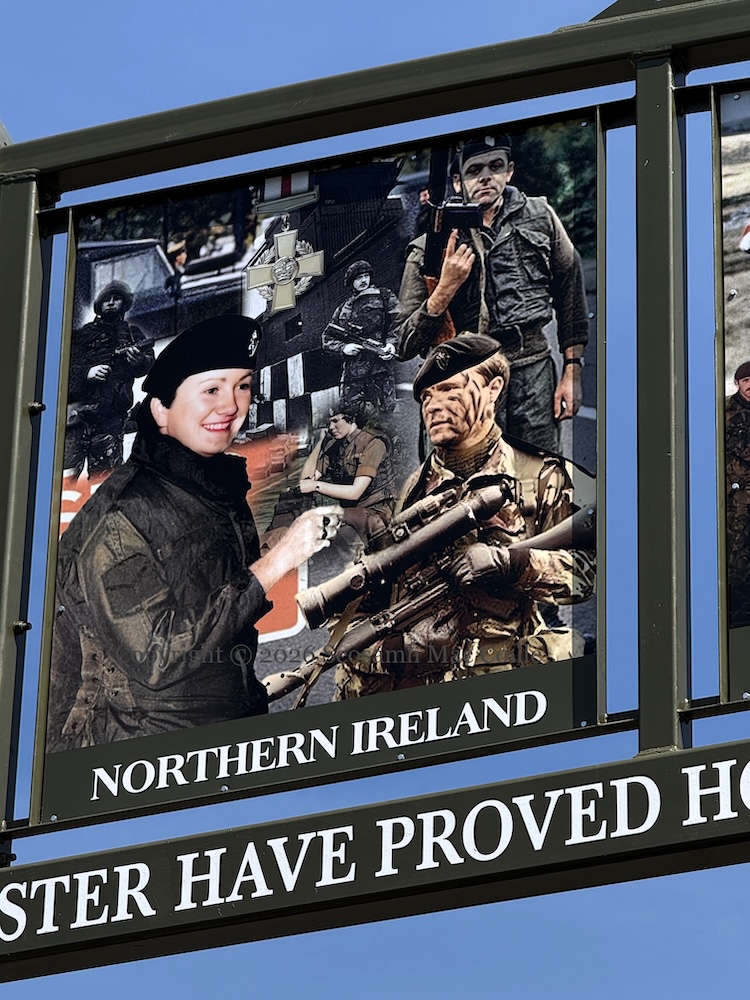
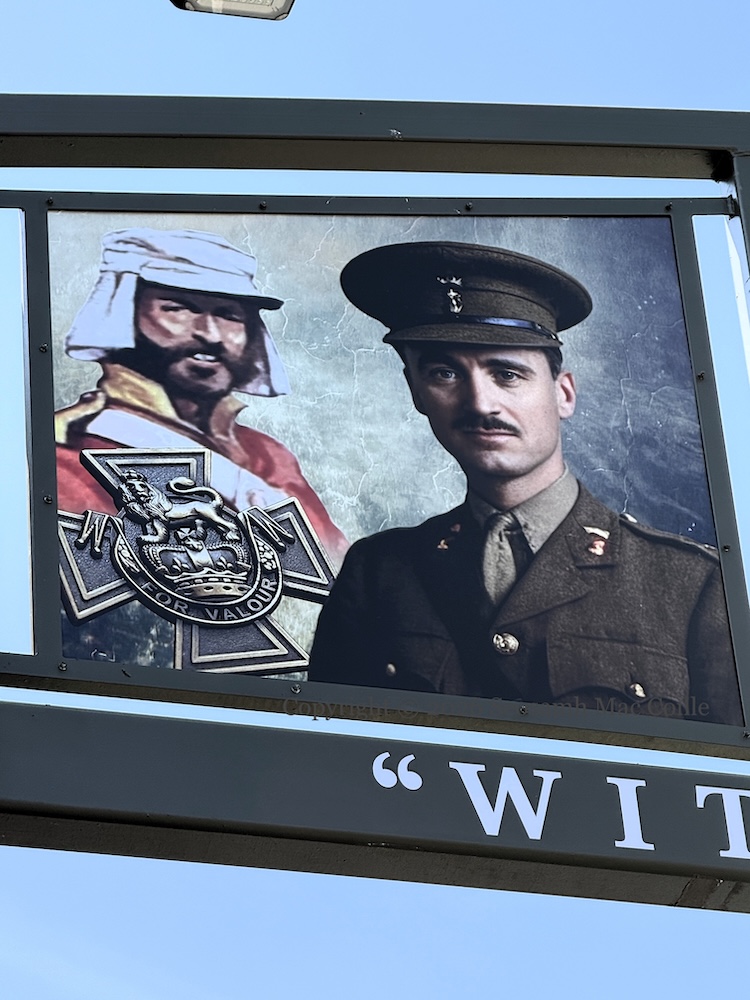
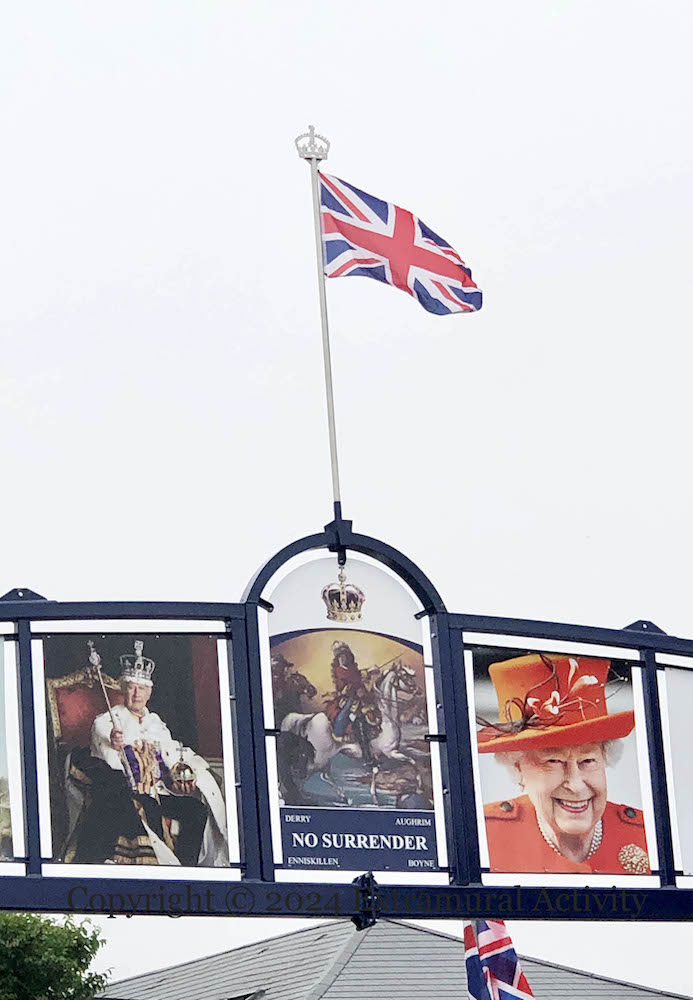
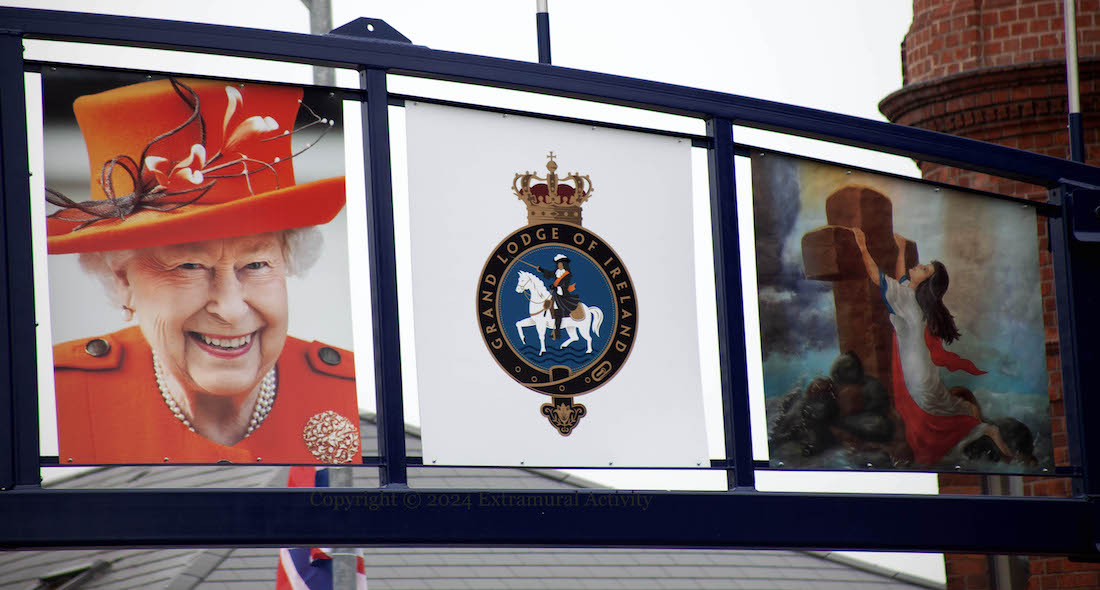
Pictured on Peter’s Hill side of the arch (bearing the quote “With pride and loyalty they served this land”) are (left to right) … Private Bernard McQuirt (a VC winner in 1858 during the Indian Rebellion) and Lt Colonel John Henry Patterson Monica De Wichfeld (raised in Fermanagh and Danish resistance member), Jessie Roberts (a nurse for the Ulster Volunteers and (in WWI) for the Volunteer Aid Detachment, serving in Birmingham and in Wimereux, France; she gets a very long entry on the info panels around the legs of the arch, as her biography is not available on-line), a (unidentified) nurse, Corporal Channing Day (a medic killed in Afghanistan, 2012), Princess Elizabeth Private William Frederick McFadzean and Sergeant Robert Quigg the tomb of “the unknown warrior” (central panel) Leading Seaman James Joseph Magennis and Lt Colonel Robert Blair ‘Paddy’ Mayne Field Marshal Alan Francis Brooke and Field Marshal Bernard Law Montgomery Field Marshal Sir Henry Hughes Wilson and Sir James Craig
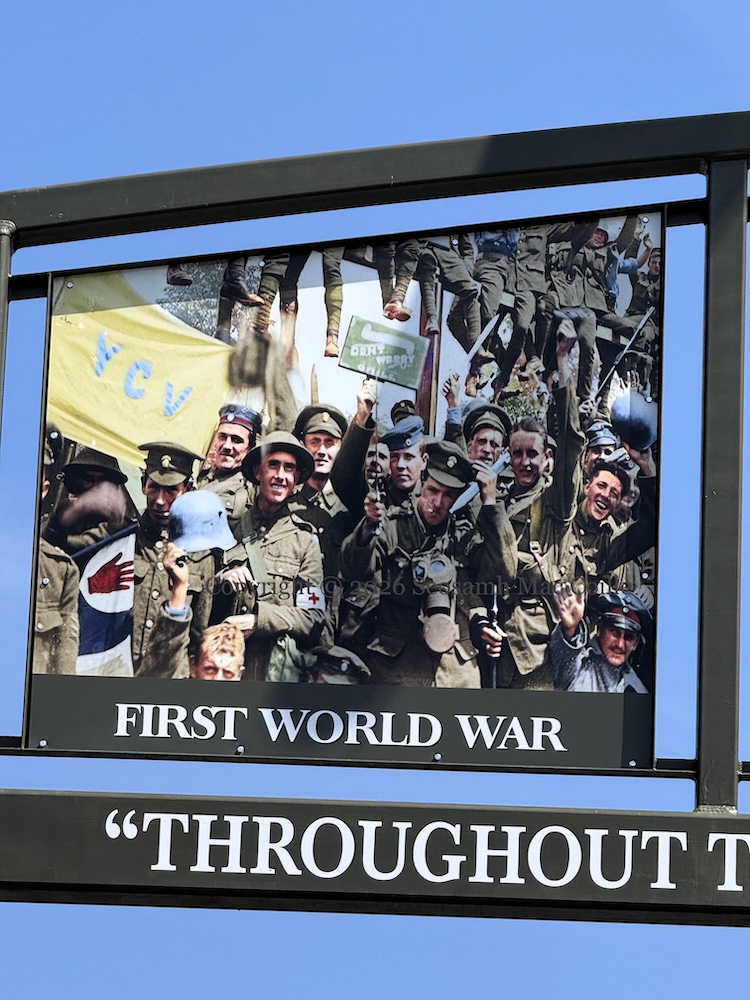
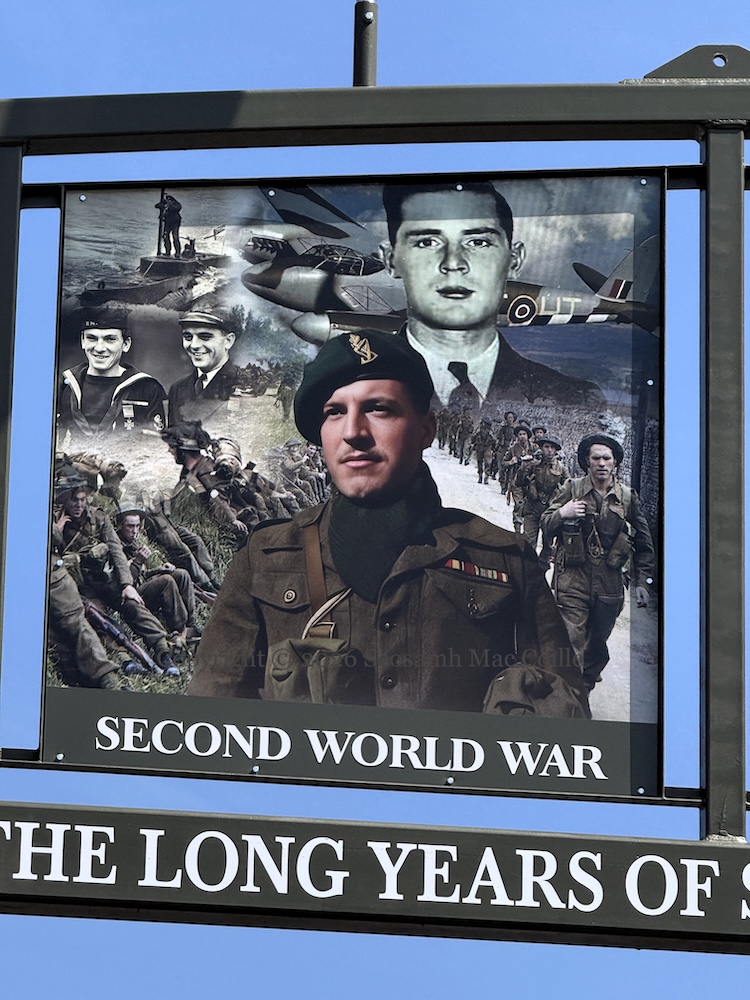
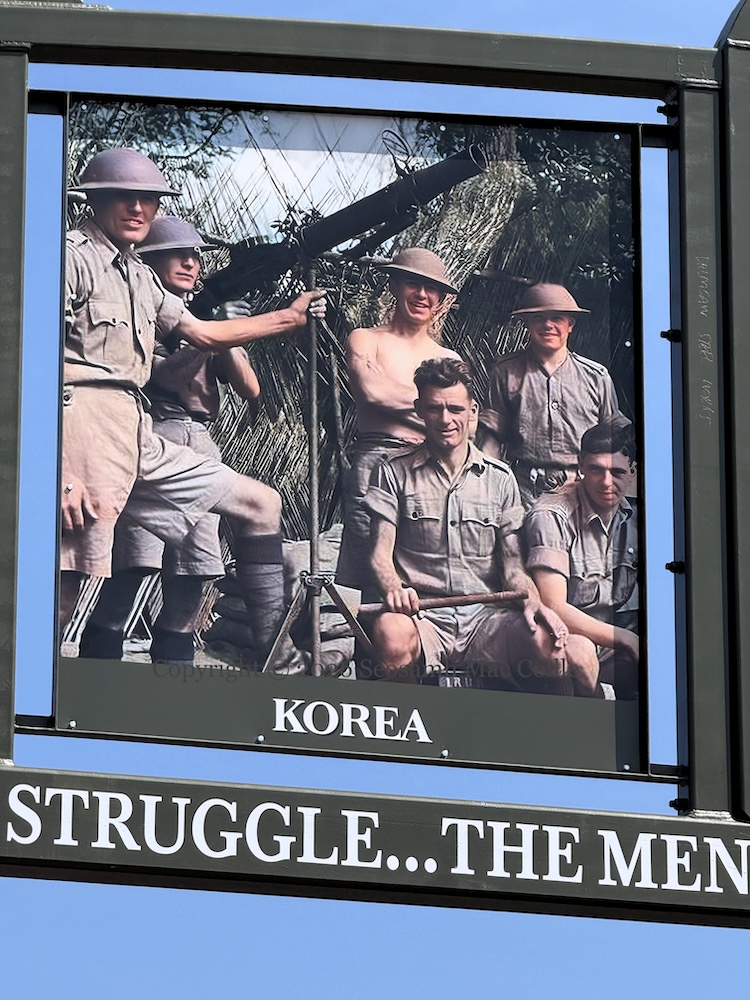
On the other/Shankill side of the arch, bearing the quote “Throughout the long years of struggle … the men and women of Ulster have proved how nobly they fight and die”, the ‘WWII’ panel includes (top right) Warrant Officer David O’Neill, a Canadian Air Force pilot hailing from Ballymena, lost in 1943, and the ‘Northern Ireland’ panel features (left) Corporal Heather CJ Kerrigan, a UDR Greenfinch killed by the IRA in 1984. These two are also profiled in the info panels around the legs of the arch, along with Corporal Bryan James Budd, a 3rd Para soldier killed by friendly fire in Afghanistan, 2006.
Also included is JF Willcocks’s poem Poppies (sometimes called The Inquisitive Mind Of A Child): Why are they selling poppies, Mummy? Selling poppies in town today./The poppies, child, are flowers of love. For the men who marched away./But why have they chosen a poppy, Mummy? Why not a beautiful rose?/Because my child, men fought and died in the fields where the poppies grow./But why are the poppies so red, Mummy? Why are the poppies so red?/Red is the colour of blood, my child. The blood that our soldiers shed./The heart of the poppy is black, Mummy. Why does it have to be black?/Black, my child, is the symbol of grief. For the men who never came back./But why, Mummy are you crying so? Your tears are giving you pain./My tears are my fears for you my child. For the world is forgetting again.”
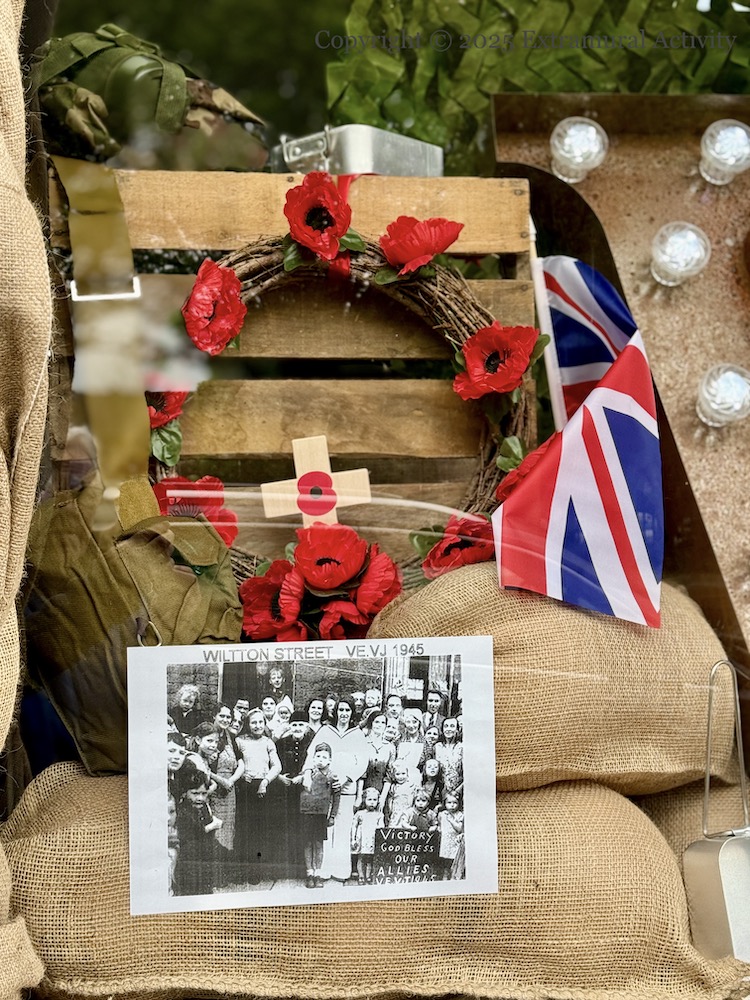
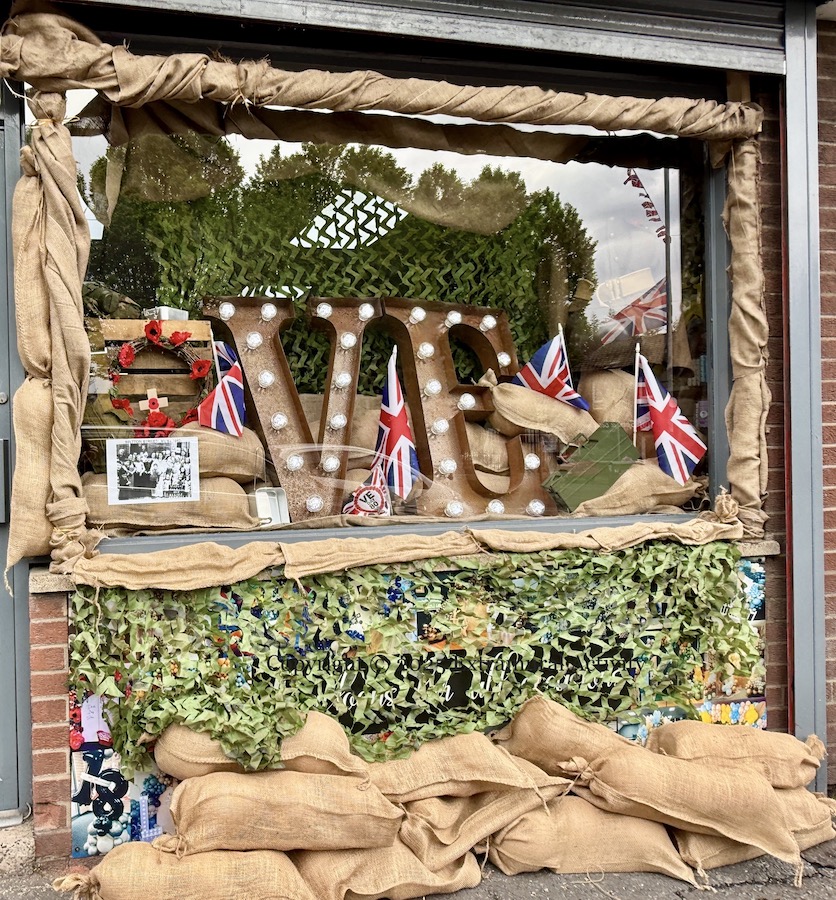
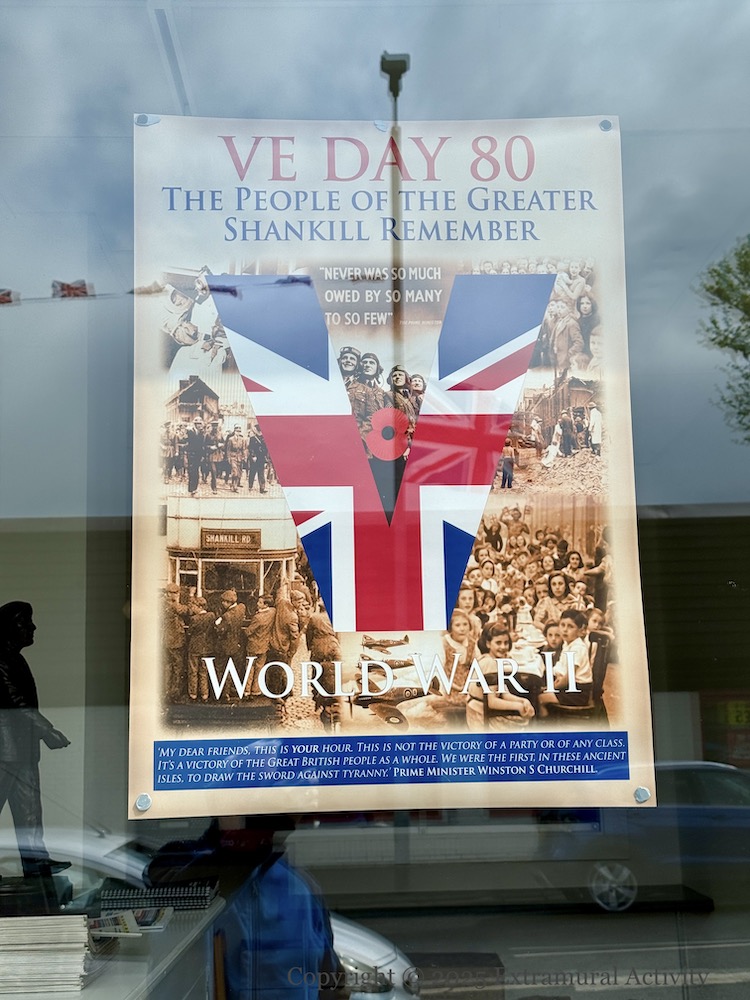
World War II ended in Europe at 11 p.m. on May 8th, after Germany’s unconditional surrender to the Allied forces. The date was dubbed “Victory In Europe Day” or “VE Day” and this year (2025) marks its eightieth anniversary. For the occasion, this Shankill Road shop-window has been decorated with sandbags and camouflage netting, along with a vintage photograph of the residents of nearby “Wiltton” [Wilton] Street from the summer of 1945.
The text on the poster (lower down the road) reads: “‘My dear friends, this is your hour. This is not the victory or of any class, it’s a victory of the Great British people as a whole. We were the first, in these ancient isles, to draw the sword against tyranny.’ – Prime Minister Winston S Churchill”. The lines come from brief remarks Churchill made to the crowds assembled at the Ministry Of Health in London – the text can be found at Forces News; Pathé newsreel of Churchill’s earlier radio announcement of the end of the war can be found on youtube.
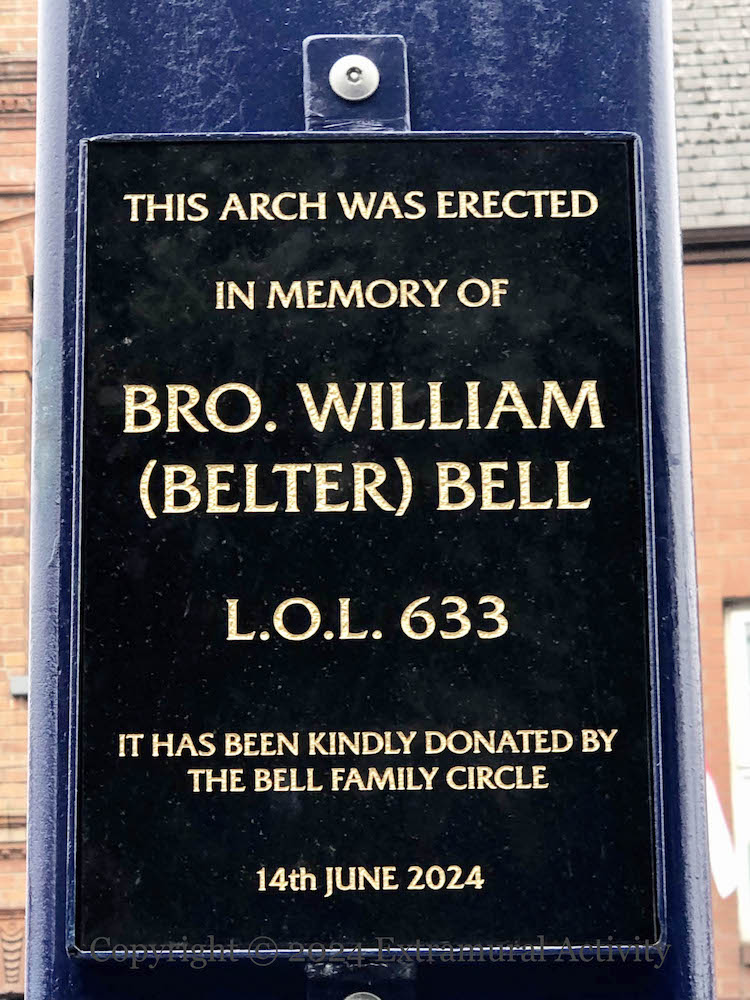
“This arch was erected in memory of Bro. William (Belter) Bell, LOL 633. It has been kindly donated by the Bell family circle. 14th June 2024”
Speeches at the launch (youtube) note that the arch was not displayed during the Troubles (News Letter (paywall) says mid-60s), and was stored on the roofs of nearby shops for the sixty years since. Businessman Ian Bell (of video gaming companies Slightly Mad (WP | Belfast Live) and Straight4) is also specified as the main sponsor of the arch’s restoration, in memory of his father, who died on June 7th, 2008.
See also: the arch in Denmark Street (lower Shankill) in 2022 and 2023.
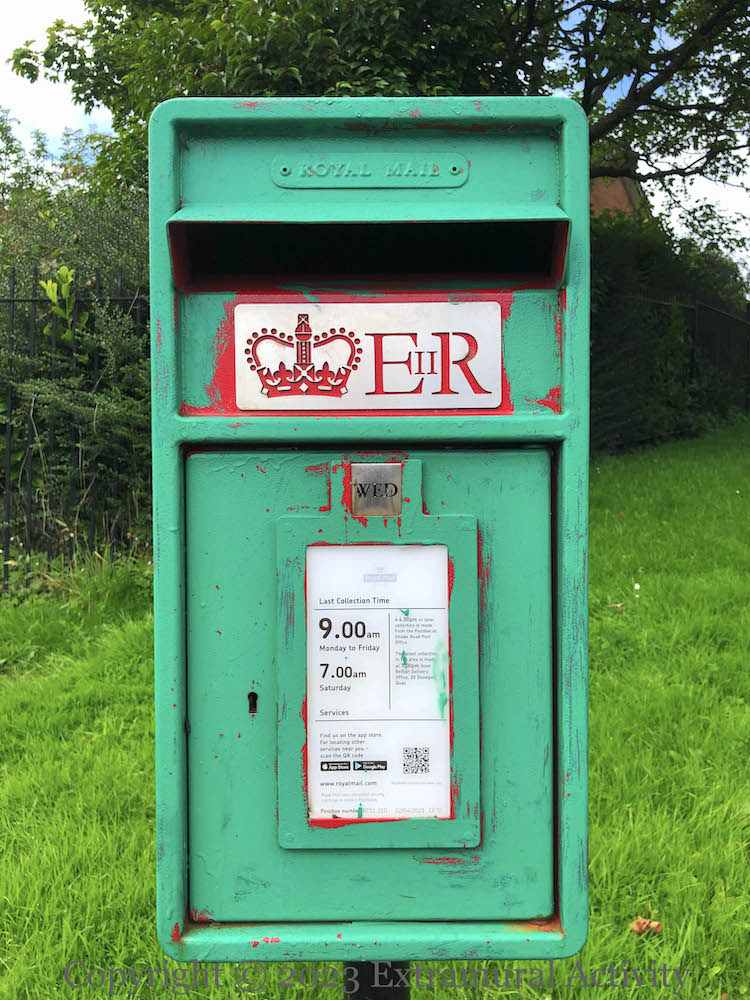
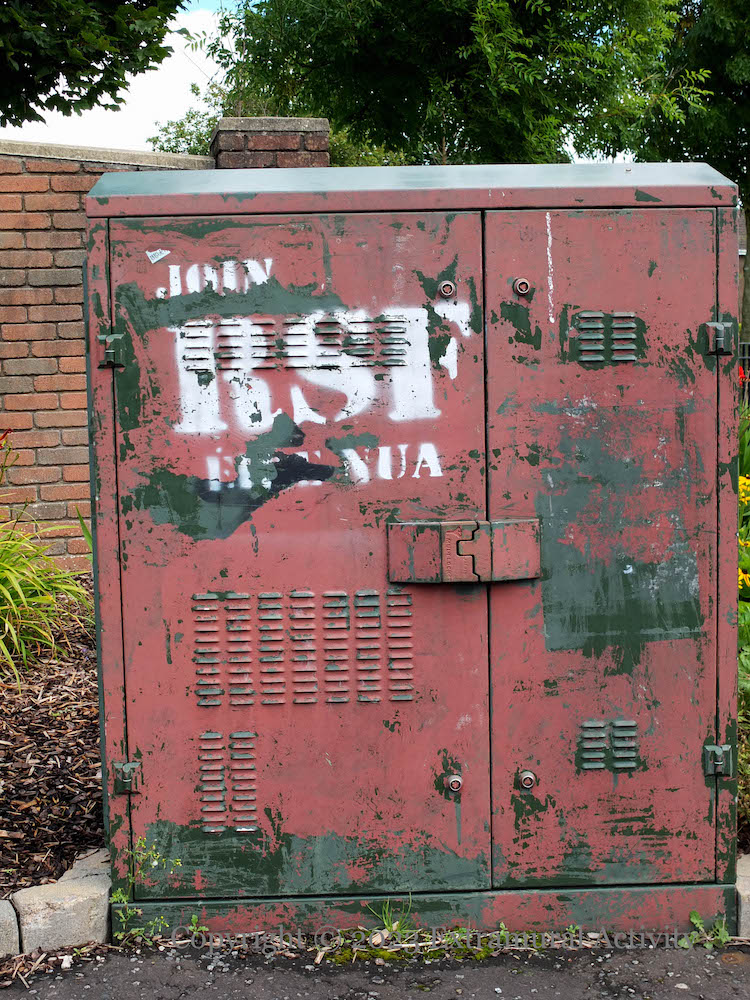
Red and then green and then back to red, at least in part. This “Royal mail” post-box is at the entrance to Glencolin, west Belfast. With bonus “Join RSF – Éıre Nua” stencil on the electrical box across the street.
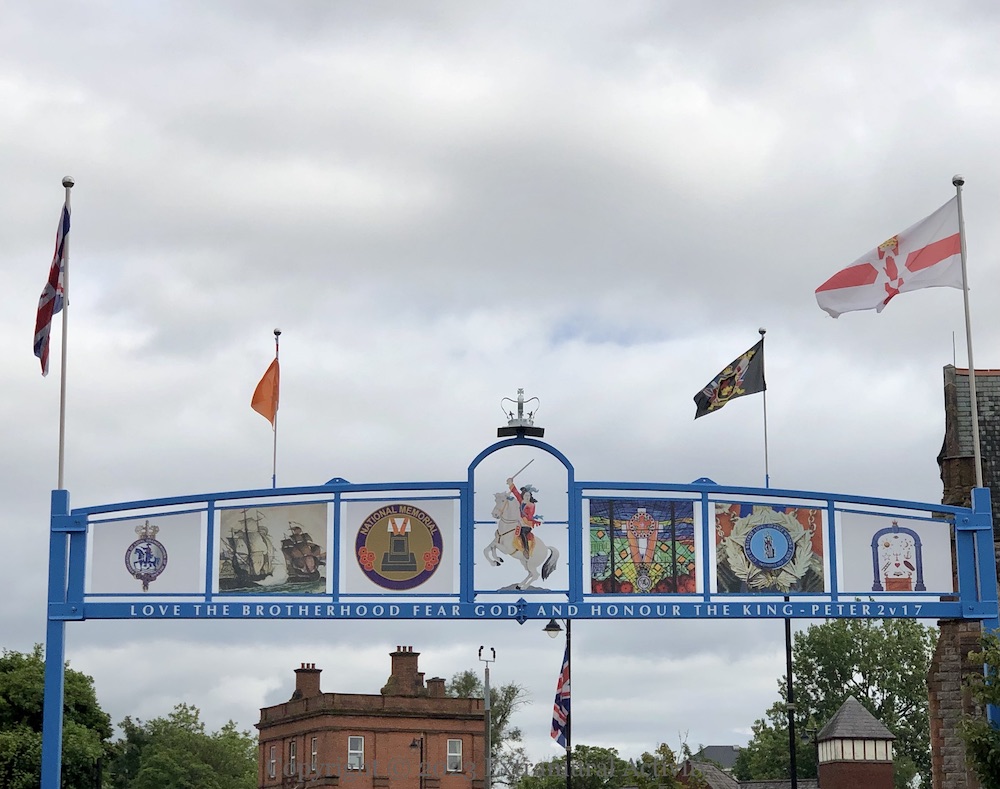
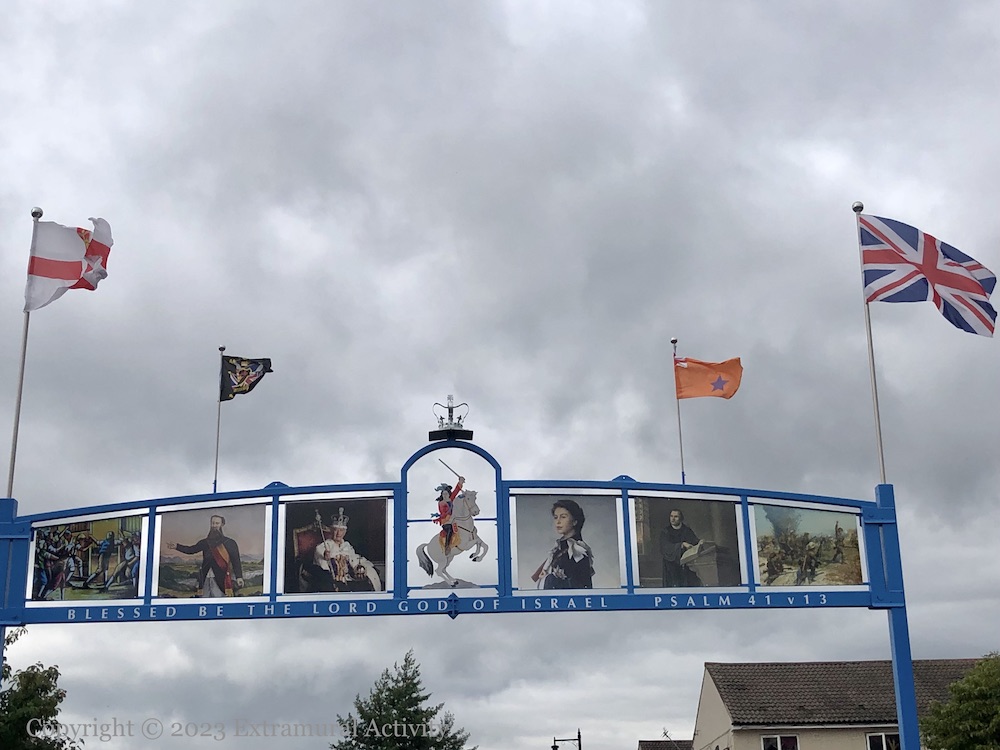
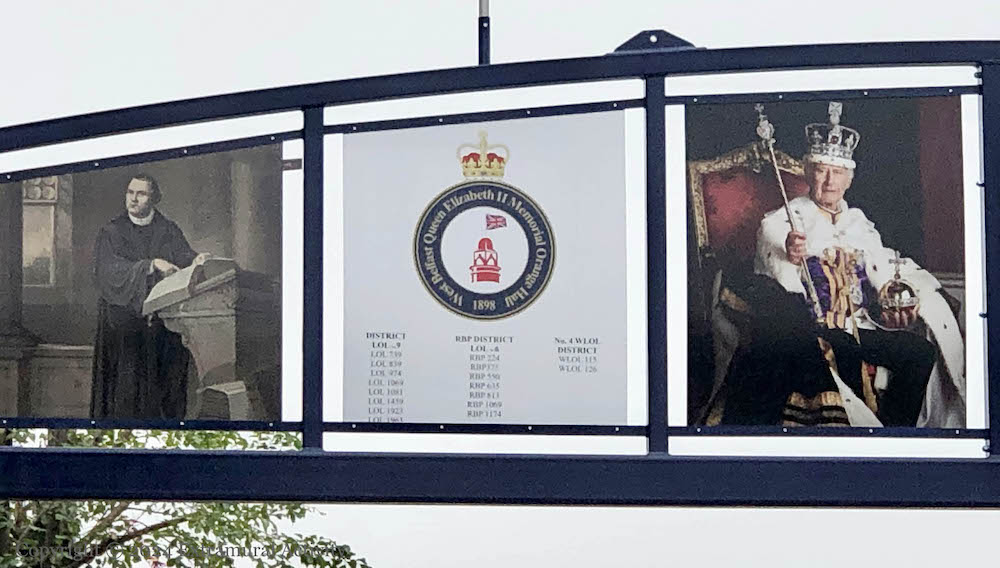
This entry is an update to 2022’s Upward which showed the new arch in Denmark Street (the north side of the lower Shankill estate). To each side of the arch has since been added a quote from scripture: on the outside, “Blessed be the Lord God of Israel – Psalm 41 v. 13”, and on the inside “Love the brotherhood, fear God, and honour the King – [1st] Peter 2 v. 17”
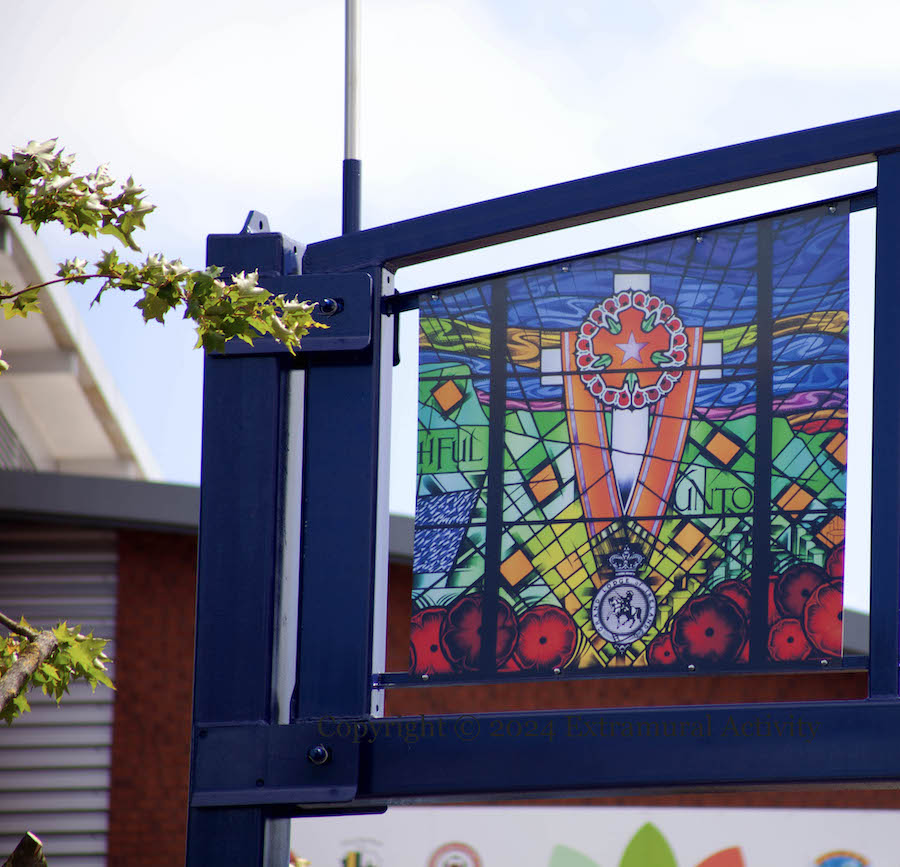
The ‘Platinum Jubilee’ panel has been replaced with the image from the other side of the ‘Faithful Unto Death’ stained glass that is in Schomberg House (see Our Murdered Brethren), and it has been replaced with an image King Charles III.
11 “beacons” are being lit across Belfast this evening, an increase over the eight from last year (Belfast Live). They are re-usable metal frames filled with willow wood (above a base of pallets) and sit on a bed of sand in order to avoid scarring the ground (BBC). The name evokes the beacons lit in the hills of Antrim and Down that allowed King William’s forces to land at Carrickfergus in 1690; the practice of lighting bonfires for festivals goes back to pagan times (Gailey).
Rather than being collected by the local commuinity, the materials are provided by a City Council programme now in its fifteen year of operation; the cost of the beacons this year is 81,000 pounds (BelTel). For discussion of the beacons (and the wider bonfire programme), see this Slugger article.