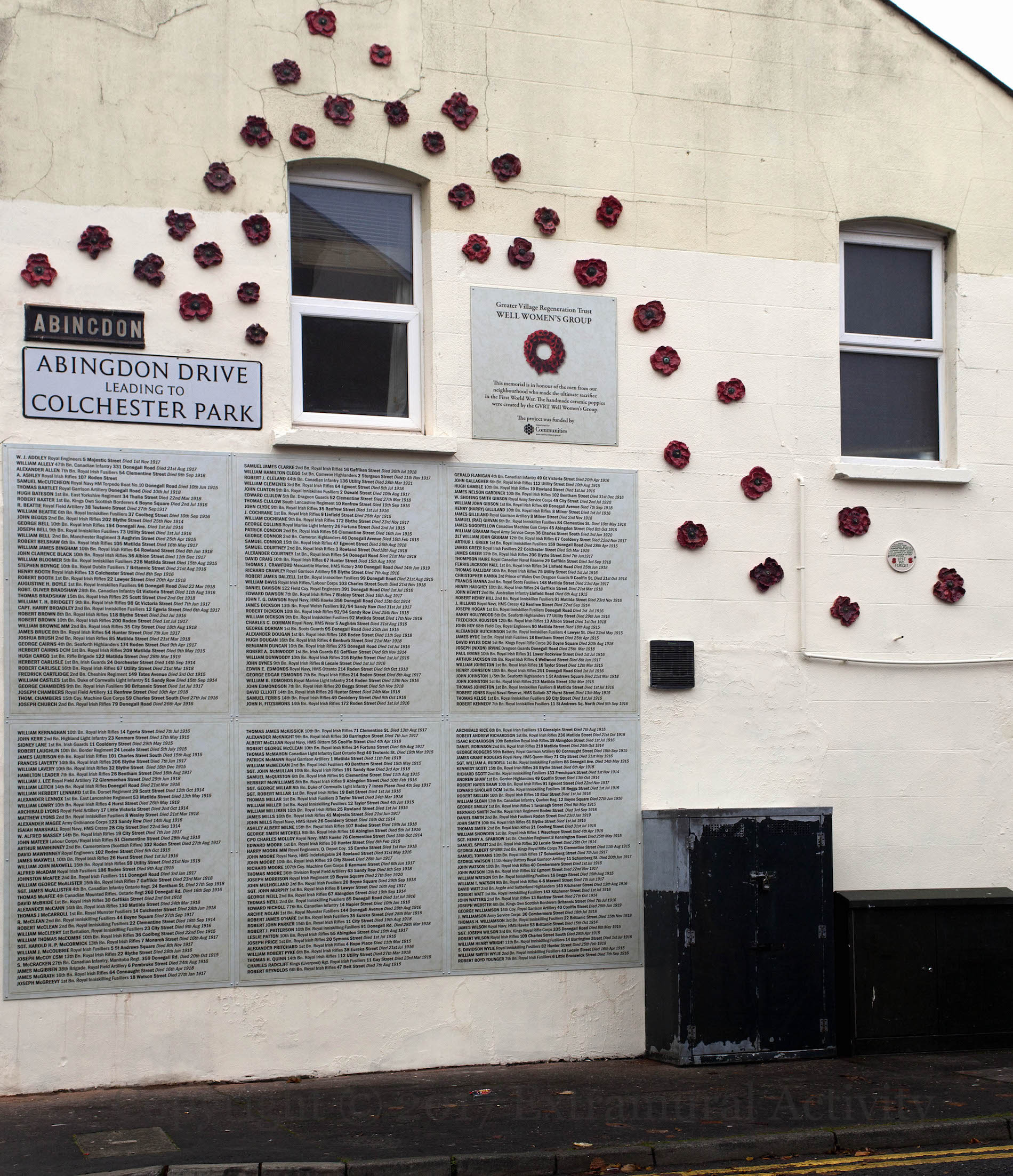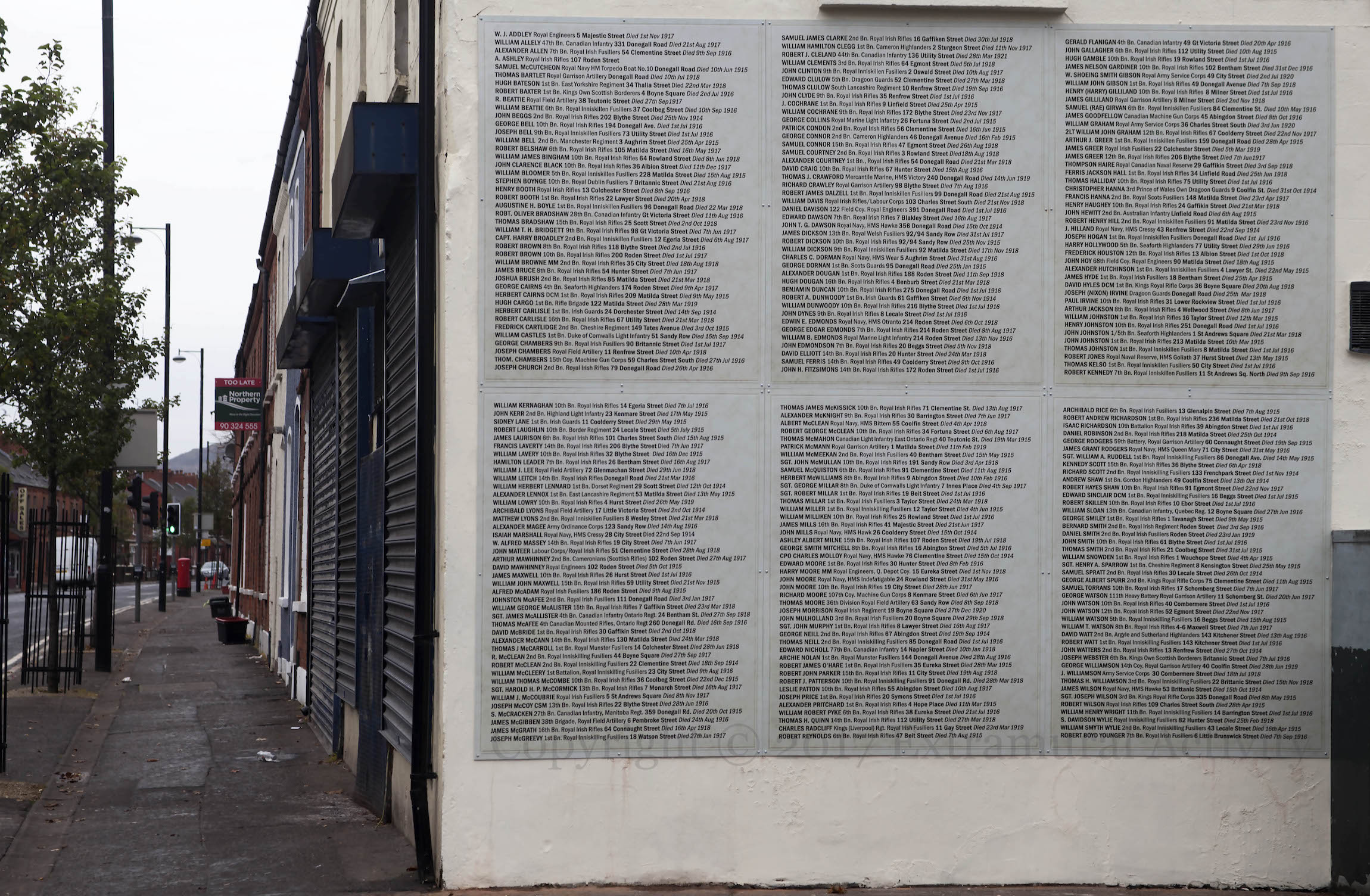
“This memorial is in honour of the men from our neighbourhood who made the ultimate sacrifice in the First World War. The handmade ceramic poppies were created by the GVRT [Greater Village Regeneration Trust] Well Women’s Group.”
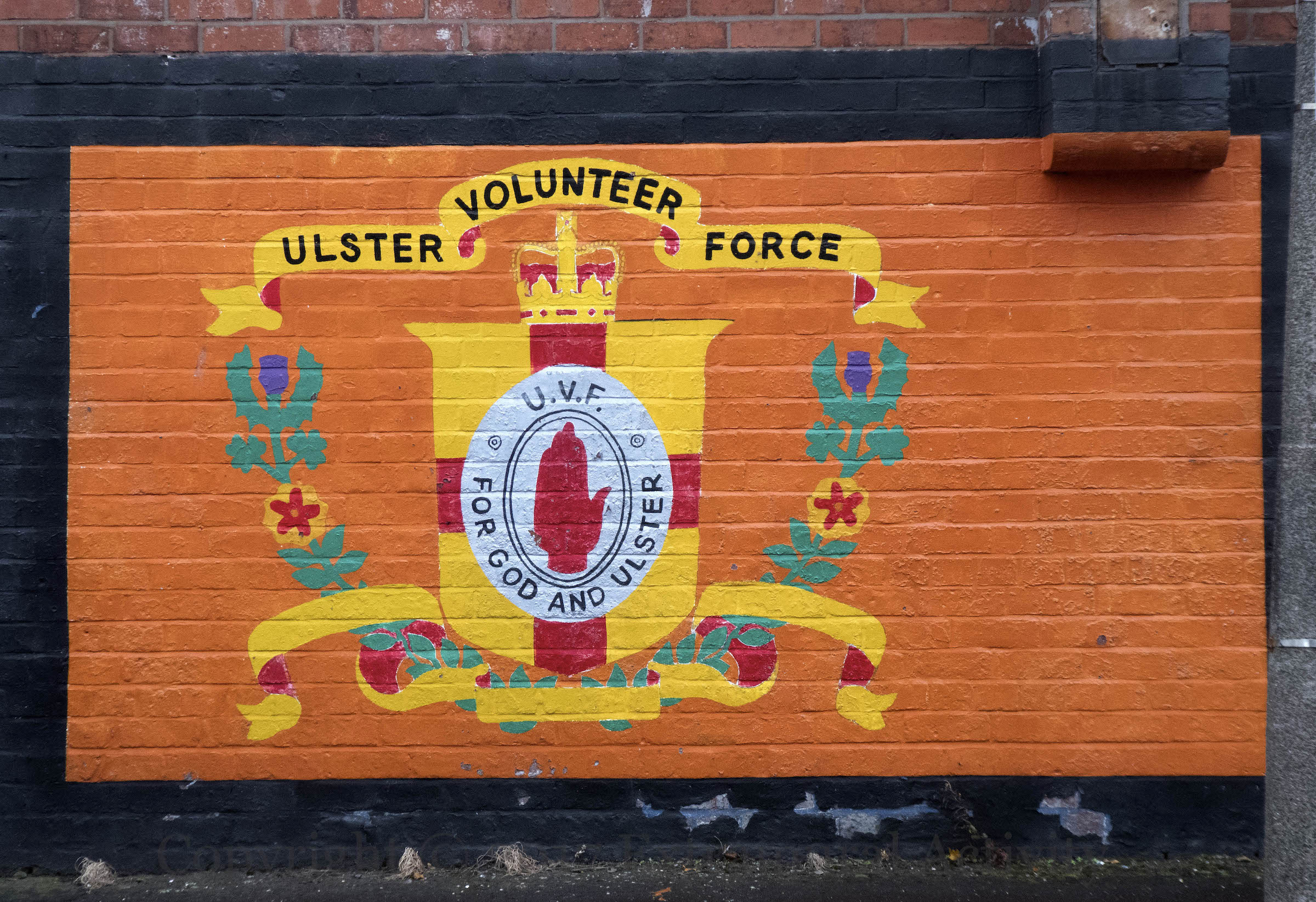
The Ulster Special Service Forces (USSF) was an elite unit of the Ulster Volunteers. Its flag includes the UVF emblem with a garland of thistle, shamrock, and rose. For an earlier (1988) example and more info, see USSF in Belfast; also another in Londonderry (1998).
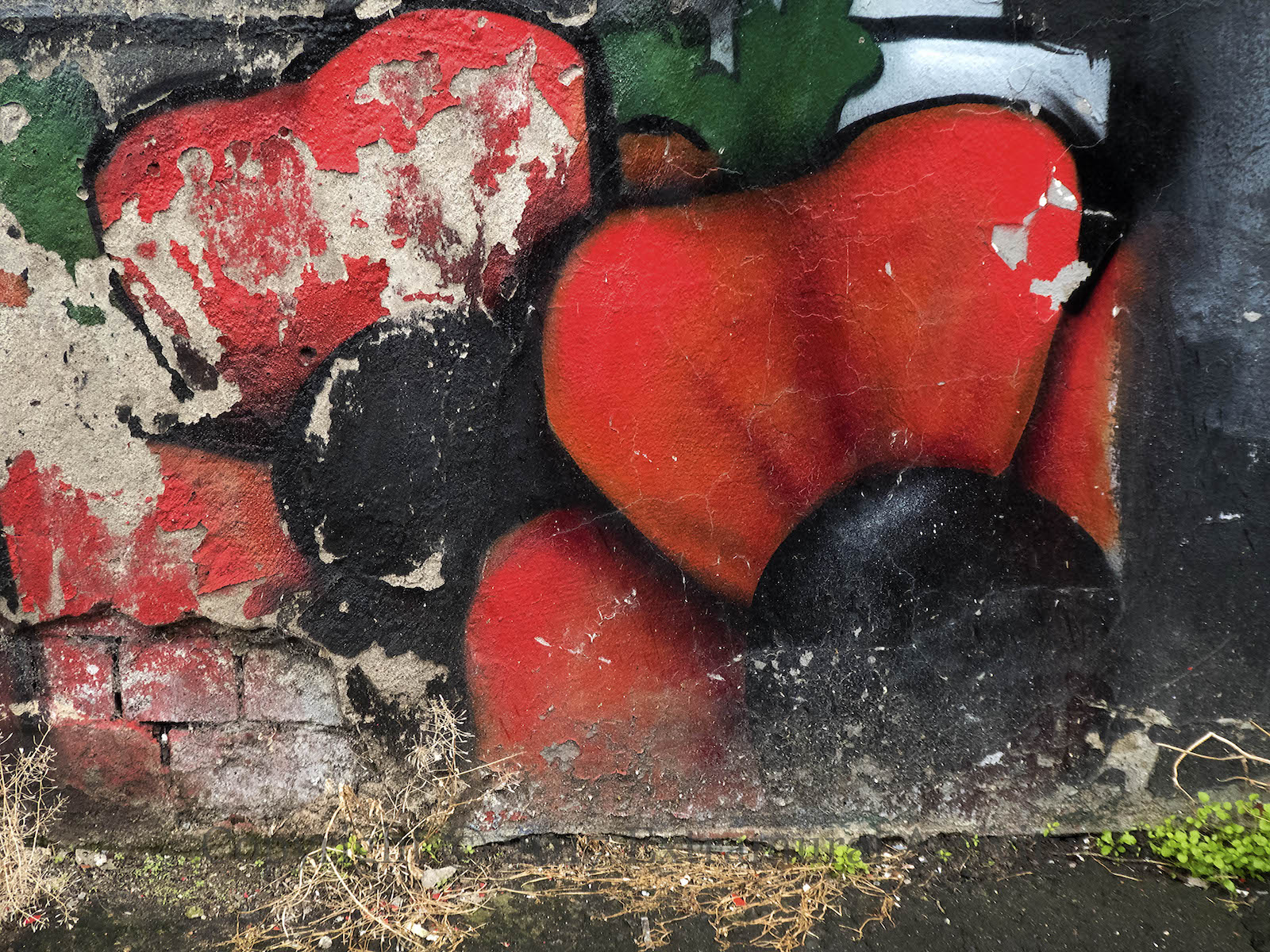
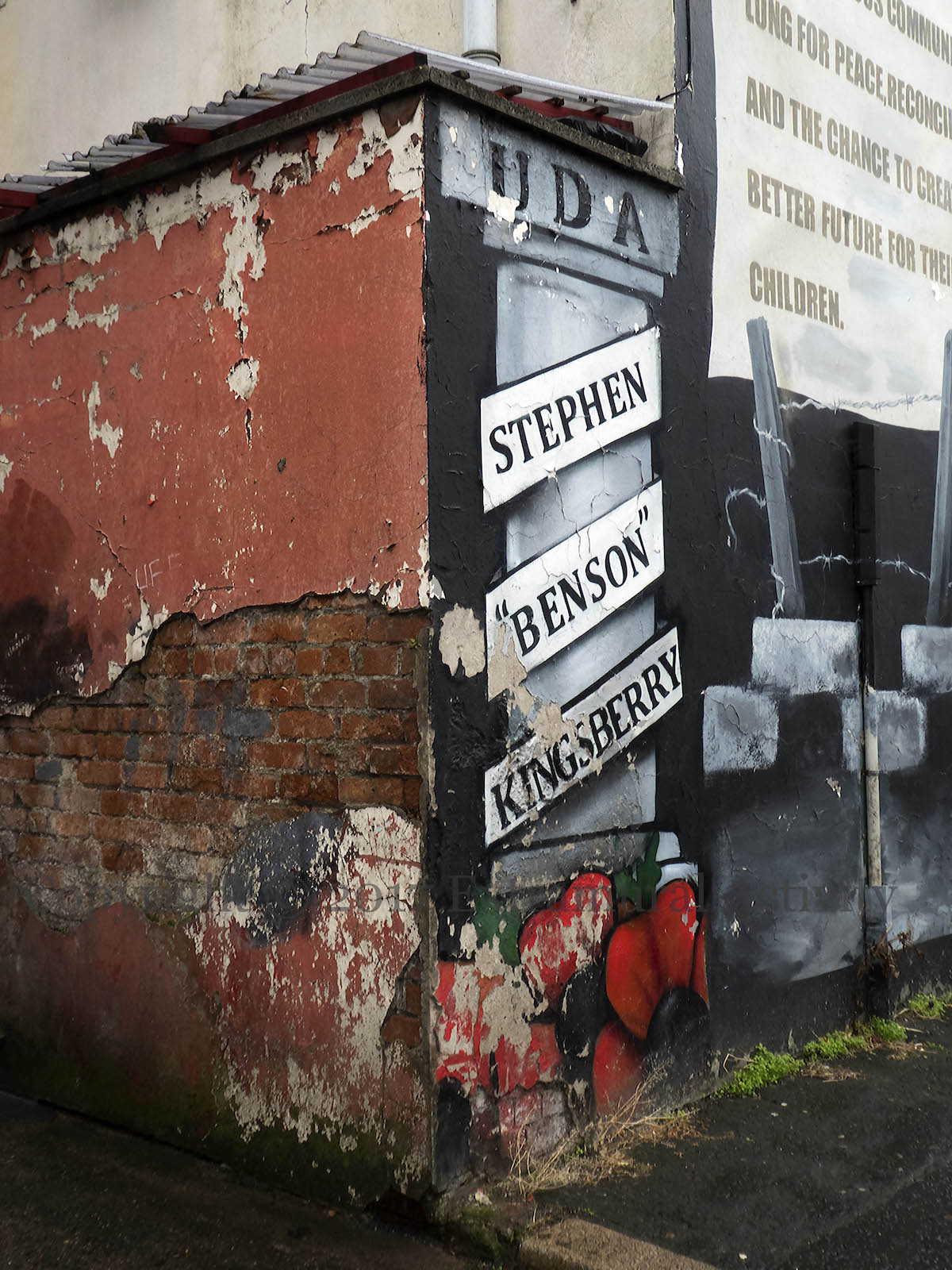
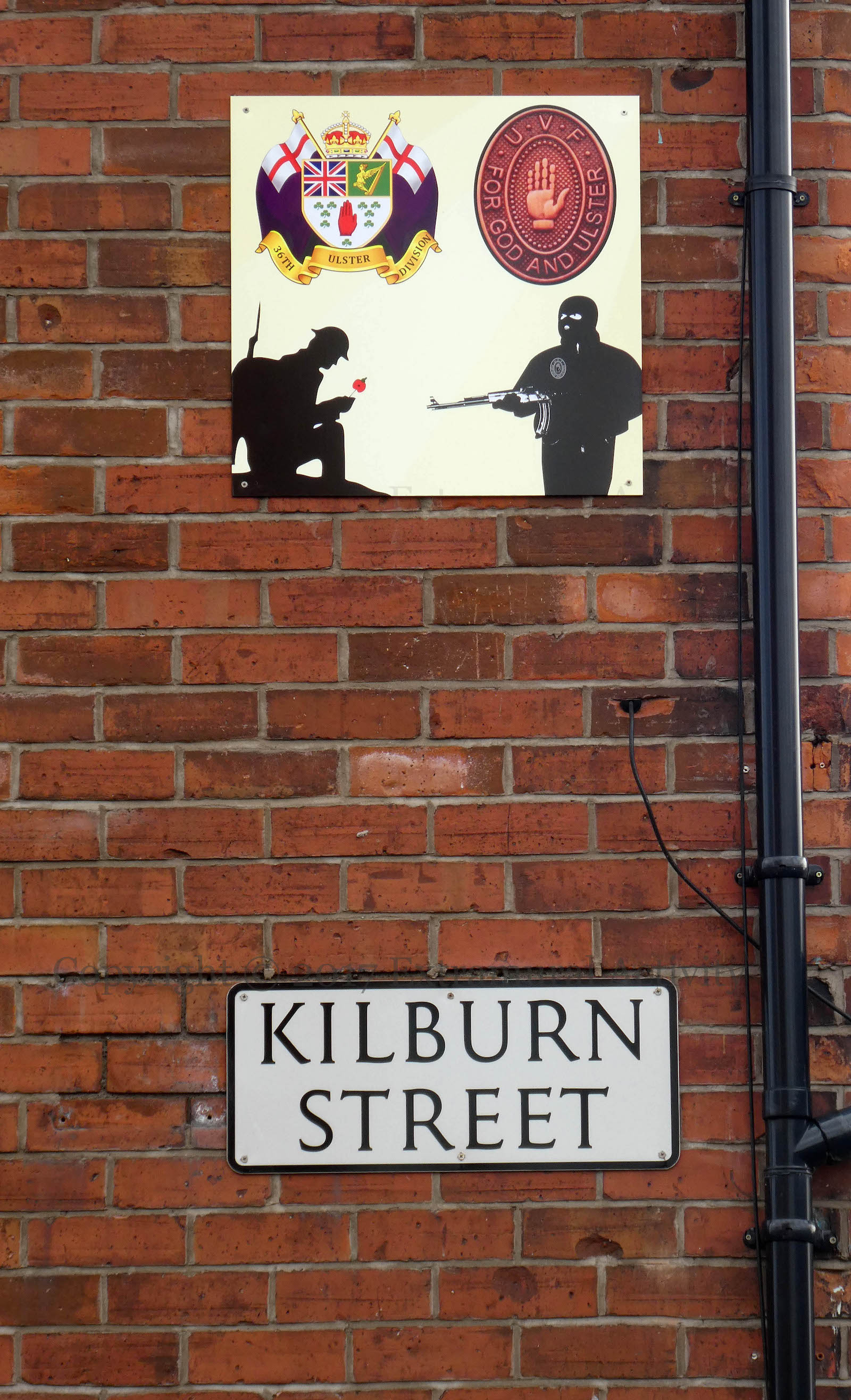
When the UFF hooded gunman were removed from the corner of Kilburn Street and Donegall Road in 2009, a memorial panel to the UDA’s Stephen “Benson” Kingsberry, who died from consuming tainted ecstasy (perhaps distributed by the UVF) was again included, illustrated with a poppy – an early use of what has become common in 2017: UDA (rather than UVF) poppies, as seen in Fulton & Goatley | Common Sense | Sandy Row Remembers. For the main mural see Progress.
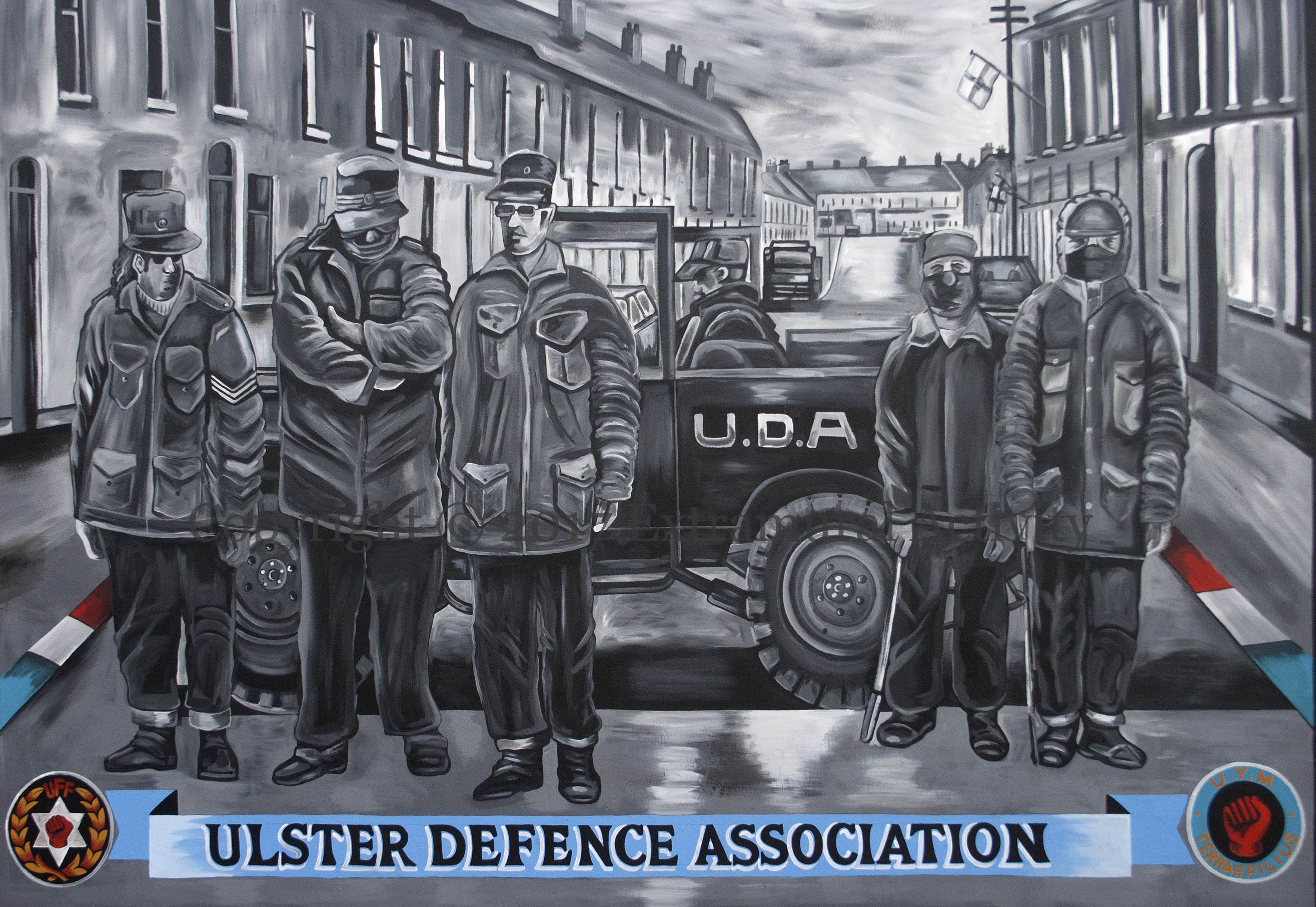
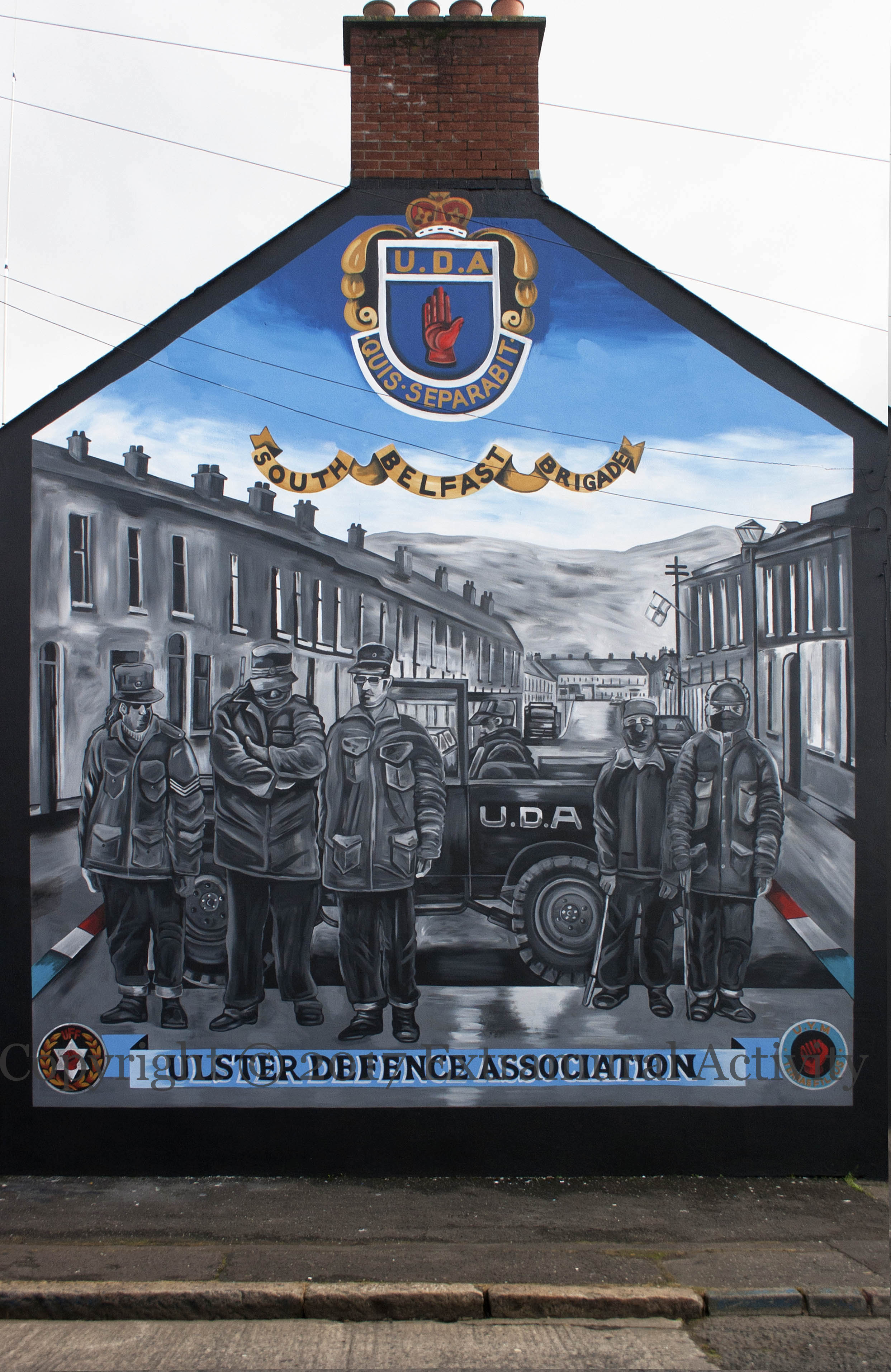
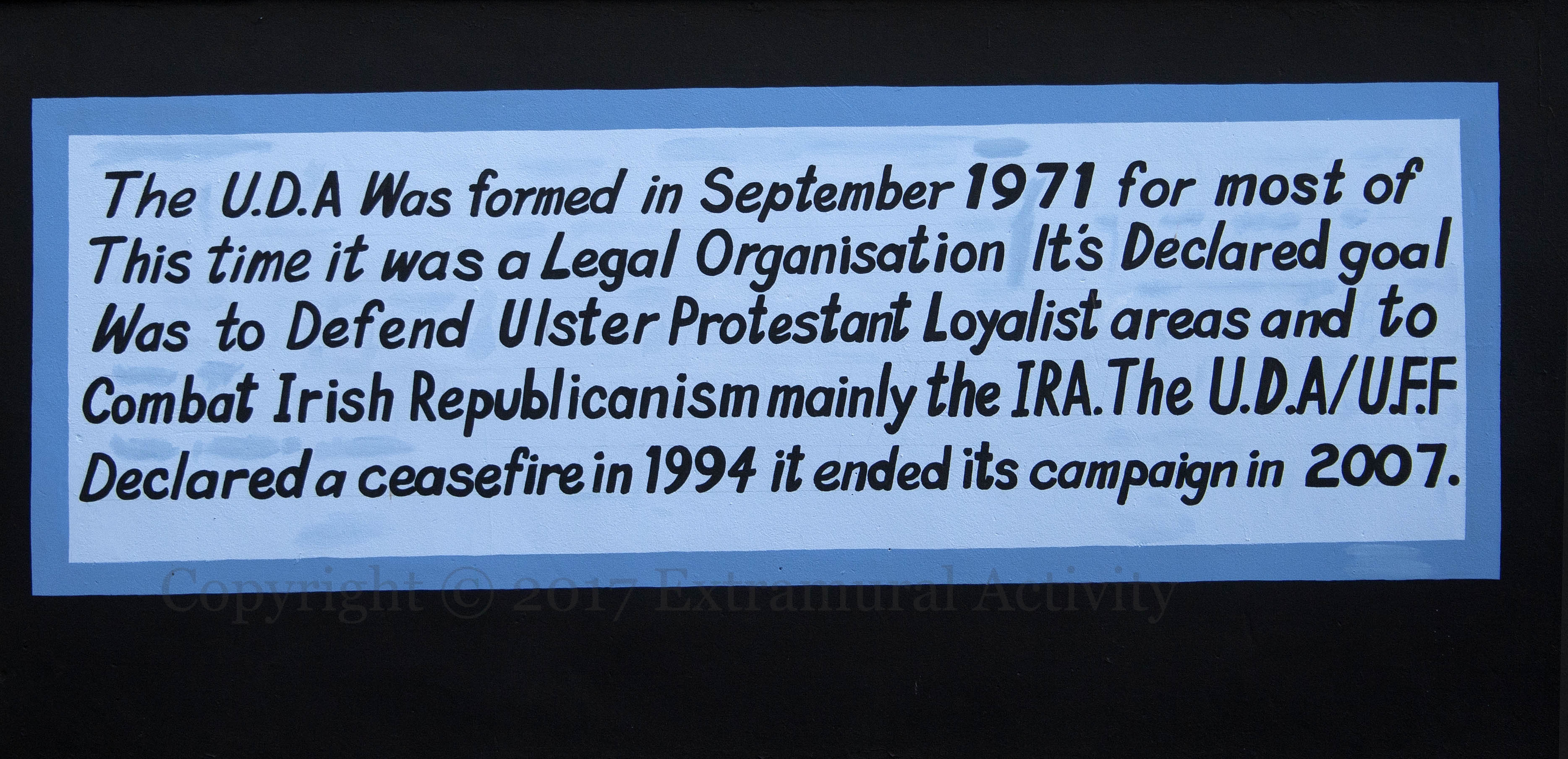
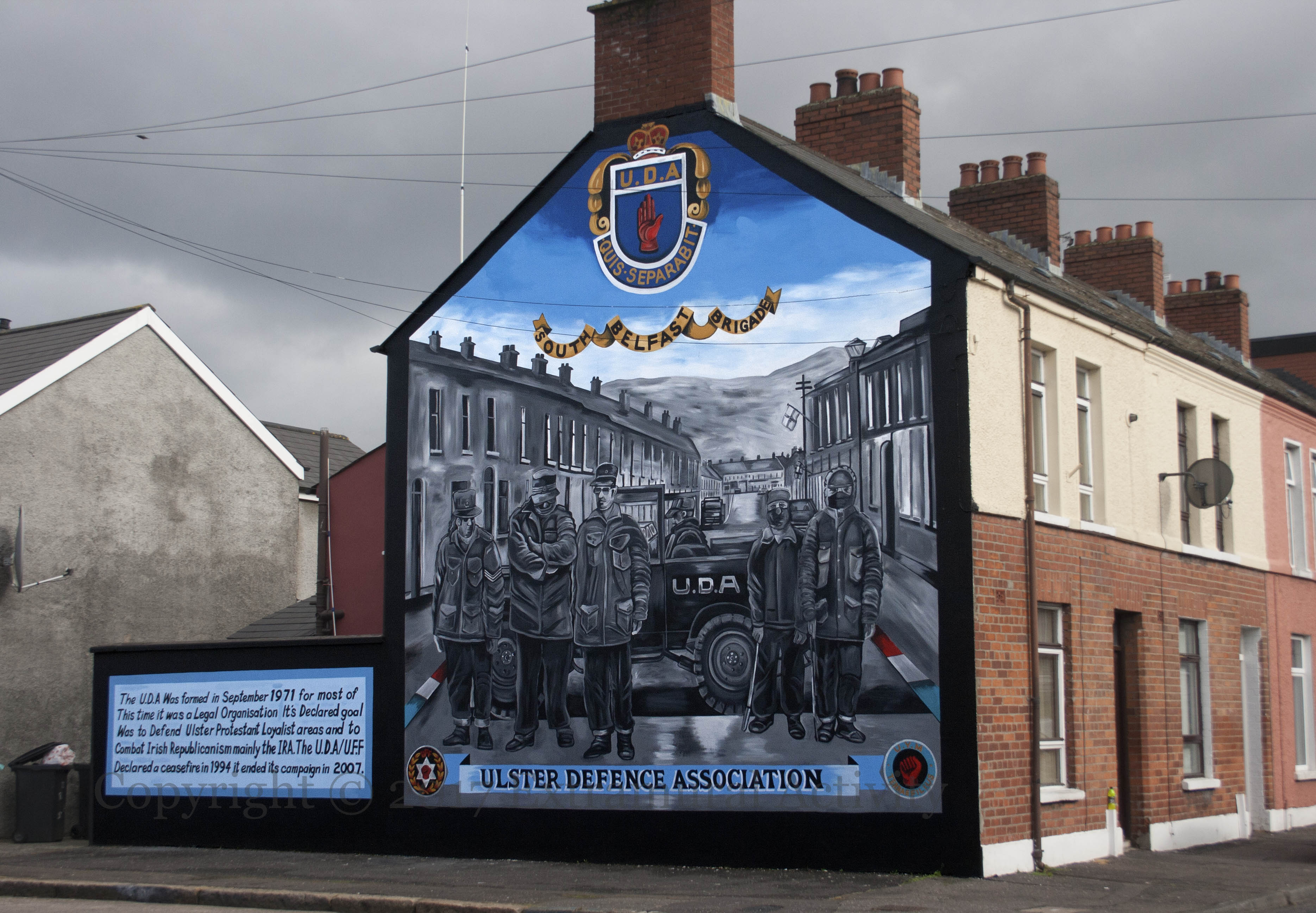
A 1972 Victor Patterson photograph of a UDA mobile patrol in the Oldpark is recreated for this new mural in the Village, south Belfast. “The UDA was formed in September 1971 for most of this time it was a legal organisation. It’s [sic] declared goal was to defend Ulster loyalist Protestant areas and to combat Irish republicanism mainly the IRA. The UDA/UFF declared a ceasefire in 1994 it ended its campaign in 2007.”
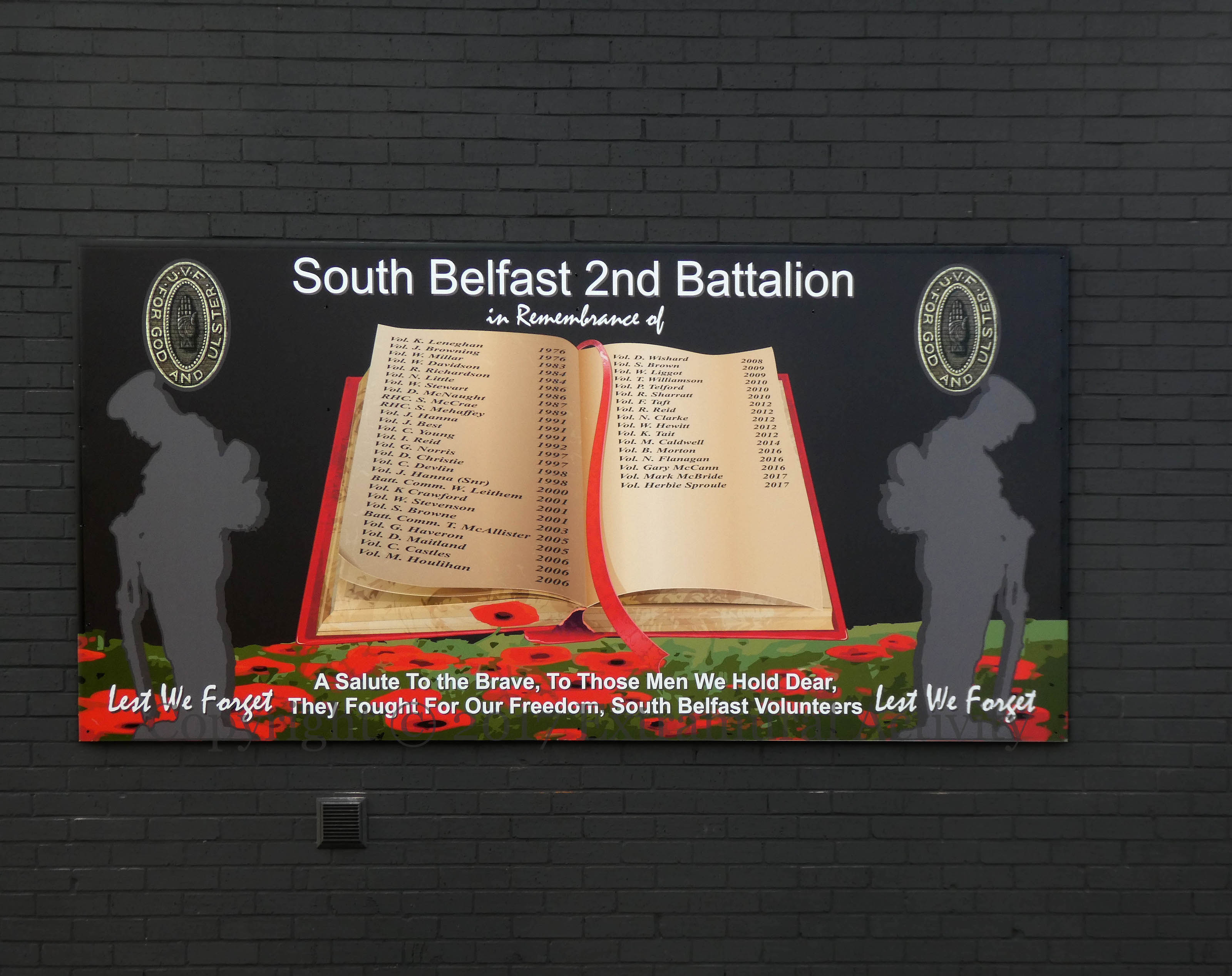
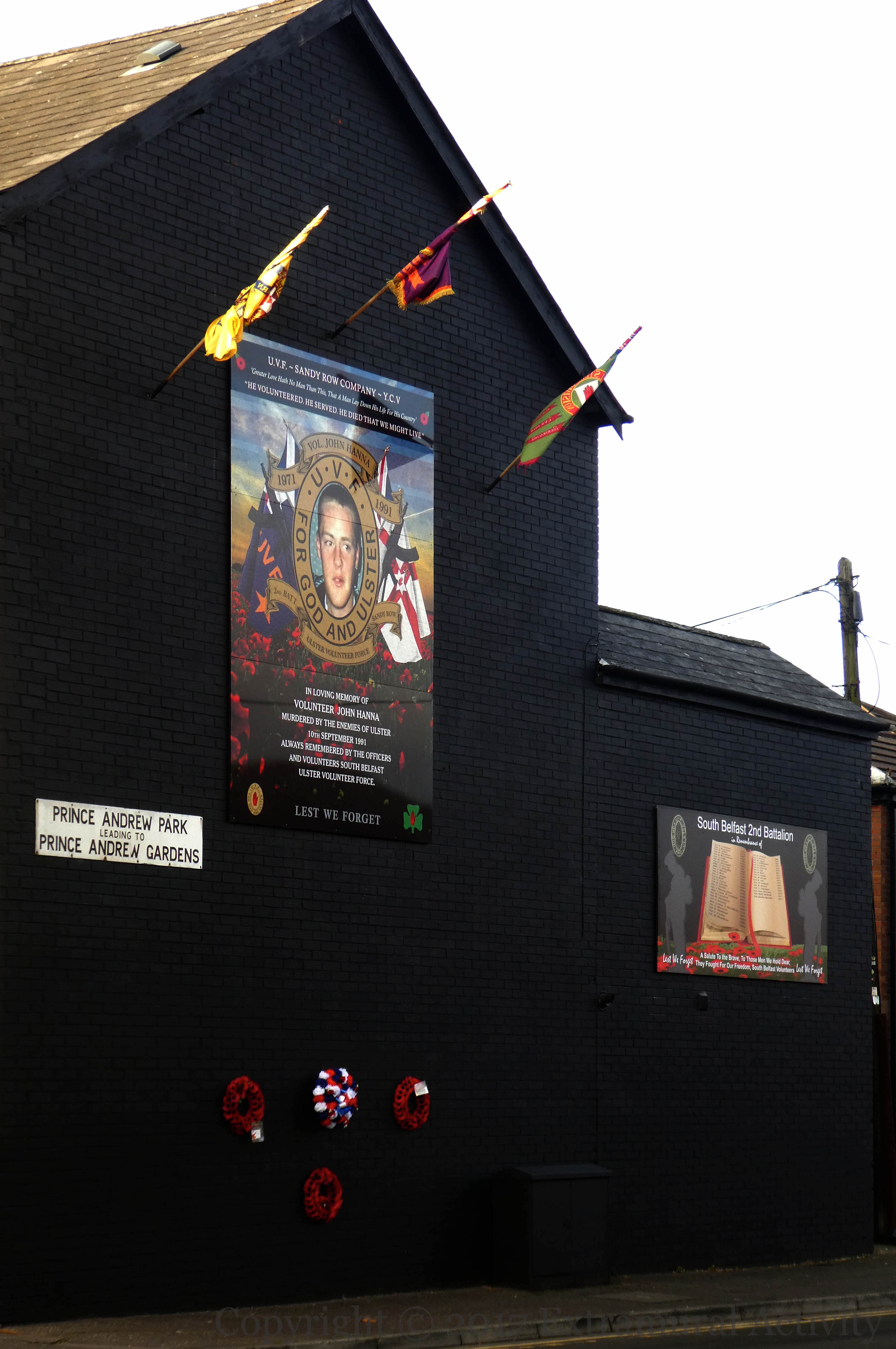
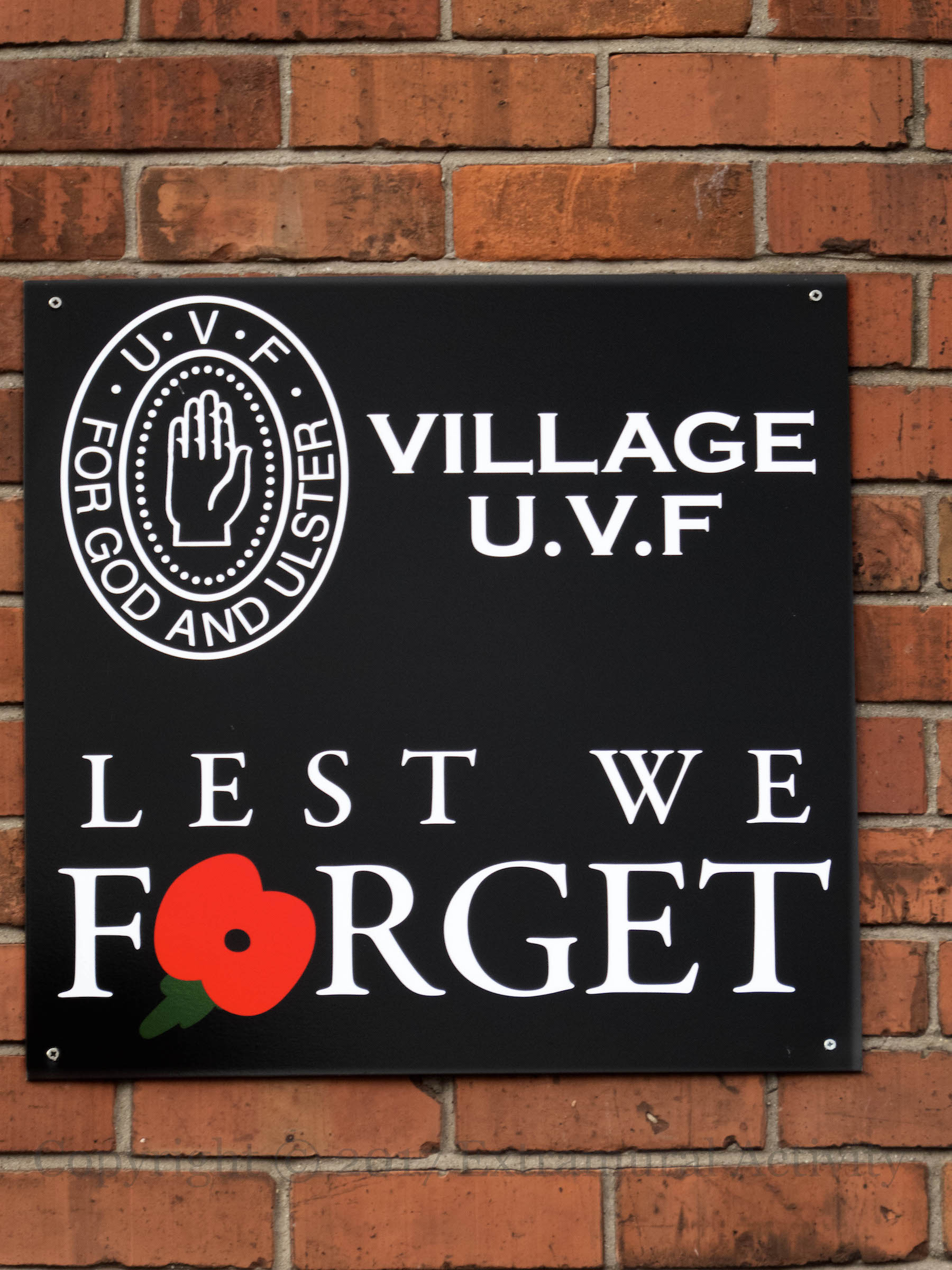
A WWI poppy is used as the “O” in “Lest we forget”, joining together the Ulster Volunteers of 1912 and the modern Ulster Volunteer Force. For more of the many small UVF boards mounted in the Village in order to re-establish its presence, see South Belfast Volunteers | Welcome To The Village | A Hive Of Glass | For God And Ulster.
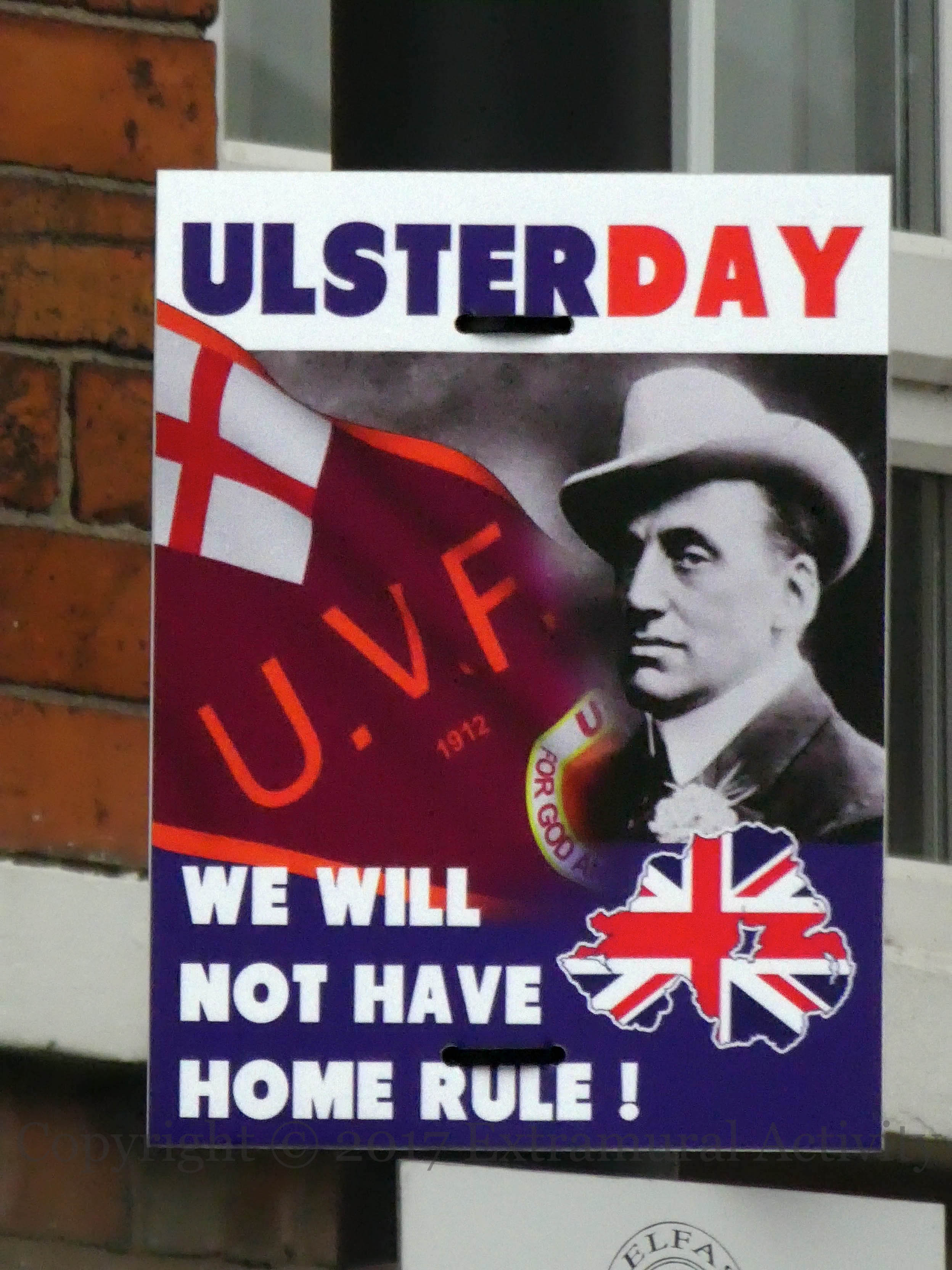
The members of the anti-Home Rule ‘Ulster Volunteers’, formed in 1912, joined the 16th and 36th divisions at the onset of WWI. The emblem of the Ulster Volunteers is on the right (the emblem of the 36th is on the left). The same emblem was used in 1966 when the modern UVF was founded.
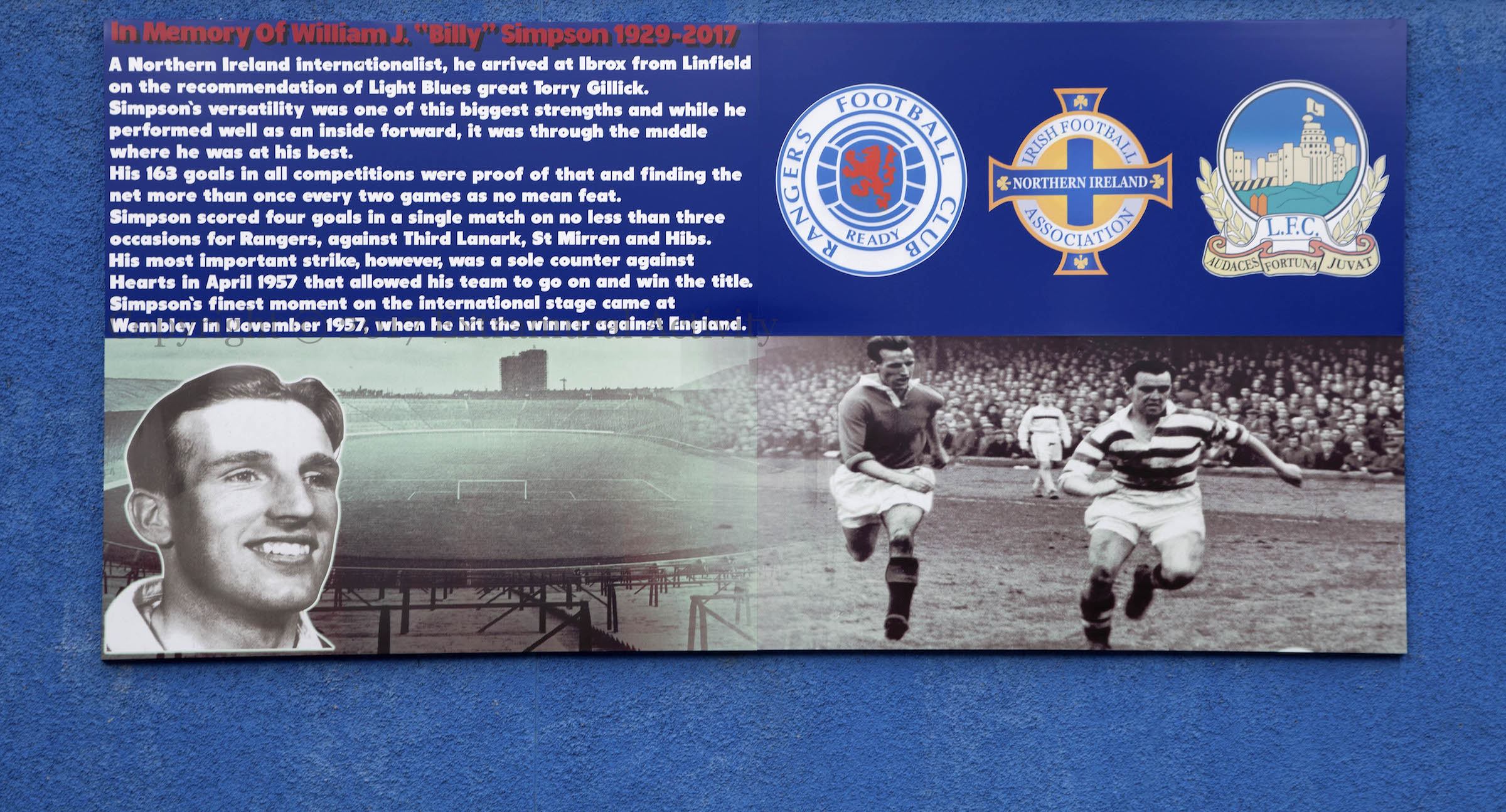
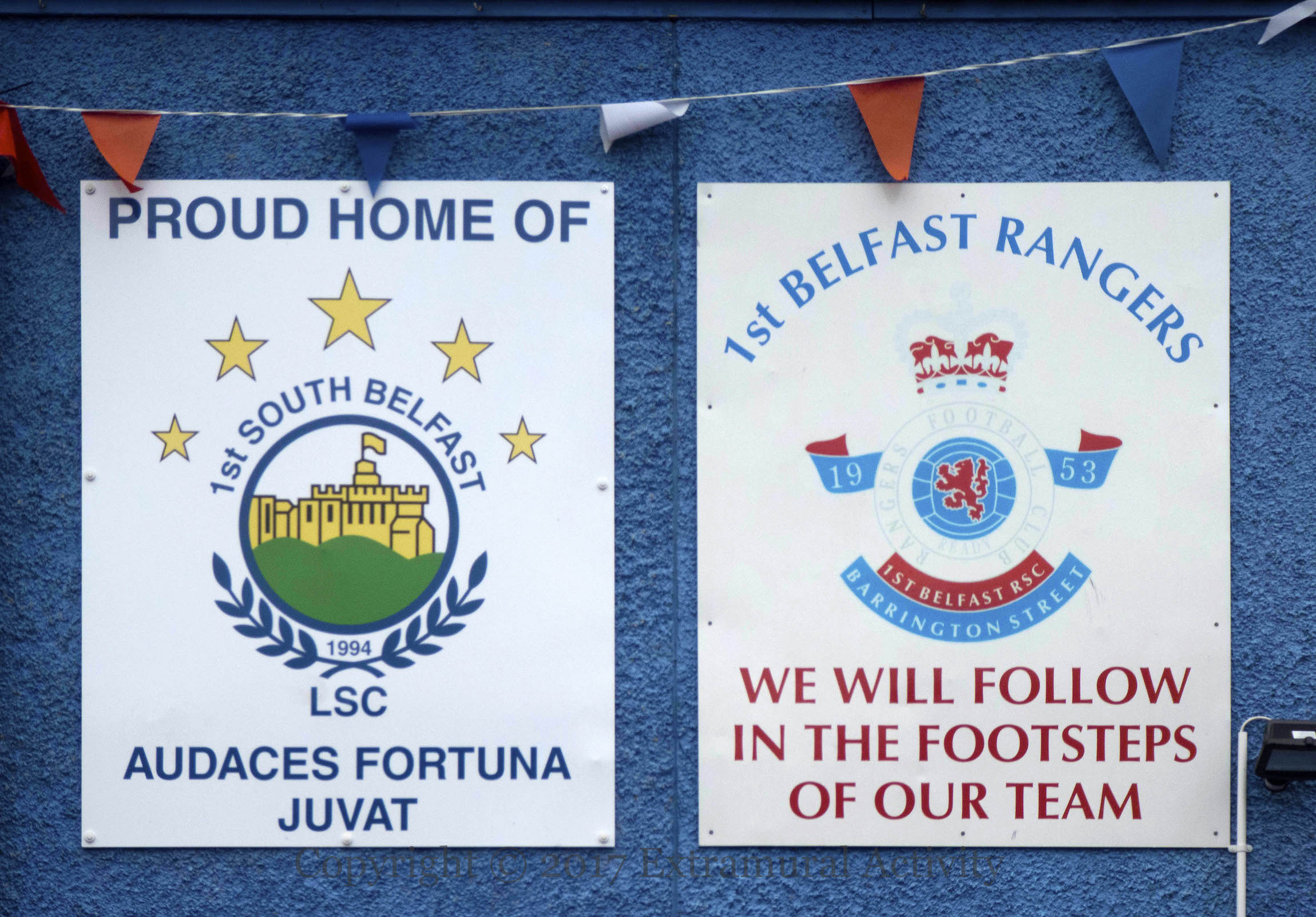
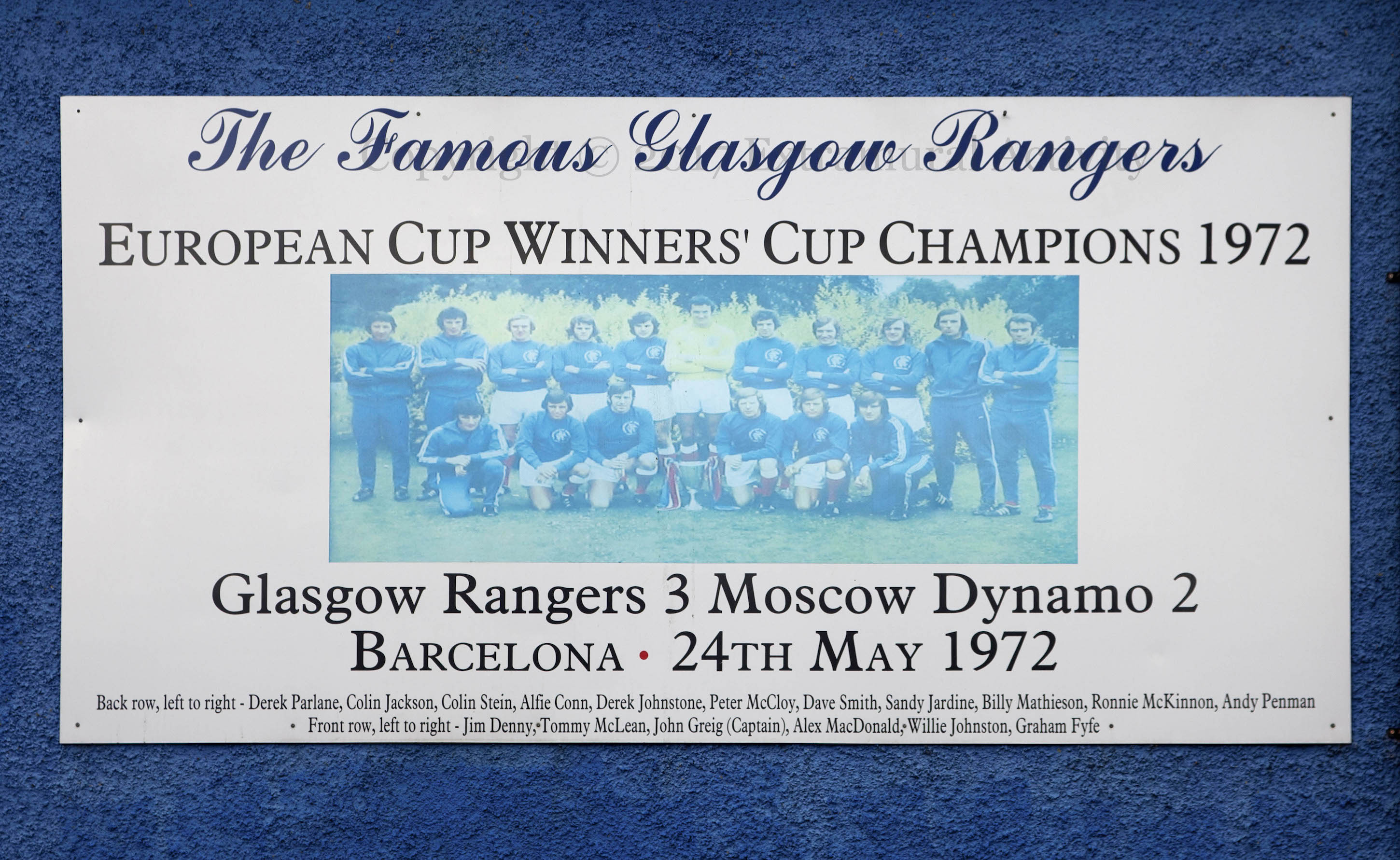
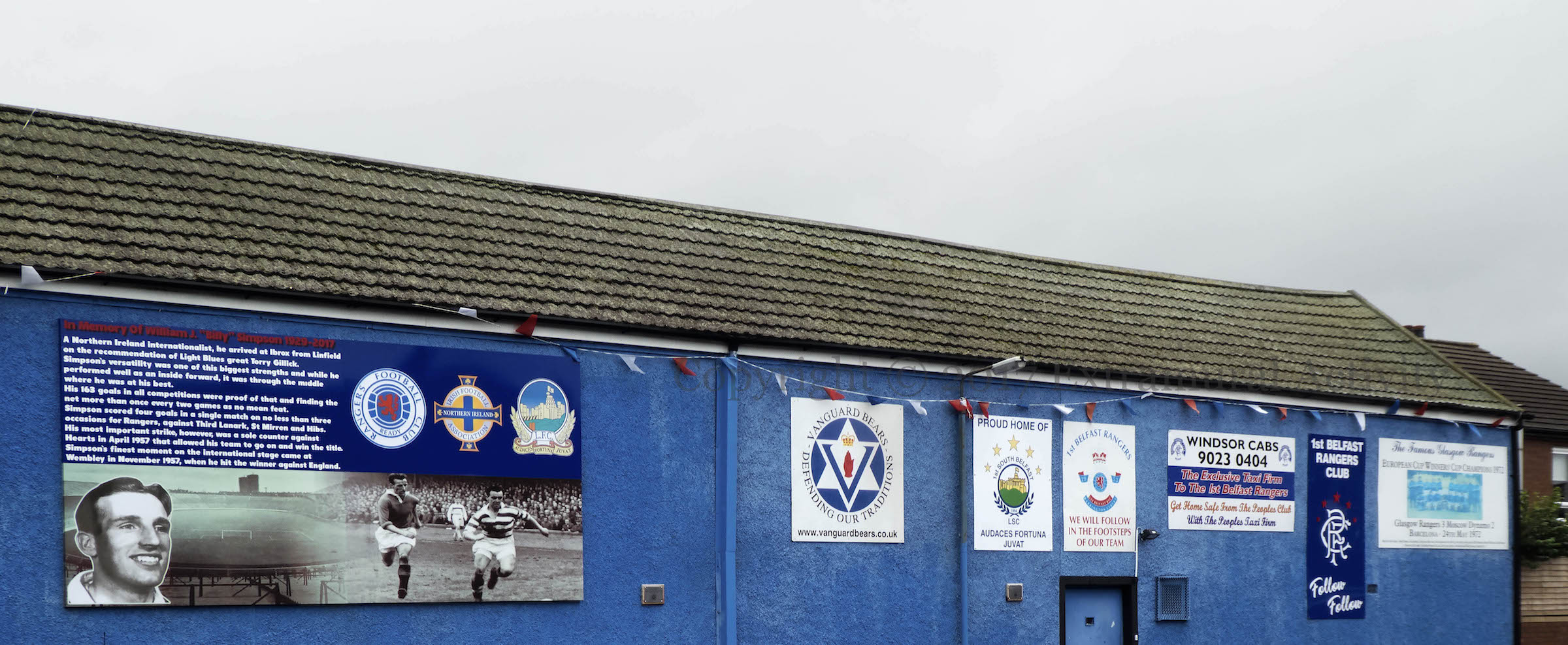
Footballer Billy Simpson moved from Linfield to Rangers in 1950 and over the course of nine years and 239 appearances scored 163 goals. He also scored the winner for Northern Ireland against England in 1957. Simpson died in January of this year (2017) and is remembered by this board outside the Supporters’ Club in Barrington Street, south Belfast. Other boards include a celebration of Rangers’ European Cup Winners’ Cup win in 1972 over Dynamo Moscow in Camp Nou, Barcelona.
British Army soldiers from four streets are commemorated in a plaque in Barrington Gardens. All four streets – Abingdon, Barrington, Colchester, and Dorchester – have changed their names or disappeared entirely (Dorchester) since 1914. “Erected by 1st Belfast Rangers Friends Of The Somme Society” – the supporters club is right next door.
Artist Raymond Henshaw undertook a series of six collages of photographs of the Markets area of south Belfast (in 2008): Social, Bars, Industry, Social History, Sport & Culture, and – shown in today’s post – Portraits of locals, such as snooker player “Joe Swales” (Joe Swail) and familiar buildings, such as Loughran’s Shop. The boards were part of the 2008 re-imaging campaign and sponsored by the Arts Council.
“I am not an Ulsterman but yesterday, the First of July, as I followed their amazing attack, I felt that I would rather be an Ulsterman than anything else in the world. My pen cannot describe adequately the hundreds of heroic acts I witnessed, the Ulster Volunteer Force, from which the Division was made, has won a name that equals any in history. Their devotion deserves the gratitude of the British empire.”
The words of Wilfrid Spender, Plymouth-born newspaper manager, quartermaster of the Ulster Volunteers, general staff officer of the 36th (Ulster) Division, winner of the Military Cross for actions at Thiepval, and Cabinet Secretary of the new “Northern Ireland” in 1921.
Kilburn St; later moved to Broadway/Donegall Ave, south Belfast