Love Demands Sacrifice

02994 2015-09-16 Battle Of Britain close+

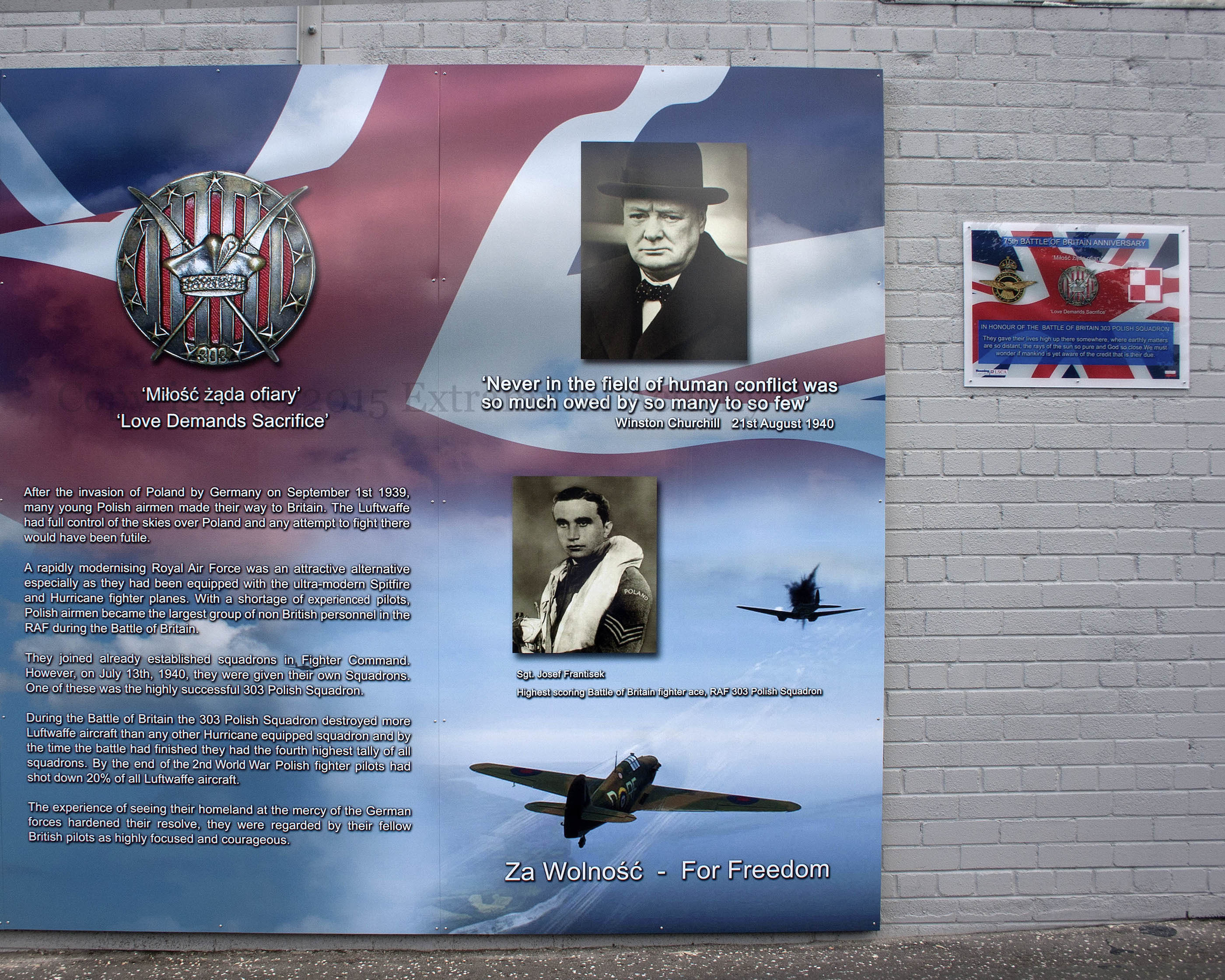
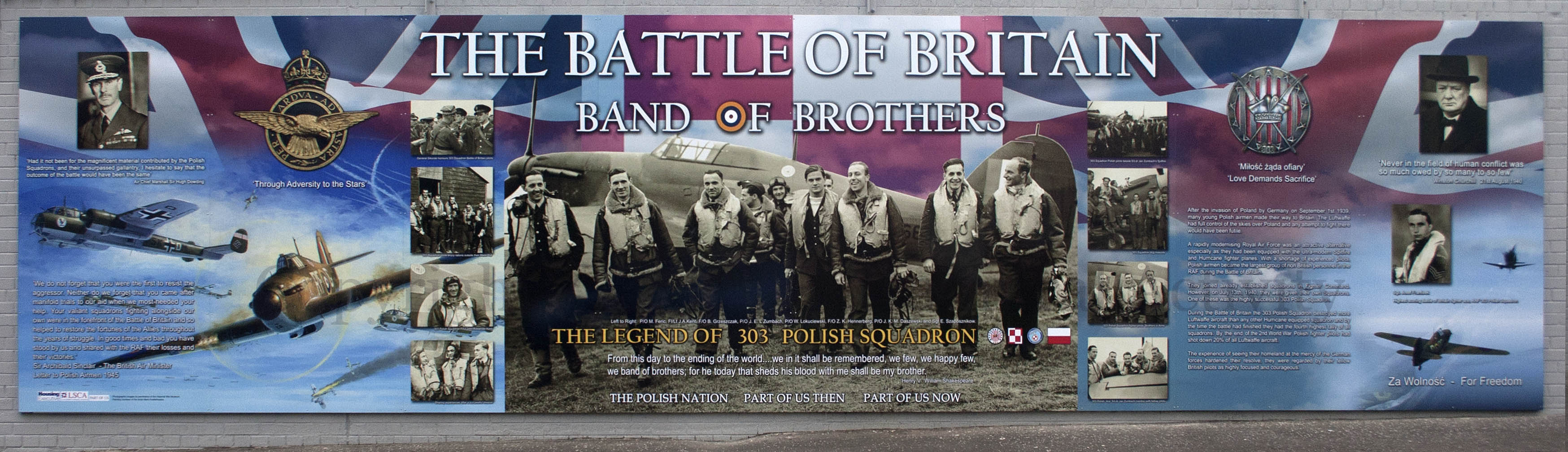
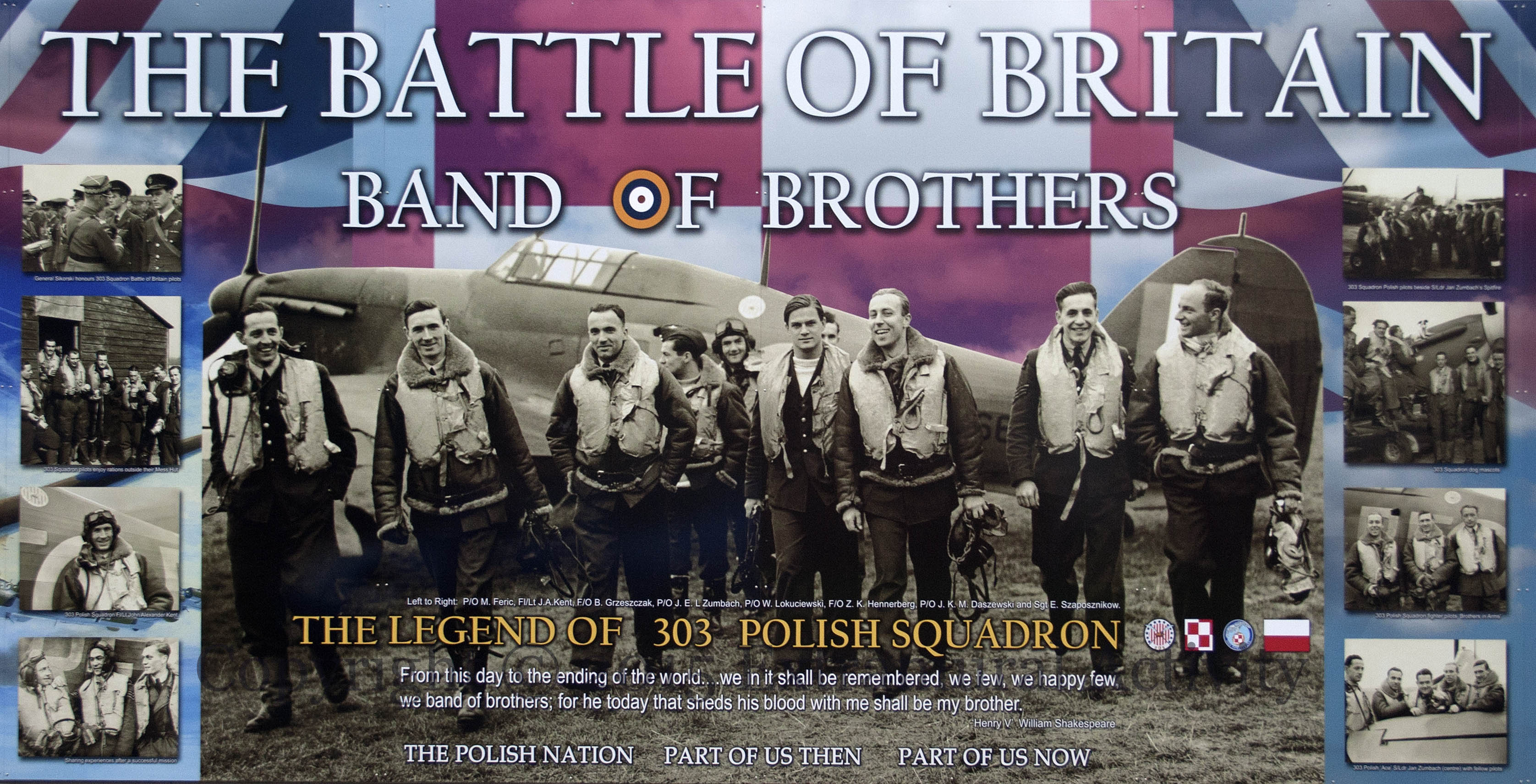
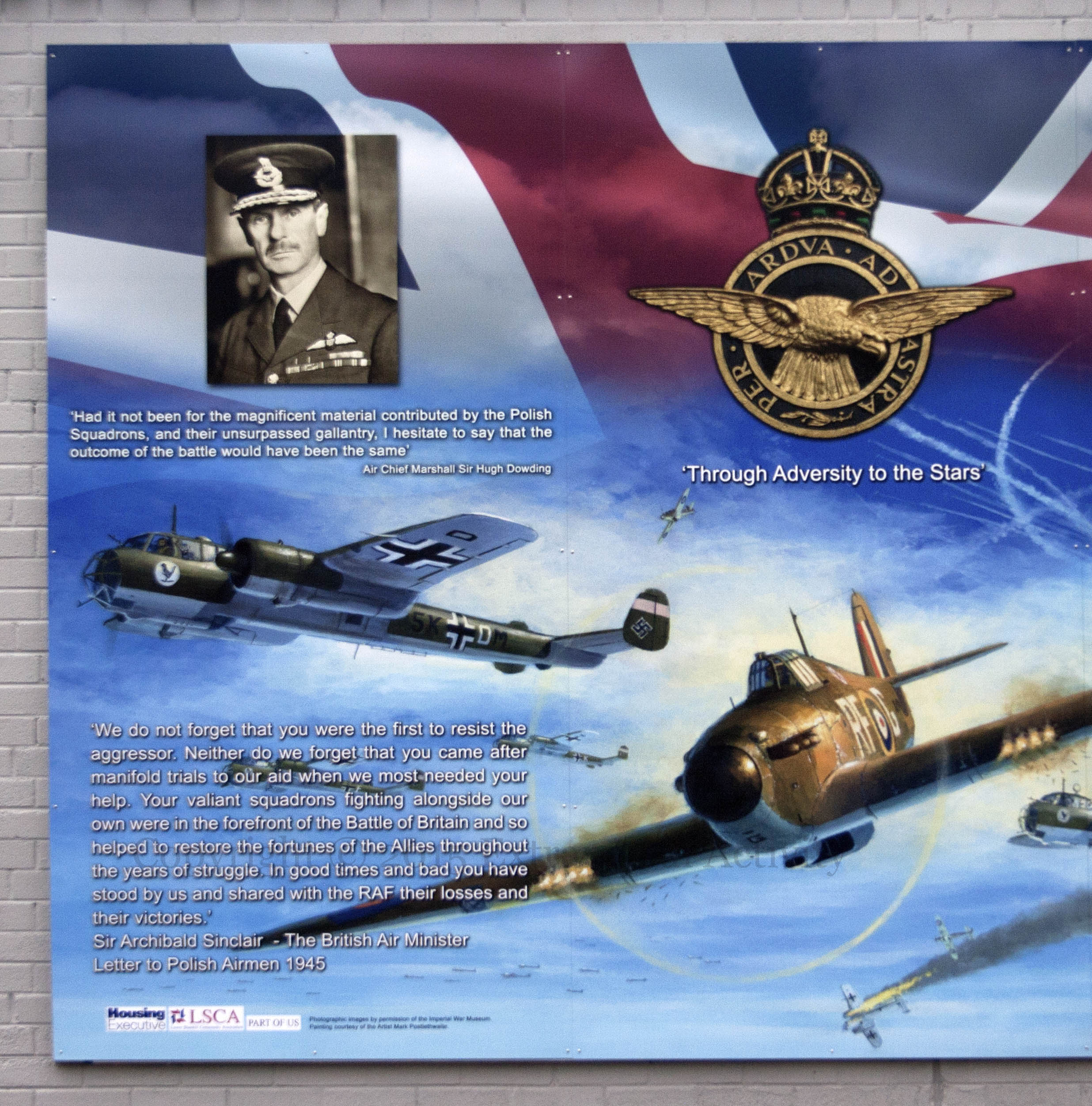
The board featured here (above and three shots below) has a dual purpose. On the one hand, it is part of celebrations marking the 75th anniversary of the Battle Of Britain, which was waged from July to October in 1940. On the other, it is part of an anti-racism project, celebrating in particular the contributions to the Battle made by roughly 145 Polish aviators (WP) and especially the 303 squadron: “The Polish nation – part of us then, part of us now”. The 303 was later stationed in Northern Ireland for a time. (BBC-NI)

The artist is Ross Wilson. The colour version of the central photograph is available at the Housing Executive’s write-up of the project. Other reports: Belfast Live | NewsLetter

Video of speeches from the launch:
02995 2015-09-16 Battle Of Britain left+

02996 2015-09-16 Battle Of Britain right+

02997 2015-09-16 Battle Of Britain w+

Click image to enlarge
Copyright © 2015 Seosamh Mac Coılle
X02994 X02995 X02996 X02997 churchill never in the field of human conflict was so much owed by so many to so few 21st august 1940 after the invasion of poland by germany on september 1st 1939 many young polish airmen made their way to britain the luftwaffe had full control of the skies over poland and any attempt to fight there would have been futile a rapidly modernising royal air force was an attractive alternative especially as they had been equipped with the ultra-modern spitfire and hurricane fighter planes with a shortage of experienced pilots polish airman became the largest group of non british personnel in the RAF during the battle of britain they joined already established squadrons in fighter command however on july 13th they were given their own squadrons one of these was the highly successful 303 polish squadron during the battle destroyed more aircraft than any other fourth highest tally of all 2nd world war shot down 20% of all experience of seeing their homeland at the mercy of the german forces hardened their resolve regarded by fellow pilots as highly focused and courageous josef frantisek highest scoring fighter ace had it not been for the magnificent material contributed and their unsurpassed gallantry i hesitate to say that the outcome of the battle would have been the same air chief marshall sir hugh downing per ardua ad astra we do not forget that you were the first to resist the aggressor neither do we forget that you came after manifold trials to our aid when we most needed your help your valiant fighting alongside in the forefront helped to restore the fortunes of the allies throughout the years of struggle in good times and bad you have stood by us and shared their losses and their victories sir archibald sinclair british air minister letter to polish airmen 1945 general sikorski honours rations outside their mess hut john alexander kent feric grzeszcczak zumbach lokuciewski hennerberg daszewski szaposznikow from this day to the ending of the world we in it shall be remembered we few we happy few we band of brothers for he today that sheds his blood with me shall be my brother henry V william shakespeare the legend of 303 polish squadron they gave their lives high up there somewhere where earthly matters are so distant the rays of the sun so pure and god so close we must wonder if mankind is yet aware of the credit that is their due pete bleakley ross wilson housing executive lower shankill community association
Reclaim The Republic

02987 2015-09-03 Poblacht Na hEireann+

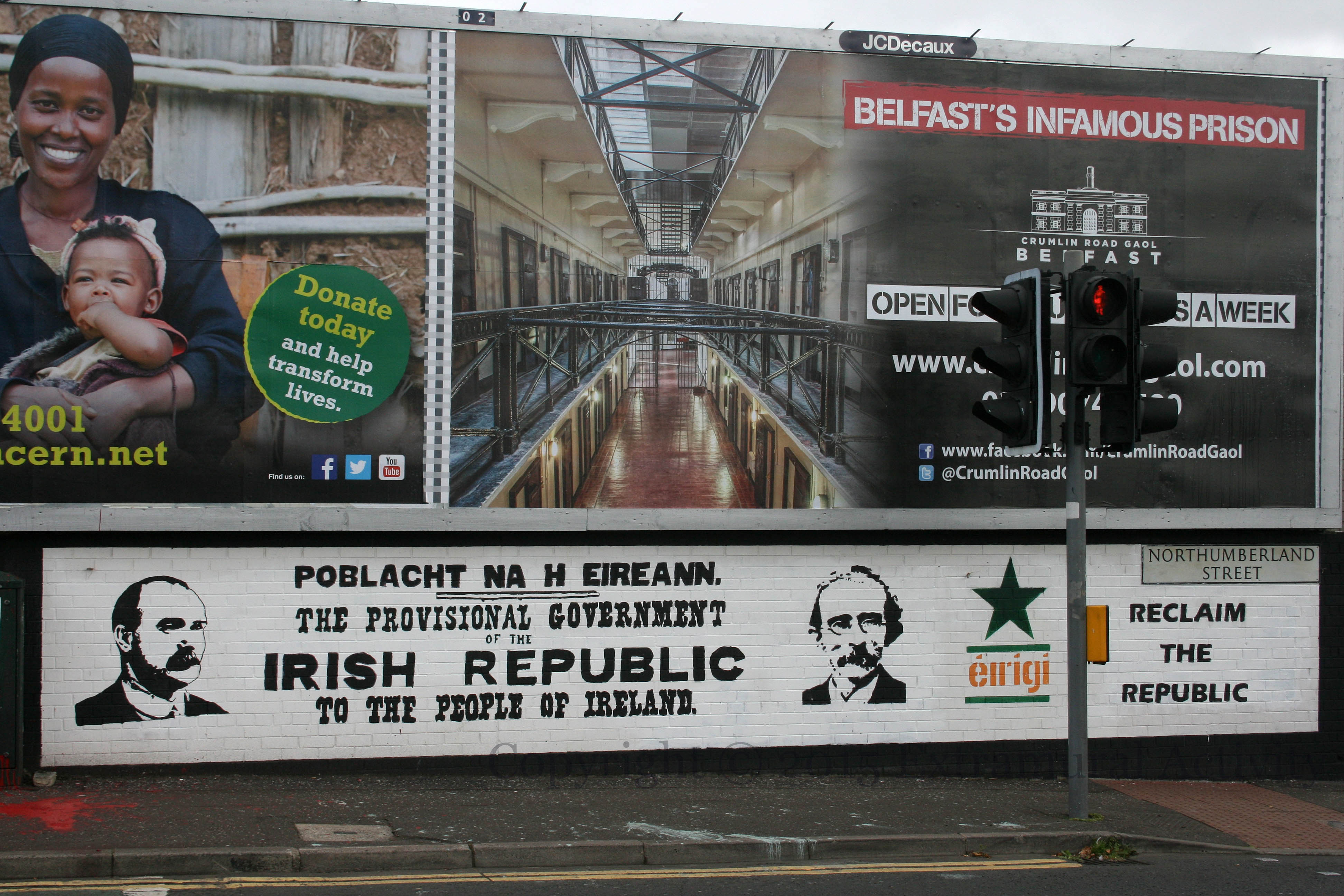
The masthead of the 1916 proclamation declaring a “Provisional Government of the Irish Republic” to the “People of Ireland” is faithfully reproduced in this éırígí stencil, along with busts of Padraıg Pearse and Tom Clarke. Pearse, Clarke, and the other signatories will likely be familiar faces in the months leading up to Easter 2016, which is at the end of March, and the anniversary of the date itself, April 24th, 1916.

See also this entry featuring a fly-paper reproduction of the 1916 Proclamation: Brotherhoods.

Click image to enlarge
Copyright © 2015 Seosamh Mac Coılle
X02987 poblacht na héıreann

A Bottle Of Wine & Patsy Cline

02986 2015-09-03 Patsy Cline+

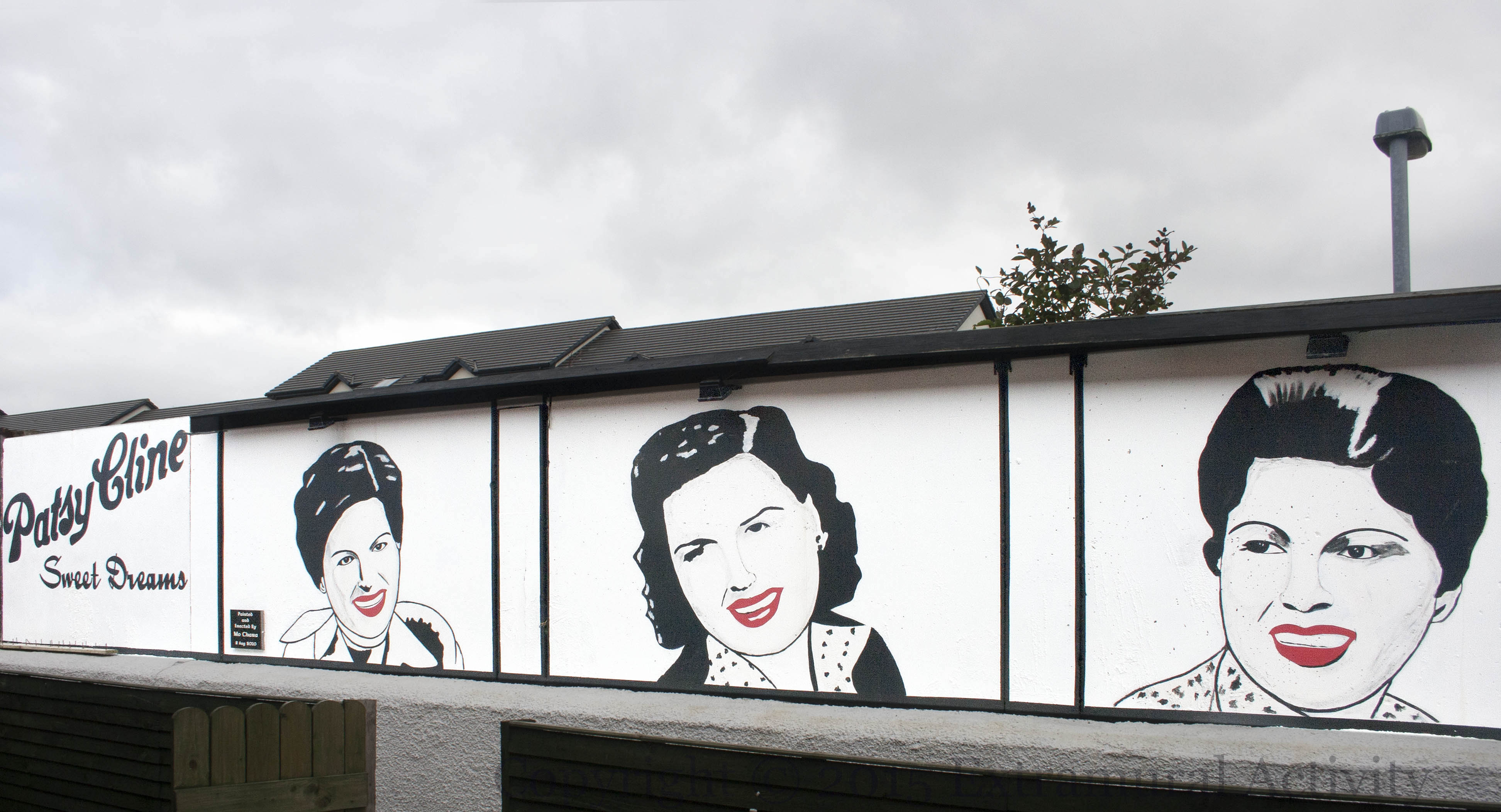
Gerard ‘Mo Chara’ Kelly painted these three images of Patsy Cline in the back garden of a Springhill neighbour. Cline died in 1963 at age 30; the three panels show different stages of her short career: the first shows her in cowboy gear, before turning to pop music, the second is based on a 1957 publicity shot for her new label, Decca, and the third shows her in 1961. Her cover of Don Gibson’s Sweet Dreams was released as a single in the wake of her death.

Here is video of Patsy singing Willie Nelson’s Crazy and, below that, Marsha Thornton doing the song from which today’s title comes:

Click image to enlarge
Copyright © 2015 Seosamh Mac Coılle
X02986

Stewart’s Yard

02988 2015-09-03 Stewarts Yard+

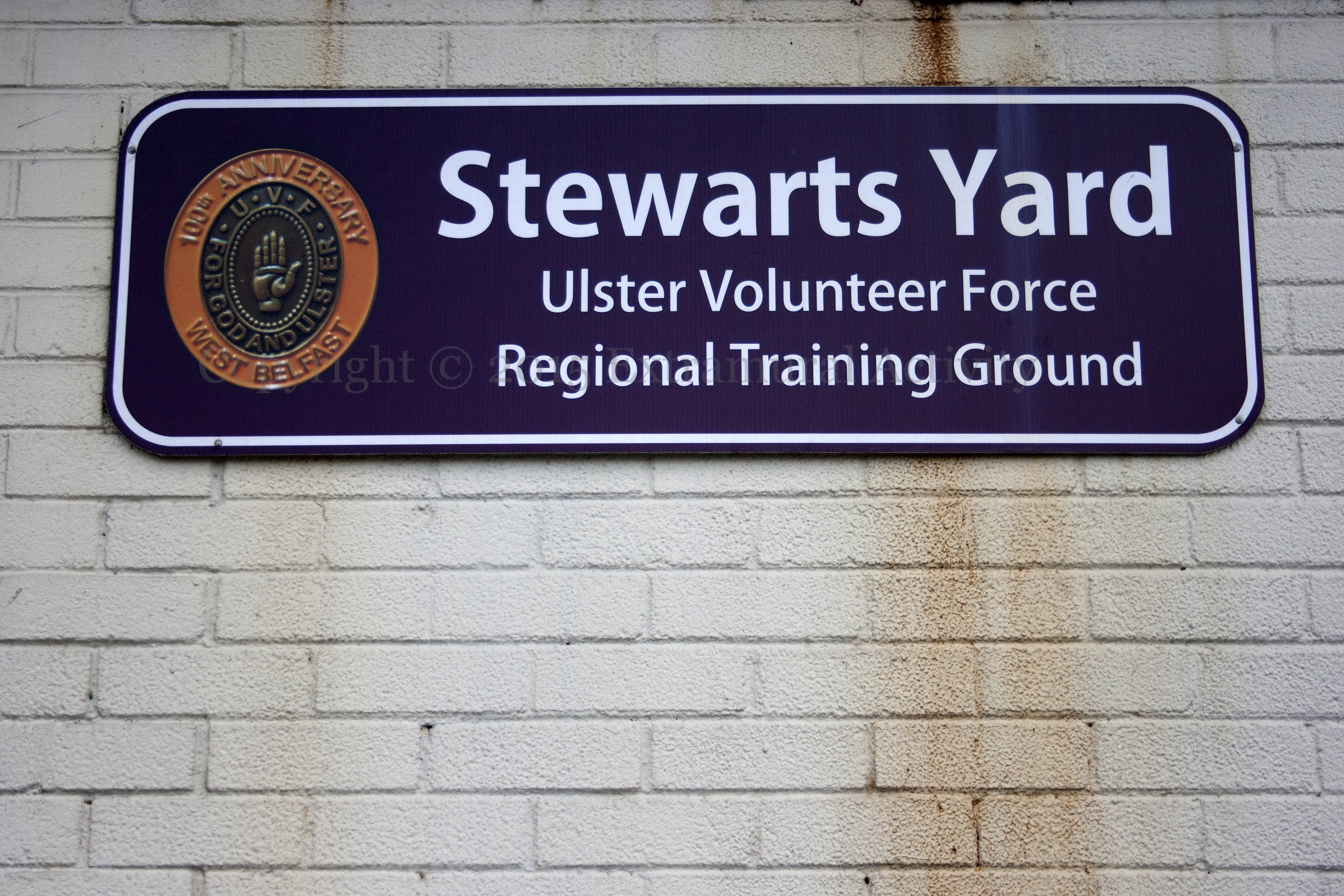
As the sign says, the area of what is now an Iceland supermarket on the Shankill Road was, at the time of World War I, a training ground for the Ulster Volunteers. The sign was erected to commemorate the 100th anniversary of the force, which then became the Ulster Volunteer Force which served in the war. “On the first day of enlistment for the West Belfast UVF, volunteers assembled at Stewart’s Yard in the Shankill Road. They were addressed by Colonel T. E. Hickman, the Conservative MP for Wolverhampton and a senior UVF figure who had become the Recruiting Officer for the whole of Ulster. Joining Hickman were James Craig MP, plus Stewart Blacker Quin, who was the Unionist candidate for West Belfast and the commander of the 1st Battalion West Belfast UVF.” (Richard S. Grayson, Belfast Boys: How Unionists and Nationalists Fought and Died Together in First World War, p. 12) “The day following the opening of enlistment for the Division, 360 men assembled at the same yard, where after being presented with a box of cigarettes, they marched to the railway station to board trains for Donard Camp near Newcastle. These men became the corps of the 9th Battalion Royal Irish Rifles.” (Bygone Days)

Click image to enlarge
Copyright © 2015 Seosamh Mac Coılle
X02988

Alternative Transport

02905 2015-09-02 Beechm 14+

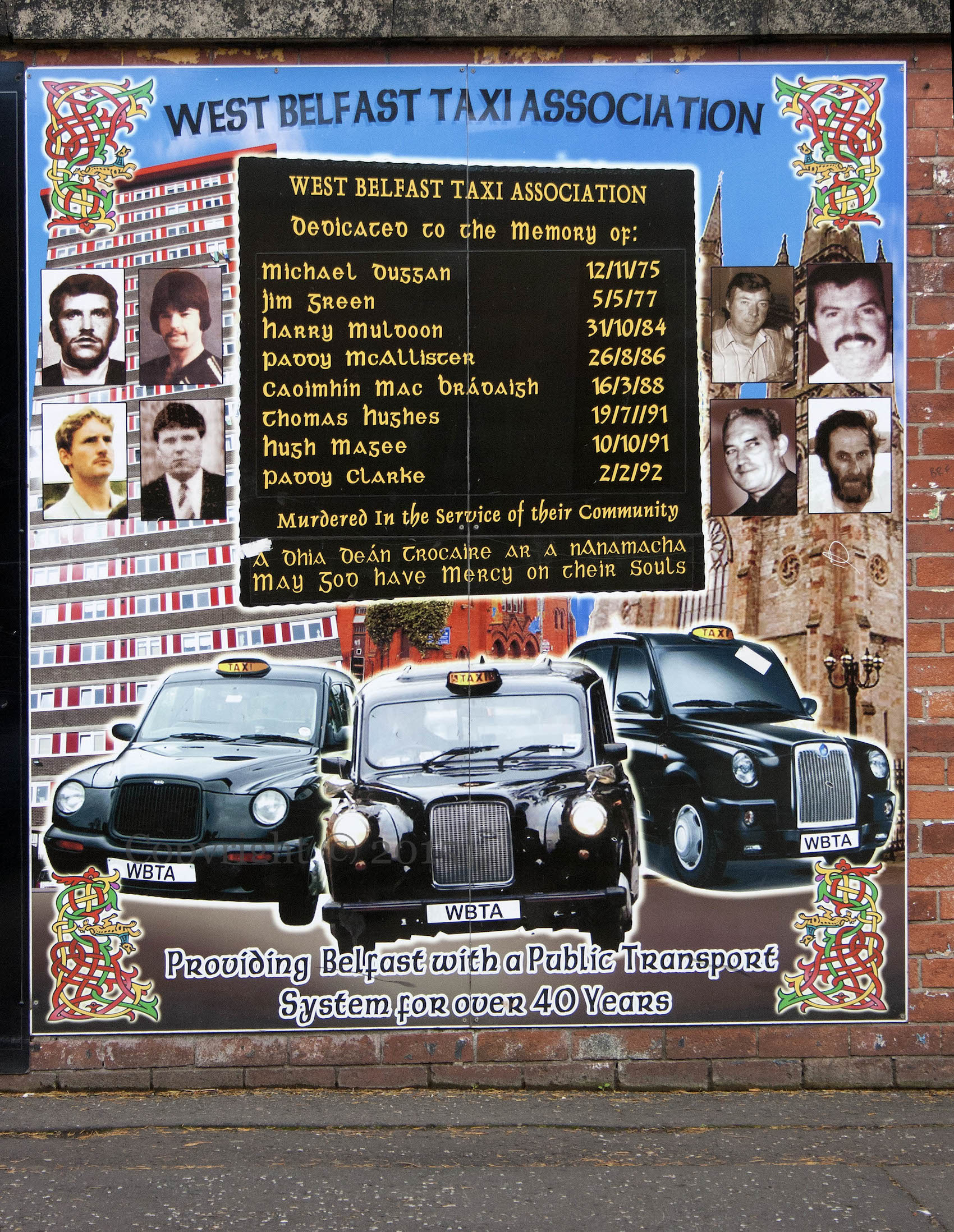
Black taxis were first brought from England to Belfast in 1970 by locals who wanted to provide an alternative, and locally-based, transport system to augment the Citybuses which were sometimes cancelled and sometimes burned out. “West Belfast Taxi Association. Providing Belfast with a public transport system for over 40 years/ A Dhıa deán trocaıre ar a nanamacha.”

The board above commemorates eight drivers who were killed during the troubles: “Dedicated to the memory of Michael Duggan 12/11/75, Jim Green 5/5/77, Harry Muldoon 31/10/84, Paddy McAllister 26/8/86, Caoımhín Mac Brádaıgh 16/3/88, Thomas Hughes 19/7/91, Hugh Magee 10/10/91, Paddy Clarke 2/2/92. Murdered in the service of their community.”

French documentary about black taxi drivers.

Click image to enlarge
Copyright © 2015 Seosamh Mac Coılle
X02905 community interest company WBTA divis flats st peters

The Truth Will Out

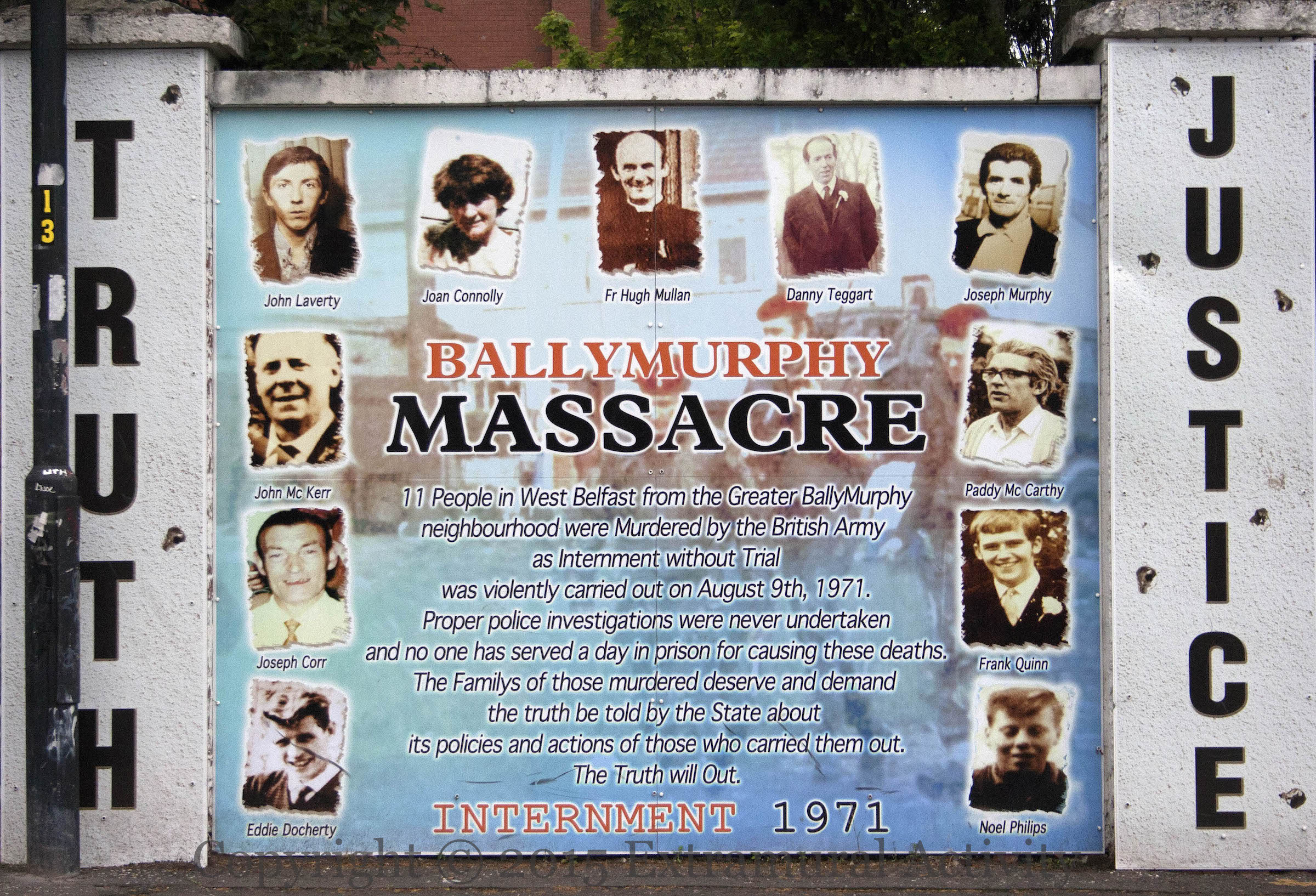
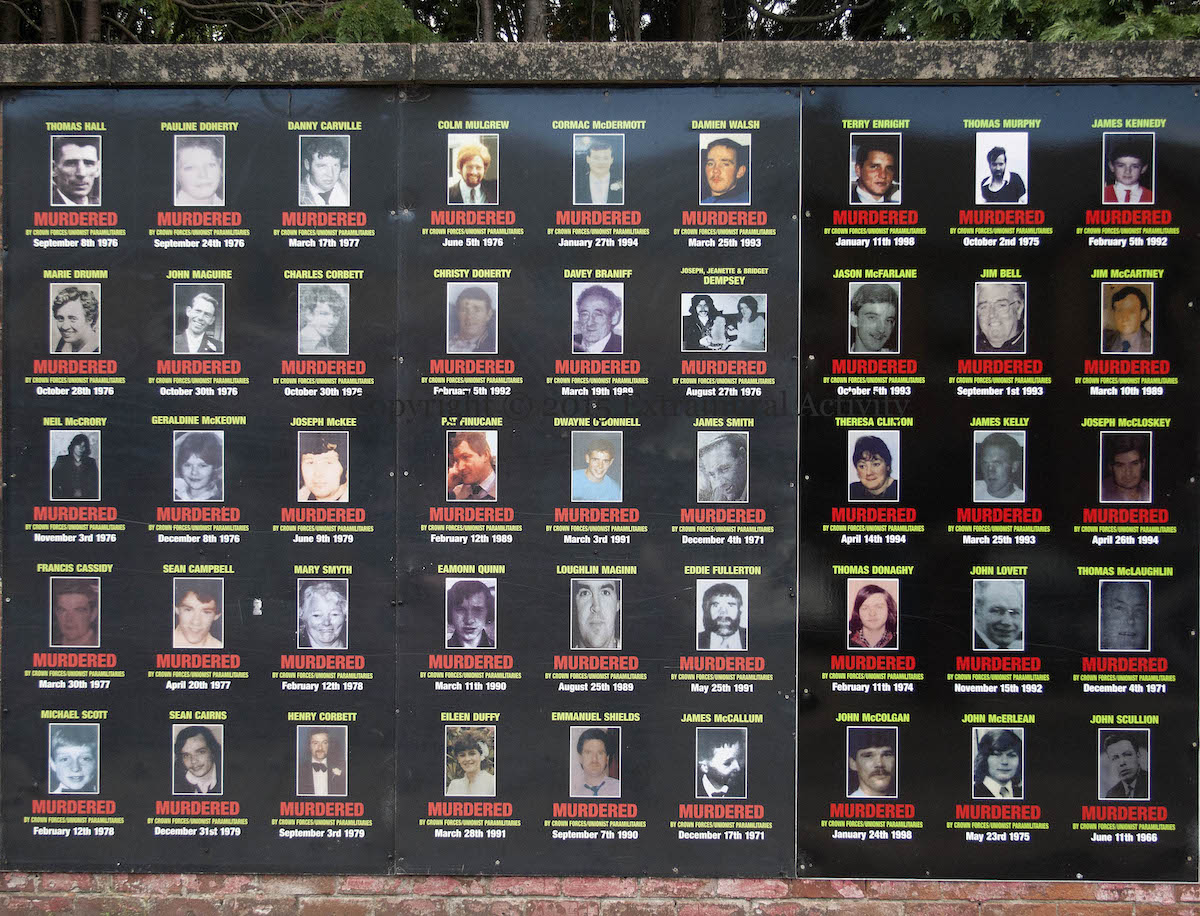
Calls for “truth” and “justice” concerning the killing in August, 1971, of 11 people from Ballymurphy, by the 1st Parachute Regiment during Operation Demetrius, the beginning of internment.

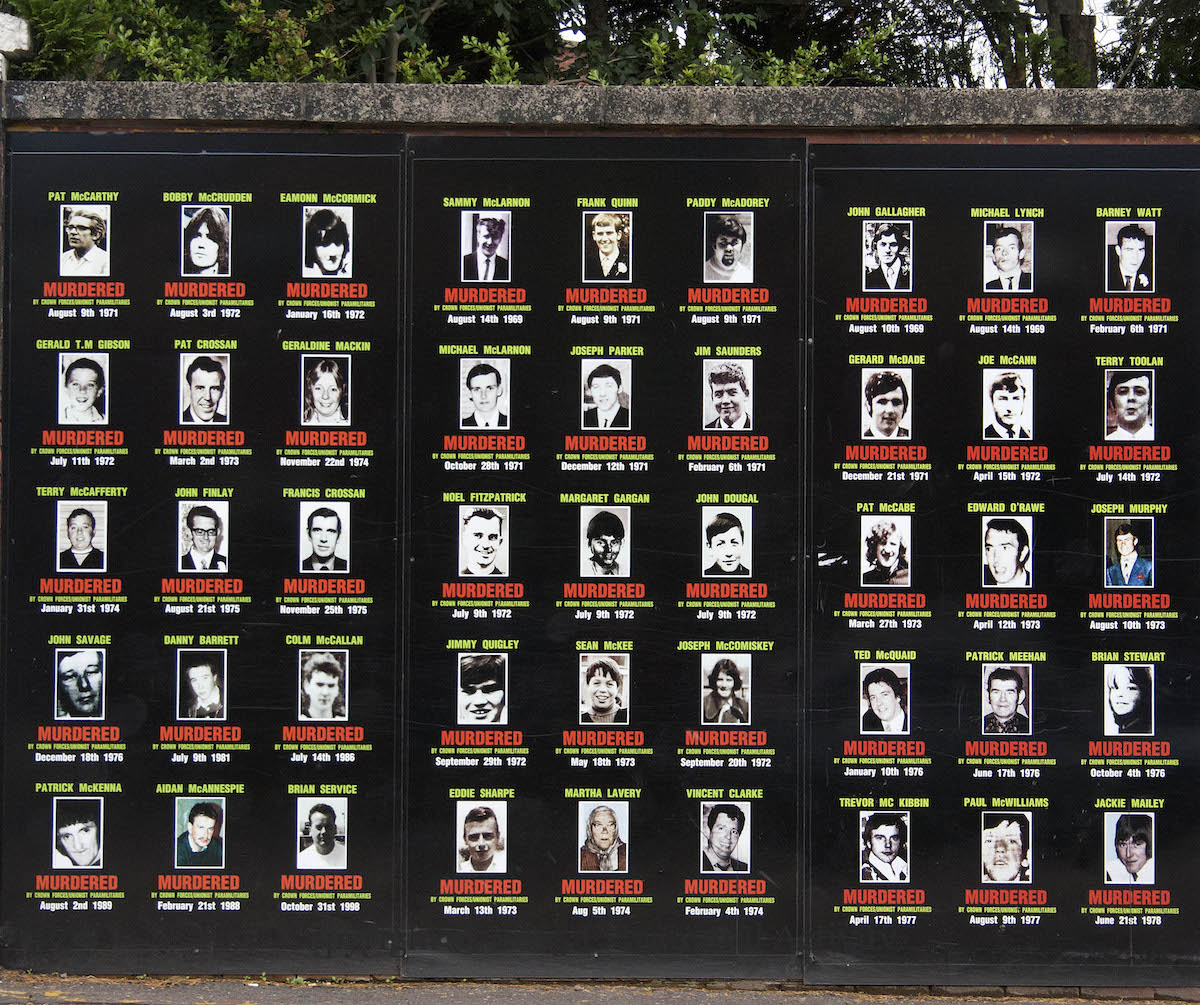
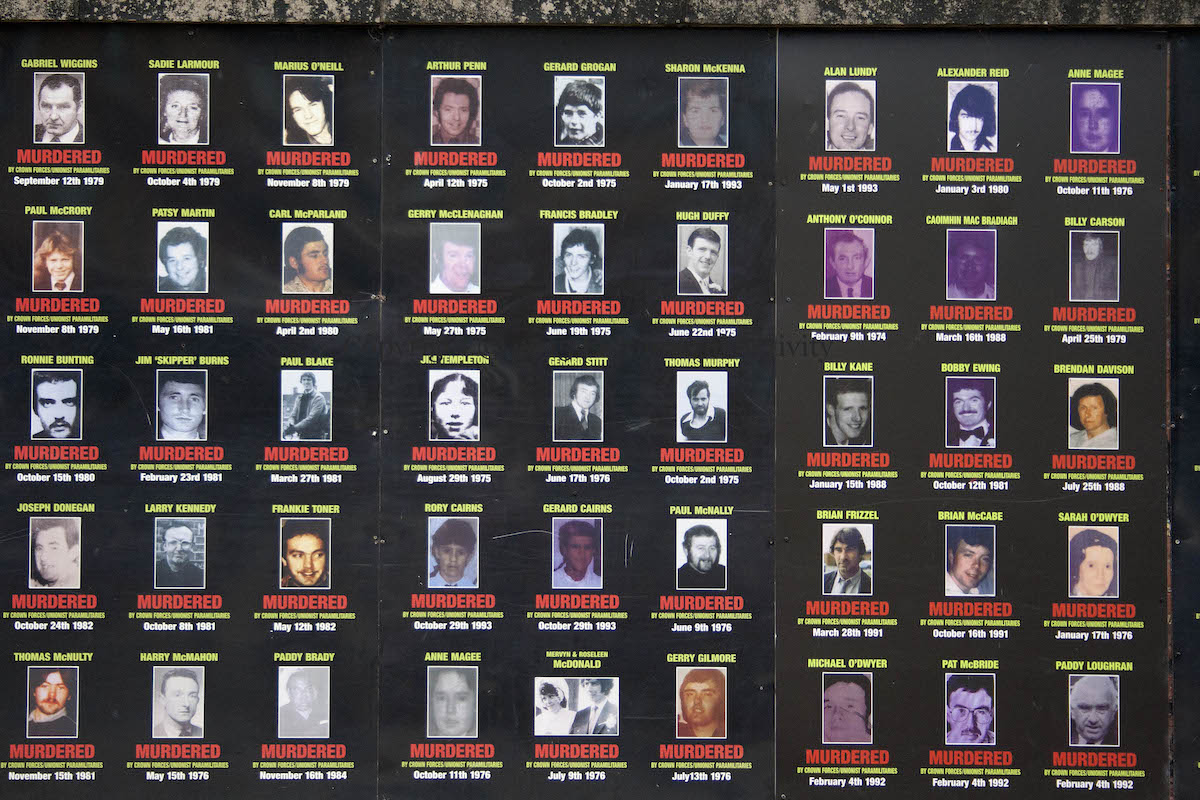
The final three panels (panels 16-18) of the ‘murdered’ follows to the right of the Ballymurphy board. (These are new additions, as compared with 2011.) They are then followed by the final board, to the WBTA.

X02904 2015-09-02 Beechm 13+

Click image to enlarge
Copyright © 2015 Seosamh Mac Coılle
X02903 X02904 beechmount ave

“11 people in west Belfast from the Greater Ballymurphy neighbourhood were murdered by the British Army as internment without trial was violently carried out on August 9th, 1971. Proper police investigations were never undertaken and one has served a day in prison for causing these deaths. The familys of those murdered deserve and demand the truth be told by the state about its policies and actions of those who carried them out.”

Collusion Untried

02902-2015-09-02-beechm-11

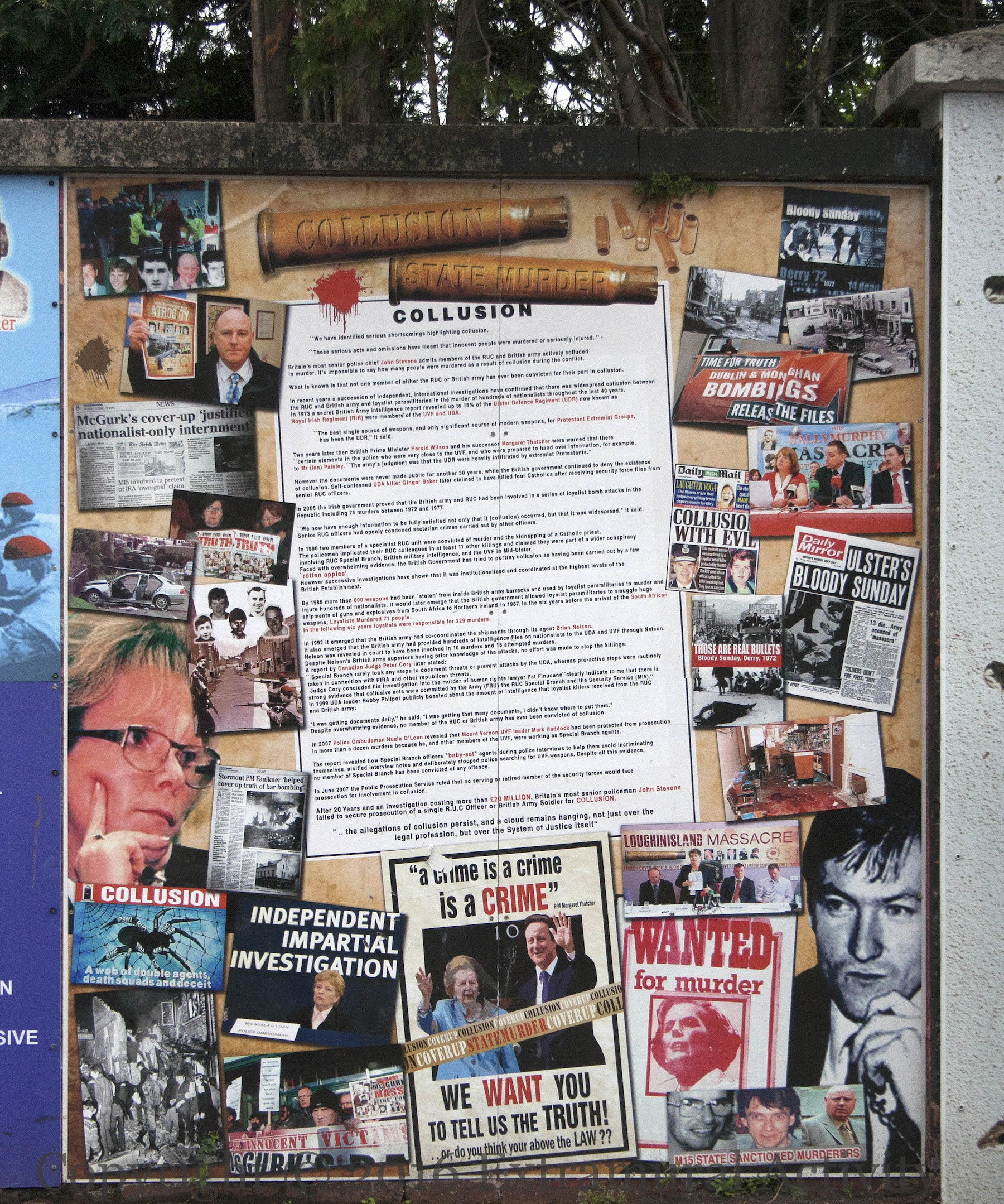
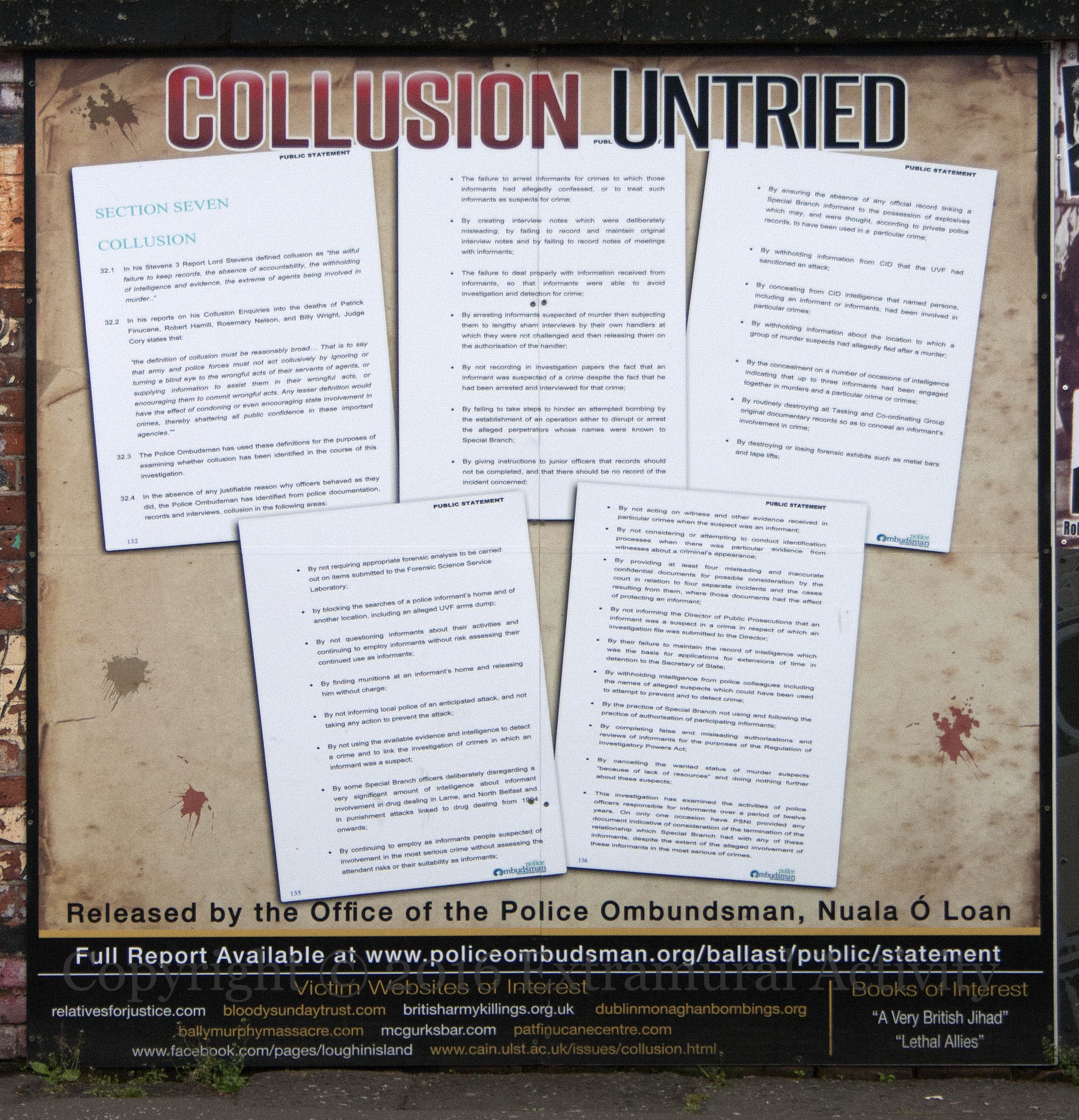
Two boards about collusion in Beechmount Avenue. The first chronicles (both in words and images) alleged instances of collusion between the RUC and loyalist paramilitaries, citing John Stevens, Peter Cory, and Nuala O’Loan – pages from the 2007 O’Loan report are shown in the second, below.

02892-2015-09-02-beechm-01

Click image to enlarge
Copyright © 2016 Seosamh Mac Coılle
X02902 X02892

Campaign For Truth

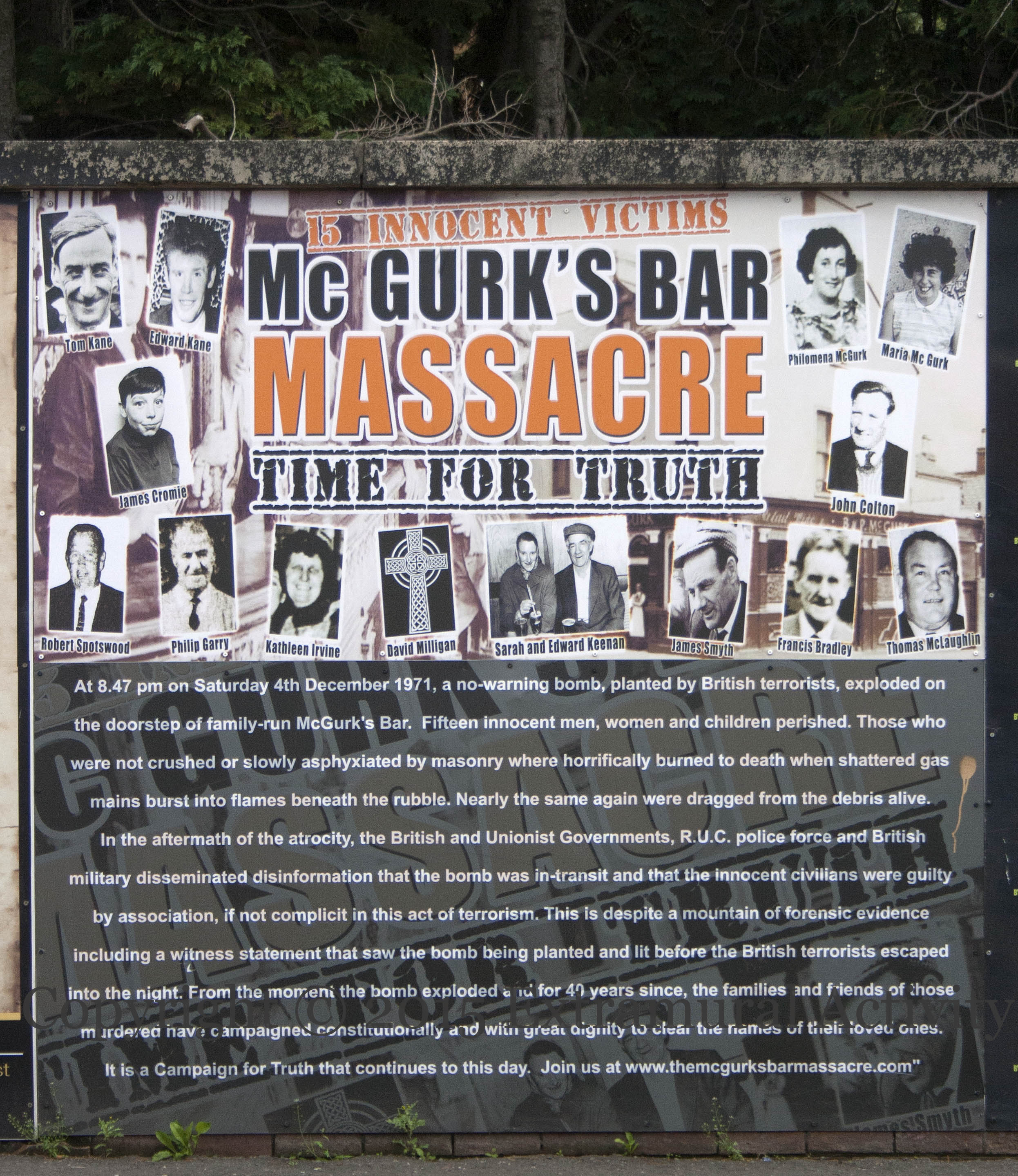
The McGurk’s Bar bombing of December, 1971 killed fifteen people – the most in a single incident during the troubles – capping what had already been a bloody year, including the “Ballymurphy Massacre” of July, in which 11 died, and starting another round of killings that would spread into the new year. Campaigners for an inquiry were busy this week in both Dublin and Belfast (Irish News).

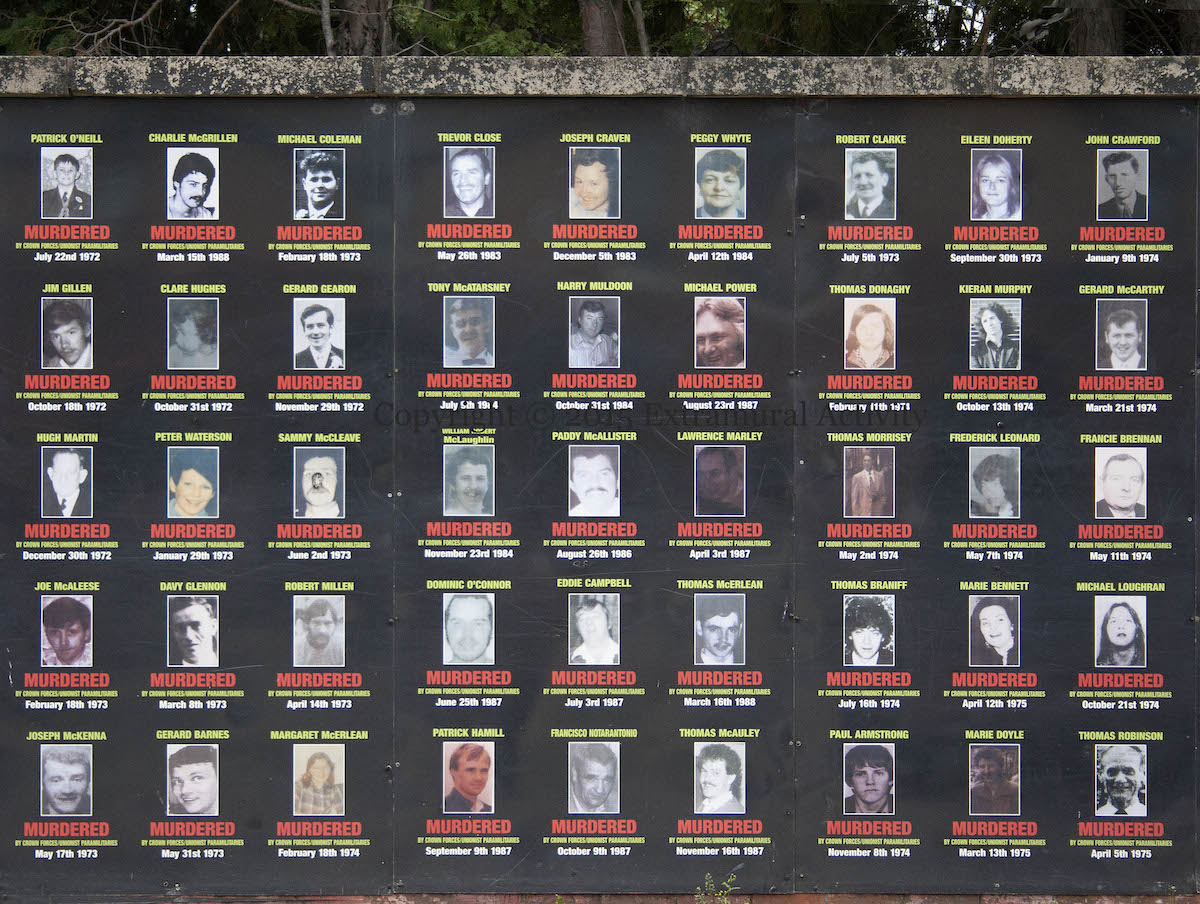
The first nine panels of the ‘murdered’ follow to the right of the McGurk’s Bar board, presented here three-at-a-time. Note that the ninth panel (with Terry Enright in the top left) was previously the 11th panel; it is not clear why it has been moved left.

X02894 2015-09-02 Beechm 03+

X02895 2015-09-02 Beechm 04+

X02896 2015-09-02 Beechm 05+

Click image to enlarge
Copyright © 2015 Seosamh Mac Coılle
X02893 X02894 X02895 X02896
“At 8:47 pm on Saturday 4th December 1971, a no-warning bomb, planted by British terrorists, exploded on the doorstep of family-run McGurk’s Bar. Fifteen innocent men, women and children perished. Those who were not crushed or slowly asphyxiated by masonry where horrifically burned to death when shattered gas mains burst into flames beneath the rubble. Nearly the same again were dragged from the debris alive. In the aftermath of the atrocity, the British and Unionist Governments, RUC police force and British military disseminated disinformation that the bomb was in-transit and that the civilians guilty by association, if not complicit in this act of terrorism. This is despite a mountain of forensic evidence including a witness statement that saw the bomb being planted and lit before the British terrorists escaped into the night. From the moment the bomb exploded and for 40 years since, the families and friends of those murdered have campaigned constitutionally and with great dignity to clear the names of their lived ones. It is a Campaign for Truth that continues to this day. Join us at themcgurksbarmassacre.com” “