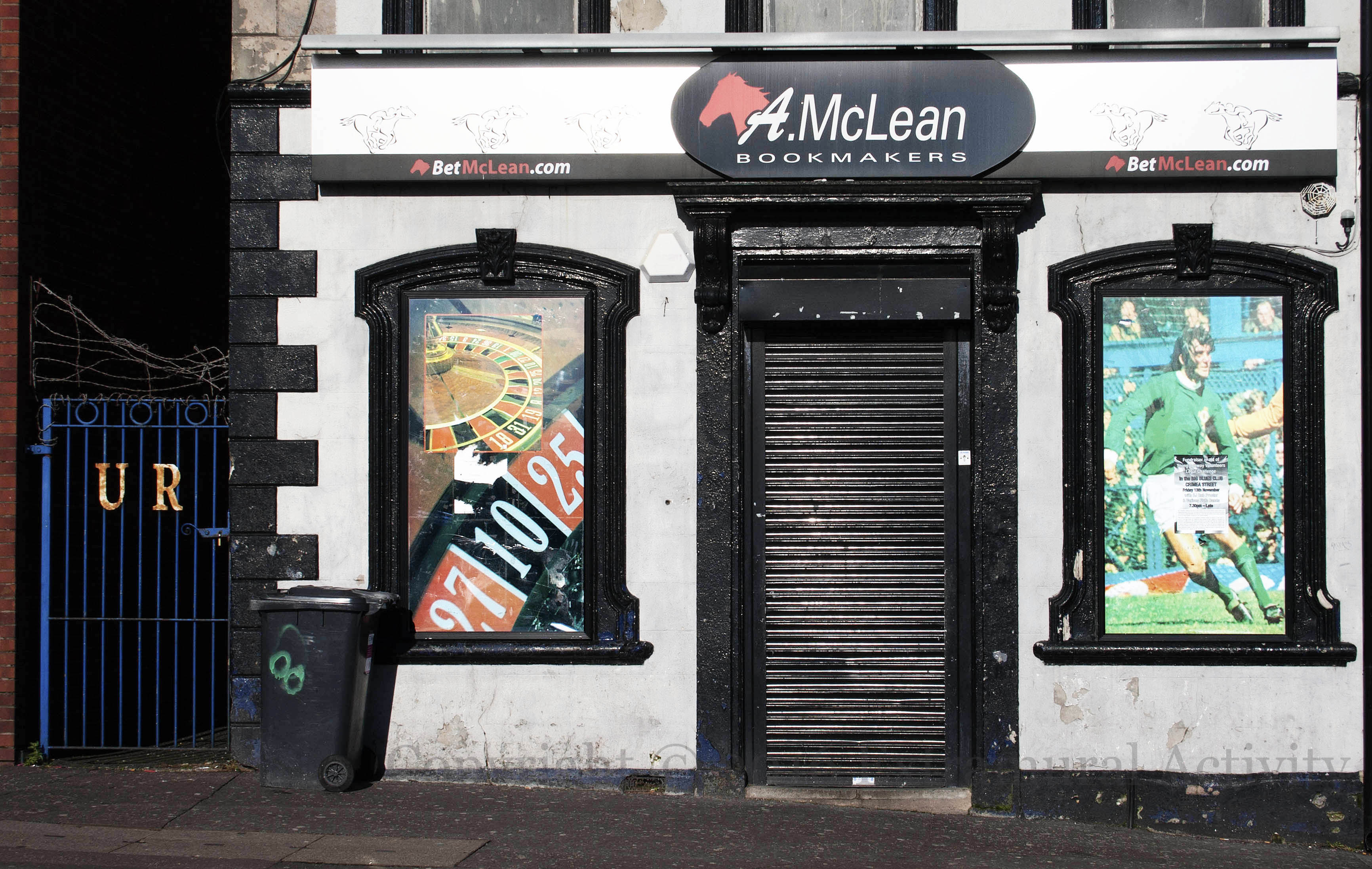
The images in the windows of the McLean’s bookies on the Shankill Road suggest that betting on sports – even on George Best – is like playing roulette. The gate to the left (with barbed wire on top) is marked with the letters “U” and “R” of the nearby Ulster Rangers supporters club. (For two murals there, see previously: Save The Shankill | Doing Her Duty).
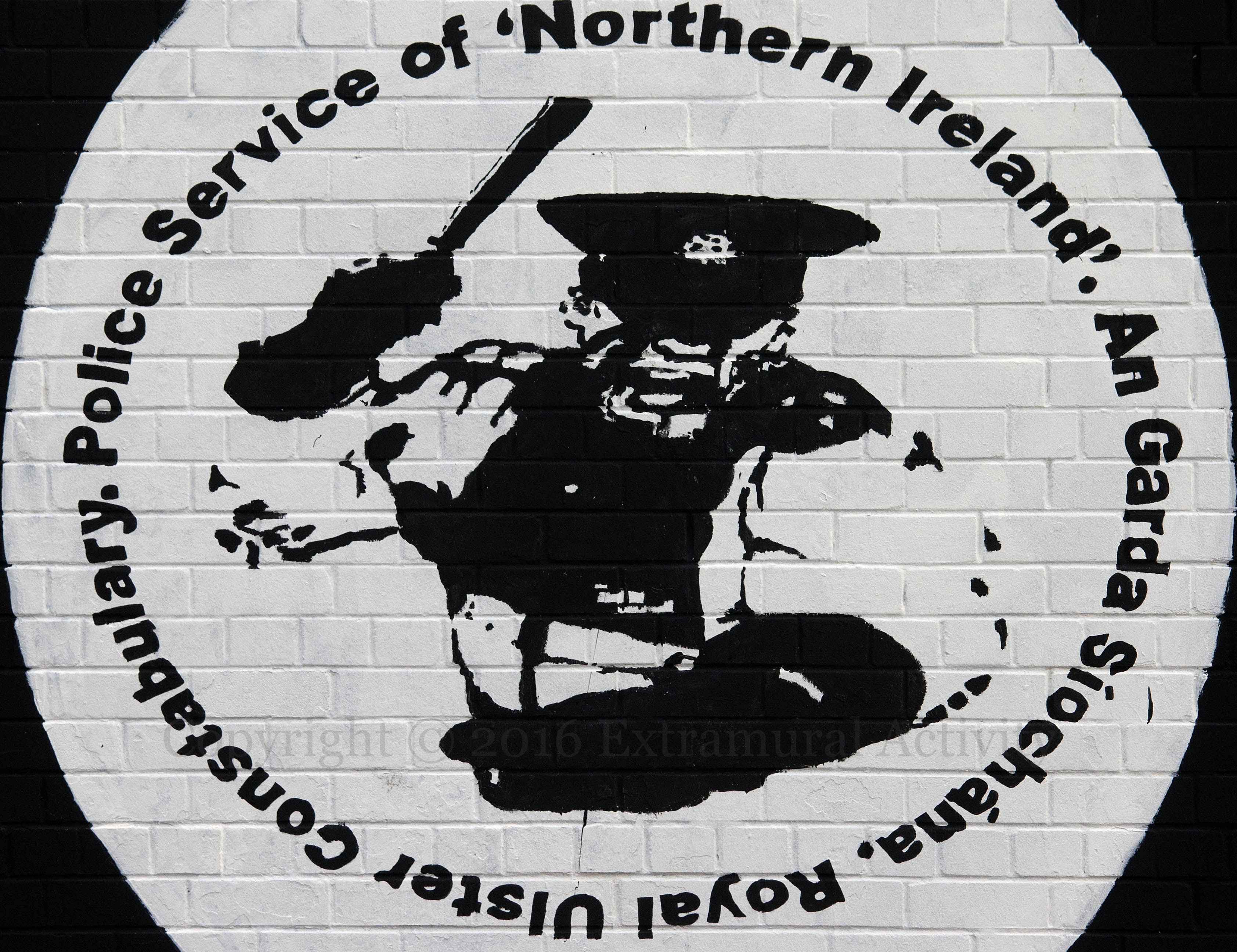
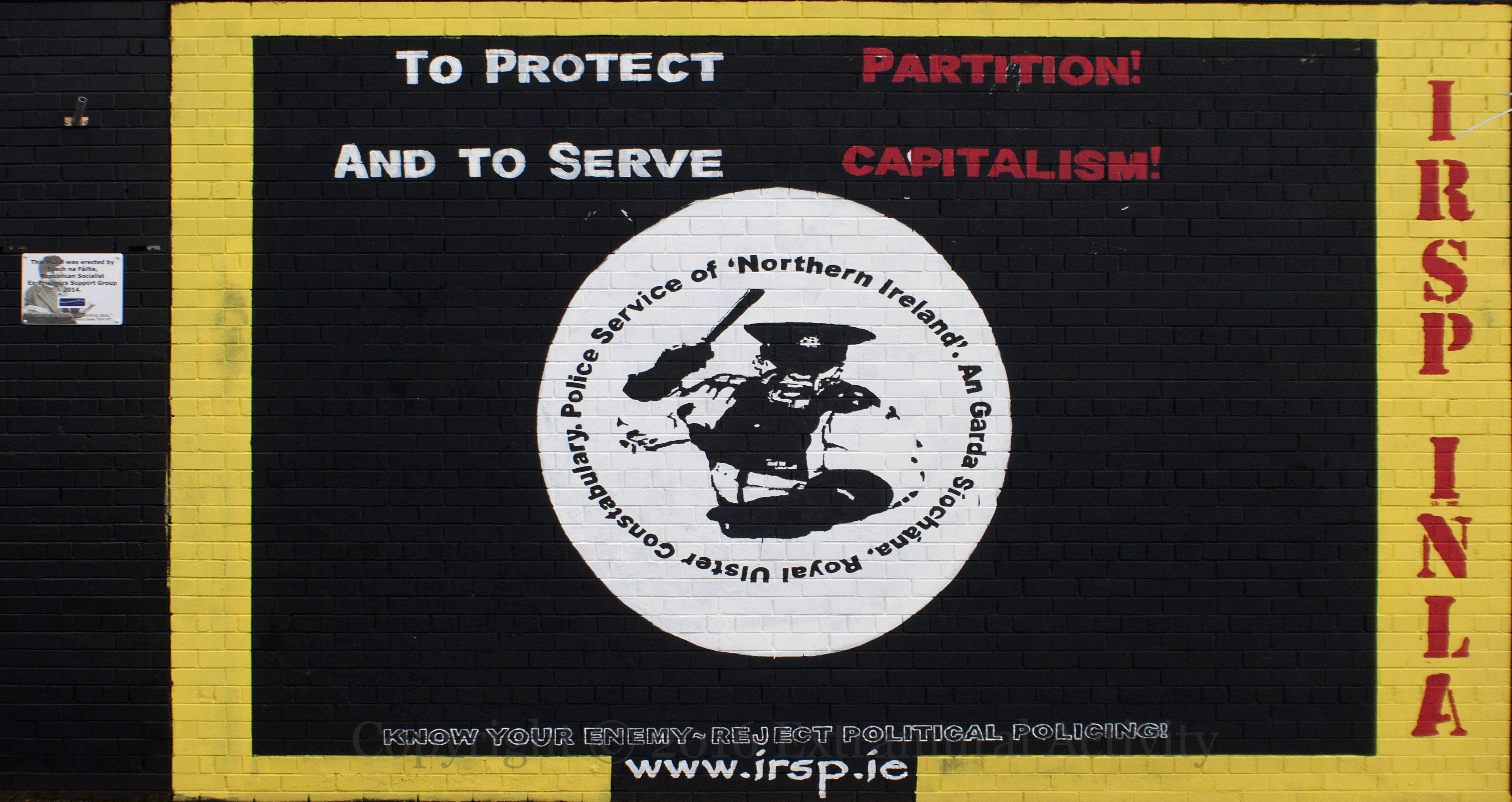
The Royal Ulster Constabulary, Police Service of ‘Northern Ireland’, and An Garda Síochána are branded as agents of the status quo, enforcing the partition of Ireland and the capitalist system in this IRSP mural on Northumberland Street: “Know your enemy – reject political policing”.
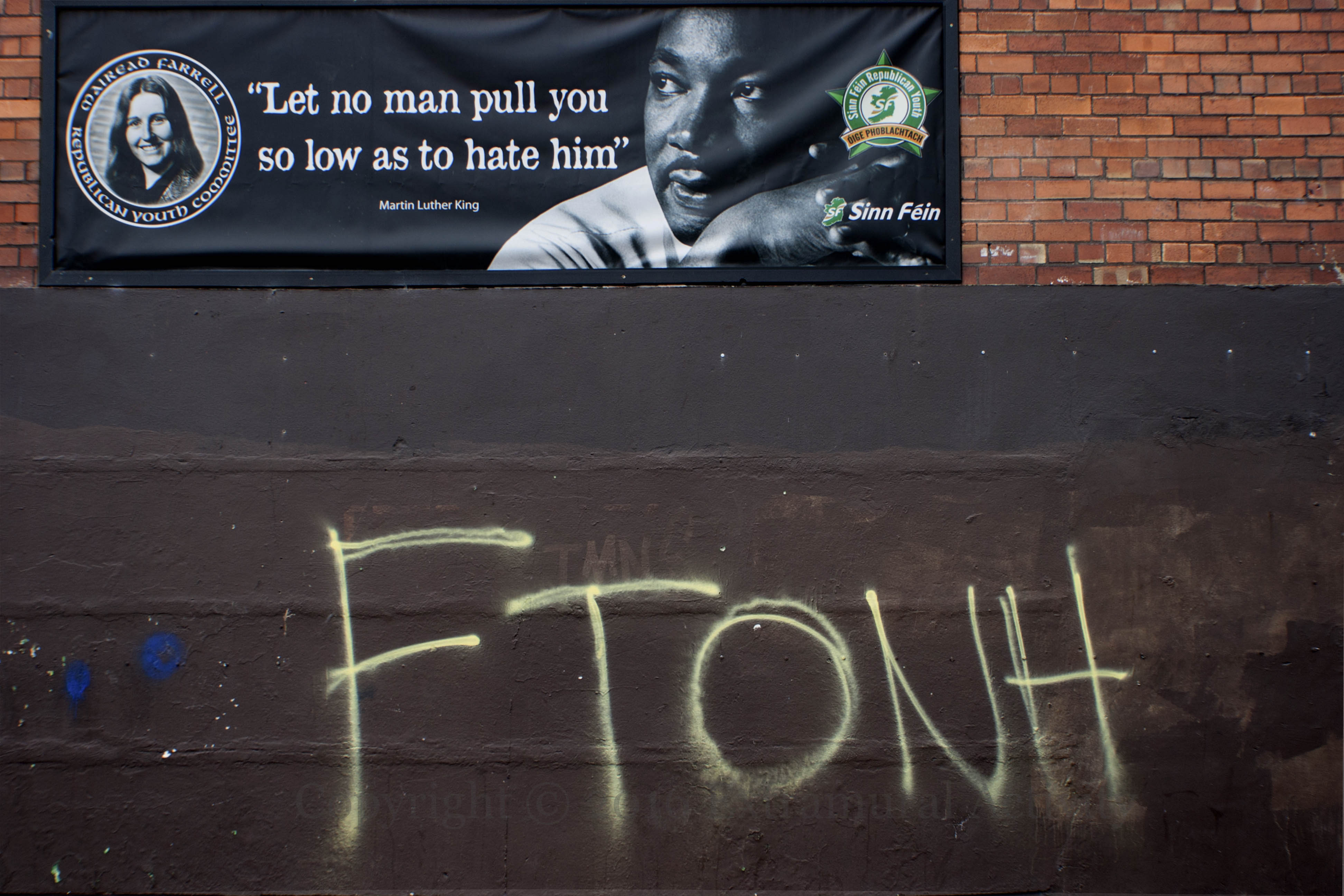
Anti-Óglaıgh Na hÉıreann graffiti in Beechmount Street beneath a Sınn Féın banner using Martin Luther King to advocate for non-violent protest (shown previously in Always Avoid Violence).
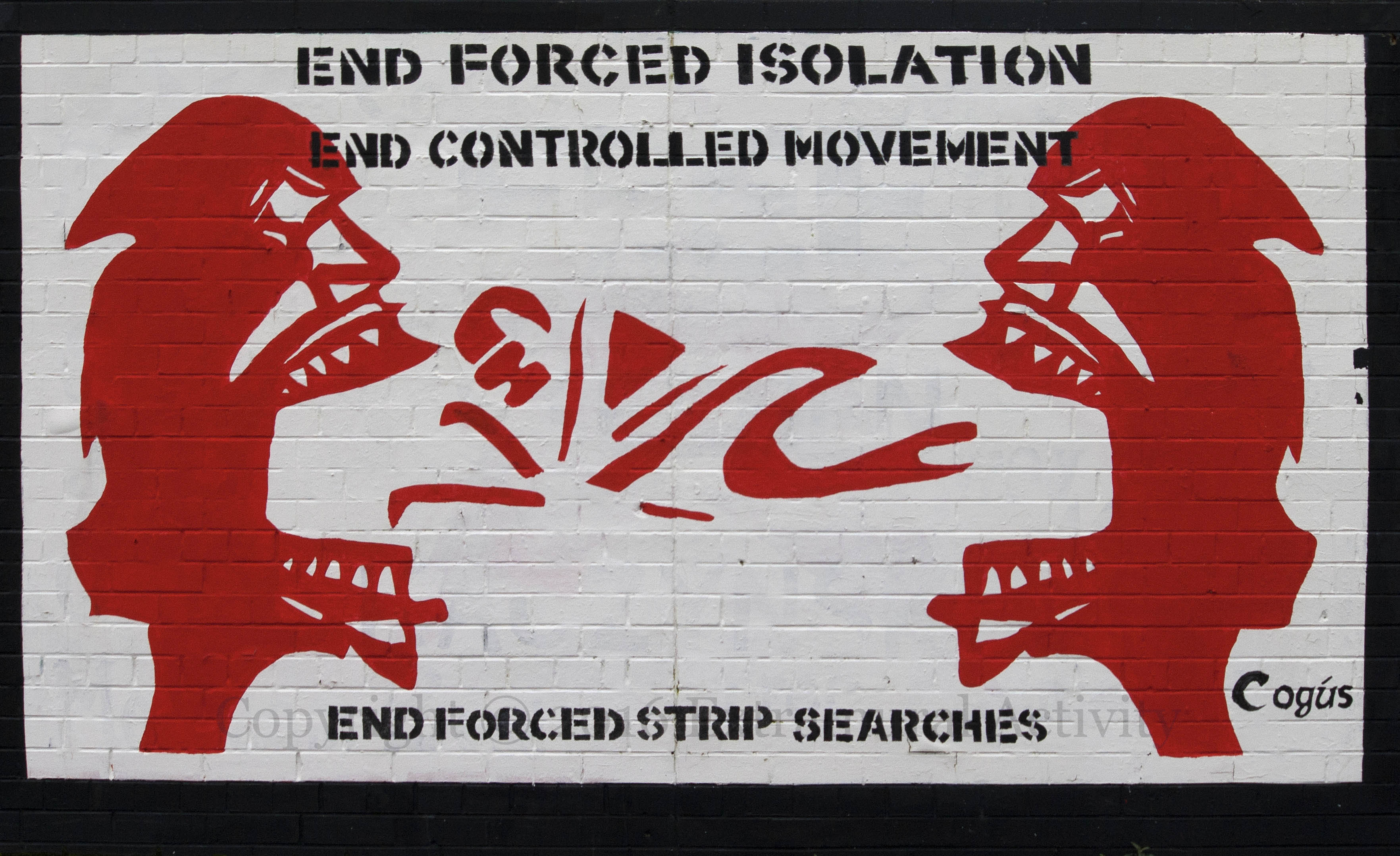
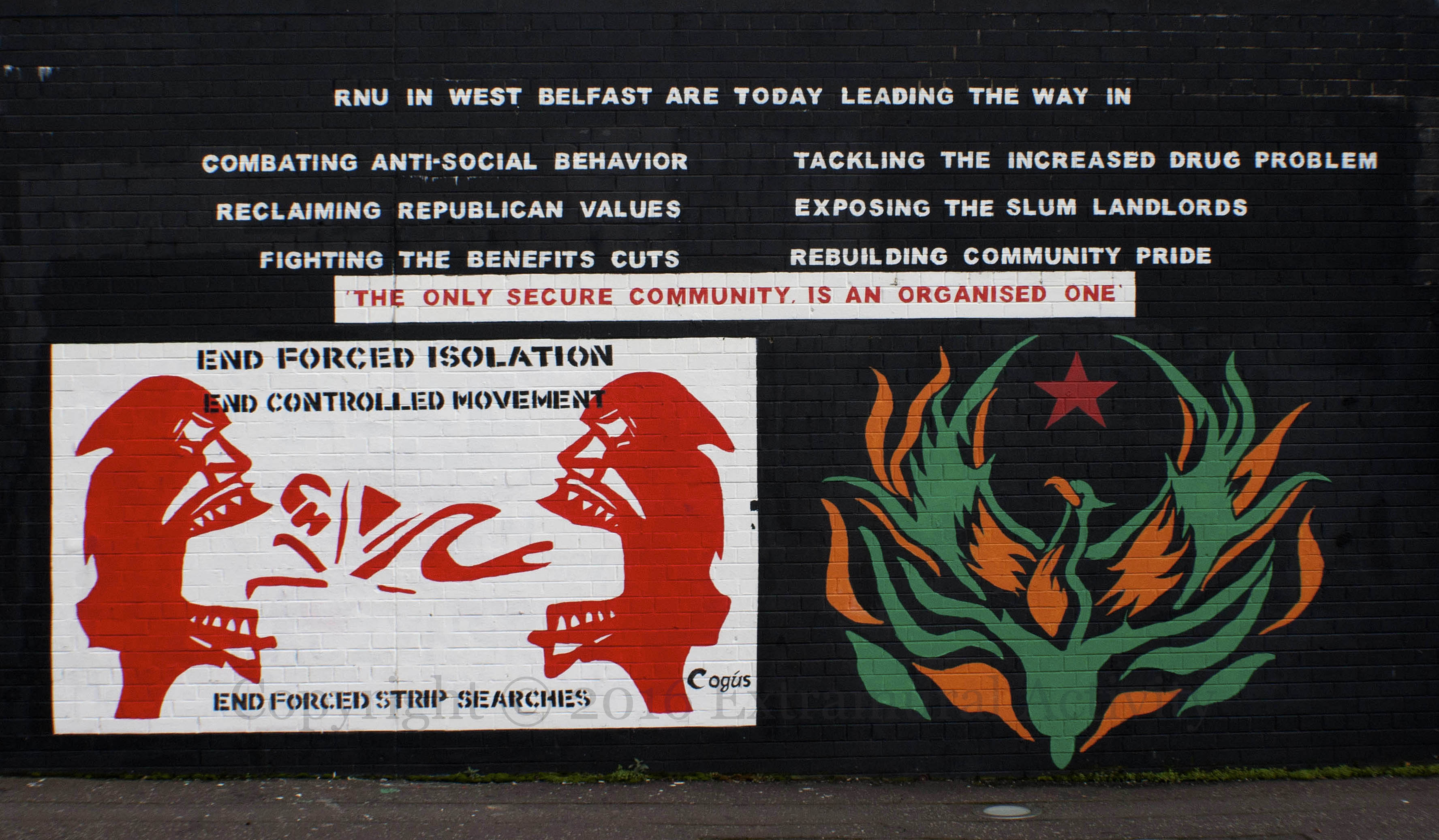
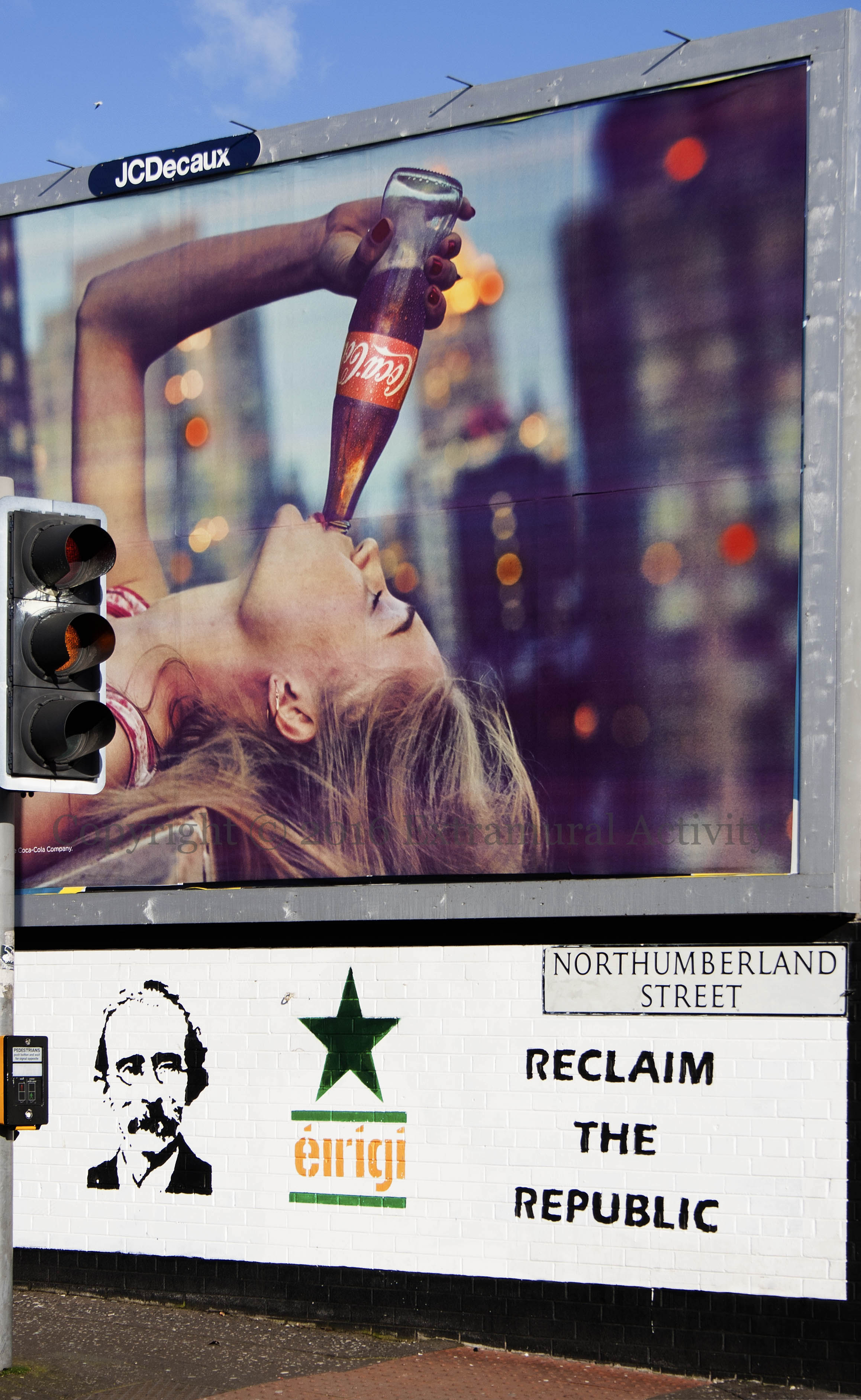
This is a new panel in the RNU (Fb)/Cogús (Fb) mural on Northumberland Street. If you can identify the image or the style, please get in touch. “End forced isolation, end controlled movement, end forced strip searches”.
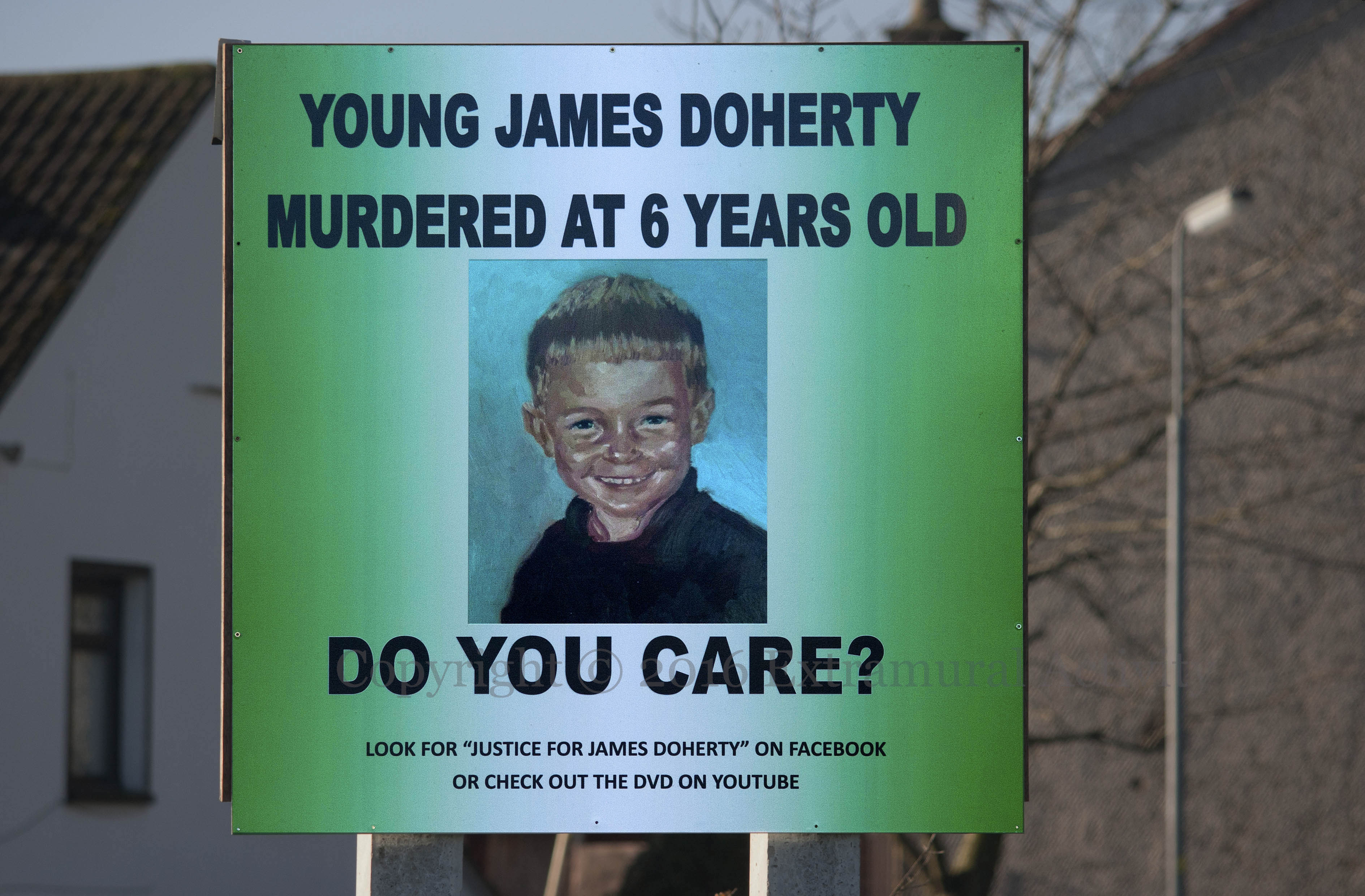
James “Jim” Doherty was six years old when he was shot while playing in the front garden of his Turf Lodge home in 1972. Relatives For Justice and the family launched the board shown above at the entrance to the estate last October in order to push for a new inquiry into the death due to the insufficiency of the original investigation and the disappearance of the bullet taken from the body. (Belfast Media Group)
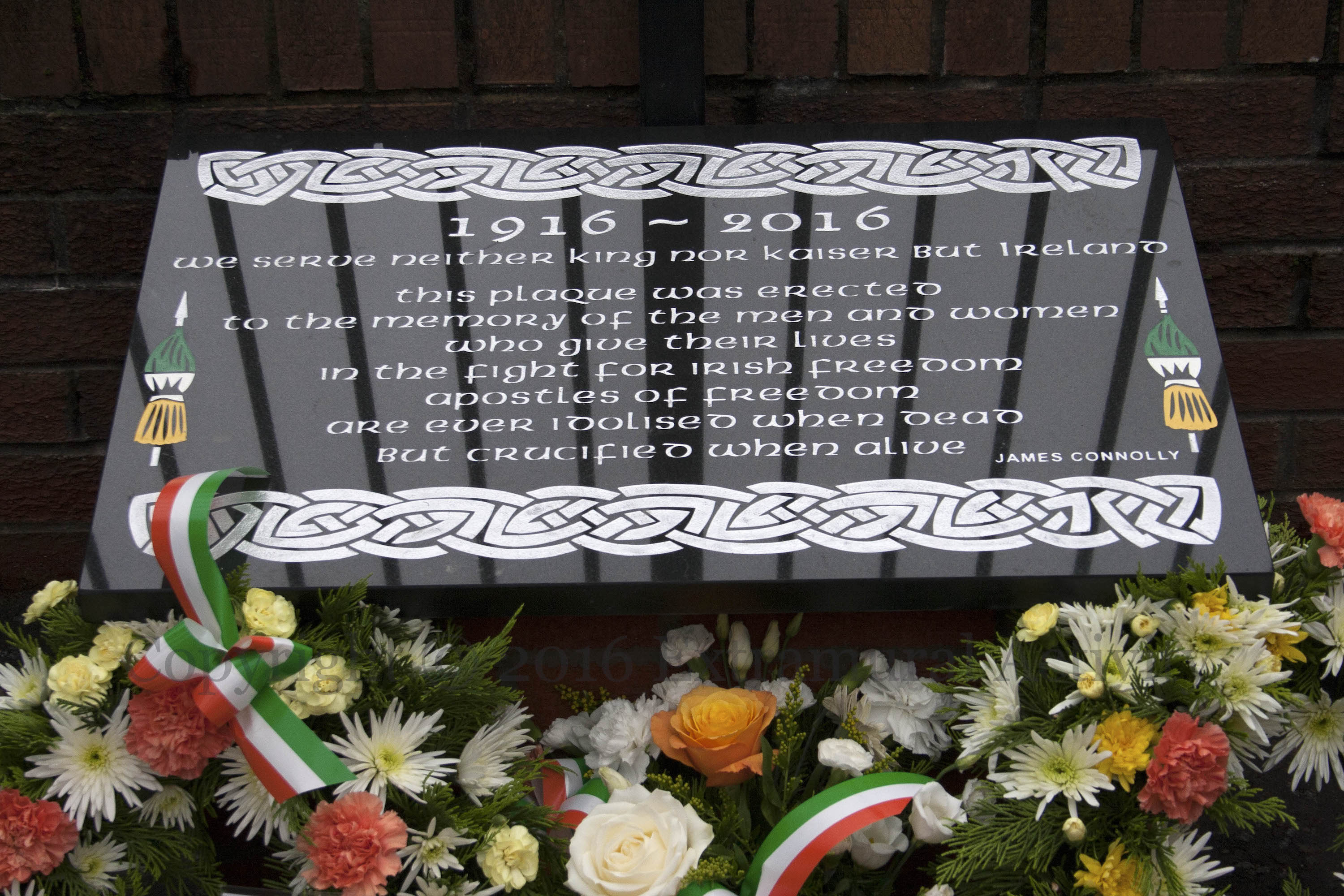
The plaque above is a new one outside the Andersonstown Social Club, mounted for the centenary of the Easter Rising: 1916-2016 – We serve neither king nor kaiser but Ireland. This plaque was erected to the memory of the men and women who give their lives in the fight for Irish freedom. “Apostles of freedom are ever idolised when dead but crucified when alive” – James Connolly (These are the opening lines of ‘The Men We Honour‘ 1898)
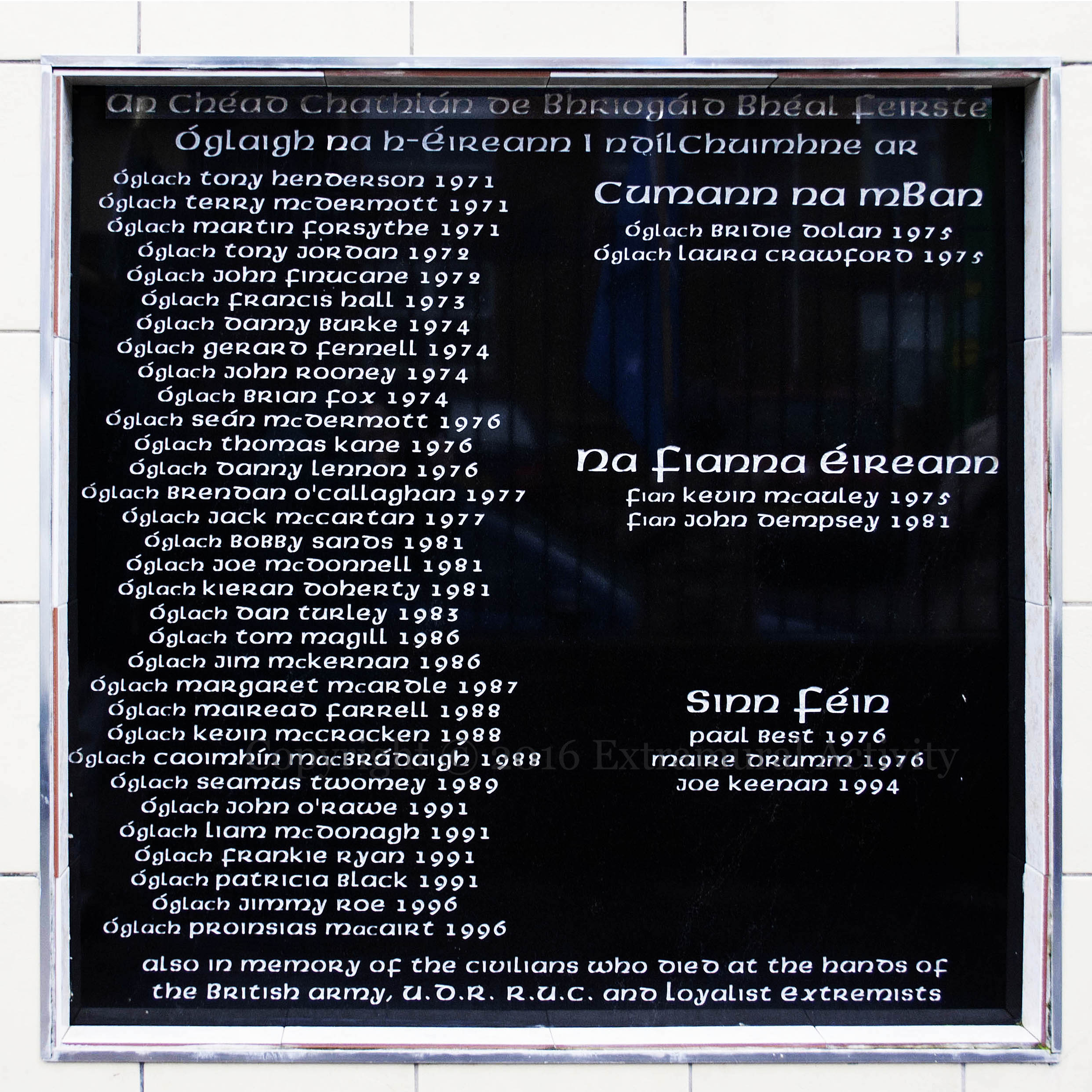
The plaque below is a previously existing one to volunteers from the First Battalion of the IRA’s Belfast Brigade and various other republicans and “also in memory of the civilians who died at the hands of the UDR, RUC, and loyalist extremists”.
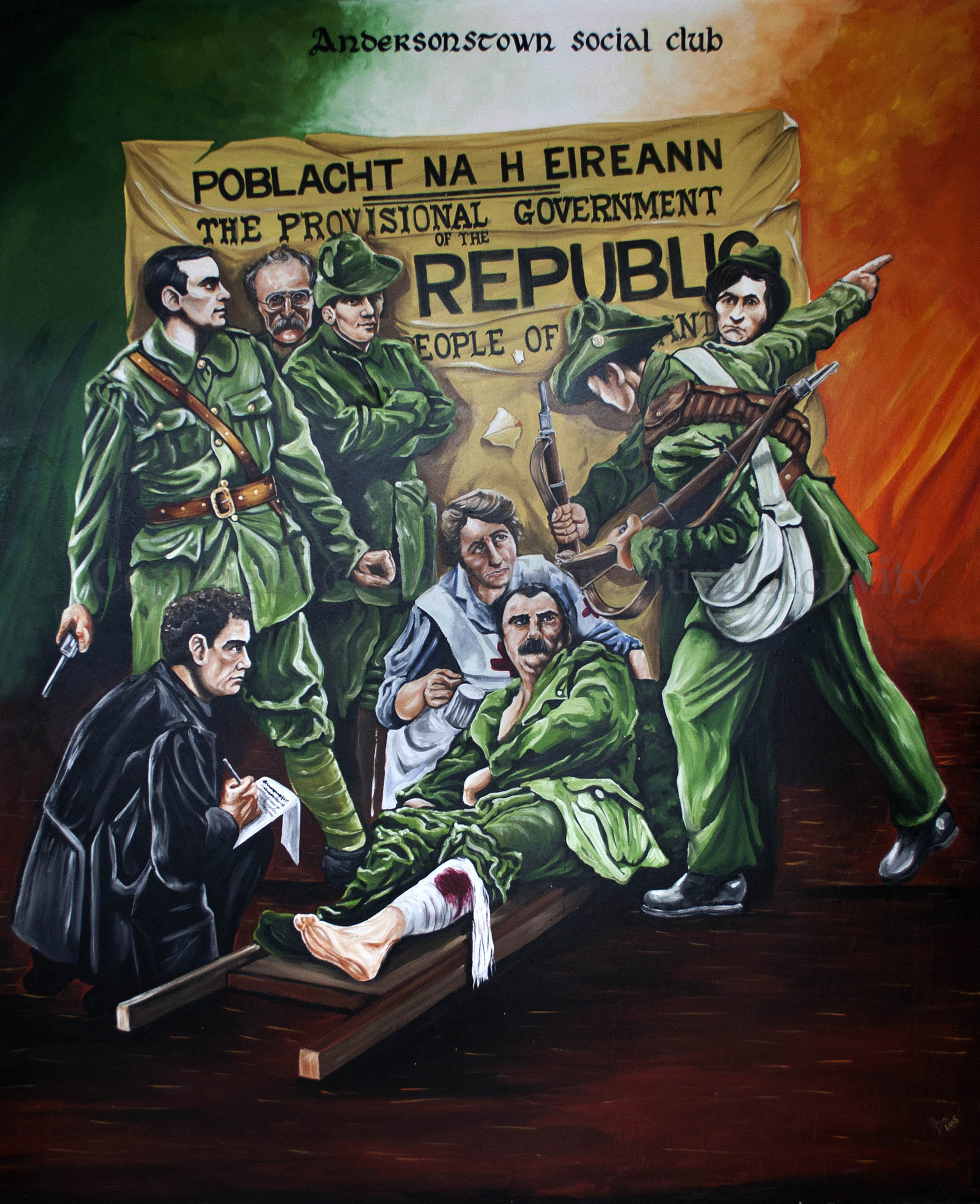
The ‘Revolution 1916’ exhibition – items from which were shown in Belfast earlier in February (see Revolution 1916) – opened in Dublin this weekend, including two murals (see this An Phoblacht article for one of them). The three painters also painted the mural above for the mini-exhibition in Andersonstown, reproducing the left-hand grouping from Walter Paget’s Birth Of The Irish Republic and putting the proclamation in the background. For Paget’s original oil painting and other version of it, see the painting’s Visual History page.
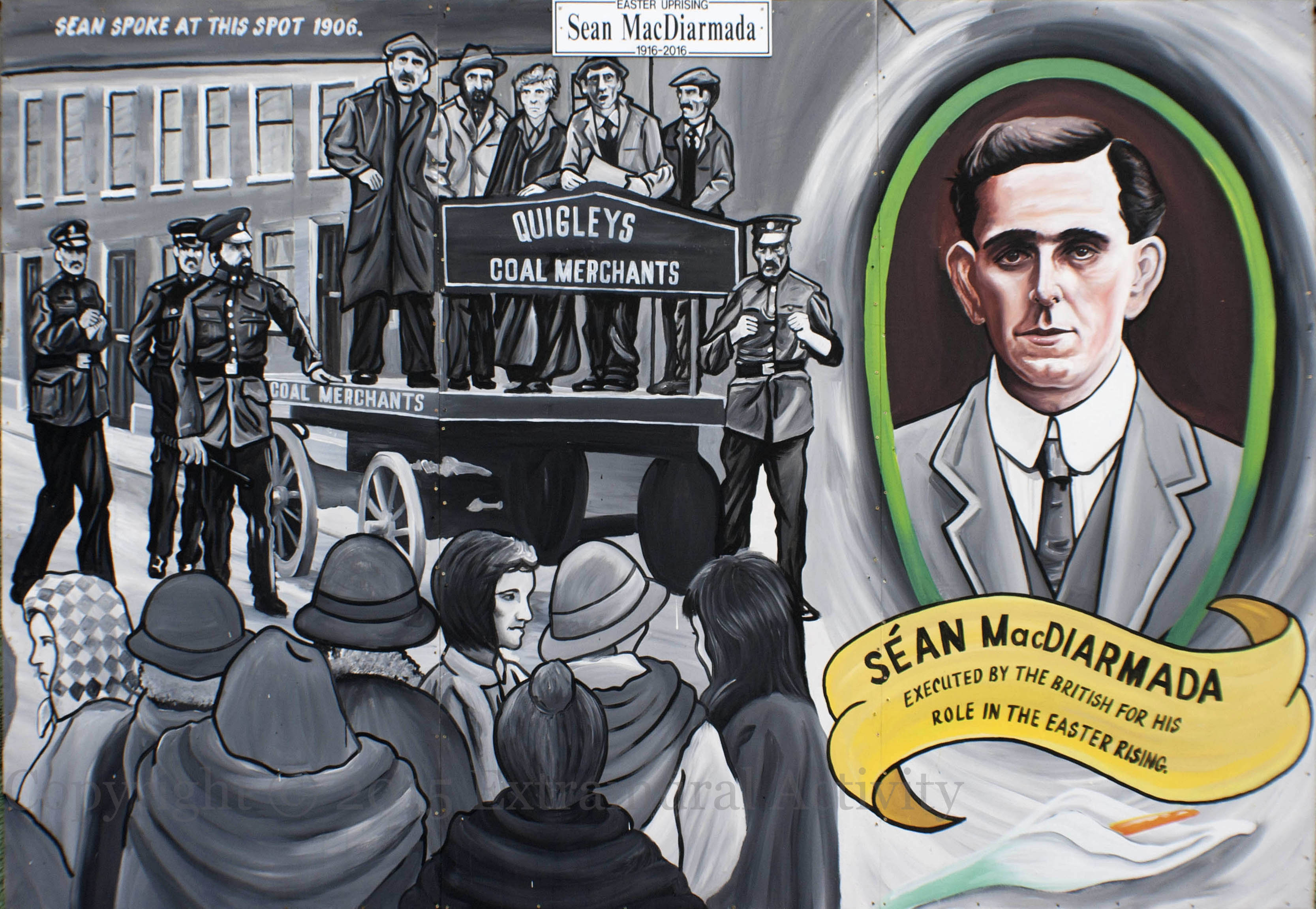
Seán Mac Dıarmada was born in Leitrim, left for Glasgow at age 15, and after two years returned to Belfast in 1905 and – according to the new mural above – spoke from the back of a coal lorry in Clonard Street, outside the Clonard branch of the Ancient Order Of Hibernians. Mac Dıarmada was for a short time an AOH member, before moving on to the Irish Republican Brotherhood and Irish Volunteers, which led to his participation in the 1916 Easter Rising and execution on May 12th of that year.
The title of today’s post is historian F.X. Martin’s assessment of Mac Dıarmada, quoted in a pamphlet on Mac Dıarmada from the National Library Of Ireland. The NLI made many letters from and to Mac Dıarmada available in 2016. (See also this Irish Times write-up).
 Seosamh Mac Coille Collection