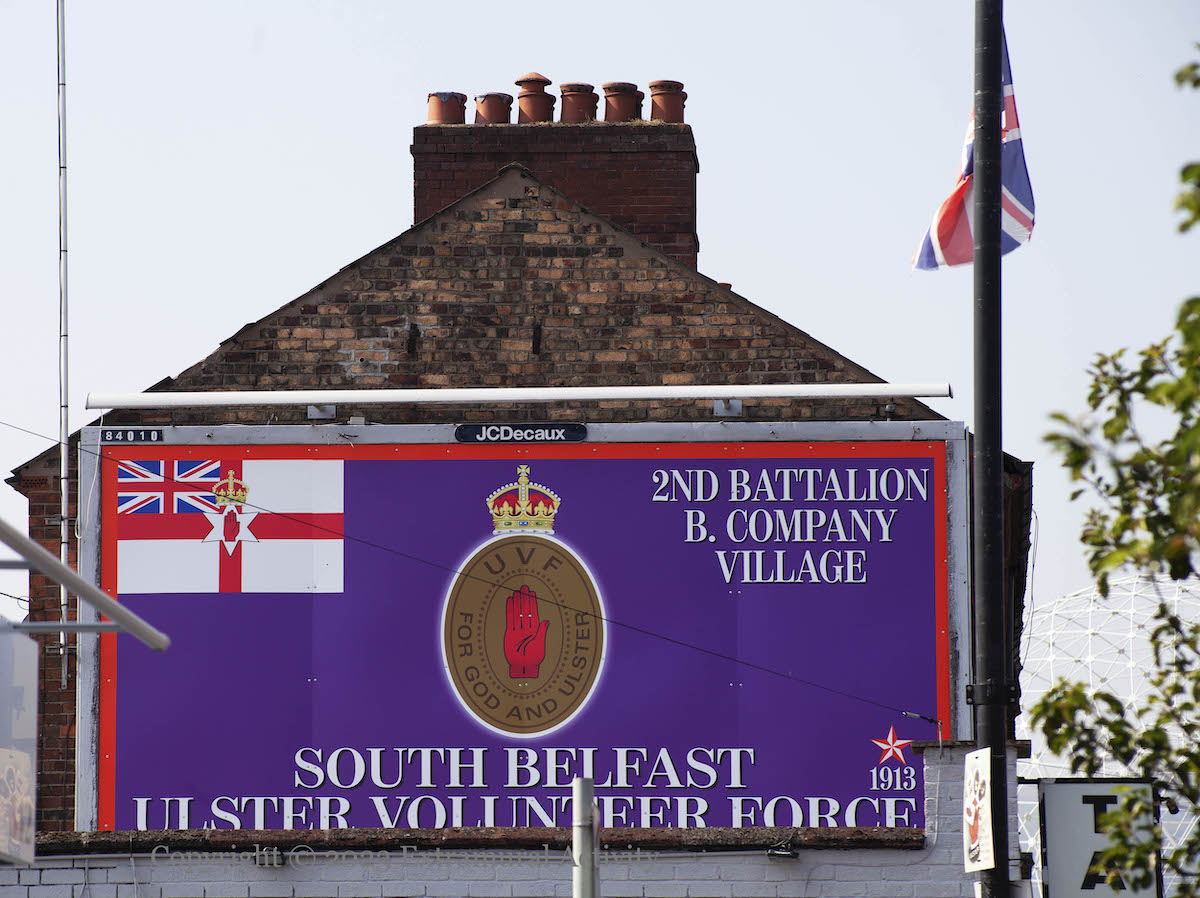
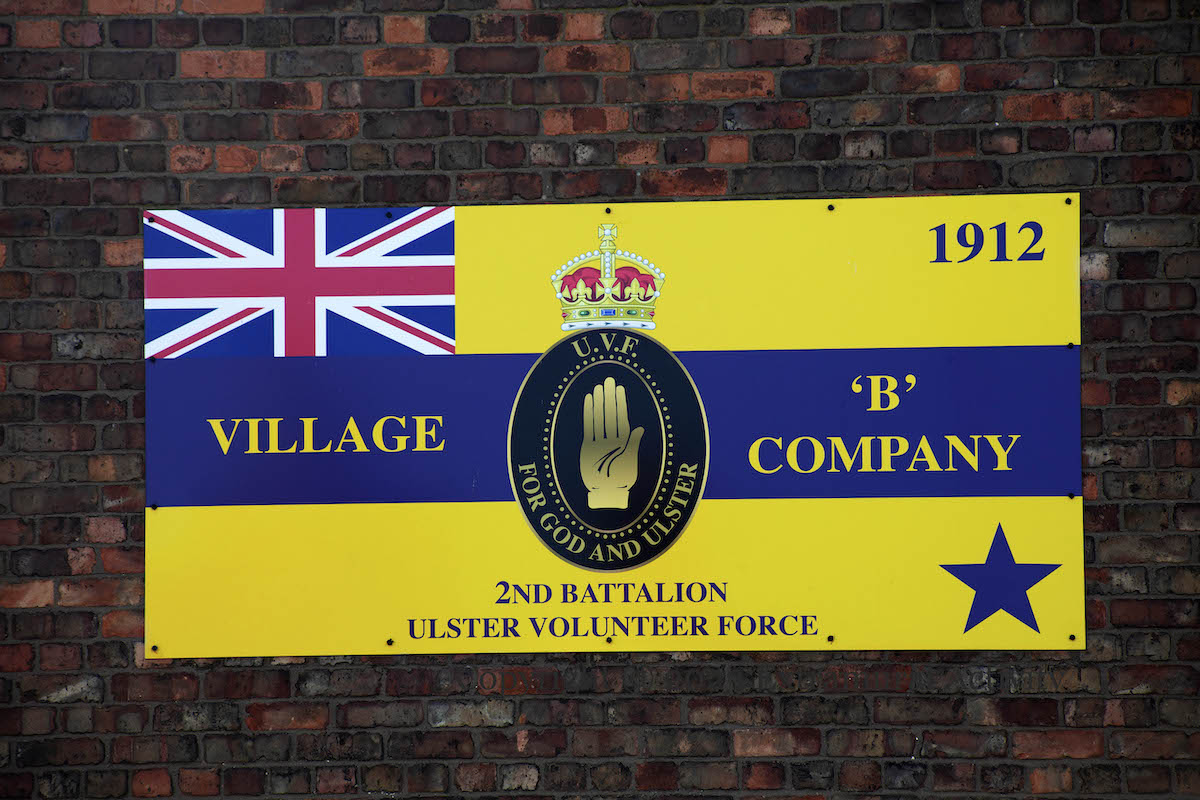
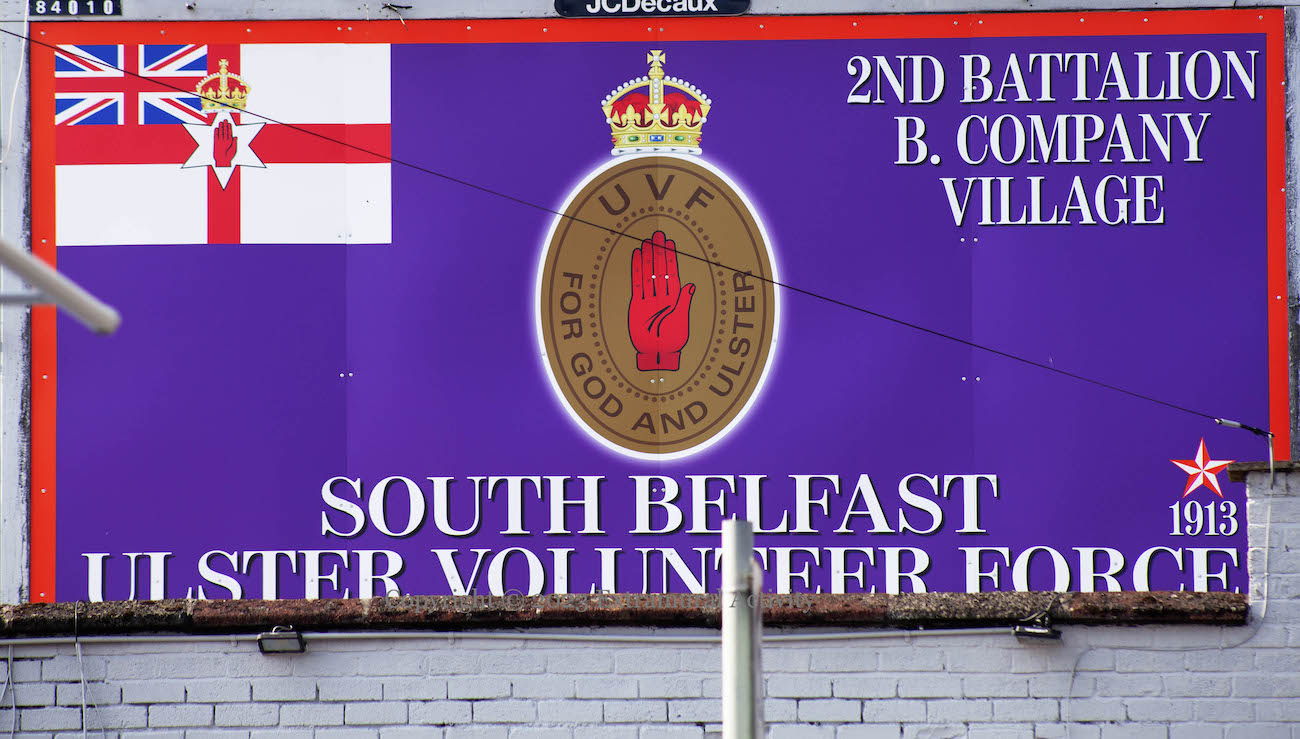
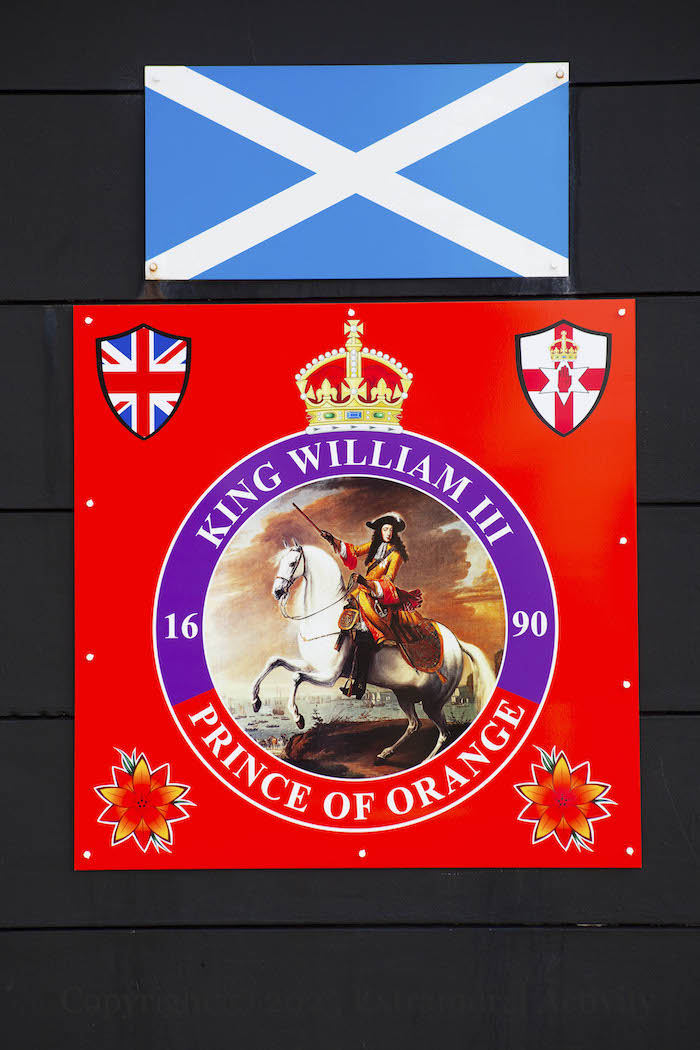
The Ulster Unionist Council organised the signing of the Covenant in September, 1912, and in January 1913 voted to bring together the militias that had been formed in various places into an Ulster Volunteer Force. One of these was a South Belfast battalion that had formed in 1912 (History Ireland). Hence, both “1912” and “1913” are given as dates for the creation of the battalion. When the Volunteers were integrated into the Ulster Division for the Great War, the South Belfast Volunteers joined the 10th battalion of the Royal Irish Rifles.
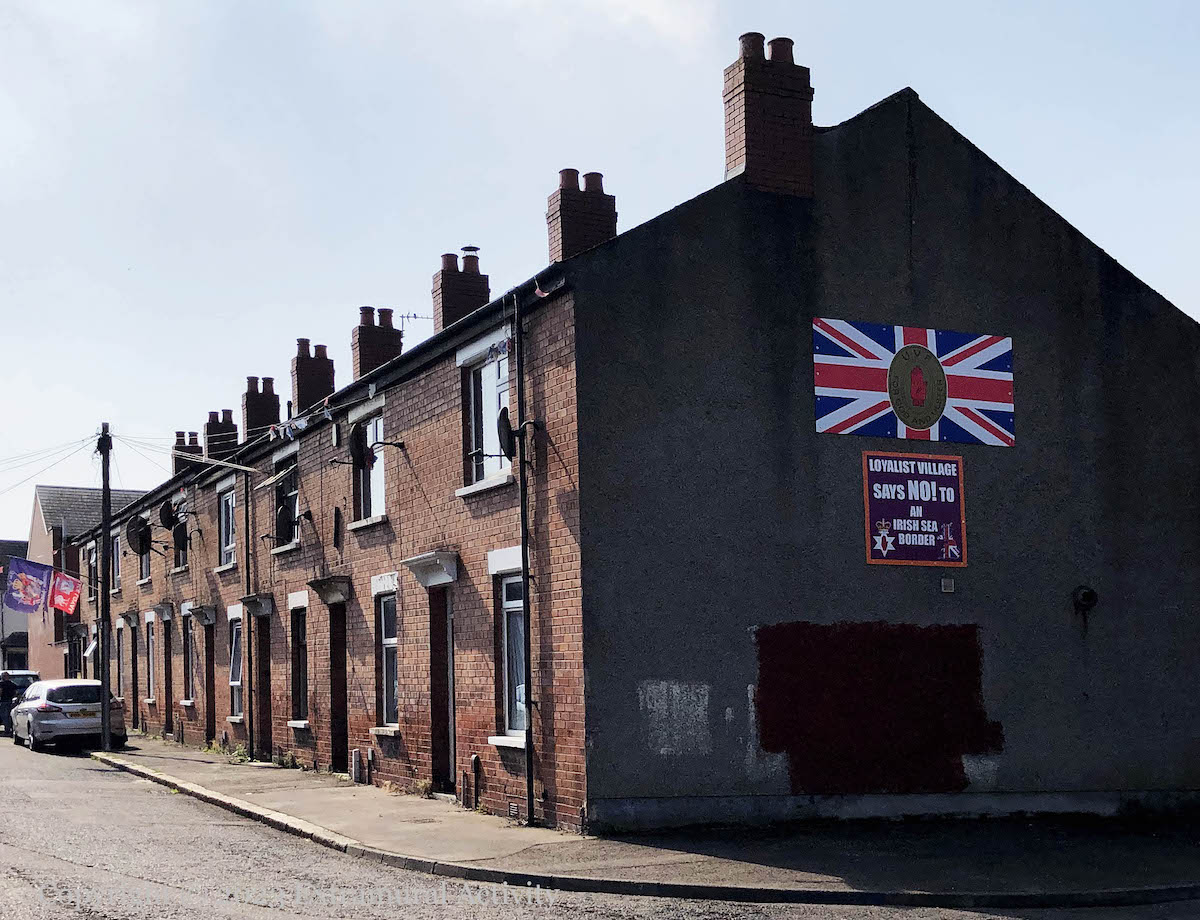
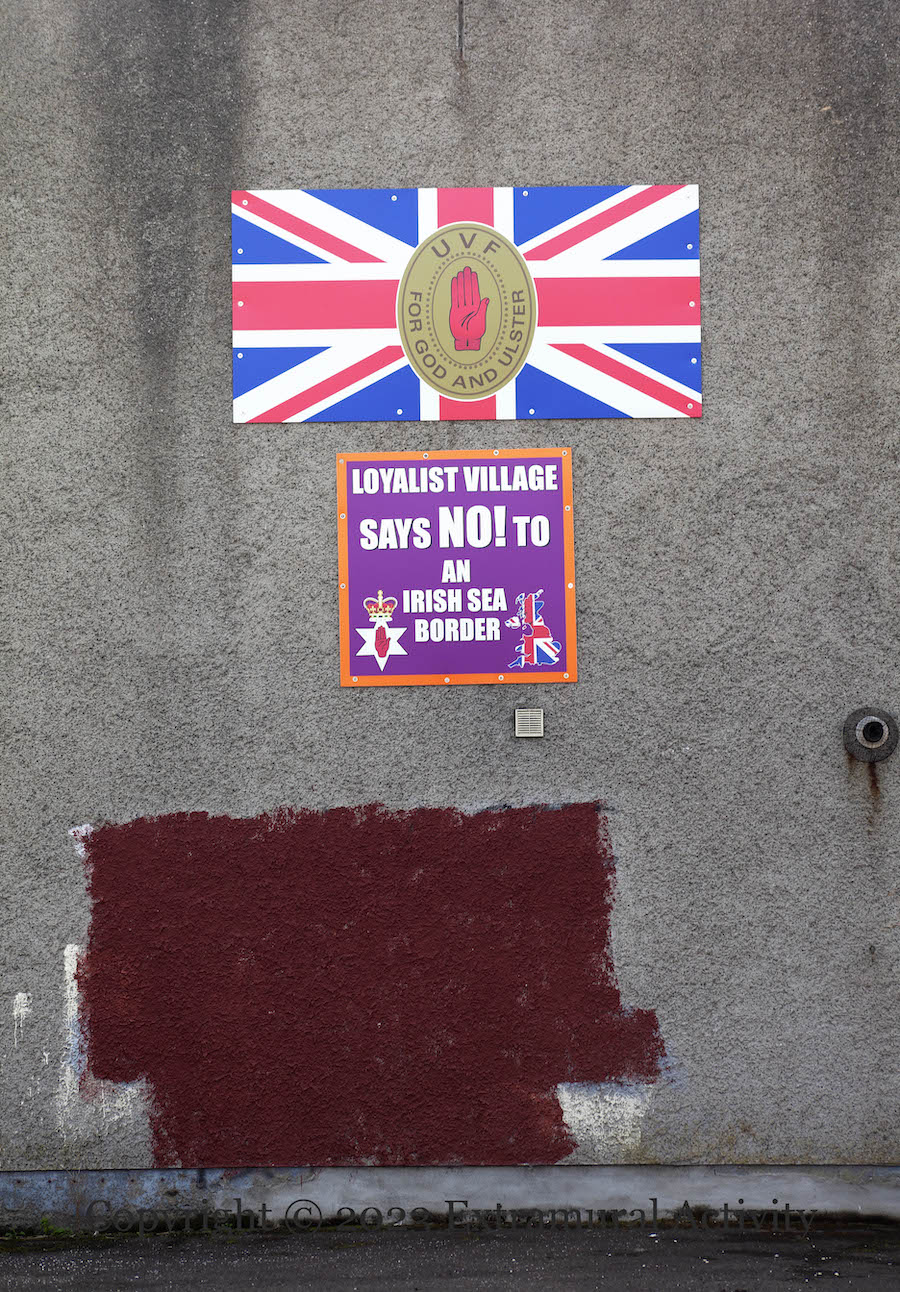
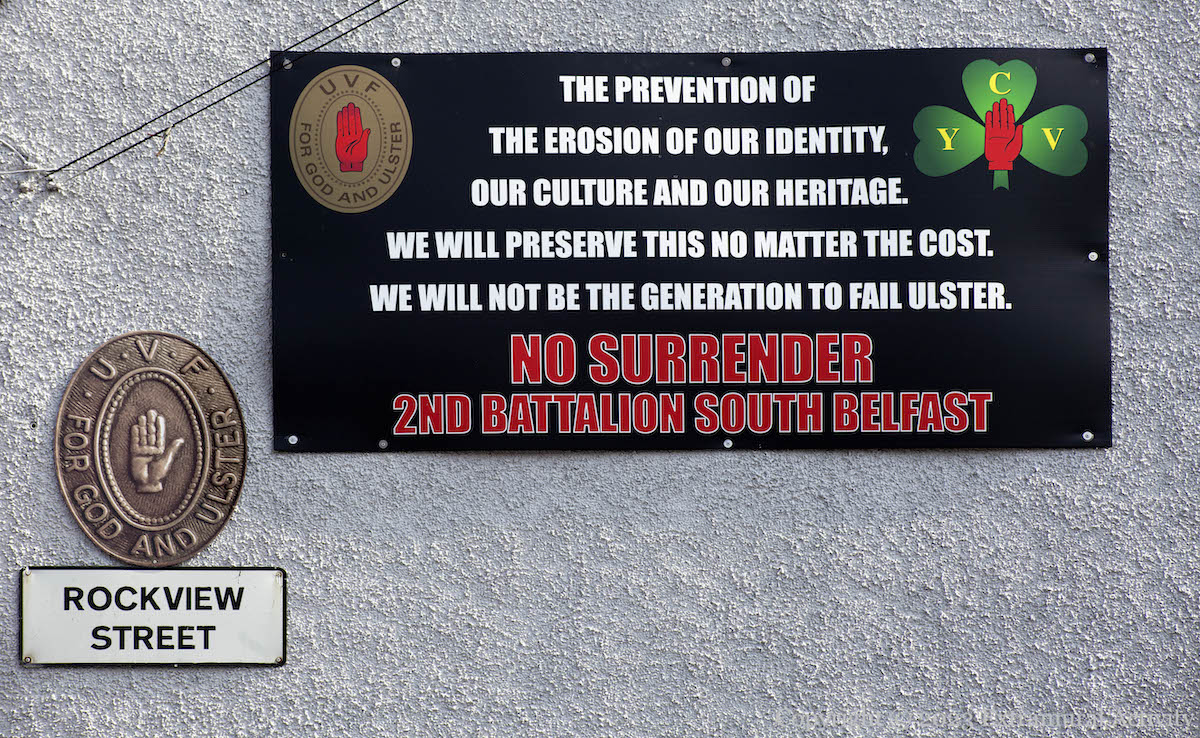
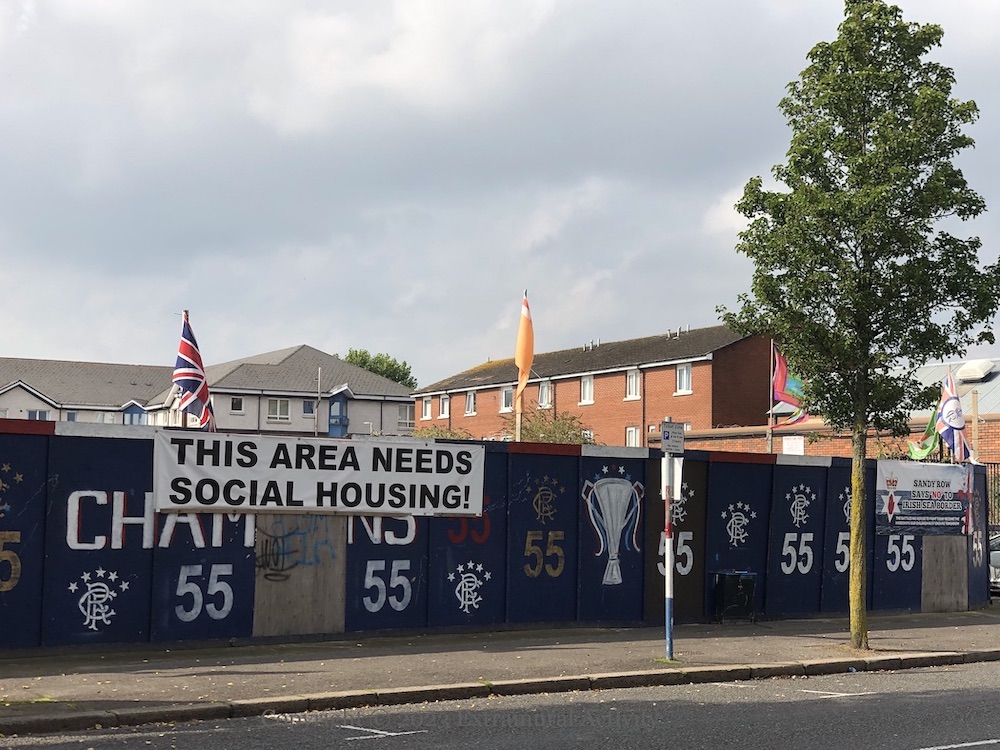
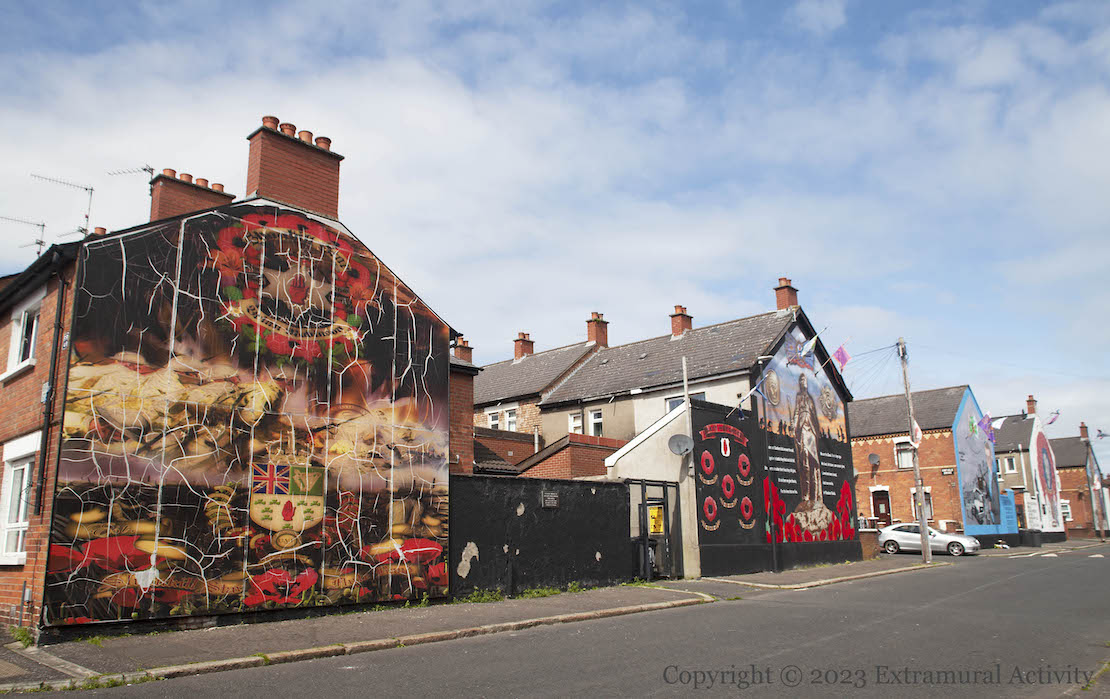
Of course, the boards above and immediately below concerning the 1912/1913 Ulster Volunteers serve double duty alongside the three other boards shown here which concern the modern UVF and the current protests against Brexit/NI Protocol/Windsor Framework.
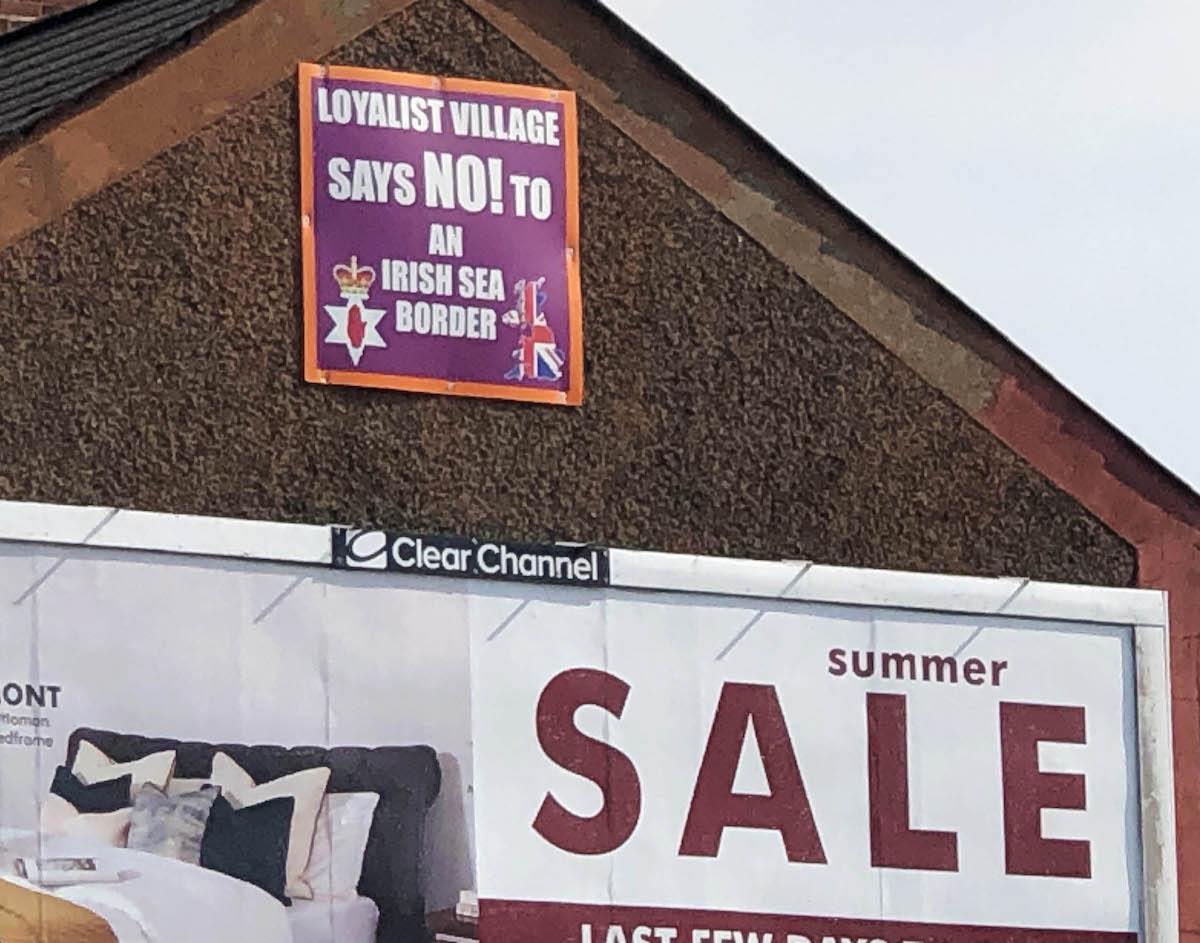
The advertising hoarding has been informally re-purposed by the UVF for several years, and its de-commercialisation is now complete with the addition of this printed board.
“Loyalist Village says No! to an Irish Sea border.” “The prevention of the erosion of our identity , our culture and our heritage. We will preserve this no matter the cost. We will not be the generation to fail Ulster.”
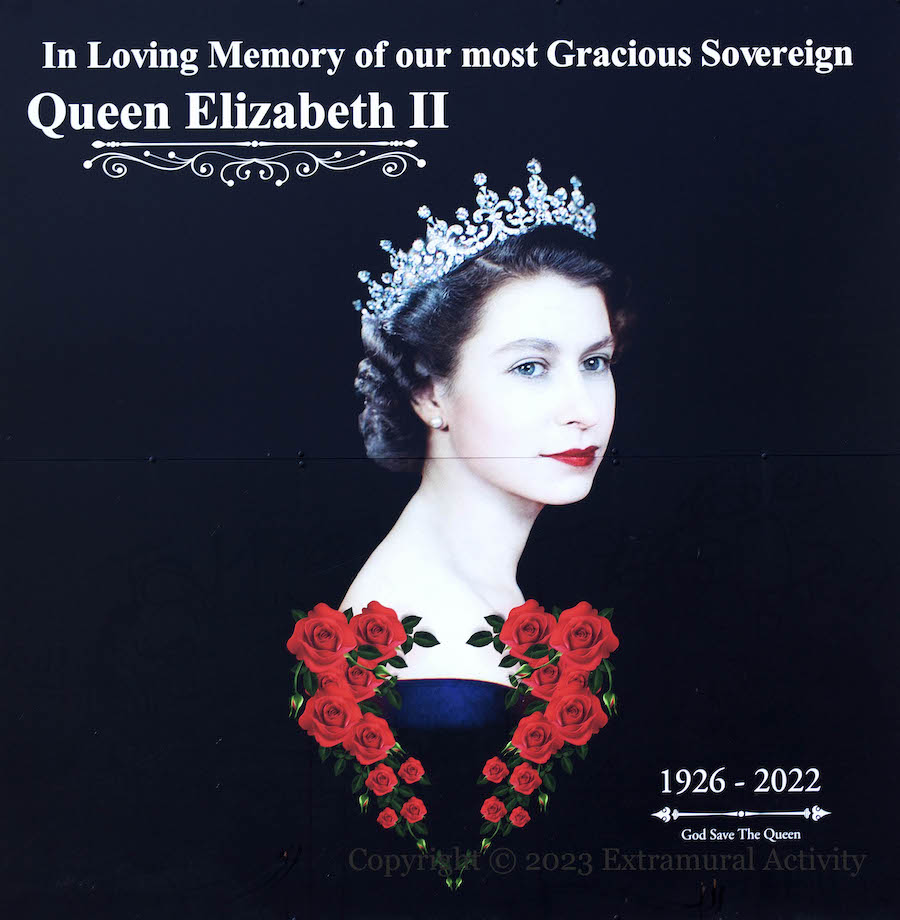
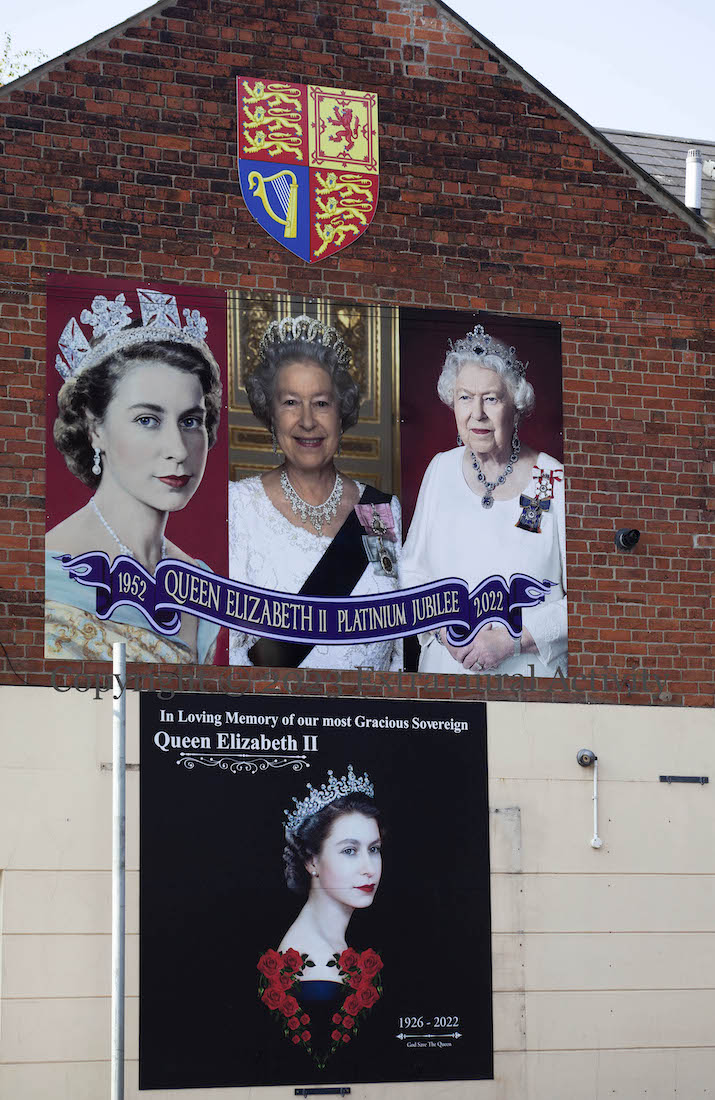
“In loving memory of our most gracious sovereign – Queen Elizabeth II 1926-2022. God save the Queen.” The platinum (70th) jubilee of Queen Elizabeth II, celebrated in June, 2022, was followed a short time later by her death, on September 8th. These two boards in Maldon Street, mark the two events.
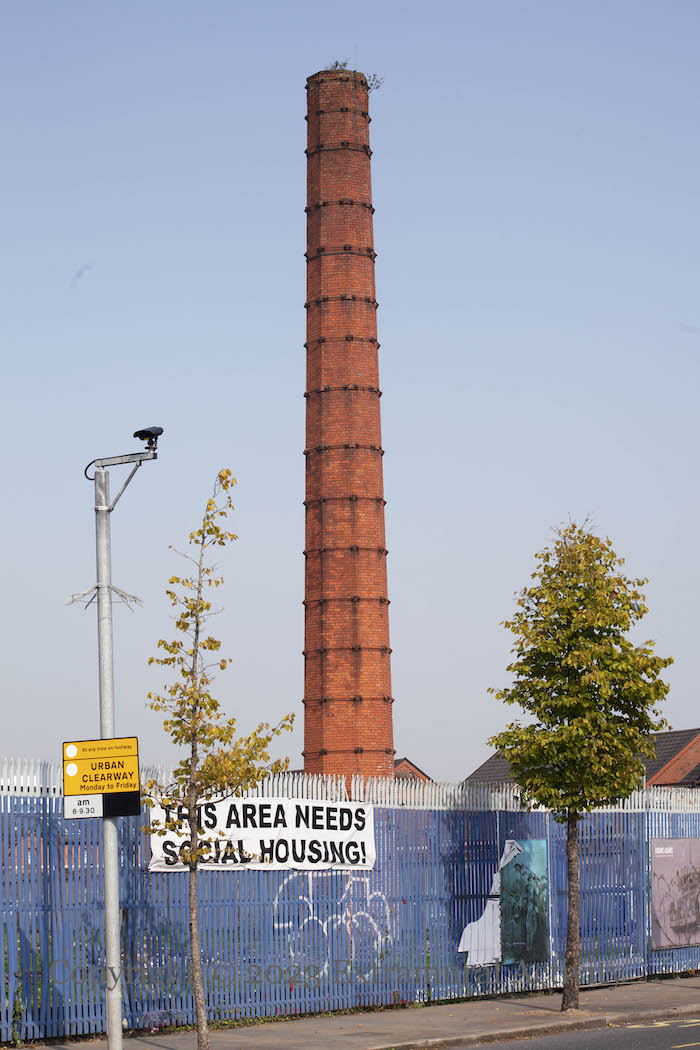
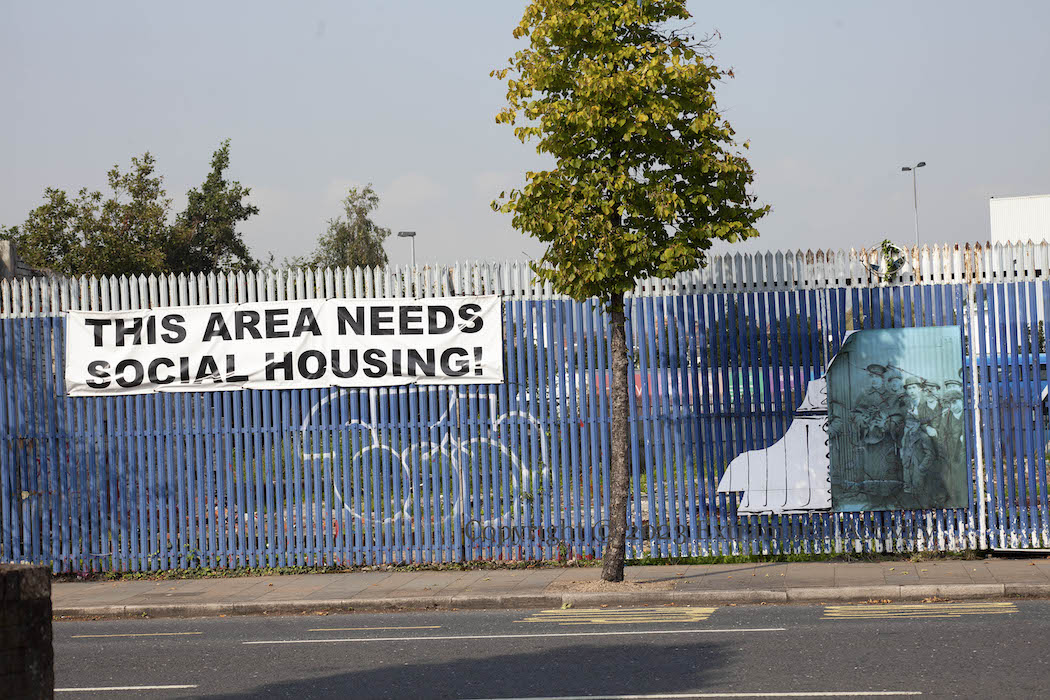
According to Housing Executive figures, only 405 social houses were built in 2022-2023, compared to a projected a need of more than 24,000 homes (ITV). Belfast City Council’s ‘Local Development Plan’ has set a quota of 20% social and affordable housing for developers (Inside Housing).
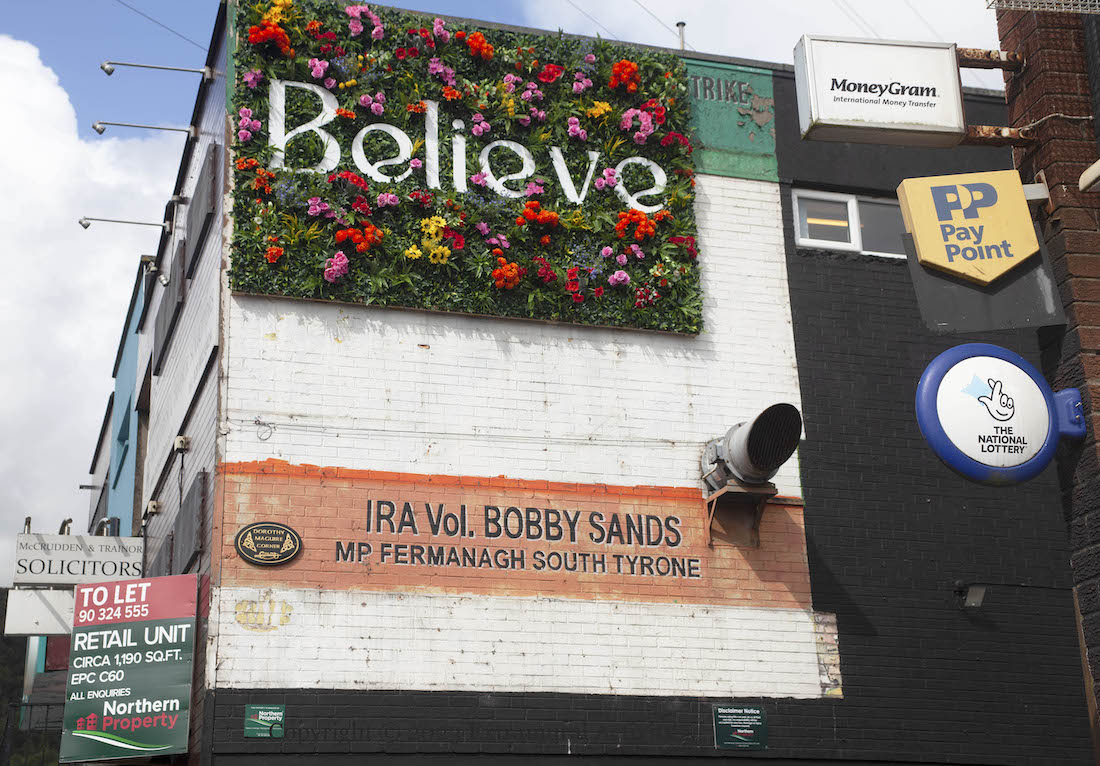
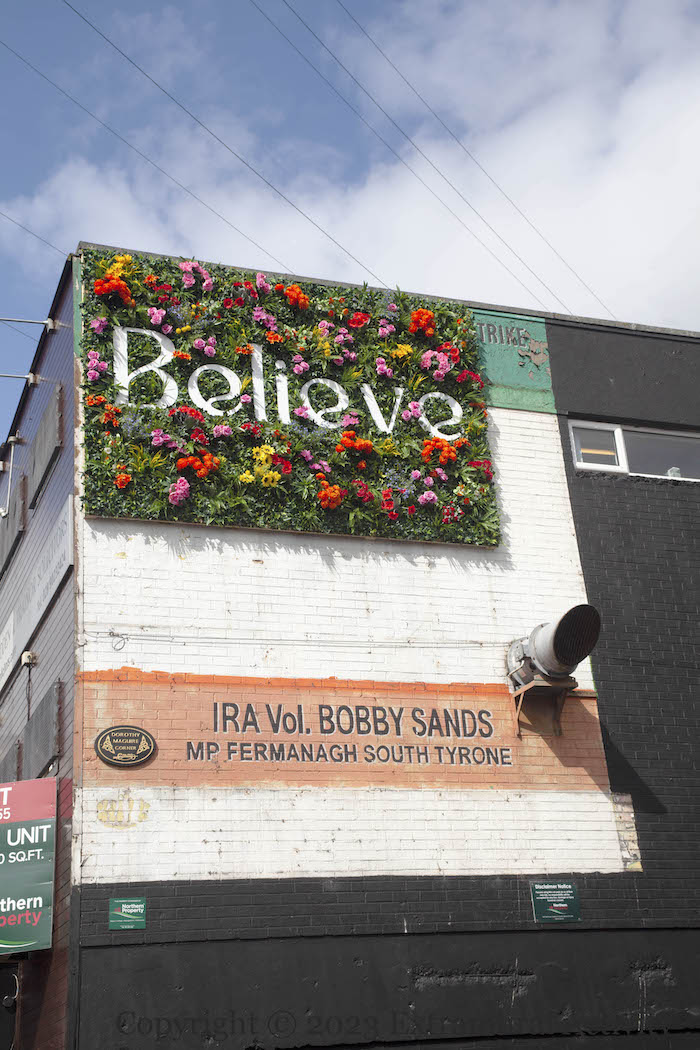
The replacement board – the word “believe” among flowers – is innocuous, but the replacing itself is remarkable, for a number of reasons.
The “Final Salute” board/mural at the top of the Rock (that ‘Believe’ replaces) depicted an iconic scene from the hunger strike period, of the funeral volley being fired over the Sands’s coffin on May 7th (reproducing the photograph seen previously in IRA Final Salute). More than 100,000 people came out onto the streets of west Belfast for the procession and images of the event were beamed to scores of countries by news crews from all corners of the globe which had flocked to west Belfast.
Further, the board has been in place since 2011, put in place for the 30 anniversary of the strike and Sands’s death on May 5th, and it was painted by Lucas Quigley, an IRA volunteer and brother of Jimmy Quigley (see M08864), who died on September 25th, last year (youtube). Being 12 years old, the board was not in good condition. It has been removed and is going to the Ulster Museum for its ‘Troubles And Beyond’ collection.
Finally, as far as its replacement goes, we would not have expected a non-sectarian replacement. This wall has had a CNR mural on it since Beıdh An Bua Agaınn in 1989. Even the USDT piece from 1996 onward featured an Irish dancer and an Irish inscription: “mol an óıge agus tıocfaıdh sí”. In general, we are not aware of any murals or boards depicting the 1981 hunger strike that have been re-imaged.
In this case, the new piece came from the children of John Paul II primary school, using the same style of ‘flower bed’ as at the entrance to the Felons’ Club. The work was funded by a grant from the Housing Executive to the Falls Community Council (Belfast Media) with support from the Resource Centre and USDT.
The task of repainting the wall, including the (painted) green head and orange foot for the previous board — and thus of removing Bobby Sands’s name from the wall — has been delegated to the owner of the building (News Letter). It is possible that something sectarian could be added to the lower space after that.
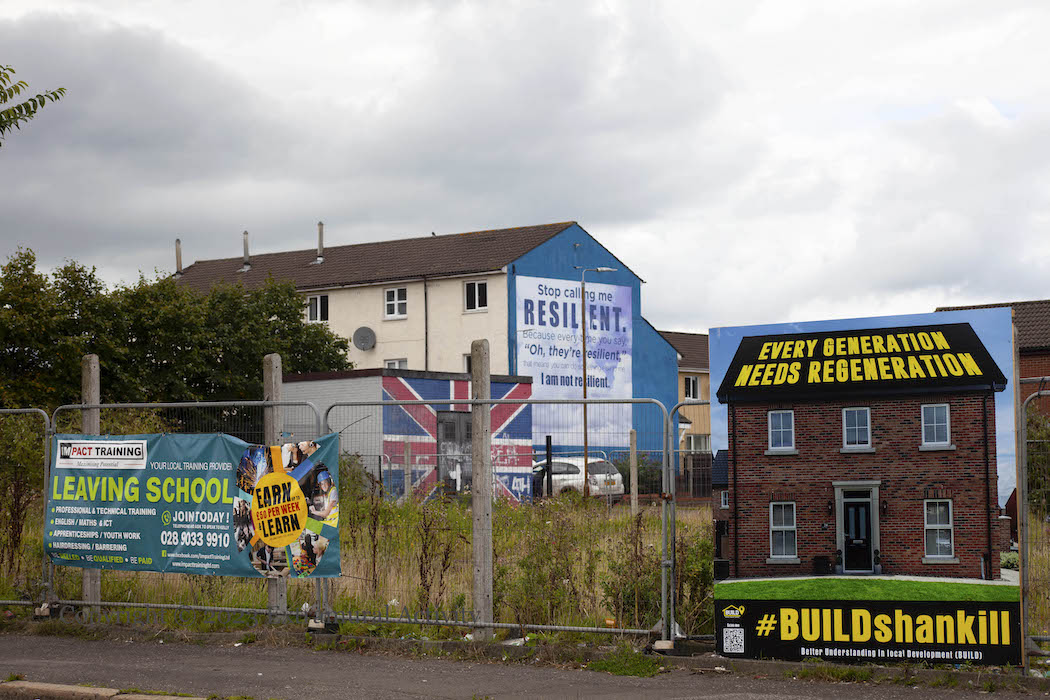
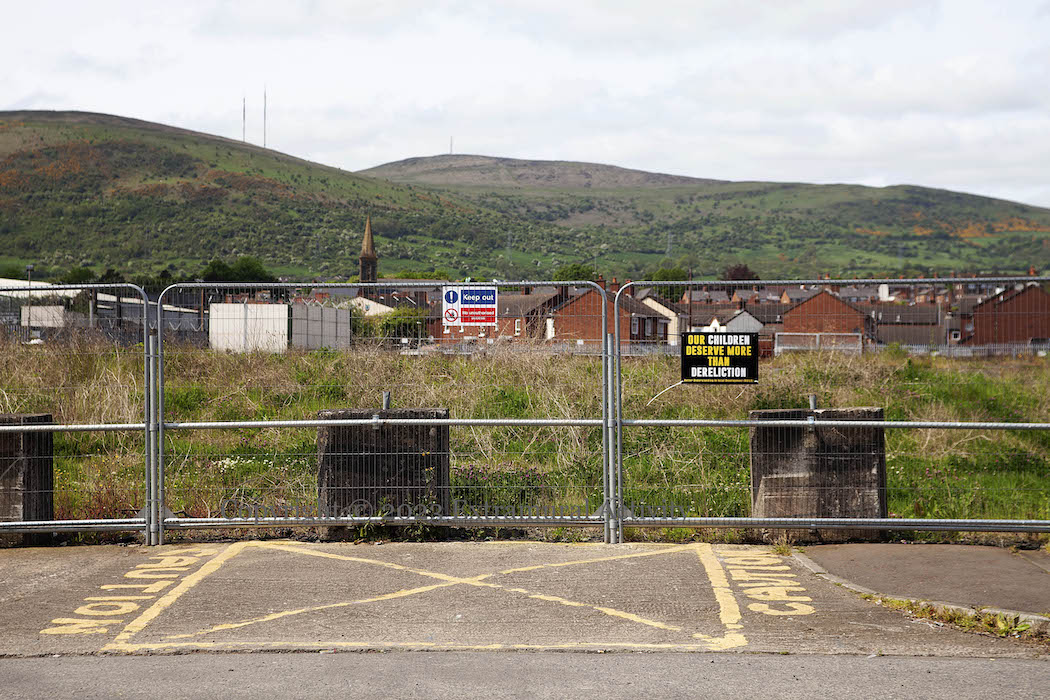
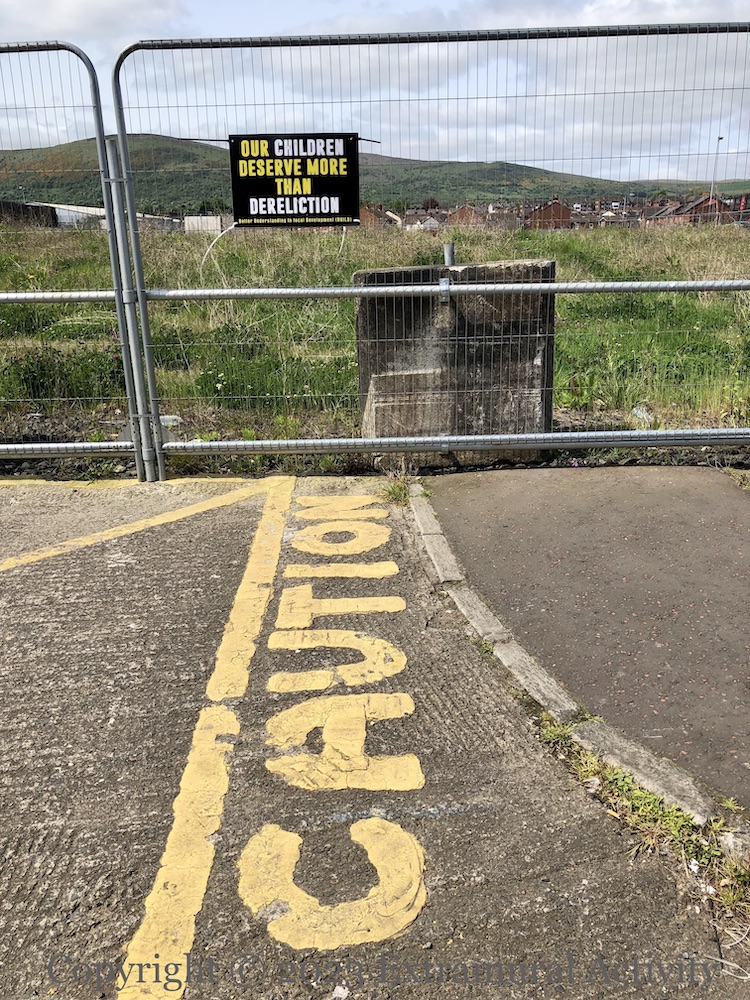
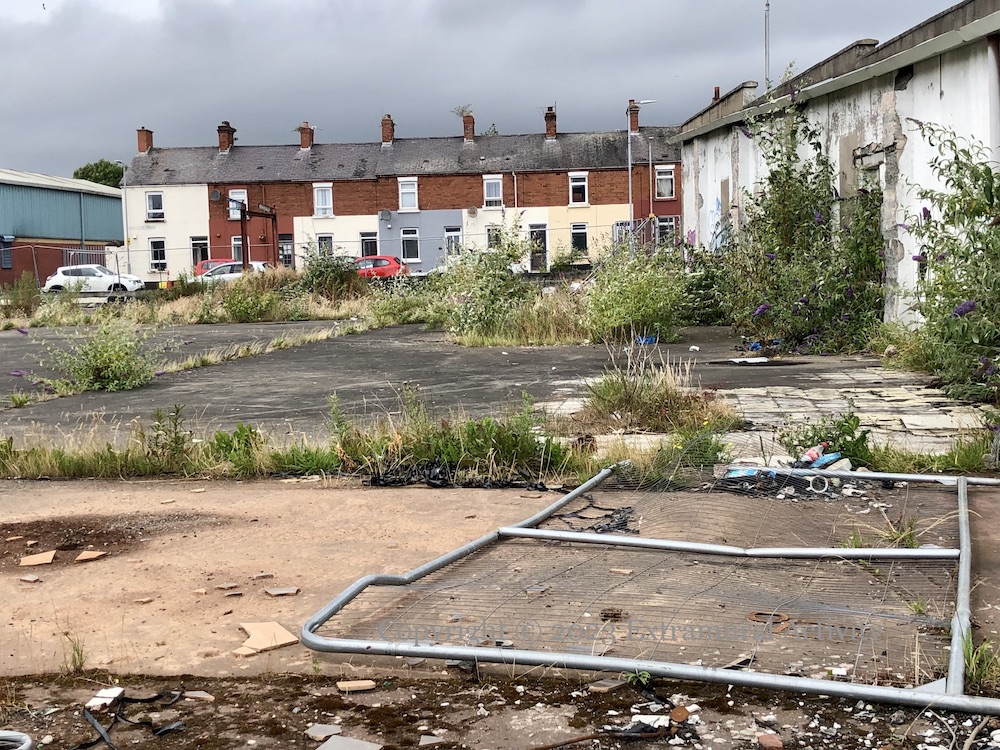
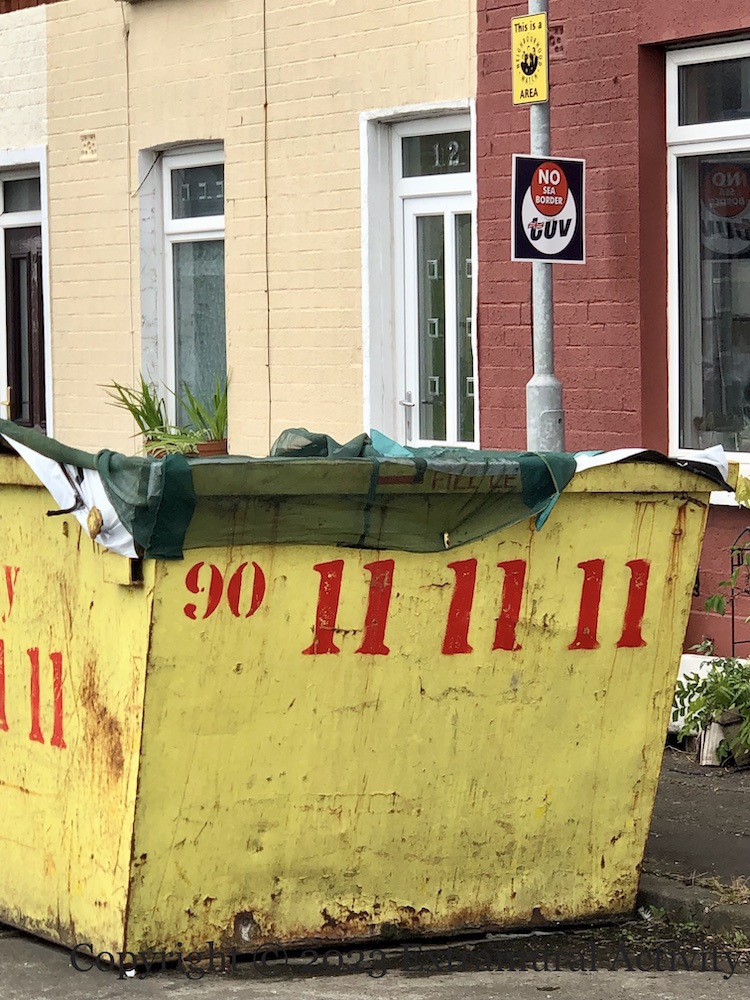
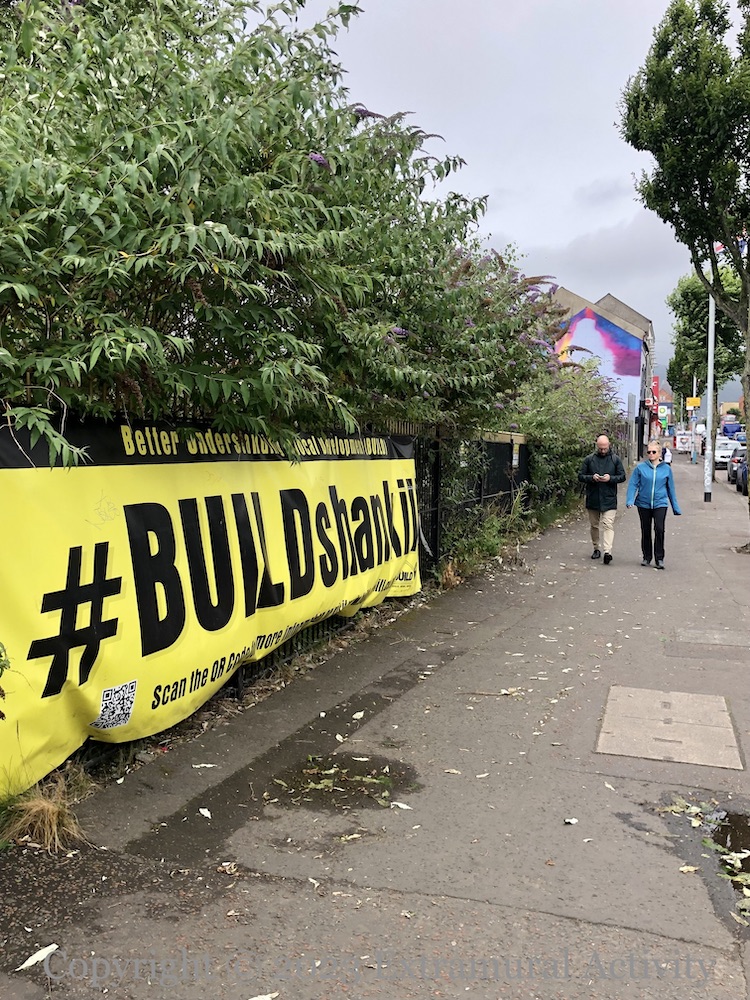
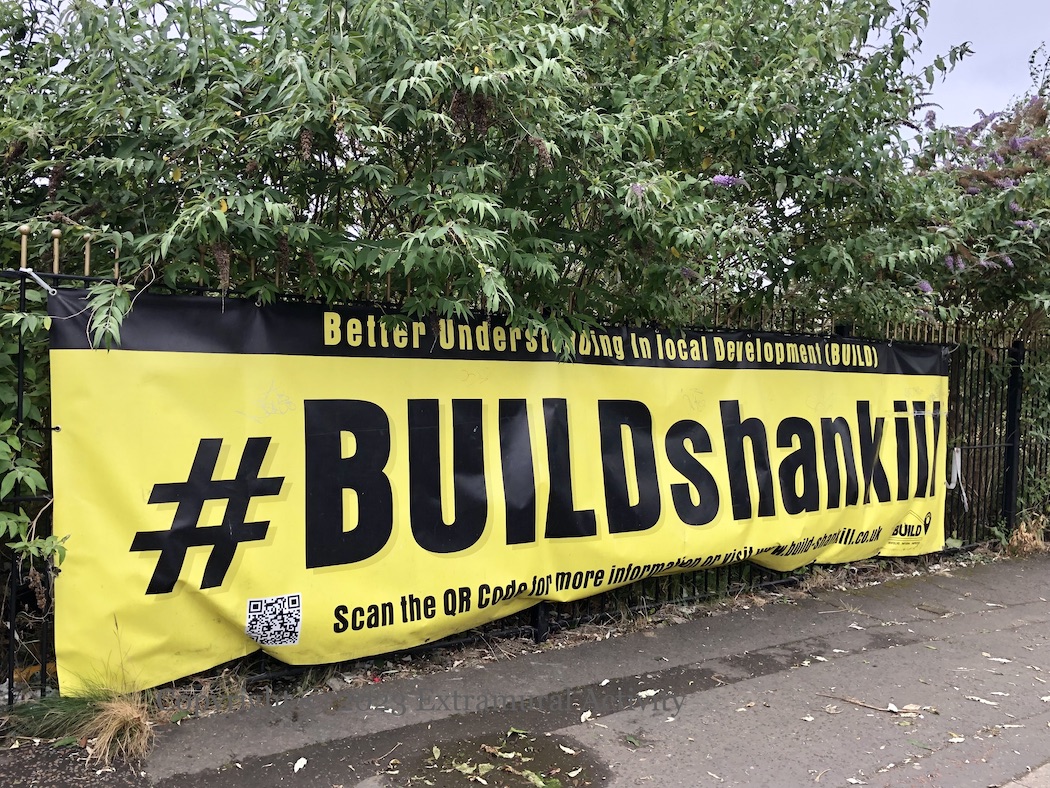
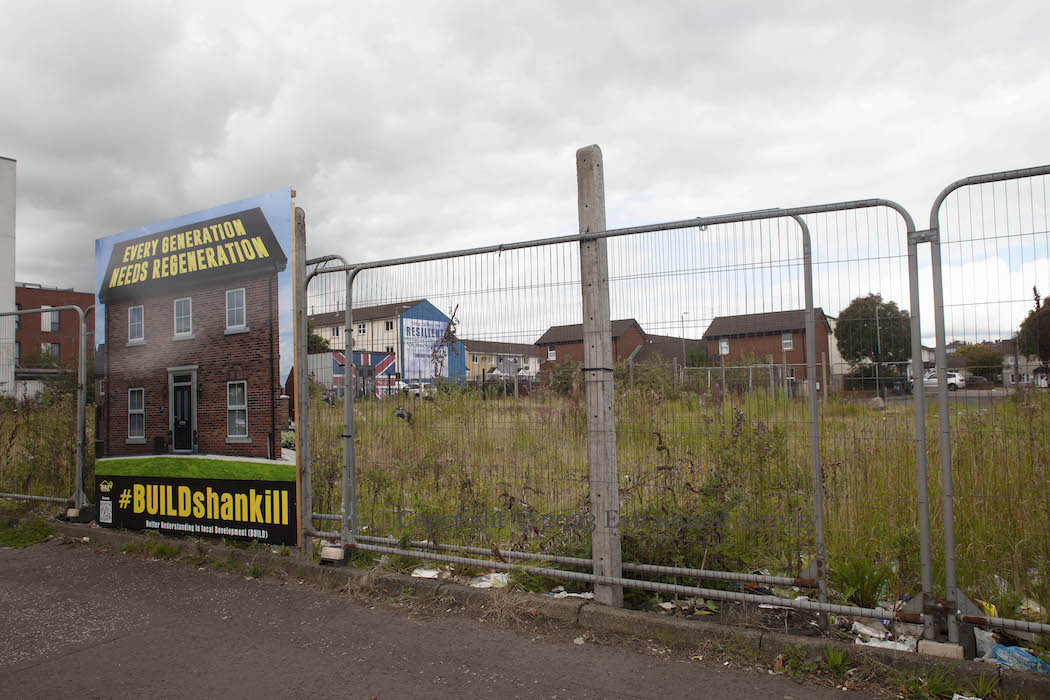
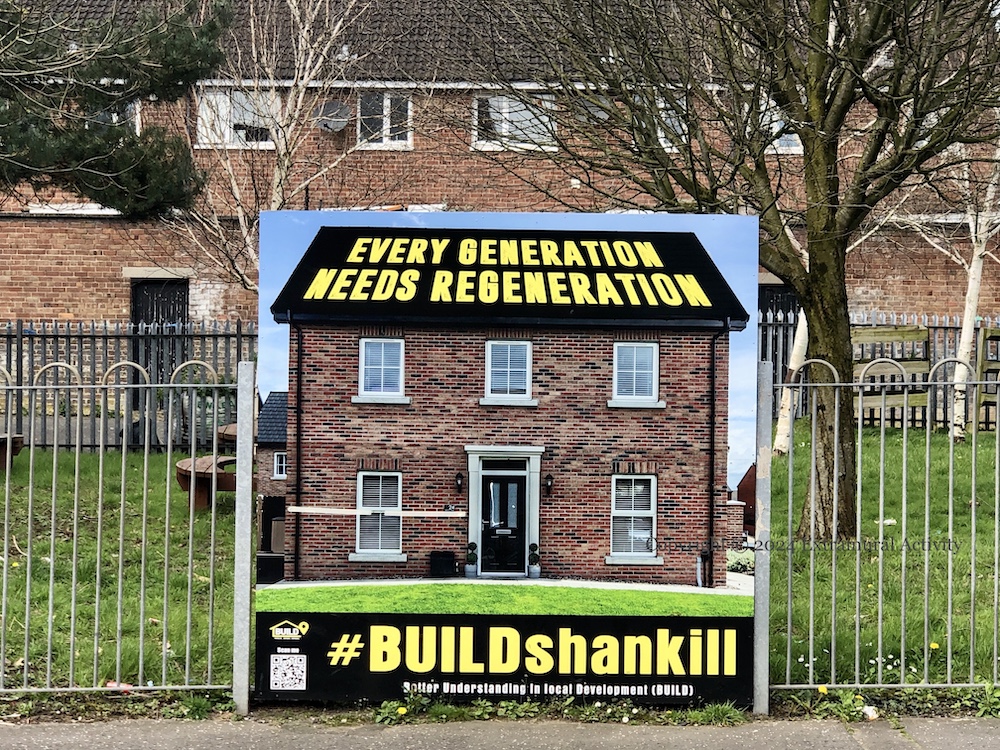
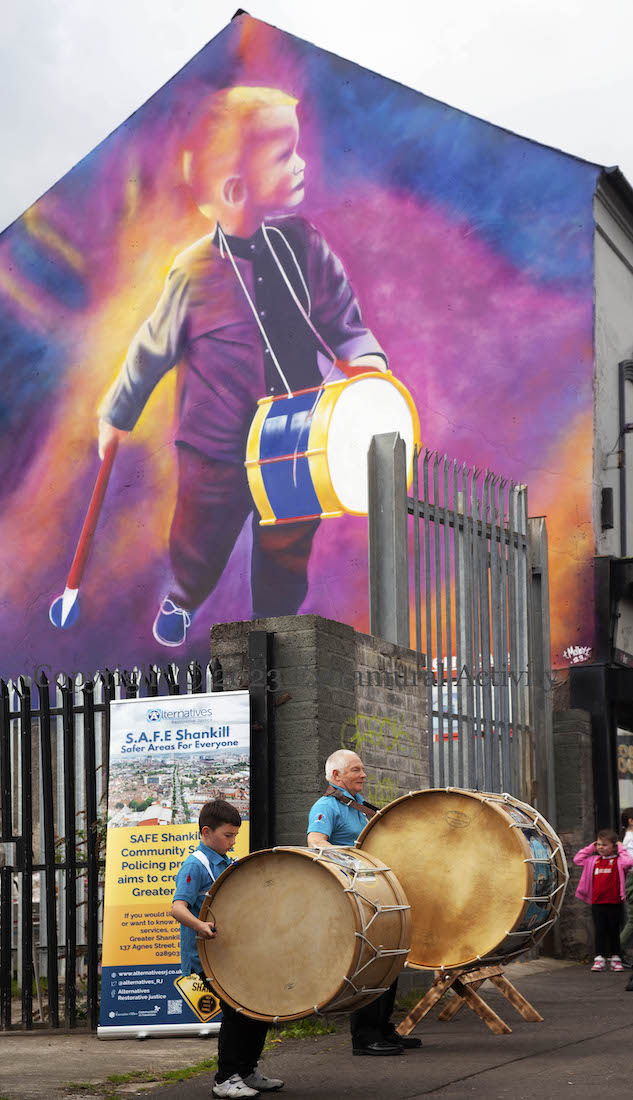
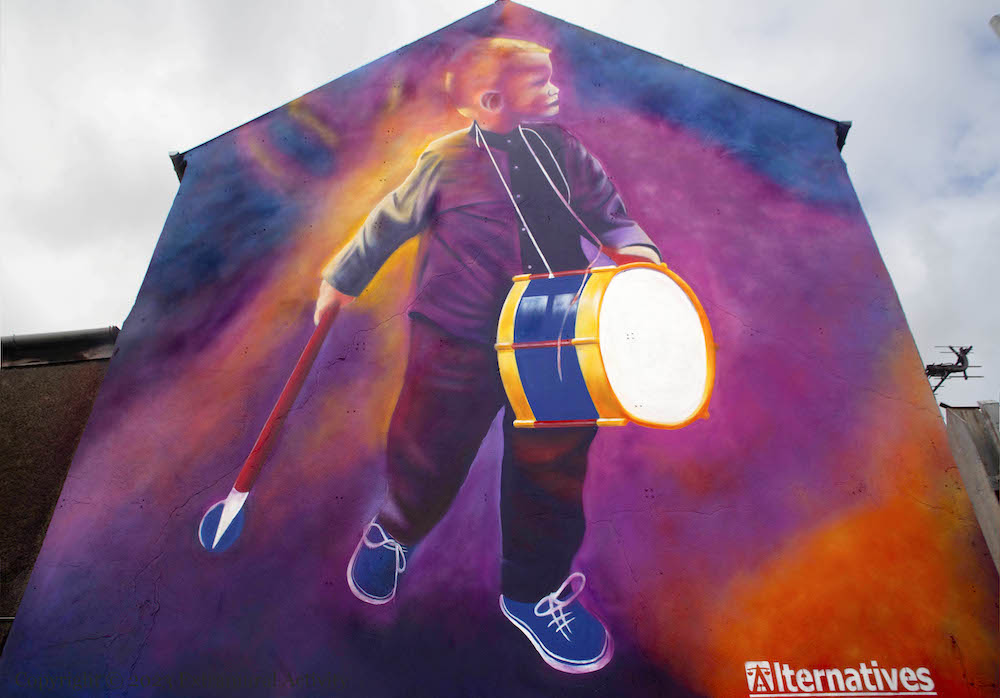
These BUILD (web) boards highlight areas of waste ground in the Shankill area: “Every generation needs regeneration” (above) is next to waste ground on the Shankill Road/Boundary Street; “our children deserve more than dereliction” (below) is next to waste ground in Tennent Street; the third site (with skip) is in Townsend Street/Dayton Street; the fourth (with the tarp) is on Peter’s Hill below the new Drummer Boy mural (see Shankill Drummer and The Little Drummer Boy). The final image is from the other side of the Crumlin Road, in Cliftonpark Avenue.
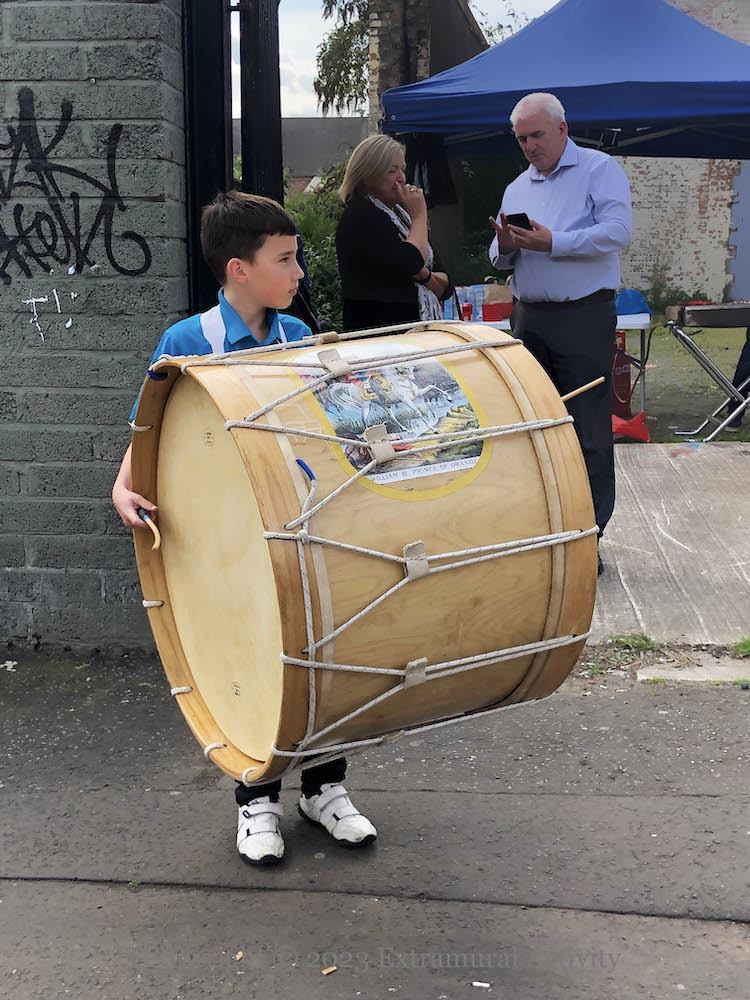
Members of Bannside Drumming Club (Fb) and Shankill Road Defenders (Fb) were on hand for the official launch of the Drummer Boy mural at the entrance to the Shankill on Peter’s Hill.
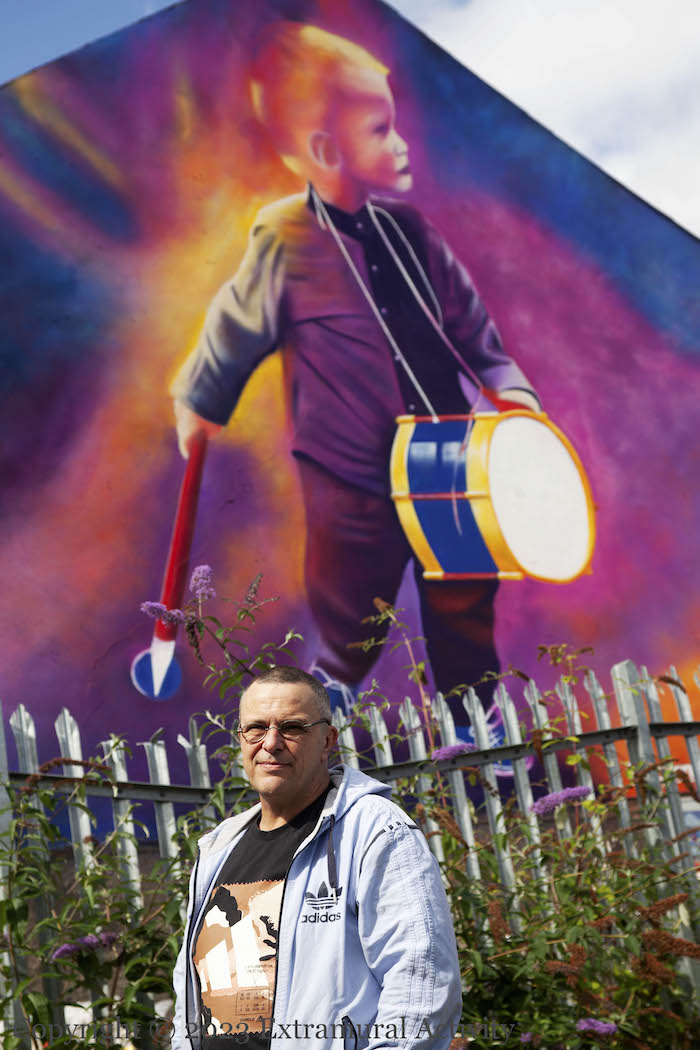
Stacey Graham from Alternatives (Fb) introduced DUP councillor (for Court) Ian McLaughlin, who said that the mural — painted by Glen Molloy (ig, pictured below) — would create “a welcoming, positive atmosphere here at the gateway to the Shankill area”.
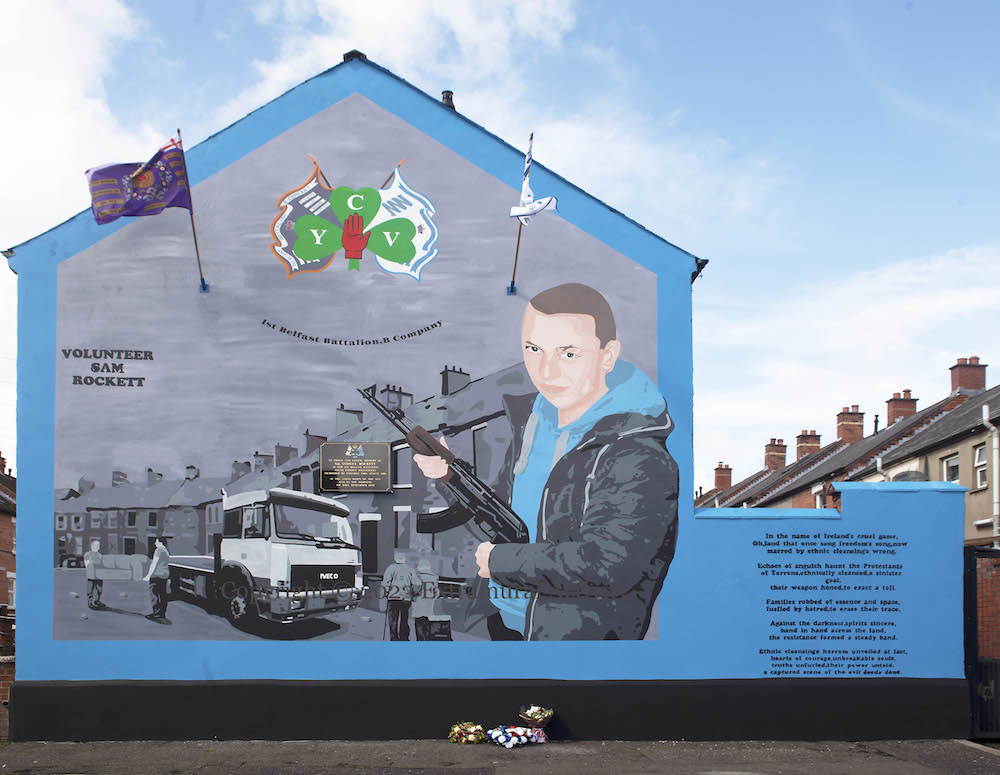
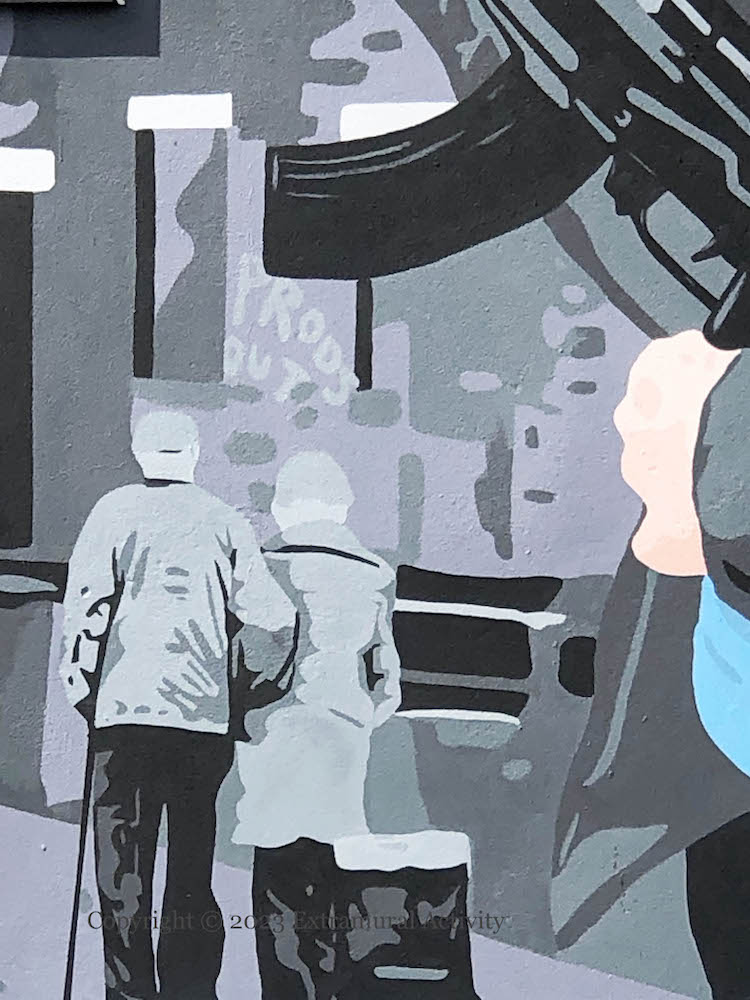
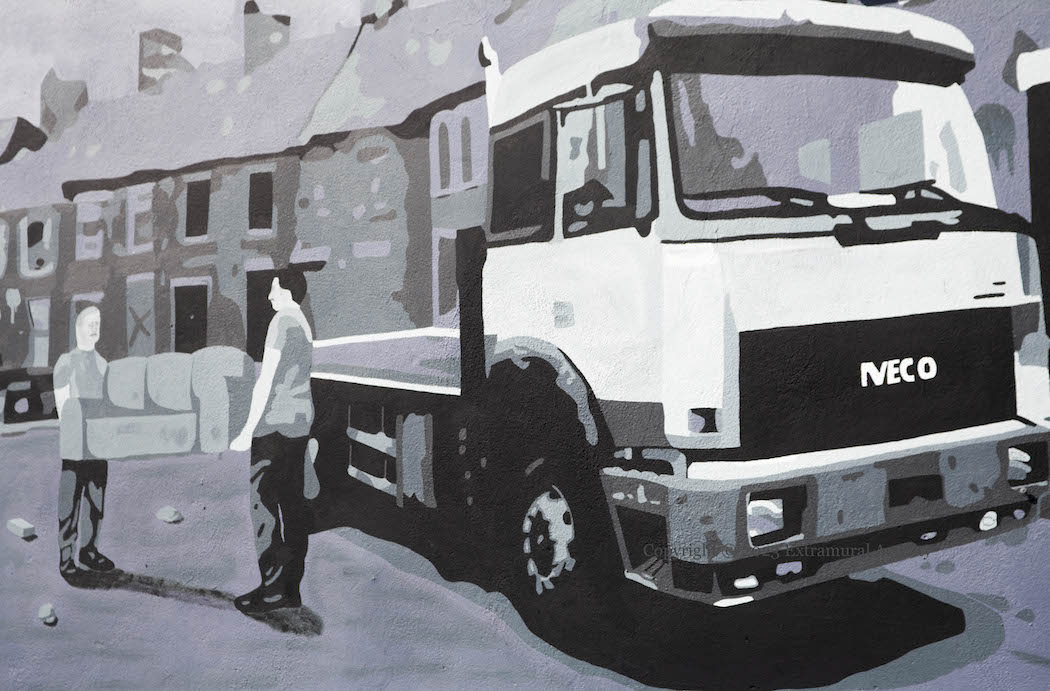
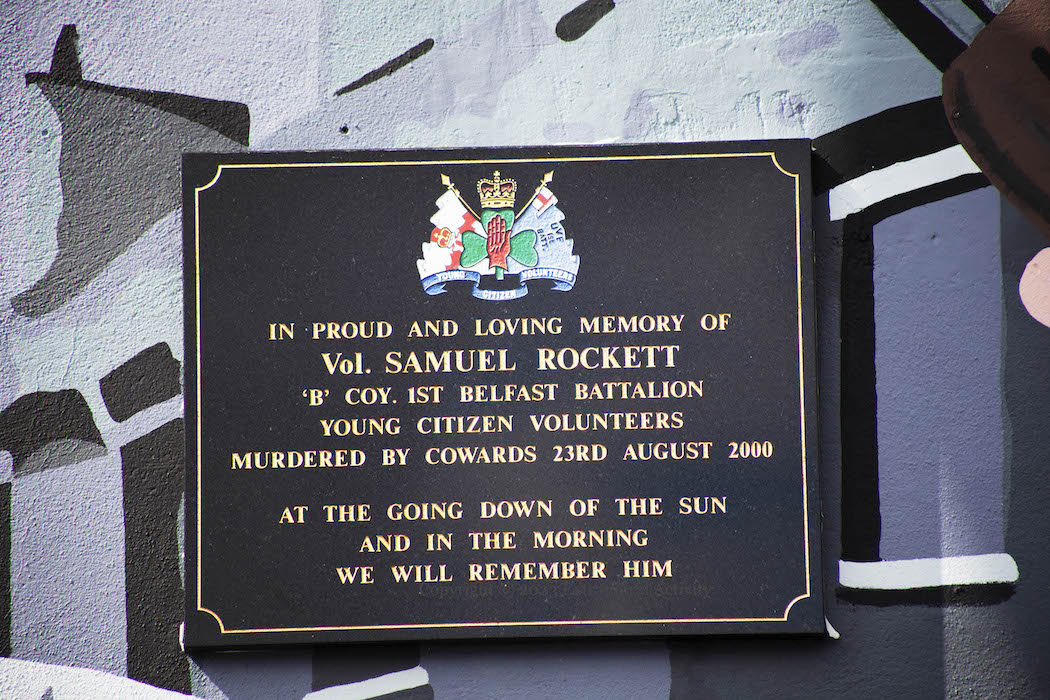
This is the new Sam Rockett mural in the Woodvale, replacing the mural seen in Murdered By Cowards. The old mural just featured Rockett, who died in August, 2000, in the feud between the UVF and lower Shankill UDA. This new mural also features the “ethnic cleansing” of Torrens in 2004.
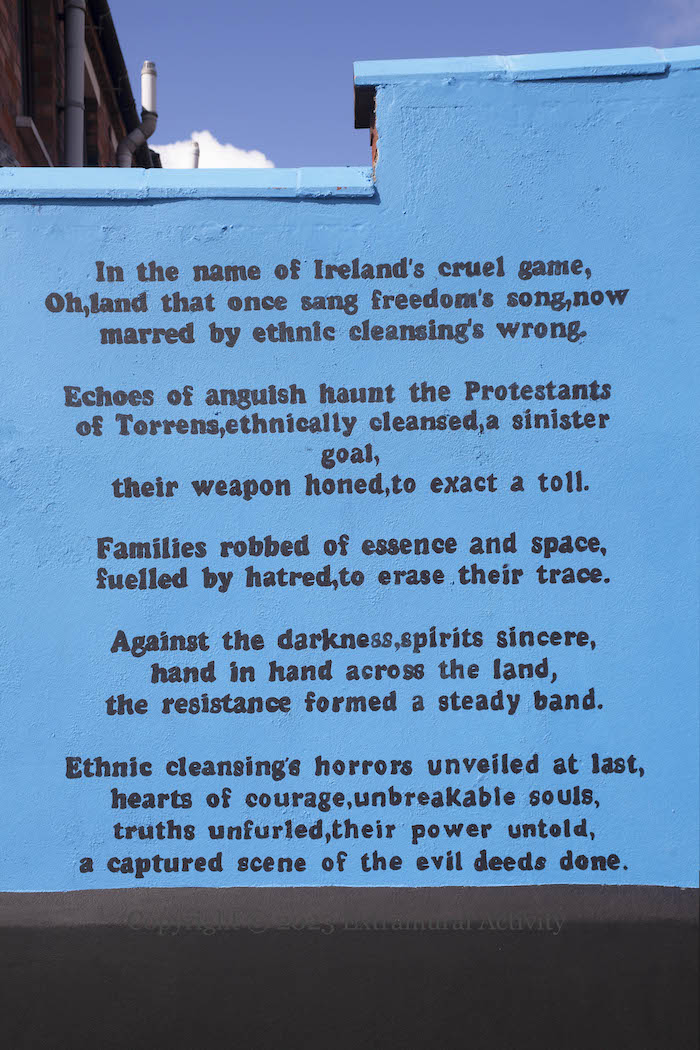
Torrens sits between Cliftonville, Ardoyne, and the lower Oldpark, and was one of the many historically mixed areas in north Belfast that, with the Troubles, became increasingly segregated and separated from neighbouring areas by “peace” lines. Jarman (1996) provides eye-witness testimony of the dispute in Torrens in 1996 which saw Catholic families leave the area. Its proximity to Ardoyne (and Cliftonville), however, meant that over the next few years the houses were gradually abandoned by Protestants, culminating in 2004 when ten of the remaining Protestant families moved out of the area, alleging persistent intimidation and employing the term term “ethnic cleansing” – a term the poem to the right of the mural uses three times.
The area was eventually redeveloped from 2008-2012, with the Wyndham Street “peace” line coming down and Elmgrove Street being opened to the Oldpark Road.
The line in the poem “the resistance formed a steady band” is unclear – it might refer to loyalists being bussed into Torrens in 1996 (see the testimonies in Jarman); if it refers to B Company it would make a connection to Rockett. As it is, the connection between the two elements of the mural (if any is intended) seems to be that Rockett was from the lower Oldpark, near Torrens.
“In the name of Ireland’s cruel game/Oh, land that once sang freedom’s song/Now marred by ethnic cleansing’s wrong.//Echoes of anguish haunt the Protestants of Torrens,/Ethnically cleansed, a sinister goal,/Their weapon honed, to exact a toll.//Families robbed of essence and space,/fuelled by hated, to erase their trace.//Against the darkness, spirits sincere,/Hand in hand across the land,/the resistance formed a steady band.//Ethnic cleansing’s horrors unveiled at last,/Hearts of courage, unbreakable souls,/Truths unfurled, their power untold,/A captured scene of the evil deeds done.”
The mural was completed for the anniversary of Rockett’s death on August 23rd. The source for the central image (of furniture being loaded into a lorry) is unknown.
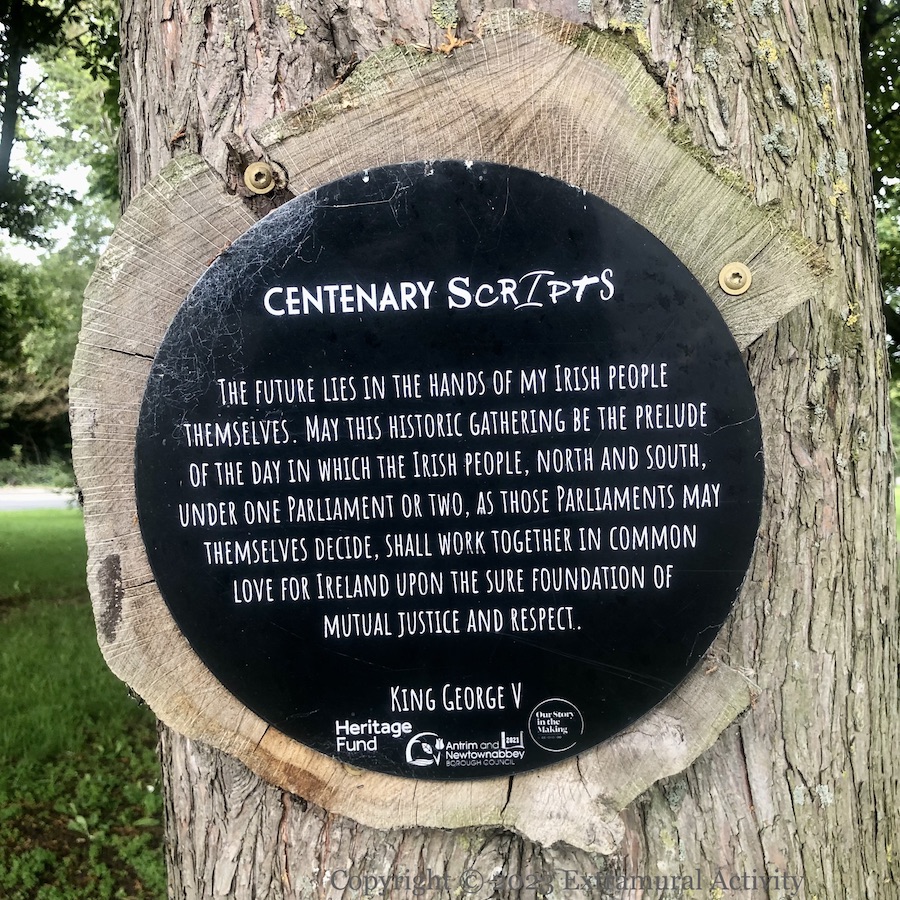
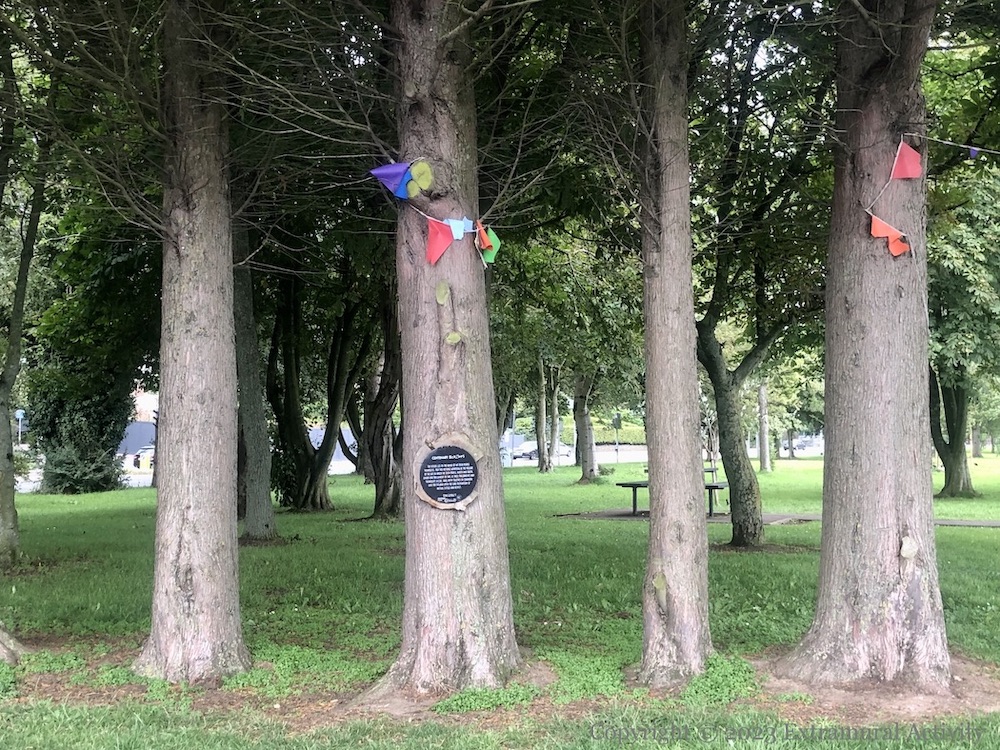
“Centenary Scripts: “The future lies in the hand of my Irish people themselves. May this historic gathering be the prelude of the day in which the Irish people, north and south, under one parliament or two, as those parliaments may decide, shall work together in common love for Ireland upon the sure foundation of mutual justice and respect. King George V.”
After the Northern Ireland parliament was opened, the debate continued as to whether Ireland would yet have a single parliament with Dominion status. The idea that Ireland, in whole or in part, would leave the empire was unimaginable to Britain – hence “my Irish people”.
“Mutual justice and respect”, it turned out, was generally in short supply. Unionists claimed they had accepted Home Rule (for Northern Ireland) as a sacrifice, preferring to be included in the empire parliament at Westminster, though one doubts the sincerity of this claim given their stance in the subsequent negotiations, which made clear that sharing power with nationalists and republicans would be intolerable. Thus, the sentiment that the future of Ireland lay in the hands of Irish people was understood to have limits.
A united Ireland was desired by nationalists and republicans, but as the negotiations continued throughout 1921 and into 1922 we can perhaps see republicans cut their losses – i.e. Northern Ireland – and instead drive towards independence for the Irish Free State. Departure from the empire and the fixity of partition quickly (in a matter of years, though it formally took a few decades) became a reality for Southern Ireland/Irish Free State/(Republic of) Ireland.
 Seosamh Mac Coille Collection