Messines 1917

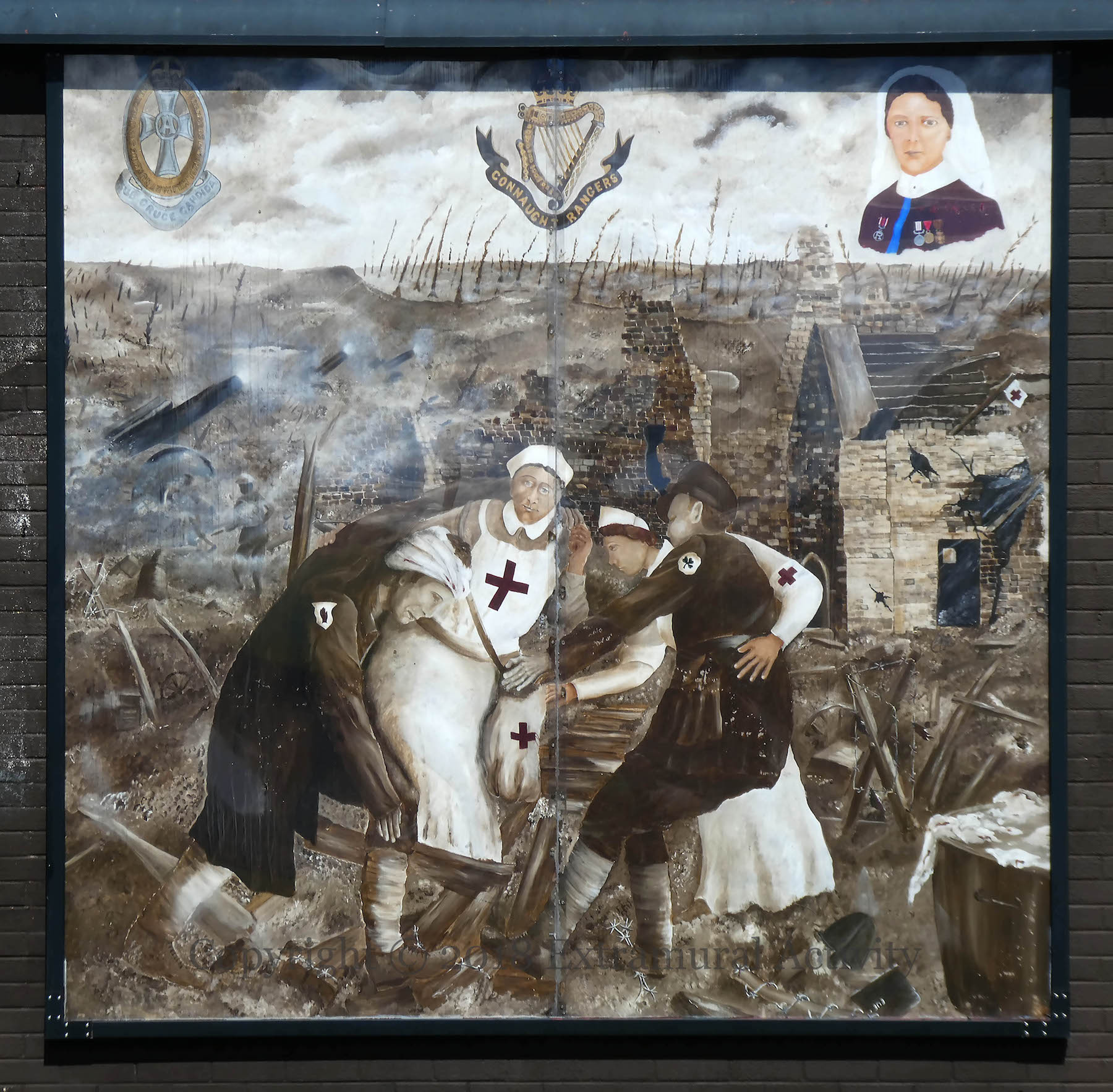
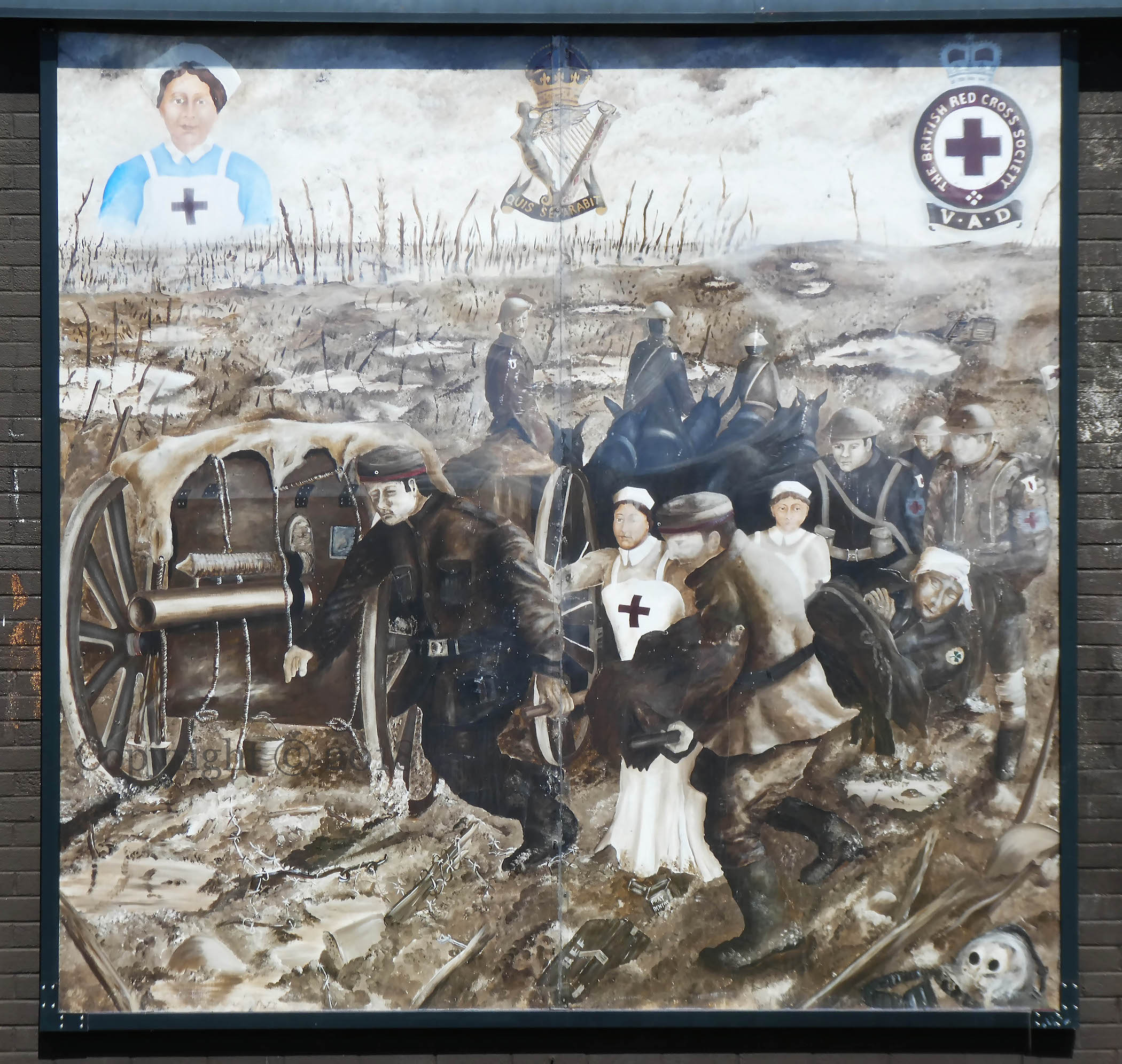
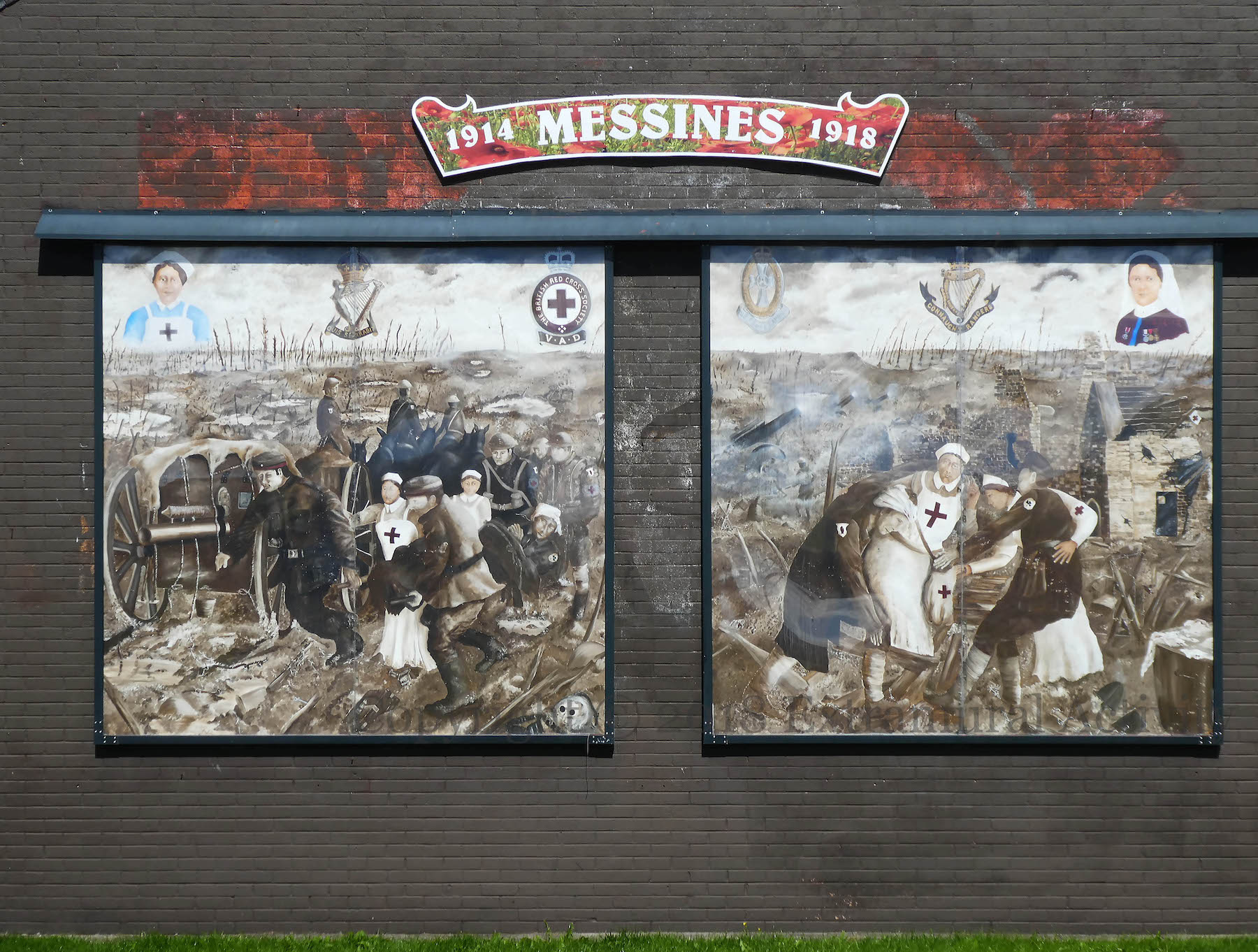
Two panels commemorate the Battle Of Messines in 1917 and the role of nurses in attending to the wounded. This NIHE article says that the two nurses depicted are Annie Colhoun from London-/Derry and Margaret Dewar from Glasgow. “Margaret Dewar lost her life during the battle whilst Annie Colhoun survived and was decorated for her work during the war by the French, Serbian and British Governments.” (This presumably makes her the decorated nurse in the right-hand panel.) An Army Nursing Service page says, however, that they were nurses at Monastir in Macedonia.

“Sub cruce candida” (“under a white cross”) is the motto of the Queen Alexandra’s Royal Army Nursing Corps, though at the time of WWI it was Queen Alexandra’s Imperial Military Nursing Service. “VAD” stands for “voluntary aid detachment” of the British Red Cross.

The soldiers wear red hands or shamrocks on their arms. The red hand is for the 36th (Ulster) Division and the cap badge in the left panel is of the 36th. The shamrock is the symbol of the 16th (Irish) Division, and the right panel shows the cap badge of the Connaught Rangers whose battalions served in both the 10th (Irish) and 16th (Irish) Divisions in WWI. Both the 36th and 16th fought at the Somme and at Messines (WP).
Click image to enlarge
Copyright © 2018 Seosamh Mac Coılle
X06067 X06066 X06065 abbot gdns
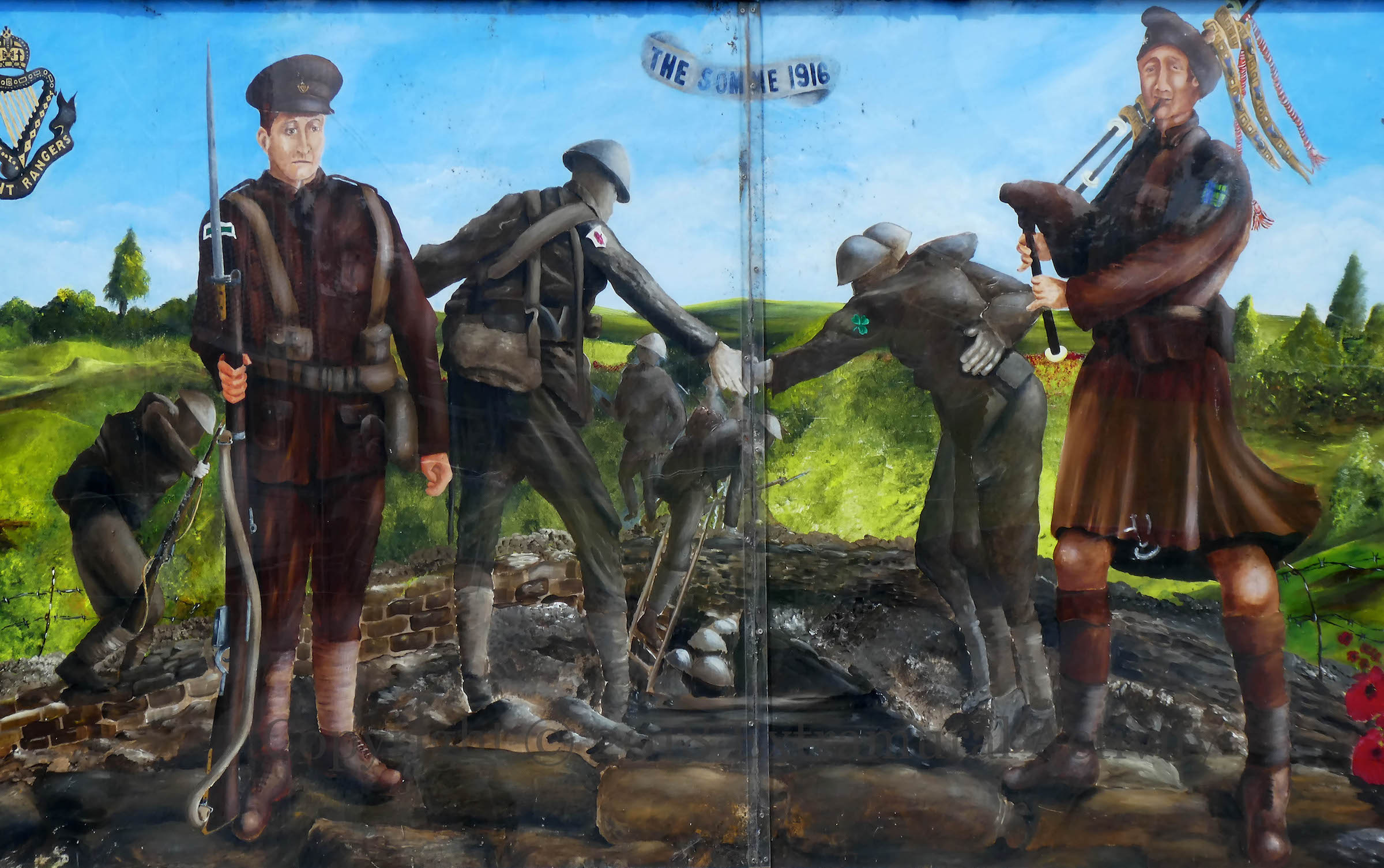
Brothers In Arms

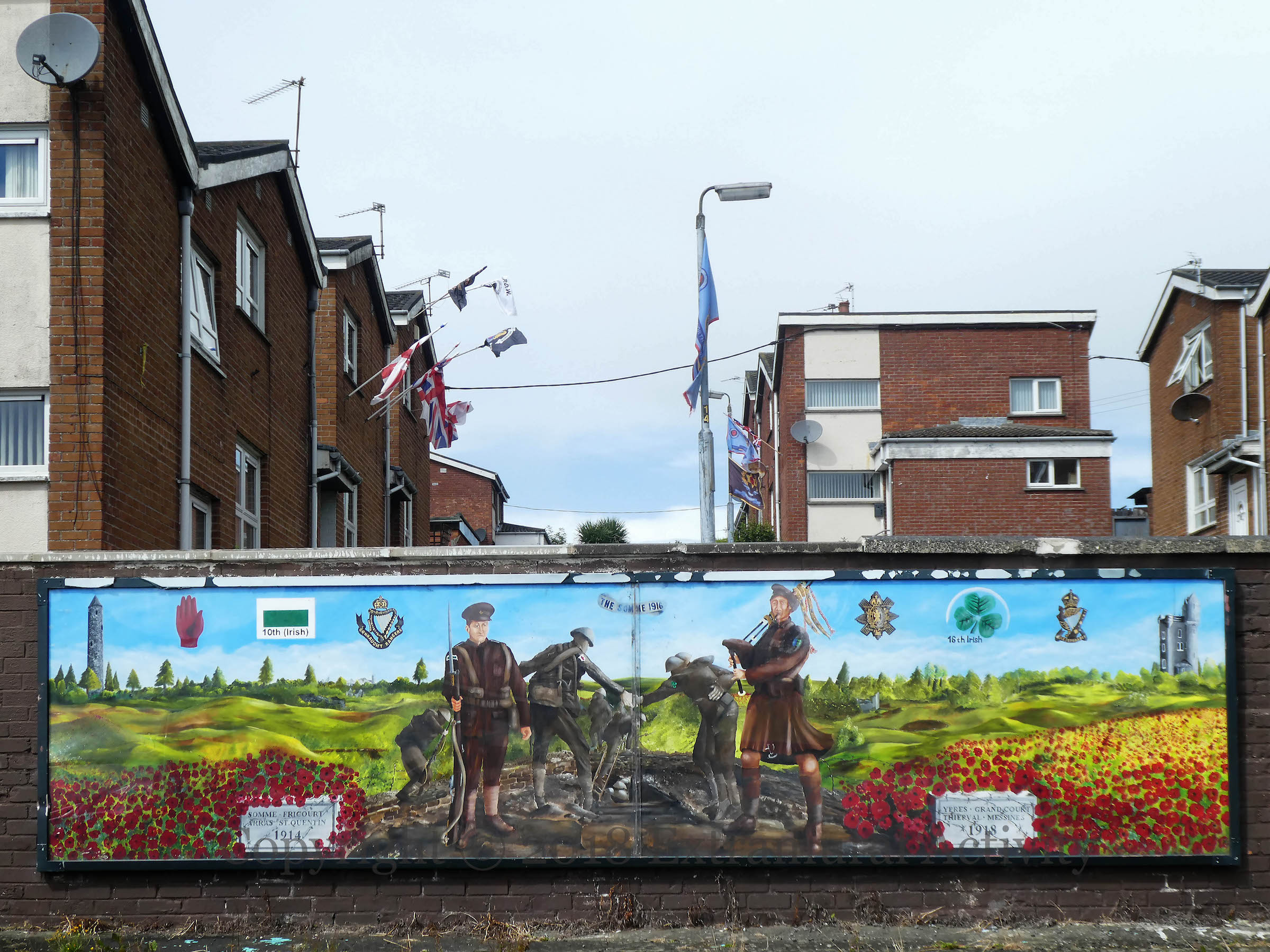
The 36th (Ulster) Division fought in the Battle Of Albert at the beginning of the Battle Of The Somme (July 1st-13th), and the 16th (Irish) in the battles of Guillemont and Ginchy in September (WP). The 10th (Irish) served at Gallipoli (and later in Macedonia and Palestine). The scene above shows soldiers from the 36th and 16th hand-in-hand at “The Somme 1916” – both division took part in the Battle – which lasted four and half months – but not at the same time; such scenes were instead reported of the battle at Messines in 1917 (see previously: Messines 1917).

Of the icons along the top, we see from left to right: Scrabo Tower; the red hand of the 36th; the green bar badge of the 10th (Irish) Division; the harp of the Connaught Rangers (battalions of which served in 10th and 16th Divisions); the emblem of the Black Watch – Royal Highlanders (the piping soldier right of centre wears a tartan patch of the Black Watch); the shamrock of the 16th (Irish) Division; the Maid Of Erin harp of the Royal Irish Rifles; Helen’s Tower/Thiepval Tower. It’s not clear why the Black Watch is included, as its battalions do not seem to have served with any of the 10th, 16th, or 36th and is a Scottish regiment rather than an Irish one. Please comment/get in touch if you can explain.

Click image to enlarge
Copyright © 2018 Seosamh Mac Coılle
X06054 X06055 [X06056] dicksonia dr

Our Heritage In Your Hands

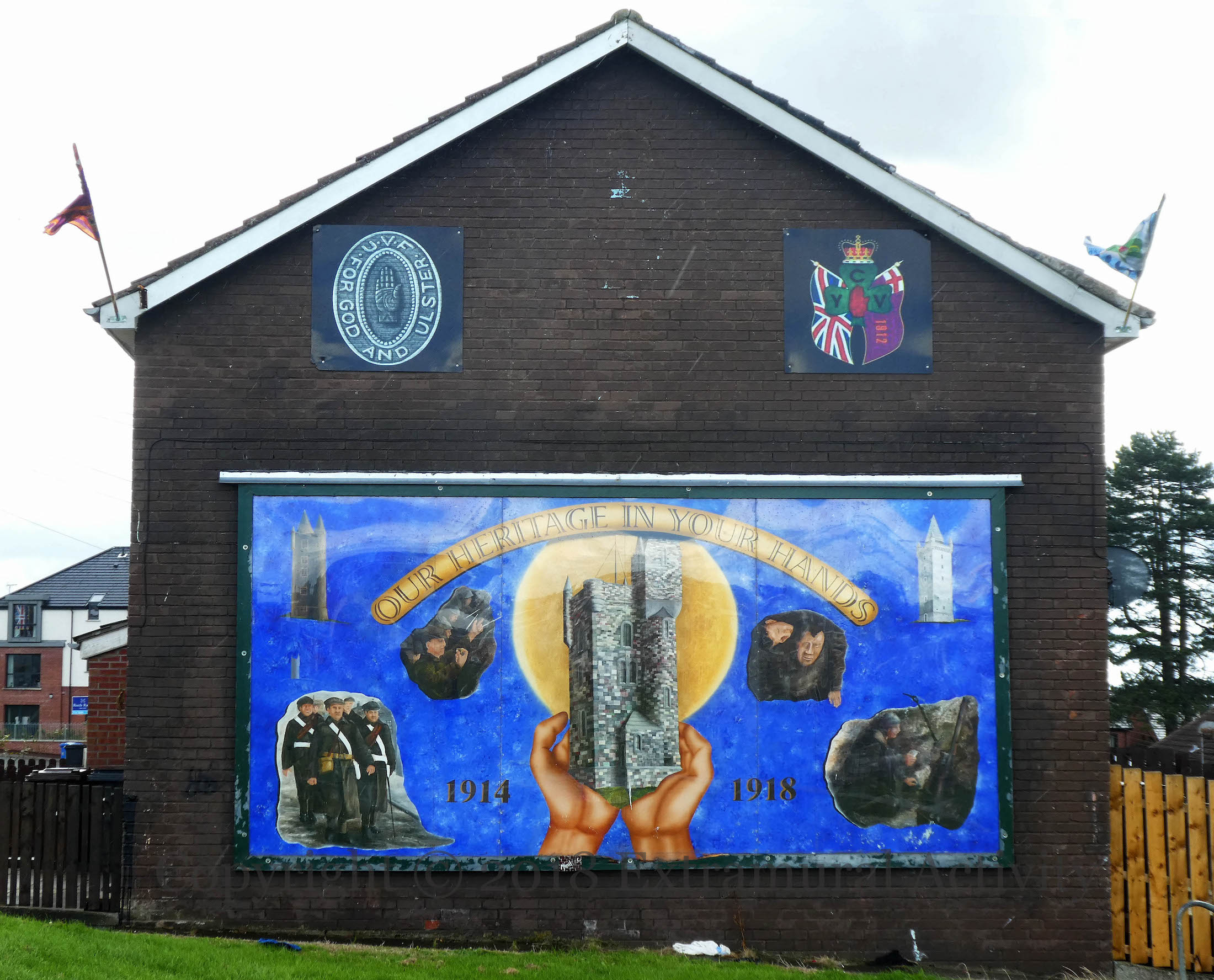
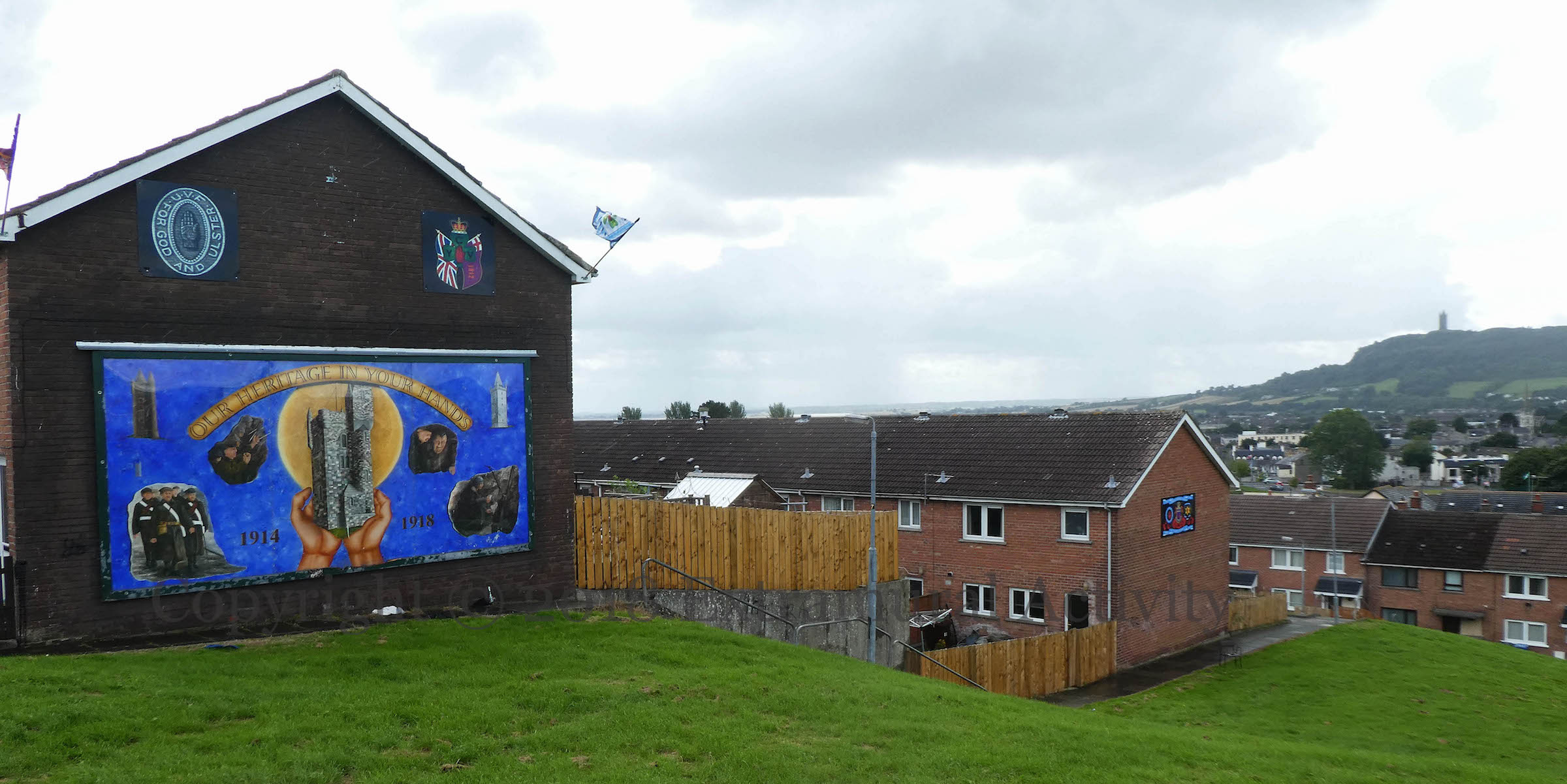
The Ulster Tower at Thiepval, France, is a replica of Helen’s Tower in Clandeboye, around which the 36th (Ulster) Brigade, formed in August 1914 from the Ulster Volunteers and Young Citizen Volunteers, began their training (see this gallery of images from North Down Museum at BBC-NI). After a year of training in Ireland and England, the Division was deployed to France in September 1915.

In the top corners are two views of the local Scrabo Tower, which can be seen to the right in the wide shot, below. Produced by muraltec.

X06057 2018-08-21 North Down West Belfast+

Click image to enlarge
Copyright © 2018 Seosamh Mac Coılle
X06049 [X06050] X06051 [X06052] [X06053] X06057 Ilex Ave

We Will Remember Them

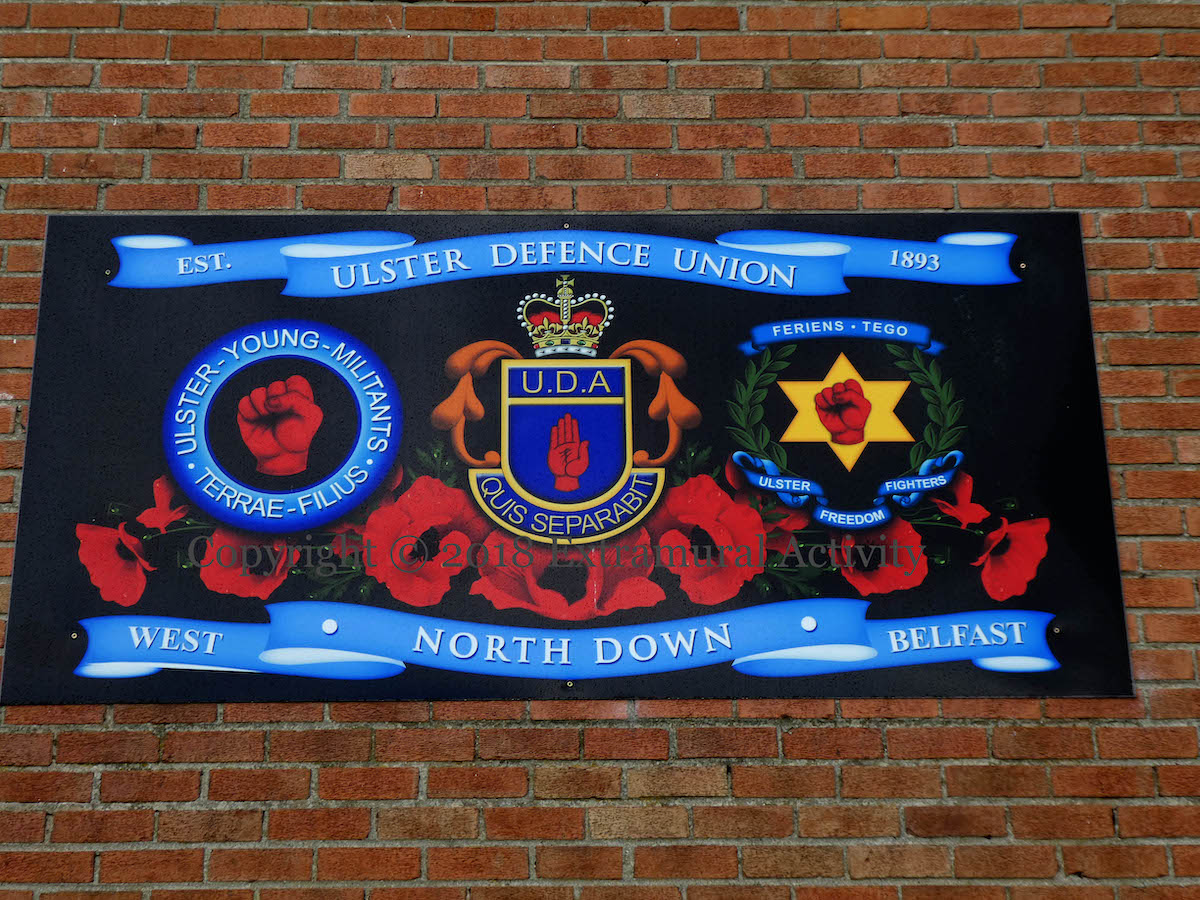
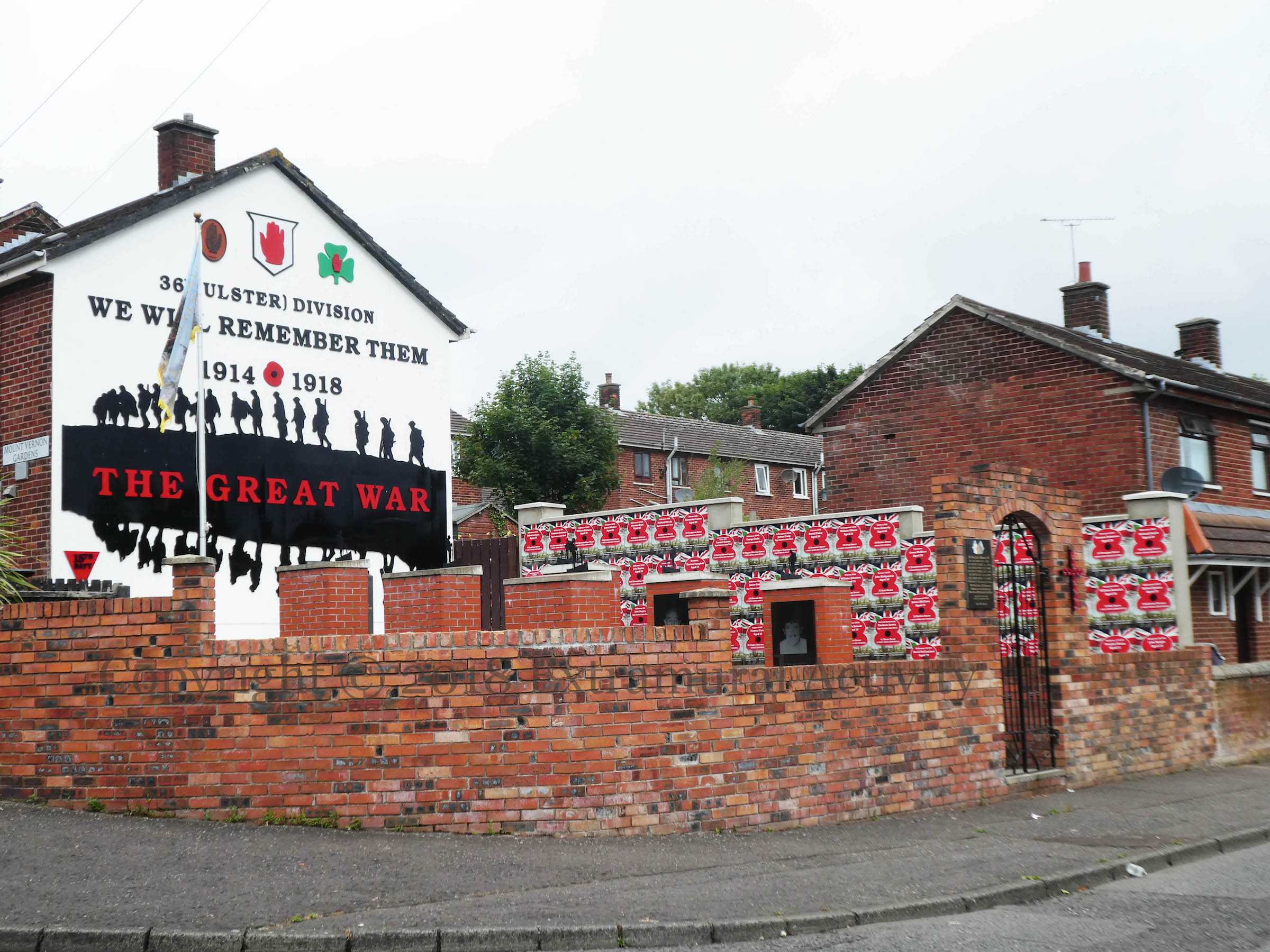
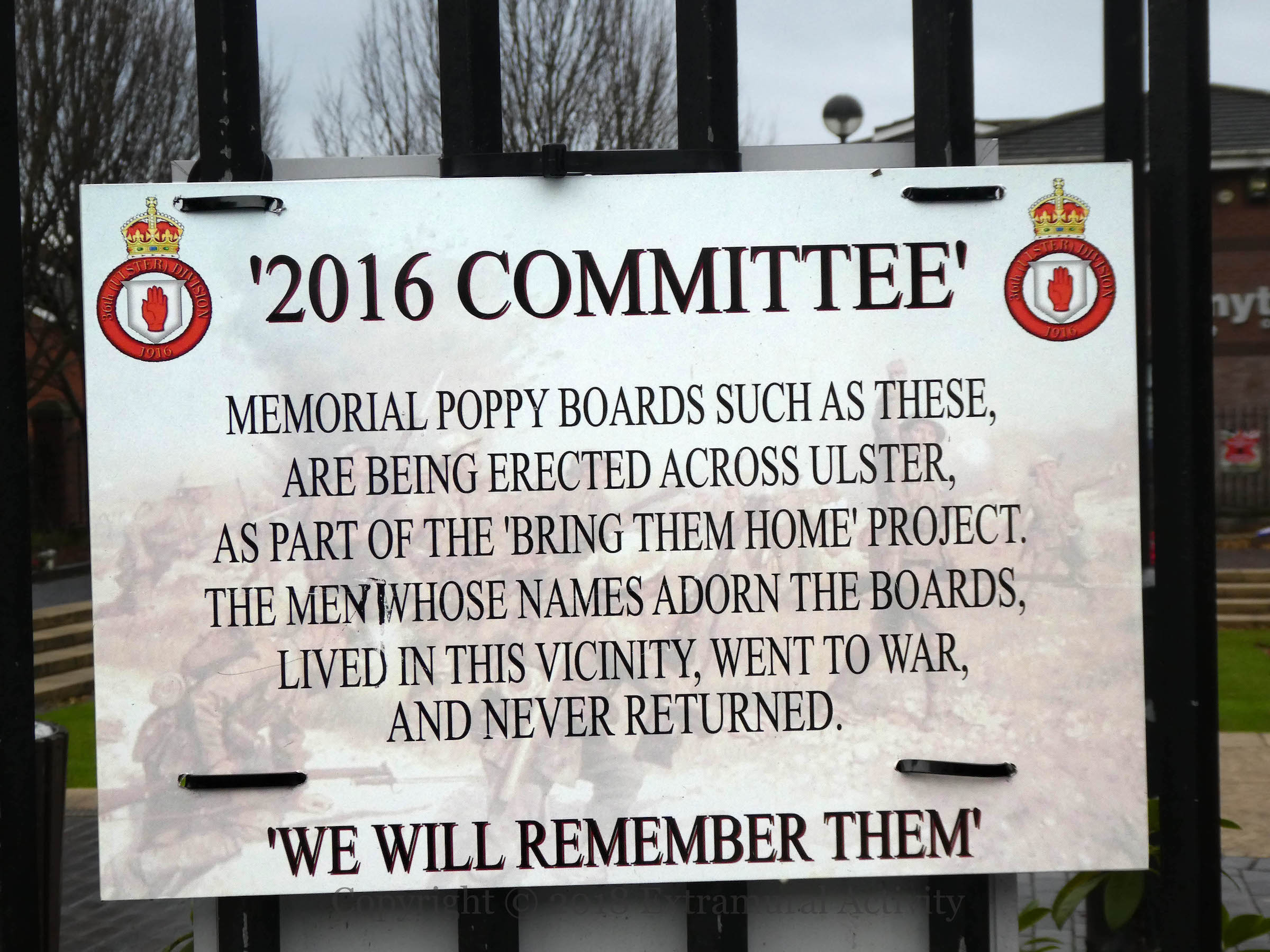
Dozens of boards to local soldiers from the 36th (Ulster) Division (by the 2016 Committee) have been added to the Mount Vernon memorial garden to the soldiers of the Great War (the mural) and contemporary UVF volunteers (the garden). For the mural, memorial stones, and outside plaque, see At Home And On The Mainland.

Click image to enlarge
Copyright © 2018 Seosamh Mac Coılle
X06016

Pride Of Ballymacash

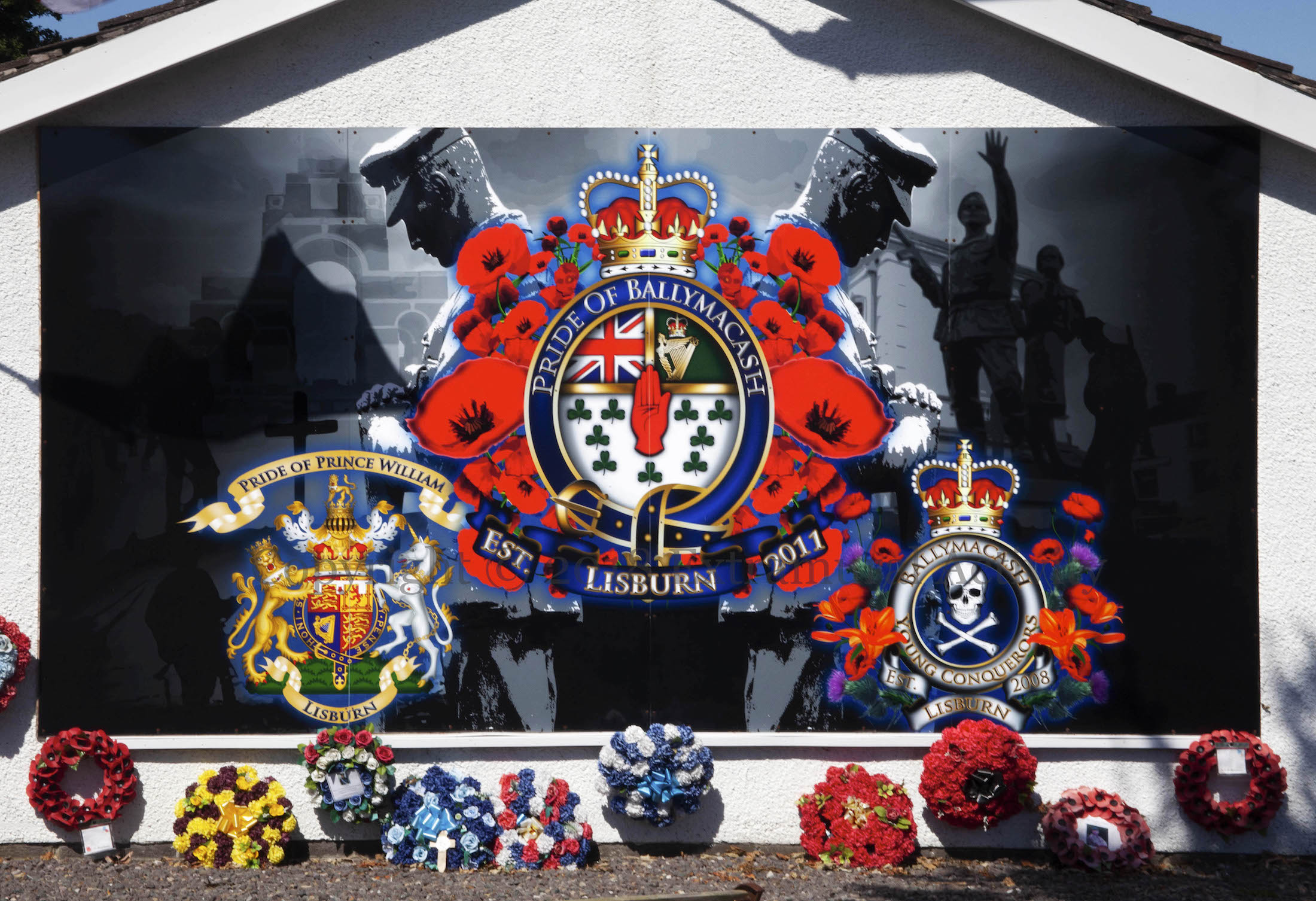
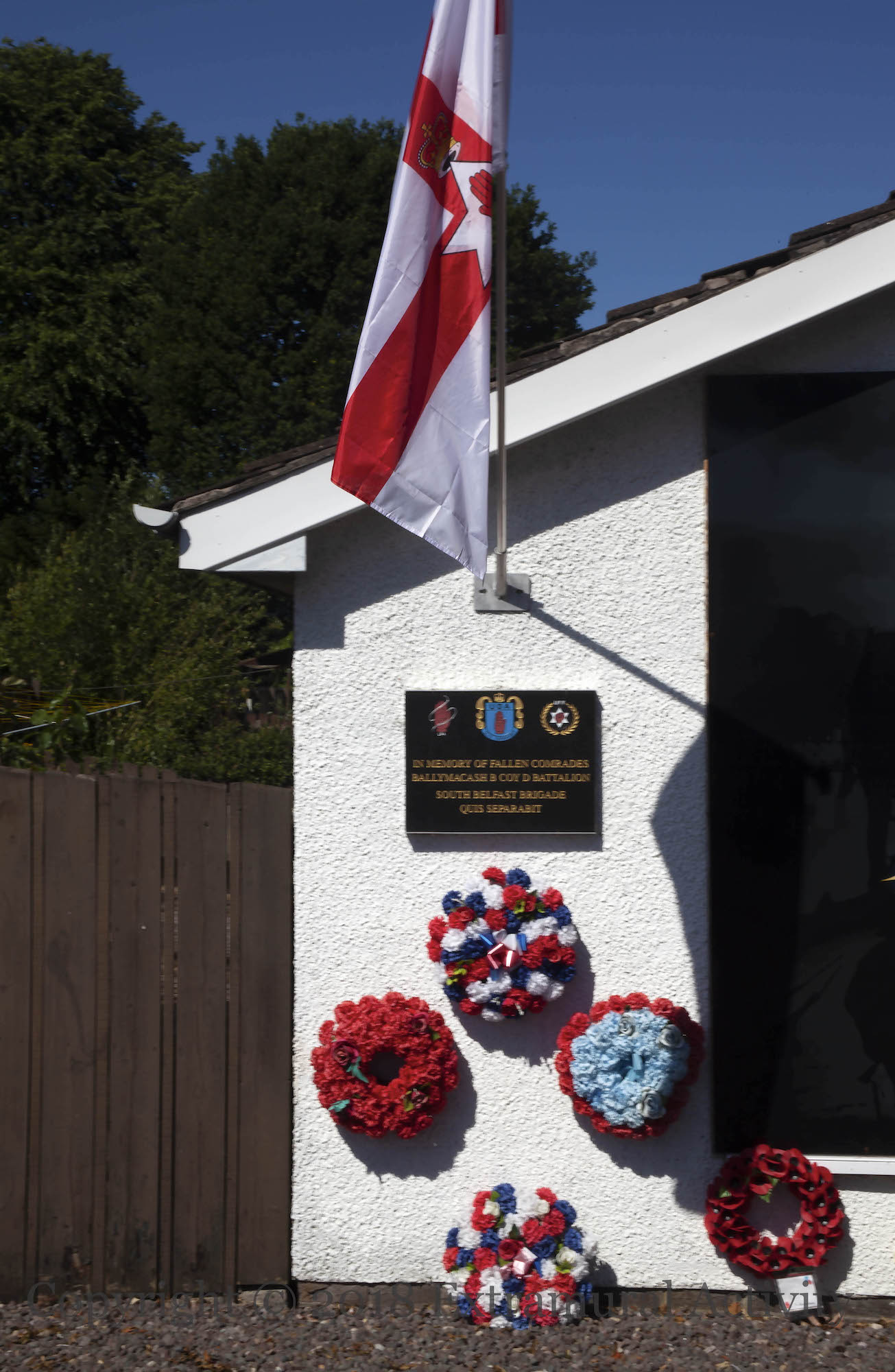
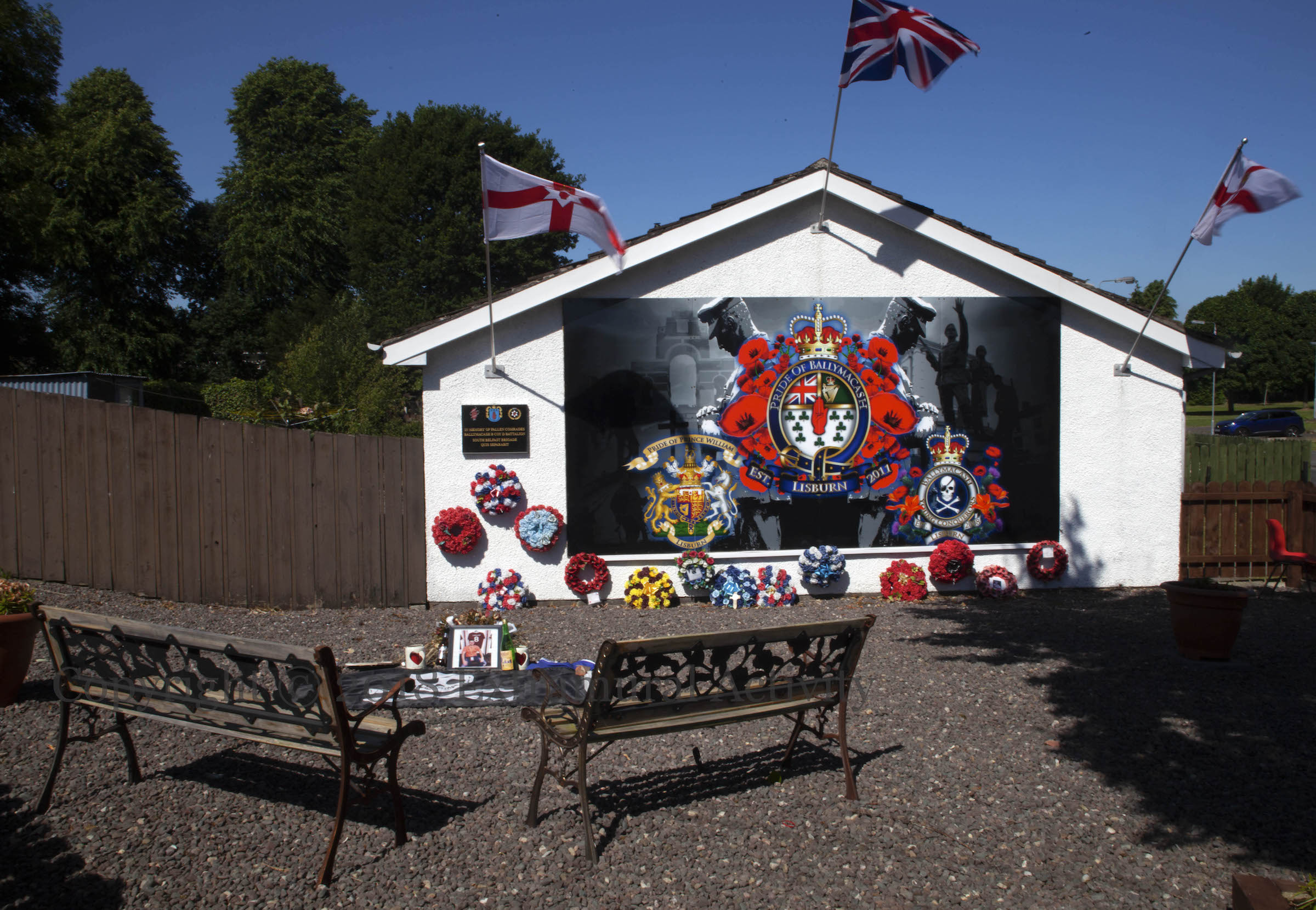
The Pride Of Ballymacash flute band, formed in 2011 from the Pride Of Prince William (bottom left) and Ballymacash Young Conquerors (bottom right), uses the emblem of the 36th (Ulster) Division, in the centre of the mural. In the background on the left is the Thiepval Memorial and, on the right, the UDR memorial statue in Market Square, Lisburn. To the left (in the second image) is a UDA plaque “In memory of fallen comrades Ballymacash B coy D battaltion, South Belfast Brigade. Quis separabit.” For a close-up of the memorial on the ground, see Death & Life.

Click image to enlarge
Copyright © 2018 Seosamh Mac Coılle
X04999 X06001 X04998

Who Went To War And Never Returned

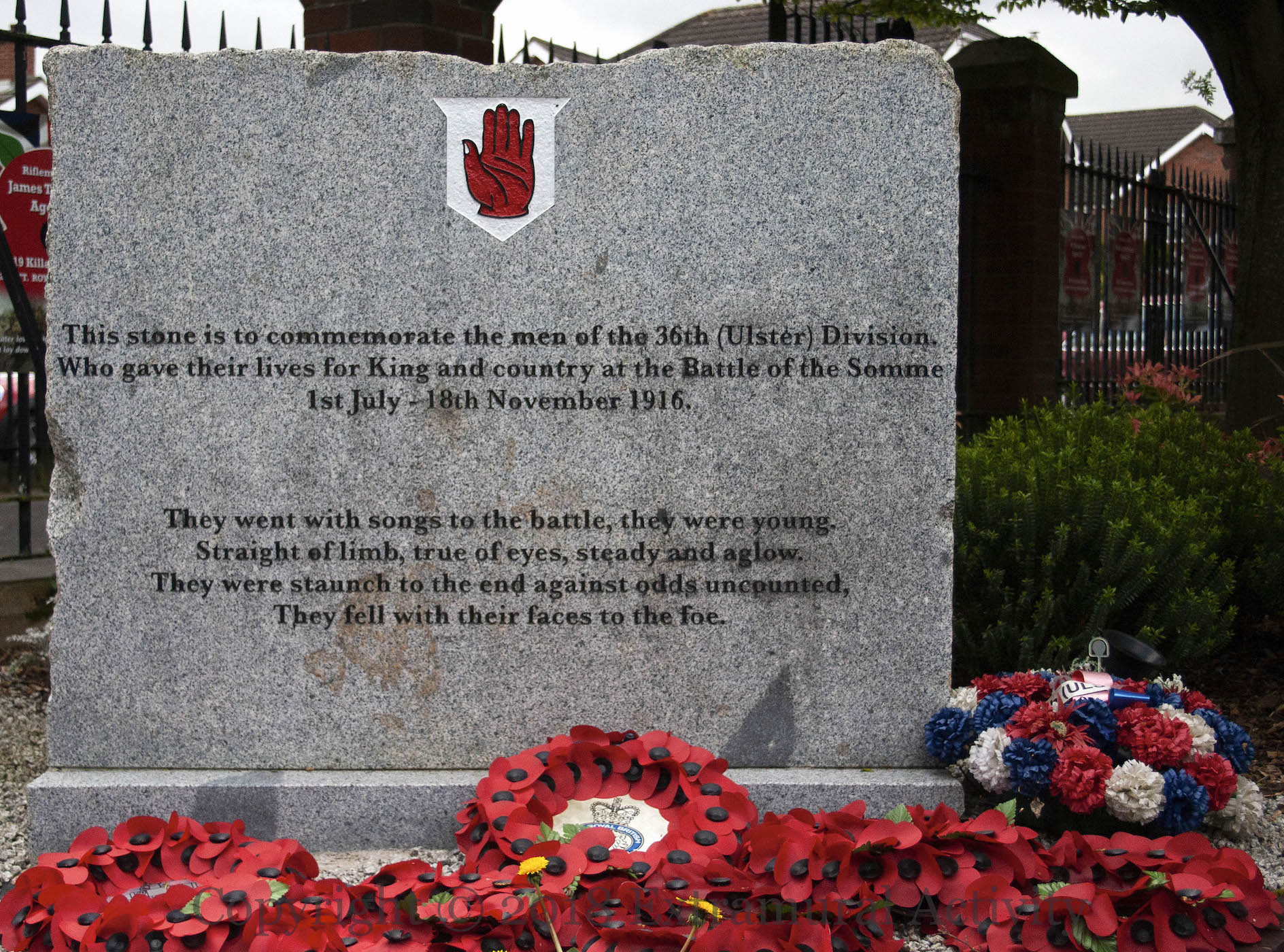
It is usually the fourth verse from Laurence Binyon’s poem For The Fallen that is quoted on memorial stones to the fallen of the WWI but here we have the third verse: They went with songs to the battle, they were young/Straight of limb, true of eyes, steady and aglow/They were staunch to the end against odds uncounted/They fell with their faces to the foe. The stone commemorates “the men of the 36th (Ulster) Division who gave their lives for King and country at the Battle of the Somme 1st July – 18th November 1916”. It is in the garden adjacent to the West Kirk Presbyterian church (Fb) on the Shankill Road. As the image below shows, the garden is also host to many small boards to individual soldier (see previously Among The FallenXXXVI | The Sacrifice Remains The Same).

Click image to enlarge
Copyright © 2018 Seosamh Mac Coılle
X04938 X04747

They Fought And Died Like Men

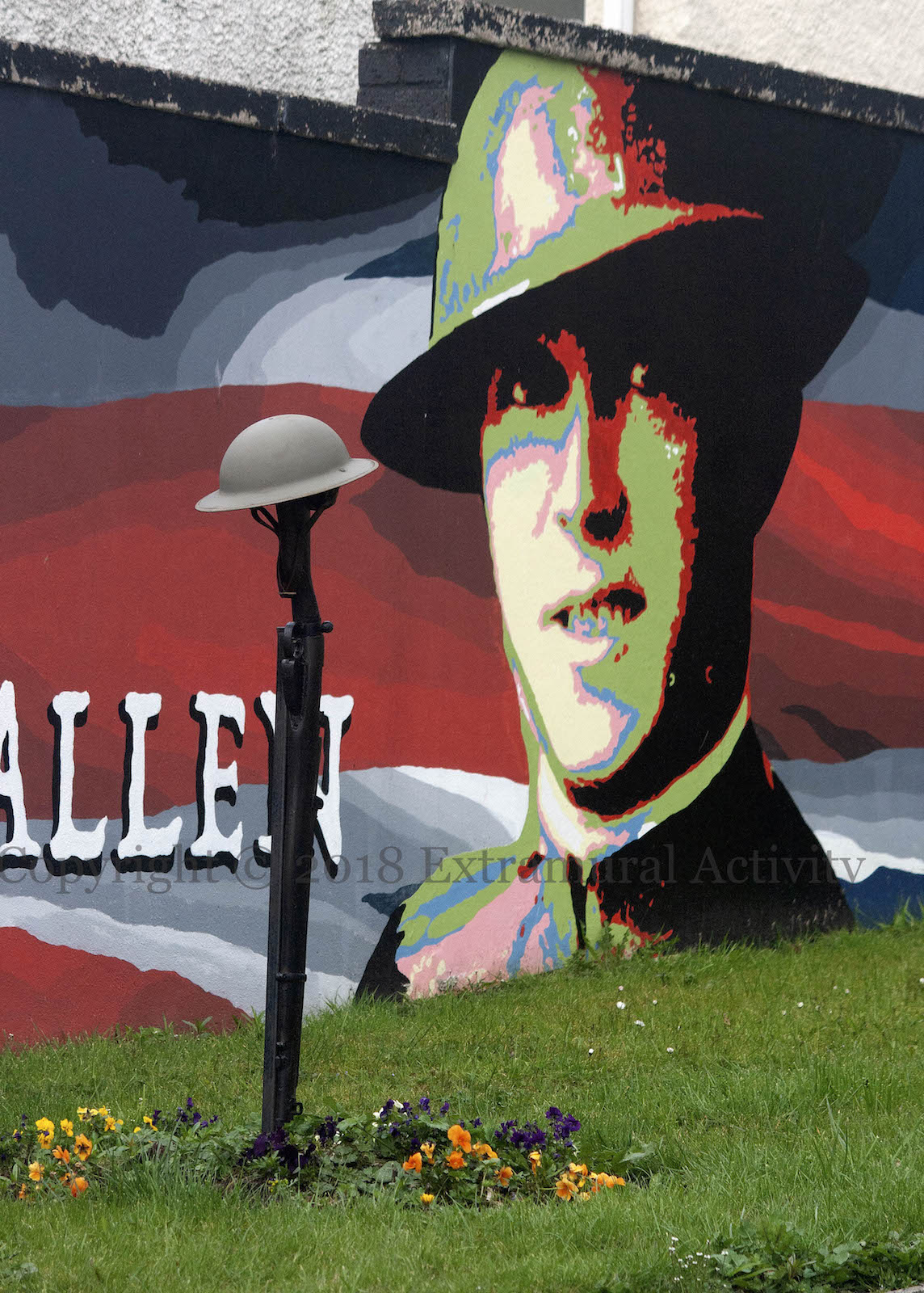
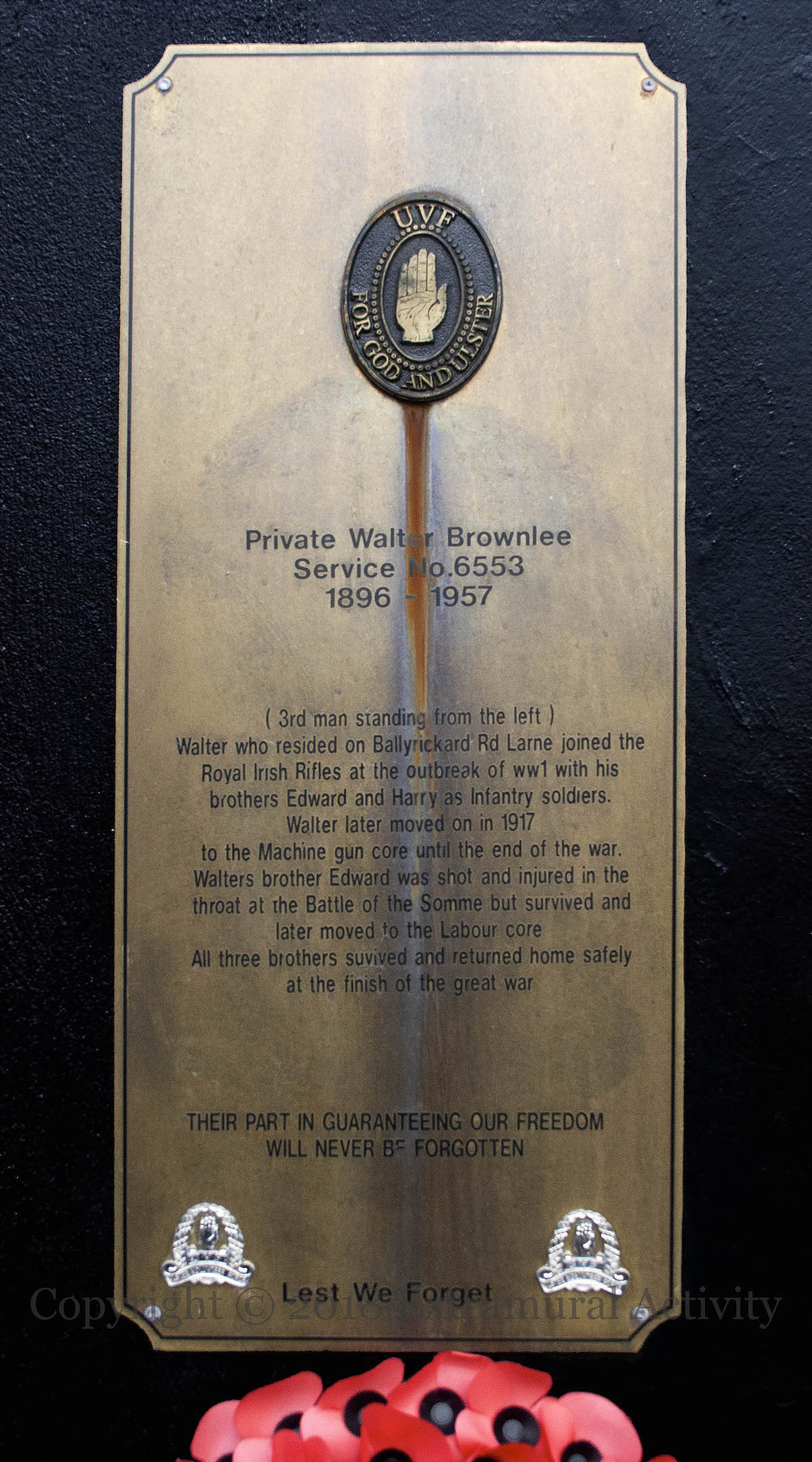
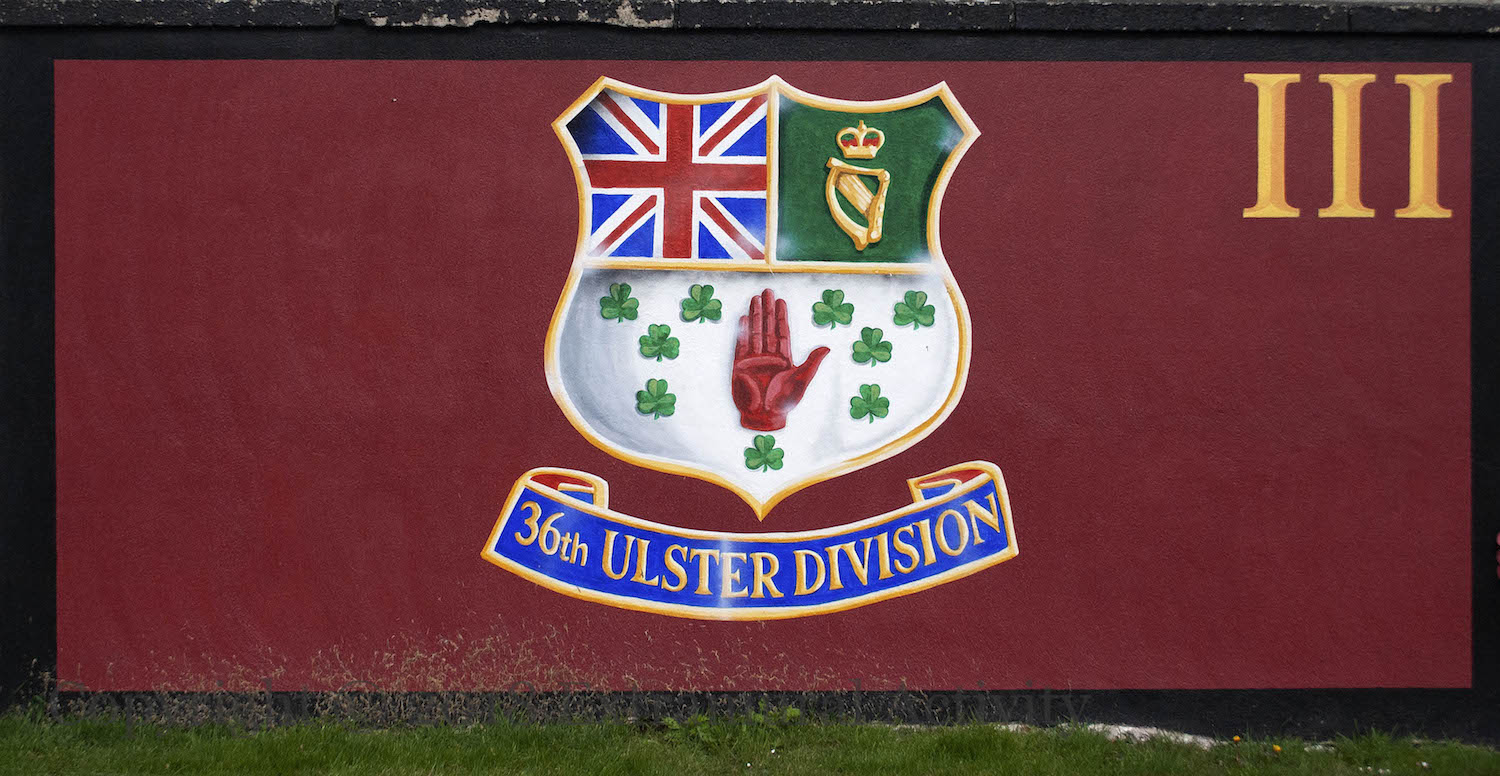
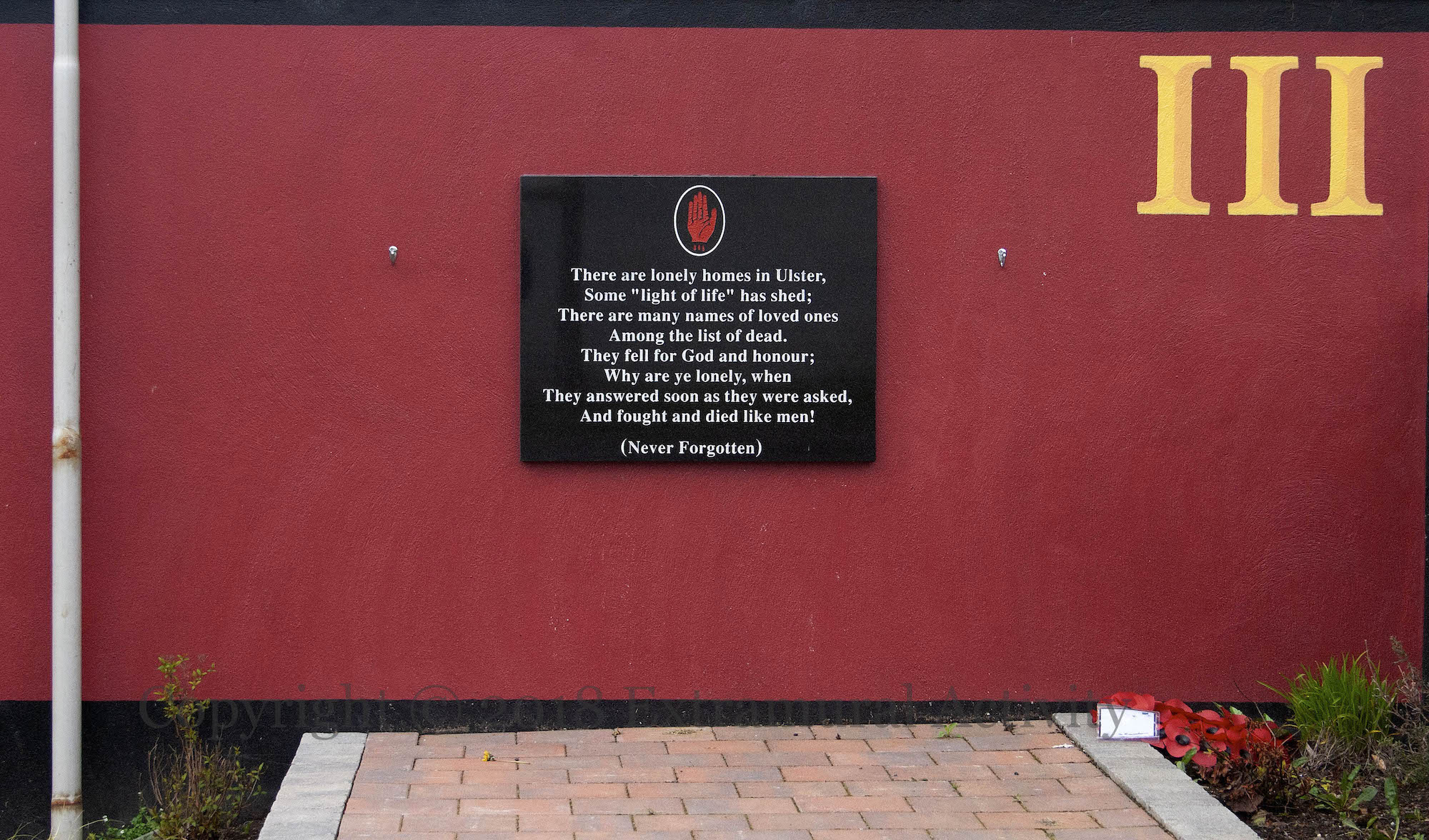
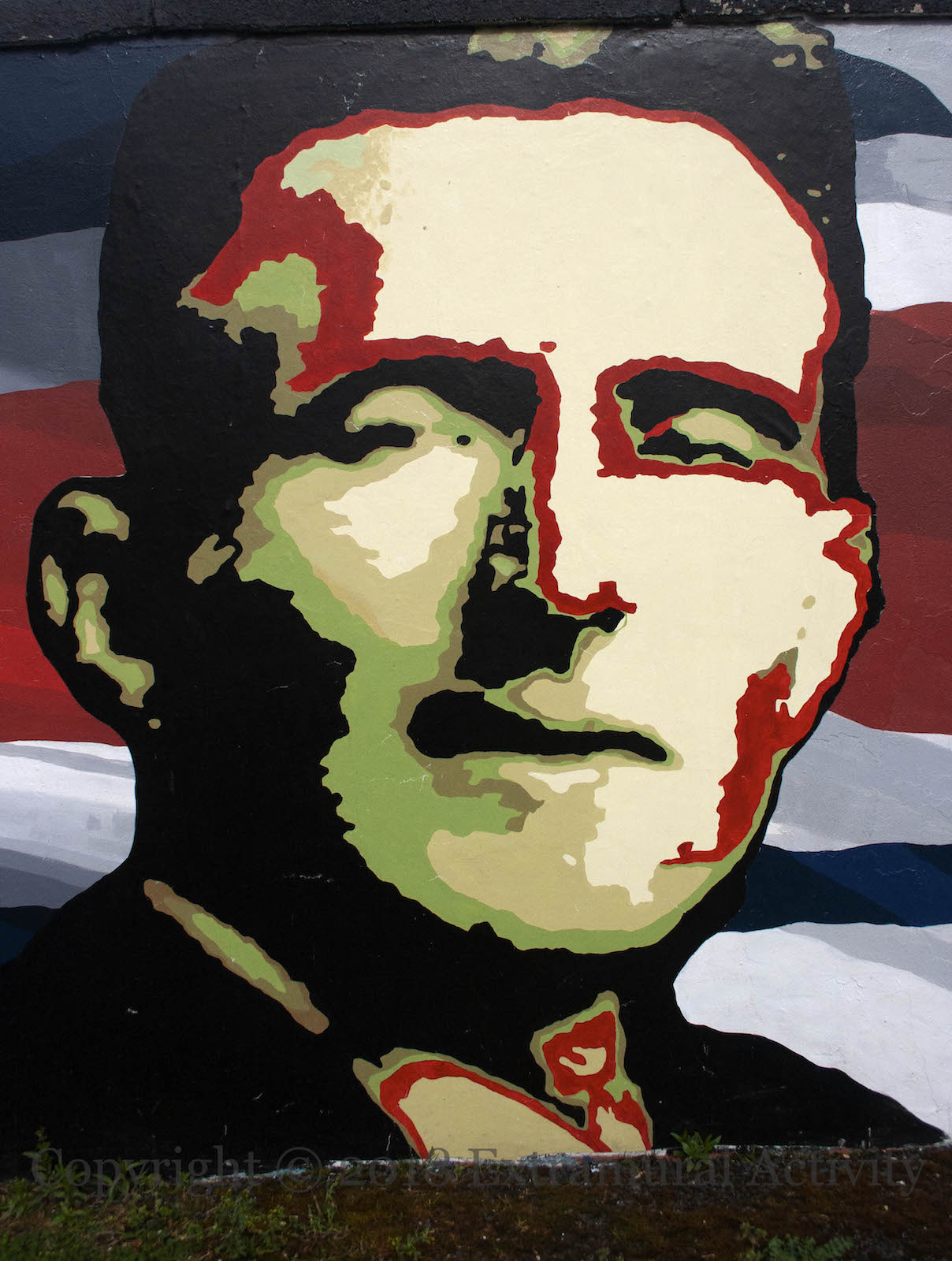
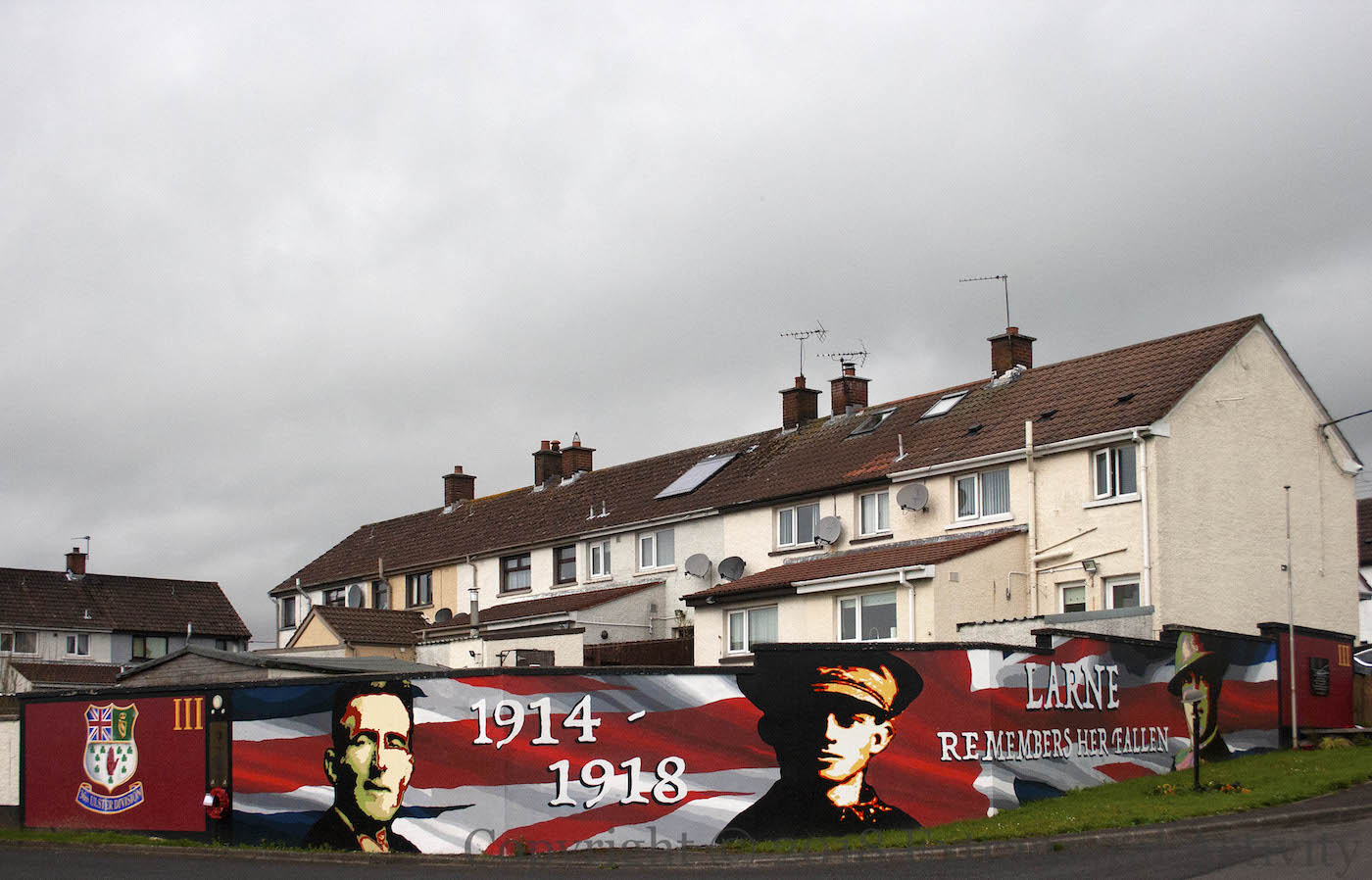
Here are five more images of the WWI memorial mural (featured separately) in Drumahoe Gardens, Larne, including a plaque to Walter Brownlee and his brothers Edward and Harry, all of whom survived the war.

“There are lonely homes in Ulster/Some “light of life” has shed/There are many names of loved ones/Among the list of dead.//They fell for God and honour;/Why are ye lonely when/They answered soon as they were asked/And fought and died like men!”

Click image to enlarge
Copyright © 2018 Seosamh Mac Coılle
X04902 X04900 X04899 X04903 X04901

Larne Remembers Her Fallen

History Hub Ulster and Larne Urban District Council are conducting a search for additional names of residents from the Larne area who died in WWI, to add to the 147 included on the war memorial in Inver. The dead are also remembered in this wrap-around mural in Milbrook. We will have close-ups of the different panels and plaques tomorrow. For images of the launch, see the Friends of the 36th – Cairncastle facebook page.

Click image to enlarge
Copyright © 2018 Seosamh Mac Coılle
X04898 drumahoe gdns

The Sons Of Ulster

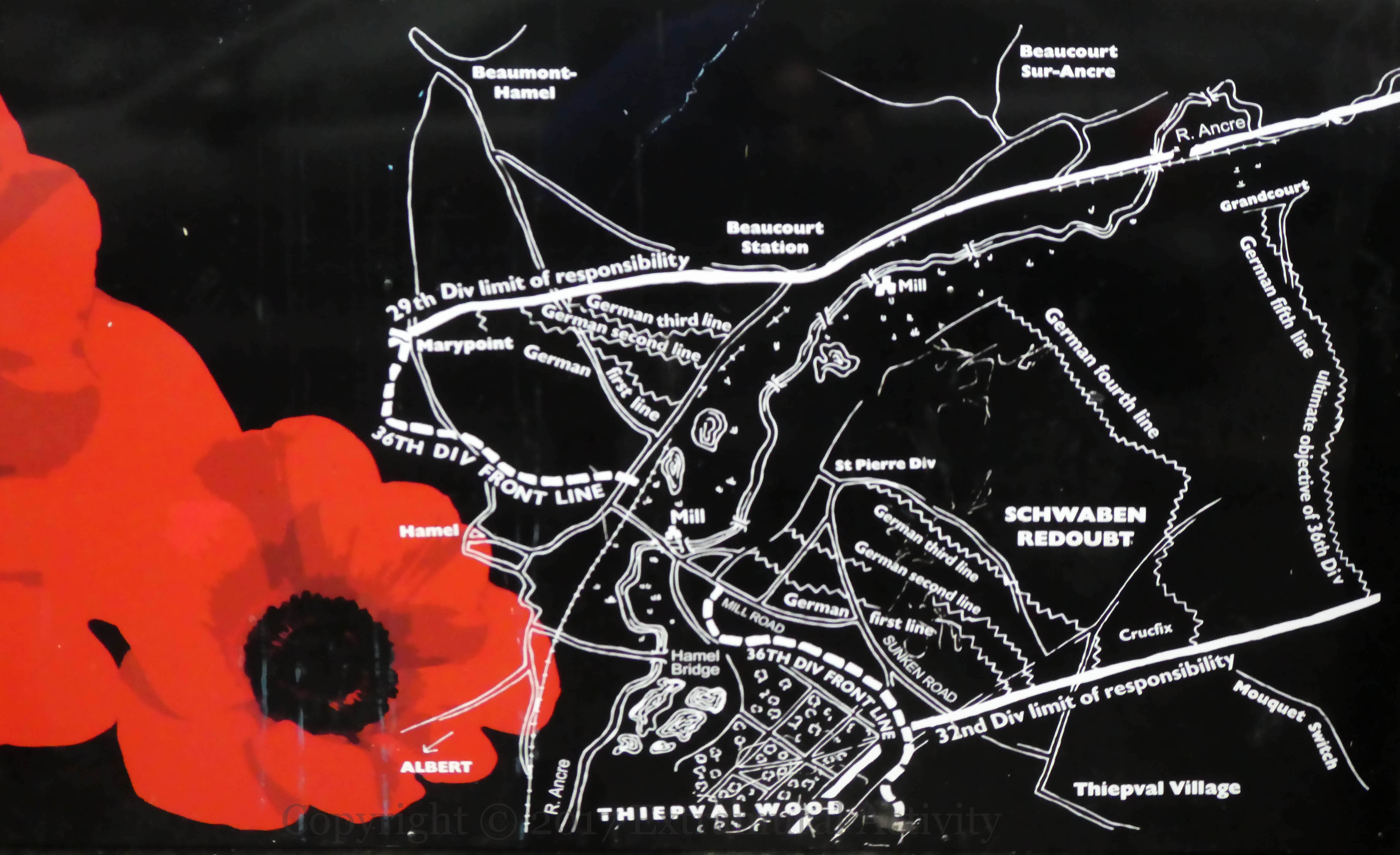
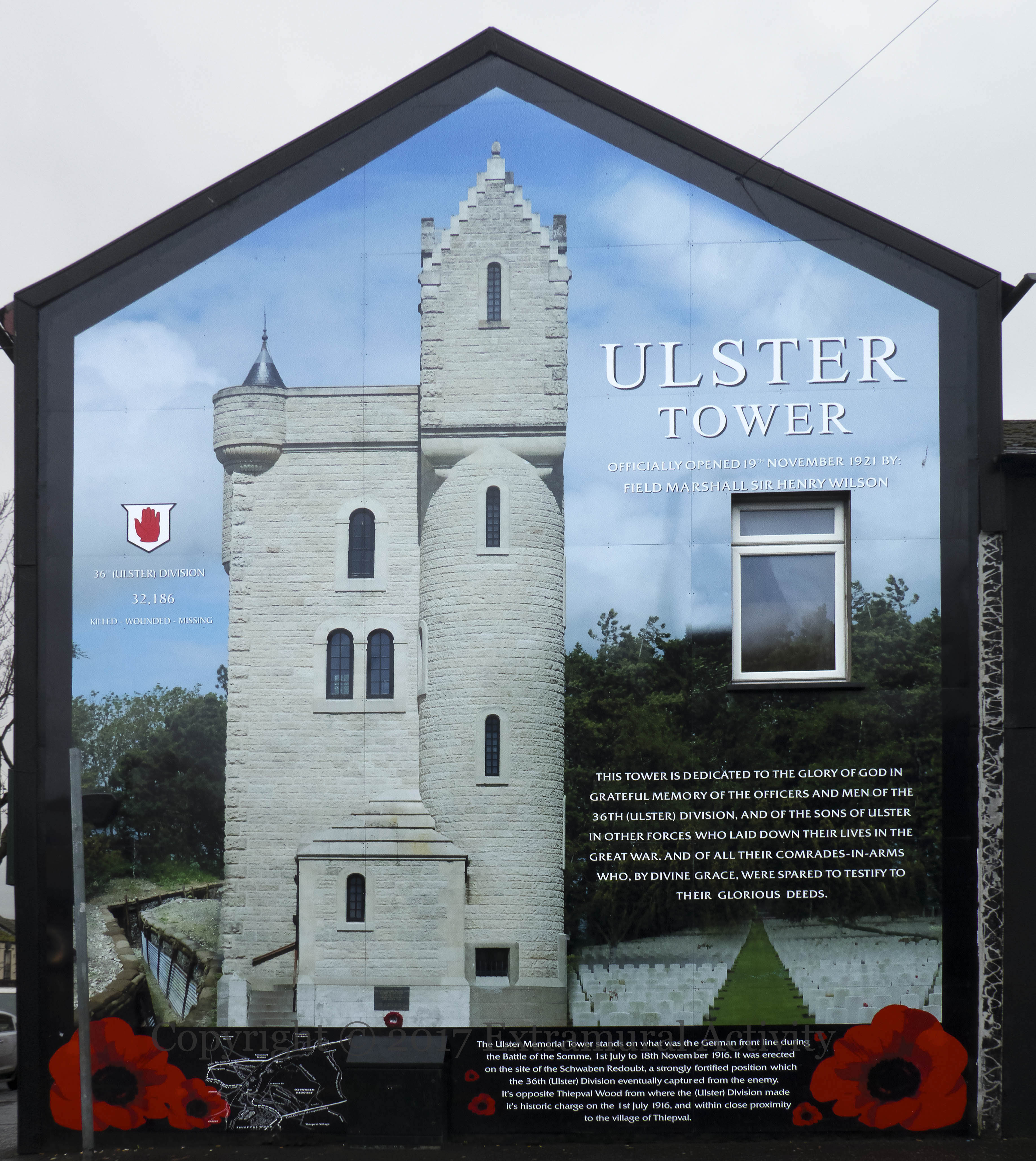
The map in the lower left corner of this WWI commemorative mural shows the defensive lines of both the Allies and the Central Powers. As the inscription on the mural describes, the Ulster Tower is situated close to the Schwaben Redoubt, the primary objective of the 36th Division on the first day of battle.

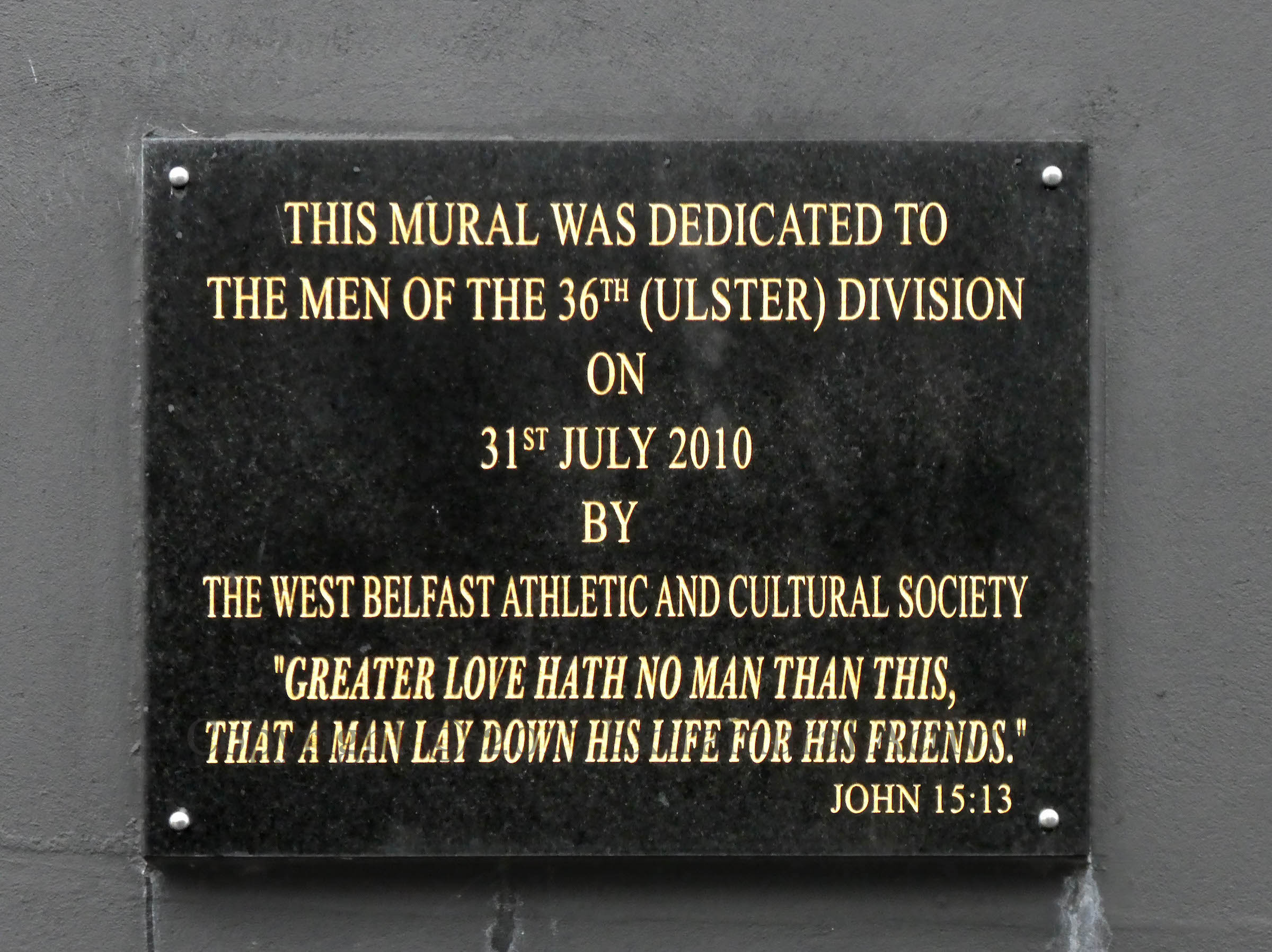
The plaque (shown second, below) refers to a similar mural painted in 2010.

“Ulster Tower, officially opened 19th November, 1921, by Field Marshall Sir Henry Wilson.” “This Tower is dedicated to the glory of God in grateful memory of the officers and men of the 36th (Ulster) division, and of the sons of Ulster in other forces who laid down their lives in the Great War, and of all their comrades-in-arms who, by divine grace, were spared to testify to their glorious deeds.” “The Ulster Tower stands on what was the German front line during the Battle Of The Somme, 1st July to 18th November 1916. It was erected on the site of the Schwaben Redoubt, a strongly fortified position which the 36th (Ulster) Division eventually captured. It’s opposite Thiepval Wood from where the (Ulster) Division made it’s [sic] historic charge on 1st July 1916, and within close proximity to the village of Thiepval.” “32,186 killed, wounded, missing.” “Greater love hath no man than this that a man lay down his life for his friends.”

Conway Street, Shankill, west Belfast

Click image to enlarge
Copyright © 2017 Seosamh Mac Coılle
X04711 X04710 X04724

The Poppy Trail

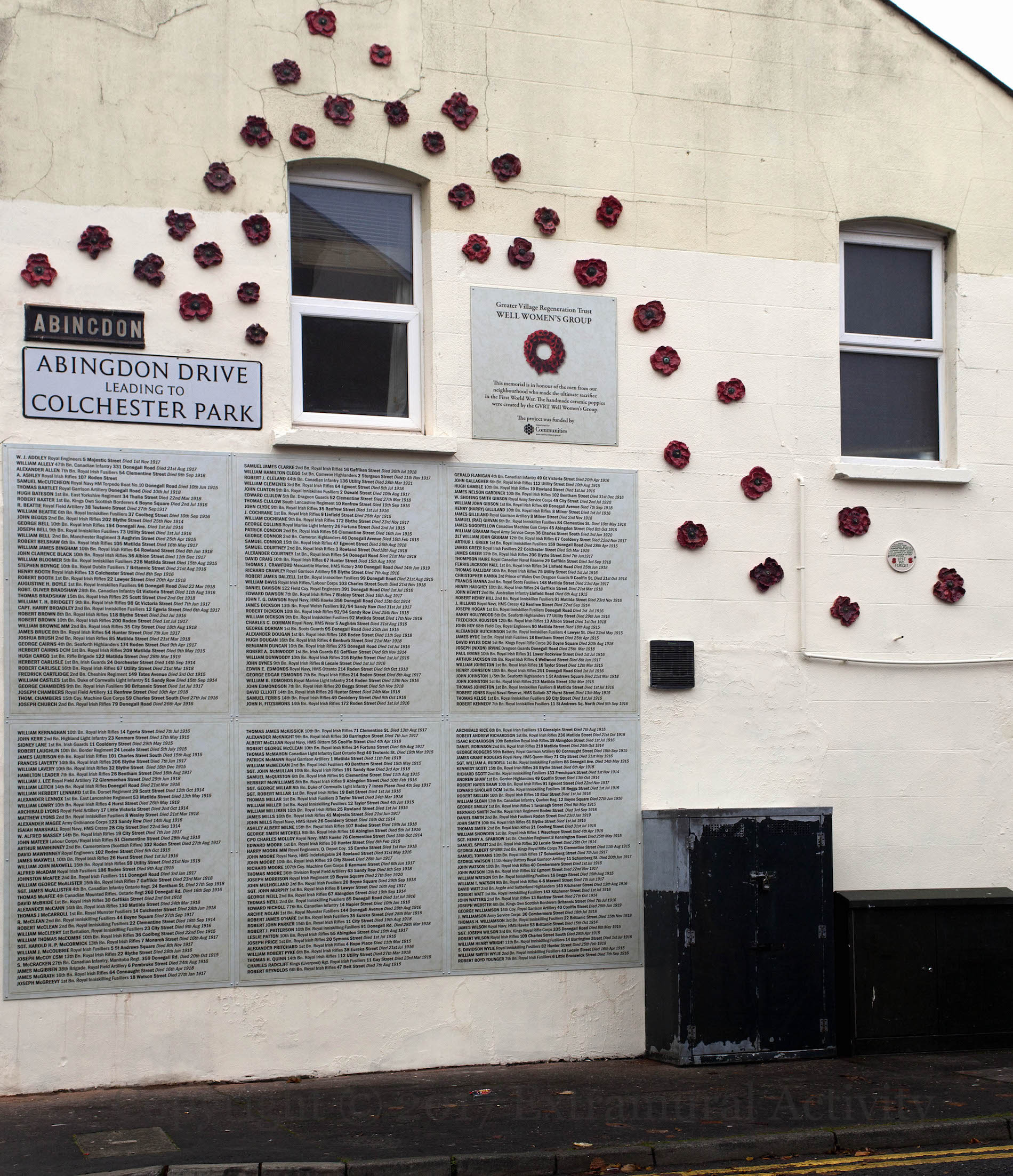
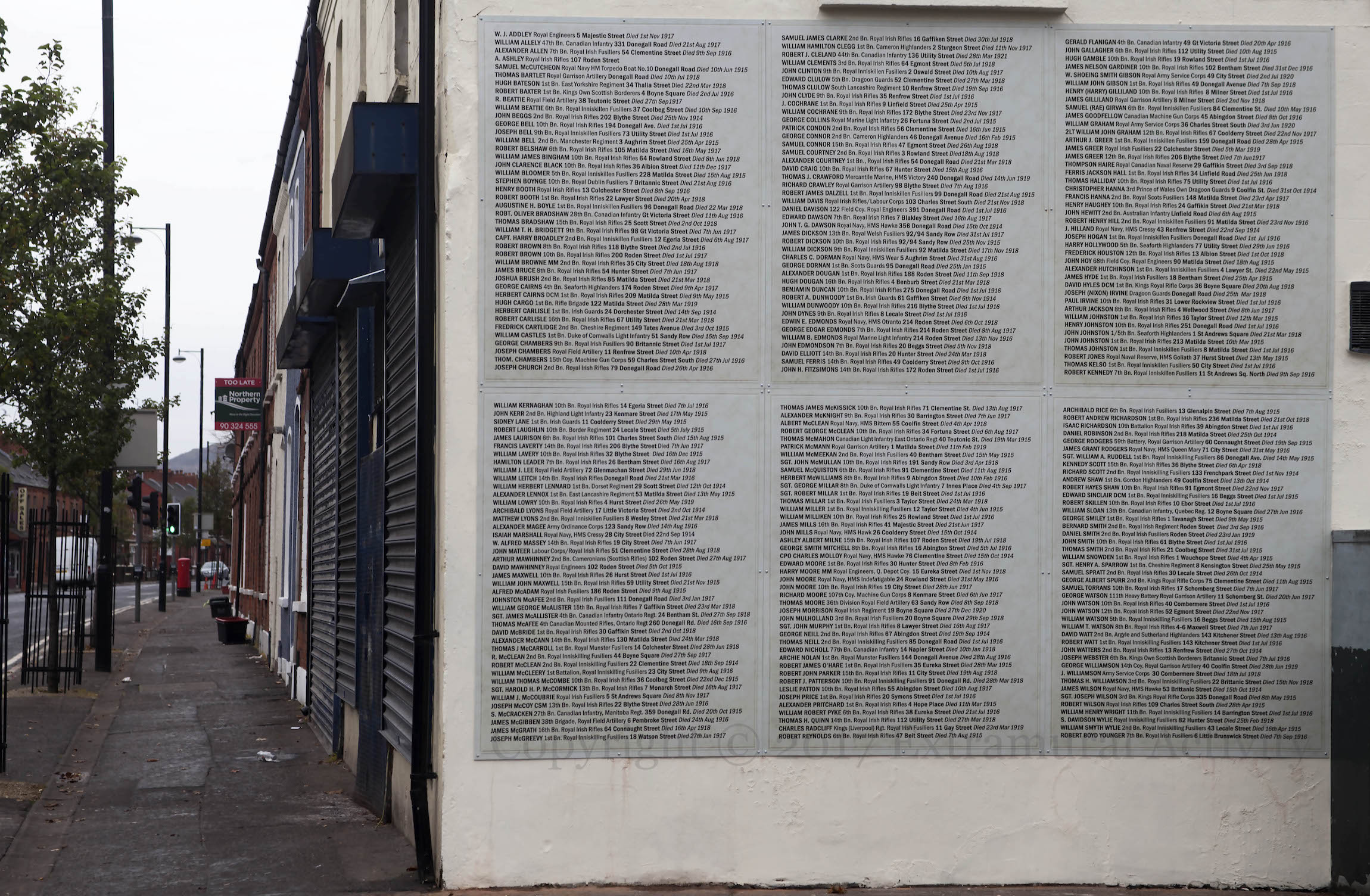
“This memorial is in honour of the men from our neighbourhood who made the ultimate sacrifice in the First World War. The handmade ceramic poppies were created by the GVRT [Greater Village Regeneration Trust] Well Women’s Group.”

The Poppy Trail: 1914 | 1915 | 1916 | 1917

Click image to enlarge
Copyright © 2017 Seosamh Mac Coılle
X04640 X04641 abingdon dr