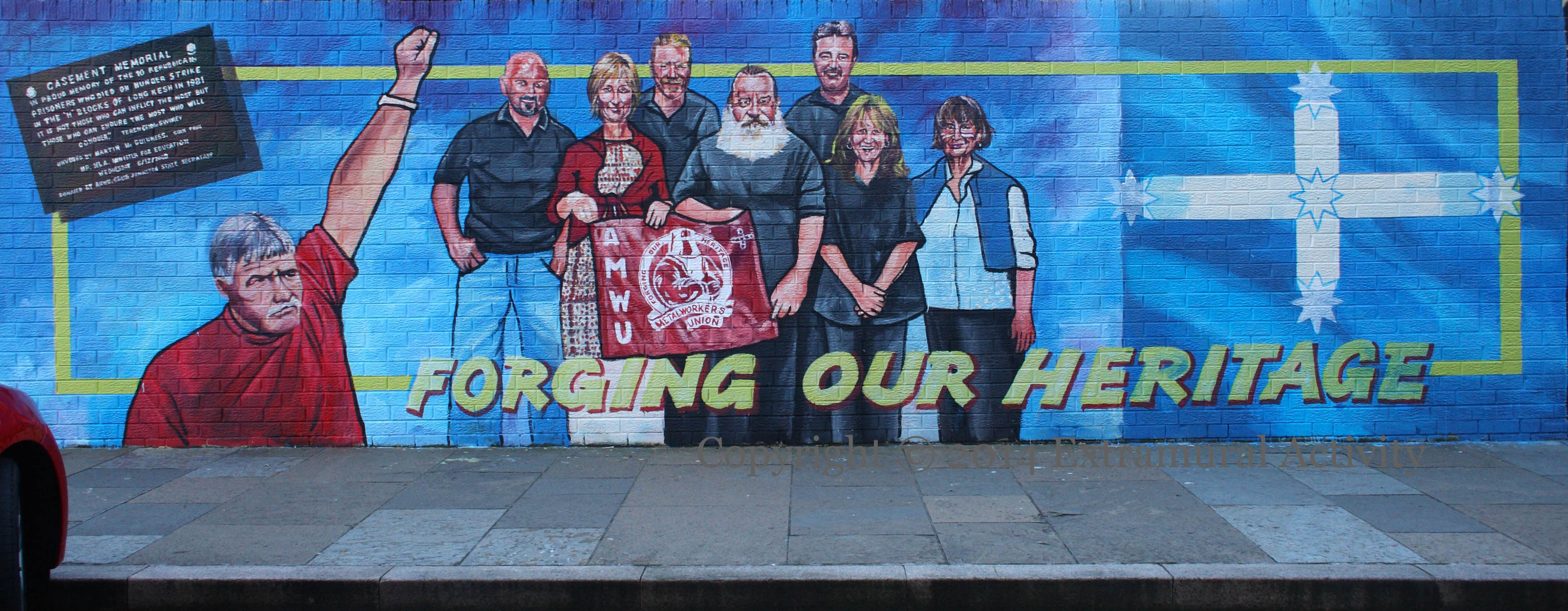
The Australian Manufacturing Workers Union (amwu.org.au) sponsored the mural above in Conway Street, west Belfast.
The painted plaque on the left reads, “Casement Memorial. In proud memory of the 10 Republican prisoners who died on hunger strike in “H” blocks of Long Kesh in 1981. “It is not those who can inflict the most but those who can endure the most who will conquer.” Terence McSwiney. Unveiled by Martin McGuinness, Sınn Féın MP MLA Minister for Education Wednesday 6/12/2000. Donated by AMWU, Craig Johnston State Secretary”. The plaque itself is in Carlton, Australia, named (presumably) for Roger Casement.
Secretary Johnston is on the left in the back. The flag to the right is the flag of the Eureka Stockade.
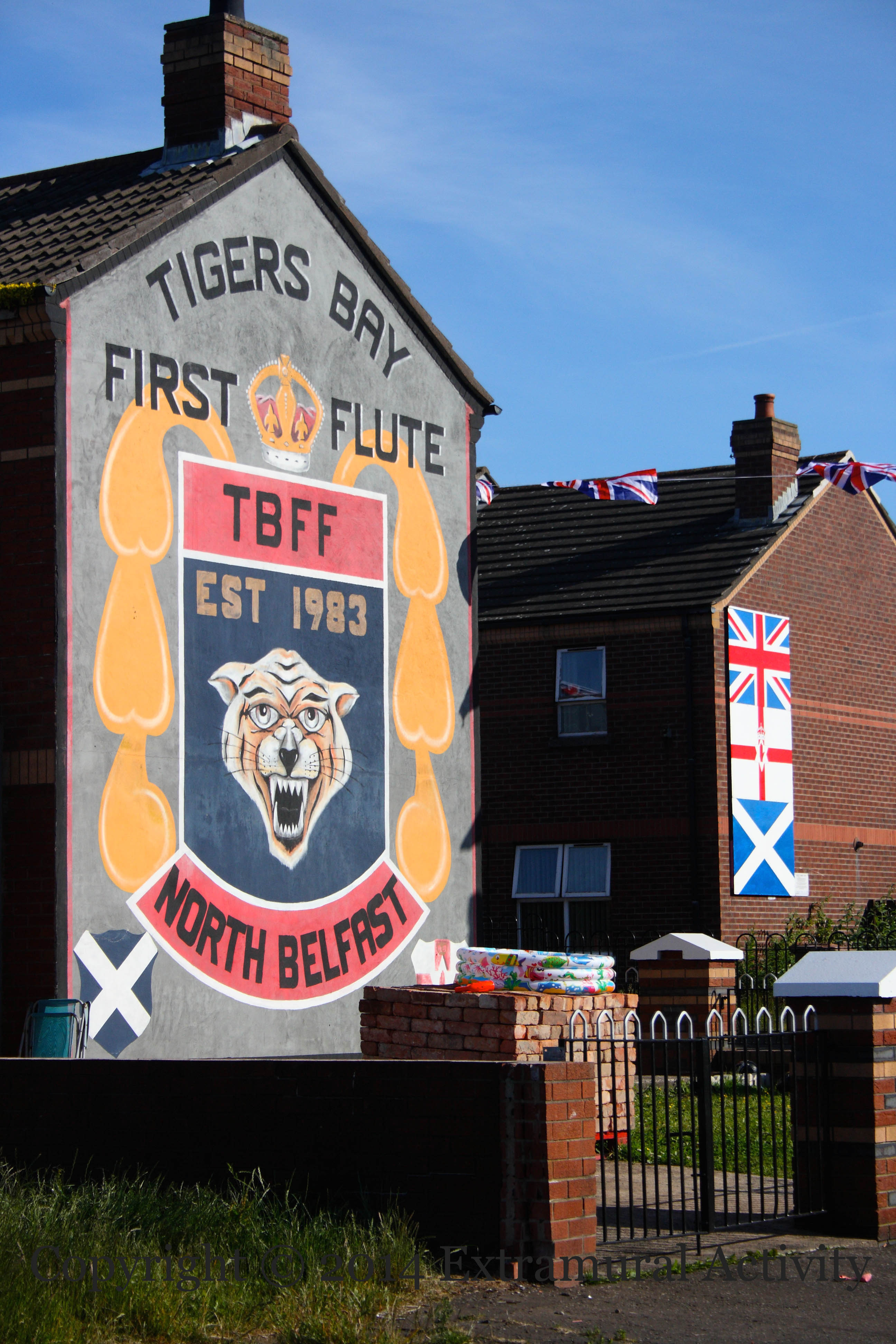
Mural celebrating the old Tiger’s Bay First Flute marching band, established 1983. The mural is in the style of the UDA’s insignia; of late a UDA power-struggle has been taking place in the area – see Split.
In the background is a board showing the Union flag, the Ulster banner, and St. Andrew’s saltire (the latter pair are also featured in the lower corners of the mural), which in June replaced a ‘Mother – Daughter – Sister’ board celebrating women and designed by children from the local Mountcollyer Youth Club.
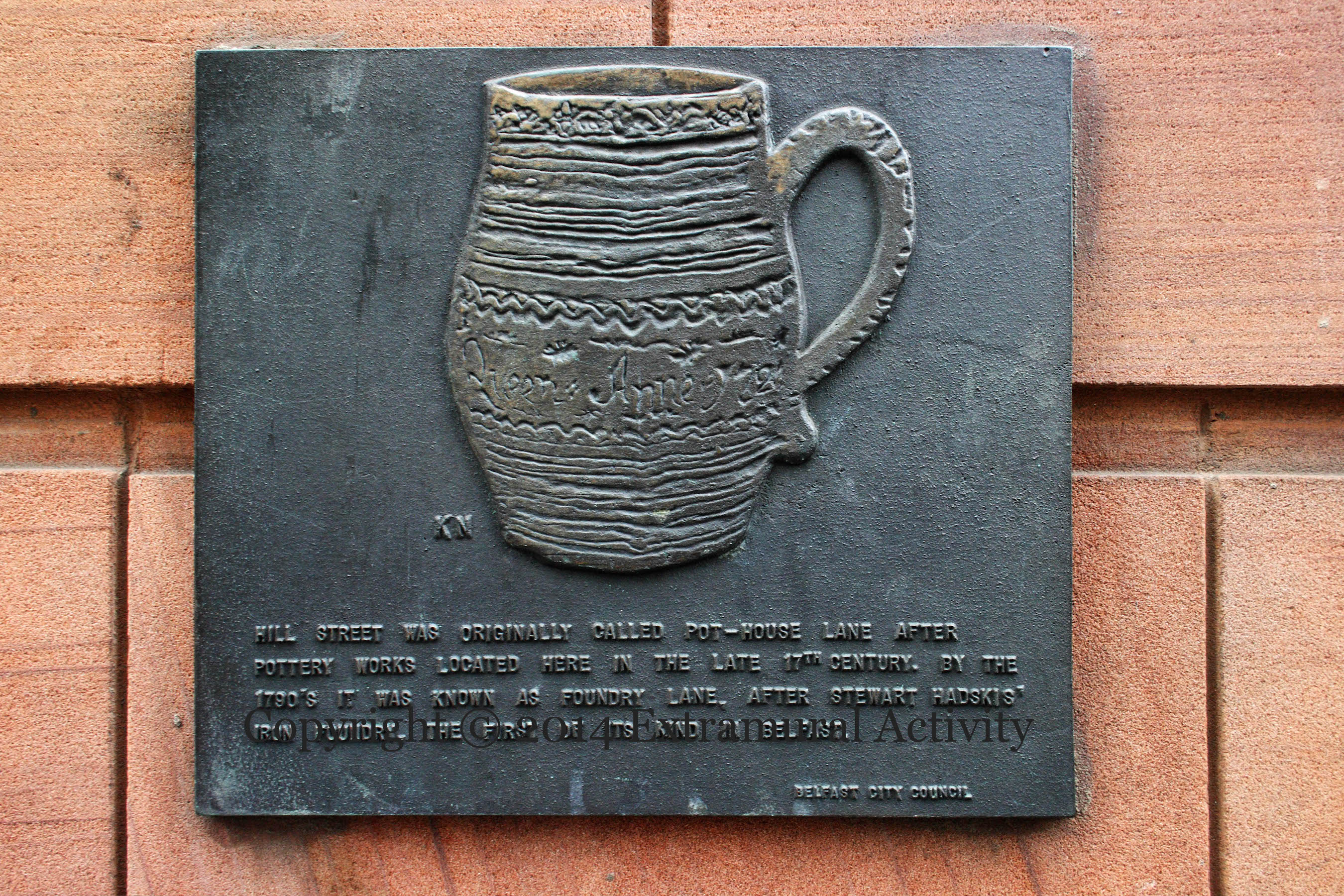
“Hill Street was originally called Pot-House Lane after pottery works located here in the late 17th century. By the 1790’s it was known as Foundry Lane, after Stewart Hadski’s iron foundry, the first of its kind in Belfast.” The original of the tin-glazed earthenware tankard shown can be seen in this lot from Christie’s (worth 10,000 pounds). The words “Queen Anne 1720” are inscribed on the tankard, a memorial to the queen who reigned from 1702-1714.
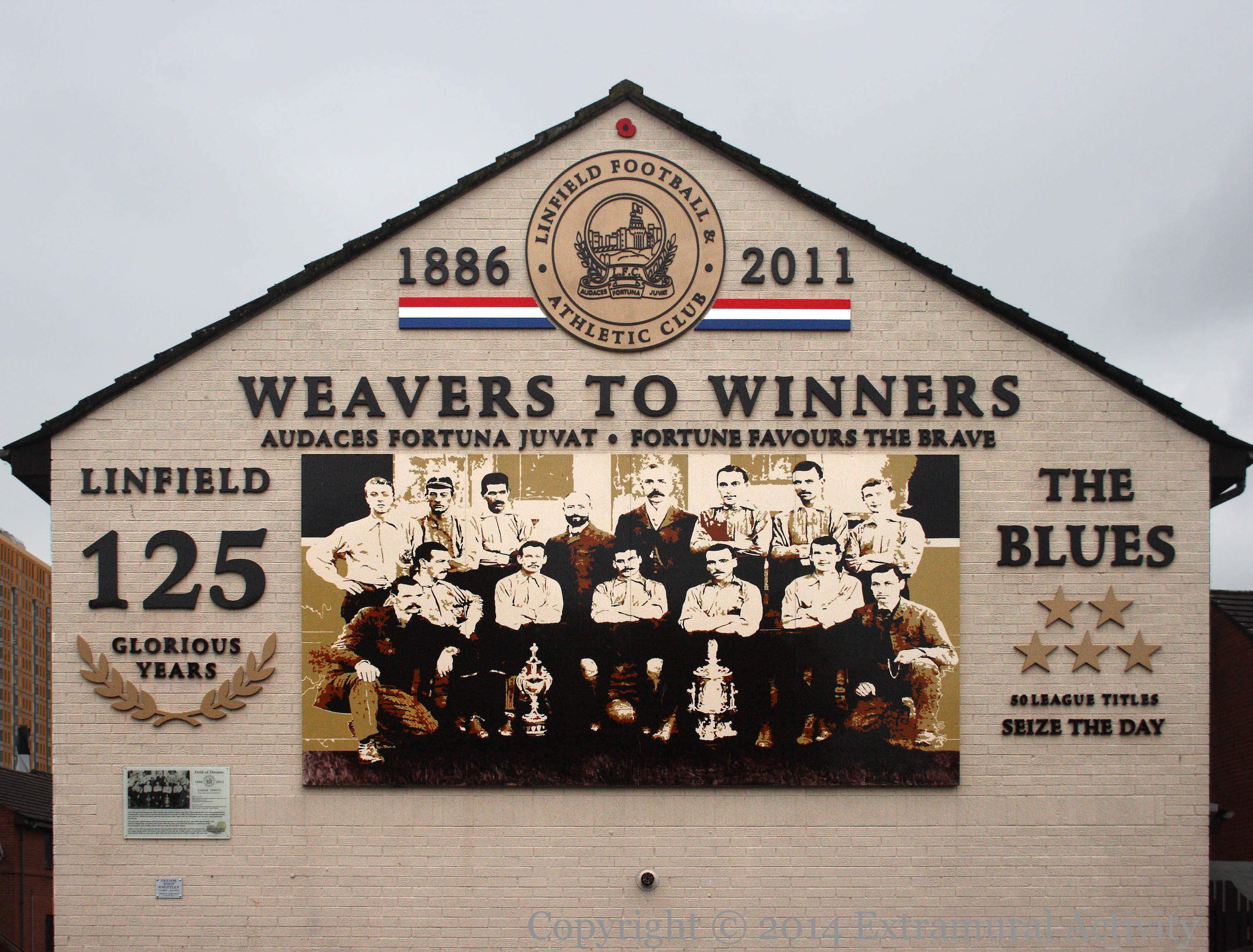
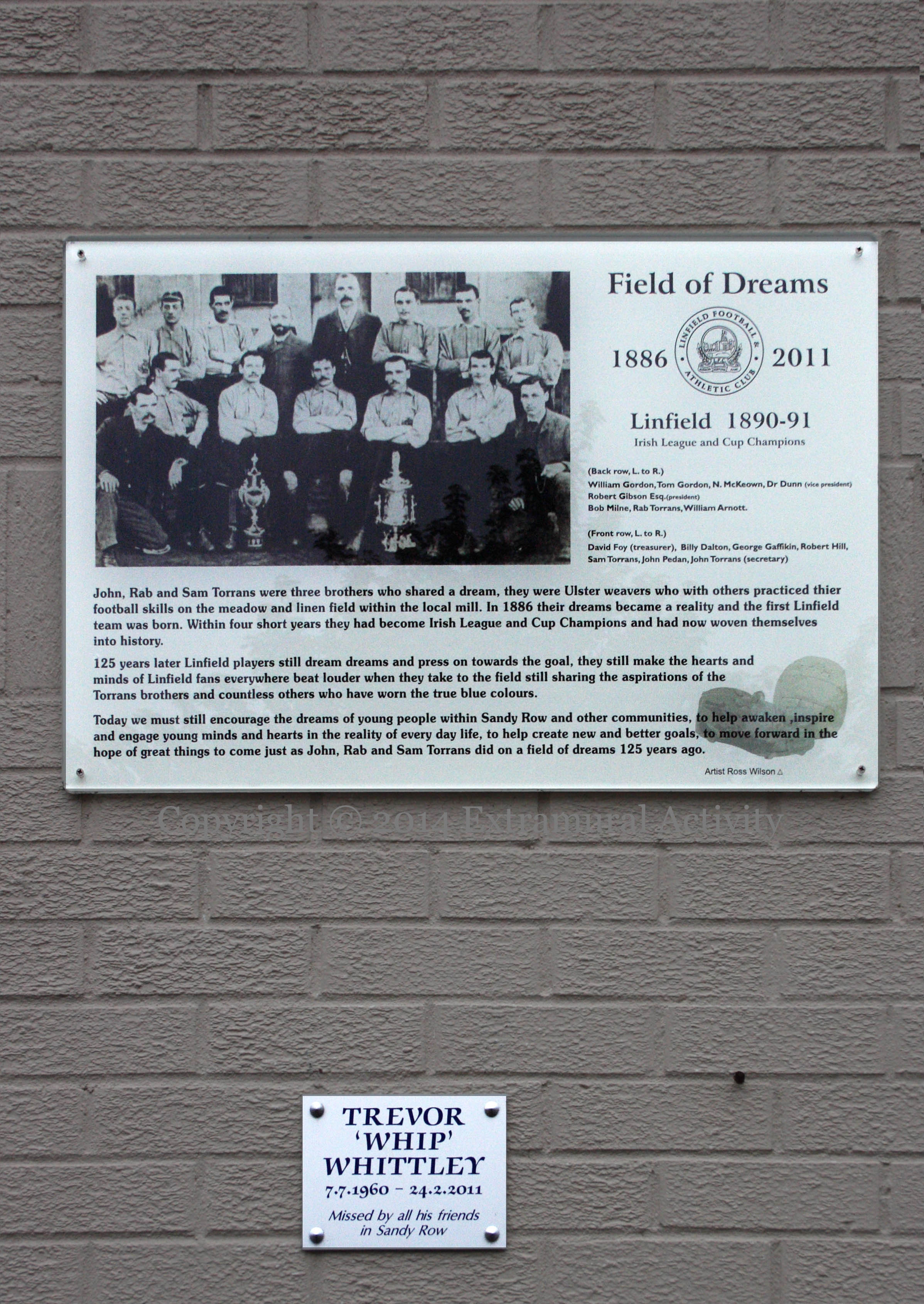
“Weavers To Winners” – Linfield Football And Athletic Club was founded in 1886 by workers at the Ulster Spinning Company’s Linfield mill and they became Irish League champions in the 1890-1891 season. The names of the players in the photograph are given in the shot of the information plaque, below. The work was designed by Ross Wilson.
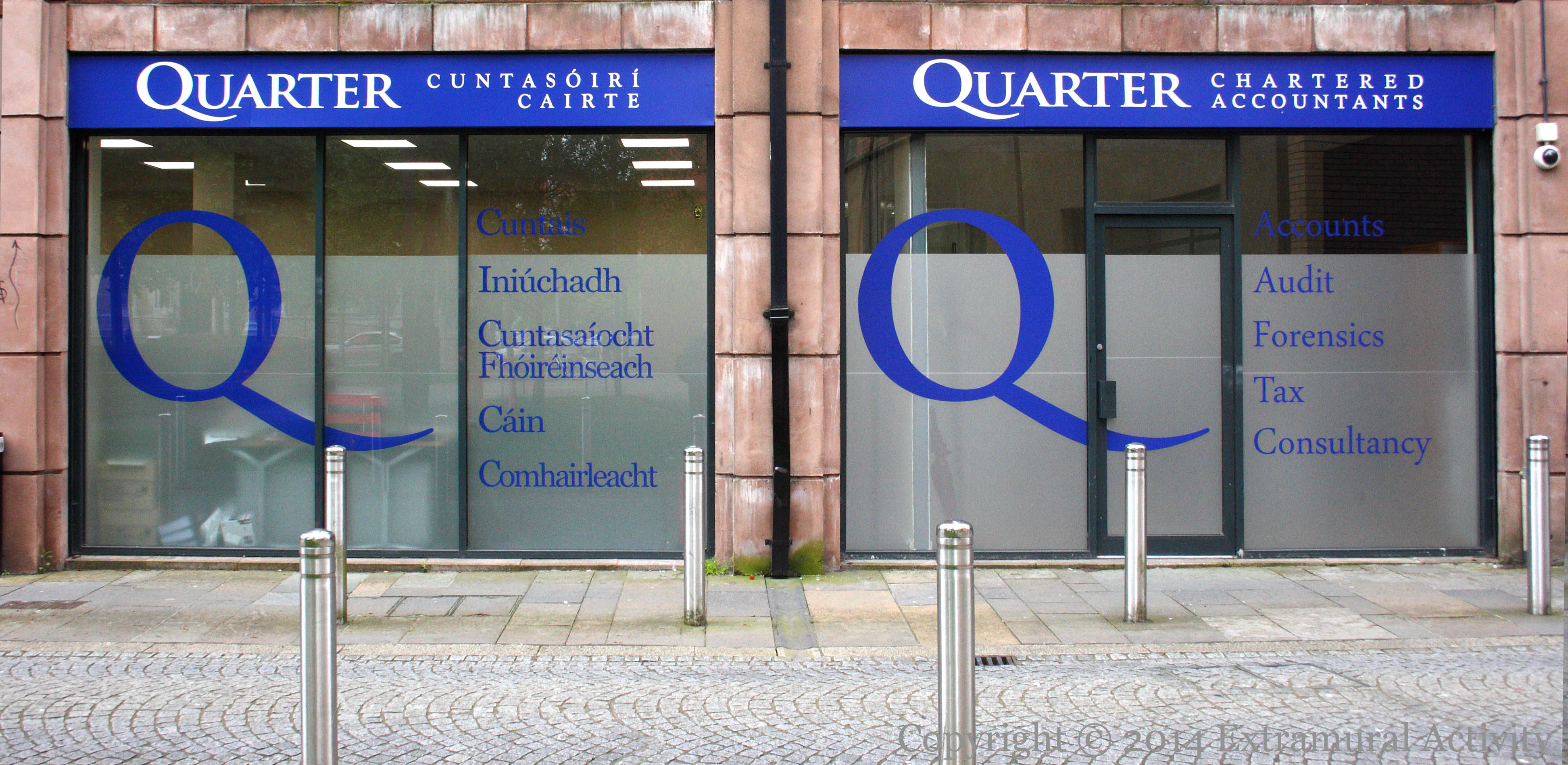
Belfast has seven geographical quarters and an eighth one in the form of Quarter Accountants/Cuntasóırí in Belfast’s city centre. Notably, the signage is in both English and Irish; the business is in the Cathedral Quarter rather than the Gaeltacht Quarter.
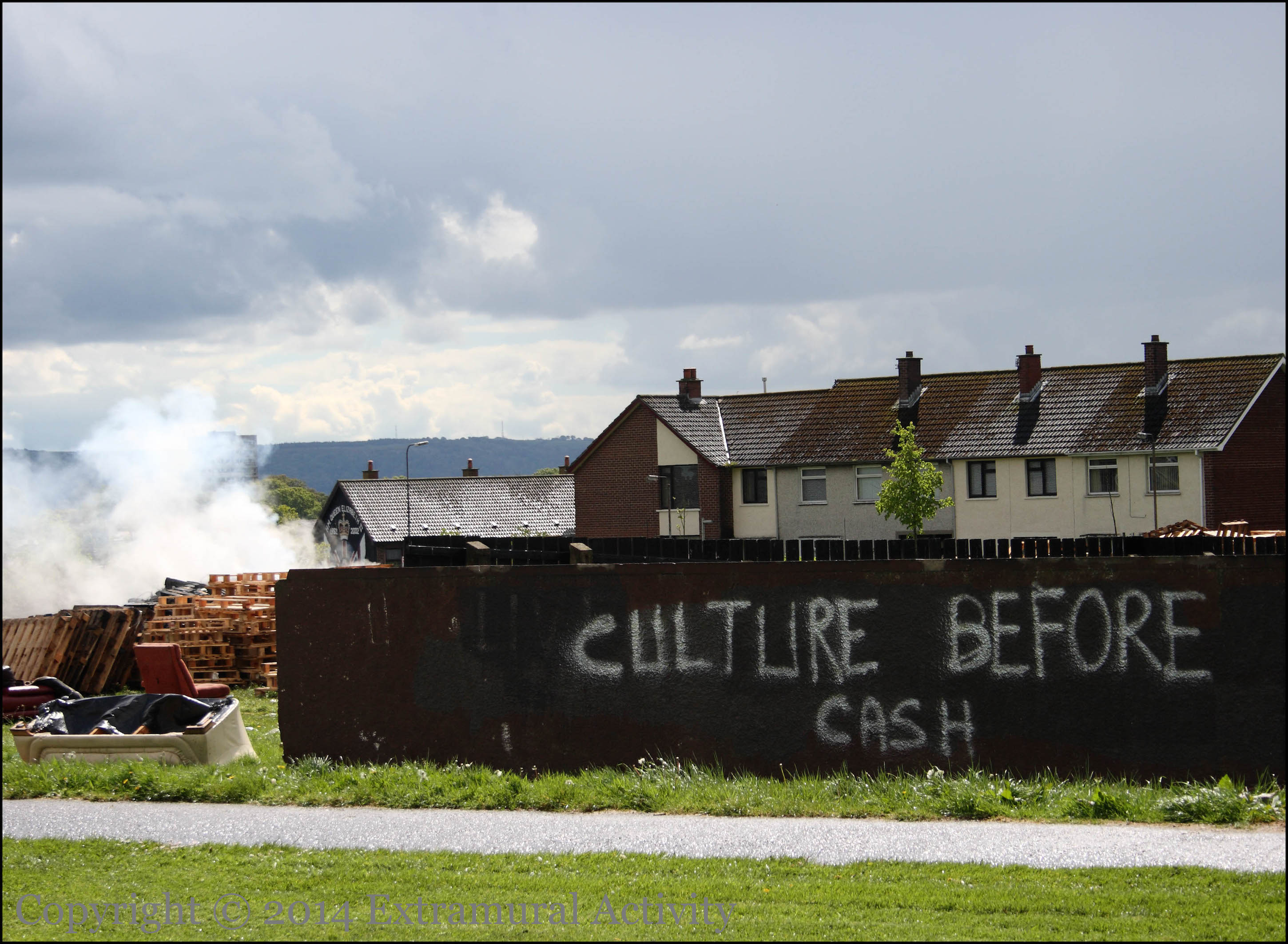
Materials intended for an Eleventh Night bonfire in Rathcoole were set alight early on Tuesday morning (0200 May 13th, 2014, according to Proud To Be A Protestant – Banter) and still smoldered in the morning. Nolan’s radio show last week had a segment on this bonfire, following up on an Irish News report (article behind a paywall) that the bonfire might be moved or covered for the Giro d’Italia. “Culture before cash” means that locals would prefer bonfires to the funds available (here is the Belfast City Council ‘Bonfire Management’ page; Rathcoole is in Newtownabbey) to put on a street party with a willow-wood beacon in its place. According to this Irish News report, in 2013 45 Loyalist and 12 Republican bonfires part of the scheme. Here is the DOE’s Bonfire Report (pdf).
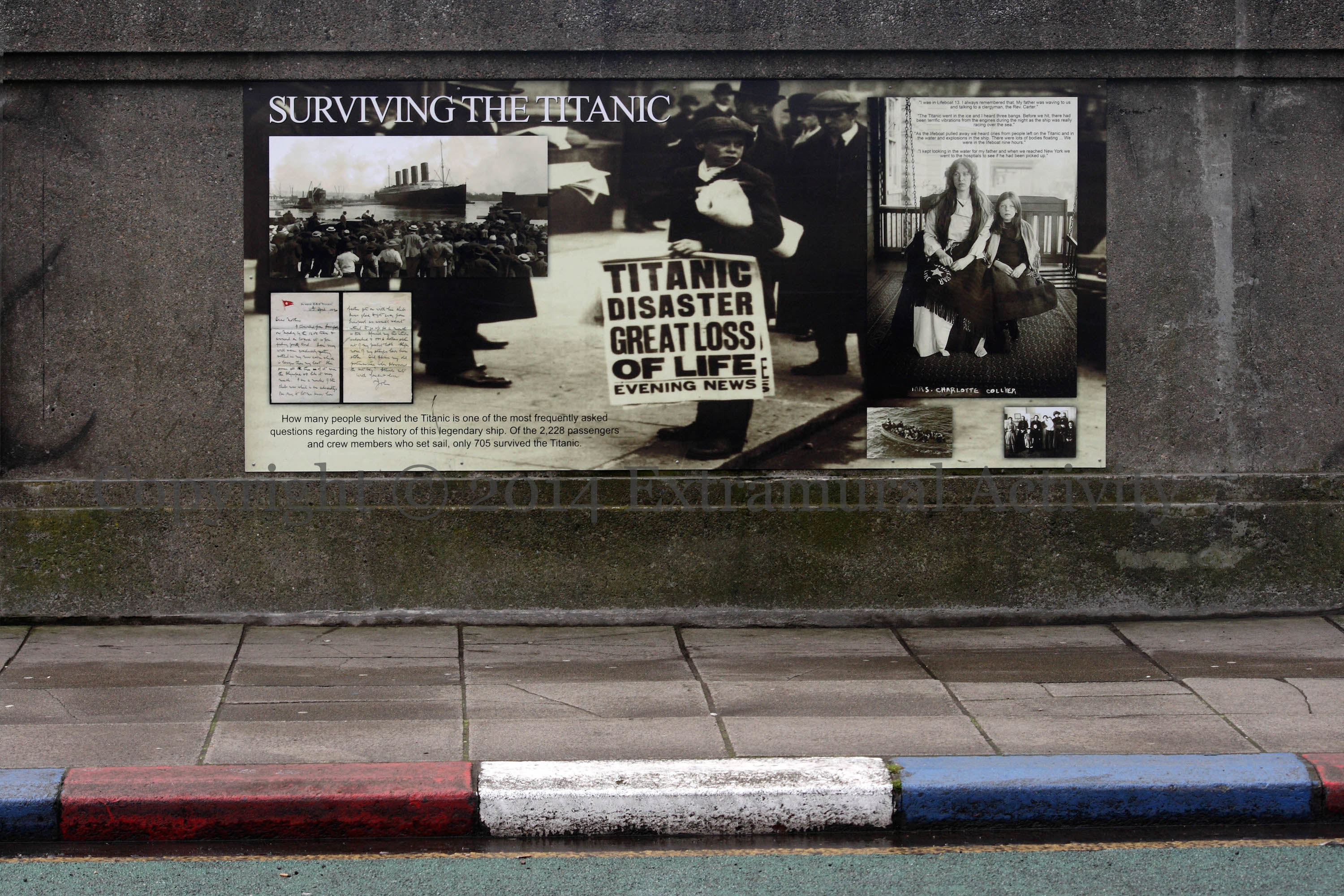
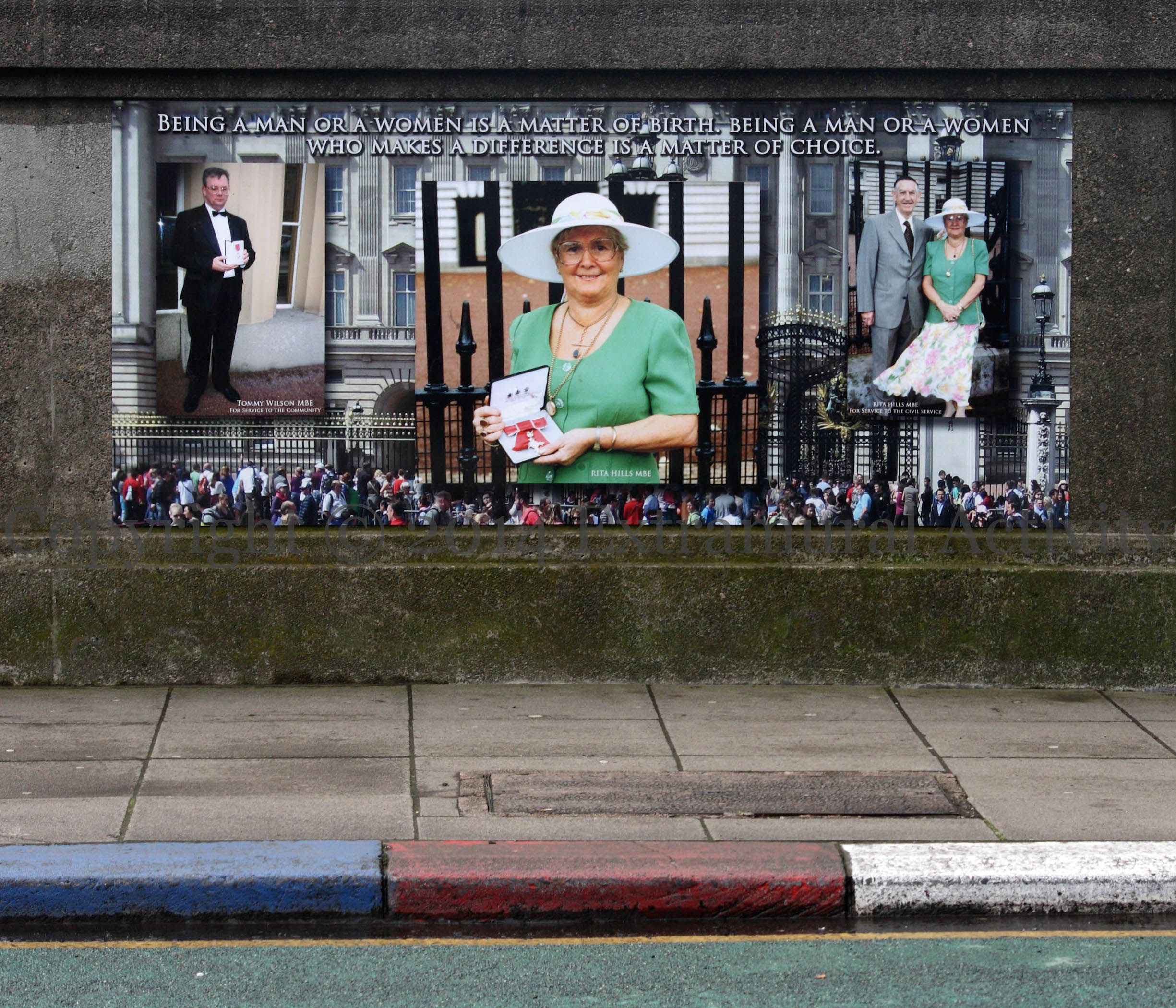
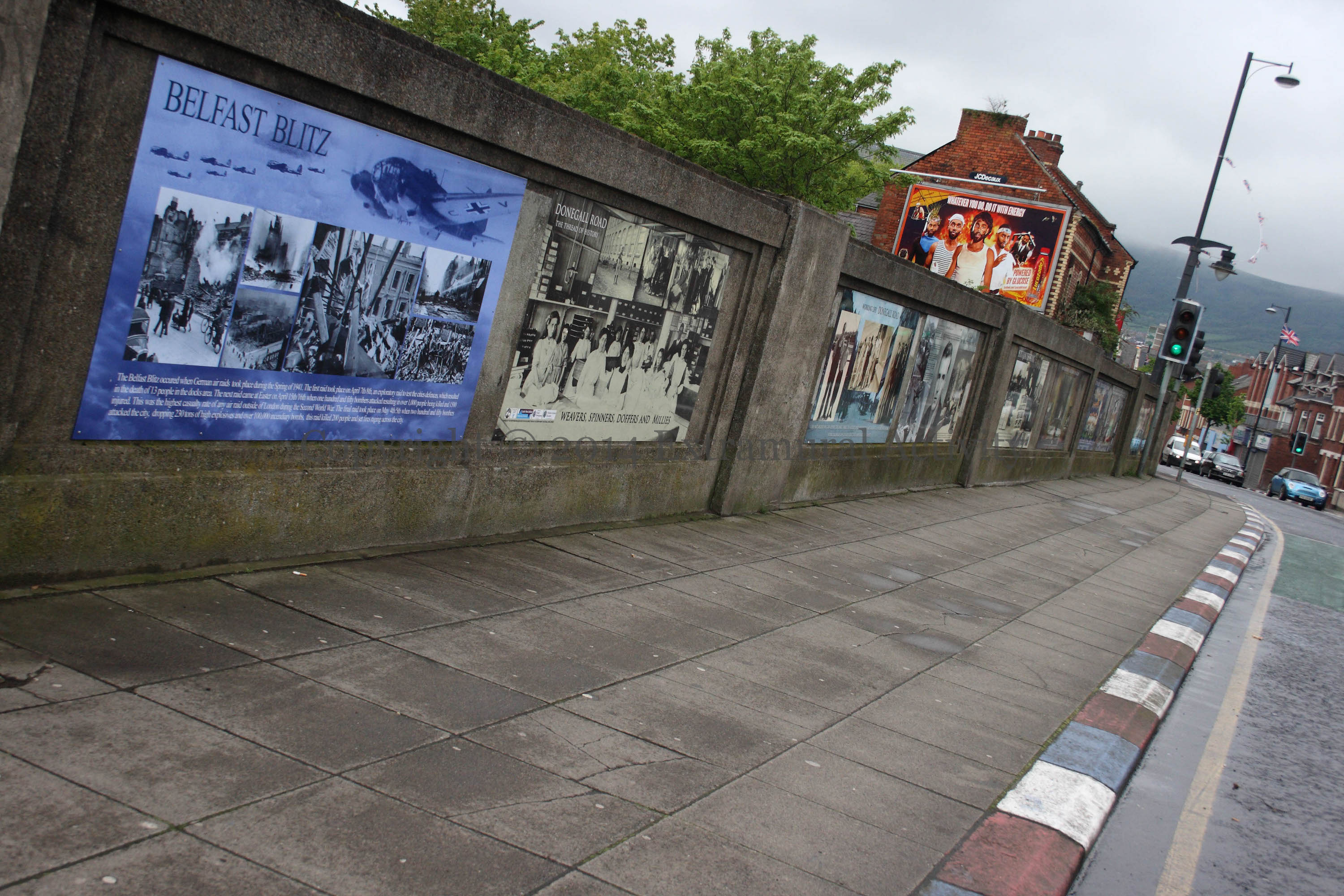
Here are two final images from the south side of the Donegall Road bridge over the Victoria Street line, one about Titanic and the other about locals awarded the MBE.
“I was in Lifeboat 13. I always remember that. My father was waving to us and talking to a clergyman, the Rev. Carter. The Titanic went in the ice and I heard three bangs. Before we hit, there had been terrific vibrations from the engines during the night as the ship was really racing over the sea. As the lifeboat pulled away we heard cries from the people left on the Titanic and in the water and explosions in the ship. There were lots of bodies floating … We were in the lifeboat nine hours. I kept looking in the water for my father and when we reached New York we went to the hospitals to see if he had been picked up.” Mrs. Charlotte Collier
How many people survived the Titanic is one of the most frequently asked questions regarding the history of this legendary ship. Of the 2,228 passengers and crew members who set sail, only 705 survived the Titanic.
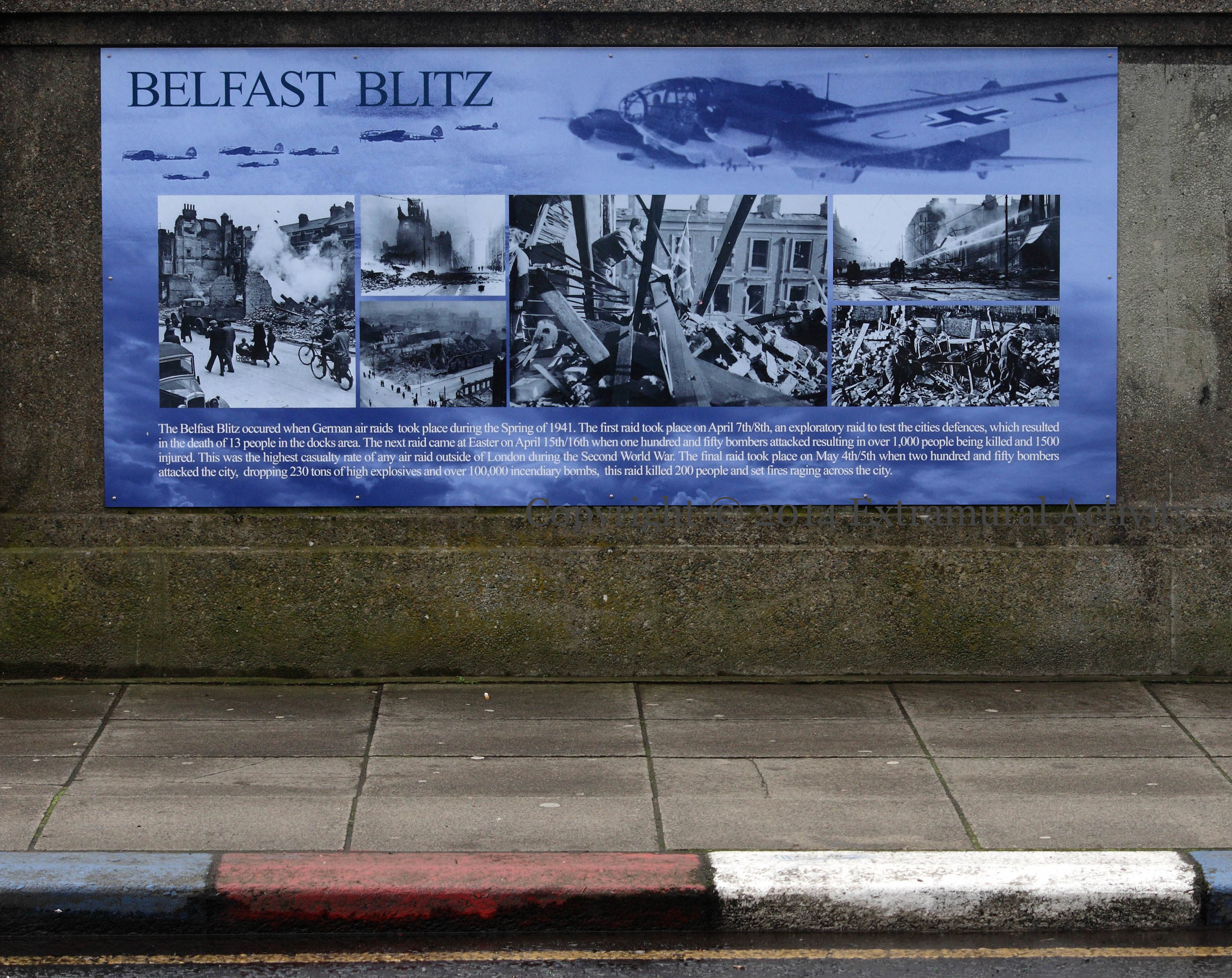
“The Belfast blitz occur[r]ed when German air raids took place during the spring of 1941. The first raid took place on April 7th/8th, an exploratory raid to test the cities [sic] defences, which resulted in the death of 13 people in the docks area. The next raid came at Easter on April 15th/16th when one hundred and fifty bombers attacked resulting in over 1,000 people being killed and 1,500 injured. This was the highest casualty rate of any air raid outside of London during the Second World War. The final raid took place on May 4th/5th when two hundred and fifty bombers attacked the city, dropping 230 tons of high explosives and over 100,000 incendiary bombs, this raid killed 200 people and set fires raging across the city.”
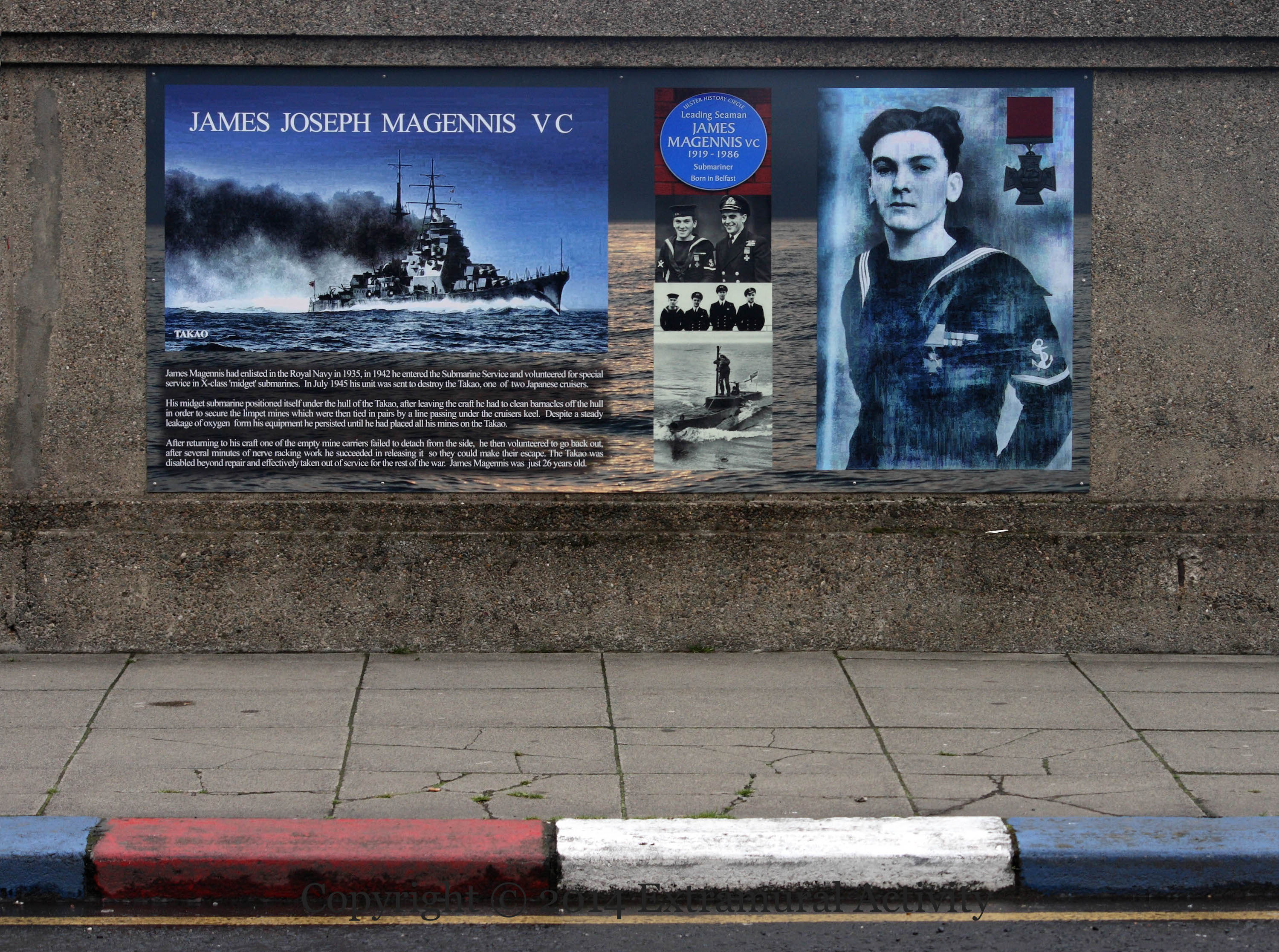
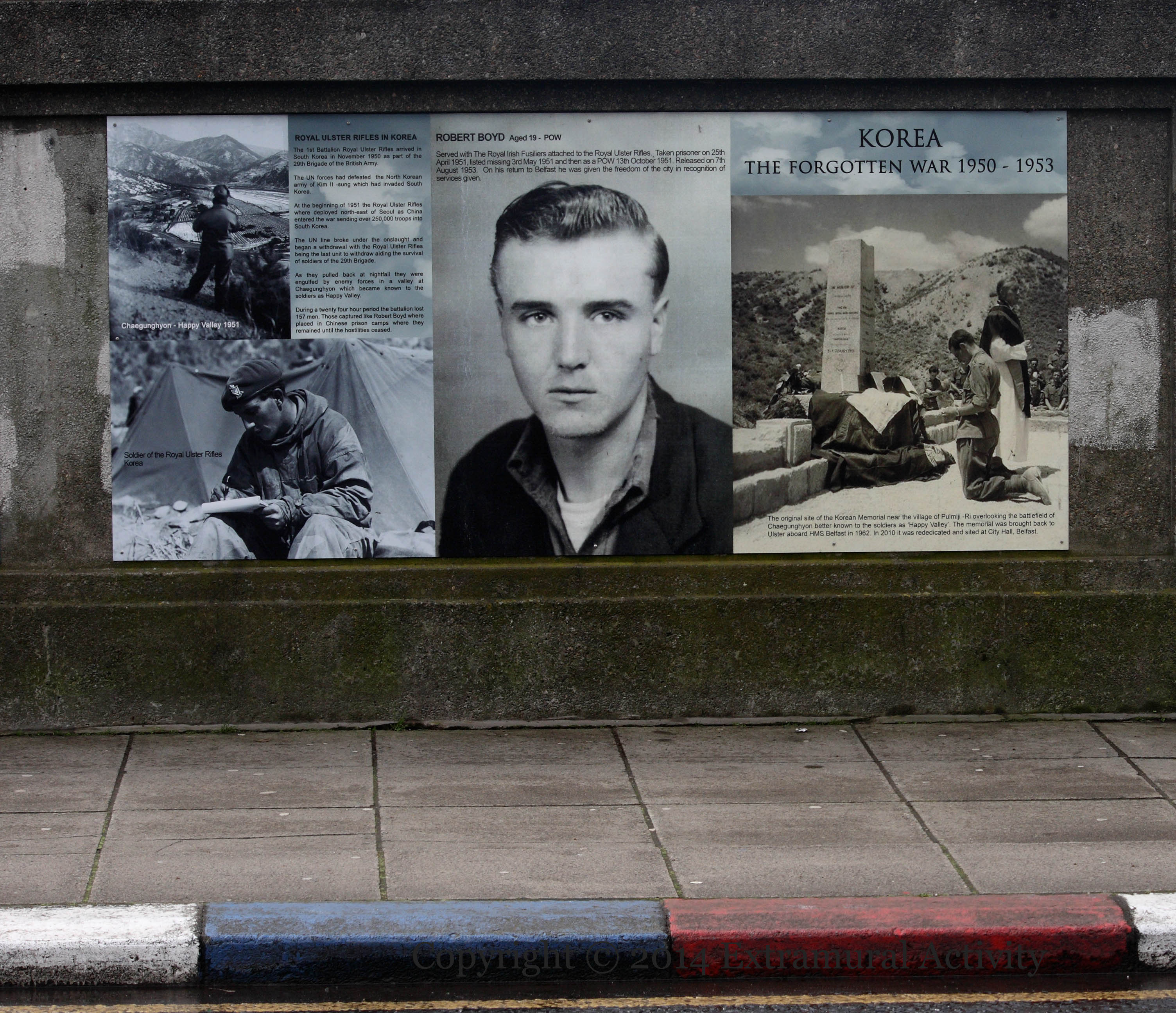
James Magennis, above, from east Belfast, won the Victoria Cross for service in WWII (as described in a post about a mural based on the image on the right in Tullycarnett). Robert Boyd, according to the image below, was awarded the freedom of the city of Belfast for service in Korean War. Two panels, one from each side of the Donegall Road bridge.
“Royal Ulster Rifles in Korea. The 1st battalion arrived in South Korea in November 1950 as part of the 29th brigade of the british army. The UN forces had degeated the North Koran army of Kim Il sung which had invaded south korea. At the beginning of 1951 deployed north-east of seoul as chine entered the war sending over 250,000 troops. The UN line broke under the onslaught and began a withdrawal being the last unit to withdraw aiding the survival of soldiers of the 29th brigade. As they pulled back at nightfall they were engulfed by enemy forces in a valley at Chaegunghyon which became know to the soldiers as Happy Valley. During a twenty four hour period the battalion lost 157 men. Those captured like Robert Boyd where were placed in Chinese prison camps where they remained until the hostilities ceased. Robert Boyd aged 19 POW. Served with the royal irish fusiliers. Taken prisoner on 25th April 1951, listed missing 3rd May 1951 and then as a POW 13th October 1851. released on 7th August 1953. On his return to Belfast he was given the freedom of the city in recognition of services given. The original site of the Korean Memorial near the village of Pulmiji-Ri overlooking the battlefield brought back to Ulster abroad HMS in 1962. In redidicated and sited at city hall.
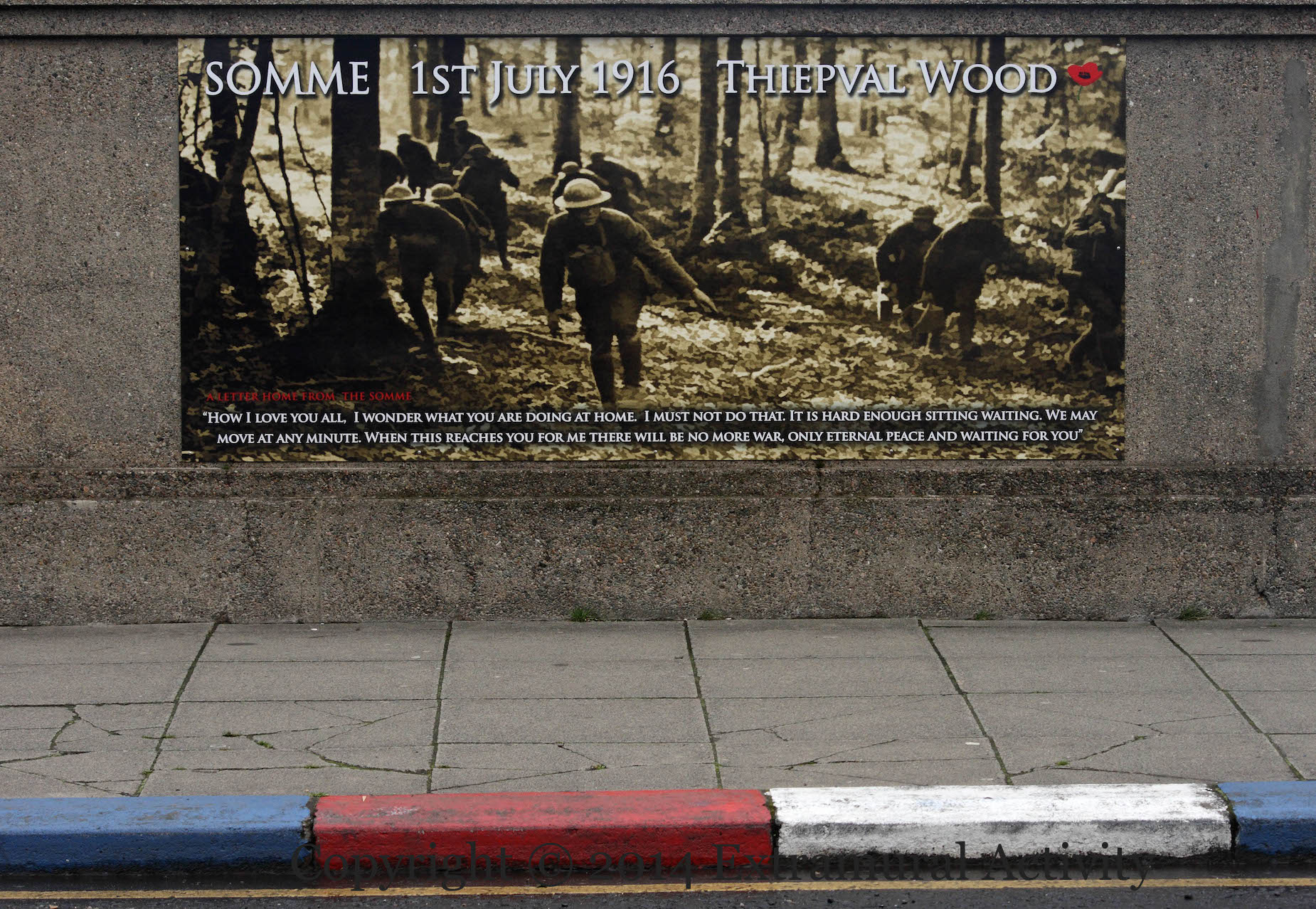
“How I love you all. I wonder what you are doing at home. I must not do that. It is hard enough sitting waiting. We may move at any minute. When this reaches you for me there will be no more war, only eternal peace and waiting for you.” – A letter home from the Somme. July 1st, 1916 saw the start of the Battle Of The Somme. The 36th (Ulster) division lost over 5,000 men in an initial successful attack near Thiepval Wood, but were driven back that evening. The board above is on the north side of the (second) Donegall Road railway bridge.