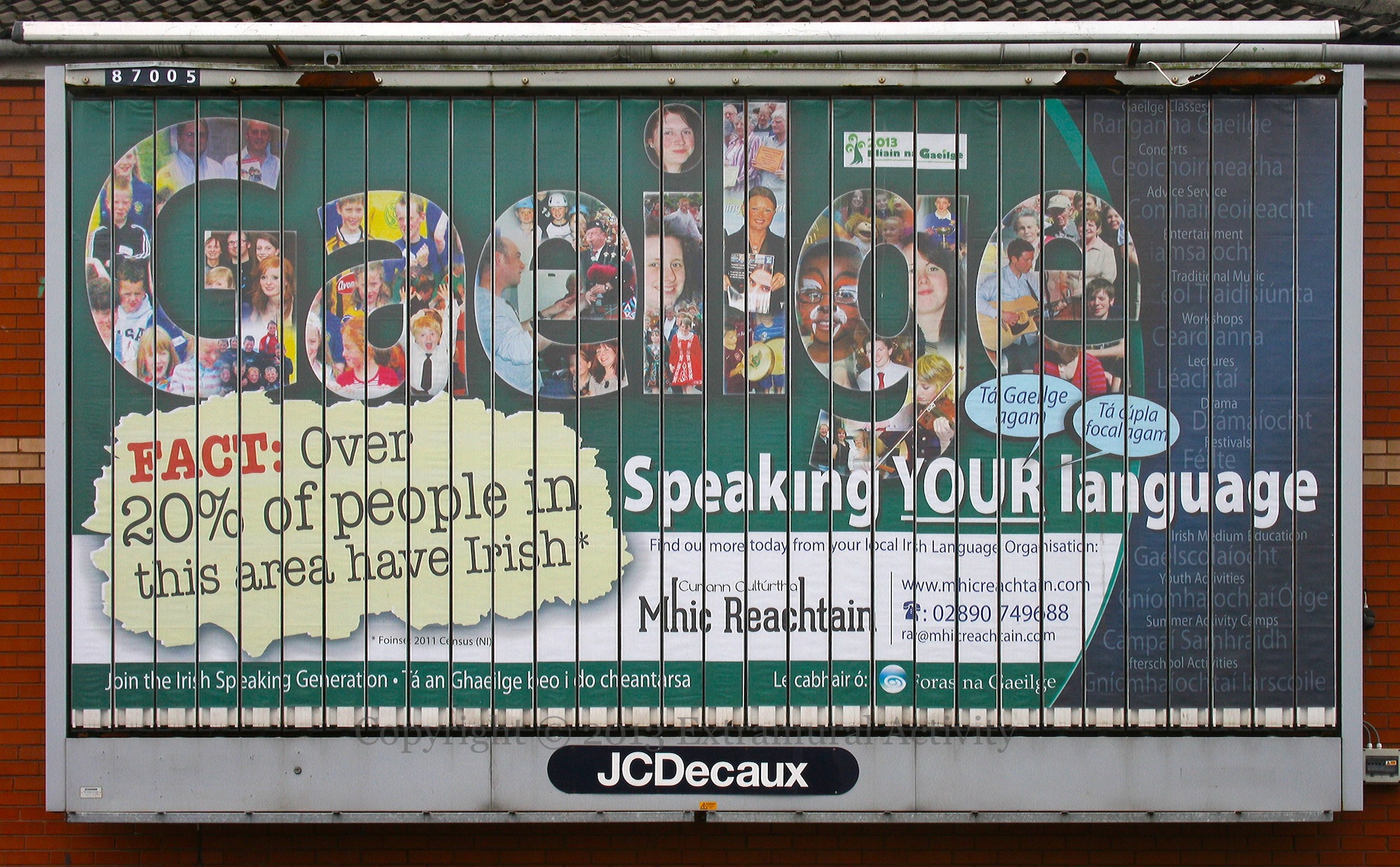
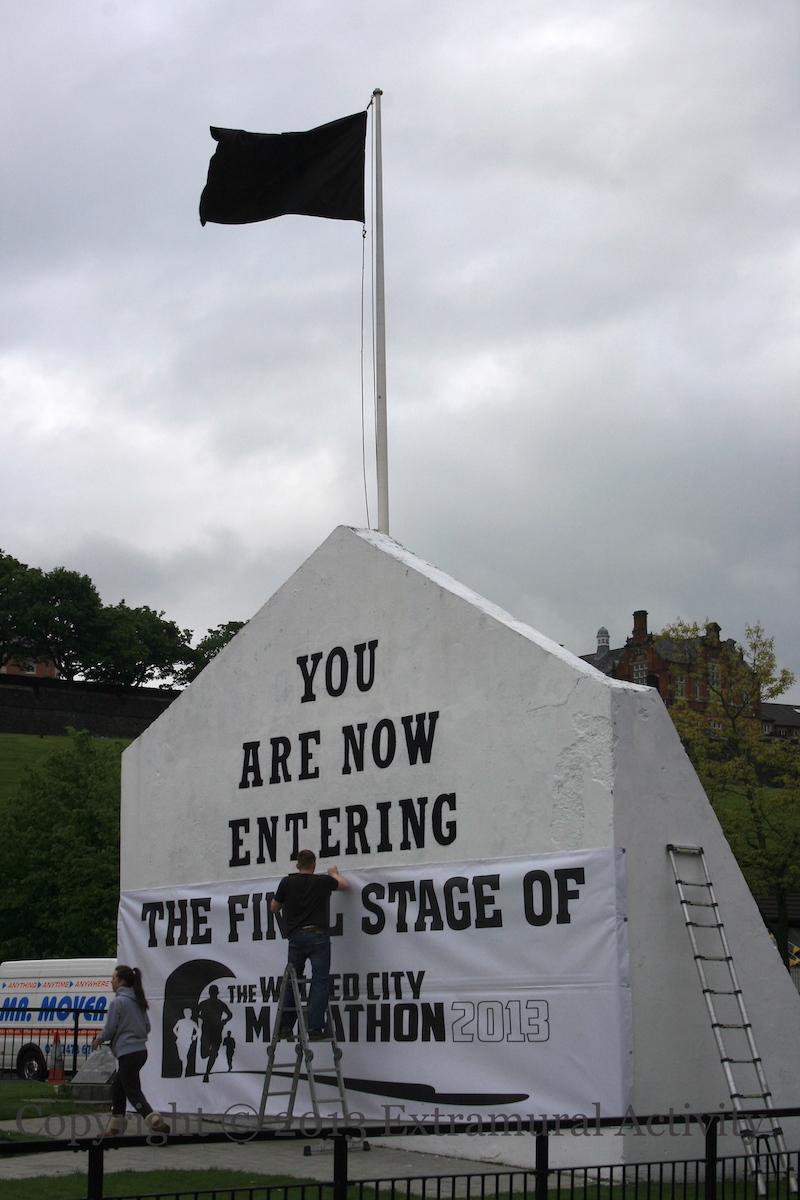
These billboards are all over north Belfast to coincide with the Scoıl Samhraıdh Mhıc Reachtaın (McCracken Summer School) which begins on the 22nd. This one is outside Tesco’s on the Antrim Road.
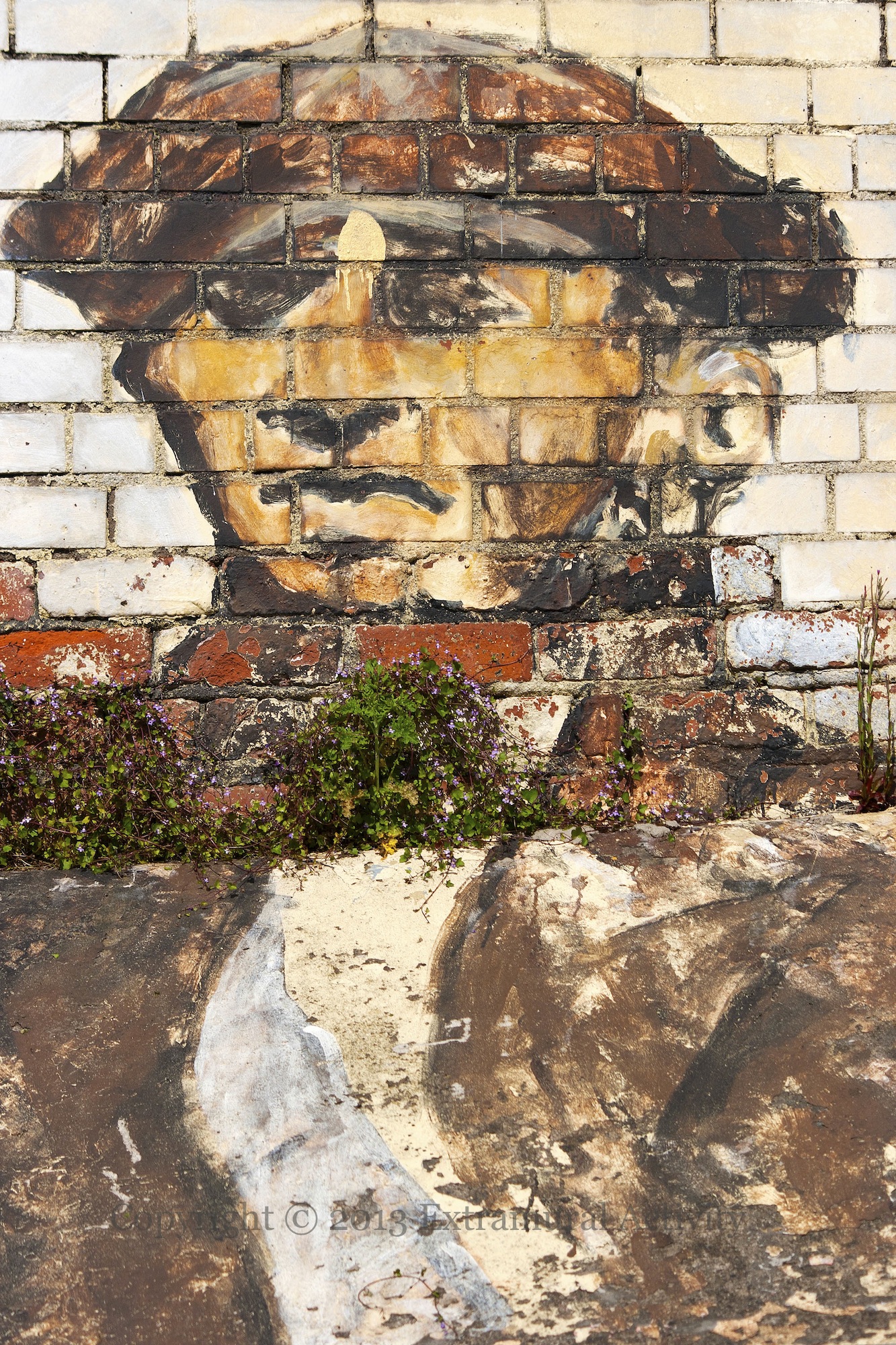
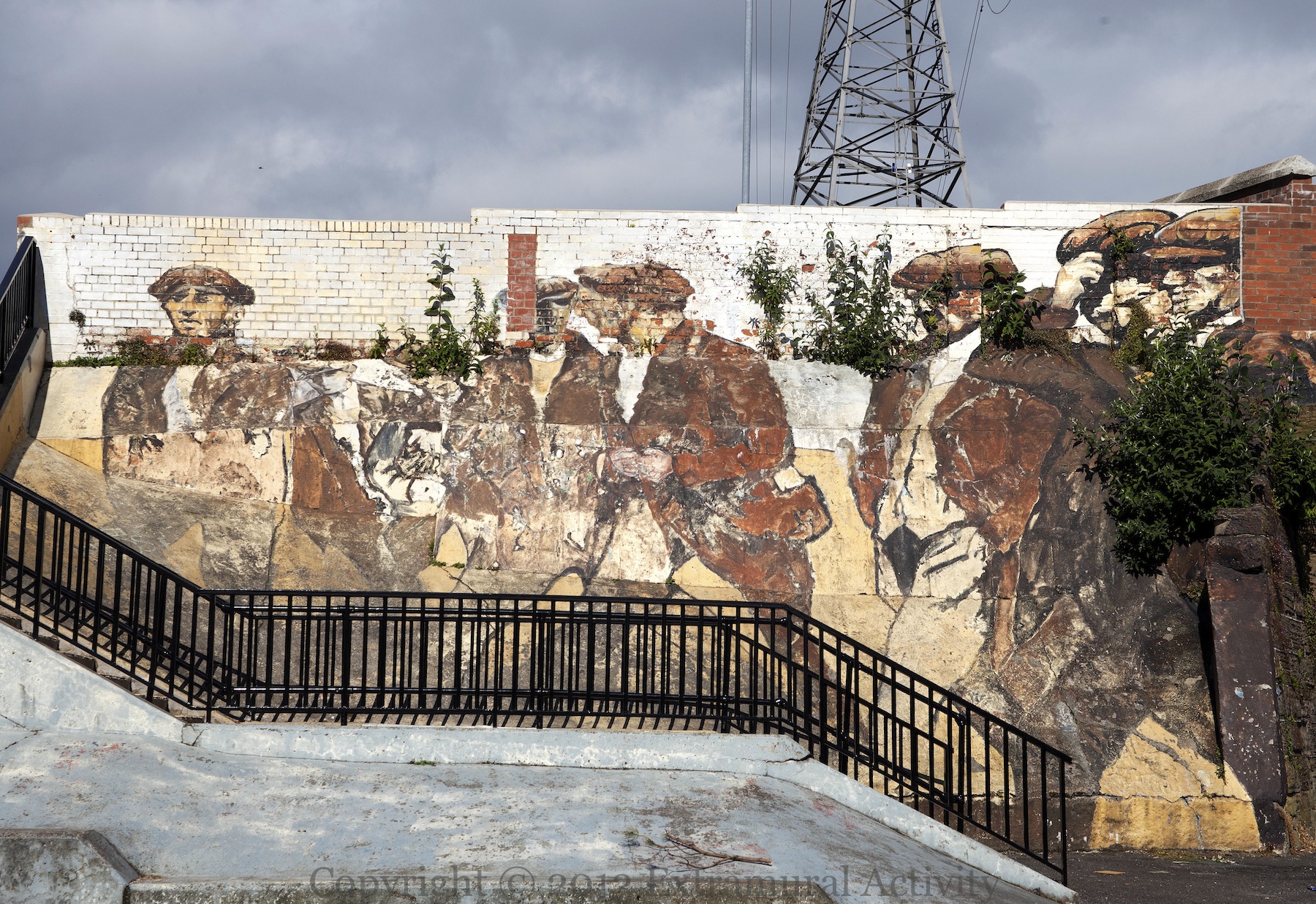
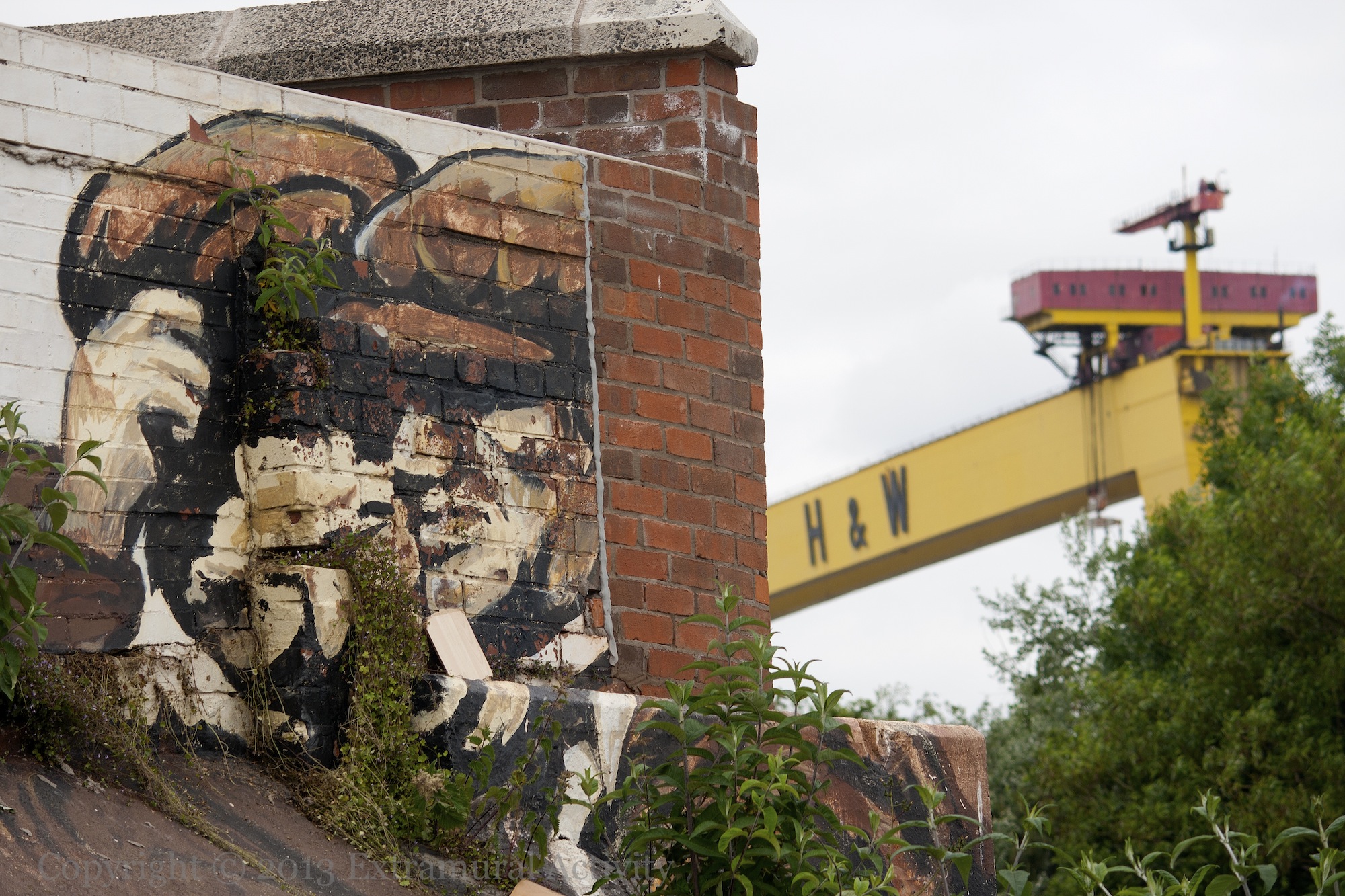
Three shots of an old mural above the steps to the pedestrian walkway over the Sydenham bypass in east Belfast, featuring workers from the turn of the 20th century at the Harland & Wolff shipyard, which can be seen in the third image.
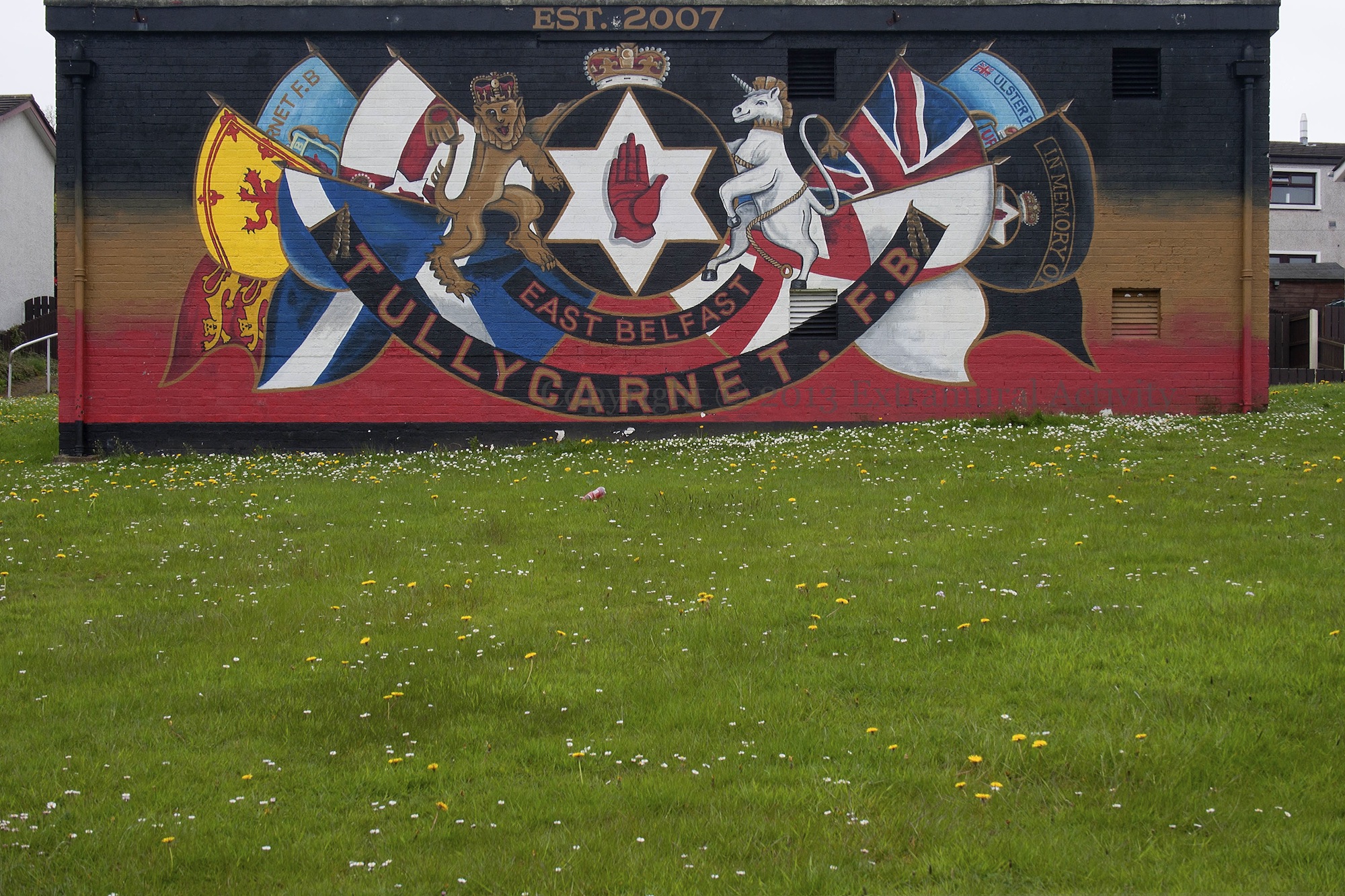
Mural in the Tullycarnet estate to the local flute band (“established 2007” Fb), showing various UK flags and the lion and the unicorn from the UK coat of arms. According to the nursery rhyme, “the lion beat the unicorn/all around the town” and so only the lion wears a crown.
Previously: TFB mural in the subway under Kings Road.
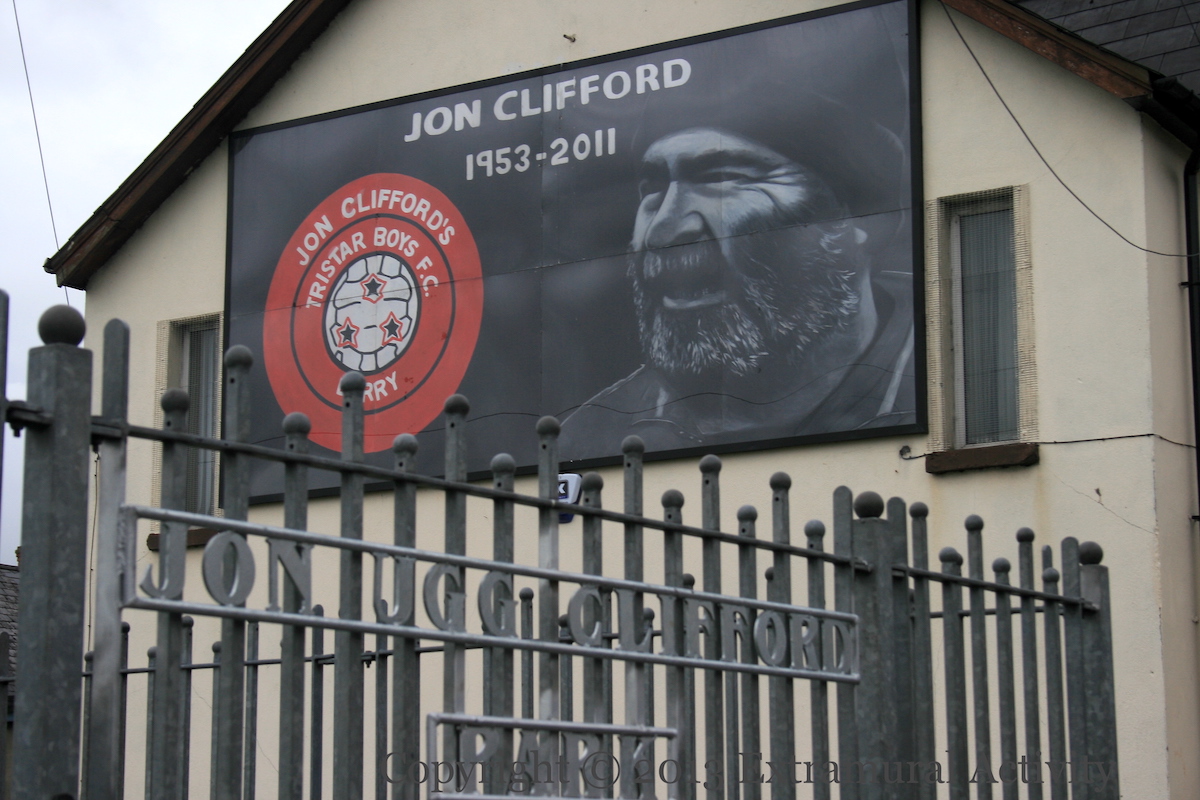
Jon “Ugg” Clifford died in 2011, having founded Tristar Boys FC (web) in 1974. Bull Park in Creggan has been renamed in his honour and this new board mounted above the park.
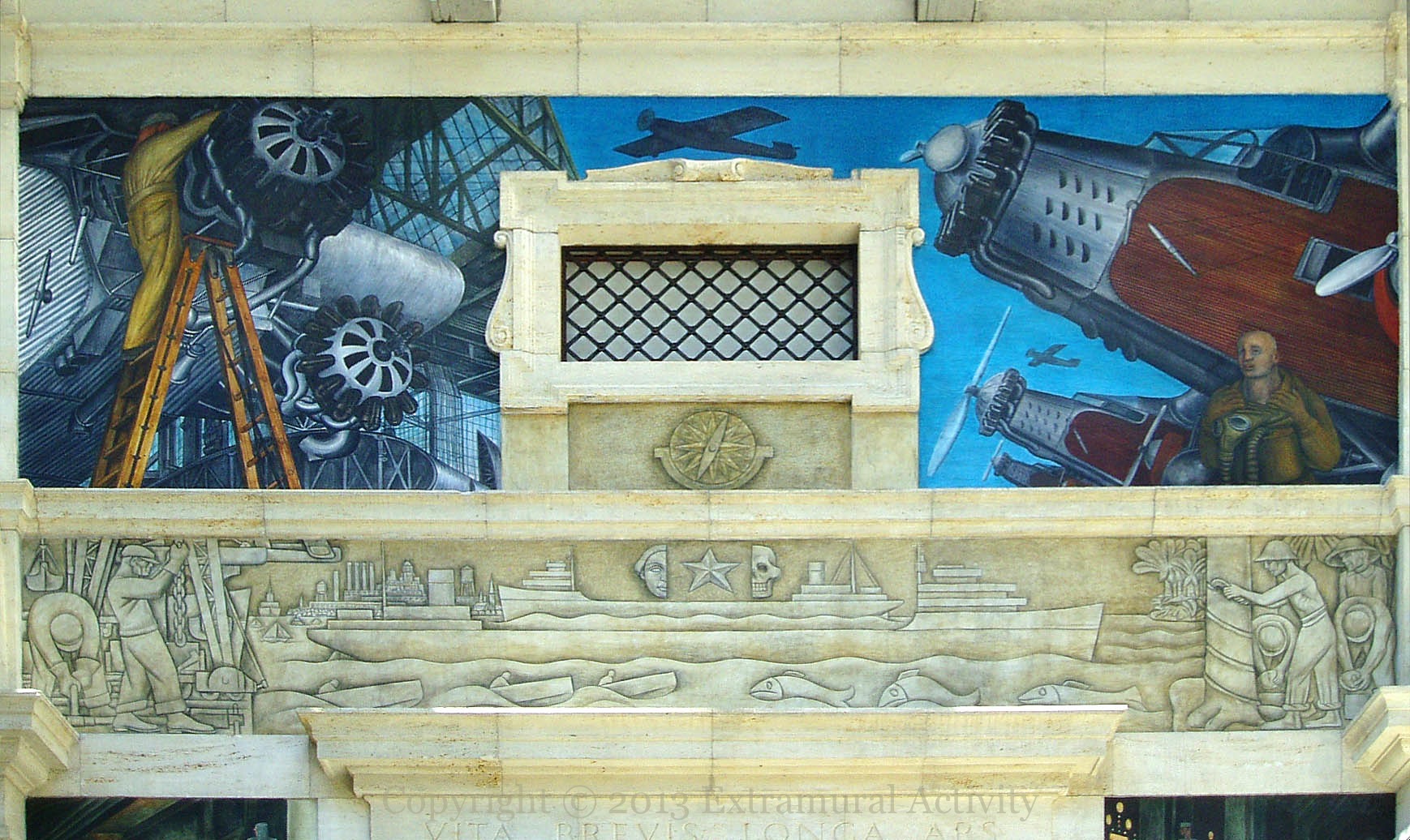
Above is a striking panel from the west wall of the Diego Rivera ‘Detroit Industry’ hall in the Detroit Institute of Arts. One of Rivera’s main themes was the dual use of technology, for both good and bad, and here he represents aviation both commercial and military. The bottom panel shows worldwide shipping and the extraction of natural resources by developed countries (on the right, you can see rubber trees being tapped).
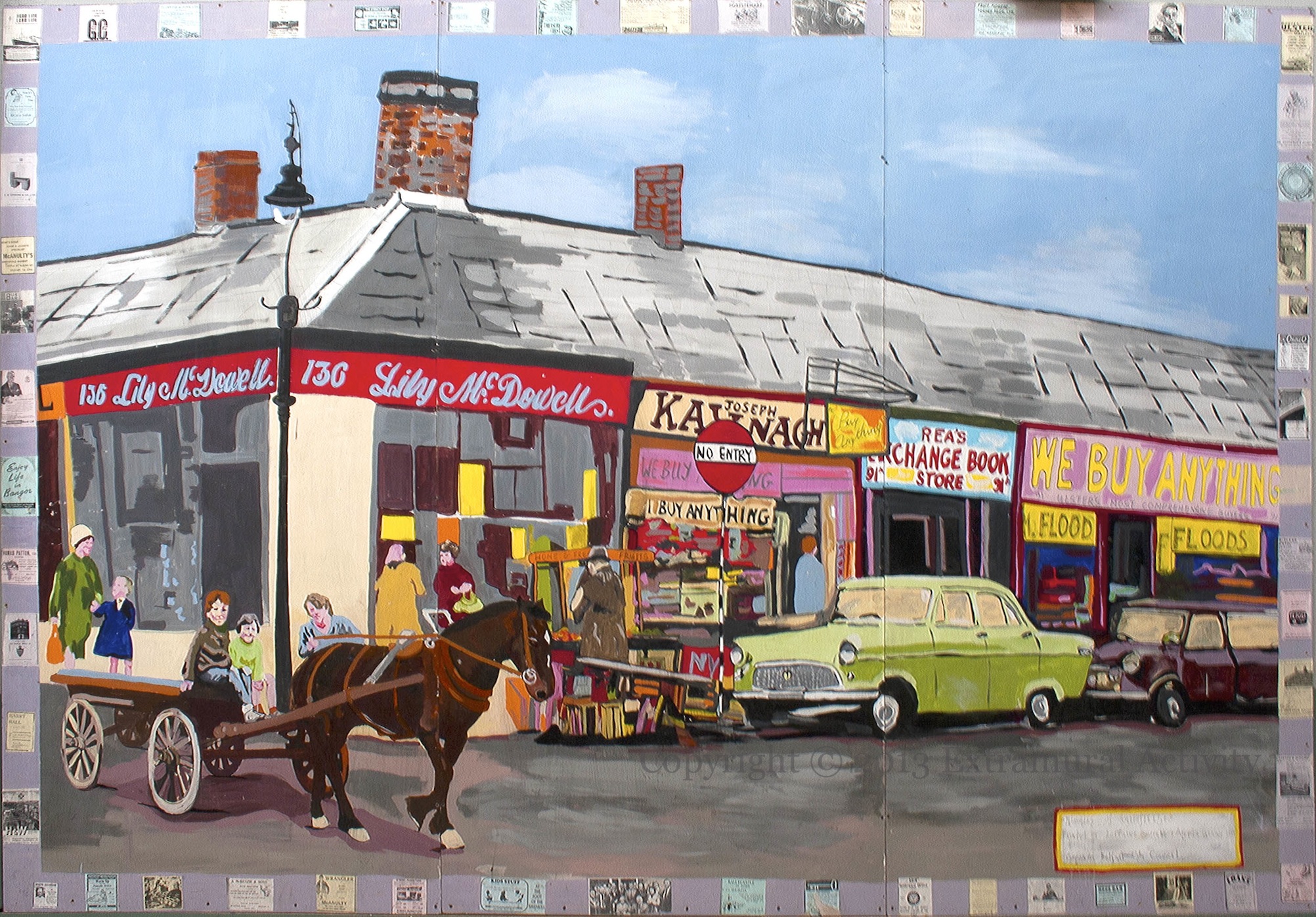
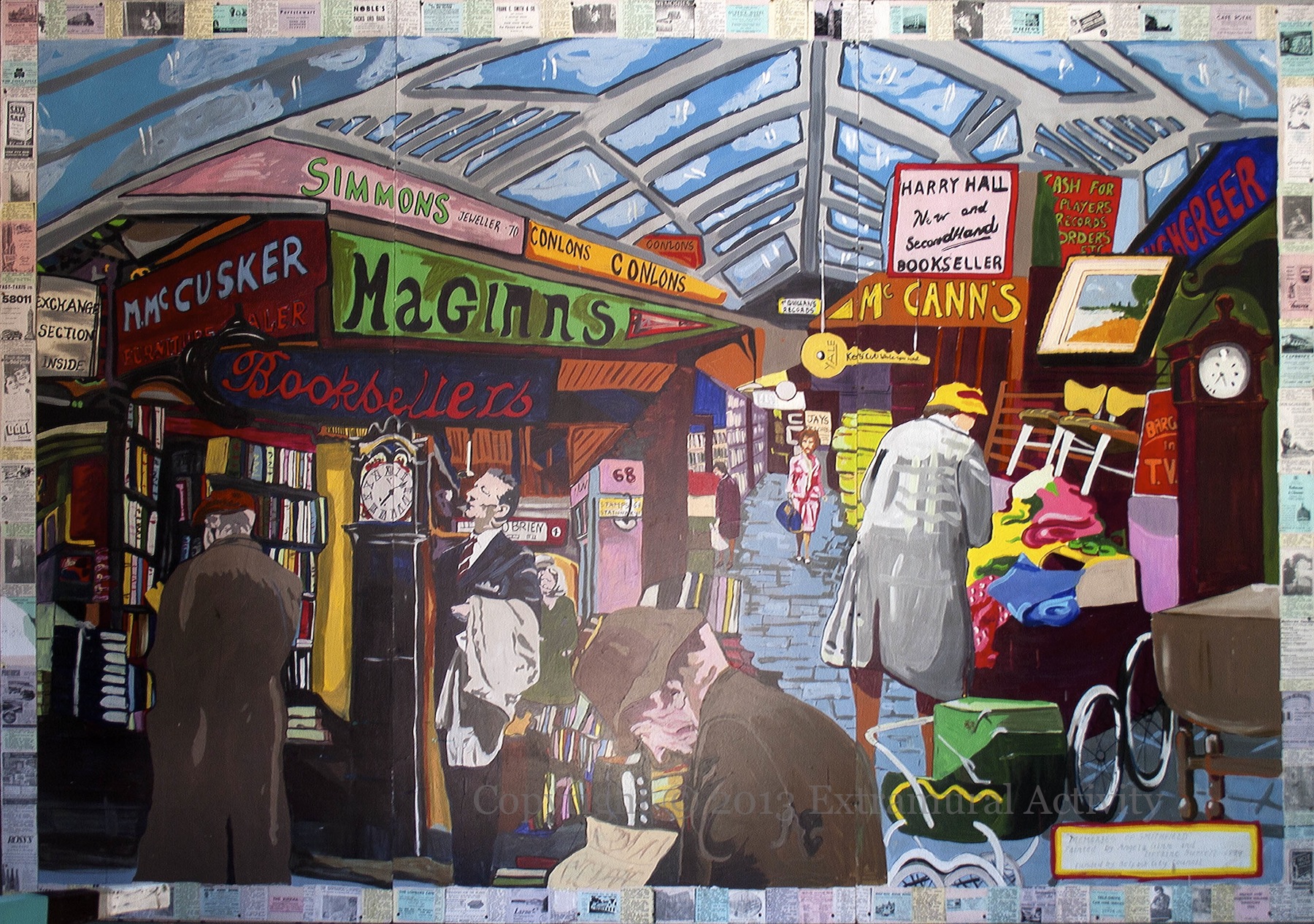
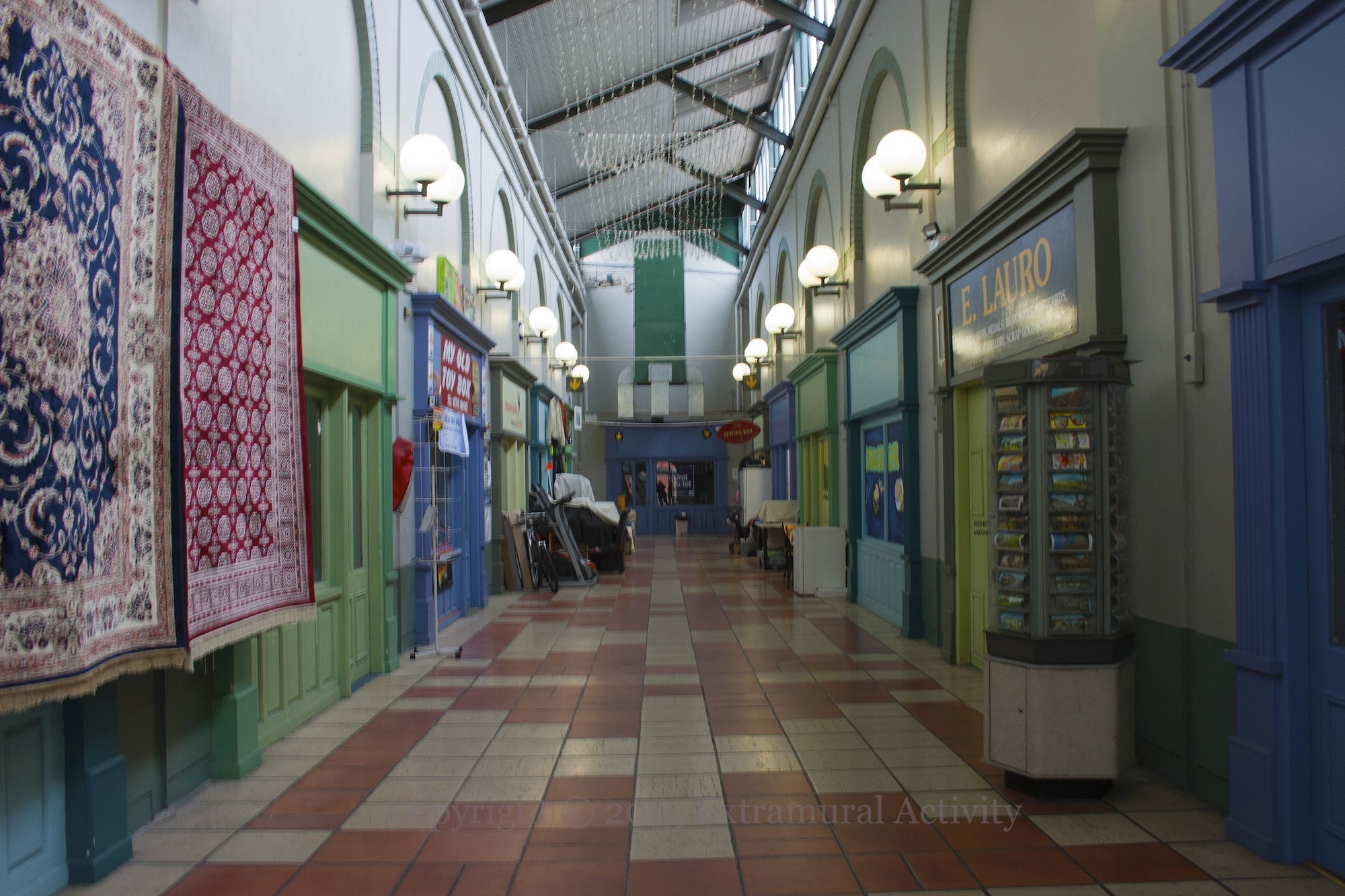
The two murals featured here, depicting Smithfield in the ‘good old days’ — before it was fire-bombed in 1974 (gallery of 10 images at the Tele) – are inside the modern Smithfield, rebuilt in 1986, depicted in the third and fourth images. Update 2013-11: The two ‘Memories of Smithfield’ paintings are by Angela Ginn and Lorraine Burrell, 1999; funded by Belfast City Council.
The external shot is taken from the rear of Castlecourt. The foreign multinationals in it appear to be flourishing, while many units are vacant inside Smithfield.
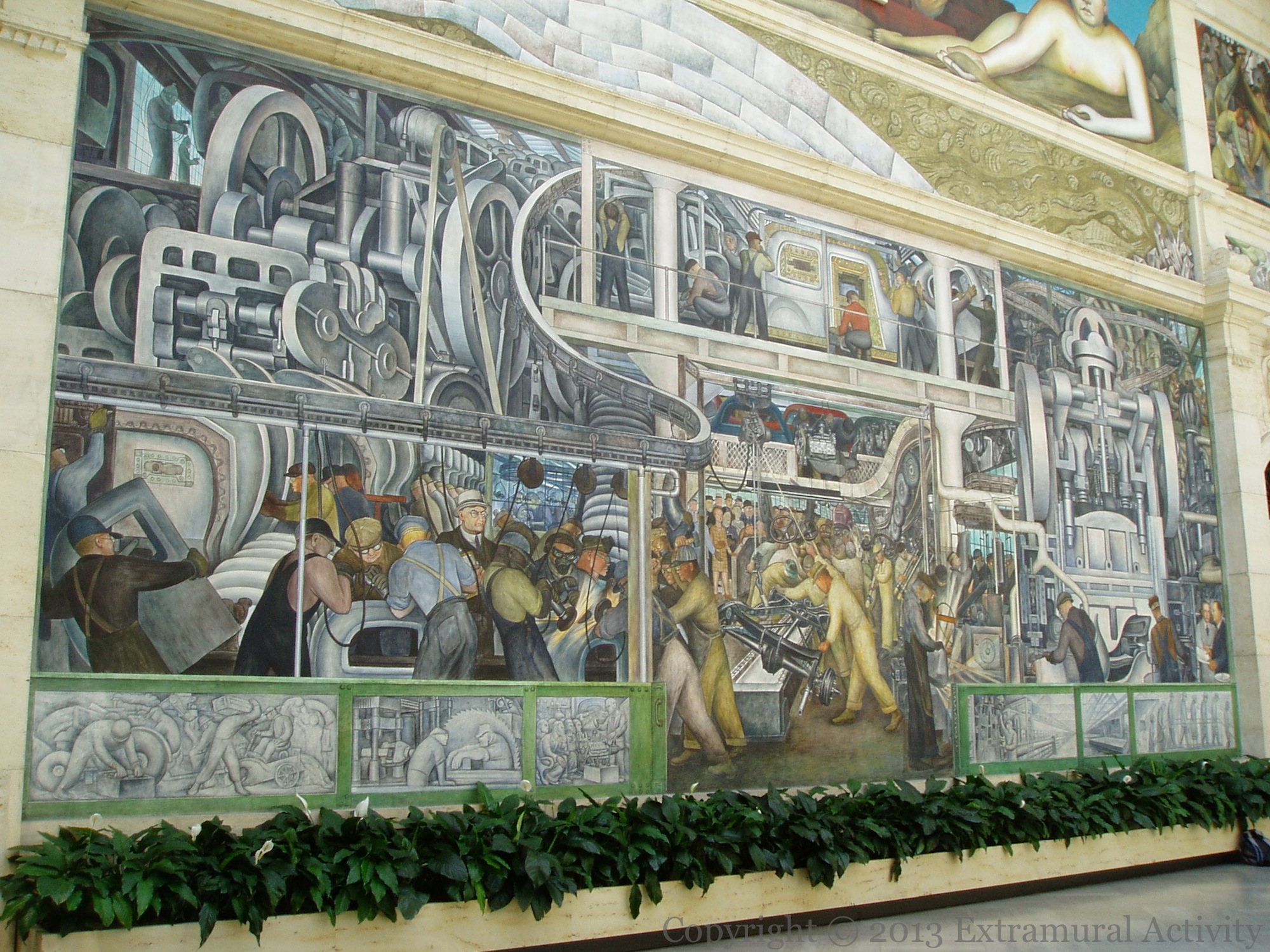
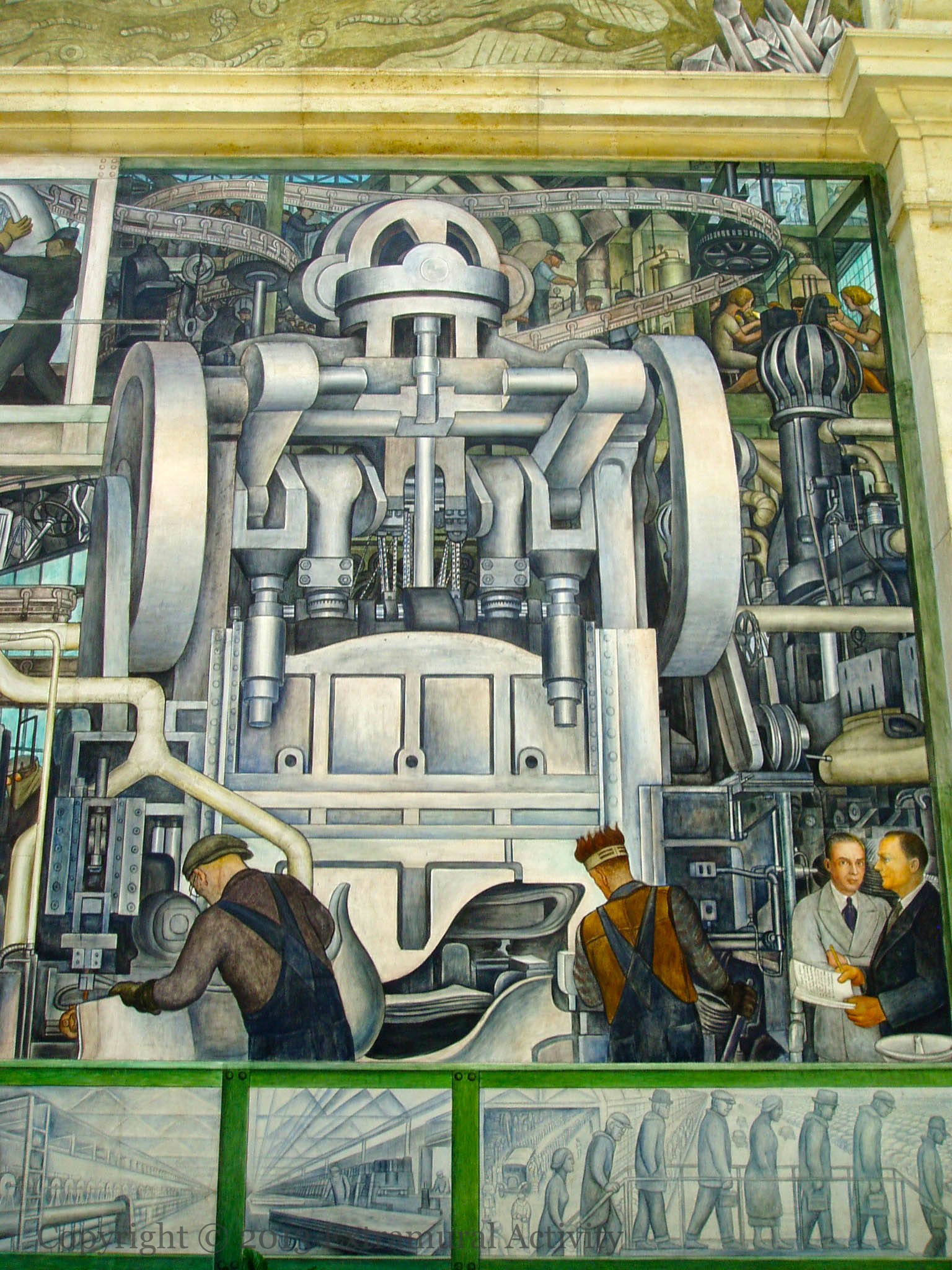
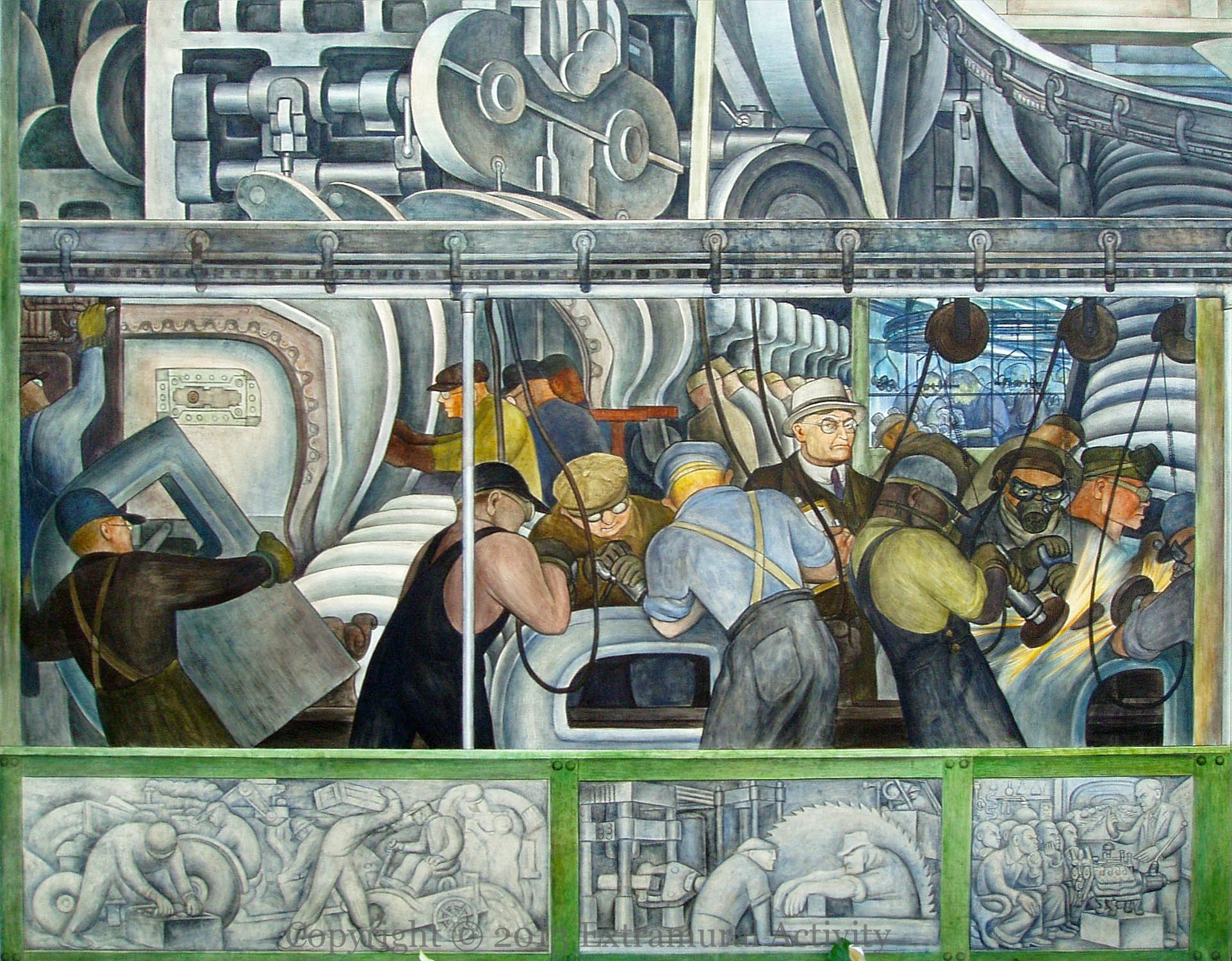
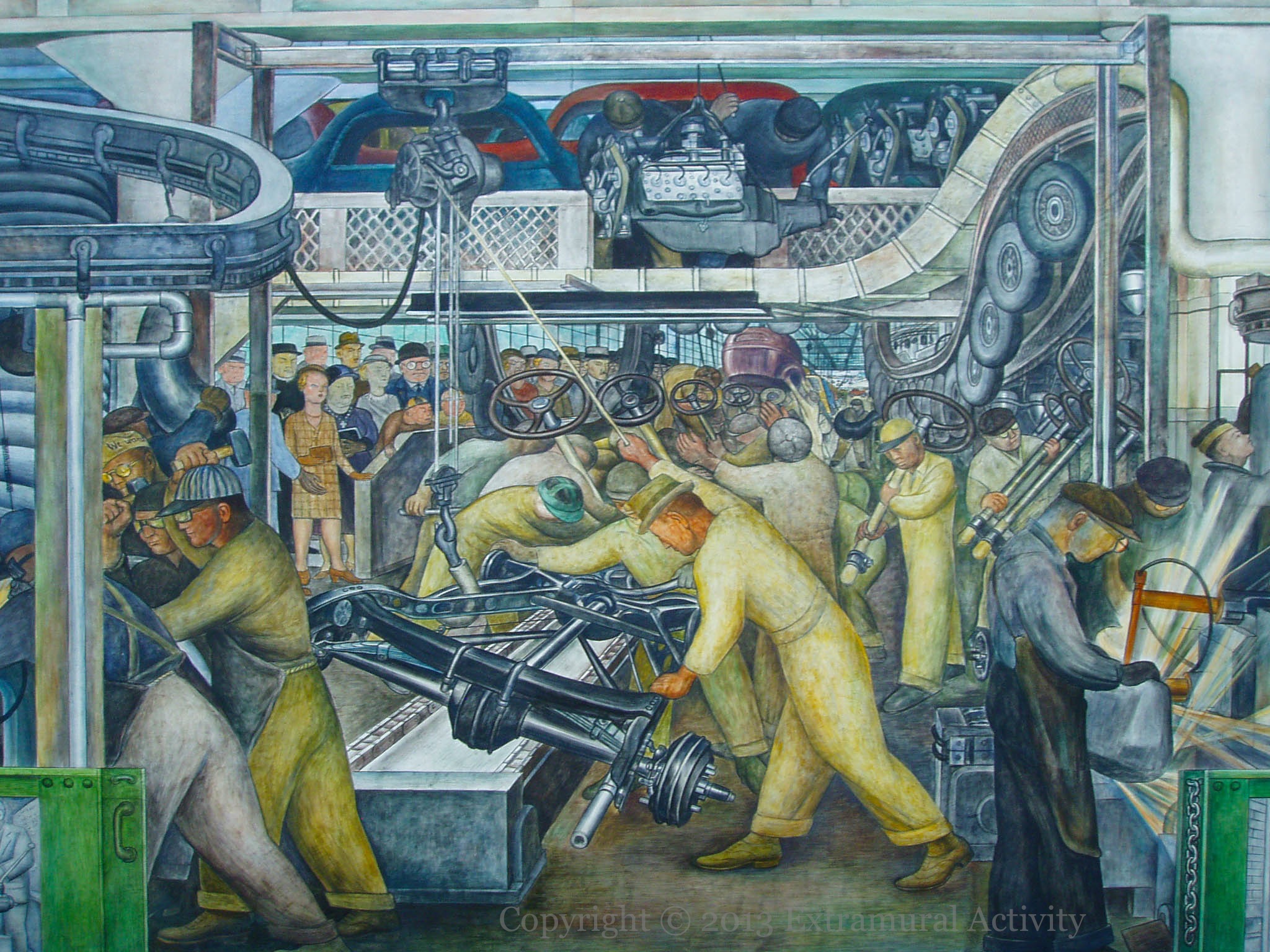
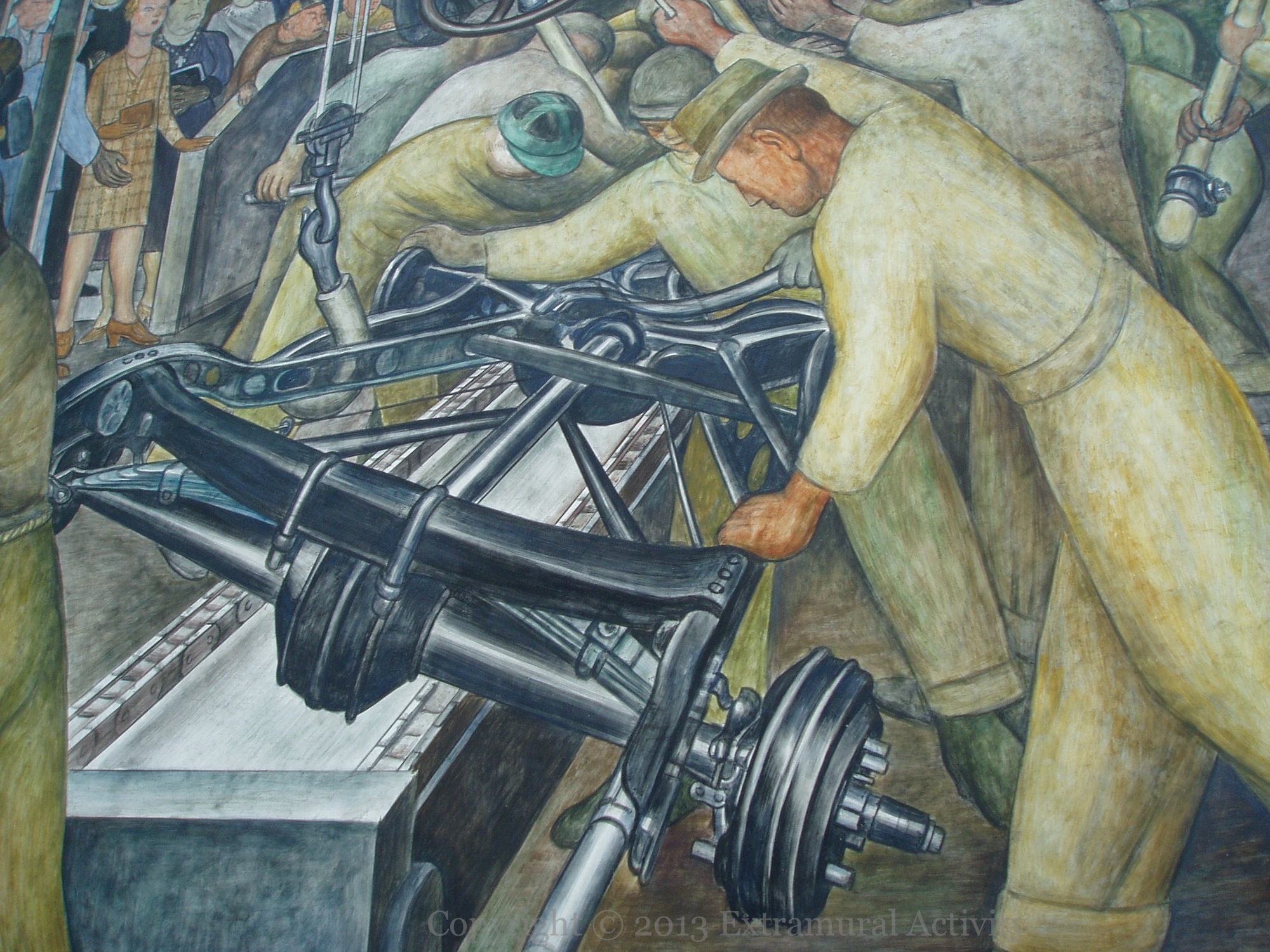
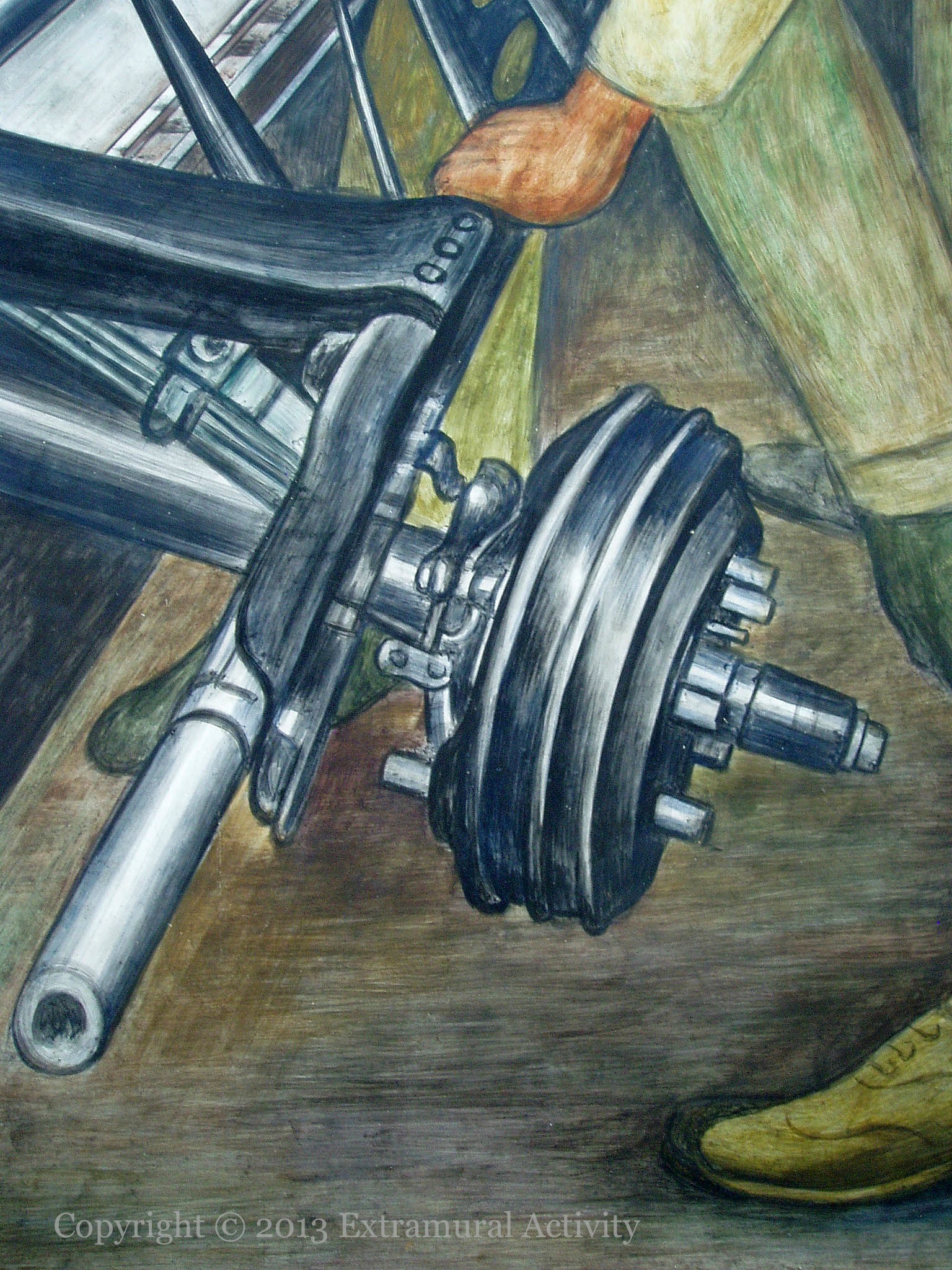
Today we feature the main panel of the South wall of the Diego Rivera Detroit Industry frescoes in the Detroit Institute of Arts, which shows the construction of an automobile (probably the Model B – we will see the V-8 engine being produced on the north wall) at Ford’s River Rouge plant in Dearborn. The wide shot is above and more detailed shots of the lower left, the right third, and the lower central portion follow.
Here is a video of the Rouge plant in 1938 and 1939 …
Here is the right third – in the bottom right corner (above the strip with panels charting a day in the life of workers) can be seen Edsel Ford, of Ford Motors, and William Valentiner, director of the Detroit Institute of Arts at the time Rivera painted the frescoes (1932-1933).
The lower left portion …
Below are three shots of the lower central section, of increasing proximity to the work; the third demonstrates the amazing level of detail of the frescoes.
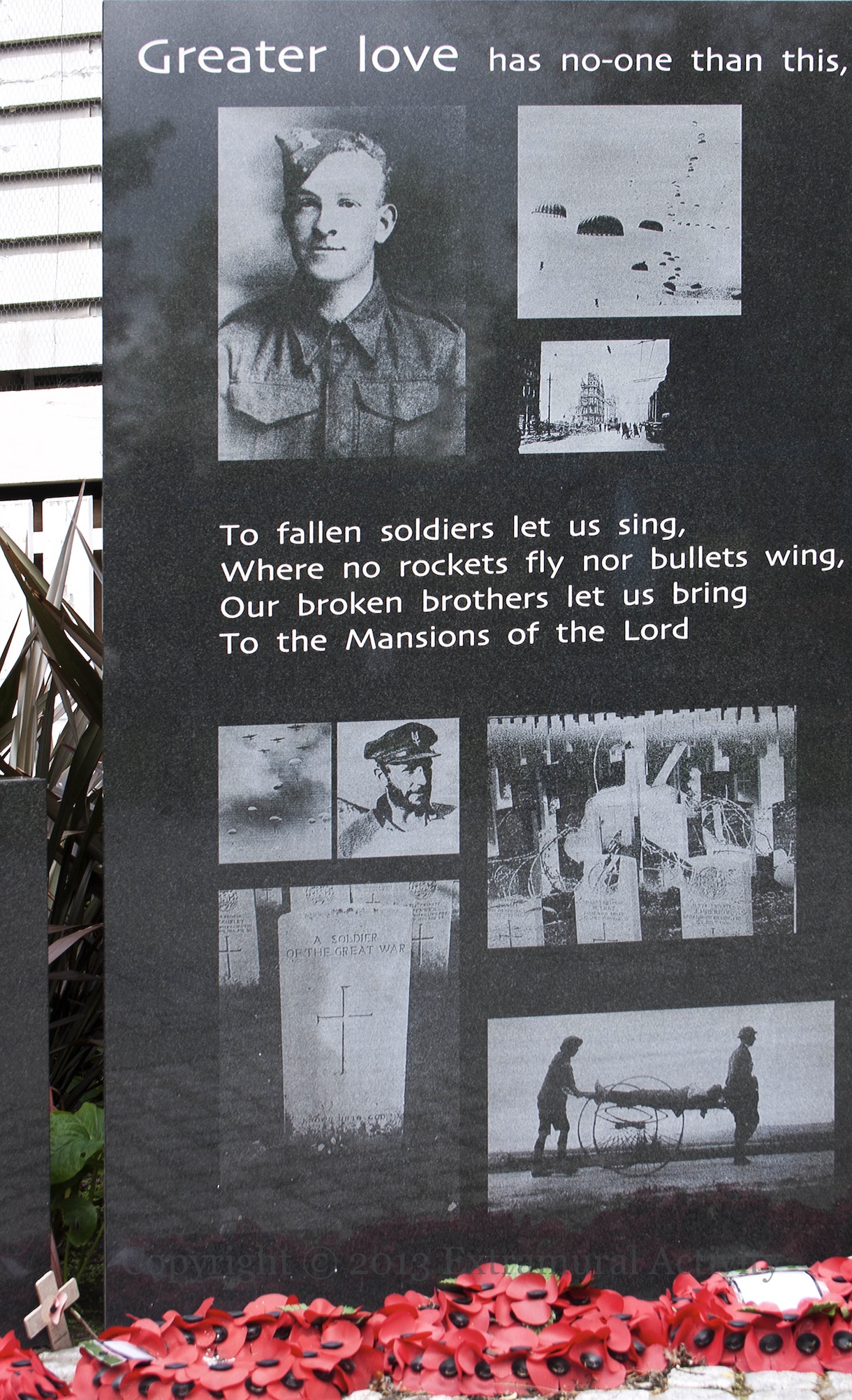
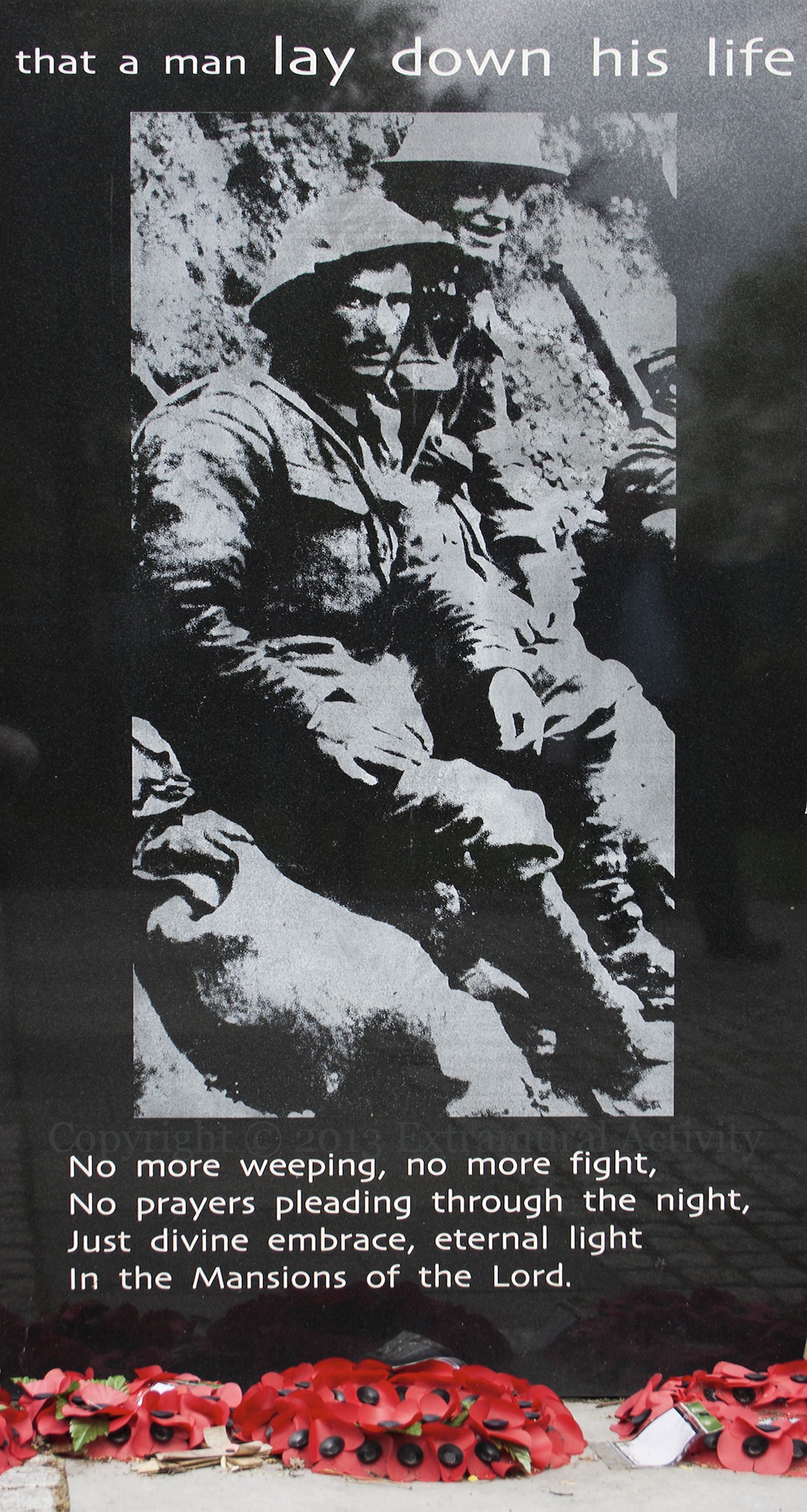
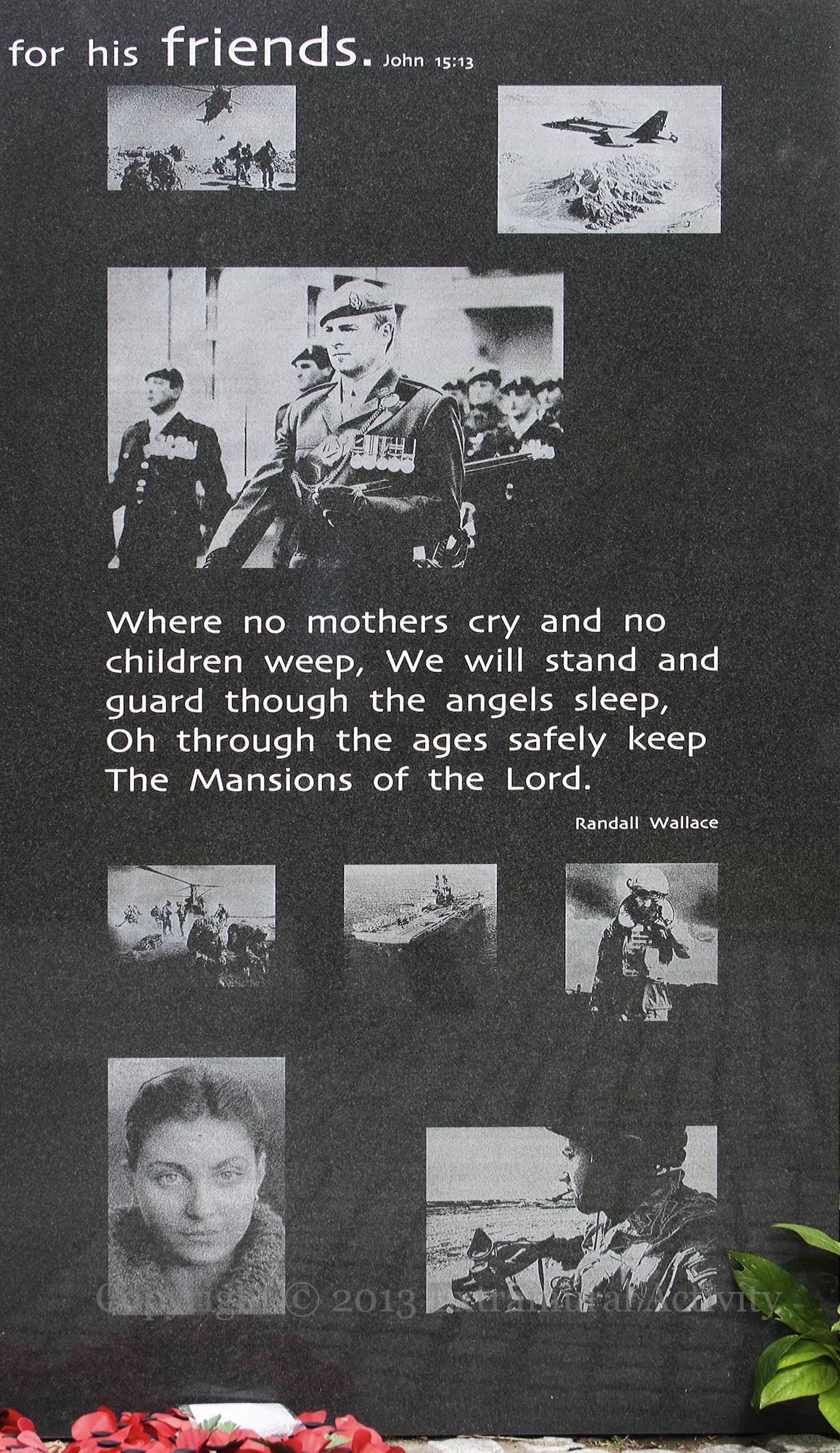
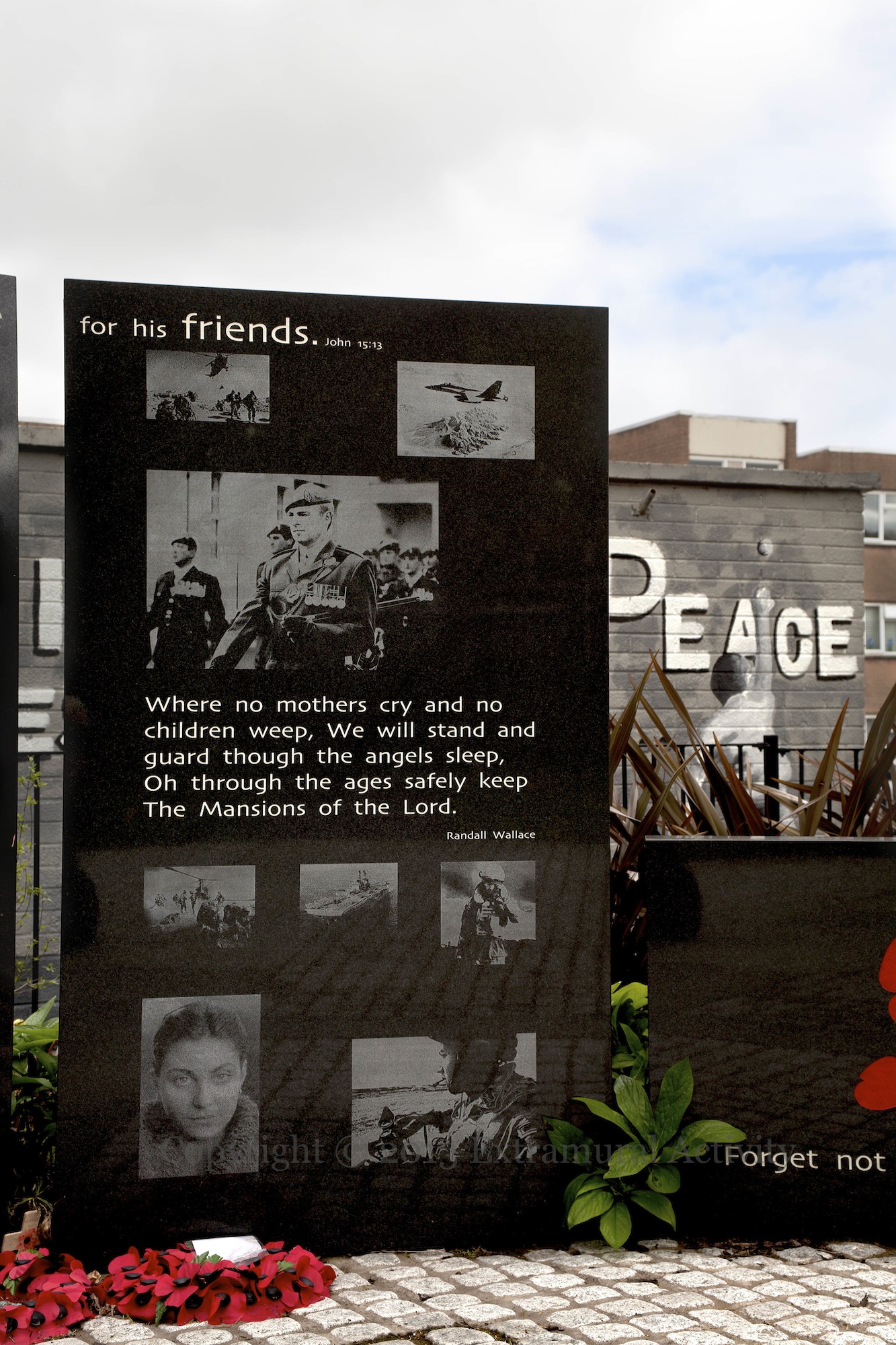
A three-stone memorial to army soldiers from both World Wards in Tullycarnet, featuring a line from the gospel of John (“Greater love has no-one than this, that a man lay down his life for his friends” 15:13) and a song by Randall Wallace for the 2002 movie We Were Soldiers called ‘The Mansions of the Lord’: To fallen soldiers let us sing, where no rockets fly nor bullets wing, our broken brothers let us bring, to the mansions of the Lord. No more weeping, no more fight, no prayers pleading through the night, just divine embrace, eternal light, in the mansions of the Lord. Where no mothers cry and no children weep, we will stand and guard though the angels sleep, Oh through the ages safely keep, the mansions of the Lord.”
By Ross Wilson with support from the International Fund For Ireland (IFI)
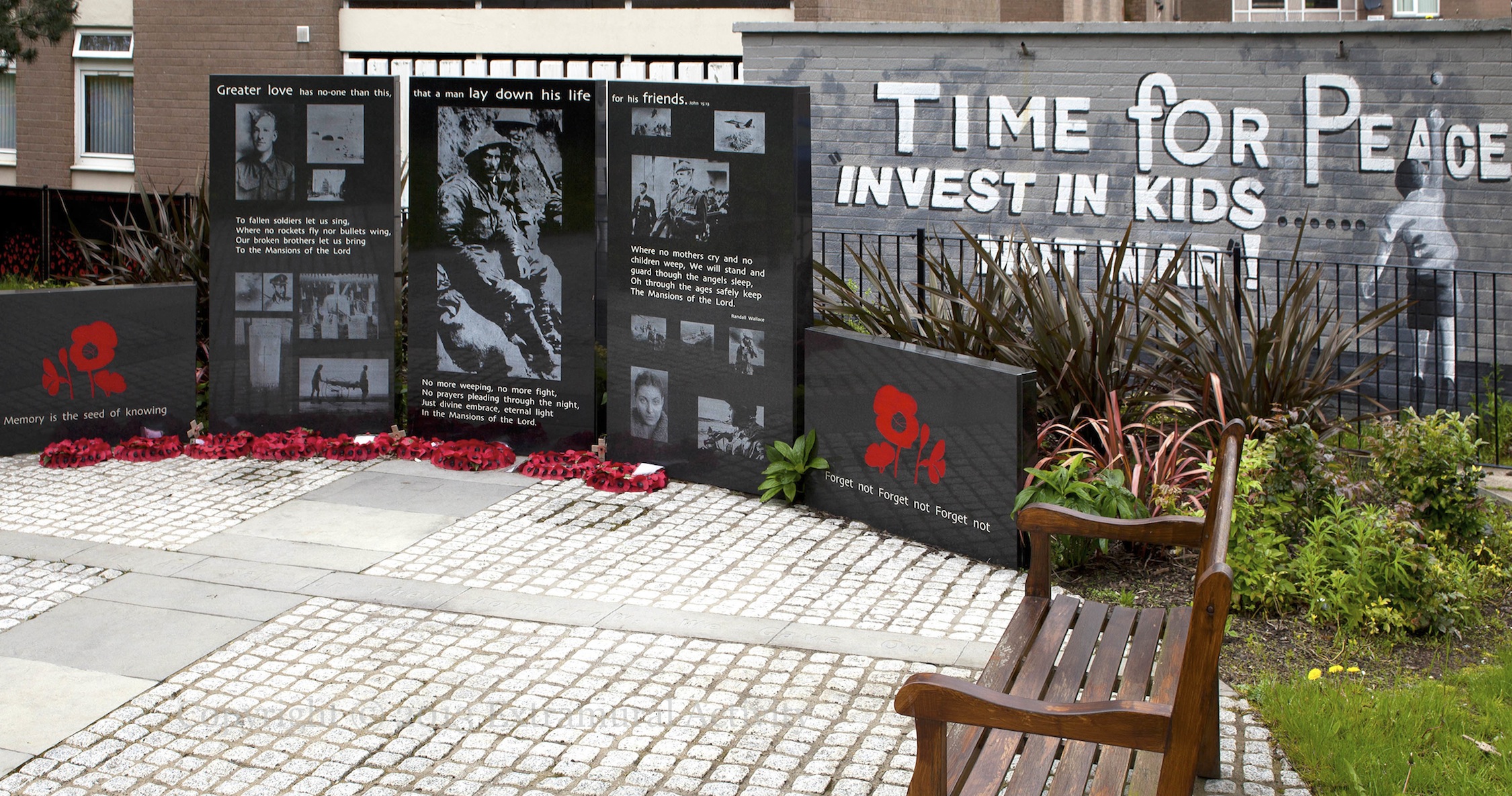
The three central panels of the World Wars memorial in Tullycarnet (featured separately), along with two smaller stones, stand in front of a mural reading “Time for peace. Invest in kids … not war!”. The image of a boy playing with a ball against a wall is based on a 1994 photograph by Crispin Rodwell. The slogan in the photograph, originally, was “Time for peace; time to go” but for publication, as here, the second part was cropped out.