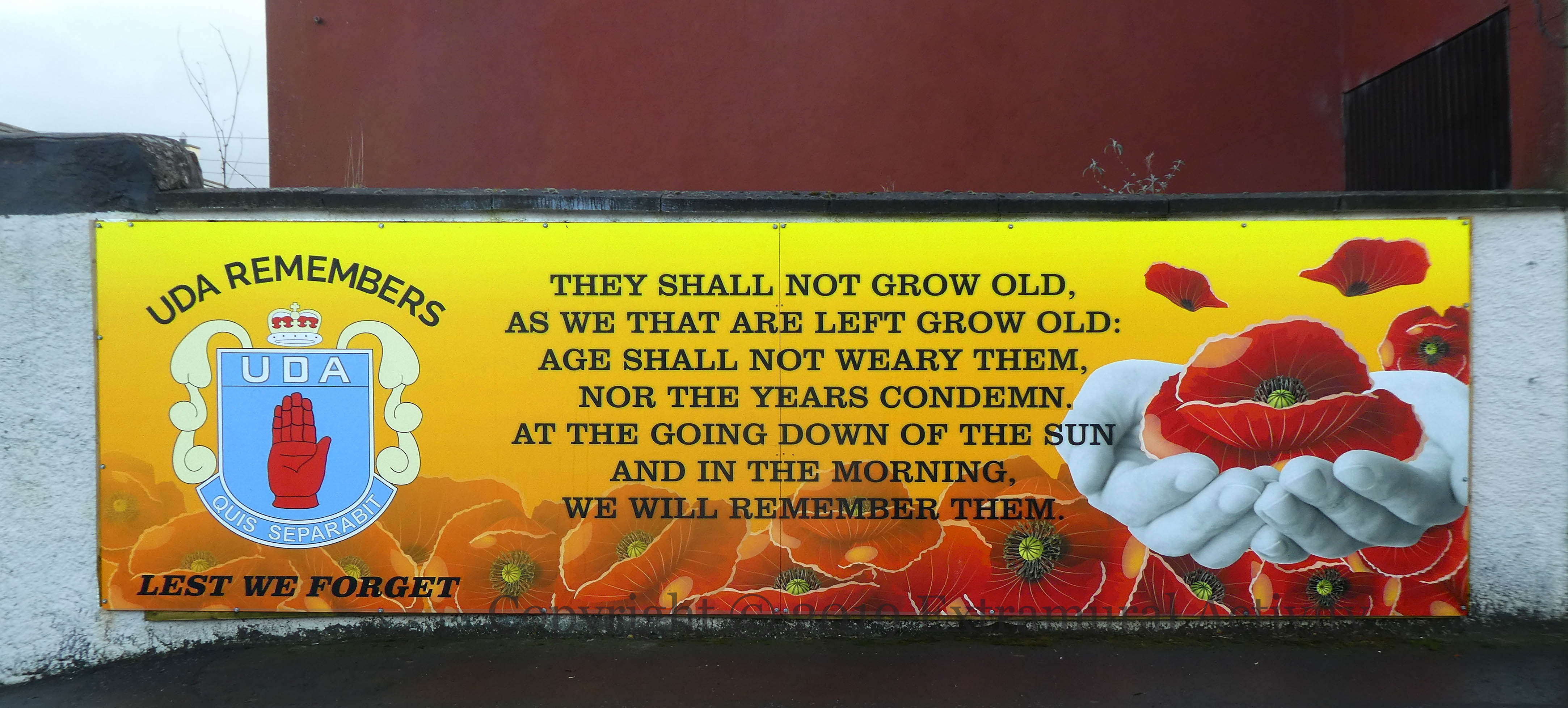
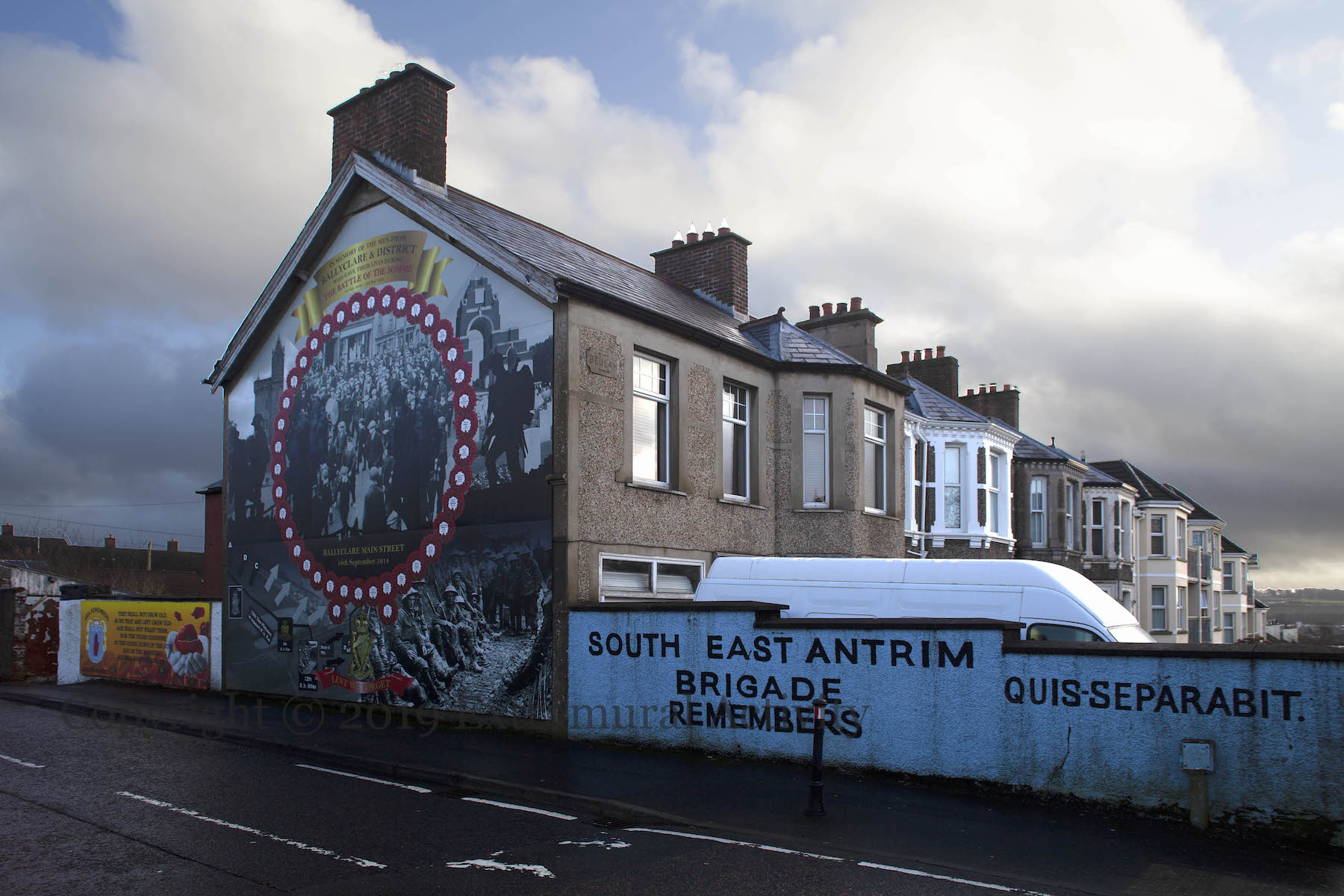
“[South East Antrim] UDA remembers. ‘They shall not grow old/As we that are left grow old/Age shall not wary them/Nor the years condemn/At the going down of the sun/And in the morning/We will remember them’ [The Fallen]” For the large mural, see The Men From Ballyclare & District.
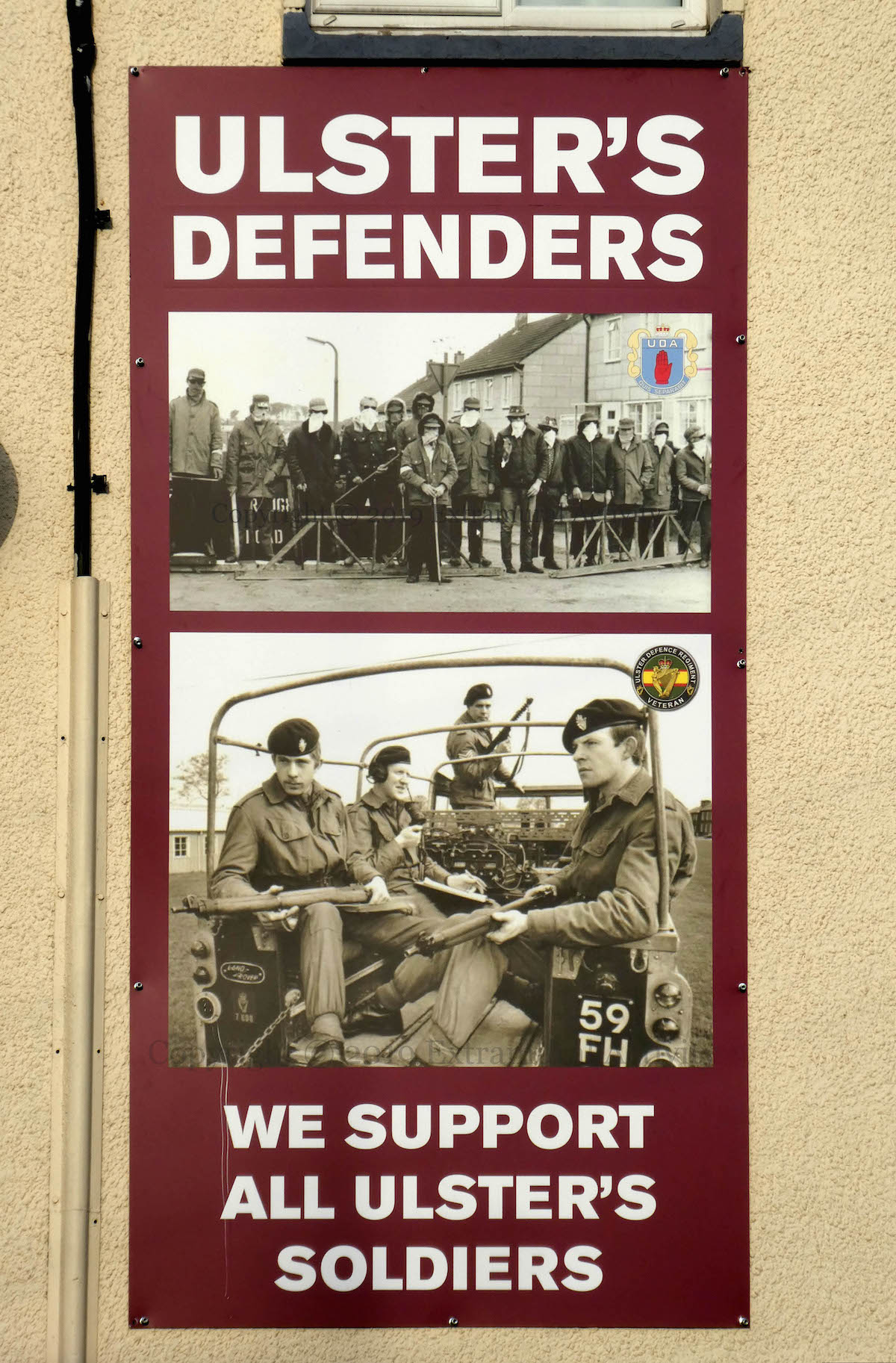
“We support all Ulster’s soldiers.” The UDA and the UDR brought under the same umbrella of “Ulster’s defenders” in Charles Drive, Ballyclare. The UDR was established in 1970 to relieve the RUC and B Specials of military operations and was disbanded in 1992, in part because it was only 3% Catholic and 5-15% of members had links to loyalist paramilitaries (Irish News).
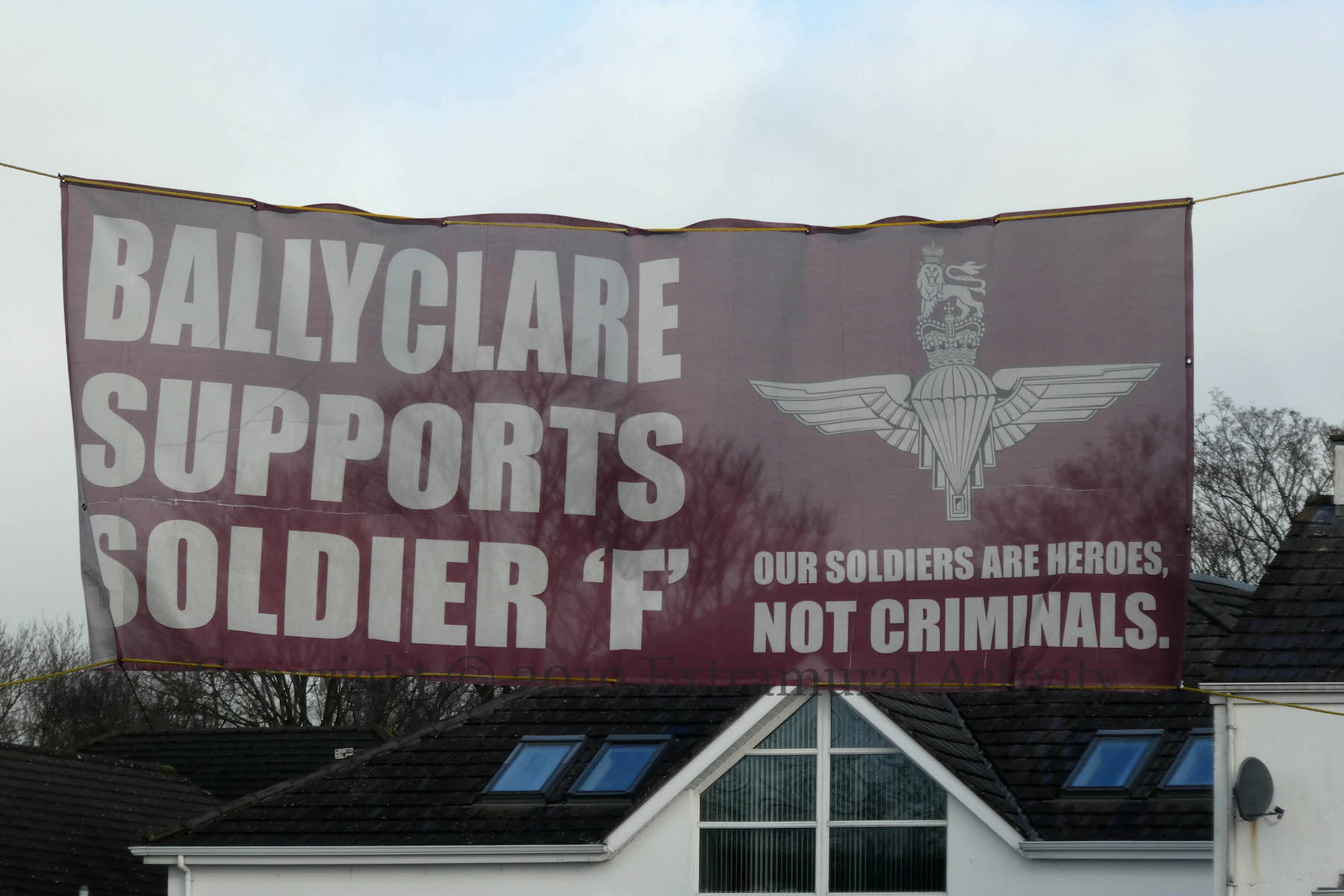
“Ballyclare supports Soldier ‘F’. Our soldiers are heroes, not criminals.” “Soldier F” is the pseudonym of a British Army paratrooper who faces charges of murdering two civilians, William McKinney and Jim Wray, in Derry on Bloody Sunday (January 30th, 1972), as well as five counts of attempted murder. Proceedings began in September (BelTel), a witness list was presented in December (BBC-NI), and the case will resume on January 17th.
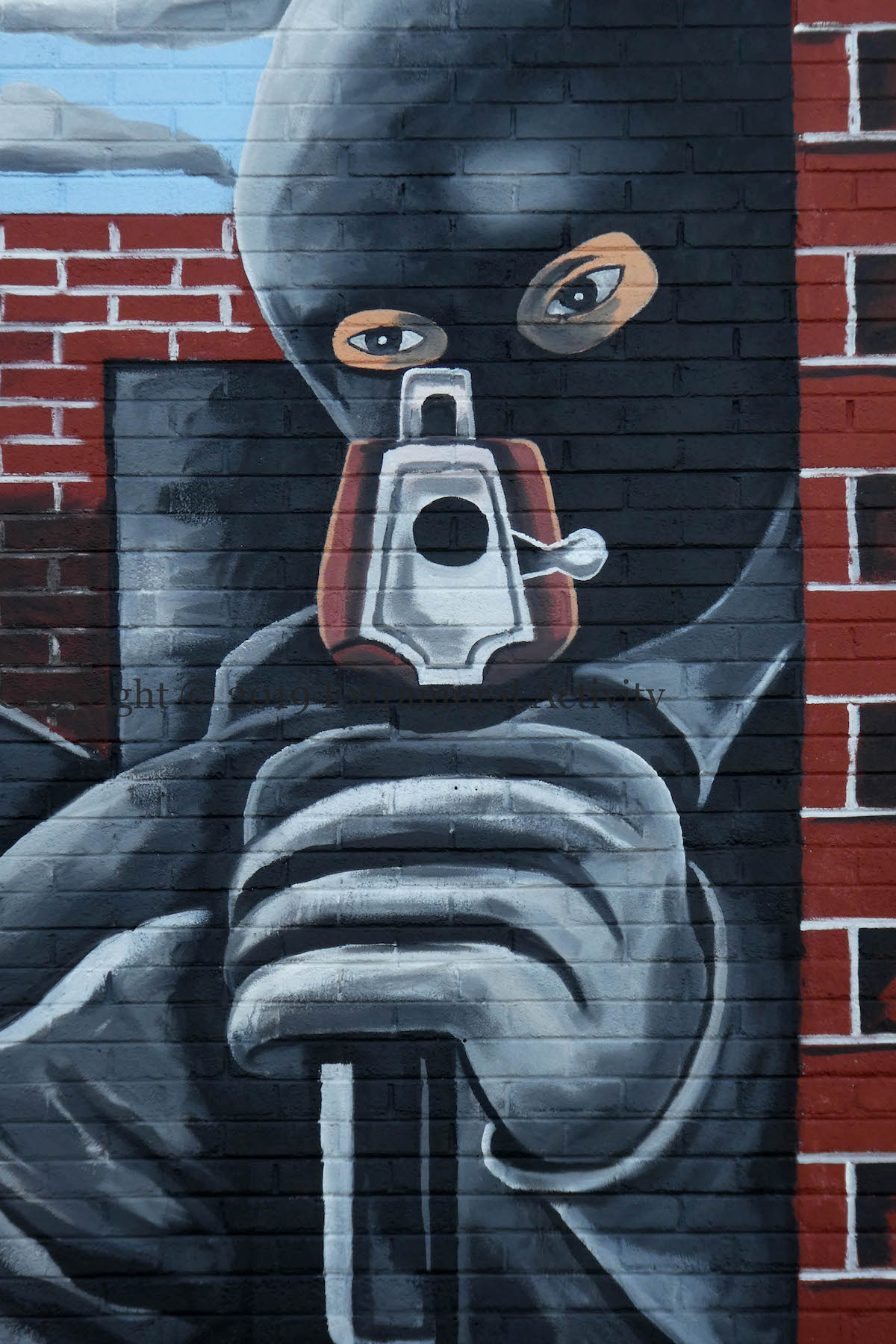
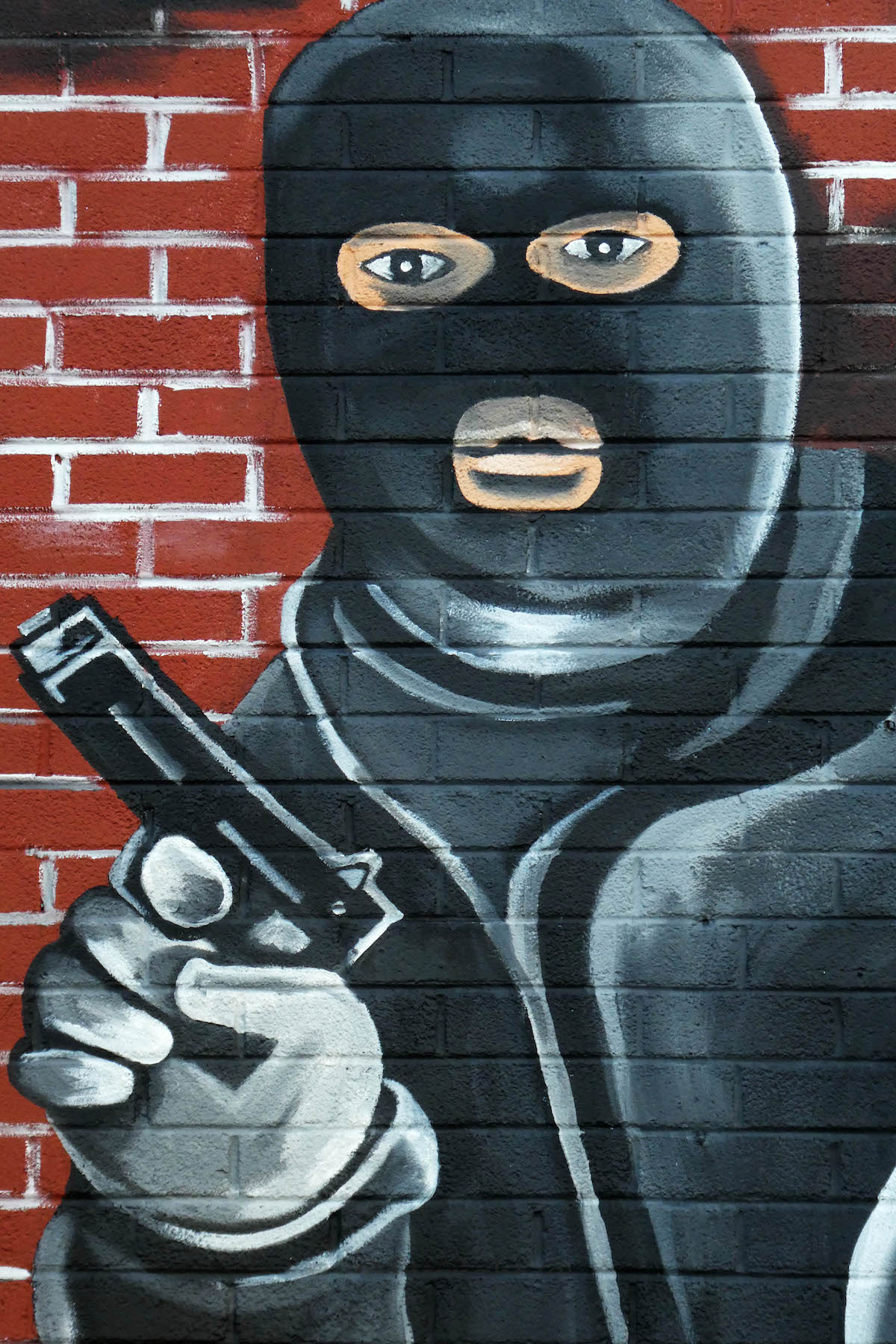
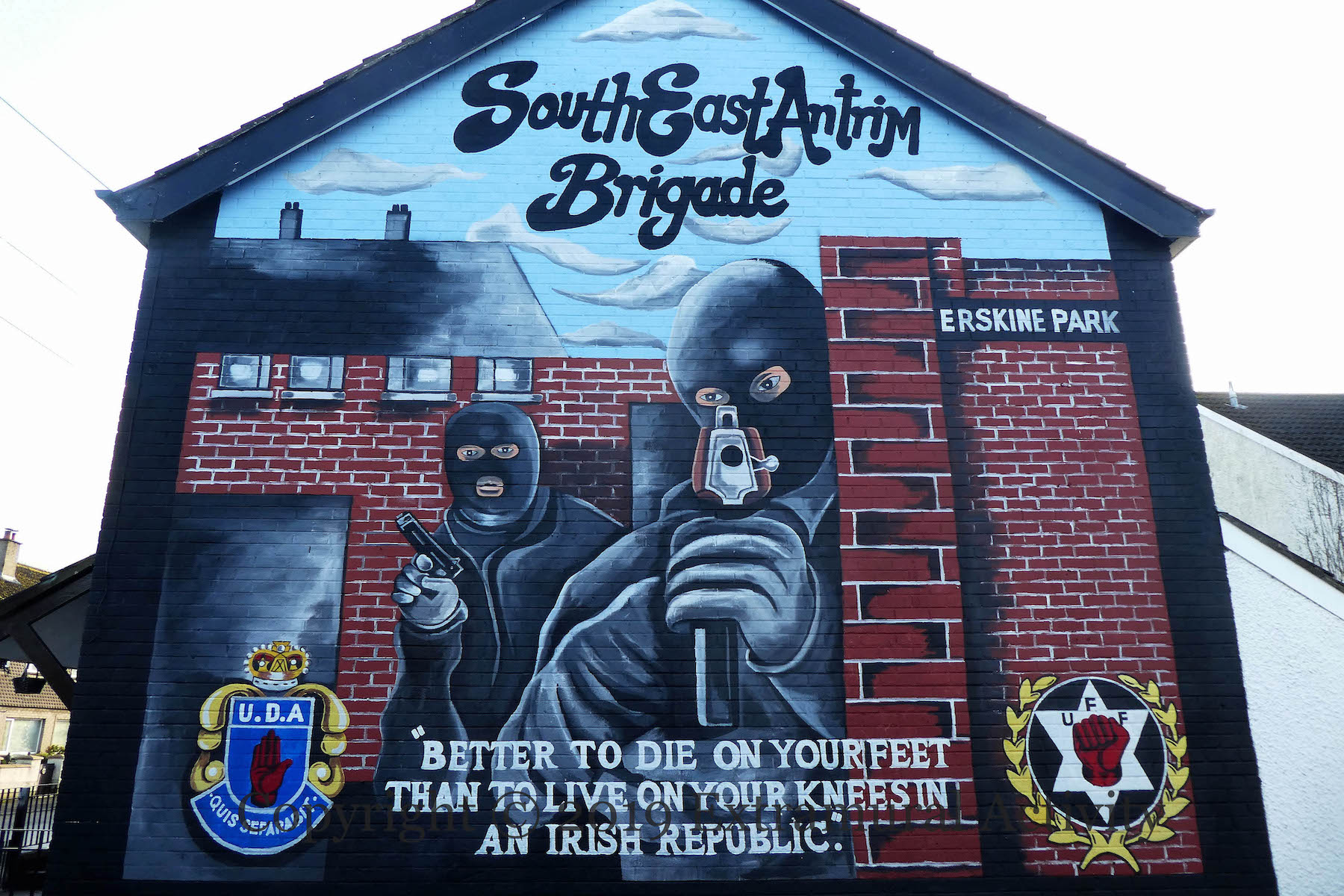
UDA volunteers in balaclavas stand ready to defend Erskine Park (Ballyclare) against forces from the south. “South East Antrim Brigade – “Better to die on your feet than to live on your knees in an Irish republic.” (A slogan from Mexican revolutionary Emiliano Zapata.)
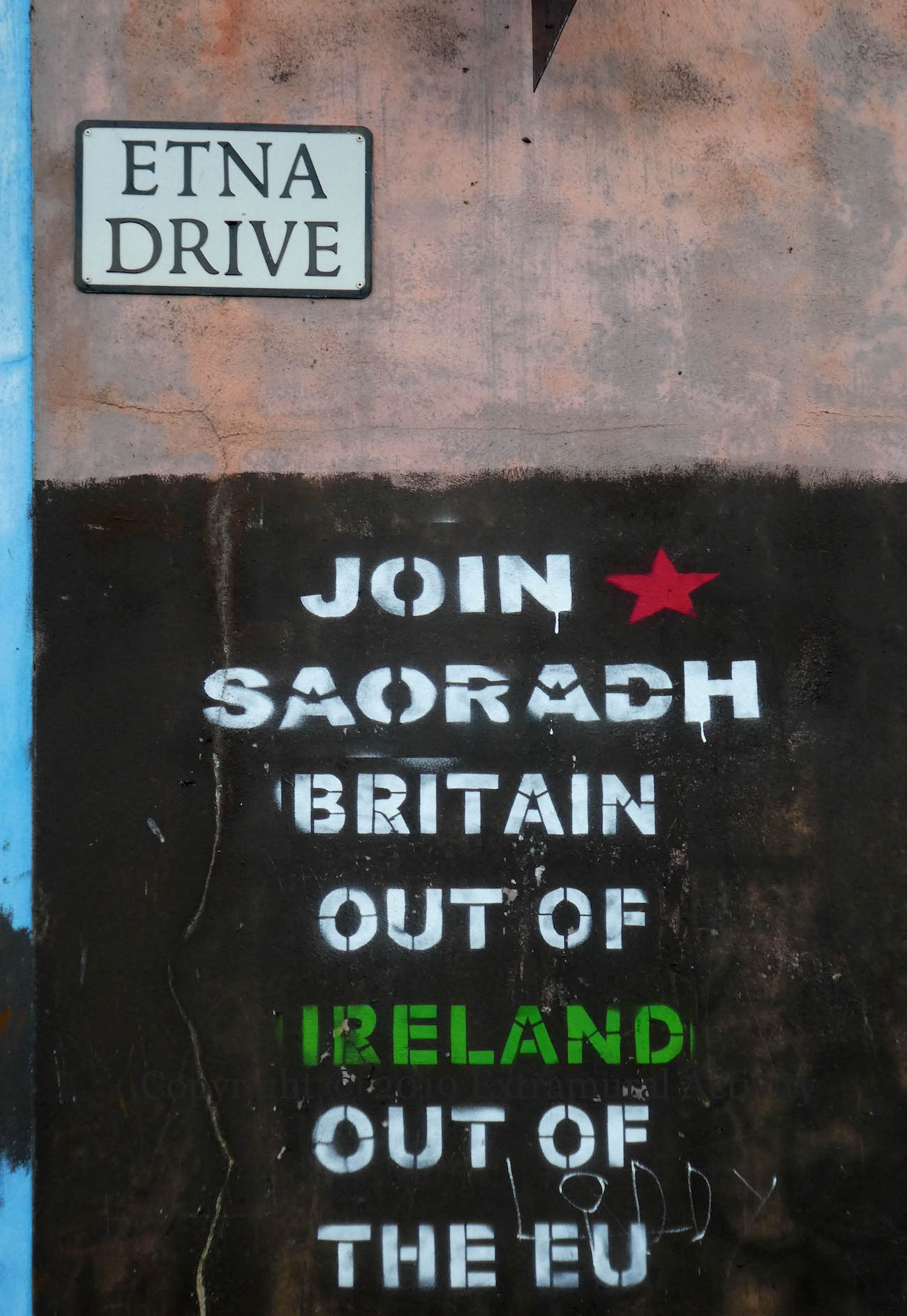
“Britain out of Ireland – Ireland out of the EU.” This Saoradh stencil is in Ardoyne, north Belfast. Saoradh does not stand candidates in elections; it also currently lacks a national on-line presence and is banned from Twitter and Facebook (in the wake of the death of Lyra McKee).
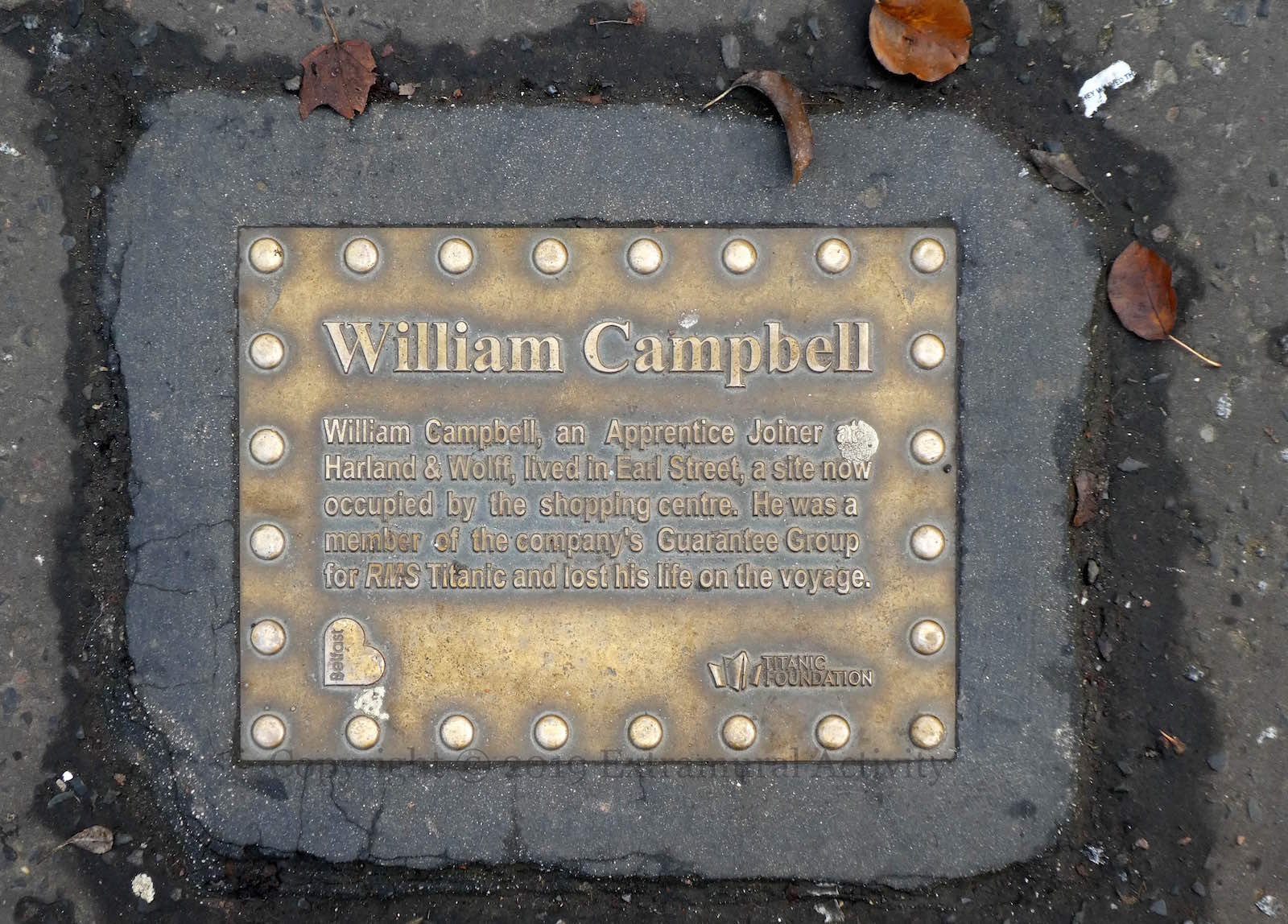
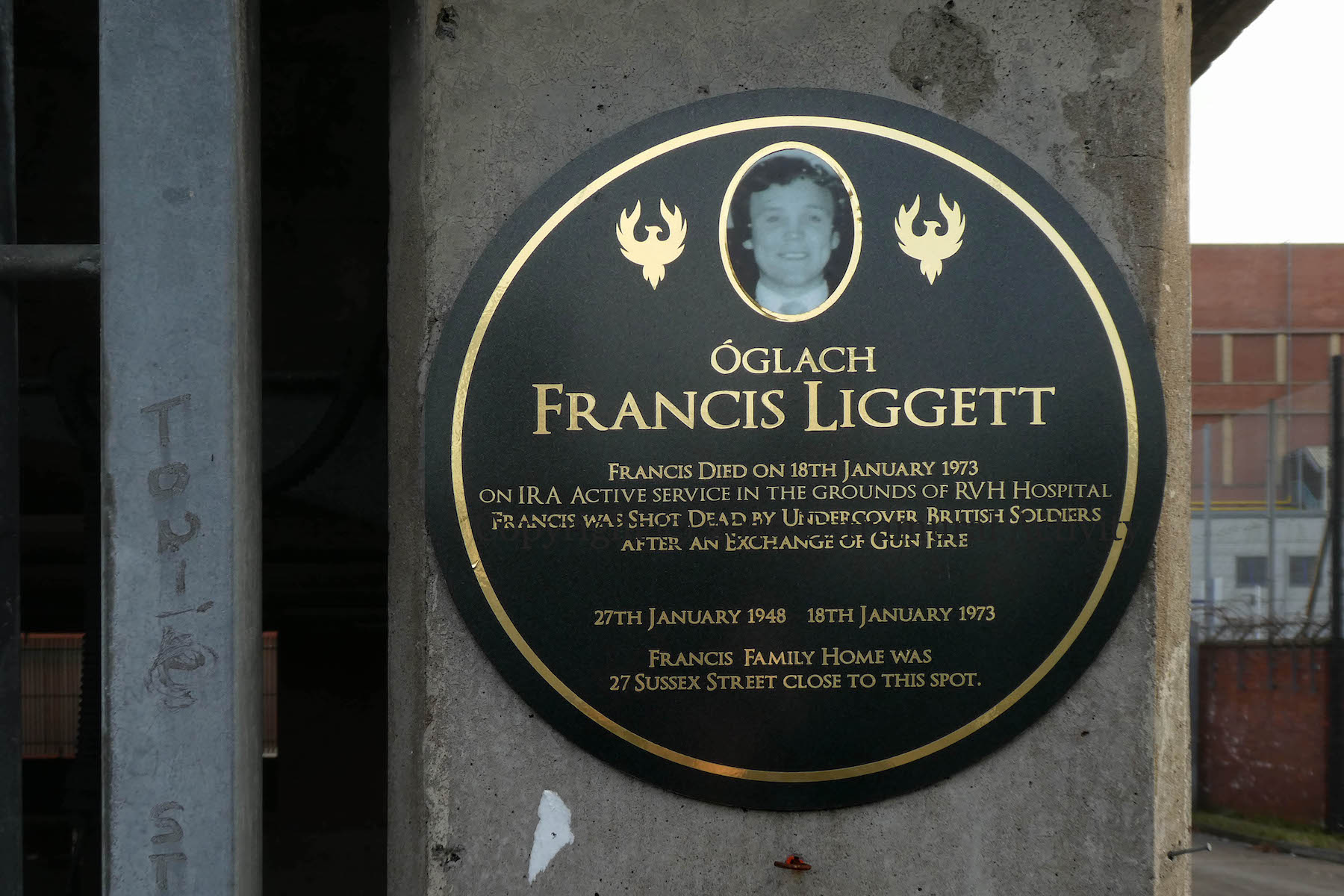
Earl Street and Sussex Street used to be sandwiched between wings of the largest tobacco factory in the world, Gallahers, which took up seven acres between York Street and North Queen Street. The factory was partially demolished in 1990 and became Yorkgate shopping centre and the two streets are roughly now the back and front entrances to the Tesco supermarket. These two plaques (both on North Queen Street) are to former residents. William Campbell, a H&W joiner, might have witnessed the construction of Gallahers (in 1897 – Look Again) before dying on Titanic in 1914. Francis Liggett, an IRA volunteer, was shot and killed by British forces during an attempted robbery of the Royal. (He is also remembered in a mural in St James’s near the site of his death and home – see Liggett & Brady.)
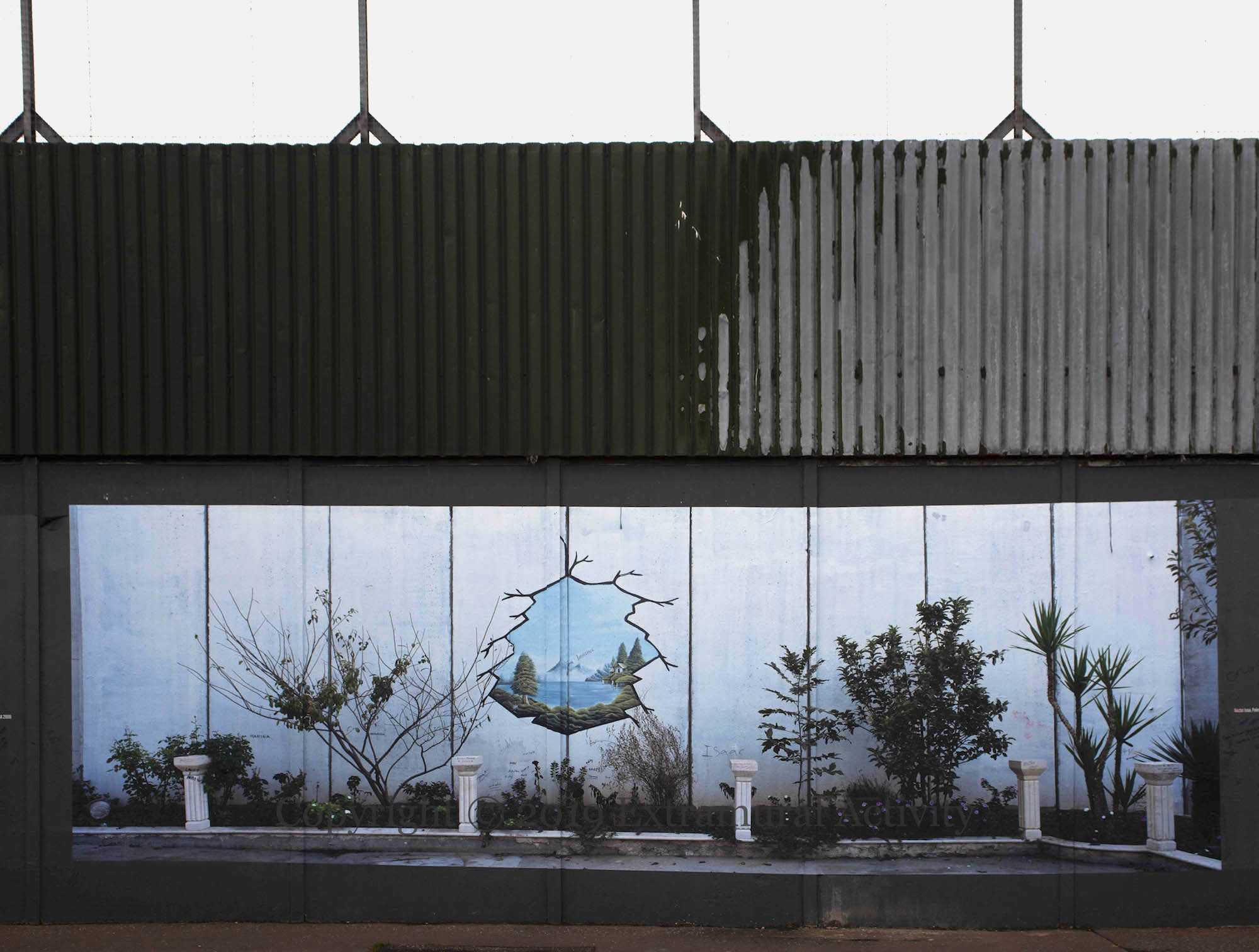
When the negotiators for Israel sat down with counterparts from each of Lebanon, Syria, Jordan, and Egypt after the Arab-Israeli war to draw the ceasefire lines between their countries, they did so in a green ink, after which it got the name “the green line”.
The line ran through the town of Baqa and in 2004 (and still part of the border between the West Bank and Israel) Israel built a wall dividing the community. The image above (from Kai Wiedenhöfer’s Confrontier collection of dividing walls and pasted onto Belfast’s own ‘green line’ in Cupar Way) shows a Palestinian back garden butting up against the wall, with a Banksy-style ‘hole-in-the-wall’ view of the other side providing an alternative (also seen previously on Northumberland Street).
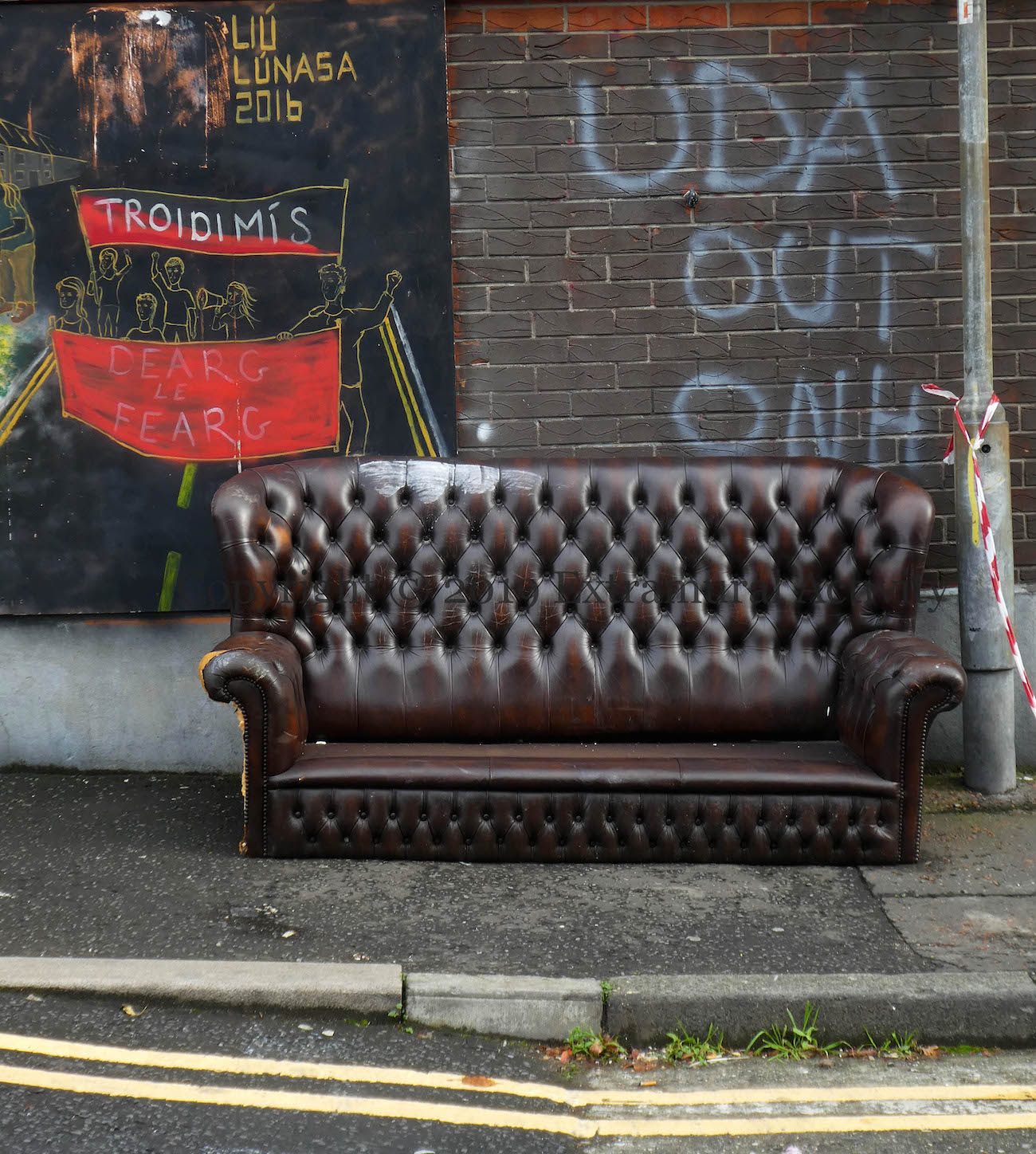
“UDA Out – ONH”. Óglaıgh na hÉıreann called a ceasefire in January, 2018 (BBC-NI) and largely disappeared from public consciousness. This recent graffiti, which is perhaps related to drug dealing (BelTel | BLive | BBC-NI | see previously Little Monsters), is at the top of Broadway.
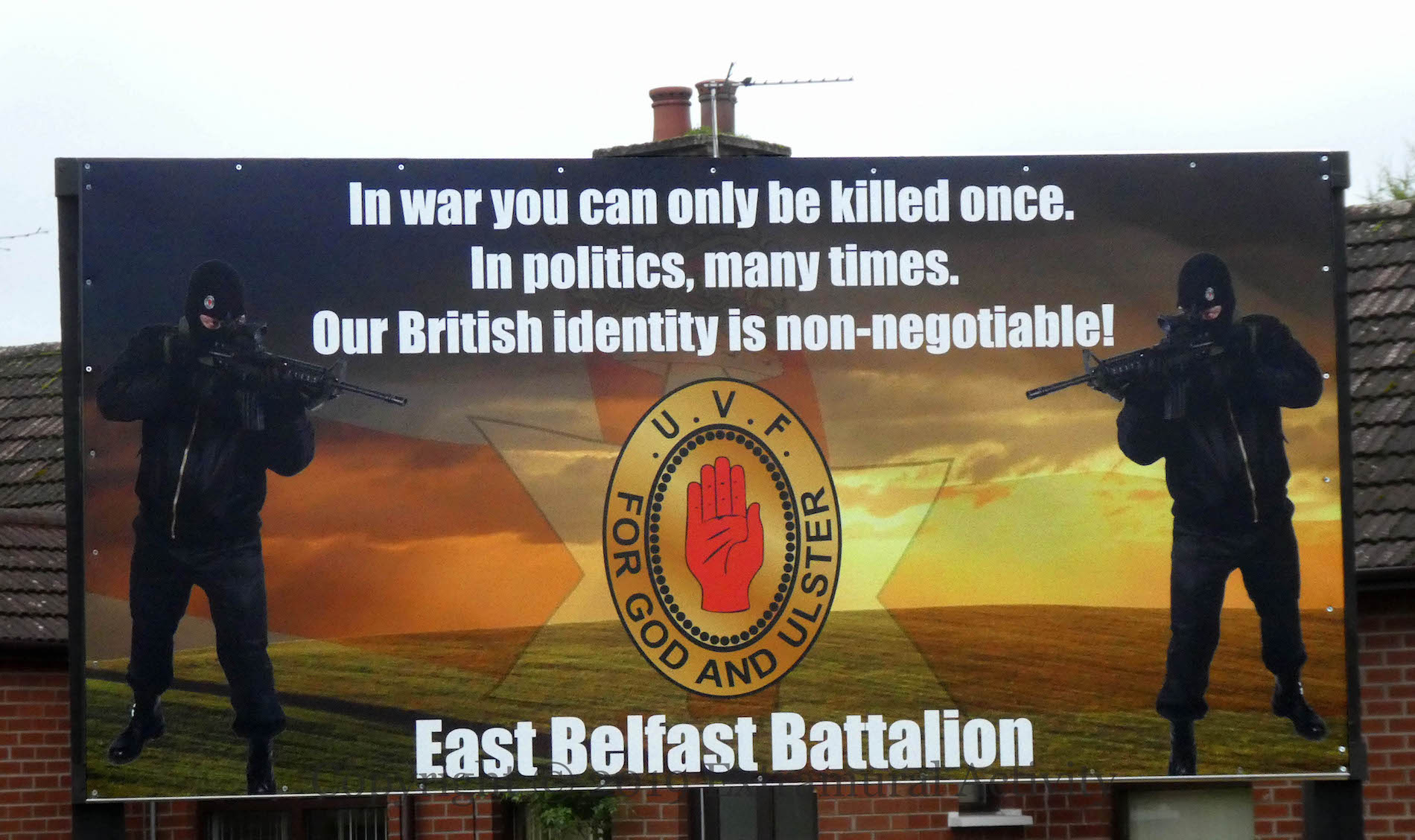
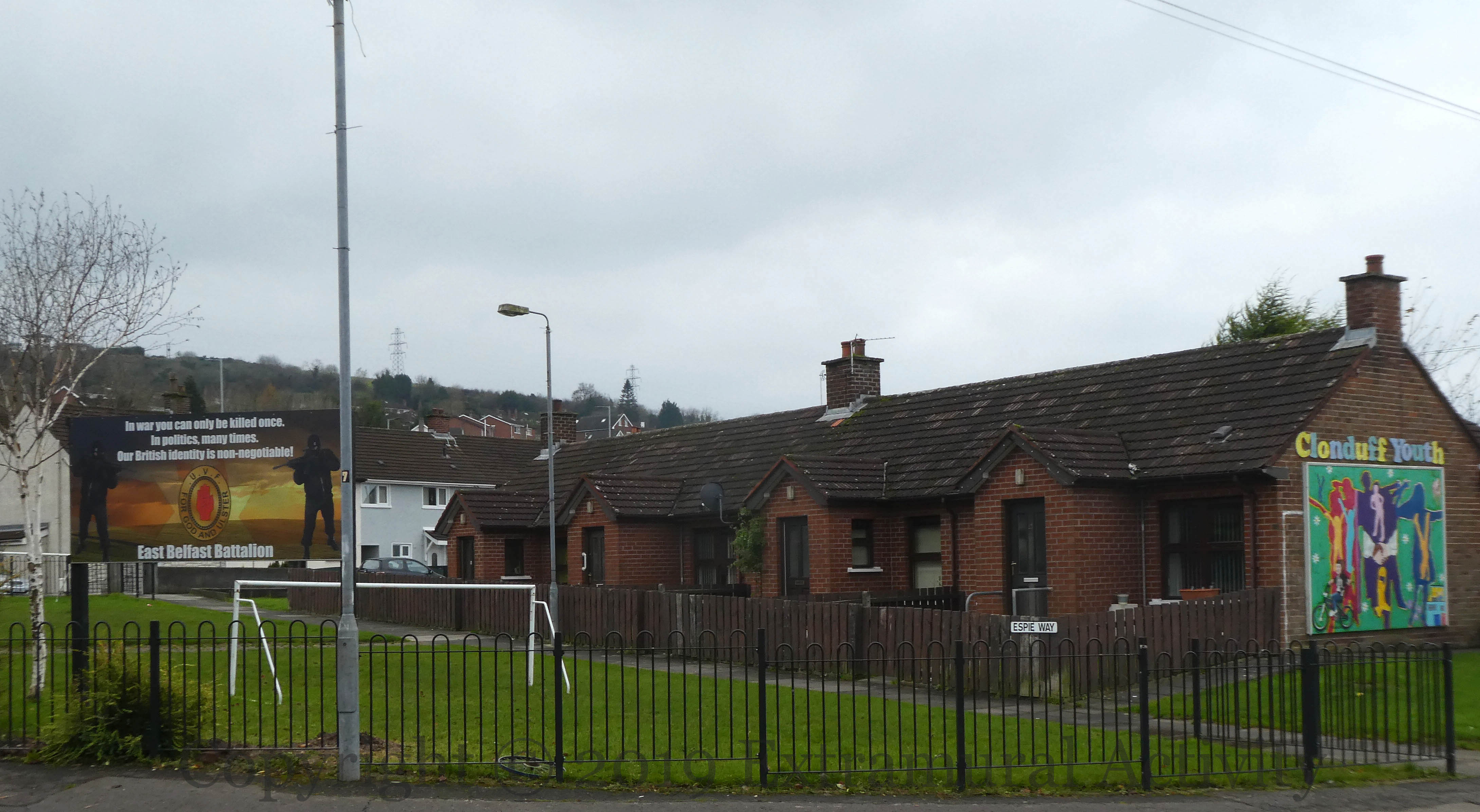
“[Politics is almost as exciting as war, and quite as dangerous.] In war you can only be killed once. In politics, many times. [ – Winston Churchill, 1903] Our British identity is non-negotiable! UVF East Belfast Battalion.” Hooded UVF volunteers are shown in active poses (as compared to the cradled rifles in The Erosion Of Our Identity) ready to resist any compromise in the still-unresolved tension between Brexit and the Belfast (Good Friday) Agreement of 1998.
 Seosamh Mac Coille Collection