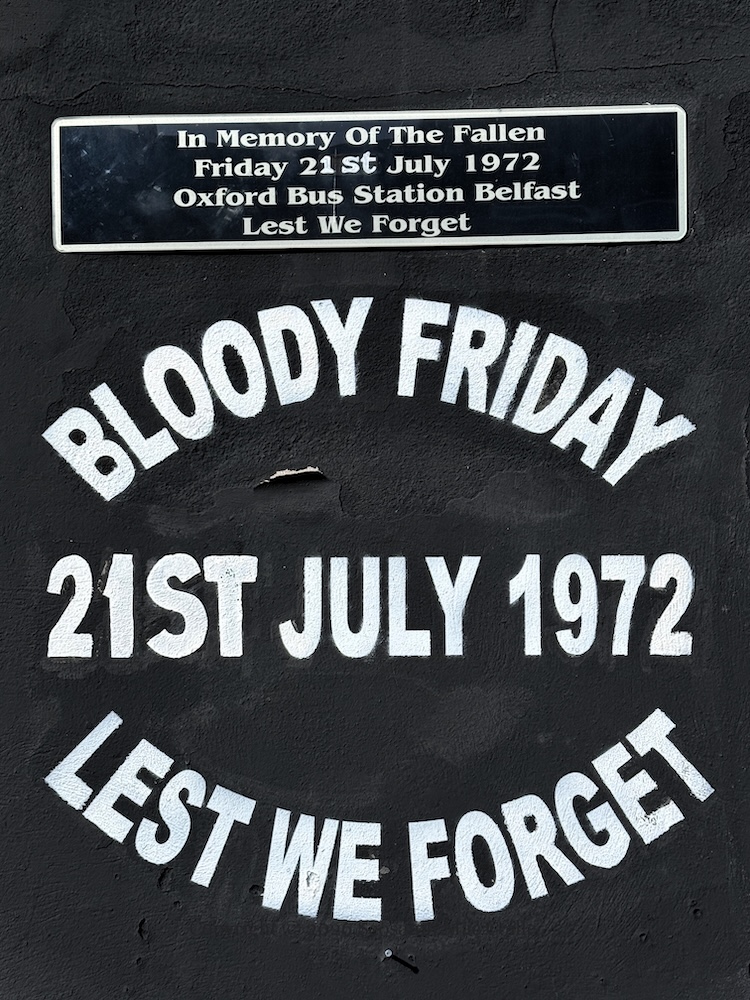
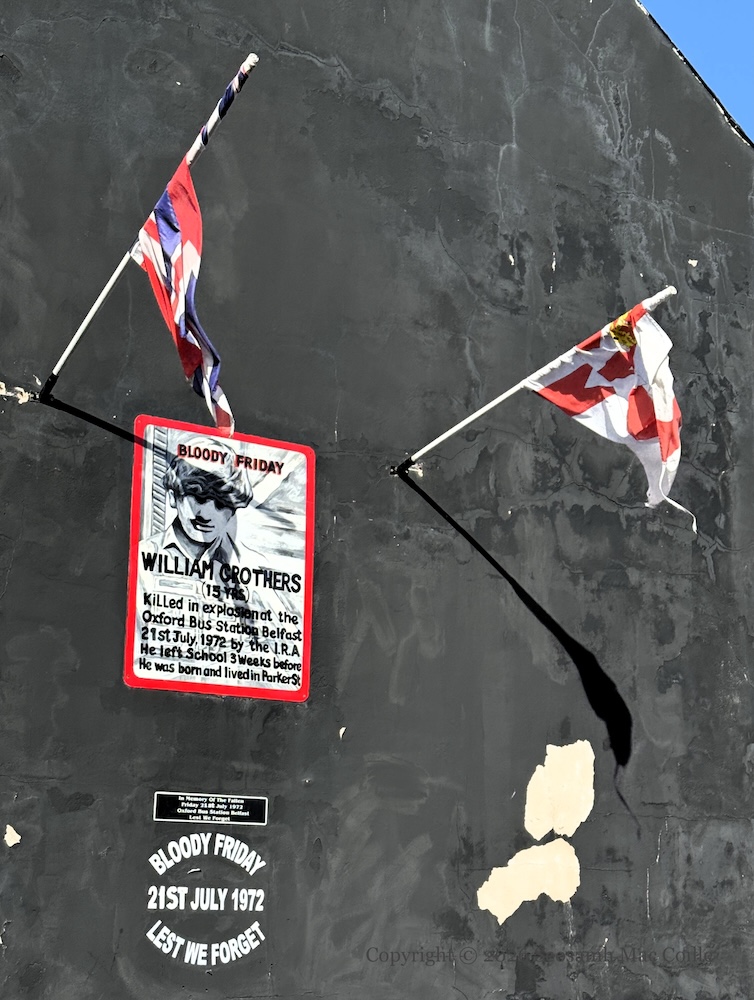
“Bloody Friday, 21st July 1972, lest we forget.” This lettering replaces the (painted) wreath recorded in 2022 below the portrait of William Crothers, who was one of the six people who died in an IRA bomb at Oxford Street bus station in Belfast city centre, one of nineteen bombs to go off on what became known as “Bloody Friday”.
“In memory of the fallen Friday 21st July 1972 Oxford [Street] Bus Station Belfast. Lest we forget”
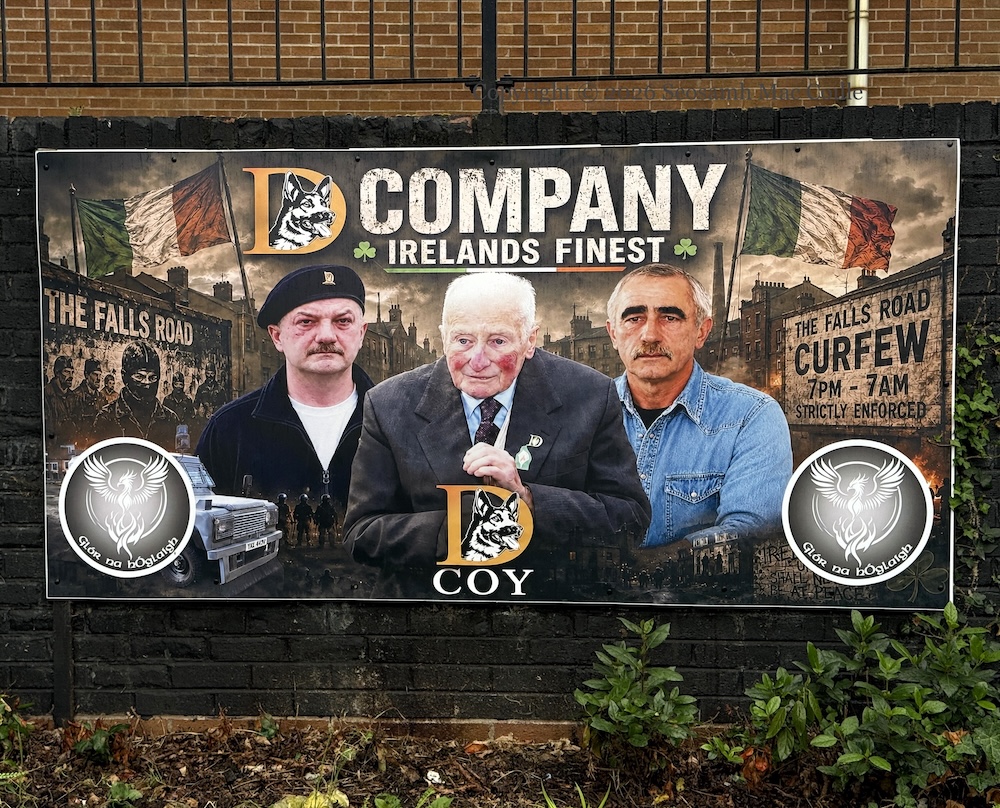
Óglach Billy McKee, Óglach Alex Murphy, Óglach Breandan [Brendan/Breandán] Hughes (The Dark)” are featured in a new D Company board on the anti-Agreement wall below the Falls Garden Of Remembrance.
In the bottom corners is the emblem of Glór Na hÓglaıgh (Fb), a new (March 2026) “revolutionary republican socialist political party”, associated with Óglaıgh Na hÉıreann and feuding with the RNU.
As in the previous board, Alex Murphy is included (on the left); Murphy was sentenced to life imprisonment for his role in the killing of the two Signals corporals (Wood and Howes) in 1988 (UPI). He was released in 1998 under the provisions of the Agreement and died in 2019 (Pensive Quill). (The D Company board on the International Wall (Visual History) features Kieran Nugent rather than Murphy.)
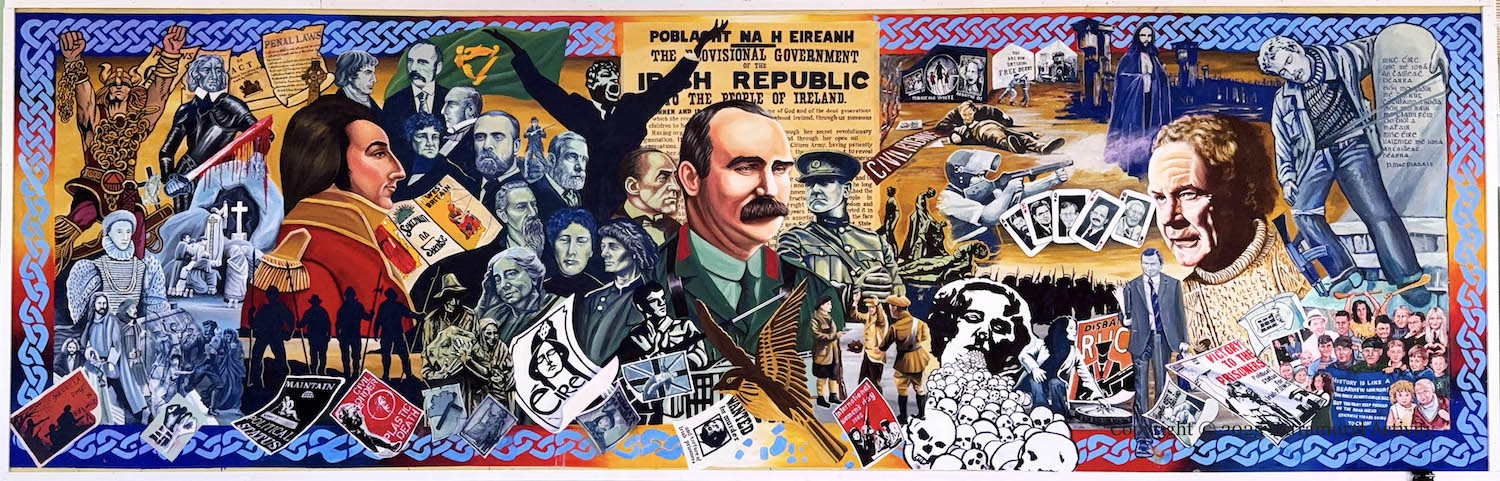
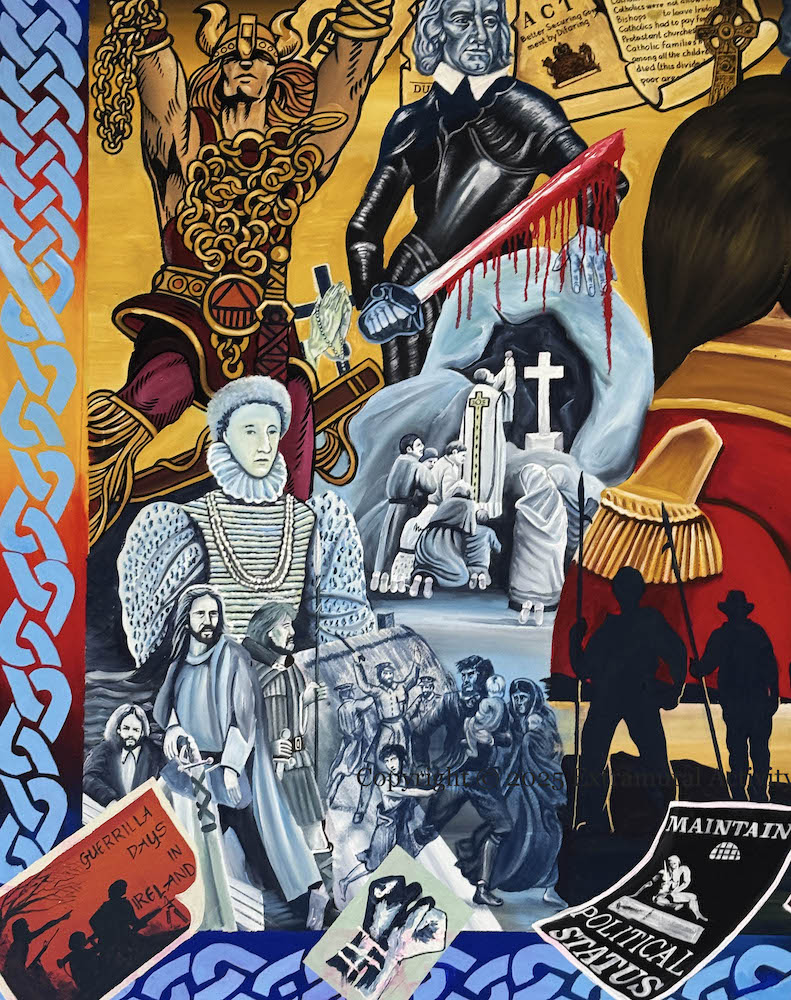
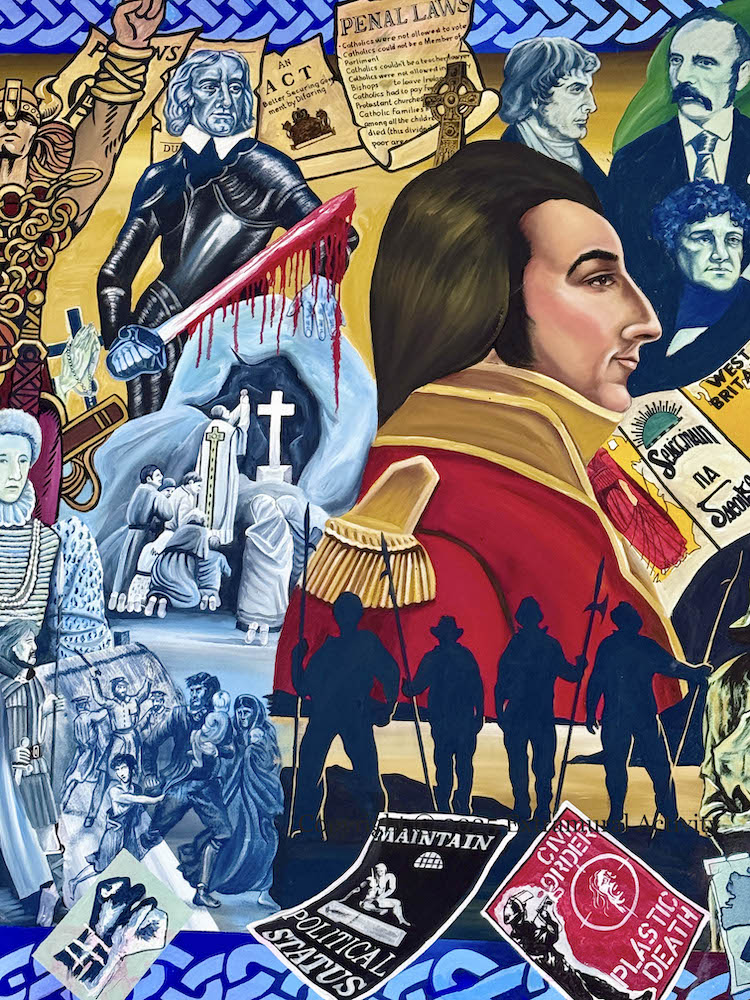
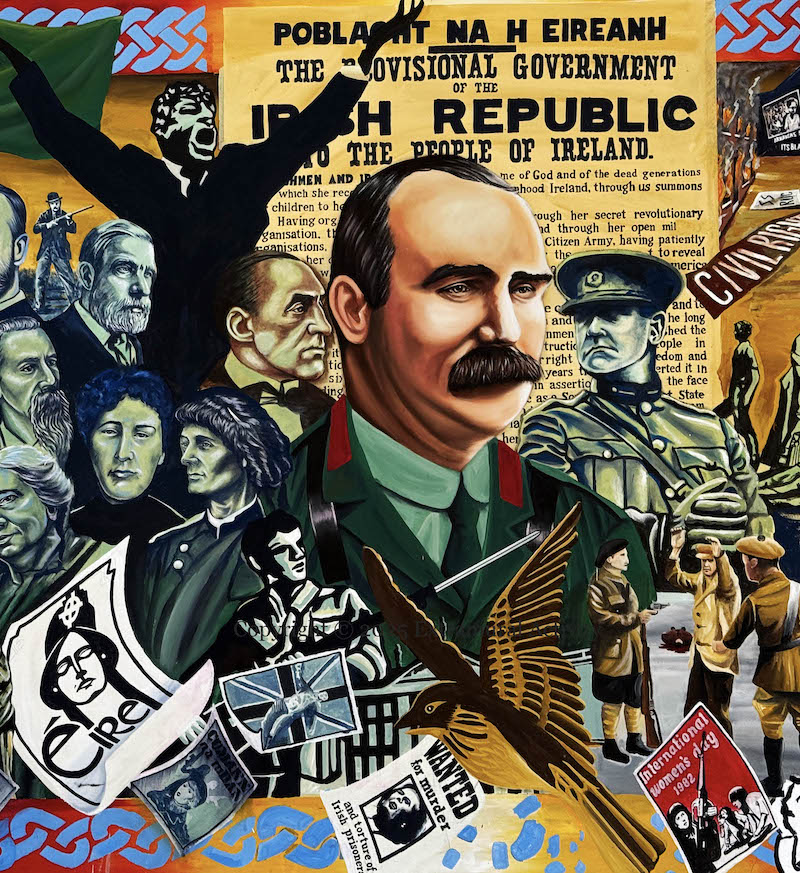
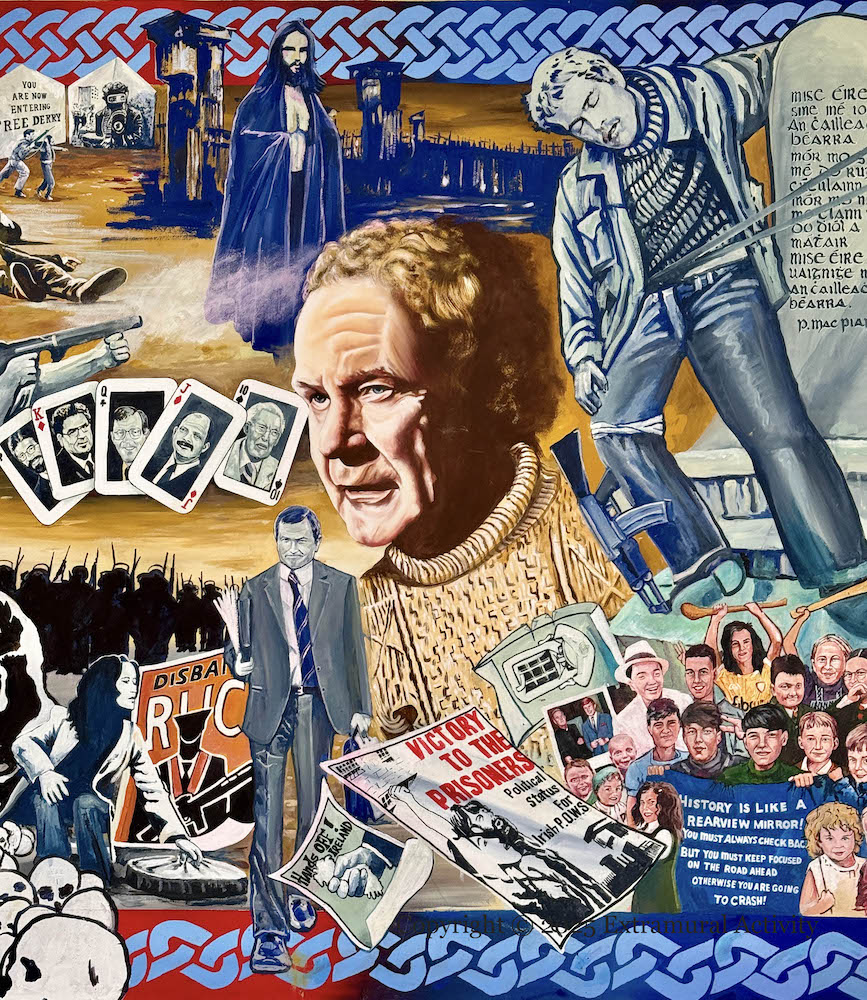
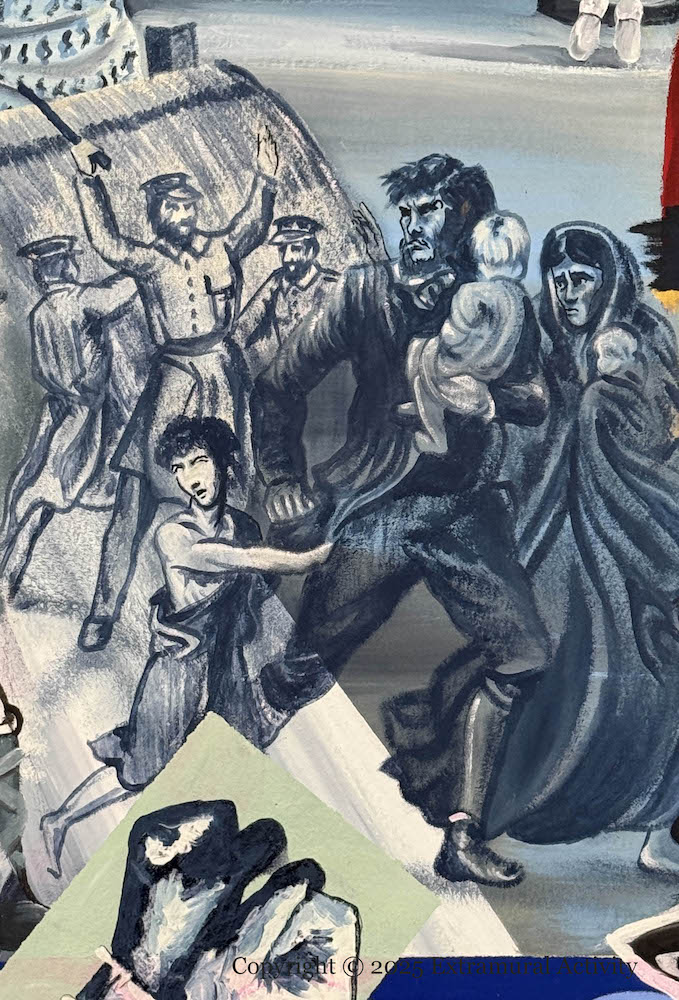
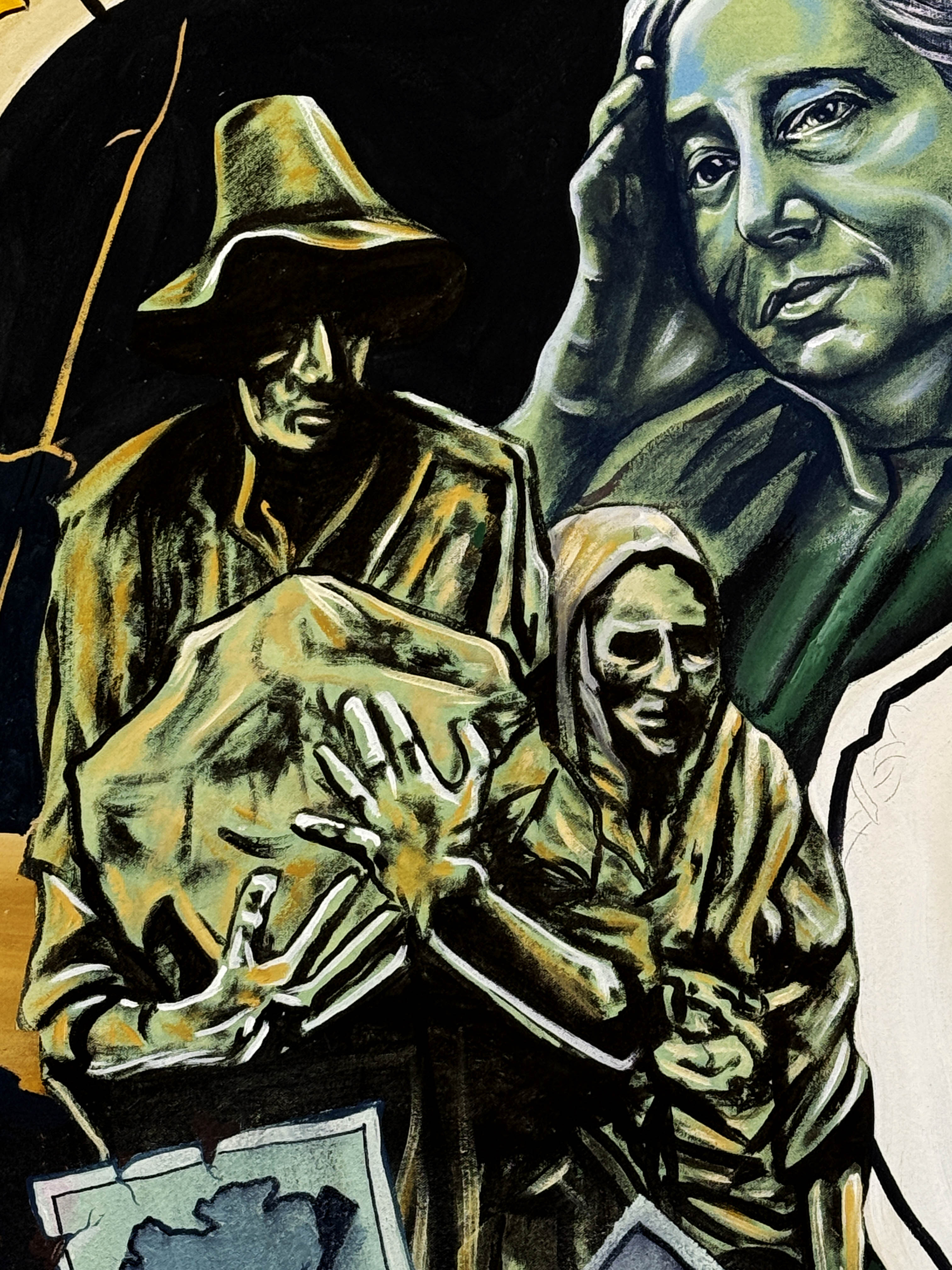
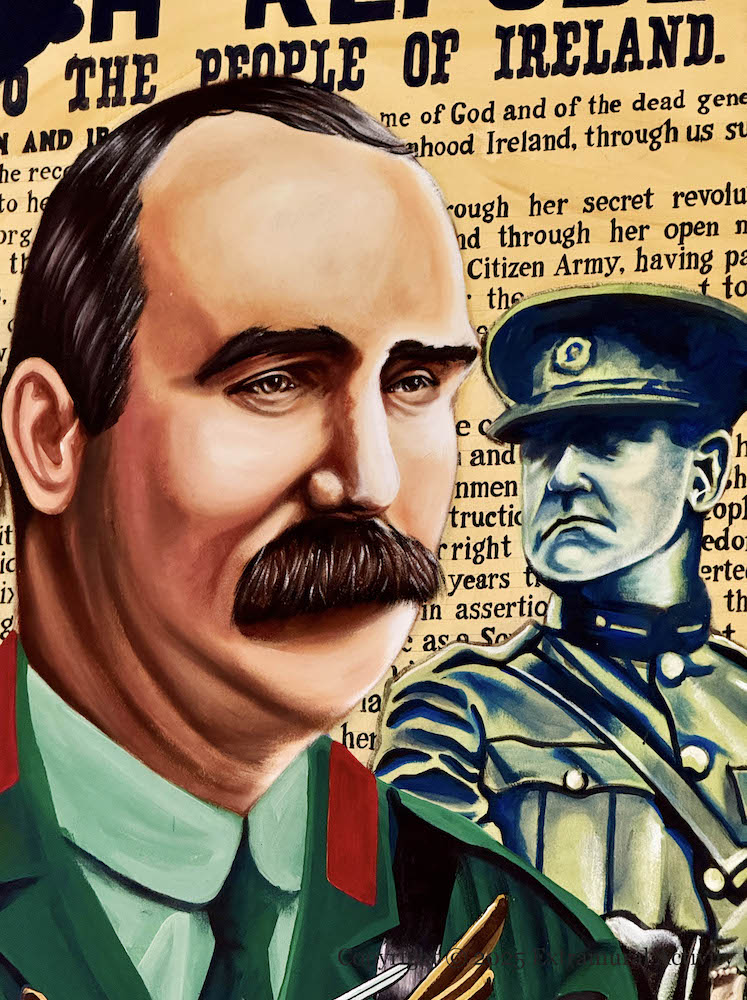
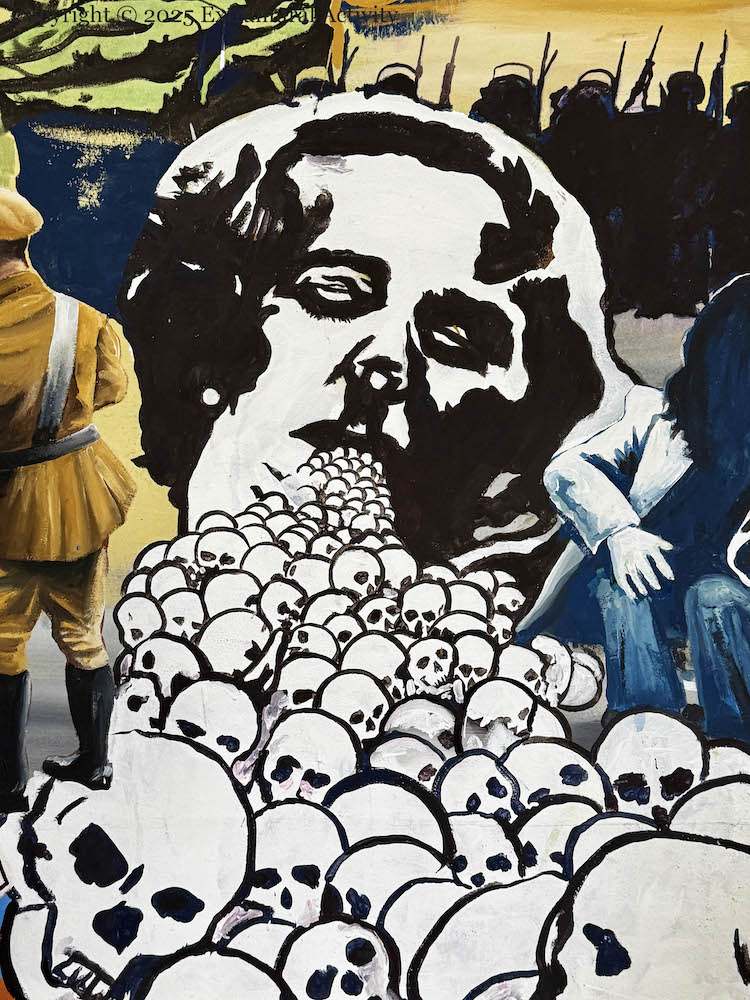
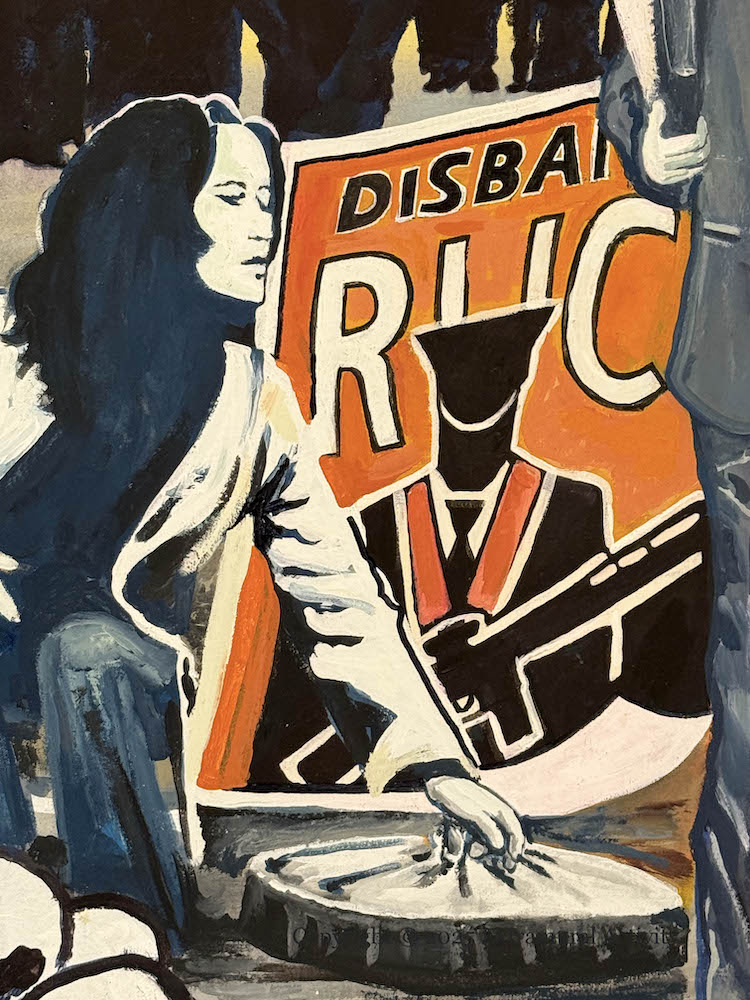
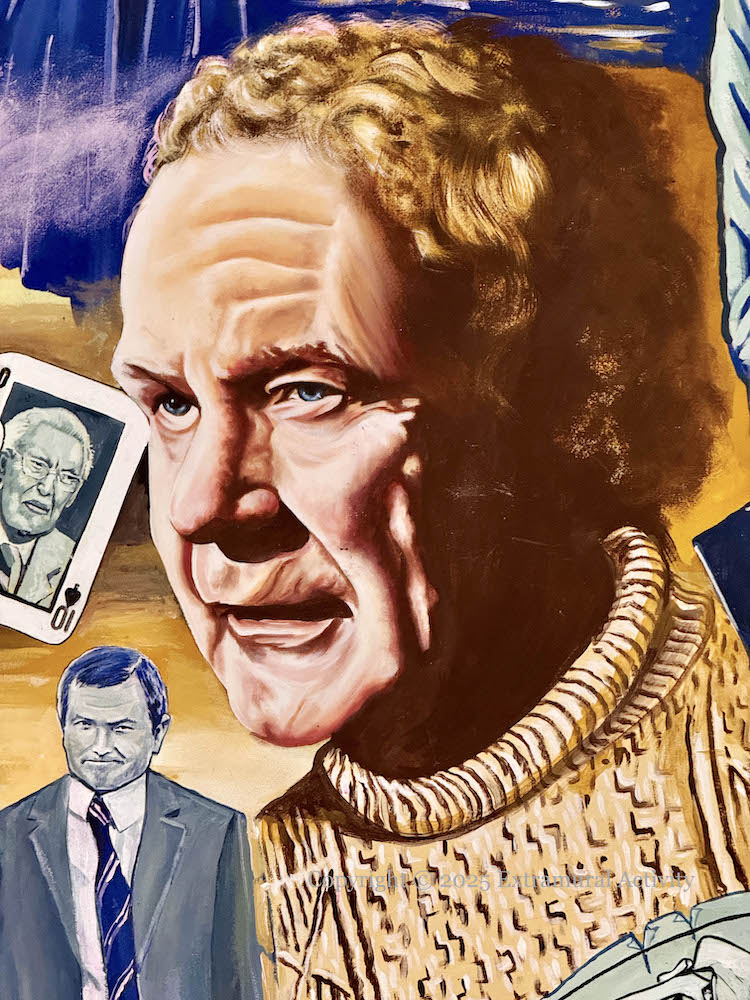
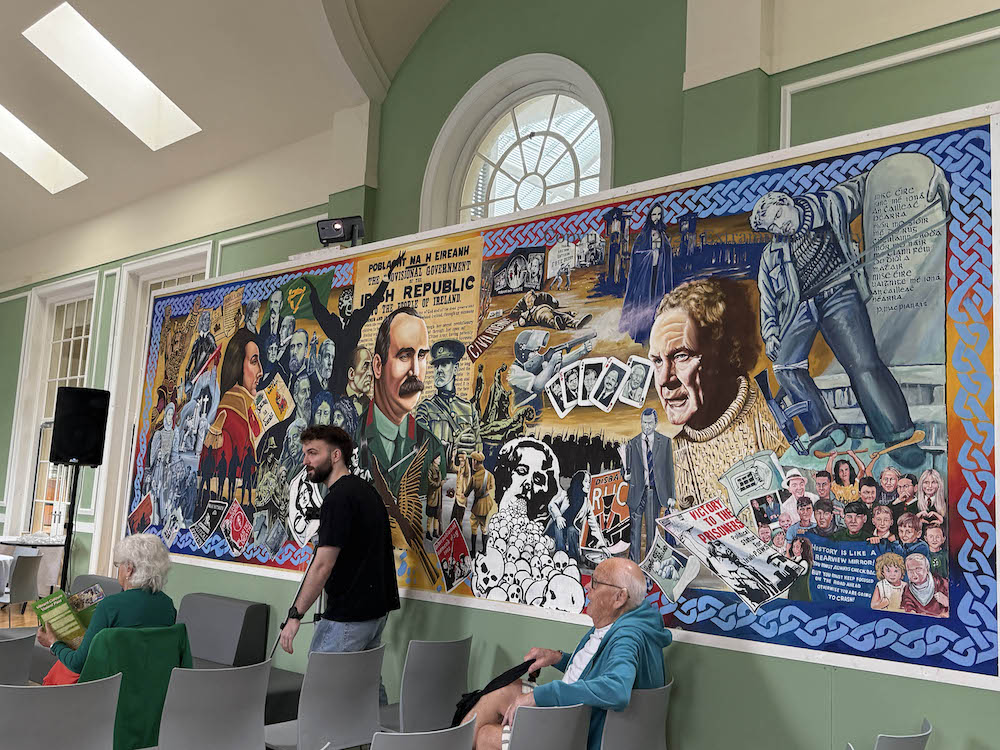
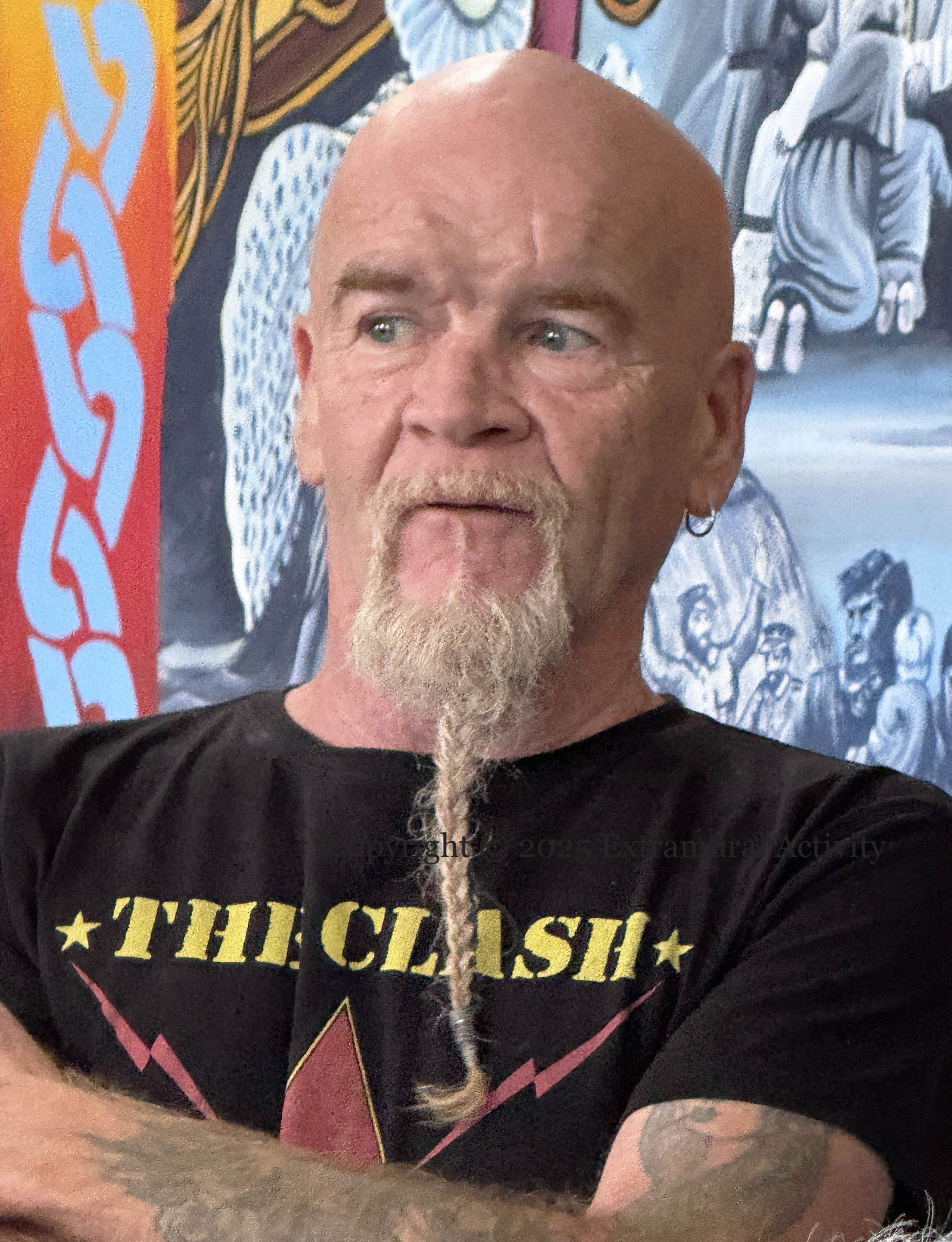
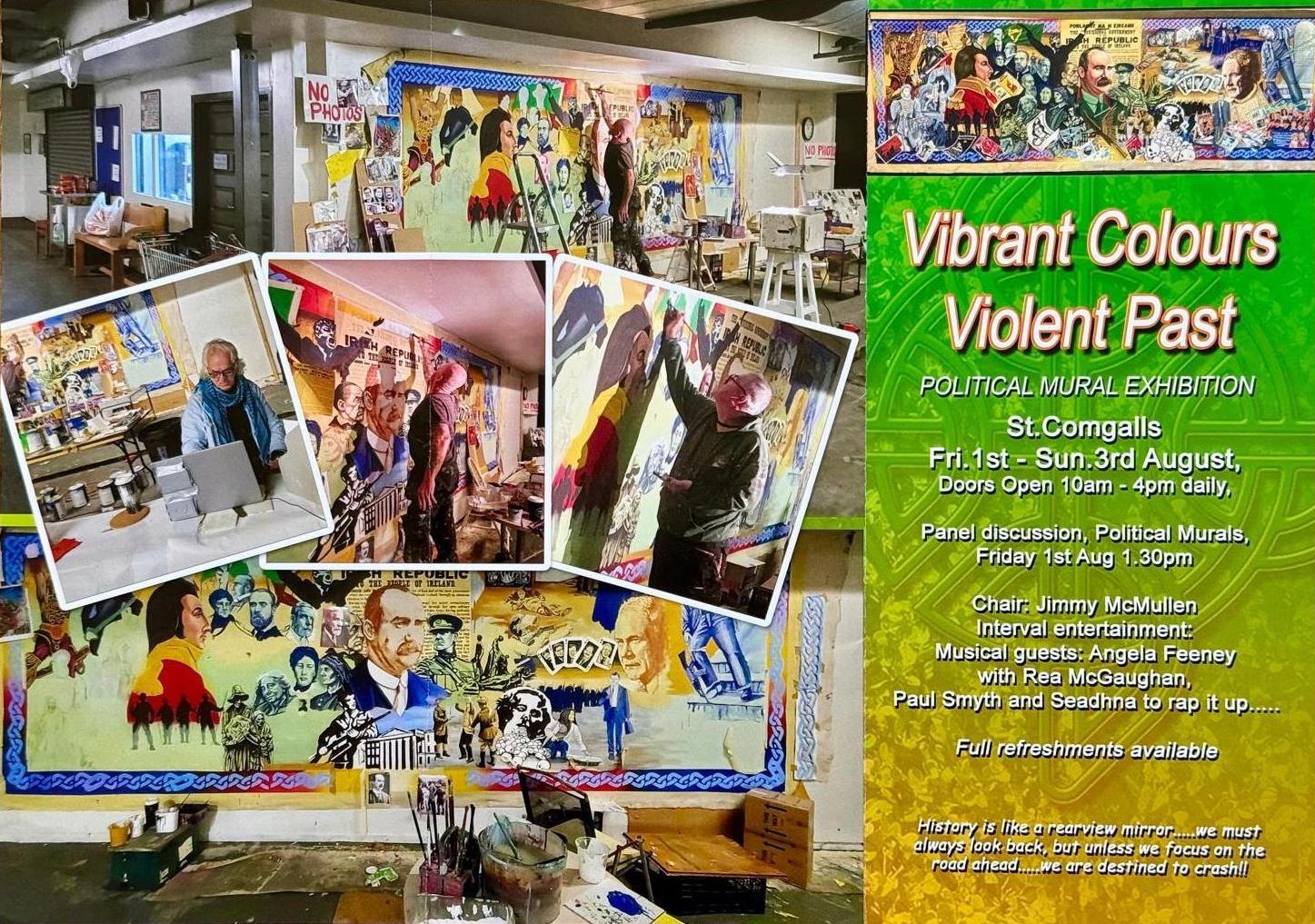
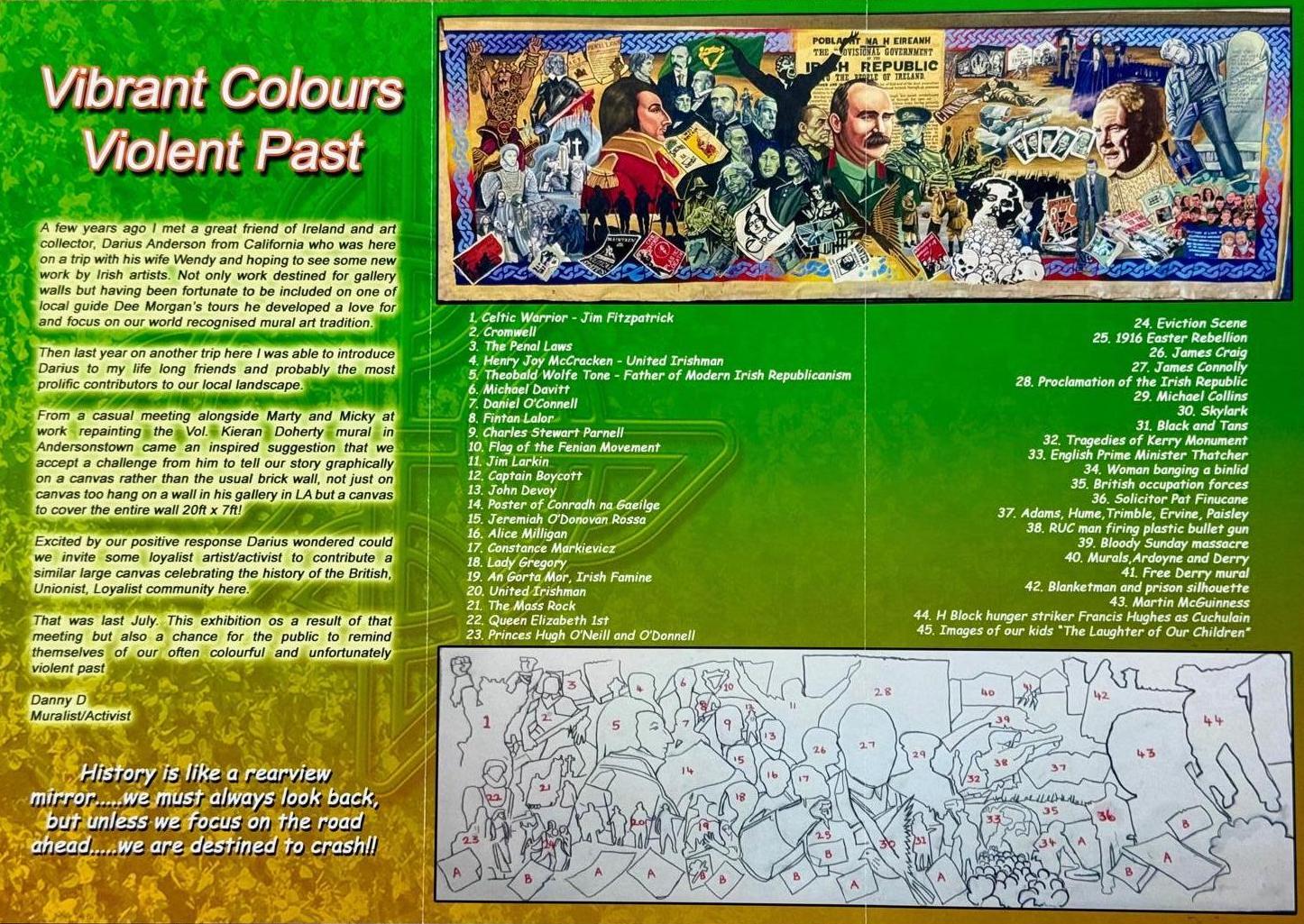
Féıle An Phobaıl (web) is now headquartered in the renovated (BCC) St Comgall’s on Divis Street in Ionad Eileen Howell, and during this year’s (2025) festival is home to an exhibition called “Vibrant Colours, Violent Past”, the centrepiece of which is a 20-foot-long panoramic history of republicanism, with Wolfe Tone, James Connolly, and Martin McGuinness as pivotal figures.
A full legend of who’s who is given in the leaflet at the bottom of this entry. It also explains the genesis of the project, as follows:
“A few years ago I met a great friend of Ireland and art collector Darius Anderson from California who was here on a trip with his wife Wendy and hoping to see some new work by Irish artists, not only work destined for gallery walls but having been fortunate to be included on one of local guide Dee Morgan’s tours he developed a love for and focus on our world-recognised mural art tradition.
“Then last year on another trip here I was able to introduce Darius to my life-long friends and probably the most prolific contributors to our local landscape.
“From a casual meeting alongside Marty and Micky at work repainting the Vol. Kieran Doherty mural in Andersonstown came an inspired suggestion that we accept a challenge from him to tell our story graphically on a canvas rather than the usual brick wall, not just on canvas to hang on a wall in his gallery in L.A. but a canvas to cover the entire wall 20ft x 7ft!
“Excited by our positive response Darius wondered could we invite some loyalist artist/activist to contribute a similar large canvas celebrating the history of the British, Unionist, Loyalist community here.
“That was last July. This exhibition is a result of that meeting but also a chance for the public to remind themselves of our often colourful and unfortunately violent past. – Danny D, Muralist/Activist”
“History is like a rearview mirror! You must always check back but you must keep focused on the road ahead, otherwise you are going to crash!” (Similar wording was used in a piece – Painting From The Same Palette – painted by Danny D and Mark Ervine in 2008.)
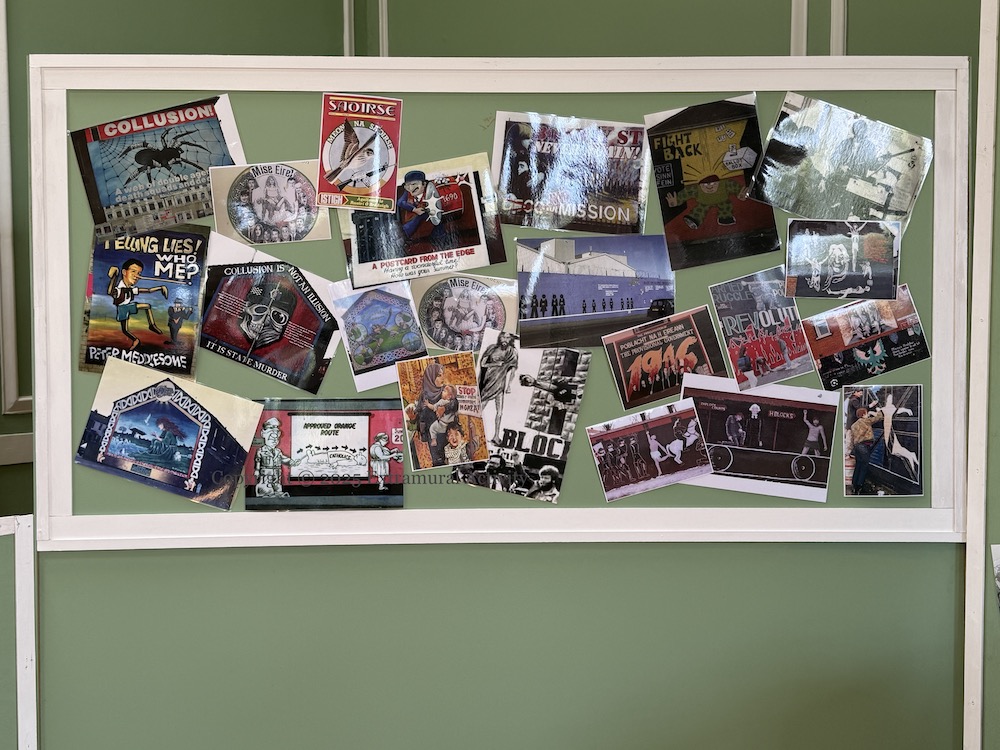
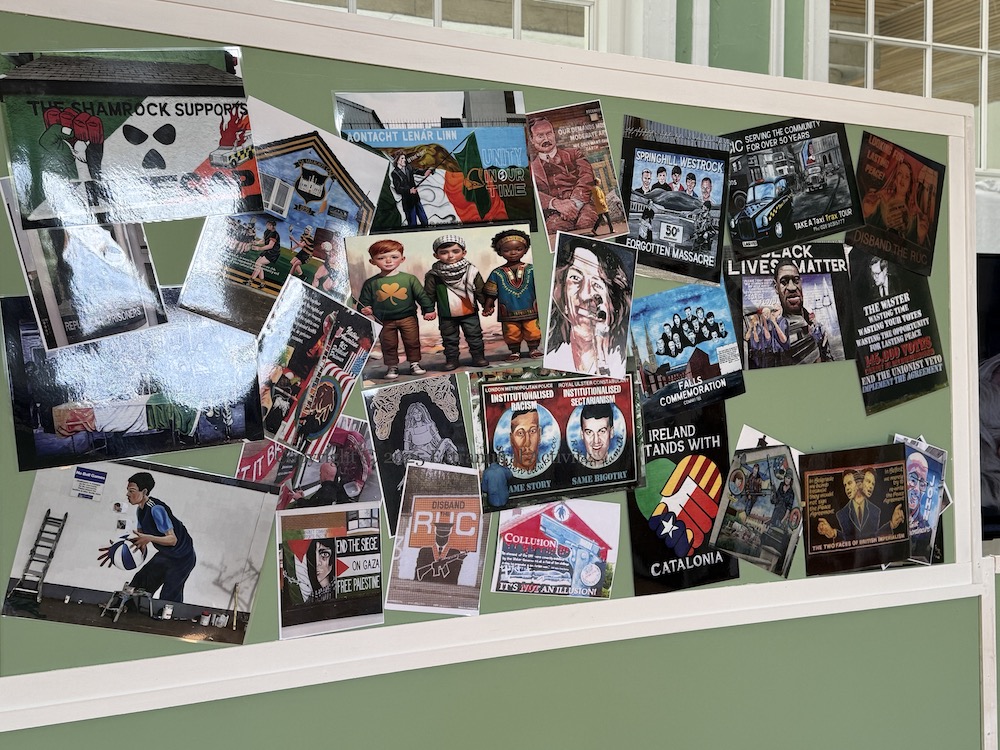
The exhibition was launched on August 1st and also included four display boards featuring murals by Danny D (CNR) and Dee Craig (PUL) (Fb).
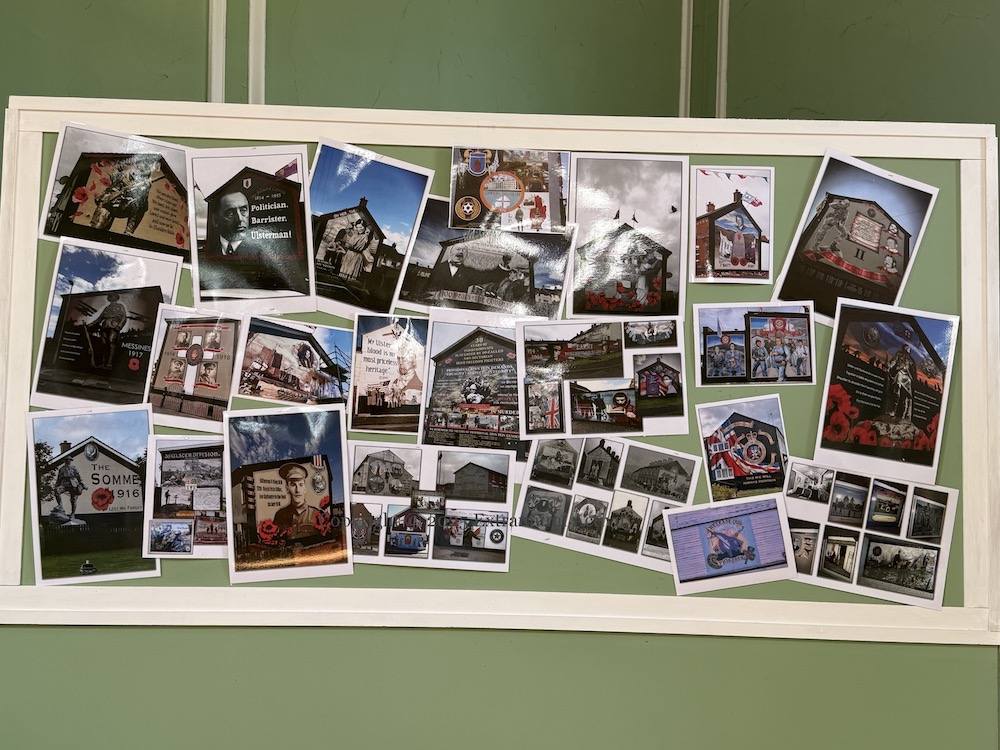
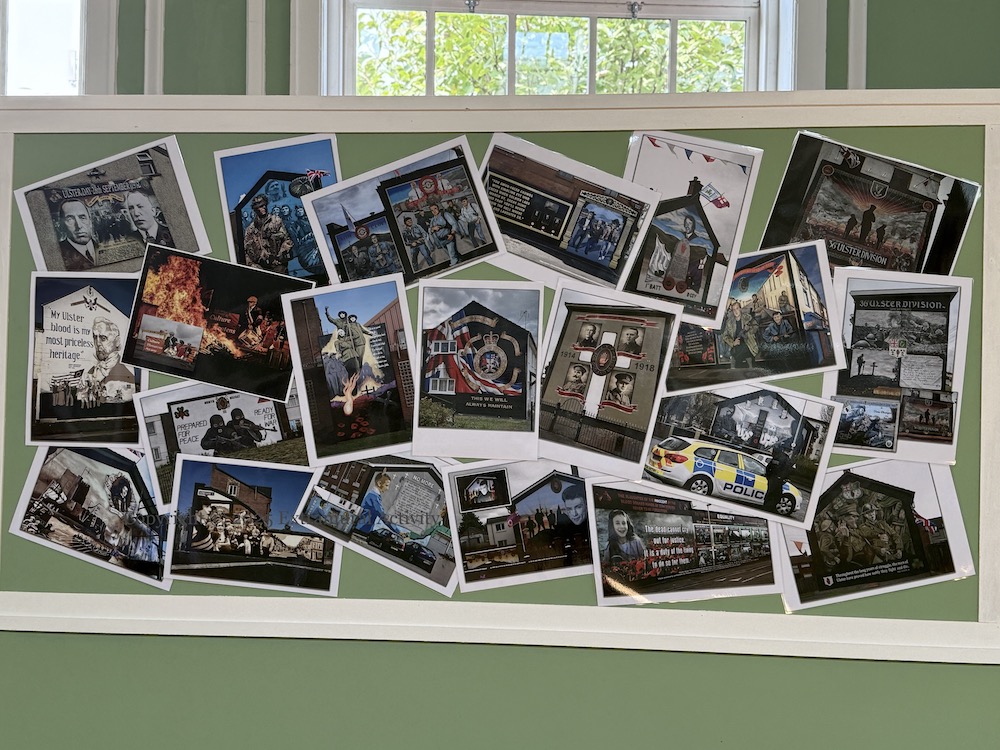
Display boards:
Images from the launch on August 1st, along with the two-sided leaflet:
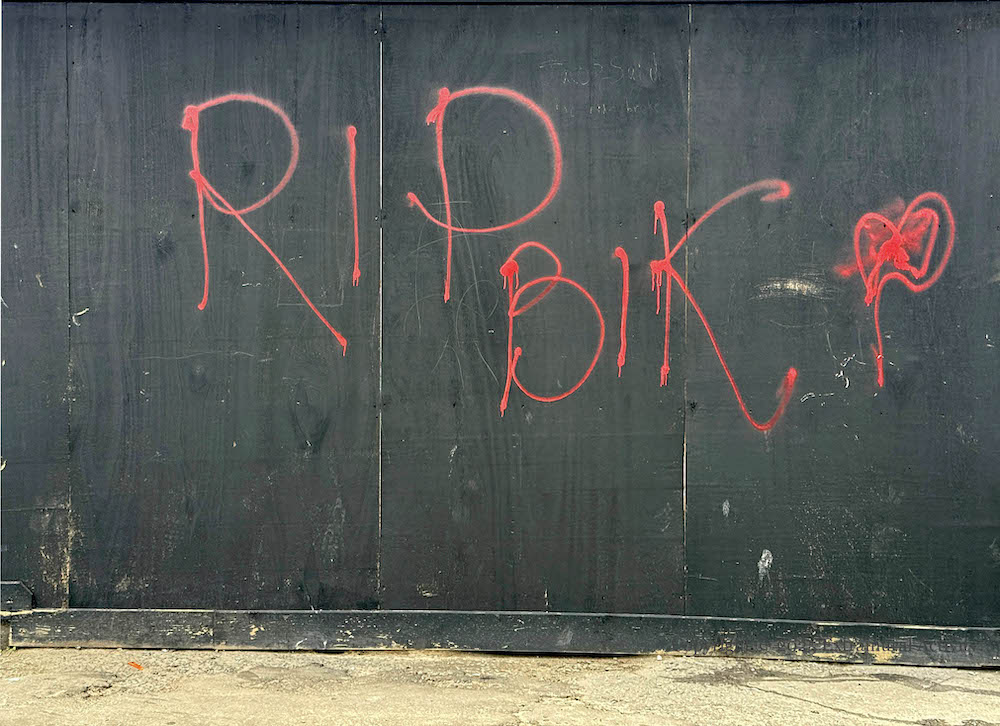
Brendan “Bik” McFarlane was imprisoned for life for the attack on the Bayardo Bar on the Shankill Road and took over as IRA OC in the Maze when Bobby Sands went on hunger-strike in 1981. He escaped the prison in 1983 and was extradited back to Northern Ireland from the Netherlands in 1986 and eventually paroled in 1997.
McFarlane died in February (2025) (BelTel). He was raised in Ardoyne, north Belfast, and this graffiti is on a hoarding on Ardoyne Avenue.
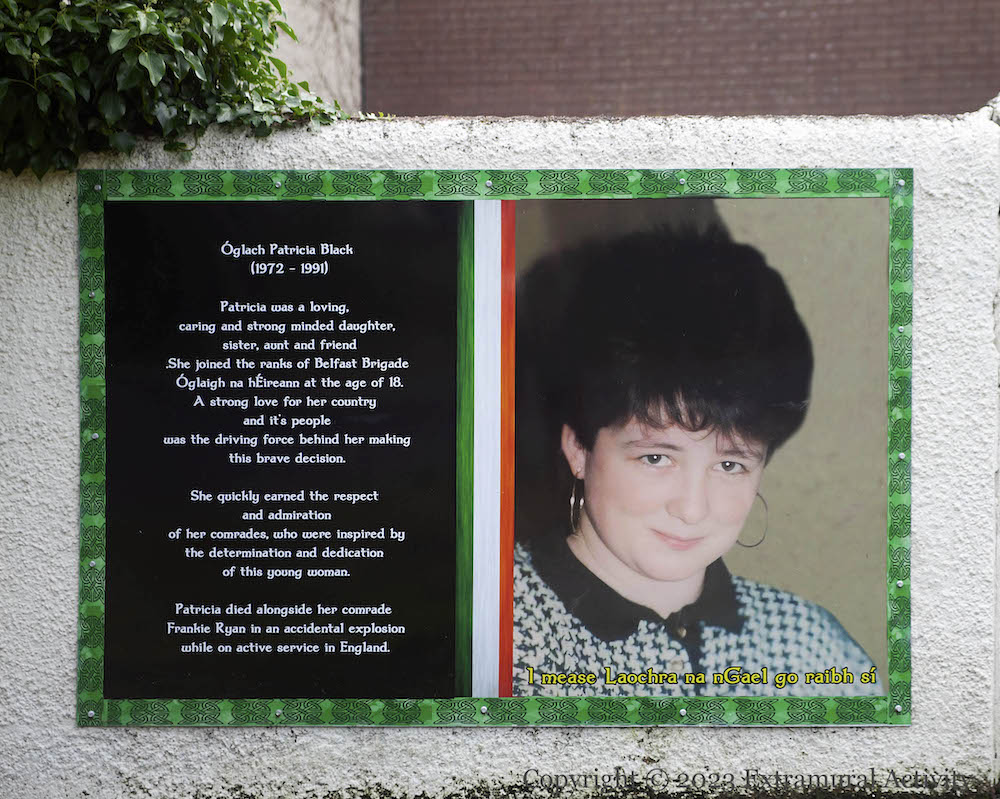
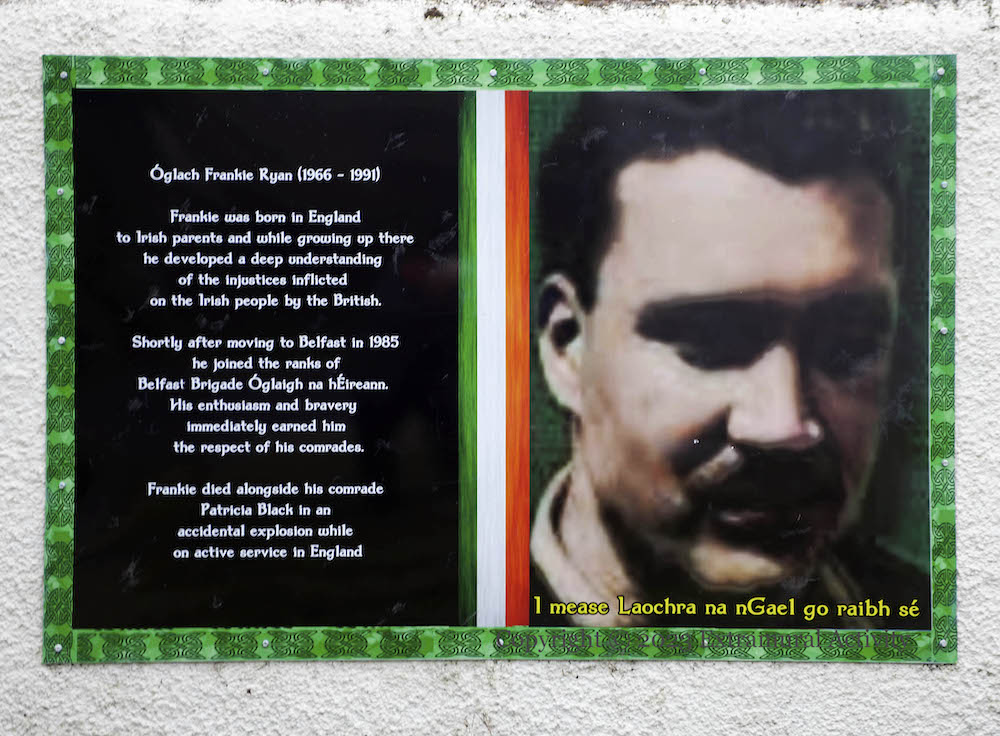
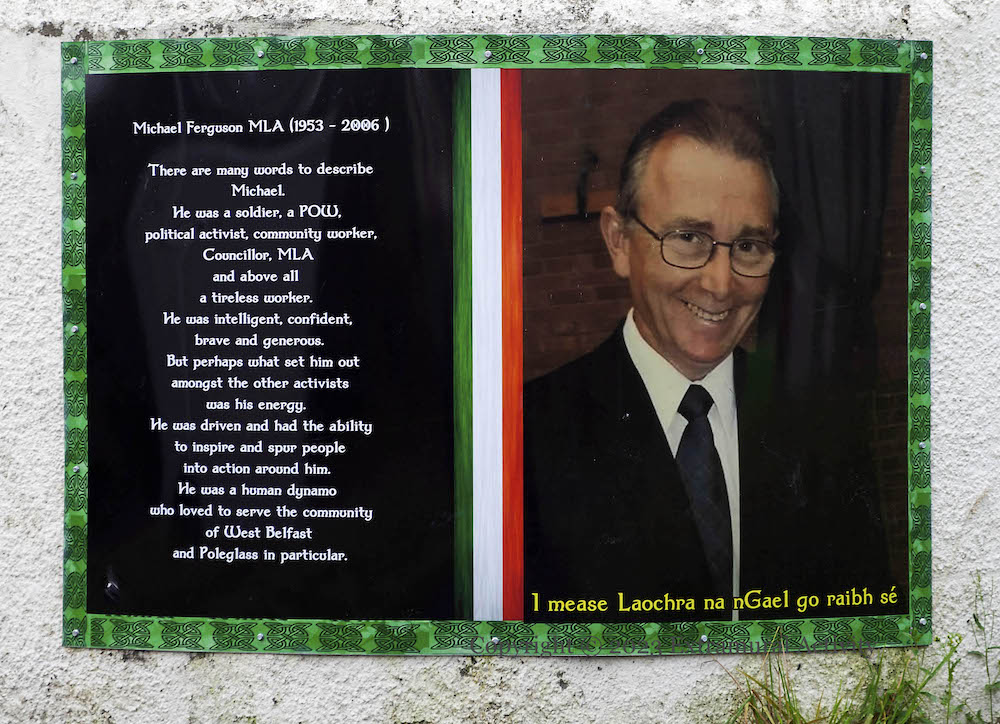
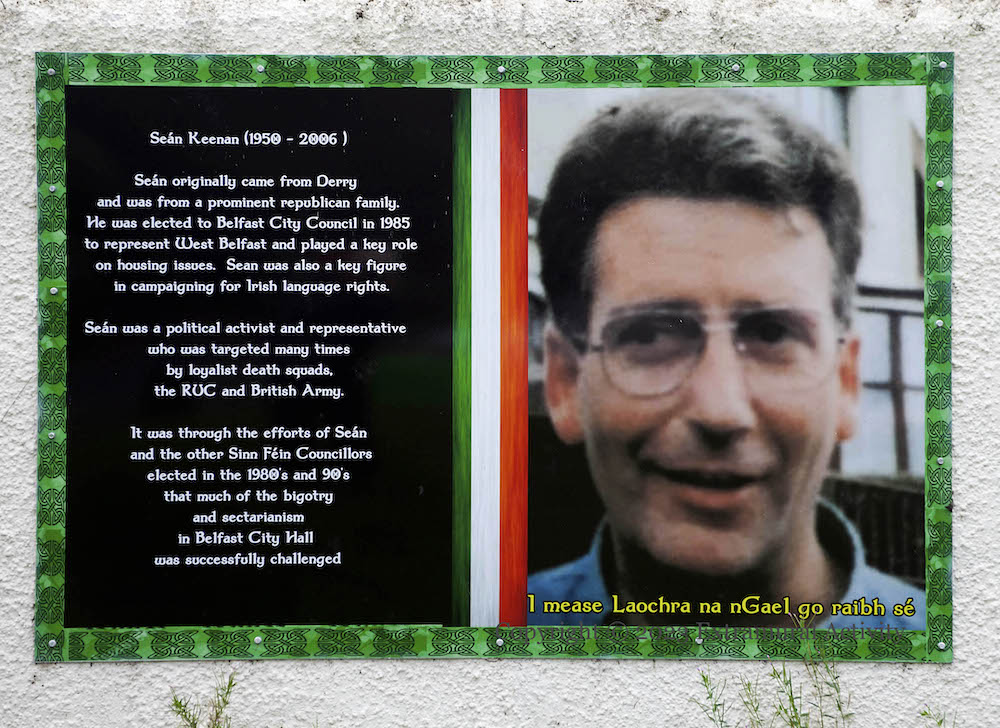
“I measc laochra na nGael go raıbh sıad.” Profiles of Patricia Black, Frankie Ryan, Michael Ferguson, and Sean Keenan were added in late 2021 (video of launch) to the pair of existing monuments that memorialise them in Colin/Poleglass (for which see The Undauntable Thought in Peter Moloney’s collection).
Black and Ryan were IRA volunteers killed by in a premature bomb explosion near London (An Phoblacht).
Michael Ferguson and Seán Keenan were activists and Sınn Féın councillors. Both died in 2006 of cancer (Irish Times | Bel Tel).
On Pantridge Road, which runs down to Michael Ferguson roundabout (An Phoblacht).
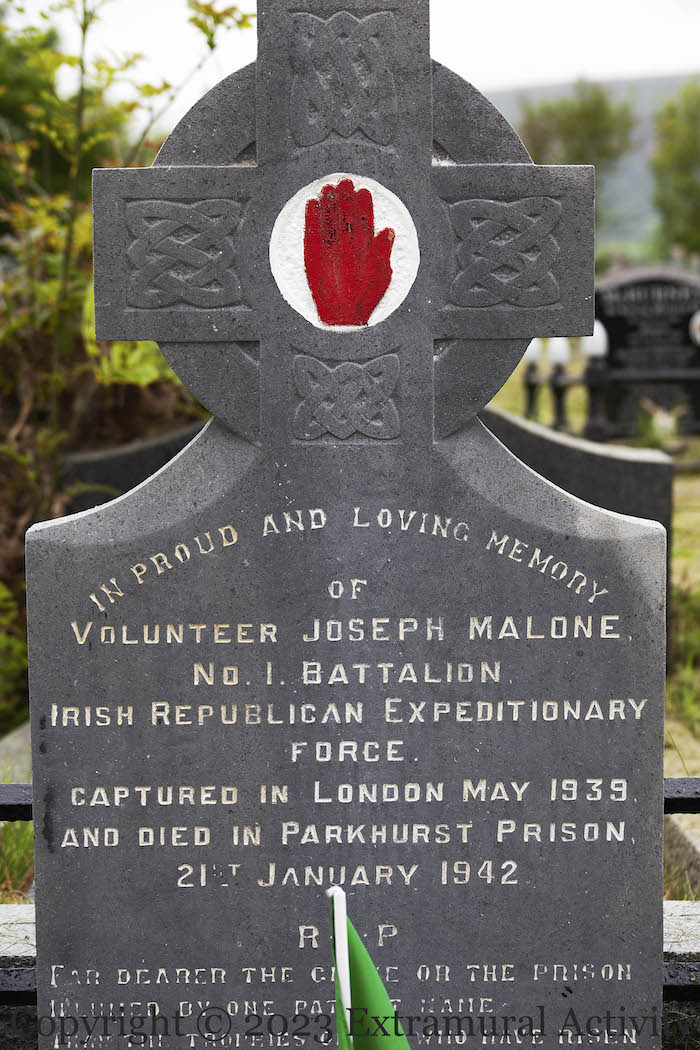
“Far dearer the grave or the prison, Illumed by one patriot name, Than the trophies of all who have risen On Liberty’s ruins to fame.”
Thomas Moore’s lyrics were written for the air The Lamentation of Aughrim, in honour of the Jacobites who died on 12 July, 1691, but they are applied here to Joe Malone of the IRA’s “Expeditionary Force”.
In January 1939 the IRA declared war against Britain and carried out a bombing campaign called the “sabotage plan” (WP S-Plan). Malone was arrested in May when a tear-gas bomb intended for the New Victoria cinema in London exploded prematurely in the cloakroom, injuring his arm and wrist (Belfast Battalion p. 103 | West Australian).
Malone and other prisoners refused to co-operate with prison authorities and began a hunger strike in January 1941; on day five of the strike, force-feeding began and Malone was injured and ordered off the strike by OC Conor McNessa; despite stomach surgery, he died a year later. (Belfast Battalion p. 126, 136)
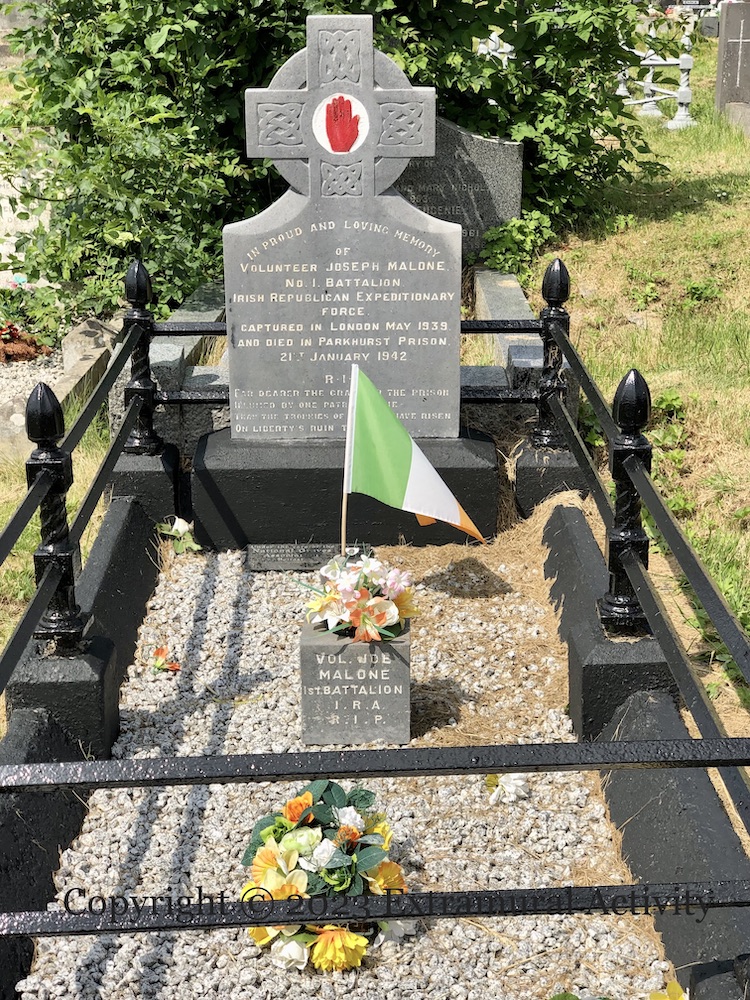
“In proud and loving memory of Volunteer Joseph Malone, No. 1 battalion, Irish Republican Expeditionary Force. Captured in London May 1939 and died in Parkhurst prison 21st January 1942. RIP.”
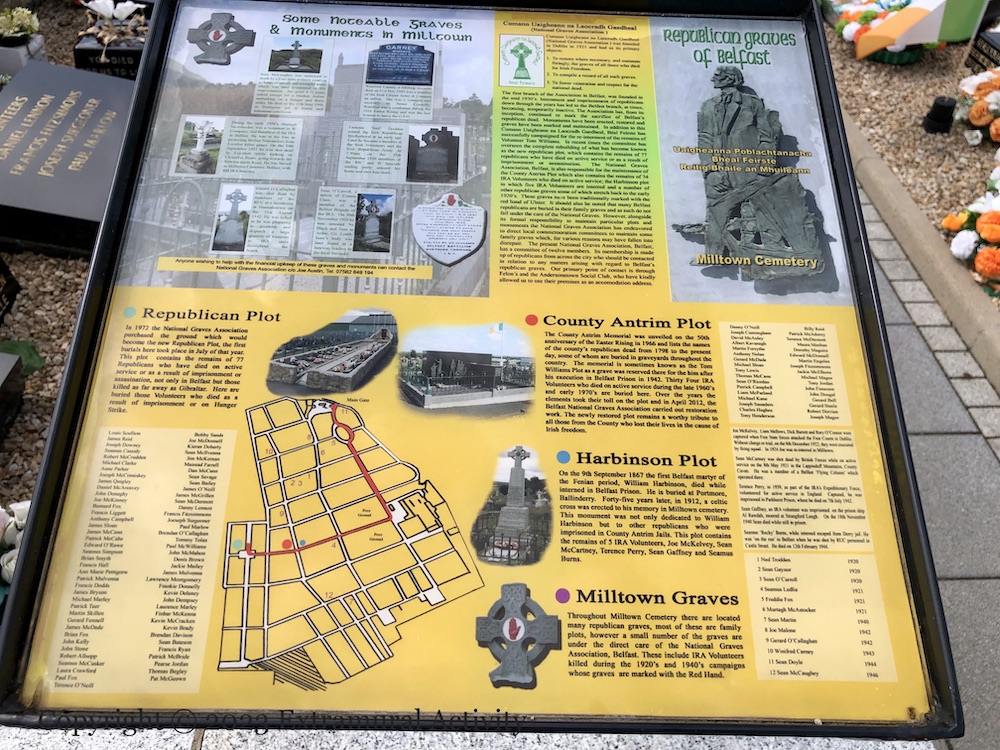
As the info board points out, the red hand is used to denote the graves in Milltown of volunteers from the 1920s to 1940s.
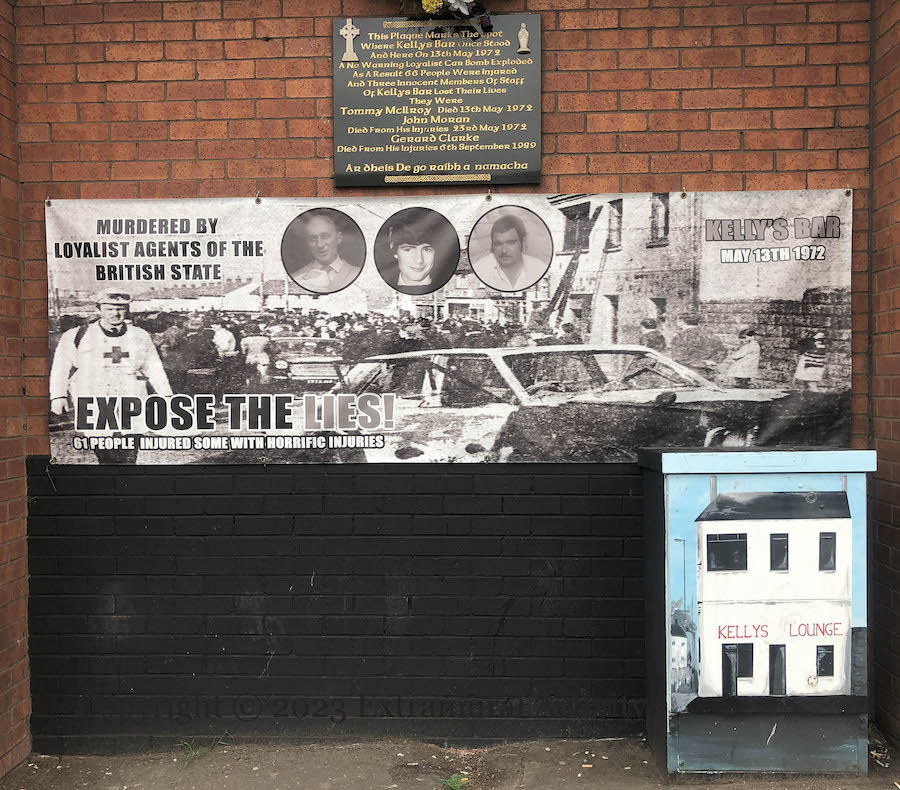
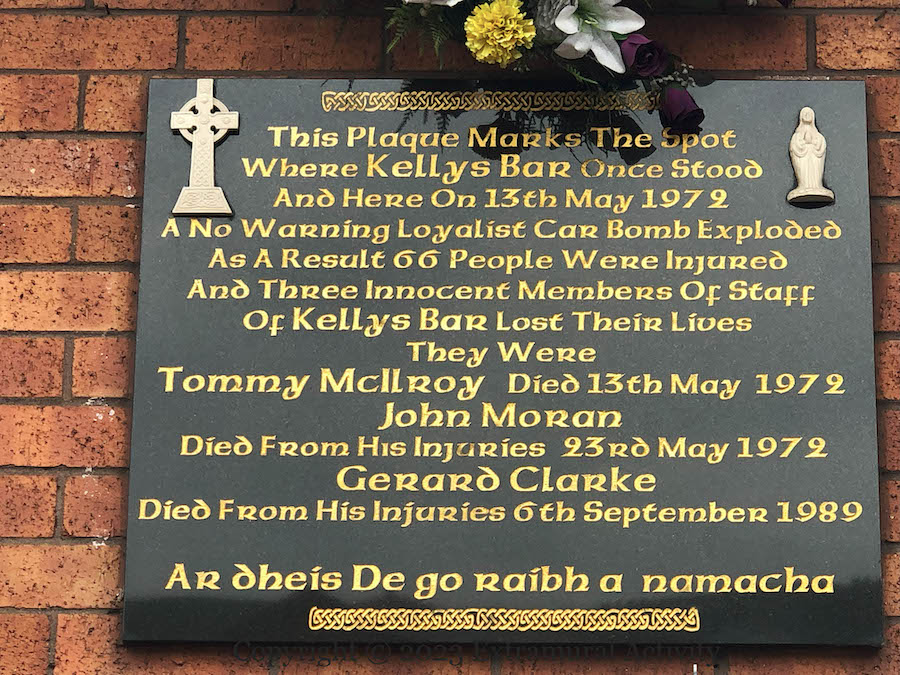
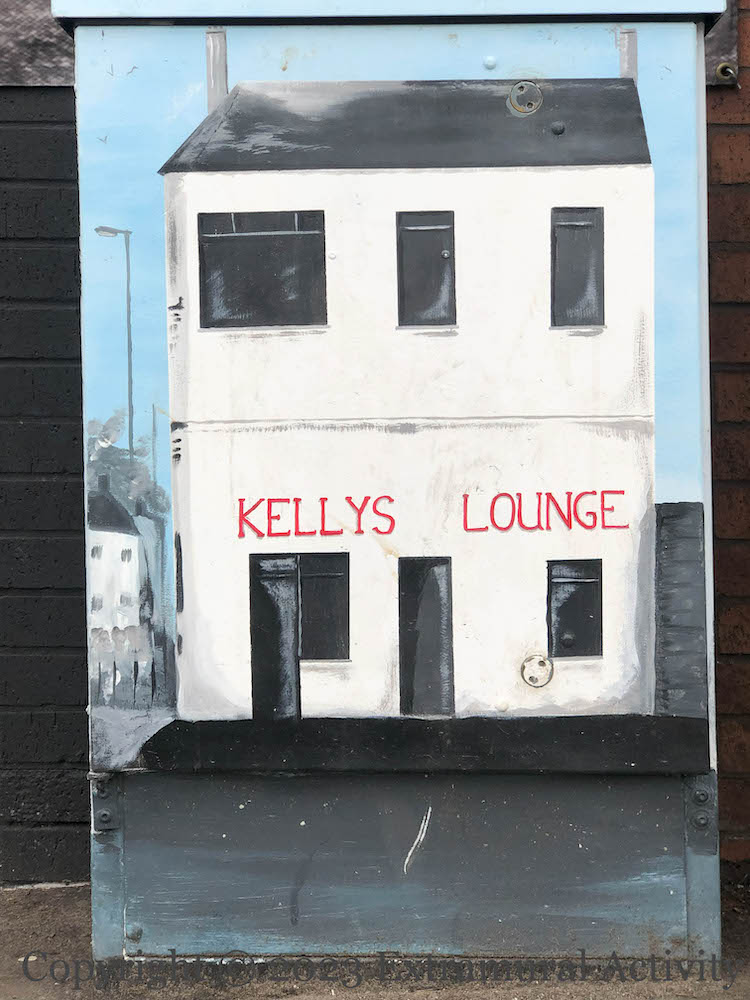
Kelly’s Bar at the top of the Rock was packed with punters watching a World Cup match between England and West Germany when a car bomb went off outside shortly after 5 p.m.. The bombing was followed by two nights of gun-battles, with loyalists firing from Springmartin, republicans (both PIRA and OIRA) from Ballymurphy, and British Army soldiers (the King’s Own and 1 Para) from Henry Taggart and other mobile locations. Within three hours following the explosion, barman Tommy McIlroy was killed in the gunfire from Springmartin as he helped with clean-up from the bomb, Alan Buckley of the King’s Own was killed by IRA fire, Michael Magee of Na Fıanna was killed by friendly fire, and Robert McMullan was killed by British Army fire. The next night (May 14th), John Pedlow was killed by British Army fire and Martha Campbell was shot by UVF fire from Springmartin (see her memorial plaque). (Lost Lives 352, 353, 354, 355, 358, 359 | Battle At Springmartin (WP))
As with the bombing of McGurk’s bar in north Belfast (see most recently Justice Delayed Is Justice Denied), the bombing was initially spun by the UK forces and government as an IRA attempt to stir up loyalists (An Phoblacht | Lost Lives 352). An inquest into Moran’s death (and thus into how the bombing was carried out) has been opened (BeTel | Independent).
The plaque dates back to 2004 (see M02243); the tarp was added for the 50th anniversary in 2022; the small mural is more recent.
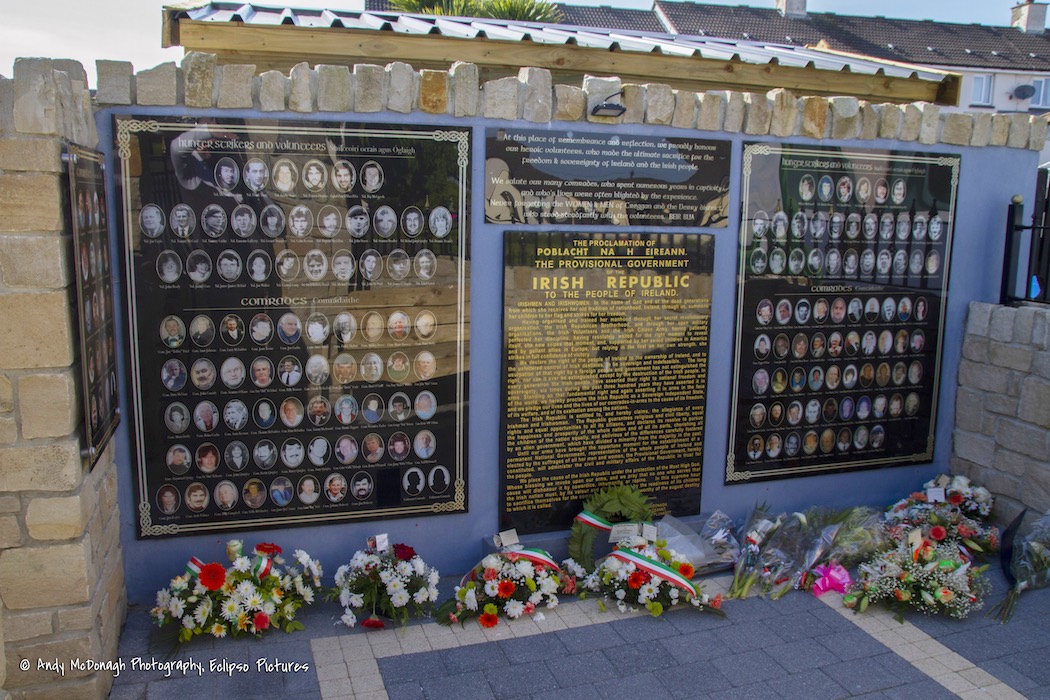
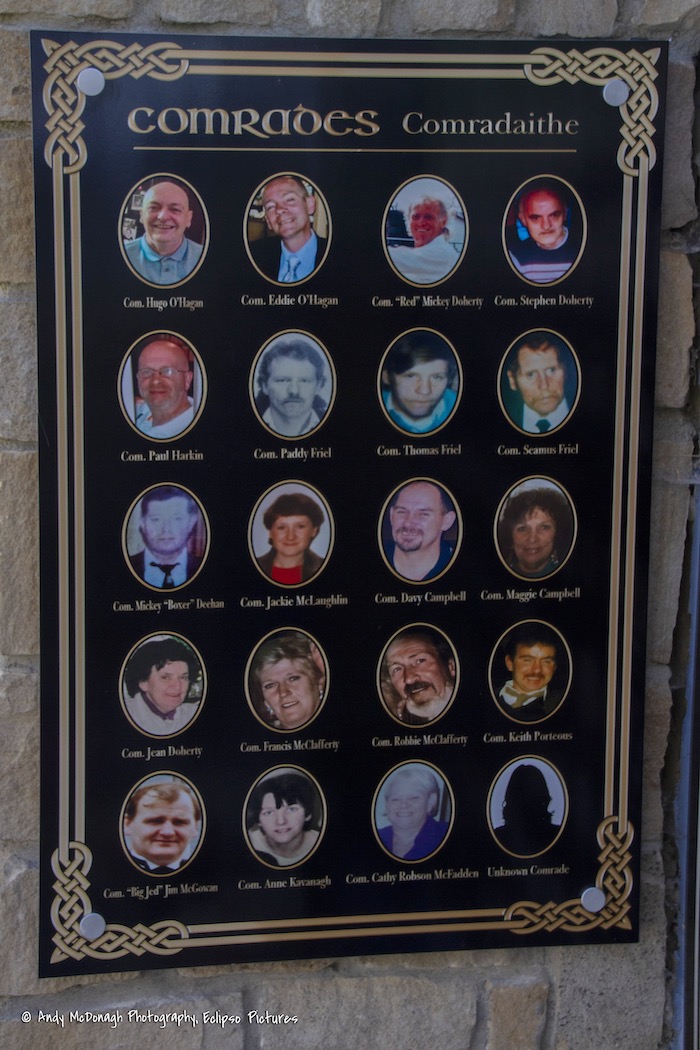
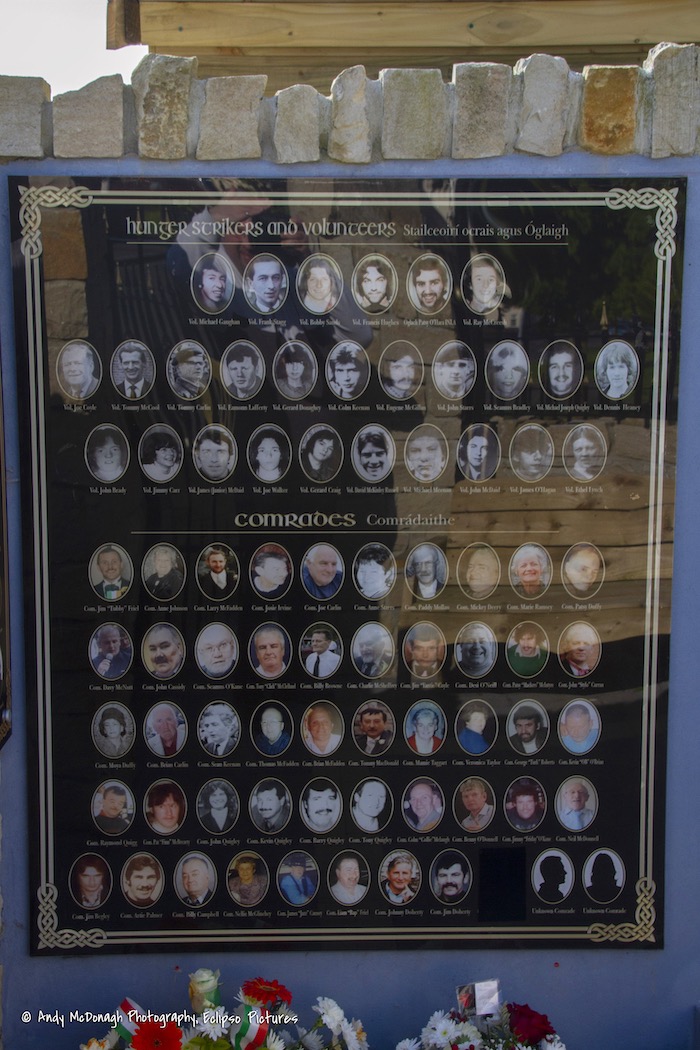
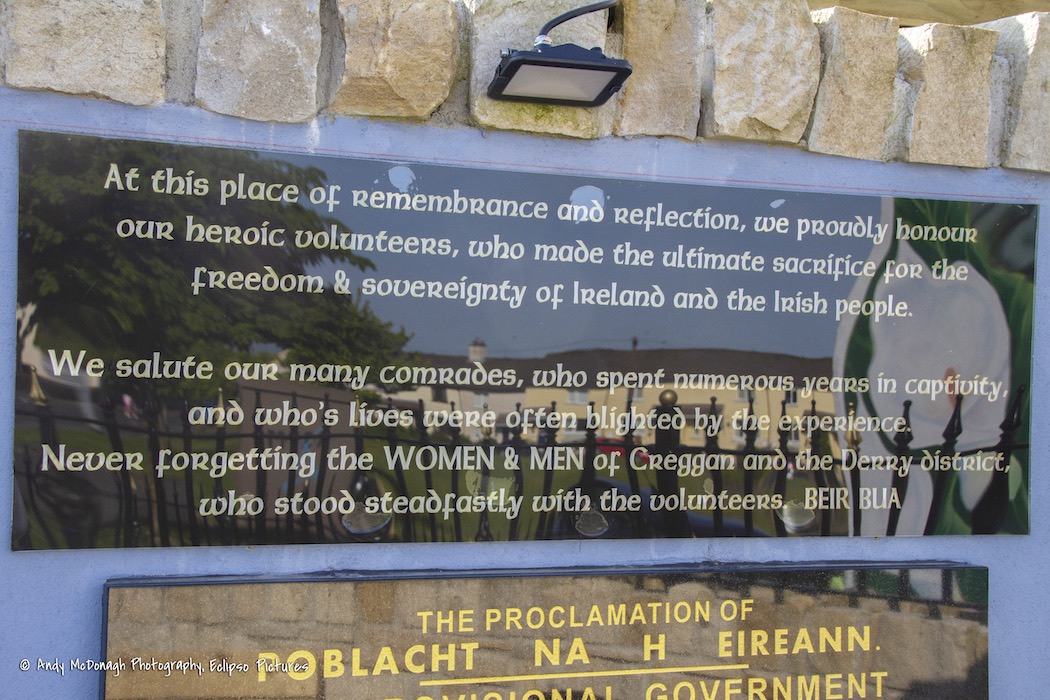
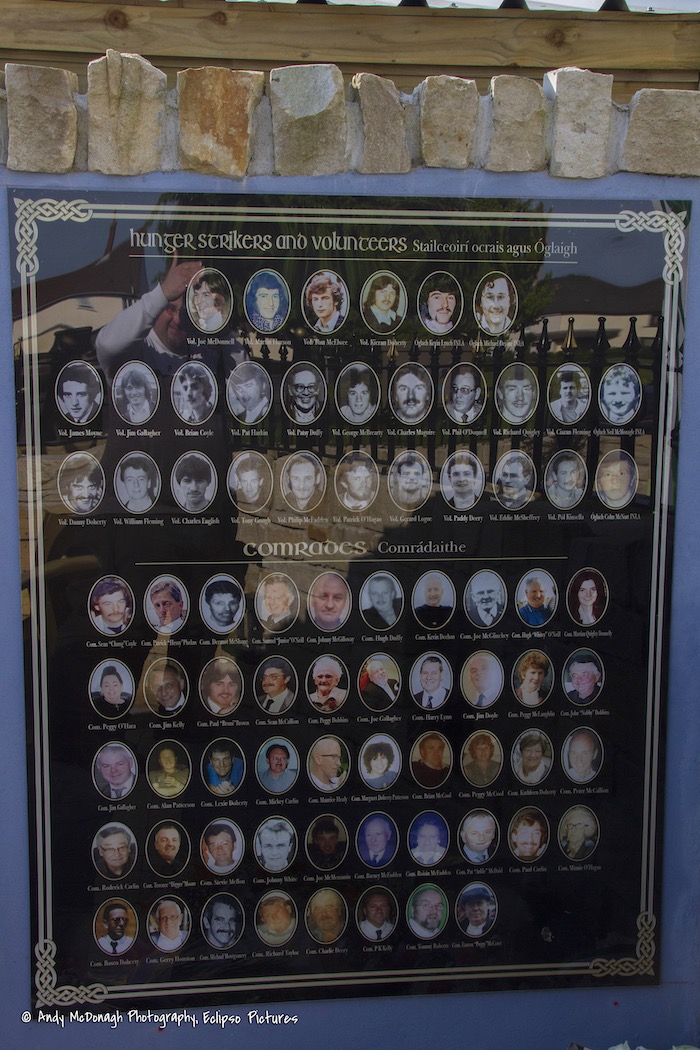
“At this place of reflection, we proudly honour our heroic volunteers, who made the ultimate sacrifice for the freedom & sovereignty of Ireland and the Irish people. We salute our many comrades, who spent numerous years in captivity, and who’s [sic] lives were often blighted by the experience. Never forgetting the WOMEN & MEN of Creggan and the Derry district, who stood steadfastly with the volunteers. BEIR BUA.” The 12 Troubles-era hunger strikers and 43 Derry brigade members are at the top of each panel with 115 named comrades/comrádaithe (and three unnamed) below (and on the side wall – first image below), with each name preceded by “Com.” as though establishing a new category of activist.
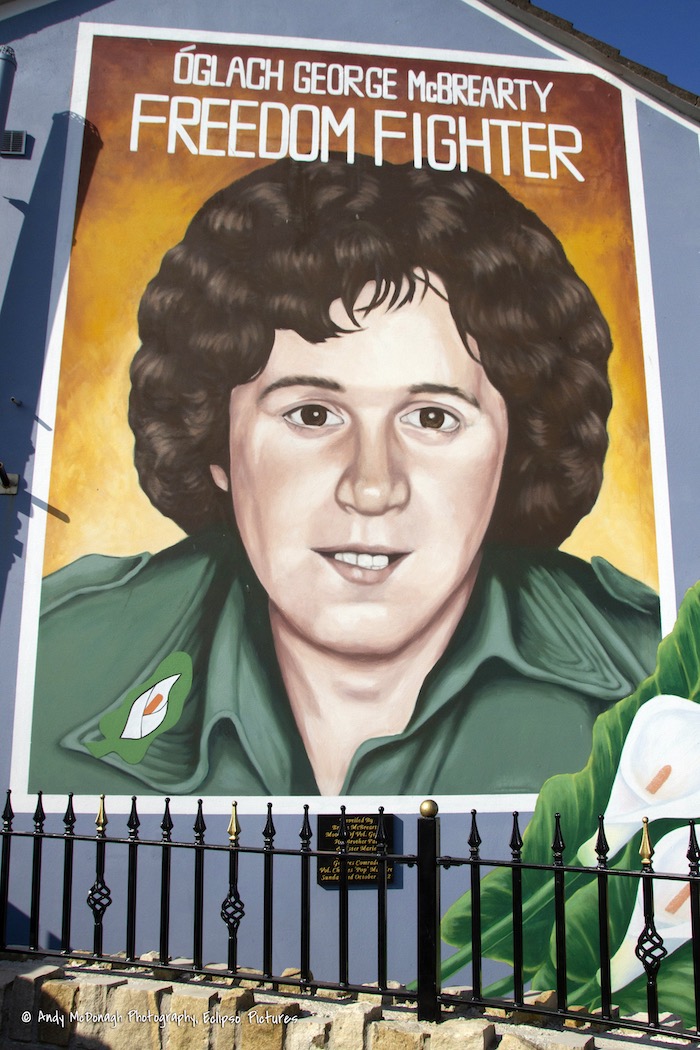
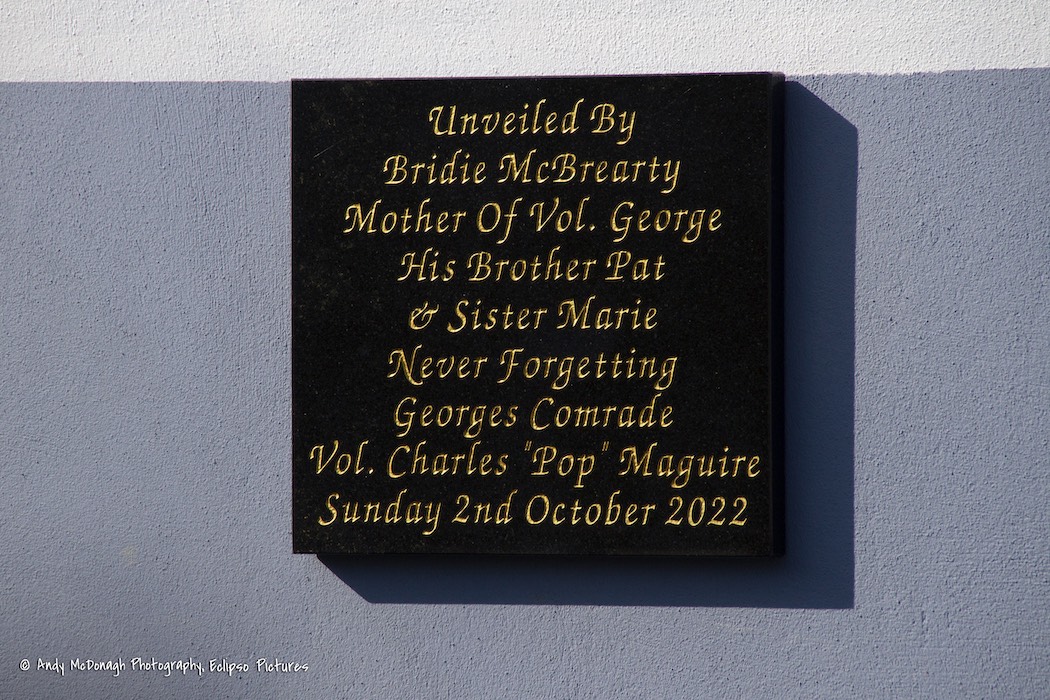
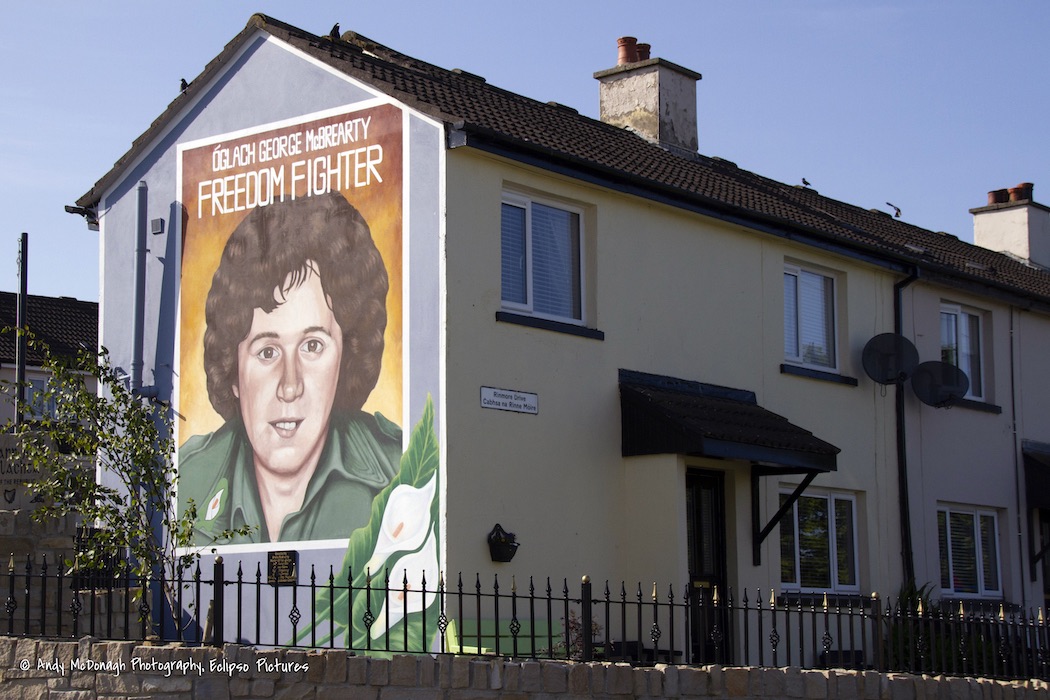
A ceremony to mark the forty-second anniversary of the deaths of IRA volunteers George McBrearty and Charles “Pop” Maguire – shot by the SAS on May 28th, 1981 – was held last Sunday (May 28th) in the garden of remembrance in Linsfort Drive, Creggan (Derry Now). On patrol in Creggan with two other IRA men, McBrearty and Maguire pursued and a car whose driver they suspected of being an SAS soldier and eventually stopped it at the bottom of Couch Road/Southway at the edge of the Brandywell. The driver shot McBrearty as he approached the car and Maguire was shot by the driver and/or by other undercover soldiers from 14th Intelligence who emerged from two other cars. A third volunteer was injured. (Lost Lives 2330)
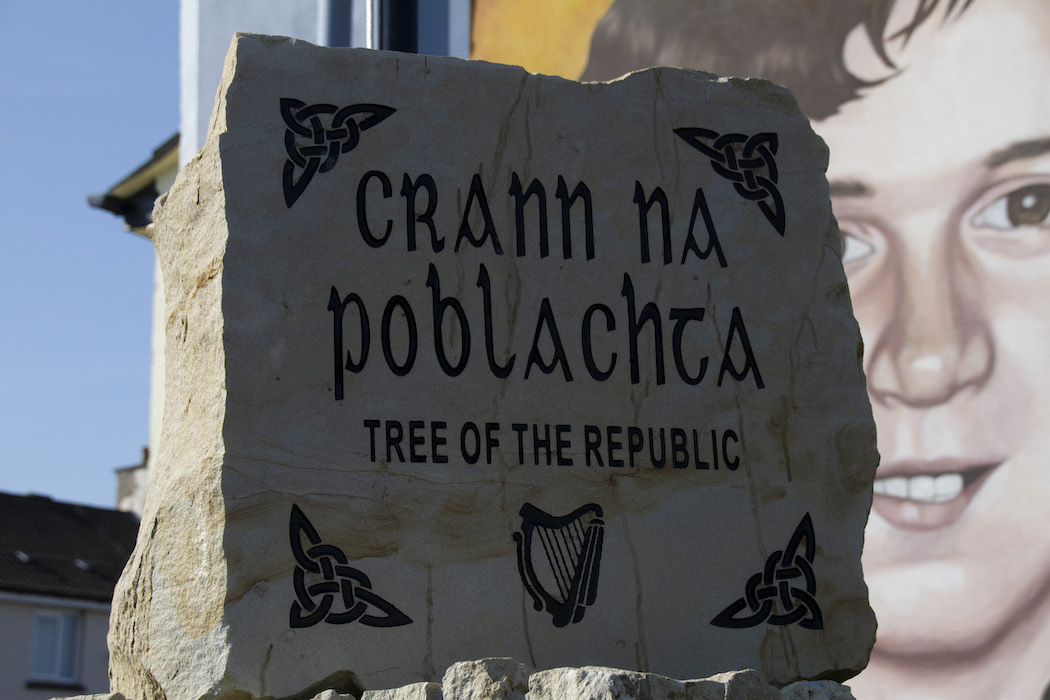
The “Crann Na Poblachta”/”Tree Of The Republic” – a silver birch – was originally planted in front of the previous mural to George McBrearty mural in Rathkeele Way (see Freedom Fighter For The Republic) (Derry Journal). Both that mural and this one were painted by ‘Bogside Artist‘ Kevin Hasson.
There is a plaque to McBrearty & Maguire near the spot where they were killed on Coach Road/Southway (see M01544).
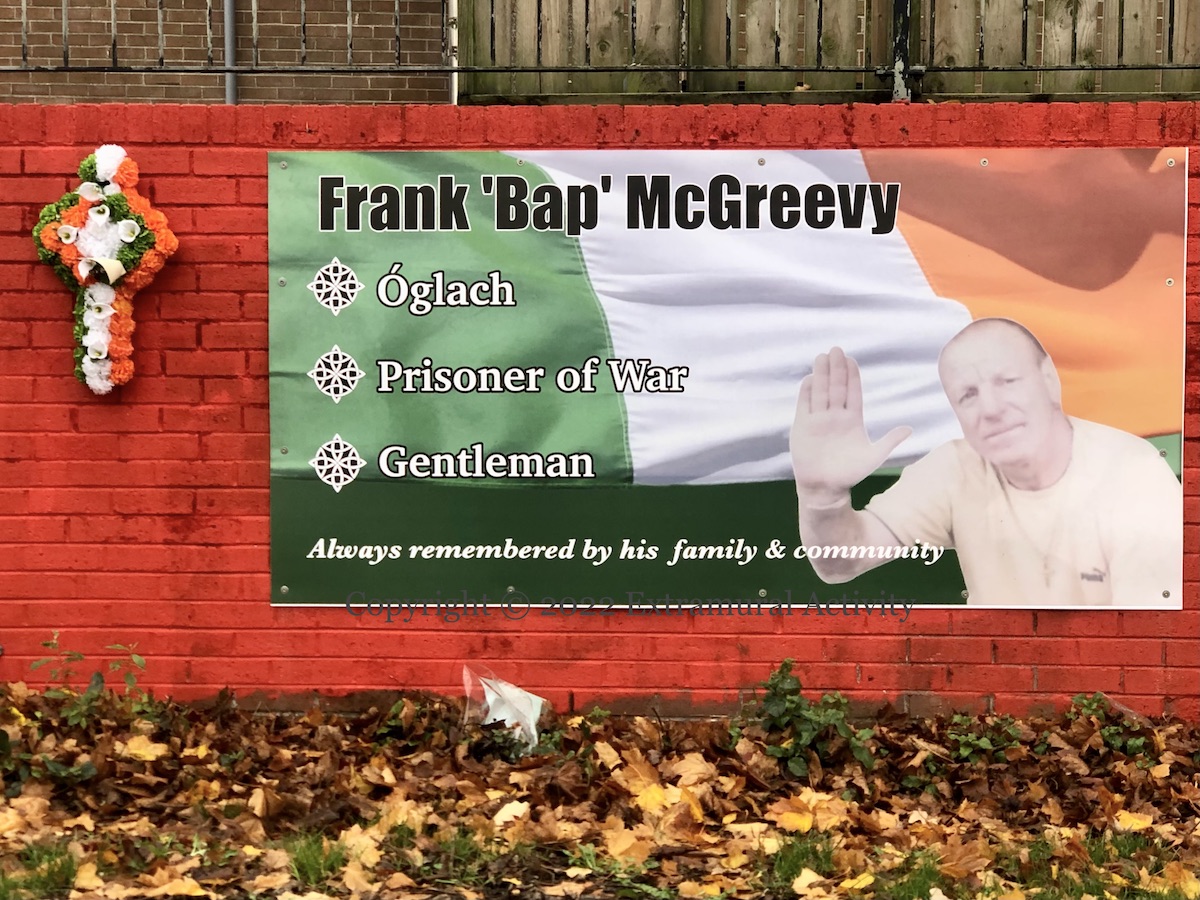
IRA volunteer Frank “Bap” McGreevy spent 15 (Irish Times) or 17 (An Phoblacht) years in Long Kesh (for a crime of which he was innocent, says Anthony McIntyre; possibly the car bombing of the Klondyke Bar in Sandy Row). He was attacked by two assailants at his home in (the old) Ross Street, near this memorial board, in March 2008 and died of his wounds after three days in hospital.
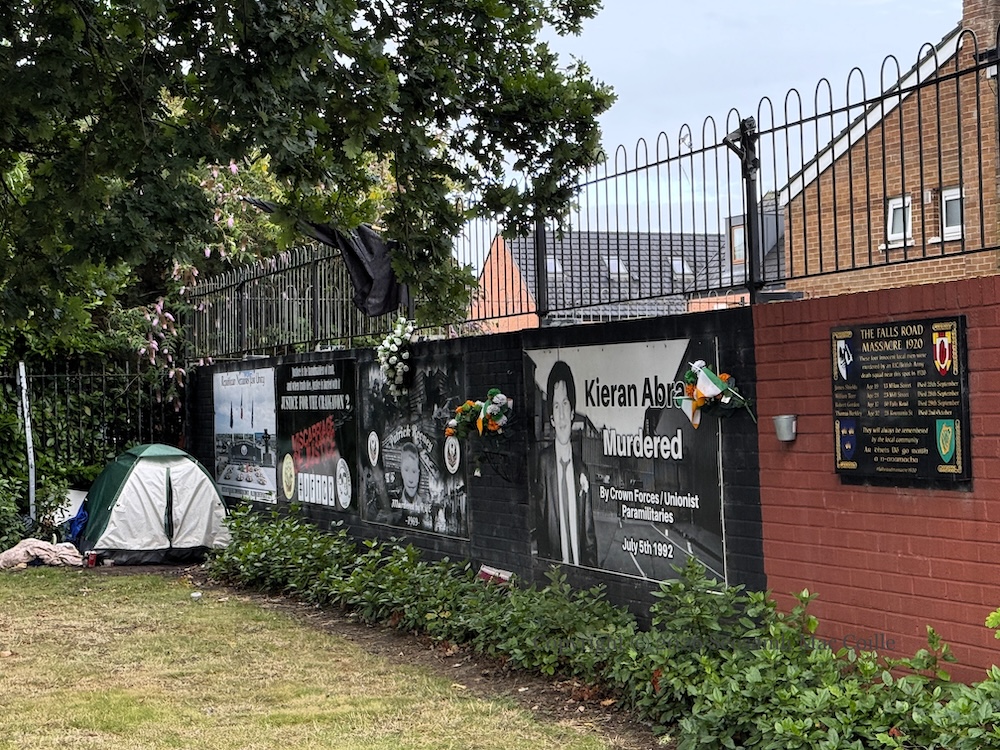
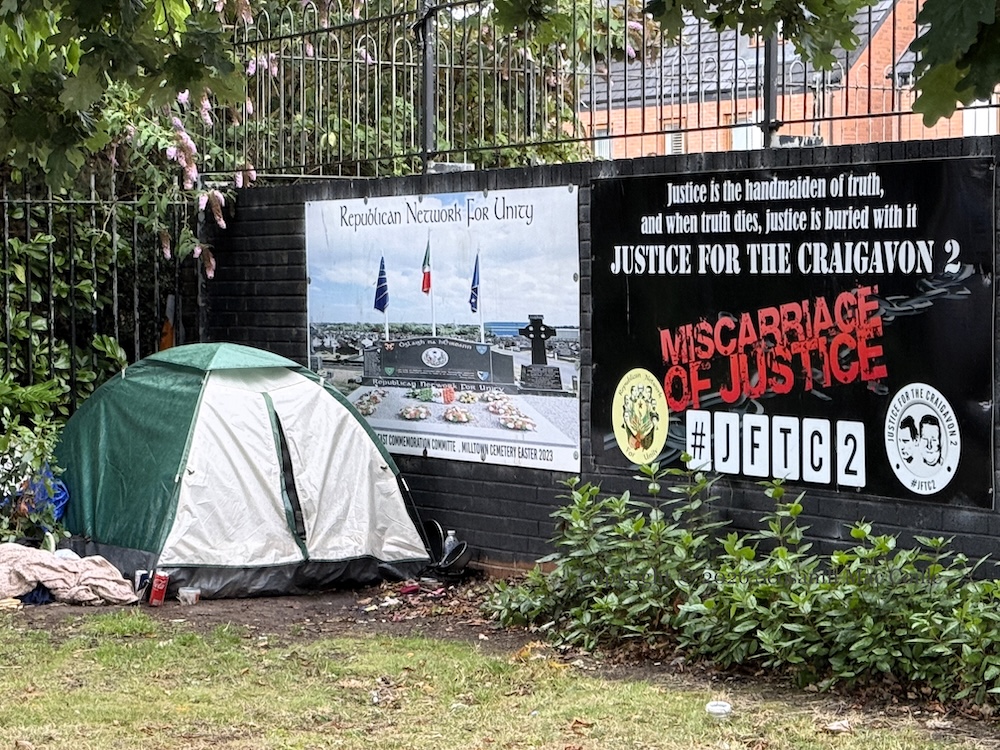
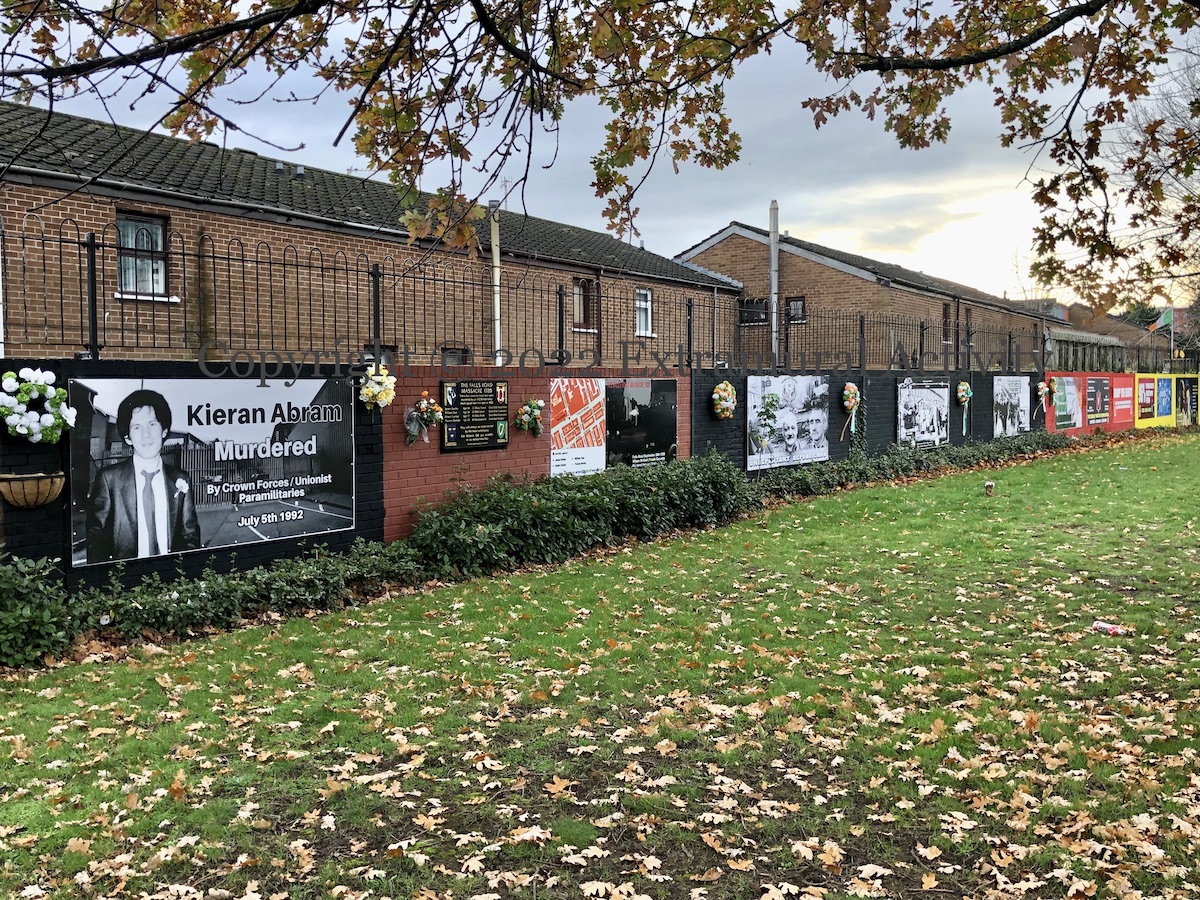
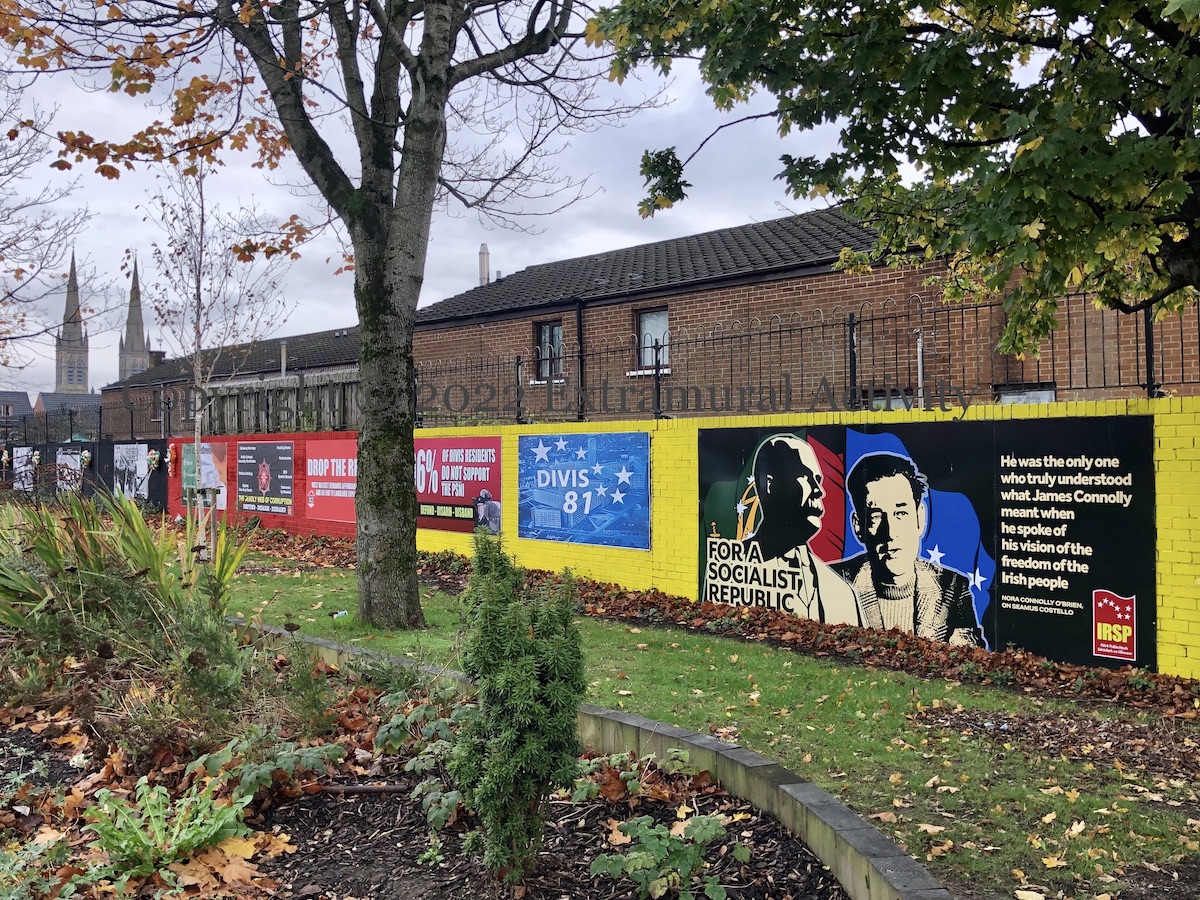
As the wide shots below show, there are now a dozen pieces along this stretch of the Falls Road. The other pieces have all been seen in previous posts. For close-ups, see Kieran Abram with Charlie Hughes plaque and map of The Falls Road Massacre Unrepentant Republicans Billy McKee, Alec Murphy, and Brendan Hughes; the Falls Curfew Web Of Corruption: Drop The Rents; PSNI Not Supported; Divis 81 in Defund The Police For A Socialist Republic