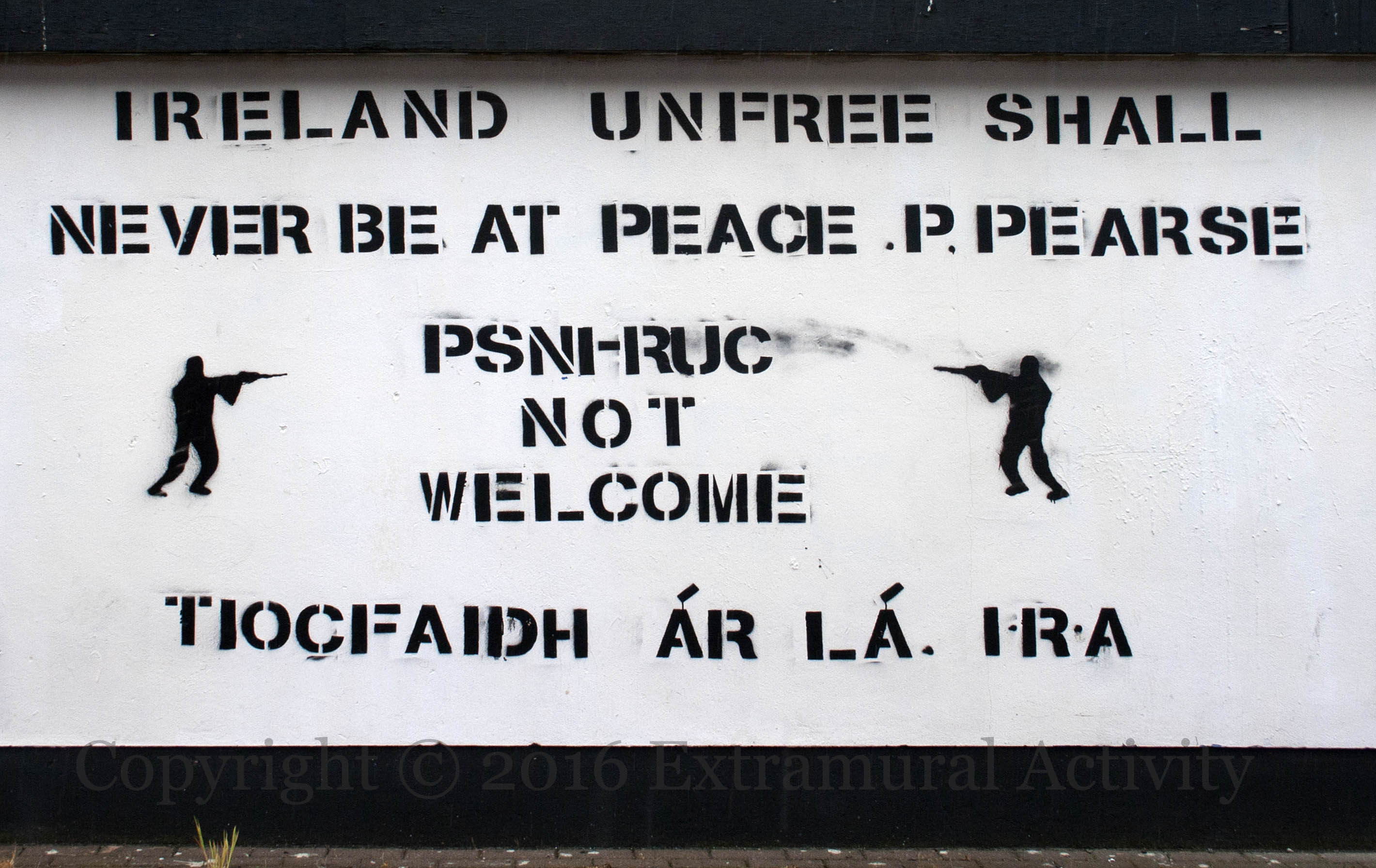
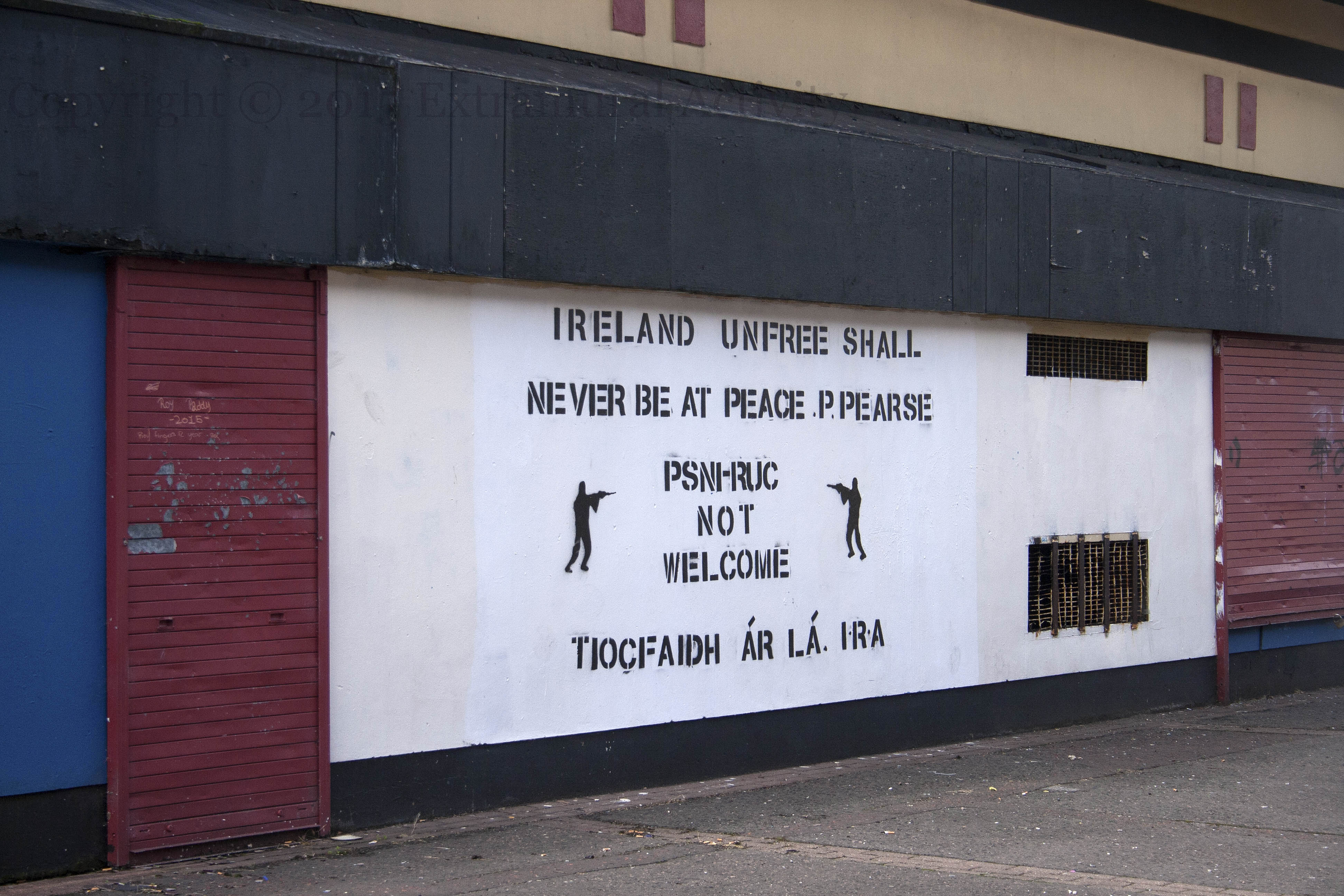
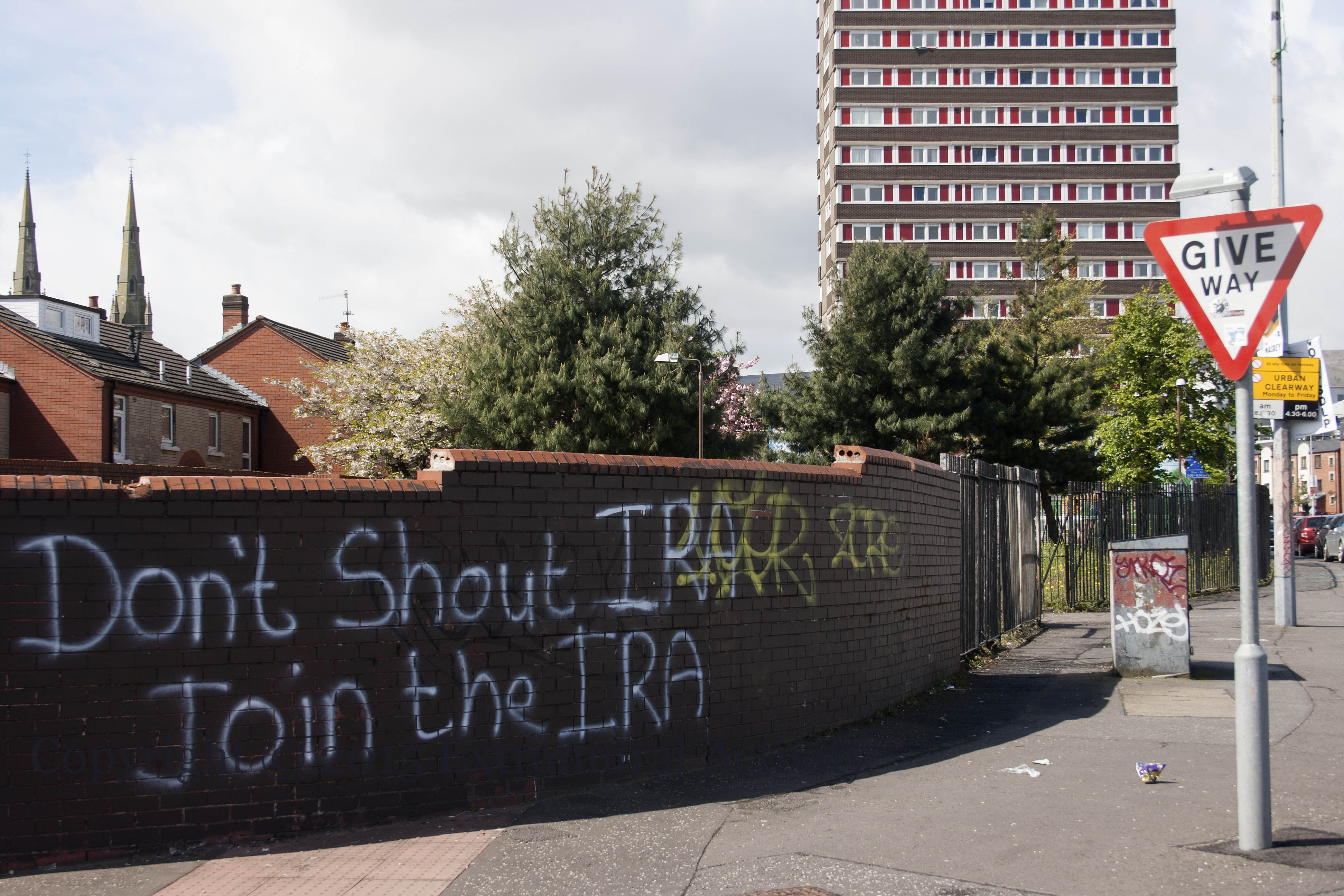
Contemporary Republican stencil containing a trio of classic slogans: Patrick Pearse’s famous closing words at the funeral of O’Donovan Rossa (which was re-enacted this August on its centenary) — “Ireland unfree shall never be at peace”; “PSNI-RUC not welcome”; and – of the greatest vintage – “Tıocfaıdh ár lá. IRA”. Meenan Square, Derry.
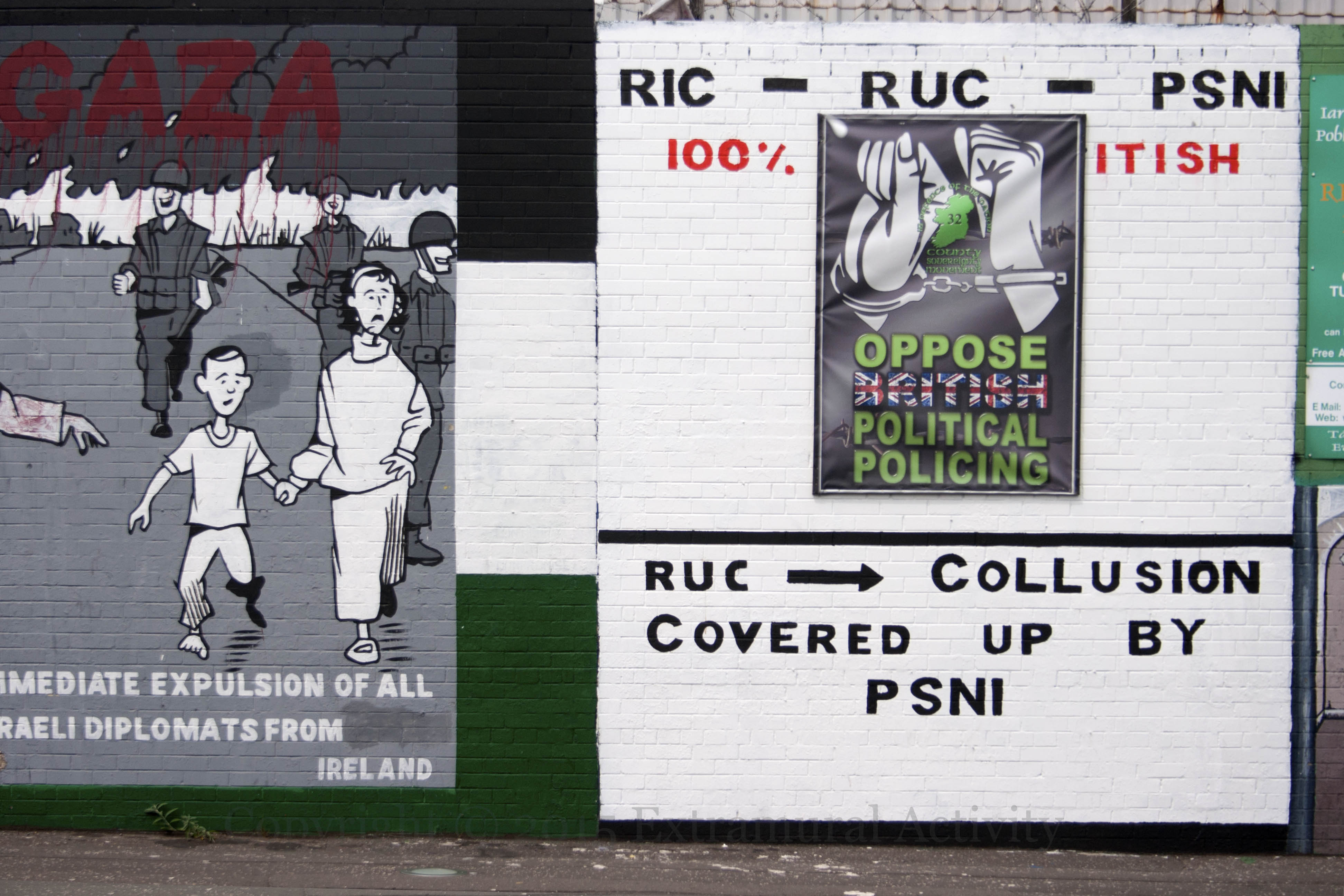
For weeks (since April) a whitewashed panel on the International Wall sat empty, before being partly filled in with “RIC – RUC – PSNI”, “RUC -> Collusion covered up by PSNI”, but progress seems to have halted again and a 32-County Sovereignty Movement tarp has been placed on top: Oppose British political policing.
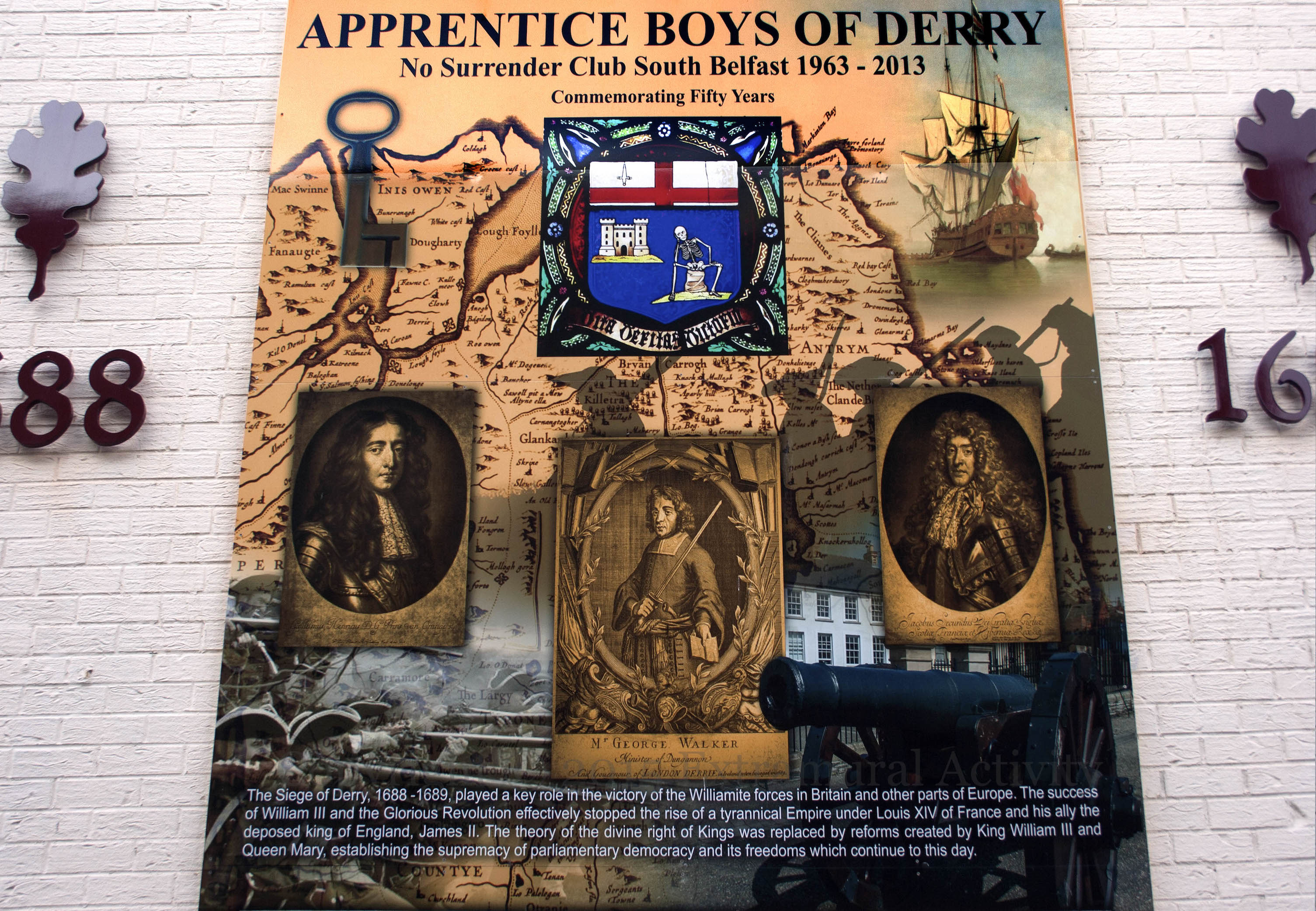
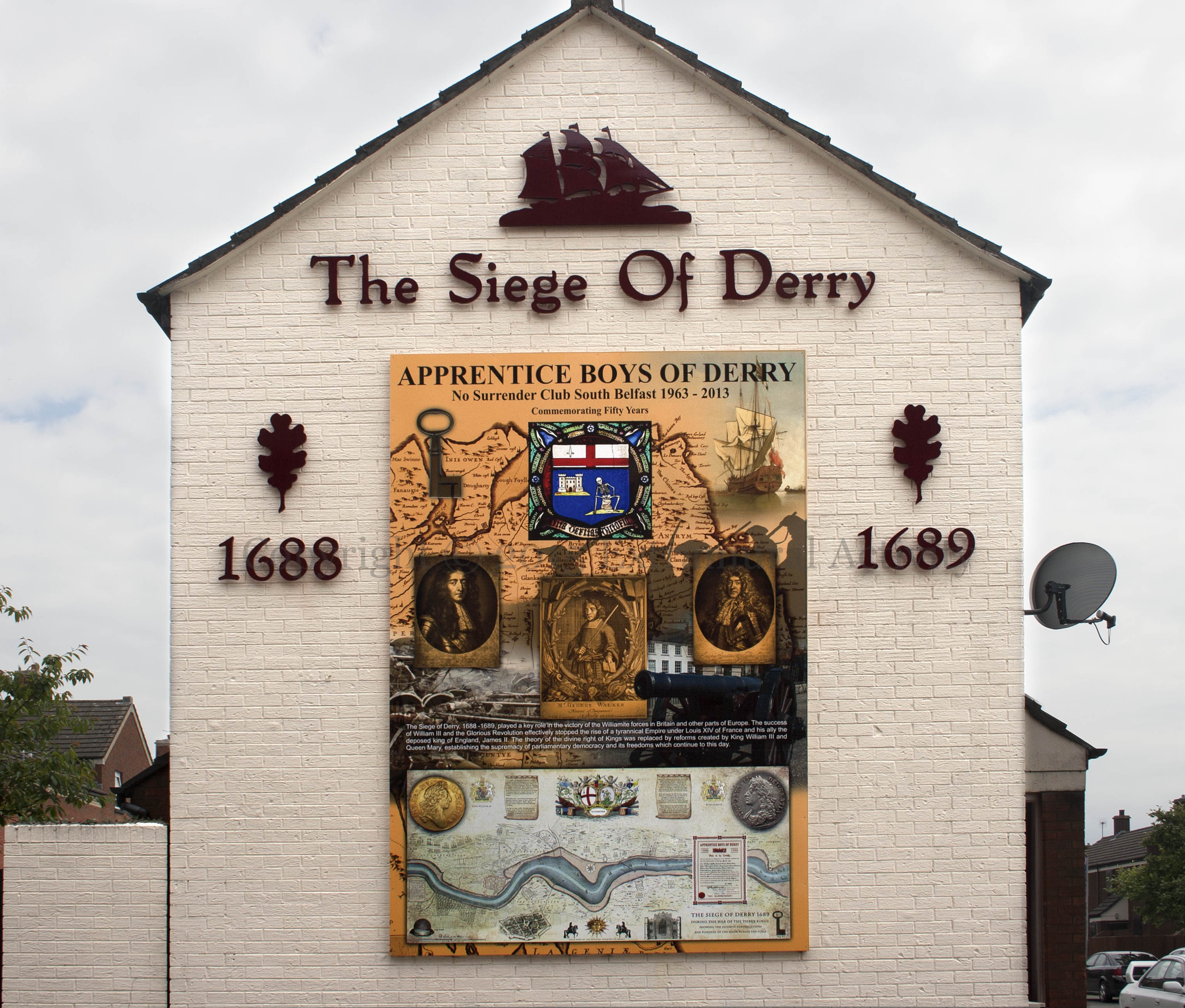
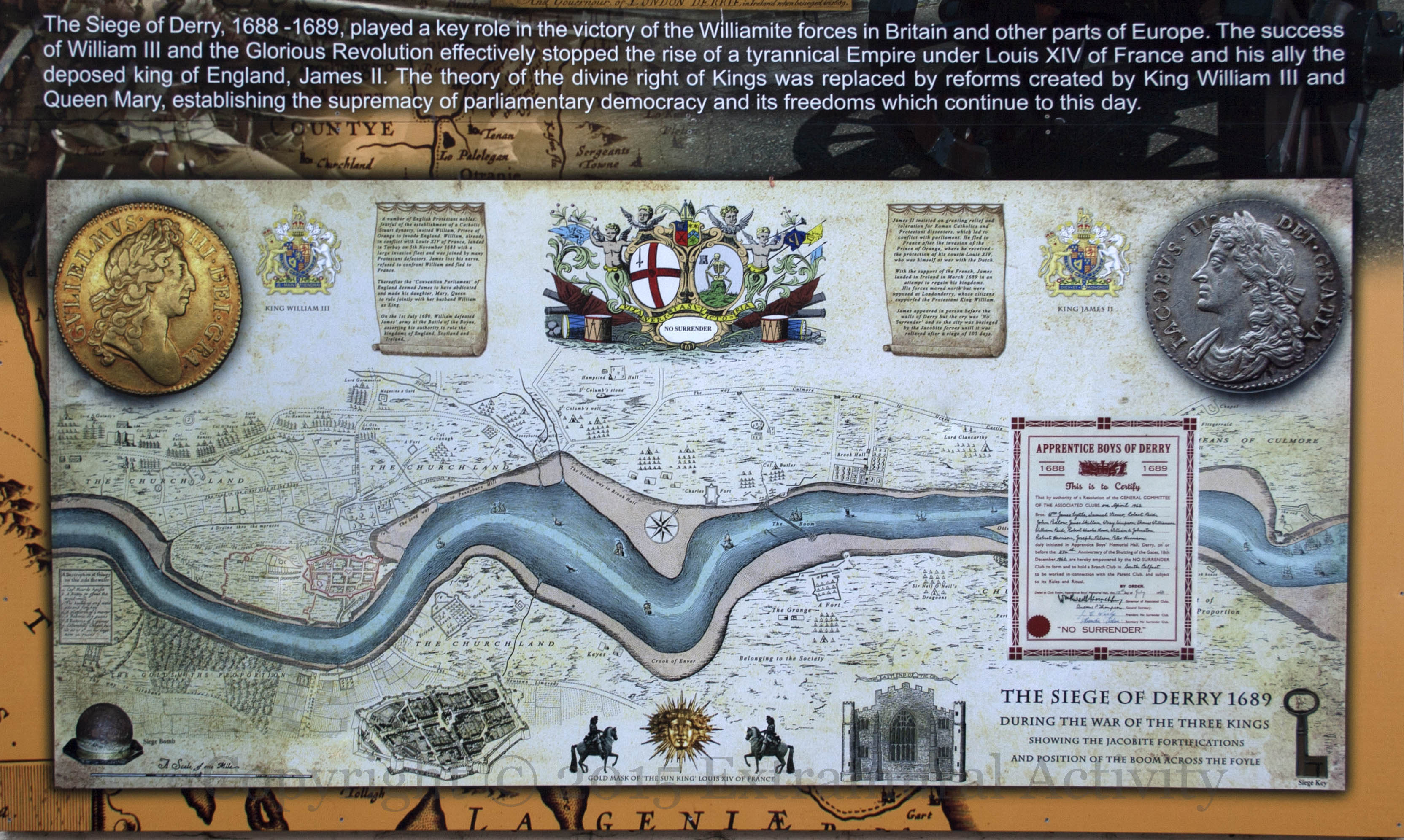
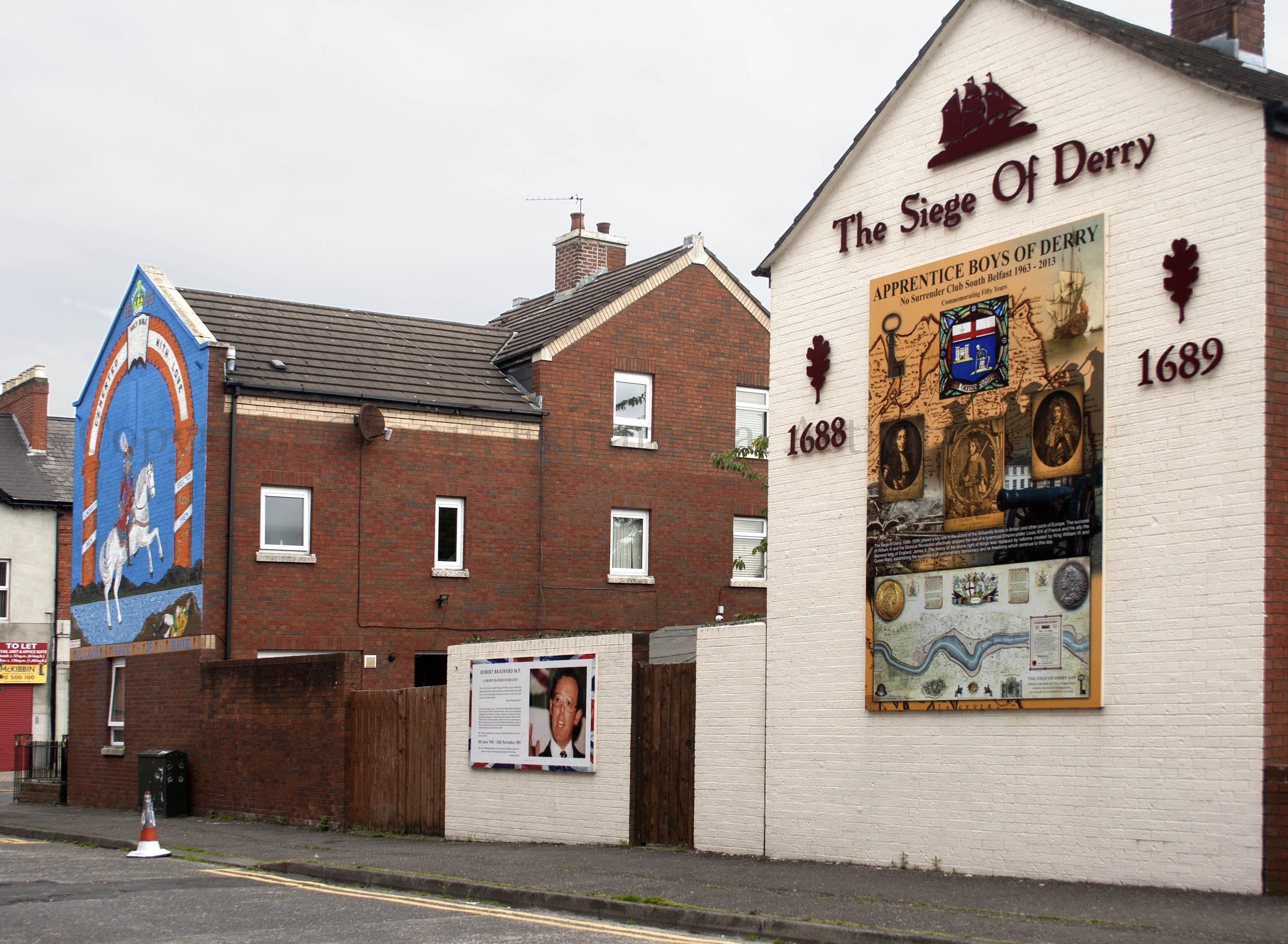
Oak Street is a fitting place for a mural about the Siege of Derry, as the oak leaf, shown to the left and right of the board above (and in the wide shot, below) is a symbol of the town, “doire” meaning an oak grove. The gates to the city were locked by thirteen apprentices, against the wishes of Governor Robert Lundy who wised to surrender the city. When the deposed king James II and his army arrived and demanded the surrender of the city of Derry, the cry from within was “No surrender!” The city was then besieged for 105 days until relief arrived in the form of ships of the navy of the newly crowned William & Mary.
The board shown above celebrates 50 years of the No Surrender Club South Belfast (1963-2013) a club affiliated with the Apprentice Boys Of Derry.
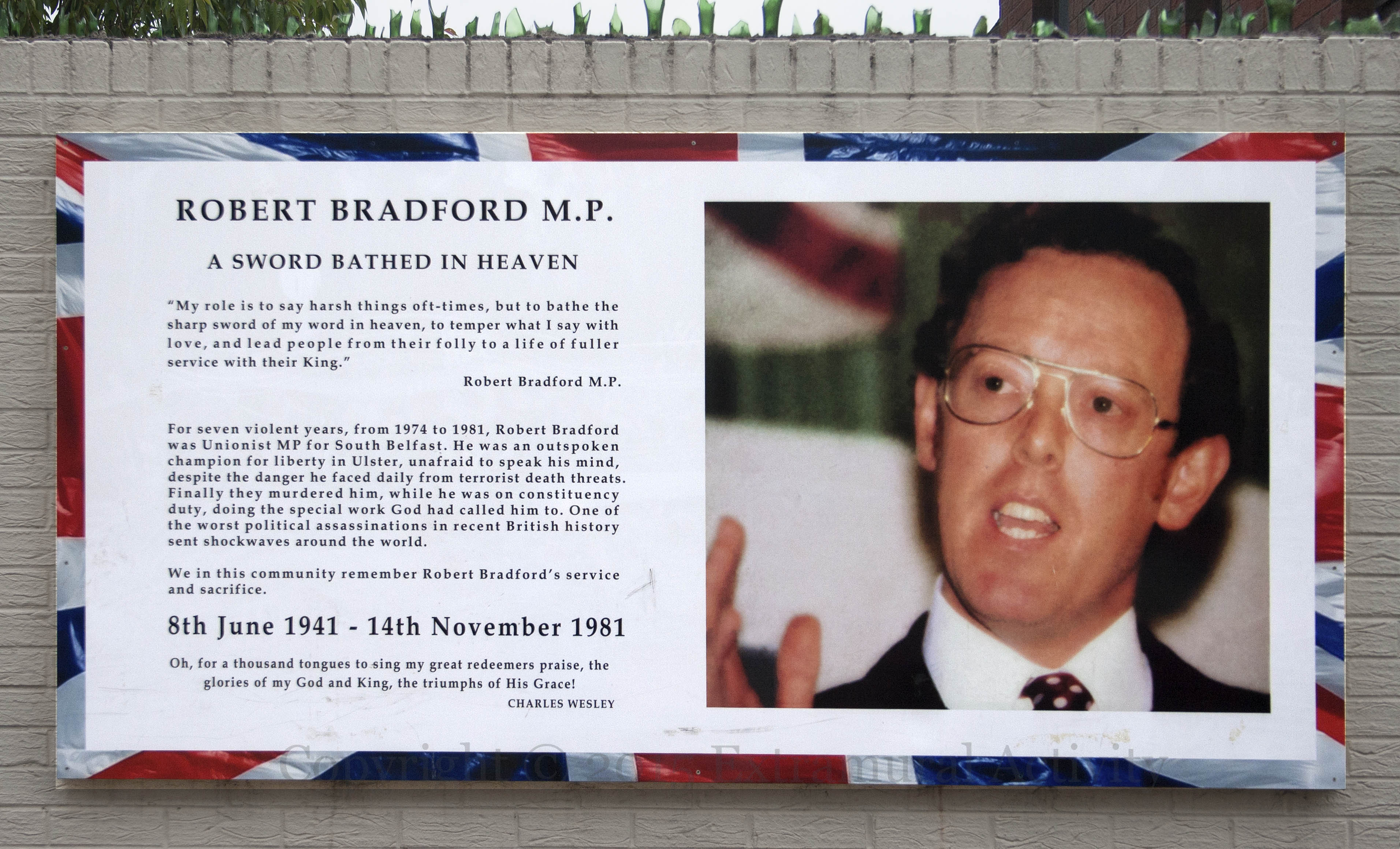
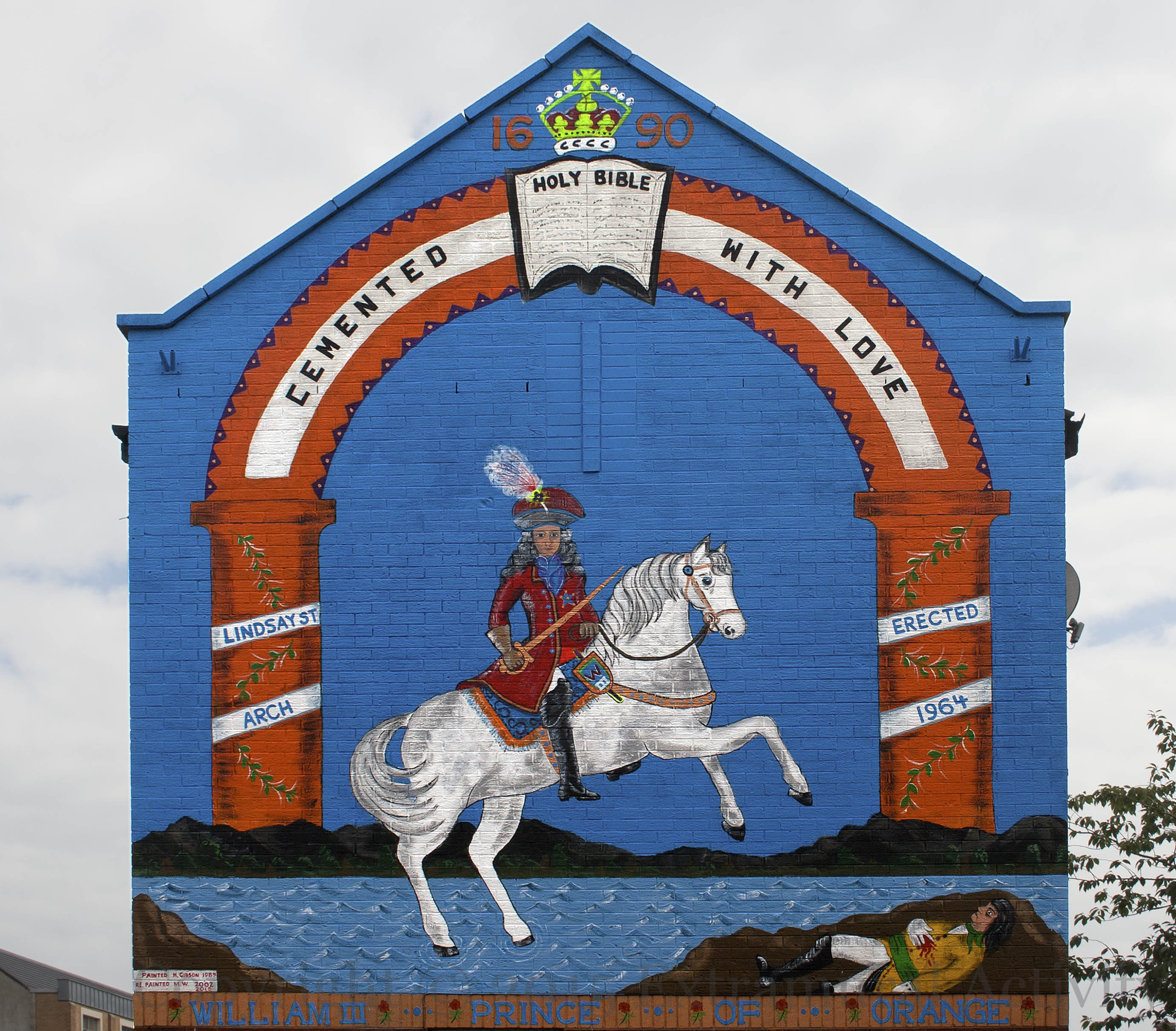
South Belfast MP Robert Bradford was assassinated by the Provisional IRA in Finaghy at a meeting with constituents; the caretaker of the community centre, Ken Campbell, was also killed by the fleeing attackers. Taking place in late 1981, with the hunger strikes having ended only a month before, the killing was noted around the world and raised fears of broad civil unrest (BBC | NYTimes). The board above serves as a substitute for an earlier mural to Bradford on the adjacent gable wall. See below for a wide shot of Oak Street with the Bradford board between the repainted Cemented With Love and No Surrender Club.
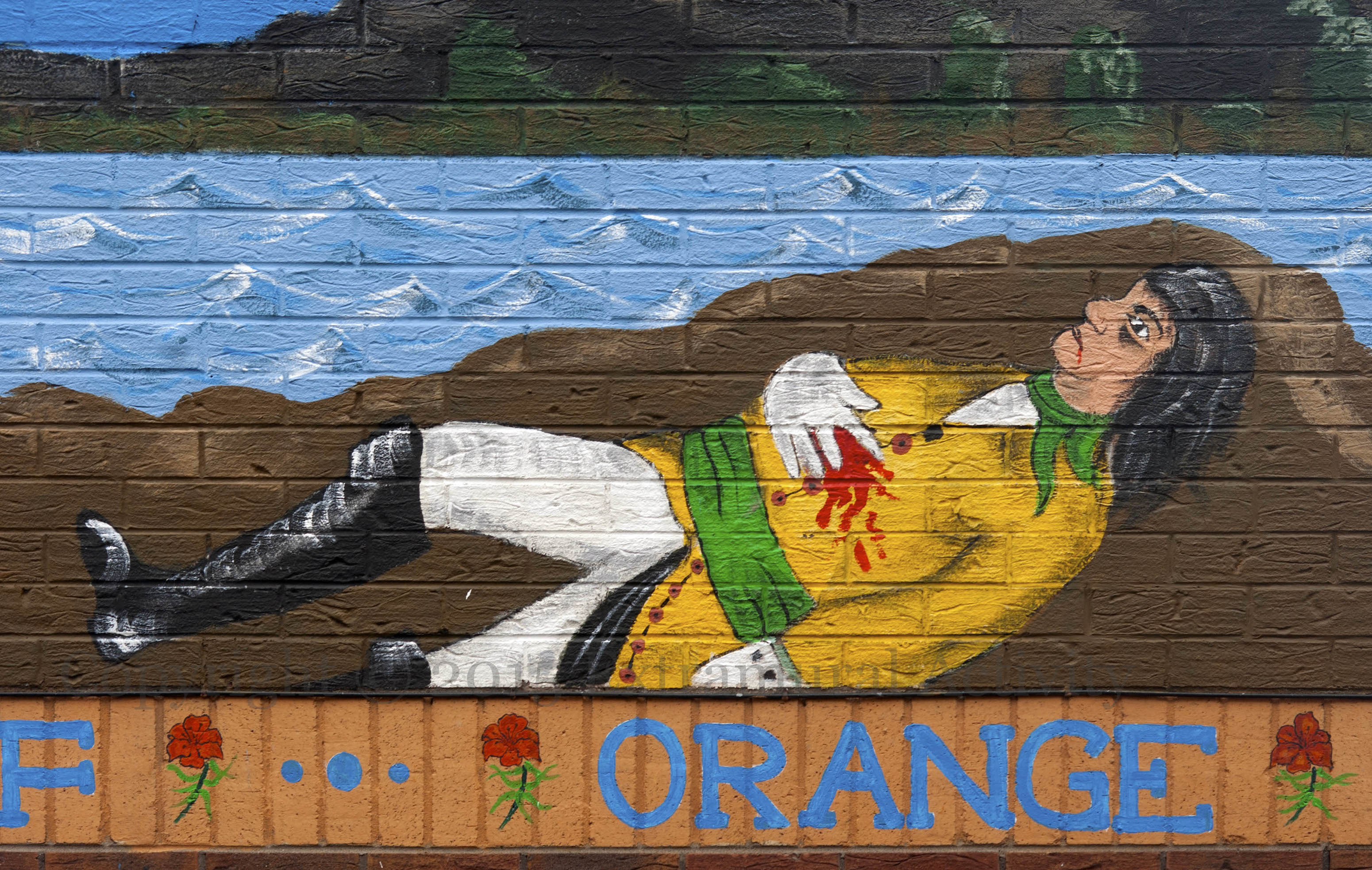
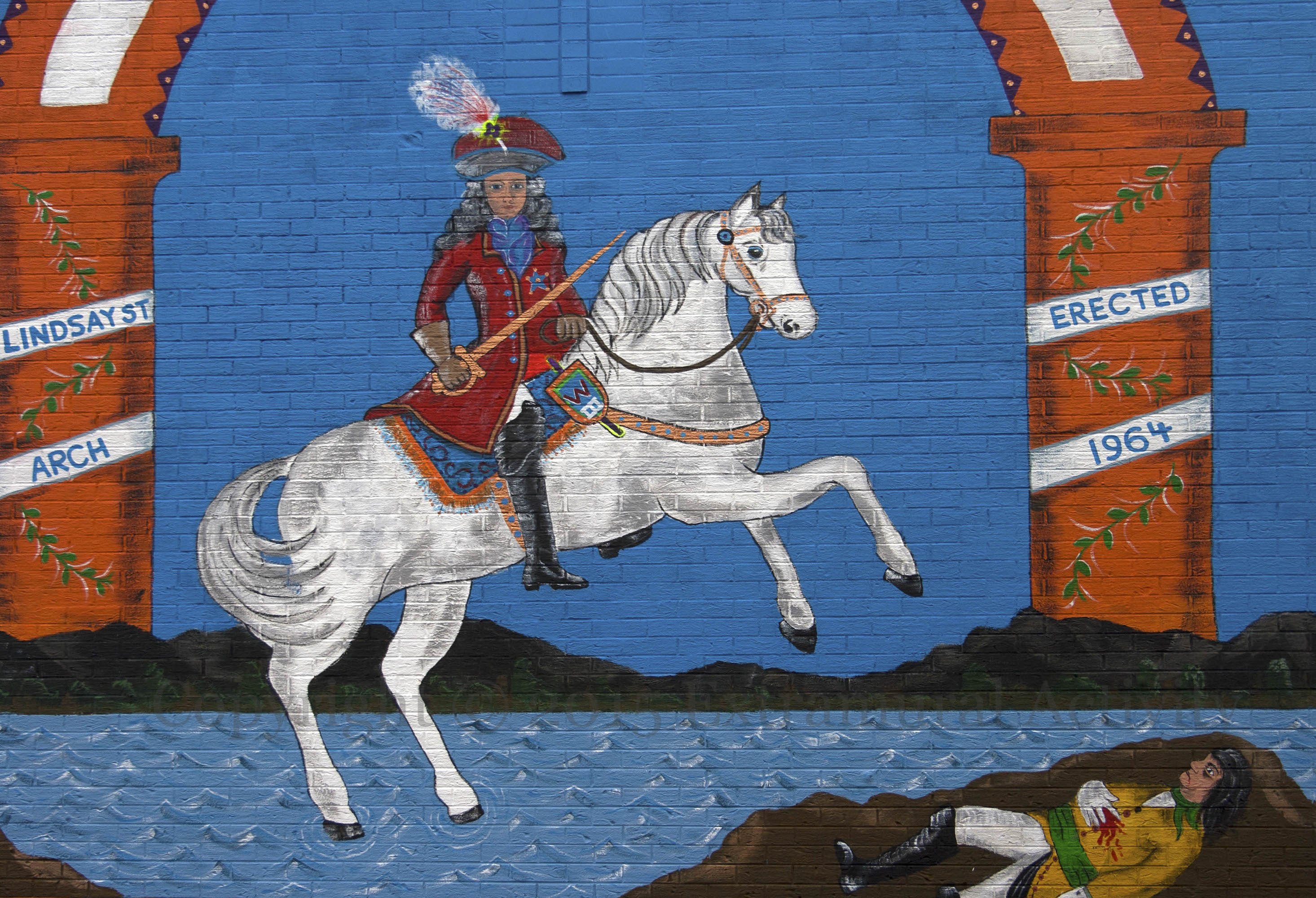
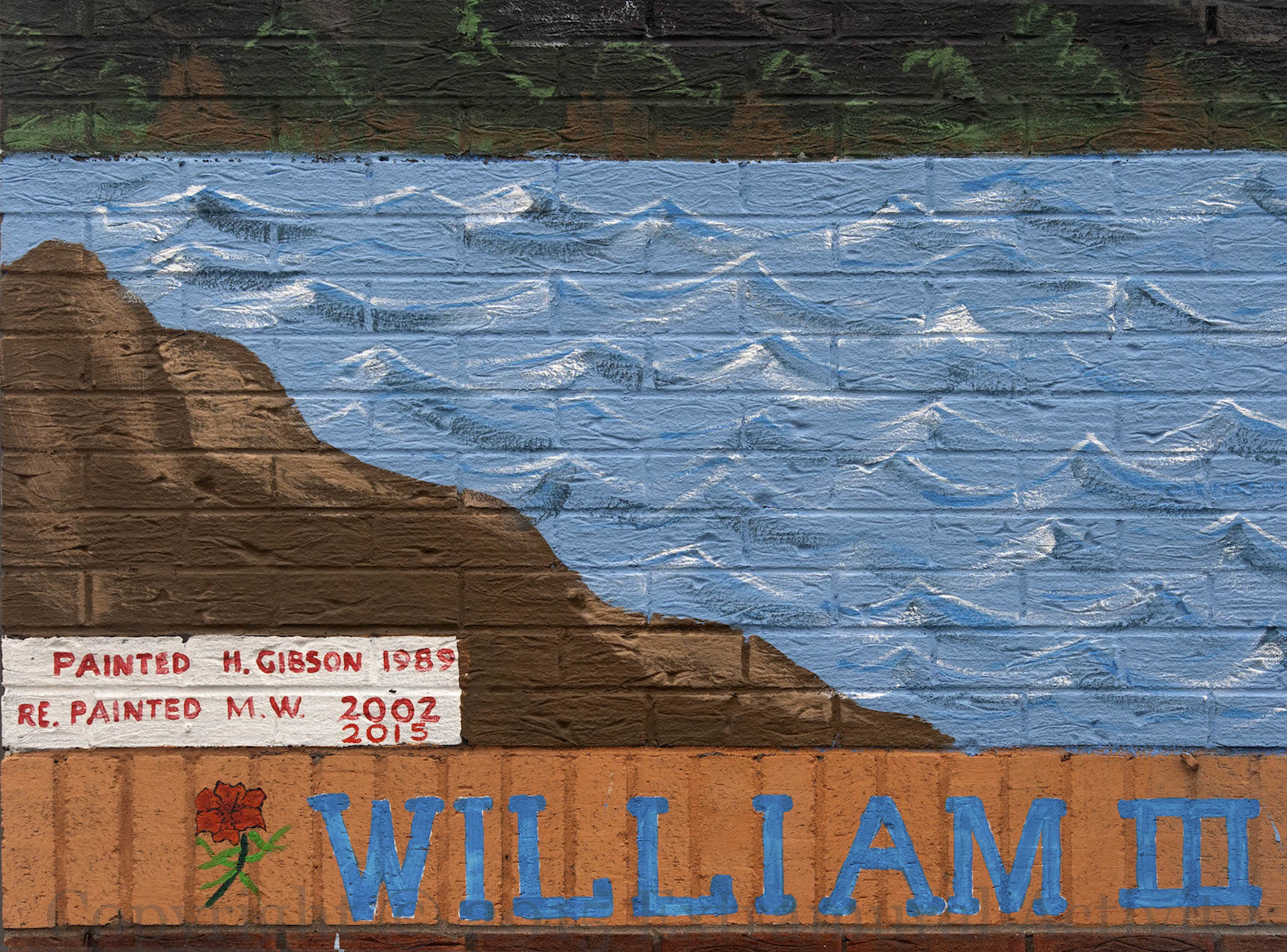
The ‘Cemented With Love’ mural on Oak Street (Donegall Pass) has been repainted for the 2015 marching season. According to the painted note in the bottom left corner, it was originally painted in 1989 on the 25th anniversary of the erection of the arch in nearby Lindsay Street. The mural shows William of Orange rearing back his horse in the Boyne river while a Jacobite soldier in green, white, and gold expires on the shore (shown below along with a close-up of William and horse).
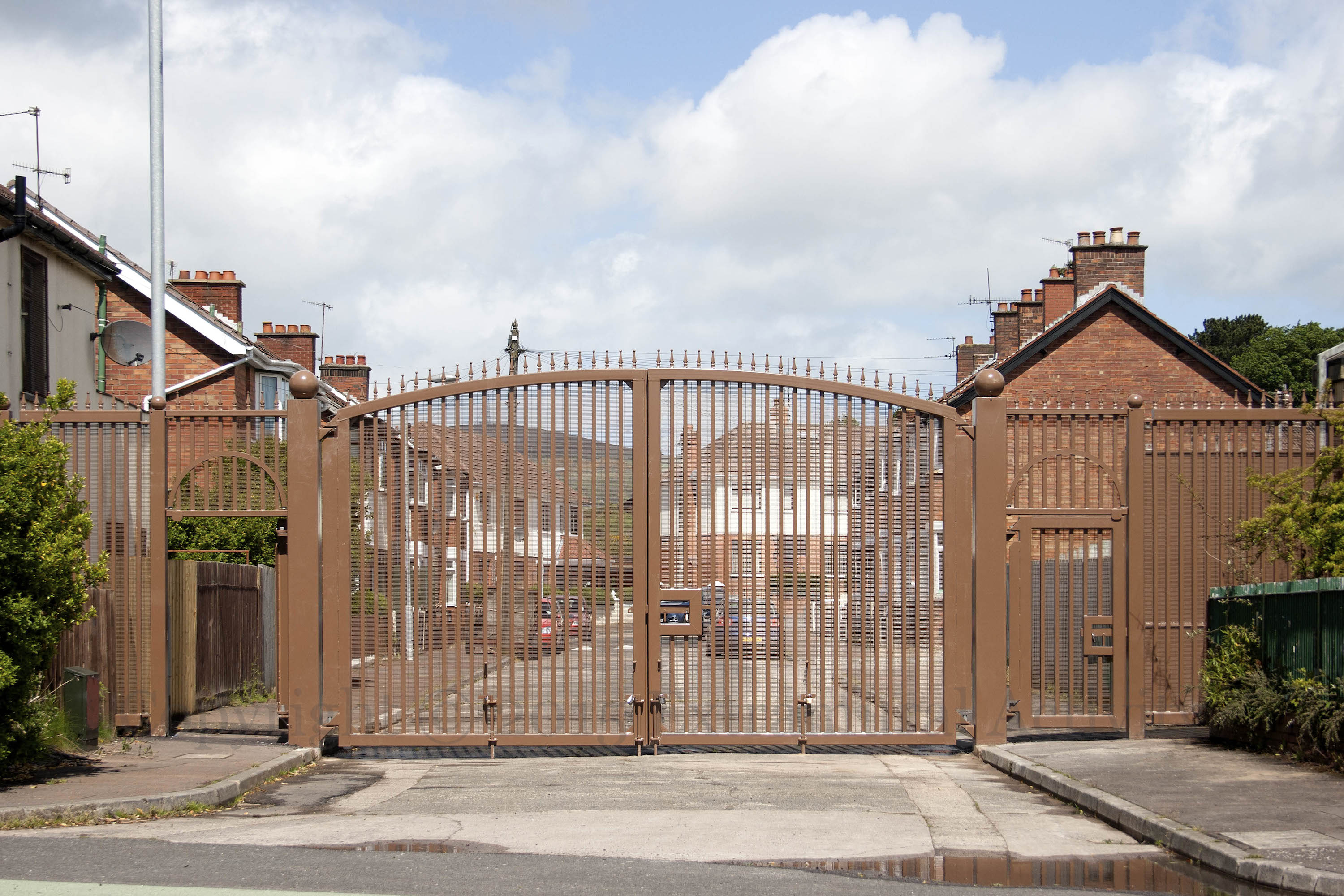
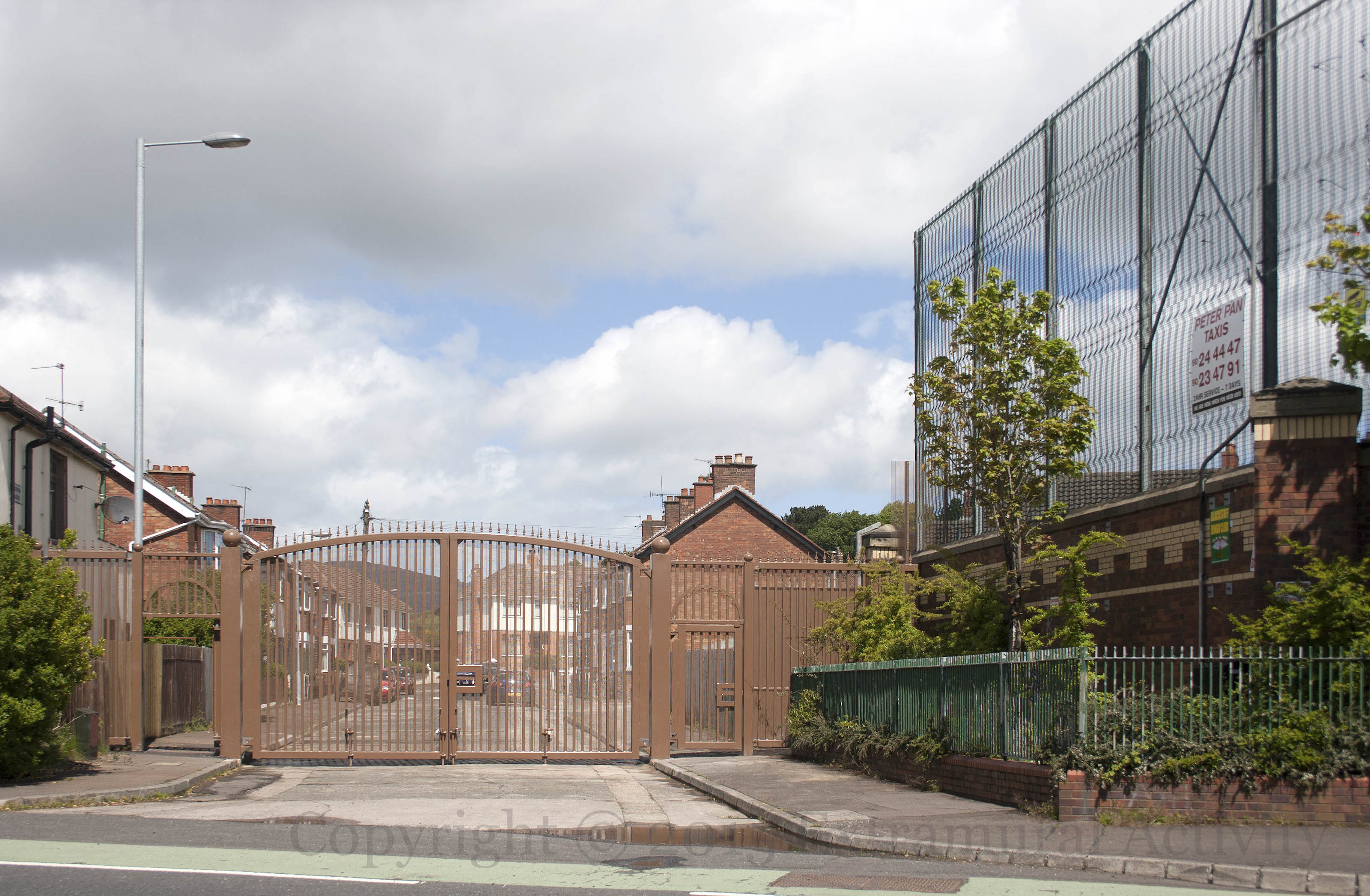
In May 2013 the Executive pledged to remove “peace” lines in ten years – by 2023 (Tele). One step in this process is see-through gates, such as those at Workman Avenue in the image above. There is no change, however, to the fence on the Springfield Road – see the image below. See previously: the new gates in Howard Street.
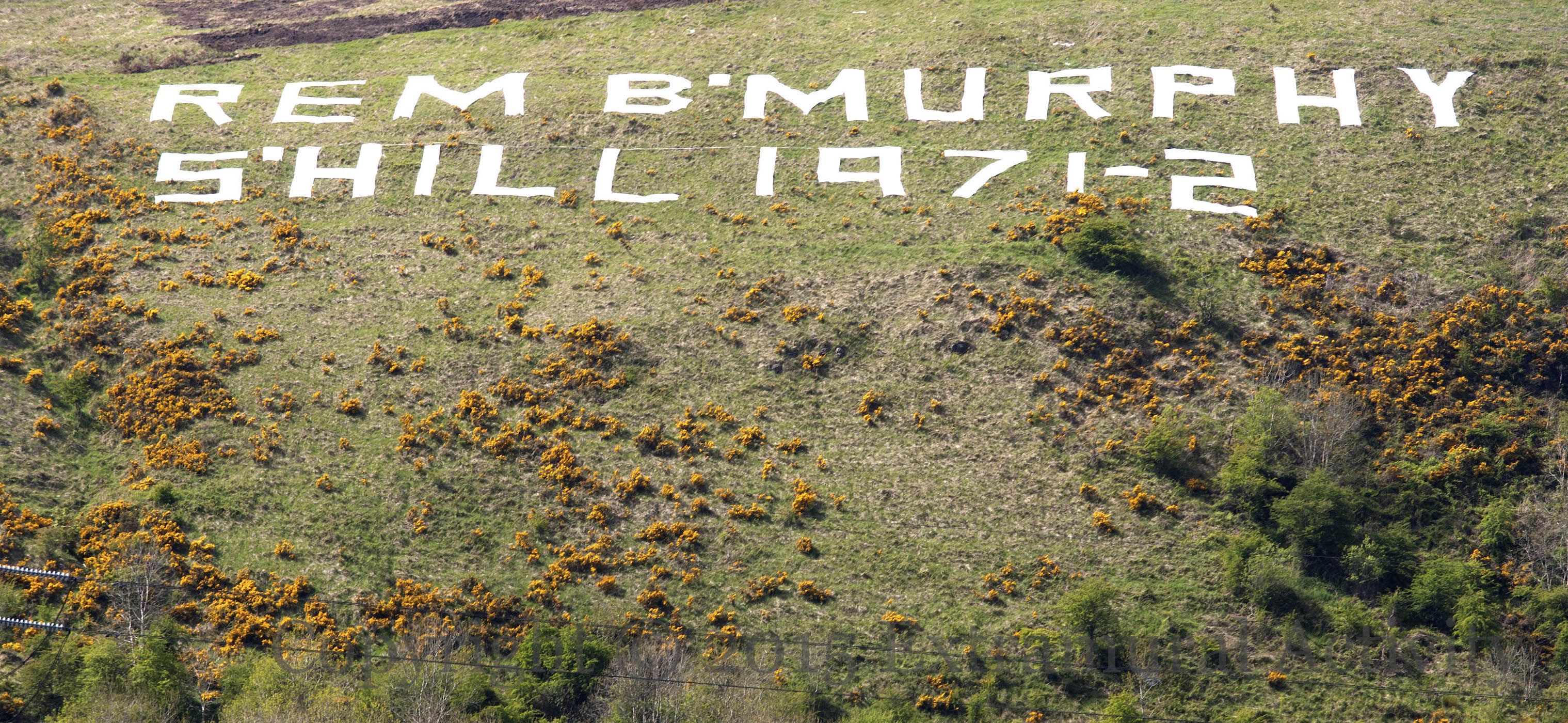
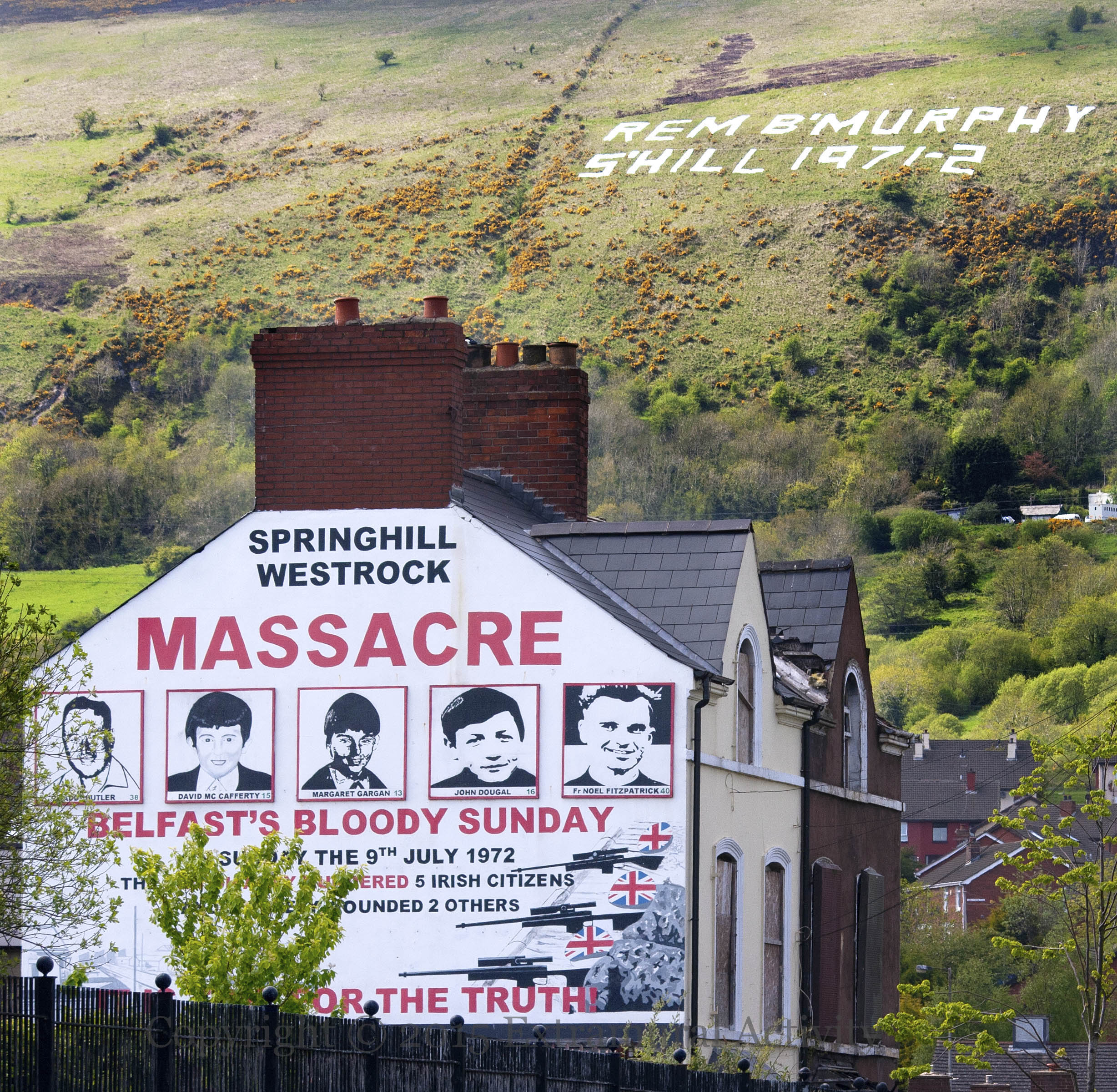
Prince Charles’s last day drew this respond from Gael Force Art on Sliabh Dubh/Black Mountain, “Remember Ballymurphy and Springhill 1971-1972”, a reference to the Ballymurphy Massacre of August 1971, in which 11 people died at the hands of the Prince’s Parachute Regiment (WP) and the Springhill-Westrock Massacre of July 1972, in which five people were killed by British army snipers (WP).
For more Republican reaction to the Prince’s visit last week, see Operation Banner.
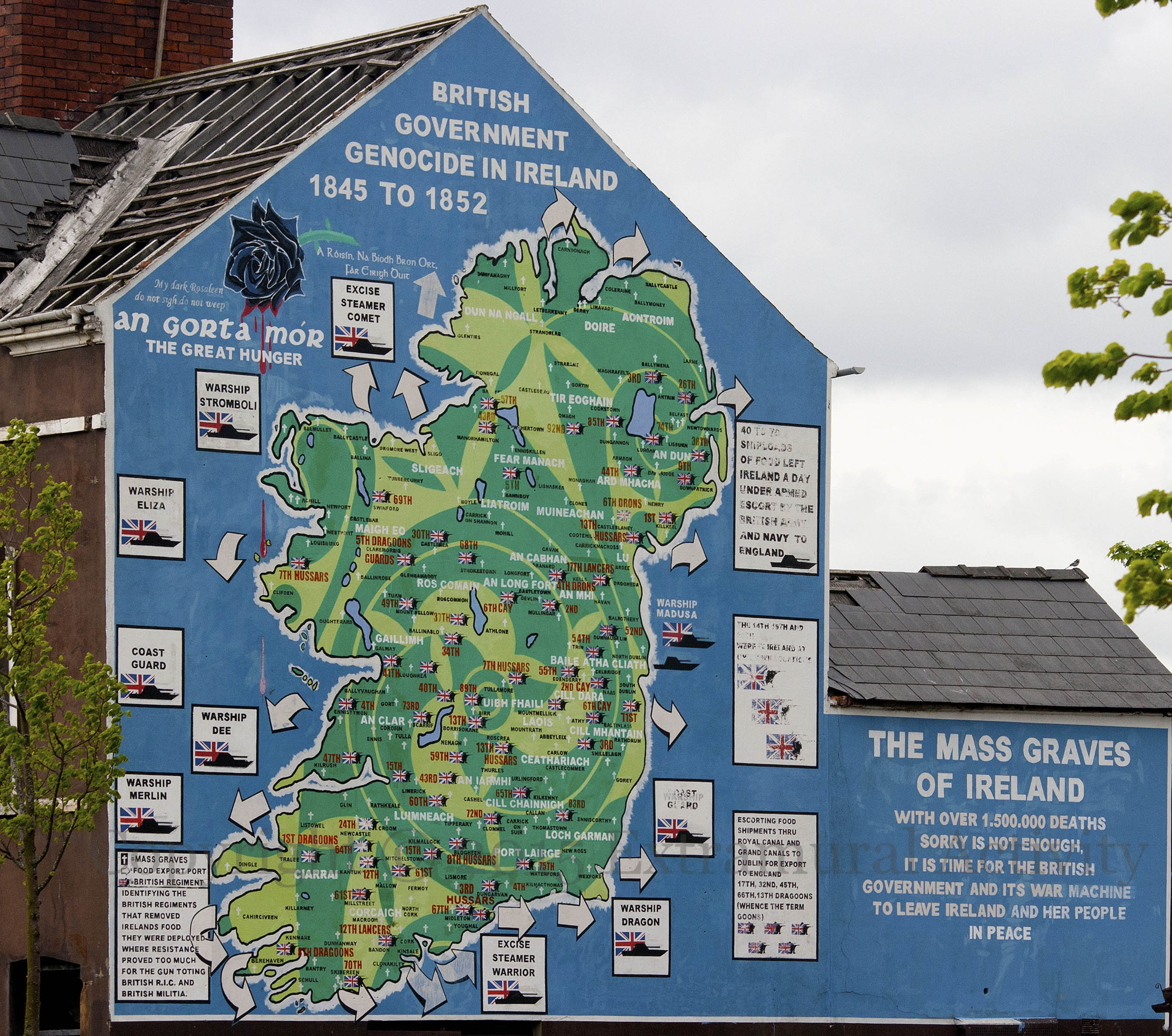
In 1997, the office of then-Prime Minister Tony Blair issued a statement acknowledging that the administration of the time of the Hunger failed to intervene (Guardian | Independent).
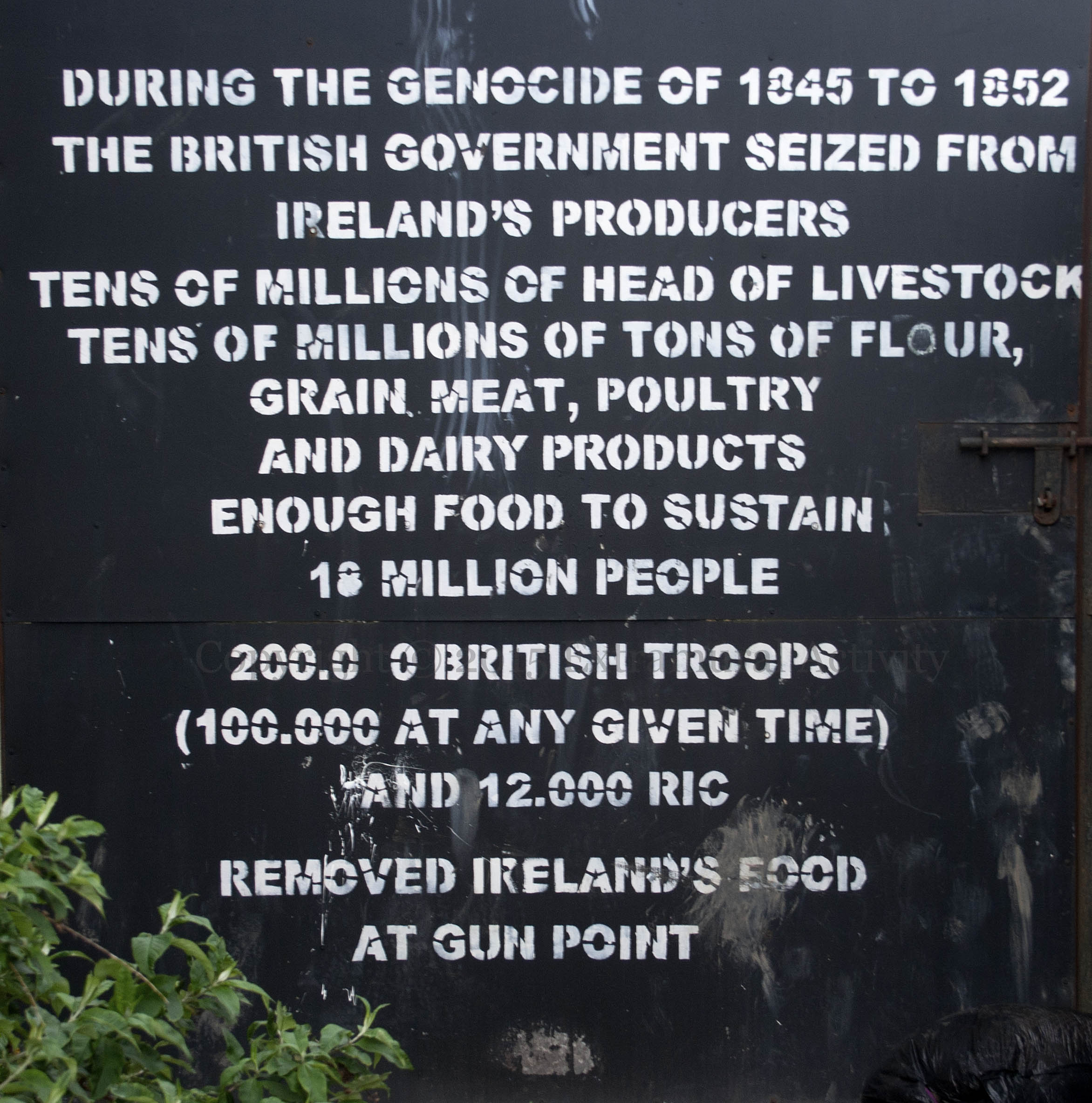
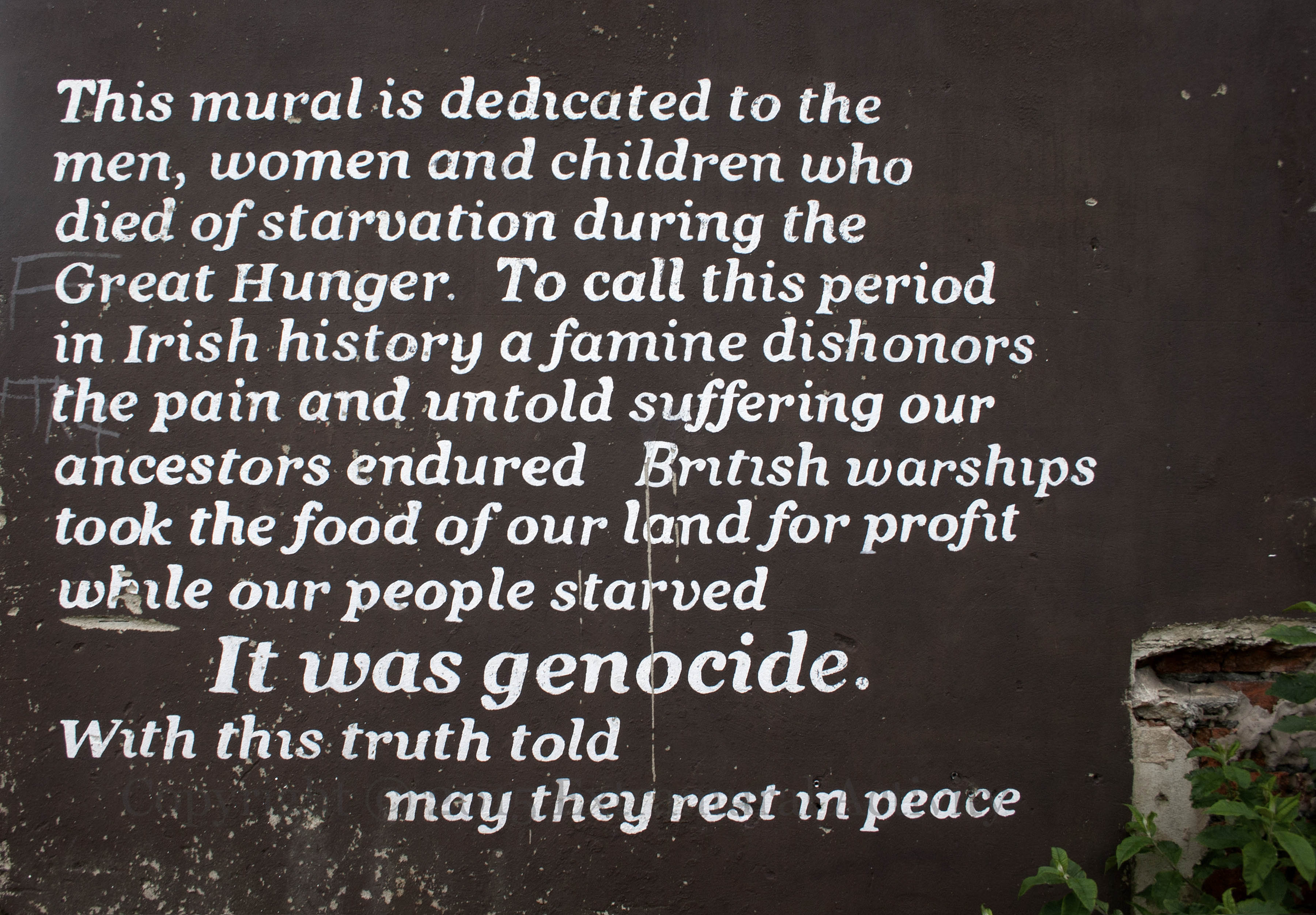
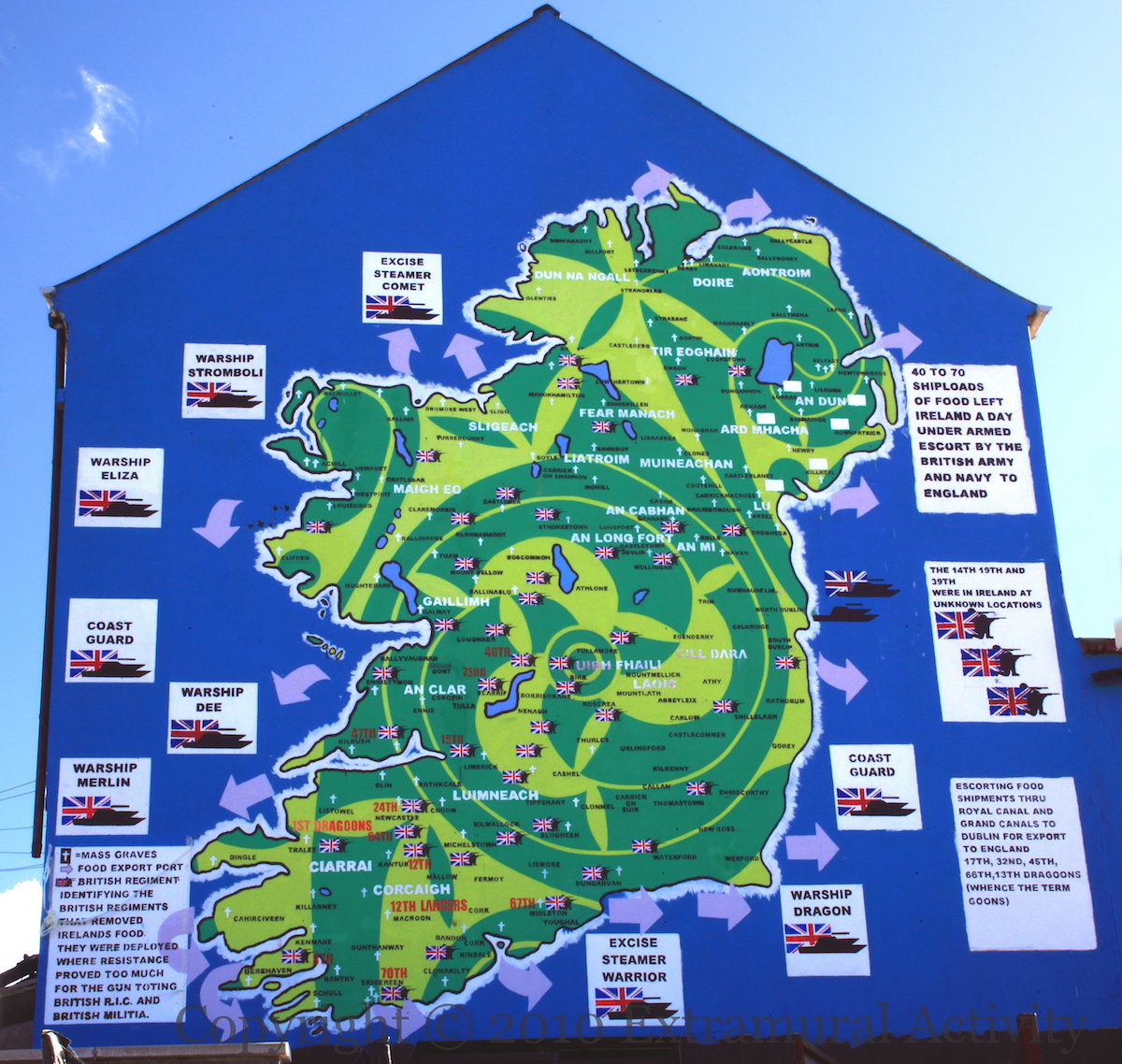
The mural above asserts that government’s inaction was not merely a matter of negligence but of will: “With over 1,500,000 deaths “sorry” is not enough. It is time the British government and its war machine to leave Ireland and her people in peace. During the genocide of 1845 to 1852 the British government seized from Ireland’s producers tens of millions of head of livestock, tens of millions of tons of flour, grain, meat, poultry and dairy products, enough food to sustain 18 million people. 200,000 British troops (100,000 at any given time) and 12,000 RIC removed Ireland’s food at gun point. This mural is dedicated to the men, women and children who died of starvation during the Great Hunger. To call this period in Irish history a famine dishonors the pain and untold suffering our ancestors endured. British warships took the food of our land for profit while our people starved. It was genocide. With this truth told may they rest in peace.”
Each white cross on the map represents a mass grave. The map is originally from irishholocaust.org.
 Seosamh Mac Coille Collection