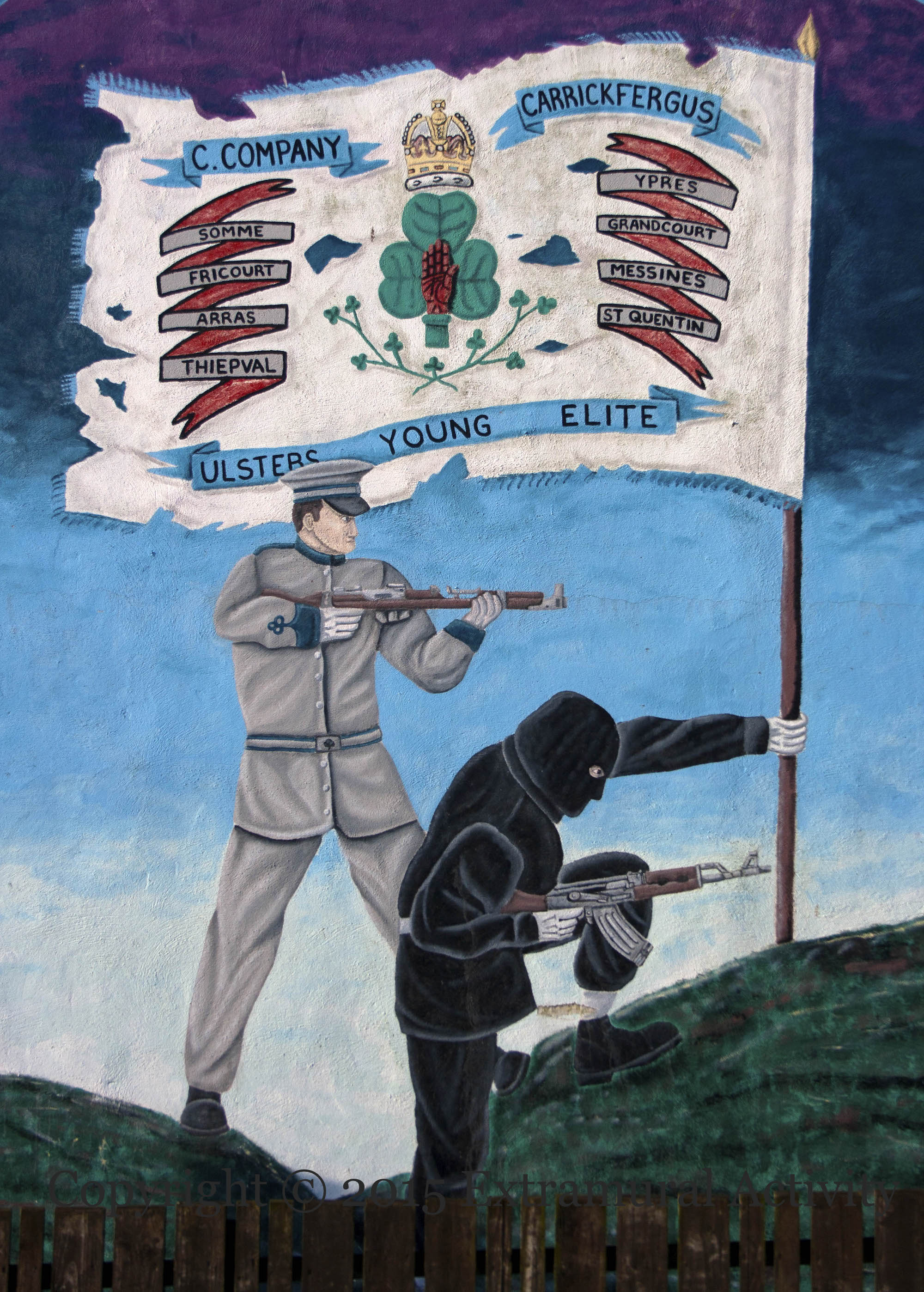
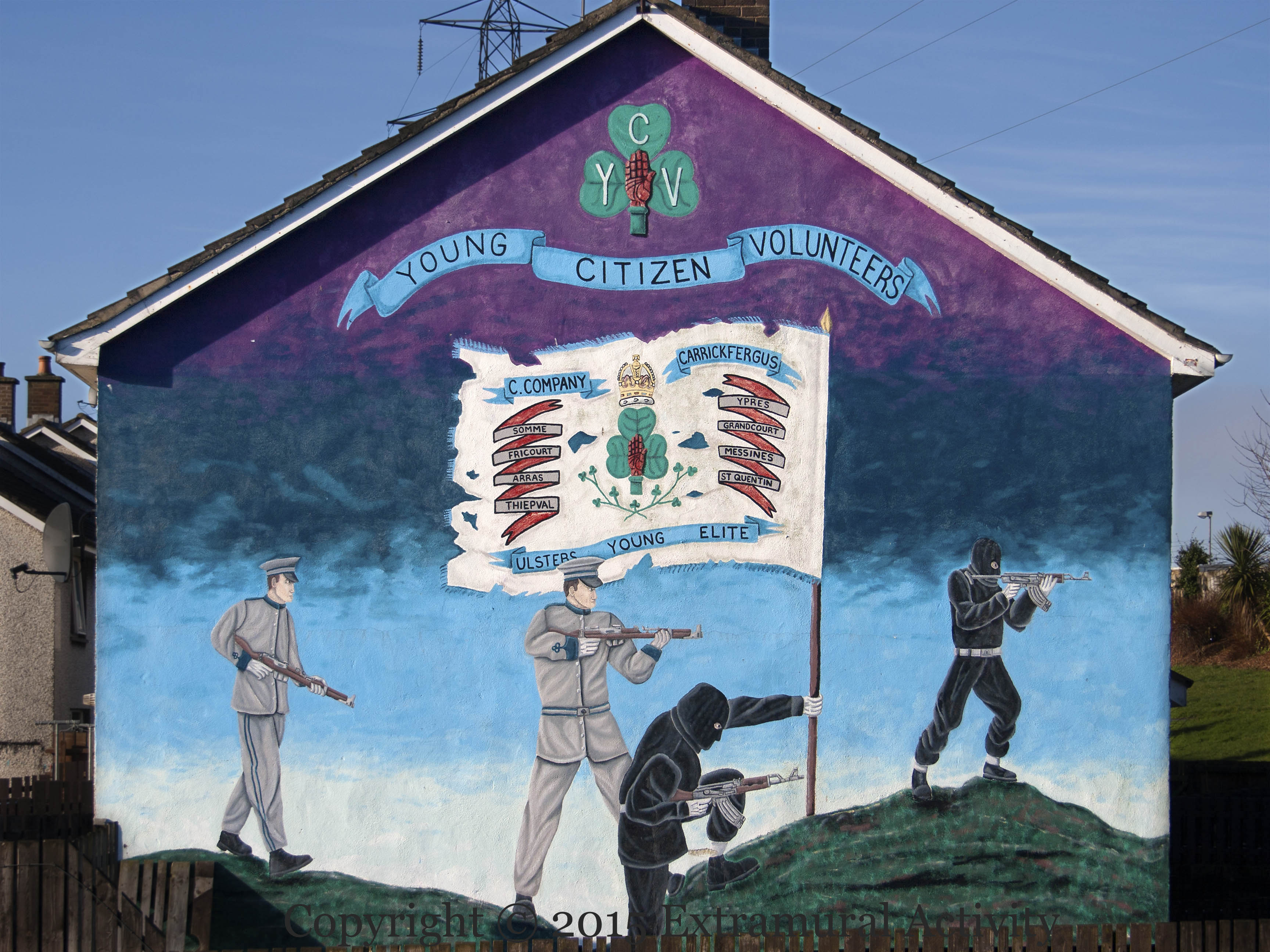
The Young Citizen Volunteers of 1912 eventually joined the Ulster Volunteers (in 1914) as the 14th battalion of the Royal Irish Rifles and part of the 36th (Ulster) Division (WP). In 1972 the name was resurrected for use as the youth wing of the UVF (WP). In the wide shot, below, this history is presented as a continuous movement from left to right; a modern-day hooded gunman climbs out of a WWI trench with one hand on a YCV flag.
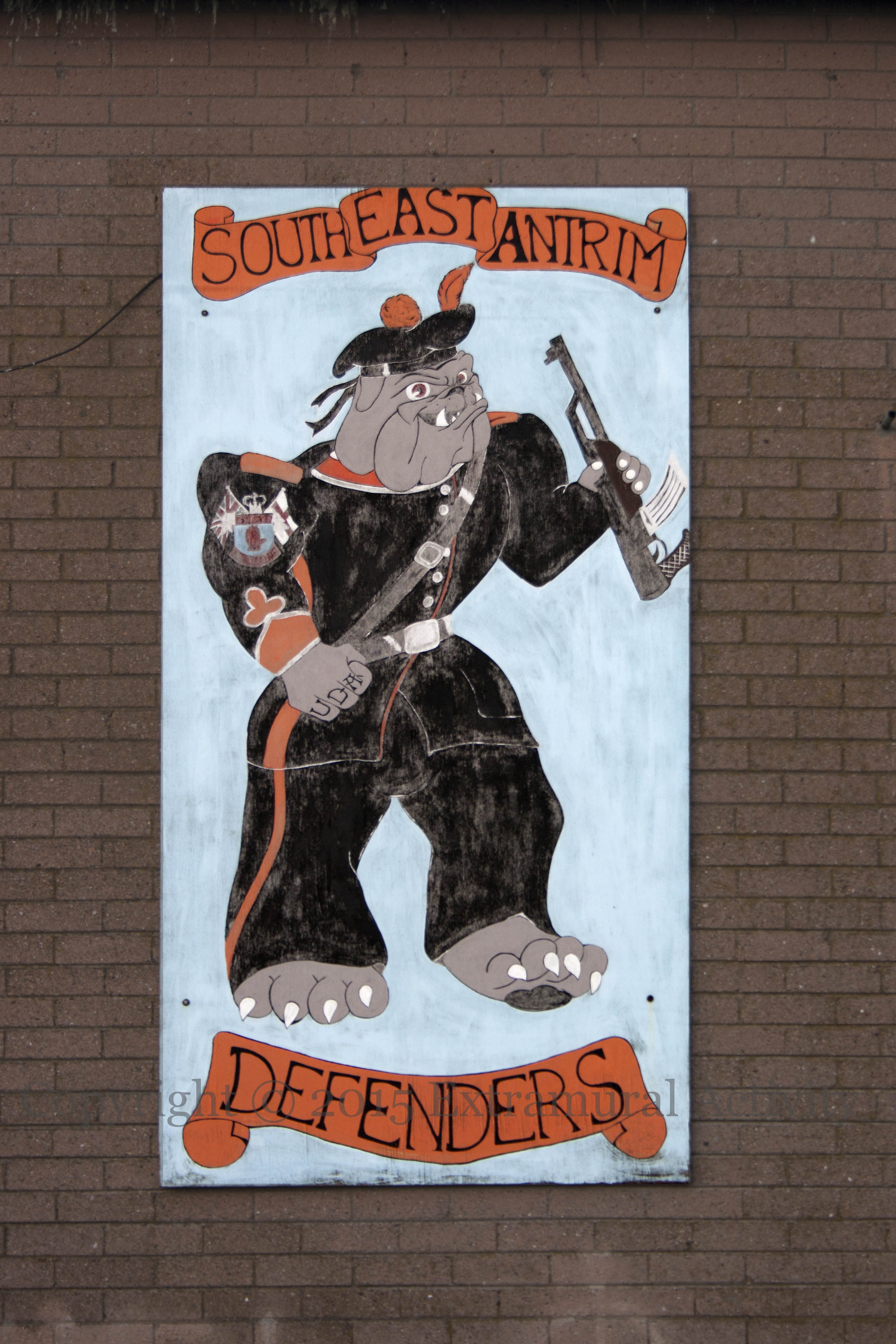
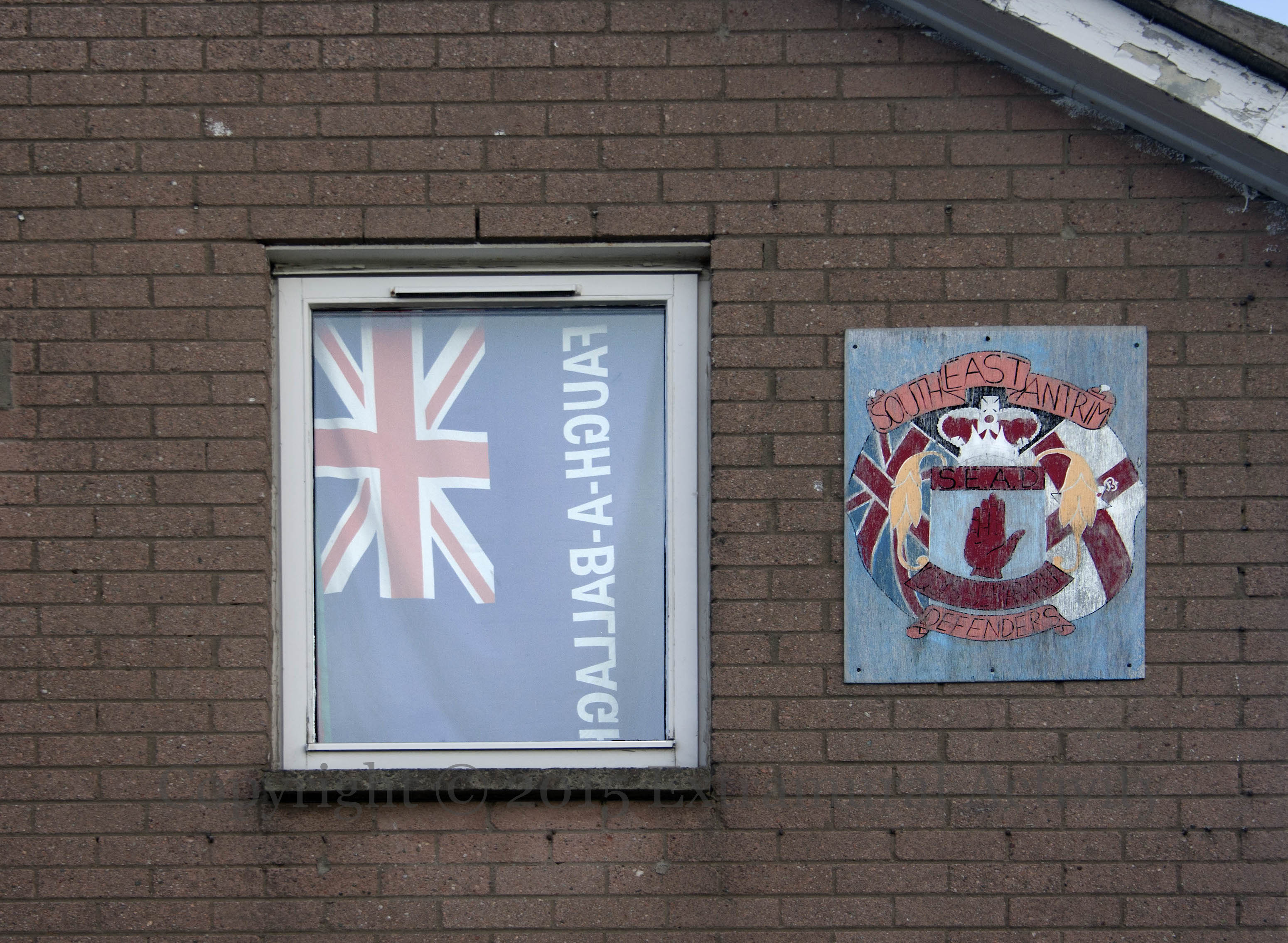
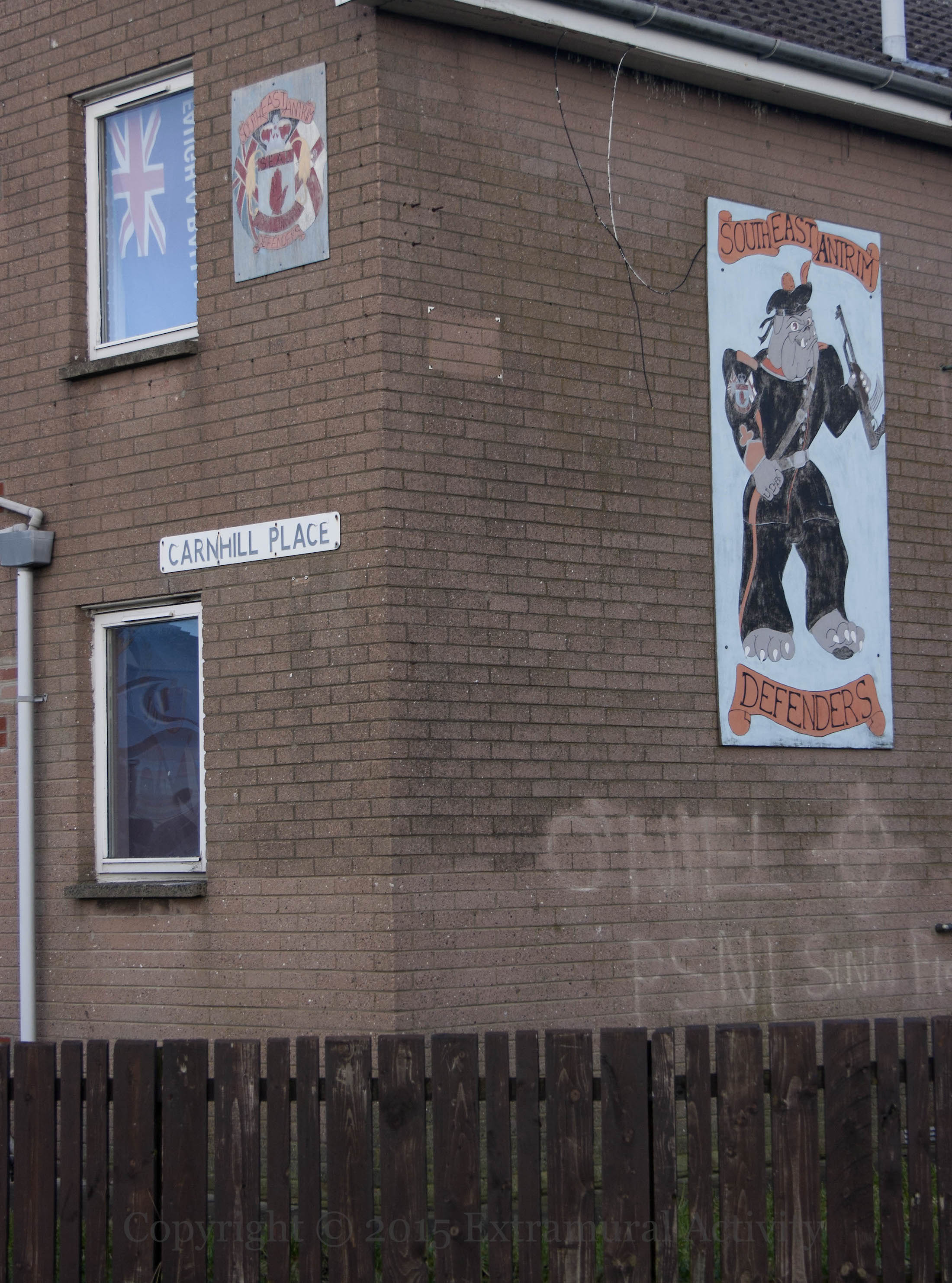
A “Faugh-a-ballagh” flag (the motto of the Royal Irish Regiment) and two South-East Antrim Defenders (a defunct flute band (Fb)) boards – the one above showing a bulldog marching with a rifle, with “UDA” across his knuckles and the UDA insignia on his lapel – adorn this house in the Castlemara estate in Carrickfergus.
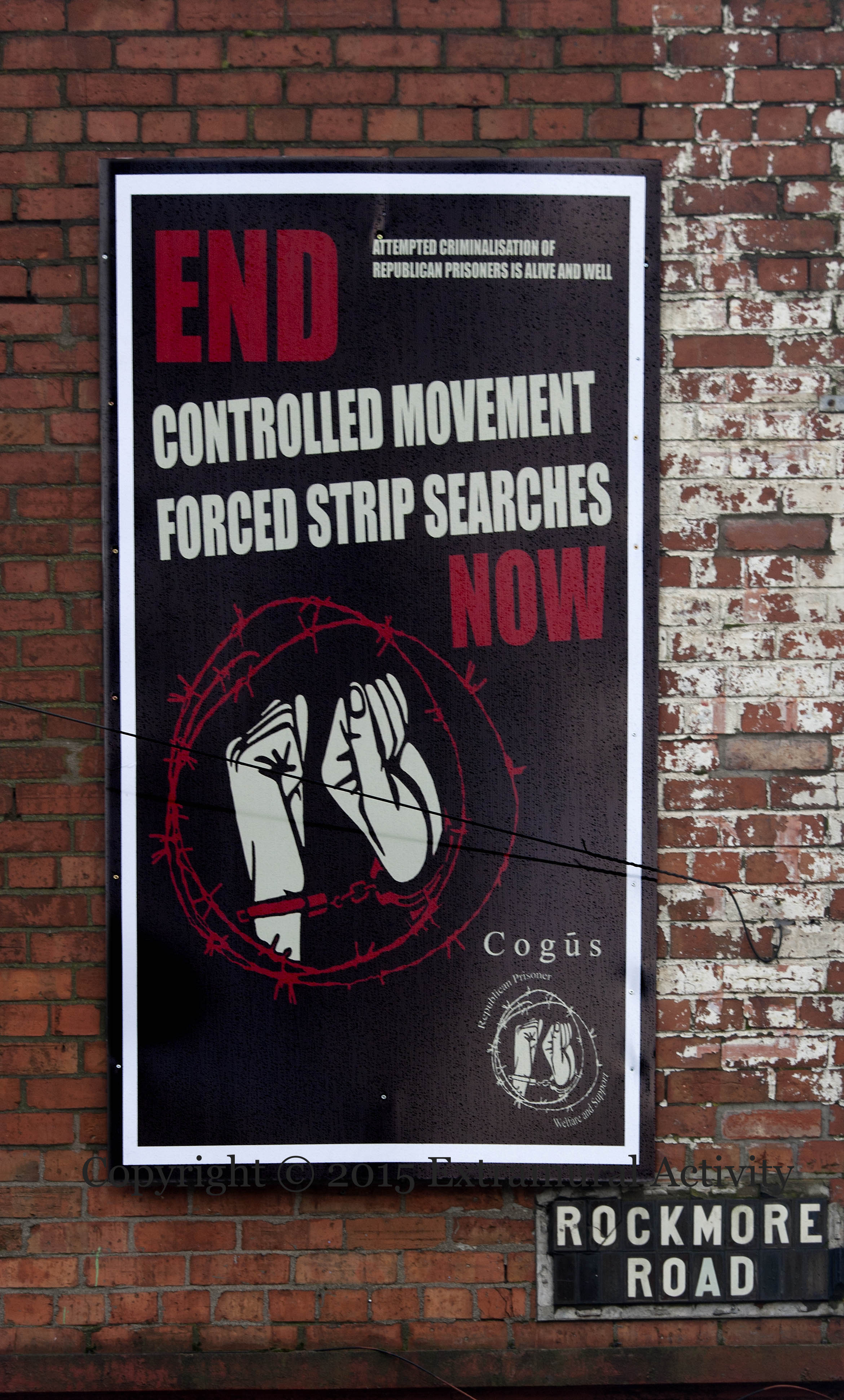
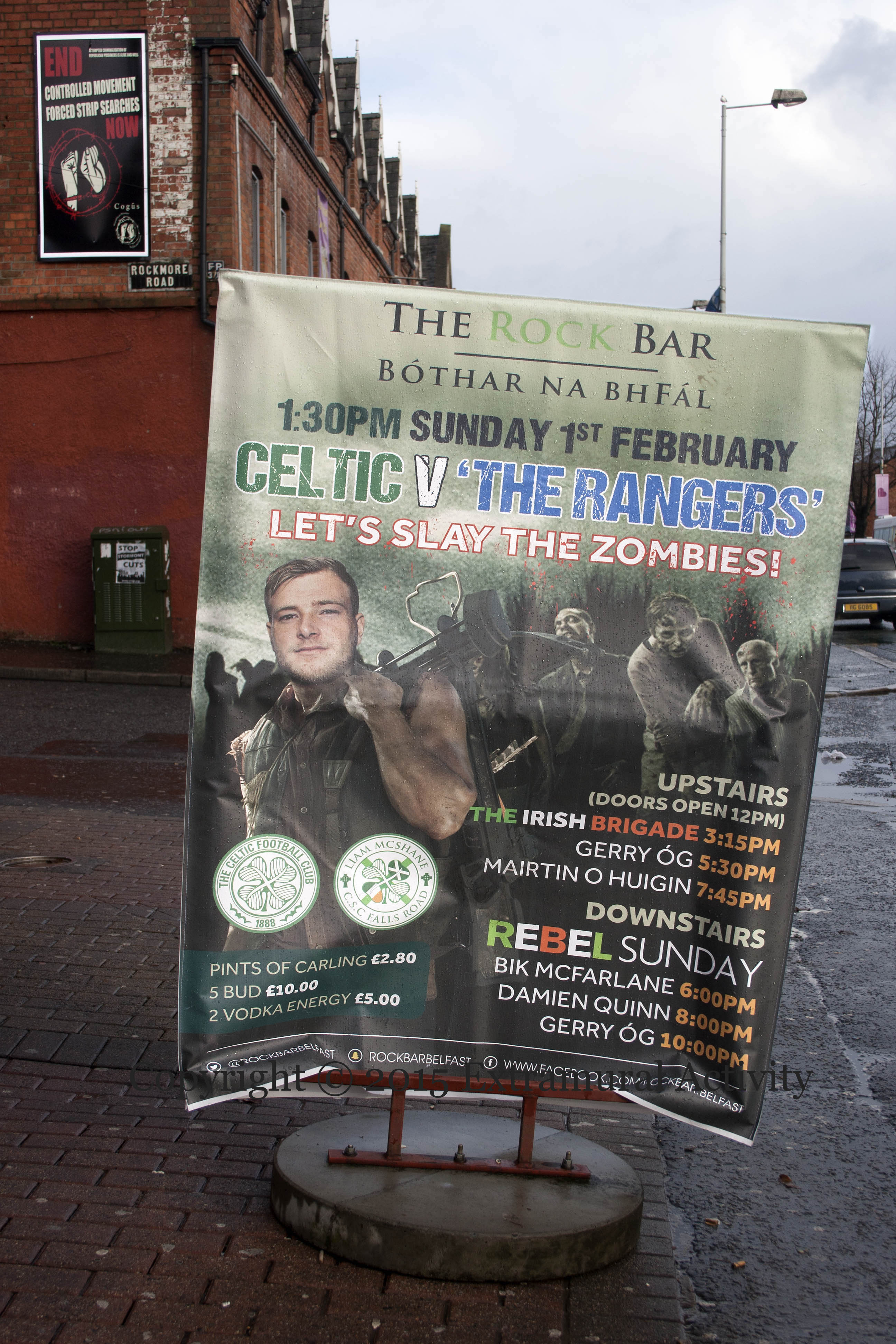
“Attempted criminalisation of republican prisoners is alive and well”: Above is a new board erected 2015-01-23 by Republican Network For Unity (RNU)’s Cogús committee in support of “Republican prisoner welfare and support”: “End controlled movement, forced strip searches now.” On the opposite corner, the Rock Bar advertises the Celtic v Rangers League Cup match last Sunday February 1st.
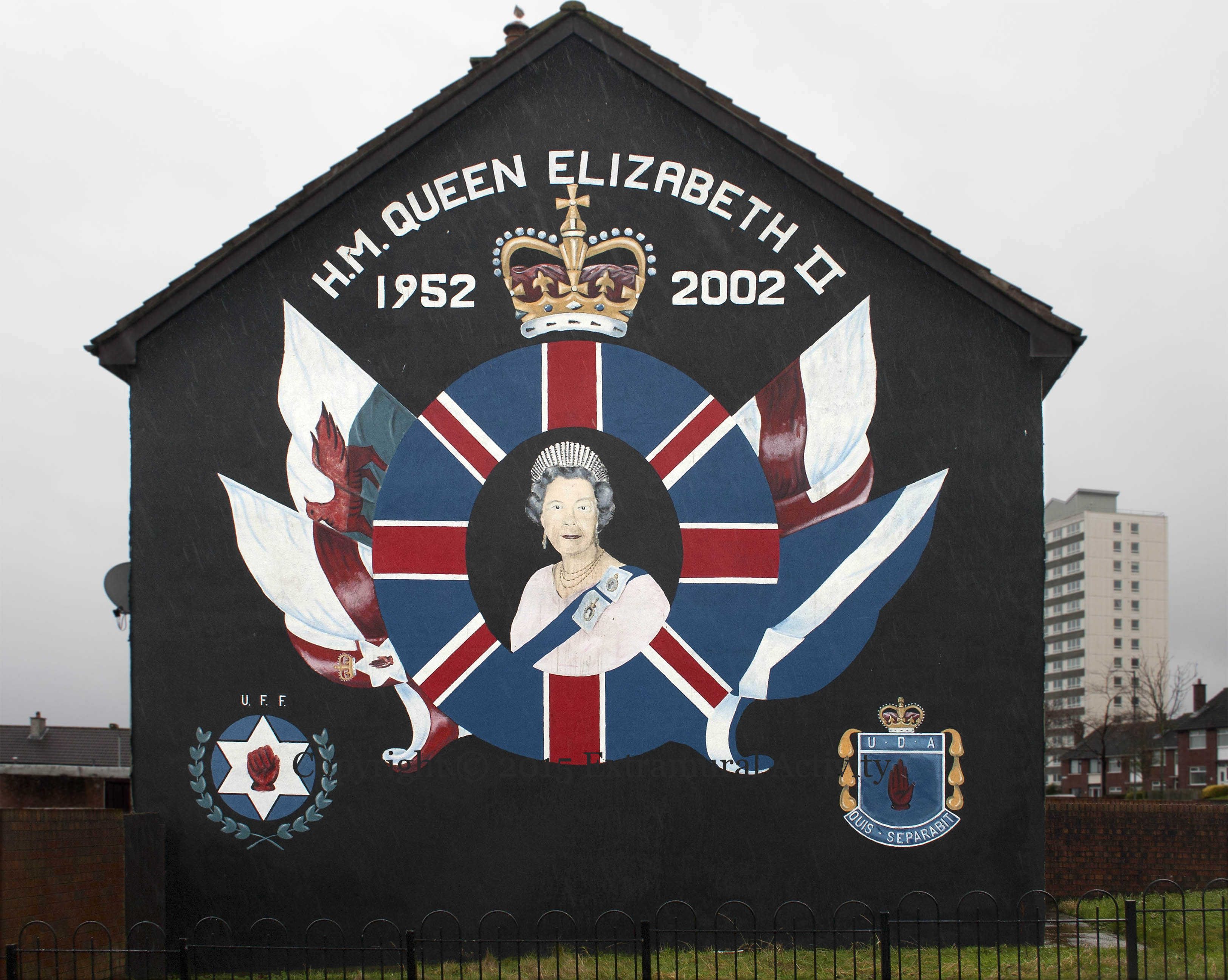
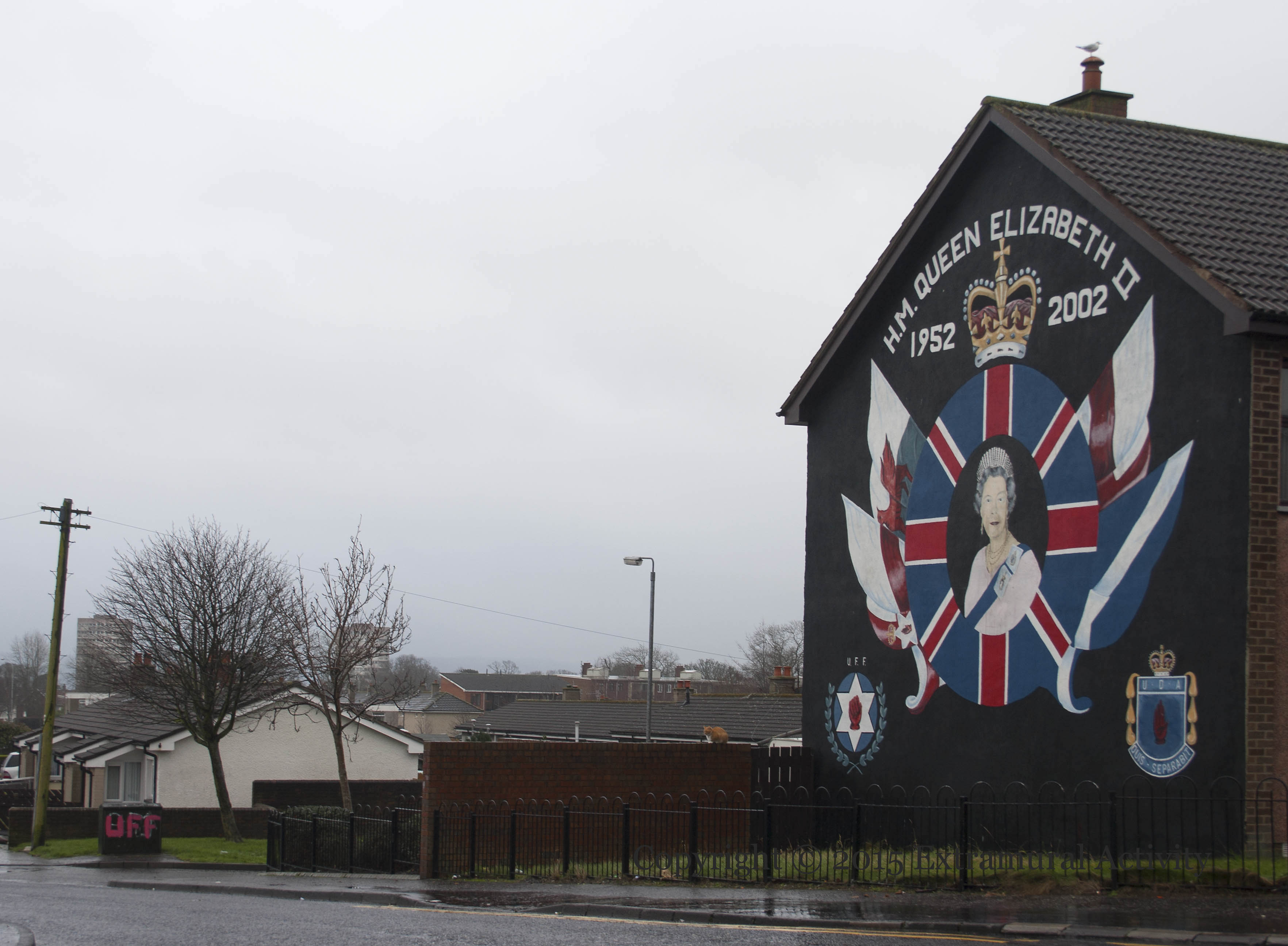
The Queen’s golden jubilee (50th anniversary 1952 – 2002) is celebrated in this long-lasting UFF/UDA mural in Rathcoole. It originally included a (painted) “plaque” at the bottom, which has been painted out. On September 10th, 2015, Elizabeth II will surpass Victoria as the longest reigning British monarch.
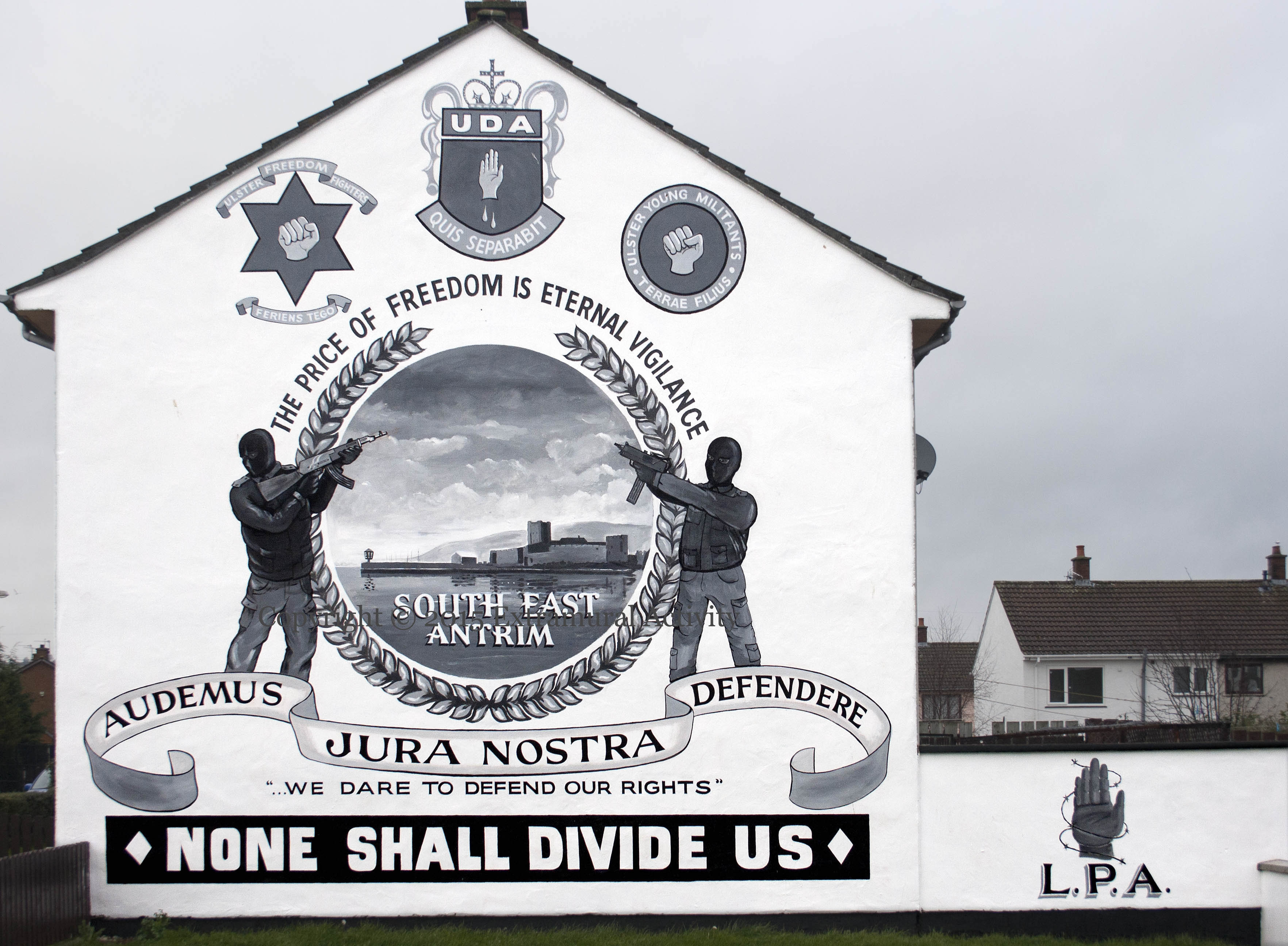
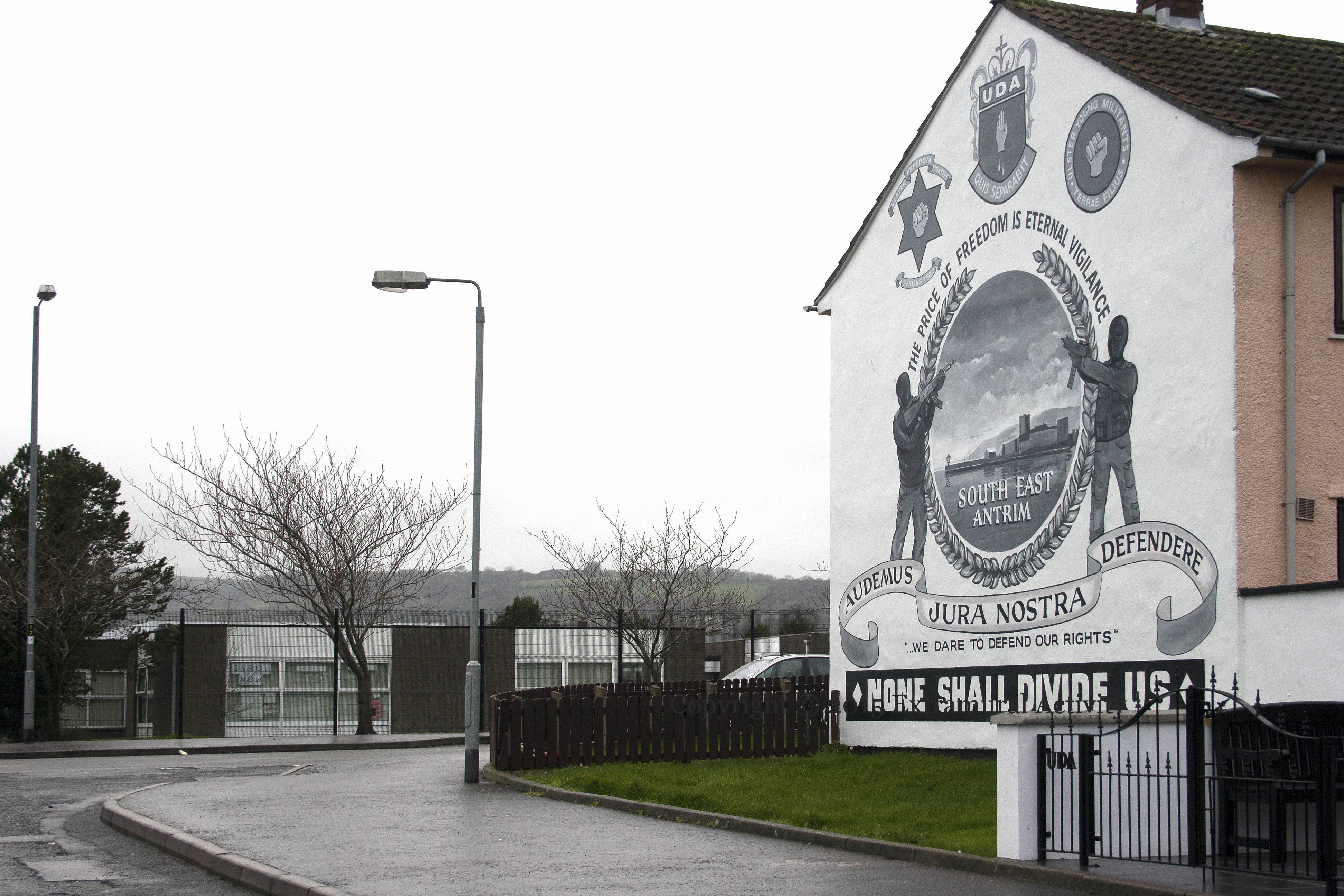
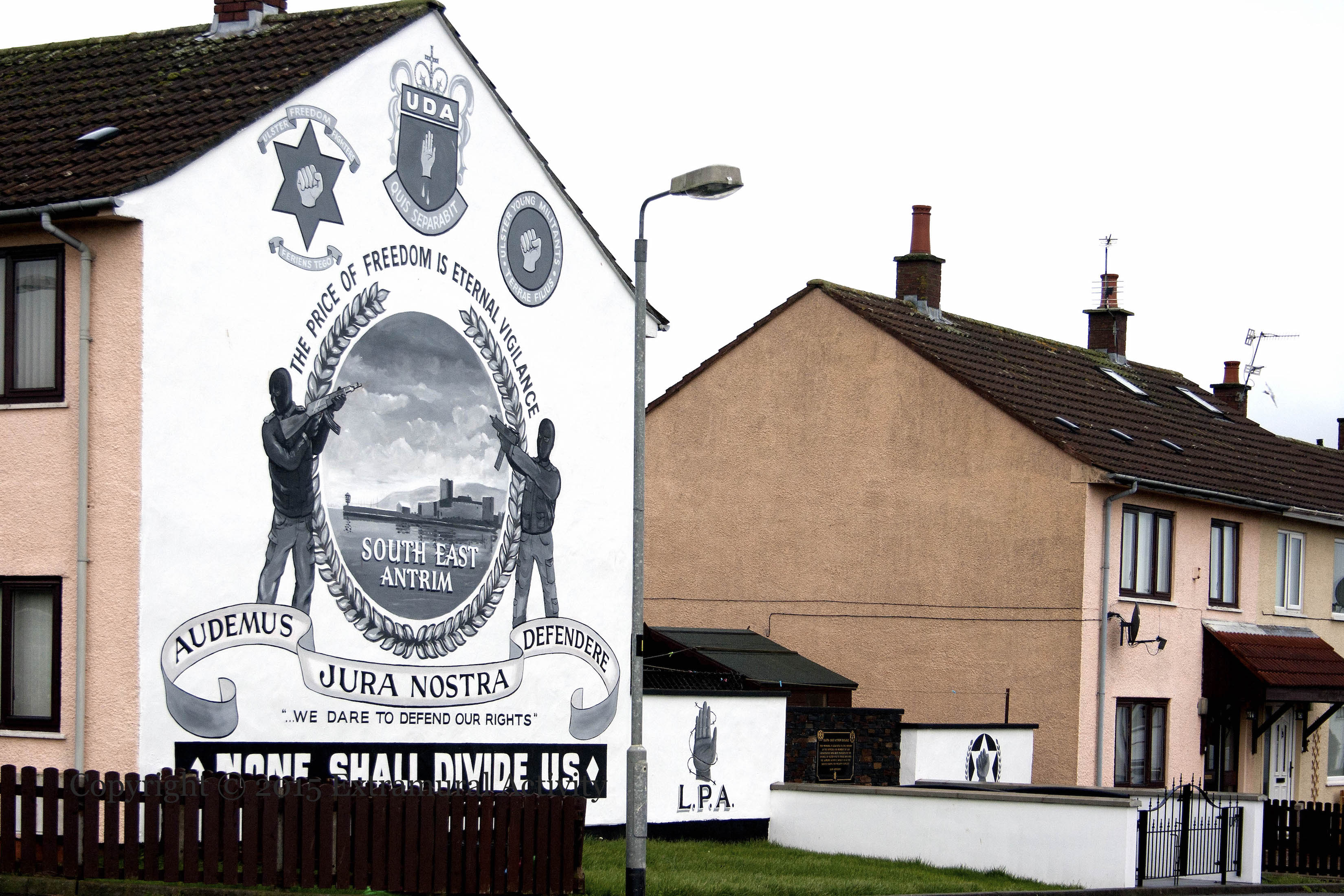
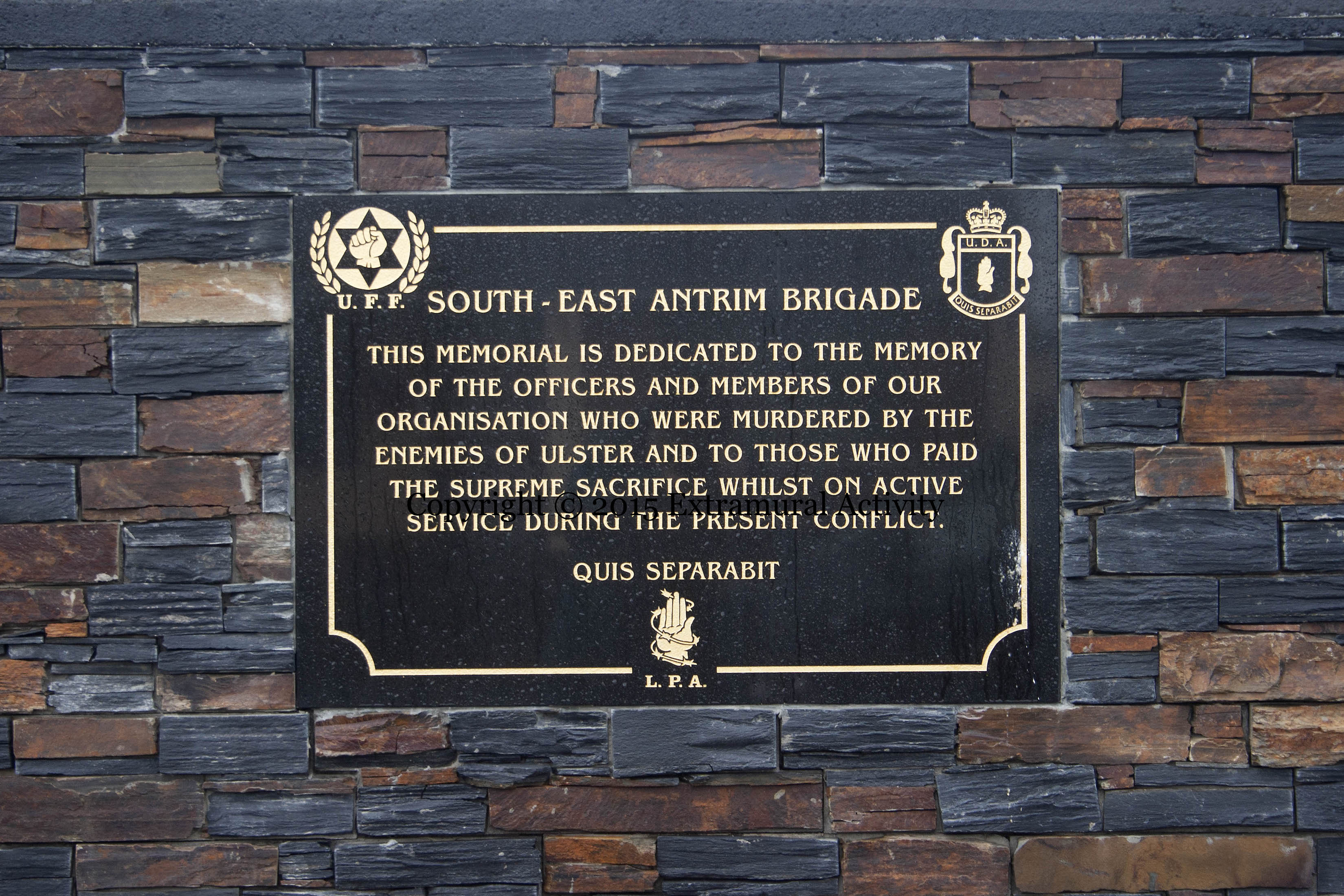
“Audemus jura nostra defendere – We dare to defend our rights”. The UDA/UFF/UYM/LPA mural above shows hooded gunmen standing either side of a view of Carrickfergus castle. The phrase “The price of peace is eternal vigilance” is associated with British politician Leonard Courtney (who also said “Lies – damned lies – and statistics”) though it probably goes further back. As can be seen from the second image, the mural watches over Woodlawn primary school. The third image shows the memorial garden off to the right-hand side; the plaque is shown fourth: “This memorial is dedicated to the memory of the officers and members of our organisation who were murdered by the enemies of Ulster and to those who paid the supreme sacrifice whilst on active service during the present conflict. Quis separabit.”
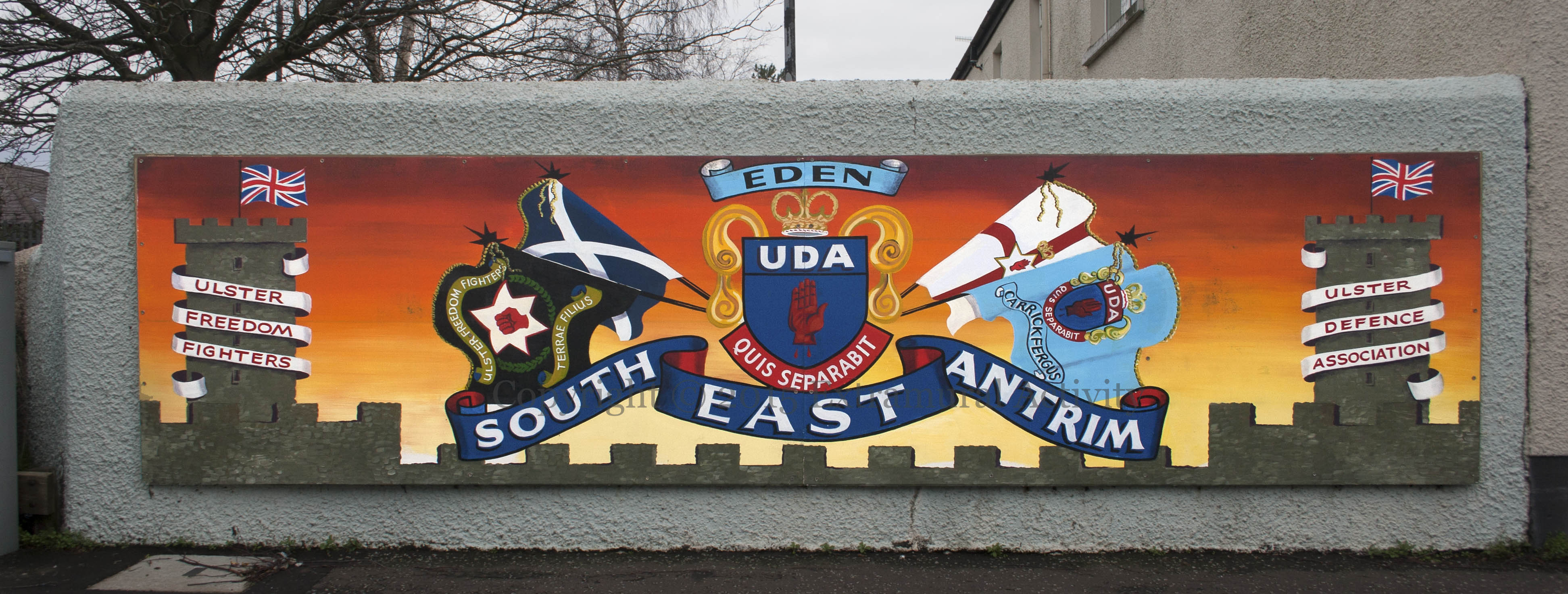
The town of Eden, on the outskirts of Carrickfergus, is defended by the walls of Carrickfergus castle and the arms of the UDA. For the previous version of this board, see Loyalist Eden.
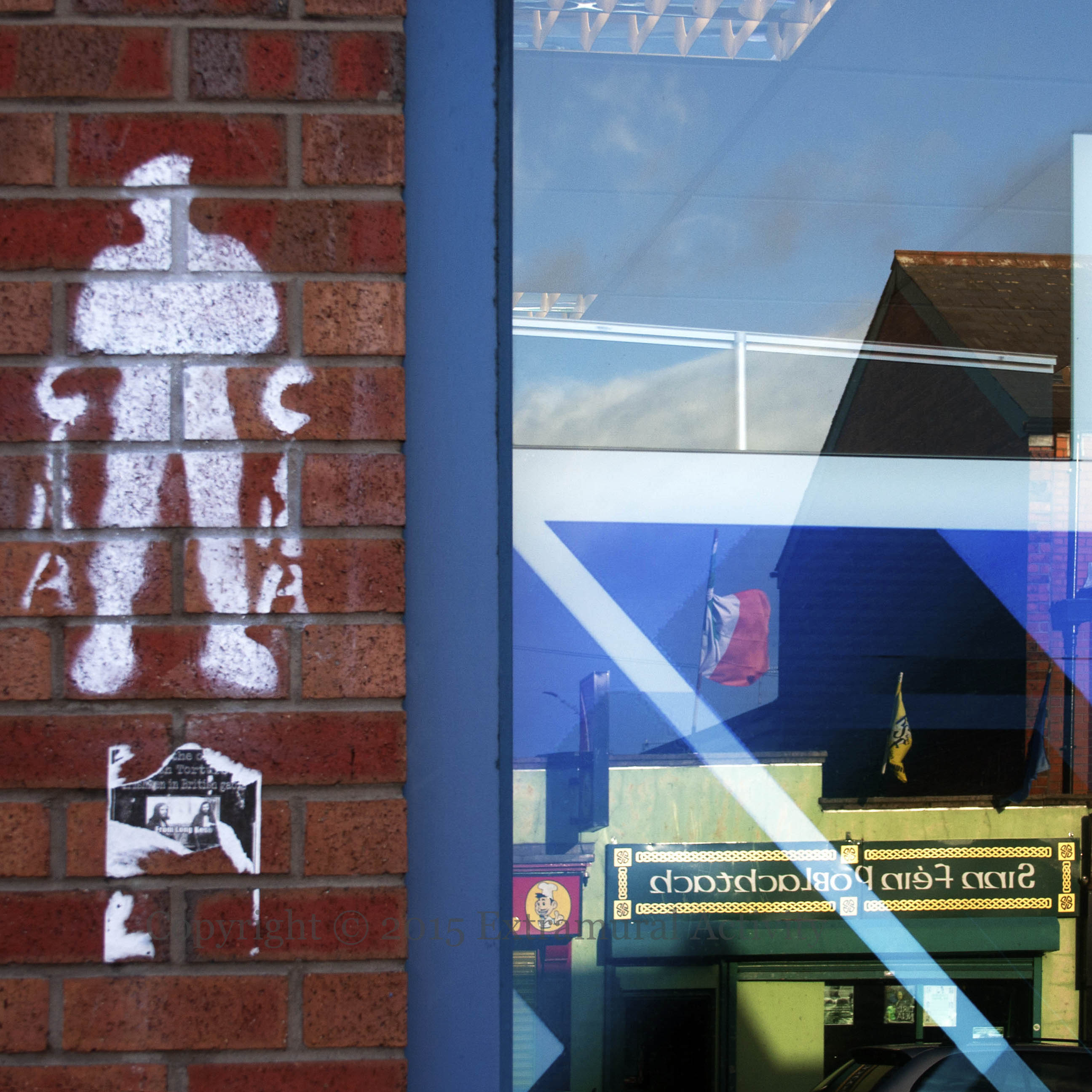
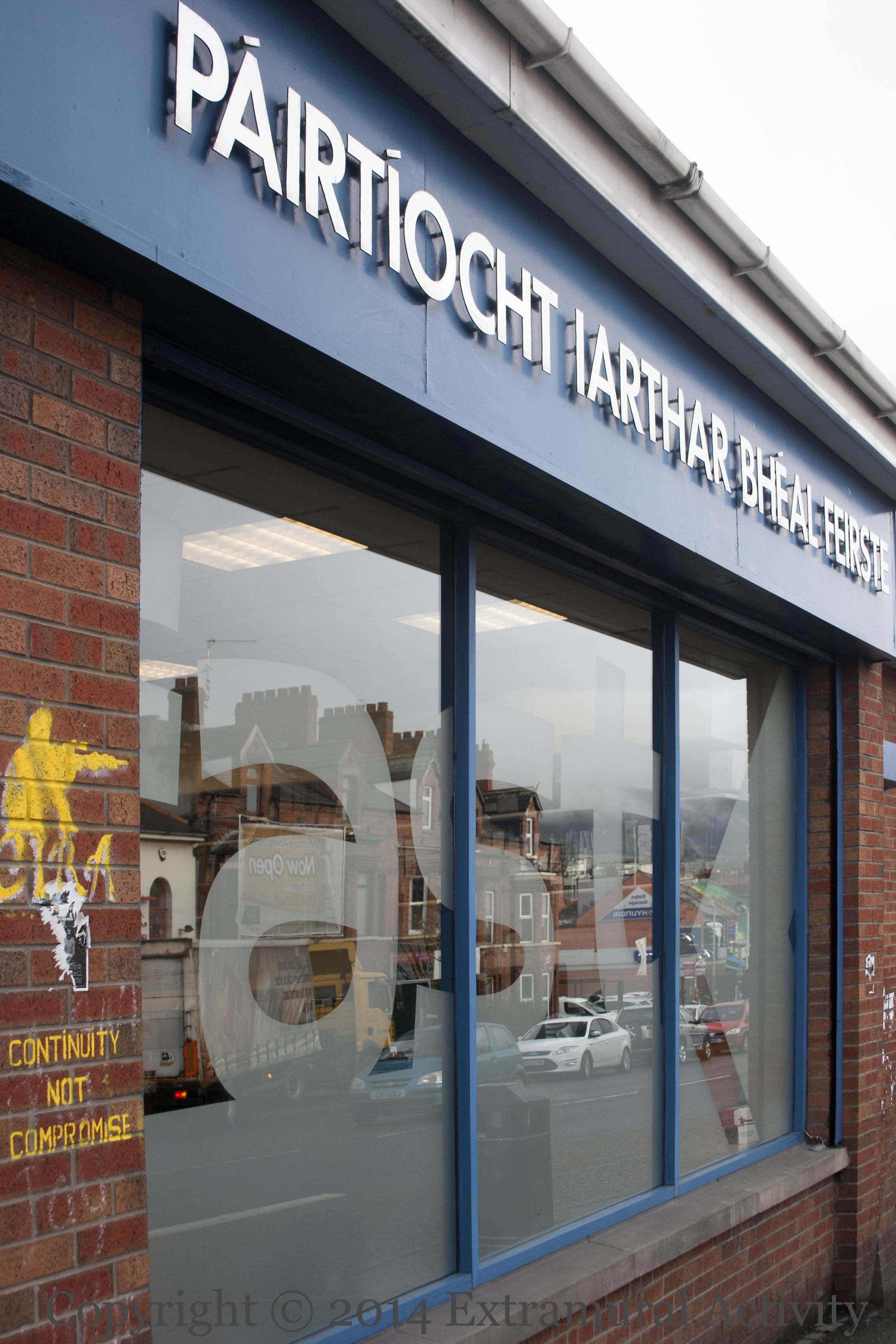
CIRA stencil outside the offices of the West Belfast Partnership on the Falls Road, with the offices of Sınn Féın Poblachtach and a tricolour reflected in the window.
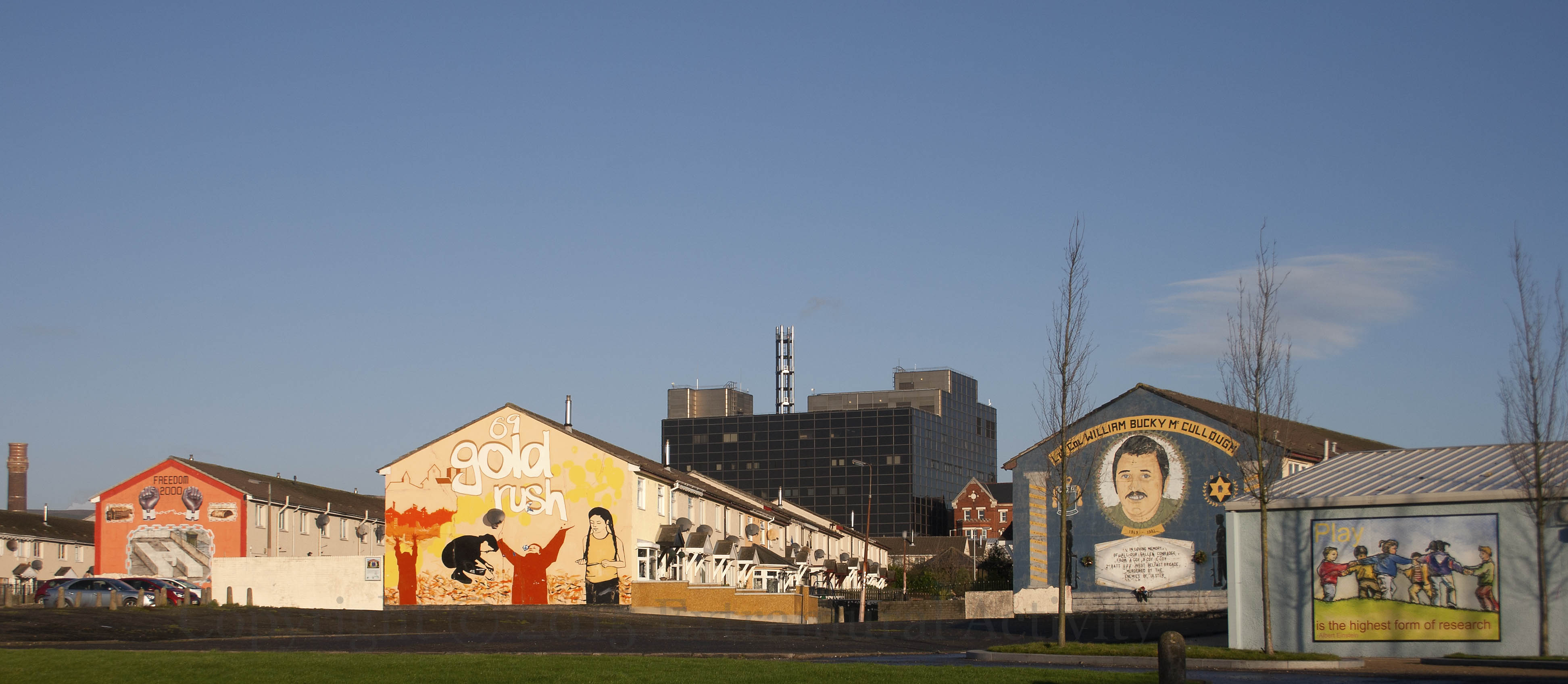
Here’s a wide shot of the right-hand side of the murals in the lower Shankill estate. These gables have remained in place while the estate has been redeveloped, causing the removal of the Red Hand, Martin Luther and Cuchulainn murals.
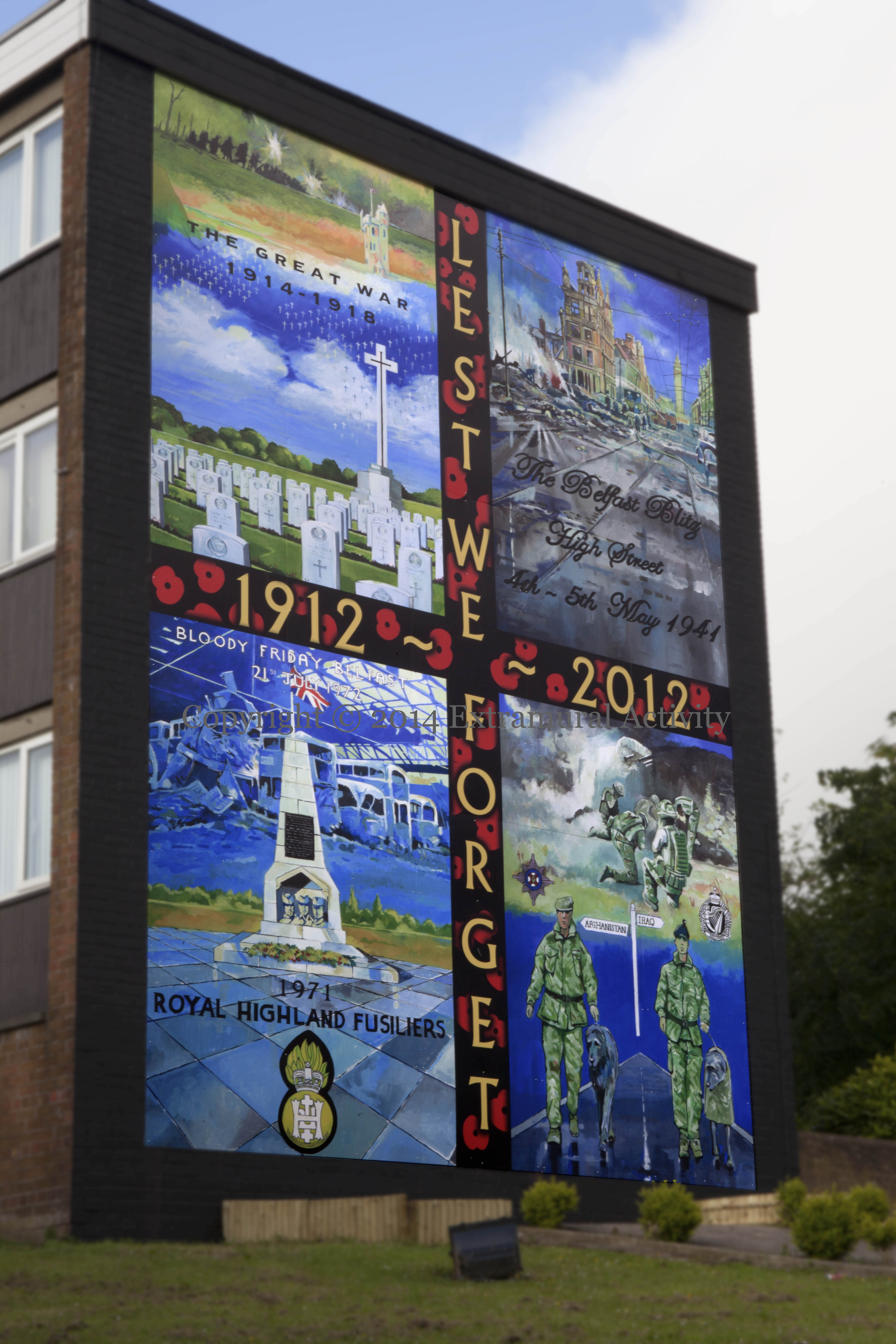
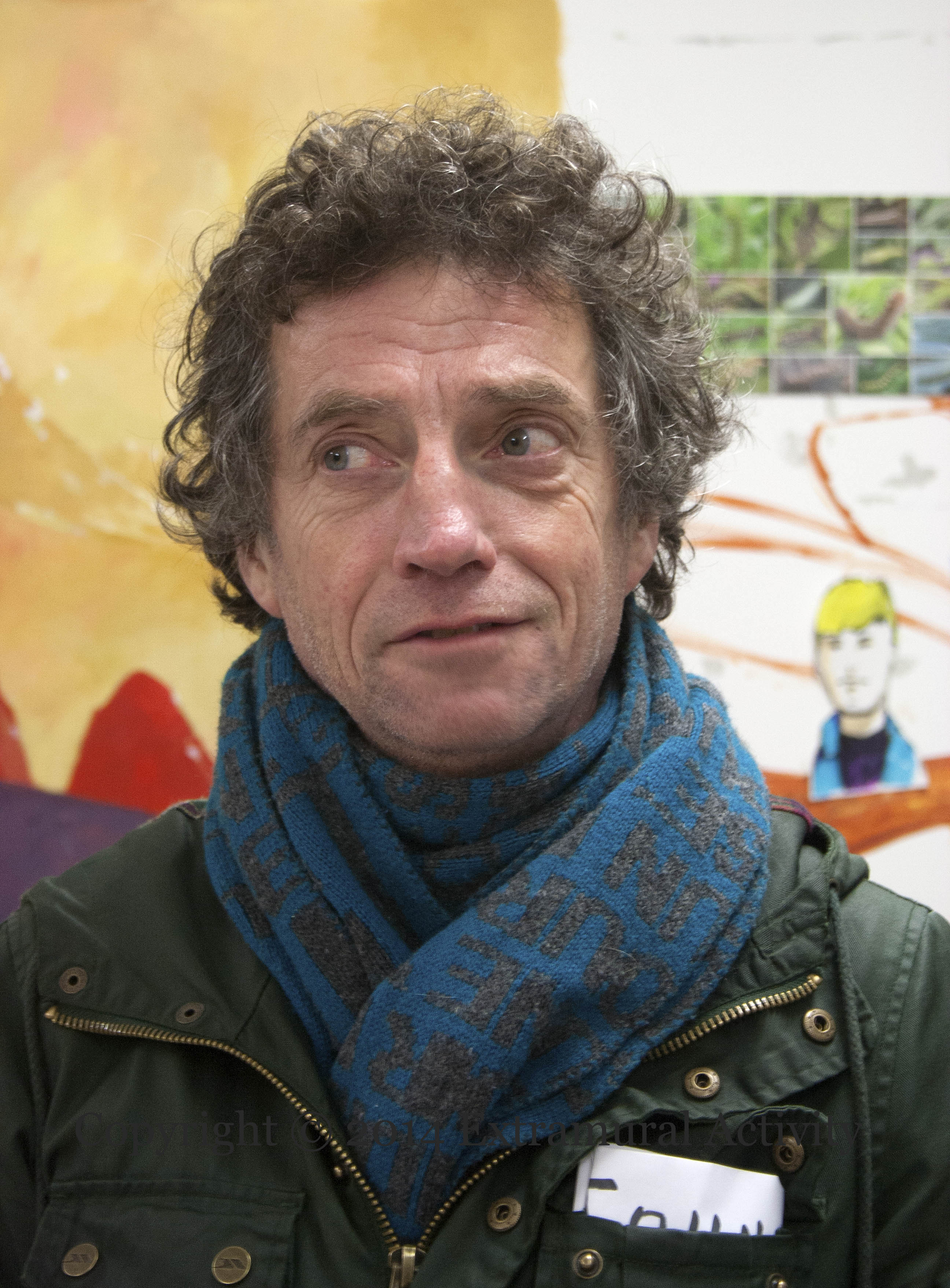
The three-storey mural above is in Ballysillan and replaced a UVF mural when it was added in 2011. The mural is the work of Jim Russell, shown below at Arts For All where he is artist-in-residence. The information below was provided by Arts For All.
The Great War: The first panel commemorates the Great War that ravaged Europe from 1914 to 1918 and shows troops advancing into battle, the Ulster Tower at Thiepval commemorating the sacrifice at the Somme and an image showing one of the war cemeteries and highlighting the true cost of war.
Second World War: The second panel features some of the devastation visited upon Belfast during a series of Luftwaffe raids during the early years of the Second World War. Belfast suffered greatly with over 1,000 people dying in four nights of bombing in April and May of 1941.
The Troubles: In the third panel highlight the dark history known as the Troubles. It features two events from the years of that time – the murder of the three young off-duty Scottish soldiers in 1971 [the monument depicted was featured in The Highland] and the Bloody Friday bombings of July 1972. In the midst of the horror that accompanied the early years of the Troubles these events still caused many to struggle to understand how people could carry out such atrocities.
Present Day Conflict: Panel four brings us up to the present day. Military service is a tradition for many in Northern Ireland and for many their first overseas trip came on the back of an overseas posting whilst serving in one of the Armed Forces. From times past, through the World Wars, the Korean War, to more recent conflicts in Iraq and Afghanistan soldiers and regiments drawn from Norther Ireland continue to play a role.
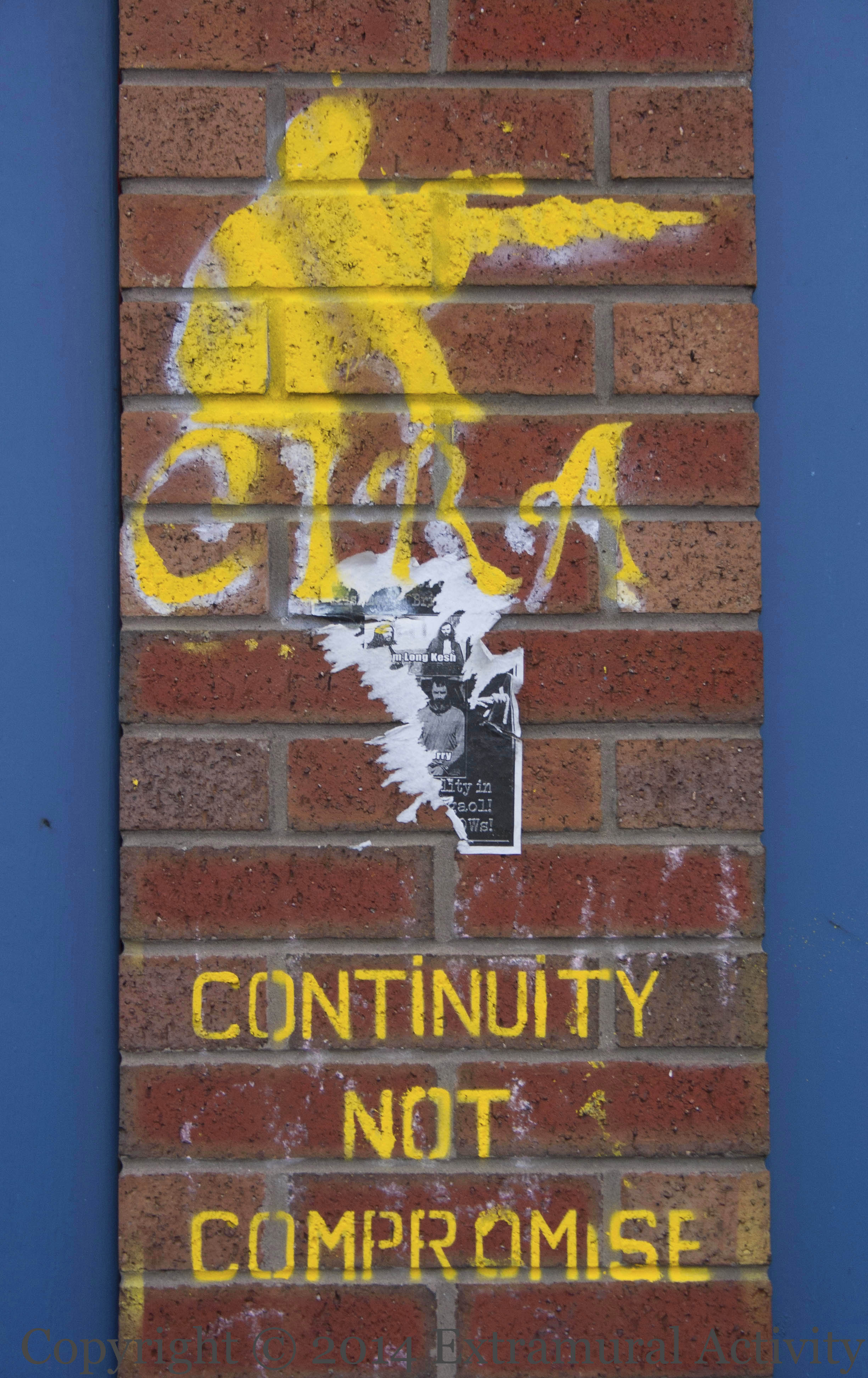
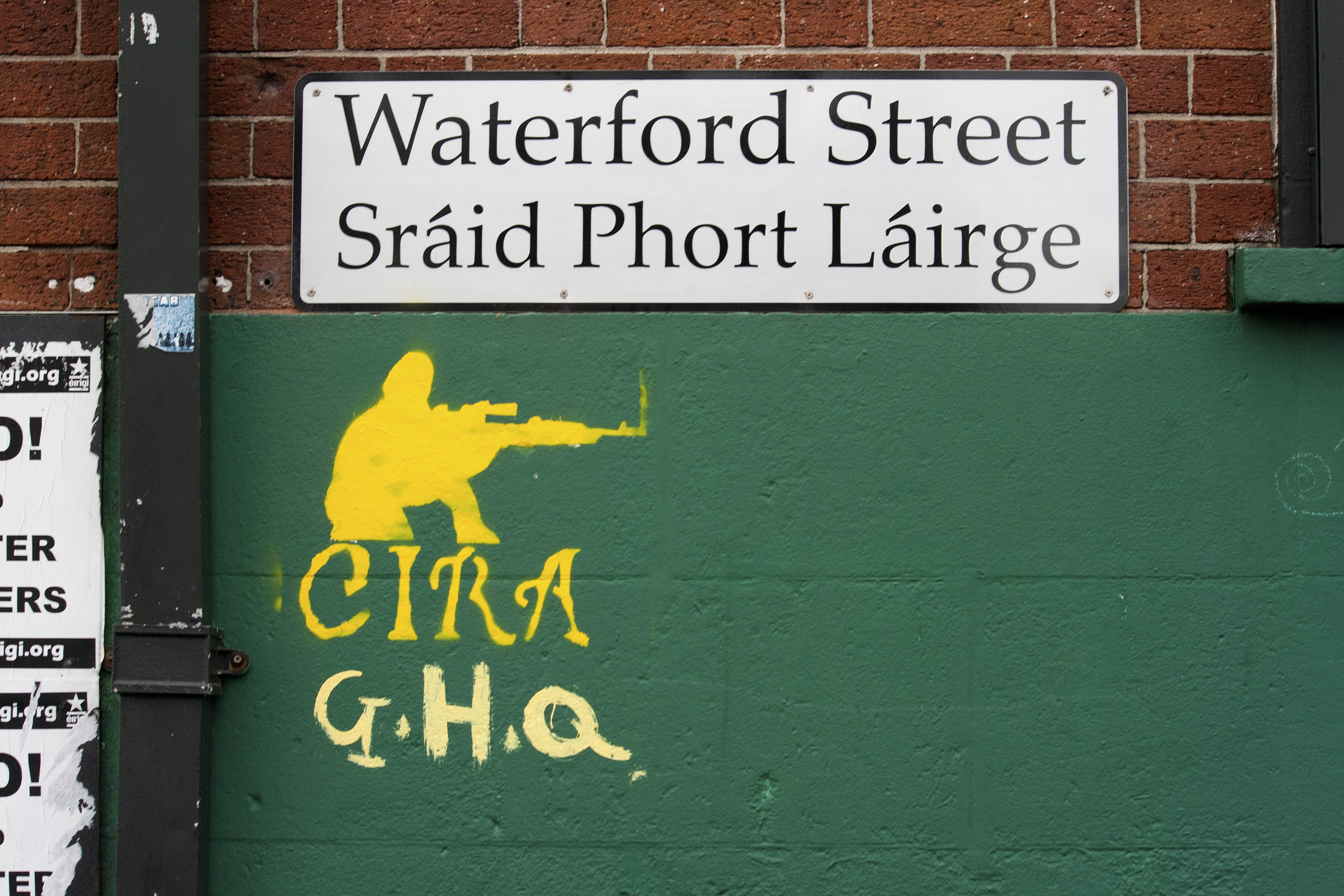
The first image, above, shows a Continuity IRA (CIRA) stencil over what appears to be a ‘support Maghaberry POWs’ poster outside the West Belfast Partnership/Páırtíocht Iarthar Bhéal Feırste offices on the Falls Road (see the third image, below, for a wide shot). The second, below, claims that Waterford Street/Sráıd Phort Láırge is CIRA GHQ – general head-quarters.
 Seosamh Mac Coille Collection