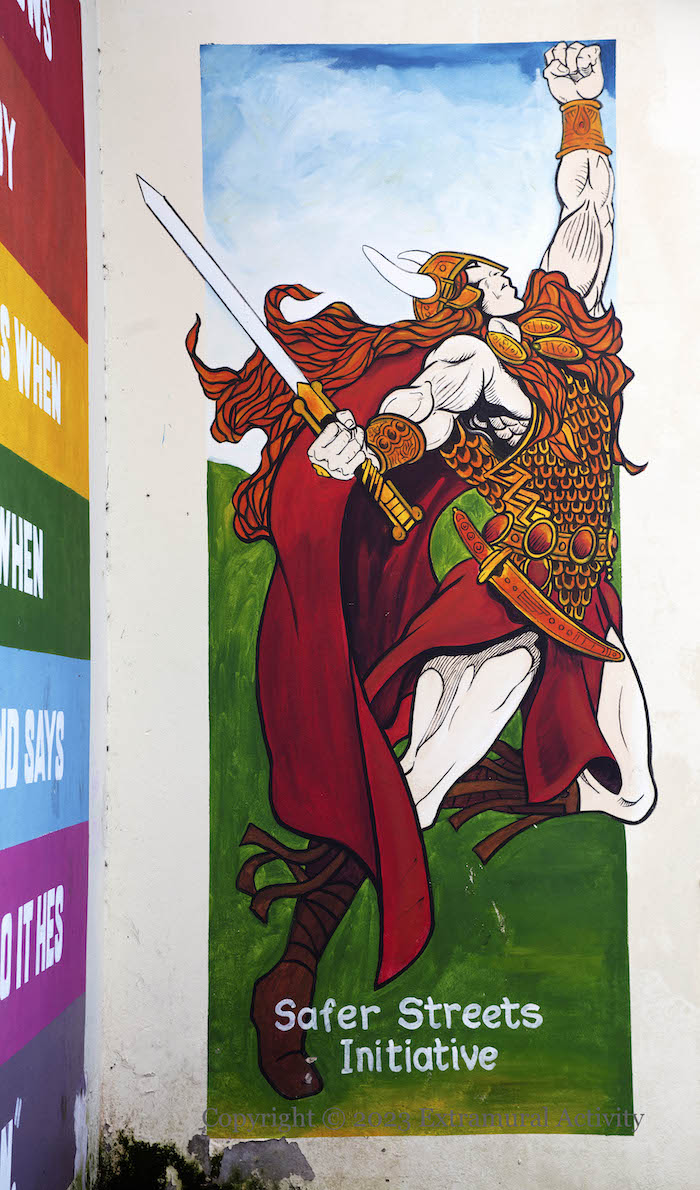
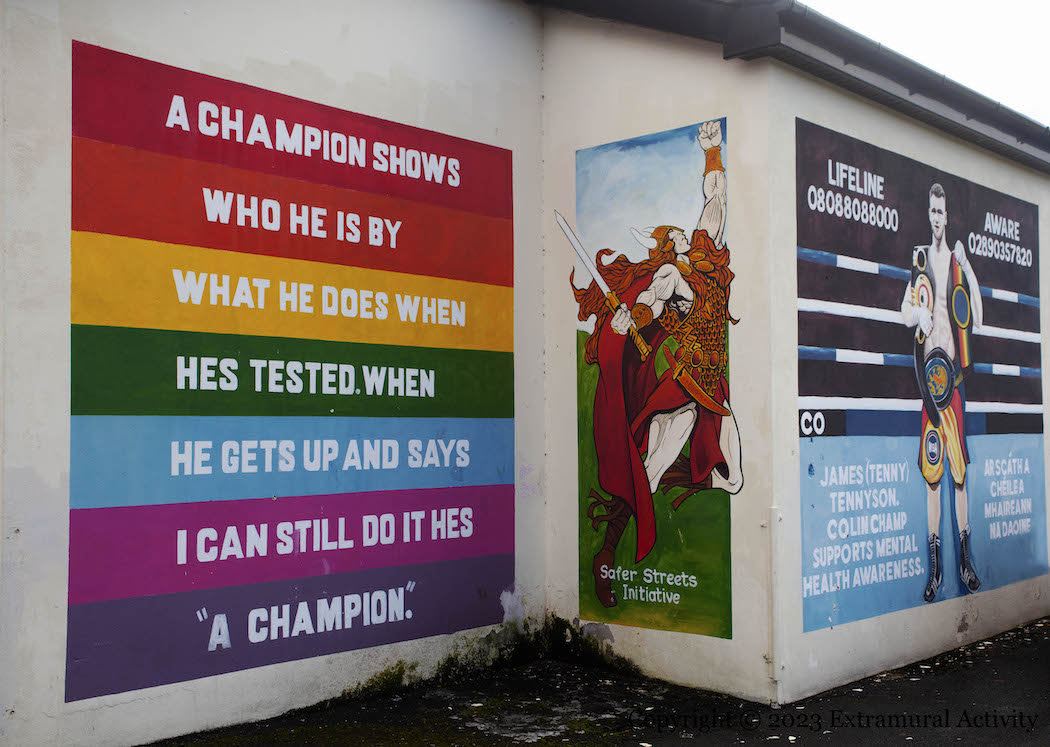
“A champion shows who he is by what he does when he’s tested. When he gets up and says “I can still do it”, he’s “a champion.” In Irish mythology, the Tuatha invade Ireland and battle the Fır Bolg. They are successful but their king Nuadha loses his arm and with it his kingship of the Tuatha. He had it replaced with an arm made of silver and regained his position. He is used here as an inspiration for those struggling with mental health, who are encouraged to call Lifeline or Aware.
(A history of Nuadha in murals is included in the Visual History page on Jim Fitzpatrick.)
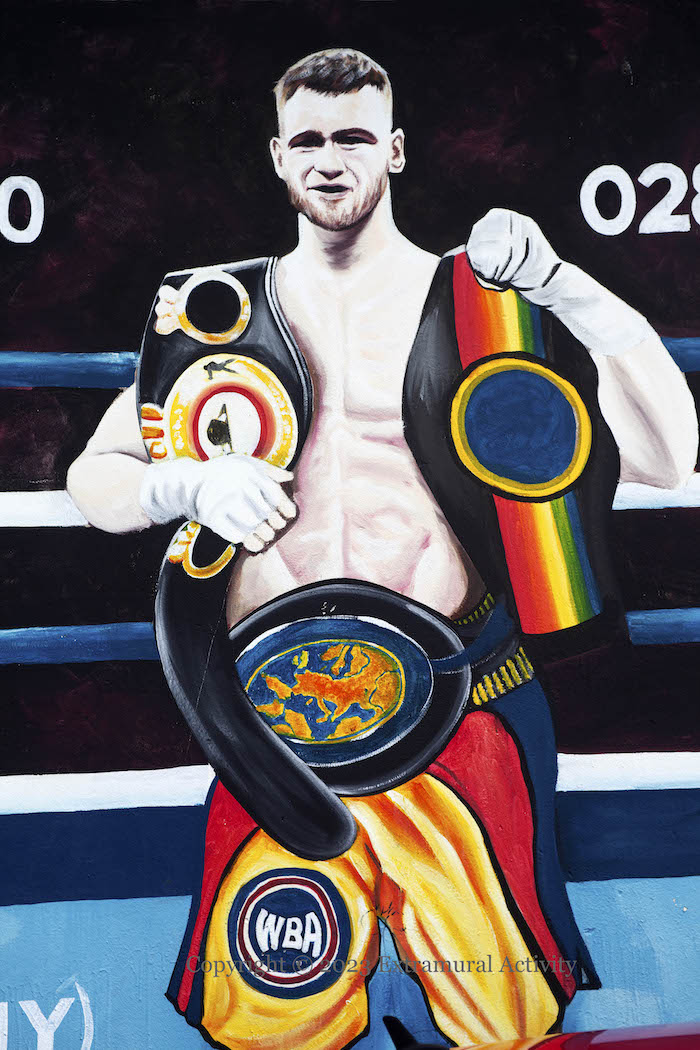
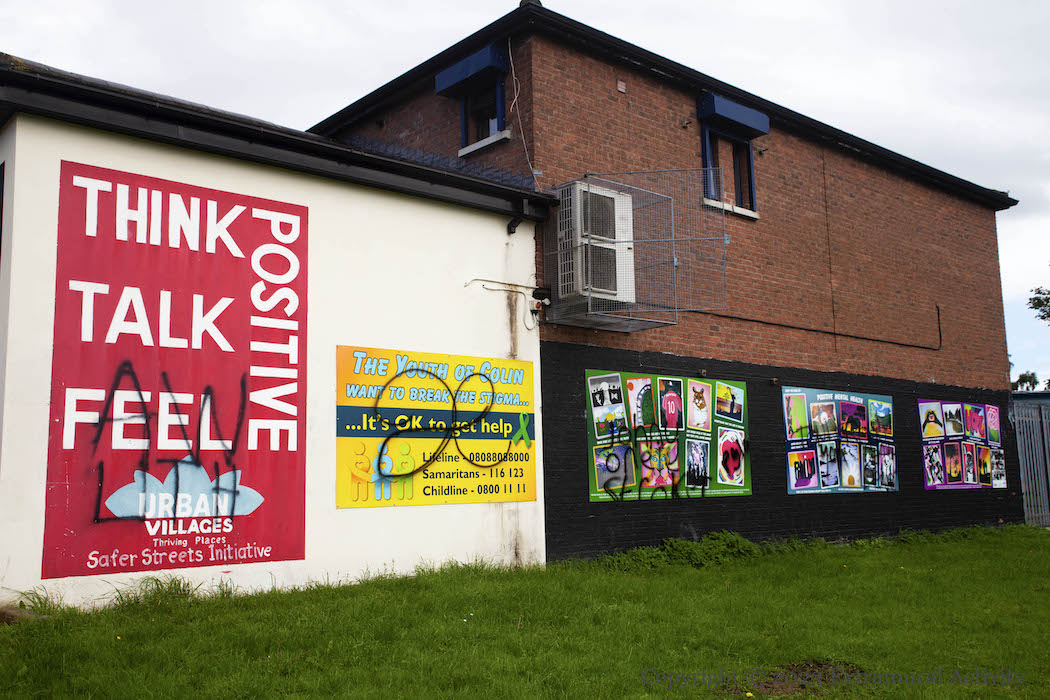
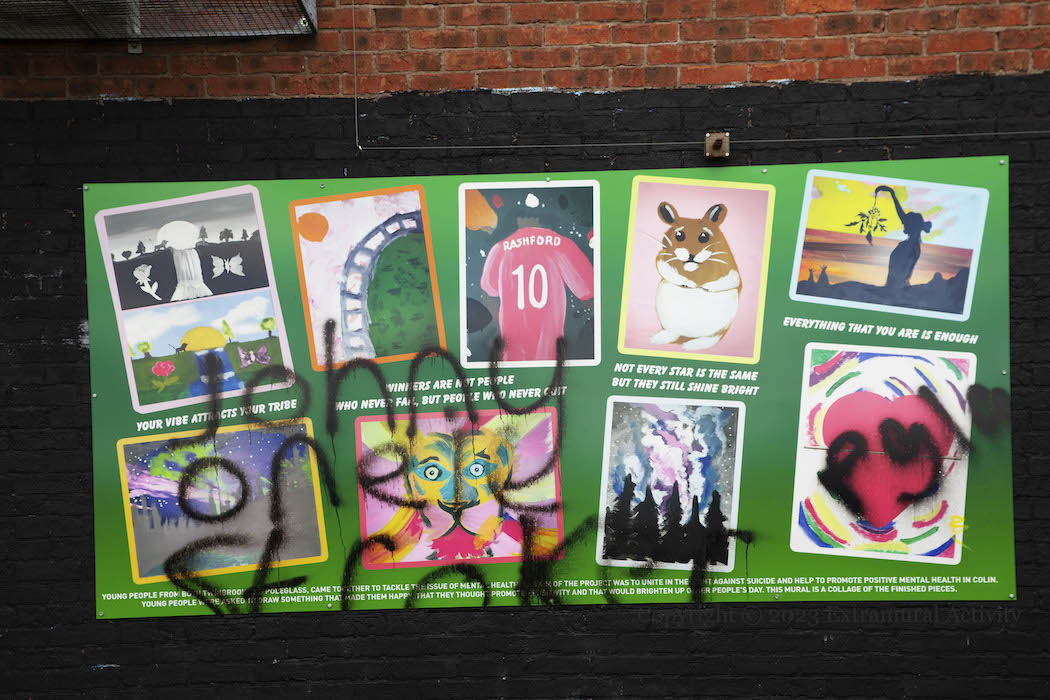
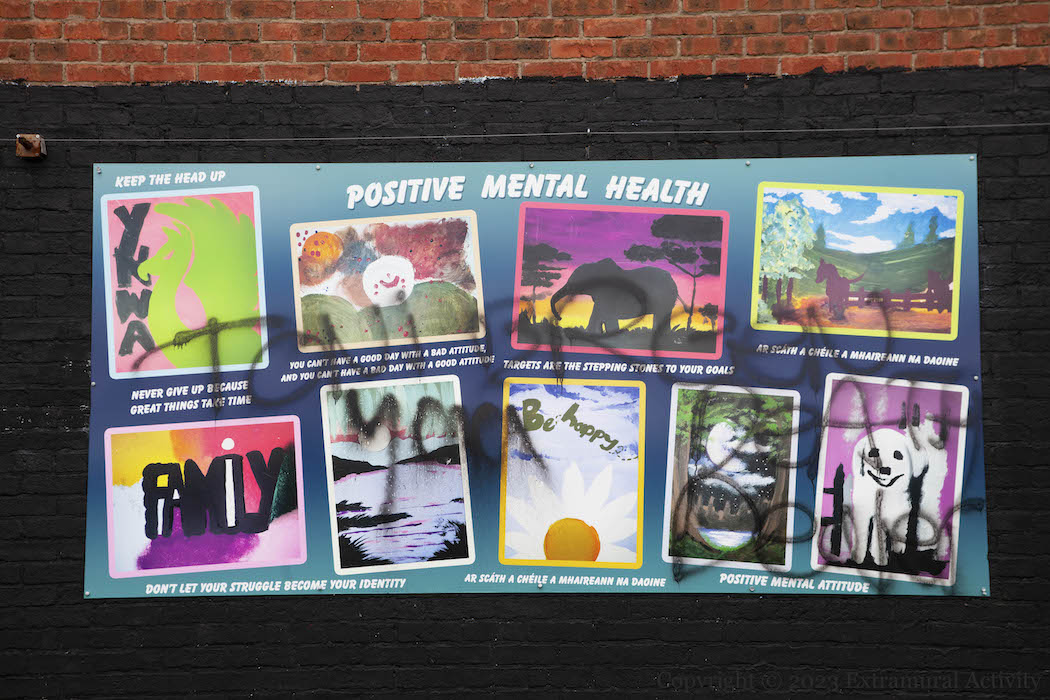
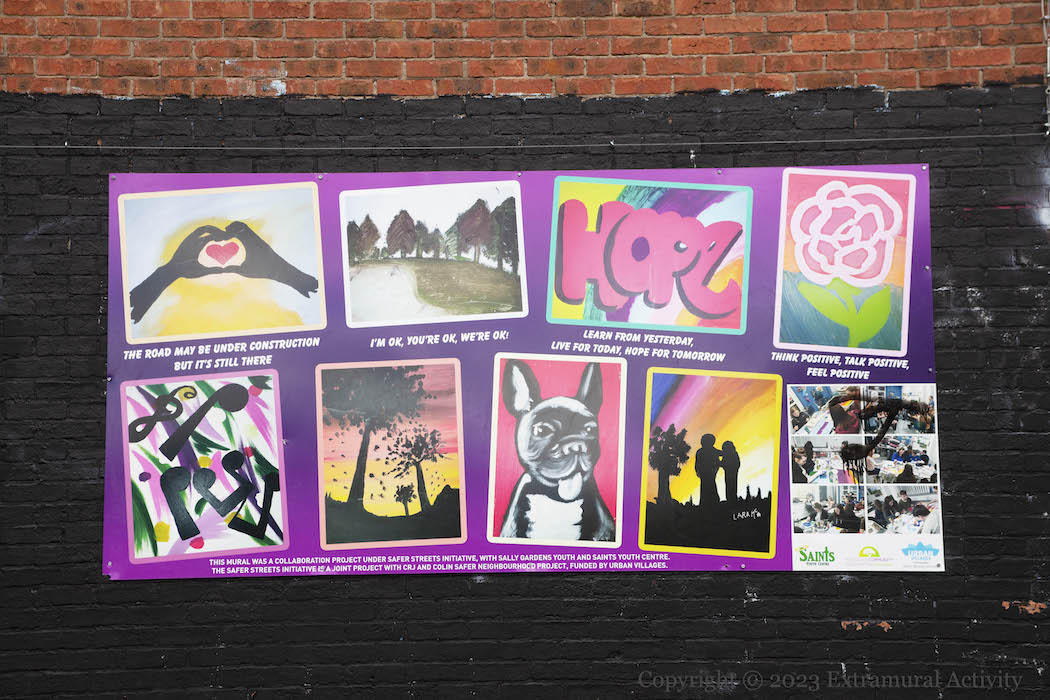
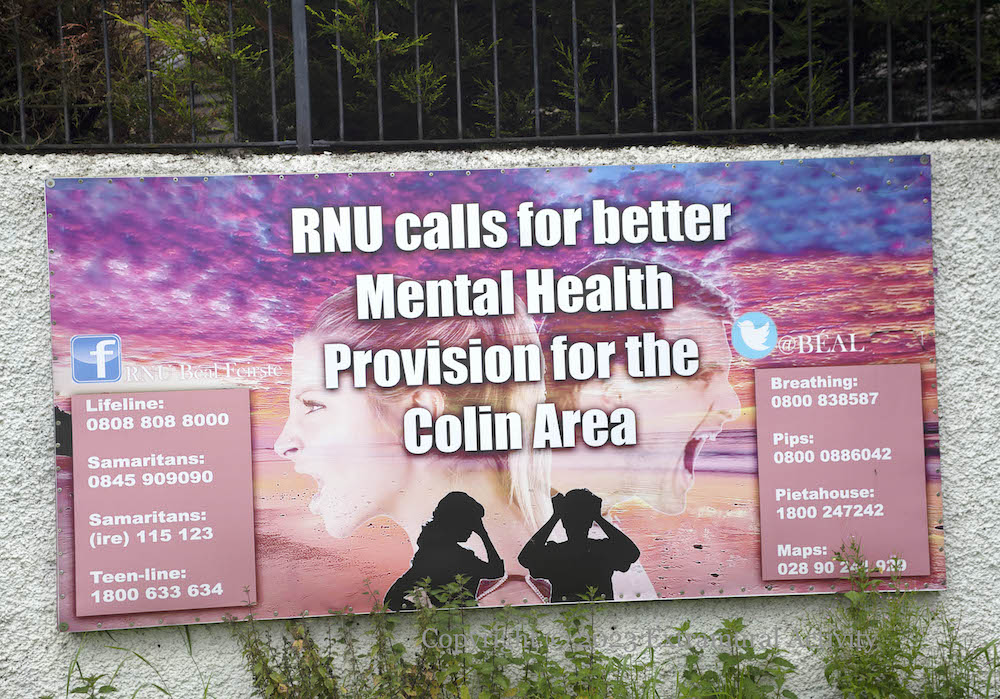
The modern-day hero accompanying Nuadha is boxer James “The Assassin” Tennyson, current Irish super-featherweight champion. There are also four mental health boards (shown below) around the corner from Urban Villages Colin Safer Streets Initiative with messages such as “Think, Talk, Feel – Positive”, “Everything that you are is enough”, “Learn from yesterday, live for today, hope for tomorrow”,
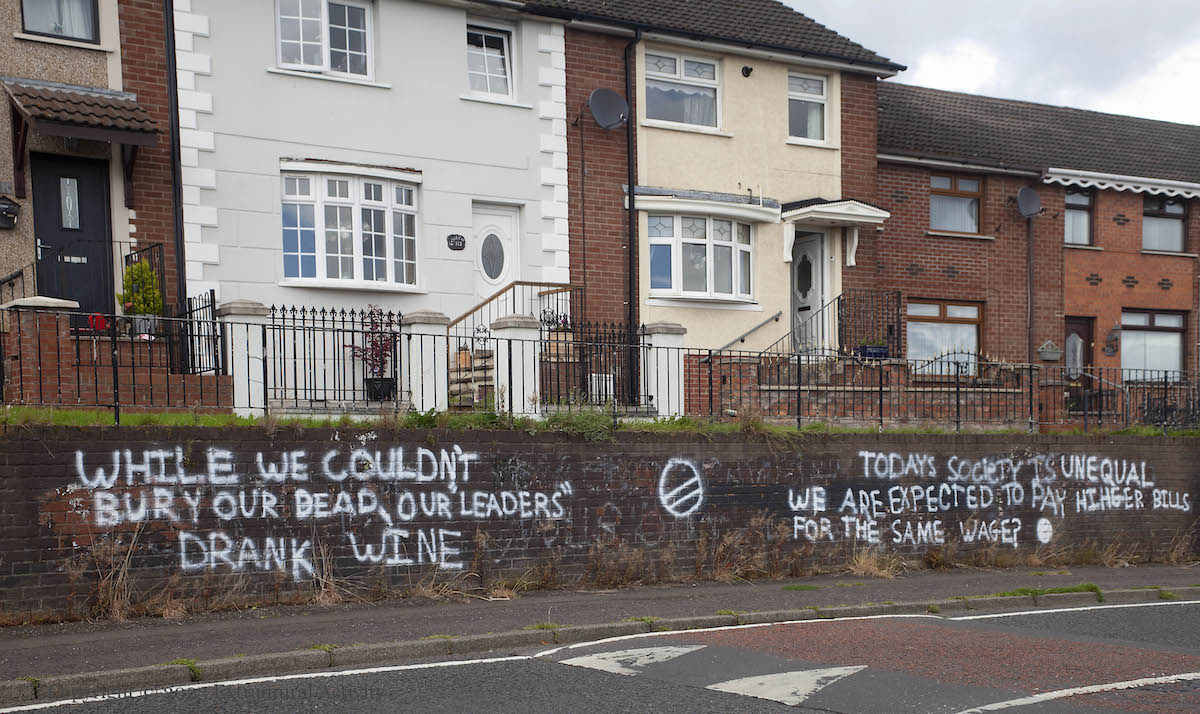
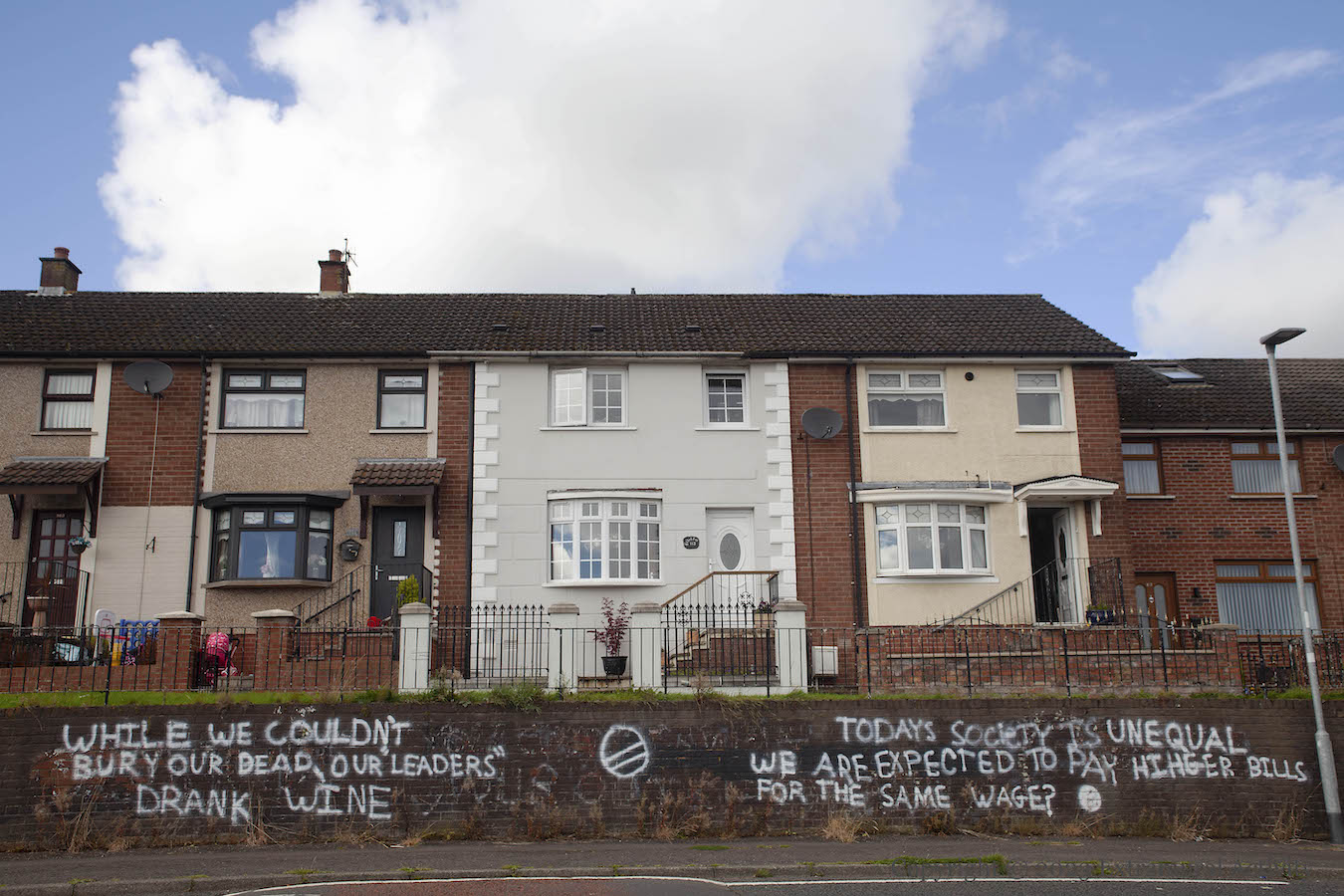
“Today’s society is unequal. We are expected to pay higher bills for the same wage?”
Commentary on the performance of “leaders” during Covid and in the fact of economic inequality, in Lenadoon, west Belfast: “While we couldn’t bury our dead, our “leaders” drank wine.” (perhaps a reference to the images from the “leaving do” party in Downing St showing Boris Johnson with a glass of wine (iTV)
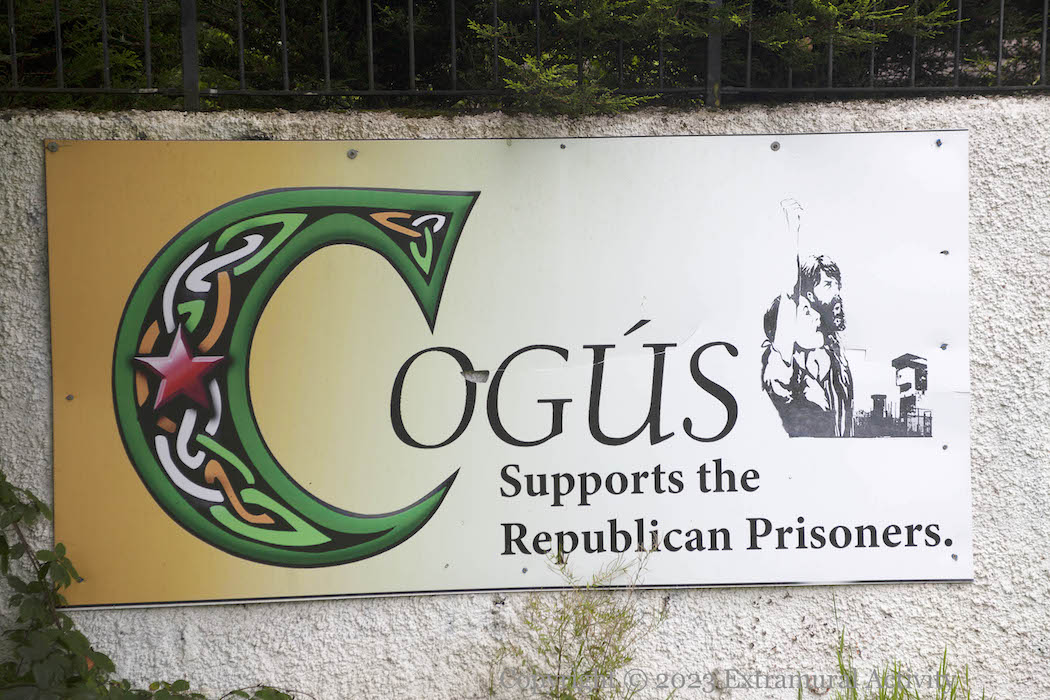
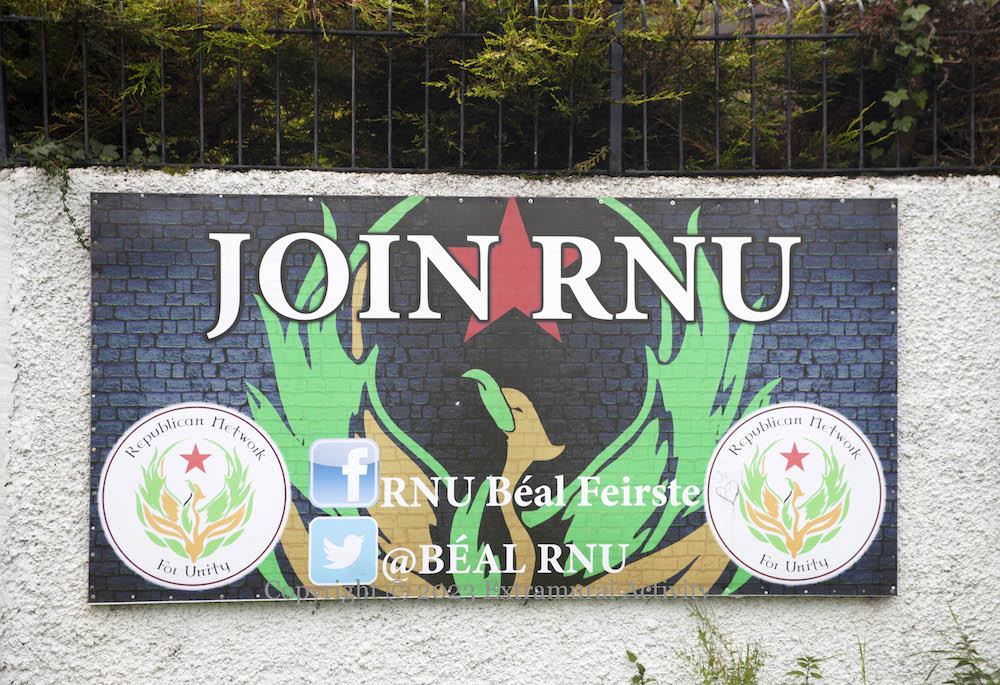
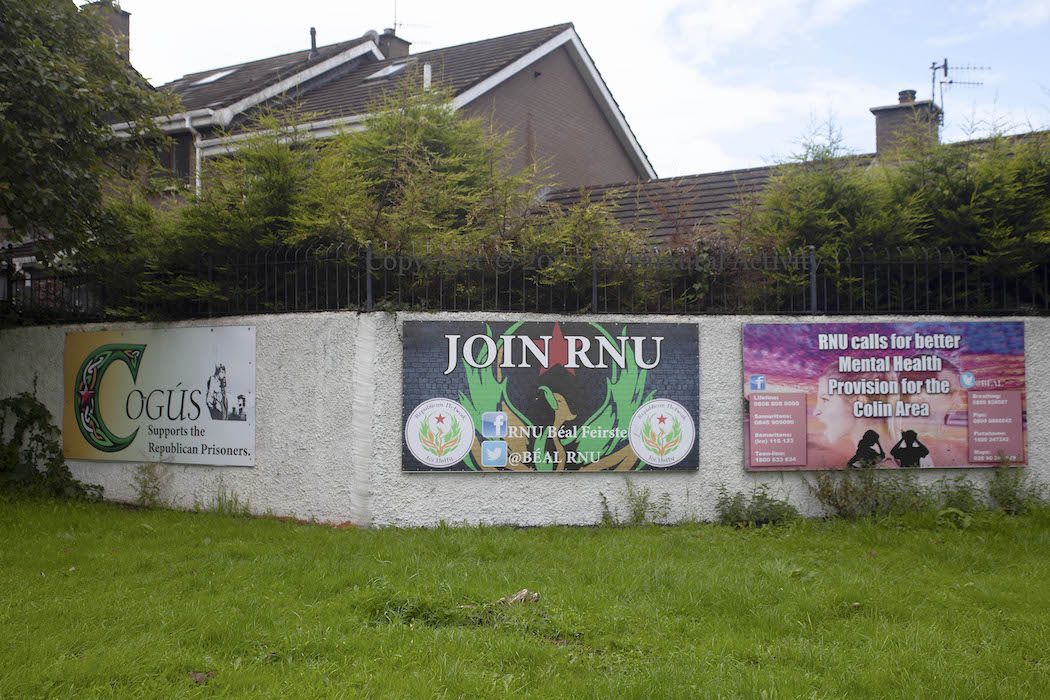
“Cogús supports the republican prisoners”. Cogús (Fb) is (was?) the prisoners’ welfare arm of the RNU. The board above — using a vintage illustration going back to 1981’s I’ll Wear No Convict’s Uniform — replaced More Blacks, More Gays, More Irish on Pantridge Road, Dunmurry, joining the “Join RNU” and mental health boards shown below.
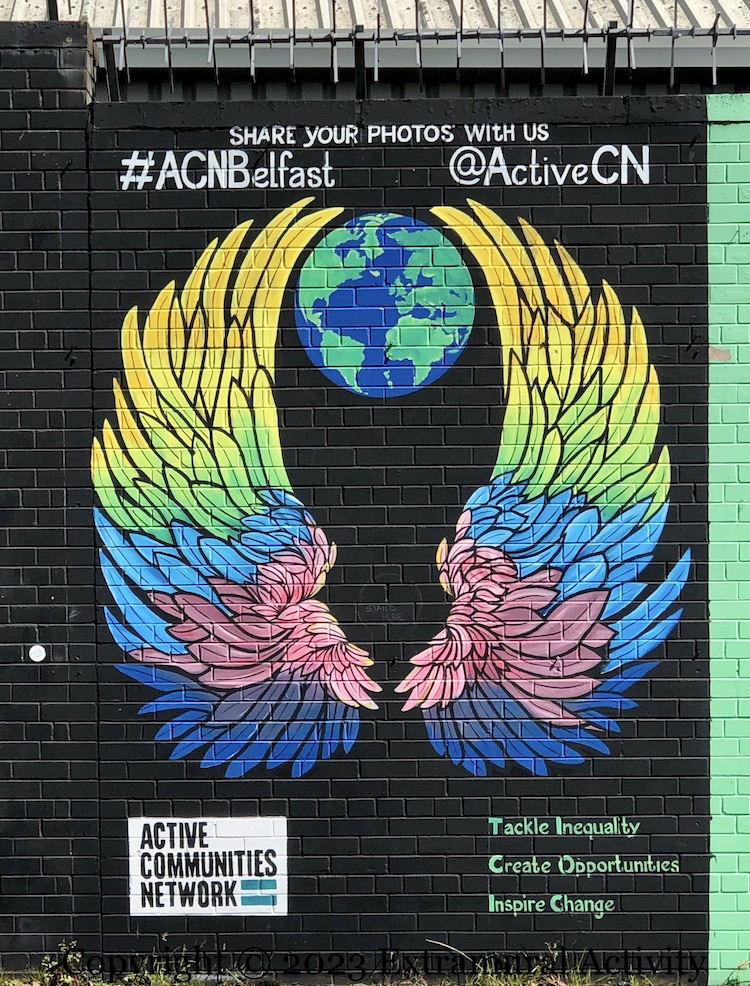
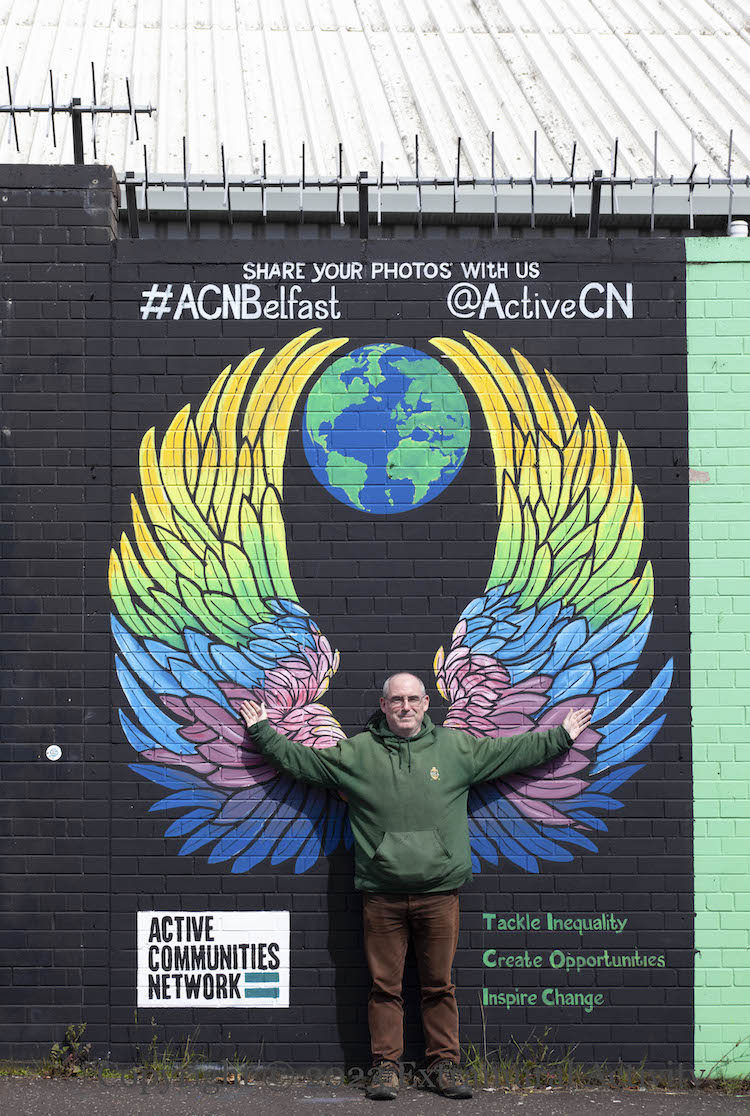
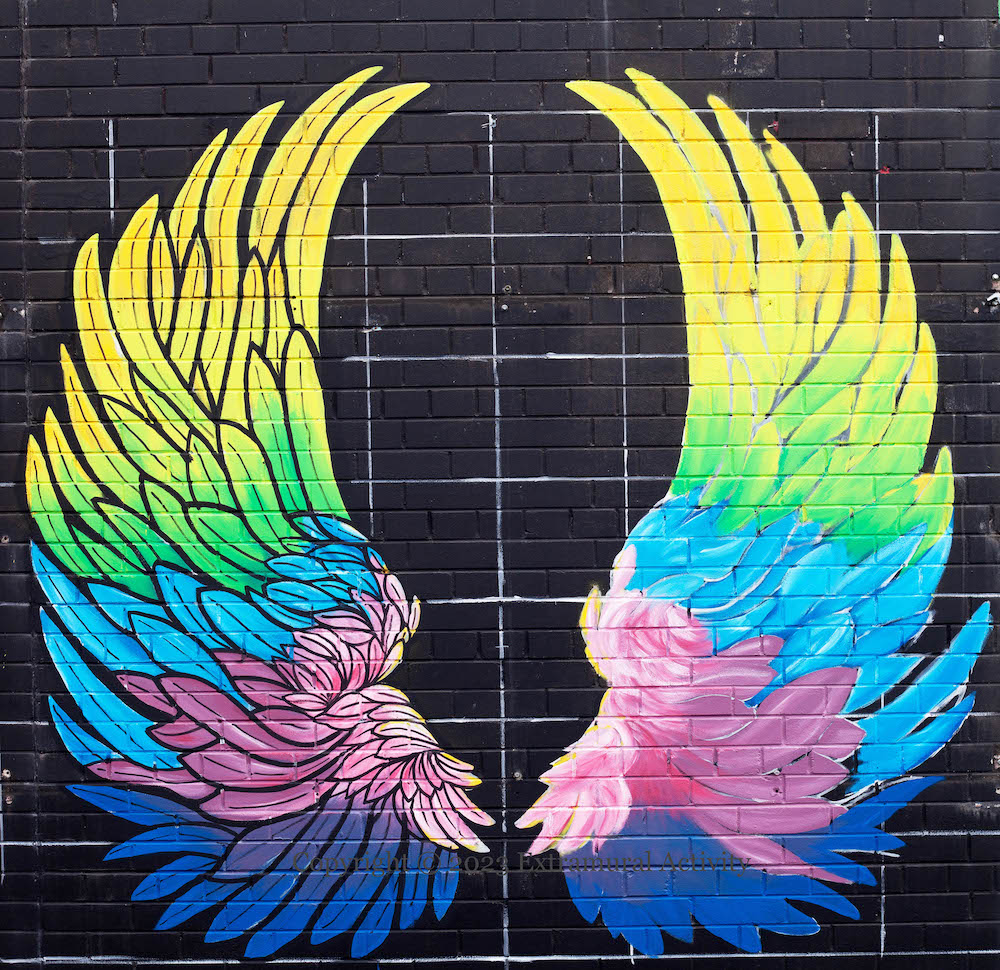
Active Communities Network (web) is a non-profit in Belfast, Manchester, and London, focused on youth and community development: “Tackle inequality; create opportunities; inspire change”. Passers-by are invited to stand in the middle of the mural and “spread their wings”.
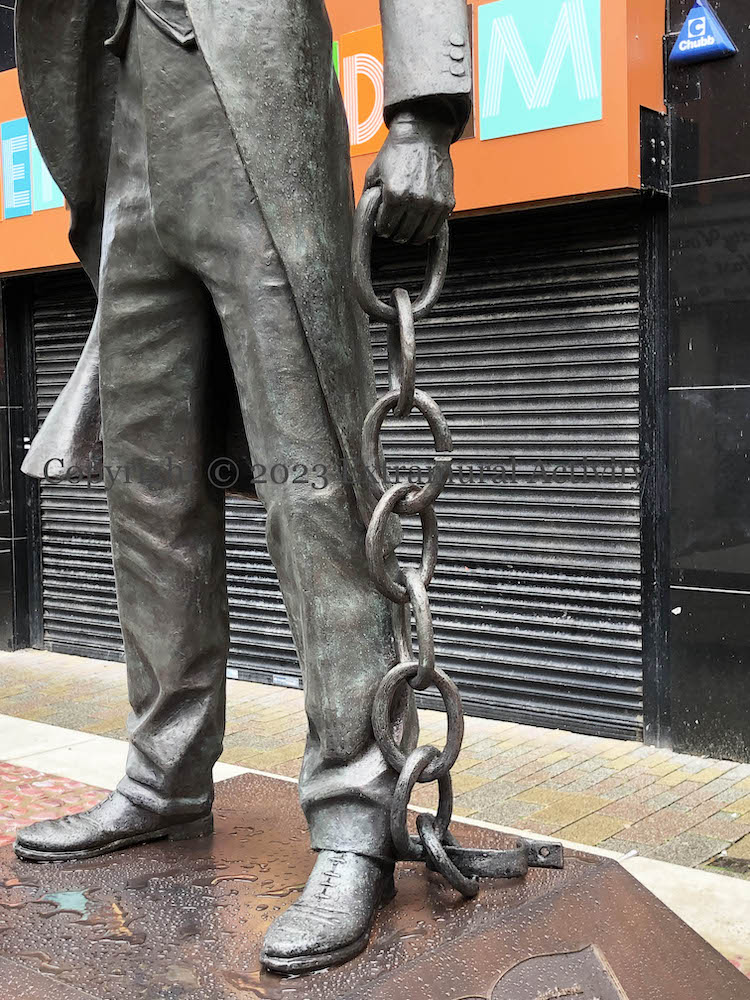
On this day in 1834, the Slavery Abolition Act came into effect (except territories managed by the East India Company), marking the beginning of the end for slavery in the British empire. Enslaved children below the age of six were freed; while enslave adults were designated as apprentices for a period of four or six years; 5% of British GDP went towards reimbursing owners (Independent | WP).
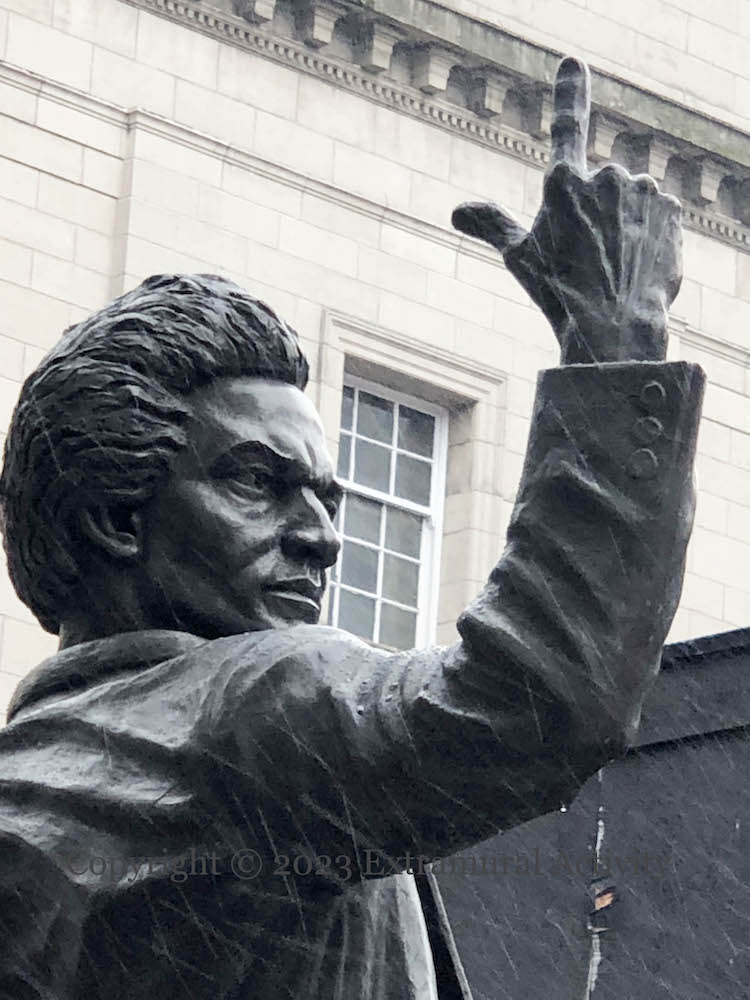
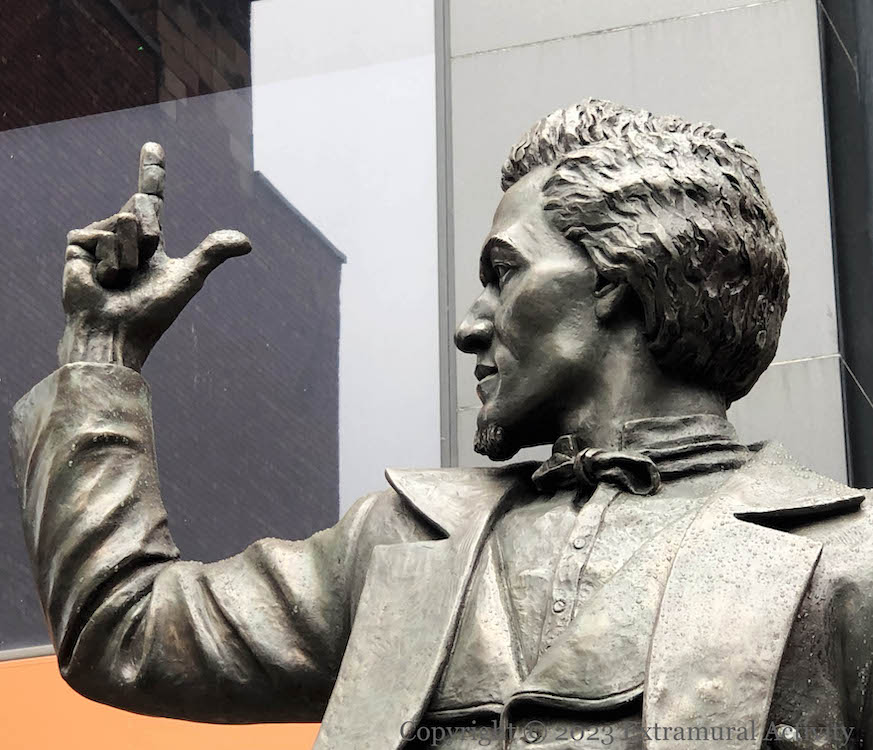
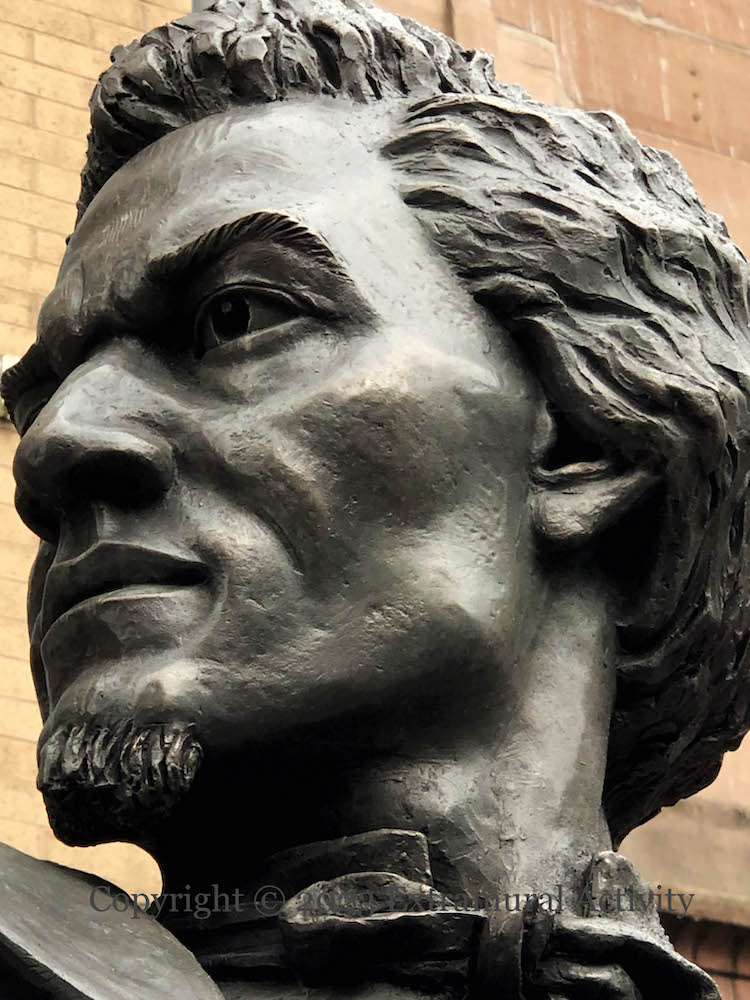
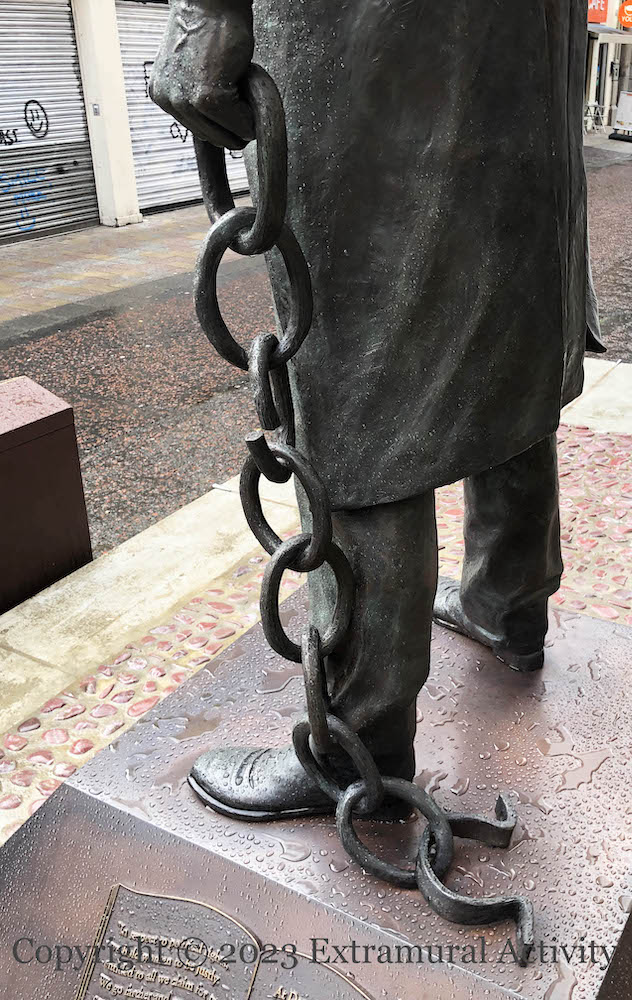
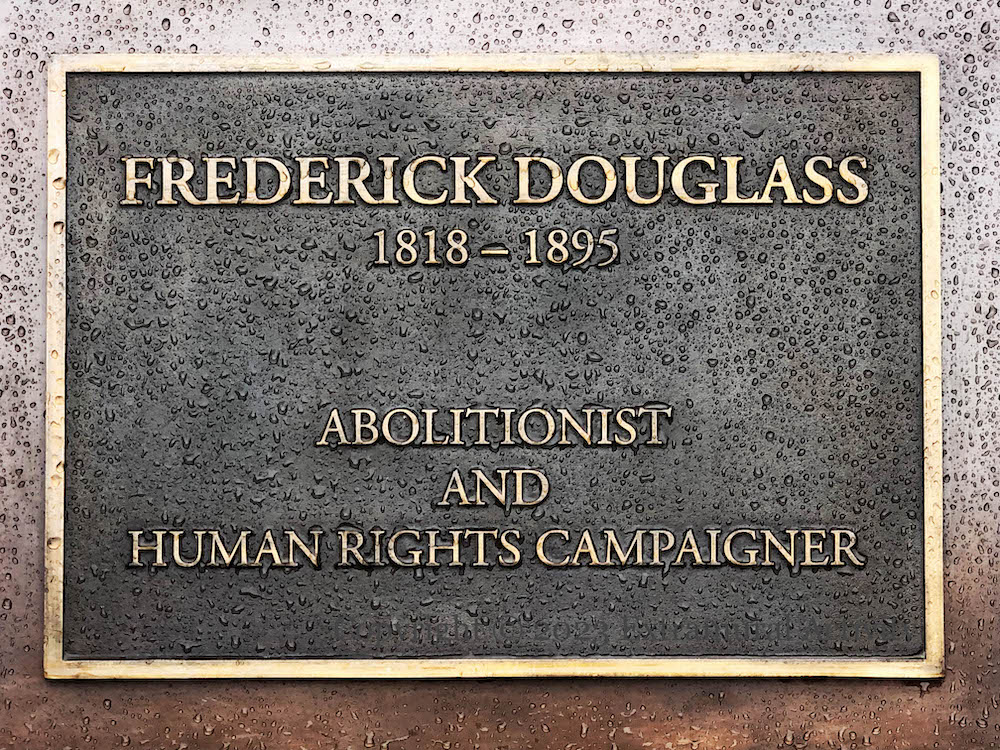
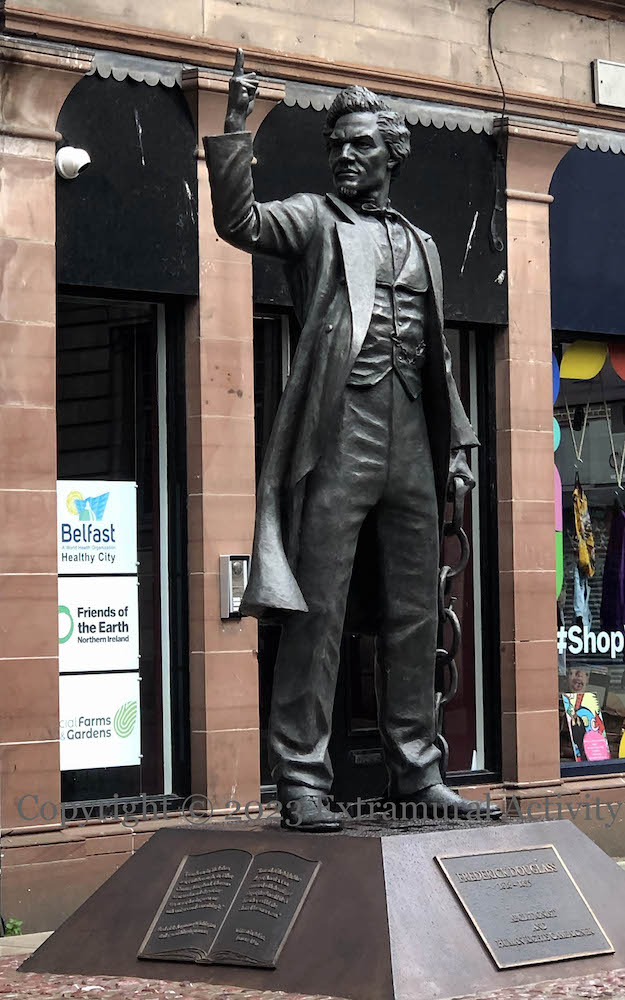
This made it safe for Frederick Douglass – “1818-1895, abolitionist and human rights campaigner” – to tour in Ireland and Britain when the success of his (first) auto-biography, Narrative Of The Life Of Frederick Douglass, might have allowed and encouraged his owner to re-capture him. Douglass had “illegally” escaped slavery in September, 1838, become a preacher in 1839, and by 1843, had joined a six-months-long speaking tour of the United States. (WP)
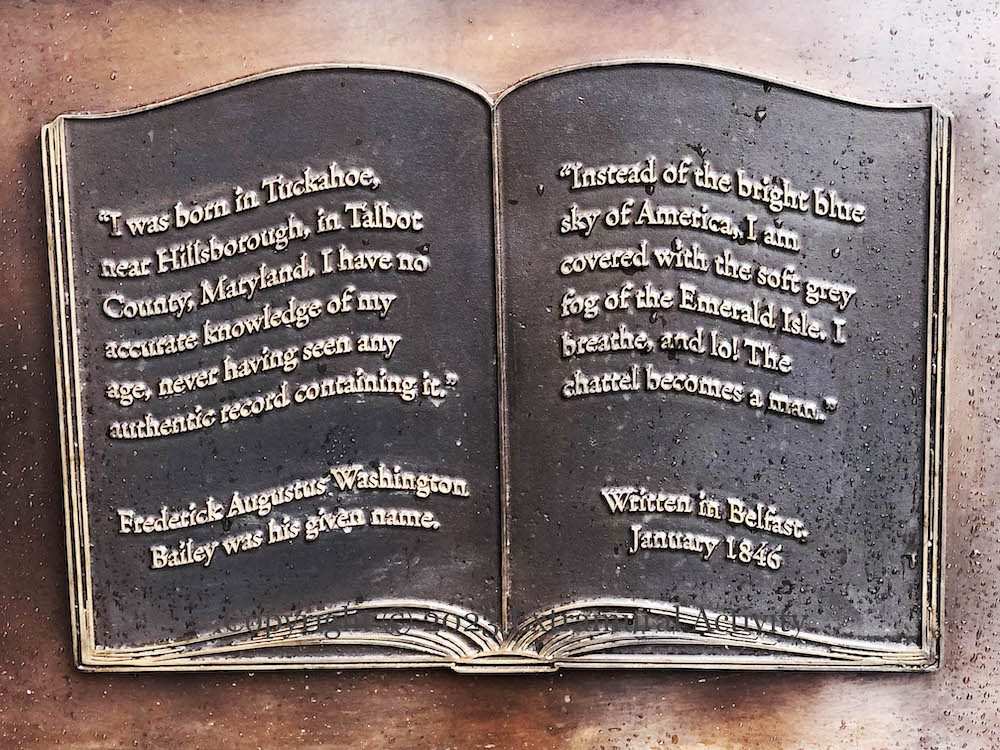
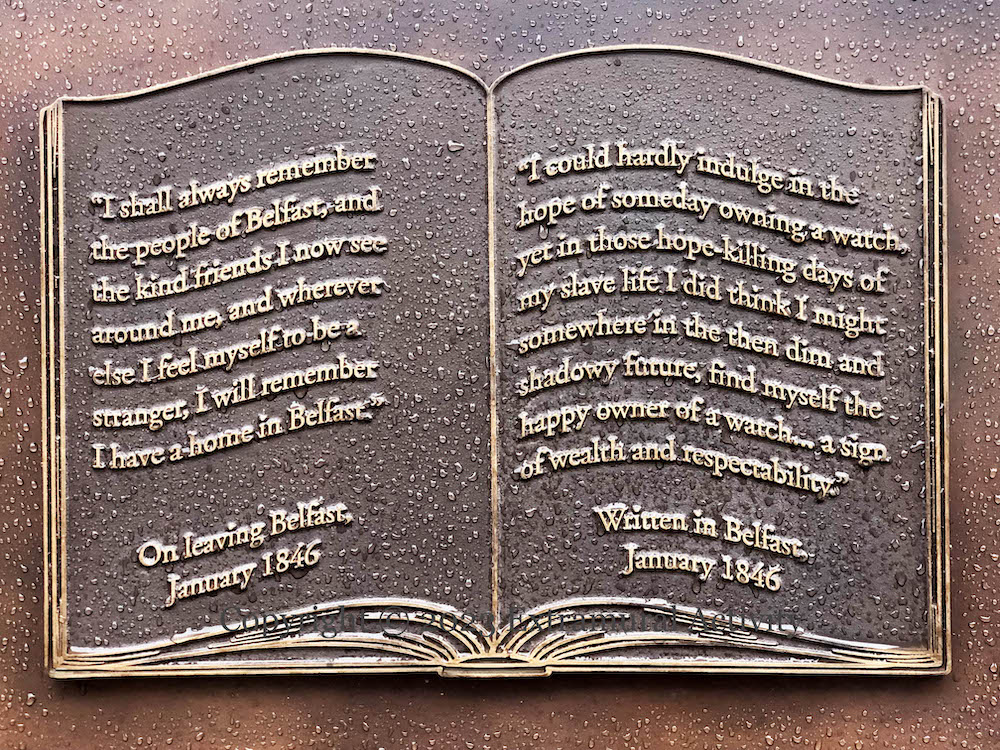
His tour of Ireland and Britain lasted two years and included speeches given in First Presbyterian Church in Rosemary Street and at the Assembly Rooms in Waring Street. In a letter to William Garrison he wrote, “Instead of the bright, blue sky of America, I am covered with the soft, grey fog of the Emerald Isle. I breathe, and lo! the chattel becomes a man.” And when leaving for Britain in January 1846 he wrote, “I shall always remember the people of Belfast, and the kind friends I now see around me, and wherever else I feel myself to be a stranger, I will remember I have a home in Belfast.”
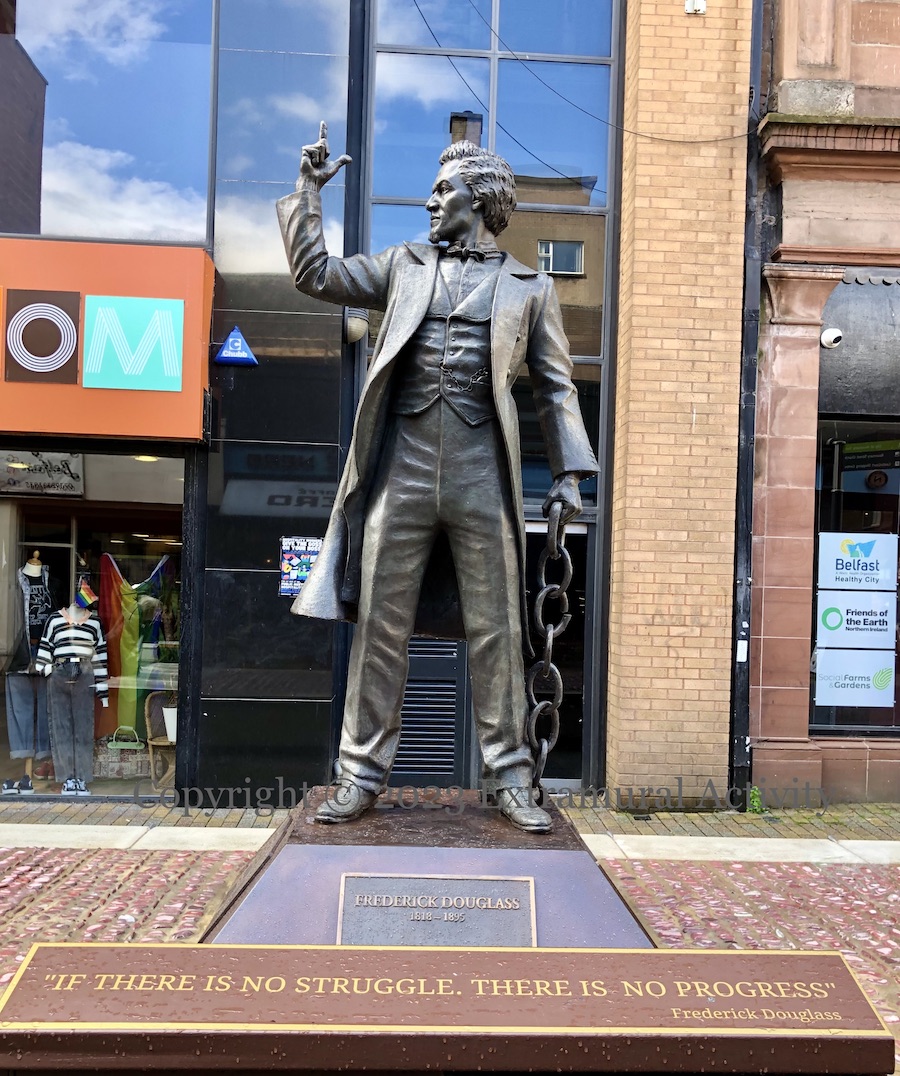
Douglass returned to the US in 1847, where millions were still enslaved (until the 13th Amendment of 1865). In an 1857 address concerning Jamaica and the West Indies, Douglass said, “If there is no struggle, there is no progress. Those who profess to favor freedom and yet deprecate agitation are men who want crops without plowing the ground. They want rain without thunder and lightning. They want the ocean without the roar of its mighty waters. The struggle may be a moral one or it may be a physical one, or it may both moral and physical, but it must be a struggle. Power concedes nothing without a demand. It never has and it never will.” (CUNY)
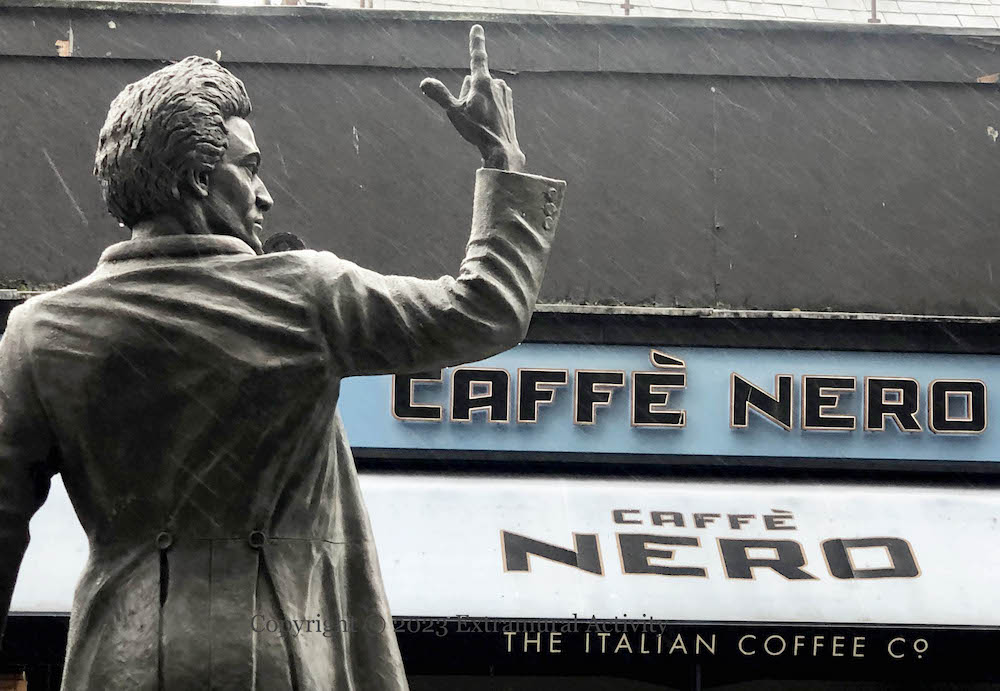
The piece was sculpted by Alan Beattie Herriot and Hector Guest (BBC) with funding from Belfast City Council and the Department For Communities (BelTel), and stands in Lombard Street. Douglass is presented as a 27-year-old; the old mural on Divis Street and the current mural on Northumberland Street portray him in later years.
Douglass carries a watch in his waistcoat pocket: “I could hardly indulge in the hope of someday owning a watch, yet in those hope-killing days of my slave life I did think I might somewhere in the dim and shadowy future, find myself the happy owner of a watch … a sign of wealth and respectability.”
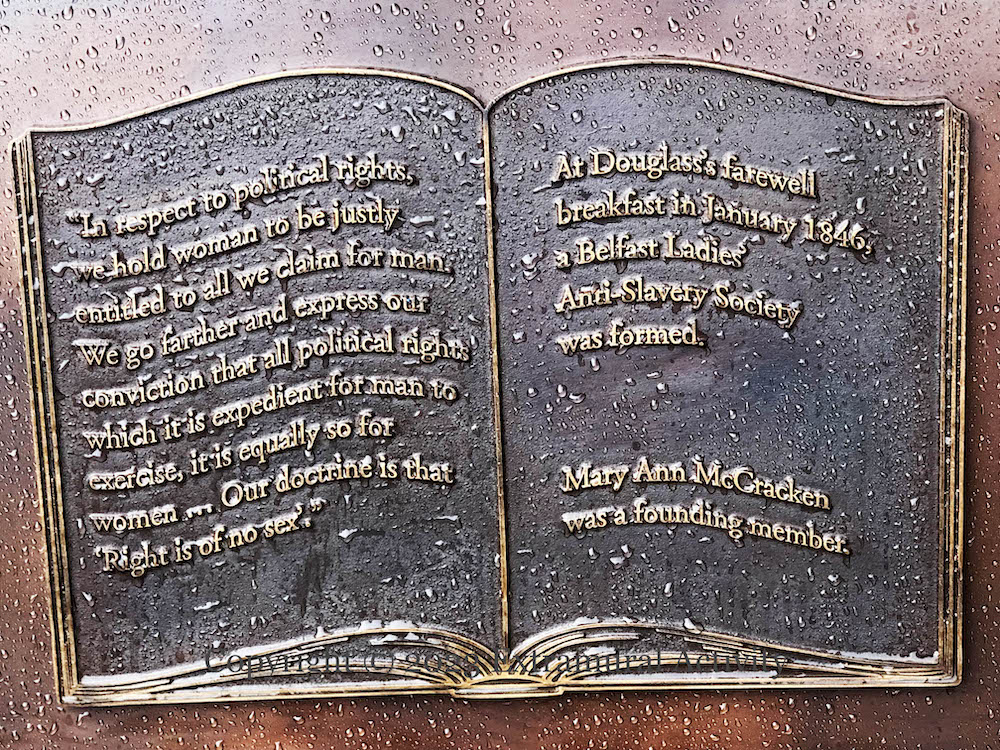
See also: Olaudah Equiano, who toured in Ireland in 1791-1792, and, for Mary Ann McCracken, The World Affords No Enjoyment Equal To That Of Promoting The Happiness Of Others. “”In respect to political rights, we hold woman to be justly entitled to all we claim for man. We go farther and express our conviction that all political rights which it is expedient for man to exercise, it is equally so for women … Our doctrine is that ‘Right is of no sex’.” At Douglass’s farewell breakfast in January 1846, a Belfast Ladies Anti-Slavery Society was formed. Mary Ann McCracken was a founding member.”
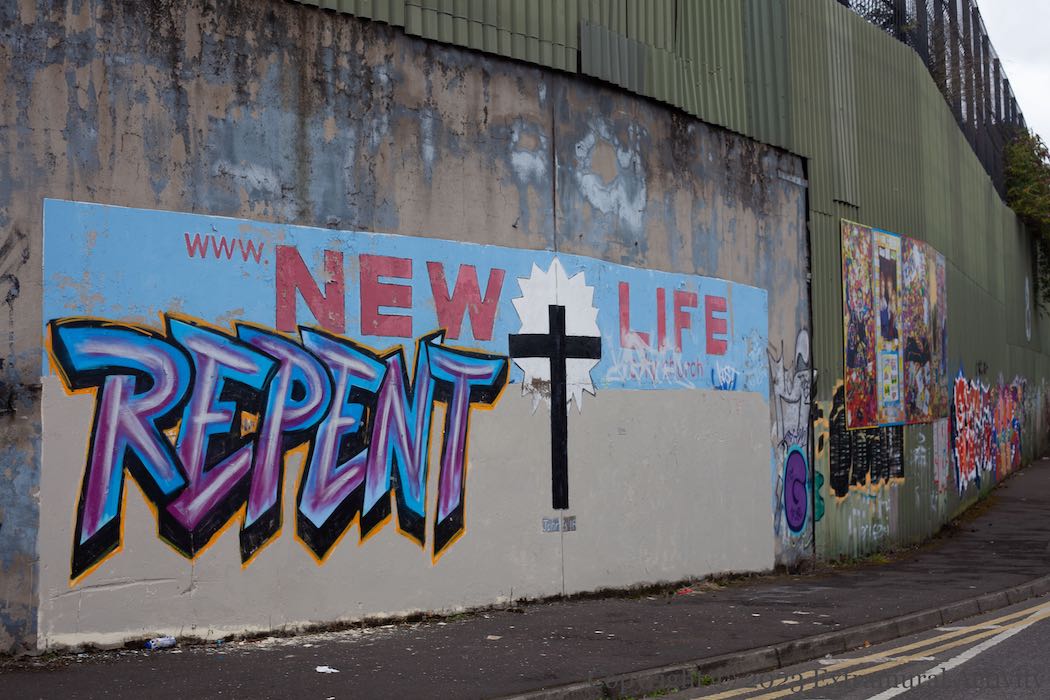
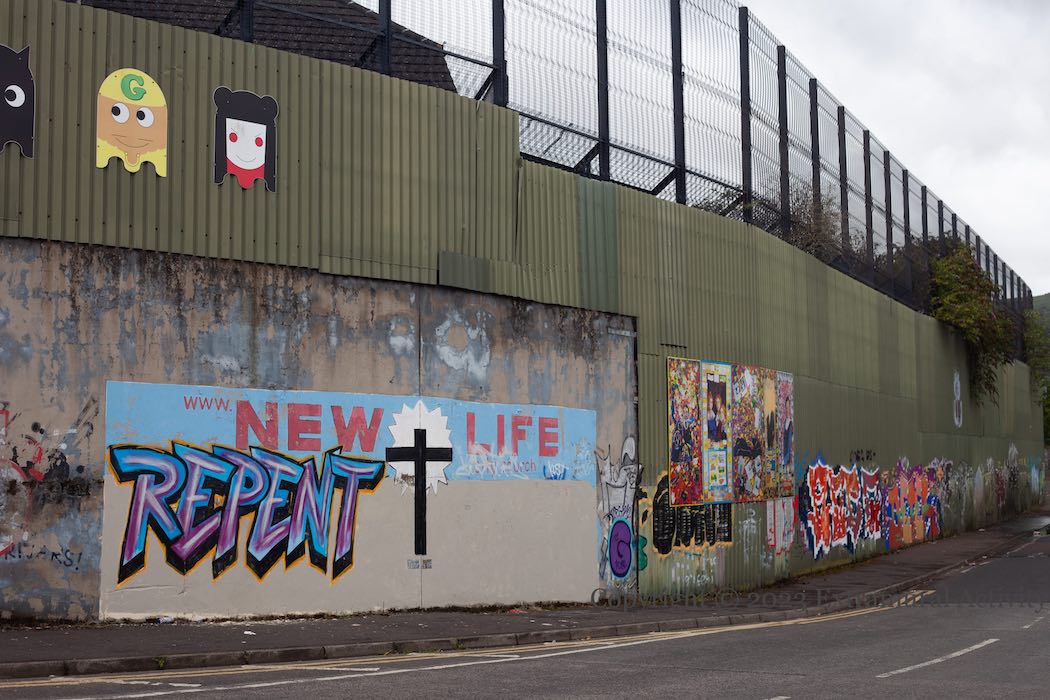
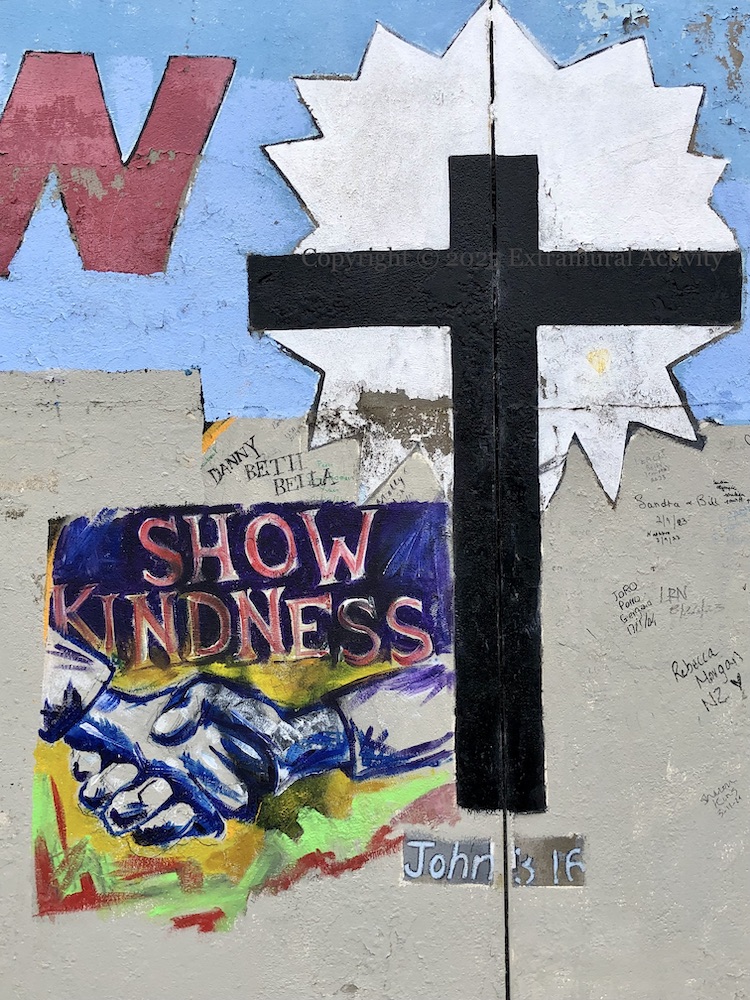
The graffiti on the bottom part of the New Life City Church (web) mural on the west Belfast “peace” line has been painted out and this mild wild-style “repent” added.
New Life murals in the area go back to at least 1997 and one on this stretch of the wall goes back to 2004 – see The Dividing Line Of Hostility.
Update, July 2014: “Show kindness” illustrated with a handshake has been added
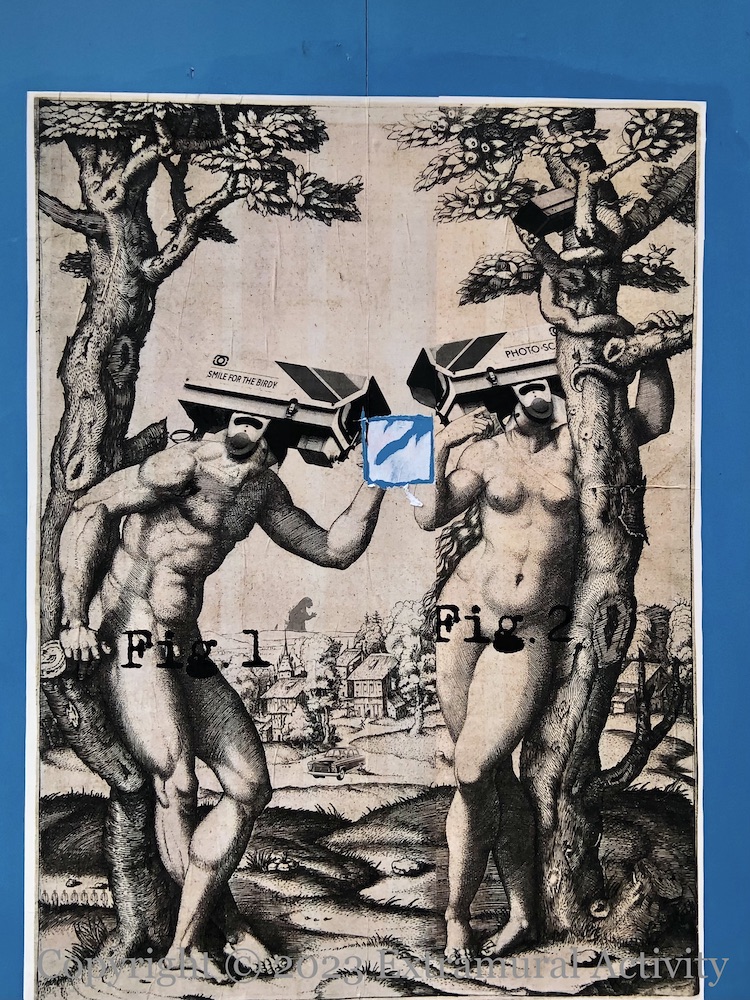
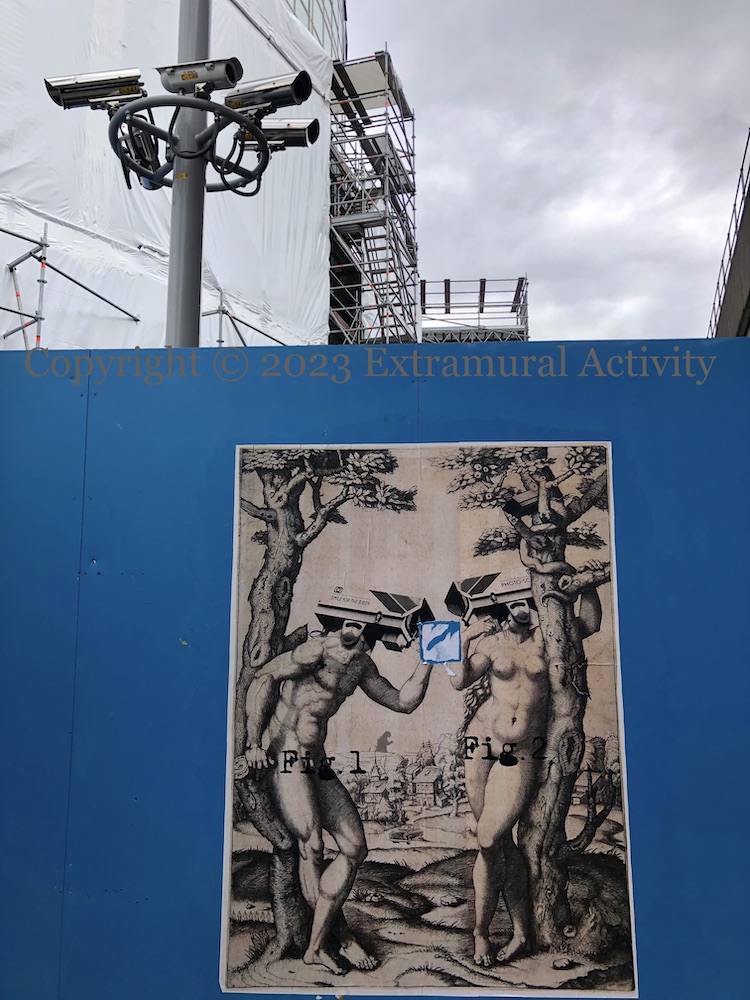
In Raimondi’s Adam And Eve, an engraving from c. 1512, Adam offers Eve two small apples while a human-headed serpent looks on (Met). (The town in the background is from Raimondi, but the car in the middle is Boyd’s.)
In Leo Boyd’s reworking, all the heads have been turned into surveillance cameras – including the snake in the tree, the private parts have been covered by “Fig. 1” and “Fig. 2”, and the forbidden fruit is now a heart emoji, which in this instance has literally been cut out of the print. Our surveillance culture (inlcuding “social” media) perhaps makes emotional connection more difficult and more dangerous than ever – we are ashamed to appear naked.
The paste-up is on the hoarding in Donegall Quay, below a ring of surveillance cameras. Belfast is the 100th-most surveilled city in the world, per capita (CEOWorld).
For information about the production of the piece, and images that include the heart that has been torn out, see Leo Boyd Prints.
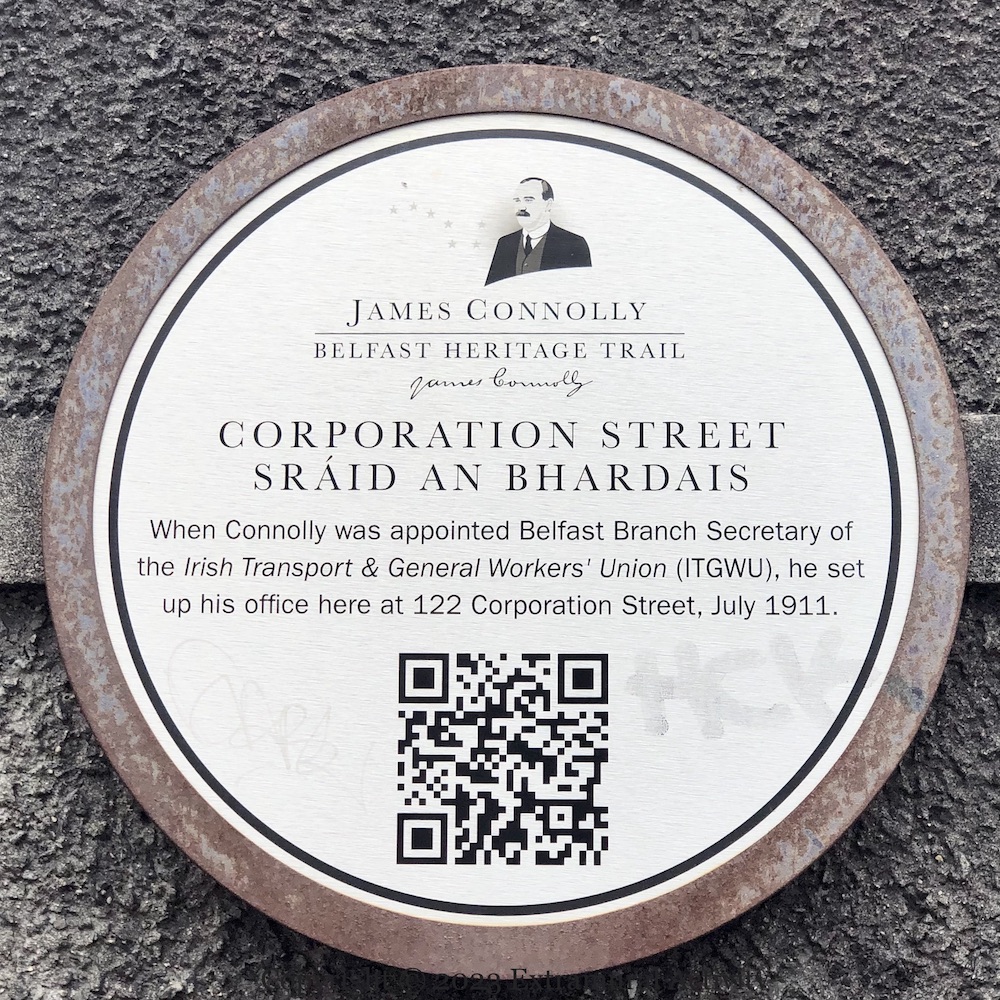
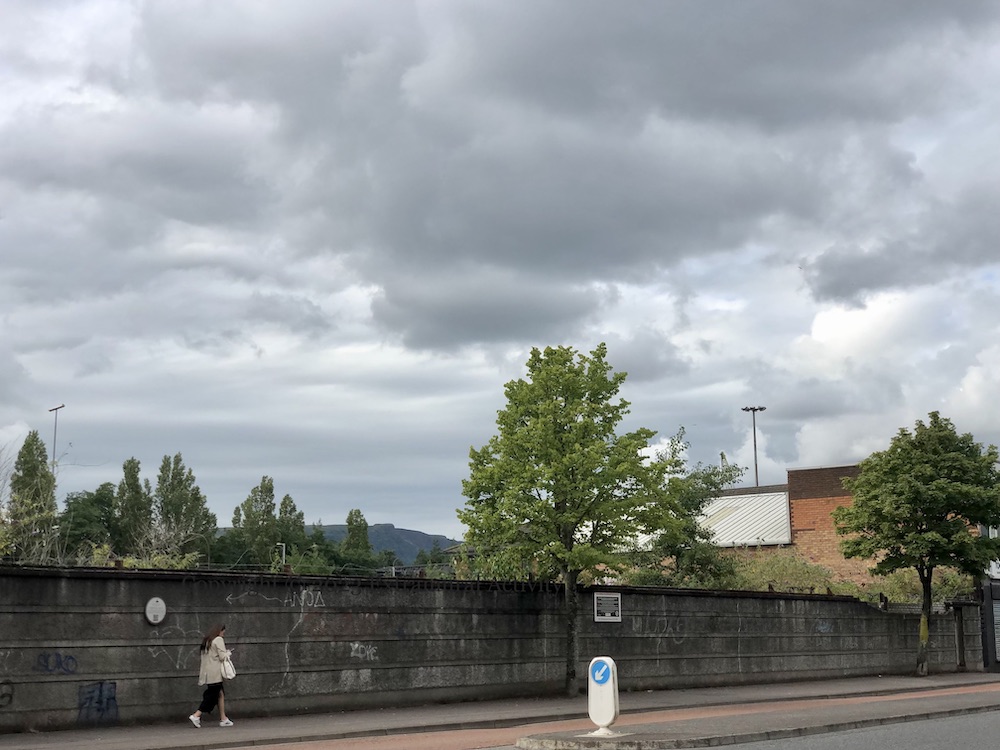
Áras Uí Chonghaile has a “James Connolly Heritage Trail”, with a series of plaques and panels that interested parties can walk as members of a guided tour, or by themselves with the aid of an app (Android | Apple). One of the stops is in Corporation Street, site of the Belfast offices of the ITGWU from 1911-1941.
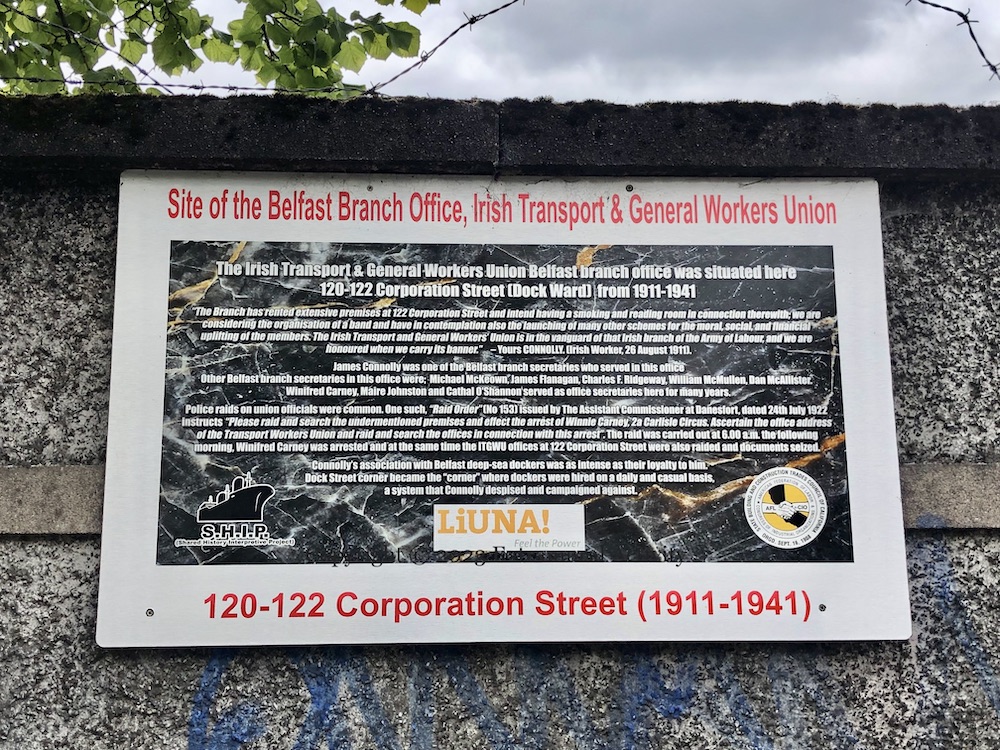
The nearby ITGWU board gives Connolly’s report from 1911: “The Branch has rented extensive premises at 122 Corporation Street and intend having a smoking and reading room in connection therewith; we are considering the organisation of a band and have in contemplation also the launching of many other schemes for the moral, social, and financial uplifting of the members. The Irish Transpost and General Workers’ Union is in the vanguard of that Irish branch of the Army of Labour, and we are honoured when we carry its banner.”
It then goes on to describe the arrest of Winnie Carney and the raiding of the Corporation Street offices in 1922.
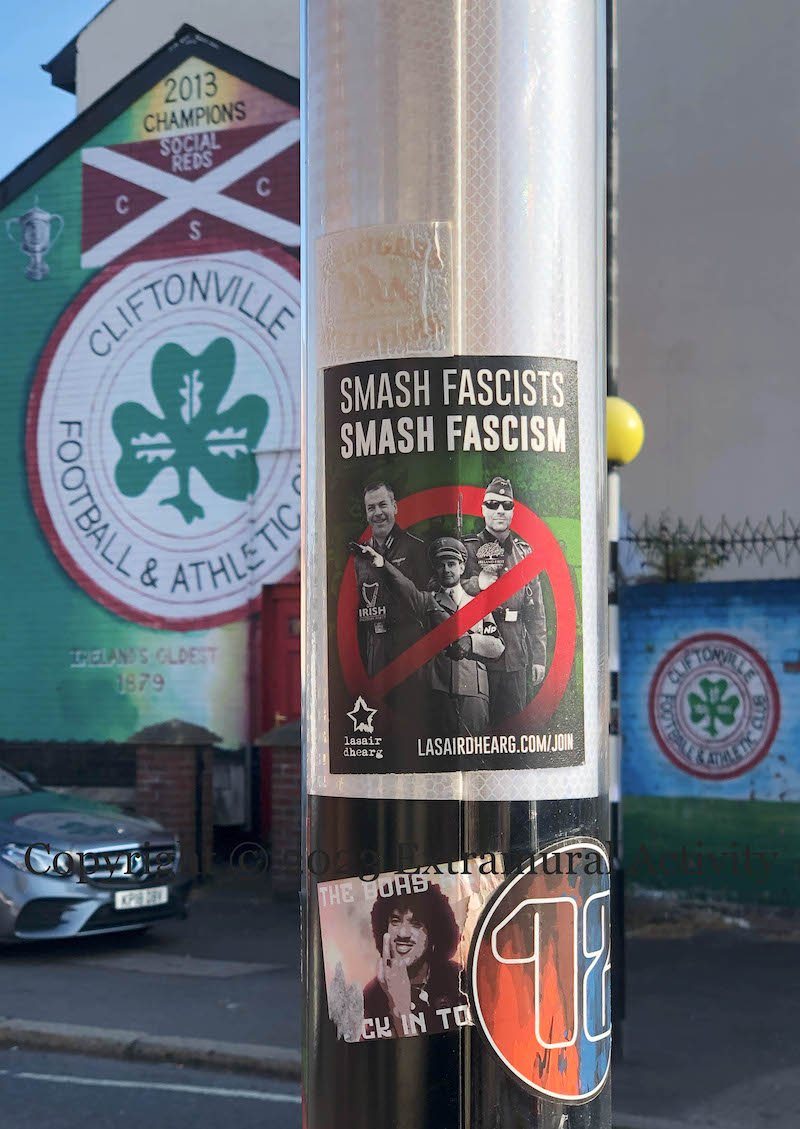
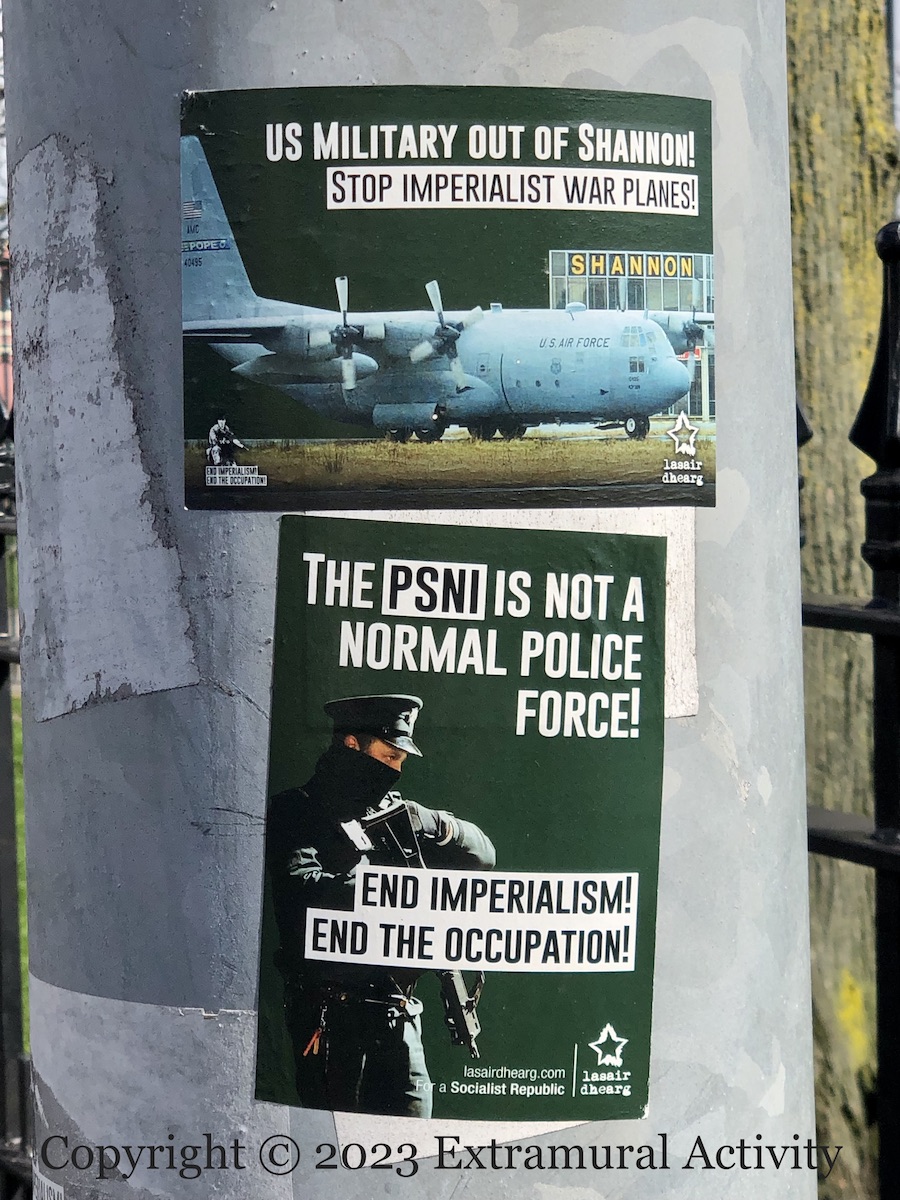
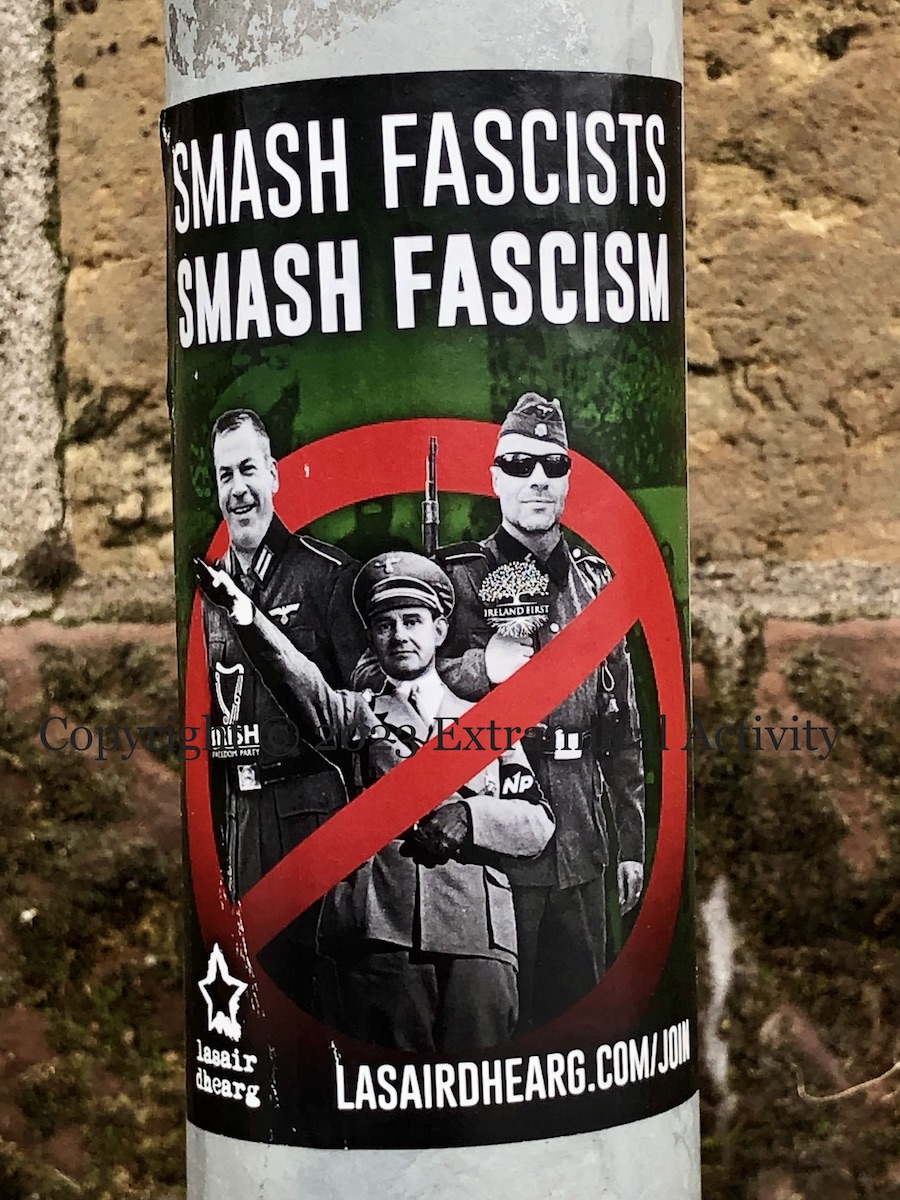
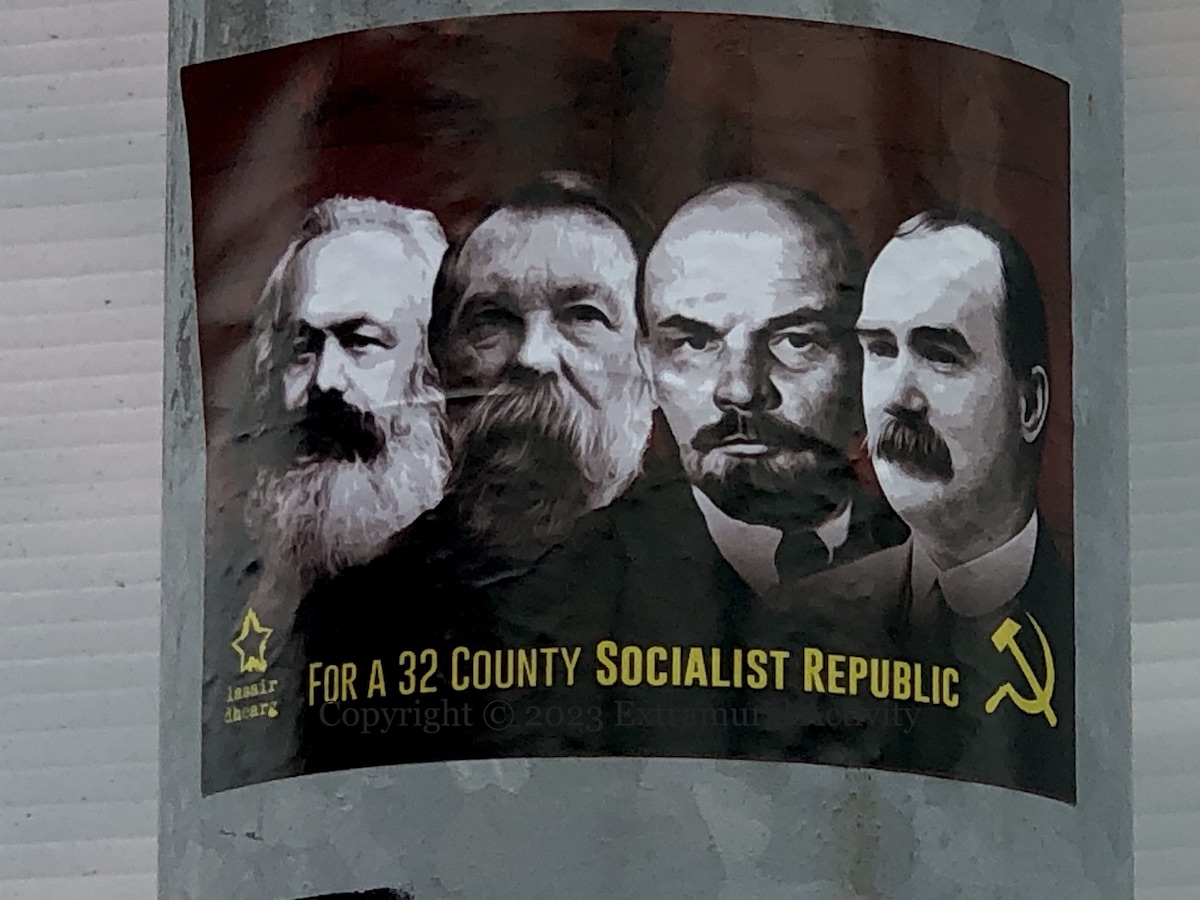
Here is a gallery of republican stickers on light poles – and one piece of graffiti – most from Lasaır Dhearg (web).
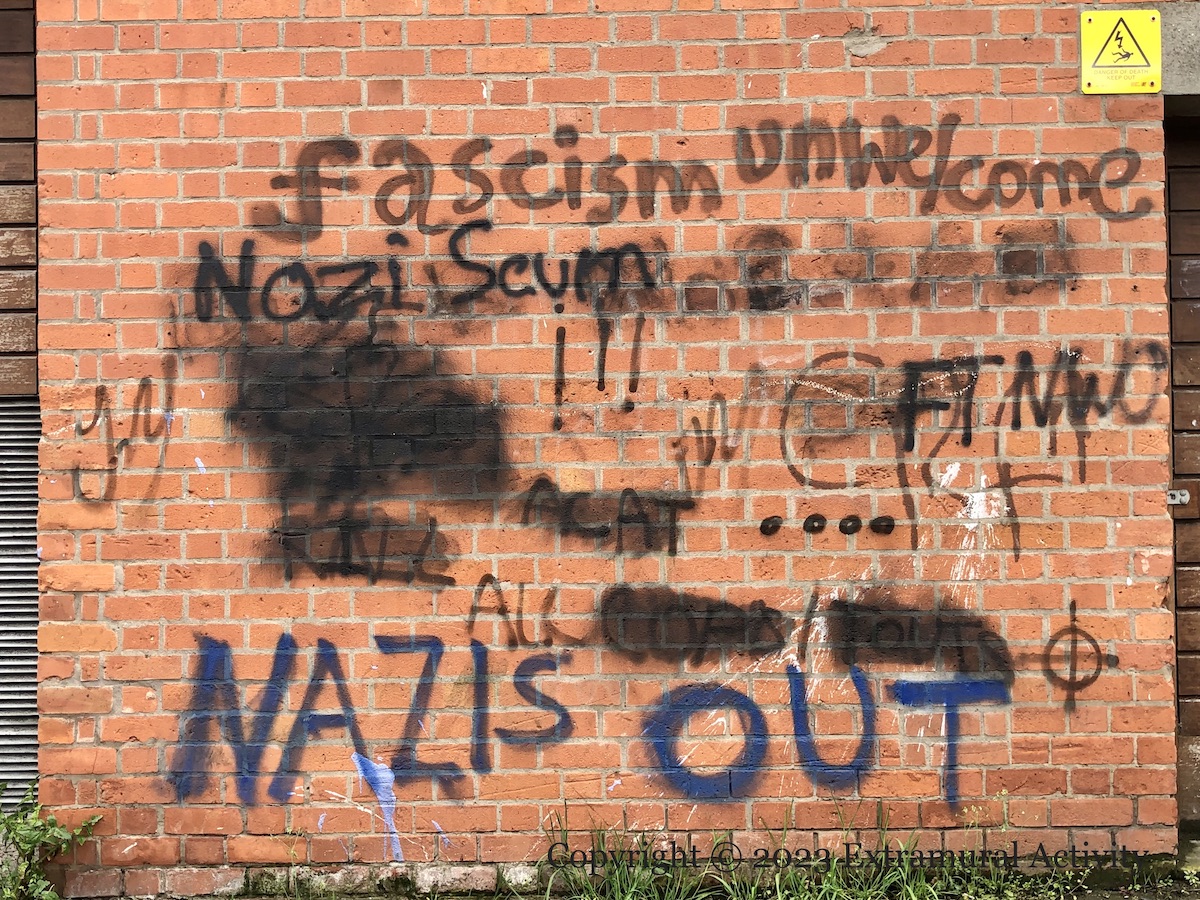
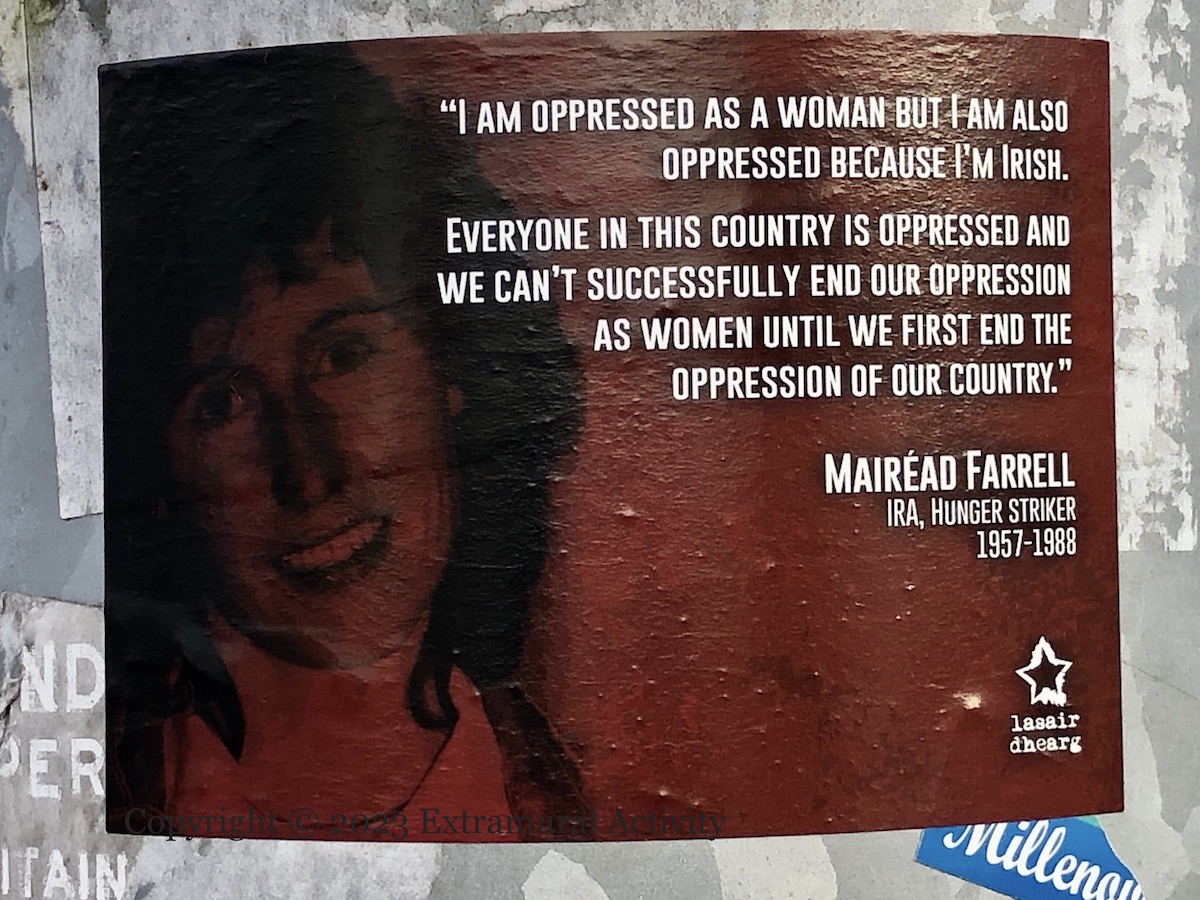
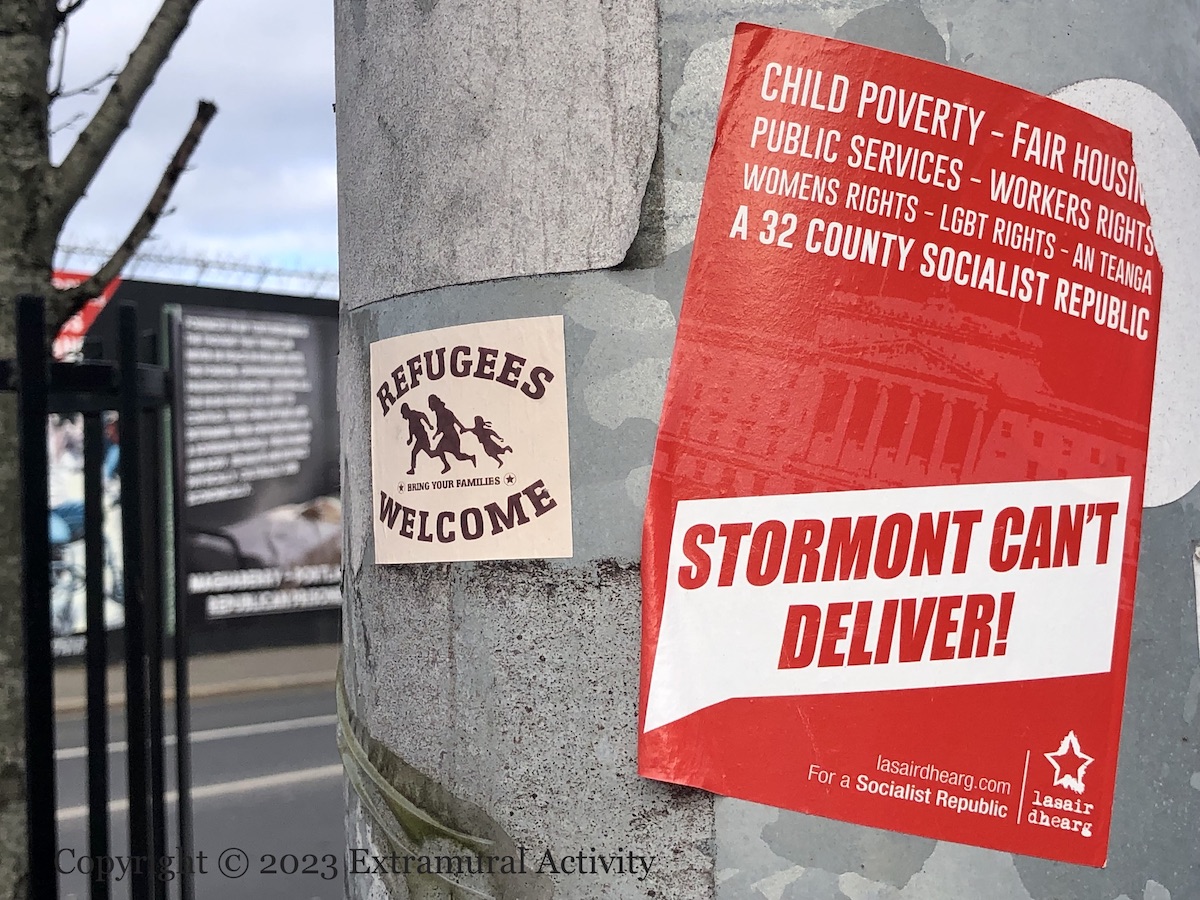
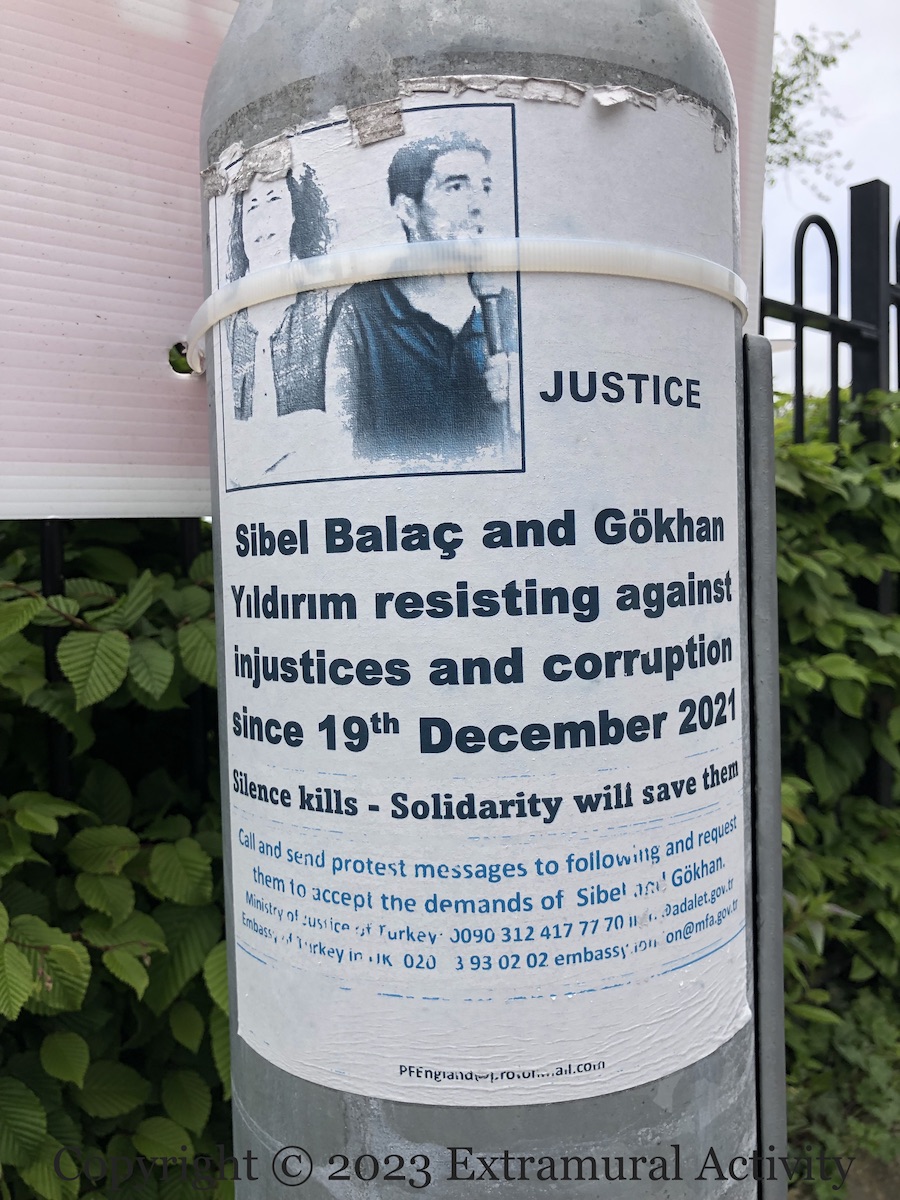
“Smash fascists, smash fascism.” For the Cliftonville murals in the background, see Red Army. “Stop imperialist war planes.” “The PSNI is not a normal police force.” “Fascism unwelcome” – graffiti on Broadway Maıréad Farrell “oppressed as a woman” – also used in Our Nation As A Whole; see also Just As Good As Others. “Stormont can’t deliver.” with “Refugees Welcome“ “Solidarity will save them” – hunger strikers Sibel Balaç and Gökhan Yıldırım. “Smash fascists, smash fascism.” Same sticker but in west Belfast. “For a 32 county socialist republic” – with that other “red army” Marx, Engels, Lenin, Connolly,
 Seosamh Mac Coille Collection