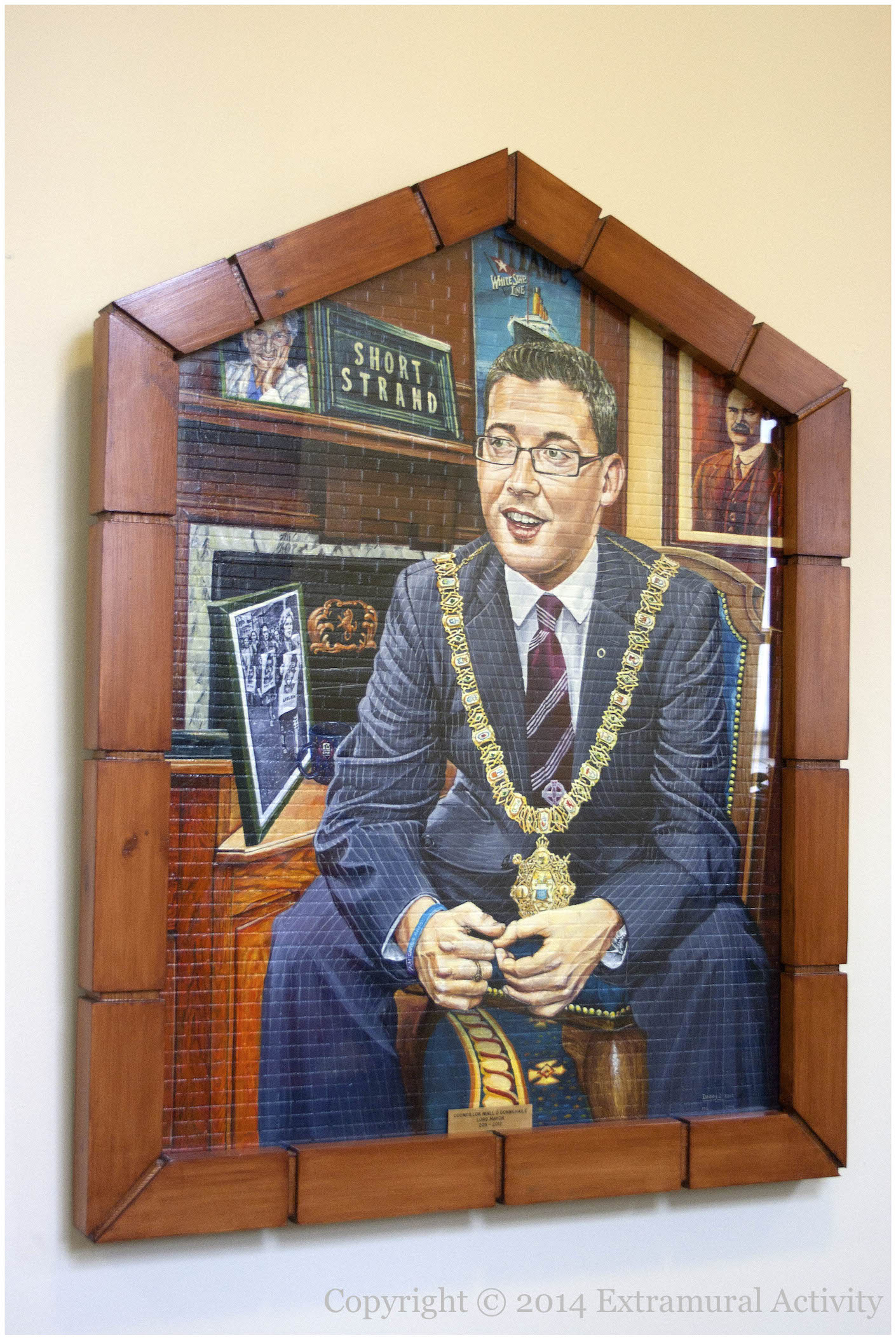
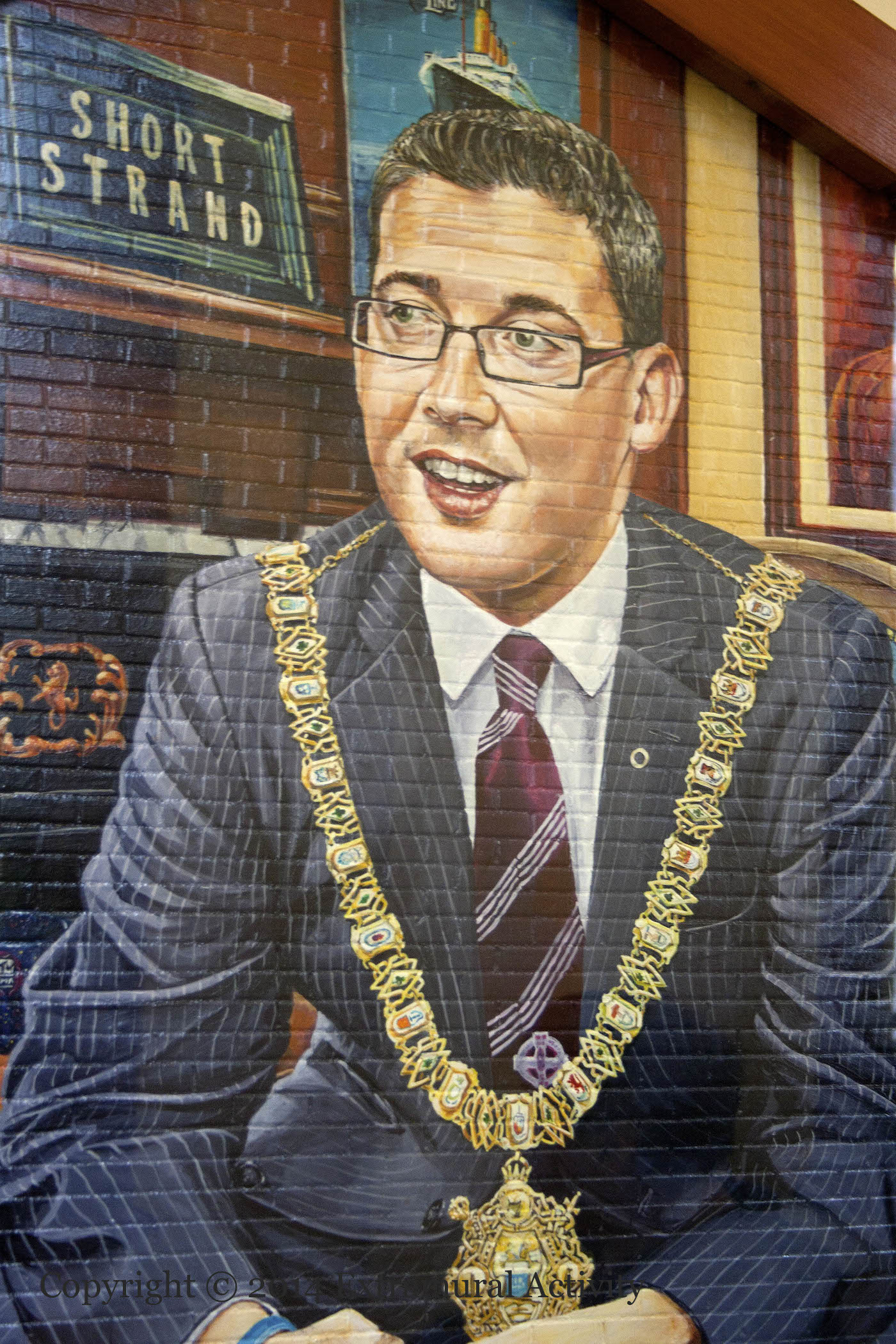
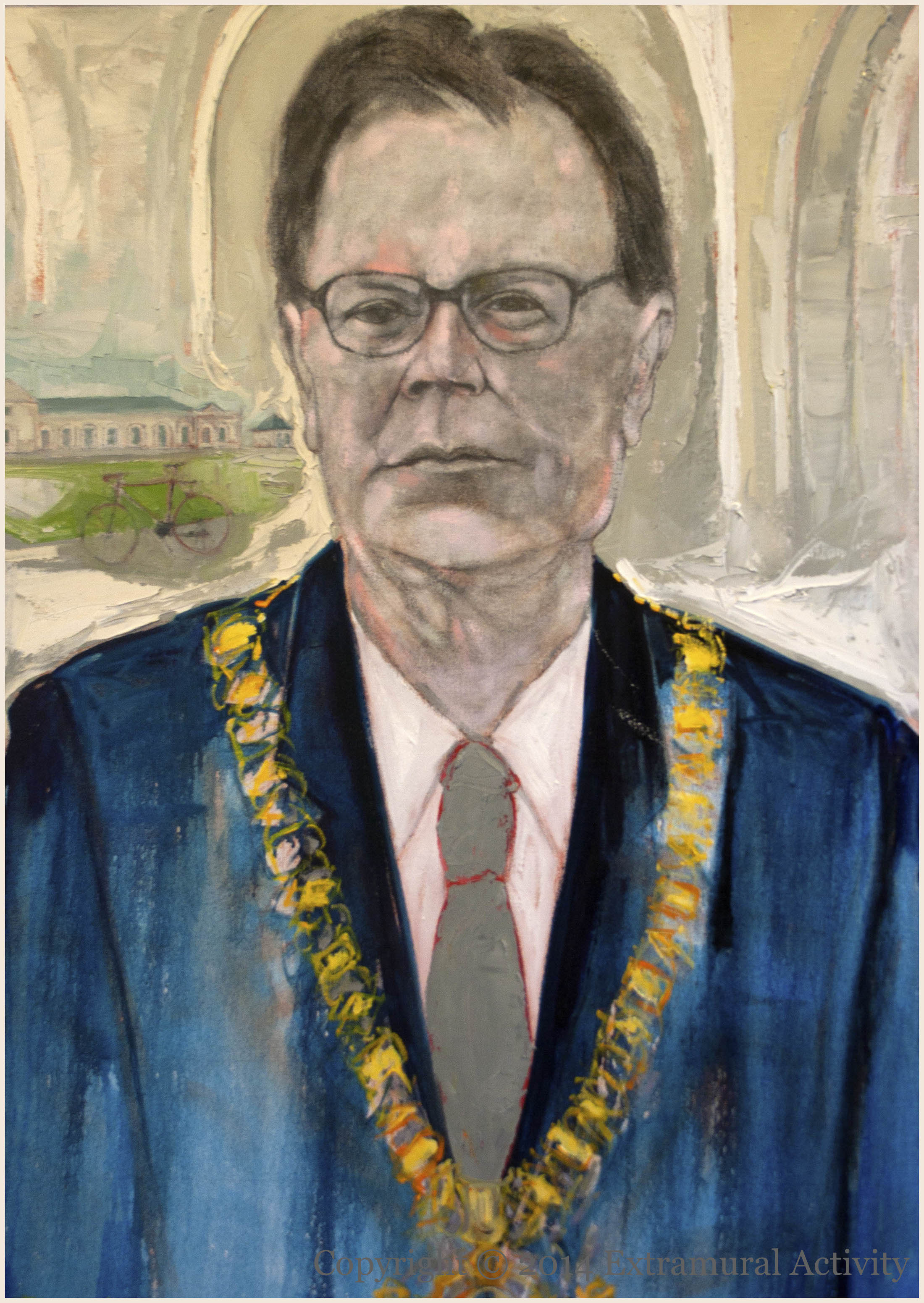
Each Lord Mayor of Belfast has an official portrait which hangs in Belfast City Hall. 2011-2012 Lord Mayor Nıall Ó Donnghaıle’s takes the unusual form of a mini-mural, in the shape of a gable wall and complete with mortar lines. The portrait features a “Short Strand” street-plate (Ó Donnghaıle is from there), images of Titanic, James Connolly – a portrait was mounted at a SIPTU event in the mayor’s chambers in October 2011, after pictures of the royal family had been removed in June, protesters, and an MTV mug. The artist talks about the piece on Slugger (audio) and CultureNI has a good write-up about the process.
Below are a detail from Ó Donnghaıle’s portrait and the more typical portrait of Tom Hartley, Lord Mayor 2008-2009, which includes the bicycle he is famous for riding around town.
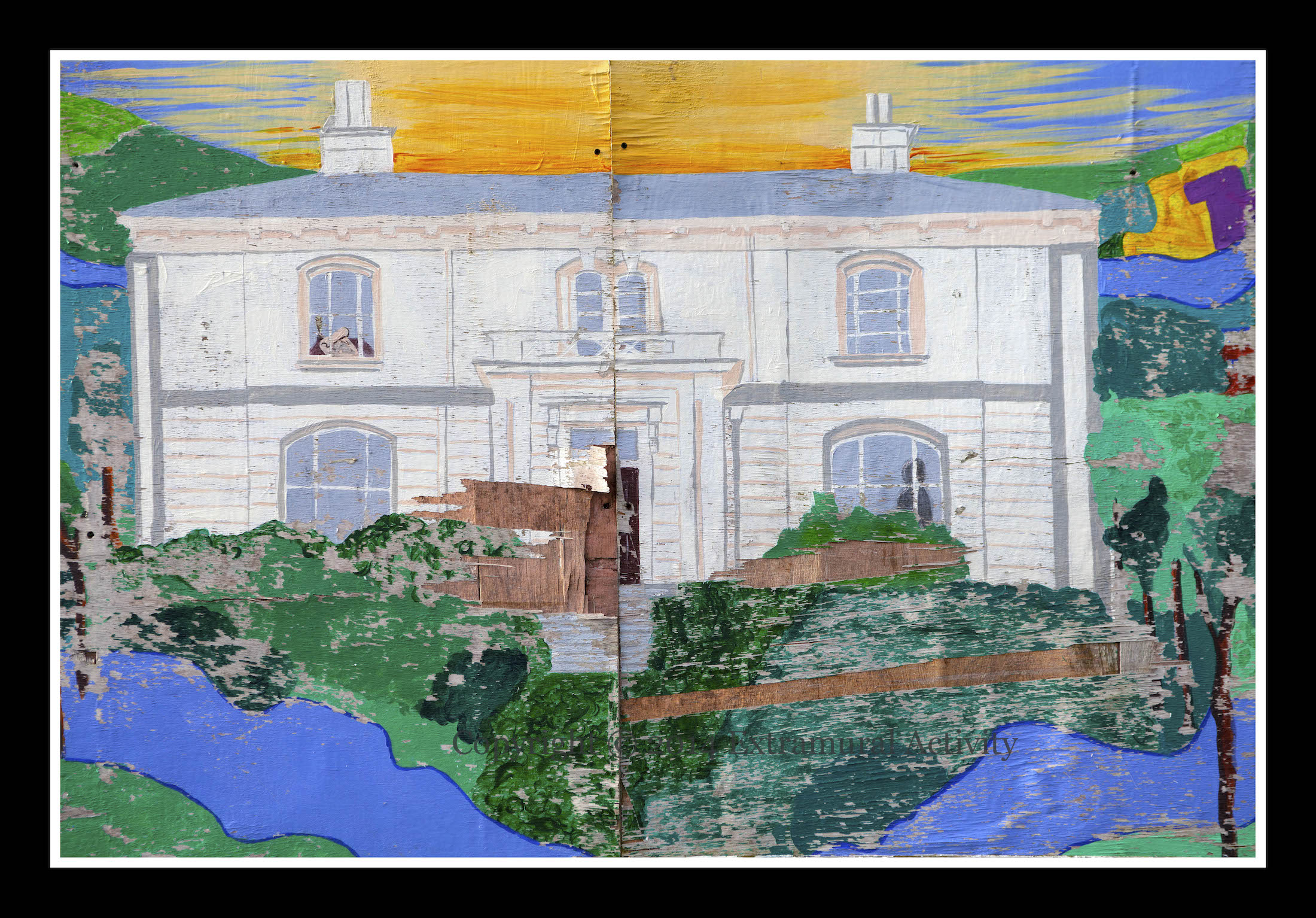
This image of Fernhill House is to be found on the wall of the community centre on the Forthriver Road; the house itself stands not far away on the other side of Glencairn park. Below is a video about the museum that was in the house; a video about the history of the house and grounds, which served as a training grounds for the west Belfast Volunteers and UVF at the time of the Ulster Covenant and WWI, is also available.
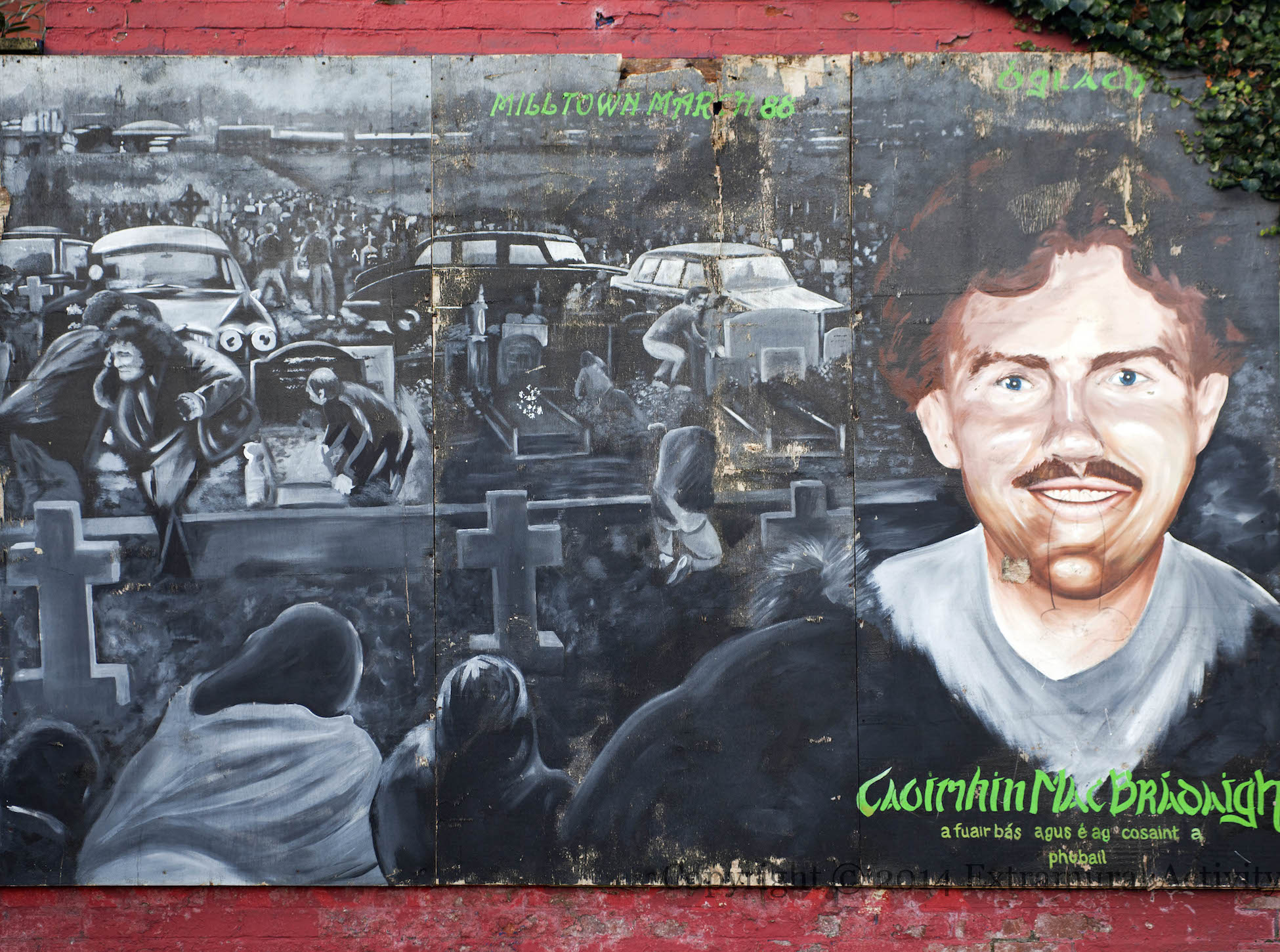
The board above commemorates Caoımhín Mac Brádaıgh (Kevin Brady) who was one of three people killed in Milltown cemetery by Michael Stone in his attack at the burial of the ‘Gibraltar 3’. This board is in the South Link (originally it was on the Andersonstown Road), a short distance from where Corporals Wood and Howes were killed during Mac Brádaıgh’s own funeral, three days later (1998-03-19).
For information about the photograph on which the image is based, see 25 Years – In Progress.
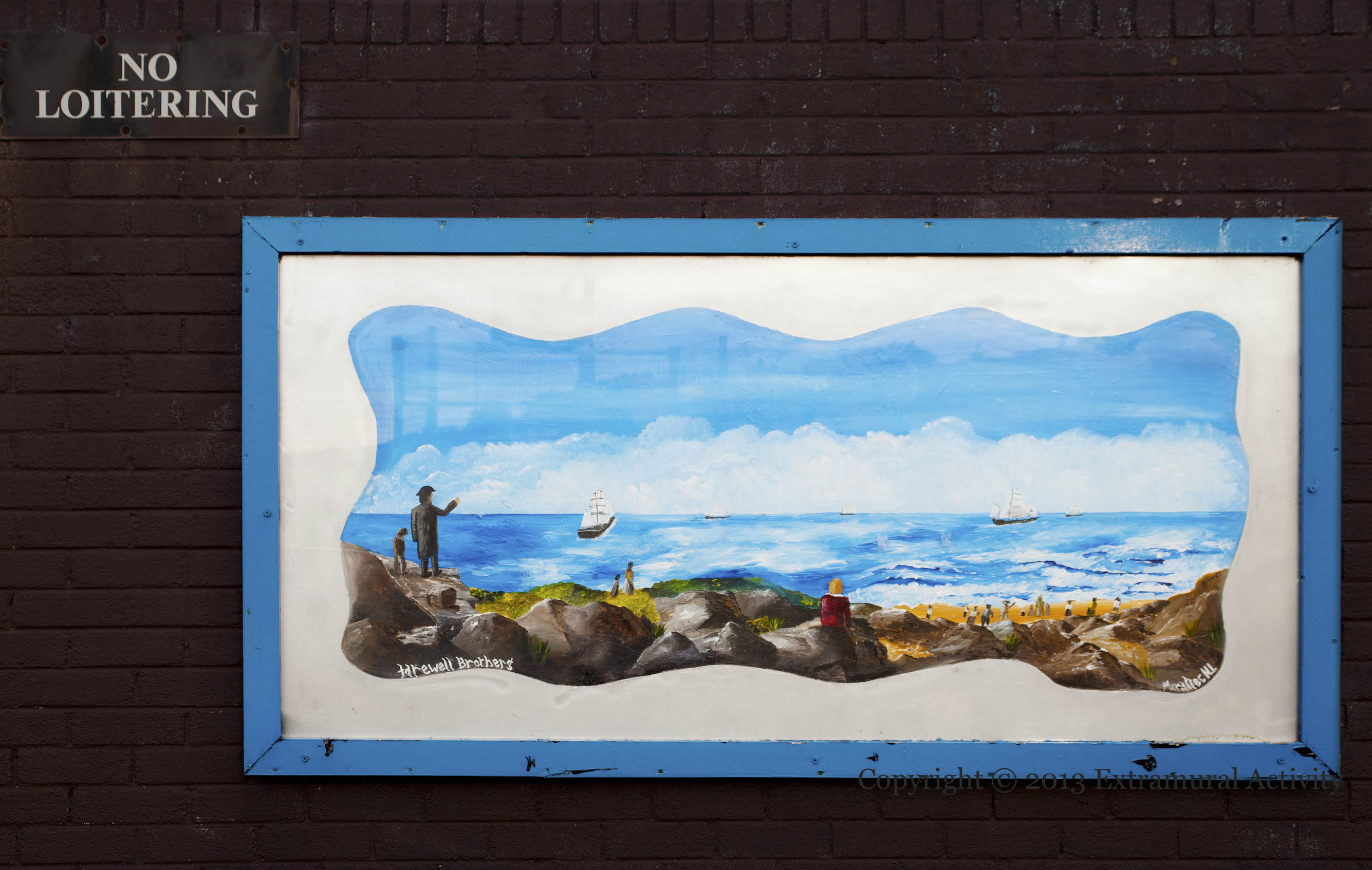
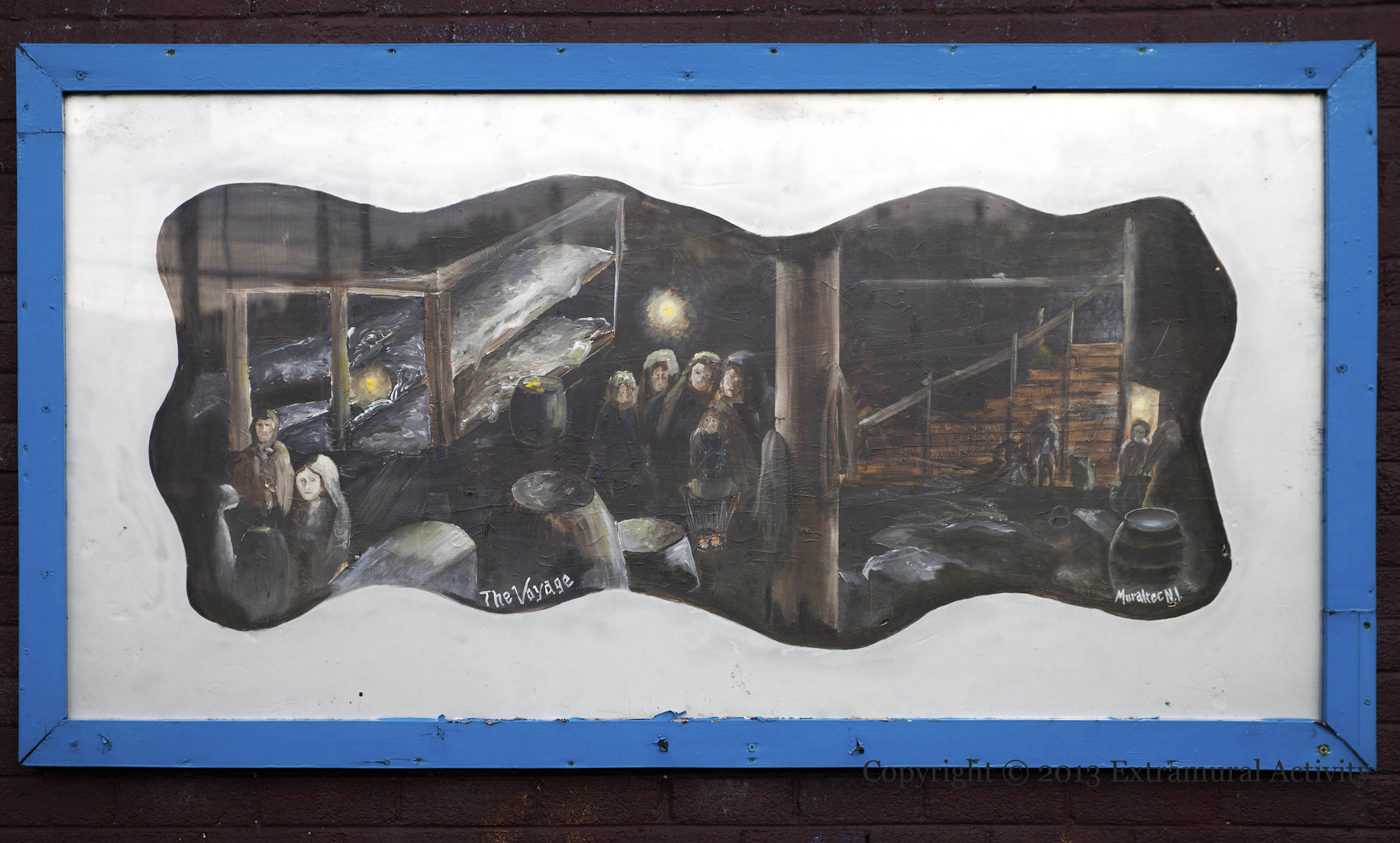
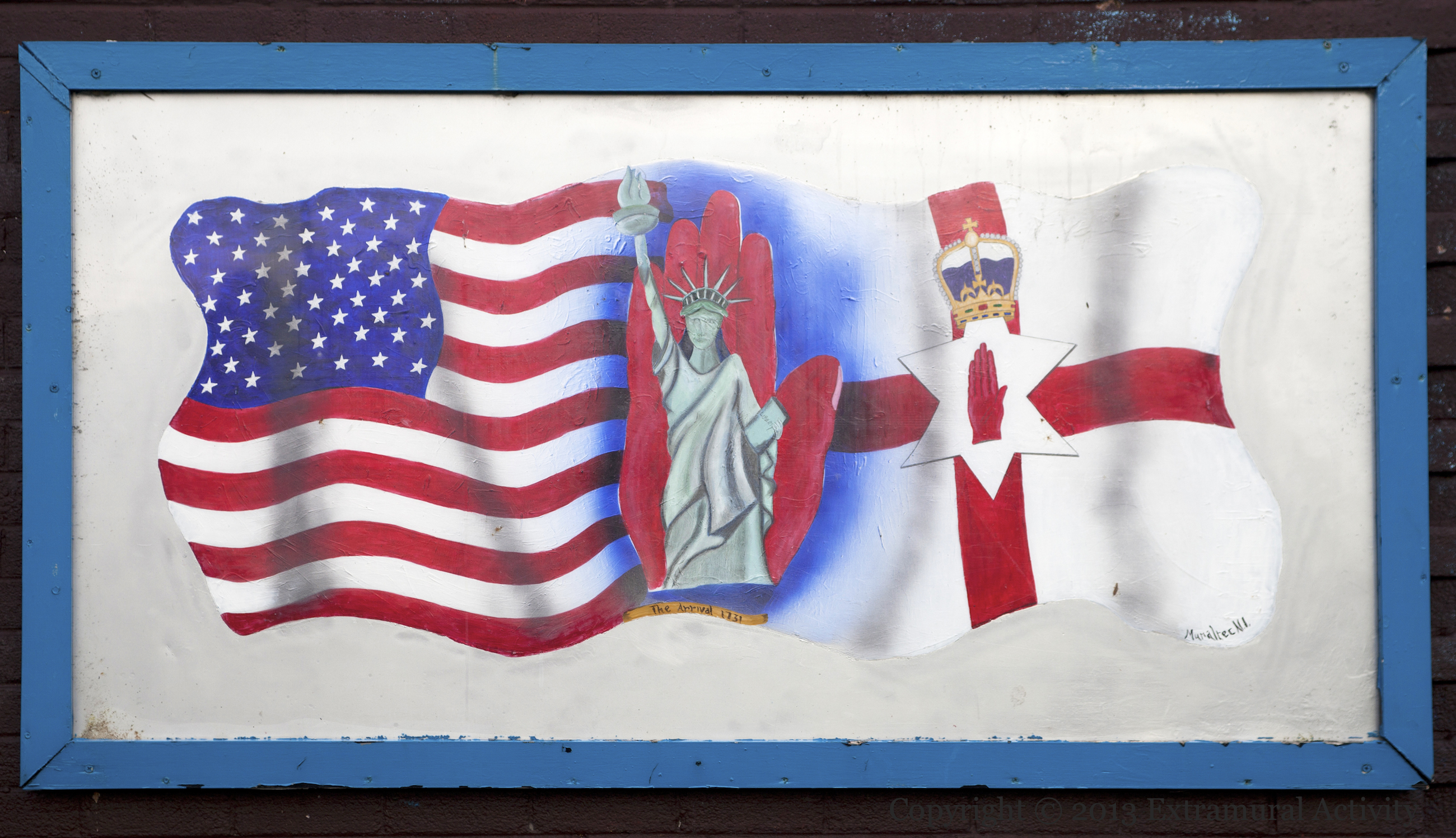
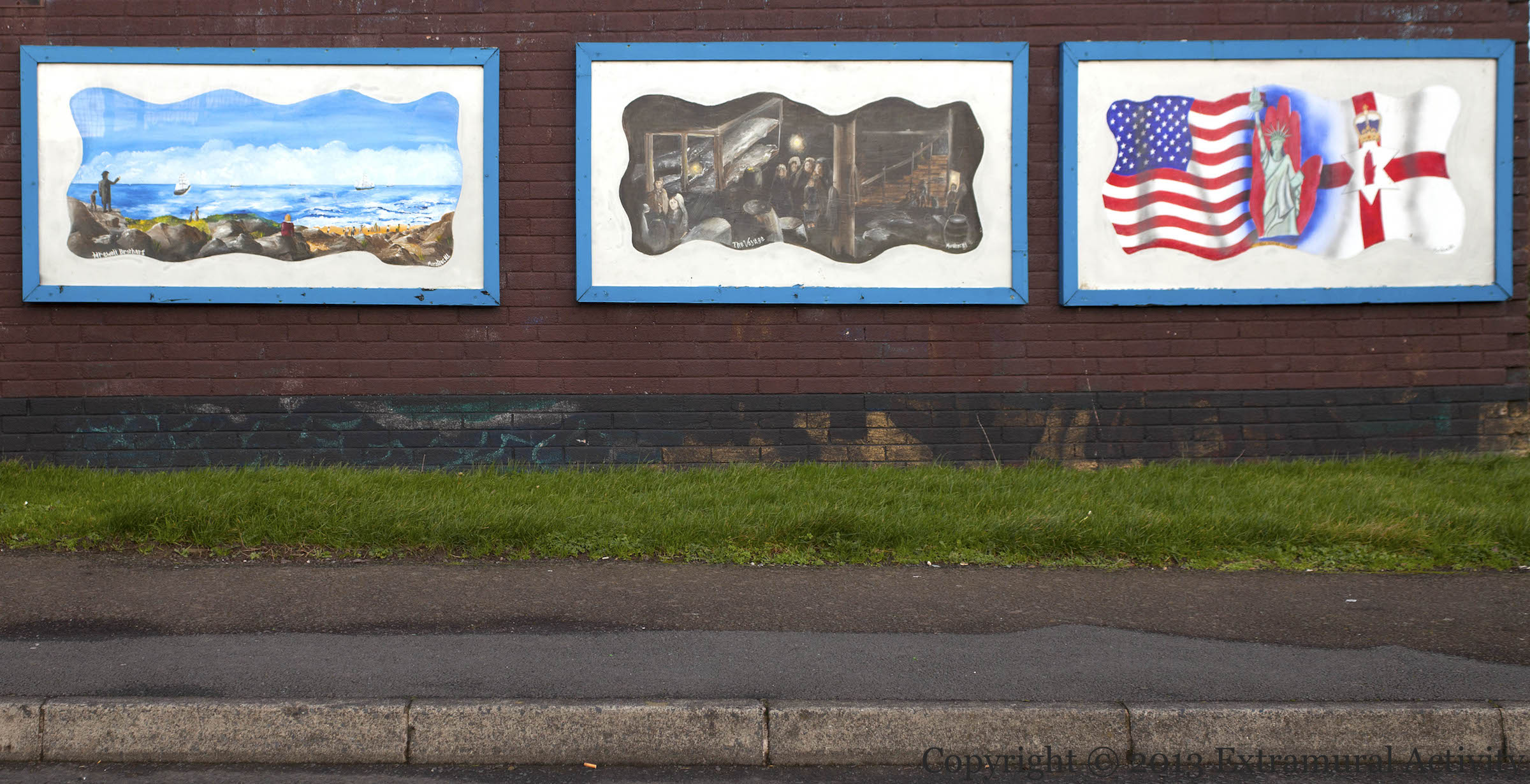
Three panels in Newtownards about the Scotch-Irish (or: Ulster Scots) emigration to the United States in the middle of the eighteenth century. Each of the three shows a stage of the experience: ‘Farewell Brothers’ shows family left behind looking out over the sea at the receding ships; ‘The Voyage’ shows sleeping conditions on-board; ‘The Arrival 1731’ shows the flags of the United States and Northern Ireland, with the statue of liberty superimposed upon a red hand.
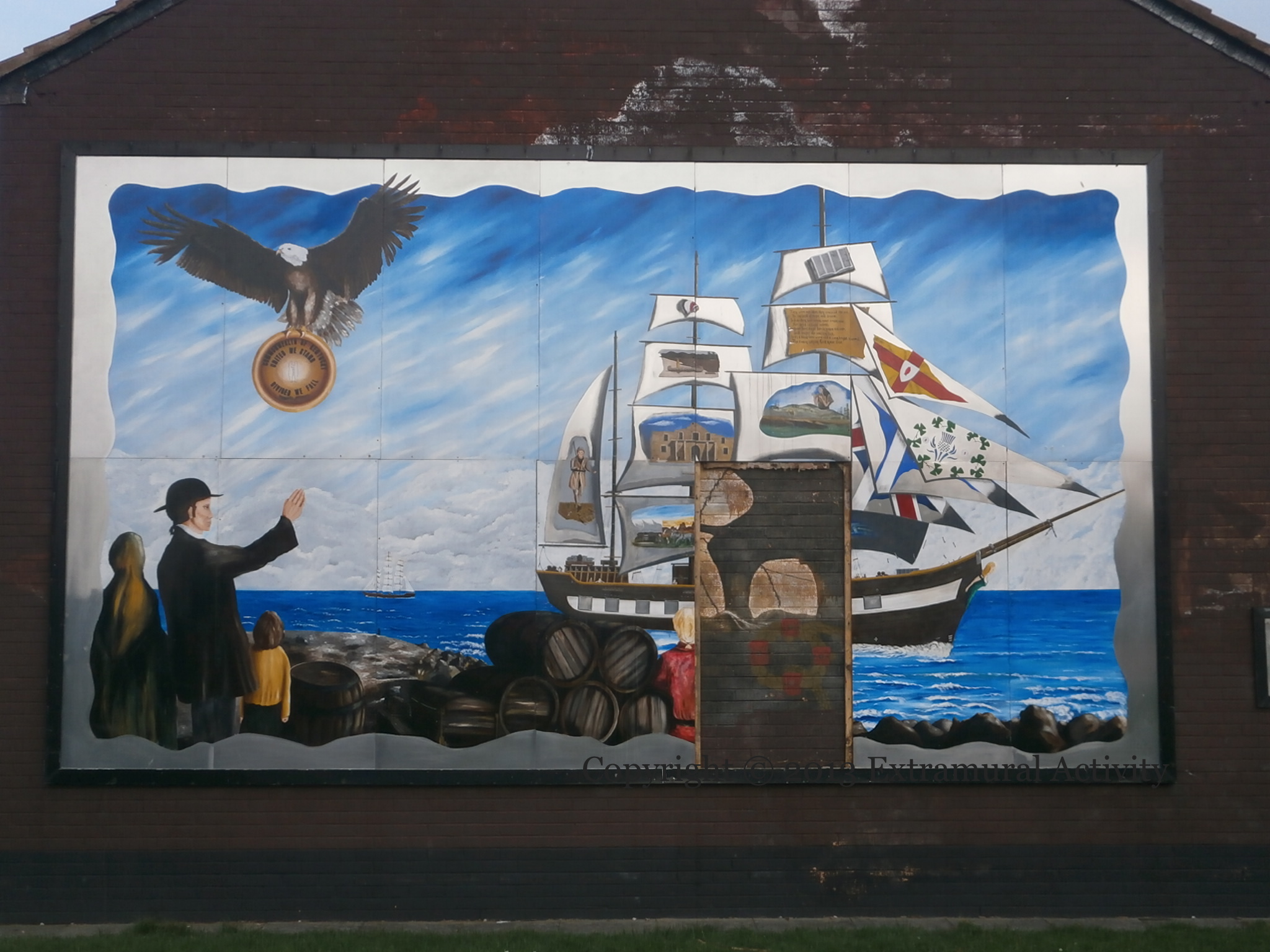
The three panels are next to a larger, now damaged, board also portraying emigration to the States, shown in the final images below.
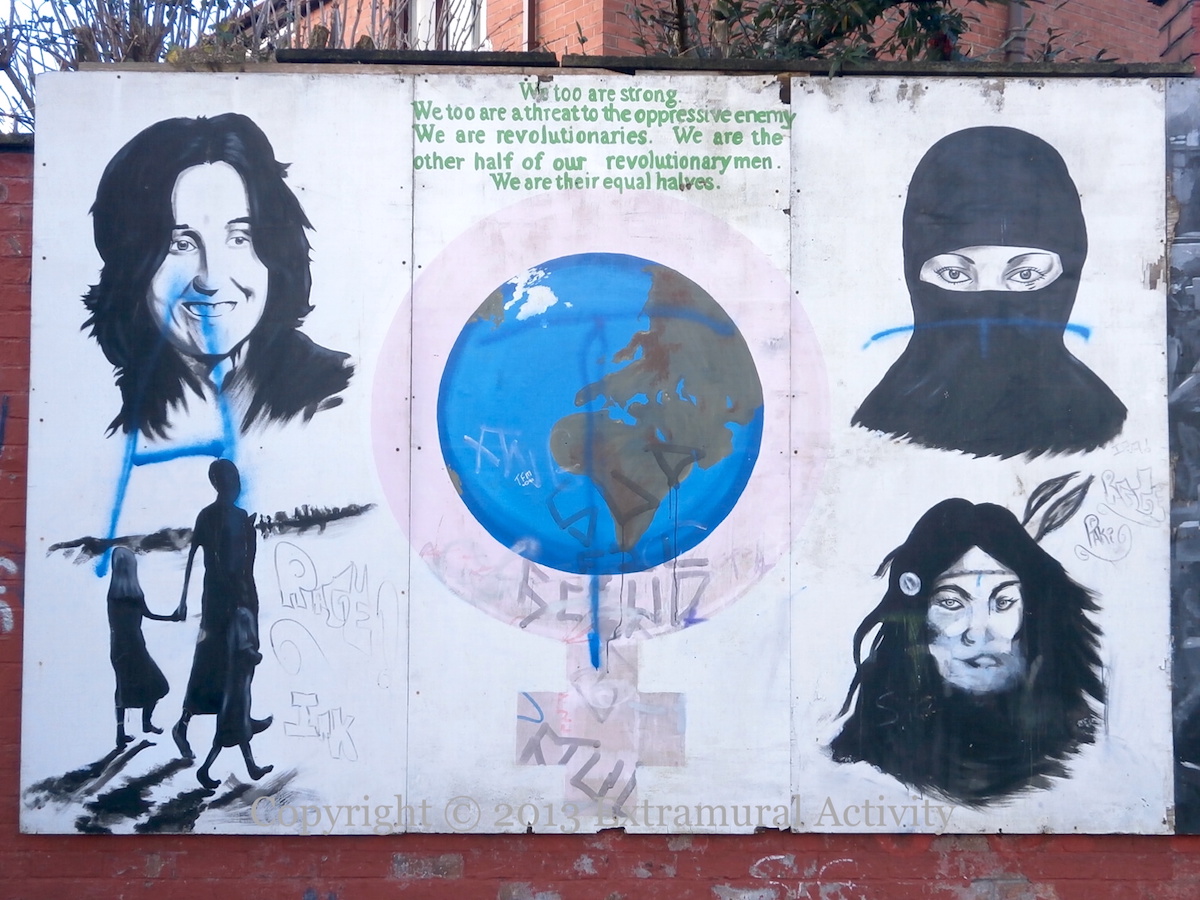
“We too are strong. We too are a threat to the oppressive enemy. We are revolutionaries. We are the other half of our revolutionary men. We are their equal halves.” Earth is contained within the symbol for woman. The IRA’s Maıréad Farrell is in the top left.
Next to Mac Brádaıgh in South Link, Andersonstown, west Belfast
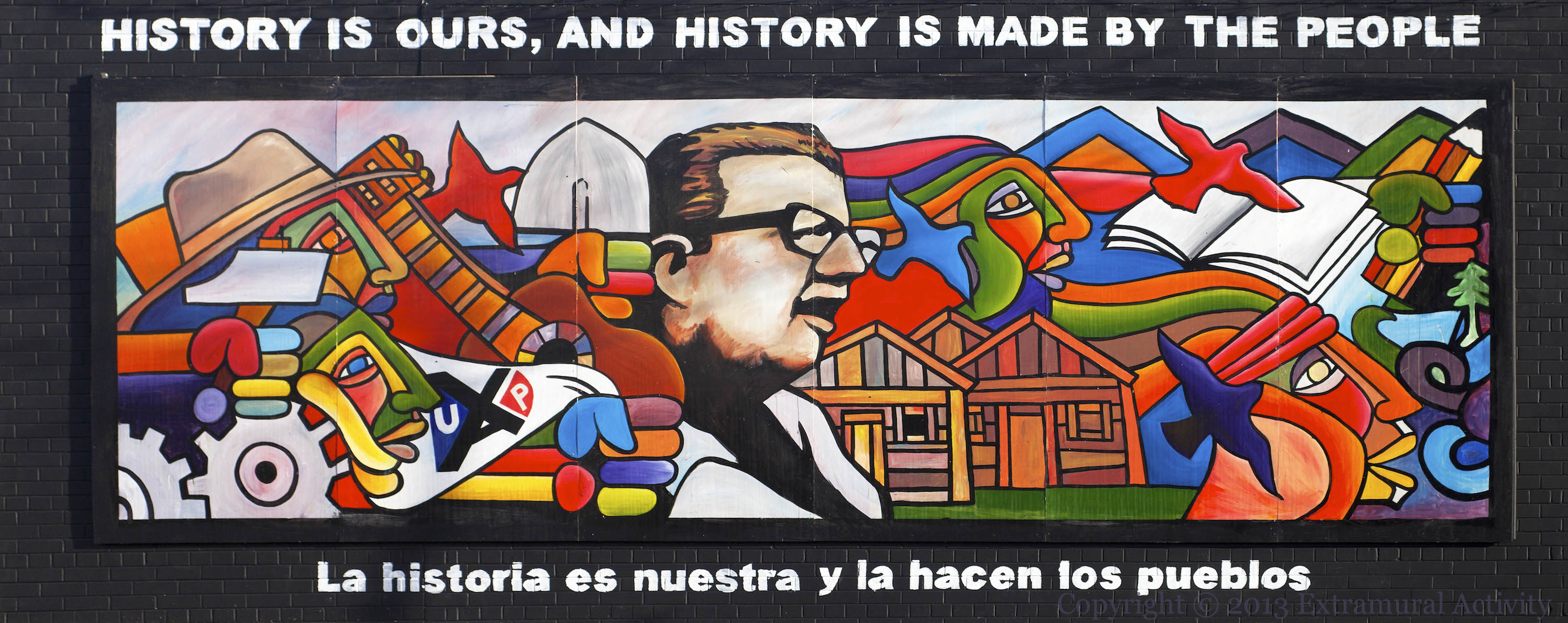
“History is ours, and history is made by the people — La historia es nuestra y la hacon los pueblos”
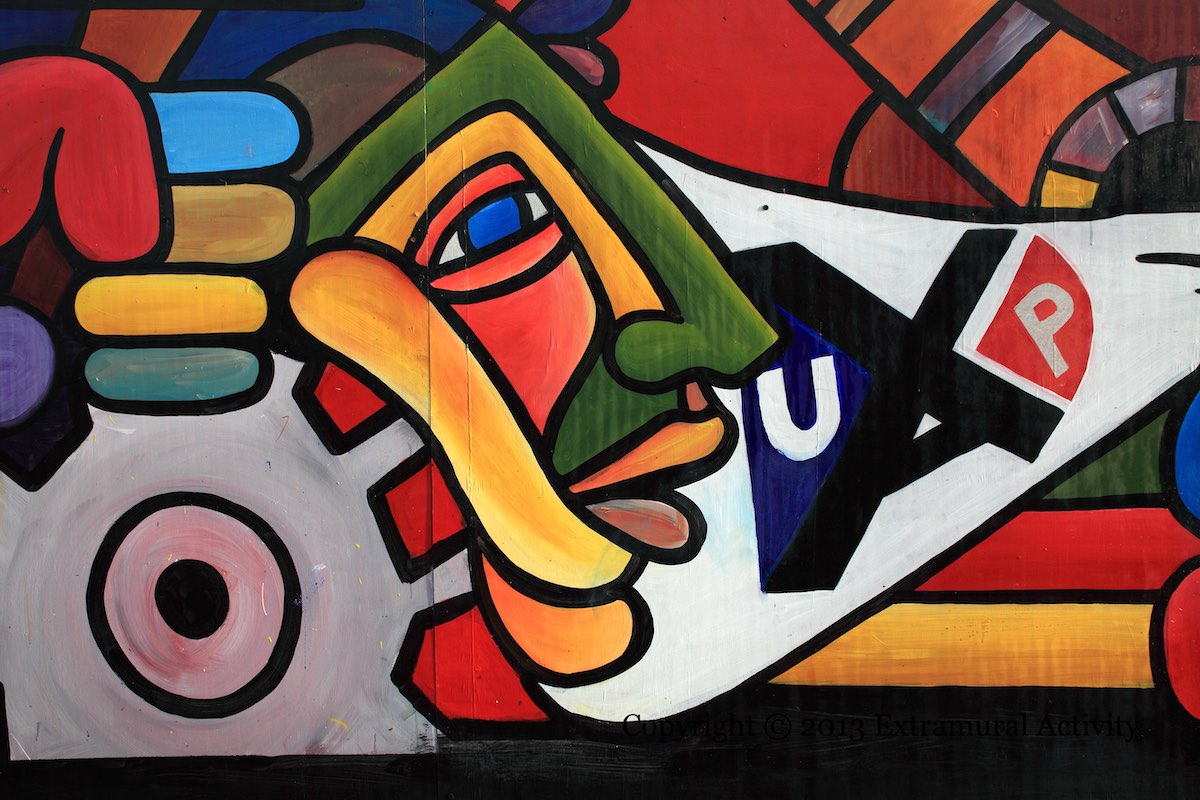
Here is a super-wide image of the new (c. Dec. 10th, 2013) board on Northumberland Street celebrating the socialist movement in 1970’s Chile. The Unidad Popular, whose emblem can be seen centre-left and in the close-up below, was a coalition of left-wing parties who supported the Marxist Salvador Allende (seen in the middle) for president in the election of 1970. Allende served as president from 1970-1973 until committing suicide during the coup.
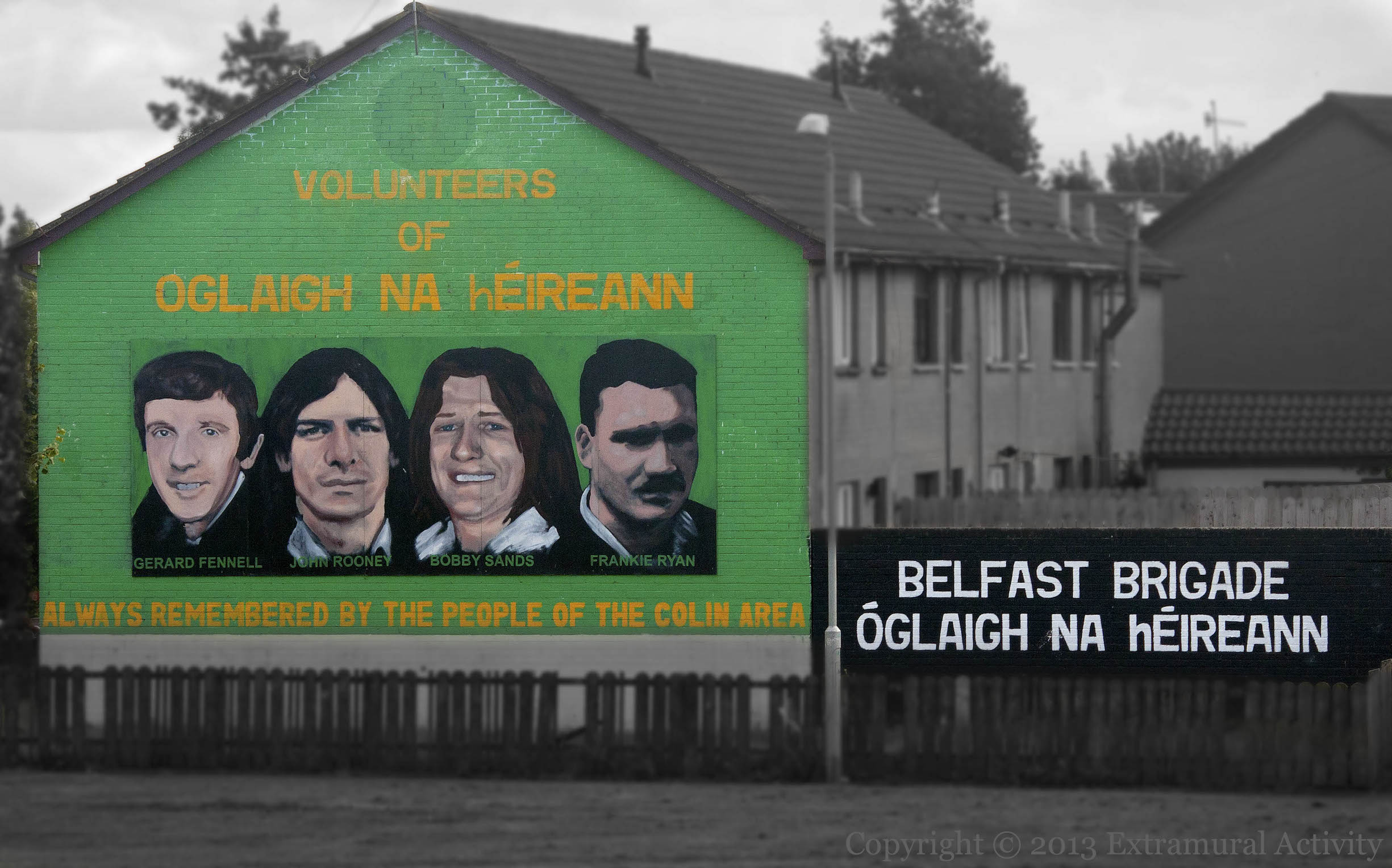
This mural commemorates Gerard Fennell, John Rooney, Bobby Sands, and Frankie Ryan, IRA volunteers from the Twinbrook and Poleglass areas who died between 1974 and 1991 (Ryan).
The mural is visible to drivers on the Stewartstown Road.
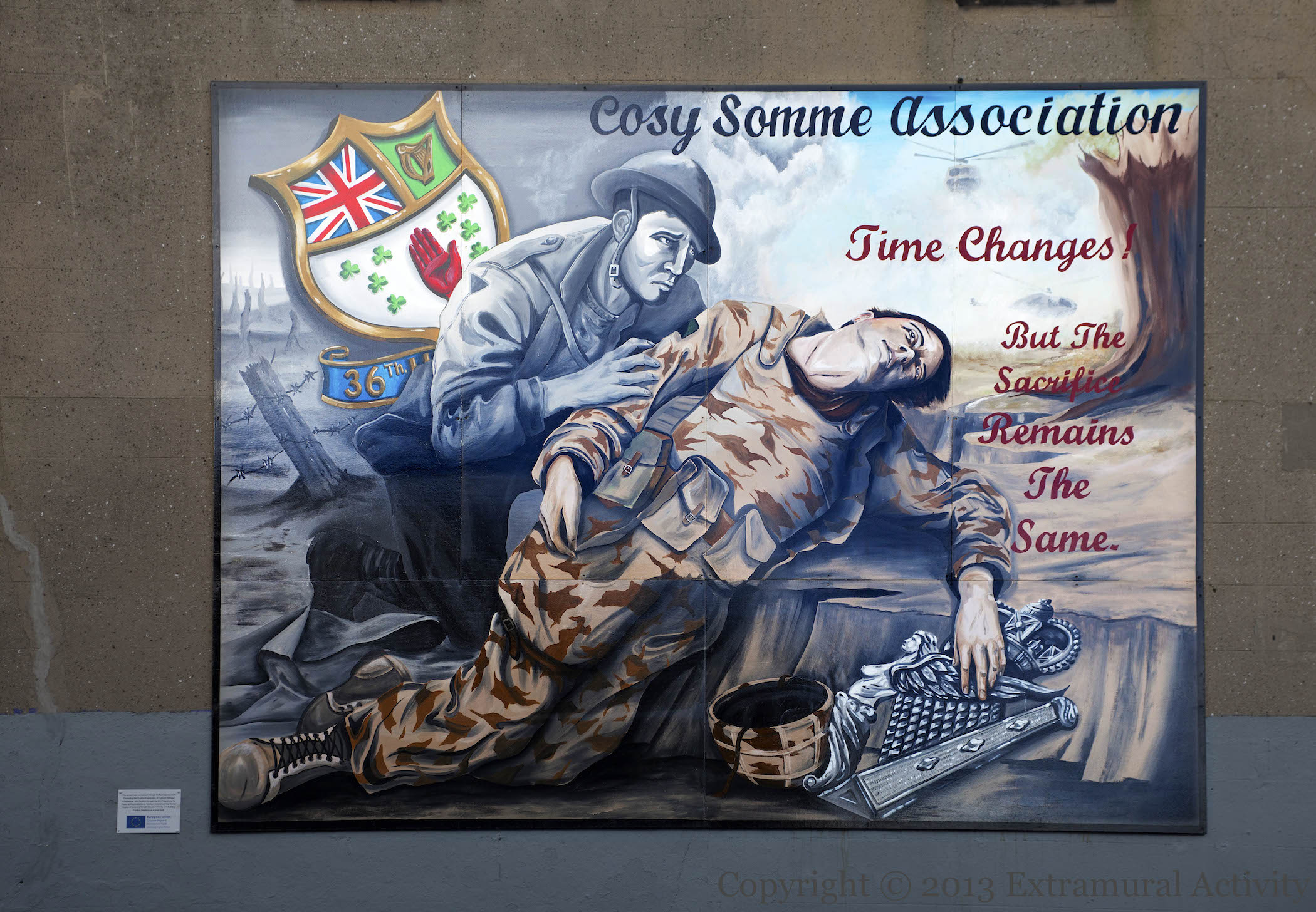
“Time changes! But the sacrifice remains the same.” Pictured is a board in Ogilvie Street in east Belfast, sponsored by the EU and the Cosy Somme Association, showing, in black and white, a WWI soldier, who is comforting another solider, in modern gear and in colour. The emblems of the 36th (Ulster) division and Royal Irish Rifles are also shown.
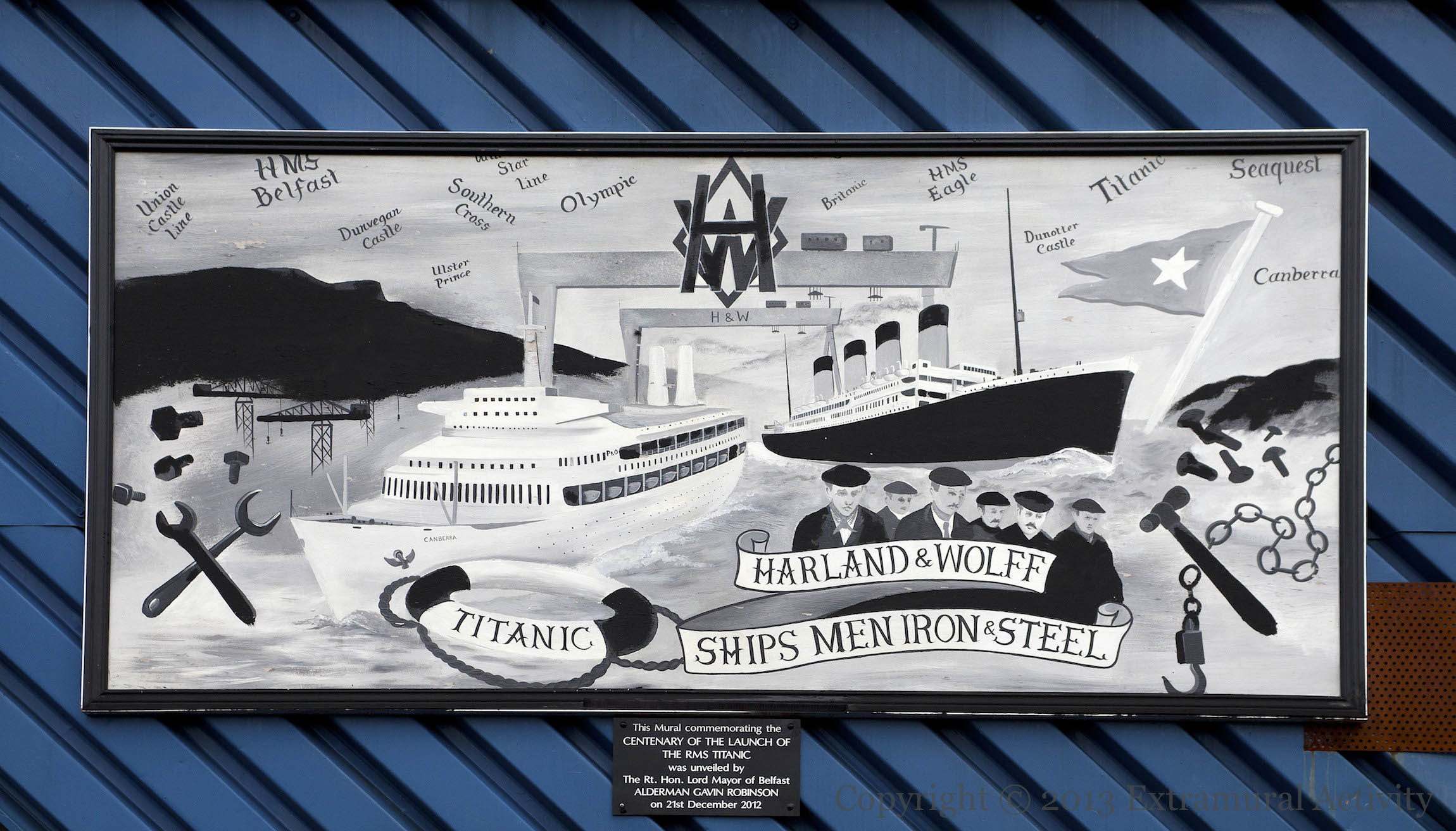
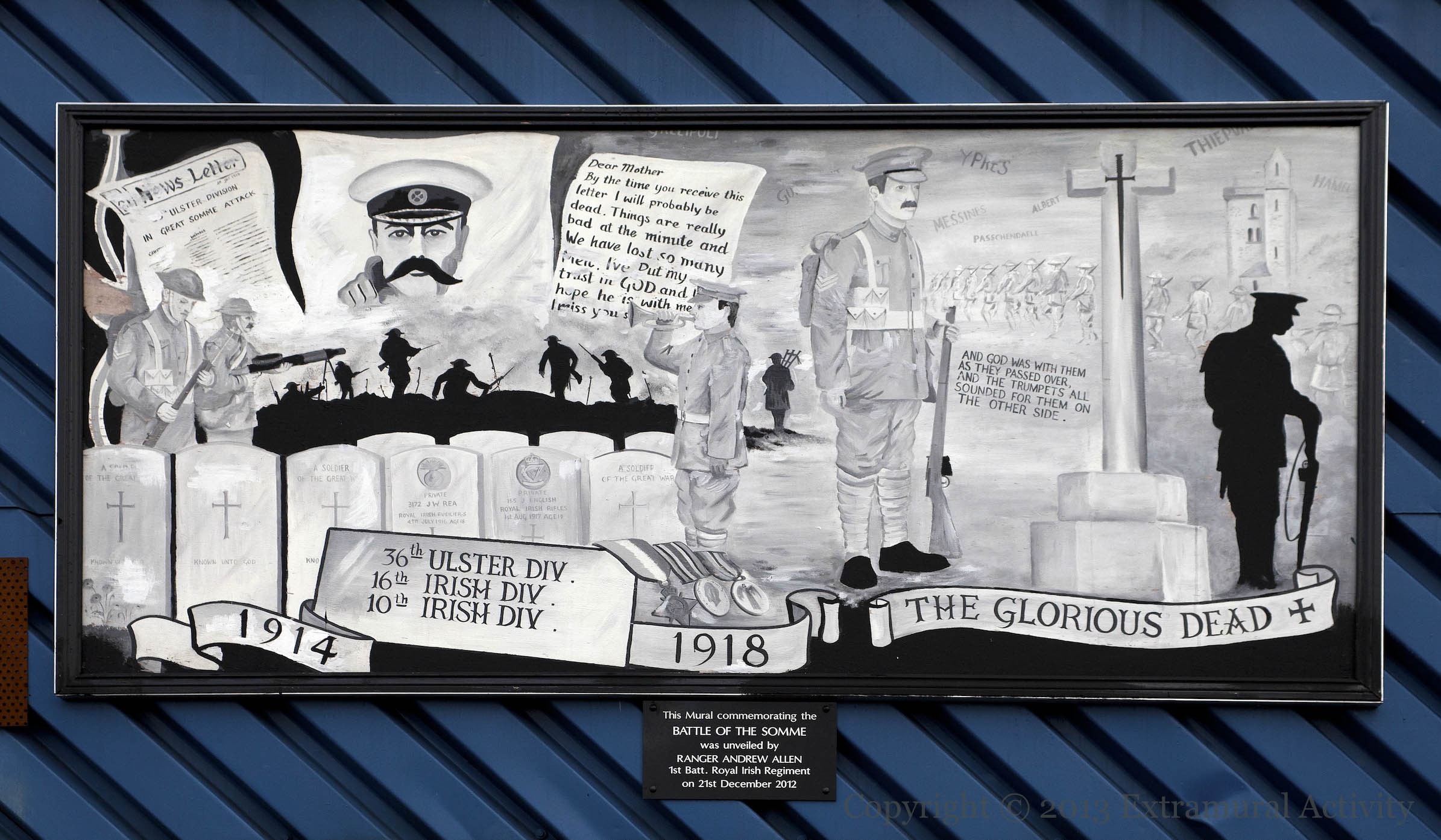
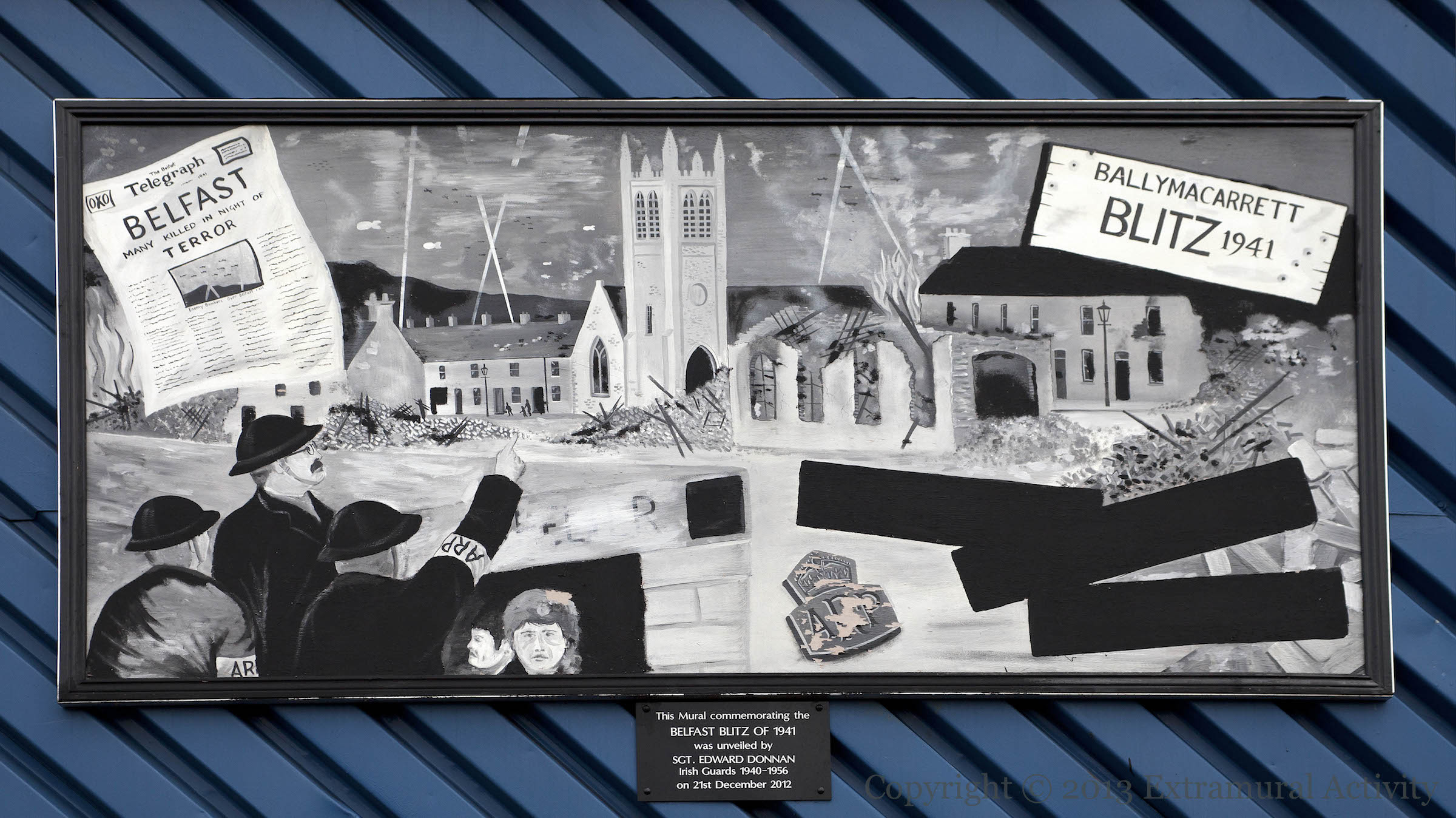
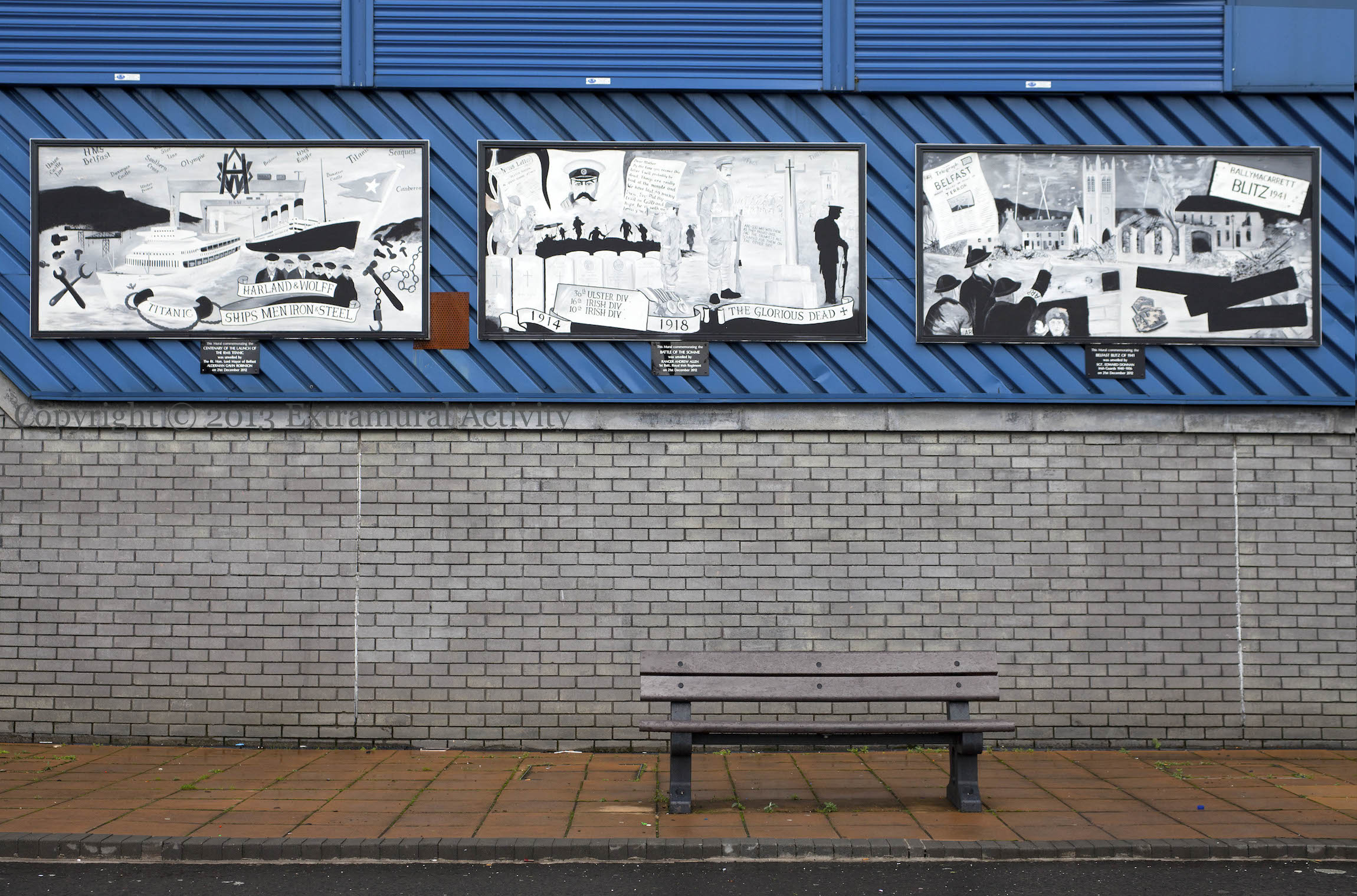
These three painted boards, in frames, on the exterior of the Connswater Community Centre, were unveiled this past December (2012). The first commemorates Titanic, the second the Somme, and the third the WWII Blitz.
 Seosamh Mac Coille Collection