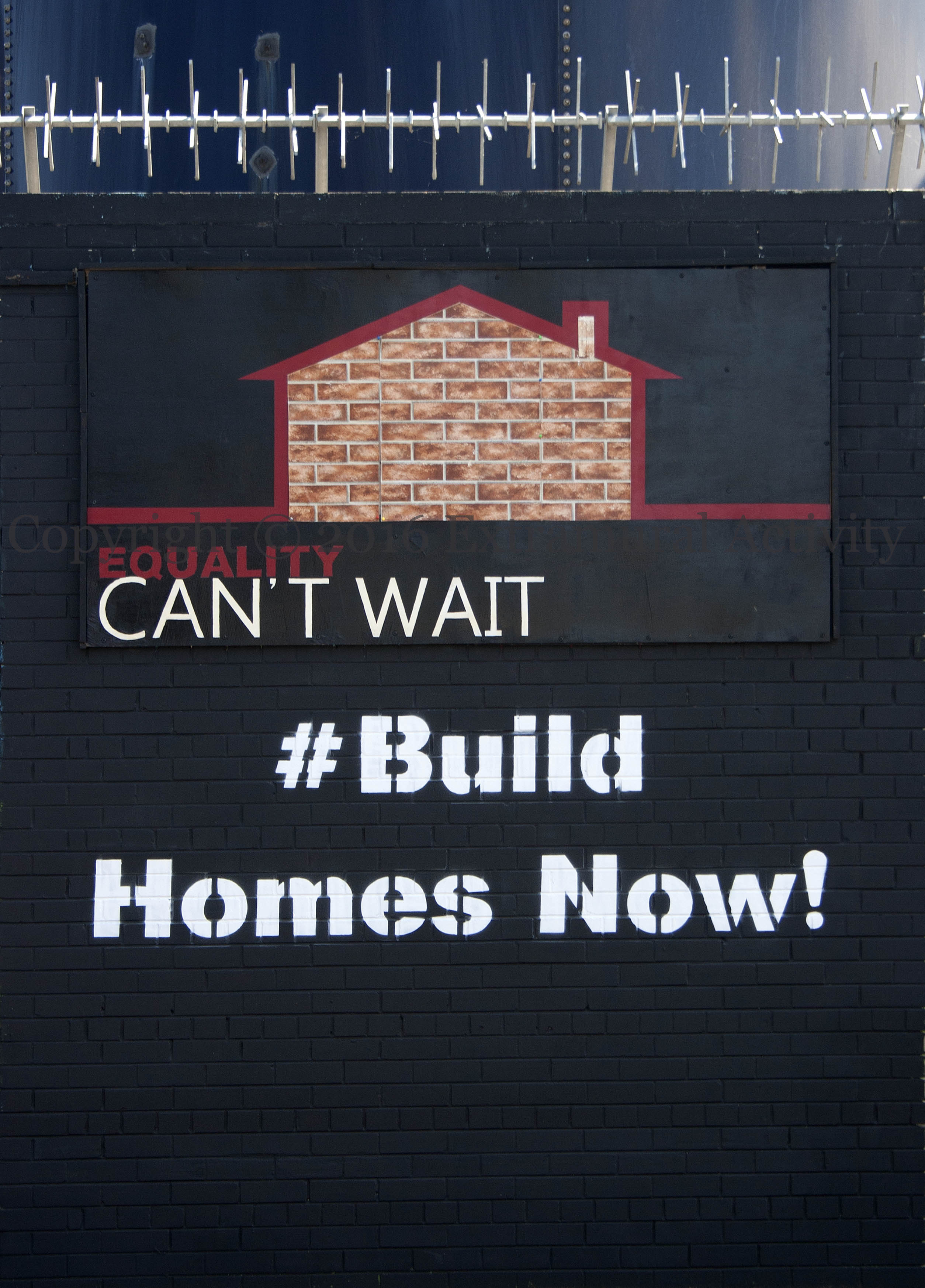
Here is another mural, this time in west Belfast, in the campaign demanding a response to a shortage in low-income housing. For more, see previously, Equality Can’t Wait.
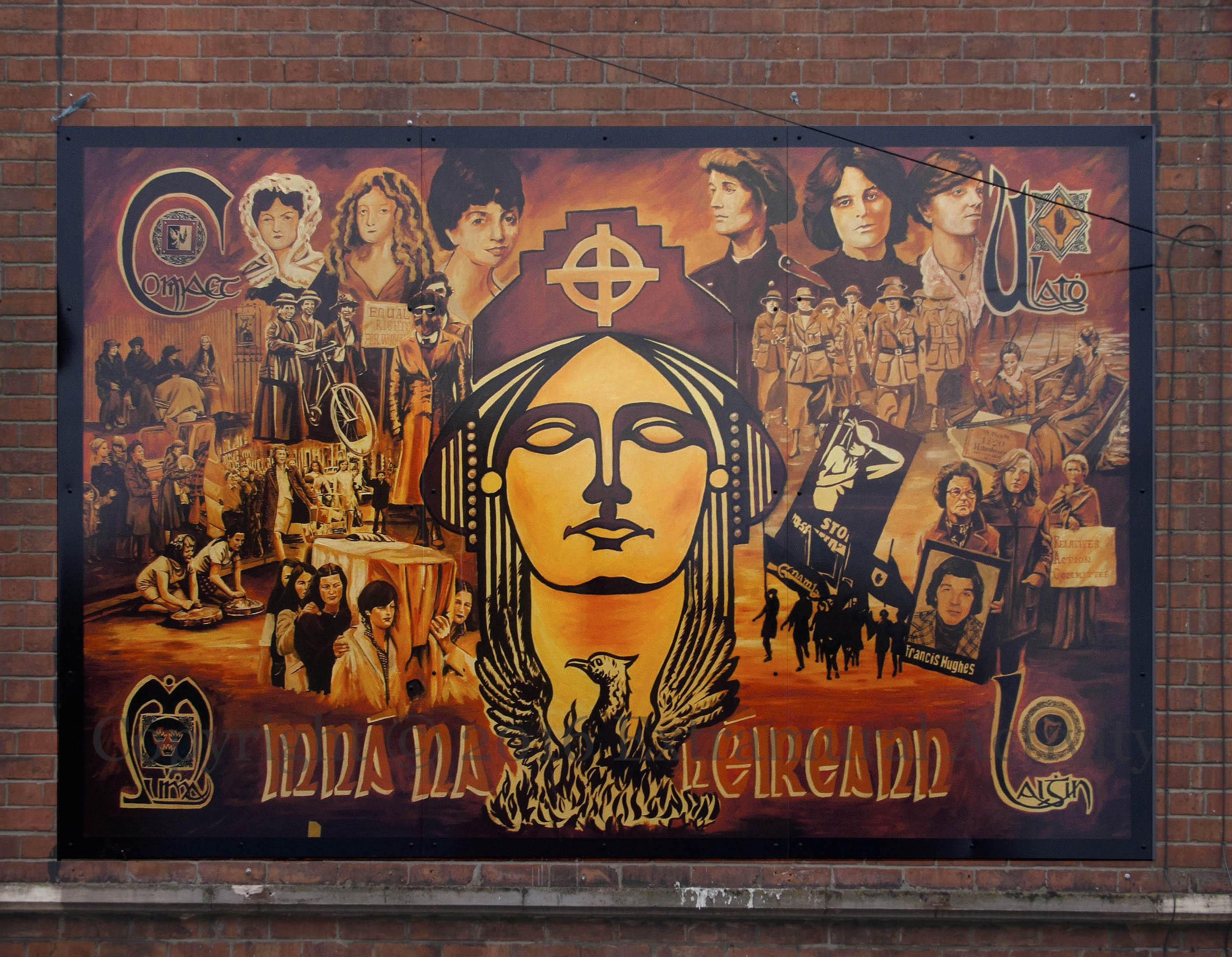
Érıu/Éıre of the Tuatha Dé Danann, queen of Ireland, (as depicted by Richard J King) is at the centre of various representations of republican women. Along the top are Ann Devlin, Betsy Gray, Mary Ann McCracken, Countess Markievicz, Nora Connolly?, and Winifred Carney. Suffragettes, the modern IRA, and Cumman Na mBan are depicted, as are Máıre Drumm at the Falls Curfew, Tom McElwee’s sisters carrying his coffin, and Molly Childers and Mary Spring Rice running guns on the Asgard. There is also an unusual ‘four provinces’ in the corners.
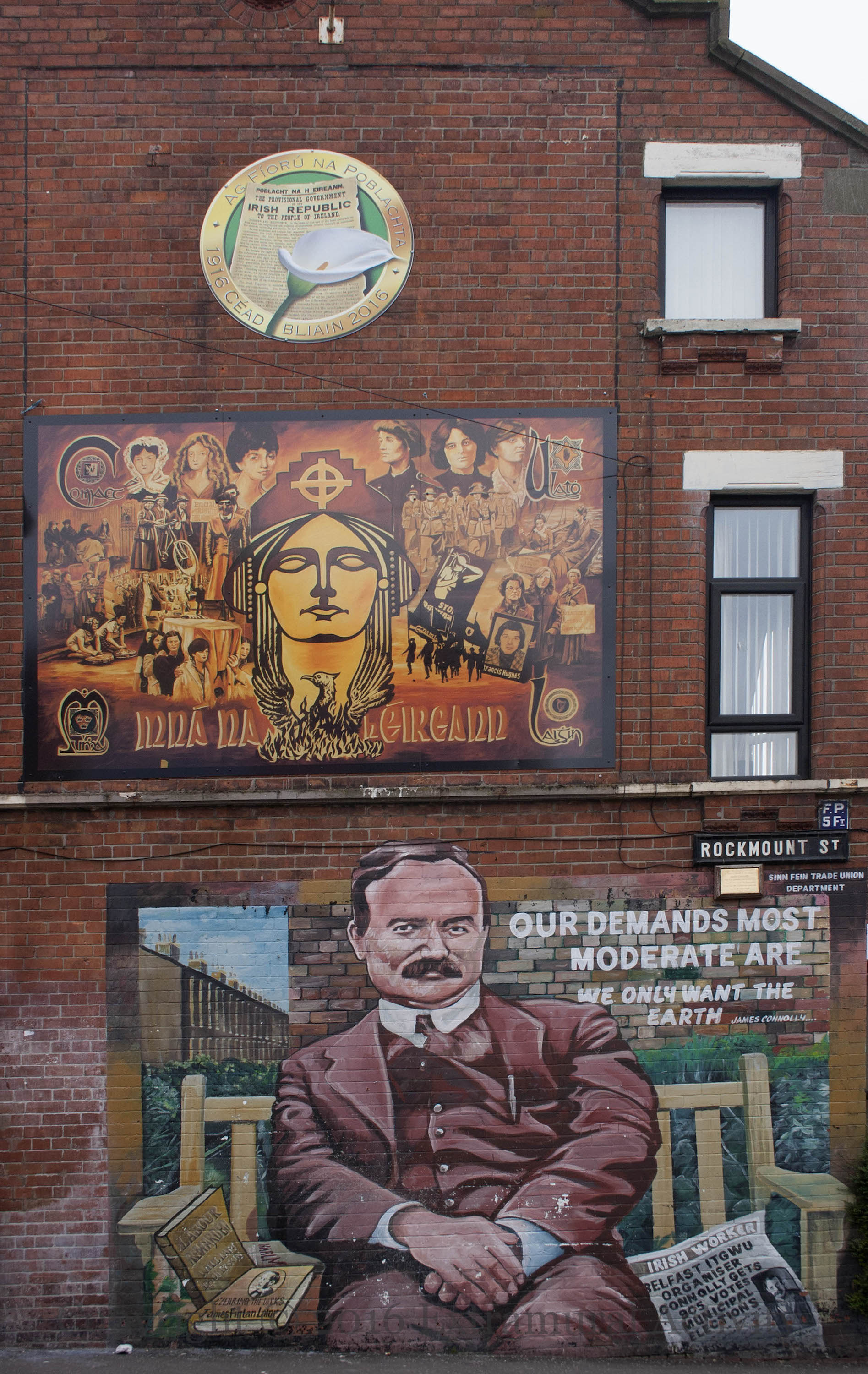
The wide shot (below) shows the James Connolly mural below (seen previously in 2012) and the (recently added) 1916 centenary board – for which see Ag fíorú na poblachta.
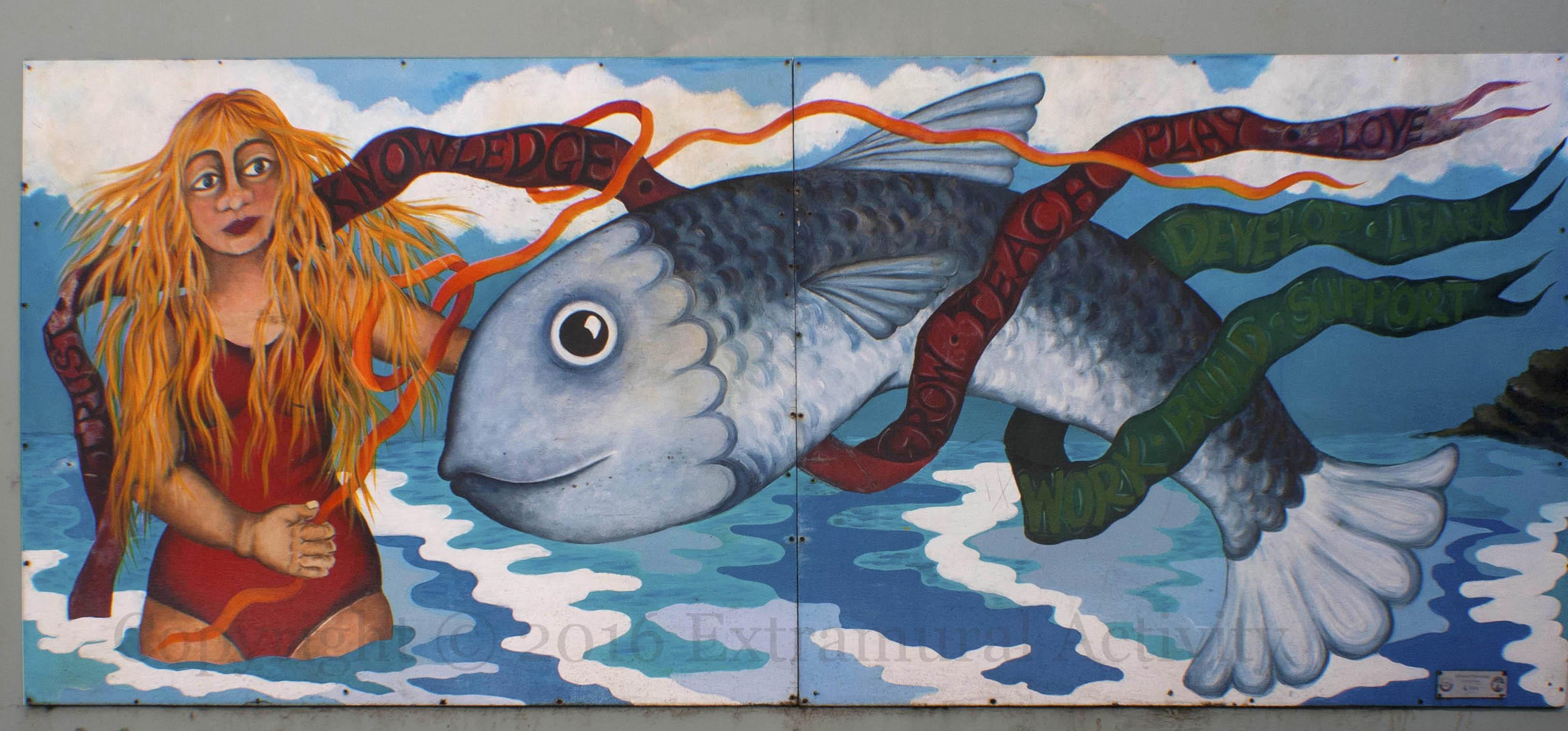
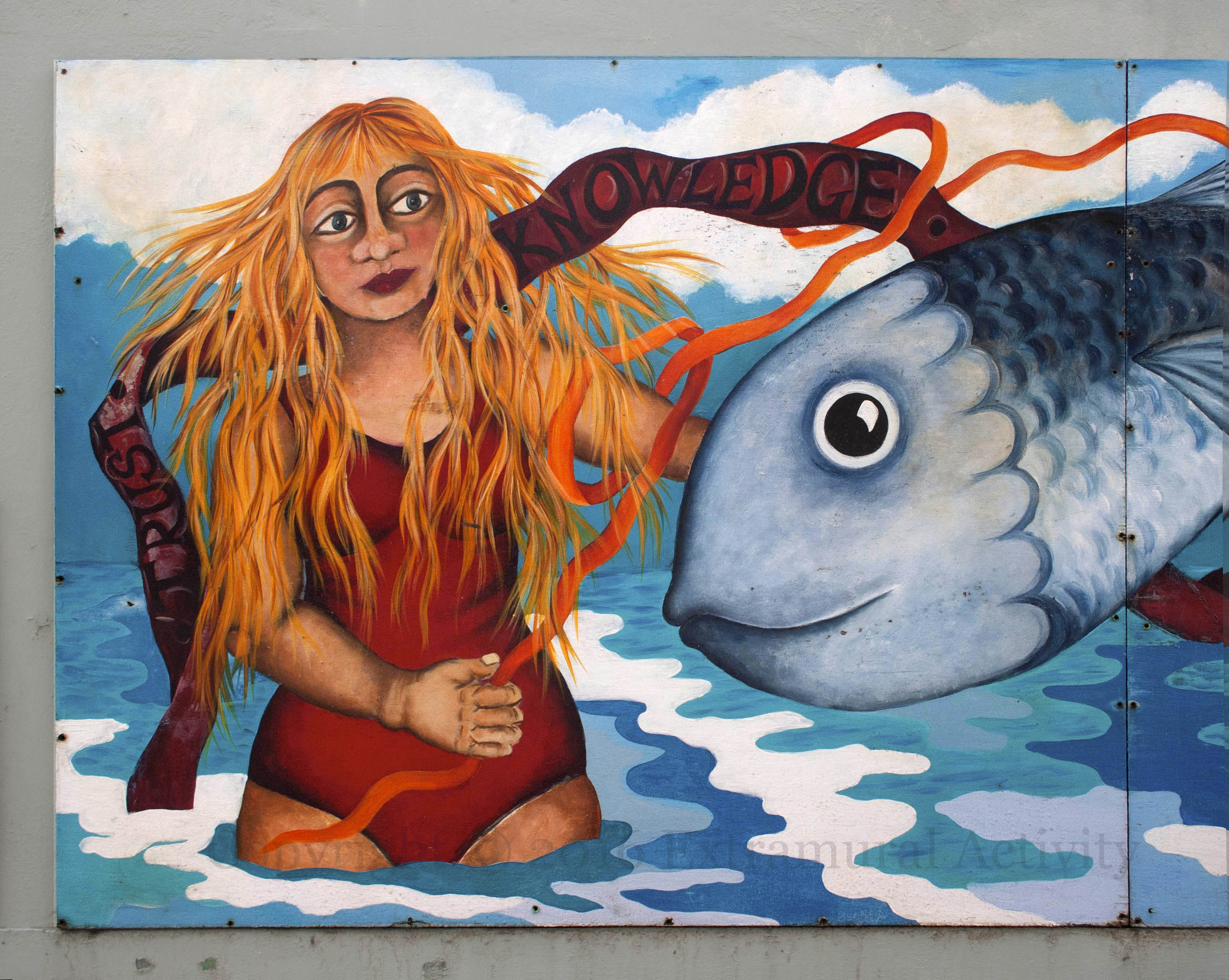
A woman standing in the sea befriends a giant salmon in this mural by Lesley Cherry (web | Fb) behind the Windsor Women’s Centre (Fb) on Broadway in south Belfast. “Trust – Knowledge – Grow – Teach – Play – Love”. Close-up of the left-hand side below.
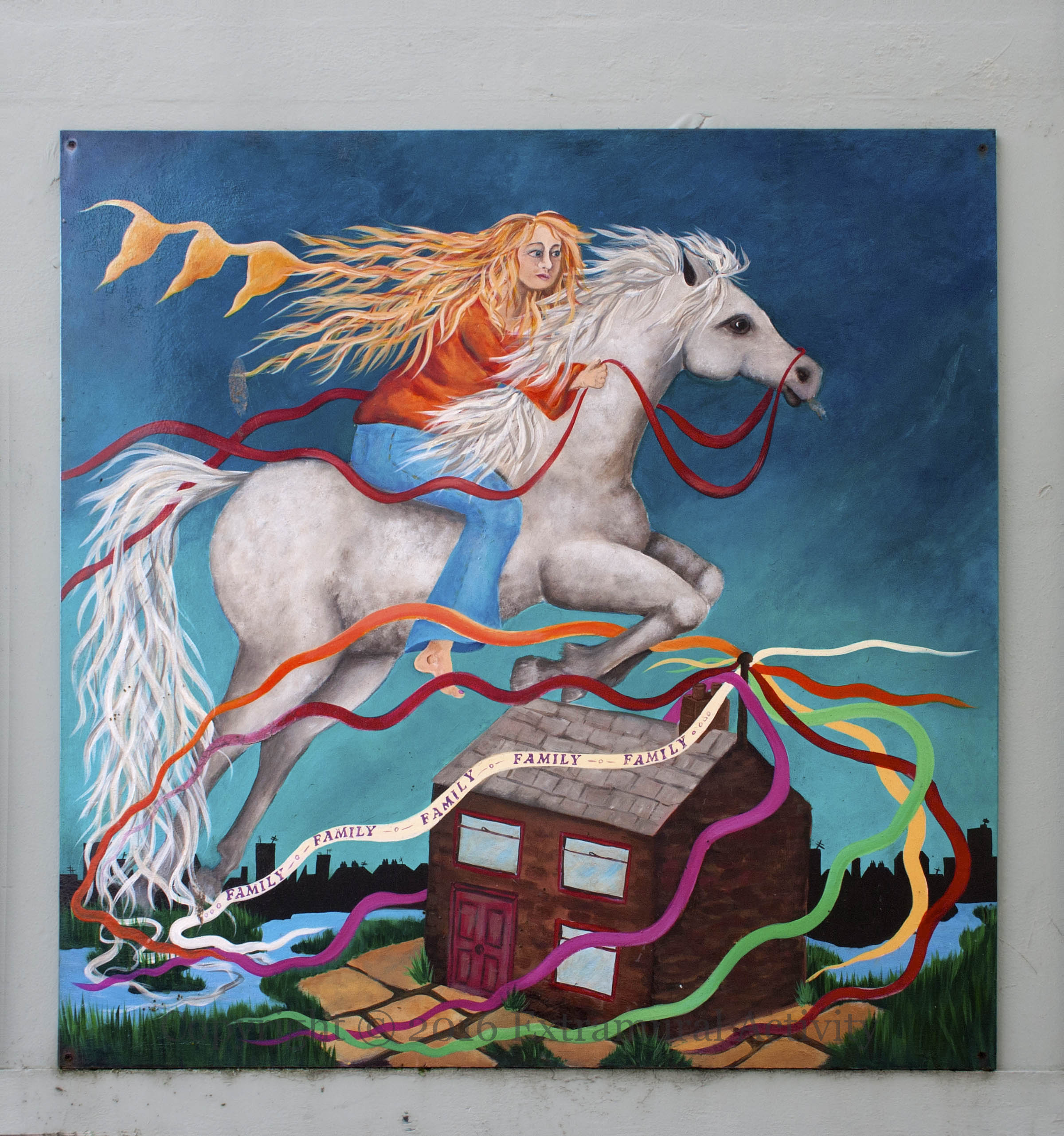
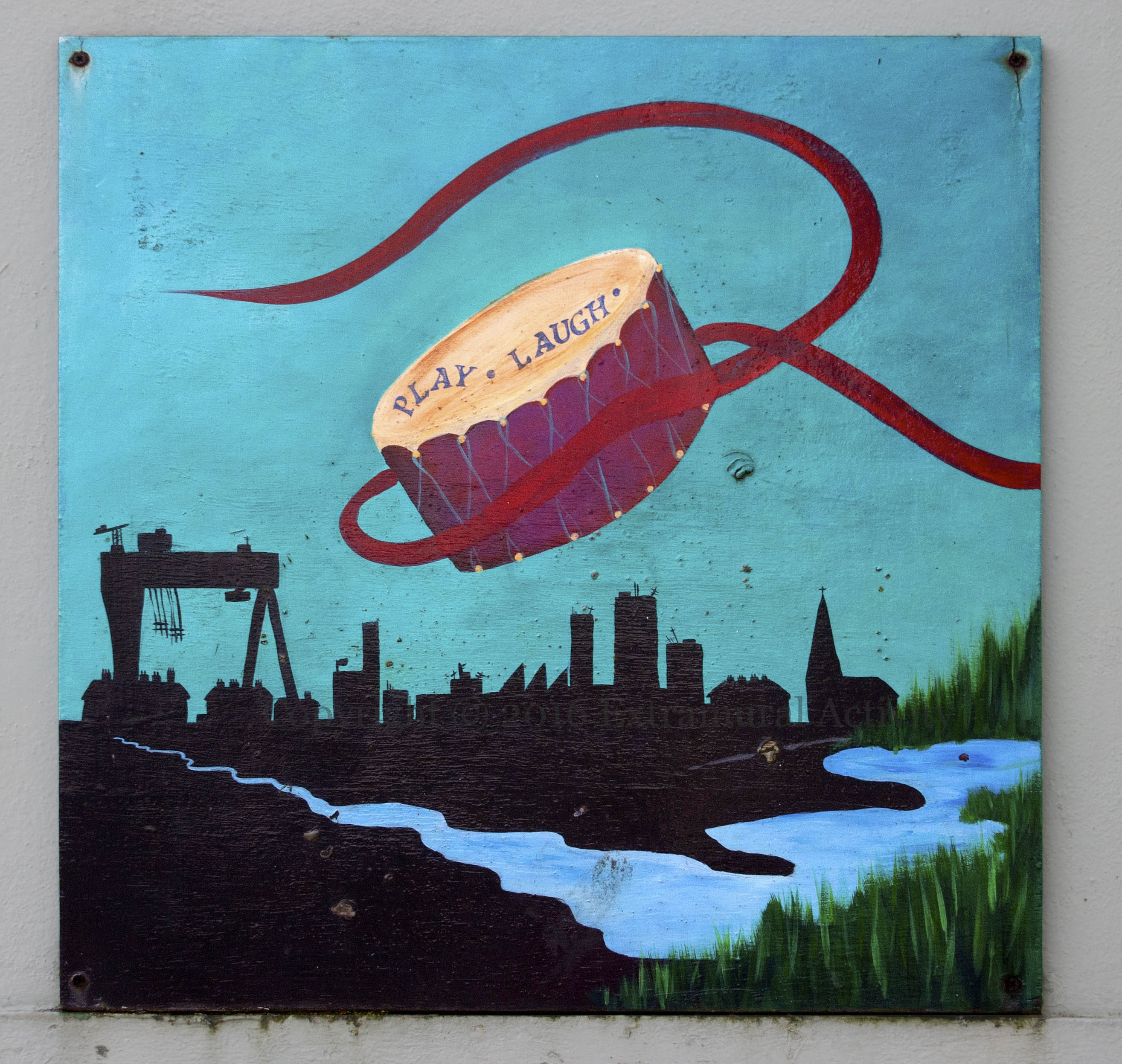
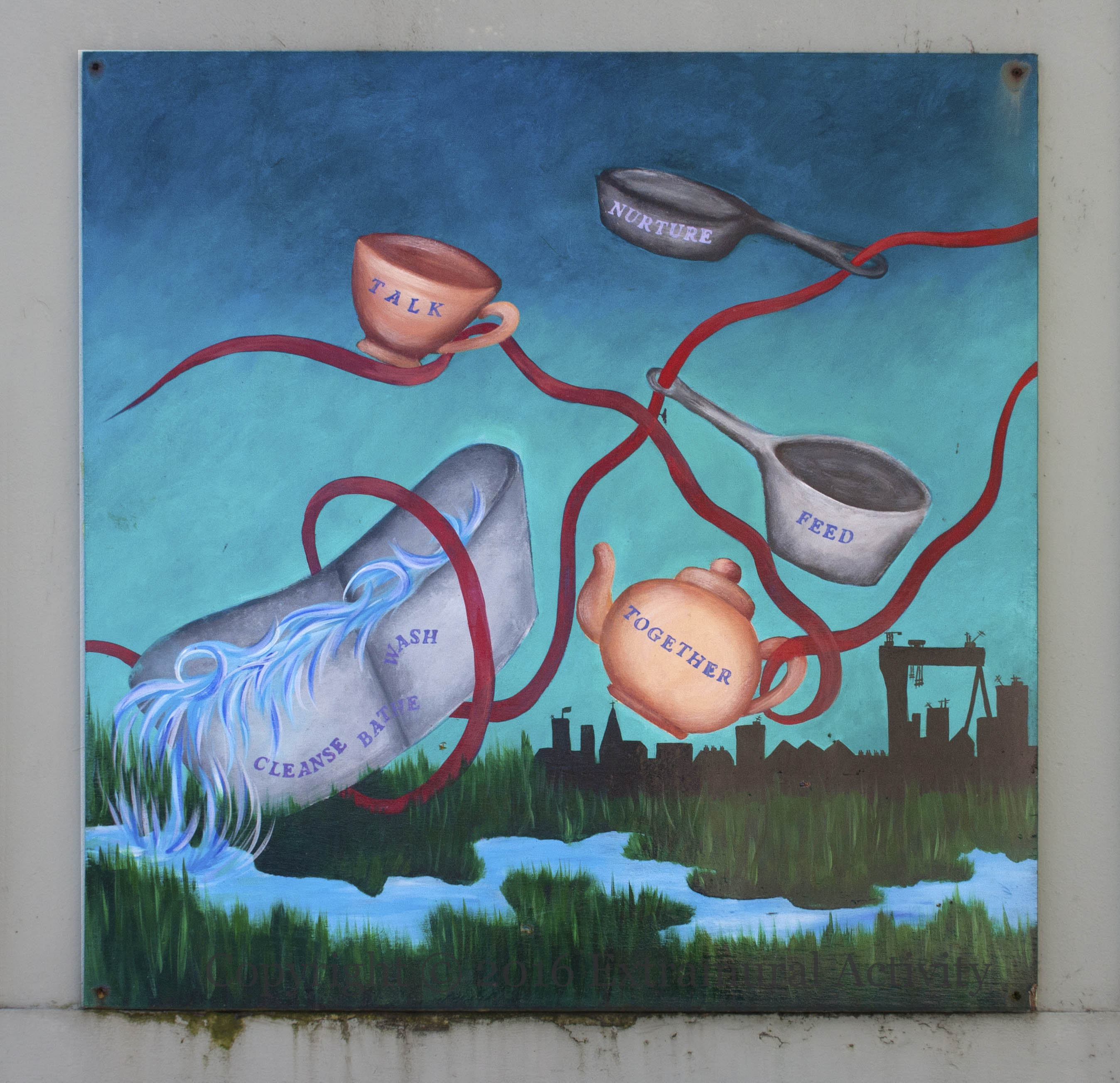
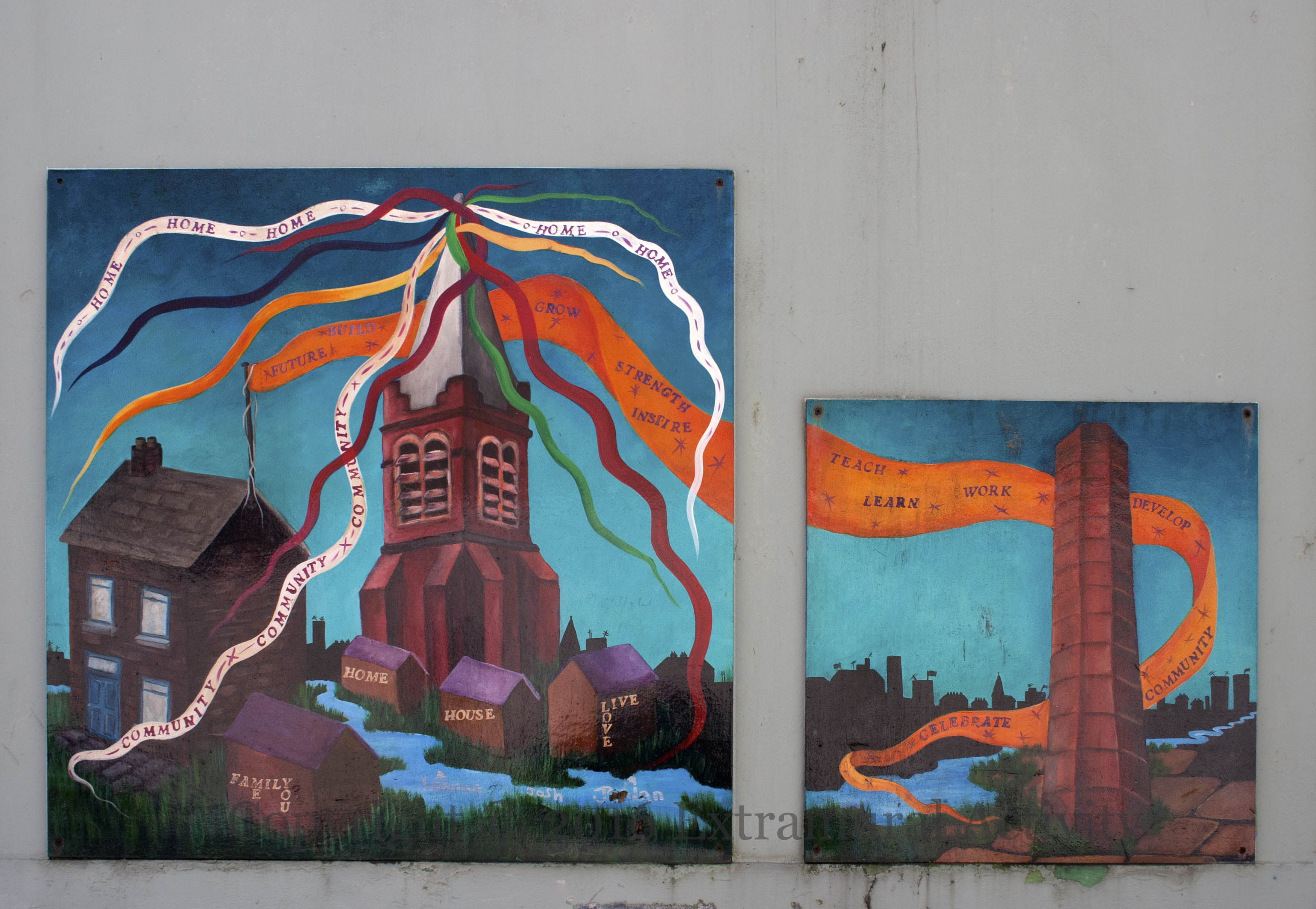
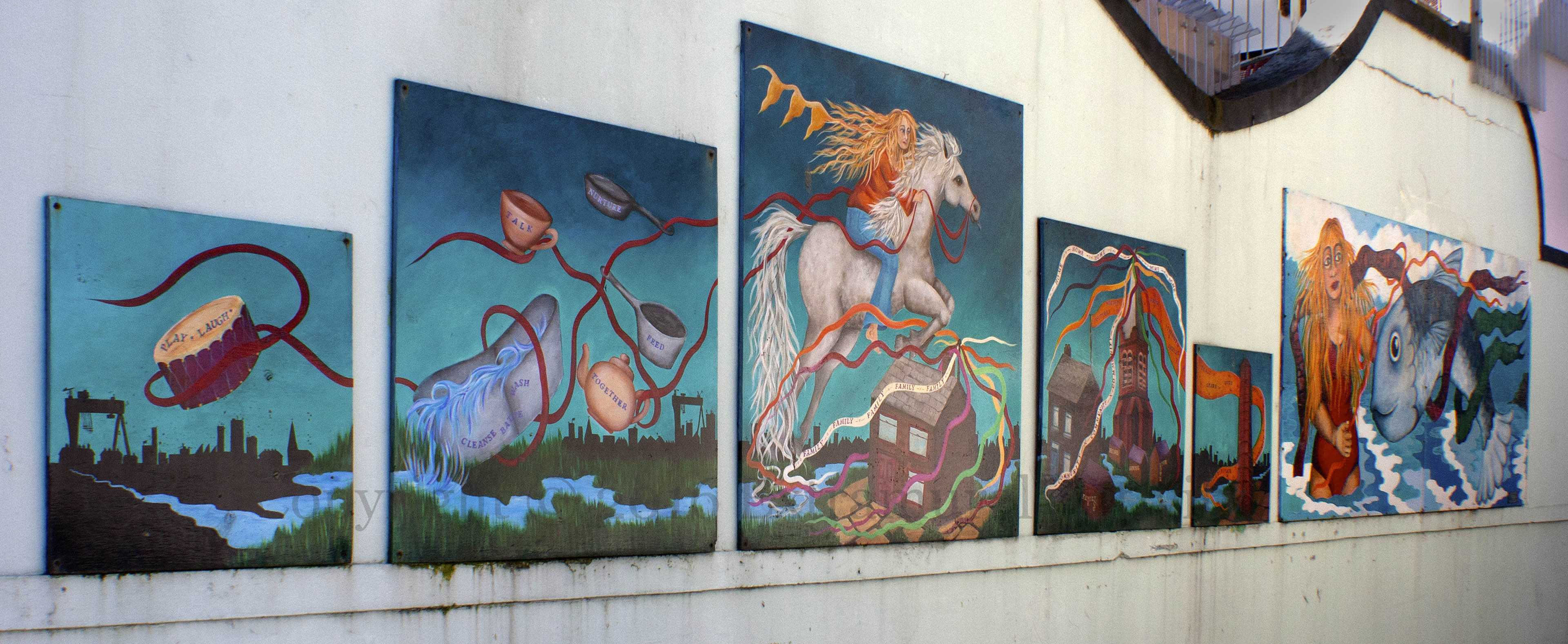
Here are all five panels from Lesley Cherry’s Village Life piece at the rear of the Windsor Women’s Centre in south Belfast (along with the Salmon Of Knowledge piece featured previously). In the first two, wrapped up in the ribbons streaming from a horse in the central panel (shown above) are a drum (against a backdrop of Belfast city, including a Harland & Wolff crane), a bathtub, teapot and teacup, and pot and pan. The fourth shows the spire of a church and the fifth the smokestack from a factory.
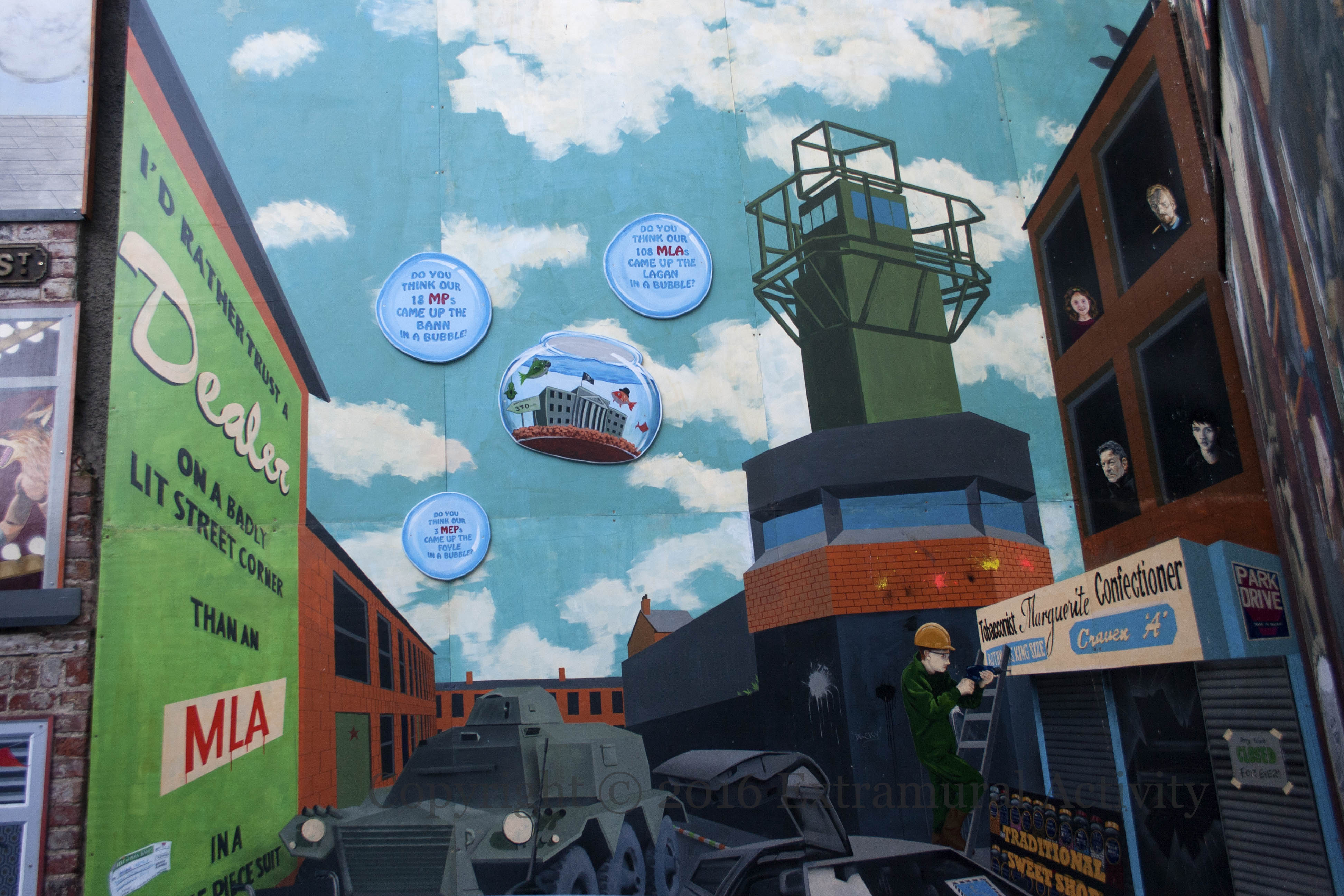
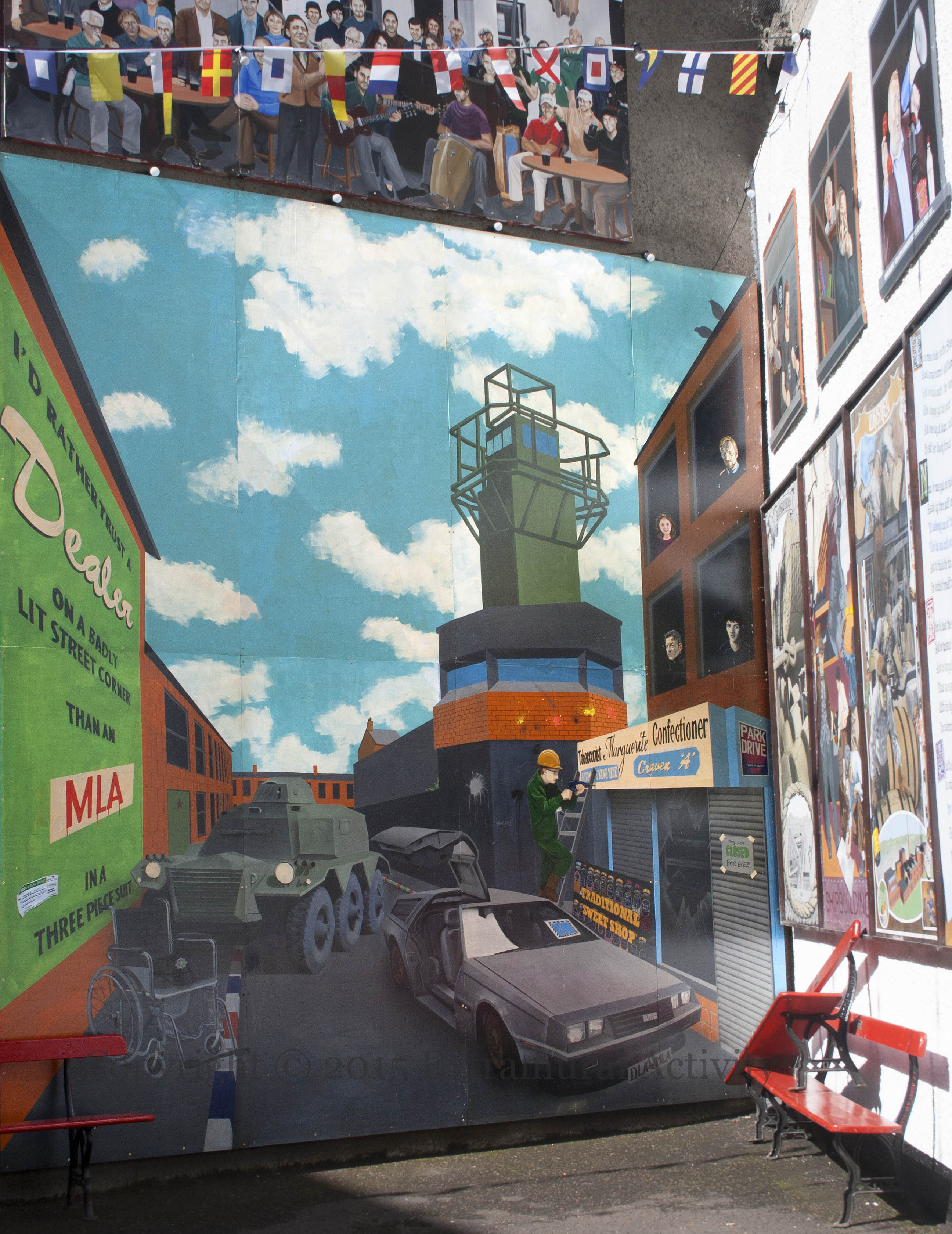
“I’d rather trust a dealer on a badly lit street corner than an MLA in a three piece suit” — a hoarding over a street containing a Saracen, a DeLorean, and a heavily fortified British Army base: The original slogan (from a Maser piece of street art in Dublin) seems to have been “… than a criminal in a three piece suit” — the substitution with “MLA” suggesting criminality in the Assembly: there’s an Isle Of Man Bank check for seven million two hundred thousand pounds, made out to “ANMLA”, drawn on the account of “Northern and Southern Ireland tax payers” in the bottom left-hand corner.
And in three bubbles in the centre: “Do you think our 18 MPs came up the Bann in a bubble? Do you think out 108 MLAs came up the Lagan in a bubble? Do you think our 3 MEPs came up the Foyle in a bubble?” — meaning that none of these people were born yesterday — along with a fishbowl of bowler-hatted fish swimming around a Stormont flying the jolly roger/skull and cross-bones with a sign saying “Westminster 370 km”.
In the right-hand corner, Marguerite’s “traditional sweet shop” is “Closed For Ever!” The shop used to be on Waring Street at the junction with Hill Street (according to Frankie Quinn of the Red Barn Gallery).
Four faces watch from the window. Do you recognize any of them?
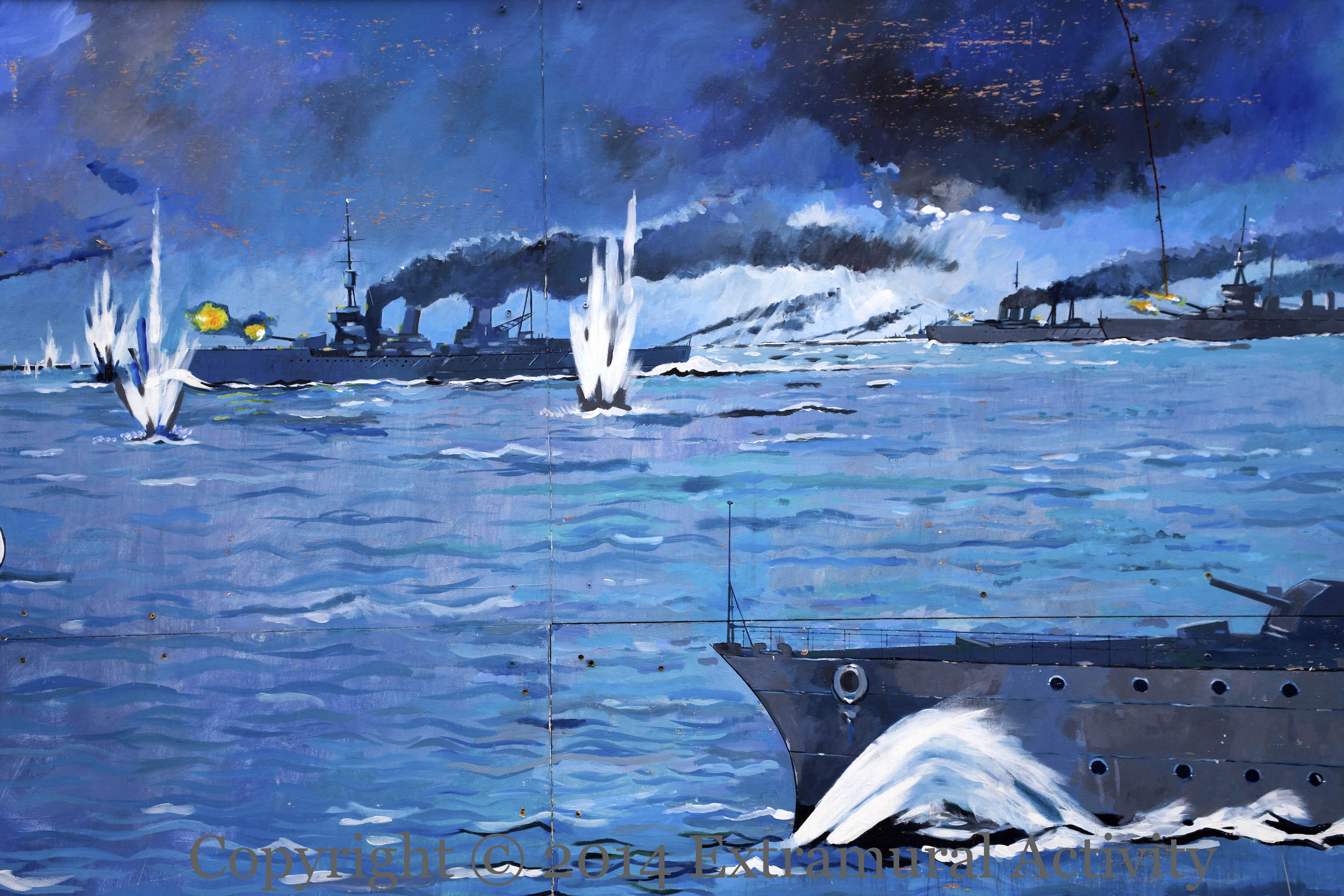
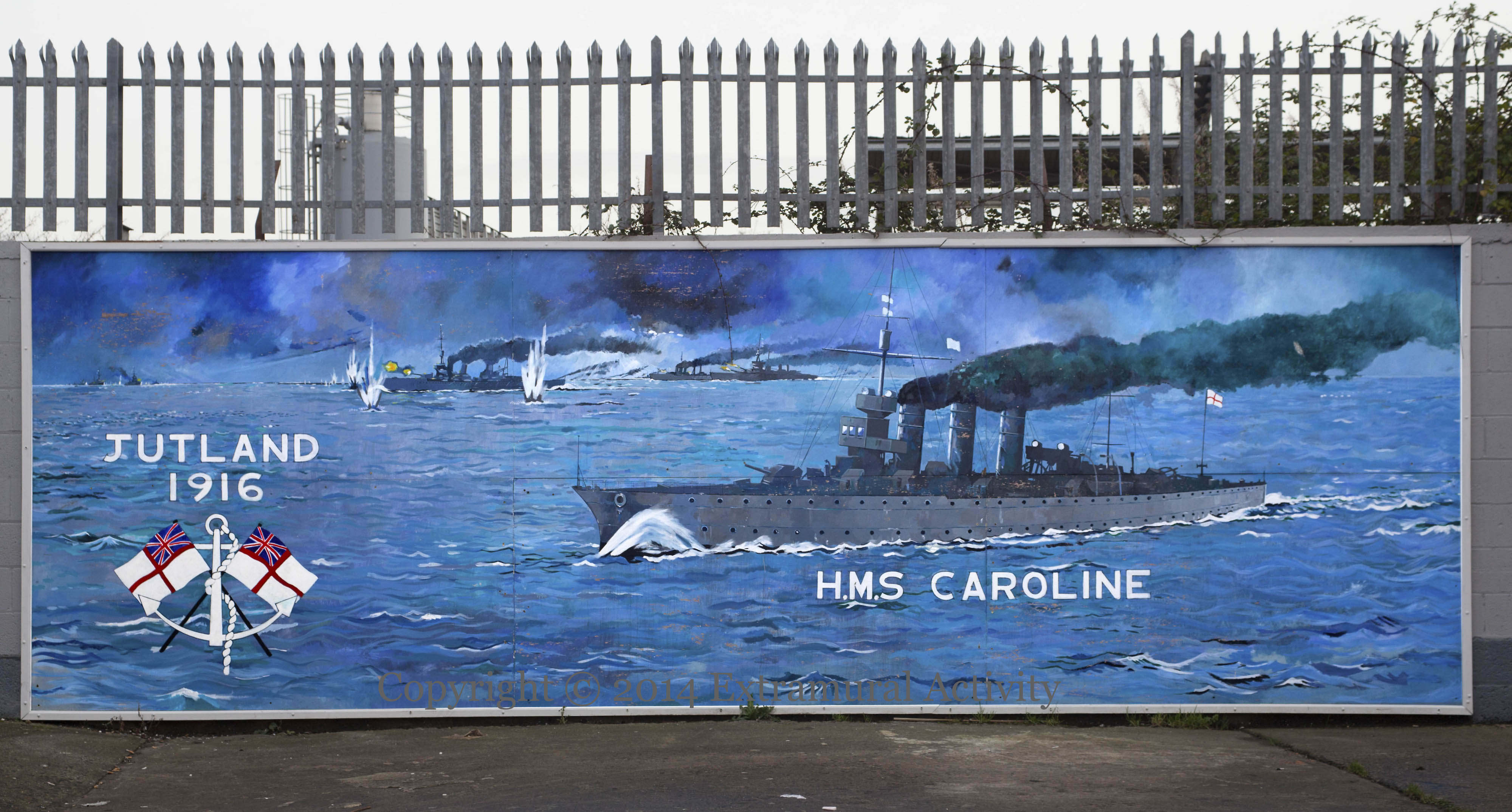
HMS Caroline’s connection to Belfast is that she served as the headquarters for the Royal Naval Reserve in Alexandra Dock. Originally built in 1914, she served in the Grand Fleet and took part in the battle of Jutland on May 31st, 1916, as shown in the images above and below. She was decommissioned in 2011; it is hoped to open her as a museum and visitor attraction by the time of the centenary of the battle (WP). The Daily Mail has a gallery of images of the ship in its current state. Also present at the battle of Jutland, as captain of HMS Nestor, was Commander (later Sir) Edward Bingham.
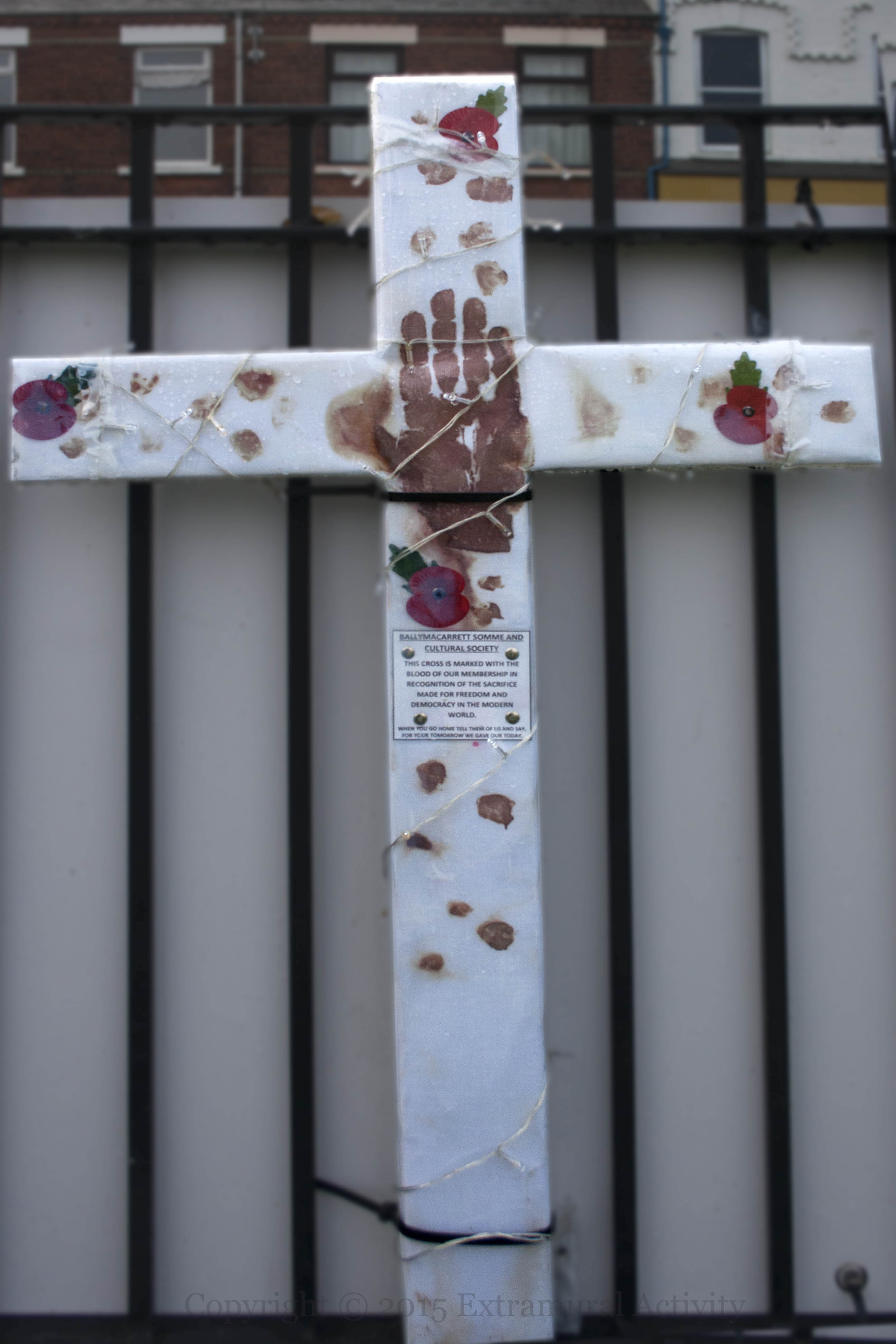
The red hand of Ulster is not just a symbol of the province from the time of the earls (see An Ancient And Powerful Symbol), it is also an emblem of the Ulster Volunteers (and also the modern-day Ulster Volunteer Force/UVF) who were formed in anticipation of Home Rule in Ireland and fought in WWI. “This cross”, which is on the railings outside Pitt Park in east Belfast, “is marked with the blood of our membership in recognition of the sacrifice made for freedom and democracy in the modern world. When you go home tell them of us and say ‘For your tomorrow we gave our today'” – Ballymacarrett Somme And Cultural Society
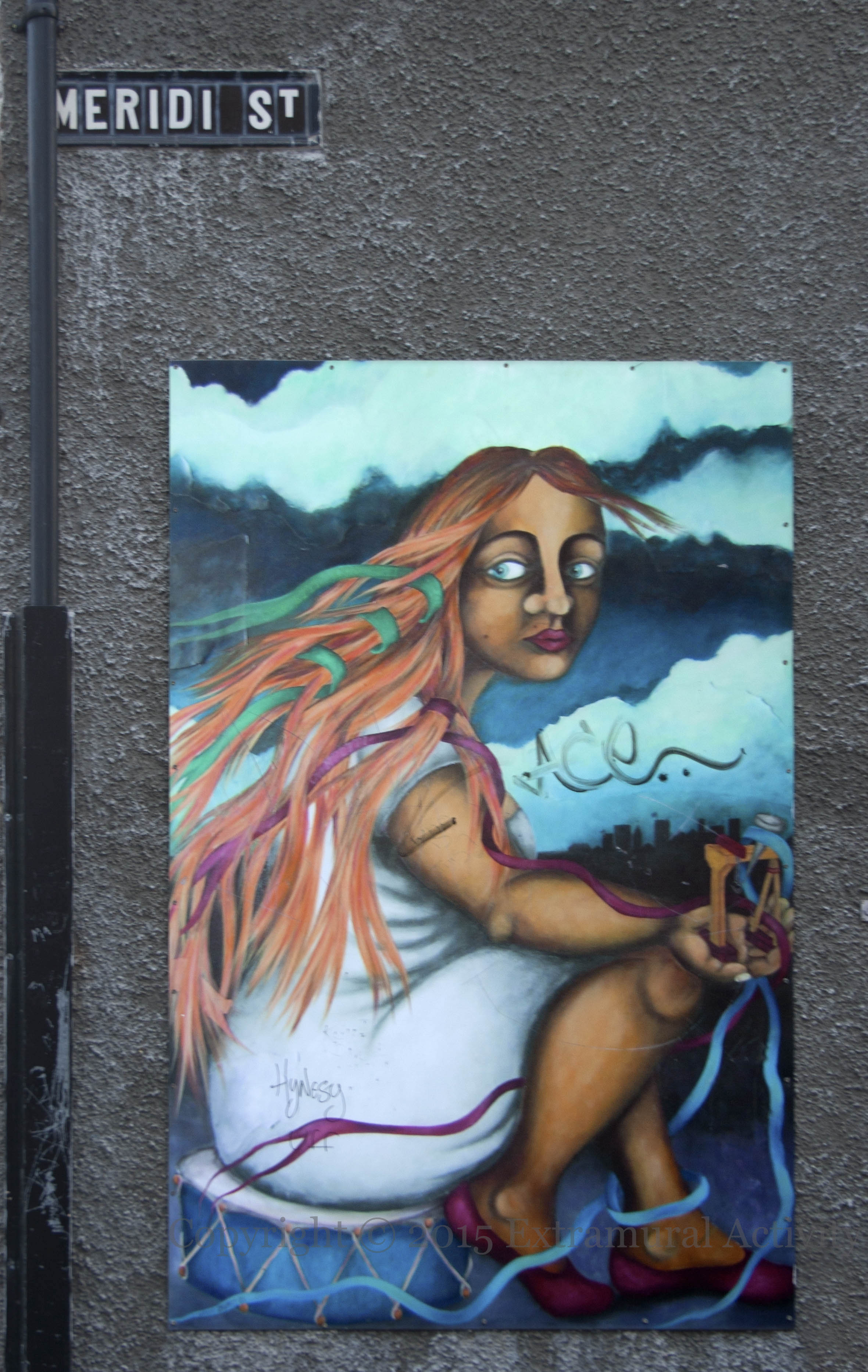
This Lesley Cherry mural in the Village area of Donegall Road shows a female figure sitting on a drum and holding one of the Harland & Wolff cranes in her hand.
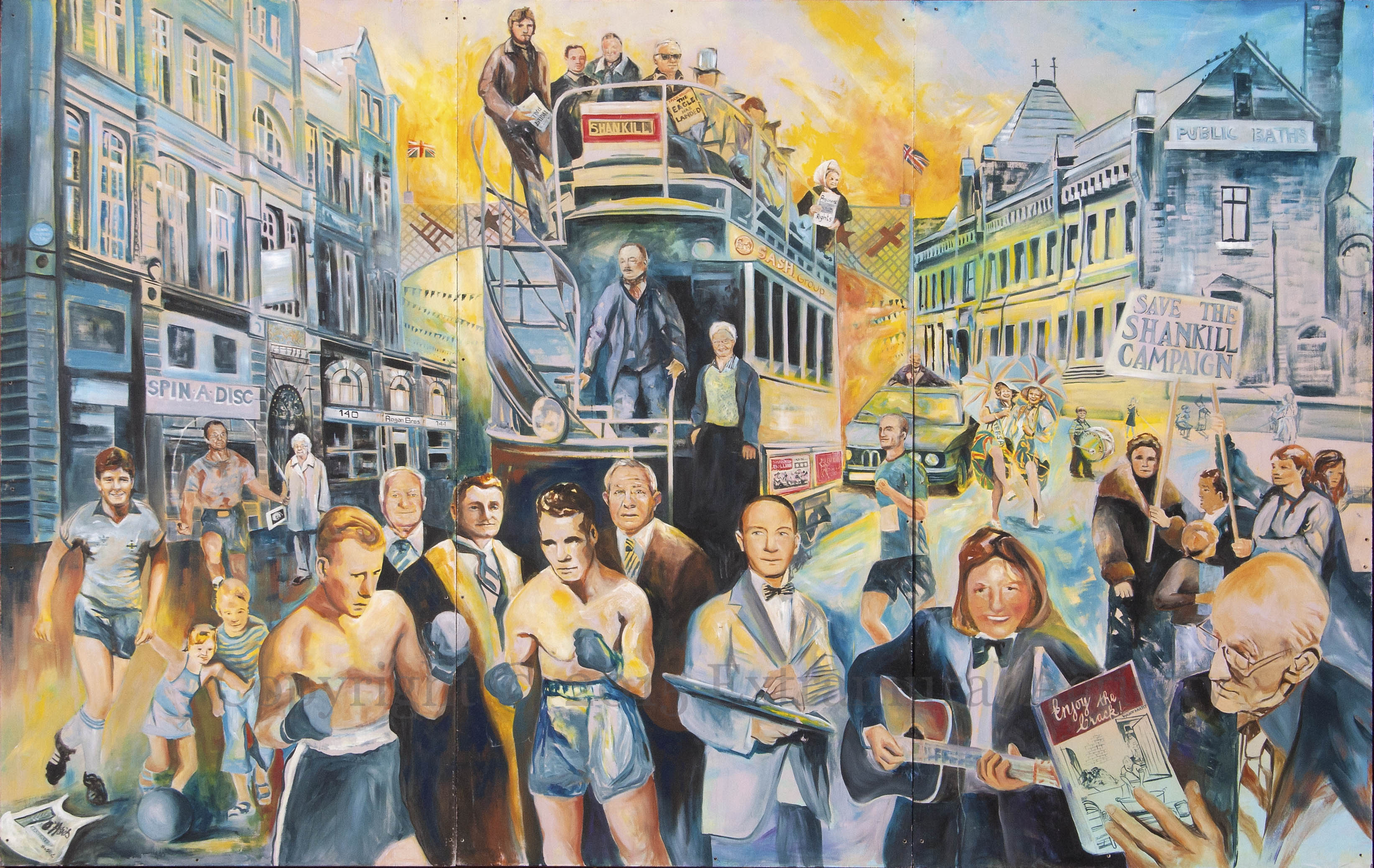
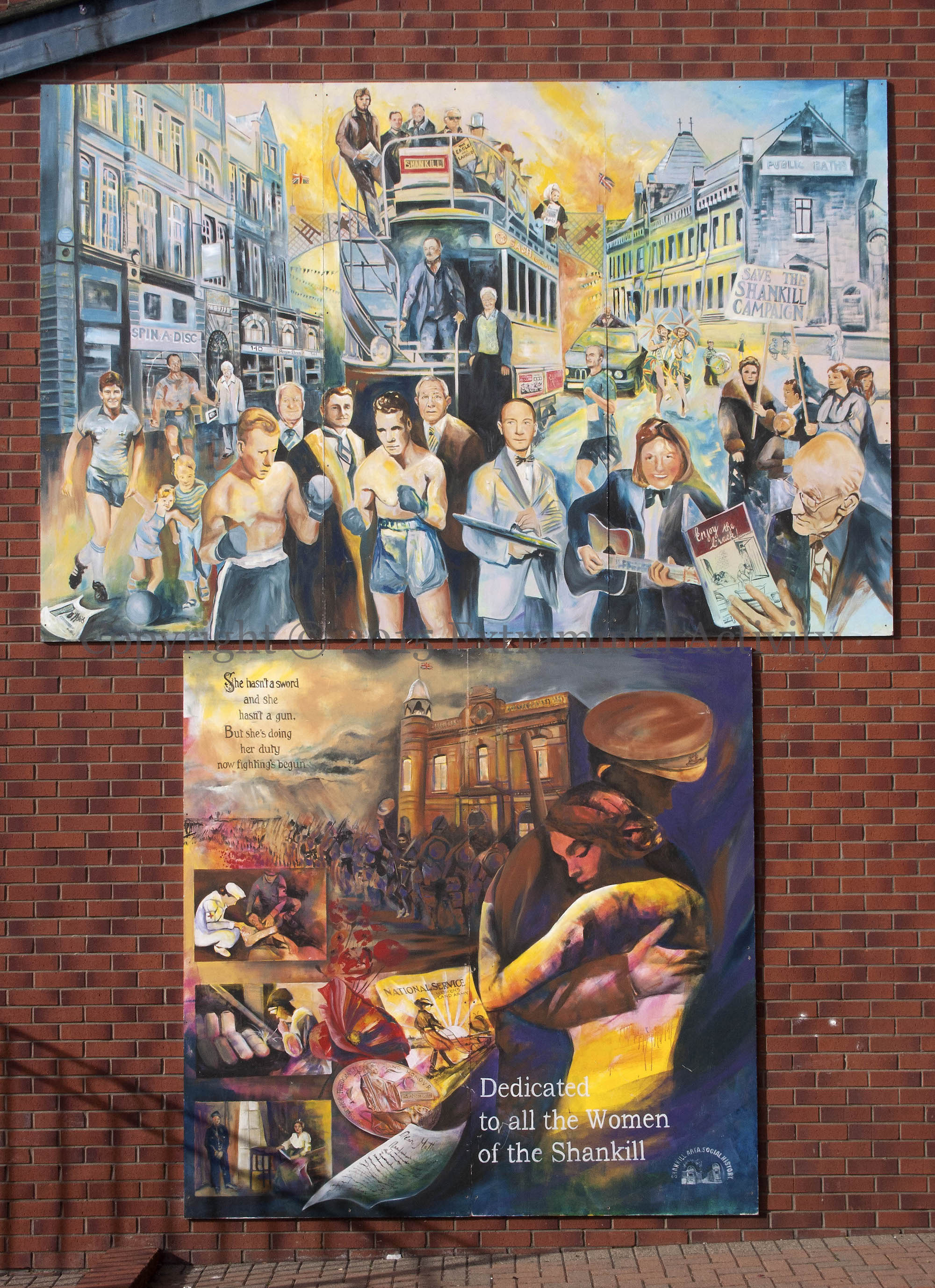
Here is the second of two boards outside the Ulster Rangers Supporters Club (see also Doing Her Duty). The painting features a tram going under an Orange arch between the public baths on one side an Spin-A-Disc records on the other, surrounded by notable figures from the Shankill area.
Many thanks to Johnny Dougan of Shankill Area Social History (Fb) for the information below! Please e-mail or add a comment with additions or corrections.
Front, from left to right: Manchester United and Northern Ireland Soccer player Norman Whiteside (WP) and behind him boxer Davy Larmour and community worker Saidie Patterson (see WRDA), boxer Sammy (Cisco) Cosgrove, Senator Charlie McCullough (WP), Tommy Henderson, boxer Jimmy Warnock (original photograph here), Hugh Smyth (see previously Third Class Citizens), artist William Conor (see previously Conor’s Corner, Jack Henning (running), musician Belter Bell, writer Albert Haslett (Northern Visions interview).
Atop the tram: on the left is Jackie Redpath of the Save the Shankill Campaign (note other members of the group with placard on right; Northern Visions has a documentary about the Save The Shankill campaign) and Jack Higgins holding his book The Eagle Has Landed (WP). Up there too is Miss Sands, the music teacher in the Girls Model School, and historian Bobby Foster (Northern Visions interview). On the stairs are May Blood MBE and above her D.I. Nixon.
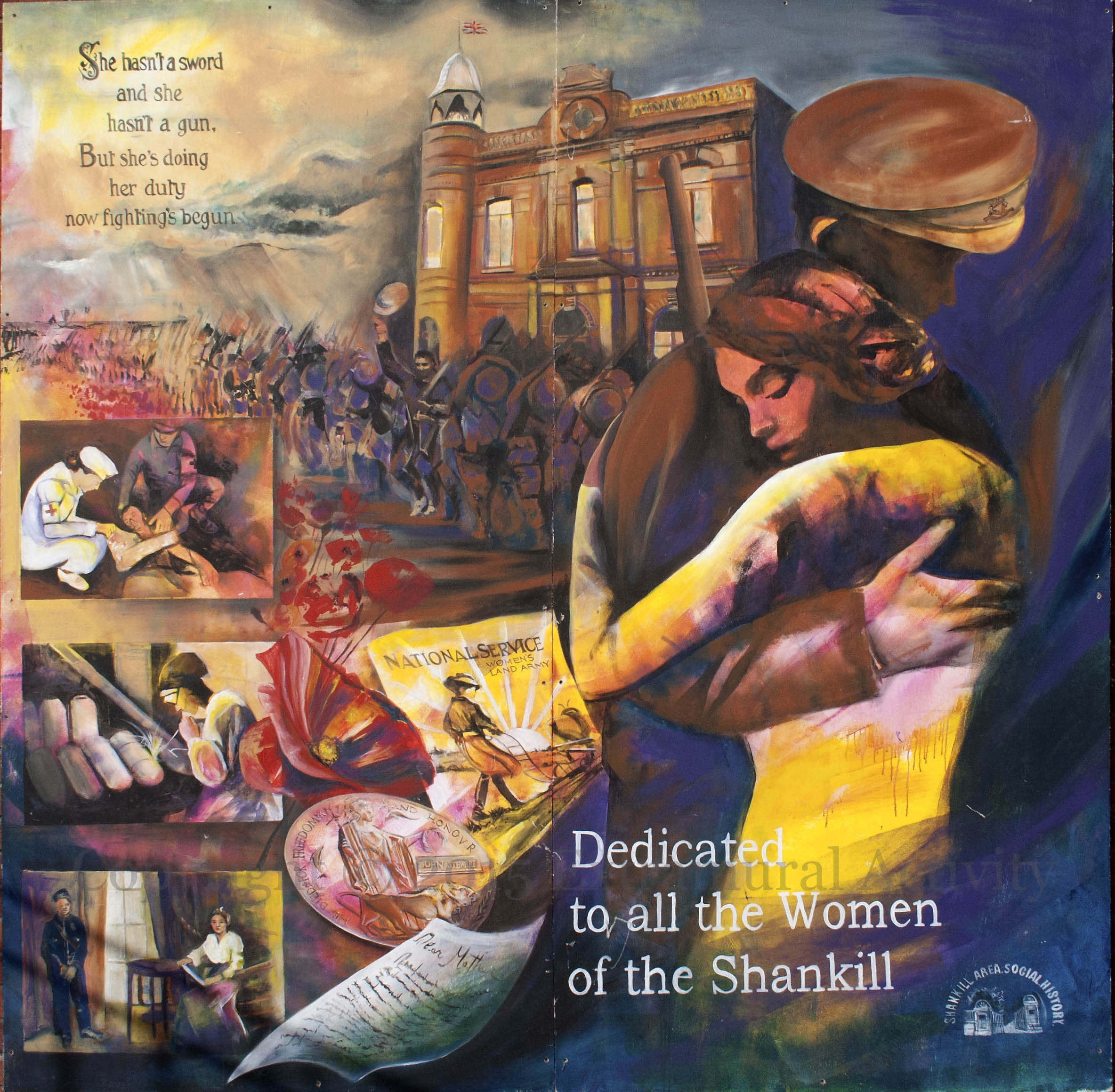
Here is a board from outside the Ulster Rangers Supporters Club (Fb) on the Shankill Road. It highlights the roles played by women during WWI as nurses and welders and in the Land Army. “She hasn’t a sword and she hasn’t a gun. But she’s doing her duty now fighting’s begun.”
The forces are shown gathered outside the West Belfast Orange Hall, on the Shankill at Brookmount Street.
 Seosamh Mac Coille Collection