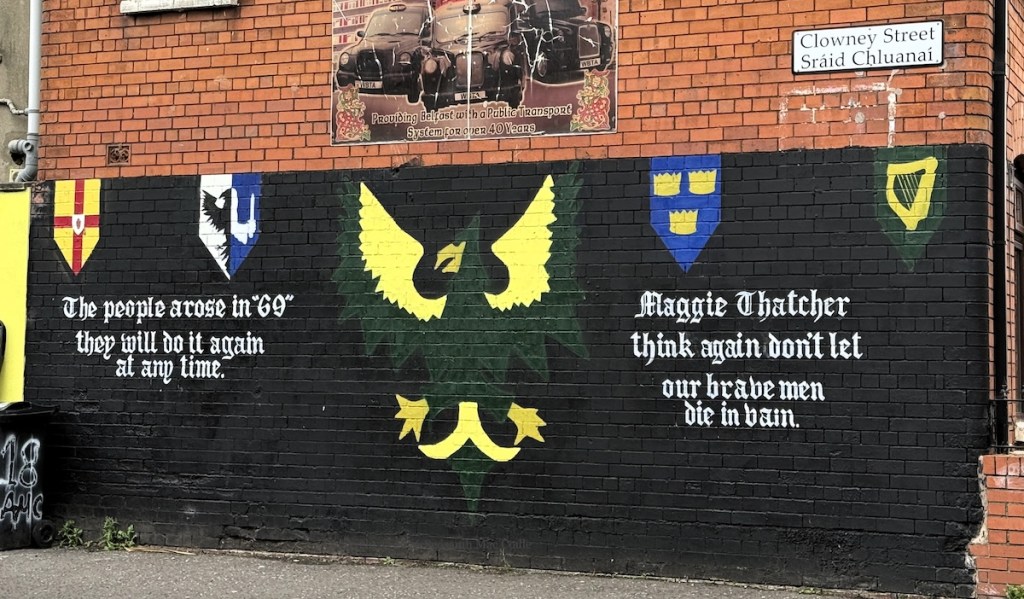
The phoenix in Clowney Street was first painted in 1981 and has been repainted periodically in the same form. (For a brief history, see The Oldest Murals.) In this update, the only noticeable changes are the quotation-marks around “69” and the golden feet on the phoenix.
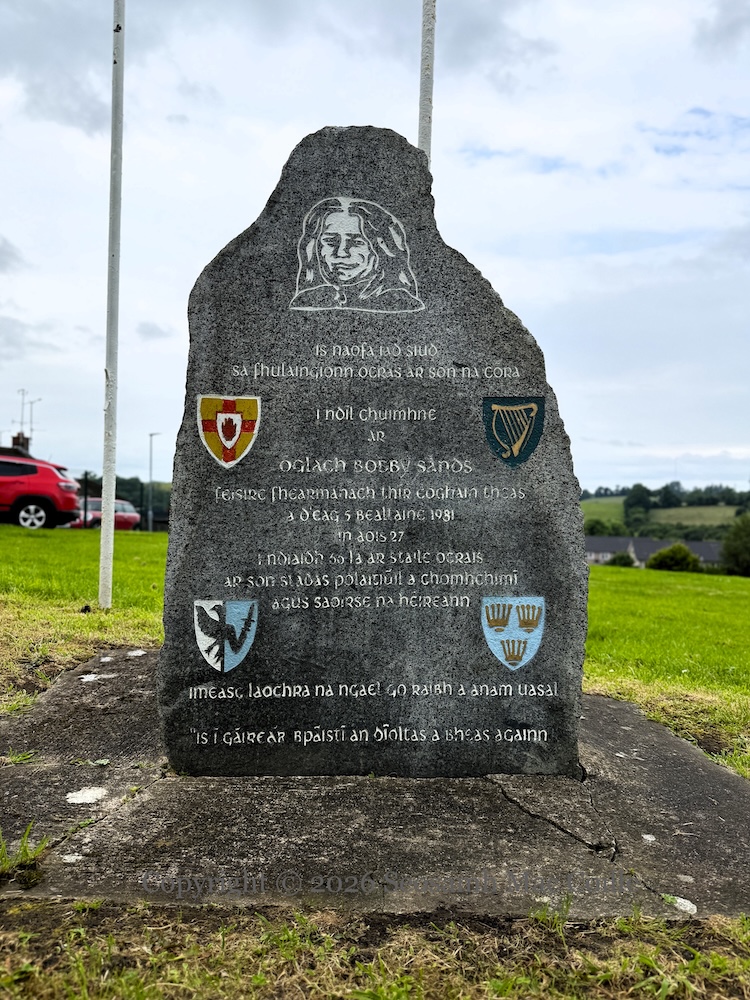
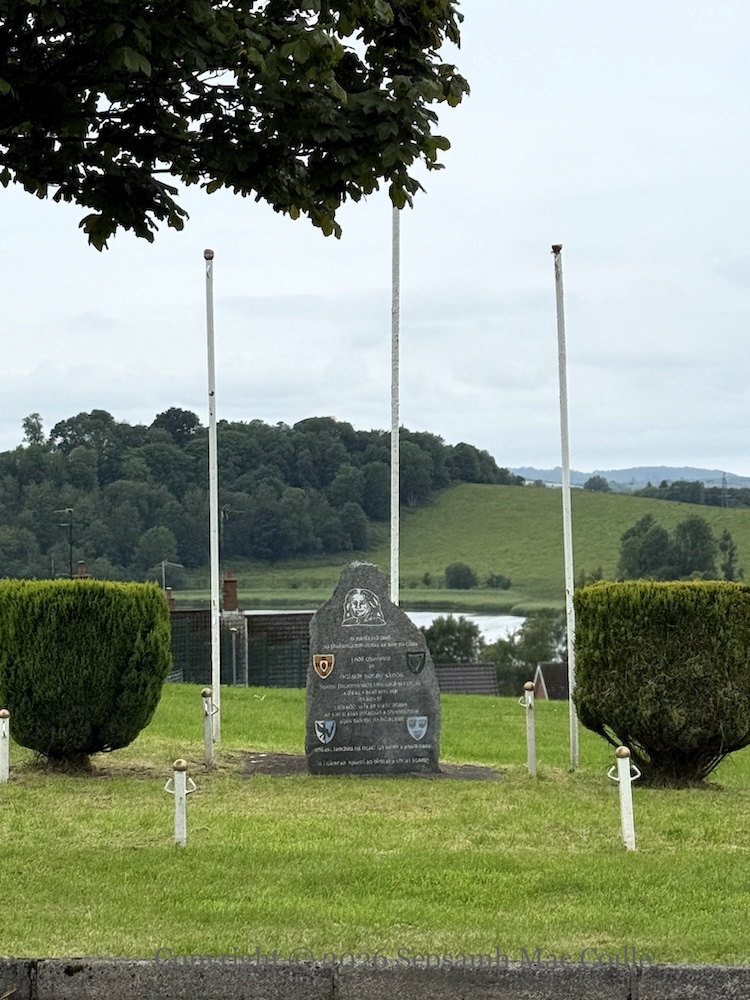
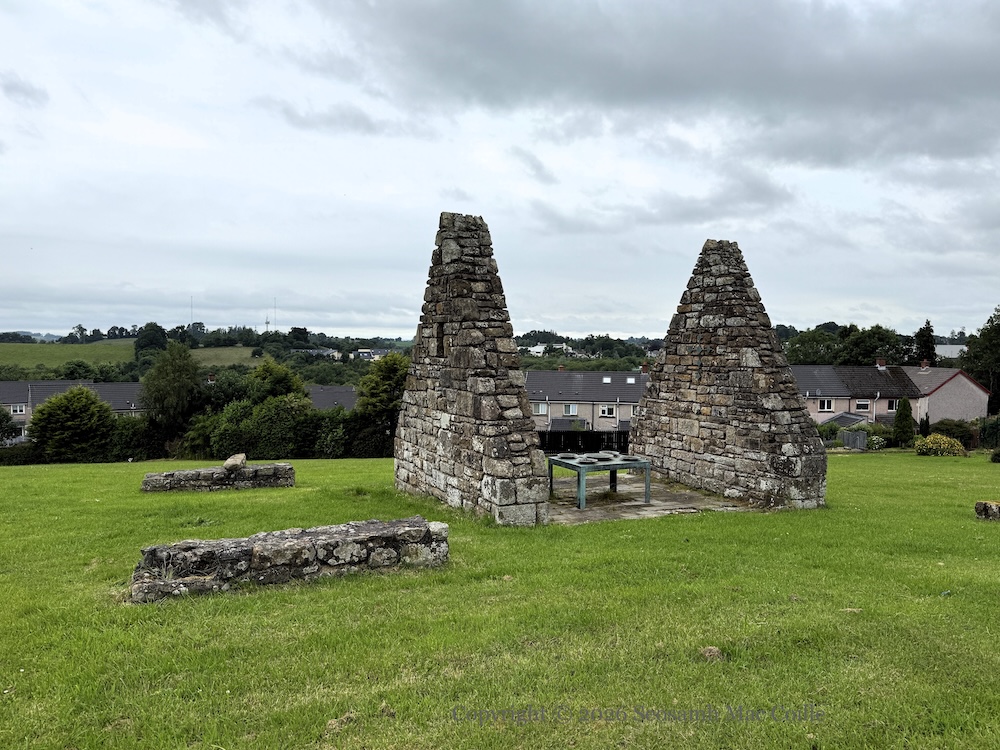
There are two monuments in Cornagrade, Enniskillen, commemorating hunger: An Staılc Ocraıs of 1981 and An tOcras Mór of 1845-1849.
Above and immediately below: a memorial stone to Bobby Sands in Erne Drive. The inscription on the stone reads, “‘Is naofa ıad sıud sa fhulaıngíonn ocras ar son na córa.’ [= Holy are those who suffer hunger for the sake of justice/”Blessed are those who hunger for justice”] I ndíl [ndıl] chuımnhe ar Óglach Bobby Sands, feısıre [= M.P.] Fhearmanach-Thír Eoghaın Theas, a d’éag 5 Bealtaıne 1981 ın aoıs 27 ı ndıaıdh 66 lá ar staıle [staılc] ocraıs ar son stádas polaıtıúıl a chomhchımí agus saoırse na hÉıreann. I measc laochra na nGael go raıbh a anam uasal. ‘Is í gáıre ár bpáıstí an díoltas a bheas agaınn’”
For an alternative translation of Sands’s quote “Our revenge will be the laughter of our children”, see The Spirit Of Freedom in the Peter Moloney Collection.
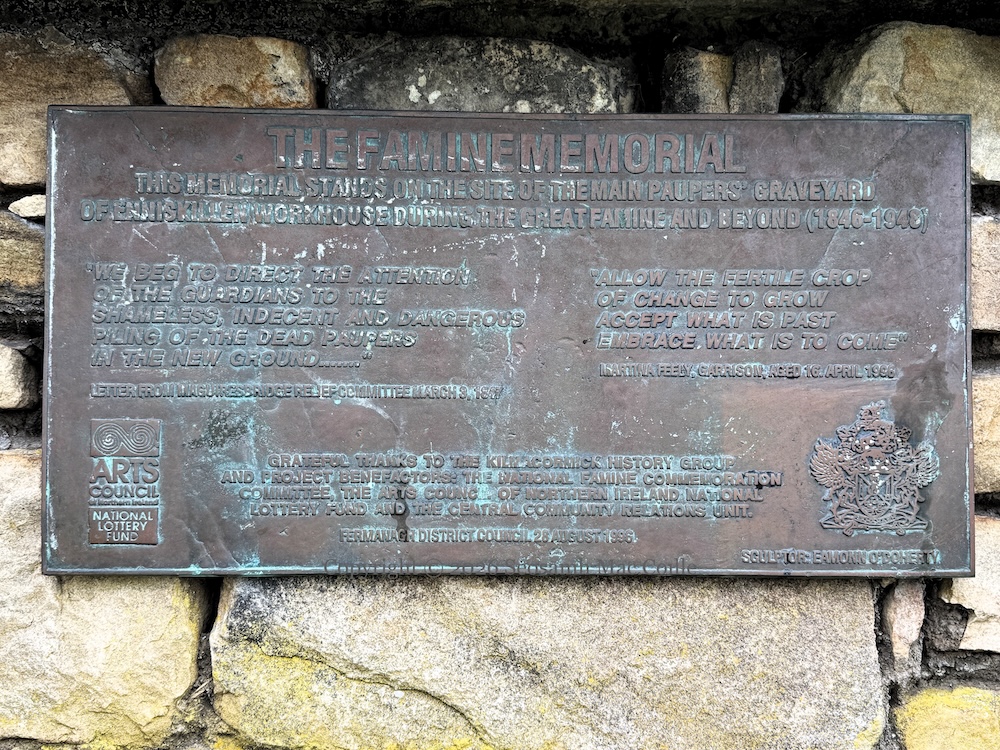
Below: the “Pauper’s Graveyard” by Éamonn O’Doherty – a table with five empty plates stands between the gable walls of a stone cottage. The plaque reads, “The Famine Memorial: this memorial stands on the site of the main pauper’s graveyard of Enniskillen workhouse during the Great Famine and beyond (1846-1948). “We beg to to direct the attention of the guardians to the shameless, indecent and dangerous piling of the dead paupers in the new ground …” – Letter from Maguiresbridge Relief Committee March 3, 1847. “Allow the fertile crop of change to grow, accept what is past, embrace what is to come” – Martina Feely, Garrison, aged 16, April 1996. Grateful thanks to the Kilmacormick History Group and project benefactors: the National Famine Commemoration Committee, the Arts Council Of Northern Ireland National Lottery Fund and the Central Community Relations Unit. Fermanagh District Council, 28 August, 1996.”
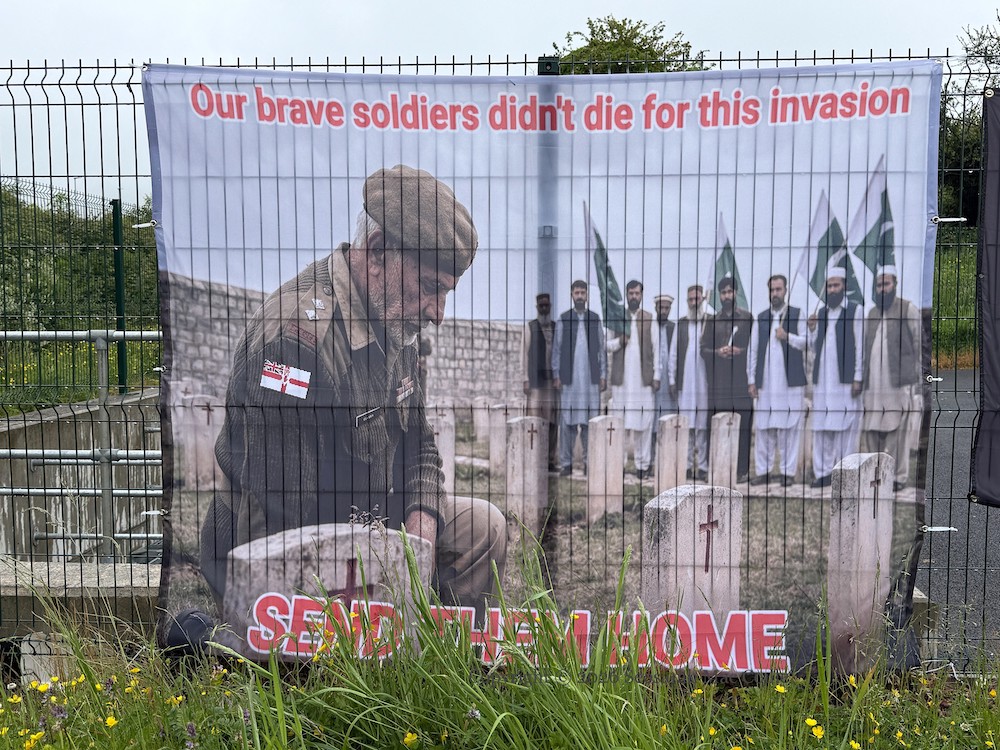
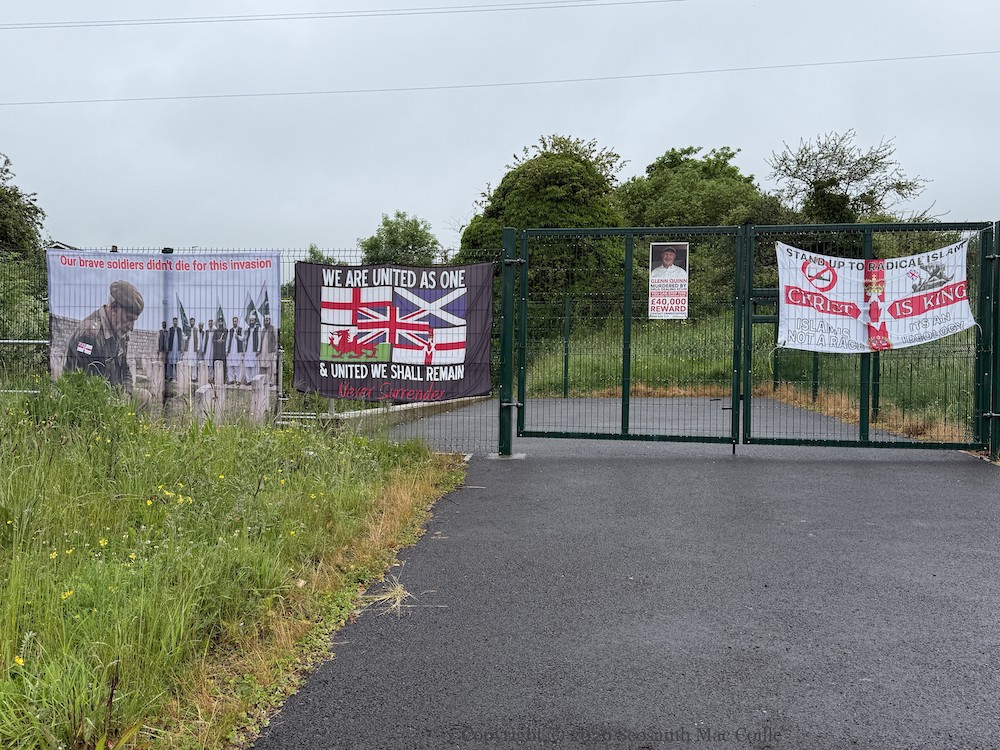
This entry provides an update to the images seen in Paddy Duffy’s collection under the title An Ideology Of Hate from the beginning of May, 2026. Compared to those images, the banner above – “Our brave soldiers didn’t die for this invasion – Send them home” – replaces the “Ulster Carrickfergus Loyalists” and “Unite and fight” banners.
The banner above is similar in theme and elements to the large board seen in Sorry It Was All For Nothing: an elderly veteran kneels beside grave-stones with red Christain crosses, in the presence of men carrying the flag of the Islamic Republic Of Pakistan. They are also both products of AI.
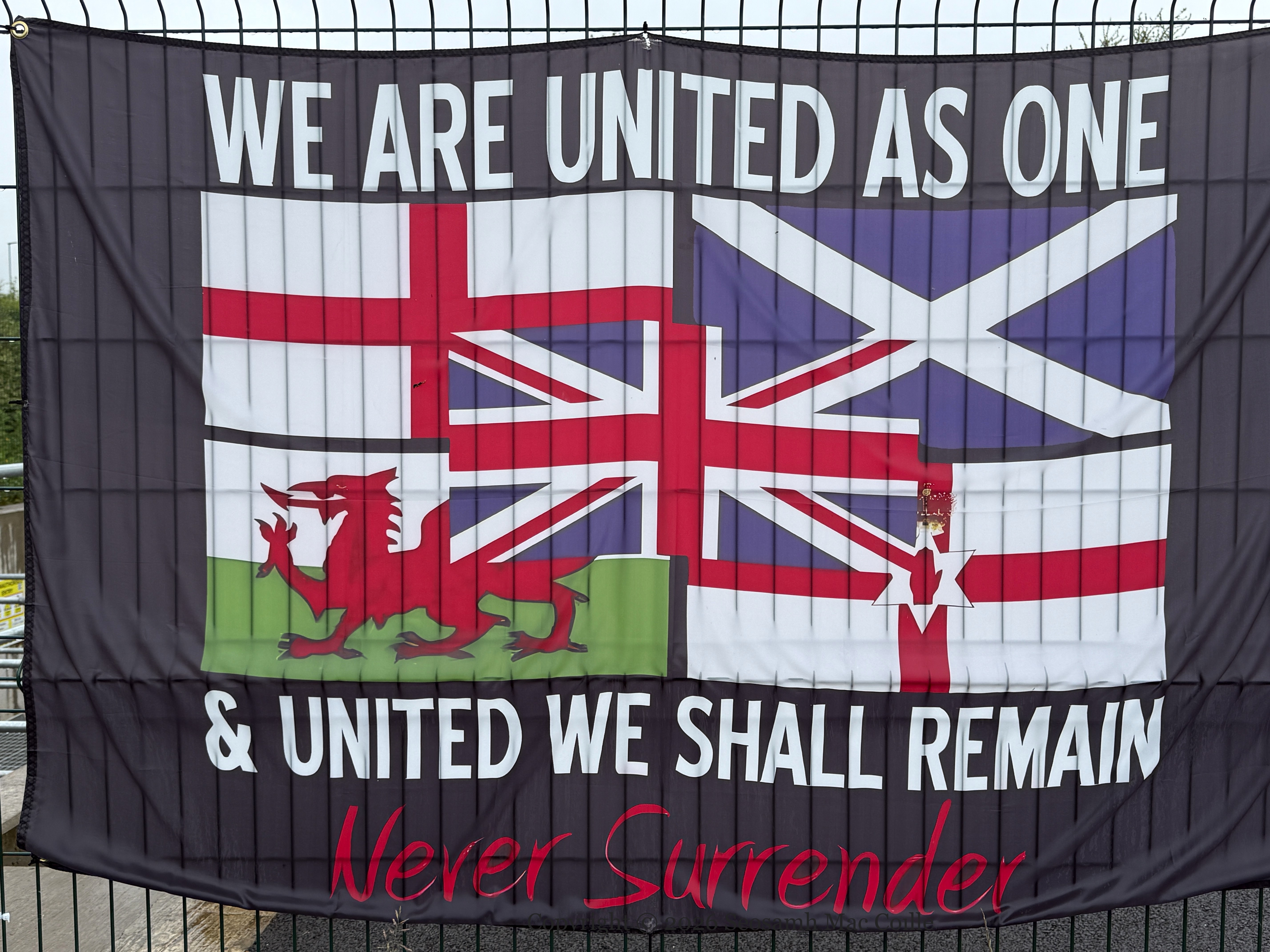
Second, “We are united as one & united we shall remain. Never surrender.” with the flags of the “four nations” that make up the current United Kingdom.
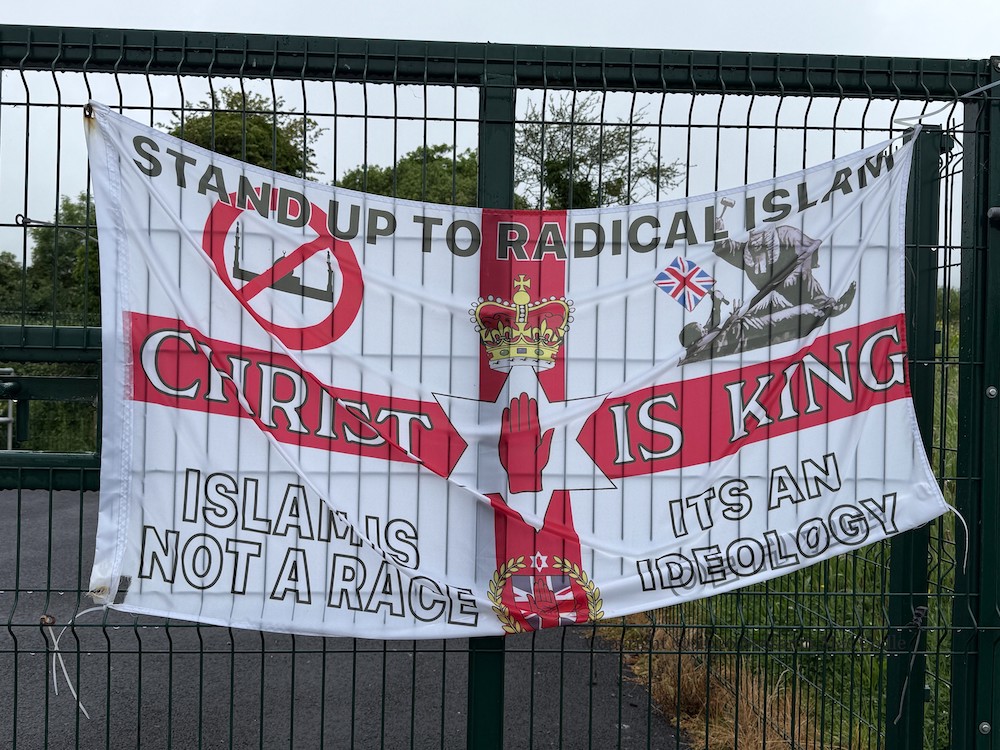
Fourth, “Christ is king. Stand up to radical Islam. Islam is not a race – it’s an ideology of hate.” The language is echoed in the controversial board recently mounted at the bottom of Rathfern, in Newtownabbey – see A New Evil.
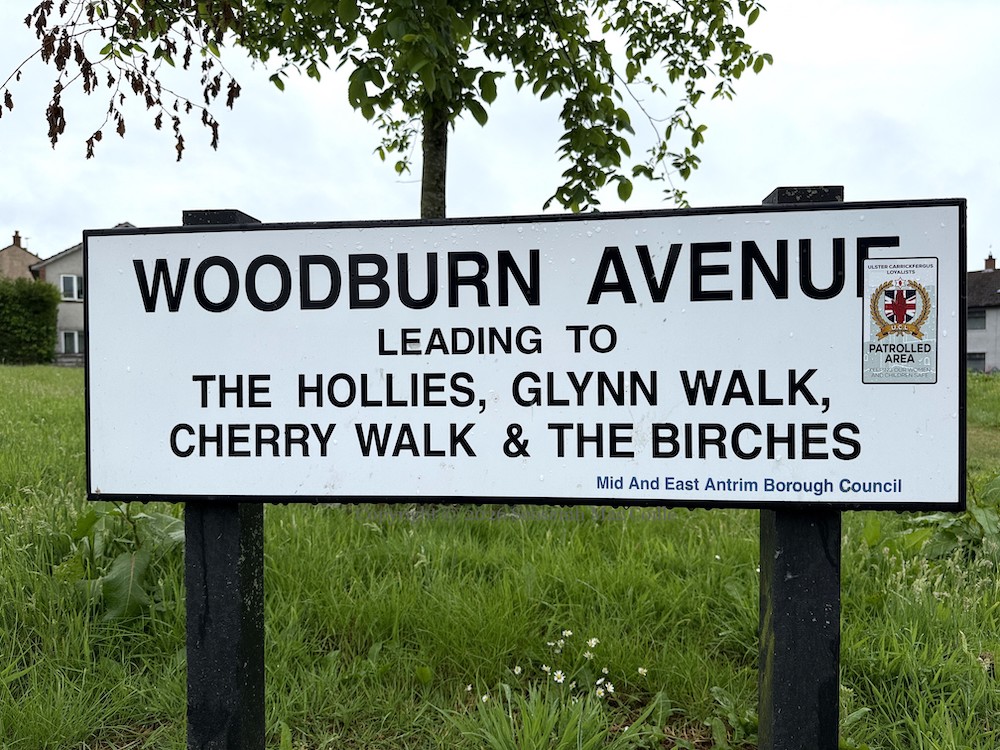
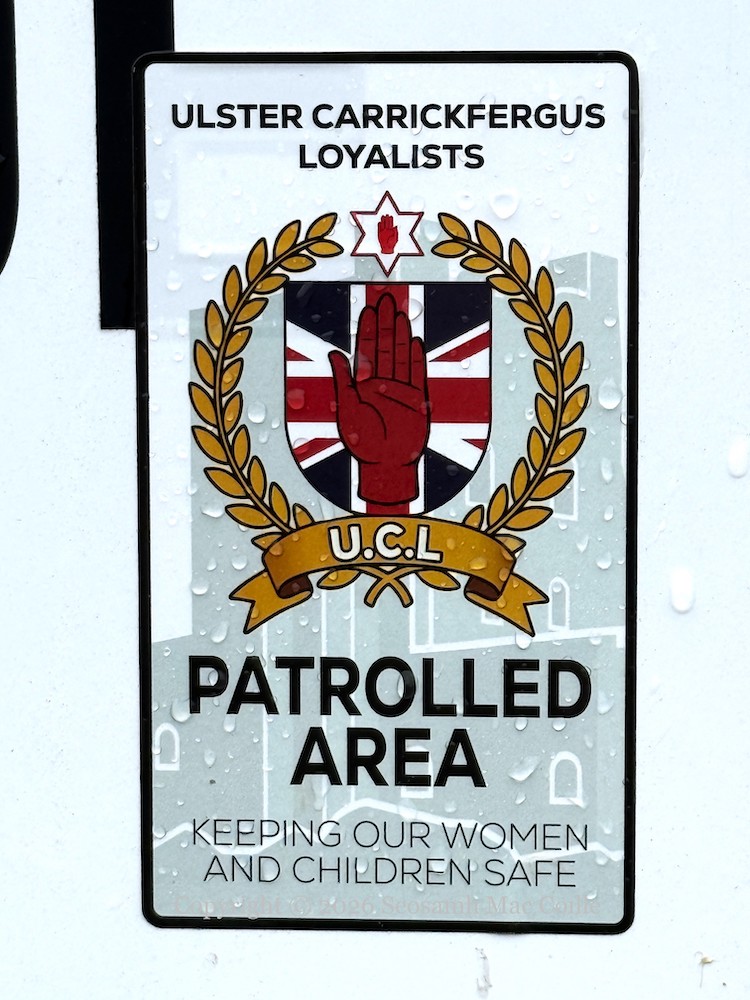
For “Ulster Carrickfergus Loyalists”, see No Illegal Immigrants in the Paddy Duffy collection.
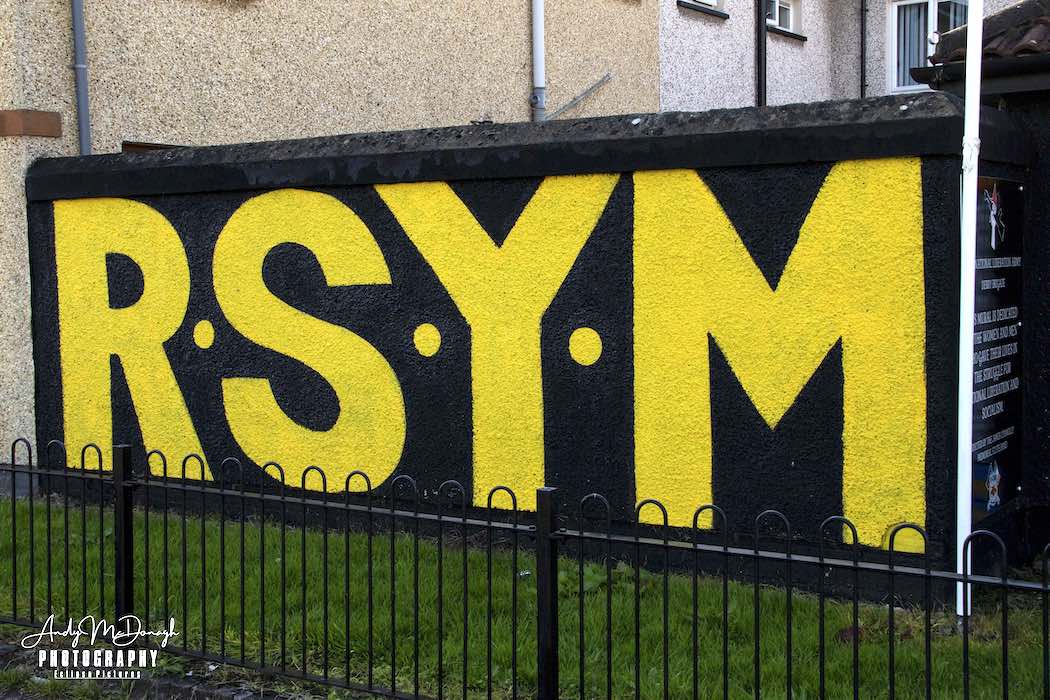
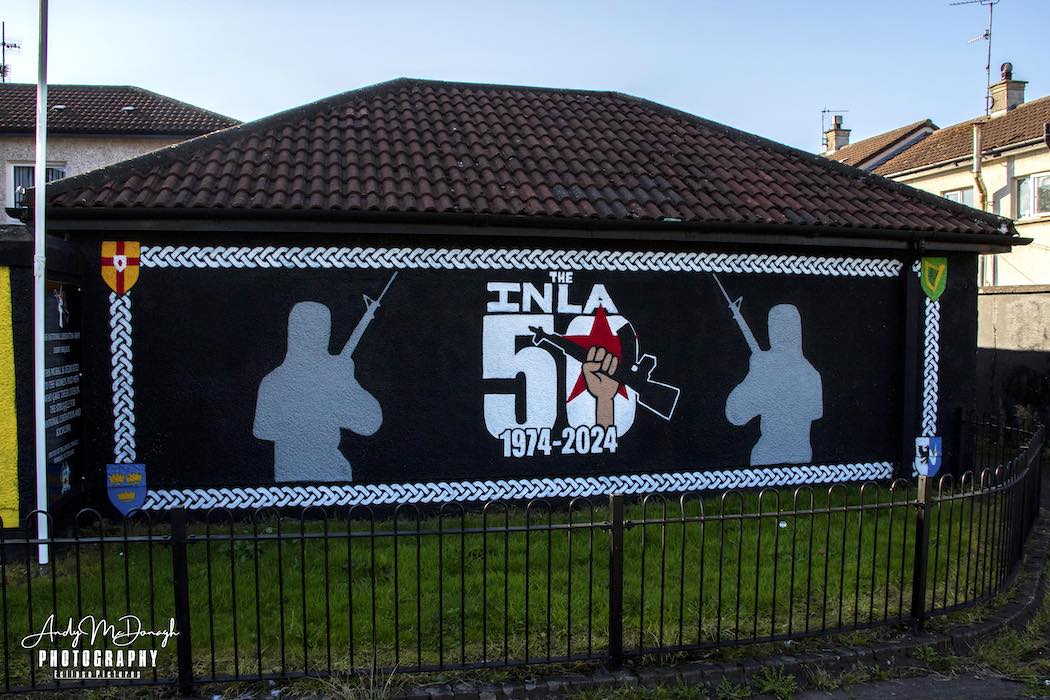
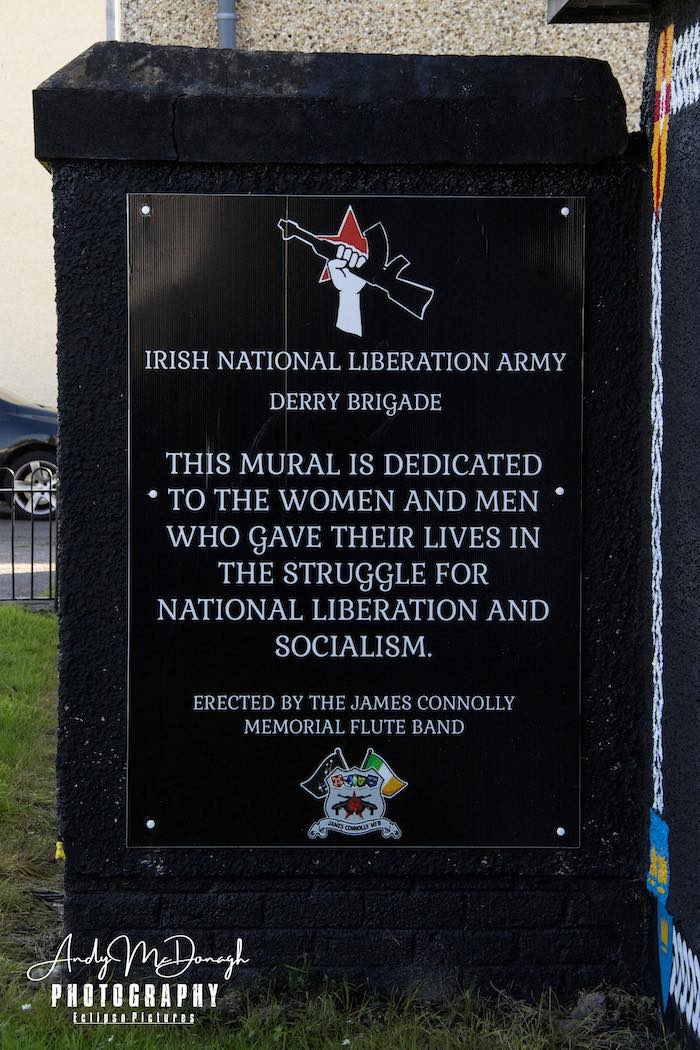
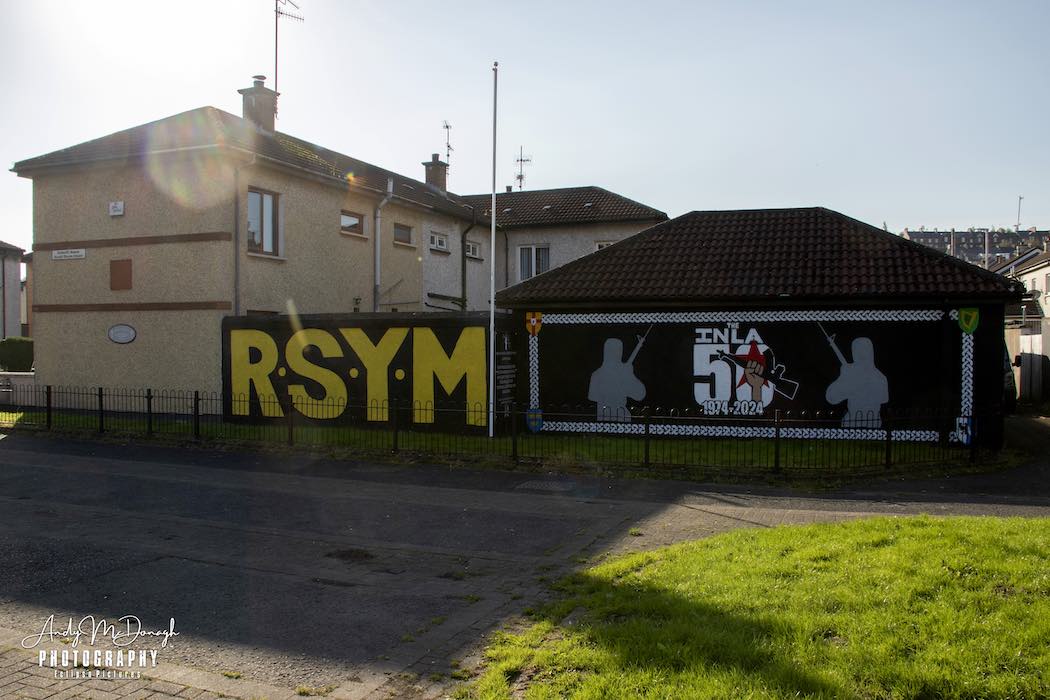
Commemorations of the INLA’s fiftieth anniversary have so far been limited to graffiti – see Saoırse Go Deo in Derry and Let The Fight Go On in Belfast – but here we have two deliberately painted panels in the Bogside (specifically Meenan Square) (one replacing The Way We Were).
“Irish National Liberation Army, Derry brigade. This mural is dedicated to the women and men who gave their lives in the struggle for national liberation and socialism. Erected by the James Connolly Memorial flute band.”
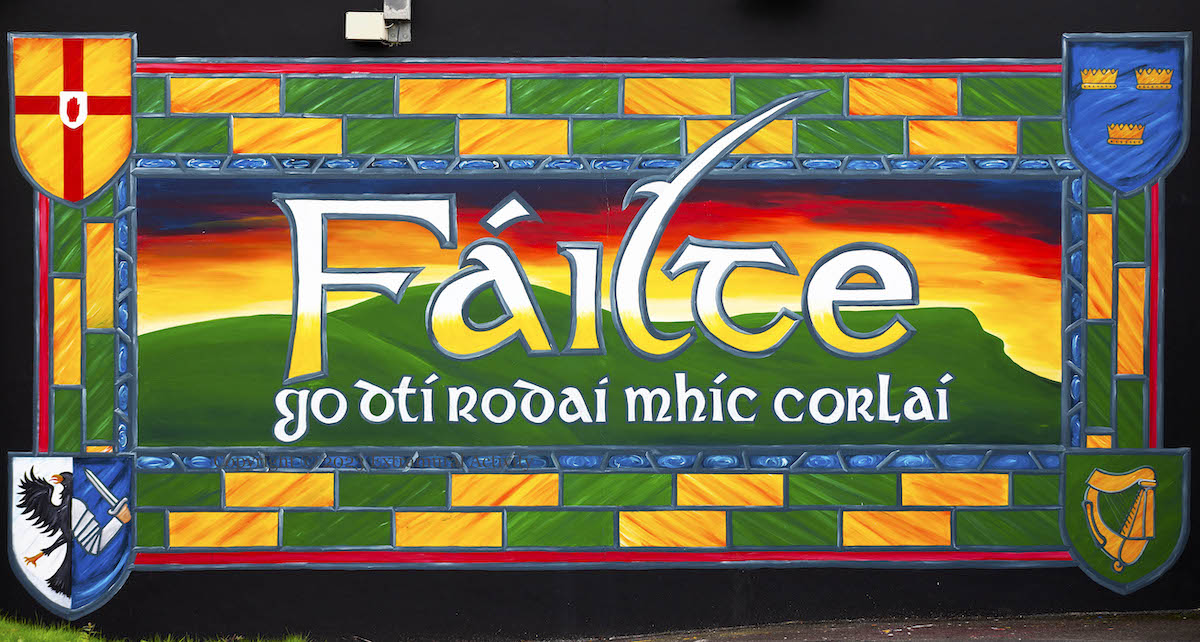
A new “fáılte” [“welcome”] mural was painted at the Roddy’s in anticipation of the official opening of the new republican heritage centre/ıonad oıdhreachta poblachtaí (web) which took place on September 28th. Construction of the museum and the adjacent restaurant began in May 2021 with an investment of 1.35 million pounds (Belfast Live). The museum’s exhibits cover republican history from 1798 to the present, and items on display from the Society’s collection include vintage uniforms and artefacts, historic maps and documents, and prison handicrafts.
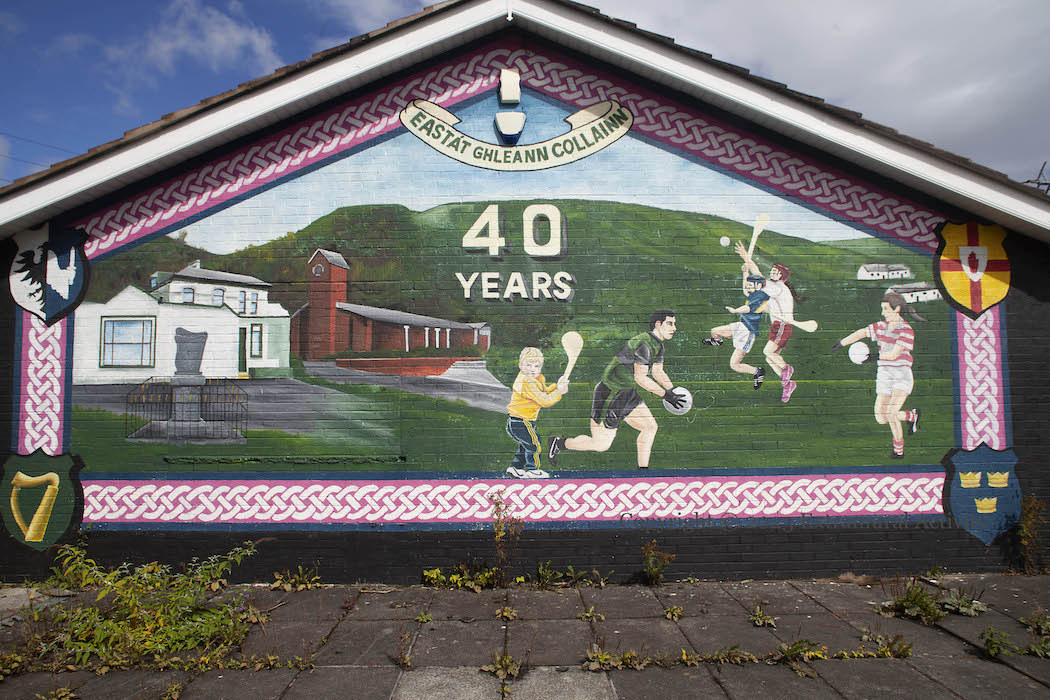
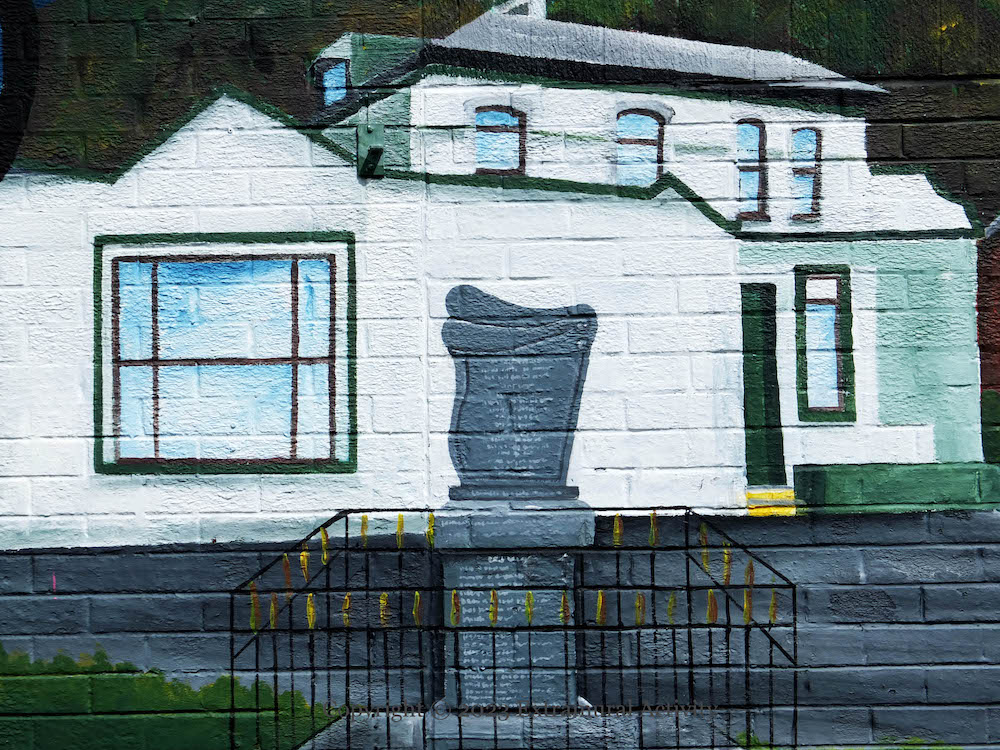
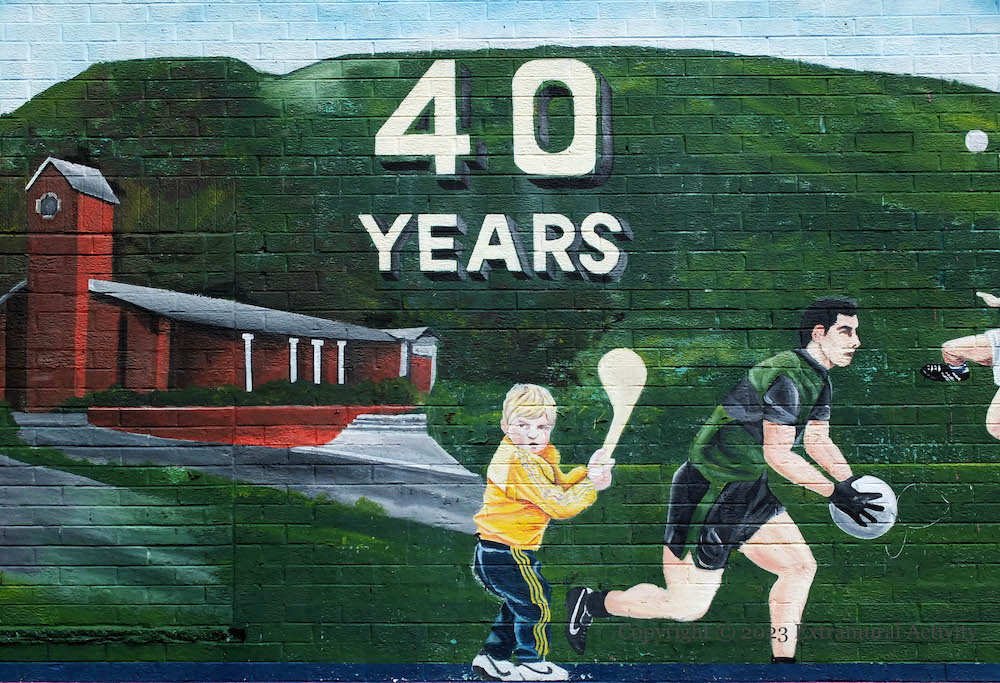
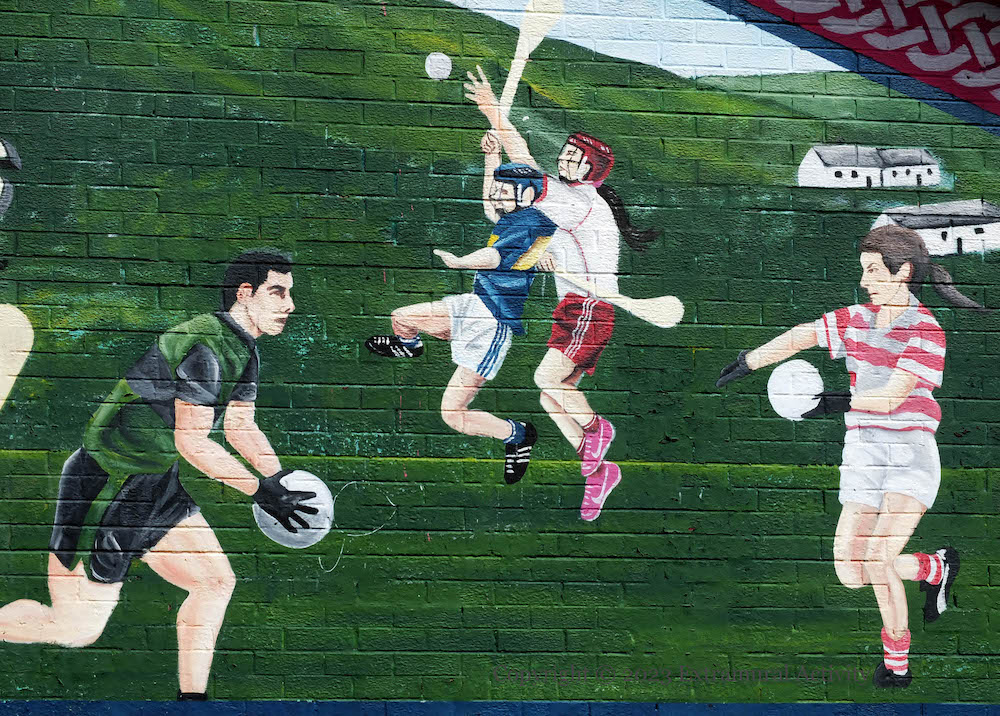
Glencolin estate was built next to Moyard House (which in 1984 became home to the Roddy’s (web), shown in the image directly below) on the Glen Road in 1979 (Belfast Forums). For the fortieth anniversary of “eastát Ghleann Collaınn” the mural at the entrance to the estate was (belatedly) repainted. The composition of the mural remains as in the previous version, with the Roddy’s and Oliver Plunkett church in the shadow of Dubhaıs and Slıabh Dubh; they are now joined by images of Gaelic games. The Bobby Sands quote has been removed.
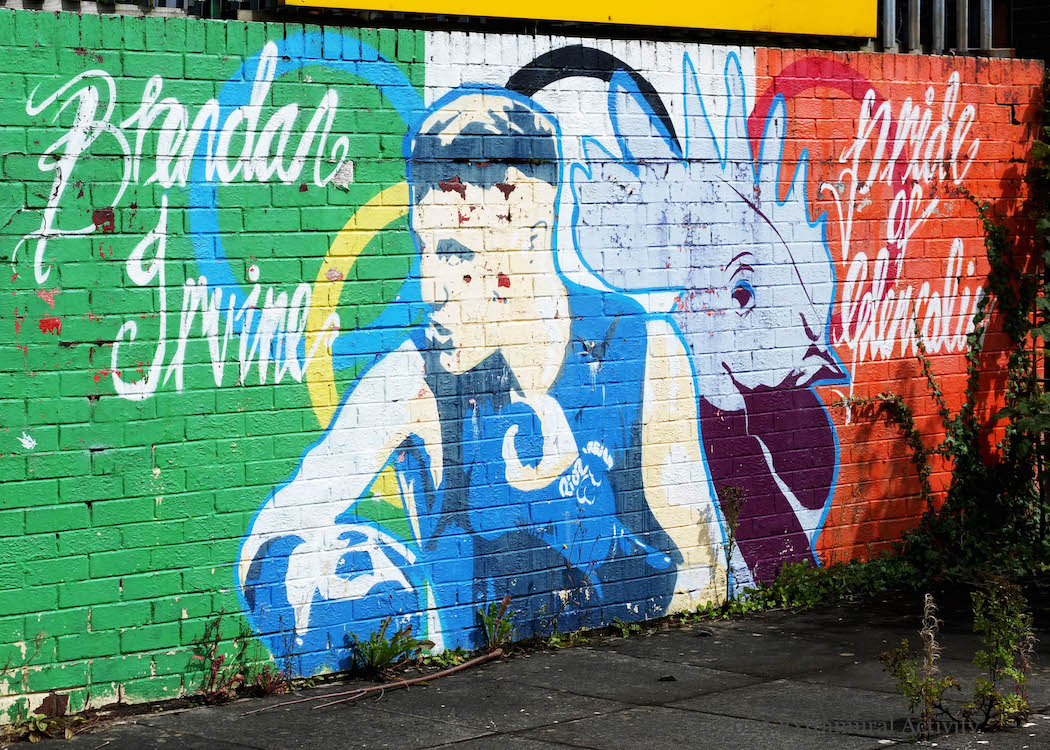
The 2018 side-wall shows boxer Brendan Irvine — “the wee rooster” — who represented Ireland in the Tokyo (2020) and Rio (2016) Olympics at flyweight (Olympics).
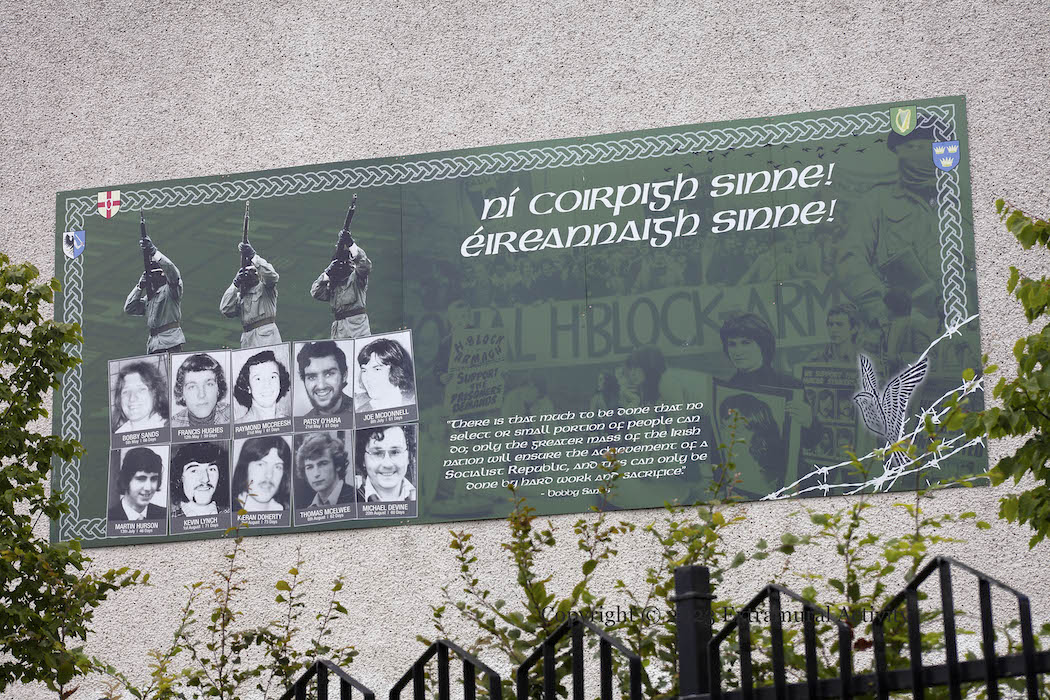
“Ní coırpıgh sınne! Éıreannaıgh sınne! [we are not criminals; we are Irish people] “There is that much to be done that no select or small portion of people can do; only the greater mass of the Irish nation will ensure the achievement of a socialist republic, and this can only be done by hard work and sacrifice.” – Bobby Sands [Hunger strike diary, March 14th, 1981]” With photographs of the ten deceased 1981 hunger strikers.
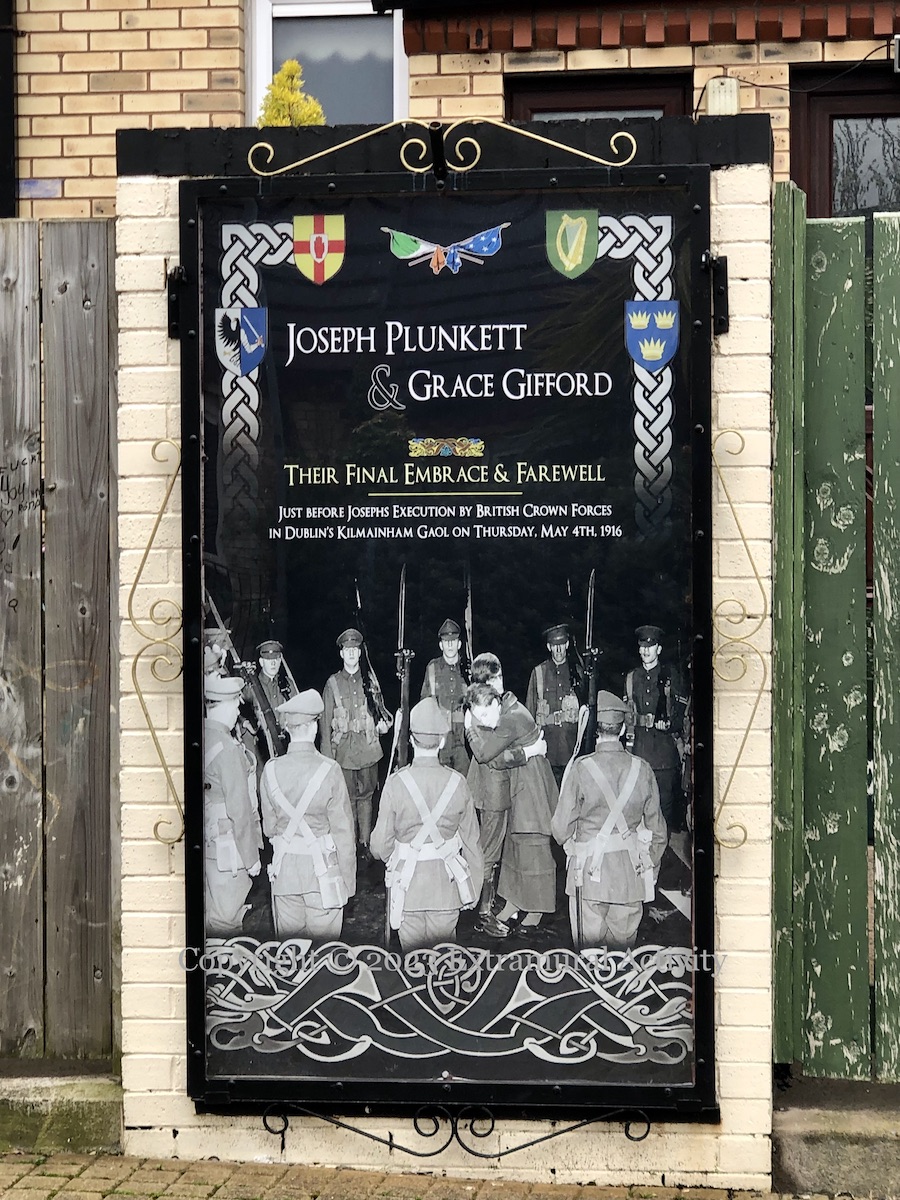
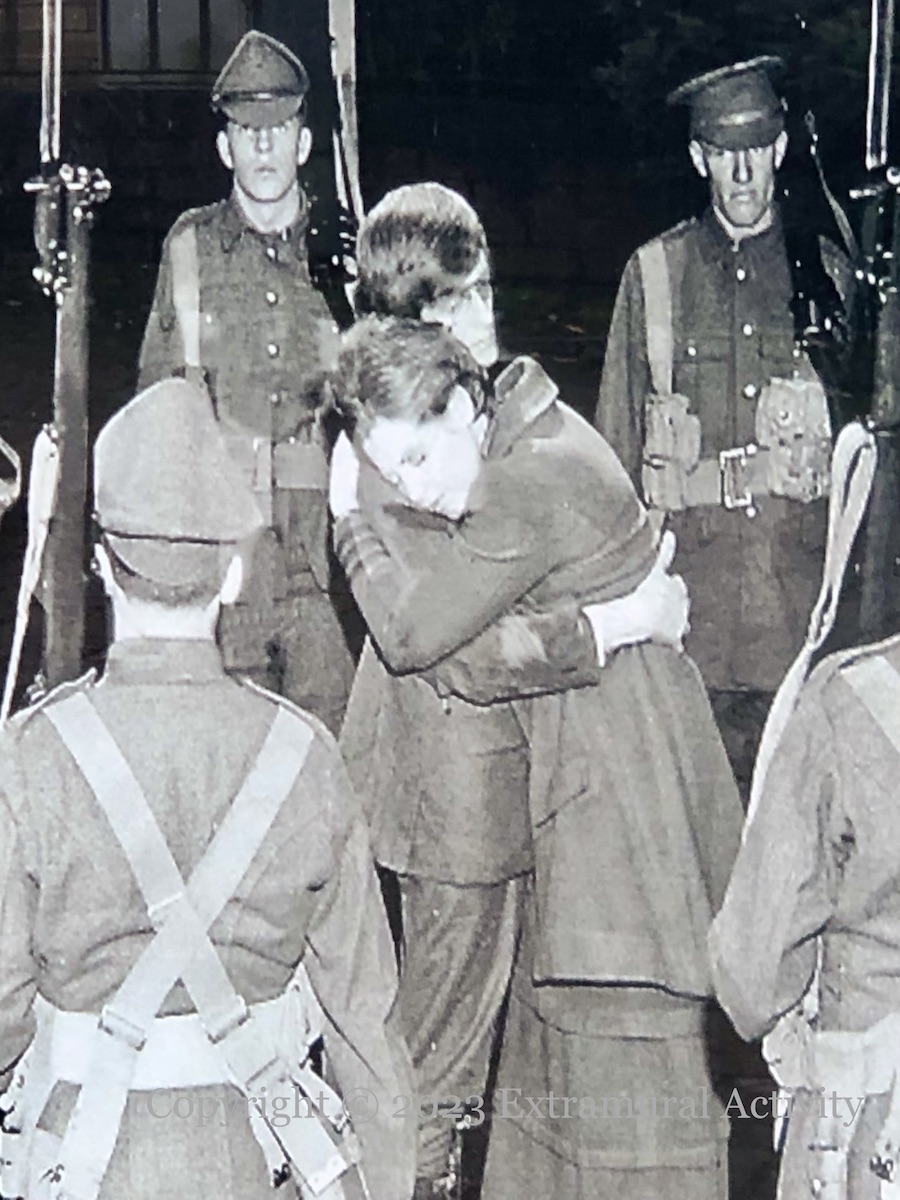
“Joseph Plunkett & Grace Gifford – their final embrace & farewell.” May 4th is the anniversary of the execution of Joseph Plunkett, one of the planners of the Easter Rising in 1916. Seven hours before he faced the firing squad, he married Grace Gifford. The photograph is from a re-enactment for a 1966 RTÉ programme Insurrection (RTÉ). The ballad Grace, written by Seán and Frank O’Meara in 1985, is now internationally known (here is Jim McCann’s 1985 performance).
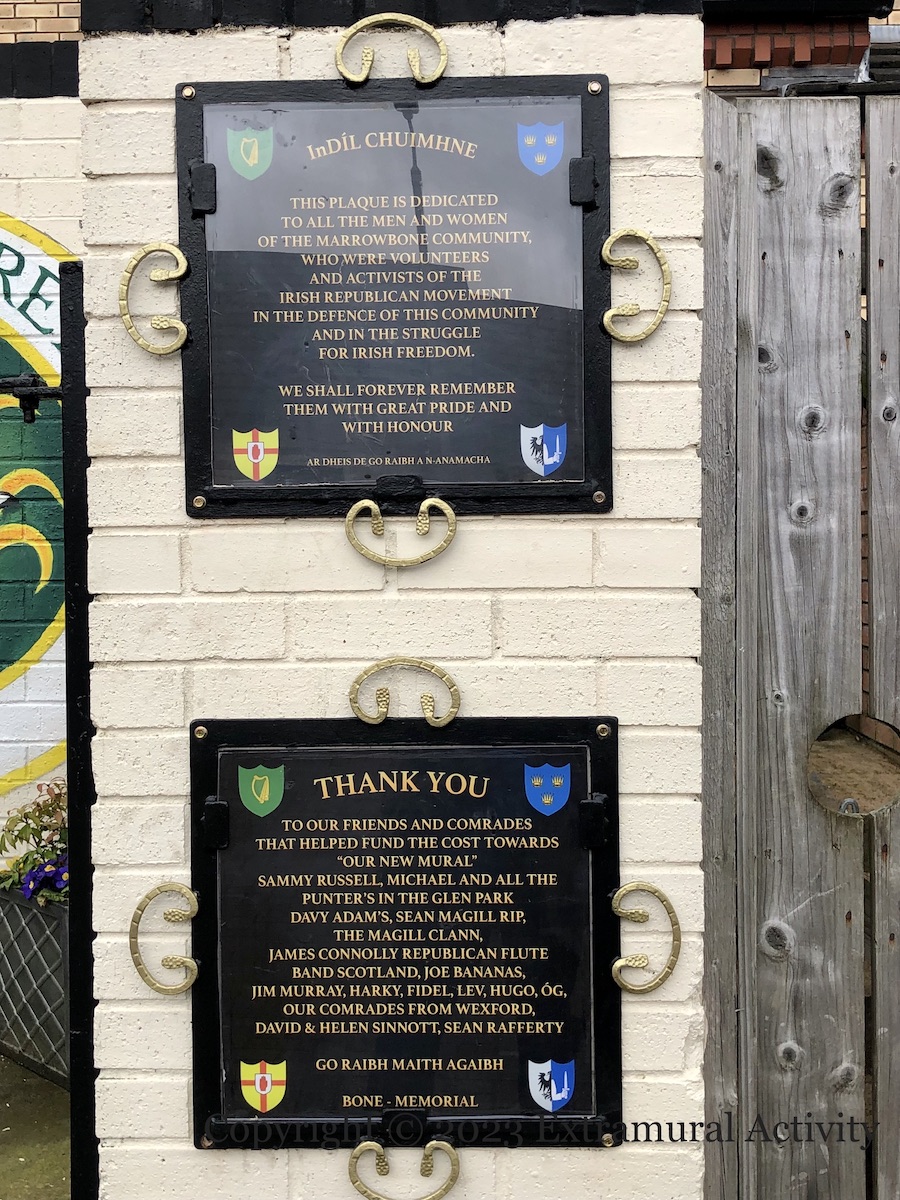
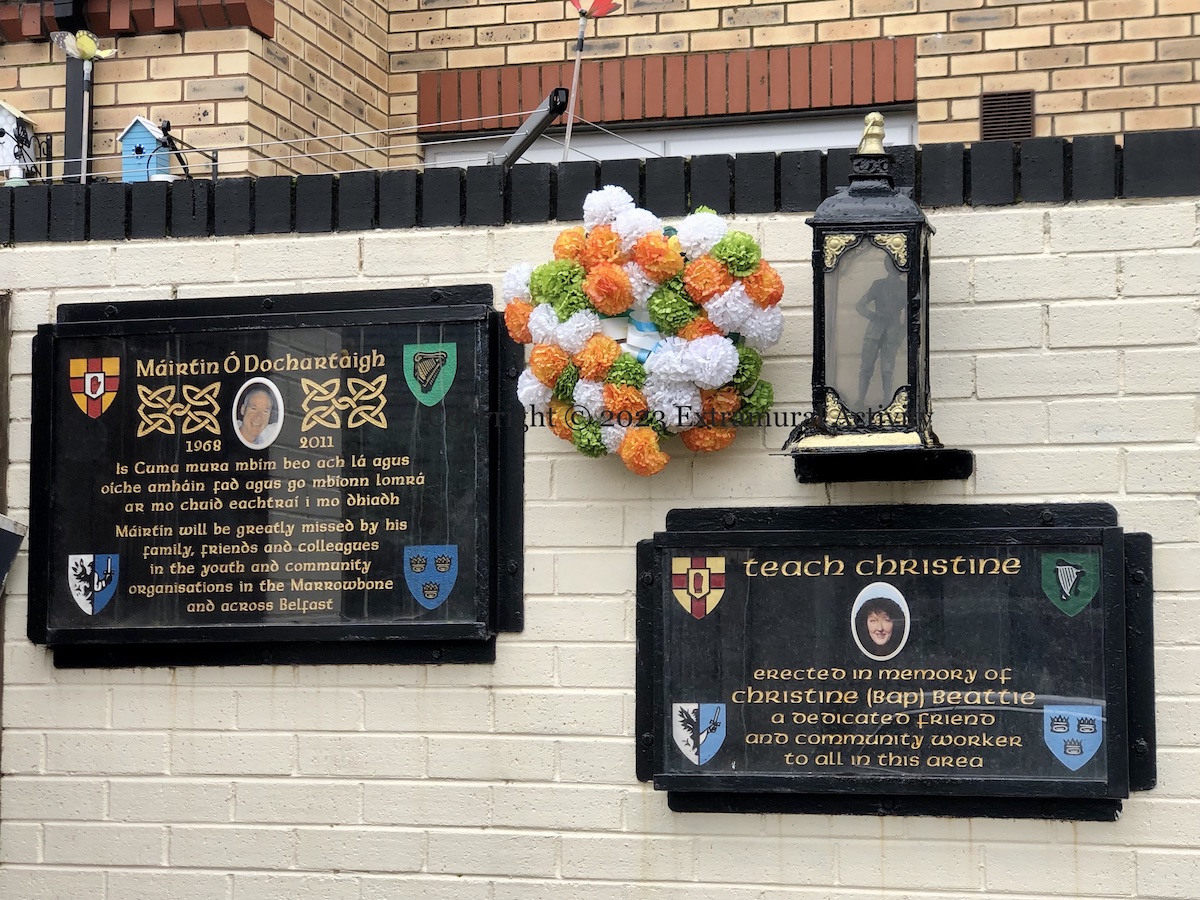
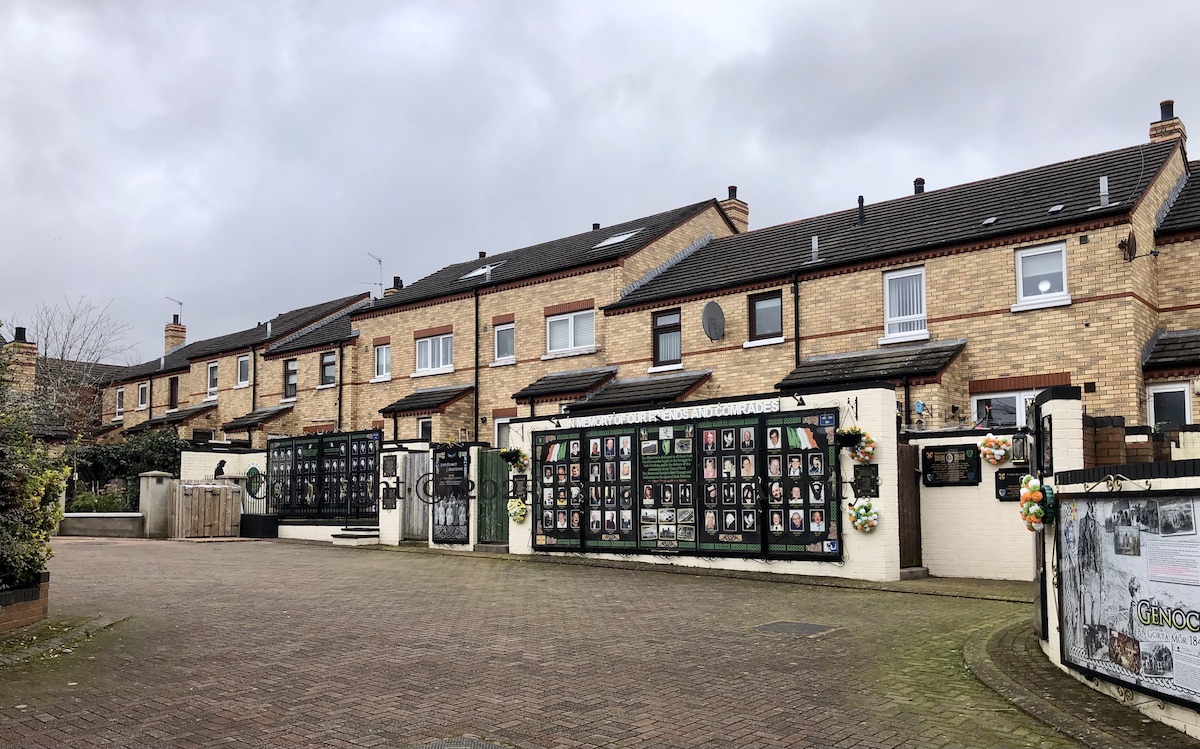
This is one of various recent additions to the many memorials in Ard An Lao, Béal Feırste/Ardilea, Belfast. This replaces the board seen in Continuing Their Legacy.
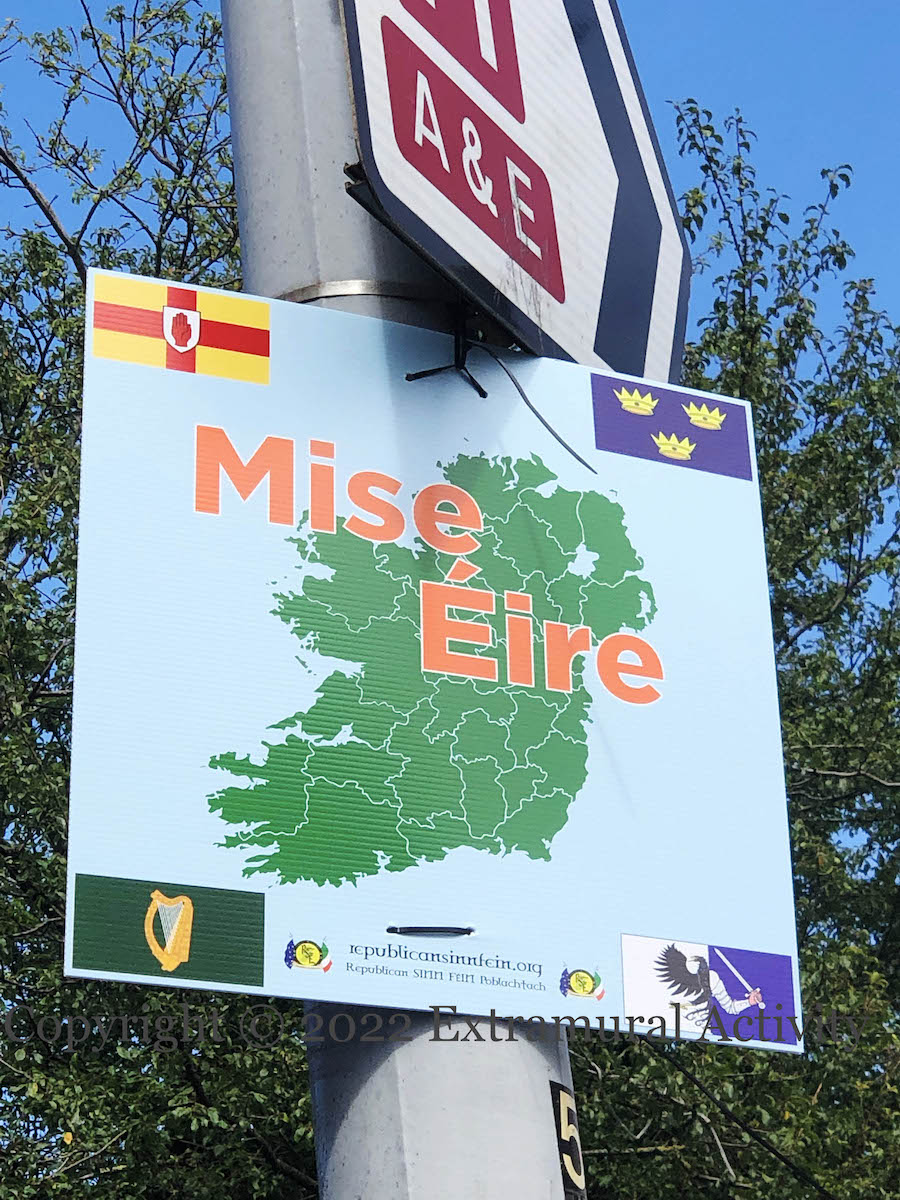
Mıse Éıre (short for ‘Is mıse Éıre’ [I am Ireland]) is a short poem by Patrick Pearse in which Mother Ireland speaks of her glories and sufferings. The un-partitioned Ireland (though with the flags of the four provinces in the corners) is used here by Sınn Féın Poblachtach (web) to call for unification of “the whole people of Ireland … Protestant, Catholic, and Dissenter” [Wolfe Tone, from his autobiography].
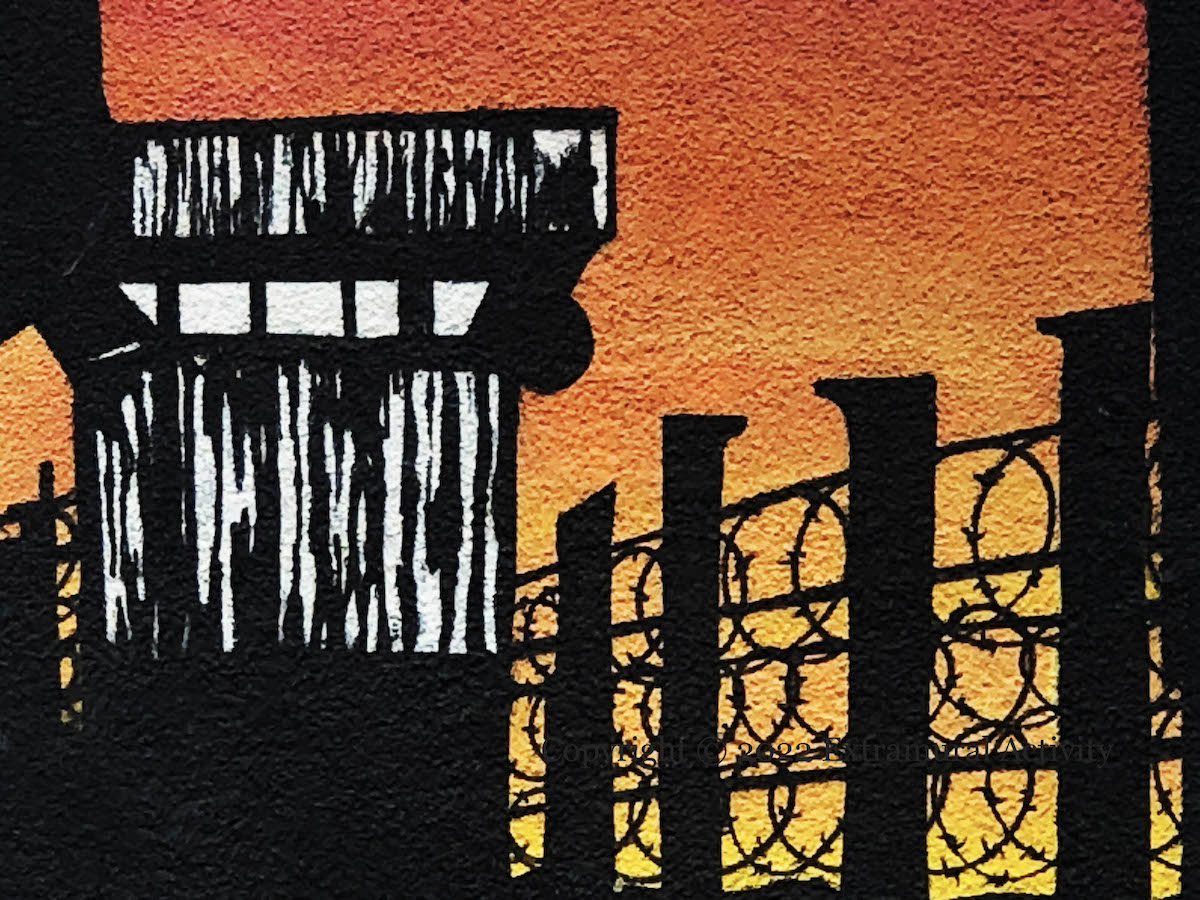
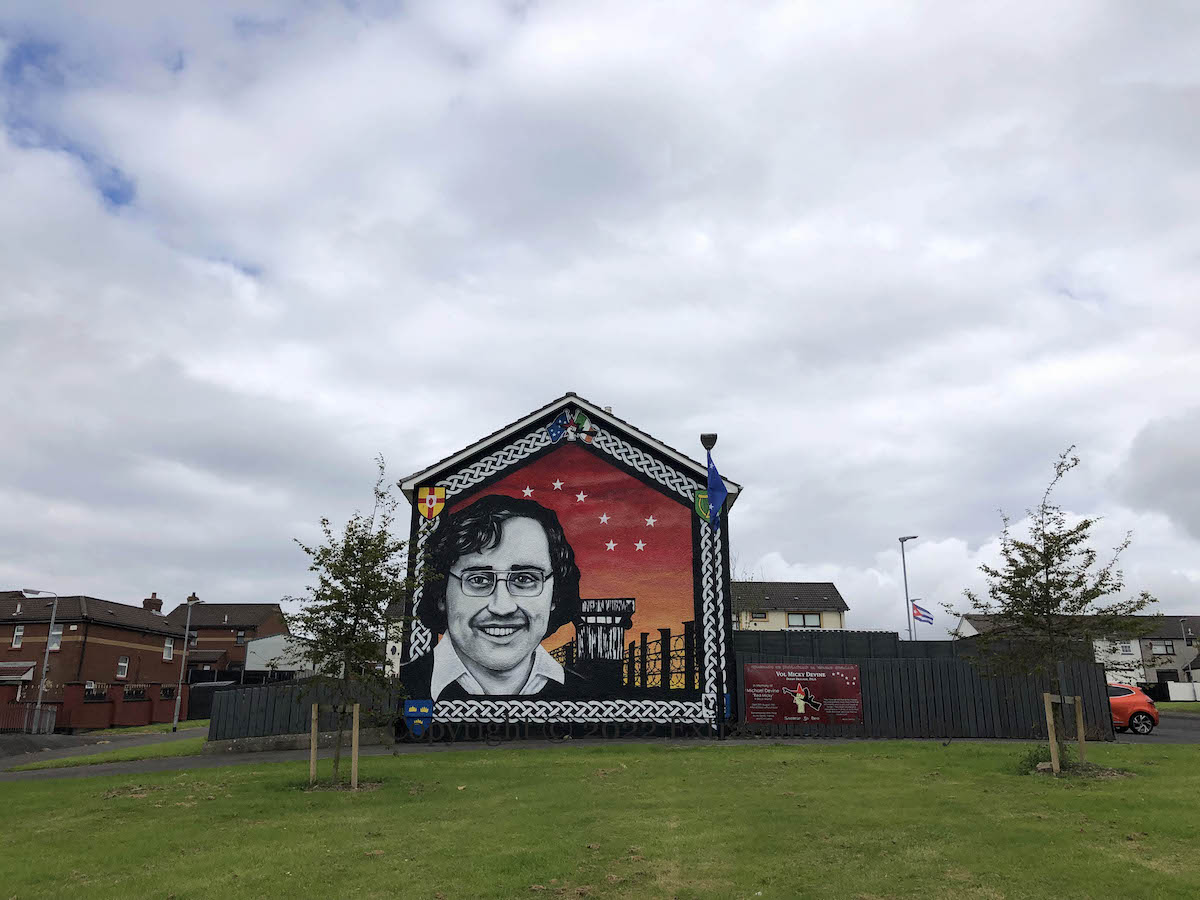
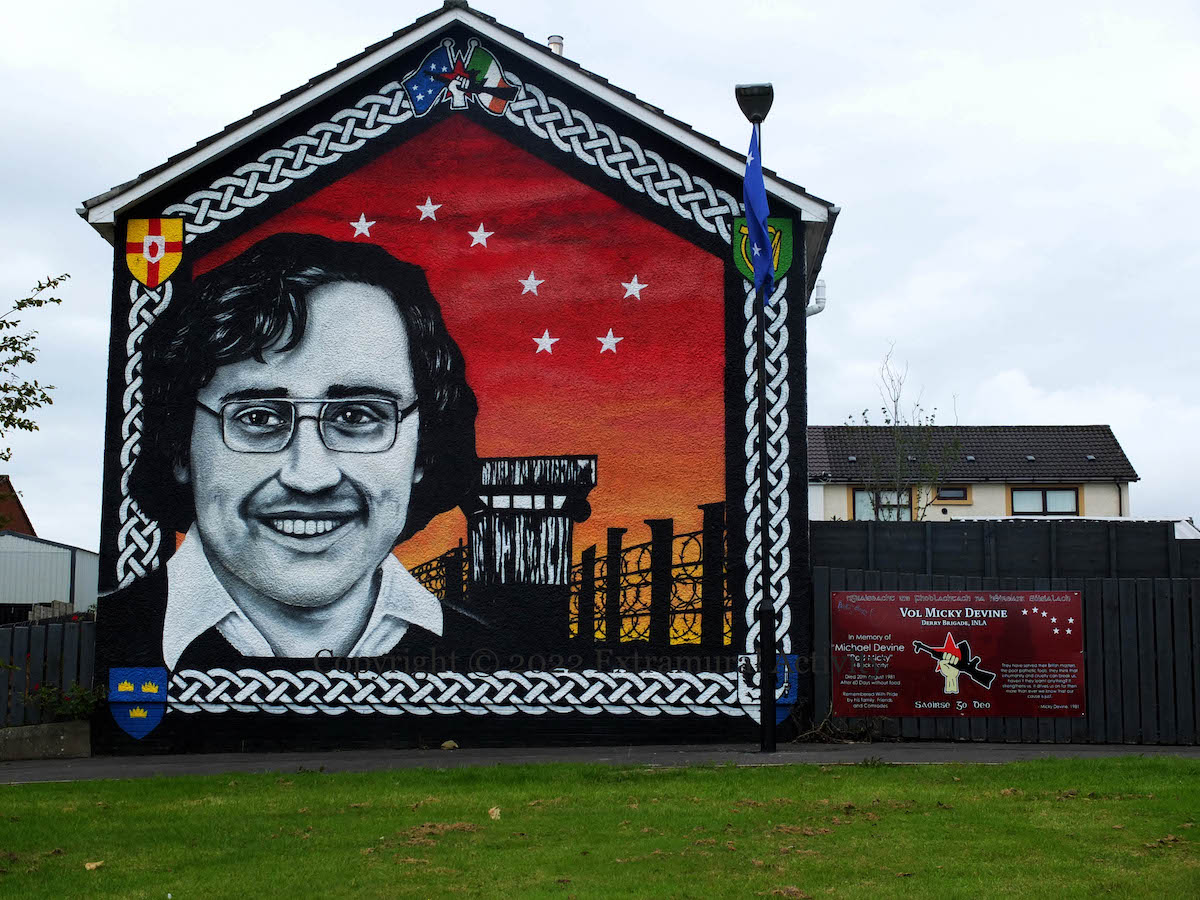
Saturday will be the 51st anniversary of Michael Devine’s death, the last of the ten strikers to die in the 1981 strike. This mural was painted last year during lockdown for the 50th anniversary.
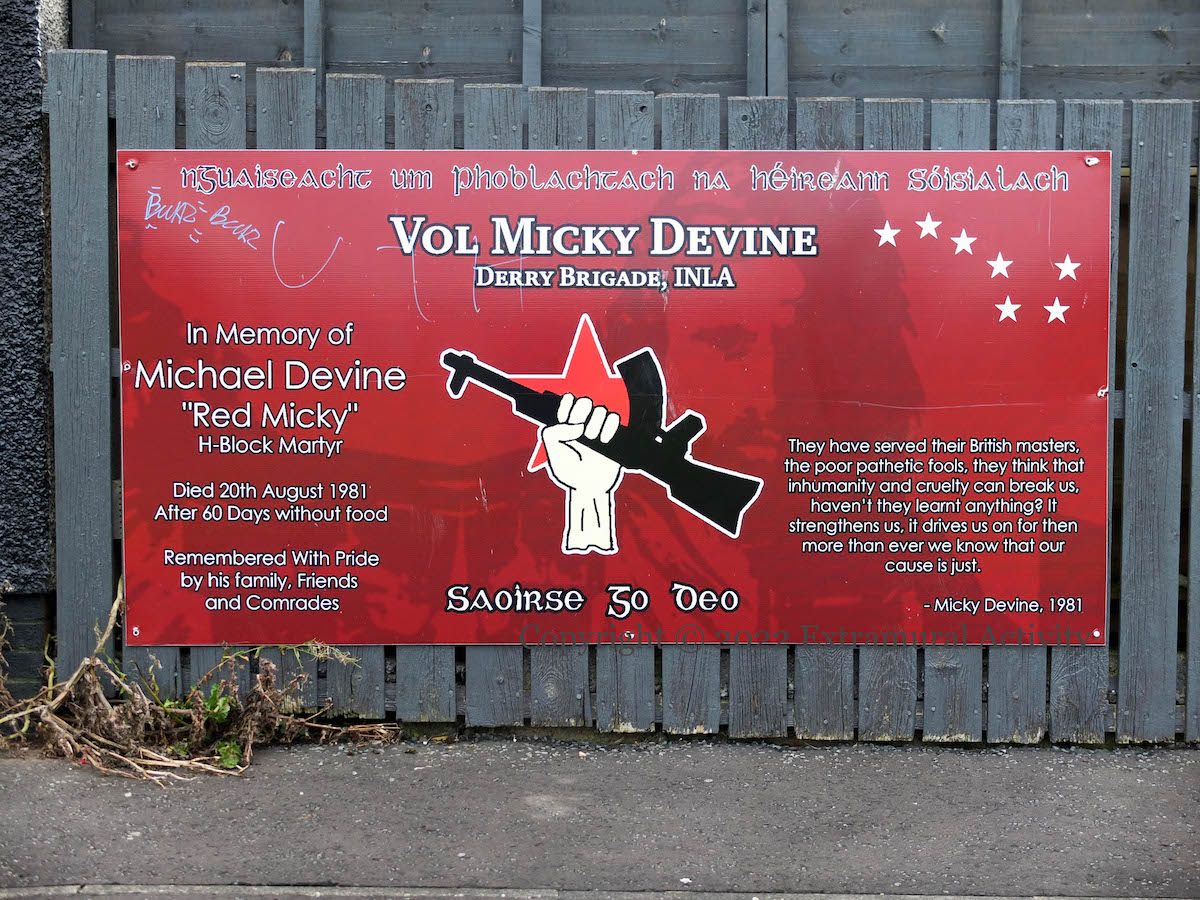
“Vol Mickey Devine, Derry Brigade, INLA. In memory of Michael Devine “Red Micky” H-Block martyr, died 20th August 1981 after 60 days without food. Remembered with pride by his family, friends and comrades. ‘They have served their British masters, the poor pathetic fools, they think that inhumanity and cruelty can break us, haven’t they learnt anything? It strengthens us, it drives us on for then more than ever we know that our cause is just’ – Micky Devine”