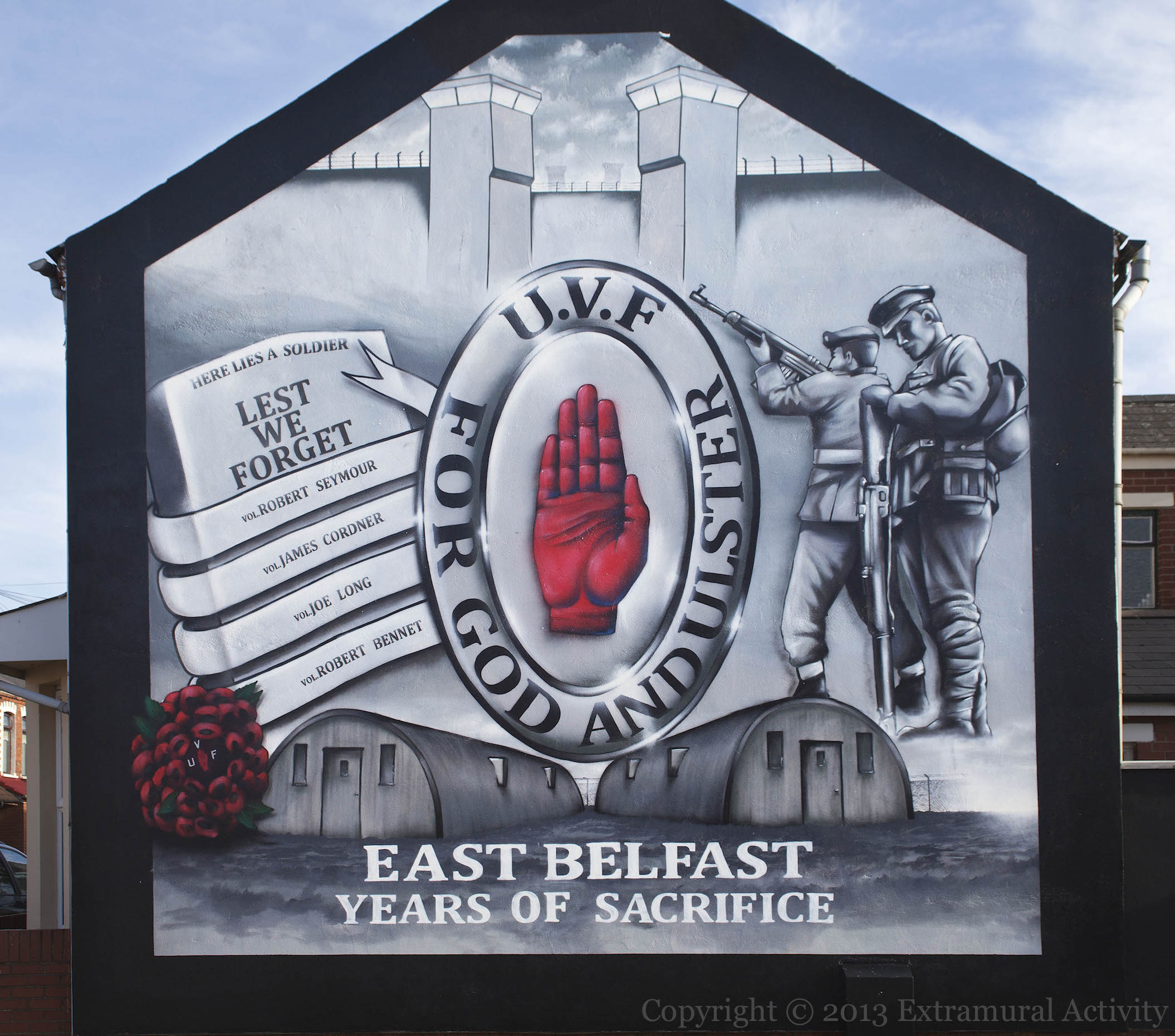
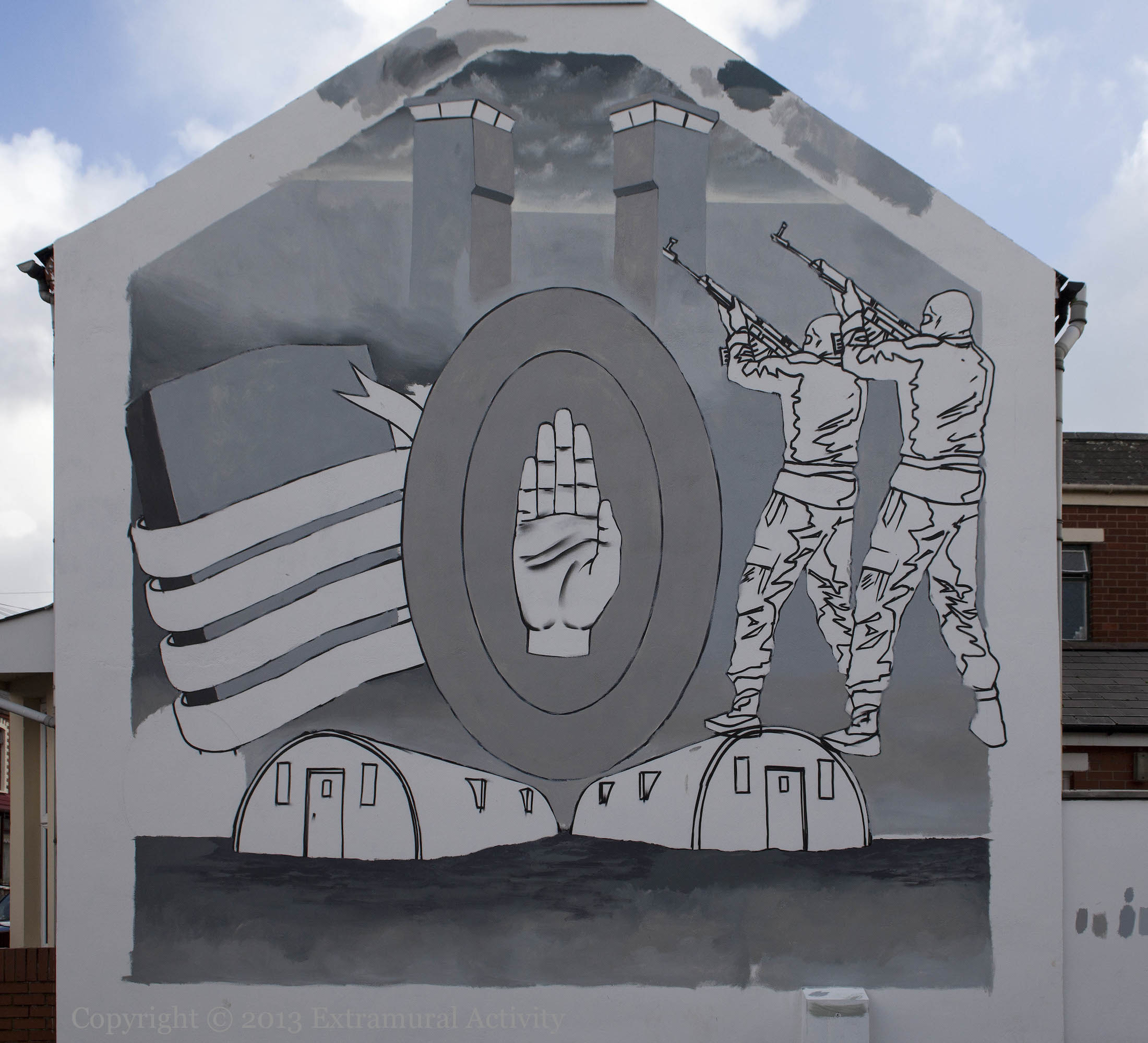
As can be seen from the initial cartoon for this mural, below, it was originally intended to have two hooded gunmen firing a funeral volley, but because of protest by locals (see, e.g. NewsLetter) this was changed to two unmasked men, one of whom is clearly of the WWI era. The Nissen huts and towers of Long Kesh, however, remain in the image, which thus expresses the complex relationship of loyalists (and especially the UVF, whose members Robert Seymour, James Cordner, Joe Long, and Robert Bennett are listed on the left-hand side) to the British army. As Bill Rolston put it: “How could one display visually the value of opposing British policies in the name of remaining British? What could be the symbols of such a schizophrenic message? (Drawing Support (1), p. ii).
The side-wall to the right of shot is painted solid black but otherwise remains unfinished as of the end of 2013.
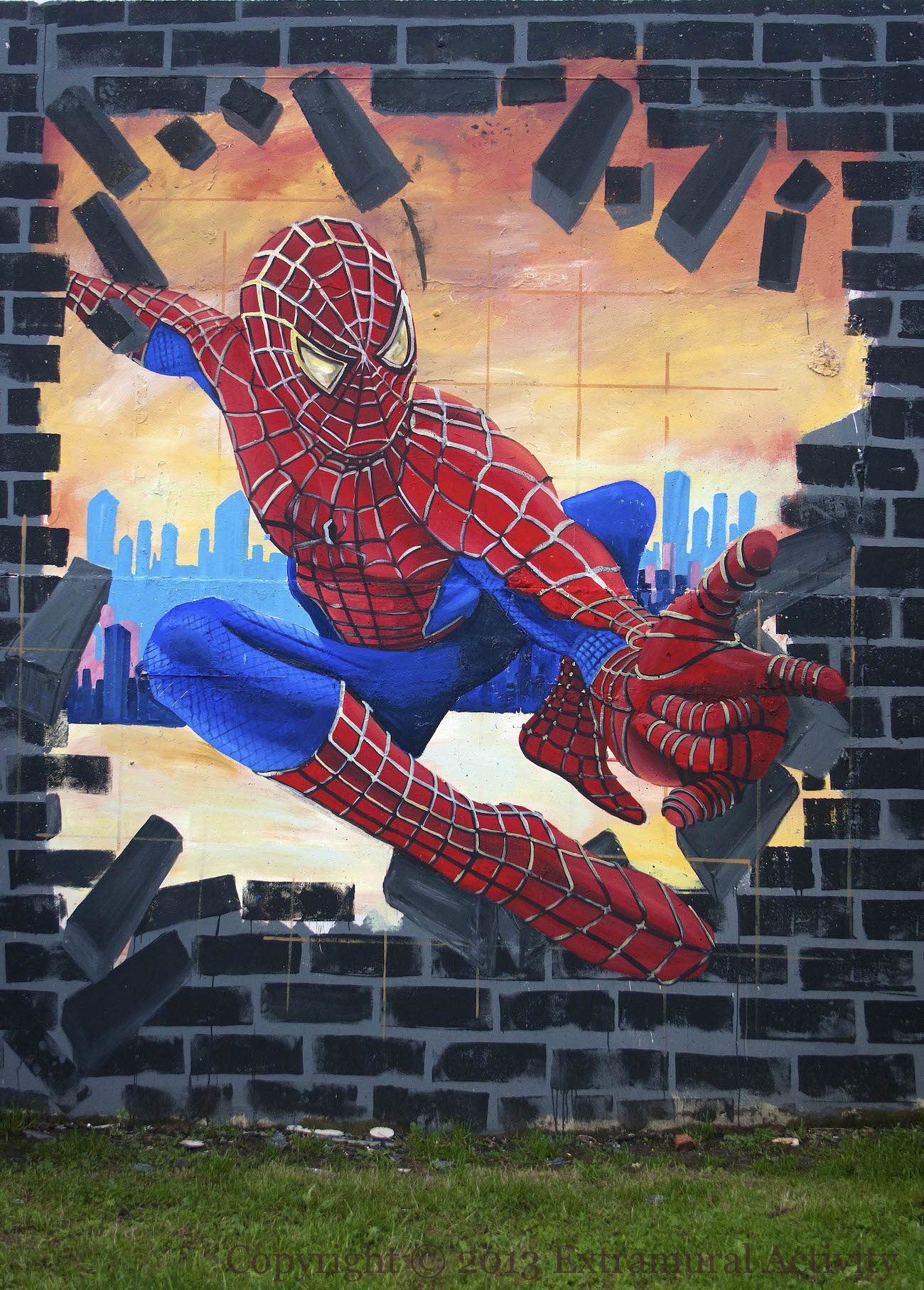
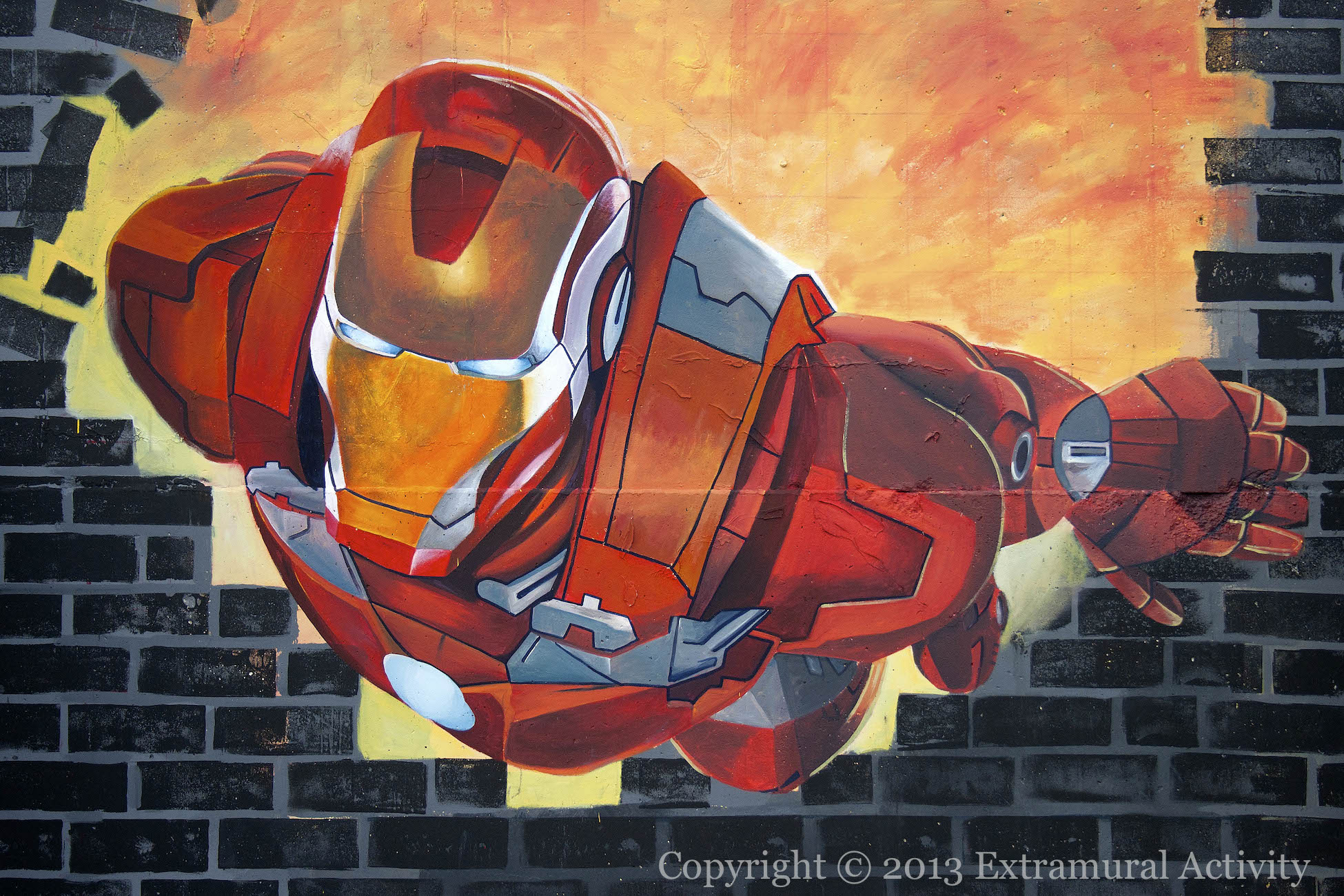
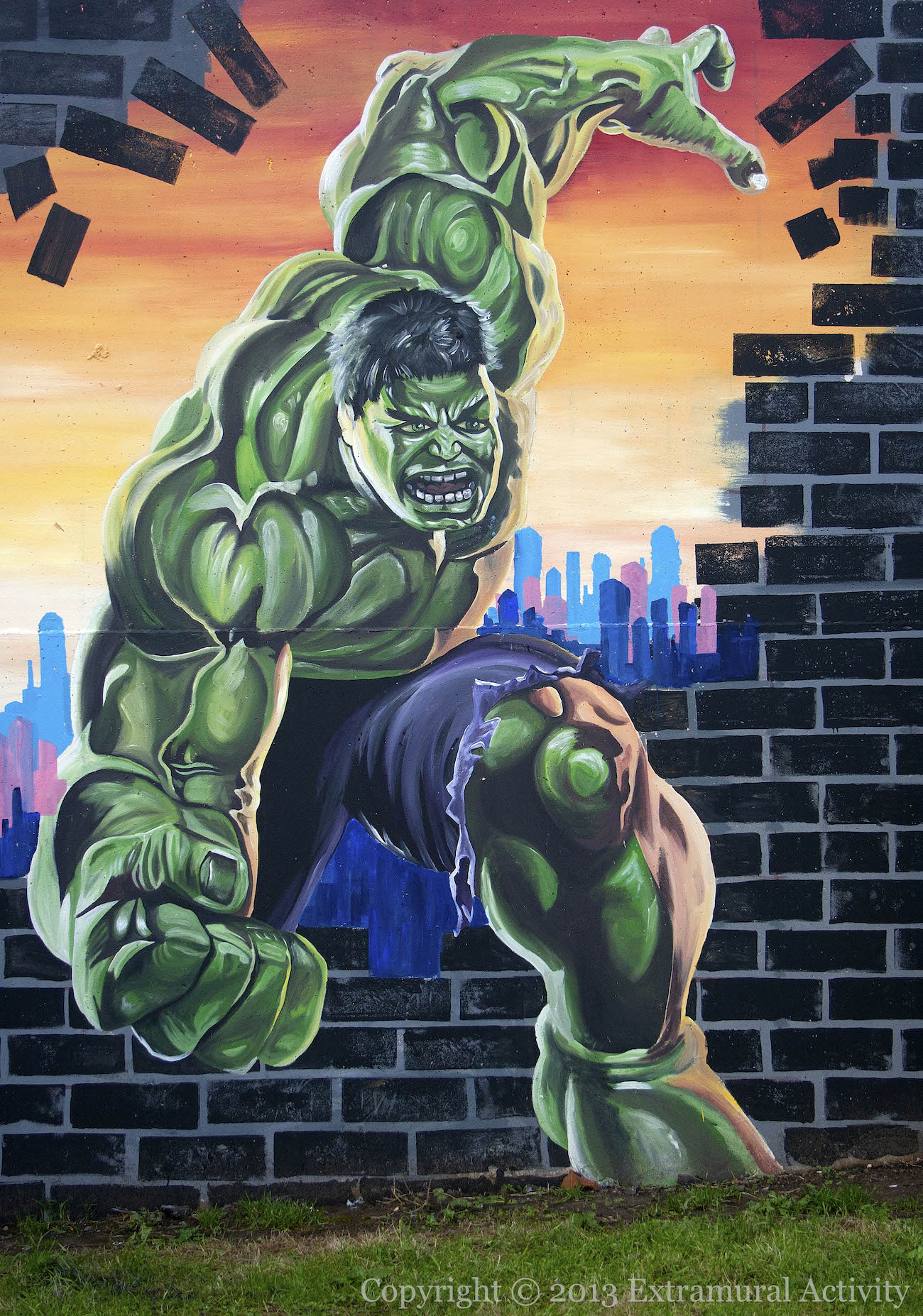
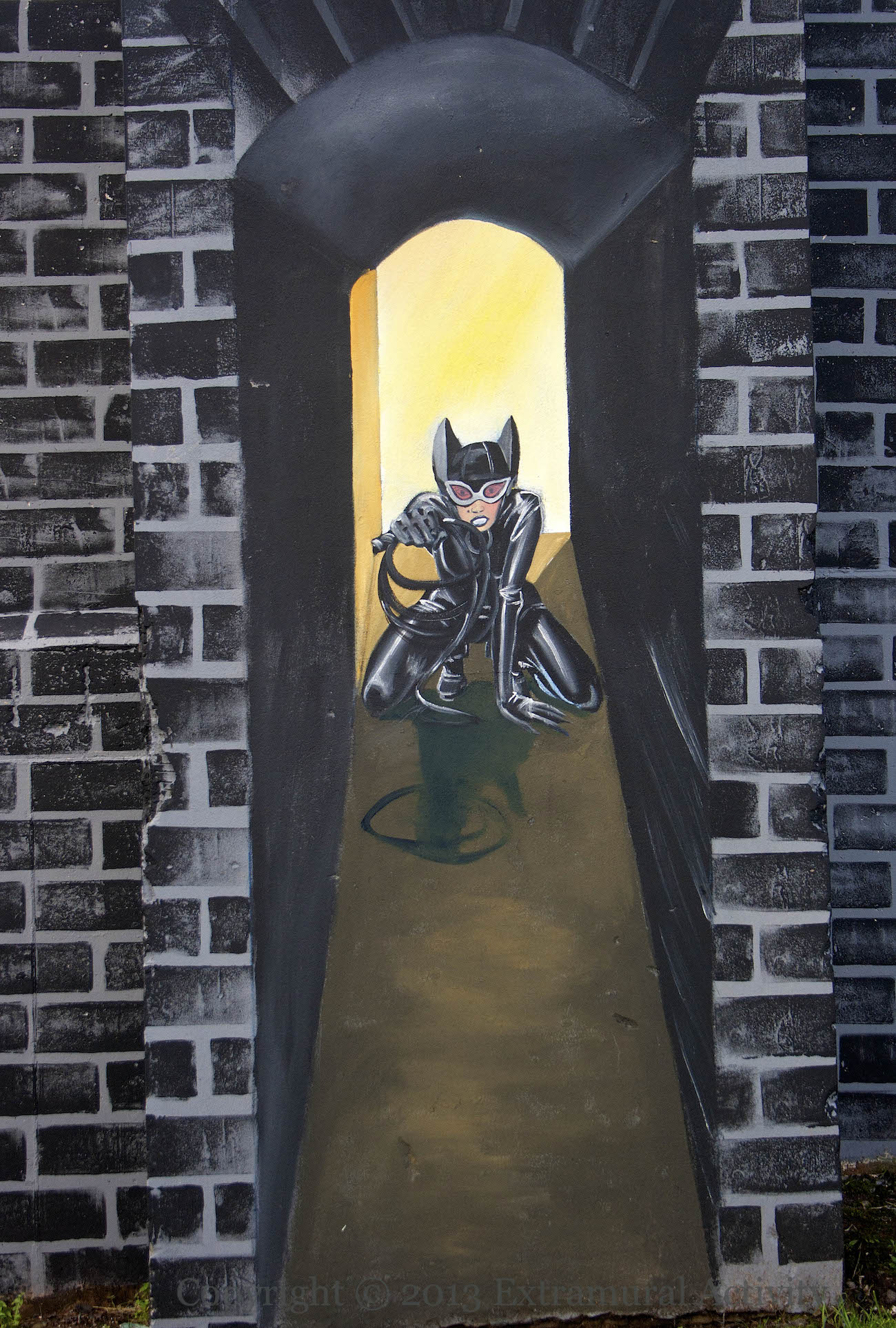
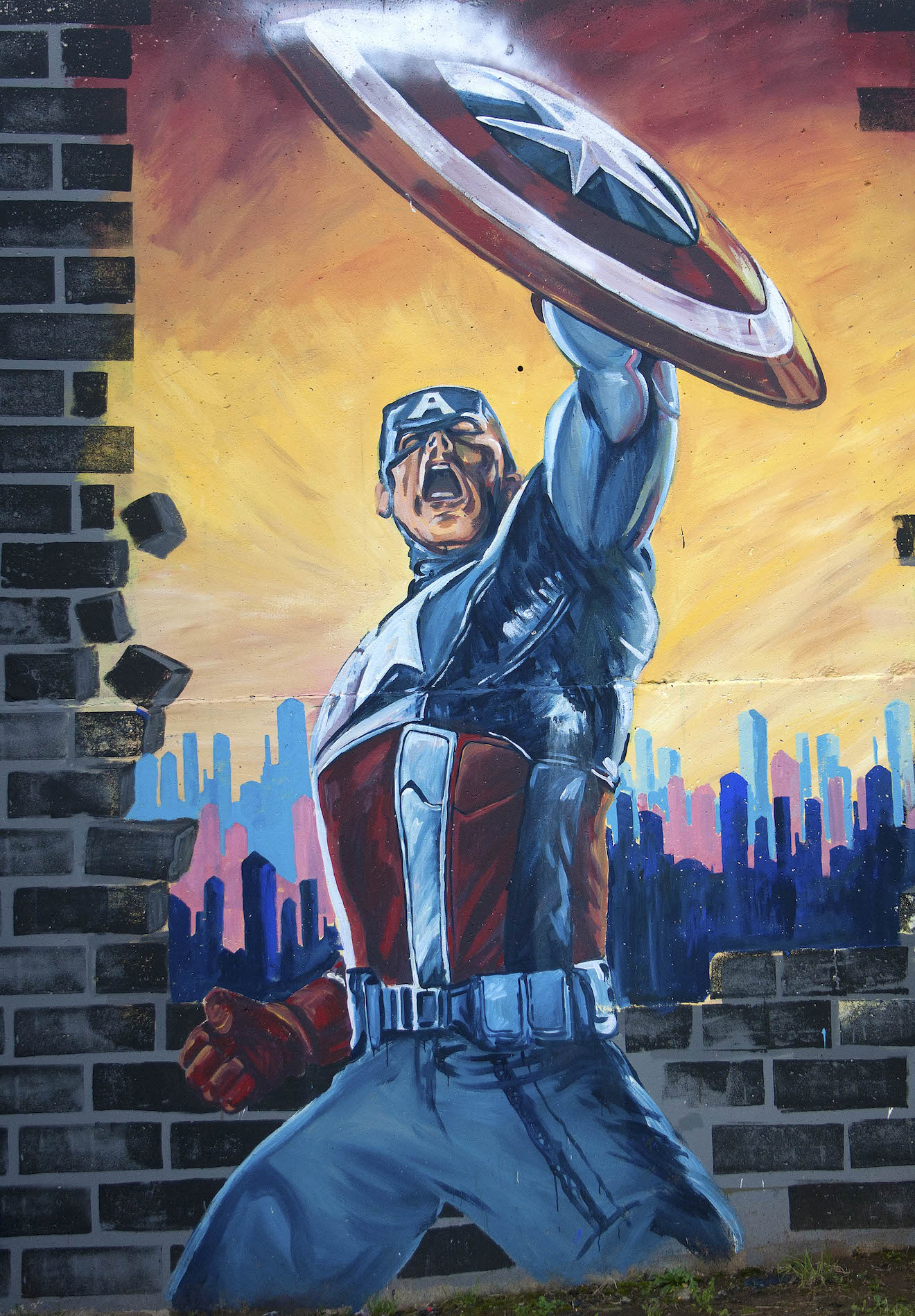
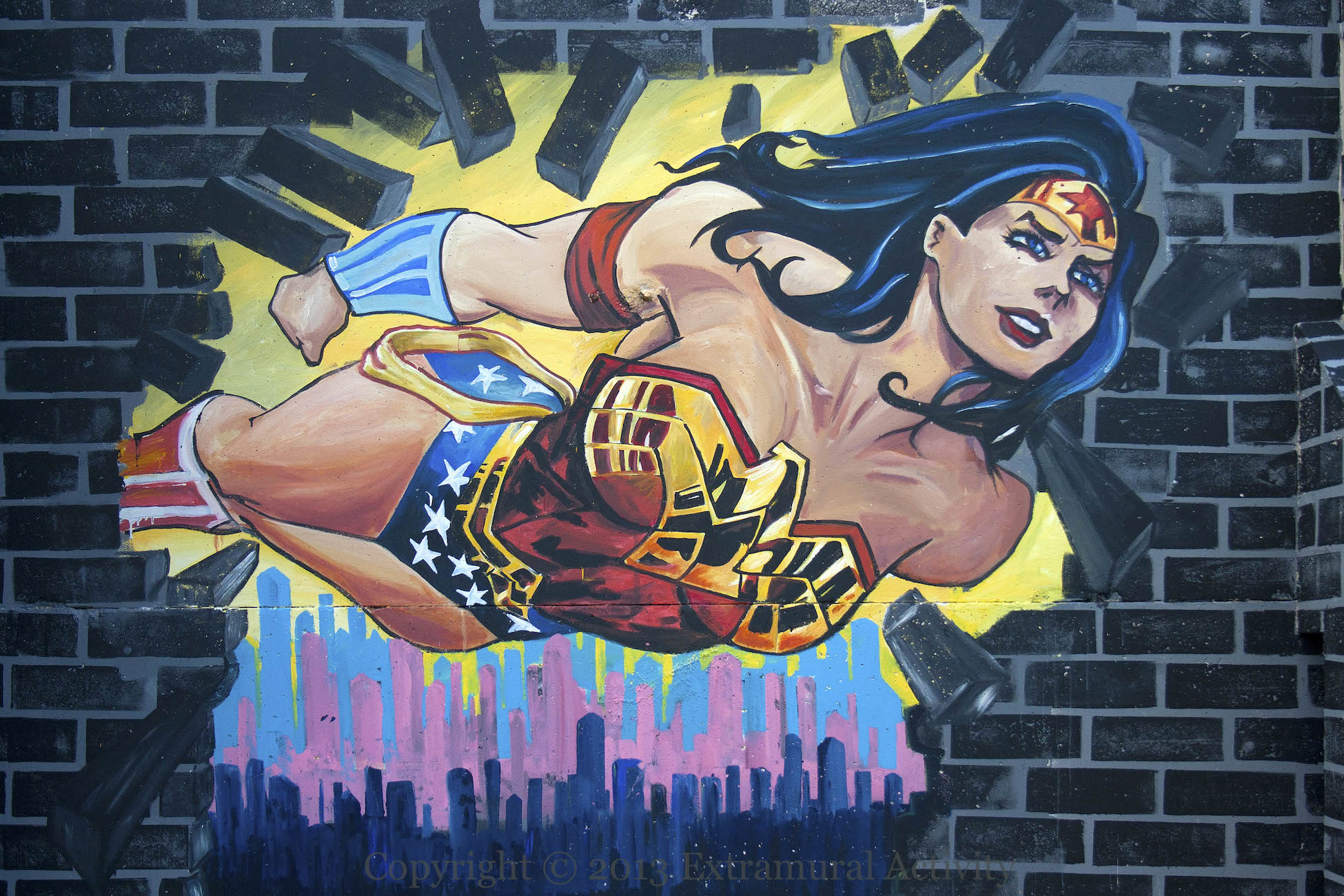
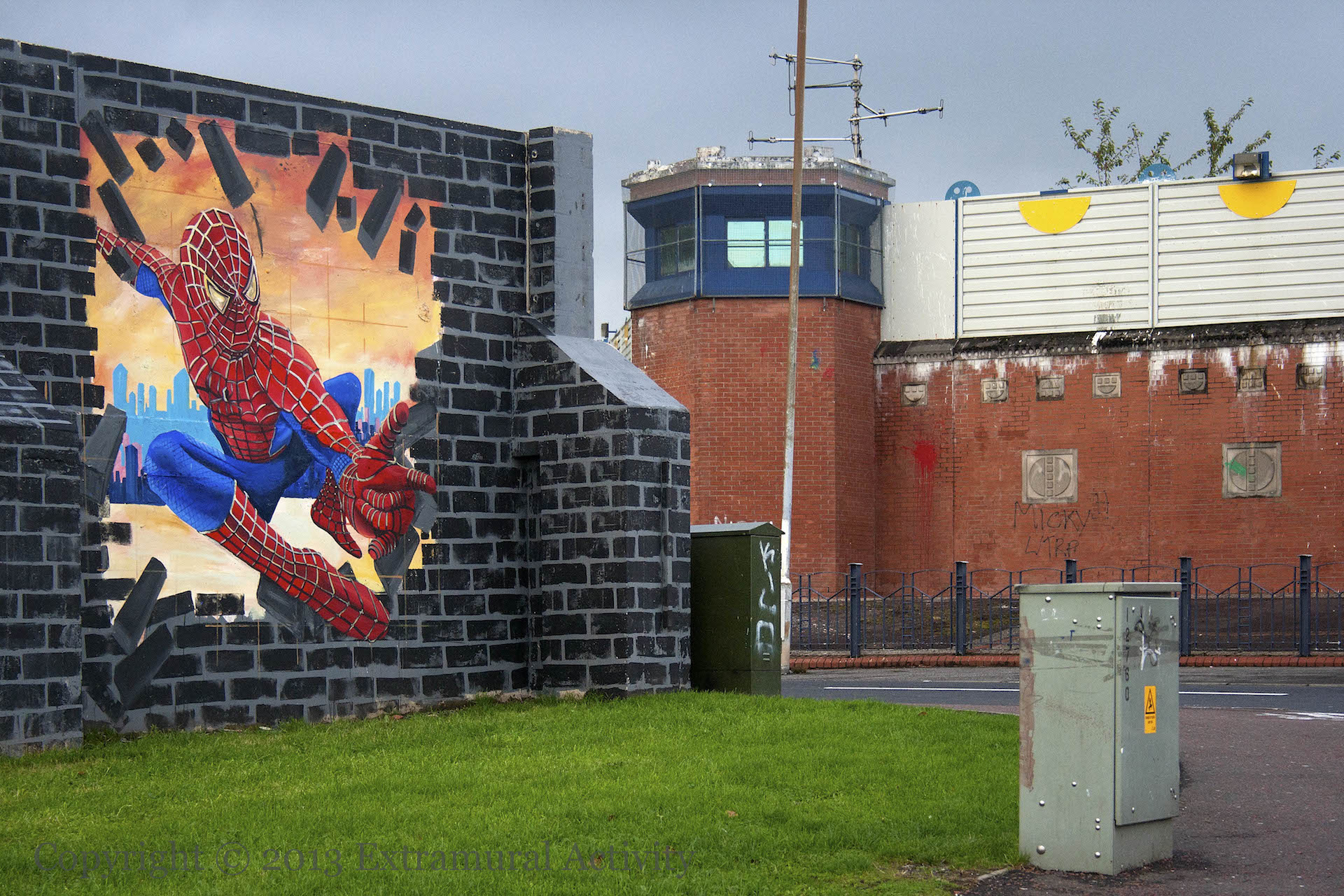
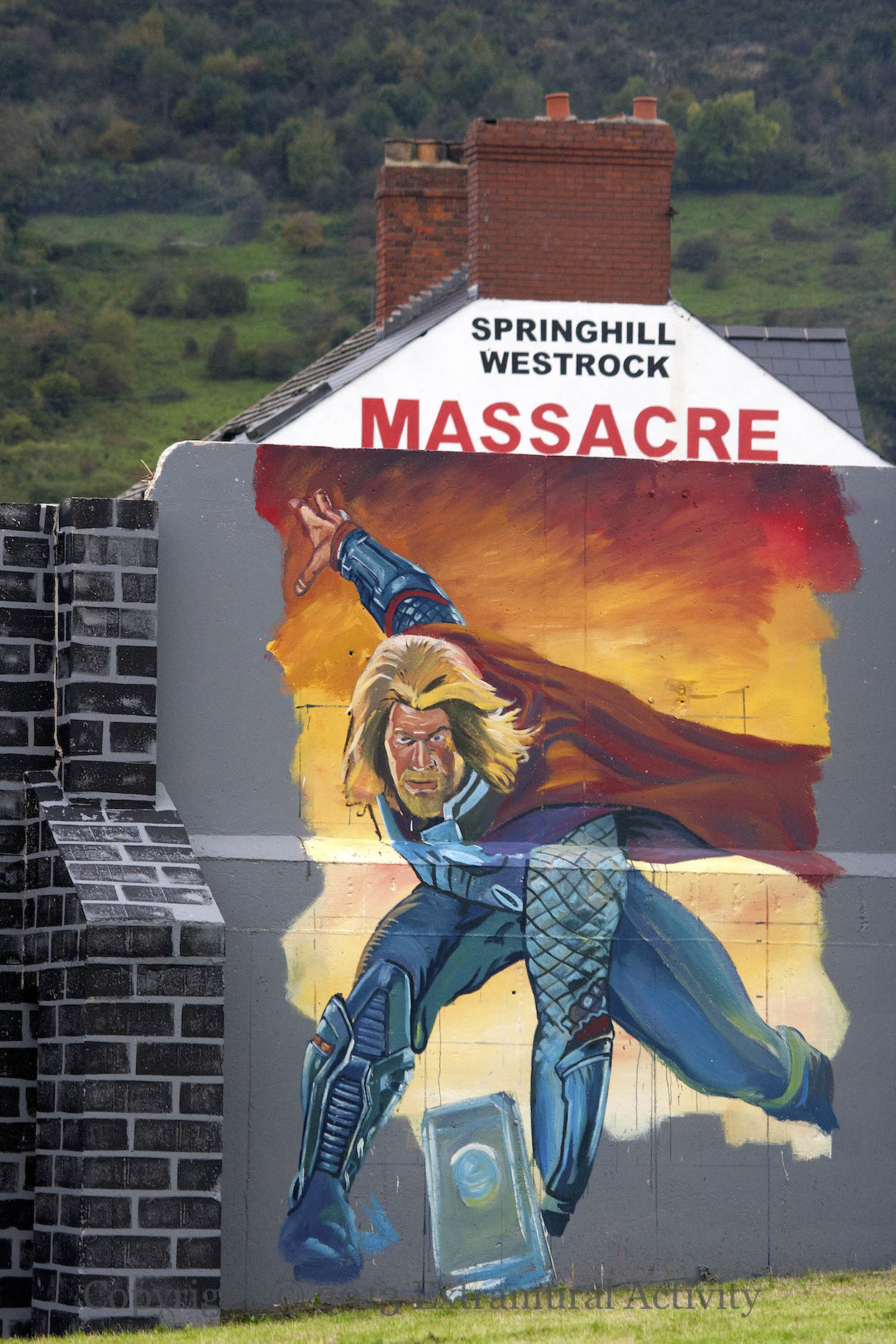
If there’s one thing superheroes like doing, it’s breaking down brick walls. At least, Spider Man, Iron Man, Hulk, Captain America and Wonder Woman do. Cat Woman crawls in via a tunnel painted on a buttress to the wall at the entrance to the Slıabh Dubh estate. The murals were painted by a local artist and local children. For images from the launch, see Black Mountain Shared Space.
Here are two context shots for the gallery of superheroes featured on Friday. The first shows the Springfield Road police station opposite the Slıabh Dubh estate, while the second, taken while the murals were being painted, shows the Springhill/Westrock massacre mural rising on the Springfield Road behind the gallery of heroes, Thor in this case.
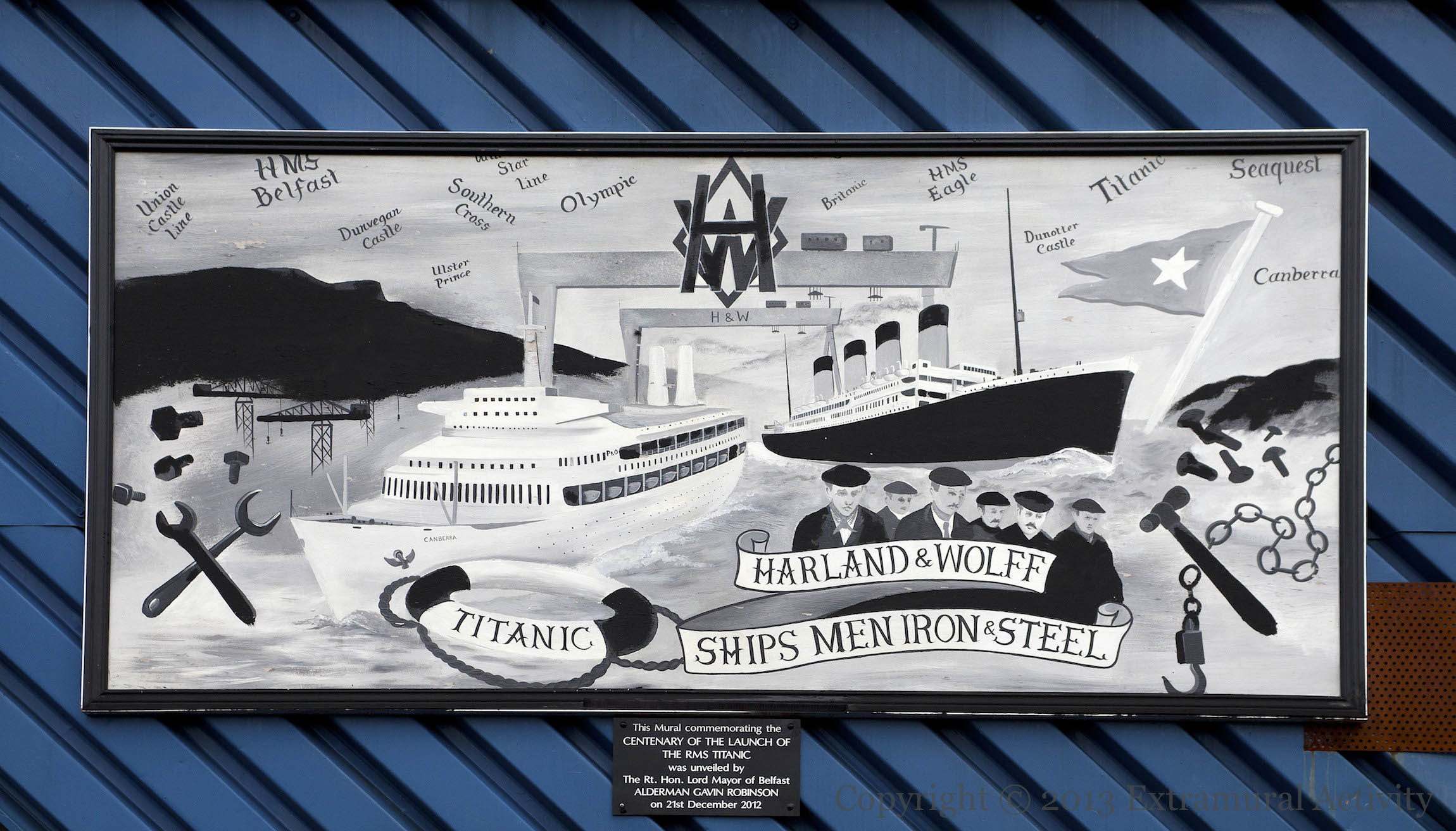
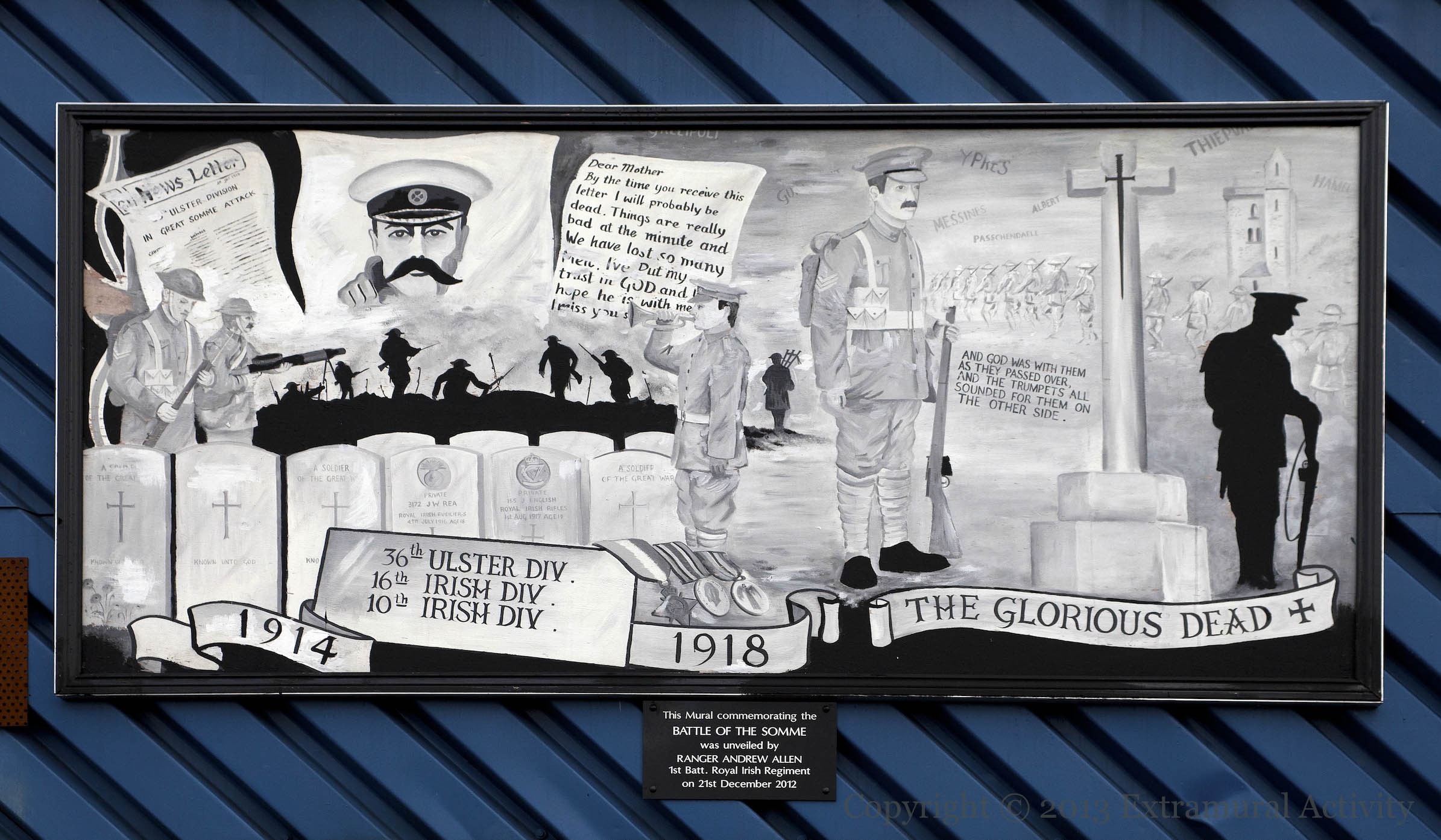
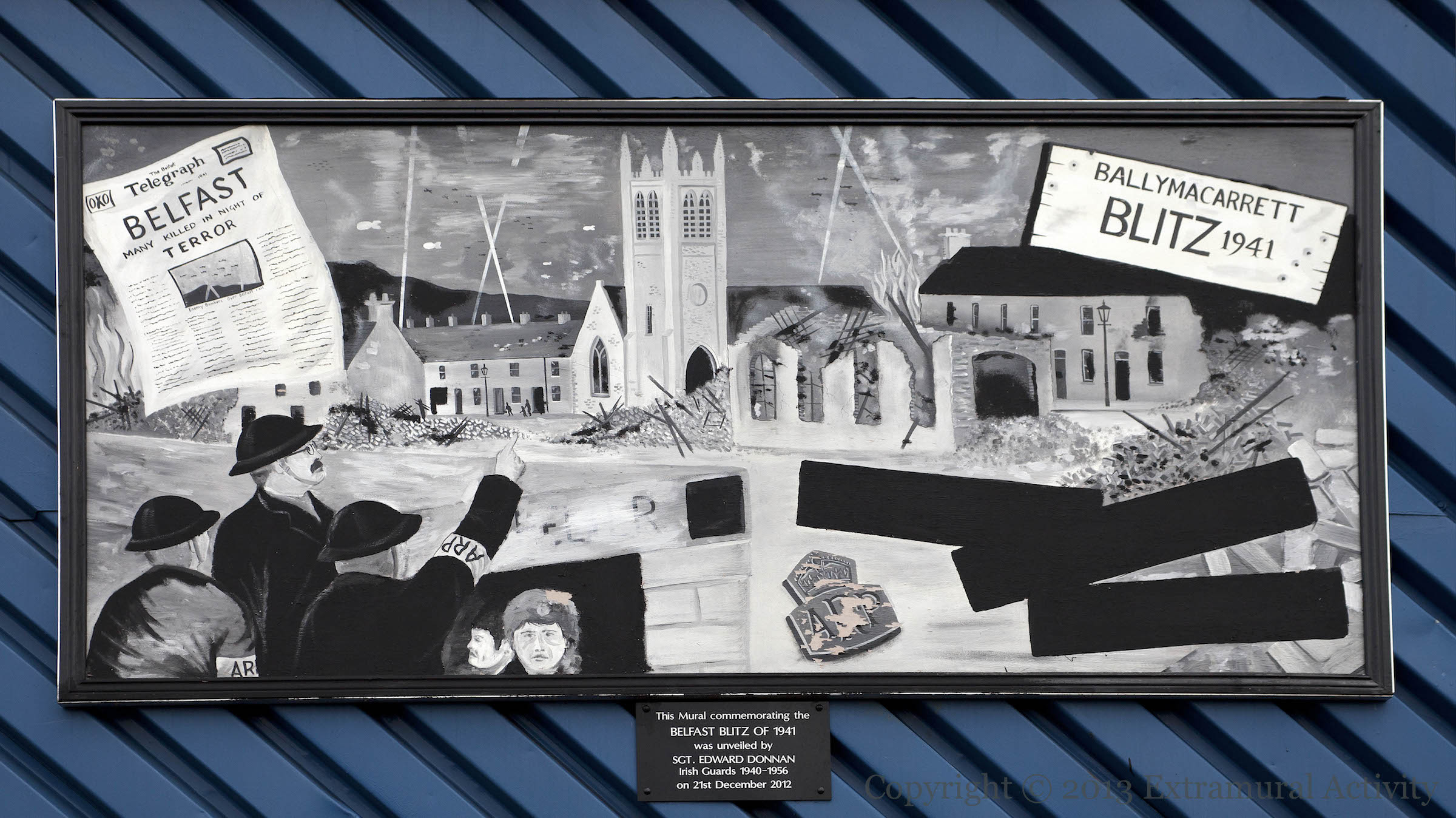
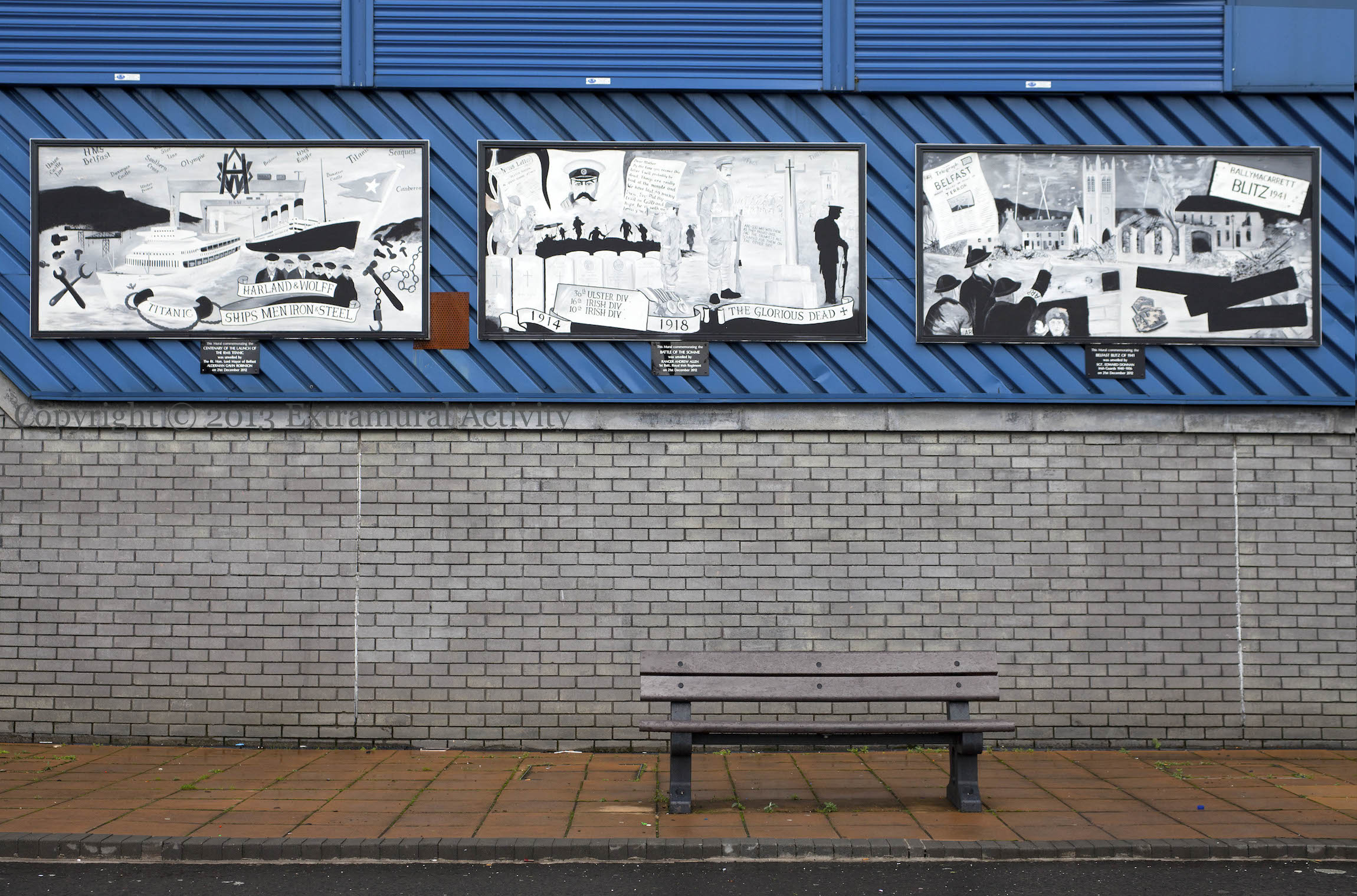
These three painted boards, in frames, on the exterior of the Connswater Community Centre, were unveiled this past December (2012). The first commemorates Titanic, the second the Somme, and the third the WWII Blitz.
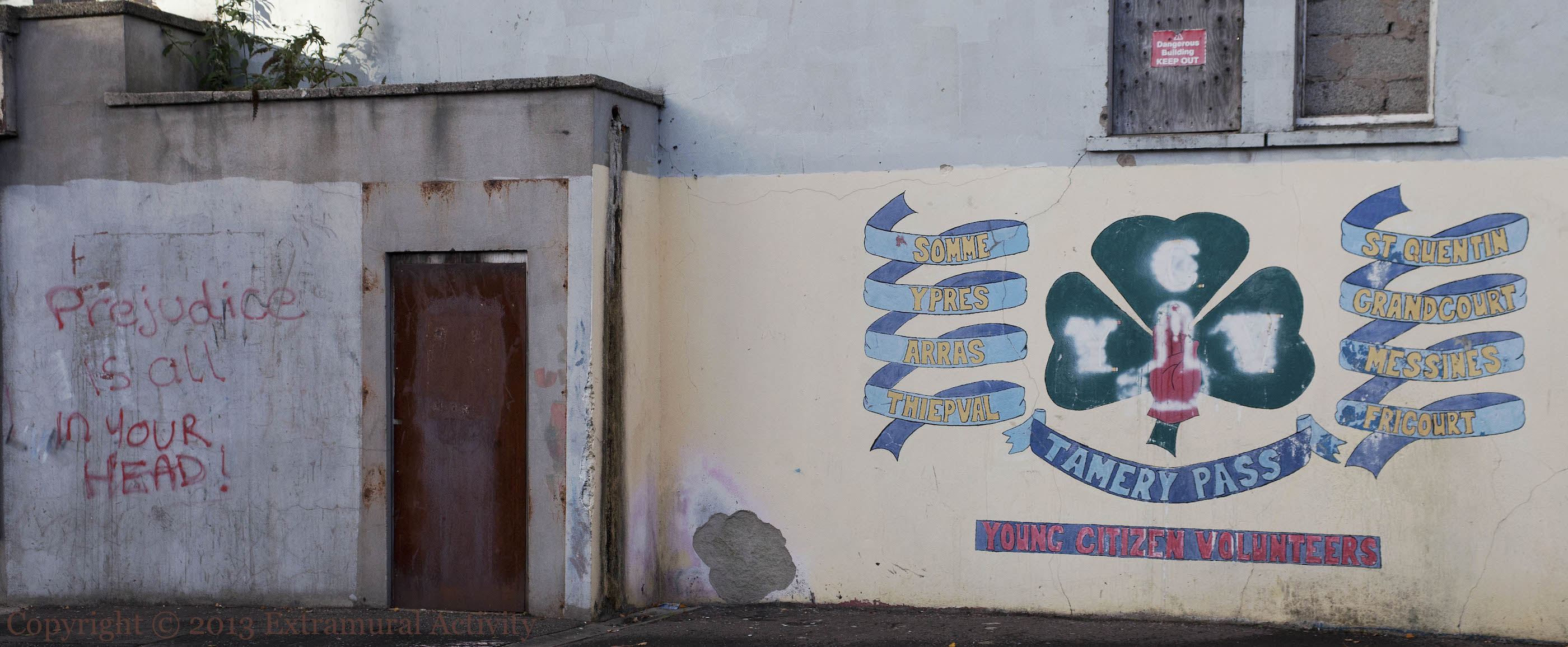
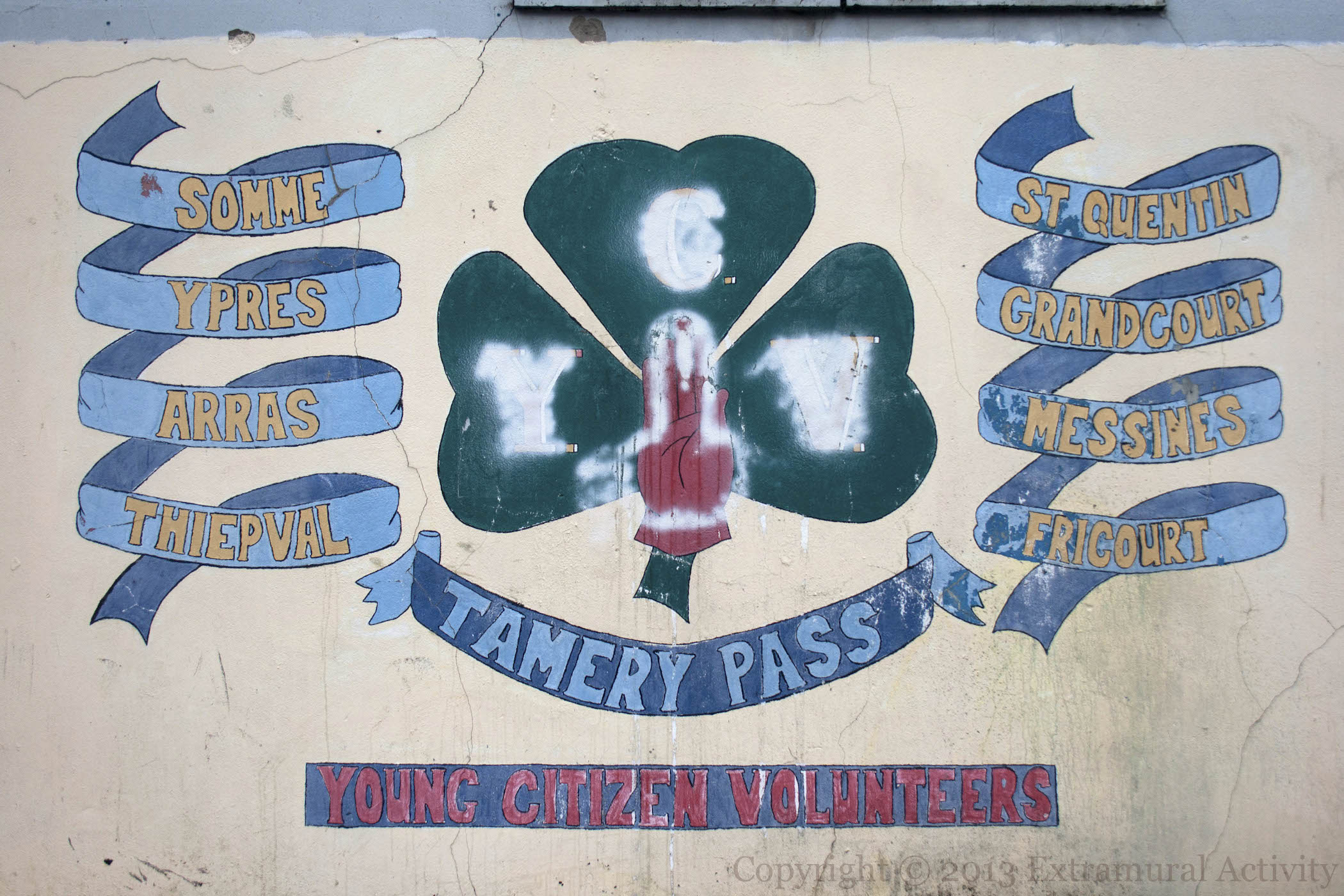
Graffiti next to a mural commemorating various battles of WWI reads “Prejudice is all in your head!” The Young Citizen Volunteers (YCV) were formed in 1912 and in 1914 became a battalion of the UVF.
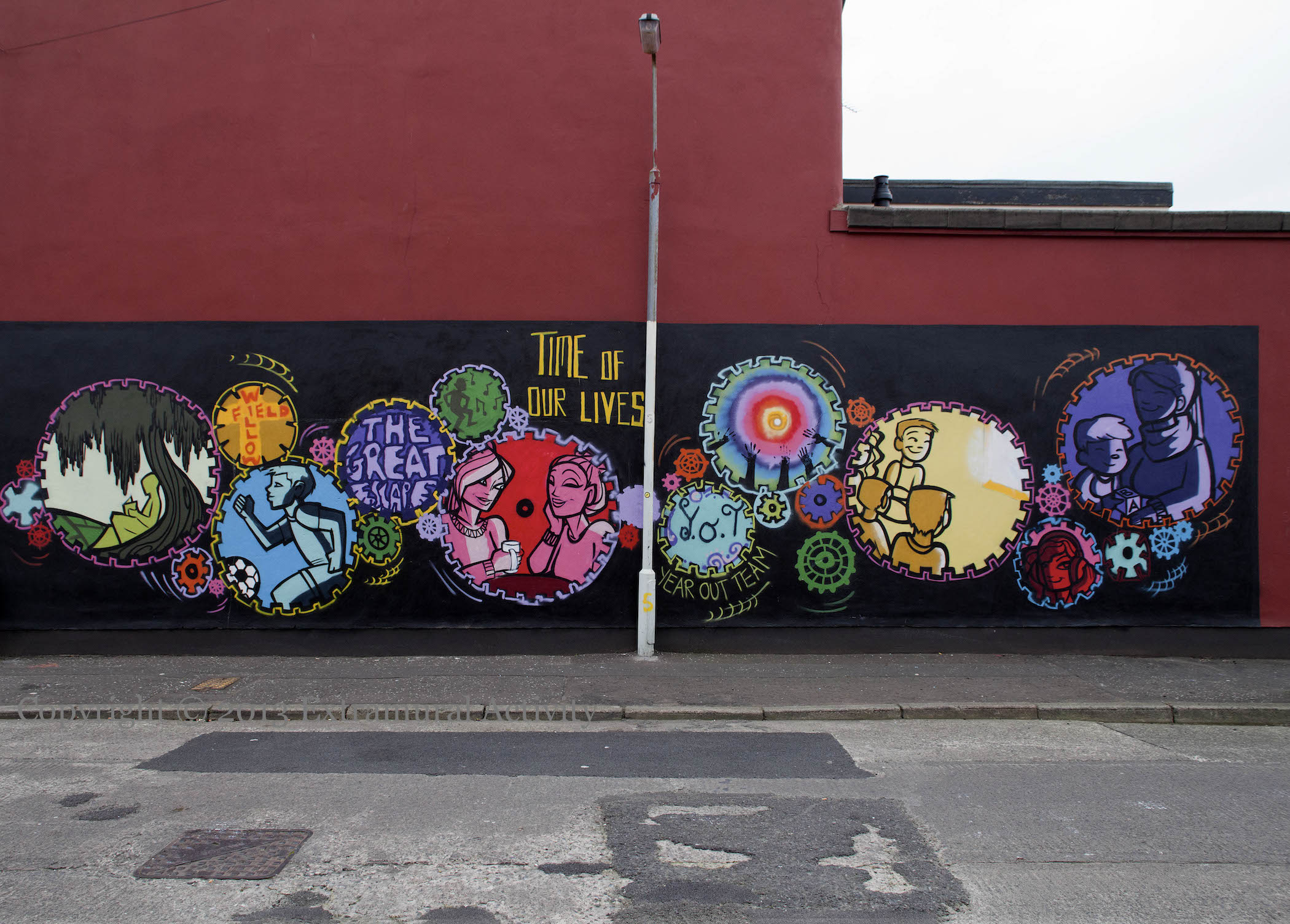
The colourful mural above is in Pearl Street, in the Willowfield area of east Belfast. It shows children playing and talking, depicted inside of a series of cogs.
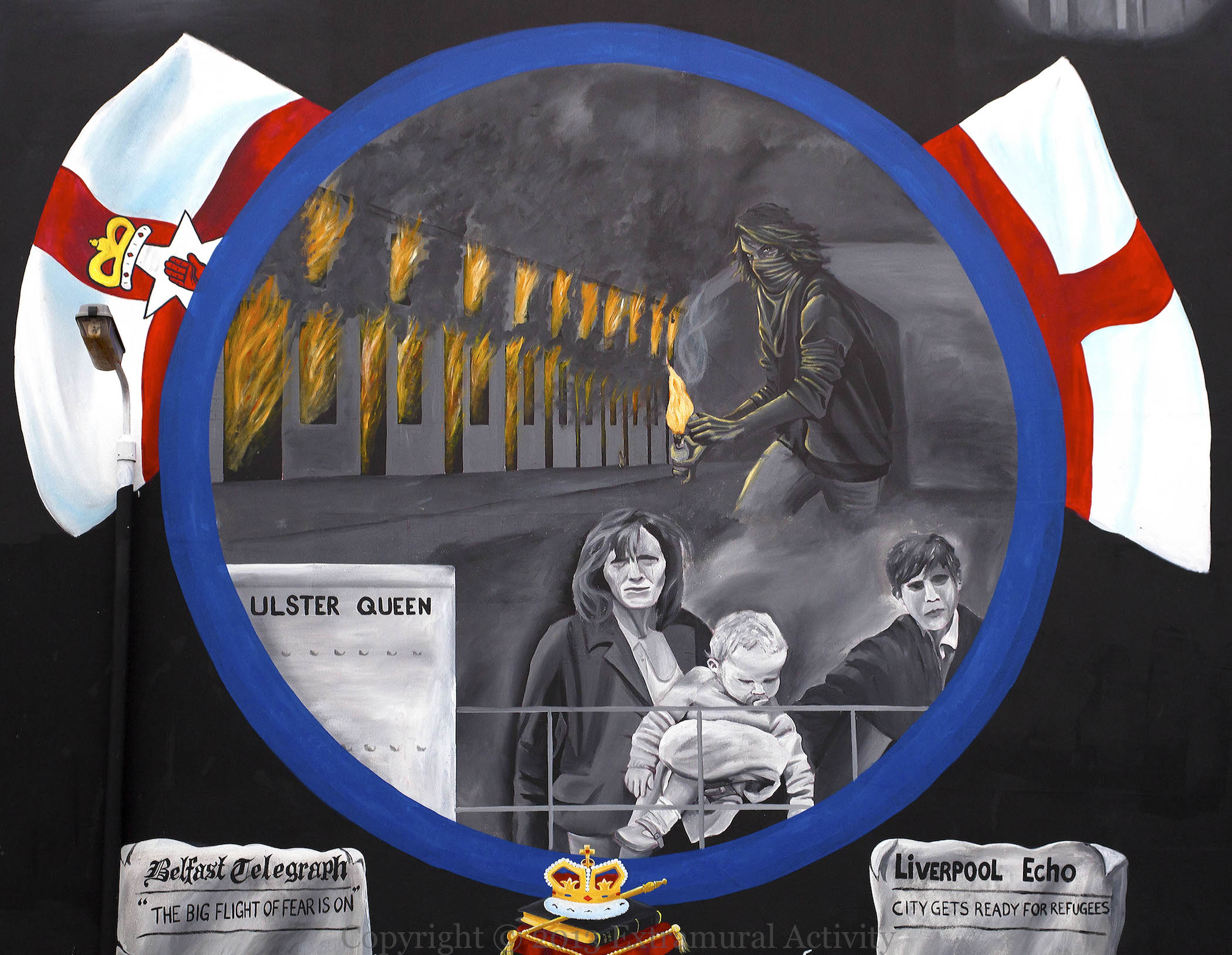
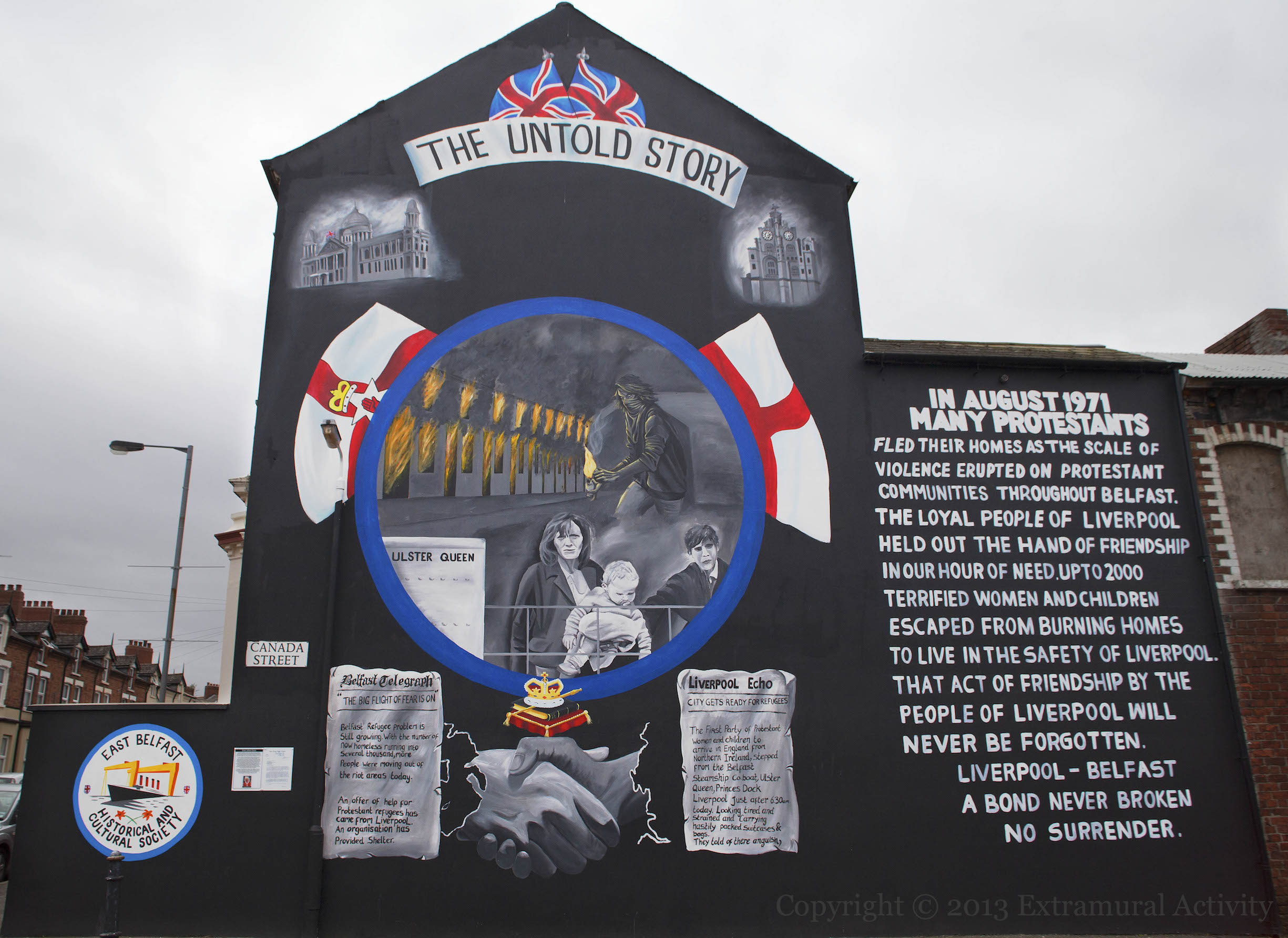
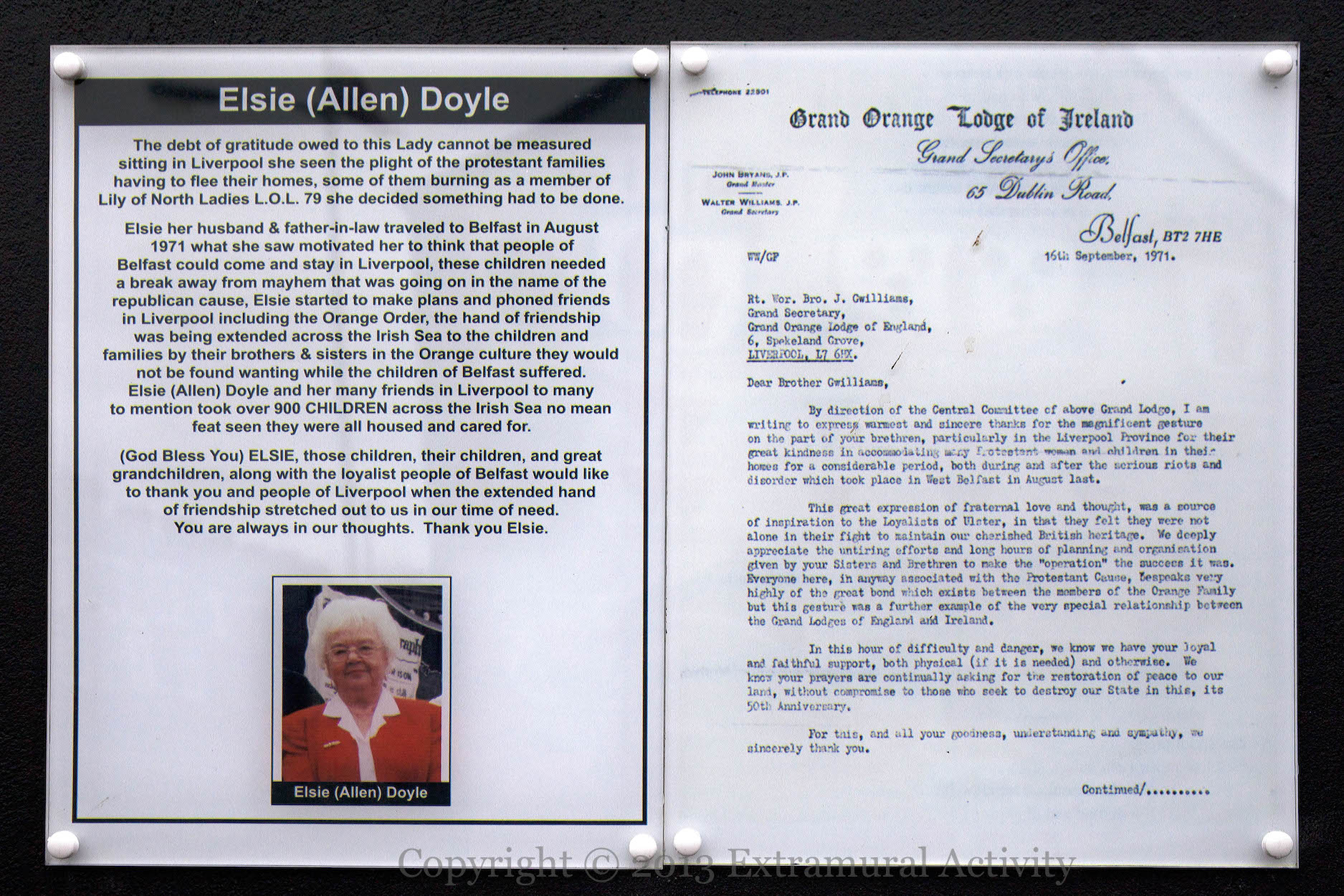
The image above shows the centre of a mural in Canada Street depicting Protestant women and children on-board a steamer, the Ulster Queen, leaving Belfast because of rioting and headed for Liverpool, where they were hosted by local Orange families. A shot of the whole is below, as well as a close-up of the laminated letter of thanks to Elsie (Allen) Doyle, one of the organisers in Liverpool.
A very similar mural was in this spot several years ago (though not immediately prior to this one – the wall was blank), featuring three youngsters on the boat, rather than a mother and children. The panel to the right began “In August 1971 many Protestants fled their homes as the IRA launched a bitter sectarian attack on Protestant communities throughout Belfast.” (See M04069.)
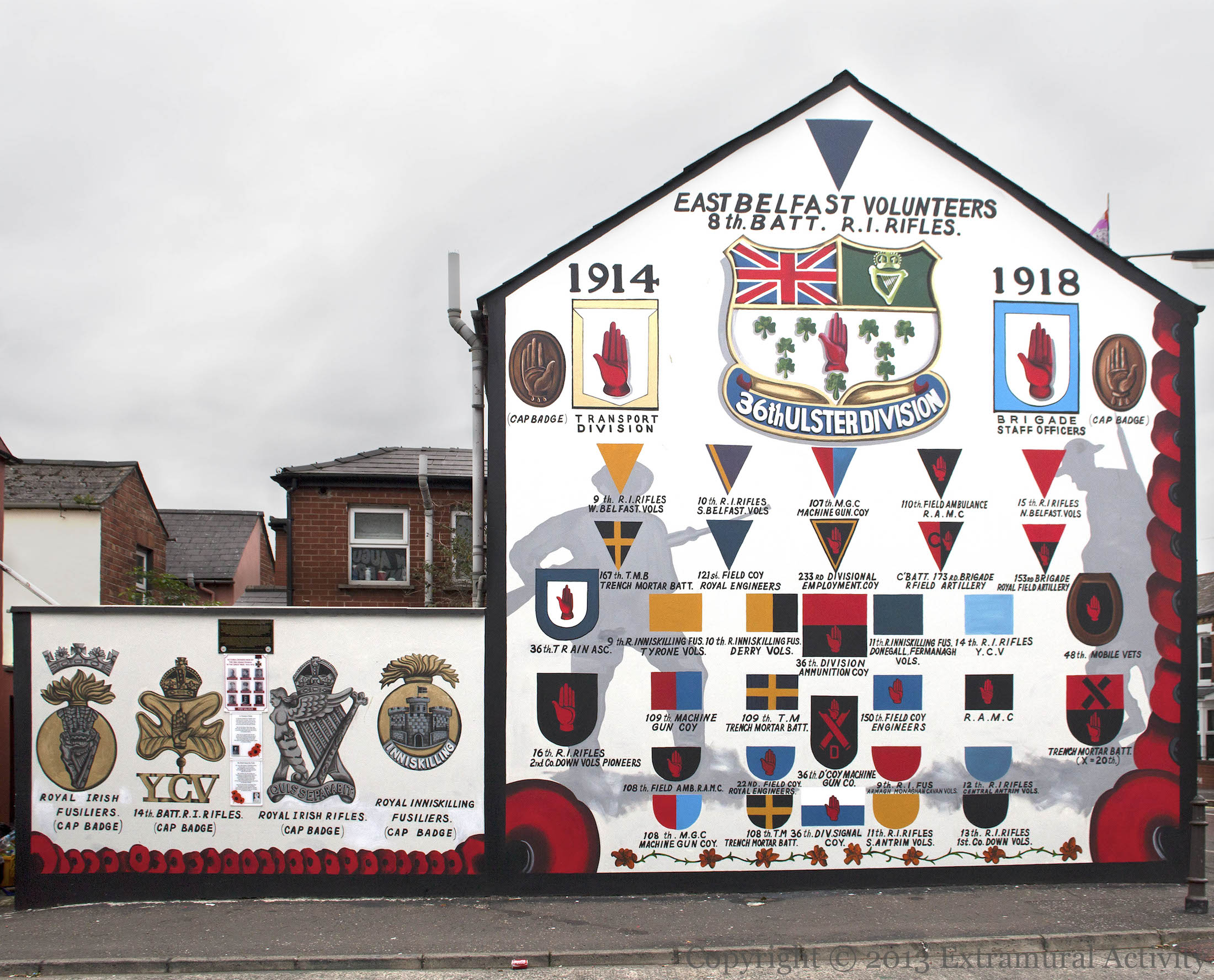
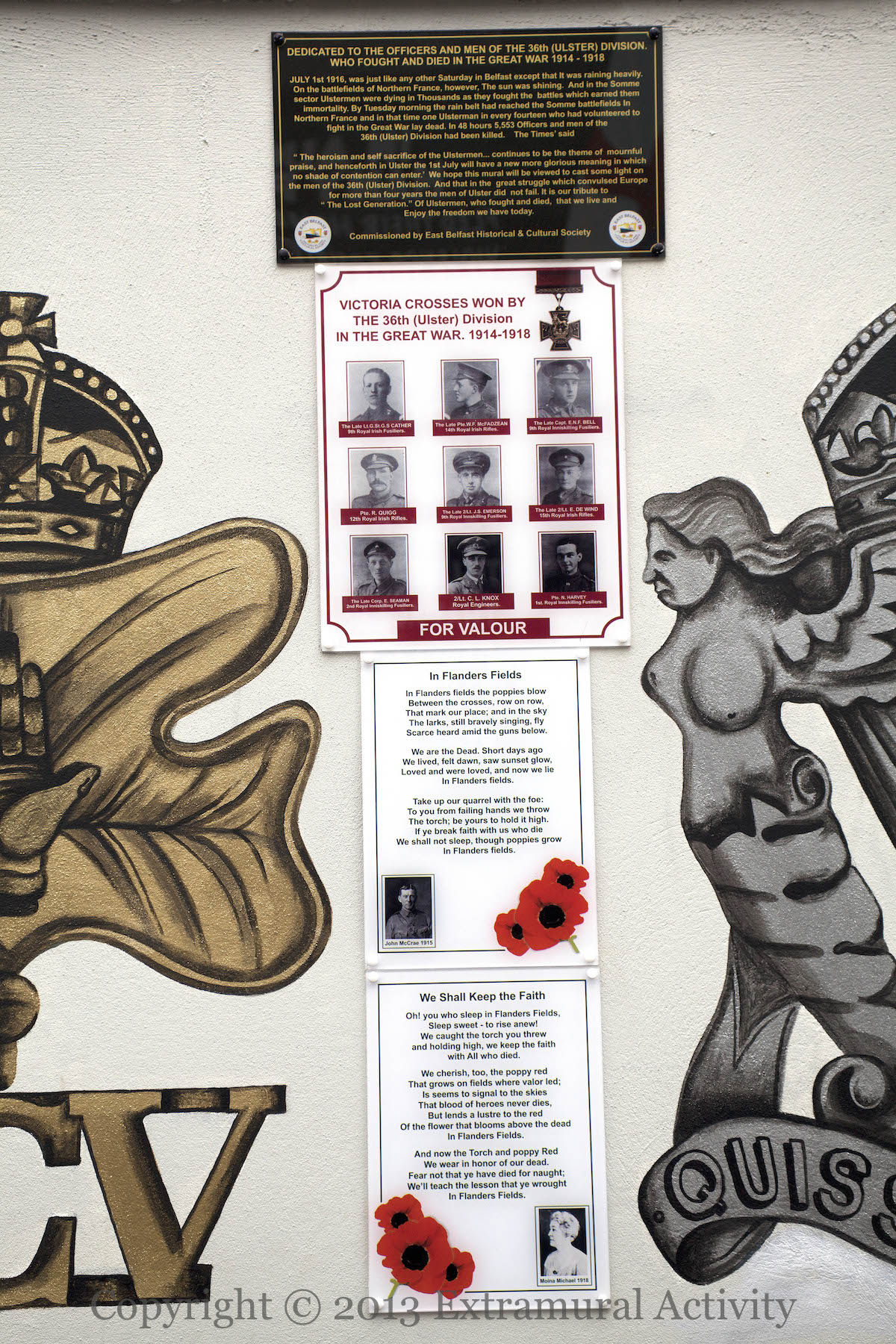
This mural and its accompanying plaques, at the mouth of Canada Street, commemorate WWI and celebrate the Victoria Crosses won by members of the 36th (Ulster) Division “For valour”: Cather, McFadzean, Bell, Quigg, Emerson, De Wind, Seaman, Knox, and Harvey. The main mural features insignia of more than thirty units of types ranging from machine gunners to vets.
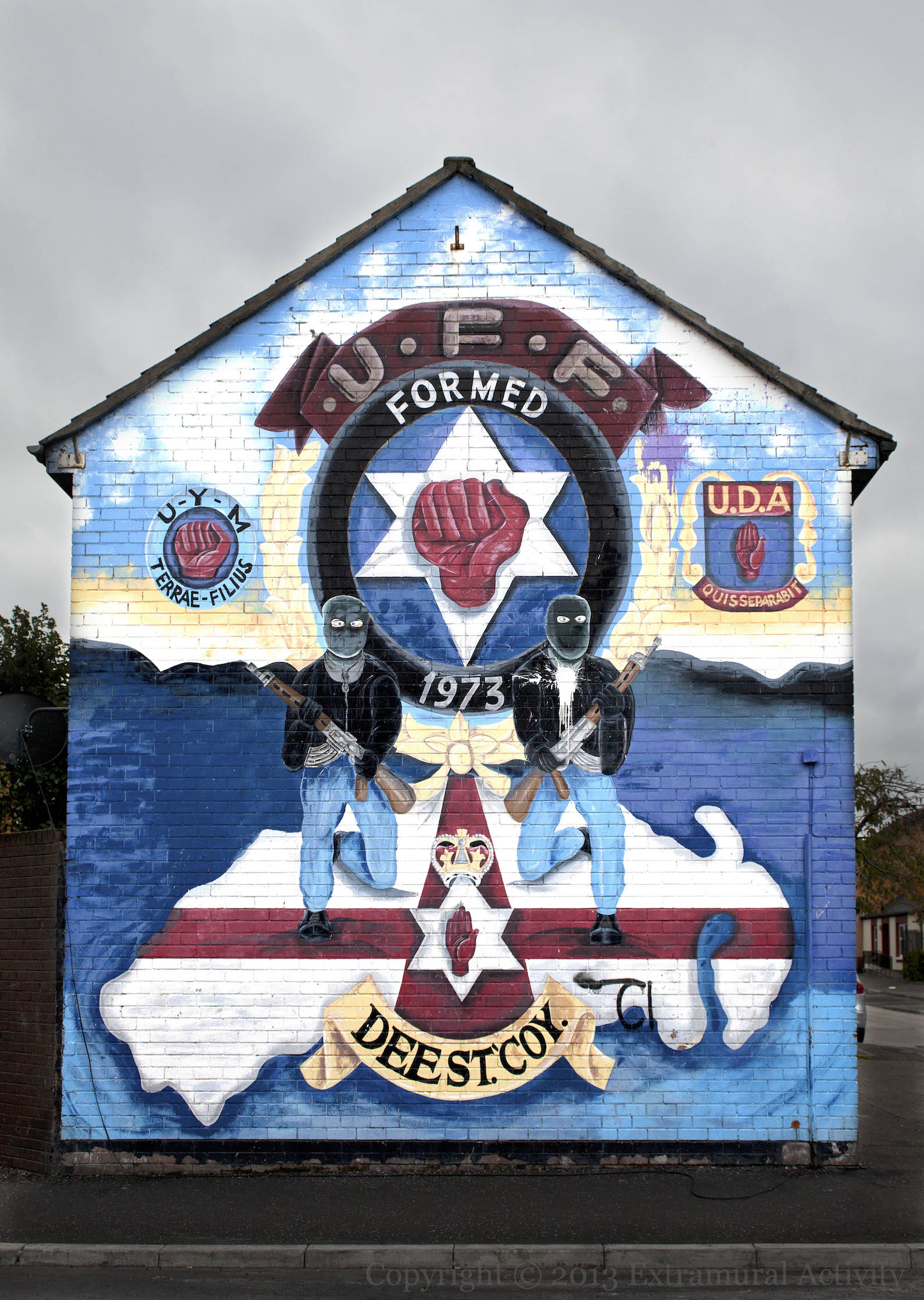
In the course of its history, the UDA has flirted with the idea of an independent Northern Ireland and of a repartitioned Northern Ireland. This mural in Avoniel Street, just off Albertbridge Road in east Belfast, shows a Northern Irish island, supporting two masked gunmen, beneath a red fist. The Ulster Freedom Fighters (and its youth organisation, the Ulster Young Militants) was formed in 1973 to give legal cover to the UDA; the UFF was banned immediately, the UDA in 1992.
 Seosamh Mac Coille Collection