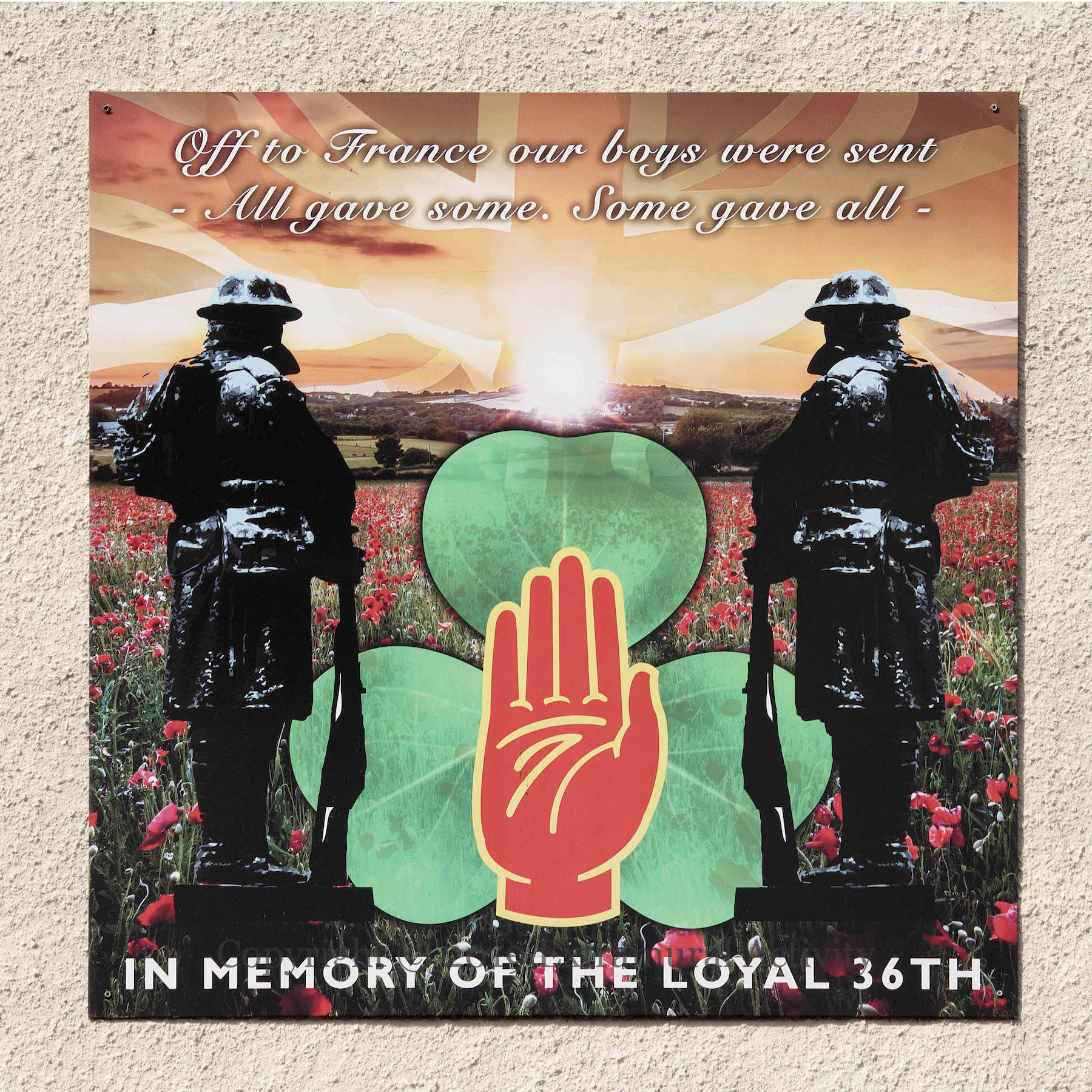
“Off to France our boys were sent. All gave some, some gave all – In memory of the loyal 36th.” The first phrase might come from the Rangers’ song ‘We’re Coming Down The Road‘. The second phrase dates not to WWI but the Korean War in the 1950s (Reference). Kitchener Drive, the Village.
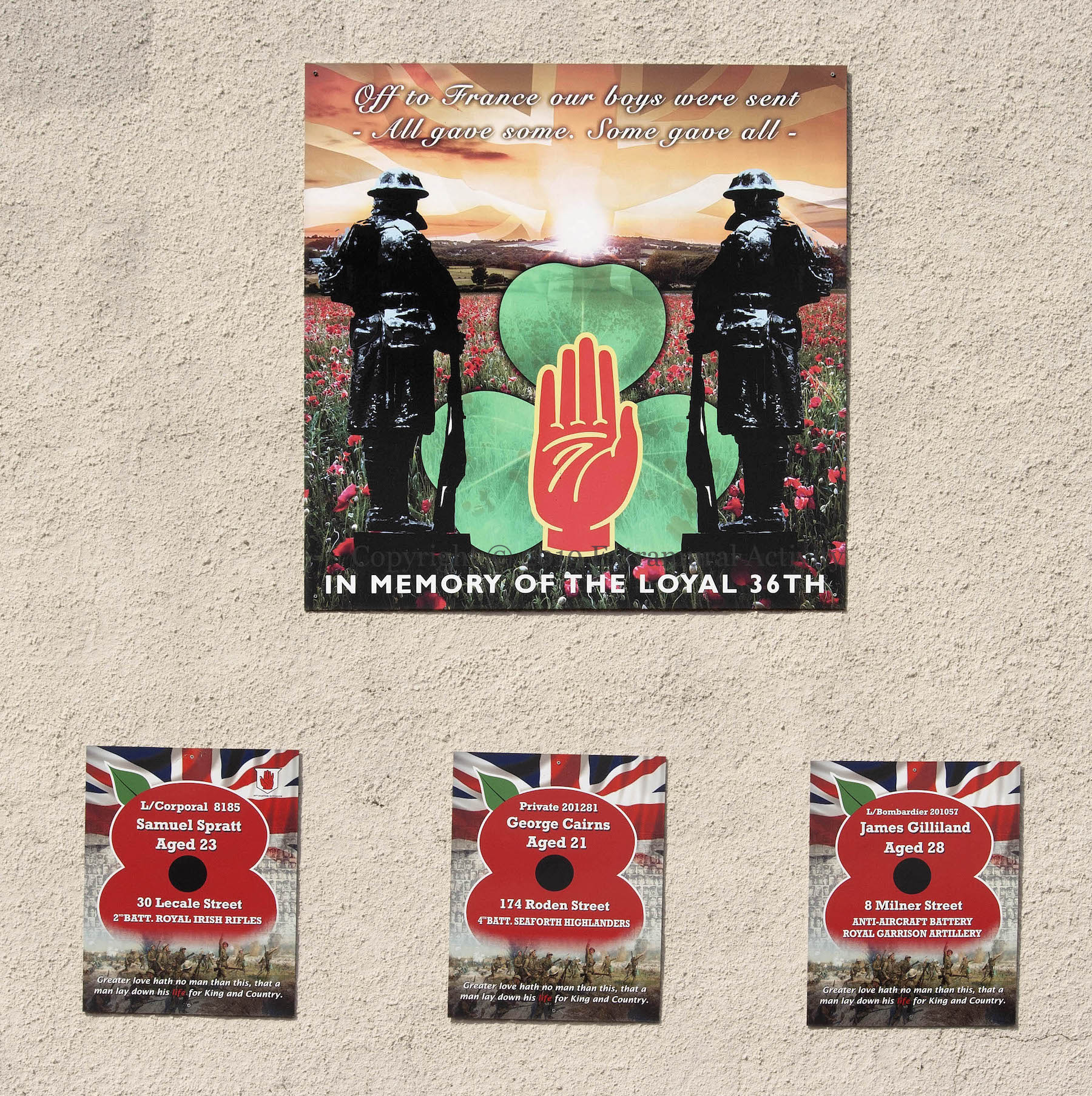
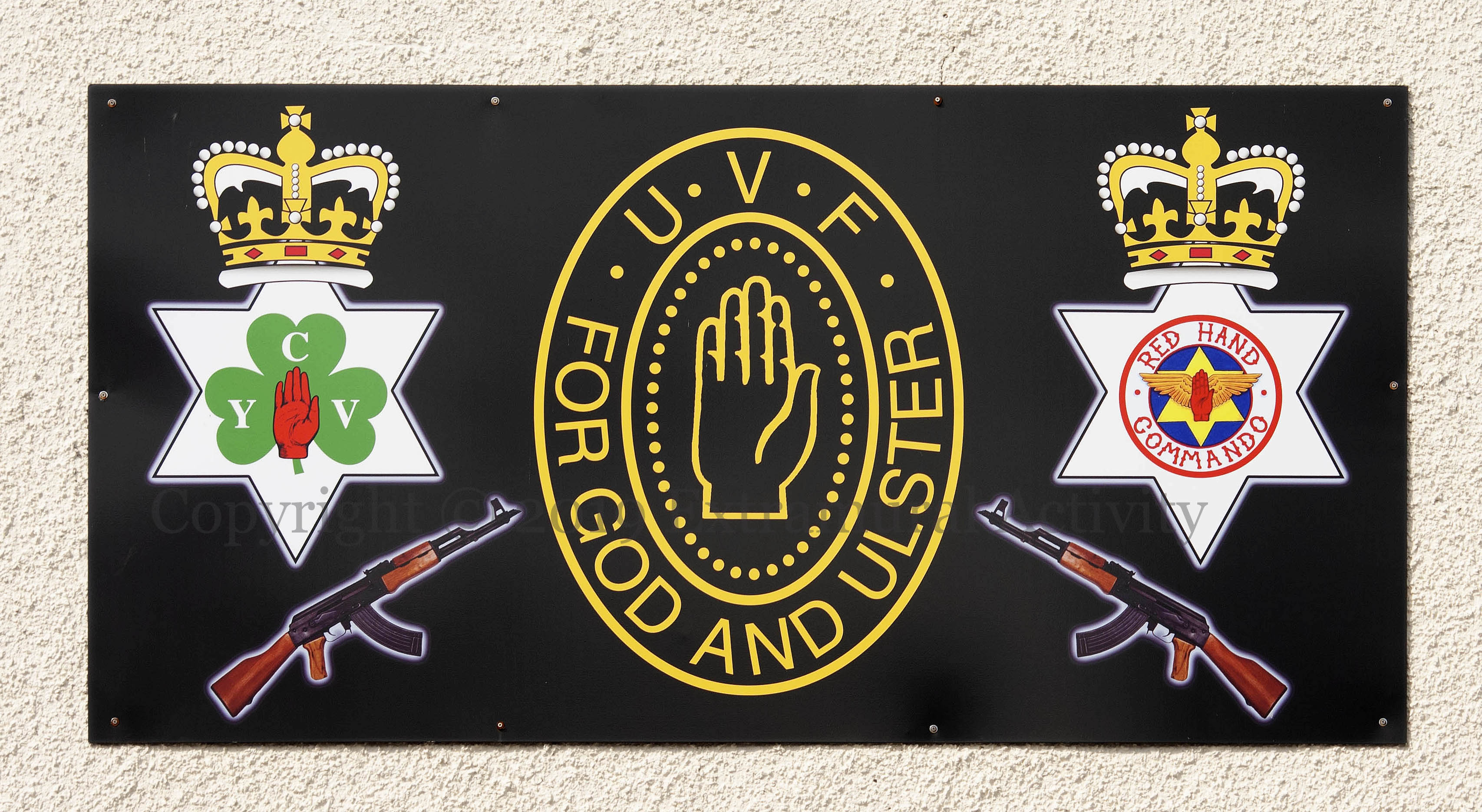
The YCV WWI mural in Kitchener Drive has been removed and replaced with the modern weaponry above (with two small WWI boards on adjacent walls). For more on the UVF reasserting itself in the Village as it is redeveloped, see one | two | three | four | five | six.
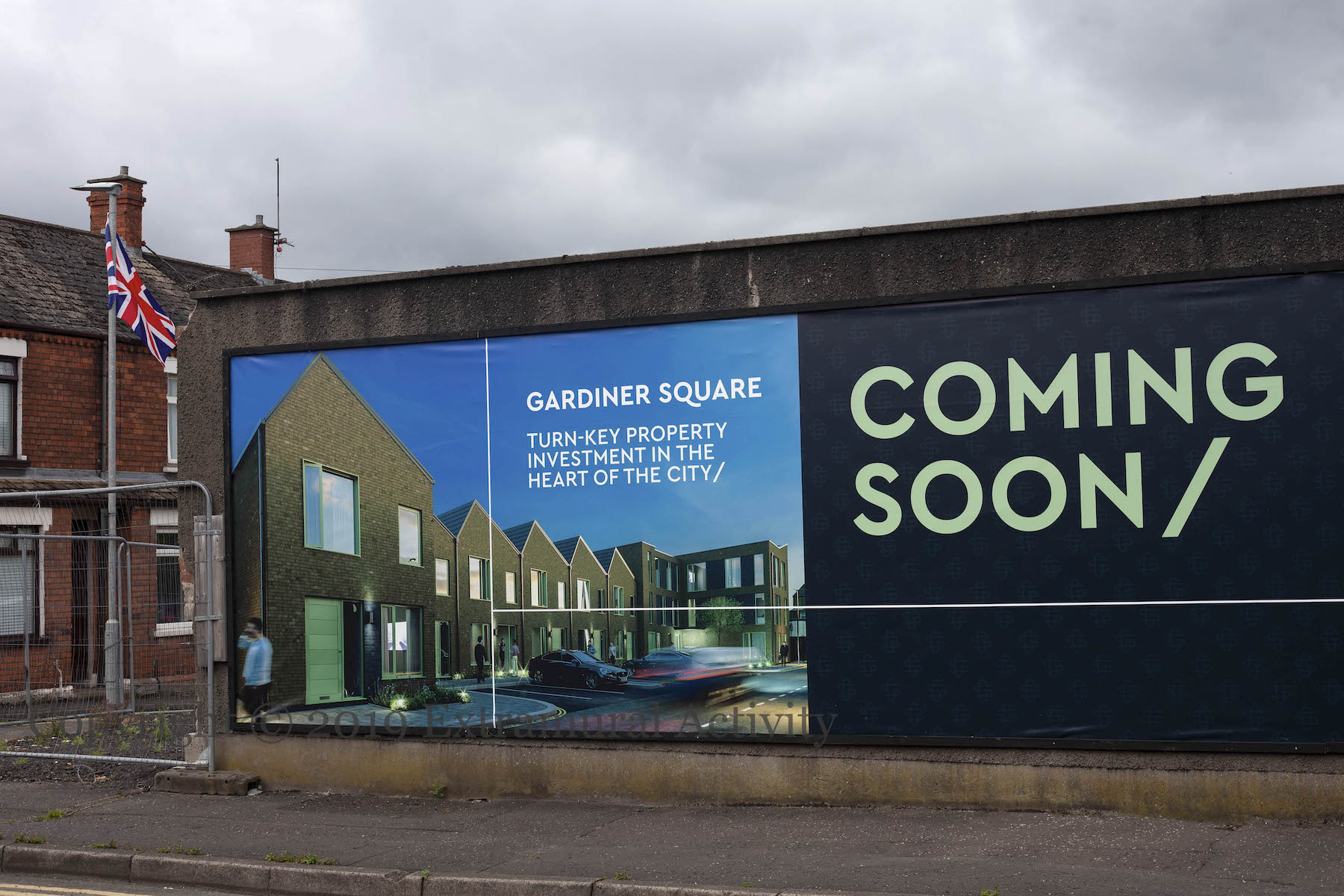
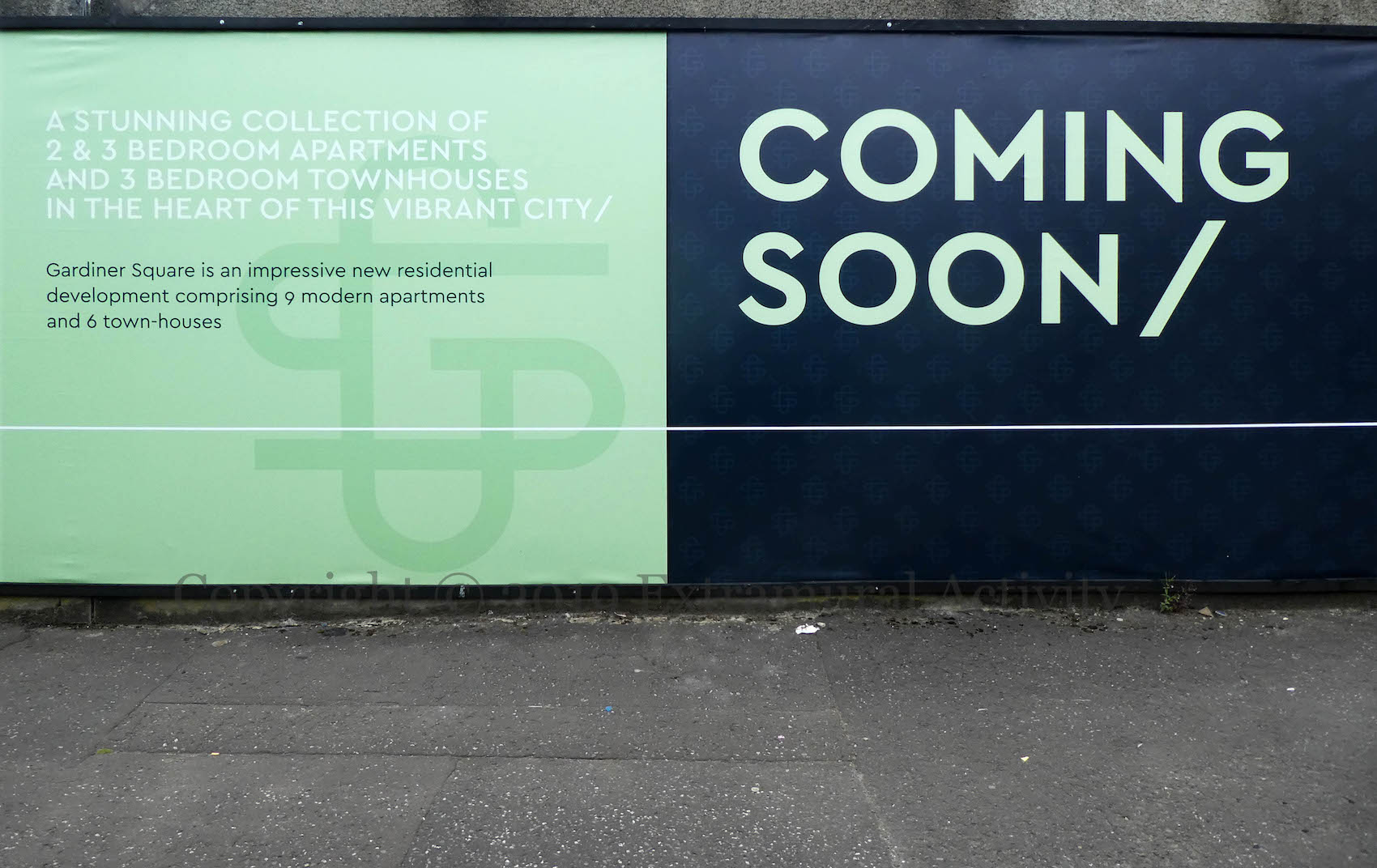
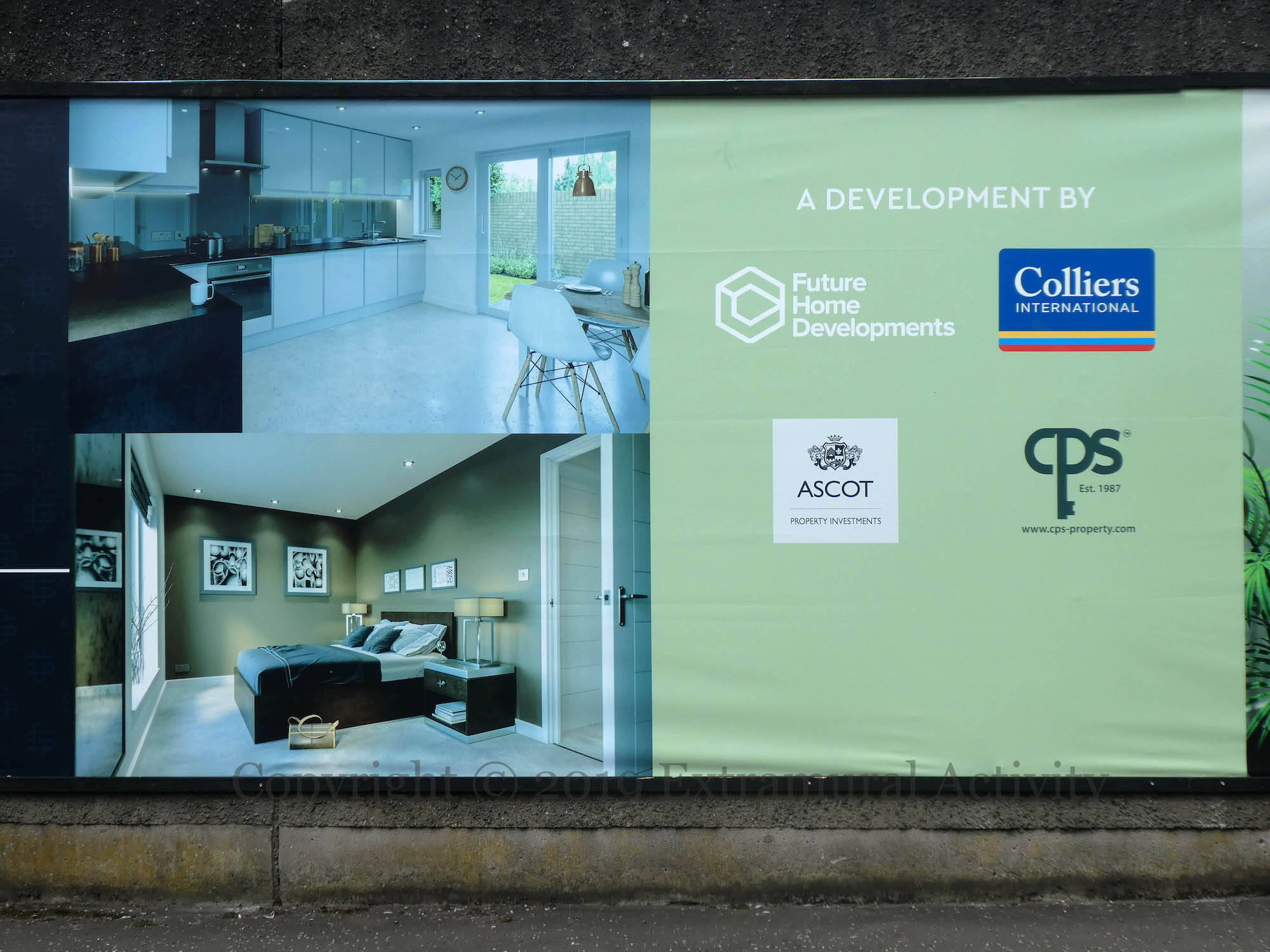
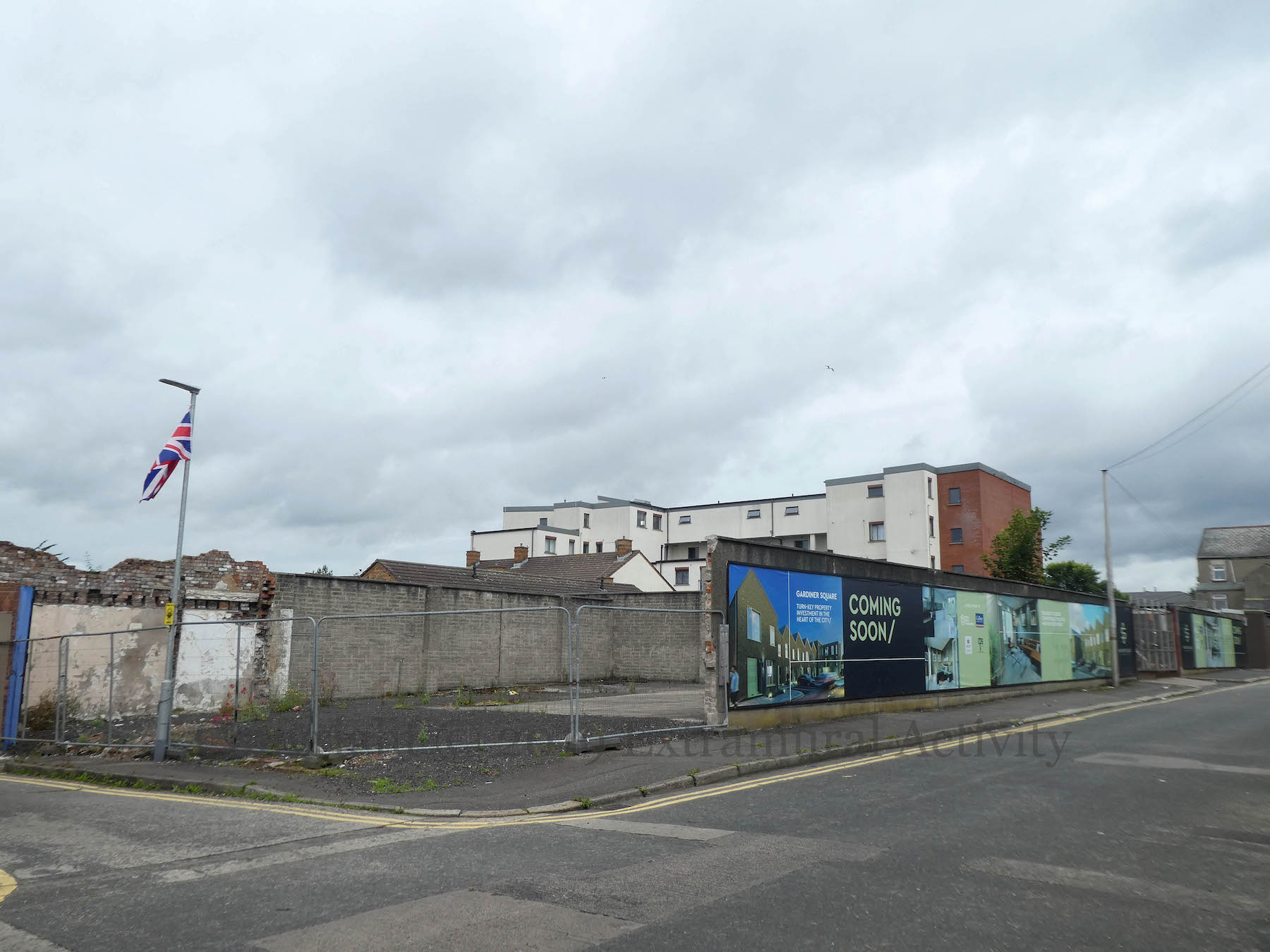
“Gardiner Square” will be a new development at the junction of Gardiner and N King streets, where a Union Flag now flies. The promotional materials for the development tout Belfast’s business potential and promise that it is a “short walk” to the “highly anticipated Tribeca Project“. It’s not clear whether the flag will still be flying when the units open. (See previously: the plethora of UVF boards in the Village in response to the on-going redevelopment of the Village (from 2012 to the present).
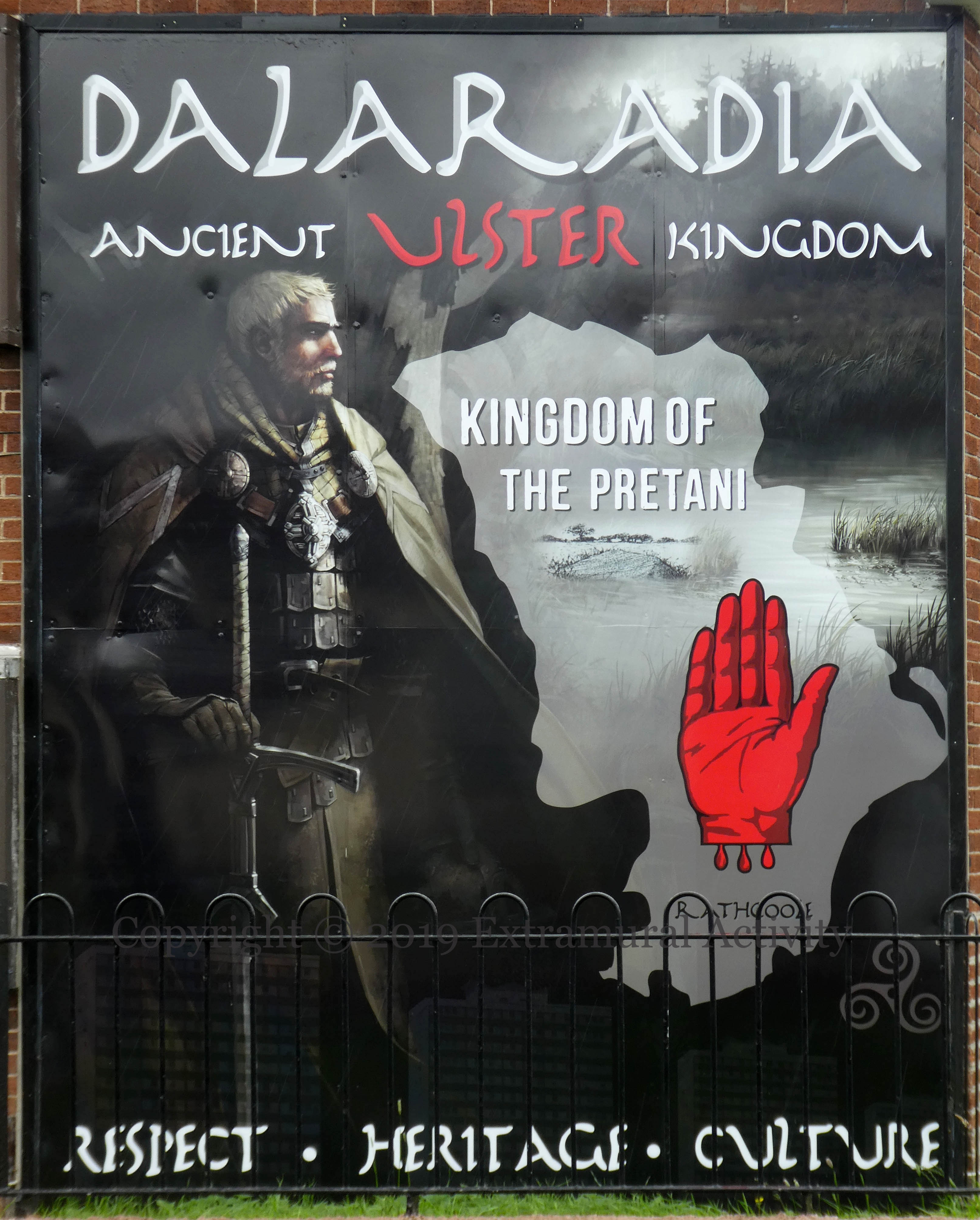
“Pretani” is the Brittonic version of the Greek term “Prettanoi”, possibly borrowed from the Gauls (WP), for the inhabitants of the two islands now known as Ireland and Britain, and “Cruthin” the Gaelic term. According to the eponymous web site, Dalaradia was “was a kingdom of the Cruthin in the north-east of Ireland and parts of Scotland in the first millennium” with the Cruthin being (more narrowly than above) a people in Antrim and Down with (in the middle of the mural) “the field of Crewe Hill, with the Ancient Crowning Stone of Ulster Kings” (REACH) in Glenavy (pretani.co.uk).
The WP page on the Cruthin notes, “The name Cruthin survives in the placenames Duncrun (Dún Cruithean, “fort of the Cruthin”) and Drumcroon (Droim Cruithean, “ridge of the Cruthin”) in County Londonderry, and Ballycrune (Bealach Cruithean, “pass of the Cruthin”) and Crown Mound (Áth Cruithean, “ford of the Cruthin”) in County Down. These placenames are believed to mark the edges of Cruthin territory.”
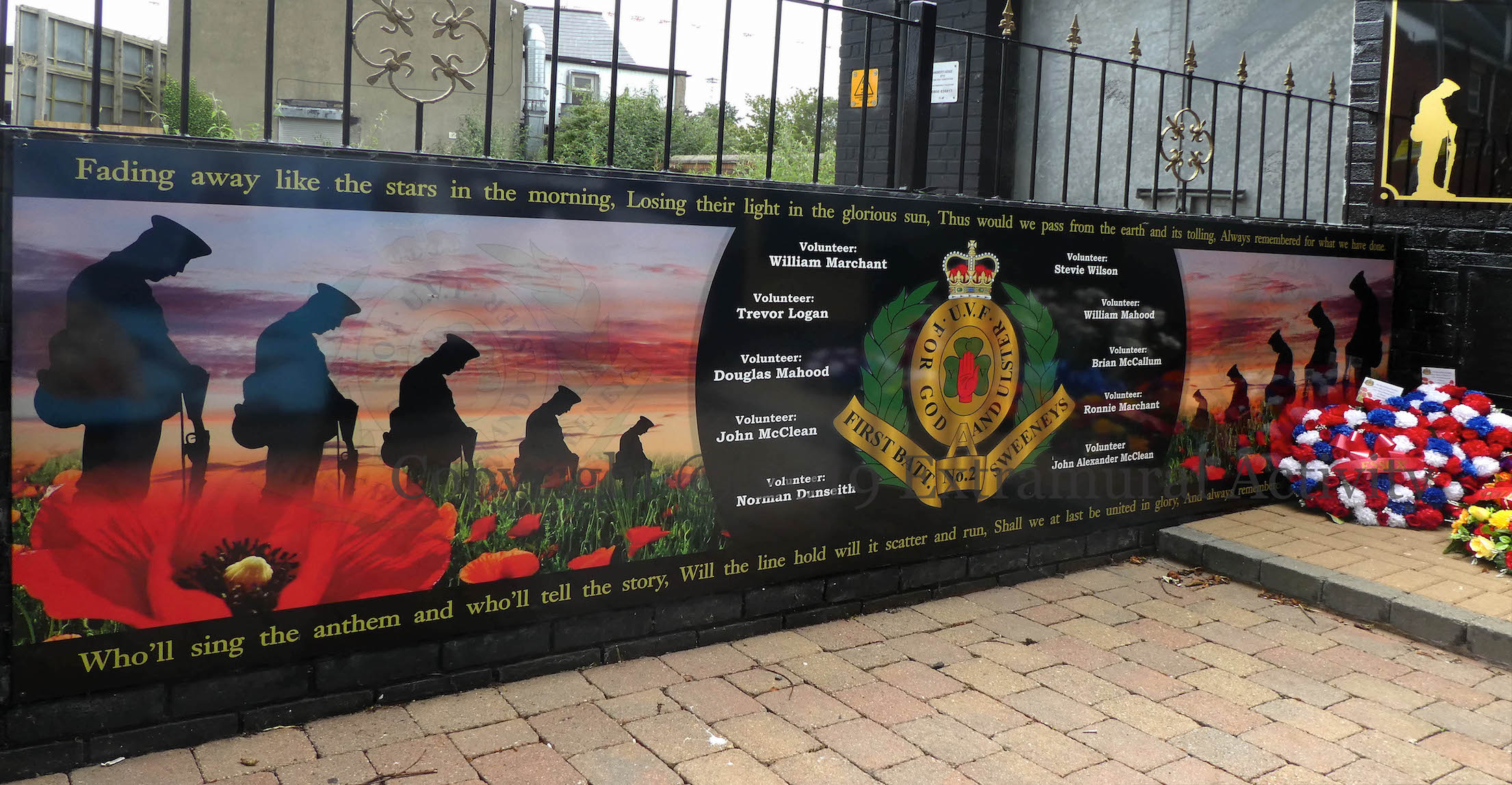
“Fading away like the stars in the morning/Losing their light in the glorious sun/Thus would we pass from the earth and its tolling/Always remembered for what we have done.//Who’ll sing the anthem and who’ll tell the story/Will the line hold will it scatter and run/Shall we at last be united in glory/And always remembered for what we have done.”
Only Remembered (or: The Everlasting Memorial) is originally a hymn by Horatio Bonar dating back to 1860 at least, but its music and words have been modified many times (Mudcat). All versions, however, give “toiling” instead of “tolling”, and “only” rather than “always”.
English folk singer John Tams added a verse paying tribute to British war dead which is included here along the bottom of the mural (“Who’ll sing the anthem …” etc) (YouTube). The soldiers commemorated here are UVF members William Marchant, Trevor Logan, Douglas Mahood, John McClean, Norman Dunseith, Stevie Wilson, William Mahood, Brian McCallum, Ronnie Marchant, John Alexander McClean. The mural is on the side wall of the memorial to Brian “Herbie” McCallum.
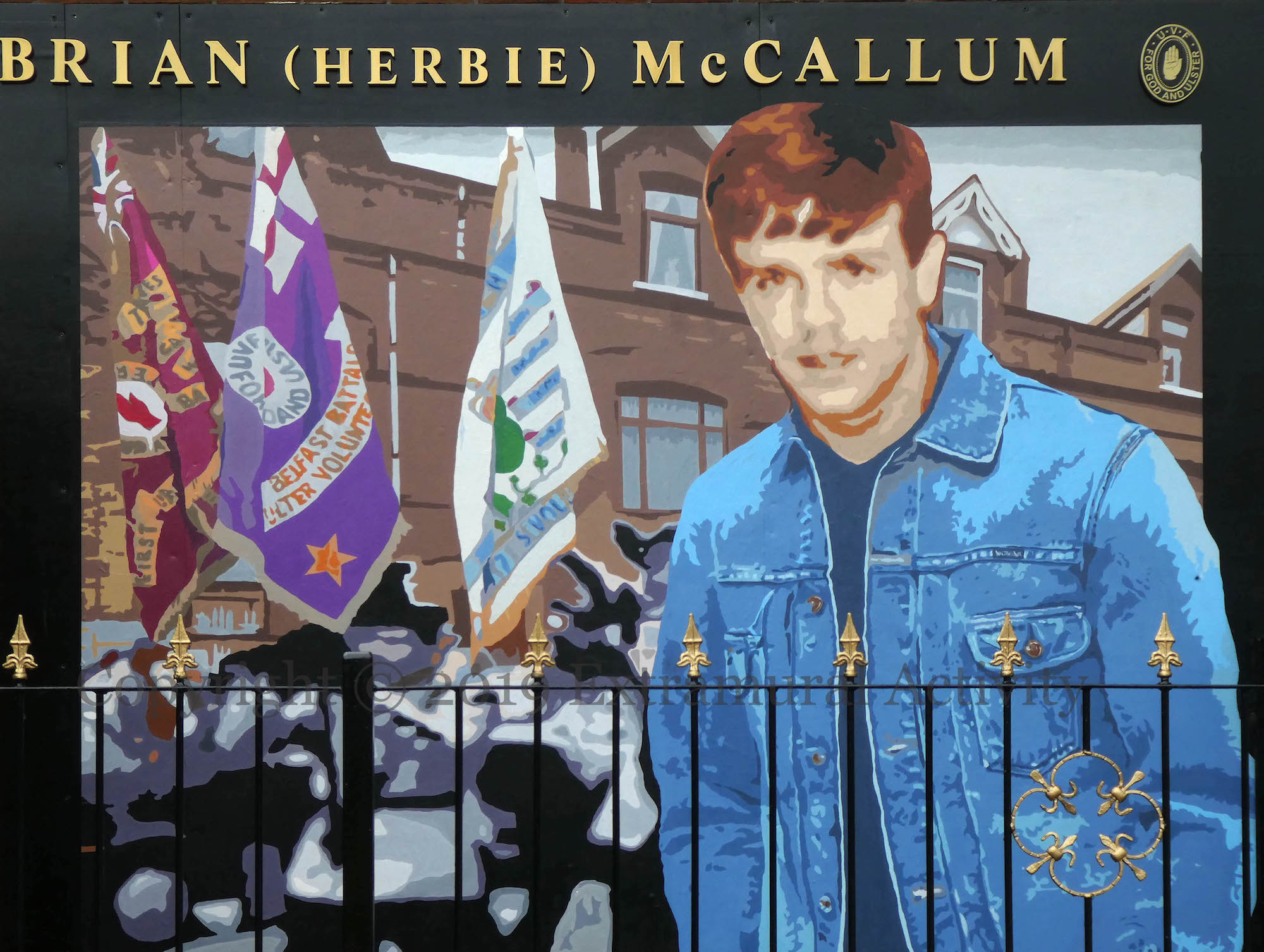
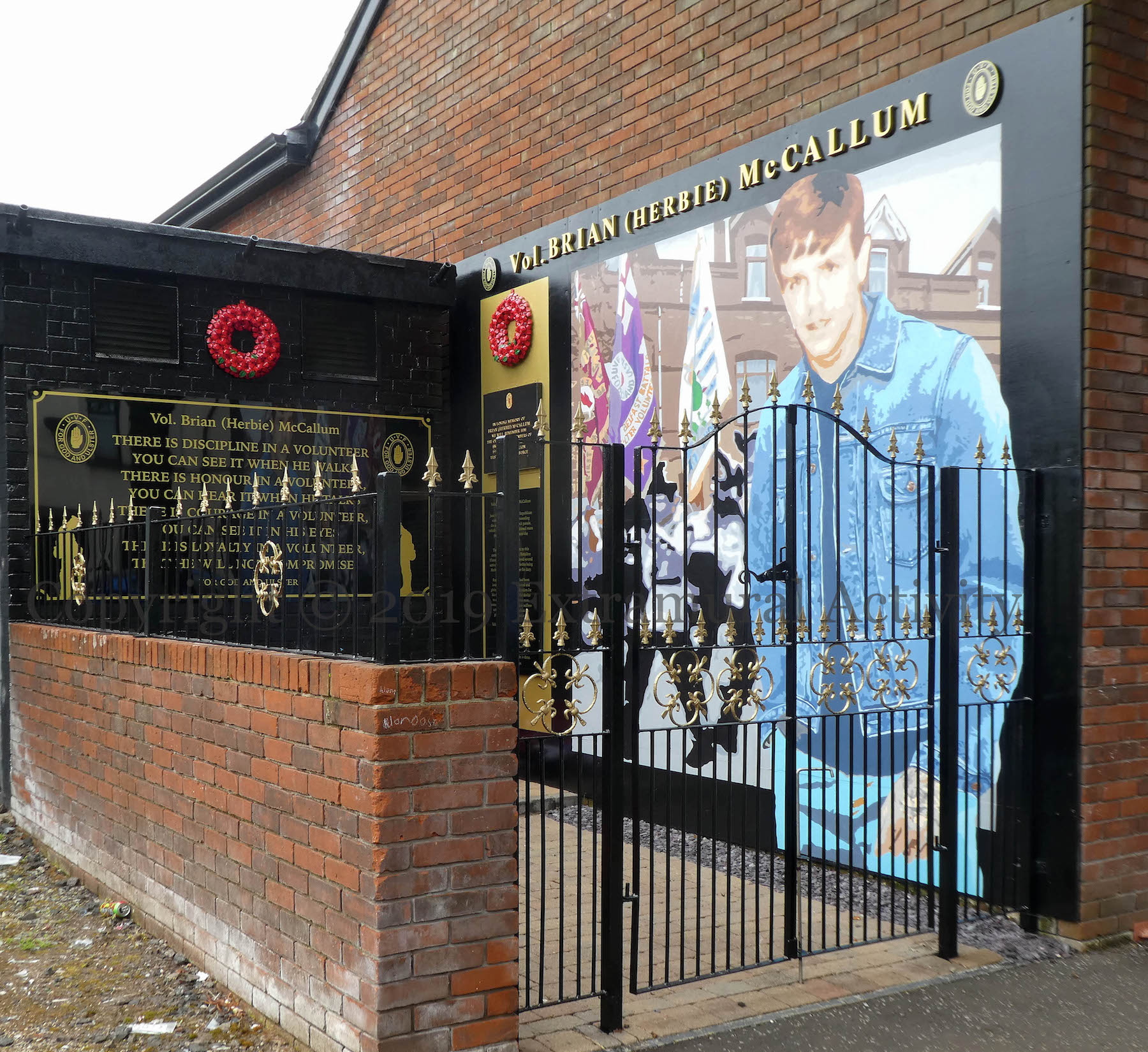
The memorial to Brian “Herbie” McCallum at the top of Ainsworth Avenue received a major upgrade late last year, with two new plaques and a mural (shown above) along with a side wall that is featured in a separate post: The Earth And Its Toiling.
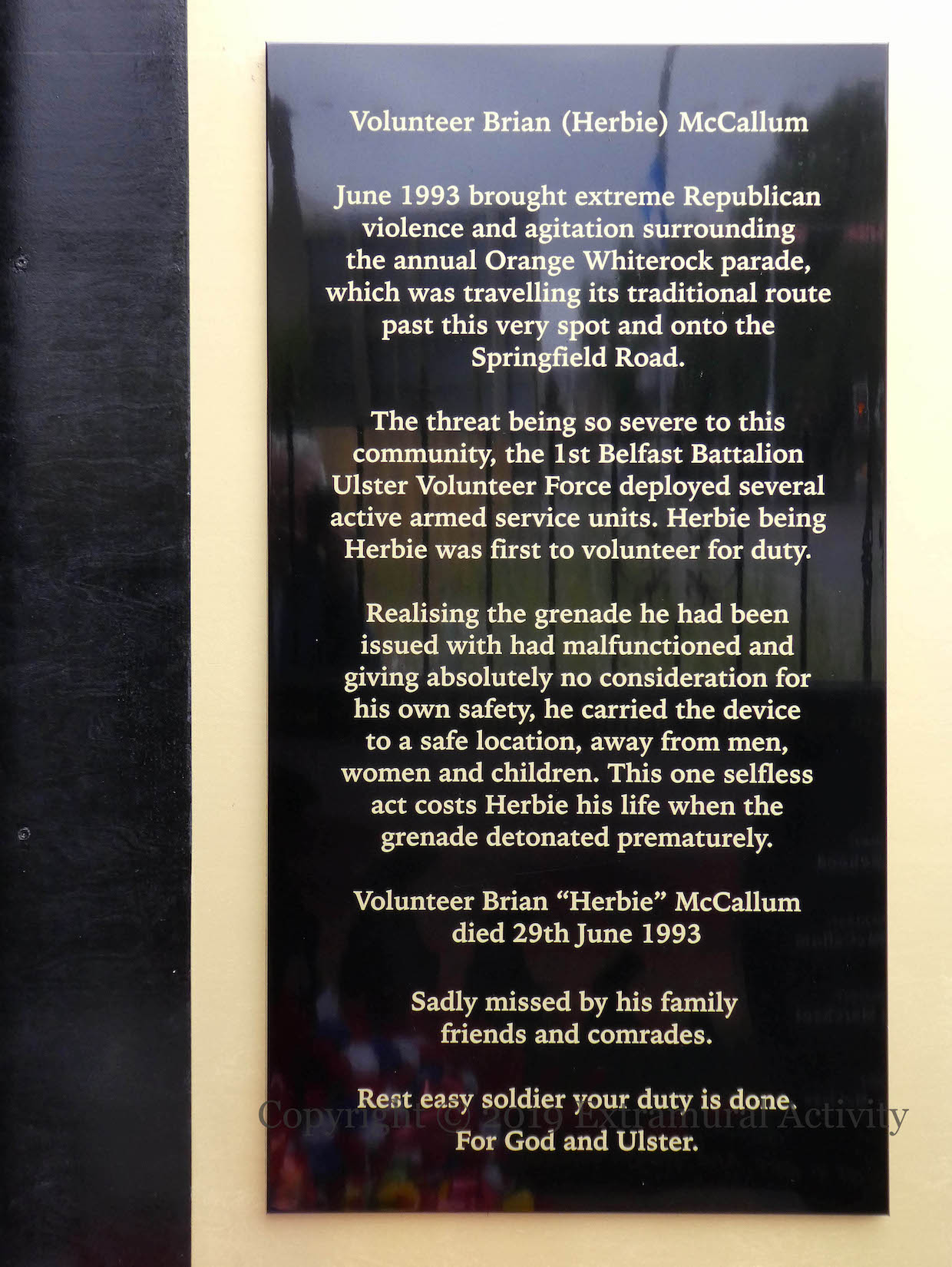
The long plaque reads: “June 1993 brought extreme Republican violence and agitation surrounding the annual Orange Whiterock parade, which was travelling its traditional route past this very spot and onto the Springfield Road. The threat being so severe to this community, the 1st Belfast Battalion Ulster Volunteer Force deployed several armed active service units. Herbie being Herbie was first to volunteer for duty. Realising the grenade he had been issued with had malfunctioned and giving absolutely no consideration for his own safety, he carried the device to a safe location, away from men, women and children. This one selfless act costs Herbie his life when the grenade detonated prematurely. Volunteer Brian “Herbie” McCallum died 29th June 1993. Sadly missed by his family friends and comrades. Rest easy soldier your duty is done. For God and Ulster.” McCallum died three days after the explosion.
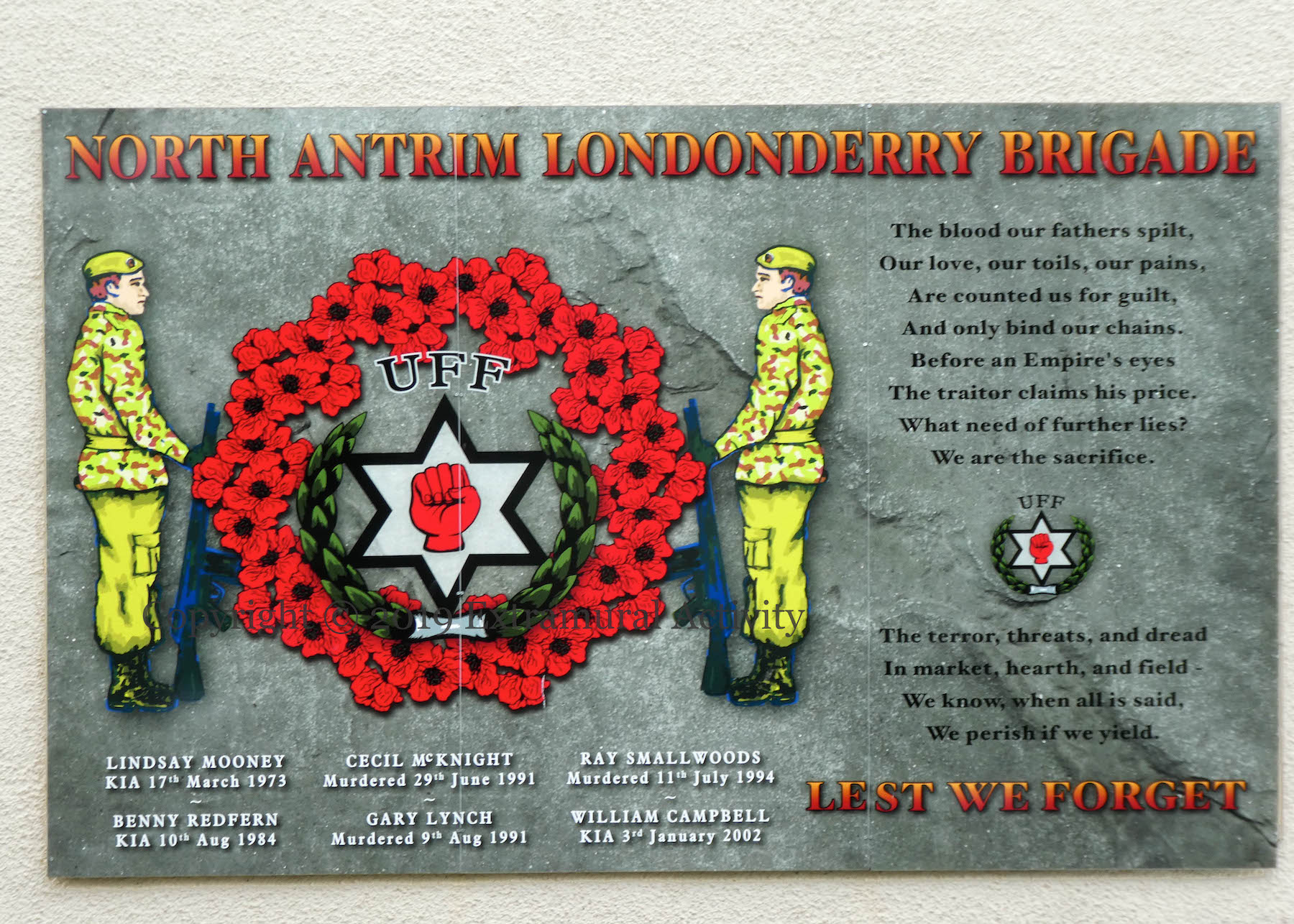
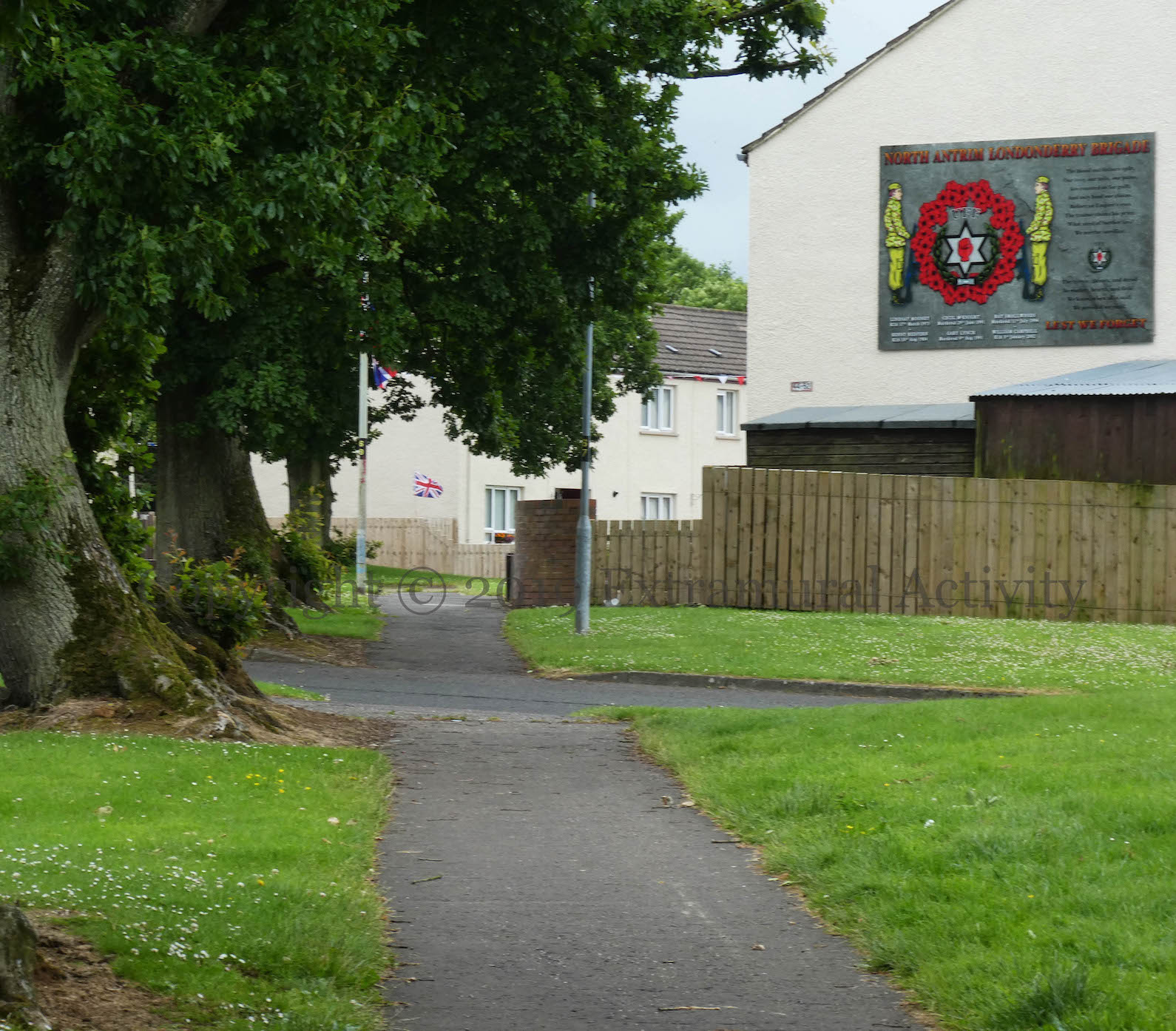
Kipling’s 1912 poem Ulster is not often quoted in loyalist muraling, despite it being an angry denunciation of Home Rule and the sacrifice of loyalists, as in the lines quote here: “The blood our fathers spilt/Our love, our toils, our pains/Are counted us for guilt/And only bind our chains./Before an Empire’s eyes/The traitor claims his price./What need of further lies?/We are the sacrifice. … The terror, threats, and dread/In market, hearth, and field/We know, when all is said./We perish if we yield.” Specifically, the sacrifice is six North Antrim/Londonderry UDA volunteers: Lindsay Mooney, Cecil McKnight, Ray Smallwoods, Benny Redfern, Gary Lynch, William Campbell. (See also: a RHC mural in the Shankill with a few lines from the poem.)
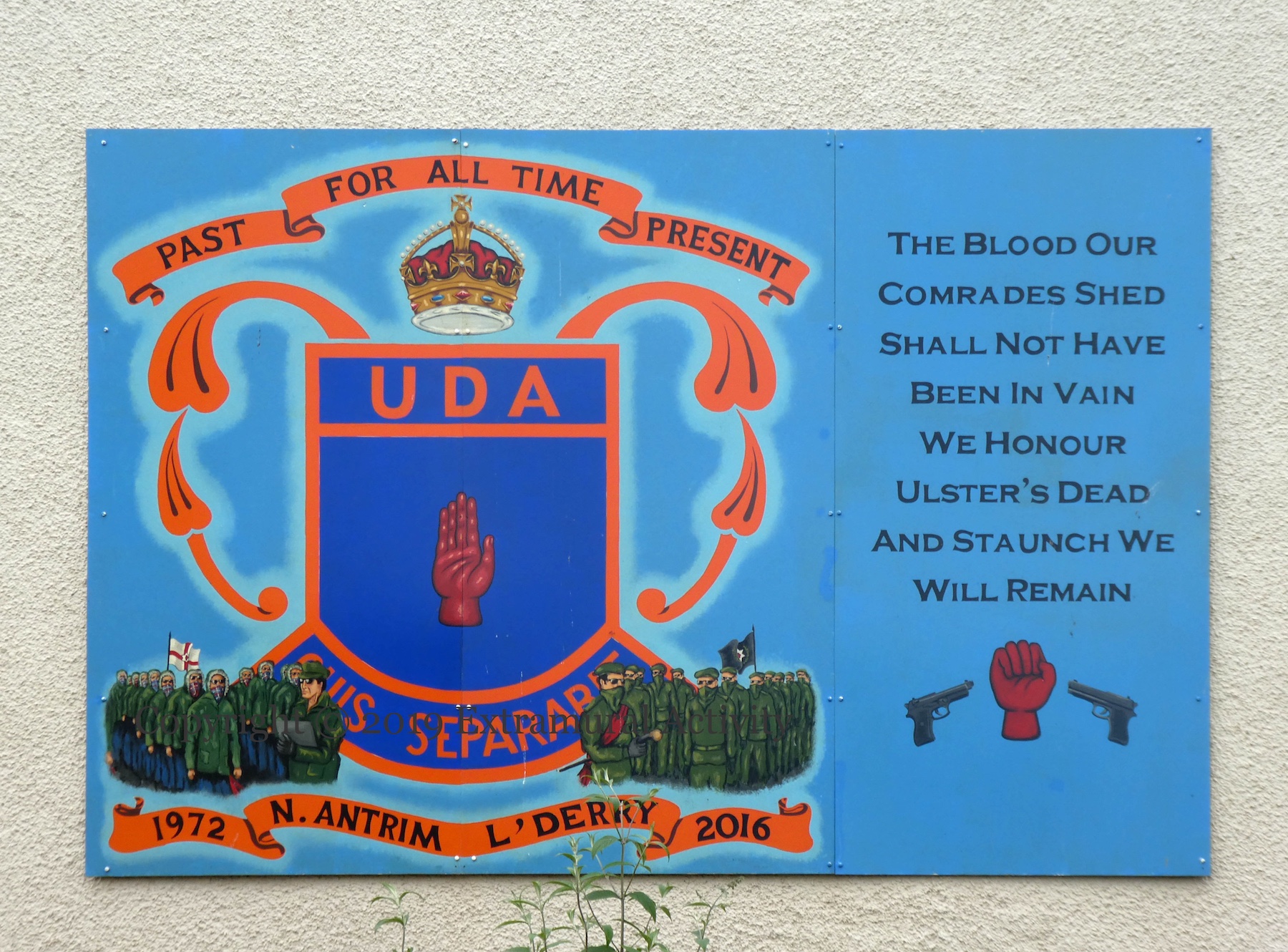
The North Antrim/Londonderry UDA has existed in the “Past, present, for all time”, or at least from 1972 to 2016 (and into 2019). “The blood our comrades shed shall not have been in vain. We honour Ulster’s dead and staunch we will remain.” The same quotation was used in Cloughfern.
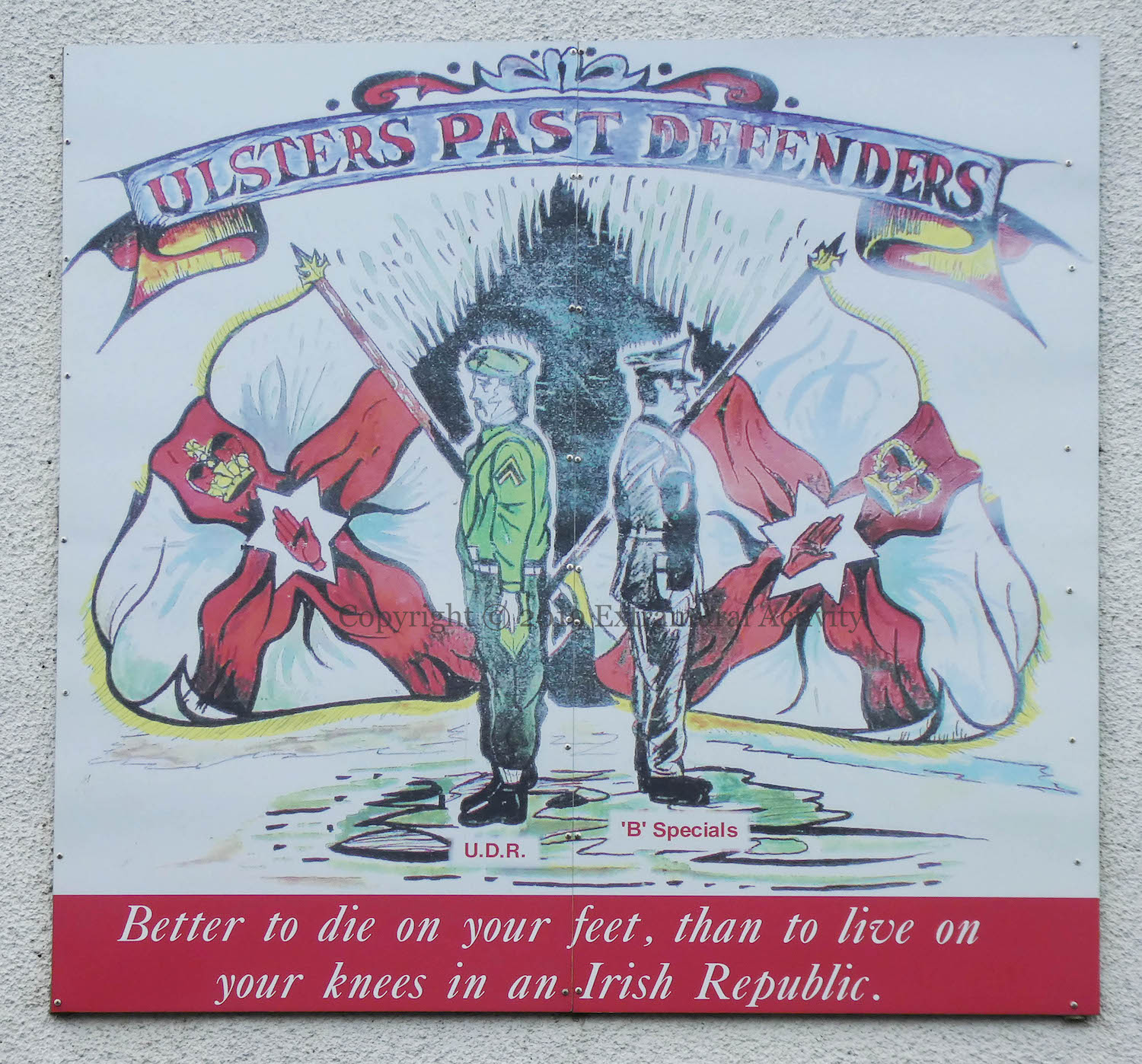
“Better to die on your feet, than to live on your knees in an Irish Republic.” The Ulster Special Constabulary was originally divided into three categories A, B, and C but after the 1922 only the B Specials remained as a reserve force for the RUC. The USC was disbanded in 1970 after its controversial behaviour in the riots of 1969, on some occasions failing to protect Catholics and in a few cases joining in with loyalists. It was replaced by the UDR (as a reserve military force), which lasted until 1992 – it was amalgamated with the Royal Irish Rangers to become the Royal Irish Regiment.
 Seosamh Mac Coille Collection