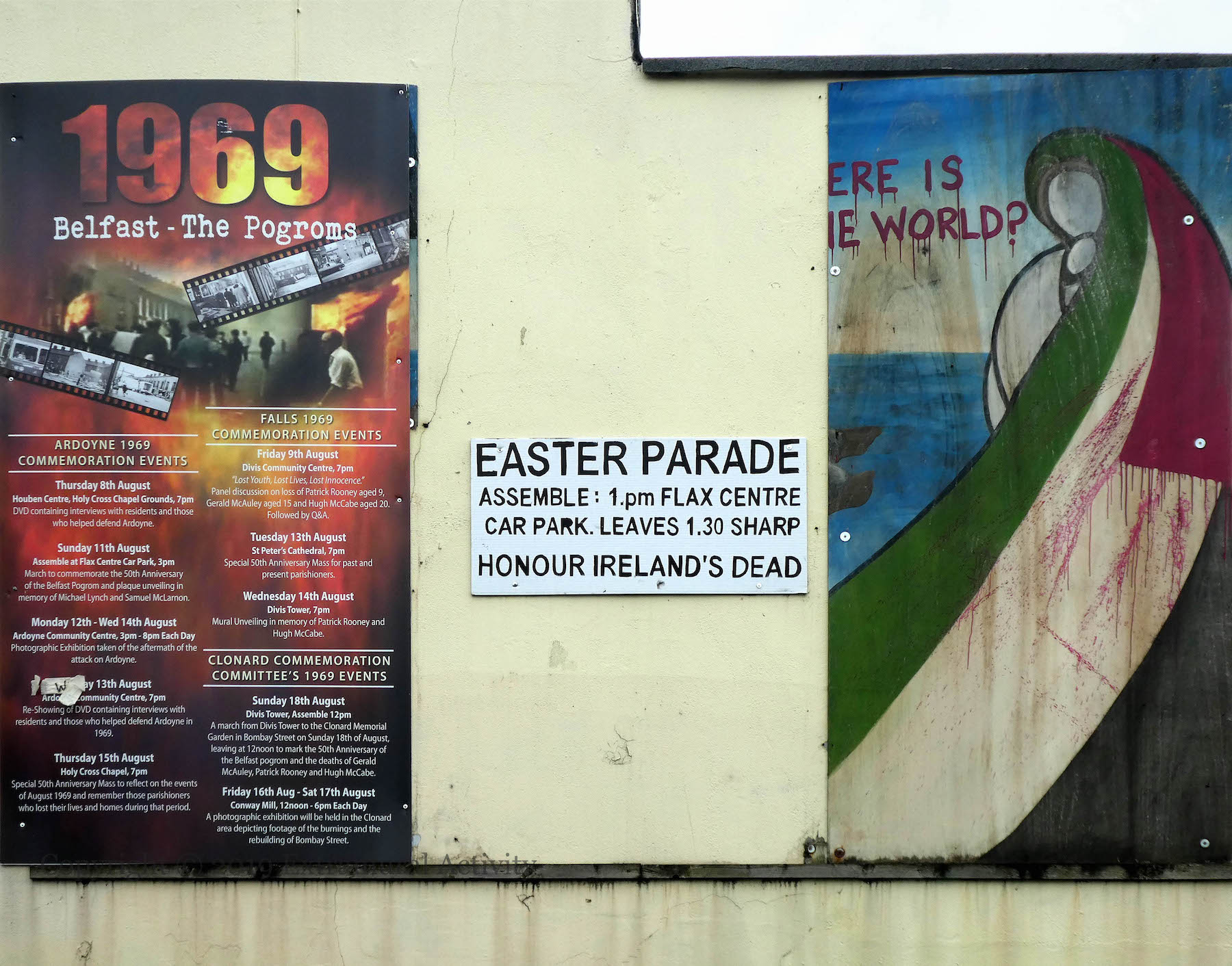
2019 was the 50th anniversary of the beginning of the Troubles and commemoration events were held in Ardoyne, Clonard, and Divis – the sites that saw the most fierce fighting during the summer. The programme board above is at the entrance to Brompton Park entrance of Ardoyne, next to the remains of Stad An Slad.
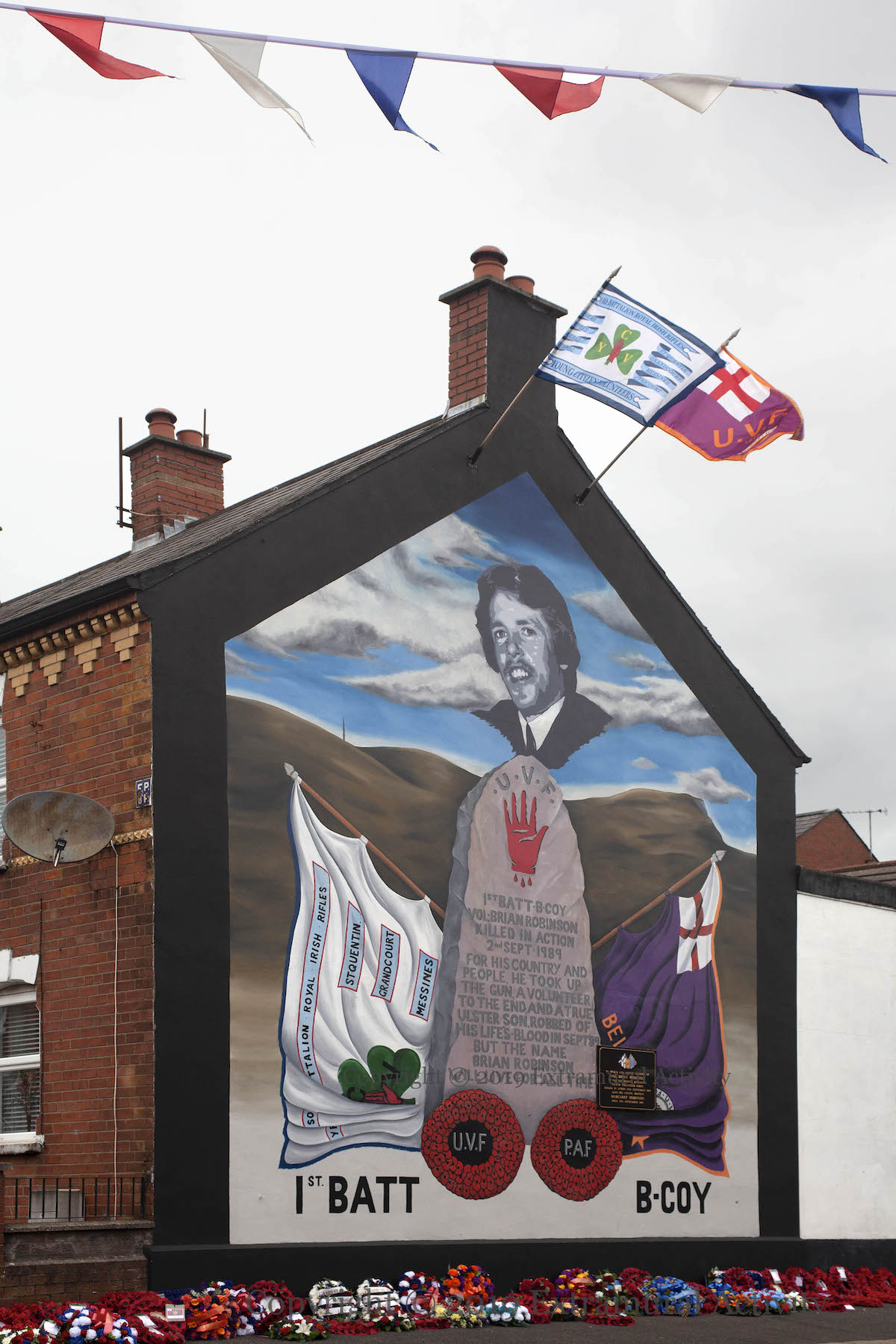
Garlands of flowers rest at the base of the (upper) mural to UVF volunteer Brian Robinson on the thirtieth anniversary of his death, on September 2nd, 1989, by a British Army undercover unit, moments after he had shot and killed a Catholic civilian named Patrick McKenna on the Crumlin Road (WP).
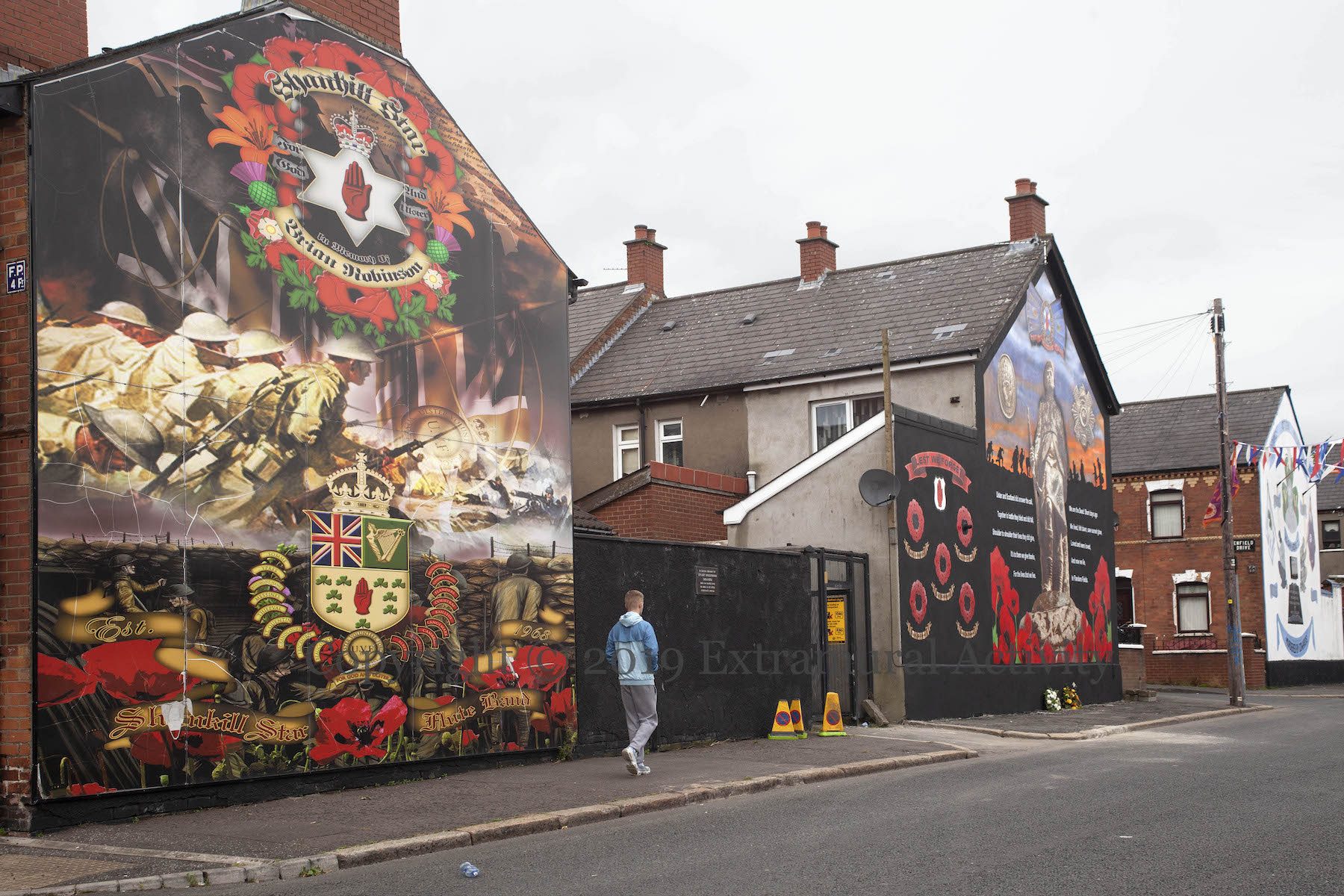
The other (lower) mural to Robinson in Disraeli Street is shown in the image below (and previously in Shankill Star). “1st batt, B coy, Vol Brian Robinson killed in action 2nd Sept 1989. For his country and people he took up the gun, a volunteer to the end, and a true Ulster son. Robbed of his life’s blood in Sept. 89, but the name Brian Robinson will live for all time.”
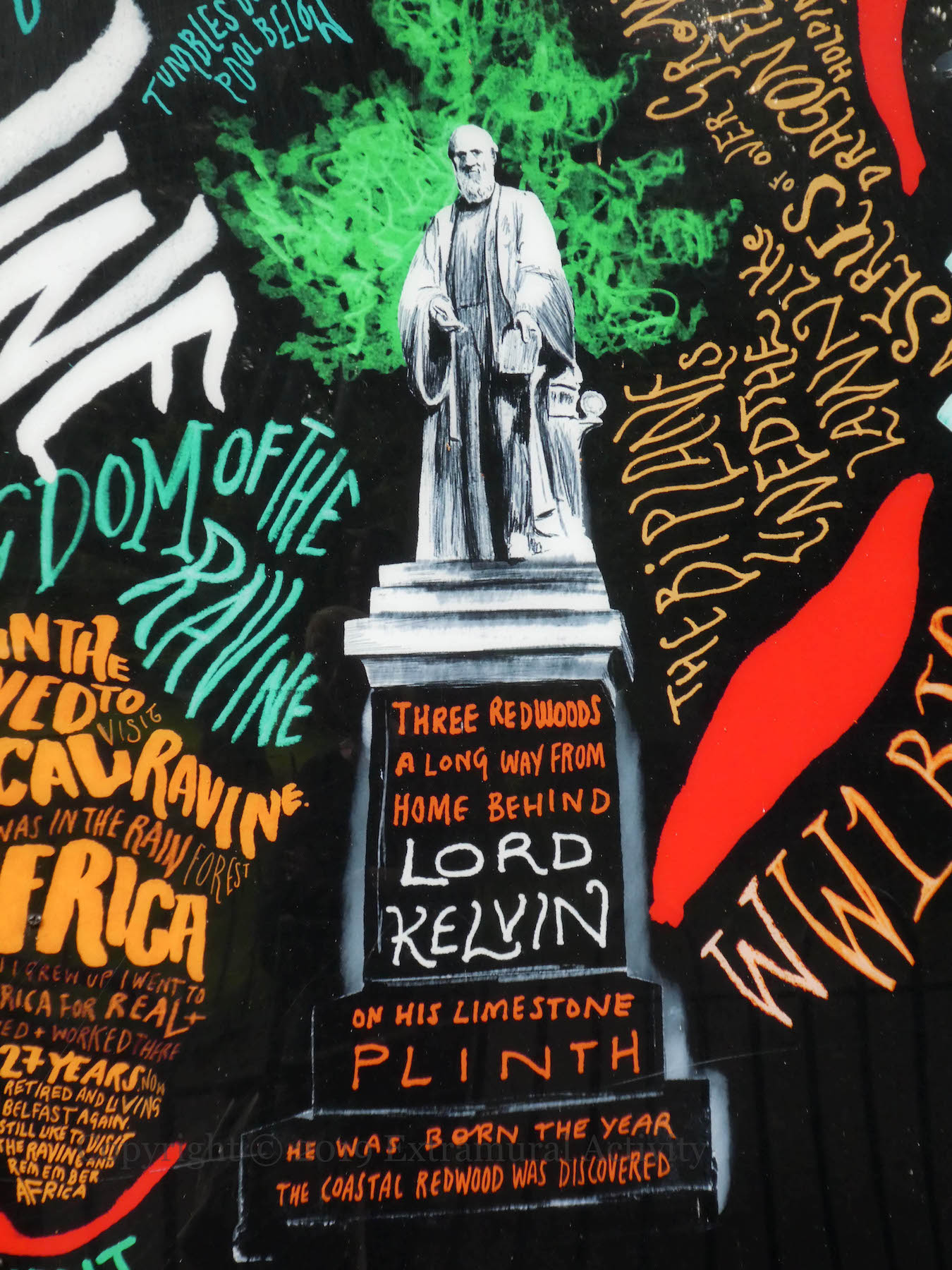
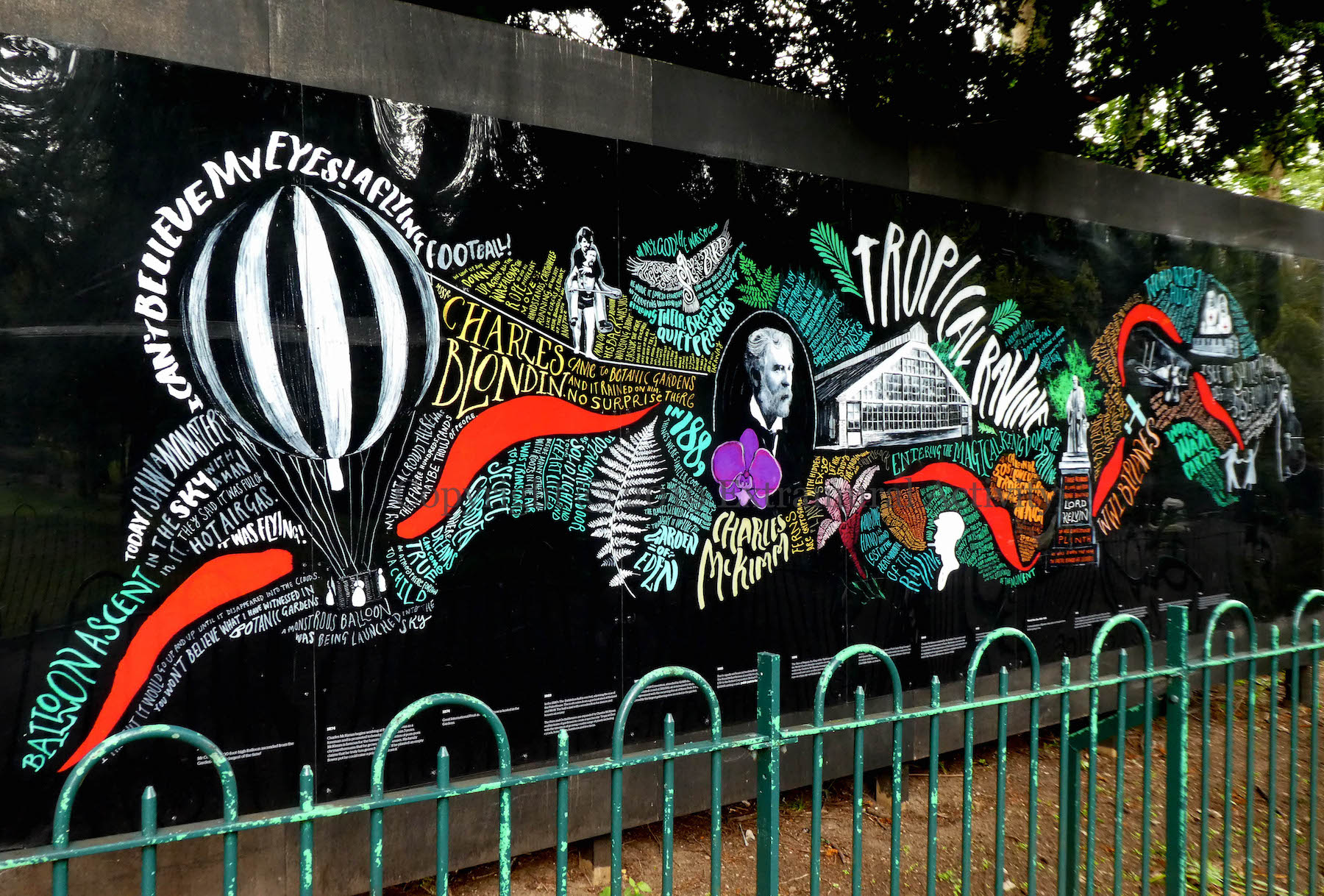
At 28 acres, Belfast’s Botanic Gardens are large enough to contain a variety of attractions: the Ulster Museum; two glass houses: the Palm House, designed by Charles Lanyon, and the Tropical Ravine, opened in 1889 under head gardener Charles McKimm (Ulster Biography) whose portrait appears at the centre of the image just below; a large rose garden.
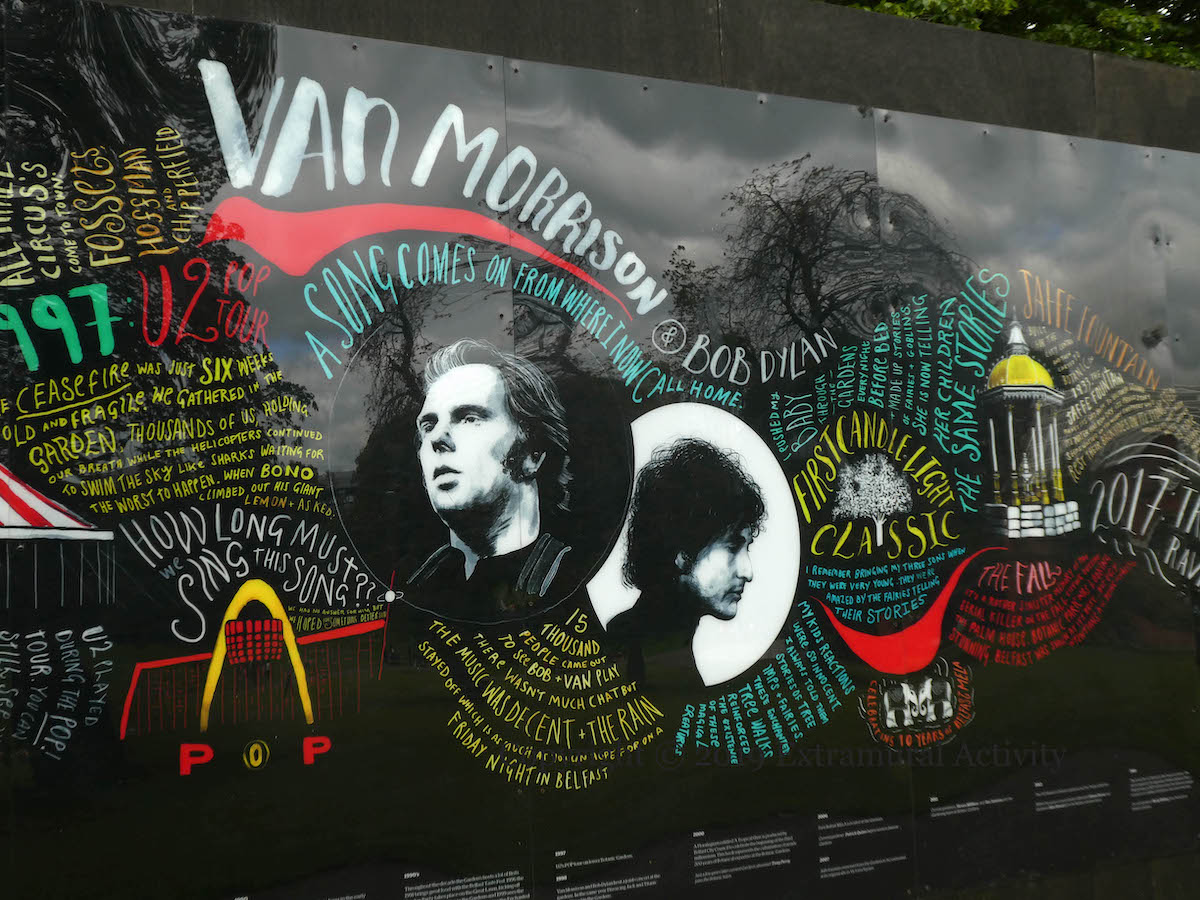
The large parklands serve as the site of outdoor events such as music concerts by famous 20th century artists such as U2, Van Morrison, and Bob Dylan (see final image) and before that the final public appearance of tightrope walker Charles Blondin in 1896 – “He went up and down and up again, all the way along the rope he did his different moves: handstands, cartwheels, running. He was just like a circus acrobat. Mssr Blondin was up there with another man on his back. Blondin was just walking about easily, the other man felt terrible” – and the launch of Henry Coxwell’s hot air balloon on July 3rd, 1865 – the balloon was exceedingly large: (“You won’t believe what I have witnessed in Botanic Gardens. A monstrous balloon was being launched into the sky”) and it escaped – “She has gone across the sea, but it is not known whither.” concludes the account by the Sydney Empire.
The statue to Belfast-born Lord Kelvin is at the Stranmillis entrance to the park.
This is the second part (up to WWI) of a 27m-long history of Botanic Gardens by artist Peter Strain and poet Emma Must (BelTel).
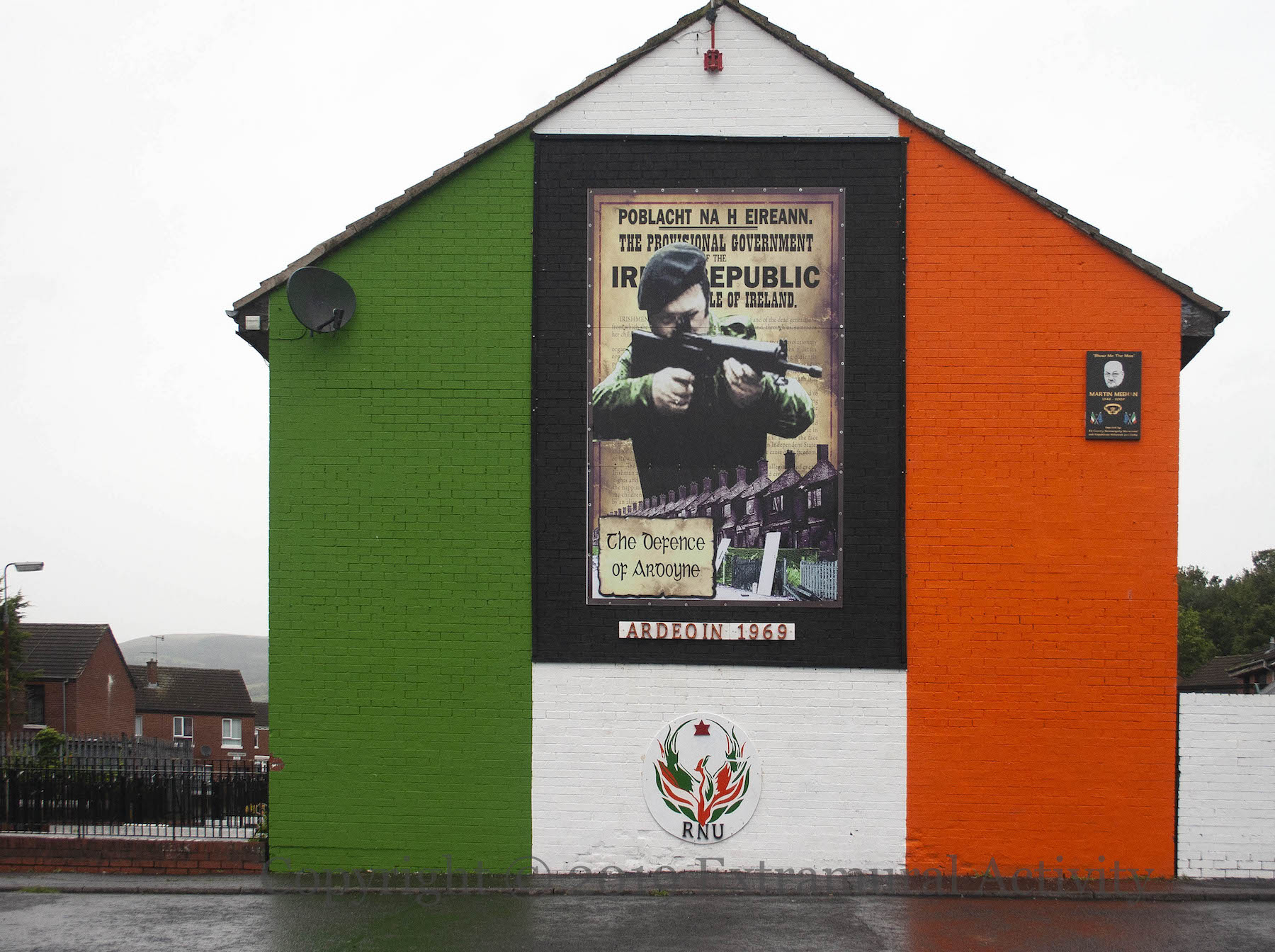
Martin Meehan joined the IRA in 1966 and was one of a few IRA volunteers defending Catholics in Ardoyne (Ard Eoın) in August 1969. Rioting did not cease there until the 16th, when British troops were finally deployed to the Crumlin Road to block mobs coming from the Woodvale and Shankill. Meehan resigned after the failure of the IRA to defend Ardoyne, Clonard, and Divis. This Magill article from the time summarises the IRA’s actions as “late, amateur and uncertain”. (Meehan would later rejoin the IRA and PIRA.)
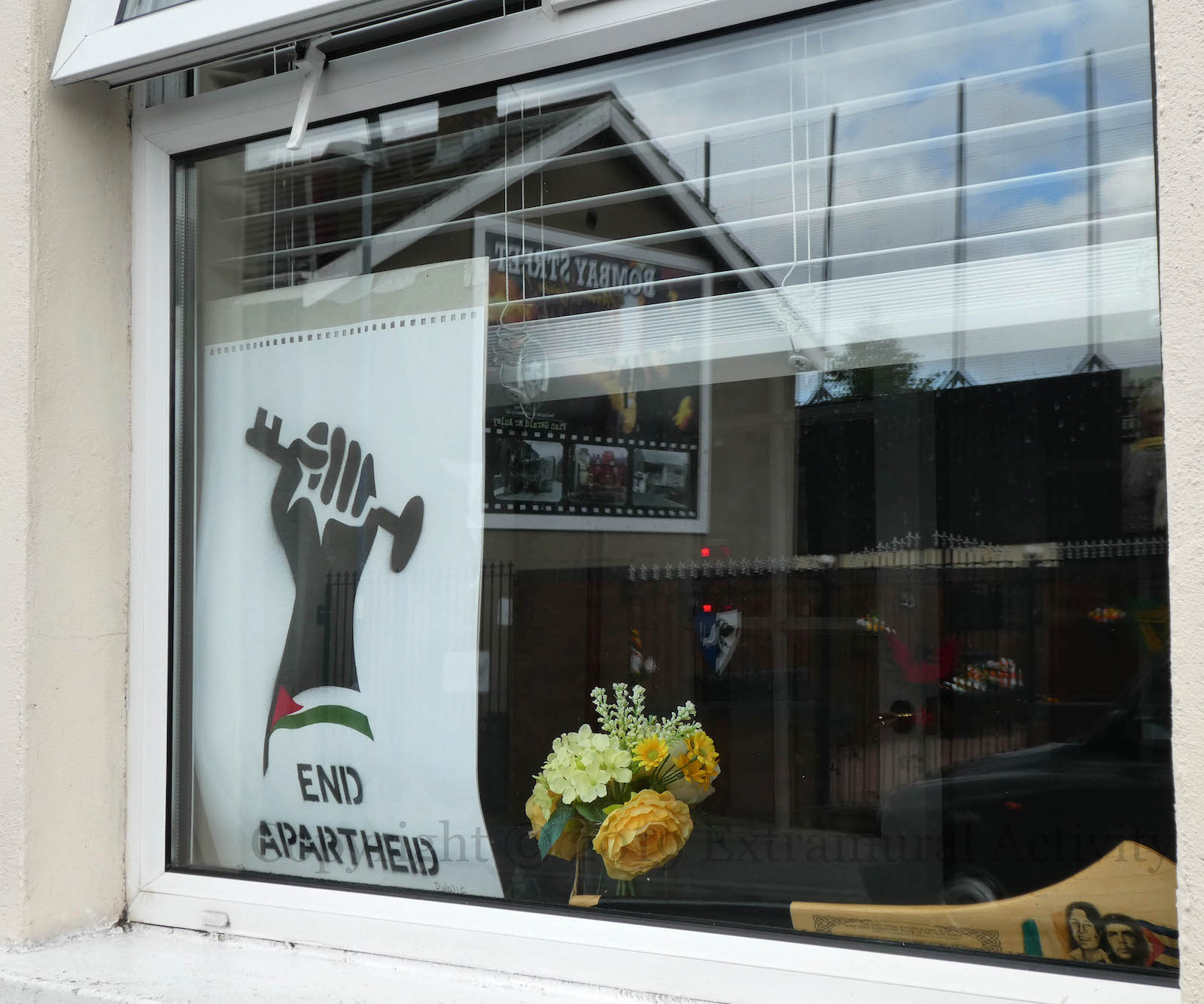
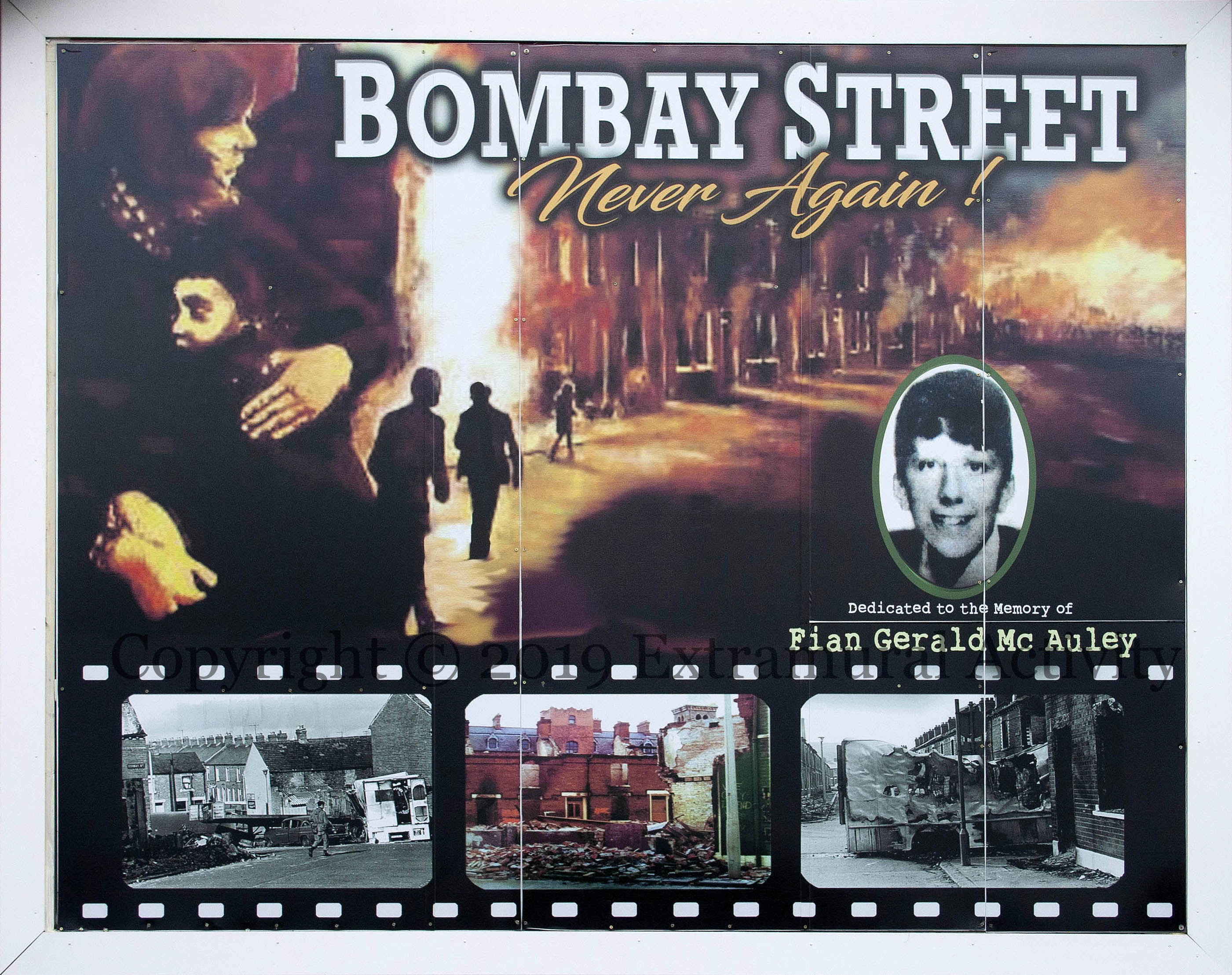
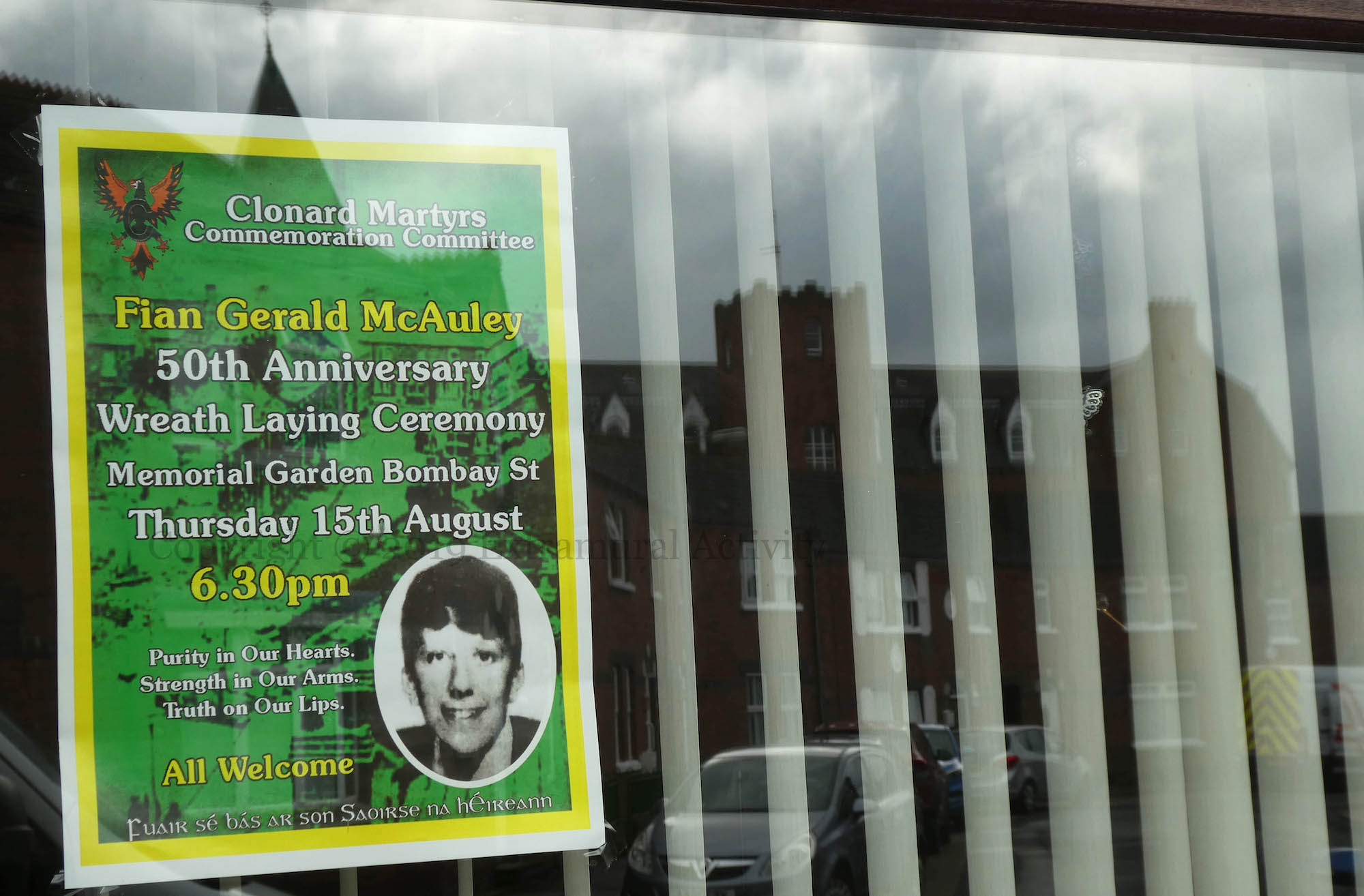
15 year-old Fıan Gerald McAuley was the first member of the IRA to die in the Troubles. He was shot in Waterville Street by a loyalist sniper while helping people move from burned-out homes in Bombay Street, along which the “peace” line separating the Falls and Shankill now runs, overlooking the Clonard Memorial Garden, site of the service for the 50th anniversary of McAuley’s death. In the windows of a nearby house we also see a poster in support of Palestine and a Bobby Sands-Che Guevara hurl.
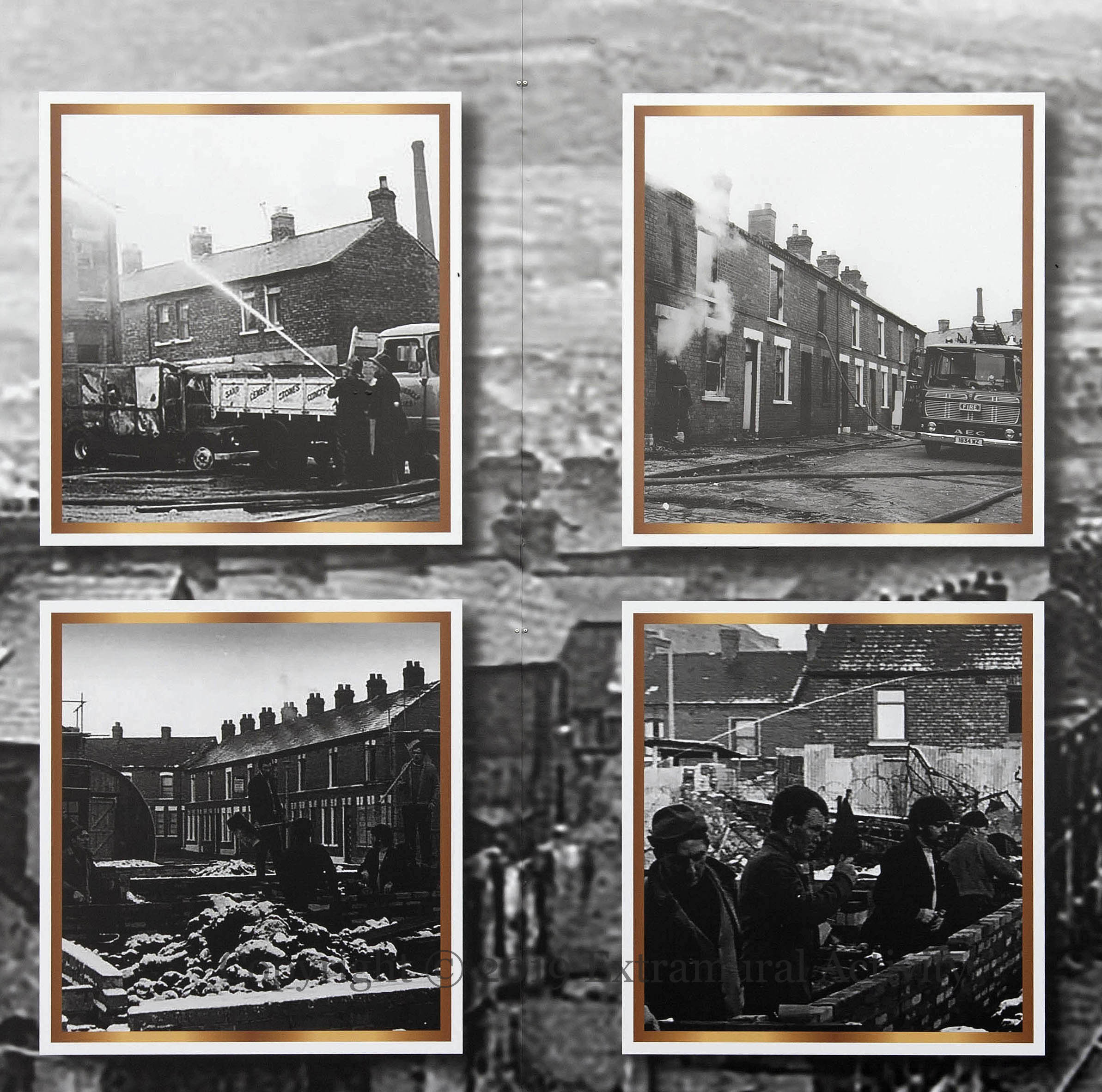
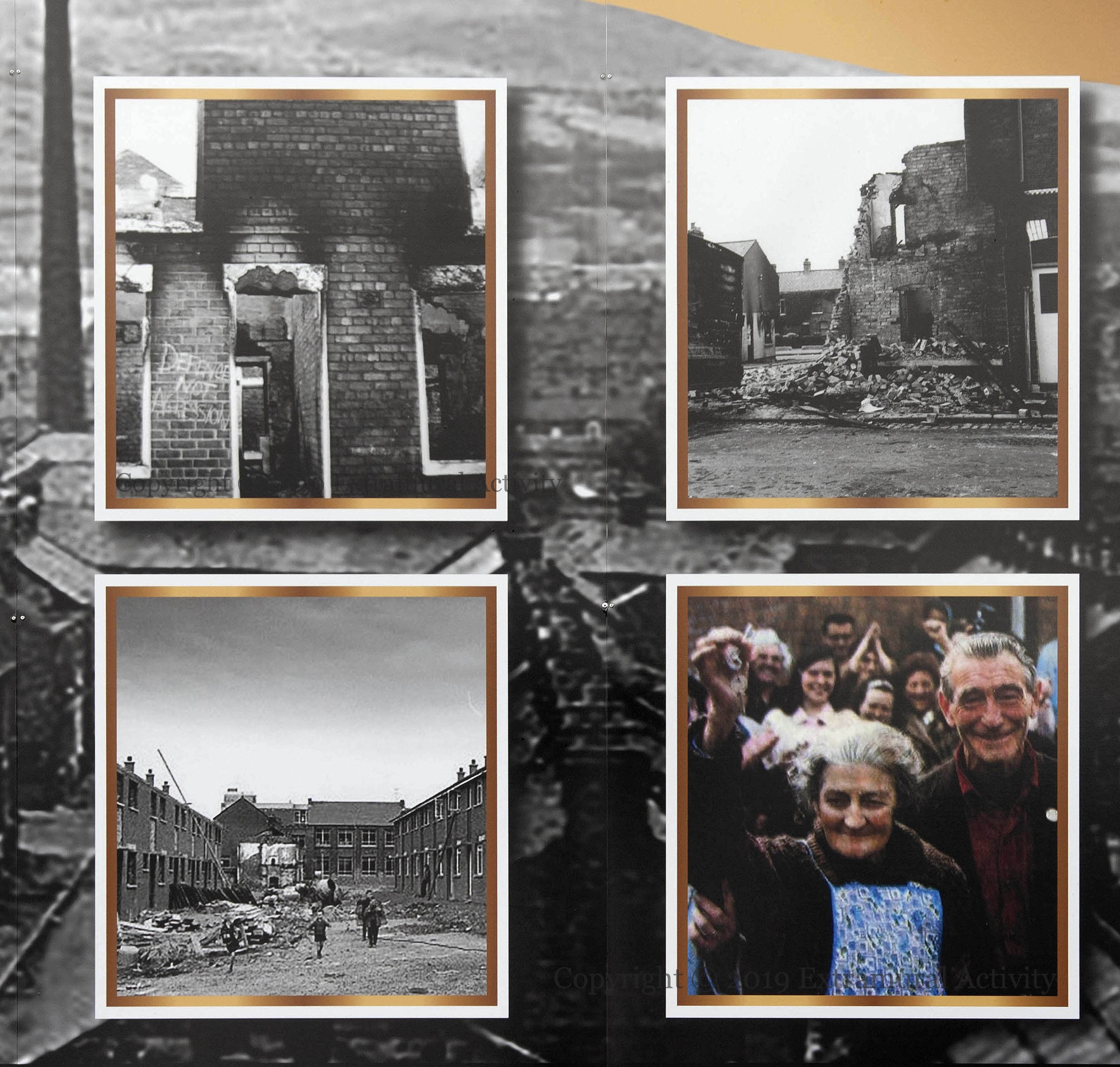
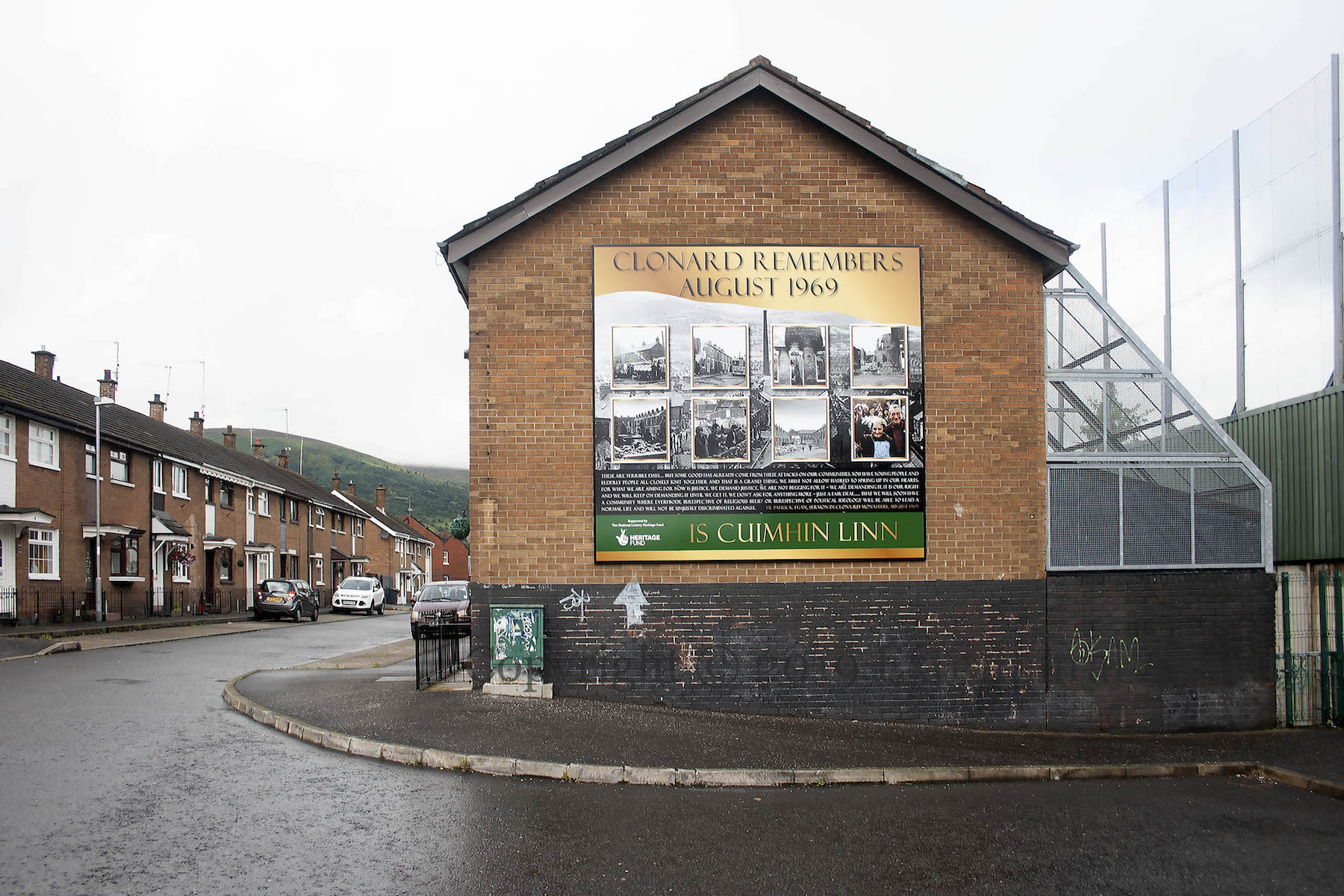
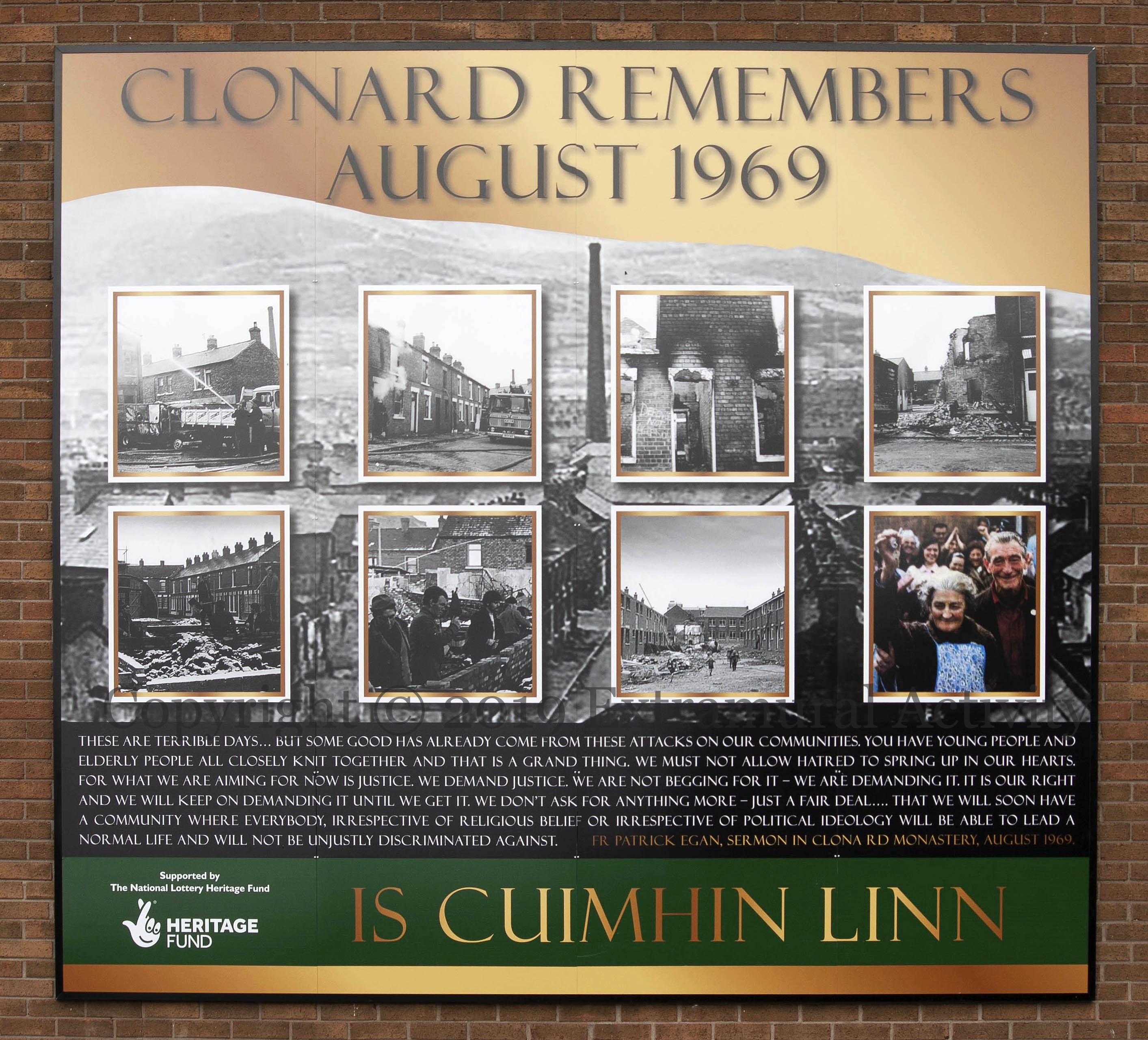
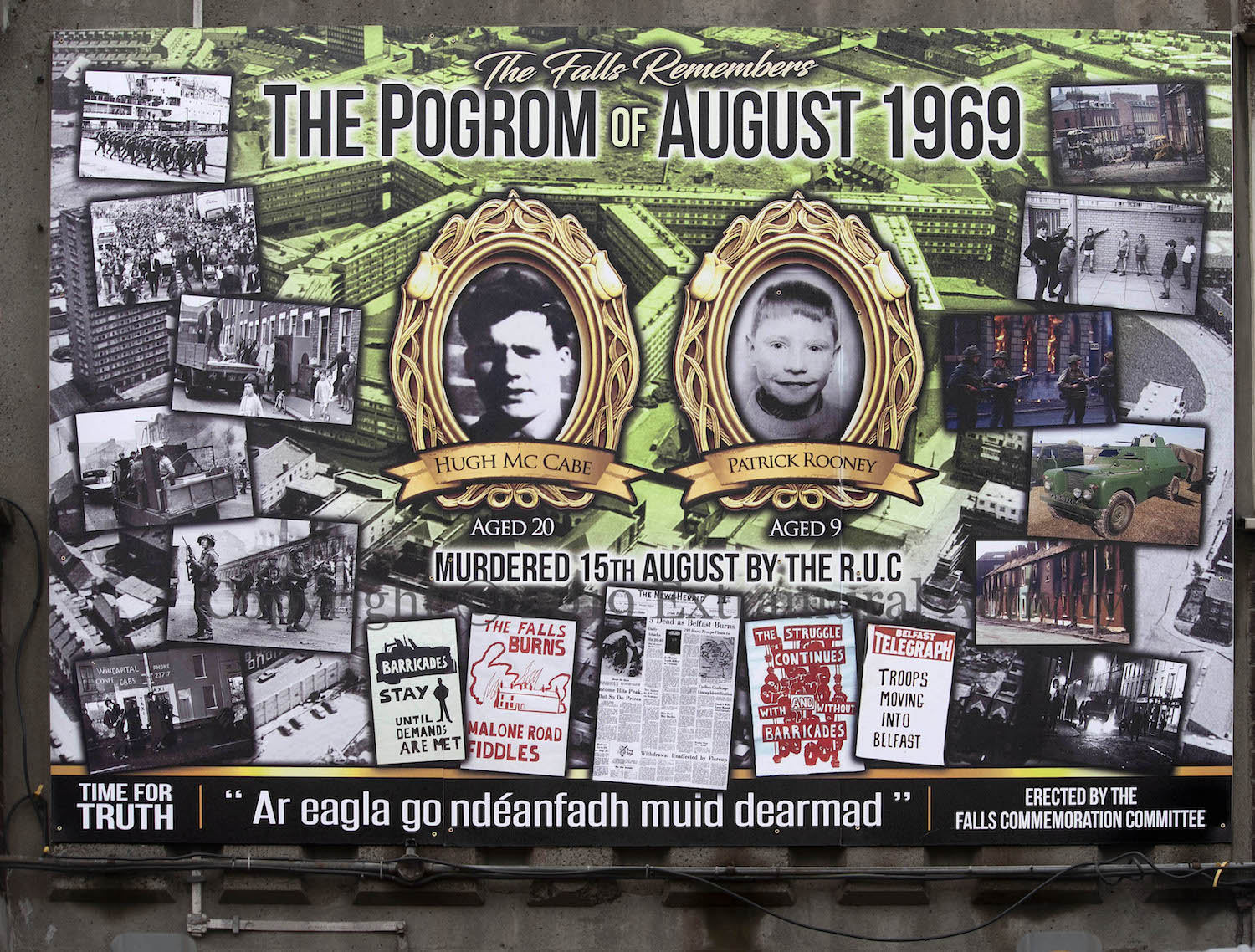
“Is cuimhin linn.” Last week saw a series of events, organised by the Belfast 1969 Pogroms Commemoration Committee, in Clonard, Falls, and Ardoyne, including a photographic exhibition, documentary screenings, panel discussions, a play, a mass, and murals (Irish News), including The Pogrom Of August 1969 and the one above, in Bombay Street, which used to run between the Shankill and Falls but after the riots and burnings of August 1969 was split in two by a so-called “peace” line (see the wide shot, below).
“These are terrible days … but some good has already come from these attacks on our communities. You have young people and elderly people all closely knit together and that is a grand thing. We must not allow hatred to spring up in our hearts. For what we are aiming for now is justice. We demand justice. We are not begging for it – we are demanding it. It is our right and we will keep on demanding it until we get it. We don’t ask for anything more – just a fair deal … that we will soon have a community where everybody, irrespective of religious belief or irrespective of political ideology will be able to lead a normal life and will not be unjustly discriminated against.” – Fr Patrick Egan, sermon in Clonard Monastery, August 1969 (youtube).
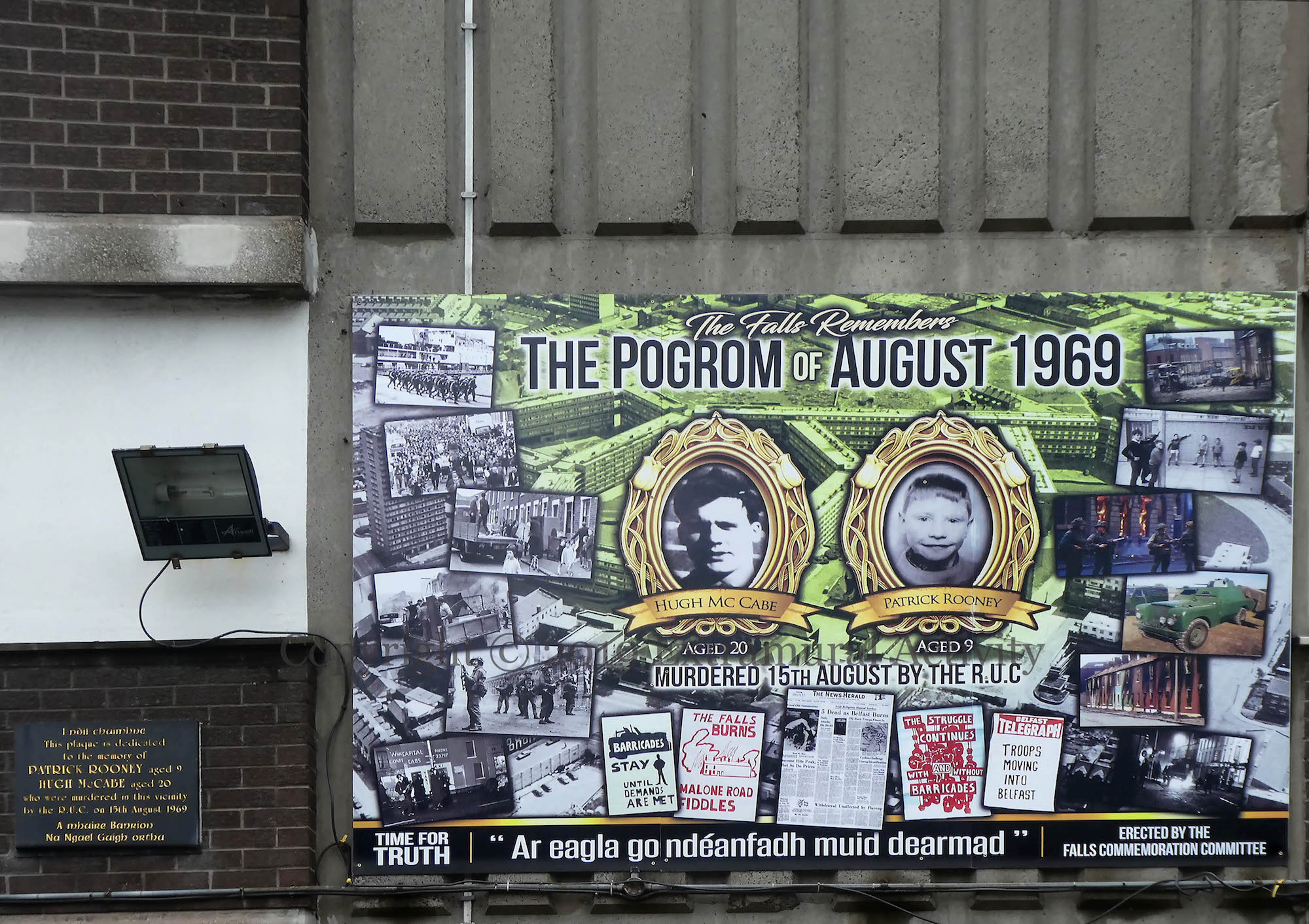
This August marks the 50th anniversary of what are euphemistically called “The Troubles”. The Battle Of The Bogside (Derry) began on August 12th; in Belfast, fighting began on the night of August 14th and before dawn three people in the Divis Street area were dead: Protestant Herbert Roy and Catholics Patrick Rooney and Hugh McCabe, both shot in the Divis flats complex by the RUC’s Shorland armoured cars. (Two other Catholics were killed in rioting in Ardoyne.) This new board is on Divis tower, next to the plaque commemorating Rooney and McCabe.
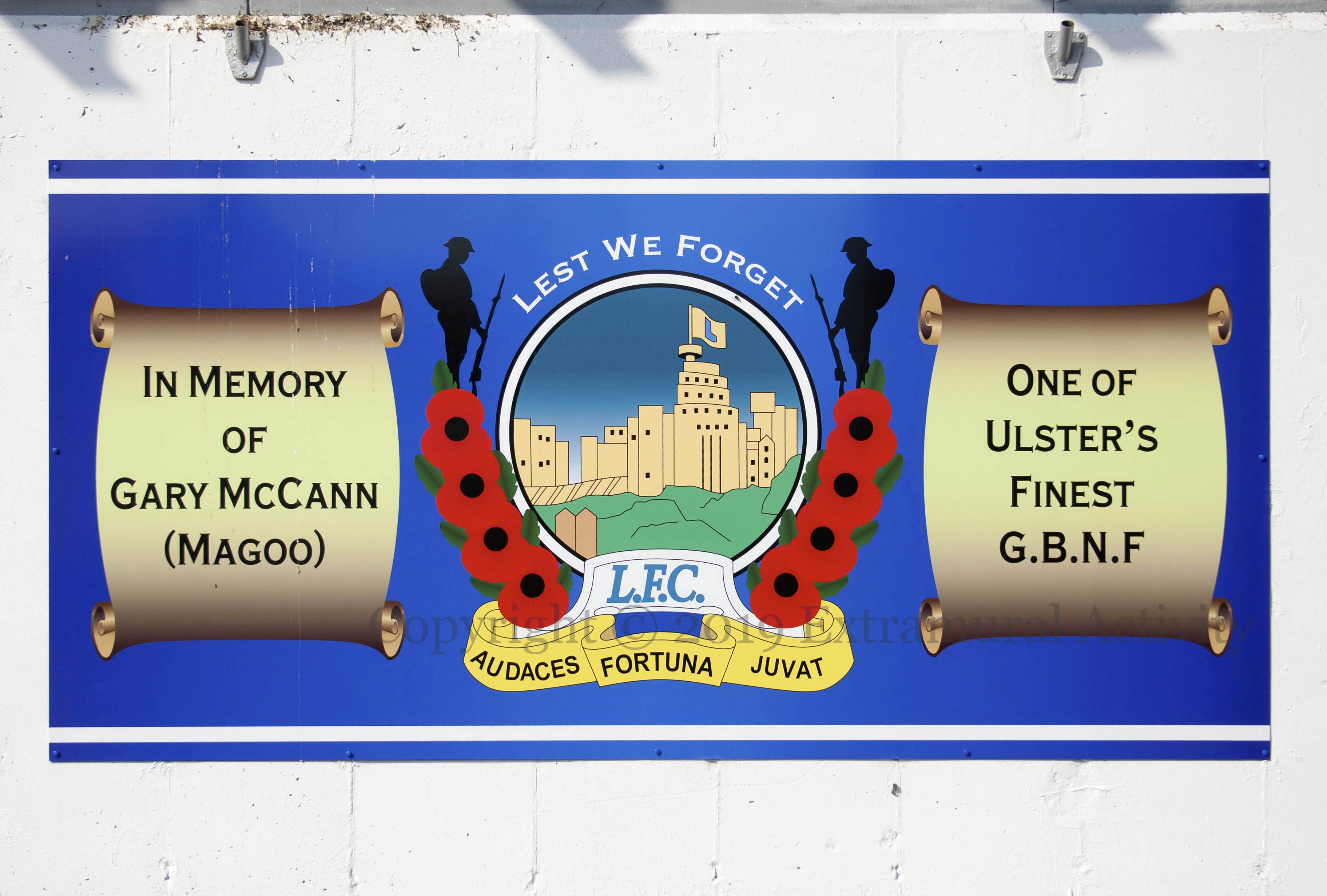
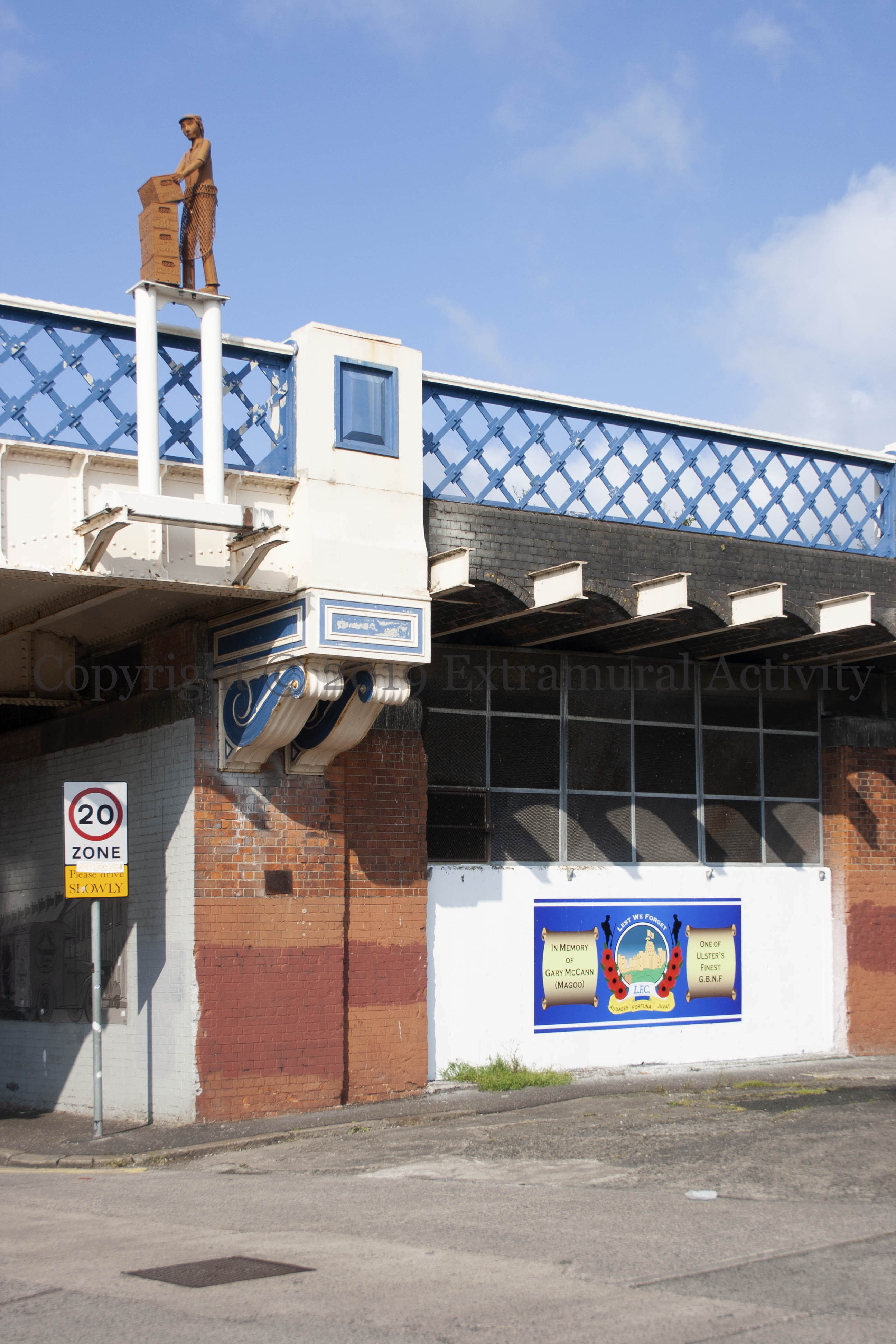
“In memory of Gary McCann (Magoo) – one of Ulster’s finest. GBNF [Gone but not forgotten].” In addition to being a Linfield supporter, McCann was also a volunteer in the Village UVF. He died in 2016. See The Battalion Of The Dead.

 Seosamh Mac Coille Collection