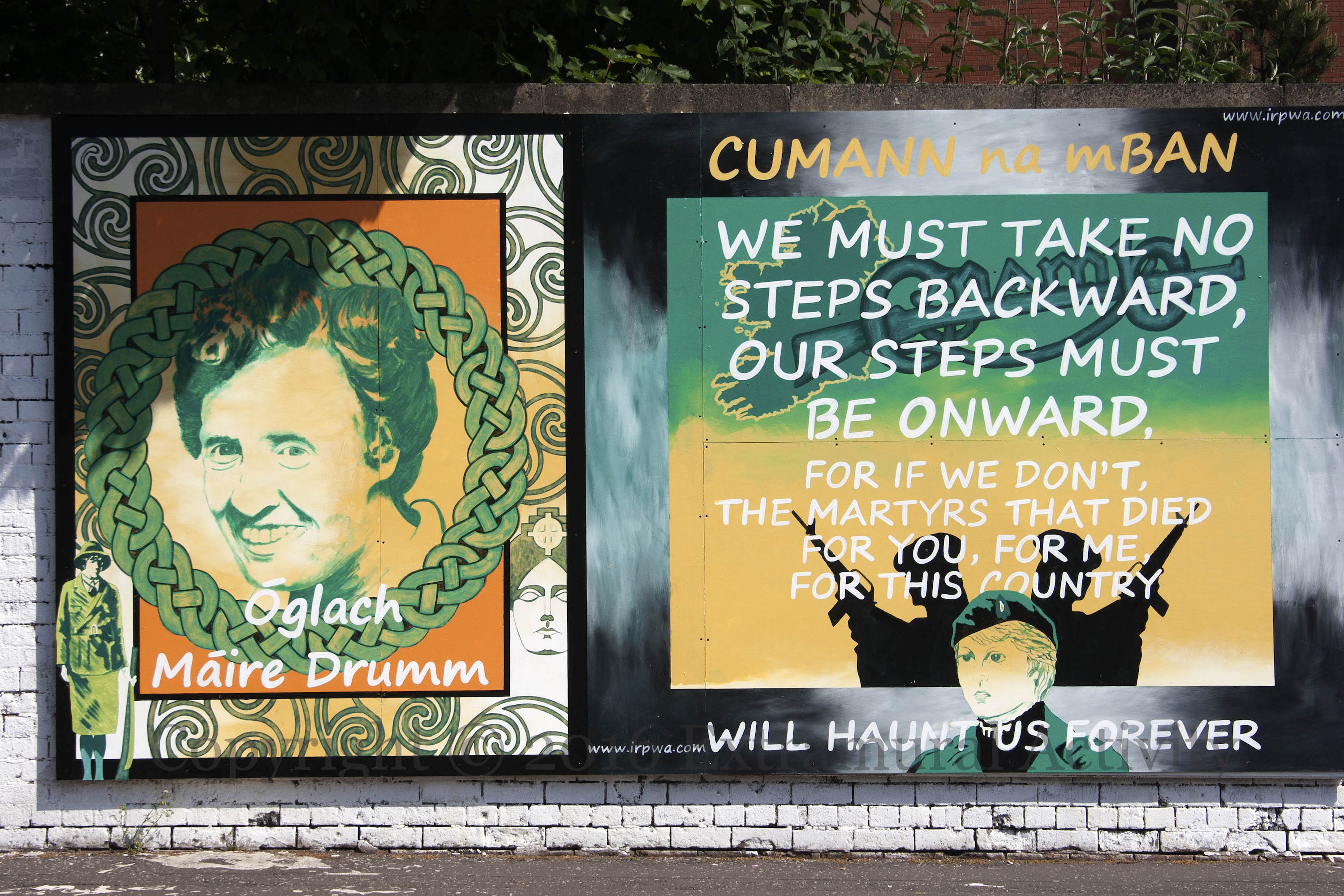
“We must take no steps backward, our steps must be onward. If we don’t, the martyrs that died for you, for me, for this country … will haunt us forever” — the words of Máıre Drumm from an anti-internment rally in Dunville Park on 10th August, 1975 (RN) are featured against a backdrop of female volunteers in Cumann Na mBan wearing berets and holding rifles.
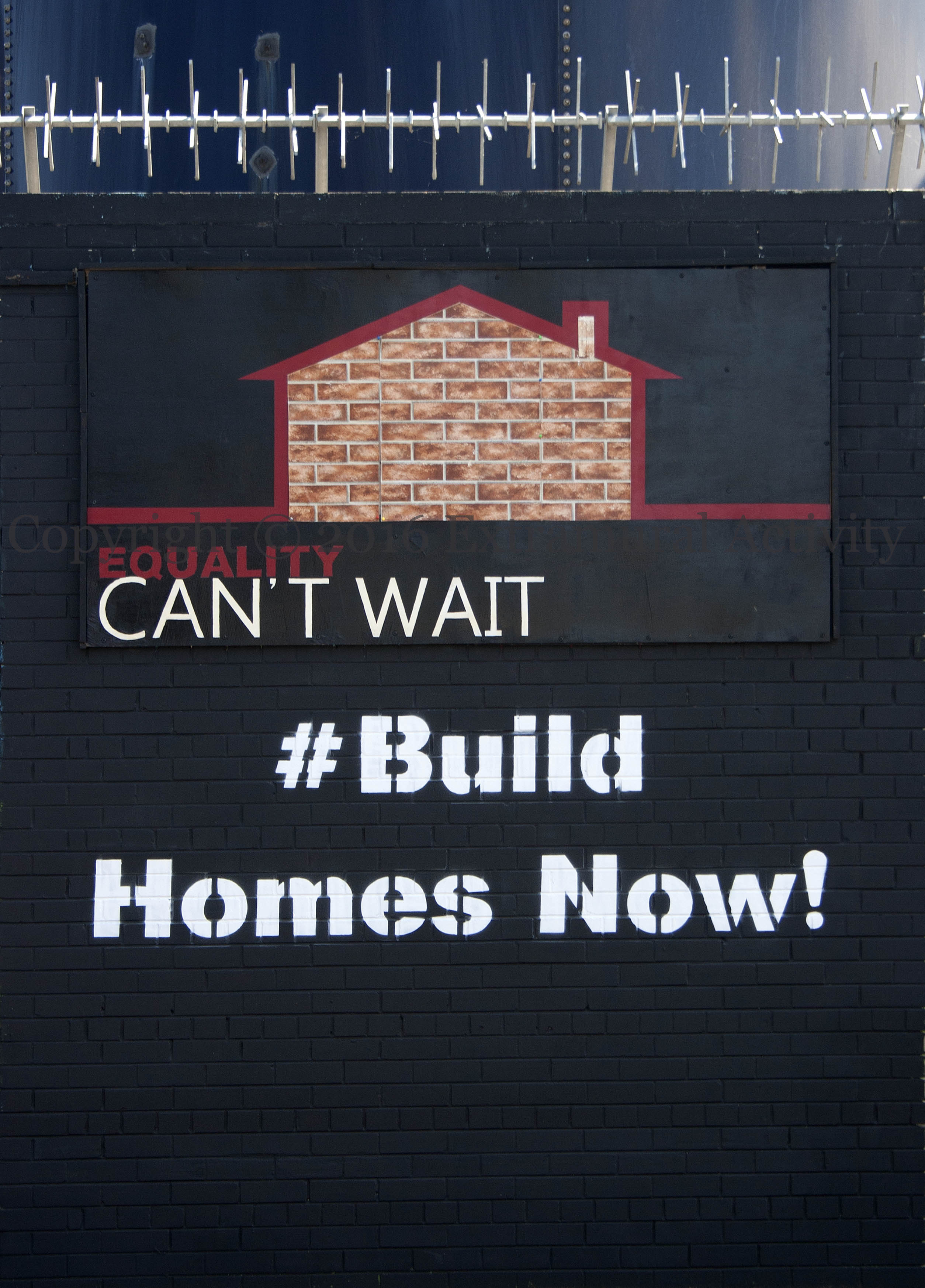
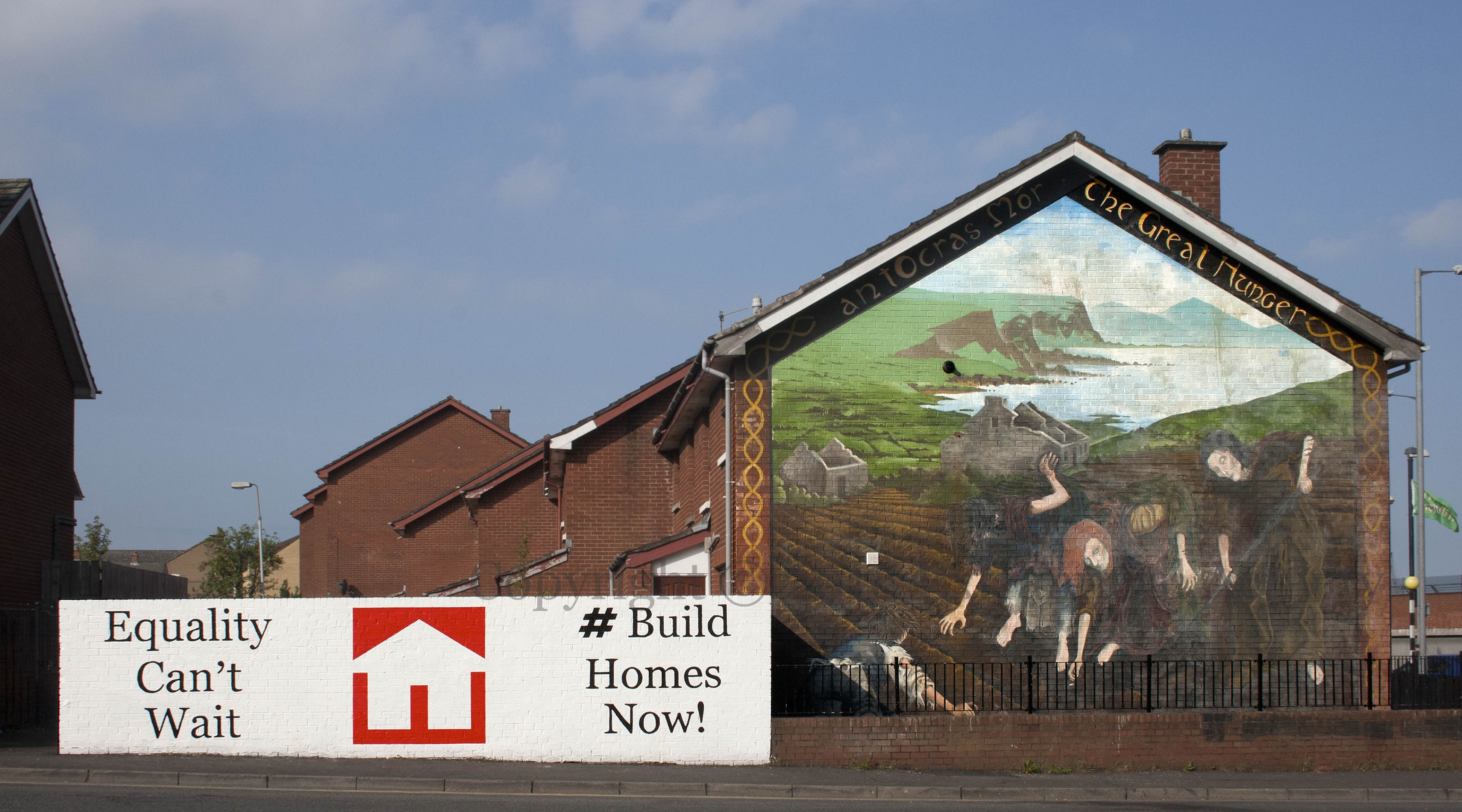
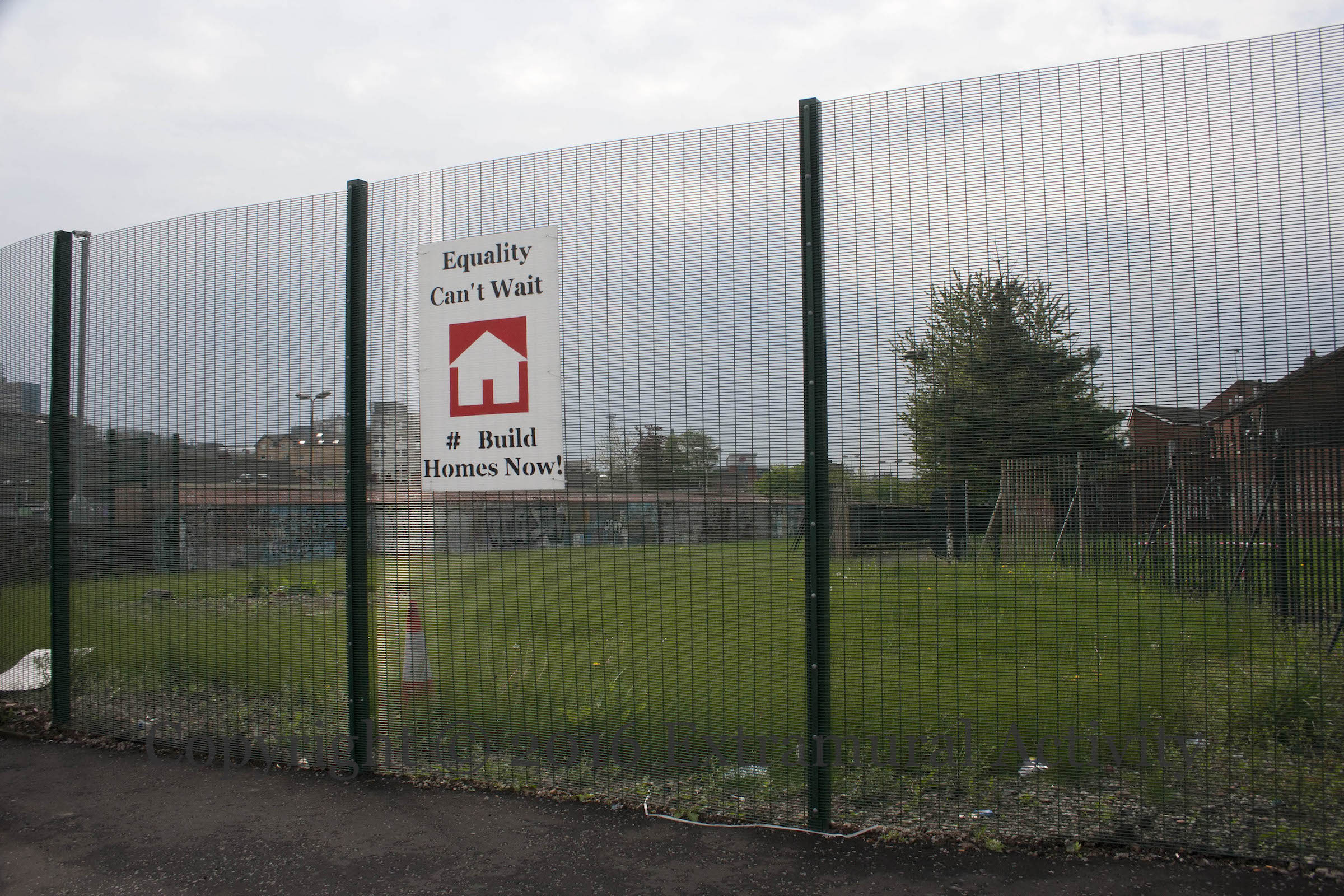
Here is another mural, this time in west Belfast, in the campaign demanding a response to a shortage in low-income housing. For more, see previously, Equality Can’t Wait.
A shortage in low-income housing is highlighted in the #buildhomesnow campaign which has put up lots of small boards (such as the one in the image below, on Divis Street) and the mural shown above, which is in the New Lodge. The site of the old Mackie’s factory is one particular location the campaign says could be redeveloped. (See articles from BMG and Participation & Practice Of Rights.)
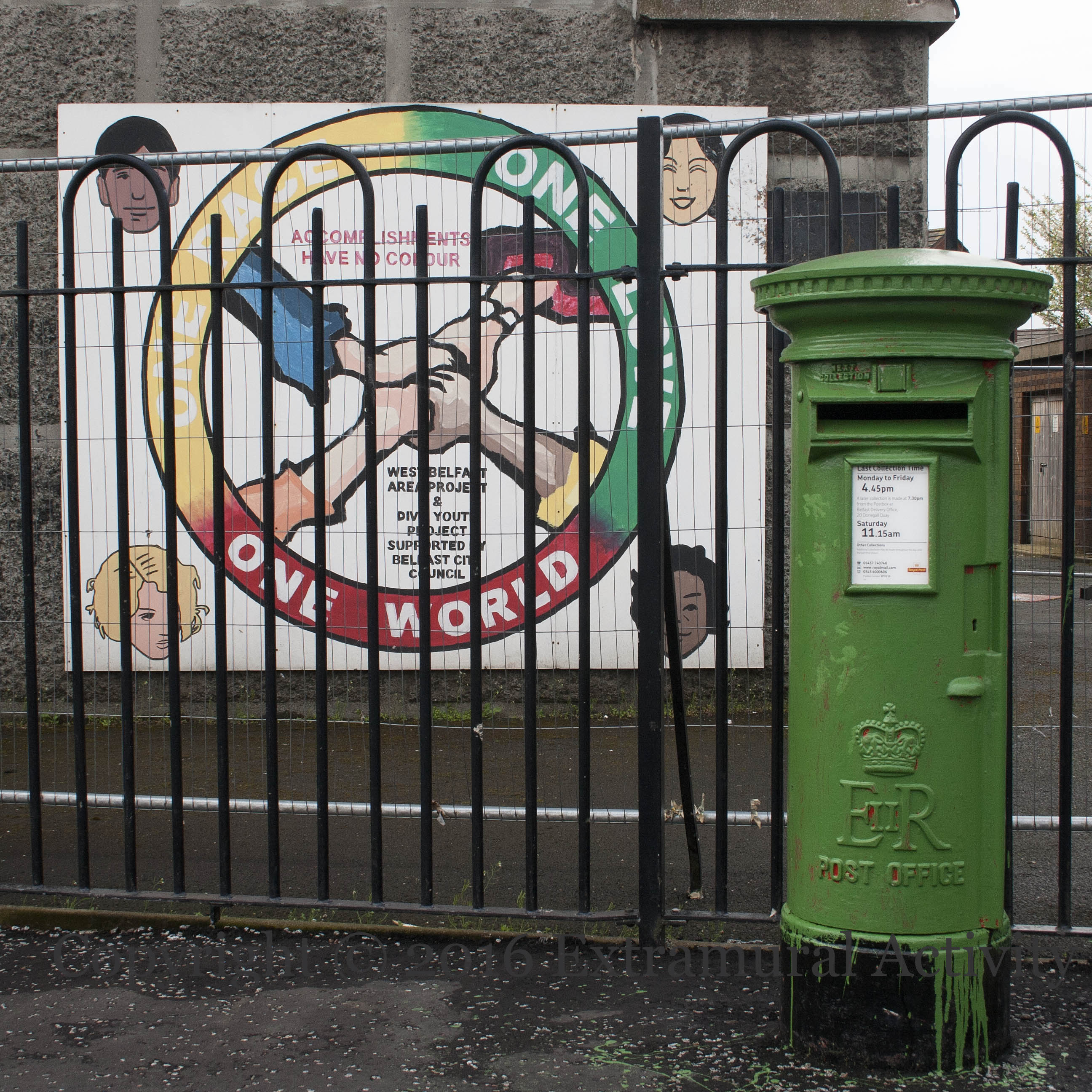
At the bottom of Divis tower: a wheel of hands from children of different races exhorts residents to overlook differences in skin-tone (“one race, one love, one world”) while the letterbox has been repainted green instead of red.
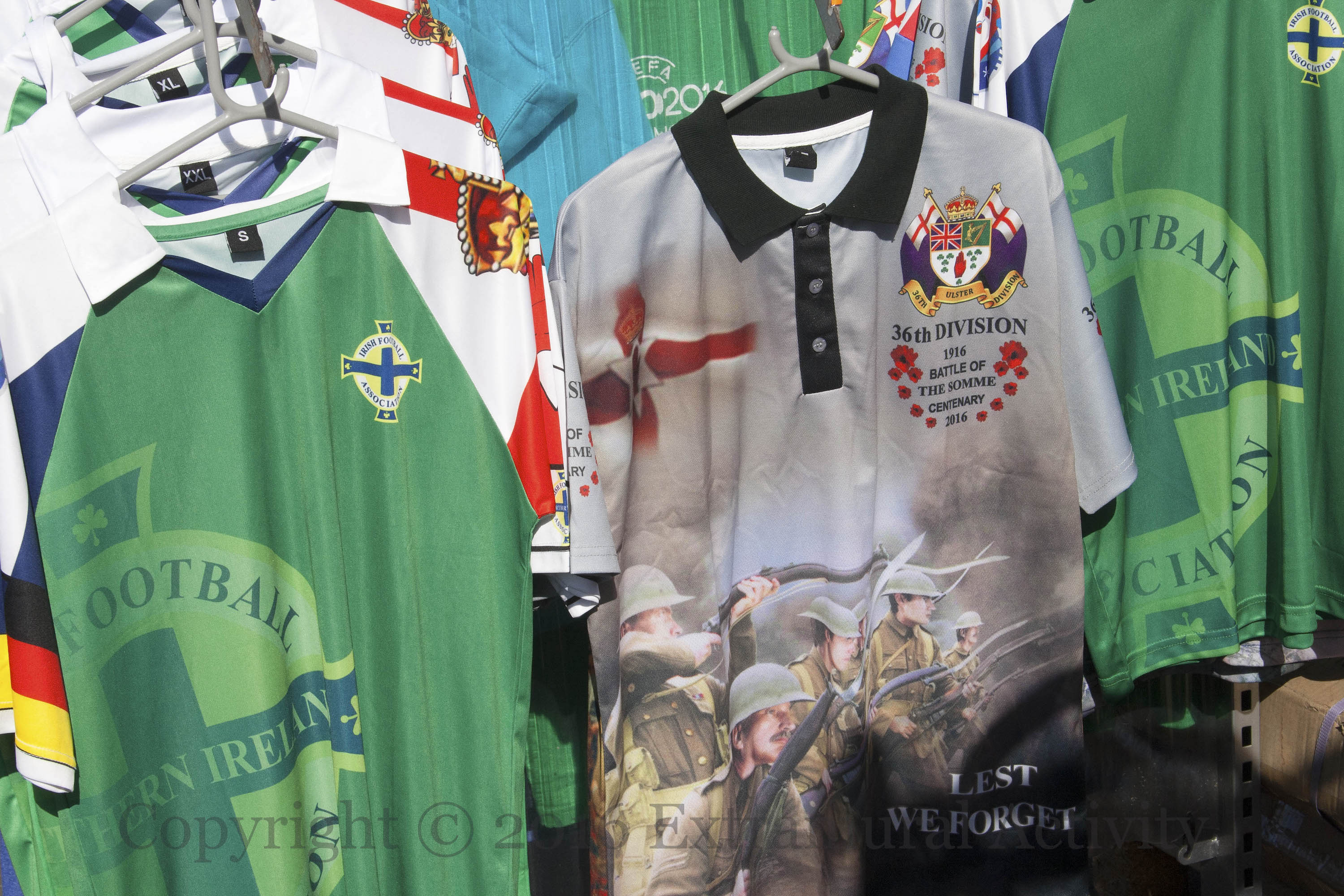
The Northern Ireland football team will be taking part in Euro 2016, which runs from June 10th to July 10th and so includes the centenary of the Battle Of The Somme on July 1st. You can pick up shirts for both events in this Shankill Road store.
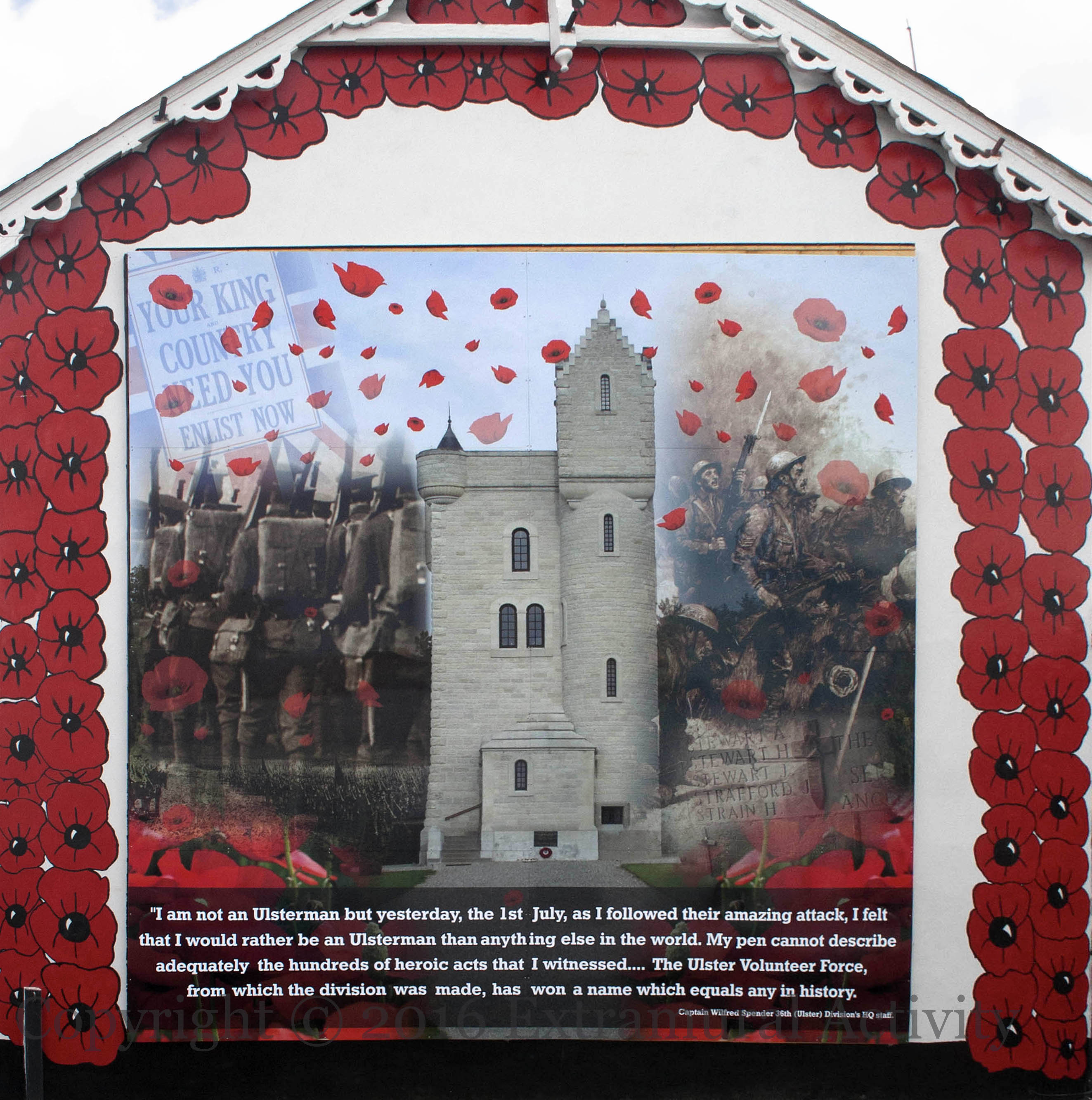
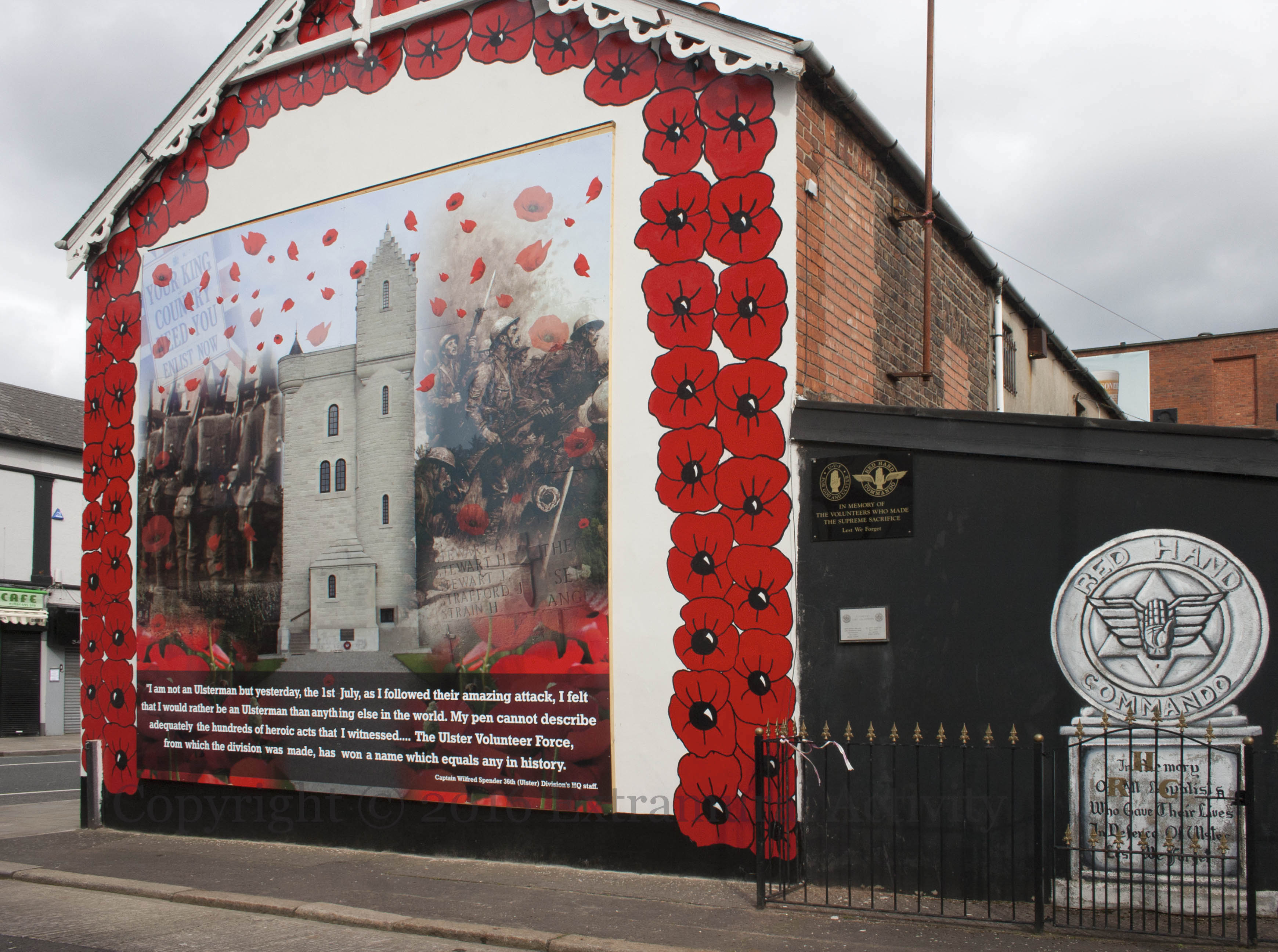
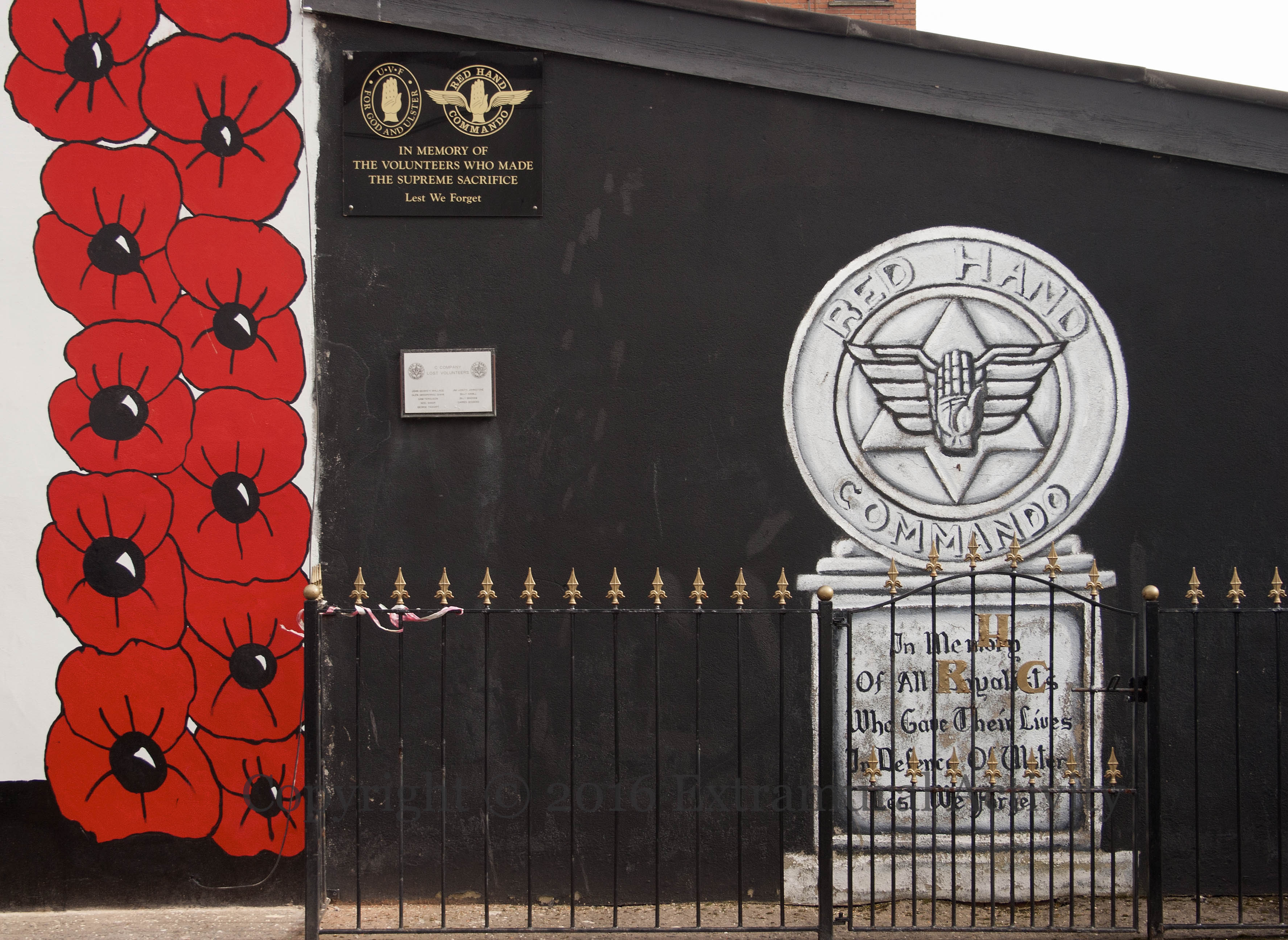
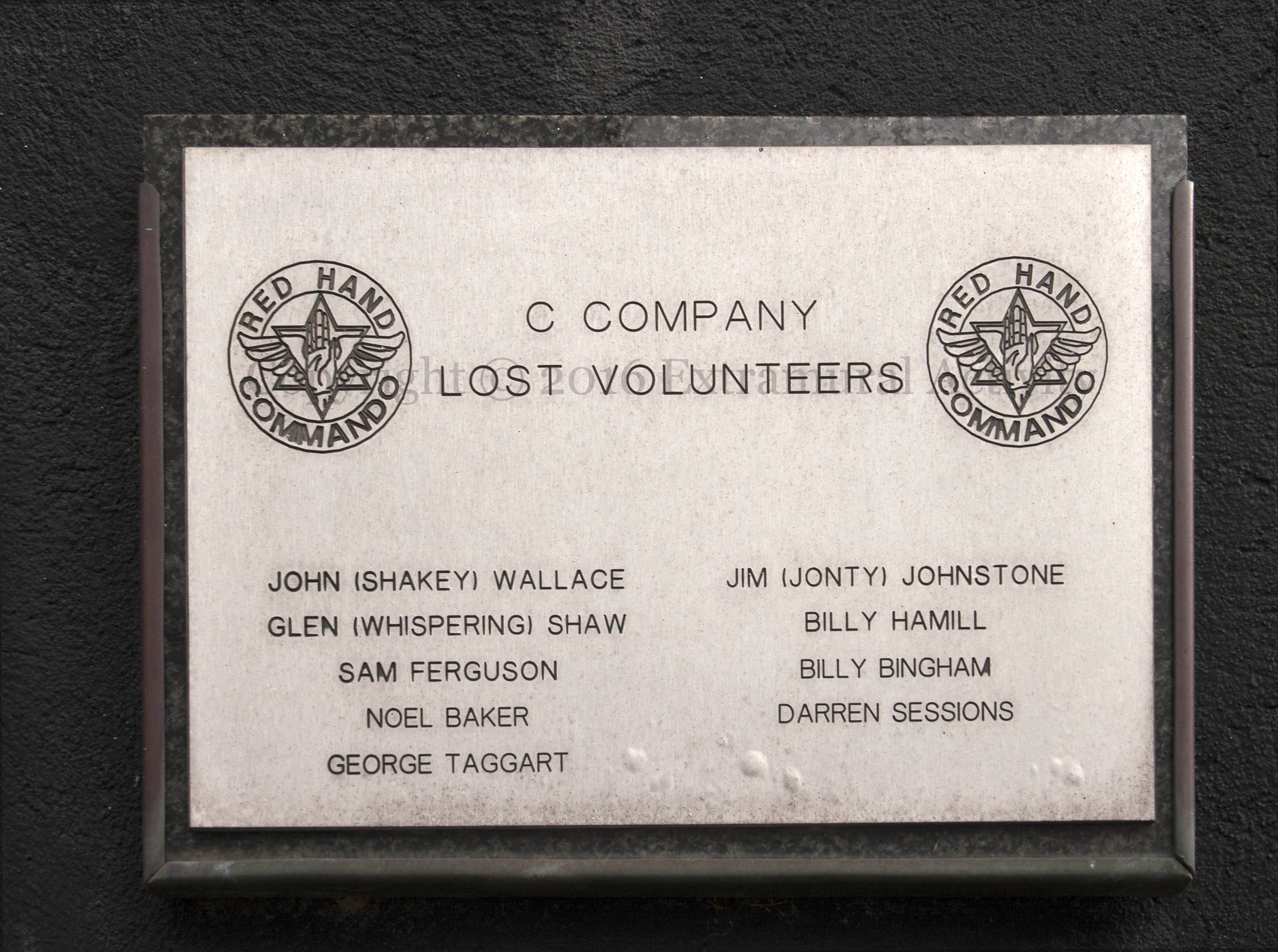
The main part of a Red Hand Commando mural was replaced recently with a board commemorating the action and deaths of the British Army’s 36th (Ulster) Division in World War I’s Battle Of The Somme, of which Captain Wilfrid Spender wrote, “I am not an Ulsterman but yesterday, the 1st July, as I followed their amazing attack, I felt that I would rather be an Ulsterman than anything else in the world. My pen cannot describe adequately the hundreds of heroic acts that I witnessed … The Ulster Volunteer Force, from which the division was made, has won a name which equals any in history.”
As shown in the three additional images, part of the old mural (and its plaques) remains on the right, “In memory of all loyalists who gave their lives in defence of Ulster – Lest we forget.”
For images of the launch (on 2016-03-08) see Belfast Live.
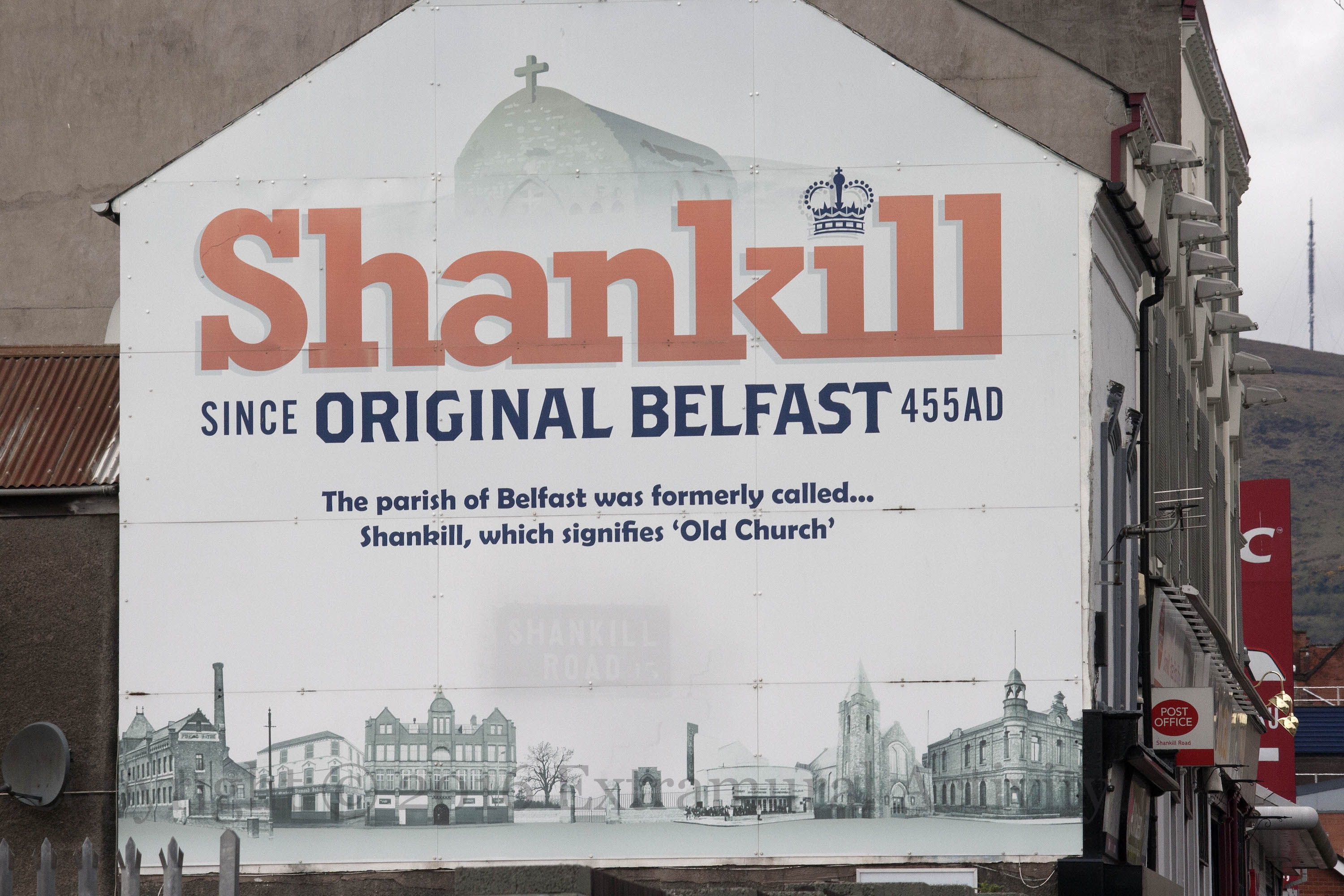
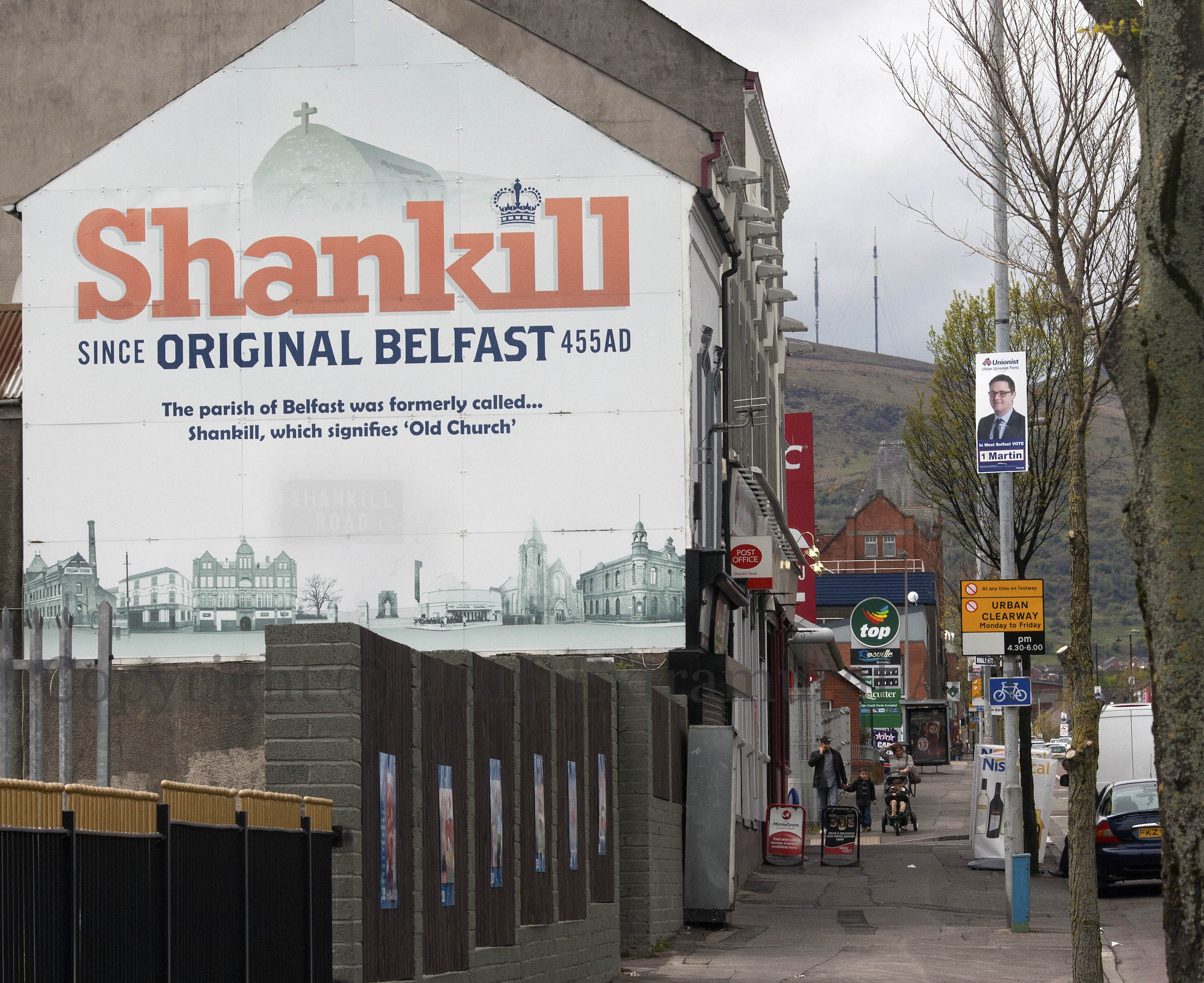
“Since 455 AD” is the claim of this historical board at the bottom of the modern Shankill Road, 455 being the date of a church of St. Patrick (which was taken over by the Church of Ireland in the plantation and eventually became St. Matthew’s). Whether this makes it older than Belfast depends on how one determines that a place was occupied. The were settlements in the area during the Bronze Age, though the village of Belfast (at the junction of the Lagan and the Farset) might date only to the 600s. For Belfast, see Tours In Ulster (at archive.org) and the WP page on the History of Belfast. Shankill: Newsletter | WP | PlacenamesNI
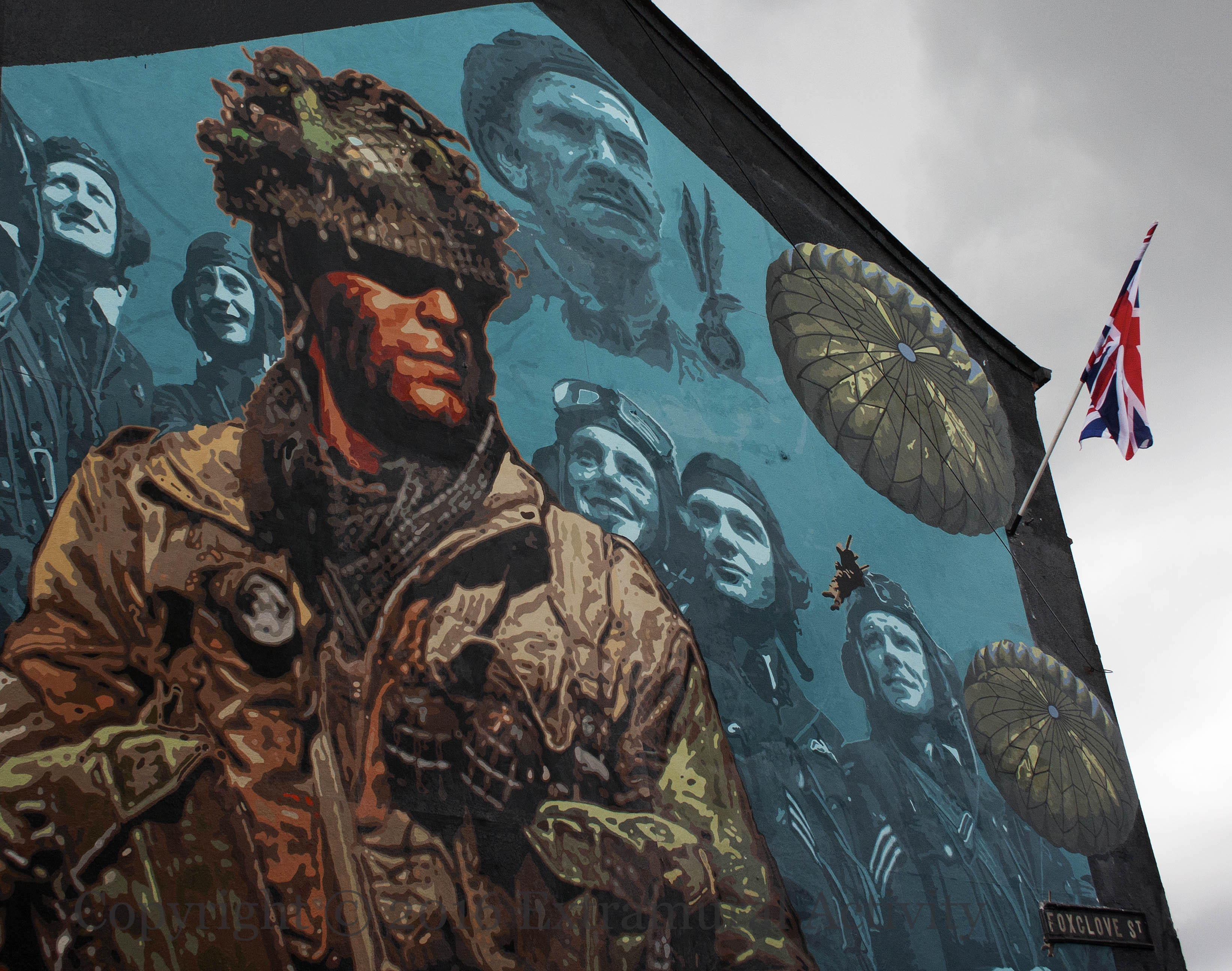
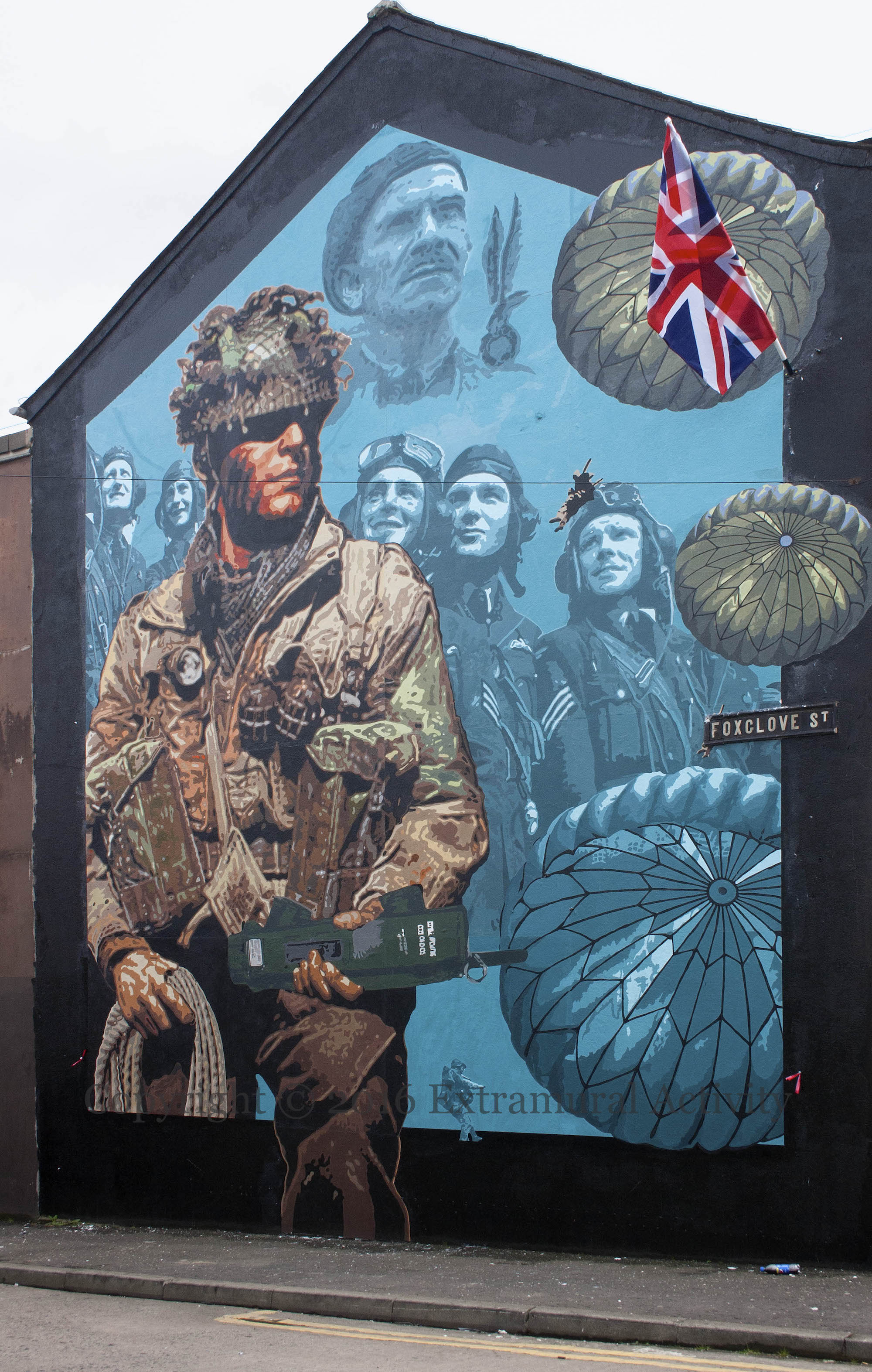
Stanislaw Sosabowski — who appears in the apex of this new mural in east Belfast — survived the first World War (fighting for Austria-Hungary), the occupation of Poland in 1939, and escaped from a prisoner-of-war camp before crossing Europe and taking command, in Britain, of the 1st Polish Paras. The unit fought in Operation Market Garden at the Battle Of Arnhem. (WP | Polish Heritage Society for a booklet of text and images)
His memoirs have been published as Freely I Servedand interviews about his service were collected for a film called A Debt Of Dishonour (youtube) – the title comes from the fact that Sosabowski was blamed for the failure of the Operation, perhaps as a bargaining tactic in negotiations between Britain, Russia, and Poland.
Across the middle of the mural are airmen from the 303 Polish Squadron, which was celebrated in a Shankill mural last year: Love Demands Sacrifice. In the foreground is a modern British paratrooper in field gear.
For images of the launch last week, see WWIIPolesNI.
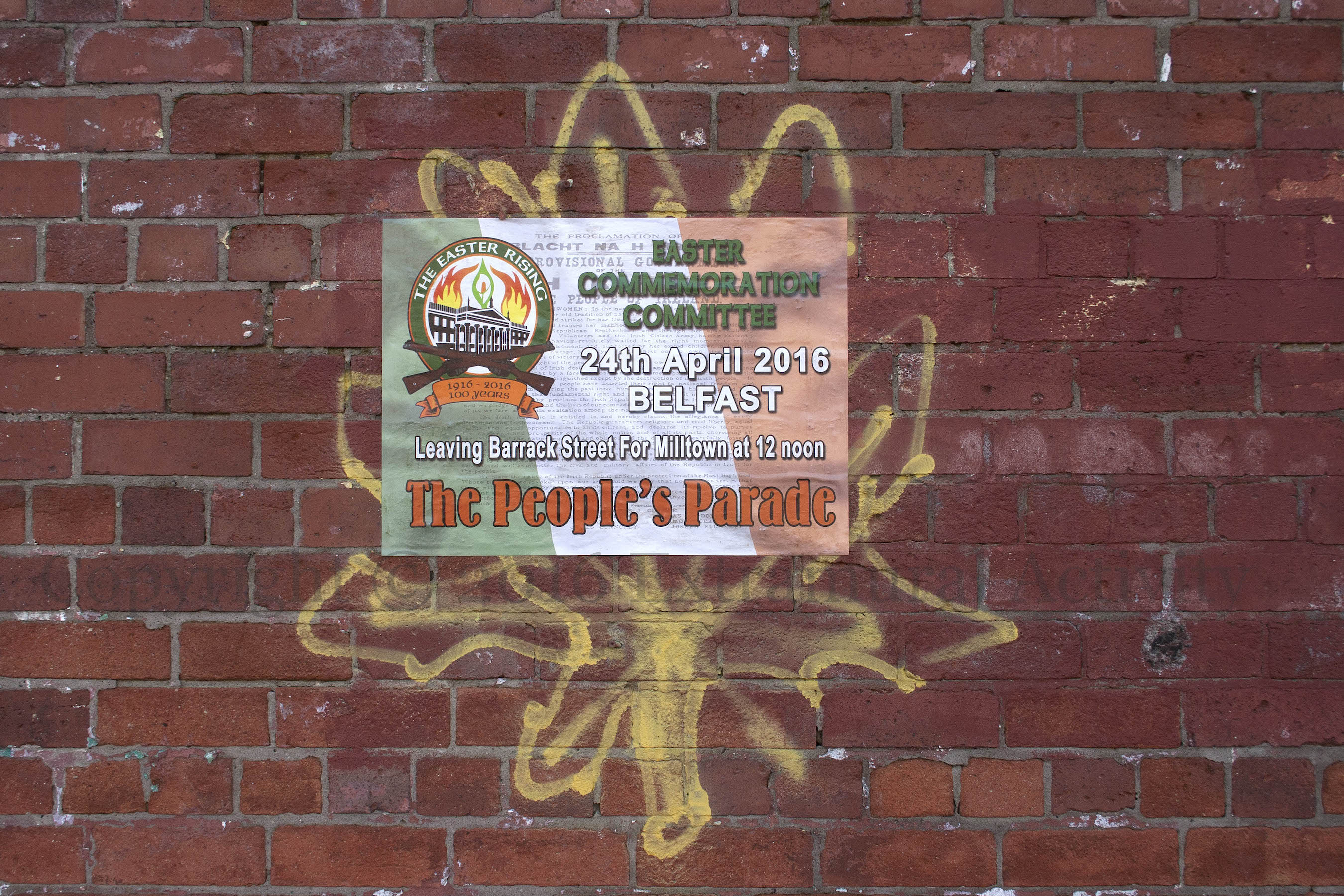
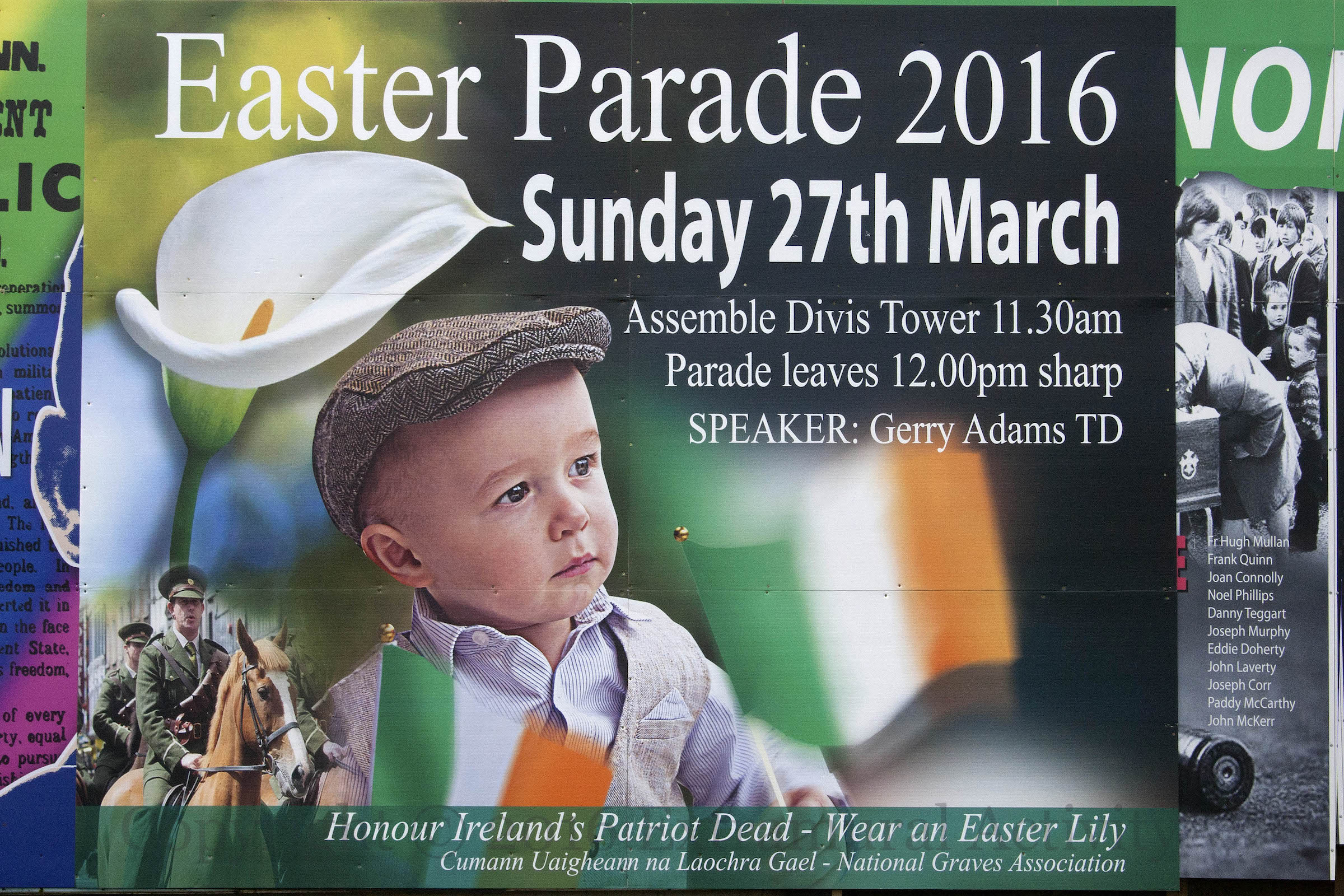
Two competing posters for two competing dates for two (competing?) Easter Rising parades: the People’s Parade (above) was held today, April 24th, the date of the Rising in 1916; the other was held on this year’s Easter Sunday, March 27th, as the parade is annually held on Easter Sunday.
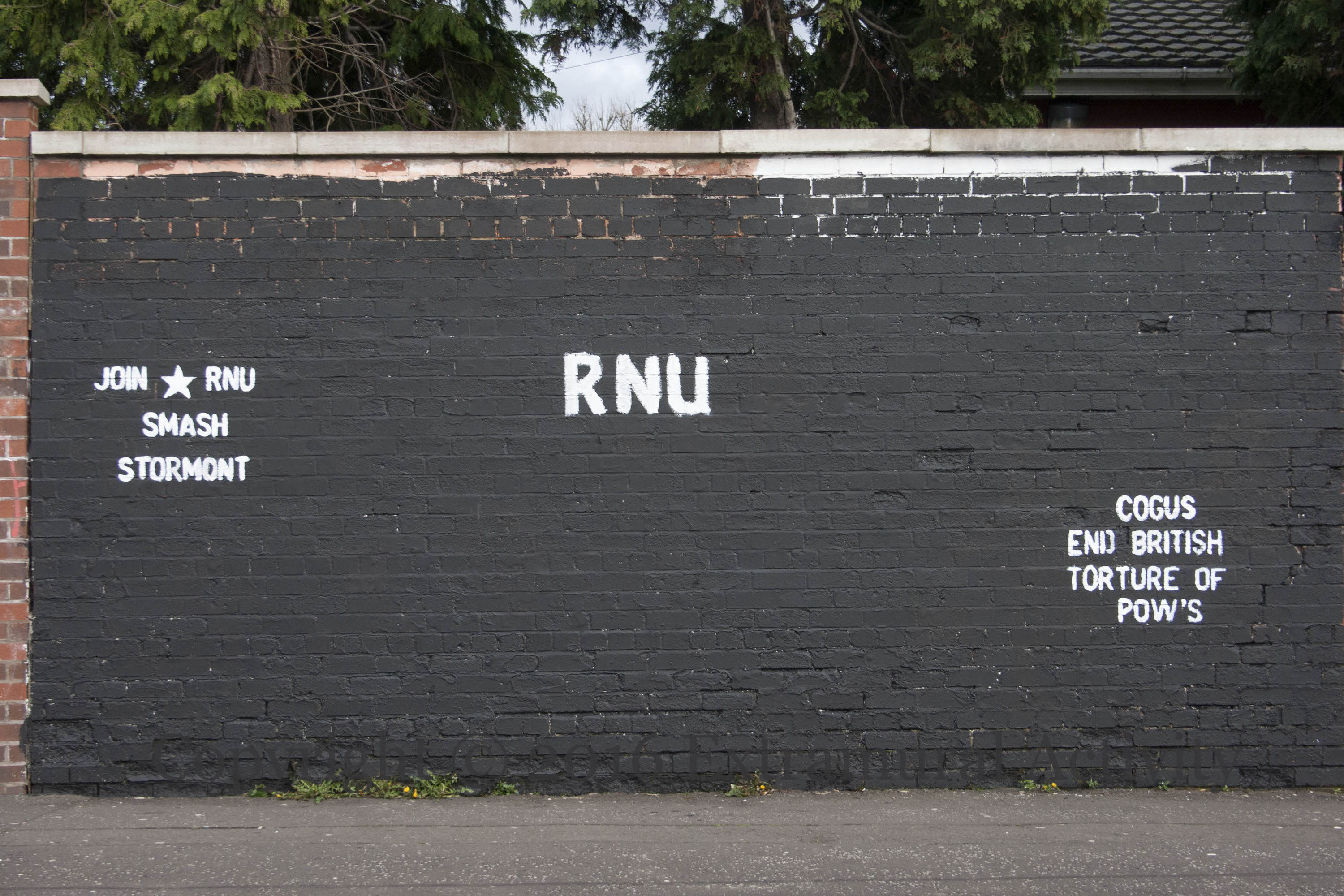
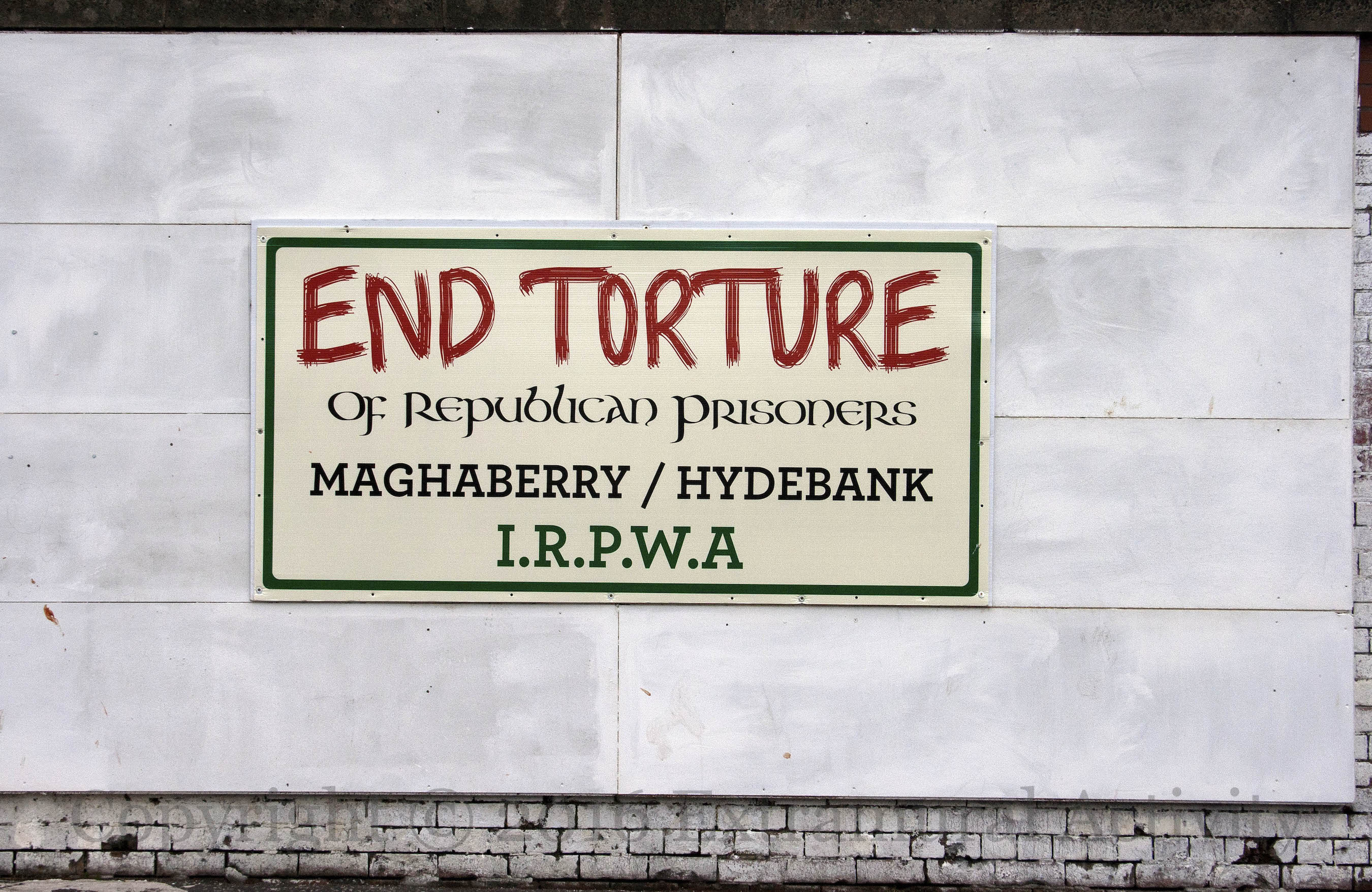
Two Beechmount murals today on the same theme: republican prisoners of war in Maghaberry and Hydebank (site of prisons for women and for young offenders).
 Seosamh Mac Coille Collection