Culture Amid Commerce

03985-2017-01-06-welcome-to-york-st-10scottish

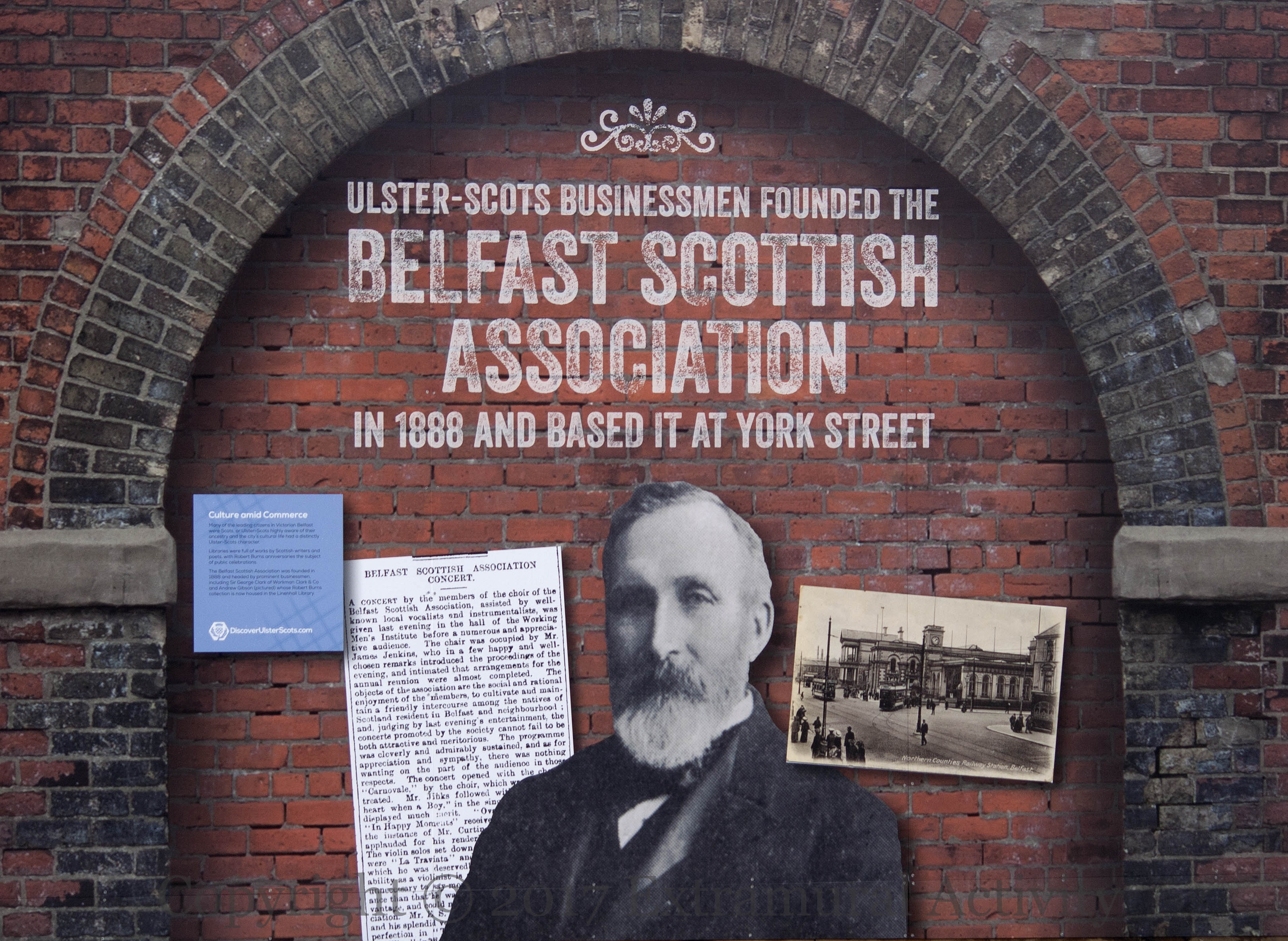
“The Belfast Scottish Association was founded in 1888 and headed by prominent businessmen, including Sir George Clark of Workman Clark and Andrew Gibson (pictured) whose Robert Burns collection is now housed in the Linenhall Library.”

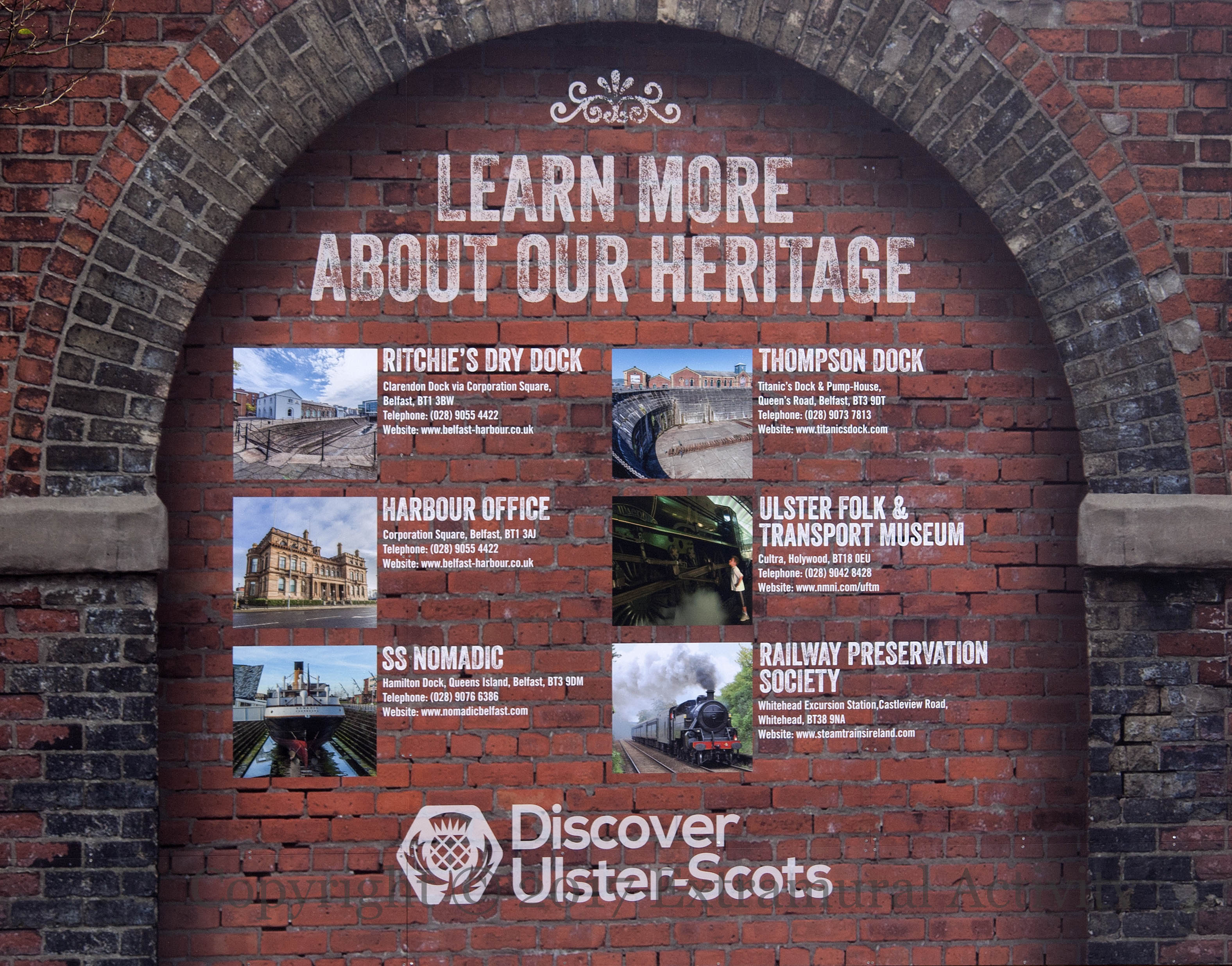
This is the final entry in a series from discoverulsterscots.com about York Street businesses and Ulster Scots businessmen: Shipbuilding | London, Midland and Scottish | Workman Clark’s | Belfast Goods

03988-2017-01-06-welcome-to-york-st-13learn-more

Click image to enlarge
Copyright © 2017 Seosamh Mac Coılle
X03985 X03988

Belfast Goods

03984-2017-01-06-welcome-to-york-st-9goods

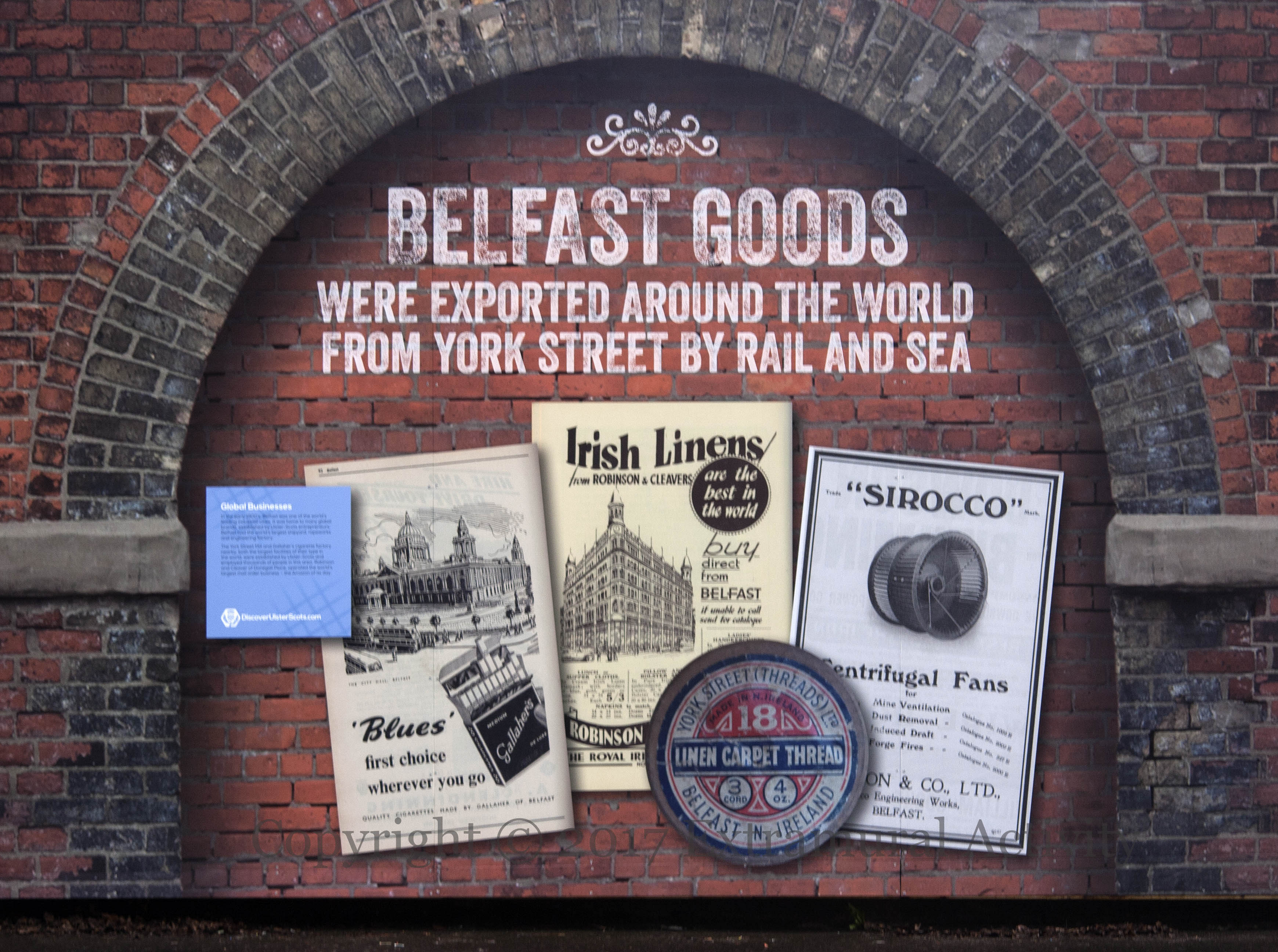
Among the Belfast goods “exported around the world from York Street by rail and sea” were Gallaher’s Blues (cigarettes), Irish linens, Davidson & Co (Samuel Davidson, born in County Down to an Ulster-Scots family, was the inventor of the Sirocco centrifugal fan “for mine ventilation, dust removal, induced draft, forge fires”), and linen carpet thread from York Street (Threads) Ltd. Robinson & Cleaver’s department store is now out of business. Gallaher’s is now the multinational Gallaher Group, but its factories in Belfast and Ballymena have closed. And Davidson’s company was bought by Howden UK in 1988.

Previously in the series: Shipbuilding | London, Midland and Scottish | Workman Clark’s

Click image to enlarge
Copyright © 2017 Seosamh Mac Coılle
X03984

Workman Clark’s

03991-2017-01-06-welcome-to-york-st-6-7-8

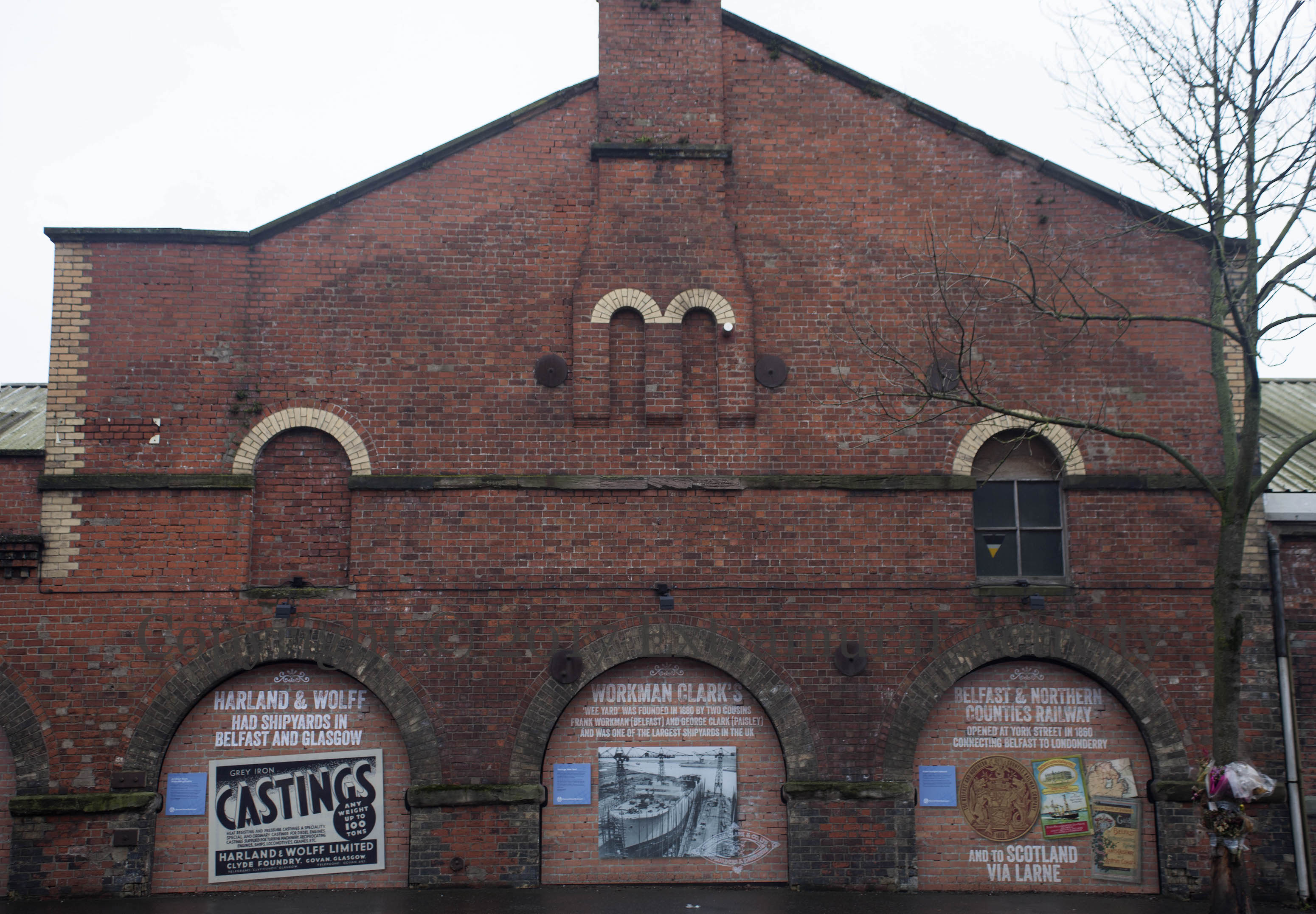
Workman & Clark’s (in the centre panel above) was a Belfast shipyard existing from 1880 to 1935. During the first world war it took over the construction of two monitor ships (specifically, M29 and M31) for the Royal Navy that H&W did not have space to build. For more, see Grace’s GuideBBC audio on monitor ships and their construction, including a record for number of rivets hammered in by one John Moore at Workman Clark’s.

These are panels 6, 7, and 8 from the new boards along York Street on the outer wall of the NI Railways mechanical engineering workshop.

Click image to enlarge
Copyright © 2017 Seosamh Mac Coılle
X03991

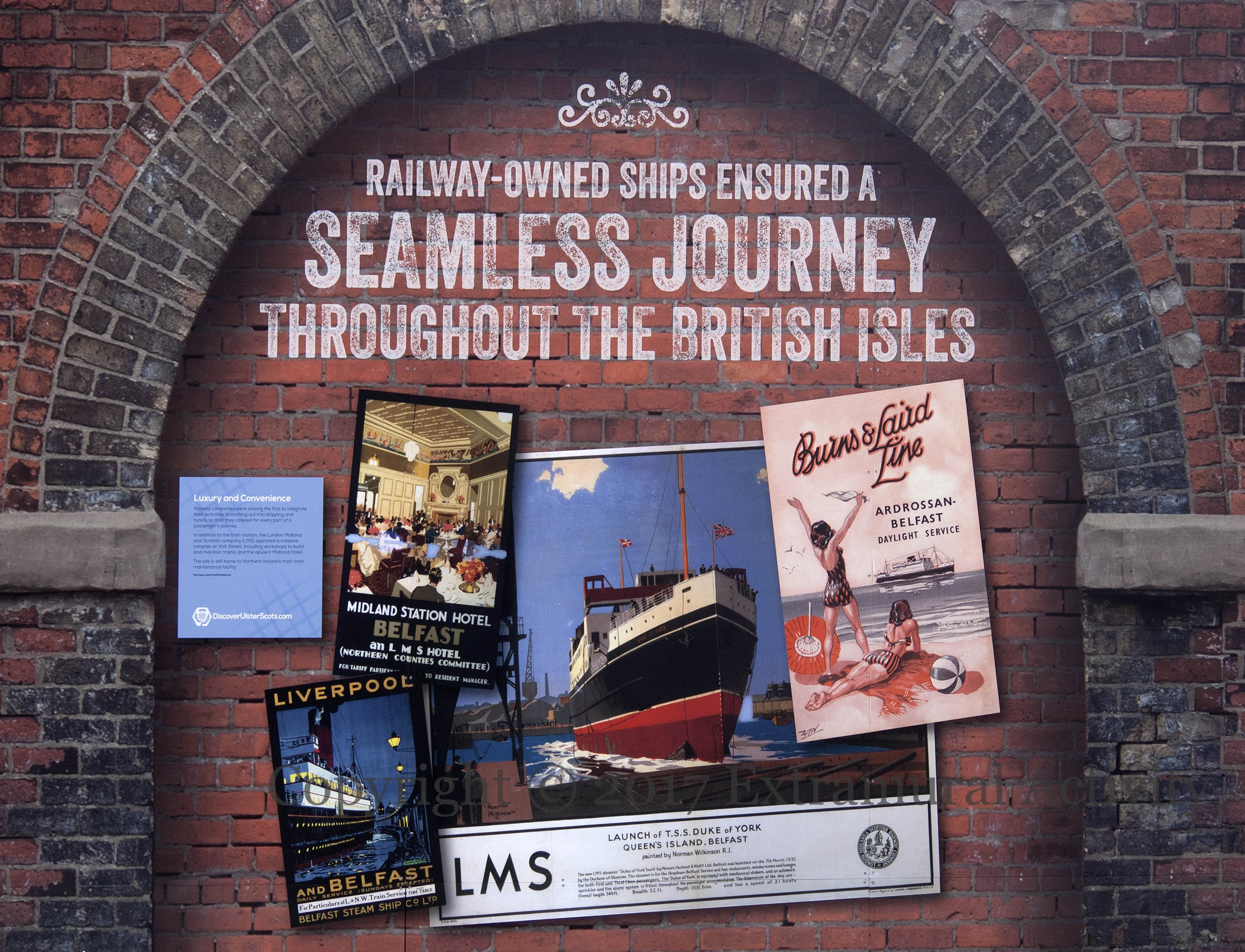
London, Midland And Scottish

03987-2017-01-06-welcome-to-york-st-12liners

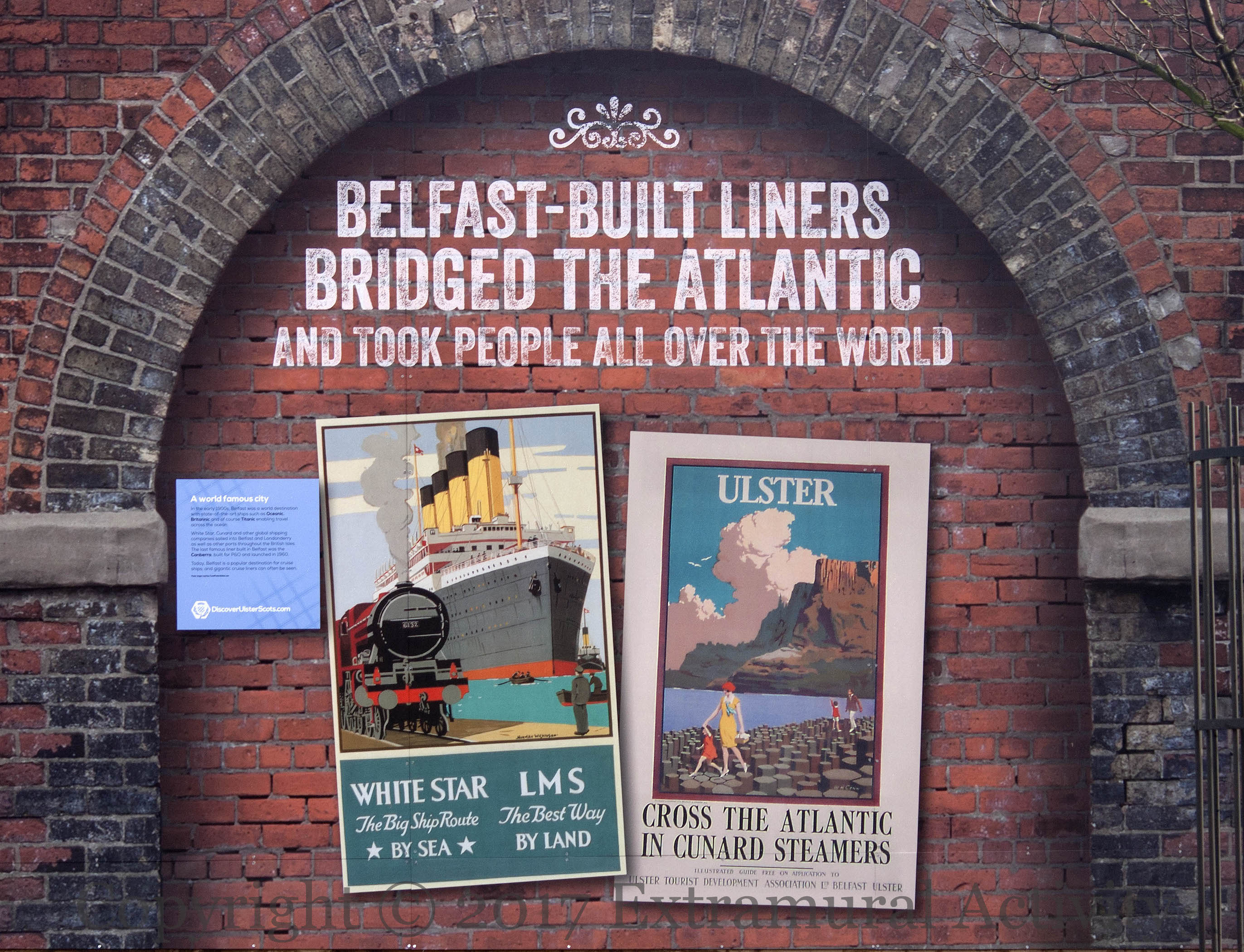
In addition to the famous trans-Atlantic ships (image above), Belfast was part of the travel network in the UK and Ireland (image below). Before there was British Railways, there were the Big 4: the Southern, Great Western, London and Northeastern, and London, Midland, and Scottish (LMS) railways. The latter included the railways in the Northern Counties. In addition to railways, the company owned canals, ships (including the Princess Victoria which sank on the Larne-Stranraer route), and hotels. “Belfast-built liners bridged the Atlantic and took people all over the world.” “Railway-owned ships ensured a seamless journey throughout the British Isles.”

Previously:The history of Shipbuilding in Belfast.

03986-2017-01-06-welcome-to-york-st-11railway

Click image to enlarge
Copyright © 2017 Seosamh Mac Coılle
X03987 X03986 York Road cunard white star titanic brittanic

Shipbuilding

03980-2017-01-06-welcome-to-york-st-2gateway

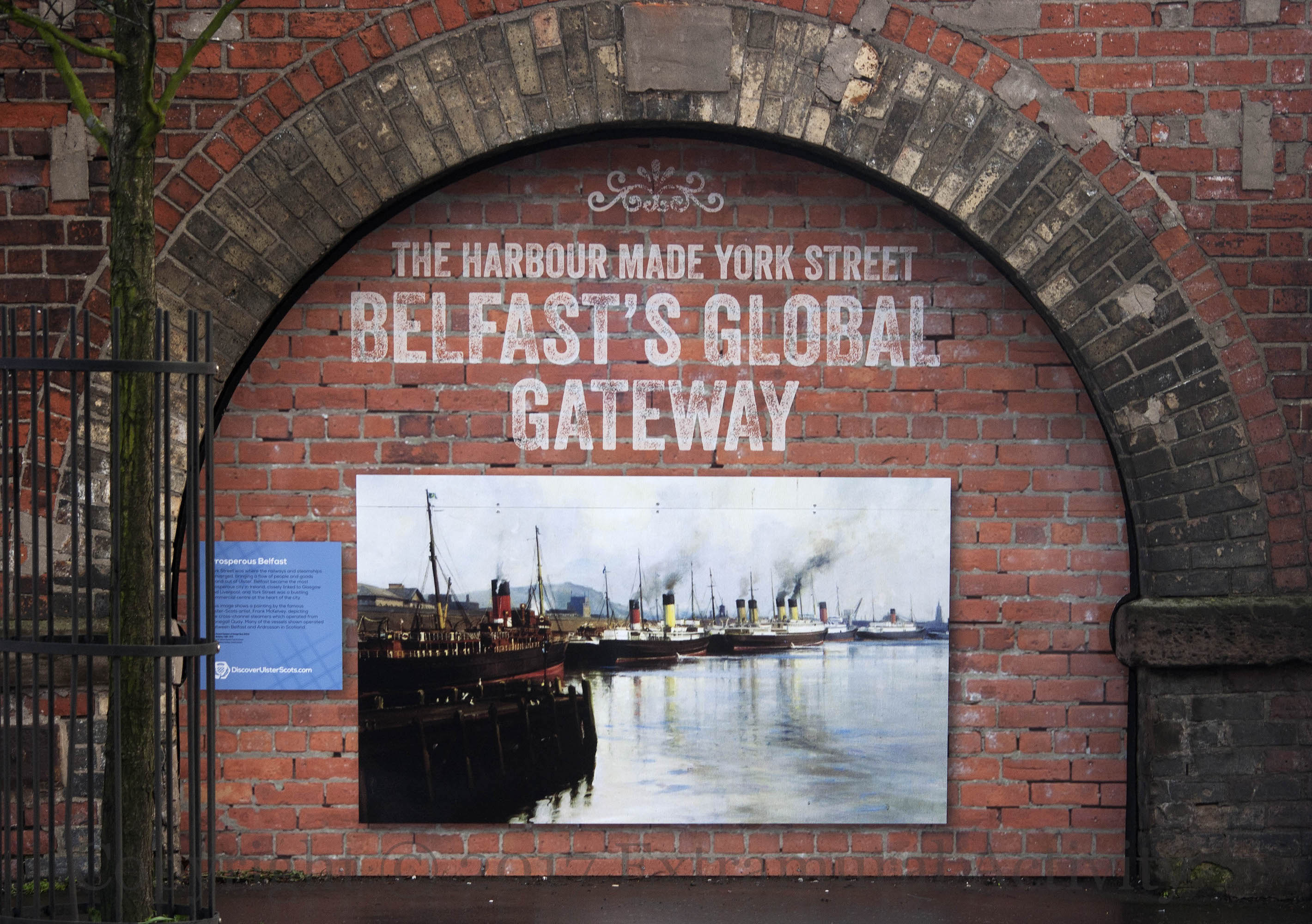
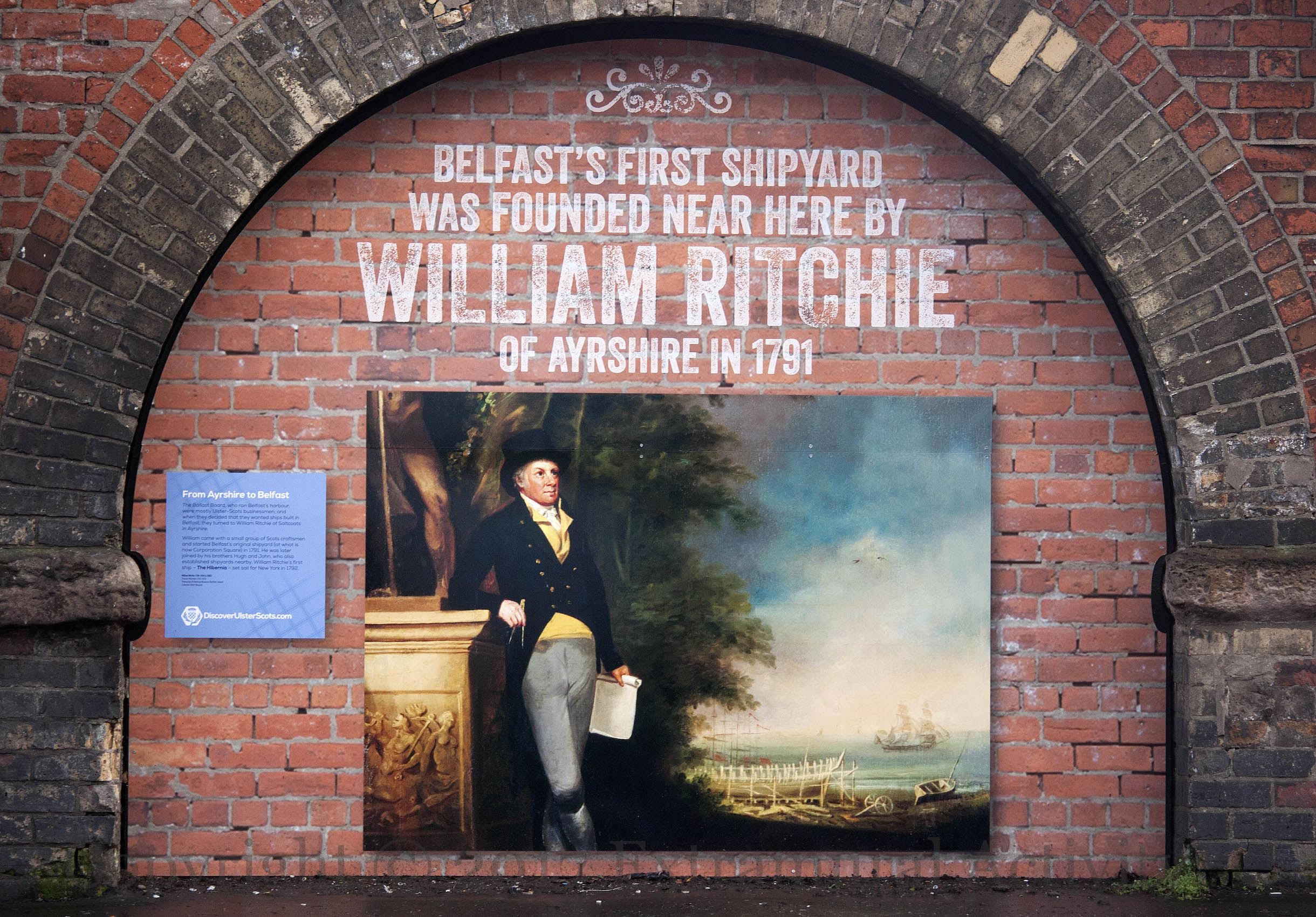
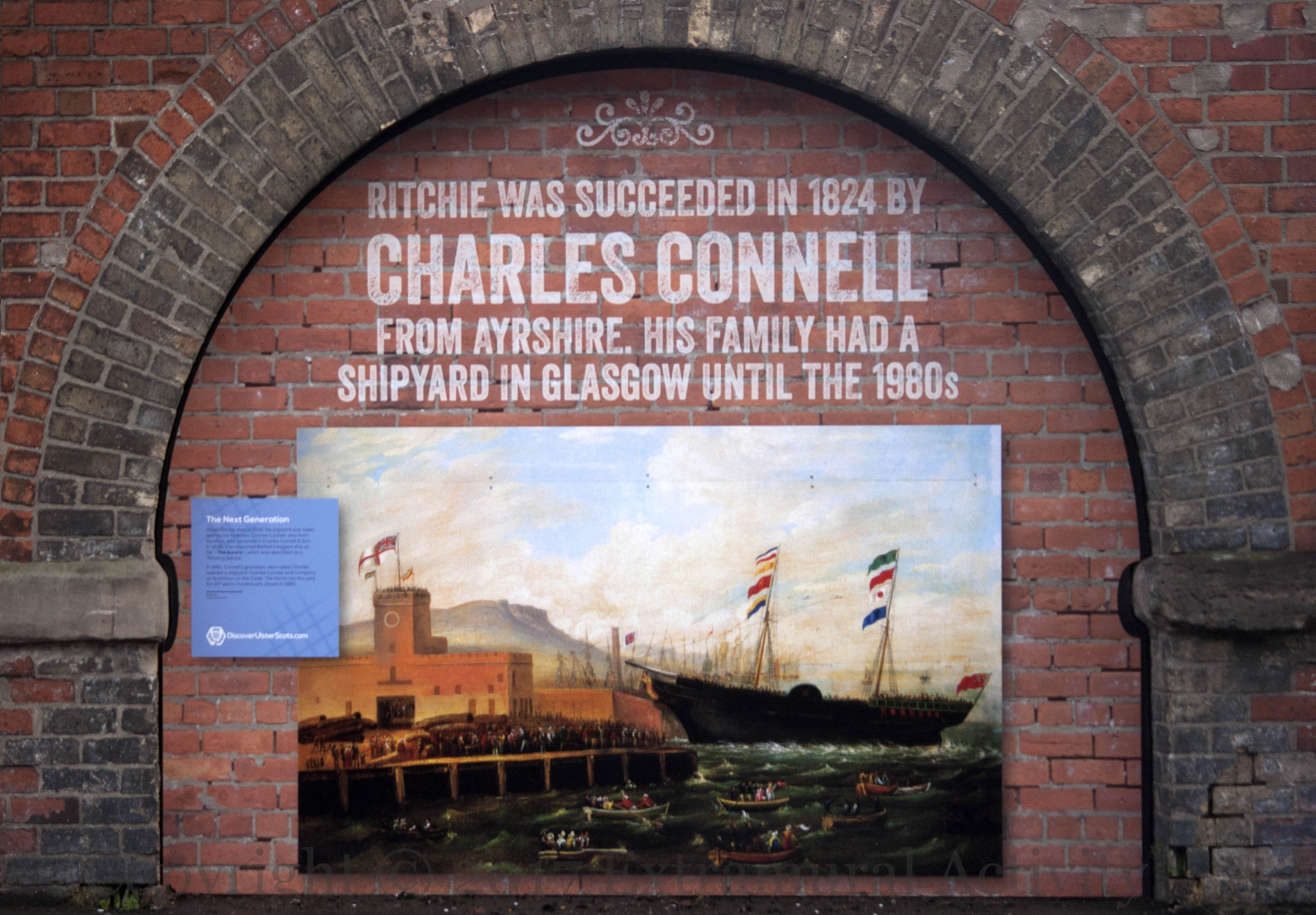
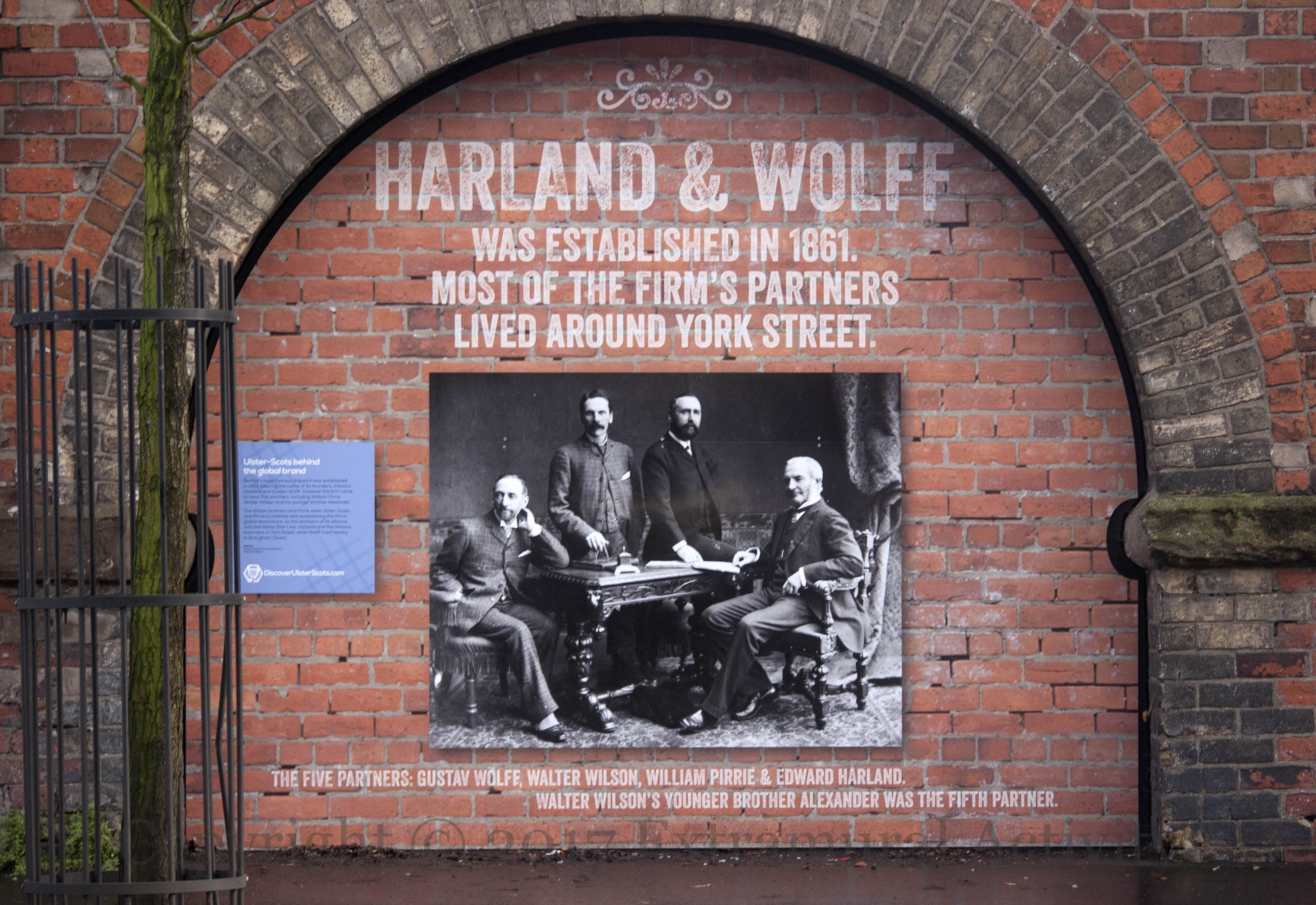
A history of shipbuilding and its role in Belfast’s industrial life is told in the first five panels of a 13-panel installation along York Road (“The harbour made York Street Belfast’s global gateway”) and in particular its connection with Scotland. (It is sponsored by Discover Ulster Scots.) Two Scots, William Ritchie (whose 1802 portrait by Thomas Robinson is shown) and Charles Connell (who oversaw the construction of the first wooden steamboat in Belfast – Aurora, pictured below) along with another Scot, Alexander MacLaine, were the leading shipbuilders in Belfast from 1791 until the 1860s, when Englishman Edward Harland (soon joined by German Gustav Wolff, and then in 1874 by William Pirrie and Wilson brothers Walter and Alexander) took over the rival Hickson yard (which included land on Queen’s Island and on the south side of the Lagan) and became dominant. Their connection to York Street is that all of them except Pirrie lived on or near York Street.

For potted histories (and a larger picture of Aurora) see LibraryIreland and Ulster-Scots.com.

03981-2017-01-06-welcome-to-york-st-3ritchie

03982-2017-01-06-welcome-to-york-st-4connell

03983-2017-01-06-welcome-to-york-st-5h_w

03979-2017-01-06-welcome-to-york-st-1

Click image to enlarge
Copyright © 2017 Seosamh Mac Coılle
X03980 X03981 X03982 X03983 X03979 York St

Homeless … No Less

03978-2016-12-25-homelessface

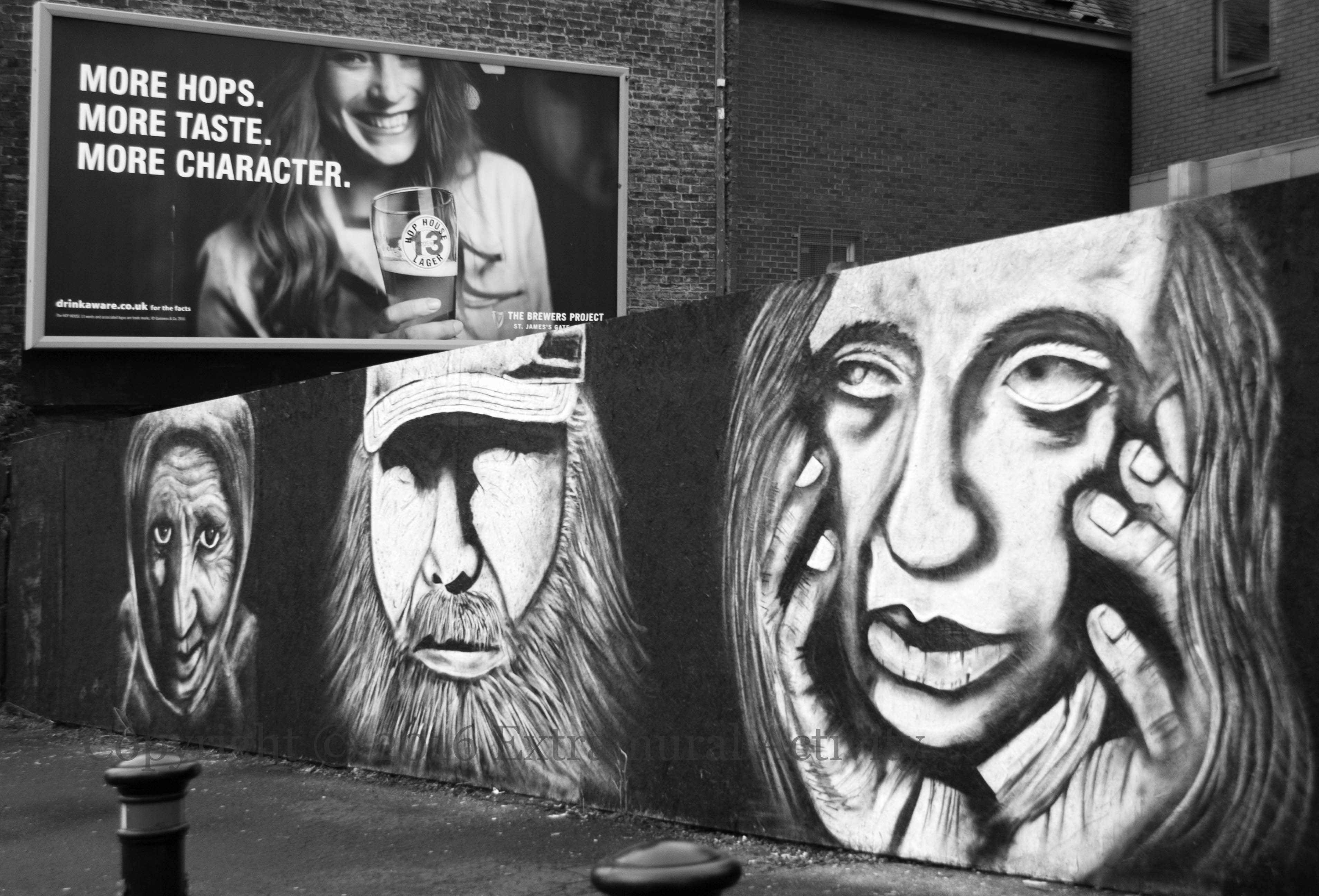
Artist Glen Molloy (Fb) has painted a series of three faces, inspired by seeing some homeless people being given abuse on the street and “painted to highlight how badly people living on the streets of Belfast can be treated by the general public”. Here is audio of Glen on U105 talking about the project.

03976-2016-12-25-homelessfaces-bw

Click image to enlarge
Copyright © 2016 Seosamh Mac Coılle
X03978 X03976 Great Victoria Street

Arts For All

03970-2016-12-24-johnluke

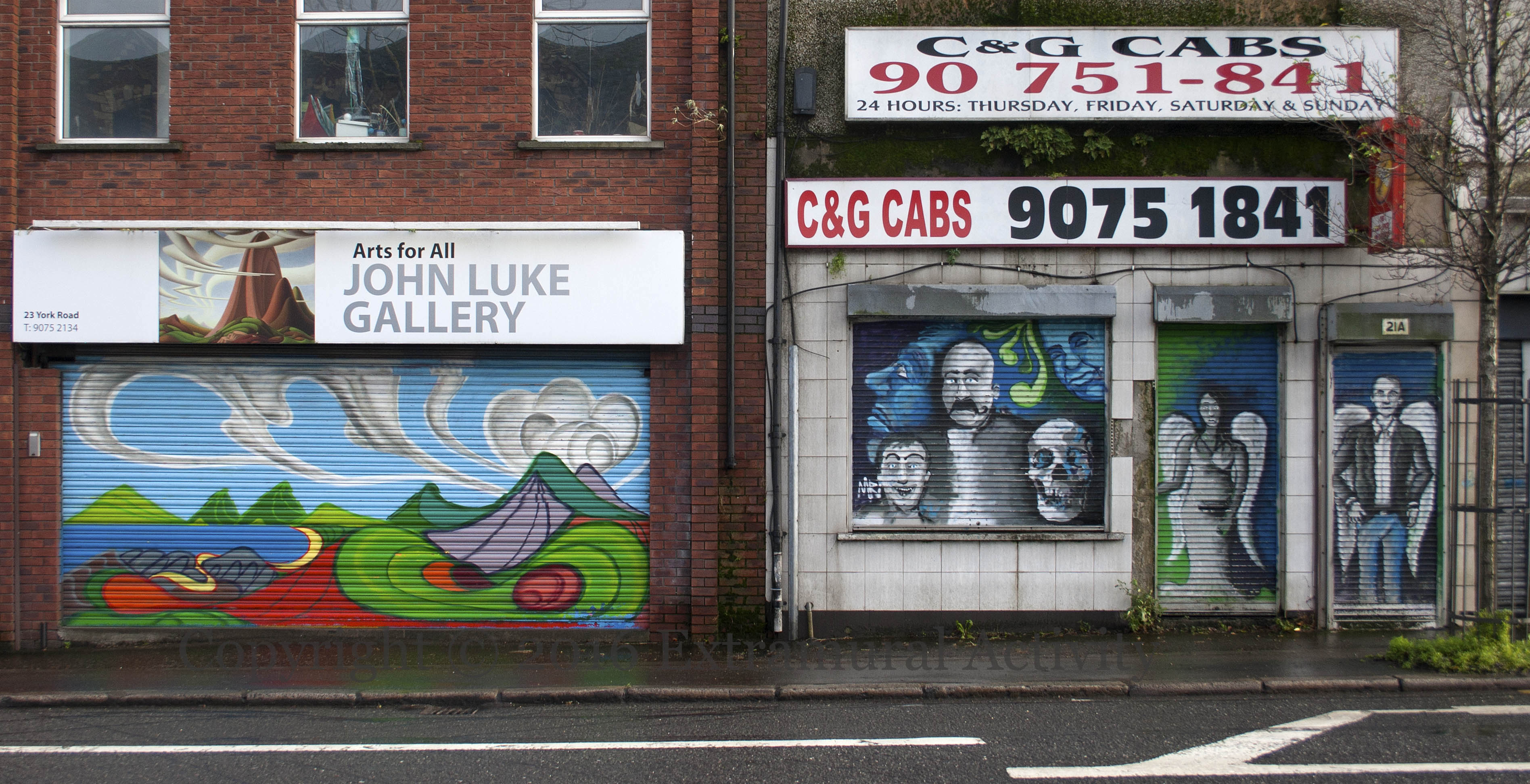
In addition to many paintings in a distinctive style, Belfast artist John Luke’s (onetwo) work included a few murals, most famously an image of Belfast’s Charter painted in the City Hall. He lends his name to the gallery in north Belfast’s Arts For All centre which is now fronted by a mural in his style.

For the undead in the windows of the taxi office, see Haunted.

Click image to enlarge
Copyright © 2016 Seosamh Mac Coılle
X03970

Flaming Hot Tottie

03973-2016-12-24-hot-tottie

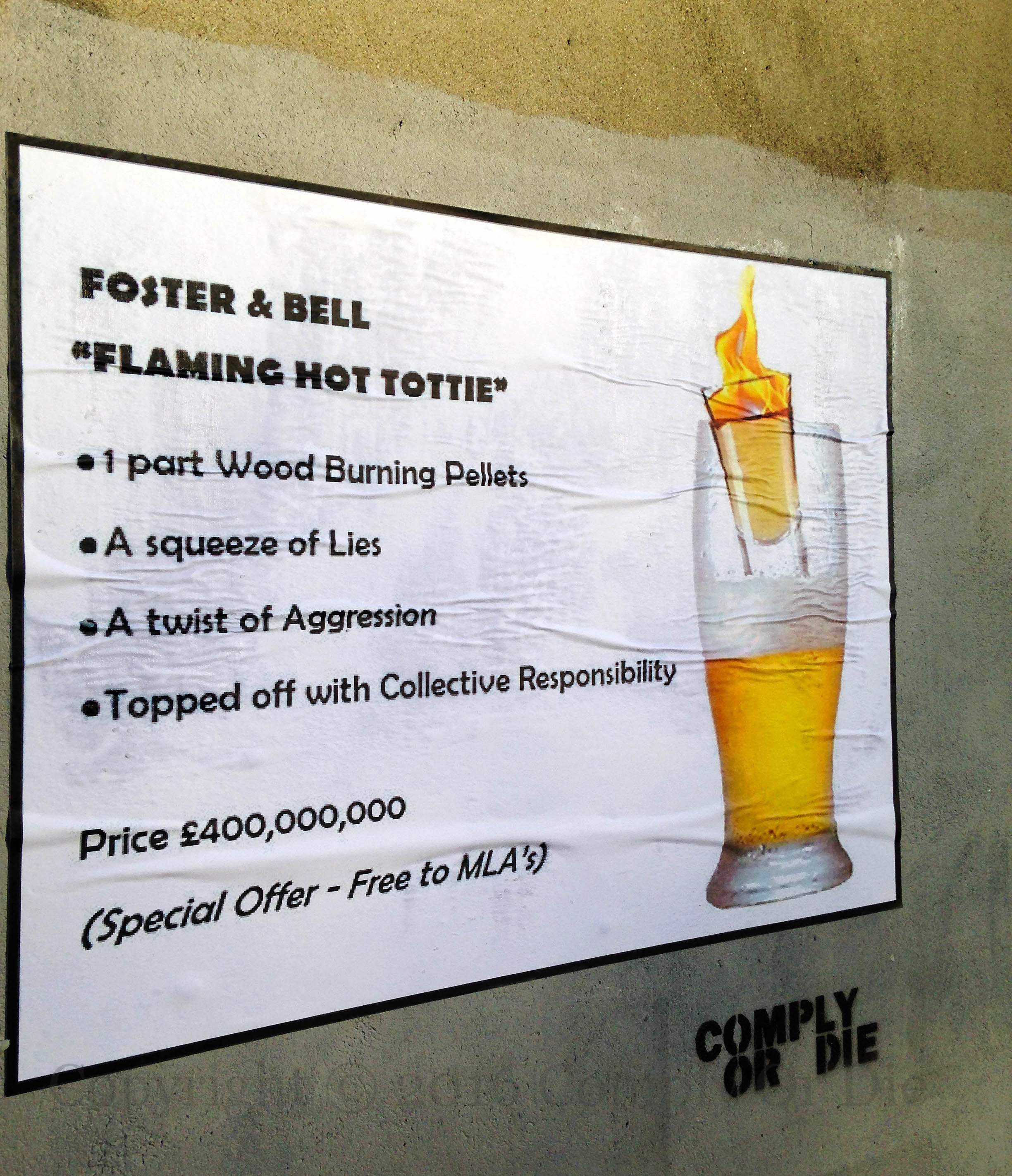
[Arlene] Foster & [Jonathan] Bell have created a hot drink to keep you warm during the cold winter nights: the Flaming Hot Tottie. To make, combine wood burning pellets, a squeeze of lies, and a twist of aggression, and top it off with collective responsibility. Price: 400 million pounds, though free to MLAs. Commentary on the “cash for ash” (a.k.a. Renewable Heat Incentive) scheme from Comply Or Die.

See also Heating Empty Barns … Killing Kids.

Thanks to the artist for the image.

Click image to enlarge
Copyright © 2016 Seosamh Mac Coılle
X03973